



A short cut can sharpen a round face or make it look broader in a hurry, and texture is usually the thing that decides which way it goes. The phrase short textured hairstyles for round faces gets searched for a reason: people want hair that feels fresh, but not flat, and they want shape without turning the head into one solid circle.
Round faces tend to have softer jawlines, fuller cheeks, and a width-to-length balance that looks friendly in person and in photos. That softness is nice. The catch is that a blunt line landing right at the cheek can sit there like a shelf, while broken ends, side movement, and a touch of lift at the crown pull the eye upward and downward instead of straight across.
A good stylist usually thinks in angles, not in rules. Point-cutting, internal layers, off-center parts, and a little taper at the nape can change the whole read of a cut, even when the hair is only a few inches long. No helmet hair. No heavy curtain of mass around the cheeks.
Some of the cuts below are airy and soft, others are sharper and more barbered. All of them rely on the same trick: keep the edges moving, keep the volume where it helps, and leave the widest part of the haircut away from the middle of the face.
1. Textured Pixie with a Lifted Crown for Round Faces
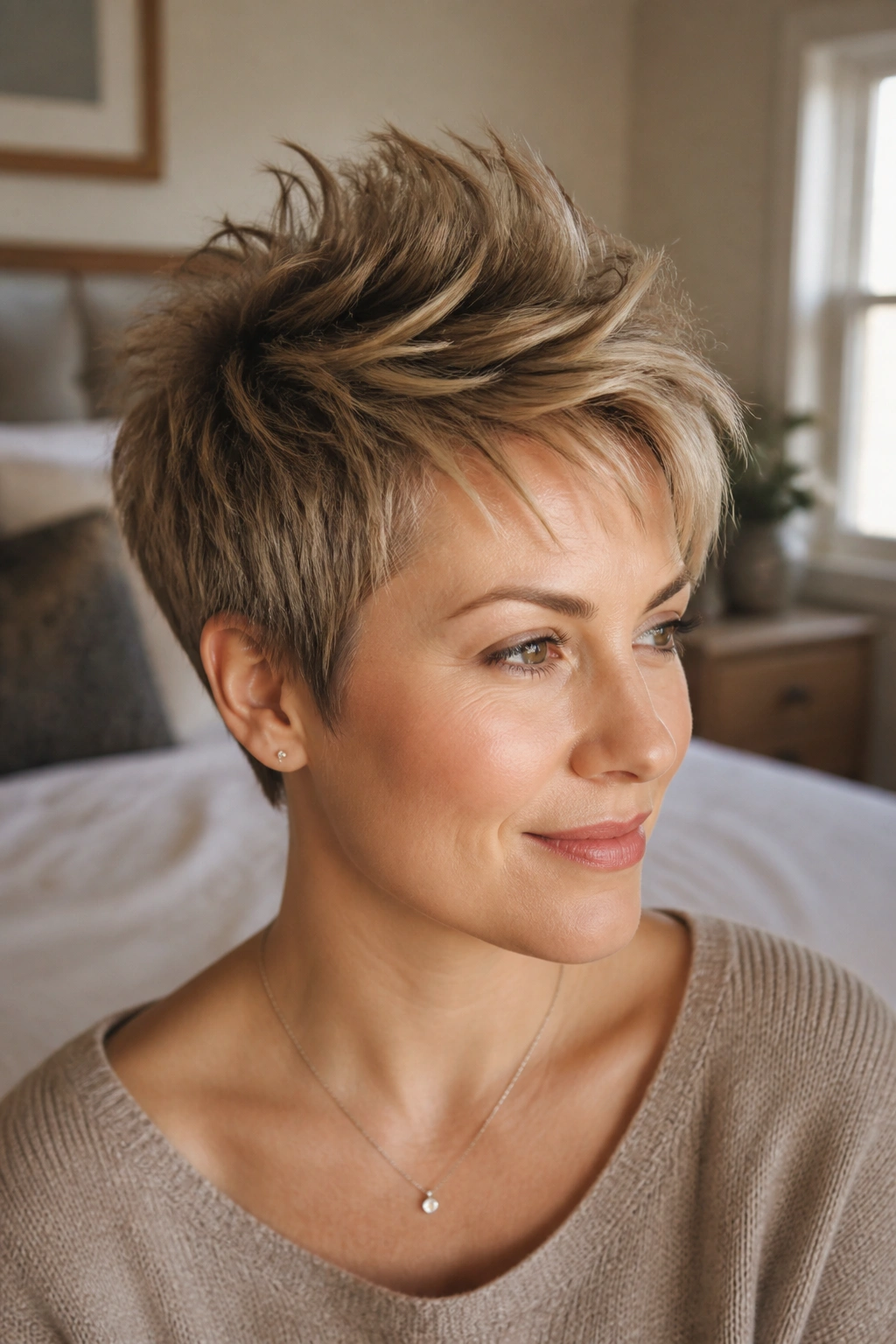
The pixie earns its keep by adding height instead of width. On a round face, that matters more than people think, because a little lift at the crown changes the whole line of the face without asking you to wear a lot of length.
What makes it flattering
Ask for the sides and nape to stay tight, with the top left around 2.5 to 3.5 inches so the hair can move instead of sitting flat. The crown should be point-cut, not chopped into a hard shape, because soft ends create air and keep the cut from looking blocky. A round brush is optional; fingers often do a better job here.
- Keep the nape close, around a quarter inch to half an inch.
- Leave the top long enough to bend upward or slightly back.
- Use a pea-sized amount of matte paste on dry hair.
- Blow-dry the crown in the opposite direction of your part for extra lift.
Best trick: direct the top slightly back and off center. Straight-up volume can look old-school fast; a soft diagonal feels cleaner.
2. Side-Parted Choppy Bob
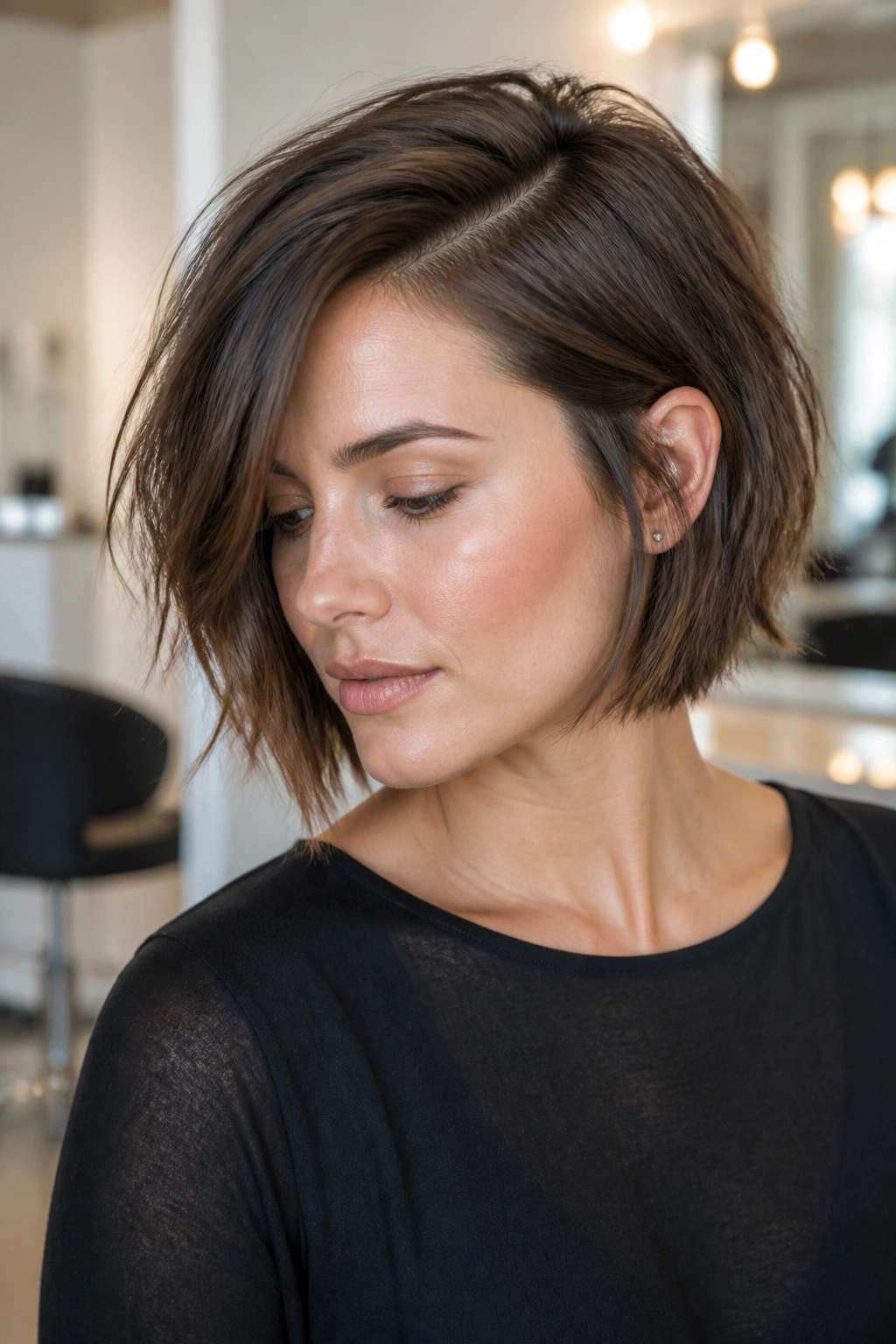
A choppy bob with a deep side part does more for a round face than a blunt chin-length cut ever will. That one change shifts the eye off the center of the face, and the uneven weight helps break up all that sameness around the cheeks.
The cut works best when it lands just below the jaw or a little above it, not right on the widest part of the cheek. Choppy ends keep the line from feeling heavy, and a side part gives the face a longer read without needing layers everywhere. A little bend at the ends is enough; you do not need curly hair, just movement.
I’d ask for the front pieces to be a touch longer than the back, maybe by half an inch to one inch. That tiny slope matters. Air-dry wavy hair with a dab of cream, or use a flat iron to put in a loose turn at the ends. Keep the side part clean and let the hair fall over one brow a little. That softness is doing real work.
3. French Crop with Soft Fringe
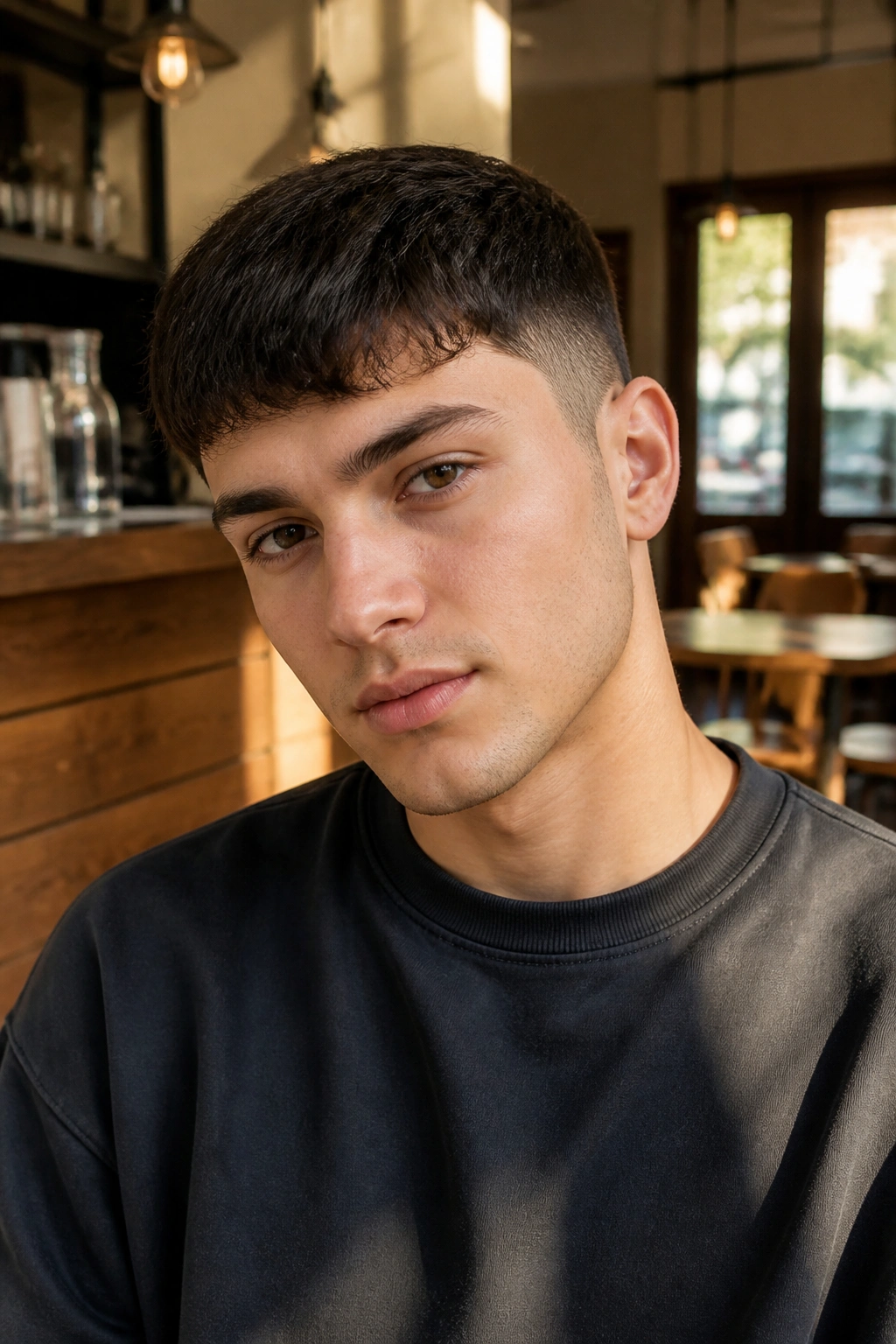
Why does the French crop keep showing up in short-hair conversations for round faces? Because it is one of the few cropped cuts that can sit close to the head without making the face look wider.
The key is the fringe. A heavy, straight-across fringe can shorten the face too much, which is the last thing a round shape needs. A softer version, broken into small pieces, gives the forehead some structure without building a hard horizontal line. Keep the top around 1.5 to 2.5 inches, and taper the sides tighter so the shape stays neat.
How to style it
Work a small amount of light clay or paste through damp hair, then rough dry it forward and slightly to one side. Once it’s dry, pinch the fringe into pieces with your fingertips so it doesn’t fall as one sheet. If the hair is thick, ask for a bit of internal weight removal; otherwise the crop can puff out at the sides and lose the point.
This cut is clean. It’s not fussy. And on the right face, that restraint is the whole appeal.
4. Shaggy Bixie
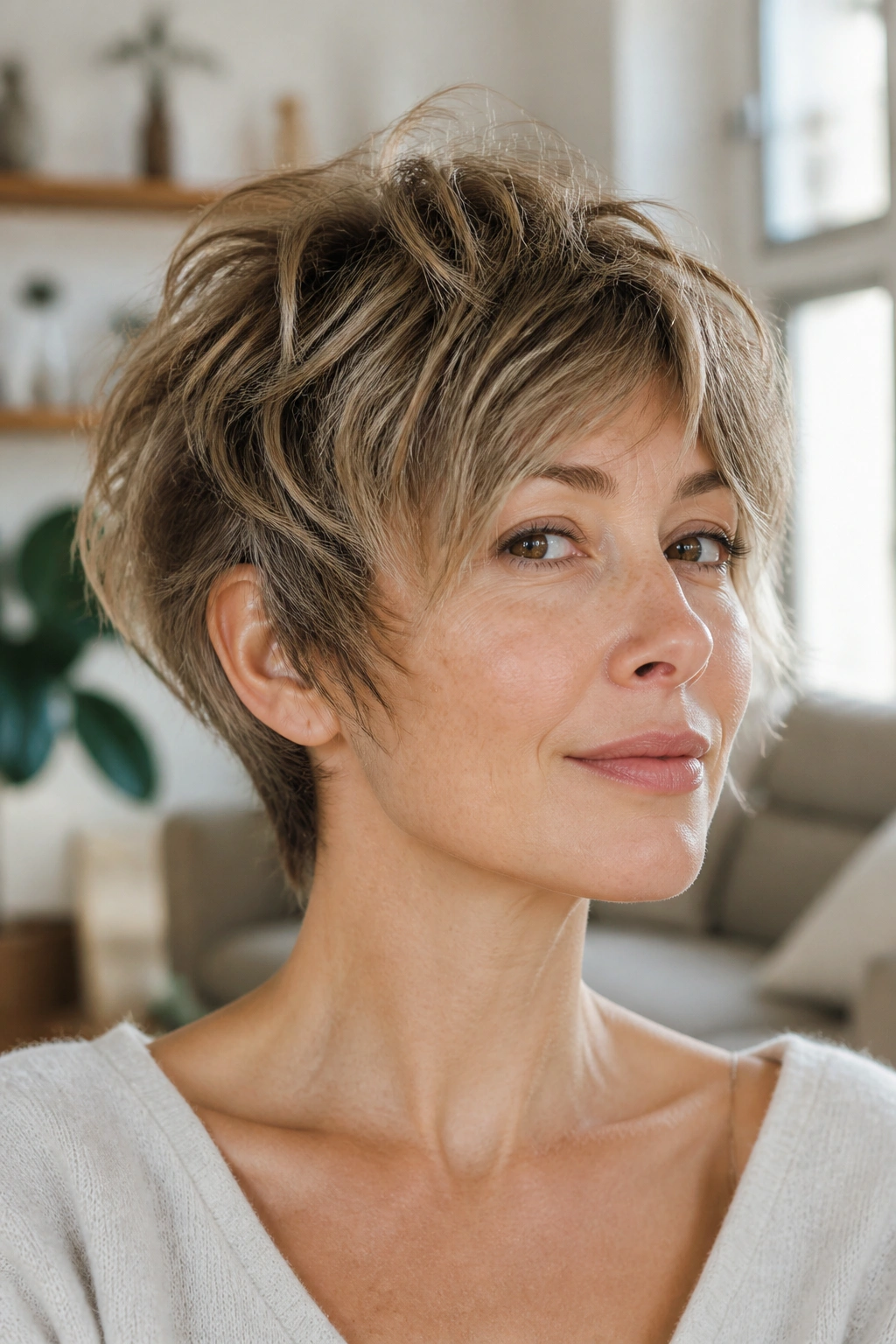
If you want hair shorter than a bob but less severe than a pixie, the bixie lives in the sweet spot. It has enough length to flick, tuck, or ruffle, but it still stays above the shoulders and keeps the face open.
The version that works best on a round face is the shaggy one. That means soft layers around the cheekbones, a loose crown, and ends that don’t sit in one solid line. The cut should feel slightly undone, not over-combed. Think movement, not volume for volume’s sake.
- Keep the top around 3 to 4 inches.
- Let the front skim the mouth to the lower cheek, not the fullest part of the cheek.
- Ask for disconnected layers so the cut doesn’t stack up in a circle.
- Use a salt spray or mousse if your hair falls flat after a few hours.
The biggest mistake is trying to make it too neat. That strips out the little broken edges that give the bixie its shape.
5. Asymmetrical Textured Bob for Round Faces
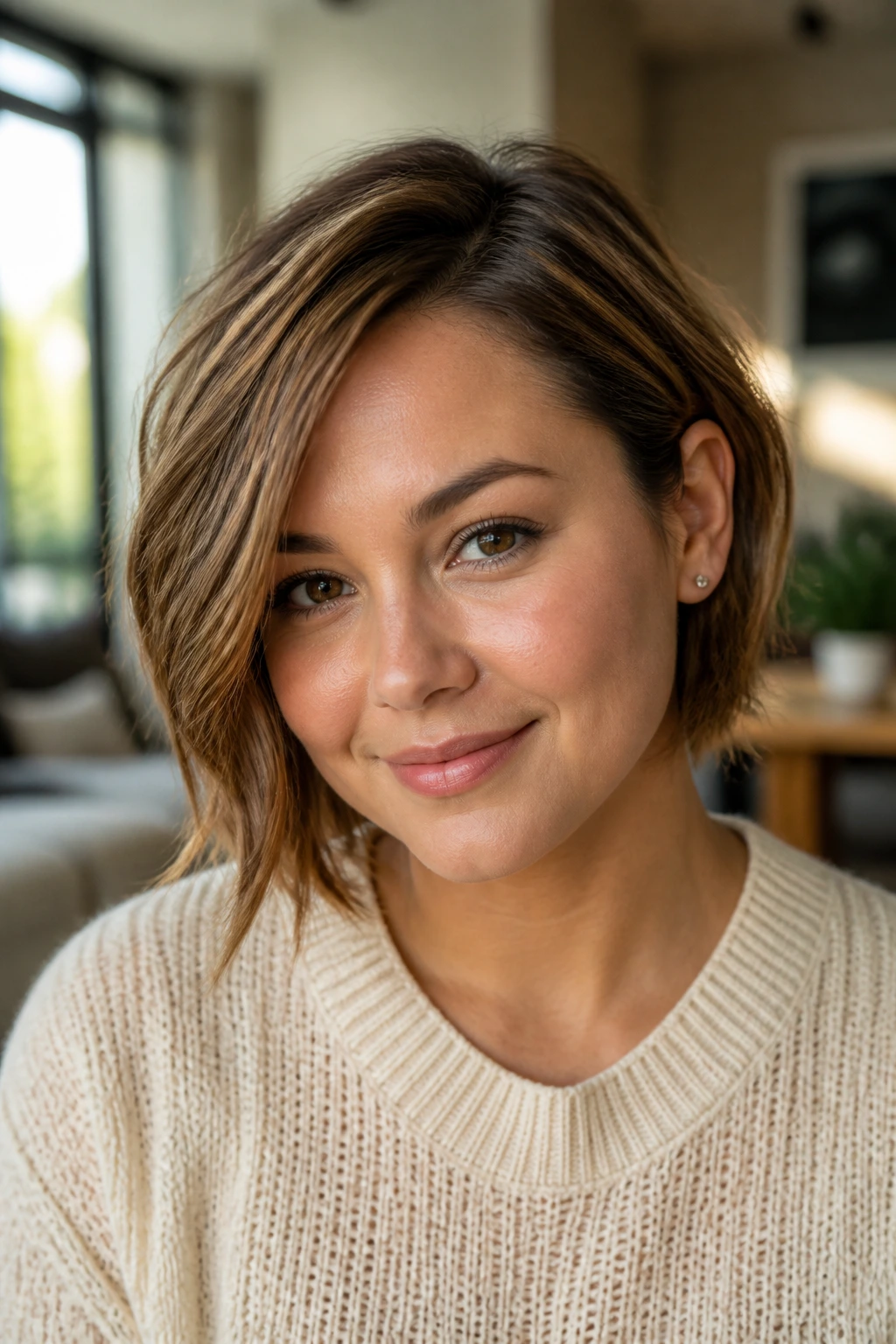
An asymmetrical bob is one of those cuts that sounds more dramatic than it feels. One side sits a little longer than the other, and that diagonal line cuts across the face in a way that a round face usually likes.
The trick is keeping the difference subtle. You do not need one side hanging to the collarbone while the other grazes the chin. A gap of half an inch to one and a half inches is enough to change the line. That slant pulls the eye down and away from the cheeks, which is the real win.
It also plays nicely with texture. A blunt asymmetrical bob can look rigid, but once the ends are chipped out a bit, the shape feels lighter and less boxy. I like this cut with a soft side part and a tucked ear on the shorter side. That tiny asymmetry matters more than people expect.
A round brush and a little bend at the ends keep it from looking stiff. Don’t curl both sides the same way. That kills the whole point.
6. Curly Crop with Tapered Sides
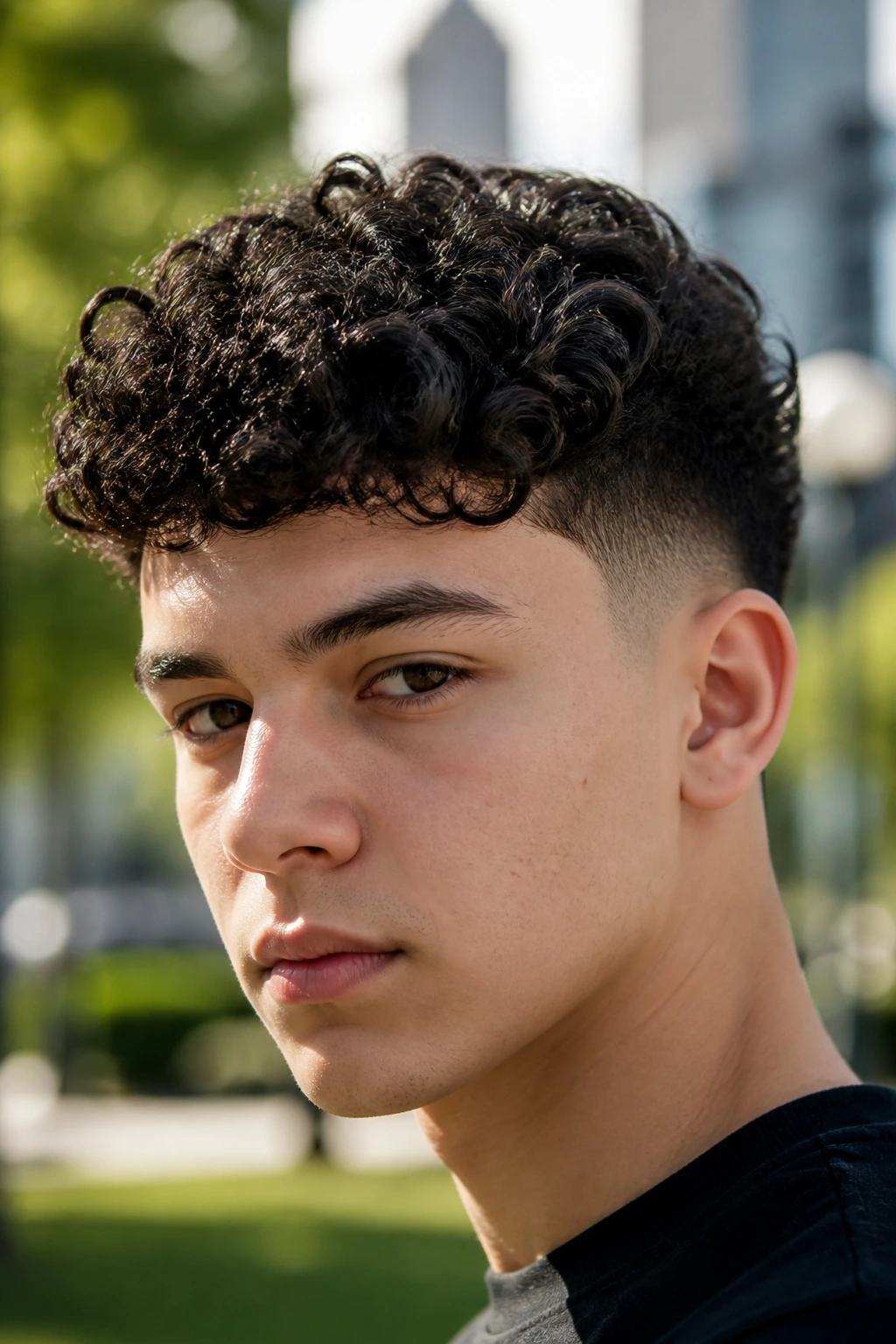
A curly crop can be gorgeous on a round face, but only if the sides are handled with some discipline. Curls love to widen when they’re left too full, and that’s where a lot of cropped curly cuts go sideways.
Unlike a rounded curly bob that spreads at cheek level, a crop with tapered sides keeps the bulk up high and off the lower part of the face. The taper can be gentle or fairly close, depending on curl pattern, but the idea stays the same: let the curls stack above the cheeks, not around them.
This works especially well for 2C through 3C curls that shrink a little when dry. Ask for the top to stay around 3 inches or so, then let the sides tighten gradually around the ears and nape. A curl cream plus gel gives definition; diffuse on low heat and stop before the curls get crispy. Fluffy is fine. Puffy at the cheeks is not.
If you have a round face and curly hair, this cut can feel like cheating a little. It frames the face without crowding it.
7. Taper Fade with Messy Top
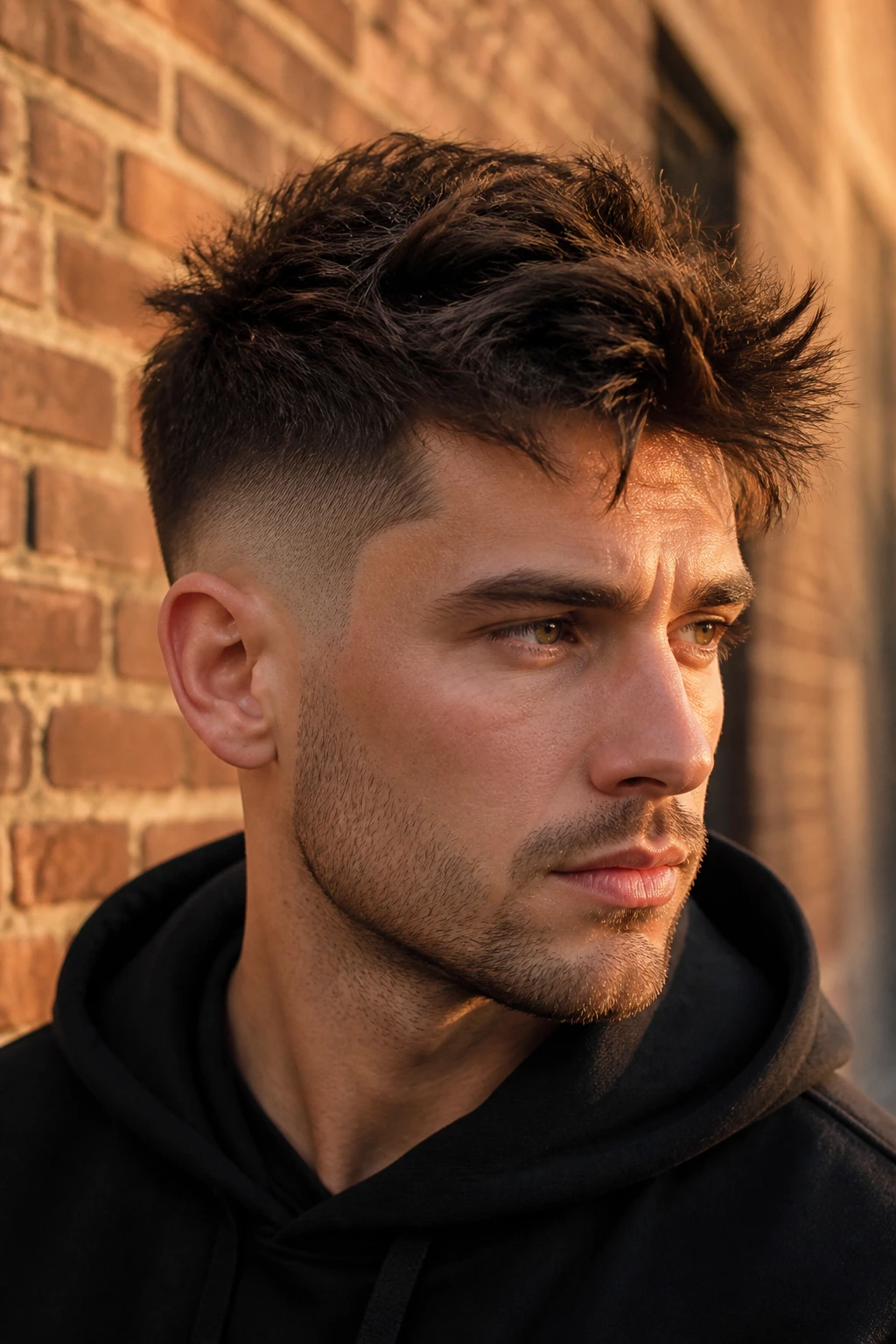
A taper fade with a messy top is one of the cleanest ways to add length to a round face without dragging the whole style into heavy styling territory. The fade clears out the sides, the top carries the shape, and the eye heads upward right away.
Why it works on a round face
The sides should stay tight around the temple and nape, while the top keeps enough length to lean up and forward. A top length of 2 to 4 inches gives enough room for texture. Any shorter and the cut can start to read flat; any longer and you have to style it more carefully.
What to ask for
- A low to mid taper at the sides.
- Texture on top with scissors, not a blunt cut.
- Enough length at the crown to create a slight ridge.
- A matte product, not shiny gel.
The best part is how little effort this needs day to day. Scrunch in a bit of clay, push the hair where you want it, and leave a few pieces uneven. That unfinished top is the point. Too polished, and you lose the lift that makes the face look longer.
8. Curtain-Bang Crop
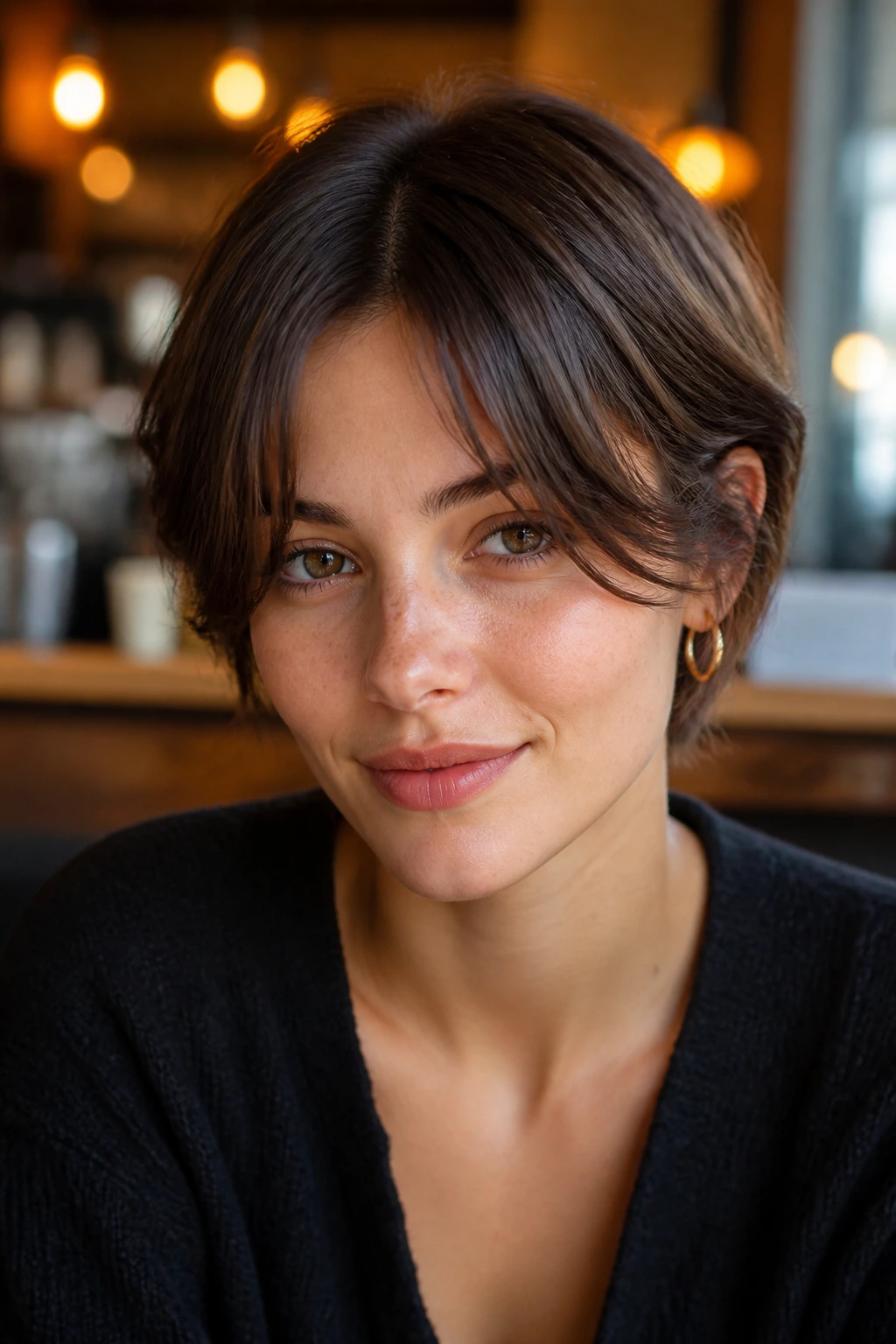
A curtain-bang crop can be a smart move on a round face, but only when the bangs are soft and open enough to move. Dense curtain bangs are a mess here. Soft ones? Much better.
The parting in the middle, or just off it, creates two diagonal lines that guide the eye away from the cheeks. The fringe should sit around brow level to cheekbone level, depending on how short the rest of the cut is. That length lets the bangs sweep instead of sitting as a thick bar across the forehead.
What I like about this shape is how forgiving it is as it grows. You’re not stuck with a hard fringe line. The bangs simply drop into the rest of the cut and keep the face framed.
Use a round brush or even a medium barrel brush to blow-dry the fringe away from the center, then let the ends fold back in a little. A soft bend is better than a perfect curl. Perfect looks fake here. Broken and airy looks better.
9. Razor-Cut Bob
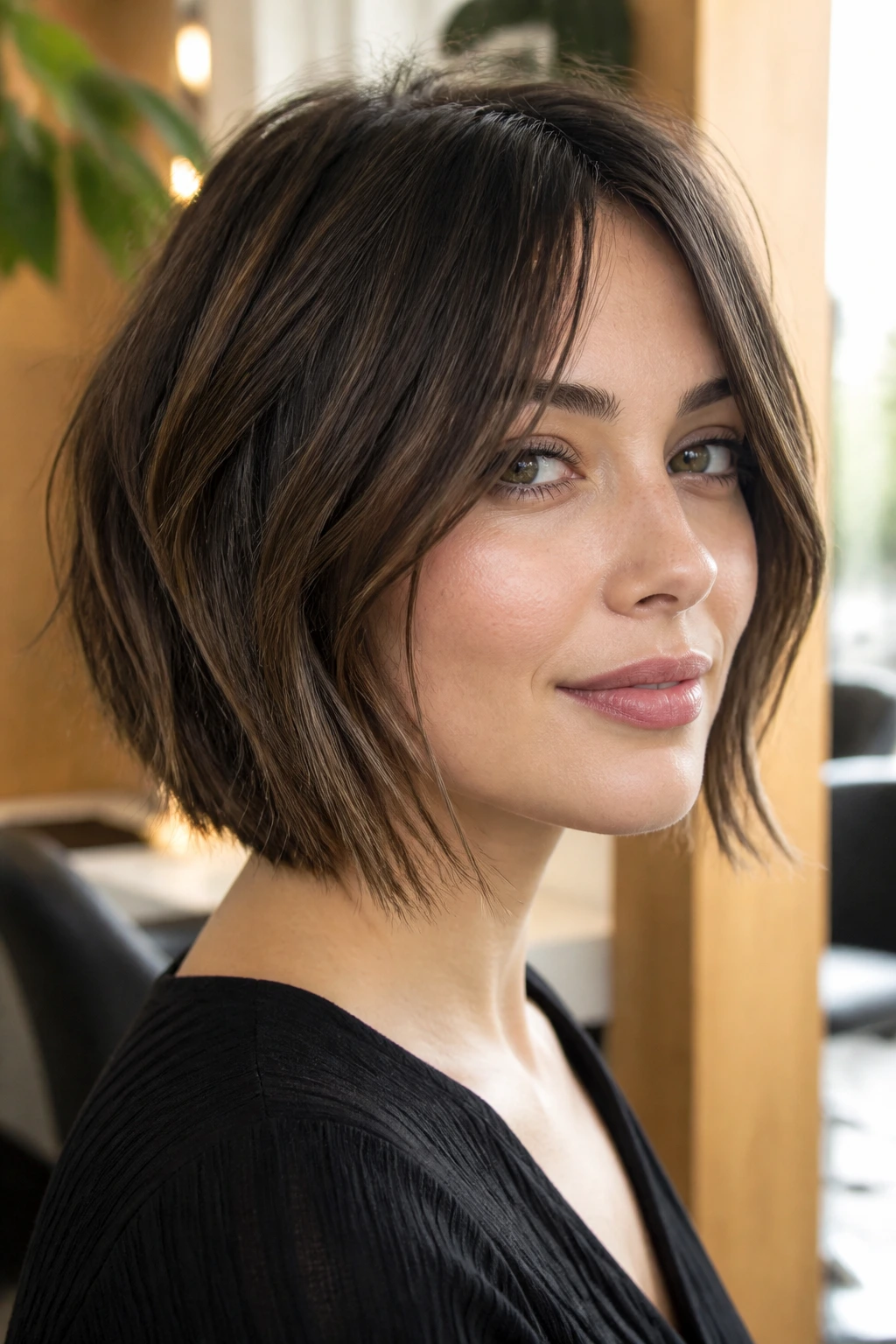
Why does a razor-cut bob feel lighter than a scissor-cut one? Because the blade takes out weight in a way that leaves the ends softer and less blocky, which is exactly what a round face usually wants from a short cut.
A razor should be used with care, though. On healthy, medium to thick hair, it can create those feathery edges that keep the bob from sitting like a helmet. On fragile or very dry hair, it can fray the ends too much, and then the style gets fuzzy instead of airy. That’s not the same thing.
The sweet spot is a bob that lands somewhere between the jaw and the top of the neck, with the front a touch longer than the back. The line stays simple, but the ends have motion. You get structure without the hard edge.
How to style it
Use heat protectant first, then bend random sections with a 1-inch curling iron or a flat iron held vertically. Don’t curl every piece the same way. Finish with a light spray that won’t glue the ends together. The cut should look like it moved on its own.
10. Mini Shag with Feathered Layers
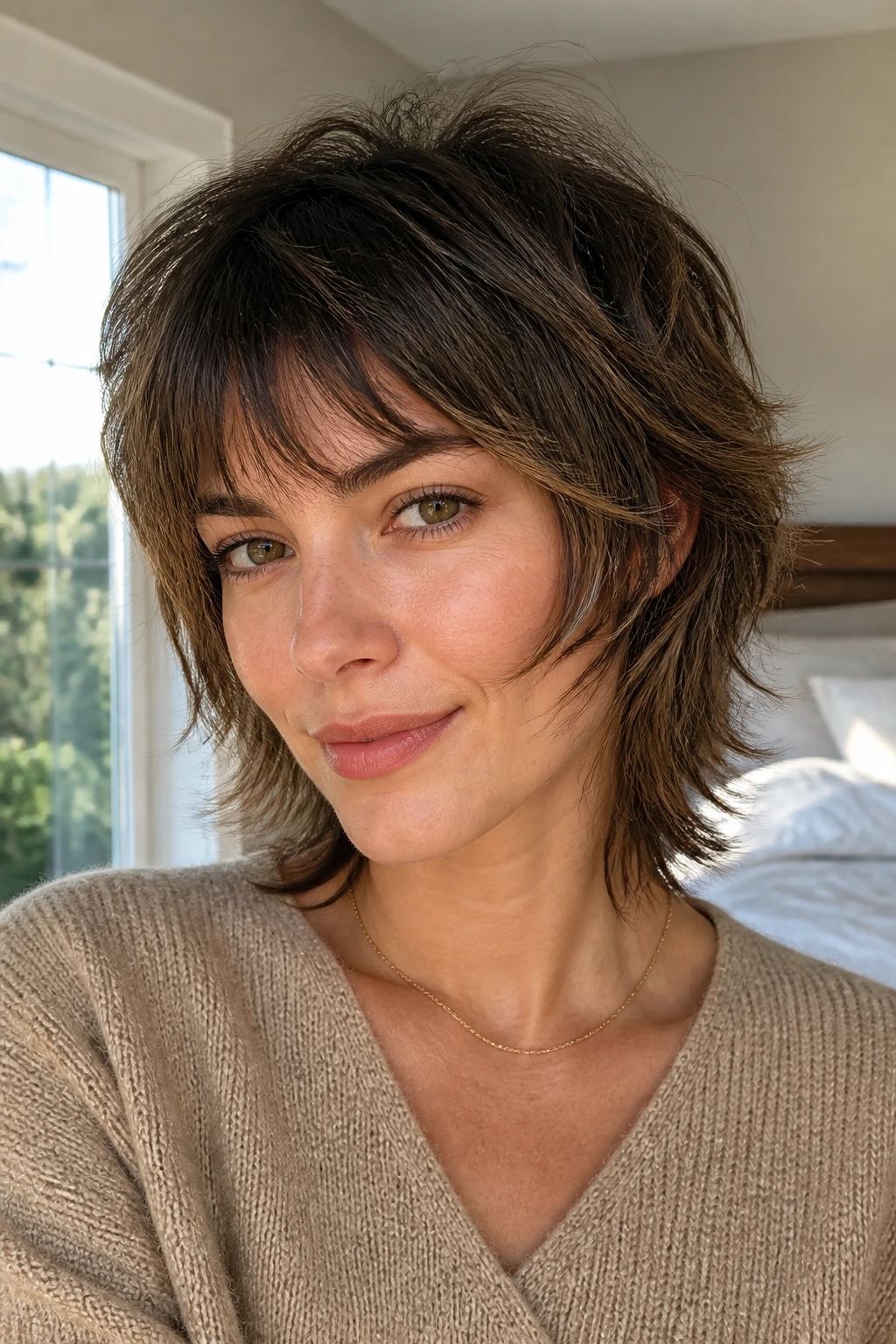
If your hair tends to collapse flat by lunch, the mini shag is worth a serious look. It gives you lift at the crown, movement through the sides, and a little chaos at the ends that keeps the face from looking boxed in.
The shag works on round faces because the layers are not all living at one width. They stack in a broken way. That means the eye sees vertical motion instead of a single wide band of hair sitting at the cheeks. It’s a small difference, but small things matter here.
- Keep the crown around 3 inches so it can stand up a little.
- Let the front pieces graze the cheek to the mouth, not stop at the fullest part of the cheek.
- Ask for feathered ends instead of blunt slices.
- Use a root spray or light mousse if your hair is fine.
The mini shag does best when it looks a little lived-in. That is not sloppiness. It’s the haircut doing exactly what it was built to do.
11. Piecey Undercut Pixie
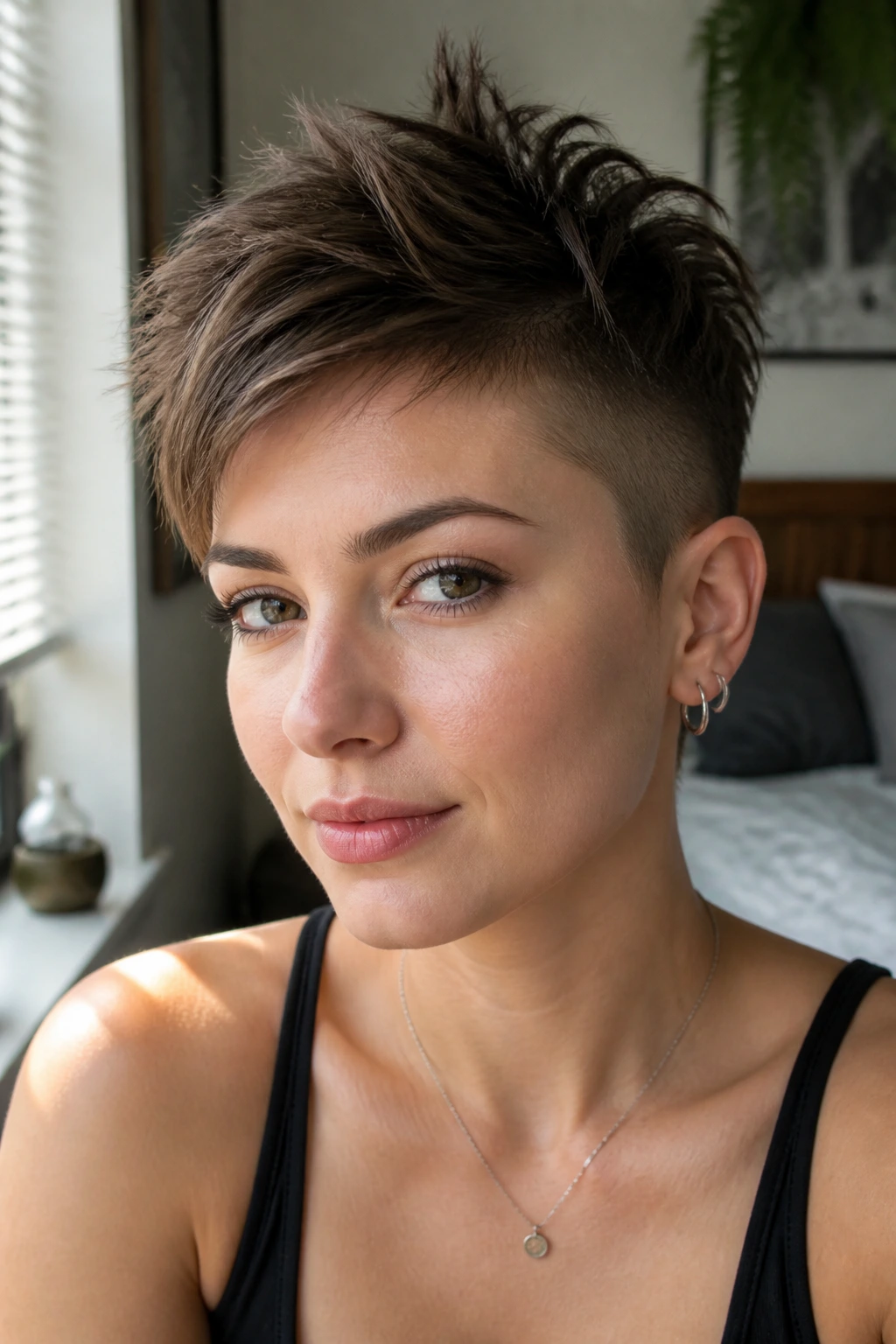
A piecey undercut pixie gives you a lot of shape in a small package. The undercut removes bulk from the sides and nape, while the top stays long enough to separate into little pieces instead of falling as one flat cap.
That contrast is the whole point. Round faces usually do better when the widest part of the haircut is either above the cheekbones or below the jaw. This cut keeps the heavy part away from the middle of the face and puts the visual interest up top.
A close undercut can be as short as a half inch or less, but the top should stay around 2 to 3 inches so you can work it with your hands. I’d use a wax or strong paste, not gel. Gel can make the whole thing shiny and hard, and hard is usually the wrong feel here.
This one has a little attitude, and I mean that in a good way. It looks sharp without needing to be sleek.
12. Blunt Bob Softened with Internal Texture
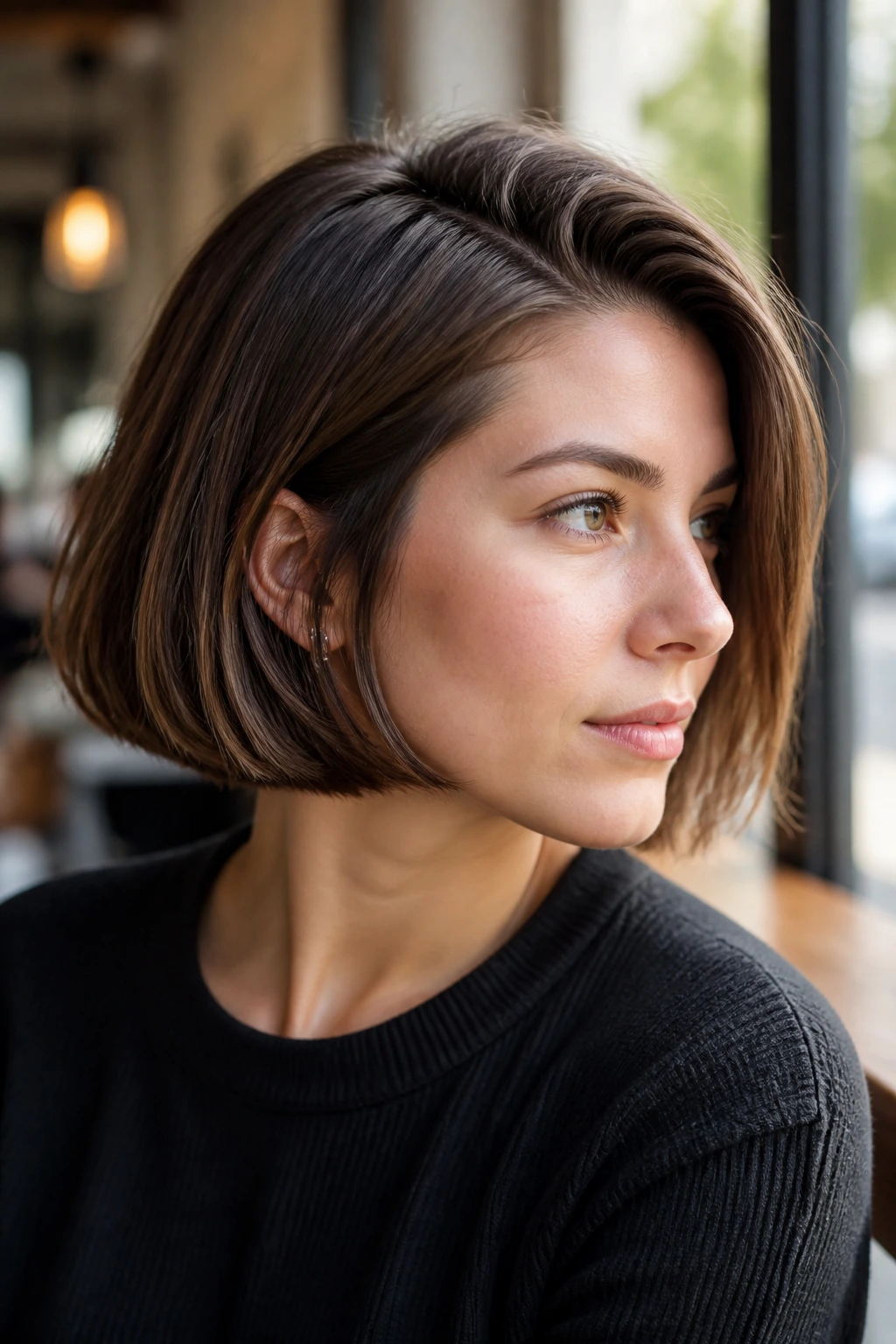
A blunt bob can be risky on a round face, but it does not have to be banned from the conversation. The clean outline can look very polished if the inside of the cut is softened with hidden layers.
Unlike a classic one-length bob that sits as a single block, this version keeps the edge but removes some of the weight underneath. That gives the hair movement when you turn your head, even though the outside line still looks neat. It’s the kind of cut that works for people who want order, not mess.
The length matters more than the label. On a round face, I’d keep it just below the jaw or longer, because a blunt cut that lands right at the chin can make the cheeks look fuller. A side part helps, too. It gives the bob a little diagonal pull and keeps the symmetry from getting too perfect.
If you like hair that air-dries into place, this is a good one. If you hate fuss, even better.
13. Spiky Crop with Micro-Fringe
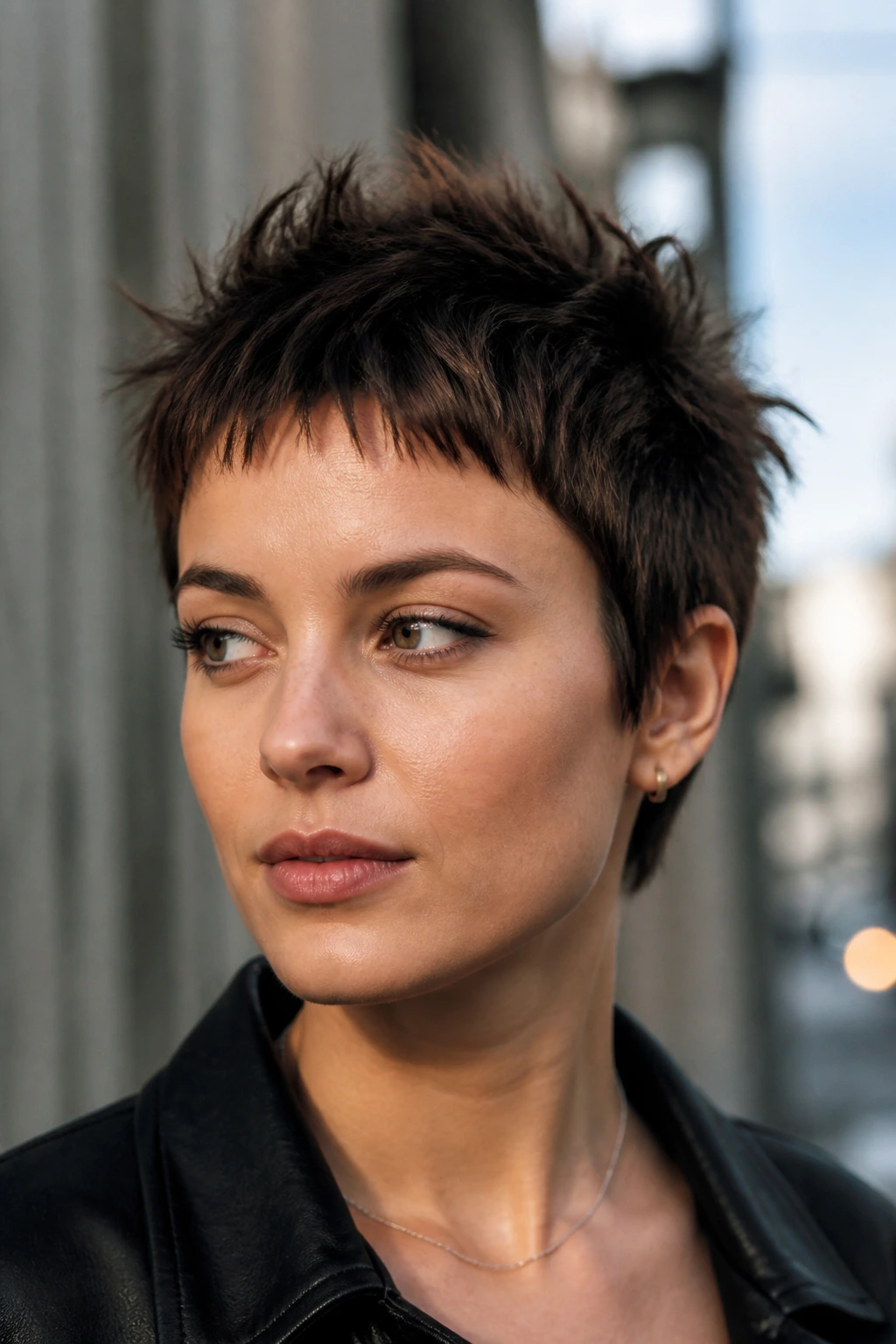
A spiky crop can look fantastic on a round face when the texture is broken up instead of sprayed into stiff points. The shape should feel playful, not crunchy.
Why it works
The short fringe keeps the forehead open enough to avoid that heavy, top-heavy look, while the spiky crown pulls attention upward. A micro-fringe can sit a quarter inch to half an inch above the brows, but it should be uneven, not cut as one flat line. The top usually works best at 1.5 to 2.5 inches.
Haircut notes to bring to the salon
- Ask for chipped ends on top.
- Keep the sides tight, especially near the temples.
- Leave the fringe broken, not square.
- Use a tiny amount of pomade, warmed in your palms first.
This cut has bite. It suits dense hair that needs some direction, and it also works on fine hair if the top is cut with enough separation. The main thing is restraint. Too much product and the spikes look glued. Too little and the shape falls asleep.
14. Feathered Pixie with Long Crown Pieces
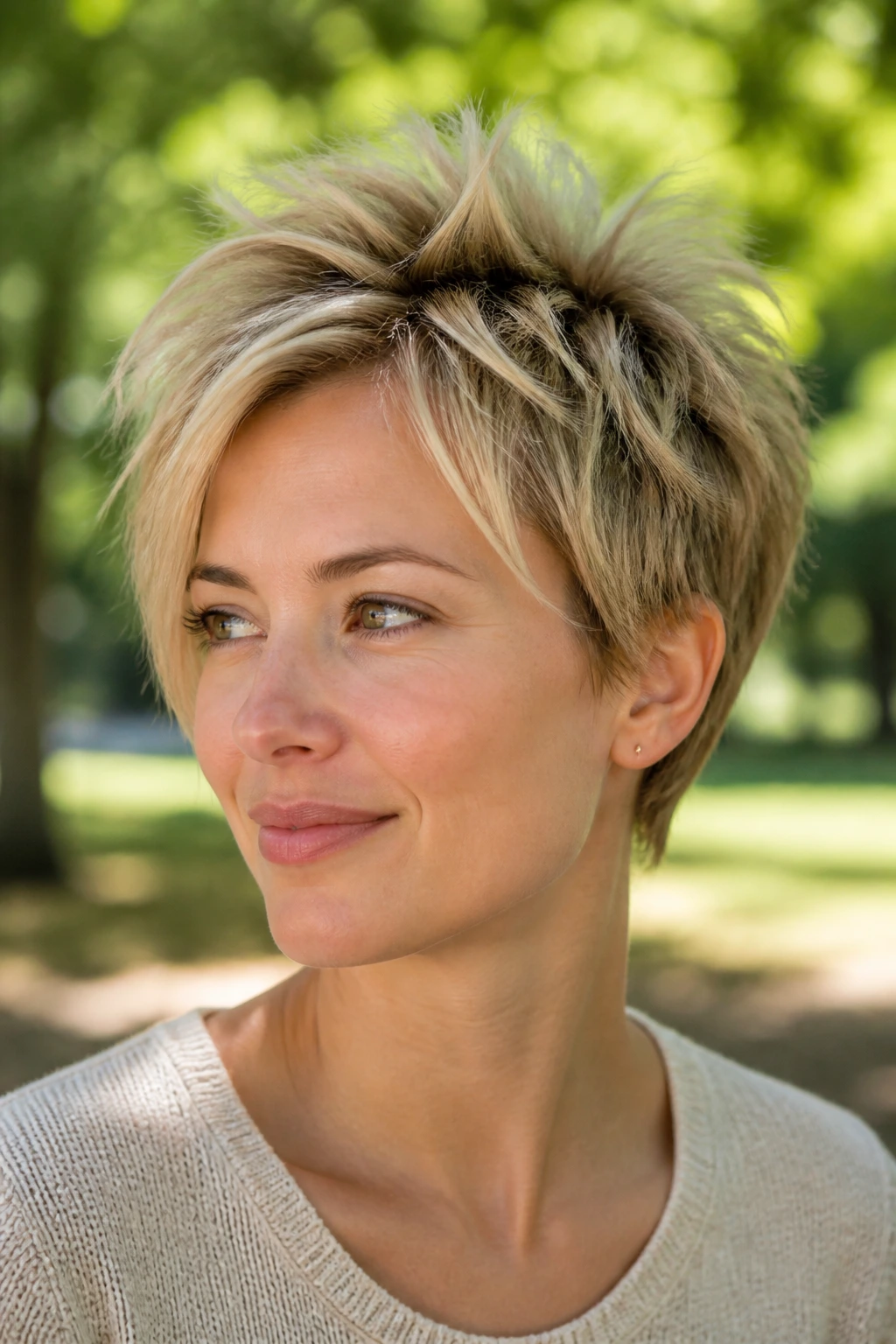
This is the cut for people who hate the feeling of a helmet on their head. A feathered pixie keeps the sides short but lets the crown and top pieces move in soft layers, which gives the face some lift without adding a lot of bulk.
The feathering is what saves it on a round face. Instead of a chunkier, more solid pixie, the ends are broken and light. That means the haircut moves when you move, and it doesn’t sit as a wide block around the upper cheeks. The longer crown pieces can be pushed up, swept to one side, or just roughed up with your fingers.
Ask for the crown to stay around 3 to 4 inches and the temple area to taper gently so the shape narrows near the ears. Point-cutting around the front keeps the line soft. If the hair is thick, a little thinning at the right spots helps. Too much thinning, though, and the cut goes fluffy in a bad way.
I’d style this with a light mousse on damp hair and a dab of cream once it’s dry. Nothing heavy. The cut should feel breezy, not greasy.
15. Textured Lob with a Soft Off-Center Part
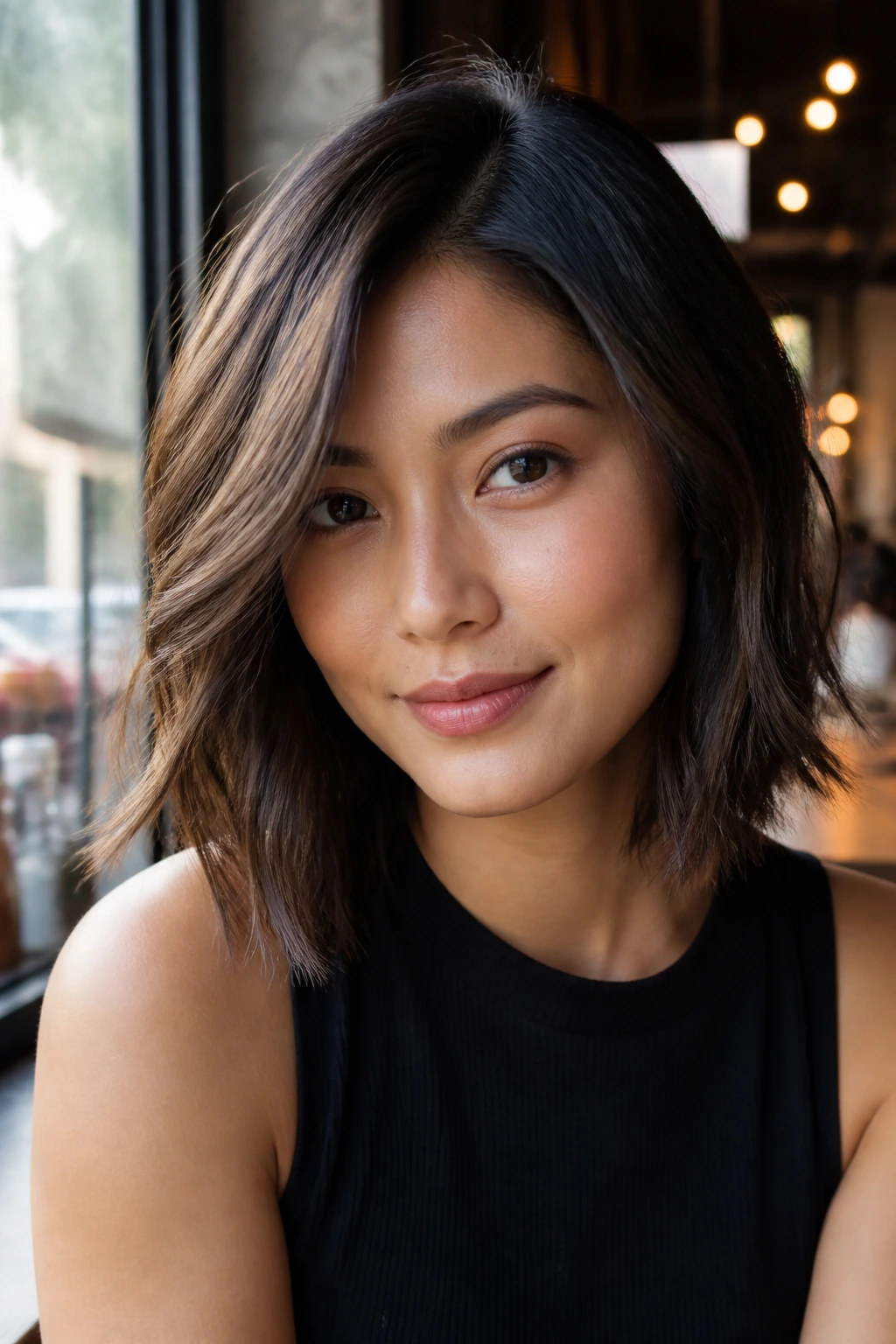
Can a lob count as short? If it sits around the collarbone and has broken ends, yes. And on a round face, that little extra length can be a gift, especially when the part is shifted just off center.
The off-center part keeps the face from feeling boxed in, while the texture stops the lob from looking like one long curtain. A little bend at the ends helps, too. You want movement, not uniform waves that mirror each other on both sides.
How to style it
Use a 1.25-inch curling iron or a flat iron to add a loose turn through the mid-lengths, then brush it out with your fingers. Leave the ends slightly imperfect. That tiny bit of unevenness keeps the haircut from looking too done. If you wear your hair behind one ear, keep the tucked side softer and let a few pieces fall around the cheek on the other side.
This is one of the easier cuts on the list. It grows out nicely and still gives a round face that longer line people usually want.
16. Messy Bowl Cut with Broken Edges
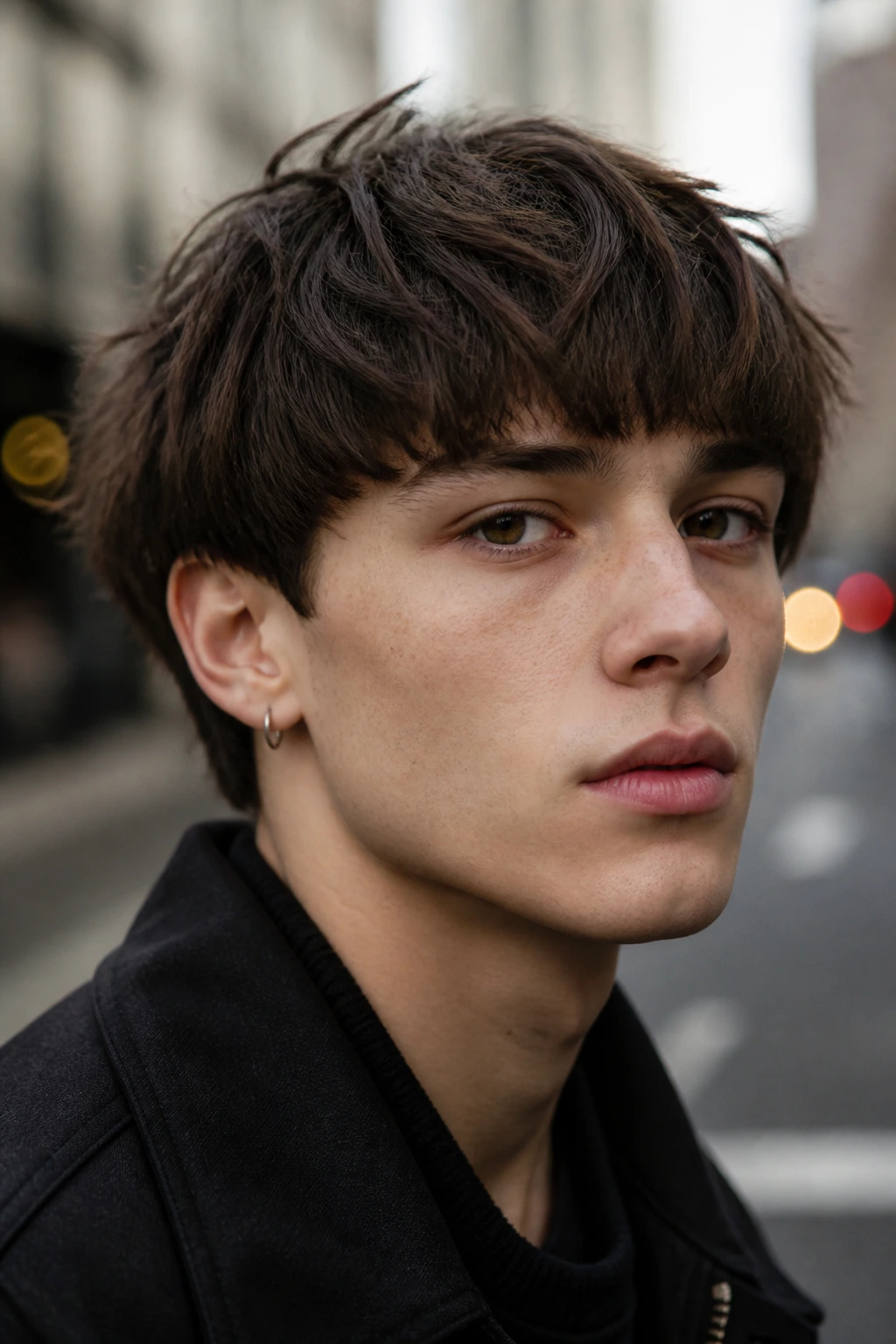
Not the old bowl cut. Not even close. The version worth wearing now has broken edges, a softer fringe, and a tapered nape so the shape feels airy instead of heavy.
A round face can carry this cut when the fullness sits high and the perimeter does not hit the cheeks squarely. The trick is keeping the edge rough and the fringe fragmented. A blunt bowl line that lands right at cheek level is a different story. That one usually adds width where you do not want it.
- Keep the fringe piecey, not helmet-like.
- Ask for the sides to be lighter around the ear.
- Leave the crown with a little lift, around 2.5 to 3.5 inches.
- Finish with a matte cream or soft styling balm.
What saves this style is the tension between the shape and the texture. If the silhouette is clean but the ends are broken, the cut feels modern in the plain sense of the word: easy to wear, easy to maintain, and not trying too hard.
17. Tucked-Side Textured Crop
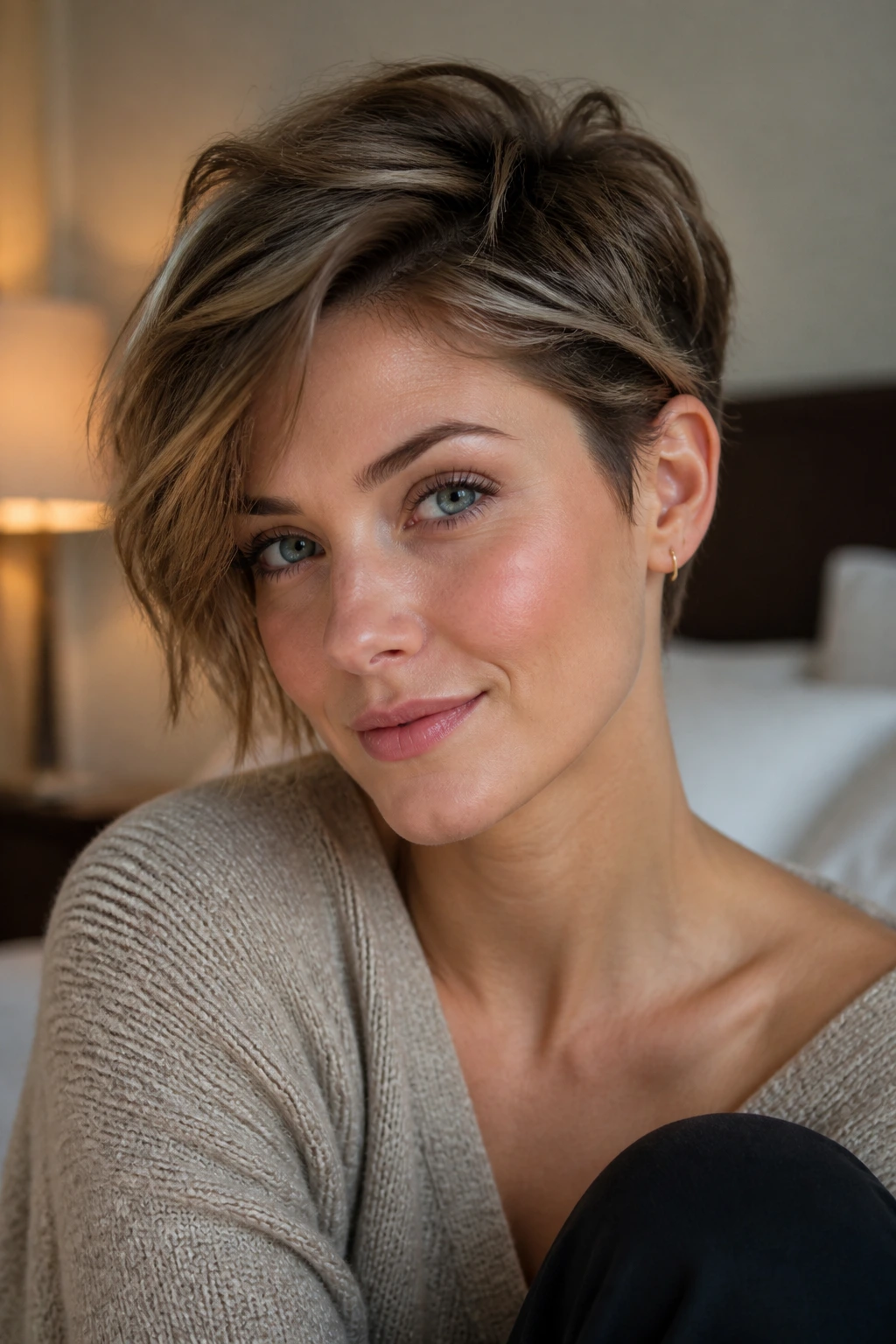
A tucked-side crop is one of those cuts that looks simple and ends up doing a lot of quiet work. One side is kept loose, the other gets tucked behind the ear, and that small asymmetry lengthens the face in a way that feels natural.
This is a smart pick if you wear glasses, because the tucked side leaves room for the frames while the loose side keeps the haircut from going flat. It also works well with waves, since the texture gives the tucked side something to hold onto instead of slipping out immediately.
The cut itself should stay short around the ears and nape, with enough length on top to create movement. You don’t need a dramatic undercut or a bold fade. A gentle taper is enough. A little dry wax on the fingertips helps separate the pieces near the front, which keeps the crop from reading too neat.
It’s a low-drama style. That’s the appeal. You get shape, not fuss.
18. Layered Crop with Side-Swept Fringe for Round Faces
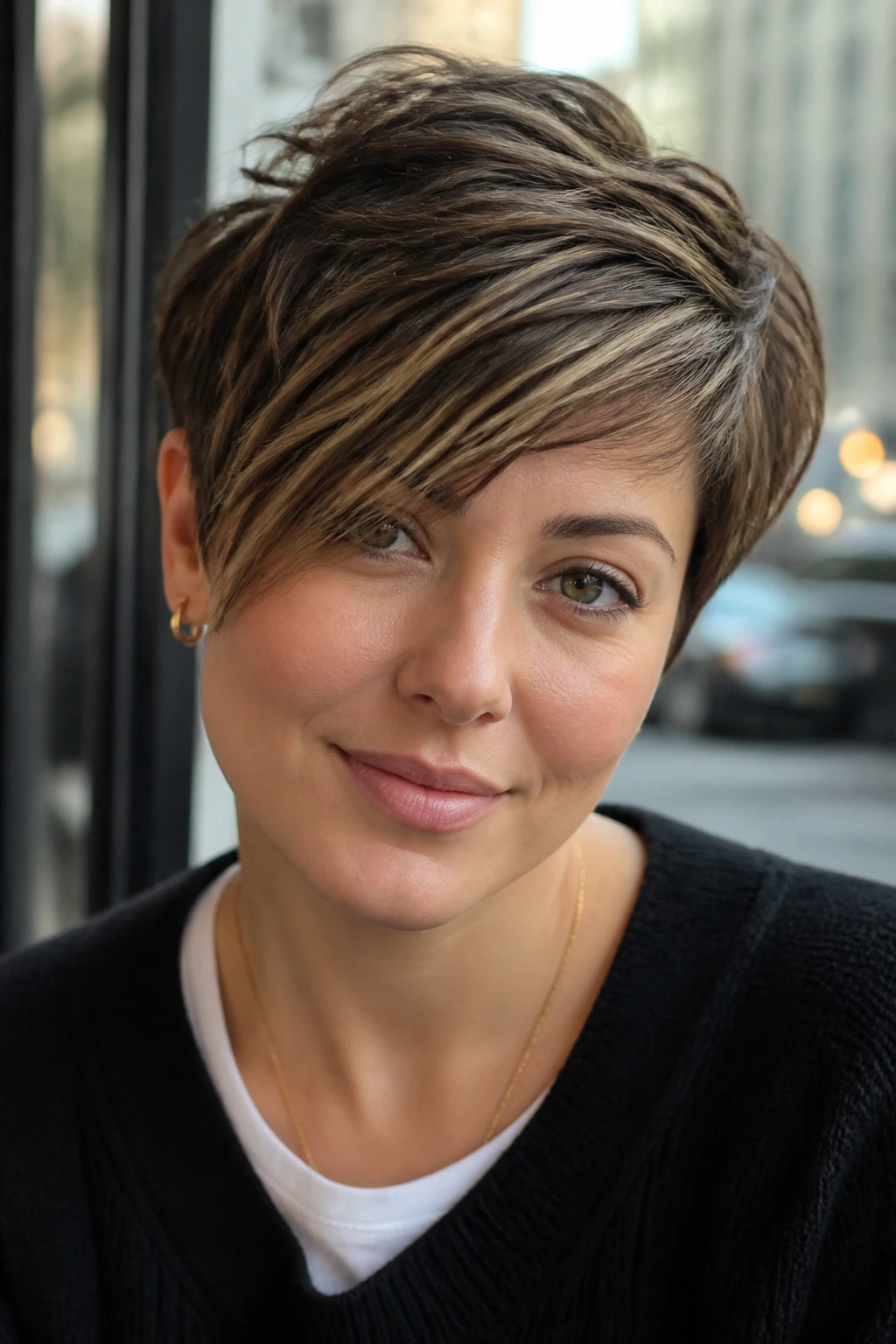
A side-swept fringe is one of the easiest ways to make a short haircut flatter a round face without getting fussy about it. Unlike a heavy fringe that cuts the face straight across, this one keeps the eye moving diagonally.
The haircut underneath should stay layered and light, with enough length on top to let the fringe sweep instead of stick. I like this shape when the fringe sits somewhere between the brow and the cheekbone, depending on the texture of the hair. It keeps the forehead partly open, which helps the face look a little longer.
This cut is especially good if you want something manageable. The fringe can be air-dried to one side, then nudged into place with a touch of cream or spray. If your hair is fine, ask for internal texture so the top does not fall flat. If it’s thick, ask for a bit more removal around the crown and temple so the fringe doesn’t fight the rest of the cut.
It’s a calm haircut. No drama, no awkward width, and not much effort on a Tuesday morning.
