



A round face does not need to be hidden. It needs a little shape. The best wavy hairstyles for round faces work because they change where the eye travels: up at the crown, down through the lengths, or diagonally across the face instead of straight across the cheeks.
That sounds picky, and it is. Placement matters more than people think. A wave that starts right at cheek level can make the face look wider, while the same wave pushed below the jawline can make everything feel longer and lighter. Small change. Big payoff.
Placement beats texture.
So if your hair is naturally wavy, you are already halfway there. If it’s straight, you can fake the movement with a curling iron, a flat iron bend, or even a big Velcro roller set on the front pieces. The trick is choosing a shape that flatters the face you have, not the face you wish the mirror showed.
1. Long Layers with a Center Part
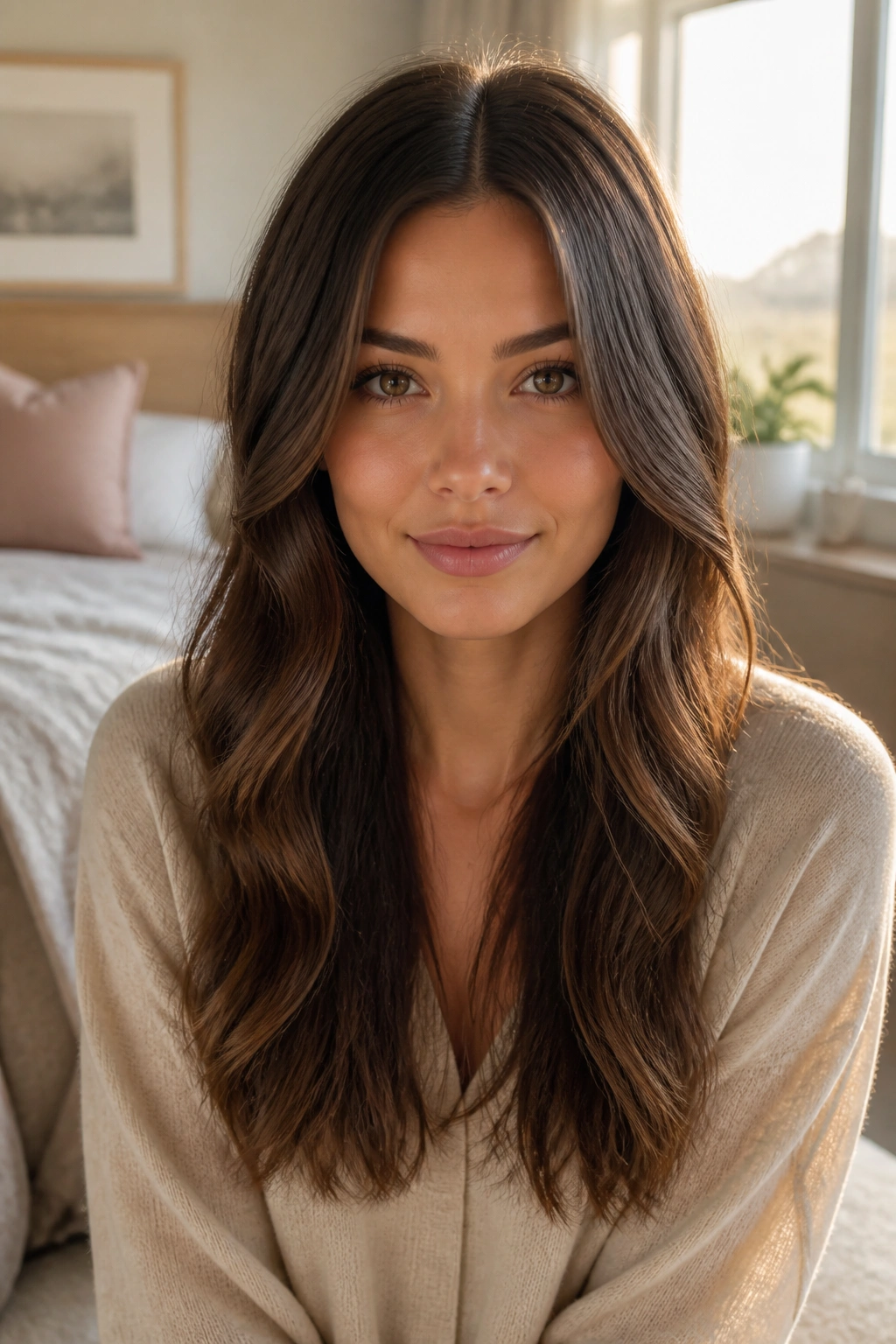
Long layers and a center part are one of the easiest ways to stretch a round face visually. The straight line down the middle creates a vertical path, and the layers keep the ends from hanging like one heavy curtain. That matters more than people realize.
Why it works
The magic is in the balance: height at the crown, softness at the edges. If the longest pieces fall below the chin, the face looks longer right away. Add loose waves through the mid-lengths and ends, and the whole shape feels airy instead of boxy.
- Ask for layers that start around the collarbone or lower.
- Keep the part clean and slightly off-center if a dead-center part feels too severe.
- Wrap hair away from the face with a 1.25-inch iron for soft bends.
- Finish with a light mist of flexible spray, not a stiff helmet.
I like this one because it works on thick hair and medium-density hair without much fuss. It also grows out well. That matters. A haircut that only looks good for one week is a headache.
2. Deep Side-Part Loose Waves
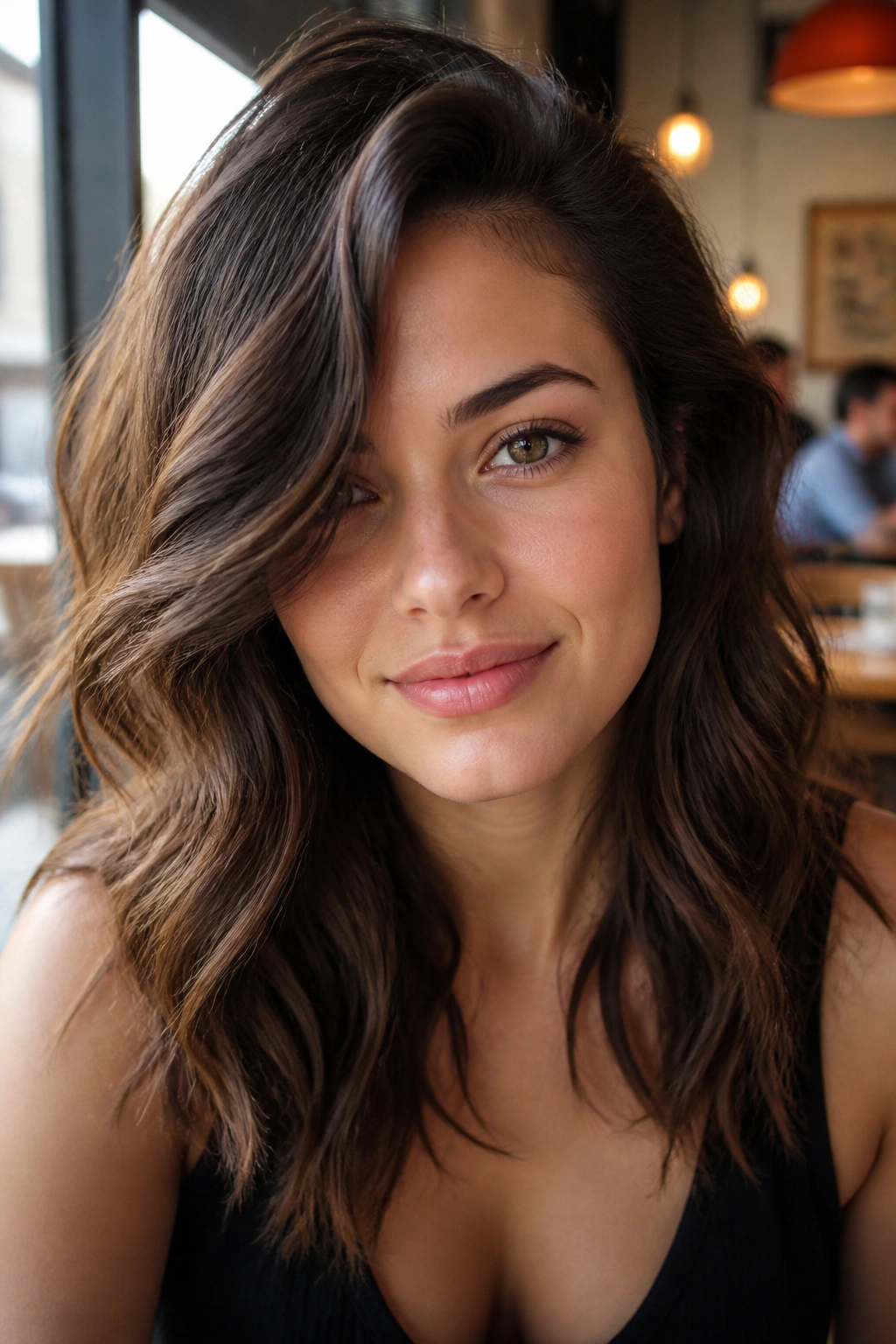
A deep side part is one of the fastest fixes for a round face that needs a little angle. It breaks up symmetry, and that alone makes the cheeks feel less dominant. You do not need dramatic curls here. Soft, loose waves are enough.
The part should sit low enough to create a sweep across the forehead, then the waves should fall past the jaw. That diagonal line is doing a lot of work. It draws the eye from one side of the head to the other instead of letting it sit squarely in the widest part of the face.
This style is especially kind to fine hair because it gives the illusion of lift without needing huge volume. Thick hair likes it too, though you may want a few hidden layers to keep the wave from feeling bulky around the sides. A little bend, not a lot of puff, is the sweet spot.
If you only change one thing about a haircut or style, make it this: move the part, then move the weight.
3. Curtain Bangs with Mid-Length Waves
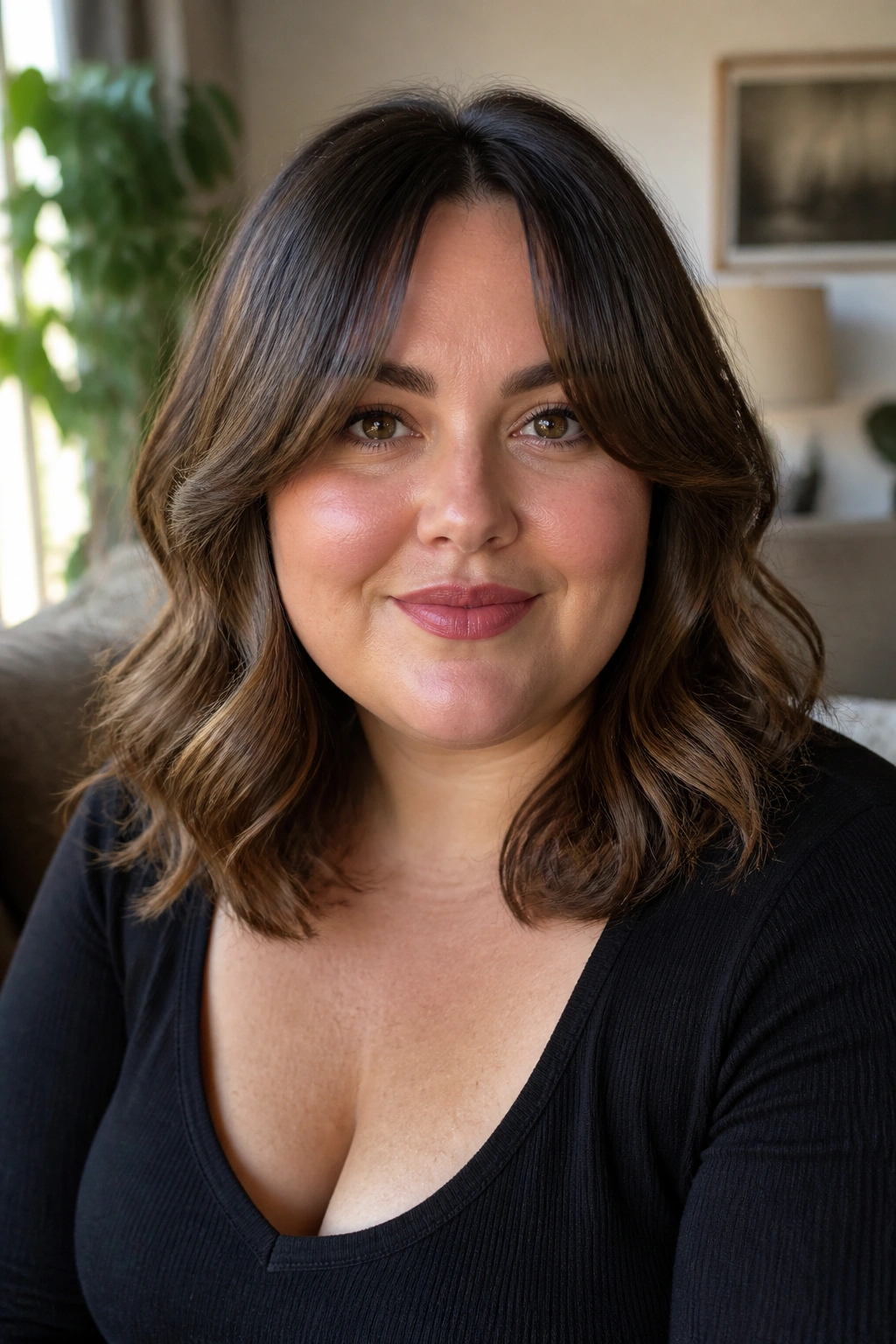
Curtain bangs are a smart choice when you want softness around the face without cutting the face in half. The center opens up like a small frame, and the longer sides graze the cheekbones instead of sitting on top of them. That matters for round faces, which usually look best when the fringe curves outward, not straight across.
How to ask for it
Ask for bangs that are shorter in the middle and longer toward the temples. You want the shortest pieces to sit around the brow or just below it, with the side pieces skimming the cheekbone or upper lip. Too short and they can tighten the face. Too heavy and they can make the forehead feel crowded.
Style them with a round brush or a medium-barrel iron, bending the ends away from the cheeks. Keep the rest of the hair in loose waves. The fringe should open the face, not swallow it. That’s the whole game.
This cut is especially good if you like a little movement near the eyes. It feels relaxed, but not lazy.
4. Collarbone-Length Lob with Airy Bends
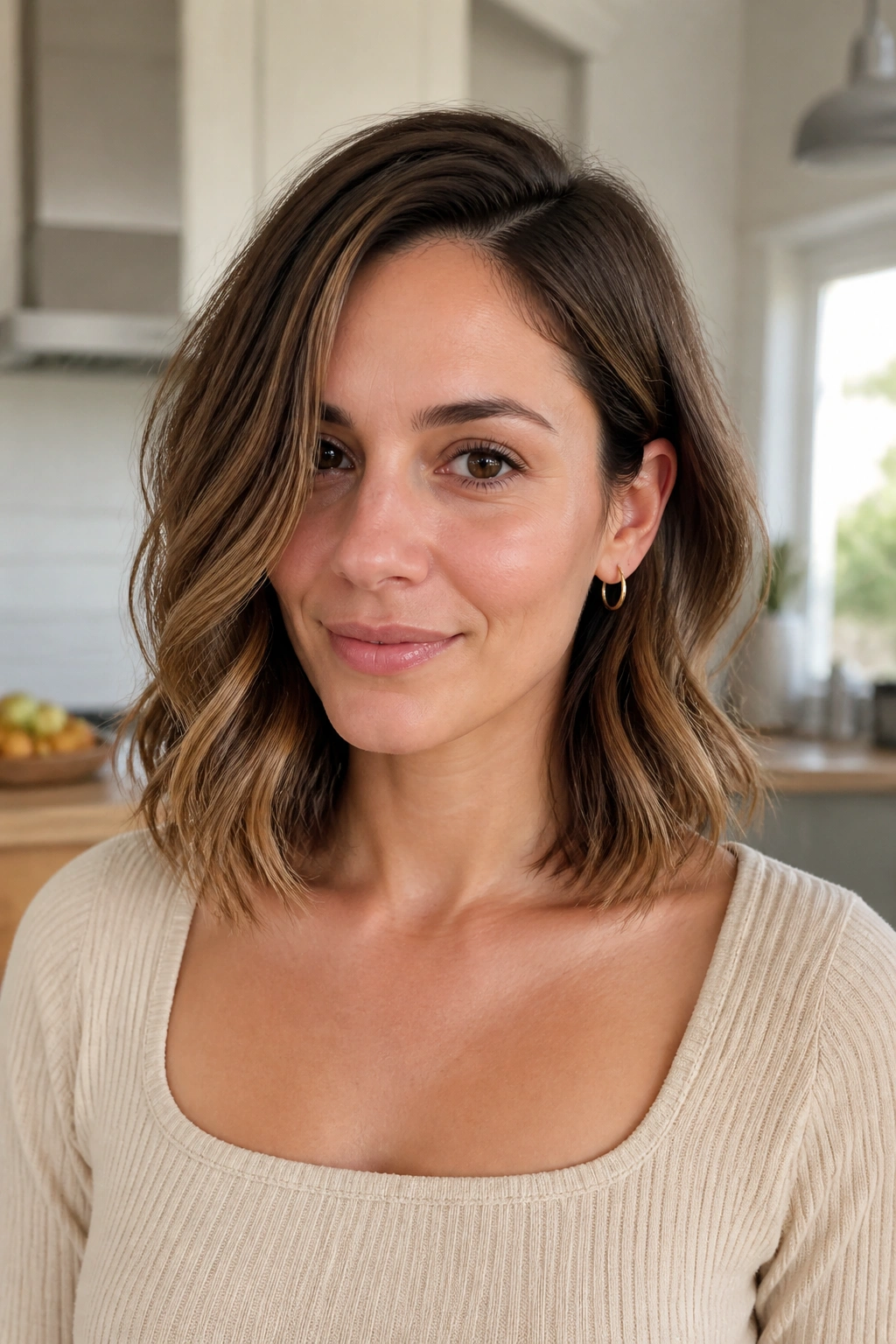
A collarbone lob is one of those cuts that looks plain on a hanger and excellent on a real person. The length sits right where the face starts to narrow, which gives your waves room to move without puffing out at the cheeks. That little bit of breathing space changes everything.
Picture this cut on a person who wears their hair tucked behind one ear and leaves the other side loose. The shape is clean, a little sharp, and still soft. That’s the appeal. It gives structure to a round face without looking severe.
The bend should stay loose, almost like the hair was pulled through a large curling iron once and then brushed out with your fingers. Keep the ends slightly uneven or feathered, not blunt. A blunt edge at the jaw can make the face read wider than it is. Collarbone length keeps the whole look from feeling too heavy.
This one works for office days, dinners, and the kind of mornings when you have five minutes and a decent brush.
5. Wavy Shag with Long, Broken Layers
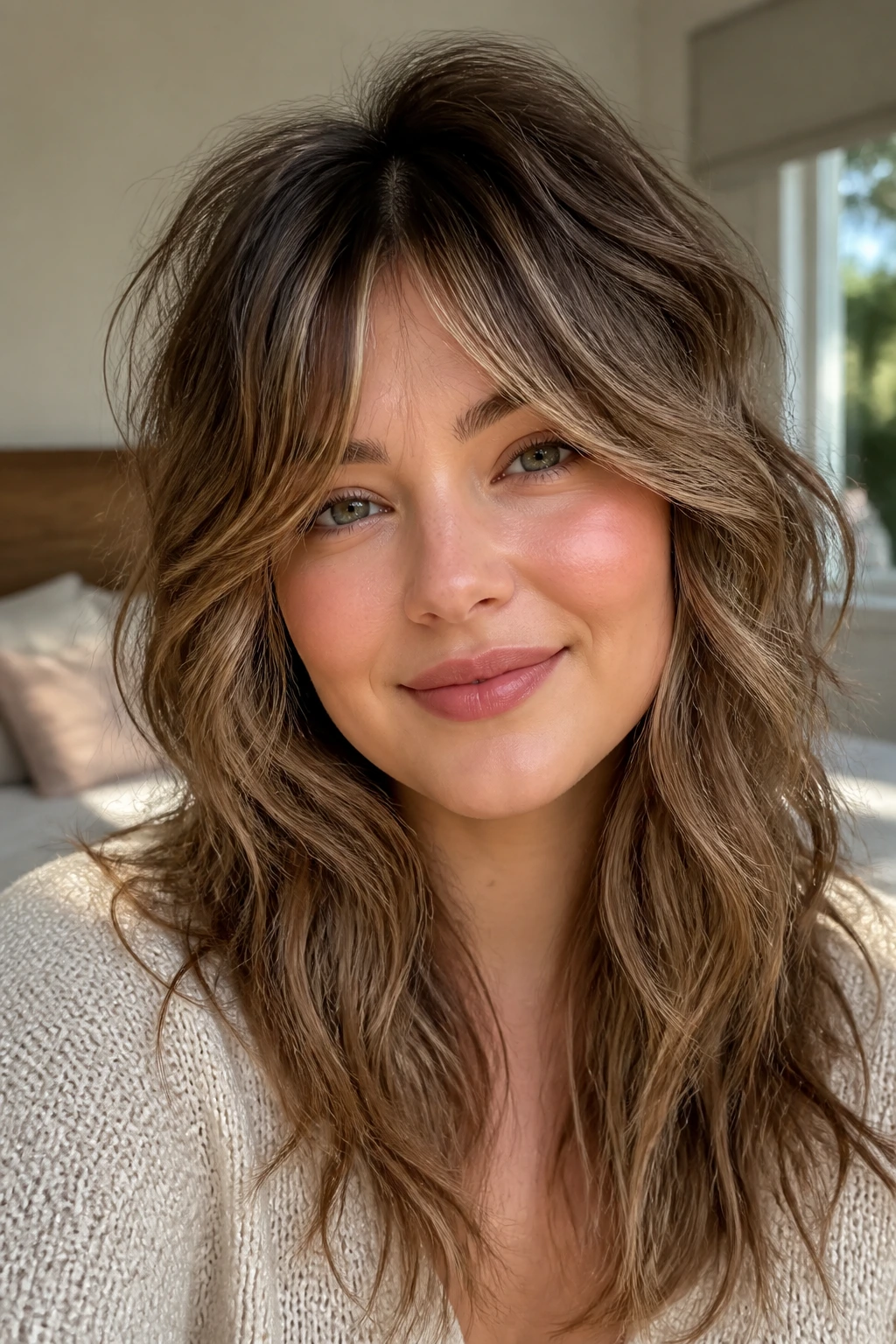
A shag sounds risky on a round face until you see the right version of it. The key is softness. Short, choppy layers up top can get puffy fast, so I prefer a shag where the movement starts higher on the head but the perimeter stays long enough to keep the shape from blooming outward at the cheeks.
The best version has a little grit around the crown, some face-framing pieces near the jaw, and longer layers that hang through the back. That combination makes the hair feel alive without turning it into a triangle. It’s messy in a controlled way. Not a mess, just not too neat.
Waves help the cut. So does a bit of bend in the bangs if you wear fringe. The whole style looks better when you scrunch a small amount of mousse into damp hair and let it dry with a diffuser or air-dry braid. Too much brushwork kills the point.
This is one of my favorites for hair that gets flat by lunch. The shag keeps moving even when the day gets boring.
6. Asymmetrical Wavy Bob
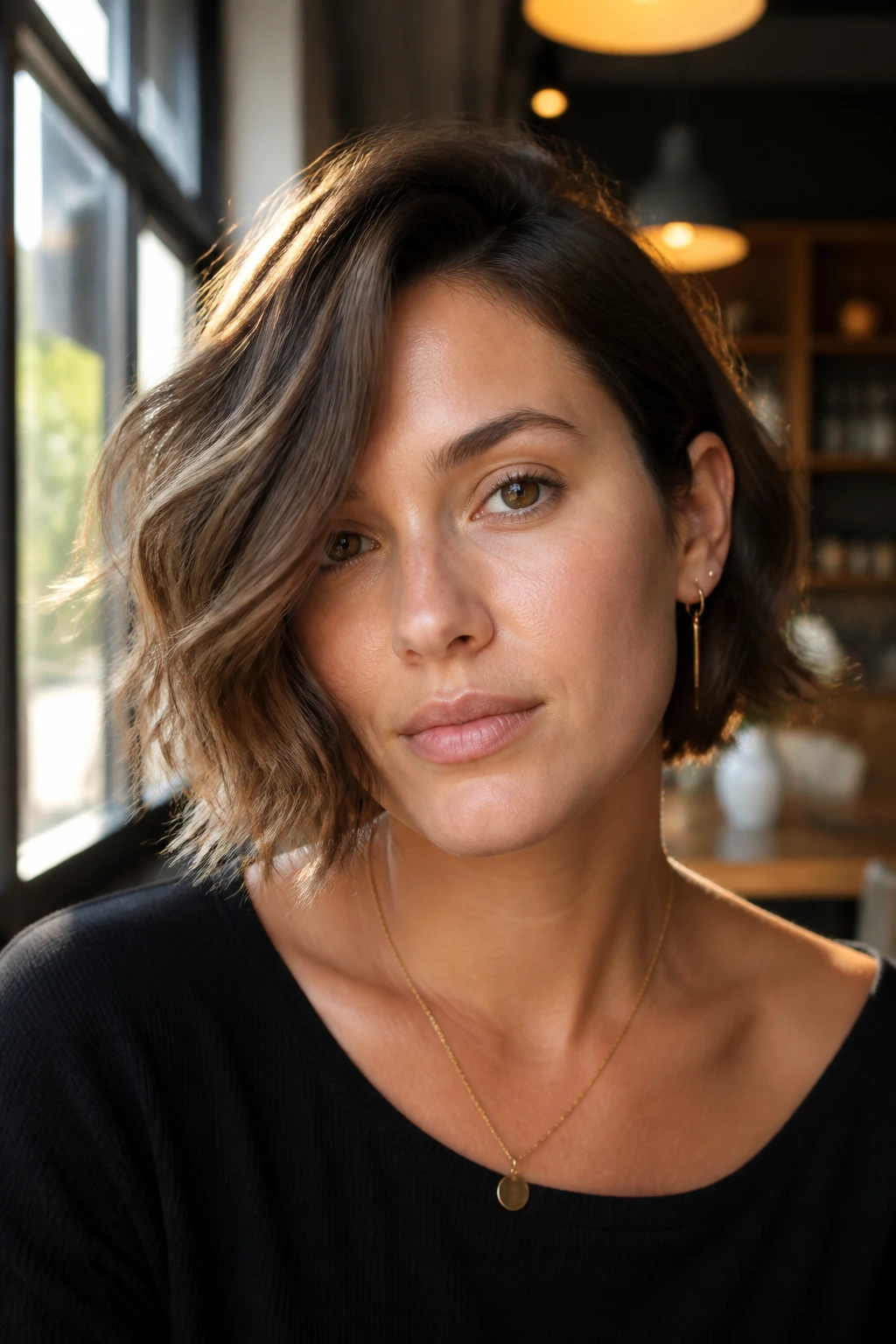
An asymmetrical bob gives a round face something it rarely gets from a short cut: direction. One side sits a touch longer than the other, and that uneven line creates instant shape. It is subtle, not theatrical. That’s the difference between chic and costume.
What to tell your stylist
Ask for one side to land closer to the jaw and the other to sit a bit below it. The wave should be soft, with the longest side carrying most of the movement. If both sides curl inward tightly, the face can feel boxed in. If the waves are brushed into a gentle bend, the effect is sharper and lighter.
This cut likes a clean part and a tucked side. It also likes a little shine spray, because the shape is part of the style. The asymmetry gives the haircut an edge, while the wave keeps it from feeling hard. A round face often looks better in a cut that points somewhere. This one points beautifully.
It is not the quietest haircut on the list. That’s a good thing.
7. Face-Framing Layers Starting at the Cheekbones
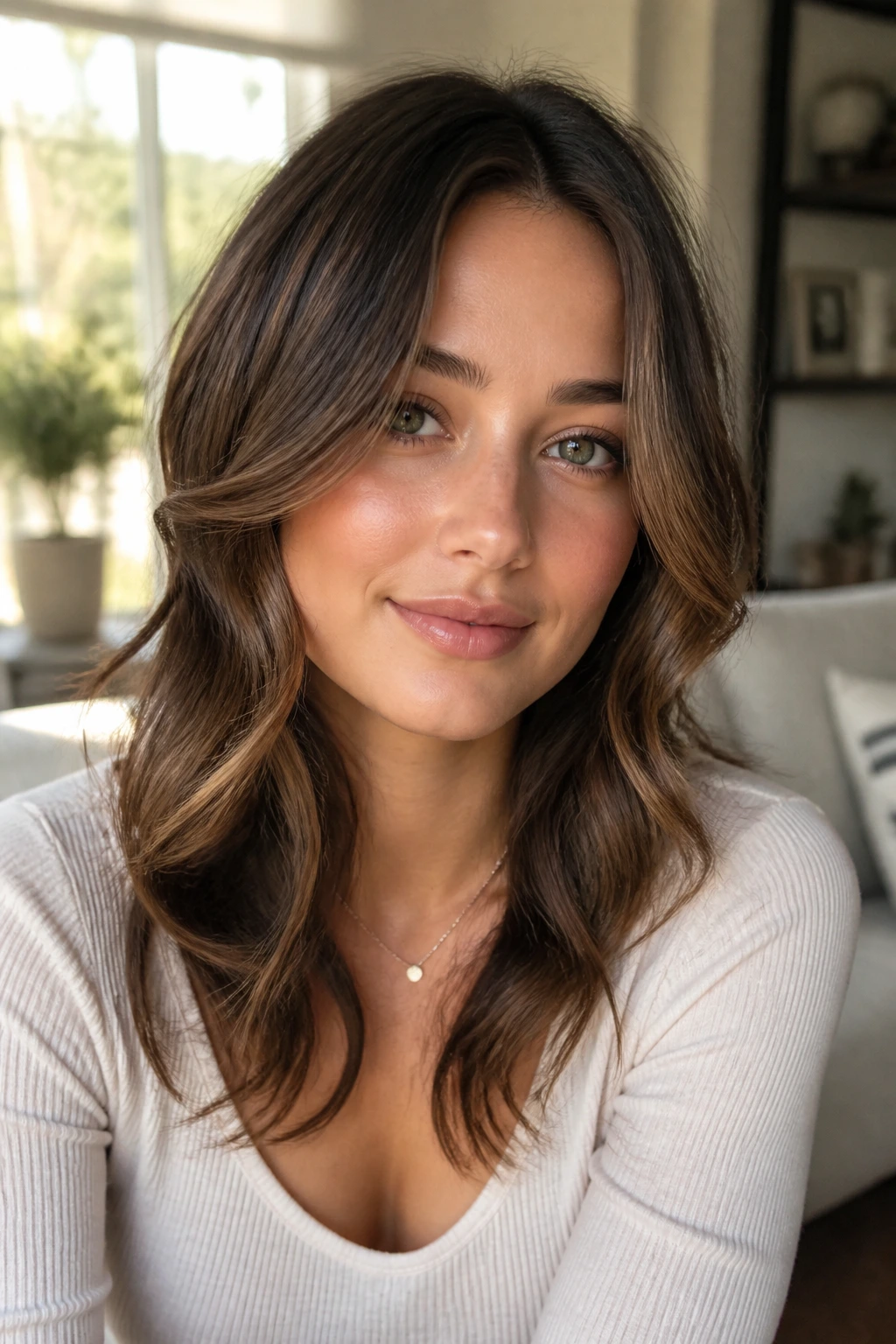
Where the first layer falls matters more than people admit. If it starts too high, the face can look wider. If it starts too low, the cut may feel heavy and dull. Cheekbone level is the sweet spot for many round faces because it lets the hair skim past the fullest part of the face without sitting on it.
Think of these layers as soft lines running downward. They should move with the wave, not fight it. When the front pieces curve away from the cheeks and taper toward the collarbone, the whole face reads longer. The effect is quiet, but it’s there.
This style is a good fit if you don’t want bangs. It also works well if you like wearing hair behind one ear, since the front sections still do some of the visual work. The best face-framing layers do not shout. They simply change the outline.
A lot of stylists cut too much face-framing hair. You want enough to shape the face, not so much that it becomes the whole haircut.
8. Shoulder-Grazing Beach Waves
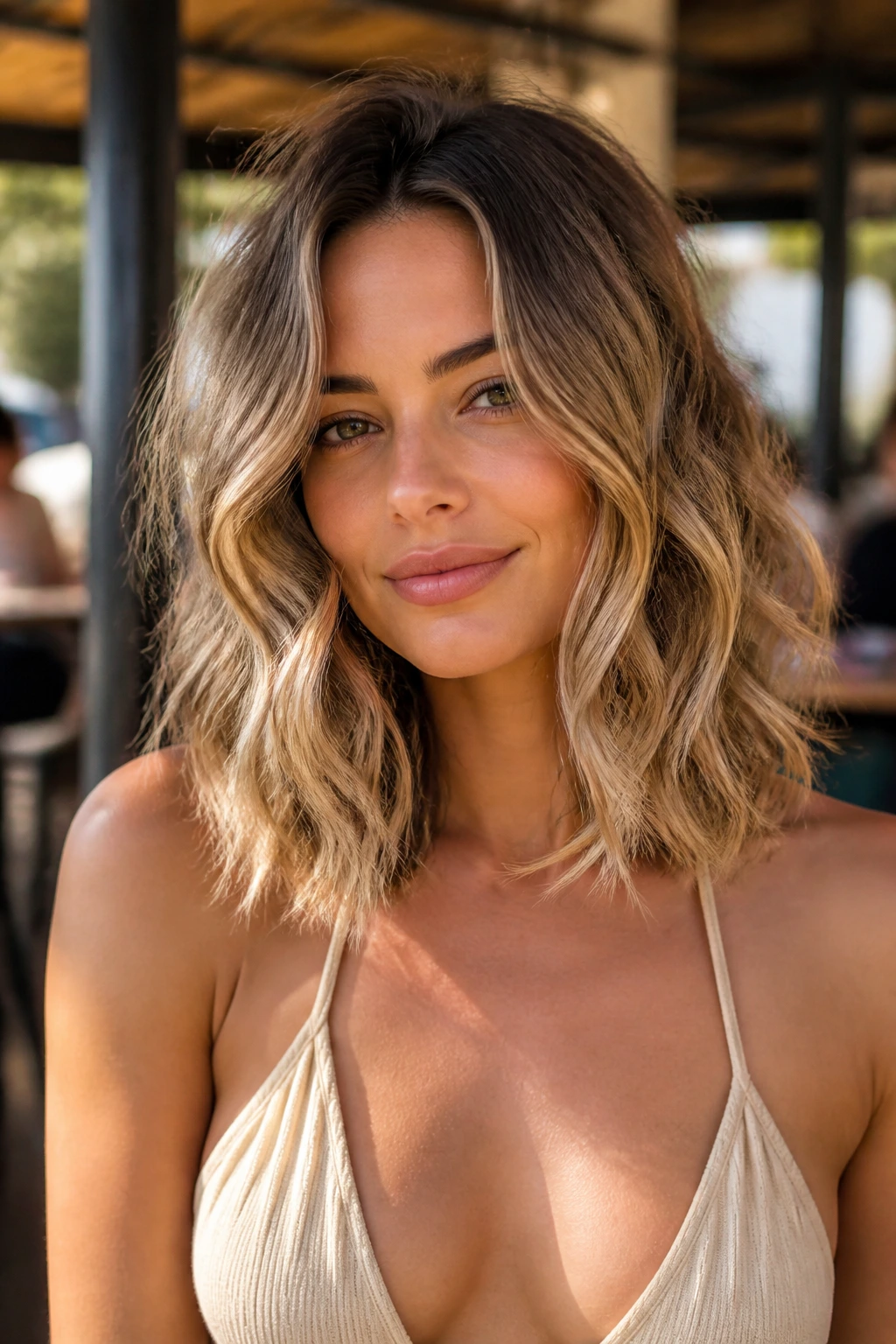
Shoulder-grazing waves are a safe place to land when you want something easy and flattering. The length sits below the widest point of the cheeks, and that keeps the face from looking too broad. Loose beach waves add motion, but they don’t need to be big or overdone.
A little root lift helps here. If the top lies flat, the ends can make the face feel wider. If the crown has some height and the waves start lower, the shape becomes more vertical. That’s why this cut can look great even on days when you barely style it.
Spray in a salt mist only at the mid-lengths and ends, then scrunch. Don’t drench the roots. That usually creates roughness where you least want it. A clean crown and textured ends are a better trade than volume everywhere.
This is one of the easiest styles to live with, which is part of its charm. It’s casual, but not sloppy.
9. Half-Up Twist with Loose Lengths
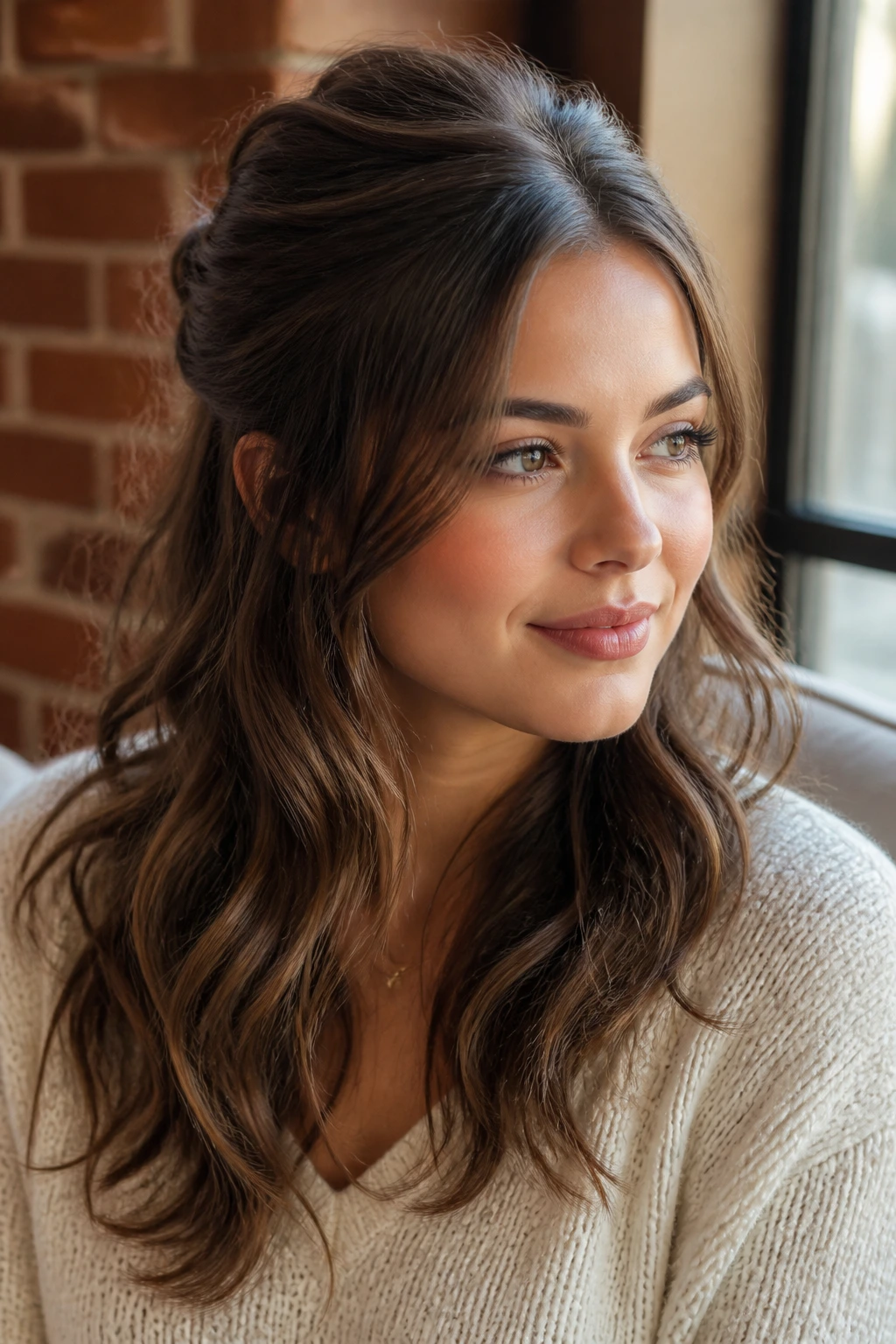
Half-up styles can work well on round faces when they add height at the crown and keep the sides soft. A twist or small lift in the back draws the eye upward, while the loose front pieces soften the cheeks. That combination is doing a lot with very little effort.
The trick is not pulling too much hair back. Leave enough around the face so the style doesn’t expose every curve at once. A few loose waves near the temples make the look feel relaxed. A tighter pull can do the opposite and make the face feel more open than you want.
I prefer this with a slight wave rather than tight curls. The shape looks more modern, and it stays flattering if the strands fall out during the day. Height at the crown is the friend here. Flatness is not.
If you need a quick style for brunch, a meeting, or a day when your hair is half cooperative, this one earns its keep.
10. Old-Hollywood Side-Swept Waves
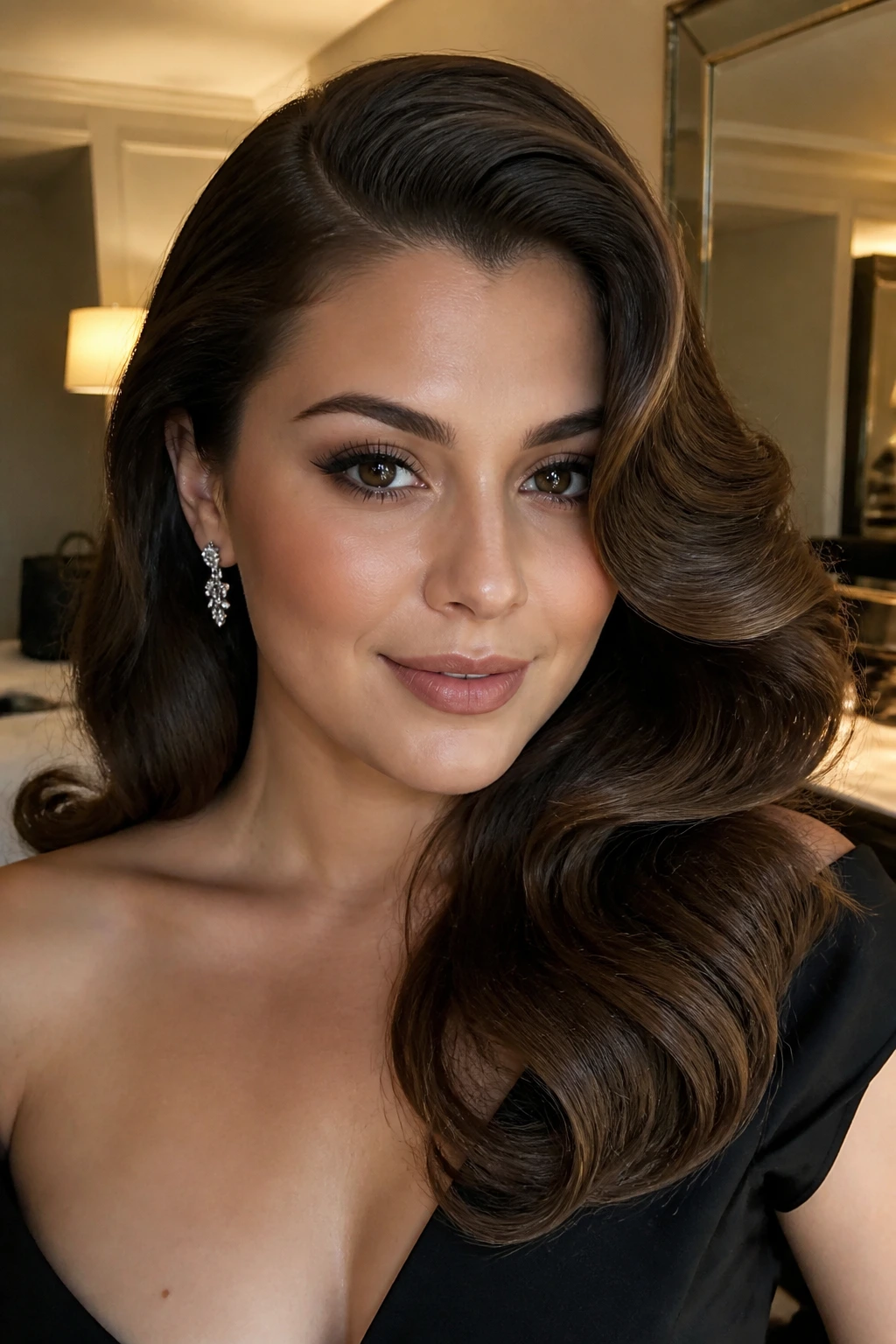
Old-Hollywood waves are more polished than beach waves, and that’s exactly why they work so well on round faces. The deep side part and smooth S-pattern create a long diagonal line across the head. That line trims visual width without making the face look harsh.
What to watch for
- Keep the wave controlled from root to mid-length.
- Let the ends fall below the jaw.
- Use a side part that gives one side a little more height.
- Brush the waves into a smooth curve, not a fluffy curl.
This style is lovely when you want a dressed-up finish. It does ask for a little patience, though. The wave pattern needs to be set, pinned, or cooled in place before you brush it out. If you skip that part, the style loses the clean shape and starts to look mushy.
Gloss matters here. A smooth wave reflects light better and reads as intentional. That makes the face look longer and the hair look richer.
11. Soft Wolf Cut with Longer Ends
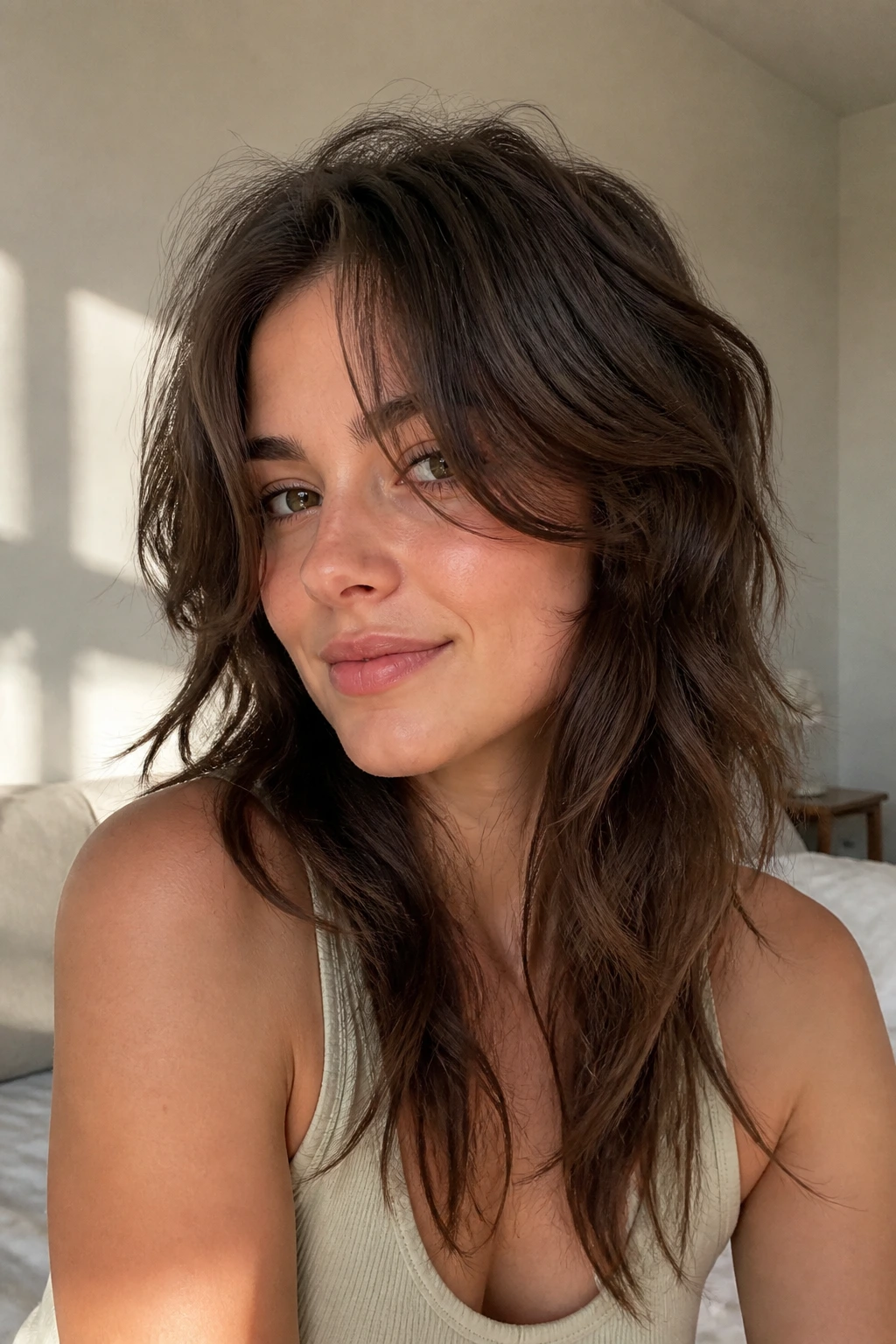
A wolf cut can absolutely work on a round face, but only if the version you choose keeps the length under control. The point is texture, not bulk. Long ends stop the haircut from ballooning at the sides, while the shorter crown layers add lift and a little edge.
The softer version is the one to choose. Think broken layers, not aggressive chops. The face should still have room to breathe, which means the front should stay a touch longer than the crown. When the layers are too short near the cheeks, the cut can read wide. When they’re spaced out better, the shape feels airy and modern.
This style loves natural wave. It also loves a rough-dry and a bit of styling cream. If you overbrush it, the whole point disappears. The wolf cut should move, not puff.
Some people think this cut is only for very cool hair types. It isn’t. The right version is surprisingly forgiving.
12. Flipped-Out Lob
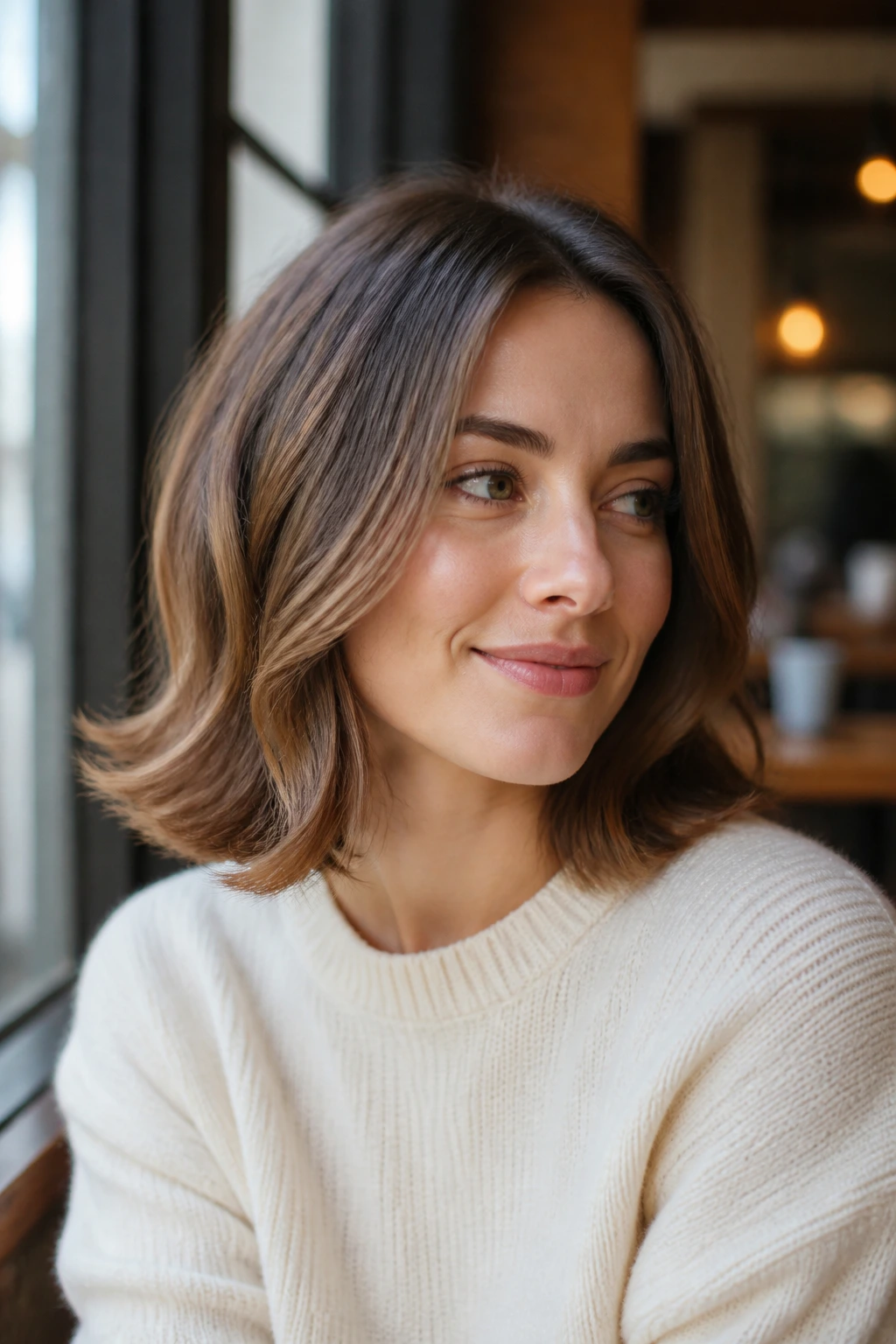
A flipped-out lob has a little swing at the ends, and that tiny detail can help a round face look more structured. The ends kick away from the neck instead of curling inward toward the cheeks, which keeps the lower half of the face feeling lighter. Small move. Strong effect.
The length should sit around the collarbone or slightly above it. If the flip happens too high, near the jaw, the face can look wider. Put the motion lower, and the style suddenly feels cleaner. That’s the part people miss.
This cut works well with a flat iron or round brush. You do not need every piece to flick out the same way. A few uneven bends look better than a stiff, matchy finish. A little imperfection keeps it from looking dated.
It has a bit of attitude, but not too much. That balance is why it keeps showing up on flattering short-to-mid cuts.
13. Long U-Shaped Cut with Loose Waves
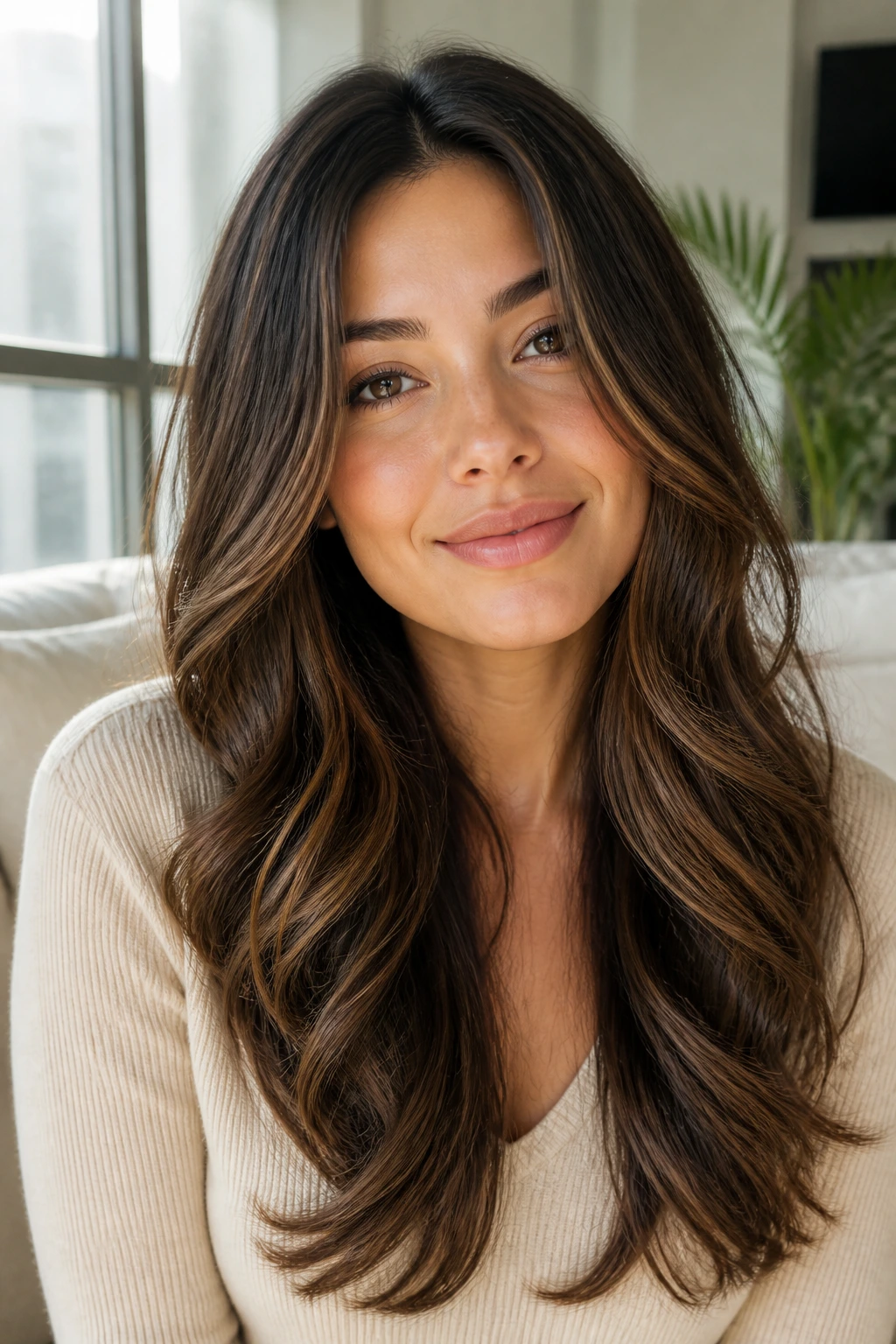
A U-shaped cut keeps the back slightly longer than the sides, and that curve is a quiet advantage for round faces. It creates a vertical center line through the hair, which helps stretch the silhouette. The side lengths frame the cheeks, while the back drops lower and pulls the eye downward.
Loose waves make the shape even better. They soften the transition from the shorter front to the longer back, so the haircut feels smooth instead of stepped. The waves should start below the cheekbones and stay relaxed through the ends.
This is a strong option if you like keeping your hair long but don’t want it to hang in one flat sheet. The U-shape gives the length some purpose. Long hair needs structure or it can swallow a round face. This cut gives it that structure without making it obvious.
It’s one of those styles that looks expensive even when you air-dry it well.
14. Bottleneck Bangs and Tousled Waves
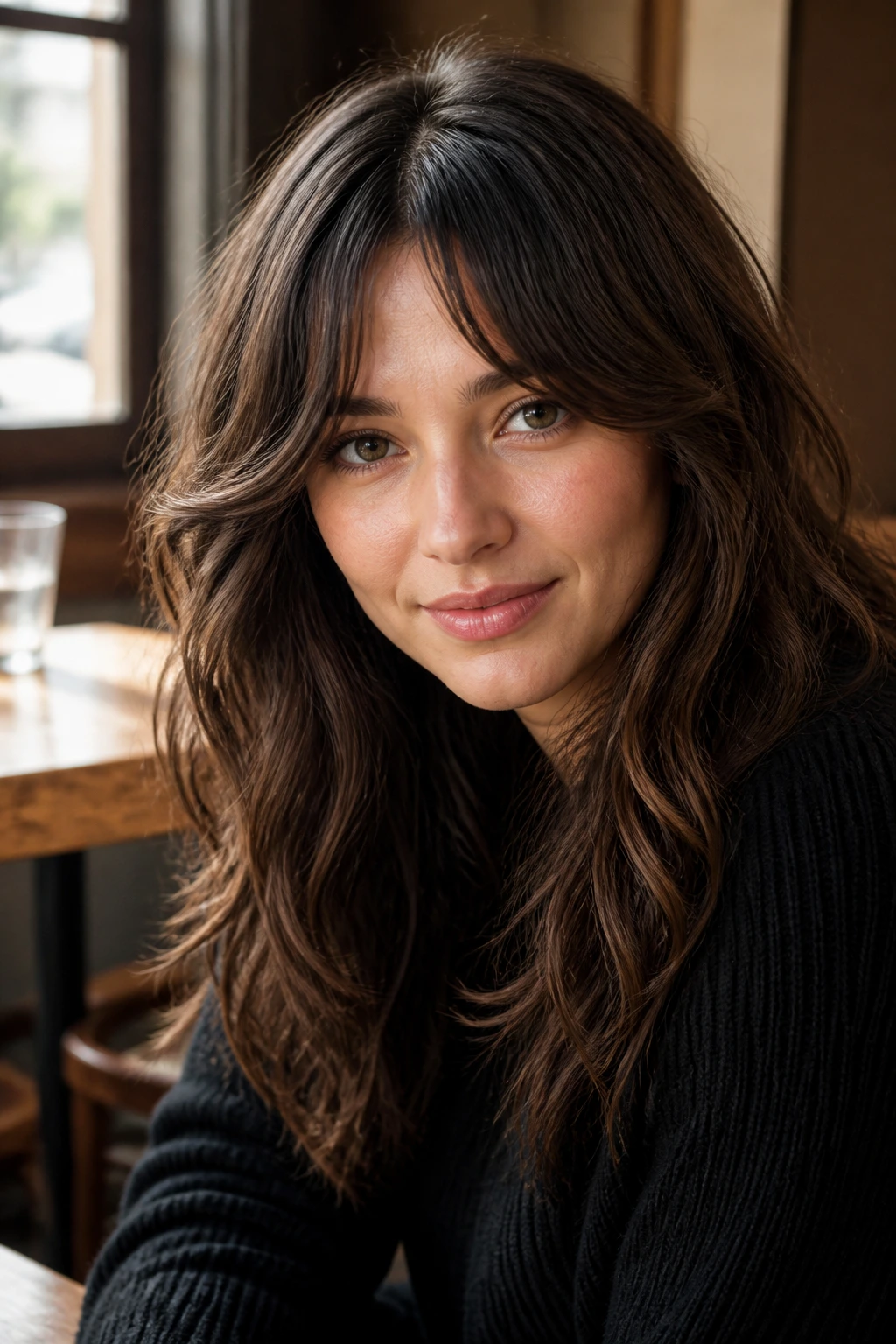
Bottleneck bangs are a clever middle ground between full bangs and curtain bangs. They start narrow in the center, then widen around the temples, which means they frame the face without sitting in one heavy block across the forehead. For a round face, that shape is a gift.
The bangs should be soft enough to separate with fingers, not so blunt that they cut the face in half. Pair them with tousled waves that fall past the chin, and the whole look feels balanced. There’s a nice contrast between the short front and the longer lengths.
Why they work
They guide the eye inward and upward at the same time. That’s rare. Most fringes do one or the other.
- Keep the center pieces shorter than the sides.
- Blend the sides into cheekbone-length layers.
- Use a small round brush or large-barrel iron on the fringe.
- Leave the wave pattern loose through the rest of the hair.
If your forehead feels broad, this fringe can soften it without hiding your face.
15. Messy Top Knot with Face-Framing Waves
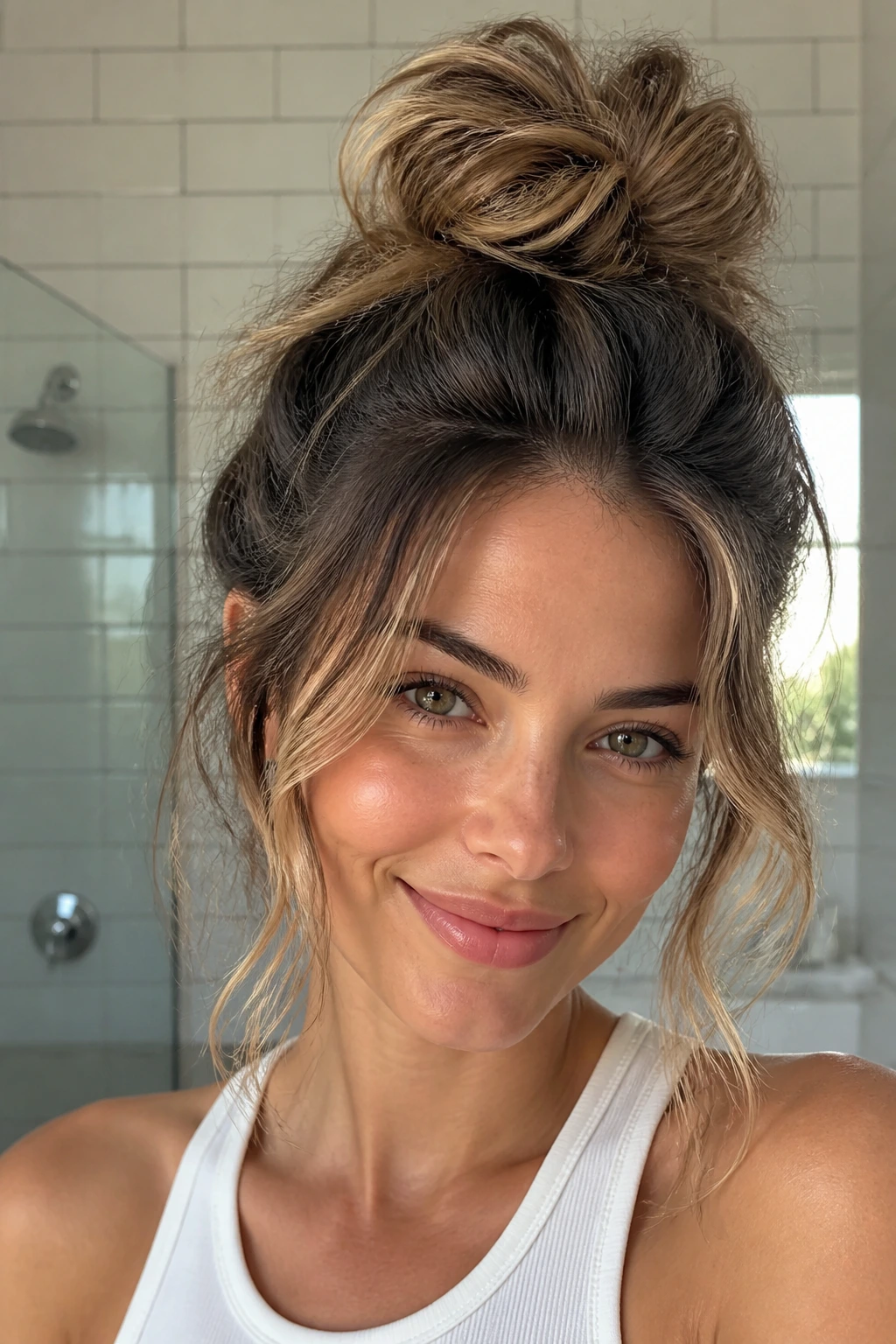
A top knot can be flattering on a round face when it has height and a few loose pieces left out on purpose. The bun pulls the eye upward, which adds length, while the wavy tendrils around the cheeks soften the outline. A tight ballerina bun does the opposite. Don’t do that unless you want every feature on display.
The knot should sit high enough to lift the profile, but not so high that it starts looking childish. A little mess in the bun helps. A little mess in the front helps even more. Pull out a couple of pieces near the temples, then bend them lightly with your fingers or a curling iron if they need help.
This is the kind of style that saves a bad hair day. It also works for second-day waves, which have just enough grit to hold. Height plus softness equals a better shape.
It’s casual, but it can still look clean when the sections are neat.
16. Sleek Roots with Bent Lengths
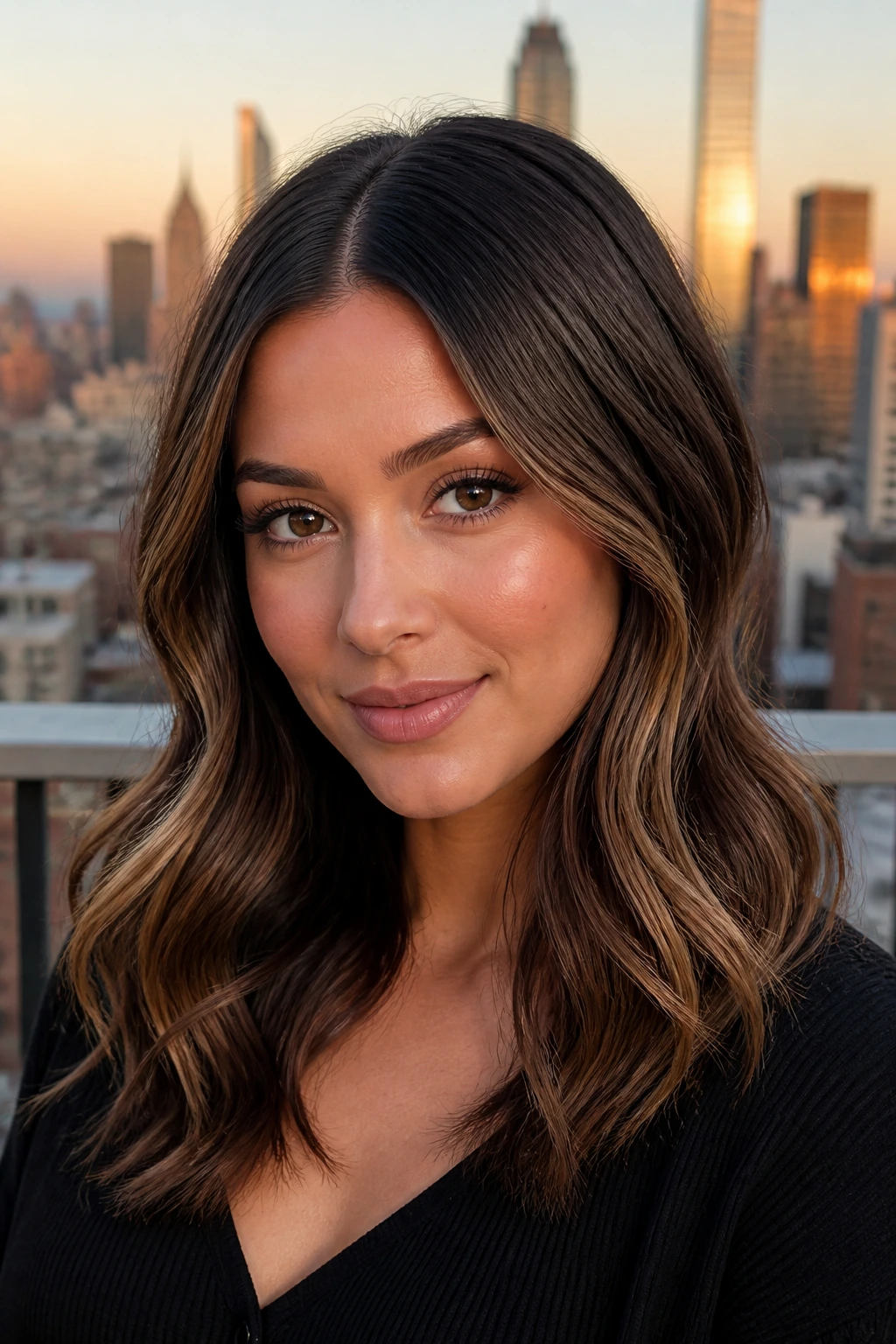
Sleek roots and bent lengths sound simple because they are, and that simplicity is part of why the style flatters round faces. A smooth crown keeps the head from puffing wider at the top, while the subtle bend from the mid-lengths down adds shape and movement. The result feels long and controlled.
This is a smart choice if your hair gets frizzy fast or if you don’t love a ton of texture near the scalp. Use a blow-dry cream at the roots, then create soft bends from the ears down with a flat iron. You want a wave, not a curl. If the bend starts too high, it can widen the face. If it starts lower, the line stays clean.
I like this one because it looks sharp without asking for much. Smooth at the top, movement below the jaw. That rule is useful in more hairstyles than people realize.
It’s also a nice bridge between polished and undone, which is a hard balance to fake.
17. Side-Tucked Waves with One Exposed Ear
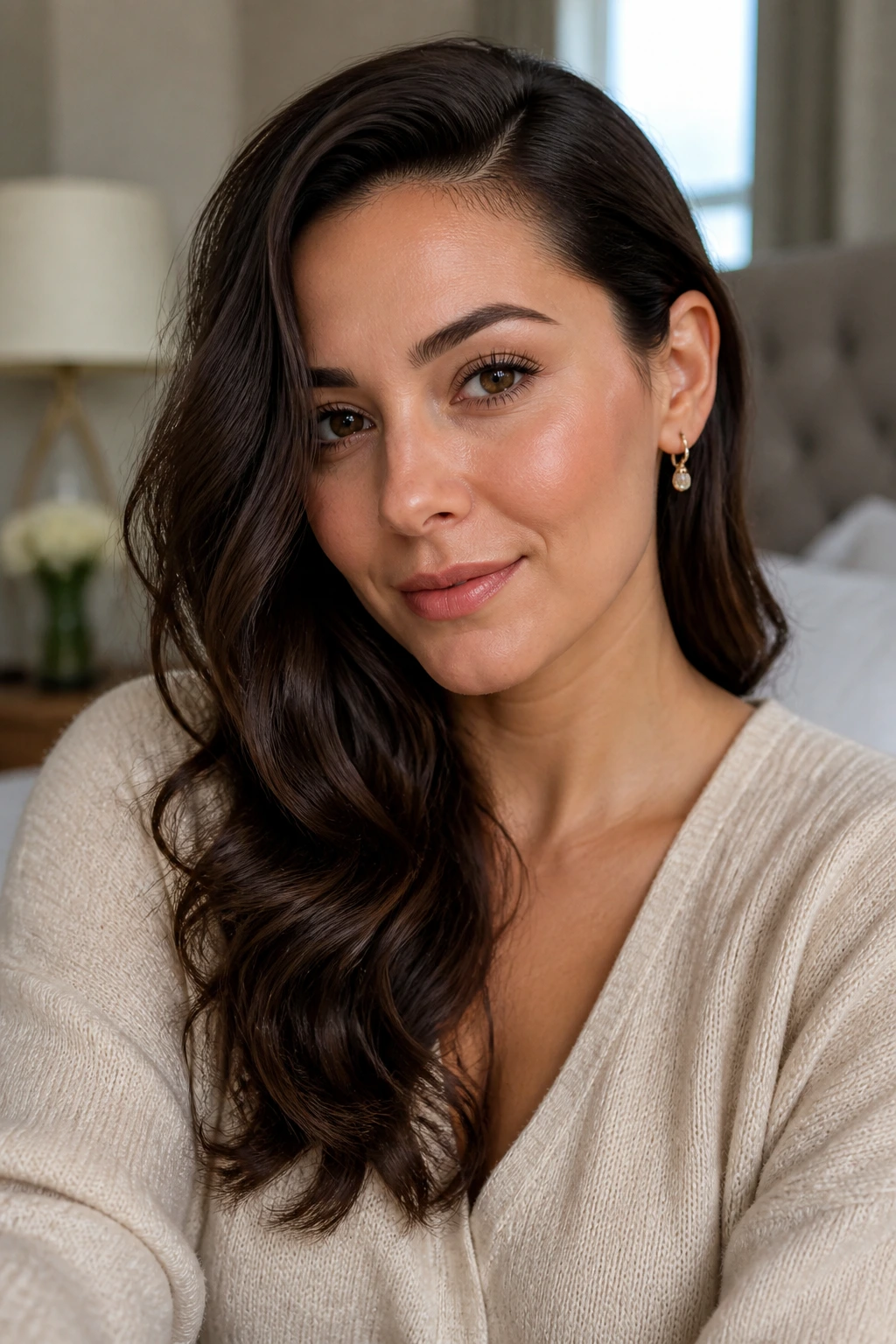
Tucking one side behind the ear is such a small move that people often ignore it, which is a mistake. On a round face, that one tuck creates an off-center line that breaks up fullness at the cheeks. The exposed ear also opens a bit of space near the jaw, which makes the face feel narrower.
The waves should stay soft, not crunchy. Let the tucked side lie flatter, and keep the other side fuller. That difference is what gives the style shape. A single statement earring helps, but the hair itself already does most of the work.
Best with
- Chin-length bobs that need a little direction
- Shoulder-length cuts with loose bends
- Hair that naturally wants to fall forward
- A side part or slightly off-center part
This style is tiny, fast, and sneaky-good. It looks like a styling trick because it is one.
If you want a flattering look without changing your cut, start here.
18. Wavy Bixie Cut
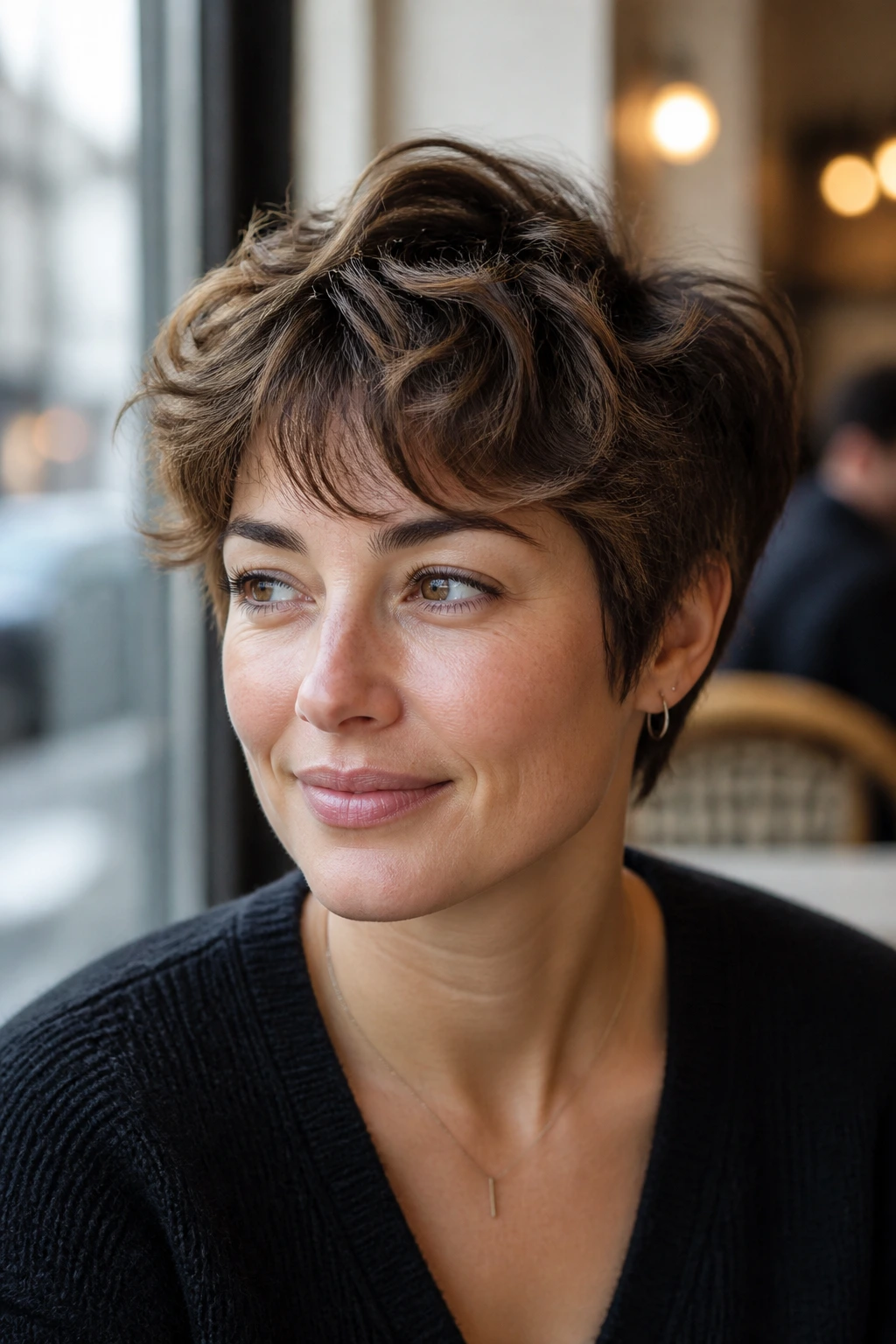
The bixie sits between a bob and a pixie, and that in-between length can be very kind to a round face. It keeps the sides soft while leaving enough length on top for movement. If the top is textured and the edges are not too round, the face looks lifted instead of boxed in.
Waves matter here because they stop the cut from looking helmet-like. A little bend gives the top some direction, while the sides should stay feathered and light. You want the shape to skim, not hug, the cheeks. That’s the trap with short cuts on round faces: too much width near the temples can make the whole face feel shorter.
This version is good if you want short hair without a severe line. It has personality. It also grows out in a manageable way, which is a relief. The bixie works when the top has lift and the sides stay narrow.
It’s one of the bolder choices on the list, but not the most difficult one to wear.
19. Braided Half-Crown with Loose Waves
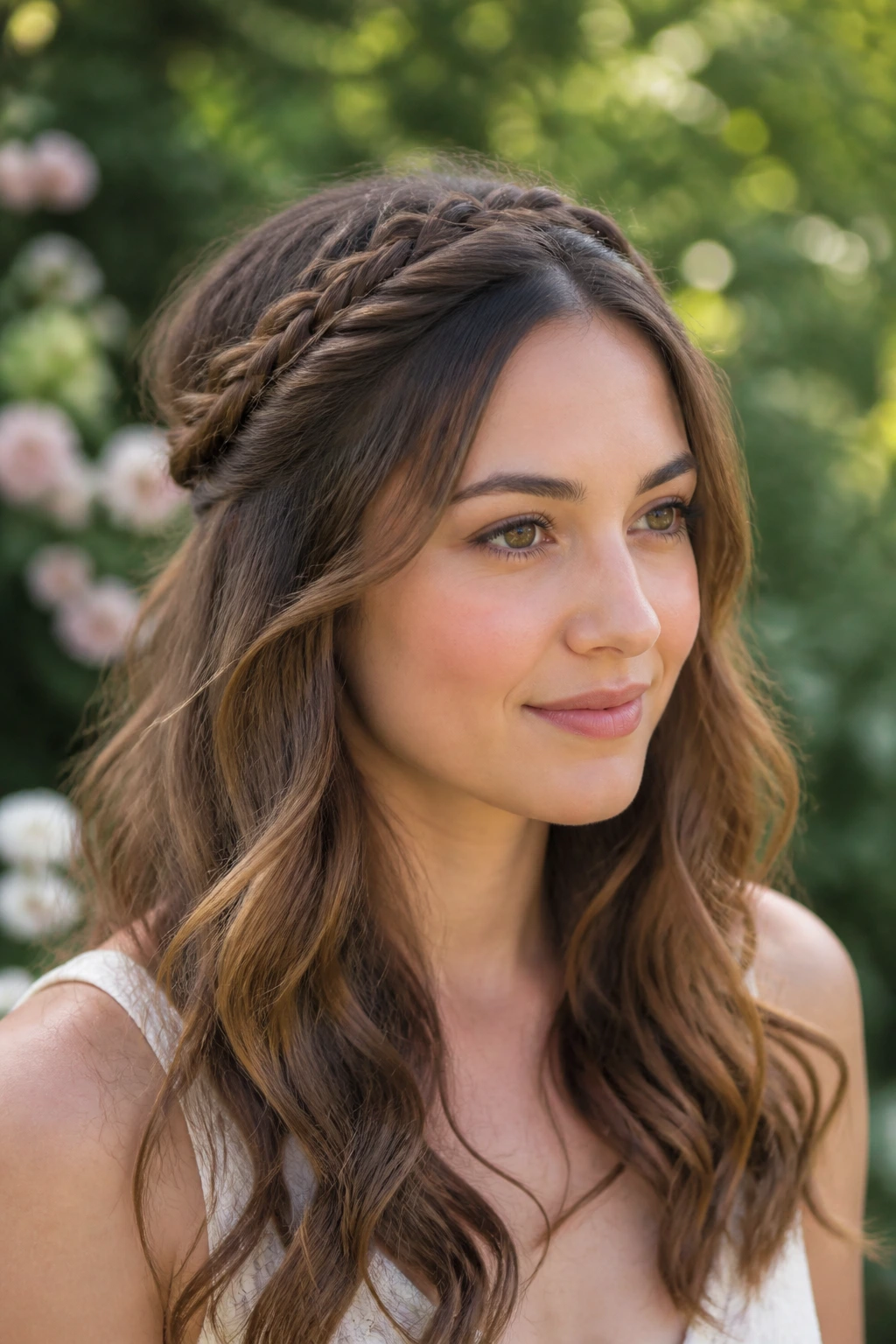
A braided half-crown pulls hair back just enough to lift the eye line, which is useful on a round face. The braid acts like a frame above the forehead, while the loose waves below keep the style soft. It’s a nice mix of structure and movement.
This works best when the braid stays narrow. A fat braid across the top can add width where you do not want it. Keep it slim, tuck it gently into the sides, and let the waves fall past the shoulders. The front pieces can stay loose or be lightly curled away from the face.
It’s a pretty style, yes, but the real win is shape. The braid creates vertical interest, and the loose lengths stop the look from feeling too rigid. One narrow braid is enough. You do not need a whole braided crown to get the effect.
This is a good choice for weddings, outdoor events, or any day when you want your hair to look done without feeling stiff.
20. Bubble Ponytail with Soft Waves
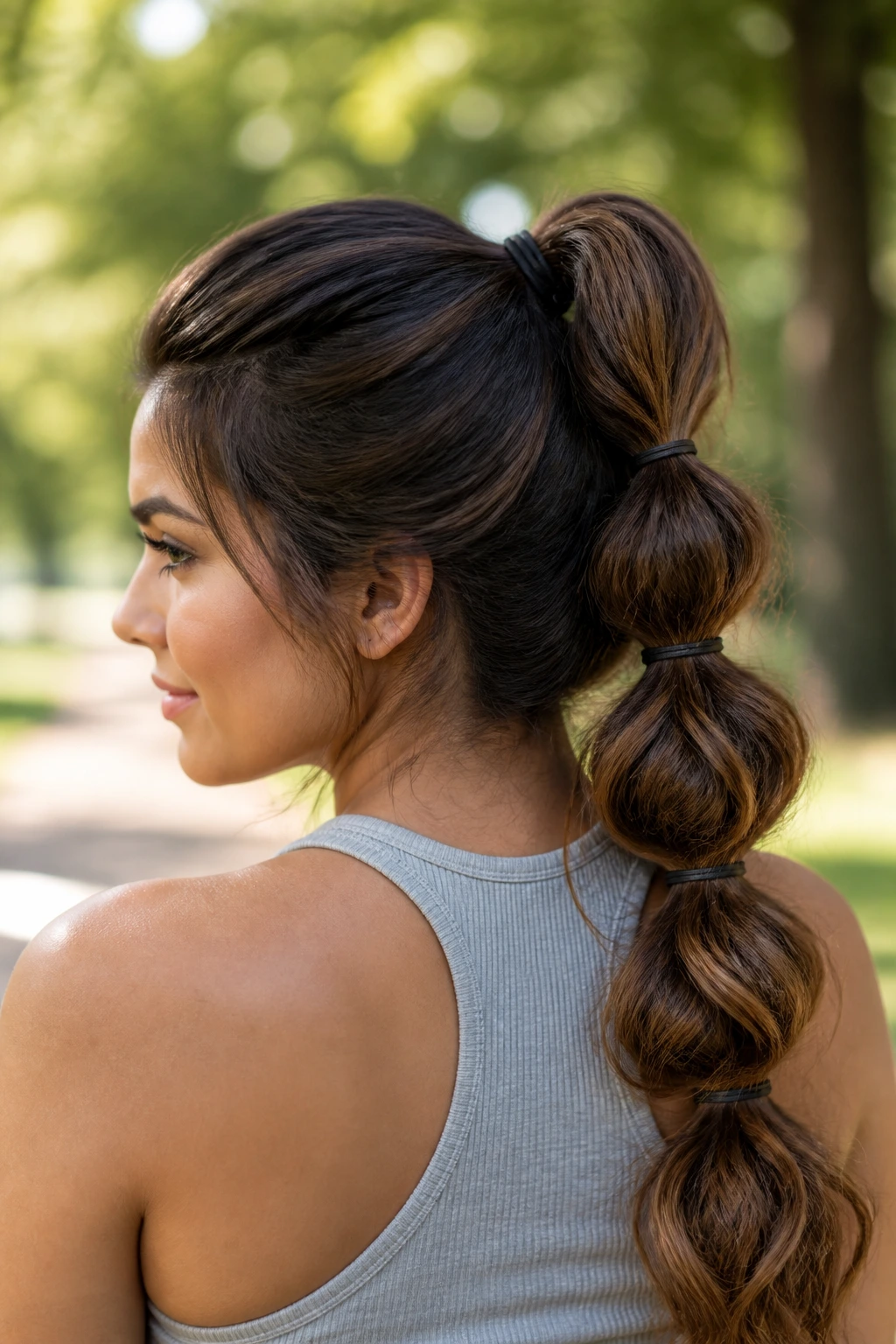
A bubble ponytail is surprisingly friendly to a round face because it creates a line of little sections that pulls the eye downward. The shape is playful, but it also adds height and length. That’s the useful part.
Start with loose waves in the ponytail, then place small elastics every few inches down the length. Gently tug each section to form the “bubbles.” Keep the crown smooth and a touch lifted. If the top is too flat, the style loses its long line. If the bubbles are too big, the effect can feel bulky.
I like this one for medium to long hair because it feels a little different without asking for a full updo. It also keeps the face open, which makes round features read fresh and clean. The vertical rhythm is the point. The bubbles create it for you.
Use a strand of hair to wrap each elastic if you want the finish to look neater. That tiny detail helps.
21. Mermaid Waves with a Slight Center Part
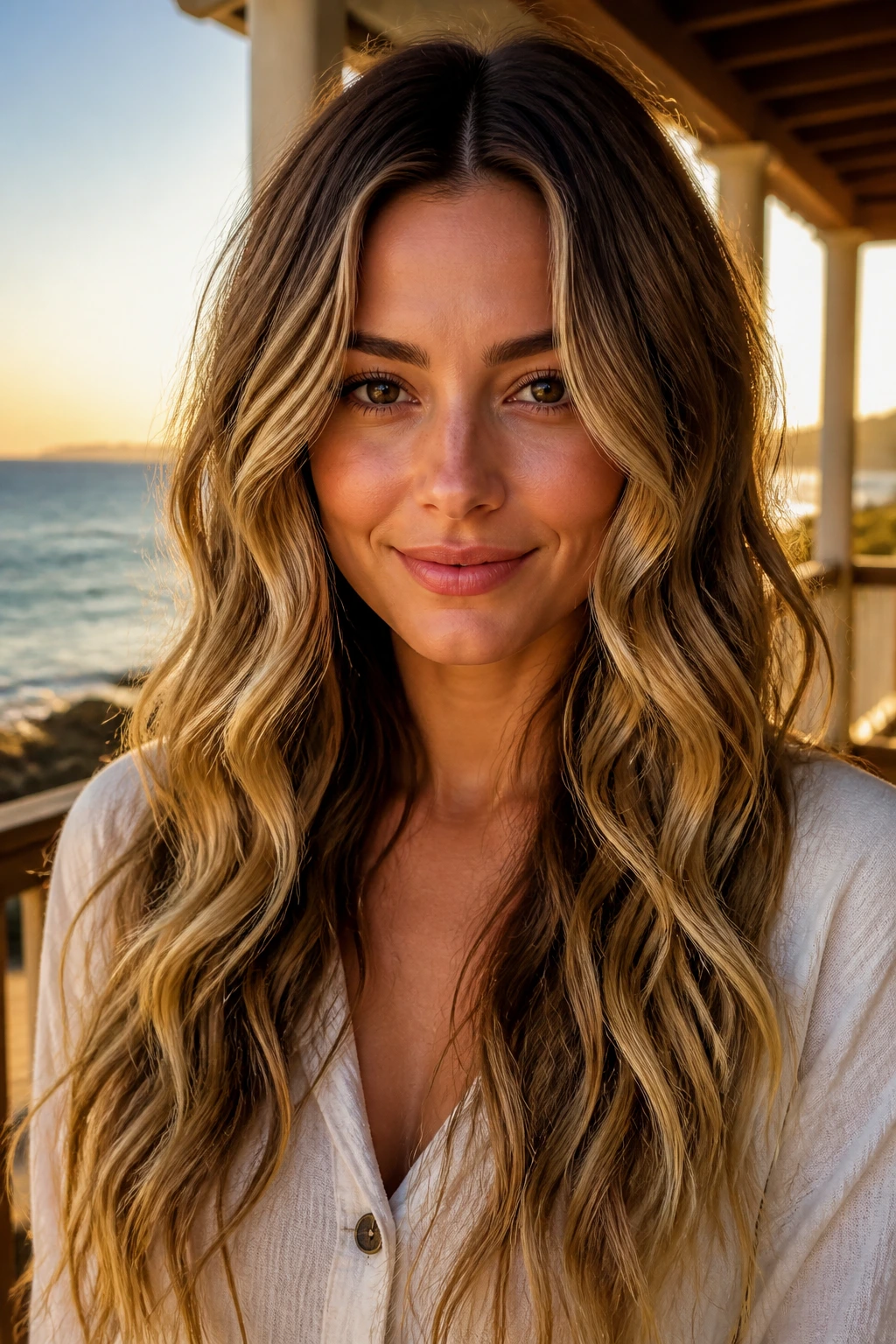
Mermaid waves are long, flowing, and a little romantic, but they can absolutely flatter a round face when the part and placement are right. The waves should start lower on the head and stay elongated through the ends. That keeps the hair from puffing around the cheeks.
A slight center part usually works better than a strict one. It gives you the vertical line of a middle part while avoiding the stiffness that can show up with perfect symmetry. The wave pattern should be loose and brushed out, not tightly curled. Think long ripples, not ringlets.
This style shines on hair that already has length. It needs room to hang. If the hair is layered, even better, because the movement stays light instead of heavy. Length is the secret here, but only if it’s controlled.
It’s a style that looks polished at a glance and softer the longer you stare at it.
22. Soft Perm-Inspired Waves
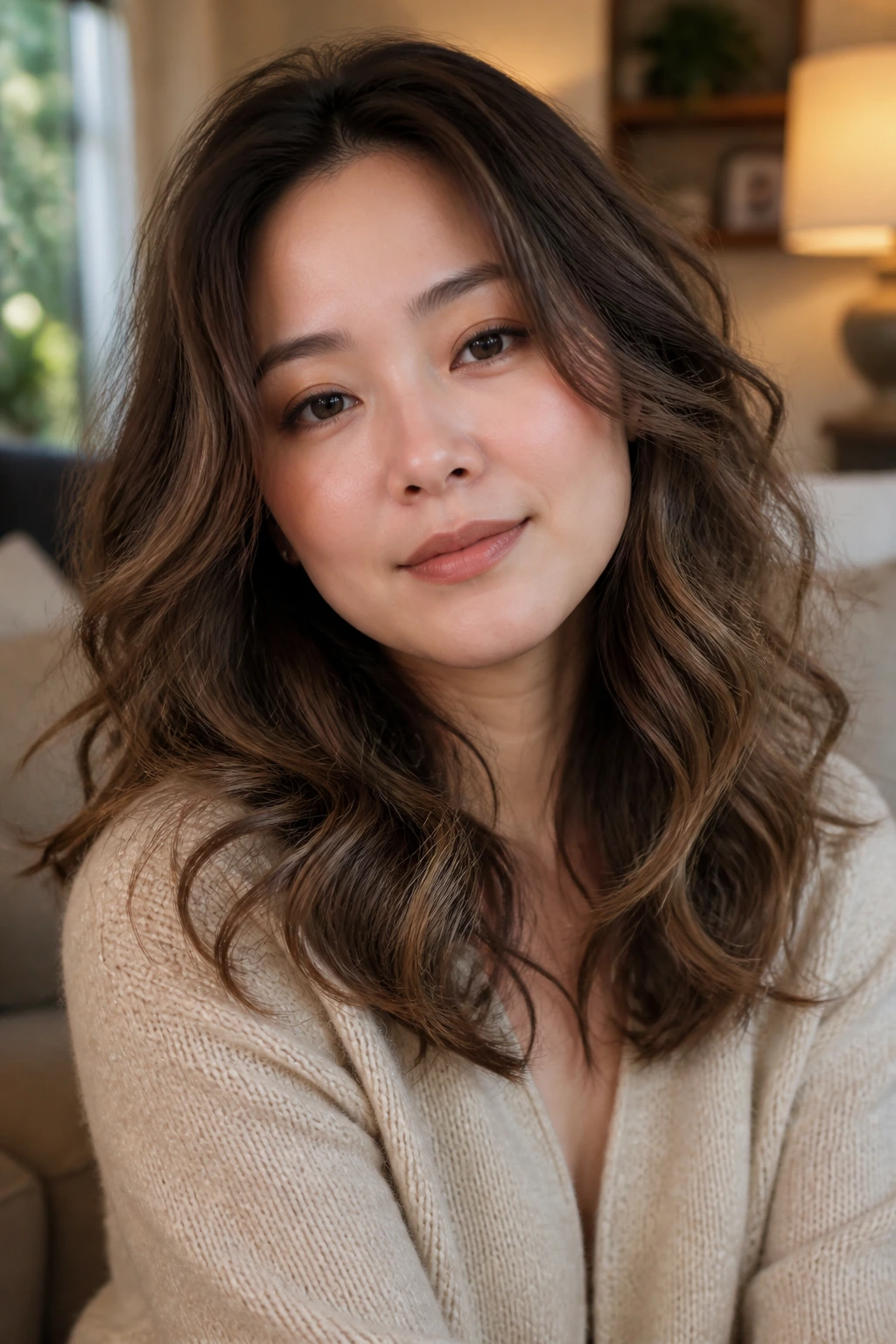
Not everyone wants to style waves every morning. Fair enough. Soft perm-inspired waves are for the person who wants a built-in shape that already knows what to do. The important word there is soft. Tight spiral texture can widen a round face if it sits too close to the cheeks.
Choose a loose wave pattern with bigger rods or a gentle heat set. The curl should bend, not spring. If you have naturally straight hair, you can fake the look with overnight braids, large foam rollers, or a low-heat waving iron. Keep the wave pattern relaxed through the mid-lengths and longer through the front.
This is one of those styles that saves time after the first setup. It is also easier on mornings when your patience is thin. The face looks better when the wave pattern stays long and airy. That’s the line to hold onto.
If your hair holds shape well, this style can stay flattering for days with only a little refresh.
23. Textured Mid-Length Cut with Invisible Layers
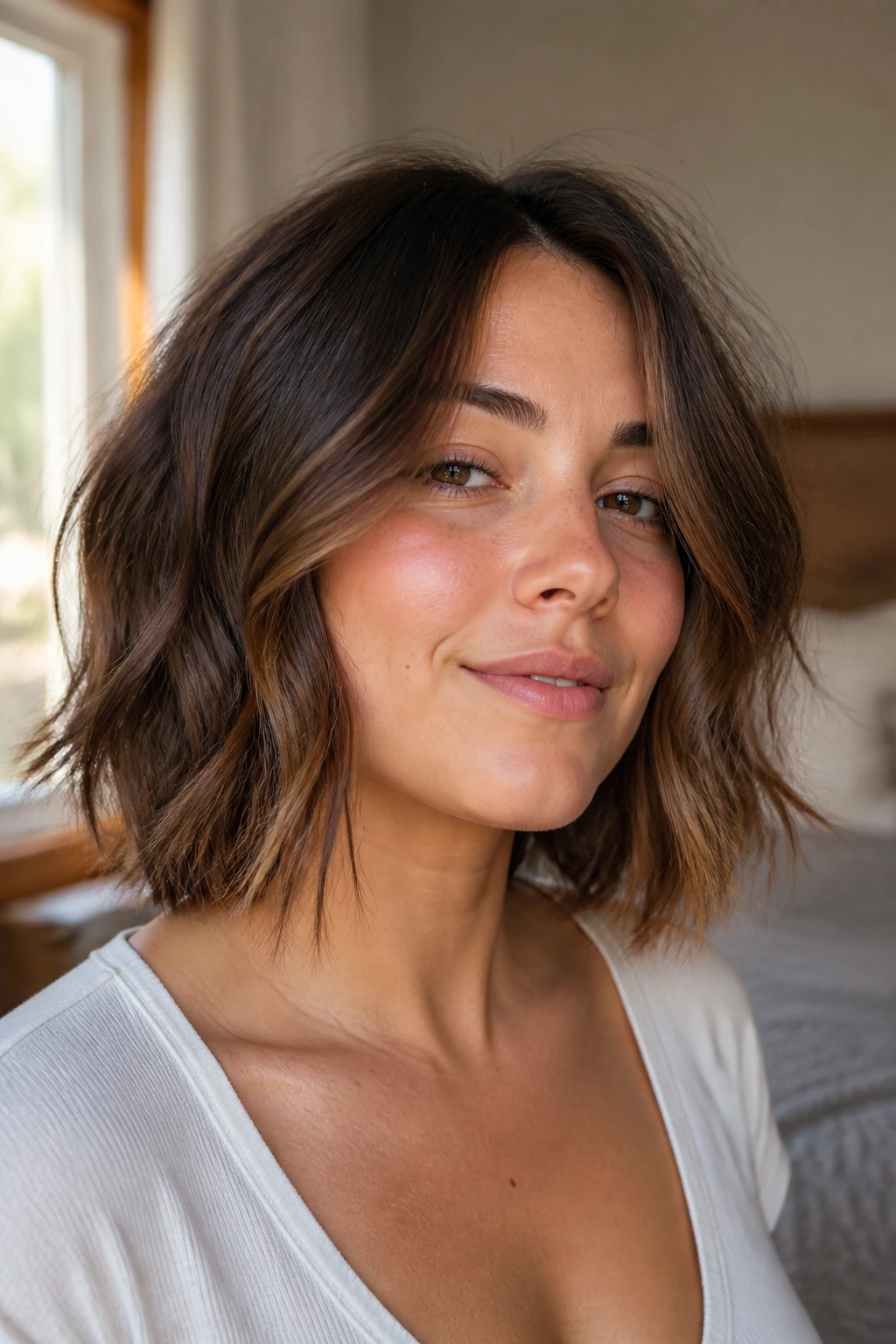
Invisible layers are a good trick for round faces because they remove bulk without flashing themselves in obvious steps. The haircut still looks full, but the shape moves better around the cheeks and jaw. That makes it useful for thick hair that tends to spread outward.
The length should hit somewhere between the chin and the shoulders, depending on how much width you want to avoid. The texture should be gentle, not choppy for the sake of it. A wavy finish helps the layers blend into each other, which is exactly what you want. The cut should feel light when you turn your head, not poofy when you face the mirror.
This is a style I’d recommend to someone who likes clean lines but hates a heavy block of hair. It keeps the outline soft while still giving the hair some life. Invisible layers do the work without showing off.
That’s a nice way to cut hair, honestly. Quiet but effective.
24. Voluminous Blowout Waves
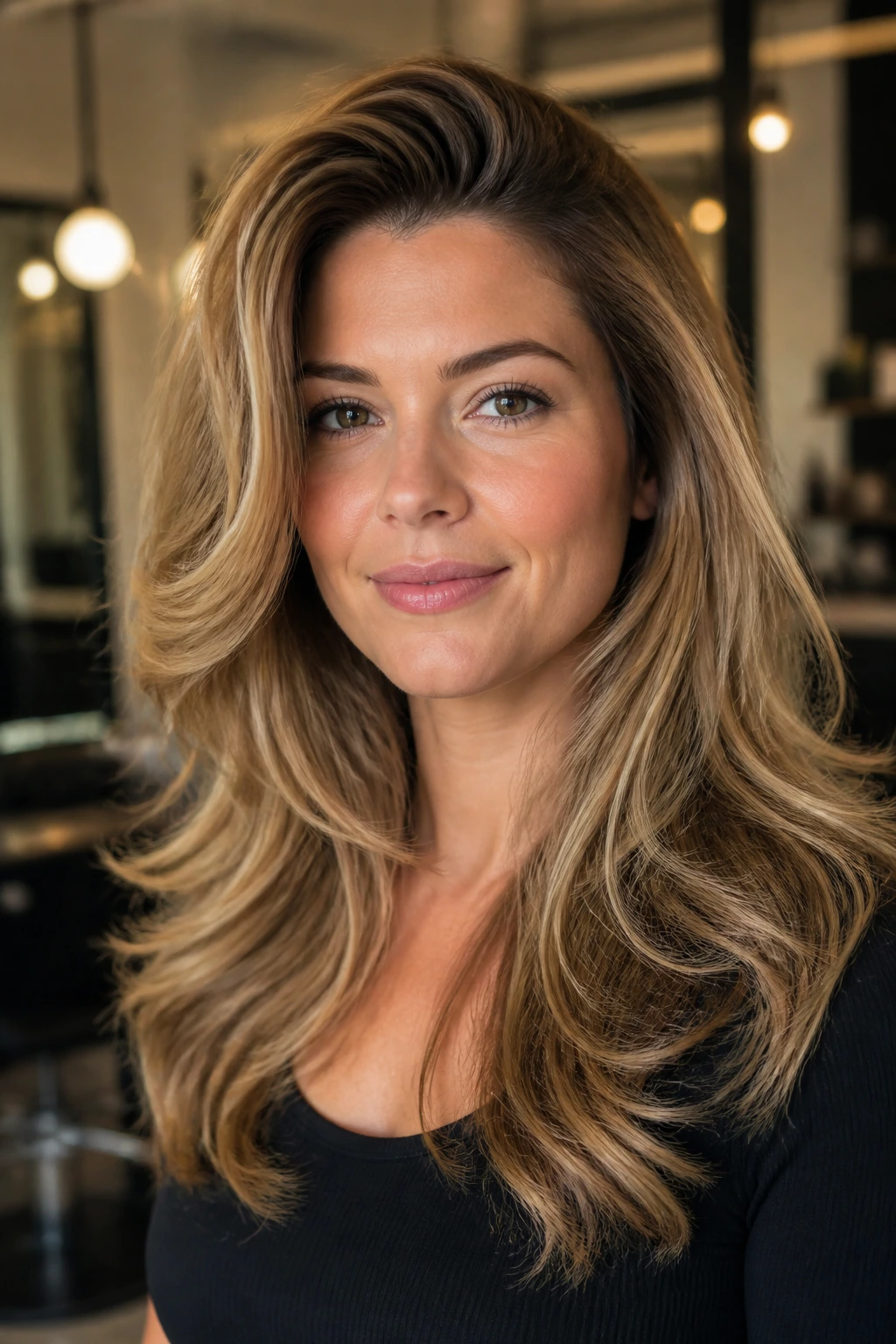
A blowout with waves can work on a round face as long as the volume sits in the right places. The crown can be full. The ends can be soft and turned under or away from the face. The sides should stay controlled enough that they do not widen the cheeks.
Use a large round brush or big rollers to build lift near the roots, then bend the lengths into a soft wave. The finish should feel airy, not fluffy. If the biggest volume lands right beside the cheeks, the face can look broader than it is. Put that energy higher up and lower down instead.
Best tools
- A 1.5-inch round brush for medium hair
- A large-barrel curling iron for loose movement
- A lightweight volumizing mousse at the roots
- A flexible hairspray that does not make the hair crunchy
This style likes polish. A little shine serum on the ends keeps it from feeling dry or overworked.
It’s one of the best choices if you want your hair to look full and dressed up without losing shape.
25. Soft Shag with a Long Fringe
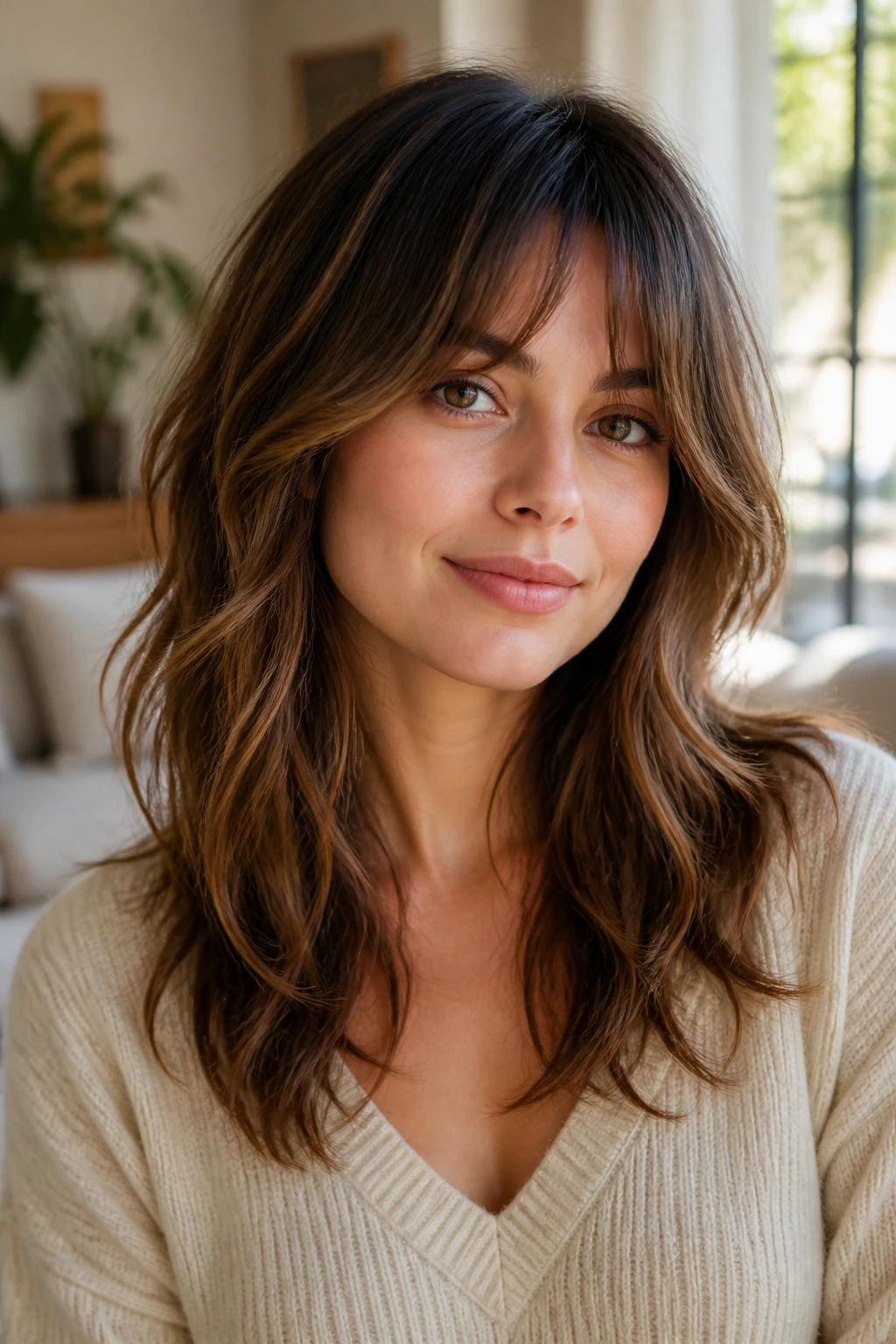
A soft shag with a long fringe is a strong finish because it gives a round face movement, lift, and a little edge without tipping into harshness. The long fringe keeps the forehead framed, while the layered body of the cut stops the hair from sitting like one solid shape around the cheeks. That balance is the whole point.
This version of the shag should keep the longest pieces below the jaw and the shortest layers controlled near the crown. If the top gets too short, the cut can flare out. If the fringe gets too blunt, it can close in the face. So you want broken, airy lines, not heavy blocks. A wave or bend through the ends helps everything settle into place.
I’d reach for this one if I wanted a cut that still looks good after a long day, a windy commute, or a lazy styling routine. It has movement, and it forgives a little mess. That’s a useful combination.
There’s a reason people keep coming back to soft shag shapes. They flatter without trying too hard, and on a round face, that ease goes a long way.
