



A good work hairstyle has one job: look intentional at 8 a.m. and still make sense after lunch.
That sounds simple until you factor in the commute, the office humidity, the headset, the coat collar, and the one stubborn section near your crown that refuses to lie flat. The best hairstyles for work are not the ones that look fancy in a still photo. They’re the ones that survive movement, a long meeting, and a quick dash for coffee without turning into a mess.
A lot of people chase “easy” work hair and end up with styles that collapse by midmorning. I’d rather see a clean low knot, a blunt bob with a sharp part, or a ponytail that’s been pinned with a little care than a style that looks polished for ten minutes and then starts sliding everywhere. Neat matters. Comfort matters too.
Some offices lean formal, some are relaxed, and some live in that awkward middle zone where you need to look sharp on camera but still have enough personality to feel like yourself. That’s where smart styling wins. A work hairstyle should help you stop thinking about your hair, which is probably the highest praise hair can get.
1. Low Chignon for Work
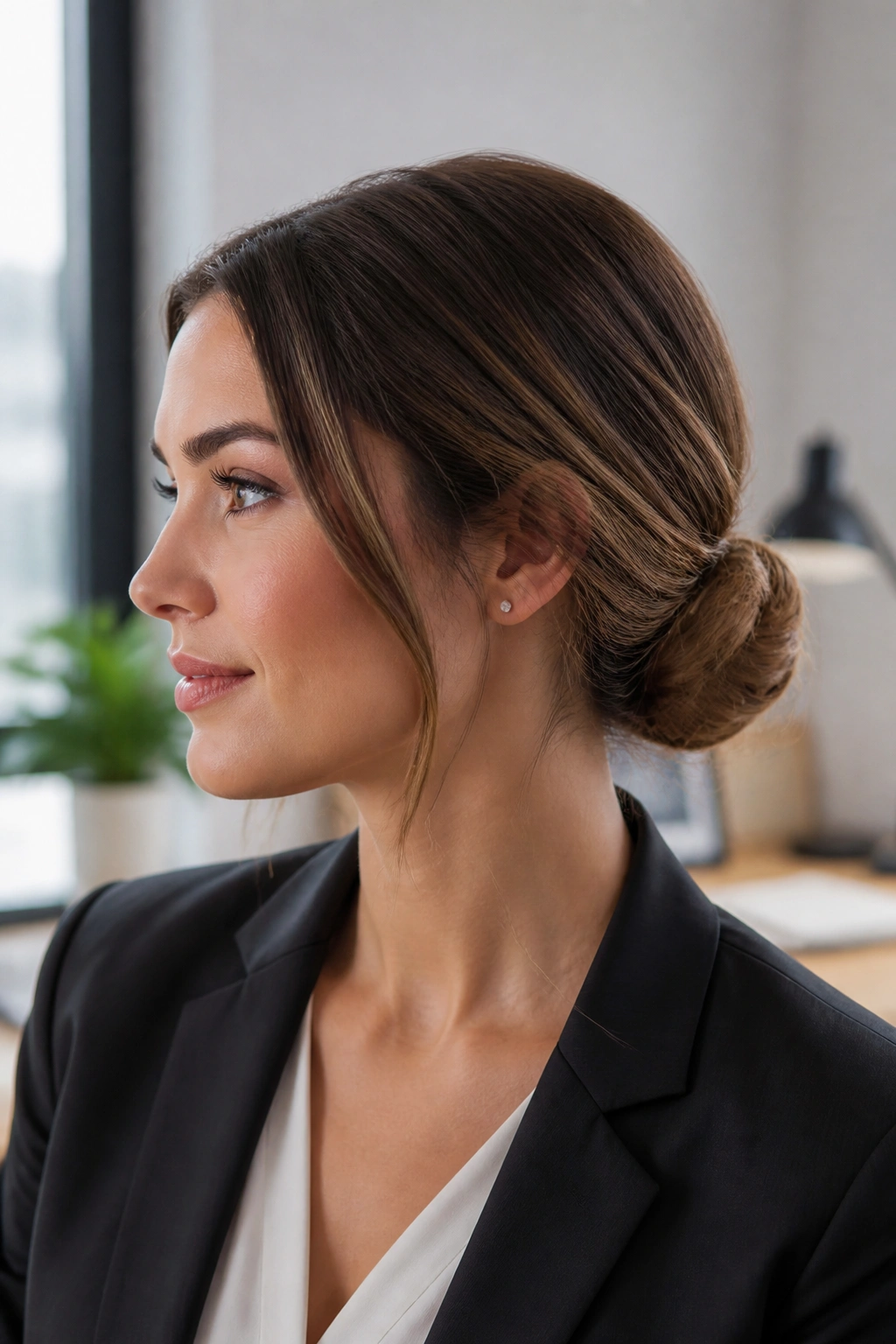
A low chignon is the hairstyle I’d trust when the day is already crowded before it starts. It sits at the nape, keeps the neck clear, and doesn’t need constant checking in a reflective office window. If your hair tends to puff up or drift loose by noon, this style behaves.
Why it holds up
The trick is placement. Keep the knot low and close to the head, not floating in the middle of the back like a formal event updo. Smooth the top with a light cream or a touch of pomade, then twist the lengths into a compact coil. Two crossed bobby pins at the base usually do more than six random pins jammed in at the top.
A low chignon works especially well with medium to long hair that has a little weight to it. Fine hair can still do it, but you may need a small hidden elastic first so the coil has something to grip.
- Best with second-day hair or lightly texturized hair
- Use 2 to 4 bobby pins in an X shape
- Leave a few soft pieces near the temples if you want it less severe
My take: keep it slightly imperfect. A chignon that is too tight can look stiff in a bad way.
2. Sleek Low Ponytail
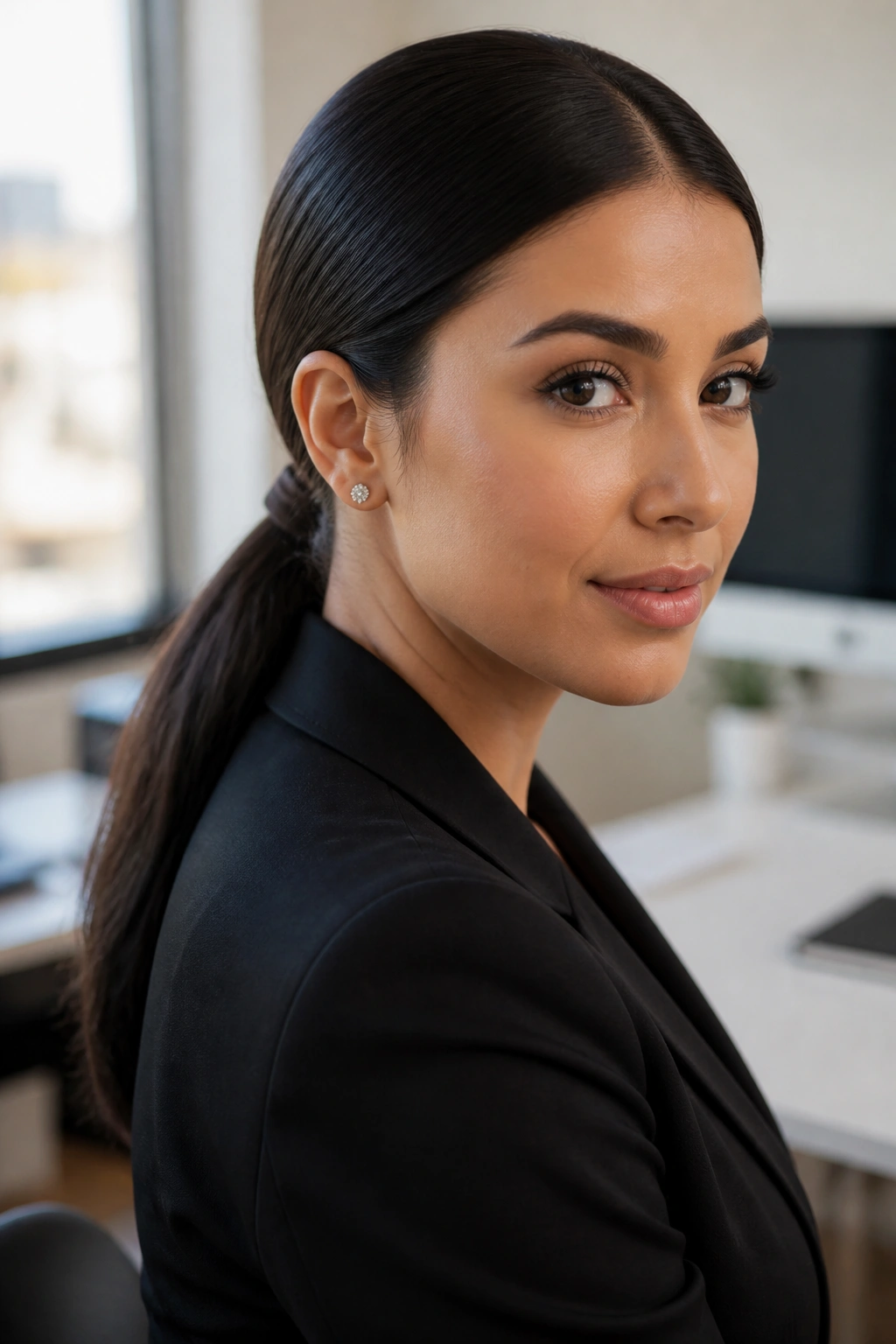
A sleek low ponytail is one of those hairstyles for work that never really goes out of rotation because it solves so many problems at once. It pulls hair off the face, looks clean under a blazer, and takes maybe five minutes once you know your routine.
The ponytail should sit at the nape or just above it. Higher than that and it starts drifting into sporty territory. I like a middle part for a sharper look, but a side part can soften it if your face shape or outfit needs that. Wrap a small strand of hair around the elastic if you want the finish to look deliberate rather than rushed.
This style is especially useful for layered hair because the lengths stay controlled instead of flaring out around your shoulders. If your hair has flyaways, smooth the top with a wax stick or a tiny amount of styling cream on your palms. Don’t soak it. That’s how you get greasy roots by noon.
And yes, it pairs well with a shirt collar, a turtleneck, or a simple hoop earring. Clean lines. No fuss.
3. French Twist
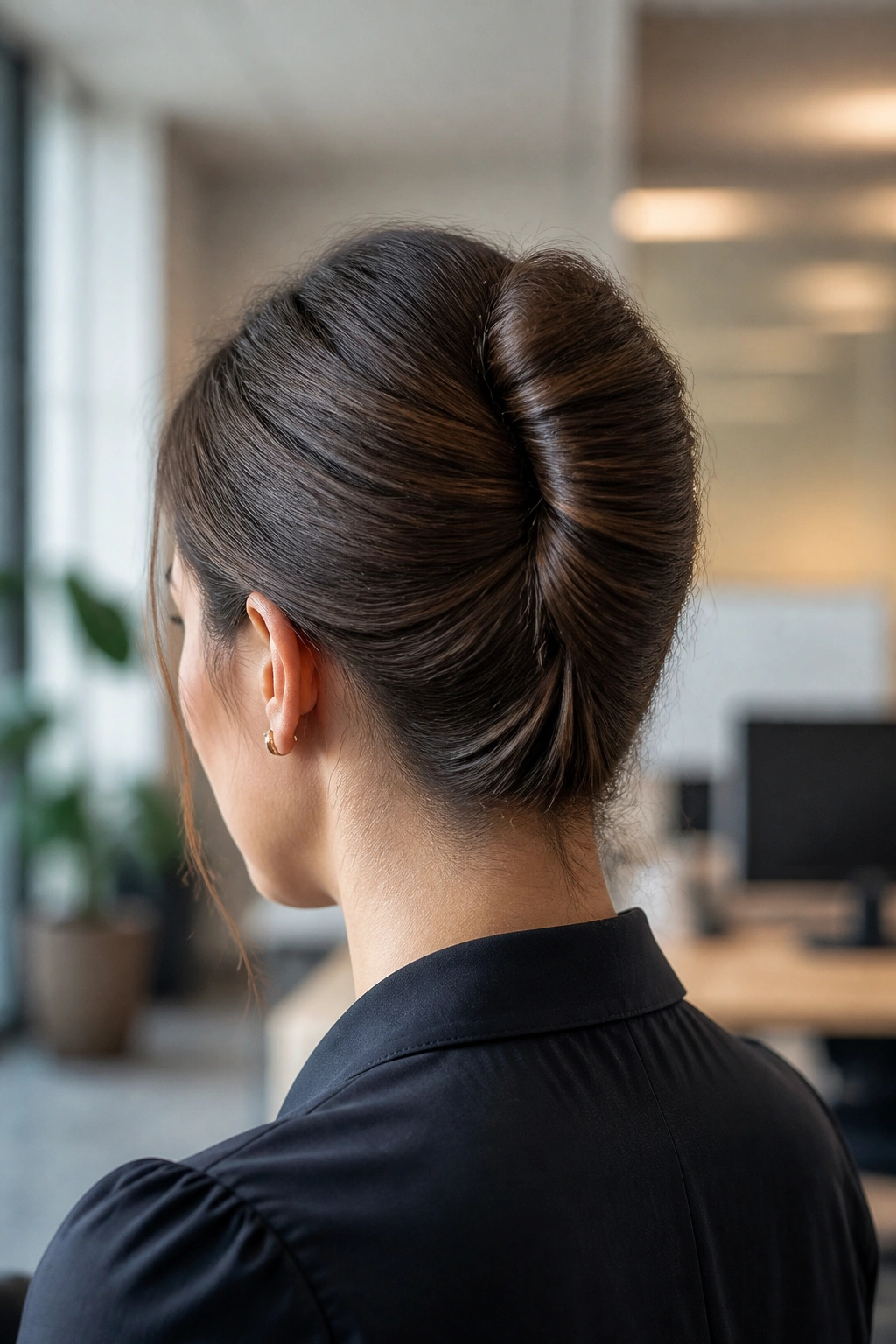
Why does the French twist keep showing up in office settings? Because it does a neat thing that not many other styles do: it removes bulk without looking casual. It has structure, but it doesn’t scream for attention.
For shoulder-length or longer hair, the French twist is a solid pick when you need to look pulled together fast. You gather the hair low at the back, twist it upward, and tuck the roll against the head before pinning it vertically. The shape is narrow, which helps when you’re wearing headphones or sitting under a jacket collar all day.
How to wear it to work
If your workplace leans conservative, keep the twist smooth and compact. If it’s more relaxed, let a few pieces fall loose near the ears. That tiny bit of softness keeps the style from feeling like it belongs at a wedding reception.
- Works best on medium to long hair
- Needs strong bobby pins or a French twist comb
- Holds longer if you add a light mist of hairspray before pinning
One small warning: a French twist can unravel if the hair is too silky. If that’s your hair type, a little dry shampoo or texturizing spray at the roots makes the whole thing grip better.
4. Half-Up Twist
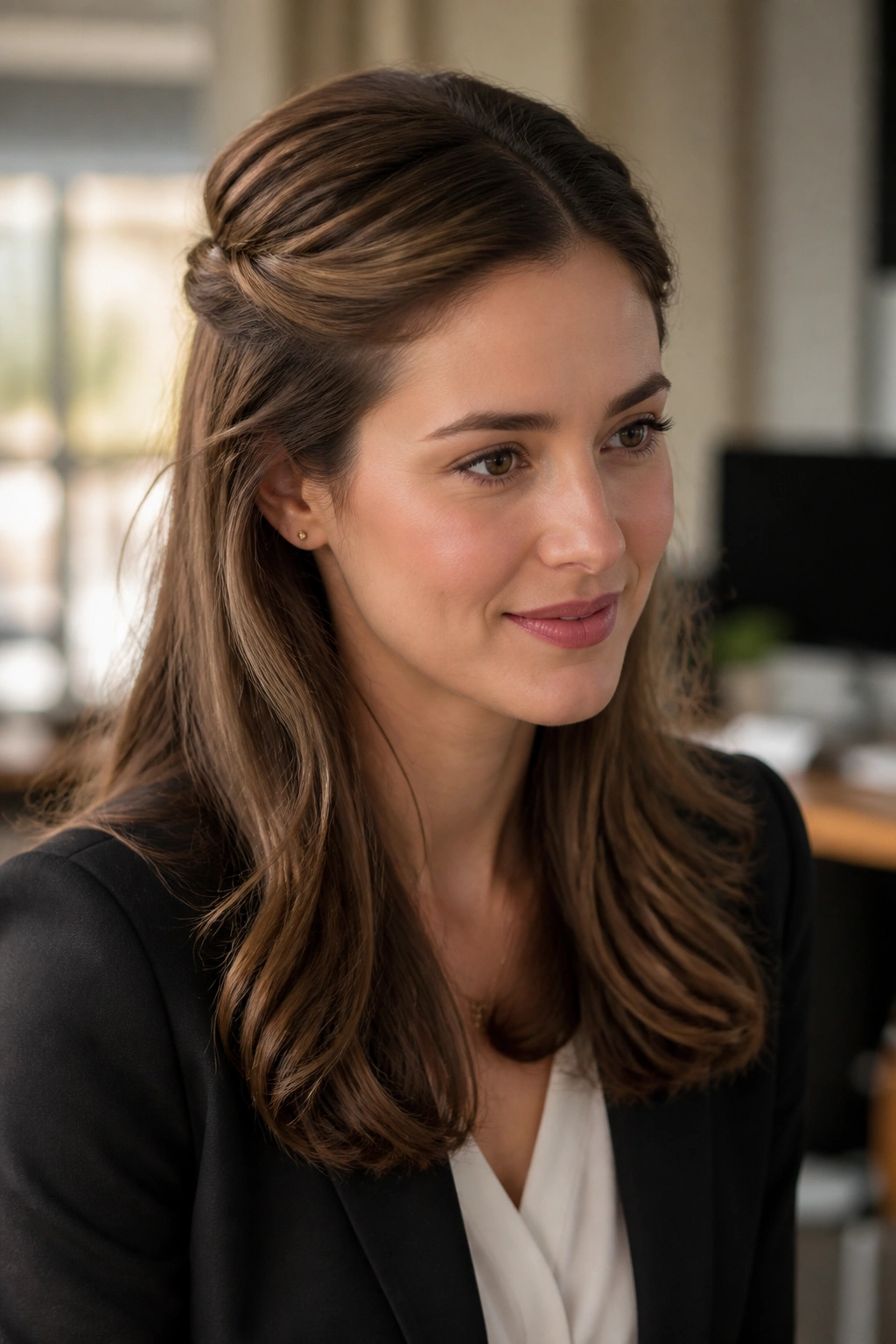
A half-up twist is for the person who wants some hair down, but not all the way in the face. It sits in that sweet spot between polished and soft, and that balance works well for long meetings, interviews, or days when you’re switching between desk work and presentation mode.
Start by taking two sections from the temples or just above the ears. Twist them back, secure them at the crown, and leave the rest loose. If your hair is straight, the style looks cleaner with a little bend at the ends. If it’s wavy or curly, let the texture stay visible. Don’t fight it.
This is one of those styles that can look expensive with very little effort, which is nice, because not every morning offers room for a full blowout. A half-up twist also keeps hair from falling into your eyes while preserving length around the shoulders.
I like it best when the twist is slightly tucked rather than pulled tight. Tight half-up styles can flatten the crown and make the whole thing feel too formal. A looser version reads softer, and it usually grows out better through the day.
5. Side-Parted Lob Tucked Behind the Ear
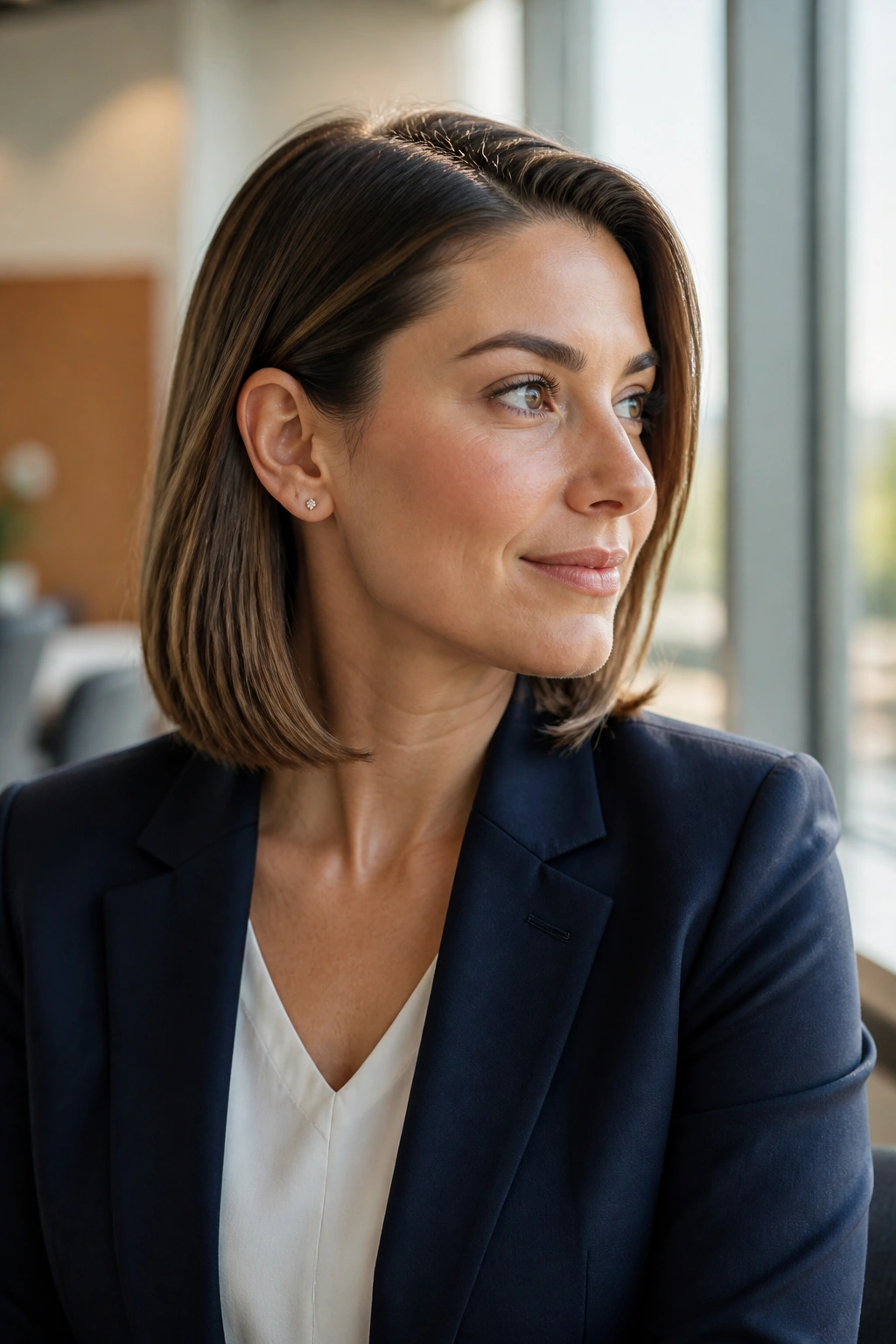
A side-parted lob tucked behind the ear is proof that you do not need an elaborate style to look work-ready. If your hair hits around the collarbone or just above it, this is one of the easiest professional hairstyles to keep in rotation.
Unlike a full updo, this one keeps movement. That matters. Hair that moves a little feels more natural and less over-managed, and on a good cut, the shape does most of the work for you. Tuck one side cleanly behind the ear, secure it with a flat pin if needed, and let the rest fall in smooth lines.
This style is especially useful if you wear glasses or statement earrings. The tucked side keeps the face open, which helps during calls and when you’re leaning over a laptop. If the ends flip out, a quick pass with a flat iron or round brush fixes it fast.
It’s also a smart choice for people who hate feeling “done.” The lob does not ask for a lot. It just wants a clean part, a little smoothing cream, and the kind of trim that keeps the ends blunt instead of frayed.
6. Braided Low Bun
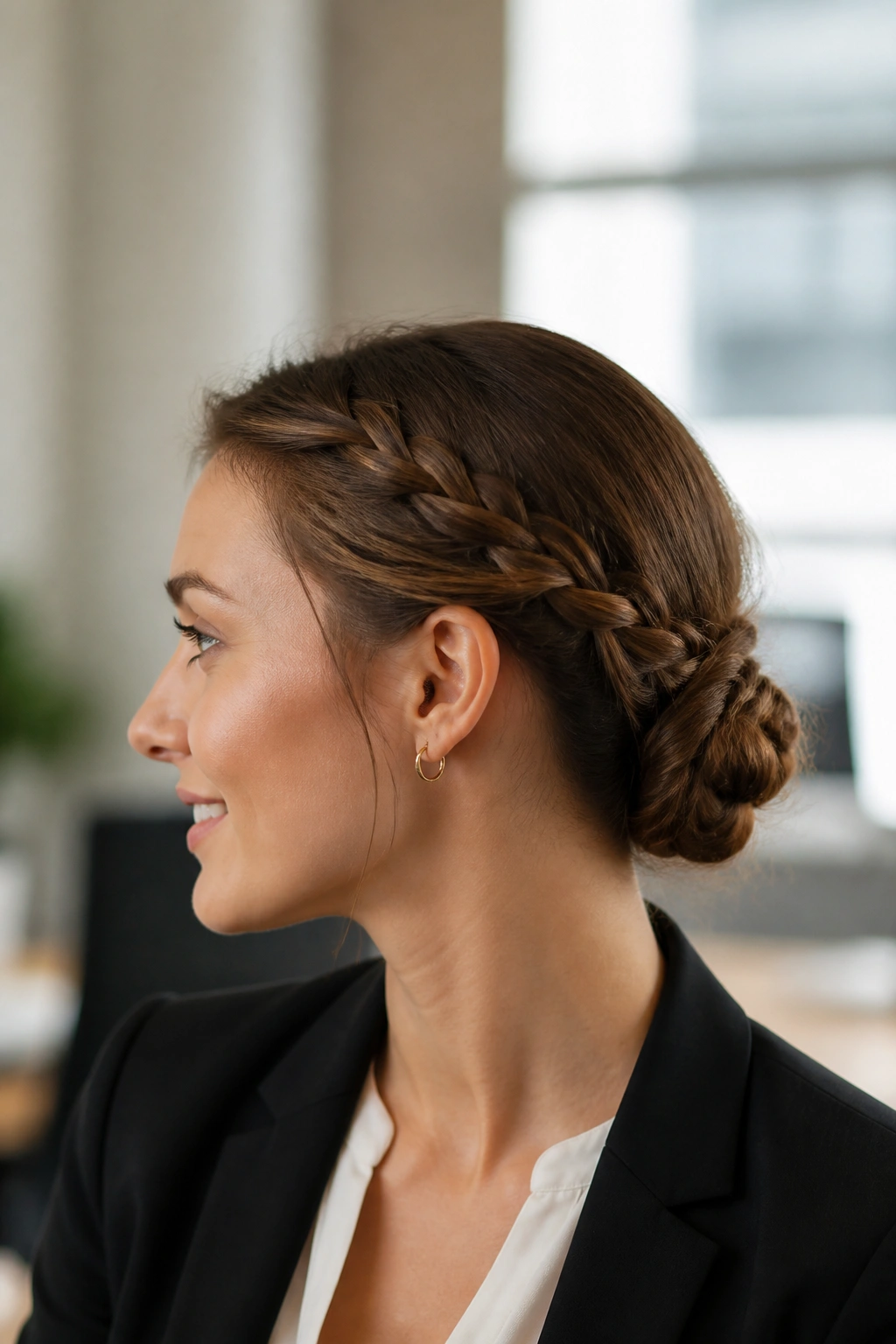
A braided low bun feels a bit more secure than a plain bun, and that’s exactly why it works so well for work. The braid gives the bun texture and grip, which means fewer loose ends escaping by midafternoon. It also looks thoughtful without being fussy.
The part people get wrong
Most people braid too high or braid too tightly. That’s the mistake. Keep the braid low, almost at the nape, so the bun sits close to the head. Then wrap it into a compact coil and pin the perimeter, not the center. If you pin the center, the bun bulges. Nobody needs that.
This style is a strong choice for second-day hair because the slight grit gives the braid more hold. On very clean hair, add a touch of texturizing spray first. A tiny bit goes a long way.
- Best for medium to long hair
- Ideal on hair that slips easily
- Use 3 to 5 pins around the bun’s edge
- Works well with side parts or middle parts
Practical tip: leave the braid a little loose before you wrap it. It makes the bun look fuller and keeps it from feeling overworked.
7. Polished Blunt Bob
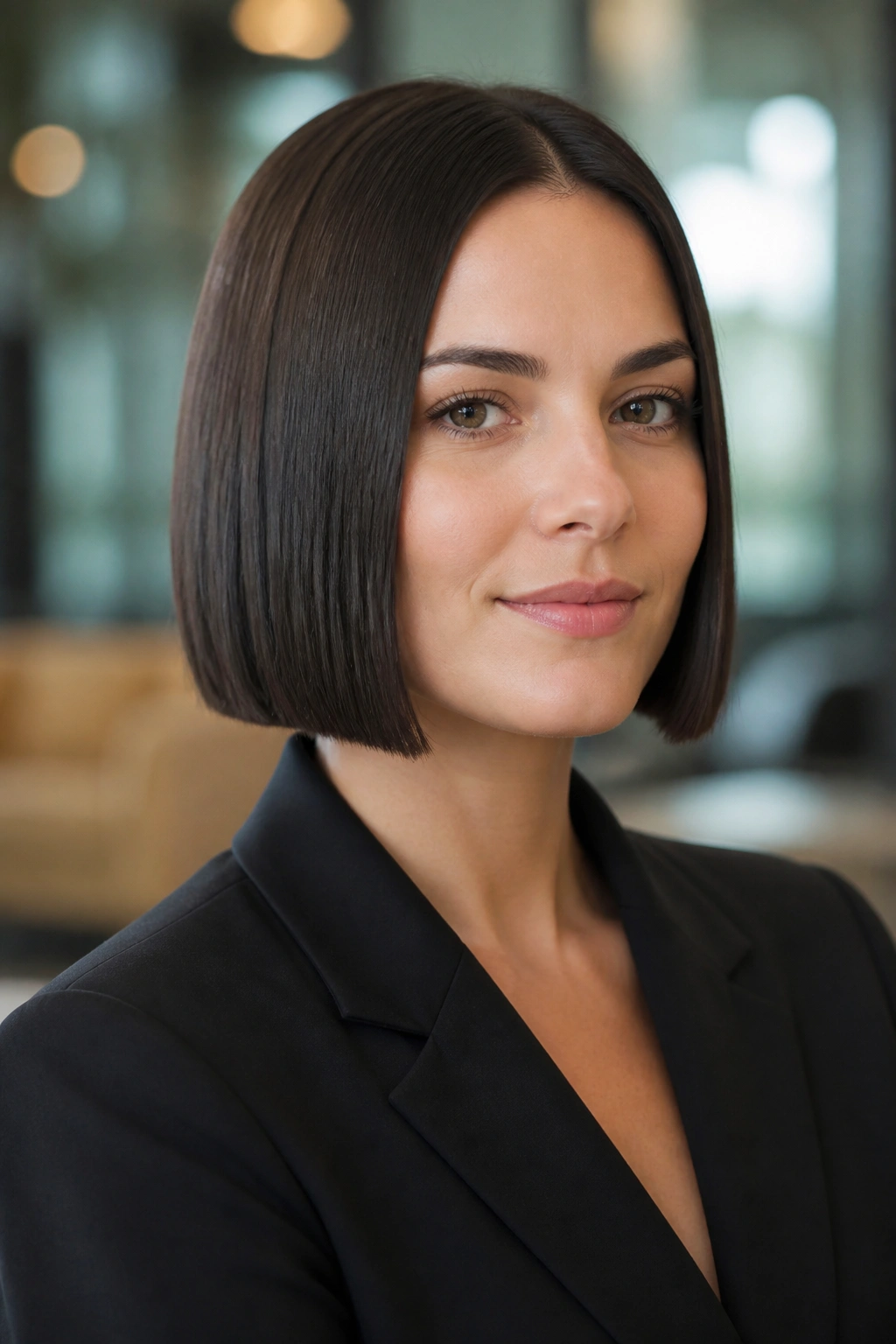
A blunt bob is one of the cleanest office hairstyles because the cut itself does the heavy lifting. Sharp ends, a tidy line, and a smooth finish make the style look deliberate even when the rest of your morning is chaotic.
The best version is not stiff. You want movement at the ends, but not a flipped-out mess. A quick blow-dry with a round brush or a flat brush keeps the shape controlled. If your bob has a center part, make sure it’s straight all the way back to the crown; wobbly parts show more than people think.
This cut works especially well in environments where you want a precise, efficient look. It also saves time. Shorter hair dries faster, uses less product, and usually holds a shape longer than layered lengths that want to move in five different directions.
If your bob is pin-straight, a little serum on the ends keeps it from looking dry. If it’s naturally wavy, a smoothing cream is often enough. The goal is crisp, not flat. There’s a difference.
8. Shoulder-Length Blowout
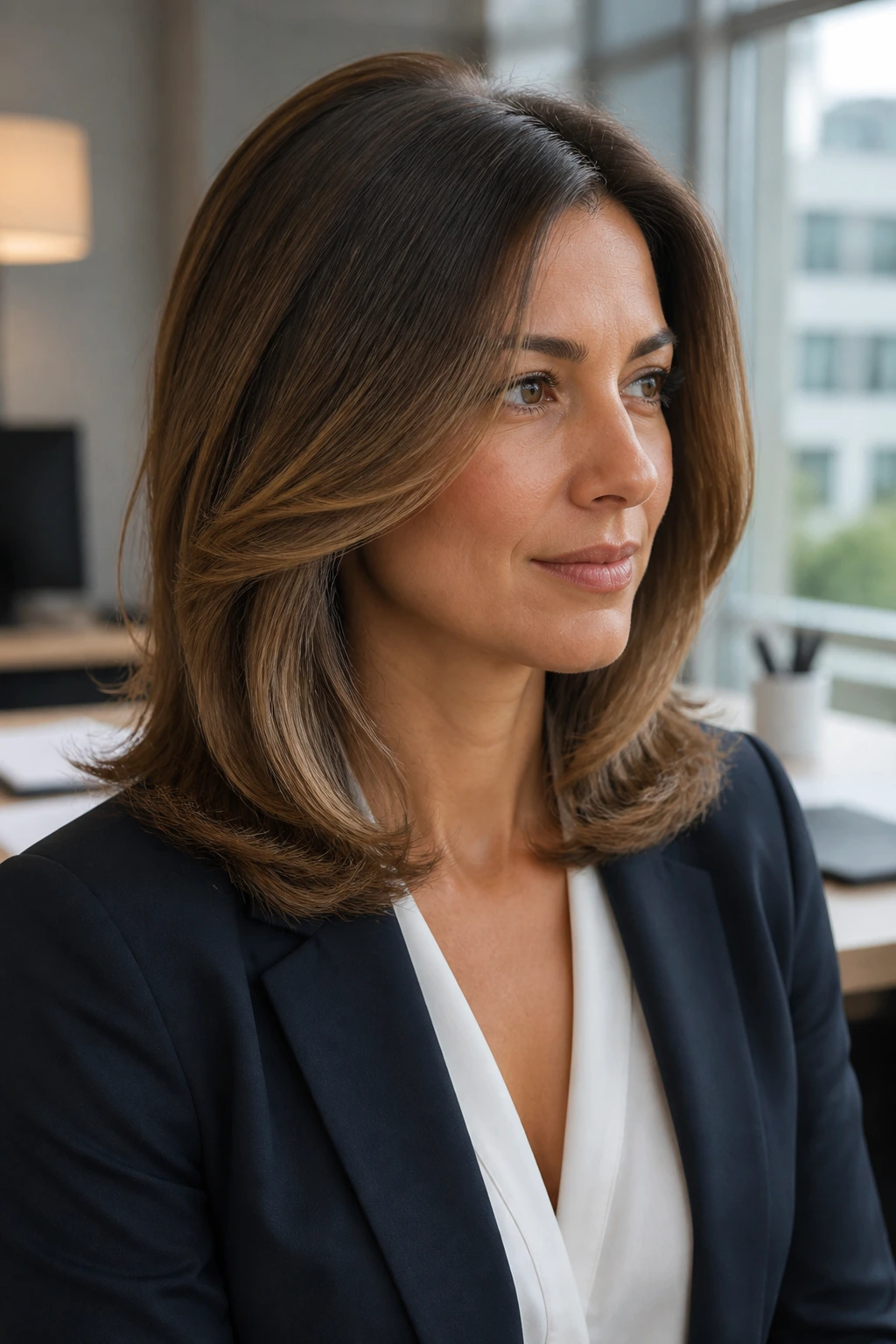
A shoulder-length blowout has a soft, touchable shape that reads polished without feeling stiff. The ends curl just enough to frame the face, and the body around the crown gives the hair some life, which matters when you’re wearing the same navy blazer three days a week.
The texture should look smooth at the roots and airy through the mid-lengths. You do not want a round, overdone salon shape that feels like it’s trying too hard. A proper work blowout looks like you brushed it into place and knew when to stop.
A round brush, a heat protectant, and a medium barrel sectioning pattern are enough. Work in 1- to 2-inch sections, point the nozzle downward, and let each section cool before you move on. That cooling step matters more than people think. It helps the shape set instead of dropping flat the minute you leave the house.
If your hair tends to frizz, use the smallest amount of serum at the very end. Too much product turns a clean blowout into a limp one. And limp is the last thing you want on a style that depends on bounce.
9. Dutch Braid into a Low Tail
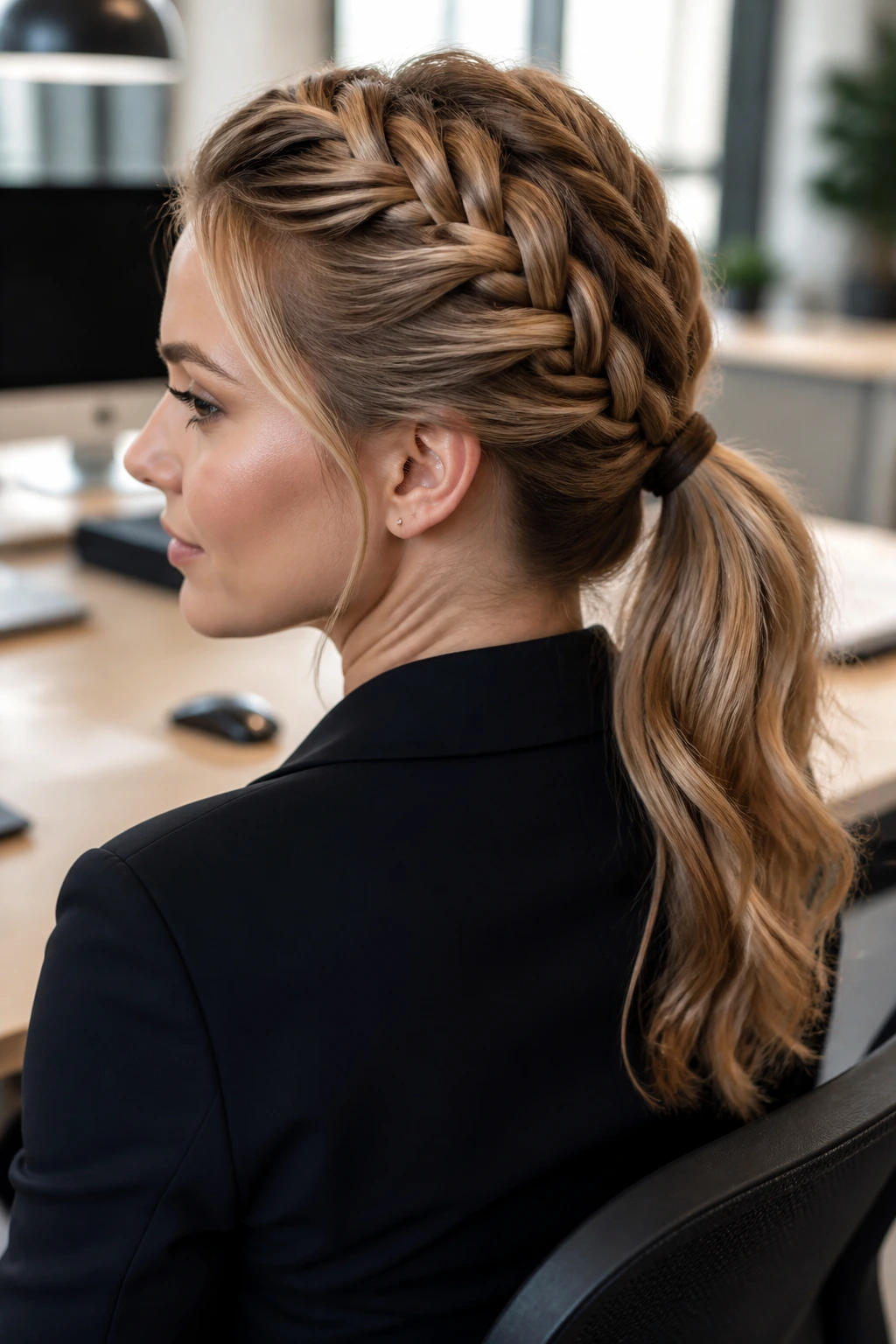
A Dutch braid into a low tail is the practical cousin of the regular braid. It sits a little higher off the scalp, which gives the style definition, but it still ends in a tidy ponytail that won’t swing into your face when you lean over a keyboard.
This is one of the better hairstyles for work if you have long hair and need it contained. The braid starts at the crown or just above the temple area, then feeds into a low ponytail at the nape. That split between braid and tail makes the style feel more finished than a plain braid alone.
It’s also useful for active days. If your job involves moving around, bending, or heading in and out of meetings, the braid keeps the top section secure while the tail gives you flexibility. Thick hair, in particular, holds this style beautifully because the braid has enough material to stay visible.
Unlike a classic three-strand braid that can blend into the rest of the hair, the Dutch braid shows shape. That shape matters. It gives the style enough detail to look intentional under office lighting, where plain hair sometimes disappears into the background.
10. Claw-Clip French Twist
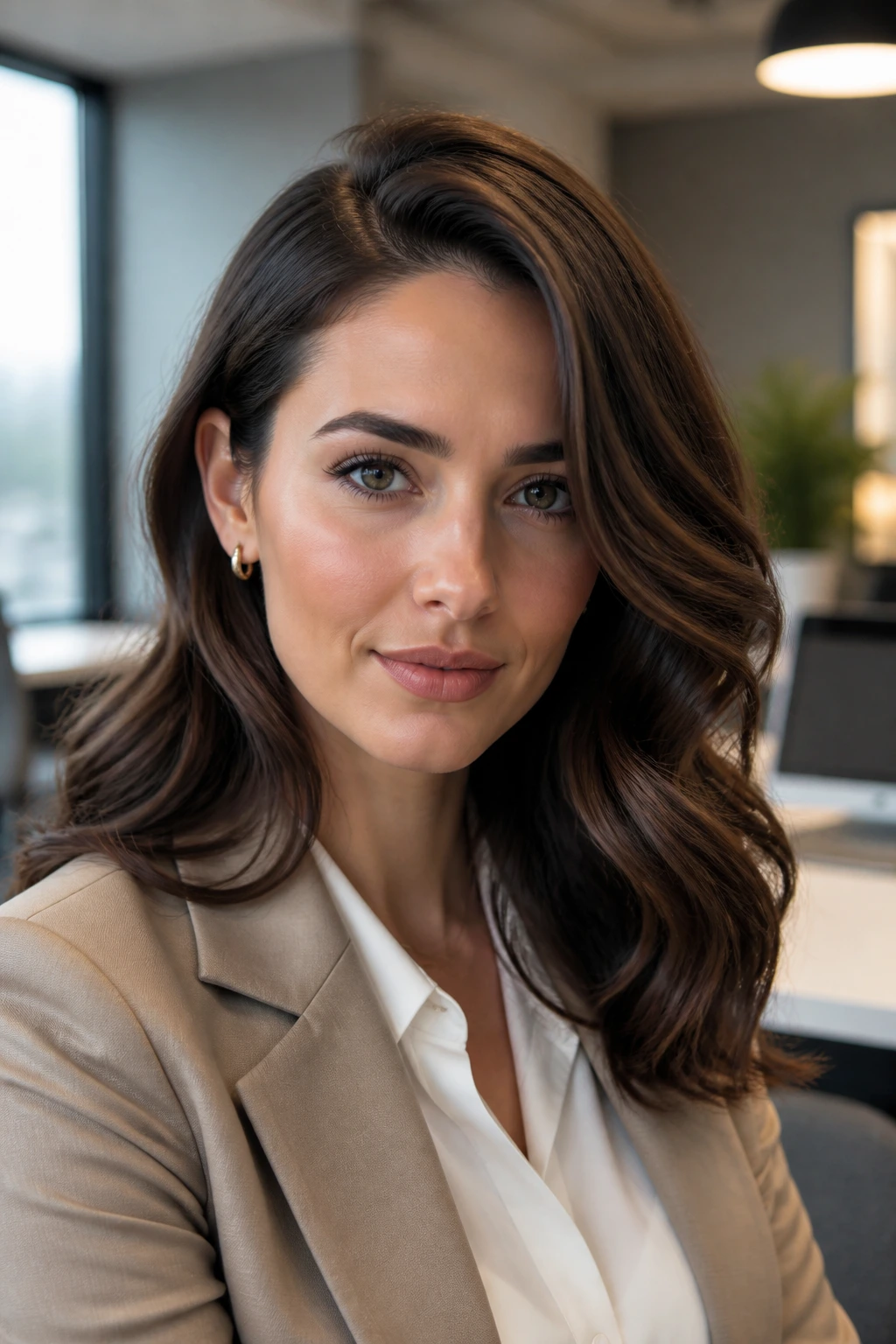
Can a claw-clip hairstyle still look professional? Yes, if you keep the shape clean and the clip the right size. A claw-clip French twist is one of the easiest ways to get hair up fast without looking like you grabbed whatever was on the bathroom counter.
Twist the hair upward as you would for a French twist, then fold the length and secure it with a medium or large claw clip. The clip should hold the hair flat against the head, not pinch it into a tall lump. That little detail changes everything.
What to watch for
A clip that is too small slips. One that is too decorative can look too casual for certain offices. A matte neutral clip is usually the safest bet.
- Choose a clip that grabs all the hair without straining
- Smooth the sides first so the twist looks tidy
- Let the ends tuck in, not spill out
- Keep a spare pin in case one side loosens
This style works well when you need your hair up in under two minutes. It is not the most formal option on the list, but it’s one of the most useful when the morning gets away from you.
11. Tucked-Under Ponytail
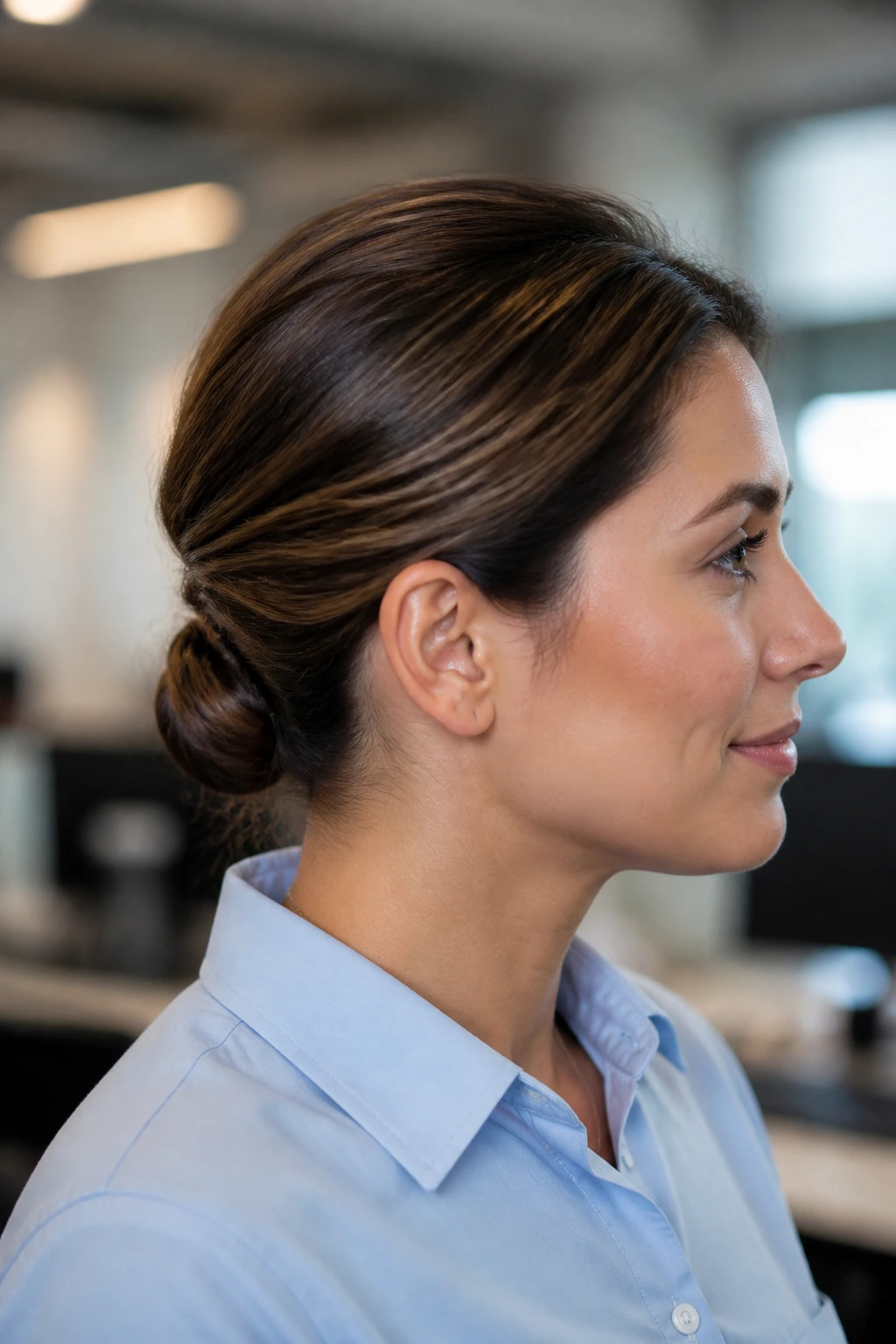
A tucked-under ponytail is one of those deceptively simple work styles that looks more polished than it sounds. You start with a low ponytail, fold the length upward and under, and pin the ends so the finish sits neatly at the nape.
The result is clean and compact. It has a little bit of the shape of a bun, but it’s softer and easier to do on the fly. If your hair is straight or lightly wavy, the tuck holds well. If your hair is thick, use two elastics or a stronger one so the base stays secure.
I like this style for days when a full bun feels too tight and a ponytail feels too plain. It lands in the middle. That middle ground is useful, especially in offices where you want to look composed but not overdressed.
It also pairs nicely with collared shirts because the tucked shape keeps bulk away from the neckline. That sounds small, but small things matter. Hair rubbing against a collar all day gets annoying fast.
12. Sleek Top Knot
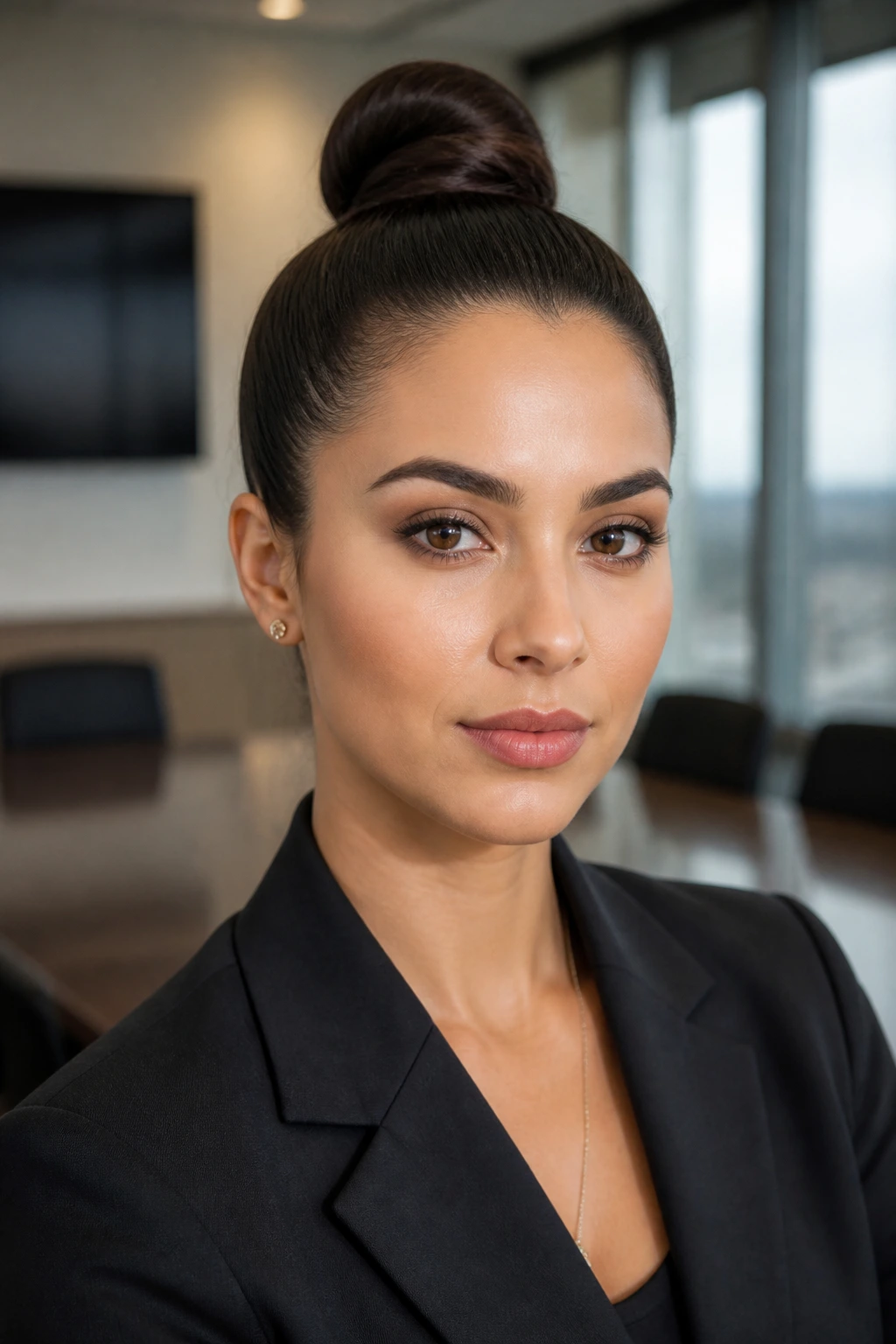
A sleek top knot is not lazy when it’s done well. It’s precise. The difference between a sloppy top knot and a work-ready one is placement, control, and restraint.
The knot should sit high enough to clear the neck, but not so high that it looks like a gym style. Smooth the hair upward, secure it in a tight ponytail, then coil the length into a compact knot and pin it flat. The surface should look controlled, not puffy.
This style is useful on long days because it keeps everything out of the way. It also handles oily roots well, which is one reason people reach for it when wash day is not happening. A little dry shampoo at the roots can add grip and tame shine at the same time.
If you have a heavy head of hair, don’t pile the knot too large. A huge top knot can pull at your scalp by late afternoon, and that gets old fast. Smaller is usually smarter here. A neat, centered knot will do more for you than a dramatic one.
13. Rope-Braid Ponytail
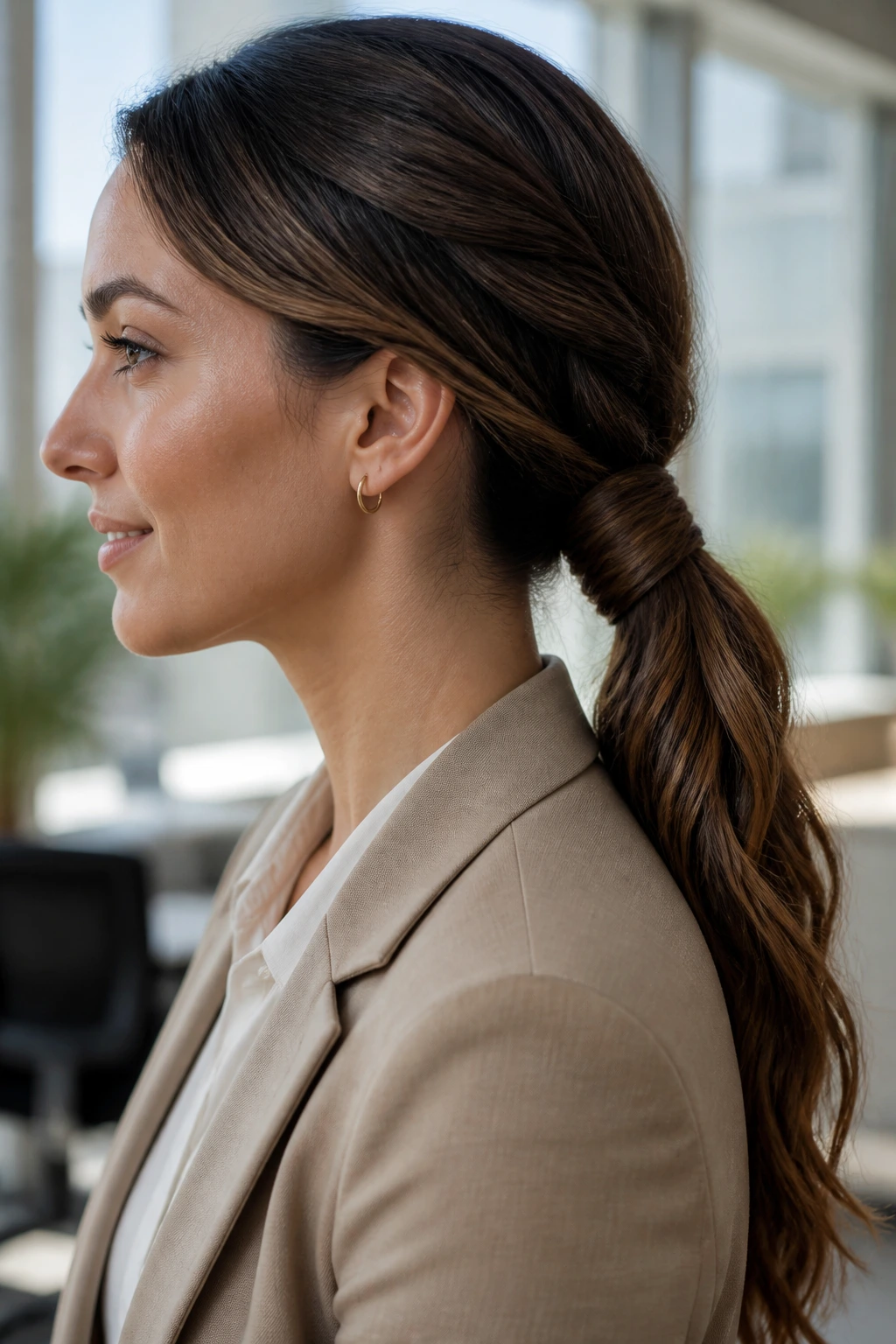
A rope-braid ponytail is a clean way to make a ponytail look more finished without adding much time. Instead of weaving three strands, you twist two sections around each other, which gives the hair a tight spiral and a slightly dressier finish.
Why it works
The rope braid holds nicely on straight or wavy hair because the twist creates tension. It also keeps the ponytail from looking too plain, which is useful on days when you want more than a basic tie-back but less than a full braid.
Start with a low or mid ponytail, divide the tail into two equal sections, twist each section in the same direction, then twist them around each other in the opposite direction. That opposite-direction rule is what makes the braid lock in. If you twist both steps the same way, it falls apart faster.
- Use two small elastics: one at the base, one at the end
- Add a touch of smoothing cream before twisting
- Pull gently at the braid if you want it thicker
- Best for medium to long hair
Quick note: this style looks sharper when the sections are even. Uneven sections make the braid wobble.
14. Soft Waves with a Deep Side Part
Soft waves can be work-appropriate when the shape is controlled and the part is intentional. A deep side part gives the hair direction, and the waves keep it from feeling too severe. The whole look sits somewhere between relaxed and polished, which is often exactly where office hair needs to live.
The key is not making the waves too curly. You want bends, not ringlets. A 1.25-inch iron, large velcro rollers, or even heatless bends overnight can do the job. Brush the shape out lightly once it cools so the waves settle into a softer line.
A deep side part can also change the mood of an outfit fast. A sharp blazer reads a little less rigid when the hair has movement. A plain sweater looks more finished when the part is deliberate. It’s a small adjustment with a real effect.
If your hair gets flat at the roots, clip the crown while it cools. That one habit keeps the style from collapsing before lunch. Not glamorous. Very useful.
15. Pixie with a Side Sweep

A pixie cut can be one of the easiest hairstyles for work, but only if it’s shaped with a little care. A side sweep softens the front and gives the cut direction, which stops it from looking too chopped or too blunt around the forehead.
Unlike a slicked-back pixie, a side sweep leaves some movement. That matters if you want the cut to feel professional instead of severe. Use a pea-size amount of matte paste or light cream, warm it between your fingers, and guide the longer top section across to one side.
This look works well for short-hair people who want something fast in the morning. It also handles humidity better than styles that depend on perfect length or exact curls. The shape is the point, not the precision of every strand.
If you’ve got a finer texture, blow-dry the fringe in the direction you want it to sit. If the hair is coarse or thick, a small amount of smoothing cream at the roots can keep the sweep from sticking up. Short hair needs less product than most people think. Too much makes it heavy fast.
16. Defined Curly Puff
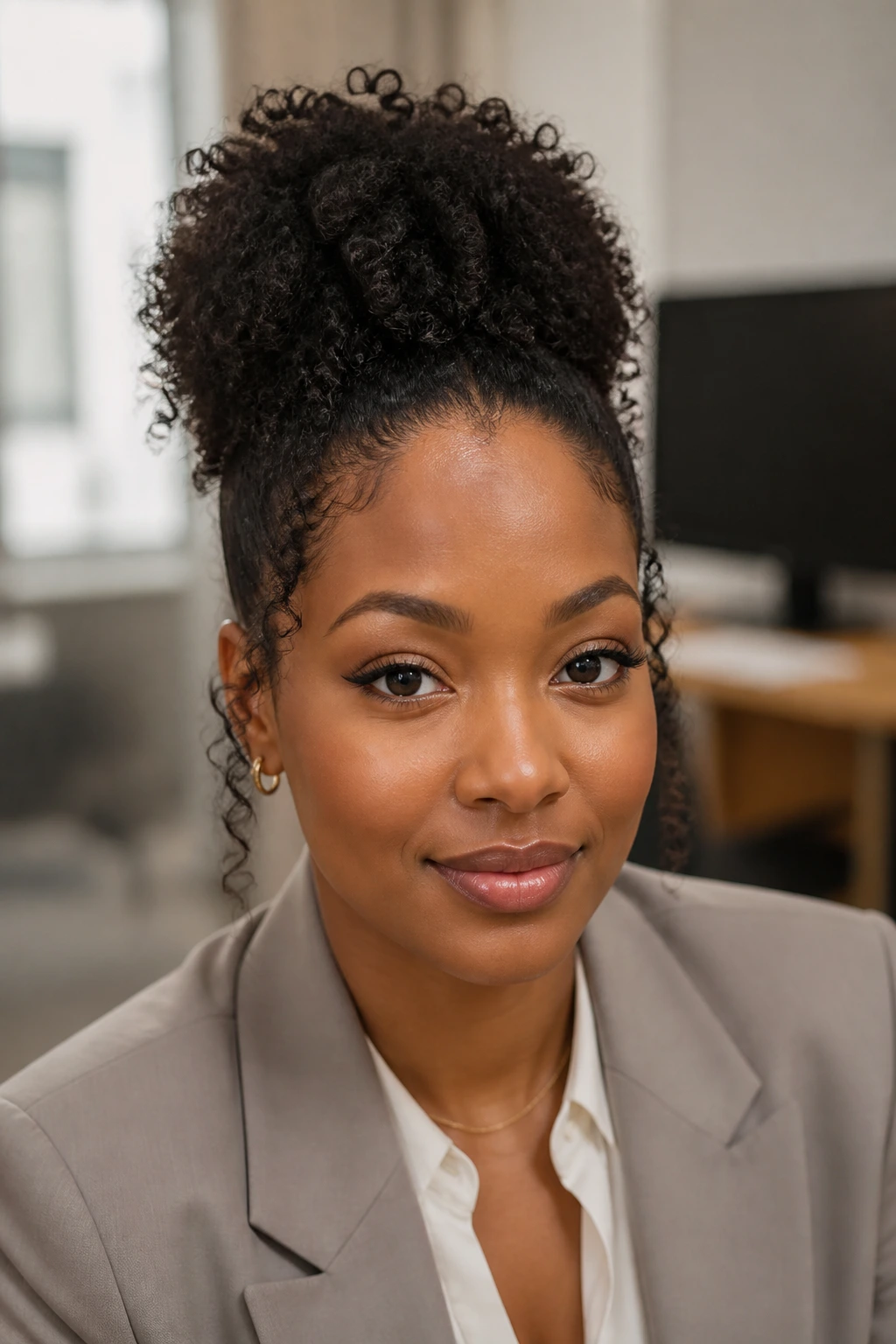
Does a curly puff belong in a work setting? Absolutely, when the roots are neat and the curls are shaped with intention. The style keeps textured hair off the face, shows off the curl pattern, and looks polished without trying to flatten what your hair naturally wants to do.
The base matters most. Smooth the front and sides with a gel, cream, or edge control that works for your texture, then gather the puff where it feels comfortable, usually mid-height or slightly above. The puff should look full, not stretched tight. A clean part or softly brushed front gives the style a professional edge.
Keep the curls hydrated. Dry curls lose shape faster and can look fuzzy under office lights. A little leave-in conditioner or curl cream before styling helps the puff hold its shape and keeps the ends from looking thirsty.
This is one of the strongest work hairstyles for natural hair because it respects the texture instead of fighting it. You can dress it up with a small hair cuff or leave it plain. Either way, the outline stays neat, and that’s what makes it work.
17. Crown Braid into a Bun
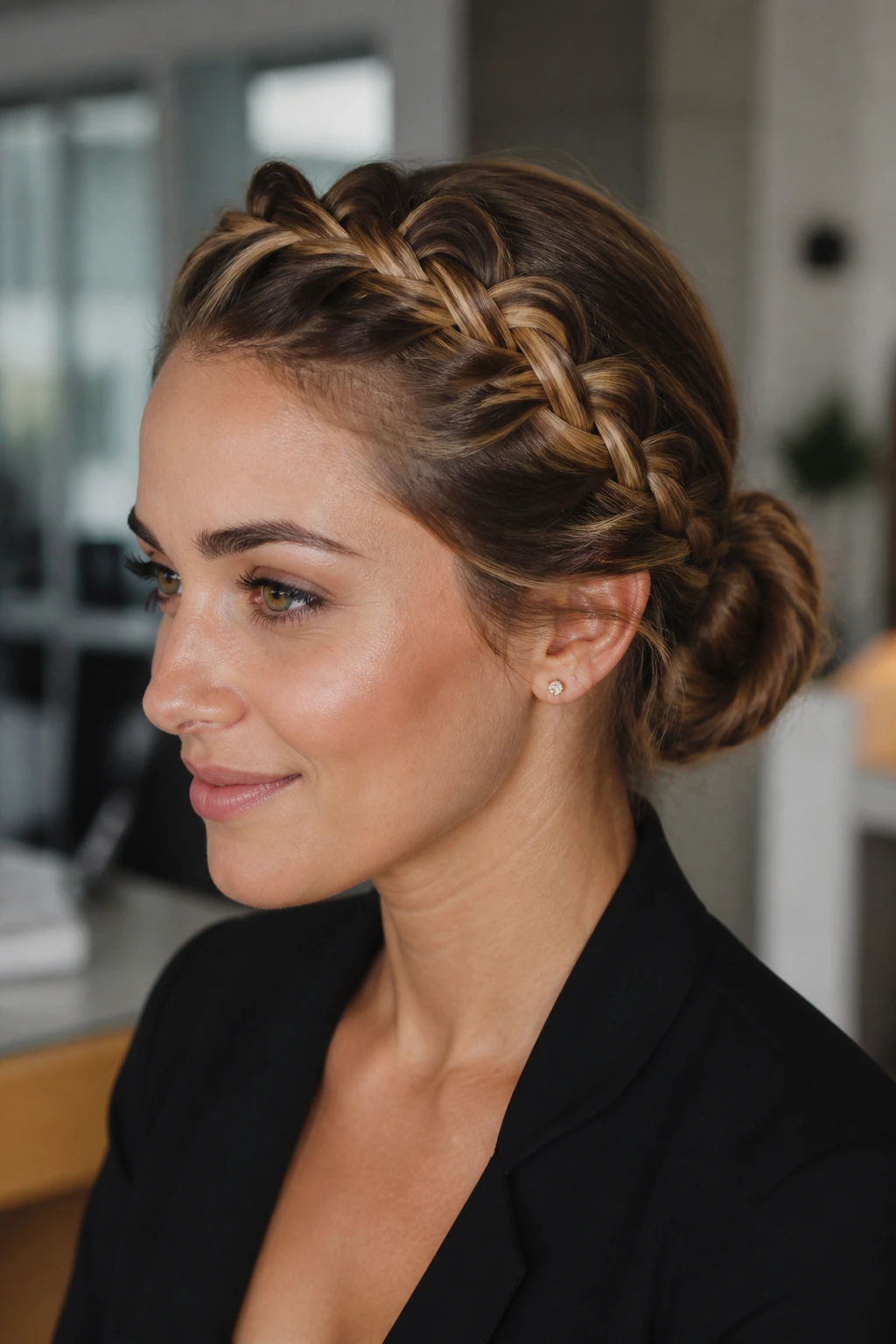
A crown braid into a bun is the style I’d reach for when I want hair off my neck, off my face, and still interesting enough to feel done. It looks more complex than it is, which is handy on mornings when you want the result to look fancier than the effort.
Start with a braid along the hairline or temple area, following the shape of the head. Bring that braid toward the back and secure it into a low bun or tucked coil. The braid acts like a frame, while the bun anchors the style. That combination keeps the whole look from slipping into plain-bun territory.
It works particularly well on medium to long hair with enough length to braid cleanly. If your hair is layered, keep the braid a little looser so the shorter pieces don’t poke out everywhere. Pins should go into the bun’s edge, not just the braid, because the bun is doing the heavy lifting.
- Best for long meetings and formal office days
- Use firm pins that match your hair color
- Keep the braid close to the hairline for a neat finish
- Works better with hair that has a little grip
My opinion: this is one of the most dependable styles on the whole list when you want polish without stiffness.
18. Low Knot with Face-Framing Pieces
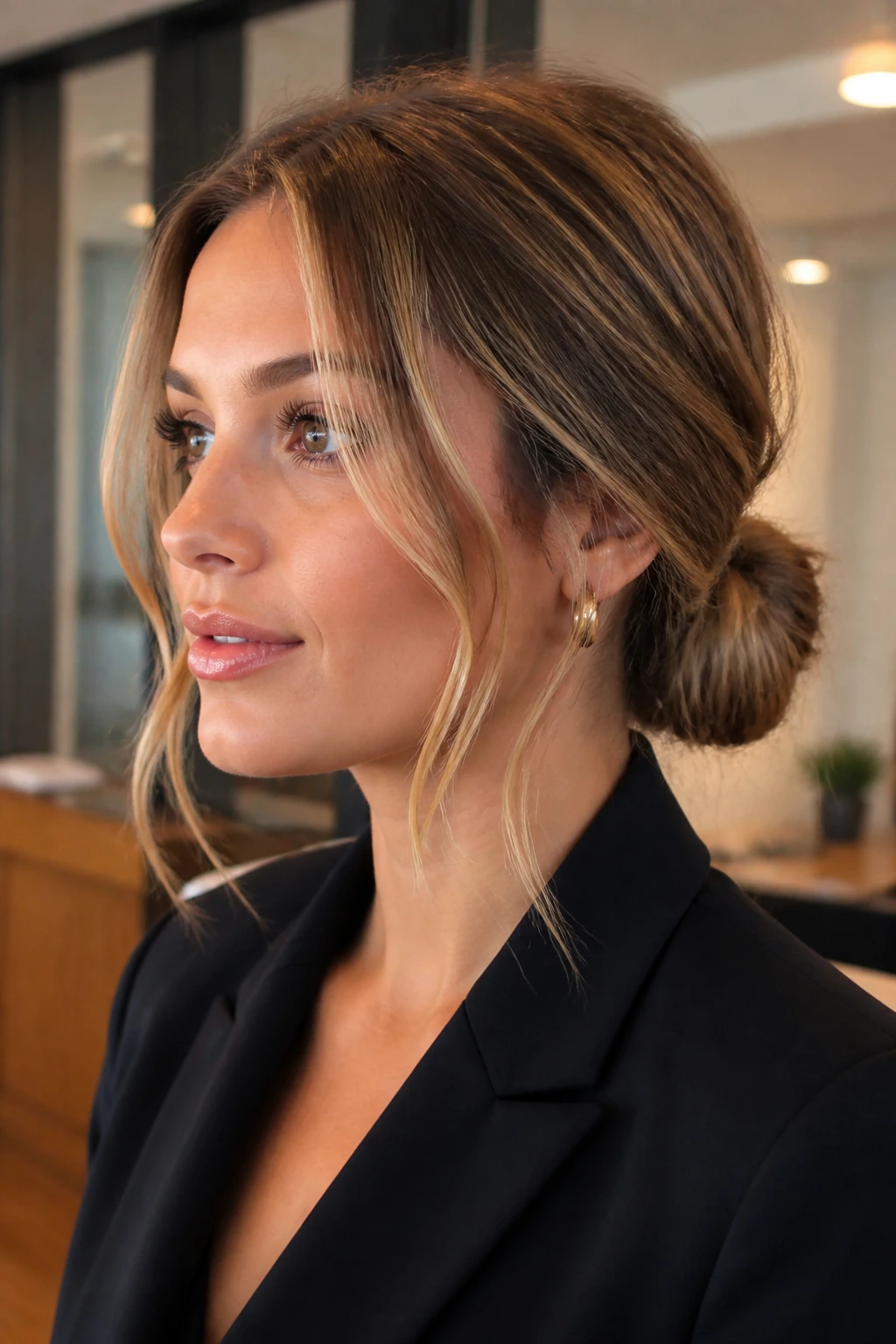
A low knot with face-framing pieces is the style I’d call the most human on this list. It’s polished, yes, but it leaves just enough softness around the face to avoid looking severe. That makes it useful for ordinary workdays, interviews, and any situation where you want to look calm rather than rigid.
The knot should sit low and compact, almost like a neat tucked bun. Pull out two small pieces near the front if you want a softer edge, then shape them with a round brush or a quick pass of a flat iron. The pieces should skim the cheeks, not hang in your eyes. That balance is what keeps the style professional.
This one works across a lot of hair types because the knot itself is simple and the face-framing detail does the visual work. If your hair is very fine, a little texture spray before gathering helps the knot stay full. If it’s thick, anchor the base with a strong elastic before pinning.
It’s the kind of style that looks good with a crisp shirt, a knit top, or a tailored dress. Useful. Calm. Not overdone. And honestly, that’s a pretty good formula for work hair.
A good work hairstyle should make your morning easier, not turn into another decision you have to babysit all day. If you keep one thing in mind, let it be this: the best styles are the ones that match your hair’s texture, your office’s dress code, and how much time you actually have before you walk out the door.
