



Fine hair punishes guesswork. A cut that looks airy and soft in a salon chair can collapse into a flat sheet by lunch if the shape is wrong, the layers are too thin, or the styling is doing too much heavy lifting.
The trick is not chasing volume everywhere. That usually backfires. Fine hair tends to look fuller when the perimeter is blunt, the crown gets a little lift, and the ends are kept tidy enough to look dense. A few well-placed bends can do more than a thousand random layers.
I’ve always thought the best hairstyles for fine hair are the ones that give the eye something clear to follow: a clean line at the jaw, a side part that opens up the face, a soft wave that starts below the cheekbone, or a bun that sits a touch higher than feels natural. Small choices. Big difference.
So if your hair slips flat, goes wispy at the ends, or seems to lose shape the second you step outside, the answer is usually not “more hair.” It’s better architecture. And that starts with the first cut on the list.
1. Blunt Bob with a Clean Edge
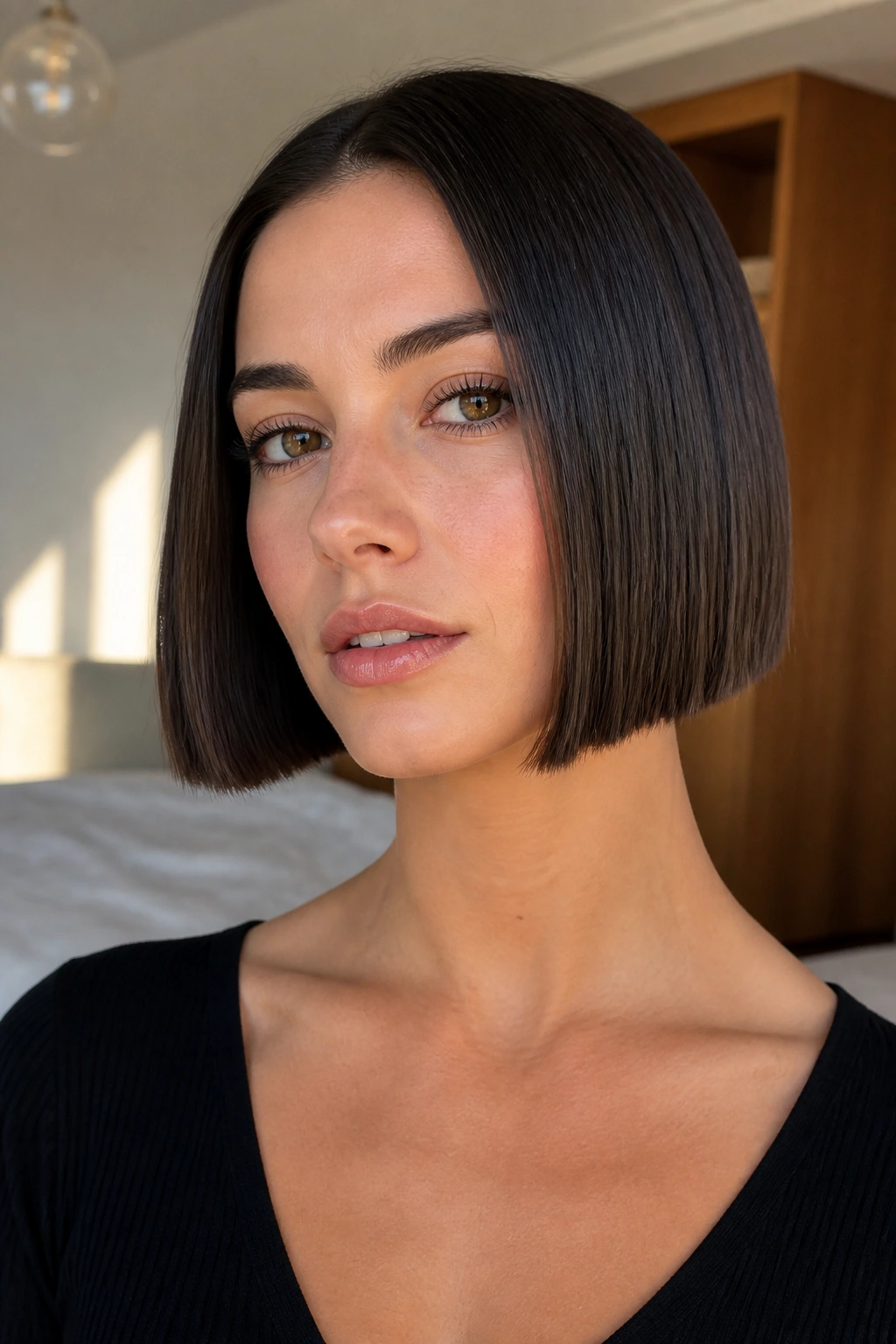
A blunt bob is one of those styles that simply makes sense for fine hair. The clean edge tricks the eye into seeing a thicker line, which is exactly what you want when your ends tend to look see-through.
Keep the length around the jawline or just below it if your hair is especially soft. Longer than that, and the bottom can start to look a little sparse unless you’re styling it every single morning. I’d ask for a one-length shape with only the lightest interior softening, not choppy layers.
Why It Works
- The ends land in one place, so the hair reads as denser.
- You can tuck one side behind the ear and still keep a strong shape.
- A quick blow-dry with a 1.5-inch round brush gives the whole cut a polished bend in under 10 minutes.
Best move: finish with a pea-sized bit of lightweight cream only on the very ends. Too much product kills the effect fast.
2. Collarbone Lob with Soft Interior Layers
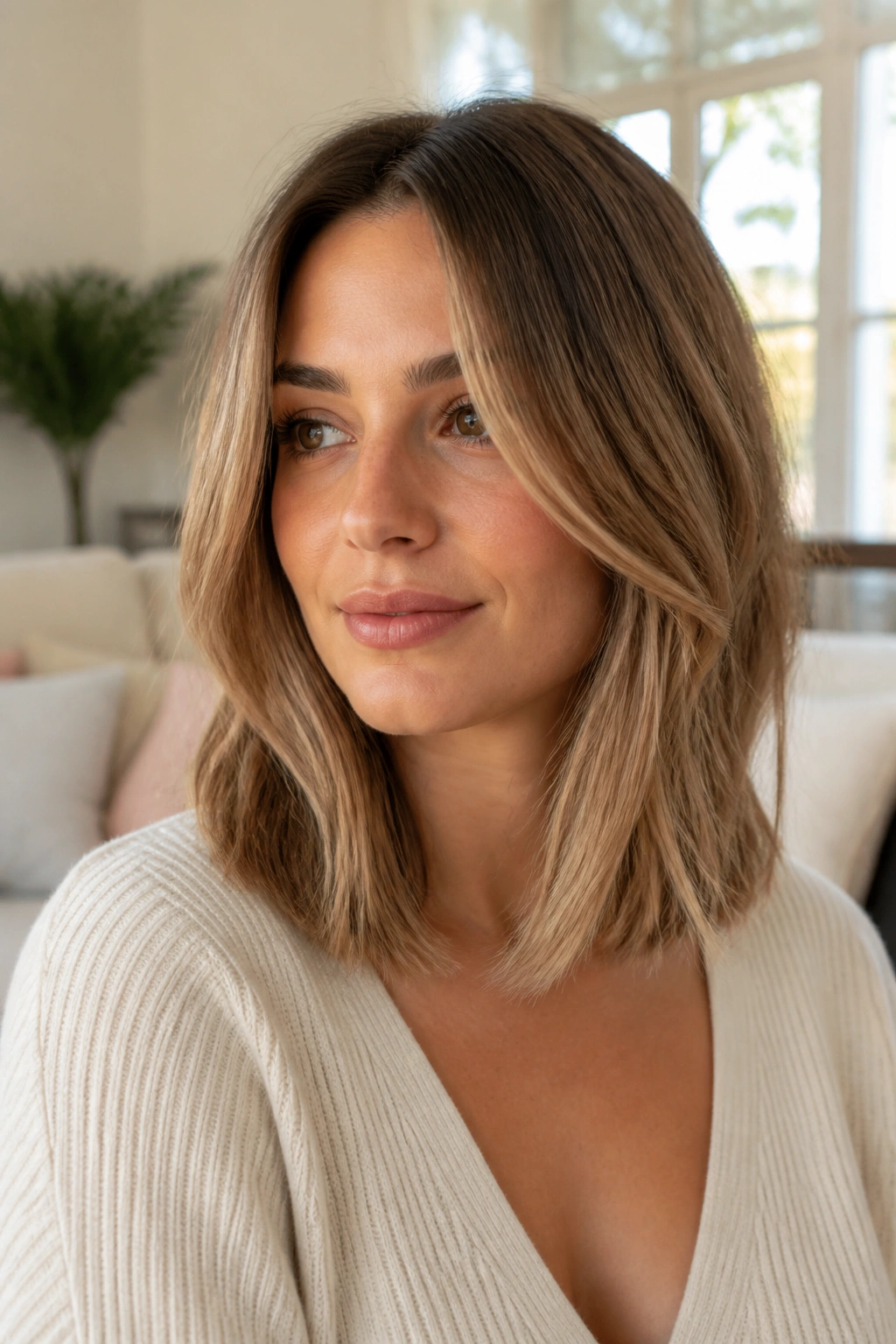
Why does this length work so often? Because it sits in that useful middle zone where fine hair still has enough weight to swing, but not so much length that it collapses.
A collarbone lob is long enough to pull back, short enough to feel fresh, and forgiving enough that you can wear it straight or waved. The key is soft interior layers, not a heavy staircase of pieces. You want movement, not ragged ends.
If you part it slightly off-center and bend the front pieces away from the face with a flat iron, the shape opens up in a way that feels easy. A quick mist of texturizing spray at the roots helps too, but keep it light. Fine hair goes from airy to sticky faster than people expect.
How to Wear It
- Air-dry to about 80%, then rough-dry the roots.
- Add two loose bends on each side with a 1-inch iron.
- Shake it out with your fingers, not a brush.
3. French Bob with a Soft Fringe
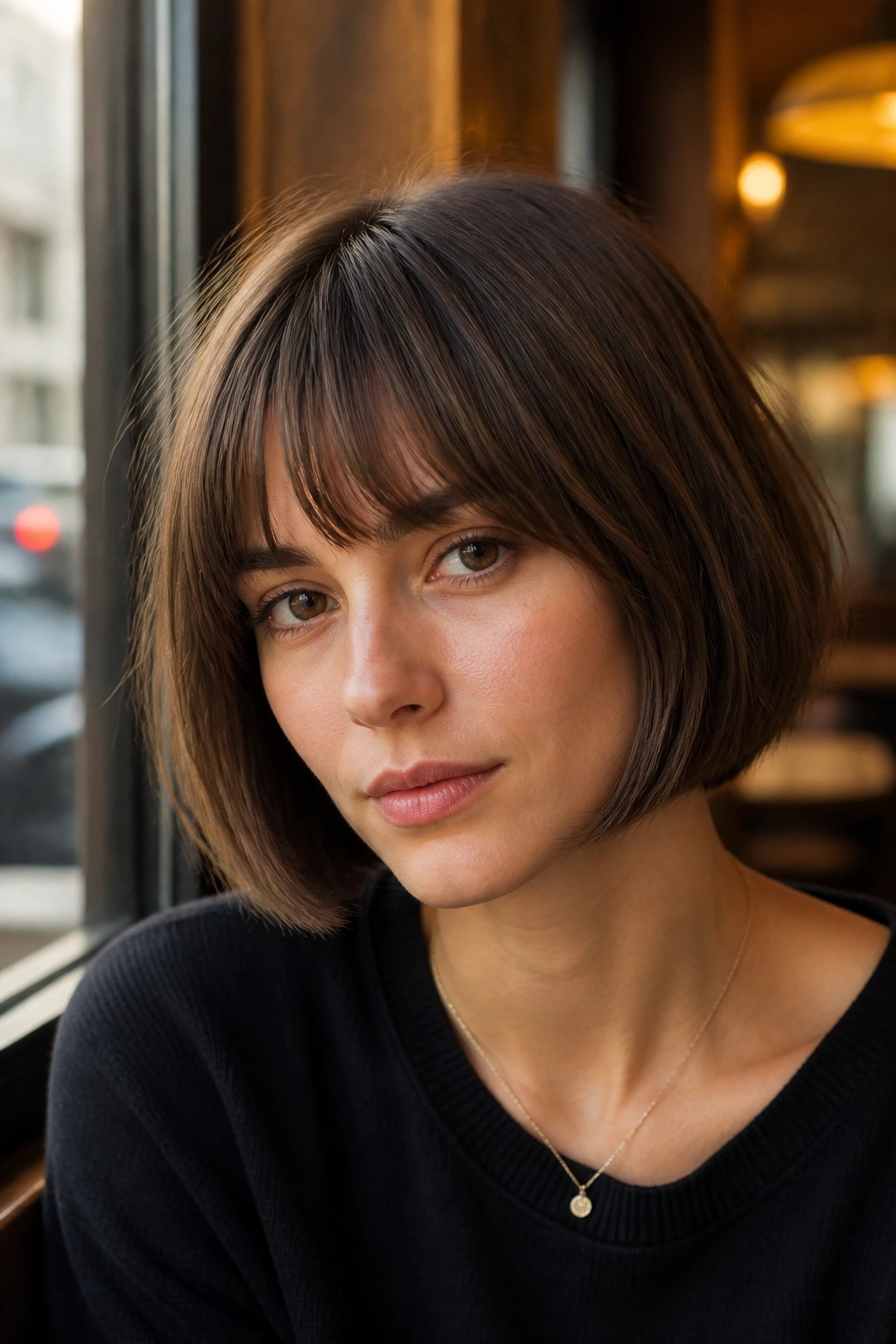
This one has a little attitude, and I mean that as a compliment. A French bob sits close to the chin, often with a soft fringe or a piece-y face frame, and it makes fine hair look deliberate instead of limp.
The shorter length gives the illusion of thickness. The fringe adds shape up top, which is where fine hair often needs help most. If you like a clean, almost tailored look, this is one of the strongest options on the list.
I’d avoid over-texturizing the ends. That can make the cut look frayed. Instead, blow-dry the fringe forward first, then use a small round brush at the sides to turn the shape inward just a touch. It’s neat, slightly cool, and easier to live with than people think.
4. Side-Parted Pixie Cut
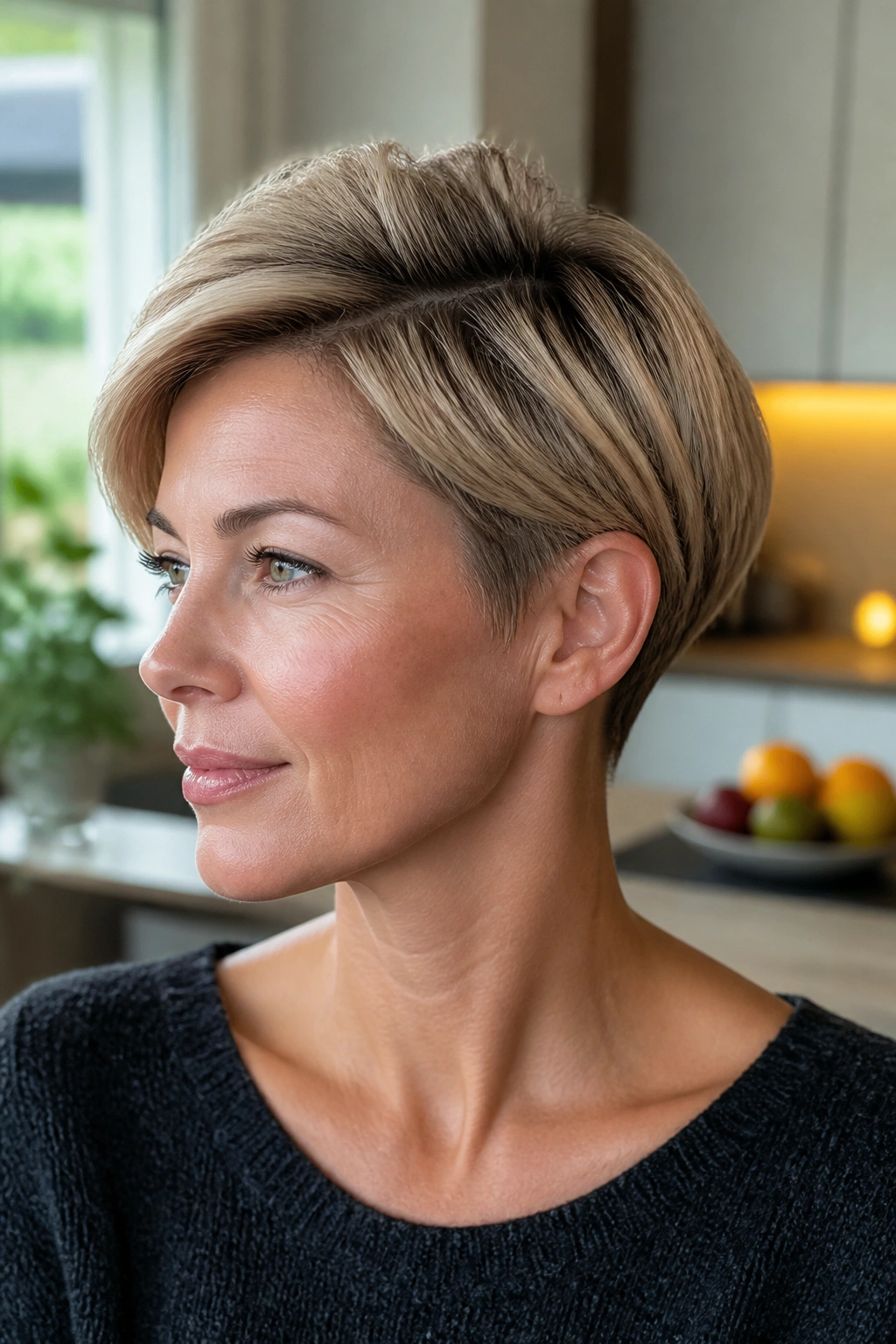
A side-parted pixie is blunt about one thing: it puts volume where it matters. Fine hair often looks best when the top has some height and the sides are kept closer to the head.
The side part creates instant lift. The longer top section can be brushed over, swept up, or finger-styled with a dab of paste. That little shift in direction makes a huge visual difference. Short hair can feel intimidating, sure, but a good pixie is one of the fastest ways to make fine hair look fuller.
Ask for softness around the ears and nape, not tiny spiky pieces everywhere. That old-school choppy thing can date fast. A modern pixie should feel airy, but not thin.
Quick tip: blow-dry the top in the opposite direction first, then flip it back. It gives the roots a touch of memory.
5. Bixie Cut
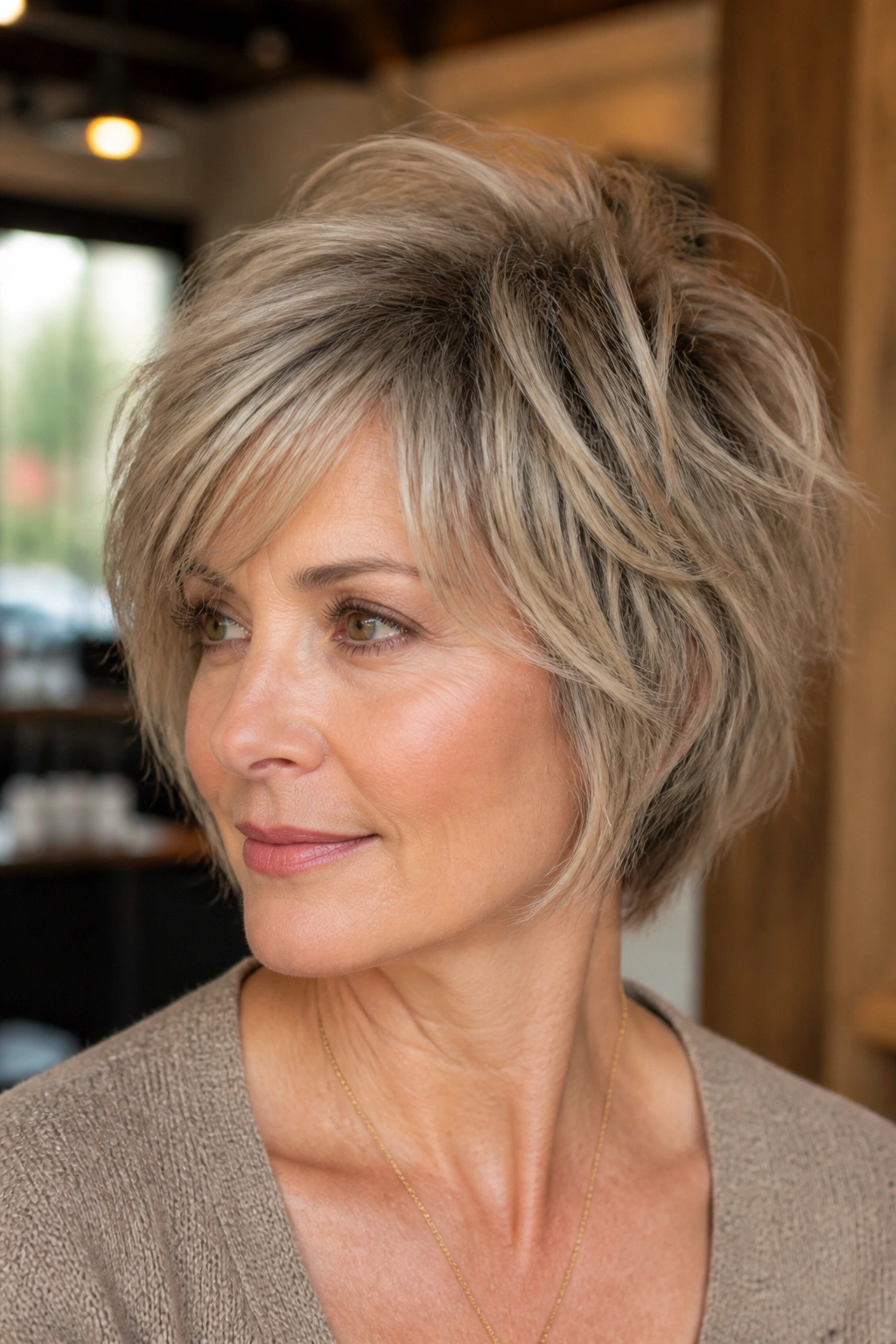
A bixie sits between a bob and a pixie, and that middle ground is useful for fine hair. You get a little more length than a crop, but you lose the weight that often drags finer strands down.
What makes it different from a standard pixie is the softer perimeter around the cheeks and jaw. That extra length keeps the style from looking too severe. What makes it different from a bob is the lift around the crown and the loose, slightly tousled finish.
I like this cut for people who want movement without a daily styling ritual. A few scrunches with mousse and a quick blast from a dryer is usually enough. It’s not a “wash and walk away” cut, but it comes close.
6. Curtain Bangs with a Shoulder-Length Cut

Curtain bangs can be a gift for fine hair when they’re cut lightly and blended well into the sides. They create the feeling of fullness around the face, which is where the eye goes first anyway.
Shoulder-length hair gives the bangs somewhere to land. Shorter than that, and the whole style can feel a bit crowded. Longer than that, and the bangs can lose their shape unless you’re good with a brush and dryer. I’d keep the layers minimal and the bangs longer through the cheekbone. That soft taper matters.
Ask for This
- Bangs that open in the middle, not a heavy block.
- Face-framing pieces that start around the cheekbone.
- A slight bevel at the ends so the shape doesn’t hang straight.
7. Textured Shag with Airy Layers
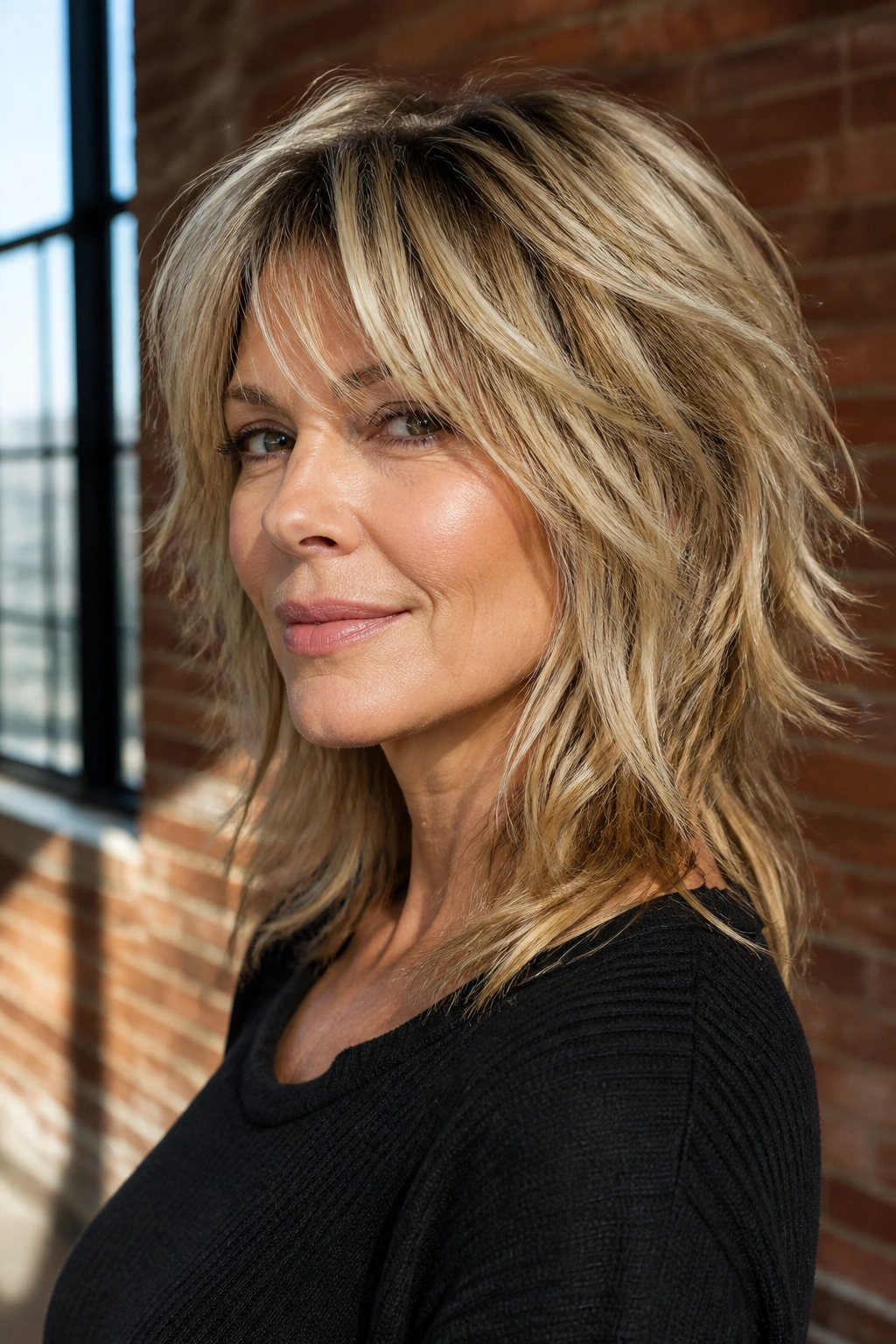
The shag can be brilliant on fine hair when it’s restrained. Too many disconnected layers, and the ends go fluffy in the wrong way. But the right shag creates movement at the crown and around the face, which fine hair often lacks.
Think of it as controlled mess, not chaos. The shorter pieces around the top give lift, and the longer pieces underneath keep some length and softness. On day two, this cut often looks even better because a little grit helps the layers separate in a flattering way.
A salt spray can help, but don’t drown the hair in it. A few spritzes, rough-dried upside down for 20 seconds, is usually enough. The goal is texture that still feels touchable.
8. Soft Wolf Cut

Here’s the catch with a wolf cut: it only works on fine hair if it stays soft. The aggressive, over-layered version can make hair look even thinner. The gentler version, though, has a nice lift around the crown and a tapered shape through the lengths.
That softer interpretation is better for most people. It keeps some weight at the bottom while still giving the hair a slightly undone profile. I’d pair it with curtain bangs or a wispy fringe if the forehead feels too exposed.
A blowout brush helps here more than a curling iron. Wrap the pieces away from the face, then let them cool before you touch them. That cooling step matters. It helps the bend hold.
9. Long Layers with a Face Frame
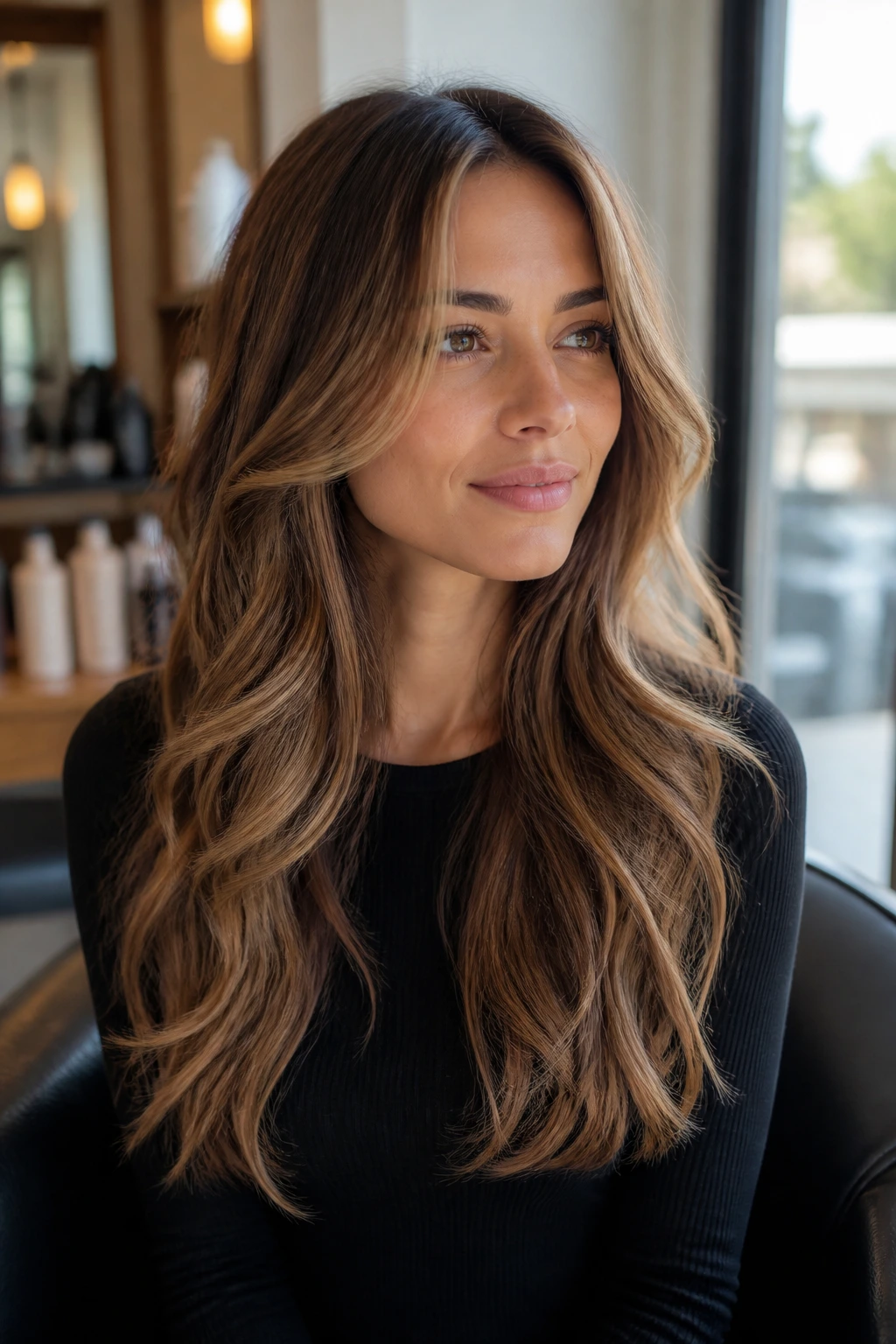
Can long hair work on fine strands? Yes, but only if the layers are handled with care. Long, heavy lengths can drag everything flat, while too many layers can make the ends disappear.
The smart move is a subtle face frame and a few long internal layers placed where the hair needs a little lift. That gives movement without taking away density. This is one of the few long styles I’d recommend when someone hates short hair but still wants the illusion of volume.
Wear it with a middle part for symmetry, or with a soft side part if the roots need a boost. Either way, a large-barrel iron — 1.25 inches is the sweet spot — gives a loose wave that makes the hair feel fuller without turning it puffy.
10. Clavicut with Invisible Layers
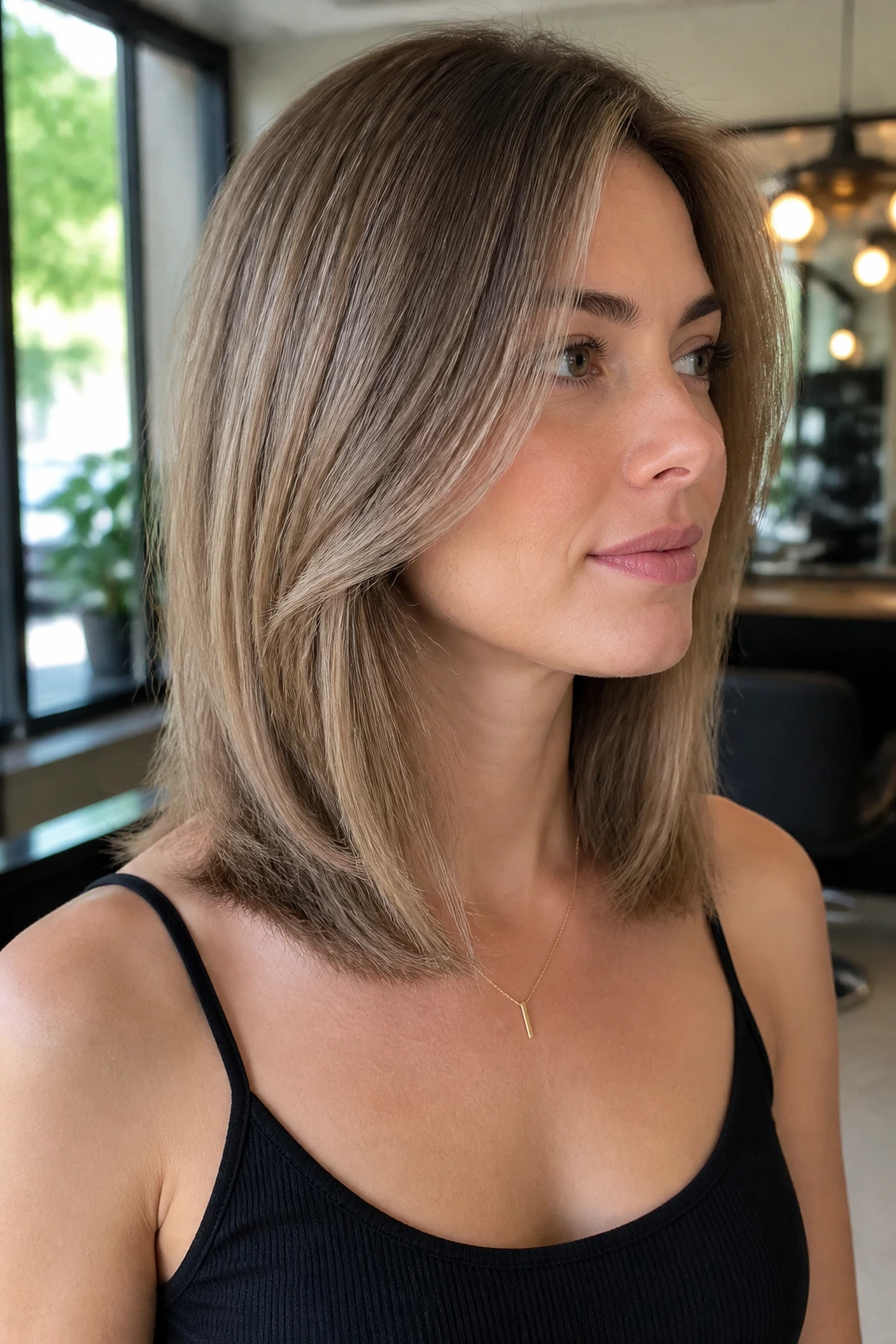
A clavicut lands right at the collarbone, and that length is a sweet spot for fine hair. It’s long enough to feel versatile, but not so long that the ends look ragged.
Invisible layers are the quiet hero here. They’re cut inside the shape, so they remove bulk without creating obvious step lines. The result is hair that swings a little more and dries a little better. That matters when your strands are fine and tend to cling to your neck.
A shoulder-skimming cut also gives you room to tuck, flip, wave, or straighten without fighting the style. It’s practical. Not flashy. That’s why I like it.
11. Sleek Low Bun with Crown Lift
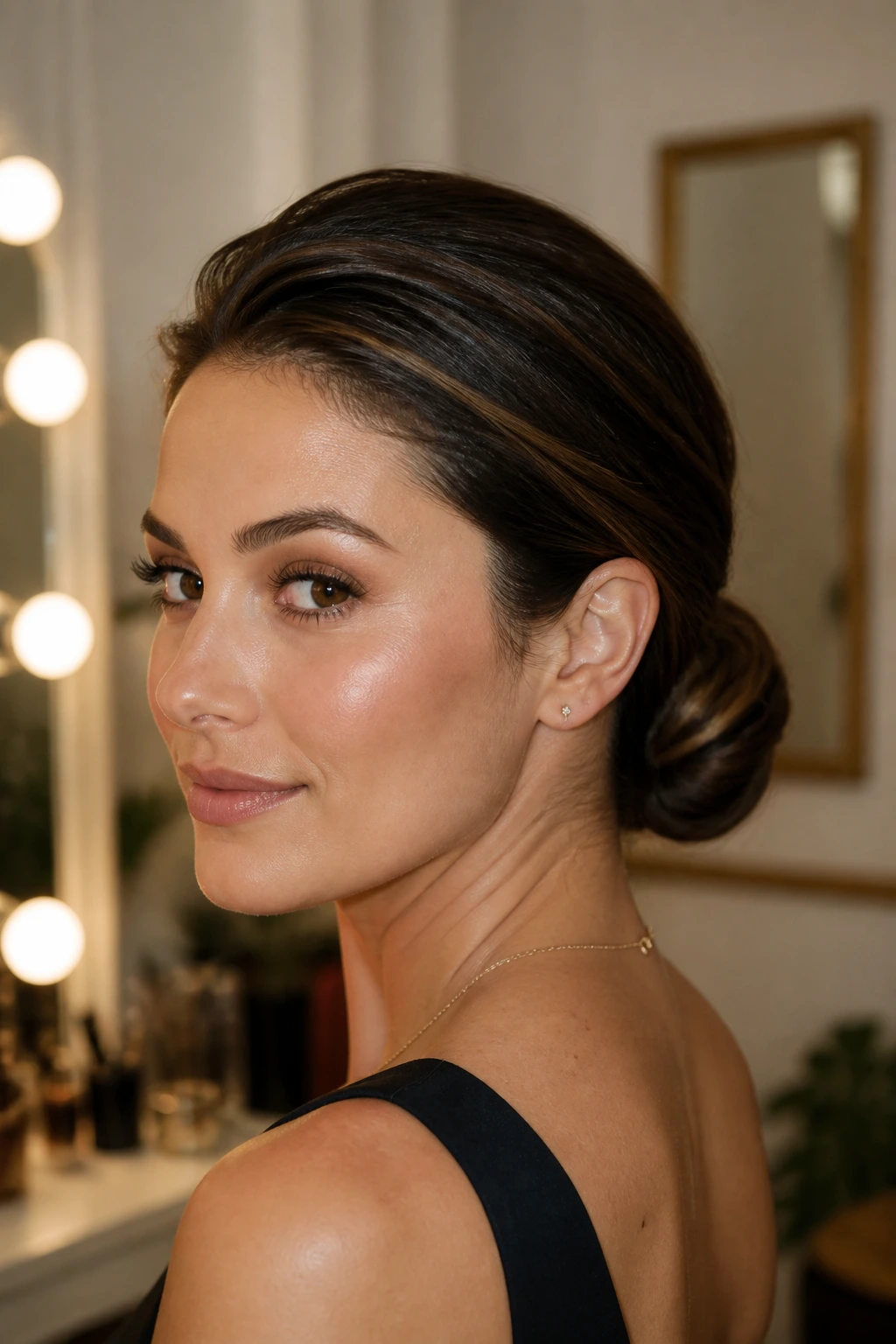
A low bun sounds basic until you give the crown a little height. Then it becomes one of the most flattering styles for fine hair, because the lift at the top keeps the whole look from sinking into the head.
Start by teasing only the roots at the crown, not the whole head. A small backcomb on two or three sections is enough. Smooth the top layer over it, gather the hair low at the nape, and twist into a bun that feels neat but not glued down.
What to Watch For
- Leave a few millimeters of softness at the hairline.
- Use a matte pin or two instead of a thick elastic if the bun slips.
- Keep the bun compact. A giant bun on fine hair can look shaky.
12. High Ponytail with a Wrapped Base
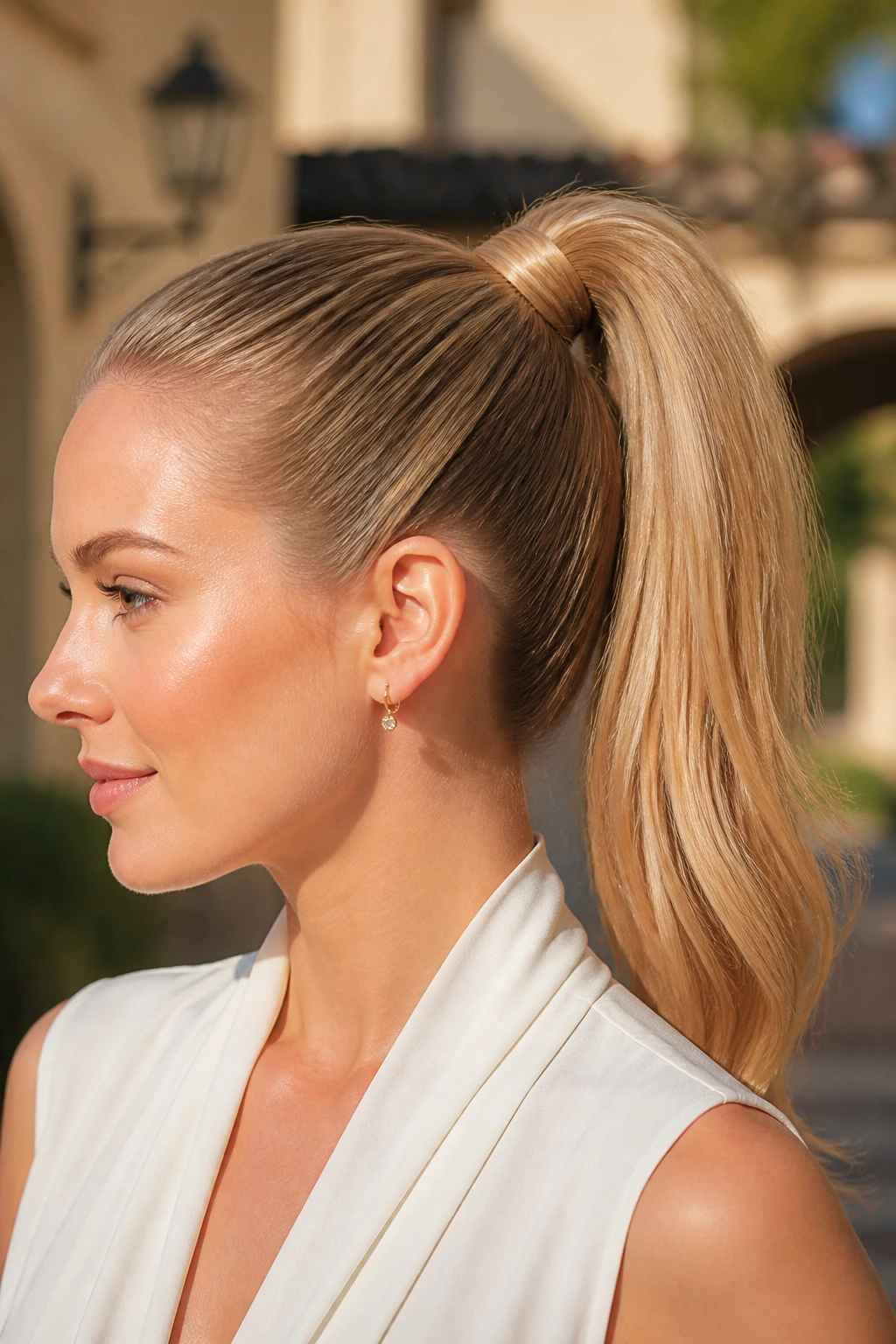
A high ponytail gives fine hair a lift that feels almost unfair. The higher placement pulls the eye upward, and the wrapped base hides the elastic so the style looks finished.
If your hair is too soft to stay high on its own, clip in a tiny bit of root support at the crown or use two small elastics stacked close together. It’s a little trick, but it works. Fine hair often needs help with structure, not more hold spray.
The wrapped base matters too. Take a small strand from underneath, wrap it around the elastic, and pin it in place. That tiny detail makes the whole ponytail look more intentional and less like a gym-day afterthought.
13. Half-Up Twist with Loose Ends
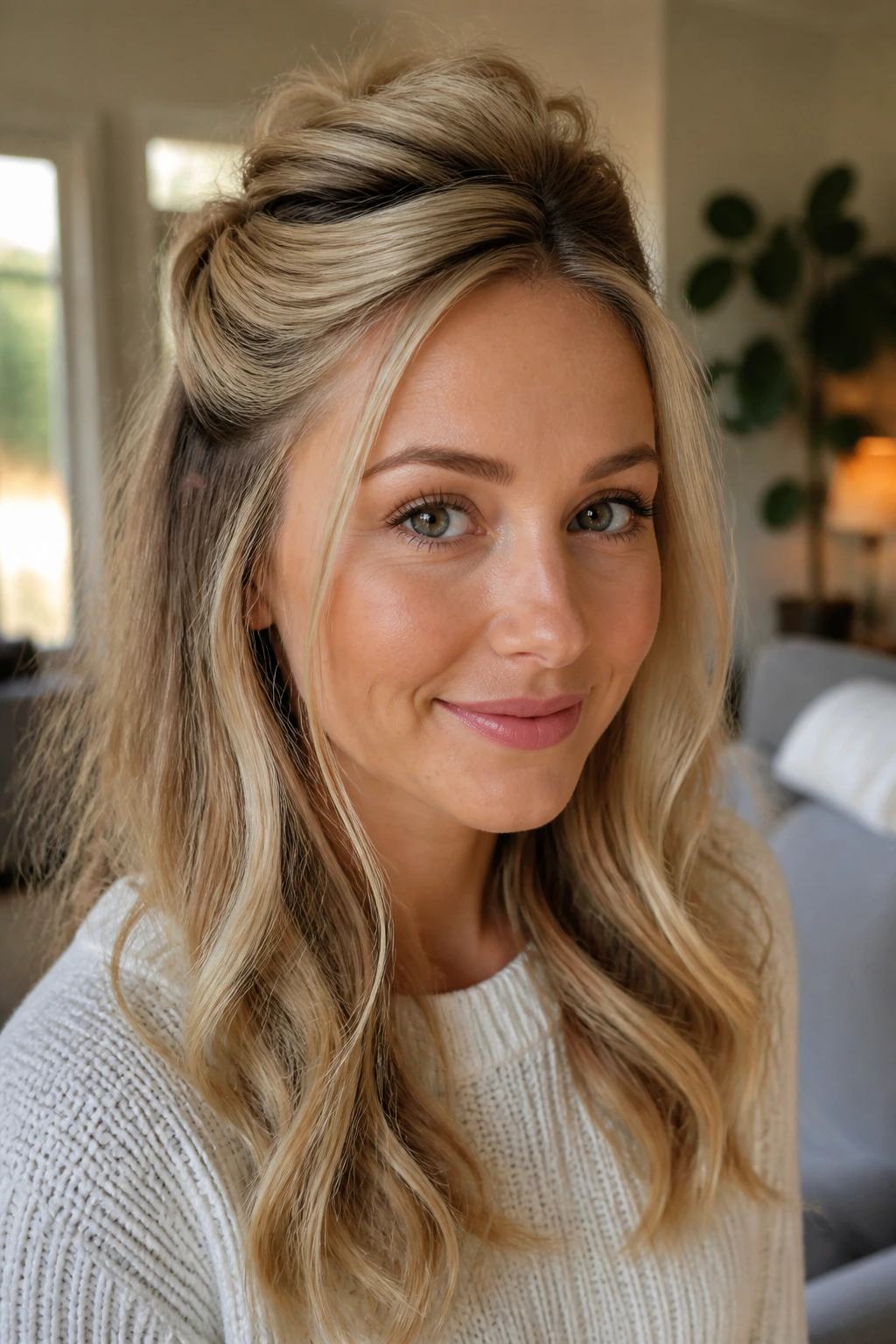
Why does this style feel so useful? Because it gives you height at the crown and keeps the length visible, which is a nice balance for fine hair.
Pull back only the top third of the hair, twist it loosely, and secure it with a small clip or bobby pins crossed in an X. Leave the lower section straight or softly waved. The contrast between the lifted top and open lengths adds shape without forcing the whole head into an updo.
I like this when the roots are flat but the ends still look decent. You don’t need to fight every piece. Sometimes the smartest move is to keep half the hair free and let the style do less.
14. Loose Waves with a Deep Side Part
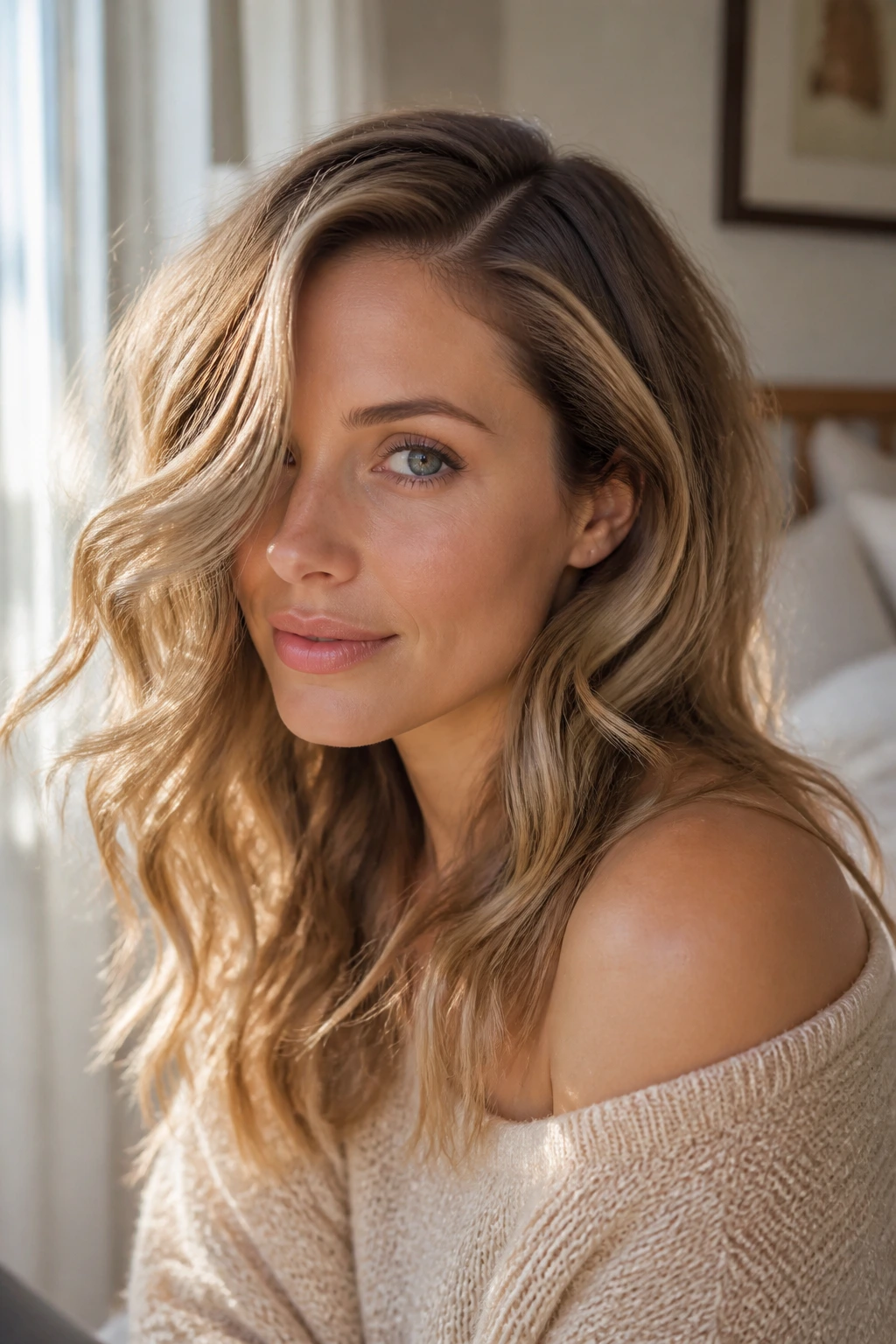
A deep side part can rescue limp hair faster than a lot of products. It creates height at the front and changes the balance of the whole style, which is especially helpful when fine hair falls flat in the center.
Add loose waves, and the shape gets even better. Not tight curls. Those can separate too much and expose the thinner bits. A soft wave through the mid-lengths and ends gives body without looking overdone.
Here’s the part people miss: start the wave a few inches below the roots. If you curl too close to the scalp, the style can collapse faster and the top looks too busy. Leaving the roots smoother makes the whole thing feel cleaner.
15. Bubble Ponytail
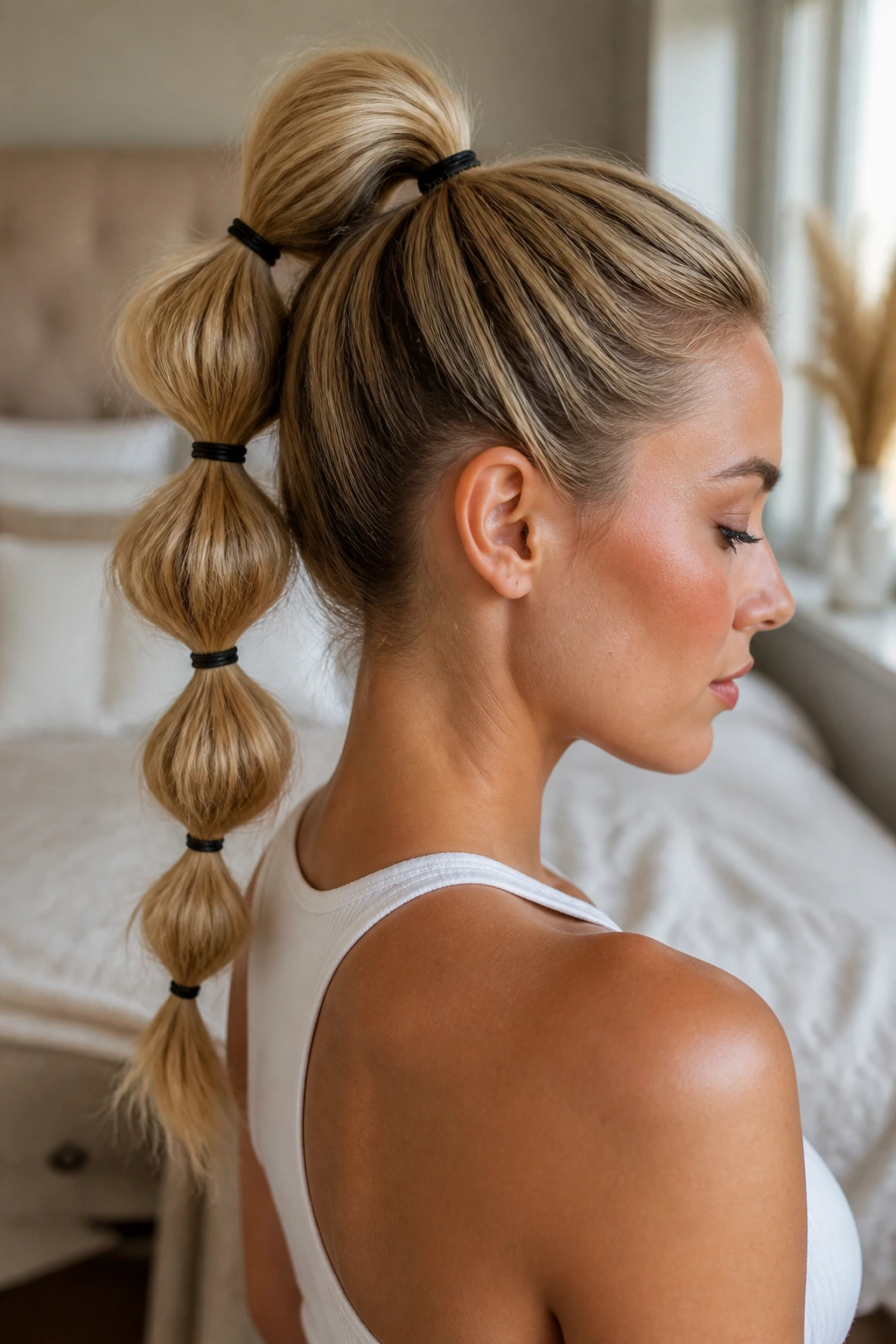
A bubble ponytail is one of those styles that looks playful while secretly solving a problem. Fine hair can disappear in a regular ponytail, especially if the length is long and the strands are soft. The bubble shape adds visible volume at intervals.
Create one ponytail, then add small elastics every 2 to 3 inches down the length. Gently tug each section outward until it forms a rounded bubble. Don’t pull too hard. You want shape, not frizz.
This works best when the hair has a little grit. Day-two hair, a dusting of dry shampoo, or a light texturizing mist gives the bubbles something to hold onto. Clean, silky hair can slip.
16. Claw Clip Twist
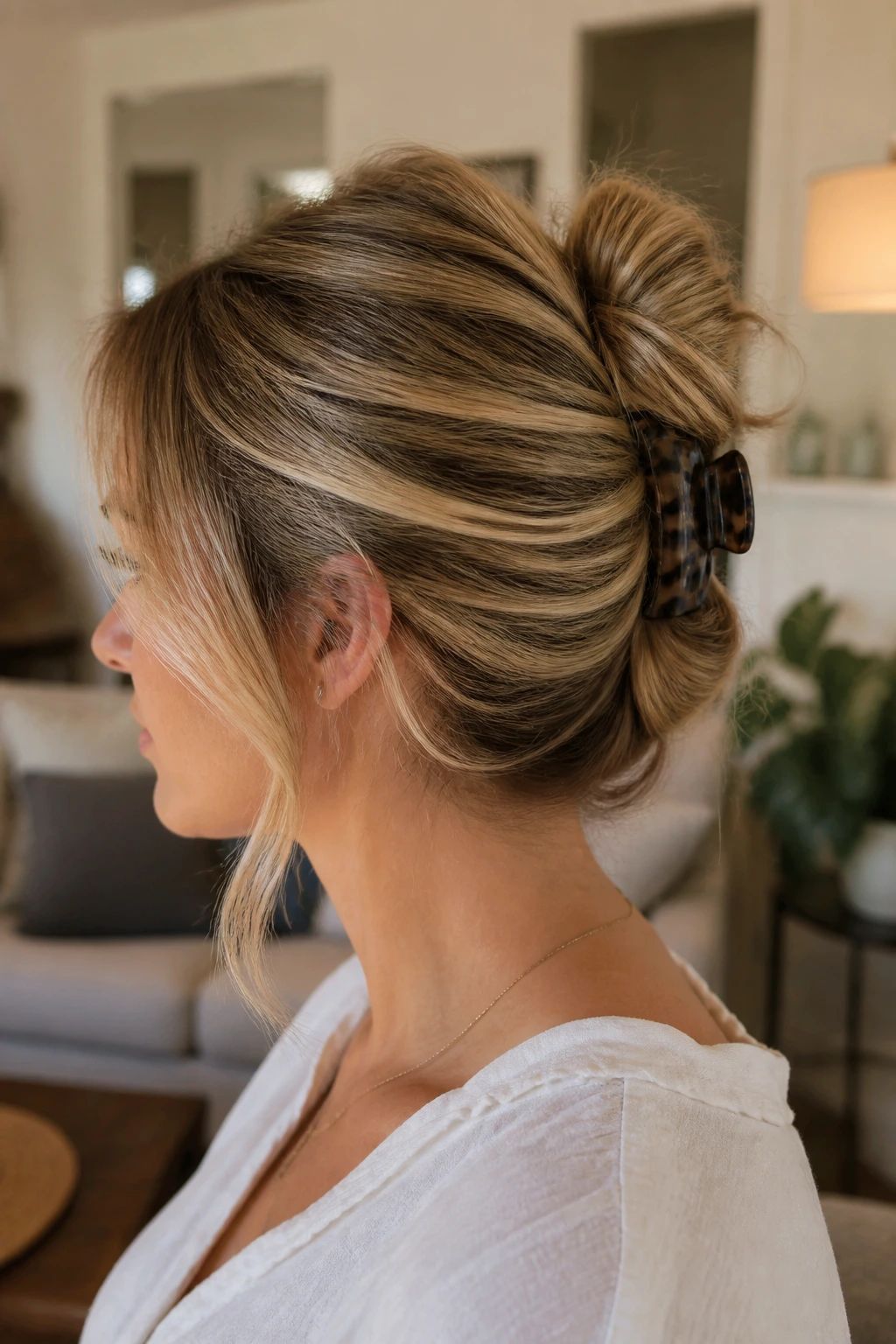
A claw clip twist can be a gift on days when your hair refuses to cooperate. Fine hair often doesn’t have enough bulk for a huge clip, so the trick is to twist the hair loosely and choose a medium clip with strong teeth.
The style looks best when the ends spill out a little. That softness keeps it from feeling too severe. I’d use a clip with a slightly curved spine rather than a flat one; it sits closer to the head and grips better.
It’s also one of the fastest ways to get a shaped updo without teasing the life out of your roots. Very useful. Very unfussy. And honestly, that’s enough on some mornings.
17. Tucked-Behind-the-Ears Bob
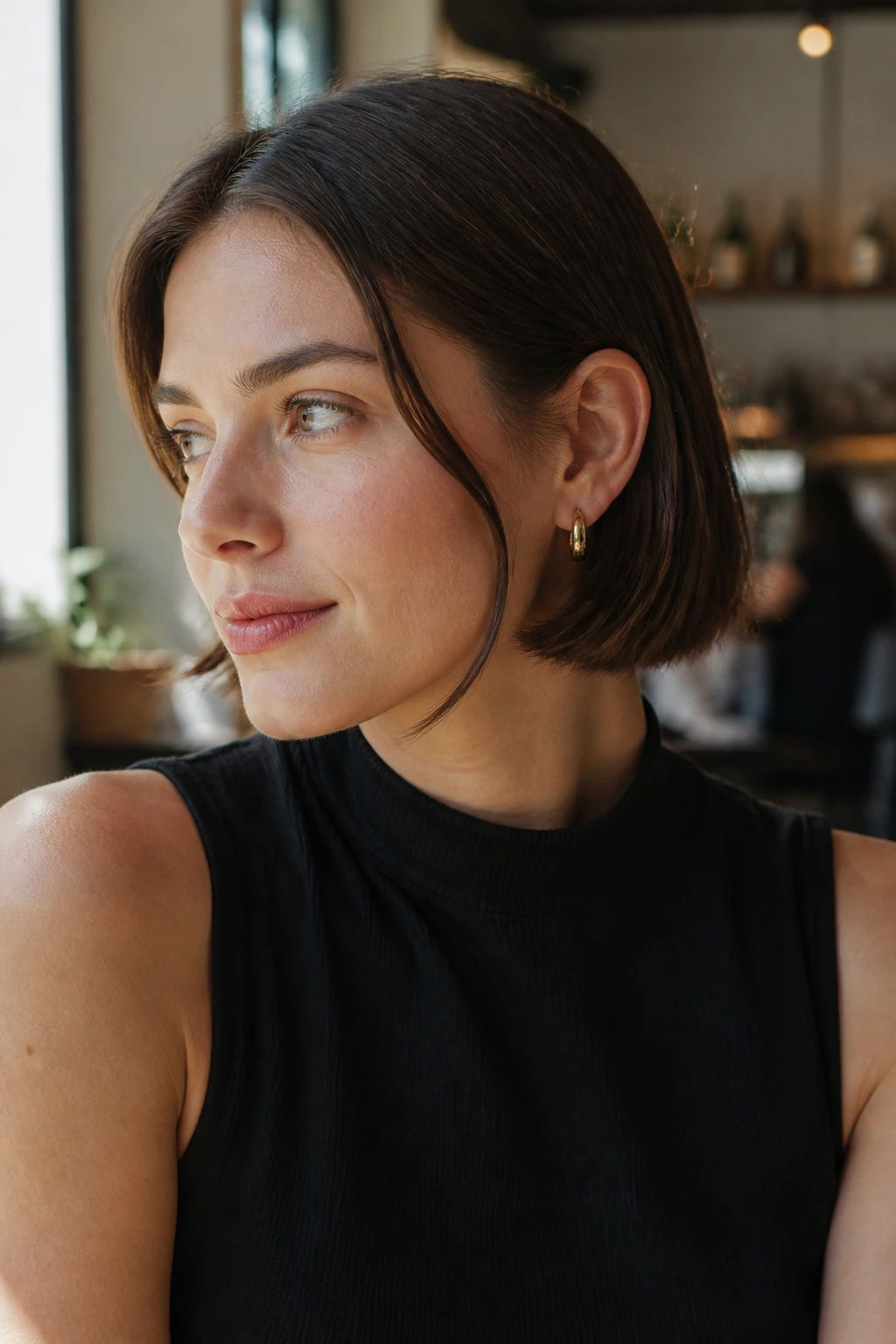
There’s something clean about a bob that’s tucked behind the ears. The open face gives the illusion of structure, and the tucked sections add a neat line right where the jaw starts.
Fine hair benefits from that deliberate placement. Instead of relying on lots of texture, you’re using shape. A little bend in the front pieces keeps the look soft, while the tucked sides make the hair seem fuller through the crown.
Ask your stylist to keep the ends blunt and the front slightly longer if you want more balance. That tiny difference helps the style move instead of sitting like a helmet, which is the last thing anyone wants.
18. Asymmetrical Bob
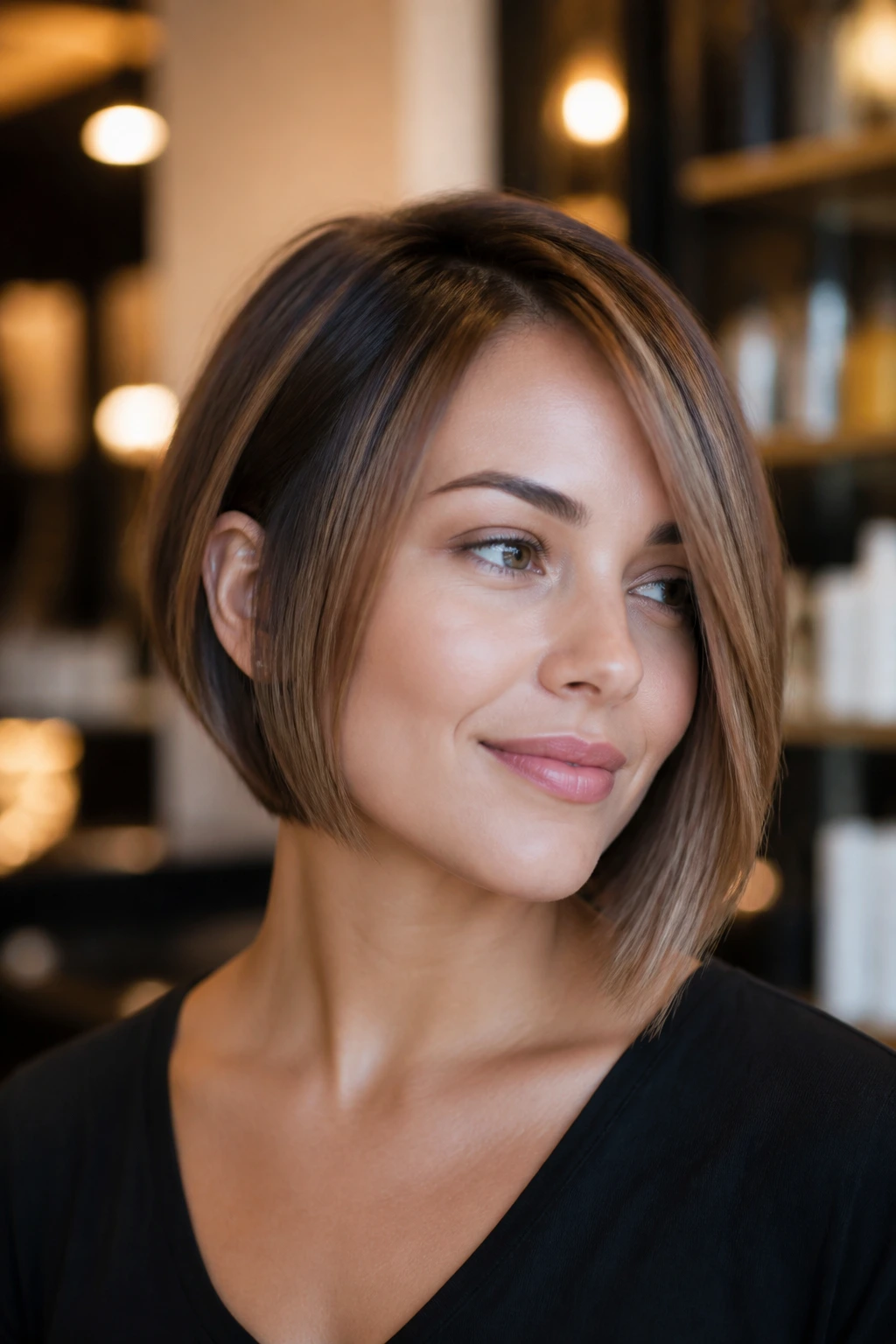
An asymmetrical bob sounds bold, but on fine hair it can be surprisingly flattering. The uneven length pulls attention away from density and toward shape, which is exactly the point.
One side grazing the chin and the other sitting just below it creates motion even when the hair is straight. It gives the cut a built-in edge, so you don’t have to lean on heavy styling every day. That said, it works best when the difference is subtle, not dramatic.
Key Details
- Keep the shorter side near the jawline for lift.
- Ask for a smooth weight line, not a choppy one.
- Style with a flat iron only at the ends if you want a sharp finish.
19. Feathered Shoulder Cut
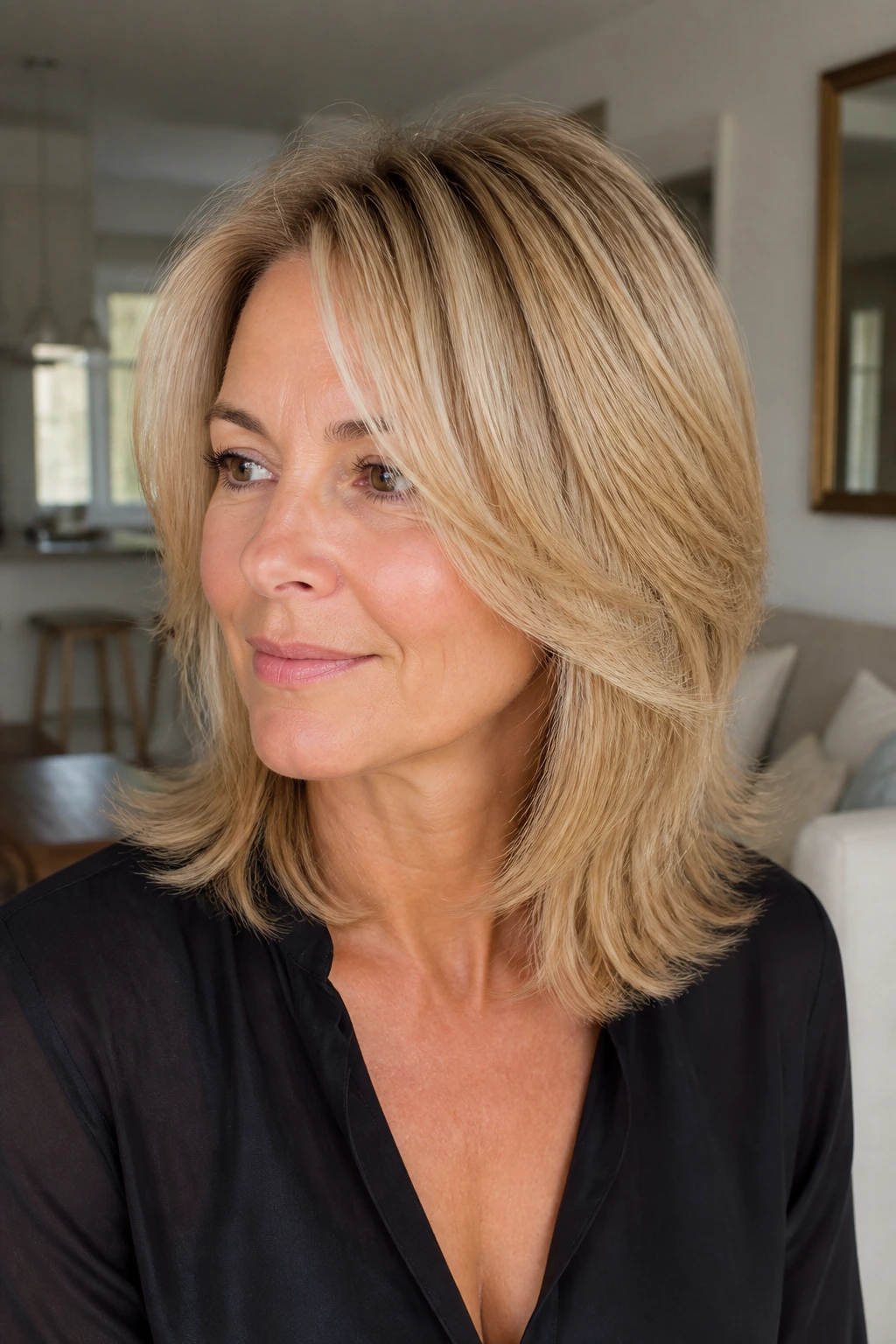
A feathered shoulder cut can be lovely on fine hair if the feathering is light and intentional. The goal is softness around the face and a little motion through the ends, not stringy layers that separate into nothing.
I’ve seen this style look especially good when the blowout is directed outward at the ends. That small flip keeps the hair from hugging the neck too tightly. It also gives the style a bit of swing, which helps make the hair seem more abundant.
If your hair has a tendency to flatten at the crown, pair this cut with a root spray at the part line. A few sprays is enough. More than that and the finish can get sticky.
20. Pin-Curl Set for Soft Volume
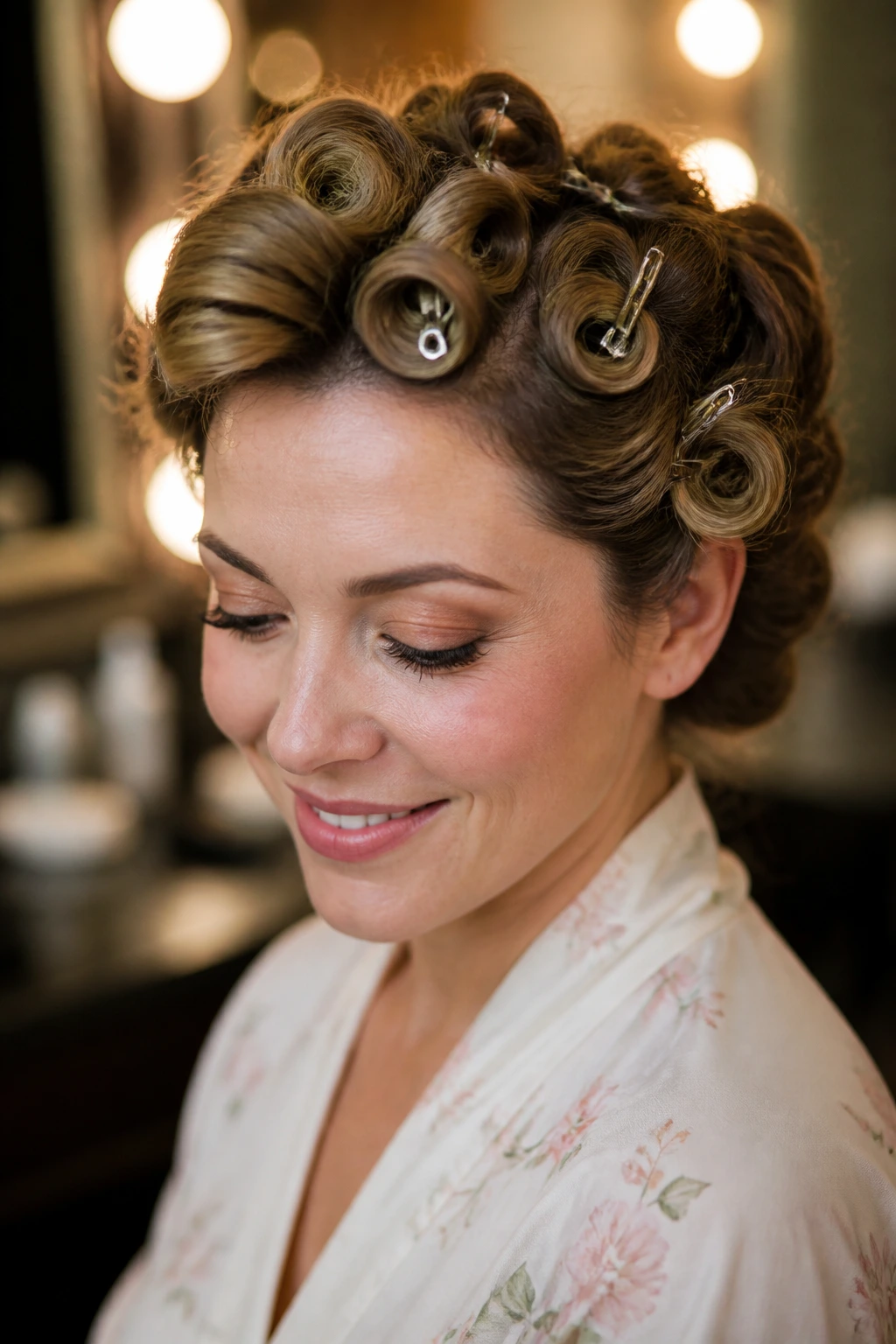
A pin-curl set is old-school for a reason. Fine hair often holds shape better when the curl is set and cooled in place, instead of being brushed through while it’s still warm.
Roll small sections, about 1 inch wide, then pin them flat against the head and let them cool fully. When you take them down, the hair has a soft, rounded shape that lasts longer than loose waving. It’s especially good for events, but it also works when you want a fuller everyday finish.
Do not brush it out too soon. That’s where the whole thing goes wrong. Finger-comb first, then use a wide-tooth comb only if you need to soften the curls.
21. Headband Puff with a Loose Bend
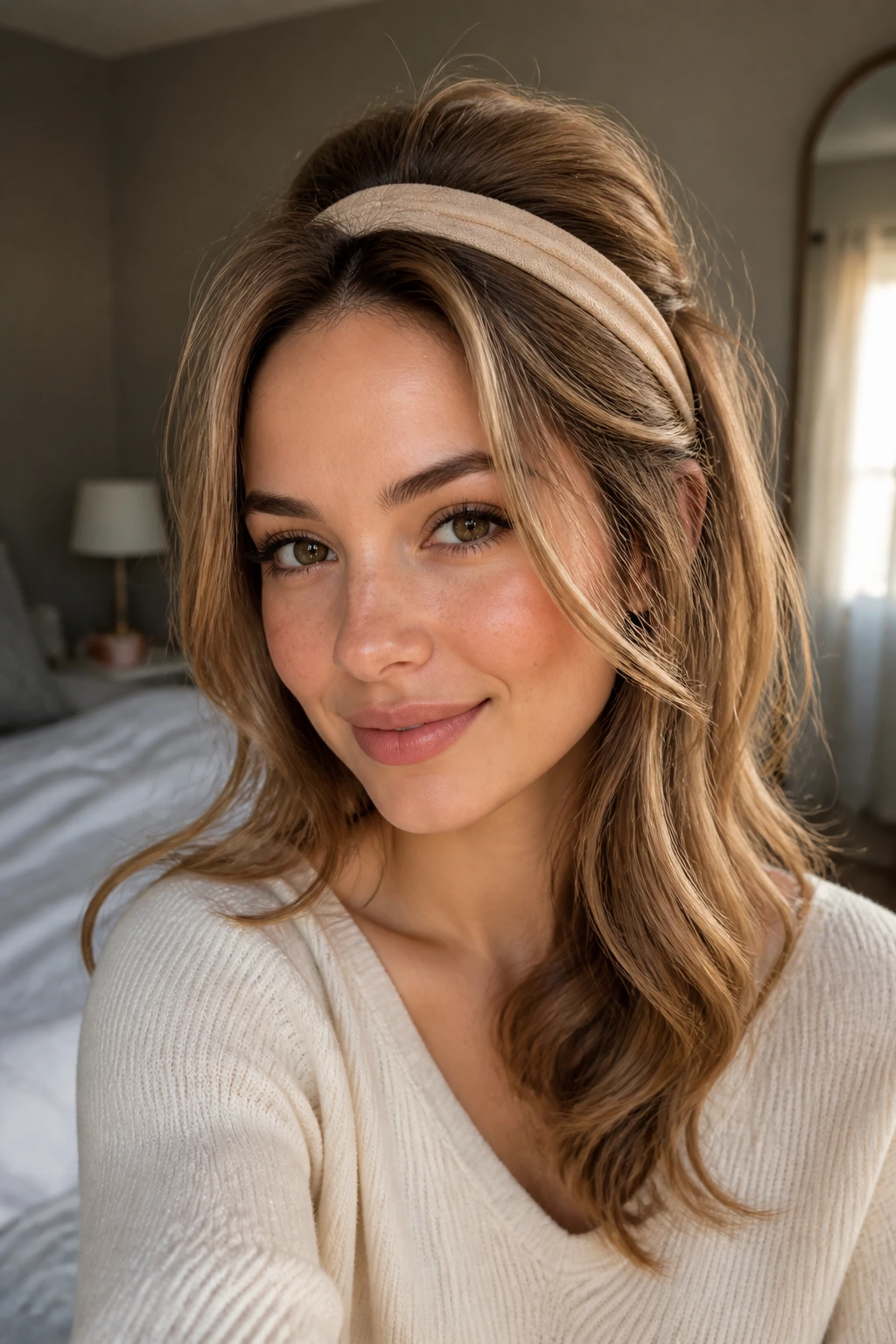
A headband puff is one of the easiest ways to fake volume at the front of the head. The headband pushes the hair slightly upward, and the loose bend through the lengths keeps the style from looking too stiff.
The best versions leave a little lift at the crown and a soft curve around the face. If your hair is very fine, tease only the roots under the headband. A half-inch of teasing is enough. You’re building a base, not a nest.
This style works because it changes the silhouette. The eye reads height at the top, then follows the loose length down. Simple. Effective. No drama needed.
22. Crown Braid into Loose Lengths
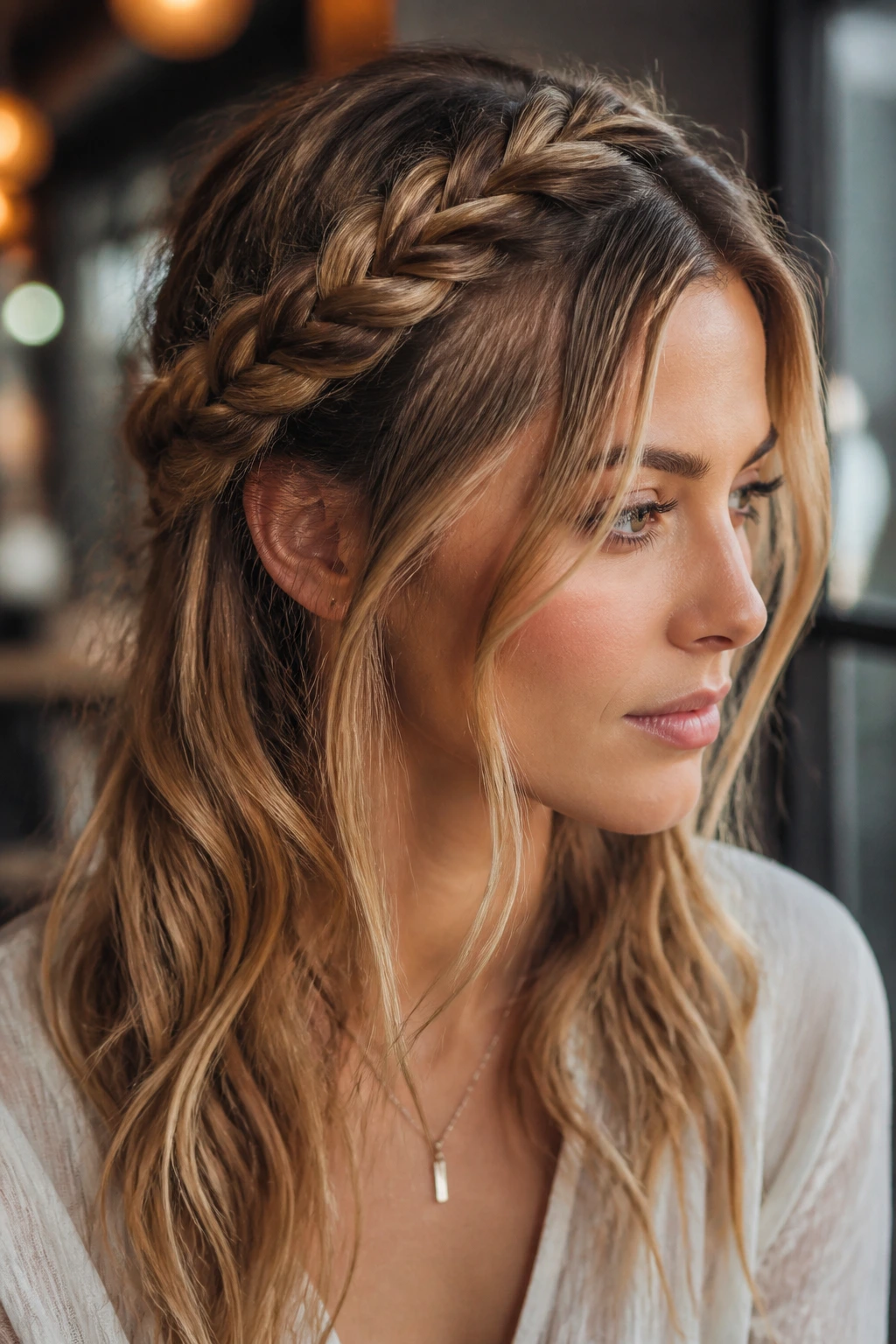
Can a braid help fine hair look fuller? Absolutely, if you keep it loose and place it high enough to give shape around the crown.
A crown braid draws attention to the top of the head, which can be a problem area for fine strands. But when the braid sits a bit higher and the rest of the hair falls in loose lengths, the whole style feels fuller and more deliberate. Pull a few pieces free around the temples if you want softness.
How to Make It Work
- Braid on second-day hair for better grip.
- Pancake the braid lightly by widening each section with your fingertips.
- Keep the lower lengths smooth or softly waved so the braid stands out.
23. Faux Blowout with Round-Brush Ends
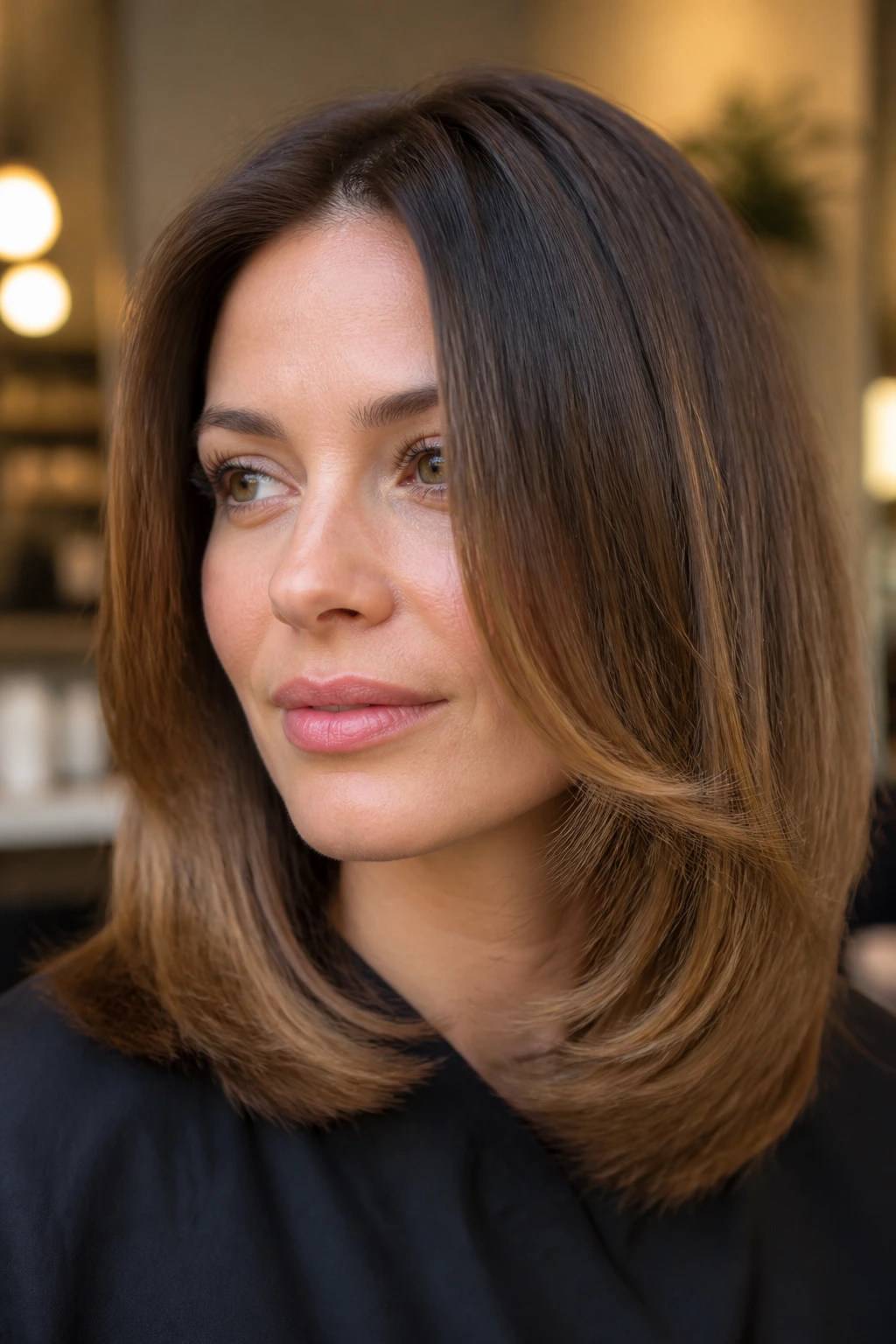
Unlike a curled style, a faux blowout is about movement that starts at the ends and stays clean at the roots. Fine hair loves that. It keeps the top from getting puffy while giving the perimeter more body.
Use a round brush or blow-dry brush to turn the ends under or away from the face, depending on the shape you want. Keep the section size small — around 2 inches wide — so the hair picks up a bend instead of a kink. The look should feel soft, shiny, and lifted, not overworked.
If you only have energy for one styling step, do this one. A good blowout shape can make a simple cut look expensive without a single extra pin.
24. Curled-Under Ends Lob
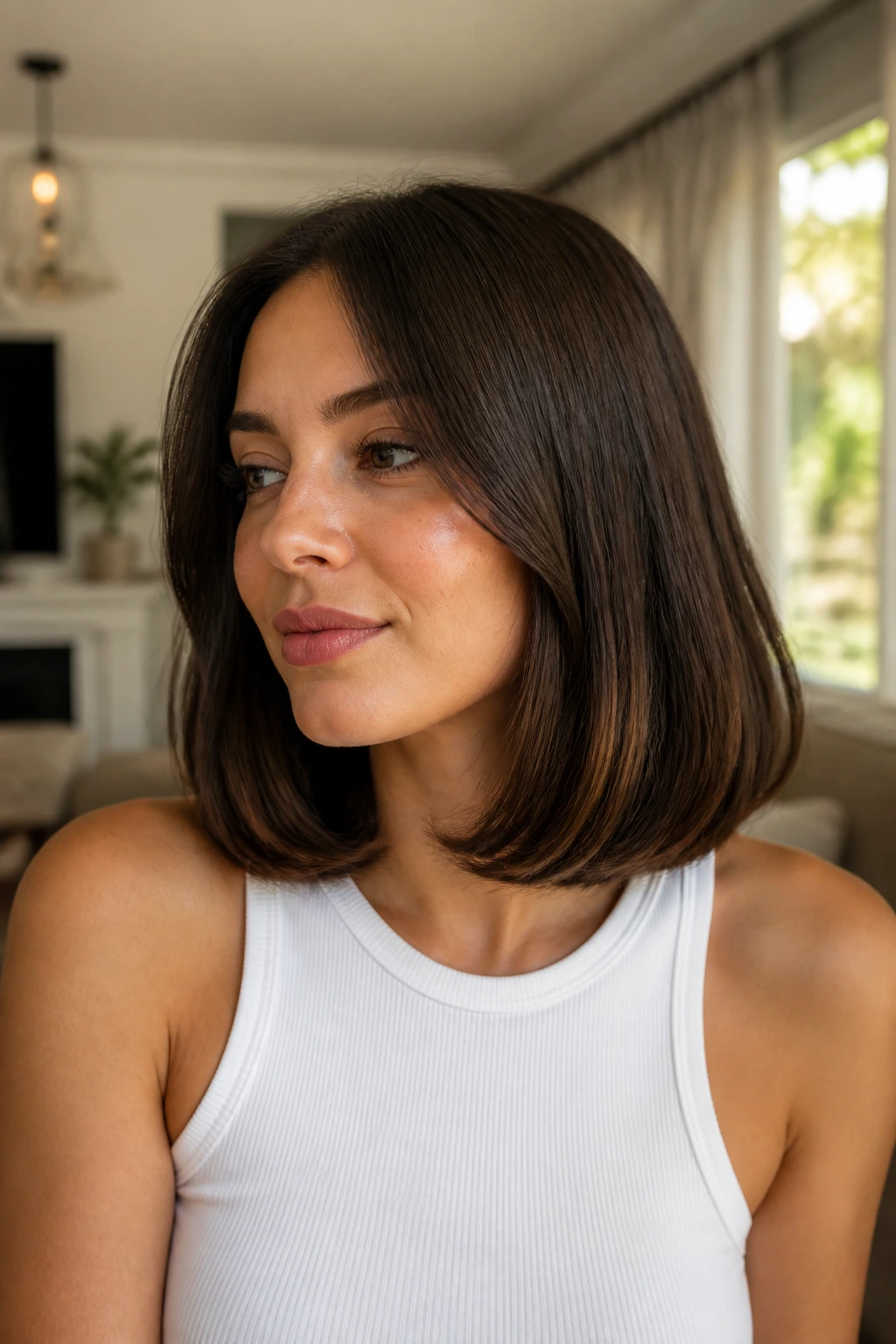
A lob with curled-under ends is one of the safest bets for fine hair. It gives the perimeter a fuller line and keeps the overall shape neat.
The inward curve at the bottom makes the cut look denser because the ends visually cluster together. Straight hair can look a bit flat at this length if the tips are wispy, so that tiny turn under is useful. A flat iron or round brush both work.
I prefer this style when the rest of the hair is smooth. Too much texture on top can fight the clean line at the bottom. Keep the root area tidy and let the ends do the talking.
25. Slicked-Back Wet Look
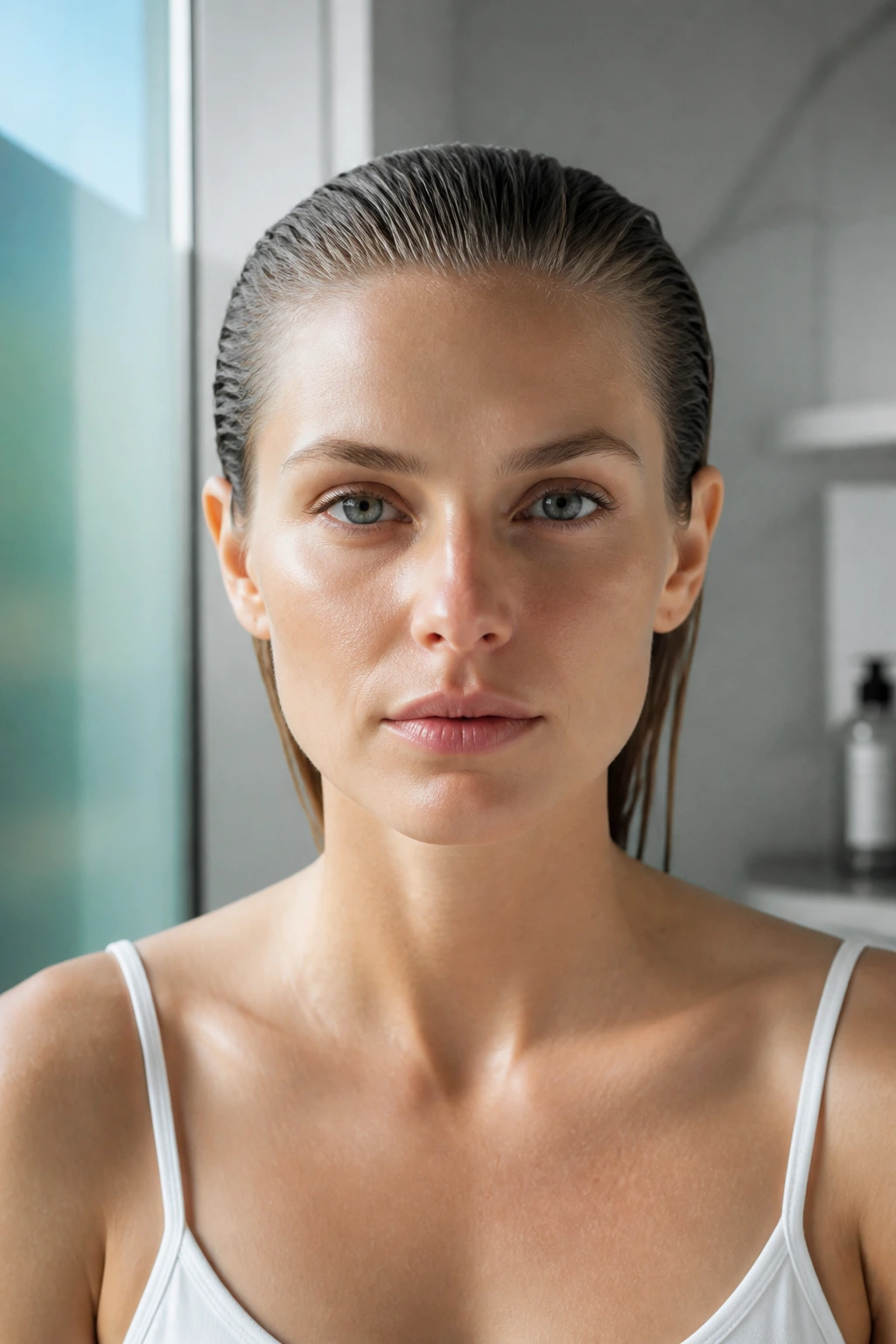
Can fine hair pull off a slicked-back style? Yes, and sometimes better than thicker hair, because there’s less bulk to tame.
The trick is to keep the product distribution even. Start with damp hair, work a small amount of gel through the top and sides, then comb it back into place with a fine-tooth comb. Stop before the ends become crispy. You want a glossy finish, not helmet hair.
This style is strongest when the outfit and makeup are doing some of the work. That sounds obvious, but it matters. The hair is sleek and deliberate, so the rest of the look should match that energy.
26. Space Buns with Face-Framing Pieces
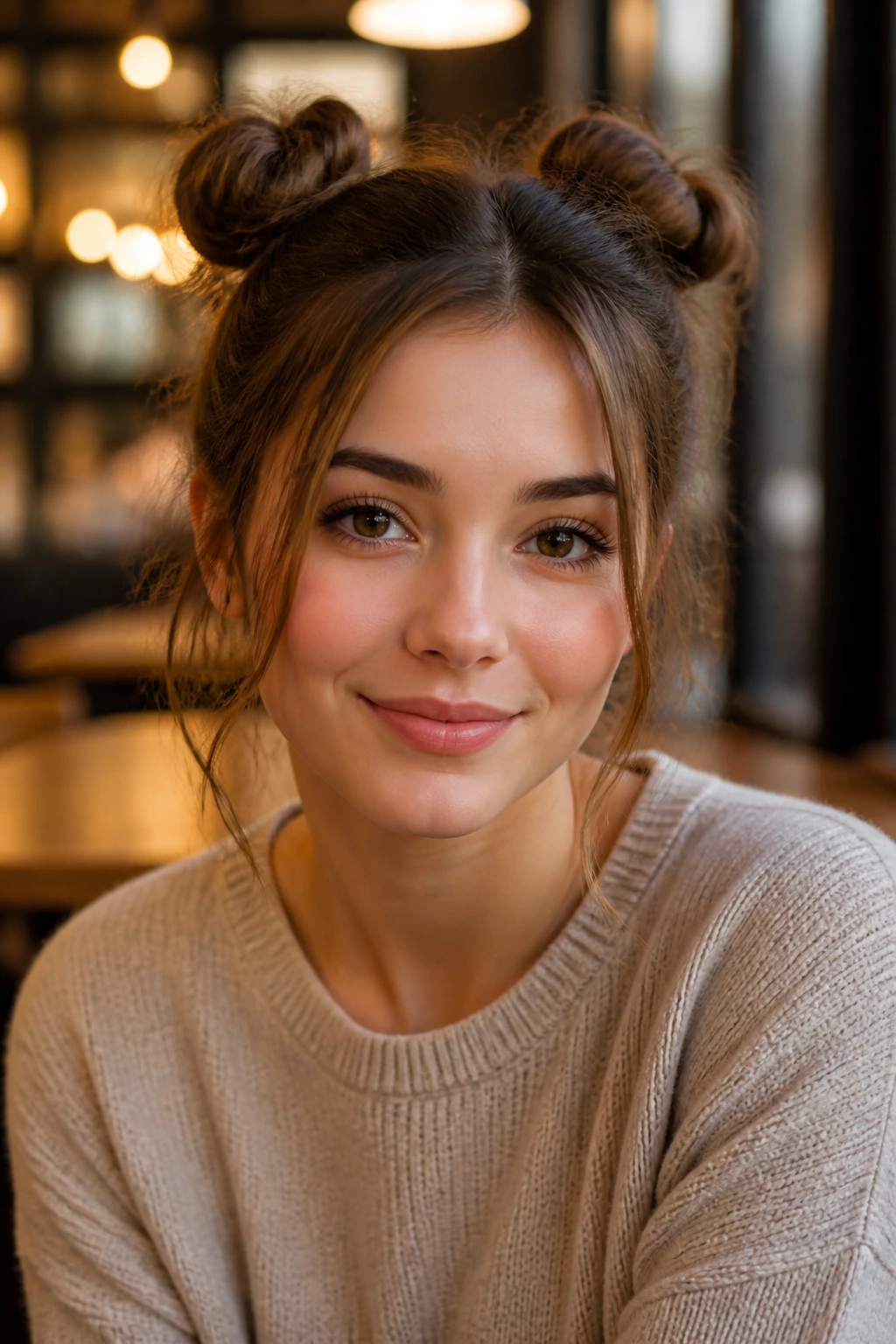
Space buns can actually work on fine hair if you keep them small and slightly loose. Big buns can look hollow, but compact buns create a playful shape without exposing the lack of density.
Leave two face-framing pieces out before you twist the rest up. That softens the style and keeps it from feeling too young or too strict. If the buns need support, a little dry shampoo at the roots will help the hair hold.
What makes this work is proportion. Small buns, small elastics, a few loose strands. That’s the formula. Overbuilding it usually makes the hair look thinner, not fuller.
27. Low Chignon with Texture
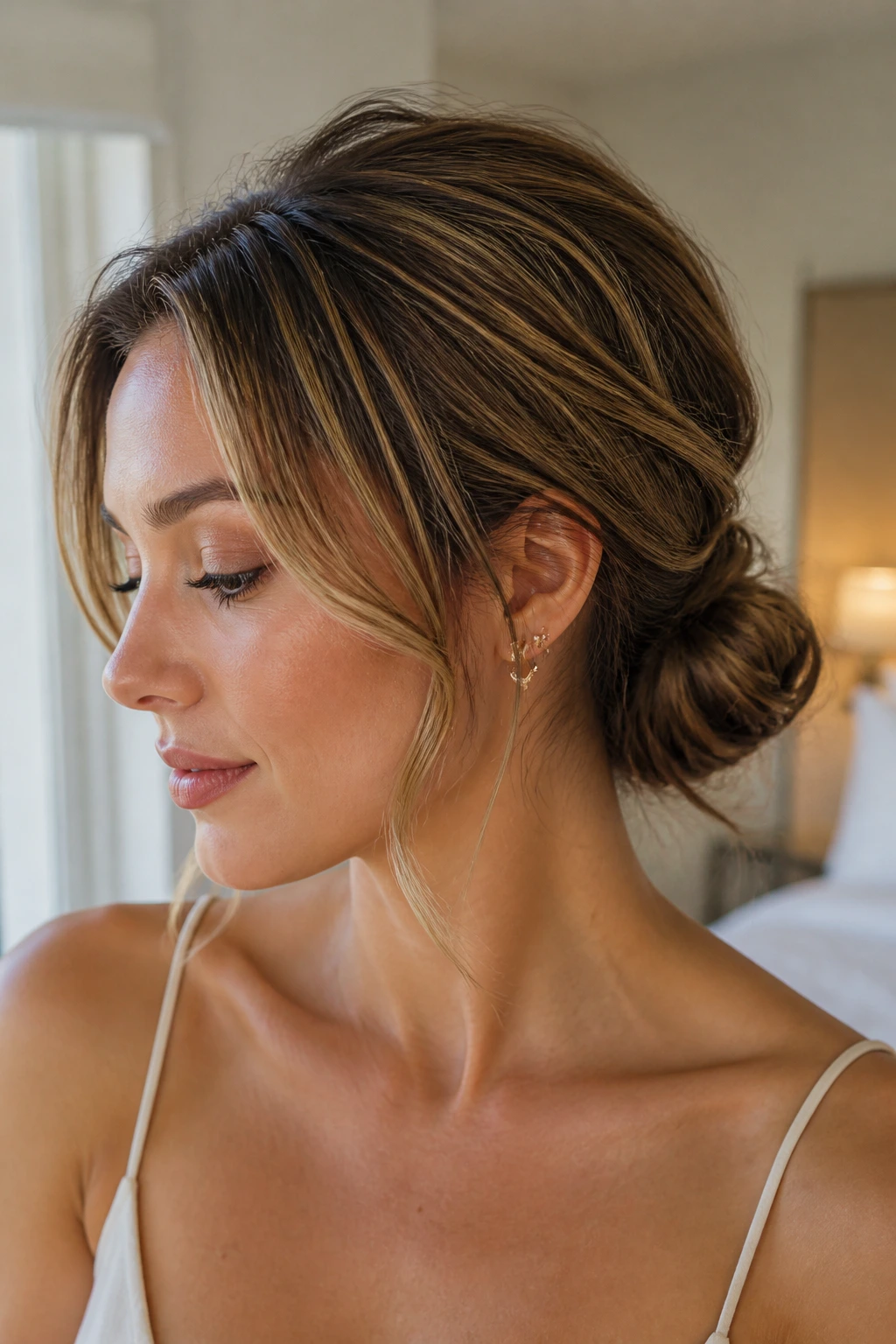
A low chignon looks much better on fine hair when it’s a little textured first. Bone-straight strands can slide out, and the bun can look flat against the head.
Add a rough wave, a dusting of texture spray, or even a day-old finish before you twist it at the nape. The texture gives the pins something to grip. Then keep the chignon compact and a touch asymmetrical so it doesn’t read as too formal.
Small Tweaks That Help
- Use two bobby pins crossed over each other.
- Pull the bun slightly off-center for a softer line.
- Leave one piece around the ear if you want less severity.
28. Twisted Half-Up with Volume at the Crown
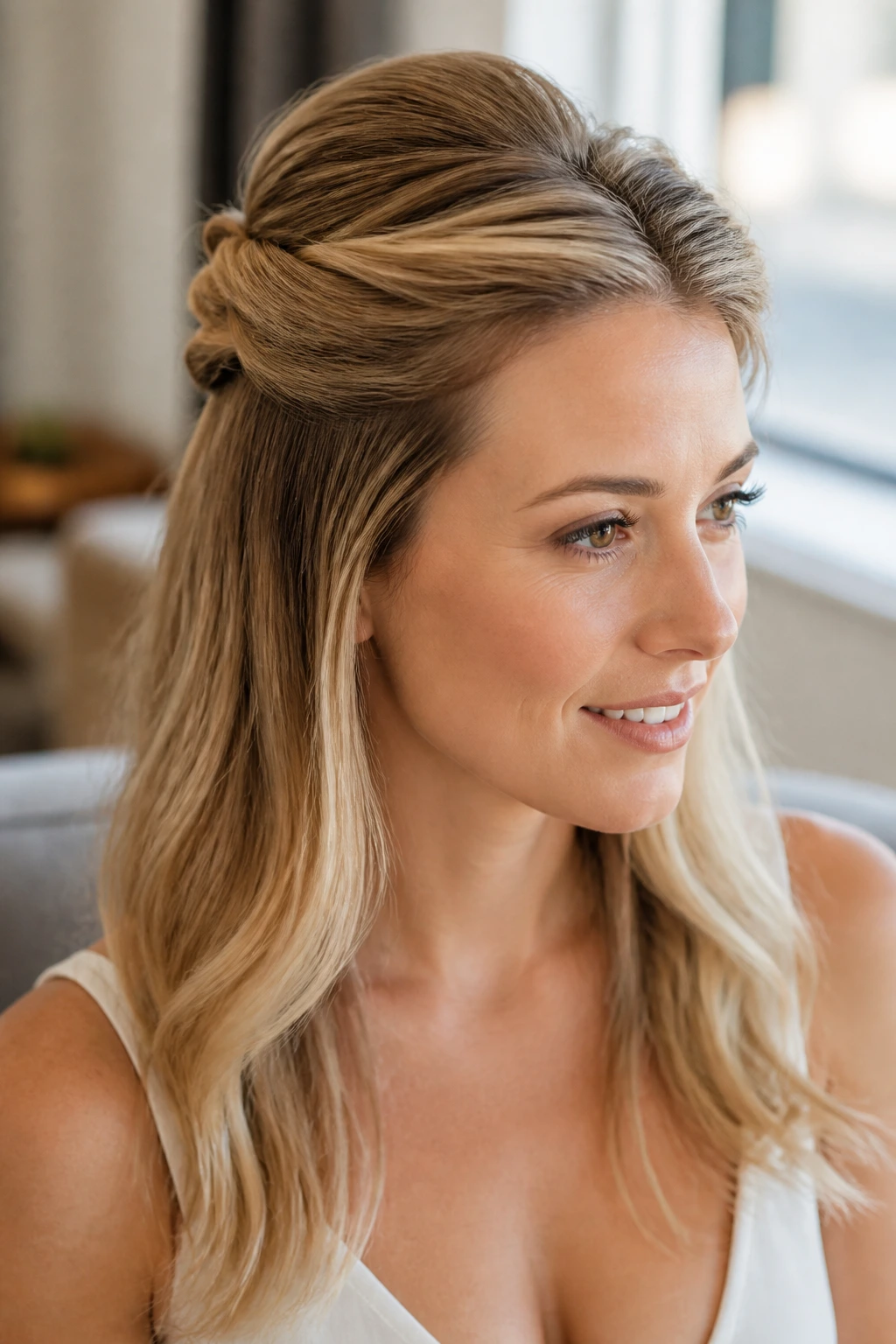
A twisted half-up style gives fine hair two things at once: lift at the top and visible length below. That’s why it works so well.
Take two sections from the temples, twist them back, and pin them together at the crown. Gently loosen the twist with your fingers to make it feel fuller. Leave the rest of the hair straight or softly waved. The contrast is the point.
If your hair tends to fall flat after a few hours, clip the twist a little higher than you think you need to. The lift will soften as it wears in. Better a touch high than collapsed.
29. Mini Braids in Loose Hair
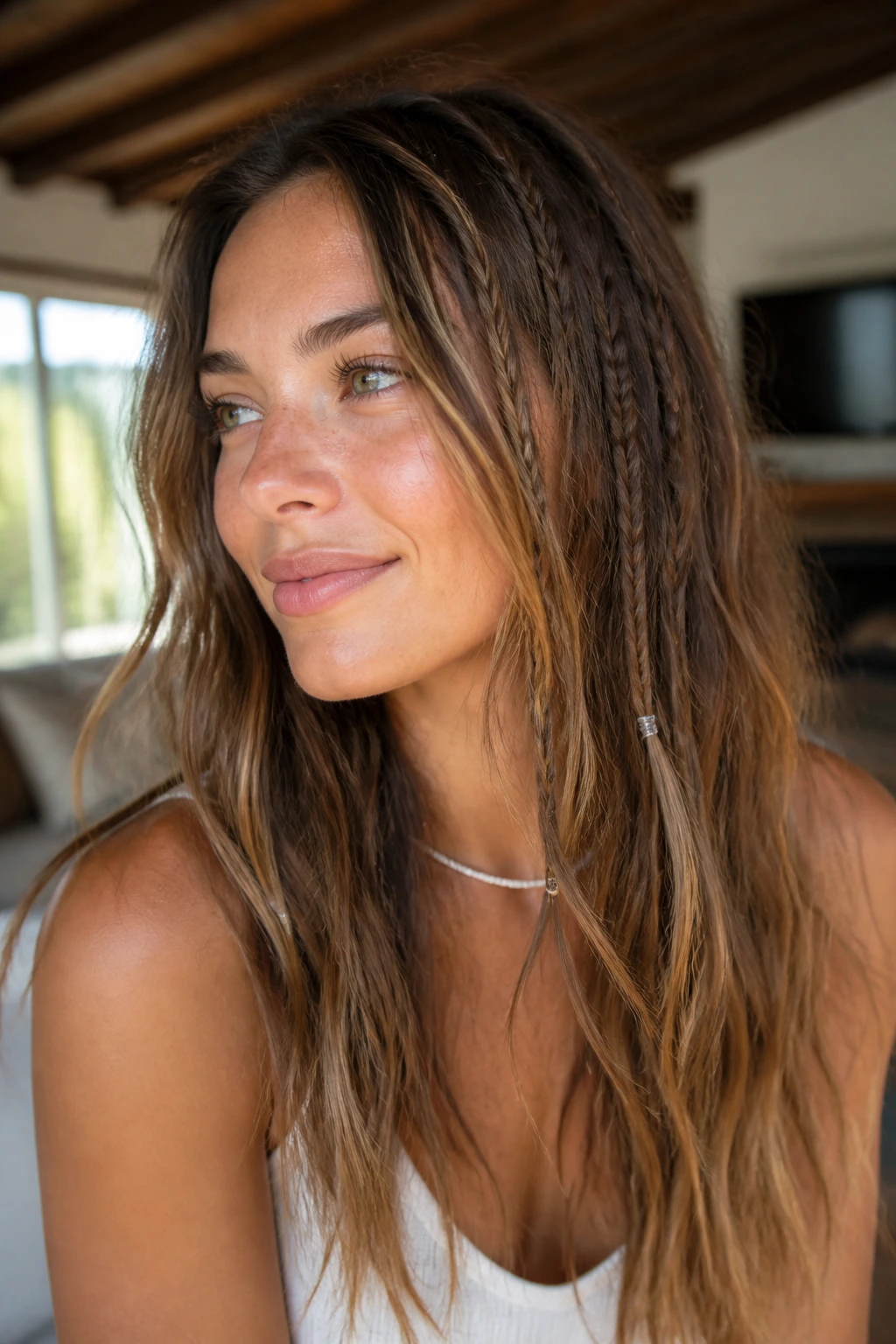
Mini braids are a sneaky way to give fine hair a more detailed look without relying on bulk. A few thin braids through loose hair break up the surface and make the hair seem more complex.
I like this best with loose waves or a blunt straight finish. The braids should feel like accents, not the whole style. Keep them narrow, secure them with tiny elastics, and space them unevenly if you want the look to feel casual.
Unlike a full braid style, this one works because it leaves most of the hair free. That keeps the movement. And movement, on fine hair, is half the battle.
30. Volumized Top Knot with Soft Fringe
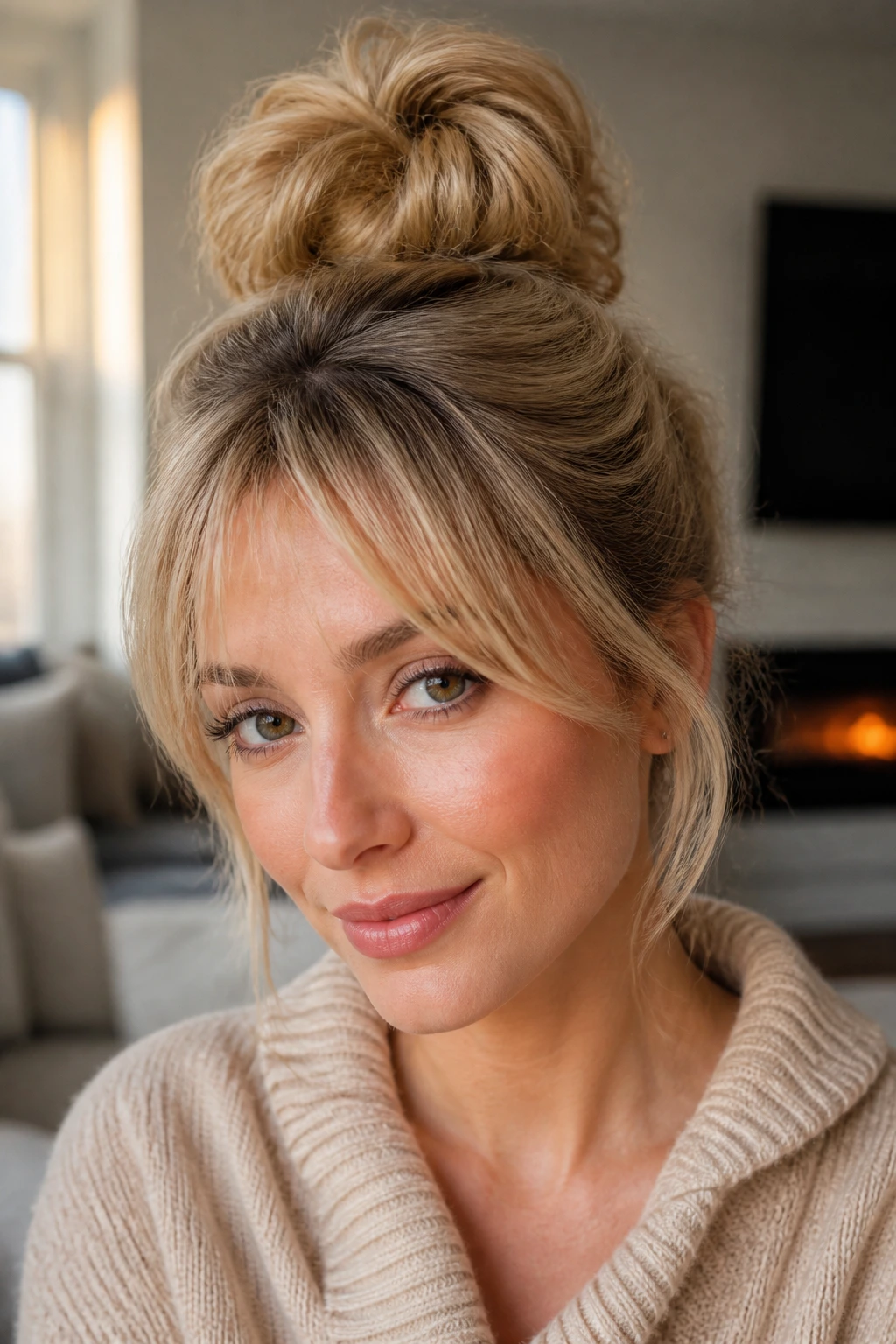
A top knot can look tiny and sad on fine hair if you force it too high and too tight. A volumized version is better: a little lift at the crown, a knot that sits slightly loose, and a soft fringe or face pieces to balance the height.
Tease the roots at the crown first, then gather the hair into a high ponytail. Twist loosely, pin the knot in place, and pull a few strands outward so it feels fuller. A soft fringe keeps the whole style from looking severe.
This is the style I’d reach for when you want your hair off your neck but still want shape. It’s practical, yes. But it also looks intentional, which is the part that matters.
Final Thoughts
Fine hair does not need to be dressed up like a problem. It needs shape, smart placement, and a little restraint. The blunt cuts give density. The lifted styles give height. The looser updos keep the hair from disappearing into itself.
If you’re unsure where to start, pick one style that changes your silhouette and one that changes your texture. A clean bob and a soft wave. A high ponytail and a root-lift spray. That’s usually enough to see what your hair responds to.
And if a style looks lovely online but keeps collapsing in your mirror, trust the mirror. Fine hair has strong opinions. Work with them, and it usually gives you more than people expect.
