



A round face can take medium hair better than most people think. The trouble starts when the shape stops right at the cheeks and just sits there, doing nothing but making the face look wider than it is.
18 medium hairstyles for round faces work when the haircut keeps the eye moving: up a little, down a little, and then forward again. That usually means some lift near the crown, a part that is not dead center, and ends that fall below the widest part of the cheeks or just graze the collarbone.
The cuts that miss the mark usually do the same boring thing. They add width at the sides, stop at chin level, or puff out like a helmet after a ten-minute blow-dry. No thanks.
What actually flatters a round face is movement with intent. A collarbone lob, a shag with cheekbone layers, soft curtain bangs, or a deep side part can all change the way the face reads without making the hair look try-hard. And yes, medium length is the sweet spot for this because it gives you enough weight for shape without dragging everything down.
1. Collarbone Lob with a Deep Side Part
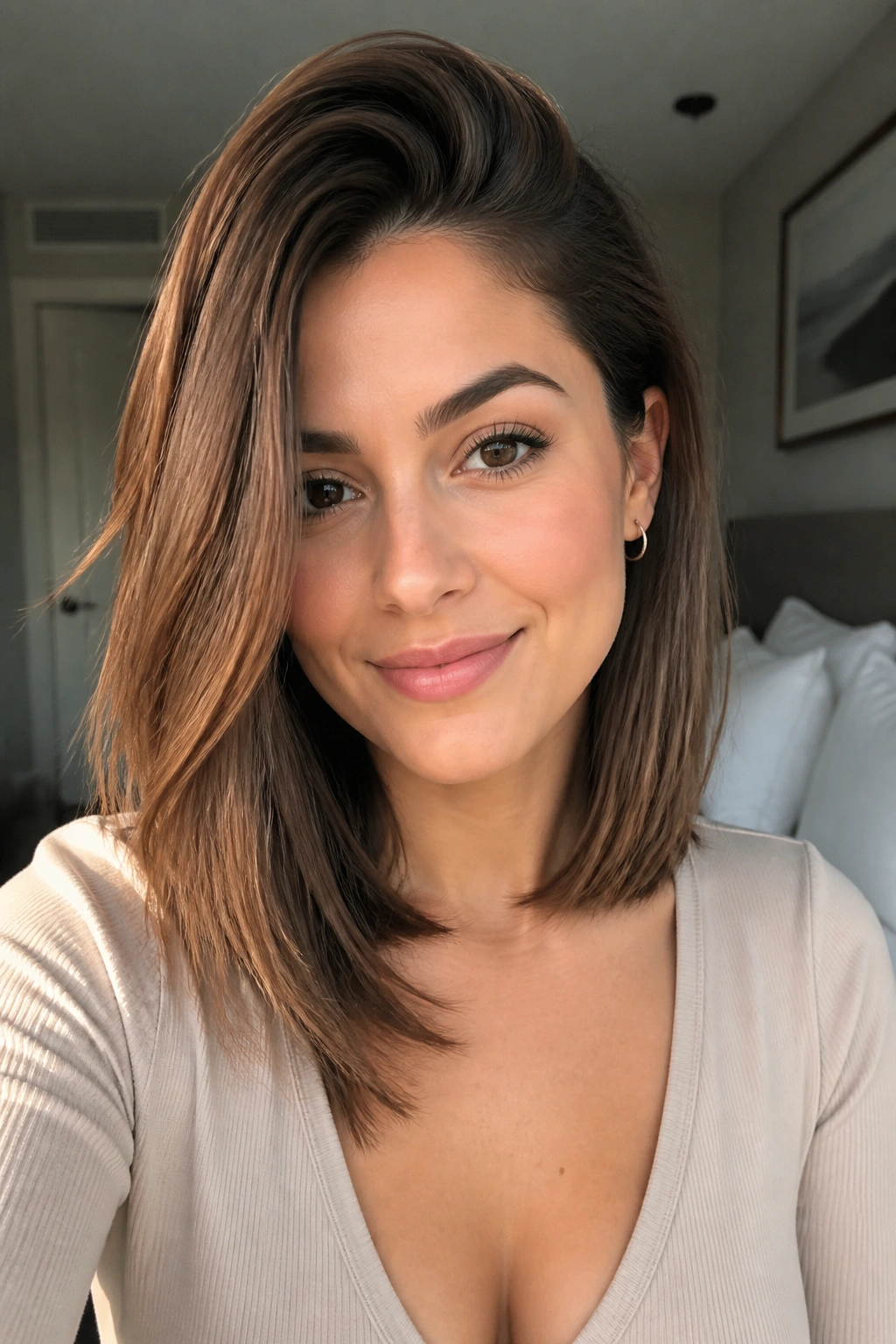
The collarbone lob is the style I reach for first when someone wants length that feels clean but not severe. It sits in that nice zone between jaw and chest, which means it gives a round face some vertical line without hiding the neck.
Why It Works
A deep side part changes the whole balance. One side gets lift, the other side falls softly across the cheek, and the face stops looking so evenly circular. That shift matters more than people expect.
Ask for the longest pieces to hit right around the collarbone and for the front to angle down only a little. Too much angle turns into a triangular shape, and that can make the lower face look heavy. I like a soft bevel at the ends instead of a sharp edge.
Styling Notes That Help
- Blow-dry with a 1.5- to 2-inch round brush to get a gentle bend, not a curl.
- Keep the crown flat for a beat, then lift the roots with the brush so the part does not collapse.
- Wrap the ends away from the face for 5 to 8 seconds each, then let them cool before brushing through.
- Finish with a light mist of flexible spray, not stiff hairspray.
Best tip: keep the front pieces below the cheekbone. That one detail saves the cut from turning boxy.
2. Angled Lob with Longer Front Pieces
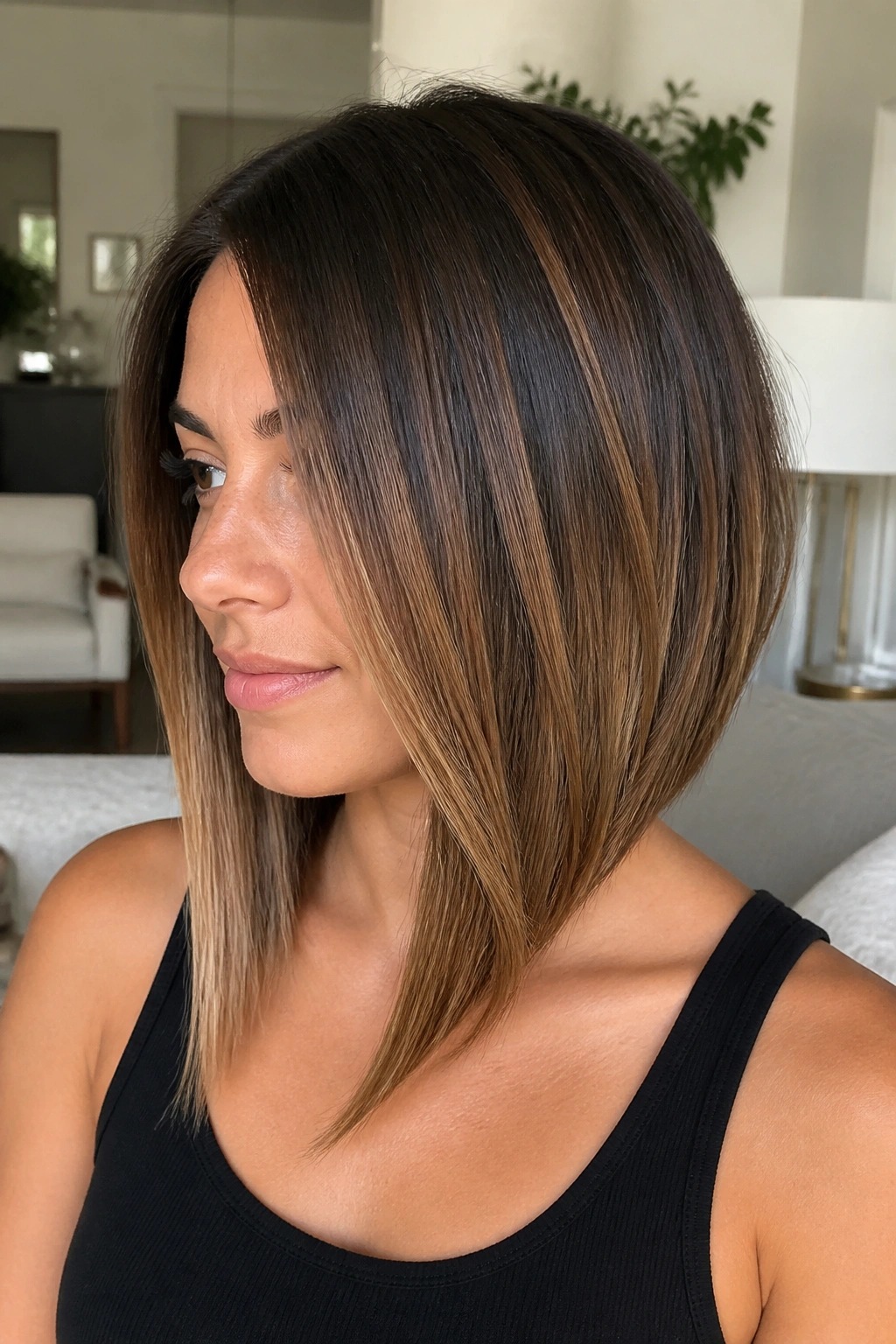
A good angled lob does one thing better than almost any other medium haircut: it gives a round face a clean line without looking harsh. The back stays a little shorter, the front stays longer, and the whole shape points the eye downward.
That downward motion is the point. A face that reads wide at the cheeks usually benefits from hair that falls past the jaw in a clear line, and the angled lob does that without making the style feel fussy. It also works well if your hair is thick and likes to swell out at the sides.
I prefer a soft angle instead of a dramatic one. Think 1 to 2 inches longer in the front, not a dramatic wedge. If the stylist overdoes the slope, the cut starts looking dated fast, and the front pieces can drag your features down.
Ask for bluntness only at the perimeter and some internal texture through the mid-lengths. That keeps the shape crisp while still letting the hair move. If you wear it straight, tuck one side behind the ear. If you wear it wavy, keep the wave loose and broken up, because tight curls at cheek level can widen the face more than you want.
3. Curtain Bangs and Soft Waves
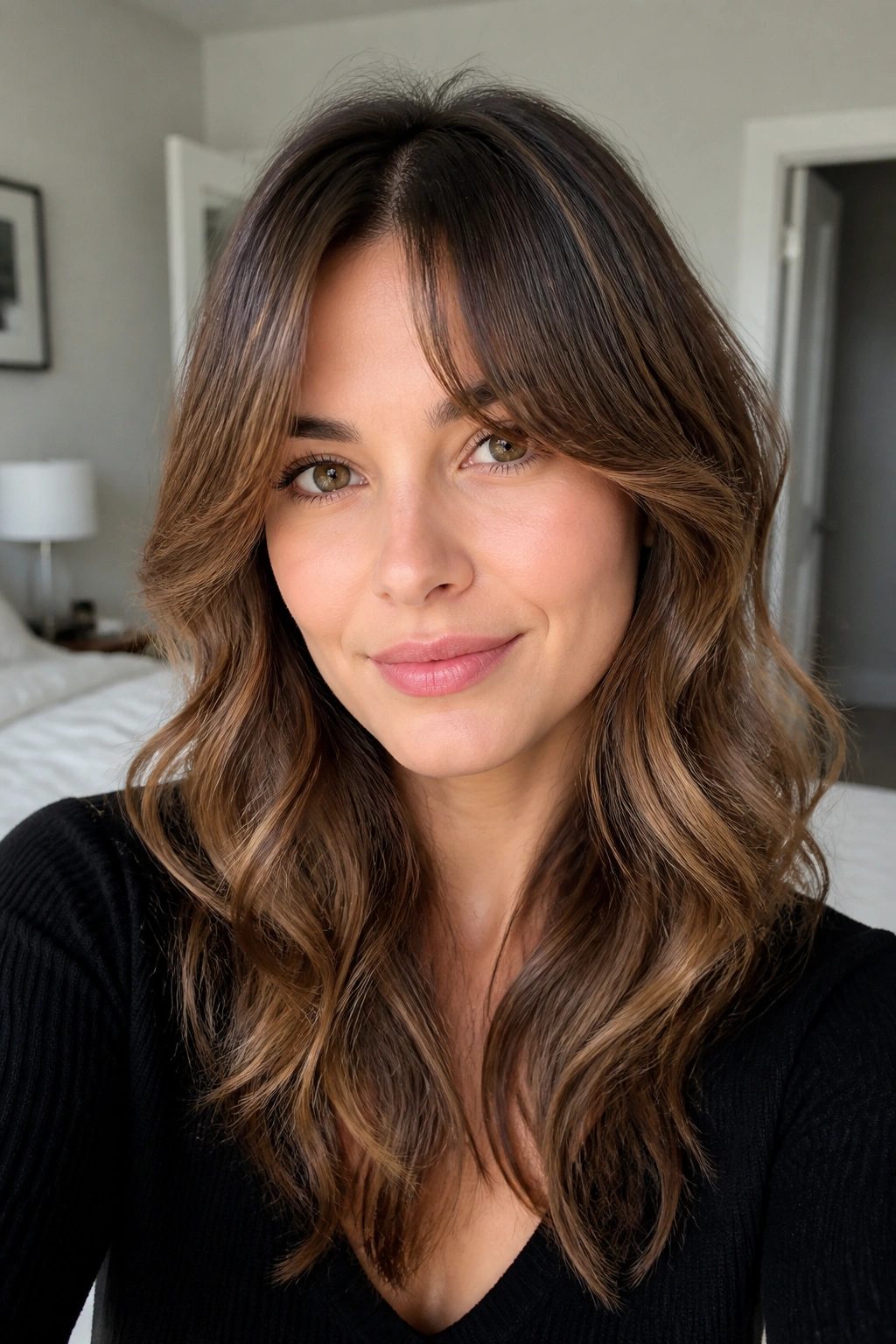
Can bangs work on a round face? Absolutely. The wrong bangs are a mess, though, and the right ones do some very smart work around the eyes and cheekbones.
Curtain bangs are the easiest place to start because they open in the center and sweep away from the face. That split creates a vertical line right through the middle, which keeps the features from feeling too compact. The fringe should start around the brow or just below it, then blend into face-framing layers that hit somewhere between the cheekbone and the mouth.
How to Style the Fringe
Blow-dry the bangs with a small round brush, lifting them forward first and then turning the ends away from the face. That little flip keeps them from clinging to the cheeks. A 1-inch curling iron works too, but only on the front half of the bang.
Soft waves below the bangs matter. If the rest of the hair is flat and the fringe is fluffy, the cut feels disconnected. Aim for loose bends with a curling wand around 1 to 1.25 inches, then brush the waves out with your fingers so they sit in long ribbons.
This one flatters people who want softness without a heavy fringe in their eyes. It is a good choice when you want your hair to look styled even on a plain T-shirt day.
4. Textured Shag with Cheekbone Layers for Round Faces
A shag can look amazing on a round face, but only when the layers are placed with some care. If the shortest pieces land too high and the sides puff out, the whole thing turns into a halo you did not ask for.
The better version keeps the volume near the crown and lets the face-framing layers start around the cheekbone. That pulls the eye upward first, then downward through the rest of the cut. The result is a shape that feels alive, not puffy.
What to Ask Your Stylist For
- Layers that start below the cheekbone, not at the widest part of the face.
- Feathered ends that are light, not wispy to the point of looking thin.
- A little crown lift so the top does not lie flat.
- Enough length to keep the shoulders visible.
A textured shag works best if your hair has some natural bend or can hold a wave. Straight hair can wear it too, but you will need a bit of mousse or a texture spray to keep the layers from looking limp. I’d avoid this cut if your hair is extremely fine and you hate styling, because the shag depends on shape. No shape, no point.
5. Blunt Lob with Hidden Interior Texture
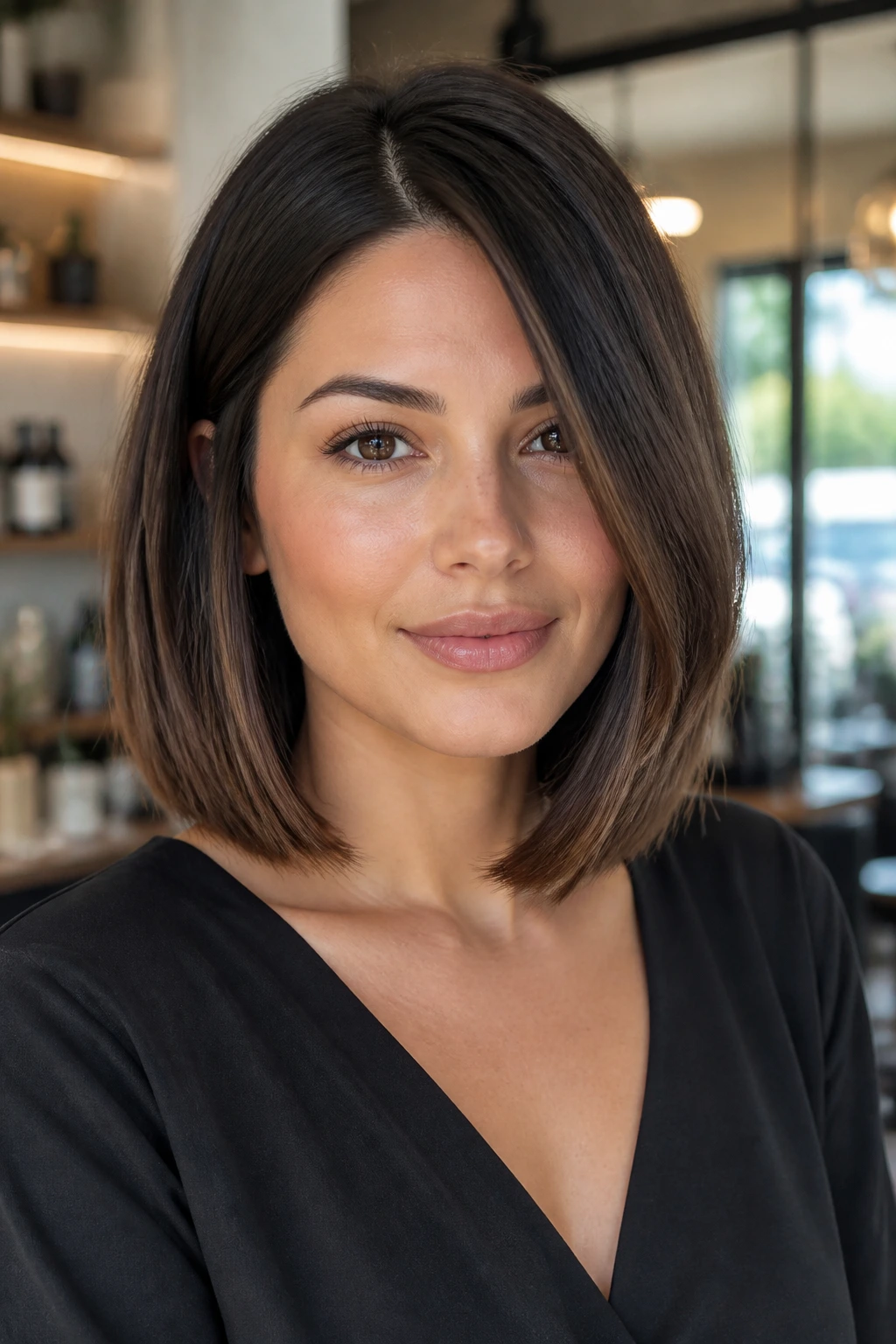
A blunt lob sounds like the least forgiving haircut in the world for a round face, and sometimes it is. But with the right internal texture, it can be one of the sharpest-looking options on the list.
The blunt edge gives the hair a clean outline, which is useful if your hair tends to frizz or split into uneven pieces. What saves it from looking too wide is the texture hidden underneath. Your stylist should remove weight from the interior, not the perimeter, so the ends still look solid while the body of the hair can move.
This cut works especially well if your hair is straight or only slightly wavy. It also looks good with an off-center part, because the part line breaks up the symmetry that can make a round face feel more circular. A dead-center part plus a blunt line at chin level is the combo I’d skip.
Style it with a flat iron or a blowout brush and keep the ends barely bent inward. Not curled. Just nudged. That tiny detail keeps the cut polished without making it sit like a shelf around the face.
6. Soft U-Shaped Cut at the Shoulders
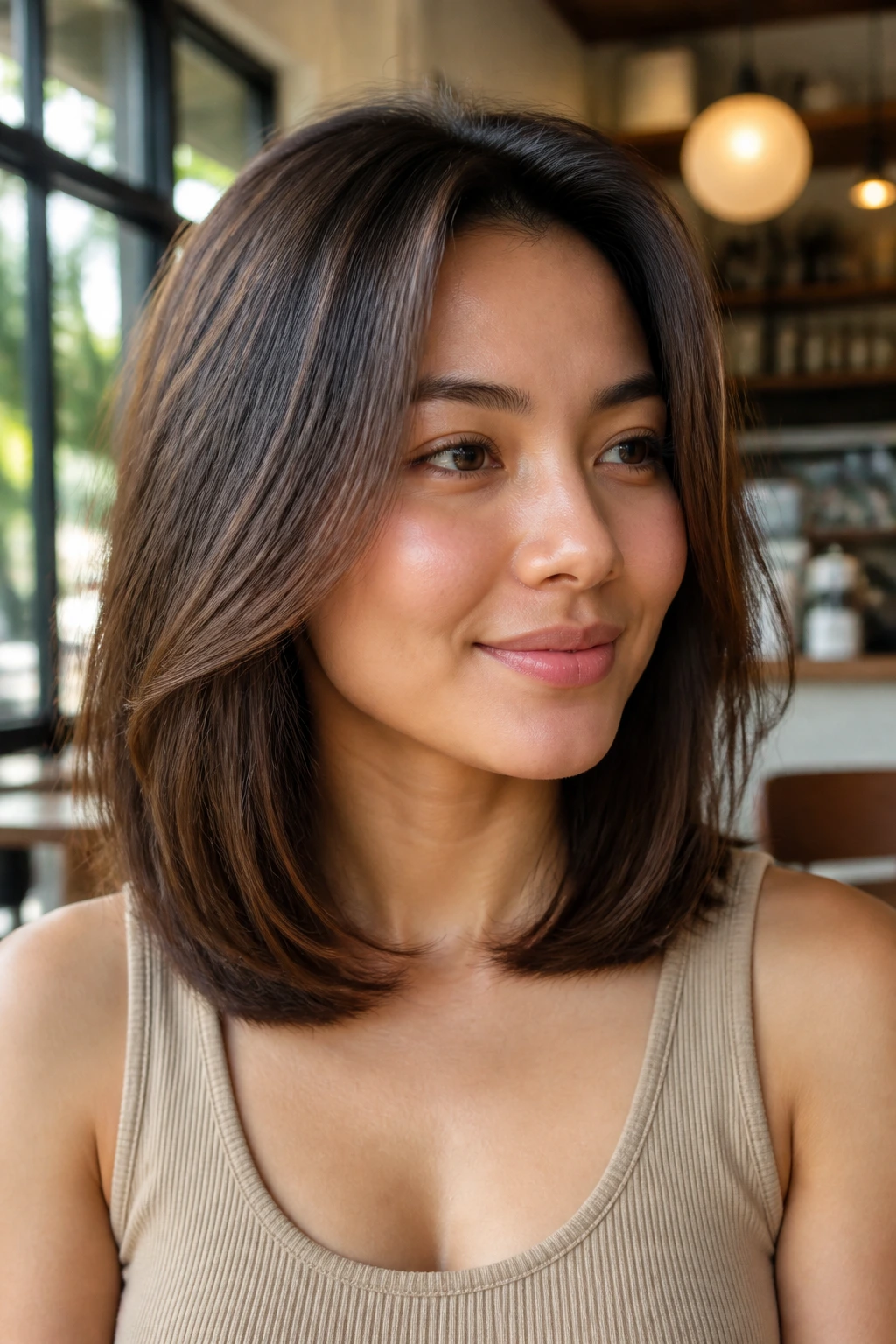
Unlike a square one-length cut, a soft U-shape gives medium hair some flow at the back while keeping the sides from flaring out. That matters on a round face, where too much width at the shoulders can make the whole silhouette feel bigger than it needs to be.
The shape should be subtle. The shortest front pieces can skim the collarbone, while the center back drops a little lower so the hem of the cut forms a soft curve. Nothing severe. Nothing carved with a ruler.
This style is especially nice for fine hair because it keeps enough weight at the bottom to make the hair look fuller. At the same time, it avoids the blunt puff that a straight, heavy line can create. If your hair is thick, ask for light internal layering so the back does not feel bulky.
I like this one for people who want hair that can live in a ponytail, a loose wave, or a smooth blowout without fighting the shape every day. It is not flashy. That is part of the appeal.
7. Deep Side-Part Blowout with Lift at the Crown
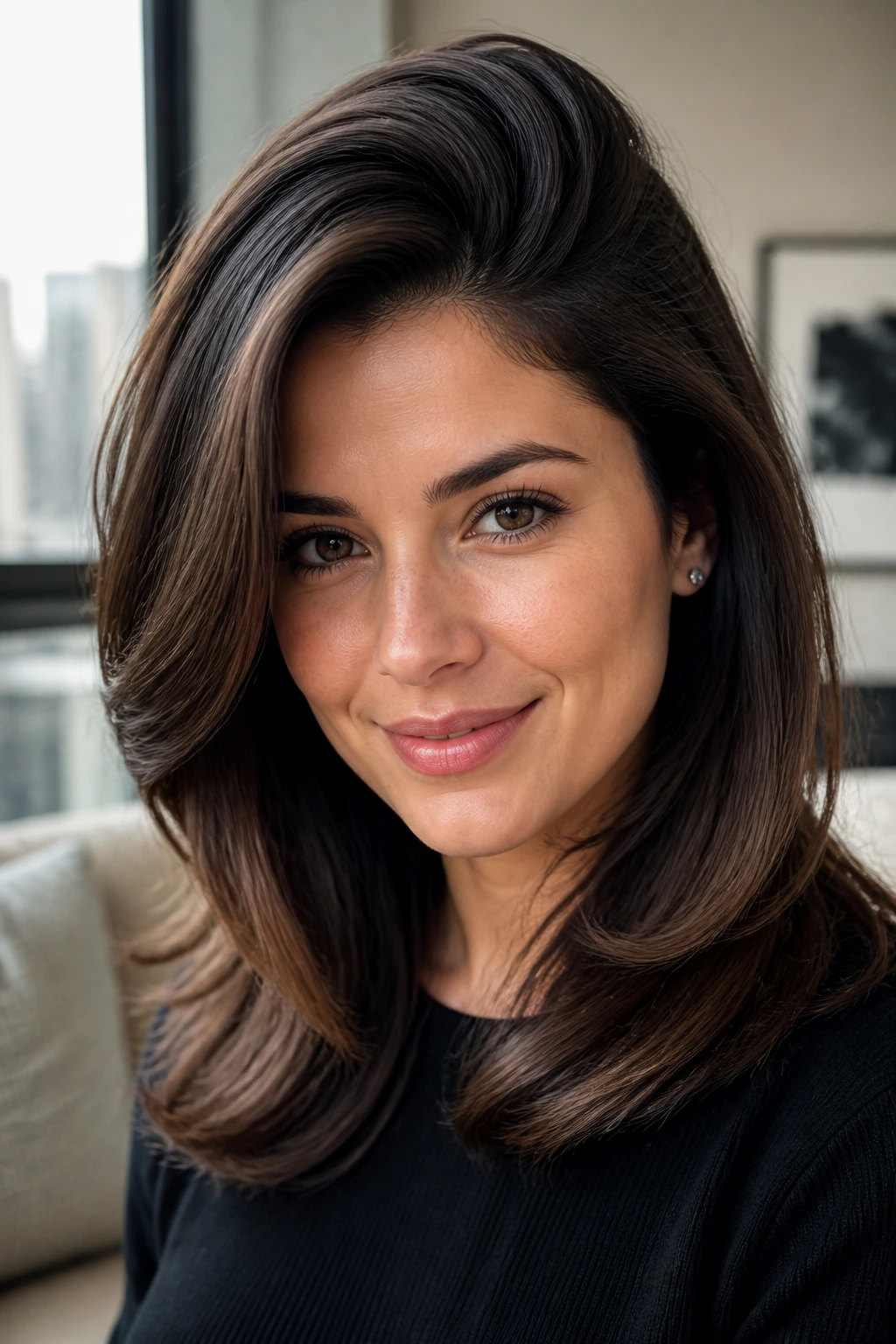
A deep side-part blowout can fake a sharper face shape in about ten minutes. That sounds dramatic, but it really comes down to placement and volume.
The part should sit at least two inches off the center line, sometimes more if your hair cooperates. The hair on the heavier side gets tucked behind the ear or pushed back with a clip, which opens one side of the face and makes the cheek area look less broad. Then the crown gets lift. Real lift, not crunchy teasing.
Tools That Make It Easier
- A blow-dryer nozzle for a smoother finish.
- A medium round brush, around 2 inches wide.
- A root-lift spray or mousse applied only at the scalp.
- A cool shot at the end to set the shape.
The style works on straight, wavy, and even curly hair if you stretch the roots a bit while drying. The important part is not letting the hair fall flat at the crown. Flat roots and a deep side part can drag the whole look downward, and that is the opposite of what a round face usually needs.
Use this one when you want instant structure without changing your haircut.
8. Butterfly Layers on Medium Length Hair for Round Faces
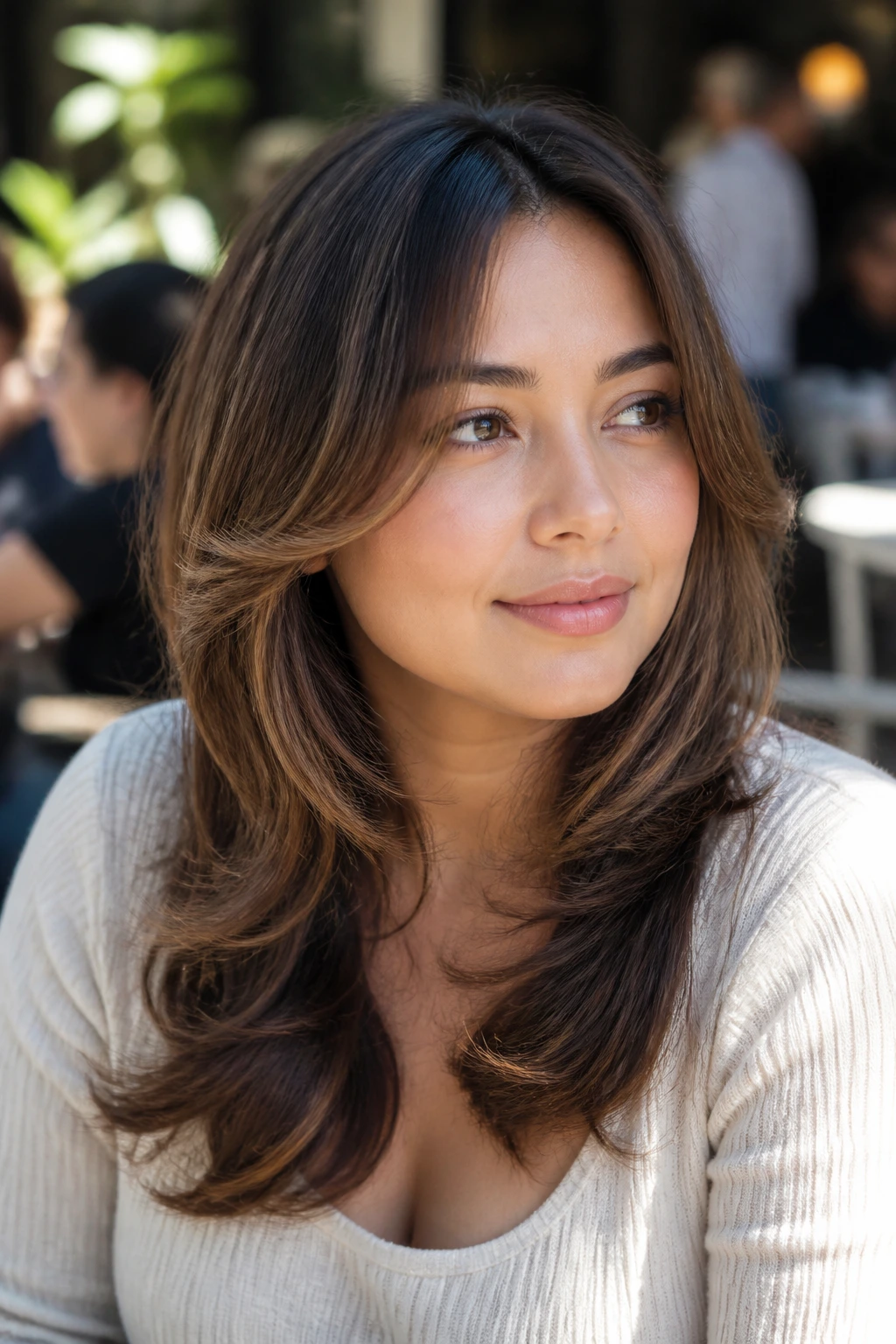
Butterfly layers get a lot of attention, and for once the hype makes sense. The short front layers create movement around the face, while the longer layers keep the length and stop the cut from feeling choppy.
The reason this works on round faces is simple: the shorter pieces draw the eye up near the cheekbones, and the longer pieces hold the line below the chin. You get shape near the face without losing the vertical stretch that medium hair needs.
If your hair is dense, ask for the shortest pieces to begin around the lip or cheekbone, not higher. Too-short front layers can make the face look wider, especially if they flip outward. The longer layers should blend into the rest of the hair with a soft, feathered finish.
This cut looks especially good with a bouncy blowout or loose barrel curls. The movement is the point. If you wear it pin-straight all the time, the shorter layers can feel a bit obvious. Still usable, just less graceful.
9. Wavy Lob with Invisible Layers
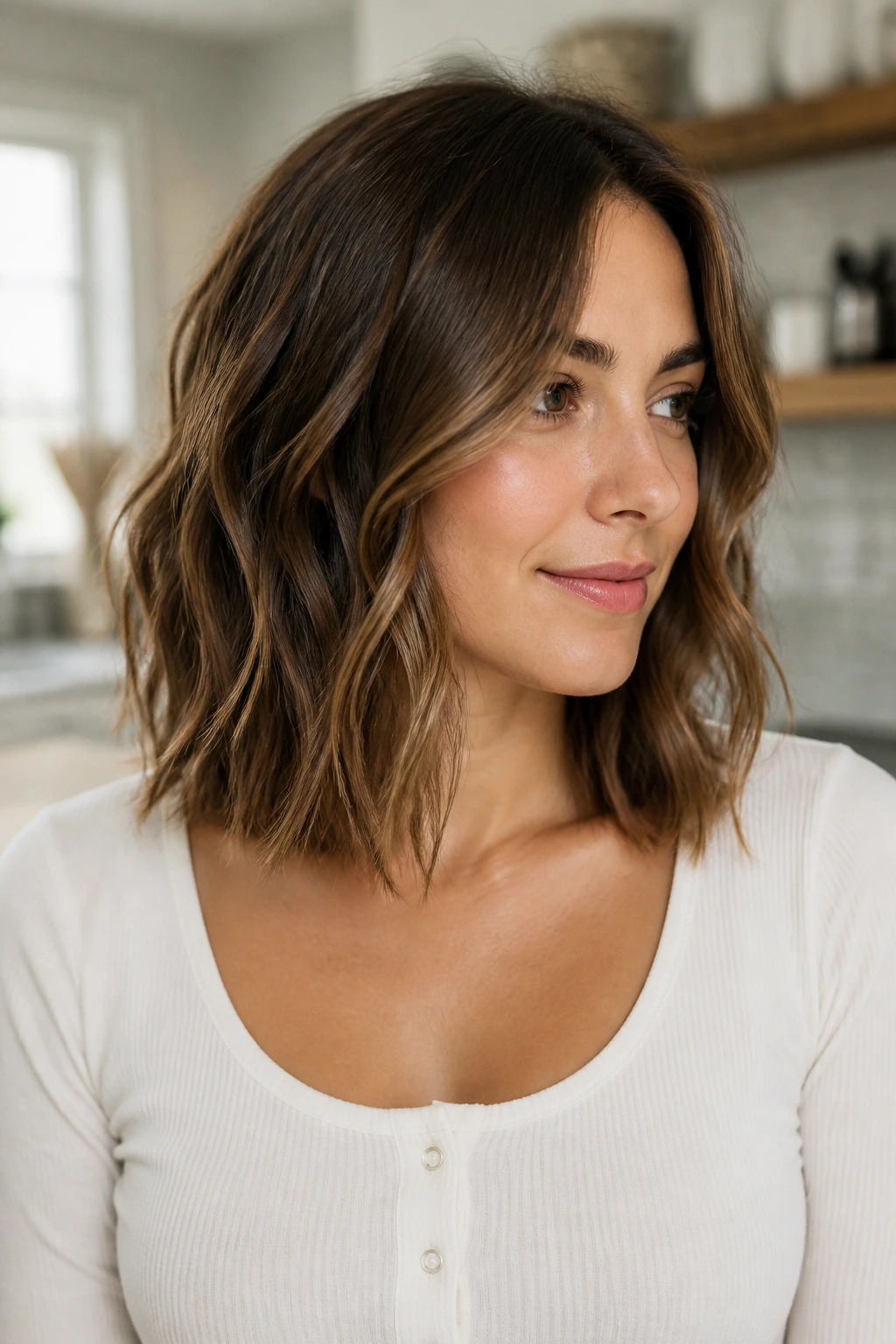
Why do some medium hairstyles feel light even when the hair is thick? Invisible layers are usually doing the heavy lifting.
They sit inside the haircut instead of showing up as obvious steps. That means the perimeter stays strong, which is useful for round faces because a broken or uneven hemline can add visual width. The wave does the work, not the cut screaming for attention.
How to Ask for It
Tell your stylist you want a lob with internal layering only or very soft layers that do not break the outline. The length should land around the collarbone, with the sides kept slightly longer than the back. That gives the face room and keeps the hair from puffing out near the cheeks.
A loose wave looks better here than a tight one. Use a 1.25-inch iron, curl away from the face, and leave the ends out for a few passes so the shape feels airy. Brush it out with fingers or a wide-tooth comb. Not a fine brush. That can make the wave too uniform and too round.
This is the style for someone who wants to look done without looking overly styled. Quiet, but not boring.
10. Feathered Ends with a Light Flip
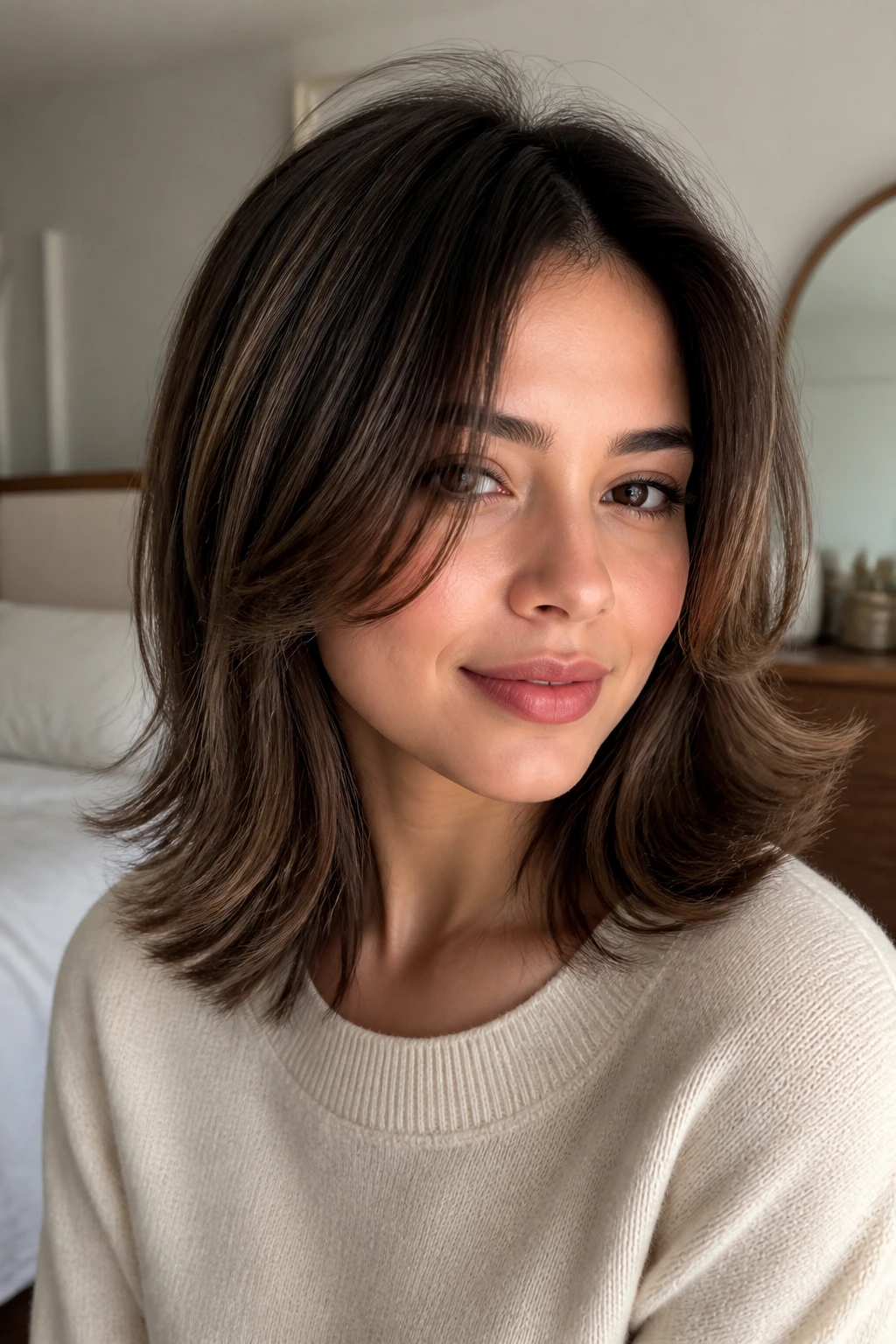
I have a soft spot for feathered ends because they make medium hair move in a way that feels easy, almost accidental. On a round face, that movement helps keep the cut from sitting like a block around the jaw.
The flip at the ends should be light. You do not want a pageant curl or a hard-outward bend from the 1990s. You want the tips to lift away from the neck just enough to keep the shape airy. A round brush, a blow-dryer brush, or a 1.5-inch curling iron can all do it.
A style like this is useful when hair tends to go flat at the top and bulky at the bottom. The feathering softens that weight. It also makes shoulder-length hair feel less heavy on the face, which matters more than people think.
- Keep the front pieces slightly longer than the chin.
- Ask for ends that are textured, not shredded.
- Use a light mousse before drying.
- Finish with a touch of shine cream on the ends only.
Best for: medium hair that needs movement, especially if the natural texture is straight or softly wavy.
11. Sleek Clavicut Tucked Behind the Ears
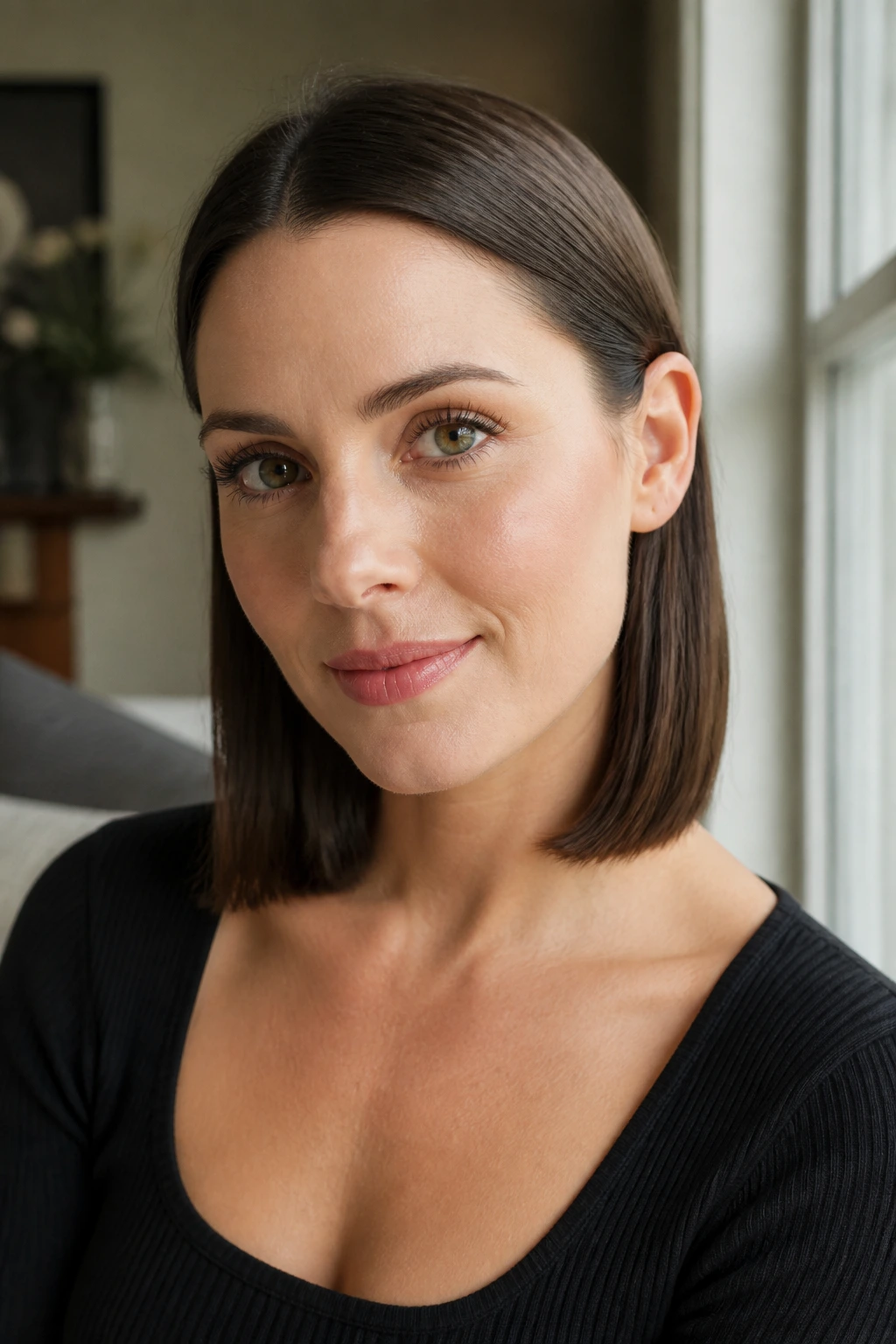
A clavicut is the kind of haircut that looks simple until you try to grow it out. Then you realize how smart the shape is. It lands at the collarbone, which gives round faces a longer line, and it looks especially good when tucked behind the ears.
That tuck matters. It opens the sides of the face and keeps the hair from sitting over the cheeks like curtains. A slight off-center part helps too, since it breaks up symmetry without making the style feel dramatic.
I like this cut for fine hair because the clean line makes the hair look denser. I also like it for straight hair that does not want a lot of layering. Too many layers can make a clavicut lose the whole point, which is that smooth, tidy outline.
Wear it sleek with a flat iron and a tiny bend at the ends, or let it air-dry and tuck one side back. The result is neat without feeling stiff. That sounds minor, but on a round face, a clean line can do more than a pile of volume ever will.
12. Defined Curls with Crown Volume for Round Faces
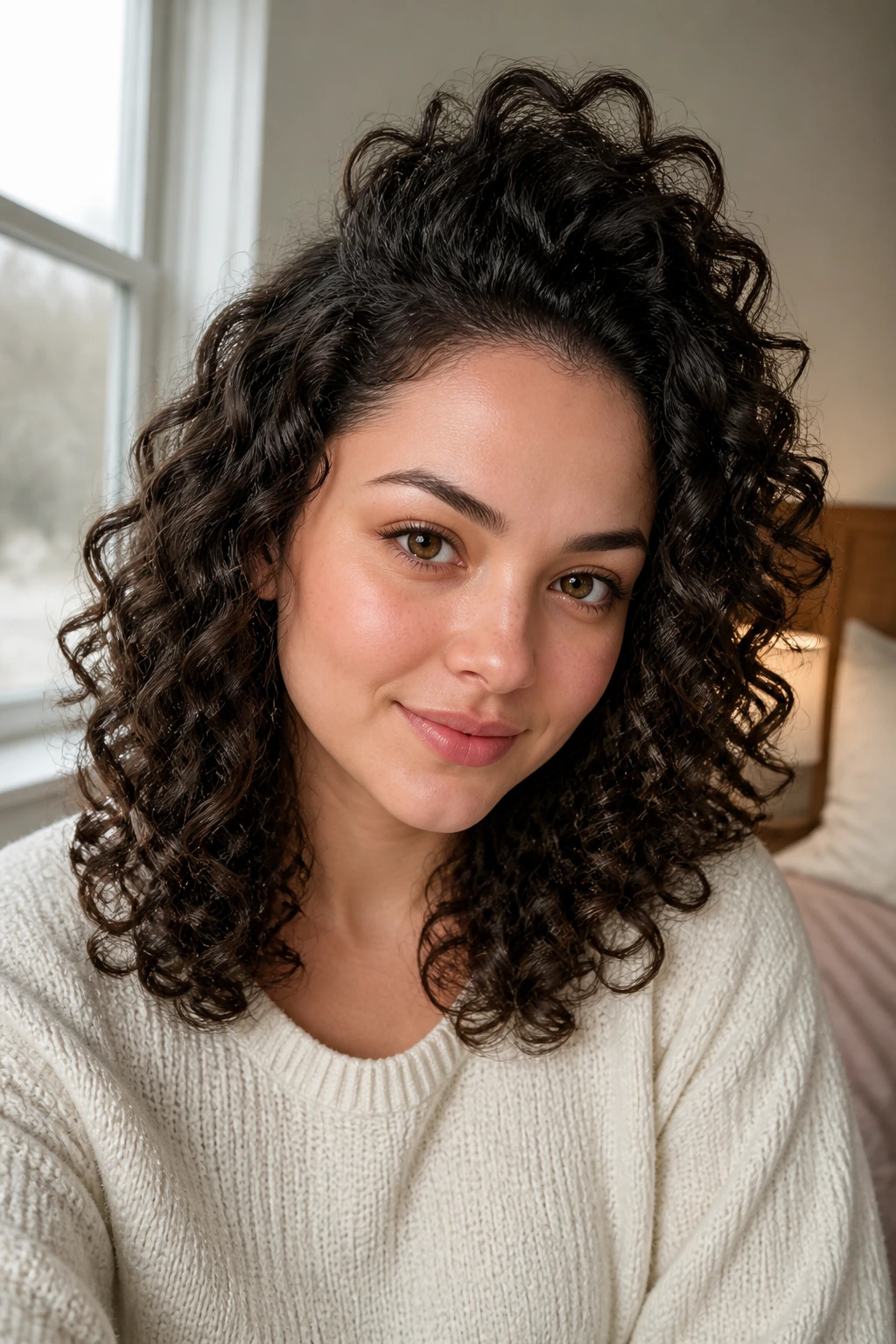
Curly hair on a round face needs room at the top. Not on the sides. The crown. That’s where the shape should start stretching upward if you want the face to feel a little longer.
The mistake I see most often is curls being cut too short around the cheeks, which makes the widest part of the face and the fullest part of the hair land in the same place. That is a lot of width in one zone. Better to keep the layers long enough to let the curls fall below the chin and build the lift on top.
How to Style It
Diffuse on low heat with your head tilted slightly forward, then lift the roots at the crown with your fingers before the hair fully dries. Use a curl cream plus a gel or foam, depending on how much hold your curls need. The finish should feel touchable, not crunchy.
If your curls shrink a lot, ask for dry-cut layers or a curl-by-curl shape that leaves the longest pieces around the collarbone. You want bounce, not a round puffball. That distinction matters more than length alone.
This style is generous to natural texture. It does not fight it. Good.
13. Razor-Cut Layers for Thick Hair
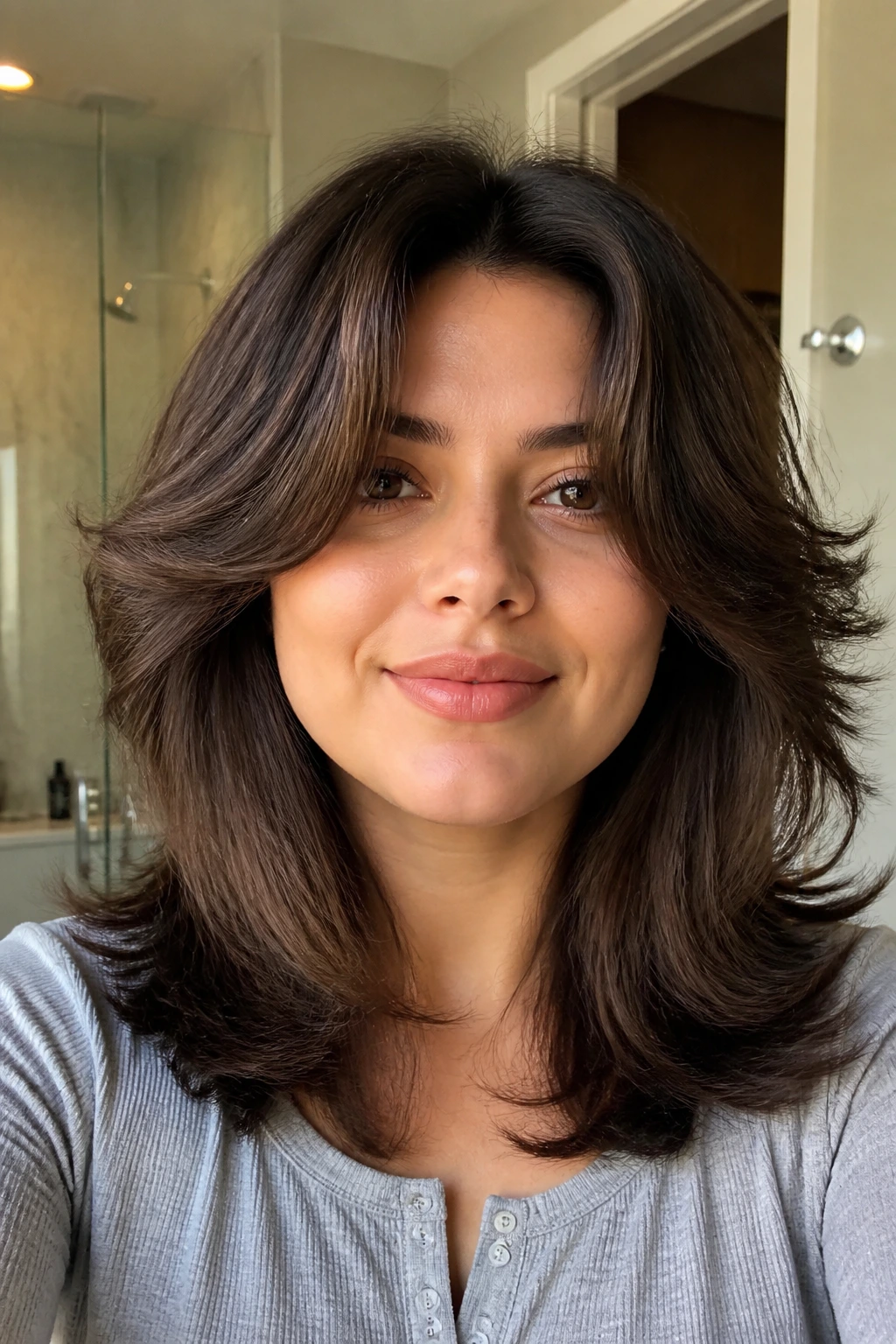
Razor-cut layers can be a lifesaver for thick medium hair, but only if the hair can take the texture. The razor removes bulk fast, which makes the ends feel lighter and less triangular around a round face.
A thick head of hair often spreads outward at the cheeks if the perimeter is too blunt. Razor-cutting softens that edge, and the layers fall with a little more drape. That drape is what keeps the haircut from looking boxy.
What Makes It Different
- The ends look airy instead of heavy.
- The layers blend with less visible steps.
- The shape moves even when the hair is mostly straight.
- The haircut can lose weight fast if the razor work is too aggressive.
I would not push this on very fine or fragile hair. It can fray the ends and make the style look thin faster than a scissor cut would. But on coarse, dense, or stubborn hair, it can be a smart move. Ask for the razor to be used only on the interior and lower lengths, not right at the surface where the damage shows first.
If you live in a blowout or a loose wave, razor layers can be a real help. If you want a hard, glossy edge, skip it.
14. Modern Wolf Cut with Softer Edges

The wolf cut gets a bad rap because people often picture the extreme version: huge crown, chopped ends, and a shape that swallows the face. That’s not the version I’d recommend for a round face. A softer wolf cut is a different animal.
The idea is to keep the crown a little shorter, taper the sides, and let the bottom stay longer and thinner through the ends. That creates an upward push without making the hair explode outward around the cheeks. Wavy hair does especially well here, since the texture helps the layers fall in a broken, easy shape.
This cut lives or dies by balance. Too much crown height and you get a mushroom. Too little and it becomes an ordinary shag with no attitude. The sweet spot is a little messy, a little lifted, and long enough to skim the shoulders.
I’d pair it with mousse or a light texturizing spray rather than heavy cream. Heavy products can weigh the top down and make the shape collapse by lunch. That is not the vibe.
15. Beveled Mid-Length Cut with a Clean Edge
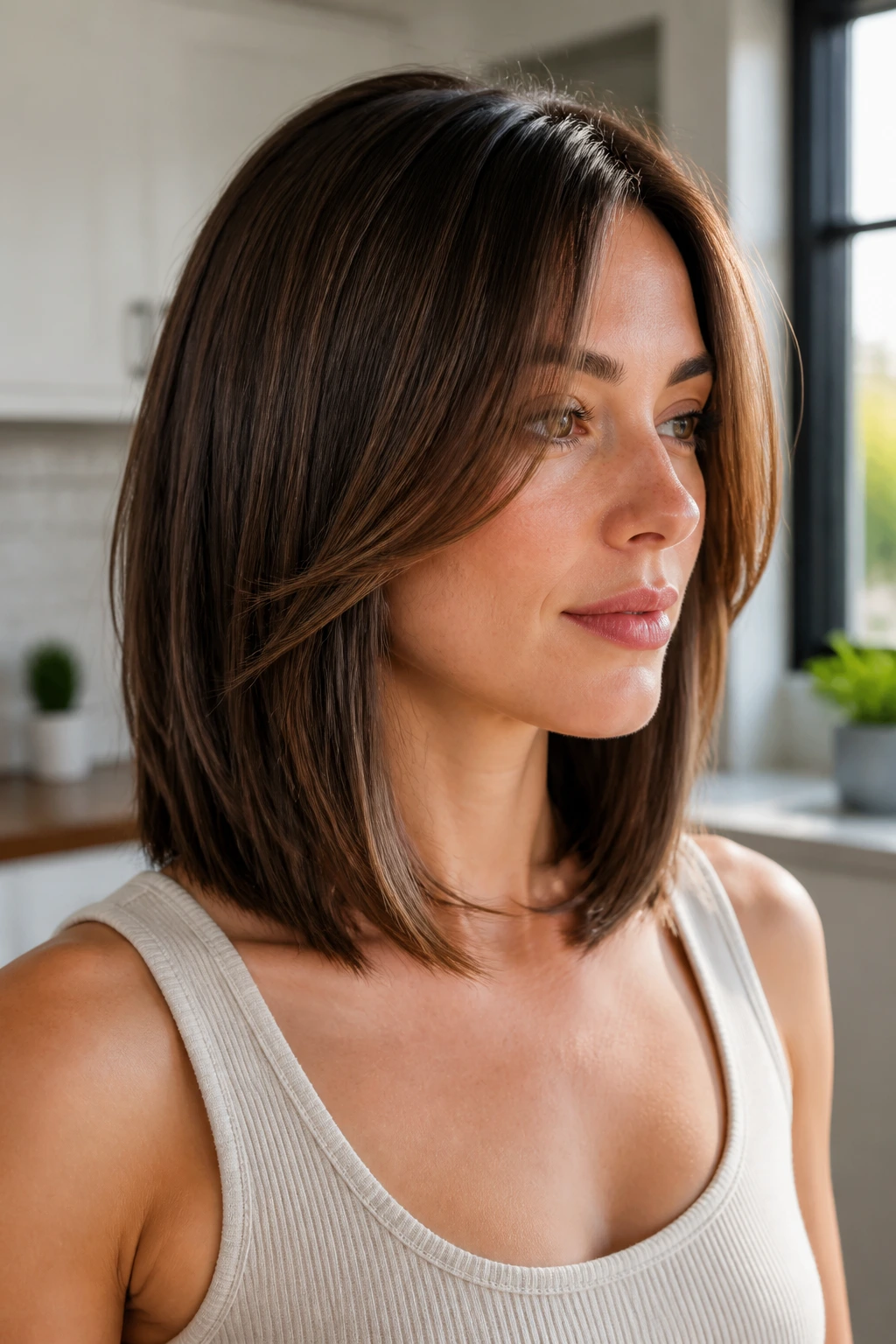
Can a clean edge work on a round face? Yes, if the edge is beveled instead of blunt and boxy.
A beveled cut keeps the line crisp but nudges the ends inward just enough to avoid that wide, square look. The front should skim the collarbone, the sides should stay slightly longer than the cheeks, and the interior can carry a little movement so the style does not freeze in place.
How to Keep It from Turning Boxy
Ask for the stylist to cut the ends with a soft bevel, then check the shape from the side before leaving the chair. If the bottom line looks like a straight shelf, it will read wider on the face. If the hair curves in slightly, the shape gets lighter fast.
This is a good option for straight hair and people who like neat styling. A flat iron passed once through the hair, followed by a gentle inward bend at the ends, is usually enough. No need for a lot of volume at the roots. In fact, too much root lift can make the cut feel old-fashioned.
The haircut is clean. That is the appeal. Simple, but not plain.
16. Half-Up Twist with Loose Length
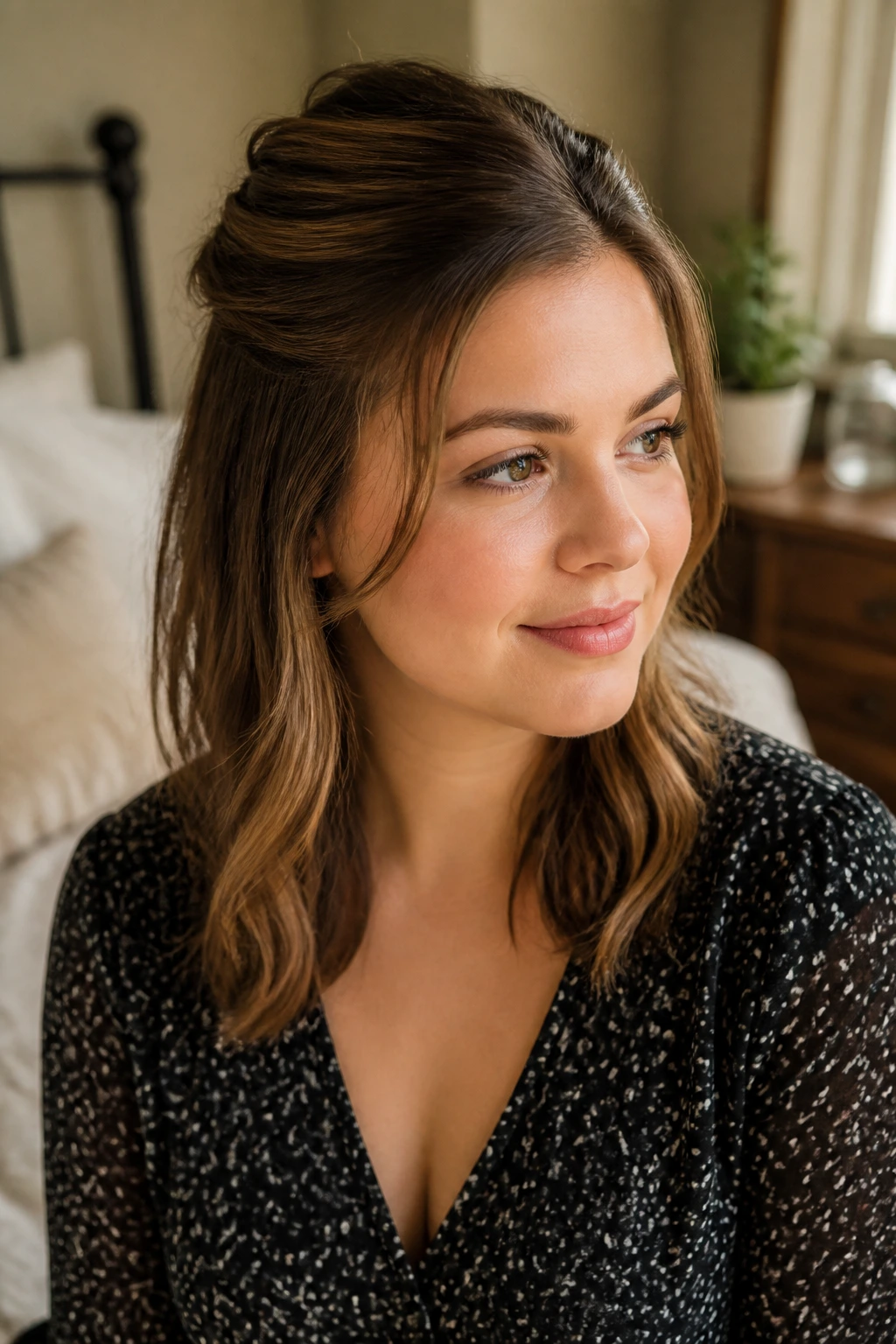
Some days you do not need a new cut. You just need a style that gives the face a little more height and keeps the sides from crowding it. A half-up twist does that without much fuss.
Pull the top section back from temple to temple, twist it once or twice, and pin it high enough to create lift at the crown. Leave a few narrow pieces in front of the ears and around the cheekbones. Those pieces act like soft borders, which keeps the style from looking too tight.
A Few Details That Matter
- Backcomb the crown one inch back from the hairline if the top sits flat.
- Use two bobby pins in a crisscross instead of one.
- Keep the loose length below the shoulders if you can.
- Curl the front pieces away from the face so they fall open.
This style works on second-day hair better than freshly washed hair, which often slips too much. A tiny bit of dry shampoo at the roots can help hold the twist in place. If your hair is very silky, mist the section lightly with texturizing spray before pinning.
It is a quick fix, but not a lazy one. There’s a difference.
17. Side-Swept Waves with Pinned Temples
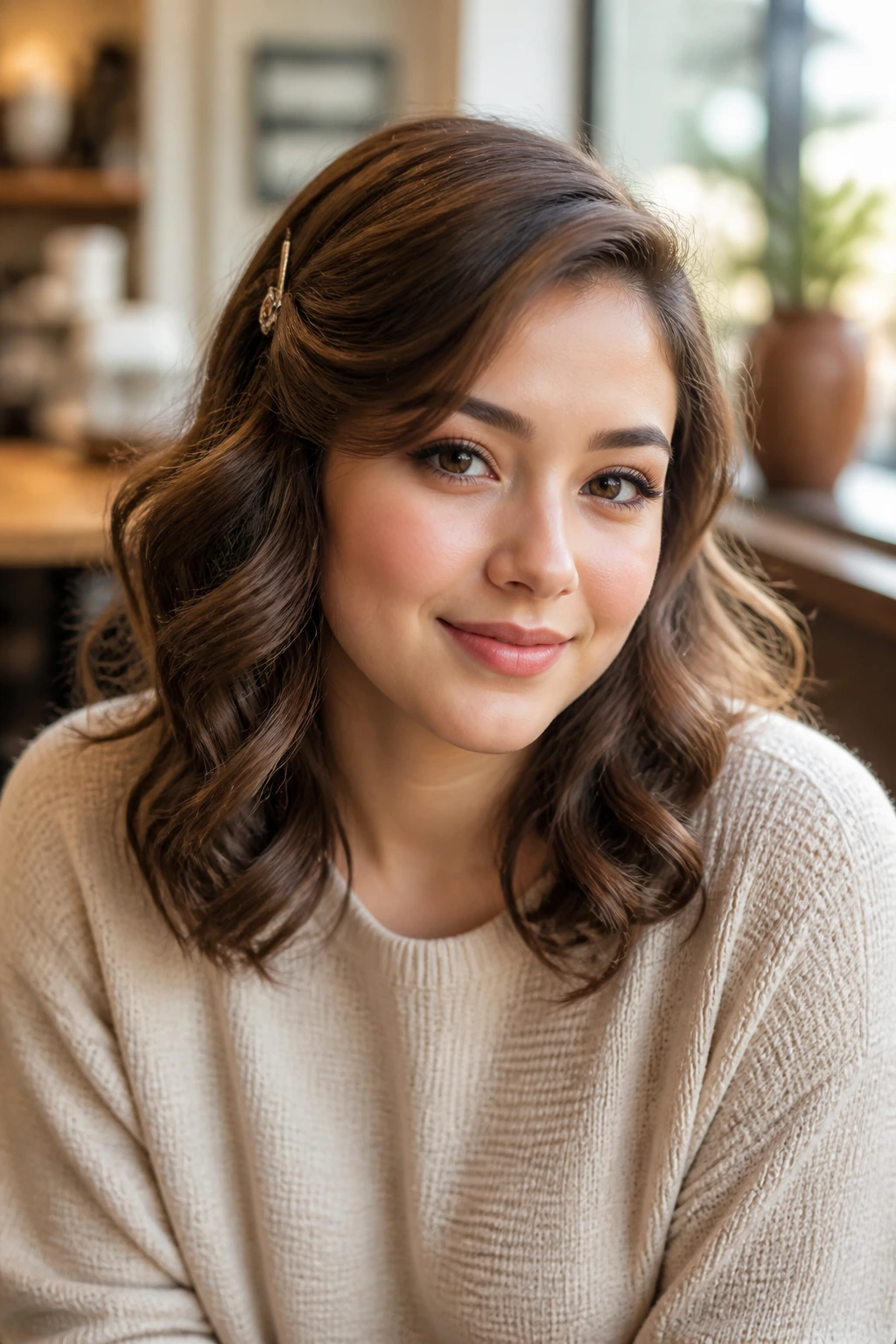
Side-swept waves are one of those styles that always look more deliberate than they are. The face opens on one side, the other side gets a soft curtain of hair, and the overall shape becomes less circular without feeling severe.
The pinned temple detail is what lifts this from ordinary to useful. Pinning one side behind the ear or at the temple creates a vertical line that breaks up the width of the face. Use a couple of small pins and hide them under a wave or a strand. It should look casual, not clipped in place for a formal photo.
I like this style when the hair is medium length and has some bend already. A 1.25-inch iron, one pass per section, then finger-comb the wave so it stays loose. If the waves are too tight, the style starts filling out the sides again, and that defeats the point.
This one is good for dinners, events, and days when you want the haircut to look a little more expensive than it really was.
18. Braided Crown with Shoulder-Grazing Ends

A braided crown can sound overly sweet, but on medium hair it can be surprisingly smart for a round face. The braid adds height and detail at the top, while the loose length at the shoulders keeps the style from feeling heavy.
Unlike a full updo, this keeps some movement around the neck and collarbone. That matters. Too much hair pulled tightly back can make the face look wider by comparison, while a braid that sits slightly high pulls the eye upward first.
Who It Suits Best
- People with medium hair that holds a braid without slipping.
- Second-day hair that has a bit of grip.
- Straight, wavy, or softly curly textures.
- Anyone who wants an event style without a full pinned-up look.
A small Dutch braid along the hairline gives more lift than a standard flat braid. If you want something softer, braid only one side and pin it across the back like a headband. Leave the ends loose and lightly curled. That loose length is what keeps the style from feeling too precious.
This is the one I’d choose when the haircut itself is simple and the style needs to do a little more work.
Final Thoughts
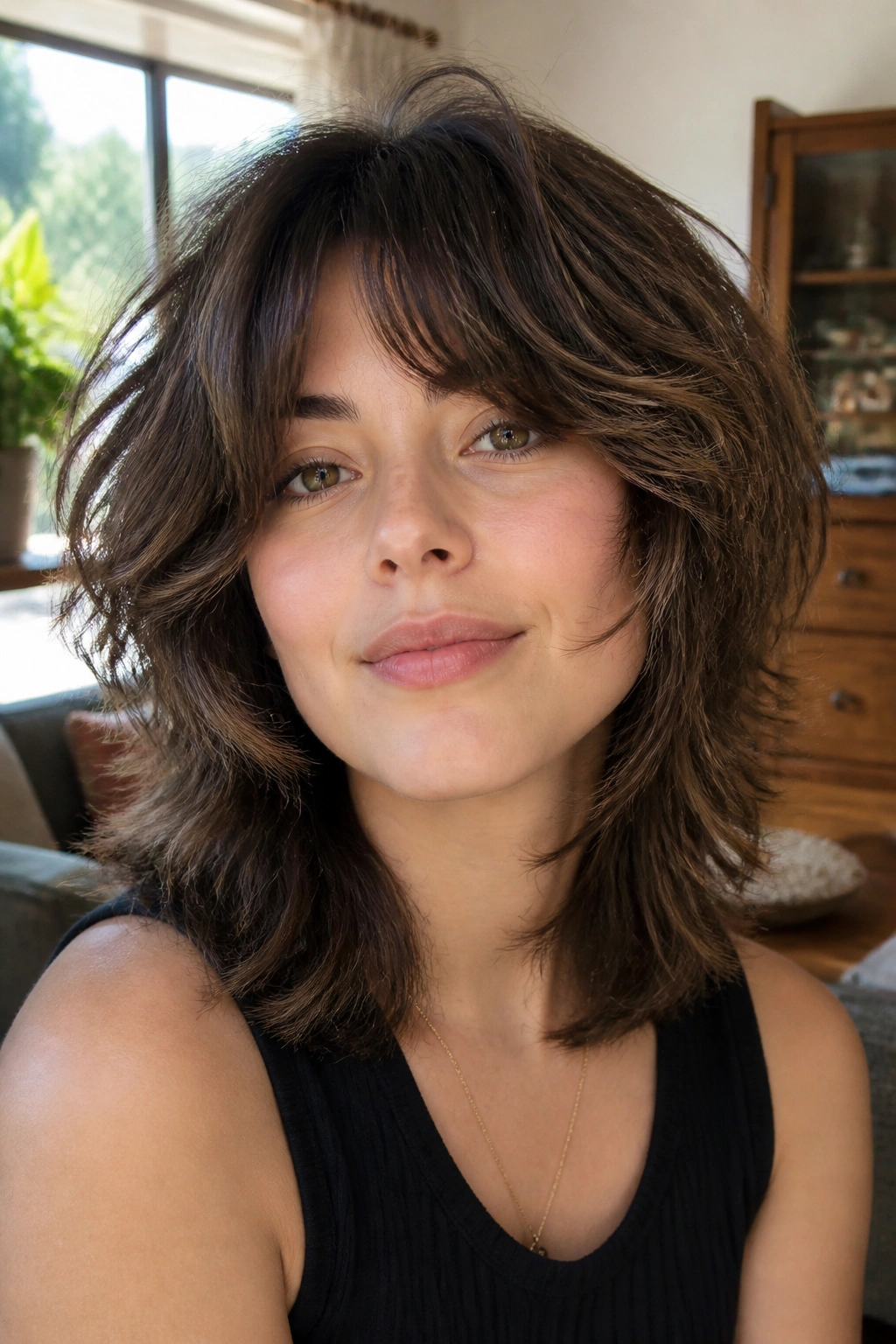
Medium hair and a round face are a good pair when the cut understands shape. You want some lift, some length, and at least a little movement that pulls the eye up or down instead of straight across the cheeks.
The most flattering choices here share the same habits: they keep the heaviest width away from the cheek line, they avoid a blunt stop at the jaw, and they make room for a side part, a soft fringe, or a bit of crown volume. Small changes. Big payoff.
If you walk into a salon with one useful note, make it this: ask where the shortest face-framing pieces will land when the hair is dry. That answer tells you almost everything about whether the style will flatter your face or fight it.
