



Short hairstyles for men can look sharper than longer cuts when the shape is right. The difference between a clean finish and a cut that feels off is often a quarter inch on the sides, a blunt fringe that sits too heavy, or a top that refuses to lie down.
Hairline, cowlicks, density, curl pattern — all of it matters.
A barber can make the same short cut look calm, stern, tidy, or rough just by changing the fade height and the texture on top. That is why some men swear a crew cut works on them forever, while someone else needs a crop with movement so the whole cut does not look like a helmet.
The best short cuts do two things at once. They make the face look more deliberate, and they stay reasonable when you wake up late, skip the blow-dryer, or wear a hat for half the day. That is the real test. Not the mirror in the barbershop.
1. Crew Cut
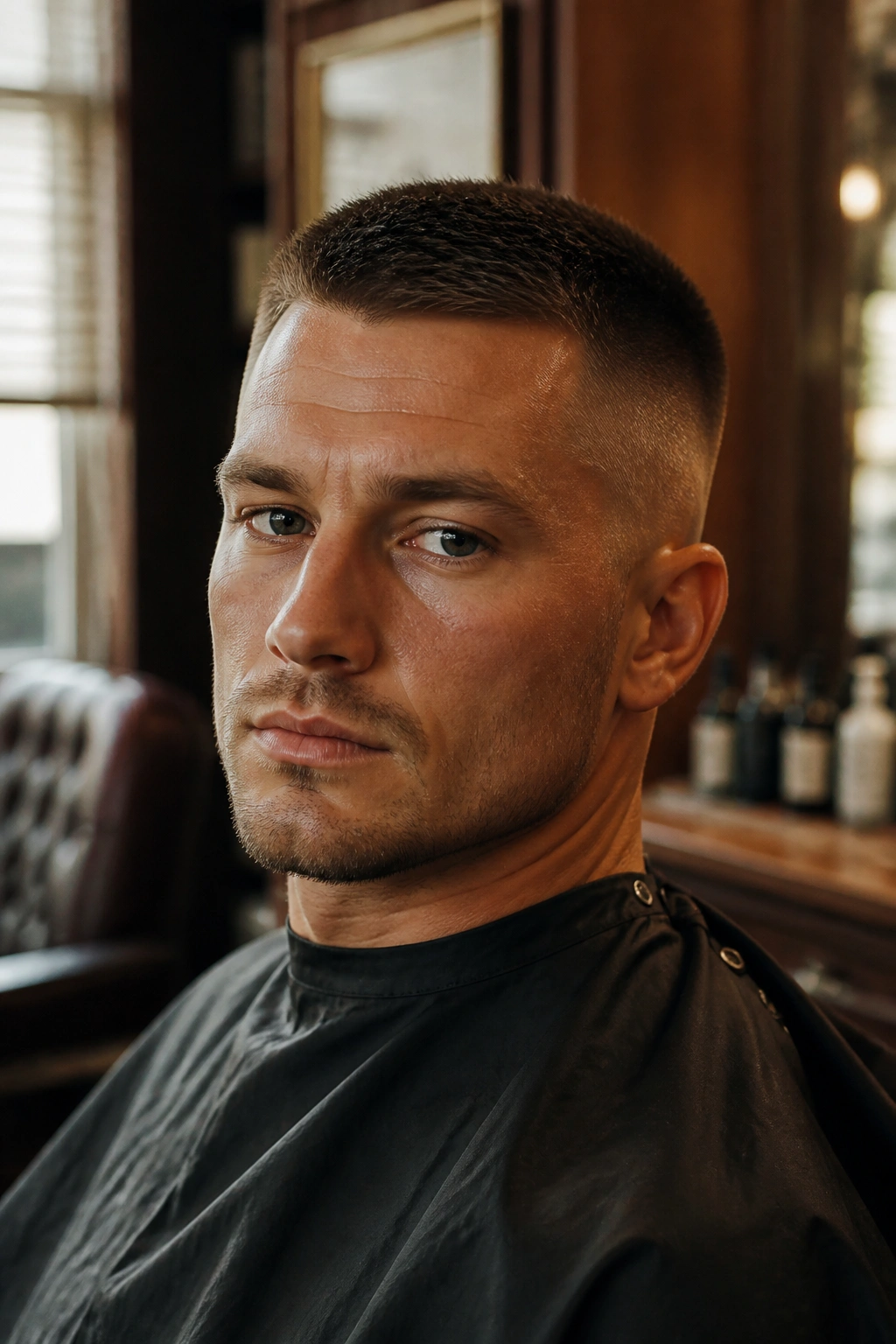
The crew cut is the haircut I recommend when someone wants to look put together without spending much time on it. It sits in that sweet spot between military short and office-friendly neat, which is why it has lasted so long.
Why it works
Keep the top around 1 to 2 inches, then taper the sides tight enough that the shape looks clean but not severe. That little bit of length on top gives you just enough room to push it forward, angle it slightly to the side, or leave it alone.
- Best for: straight, slightly wavy, or thick hair
- Ask your barber for: a short taper on the sides and a bit more length through the front
- Style with: a pea-sized amount of matte cream or light paste
- Trim every: 2 to 3 weeks if you want the edges to stay crisp
The crew cut is especially useful if your hair starts looking bulky fast. It takes bulk out of the corners and leaves you with a shape that reads clean from every angle. Solid haircut. Hard to mess up.
2. Buzz Cut
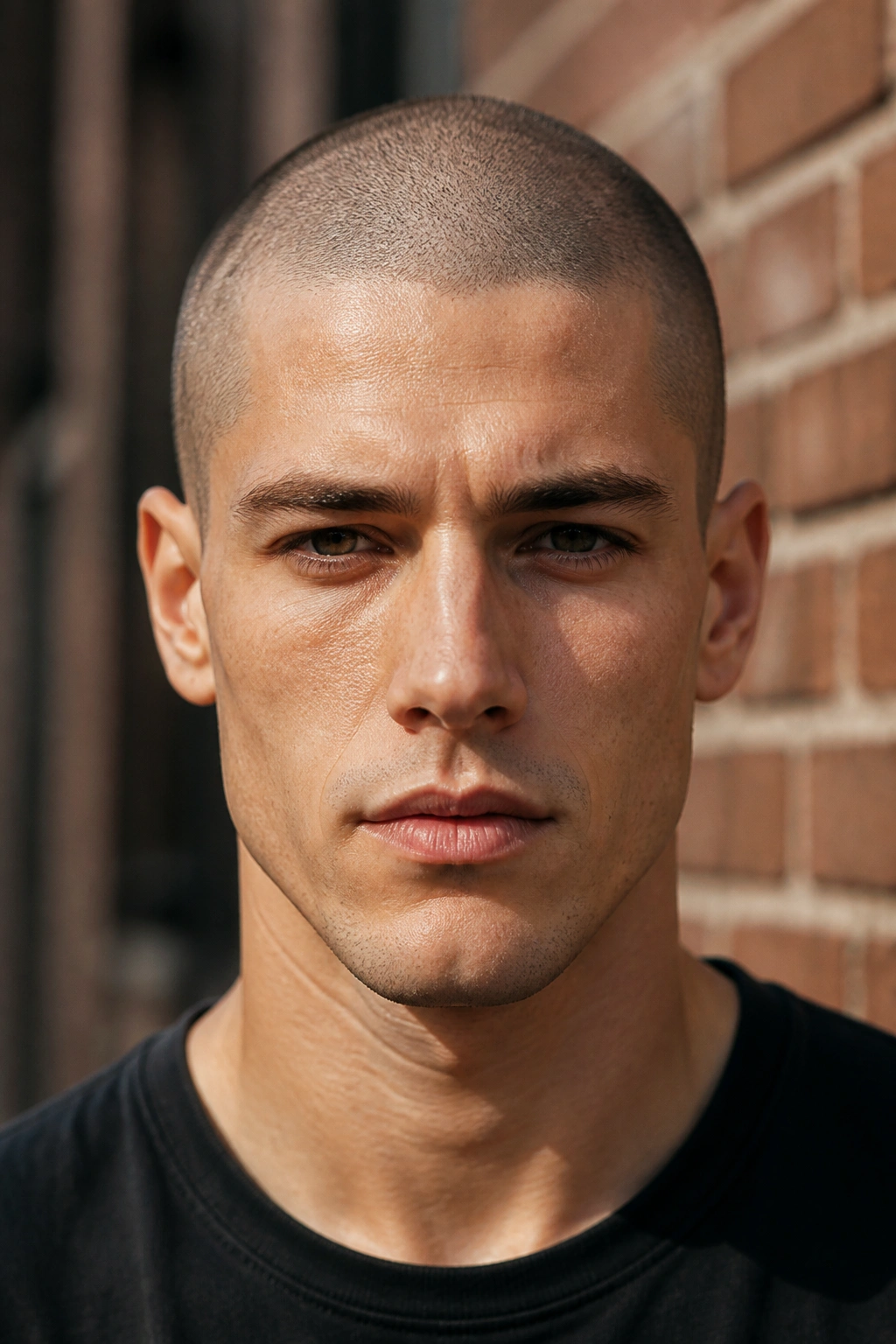
A buzz cut is not “short hair.” It is a decision. Once you go down to one clipper length, the haircut stops pretending to be styled and starts relying on head shape, hairline, and confidence.
No styling. None.
That is the appeal. A #1, #2, or #3 guard gives you a shaved-down look without the razor-level commitment of an induction cut. The shorter the guard, the more the scalp, scars, and uneven hairline show. The longer guards soften everything a little, which is why a #2 is usually the safer starting point.
A buzz cut works best when you want speed and you do not mind honesty. It also pairs well with facial hair because the beard adds weight where the head haircut cannot. If your hair is very fine, a buzz can make it look denser. If your head is sharply asymmetrical, it will show that too. No hiding place.
3. Textured Crop
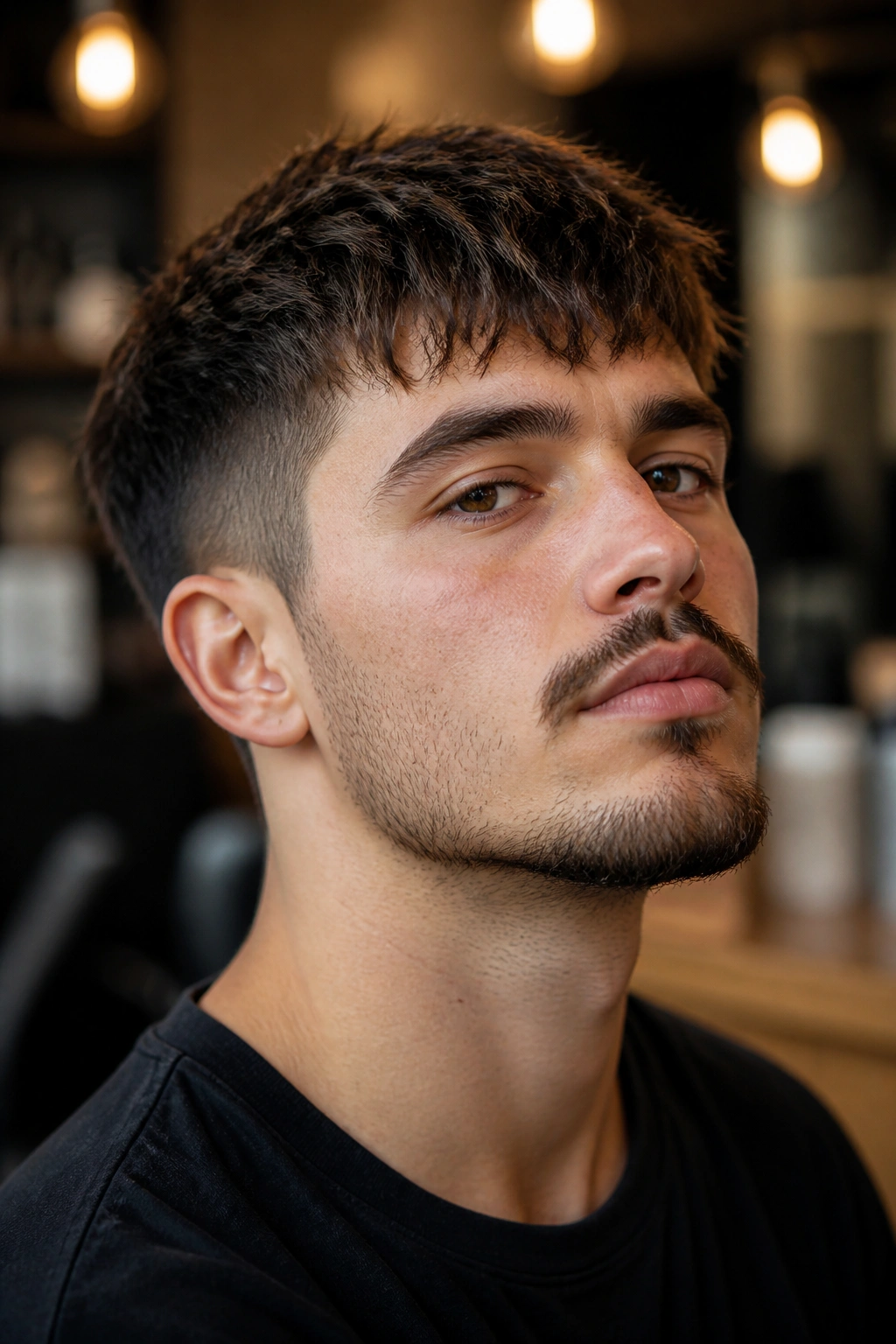
Why does the textured crop keep showing up in barbershops? Because it solves a common problem: hair that stands up, falls flat, or does both on the same morning. The cut gives the top a broken, choppy surface so the hair looks lived-in instead of shellacked.
Ask for 1.5 to 2 inches on top with point-cut texture and shorter sides that fade or taper down cleanly. The fringe can sit slightly forward, but it should not hang in one heavy sheet. That is where the whole cut goes wrong. Blunt is the enemy here.
How to wear it
Use a matte clay or dry paste, warm a small amount between your palms, and push it into towel-dried hair from back to front. Then pinch a few pieces at the front so the fringe breaks apart. Five minutes, maybe less.
This cut is a gift for straight or wavy hair. Curly hair can wear it too, though the texture needs more room on top. If your hair is thick and stubborn, the crop cuts that bulk down without making you look shaved clean.
4. French Crop: A Workhorse Among Short Hairstyles for Men
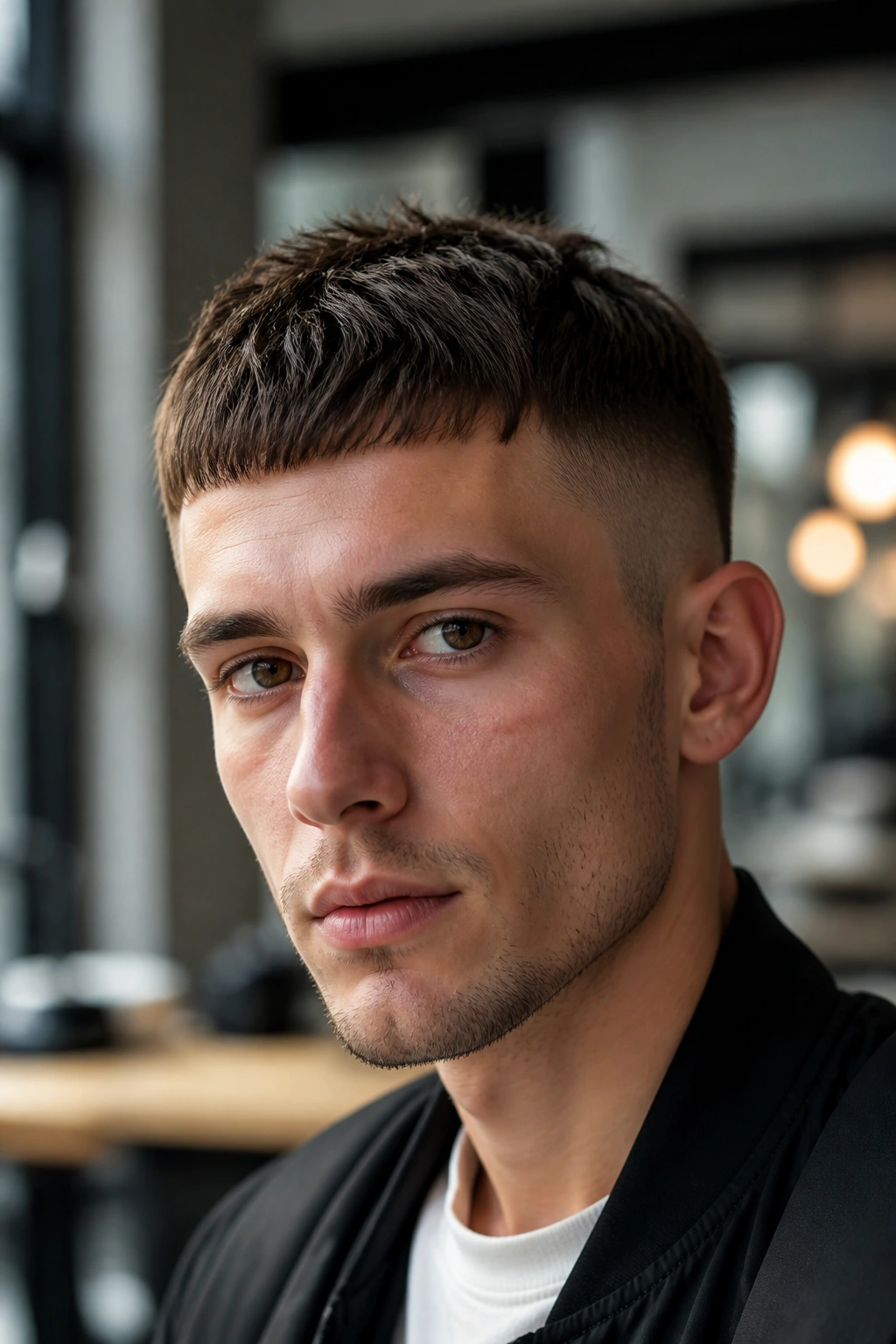
The French crop is one of those cuts that looks simpler than it is. A good version has a short fringe that sits close to the forehead, tight sides, and enough texture on top to keep the front from looking like a brick wall.
The trick is in the fringe. Too much length and it droops. Too little and the cut loses its character. Aim for a front section that can move a little when you sweep it forward, but still lies down without fighting you. That usually means a top length around 1 to 2 inches and a clean taper around the ears.
- Works well for: receding hairlines, straight hair, dense hair
- Tell the barber: keep the fringe short and broken up, not blunt
- Best product: matte paste or lightweight styling cream
- Skip: heavy gel; it makes the front look hard and wet
This cut has a nice habit of making the forehead area look more balanced. It does not erase a hairline, obviously, but it can soften it. That alone is useful.
5. Ivy League
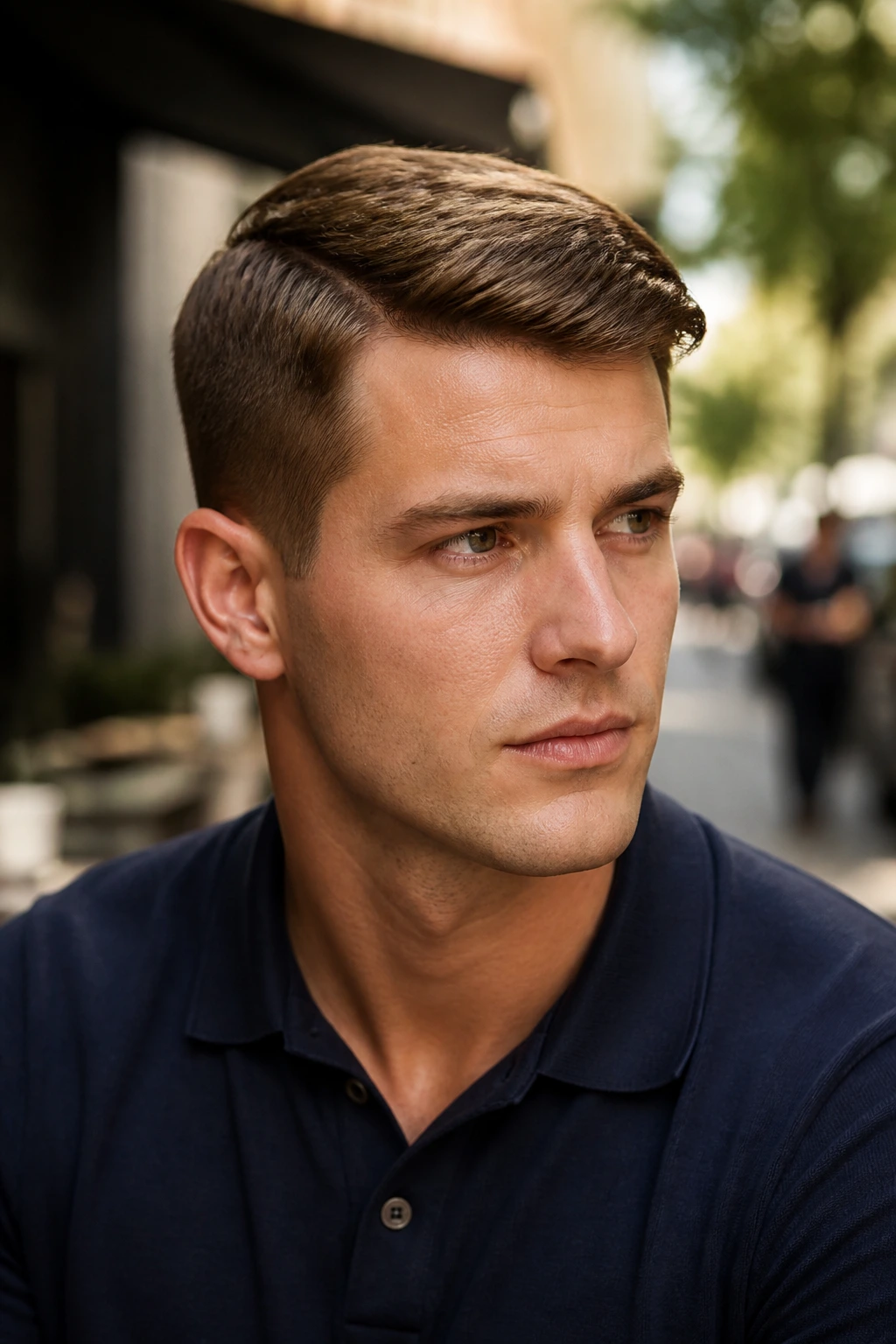
The Ivy League is the polished cousin of the crew cut. It keeps the sides tidy and the top just long enough to part, sweep, or slightly lift. Clean, not fussy.
What makes it different is the shape through the front. Instead of cutting everything to the same short length, the barber leaves a little more room near the hairline, often around 2 to 3 inches, so the hair can show direction. The cut looks especially good when the top is combed with a natural side part and the edges are tapered rather than clipped blunt.
This is one of those short hairstyles for men that works in real life because it changes character fast. Wear it with a matte cream and it reads casual. Add a little shine and it becomes sharper for work or formal settings. That flexibility is the point.
If your hair is straight or only slightly wavy, the Ivy League behaves nicely. Very curly hair can still wear it, but the barber has to respect the curl pattern instead of forcing it flat.
6. Caesar Cut
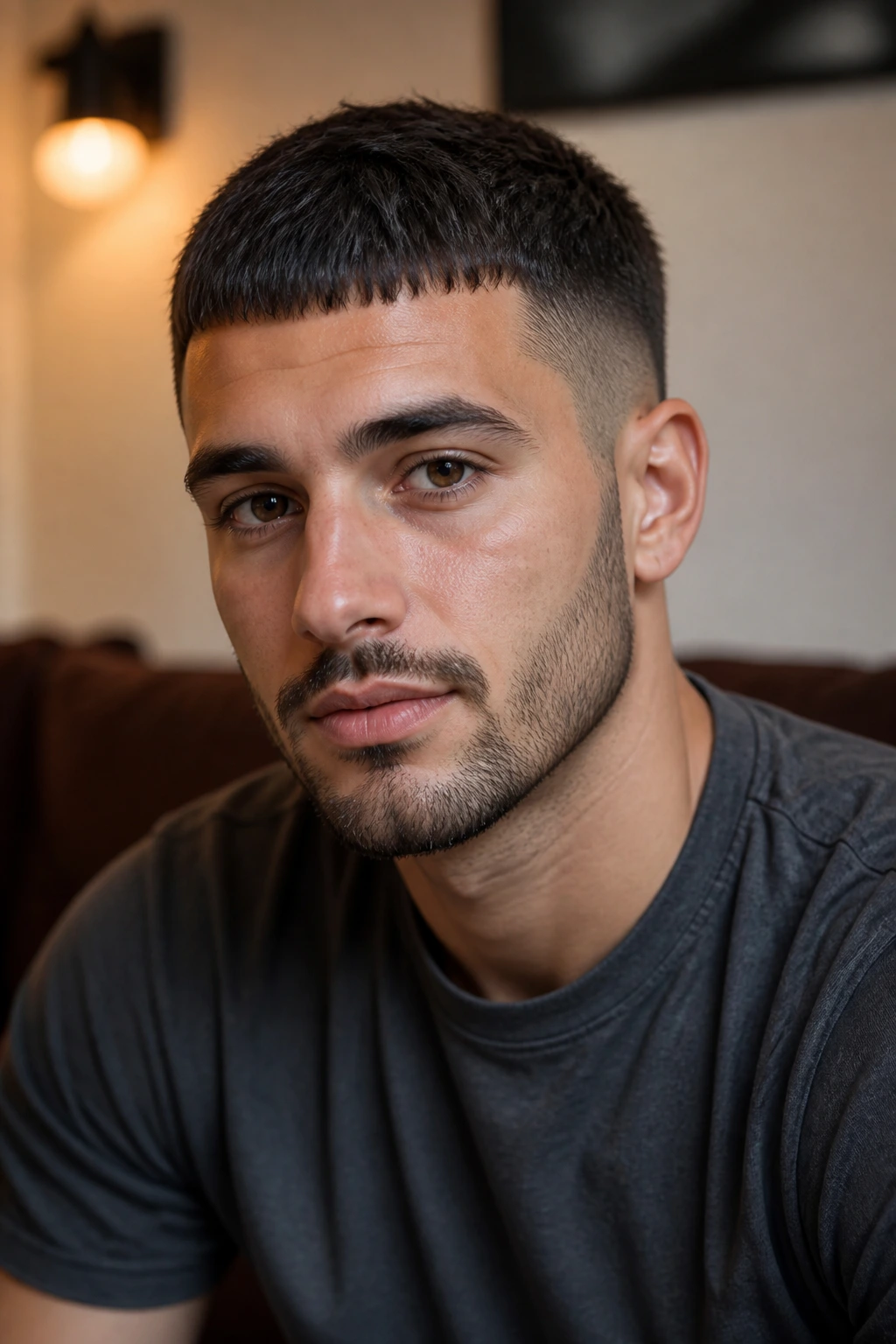
The Caesar cut is blunt on purpose. Short fringe, short sides, short top, and a strong horizontal line across the front. Some people hate that honesty. I like it.
It works best when your hairline is uneven or you want a cut that stays in place without much thought. The fringe sits forward and can help soften a high forehead, while the short length keeps the whole shape grounded. Ask for a top length around 1 inch, maybe a touch more if your hair is thick, and keep the sides tight without making them disappear.
A Caesar cut can look harsh if the edges are cut too square. That is the mistake. A skilled barber will soften the corners a little and add some texture so the fringe does not look like a ruler line. It also helps to avoid shiny products. A matte finish keeps the cut looking modern instead of costume-like.
Not every man wants that blunt front. Fair enough. But if you want a short cut that looks intentional even when your hair misbehaves, the Caesar has real staying power.
7. High and Tight
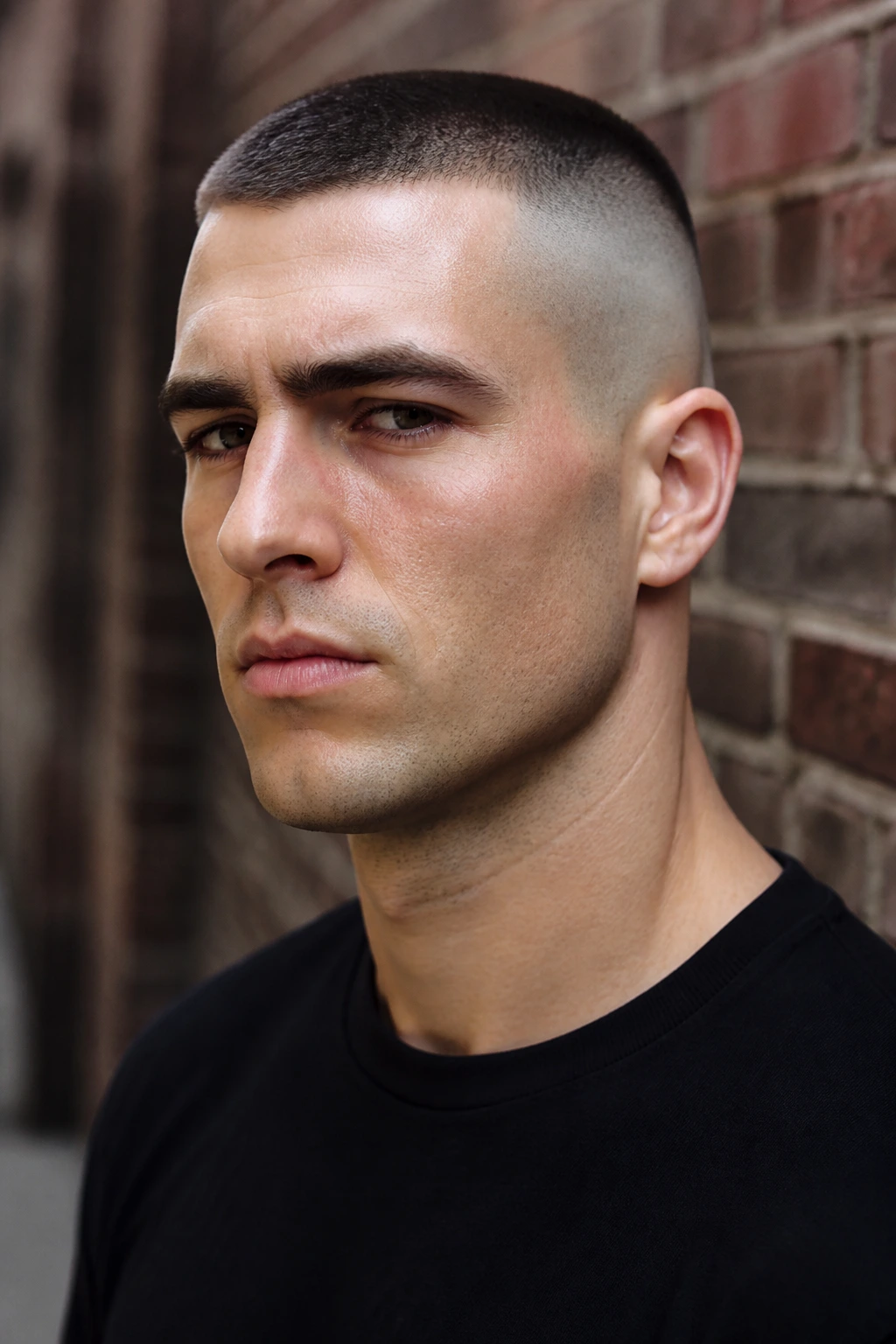
The high and tight feels clean the second the barber puts the clippers down. Sides go up high. Top stays short. The result is sharp, direct, and a bit unforgiving in a good way.
What makes it different
Unlike a standard taper or low fade, the high and tight removes a lot of bulk near the temples and ears. That makes the top look longer than it really is, even when it only measures about 1 inch or less. The contrast is what gives the cut its shape.
- Best for: thick hair, coarse hair, square or oval faces
- Ask for: a high fade with a very short top, blended cleanly at the ridge
- Product: none, or a tiny bit of matte paste if the top sticks up
- Watch out for: pronounced scalp shape, because the sides are very exposed
This cut can look excellent on men who want a hard-edged, no-nonsense style. It can also feel too severe if your head shape is especially round or if your hairline has a lot of unevenness. The high and tight is honest about all of that. That is its charm and its flaw.
8. Taper Fade with Short Top
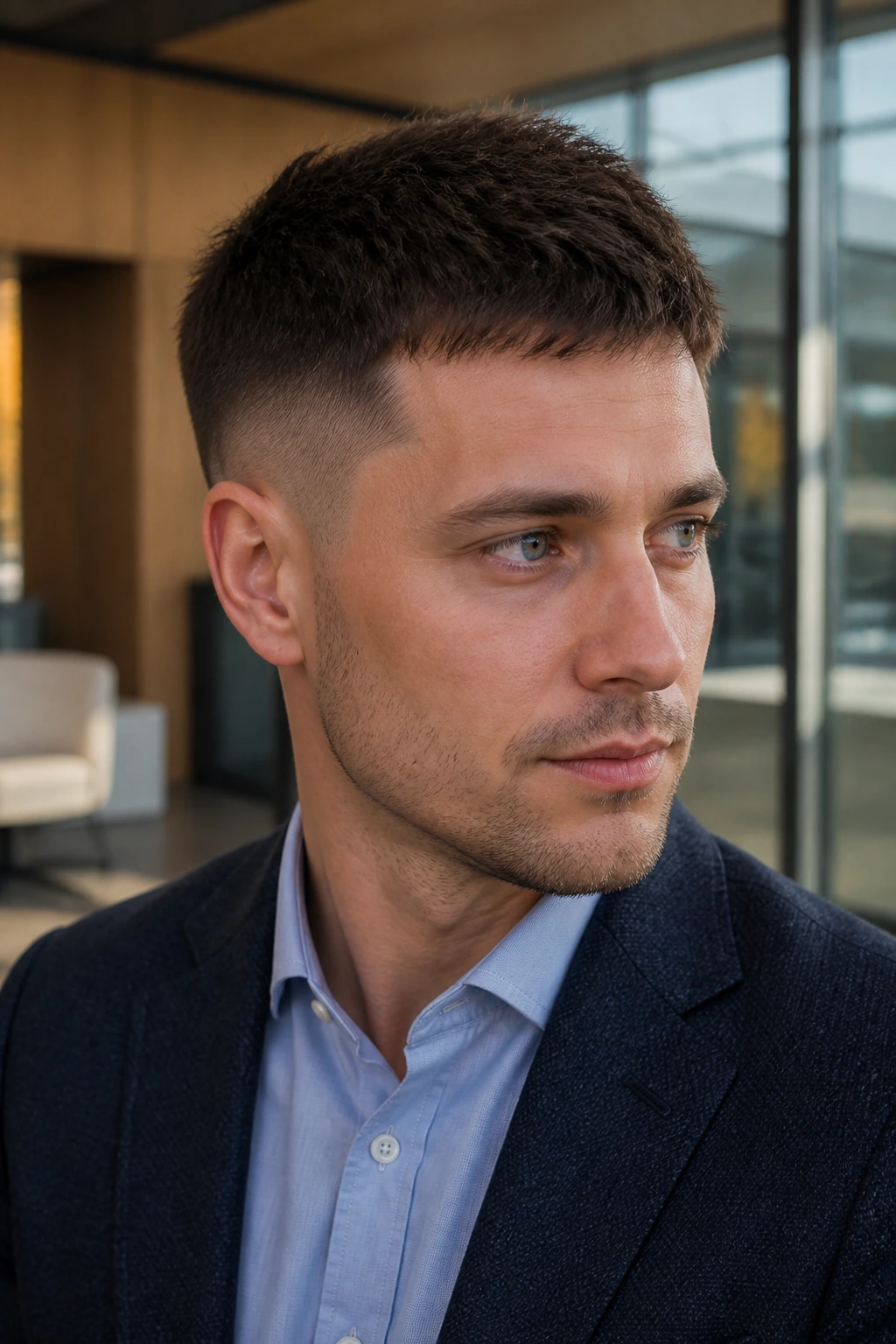
A taper fade is the haircut version of a clean shirt. It does not shout, but it always looks considered. Keep the fade low around the ears and neckline, then leave a short top that can be brushed forward, side-swept, or left textured.
The beauty of the taper is how soft it feels compared with a skin fade. You still get neat edges, but the transition is gentler, which helps if you want a short haircut that does not look too sharp. The top can sit around 1.5 to 2.5 inches, depending on how much movement you want.
This style is a quiet winner for men who want flexibility. It works at a desk, on a date, in a gym, or under a cap. A little matte cream keeps the top from puffing out. A little water can reset it fast in the morning. That is a practical haircut, and practical usually ages better than loud.
9. Low Fade Crop
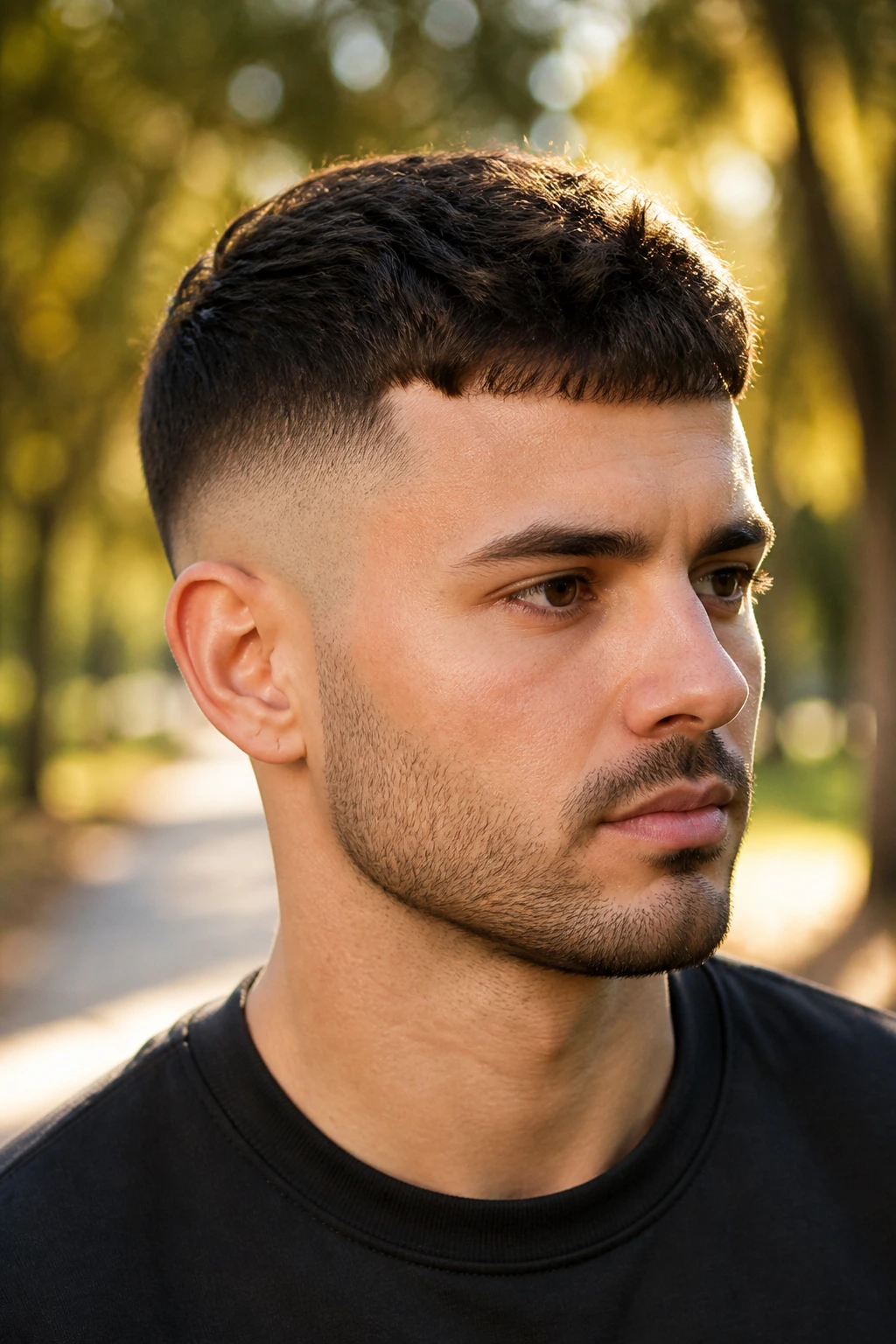
Want the fade without the scalp-showing drama? The low fade crop is the answer. The fade starts just above the ears, stays lower at the back, and lets the short textured top carry most of the shape.
That low placement makes the haircut easier to wear than a high fade. You get a neat outline, but the cut still feels grounded. The top usually sits around 1 to 2 inches, with enough texture to stop it from looking flat. If your hair has a slight wave, even better. The movement gives the crop some life.
How to wear it
Keep the front slightly shorter than the crown so the fringe can fall forward without drooping. A dry paste or hair clay works well here because it grips without shine. Use your fingers, not a comb. A comb makes the top look too controlled and takes away the roughness that makes the cut work.
This is a strong pick for men with rounder faces, since the cropped top adds a little height while the low fade keeps the sides neat. It is clean. It is easy. It does not try too hard.
10. Short Quiff
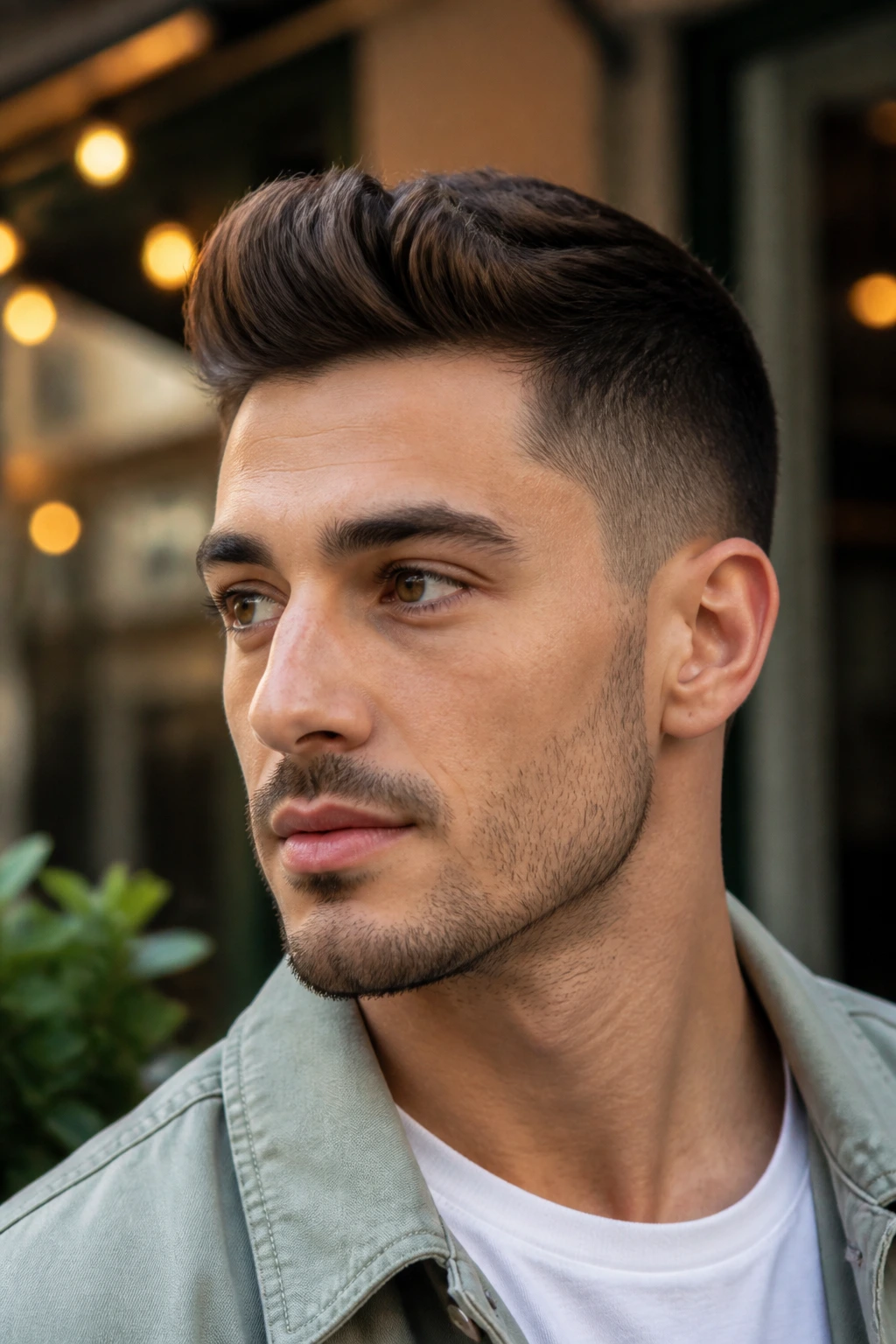
Can a quiff still work when the hair is short? Yes, if you keep the height modest and the sides tight. A short quiff gives you lift at the front without turning your head into a billboard.
The usual formula is 2 to 3 inches on top, shorter at the crown, then a taper or fade on the sides so the front has room to rise. Blow-drying matters here. A quick pass with heat and a round brush, or even just your fingers and a vent brush, pushes the front up and back before the product goes on.
A short quiff looks best when the front has a bit of bend rather than a stiff wave. Use a lightweight cream, matte paste, or low-shine clay. Heavy pomade can make the front collapse. And once it collapses, it tends to stay there.
This style suits men who want a little height without fully committing to a longer pompadour. It is sharper than a crop, softer than a slick back, and a lot more wearable than people expect.
11. Side Part: The Polished Side of Short Hairstyles for Men
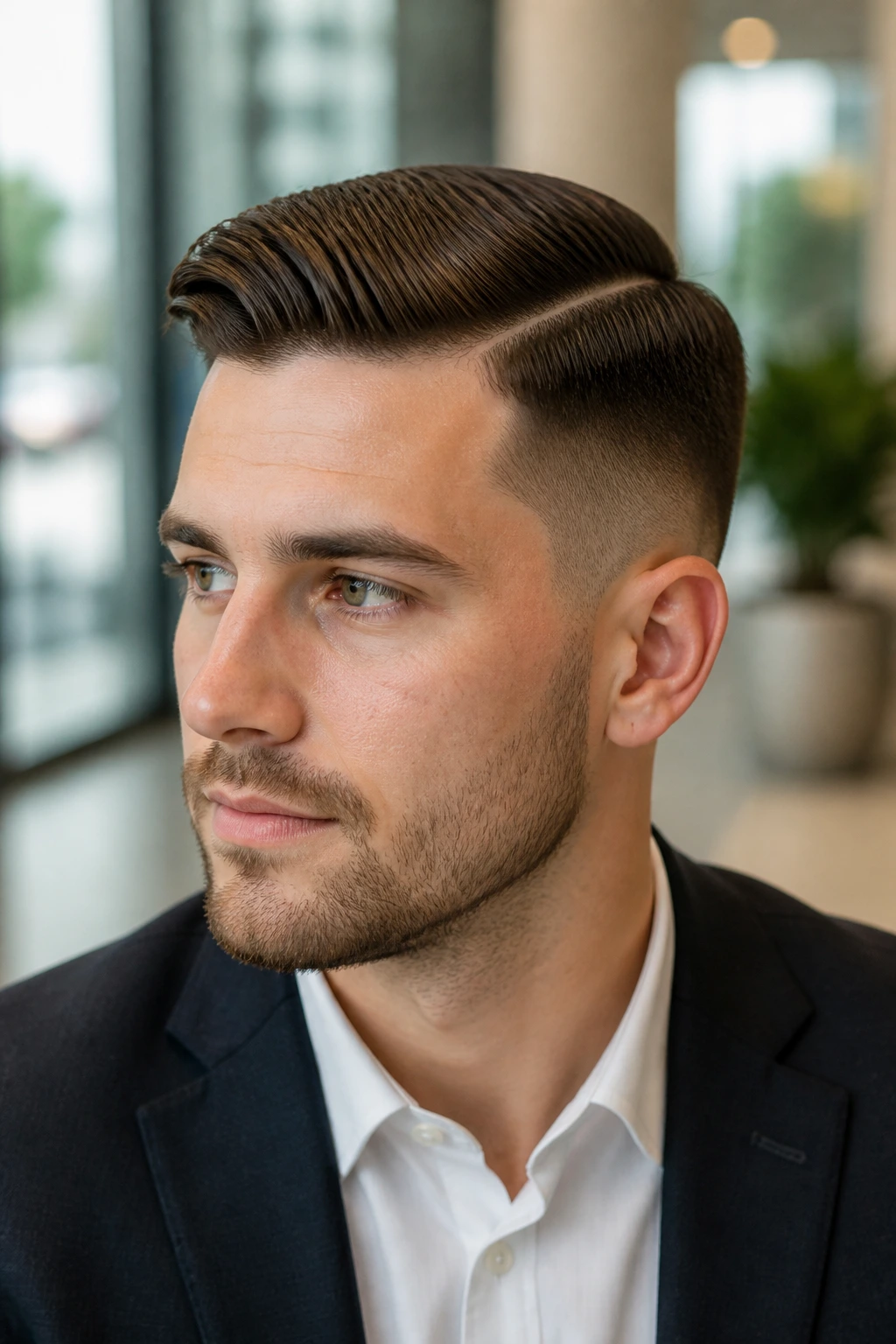
A side part is one of the simplest ways to make short hair look deliberate. The part line gives the haircut direction, and direction usually reads as cleaner than random movement.
The length on top can stay around 2 to 3 inches, with the sides tapered short enough that the part stands out. You can do a soft part, where the hair naturally falls to one side, or a hard part, where the barber uses a razor line to mark it. The hard part is sharper. The soft part is safer.
I like this cut for men with straight or thick hair because the hair already wants to sit in place. Wavy hair can work too, though the waves need to be managed with a blow-dry and a light cream. Curly hair can wear a side part, but it usually needs more patience and a barber who respects the texture instead of flattening it.
This is a good office haircut, but it is not trapped there. Wear it loose and matte, and it looks easy. Add a touch of shine, and it looks more formal.
12. Brush Cut
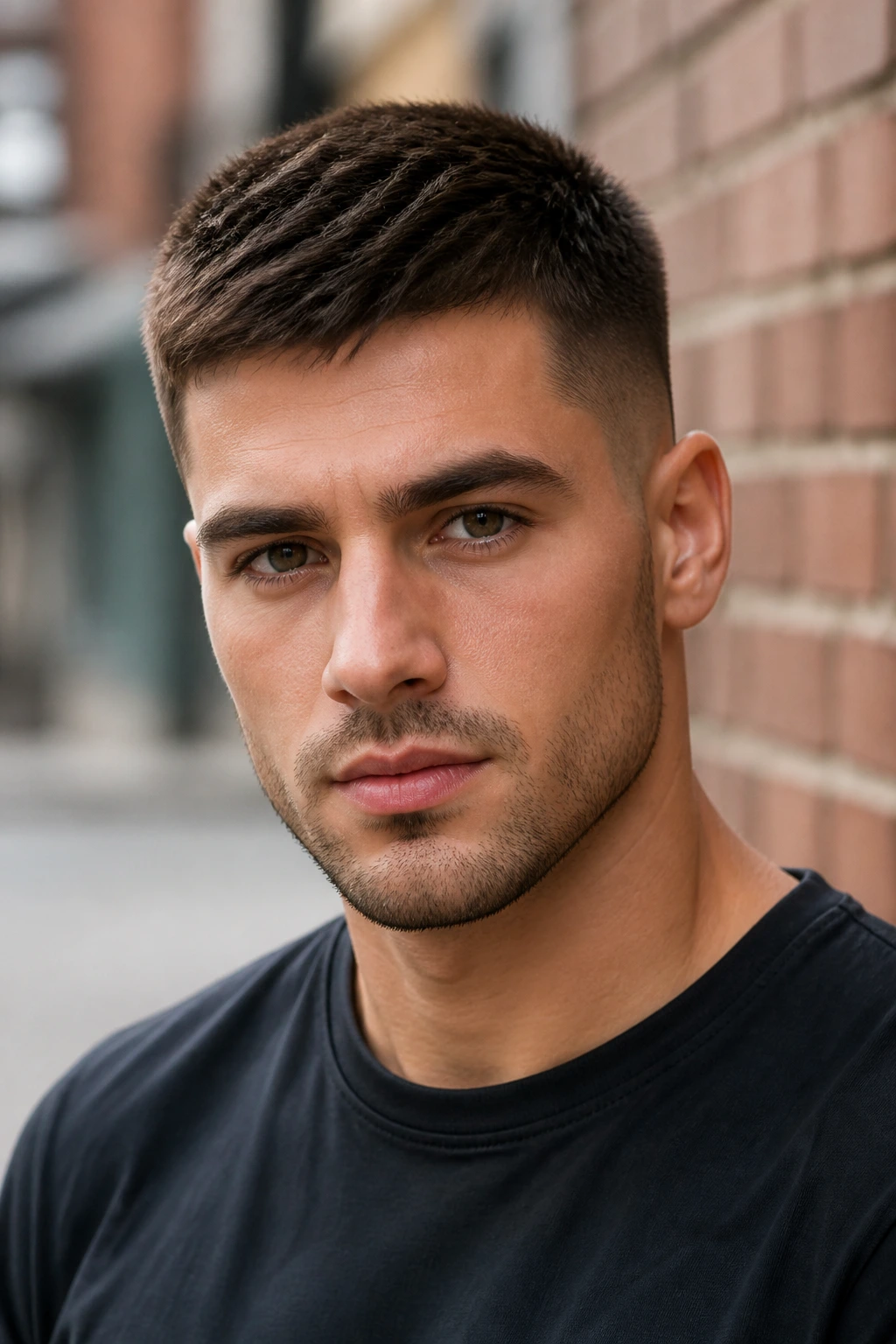
The brush cut is what happens when a crew cut grows up a little and keeps its manners. The top is short enough to stay upright without a lot of product, but long enough to show some texture and direction.
A good brush cut usually lands in the 1 to 2 inch range on top, with the sides blended down in a way that keeps the outline clean. The hair is brushed forward, slightly up, or diagonally, depending on the shape of the head and the angle of the cowlicks. That flexibility makes it more forgiving than a blunt buzz and less precious than a quiff.
Why barbers like it
It gives structure without requiring much styling. If your hair is thick, the brush cut takes the weight out. If your hair is fine, a small amount of matte product makes it look fuller. The cut also handles grow-out better than some sharper styles, which is handy if you do not make the barber a weekly appointment.
Short, tidy, and quietly useful. That is the whole story.
13. Short Pompadour
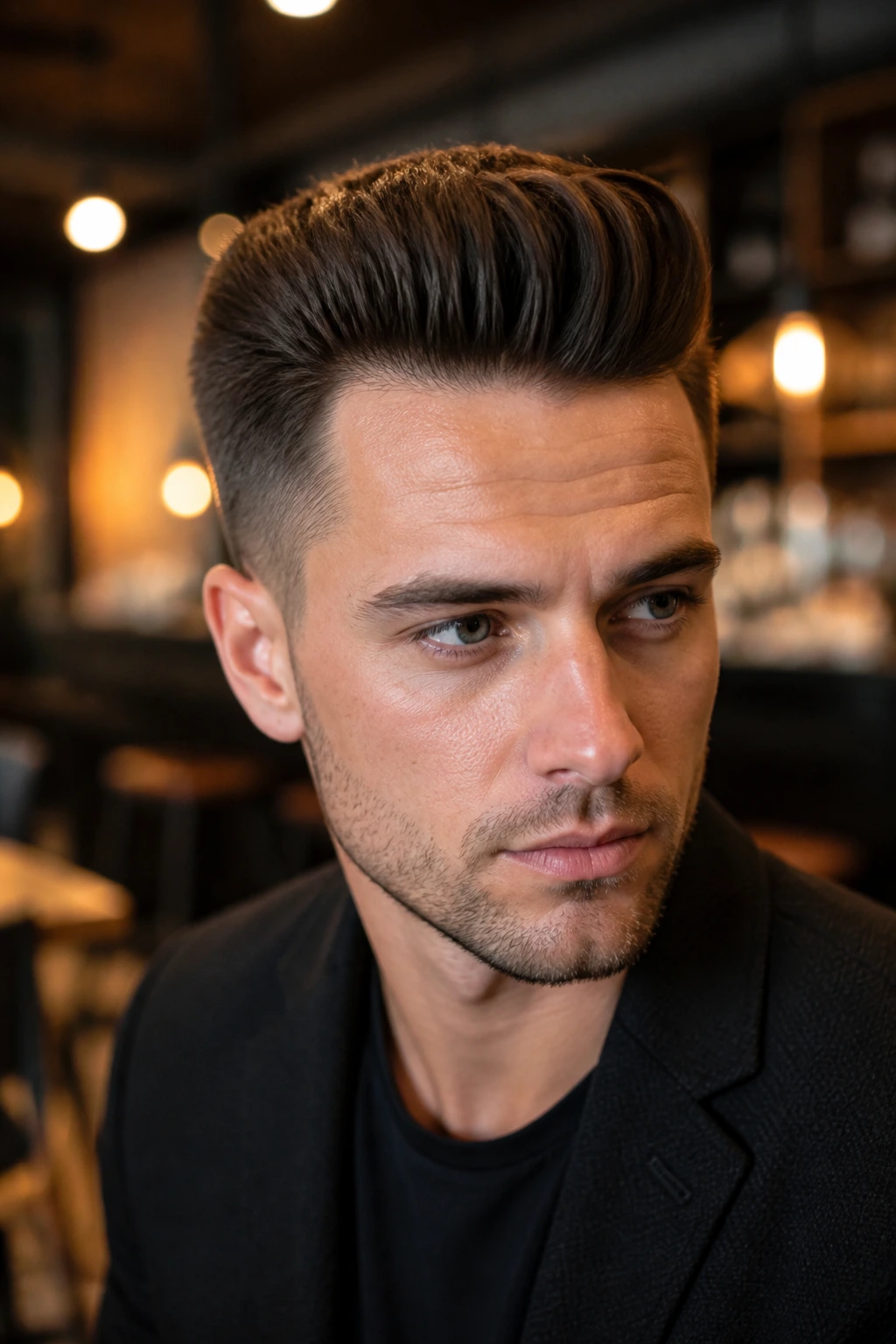
A short pompadour keeps the front lifted without letting the whole haircut get big and theatrical. The hair rises at the front, rolls back a little, and then settles into a shorter shape than a classic pompadour would allow.
You want enough length on top — usually 2.5 to 3.5 inches — to create the lift. The sides need to stay tight, or the front loses its contrast and just looks puffy. Blow-drying is not optional if you want the shape to hold. Push the roots up, then back, then lock them with a little product after the hair cools.
How to keep it short
- Use a round brush or your fingers to lift the front
- Pick a medium-hold product with low shine
- Keep the crown shorter than the front so it does not mushroom
- Trim every 2 to 3 weeks to keep the silhouette clean
This style is best for men who want a short haircut with a bit of style drama. Not a lot. Just enough to notice. It can look excellent with straight or thick hair, and it works especially well when the front naturally wants to rise.
14. Spiky Crop
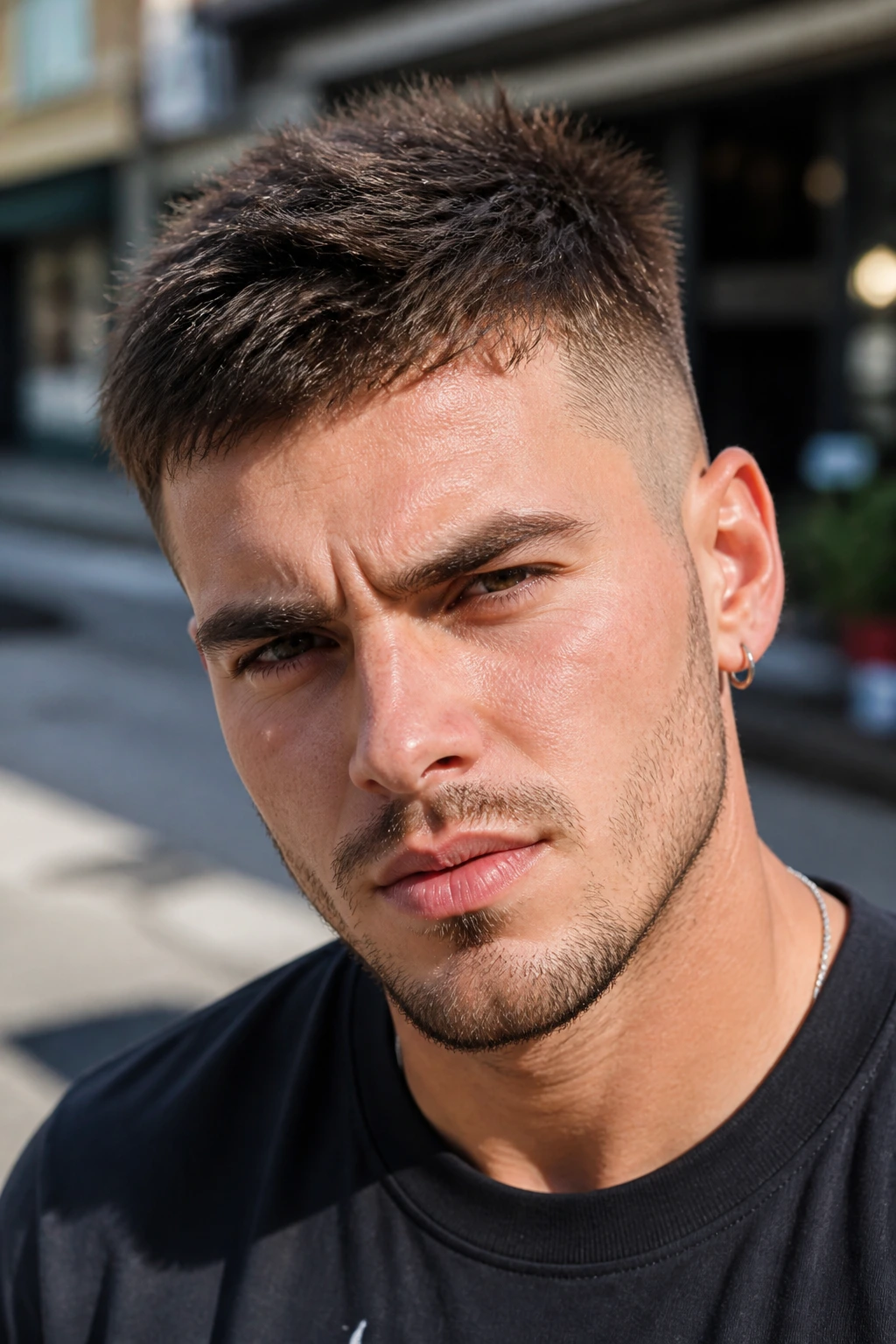
Spiky hair can look dated fast if the spikes are too tall or too stiff. The modern short version fixes that by keeping the spikes short, broken, and matte. Think rough texture, not frozen tips.
The hair on top usually stays around 1 to 2 inches, and the barber cuts it with plenty of texture so the strands separate easily. You do not want everything pointing straight up like a throwback photo. You want little ridges and pieces that catch the light in uneven ways. That is what keeps it current-looking.
Sharp. Not crunchy.
Use a matte paste or clay, then work the hair with your fingertips. Start at the front and pinch upward in small sections. If the product starts feeling stiff before you finish, you used too much. Back off. The style is supposed to move a little.
This cut is a strong match for thick hair that has too much energy when left alone. It turns that energy into shape instead of fighting it.
15. Short Curly Top
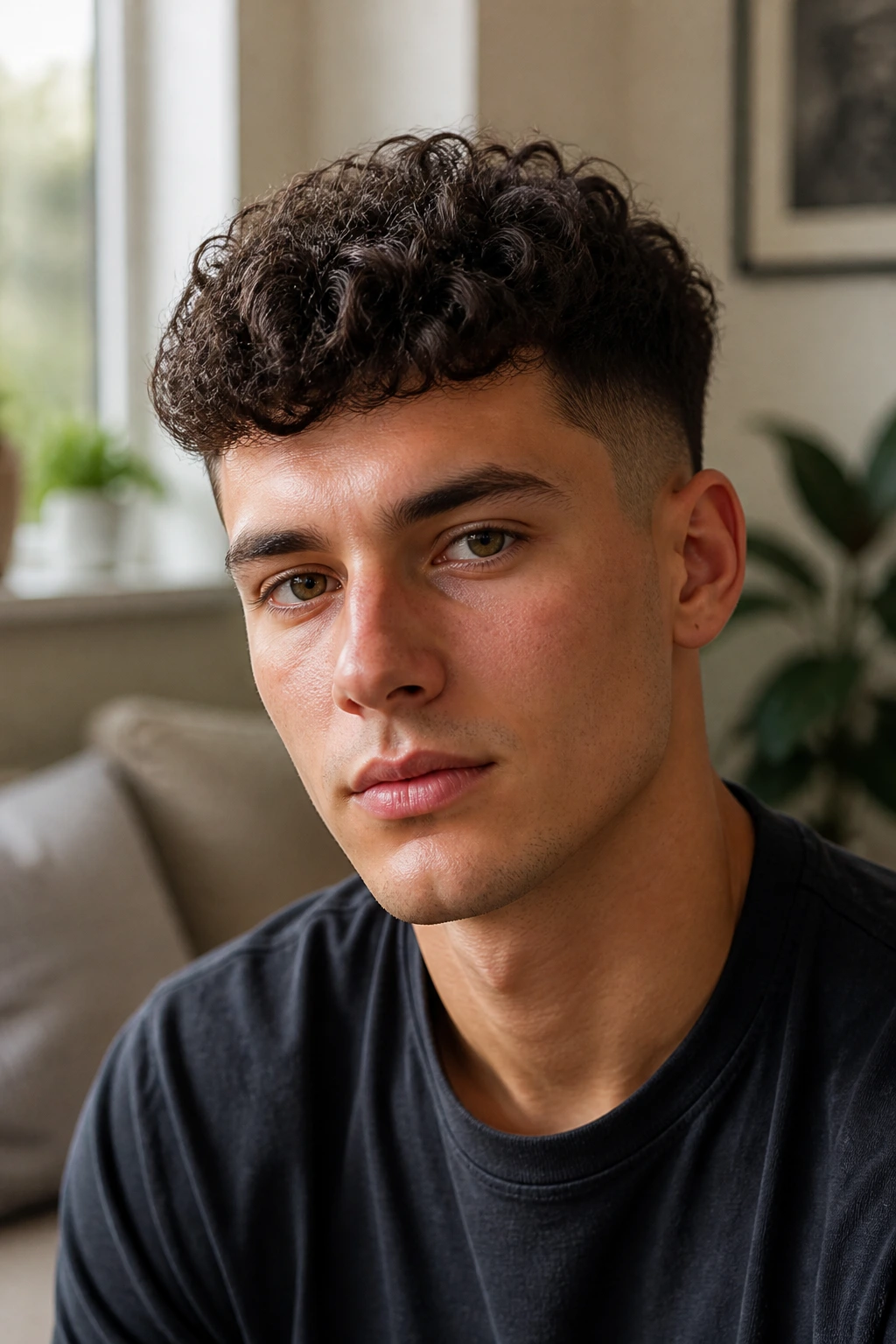
Can short hair still show curl? Absolutely. In fact, a short curly top often looks better than a longer one because the curl pattern stays controlled and the sides can be tapered enough to clean up the outline.
How to ask for it
Ask the barber to leave 1.5 to 3 inches on top, depending on how tight your curls are, then taper the sides so the shape does not balloon. If the curls shrink a lot when dry, leave more length than you think you need. Shrinkage is real, and it can turn a safe haircut into a too-short one fast.
A curl cream or light leave-in is usually enough. Work it through damp hair and let the curls settle on their own, or use a diffuser if you want a bit more lift. Do not blast the hair dry with random rubbing. That turns clean curls into fuzz.
This is one of the best short hairstyles for men with natural texture because it respects the curl instead of flattening it. The haircut should shape the curl, not erase it.
16. Short Afro
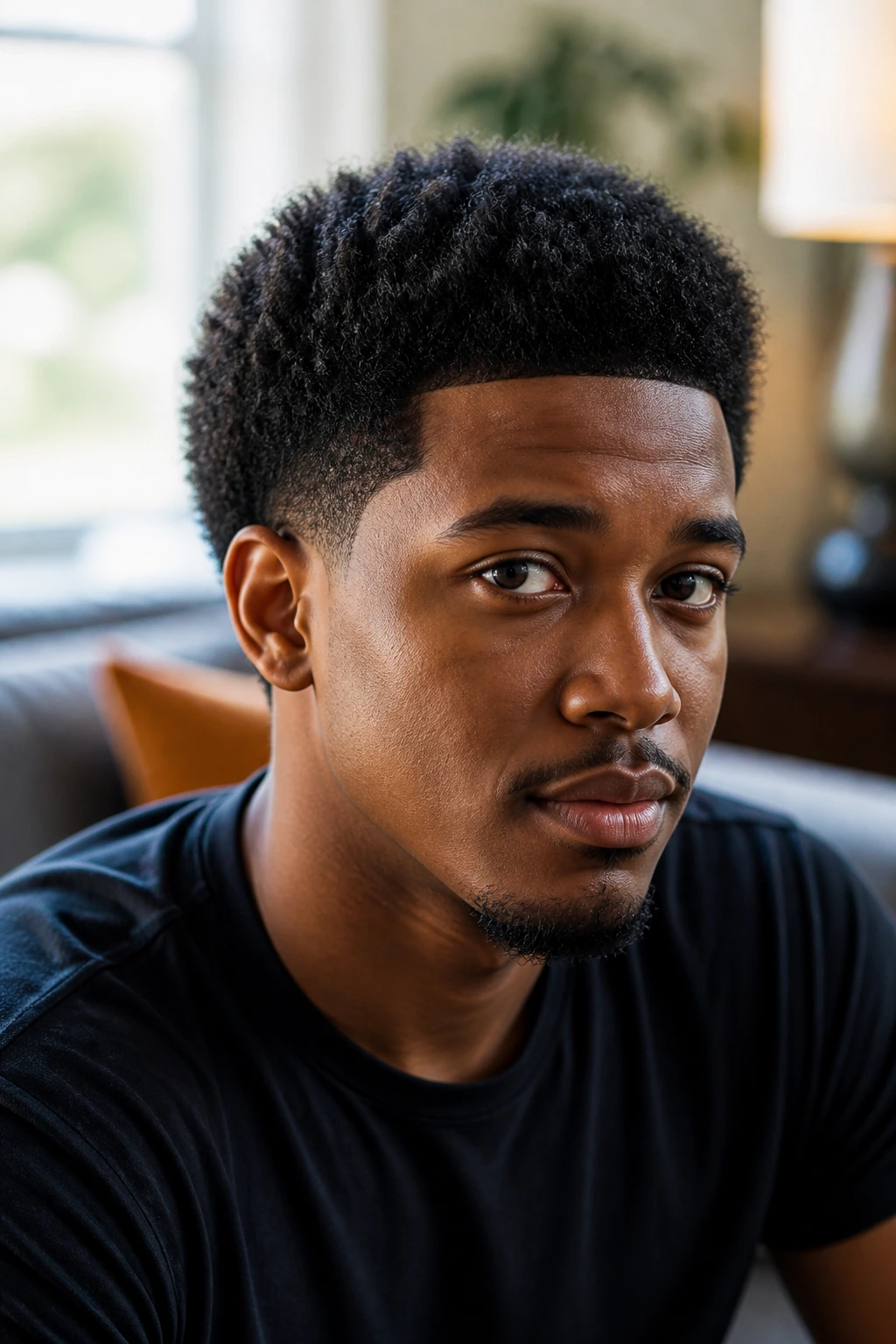
A short afro works because shape matters more than length. You are not trying to grow a huge halo. You are building a neat, rounded silhouette that frames the face and keeps the texture visible.
The sides can be tapered or faded, but the top needs enough length for the coils to show their natural pattern. A line-up at the forehead and temples sharpens the edges, and that makes the whole cut read cleaner. A brush or sponge can help define the texture, though the exact tool depends on how tight the curl is.
- Best for: coily hair that grows out with volume
- Keep in mind: moisture matters; dry coils frizz fast
- Ask for: a rounded shape, not a boxy one unless that is the look you want
- Use: leave-in conditioner, light oil, or curl cream in small amounts
The main mistake is cutting too much off the top and leaving the head shape exposed. A good short afro has enough length to keep the silhouette full. It should look rounded and deliberate, not clipped down to the bone.
17. Temple Fade
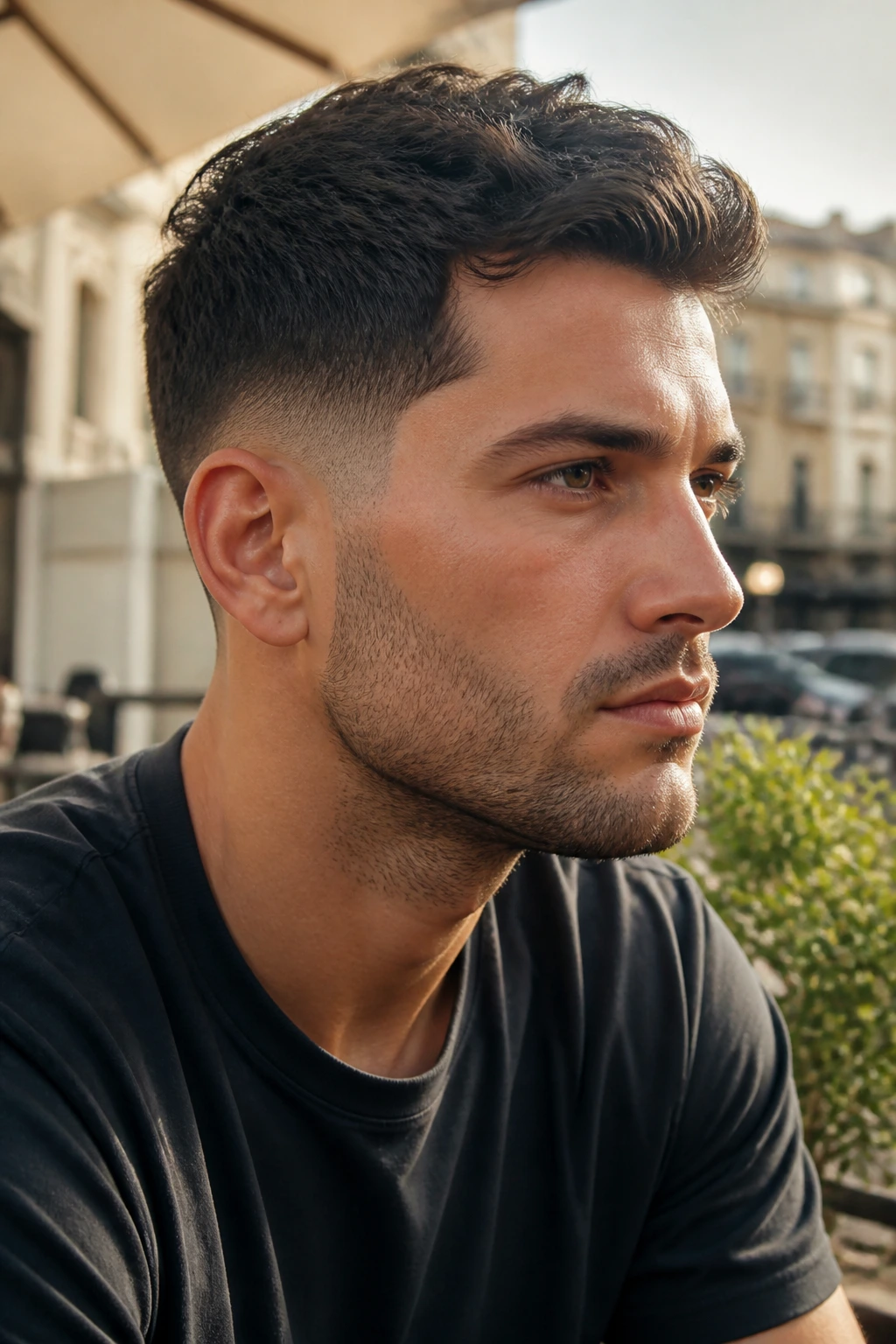
The temple fade is a subtle cut, and that is why it works so well. Instead of fading the whole side of the head, the barber cleans up just the temple area and sideburns, leaving most of the haircut intact.
That small change makes a big difference. The hairline around the temples looks sharper, the outline near the ears gets cleaner, and the rest of the style stays recognizable. You can pair it with a crop, curly top, afro, or even a short quiff. It is more of a frame than a whole haircut.
This is a smart choice if you want a sharper finish without committing to a heavy fade everywhere. The temple fade adds contrast where people notice it most. It also grows out in a calmer way than a skin fade, which means the haircut keeps looking decent for longer between appointments.
Not flashy. Useful. Sometimes that is the better move.
18. Flat Top
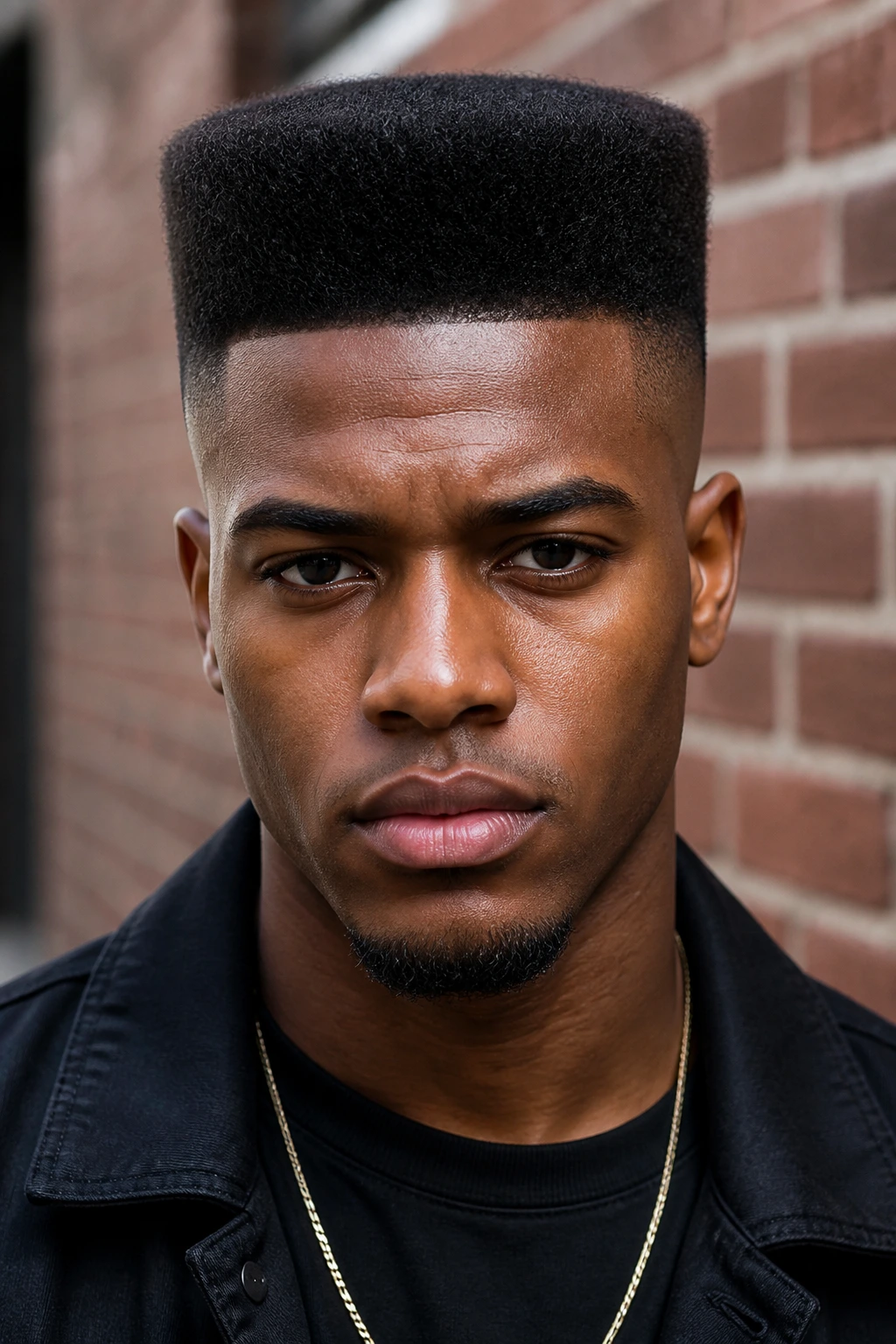
The flat top is the boldest cut on this list. It does not whisper. It sits there in a clean, boxy shape and asks the world to deal with it.
For the haircut to work, the top has to be cut level, which takes patience and a barber who is comfortable using clippers over comb. The sides are usually very tight, and the upper edge stays square or slightly rounded depending on the look you want. Coarse, dense hair helps a lot here because it holds the shape better than soft hair does.
How to keep it sharp
- Plan on regular shape-ups every 2 weeks
- Keep the top dry and controlled, not puffy
- Use a barber who knows how to keep the corners even
- Avoid overloading it with product; the geometry should do the work
A flat top can look excellent on men who like structure and do not mind standing out a bit. It is not a safe haircut. That is the point.
19. Disconnected Undercut
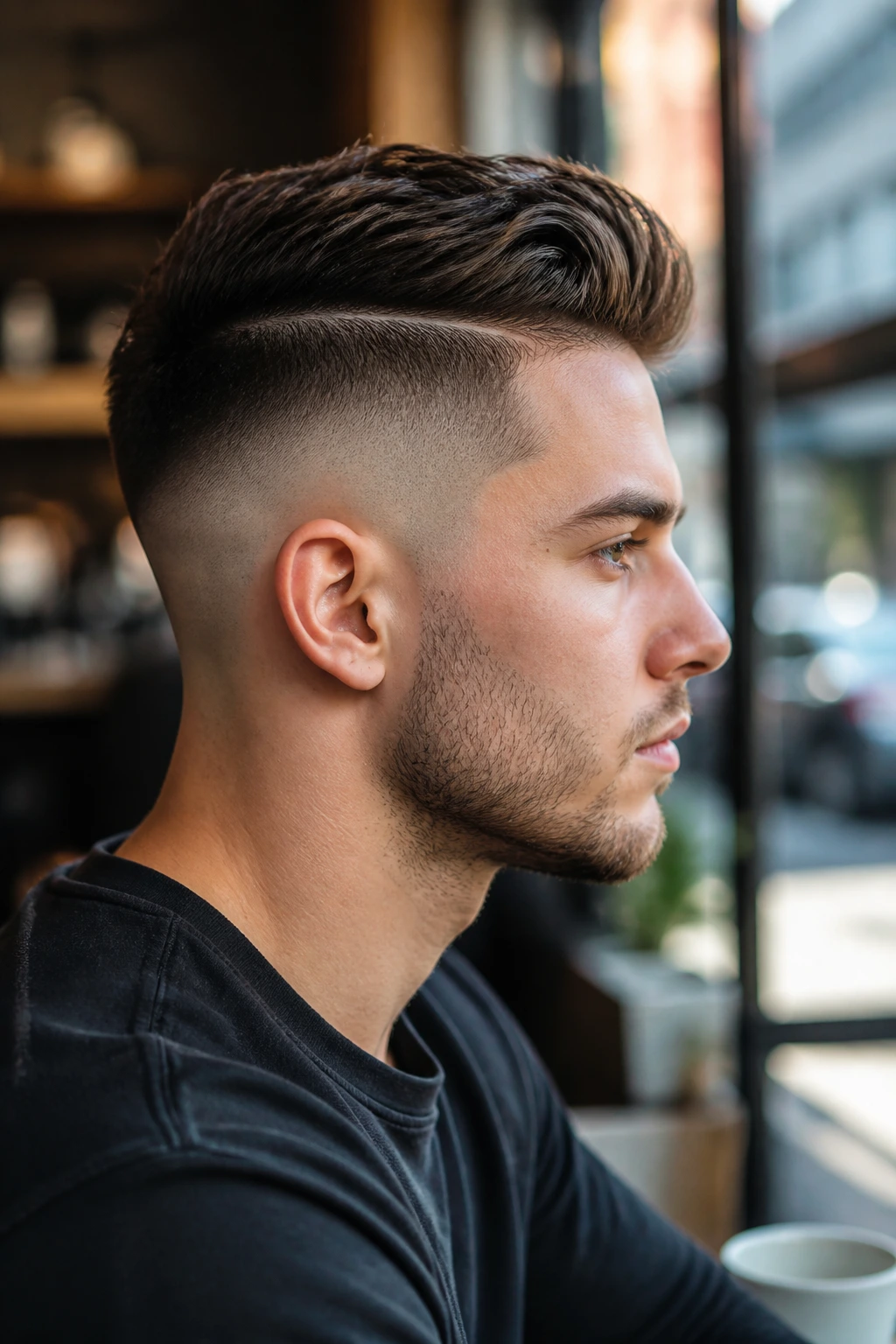
The disconnected undercut makes a hard line between the top and the sides. No soft blend. No easing into it. The contrast is the whole haircut, and that is why people either love it or skip it.
Usually the top stays short enough to wear back, to the side, or a little messy — around 2 to 4 inches if you want options — while the sides are clipped much shorter and left visibly separate from the top. That separation gives the haircut a clean edge, but it also means the grow-out has to be managed. Once the top and sides start meeting in the middle, the shape loses its snap.
This cut works best if you want a sharper, more obvious style and you do not mind using product most mornings. Matte clay gives a rougher finish. Pomade makes it look sleeker. Either way, the undercut needs intention. If you leave it alone for too long, it starts looking accidental, which is not the same thing.
20. Buzz Cut with Beard
A buzz cut with a beard is one of the easiest ways to make a short haircut feel finished. The beard gives the face some weight, and the short hair keeps the head shape clean. Put them together and the balance often works better than either one alone.
The key is matching the length around the jaw and sideburns to the haircut on top. If the buzz is very short — say a #1 or #2 — the beard should usually be lined up and tapered so it does not feel heavy by comparison. If the buzz sits a little longer, the beard can carry more length too. That relationship matters.
This combination is especially handy if you have a strong jaw, a narrow face, or a hairline you do not want to fuss over. It is also one of the few styles that can look better as it grows out, because the beard softens the transition from short hair to face.
A clean neck line helps. So does regular trimming at the sideburns. Messy edges make the whole setup fall apart fast.
21. Short Slick Back
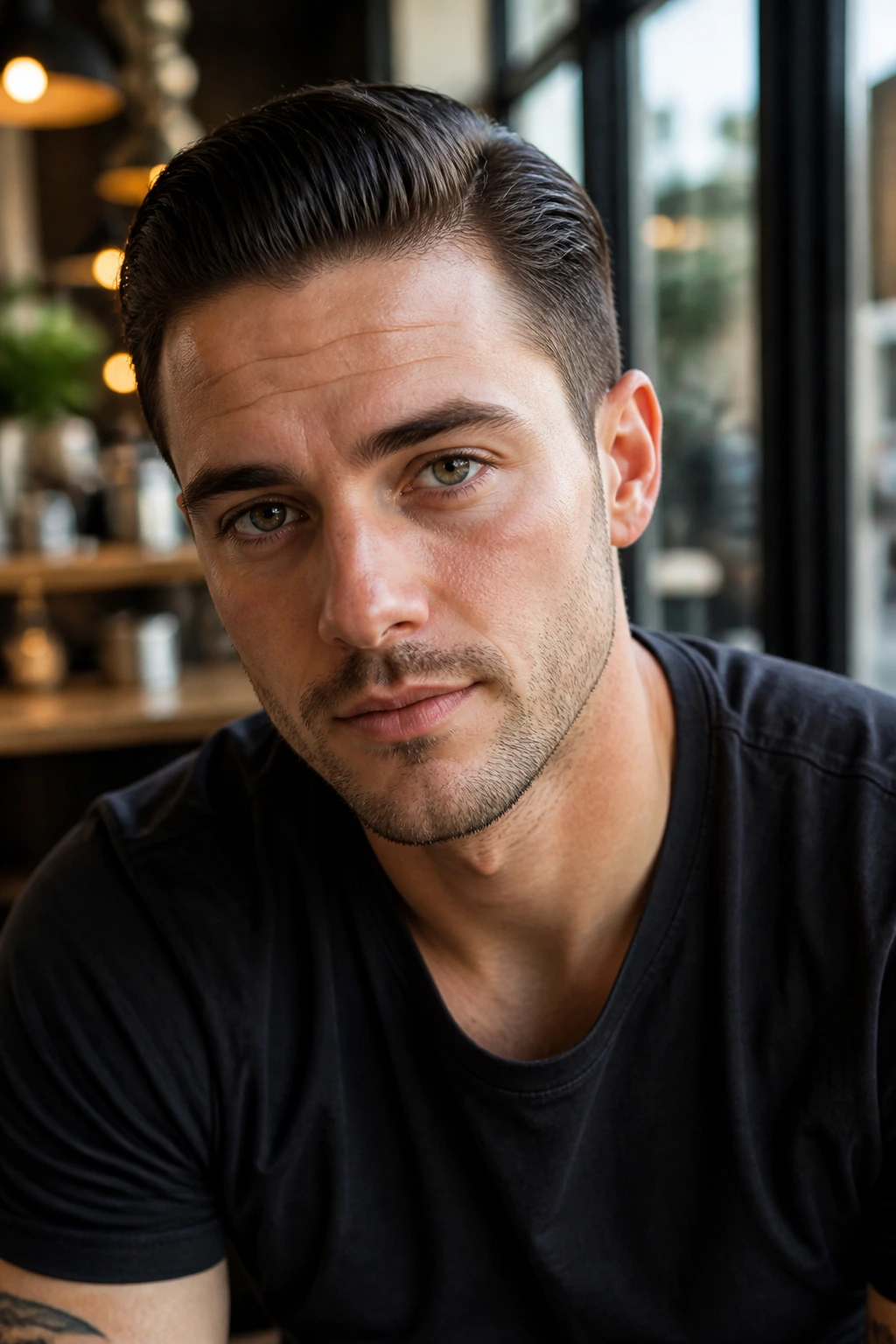
Can a slick back work when the hair is only a few inches long? Yes, if the cut gives the hair enough length through the front and top to move backward without flopping over.
You need about 2.5 to 4 inches on top, with the sides tapered or faded so the shape stays clean. Blow-dry the hair back while it is damp, then use a small amount of pomade, cream, or clay depending on the finish you want. More shine gives you a classic slick back. Less shine gives you a newer, softer version.
The biggest mistake is using too much product too early. That makes the front heavy and reduces the lift at the roots. Start with less than you think you need. Add more only if the hair still feels loose after combing.
This cut suits men whose hair naturally lays back or has a slight wave. If your hair wants to stick straight up, the slick back becomes a fight. Not impossible. Just annoying.
22. Short Comb Over: Choosing the Right Fade for Short Hairstyles for Men
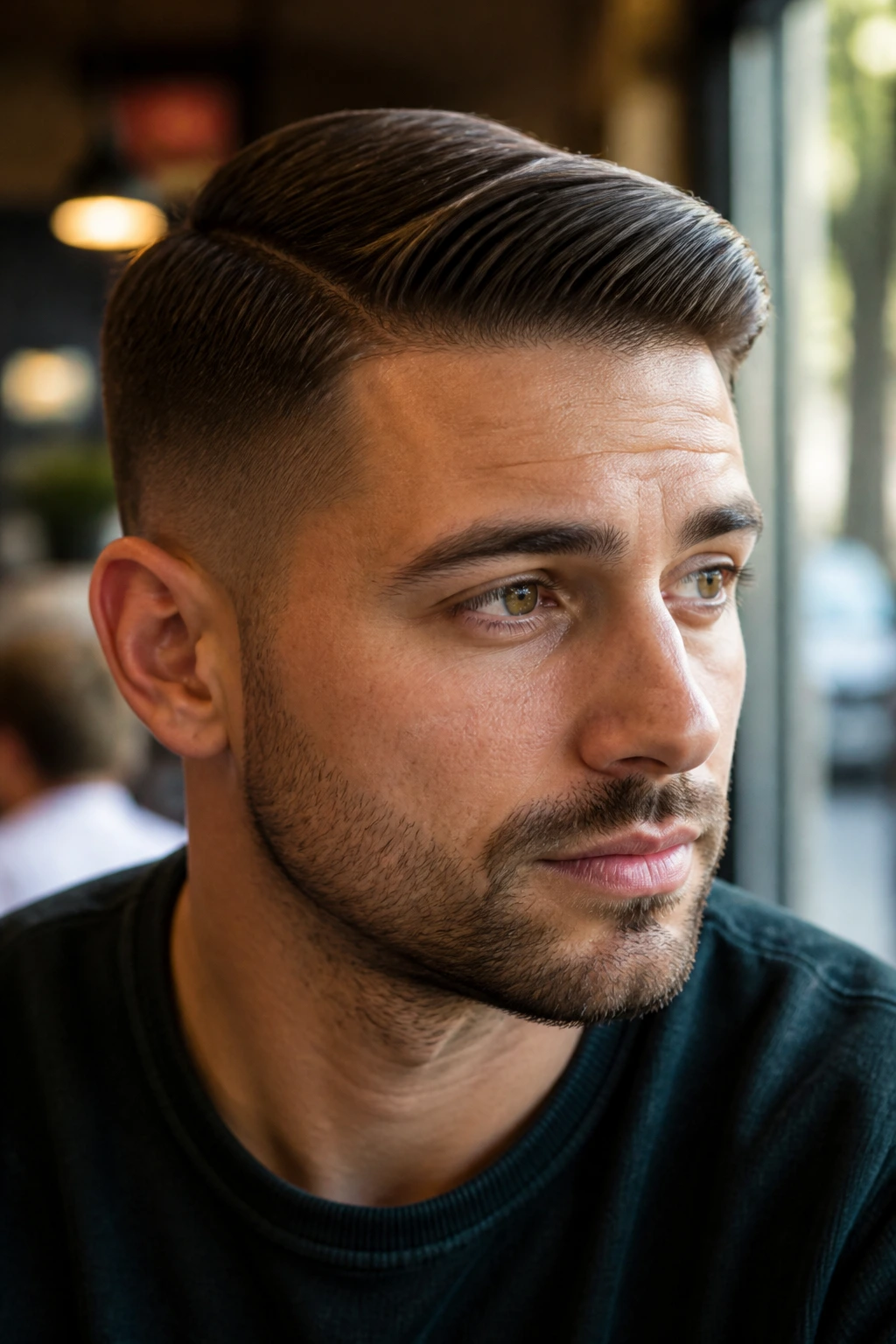
The short comb over gets a bad reputation because people picture the old, obvious version. That is not what this is. A modern short comb over keeps the top trimmed, the part clean, and the movement natural.
The top usually sits around 1.5 to 3 inches, enough to sweep across the head without looking thin or overly combed. The sides can be low faded, tapered, or skin faded depending on how sharp you want the finish. A hard part can help if your hair is dense and you want a clearer line. A soft part looks calmer.
How to avoid the old-school combover look
- Keep the top textured, not slick and flat
- Sweep the hair with a blow-dryer before using product
- Use a matte cream or light paste
- Don’t overextend the part line across the crown
This style works especially well if your hair has a little recession at the front, because the direction of the hair can soften that area without pretending it is something it is not. Honest styling beats awkward covering every time.
23. Mini Mohawk
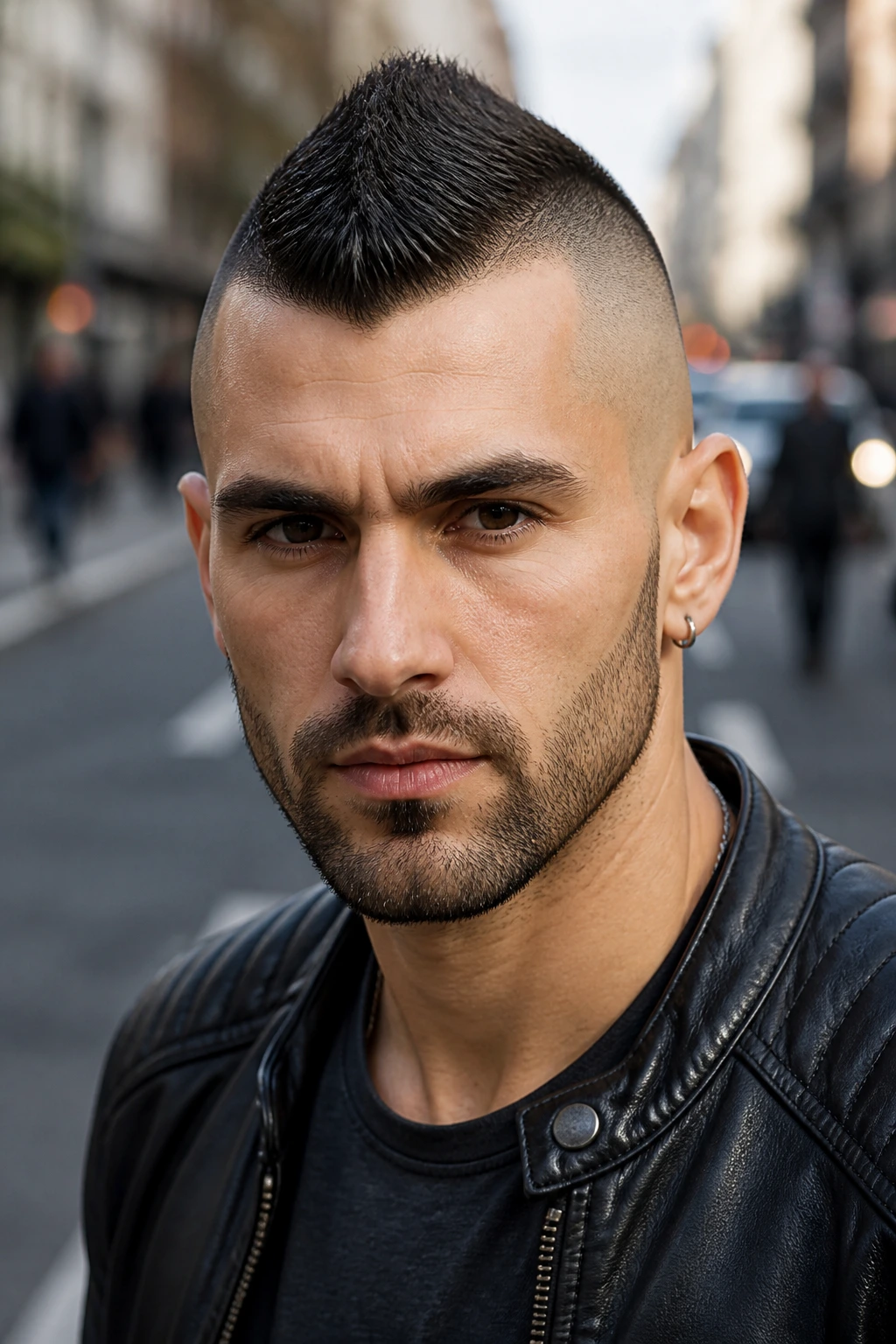
A mini mohawk keeps the attitude of a mohawk but shrinks the drama. The strip on top stays short enough to wear daily, while the sides drop down enough to create a clear lane through the center.
Unlike a full mohawk, this version can stay neat when the top is only 1.5 to 3 inches long. The line down the middle does the talking. The sides can be faded or just tightly tapered, depending on how hard you want the contrast to read. If the top is textured, the style gets even better because the middle strip looks intentional instead of spiky for the sake of it.
This cut is a good fit for men who want something with edge but still need it to be realistic. A short workday. A night out. A gym session. It can handle all three if the fade is clean and the top is controlled with a matte product.
It is not the most conservative haircut on the list. That is fine. Some haircuts should look like they have an opinion.
24. Burst Fade Crop
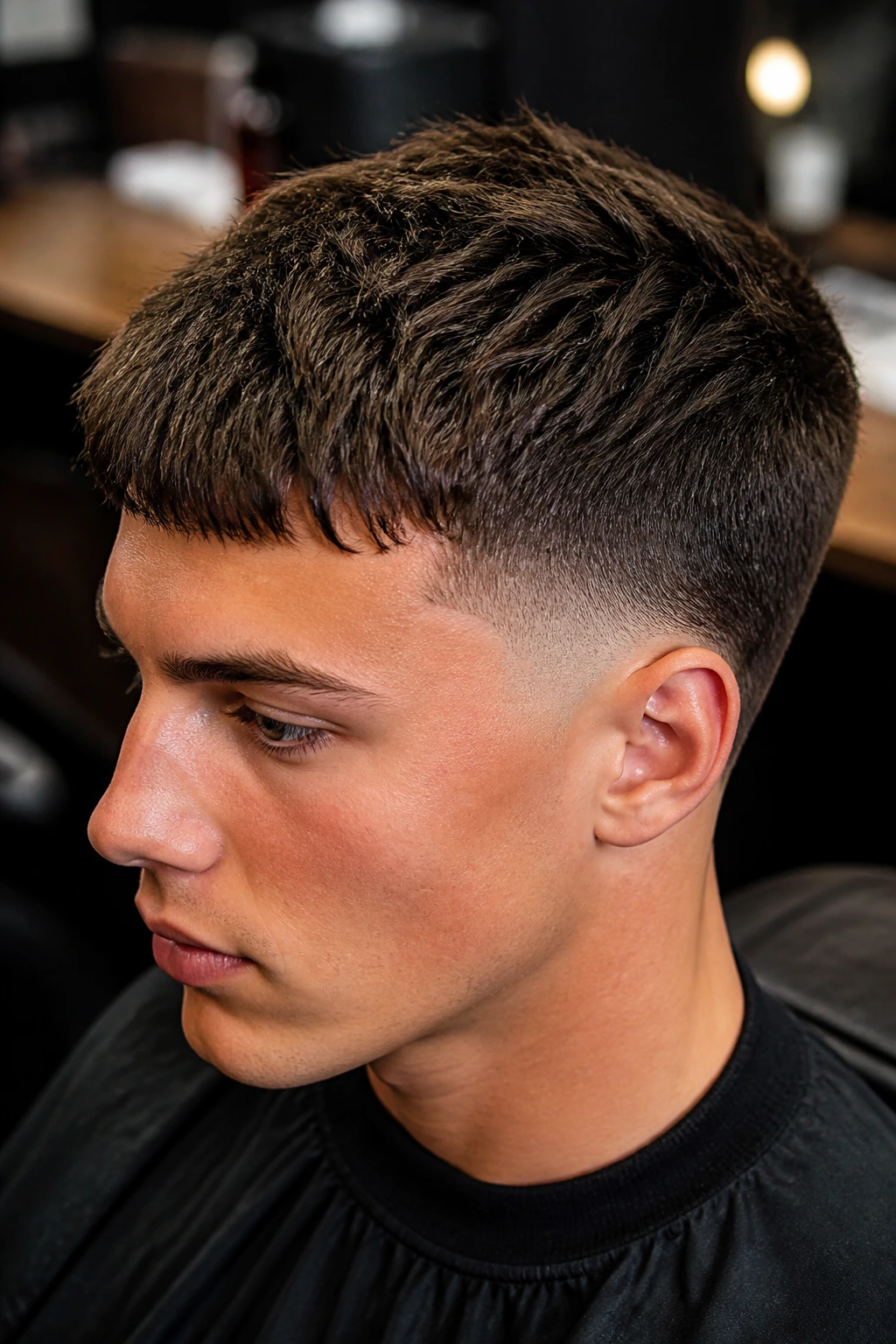
The burst fade crop is one of the cleanest ways to put shape around the ear without taking the haircut too high. The fade curves in a little arc around the temple and ear, which gives the cut a rounded frame instead of a straight vertical drop.
That curved shape pairs well with a short textured top, especially when the top is left choppy rather than smooth. You end up with a haircut that feels compact but still has personality. It also works nicely with curls and waves because the burst fade keeps the sides clean while the texture on top does the moving.
What to watch for
A burst fade can look too aggressive if the curve climbs too high or if the top is cut too short to balance it. You want a visible contrast, not a chopped-off helmet effect. Ask the barber to keep the top around 1.5 to 2.5 inches and to leave enough weight through the middle so the cut does not disappear.
This is one of those short hairstyles for men that looks better when the edges are fresh. Let it grow too long and the fade loses the rounded shape that makes it interesting.
25. Induction Cut
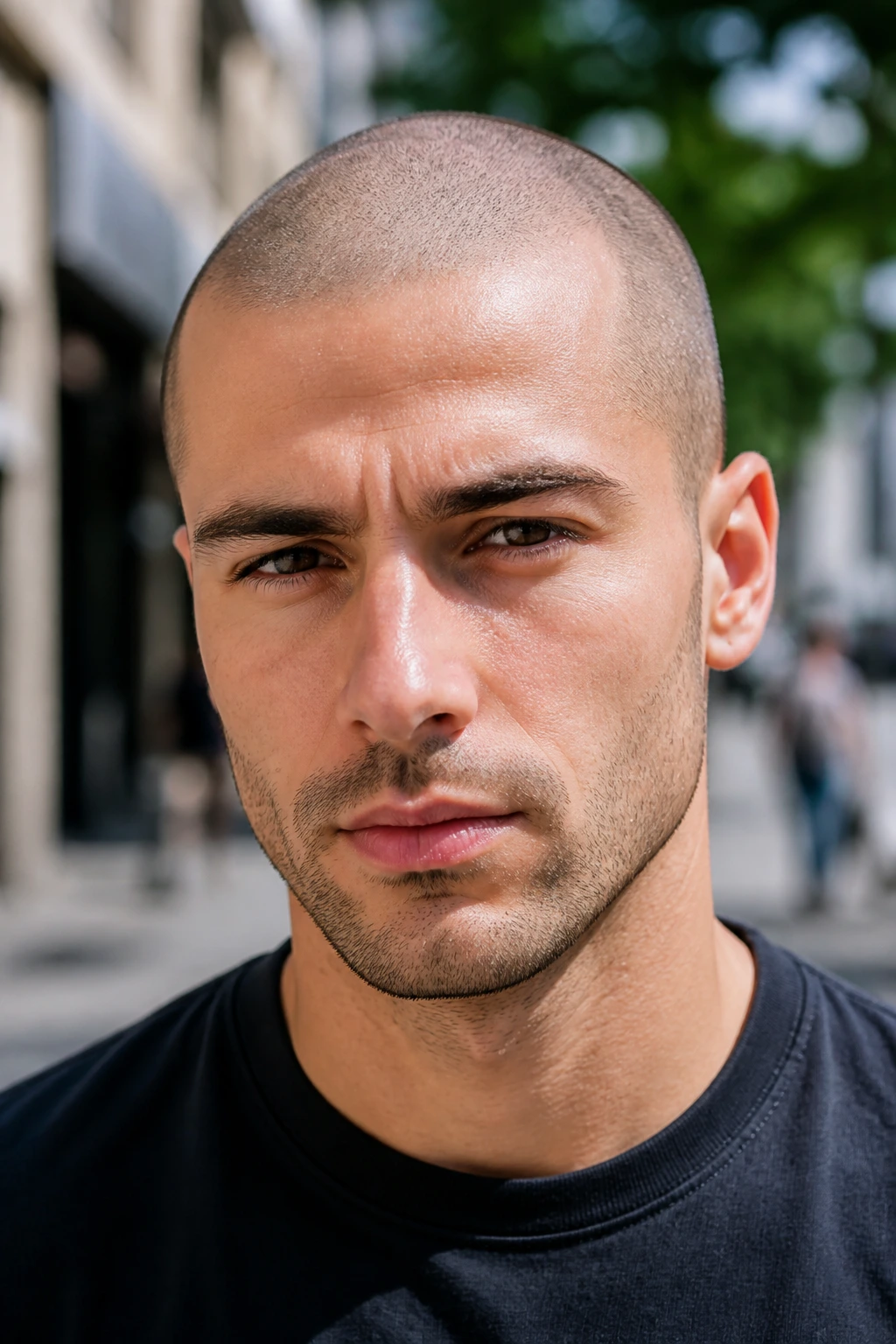
If you want the shortest cut possible, this is it. The induction cut is the bare-bones version of a buzz, usually done with no guard or the closest possible clipper setting, and it leaves almost no room for styling.
That makes it brutally practical. It is fast, low upkeep, and useful for men who do not want to think about hair in the morning. It also shows everything — scalp shape, hairline, scars, the whole lot. That is why it is not for everybody.
Some men like the clean finish because it pairs well with strong facial hair or sharp edges on the beard. Others like it because it keeps sweat, wind, and bad hair days from being a thing. Fair enough. If you choose this cut, make sure the scalp is in good shape and use a bit of moisturizer or sunscreen when needed, because very short hair does not shield much.
The induction cut is simple, but it is not careless. That difference matters.
If you want the easiest route, pick the cut that fits your mornings, not the haircut you wish your hair wanted to do. The best short styles are the ones that still look decent after a rough night, a rushed shower, and ten seconds in front of the mirror.
