



For a long time, the beauty industry operated under a rigid set of rules that practically banned anyone with a round face from cutting their hair short. We were told to stick with long, face-framing layers to “lengthen” our features, as if anything above the collarbone would somehow make our cheeks look wider. That advice feels dated and honestly a bit lazy. A round face shape is versatile, youthful, and vibrant, and the right short cut doesn’t hide it—it accentuates your best features by adding angles, height, and texture where they’re needed most.
The “stacked” style is the perfect antidote to the fear of short hair on round faces. Because it involves cutting the hair at the nape of the neck significantly shorter than the hair on the crown, you automatically create a silhouette that draws the eye upward. You’re trading horizontal width for vertical volume. By manipulating weight lines and graduation, a skilled stylist can create a sharp, architectural shape that mimics the jawline you might feel is missing or just provides a striking, modern edge.
The beauty of these styles lies in their adaptability. You aren’t just locked into one look; you can go as aggressive or as soft as you like. Whether you’re dealing with fine, limp strands or thick, unruly waves, there’s a stacked configuration that balances your proportions. We are going to break down 25 distinct variations, focusing on how each one serves the specific geometry of a rounder face.
1. Classic Graduated Stacked Bob
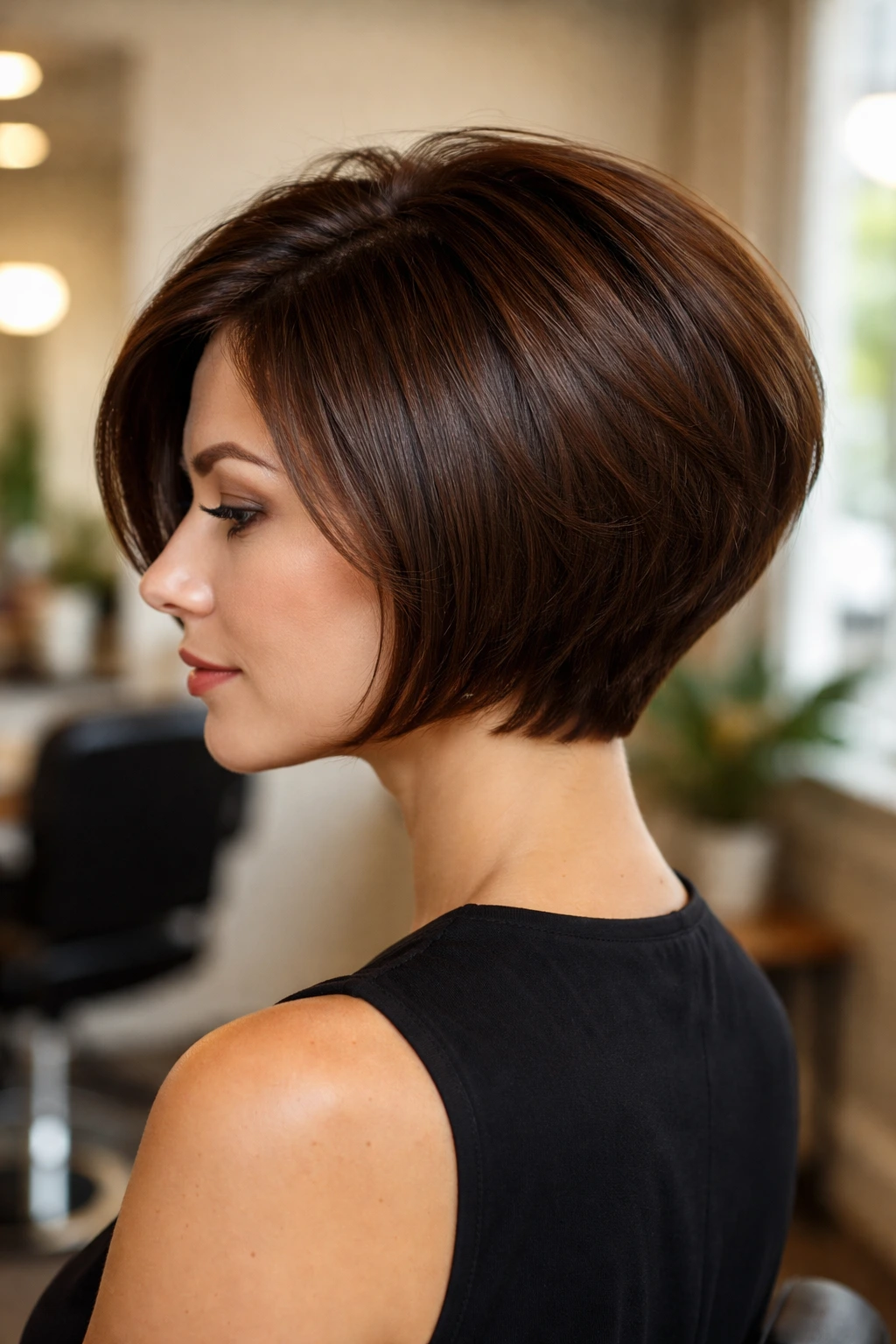
This is the baseline for all stacked cuts, and it remains the most effective for round faces because of its controlled geometry. The hair is cut into a steep angle, rising from the nape to the jawline, which creates a visual line that directs attention downward to the chin rather than outward to the cheeks.
Why It Works for Round Faces
The key here is the “graduation”—the short, stacked layers in the back create a solid base of volume. This volume at the crown pushes the height of your head up, which naturally creates a sense of elongation. You aren’t adding width at the sides; you’re building it at the back and top.
Maintenance and Styling Tips
- Ask your stylist to keep the perimeter sharp; rounded edges can accidentally mimic your face shape.
- Use a lightweight volumizing mousse on damp hair.
- Blow-dry with a round brush to smooth the nape; precision is the difference between a chic cut and a messy one.
Pro tip: If your hair is particularly thick, ask for “internal layering” to remove weight, which keeps the stack from looking like a mushroom.
2. Asymmetrical Stacked Pixie
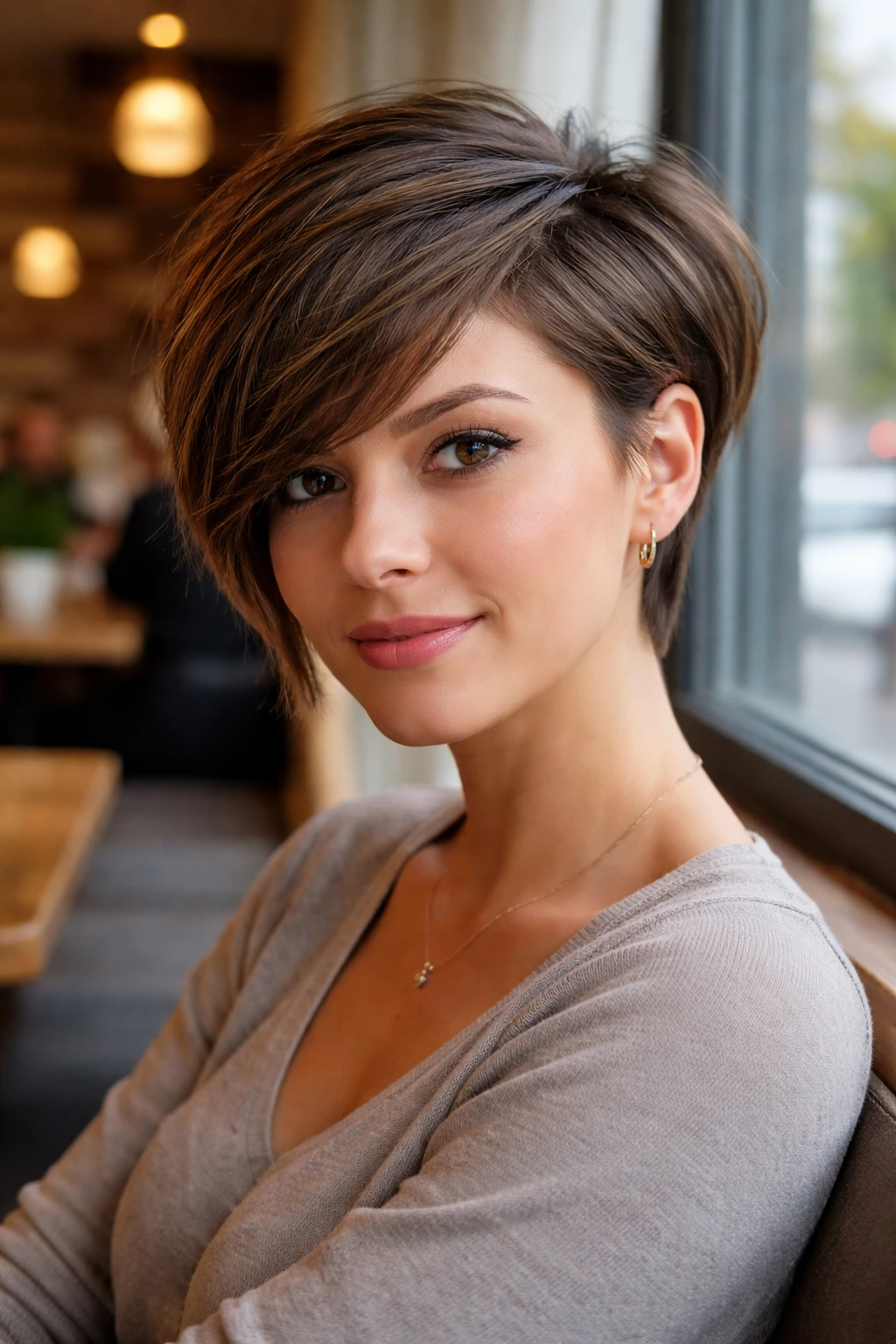
If you want to move away from the traditional bob, the asymmetrical pixie is a fantastic way to break up the circularity of your face. By keeping one side longer and the back tightly stacked, you create a diagonal line that bisects the roundness of your cheeks.
How to Style It
You need a texturizing paste or clay for this look. Start by applying a dime-sized amount to the roots for lift, then piece out the longer side. Because the length creates a sharp angle on one side of your face, it draws the eye toward the chin and away from the center of the face.
Important Considerations
This cut requires more frequent maintenance—think a trim every 4 to 6 weeks. If you let the nape grow out, you lose the “stack,” and the whole shape will collapse, which isn’t the look you’re going for.
3. Choppy Layered Stack
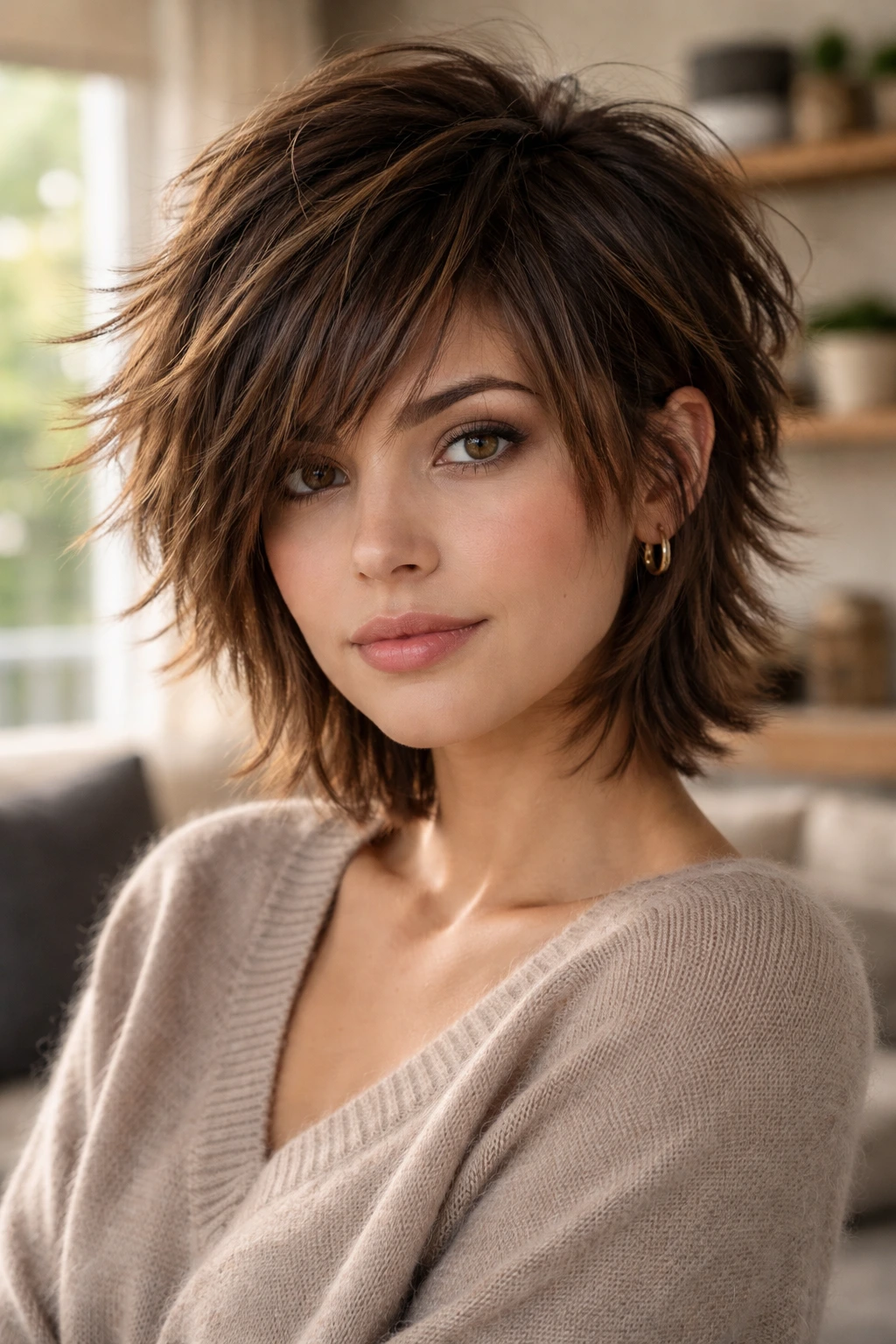
Sometimes a smooth, sleek bob feels too formal. A choppy, layered stack adds movement and grit, which is ideal if you have a round face and want to avoid looking too polished or “done.” The messy, broken-up layers draw attention to the texture of the hair rather than the shape of the face.
This style works best by utilizing a razor-cut technique at the ends. It creates a soft, feathered finish that doesn’t create a blunt line at the cheekbone level—a common mistake that can widen the face. Instead, the choppy ends fall softly around your jaw.
Quick styling fix: Use a sea salt spray when the hair is about 80% dry. Scrunch it into your hands and let it air dry the rest of the way to get that lived-in, effortless feel.
4. Long Stacked Bob (The Lob Stack)
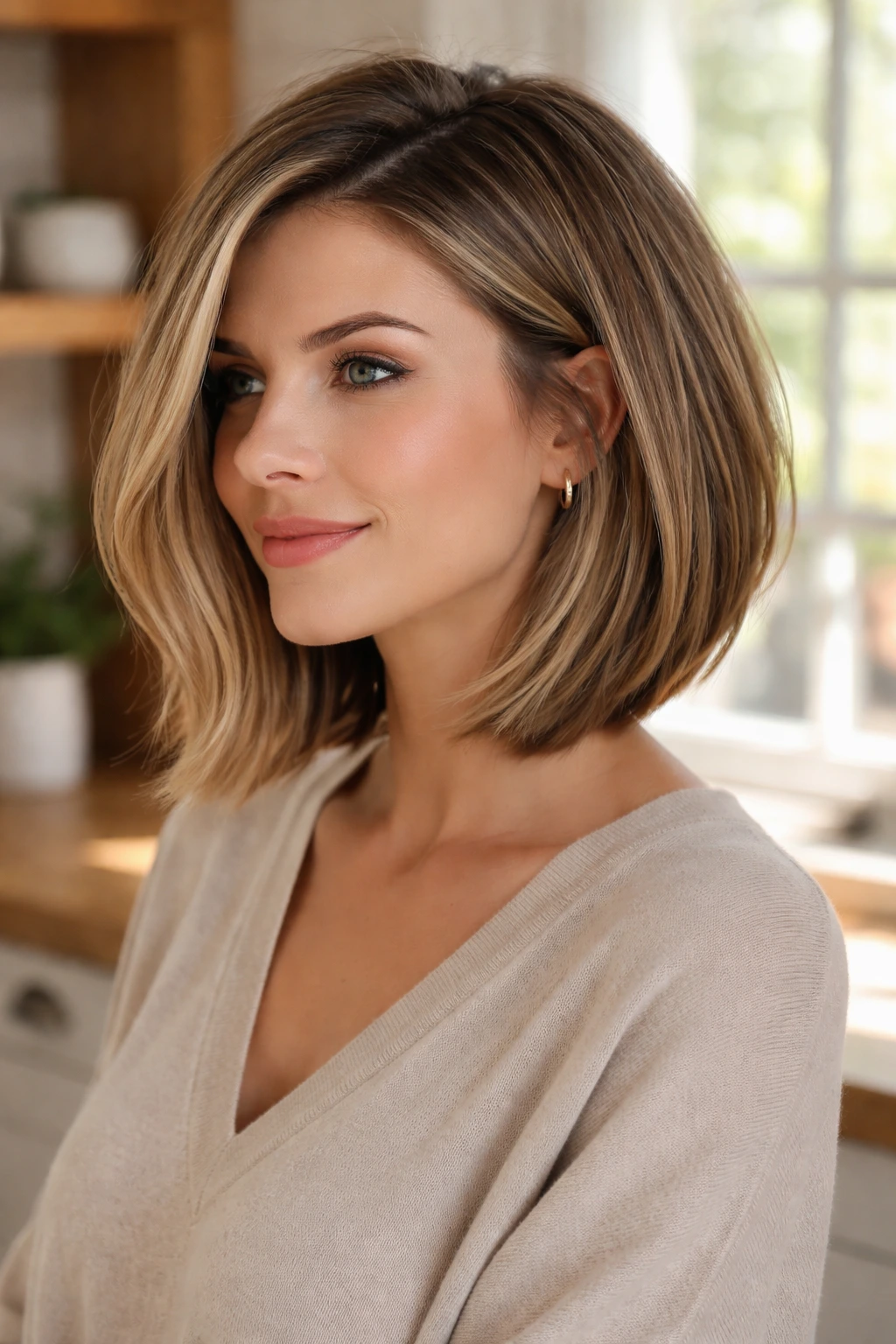
If you’re nervous about going too short, the lob-style stack is your best entry point. It keeps enough length to tuck behind the ears if you want, but the graduation in the back still provides that essential crown lift that round faces crave.
The Mechanics of the Length
Because the hair extends past the jawline, it creates two long vertical lines that frame your face. This effectively creates an “invisible” frame that hides the widest part of your cheeks. Keep the back stacked tightly, but let the front pieces graze your collarbone for maximum lengthening effect.
Is It For You?
If you have fine hair, be careful. A long, stacked bob can sometimes look stringy if there isn’t enough density. If your hair is on the finer side, skip this and opt for a shorter, punchier stack to maximize volume.
5. Curly Stacked Cut
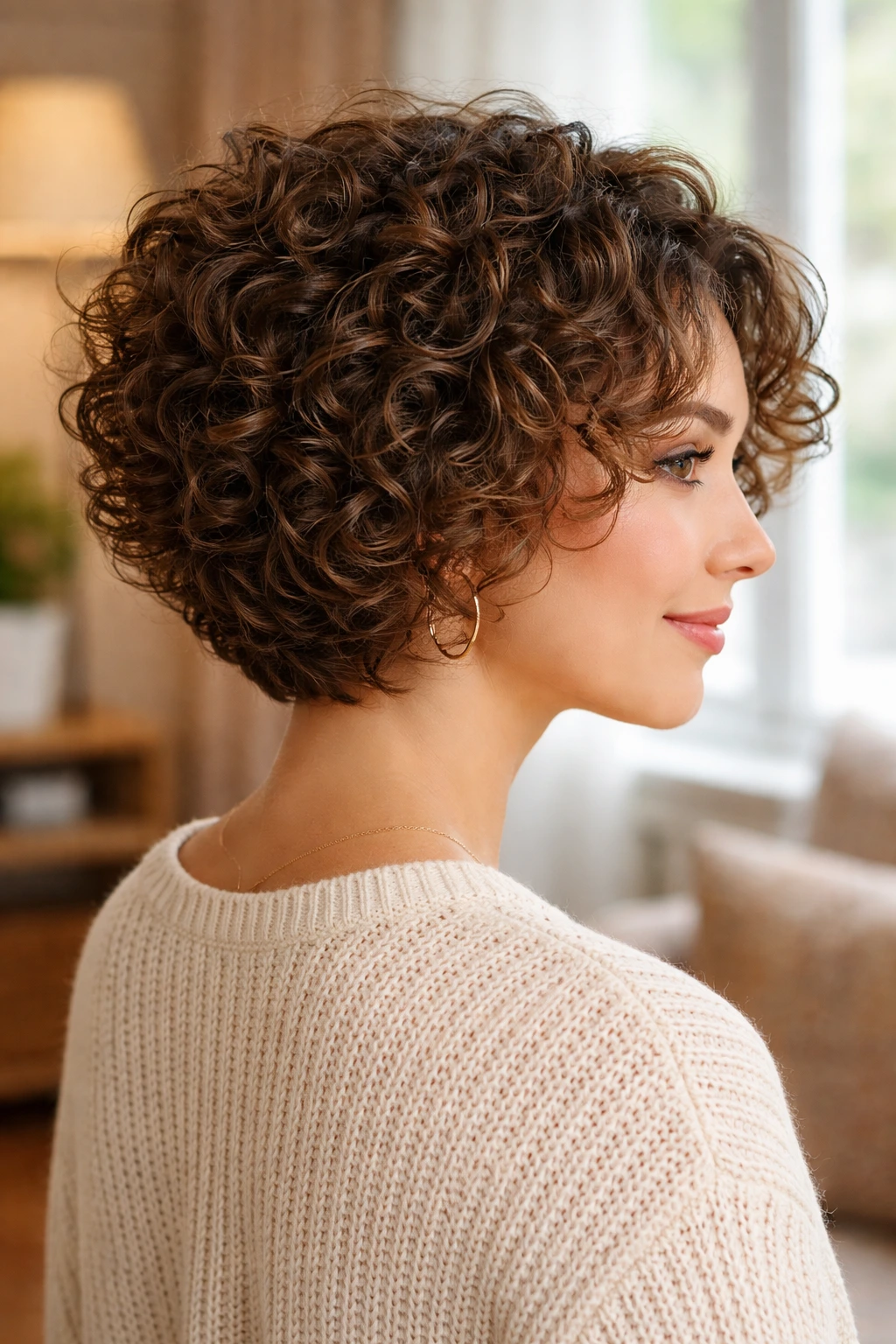
Curly hair and stacked cuts are a match made in heaven. The natural volume of curls works with the short nape to create a beautiful, round-but-structured shape that doesn’t fight against your face shape—it celebrates it.
Defining Your Texture
You shouldn’t cut curly hair when it’s wet using a blunt tension method. Ask your stylist for a dry cut or a “curl-by-curl” approach. They need to see how the spring factor of your specific curl pattern affects the stack height.
Daily Maintenance
- Use a leave-in conditioner that is heavy enough to define but light enough not to weigh the stack down.
- Avoid wide-tooth combs once the hair is dry; finger-combing is better to keep the stack tight.
6. Deep Side Part Stack
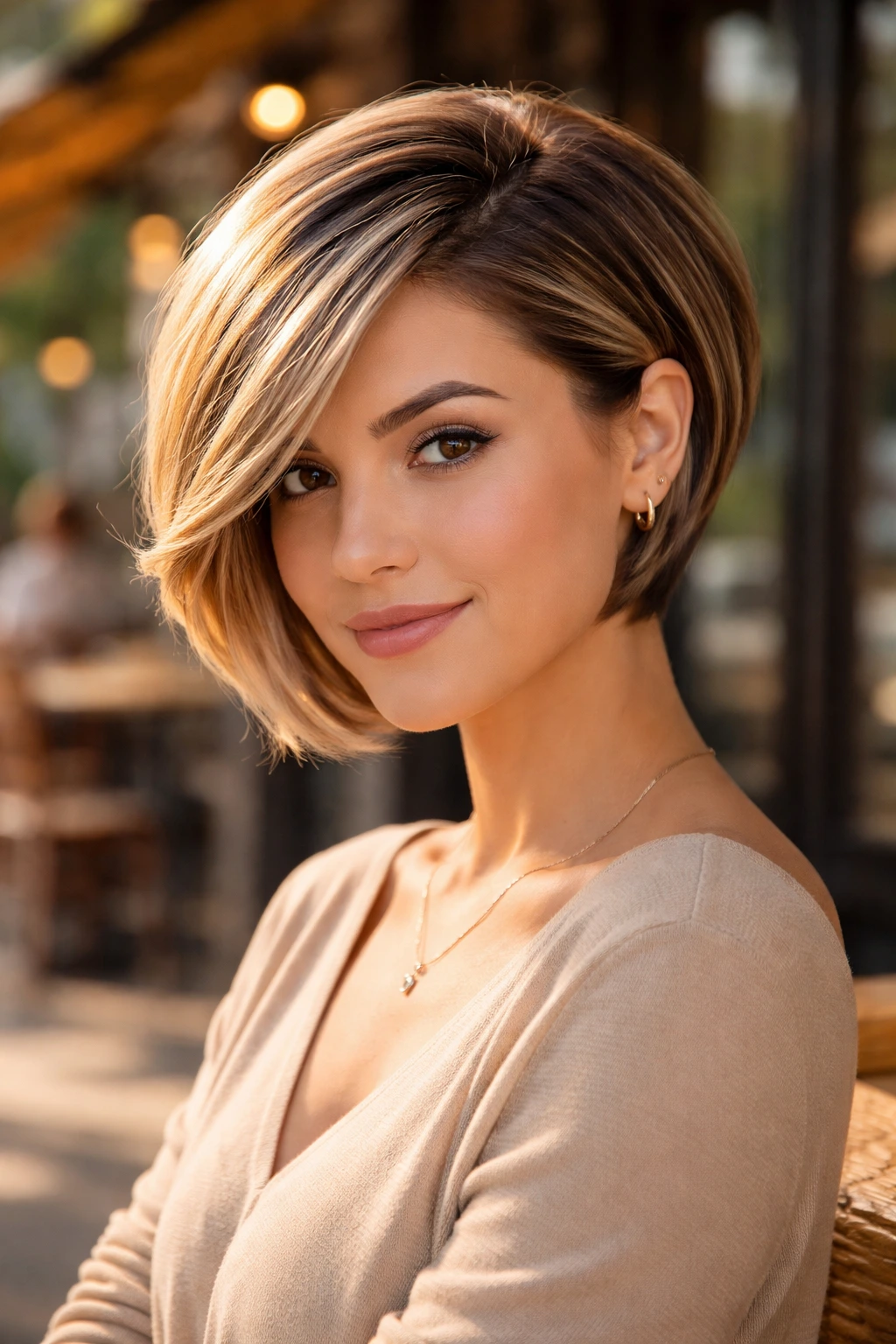
This is arguably the easiest way to adjust a round face. By simply shifting your part to a deep side, you instantly create a diagonal line across your forehead. When paired with a stacked back, this asymmetry becomes the focal point.
Why This Technique Succeeds
A center part on a round face creates two equal sides that mirror the cheeks, reinforcing the roundness. A deep side part breaks that symmetry. The stack in the back supports this by ensuring that your hair doesn’t look flat or lopsided. It balances the visual weight of the side-swept hair with the volume of the nape.
Pro tip: When blow-drying, flip your head over and dry the hair in the opposite direction of how you intend to wear it. This gives you maximum lift at the root of the side part.
7. Stacked Cut with Face-Framing Bangs
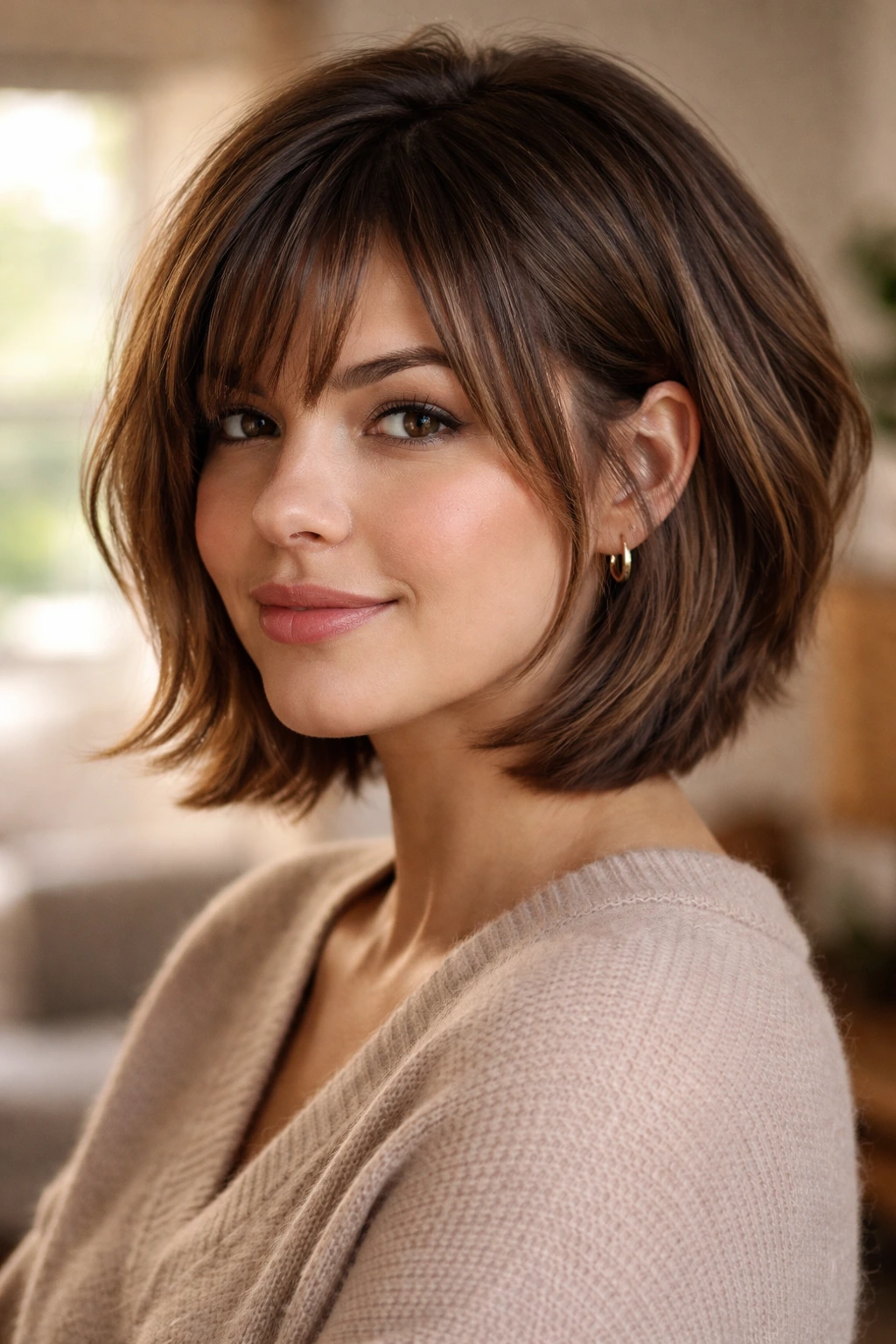
Bangs are often feared by those with round faces, but the right fringe is a powerful tool. A wispy, see-through bang can break up the height of your forehead, while the stacked back prevents the hair from clinging to your cheeks.
Styling the Bangs
- Keep them textured: Blunt, straight-across bangs can act like a curtain, chopping your face in half and making it look wider.
- Go for “curtain” style: Aim for long, wispy pieces that hit just below the cheekbone.
- The Transition: Your bangs should blend seamlessly into the shorter layers of the stack.
8. Pastel-Toned Stack
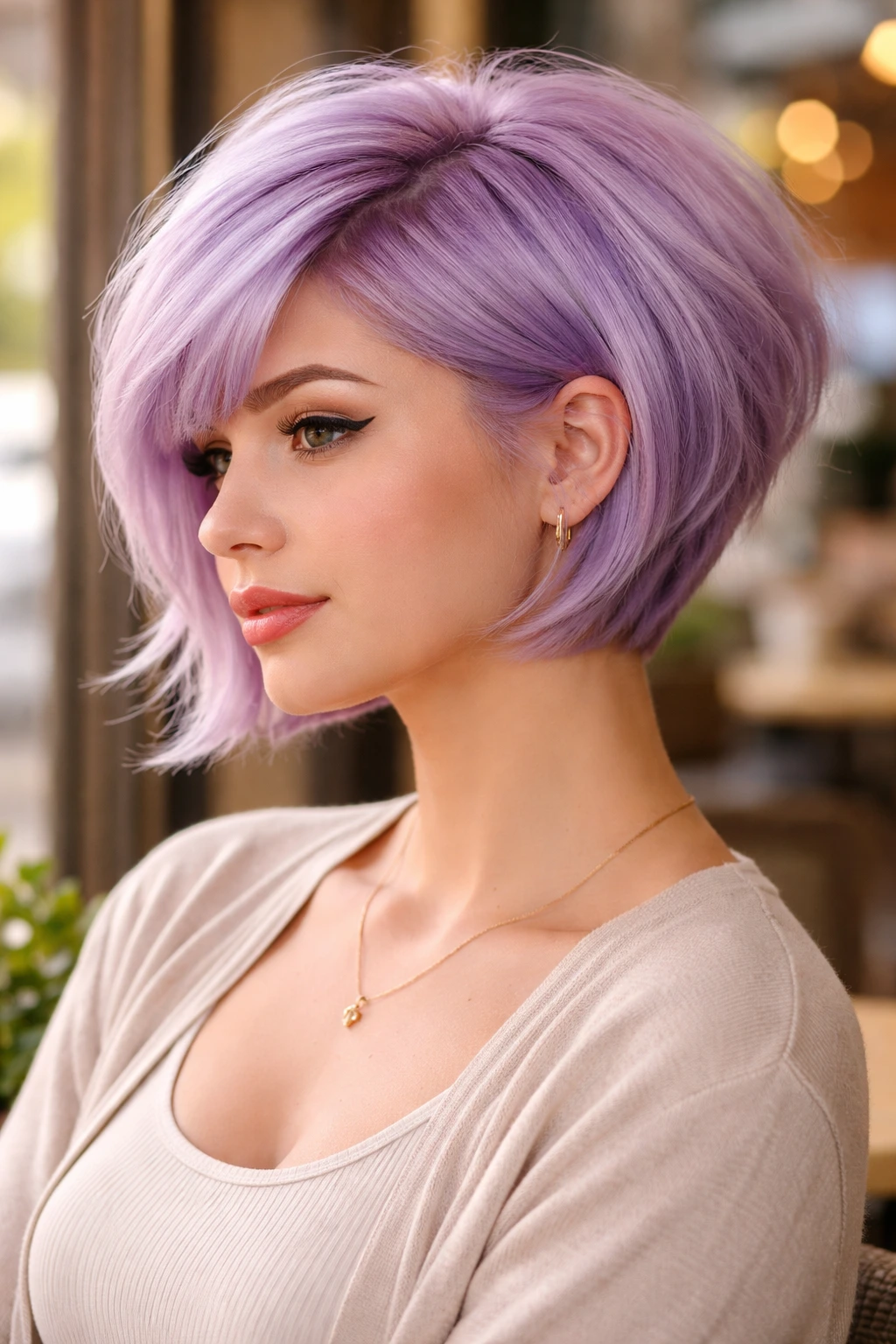
Sometimes, the way to detract from face shape is to introduce a bold color. A pastel-toned stack, like a muted lavender or peach, changes how people perceive the silhouette of your head. It’s an artistic approach to styling.
When you have a bright, unexpected color, the eye is drawn to the color first, then the texture, and finally the shape. It’s a great diversion tactic. Just ensure the cut itself remains sharp, as a soft color on a messy, undefined cut can look unkempt.
9. Stacked Shag
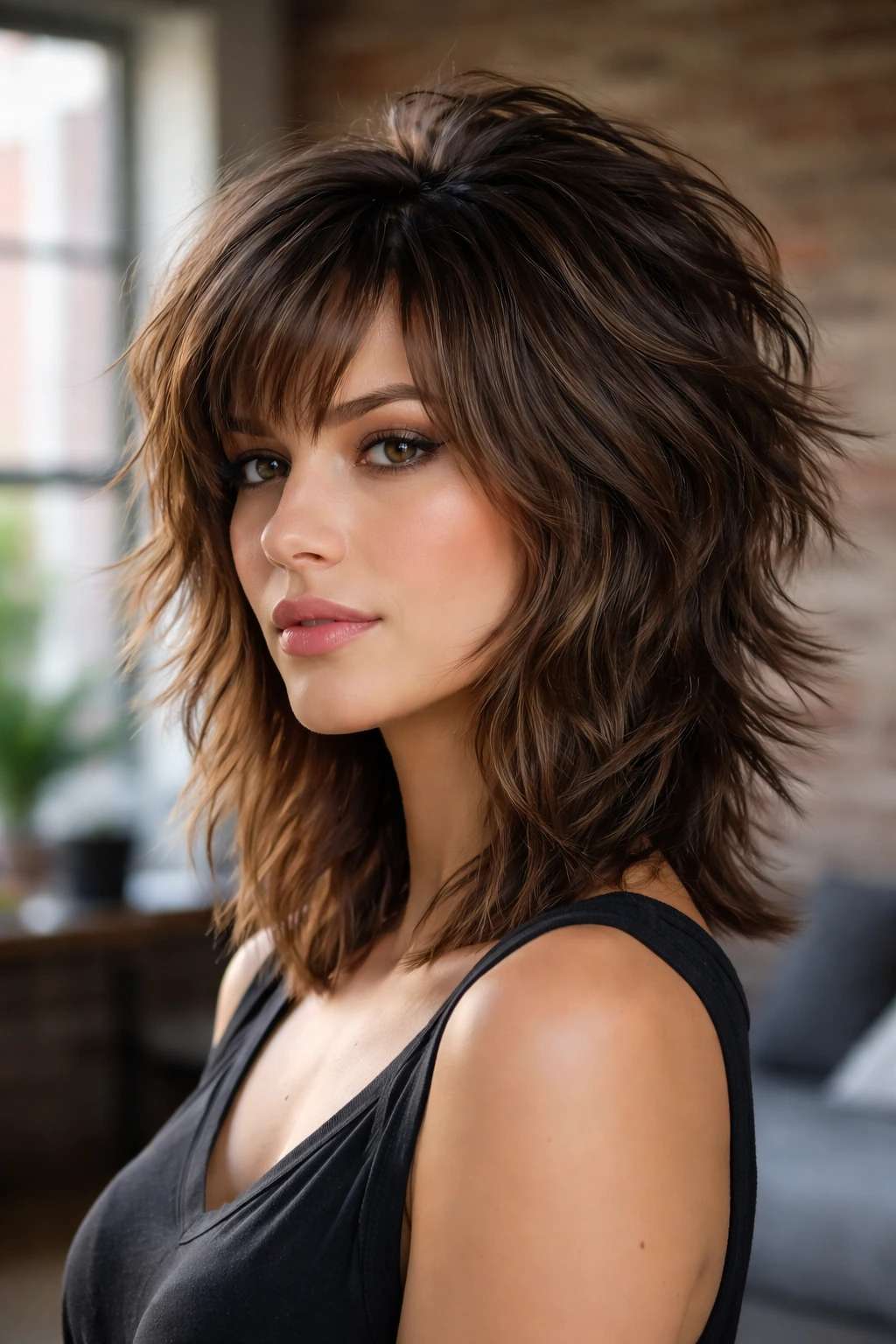
The shag is having a massive moment, and it’s surprisingly good for round faces because of its focus on choppy, internal layers. A stacked shag combines the short nape of a bob with the heavily layered, piece-y look of a 70s rockstar cut.
Unlike a traditional bob, which relies on a sleek, singular line, the shag is built on volume and grit. This is perfect if you want to avoid a “helmet head” look. The layers around the crown add immediate height, which is exactly what a round face needs to look more oval-shaped.
10. Sleek Tapered Stack
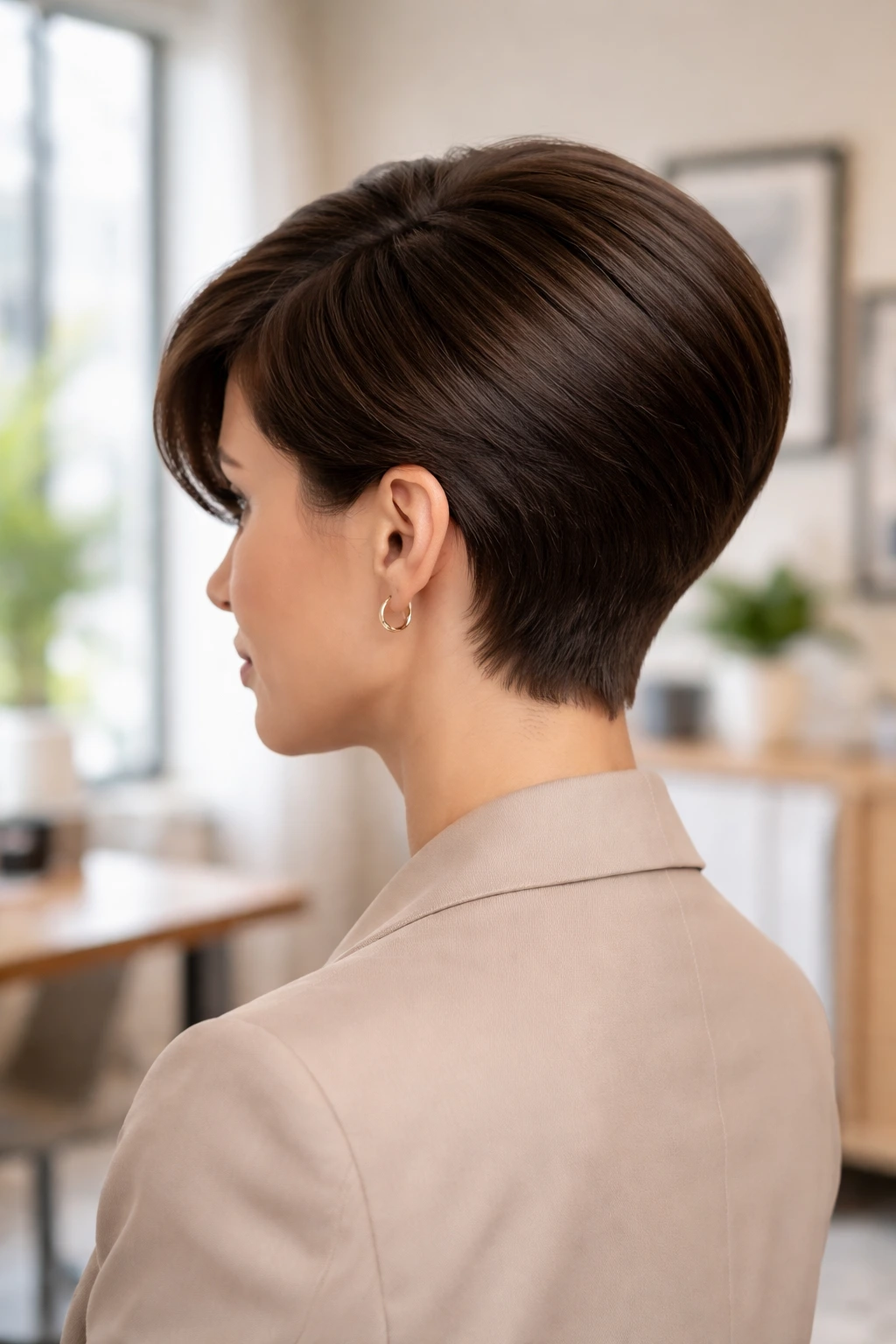
If you have a professional environment that demands polish, the sleek tapered stack is the gold standard. The back is tapered closely to the neck, while the crown is kept smooth and slightly rounded.
Essential Tools
You cannot achieve this look without a flat iron and a high-quality heat protectant. Because this style relies on being smooth, any frizz will disrupt the architectural line of the stack.
What to Avoid
Do not over-straighten the crown. If you make it too flat, you lose the volume that keeps the cut from clinging to your cheeks. You want smooth, not flat.
11. Inverted Stack
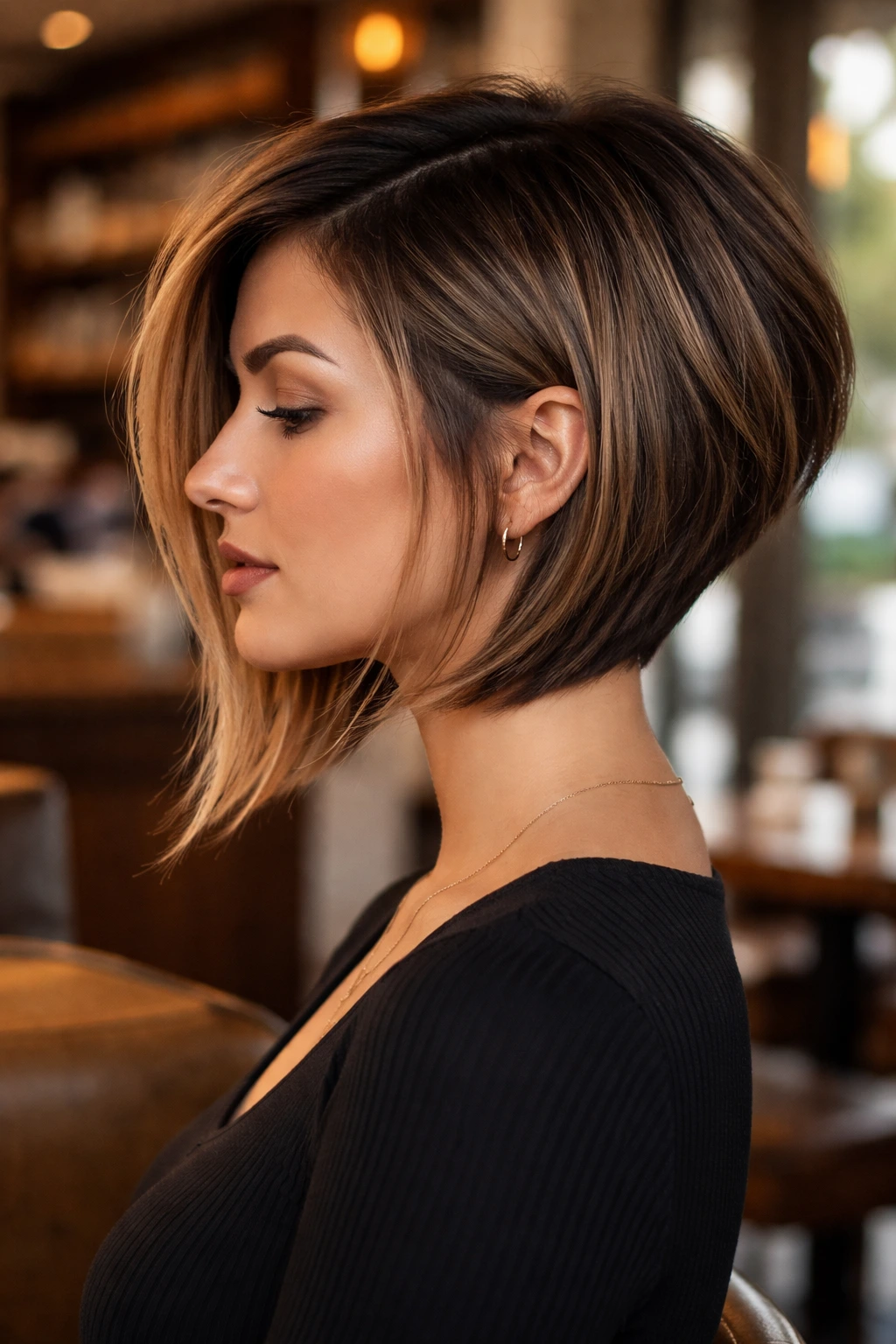
An inverted bob, where the back is shorter and the front is drastically longer, is the ultimate “angle” cut. For a round face, this is the most aggressive corrective option because those long, sharp points in the front act like arrows pointing toward your jawline.
Achieving the Angle
The steeper the angle, the more lengthening the effect. If your stylist is willing, ask for a 45-degree angle rise from back to front. It might feel dramatic, but it effectively draws the eye downward, making the face appear narrower and longer.
12. Blunt Stack
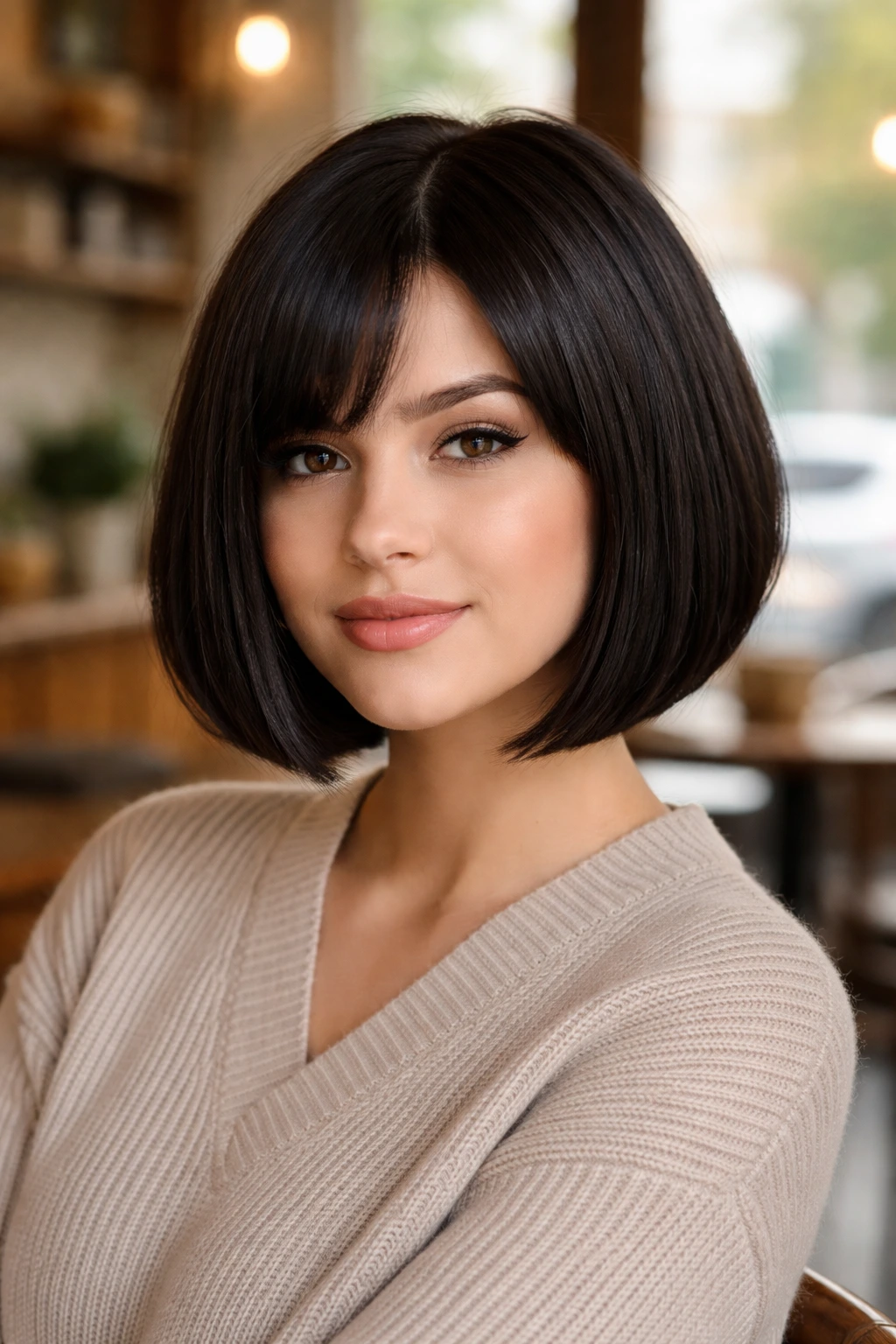
If the “layered” look feels too fussy for you, the blunt stack is a solid alternative. It keeps the perimeter very sharp with minimal internal layers. It’s a bold, heavy look that sits solidly at the jawline.
When to Choose This
If your hair is very thick and straight, a blunt stack works beautifully. It creates a weighted line that controls volume. However, be careful—if you have fine hair, a blunt stack might look a bit flat or thin, so consider adding just a few subtle, invisible layers at the crown to get some lift.
13. Wispy Layered Stack
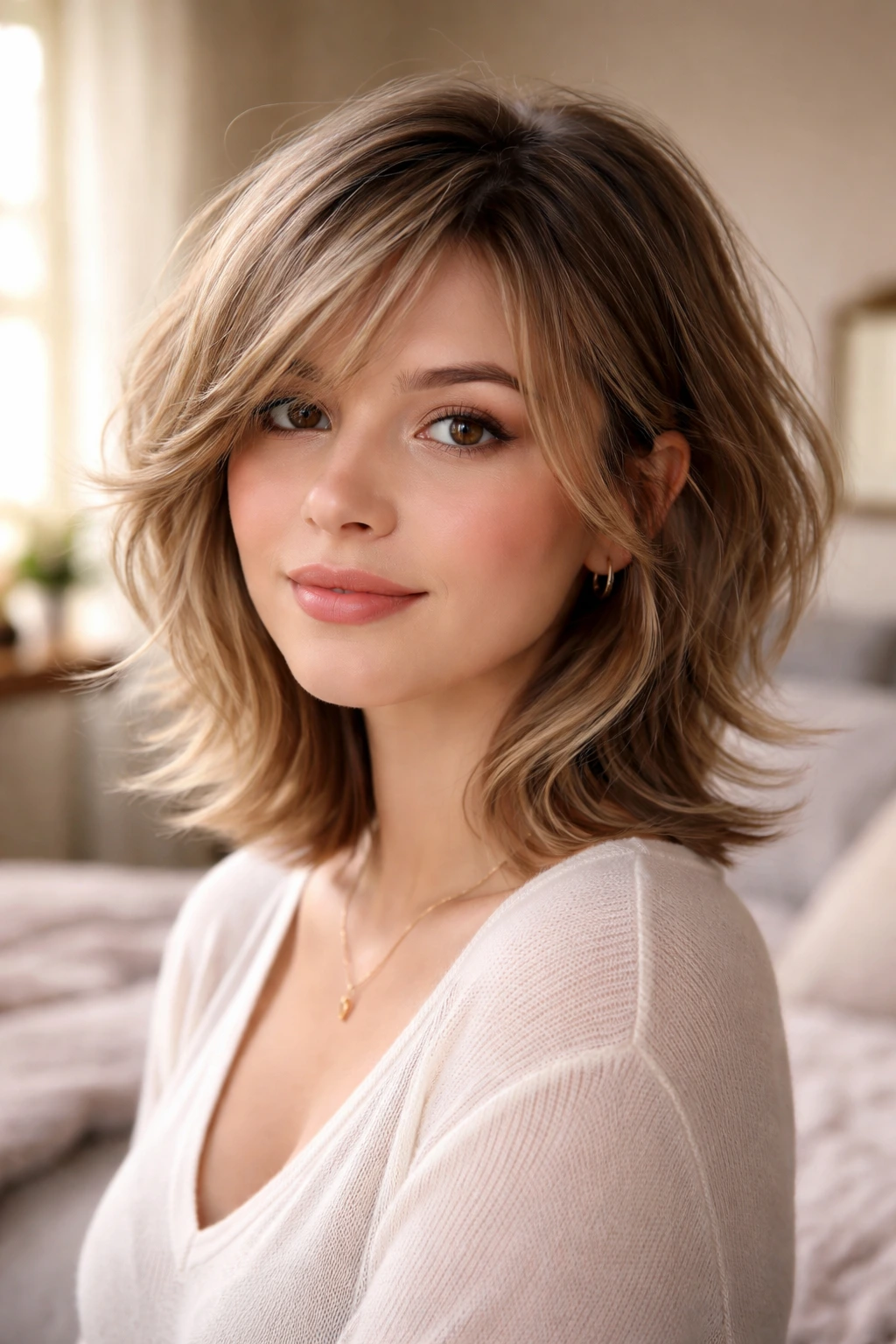
This is the lighter, airier cousin to the blunt stack. It’s achieved by using thinning shears or point-cutting techniques to soften the ends. It’s a very feminine, soft look that doesn’t feel like a “hard” haircut.
How to Request It
Don’t just say “make it wispy.” Tell your stylist you want “shattered ends” or “soft, lived-in texture.” You want the weight removed from the tips so that the hair moves when you walk, rather than staying locked in place.
14. Stacked Cut with Undercut
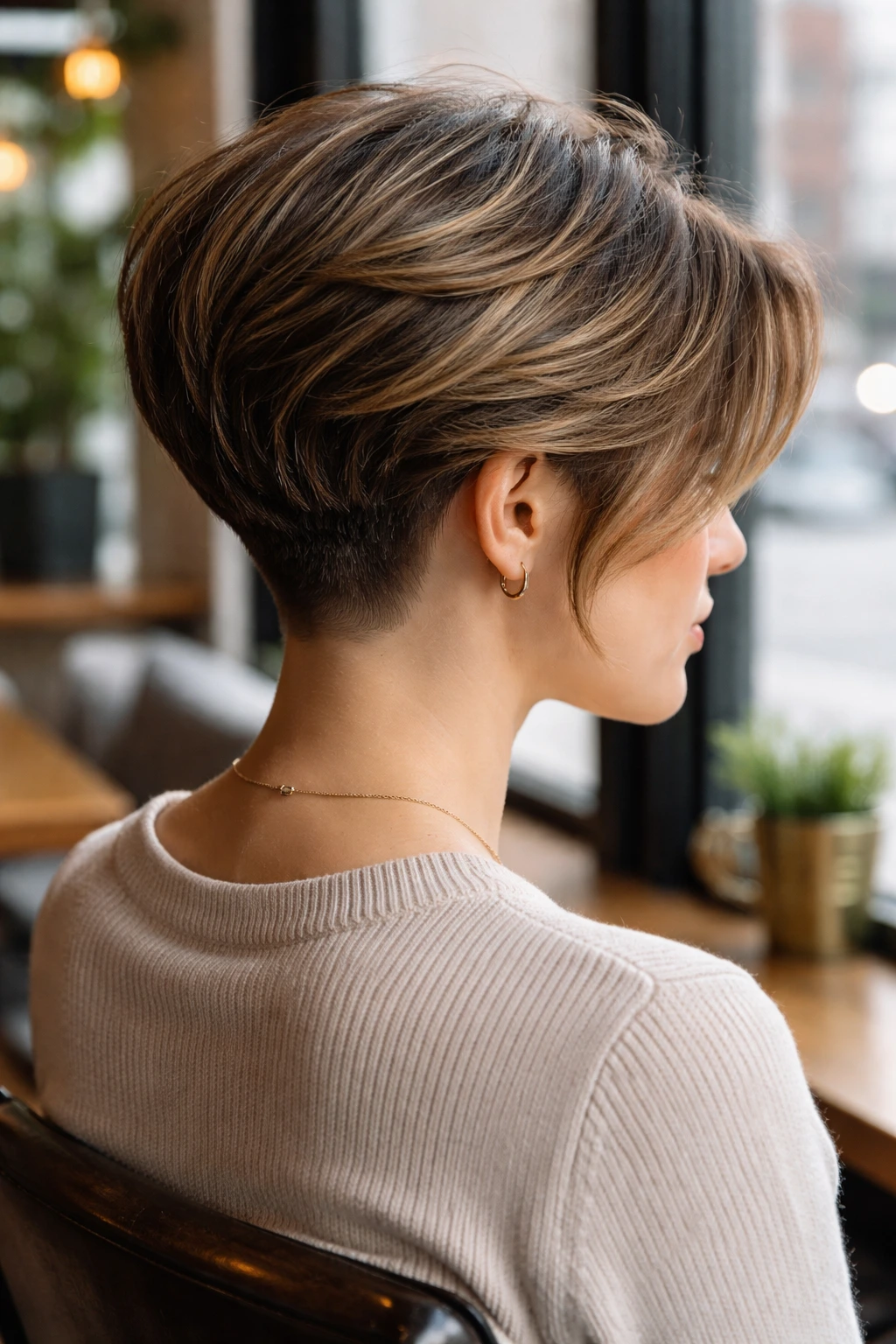
Want to remove as much weight as possible? An undercut at the nape of the neck is the secret weapon. You can leave the hair long enough to cover it, or shave a pattern into it for a rebellious look.
The benefit for a round face is that the undercut creates the most dramatic contrast possible. Because the hair at the nape is shaved or cropped to the scalp, the hair immediately above it (the stack) pops out with more volume. That sudden jump in volume creates a beautiful silhouette.
15. Textured Wave Stack
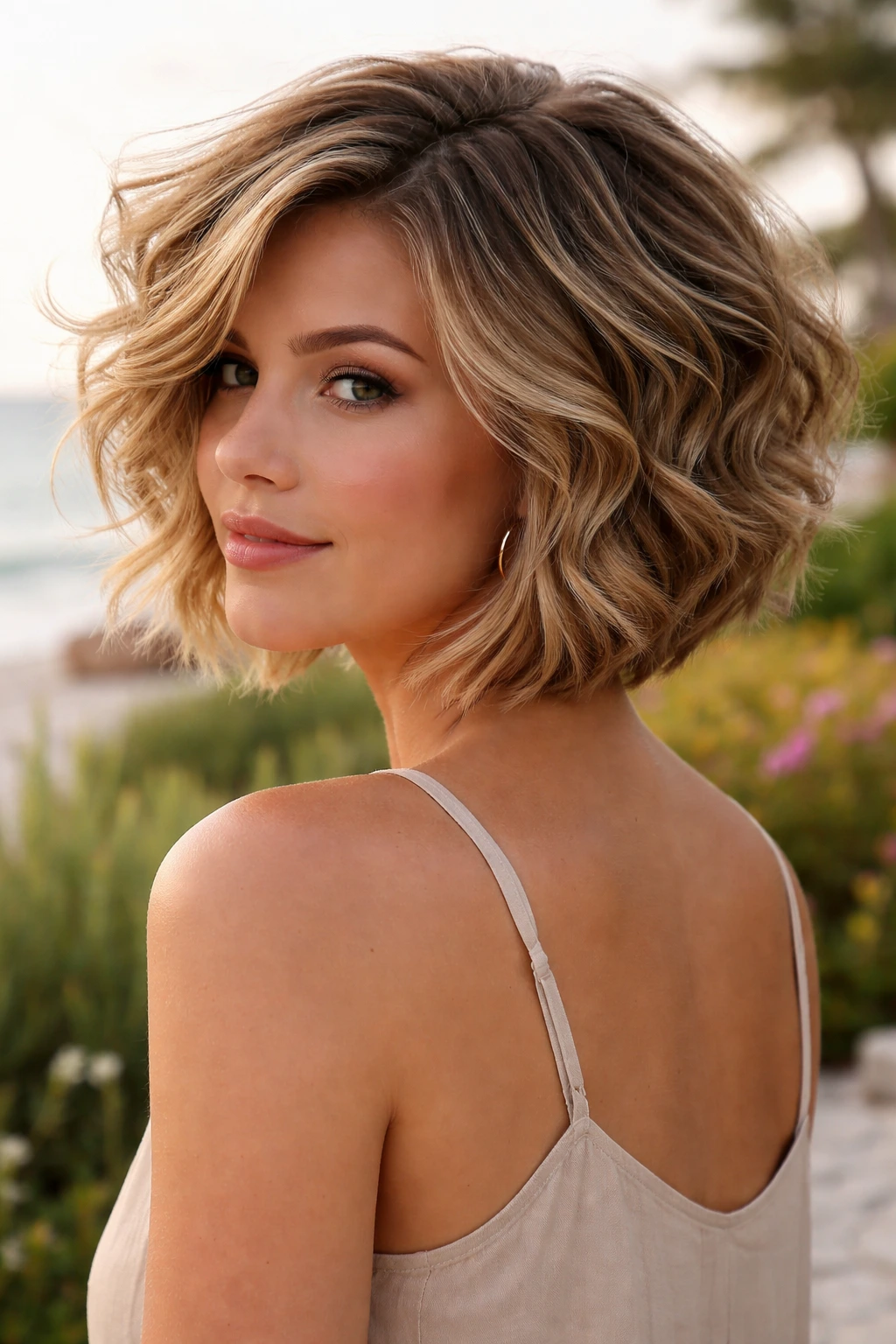
If you have a natural wave pattern, don’t fight it. A stacked cut with textured waves is sophisticated and requires very little styling. It’s all about working with your hair’s natural direction.
Styling for Waves
Use a curl cream when the hair is damp and scrunch it upward. Avoid the urge to brush it out. The goal is to let the wave pattern create little pockets of volume throughout the stack, which prevents the hair from looking like a singular, solid mass.
16. Stacked Bob with Shadow Root
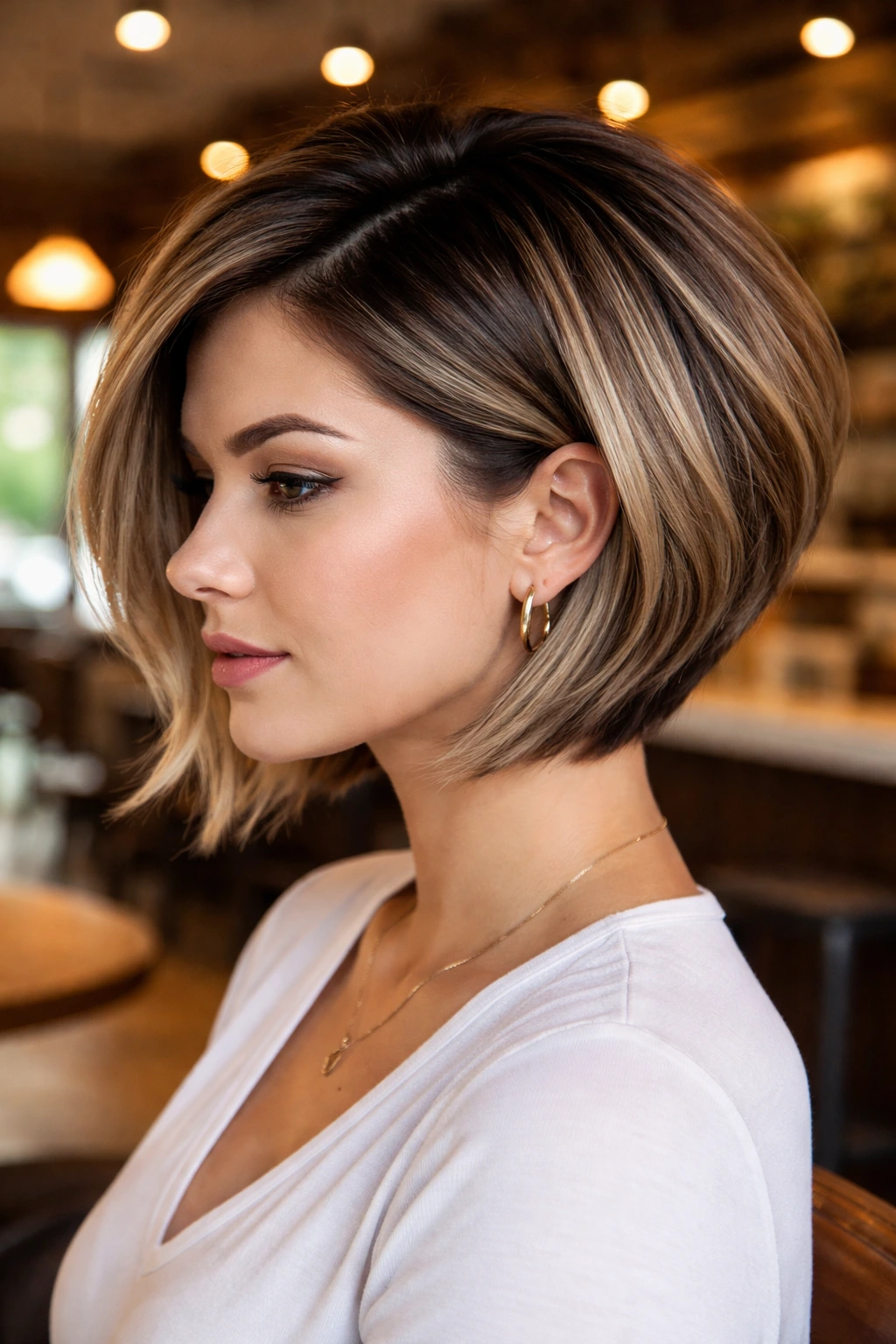
Color can be a structural element. A shadow root—where the roots are darker than the mid-lengths and ends—adds depth. In a stacked cut, this is vital because it creates the illusion of more density at the crown.
When your roots are darker, the eye perceives more “weight” and “density” at the top of your head. This reinforces the height you get from the stack. It’s a subtle optical illusion, but it works wonders for balancing a face that might feel too wide at the cheek level.
17. Short Tapered Stack with Nape Fade
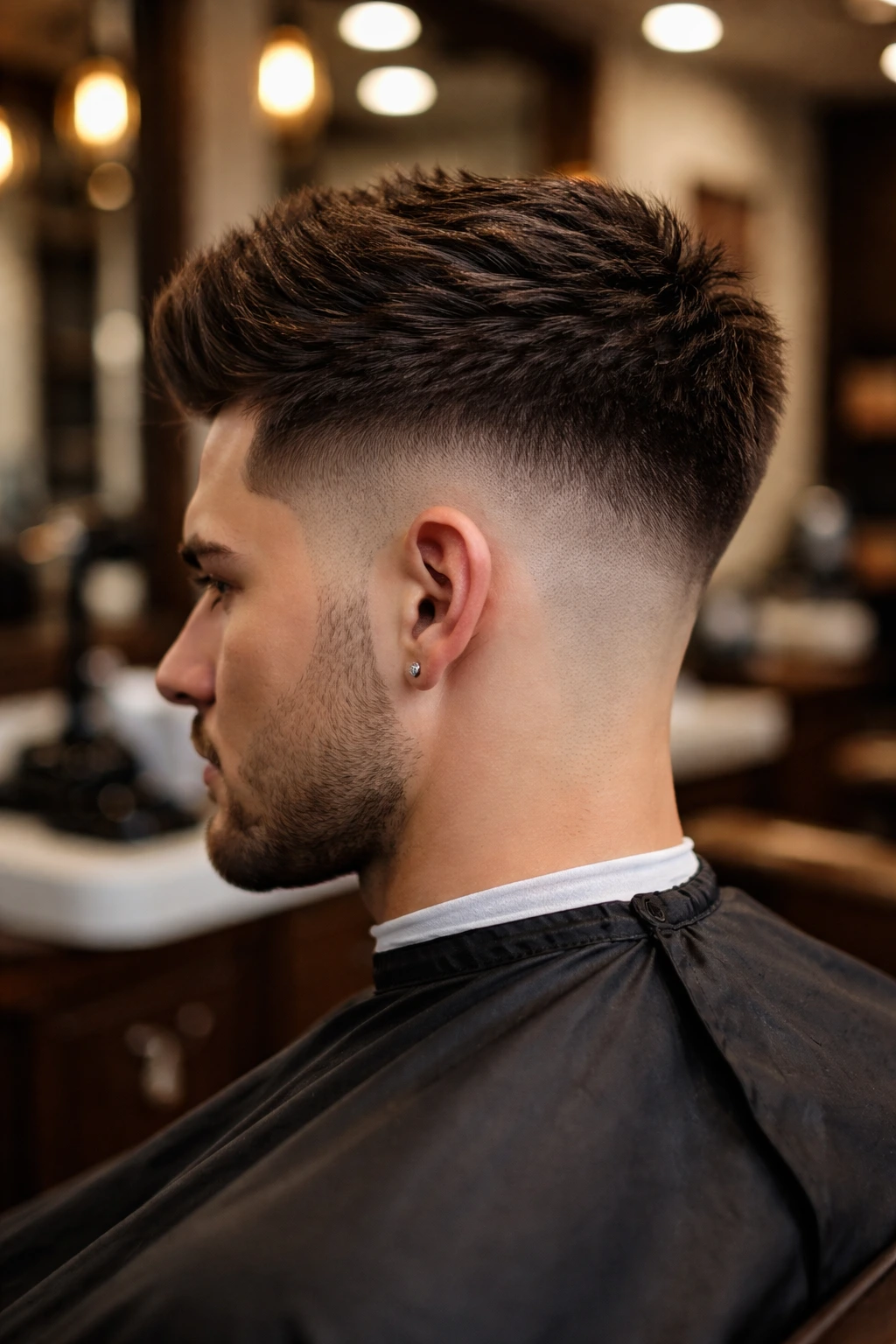
This is a more masculine-leaning, precision cut. The nape is faded using clippers, similar to a barber’s fade, and then transitions into a stacked bob. It’s crisp, clean, and incredibly low-maintenance.
Why It’s Great
The contrast between the faded nape and the stacked layers is the sharpest possible definition you can get. For a round face, this extreme sharpness acts as a frame, contrasting with the softness of your facial features. It’s a high-fashion look that isn’t for the faint of heart.
18. Rounded Stack (Soft)
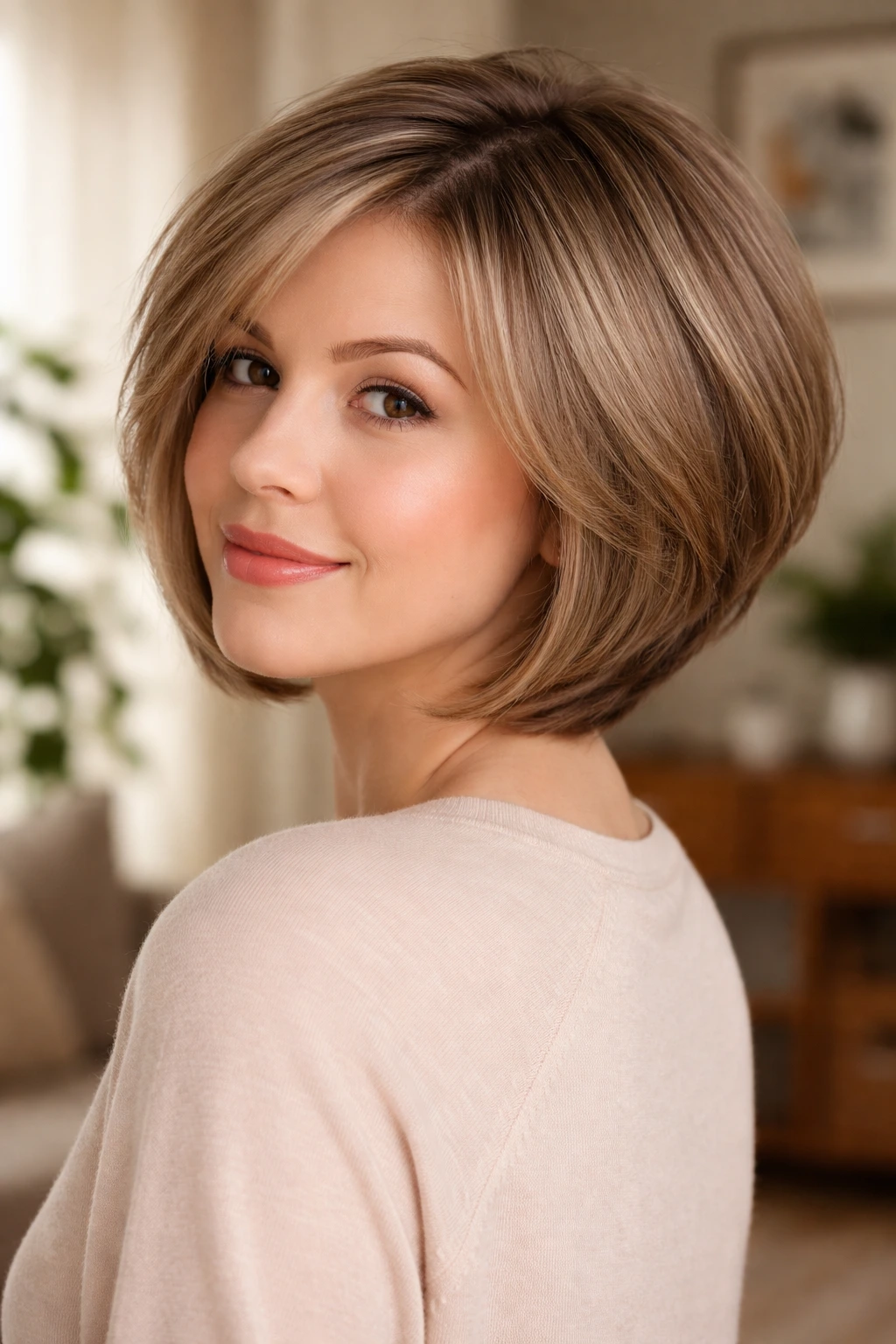
Sometimes, you don’t want the harshness of a geometric cut. A “rounded” stack focuses on soft graduation rather than a steep, jagged line. It’s the kind of cut that looks like it grew out perfectly.
Who Should Get This
If you have a very soft jawline or a “baby face” appearance, a sharp, angular bob might feel too aggressive. A soft, rounded stack complements your natural curves without fighting them. It’s polished, elegant, and timeless.
19. Stacked Lob (Long Bob)
The lob is the “safe” zone. It provides the stack in the back but leaves length in the front. For someone who is terrified of the scissors, this is the best bridge to a shorter style.
Styling Options
Because it’s a lob, you have enough hair to put up in a low ponytail or clip away. It’s the most versatile option on this list. Just remember: to keep the “stacked” benefit, ensure the back is cut significantly shorter than the front. If the lengths are too close, it’s just a normal bob, not a stack.
20. Messy Bedhead Stack
There is something inherently cool about a haircut that doesn’t look like you tried too hard. The “bedhead” stack is achieved by leaving the layers slightly longer and shaggier, and utilizing texture products to keep it looking intentionally chaotic.
The Product Secret
You need a dry texture spray, not a hairspray. Hairspray makes things look stiff and “done.” Dry texture spray keeps the hair looking gritty, voluminous, and pliable. Spray it into your roots and just shake it out with your fingers.
21. Stacked Pixie with Swooping Bangs
This is the “swoop.” It’s a pixie cut where the fringe is left long and heavy, sweeping across the forehead and hitting the cheekbone. It’s one of the most effective ways to hide the width of a round face.
The Technique
The swoop acts as a veil. It draws a diagonal line across your face, which naturally makes the face appear oval rather than round. When combined with the stacked back, you get the best of both worlds: a clean, tight nape and a long, sweeping front.
22. Stacked Cut with Highlights
Placement of highlights matters. If you highlight the crown layers, you are physically drawing the eye to the highest point of the head. This reinforces the “upward” energy of the stacked cut.
Choosing Your Highlights
Avoid “chunky” highlights, which can look dated and break up the flow of the stack. Go for baby lights or a fine balayage. You want the color to look natural, like the sun caught the top layers of your hair. This dimension creates an illusion of volume that makes the stack look bigger and more intentional.
23. Razor-Cut Stack
If you have thick, unruly hair, your stylist should be using a razor, not shears. A razor creates tapered, sliced ends that sit flat against each other. It removes bulk while creating movement.
Why It’s Different
Shears tend to create blunt, heavy lines. A razor creates soft, frayed lines. For a round face, this is excellent because it prevents that “triangle” shape that thick hair often takes on when cut too short. The razor-cut stack will lay flatter at the nape while keeping volume at the crown.
24. Stacked Bob with Side-Swept Fringe
We talked about the “swoop,” but a standard side-swept fringe is different. It’s cleaner, shorter, and more formal. It works by breaking up the circular line of your forehead, which is a major component of a round face shape.
Perfecting the Look
You have to trim this fringe more often than the rest of the cut. If it gets too long, it starts to look like a curtain, which defeats the purpose. Keep it hitting right at the eyebrow or just below, and sweep it to the side to create that essential diagonal angle.
25. Extreme Angle Stack
We are finishing with the most dramatic option. The extreme angle stack is essentially a bob where the back is buzzed or cut extremely short, and the front reaches toward the collarbone. It is a striking, bold, and unapologetic style.
The Verdict on Extreme Cuts
This isn’t for the person who wants to wake up and do nothing. It requires styling. You need to smooth the front and lift the back. But the payoff? It’s arguably the most “slimming” hairstyle for a round face, as the long front pieces are so dominant that they completely redefine your face’s silhouette.
Final Thoughts
At the end of the day, the best stacked hairstyle for a round face is the one that makes you feel confident when you walk out the door. The goal of the stack isn’t to “fix” your face; it’s to provide a beautiful, architectural framework that highlights your features rather than fighting them.
Don’t be afraid to take photos to your stylist. Explain that you want to avoid adding width at the cheekbones and that you’re looking for height at the crown. A good stylist will understand those terms immediately and can translate them into the right graduation for your specific hair texture. You have more options than the old rules ever let on—embrace the height, lean into the angles, and enjoy the ease of a shorter cut.
