



Face framing highlights for brown hair work because they change what people notice first. The light sits right where the eye lands — along the temples, the cheekbones, the hairline, and the part — so even a small shift can make brown hair look softer, brighter, and a little more awake.
That front section does more heavy lifting than most people realize. You can keep the rest of your brunette base rich and deep, then let the pieces around your face do the talking. Same color family, different mood. Caramel reads warm and soft, honey looks sunlit, champagne feels cooler, and copper brings a little fire to the front.
A half-inch matters here. A thin babylight at the hairline can whisper; a chunky money piece can shout. Neither is wrong. The point is matching the placement and tone to the haircut, your skin, and how much upkeep you want to deal with.
The 15 looks below cover soft brunette frames, brighter contour pieces, cooler mocha shades, curly-friendly ribbons, and a few bolder options for anyone who wants the front to stand out in a mirror, a ponytail, or a quick photo by a window. Caramel is where most brunettes should start.
1. Soft Caramel Money Piece
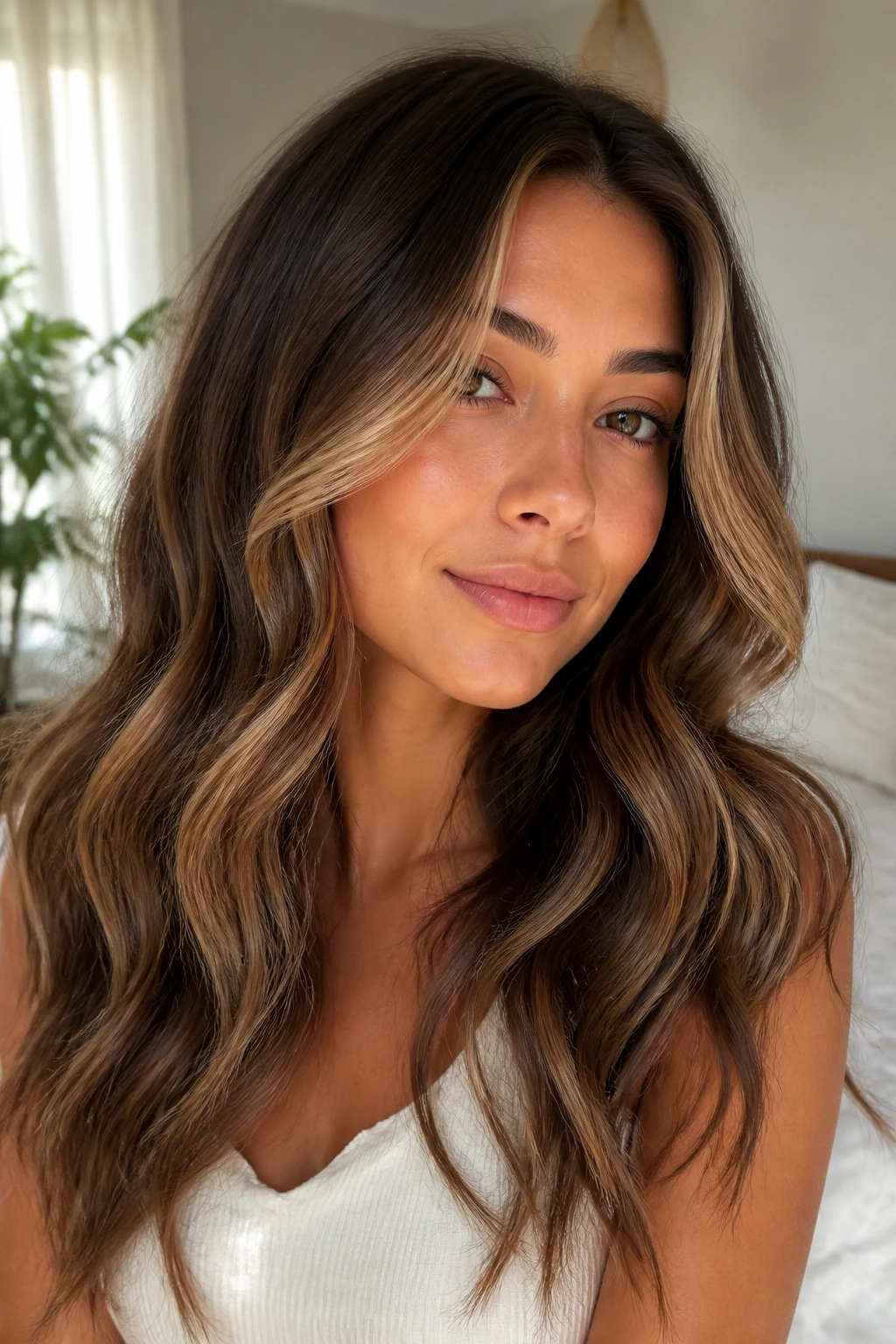
Soft caramel is the easiest yes for brown hair when you want the front to brighten but still look like it belongs there. It sits in that sweet spot between blonde and brown, so the face gets light without losing depth.
Why It Works on Brunettes
Caramel usually looks best when it’s only one to two shades lighter than the base. That keeps the front from turning stripey, especially on medium brown hair that already has warmth in it. Put the brightest part near the cheekbone and soften it as it moves toward the jaw.
- Best on level 4 to level 6 brown hair
- Ask for the lightest pieces at the temple and part line
- Keep the face frame a little wider if your hair is thick
- Pair it with loose waves or a round-brush blowout for the cleanest payoff
My rule: if you wear your hair up a lot, ask for a soft root melt so the grow-out looks intentional instead of harsh.
2. Honey Beige Halo Highlights
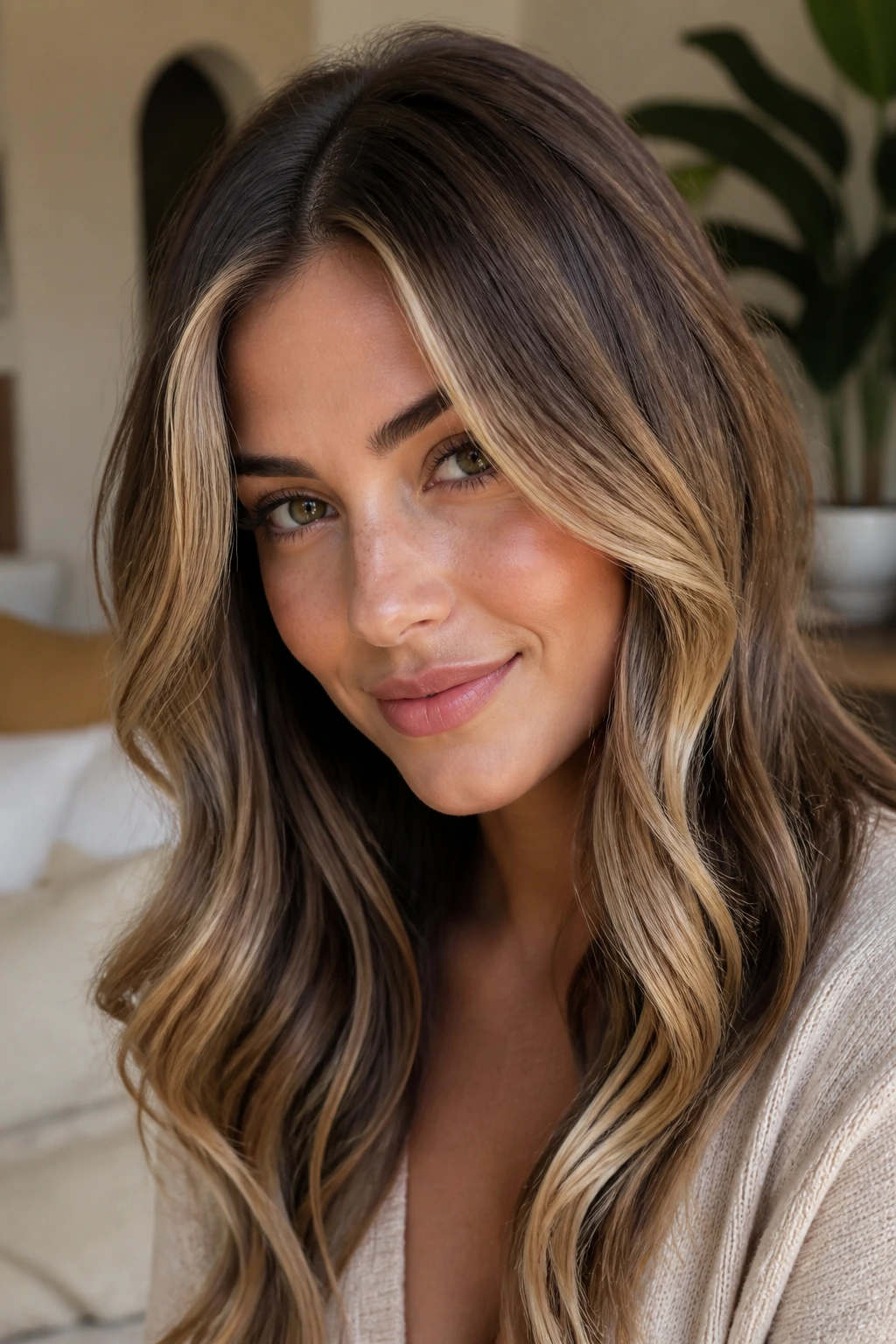
Honey beige has a gentler finish than golden blonde, and that matters on brown hair. The warmth is there, but it doesn’t take over the whole head. The result feels bright around the face and calm everywhere else.
This shade is a smart pick if your brunette base can look flat under indoor light. Honey beige adds a little glow near the front without turning the hair orange or brassier than you want. It also plays nicely with layered cuts because the lighter pieces catch on the ends as the hair moves.
I like this one for people who want their color to look fresh from every angle, not only when the sun hits it. The pieces can be fine or medium-width, but the tone should stay soft. Think glow, not glare. If the color is too yellow, it stops feeling expensive-looking and starts fighting the brown base.
3. Toffee Babylights at the Hairline
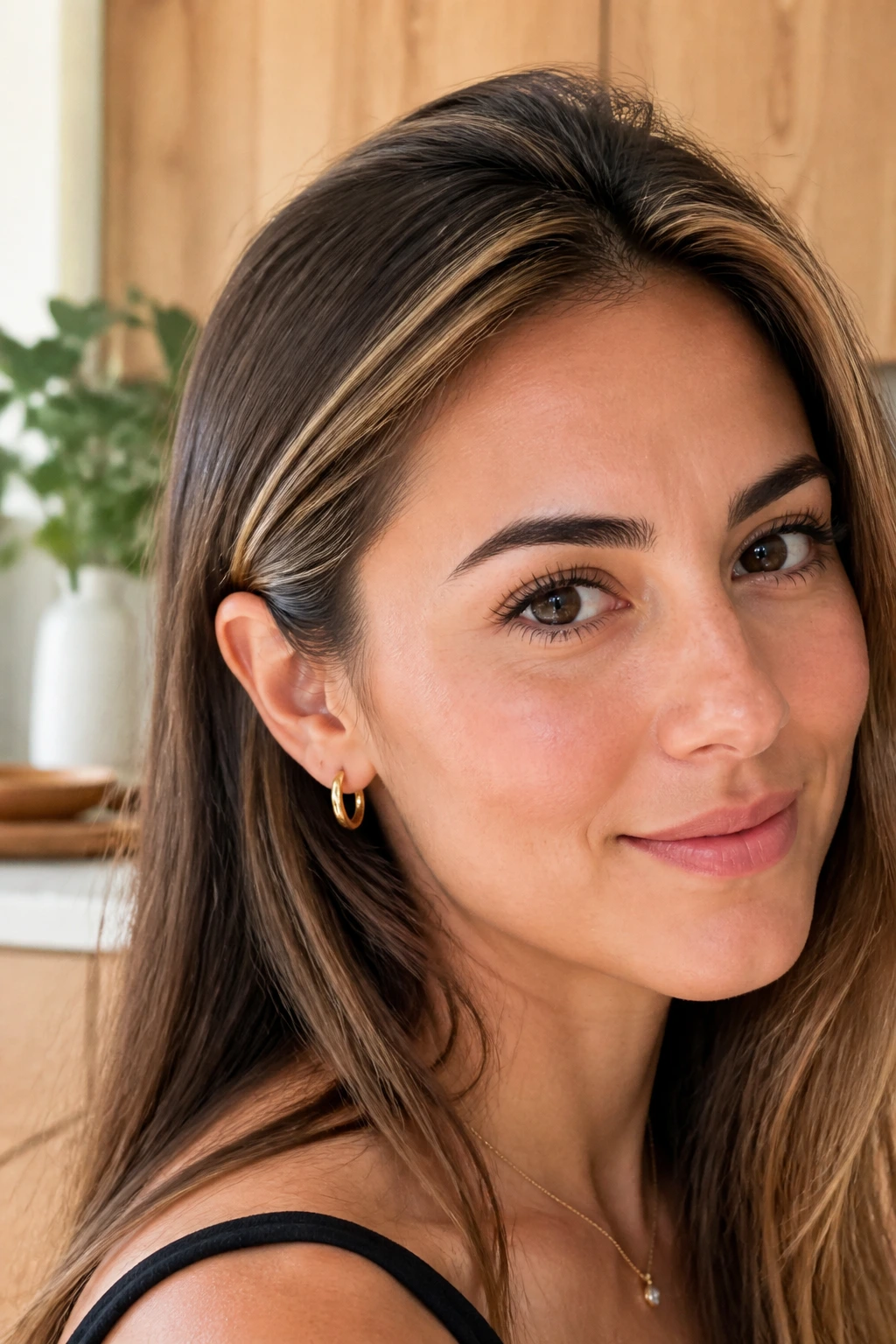
Want brightness that only shows when the hair moves? Toffee babylights do that beautifully. They’re tiny, fine strands placed close to the hairline, so the change reads subtle at first and richer once the hair shifts or tucks behind the ear.
How to Ask for It
Tell your colorist you want micro-fine foils around the face, especially at the part line and the first inch of hairline. The goal is to build light in layers, not carve out one obvious pale strip. On brown hair, that little bit of restraint keeps the whole look expensive instead of loud.
- Use foils no wider than a sliver of a finger
- Keep the brightest pieces nearest the part and temples
- Add a few lighter strands just behind the front section
- Choose a toffee tone if your base leans chestnut or mocha
This is one of the best choices if you like low-maintenance color but still want something that wakes up your face.
4. Beige Bronde Contour Pieces
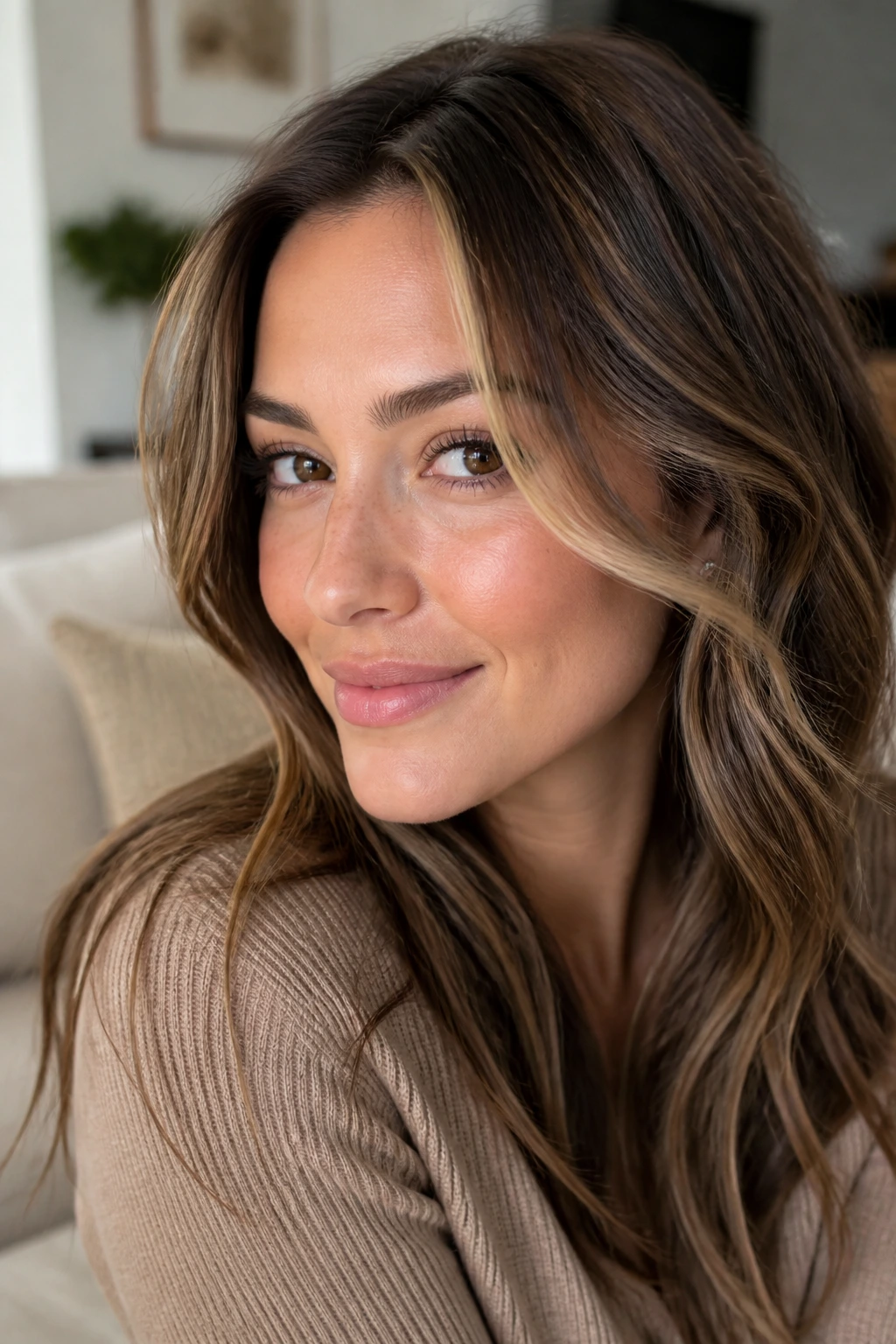
A flat brunette cut can look transformed when the front pieces are painted in beige bronde. The mix of brown and blonde gives structure to the face, almost like a visual contour, but softer and less obvious than makeup.
Picture a shoulder-length cut with no obvious layers around the face. Now add two light pieces near the cheekbones, a few softer strands at the temples, and a shadowed base underneath. Suddenly the hair has shape. That’s the point. The highlight doesn’t need to cover much ground; it just needs to sit in the right places.
What to Watch For
- Best for medium brown bases that need lift
- Ask for a neutral-beige toner so the front stays creamy
- Keep the ends a touch darker if the hair is fine
- Avoid a harsh line at the part, especially on straight hair
The nicest part of beige bronde contouring is how it fakes density. The front looks fuller, the haircut looks more deliberate, and the grow-out stays easier than a full set of bright foils.
5. Cinnamon Face-Frame Ribbons
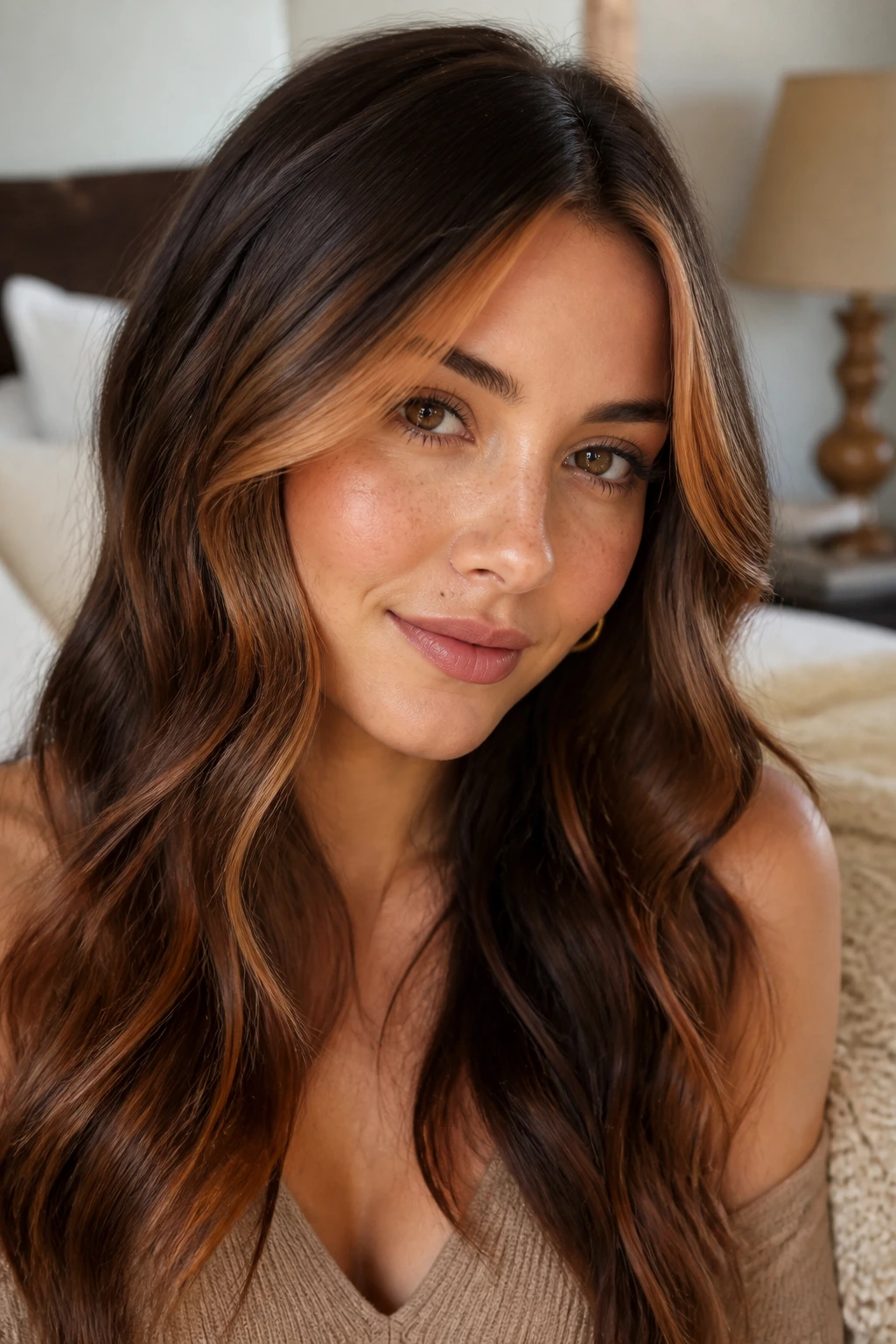
Cinnamon ribbons bring warmth to brown hair in a way that feels rich instead of sugary. The tone has enough red-brown in it to wake up a chestnut or cocoa base, but it still keeps one foot in brunette territory. That balance is what makes it wearable.
I like this shade when brown hair starts to look a little sleepy. Maybe the color has faded, maybe the weather is dry, maybe the haircut needs something more than a trim. Cinnamon gives the front a little heat and helps the skin look less washed out. It also looks especially good when the hair has movement, because the warmer pieces catch on bends and waves.
You do not need a lot of it. Two brighter slices near the face are often enough, with a few softer ribbons blended back toward the part. A demi-permanent gloss helps keep the red-brown tone from going too orange. That tiny gloss step matters. Skip it, and cinnamon can wander into copper territory faster than you expect.
6. Champagne Blonde Peekaboo Fronts
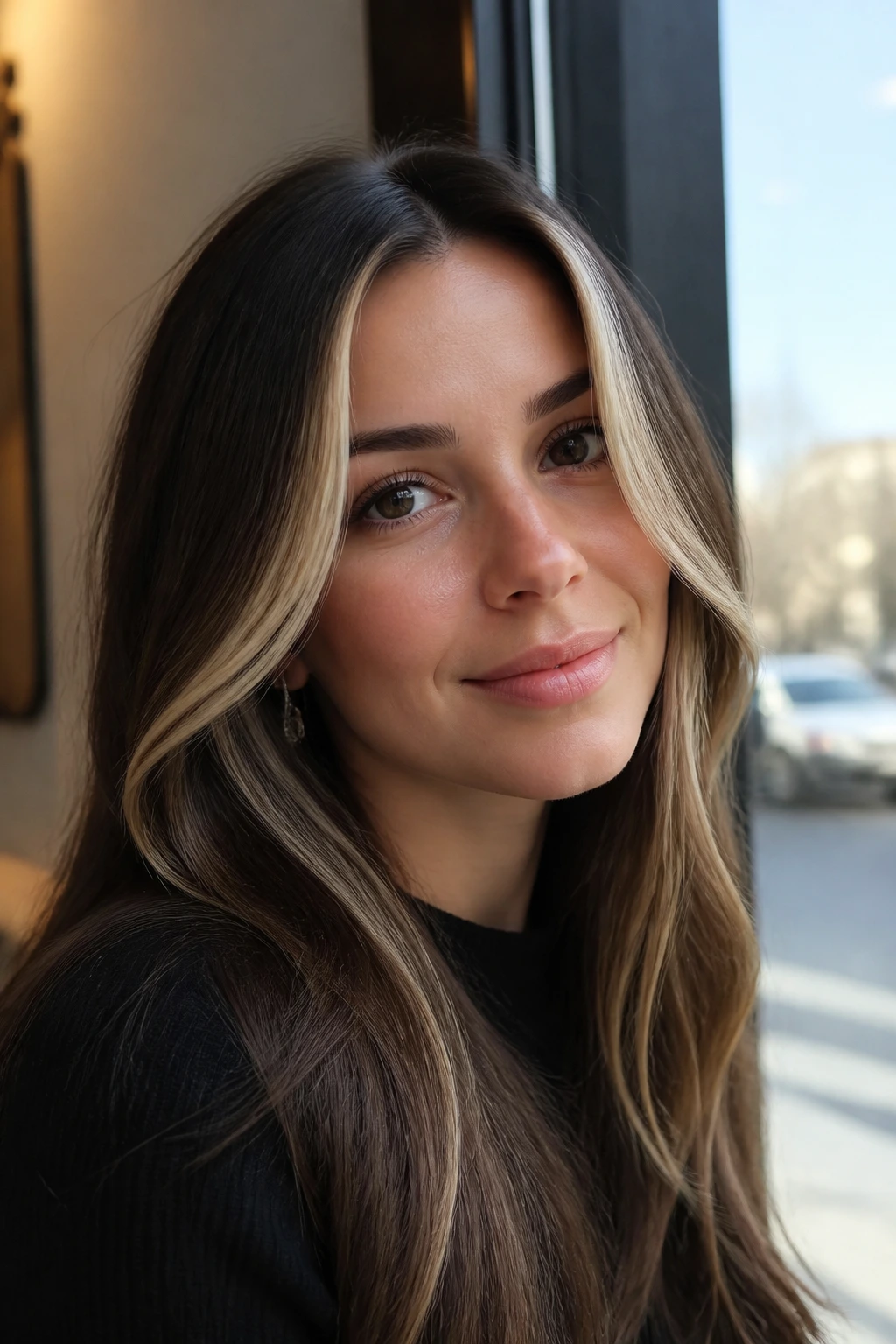
Champagne blonde is not the same thing as a classic golden highlight. It has a cooler, creamier edge, which makes it a strong choice for brown hair that needs brightness but not warmth. The front reads lighter in a way that feels clean and crisp.
Compared with caramel, champagne leans softer on the yellow side and a little more polished on the beige side. That makes it work well on neutral or cooler skin, and it can also balance brunette hair that already pulls red. If the base is dark brown, keep the pieces thin and make the finish creamy, not icy. Pure white blonde at the front can look disconnected fast.
This is one of those colors that looks best when the haircut is tidy around the face. Curtain bangs, long layers, or a blunt bob all handle it well. The real trick is tone. If the champagne is too pale, it can flatten the skin; if it’s too warm, you lose the point.
7. Copper Glow on Brown Hair
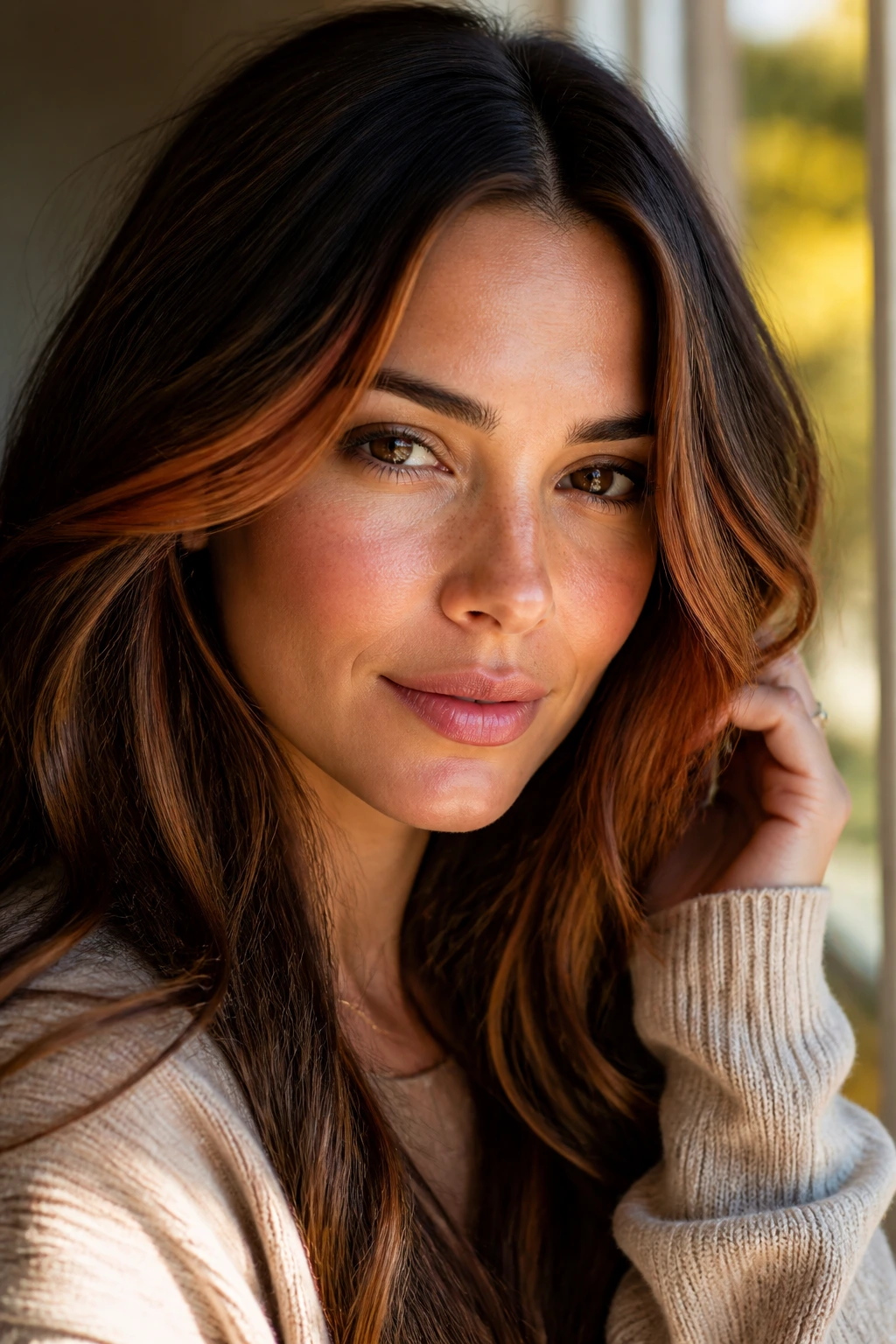
Copper glow can be gorgeous on brown hair, but it has to be placed with a light hand. Too much and the front starts looking like a different head of hair. Just enough and the whole face looks warmer, brighter, and more alive.
Where to Keep It
I like copper most when it lives in the front section and the first few layers around the cheekbone. That keeps the color visible where it matters, while the rest of the brunette base stays deep and rich. On medium brown hair, copper can lean spicy; on dark brown hair, it reads more like a burnished glow.
- Best on warm or neutral skin tones
- Ask for a copper-brown blend, not a bright orange-red
- Keep the front pieces slightly softer near the root
- Use a color-safe shampoo so the tone does not wash out too fast
Copper fades faster than beige or caramel, so it helps to treat it like a tone you maintain on purpose, not something you can forget about for months. If you like a little drama, this is one of the prettiest ways to get it.
8. Mushroom Beige Face Frame
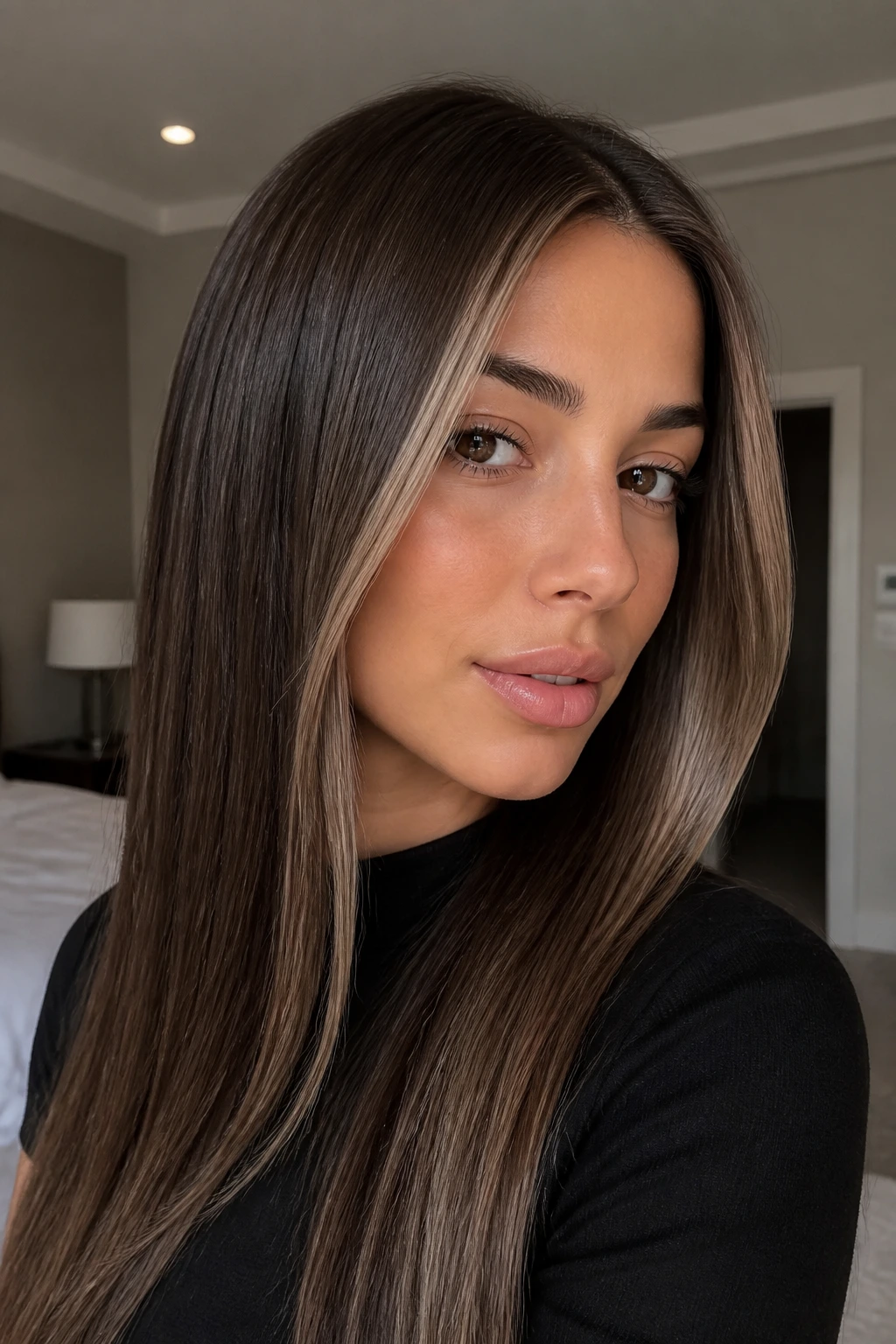
If caramel feels too warm, mushroom beige is the quieter move. It’s a cool-brown, taupe-leaning highlight that gives brown hair shape without adding gold. On some brunettes, that cooler tone is the difference between “nice color” and “why does my hair look orange?”
This is a strong option for anyone whose base already pulls red or brass. The mushroom tone keeps the front calm and smoky, which works especially well with straight styles, sleek blowouts, and darker makeup. It also helps the face frame blend into the rest of the hair instead of sitting on top of it.
I’d use this when the goal is subtle definition, not a sun-kissed look. It’s a contour, not a spotlight. If you want the front to stand out from across the room, choose something brighter. If you want the hairline to look expensive and controlled, mushroom beige does the job with less fuss.
9. Espresso Base with Bright Panels
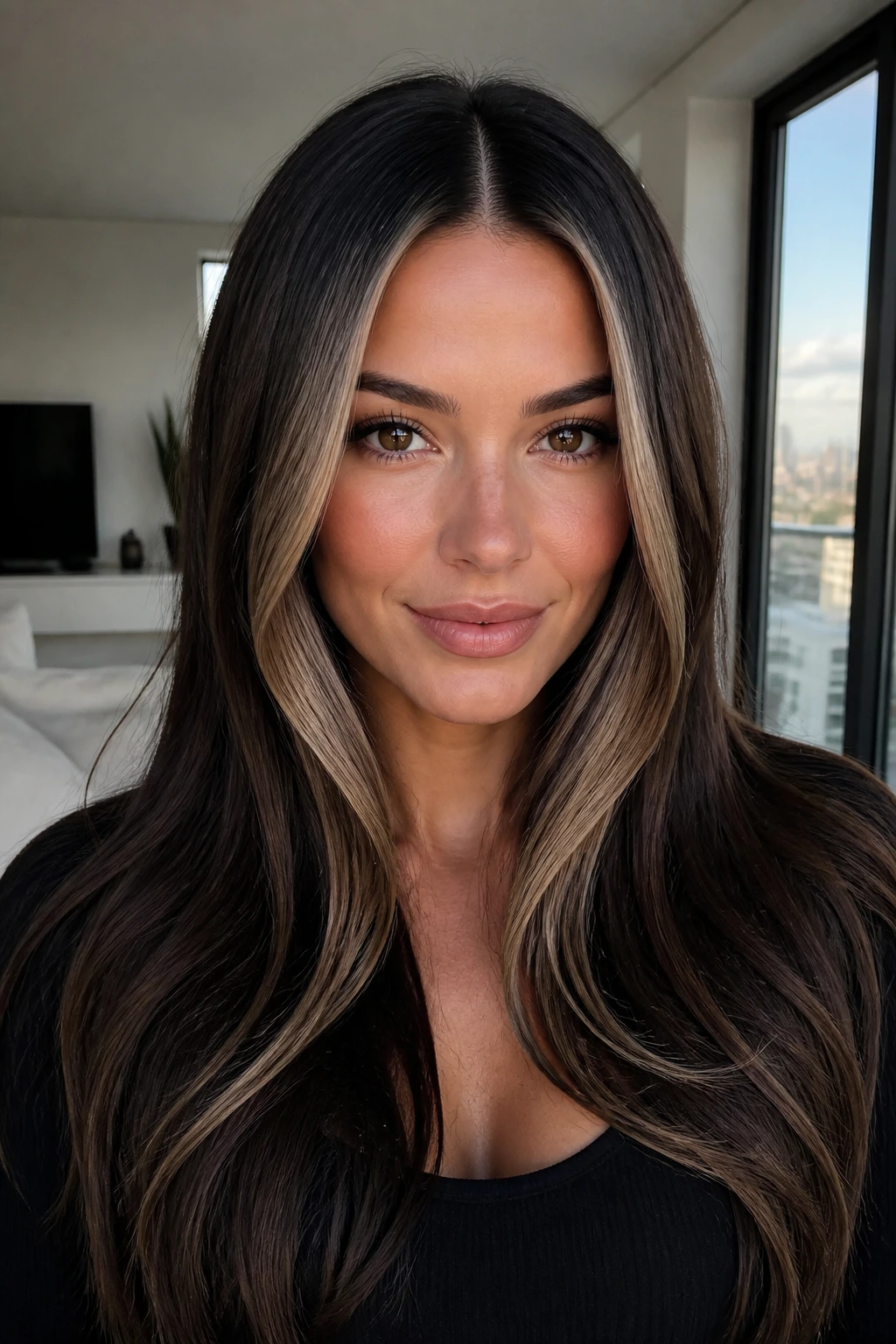
Sometimes you need the front to be the star. Espresso with bright panels is for that mood — deep, dark brown everywhere else, then a clear burst of lighter pieces around the face.
Unlike softer babylights, this version has more contrast. The front panels can be a full inch wide or a little more, especially if the hair is thick and the cut has long layers. That extra contrast makes the features pop, and it looks especially sharp with a middle part or a smooth blowout.
Best Use Cases
- You want visible change, not a whisper
- Your brown base is very deep
- You wear your hair in ponytails, buns, or sleek styles
- You do not mind a shorter salon interval for touch-ups
This is not the lowest-maintenance choice on the list. Roots will show more clearly, and the panels need good toning to avoid going yellow. Still, when it’s done well, it gives brown hair a confident, graphic look that feels clean rather than busy.
10. Mocha Curtain-Bang Highlights
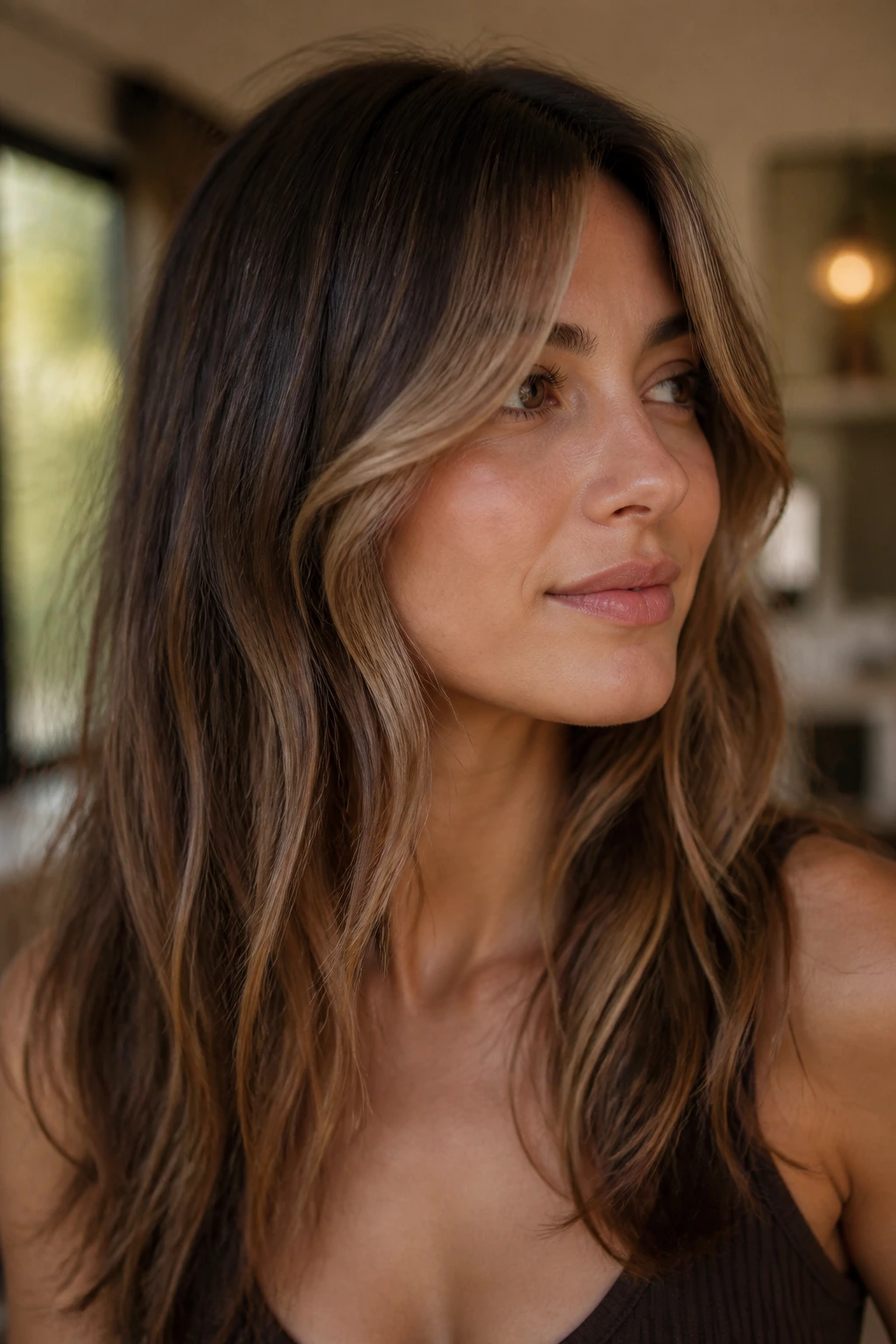
Curtain bangs change the rules. If the front of your haircut already falls across the face, the highlight needs to work with that movement, not fight it.
That’s where mocha highlight placement shines. The lighter pieces sit inside the curtain fringe, then continue down through the first layer beside the cheeks. The result is softer than a chunkier money piece, but it still gives the eyes a frame. On brown hair, this often looks better than a straight stripe because the bangs themselves break up the color.
How to Place the Light
- Brightest pieces should live in the bend of the bang, not only at the root
- Keep a few lighter strands near the cheekbone for balance
- Blend the temple pieces into the longer layers
- Ask for a mocha or latte tone if you want warmth with depth
This style also grows out nicely because the bangs keep shifting the way the color shows. One day the frame looks bold, the next it looks soft. That little bit of movement is half the charm.
11. Auburn Face Framing for Warm Brown Hair
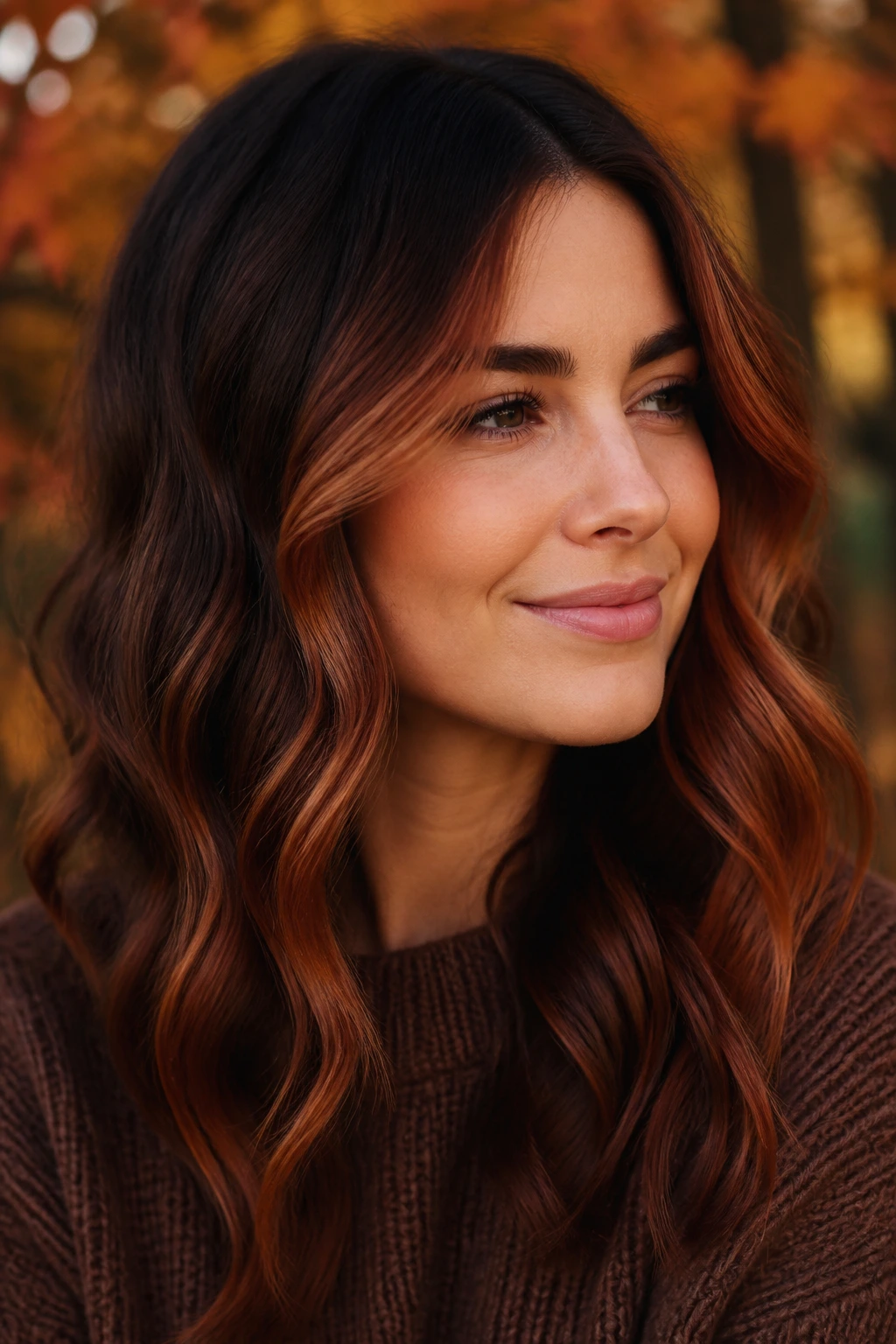
Auburn is one of the prettiest choices when brown hair already has warmth in it. It brings red-brown richness to the front without turning the whole head into copper or cherry. On chestnut, mahogany, and deep brunette bases, that matters a lot.
The shade works because it echoes what’s already in the hair instead of fighting it. A warm brunette base with auburn face-framing pieces looks layered and full, especially if the colorist keeps the saturation soft. If the red is too strong, the front can feel loud. If it’s muted enough, it looks like the hair has more depth than before.
I like auburn most when someone wants color that feels cozy and a little dramatic, but not flashy. It works well with brown eyes, freckles, and warm-toned makeup. It can also make the skin look less flat on days when you are not wearing much makeup, which is a nice small thing. Small things matter in hair color.
12. Sandy Blonde Front Pieces for Light Brown Hair
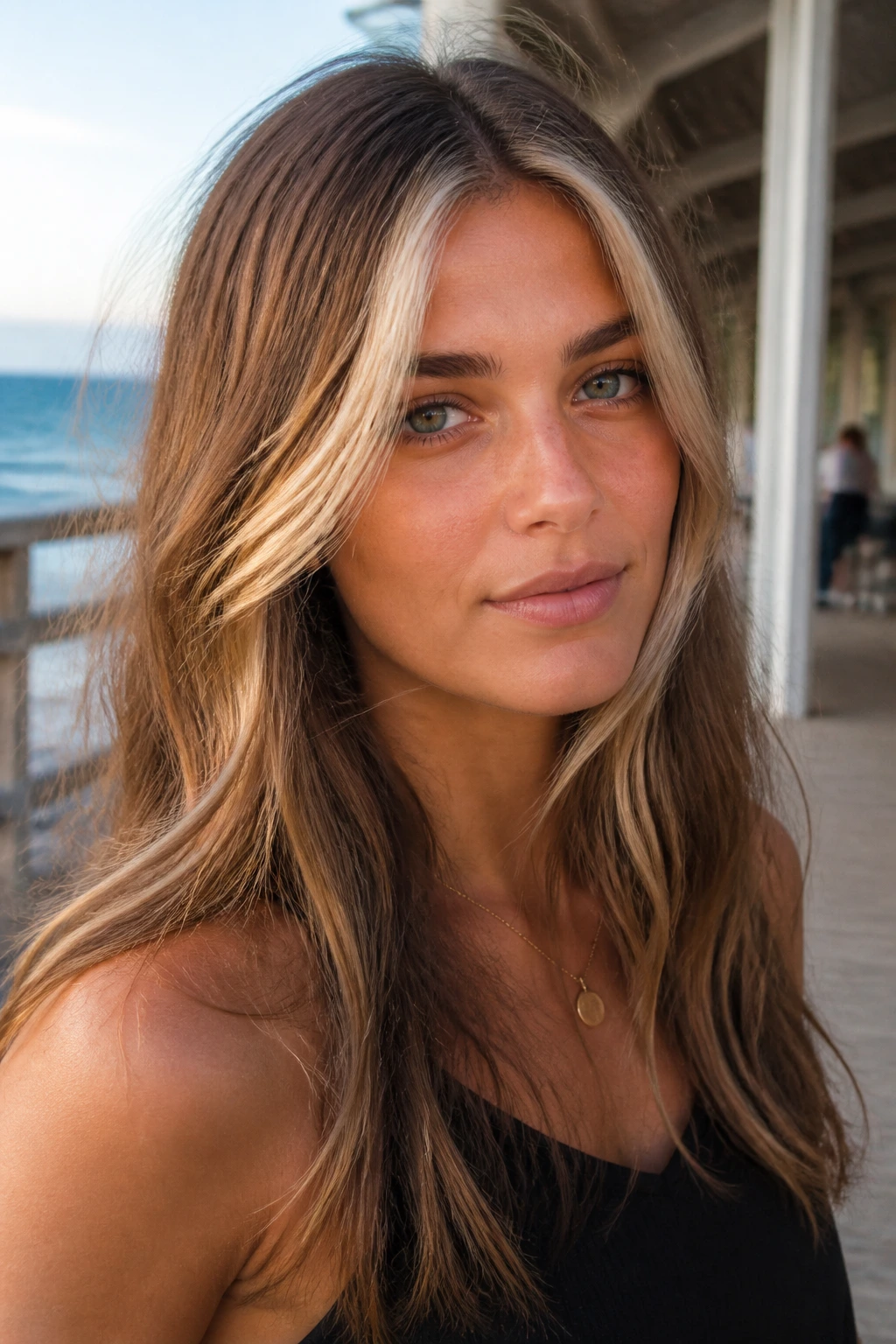
Sandy blonde is lighter than caramel, but it still stays grounded. That makes it a smart move for light brown hair that wants brightness at the front without jumping all the way to pale blonde.
This works best when the base is already around level 5 or 6, because the contrast stays soft. Ask for pieces that are only two to three levels lighter than your natural brown, and keep the tone beige rather than yellow. Sandy blonde has a dry, airy feel that suits beachy waves, long lobs, and loose layers around the face.
What to Ask For at the Salon
- Fine pieces at the temple and just behind the front hairline
- A beige or sandy toner, not a bright gold one
- Softer ends so the front doesn’t look blocky
- A little extra light around the part if the hair is dense
This is one of the easiest ways to lighten brown hair without losing the brunette identity. The root stays brunette, the front feels lifted, and the whole cut looks a touch lighter around the edges.
13. Rose Brown and Peachy Caramel Blend
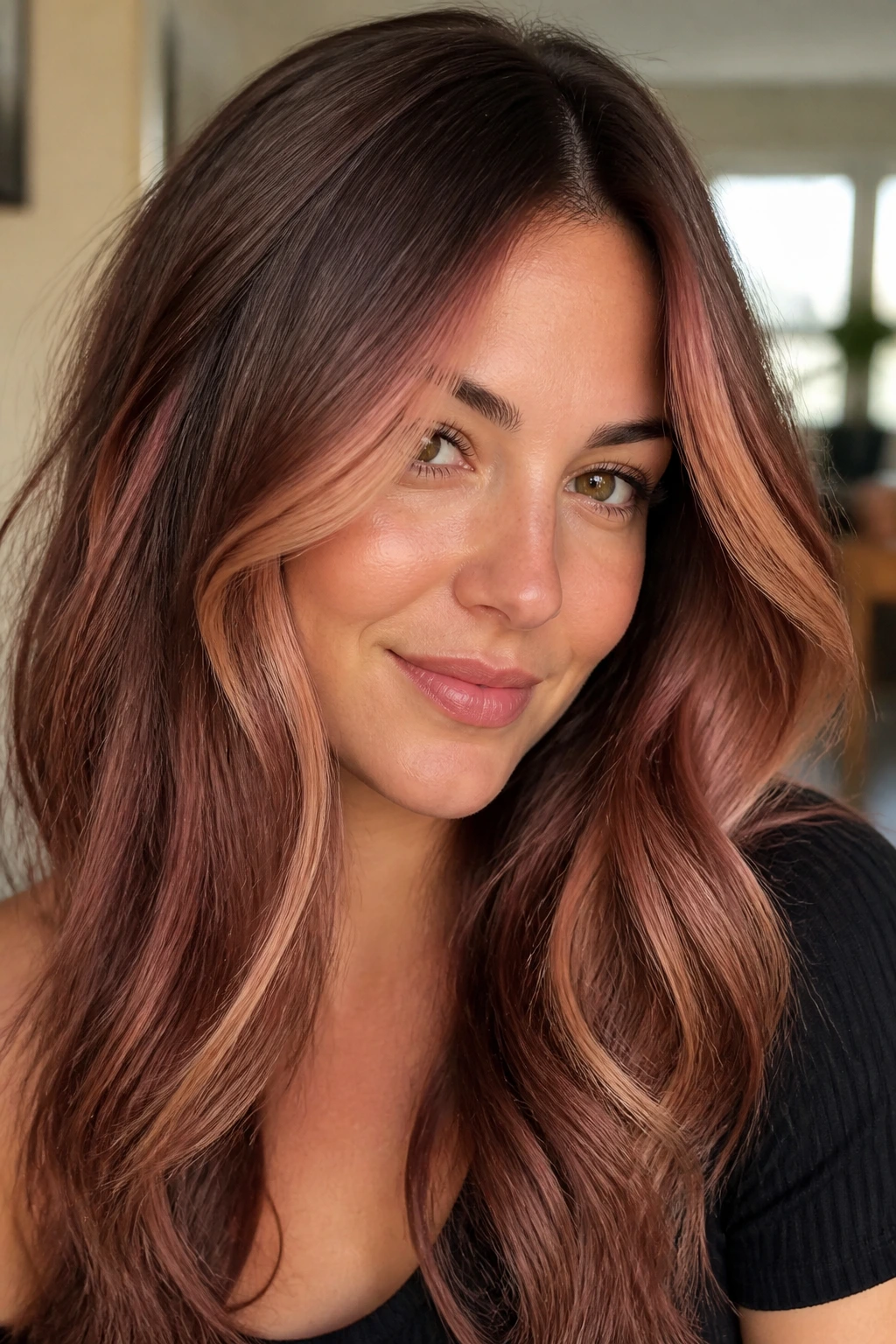
Can brown hair wear a pink-leaning highlight and still look believable? Yes, if the tone stays muted. Rose brown with peachy caramel pieces around the face gives brown hair a softer, almost flushed glow instead of a bright fashion color.
The key is keeping the pink side dusty and the caramel side gentle. If the rose tone gets too vivid, it can look disconnected from the base. When the balance is right, though, it makes the skin look warm and the hair feel richer. It’s a nice option for anyone bored with standard blonde or copper but not ready for a wild change.
How to Keep It Wearable
Use a colorist who can blend a soft rose gloss over lightened front pieces, then warm it back up with peachy beige at the ends. That keeps the color from going bubblegum. It also helps if the rest of the hair stays neutral brown, because the contrast makes the front look intentional.
This shade is not the loudest choice here. That’s the point. It has a little personality and still feels grown-up.
14. Ribbon Highlights for Curly Brown Hair
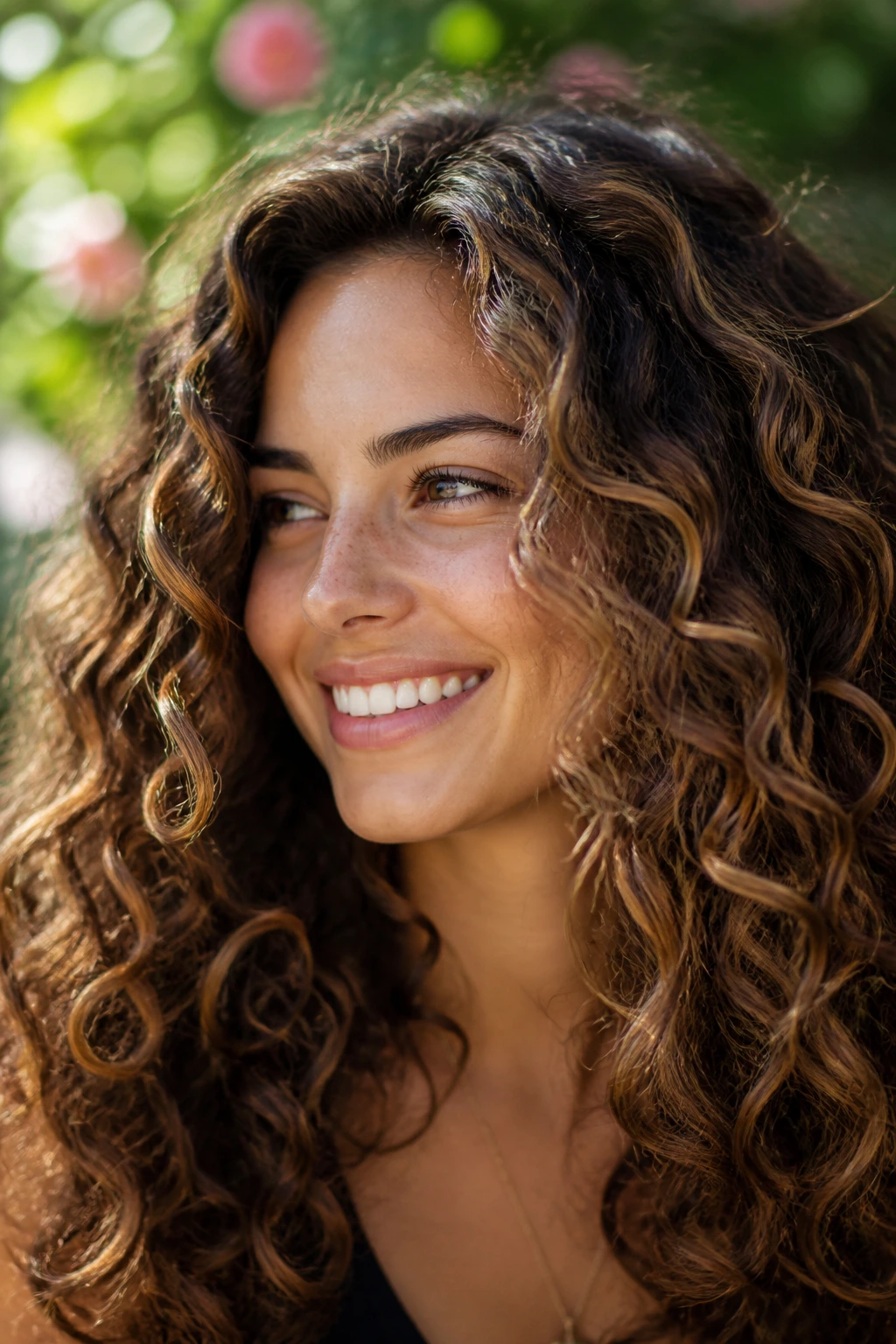
Curly hair needs the light to follow the curl, not cut across it. Ribbon highlights do that better than blunt front panels, because they move with the pattern of the curls and show shape instead of stripes.
When the hair is brown, the ribbons can sit a little brighter around the face and then soften as they travel back through the first layers. That gives curly hair dimension from every angle. It also keeps the front from looking heavy, which is a common problem when darker curls are one solid shade.
Good Placement for Curls
- Focus brightness on the outer curve of the curls near the face
- Keep some lighter strands under the top layer so the color peeks through
- Avoid placing all the light on one curl clump
- Ask for hand-painted pieces if the texture is loose, or fine foils if the curls are tighter
The nicest part is how the color changes as the curls bounce. A curl that’s half-lit in motion can do more than a full blonde streak ever would. Movement is the whole point here.
15. Shadow-Root Blonde Contour for Dark Brown Hair
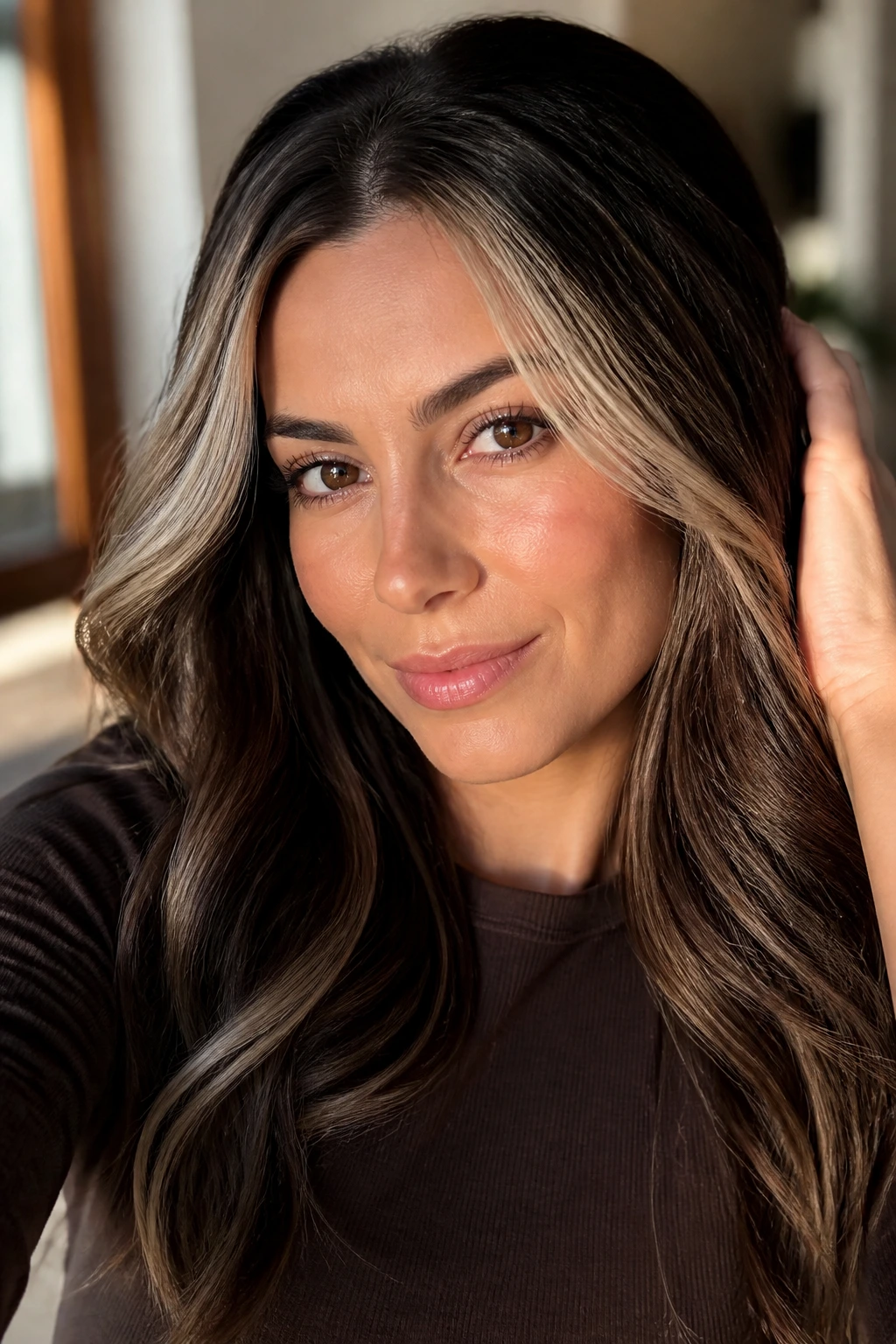
For deep brunette hair, shadow-root blonde contour gives you contrast while keeping the grow-out softer. The root stays dark, the front gets lighter, and the transition feels deliberate instead of abrupt.
This is one of the best options if you want something visible but not high-drama every time your hair grows. Ask for a root shadow that covers the first one to two inches near the scalp, then lighter beige-blonde pieces around the cheekbone and temple. That lets the front brighten up while the rest of the brown stays rich and grounded.
I’d pick this over a full blonde money piece when maintenance matters. The darker root buys you time between salon visits, and the contrast still makes the face look brighter. It’s a smart compromise. Not soft enough for someone who wants near-invisible color, not bold enough to feel costume-y. Right in the middle, which is where a lot of brunettes end up happiest.
Final Thoughts
The best face-framing highlights for brown hair do one simple thing well: they pull light toward the face without breaking the rest of the color apart. That balance matters more than chasing the lightest blonde or the boldest contrast.
If you want the safest path, start with caramel, honey beige, or babylights. If you want more presence, look at copper, espresso panels, or shadow-root blonde contour pieces. Tone matters more than a big jump in lightness. A well-placed half-shade can look better than a dramatic lift that fights your base.
Bring a photo of your hair pulled back and one with it worn down. If the front pieces look good in both, you’re close. That little test saves a lot of second-guessing in the chair, and it tells you fast whether the frame is doing its job.
