



Coloring hair with high-contrast shades is a bold move, but it is one of the smartest ways to add dimension to a round face. When your face has soft curves and lacks sharp angles, color placement becomes your most effective tool for creating structure. A jet-black base provides depth and mystery, while red—in all its spectrums—offers the vertical lines and brightness necessary to draw the eye downward and elongate your features.
Most people assume that “slimming” a face is strictly the job of a haircut. While a good cut helps, the way light hits your hair matters just as much. By strategically placing red highlights against a darker background, you essentially map out areas of light and shadow on your head. This technique breaks up the solid, uniform mass of hair that often makes a round face appear fuller than it is.
The combination of red and black is timeless, but it requires a careful approach to avoid looking dated. The secret lies in the execution—blending, placement, and tone. You do not want a chunky, haphazard look unless that is the specific style you are aiming for. Instead, you want intentionality. Whether you prefer a subtle, wine-colored glow or a vibrant, fiery crimson, the following styles are designed to enhance your features while keeping the look fresh and sophisticated.
1. Deep Cherry Money Piece
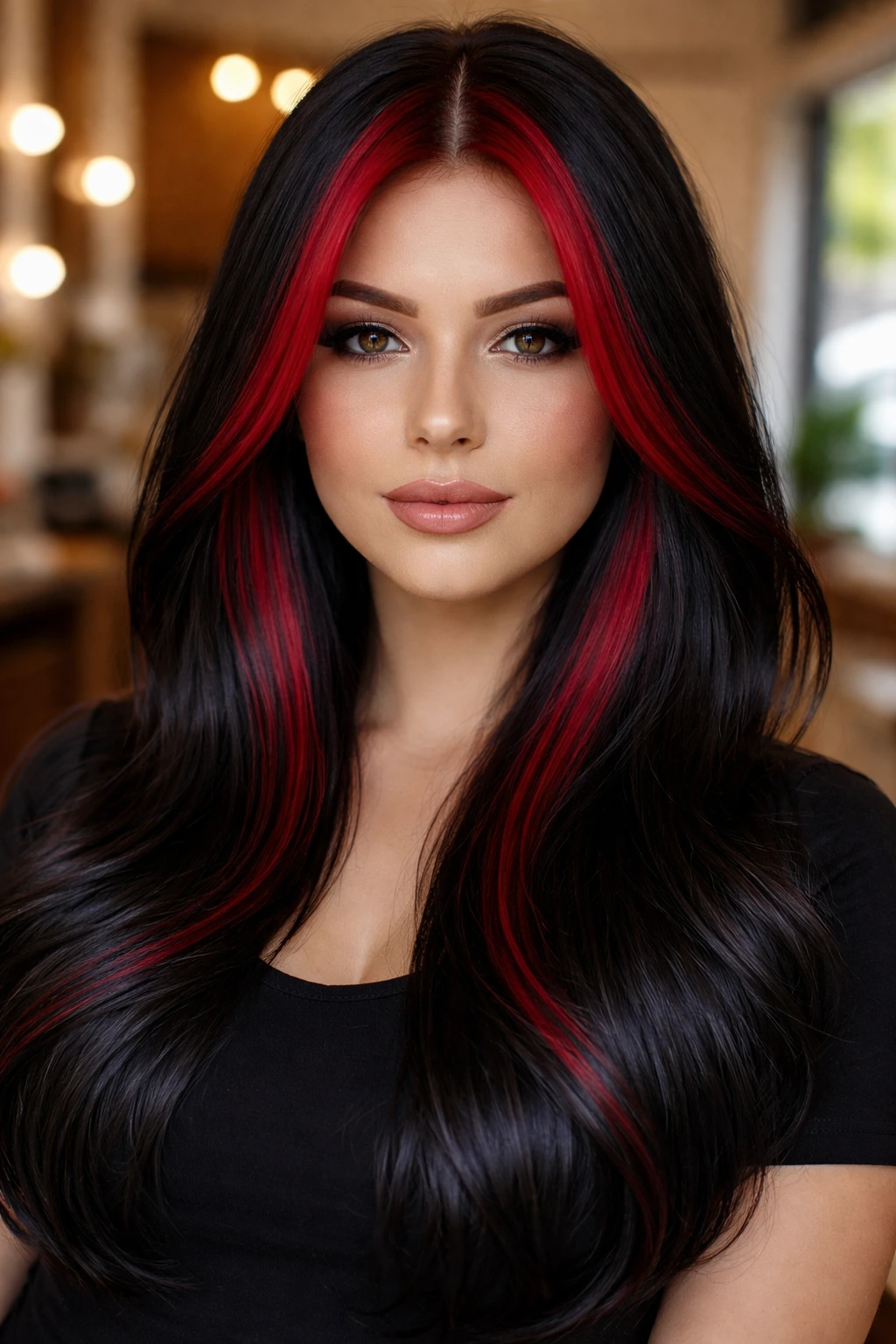
This style is perhaps the most effective way to address the structure of a round face. By placing a concentrated, bright section of cherry red hair directly around your face, you create a sharp vertical line that acts as a curtain. This effectively “cuts” the width of your cheeks, making your face appear more oval.
The money piece technique involves isolating the hairline section. It is bold, but it is also one of the lowest-commitment ways to play with high-contrast color. Because the red is concentrated at the front, the rest of your hair can remain a glossy, low-maintenance black. It draws immediate attention to your eyes and lips rather than the width of your cheekbones. Always ensure the red tone matches your skin’s undertone—cool-toned cherry looks better on pale skin with pink undertones, while warmer, redder cherries suit those with olive or darker complexions.
2. Subtle Burgundy Babylights
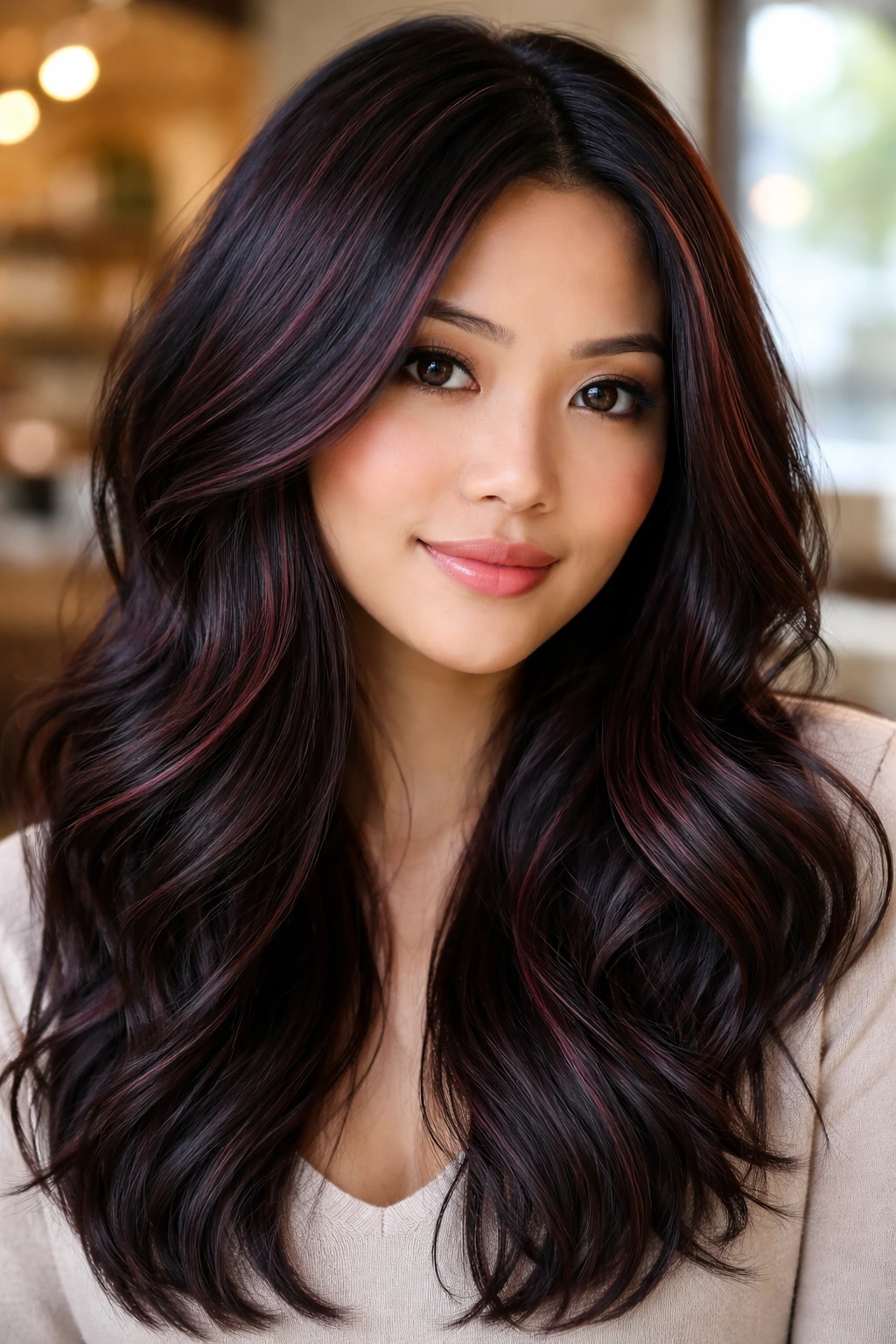
If you are not ready for the shock of bright red, burgundy babylights are a fantastic entry point. Babylights are extremely fine, delicate highlights that are meant to mimic the natural, sun-kissed look of a child’s hair. When executed with a deep burgundy shade against a black base, the effect is sophisticated and tonal rather than stark.
For a round face, these fine highlights are useful because they add texture. A flat, solid black color can sometimes look heavy, dragging the face down. By interspersing hundreds of micro-highlights of burgundy throughout the crown and length, you introduce movement. When light hits these fine ribbons, it creates a sense of airiness. It prevents the hair from appearing as a single, heavy block, which in turn helps lift your features. Consistency is key here; you need a colorist who is willing to take the time to weave very thin sections, or the result will look like streaks rather than a natural, sparkling blend.
3. Fiery Red Face-Framing Strips
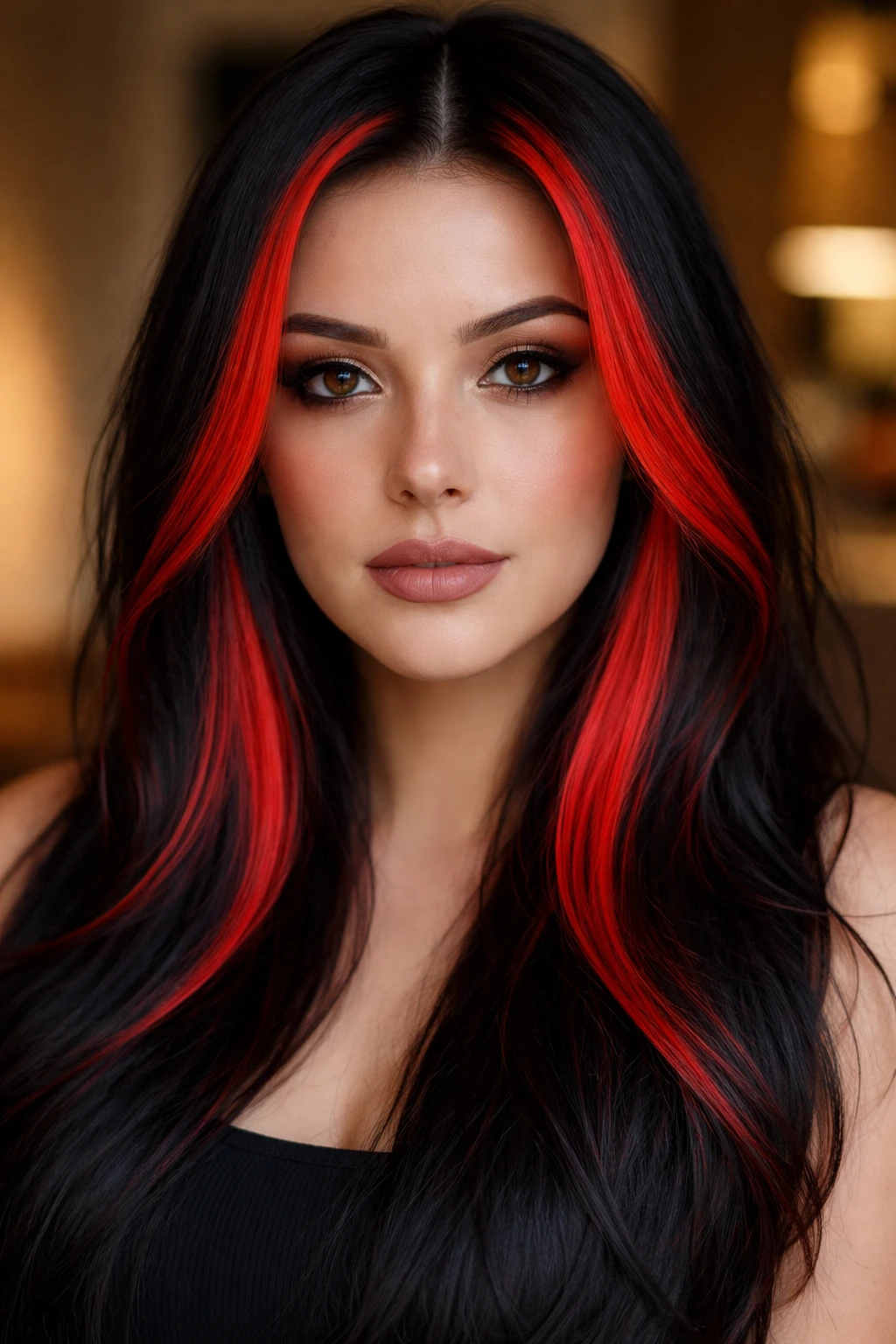
This is the bolder, more intentional cousin of the money piece. While a money piece is often softer, fiery red strips are about high contrast and graphic impact. By slicing thick sections of hair around the face and saturating them in a vibrant, orange-based red, you create a definitive frame.
This works for a round face by creating a stark contrast against your skin. The human eye is naturally drawn to contrast. When the sides of your face are framed by a bright, vertical strip of fire red, the eye focuses on that line, not on the widest part of your jawline. This creates the illusion of a narrower face. Just be aware that this look requires more upkeep. Red molecules are larger than other pigment molecules, meaning they wash out faster. You will need to use a color-depositing conditioner to keep that fire red from turning into a dull, brassy orange after a few washes.
4. Dark Copper Balayage
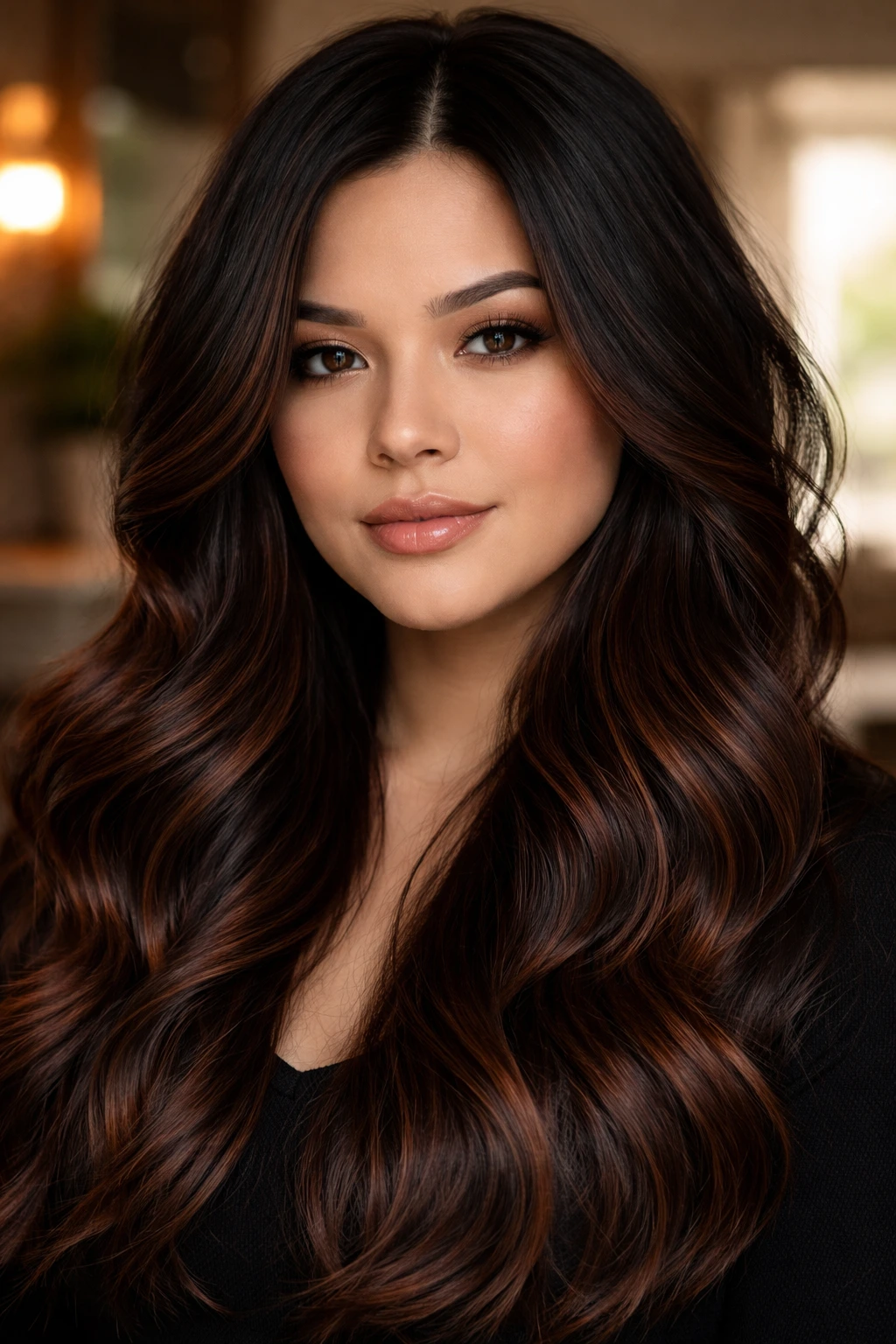
Balayage is the technique of hand-painting color onto the hair to create a graduated, natural-looking effect. When you apply a dark copper or “spicy” red balayage to a black base, the result is moody and elegant. It is less about the striking contrast of strips and more about the interplay of shadow and light.
For round faces, the goal with balayage is to ensure the color starts a few inches away from the roots. By keeping the roots dark and concentrated, you ground the look. As the color blends toward the mid-lengths and ends, it becomes lighter and warmer. This creates a vertical gradient that pulls the focus downward. The warmth of the copper reflects light, making the hair look healthier and more dimensional. Ask your stylist to keep the ends lighter—this weightlessness at the bottom of your hair keeps the overall style from feeling heavy, which is essential for maintaining the right proportion against a rounder jawline.
5. Black to Crimson Ombre
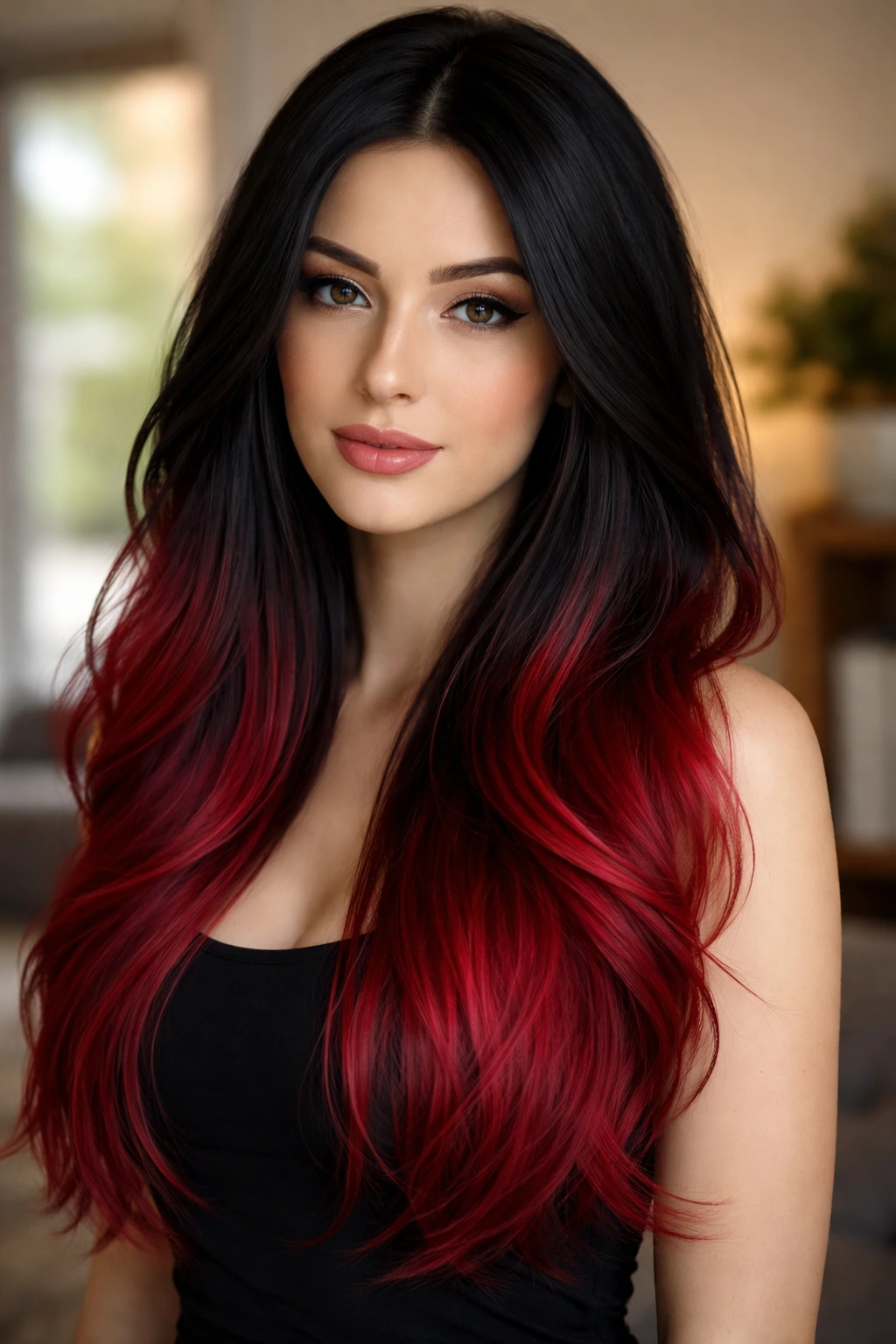
Ombre is a classic for a reason, but the black-to-crimson transition is particularly striking. This style involves a harsh or soft line of demarcation where the black roots transition into a deep, bold crimson. Because the darker color sits at the crown, it provides a sense of gravity, while the crimson ends inject energy and lightness.
This is a great option if you want to experiment with red without putting it too close to your face, as it keeps the face-framing areas dark. However, the verticality of the ombre still helps. By having the “lightness” of the red at the bottom, you draw the eye down, away from the cheeks. It’s a trick of perspective. The blend is everything. If the line between black and red is too sharp and not feathered properly, it will look like you missed a salon appointment. A seamless, melted transition is the mark of professional work.
6. Peekaboo Red Underlights
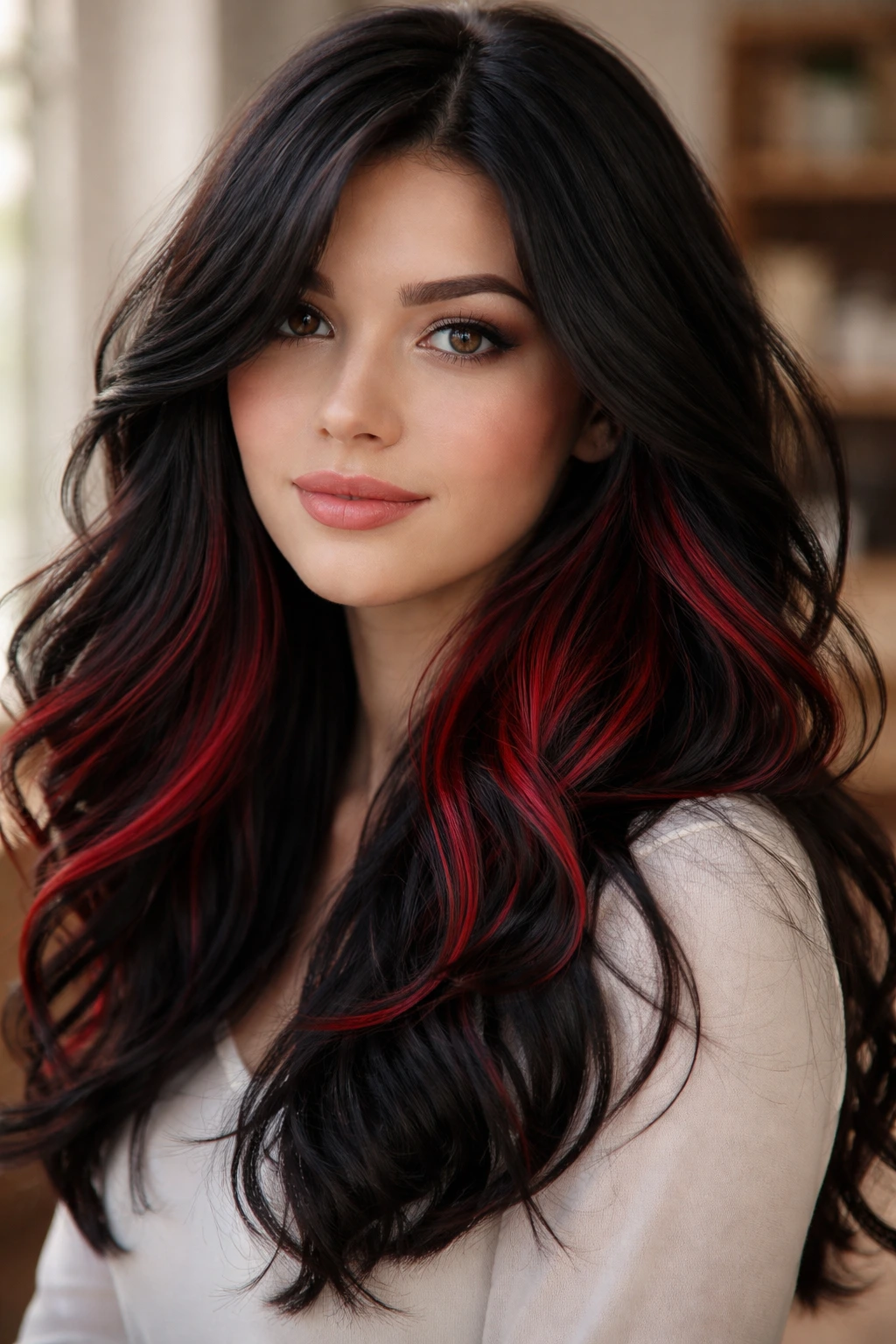
If your professional environment requires a conservative look, peekaboo highlights are your secret weapon. These are placed on the bottom layer of your hair, hidden beneath the top, darker sections. You only see flashes of red when you move, tuck your hair behind your ears, or style it in an updo.
This doesn’t actively change the “shape” of your face in the way a money piece would, but it adds an element of fun and customization. When you do wear your hair down, you can style the top layer of black hair to fall straight, creating long, sleek lines. These vertical lines are the best friend of a round face, helping to create the illusion of length. When you do have the red visible, it adds a touch of brightness that can warm up your complexion. Keep the peekaboo section saturated. Since it’s hidden, people might assume it’s easier to maintain, but dark hair requires a good lift to show red, so be prepared for a bleaching process in that section.
7. Vibrant Ruby Chunky Highlights
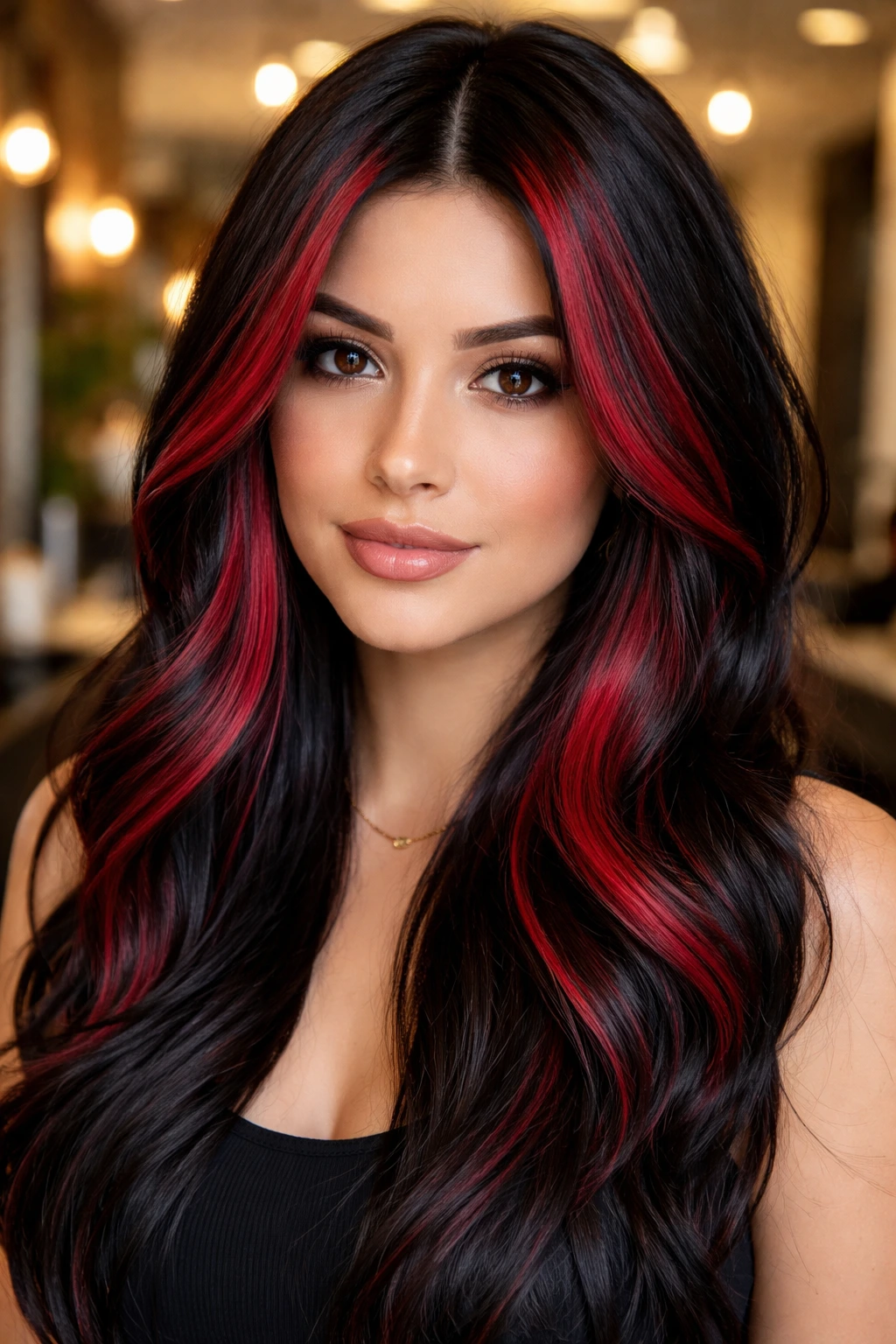
We are seeing a return to chunkier, more defined highlights, and a vibrant ruby red is the perfect partner for black hair. This is not about delicate blending; it is about deliberate, visible ribbons of color. Think of it as a modernized version of 90s coloring techniques.
For someone with a round face, chunky highlights are a powerful tool if placed vertically. Ask for “slices” rather than “weaves.” Slices create solid blocks of color, which can be manipulated to frame the face. If you place a few thick ruby slices starting from the part and moving toward the ears, you create vertical channels that break up the width of the face. Use a gloss treatment. High-contrast, chunky colors can sometimes look a bit “DIY” if they aren’t shiny. A clear gloss seals the cuticle and makes the ruby pop against the black, giving it a high-end, editorial finish.
8. Soft Mahogany Weave
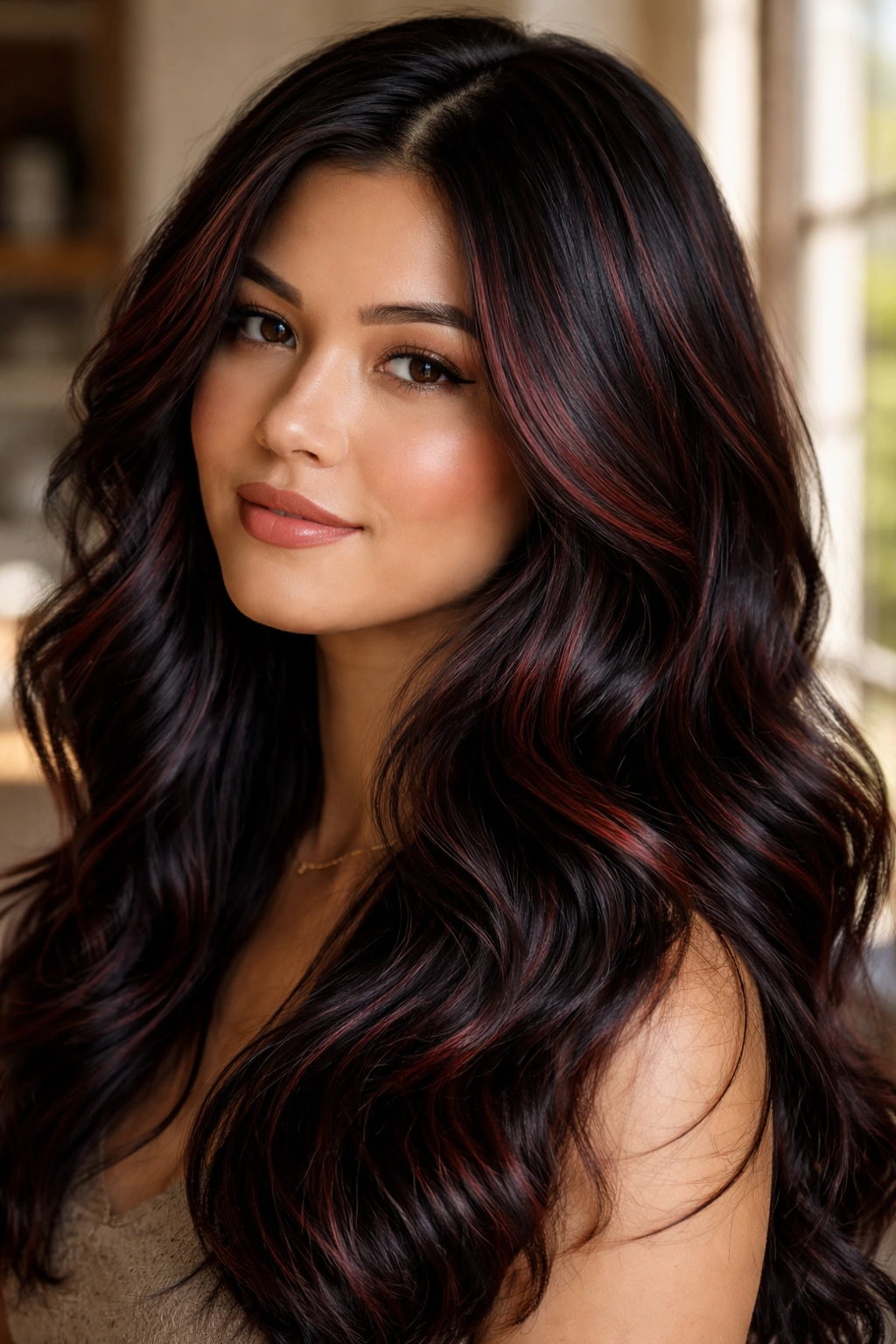
If bright, fire-engine red feels too aggressive, mahogany is your go-to. Mahogany is a deep, purplish-brown red. It is understated, professional, and incredibly rich. When woven into black hair, it looks almost like a secret—it’s invisible in low light but glows brilliantly in the sun.
This works for a round face by adding depth and texture without the harshness of a lighter red. Because it is a darker shade, it creates a subtle shift in color that makes the hair look thicker and fuller. If you have fine hair, the added texture helps, but ensure the highlights are placed throughout, not just on the top layer. Mahogany is a cool-toned red, which makes it surprisingly versatile for different skin tones. It provides the depth of black with the warmth of red, making it a safe yet stylish choice for anyone wary of going too light.
9. Deep Plum Ribbons
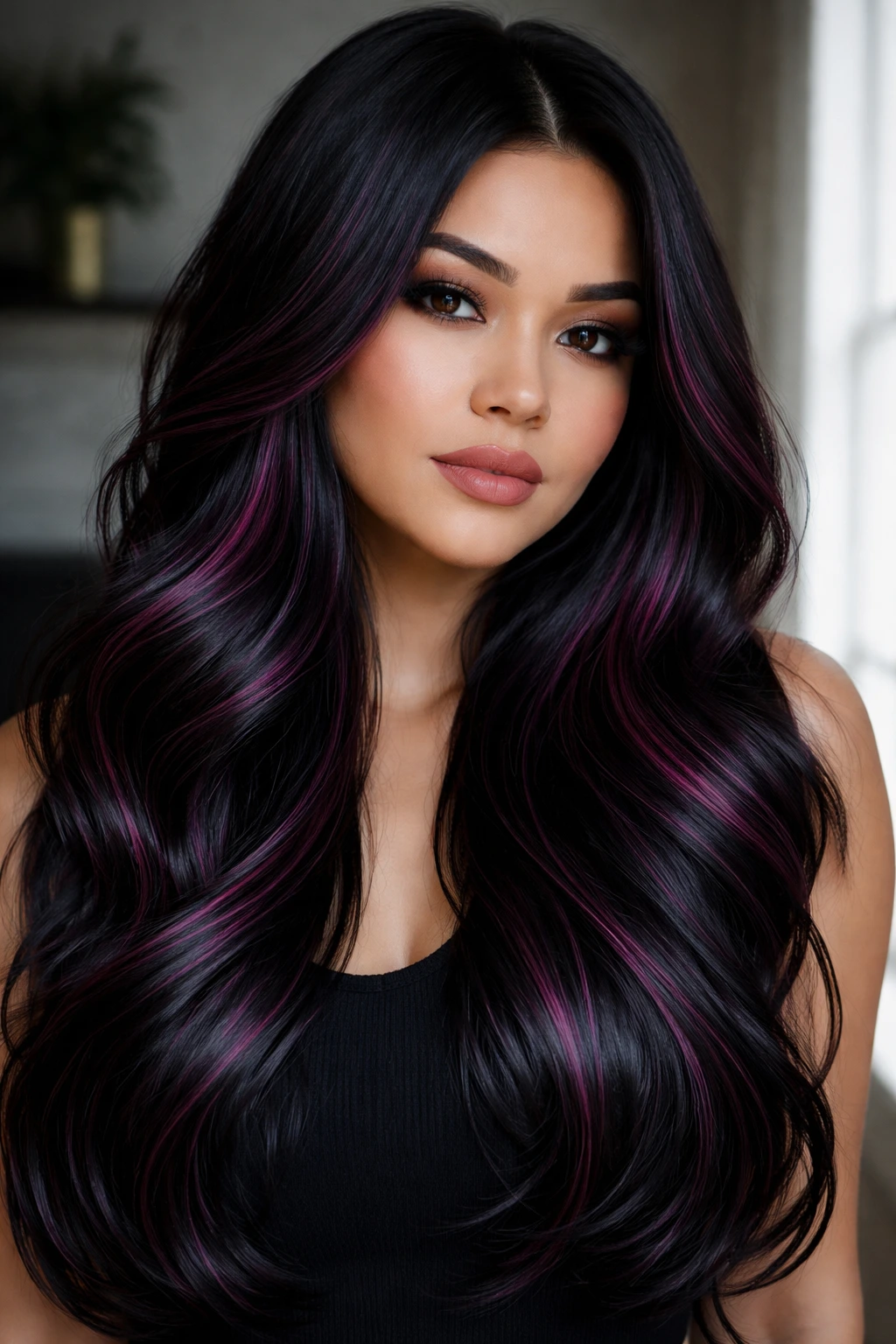
Plum is a red-violet hybrid that pairs beautifully with black hair because they share a similar depth. This is a very sophisticated look. It’s less “pop-star” and more “chic, modern aesthetic.”
What makes this work for round faces is the cool-toned nature of the plum. It tends to look very intentional and sleek. Because it blends so well with the black base, it creates a monochromatic look with hidden depth. When you have a solid black head of hair, the light just bounces off it. With plum ribbons, the light is caught by the color, creating a more dynamic appearance. This prevents the hair from flattening out against the sides of your face, which is vital for softening roundness. Be careful with fade. Plum can turn into a muddy brown if not maintained with a violet-based shampoo.
10. Blended Red-Black Sombre
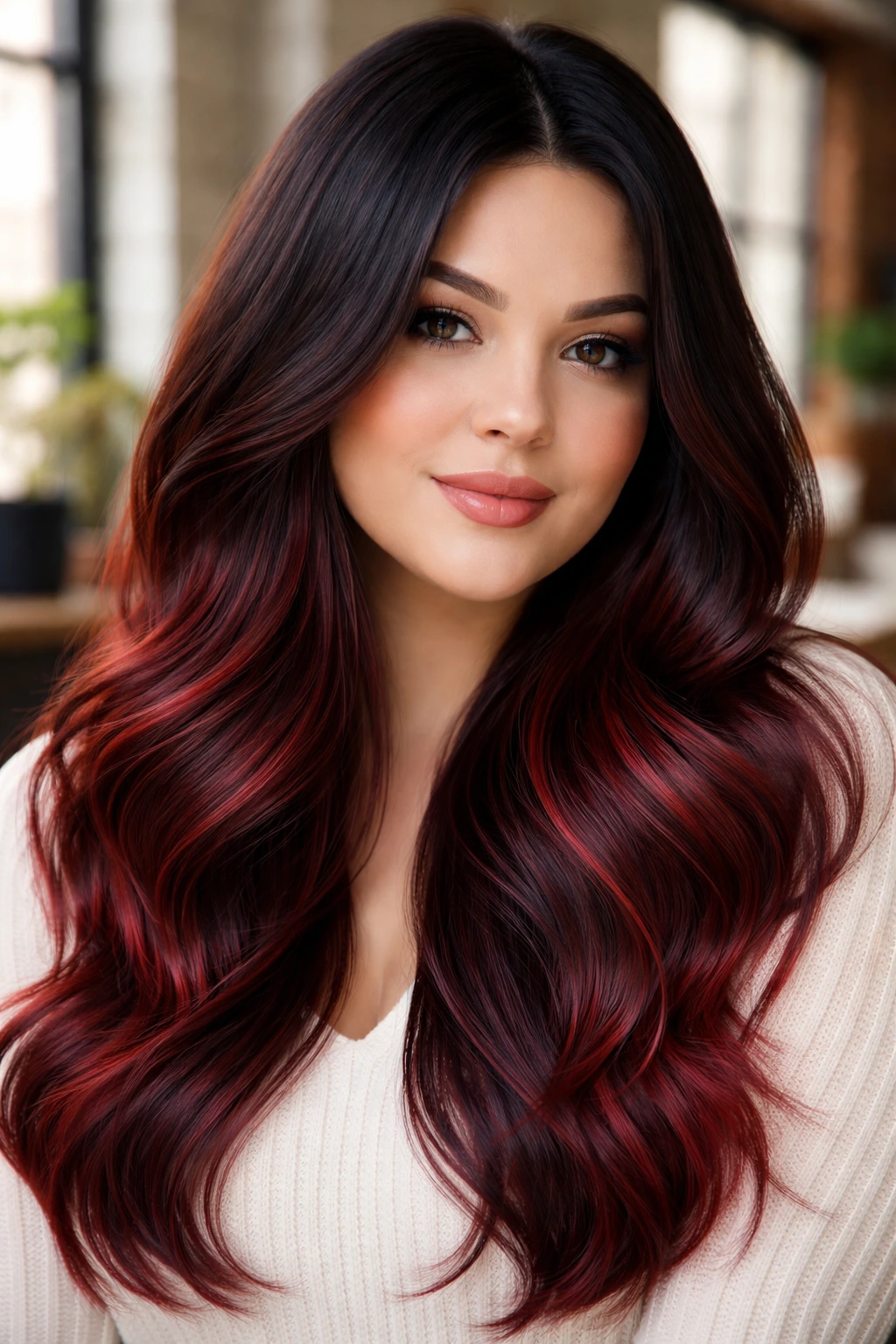
Sombre is essentially a “soft ombre.” It is much more natural and subtle, perfect if you want a low-maintenance look that won’t require a touch-up every four weeks. The red is blended into the black mid-way, and the transition is so gradual that it’s almost undetectable.
This is excellent for round faces because it keeps the hair looking soft. Harsh lines can sometimes exaggerate the roundness of the face, but the soft, diffused look of a sombre provides a blurred edge. This softness extends to your features, making the whole look feel gentle and flattering. Go for a darker red like a cranberry or dark currant. This keeps the contrast low-key and luxurious. It’s the kind of color that looks expensive and well-cared for, which is always the best aesthetic choice.
11. Crimson Halo Highlights
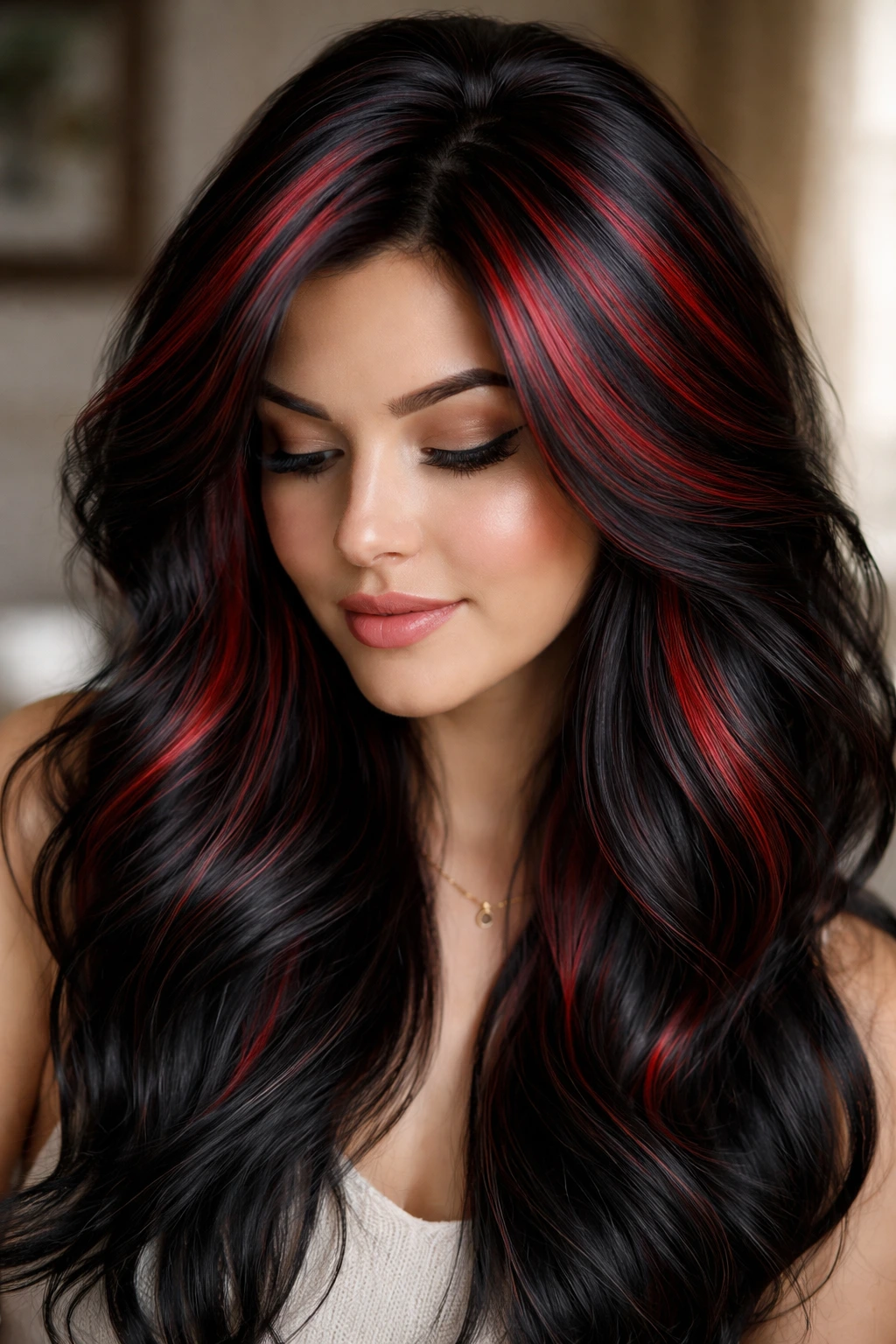
Halo highlights focus on the crown of the head. By adding crimson ribbons to the top layer, you create a “halo” of color. When the light hits your head, the crimson illuminates the top, while the bottom layers remain dark.
This is a clever optical trick for a round face. By drawing attention to the top of the head, you create a sense of height. When the eyes are drawn upward, it elongates the perceived shape of the face. It pulls the attention away from the jawline and up toward the eyes and forehead. Avoid putting the halo highlights too close to the front hairline unless you are specifically doing a money piece. Keep them slightly set back to create that volume-at-the-crown effect.
12. Glossy Black Base with Red Tips
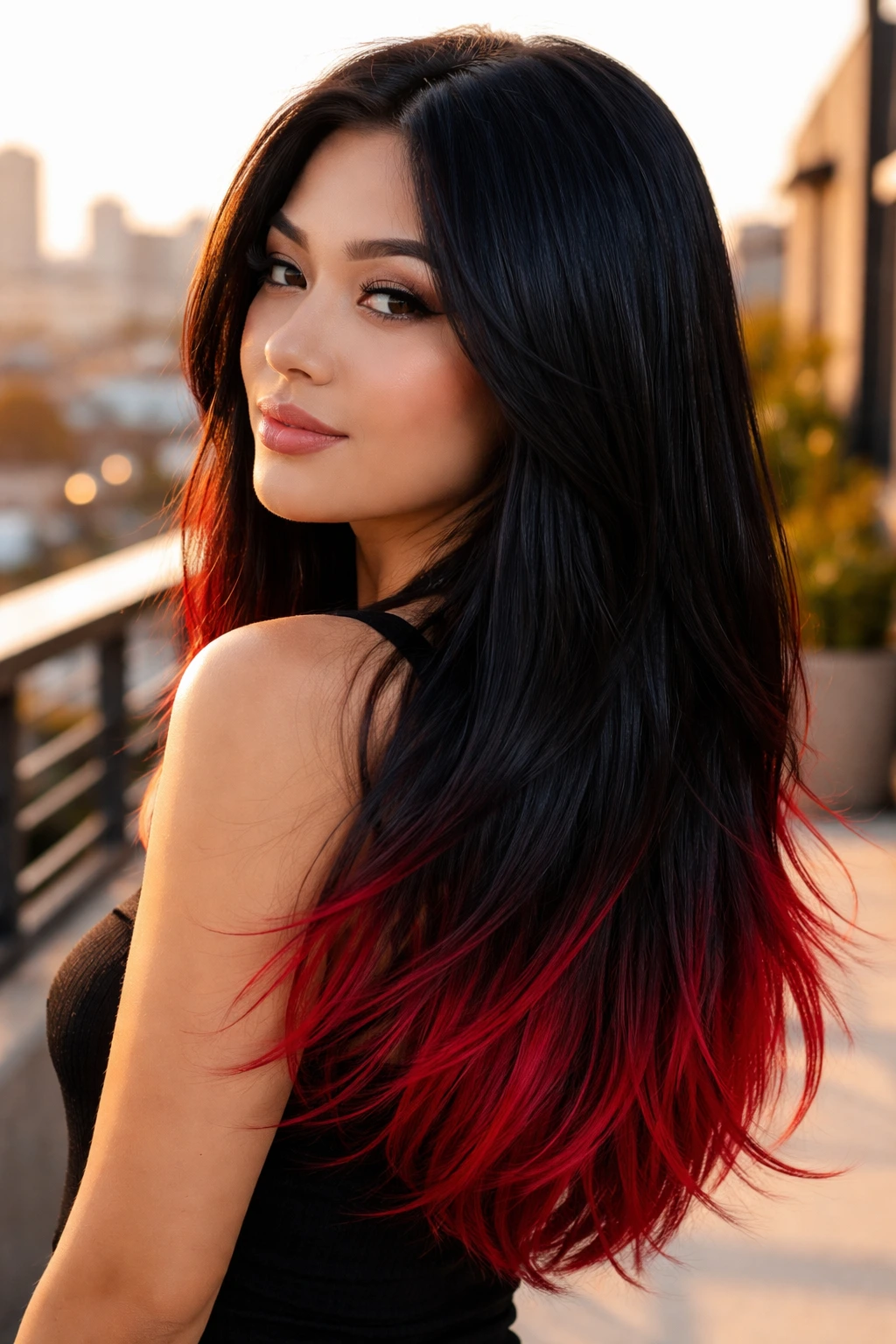
This is a minimalist approach. You keep the entire head, including the face-framing sections, a solid, rich black. You only introduce the red at the very ends of the hair, perhaps the last three or four inches.
Why does this work for round faces? It’s all about the ends. If you have long hair, having bright red ends draws the eye down to the bottom of the style. It creates a weighted line at the bottom, which effectively adds length to your silhouette. It’s a very specific look, and it works best on straight hair. If you have curls, the red tips might just blend into the rest of the hair. Ensure your ends are healthy. Red hair color will show split ends more than black. If your tips are damaged, the red will look fried and dull. Get a trim before committing to this color placement.
13. Dark Raspberry Face-Framing
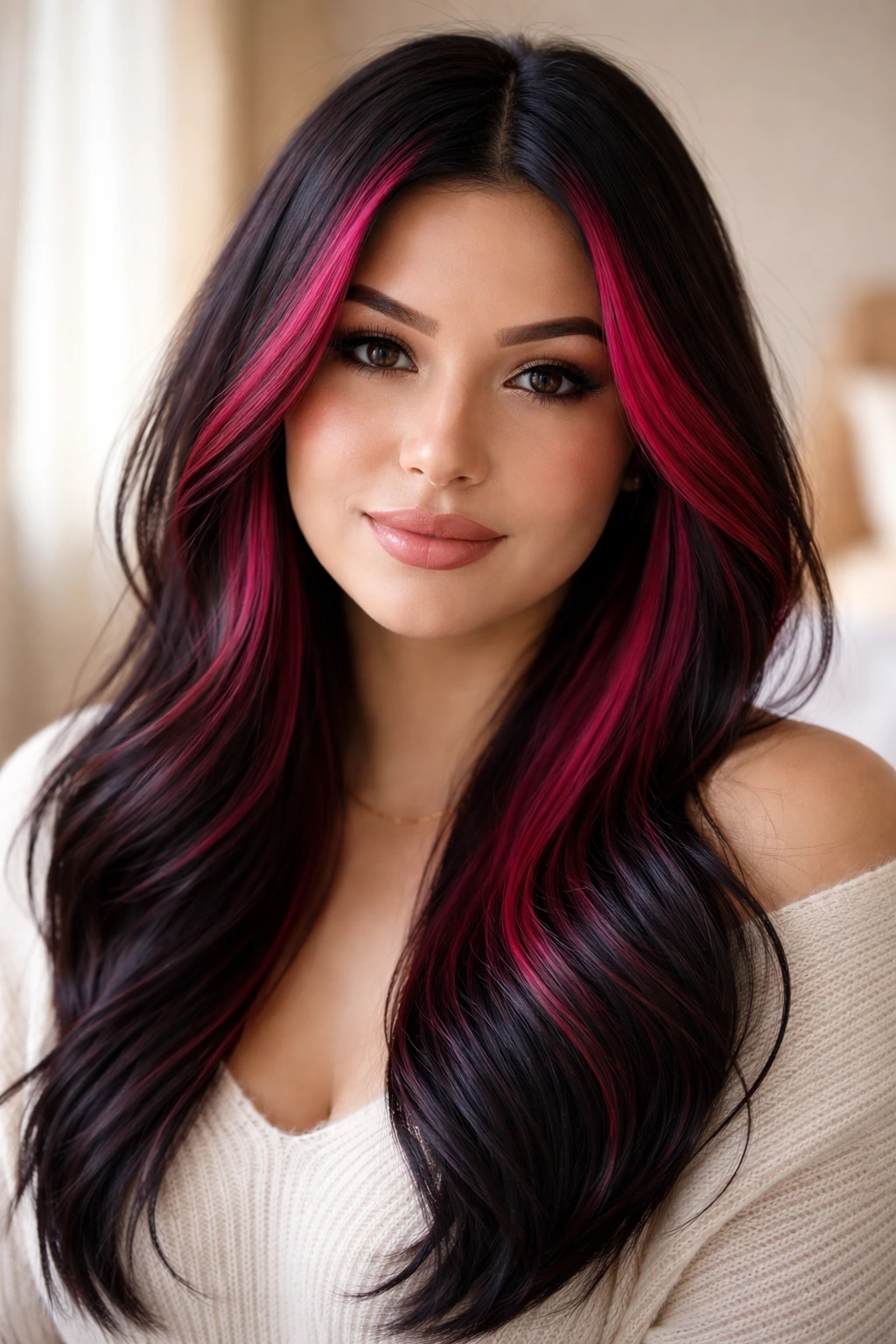
Raspberry is a vibrant, slightly pinkish-red that looks stunning against a black base. Similar to the money piece, this focuses on the face-framing sections, but it feels more playful and youthful.
For round faces, this is excellent because the raspberry shade is quite bright. It acts as a highlighter for your skin. It brings a lot of life to the face, which can help detract from a round jawline. When you have a bright color next to your face, it changes how your skin tone is perceived, often making it look more radiant. Coordinate with your wardrobe. This is a bold, cool-toned color that will clash with certain warm-toned outfits (like oranges or earthy yellows). If you have a neutral or black-heavy wardrobe, this will look perfectly intentional.
14. Dimensional Cherry Cola Weave
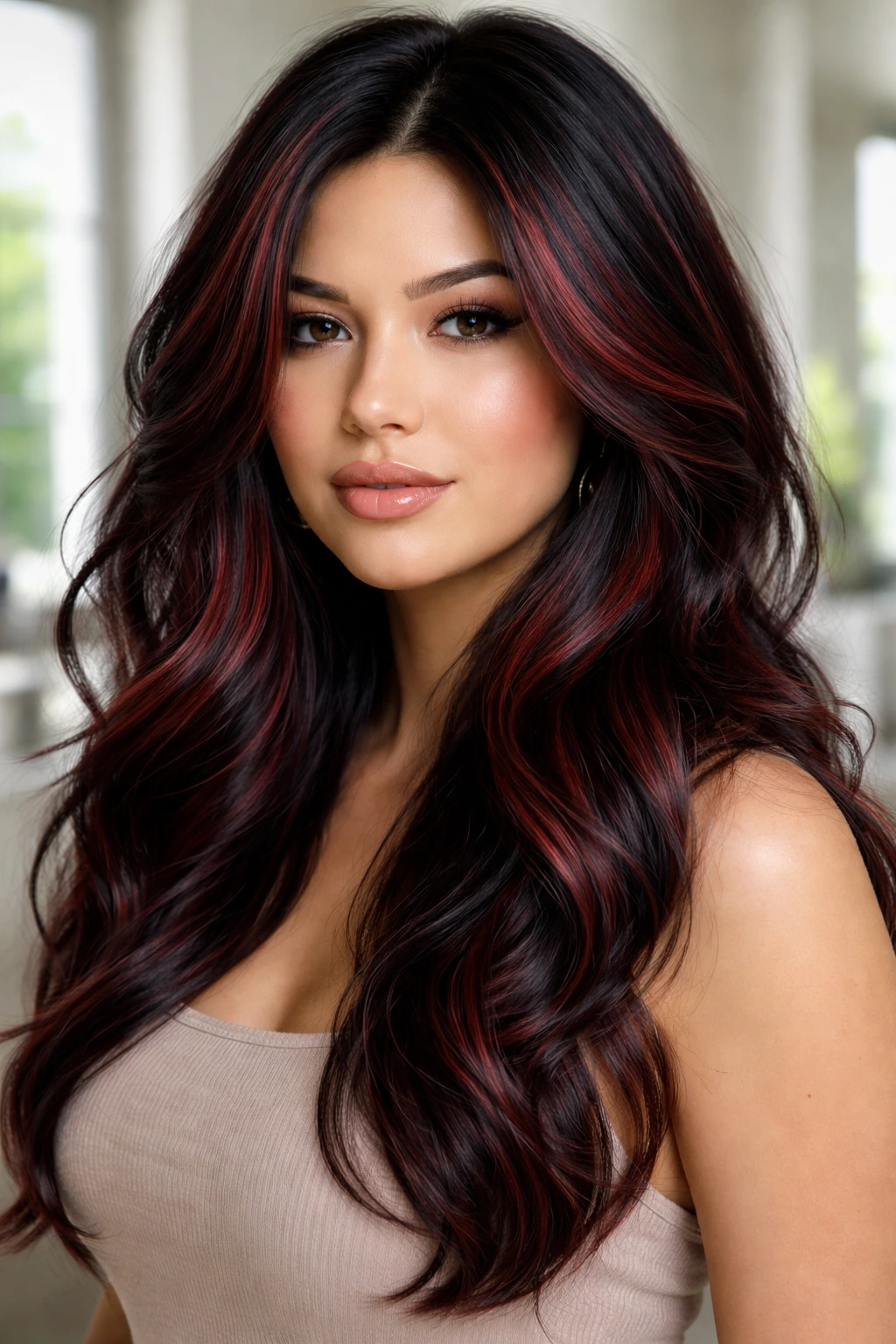
The “cherry cola” trend is a sophisticated mix of deep cherry red woven into a dark, cola-brown/black base. It is incredibly popular because it feels nostalgic yet modern. It’s not a stark contrast like fire red, but it’s more vibrant than plain burgundy.
This is a great technique for round faces because it relies on dimension. By weaving these red tones throughout, you create a multi-tonal effect that changes depending on how you part your hair. You can part it to the side to create more volume, or down the middle for a sleeker look. This versatility is key. Having different ways to style your hair means you can control which parts of your face are framed. Ask for a weave, not slices. A weave provides a more integrated, blended look that mimics natural dimensions, which is exactly what you want for this specific shade.
15. Sharp Red Accent Pieces
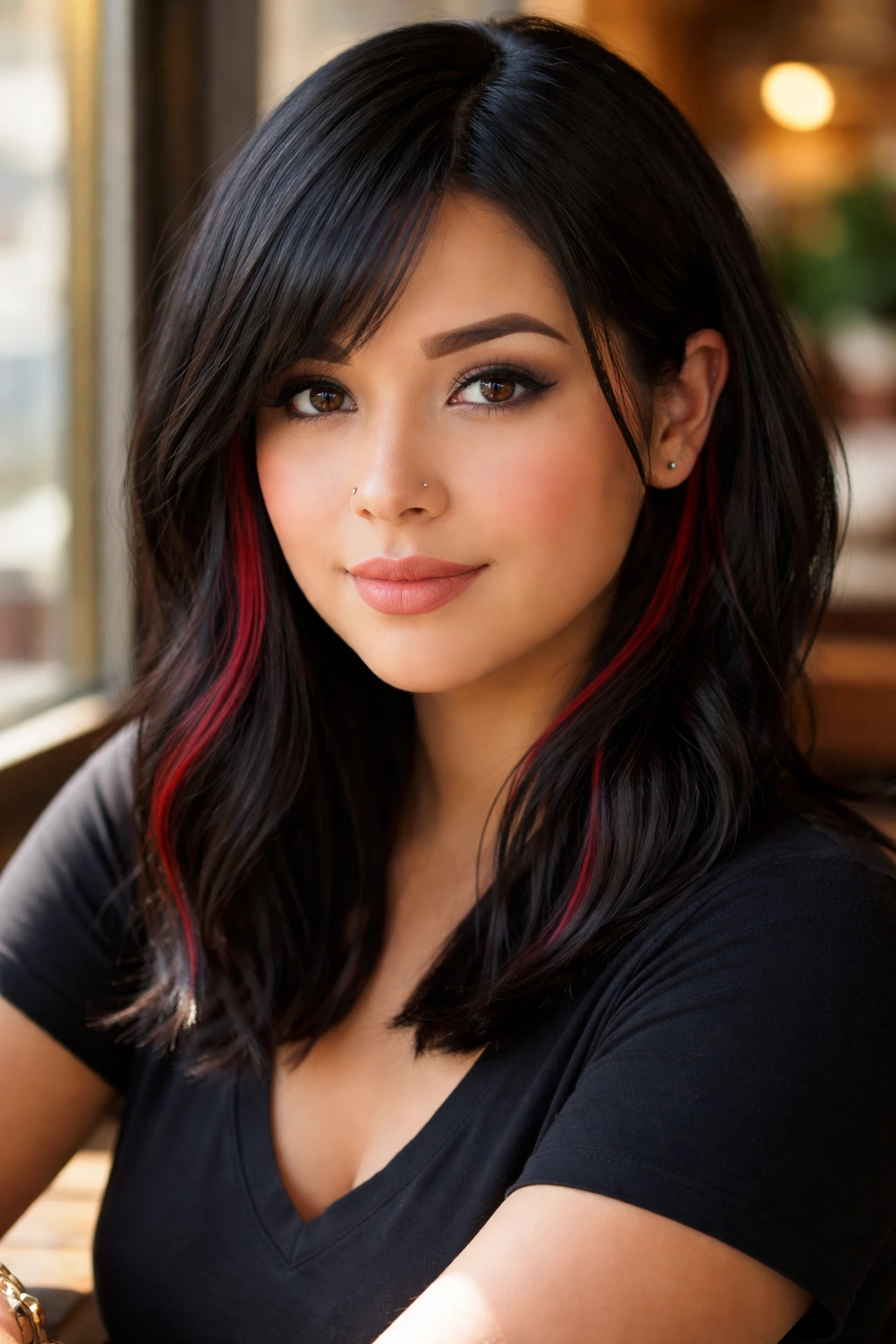
If you want to keep the “black hair” look but just want a tiny bit of edge, opt for accent pieces. These are tiny, micro-strands of red hidden throughout the hair. Unlike highlights which follow a pattern, accent pieces are almost randomly placed to create a “sparkle” effect.
This doesn’t change your face shape dramatically, but it creates texture. Textured hair is usually more flattering on round faces than super-sleek, one-dimensional hair because it creates shadows and light that distract from the face shape itself. Placement matters. Place a few accent pieces near the ears—tucking your hair behind your ears is a common habit, and having those red flashes appear when you do so is a subtle, cool detail.
16. Ash-Black with Fire-Engine Red Highlights
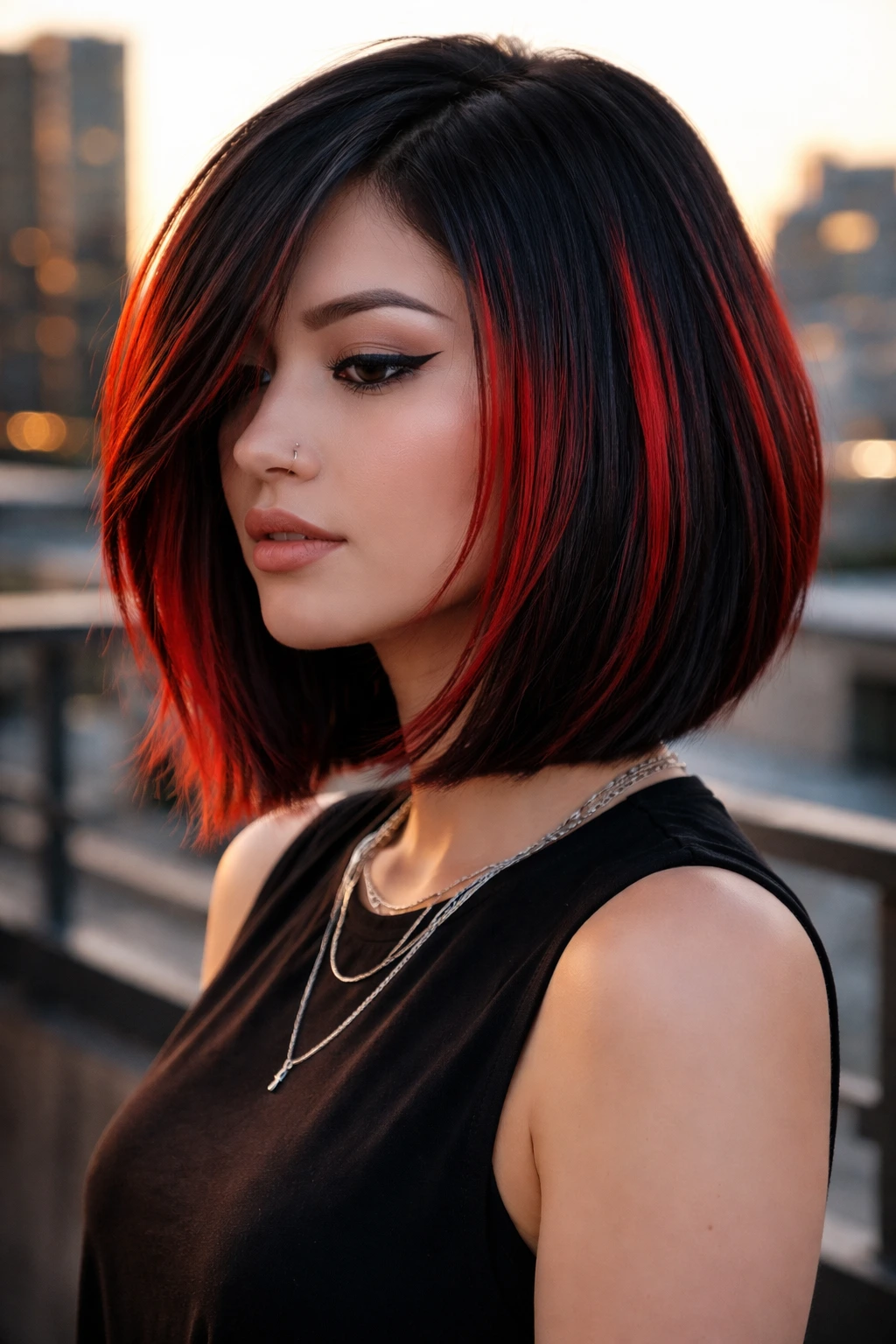
This is for the person who wants maximum contrast. Ash-black is a flat, matte black with no warm undertones. Fire-engine red is a bright, primary red. Pairing these two creates a graphic, almost anime-inspired aesthetic.
For a round face, the high contrast is very effective. It creates sharp lines. If you have a bob or a blunt cut, this color combination is stunning. The blunt cut already adds structure to a round face, and the red highlights accentuate that structure. Use high-quality dyes. To get fire-engine red, you often need to lift the hair to a very light blonde first. This is damaging. Do not attempt this at home if you value the integrity of your hair. Go to a professional who uses bonding treatments to protect the hair during the lightening process.
17. Dark Base with Strawberry Red Babylights
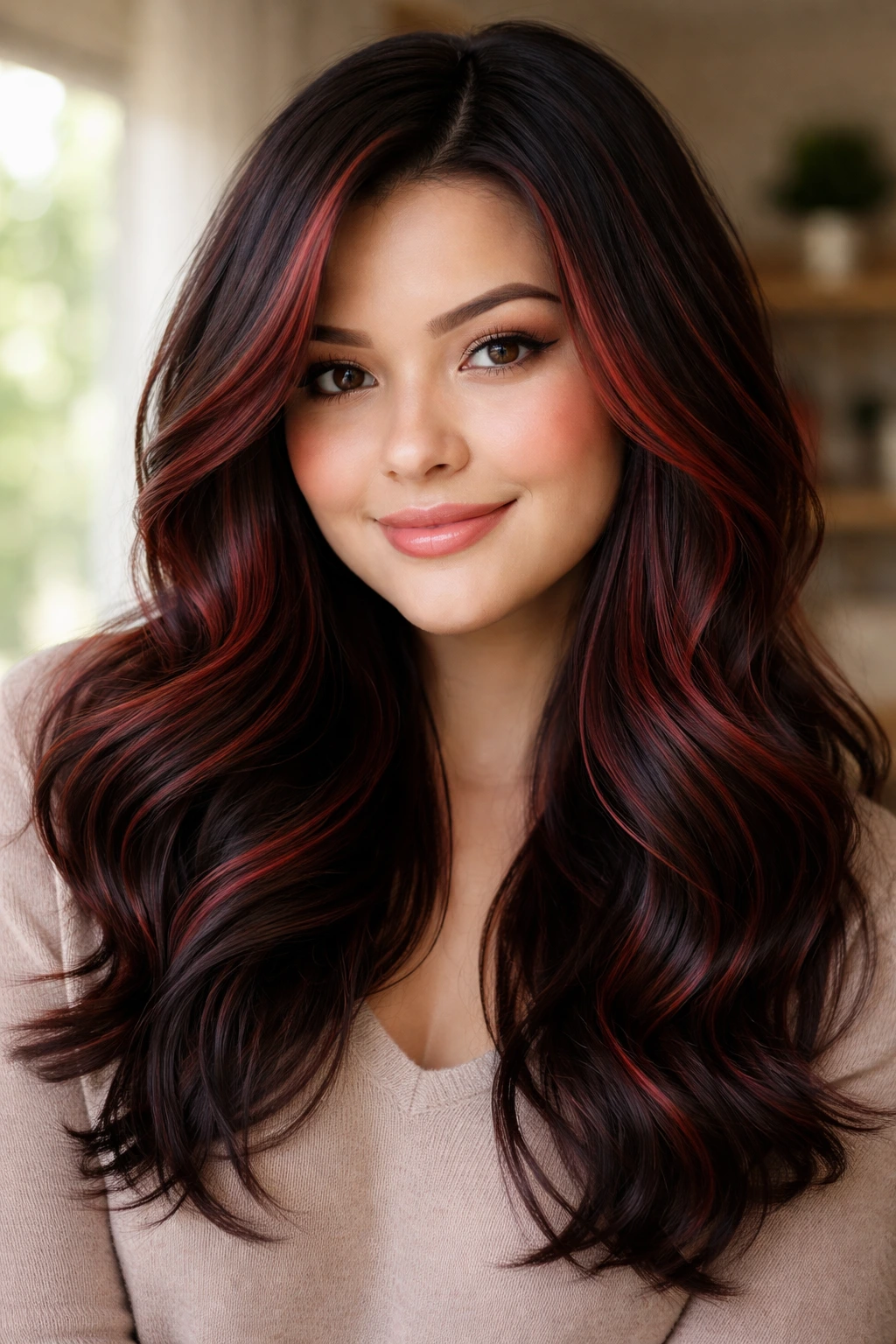
Strawberry red is a soft, warm, copper-leaning red. It is much more subtle than a true red. When used as babylights against a dark base, it creates a soft, warm glow.
This is a beautiful choice if you have a round face and want to look “softer.” Bright, graphic colors can be a bit intimidating. If you prefer a more romantic, gentle aesthetic, this is the way to go. The warmth of the strawberry red reflects light in a way that softens features, making the whole look feel very approachable. It fades gracefully. Unlike bright reds that turn orange or pink, strawberry tones tend to fade into a nice copper-gold, which still looks good on most people.
18. Subtle Dark-Red Dimensional Lowlights
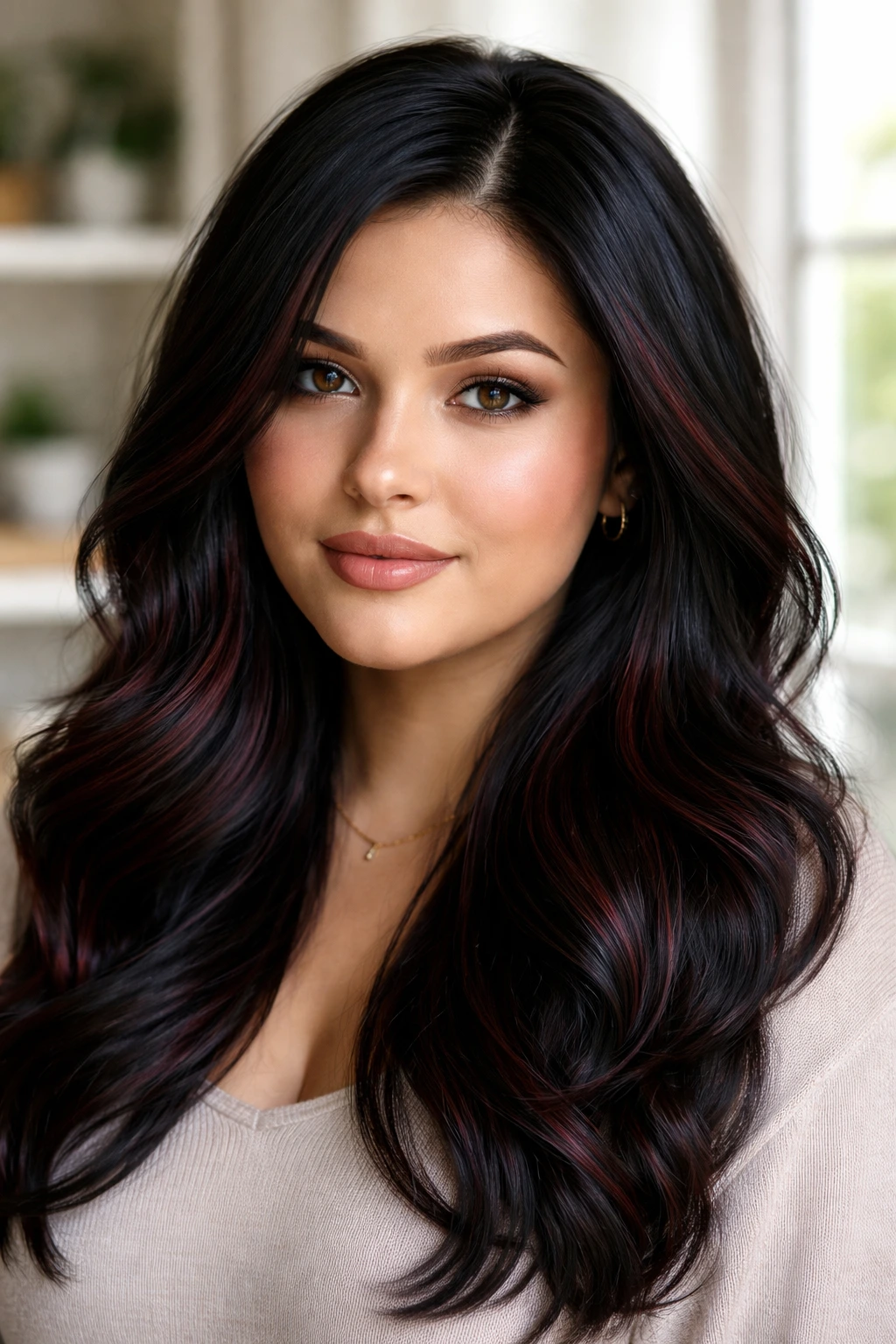
Finally, for the person who doesn’t want highlights at all: consider lowlights. These are darker than your base, or in this case, a dark red shade that is just slightly lighter than your black base. It adds depth without adding lightness.
Lowlights are amazing for round faces because they add “weight” and richness to the hair. While highlights bring light to the face, lowlights create shadow. You can use this to your advantage by placing them in areas where you want to reduce volume, like near the cheeks. It’s a bit of hair contouring. Ask your colorist to use a semi-permanent glaze. This will keep the hair shiny and conditioned, which is essential because dull hair will negate the effect of the lowlights entirely.
The Bottom Line
Choosing a red and black color combination is a commitment, but the payoff in terms of style and structure is significant. Whether you choose a high-contrast money piece to slice through the roundness of your cheeks or soft babylights to add dimension and movement, the key is to be intentional with placement.
Remember that color is not a static element. It shifts with your cut, your styling, and the lighting in the room. A round face benefits most from styles that introduce vertical movement and texture, so avoid flat, single-process colors that might make your hair feel heavy. If you keep your hair healthy, use the right shampoos to preserve the red tones, and consult with your stylist about the best placement for your specific face shape, you will find that these high-contrast looks are not just trendy—they are genuinely flattering.
Don’t be afraid to start small. If you are nervous, begin with a few subtle babylights or a hidden peekaboo section. Once you see how the red tones interact with your skin and your features, you can always scale up to the bolder money pieces or chunky highlights. The most important thing is that you feel confident and comfortable in your new look. After all, the best style is the one you wear with ease.
