



Honey blonde highlights for brown hair have a built-in advantage: the color family already lives in the same warm neighborhood. The result can look soft, glossy, and expensive without asking your hair to become a different person.
Not all honey is created equal. The tone that flatters a dark chestnut base is not the same honey that works on medium brown or a cool espresso brown, and the placement matters just as much as the shade. A few thin babylights around the hairline can change the whole mood; a chunky front piece can do something much louder.
I’m partial to the versions that look like the color belongs there. Not striped. Not yellow. Honey works when it reads as warm gold with a little depth underneath, and that usually means a smart mix of highlights, lowlights, and sometimes a root shadow so the grow-out doesn’t scream for attention.
The 22 looks below move from subtle to bolder, because brown hair can handle both. Some are the kind of color you can forget about for a while. Others ask for more salon time and more upkeep, but they earn it.
1. Soft Face-Framing Honey Blonde Ribbons
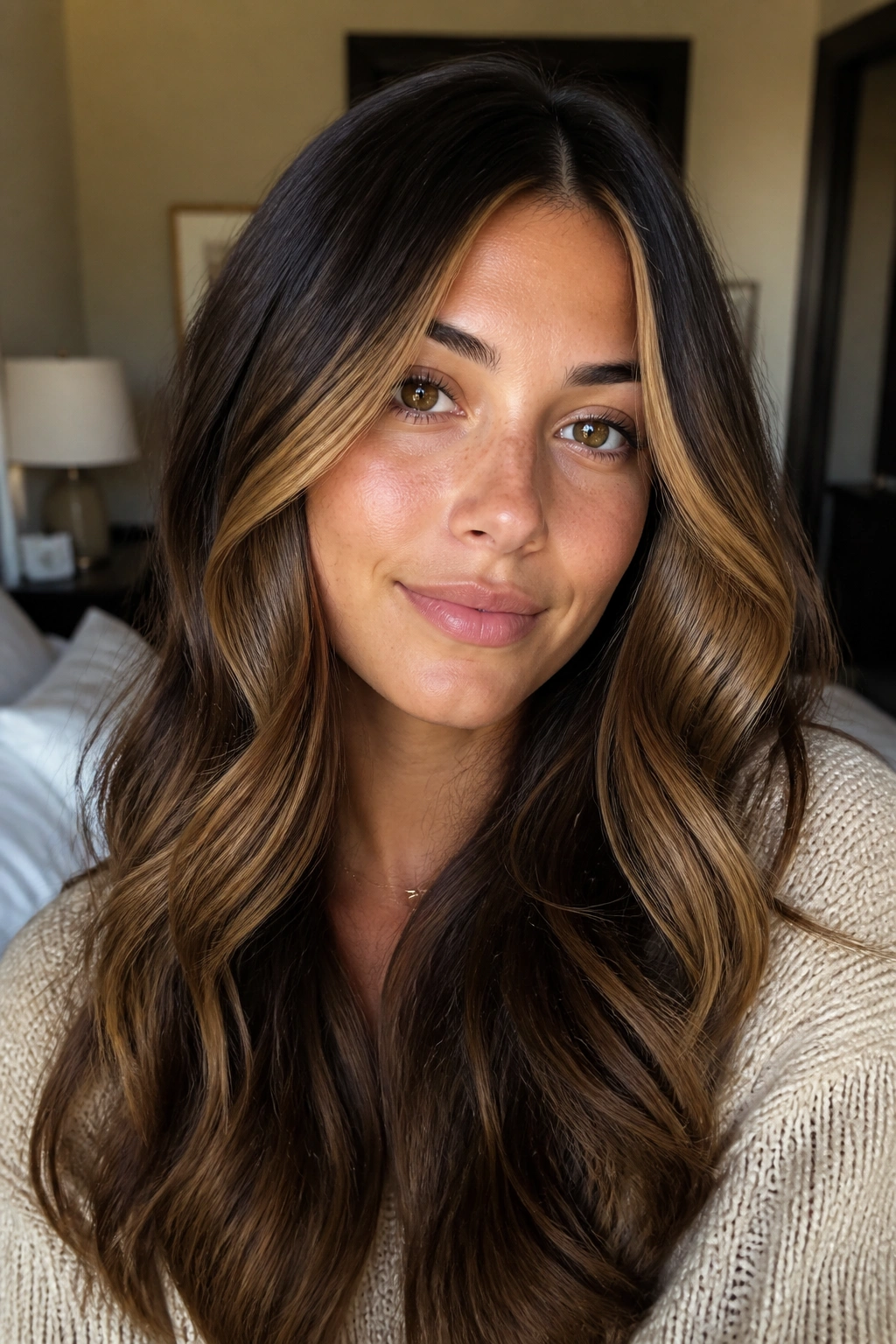
A few honey blonde ribbons around the face can change brown hair fast. They brighten the eyes, soften a strong jawline, and make a plain center part feel more finished. This is the version I’d hand to someone who wants a visible change without crossing into “everyone in the office noticed” territory.
Why It Works
The trick is keeping the front pieces light enough to show up, but not so light that they look pasted on. On brown hair, the best face-framing highlight usually starts a little lower than the root and tapers through the cheekbone area. That keeps the result soft instead of stripy.
- Best on medium brown to dark brown bases
- Ask for 2 to 4 ribbons on each side
- A gold-beige toner keeps the finish warm, not brass
- Works especially well with layers, curtain bangs, or a blunt lob
My favorite part: these ribbons look even better after the first wash, when the color settles and loses that freshly-toned edge.
2. Honey Blonde Highlights on Dark Brown Hair
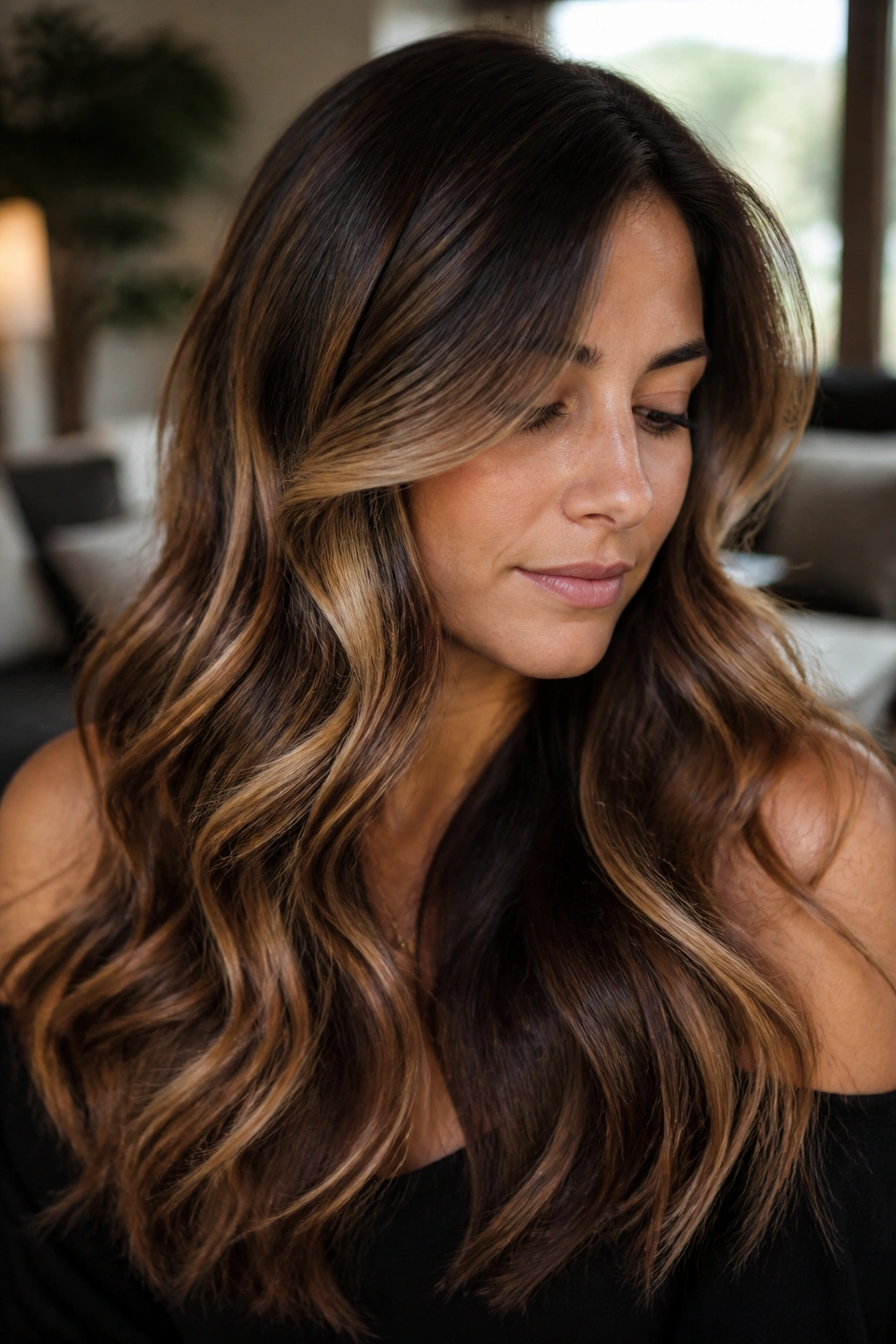
Dark brown hair can wear honey blonde beautifully, but only if the lift is handled with some patience. Push too little and the color reads muddy. Push too far and you lose the richness that makes honey blonde feel flattering in the first place.
What I like here is the contrast. Not harsh contrast. Just enough brightness to wake up the hair without erasing the brunette base. On a level 3 or 4 brown, a colorist often needs foils or a careful balayage lift into the level 6 to 8 range before toning with gold or neutral-warm beige.
If your hair tends to pull orange, don’t ask for an ashy finish. That usually fights the whole point. Ask for a honey tone with a soft golden gloss, then let the darker base stay visible between the lighter pieces.
A good version of this looks expensive because it keeps the deep brown where it matters. The blonde is there. It just doesn’t shout.
3. Fine Babylights Through the Crown
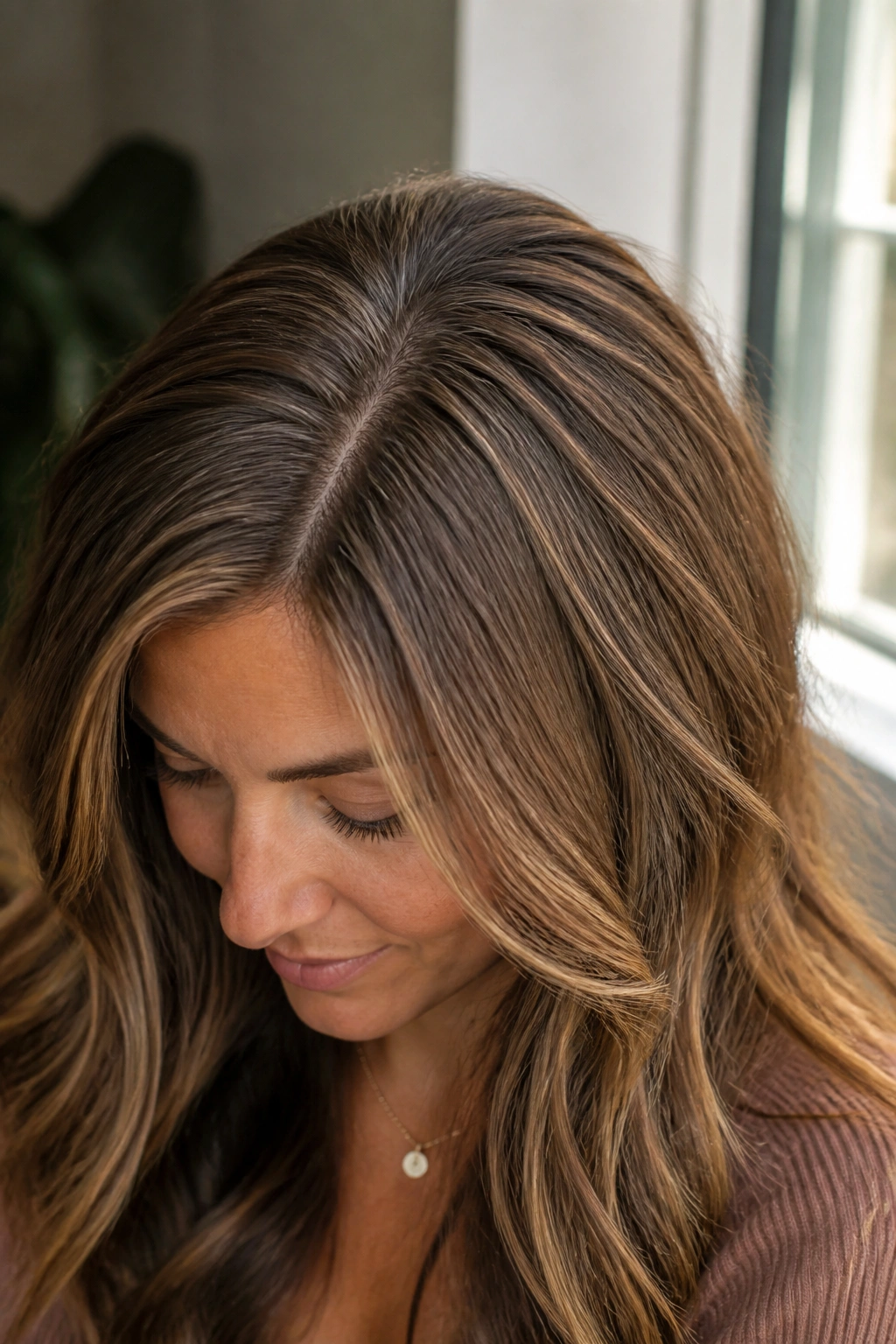
Why do babylights look so good on brown hair? Because they mimic the tiny shifts in color you see in hair that’s been in the sun for months, not a blocky foil job from the back of a salon chair.
This style is for people who want movement more than contrast. The strands are so fine that you notice the glow before you notice individual highlights. On straight hair, that creates a polished sheen. On wavy hair, it gives the bends a little extra lift.
How to Ask for It
Tell your colorist you want micro-fine foils through the crown and hairline, with extra softness around the part. If your hair is dark brown, a honey glaze on top keeps the finish warm. If your base is medium brown, the lighter pieces can be a shade brighter, because the contrast will still stay gentle.
Babylights are also a smart choice if you hate obvious regrowth. They grow out quietly. Not invisibly, but quietly enough.
4. Chunky Honey Money Pieces
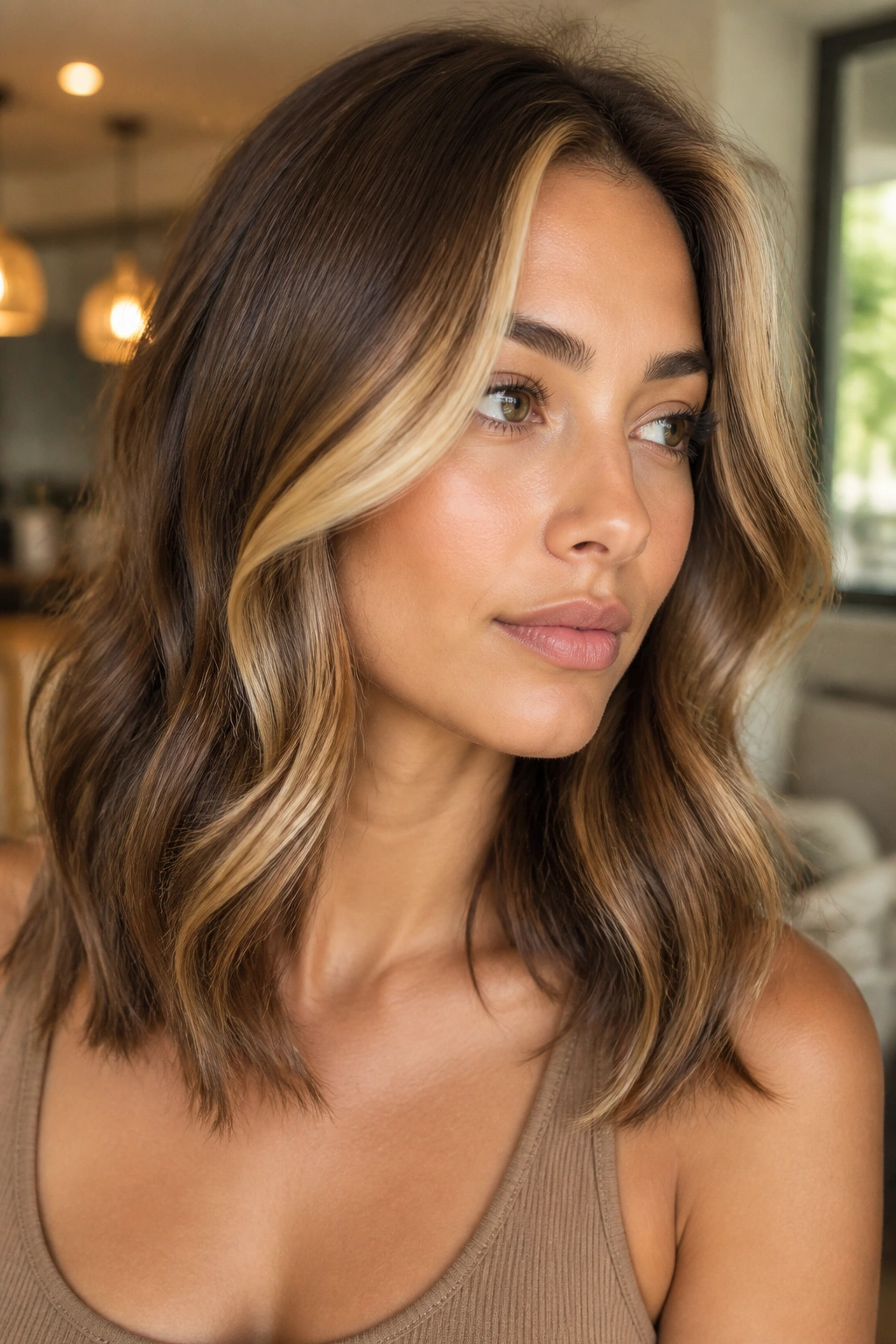
A chunky money piece is the bold cousin in the family. It’s the look you choose when you want the front of your hair to do the talking, especially if the rest of your brown hair stays deeper and more dimensional.
I’ve seen this work best on shoulder-length cuts and long layers, where the front lightness can frame the face without taking over the whole head. Put the bright pieces too far back and you lose the effect. Keep them too wide and you risk a dated stripey look. That balance matters.
The payoff is immediate. Pull your hair into a half-up style and the honey pieces still show. Toss it in a claw clip and they still show. That kind of visibility is why people keep asking for it.
- Ask for 2 wider foils at the front, then soften the inner edge
- Keep the base one to two shades deeper
- Choose a honey-gold toner, not pale beige
- Best for people who like clear contrast around the face
5. Balayage Sweeps Through the Mid-Lengths
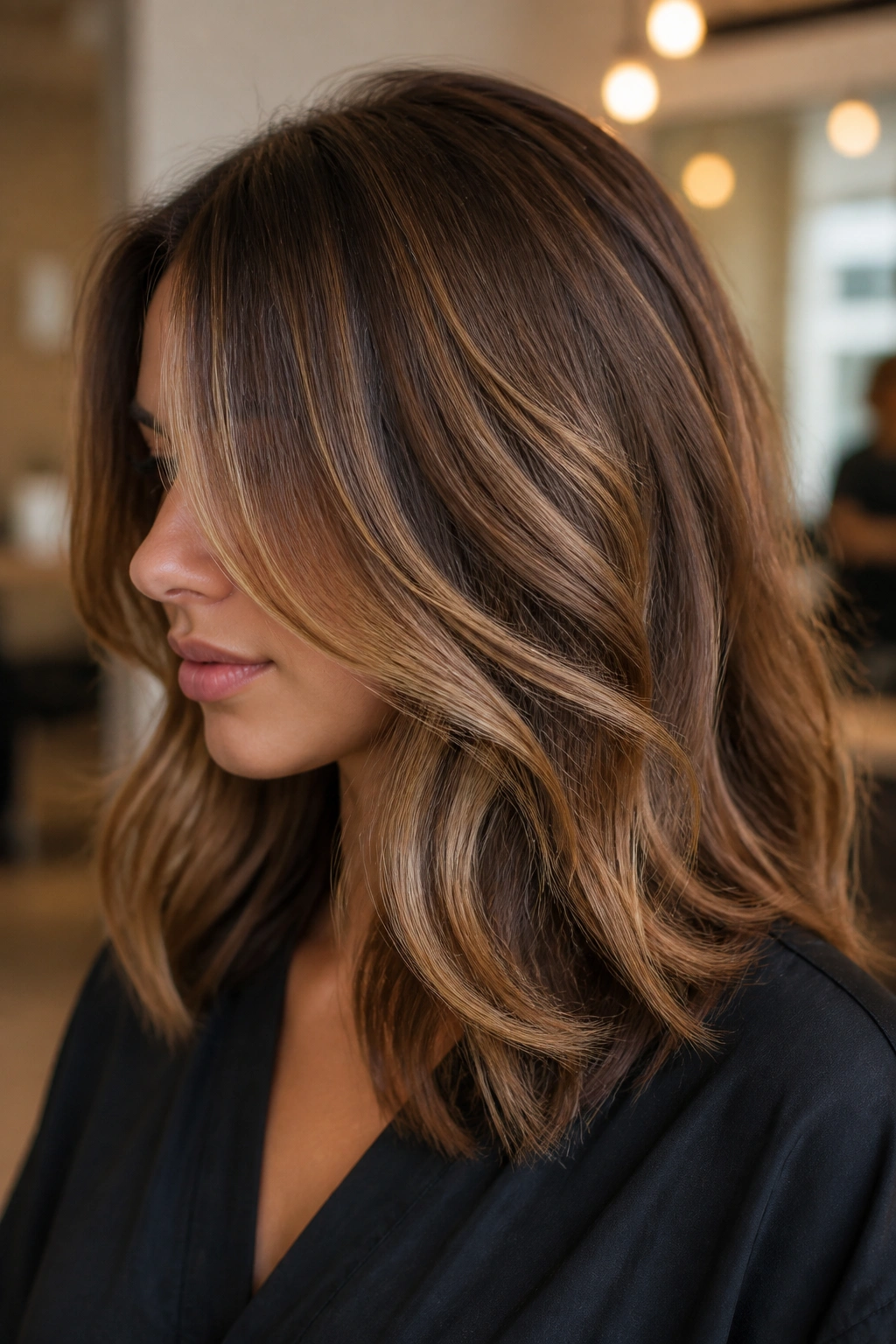
Honey balayage on brown hair has a very specific charm: it looks like the color started living there before anyone called it a highlight. The hand-painted placement keeps the root area dark and rich, then lets the lighter pieces show up through the middle and ends where hair naturally catches light.
This is one of the few color jobs that can make medium brown hair feel softer and longer at the same time. The mid-length focus keeps the top from looking busy. The ends get enough brightness to show movement. And because the balayage doesn’t start high on the scalp, the grow-out is less fussy.
I like this version on layered hair best. Layers give the warm pieces somewhere to move, and movement is where honey color looks alive. On one-length hair, it can still work, but it needs a more deliberate fade so the color doesn’t feel heavy at the bottom.
A gloss every so often helps the honey stay warm instead of drying out into dull gold. Small thing. Big difference.
6. Honey Blonde Highlights With Chestnut Lowlights
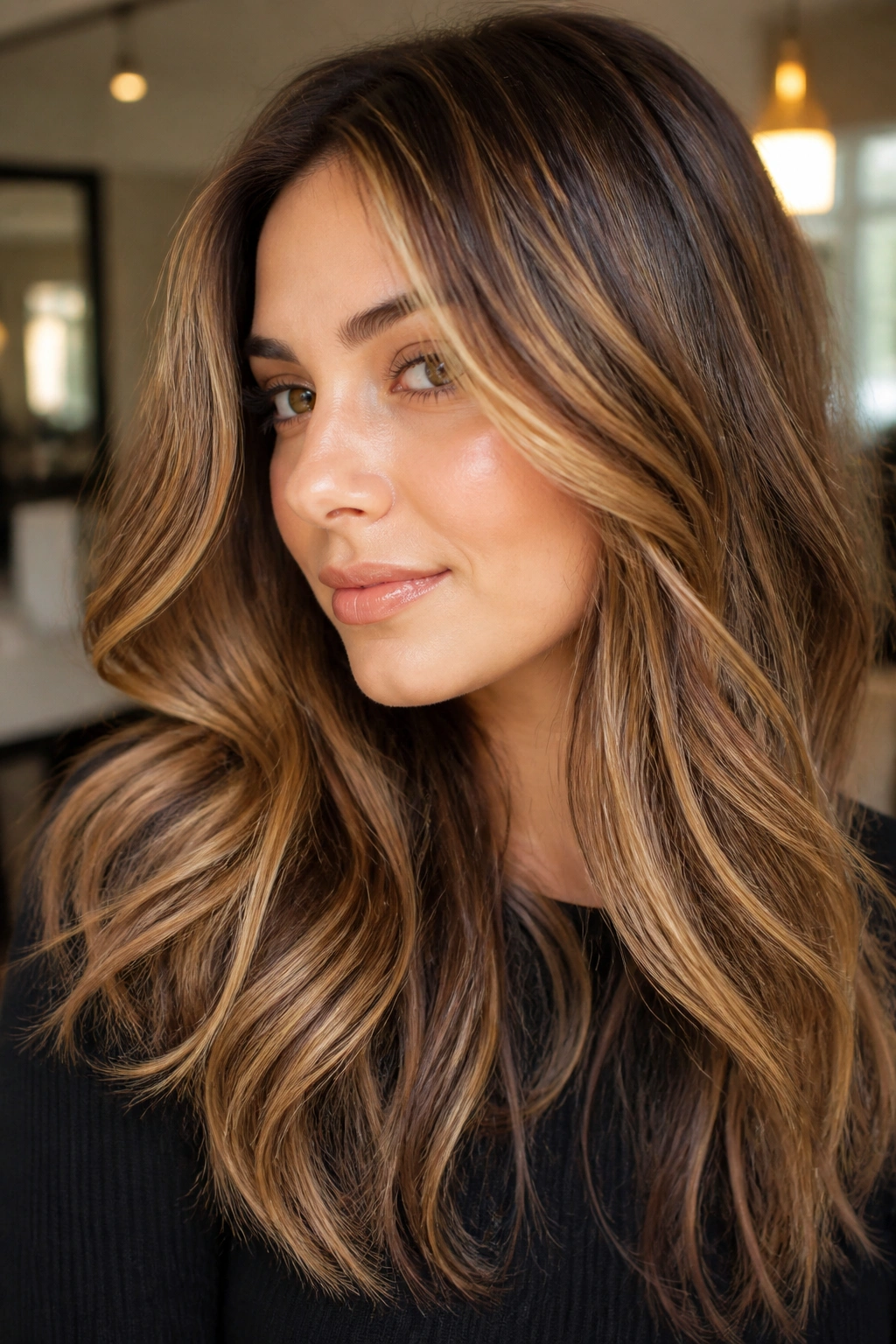
If honey blonde starts to look flat, chestnut lowlights are usually the fix. They bring the brown back into the picture so the lighter strands don’t turn into one pale sheet of color.
This is especially useful on thicker hair, where a lot of highlights can make the surface look busy but shallow. A few deeper ribbons underneath add shadow, and shadow makes the blonde look brighter by comparison. That’s the part people miss. Light needs dark beside it.
This version feels richer than a single-tone honey job. It also photographs better in real life, not because it’s louder, but because the color has more places to land. The darker pieces sit under the surface and the honey pieces skim over them.
If you’re torn between going lighter and keeping your brunette depth, this is the compromise I’d trust. It respects the brown hair instead of painting over it.
7. Honey Highlights on Curly Brown Hair
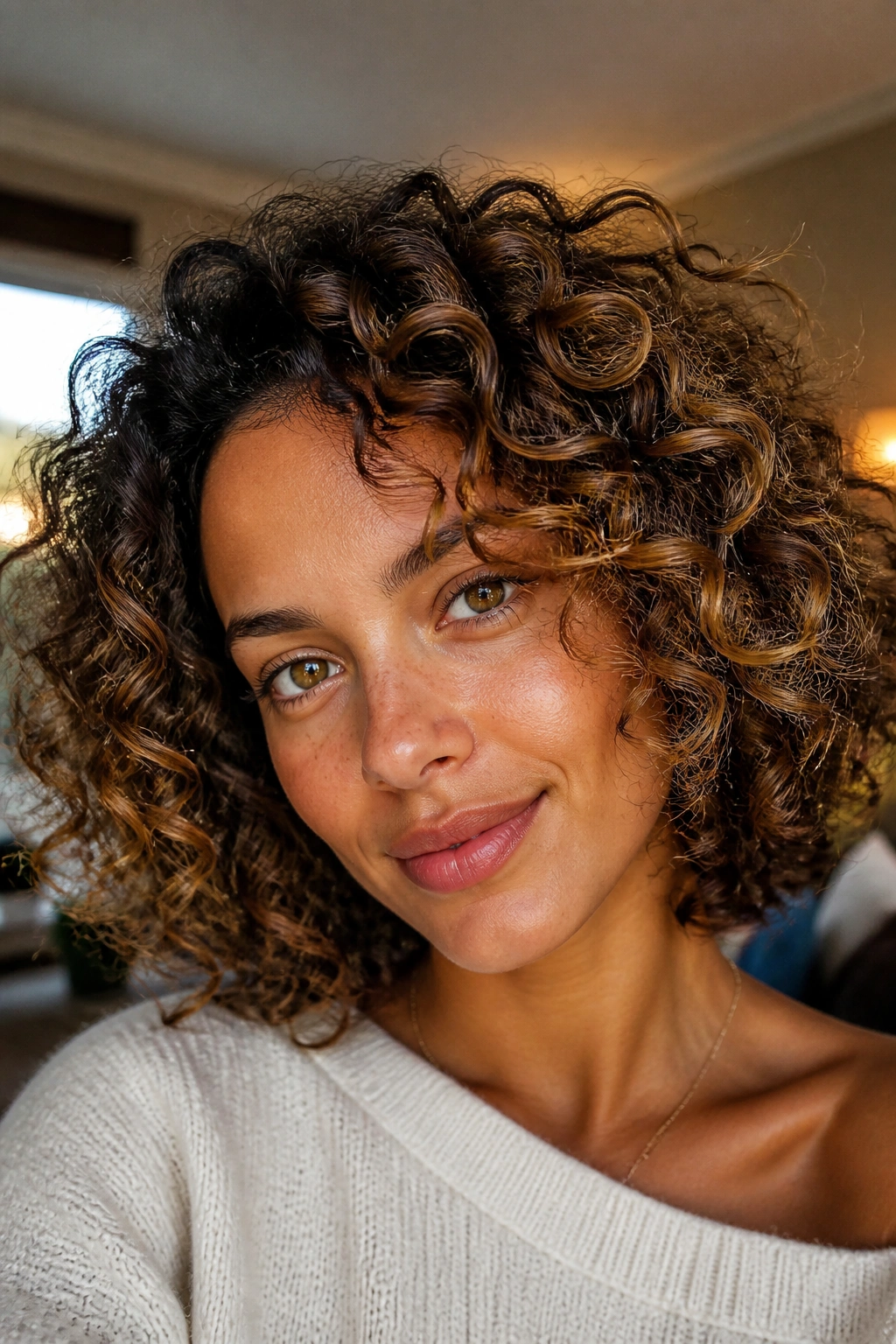
Curly hair eats color in a completely different way than straight hair. The twists and bends hide some strands, then flash others when the light moves. That means placement matters more than width.
What Makes It Work
Honey highlights look best on curls when they sit on the outside curve of the curl pattern, not buried inside the coil where nobody sees them. Too many colorists over-foil curly hair and it ends up looking busy. A few well-placed pieces do more.
- Focus color on the halo, face frame, and outer bends
- Keep some deeper brown between the curls
- Use a soft gloss so the tone stays warm and smooth
- Avoid highlight patterns that slice through every curl the same way
Small warning: curls make honey read brighter than it does on a smooth blowout, so a shade that looks safe in the bowl can still look vivid on the head. Plan for that.
8. A Root Shadow That Keeps the Color Calm
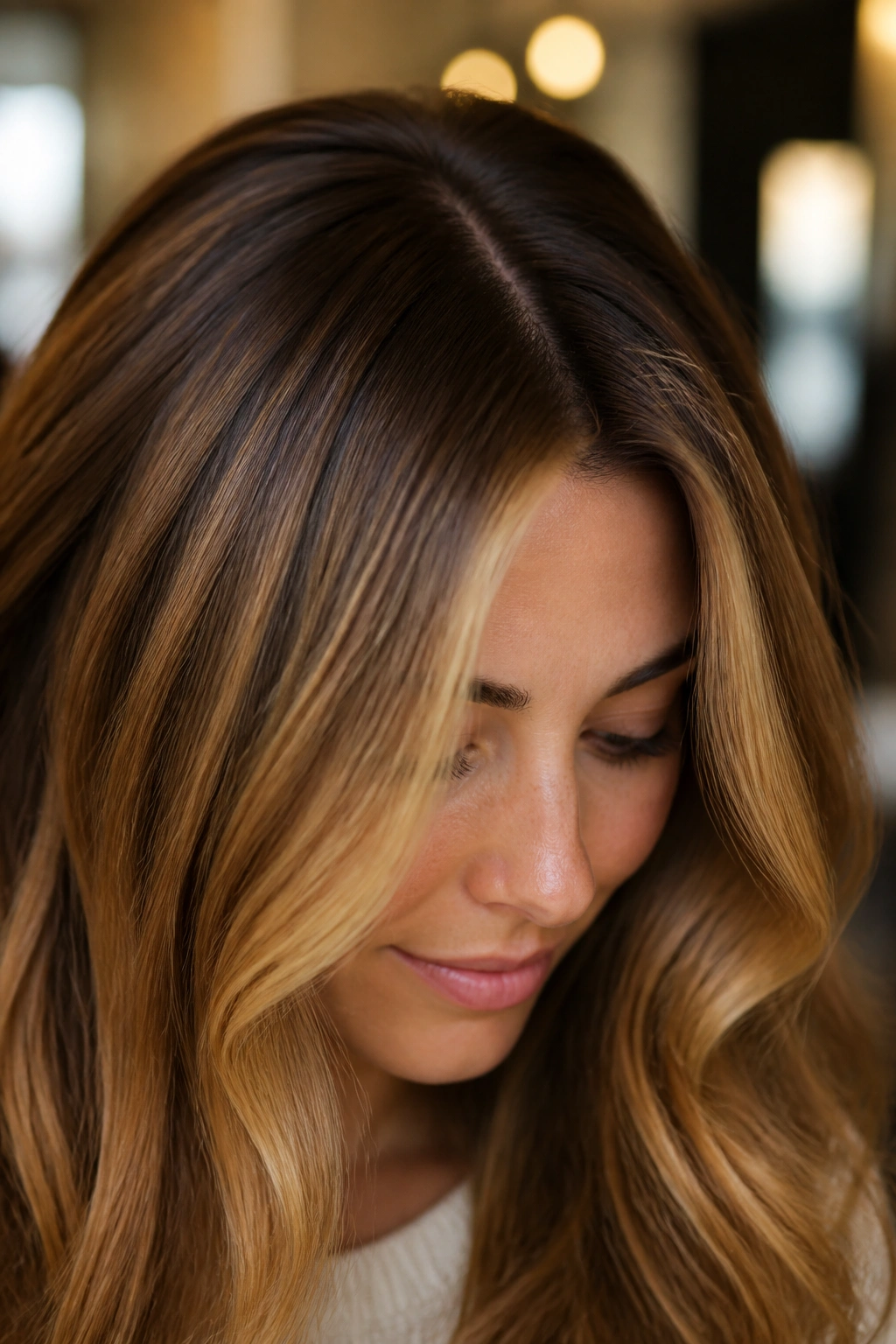
A root shadow is one of the smartest things you can do with honey blonde highlights on brown hair if you hate obvious regrowth. It softens the line where your natural root meets the lighter pieces, and that alone makes the whole color feel more expensive and less salon-dependent.
The best version usually uses a root shade that’s close to your natural brown, then blends it down about half an inch to an inch before the honey starts. That tiny fade matters. Without it, the highlights can look like they’re sitting on top of the hair instead of living in it.
This look is also kinder to grow-out. You can stretch appointments a bit longer because the root doesn’t announce itself the second it appears. That’s useful if you wear your hair up a lot or part it in the same place every day.
I’d choose this if you want warmth, shine, and a lower-maintenance schedule. It’s a quiet move. A good one.
9. Honey Blonde Highlights on a Chocolate Brown Bob
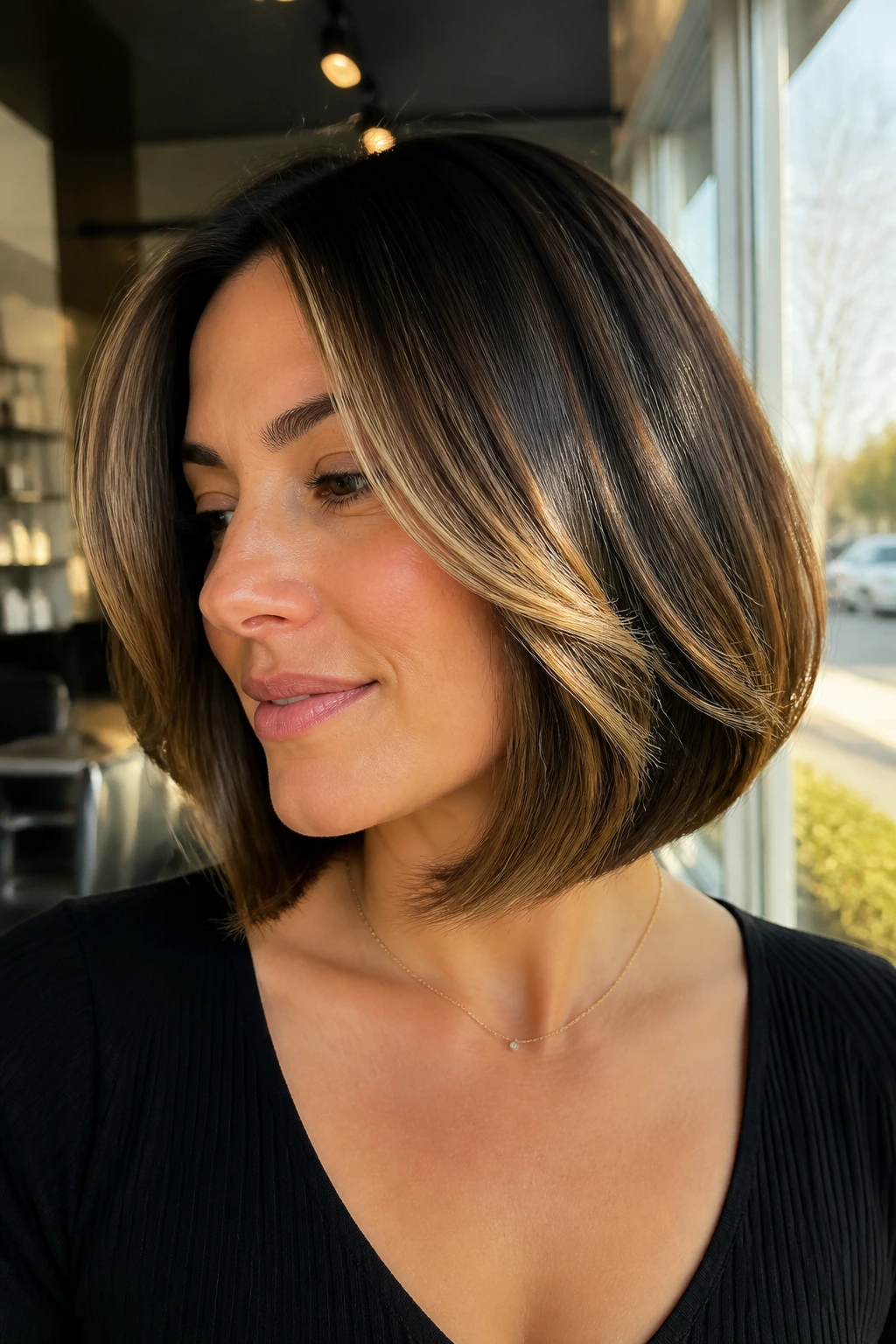
Can honey blonde work on a bob without making the cut look chopped up? Absolutely. The key is keeping the highlights clean and deliberate, not scattered everywhere like confetti.
A chocolate brown bob gives you a rich base that makes honey pieces stand out fast. The best placement usually lives around the front, the part, and the lower layers that move when you turn your head. That keeps the cut sharp while still giving it warmth.
A bob also likes contrast more than people think. Too many tiny highlights can blur the shape. A few clear ribbons, on the other hand, can make the edge of the cut look crisp and the interior look softer.
If your bob is blunt, keep the honey pieces narrow. If it has texture or a slight wave, you can go a little wider. The haircut decides how loud the color should be.
10. Part-Line Highlights That Mimic Sun Exposure
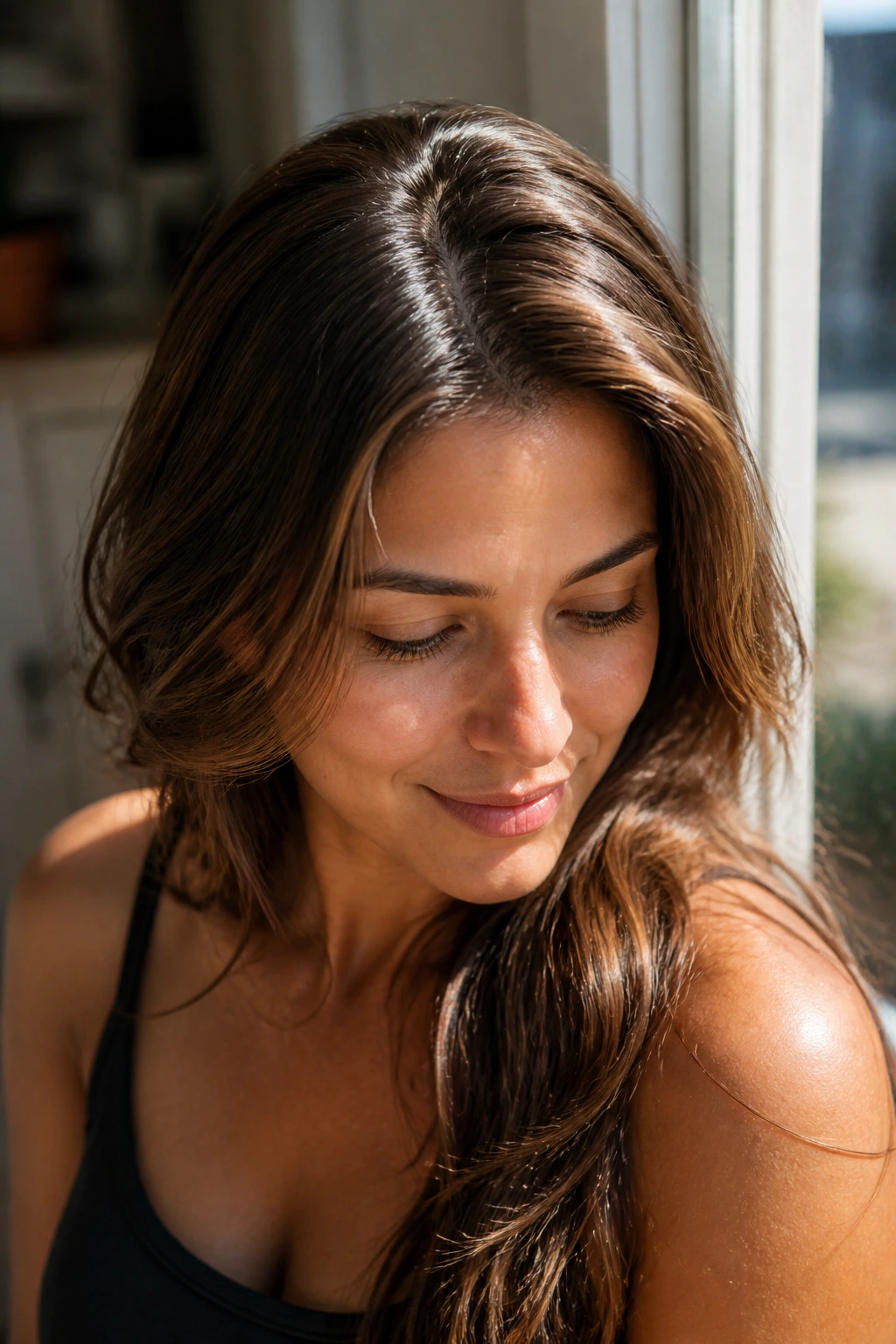
If you wear the same part all the time, the hair along that line gets the most visual attention. That’s why a few honey pieces there can change the whole look, even when the rest of the hair stays fairly dark.
Picture a brown base with lighter threads running along the top layer and part line only. That’s the idea. It looks easy, but it’s really just controlled placement. The front and crown catch the most light in real life, so that’s where the color earns its keep.
I like this look on people who pull their hair back a lot. A ponytail or low bun still shows the brighter top pieces, which means the color doesn’t disappear the moment the hair leaves your shoulders.
- Best for busy, low-maintenance routines
- Works well on medium brown and dark blonde-brown bases
- Ask for top-layer foils only, then soften the ends
- A semi-permanent gloss can keep the honey from going flat
11. Micro-Woven Foils for a Soft, Even Finish
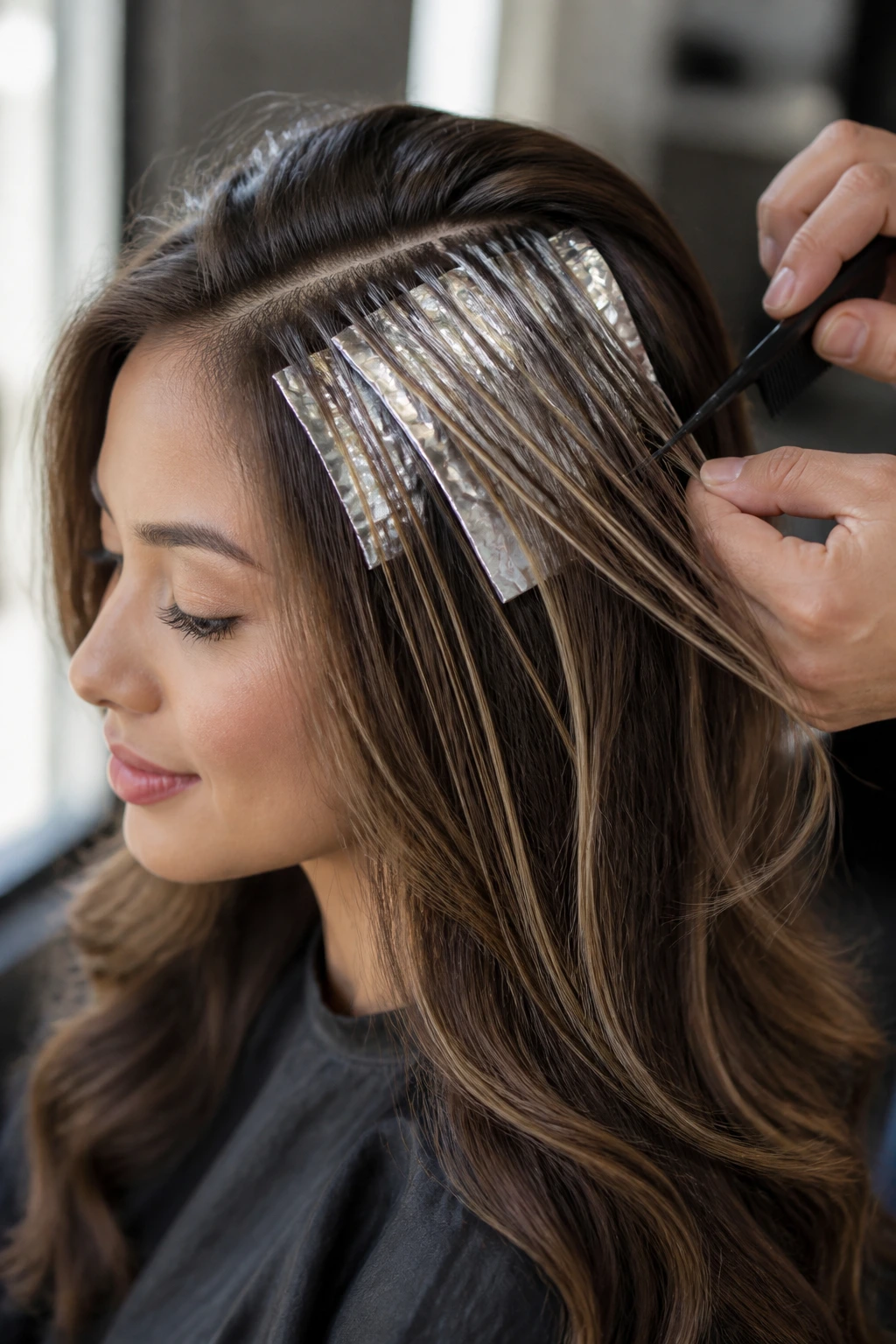
Micro-woven foils are the quiet achiever of the honey blonde family. The strands are so fine and so closely woven that the result reads like shimmer, not streaks. On brown hair, that matters because the base color still does most of the visual work.
This is the version I reach for when someone says they want “lighter, but not obvious.” You don’t see one giant color block. You see a soft spread of warm pieces that change the look when the hair moves. It’s one of the cleanest ways to keep dimension in straight or slightly wavy hair.
The technique also helps the color stay balanced from root to end. Large sections can grab too much warmth in one spot. Fine weaving spreads the lift out, which keeps the overall tone smoother.
No drama. No hard lines. Just a calm, glossy result that looks considered.
12. Honey Blonde Ribbons With Caramel Underlights
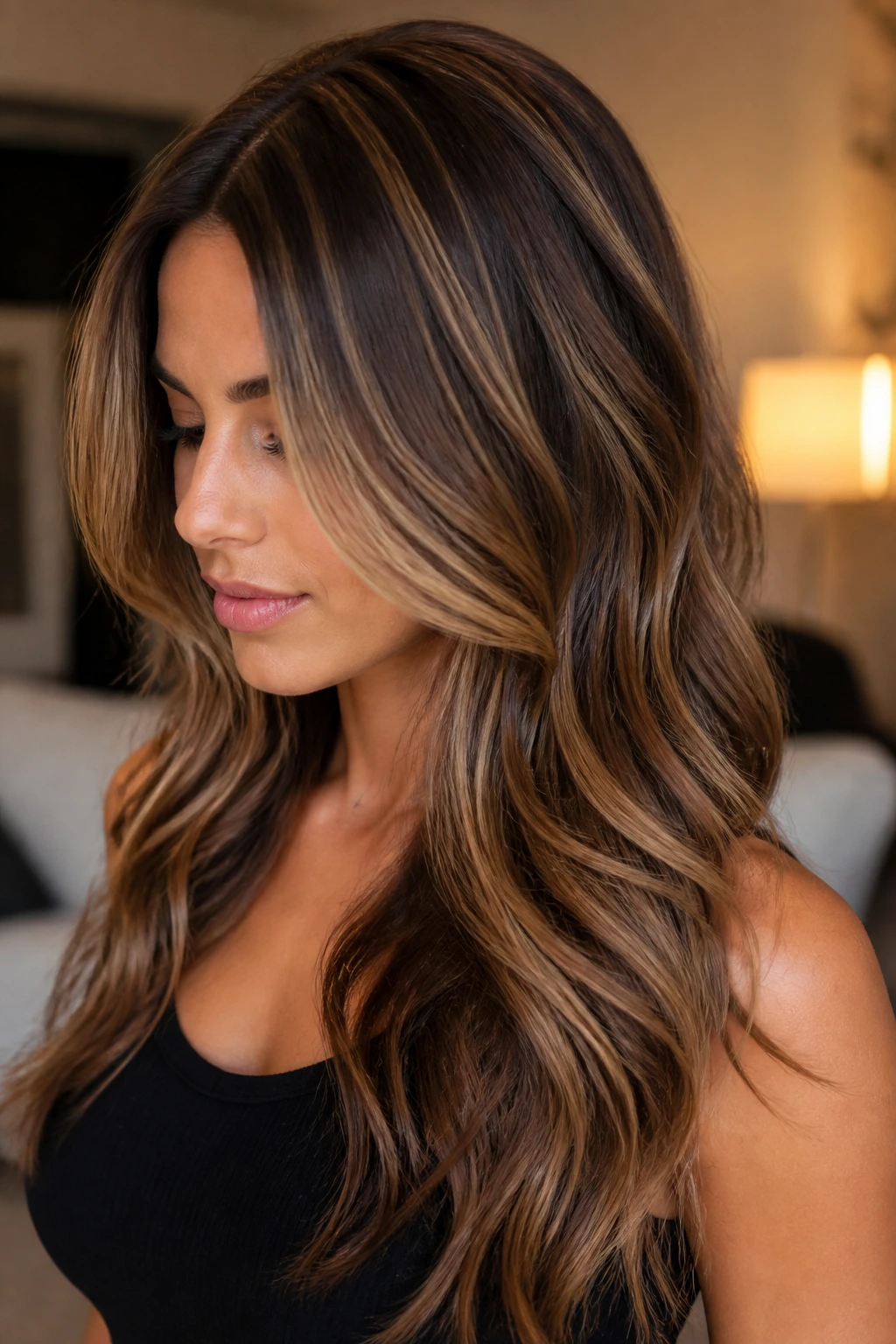
Compared with single-tone honey, a mix of honey blonde ribbons and caramel underlights gives brown hair more depth at the same time. The lighter pieces sit on top and around the face. The caramel runs underneath, where it softens the brightness and stops the whole look from flattening out.
That’s the real appeal here. It feels fuller. The eye reads a darker base, then lighter threads, then another warm layer underneath. Brown hair often looks better when the color has someplace to fall back into, and lowlights do that job.
This version works especially well on layered lobs and long cuts with movement. The underlights show when the hair swings, so the color doesn’t look static. If your hair is fine, keep the caramel lowlights only a shade or two deeper than your natural brown. Too much depth and the contrast can get muddy.
If you want warmth but not one-note blonde, this is a strong pick.
13. Golden Honey Panels Through Long Layers
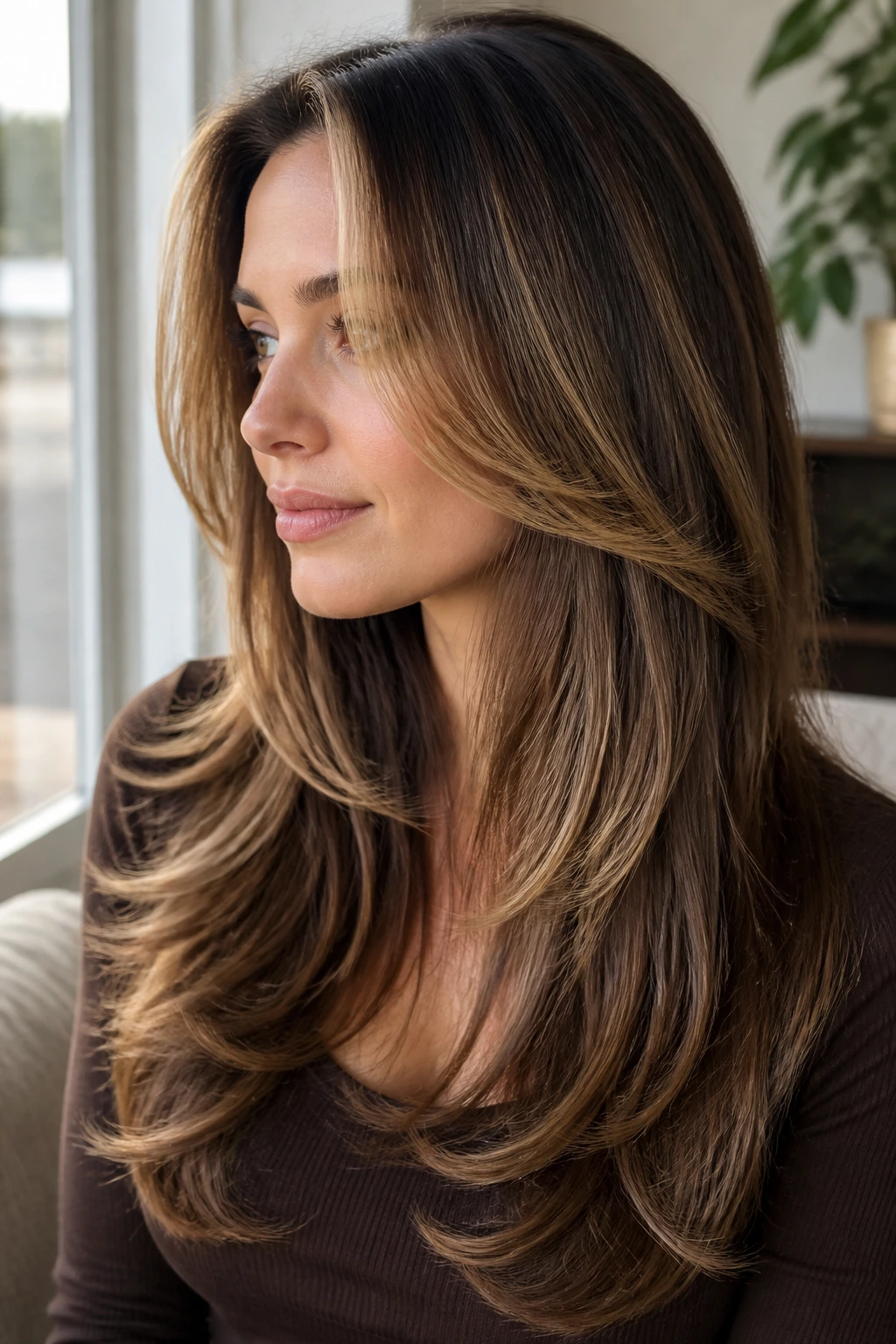
Long layers can carry bigger pieces of honey blonde better than shorter cuts can. There’s more length for the color to stretch across, and that keeps the effect from looking too busy near the face.
Where They Sit
The best panels usually live in the front third of the head, a few pieces through the crown, and a softer scatter toward the ends. That keeps the top from looking flat while still letting the lower half hold the warmth.
- Ask for broader panels, not tiny streaks
- Keep the lightest pieces around the front layers
- Leave negative space between highlights so the brown base shows
- A golden gloss keeps the finish rich
A panel approach is bolder than babylights, but it can still look refined if the placement is thoughtful. It’s the difference between a bright window and a floodlight.
14. Honey Blonde With a Copper Edge
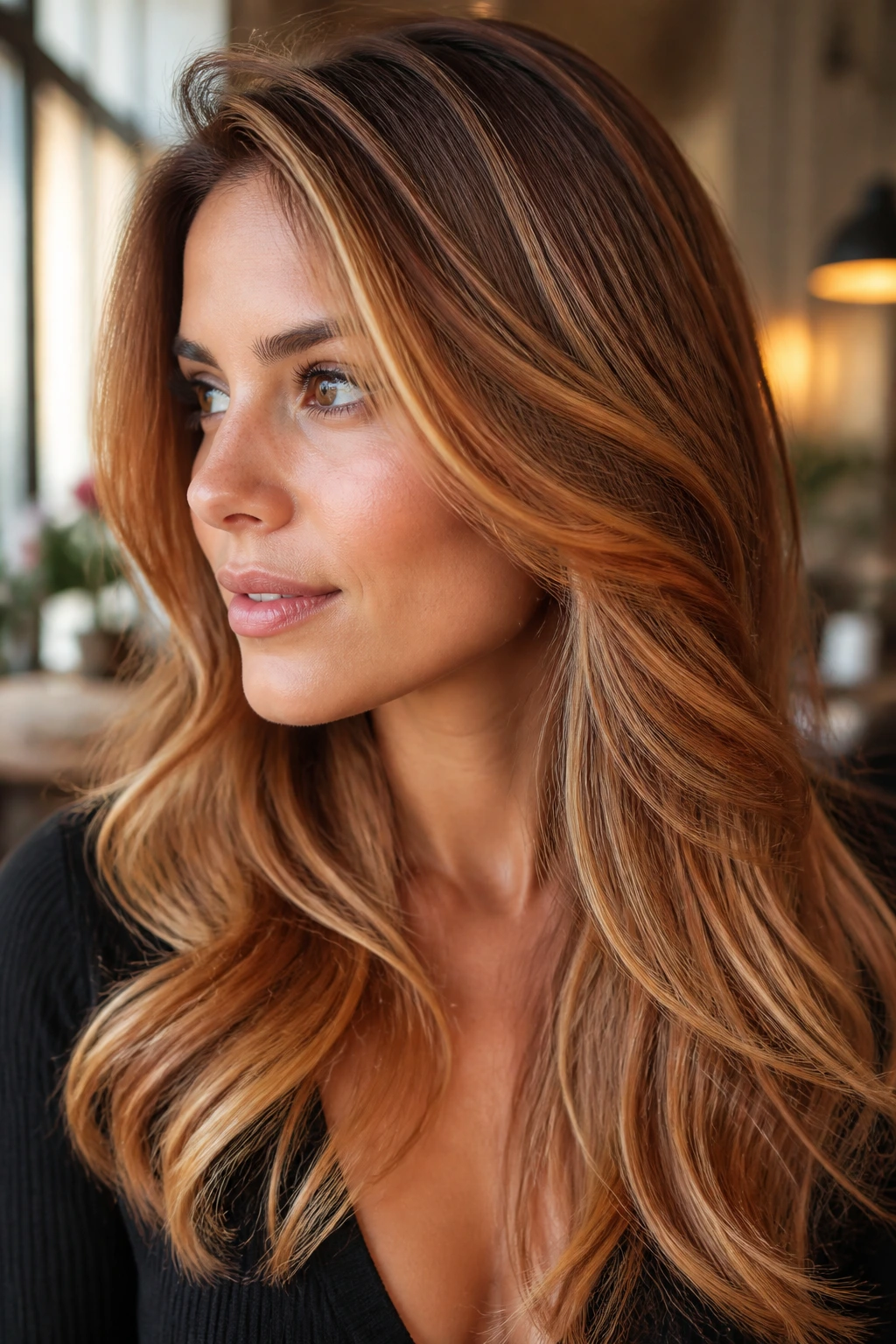
Honey blonde gets more depth when it leans a little copper. Not orange. Copper. There’s a difference, and it’s a big one.
On warm brunettes, a copper-tinged honey highlight can make the whole head feel richer and more intentional. The result is less beachy and more polished. I like it especially on hair that already has red or gold in the natural base, because the highlight melts in instead of fighting the undertone.
This shade is a good choice if plain gold highlights have always looked a touch flat on you. The copper note gives the honey more body. It also warms up brown eyes in a way that plain beige often doesn’t.
The one thing to watch is saturation. Too much red in the toner and the result can tip into auburn. Keep the copper as a hint, not the headline. That’s where the good stuff lives.
15. Babylights for Fine Brown Hair
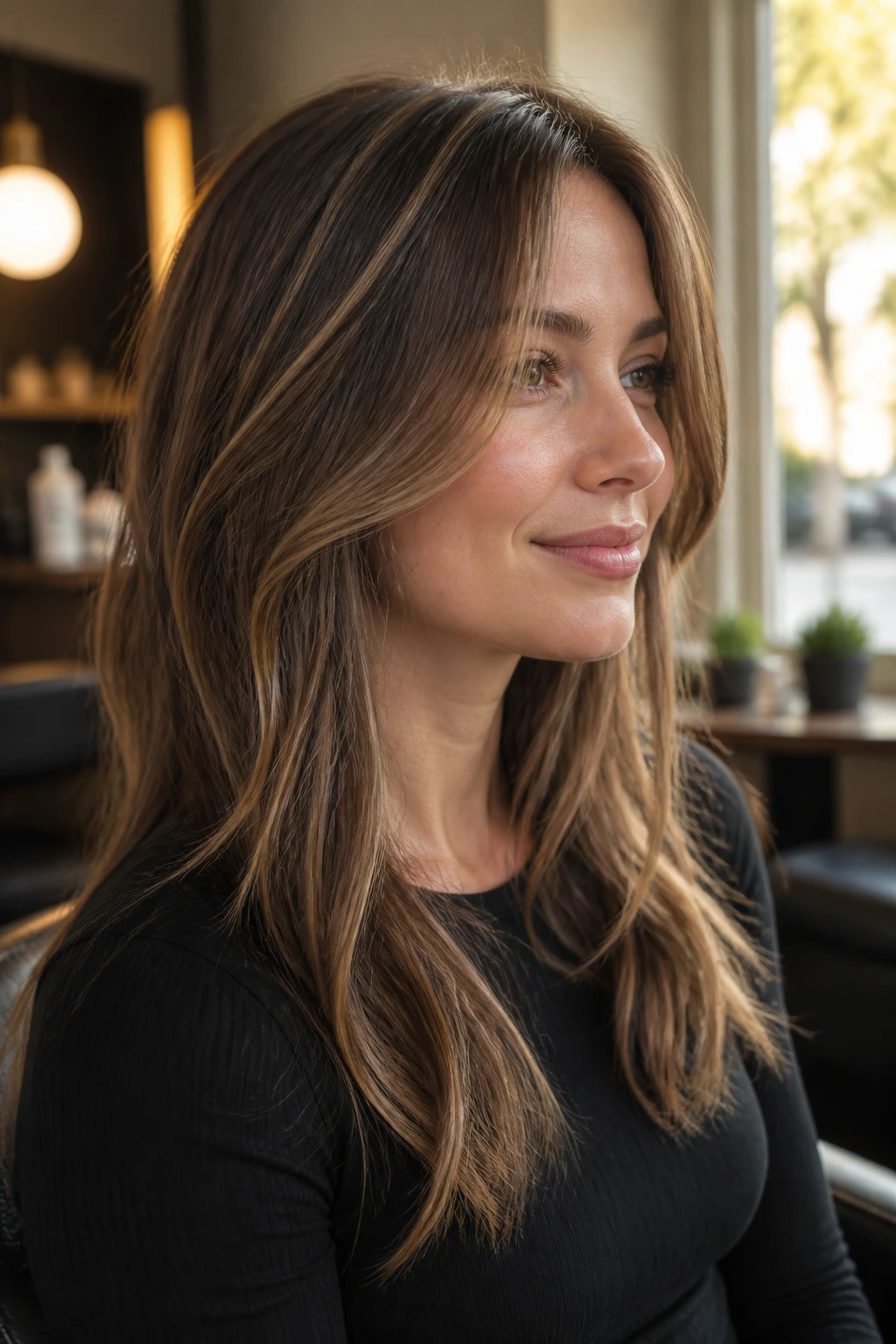
Fine hair can look sparse if the highlight pattern is too chunky. That’s why babylights are such a smart move here. They keep the surface soft and airy while still giving the hair more visual density.
What I’d avoid is wide foil sections with big light patches between them. On fine brown hair, those gaps can expose the scalp and make the whole style feel thinner. Babylights sit closer together and create a more blended finish, which is easier on the eyes.
How to Ask for It
Tell your colorist you want very fine, closely woven highlights through the top and around the face, with the lightest pieces kept around a honey level rather than pale blonde. If your hair is delicate, that also helps limit damage because less hair is being lifted in each section.
This is one of those cases where less really does look like more.
16. Bolder Honey Streaks for Thick Hair
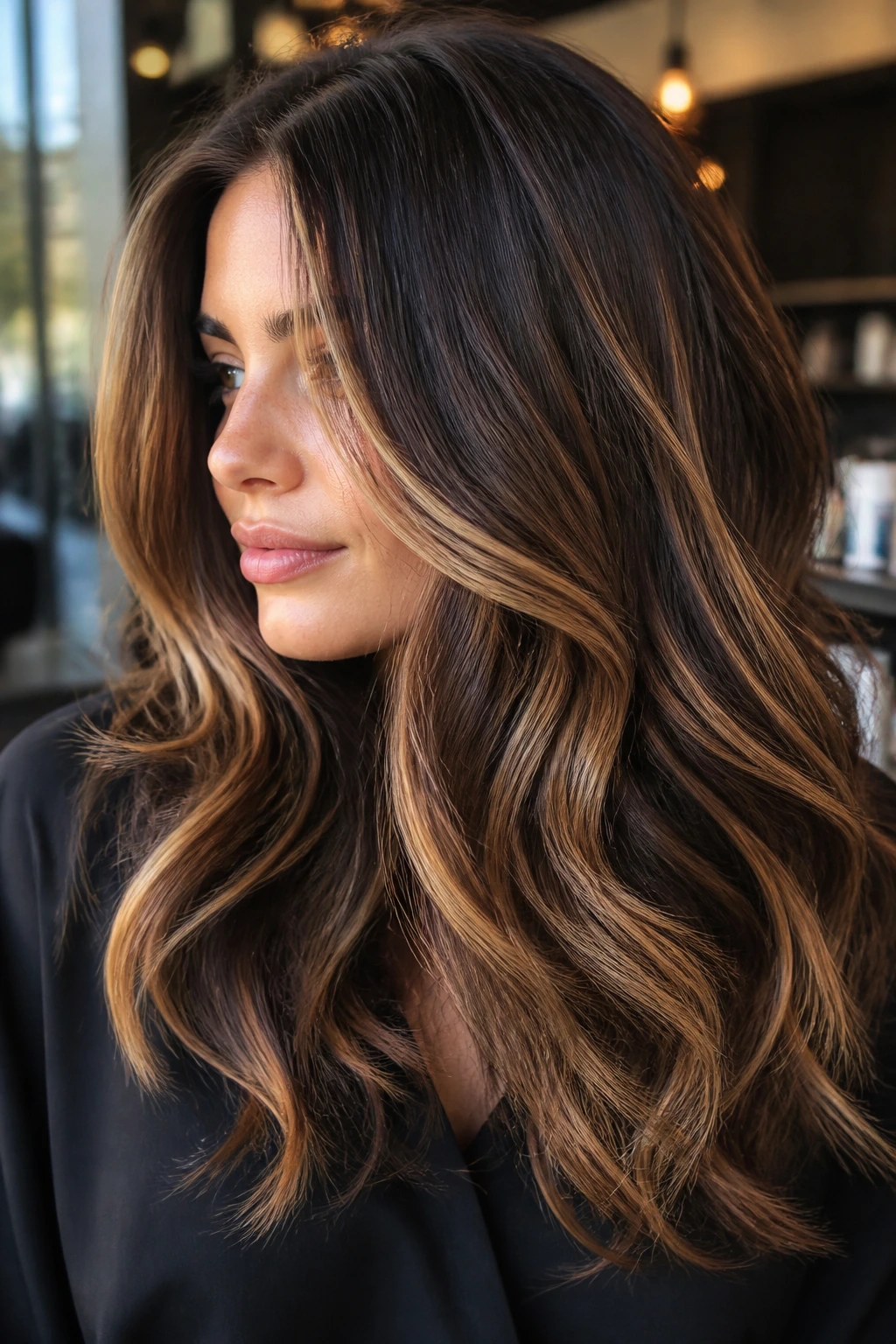
Thick brown hair can handle bigger highlight sections without falling apart visually. In fact, if the pieces are too tiny, they can disappear into all that hair and leave you wondering why you bothered.
I like bolder honey streaks on thick hair because they give the color somewhere to breathe. The light pieces can be placed through the mid-lengths and inner layers, not just the top, so the brightness shows when the hair moves. That keeps the surface from looking like a helmet.
This is also the place to use the haircut. Long layers, face-framing pieces, and a little thinning through the ends all help the color sit better. If the hair is one heavy block, the highlights fight the shape. If the cut has movement, they work with it.
- Best if your hair is dense, coarse, or very full
- Ask for wider sections in the interior layers
- Keep the toner warm and glossy
- Good for people who want clear contrast instead of whisper-soft color
17. Hidden Interior Lights That Flash When Hair Moves
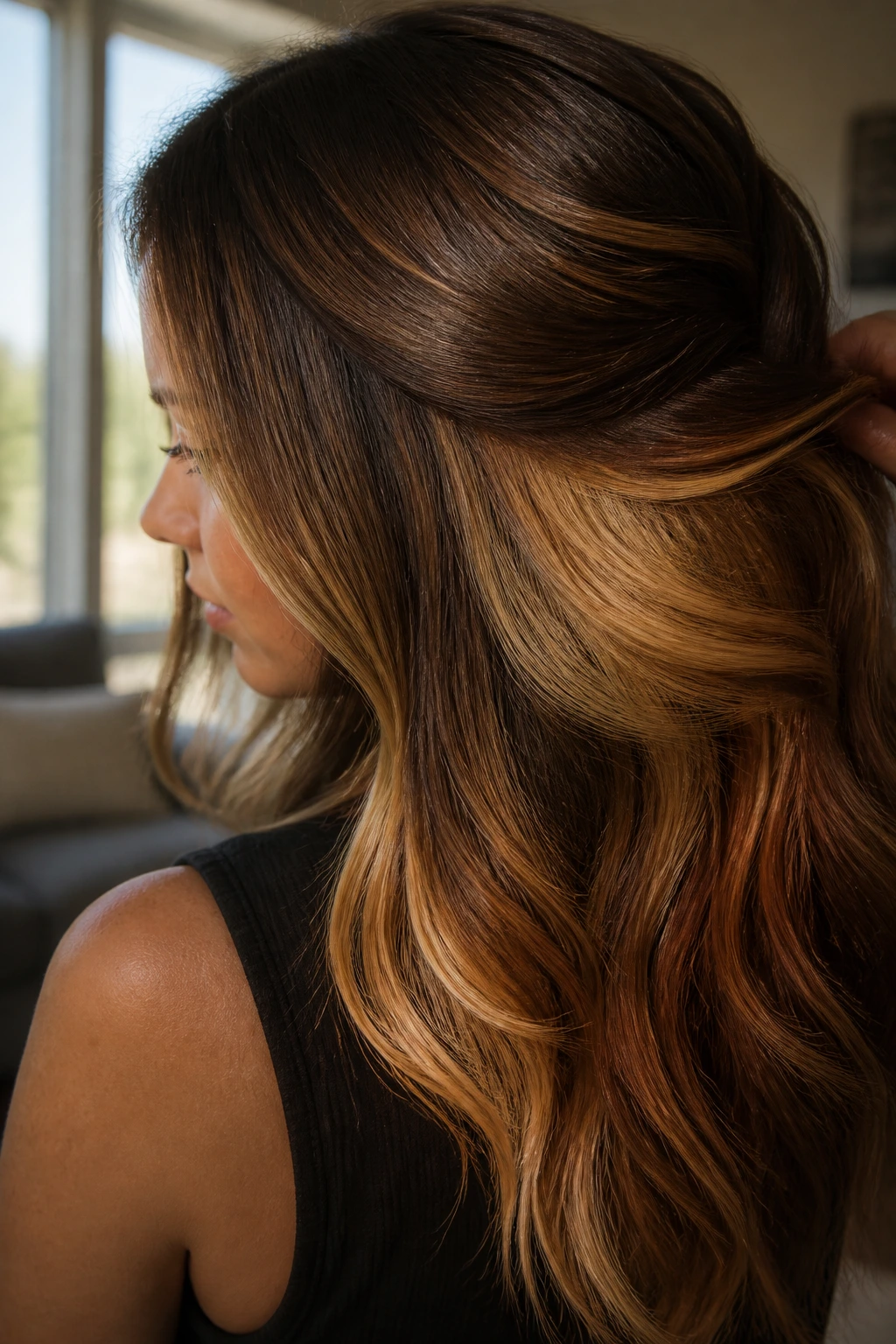
Hidden highlights are one of my favorite tricks because they feel a little playful. From the front, the hair can still read as mostly brunette. Then you turn your head, tuck it behind an ear, or toss it over your shoulder, and the honey pieces show up underneath.
This placement works because it gives the color a job. Interior lights are not trying to repaint the whole head. They live beneath the surface and create movement from the inside out. That makes them especially nice for layered cuts, long waves, and any style that gets worn half-up a lot.
The best hidden lights are often a shade deeper than the front money piece, so they don’t steal attention. They should look like a secret, not a separate color story.
If you want warmth but don’t want your color to be obvious every day, this is a clever middle ground. It feels personal. Which is rare.
18. Honey Blonde Ribbons on a Cool Brown Base
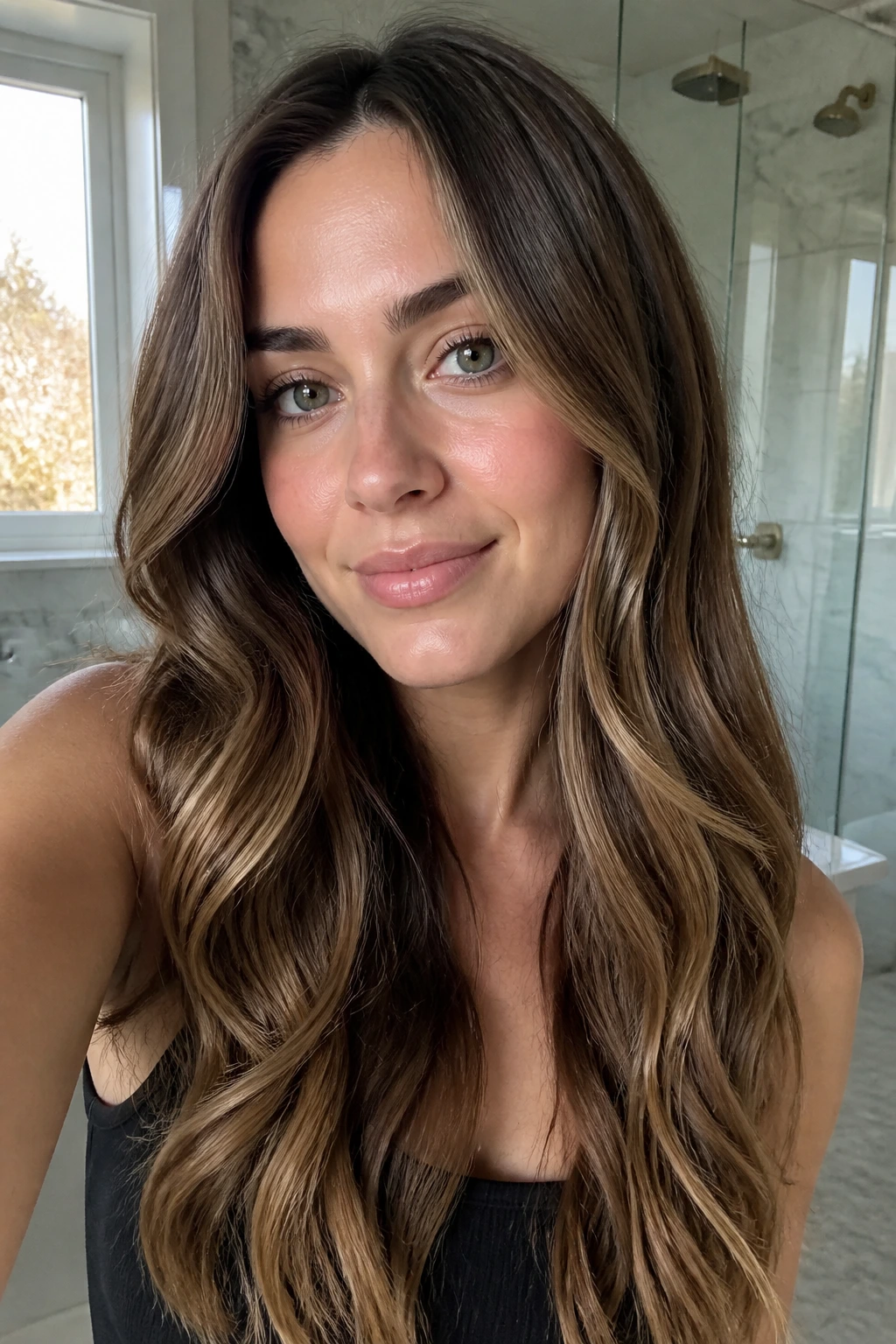
A cooler brown base can still wear honey blonde, but the tone choice needs more care. If the base is very mushroomy or espresso-leaning, a yellow honey can look disconnected fast. A neutral-gold ribbon with a touch of beige usually sits better.
That’s the difference between a highlight that looks blended and one that looks pasted on. The goal is not to warm the whole head until it loses its personality. The goal is to give the cool brown a little light without turning it orange.
This is a good route for people who like soft contrast and are nervous about going too warm. It keeps the brunette identity intact. The honey pieces just loosen it up a bit.
My take: if your natural color leans cool, ask for a neutral honey formula and show your stylist a photo in daylight. Salon lights lie. Daylight tells the truth.
19. Loose Honey Ribbons on Wavy Hair
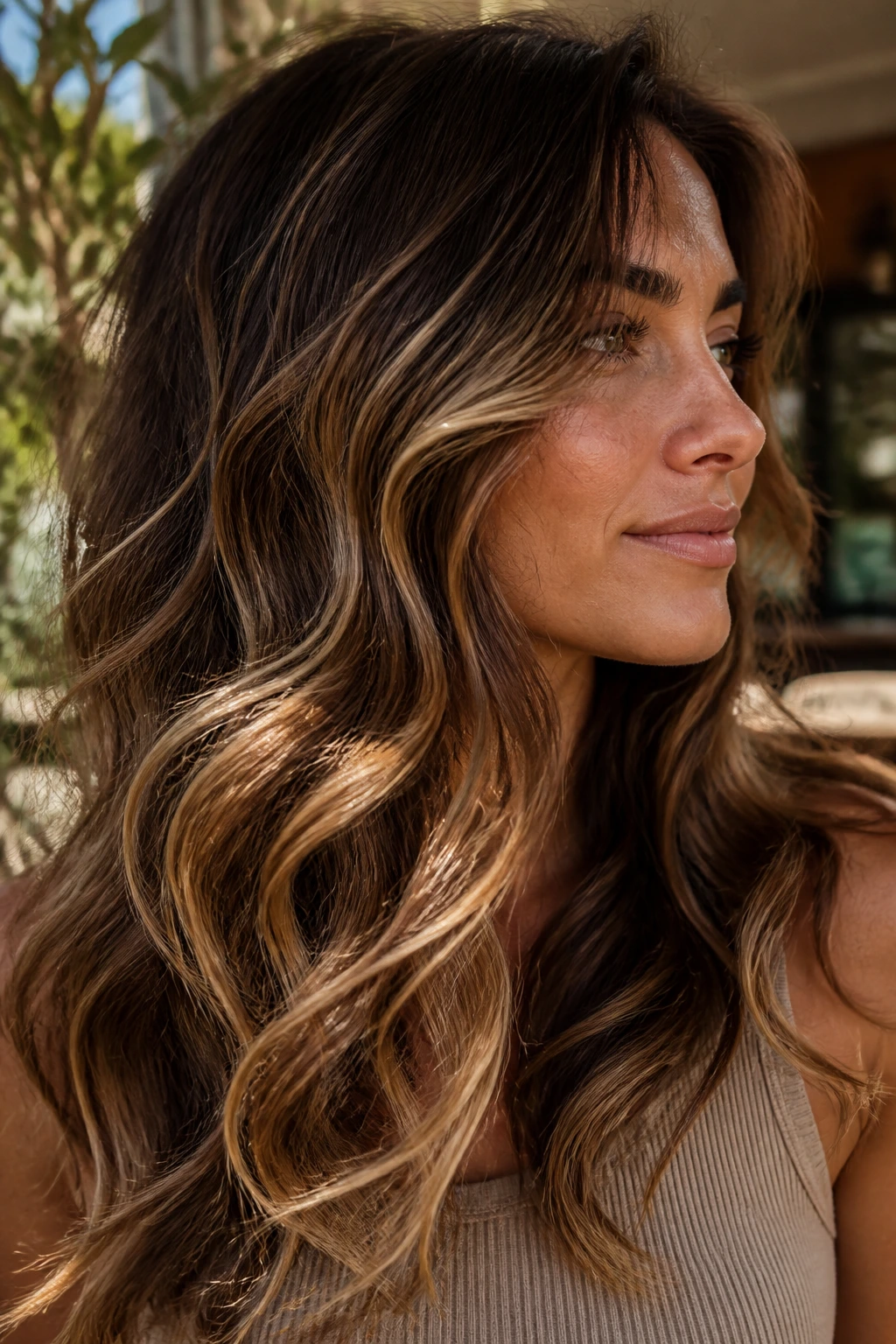
Waves are ideal for honey blonde because they create broad bends that show off color placement without much effort. A ribbon that looks subtle on straight hair can look alive on a wave pattern, especially when the lighter pieces trace the curve instead of slicing across it.
Placement Map
The smartest approach is usually to place the brightest pieces where the wave bends outward, then keep softer honey in the underneath layers. That gives the hair a kind of rolling movement as you walk.
- Brightest around face-framing bends
- Softer through the nape and underlayers
- Good with long bobs, shags, and layered mids
- Keep the finish warm, not pale
The cut matters here. A one-length wave can still look good, but layered waves usually give the color more shape to work with.
20. Dimension From Honey Highlights and Lowlights Together
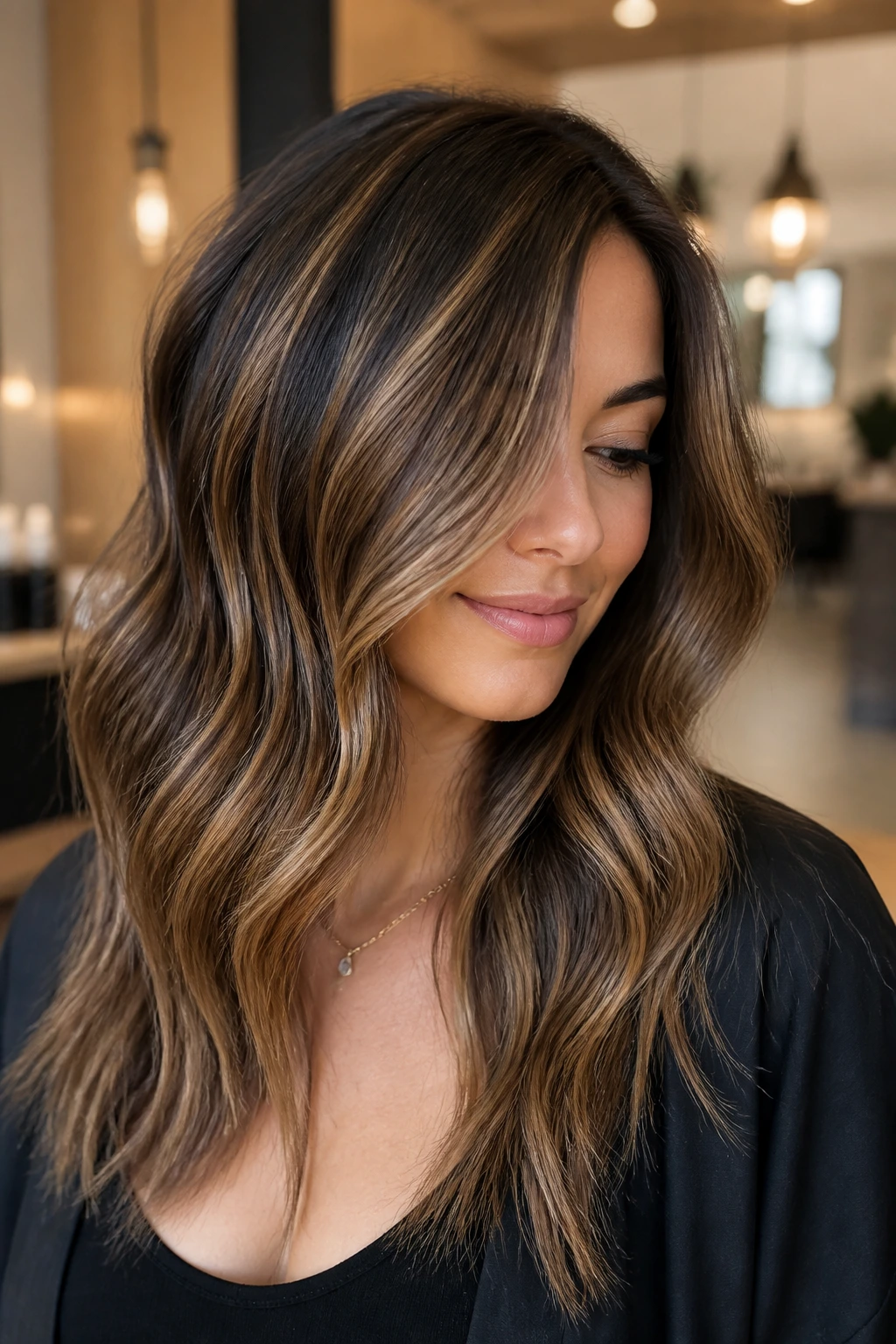
One-color highlights can be pretty. They can also go flat fast. Adding lowlights beside honey blonde is what keeps brown hair from looking washed out.
That’s the whole reason this pairing works. The honey gives lift. The lowlights hold the base together. Without that darker thread, the lighter pieces can float too much and make the hair feel thinner than it is.
This approach is useful for anyone whose hair has a lot of warmth already. Instead of fighting your natural tone, it uses it. The result is softer and deeper at the same time, which sounds impossible until you see it in motion.
I’d choose this over a full blonde shift almost every time if the goal is dimension, not reinvention. It’s just a better use of the brown hair you already have.
21. A Grow-Out Friendly Honey Balayage
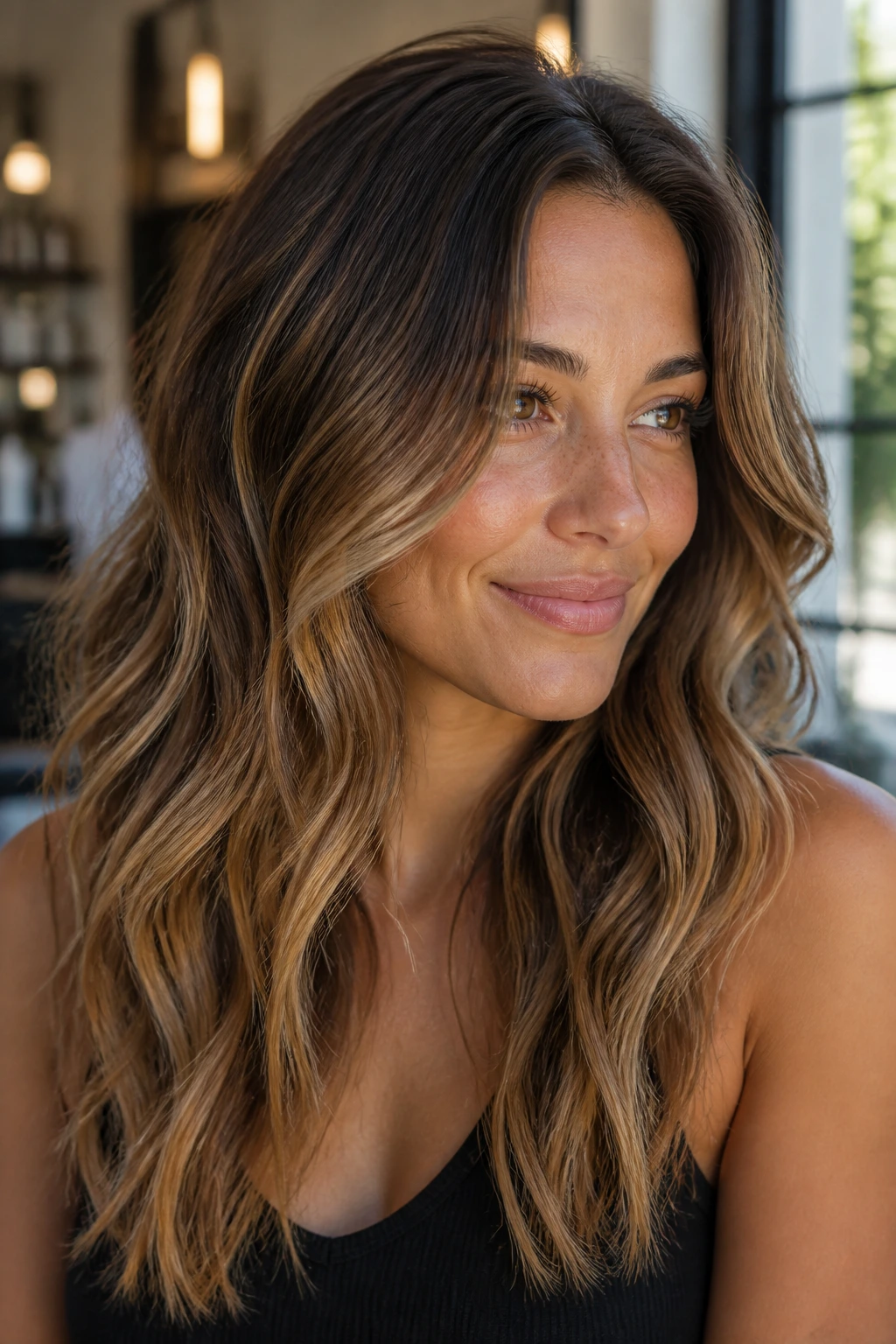
Can honey blonde highlights on brown hair stay pretty as they grow out? Yes, if the placement is soft enough and the root area is left alone. That’s why balayage remains such a strong choice for people who don’t want constant upkeep.
The technique keeps the lightness lower on the shaft and lets the natural brown stay visible near the scalp. When the root grows, the line doesn’t look abrupt. It just reads as part of the style. That matters more than people admit, because the first week after coloring is easy. The tenth week is the real test.
How to Ask for It
Ask for a soft root area, lightness through the middle and ends, and a warm honey gloss rather than a pale toner. If you want even less upkeep, keep the brightest pieces away from the exact part line and concentrate them where the hair falls naturally.
This is the style I’d hand to someone who wants pretty hair that still fits a real life. No babysitting.
22. Rooted Honey Blonde Balayage With Soft Ends
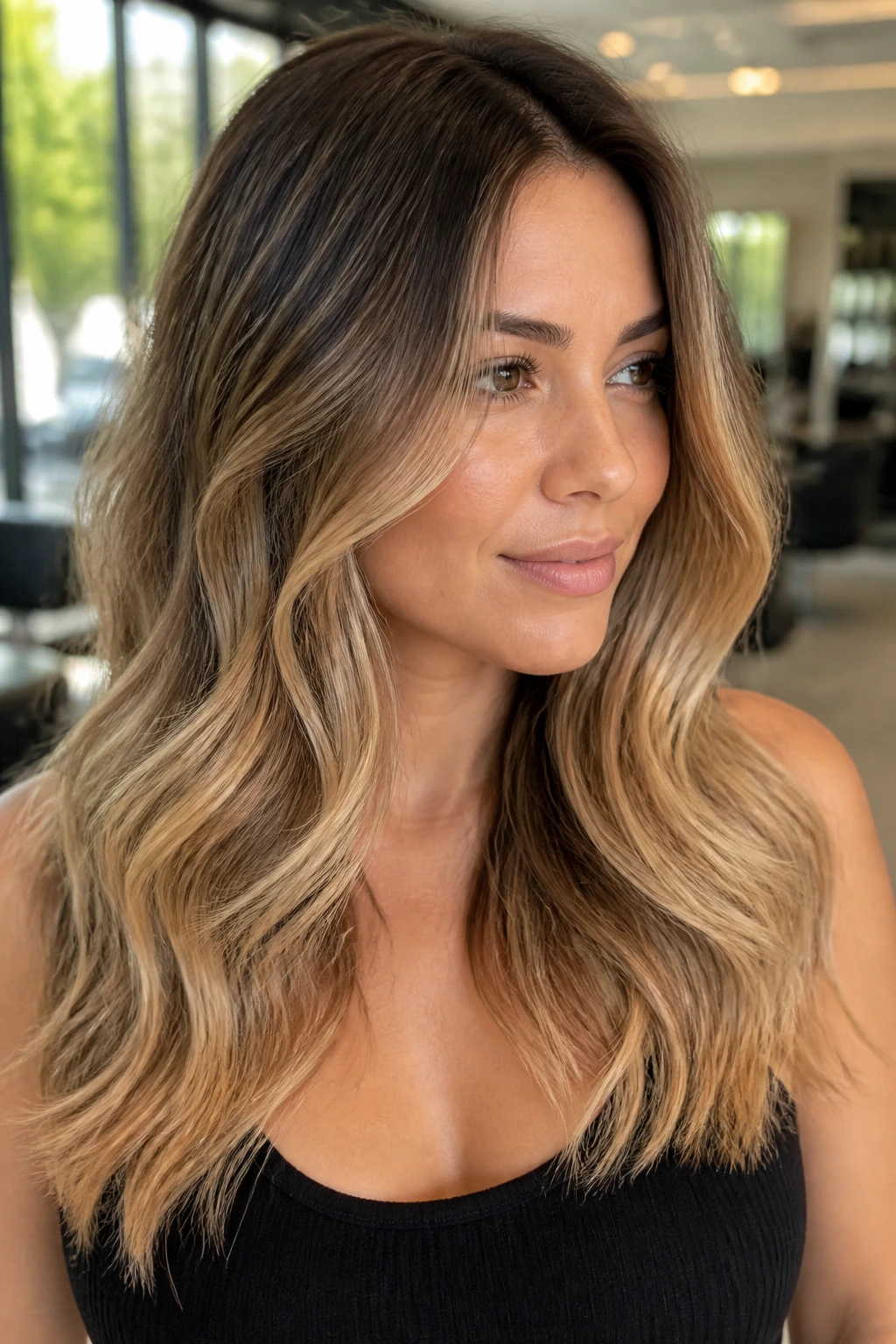
A rooted balayage with honey ends is the most forgiving version on this list, and I mean that in the best way. The darker top keeps the style grounded, while the lighter ends give the hair a warm finish that still looks intentional after months of wear.
The ends should not be bleached into oblivion. That’s where this look goes wrong. They need to stay buttery and soft, with enough brown left in the mix to keep the honey from turning flat or dry-looking. If the ends are too light, the whole style loses its richness.
This is the look I’d choose for someone who wants color that can live with them, not against them. It works on long layers, shoulder-length cuts, and even thick hair that tends to grow out in stages. The root gives structure. The honey gives glow. The cut does the rest.
A good rooted balayage is never boring. It just doesn’t need to prove anything every day.
