



Brown hair can carry lavender highlights better than people expect. The trick is not going purple for the sake of it; it’s choosing the right shade, the right placement, and the right amount of lightening so the color looks woven in instead of pasted on.
On a deep brunette base, the prettiest lavender usually sits somewhere between lilac and smoky violet. Push it too pastel and it can wash out; keep it too dark and it disappears into the brown. The sweet spot is where you still see the lavender in daylight, but it doesn’t scream from across the room.
That balance is why placement matters so much. A few face-framing pieces can brighten the whole haircut, while hidden underlights or balayage ribbons create movement that only shows when the hair swings, bends, or is pulled back. If you’ve ever looked at a purple-heavy dye job and thought it seemed louder in photos than in real life, that’s usually a tone issue, not a color issue.
Some of these looks are soft enough for everyday wear. Others are unapologetic. And yes, if your brown hair pulls red or orange, a cooler lavender usually behaves better than a pastel one that’s trying too hard to look airy.
1. Face-Framing Lavender Money Pieces
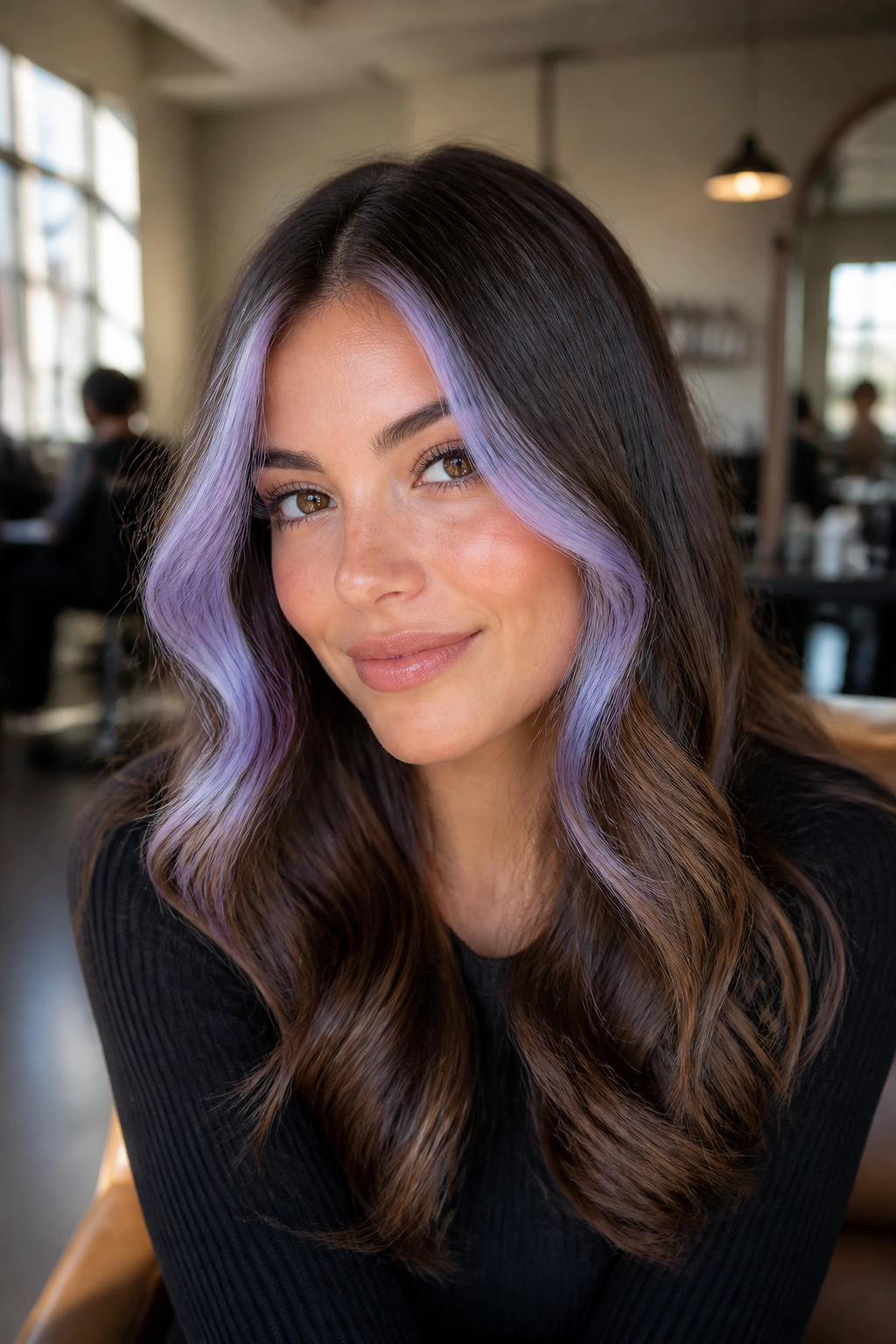
Face-framing lavender money pieces are the fastest way to make brown hair look brighter without repainting the whole head. They sit where the eye goes first — around the part, the temples, and the front edge of the haircut — so even a small amount of color reads as a real change.
Why They Work
The contrast does most of the work for you. On chestnut, cocoa, or espresso hair, a pair of lavender strands near the face can soften features and give the cut a little lift, especially if the rest of the hair stays rich and dark. I like this version because it feels intentional, not busy.
- Ask for 2 to 4 front pieces about 1/2 inch to 1 inch wide.
- Keep the root a little deeper, so the color doesn’t look striped.
- Choose dusty lilac if your brown hair is warm, or a cooler lavender if your base is ash-toned.
- Blow-dry the front sections away from the face to show the color cleanly.
Best tip: a tiny bit of root shadow makes the lavender look better on grow-out day, which is usually the day everyone else notices it.
2. Smoky Lavender Balayage on Brunette Lengths
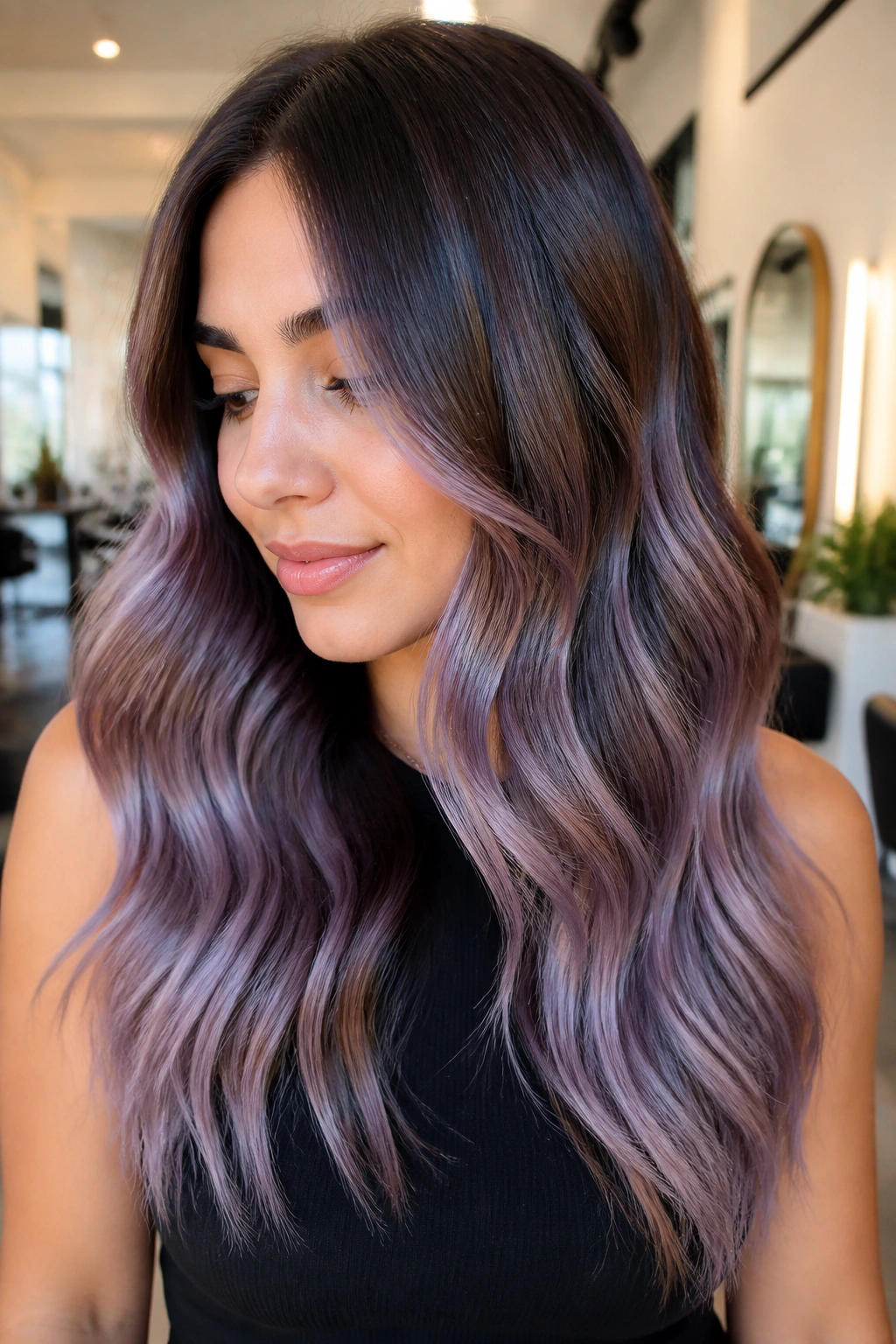
Smoky lavender balayage is the one I’d pick for someone who wants dimension first and color second. The brown still does the heavy lifting; the lavender just slides through the mid-lengths and ends like a cool wash of pigment.
Balayage works well here because the hand-painted pieces can stay soft at the root and more noticeable toward the bottom. That keeps the style from turning into a blocky stripe pattern, which is the fastest way to make lavender look harsh on brown hair. On long waves, the color opens up every time the hair bends.
This version also ages well between appointments. As the lavender fades, you’re left with brown hair that still has movement, not a harsh line that needs fixing right away. If you want something that looks expensive without acting precious, this is a good lane.
3. Pastel Lavender Peekaboo Ribbons
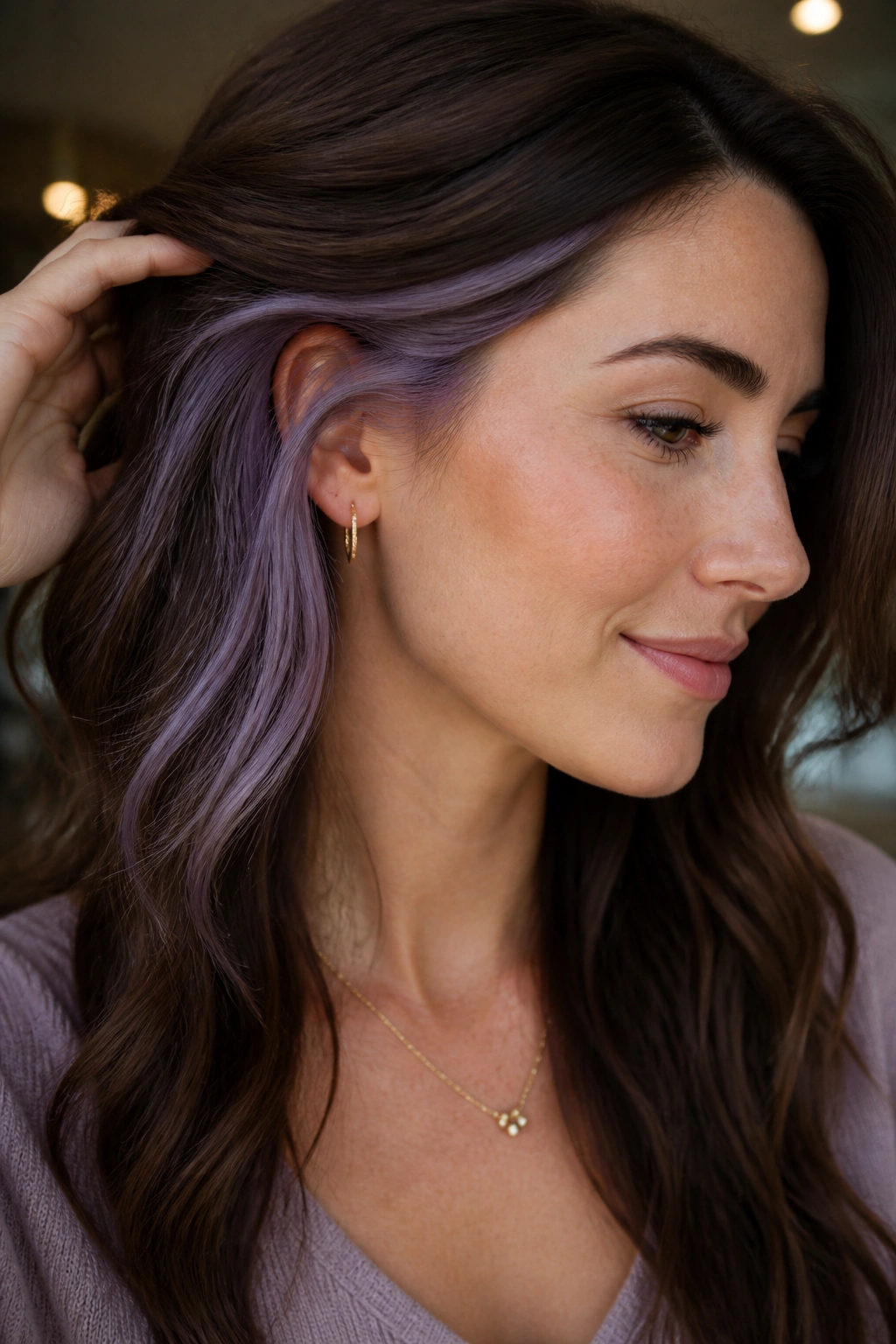
Want the color to hide until the hair moves? Pastel lavender peekaboo ribbons do exactly that. They sit underneath the top layer, so the brown hair stays dominant when it’s down, and the lavender flashes only when you tuck hair behind the ear or pull it half up.
How to Wear It
This is one of my favorite choices for people who work in more conservative spaces or just don’t want bright color at their face all day. It gives you a little surprise without forcing you into a full statement look.
- Place the ribbons under the crown or behind the ears.
- Keep them thin if your hair is fine; chunky hidden pieces can show through too much.
- Wear a low bun, half-up clip, or loose braid to reveal the color.
- Choose a pastel glaze only if your base has enough lift. Dark brown hair needs more lightening than many people expect.
The best part is the reveal. A breeze, a twist, a ponytail — suddenly the lavender is there.
4. Chunky Lavender Panels Around the Crown
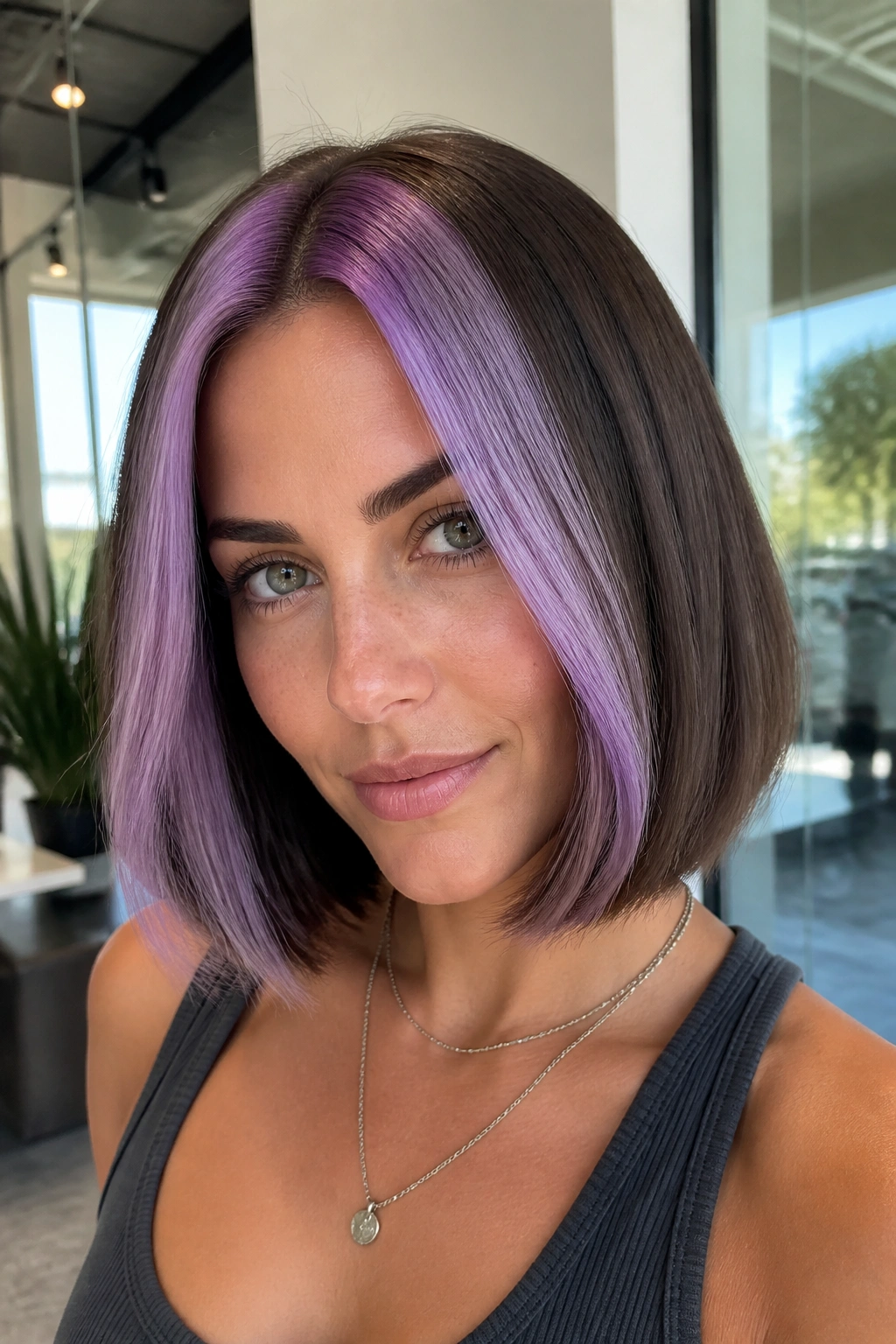
Chunky lavender panels are bold, graphic, and a little bit mischievous. They work best when you want the haircut itself to look like part of the color story, not just a blank surface with some tint on top.
Picture a sleek bob, a long lob, or even a blunt shoulder cut with two wider lavender panels near the crown and part line. The effect is sharp, especially on straight hair, because the color reads as shape. Curly hair can wear this too, but the twist pattern softens the edges, so you’ll get a different mood.
I’d reach for this when the client wants something that looks deliberate from across a room. It’s not shy. It also means the lightening has to be clean, because wide panels show every patchiness problem faster than fine highlights do.
5. Cool Lilac Babylights on Chocolate Brown Hair
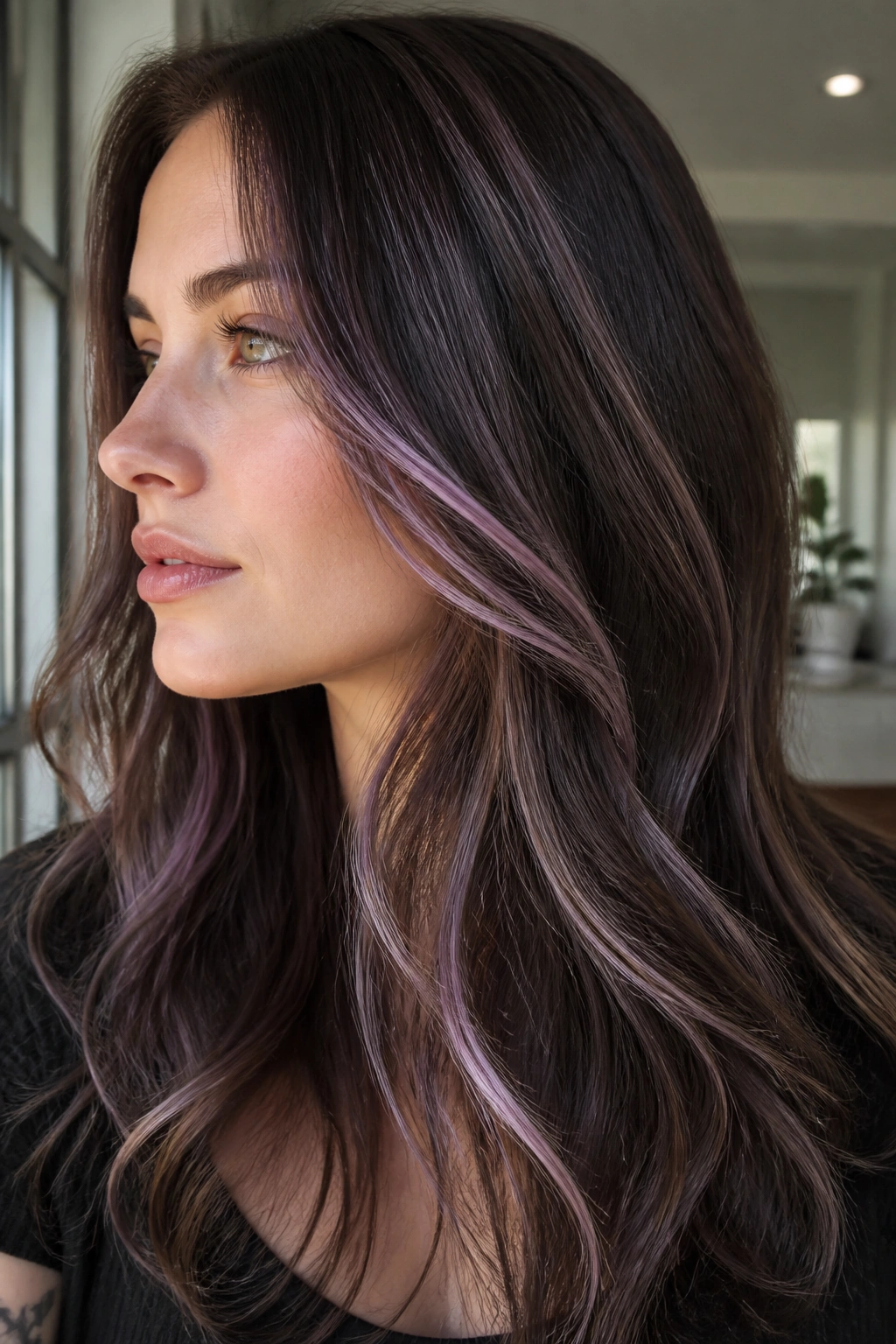
Cool lilac babylights are the quietest version of lavender highlights for brown hair, and that’s exactly why they work. The sections are so fine that the color behaves almost like sheen, especially on glossy chocolate brunette hair.
This look depends on precision. Thin weaves, even lift, and a cool lilac toner create a soft shimmer instead of visible streaks. If the pieces are too thick, you lose the effect and end up with color blocks that fight the base. When the weave is tiny, though, the hair moves like it has light woven into it.
This is the one I recommend to people who want dimension more than drama. It looks good in indoor lighting, which matters more than salon photos. One sentence can say the whole thing: it reads polished because it stays subtle.
6. Lavender Ombre from Mid-Lengths to Ends
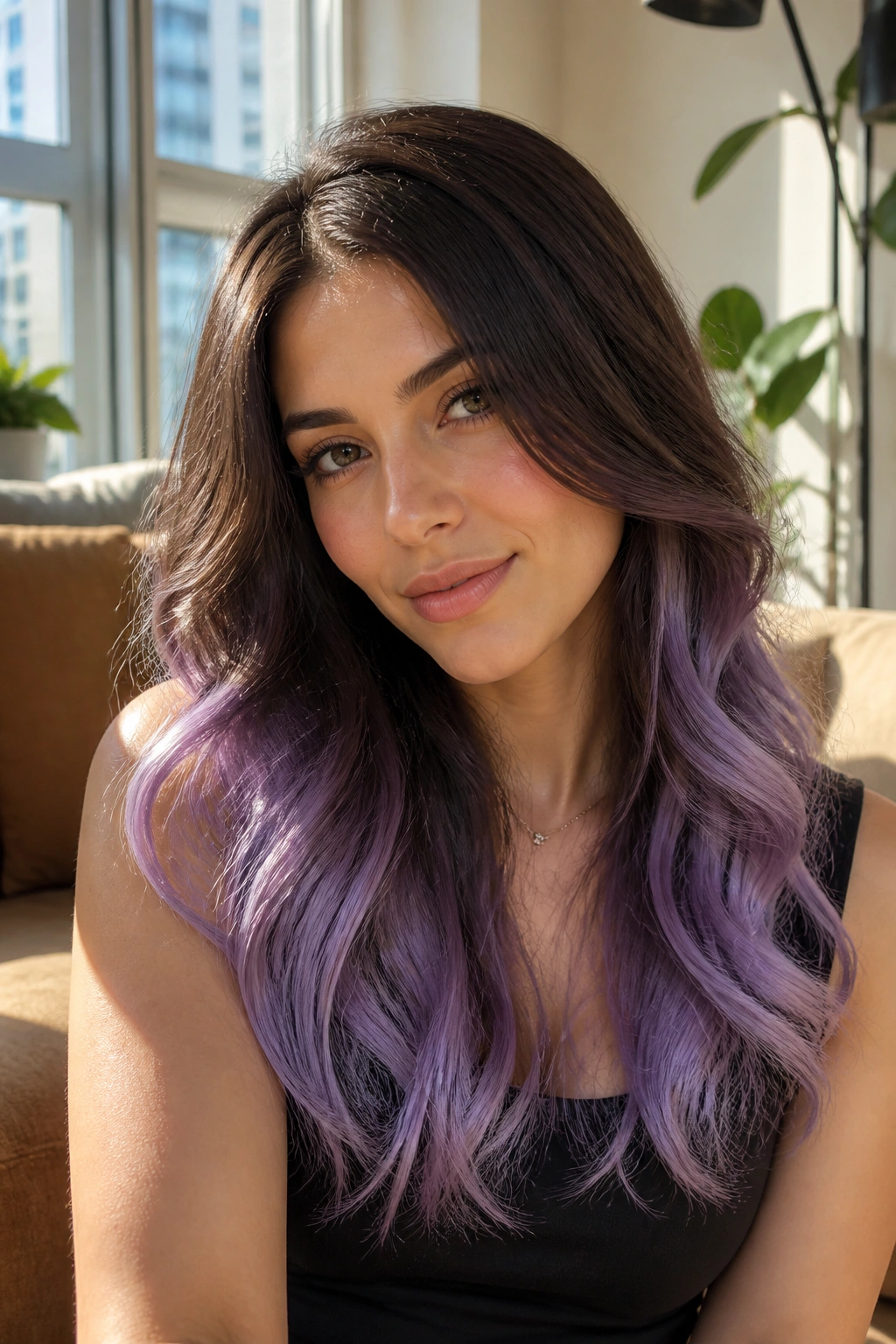
Lavender ombre gives brown hair a gradual color story instead of a sudden surprise. The roots stay brunette, the mid-lengths start to soften, and the ends carry the strongest lavender tone. That makes the whole look feel anchored.
Unlike some highlight patterns, ombre doesn’t need constant root upkeep. The fade is part of the design. On long hair, the gradient gives the ends something to do, which helps if the lower half tends to look heavy or flat. I also like ombre for people who wear curls, because the lighter ends bounce more when they move.
The main thing to watch is the transition point. If the blend is too blunt, it looks like a line. If it’s too diffuse, the lavender can vanish into the brown. The sweet spot is a slow melt, not a hard stop.
7. Amethyst Highlights on Curly Brown Hair
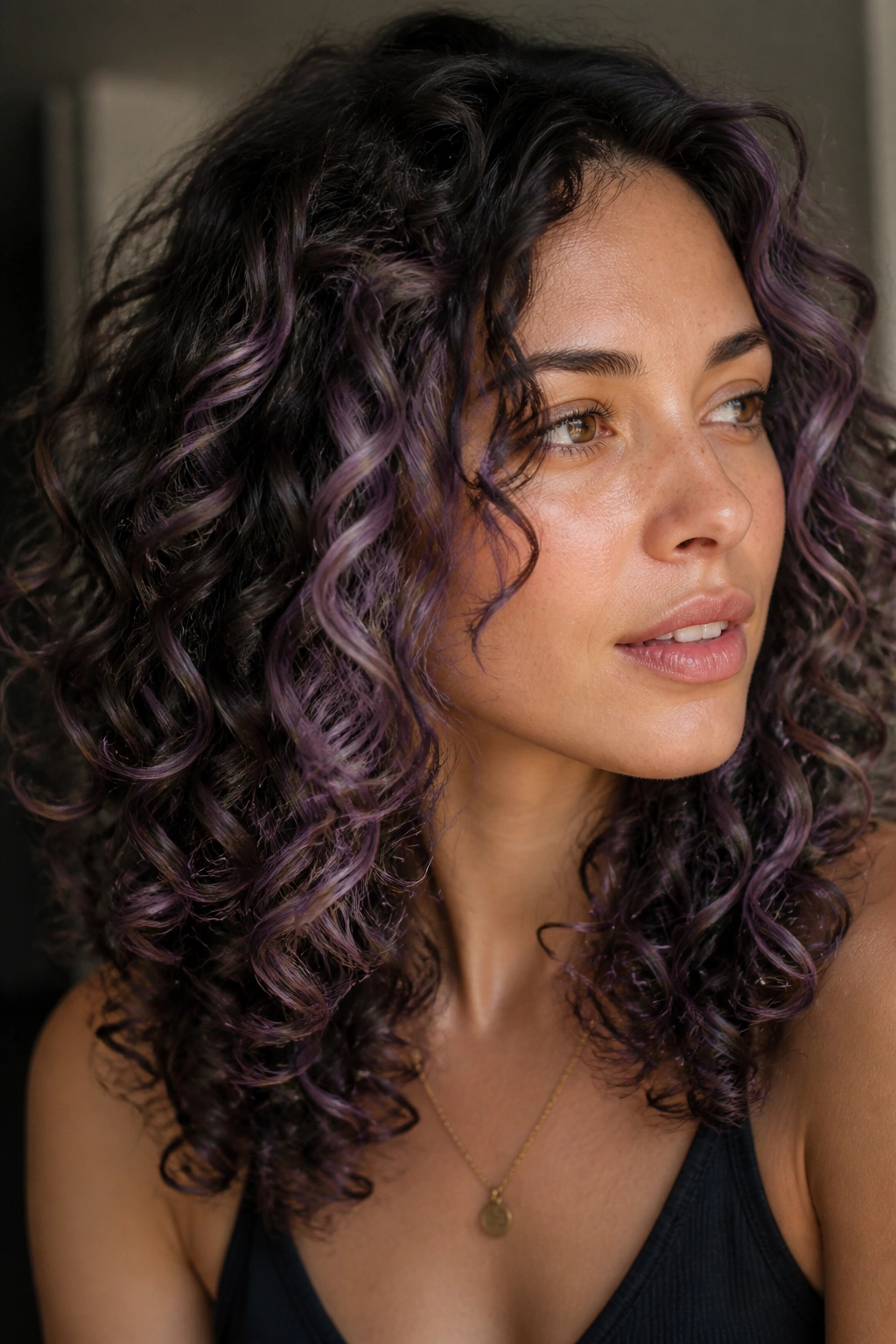
Amethyst highlights on curls should follow the curl pattern, not fight it. That sounds obvious, but plenty of color jobs miss the point and place the light pieces as if the hair were flat and straight. Curly hair doesn’t sit that way, and it shouldn’t be treated that way.
What to Ask For
On coils, waves, and ringlets, the prettiest placement usually sits on the outer curve of the curl clump and a little bit underneath, so the color turns with the hair instead of sitting on top like paint. A deeper amethyst often works better than a pastel lavender here, because curls create their own visual texture.
- Ask for painted pieces that follow the curl family, not just random streaks.
- Keep the lightening gentle if the curls are dry or fragile.
- Use a gloss finish so the purple looks rich, not chalky.
- Style with a diffuser or air-dry cream to let the color show through the curl shape.
This is one of those looks that gets better the more the hair moves. Flat ironing it usually hides the point.
8. Mushroom Brown with Soft Lavender Veils
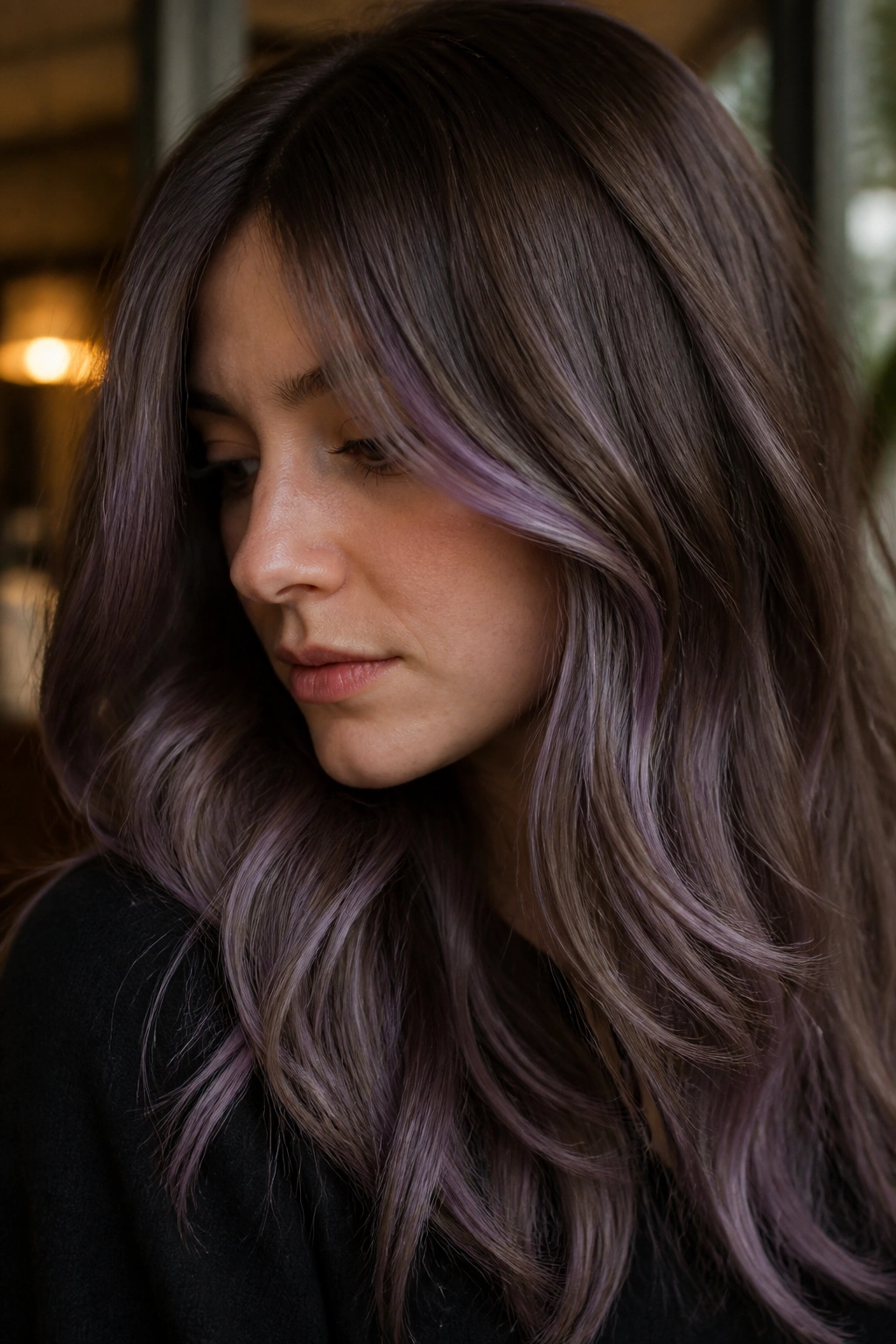
Mushroom brown and soft lavender veils make sense together because both tones live on the cooler, earthier side of the color wheel. The brown stays grounded, and the lavender comes through like mist instead of candy.
This is a good choice if you want lavender highlights for brown hair but don’t want the contrast to feel loud. The veils are thin enough to slip between layers, so the color appears and disappears as the hair shifts. I like it on medium brown bases with a muted ash cast; it feels calm, not flat.
One sentence says the mood pretty well: this one whispers. The trick is to keep the lavender toned down with a smoky finish, not a bright pastel that argues with the base.
9. Ribboned Lavender Highlights in Long Layers
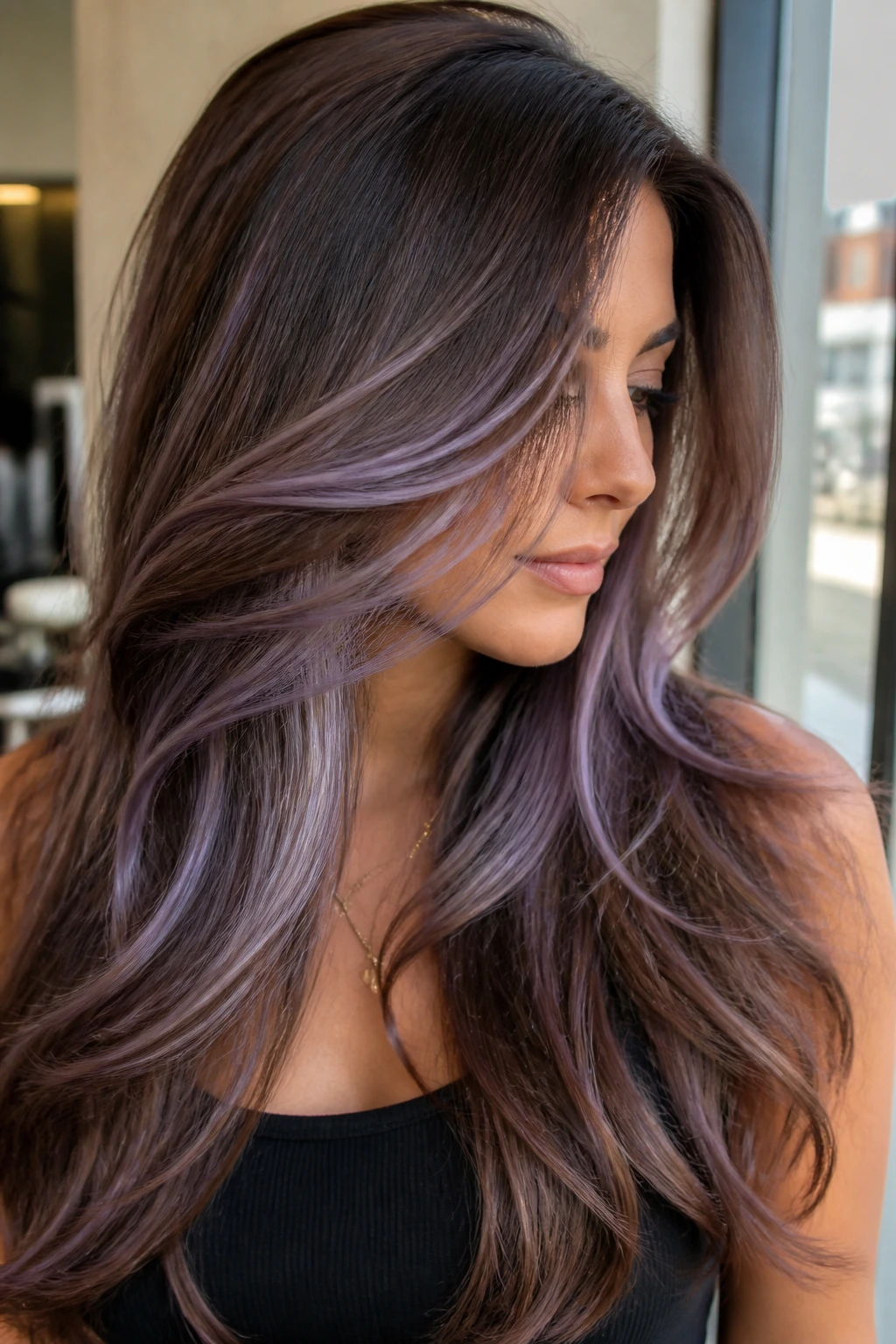
Long layers are made for ribboned lavender highlights. Every bend in the cut gives the color a different angle, which means the pieces don’t all need to be loud to matter. They just need to move.
Where the Ribbons Should Sit
The best placement starts a little below the root and continues through the lengths in narrow, curved sections. That gives you visible streaks when the hair is worn straight and a softer, woven look when it’s waved.
- Use two or three lavender tones if you want depth, not a single flat shade.
- Leave thin brown gaps between ribbons so the base still shows.
- Style with loose bends or a round-brush blowout.
- Keep the ends slightly lighter than the mid-lengths if you want a softer finish.
This style flatters long hair because it rewards movement. Still. It can look a little invisible on very fine, poker-straight hair unless the pieces are placed carefully.
10. Silver-Lavender Highlights on Dark Brown Hair
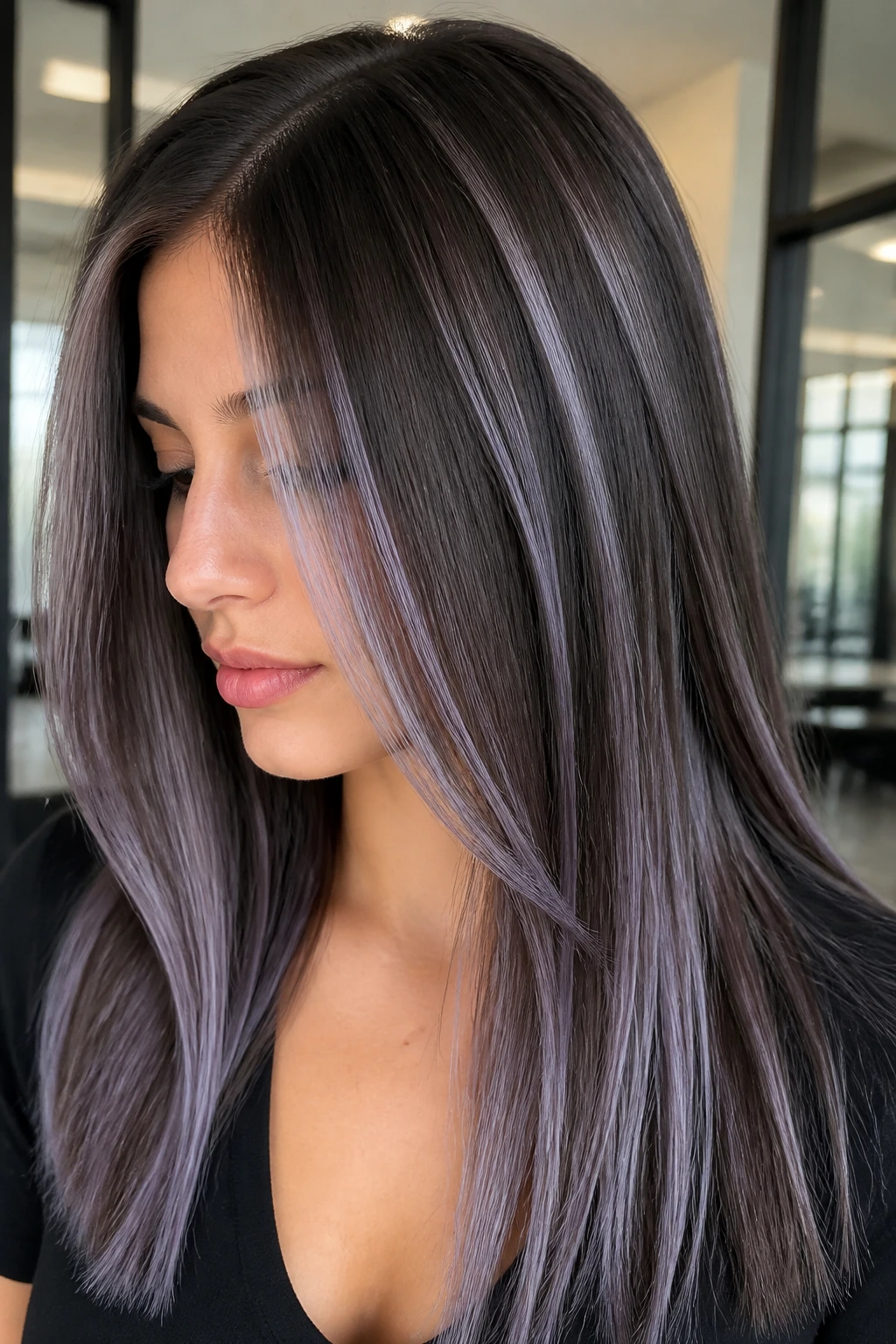
Silver-lavender highlights are sharper than pastel lilac and cooler than plum, which is why they work so well on deep brown hair. The contrast is cleaner, almost metallic, and it looks especially good when the hair has a glossy finish.
Dark brunettes usually need more lift for this to show. You’re aiming for a pale blonde base before the toner goes on, otherwise the lavender will drift muddy. That’s the part people underestimate. A good silver-lavender result depends less on the purple itself and more on the cleanliness of the lift underneath it.
This is a high-contrast look, so it suits people who like seeing the color from across the room. On straight styles, it reads sleek. On waves, it turns softer and more dimensional. Either way, it doesn’t whisper.
11. Hidden Lavender Underlights
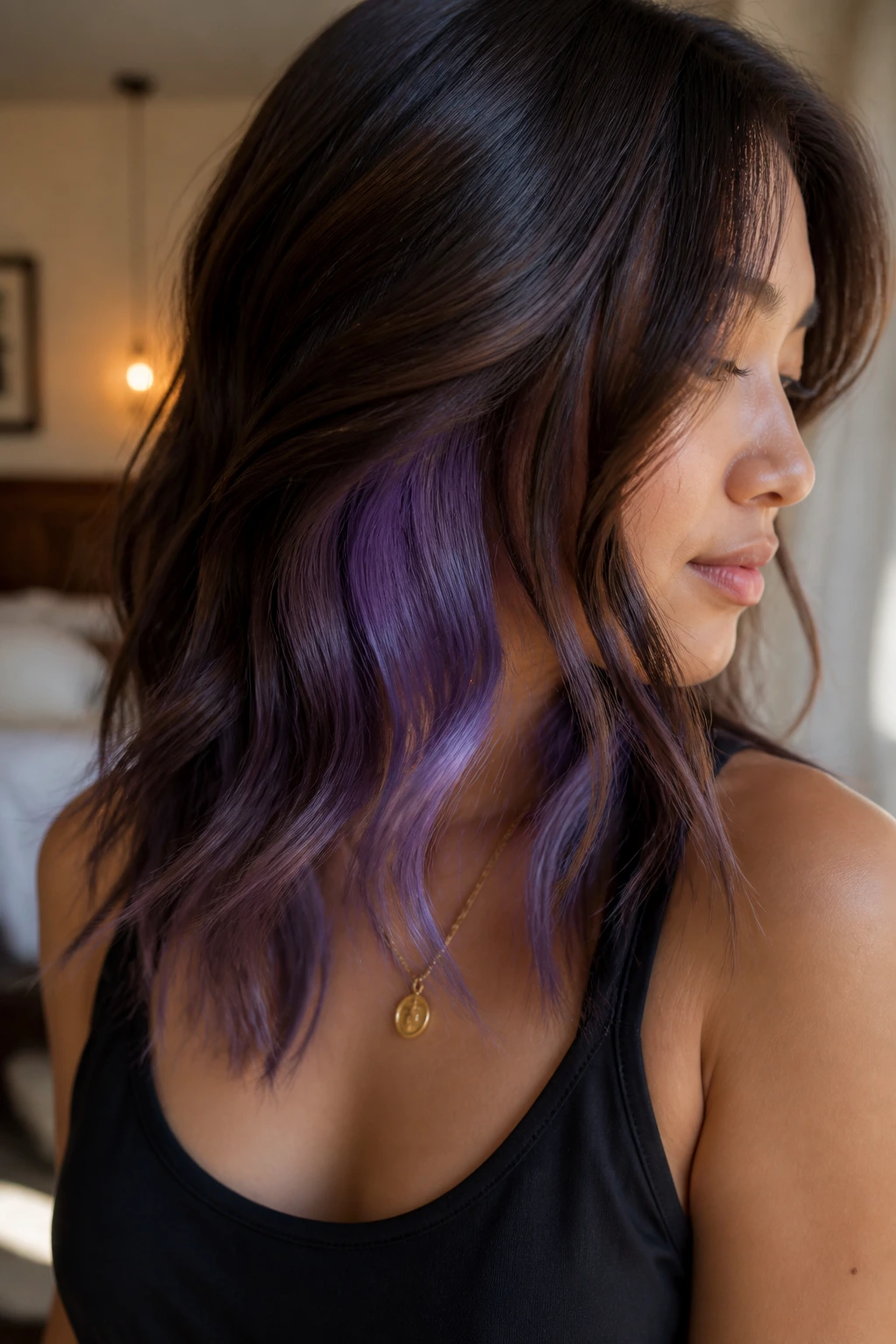
Hidden lavender underlights are the sneaky cousin of peekaboo color. The purple lives underneath the top layer, so the brown hair stays intact on the surface while the lower sections hold the color payoff.
That makes this look easy to wear in everyday life. A ponytail shows it. Braids show it. A messy bun shows it. Down and brushed over, it almost disappears. I like that range because it gives you choice without asking the whole haircut to perform.
One sentence, and it’s enough: the reveal is half the fun. If you like little surprises when your hair moves, this is a strong choice. It also grows out kindly because the hidden placement softens the maintenance line.
12. Dusty Lavender Haze on Lighter Brown Hair
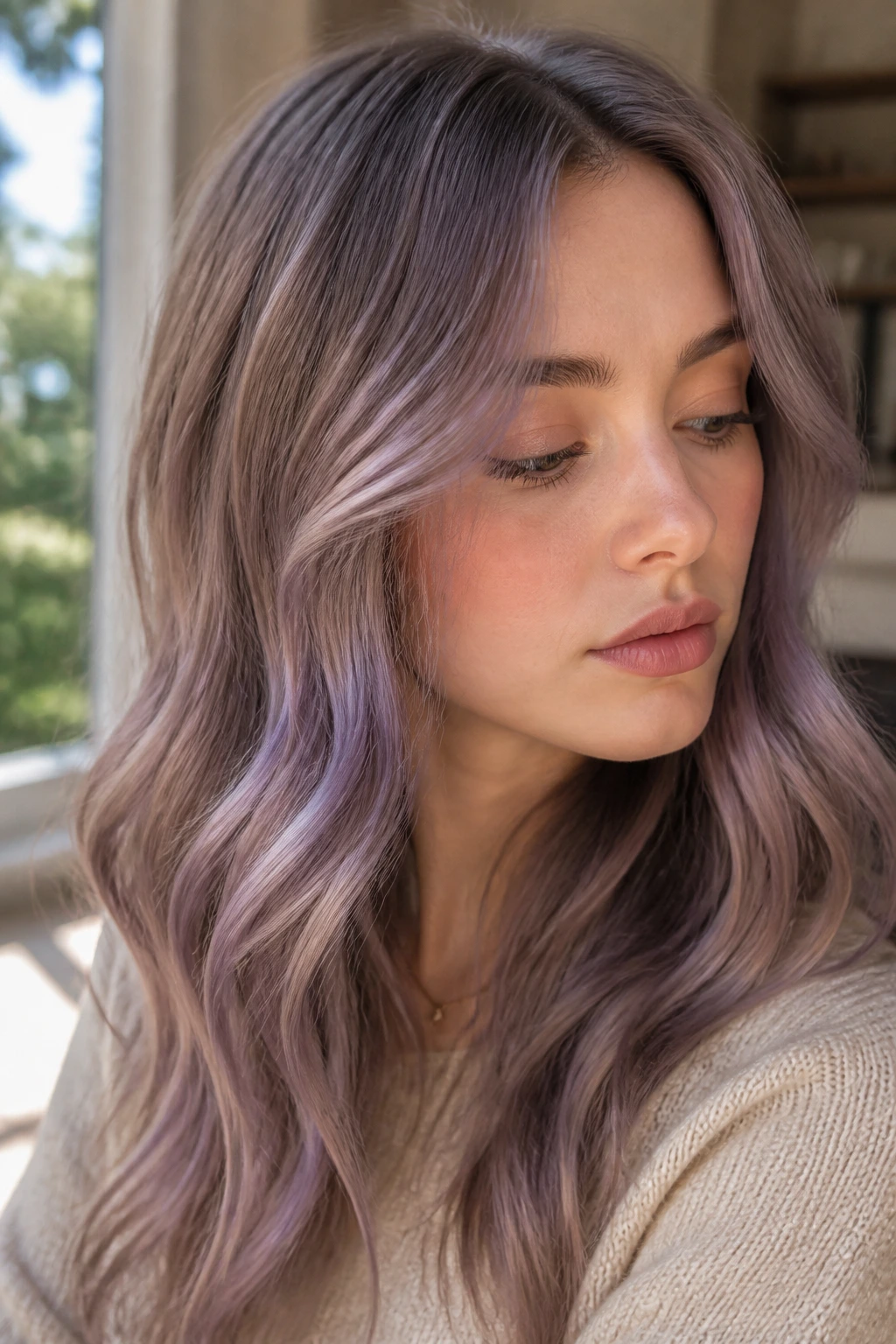
Dusty lavender haze works best on lighter brown hair with a soft, smoky undertone. It’s less about obvious streaks and more about changing the temperature of the hair so the whole color feels cooler and more dimensional.
This is one of those shades that looks expensive in sunlight and understated indoors. If the base is around a medium brown or dark blonde-brown, you may not need a dramatic lift. A glaze can be enough to leave that faint lilac cast over the surface. That’s the part I like most — it feels like color without turning the hair into a project.
The finish should look slightly foggy, not chalky. If it goes too pale, the brown underneath starts to show through in a patchy way. Keep it soft and the haze stays elegant.
13. Muted Lavender Tips on a Lob
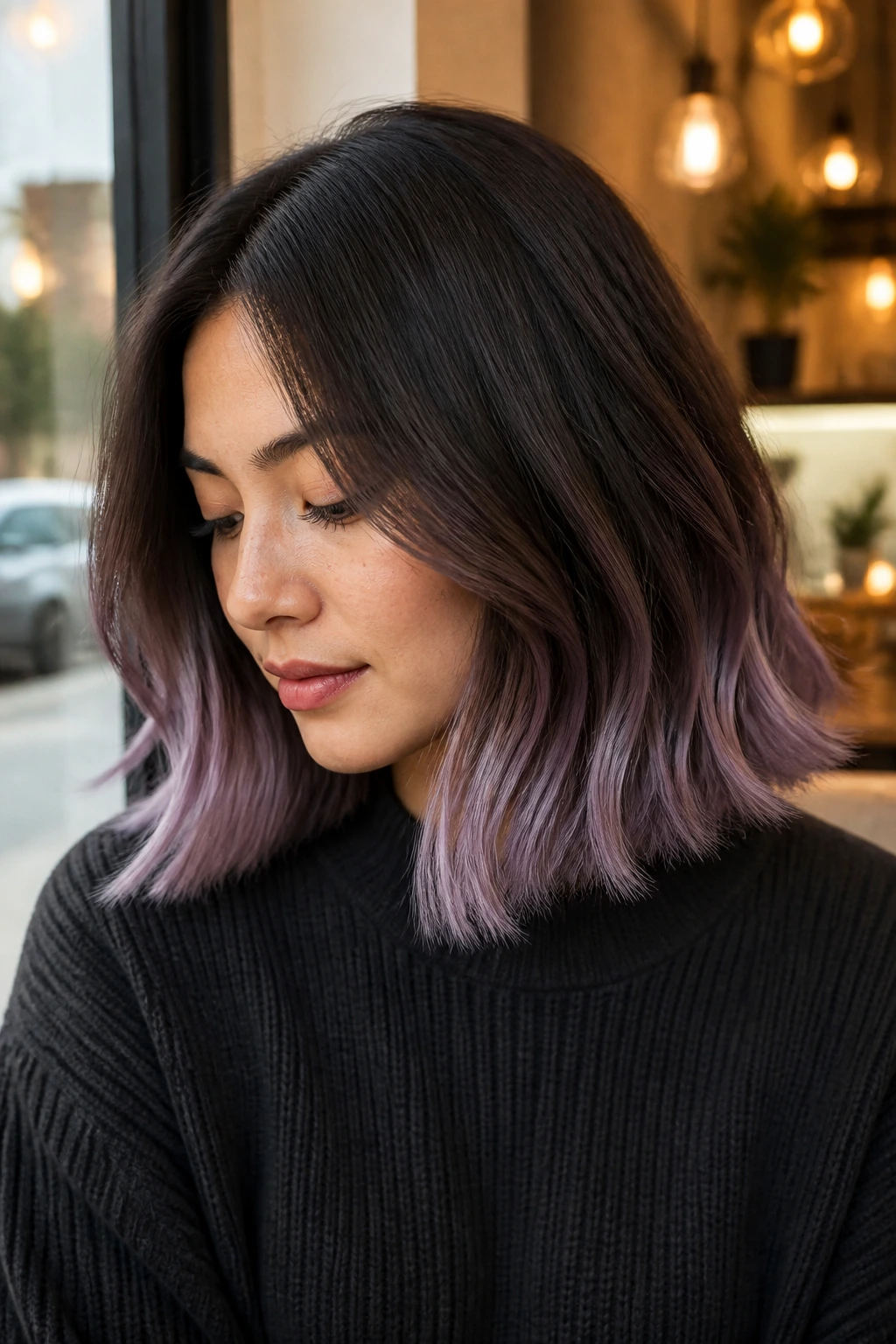
Muted lavender tips are a smart move if you love a lob or blunt shoulder-length cut. The straight edge at the bottom gives the color a clean place to land, which makes the tips feel intentional rather than scattered.
What to Ask For
This style keeps the root and mid-lengths brown, then adds a lavender glaze or fine highlight pattern only in the last few inches. It’s a good way to test color without giving up the whole haircut to it.
- Ask for the bottom 2 to 4 inches to carry the strongest lavender.
- Keep the ends slightly softer and cooler than the rest of the hair.
- Pair it with a blunt blowout or a soft bend at the ends.
- Avoid too much yellow in the lightened tips; it can make the lavender look weak.
The result is neat, readable, and easy to style. It also plays well with tucked-behind-the-ear looks, which is handy.
14. Electric Lavender Peekaboo Strands
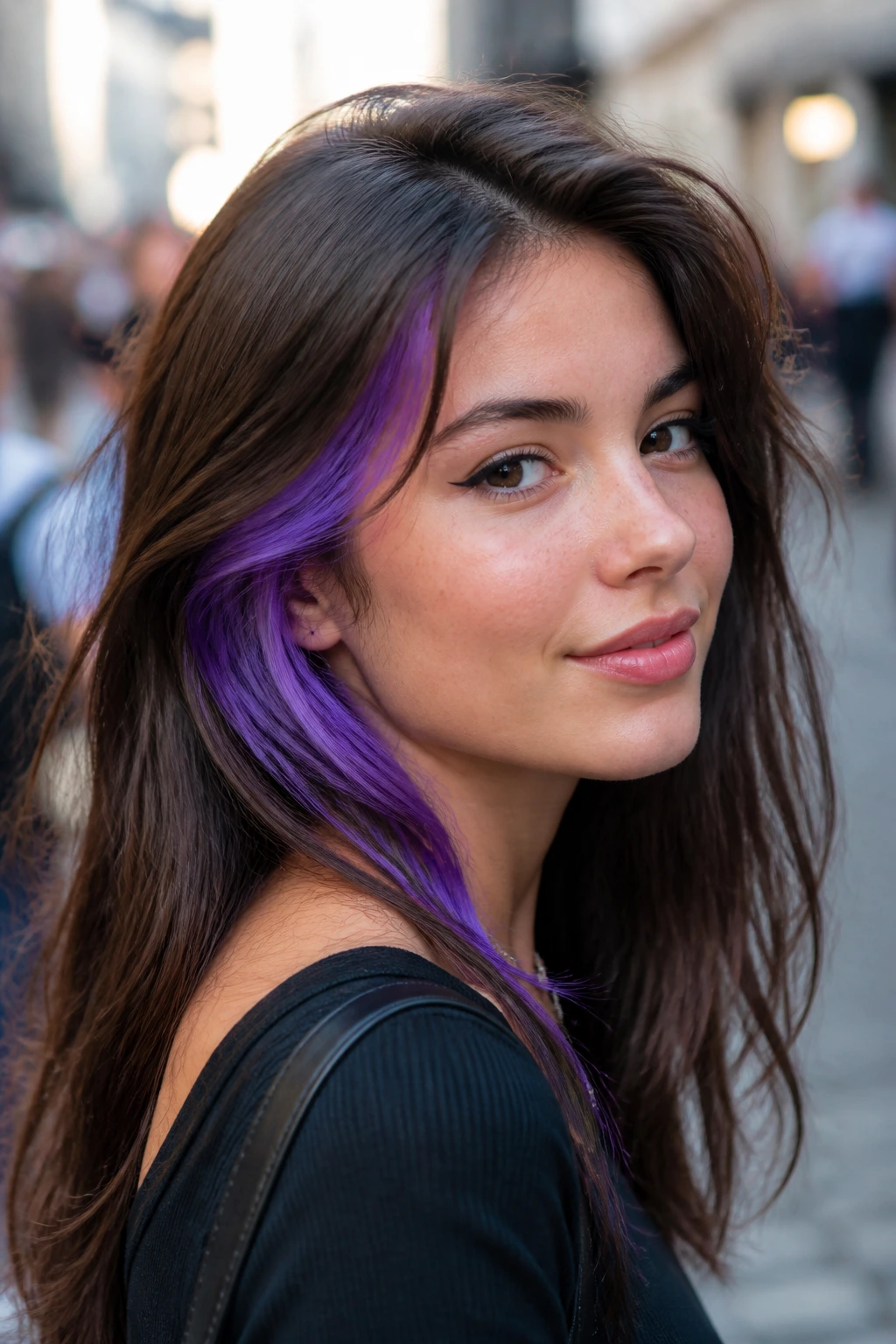
Electric lavender peekaboo strands are not subtle. That’s the point. They sit underneath the brown hair, but the shade itself is louder, brighter, and a little more playful than the dusty versions.
I like this on darker brown hair because the contrast is strong enough to matter. A few vivid strands can look almost neon when they catch light near the face or under the top layer. If you want a color that peeks through in braids, knots, or a half-up twist, this is a fun lane to take.
The only catch is that bright lavender fades fast. It tends to slide toward pastel first, then toward a softer silver-lilac. If you like the shift, great. If you don’t, plan for gloss refreshes and don’t expect the original pop to hang around forever.
15. Iridescent Lavender Slices on Wavy Hair
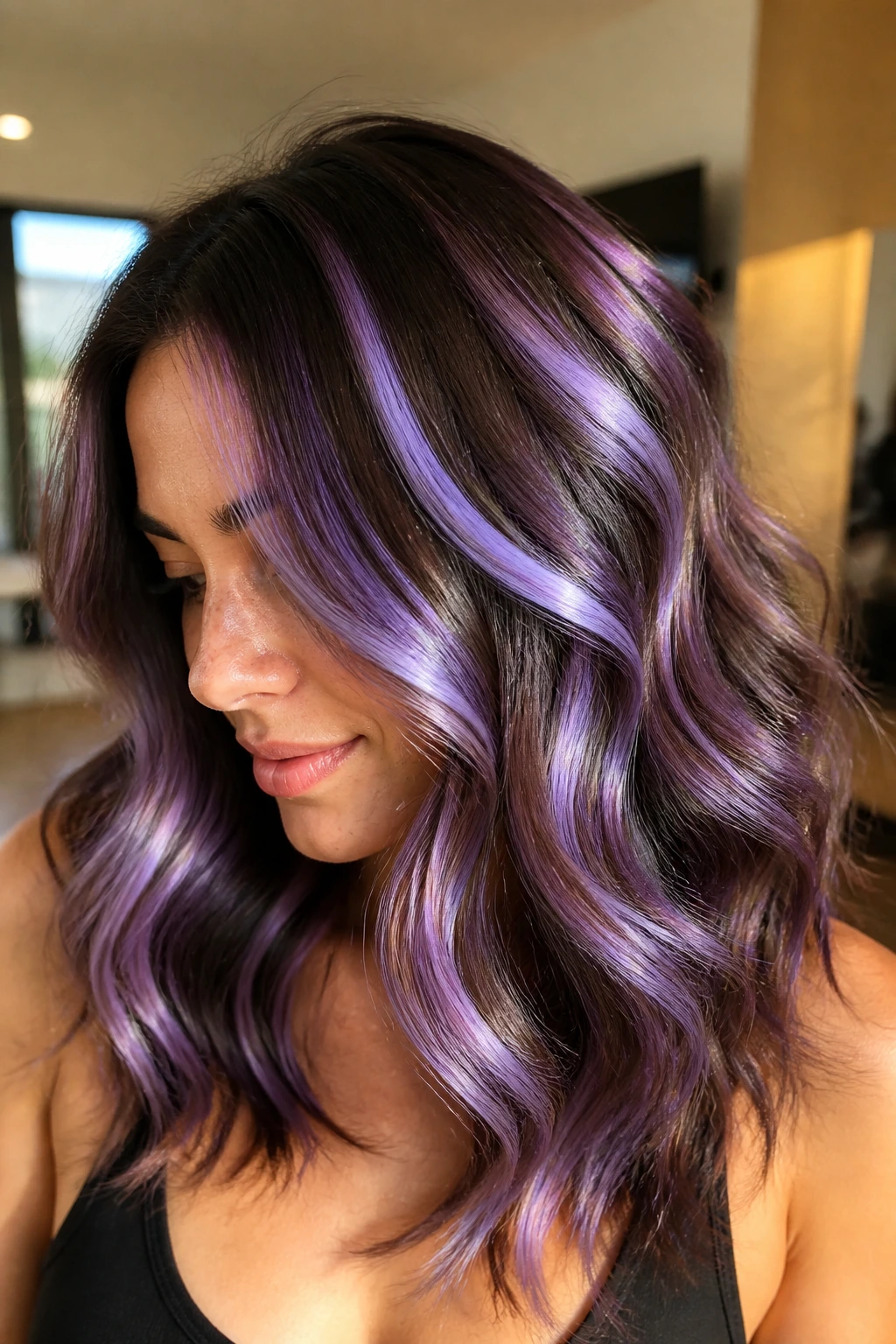
Iridescent lavender slices suit wavy hair because the shape of the wave breaks the color into moving sections. Instead of one flat purple strip, you get ribbons of brown and lavender folding over each other as the hair bends.
This is different from babylights. The slices are broader, so the color shows more clearly, but they’re still sliced into the haircut in a way that lets the brown stay visible. That gives the hair a reflective quality without turning it into a solid block. On medium-length waves, it’s especially nice because the color catches in different places every time the head moves.
If the hair is naturally textured, the slices should be placed to follow the wave flow, not just the part line. That keeps the look from feeling stiff. It’s a good compromise between subtle and bold.
16. Lavender Contour Highlights on a Bob
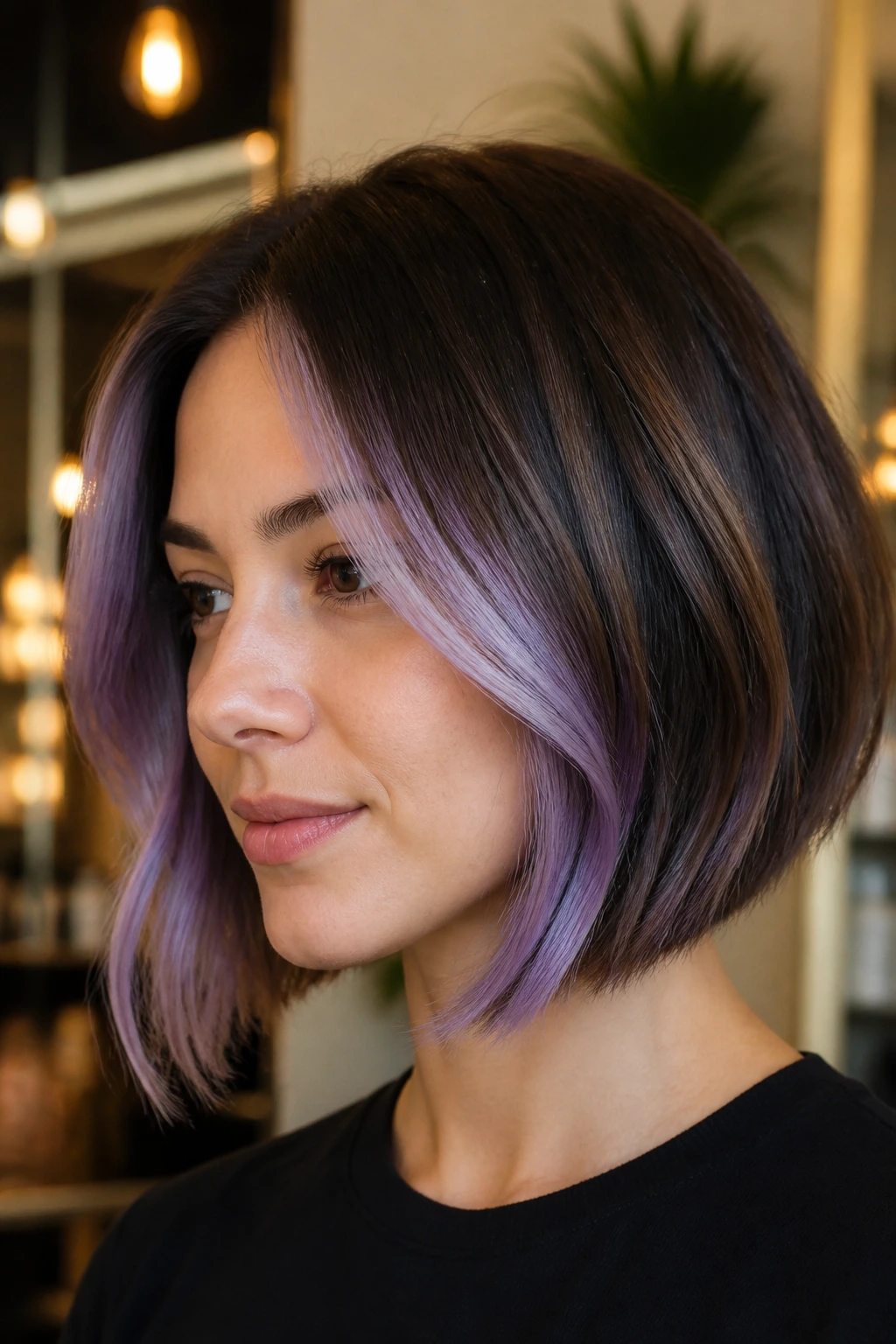
Lavender contour highlights are basically face-framing, but smarter. They use placement to shape the haircut itself, not just brighten the front. On a bob, that means color can sit near the cheekbones, the jawline, and the lower edge of the cut to sharpen the silhouette.
Where the Light Should Go
A good contour placement doesn’t flood the whole bob with color. It uses a few focused pieces to push the eye where you want it. That can make a bob look fuller at the sides, lighter around the face, or more lifted at the crown.
- Place the brightest lavender near the front curve of the bob.
- Keep the underneath darker if you want a slimmer, cleaner shape.
- Use soft, rounded brushing to show the contour instead of flattening it.
- A gloss finish helps the pieces stay crisp against brown hair.
This is one of my favorite salon looks because it feels tailored. Not random. Tailored.
17. Caramel Brown Hair with Lavender Money Pieces
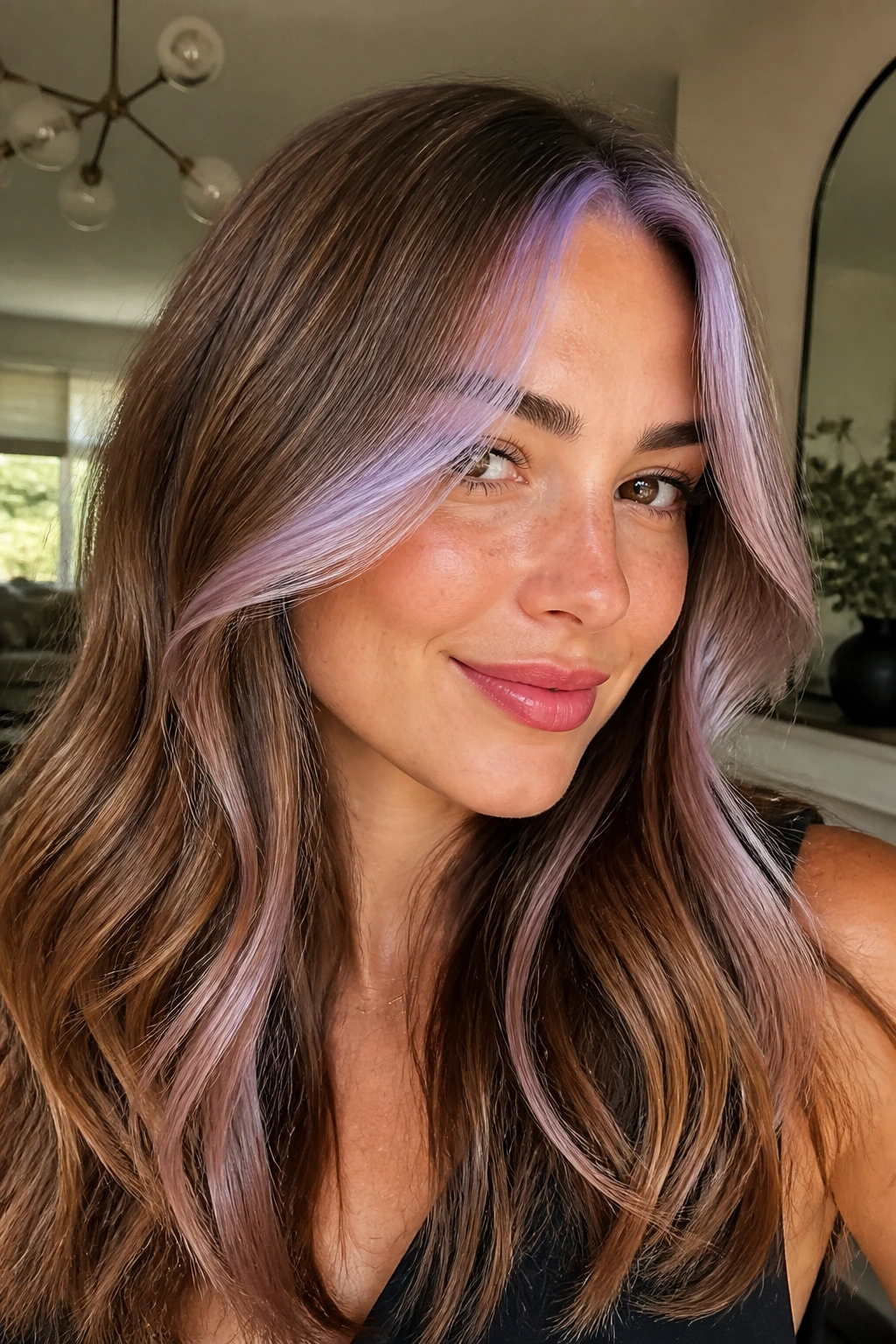
Caramel brown hair and lavender money pieces make a surprisingly good pair. The warmth of the caramel keeps the brunette side friendly and soft, while the lavender front pieces add a cool counterpoint that keeps the whole thing from drifting too golden.
This works best when the lavender is creamy or beige-lilac instead of icy. A stark violet against caramel can feel abrupt. A softer tone blends more naturally with warm brown hair, especially if the ends already carry honey or bronze tones.
I’d recommend this for people who like dimension but don’t want to give up warmth. The contrast near the face wakes everything up. The rest of the hair can stay mellow. That’s a nice trade.
18. Ash Brown Hair with Violet Smoke
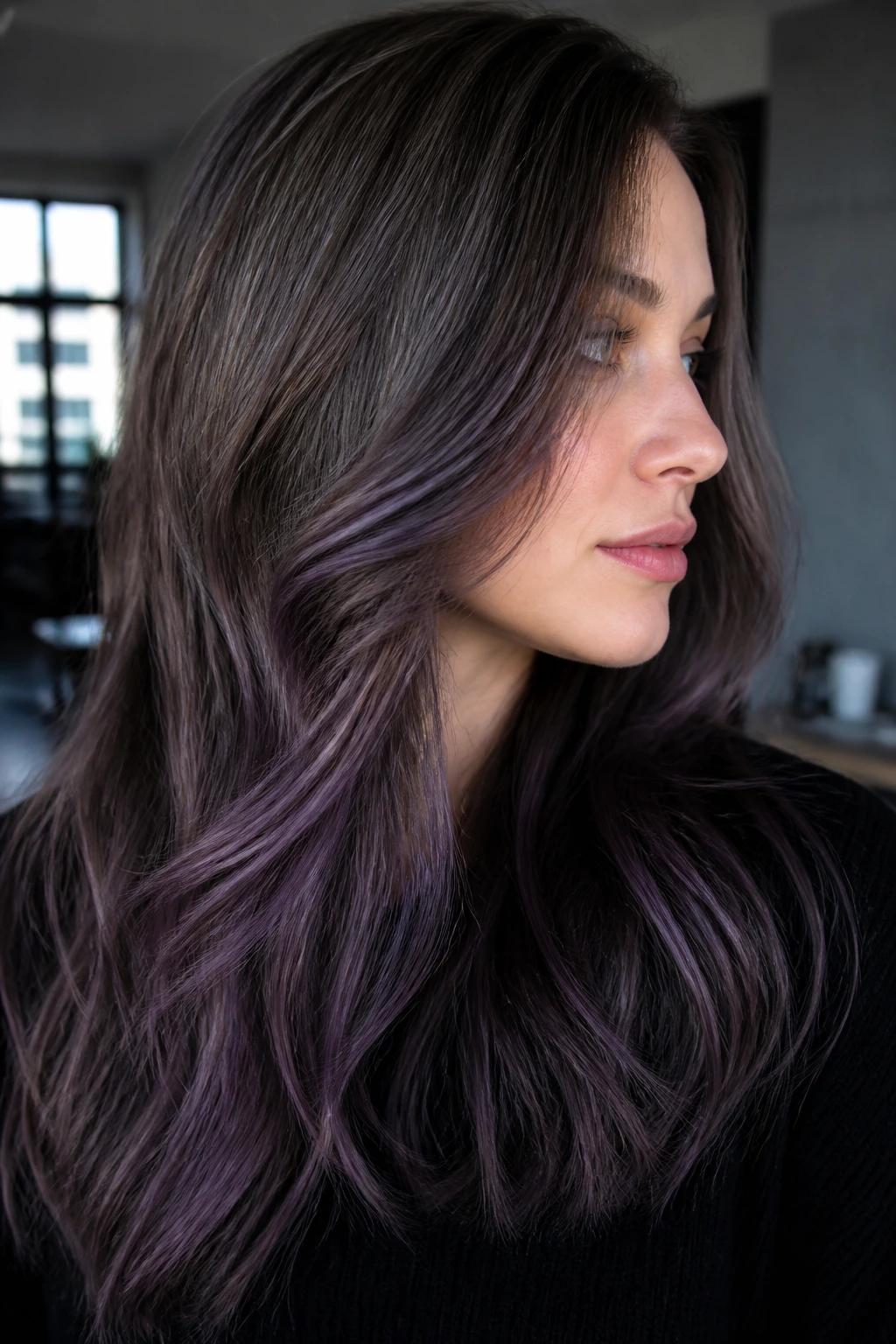
Ash brown hair with violet smoke is for people who already like cooler tones and don’t want a sweet lavender. The base does most of the work, and the violet acts like a smoky filter layered over it.
Because ash brown already sits on the cool side, the highlights can be deeper and moodier. You don’t need a bright pastel to make the color read. A violet-smoke toner over lifted sections gives the hair a shadowy glow that feels polished, not sugary.
This is a good option if you’ve ever looked at pastel purple and thought it was too cheerful. Same family, different energy. The violet is softer, darker, and more adult in the best sense of the word.
19. Chestnut Hair with Ribboned Lavender Lights
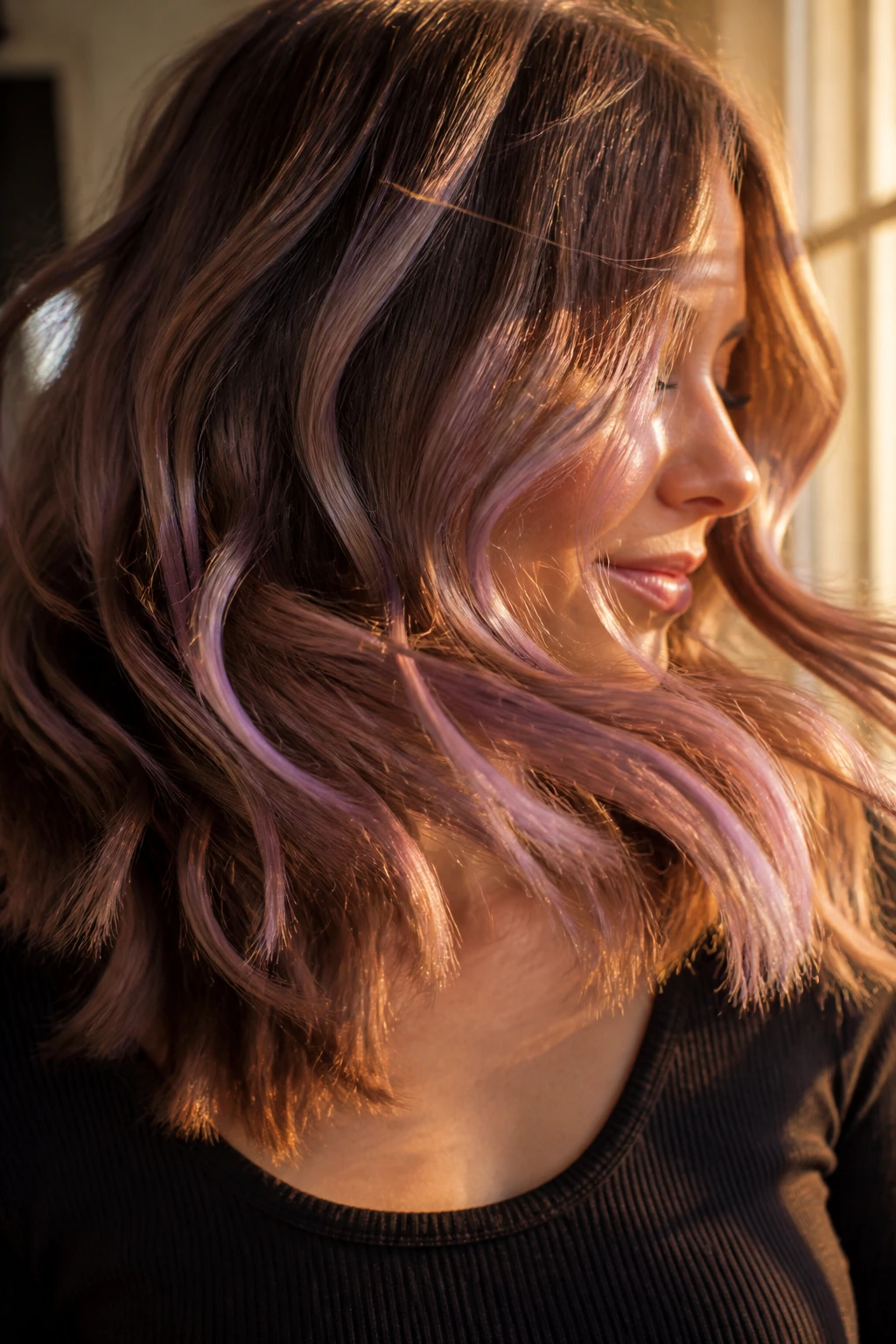
Chestnut hair and ribboned lavender lights create a rich, layered effect because the brown base carries enough warmth to make the lavender stand out without looking harsh. Chestnut hair is a nice middle ground — not too dark, not too pale — which gives you more room to play.
The ribbons should be woven through the mid-lengths and ends so the color shows in motion. On soft curls, it looks even better because the lavender peeks between the bends instead of sitting on one plane. I prefer this to a blunt pastel job on chestnut hair; the ribboning feels more natural and less forced.
If you want a color change that people notice when you turn your head but that doesn’t demand constant explanation, this is a strong pick.
20. Mauve-Lavender Melt on Brunettes
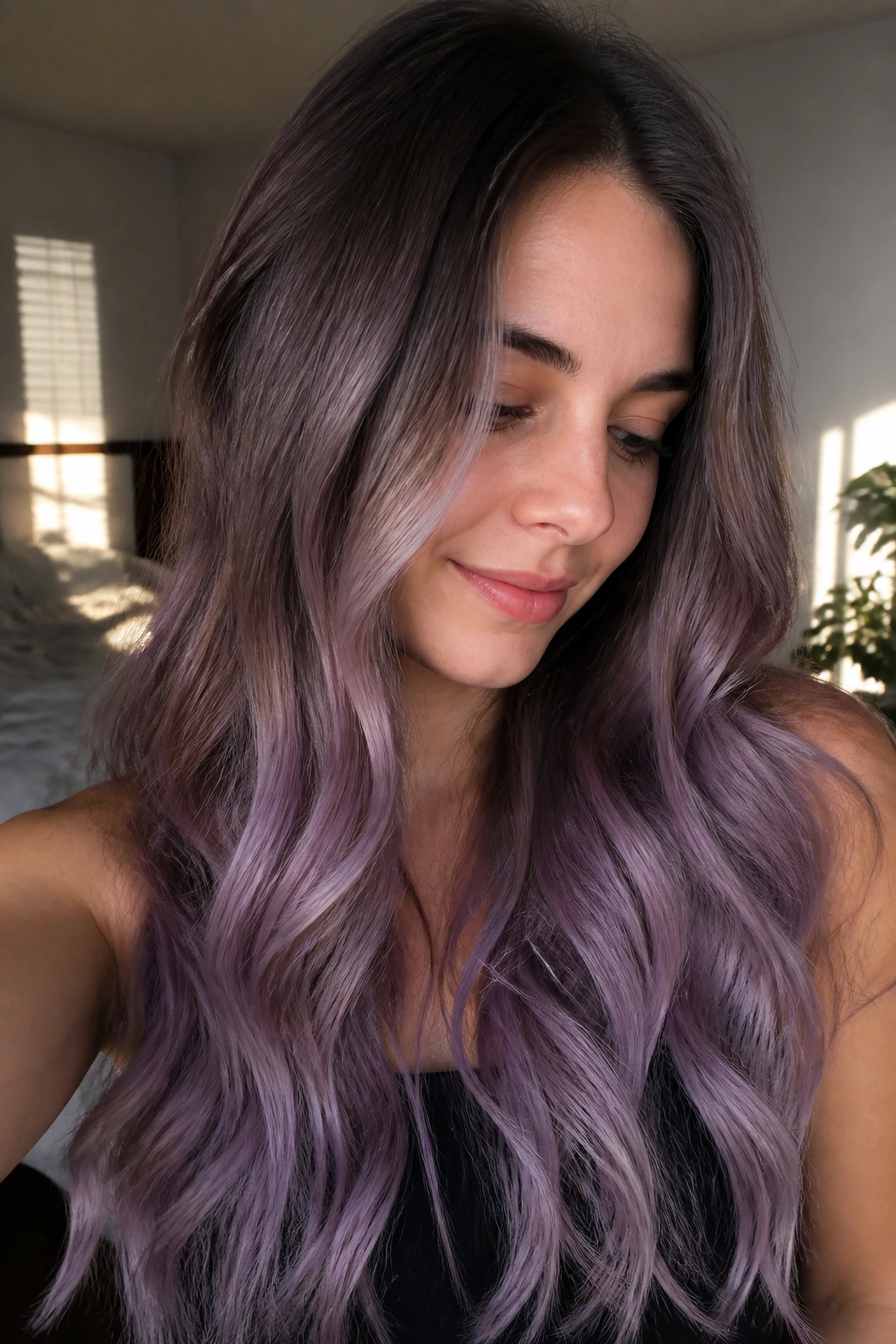
Mauve-lavender melt is one of the softest ways to wear purple tones on brunette hair. Mauve sits between pink and purple, so the whole finish feels blended rather than pure lavender from root to end.
This look usually starts with a deeper brown root shadow, then fades into mauve through the mid-lengths and lighter lavender at the ends. The melt matters more than the individual shades. If the transition is smooth, the style looks expensive in the simple, wearable sense of the word — polished, touchable, and easy to style with loose waves or a smooth blowout.
I like this on longer hair because the gradient has room to stretch. On short hair, the shift can feel abrupt. Give it space, and it turns into a soft color story instead of a hard line.
21. Layered Shag with Lavender Ends
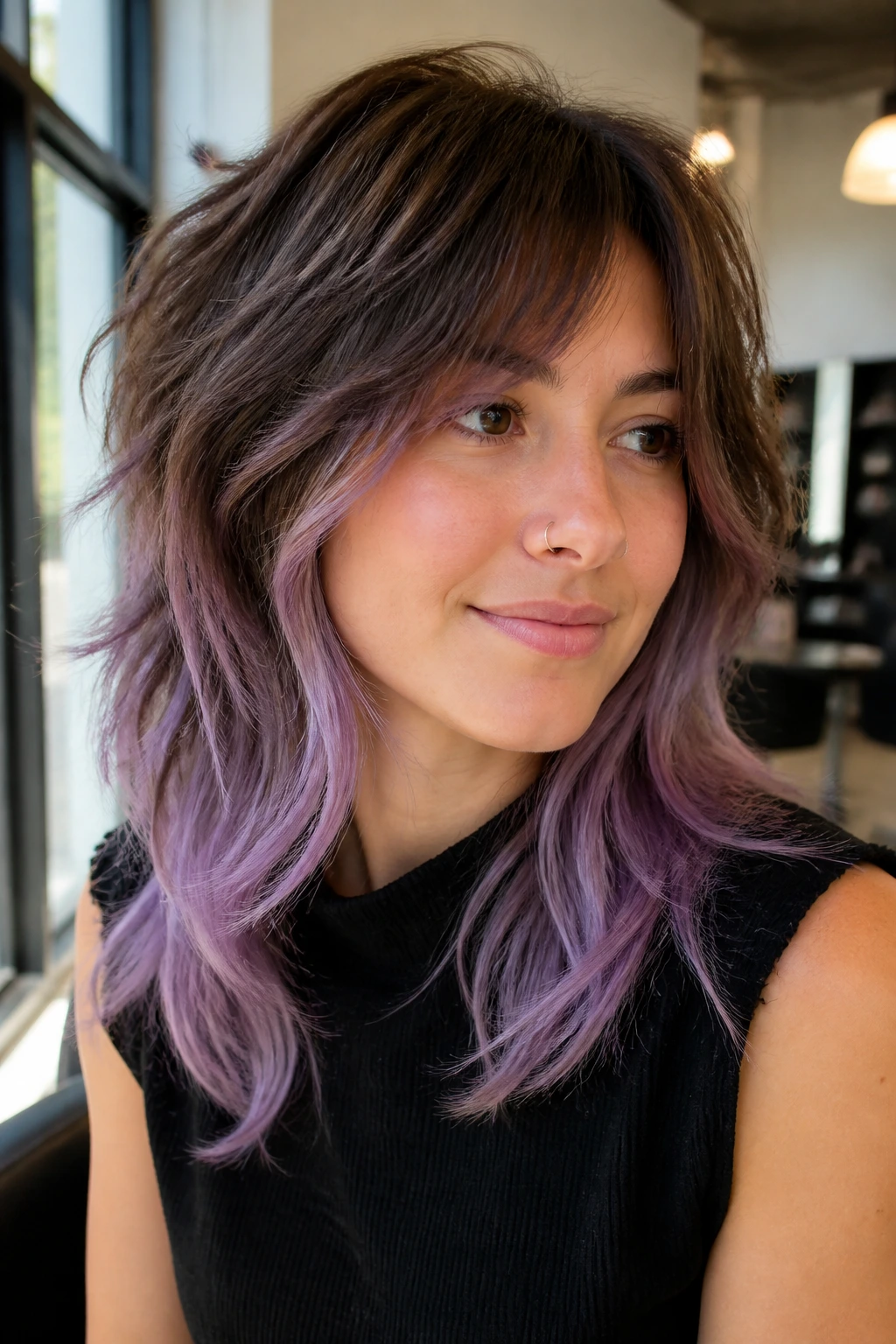
A layered shag and lavender ends is a very good match because both are built on movement. The cut has texture; the color gives that texture something to do. Every flipped layer catches a different amount of lavender, which keeps the finish from feeling flat.
The ends are the right place for the color because shag cuts already push attention outward. You don’t need to color the whole head. A few lightened and toned ends around the fringe, crown, and outer perimeter are enough to make the haircut feel alive. That’s the part I like — the color supports the cut instead of fighting it.
This works best with a little grit in the styling. Texture spray, mousse, or a rough-dry finish keeps the lavender visible without making the hair look overdone.
22. Hidden Lavender Braids and Twists
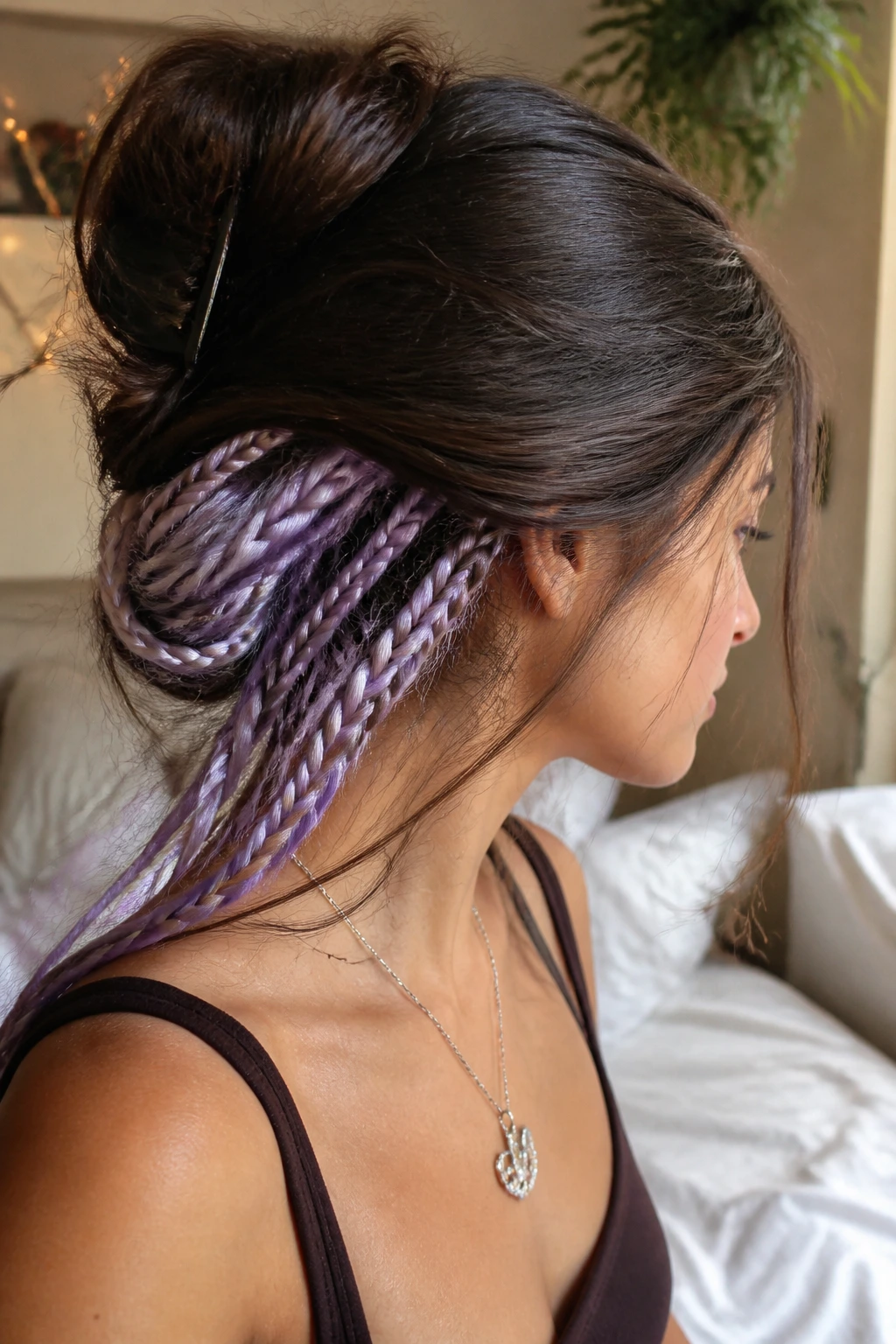
Hidden lavender braids and twists are for people who like their color to show up in motion, not all the time. The brown hair stays in charge until you braid it, twist it, or pin it up, and then the lavender comes forward in little flashes.
Best Ways to Show It
This approach works especially well if the lavender lives under the top layer or near the nape. A braid pulls the color outward in strips, which makes even a small amount look detailed.
- Try Dutch braids if you want the lavender to stand out more.
- Use a low twist or rope braid for a softer reveal.
- A half-up braided crown can show color near the temples and underlayer.
- Keep the lavender pieces cleaner and brighter than you would for a hidden look, since braiding compresses the color.
Braids are a good test too. If you love how the lavender looks braided, odds are you’ll like it loose as well.
23. Warm Brown Hair with Soft Violet Contrast
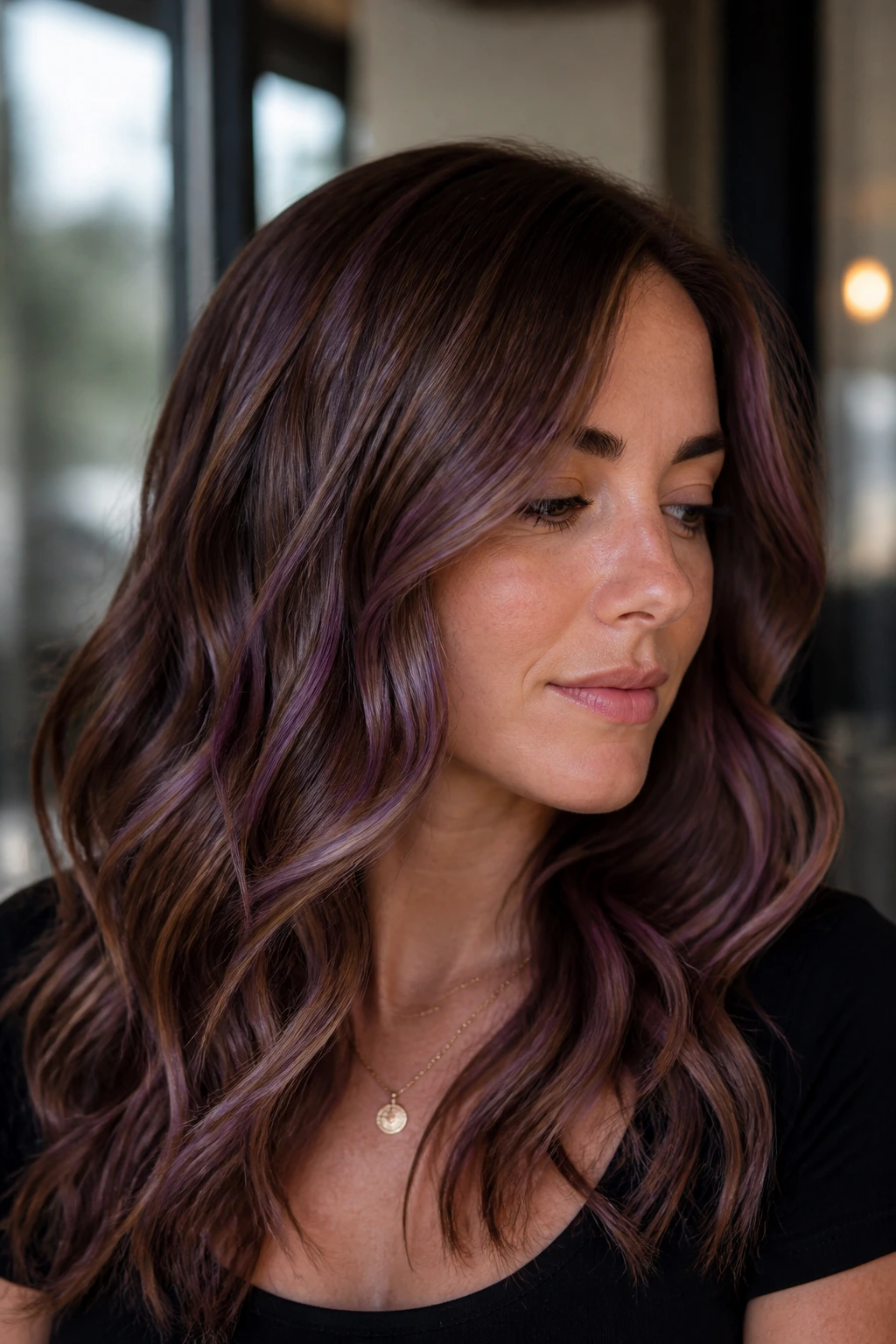
Warm brown hair with soft violet contrast works better than many people expect because violet can calm down extra warmth without making the color look cold. On hair that pulls golden, coppery, or reddish, the violet tones create a cooler balance that feels richer.
This isn’t the place for a bright candy purple. A smoky violet-lavender mix is usually smarter because it respects the warmth in the base while still changing the mood of the hair. The result can look layered and intentional, especially if the brown has chestnut or cinnamon notes.
I’d choose this when the goal is dimension, not novelty. It’s still noticeable. It just doesn’t feel loud, which is a nice line to walk.
24. Temples and Part Line Lavender Accent Highlights
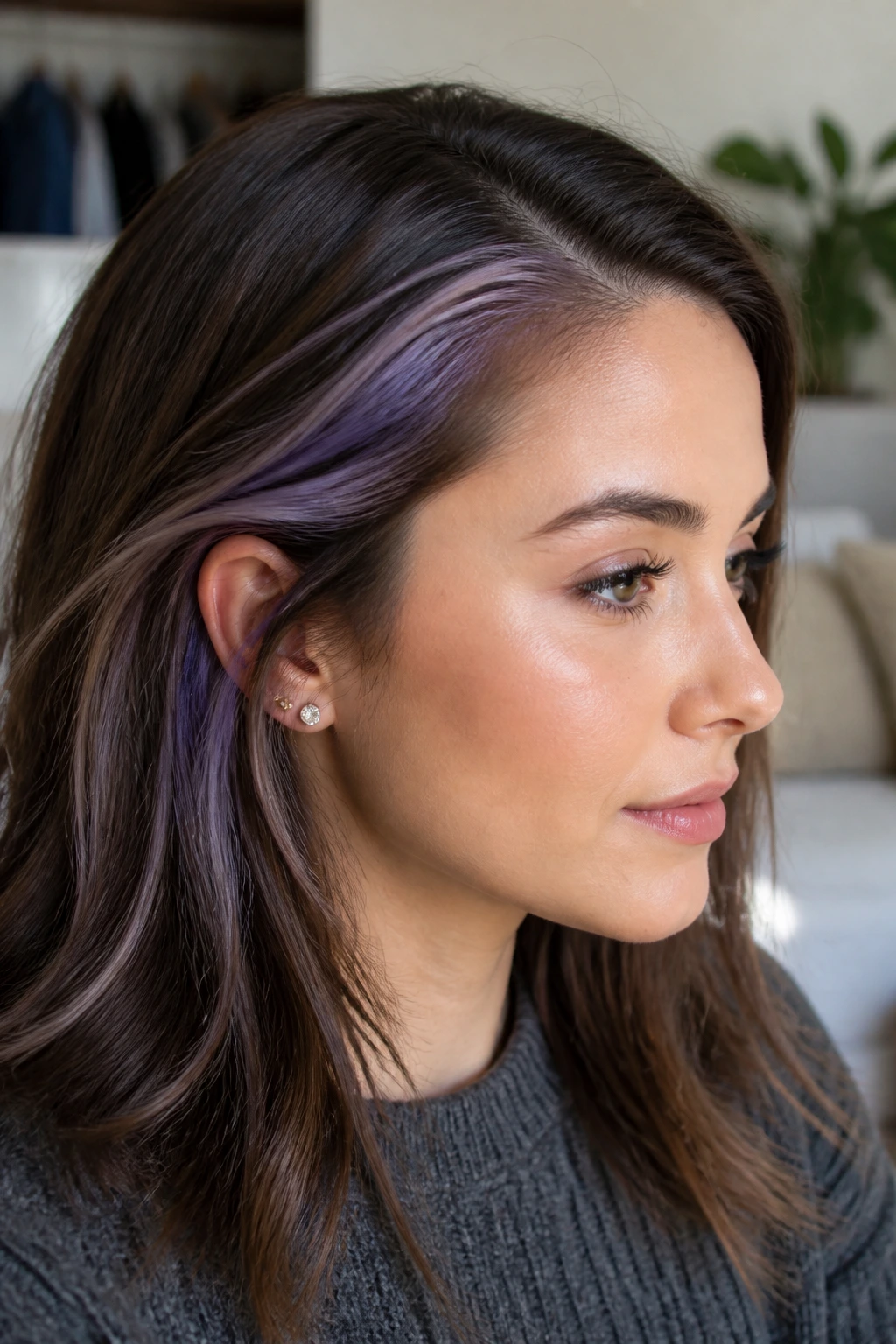
Temple and part-line accents are tiny, but they change the whole haircut. A few slim lavender slices at the part or temple can catch the eye the second hair moves, and they’re easy to tuck away when you want the color to disappear.
Why Small Placement Works
This is one of the smartest options for fine hair or anyone who wants a restrained color plan. The placement looks delicate, almost like a detail on a tailored jacket. It also means you don’t need to lighten large sections of brown hair just to get some dimension.
- Use 2 to 6 very narrow pieces near the part line.
- Keep the rest of the hair darker so the accents stand out.
- Wear a side part sometimes; it changes where the color lands.
- Ask for a cool lavender gloss so the pieces don’t turn brassy against the brown.
Tiny accents can be a little addictive. Once you notice them in the mirror, you’ll keep turning your head to catch them.
25. Full-Head Lavender Foilayage for a Bold Finish
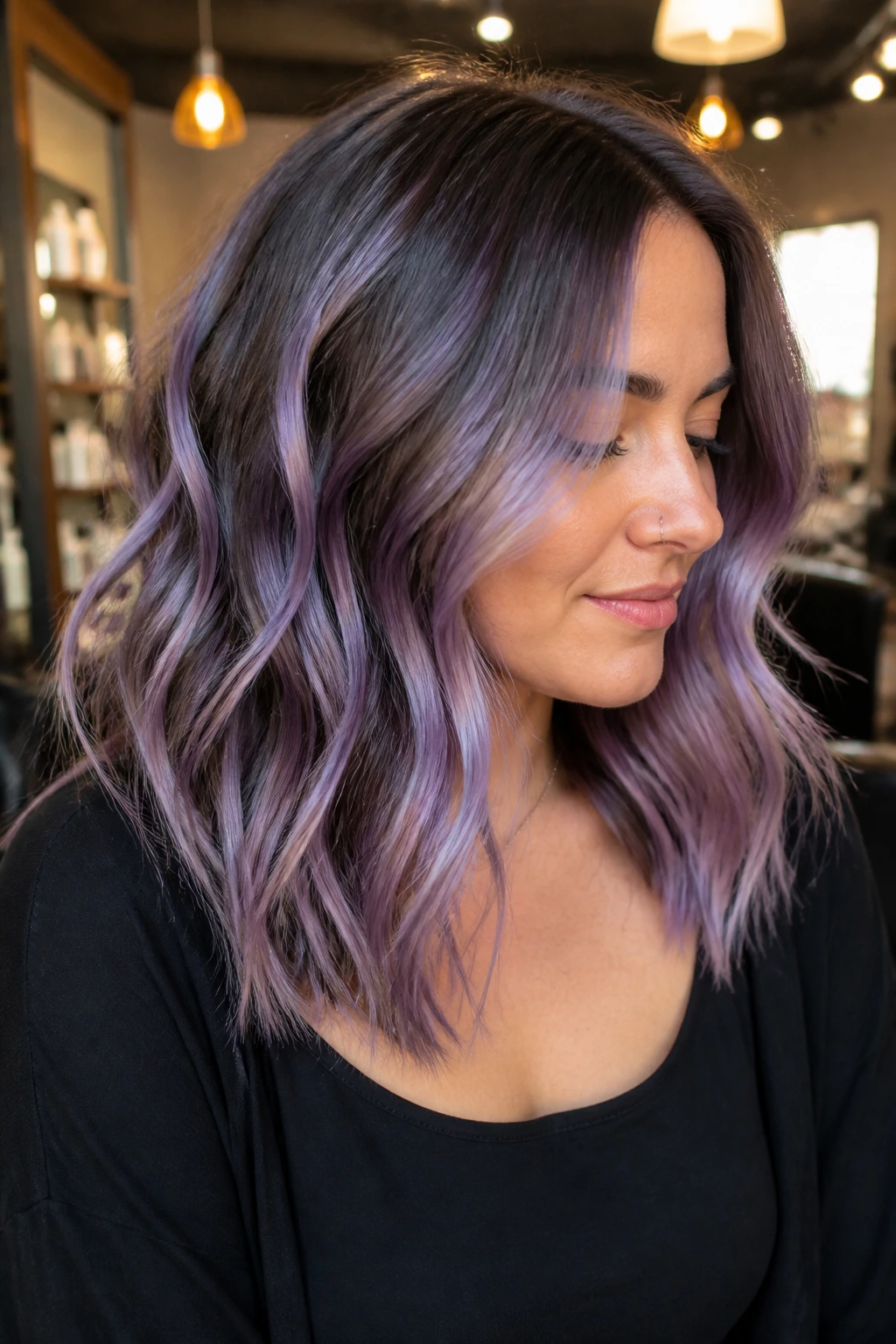
Full-head lavender foilayage is the most committed version of the look, and it’s the one to choose if you want the lavender to show from every angle. Foilayage gives you the control of foils with the softer spread of hand-painted color, which helps the lavender read evenly through the brown base.
This isn’t a casual maintenance plan. The hair usually needs a careful lift, a clean toner, and a follow-up gloss to keep the lavender from fading into a dull gray. Still, the payoff is hard to miss. On layered cuts, the color catches at different depths, so the head has movement even when the hair is standing still.
If you want brown hair with lavender highlights that feels saturated, visible, and unapologetic, this is the biggest swing. It works best on healthy hair that can handle lightening and on someone who’s fine keeping up with toning when the color starts to soften.
Final Thoughts
Brown hair gives lavender a better stage than people think. The depth in the base keeps the purple from floating away, and the right placement keeps it from looking flat or muddy.
If you’re nervous, start with face-framing pieces, peekaboo ribbons, or part-line accents. Those options give you room to test tone and brightness without handing the whole head over to the colorist’s brush. If you already know you like contrast, move straight to balayage, ombre, or foilayage and let the lavender show more.
The part that matters most is the temperature of the shade. Cool brown hair likes lilac and silver-lavender. Warm brown hair usually behaves better with smoky violet, mauve, or dusty lavender. Pick the version that makes the base look richer, not the one that fights it.
