



Chocolate brown highlights can do more for a round face than add shine; they can change the shape people notice first.
If the lightest pieces sit right across the cheeks, the face can look wider. If they start near the temples, skim past the jaw, and stay softer at the root, the same haircut reads longer and cleaner.
Babylights, lowlights, balayage, and a narrow money piece each pull a different weight. Babylights soften the edge of the hairline, lowlights add shadow, and balayage keeps the whole thing from looking striped. The best chocolate brown highlights use all three ideas in the right spot, not all at once.
I keep coming back to chocolate because it gives round faces contrast without that harsh, over-lightened stripey look. Mocha, cocoa, espresso, chestnut, and mushroom brown all shift the mood, but placement decides whether the face feels balanced or boxed in. That part matters more than the shade chart.
1. Face-Framing Ribbons That Start At The Temples
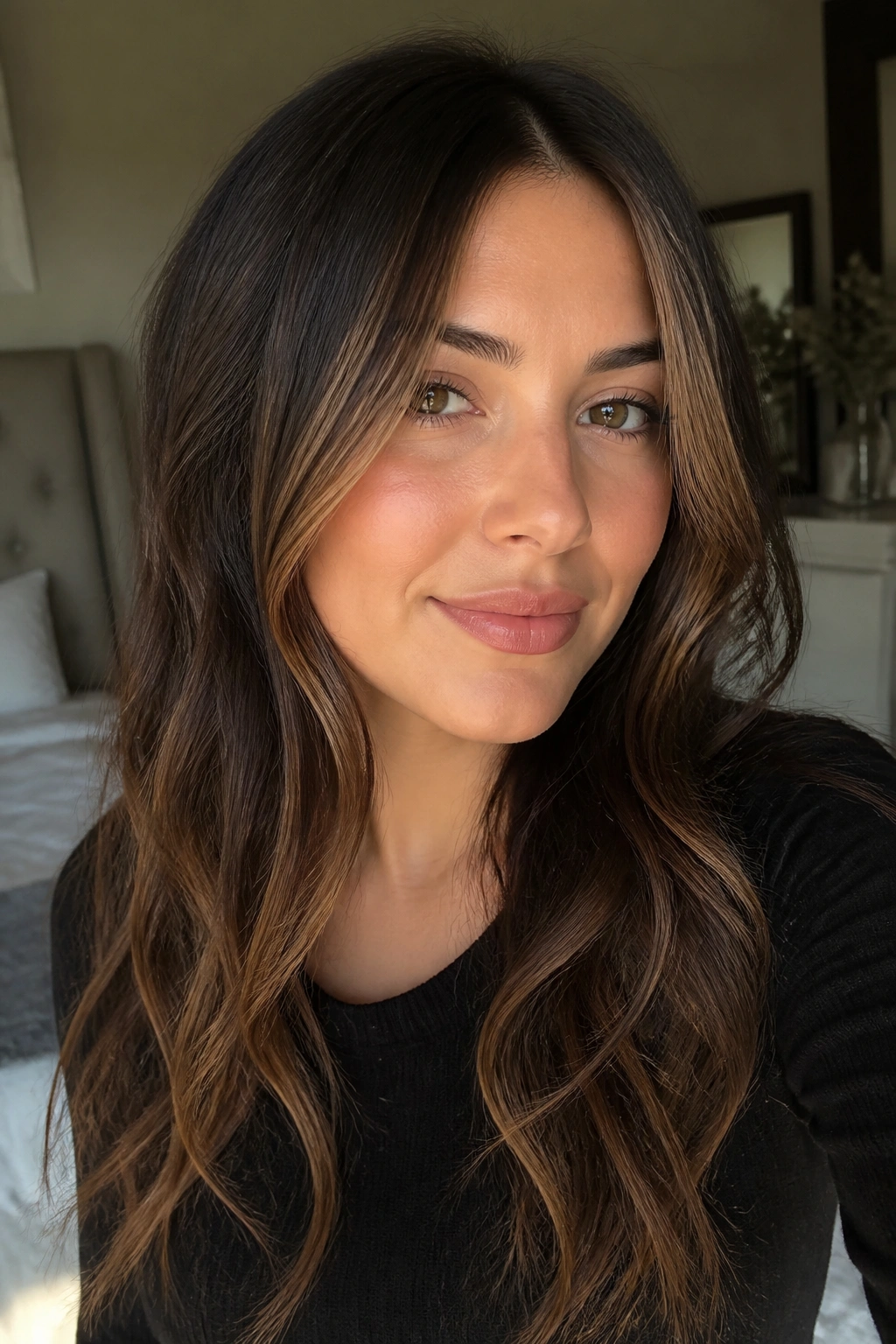
If you want chocolate brown highlights that actually slim a round face, start with the front.
Ask for thin ribbons at the temples and through the first front layers, then let them fall below the cheekbone. That keeps the eye moving up and down instead of side to side, which is the whole point. The color can be warm or cool, but the placement needs to be long and narrow.
Why It Flatters A Round Face
Round faces read widest through the cheeks. A lighter strip that begins too high turns into a spotlight right where you do not want one. When the light starts a little lower and slips toward the jaw, the face looks longer without feeling sharp.
- Ask for ribbons no wider than a pinky finger.
- Keep the brightest point at the temple, not the cheek.
- Feather the ends with balayage so there is no blunt line.
- Let the front pieces drop past the chin.
Pro tip: If you wear a middle part, keep the front pieces a touch longer so the color has room to fall.
2. Deep Mocha Balayage With A Soft Shadow Root
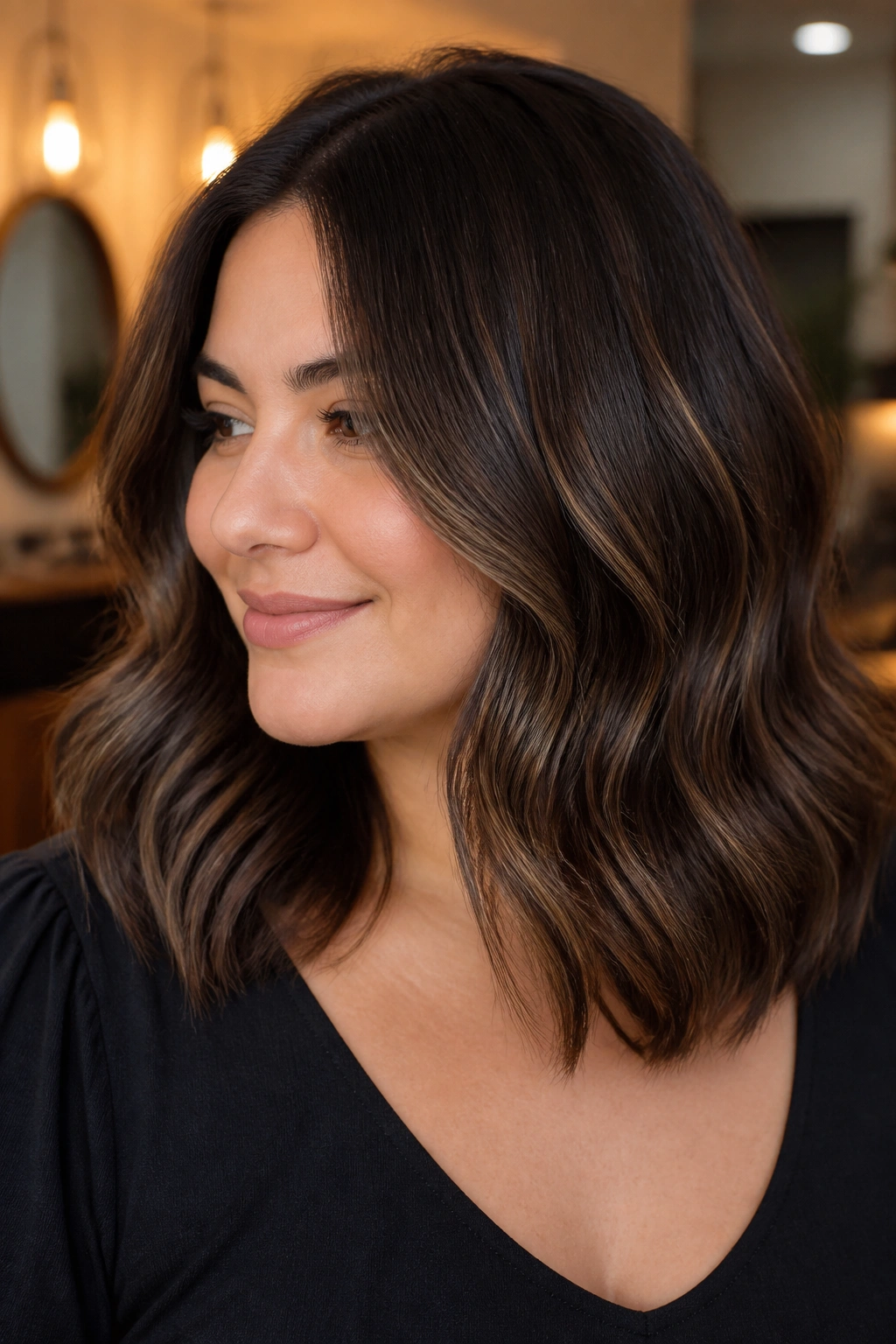
Deep mocha balayage is one of the easiest chocolate brown highlights looks for a round face to wear every day.
The reason is simple. A shadow root keeps the top of the head calm, while the mocha mids and ends add movement without carving a hard horizontal line across the widest part of the face. I like this on shoulder-length cuts and longer, especially when the layers are soft rather than choppy.
The darker root can be one to two levels deeper than the lightest brown in the mids. That small shift matters. It gives the hair depth near the scalp, then lets the lighter pieces live lower where they can lengthen the face instead of widen it.
If your natural brown leans red, ask for a neutral mocha toner. Otherwise the warmth can drift coppery in strong light, and that changes the whole mood fast.
3. Hairline Babylights That Barely Announce Themselves
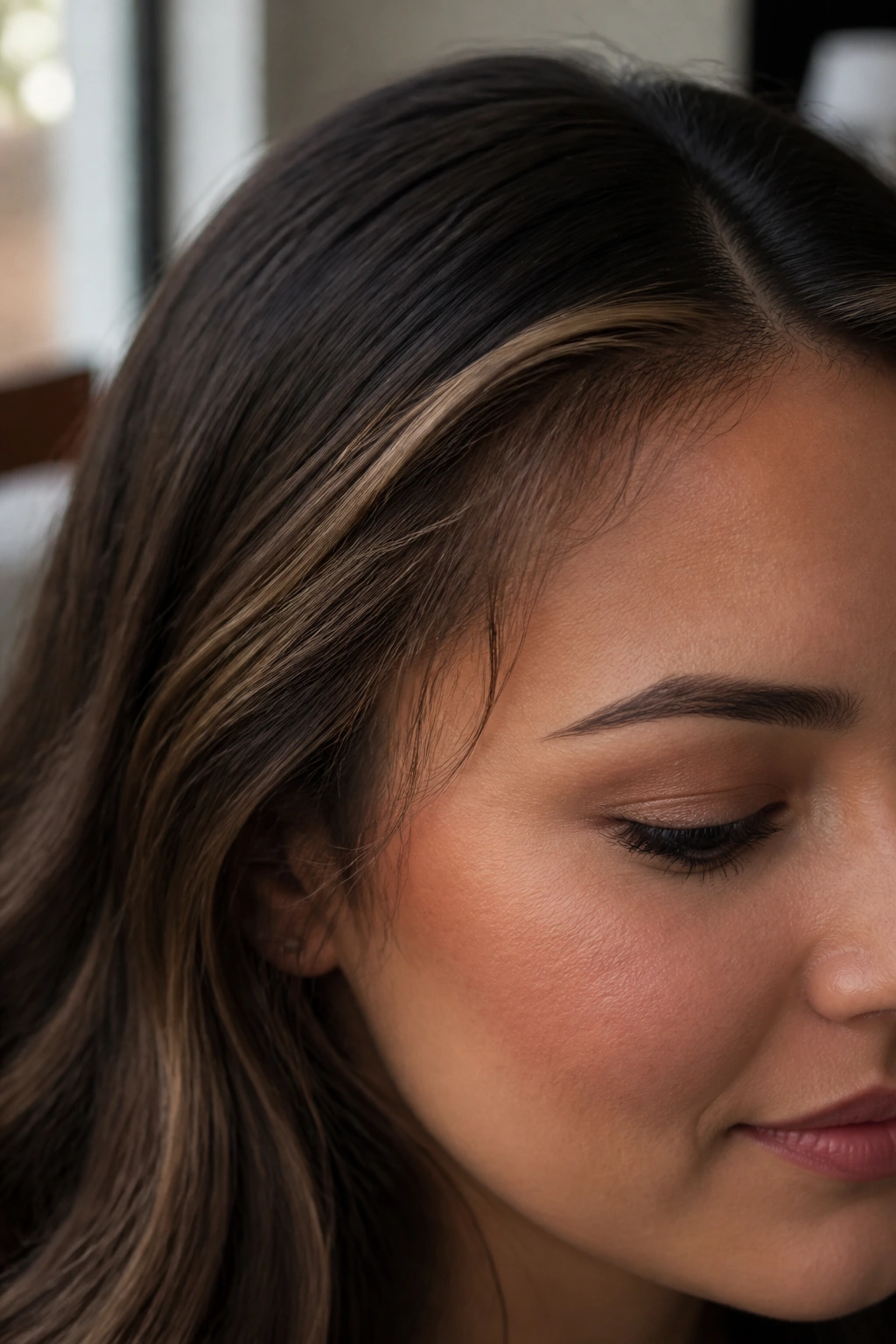
Why do babylights work so well on round faces? Because they soften the hairline without building a hard frame around it.
These are the whisper-thin pieces, almost threadlike, that sit around the part, temples, and outer fringe. They give you dimension in a way chunky highlights can’t, especially if your face is already full in the cheeks. The finish is soft, not loud.
How To Wear Them
Keep the lightest strands near the top and outer edge, then let them disappear into deeper brown below. That gives the front a brighter halo without dragging attention across the entire cheek area.
- Use ultra-fine weaves, not chunky sections.
- Place most of the light around the part and temples.
- Keep the ends slightly lighter than the root.
- Blend with a chocolate toner so the contrast stays gentle.
Babylights are also a smart move if you want color that grows out quietly. They do not scream for attention. They just make the hair look fuller.
4. A Narrow Money Piece That Drops Past The Jaw
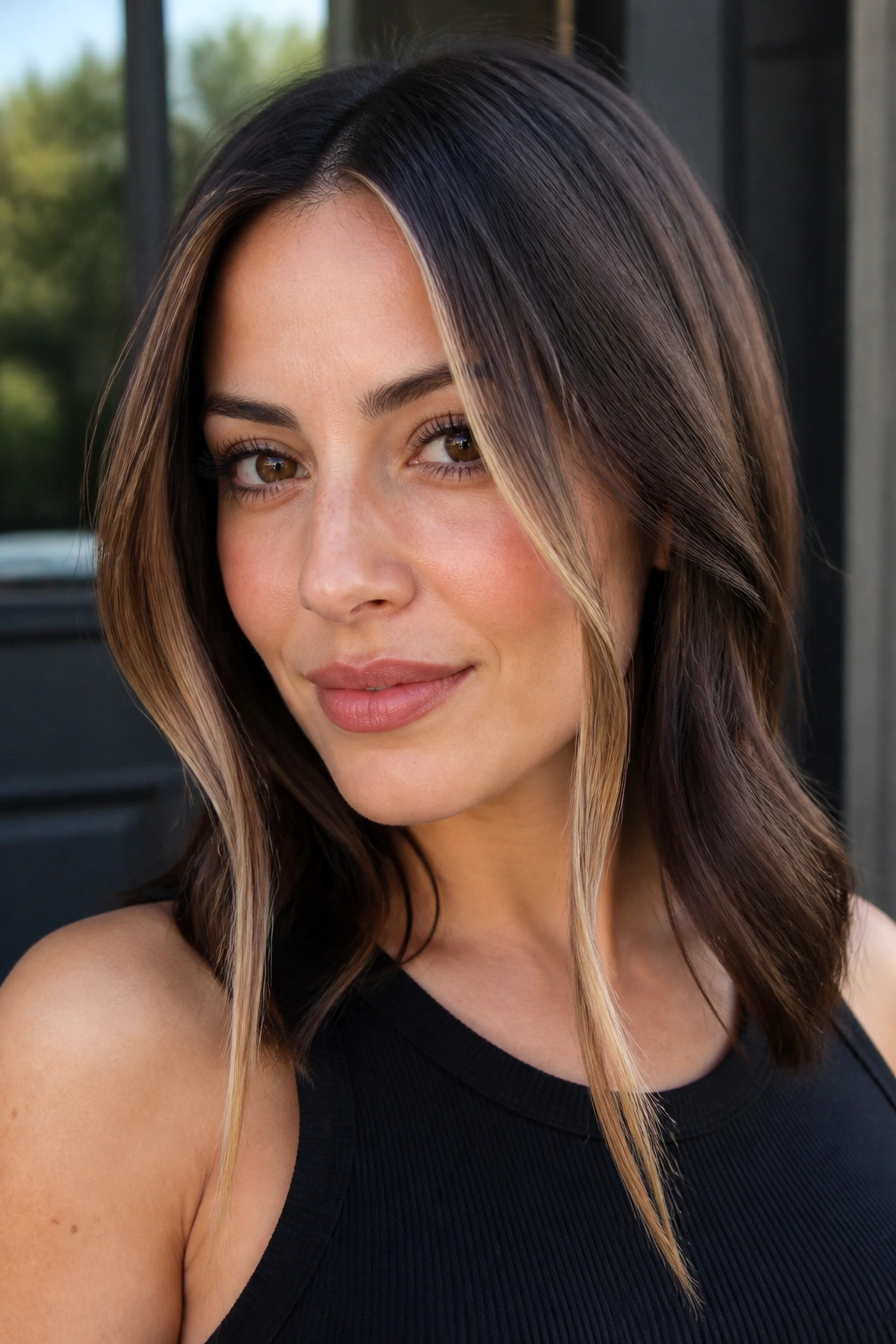
Picture a blunt bob with a blazing front streak that ends at the cheekbone. The face looks wider. Now picture the same bob with a slender money piece that slides past the jaw. Much better.
That tiny shift changes the whole read. A round face does not need a wide, high stripe at the front; it needs a slim guide line that pulls the eye downward. Keep the money piece narrow, and keep the brightness long.
The best version usually starts just off the part and is brightest from the mid-lengths down. Too much lift near the root can feel blocky, and that is exactly the kind of thing that makes the cheeks look fuller.
A good money piece here should feel like an accent, not a billboard. If the front strip is the first thing you notice from across the room, it is probably too much.
5. Chocolate Brown Highlights On Long Loose Waves
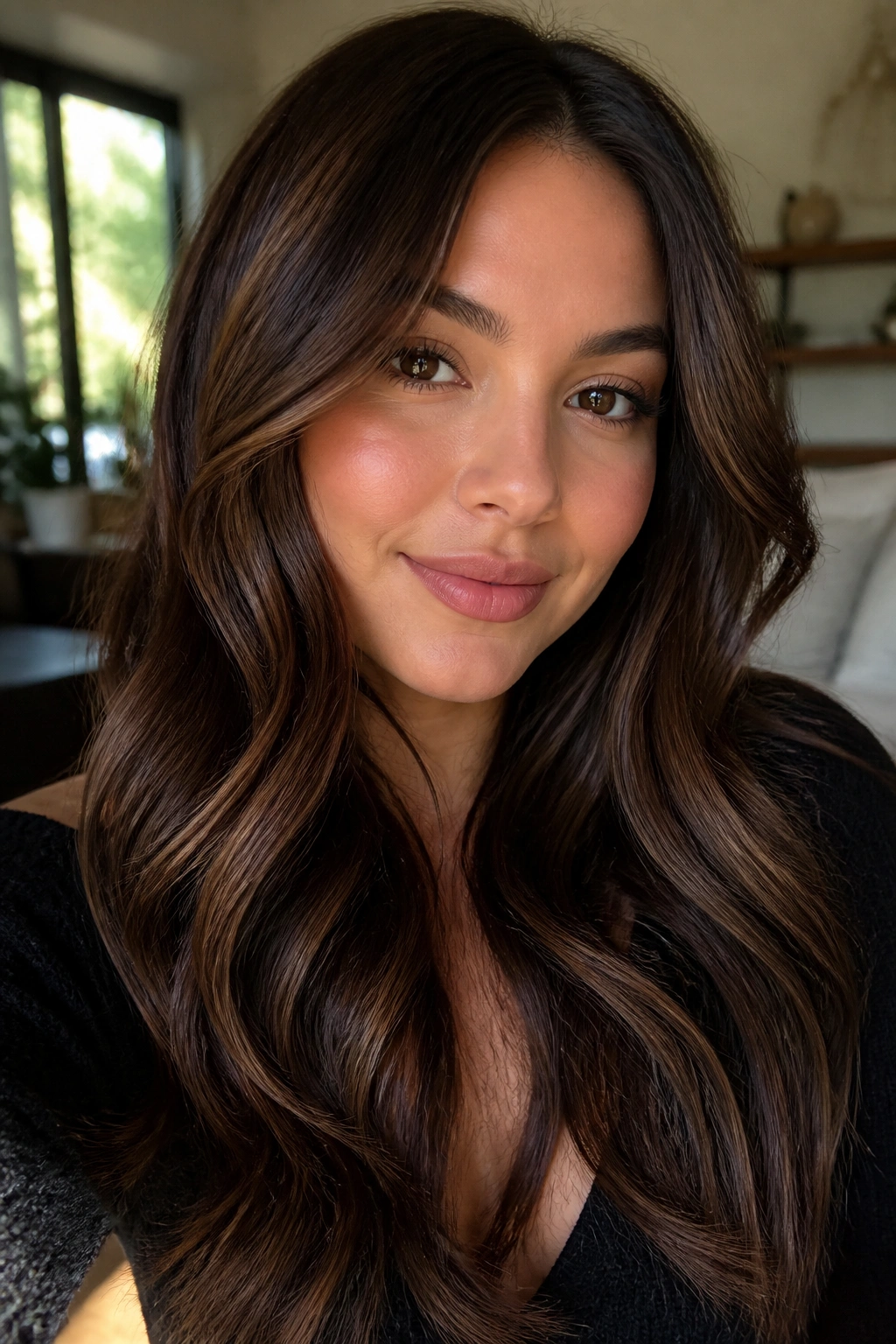
Long waves are the easiest place to make chocolate brown highlights look expensive without saying a word.
The curve of the wave bends the highlight line, and that bend works in your favor. Instead of one flat stripe sitting across the face, the color moves in soft arcs that draw the eye downward. Round faces benefit from that kind of motion because the shape feels longer and less boxy.
Keep the brightest ribbons from the collarbone down. If the light starts too high on the cheek, the wave can puff the face outward. Lower placement gives you shine around the ends, which is where the length lives.
A side bonus: long waves make even a simple cocoa color look dimensional in daylight. The hair turns glossy, then darker, then glossy again as it moves. That little back-and-forth is what keeps the look from falling flat.
6. Smoked Cocoa Lowlights For Extra Depth
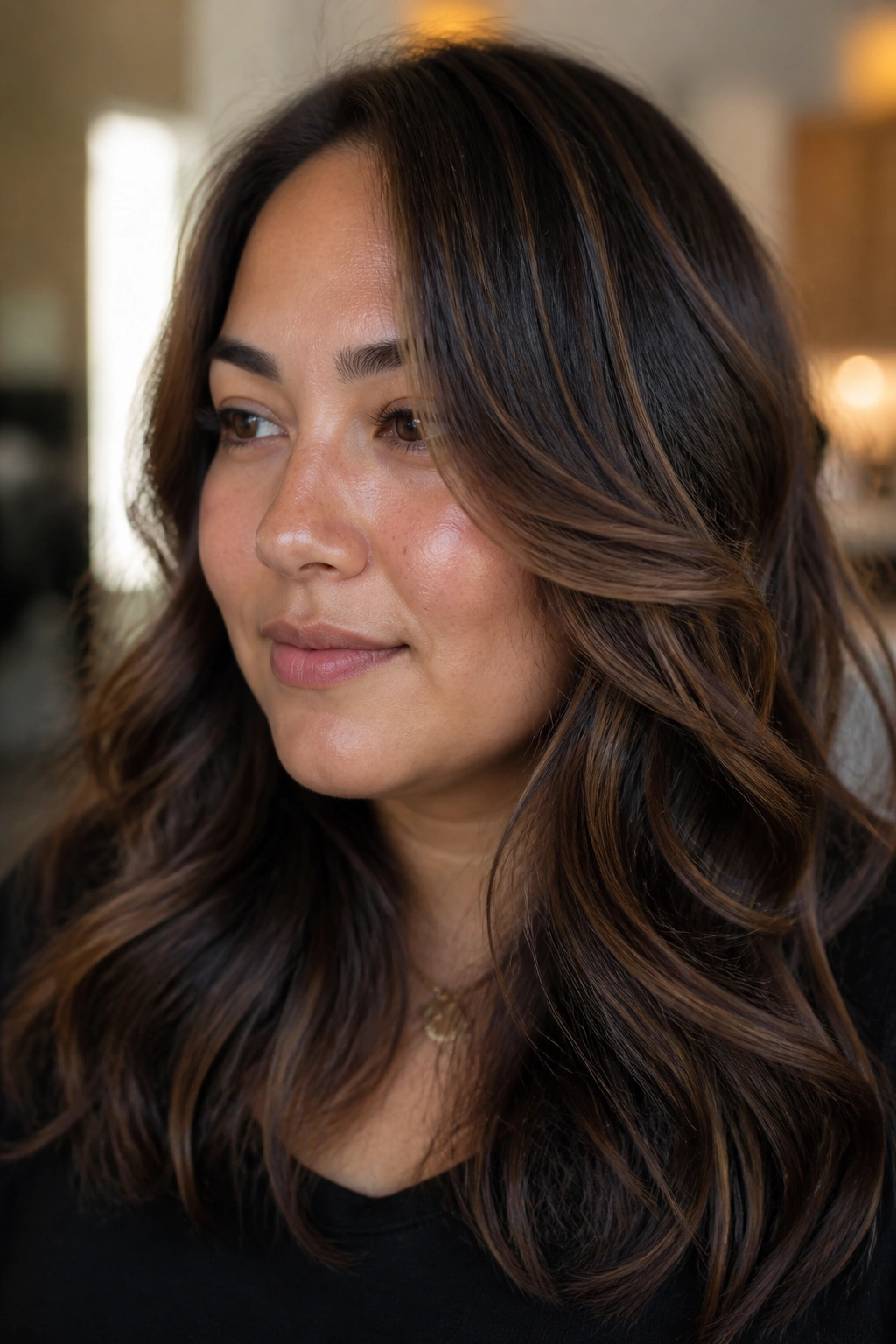
Unlike all-over lightening, smoked cocoa lowlights add shadow without stealing shine.
That is why they matter so much on round faces. A little darkness tucked under the top layer gives the hair shape, and shape is what keeps the style from spreading outward. If your hair is already lightened, or if it has gone too warm, lowlights are the fix I’d reach for first.
Use them under the crown, behind the ears, and through the lower half of the lengths. You do not need them everywhere. In fact, if you put them everywhere, the hair can go muddy. The trick is to keep the chocolate pieces where the head needs more contour.
This is also a good choice if you like richer brunette color more than visible highlight stripes. The effect is quieter, but not boring. It just looks fuller and more controlled.
7. Chestnut Ribbons On A Collarbone-Length Lob
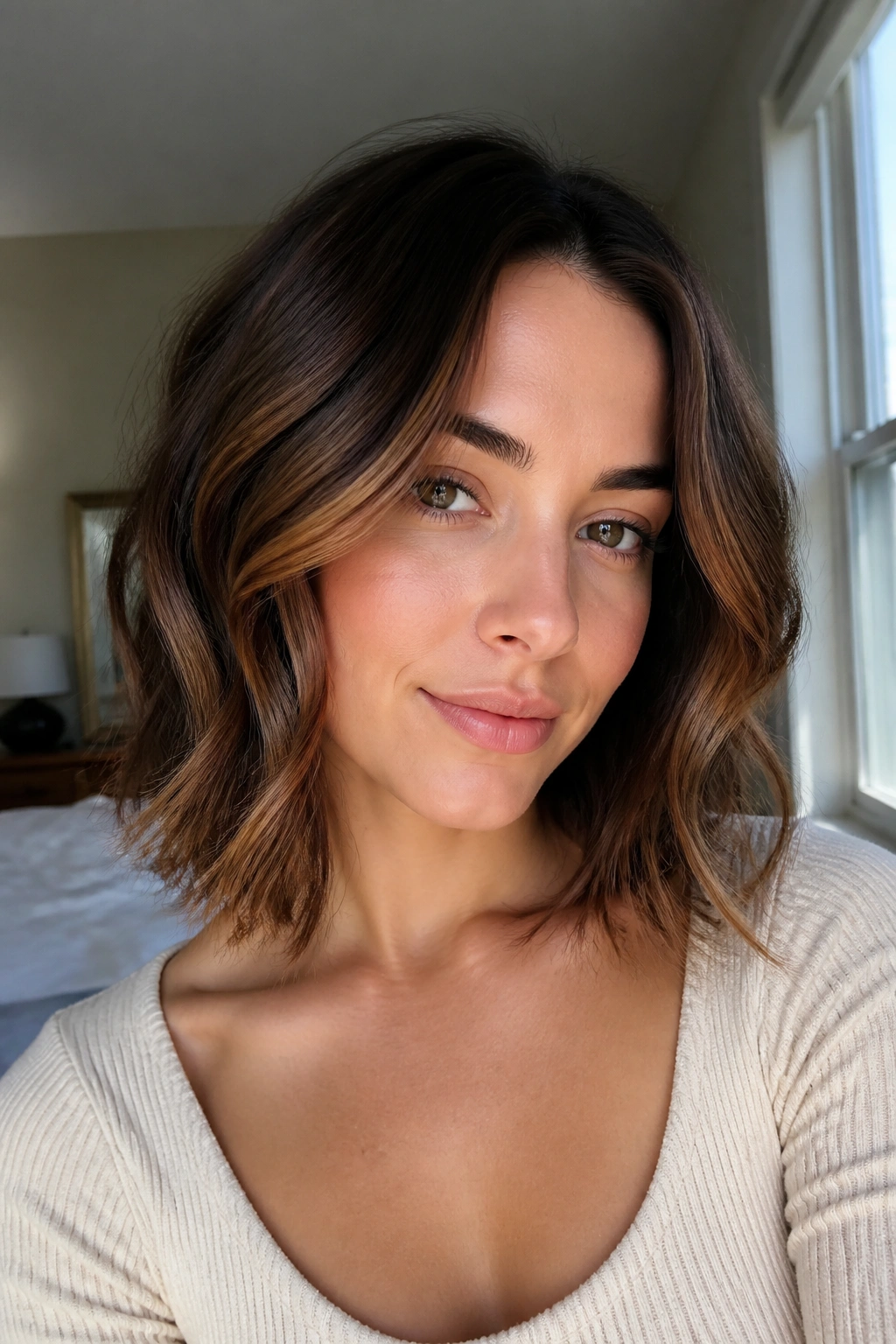
A collarbone lob and chestnut ribbons are one of those pairings that makes sense the minute you see it.
Why The Cut Matters
The lob already gives a round face a vertical anchor because it lands lower than the jaw. Add chestnut ribbons that run through the mid-lengths and you get even more length, especially if the front pieces are a touch longer than the back. The effect is subtle, but it changes the shape of the whole cut.
Chestnut sits nicely between warm and cool, which makes it easy to wear. It has enough glow to keep the brunette from looking flat, yet it does not tip into blonde territory.
What To Ask For
- Collarbone length or slightly below.
- Chestnut ribbons placed through the outer layers.
- Softer light around the face, not a wide stripe.
- Ends that stay a shade deeper than the front.
My take: If you want a chocolate brown highlight idea that works at the office and still looks good when your hair is air-dried, this is a strong one.
8. A Side Part With Highlights Weighted To One Side
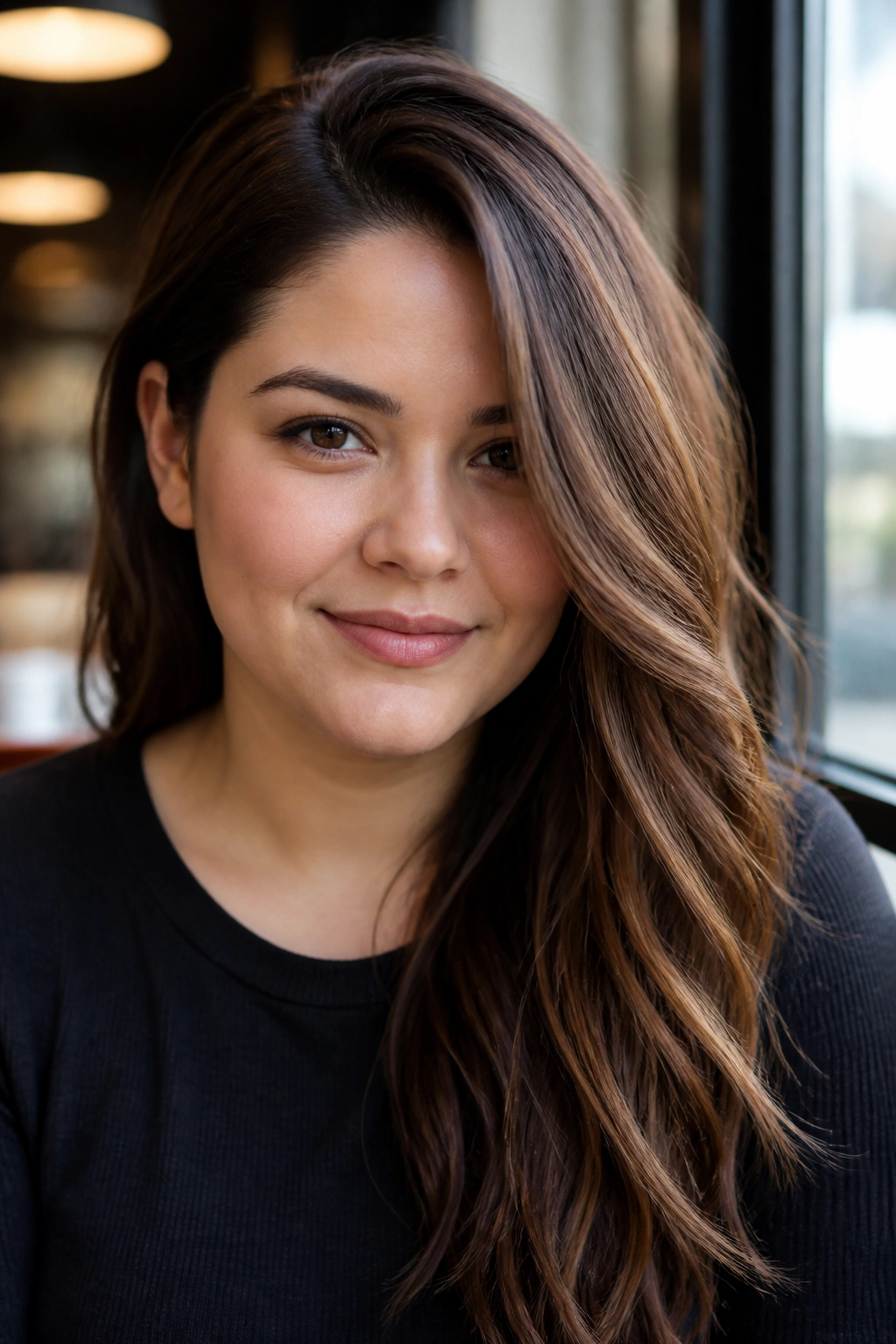
A side part can do more for a round face than another shade of blonde.
That sounds dramatic, but it is true. When the hair falls a little heavier on one side, the face stops reading as perfectly circular. Now add chocolate brown highlights that concentrate on the heavier side and through the front bend, and the shape becomes more angled and longer.
The key is not to over-light both sides equally. That’s where people get stuck. If every section is as bright as the next, the face loses that subtle pull and starts to look broader again.
I like this especially on layered cuts with a soft bend at the ends. The part creates the line, and the color follows it. Easy. Clean. Not fussy.
9. Espresso Dimension On Straight Hair
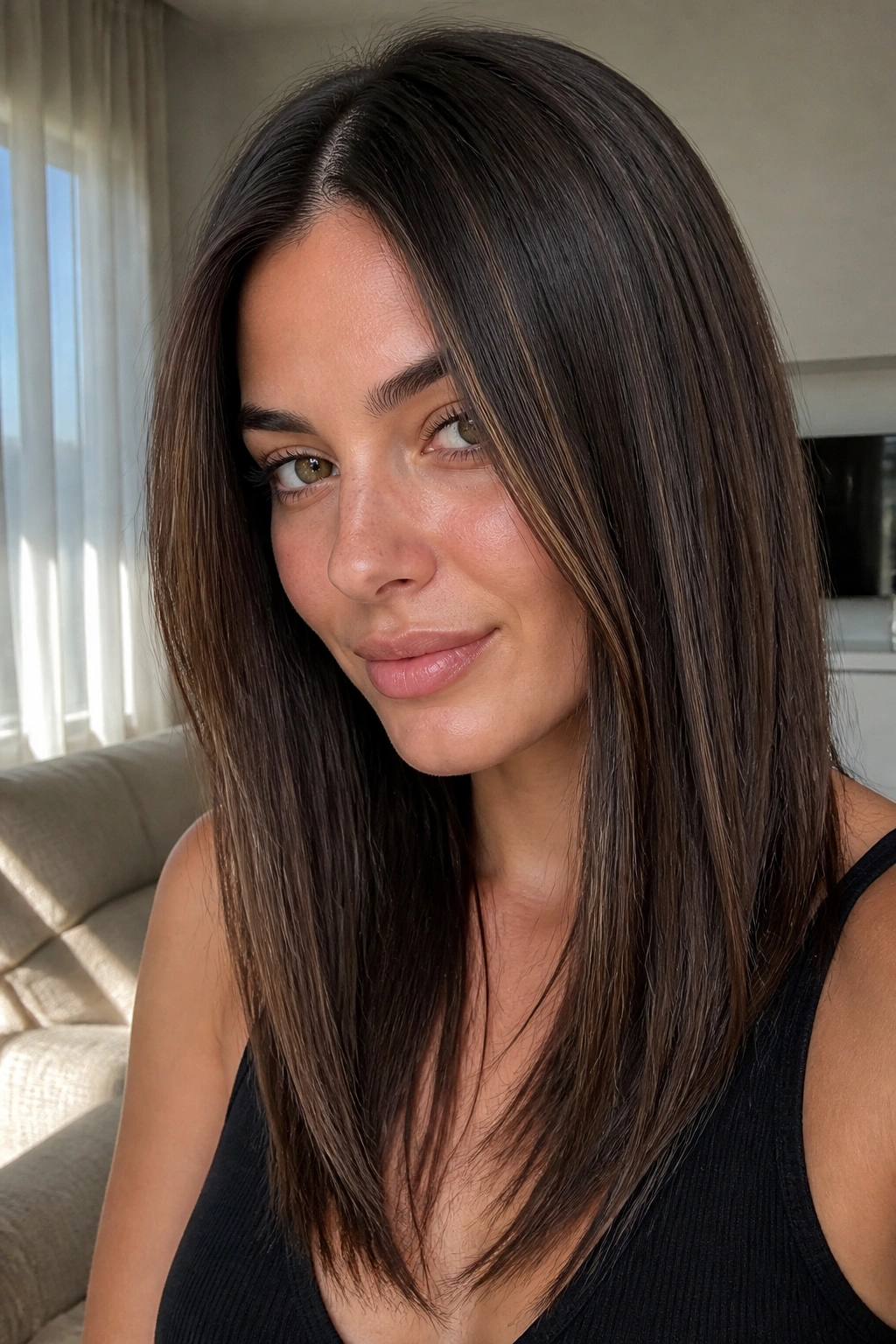
Straight hair shows every highlight decision, which is why espresso dimension can look so smart on a round face.
There is nowhere for bad placement to hide. If the color runs too horizontally, the face gets wider. If the pieces stay vertical and broken up, the style looks longer and a little sharper. That is the whole game with straight hair.
Keep the espresso tones a little deeper under the top layer and place the lighter brown lines from temple to collarbone. Skip big wide blocks across the cheek area. They read like a band, and bands add width. Thin, staggered pieces work much better here.
A center part can still work, but the front should be long and softly layered. Straight hair does not need more volume at the cheeks. It needs clean movement that goes downward.
10. Warm Mocha Melt From Crown To Ends
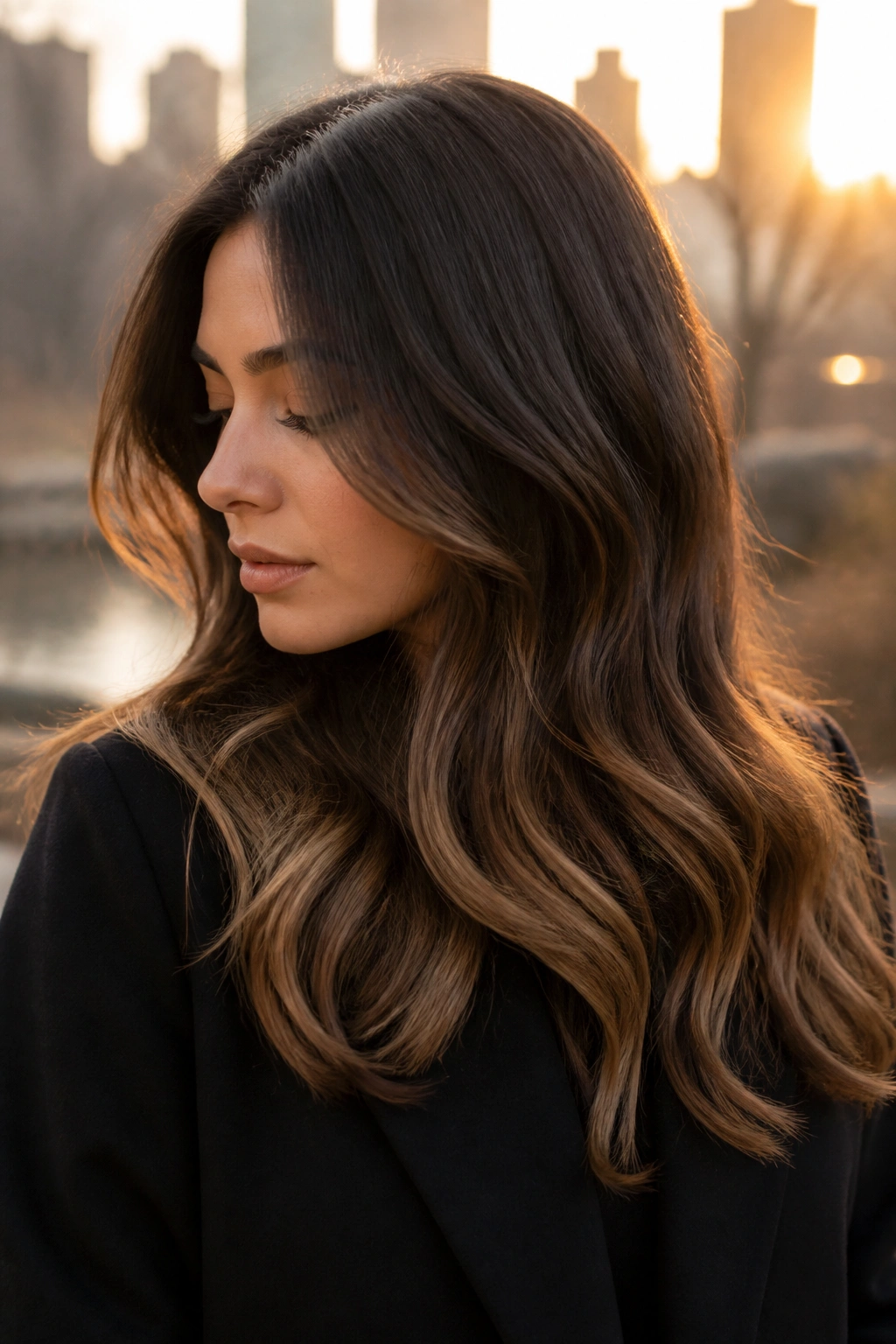
Warm mocha is a good color when you want the hair to glow without turning golden.
The melt matters here. A darker crown that eases into lighter mocha ends gives the eye a path to follow, and that path should move down the head, not across it. Round faces look better when the brightest area sits lower, around the mid-lengths and ends.
This idea works well on layered cuts because the layers catch the lighter tone in different places. The result is a softer, more fluid shape. And no, it does not have to be dramatic. Even a half-shade change can do the job if the placement is smart.
If your hair is very thick, keep the melt soft near the sides of the face. Too much brightness at the temples can puff the look outward. I’d keep the crown rich and the ends glossy, not pale.
11. Peekaboo Chocolate Panels Under The Top Layer
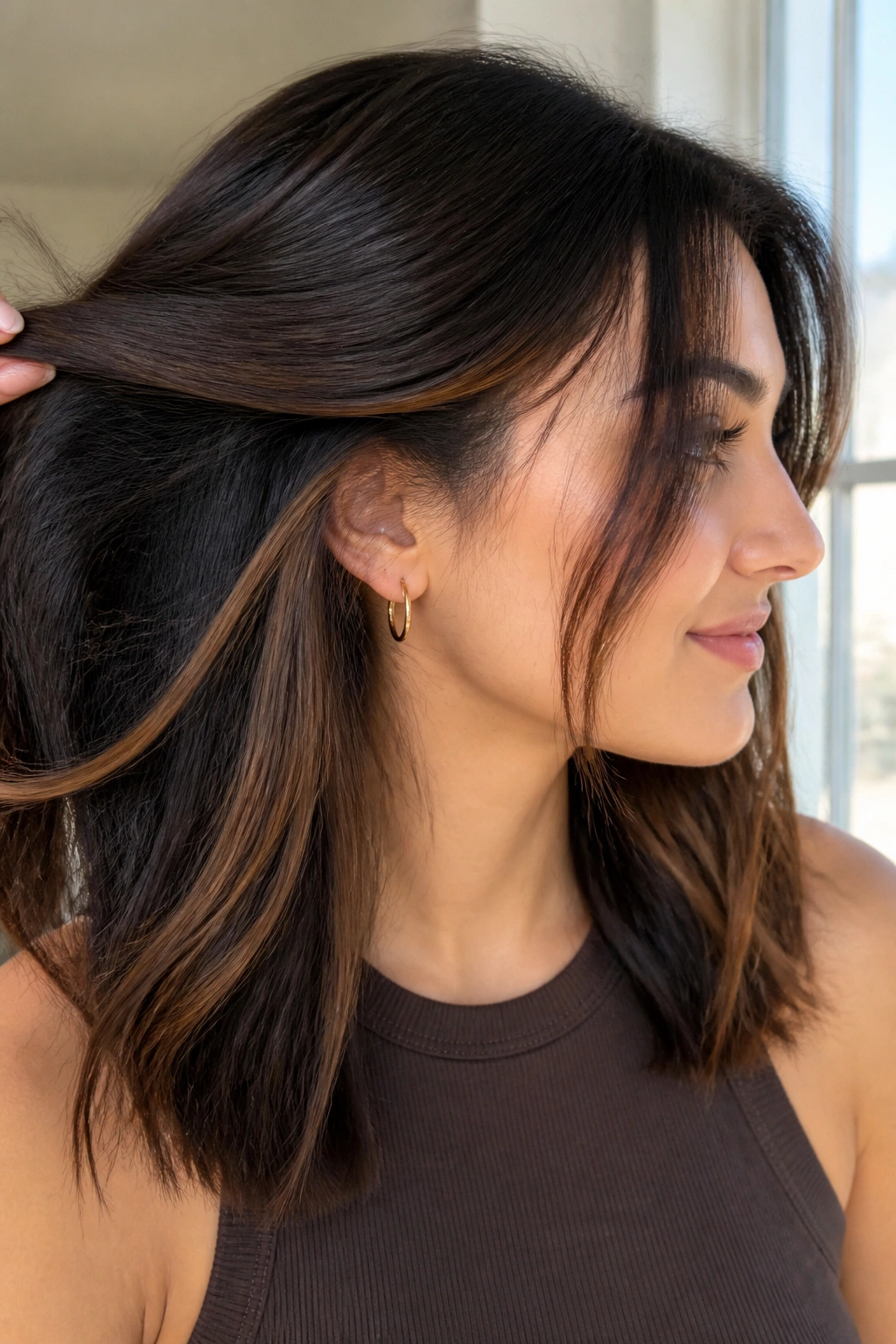
If you like subtle color at work but want movement when your hair swings, peekaboo panels are worth a look.
These are the hidden chocolate pieces tucked under the top layer, so they only show when the hair moves or when you tuck it behind your ears. On a round face, that matters because the visible color is not sitting across the widest part of the cheeks all day long.
The top layer stays deeper and cleaner, which keeps the shape sleek. Then the hidden brown-light pieces flash underneath and give the whole style depth. It’s a quiet trick, but a useful one.
This approach also ages well between appointments. Since the bright pieces are not sitting right at the front hairline, grow-out looks softer. That makes it a good choice if you dislike constant salon touch-ups.
12. Caramel-Tinged Chocolate Slices On Thick Hair
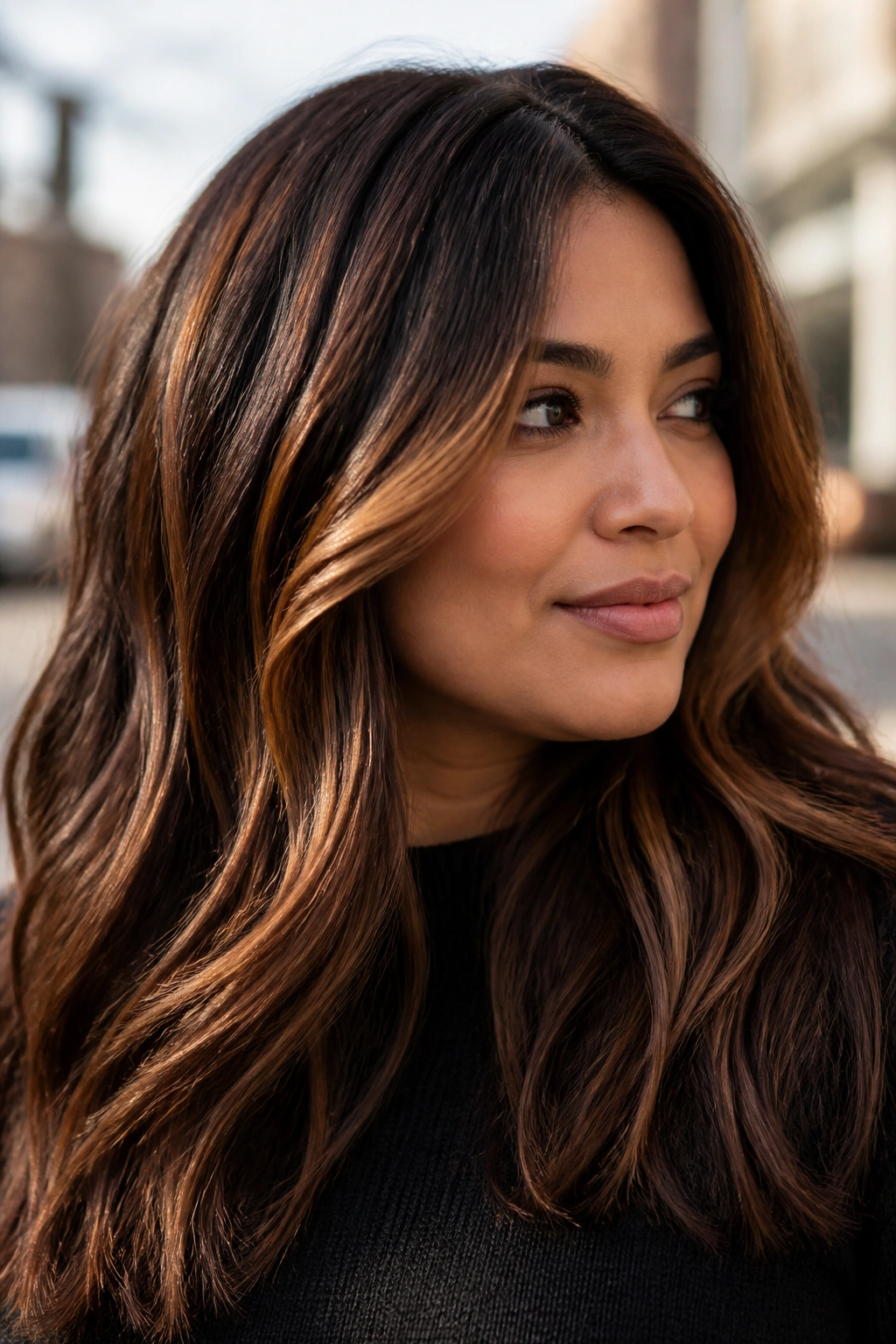
Thick hair can take more contrast than people think.
That’s why broader chocolate slices with a little caramel edge can look great on a round face, as long as they’re placed with discipline. Fine ribbons can disappear in dense hair. Bigger sections stay visible and help break up the bulk, which is exactly what you want.
The trick is to keep those slices vertical and staggered. Do not run them straight across the cheeks like a stripe. That makes the face look wider. Instead, let the lighter bands start high near the temple and fade lower through the length.
On thick hair, I also like a slightly deeper base shadow. It keeps the ends from floating away visually. The contrast gives shape, and shape keeps the style from turning into one big brown cloud.
13. Soft Contour Highlights Around The Jawline
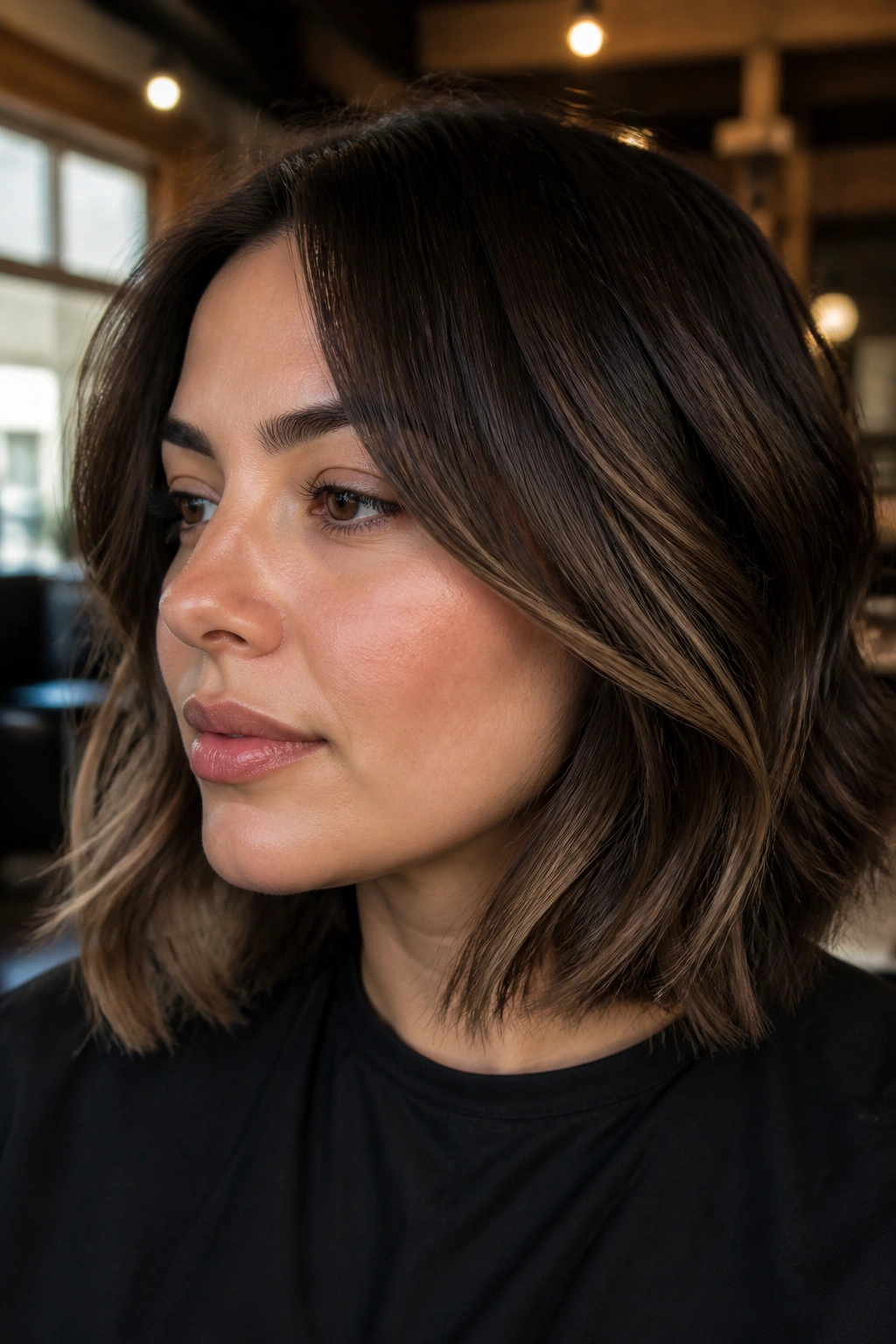
Round faces do not need brightness shoved right onto the cheeks.
They need contour. Soft contour highlights around the jawline do the job in a way that feels polished without looking drawn on. You keep the darkest brown near the widest part of the face, then thread lighter chocolate pieces just under it, where they can pull the eye downward.
What To Ask For
Ask your colorist for a deeper brunette base around the cheek area, then lighter ribbons under the jaw and through the lower front layers. That creates a gentle shadow-and-light effect, almost like hair contouring. It is not face paint. It is just smart placement.
This works especially well on medium lengths and lobs, where the jawline is visible. The color helps define the outline of the face without making it look tight or severe.
A little softness at the root keeps the whole thing from feeling overworked. Keep the contour quiet, and it looks expensive. Push it too hard, and it starts looking striped.
14. Ash-Chocolate Toning For A Cooler Finish
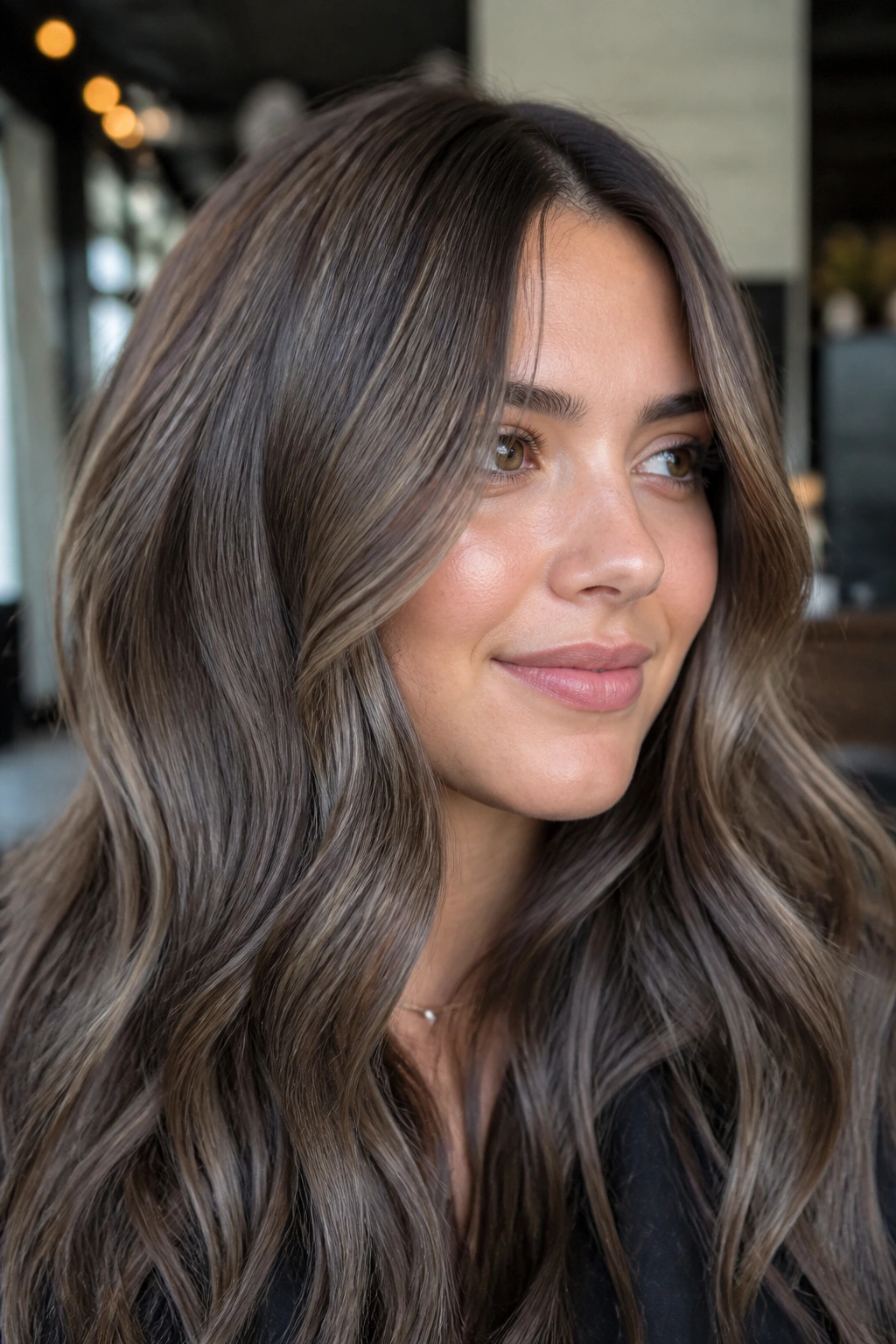
Can chocolate brown highlights look cool instead of warm? Absolutely.
Ash-chocolate tones sit in a nice place for round faces because they reduce the sweetness of the color. Warm tones can be lovely, but sometimes too much red or gold makes the cheeks feel more prominent. A cooler chocolate, especially one toned with ash, keeps the face reading a little leaner.
This is a good route if your skin has pink, neutral, or rosy undertones and bright warmth tends to fight with it. The hair still looks rich. It just doesn’t flare up in the light.
The only catch is maintenance. Cool brunettes can drift warm if the toner fades, so the color should be checked before it turns brassy. A clear gloss helps too. Short and simple. No need to overcomplicate it.
15. Glossy Babylights On Fine Hair
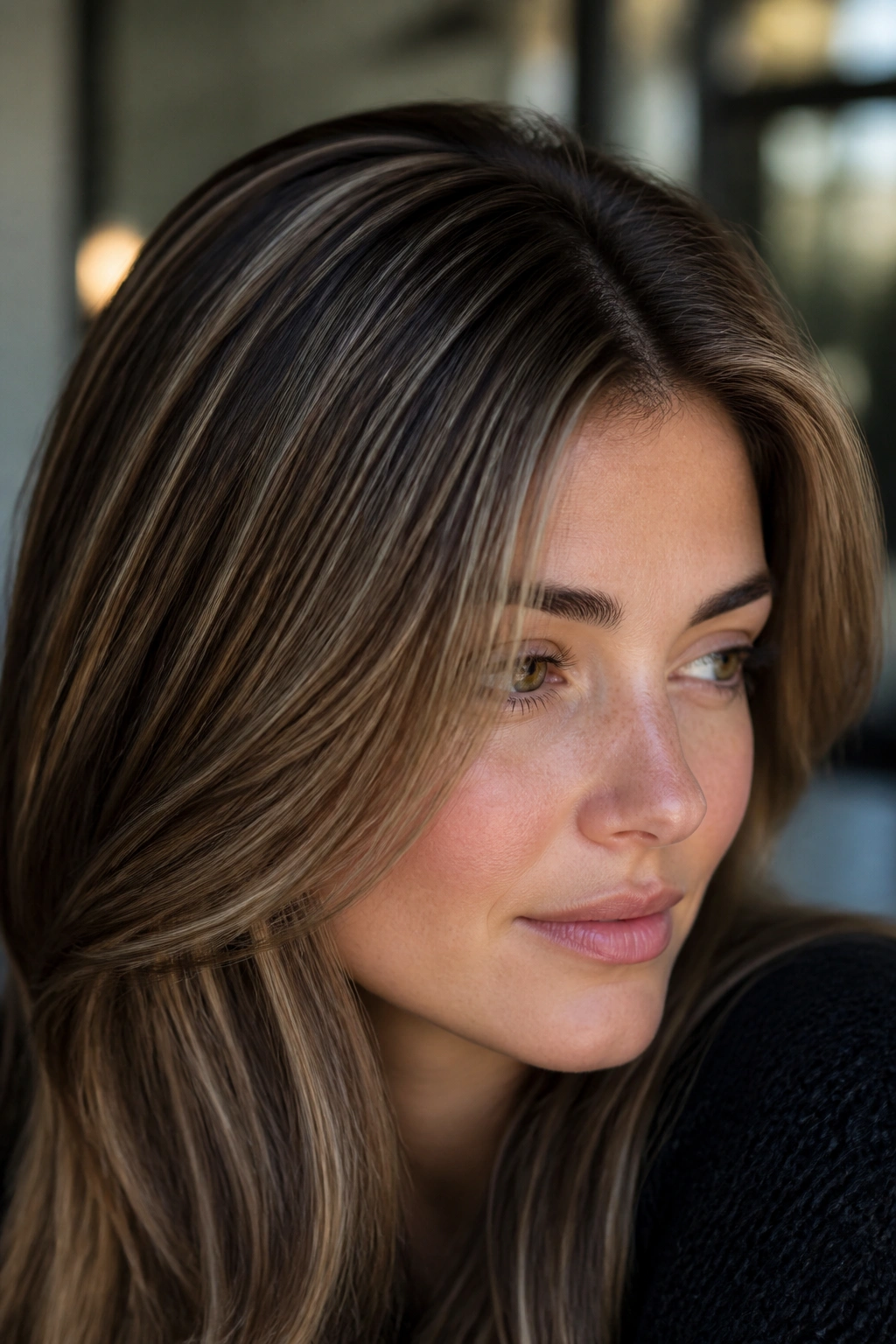
Fine hair likes restraint.
That’s why glossy babylights can look better than chunky highlights on a round face with finer strands. You keep the hair looking full, avoid see-through sections, and still get the movement that makes the face feel longer. Tiny lights do not eat up density the way larger bleach pieces sometimes do.
The best placement is usually around the hairline, part, and top layer. You want enough brightness to catch light, not so much that the scalp starts showing through. On fine hair, that balance is everything.
I also like this when the haircut is soft and layered. The babylights cling to the movement instead of floating apart from it. The result is airy, not sparse.
16. Chunky Yet Blended Highlights For A Bold Look
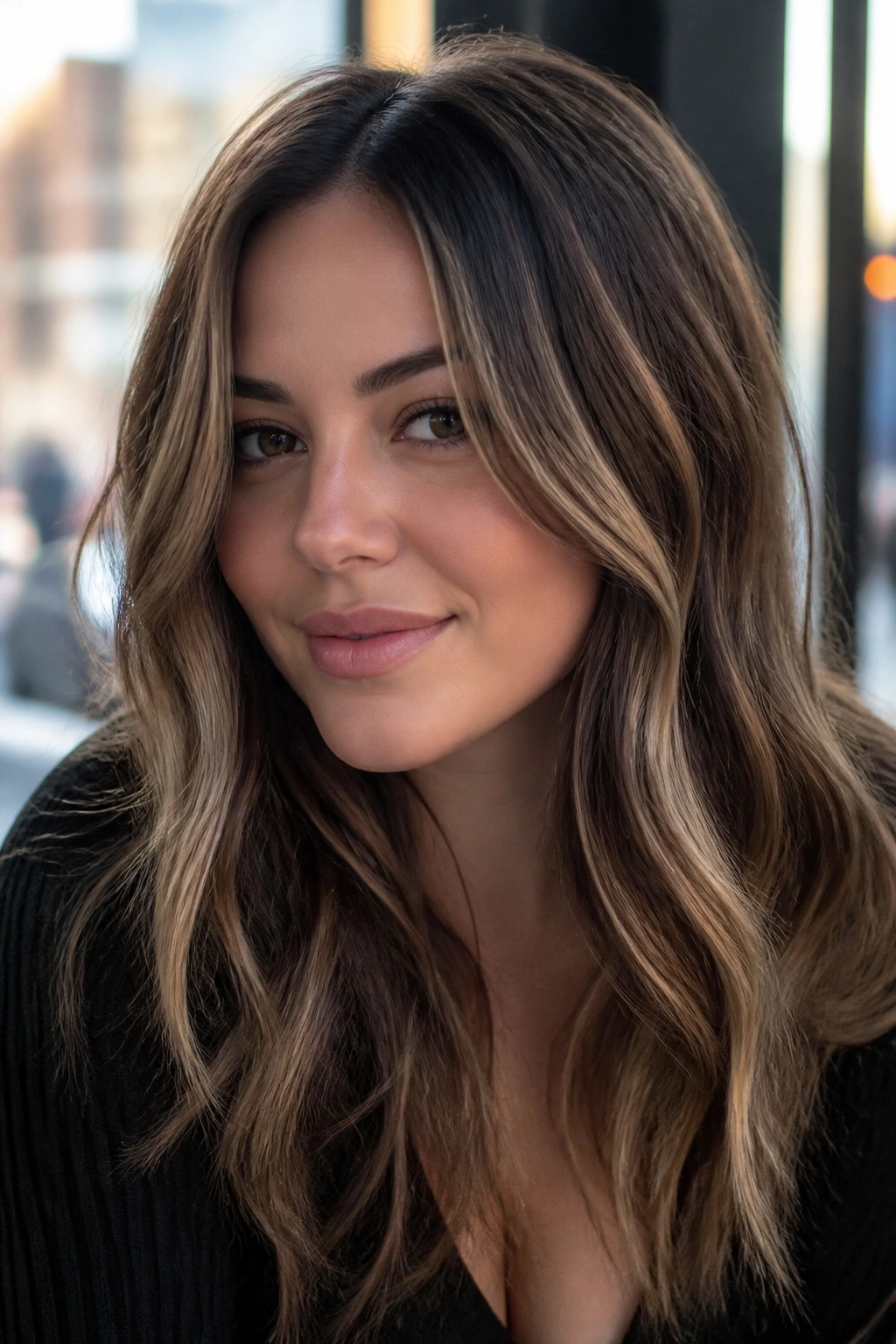
Some round faces can handle more contrast than people assume.
Chunky highlights can work if the pieces are blended enough to keep the shape vertical. The problem is not thickness by itself. The problem is horizontal placement. If the lighter bands stretch across the cheeks, the face widens fast. If they fall from the temple downward, the effect is sharper and more fashion-forward.
This look suits people who want the color to be visible from across the room. It is not subtle. But it can still be flattering if the stylist keeps the chunks staggered and soft at the root. That root softness keeps the face from feeling boxed in.
If you love a bolder brunette, this is one of the few places where bigger pieces can actually help. They give the haircut structure, and structure is what round faces often need most.
17. Chocolate Brown Balayage For Curly Hair
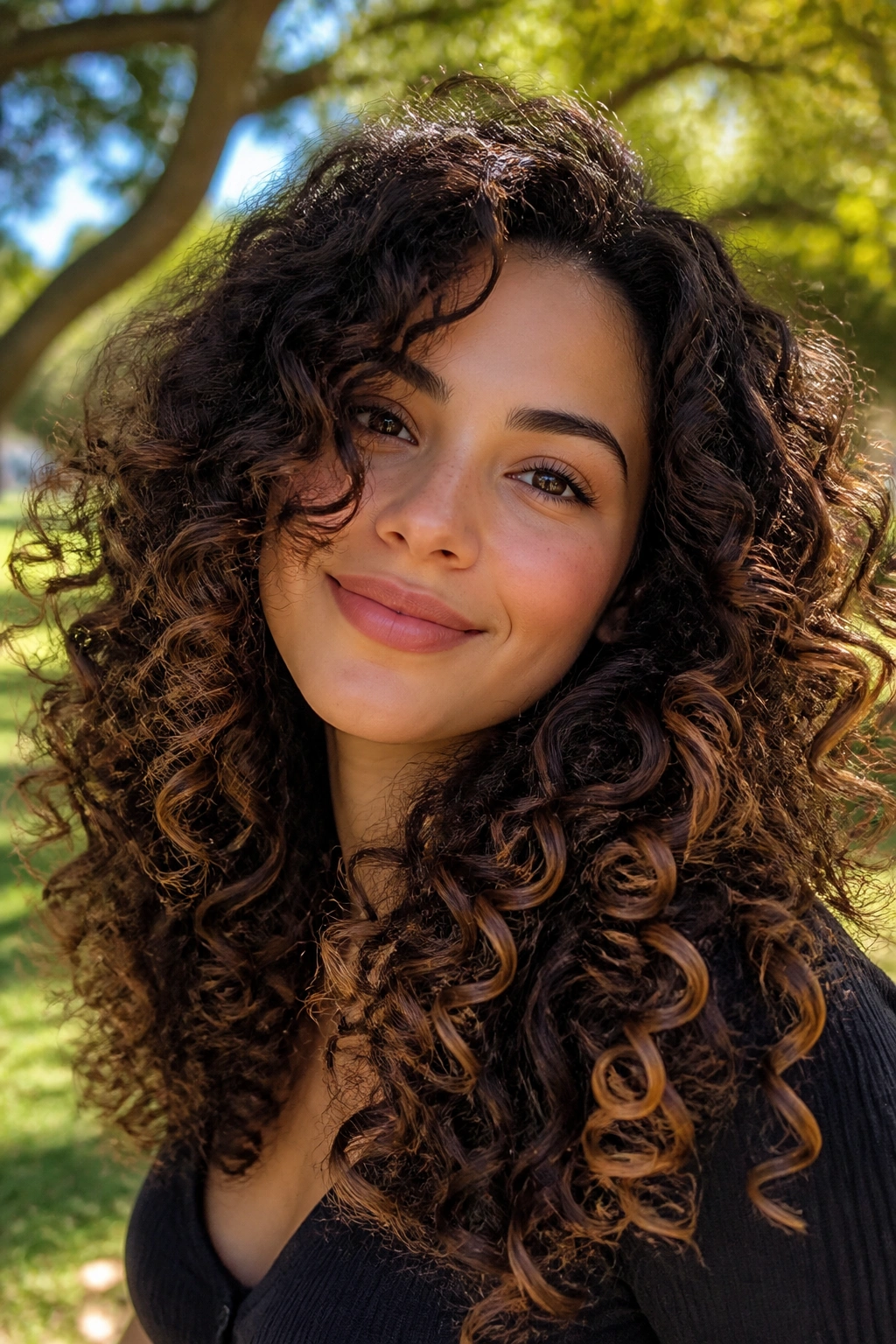
Curly hair changes the whole conversation because the color bends with the curl pattern.
That is a gift, if the placement is thoughtful. With curls, chocolate brown balayage should follow the way the ringlets open, not sit on top of them in flat stripes. The light should land on the curl’s outer curve, where it catches movement and pulls the eye downward through the shape.
I like this approach on round faces because the curls already give softness. The color just needs to add direction. Put the brightest bits too high, and the halo of curls gets wider. Put them lower, and the face seems longer and the curls look more defined.
Ask for painted ribbons, not a blanket of color. Curly hair can swallow detail if the highlights are too tiny, so a slightly larger hand works better. The result should look alive when the curls bounce.
18. Root Smudge With Lighter Ends
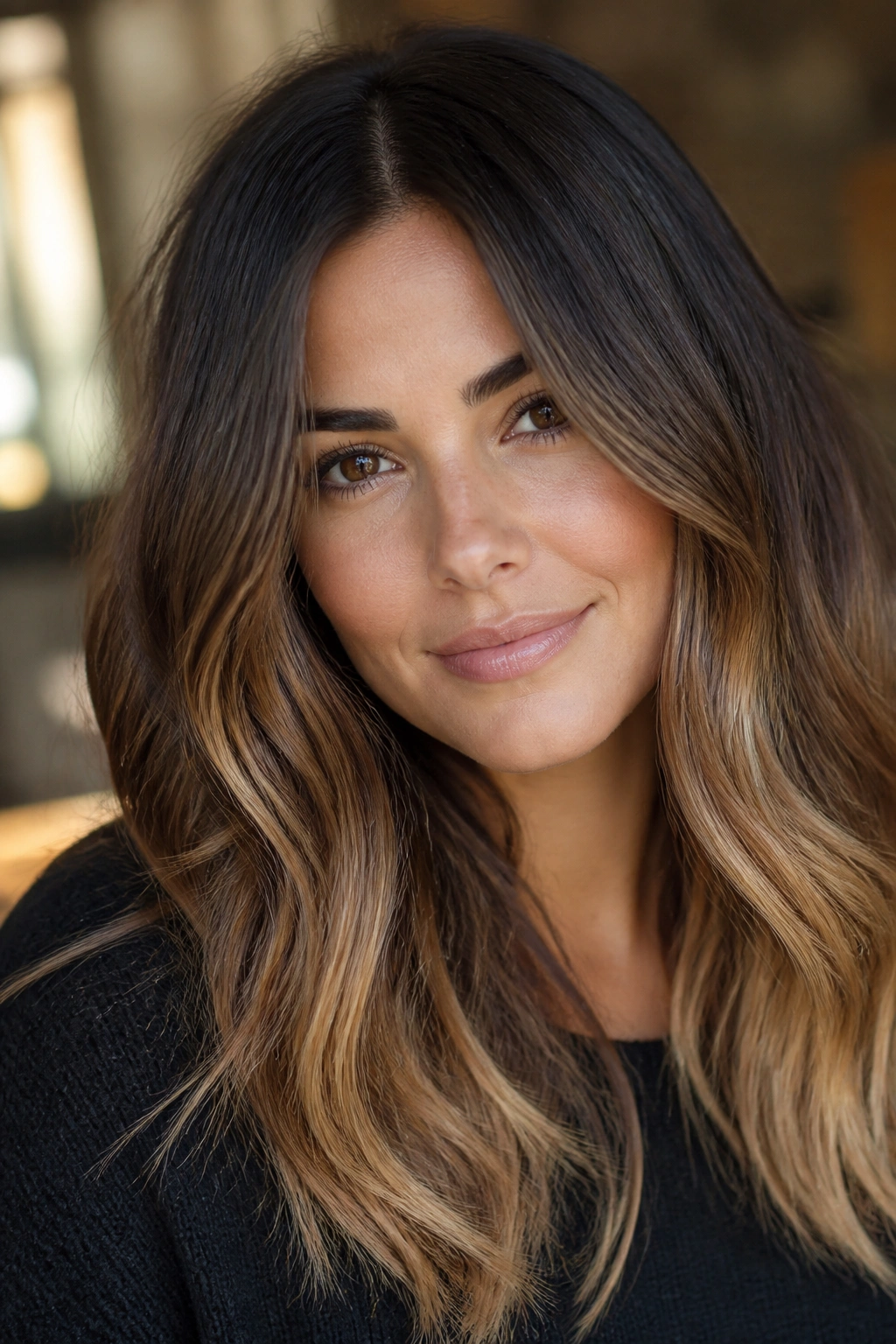
A root smudge is one of the simplest ways to keep chocolate brown highlights flattering on a round face.
The darker root gives the top of the head a calm, anchored look. Then the lighter ends carry the eye downward. That vertical shift is doing real work, even if it sounds small. It keeps the face from getting framed by too much brightness at the hairline.
This is also a nice option if you prefer low-maintenance color. Grow-out looks softer because the root is already part of the design. No hard line. No panic at the mirror two weeks later.
I’d use this when the haircut has movement through the ends, like long layers or a lob with bends. The smudge and the shape support each other. If the cut is blunt and heavy, the contrast can feel a little too flat.
19. Mushroom Brown Veil For Low-Contrast Dimension
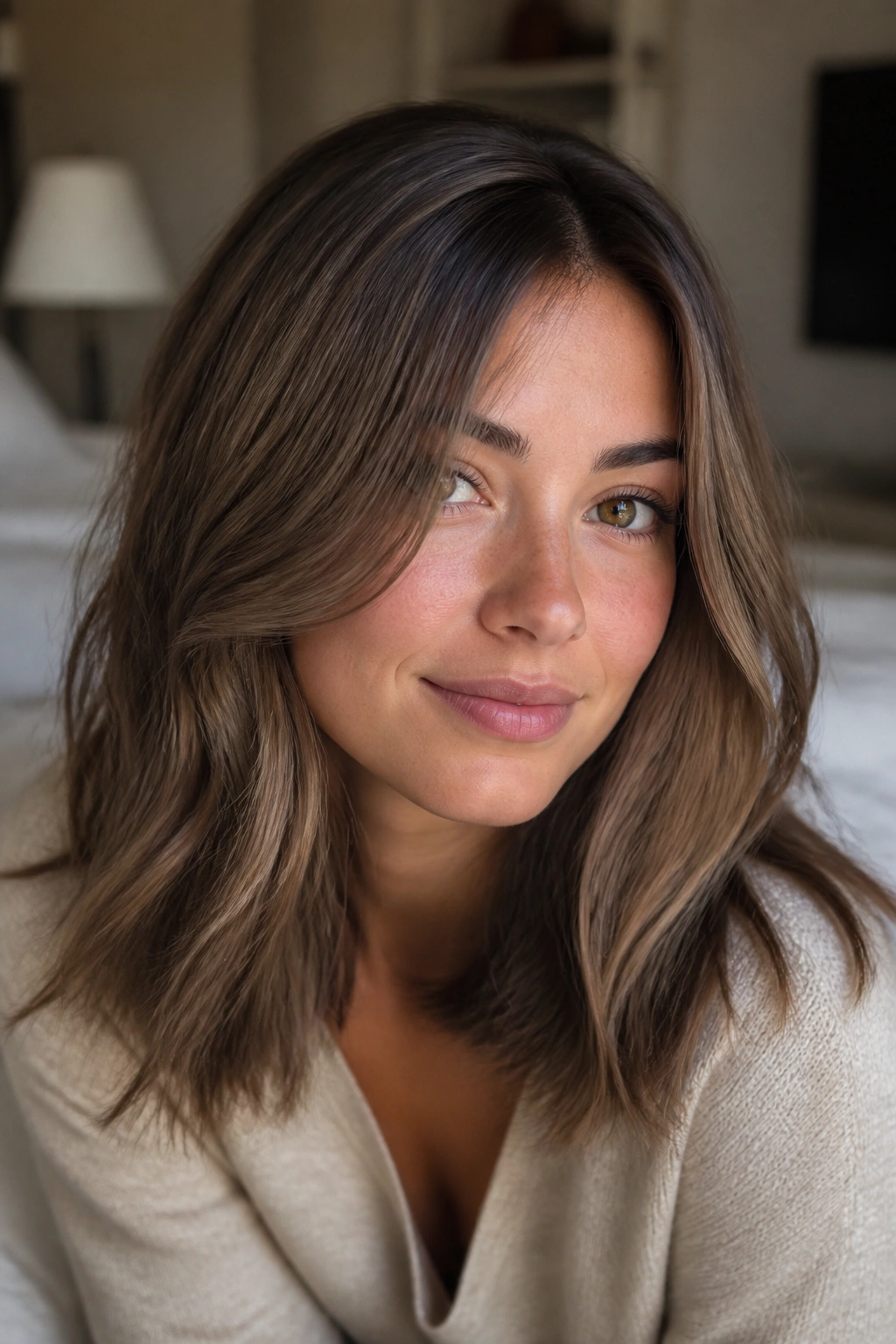
Mushroom brown is for people who want softness more than shine.
It sits in that earthy zone between taupe, brown, and a touch of beige, which makes it useful for round faces that do not need more width from warm highlights. The color reads muted, but not dull. Done well, it gives the hair a veil of dimension that feels calm and expensive without trying too hard.
The best part is how it softens strong features without erasing them. The face still has shape. The hair just stops shouting about it. I like this on medium-length cuts, especially when the layers are light and the texture is a little piecey.
If your natural hair is already medium brown, mushroom tones can blend in nicely without a dramatic lift. That keeps the result believable. And believable hair color is underrated. A lot.
20. Copper-Brown Chocolate Glow
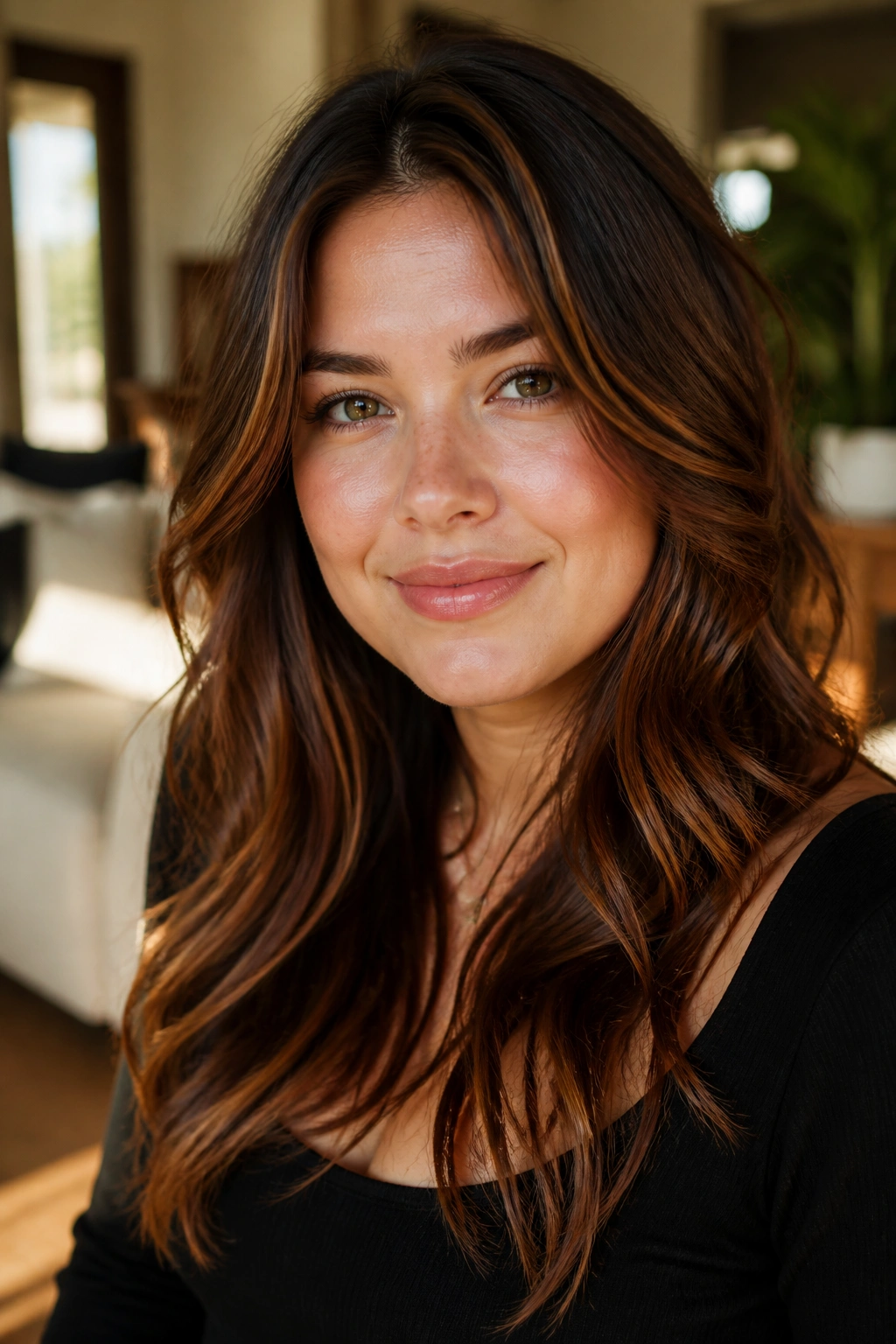
Can chocolate brown highlights lean warm and still flatter a round face? Yes, if the copper is kept under control.
This look is for someone who likes warmth, movement, and a little light around the face. The copper-brown glow works best when the brighter strands stay thin and do not crowd the cheeks. You want warmth that flickers, not a block of orange-brown light.
A warm brunette can be gorgeous on round faces because it draws attention to the eyes and lips. The risk is overdoing it. Too much copper near the sides of the face adds width, and too much everywhere turns the color loud in a hurry.
I’d keep the roots rich and the copper mostly in the lower front and ends. That way the glow travels downward. It feels sunny without getting heavy.
21. Highlight Placement That Skips The Widest Part Of The Cheeks
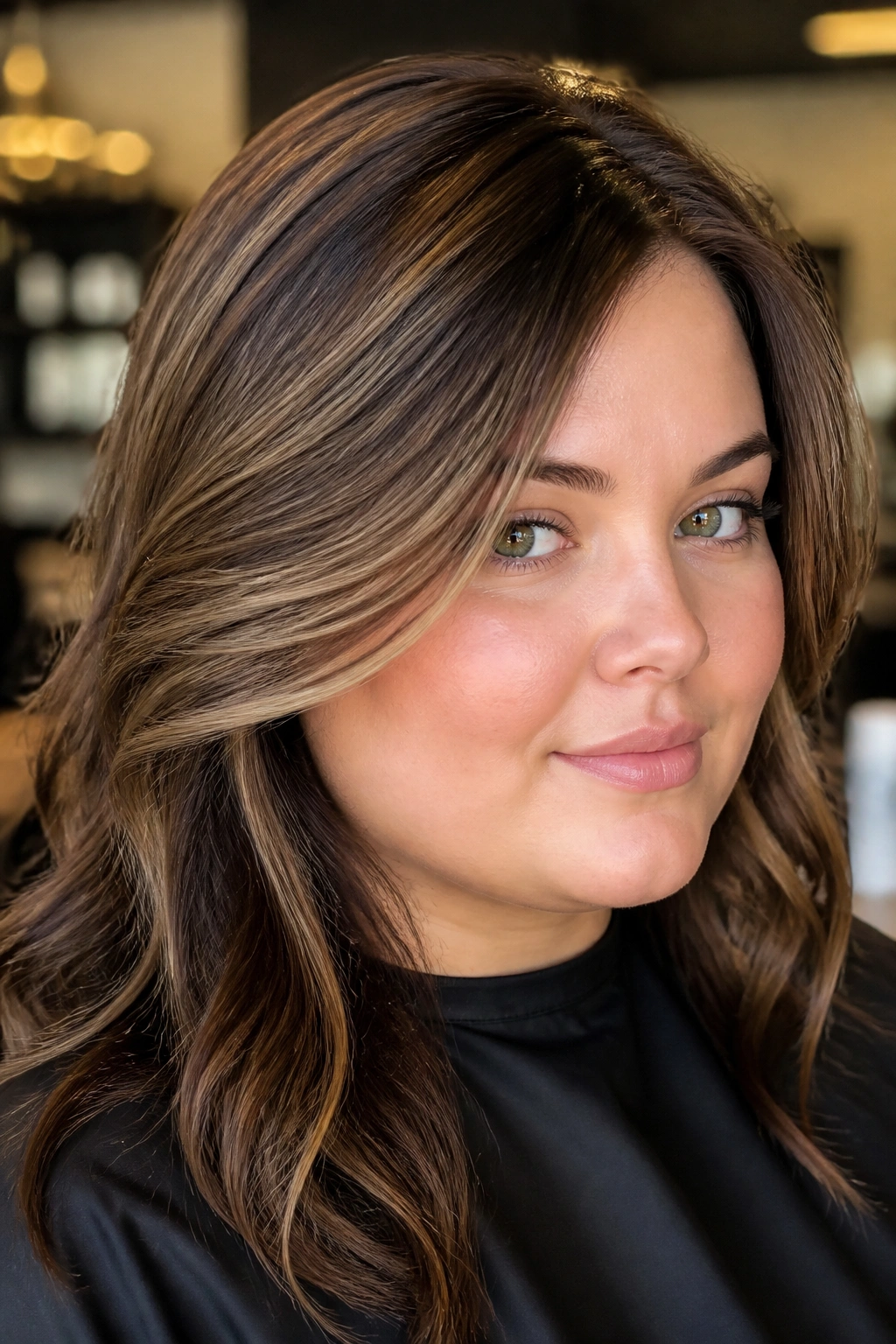
Round faces do not need brightness sitting flat across the widest part of the cheeks.
That rule is the backbone of almost every flattering chocolate brown highlights plan here. Leave the cheek zone a little deeper, then put the lighter pieces above it at the temple and below it near the jaw. The eye reads those longer lines before it notices the width.
Where To Put The Light
- Brighten the temple area first.
- Let the front pieces slide below the cheekbone.
- Keep the middle of the cheek slightly deeper.
- Carry some brightness into the lower lengths.
Where To Hold Back
- Don’t place a wide stripe across the cheek.
- Don’t bunch the brightest pieces too close to the nose.
- Don’t lift the root so high that the hairline becomes a halo.
That may sound strict, but it saves a lot of bad color jobs. The face does not need to be chased with light everywhere. It needs breathing room.
22. Curtain Bang Highlights That Open The Face
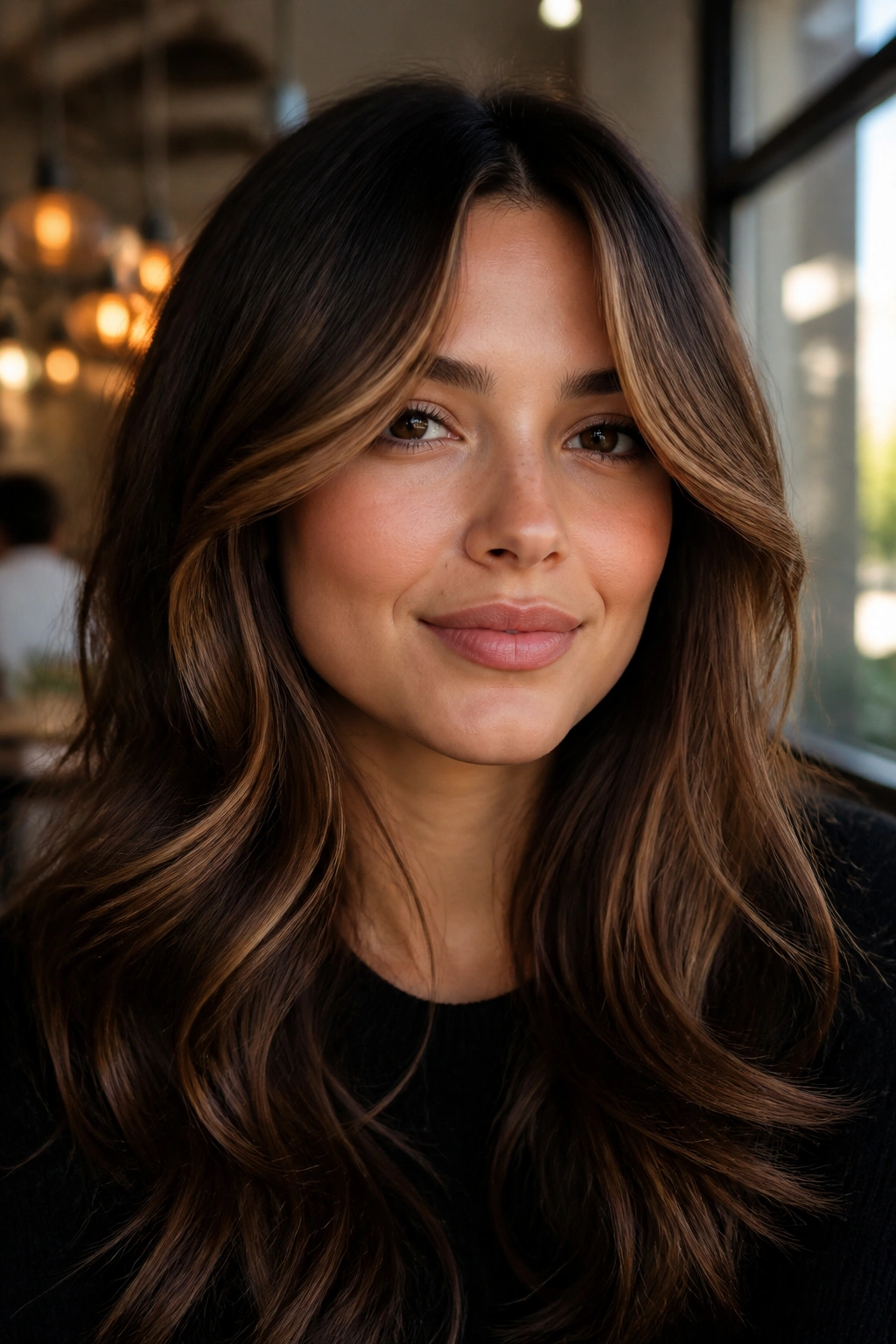
Curtain bangs can be a small miracle on round faces if the color is handled well.
The split in the fringe already creates a vertical opening. Add chocolate brown highlights along the bend of each side, and the bangs stop feeling like a curtain and start feeling like a frame. That frame should be soft, not harsh. Brighten the bend, not the entire bang.
A heavy, solid bang with no dimension can press the face inward. But when the color is threaded through the outer edges and the ends, the eye follows the curve out and down. That’s the good stuff.
Keep the center of the fringe a shade deeper if you want more definition. It helps the bang open instead of spreading. And if the rest of the hair is layered, the whole look feels balanced rather than top-heavy.
23. Ribbon Highlights On Medium-Length Layers
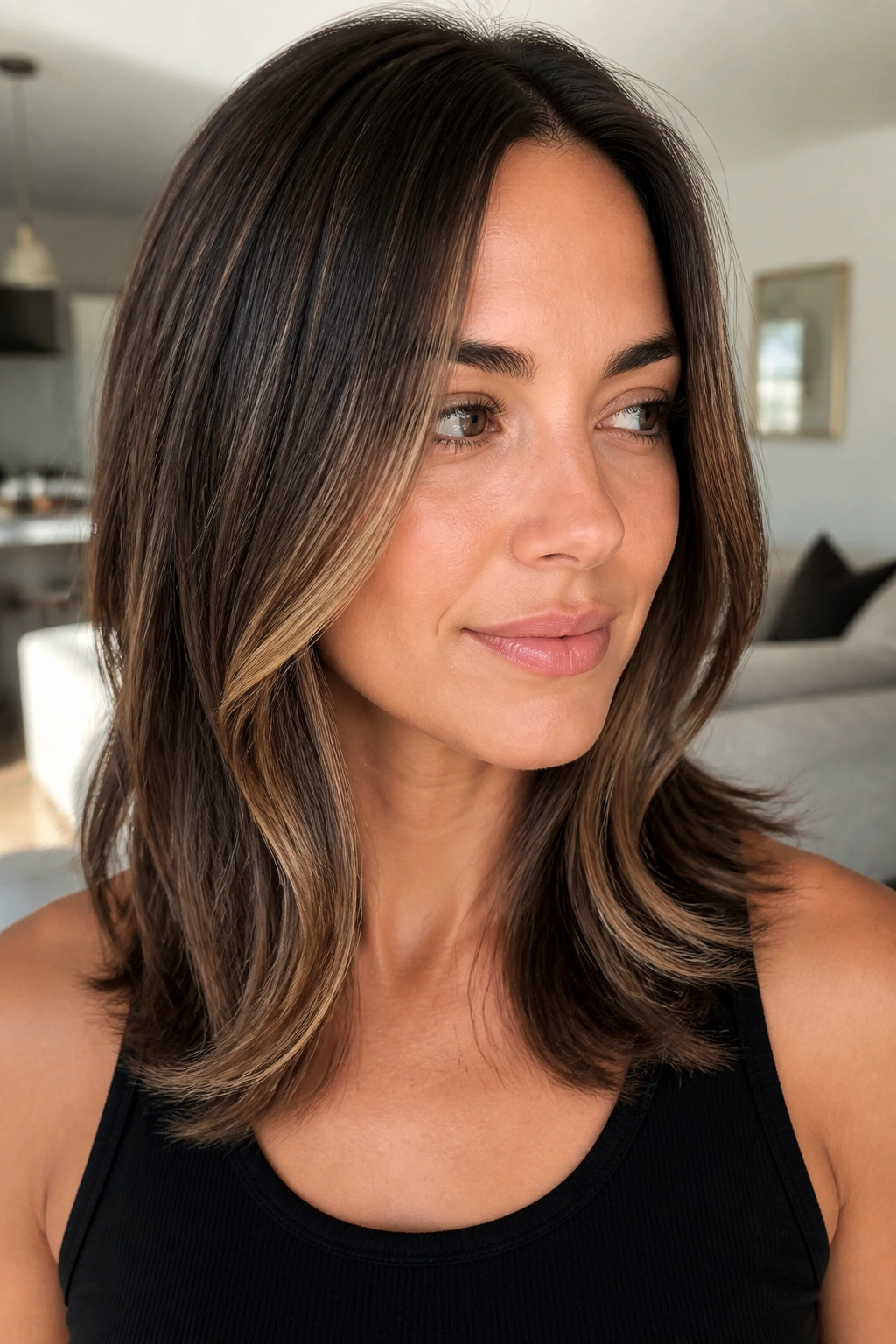
Medium-length layers are underrated for round faces.
They give the hair enough movement to separate the highlight ribbons, which is half the battle. Without layers, chocolate brown highlights can bunch together and look like one broad band. With layers, the ribbons break apart and the face gets more vertical motion.
I like this when the hair hits between the chin and collarbone. That length can be tricky on round faces because it sits close to the cheeks, so the color has to do some work. Narrow ribbons through the layers, with the brightest bits lower down, help the cut feel longer.
The nice thing here is control. You can keep the top deeper, let the middle pieces move, and finish with lighter ends. Three different values. One clean shape.
24. Rich Brunette Lowlights With Bright Veins
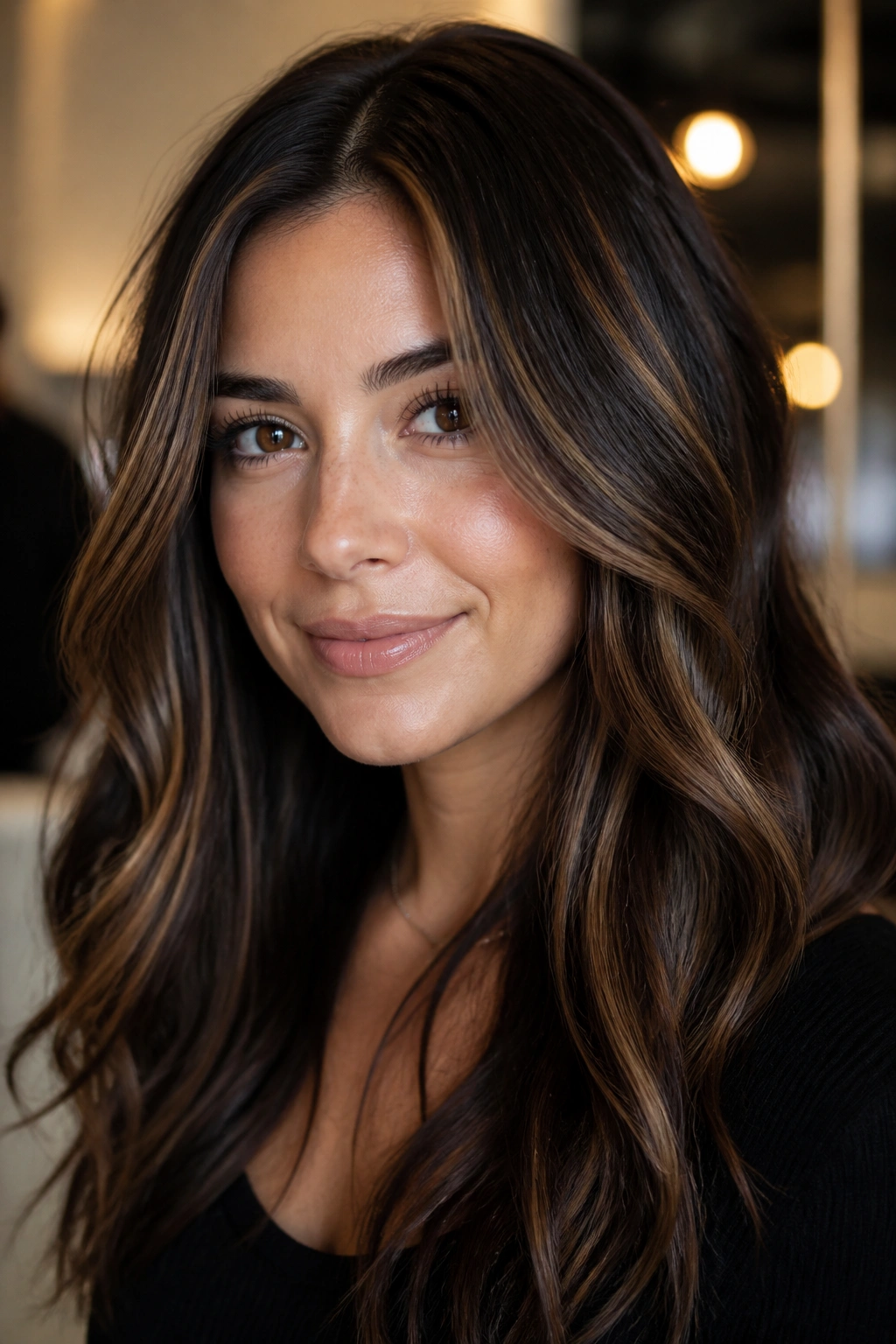
Sometimes the smartest move is not more blonde. It is more brown.
Rich brunette lowlights with a few bright veins can give a round face structure without turning the hair into a highlight map. The deeper pieces tighten the shape, while the lighter veins keep the color from going flat. That contrast is enough for people who want dimension but hate looking streaky.
This approach is especially good if your hair has gone too light and feels wide around the face. Add brown back in, and the silhouette settles down fast. It also works on dense hair that tends to puff out. Darker panels make the cut feel cleaner.
Keep the bright veins thin and vertical. If they sprawl too wide, the effect loses its edge. A few precise pieces beat a crowded head of color every time.
25. The Face-Lengthening Placement Formula
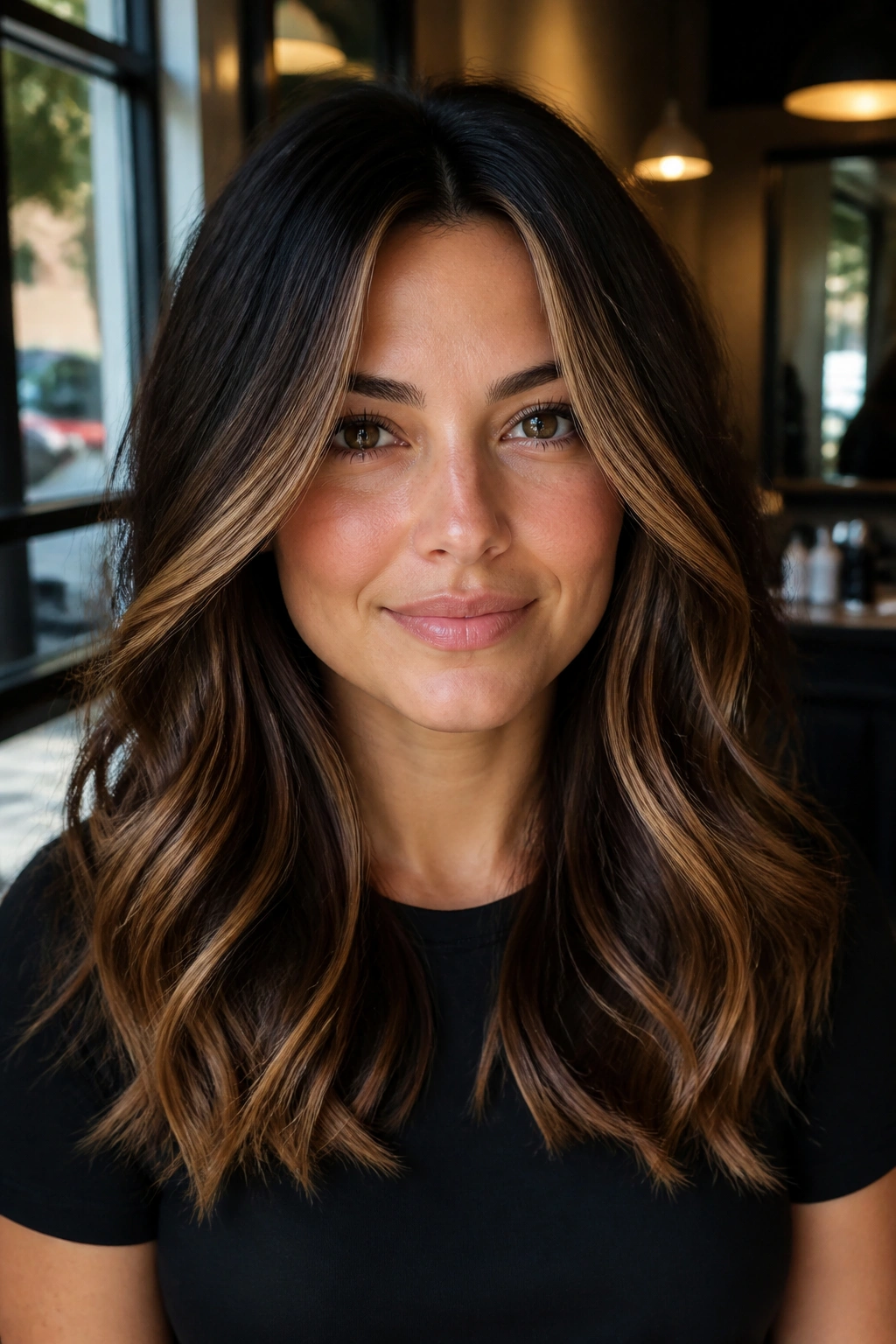
If you only remember one thing, make it this: brightness should travel vertically on a round face.
That means lighter chocolate brown highlights near the temples, some movement through the front layers, and brighter ends that drop below the jaw. It means keeping the cheek area a little deeper, so the widest part of the face doesn’t get the spotlight. And it means choosing babylights, balayage, lowlights, or a money piece based on where they land, not just how pretty they look on a swatch.
The cleanest version usually has three parts: a soft shadow root, a slim front frame, and lighter pieces that live below the cheekbone. That combo gives lift without puffing out the sides. It also grows out in a calmer way, which is a nice bonus if you do not want to live at the salon.
One last thing. A good colorist will look at your part, your layers, and where your cheeks sit at rest — not just at the mirror smile. That tiny bit of judgment is what turns chocolate brown highlights from “nice color” into a shape that flatters your face every time you turn your head.
