



Round faces do not need to be hidden; they need direction.
Brown grey highlights for round faces work best when the color pulls the eye up and down instead of letting it sit across the widest part of the cheeks. That usually means a softer face frame, a cooler smoky tone, and placement that starts a little lower than people expect. The wrong stripe in the wrong place can make the face look wider. The right one can make the whole cut feel longer and lighter.
What I like about this color family is the way it sits between warm brunette and cool ash. It can look mushroomy, taupe, slate, beige-brown, or softly silvered, depending on how much grey you let in. None of it has to be loud. In fact, the most flattering versions usually are not.
The looks below lean on brightness where it helps and shadow where it keeps the shape slim. That balance is the whole trick. Once you see it, you start spotting it everywhere.
1. Face-Framing Mushroom Brown Panels
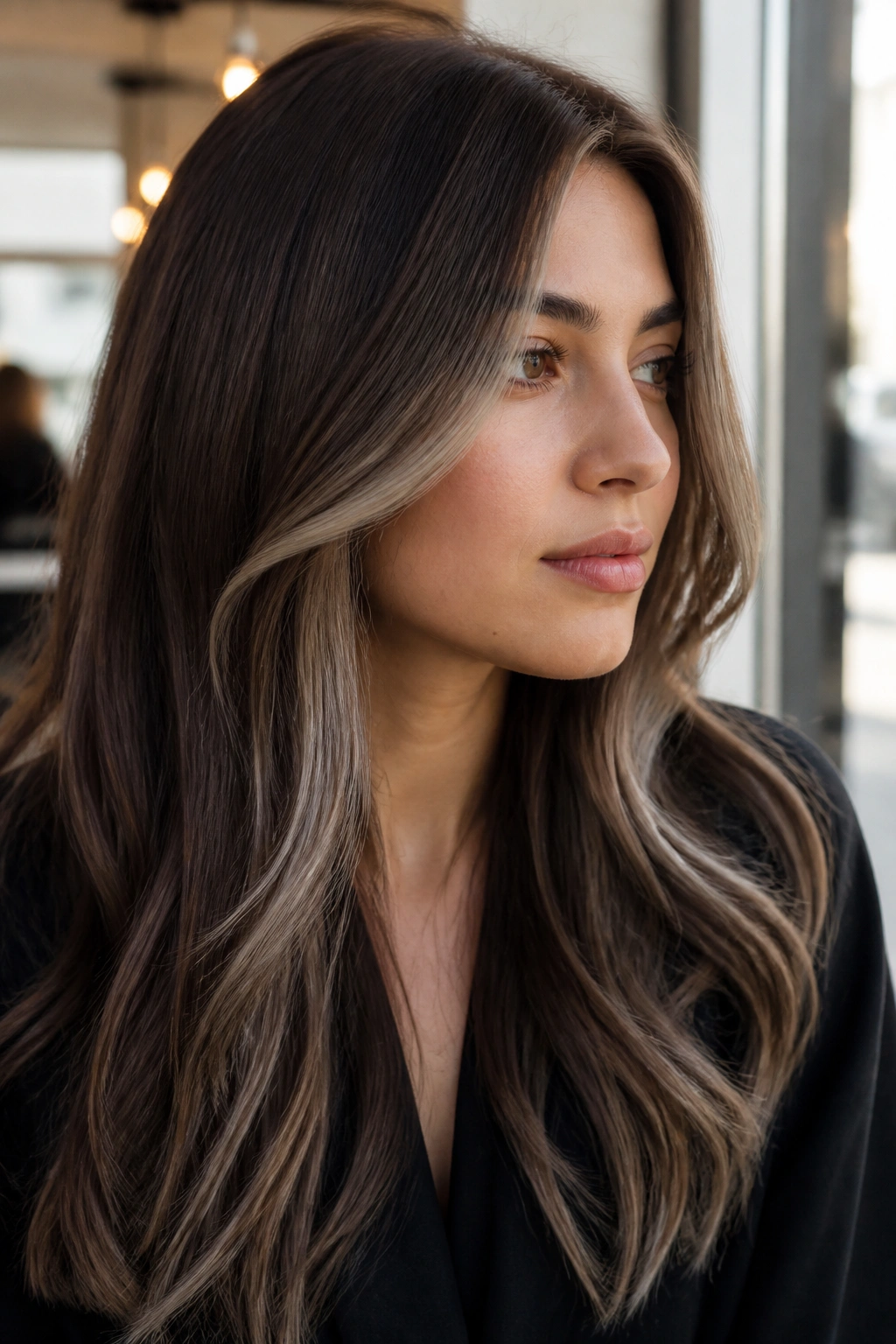
Two soft panels can do more for a round face than a heavy stripe ever will.
This version starts with a mushroom brown base and places the lightest pieces just outside the face, beginning below the cheekbone instead of right at the cheeks. That lower start point matters. It keeps the color from spreading out the face and instead gives you a gentle vertical line that feels longer and cleaner.
What to ask for at the chair
- A level 5 to 6 brown base with cool beige-brown panels around the face
- Brightness that begins 1 to 2 inches below the cheekbone
- A narrow money piece, not a thick front stripe
- A soft root shadow so the color grows out without a hard line
Wear this with a side part or a loose bend through the ends. Straight, flat hair can make any face frame feel boxy, but a little movement keeps the panels from sitting like blocks. This is one of those looks that seems subtle in the mirror and then somehow photographs better from every angle.
2. Cheekbone-Skimming Balayage
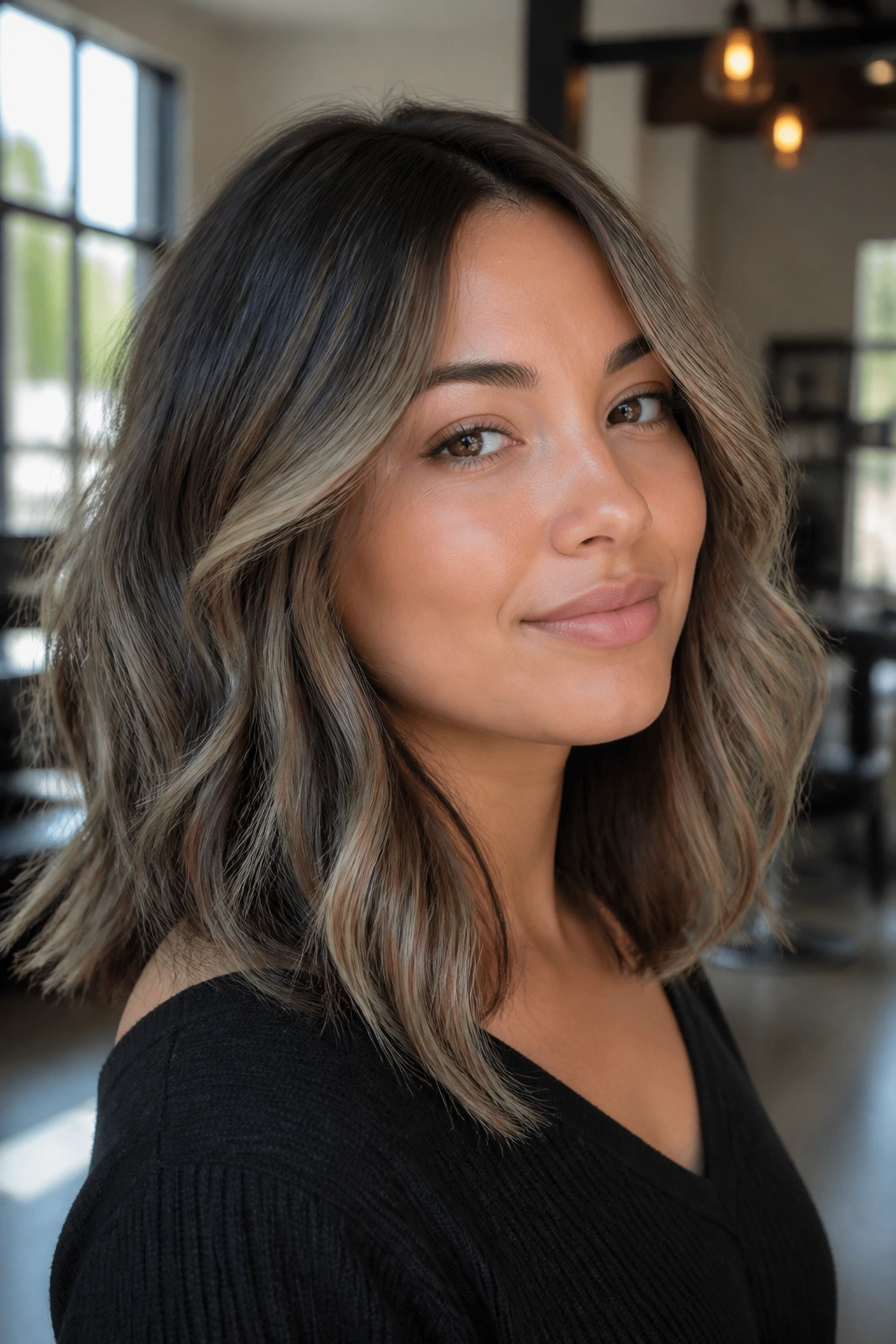
Think of the light as a trail, not a stripe.
Cheekbone-skimming balayage works because the hand-painted pieces sit just off the widest part of the face. The light should touch the hair near the cheekbone, then drift downward through the midlengths and ends. That soft diagonal line is what helps a round face look a little longer. Not dramatic. Just better shaped.
I prefer this on medium-length hair, especially if it hits the collarbone or a bit past it. The length gives the balayage room to fall instead of bunching up around the jaw. Ask your colorist to keep the brightest ribbons broken and airy, not stacked one on top of another. You want movement, not a stripe map.
A loose wave makes this placement shine. Straight hair can still wear it, but the bend gives the highlights a more natural path and keeps the face from looking evenly framed on both sides.
3. Soft Ash Brown Money Piece
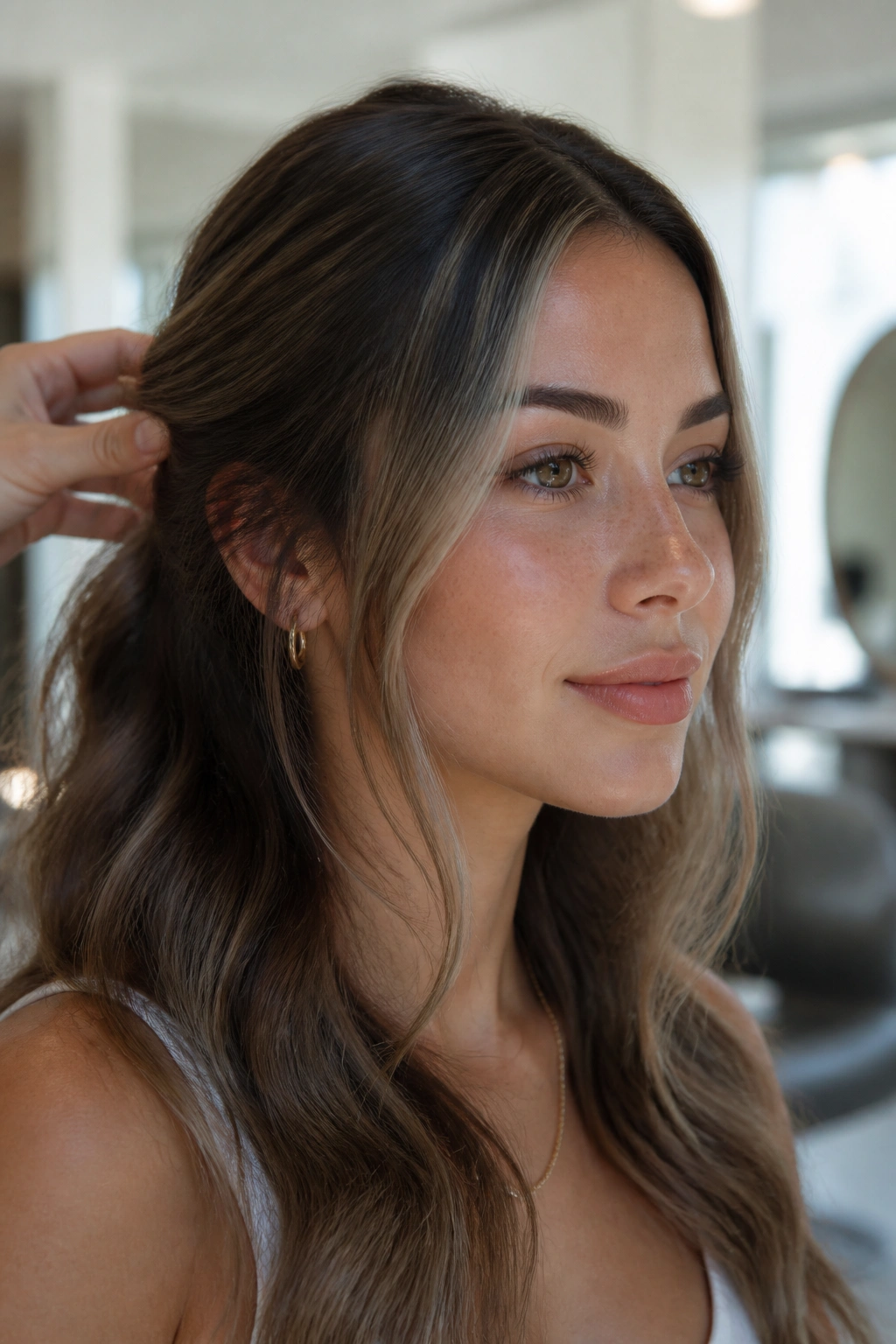
A skinny money piece can lift the whole face when it starts at the temple and stops before the cheek gets wide.
That’s the key with round faces: the front light should feel like a hint, not a spotlight. Ash brown with a grey-beige cast is a smart choice because it brightens without turning warm or orange. The color looks clean around the eyes, then disappears gently into the rest of the hair.
How to keep it flattering
- Keep the front piece no wider than 1/2 inch on each side
- Ask for a cool ash-brown tone, not golden brown
- Leave the roots slightly deeper so the lift stays vertical
- Add a soft face-framing bend with a 1-inch iron or large wand
This is a nice option if you want brightness but do not want a full head of highlights. It also grows out quietly. That matters more than people admit. A money piece that stays neat for six weeks is a lot more useful than one that looks great on day one and messy by week three.
4. Rooted Taupe Highlights With Deep Shadow
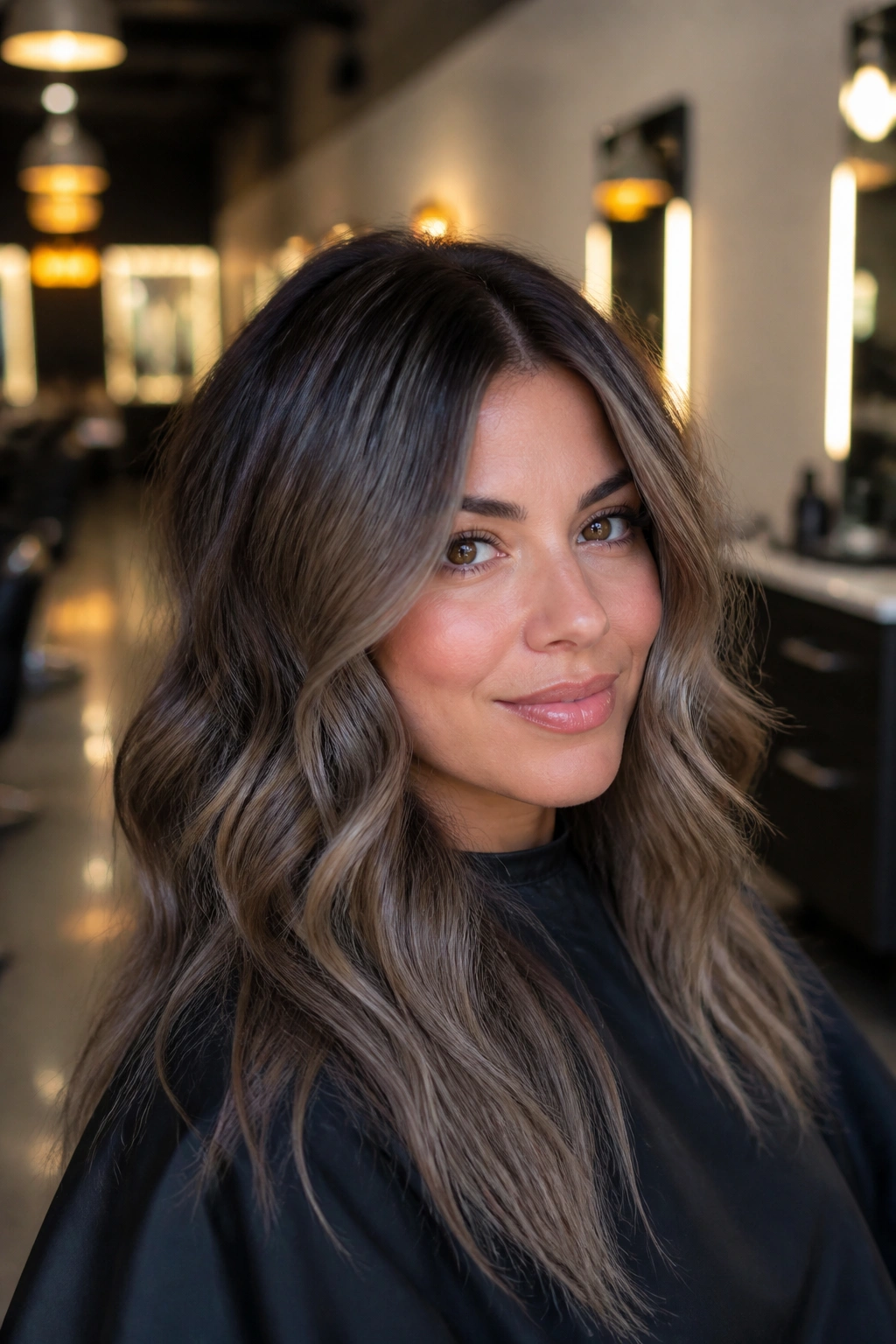
Dark roots are not the problem. They’re the friend.
A rooted taupe highlight keeps depth at the scalp and puts the lighter color where it can stretch the face downward. That deep shadow at the top is especially helpful on round faces because it stops the crown from looking puffy or wide. The hair reads taller. Cleaner. Less round.
Taupe sits in that useful middle zone between brown and grey, which means it softens warm undertones without going icy. I like this for anyone who wants a smoky brunette look that still feels soft at the skin. Ask for a root smudge about 1 to 1 1/2 inches deep, then let the lighter pieces begin below that.
This one is easy to wear straight, wavy, or in a loose ponytail. The darker root keeps the color grounded, and the lighter ends do the lengthening. Small detail. Big payoff.
5. Fine Babylights Through the Crown
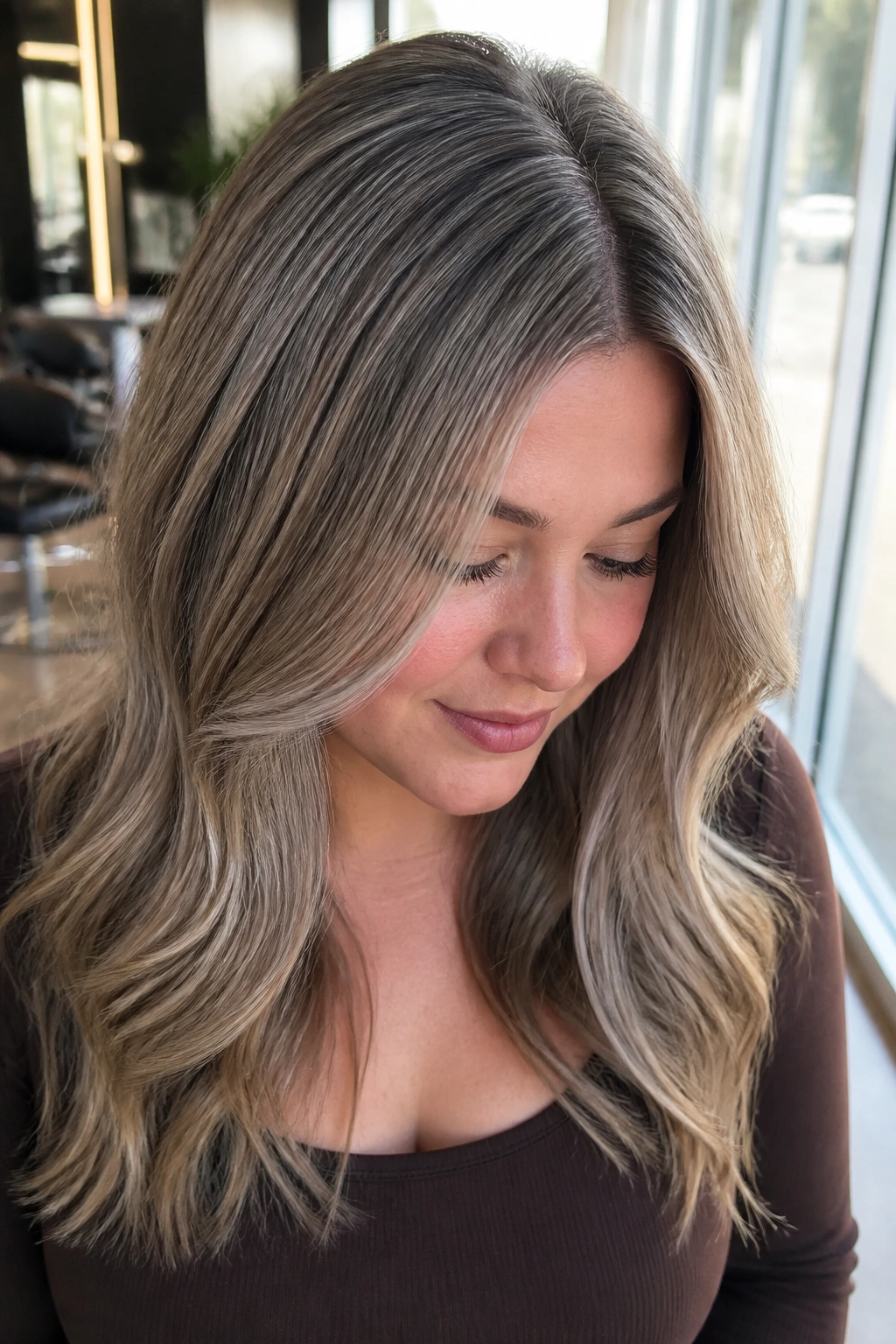
Babylights are tiny for a reason.
On a round face, very fine highlights through the crown add lift without creating wide bands of color. The trick is to keep the pieces narrow and closer together at the top, then let them drift thinner as they move toward the ends. That gives the illusion of height on top, which is exactly what you want when the goal is to stretch the face.
Why this pattern works
- Tiny foils catch light without obvious stripes
- Crown brightness gives the head more vertical shape
- Soft spacing keeps the color from looking chunky
- Fine strands grow out better than bold blocks
This is a good choice if your hair is fine or if you dislike obvious highlight lines. It also works well with a cool brown gloss, because the gloss keeps the little ribbons from turning brassy. Quiet color, yes. Boring, no. There is a real difference.
6. Curtain-Bang Brightening Strips
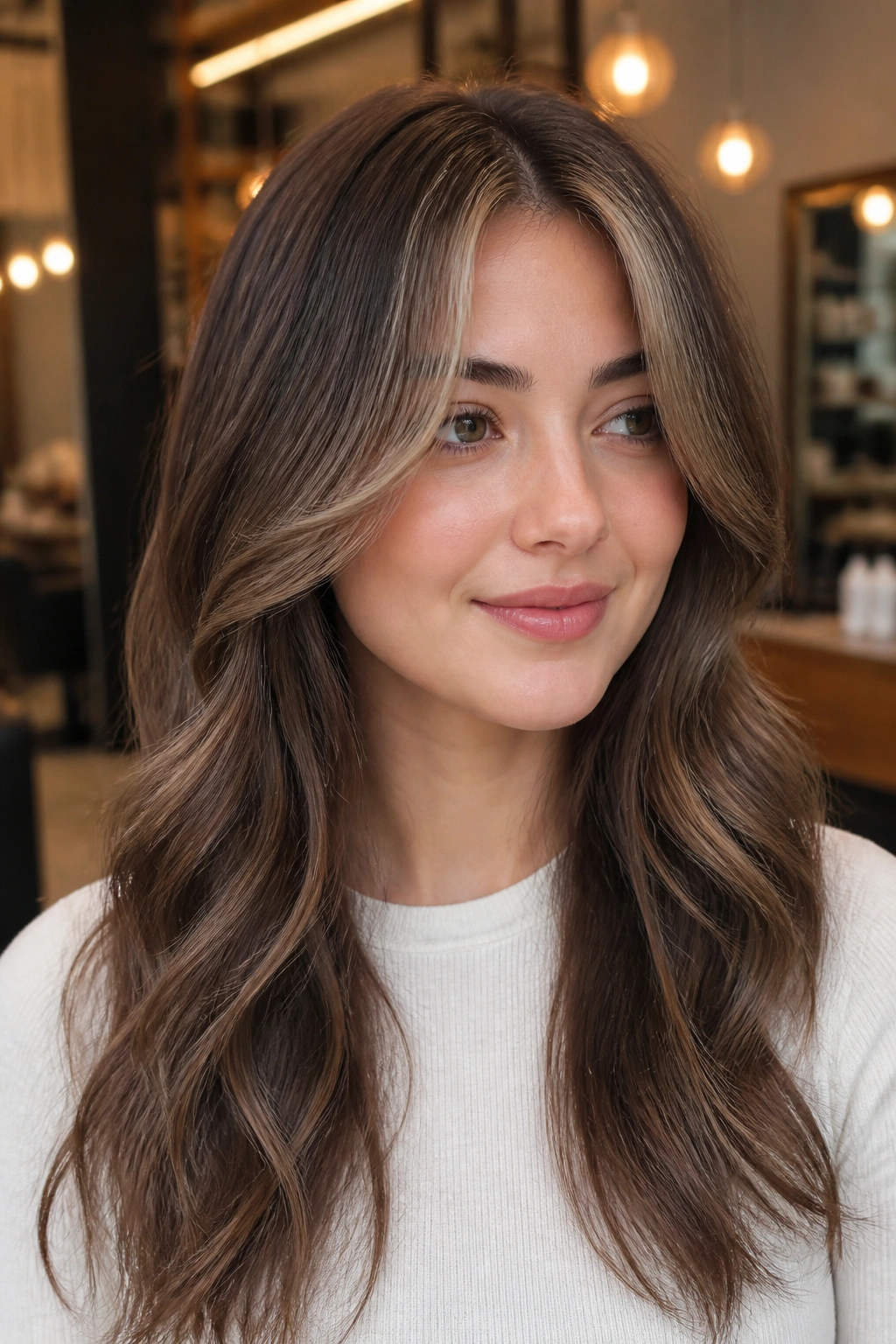
Curtain bangs can be a gift on a round face if the color is placed with some care.
The best version uses two slim bright pieces that sit on either side of the part and flow into the curtain fringe. They should start high enough to lift the eye but not so wide that they spread across the cheeks. When the bangs move, the light moves with them, and that movement makes the face feel less centered and more elongated.
I like this with a brown-grey base that stays soft and smoky through the lengths. The front can be a touch lighter—think beige ash rather than pale blonde—so the bangs do the work without taking over the whole cut. If your fringe is heavy, keep the front pieces narrow. Too much brightness can make the forehead and cheeks fight each other.
A round face with curtain bangs can look really balanced. The bangs open the center, the side pieces soften the cheeks, and the rest of the hair stays quiet enough to let the shape breathe.
7. Smoky Ends on a Chestnut Base
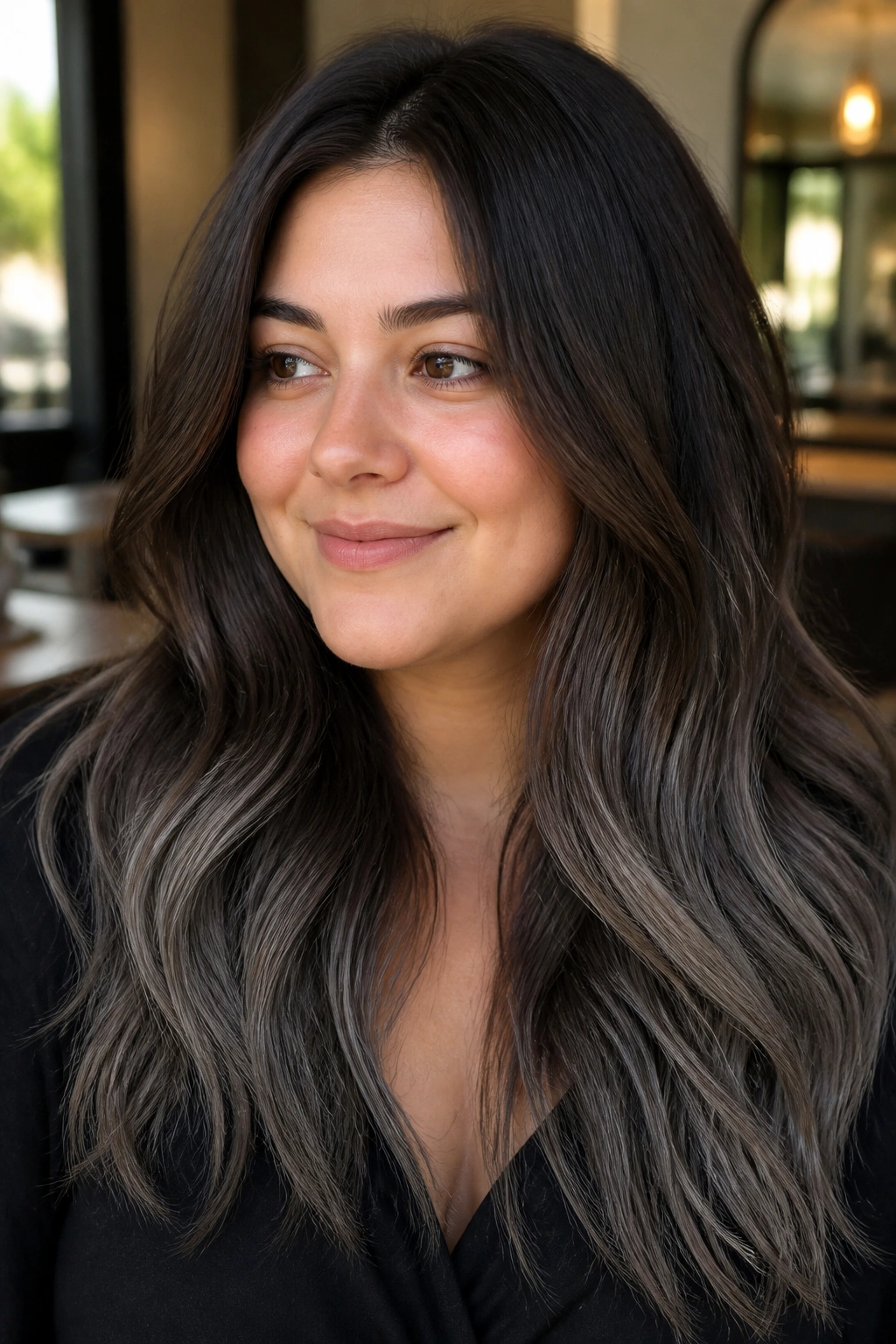
Sometimes the smartest move is to keep the top dark and let the ends do the talking.
Smoky ends on a chestnut base create a soft drop of color that draws the eye downward. That is useful on round faces, which usually benefit from a little extra length in the visual line. The chestnut gives warmth near the scalp, while the grey-brown finish on the ends cools everything down and keeps the look from feeling too red or coppery.
This is especially nice on long hair. The lighter ends sit far enough below the face that they do not widen the cheeks, and the color shift gives the hair a kind of calm movement. Ask for the lightest part to stay below the chin. If it rises too high, the effect gets wider and busier.
It’s a low-maintenance choice, too. The darker root and chestnut midlengths soften regrowth, and the smoky ends can be refreshed with a gloss instead of a full recolor.
8. Hidden Underlights for Loose Movement
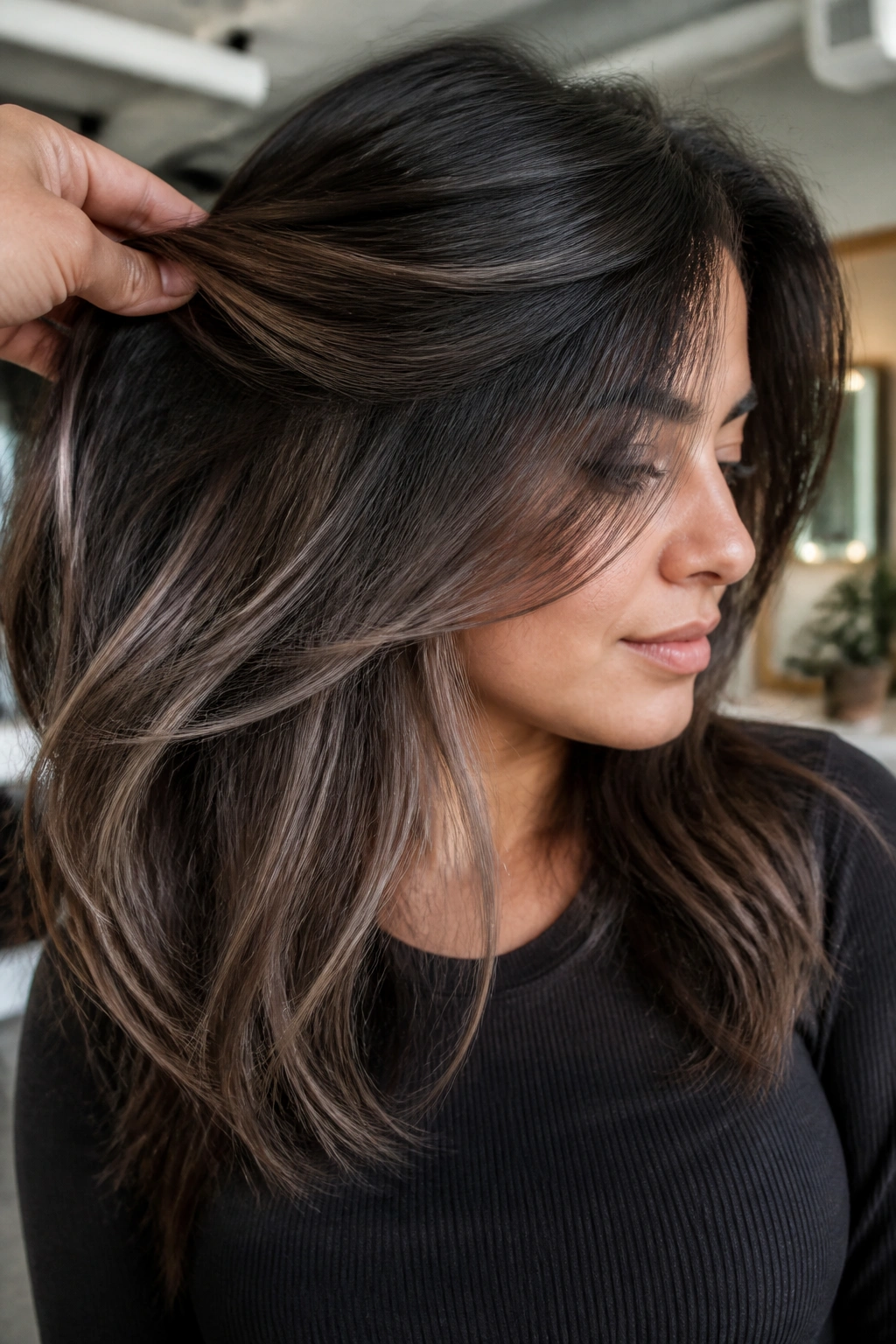
Lift the top layer and the color changes. That’s the charm here.
Hidden underlights sit underneath the surface hair, so they only show when the hair moves, flips, or gets tucked behind the ear. On a round face, that works beautifully because the brightest color is not sitting flat across the widest part of the face. It hides until it helps.
Thick hair loves this kind of placement. A dark outer layer keeps the head shape from looking wider, while the hidden brown-grey ribbons give the hair a little spark when the light hits from the side. The result feels more alive than a standard highlight job, and a lot less obvious in a good way.
If you wear your hair in waves, this is one of the most useful techniques on the page. The movement reveals the underlights in pieces, not all at once, so the face never feels boxed in.
9. Cool Mocha Ribbons Through Long Layers
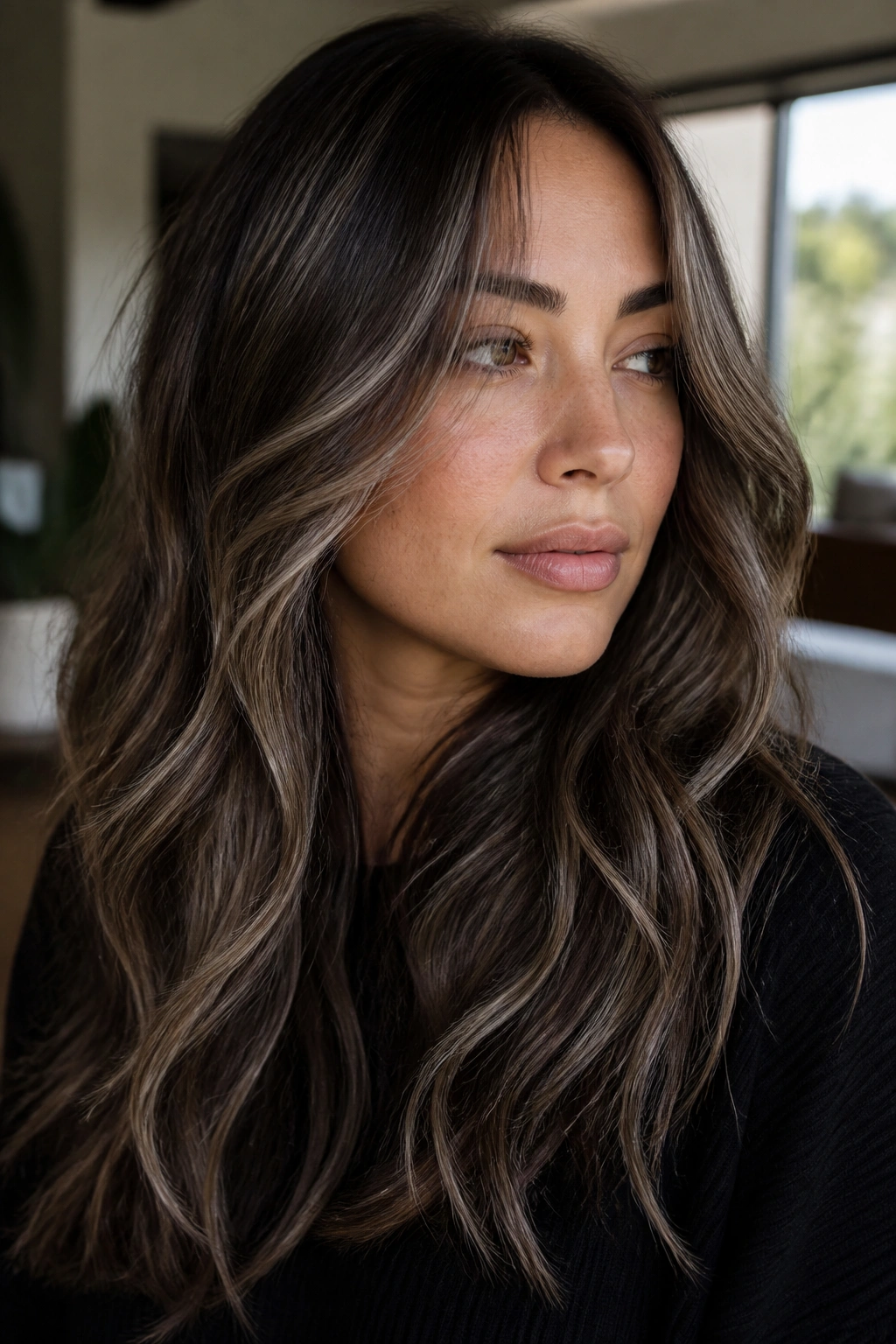
Long layers and cool mocha ribbons are a solid pair.
The longer the hair, the more room you have to stretch out the highlight pattern. That’s why this look works so well for round faces. The mocha ribbons run through the length of the cut, not straight across it, which keeps the eye moving downward. A little grey in the mocha takes the warmth out and gives the color a softer, smoky finish.
Ask for ribbons that begin around the cheekbone but stay broken apart through the ends. You do not want one thick color band from top to bottom. The spaces between the highlights matter just as much as the highlights themselves. They keep the style from reading flat.
Wear it with loose waves or a rough blowout. The texture helps the color separate into pieces, and that separation is what gives the face a longer outline.
10. Side-Part Highlights That Break the Circle
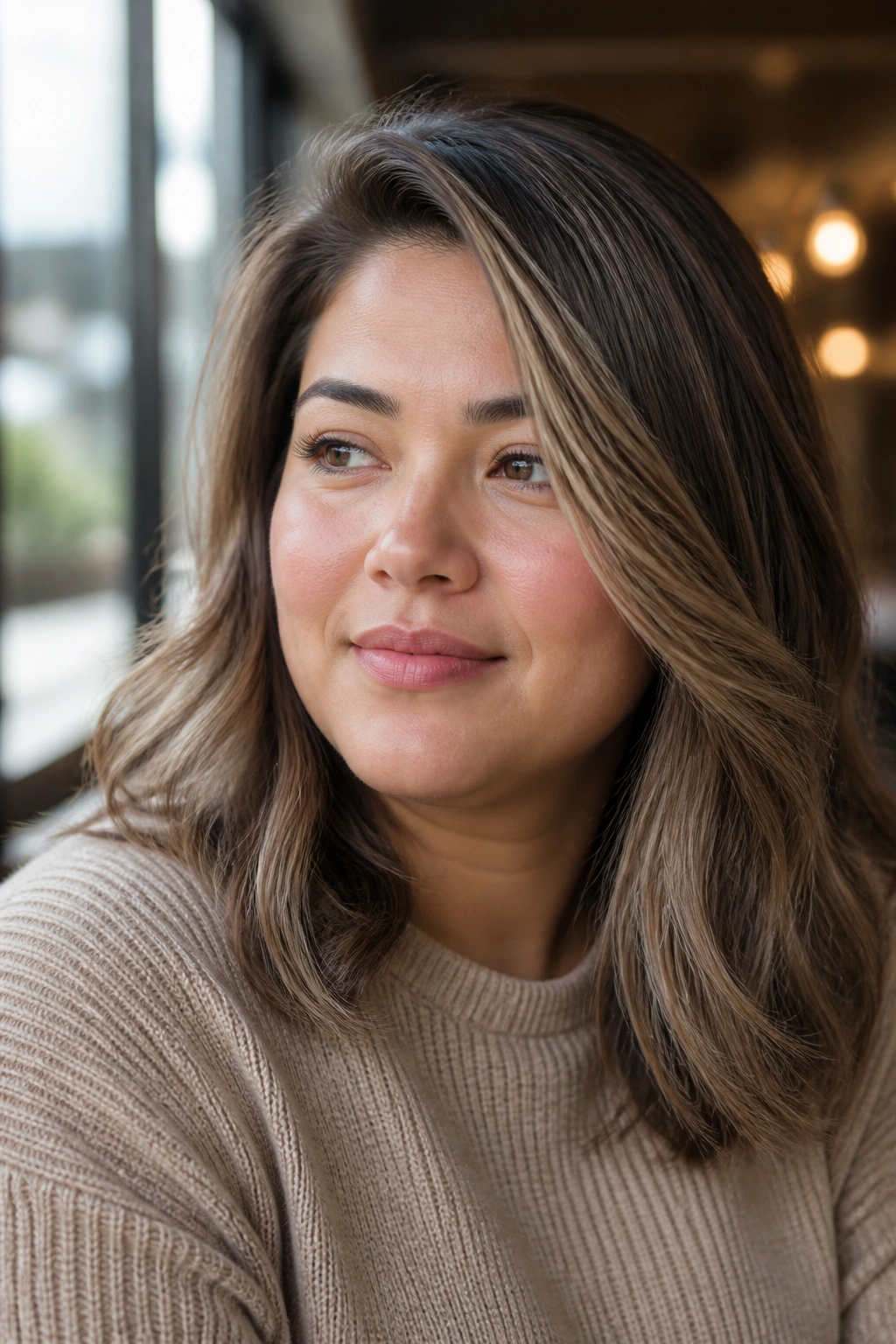
A side part is a quiet cheat code for a round face.
Shift the part a little off center, and the whole color pattern changes. The brighter side gets more lift at the temple, while the darker side gives the face a clean edge instead of an even frame on both sides. Paired with brown-grey highlights, this can make a round shape look more oval without changing the cut much at all.
The parting trick
- Start the part about 1 to 1 1/2 inches off center
- Put a brighter panel on the heavier side
- Keep the opposite side softer and slightly deeper
- Blend the front pieces into the rest of the hair so nothing looks pasted on
I like this especially with shoulder-length hair. It creates asymmetry, and asymmetry is your friend here. Perfect symmetry can make a round face look wider than it is. A little imbalance is often the smarter move.
11. Soft Grey Glaze Over Warm Brunette
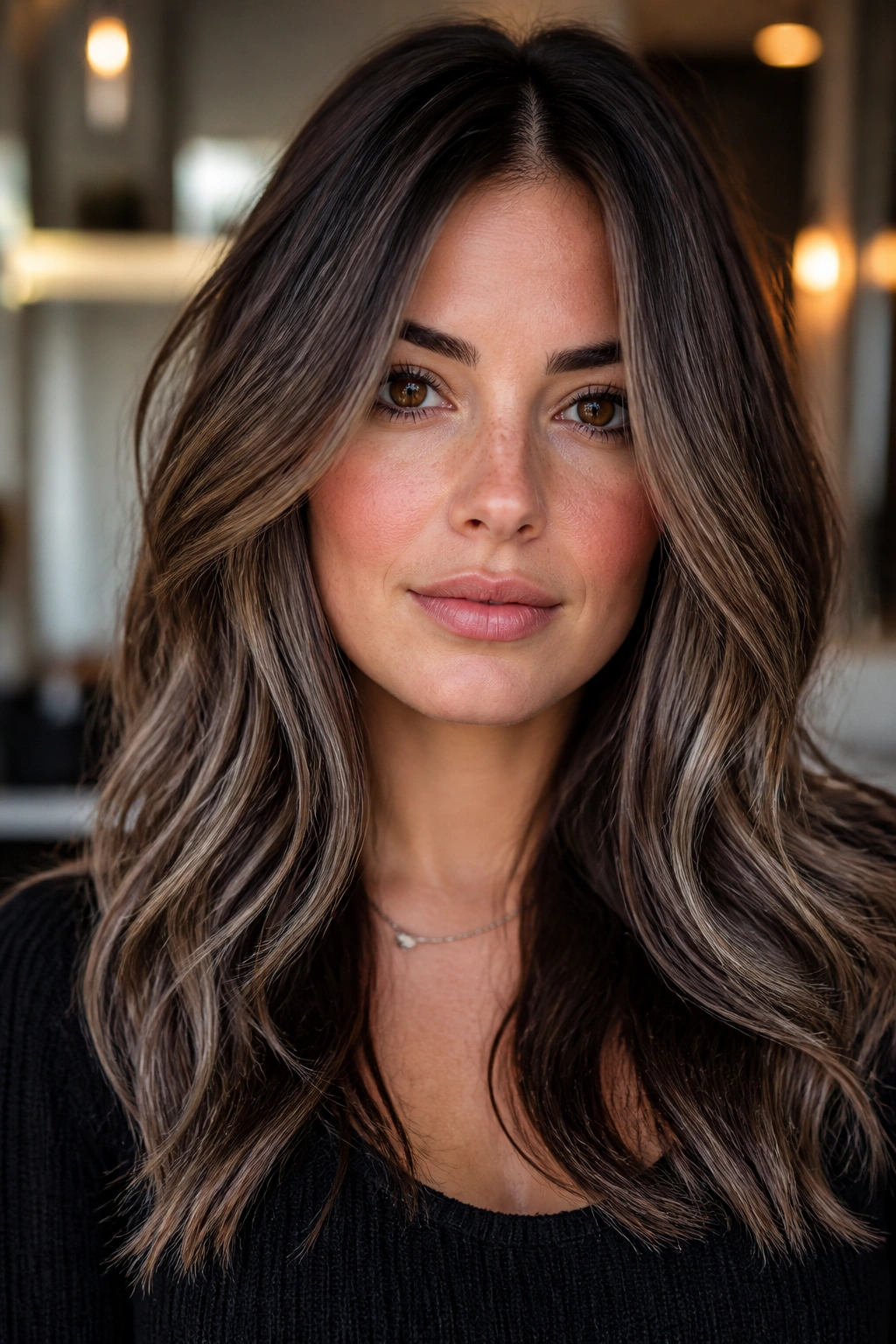
Warm brunette hair can look nice, but on a round face it sometimes feels too soft in the wrong places.
A grey glaze fixes that by cooling the tone just enough to give the hair sharper edges. The glaze does not have to be silver. In fact, I would keep it closer to smoky beige or slate-brown. The goal is to remove redness and add that matte, expensive-looking tone that makes the lighter pieces stand out without screaming.
This works well after balayage or babylights. The gloss settles over the color and ties everything together, which is especially useful if your highlights came out too yellow or too gold. A round face usually looks better when the highlights are controlled, not overly sunny.
Plan on refreshing the glaze every 6 to 8 weeks if your hair grabs warmth fast. It is a small maintenance step, but it keeps the color line crisp and the whole shape cleaner.
12. Collarbone-Length Lob With Vertical Ribbons
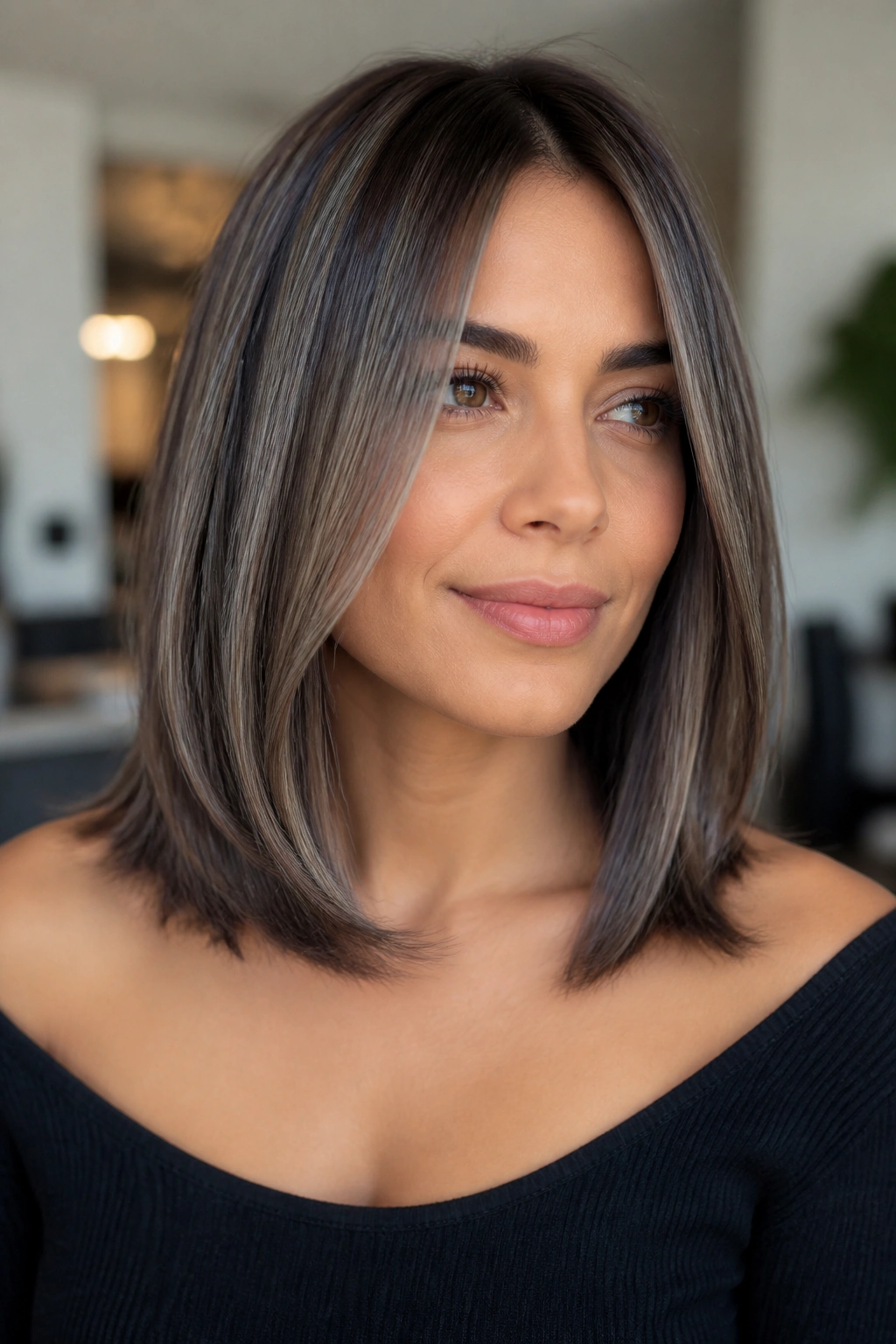
A collarbone lob is one of the easiest cuts to flatter a round face.
Why? Because it gives you length without dragging the shape down too far. Add vertical brown-grey ribbons through the lob, and the effect gets even better. The hair reads as longer, the neck looks a little taller, and the face stops feeling boxed in by width around the cheeks.
The ribbon pattern should be slim and drawn downward, almost like brushstrokes. Keep the brightest pieces a little farther from the center part if your face is especially full. That keeps the eye moving along the length of the hair rather than stopping at the widest part of the face.
This is one of those cuts that looks polished without needing a lot of styling. A round brush, a gentle bend at the ends, and a light serum are usually enough. Clean shape. Easy wear.
13. Herringbone Highlights on Medium Brown Hair
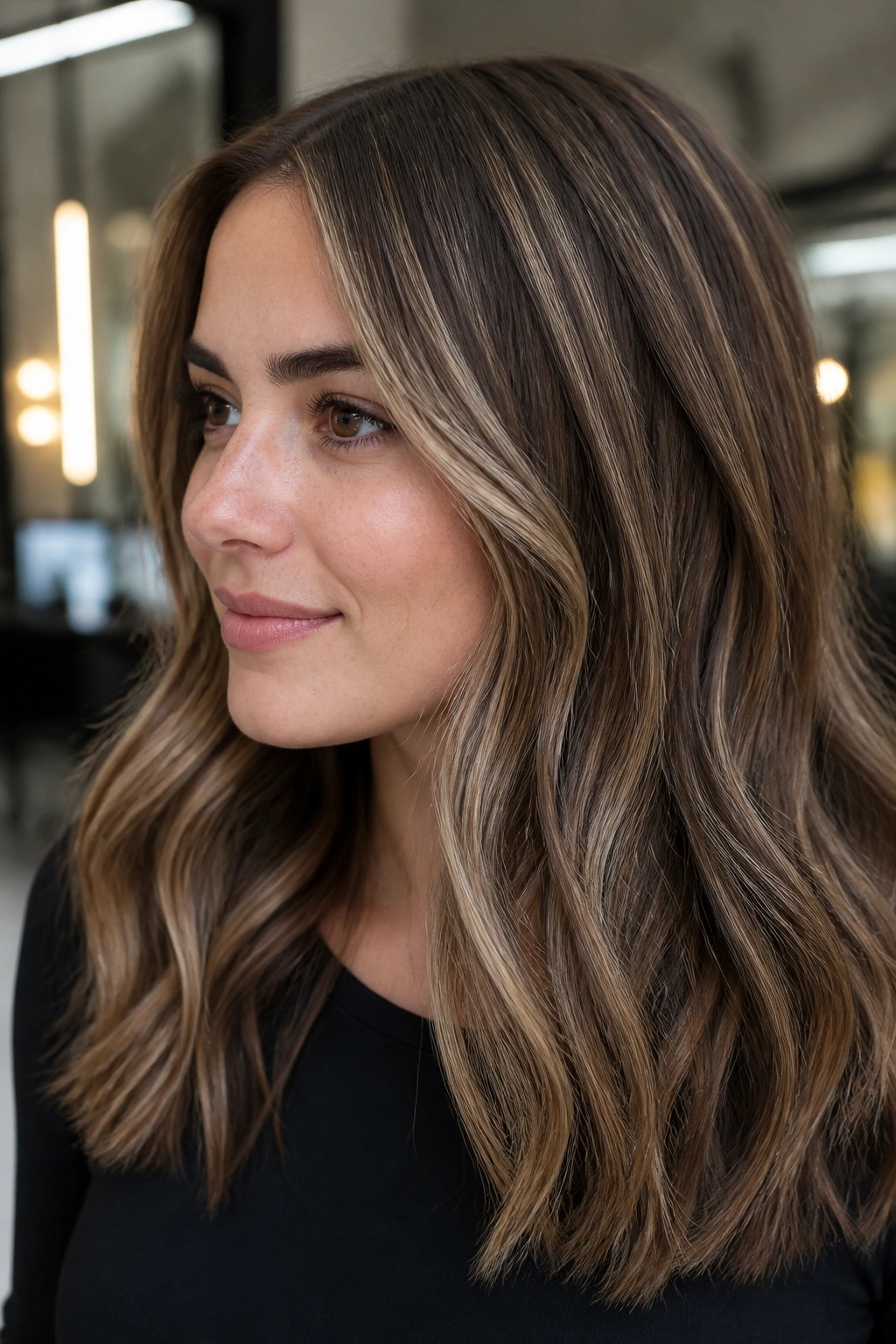
Herringbone placement sounds fancy, but it’s really about direction.
The foils angle back and forth instead of stacking in one straight line, and that gives medium brown hair a soft, woven look. On a round face, the angled pattern is useful because it breaks up the width visually. Nothing sits in one flat horizontal band. The color moves, and the face seems to move with it.
Why the pattern matters
- Diagonal placement keeps the color from looking blocky
- Alternating light and lowlight pieces create depth
- Medium brown hair shows the contrast without needing high brightness
- The pattern works well on straight or lightly waved textures
This is a strong option if you want dimension that looks expensive but not loud. It also grows out in a forgiving way because the highlights are not all pointing in the same direction. There’s a bit of visual noise here, but the good kind.
14. Dimensional Rings Around Curly Waves
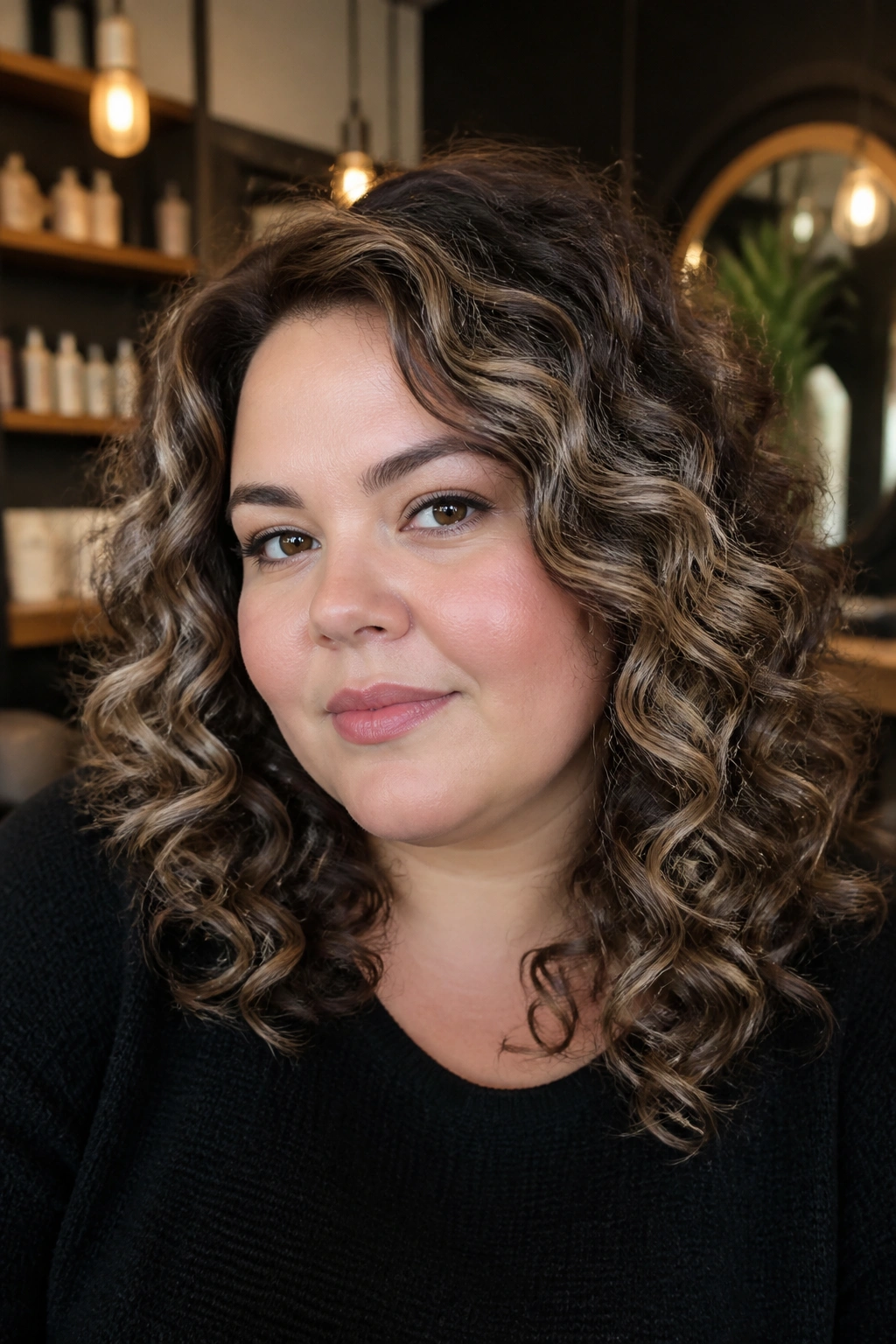
Curly hair does not need the same highlight map as straight hair. It just doesn’t.
For round faces, the smartest move is to color the outer ring of the curl pattern and leave enough depth inside the shape. That keeps the curls from blooming outward too evenly. A few cool brown and grey strands around the top and outer bends can make the curls feel lighter, higher, and more sculpted.
I like this when the hair has medium to strong waves. The highlights catch on the bends and create tiny flashes of lighter color, which keeps the face from looking wrapped in one big shape. If the curl pattern is tight, ask for finer pieces and less overall brightness. Too much light can blur the curl pattern and widen the silhouette.
This is one of those looks that rewards good styling. Scrunching a curl cream into damp hair and diffusing on low heat can make the color placement read much more clearly.
15. Silver-Brown Peekaboo Pieces
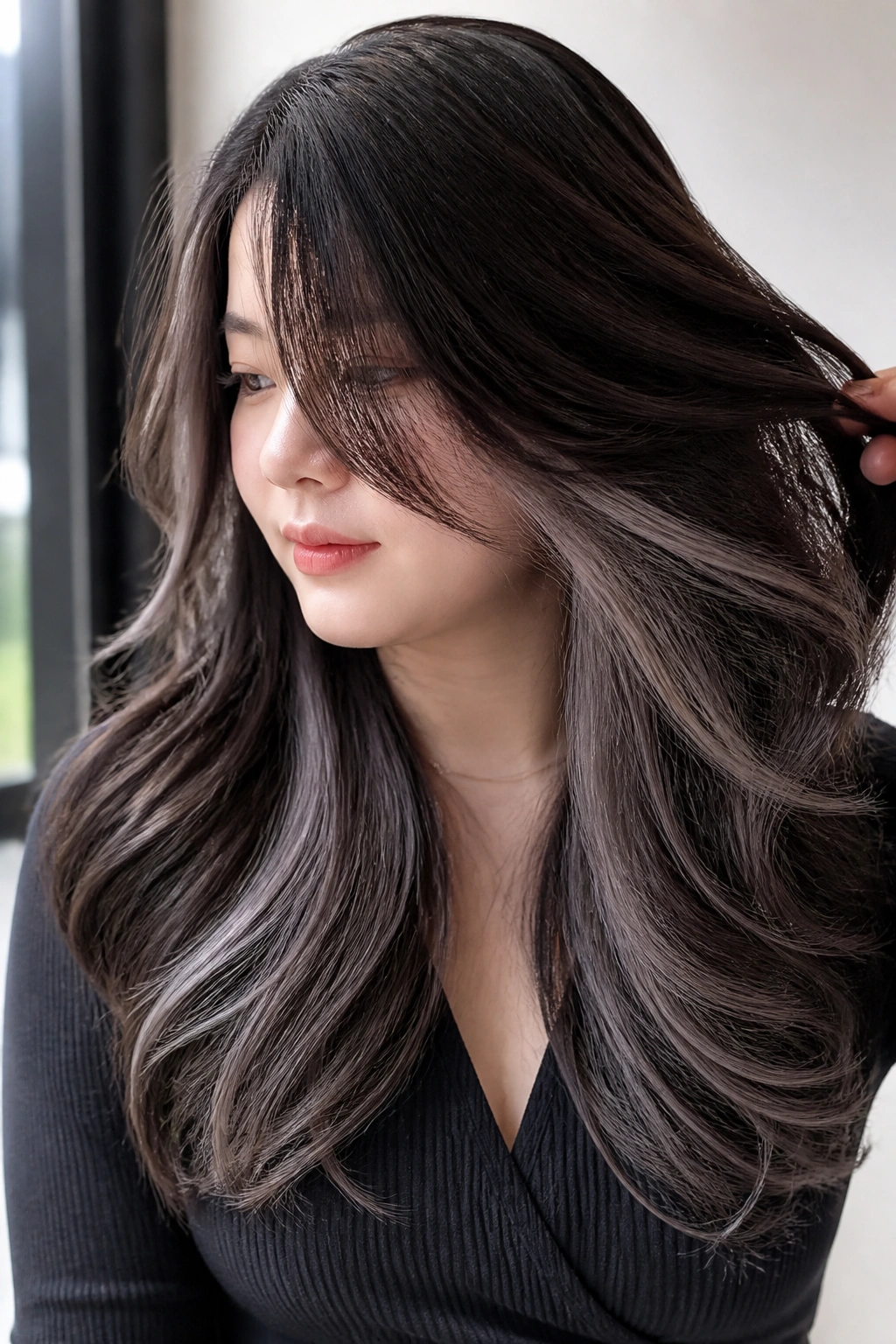
Peekaboo color is fun because it gives you a little surprise without changing the whole head.
Silver-brown pieces placed underneath the top layer can be a smart move for round faces, especially if you want dimension but do not want the front of the hair to feel busy. The hidden brightness shows when the hair sways or gets tucked back, which means the face frame stays soft and the shape stays controlled.
This is especially good if you wear your hair half up a lot. The lower pieces peek through, and the contrast creates movement without widening the top half of the style. Ask for the silver-brown shade to stay soft and smoky rather than metallic. Too much shine can pull attention sideways.
It’s also a nice way to test cooler color before committing to a full head of ash tones. Small change. Clear effect.
16. Mushroom Brown Pixie Accents
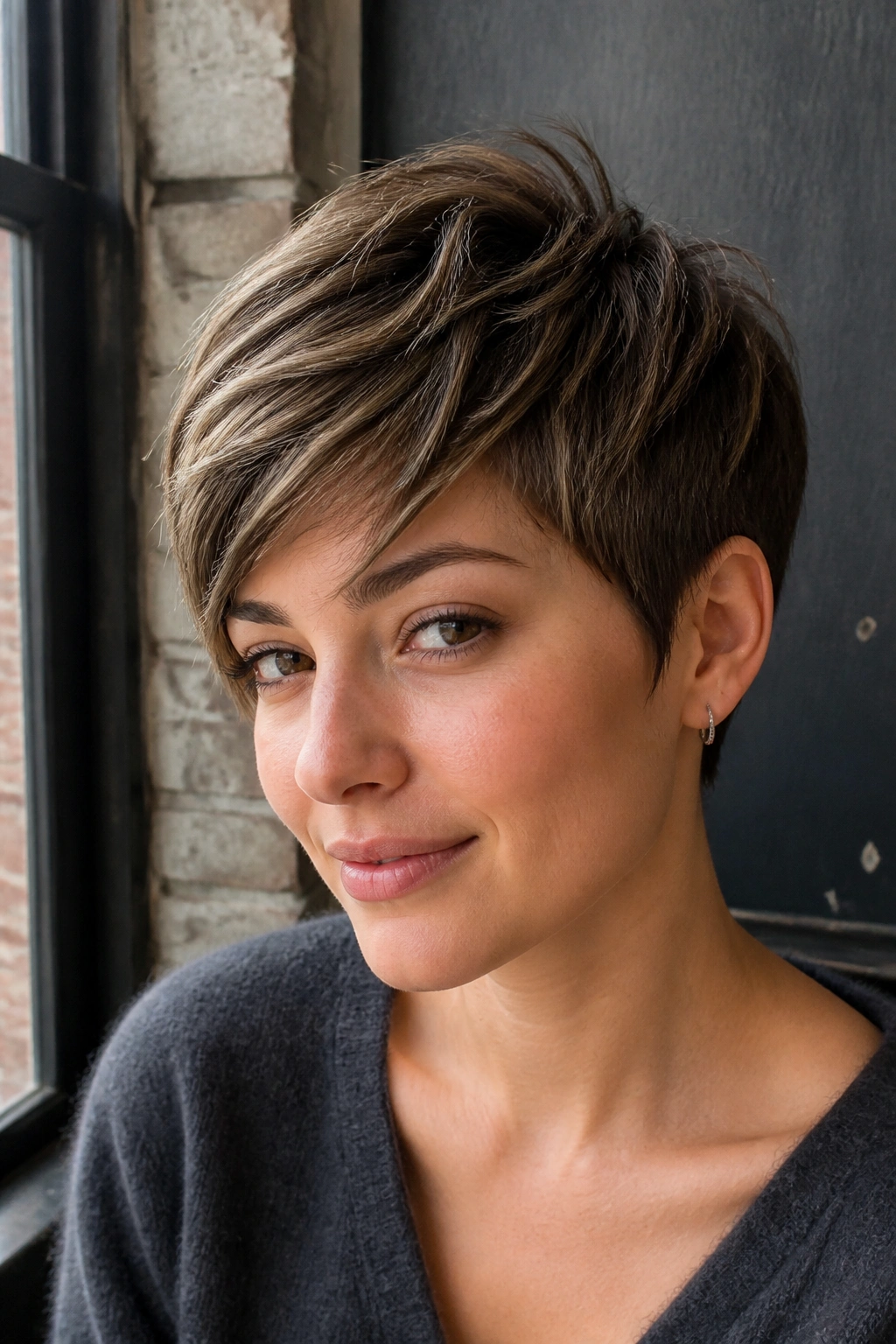
A pixie cut on a round face can look sharp, but only if the color placement gives it some lift.
That means the lightest pieces should sit around the fringe and crown, not in a wide band around the sides. Mushroom brown accents soften the cut and keep it from looking too dense. I like a slightly deeper root with a few airy pieces on top, then a quiet fade at the temples. It keeps the eye moving upward.
Where to place the light
- Put the brightest strands above the temple, not beside the cheek
- Use tiny slices on the crown for lift
- Keep the sides a shade deeper than the top
- Add a matte pomade or paste so the texture stays piecey
A pixie can be one of the best cuts for round faces, but only when it has height. The color should support that height, not flatten it. Short hair is not the place for heavy horizontal color blocks.
17. Broken Balayage on a Wavy Bob
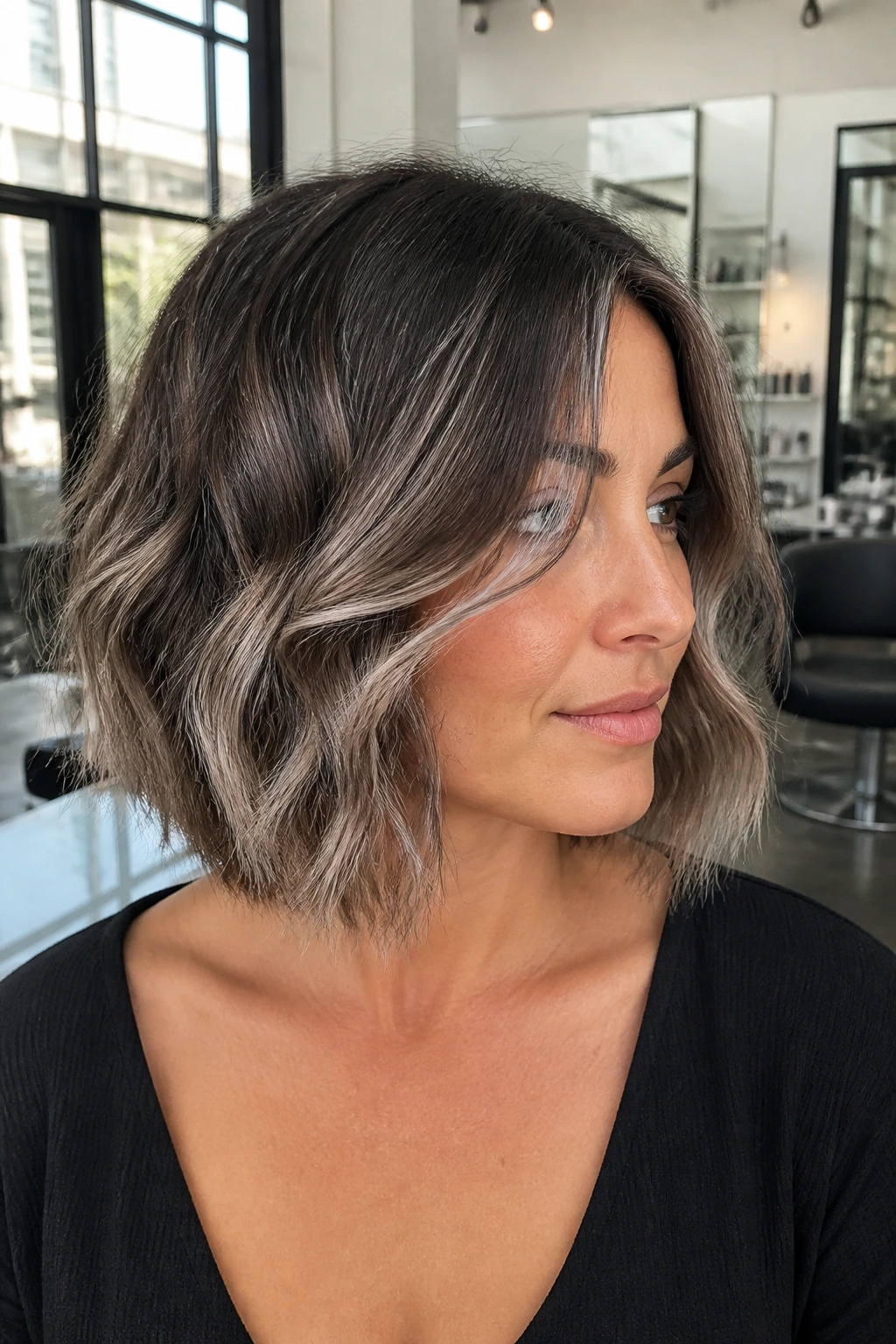
Broken balayage is just a smart way to say “leave some breathing room.”
On a wavy bob, that breathing room matters a lot. Instead of painting continuous light from root to tip, the color comes in spaced pieces, then pauses, then returns. The gaps stop the face from looking framed all the way around, which is useful when the cheeks are already full.
I like this with a brown-grey tone that stays cool but not flat. The wave picks up each ribbon at a different point, so the color looks softer and more natural than a hard foil line. If the bob ends around the jaw, keep the brightest pieces above and below that line rather than right on it. That avoids emphasizing the widest part of the face.
It’s also a good cut-and-color pairing for people who like a low-fuss look. You can let it air-dry and still get enough shape for the highlights to work.
18. Caramel-Smoky Blend With Ash Lowlights
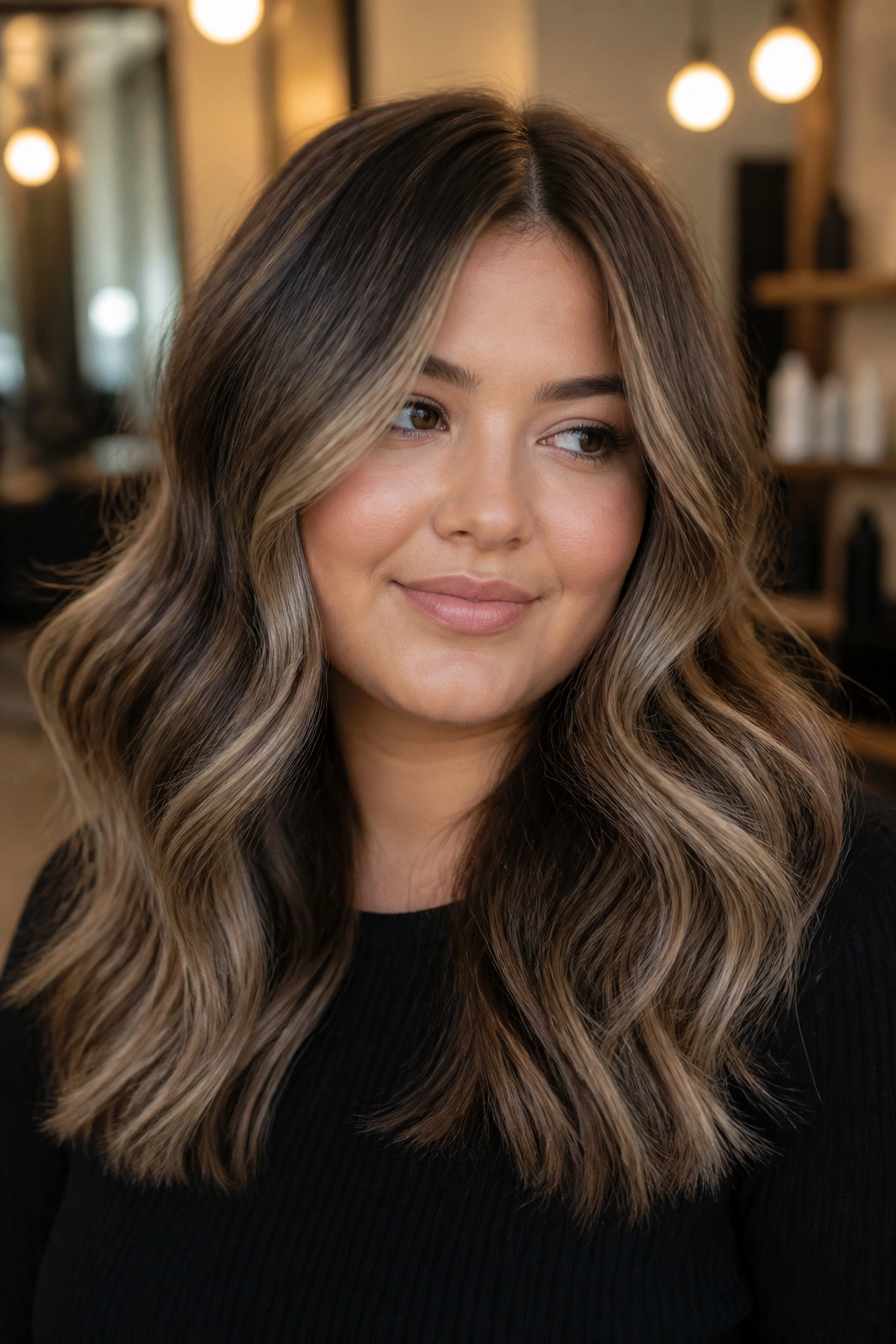
Lowlights don’t get enough credit.
A caramel-smoky blend with ash lowlights gives the hair depth first, brightness second. That depth helps round faces because it keeps the color from turning into one wide light area. The darker strands tucked between the lighter ones create tiny shadows, and those shadows slim the overall shape. Simple. Useful.
Why lowlights matter
- They break up wide planes of brightness
- They make the highlights look cleaner
- They give thick hair more visual control
- They keep the style from feeling puffy near the cheeks
This is a good option if your hair is naturally light brown and you want dimension without going too blonde. It also works well when your skin tone can handle both warm and cool notes. The caramel gives a touch of softness, while the ash lowlights keep the whole thing from drifting orange.
19. Feathered Highlights on a Layered Shag
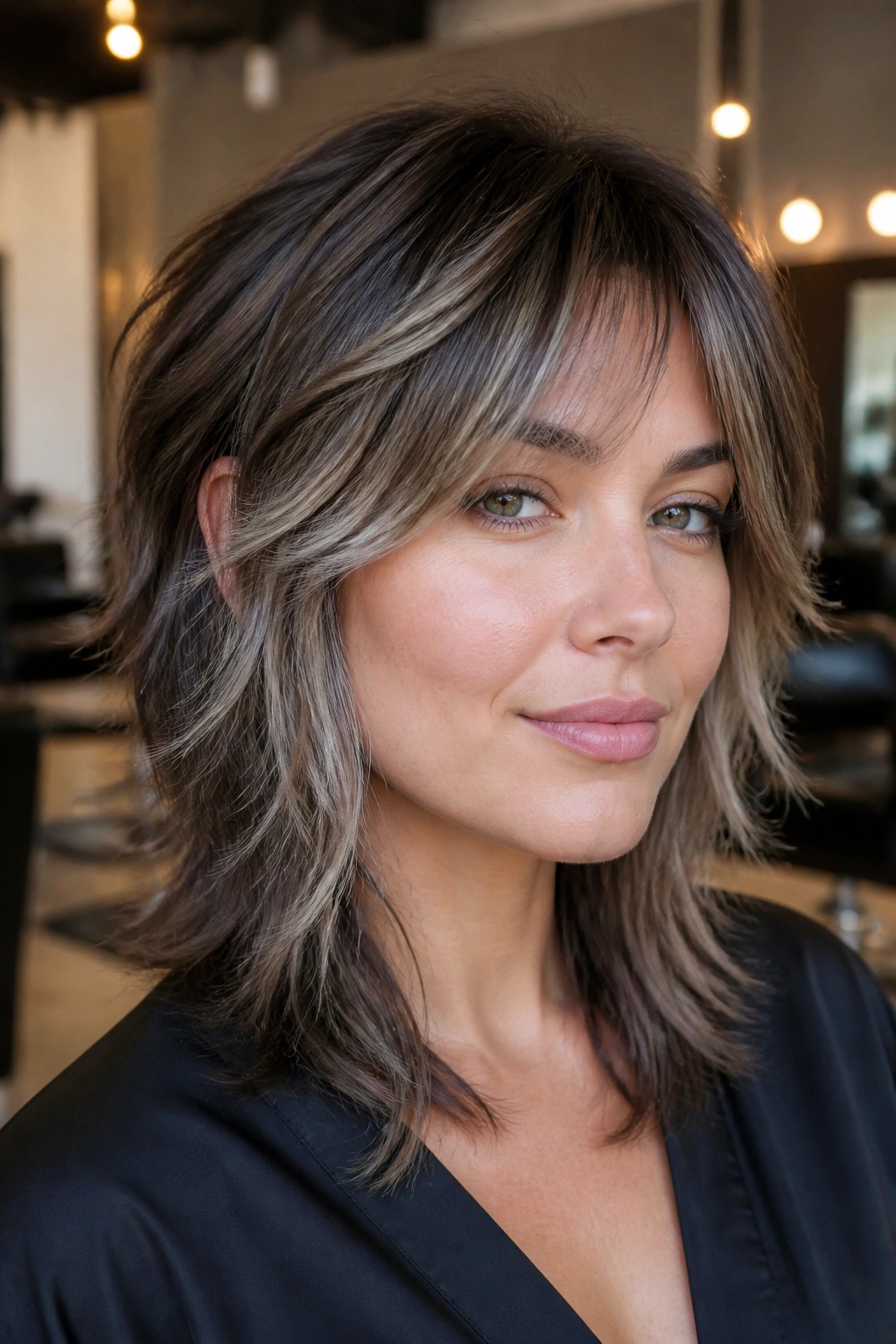
A shag can do a lot for a round face when the layers are cut with intention.
Feathered highlights follow the movement of the layers, which keeps the hair from sitting in one wide shape. I like the brightest pieces a little below the cheekbone and through the longer fringe, with cooler brown-grey tones underneath. That mix gives the cut a lived-in feel without making it messy.
The reason this works is simple: the layers already create vertical movement, so the color only has to support that line. You do not need a lot of brightness. A few feathered ribbons and some darker depth around the sides usually do the job.
This is one of my favorite options for people who want a softer, slightly undone look. It feels relaxed, but it is still deliberate. There’s a difference, and you can see it.
20. Face-Opening Panels for a Long Lob
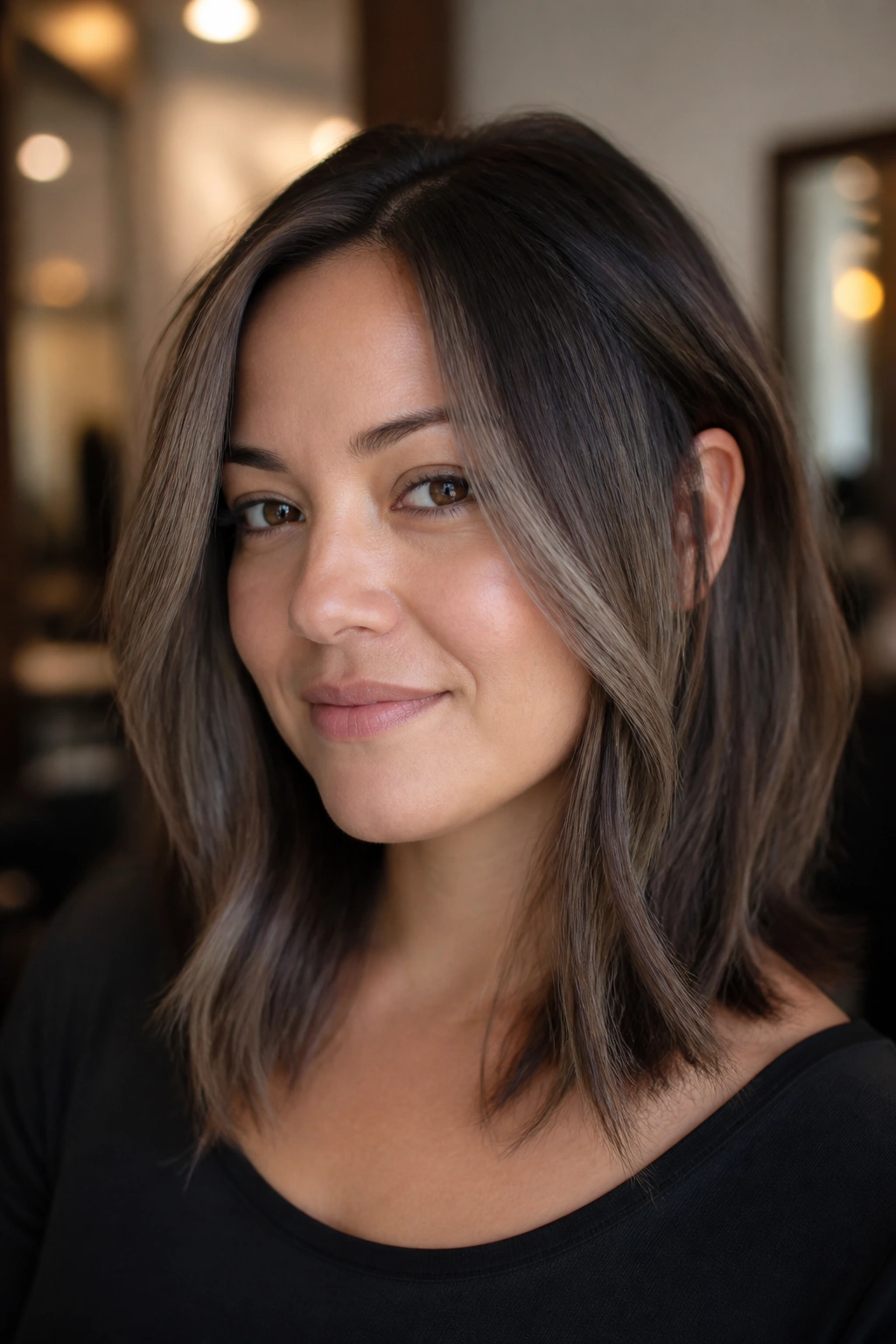
A long lob gives you enough length to shape the face properly, and that’s where face-opening panels shine.
These panels should start near the temples and slide down in a gentle curve, staying cooler and lighter than the rest of the hair. On a round face, that curved line helps guide the eye downward. The face looks open without feeling wide. That’s a nice balance, and not as easy to get as people think.
Ask for this cut-and-color pairing
- A long lob that hits just below the collarbone
- Two soft panels that begin near the temple
- A brown-grey tone with muted beige brightness
- Ends that stay slightly lighter than the midlengths
This style is especially good if you like to wear your hair tucked behind one ear. The panel on the visible side gives just enough interest, while the other side stays calm and grounded. That asymmetry helps a lot.
21. Slate-Toned Streaks on Dark Brown Hair
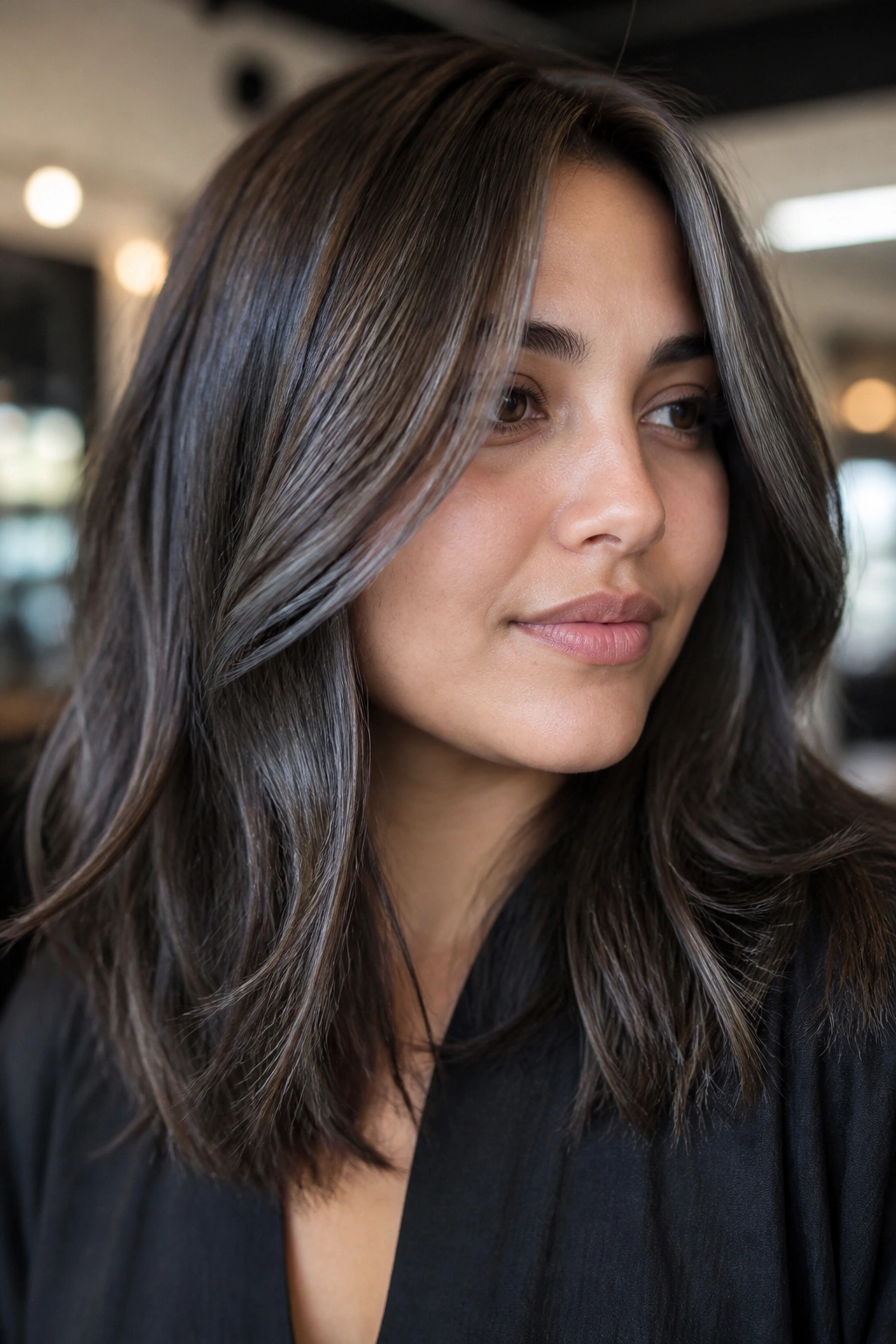
Dark brown hair can handle slate-toned streaks better than people expect.
The contrast gives the hair a sharper outline, which helps a round face look less broad. I like the slate tone because it stays cool without going silver-white. It reads as deep grey-brown in motion, and that makes it easier to wear day to day. The color is noticeable, but not flashy.
Put the streaks in the outer layers and around the top third of the hair. That way the light catches when the hair moves, but the face frame stays soft. If you place the brightest pieces too close to the cheeks, the width comes back fast. Better to let the color hover above and below the face than to pin it right on the middle.
This is one of the stronger choices for someone who wants contrast without warmth. It has edge, but not a lot of drama.
22. Soft Contour Highlights at the Temples
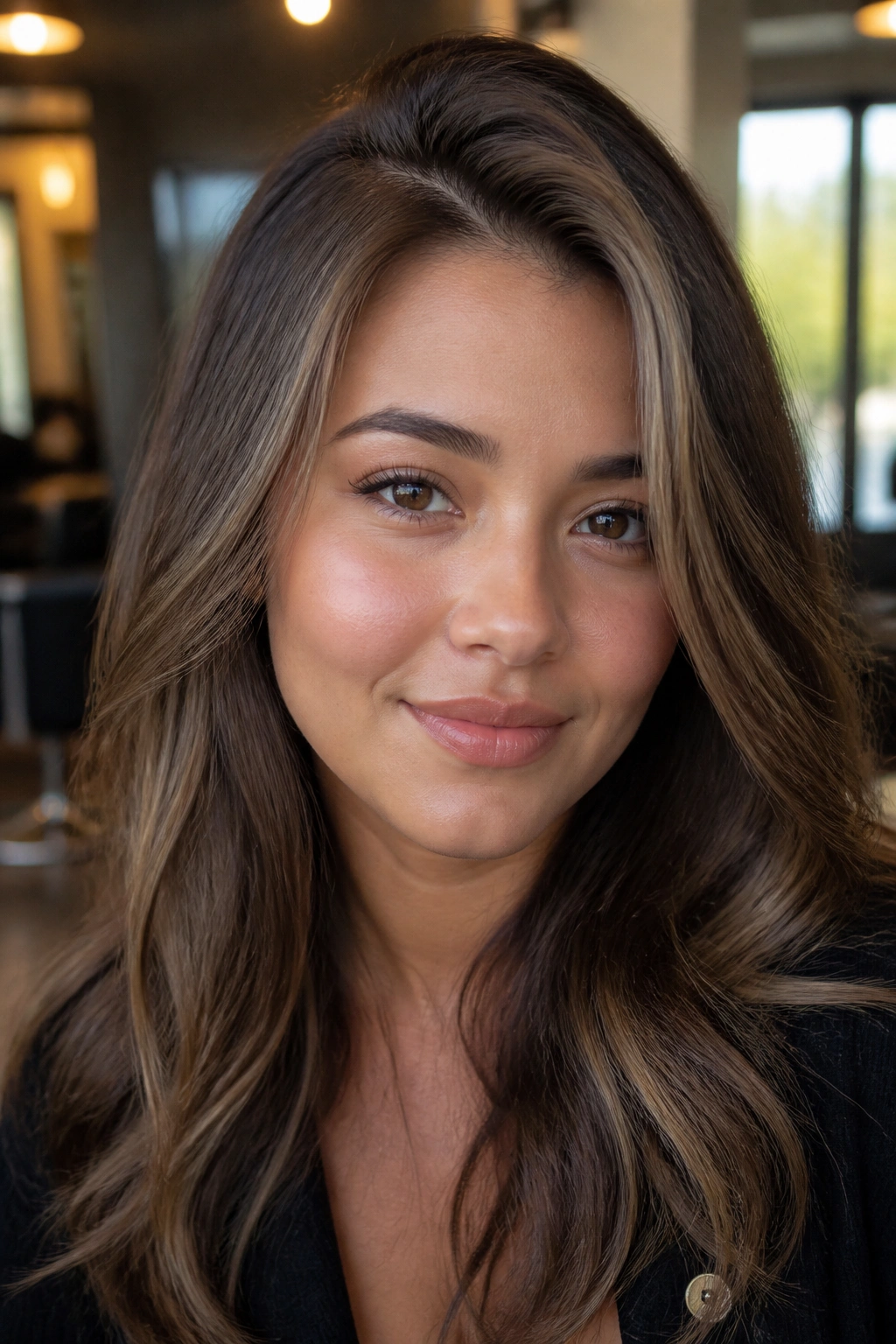
Color can contour the face the same way makeup does.
Temple highlights work because they brighten the upper side of the face and steer attention away from the cheeks. On a round face, that shift is gold. The light sits where the head starts to narrow, not where it is widest, so the whole silhouette looks more balanced. Keep the pieces slim and soft. No hard stripe. No blocky frame.
I like this placement with a deep side part or a loose sweep across the forehead. The hair then creates a diagonal line that breaks up the roundness even more. Ask for a level-7 ash brown or mushroom brown piece through the temples, then let it fade into the midlengths with a gloss.
It sounds small. It isn’t. A few inches of smart color can change the way the whole cut sits.
23. Gradient Brown Grey Ombre
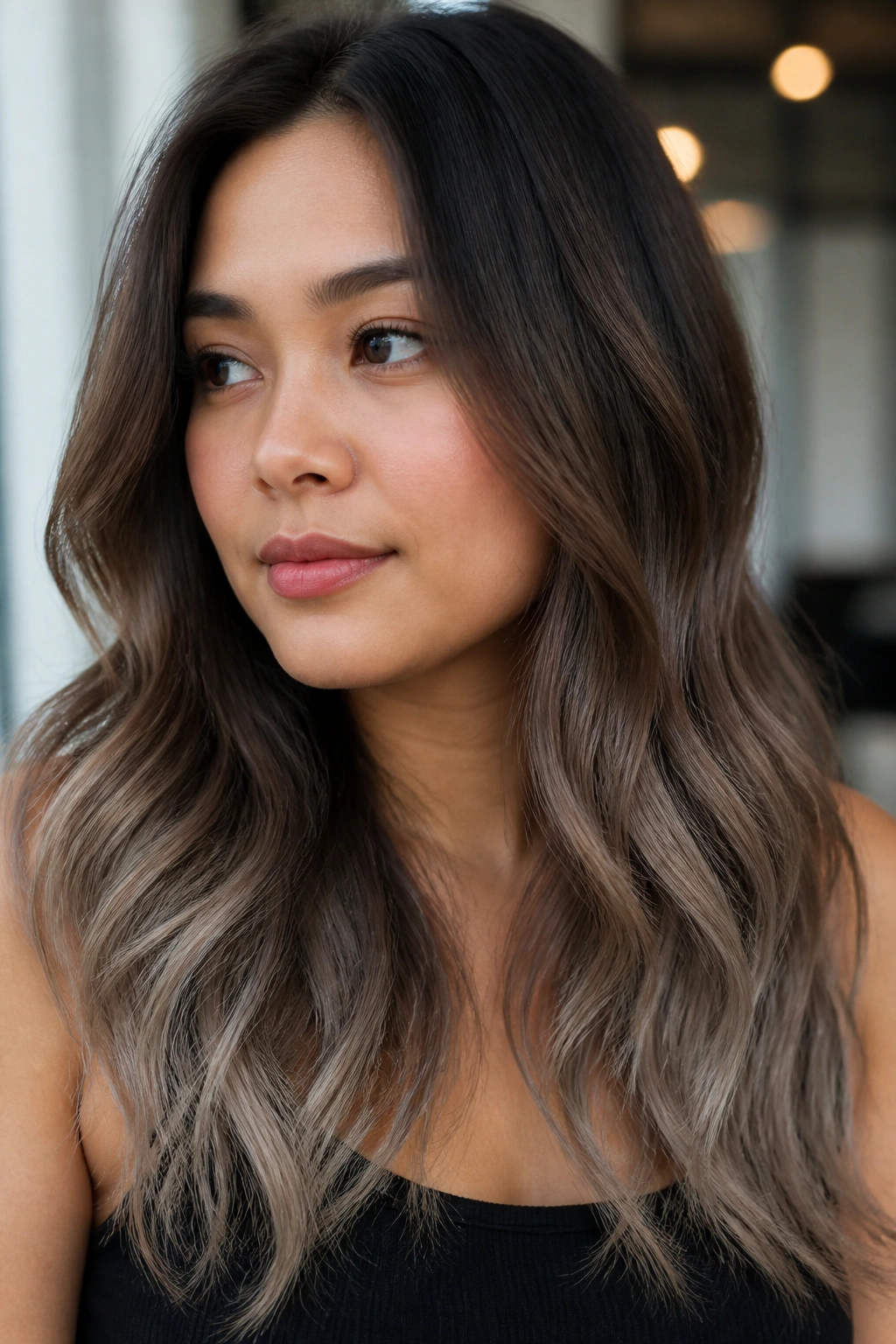
A gradient ombre is one of the easiest ways to stretch a round face.
The roots stay darker, the midlengths soften into brown-grey, and the ends carry the lightest tone. That downward shift draws the eye below the cheeks, which helps the face look longer. It also means the widest part of the face never gets the brightest color. That matters more than most people realize.
This look works best when the fade is slow. Sharp ombre can look dated fast, and it can also make the hair feel chopped into blocks. A slow melt from chestnut root to smoky beige-brown end feels smoother and flatter to the face. If your hair is shoulder length or longer, the effect is especially strong.
I’d pick this for someone who wants a low-maintenance color story. The grow-out is forgiving, and the darker roots keep the style looking neat for longer stretches.
24. Micro-Highlights for Fine Hair and Round Faces
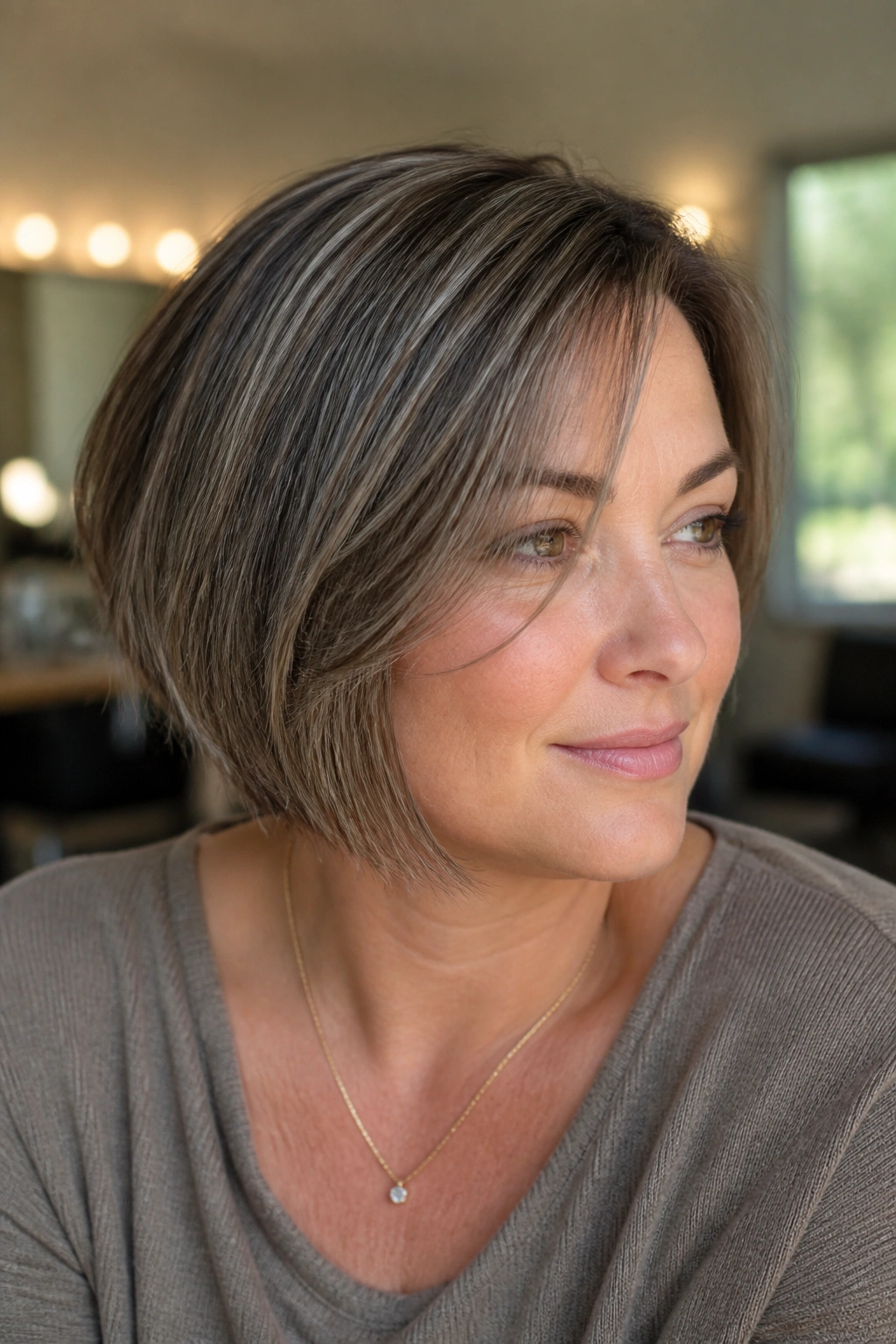
Fine hair needs a lighter hand. Always.
Micro-highlights solve that by giving the hair tiny flashes of brown-grey brightness instead of bigger ribbons that can separate the shape too much. On a round face, the benefit is twofold: the hair looks fuller, and the color does not create harsh side-to-side lines. It stays soft.
Density without stripes
- Use very thin slices near the crown
- Keep the brightness diffused through the midlengths
- Leave enough natural depth at the sides
- Finish with a beige or ash gloss so the fine strands blend together
I like this because it adds movement without making the hair look busy. Fine hair can turn wispy fast if the highlights are too chunky. Micro pieces avoid that. They give the illusion of volume while still respecting the shape of the face.
25. Chunky Modern Ribbons With Airy Spacing
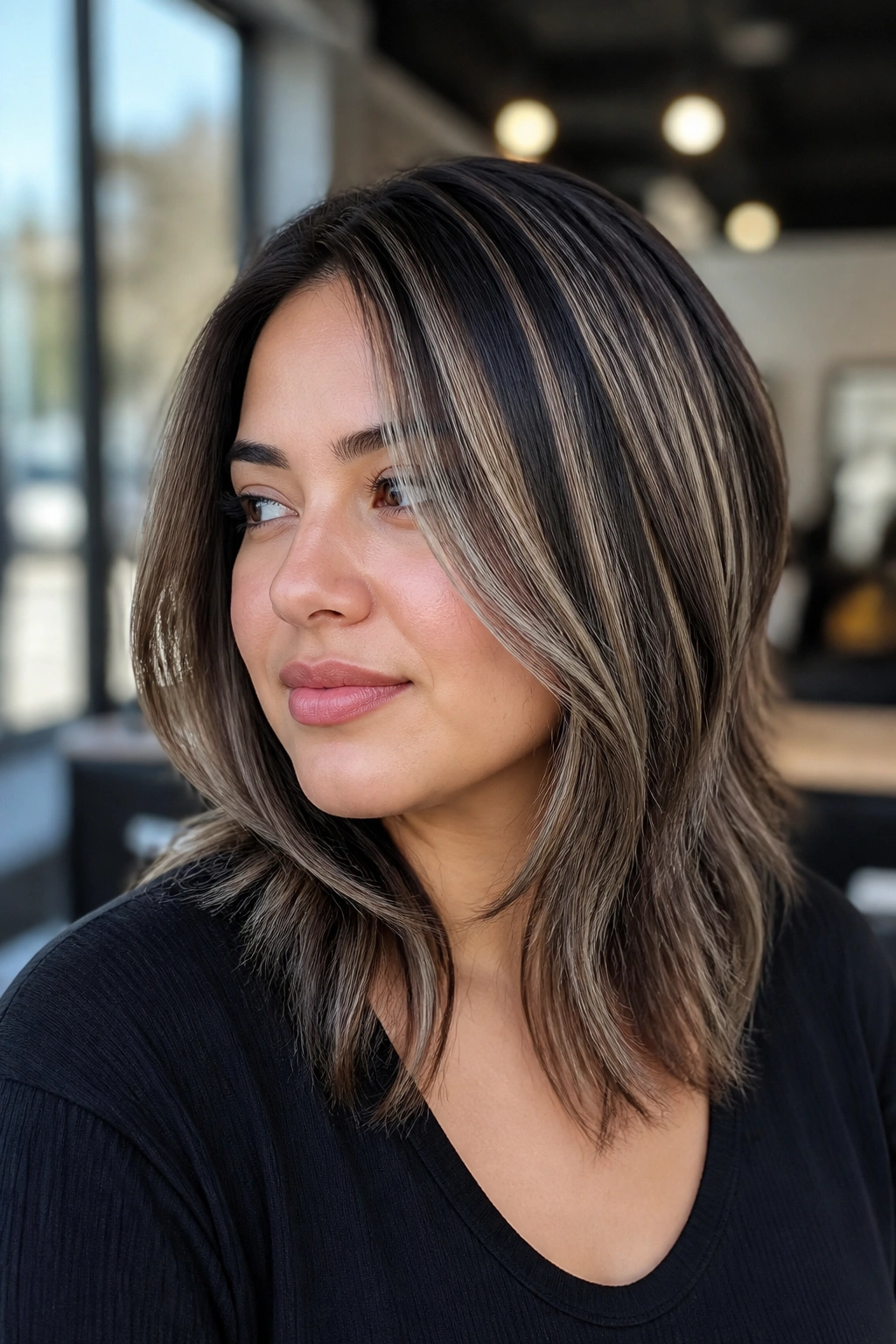
Chunky highlights can work on a round face, but only if the spacing is smart.
The mistake is packing the light too close together. That makes the face look wider. The fix is to keep the ribbons bold but separated, with clear dark gaps in between. The contrast gives the hair energy while the space keeps the shape from ballooning. Brown-grey tones make this feel softer and cooler than old-school blonde chunks.
I like this best on longer hair or a layered bob with some length in front. The ribbons can drop vertically through the style instead of sitting across the width of the face. Keep the front pieces narrower and let the stronger sections sit lower in the hair. That way the eye moves down, not out.
This is a more fashion-forward look, but it still needs discipline. Good spacing is the whole game.
26. Glossed Beige Brown Lengths
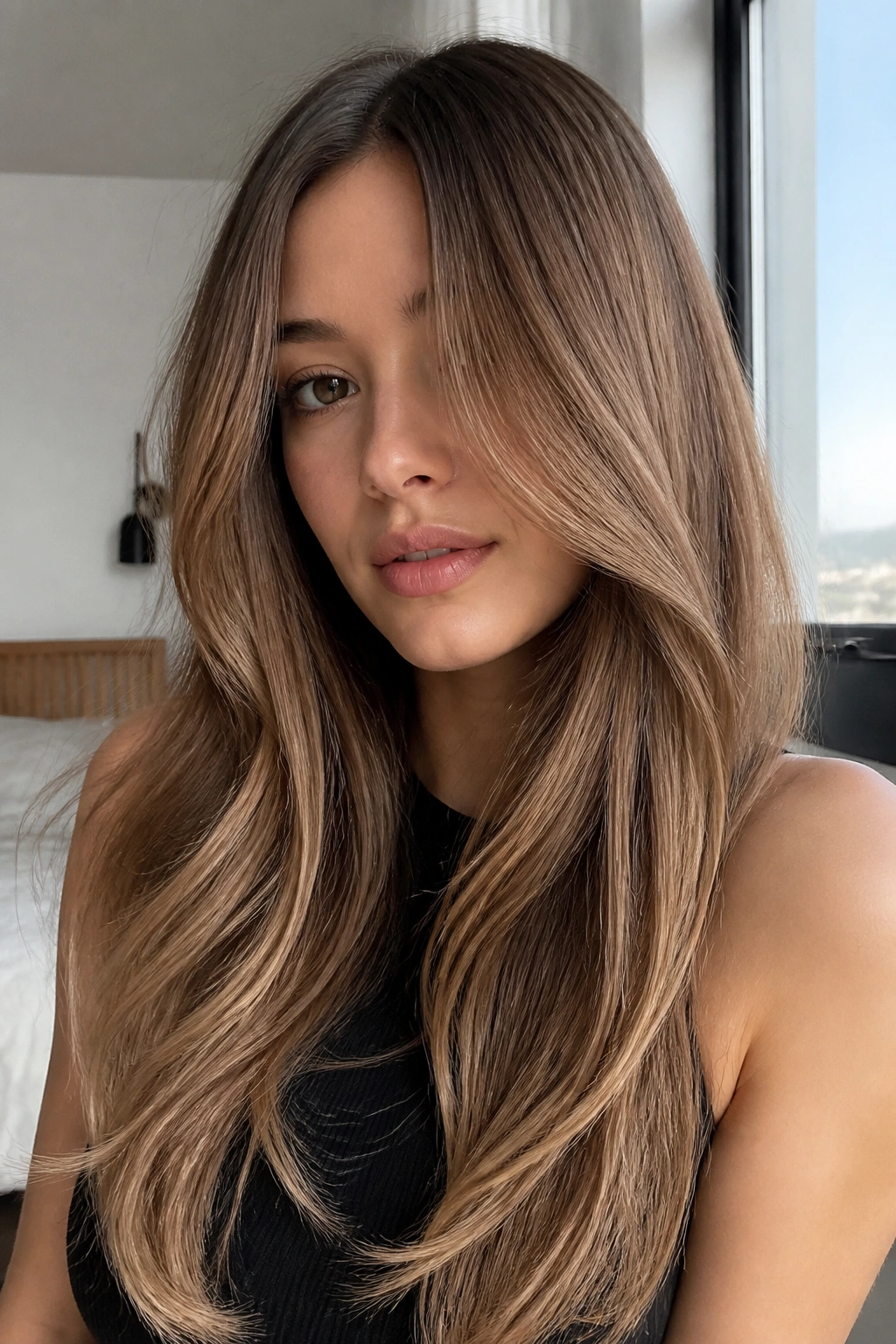
Sometimes what you really need is not more light, but better shine.
A beige-brown gloss over long hair can make brown-grey highlights look softer and more expensive without changing the entire color. Beige keeps the tone from feeling flat, while the grey element keeps the warmth from drifting orange. On a round face, the shine should run along the length, not flare out at the cheeks. That directional shine matters.
This is a strong choice if your highlights are already in place and need smoothing. A gloss can tie different tones together, blur harsh lines, and make the hair read as one long shape instead of a wide one. I like it when the ends are slightly lighter and the roots stay quiet. That contrast pulls the eye downward.
It is also one of the easiest ways to refresh color between full appointments. Clean, simple, useful.
27. Cool Brunette Balayage for Thick Hair
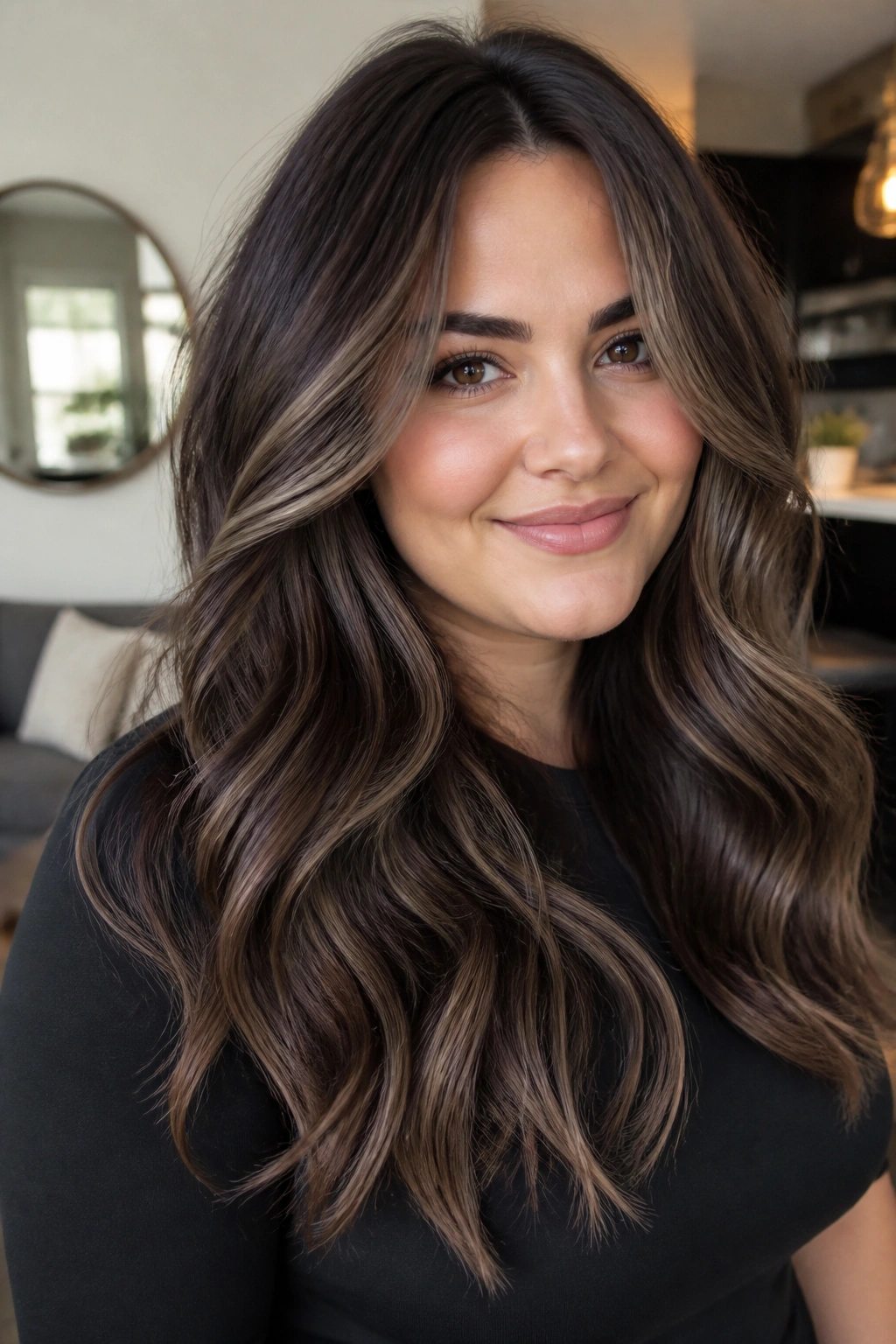
Thick hair can get heavy fast, especially around a round face.
Cool brunette balayage helps by breaking that weight into pieces. The lighter ribbons should be placed in the outer layers and around the front, while the deeper brown stays underneath to keep the bulk from spreading out. If the hair is very dense, this is where lowlights earn their keep. They cut the visual volume down without removing the real thickness.
How to keep thick hair from feeling wide
- Ask for larger sections underneath and finer pieces near the face
- Keep the brightest ribbons below the cheekbone
- Use a cooler beige-brown toner to soften any warmth
- Style with a bend, not a blowout that puffs the sides
This is one of the most practical options on the list if you have a lot of hair and want the face to look less round. The cool tone and the placed depth do most of the work for you.
28. The Final Grey-Brown Melt
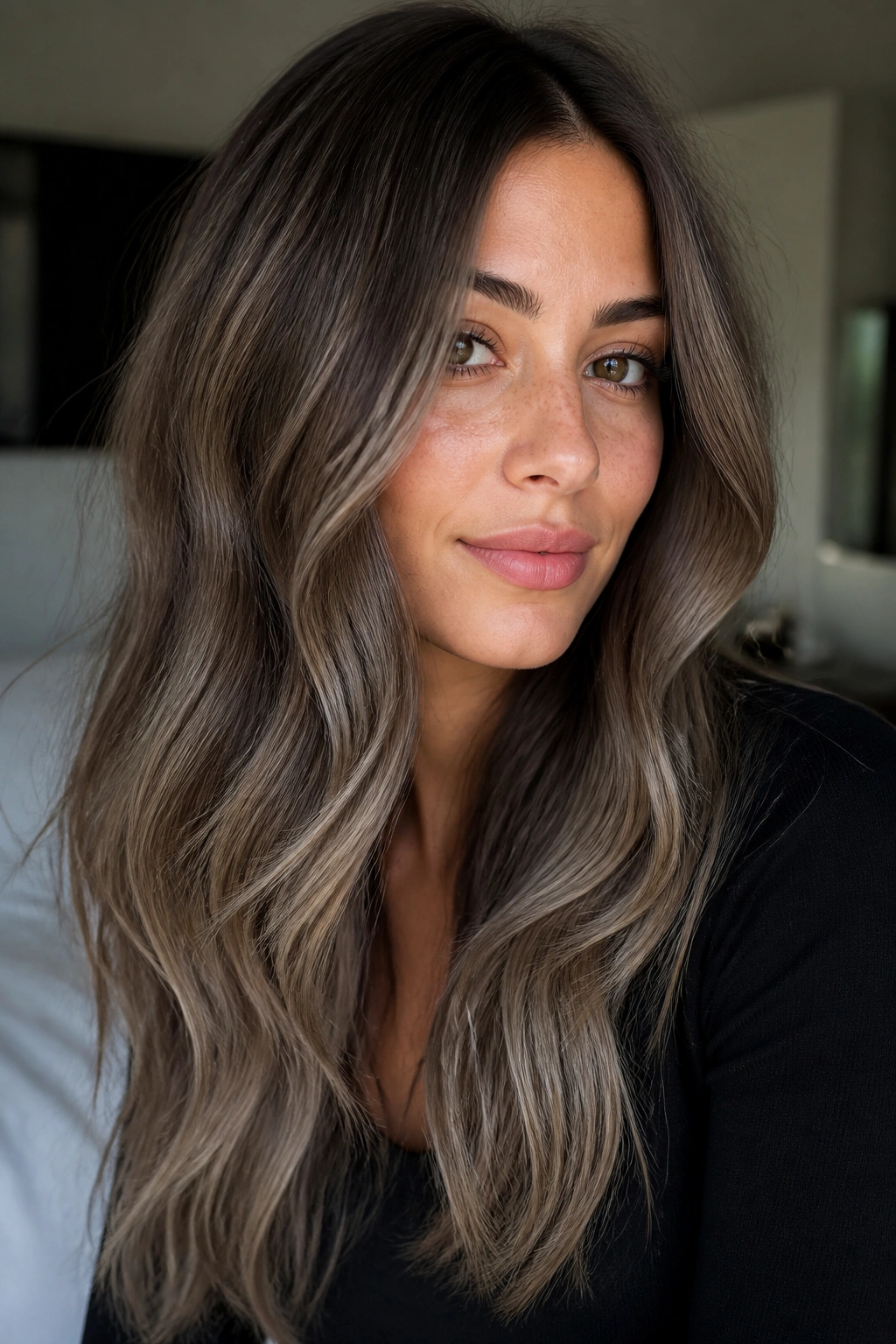
If you want the softest, most wearable version of the whole idea, this is it.
A grey-brown melt keeps the roots deep, folds ash and taupe through the middle, and finishes with a muted smoky blonde-brown at the ends. For a round face, that descending fade is the nicest part. It guides the eye from the widest point of the face down toward the collarbone and beyond, which is exactly where you want the color to go.
This is also the easiest version to live with if you do not want sharp contrast. Nothing here is harsh. The grow-out is gentle, the tone stays cool, and the shape looks balanced even when the hair is a little messy. That matters. Hair is not sitting still all day, and color that only works in perfect lighting is not much use.
I’d pick this one for anyone who wants a brown-grey look that feels polished, soft, and low-drama. It is the kind of finish that keeps looking right after the first styling, the second day, and the day you forgot to curl it.
