



Round faces do not need to be “fixed.” They need shape. That is the real job of brown highlights for round faces: not to hide cheeks, not to carve your face into something else, but to guide the eye so the whole cut reads a little longer, a little leaner, and a lot more intentional.
The wrong highlight placement can do the opposite. Wide light bands sitting right at cheek level can make the face look broader, especially when the hair is glossy and the contrast is sharp. I see this mistake all the time: good color, bad placement. The fix is usually simpler than people think — move brightness lower, thread in some shadow, and let the front pieces do the heavy lifting without flaring out at the sides.
Brown is a smart color family for this, too. It gives you dimension without the high-drama upkeep of lighter blonde work, and it can be warm, cool, smoky, or rich enough to suit almost any base shade. A soft chestnut ribbon behaves very differently from a mocha lowlight or a caramel veil, and that difference matters a lot when the face shape is round.
The styles below lean on that idea in different ways. Some create vertical lines. Some slim the sides. Some add height at the crown. A few do their best work by staying quiet and subtle, which is honestly underrated.
1. Soft Chestnut Brown Face-Framing Ribbons
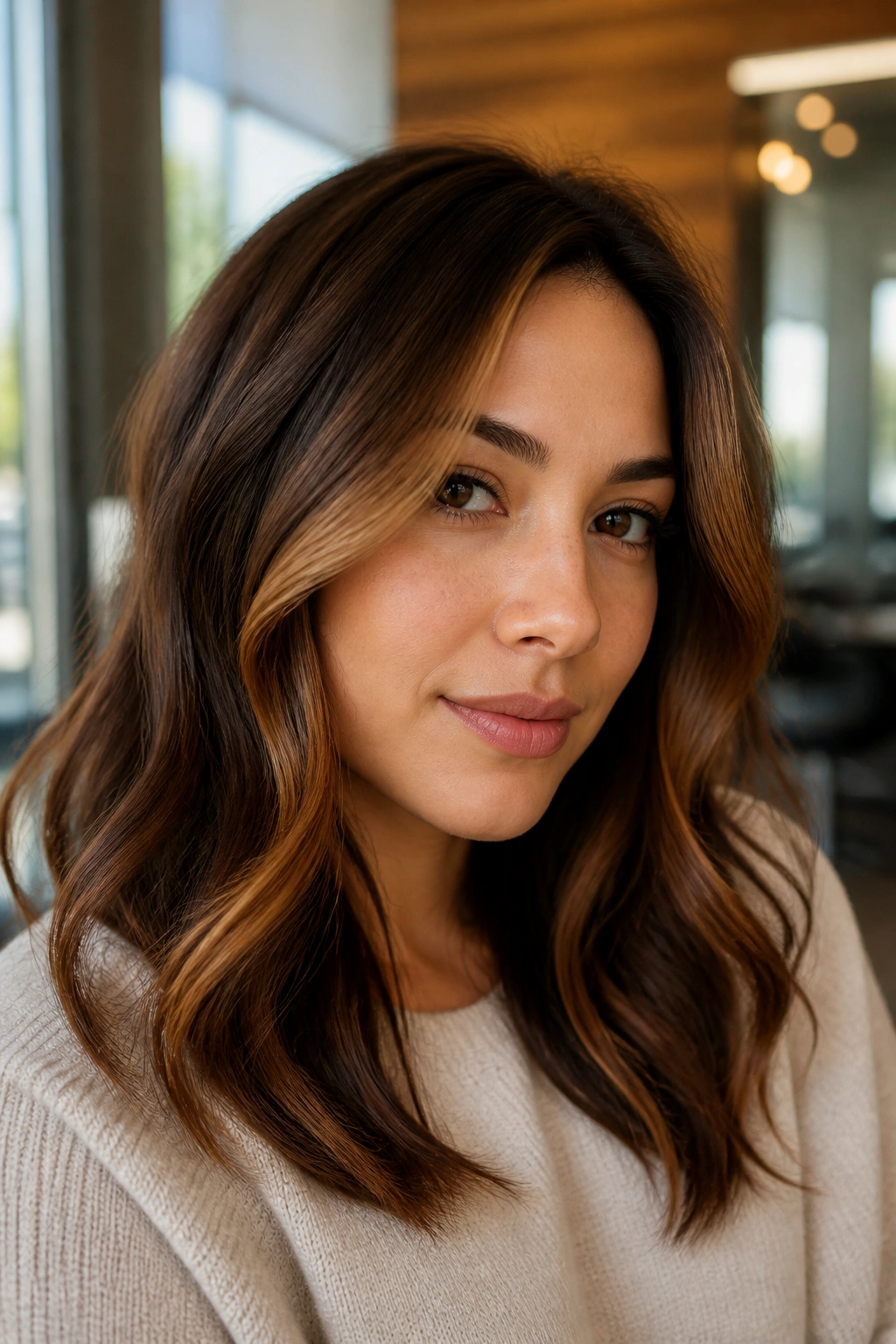
Soft chestnut ribbons are the kind of highlight that does its job without announcing itself. The color sits in that middle zone between warm brown and muted auburn, so it brightens the front of the hair while still looking grounded.
Why It Flatters a Round Face
The placement matters more than the tone here. Ask for the brightest chestnut pieces to start around the cheekbone-to-jawline zone, not right at the widest point of the face. That draws the eye downward instead of out.
- Keep the front pieces no wider than a thumb so they don’t balloon the cheeks.
- Ask for a soft weave, not a solid stripe.
- Let the lighter ribbons fall just below the chin on longer cuts.
- A side part makes this look even better because it breaks the circular shape.
Best tip: keep the front ribbons a half-shade softer than you think you need. Too much brightness near the temple can make a round face look wider in a mirror and in photos.
2. Caramel Brown Balayage Below the Cheekbone
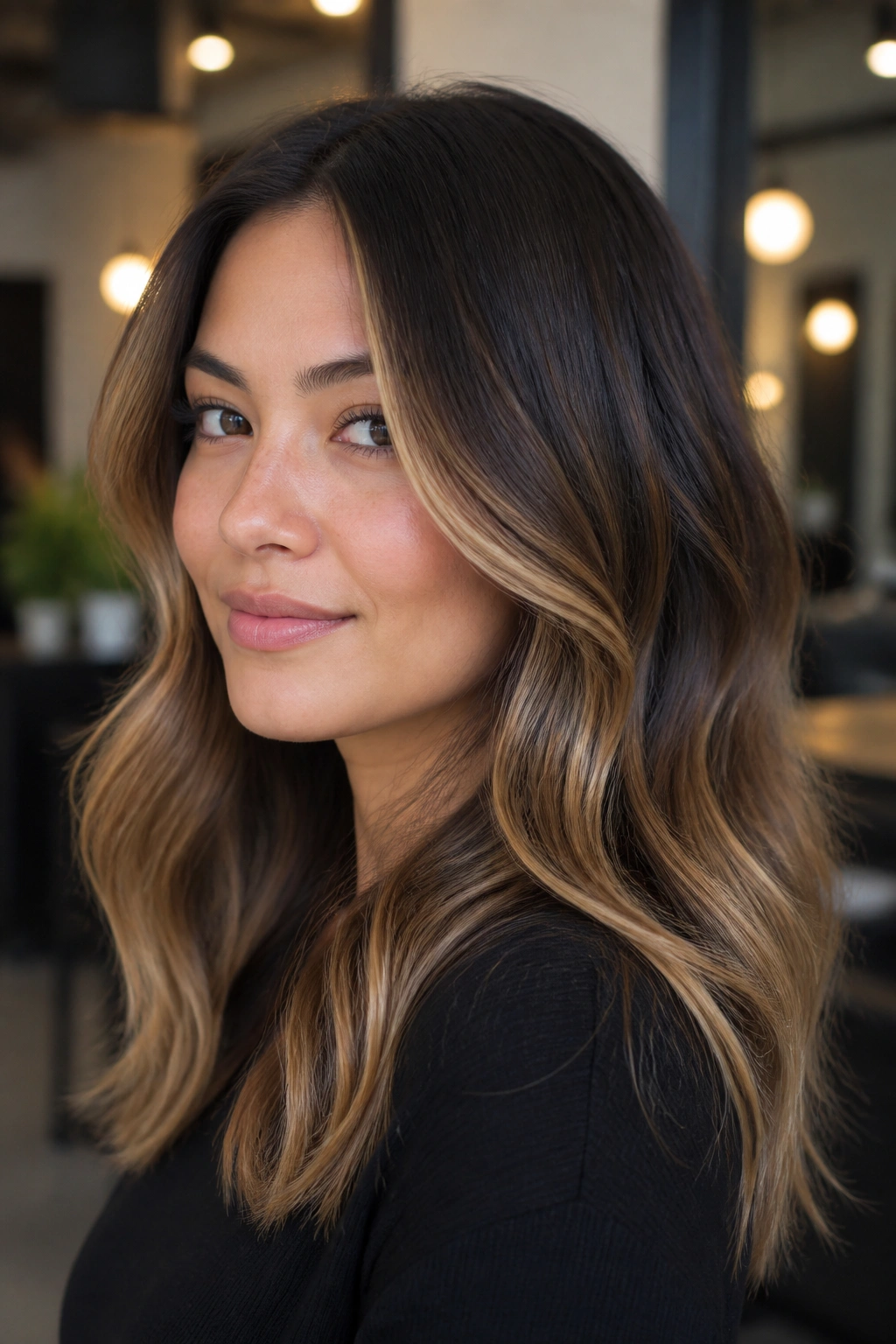
Caramel balayage is a safe bet, but only when it starts in the right place. If the brightest parts live lower than the cheekbone, the hair gets movement without spreading the face sideways.
The beauty of this look is the gradual blend. Balayage hand-painting lets the color melt through the mid-lengths and ends, so the top stays deeper and the face stays framed rather than flattened. On a round face, that depth at the root is useful. It creates a little visual lift.
I like this most on shoulder-length cuts and long layers. The longest pieces catch the light at the bottom, which makes the face feel longer. Keep the caramel soft, not orange. A warm honey-caramel is flattering; a brassy one can fight with skin tone and look louder than intended.
3. Cinnamon Brown Money Pieces
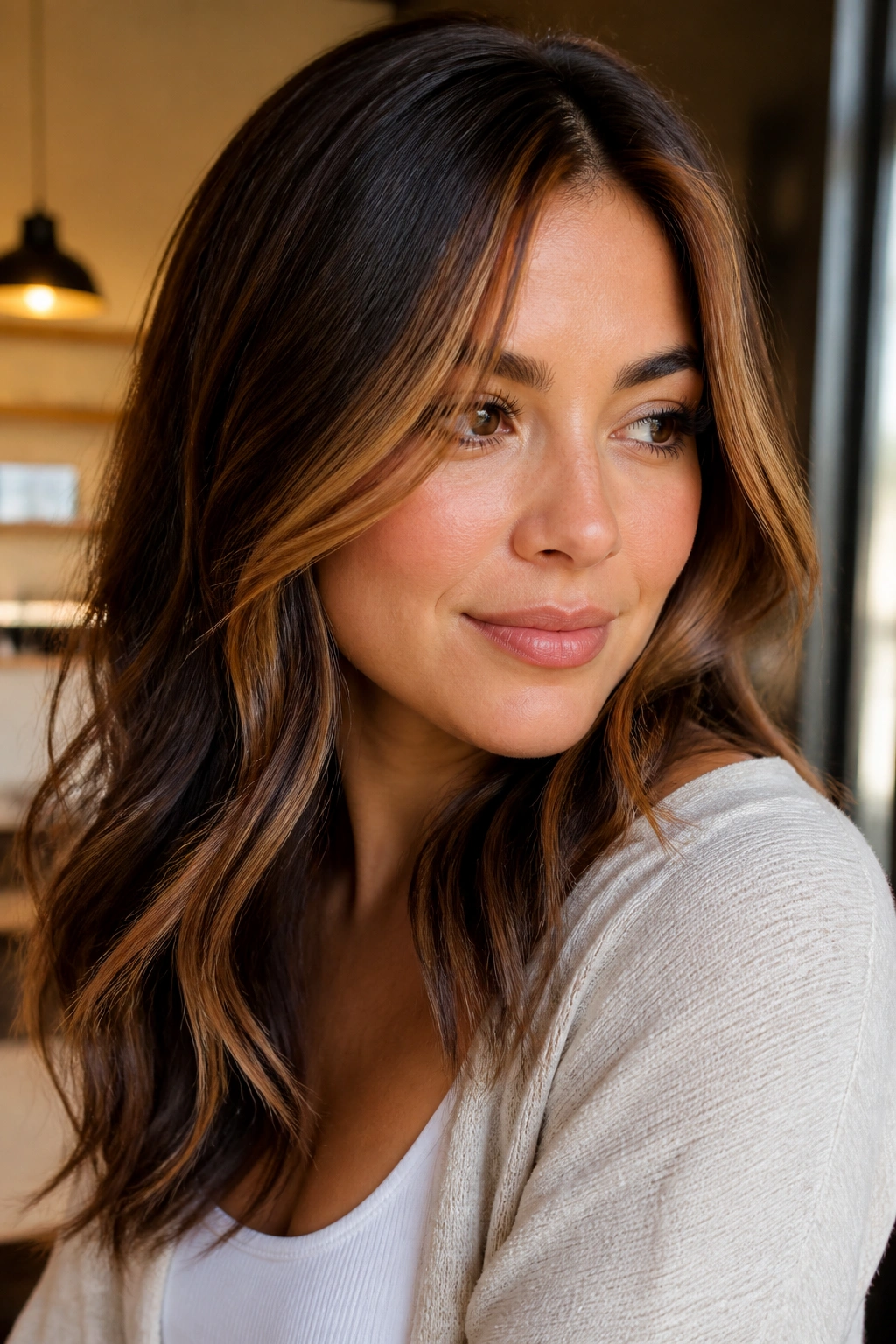
Can a money piece work on a round face? Absolutely — if it is narrow, warm, and placed with a little restraint. Cinnamon has enough warmth to brighten the eyes and enough brown in it to stay believable.
How to Wear It
The trick is not to draw a thick strip from forehead to chin. That tends to widen the front. Instead, keep the lighter pieces just off center and slightly feathered at the edge so they don’t read like two hard bars.
A side part helps a lot here. So does a small blowout bend away from the cheeks, because that creates movement without puffing out the sides. If you wear glasses, this look is even better when the lightest pieces sit above the frame line instead of right beside it.
A good rule: cinnamon money pieces should look like a flash of light, not a stripe you can count from across the room.
4. Cocoa Babylights All Over
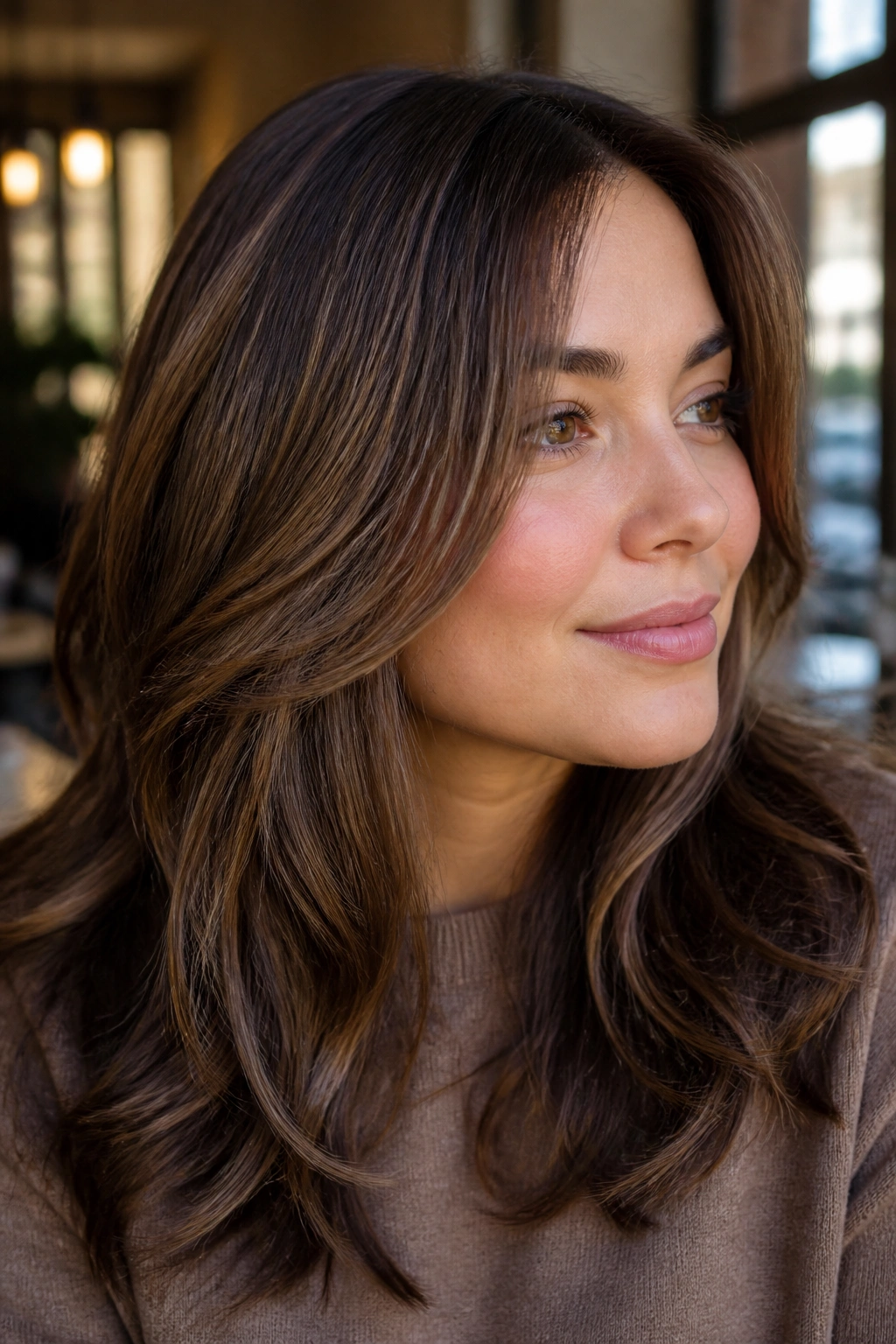
Babylights are the quiet overachievers of brown dimension. They use tiny strands — think whisper-thin, not chunky — so the result looks like natural reflection rather than obvious coloring.
On a round face, that subtlety helps. The eye sees texture and movement instead of broad color blocks, and that keeps the hair from expanding the face visually. Cocoa babylights work especially well if your base is medium brown or dark brunette and you want depth without a big contrast jump.
Quick Details That Make Them Work
- Use strands about 1/8 inch wide or finer.
- Keep the lift soft, usually only one to two levels lighter than the base.
- Spread the babylights through the upper layers, not just the outer surface.
- Pair them with loose waves if you want the dimension to show.
One tiny thing matters here: if the babylights are too dense at the sides, they stop looking airy and start looking busy. Keep them broken up.
5. Walnut Lowlights for Soft Contour
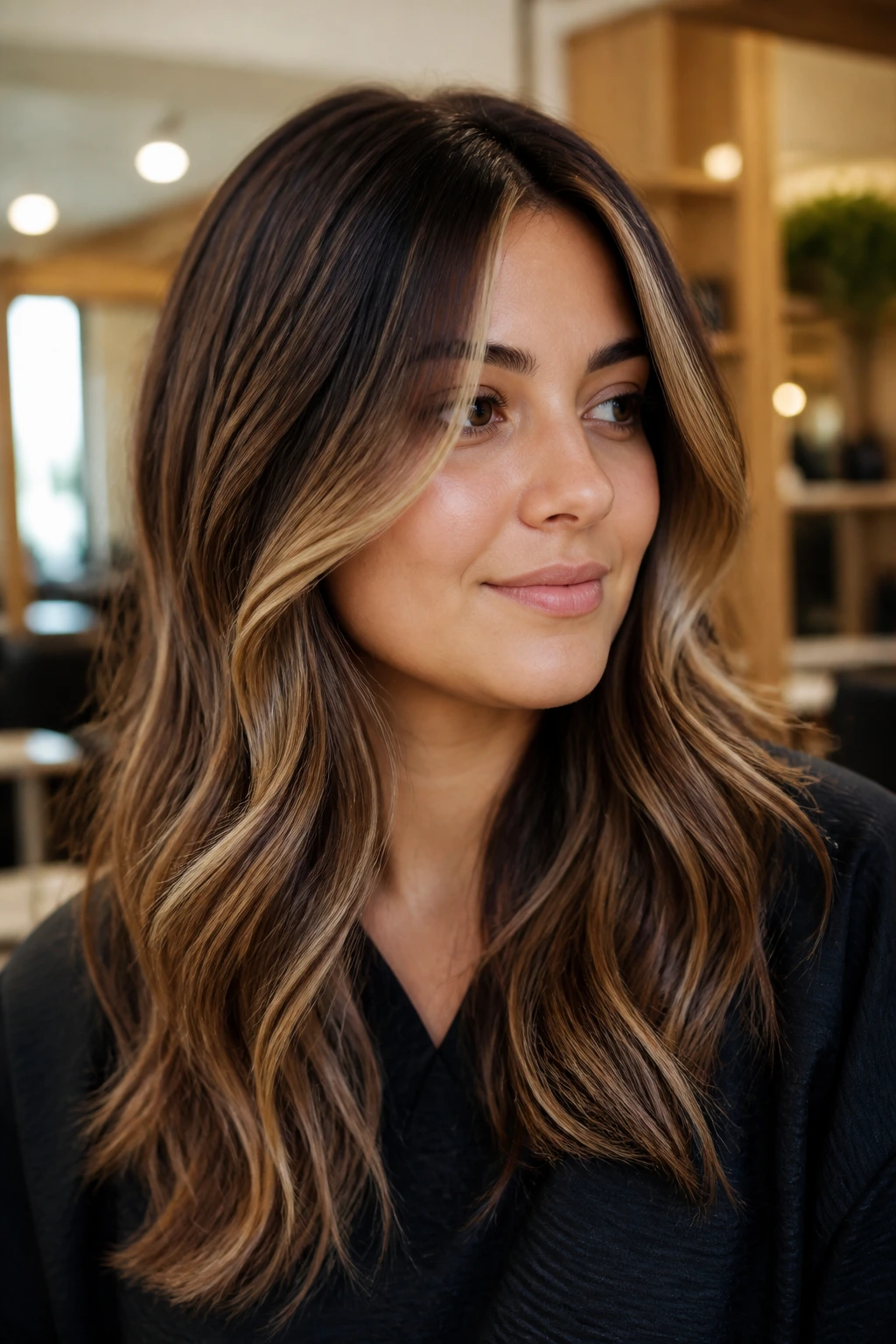
Most people ask for highlights first. I often think lowlights deserve more credit. Walnut lowlights add shadow in just the right places, and shadow is what gives a round face a bit of contour.
Unlike lighter streaks, lowlights pull the eye inward. They can make thick or over-lightened hair look denser, and that matters if your strands have started to feel fluffy around the cheeks. A few deeper walnut pieces under the top layer can make the shape of the haircut read cleaner.
This is especially helpful when your hair is already lightened and the color has gone a little flat. The lowlights restore shape without forcing you to go dark everywhere. Ask for them around the temple area, under the crown, and through the lower sides. The result should feel like natural depth, not stripes hidden under the top layer.
6. Mocha Melt Around the Hairline
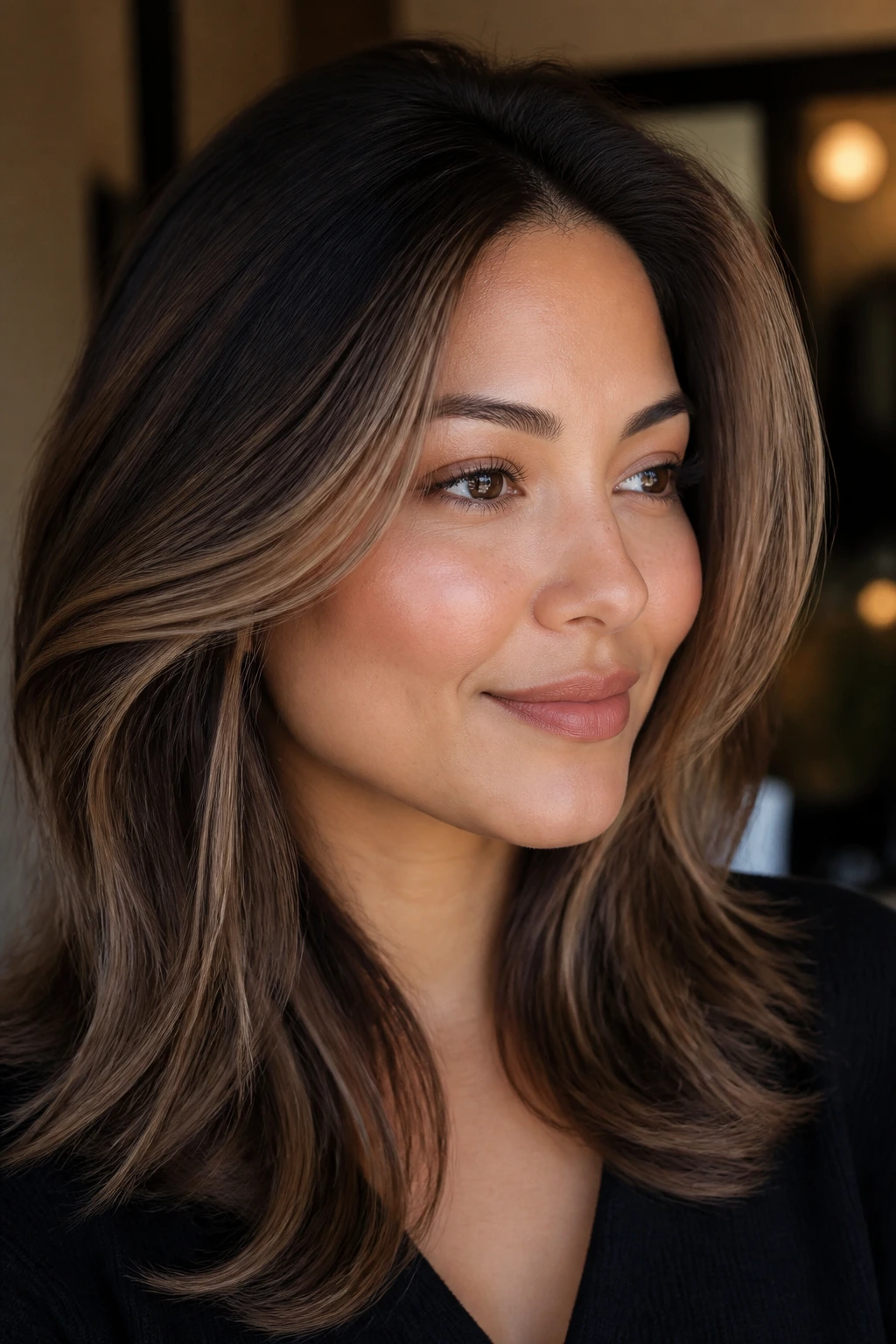
A mocha melt around the hairline is one of those color choices that looks expensive without trying too hard. The root stays deeper, then the color softens into a lighter mocha through the front and mid-lengths. No hard line. No jumpy contrast.
What I like about this on a round face is the softness at the edges. The hairline is where a lot of width gets read, especially if your haircut has volume. A mocha melt keeps that edge blurred, which stops the front from feeling boxy.
It also plays nicely with bobs and long bobs. Shorter cuts can get bulky around the cheeks if the front is too bright. A melt keeps the cut sleek. If you’re asking your colorist for this, say you want the lightest part of the transition to live below the cheekbone, not at temple height. That one detail changes the whole shape.
7. Chestnut Foilayage Through the Mid-Lengths
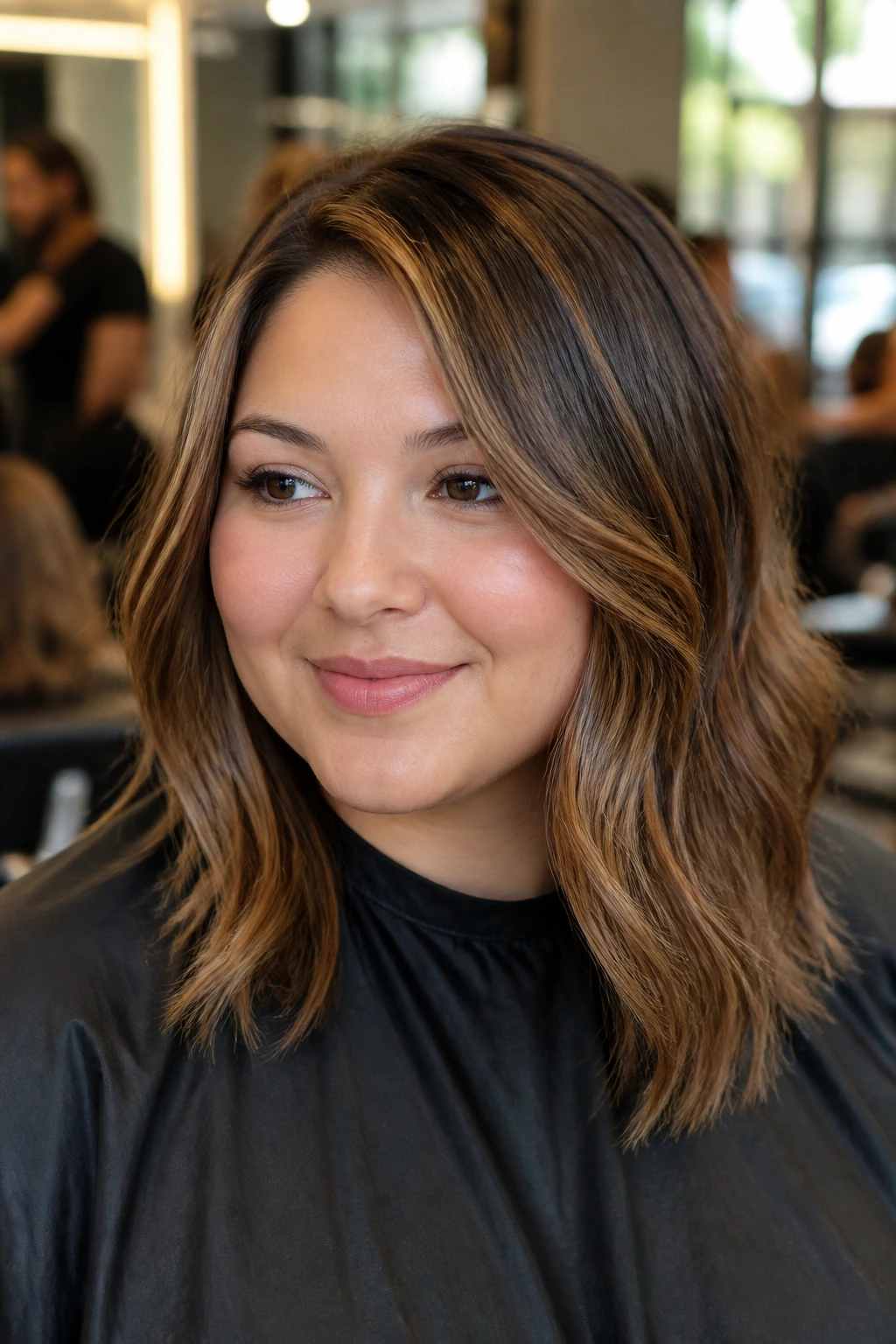
Foilayage sits in a sweet spot between painted color and foiled lift. It gives you more control than balayage alone, which is useful when the face shape needs a little precision.
Picture a shoulder-length cut with the widest point sitting right around the cheeks. Chestnut foilayage can break up that width by placing brighter ribbons between deeper sections, especially through the mid-lengths and ends. The hair still looks soft, but the shape becomes more vertical.
What to Ask For
- Diagonal partings instead of straight horizontal bands.
- Chestnut pieces that start below the cheekbone.
- A few deeper pieces near the outer curve of the face.
- End brightness that gathers toward the collarbone.
Foilayage also grows out well, which is a mercy if you do not want a strict maintenance schedule. And because the chestnut tone stays warm and brown, it looks dimensional even when the color softens a bit over time.
8. Espresso Peekaboo Panels
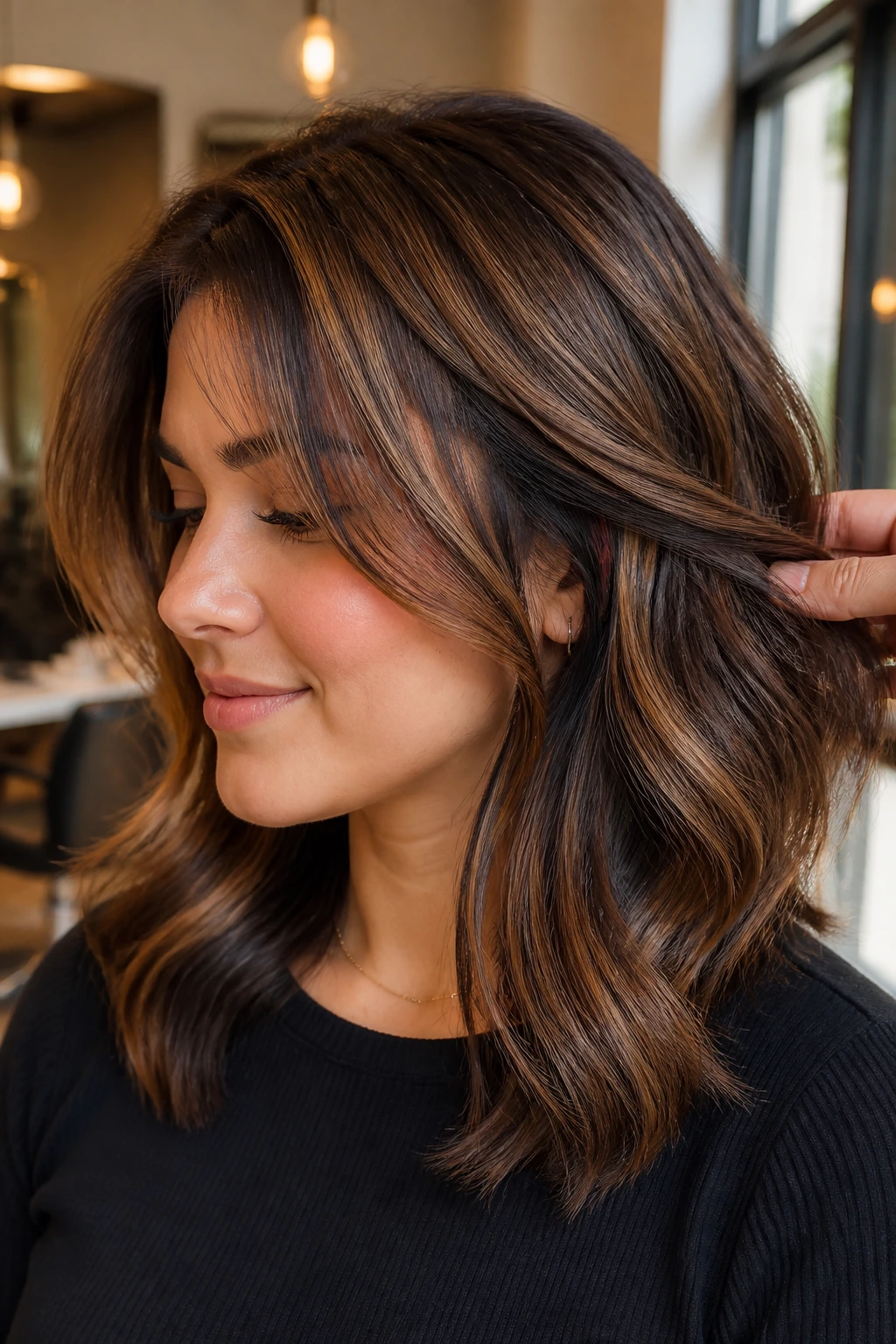
Espresso peekaboo panels are for the person who likes movement but doesn’t want the color to shout. The darker panels sit beneath the outer layer, so they only show when the hair swings or gets tucked behind the ear.
That hidden depth helps round faces more than people realize. The surface layer reads lighter and more open, while the underneath stays darker and tighter. That contrast makes the outer silhouette feel slimmer. It’s a neat little visual trick.
I like this with blowouts, soft bends, and even straight hair that has a clean finish. If the hair is curled under at the ends, the peekaboo color creates a narrow frame instead of a puffy one. Ask for the darker panels to live around the temple and under the ear, not all over the sides. Too much hidden darkness in the wrong place can make the cut look patchy.
9. Toffee Ends with a Deep Brown Root
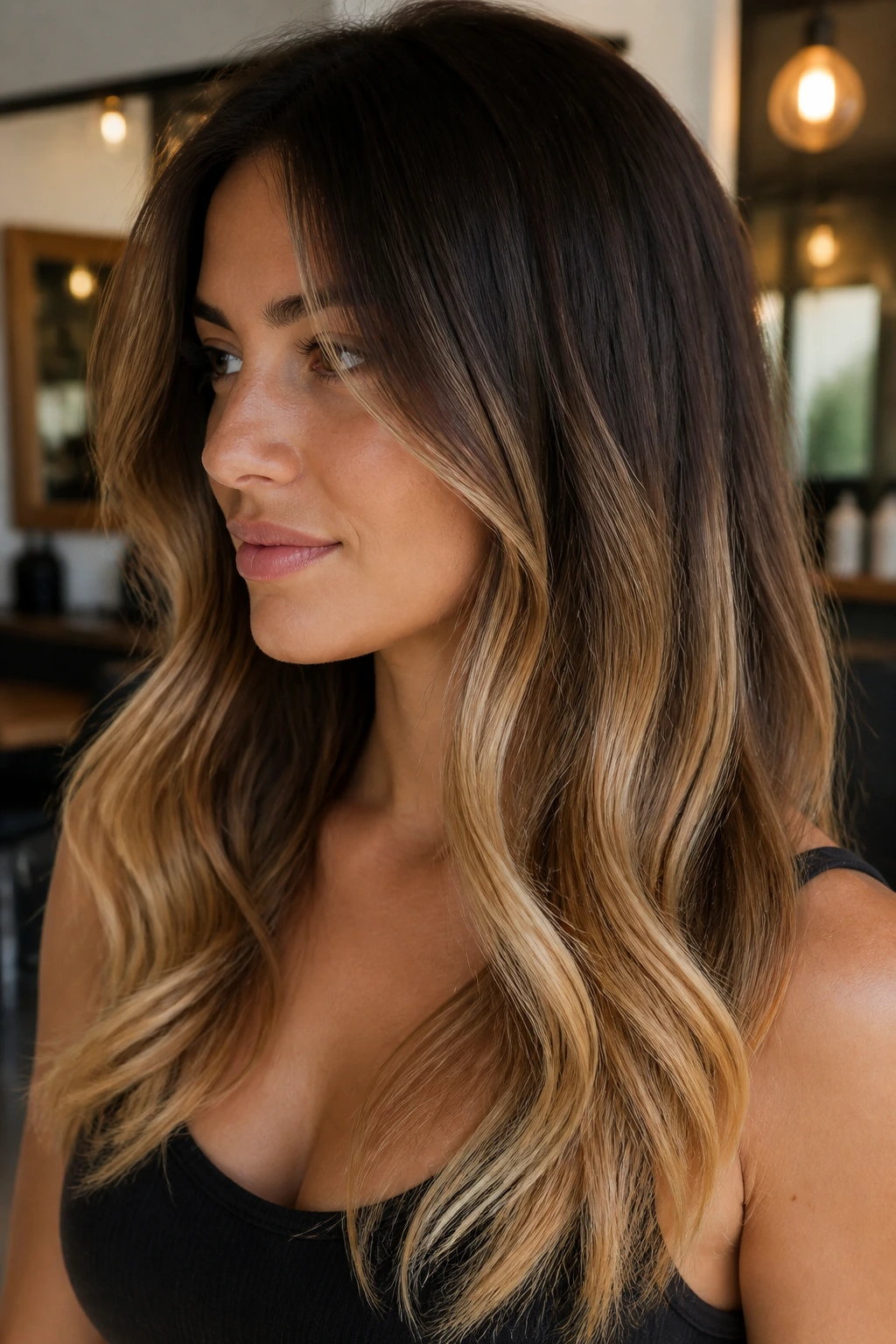
Can bright ends work on a round face? Yes — if the brightness stays at the bottom and the root stays deep. That balance keeps the eye moving downward, which is exactly what you want.
The root shadow does a lot of the shaping here. A deep brown root gives the top half of the head weight, then the toffee ends lighten the finish without widening the middle of the face. On longer cuts, that can make the whole look feel taller.
How to Use It
Try this on hair that falls past the shoulders. It needs enough length to show the gradient. The top third should stay rich and dark, the middle should soften, and the brightest toffee should live on the bottom two to three inches. If the lightness starts too high, the shape gets rounder instead of leaner.
This is a good choice if you want a color that reads warm in sunlight and polished indoors. It also grows out in a forgiving way, which helps if you prefer less frequent salon visits.
10. Mushroom Brown Ribbons
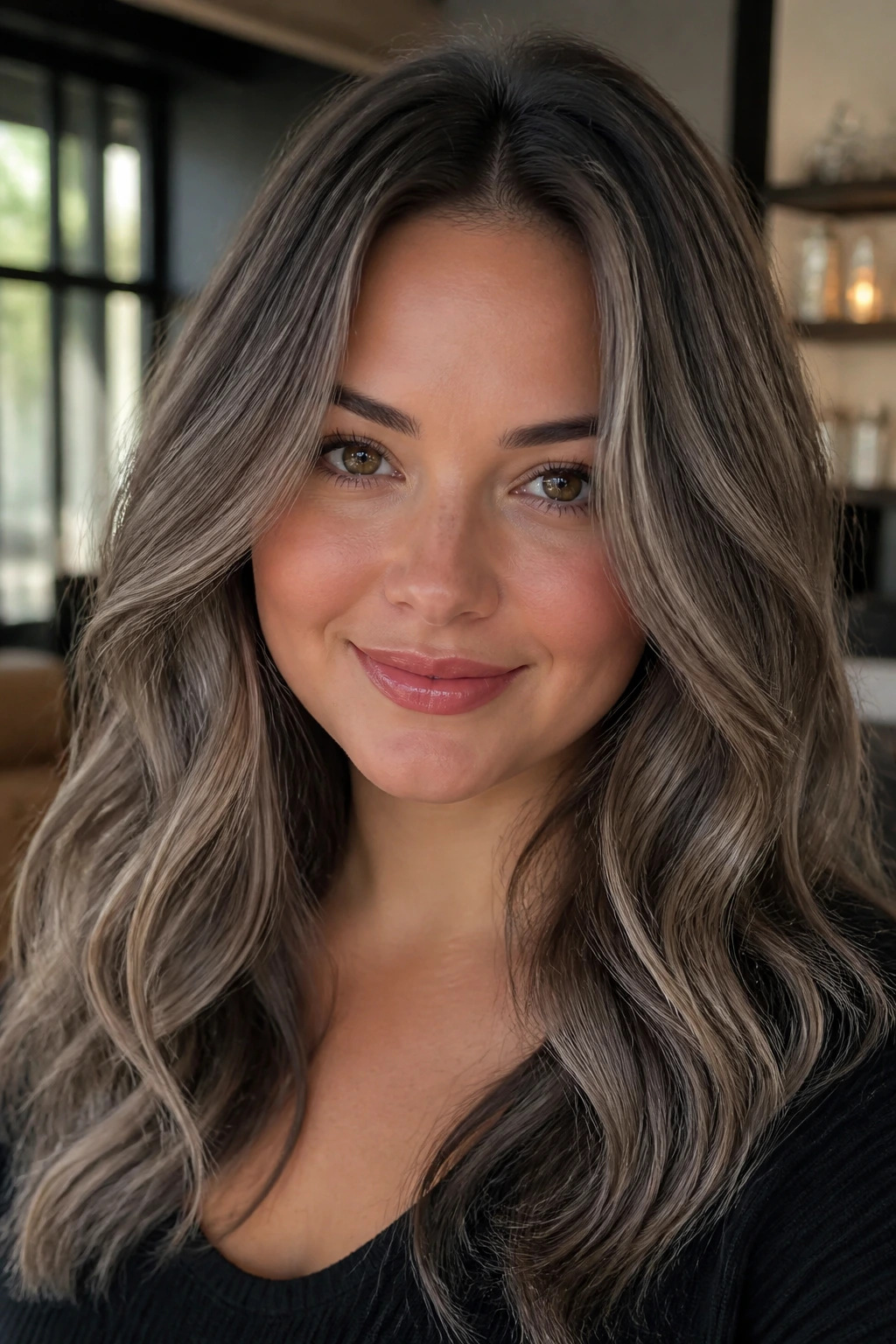
Mushroom brown has that cool, smoky softness that can make a round face look less broad without darkening the hair into something severe. The shade sits between beige, taupe, and brown, with just enough ash to keep it modern-looking without using that word too much.
What makes it useful is the blur. Mushroom ribbons do not scream for attention, so the eye notices the overall shape of the hair first. That is a big deal on round faces, because hard contrast at the sides often makes width look more obvious. Soft contrast is kinder.
It also works well on neutral and cool undertones. On very warm skin, the tone can feel slightly muted unless you warm it up with styling or a hint of golden gloss. I’d use mushroom brown on waves, a textured lob, or long layers with movement at the ends. It is not the loudest option in the room, and that is exactly why it works.
11. Sable Brown Highlights on Long Layers
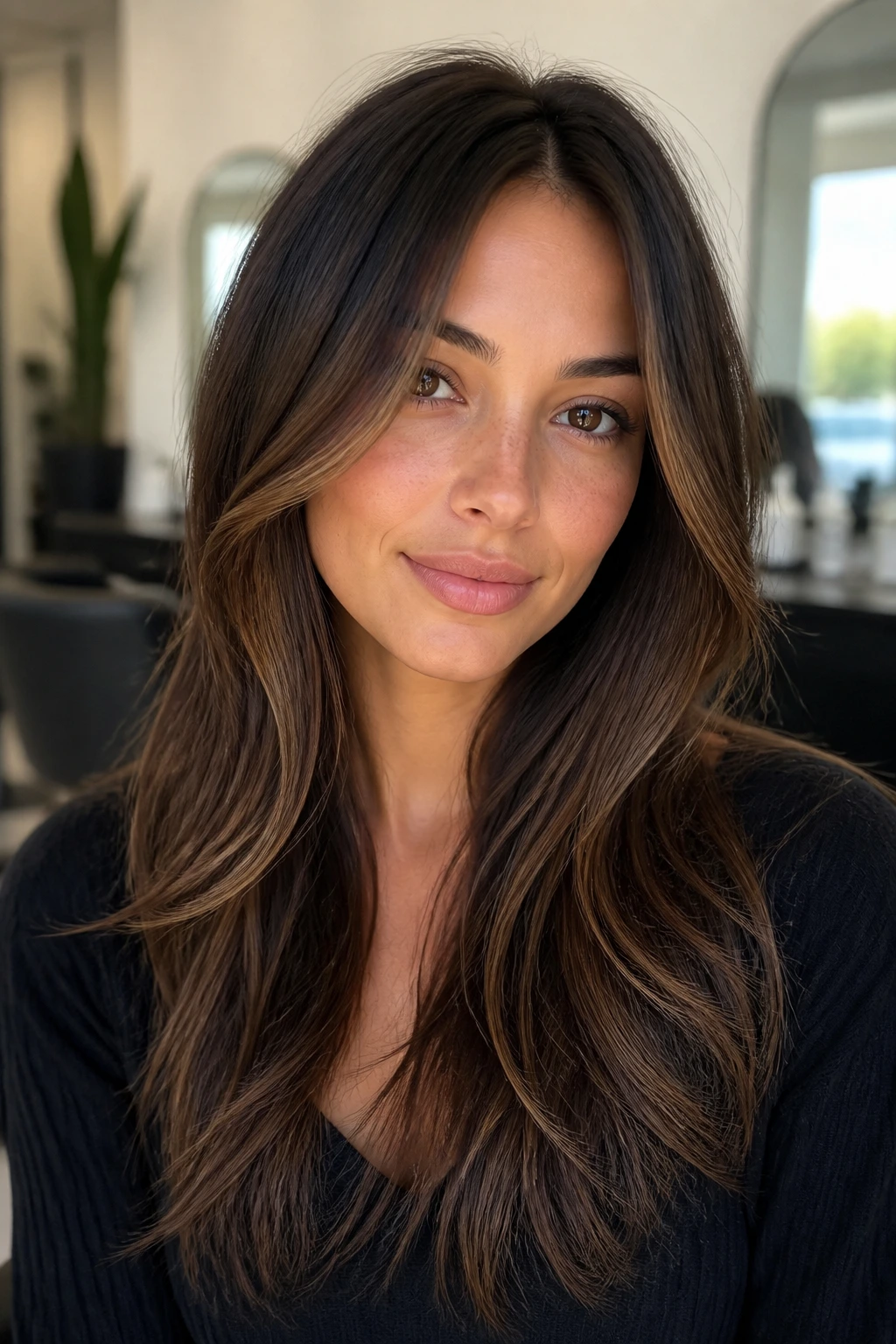
Sable is richer than caramel and less soft than chestnut. That middle ground gives long layers a sleeker edge, which is useful when the goal is to stretch out a round face instead of widening it.
The darker base stays visible, so the highlights do not flood the whole cut with light. Instead, they trace through the lengths and create long vertical lines. On straight hair, that can look especially clean. On waves, the effect gets a little softer, but the shape still holds.
What Makes It Different
Unlike brighter brown tones, sable doesn’t brighten the face first. It defines the cut first. That distinction matters. If your face is already soft and full in the cheeks, you don’t always need brightness at the front. Sometimes you need a cleaner outline.
This is a strong pick for people with long layers and a center or off-center part. Ask for the sable pieces to follow the movement of the haircut, not sit on top like decoration. That small difference gives the color a purpose.
12. Brown Sugar Ribbon Lights
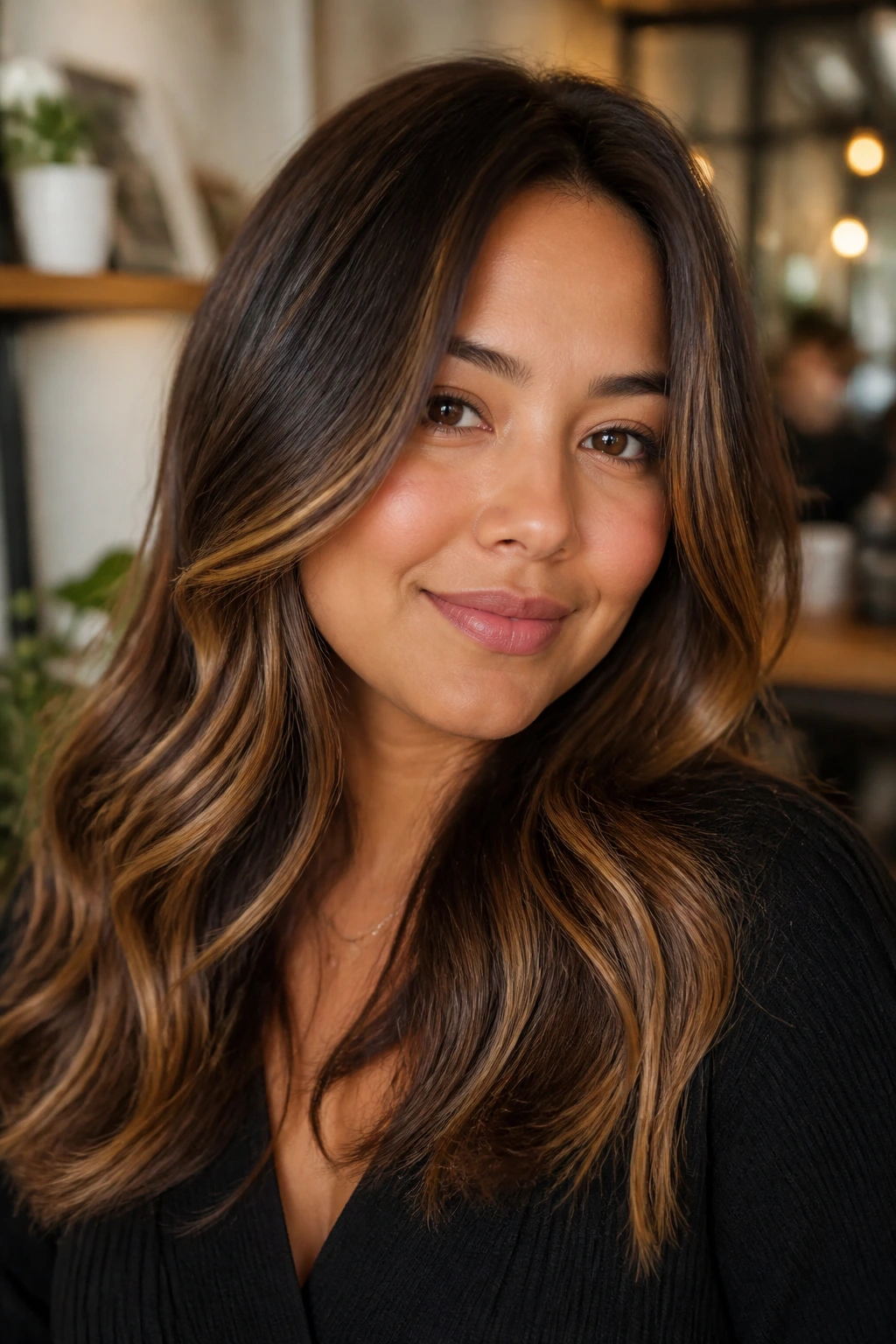
Brown sugar ribbons are warmer and a touch more playful than chestnut. They work when you want the hair to feel sun-touched, but not blonde, not brassy, and not flat.
I think this look is best when the highlights are woven in wider than babylights but narrower than obvious streaks. That ribbon size lets the color show through the movement of the hair. A round face benefits because the ribbons can be placed to pull the eye diagonally, especially when the hair is worn in waves.
- Keep the brightest pieces around the lower third of the hair.
- Use soft bends instead of tight curls.
- Ask for a little darker depth under the top layer.
- A middle part can work, but a slight side part is kinder.
The nice part is that brown sugar tones tend to soften grow-out. You don’t get that harsh line that some lighter browns leave behind. It just fades into the haircut.
13. Bronze-Brown Slices at the Temple
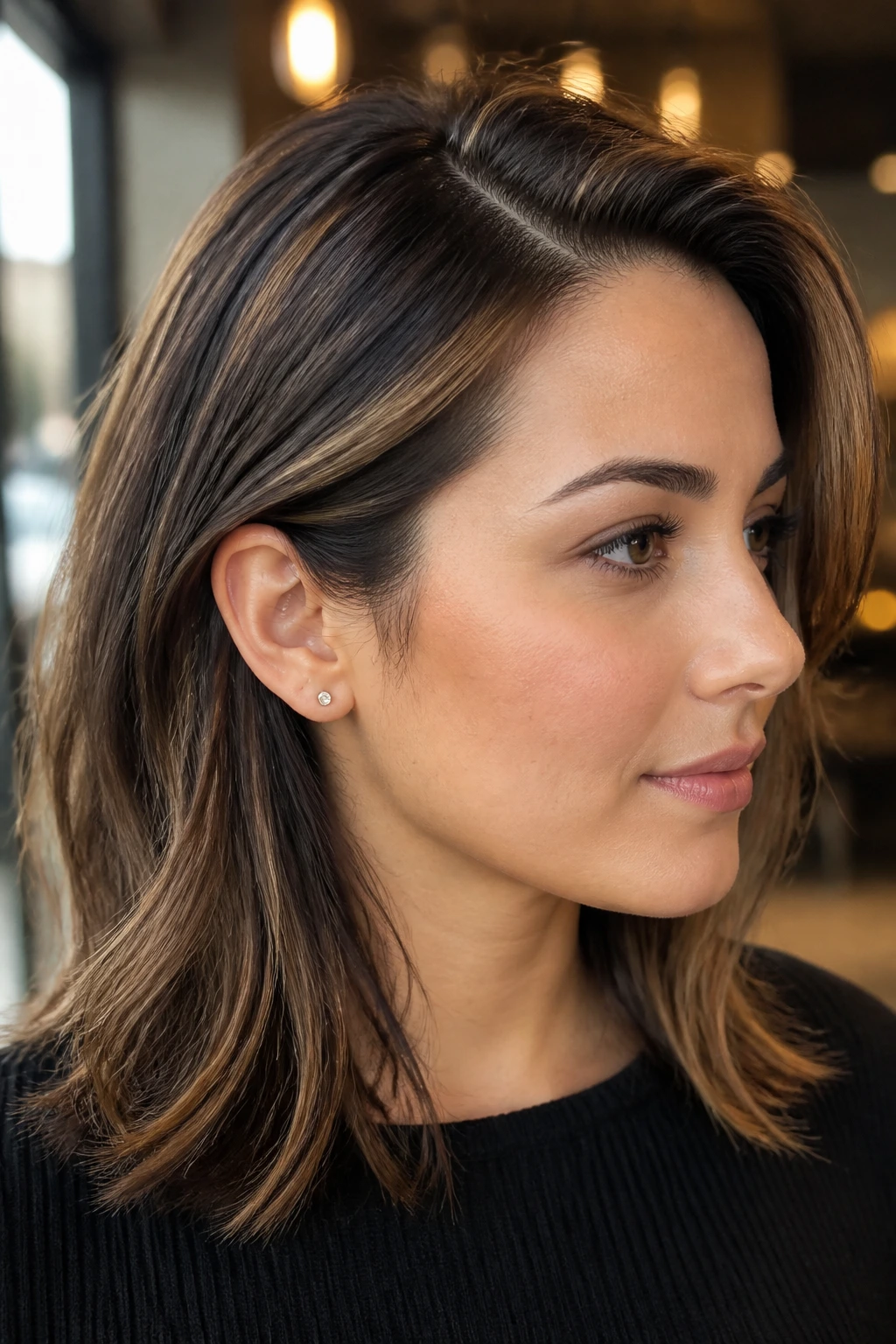
Temple placement sounds minor until you see what it does. A few bronze-brown slices there can lift the eye upward without filling the whole side of the head with brightness.
The temples are tricky on round faces because they sit right at the outer edge of width. Too much color there can spread the face. Too little, and the hair can look flat. Bronze-brown is a good middle ground because it gives warmth and reflection without turning the area into a bright patch.
Where to Place Them
- Start the slices just behind the hairline.
- Keep them narrow near the widest part of the cheek.
- Let them widen slightly as they move back.
- Pair them with a side part or tuck one side behind the ear.
This look loves blowouts with bend at the ends. The movement helps the color show, and the temple placement gives a soft lift that is hard to get from random all-over highlights.
14. Ash Brown Dimension on Dark Bases
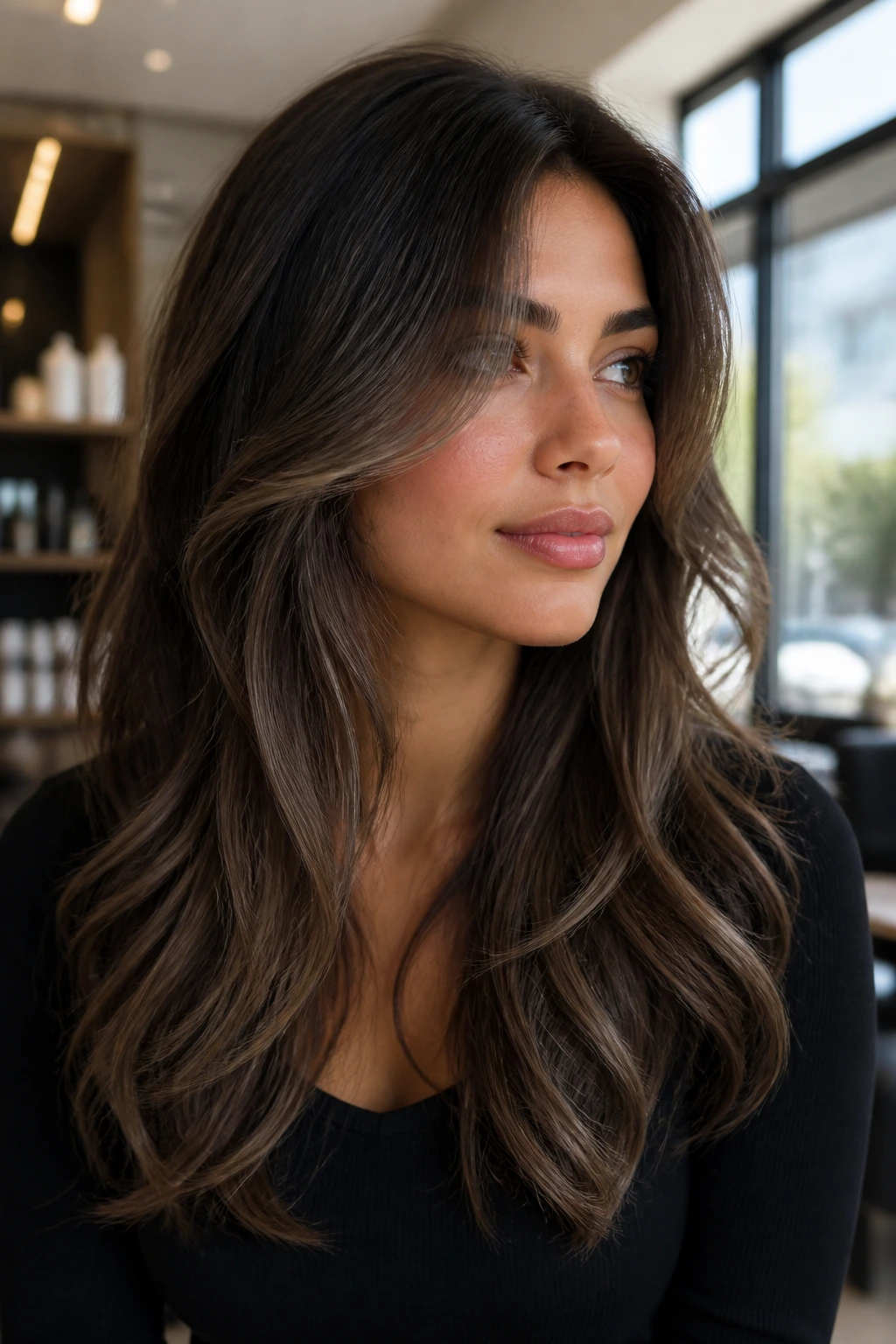
Cool brown is not boring. On a dark base, ash brown dimension can make the hair look sharper, cleaner, and less bulky around a round face.
The reason is simple: warm highlights often bring attention forward. Ash brown does the opposite. It breaks up a dark sheet of hair without pushing too much light toward the cheeks. That keeps the outline of the hair narrower through the sides.
This is a good option if your skin leans cool or neutral, or if your hair tends to pull red when lightened. Ask for muted ash-brown ribbons, not gray streaks. There is a difference, and it is a big one. Gray can look flat; ash brown still looks like hair. Keep the placement on the outer lengths and through the back layers so the front stays soft rather than wide.
15. Hazelnut Highlights on Curly Hair
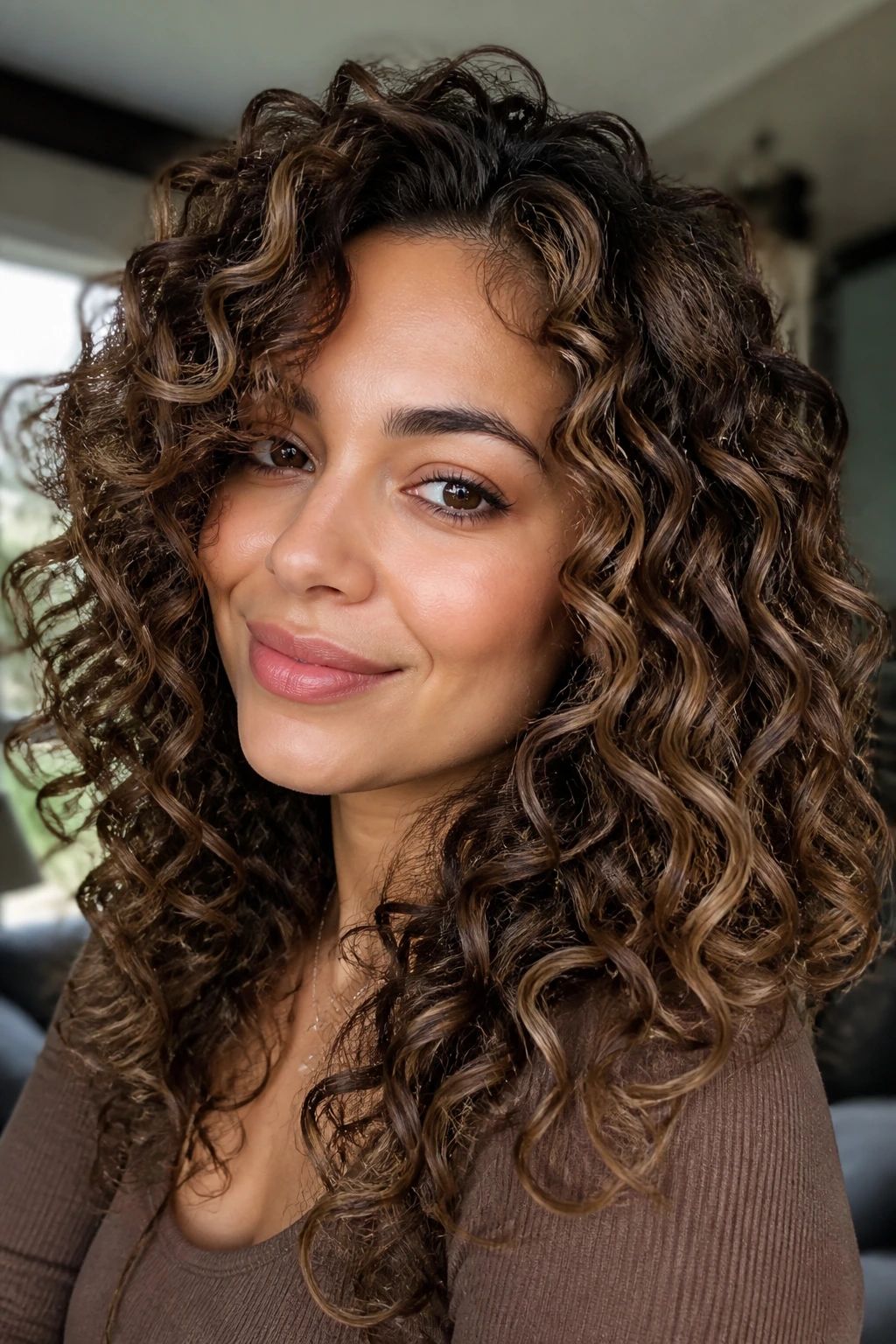
Curly hair changes the whole game. The curl itself creates width, which means highlight placement has to be more thoughtful than on straight hair. Hazelnut tones are lovely here because they warm the curl pattern without making every ringlet look frizzy.
The best placement usually follows the outer curve of the curl, not the center of the coil. That keeps the highlight visible when the hair moves, but it doesn’t flood the sides with brightness. Around a round face, that matters. Bright curls at cheek level can puff outward. Bright curls lower down can slim the shape.
What To Ask For
- Paint selected curls, not every single one.
- Concentrate brightness on the upper layers and ends.
- Keep the front pieces soft and broken up.
- Use a gloss if the color starts to feel too golden.
A diffuser helps the look stay defined. So does a light hand with cream. Too much product can make the curl collapse, and then the whole shape loses the lift you paid for.
16. Maple Brown Balayage on a Lob
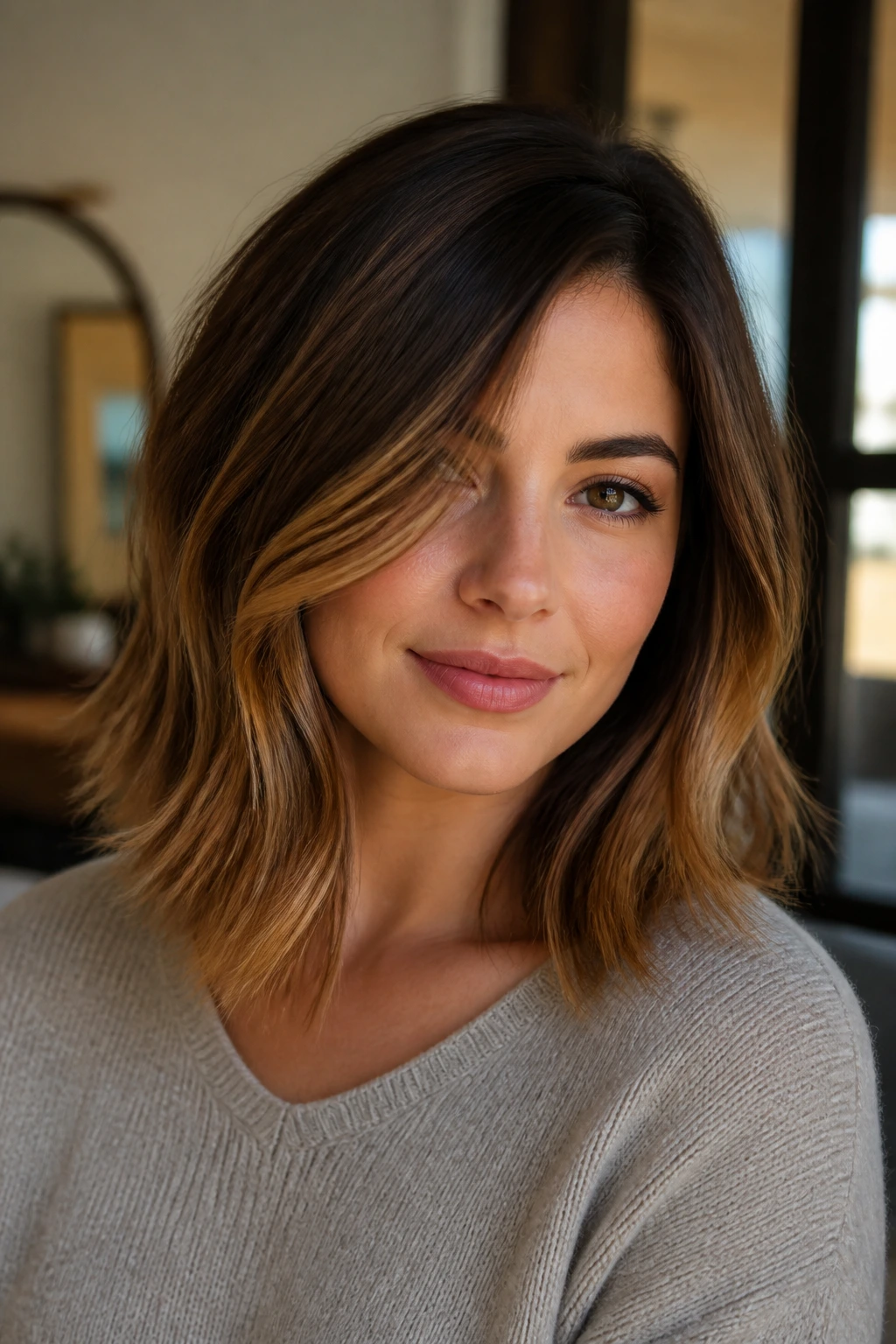
A lob is already doing some of the shape work for you. It sits near the collarbone, which creates a vertical line that flatters a round face without needing a huge styling routine.
Maple brown balayage supports that cut beautifully. The tone is warm enough to feel rich, but not so light that it balloons the sides. I like it with a deep side part and a smooth bend through the ends. That gives the bob a little swing while keeping the outline narrow.
The key is to keep the root shadow in place. If the balayage starts too high on the sides, the lob can look wide and puffy. Ask for the lightest maple pieces to land in the lower half of the cut, especially at the front. That draws the face downward and makes the collarbone area part of the design, which is exactly where a lob shines.
17. Tawny Ends on a Shag
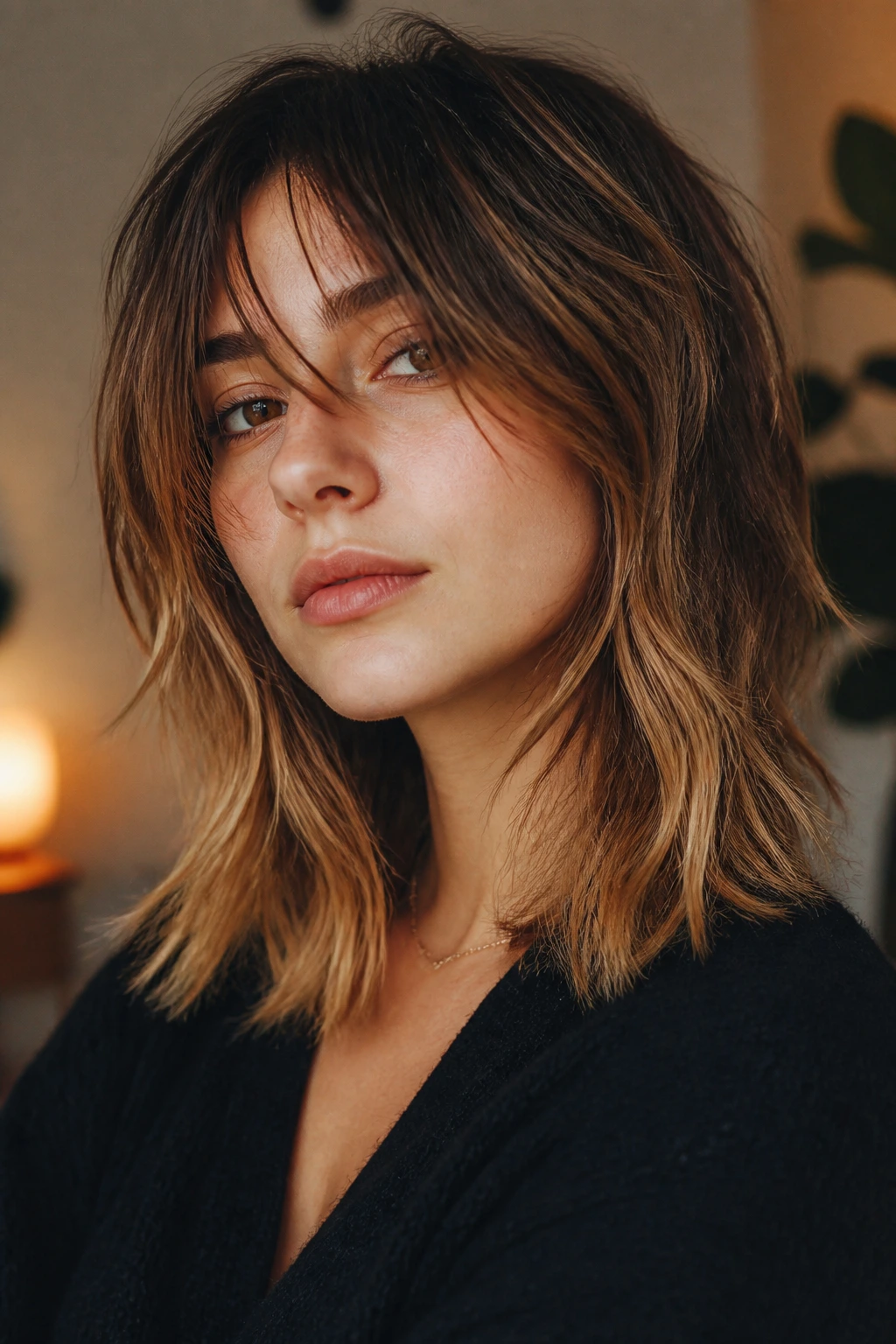
Why does a shag suit a round face so well? Because the cut already breaks up the outline. Those uneven layers and textured ends stop the hair from forming one smooth circle around the face.
Tawny ends add warmth to that shape without making it heavy. The color lives at the edge of the haircut, which keeps the center of the face open. That little bit of space matters more than people think. Round faces look broader when the hair closes in too tightly around the cheeks.
How To Style It
Use a 1-inch curling wand only on random pieces, not the whole head. Leave the ends a little undone. A shag looks better when it doesn’t try too hard. If you want the tawny pieces to stand out, rough-dry the hair first, then bend just a few face-framing layers away from the face.
I’d keep the tawny tone soft and golden-brown, not copper. The goal is movement, not fire.
18. Sandy Brown Balayage on Waves
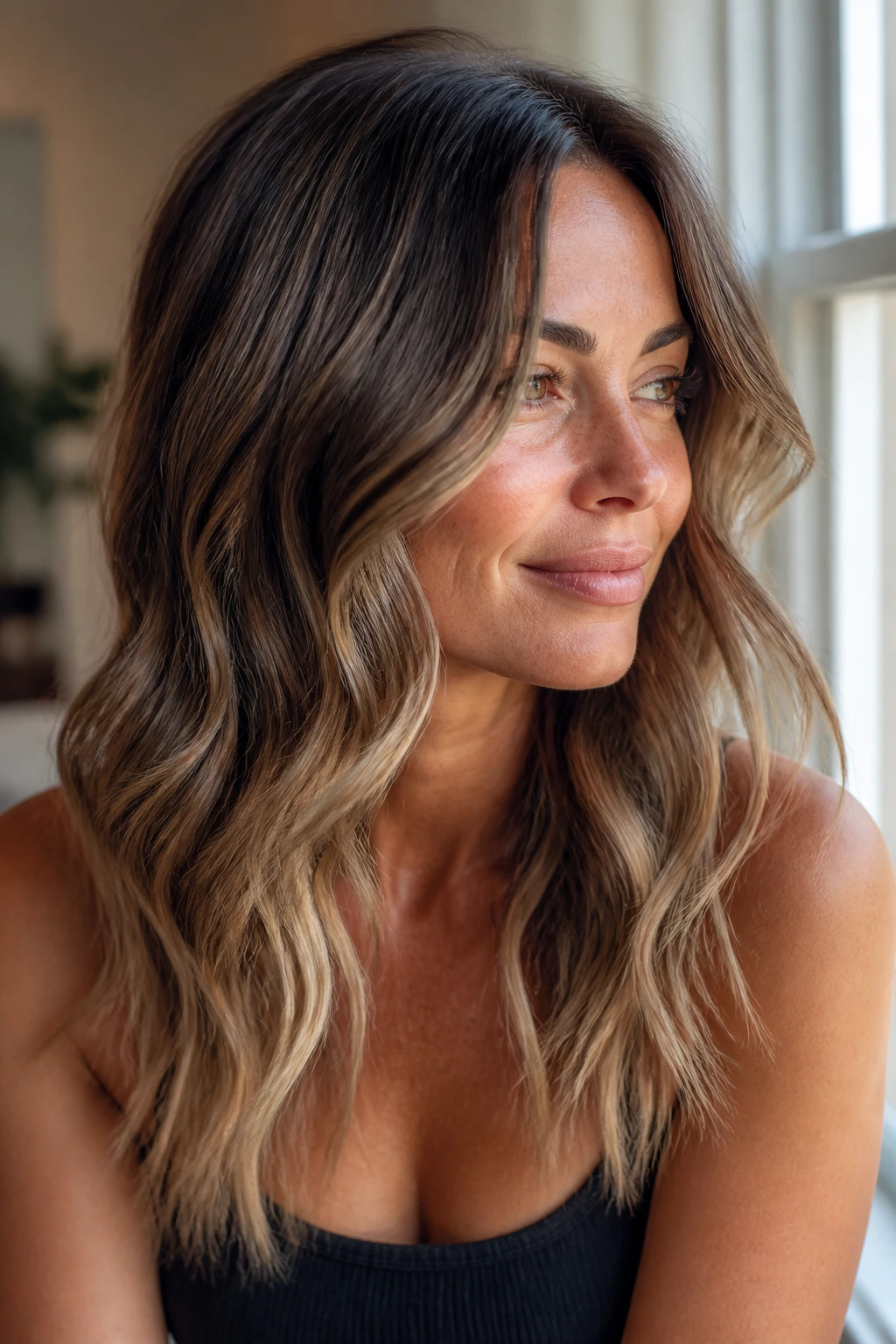
Sandy brown has a breezy, dry softness to it that can be a lifesaver on round faces. It doesn’t feel heavy, and it doesn’t drag the eye sideways. On waves, it looks broken up in a way that naturally narrows the silhouette.
What makes this shade useful is the way it reflects light. Sandy brown tends to sit in a lighter brown-beige zone, so the hair gets dimension without a sharp jump from dark to light. That smooth shift keeps the side view soft. The face doesn’t need to compete with the color.
I like this on medium-length waves with long layers. If the hair is too one-length, the balayage can spread out too evenly and lose the shape benefit. Keep the lightest pieces moving from the mid-lengths down, and let the top stay deeper. The whole point is to make the hair feel lived in, not striped.
19. Toasted Almond Pieces Around the Crown
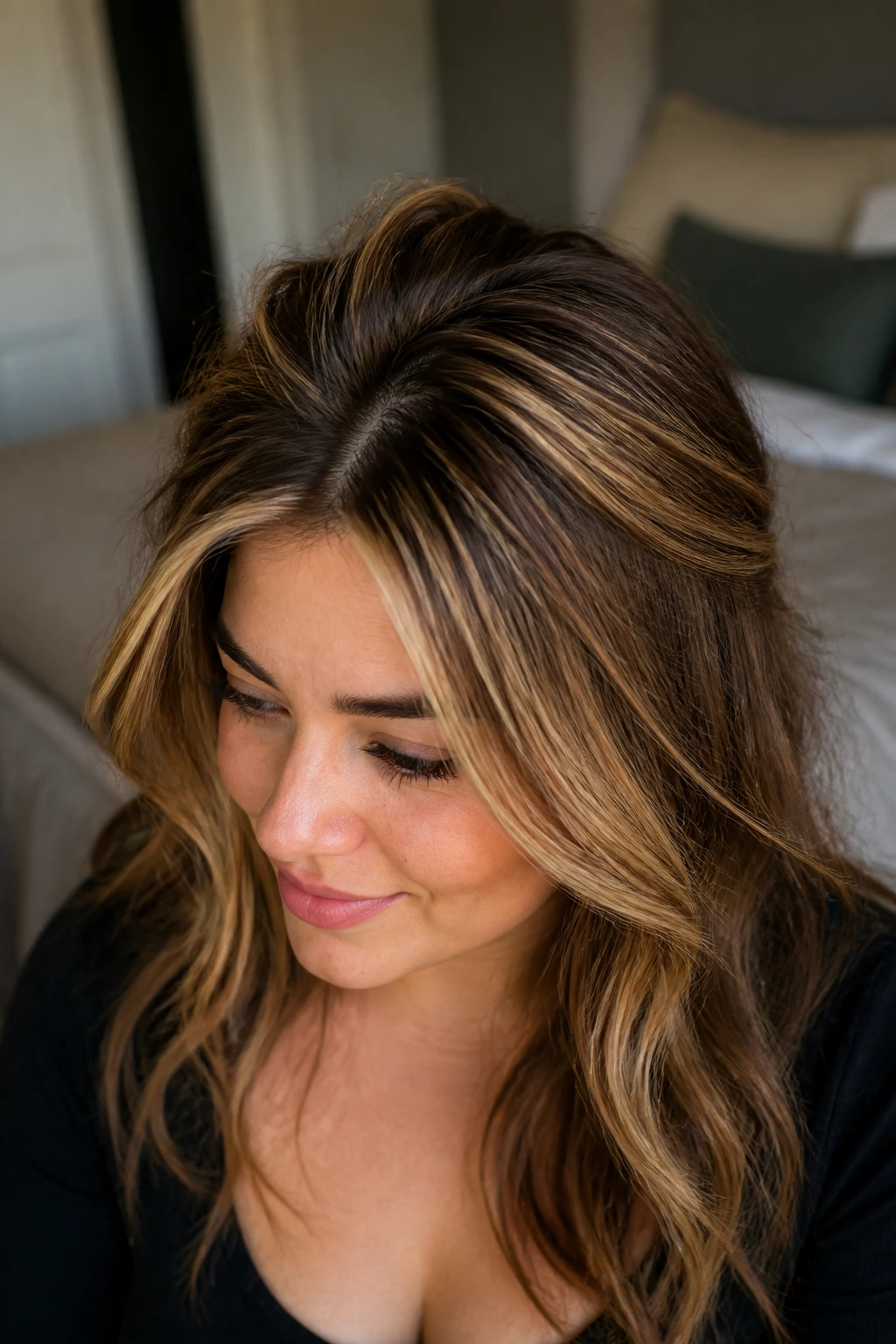
Crown brightness is one of the most underrated moves for round faces. Most people focus on the cheeks. I get it. But a little lift at the top can change the whole read of the face.
Toasted almond pieces around the crown add height. That makes the head shape feel a bit taller and less wide. The effect is subtle, but it shows up fast in a side profile and in photos taken from slightly above eye level. If your face is petite and round, or if you wear your hair flat at the top, this is a smart option.
Why It Works Better Than Cheek Brightening
Cheek-level light widens. Crown-level light lifts. That is the difference.
Ask for two or three highlight ribbons within about 2 inches of the part, then let them soften as they move backward. The front can still have some light, but the brightest point should live at the top. It feels almost like invisible structure. Nice when you want shape without changing the haircut.
20. Auburn-Brown Veils for Warm Skin Tones
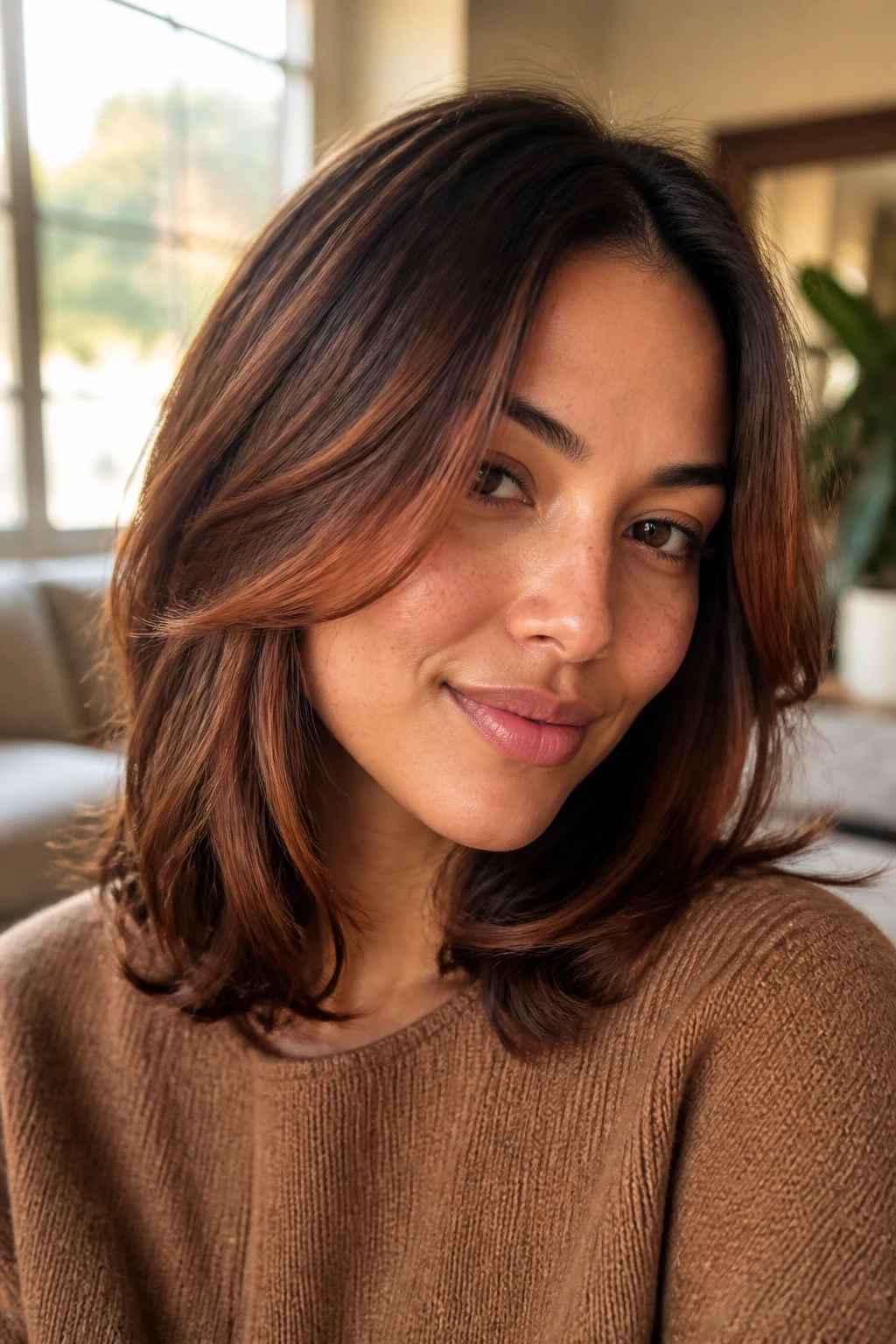
Auburn-brown can be gorgeous on warm skin tones when it stays veiled and layered, not stripey. The color has enough red warmth to echo golden, peach, or olive undertones, and enough brown to keep it grounded.
The mistake people make here is going too red too fast. That can pull attention to the sides of the face in a way that does round faces no favors. A soft auburn-brown veil, though, brings warmth through the lengths and lets the face sit inside the color instead of beside it.
This is one of those looks that can feel richer in natural light than under a salon mirror. The red-brown notes wake up outdoors, then settle back indoors. I’d use it on layered hair that falls below the chin, because the movement keeps the tone from reading like one solid mass. If your skin already has a lot of redness, go gentler. A brown with just a whisper of auburn is better than a loud copper-brown.
21. Smoky Brown Lowlights for Fine Hair
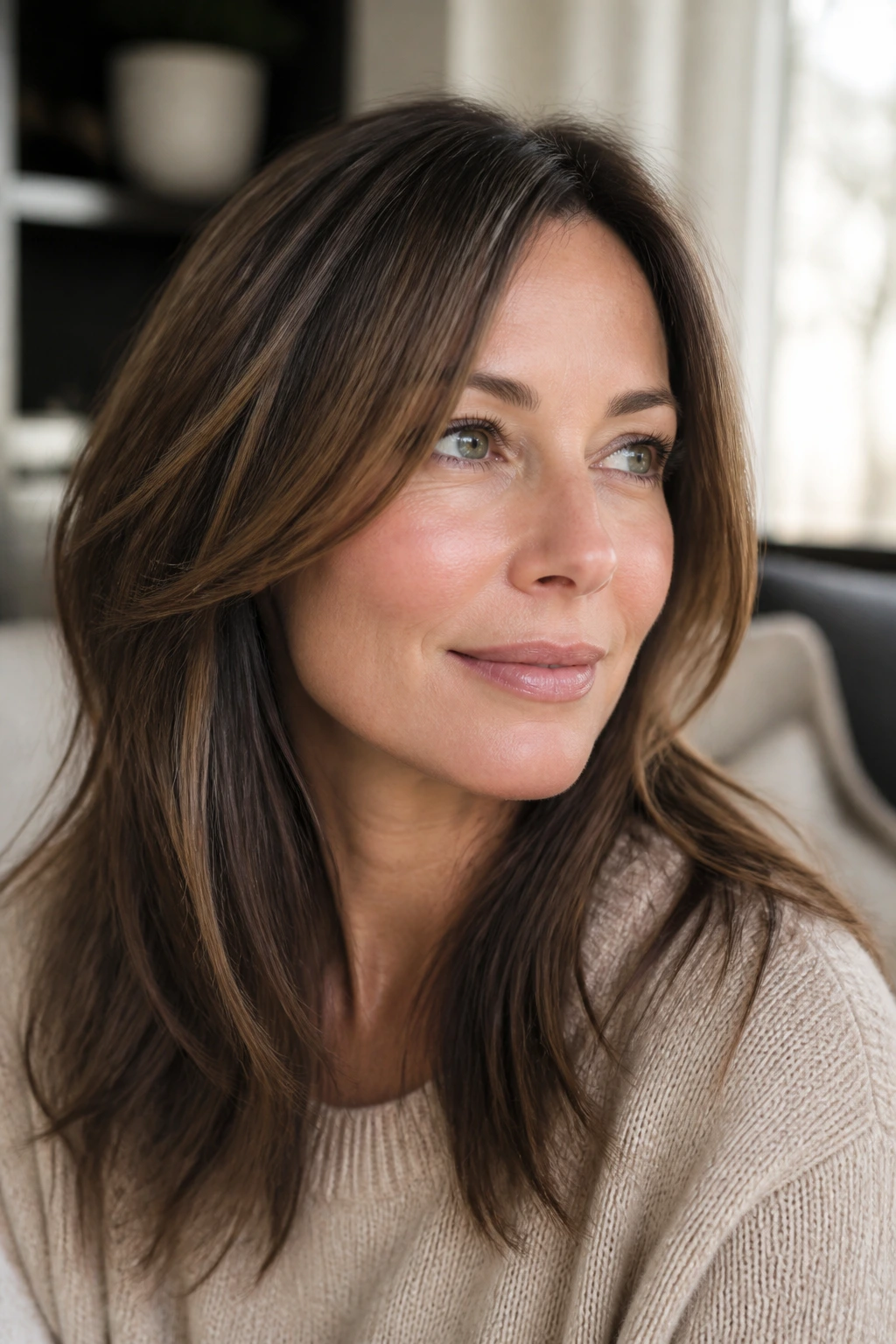
Fine hair often needs shadow more than brightness. Smoky brown lowlights give the illusion of fuller strands by creating depth between the lighter pieces, and that can make a round face look a touch narrower at the same time.
What To Ask For
- Use lowlights one to two shades deeper than the base.
- Place them under the top layer so the hair still moves.
- Keep them soft around the temple.
- Pair them with a lightweight volume spray, not a heavy cream.
The biggest win here is density. Hair that is all one shade can look thin and puffy at once, which is an annoying combo. Smoky lowlights solve that by adding texture to the eye. They also make the lighter pieces look brighter without needing more blonde.
Best tip: don’t overload the crown. A few lowlights there are enough. Too many can make fine hair look flat, and fine hair does not forgive heavy color placement.
22. Café au Lait Face-Framing Pieces
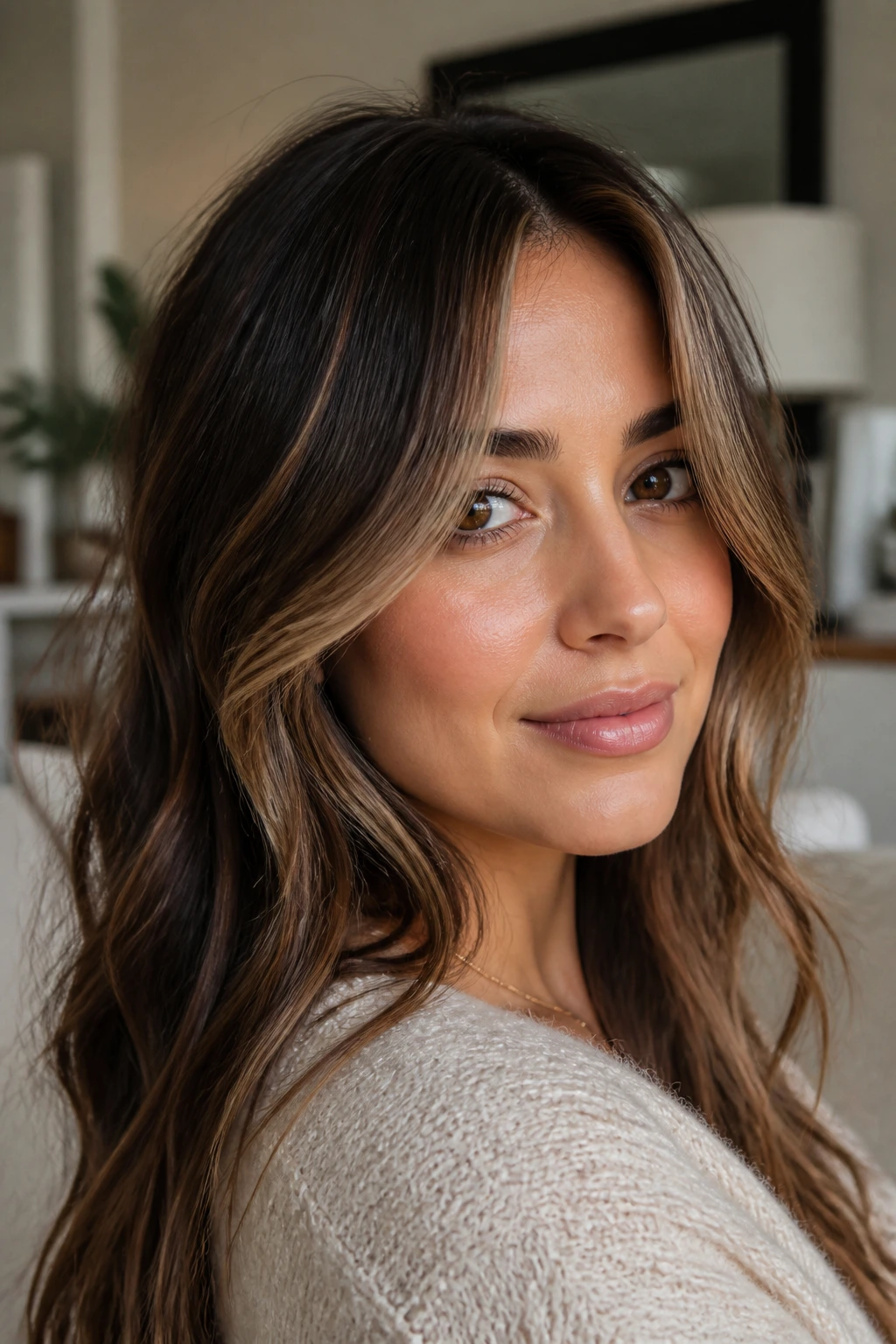
Café au lait is that soft milky brown that never seems to fight with skin tone. Around the face, it can act like a gentle filter, easing the hard edge that sometimes shows up on round faces when the haircut is blunt.
Think of this look as softening from the outside in. The light pieces sit at the cheekbone and then slide toward the jaw, which lengthens the visual line without creating a bright wall. That matters a lot on lobs, mid-length cuts, and curly styles where the outline can get dense.
Key Details
- Keep the face frame slightly lighter than the rest of the highlights.
- Let the color feather into the rest of the hair.
- Avoid placing the brightest part right beside the widest point of the cheek.
- Use loose waves or a bend at the ends.
The result feels calm. Not loud, not fussy. Just shaped.
23. Rich Chestnut Face-Lift Layers
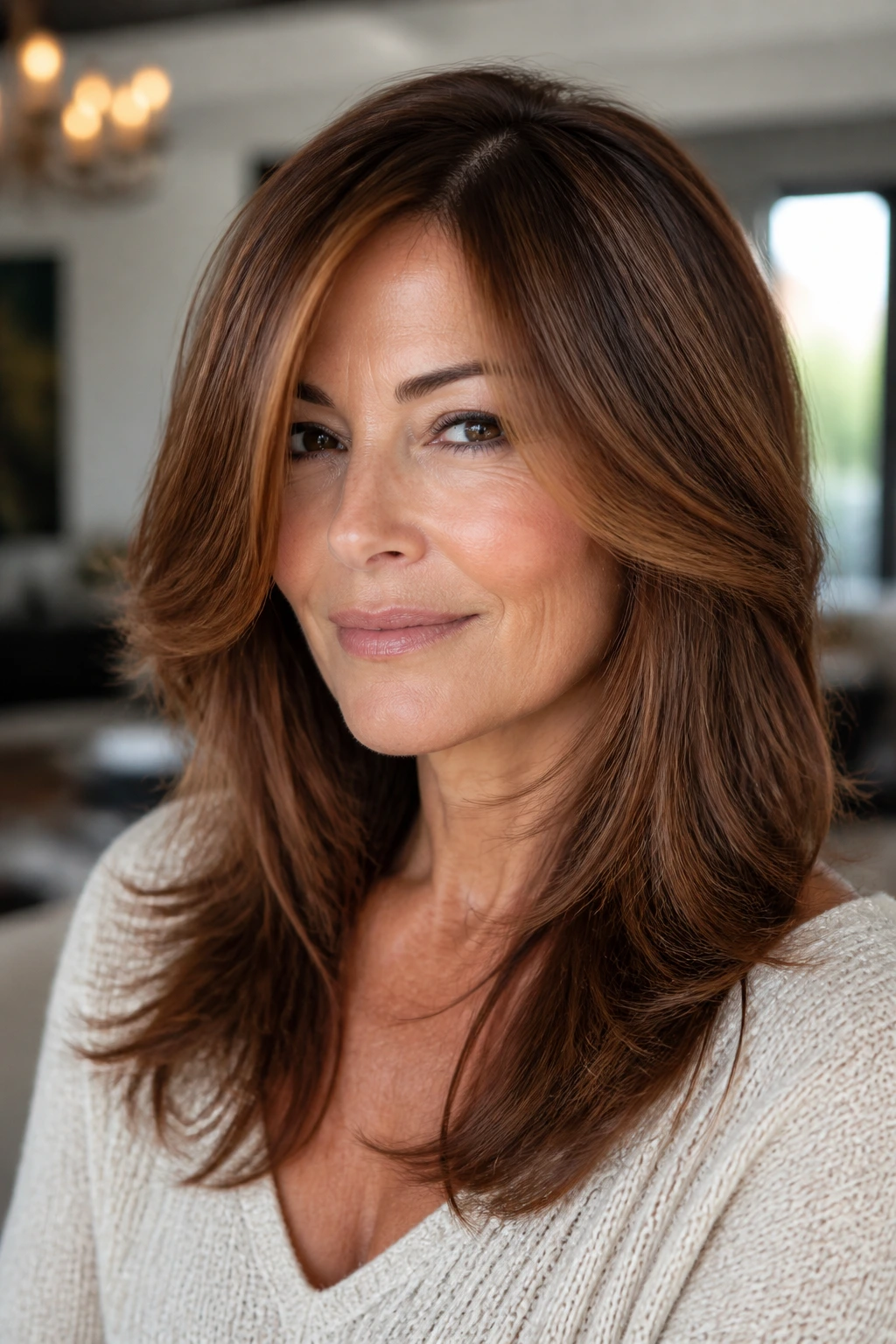
Want lift without going blonde? Chestnut face-lift layers do the job by putting brightness along the layers that rise away from the cheeks.
The way I’d describe this is simple: the lighter chestnut starts lower near the temple, then sweeps back along the hair so the eye sees upward motion instead of side width. On a round face, that upward bias is gold. It makes the style feel open.
How To Wear It
Ask for a side part and a round-brush blowout that flips the layers back just a little. That keeps the color visible while still pulling the silhouette away from the face. If the layers are too flat, the highlight loses its lift. If they’re too curled, the face can look fuller. Somewhere in the middle is the sweet spot.
This works especially well if your haircut already has movement around the collarbone. The chestnut just gives the layers more reason to stand out.
24. Burnt Sugar Accents on a Pixie or Bob
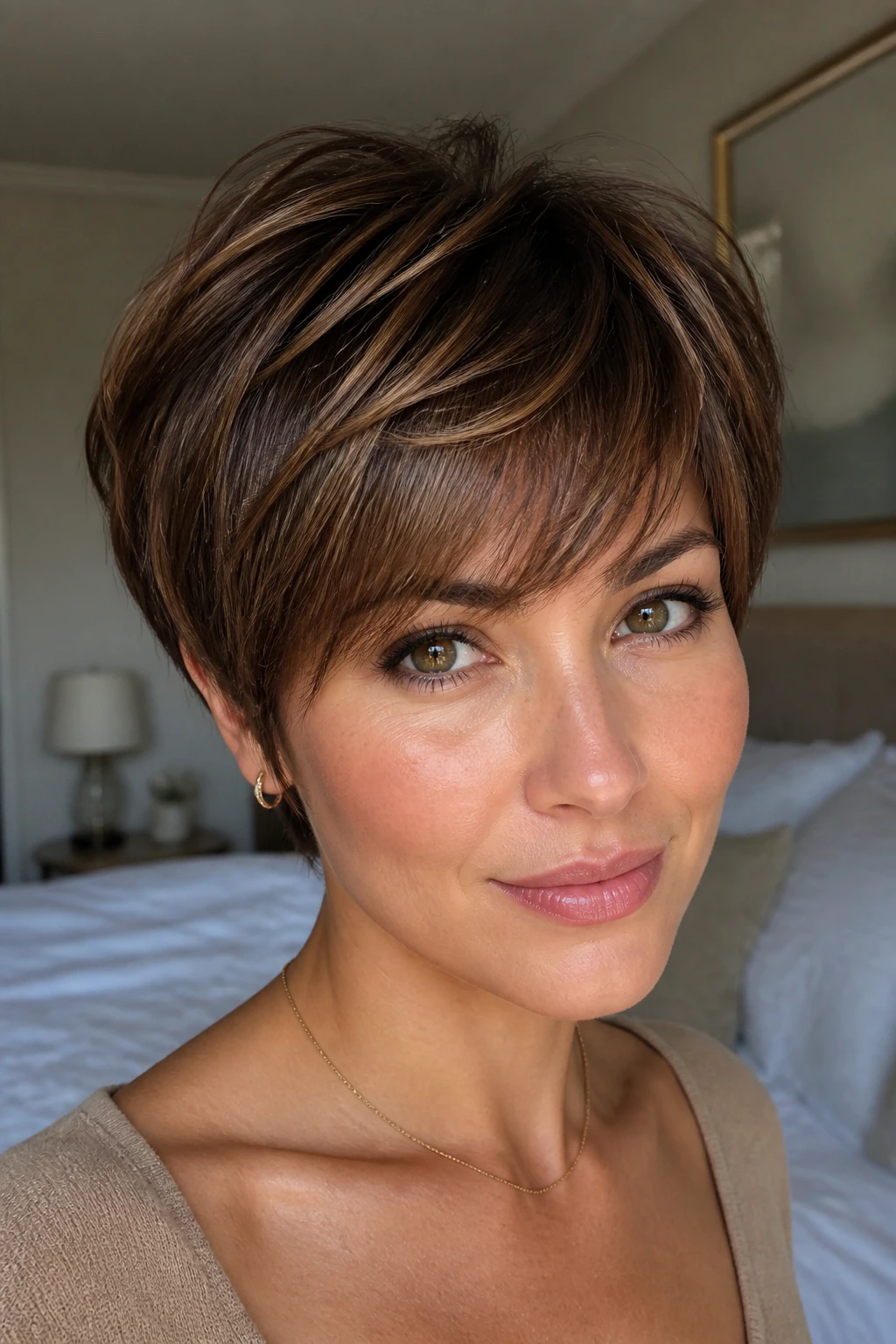
Short hair can absolutely handle brown highlights. It just needs tighter placement. Burnt sugar accents are a good pick because they bring warmth and shape to pixies and bobs without taking over the cut.
The key on round faces is to keep the accents narrow and strategic. Put them on the top, around the fringe, and in tiny slices through the upper sides. Avoid spreading bright bands across the whole head. On short hair, that can widen the shape fast.
A pixie with a bit of light near the front looks lifted. A bob with burnt sugar accents on the top layer reads more sculpted. I’d avoid heavy, even streaks around the cheek unless the haircut is very textured. The sharper the cut, the more room you have for contrast. The smoother the cut, the softer the color should be.
25. Cool Mushroom Brown Highlights on Straight Hair
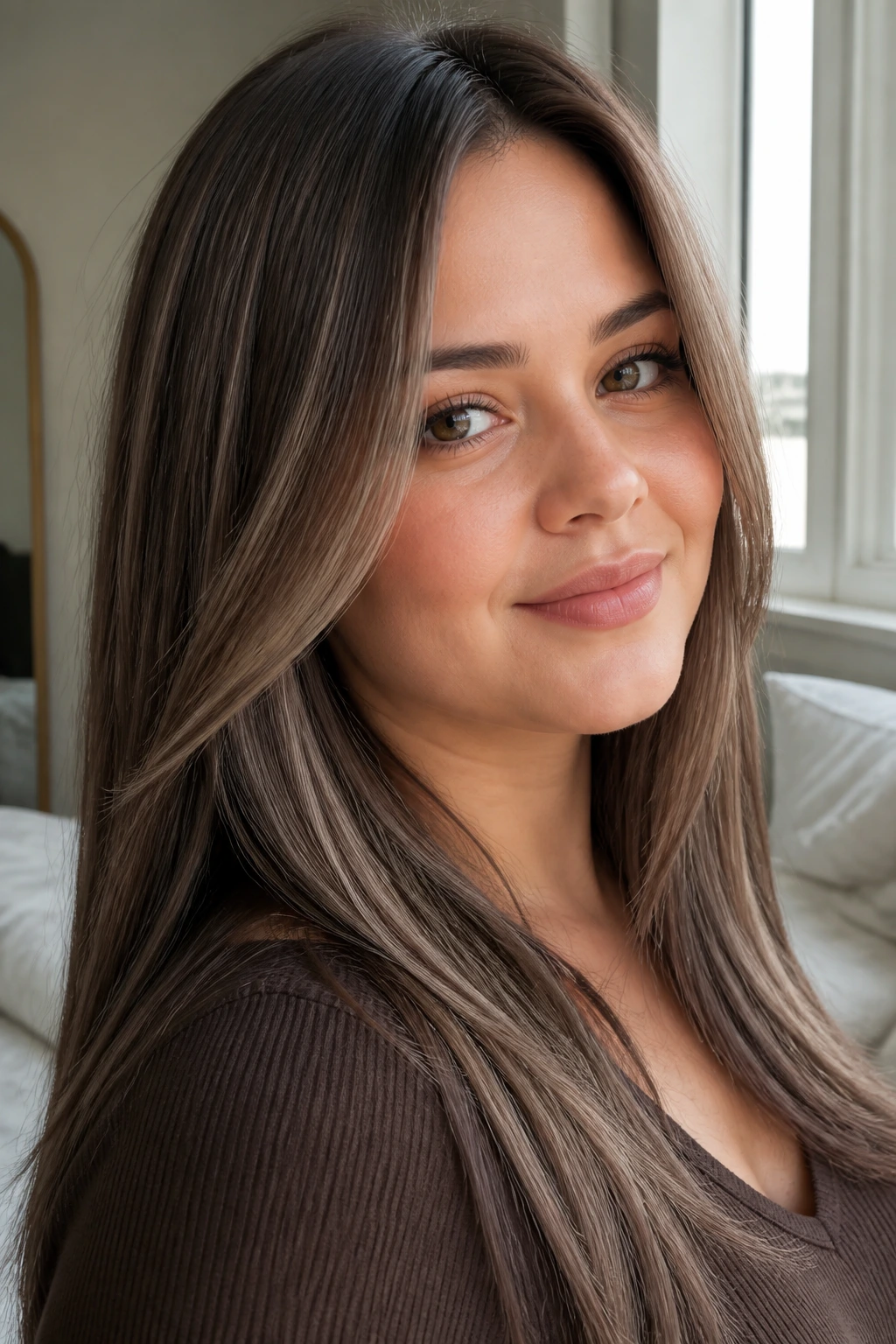
Straight hair shows every line. Every. Single. One. That is why mushroom brown highlights need to be feathered carefully on straight textures, especially when the face is round.
The cool tone helps narrow the visual width, but the placement is the real thing. Thin ribbons through the lengths keep the hair from looking like one dark curtain. If the highlights are too blunt, the eye stops there and the face feels wider. If they’re broken and slightly translucent, the hair lengthens the whole look.
I like this on dark blonde to light brown bases that already have a bit of ash in them. The finish is smooth, cool, and understated. Not flat. Just calmer. Use a flat iron with a tiny bend at the ends if you want the face to appear longer. Straight, pin-straight lengths can work too, but they need good layering to avoid a boxy edge.
26. Mahogany Brown Slices for Depth
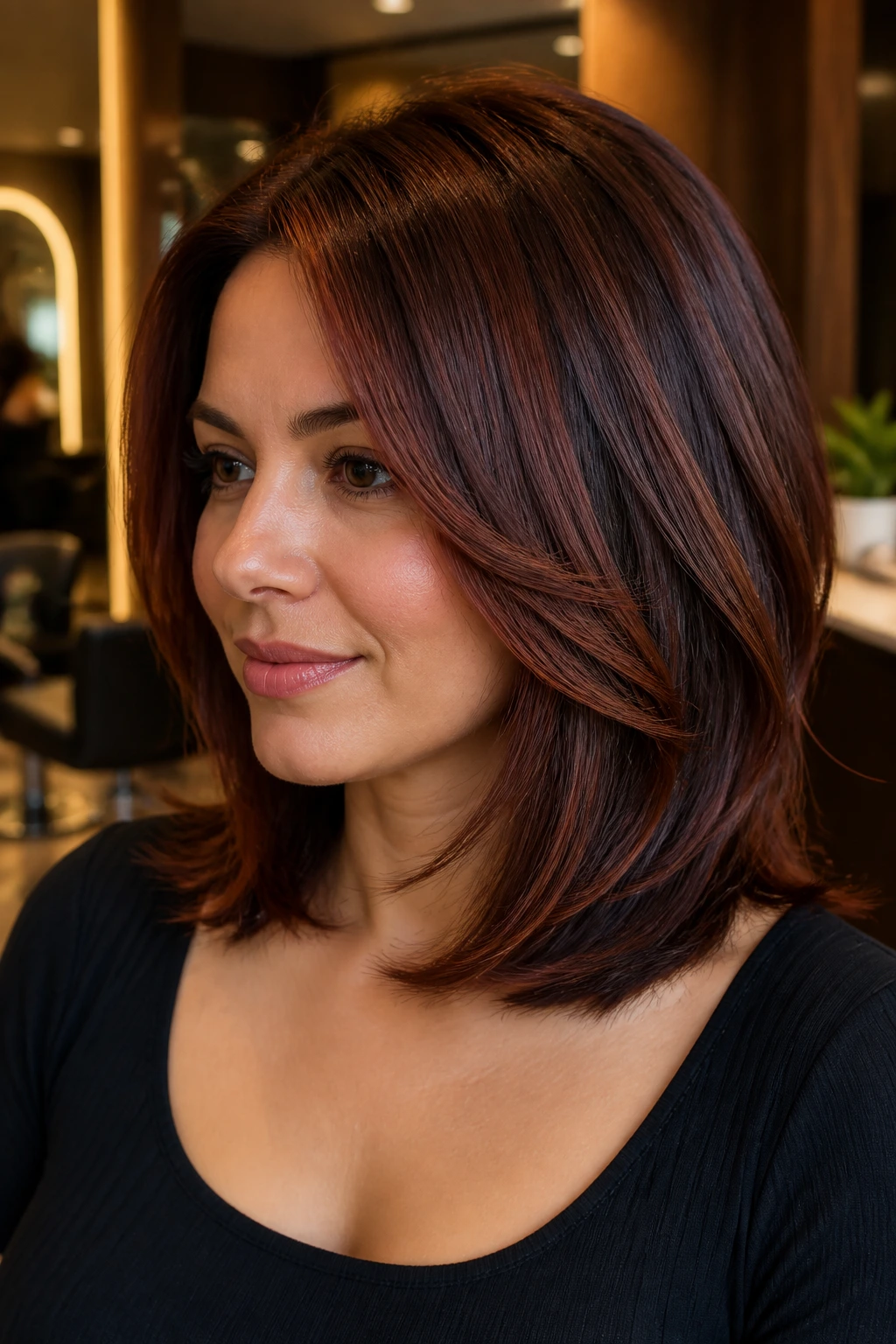
Mahogany slices are for the days when flat hair needs a little drama and a little structure. The red-brown tone catches light in a richer way than plain brown, which can make the hair look fuller in motion.
That extra depth is useful on round faces because it gives the eye something to follow vertically. The slices can run through the inner layers, under the surface, and along the back perimeter where they show only when the hair moves. That keeps the front from getting crowded.
Why It Helps
- It adds color contrast without obvious blonde.
- It makes dark hair look denser.
- It works well on layered cuts that move.
- It softens grow-out better than brighter reds.
I’d use mahogany when the hair is looking tired, not when it is already colorful and busy. The tone should feel deep and polished, not loud. A little goes a long way.
27. Baked Caramel Ends on Shoulder-Length Cuts
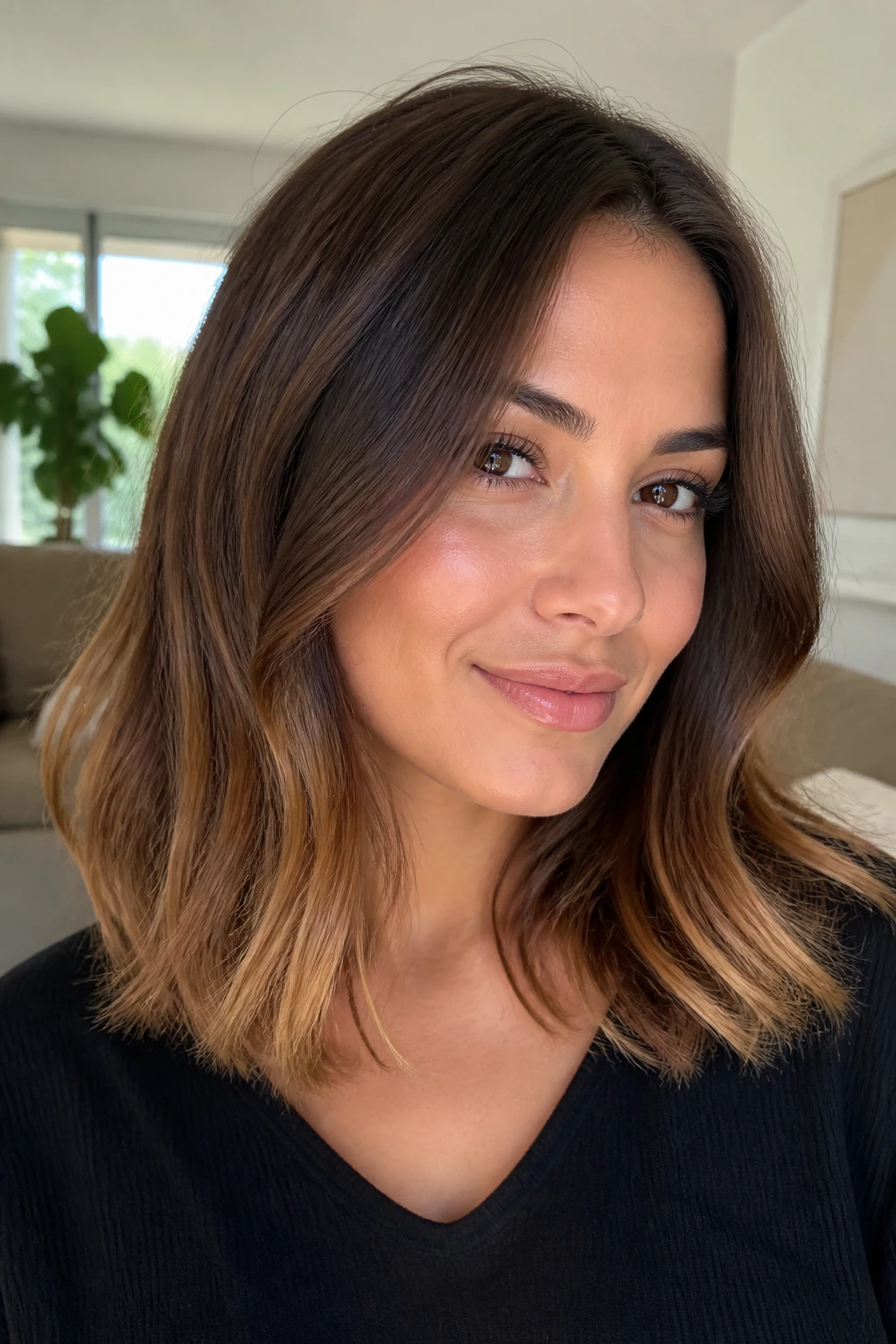
Shoulder-length hair is a sweet spot for caramel ends. The length is long enough to show the gradient, but short enough that the color doesn’t disappear into the floor of the hair. On a round face, that balance matters.
Baked caramel at the ends gives lift to the lower half of the haircut, which helps draw the eye down. The top stays darker and calmer, while the ends carry the warmth. That shift makes the face seem a touch longer. If the caramel starts too high, though, the shape can go puffy fast. That is the catch.
I’d keep the layers tucked in and avoid a bulky triangle shape. Interior layers help the color fall instead of flare. If you wear your hair wavy, the ends should look soft and sun-kissed. If you wear it straight, the color should stay smooth and clean. Either way, the caramel belongs at the bottom, not running all the way up the sides.
28. Soft Truffle Brown All-Over Ribboning
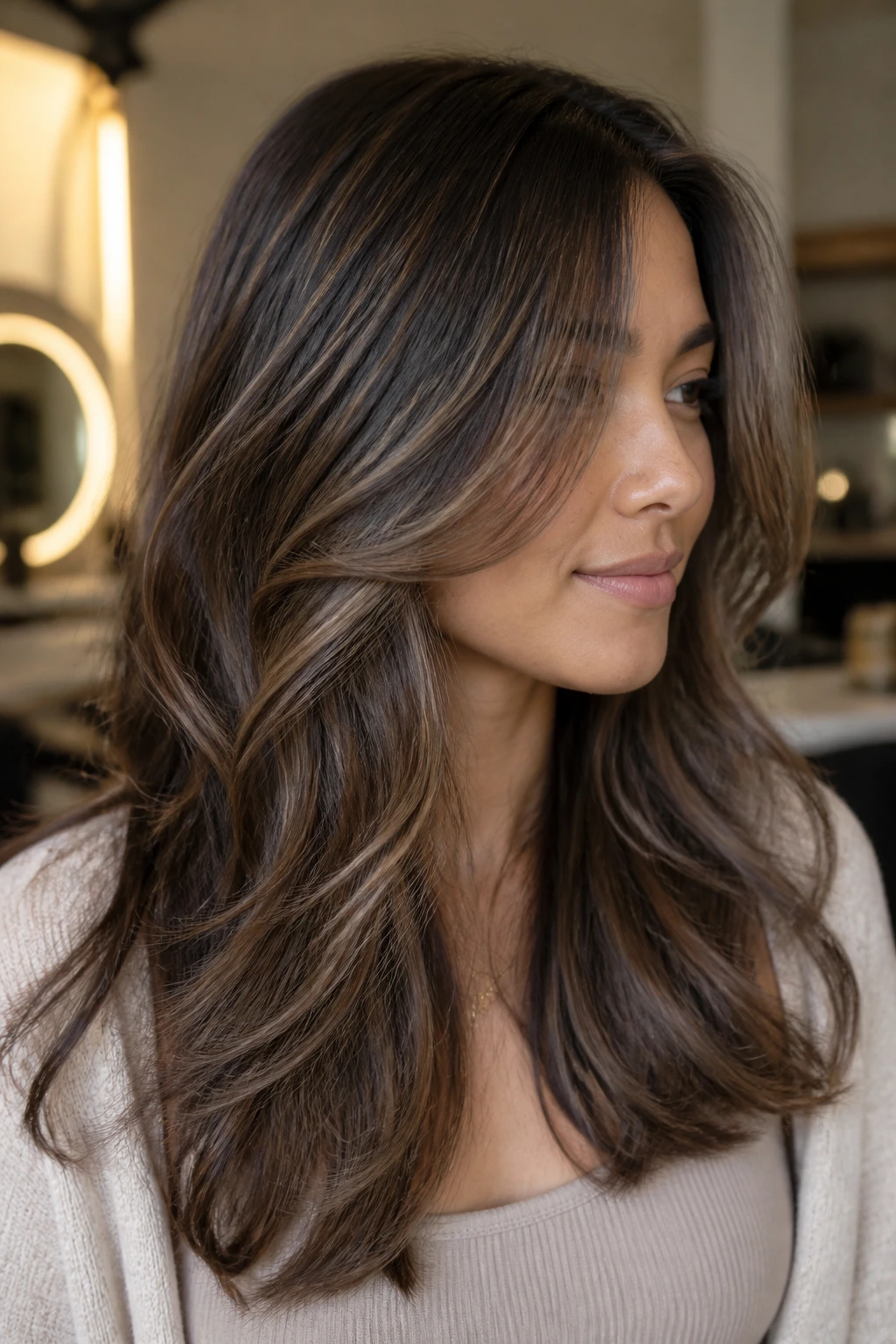
Soft truffle brown is the close cousin of a quiet luxury color, but I’m more interested in how practical it is. The ribbons are soft, cool-to-neutral brown and spread through the lengths with enough space between them to keep the hair moving.
This is the kind of look that works when you want dimension without a lot of maintenance pressure. The grow-out stays softer because the contrast is not harsh. On round faces, the benefit is shape control. The ribbons can be placed to follow the haircut’s vertical movement instead of sitting across the face like bands.
What Makes It Different
The truffle tone keeps the finish grounded, while the ribboning gives the hair room to breathe. That combination is excellent on medium to long cuts with a side part or a deep off-center part. It is also one of the easiest looks to style on days when you don’t want to do much. A quick bend with a large barrel iron is enough.
If you want one brown highlight idea that can live comfortably on most round faces, this is a strong contender.
Final Thoughts
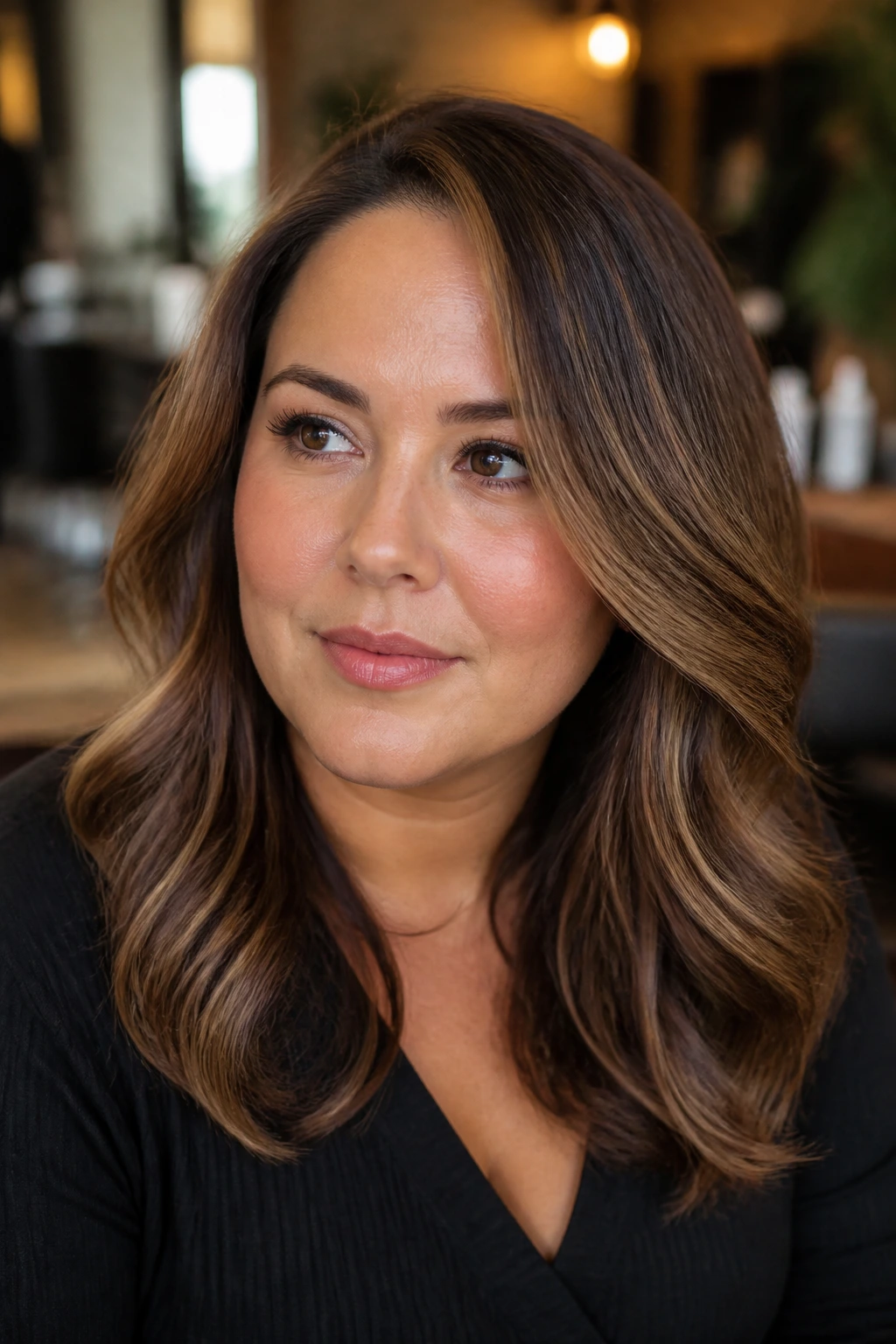
Round faces look best when the color works with the shape, not against it. That usually means softer brightness below the cheekbone, a little shadow at the sides, and some lift near the crown. Those three moves do more than a strip of blonde ever could.
Brown highlights have a useful range, which is why this color family is so forgiving. You can go warm with caramel and chestnut, cool with mushroom and ash brown, or deeper with walnut, espresso, and mahogany. The difference comes from where the light lands.
Bring that idea to the salon, and the rest gets easier. Show your colorist where your cheeks are widest, where your hair tends to puff, and where you want the eye to travel first. That conversation matters more than a pretty swatch on a screen.
