



Brown hair and honey blonde highlights can look casual in the best way, but they’re not casual to get right. Put the light in the wrong place and you get stripes. Put it in the right place and brown hair suddenly has movement, shine, and a warmer feel that looks like it belongs there.
Honey blonde sits in a sweet spot. It’s warmer than ash, softer than bright gold, and easier to wear on brunettes than a pale blonde that fights the base color. On chestnut, chocolate, and espresso hair, that warmth can make the whole cut look thicker because the lighter strands catch the eye in just the right places.
Placement matters more than people think. A few well-placed ribbons around the face can wake up a haircut faster than a full head of light pieces. Babylights whisper. Chunky panels talk back a little. Both can work, but they create very different moods.
The trick is choosing a version that matches the cut, the texture, and how much upkeep you’re willing to deal with. Some looks grow out softly and barely need toner love. Others are bolder and need a hand more often. That’s the real game here, and the variations below cover the ones worth asking for.
1. Face-Framing Honey Blonde Money Piece
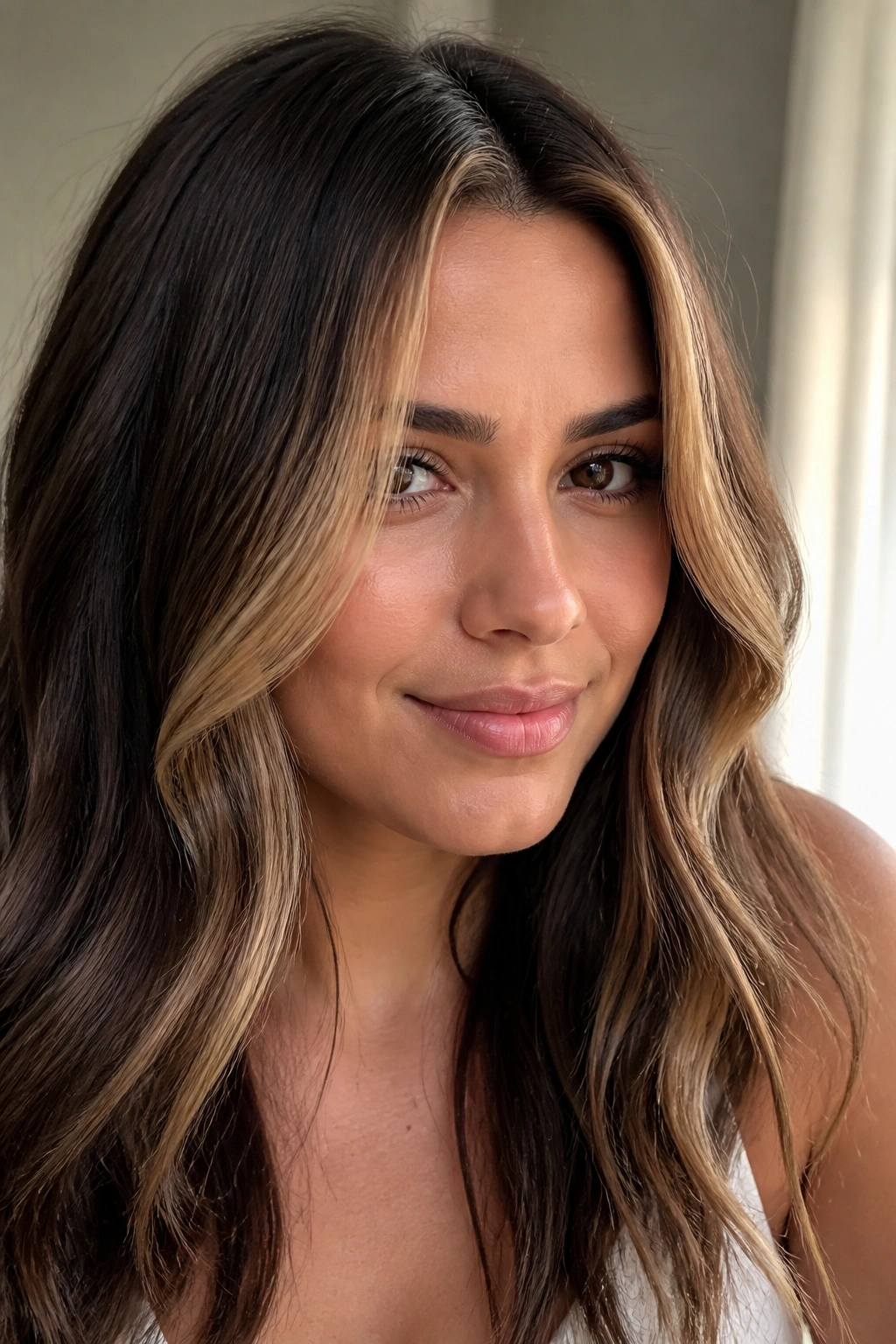
A face-framing money piece is the fastest way to make honey blonde highlights for brown hair feel fresh without changing the whole head. You keep most of the brunette base intact, then brighten the front sections around the cheekbones, temples, and part line. The result is immediate. Your face gets light, and the rest of the hair stays grounded.
Why it works
The front pieces sit where the light naturally lands, so even a small amount of color does a lot of work. Ask for two slightly brighter ribbons on each side, starting about 1 inch back from the hairline if you want softness, or right at the edge if you want more pop. This looks especially good on layered cuts and shoulder-length hair.
A money piece also gives you room to be picky with tone. If your brown base leans warm, keep the honey blonde in the beige-gold family so it doesn’t turn loud. If your hair is cooler, a richer gold can keep the front from looking muddy.
Best for: medium brown hair, layered cuts, oval or round faces
Watch for: overly thick front pieces that look disconnected
Style tip: loose waves make the lighter front strands stand out without showing every foil line
2. Soft Honey Blonde Balayage on Chestnut Brown Hair
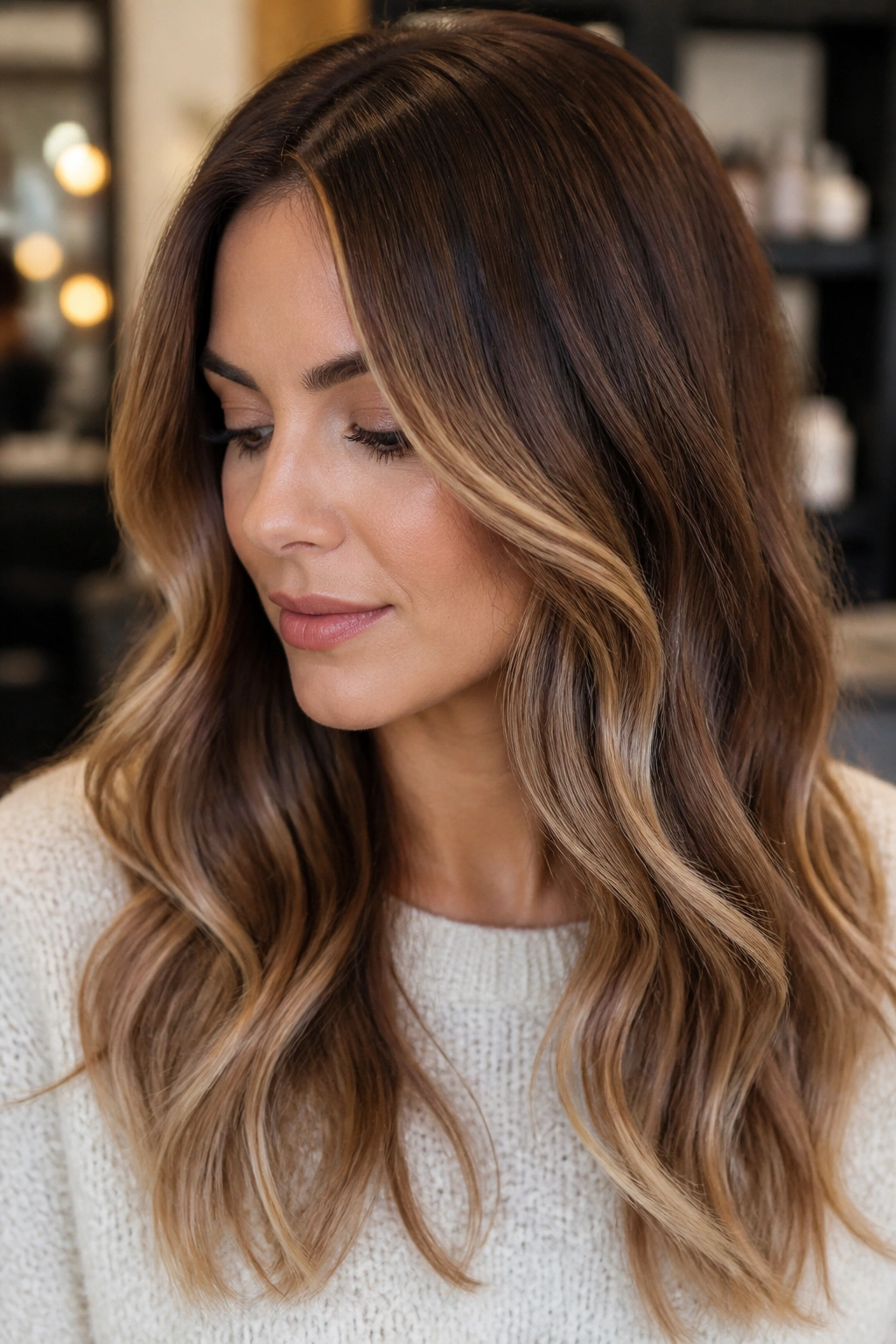
Balayage is the quietest way to wear honey blonde on chestnut brown hair, and that’s exactly why I like it. The color is painted by hand in soft sweeps, usually with the lightest pieces starting mid-length and moving down toward the ends. No hard line. No blunt stripe near the roots. Just a gradual lift that looks lived-in from the start.
Chestnut brown gives this look a nice base because it already has warmth in it. That means the honey blonde can sit on top without clashing. Ask for thin, spaced-out surface pieces through the top layer and a little more saturation near the face. You get brightness where you want it, while the rest stays rich and brown.
This is the kind of color that behaves well during grow-out. It doesn’t scream for a touch-up every few weeks. It just softens and blends.
3. Fine Babylights for a Sun-Laced Finish
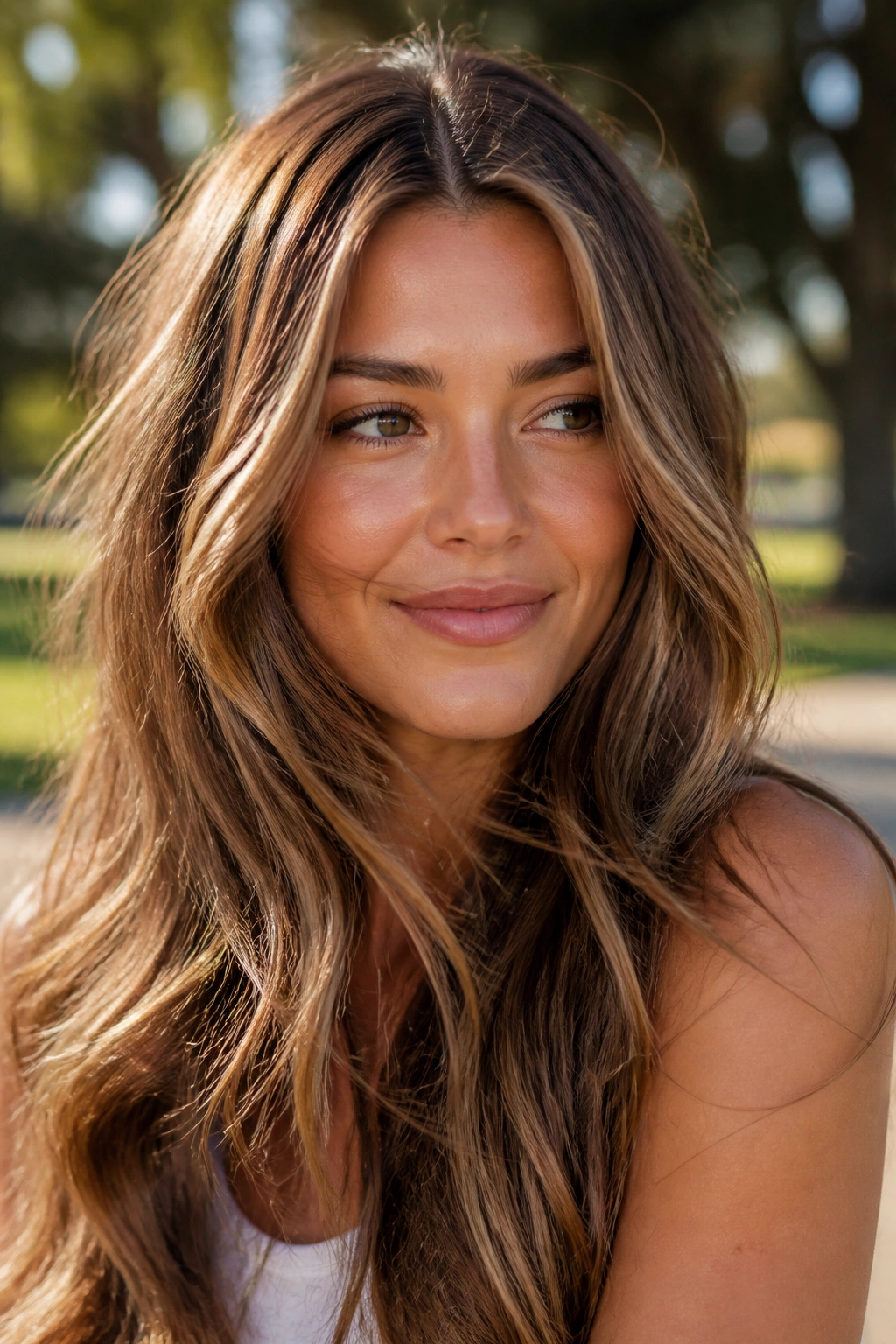
Do you want lightness that looks more like exposure to sun than a salon visit? Fine babylights are the answer. These are tiny, almost threadlike highlights placed close together so the brown hair reads lighter overall without one obvious streak standing out.
What makes babylights different
Babylights use very narrow sections, often sliced so close together that the finished color looks woven instead of painted. On brown hair, that can be a game-changer because the contrast stays low and the shine stays high. The whole head looks more reflective, not stripey.
I’d choose this if your hair is fine, straight, or easily overwhelmed by chunky color. The lighter pieces should stay within one or two shades of the base for the most natural result. And if you wear your hair in a center part, babylights around the part line keep the color from disappearing when the hair falls flat.
How to wear it
- Blow-dry smooth for a soft, airy finish.
- Add a beige-gold toner if the blonde comes up too yellow.
- Ask for extra micro-pieces through the crown, not just the ends.
4. Chunky Honey Blonde Ribbons
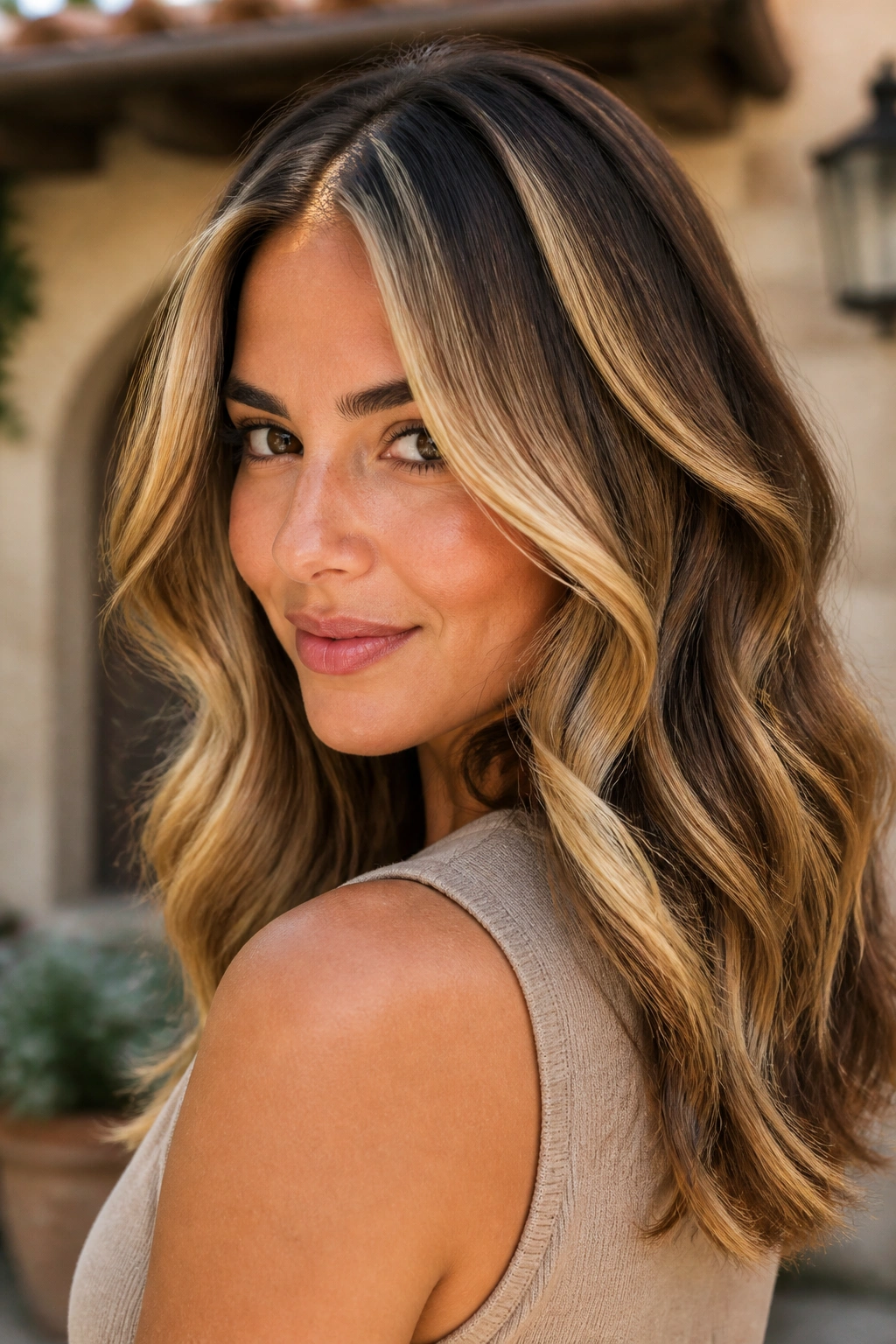
Chunky highlights are back when you want the color to be seen, not guessed at. On brown hair, chunky honey blonde ribbons create clear contrast, especially if the base is medium to deep brunette. They feel bolder and a little more retro, but not in a costume way if the tone stays warm and the placement is clean.
The trick is spacing. You do not want the head packed with wide light pieces. A few thick ribbons through the top layer and around the face are enough. They should sit deliberately, almost like brushstrokes, so the color reads graphic instead of messy.
This works best on hair with movement — waves, bends, or a layered cut. Straight hair can handle it too, but the pieces need to be placed with care so they don’t look blocky. If you like a brighter look and don’t mind a little upkeep, this is one of the strongest options.
5. Honey Blonde Ombré from Dark Brown Ends
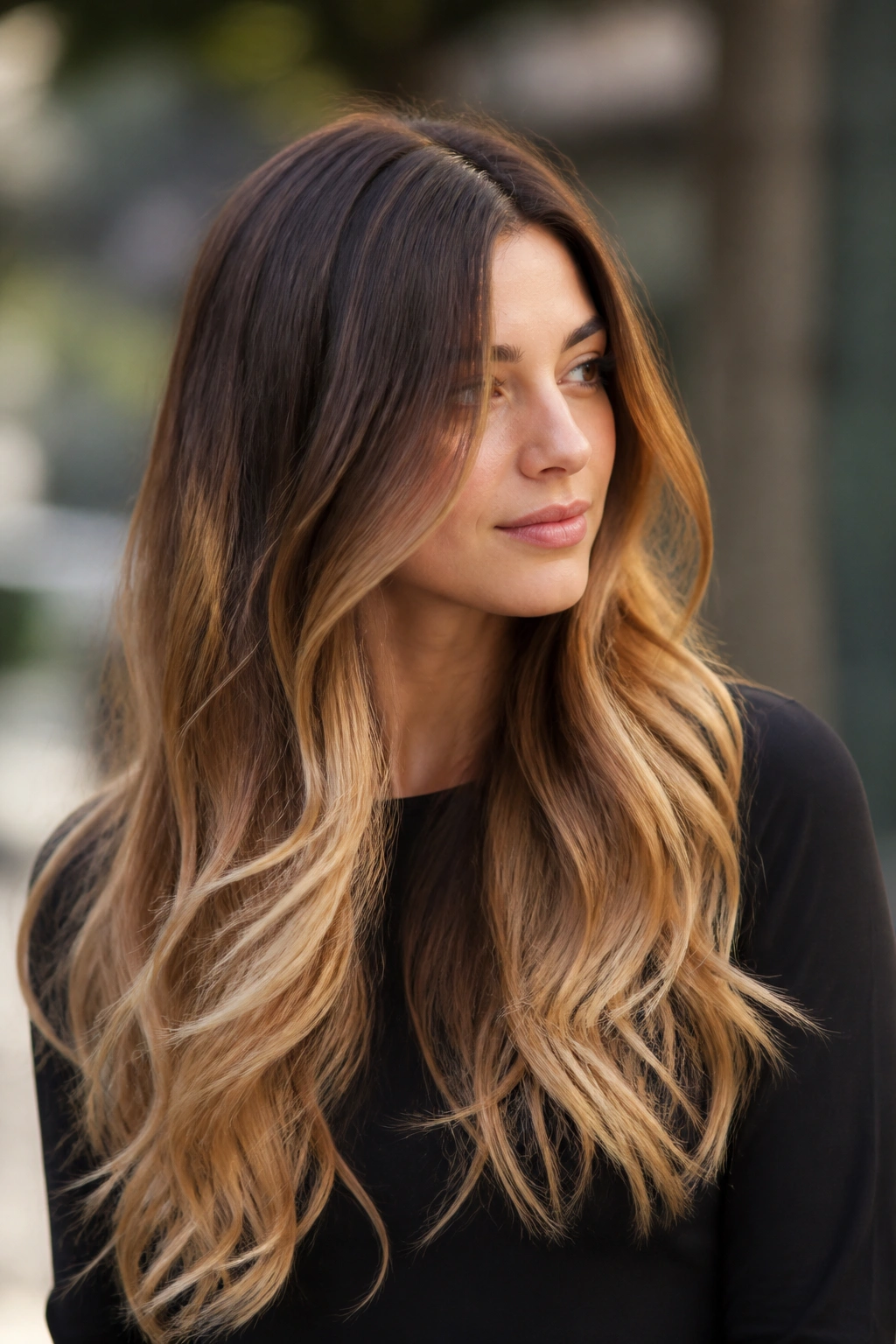
A honey blonde ombré is for the person who wants brightness without giving up the dark root story. The color starts deeper at the top, then eases into lighter honey through the mid-lengths and ends. It’s one of the easiest ways to lighten brown hair without making it feel overprocessed or busy.
The best ombré has a long blend zone. Not a jump. Not a hard fade. The change should happen over several inches so the brown base and blonde ends feel connected. If your hair is long, this look has room to breathe and can be surprisingly low-maintenance.
I like this version on wavy hair because the bends make the transition look even softer. On very straight hair, keep the blend more gradual or the line can show more than you’d like. A gloss in the honey family helps the ends stay warm instead of fading dull.
6. Honey and Caramel Ribbon Mix
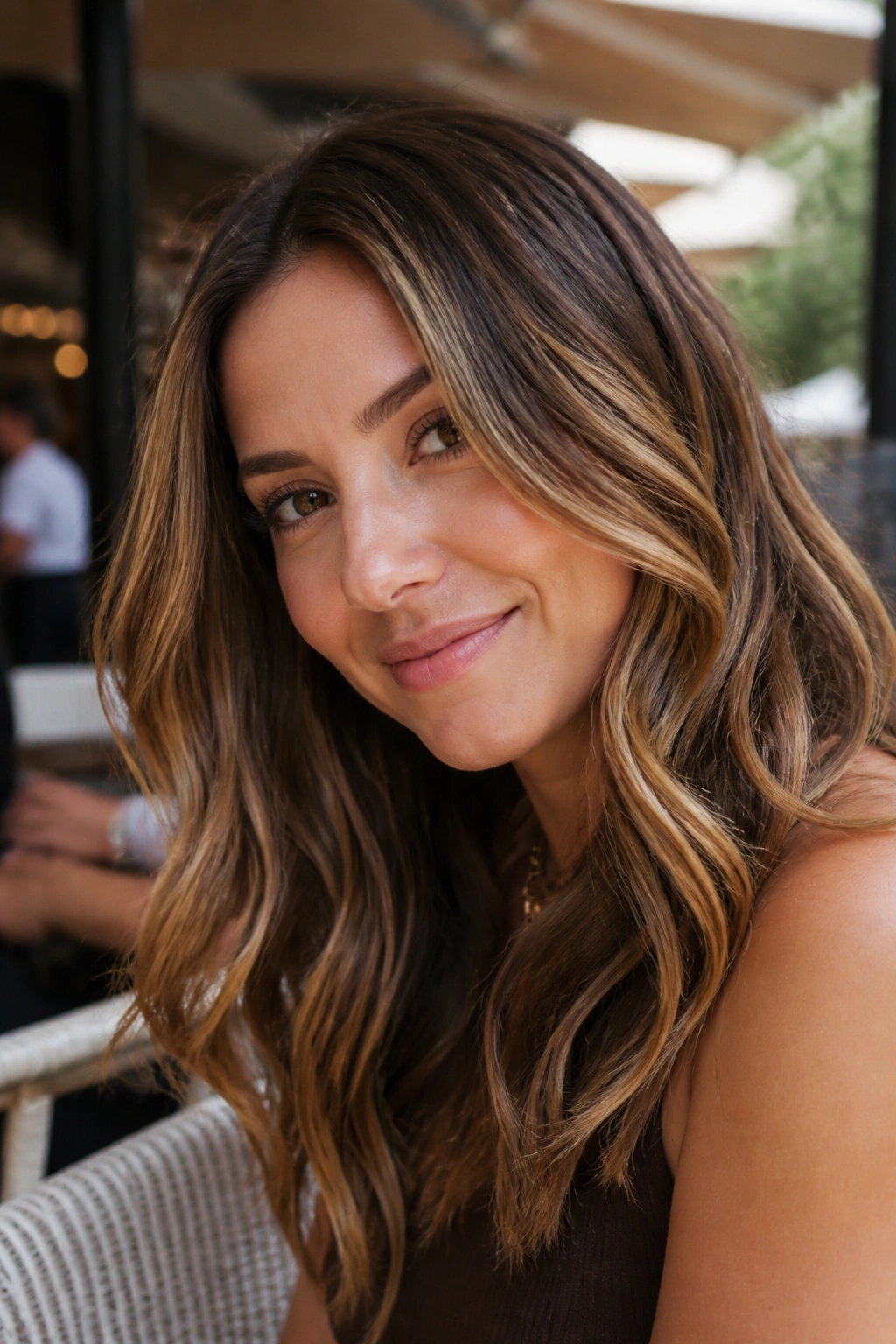
Honey blonde alone can be lovely, but honey plus caramel often looks more expensive. That mix gives brown hair two kinds of warmth: a light golden lift and a deeper toasted shade that keeps the overall color from flattening. The result is dimensional, not one-note.
What makes it different
Caramel ribbons sit a little darker than honey, so they bridge the base and the blonde. That makes the grow-out easier and the color look fuller. If you’ve ever seen highlights that feel pasted on, this is usually the fix — add depth between the light pieces instead of chasing brightness everywhere.
Best way to wear it
- Place honey around the face and crown.
- Put caramel through the mid-lengths and underlayers.
- Keep both tones in the warm family so they don’t fight.
This is a smart choice for thick brown hair, where too much light can start to feel thin. The caramel brings back body.
7. Honey Blonde Highlights on Curly Brown Hair
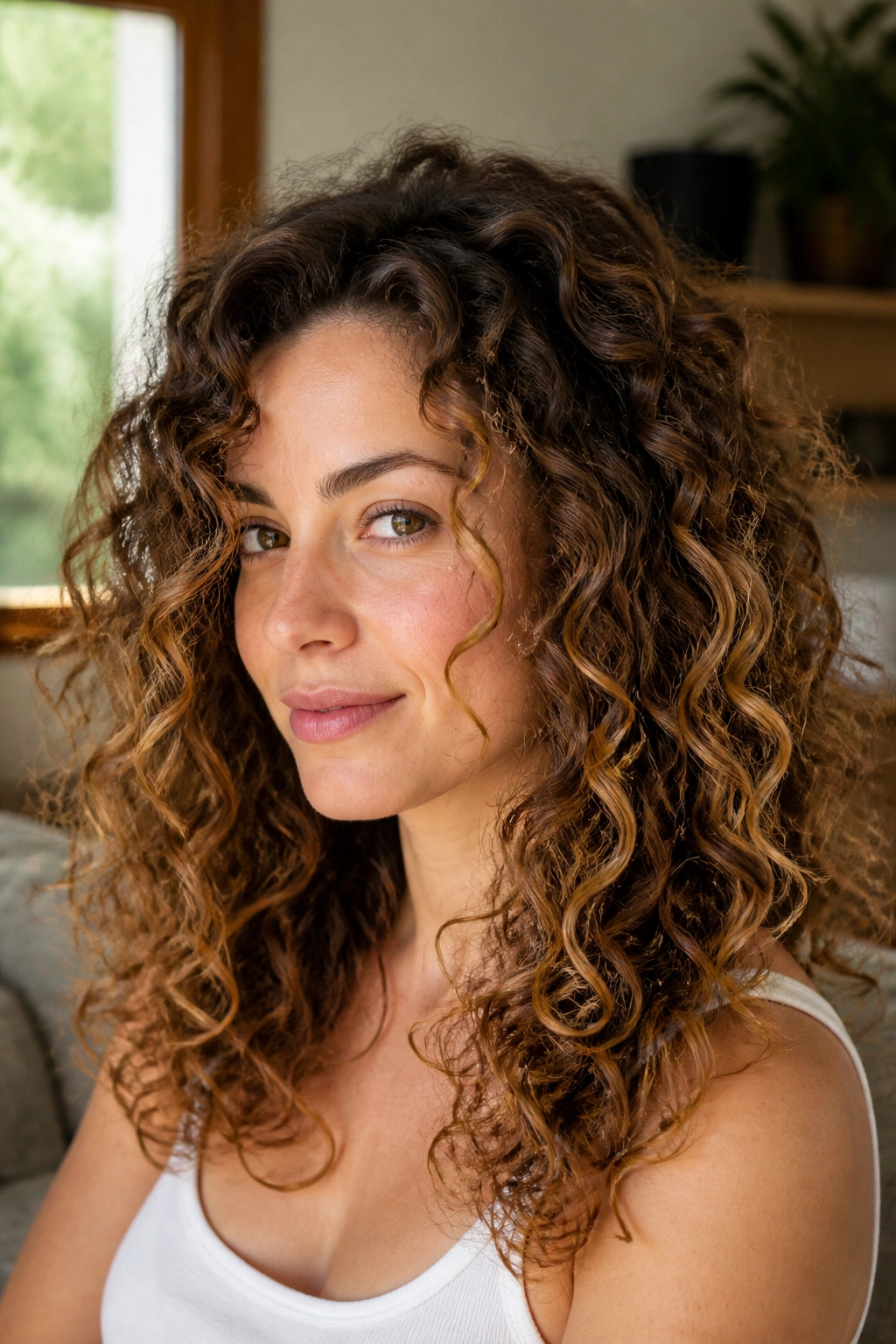
Curly hair does not need the same highlight map as straight hair. The curl pattern changes where the light lands, so honey blonde highlights on brown curls should follow the shape of the coils, not fight them. That means painting around the bends, not just across the surface.
Why curl pattern matters
When curls spring up, a highlight that looked hidden in a foil can suddenly sit right on top. That’s why a painterly approach works so well. Honey blonde placed on the outside of the curl, plus a few brighter tips, gives definition without making the hair look patchy. The light should move with the ringlet.
This look is especially good on medium to dark brown curls that need more visual lift. Keep the ribbons narrow and spaced out. If you go too heavy, the curl pattern can get lost. A gloss afterward helps the curls reflect light instead of looking dry.
Good styling move
Scrunch in a leave-in cream and diffuse on low heat. The honey tones will show more clearly once the curls dry into shape.
8. Honey Blonde on a Chocolate Brown Bob
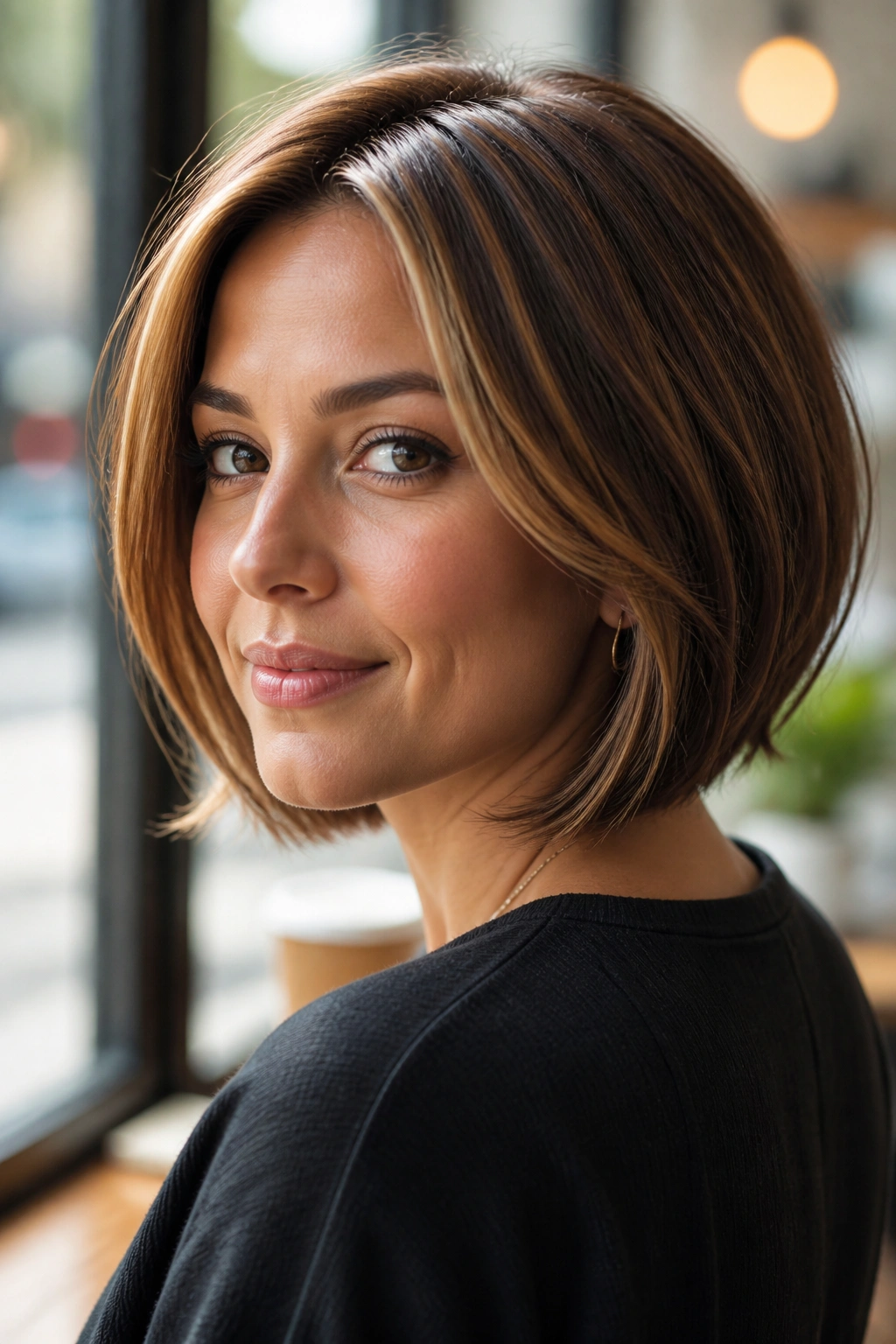
A chocolate brown bob with honey blonde highlights has a clean, polished feel that can look sharp or soft depending on styling. Shorter hair makes the contrast more obvious, so the light pieces need to be placed with a lighter hand. A few well-chosen highlights go farther here than they do on long hair.
The prettiest version usually keeps the brightest honey near the front and through the top layer, with only a whisper of light at the ends. That keeps the bob from looking choppy. If the cut is blunt, the highlights can soften the edge. If the bob is textured, the color adds movement.
This is also a good place to try a slightly deeper honey, not the palest blonde. On dark chocolate bases, rich gold reads luxe. Pale yellow can feel too sharp. A glossy finish helps the whole thing look sleek, which is half the charm of a bob anyway.
9. Warm Honey Highlights with Shadow Roots
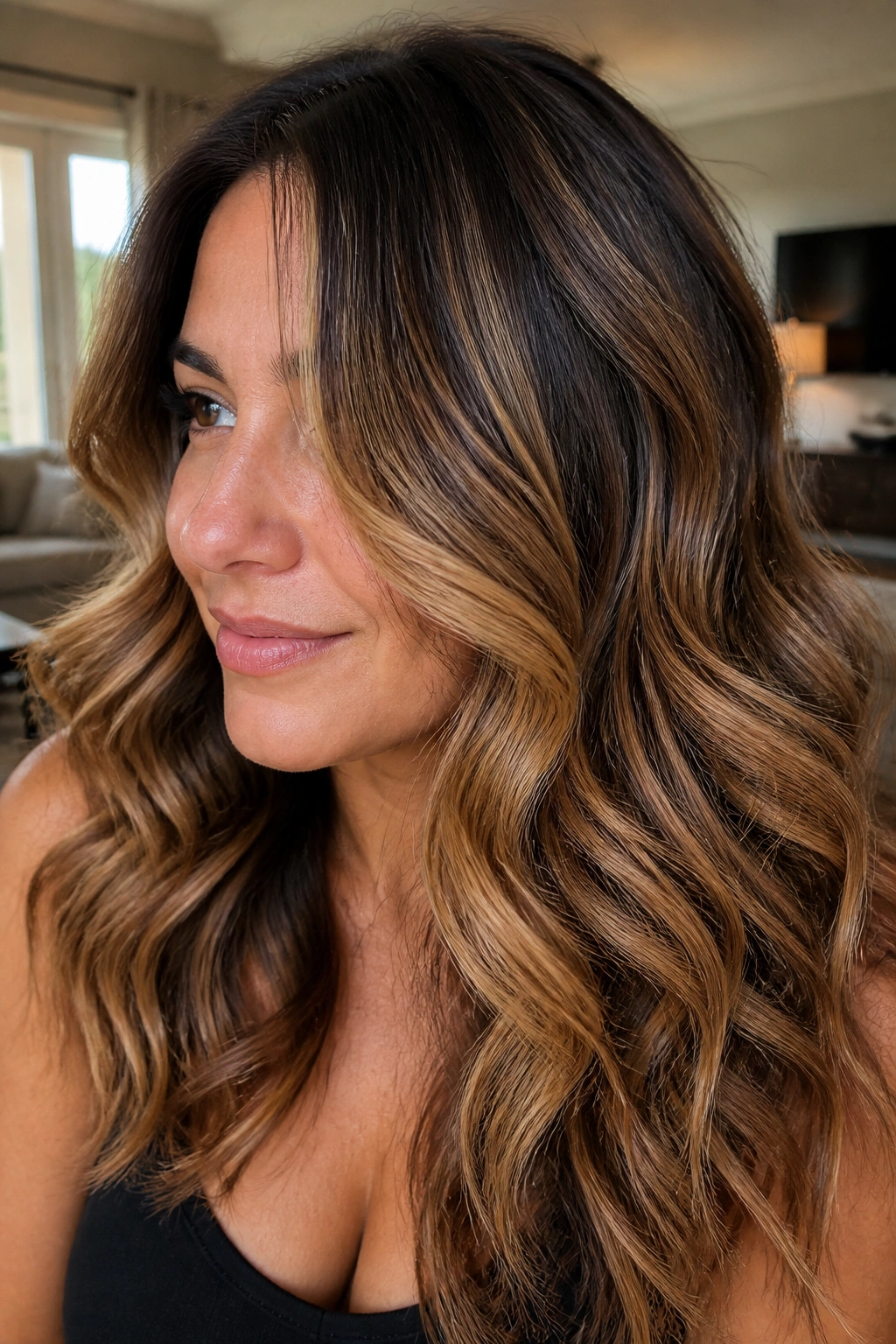
Shadow roots are the reason a lot of brunette highlights look expensive instead of unfinished. By keeping the root area a shade or two deeper, the honey blonde can shine without starting at the scalp like a strip of highlighter. The contrast becomes softer, and the grow-out gets easier.
This approach is especially good if your natural brown is medium or dark and you don’t want to touch it every time the roots show. The shadow root should fade gradually into the honey, not stop in a line. That’s the part that separates a polished color job from a rushed one.
I’d pair this with loose waves or a blowout with bend, because the movement helps the root melt look intentional. Straight hair can still wear it, but the transition needs to be blended carefully. A toner that leans beige-gold keeps the blonde warm without making it brass.
10. Golden Honey Pieces Around the Crown
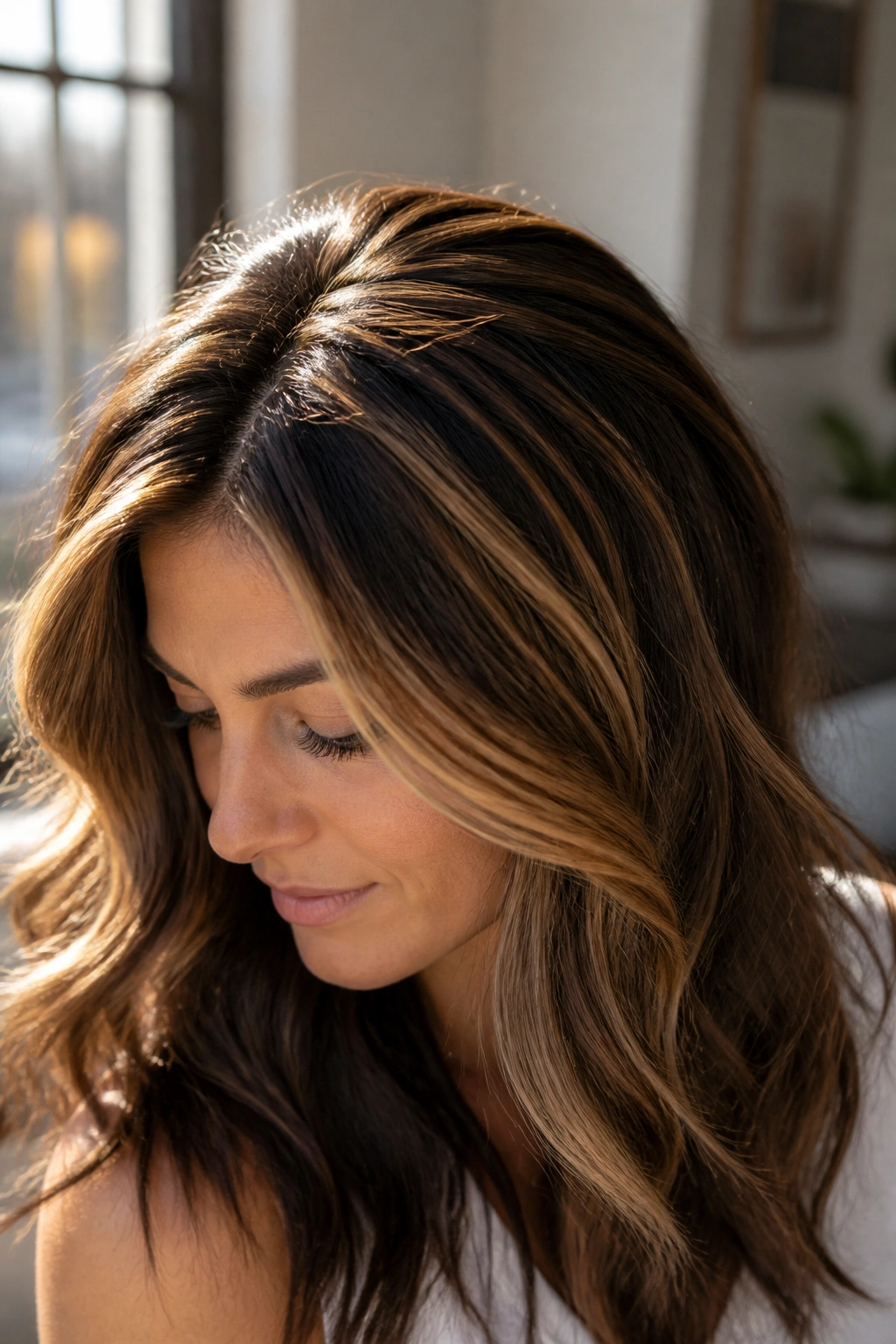
Not every highlight has to live around the face. Crown placement can be smarter. A few golden honey pieces around the crown lift the top of brown hair so the whole shape looks taller and lighter, even when the ends stay mostly dark.
Why the crown matters
The crown is where flat hair starts to look flat. Add light there, and you create the sense of volume right at the top. That’s especially helpful on fine hair, because the lighter pieces catch the eye and make the hair feel fuller than it is. It’s a small trick with a big visual payoff.
Ask for this
- Thin slices at the part and crown swirl.
- A few wider painted pieces if your hair is thick.
- A slightly deeper root so the top doesn’t look overdone.
This is one of those placements that looks subtle in a mirror and much better in motion. Head tilt, wind, curls — all of it helps.
11. Peekaboo Honey Blonde Layers
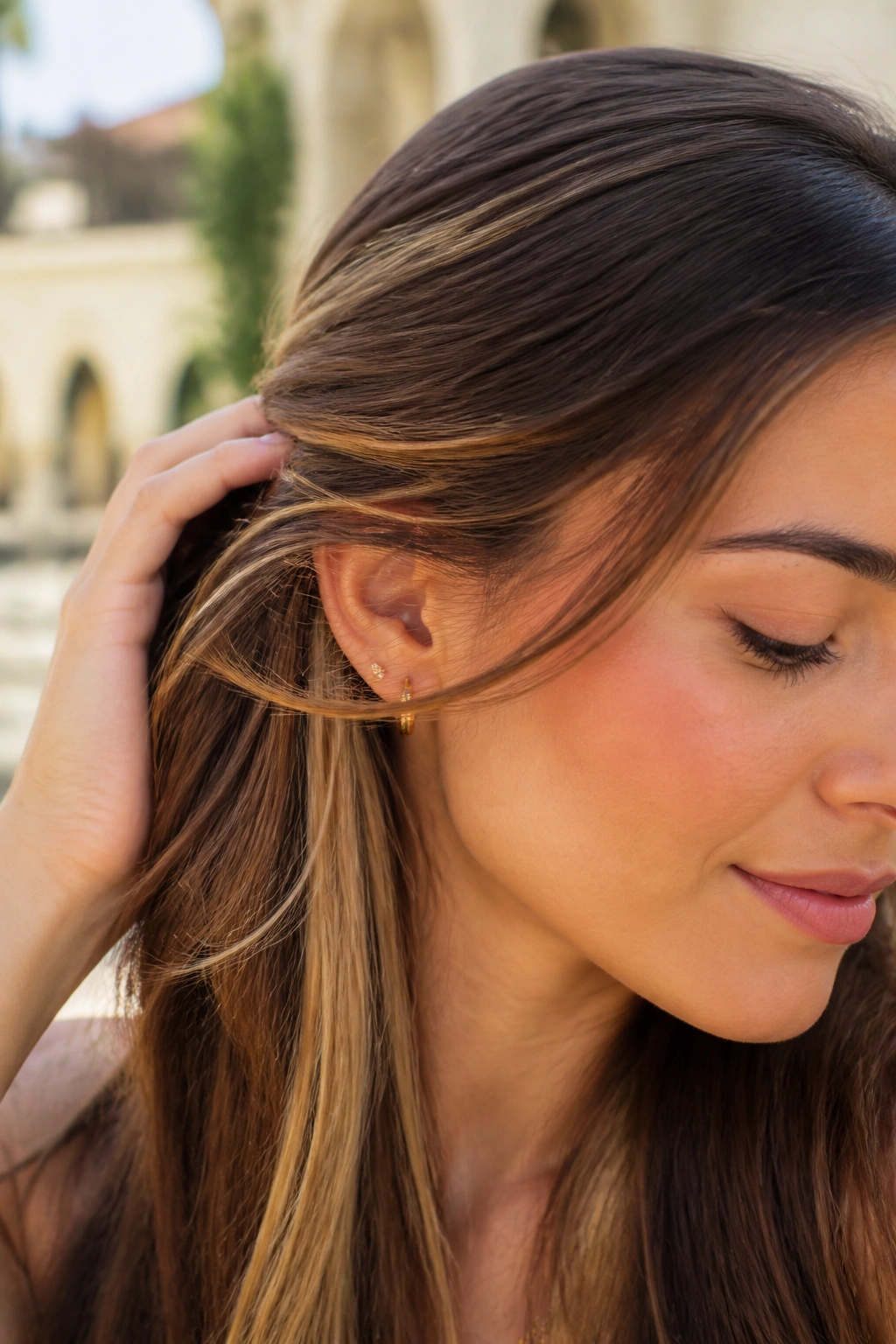
Peekaboo highlights are the quiet troublemakers of the group. They hide under the top layer of brown hair, so the honey blonde only flashes when the hair moves or gets tucked behind the ear. It’s a good choice if you want color with a little surprise in it.
The best thing about peekaboo placement is how much control it gives you. You can keep the surface natural and still let the underlayers glow. On layered cuts, the color shows in slices instead of one obvious block, which makes the whole style feel more dimensional.
This works well for people who like their color to be interesting but not obvious at first glance. It also gives the ends of brown hair more life, especially if the top is darker. The contrast is softer than full highlights, and that can be a relief if you hate a high-maintenance schedule.
12. Honey Blonde for Long Layered Waves
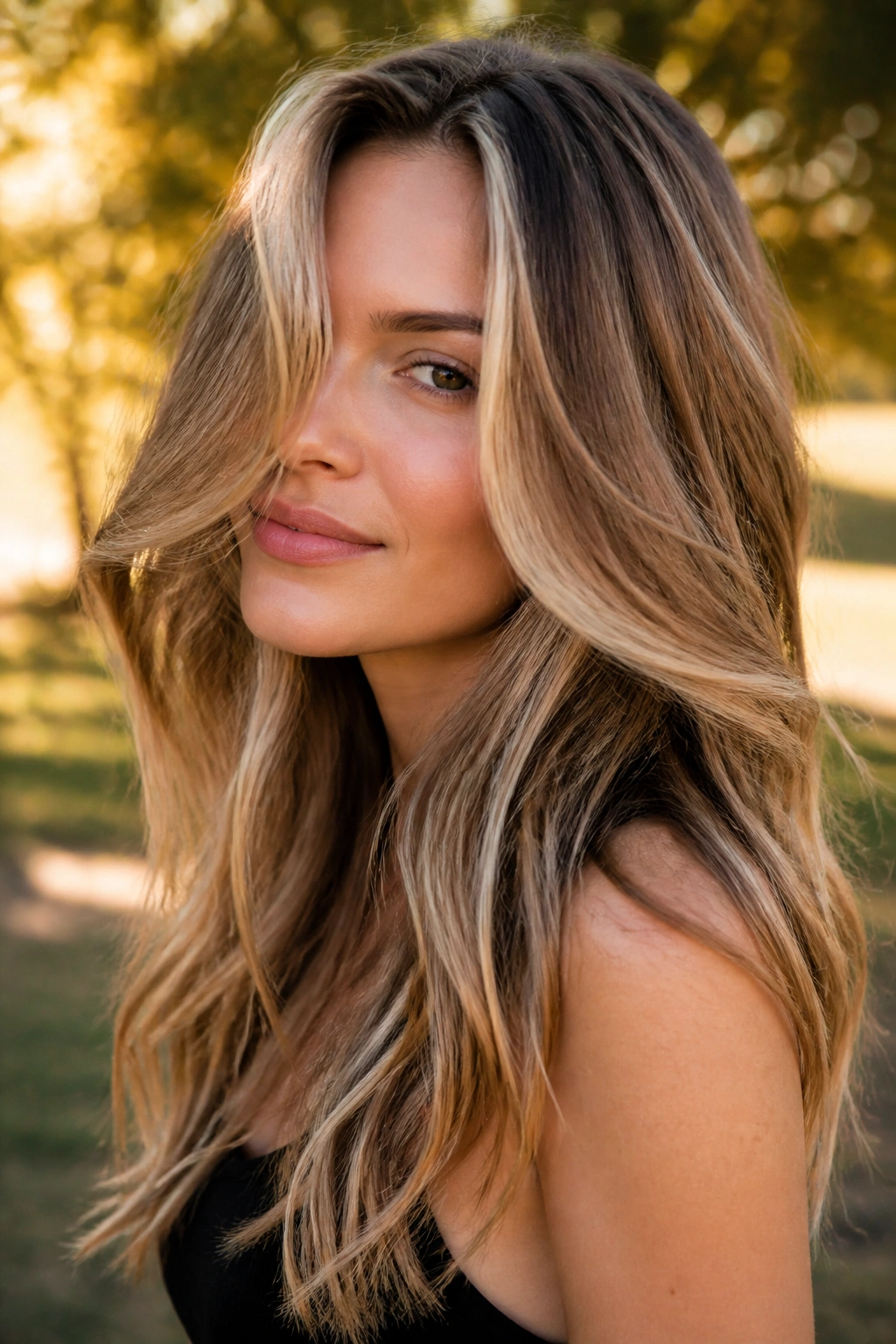
Long layers give honey blonde room to move, and that matters. If the cut has enough shape, the highlights can follow the layers and look woven in rather than painted on. The lighter strands fall differently at each length, so the color keeps changing as the hair moves.
The nicest version on brown hair usually mixes a few brighter pieces around the face with softer ribbons through the lengths. That keeps the ends from looking heavy and helps the layers show. Without that mix, long hair can swallow the highlight and make it look flat.
A 1.25-inch curling iron or a large wand works well here because it creates a bend, not a tight curl. That bend lets the honey strands separate from the brown base just enough. It’s a simple styling move, but it changes everything.
13. Toasted Honey Highlights on Espresso Brown Hair
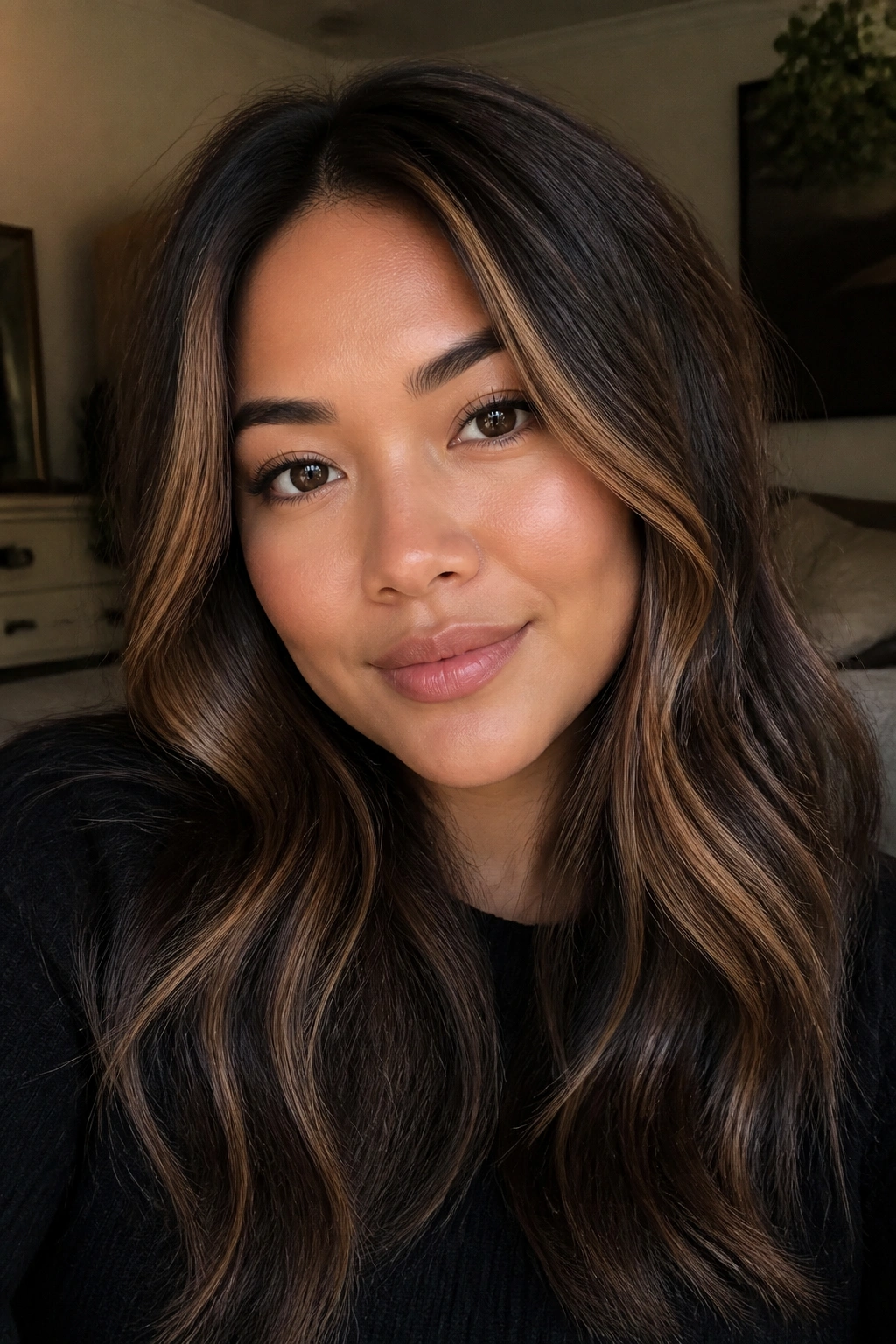
Espresso brown hair can handle warmth, but it needs it handled carefully. Too much gold and the contrast feels loud. Too little and the honey disappears. Toasted honey is the middle ground — warm enough to show, deep enough to stay elegant.
Why toasted honey works
It usually sits a touch darker than standard honey blonde, which is useful on very dark brown hair. The color has a soft amber feel, almost like light hitting amber glass. That keeps the highlights visible without dragging the whole base upward too quickly.
This look is better when the lighter pieces are concentrated where the sun would naturally hit: face frame, top layers, ends. A few carefully painted strokes do more than flooding the whole head. And if the hair is naturally glossy, even better. Espresso brown with toasted honey has a deep, rich finish that doesn’t need much styling to look put together.
My take
If you’re nervous about going too blonde, start here. It’s easier to add brightness later than to back off a color that came up too pale.
14. Honey Blonde and Soft Copper Blend
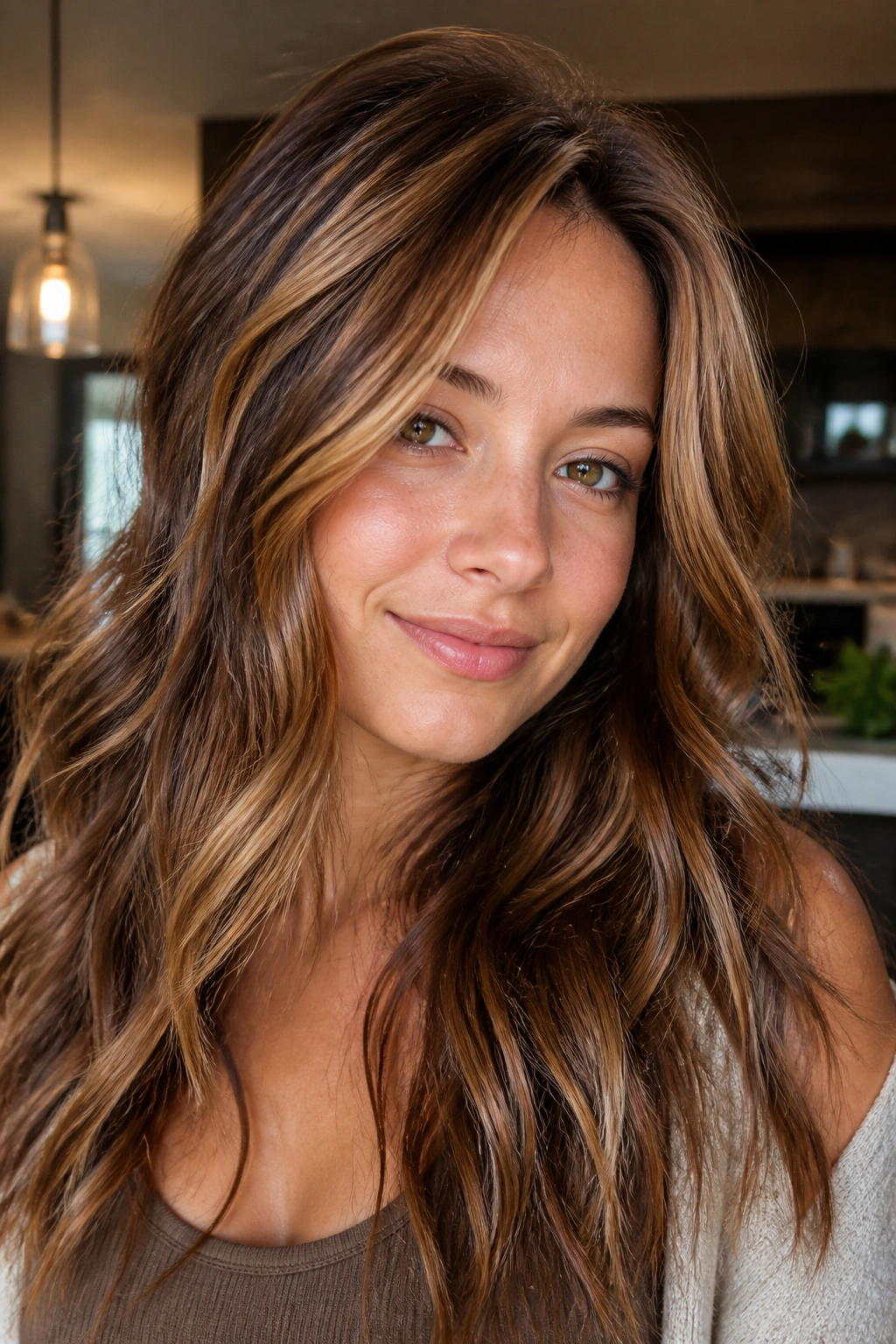
Honey blonde and soft copper together can look rich in a way plain blonde never quite does. The copper adds warmth and depth, while the honey keeps the overall feel lighter. On brown hair, that mix reads almost dimensional enough to look like the color came from inside the hair.
The key is restraint. Copper should not take over. Think of it as a warm undertone through the highlights, not a separate color story fighting for attention. This is especially pretty on medium brown hair with red or golden undertones already in the base.
If you wear warm makeup, this combination is easy to love. The hair and skin tend to echo each other. But even without that, the blend can make brown hair feel alive instead of just lighter. Use a gloss every so often to keep the copper from fading dull.
15. Honey Blonde Face Frame on Straight Hair
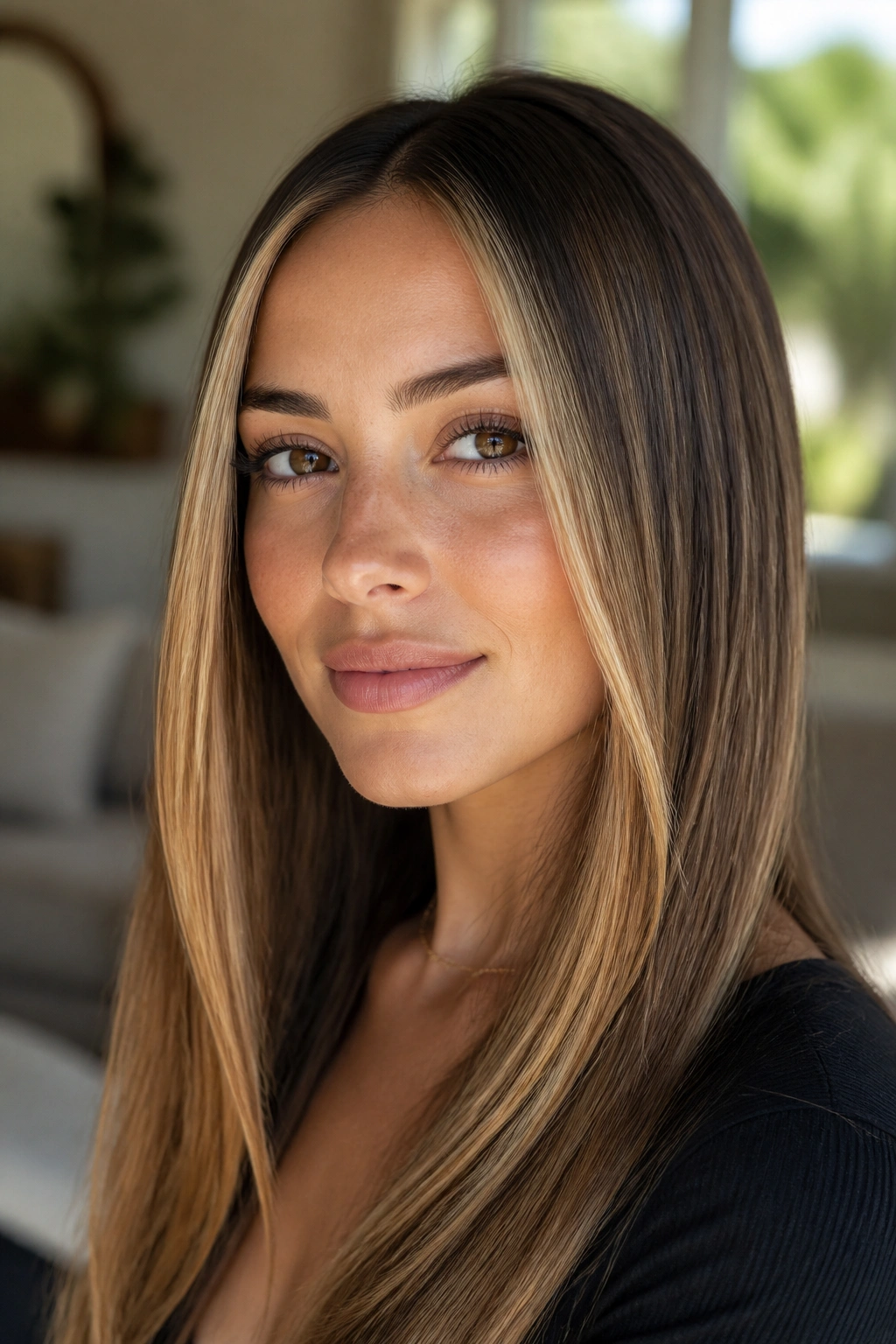
Straight hair shows every line, which is why a face frame has to be clean on this texture. The honey blonde should be placed so it follows the fall of the hair, not so it looks like two light strips sitting in front. A soft frame around the cheekbones is enough.
The nicest version starts with a narrow, bright piece near the part and gradually widens as it moves toward the chin. That creates a natural taper. If the front is too wide from top to bottom, it can look heavy instead of fresh. Straight hair makes that mistake obvious fast.
I like this choice for people who wear sleek styles often. A middle part makes the frame crisp. A side part makes it softer. Either way, the honey pops against the brown base without needing a lot of extra highlight work through the back.
16. Honey Highlights with Lowlights for Depth
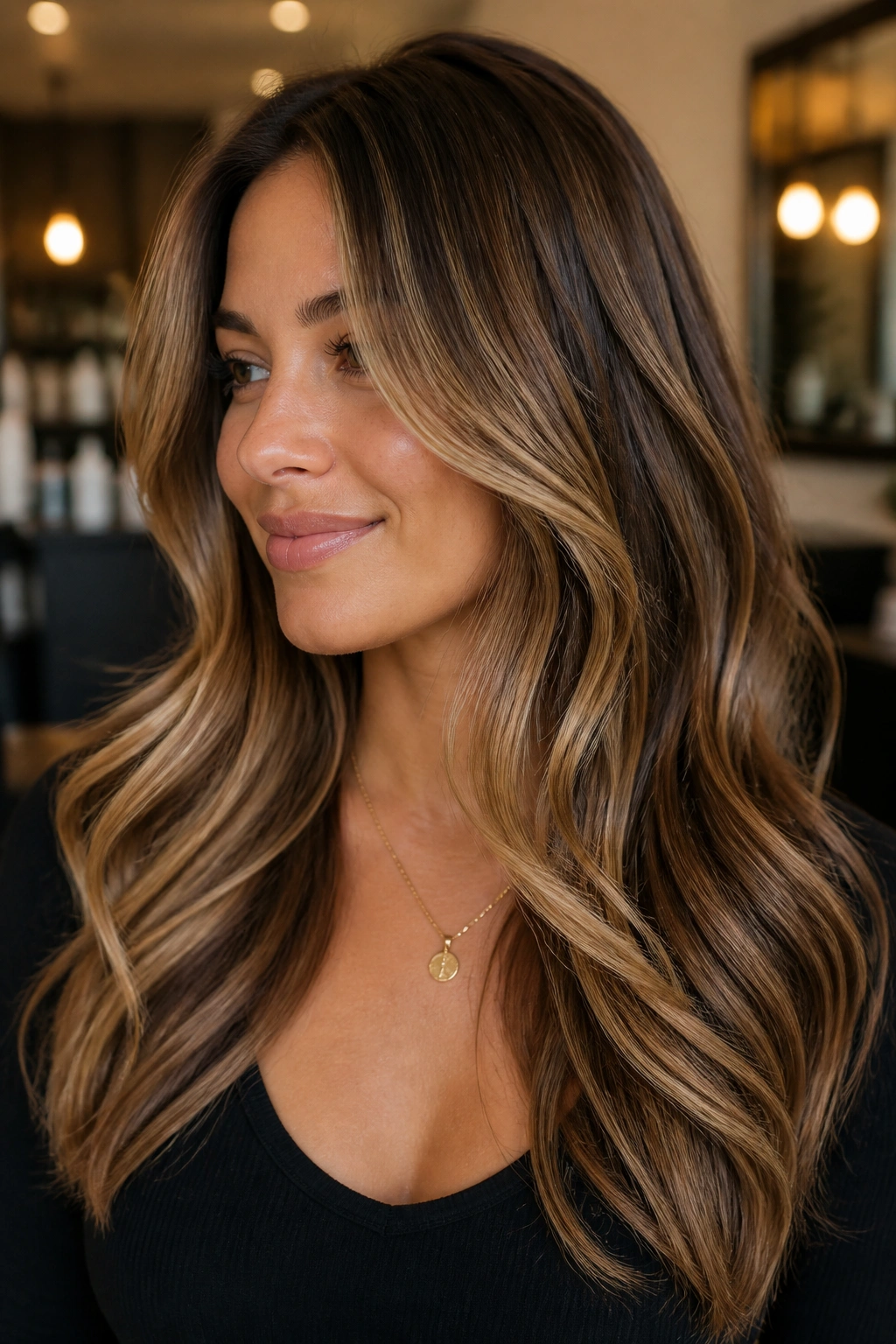
If your brown hair has started to feel one-dimensional, lowlights are the fix people overlook. Honey blonde highlights add the light, but a few deeper lowlights in a chestnut or mocha shade keep the color from losing body. The result is fuller and less washed out.
How depth changes the look
Without lowlights, highlights can spread out too evenly and make brown hair read lighter but thinner. A deeper strand here and there gives the eye somewhere to rest. It also makes the honey pieces look brighter because the contrast is stronger. That is the sneaky part. The blonde seems lighter, but the overall hair looks richer.
This combination is smart for thick hair, long hair, or any cut with layers that need definition. Ask for lowlights through the mid-lengths and underlayers, not just on top. That way the color moves instead of sitting on the surface.
Quick note
This is one of the best ways to stretch highlight appointments because the lowlights keep the grow-out from looking too uniform.
17. Seamless Honey Blonde on a Lob
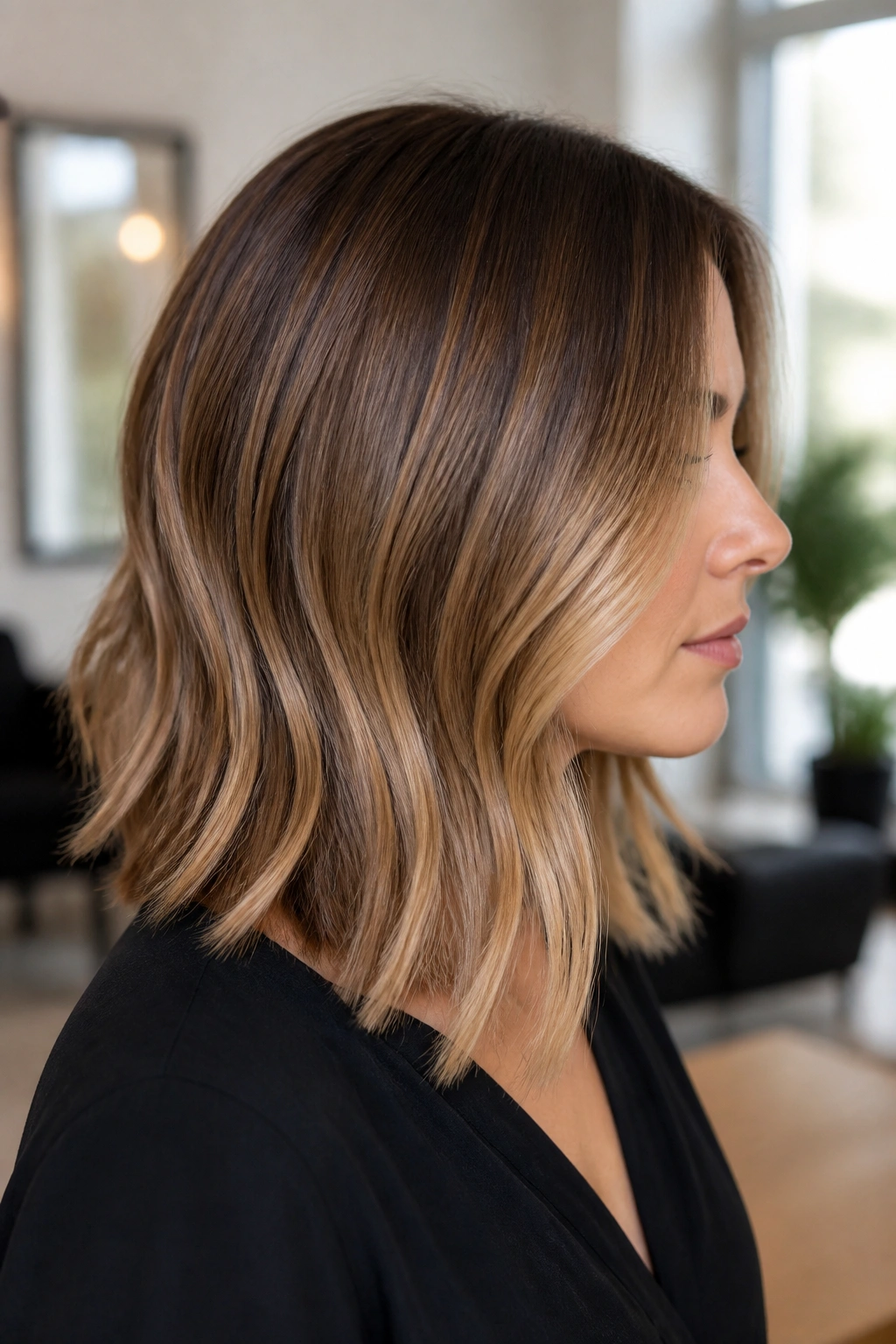
A lob is one of the easiest cuts to pair with honey blonde because the length sits right where highlights can show and still feel polished. Seamless color means the brown base melts into the honey without a harsh shift. The whole thing should feel smooth, almost like the strands changed shade by spending time in the sun.
The trick is keeping the light pieces softer at the top and a little stronger through the ends. That lets the lob swing and show different tones as it moves. On a blunt lob, even a few lighter ribbons can keep the edge from feeling too boxy.
This is a good everyday look. Not fussy. Not boring either. If you want something that works with straight blow-drying, loose bends, or a tucked-behind-the-ear style, this one earns its keep.
18. Sun-Kissed Honey Babylights for Fine Hair
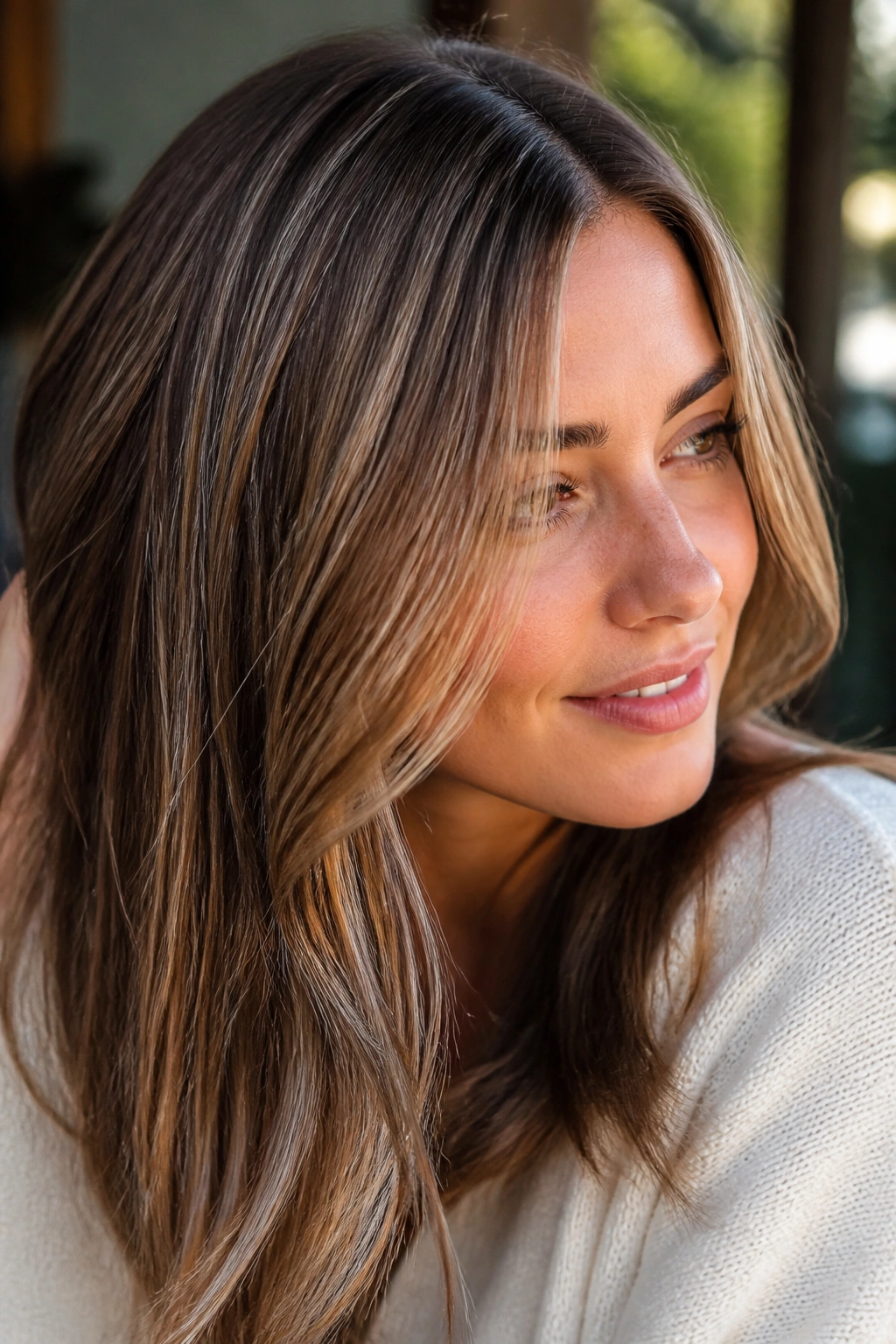
Fine hair loves babylights because the color doesn’t overwhelm the strand pattern. A sun-kissed honey version adds brightness without making the hair look chopped up. The pieces should be tiny and close together, almost like a veil of light running through the brown base.
Why it’s a strong choice
Fine hair can go flat fast when highlights are too wide. Babylights keep the surface soft and give a bit of sparkle instead. The hair reads fuller because the light is spread across more strands. You get shimmer instead of obvious sections.
How to ask for it
- Use very fine weaving through the top.
- Keep the honey close to beige-gold.
- Leave enough brown at the root so the color doesn’t blur out.
This is one of the easiest looks to wear at work, on weekends, or anywhere you want hair that looks cared for without announcing itself.
19. Honey Blonde Streaks for Thick Brown Hair
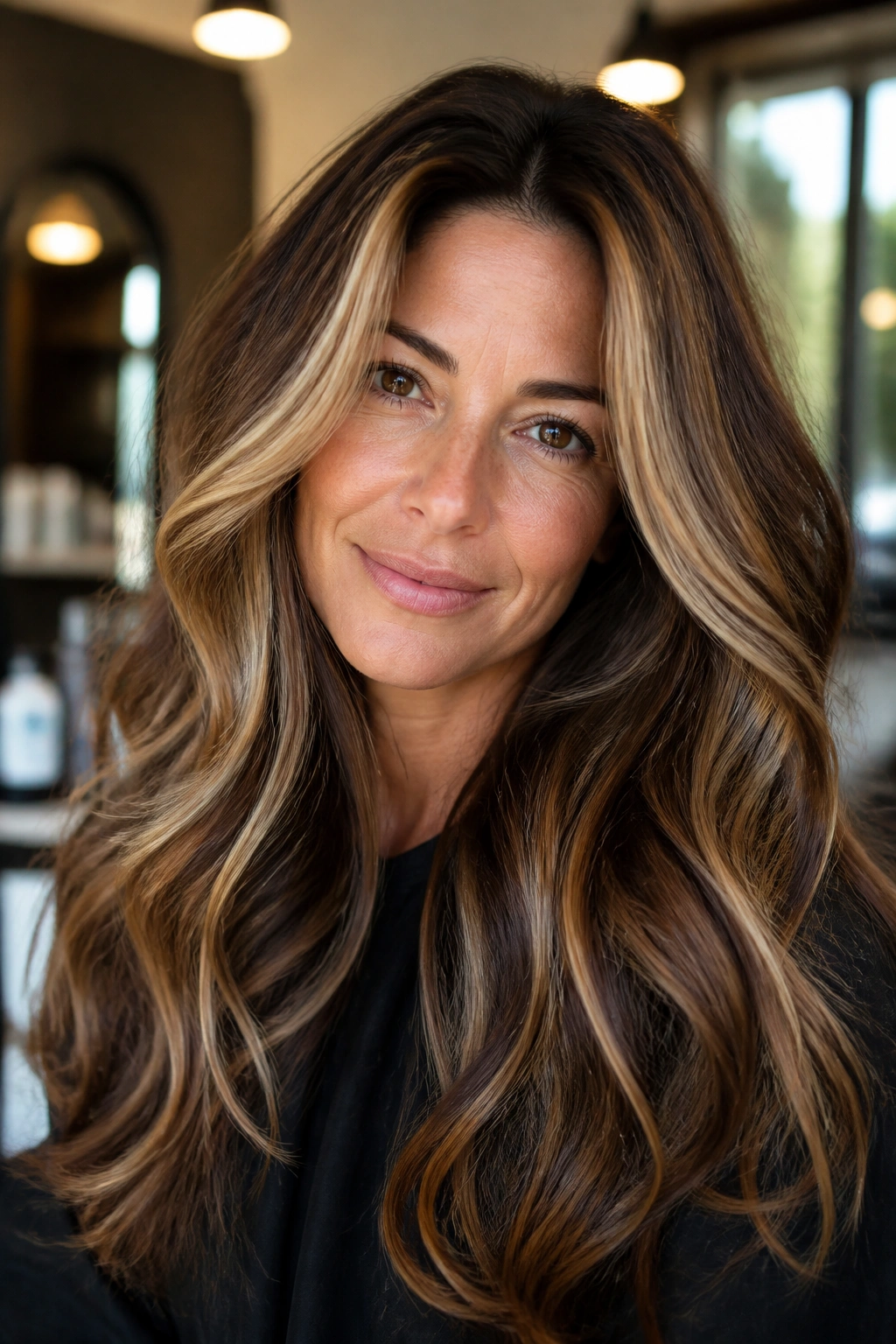
Thick brown hair can take a stronger hand, and sometimes it needs one. Honey blonde streaks work when the goal is to break up weight and show off the cut. The strands should be placed where the hair naturally swells out — around the face, near the crown, and through the top layers — so the color helps the shape instead of sitting underneath it.
The danger with thick hair is overloading the top with too much light. You do not need that. A few broader streaks will already stand out because the hair has so much density. Keep the tone warm and the spacing deliberate, and the color will look intentional instead of crowded.
This is a good match for layered shags, long layers, or heavy one-length cuts that need more movement. On thick hair, highlights should work like windows. Not wallpaper.
20. Honey Blonde Ends on a Midlength Cut
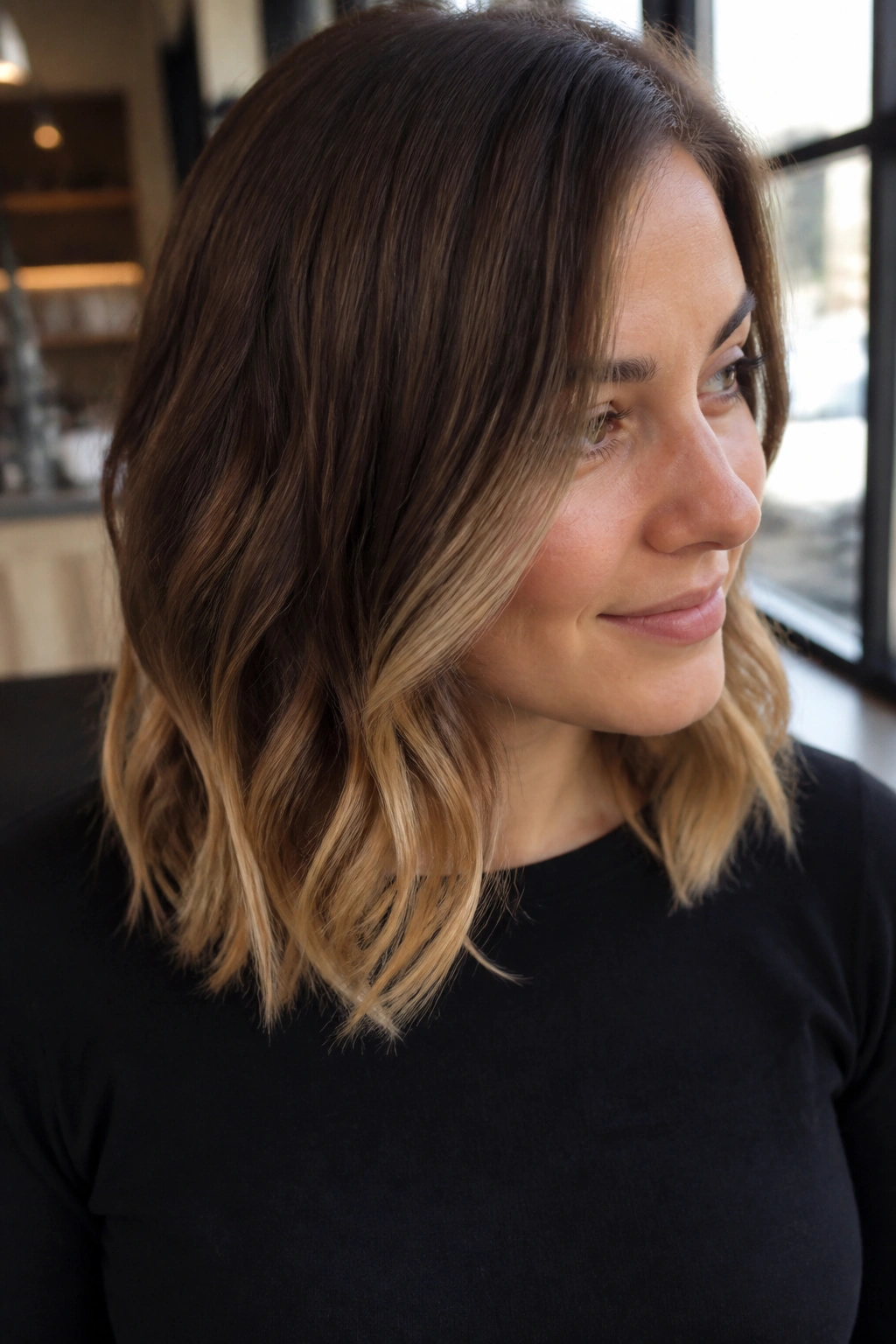
Midlength cuts are made for lighter ends because the color has enough room to fade out without looking abrupt. Honey blonde at the ends adds a little lift and keeps the bottom from disappearing into a dark block. It’s especially useful when the top is a rich brown and the cut sits at the collarbone or just below.
The placement should stay softer than a full ombré. Think of it as a gentle brighten at the bottom third of the hair. That keeps the midlength shape clean while still making the ends visible. If the ends are worn wavy, even better. The lighter tips catch movement and keep the cut from feeling heavy.
This is one of those styles that works well with air-drying. The bend and texture do half the job for you.
21. Honey Blonde Melt from Brunette Roots
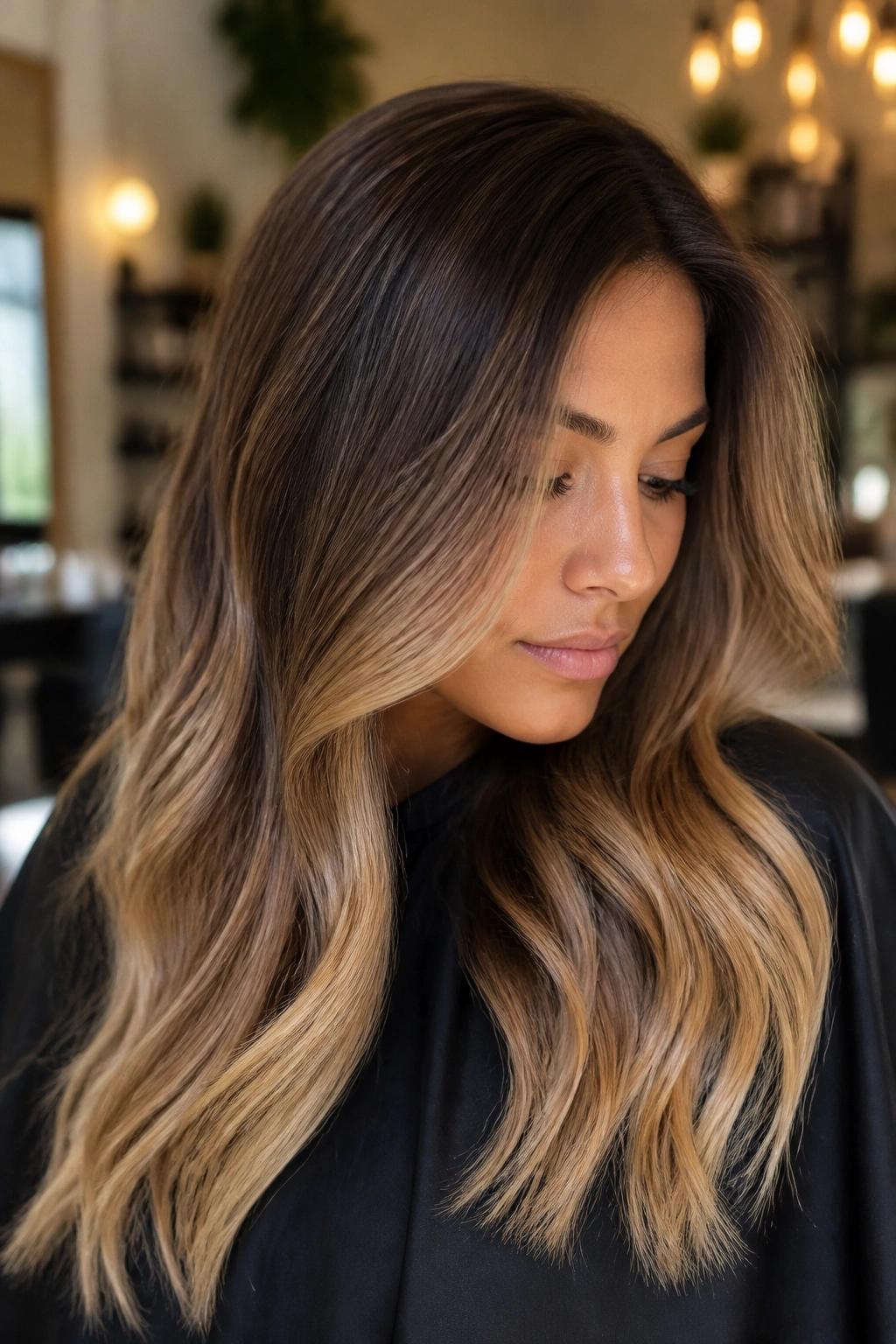
A brunette-to-honey melt is about making the transition so smooth you barely notice where one color stops and the next begins. The root stays brunette, the mids soften into a warm gold, and the ends settle into honey blonde. It’s a gradual shift, not a dramatic fade.
What makes the melt look clean
The most important part is the blend zone. It should be long enough to avoid a line, usually several inches across the mid-lengths. That transition area is where most color jobs either succeed or fall apart. If it’s too short, the hair looks striped. If it’s long, it looks expensive and soft.
This style is smart for anyone growing out darker roots or trying to avoid constant touch-ups. It also works well on layered hair because the different lengths show off the color shift at once. A curl or wave helps, but even straight hair can wear it if the blend is soft.
Small but useful detail
Ask for the warmest honey at the ends, not the root. That keeps the base rich and the bottom airy.
22. Honey Blonde Underlayers for Movement
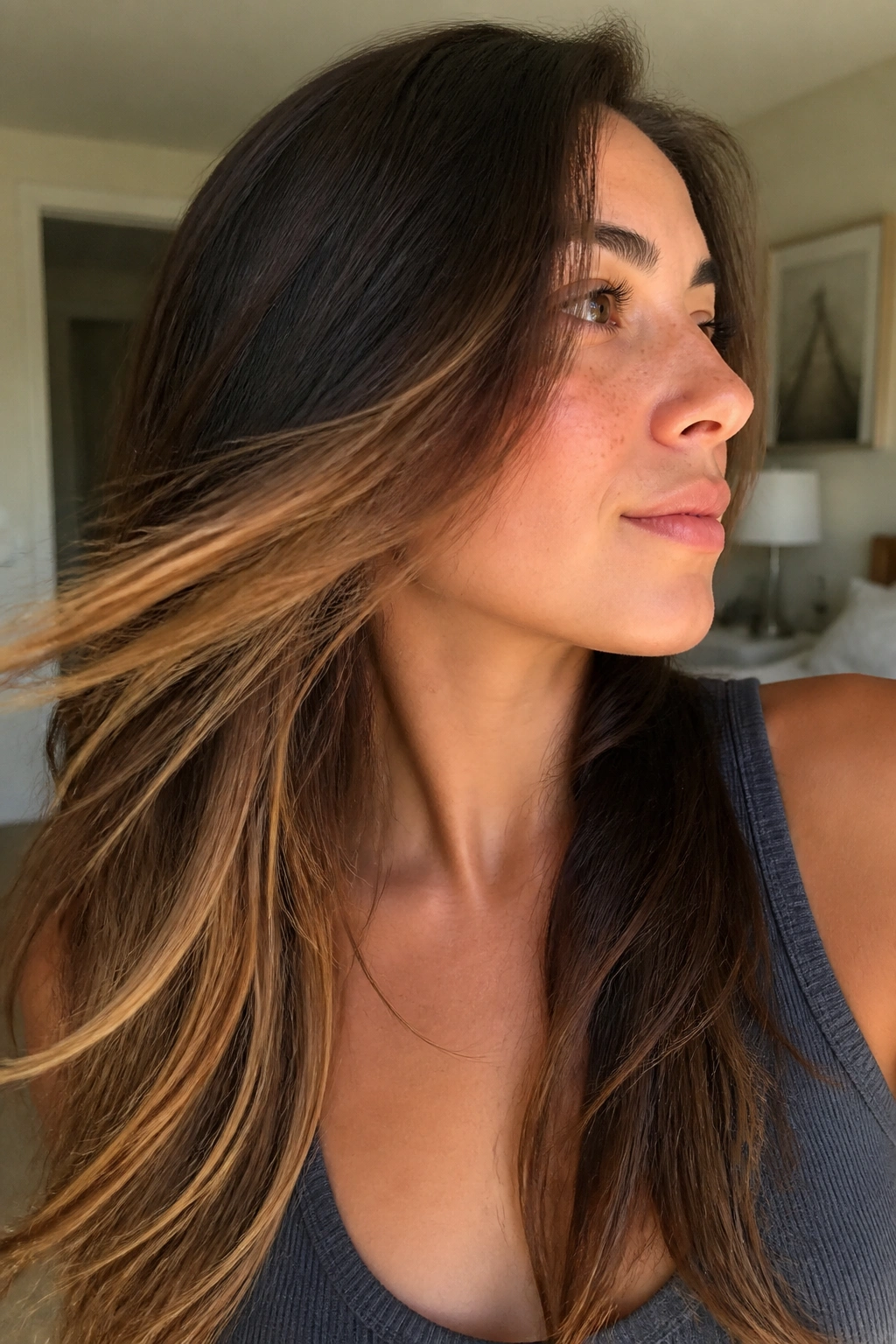
Underlayer highlights are sneaky in the best way. They sit beneath the top brown layer, so the honey blonde peeks through when you move, bend, or tuck the hair behind your ear. The surface stays mostly brunette, which makes the flashes of light feel more interesting.
This is a strong option if you want dimension without obvious top-layer streaks. It also works well for people who wear their hair down most of the time and only want the blonde to show in motion. The effect is softer than full highlights and easier to hide on days you want a more natural look.
I’d use this on shoulder-length cuts or long hair with some layering. The underlayers need enough movement to show. Flat, one-length hair can hide them too well. A quick curl or a rough blow-dry brings them forward.
23. Honey Blonde on Warm Medium Brown Hair
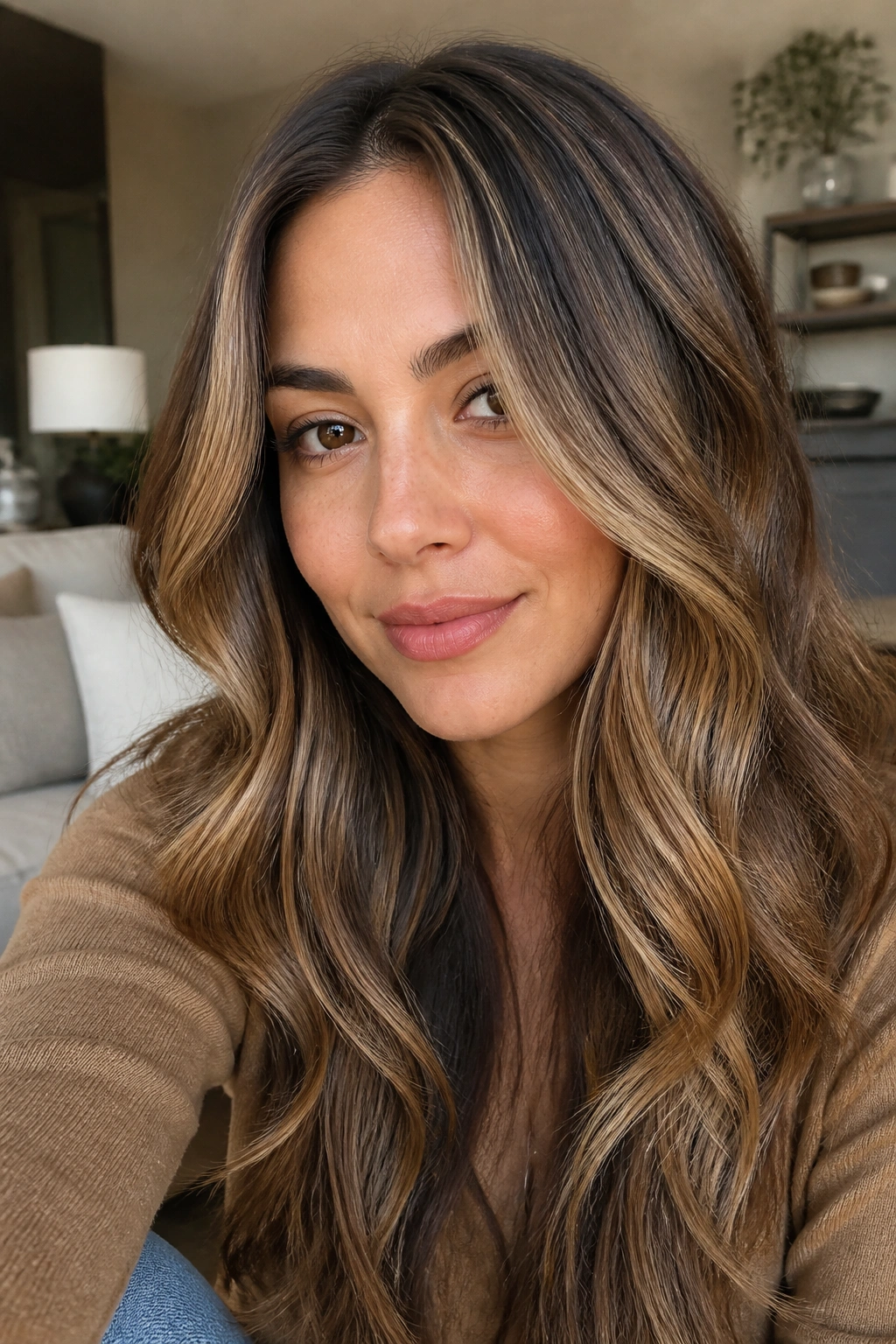
Warm medium brown hair is a sweet spot for honey blonde because the base and highlight naturally agree with each other. You don’t have to force a cold contrast or a dramatic lift. The color can stay friendly and still look noticeable.
The nicest version keeps the honey in the same warm family as the brown, but a shade or two lighter. That prevents the hair from looking brassy or too orange. If the base already has gold in it, the highlights can appear richer with less work. If the base has a hint of red, even better. The blend can feel almost seamless.
This is a low-drama option for people who want change but not a full color identity shift. It’s also easy to wear in loose waves, where the medium brown and honey pieces alternate as the hair moves.
24. Honey Blonde with Beige Lowlights
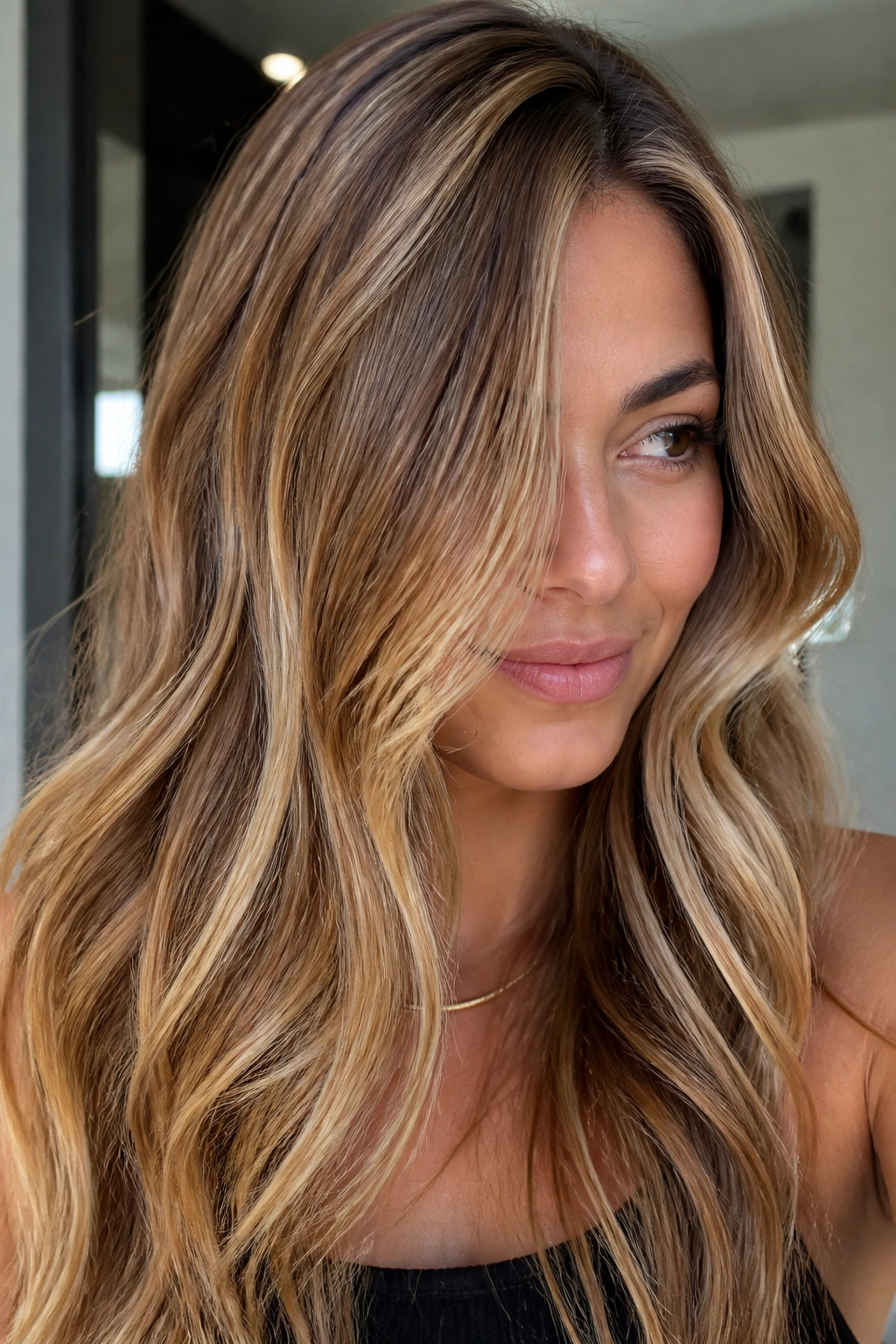
Beige lowlights are a smart answer when honey blonde starts to look too bright or one-dimensional. Instead of adding more light, you add a softer, slightly muted ribbon that cools the overall effect without turning it ash. Brown hair gets depth back, and the honey pieces stop looking washed out.
The best part is how gentle this combo feels. Beige lowlights keep the warmth under control, but they don’t kill it. That matters if you like honey blonde for its soft golden tone and do not want the hair to turn dull. A few lowlights through the interior layers are enough.
This works especially well on hair that has already been lightened a few times. It gives the eye a break and makes the blonde pieces look more intentional. Also, it’s kinder to grow-out than a head packed with light strands.
25. Honey Blonde Crescent Highlights
Crescent highlights follow the curve of the head, usually around the crown and upper sides, so the light sits in a sweeping shape rather than scattered strips. On brown hair, that creates a soft lift that feels modern without being fussy. The shape does a lot of the work.
This placement is especially good when you want the top of the hair to look brighter and the bottom to stay rich. It can make the haircut itself look more sculpted because the highlights echo the roundness of the head. That sounds technical, but in practice it just means the color feels placed, not random.
If you part your hair consistently in one spot, crescent highlights can be tailored to that. A strong part line gives you more visibility. A deep side part lets the curve open up more. Either way, the honey tone should stay warm and soft.
26. Honey Blonde on Wavy Shag Cuts
A shag cut already has movement, so honey blonde can lean into that instead of trying to create the movement from scratch. The waves and layers make the lighter pieces flick in and out of view, which is exactly what you want. Brown hair with a shag can look heavy fast. Honey keeps it from sinking.
Why this pairing works
The shorter crown layers catch light easily, while the longer face-framing pieces can carry brighter ribbons. That gives the whole cut a layered color story without needing a ton of color. The rougher the texture, the better the highlights show. A polished blowout is nice, but a dry, lived-in wave is where this really shines.
Best styling move
Use a salt spray or a light mousse, then rough-dry with your fingers. You want the ends a little piecey. If the hair gets too smooth, some of the shag’s charm disappears, and so does part of the color’s movement.
27. Honey Blonde for Cool Brown Bases
Cool brown hair can still wear honey blonde, but the tone needs more care. If the base is ashy or neutral, a warm blonde can look too loud unless it’s balanced properly. The answer is to keep the honey soft, almost like a muted gold with a beige edge.
This kind of highlight works best when the warm pieces are spread out instead of packed together. That lets the cool base stay visible, so the contrast doesn’t feel off. If you want a stronger statement, put the warmer honey mostly around the face and keep the rest subtler. That way the color reads intentional, not accidental.
A gloss is useful here because it keeps the blonde from tipping too yellow against the cooler brunette base. The goal is harmony, not a fight between warm and cool.
28. Bold Honey Blonde Panels for a Brighter Look
Sometimes you want the highlights to show from across the room. Bold honey blonde panels do that. They use wider pieces of light, often placed in blocks through the top and sides, so the brunette base has clear bright sections running through it. It is not subtle. That is the point.
The key is keeping the honey tone rich, not pale. On brown hair, a strong panel in a warm gold reads far better than a washed-out light blonde that doesn’t know what it wants to be. This look is best when the cut has some structure — think layered lob, shag, or long waves with clear movement.
It’s also the easiest style to pair with strong makeup or a defined brow because the hair already has presence. If you like your color with a little attitude, this one delivers without drifting into orange or straw. It just needs clean placement and a confident hand.
Final Thoughts
Honey blonde highlights on brown hair work best when the color respects the base instead of trying to erase it. The richest looks keep some darkness, some warmth, and enough spacing that the light feels placed on purpose.
If you’re stuck between subtle and bold, start with babylights, a soft money piece, or a shadow-root balayage. Those three give you room to move later. And if you already know you want more contrast, go straight to the chunkier panels or the brighter face frame. Hair color is easier to enjoy when it looks like it belongs on your head, not just in a swatch book.
