



Green highlights for brown hair can look smoky, mossy, expensive, or loud enough to stop traffic. On a brown base, green doesn’t land like costume color first. It lands like depth, shine, and a little bit of attitude, which is why the shade can feel so good when the placement is right.
The trick is less about the word green and more about where the color sits. A thin babylight near the part line behaves like a flash of light. A chunky panel under a bob reads like a secret. A face-framing strip can change the whole mood of a haircut without coating the whole head. Brown hair gives green somewhere to live, and that’s half the fun.
Darker espresso hair usually needs a little lift before the green shows cleanly. Chestnut and caramel can hold softer deposits and still keep the tone sharp. Once you start matching shade, placement, and saturation, the options open up fast.
1. Deep Emerald Face-Framing Strips
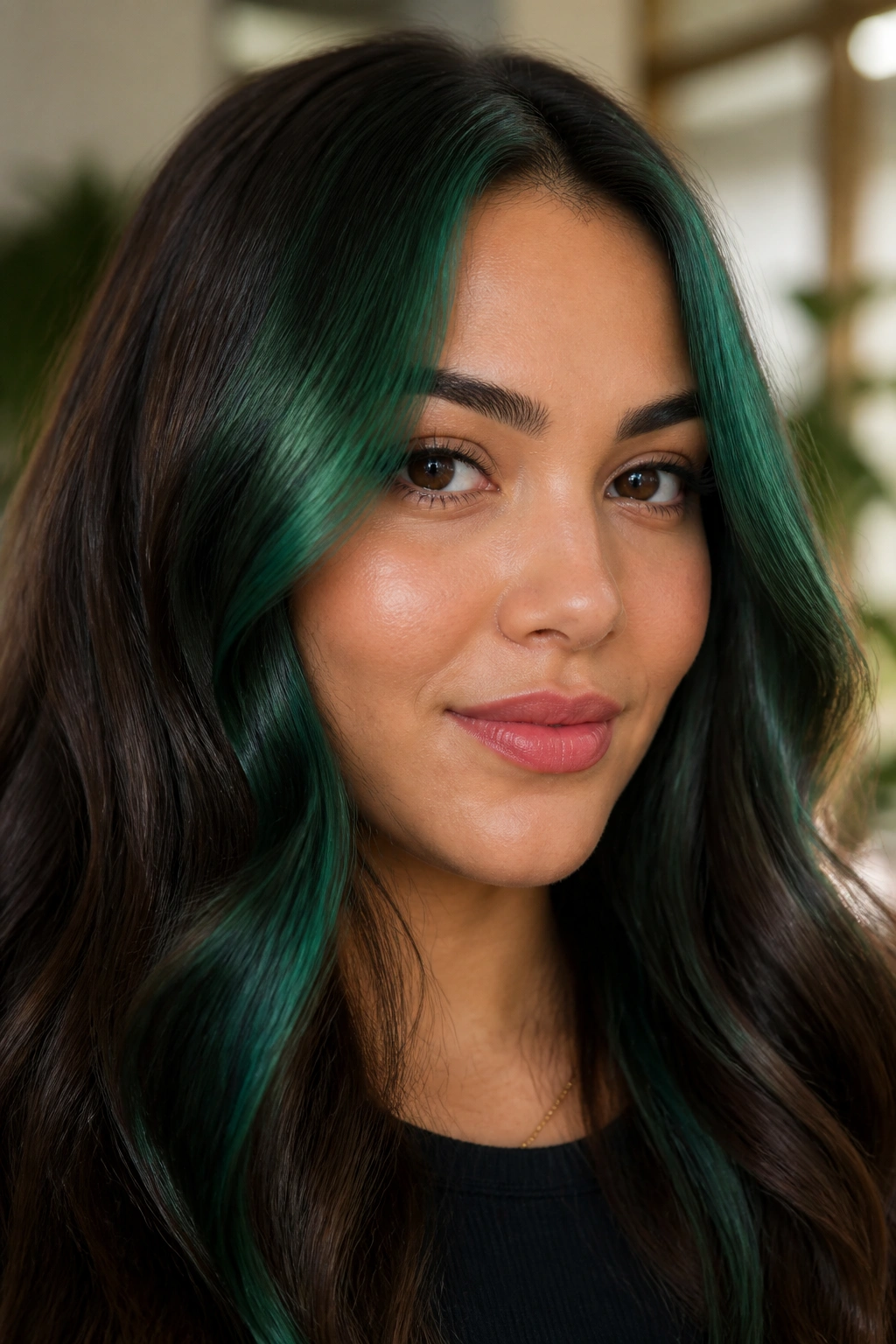
Emerald is the green most people picture first, and on brown hair it has a jewel-box feel that never gets dull. A pair of bold face-framing strips can brighten the front without turning the whole head into a statement piece.
Why it works
The contrast does the heavy lifting. Two to four foils at the temples can change the whole read of the cut, especially on a layered brunette bob or long waves. Keep the roots soft and let the color sit brightest around the cheekbones.
- Works well on medium and dark brown bases
- Ask for a 1/4-inch root melt so the strip doesn’t look pasted on
- Looks sharp on straight hair, but softens nicely in loose waves
Best move: keep the emerald glossy, not matte. A glassy finish makes the green look richer and keeps the brown from going flat.
2. Moss Green Babylights Through Dark Chocolate Hair
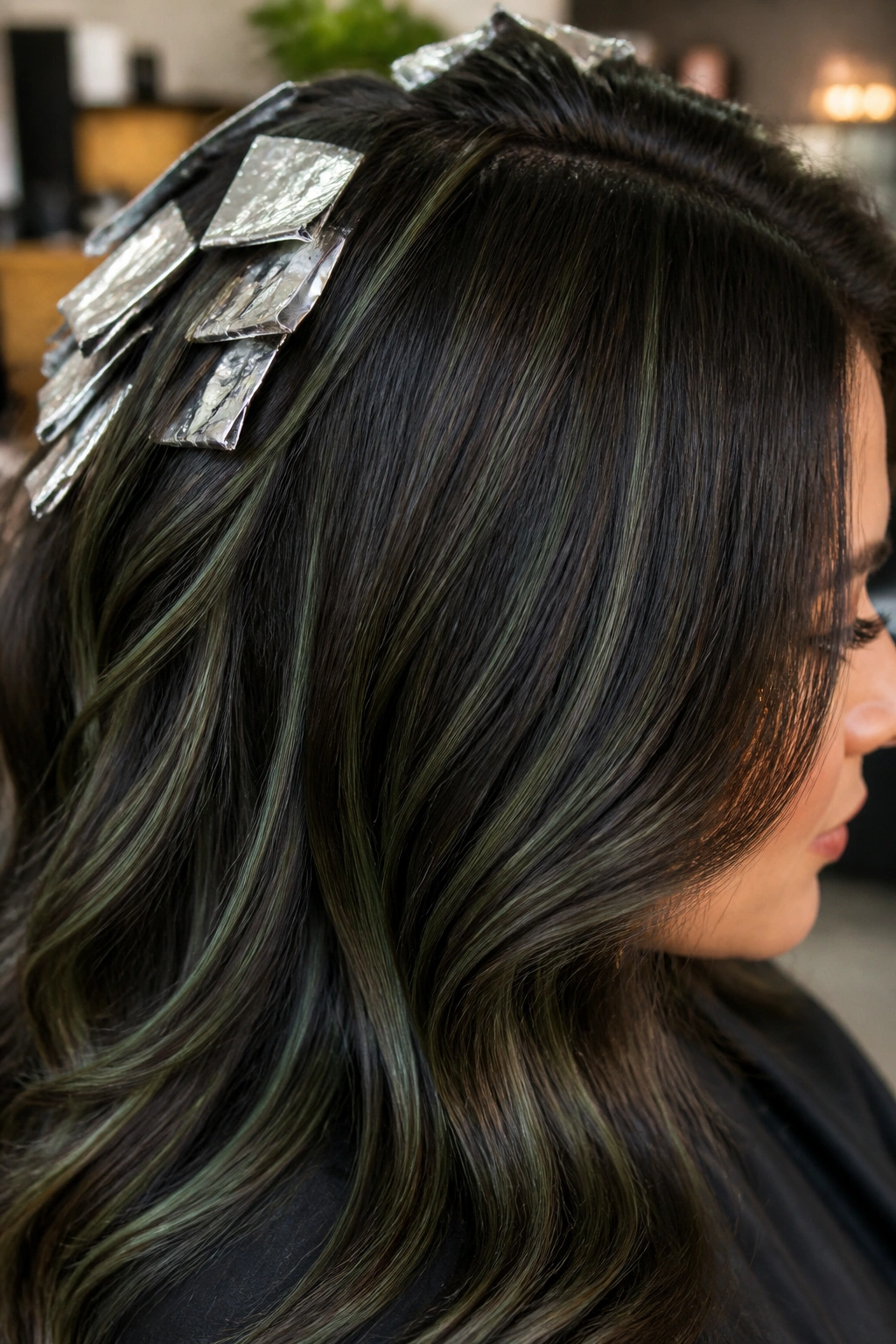
Tiny moss babylights are a different animal. They don’t shout, and that’s why they work. The color slips into dark chocolate hair like a shadow with a green edge, especially when the foils are woven thin enough that you only catch them in motion.
A babylight is usually a 1/16- to 1/8-inch weave, so the result feels scattered and airy instead of stripy. On very dark brunettes, moss reads earthy and understated rather than bright. That’s the charm.
How to wear it
Use these if you like hair that changes in different light. Indoors, the green can almost vanish. Outside, it shows as a soft green sheen.
Keep the finish cool. Warm glosses can make moss drift muddy, and nobody wants that. A neutral brunette base with tiny green threads is far cleaner.
3. Olive Ribbon Balayage on Chestnut Layers
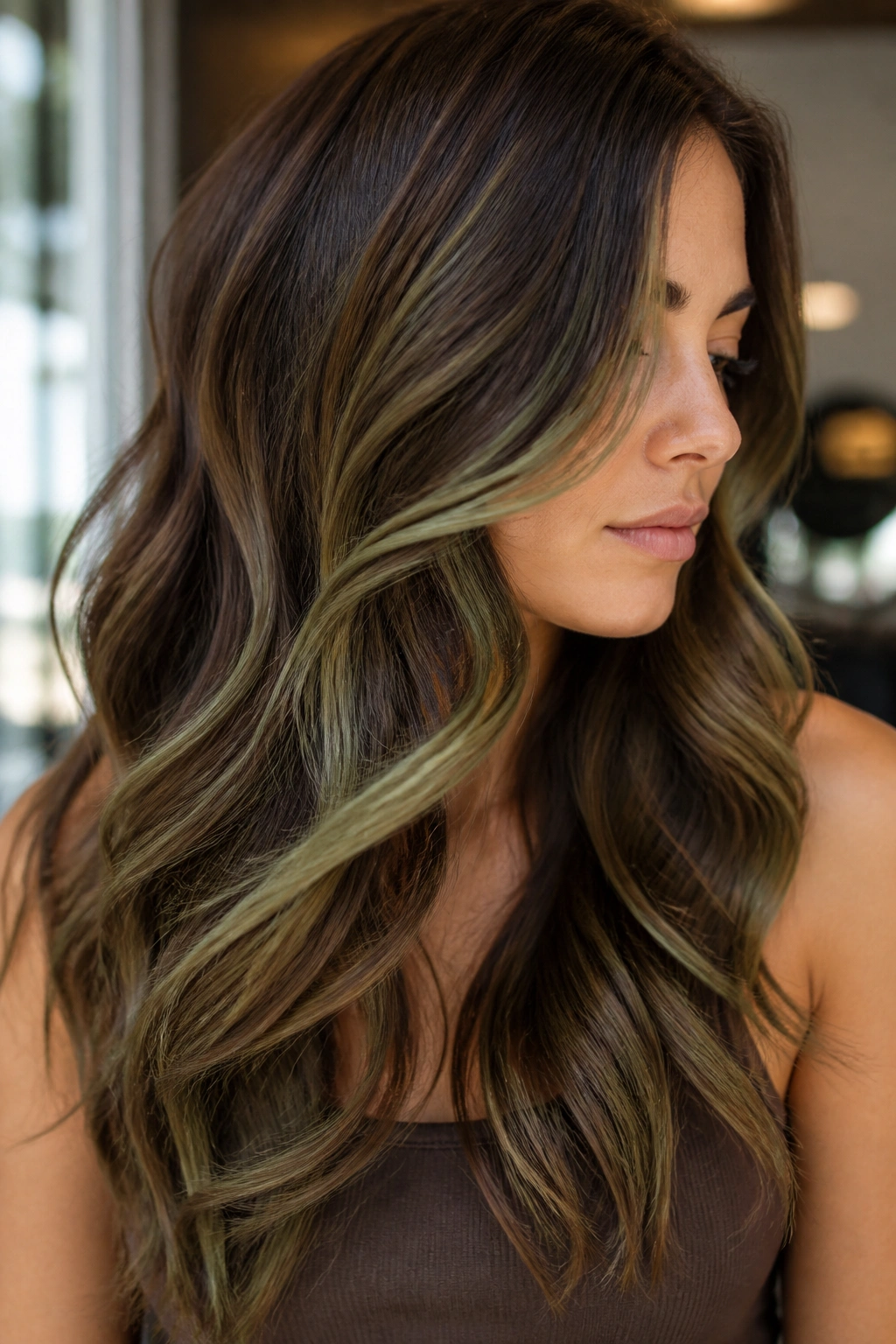
Olive is the shade for anyone who wants green but doesn’t want neon anywhere near their head. On chestnut hair, it blends into the brown just enough to feel intentional, not theatrical.
This version lives best on layered cuts because the ribbons need movement. If the hair swings, the color shows. If it sits flat, the olive can get lost. That’s not a flaw; it just means the haircut matters here.
What makes it different
Unlike a chunky highlight, olive balayage looks painted on rather than placed in blocks. The result is softer, more natural, and easier to grow out.
Ask for: long, diagonal strokes through the mid-lengths and ends, with the top kept quieter.
Skip if: you want a bright front-panel moment. This one is about drift, not drama.
4. Forest Green Peekaboo Underlights
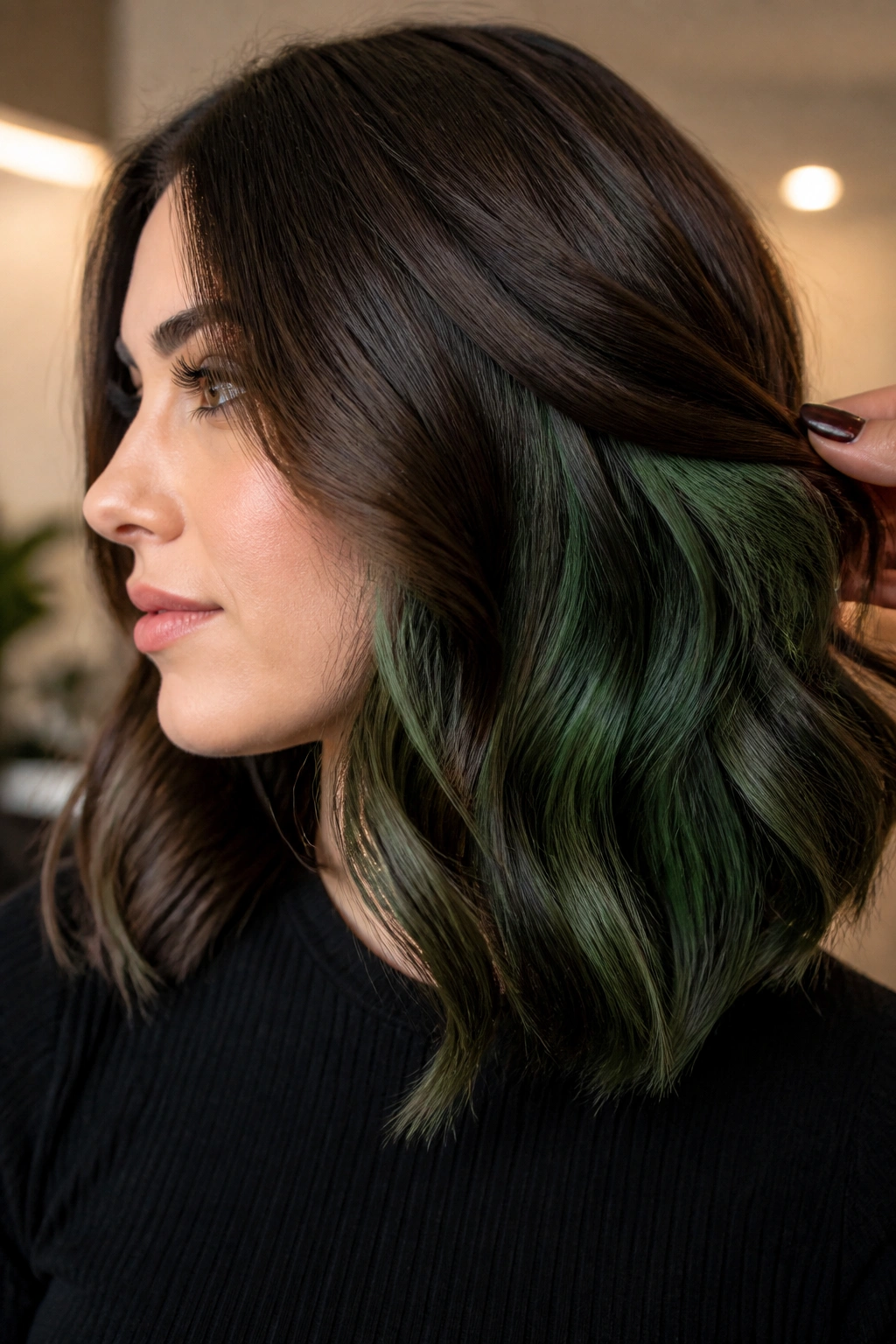
Picture hair that looks ordinary from the front and then flashes forest green when you flip it over. That’s the whole appeal of peekaboo underlights. They sit underneath the surface, so the color becomes a little surprise instead of the main event.
The placement works especially well on bobs, lobs, and layered midlength cuts. If you wear your hair up a lot, the green shows off even more. If you leave it down, you get hints of color around movement and wind.
- Best for people who want color at work-friendly levels
- Strong on blunt cuts because the hidden panel looks sharper
- Needs clean sectioning, or the underlayer gets patchy fast
There’s something almost smug about this look. In a good way.
5. Jade Money Piece with a Soft Root Melt
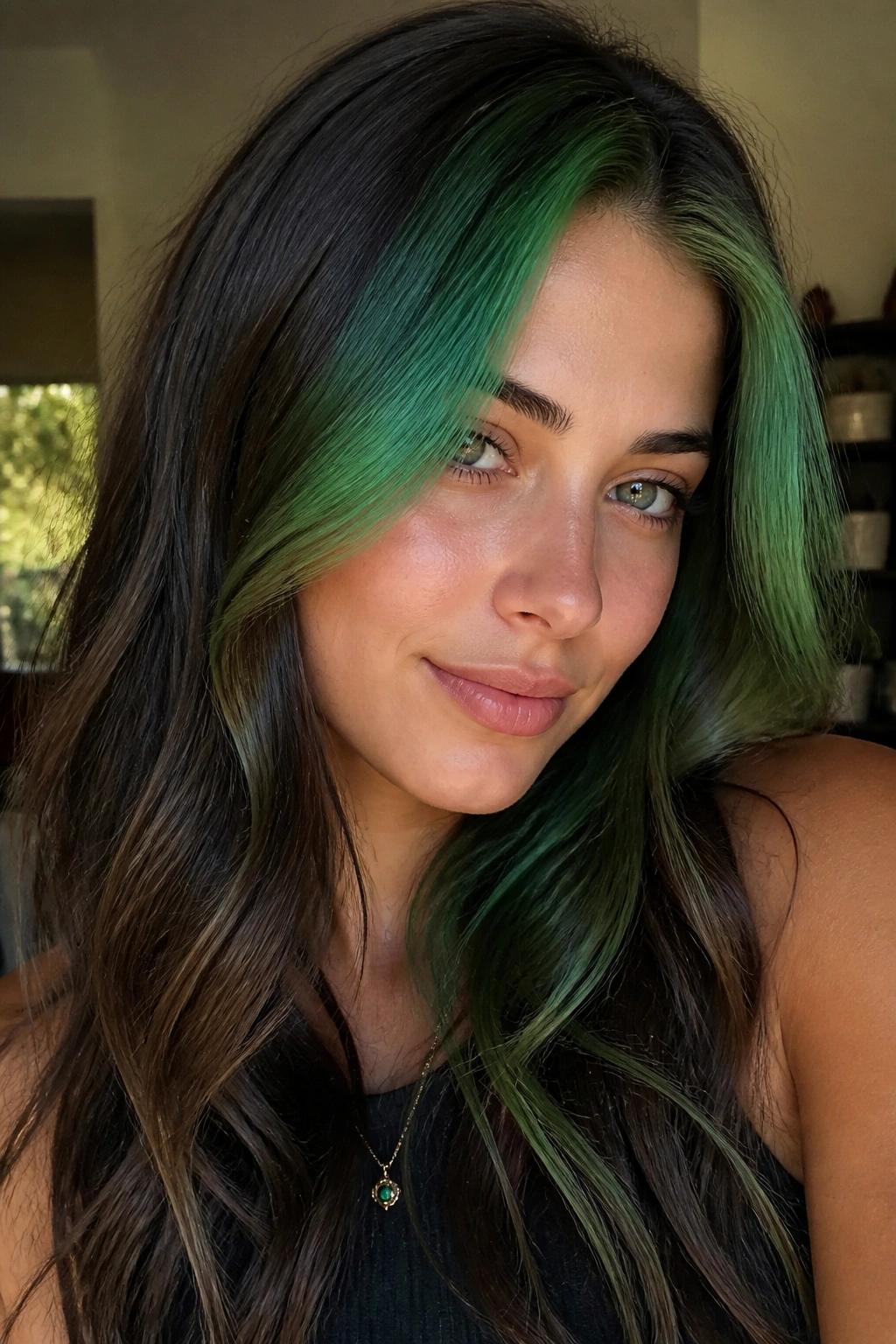
A jade money piece is one of the easiest ways to make brown hair feel fresh without repainting the whole head. The front section brightens the face, and the root melt stops the color from looking hard at the scalp.
Jade sits between emerald and sea-glass green, which is why it flatters both warm and neutral brunettes. Keep the root area blended for about 1/2 inch to 1 inch, then let the color get cleaner as it drops toward the cheekbones.
What to ask your colorist
Ask for a brighter front panel with a softer shadow at the root. That contrast keeps the money piece from looking like a stripe.
This is the kind of green that looks good tied back, curled, or tucked behind one ear. It has range. That matters more than people admit.
6. Sea Glass Ends on Warm Brown Hair
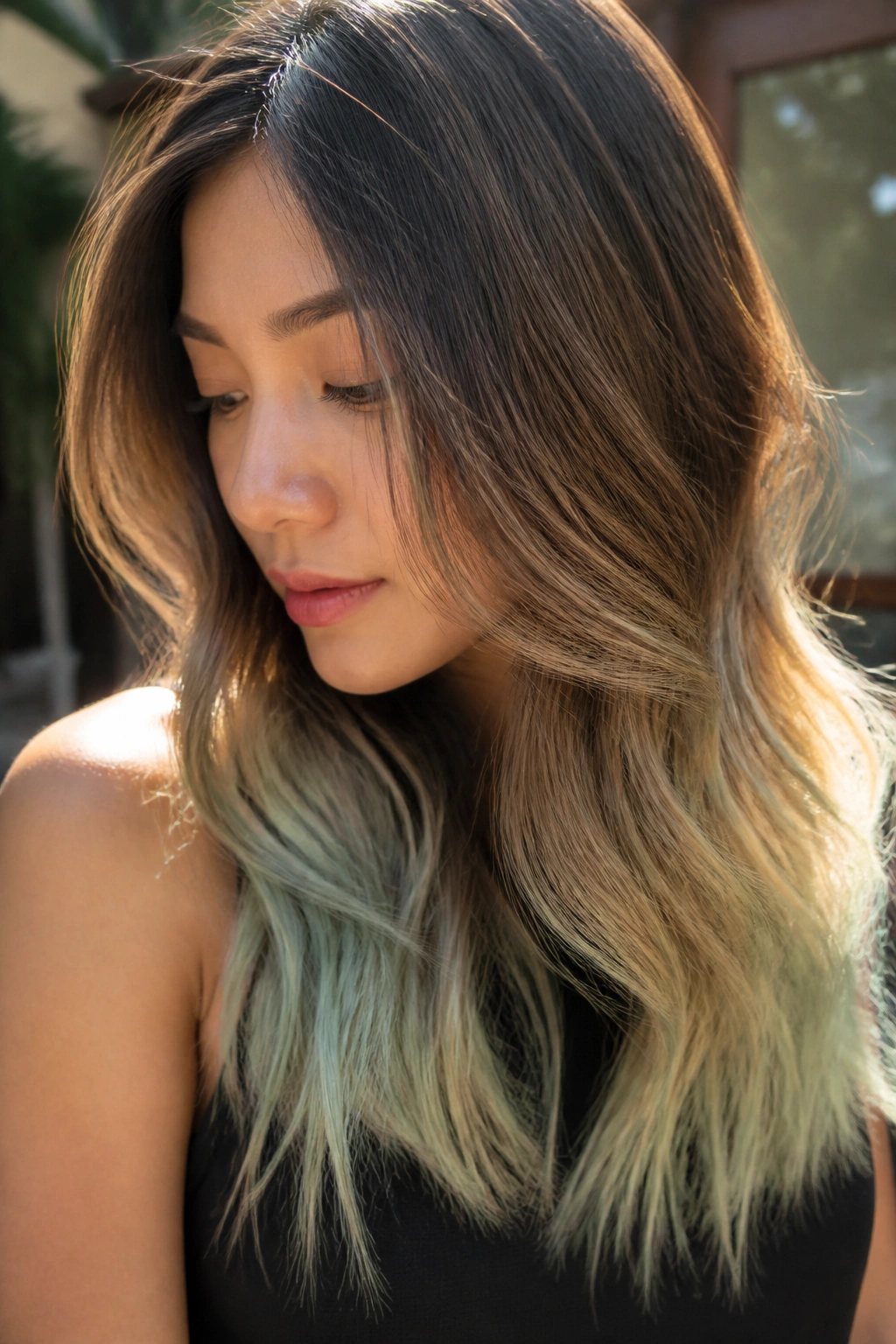
Sea glass ends are cool, pale, and a little dreamy, which makes them a smart choice if you want the color to feel lighter than the brown base. The green is softened enough to lean toward aqua, but it still reads green at first glance.
Warm brown hair needs a little care here because the base can push the tone muddy if the lift is uneven. The cleanest version lives on hair that’s been pre-lightened to a pale yellow before the deposit goes on.
How to keep it from going flat
The ends need to stay bright enough to show the tint. If they’re too dark, sea glass turns swampy in a hurry.
A center part makes this look calm. A side part gives it a little more edge. Either way, the trick is keeping the mid-lengths quieter so the ends feel intentional rather than accidental.
7. Sage Threadlights for a Soft, Muted Finish
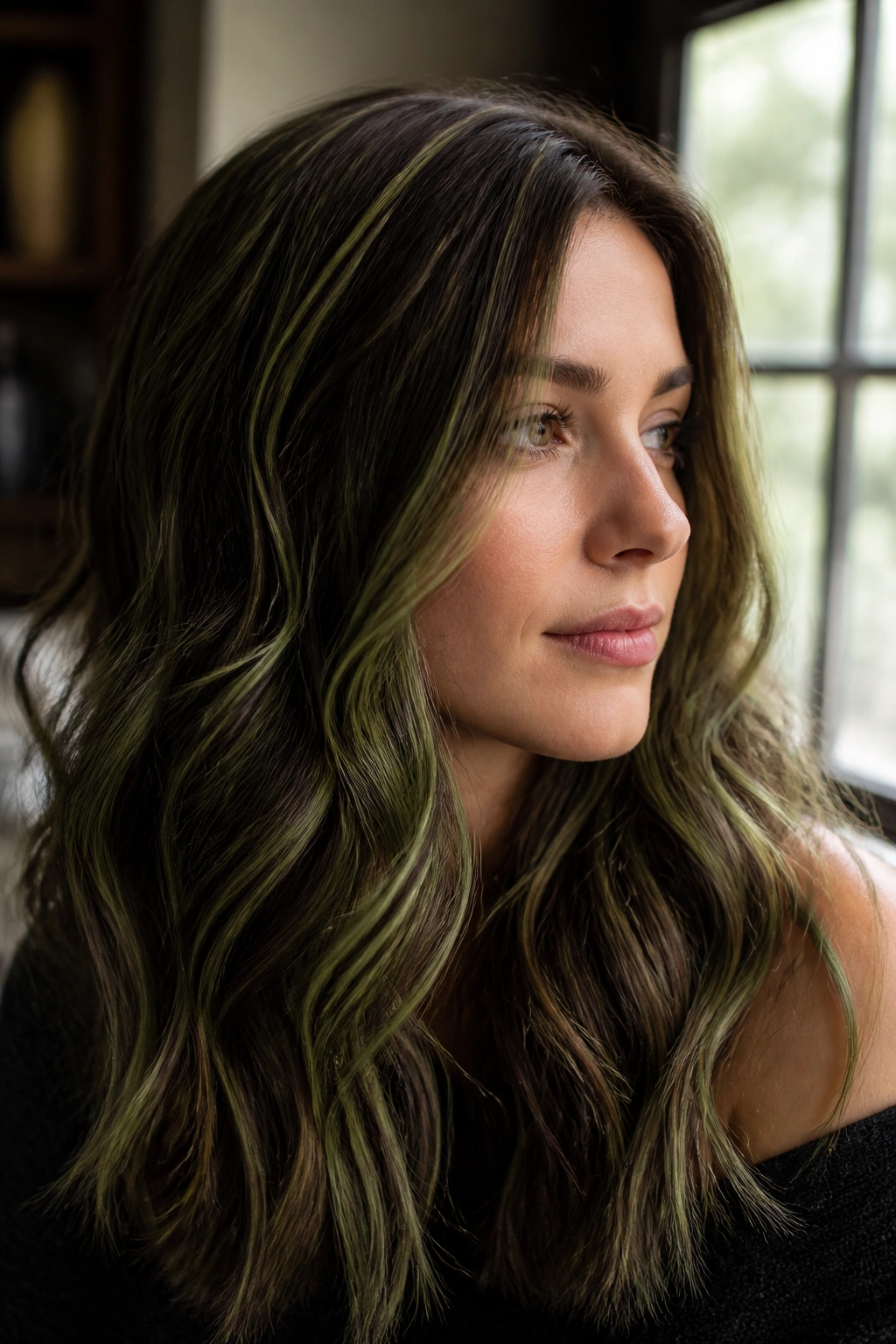
Sage threadlights are for people who like color that whispers. On brown hair, they barely announce themselves at first glance, then show up as a cool, dusty green when the light changes. It’s a nice trick.
The placement is fine and narrow, almost like stitch marks through the brunette base. Because the strands are so slim, the look feels airy instead of heavy. That matters on fine hair, where chunky color can overwhelm the cut fast.
What makes them gentle
Sage has enough gray in it to stay calm against brown. That keeps the result from reading neon or cartoonish.
- Good for shoulder-length cuts
- Works on straight or slightly wavy textures
- Feels softer than mint or lime
- Needs a clear gloss to keep the tone from getting dusty
I like this one on people who want a color conversation, not a color announcement.
8. Pine Green Chunky Highlights for Curly Hair
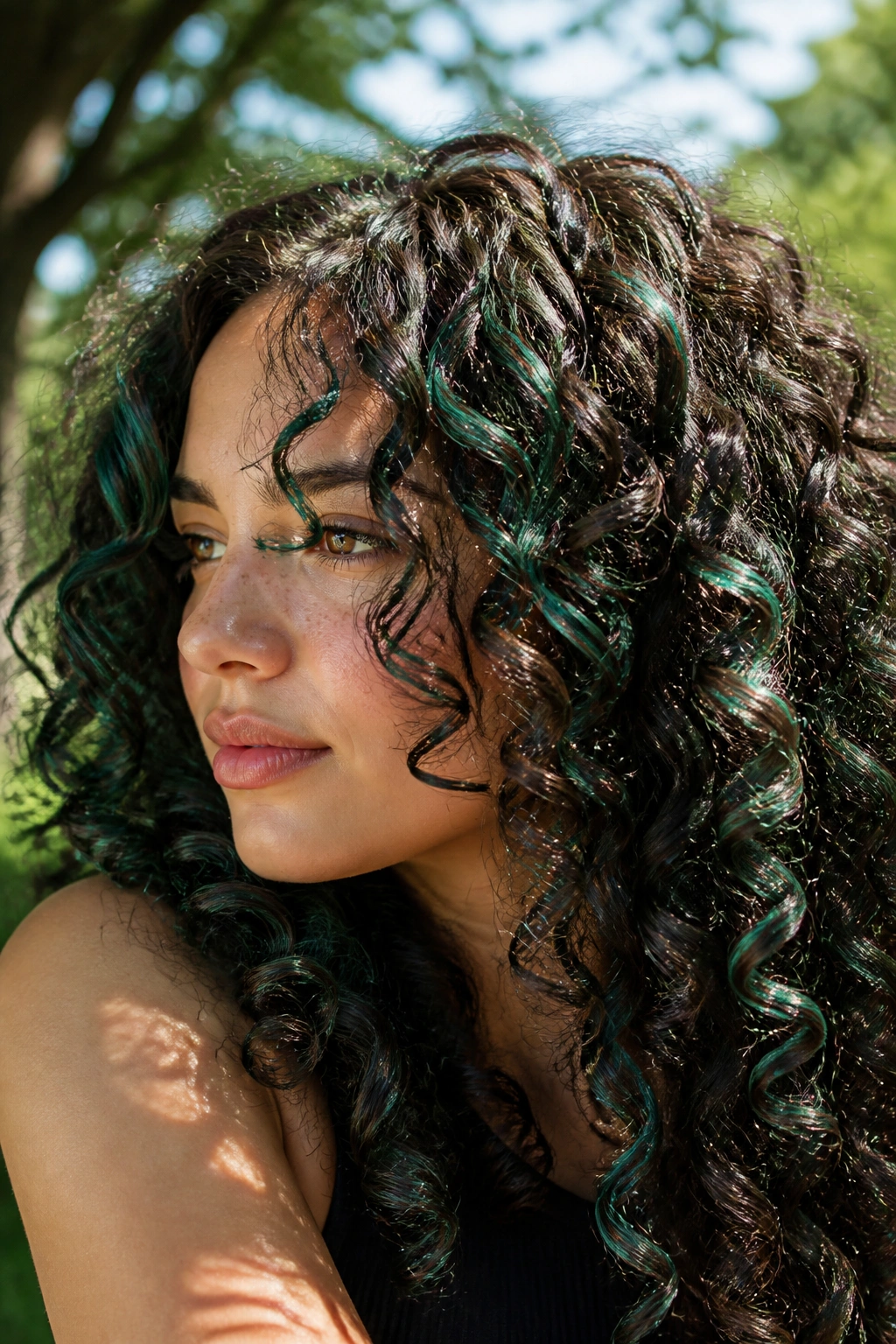
Curly hair can carry chunky green highlights in a way straight hair sometimes can’t. The curl pattern breaks up the color, so the pine reads as bold but not blocky once the coils move.
This style works best when the colorist follows the curl clumps instead of slicing random ribbons everywhere. When the highlight sits inside the curl pattern, it looks like the hair was born with it. When it doesn’t, the result can feel choppy.
A good pine green on curls usually needs deeper sections at the crown and wider bands at the outer ring. That gives the shape some balance and keeps the top from looking too dark.
Tiny detail, big payoff.
9. Mint-Kissed Curls with Micro Foils
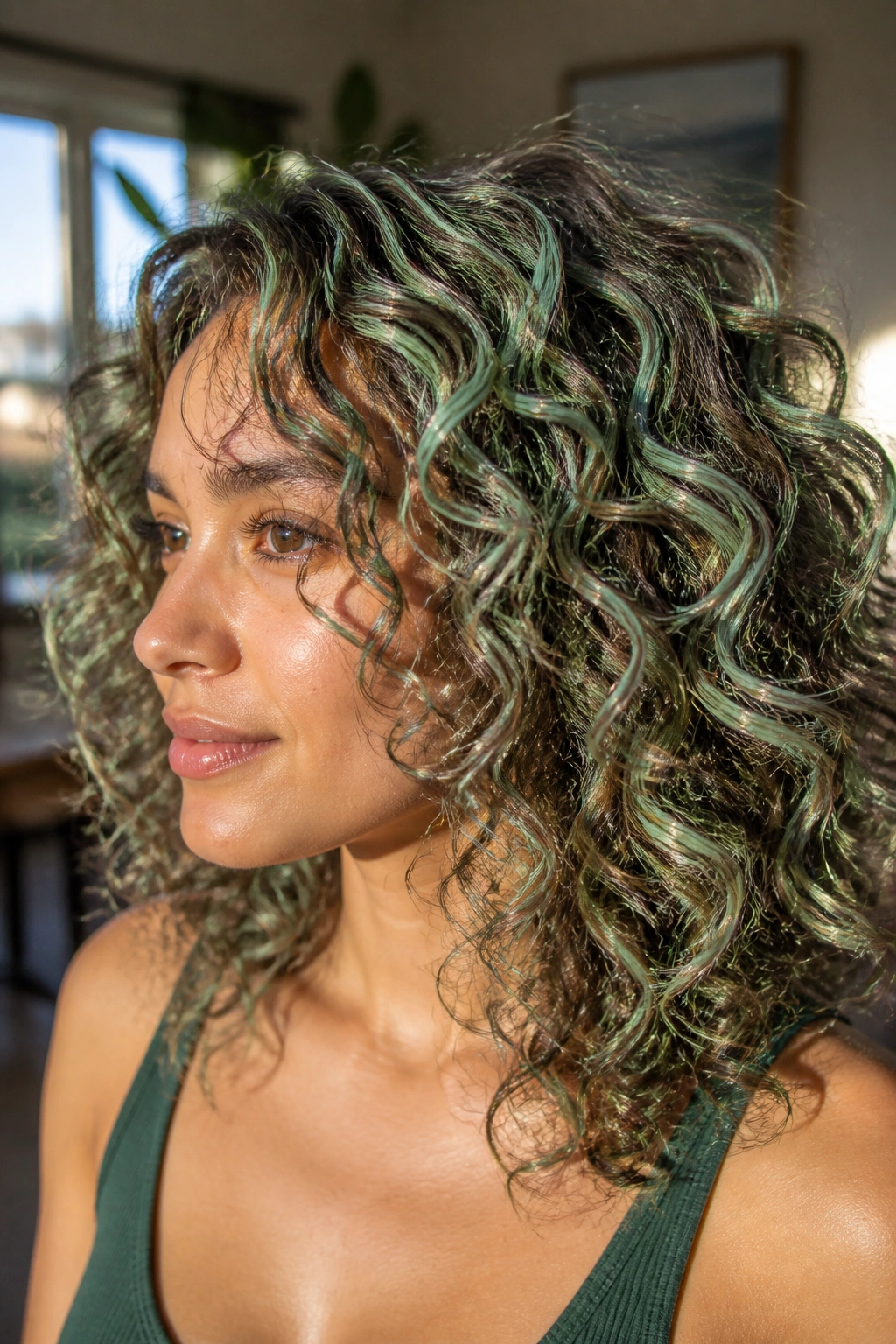
Mint on curls sounds soft, and with micro foils it can be. The color sits brighter than sage but lighter than forest, which gives brown hair a fresher, cleaner finish without turning it loud.
Micro foils are a smart move here because curls already bring texture. Small sections keep the mint from bunching into big slabs of color. The result moves a lot, which is half the point.
The best versions usually live on brown hair that’s been lifted to a soft yellow first. If the base is too dark, mint loses its clean edge and starts looking foggy. That’s the catch nobody likes to say out loud.
A little shine spray helps. Mint loves reflection.
10. Chartreuse Tips on a Lob
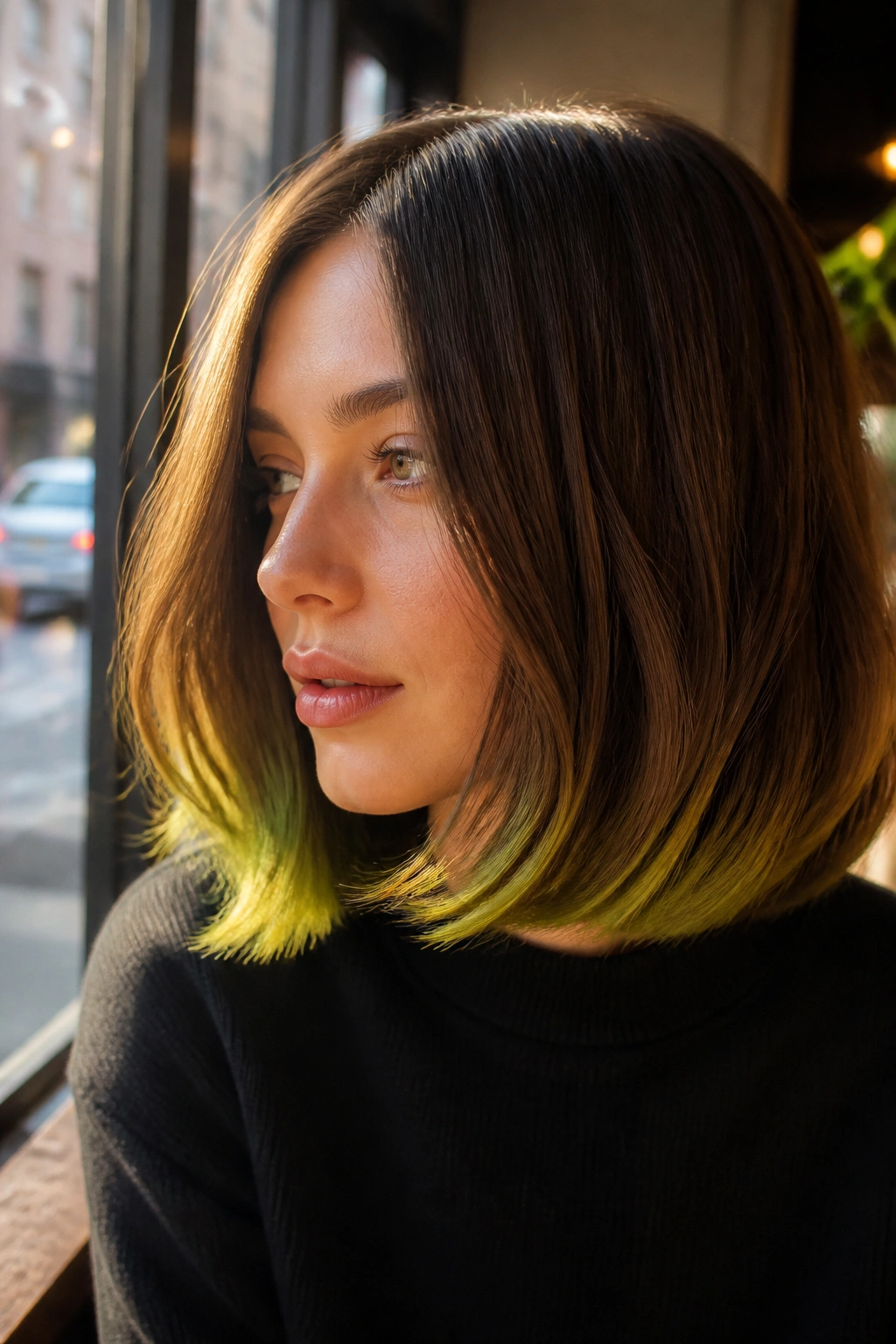
Chartreuse is the wild cousin in the green family. It has a yellow spark in it, so on a brown lob it reads brighter and sharper than moss, olive, or sage. The blunt ends of a lob make that contrast feel deliberate instead of messy.
I like this one on hair that already has a clean shape. The cut does part of the job. A blunt line gives chartreuse somewhere to stop, which keeps the color from wandering.
What to watch for
Chartreuse can go too neon if the base is overly warm. A beige or neutral brown underneath keeps it cleaner.
This is a strong choice if you want the ends to pull attention first. If you want the green to hide a little, keep reading. There are quieter options coming.
11. Kelp Green Panels at the Temple
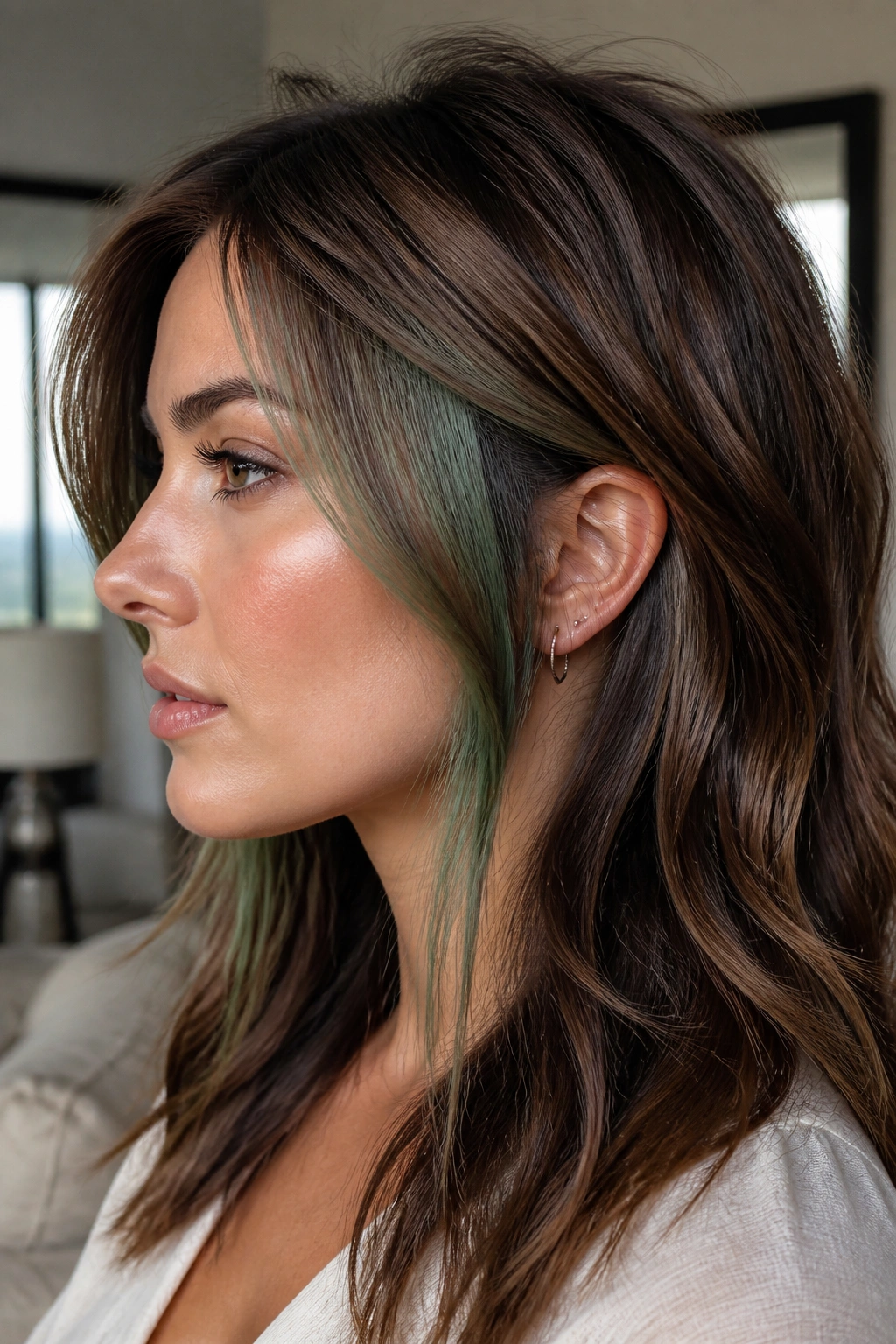
Kelp green at the temple is bold in a smart way. It frames the face, but the panels are narrow enough that the look stays tidy instead of chaotic.
The temple area catches movement every time you tuck hair behind your ear, which is why this placement feels so alive. On brown hair, kelp has a darker, seaweed-like richness that looks especially good under gloss. Not shiny in a plastic way. Glossy in a healthy, almost wet-looking way.
A straight cut makes the panels feel sharper. Layers soften them. Both are valid, but they give different moods.
Practical note: keep the panels a touch narrower than you think. Once the hair moves, the color opens up.
12. Teal-Shifted Green Highlights on Espresso Hair
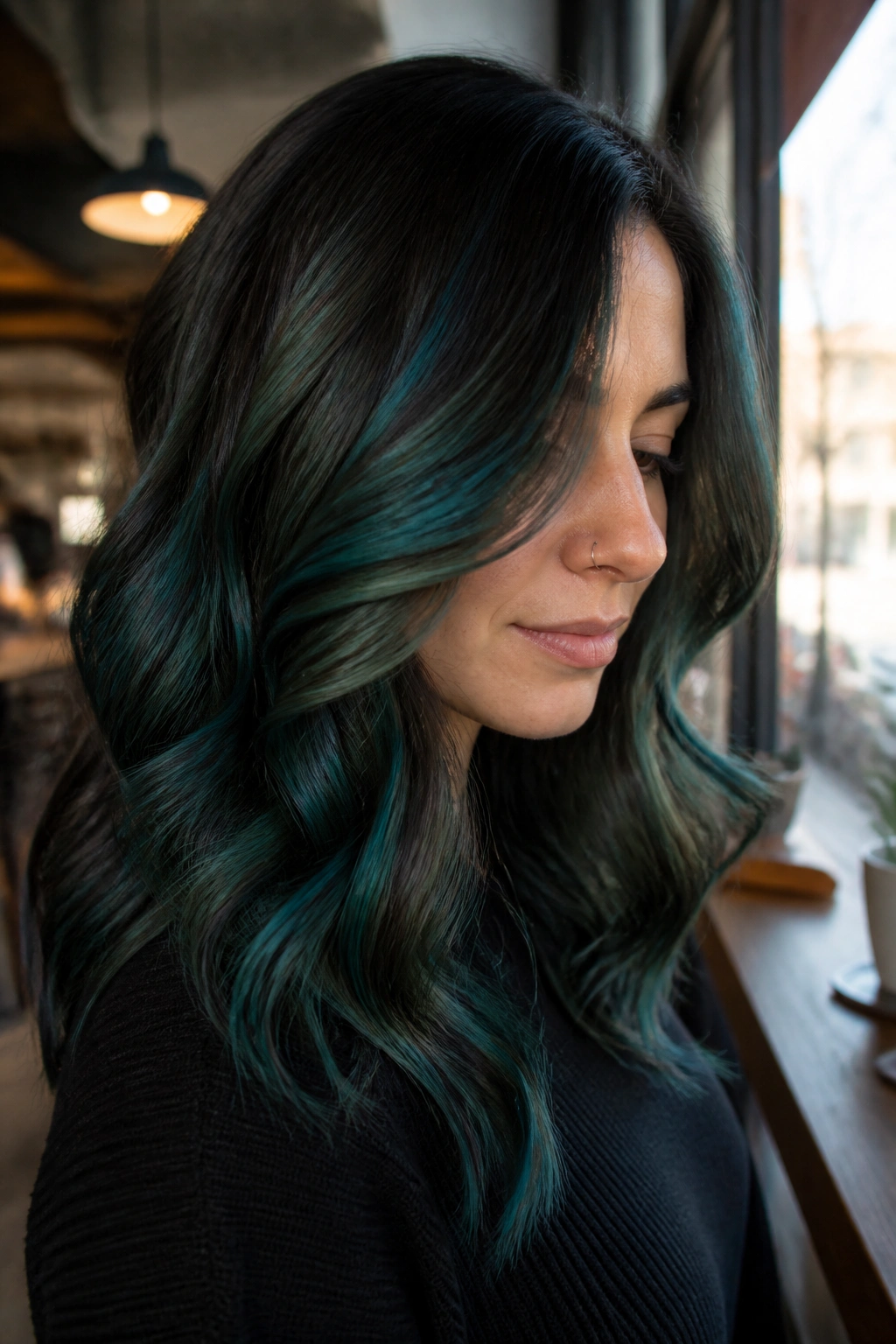
Why does teal-leaning green work so well on espresso hair? Because the blue in teal keeps the green from vanishing into the darkness. Pure green can disappear on a deep base. Teal holds its own.
This version is for brunettes who want color with depth, not candy brightness. It feels cooler, darker, and a little moodier than mint or lime. On very dark brown, the lift usually needs to land around level 7 before the tone takes cleanly.
When the teal note helps
If your hair pulls warm, teal can calm it down. If your hair is already cool, the shade reads sleek and polished.
Wear it on long layers or wavy cuts. The green shows best where the curve of the hair catches light at the bend.
13. Smoky Hunter Green Balayage
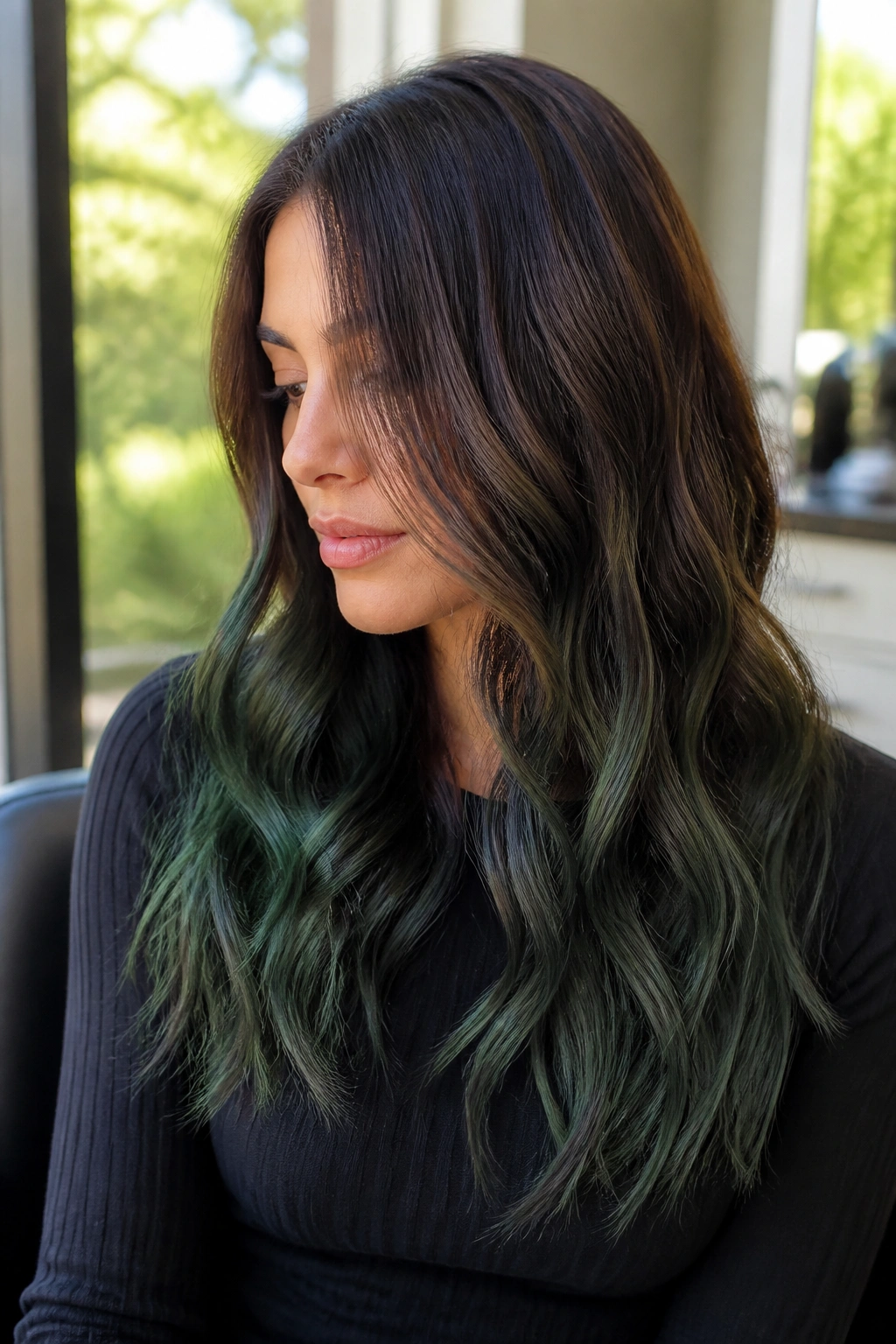
Smoky hunter green is the shade people underestimate. It sounds dark, almost flat, but on brown hair it has a rich depth that feels tailored rather than loud. The balayage placement lets the color fade from stronger ends into softer mid-lengths.
Why it looks sharp
The smoke in the tone keeps the green from reading fake. That’s the entire trick. A little gray in the formula goes a long way.
- Best on brunette bases from medium to dark
- Good when you want low-maintenance grow-out
- Looks strongest around bends and layered ends
- Needs a gloss refresh to keep the smoky note clean
This is one of my favorites for people who love dark clothes, silver jewelry, and hair that doesn’t beg for attention but still gets it.
14. Green Highlights for Brown Hair with a Glossy Ribbon Part
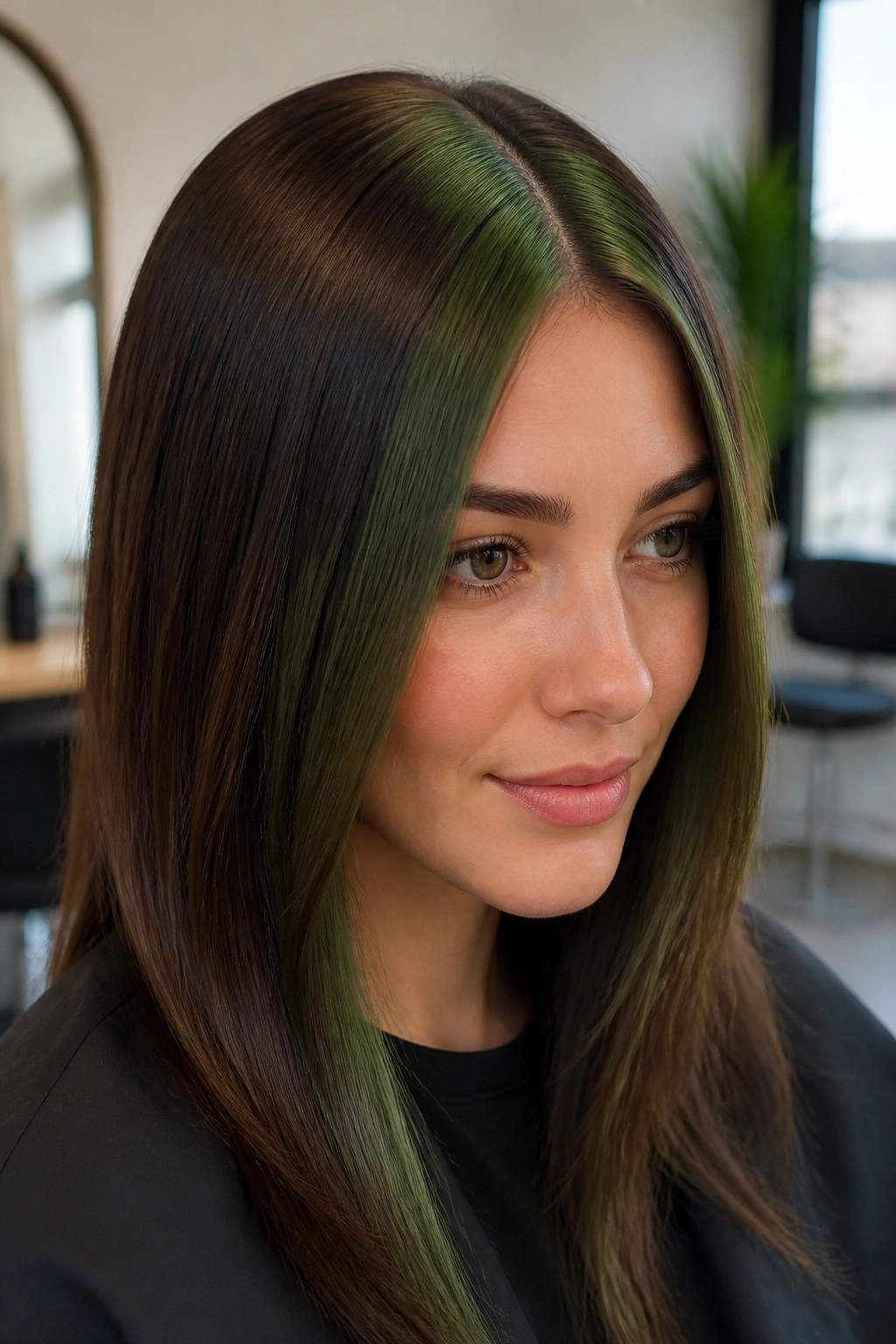
A ribbon part is a narrow line of color that travels along the parting and opens up when the hair shifts. On brown hair, it can be a small detail that changes everything. The green shows up in a controlled strip instead of scattered pieces, so the look feels sleek.
The glossy finish matters here. Without shine, the ribbon can look dry or flat, and that kills the whole effect. A glaze with a cool tone helps the green stay crisp against the brunette base.
This style is especially good for straight or softly waved hair. The cleaner the line, the stronger the idea reads. If you like your color to look polished instead of playful, this is the one to bookmark.
15. Lime Accent Streaks Under a Brown Bob
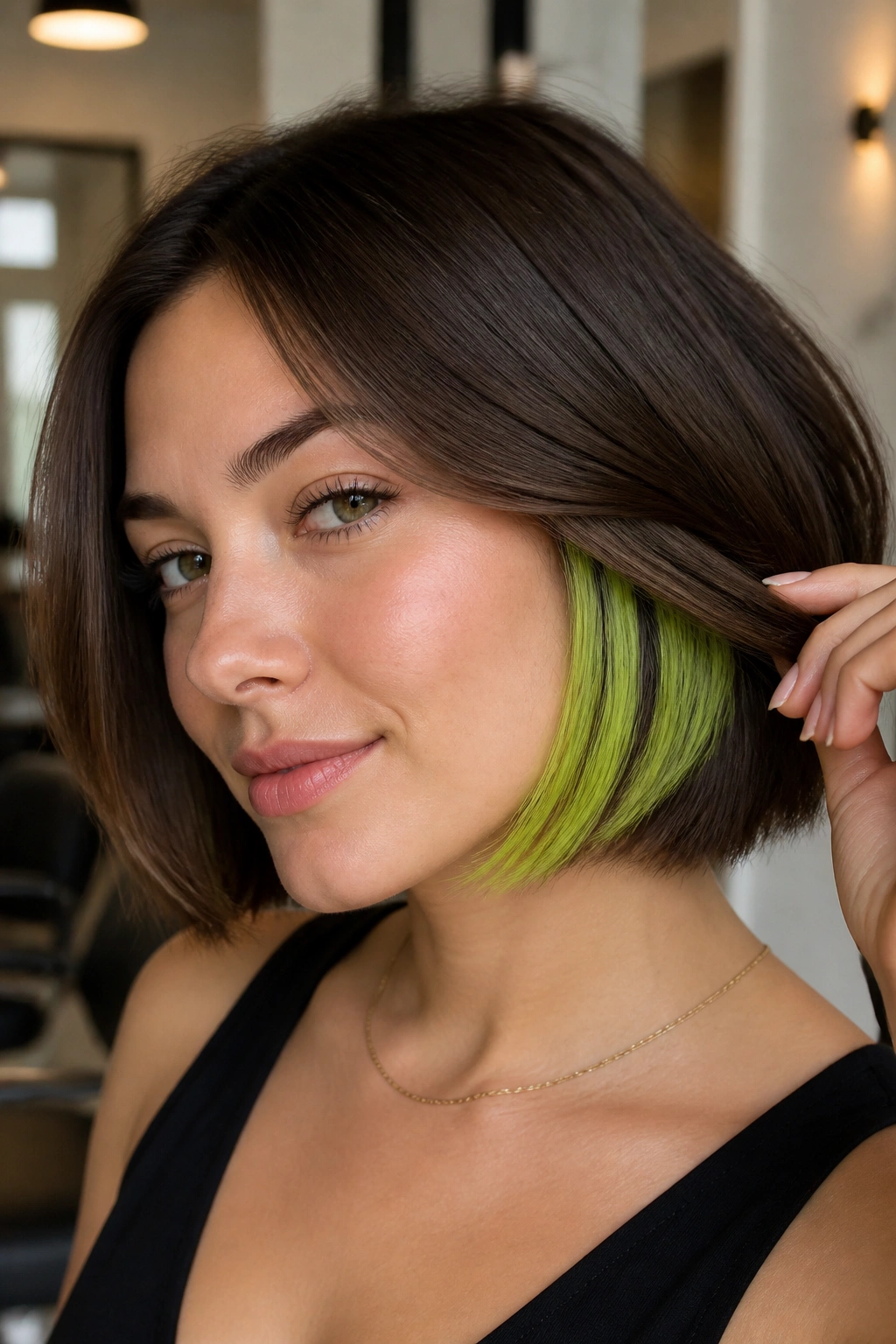
Lime streaks under a bob are a little mischievous. They hide until the head turns, then they flash bright enough to make the cut feel sharper.
The underlayer keeps the color from overwhelming the haircut. That’s the beauty of it. A bob already has structure, so a bright accent underneath gives it extra energy without changing the silhouette.
- Works best on jaw-length or chin-length bobs
- Place the streaks just below the top layer
- Keep the lime narrow if you want a peekaboo effect
- Go wider if the color should show when the hair moves
This isn’t the calmest green in the set. It’s the one for someone who wants the joke to land when they flip their hair.
16. Bottle Green Peekaboo Braids
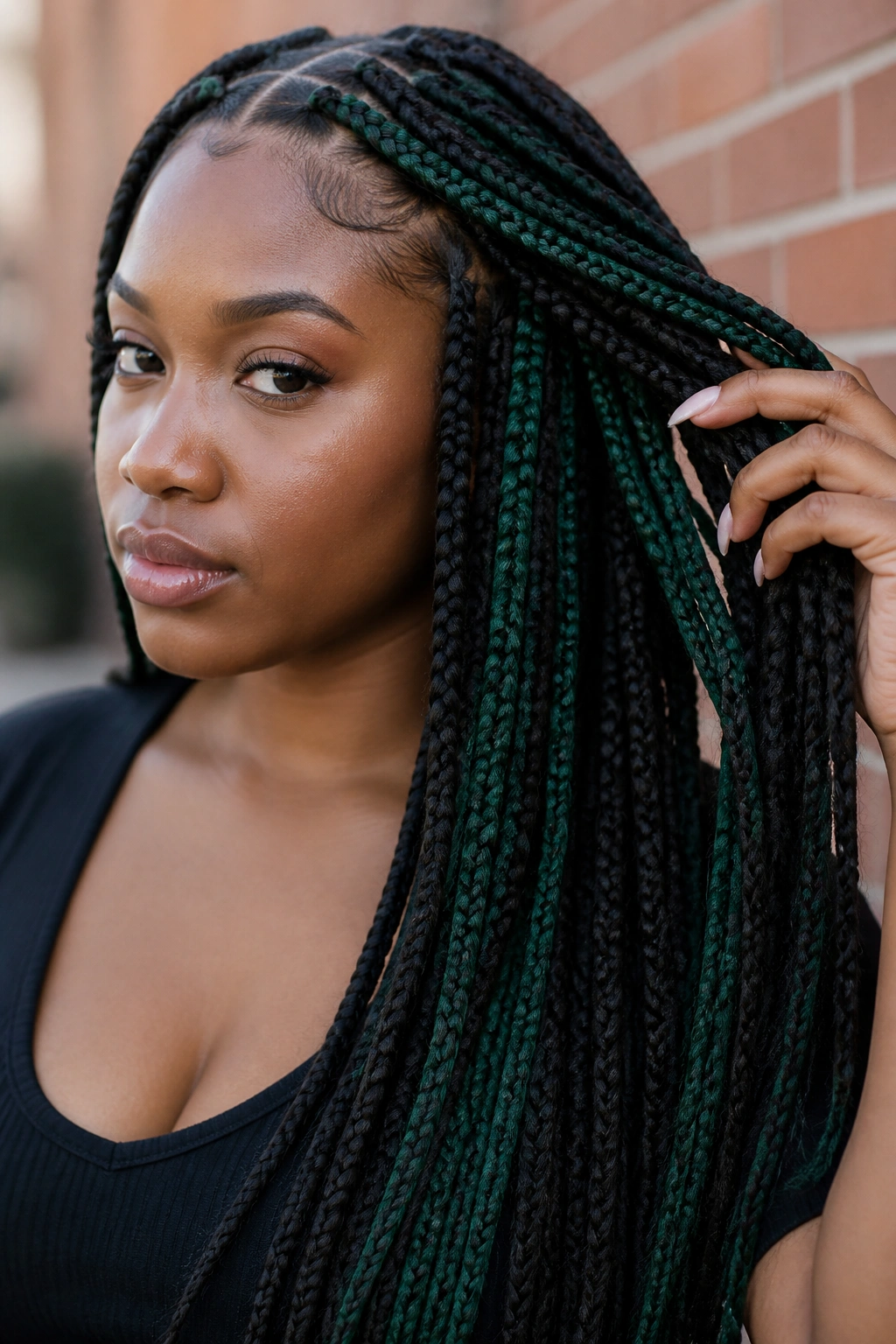
Braids change everything. When bottle green sits inside them, the pattern breaks the color into little flashes that look stronger than they would on loose hair. The green also feels more rooted, almost woven into the style instead of painted on top.
Peekaboo placement works well because braids already expose hidden sections. A single thick panel can be dramatic, but a few narrower sections tend to blend better once the braid gets pulled apart.
Who it suits
This is a good pick for people who wear box braids, feed-ins, or tight rope braids and want color without repainting the whole head. It also works if you like switching between simple and styled looks.
The downside? Fresh color needs gentler washing and careful tension. Braids can tug at fragile ends if the lightening was done too close to the scalp.
17. Fern-Toned Money Pieces on Caramel Brown
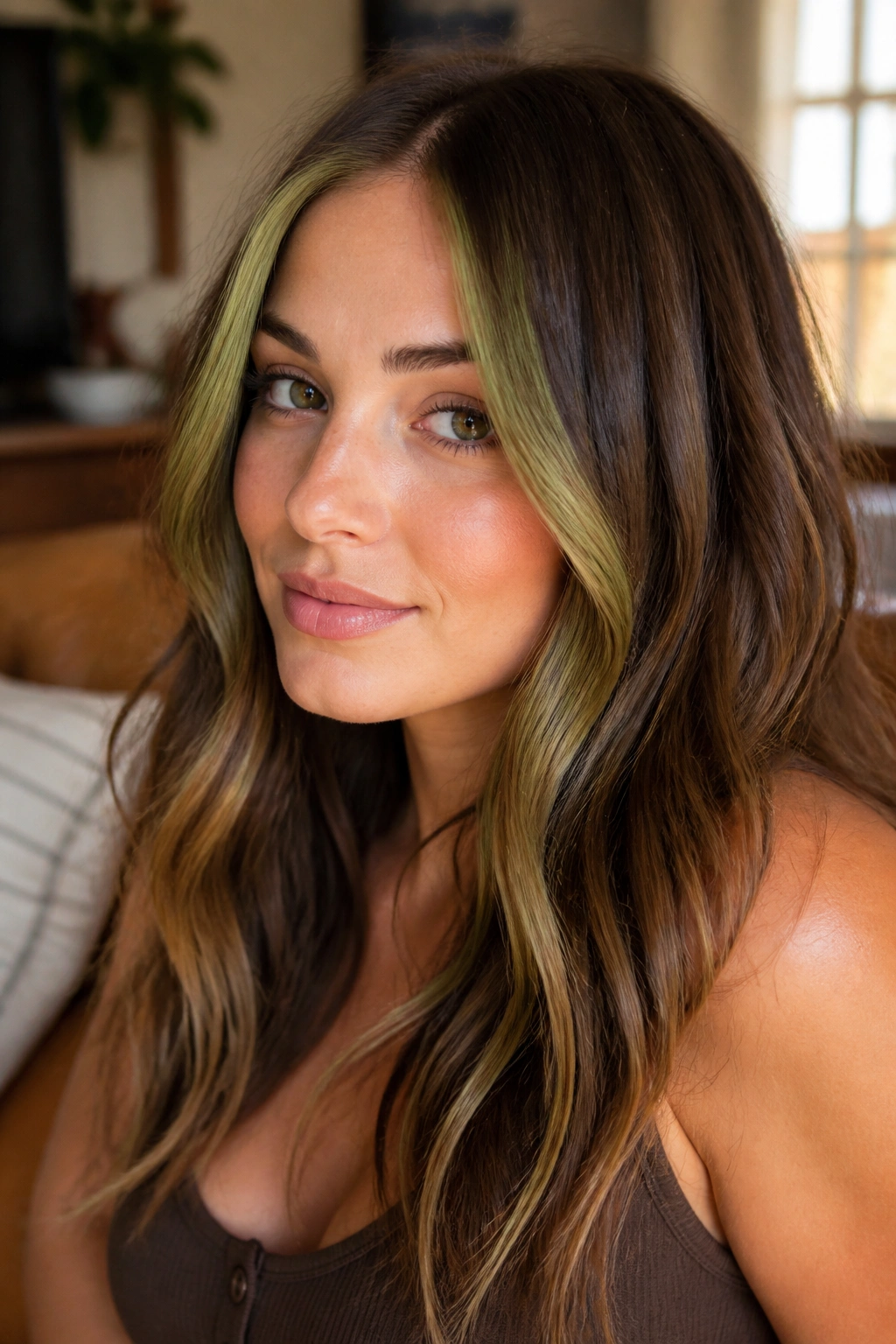
Fern green is softer than emerald and less muted than sage, which makes it a sweet spot for caramel brunettes. The front pieces brighten the face, but the tone still feels grounded.
I like this one because it plays well with warmth. Caramel brown already has golden depth, and fern adds a cool edge without flattening it. The result is lively, not icy.
A money piece like this usually looks best when the green starts strongest about 2 inches back from the hairline and then softens as it drops. That keeps the face-framing section from feeling like a sticker.
If your haircut has curtain bangs or cheekbone layers, even better. The movement helps the color breathe.
18. Avocado Balayage on Wavy Midlength Hair
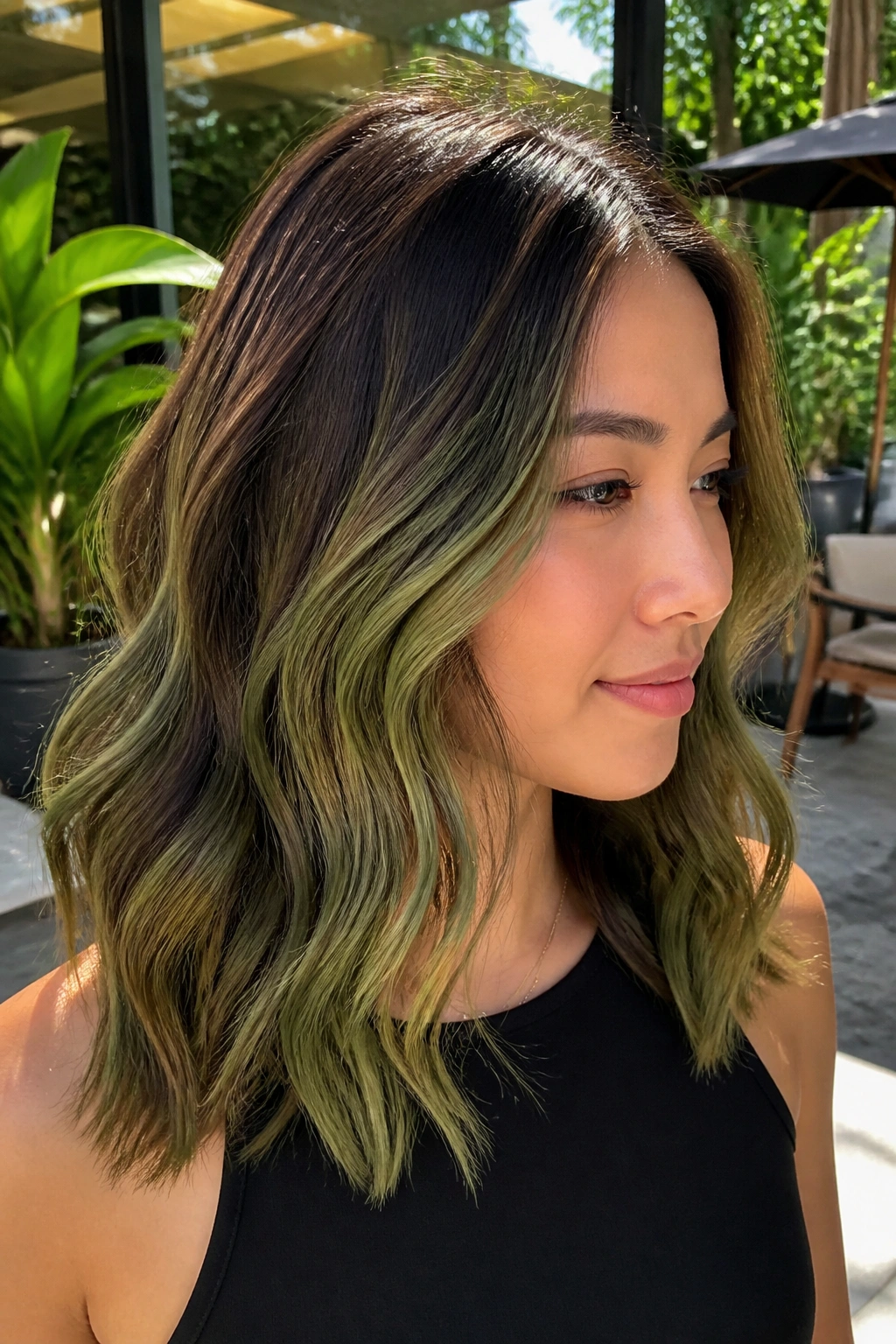
Can avocado green look chic? Absolutely, if the placement is soft and the shade has enough brown in it. On wavy midlength hair, the color can melt from a darker base into green that feels grounded, almost velvety.
The wave pattern matters here. Balayage follows the bends and creates longer ribbons instead of sharp bands. That’s what keeps avocado from going patchy. It needs room to stretch.
How to place it
Aim the brighter pieces through the outer curve of the wave, not straight across the head. That gives the color a smoother flow.
This shade is underrated on warm brunettes. It doesn’t ask to be a jewel tone, and that restraint makes it wearable.
19. Mossy Ombré from Mid-Shaft to Ends
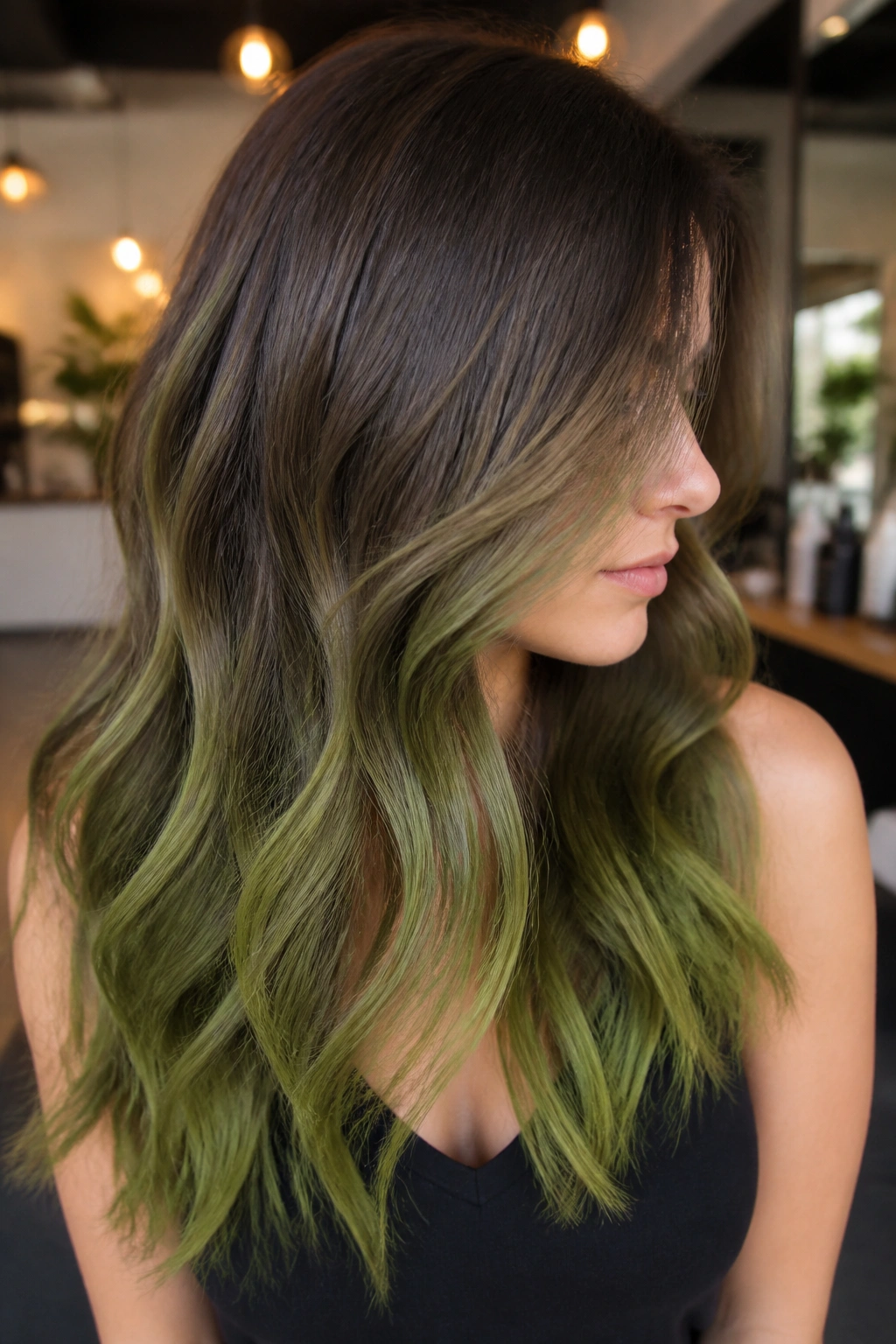
Mossy ombré is the safest way to go green if you want the color to build slowly. The top stays brown, the middle turns earthy, and the ends carry the green strongest. That gradient keeps the style soft.
Because the color shifts from dark to light over the length, the eye reads the whole shape before it notices the shade. On layered hair, that’s especially nice. The cut and the color get to work together.
Why ombré calms the shade down
Green on brown can look busy if it’s packed too close to the scalp. Letting it live lower on the hair gives the tone room to settle.
- Best if you want low commitment
- Good for longer cuts with movement
- Easier to grow out than root-to-tip color
- Looks richest with a cool gloss at the ends
20. Jade Foil Highlights on Long Straight Hair
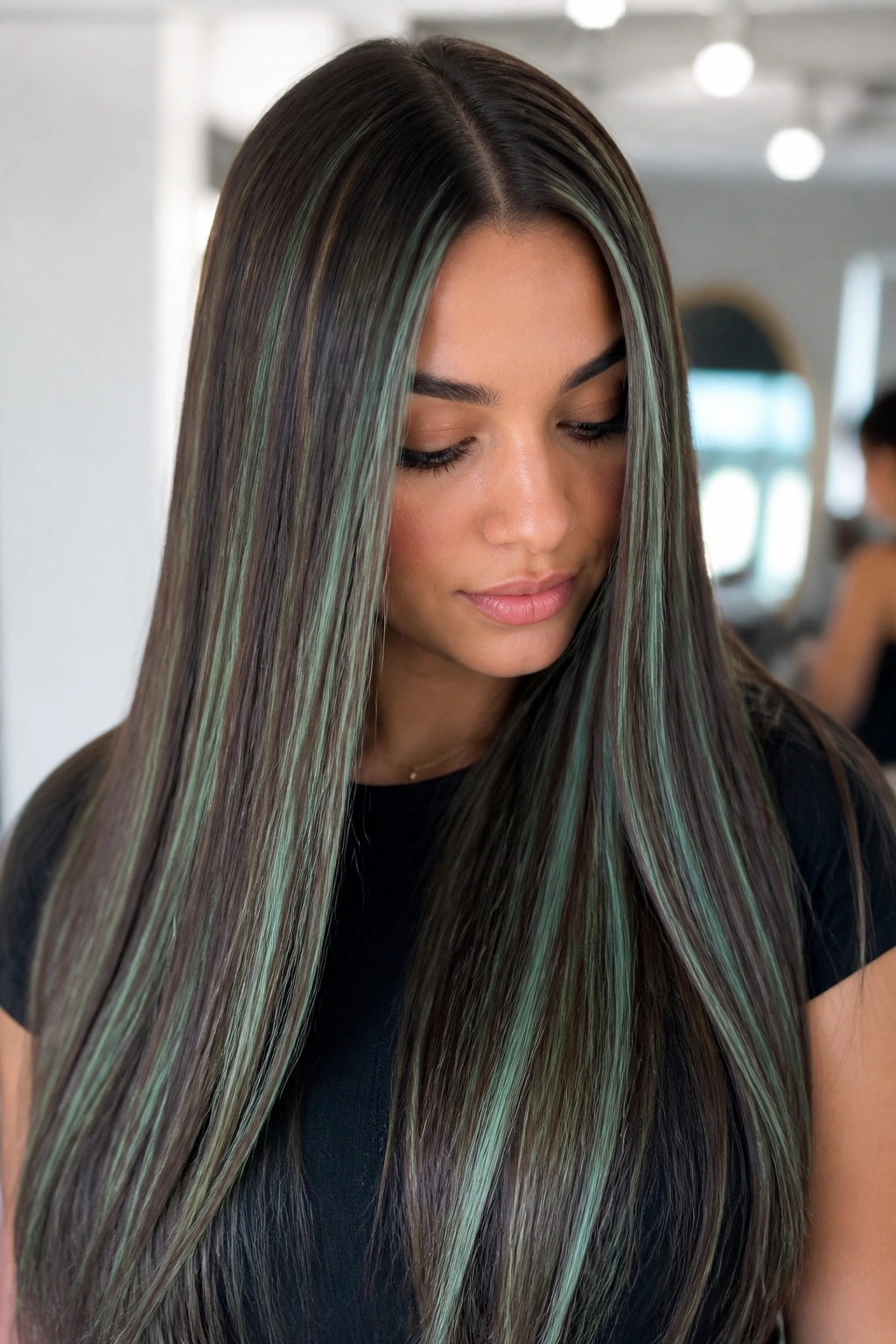
Straight hair can be a blessing and a curse for green highlights. The blessing is shine. The curse is that every line shows. Jade foils fix that by bringing enough structure to keep the color from looking like one flat stripe.
On long straight hair, the foils should be spaced with intention. A placement every 1.5 to 2 inches usually keeps the result from becoming too stripey. That spacing lets the brown still do its job.
A clean center part makes the jade feel sleek. A deep side part gives it a more fashion-forward edge. Either way, the color needs a good gloss because straight hair can expose dryness faster than waves do.
Tiny strands. Big attitude.
21. Olive and Gold Dimension on Warm Brunette Hair
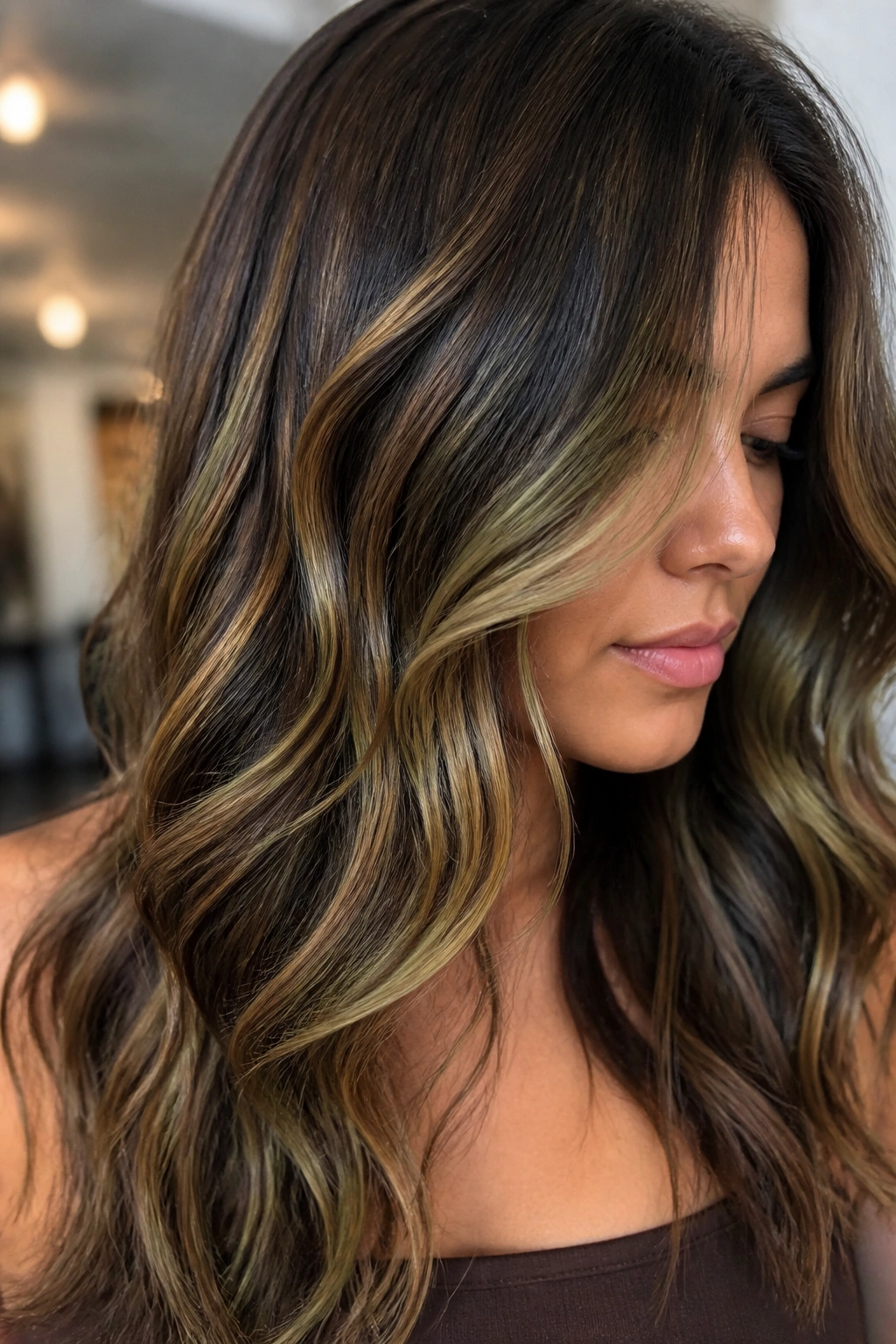
Olive alone can look flat on a warm brunette base. Add a touch of gold, though, and the whole thing wakes up. The gold doesn’t cancel the green; it gives it lift, which is a much better move.
This is a smart option if your brown hair leans honey, coppery, or sun-kissed. Pure cool green can fight those tones. Olive with gold bridges the gap and keeps the result from feeling disconnected from the rest of the hair.
The placement can be balayage or fine slices. I prefer fine slices when the haircut is blunt, and balayage when the layers are long. Both work. The shape of the cut should decide the map.
It’s a prettier solution than forcing one cold shade onto a warm base.
22. Neon Green Dip-Dye for the Bold
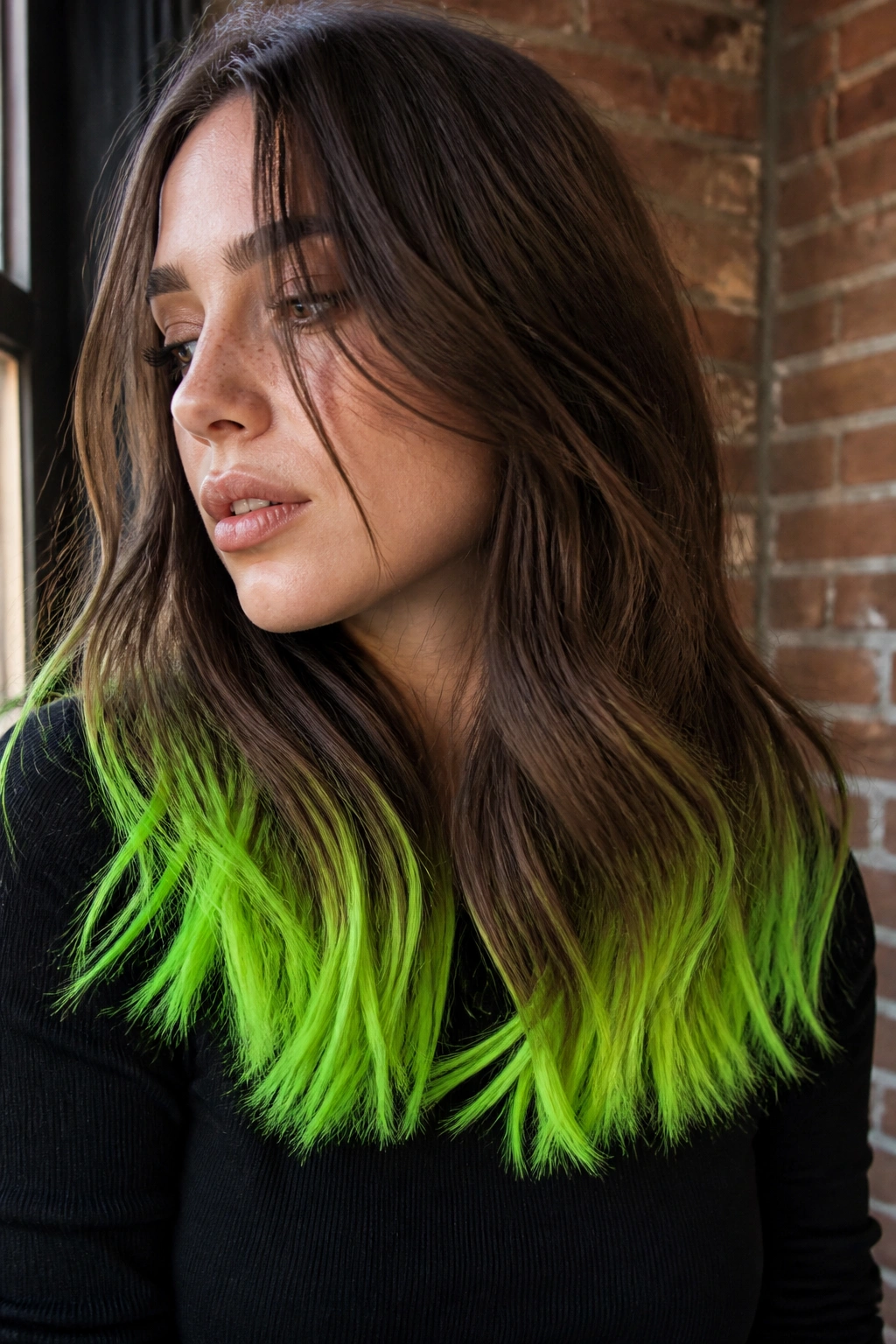
Dip-dye is where green stops whispering and starts grinning at you. A neon green end section on brown hair creates a hard line that feels graphic, playful, and a little rebellious.
The reason it works is simple: the eye reads the brown first, then lands on the color block at the bottom. That gives the neon a frame. Without the brown, it can be too much. With it, the whole style becomes cleaner.
- Best on blunt ends or shaggy layers with shape
- Needs pre-lightening for the brightest result
- Looks strongest on hair worn loose or half-up
- Fades faster than deeper greens, so glosses matter
This is not the subtle choice. It is the one you pick when subtle has already bored you.
23. Dark Green Lowlights and Highlights Mix
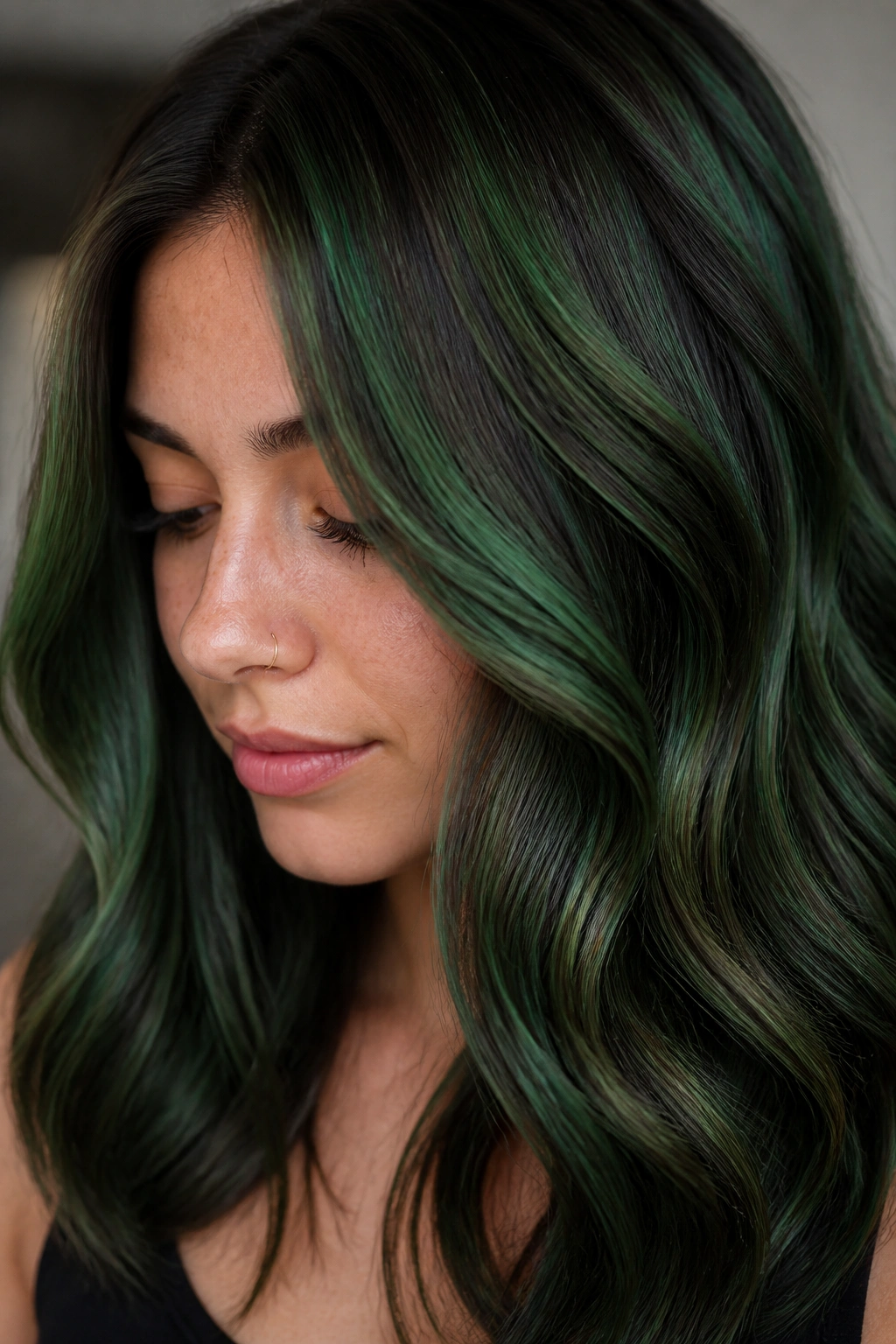
Mixing dark green lowlights with brighter green highlights sounds busy, but on brown hair it can look layered and expensive. The darker pieces add shadow, while the brighter pieces keep the color from disappearing into the brunette base.
The payoff is depth. Lots of depth. That’s what makes this approach different from a single-tone green look. The hair doesn’t just read green; it reads dimensional.
Why the mix works
Brown hair already has warmth and shadow. Adding two green levels gives the color somewhere to move instead of sitting on one note.
This is a solid choice for people with thick hair, because the variation prevents the color from looking like one heavy sheet. On finer hair, keep the lighter pieces a little more concentrated around the face and top layer.
24. Green Highlights for Brown Hair with a Curly Halo
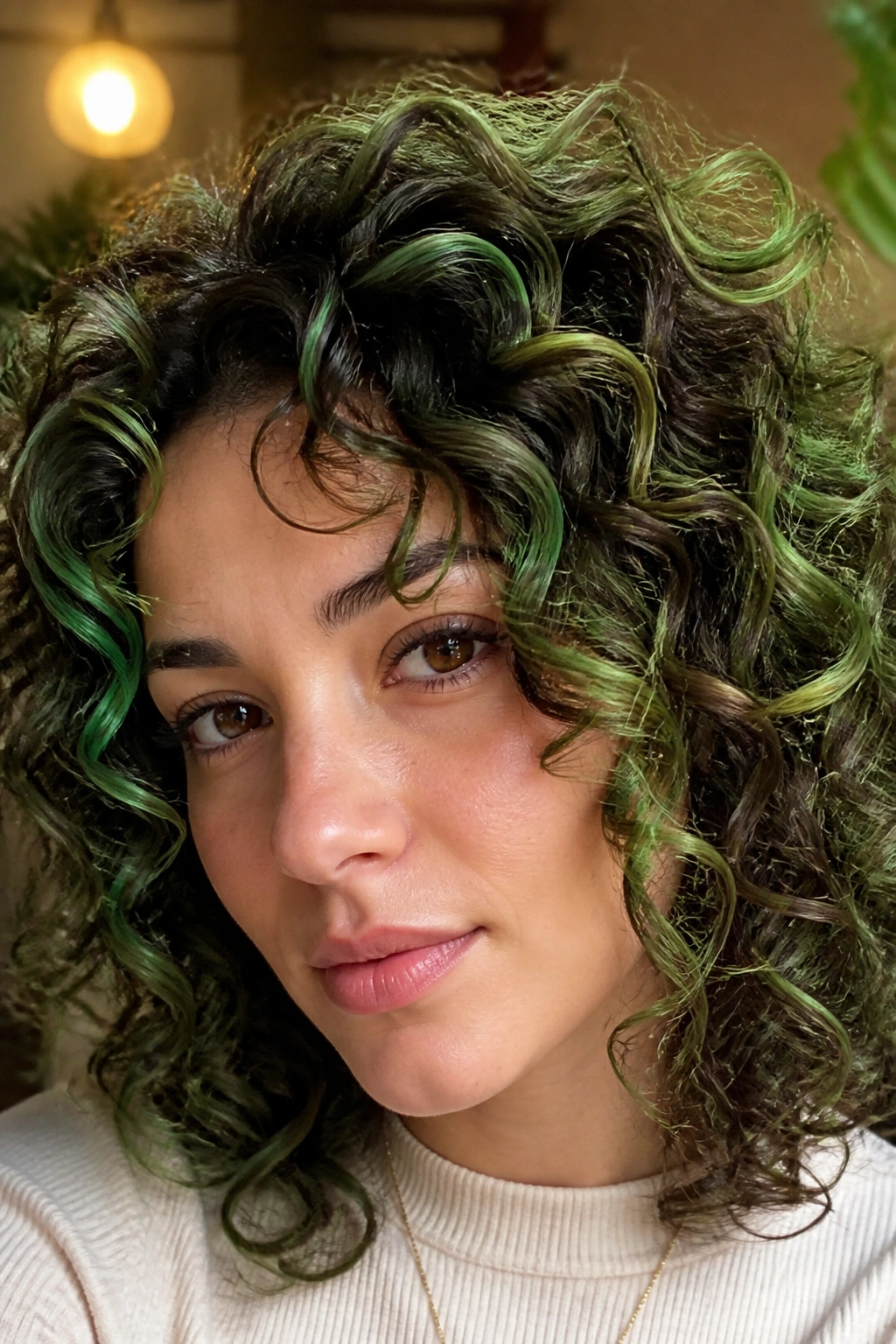
Curly hair around the crown creates a natural halo, and green highlights placed there can look like the color is floating. That’s why this style feels so alive. The curls break the light into little flashes.
A halo placement should follow the ring of the head, not random sections. When the color tracks the shape of the curl pattern, it reads clean and intentional. If the placement ignores the curl geometry, the result can feel scattered.
How to place them around the crown
Ask for brighter pieces near the outer edge of the halo and softer pieces underneath. That keeps the top visible without turning it into one flat green cap.
This look is especially good if you wear your curls out most days. The color shows best when the curls stack up and separate naturally.
25. Pistachio Fine Weaves on Light Brown Hair
Pistachio is one of the prettiest pale greens for light brown hair because it feels fresh without screaming. Fine weaves keep the color delicate, almost like a tint rather than a full highlight.
The base matters a lot here. Light brown hair has enough brightness to hold pistachio without looking chalky, but it still needs a clean lift. If the underlying blonde is too yellow, the pistachio can skew sour. Nobody wants sour hair.
Why a light base helps
Pale green needs a pale canvas. That’s not a fashion opinion; it’s just how pigment works.
- Best on level 6 to 7 brown hair
- Use thin weaves so the tone stays airy
- Pair with soft waves for a hazy look
- Avoid heavy warmth in the gloss
This one has a quiet charm. It doesn’t try to dominate the room.
26. Evergreen Streaks on a Shag Cut
A shag cut already has movement, which makes evergreen streaks feel lively from the start. The layers separate the color into pieces, so the green appears and disappears as the head moves.
That movement is the whole reason this pairing works. A shag doesn’t want neat, uniform color. It wants texture, tension, and a little mess. Evergreen streaks give it all three.
If the cut has heavy fringe or choppy layers, put some brighter pieces near the front and keep the lower layers darker. The contrast keeps the shape from collapsing visually.
The result feels cool in the old-school sense, not the polished one. I mean that as a compliment.
27. Washed-Green Pastel Panels for Subtle Color
Pastel green on brown hair can be lovely, but only if you’re ready for a softer read. Washed-green panels sit between mint, sage, and a pale eucalyptus tone, and they look almost airbrushed when the lift is clean.
Because the color is light, it fades faster than deeper greens. That’s not a flaw. It just means the look works best when you enjoy change and don’t mind a little upkeep.
The placement should stay broad enough to show the pastel, but not so broad that it takes over the haircut. A few panels under the top layer can be enough if you want the green to show only when the hair moves.
Soft color. Soft edges. That’s the whole point.
28. Multi-Tonal Green Highlight Blend for Brown Hair
A multi-tonal blend is the most interesting green option when you want depth without flatness. Mix olive, jade, forest, and a little moss through one brunette head, and the hair starts to move in layers even when it’s still.
This approach works because green is not one note. Brown hair can hold several versions of it at once, and the mix keeps the style from feeling like a single flat dye job. One shade can sit near the face, another through the mids, and a darker one at the bottom.
The smartest version keeps one tone dominant. Too many competing greens and the hair gets noisy. One lead color, two supporting shades, and a clean gloss. That’s enough. If you want the whole look to stay wearable, let the brown remain the frame and treat the greens like the art inside it.
