



Brown lowlights for brunette hair do one thing better than almost any other color service: they make hair look expensive without shouting about it. Not louder. Not brighter. Just deeper, softer, and more alive, like someone turned the contrast knob in the right direction.
That matters because brunette hair can go flat fast. A single dark shade from roots to ends often reads as heavy, especially on straight hair, fine hair, or long layers that need movement. Brown lowlights fix that by building shadow back into the hair — through ribbons, panels, veils, and tiny woven pieces that sit just darker than the base.
The trick is that brown is not one thing. Espresso, mocha, chestnut, walnut, mushroom, taupe, and cocoa all sit in different places on the color wheel, and the placement changes the whole mood again. A few level-4 pieces near the partline can make a medium brunette look thicker; the same color tucked underneath a wave pattern can make curls pop without turning the whole head dark. Small shift. Big payoff.
So the real question isn’t whether lowlights belong on brunette hair. It’s which brown, placed where, and how bold you want the contrast to be.
1. Espresso Brown Lowlights for Brunette Hair
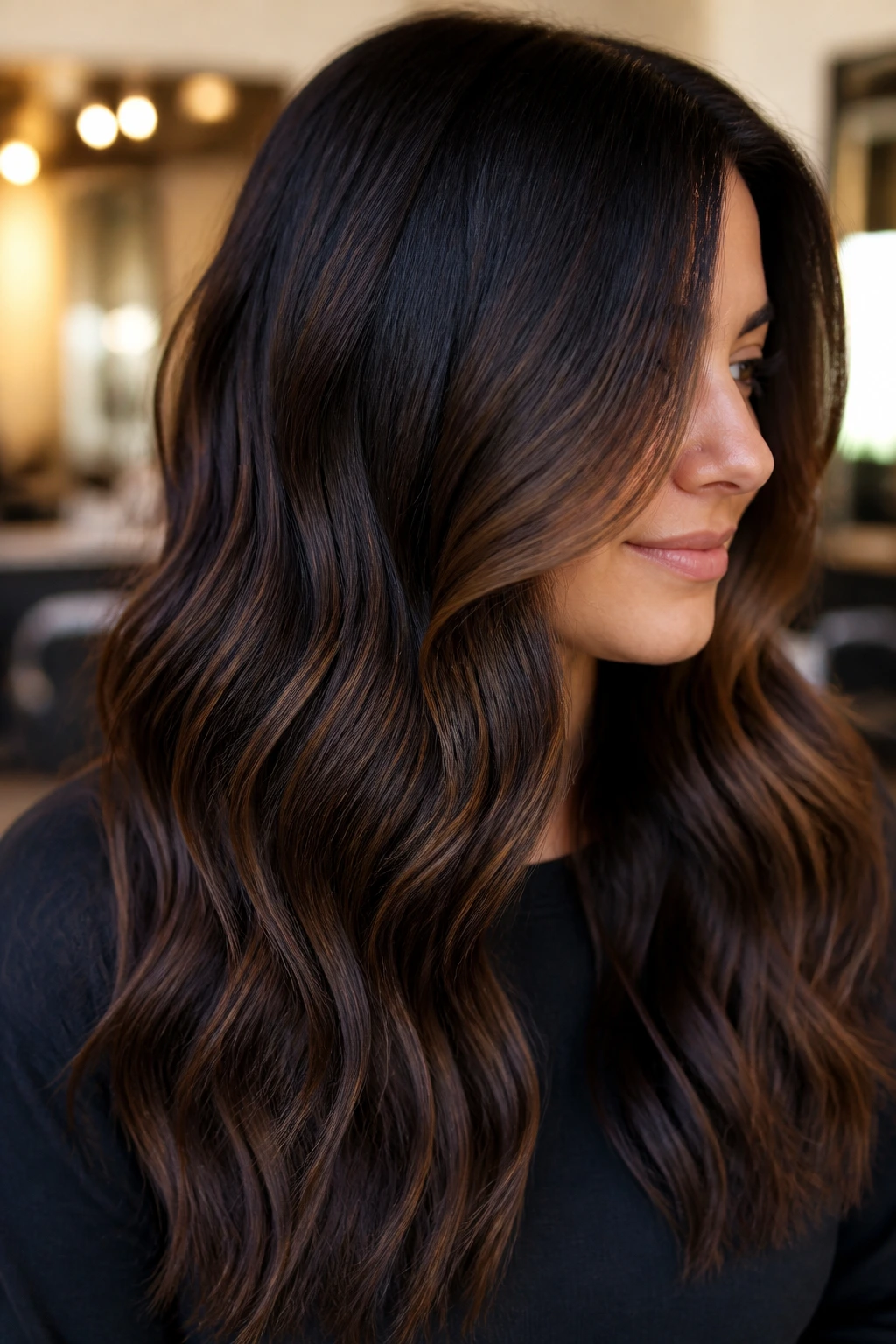
Espresso lowlights are the ones I reach for when someone wants depth without anyone immediately spotting the color work. They sit close to a deep brunette base, so the finish looks rich rather than striped. On dark brown hair, they can make the surface look smoother and the ends look fuller.
Why They Work
Espresso sits in that sweet spot between “I changed my hair” and “Did your hair always look like this?” That’s useful if you like subtlety, or if your hair already leans dark and you don’t want the lowlights to read as a heavy block.
- Best on level 4 to level 5 brunettes.
- Works well with straight or softly waved hair.
- Ask for thin-to-medium woven foils, not chunky slices.
- Keep the pieces 1 to 2 shades deeper than your base.
Pro tip: Ask your colorist to keep the espresso pieces mostly on the mid-lengths and underneath the top layer. That keeps the hair from looking too dense near the crown.
2. Mocha Veils for Soft, Everyday Dimension
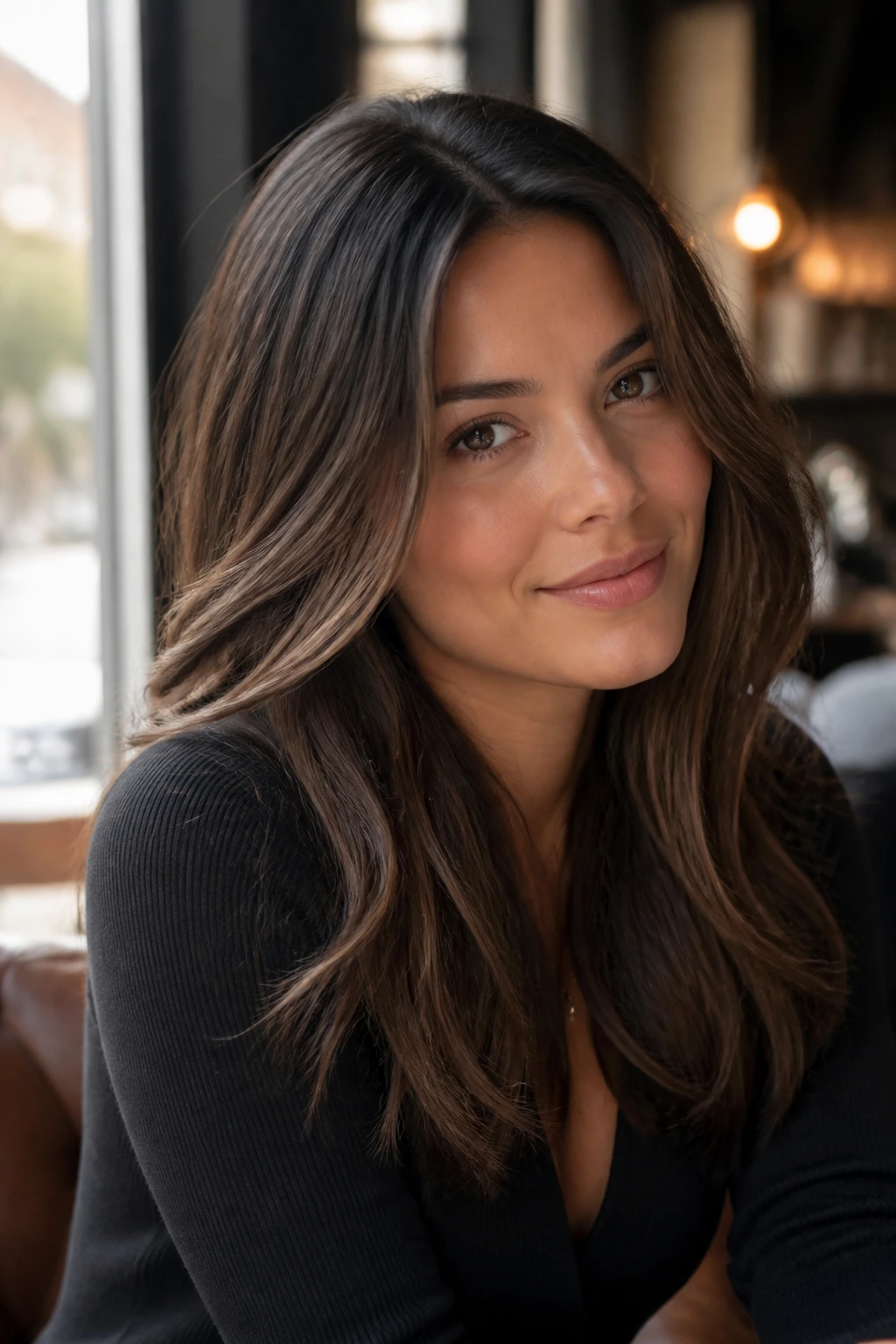
Mocha lowlights are a quieter version of depth, and they’re one of the easiest brown lowlights for brunette hair to wear every day. The color has enough warmth to feel natural, but not so much warmth that it turns reddish in the wrong light. It just softens the overall tone.
A mocha veil works especially well if your brunette hair has been lightened before and feels a little washed out. The darker woven pieces bring back shape around the waves and stop the ends from looking dusty. That matters more than people think.
Unlike bold contrast color, mocha lowlights don’t need perfect placement to look good. They’re forgiving. A colorist can scatter them through the back, the sides, and a few face-framing pieces, and the result still looks calm and polished. No drama. Just better hair.
3. Chestnut Face-Frame Pieces That Warm Up the Front
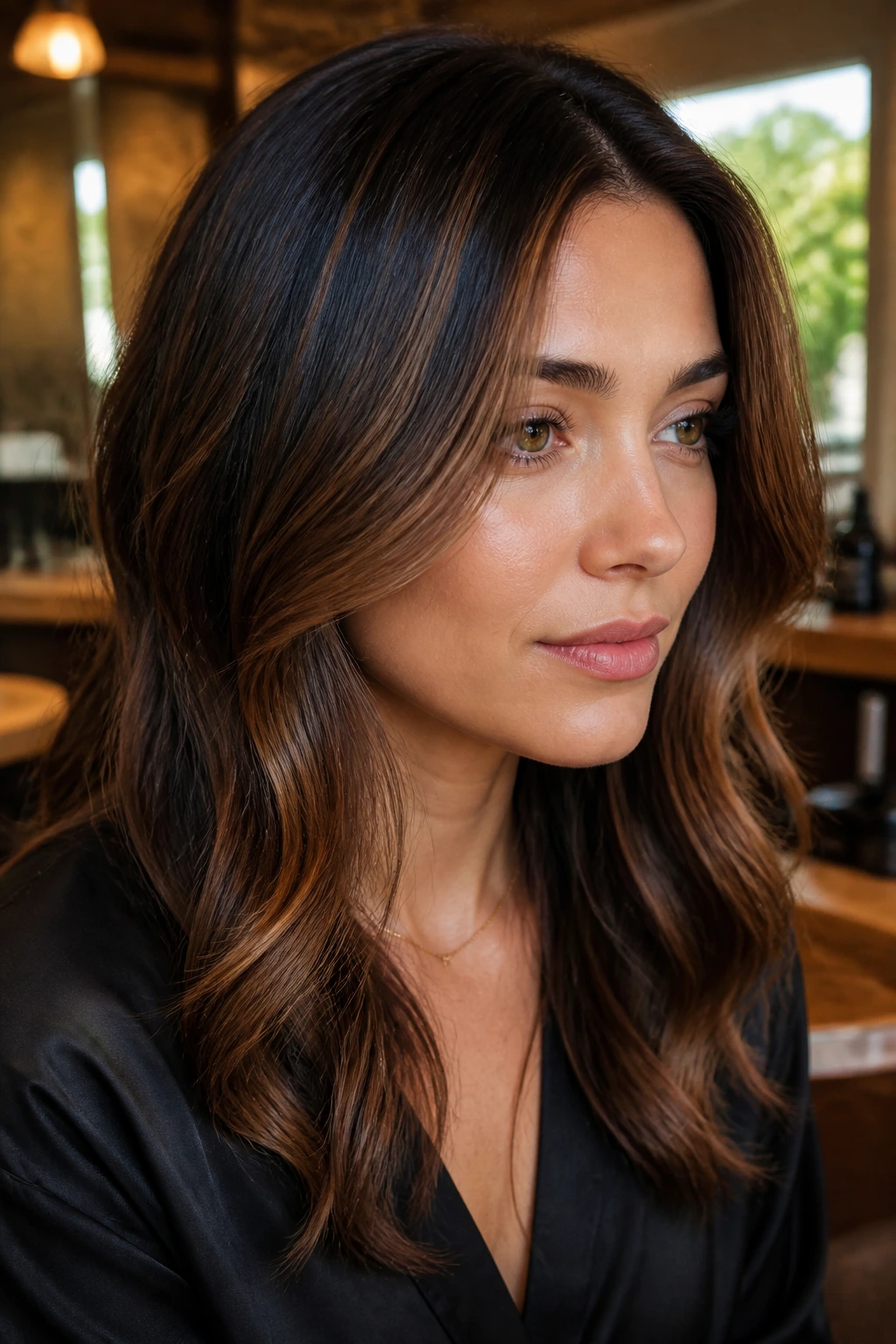
Want warmth around your face without going anywhere near blonde? Chestnut lowlights do that job neatly. They’re deeper than caramel, softer than mahogany, and they add a gentle reddish-brown glow where hair usually needs the most life: around the temples, cheeks, and partline.
How to Ask for It
Tell your colorist you want warm chestnut pieces placed around the front hairline and through the top layer. That keeps the color visible when your hair moves, but not so broad that it takes over the whole look.
The best chestnut placement usually sits:
- just behind the hairline,
- at the temples,
- and in a few ribbon-like pieces through the crown.
If your skin tone gets washed out by cool brown shades, chestnut can be a nice fix. It brings back warmth without turning brassy. That’s the balance most people actually want, even if they do not know the right word for it.
4. Cocoa Underlayers That Hide the Depth Underneath
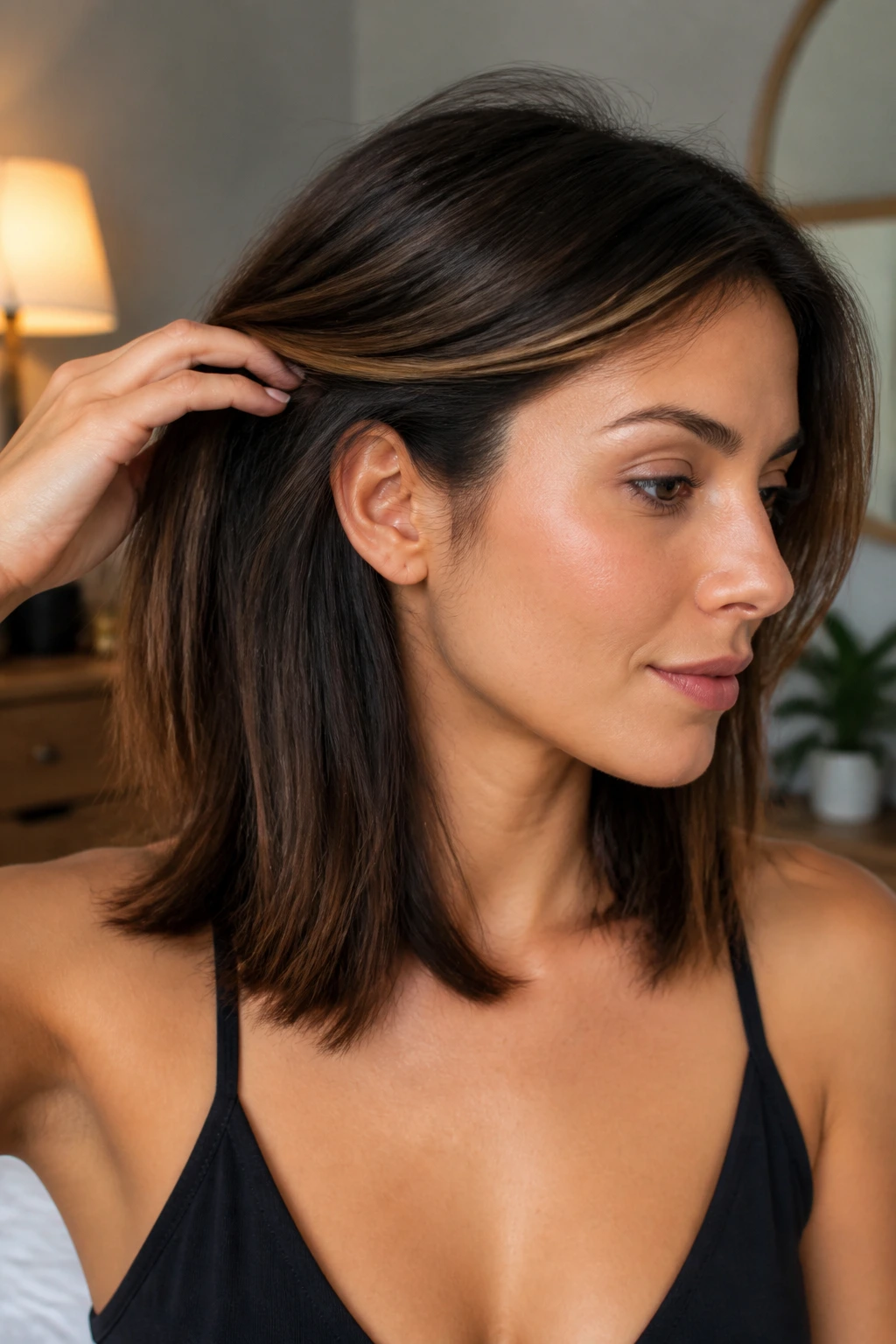
Lift the top layer of your hair and the secret is usually down below. Cocoa lowlights tucked into the underlayer create that kind of hidden depth that only shows when you move, tuck your hair behind your ears, or wear it in a half-up style. It’s quiet. And a little sneaky in the best way.
I like this placement on brunettes who want dimension but hate obvious color stripes. The underlayer does the heavy lifting while the surface stays soft and mostly uniform. On thick hair, it can also make the whole cut look lighter and more airy, because the darker panels break up the bulk.
- Best for bobs, lobs, and long layers.
- Looks especially good on straight hair and loose curls.
- Great choice if you wear your hair up often.
- Easy to refresh with a gloss instead of a full redo.
The point is not to make the hair darker overall. It’s to give the inside of the haircut more shape. Small difference. Huge visual payoff.
5. Walnut Balayage Lowlights for Wavy Hair
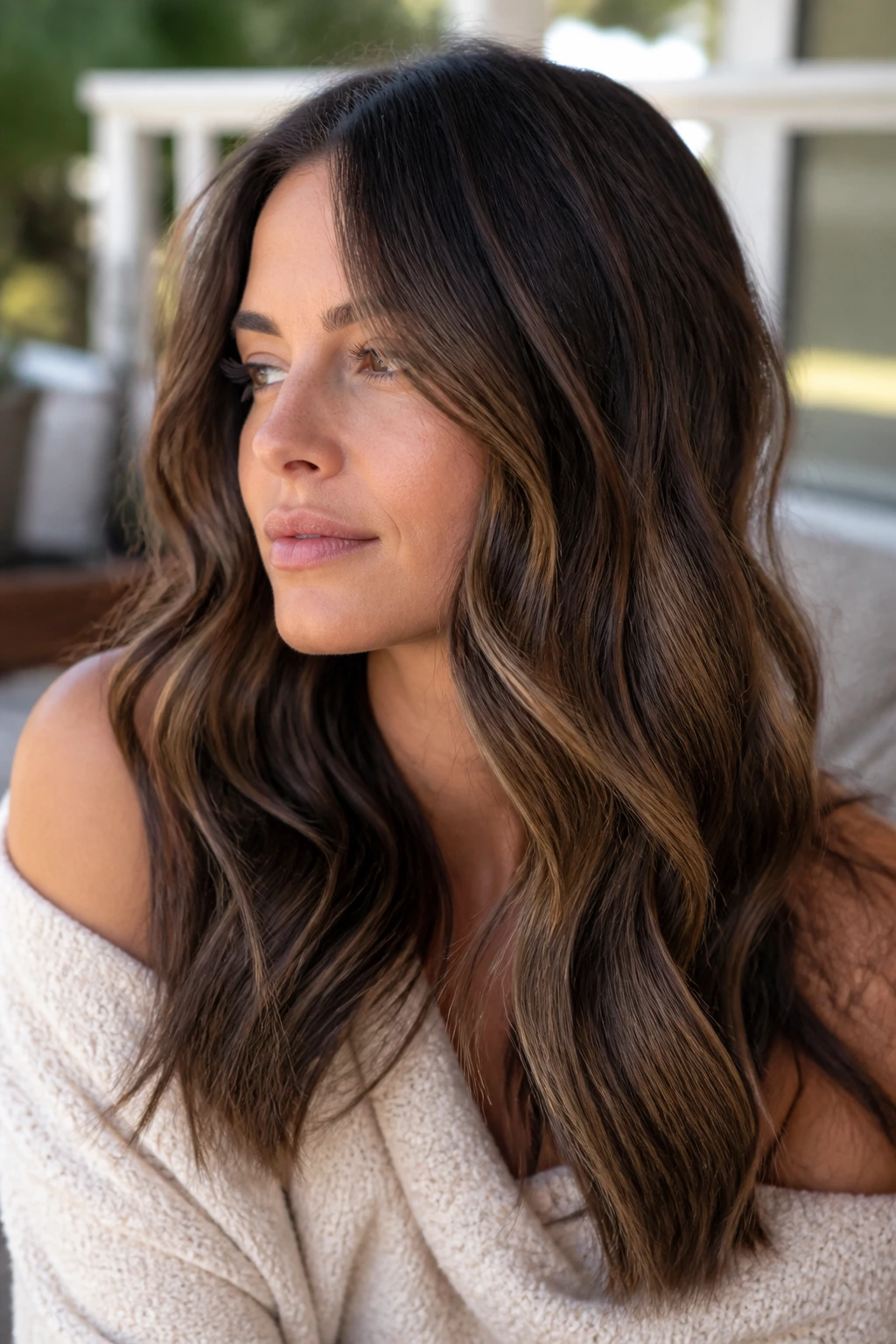
Walnut lowlights are one of those shades that behaves beautifully on movement. On wavy brunette hair, the color slips in and out of the bends instead of sitting there like a flat stripe. That makes the wave pattern look fuller and more deliberate, which is probably why this shade shows up so often on long layered cuts.
Balayage placement keeps walnut pieces soft at the top and denser through the mid-lengths. The result feels lived-in, not painted on. I’d choose this if your brunette hair needs a little more shape but you still want the finish to feel relaxed.
The nice part is that walnut works across a wide brunette range. It can deepen a medium brown base or soften a darker one. The shade has enough warmth to feel rich, but enough brown in it to stay believable. No weird tone shift. Just a better version of brown.
6. Mushroom Brown Lowlights for Cool Brunettes
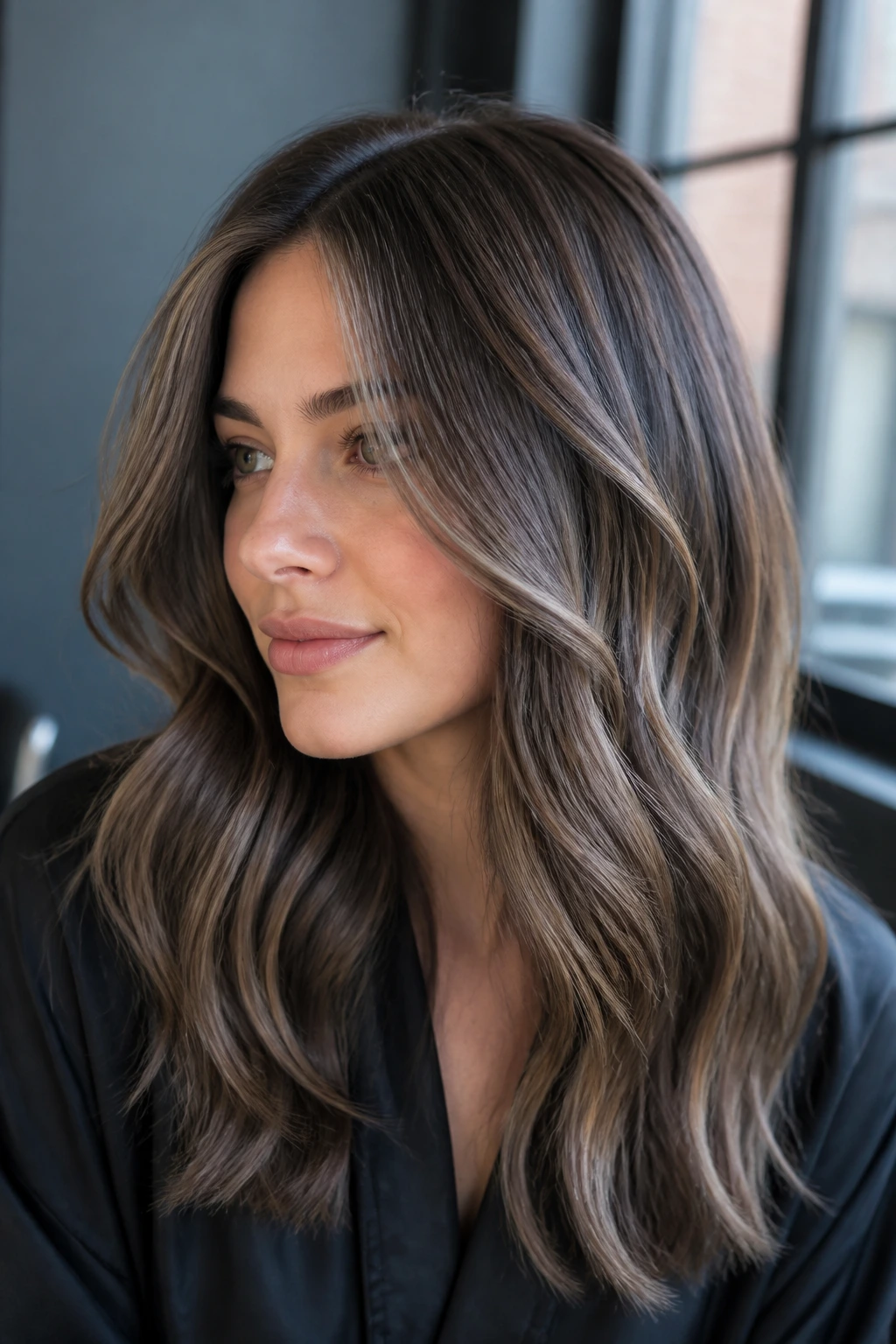
Mushroom brown lowlights are for people who look better in cooler tones and don’t want their brunette hair drifting into orange territory. The shade has a taupe-beige cast that keeps the color earthy, not red. It’s one of the best choices if your hair pulls warm every time it’s colored.
This is not a warm, shiny brown. It’s softer, smoke-leaning, and a little muted. That is exactly why it works so well on cool brunettes and ash-brown bases. Instead of fighting the natural undertone, it follows it.
Unlike chestnut or walnut, mushroom brown lowlights can make the hair look a touch more refined and less sun-warmed. They’re a smart move for anyone who wants depth without obvious warmth, especially if brass shows up fast after coloring. Ask for a cool demi-permanent formula, and keep the pieces fine. Chunky mushroom panels can look muddy.
7. Ash Brown Lowlights That Shut Down Brass
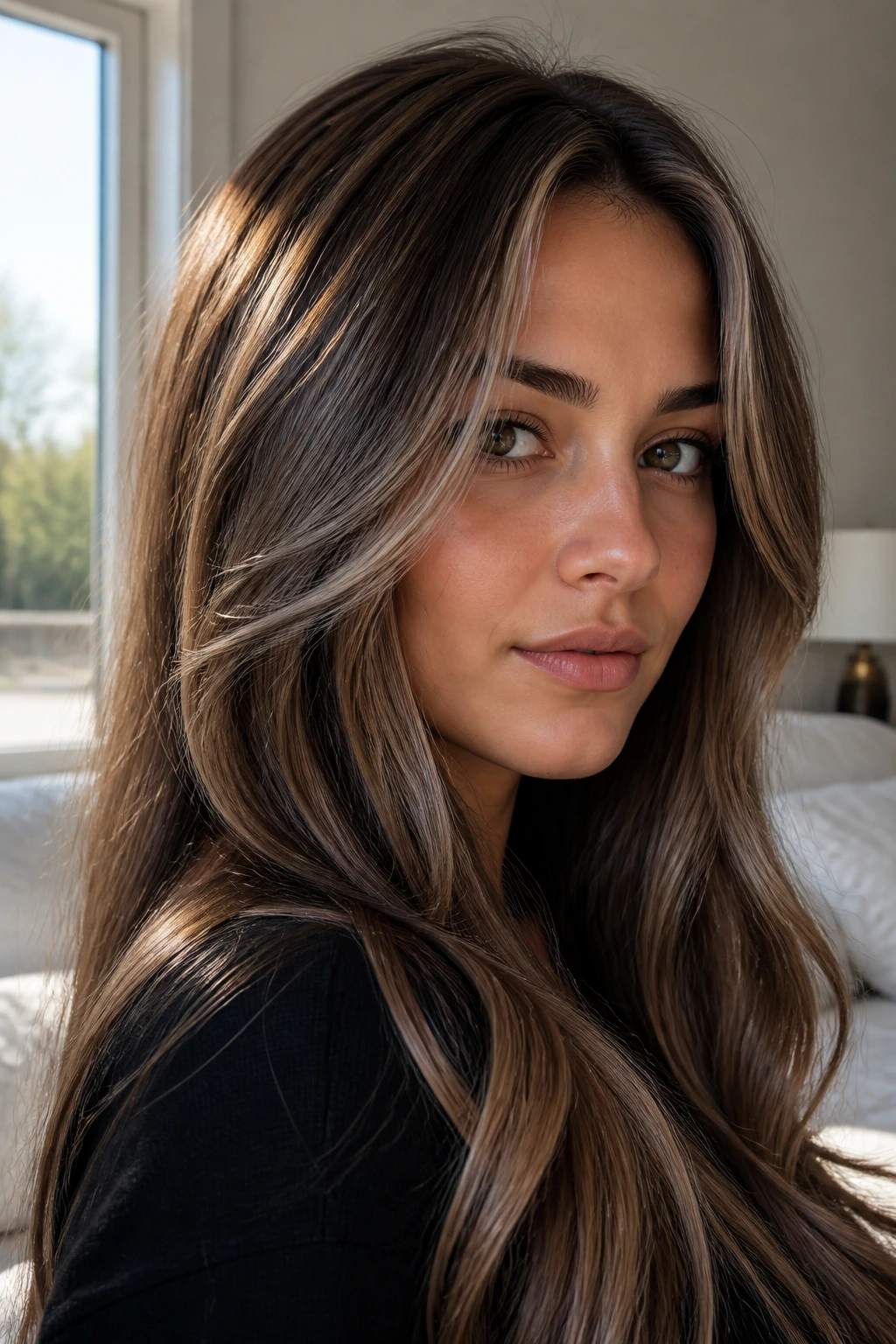
Ash brown lowlights are the practical choice when your brunette hair keeps going orange, gold, or copper in places you didn’t ask for. They cool the tone down and make the hair look cleaner, especially around the face and the top layer where sunlight hits first.
What Makes Them Different
Ash brown has a muted, smoky finish that helps neutralize warmth. It is not gray hair color, and it is not flat black. It sits in that middle zone where the tone looks expensive and restrained.
A few useful notes:
- Best for hair that lifts too warm.
- Works on level 5 to level 7 brunettes.
- Ask for a cool gloss after the lowlights process.
- Avoid placing too much ash near already-dull ends.
If your brunette hair already feels dry, ask for lowlights plus a clear shine glaze. Ash by itself can look a little harsh on porous hair. A gloss softens the finish and keeps the brown from looking dusty.
8. Toffee Ribbons for Brunettes Who Want a Little Glow
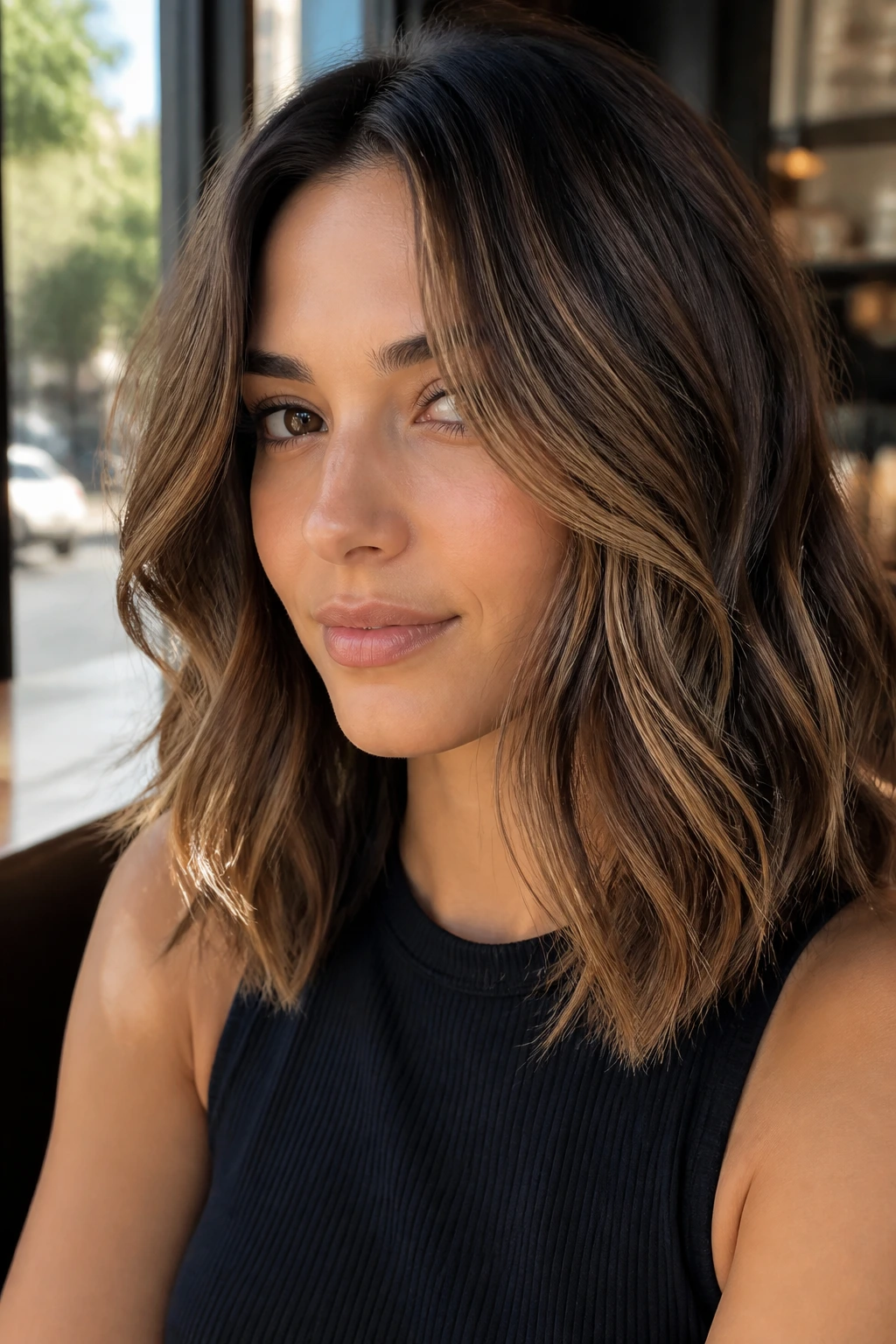
Toffee lowlights sit in a softer brown zone than espresso or ash. They’re warmer, but still brown enough to count as depth rather than lightening. On medium brunette hair, they can make the whole head feel more dimensional, especially when the sun hits the mid-lengths.
This is a good pick if your hair sits in that awkward place where it feels too dark for highlights and too flat without color. Toffee ribbons add a gentle glow inside the brunette base, which sounds simple because it is. Simple is not a weakness here.
The trick is placement. Too many toffee pieces near the top and the hair starts looking streaky. Keep them woven through the middle and lower lengths, and let a few sit under the surface so the hair moves in layers. That is where the color looks best anyway.
9. Shadow Root Melts That Blend the Top Layer
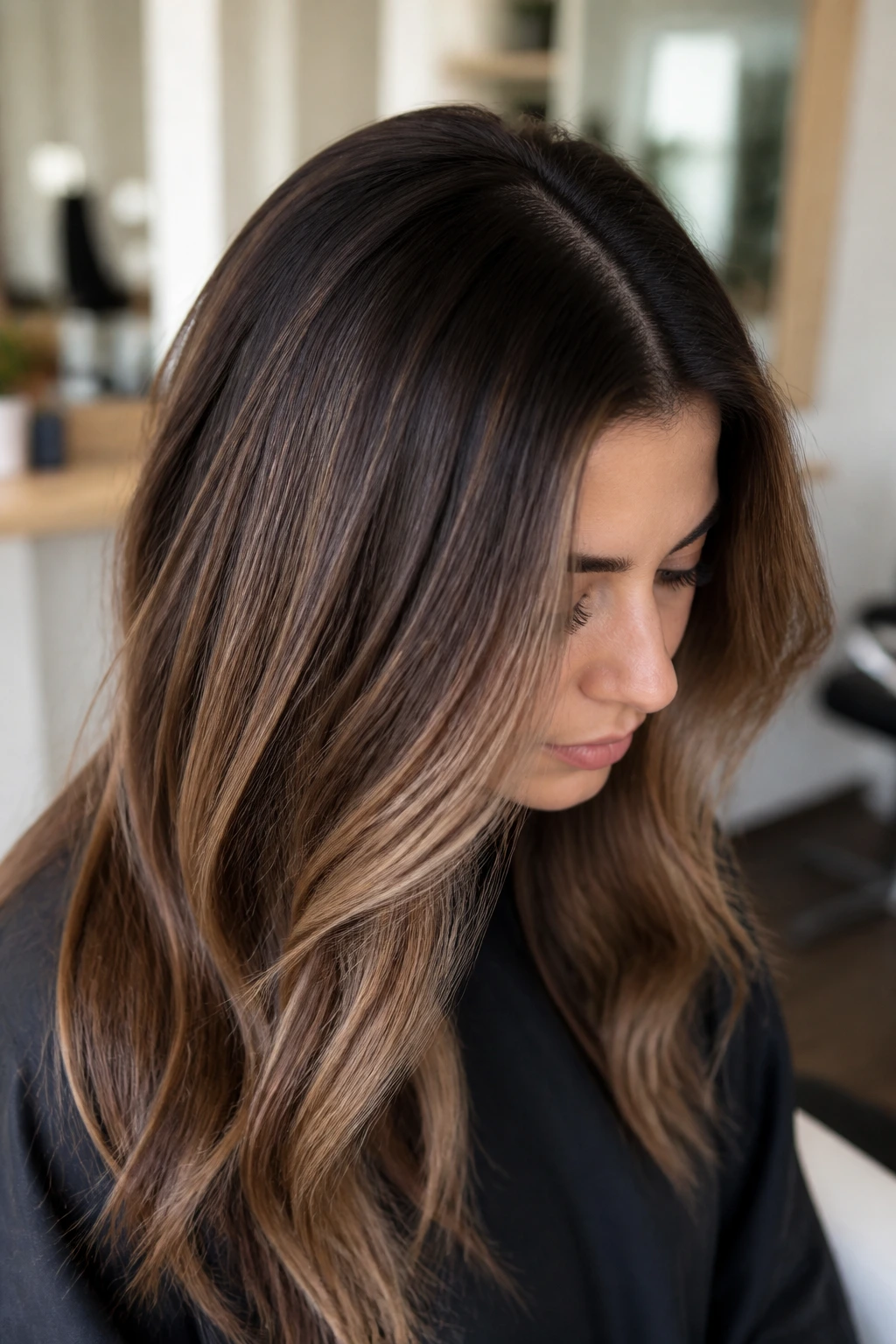
Can a lowlight start at the root and still look soft? Absolutely. A shadow root melt is one of the easiest ways to make brunette color look deliberate instead of patched together. The darker root area transitions into slightly lighter brown lengths, which gives the haircut more depth and makes grow-out easier.
How to Ask for It
Say you want a root shadow that melts into brunette lowlights through the mid-lengths, not a hard line. Your colorist can use a demi-permanent brown that is one to two levels deeper than your base, then feather it downward with a brush or comb.
This works especially well if your hair has old highlights that need softening. It also helps if you like a polished finish but don’t want to schedule constant root maintenance. The blend hides a lot. And hair that blends well usually looks thicker than hair with obvious color breaks.
10. Cinnamon Brown Lowlights for Curls and Coils
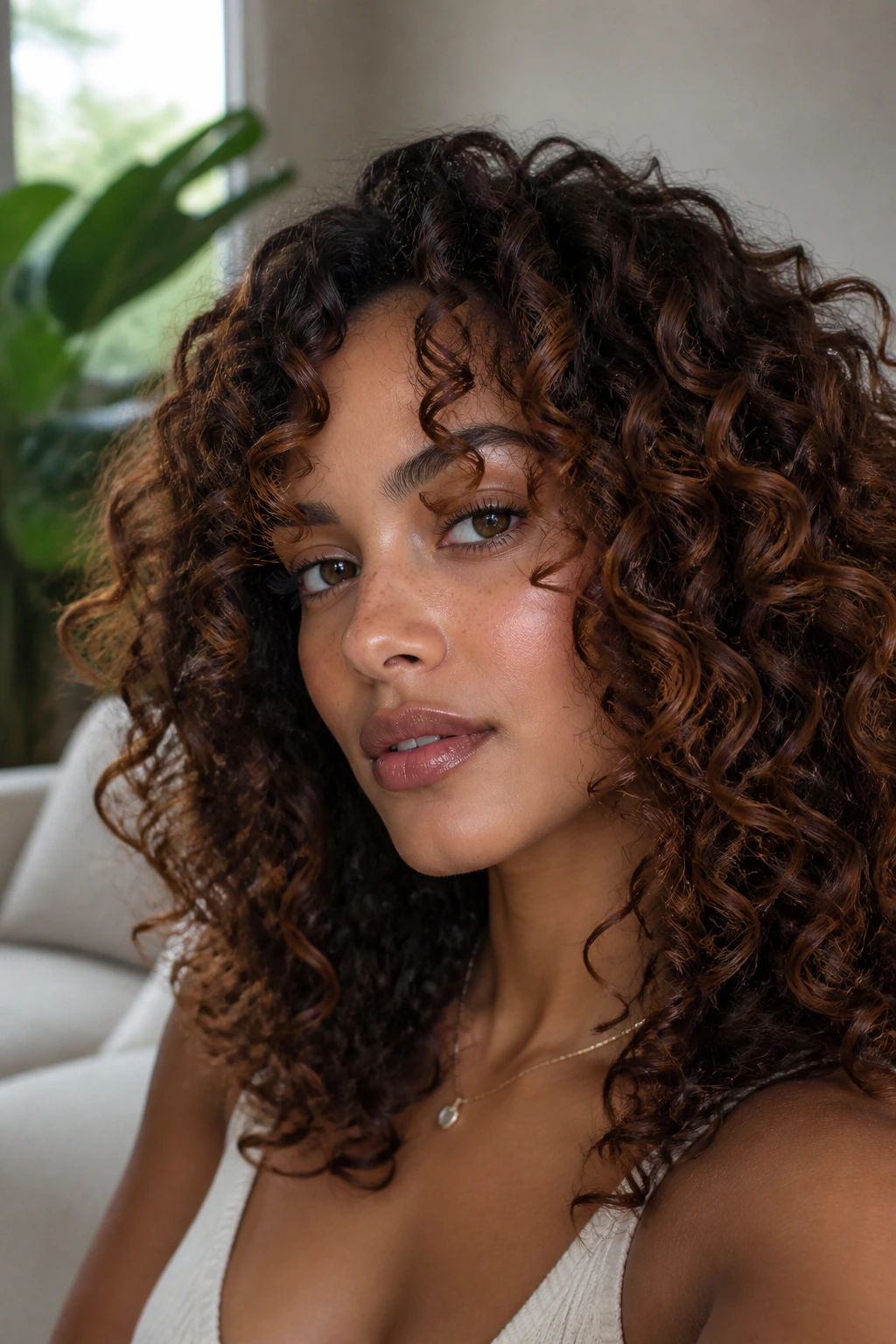
Cinnamon lowlights bring warmth, but they do it in a way that still respects curl pattern. On curls and coils, the color needs to sit where the curl bends and catches light, not just around the outside like a helmet of darker pieces. That’s where cinnamon does its best work.
A good colorist will place these lowlights more selectively on the outer curve of the curl family, especially in the mid-lengths and a few face-framing curls. The goal is depth, not shadow everywhere. Too much darkness can make curly hair look smaller. No one wants that.
- Best for 3A to 4C textures.
- Use fine foils, painting, or freehand placement.
- Keep the color a soft brown-red, not burgundy.
- Pair with a moisturizing gloss to keep curls from feeling dry.
Cinnamon is warm, sure, but it’s also lively. That matters on curls, where flat color tends to disappear.
11. Sable Micro-Lowlights for Fine Hair
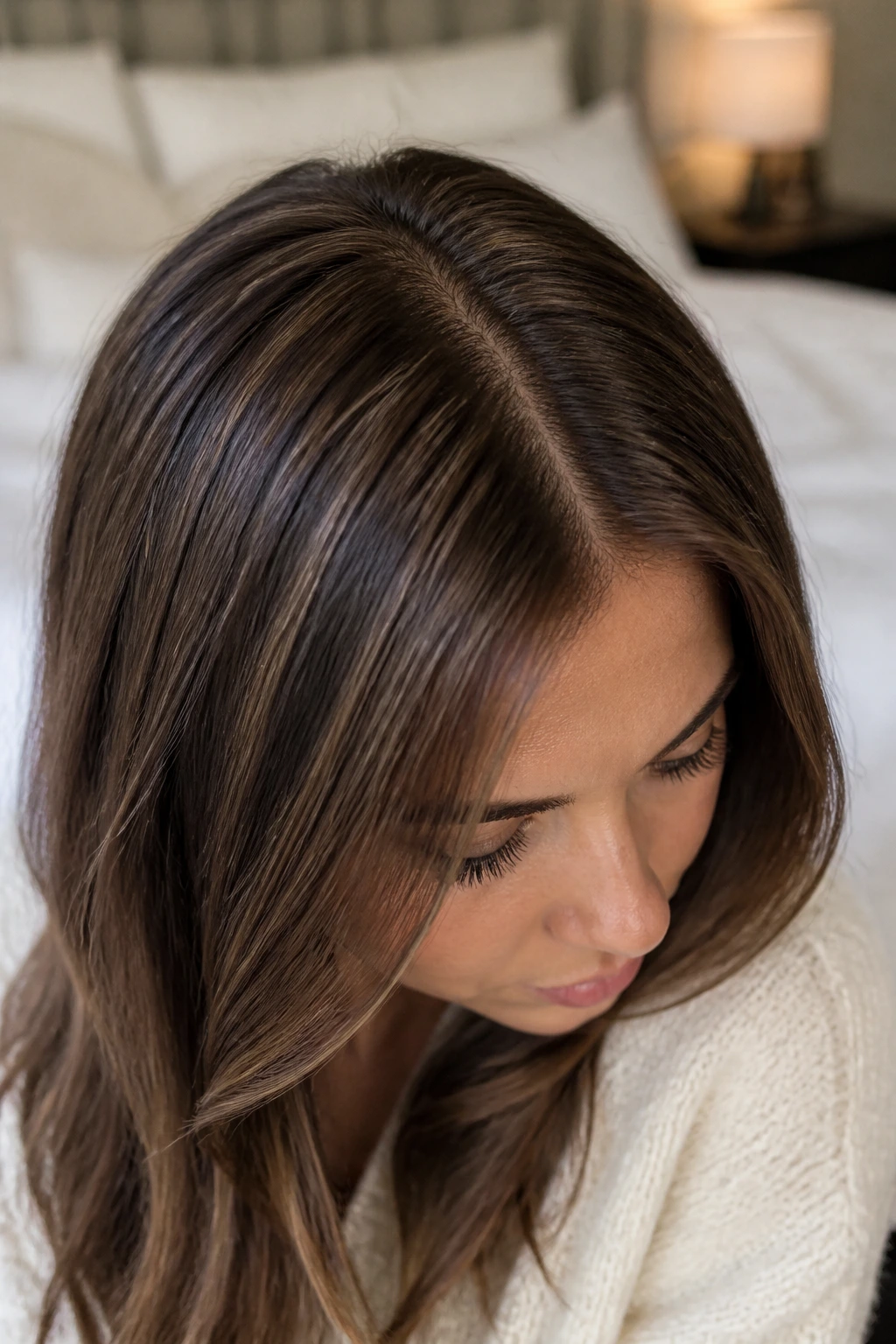
Fine brunette hair needs a different approach. Big pieces can swallow the hair and make it look thinner, which is the opposite of the point. Sable micro-lowlights solve that by using tiny woven strands that build density without obvious lines.
The effect is subtle in the chair and much better once the hair is styled. A few micro-lowlights around the partline, a few under the crown, and a few through the lengths can make fine hair look fuller because the eye can’t read one single flat tone. It gets broken up.
This is where less really is more. A lot of fine-haired clients ask for “dimension” and then end up with pieces that are too wide. Keep the sections narrow. Keep the contrast soft. Let the color look like a blur instead of a stripe.
12. Maple Ends That Keep the Hair Looking Soft
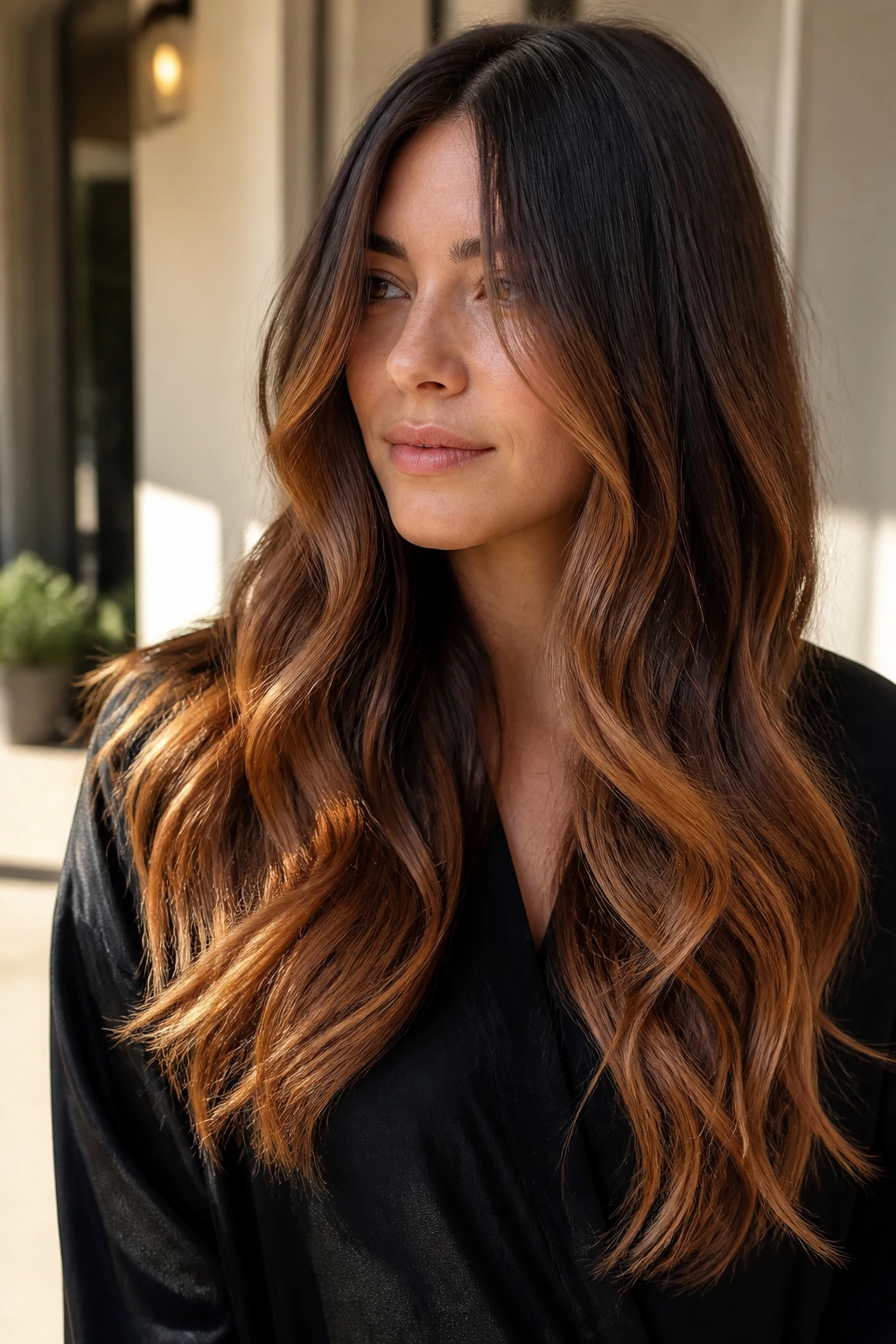
Maple ends are a nice alternative to lighter ombré if you want depth instead of brightness. The darker brown at the ends makes long brunette hair look less dry and more intentional, especially if the very bottom has been lightened too much over time.
Unlike pale ends, maple ends do not fight the natural body of brunette hair. They let the haircut finish in a richer way. That can be especially useful on long, layered cuts where the bottom often looks wispy or see-through.
The best version keeps the roots and mids a touch lighter than the ends, so the whole shape reads as gradual. You’re not trying to create a hard dip-dye line. You’re just closing the loop visually, if that makes sense. Hair looks fuller when the end point has enough pigment to hold the eye.
13. Panel Lowlights That Give Thick Hair Some Air
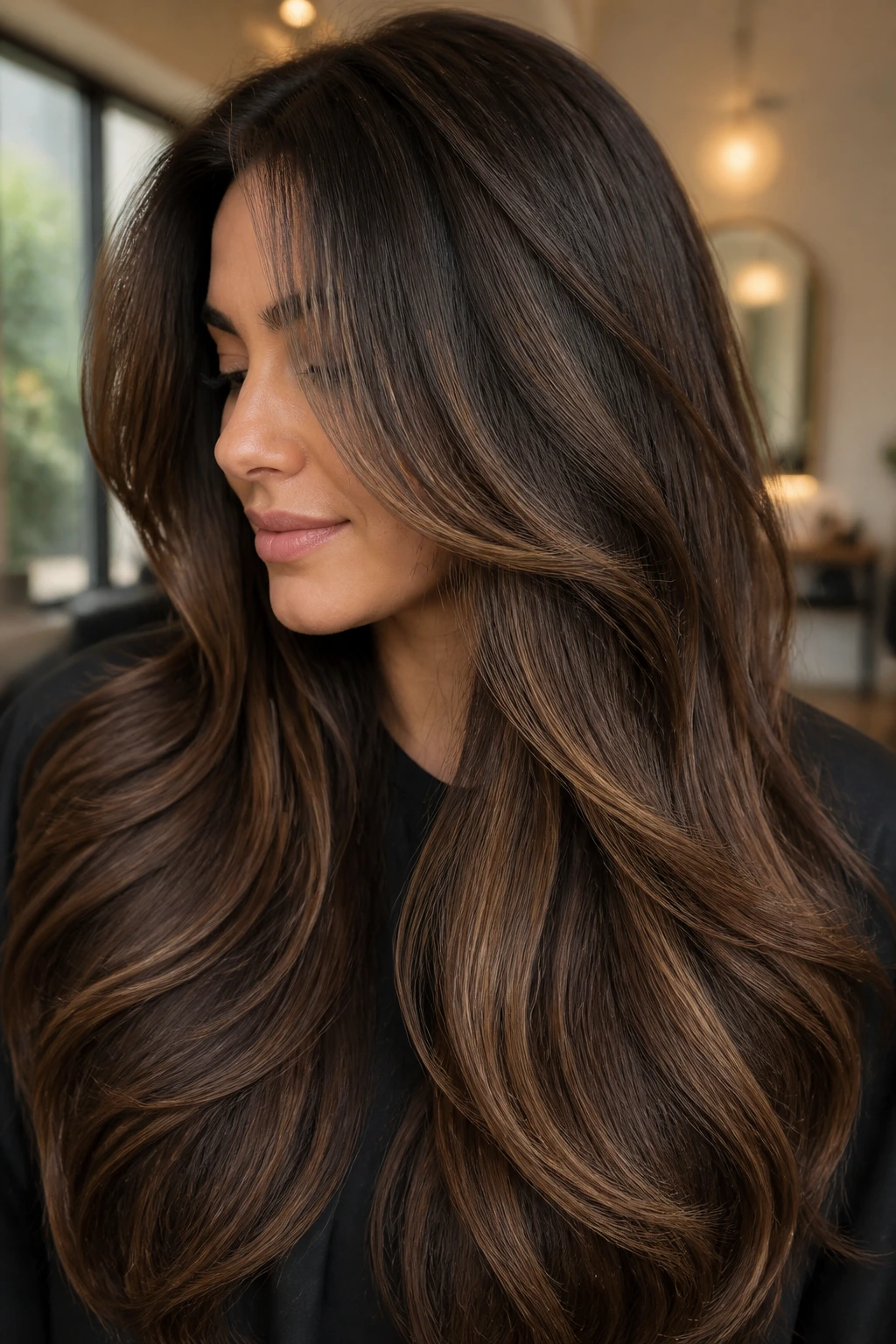
Thick hair can handle stronger placement than fine hair, and panel lowlights use that to good effect. Instead of tiny woven bits, the colorist drops in wider sections of brown through the interior of the haircut. That breaks up density fast.
Why They Matter on Dense Hair
A thick brunette head of hair can look bulky when every strand catches the same amount of light. Wider lowlight panels create separation, especially in layered cuts that need movement at the ends.
A few things to ask for:
- medium-width panels rather than tiny slices,
- deeper brown through the underside,
- slightly softer placement around the face,
- a gloss that keeps the finish shiny, not dull.
Paneling is one of the few times I’d say more structure is better. Thick hair can carry it. In fact, it often needs it. Without some darker breaks, the cut can look like one big sheet instead of a shape.
14. Peekaboo Lowlights for Bobs and Lobs
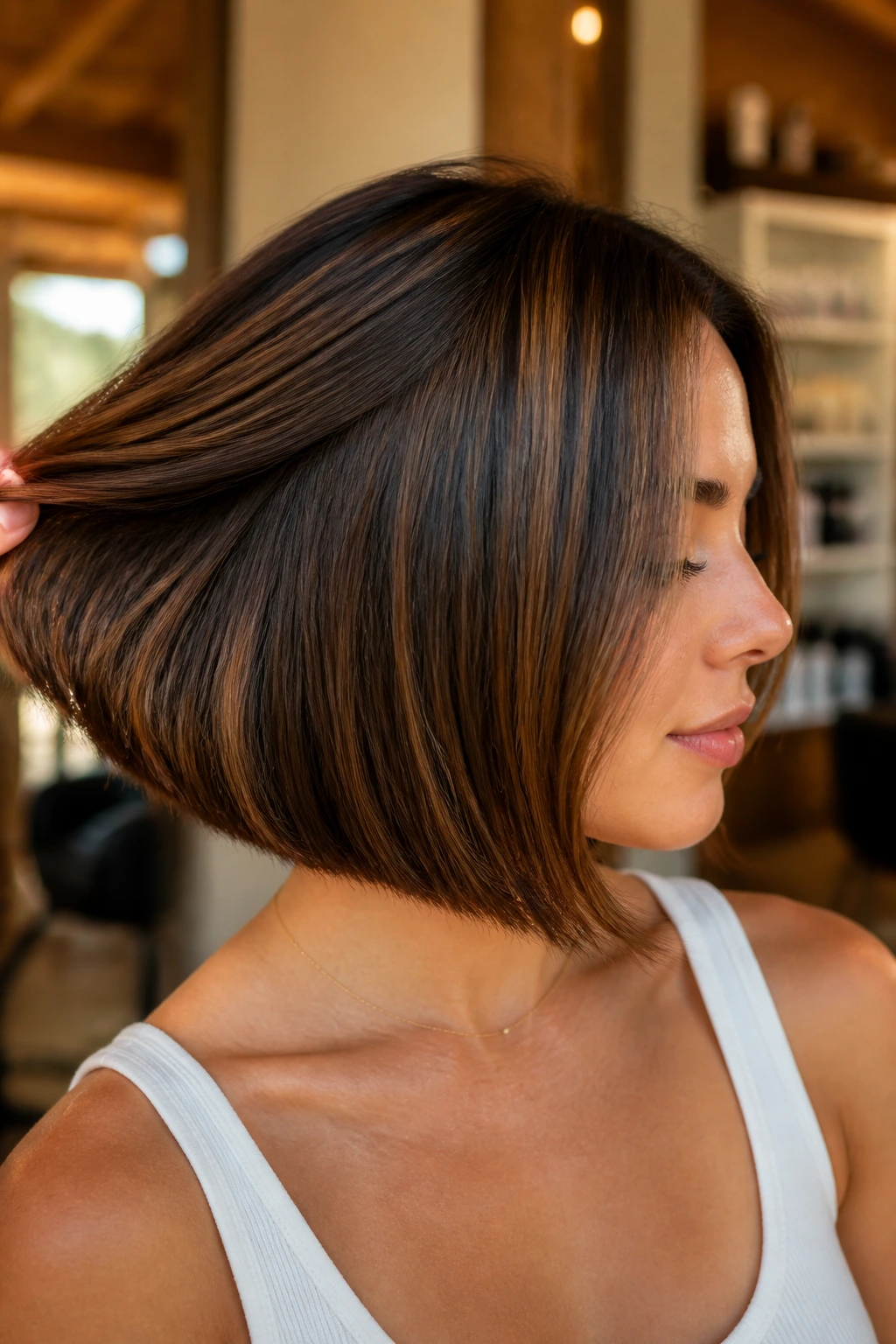
Shorter cuts need a different kind of drama. Peekaboo lowlights sit underneath the top layer of a bob or lob and only flash through when the hair moves. That makes the cut look more expensive, honestly, because the color is there if you look for it.
This is a sharp choice for blunt bobs. A single-tone brunette bob can be a little unforgiving, especially if the ends are thick and the shape is straight across. Peekaboo brown pieces break up that block and keep the perimeter from looking heavy.
You don’t need much. A few panels under the crown, a bit around the nape, and some softer pieces behind the ears are enough. The best part is that the look holds up between appointments because the most visible color is not sitting right on top of the head.
15. Caramel-Brown Lowlights for Warm Brunettes
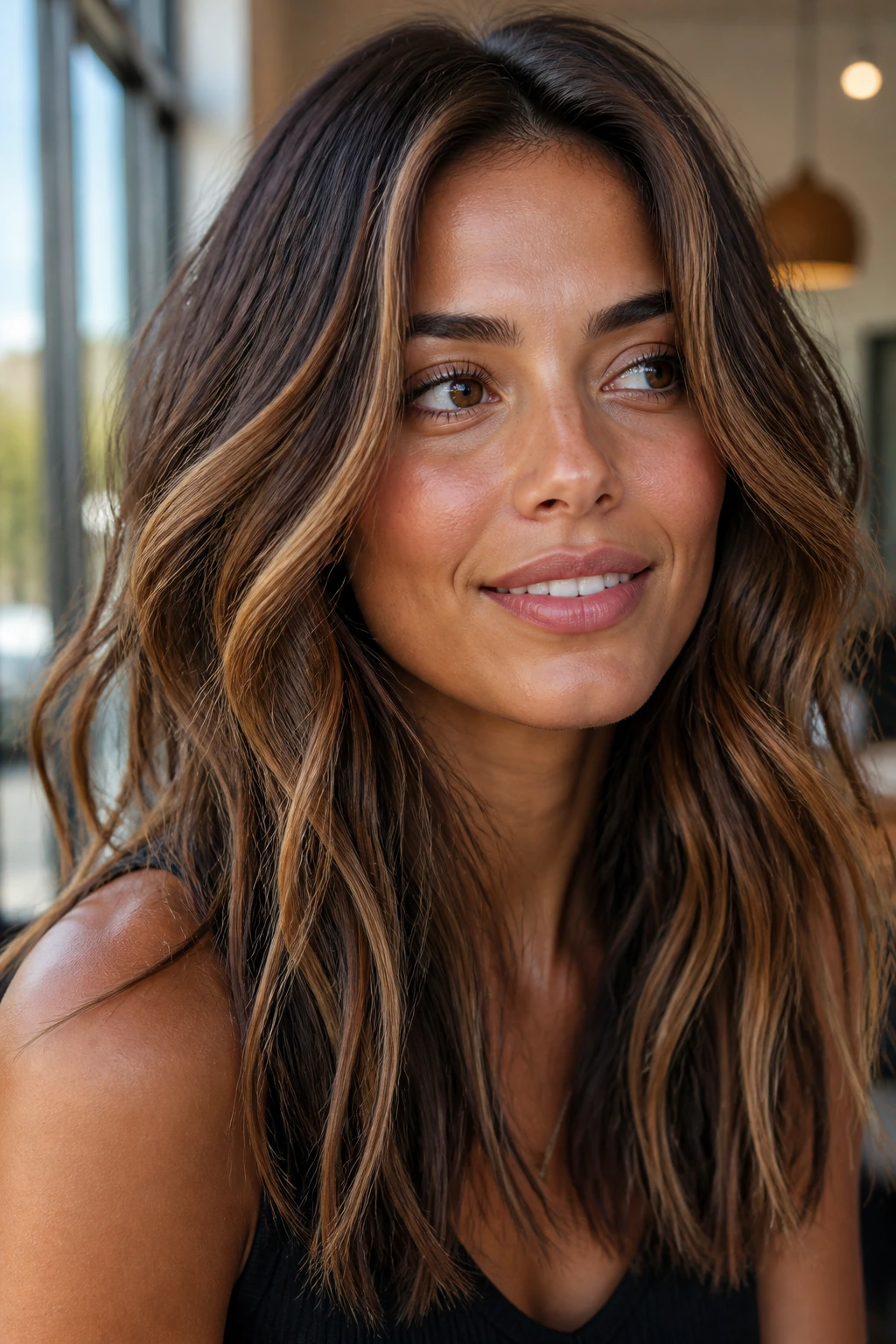
Caramel-brown lowlights sound sunny, but the good version is still rooted in brown. Think warm, glossy depth rather than actual blonde. That makes them a smart fit for brunettes with golden or honey undertones who want the hair to feel richer, not cooler.
How to Get the Tone Right
If your base is warm, tell your colorist you want a brown caramel shade one level deeper than your natural color, not a light highlight. That keeps the result in lowlight territory.
These pieces work best:
- through the mid-lengths,
- around the face,
- and in a few scattered bands toward the ends.
Warm brunettes can go too orange if the brown is off by even a small amount. So keep the caramel muted. The right version looks soft in daylight and almost velvet-like indoors. That’s the whole game here.
16. Truffle Brown Lowlights for Sleek, Straight Hair
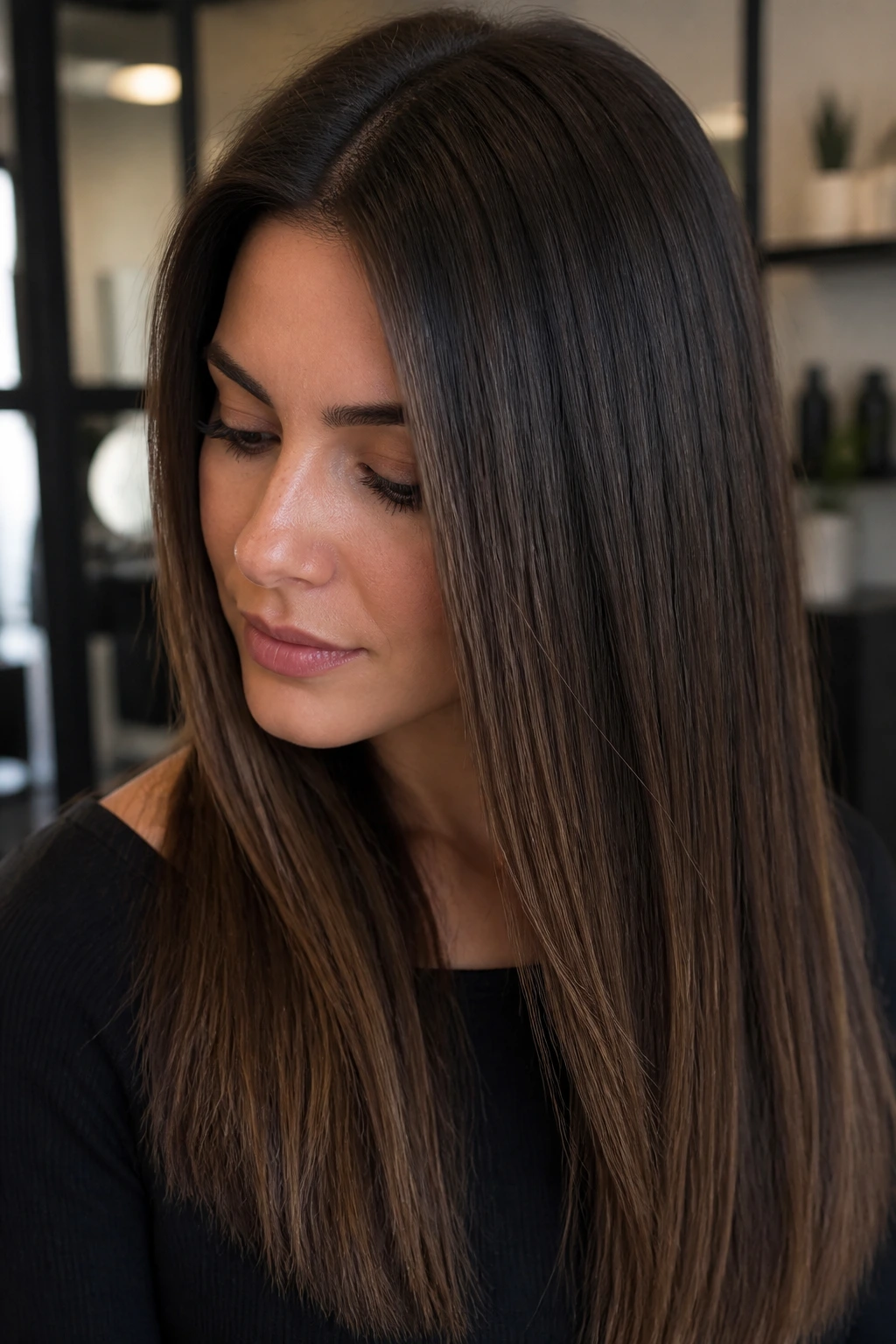
Straight hair shows everything. Good and bad. That is why truffle lowlights matter so much on sleek brunette styles. They cut through the flat surface and create movement that the haircut alone sometimes cannot deliver.
I like truffle because it sits in a rich, cool-to-neutral brown range that looks clean on shiny hair. When a blowout is smooth, the color has to do some of the work. Otherwise the style can look like a single dark curtain. Truffle pieces keep that from happening.
The placement should be clean, though not too regular. Randomness is the friend here. A few placed near the side part, a few hidden underneath, and a few stretched through the bottom half of the length can keep the style from feeling heavy. Subtle stripe placement will not help. Soft irregularity will.
17. Brown Lowlights for Brunette Hair with Babylights Mixed In
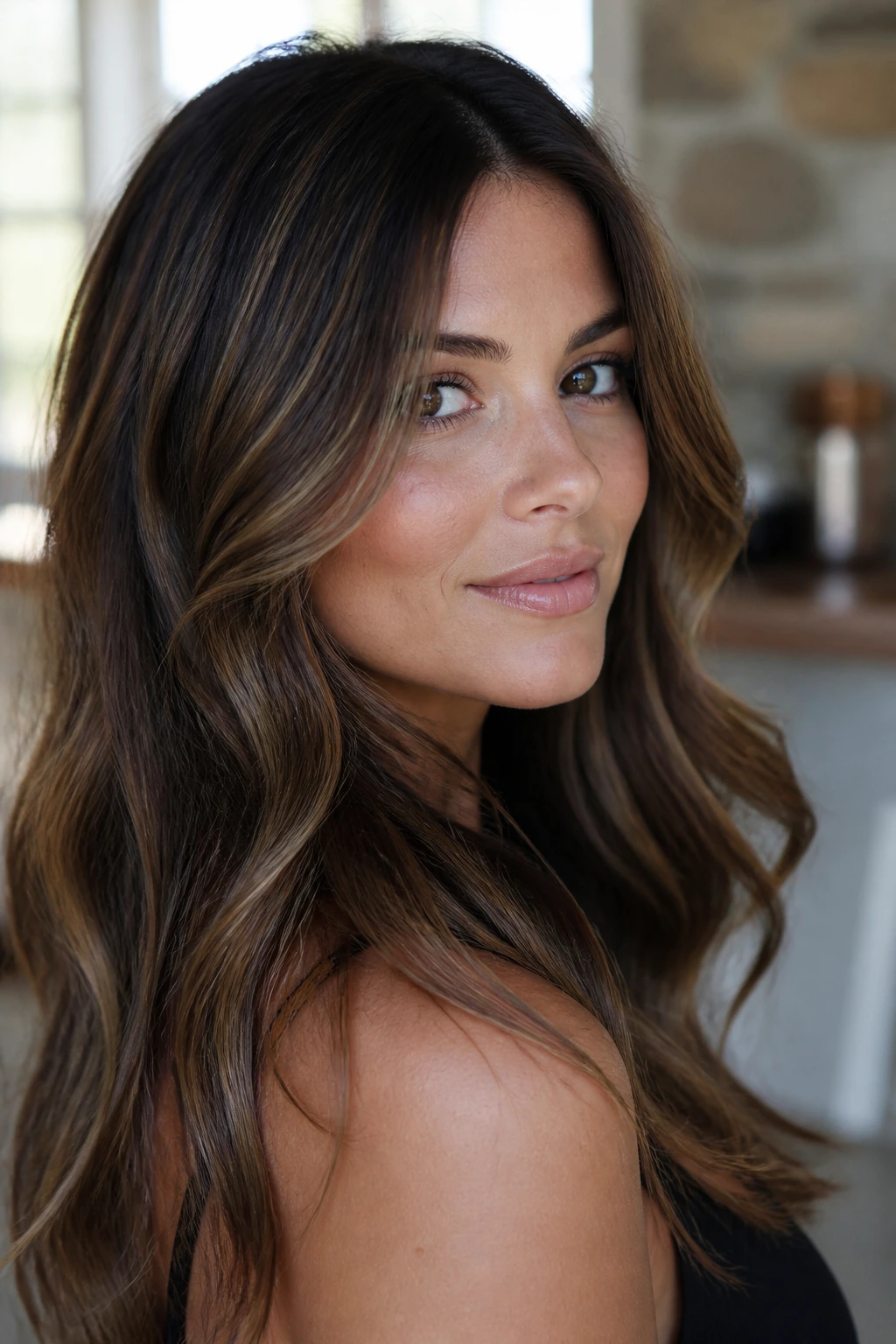
Mixing babylights with brown lowlights is one of my favorite ways to keep brunette hair from looking one-note. The tiny lighter strands give you sparkle. The brown lowlights give you shape. Together, they stop the color from tipping too bright or too dark.
That combination works especially well if your hair has a lot of movement already. Babylights can brighten the top layer without stealing the show, while the lowlights underneath keep the shape grounded. The result feels expensive in a very quiet way, which is honestly the best kind.
The balance has to stay light-handed. Too many highlights, and the brown lowlights get lost. Too many lowlights, and the babylights can look muddy. Keep the lighter pieces fine, keep the darker pieces slightly wider, and let the two tones talk to each other instead of fighting.
18. Walnut and Espresso Lowlights for Curly Texture
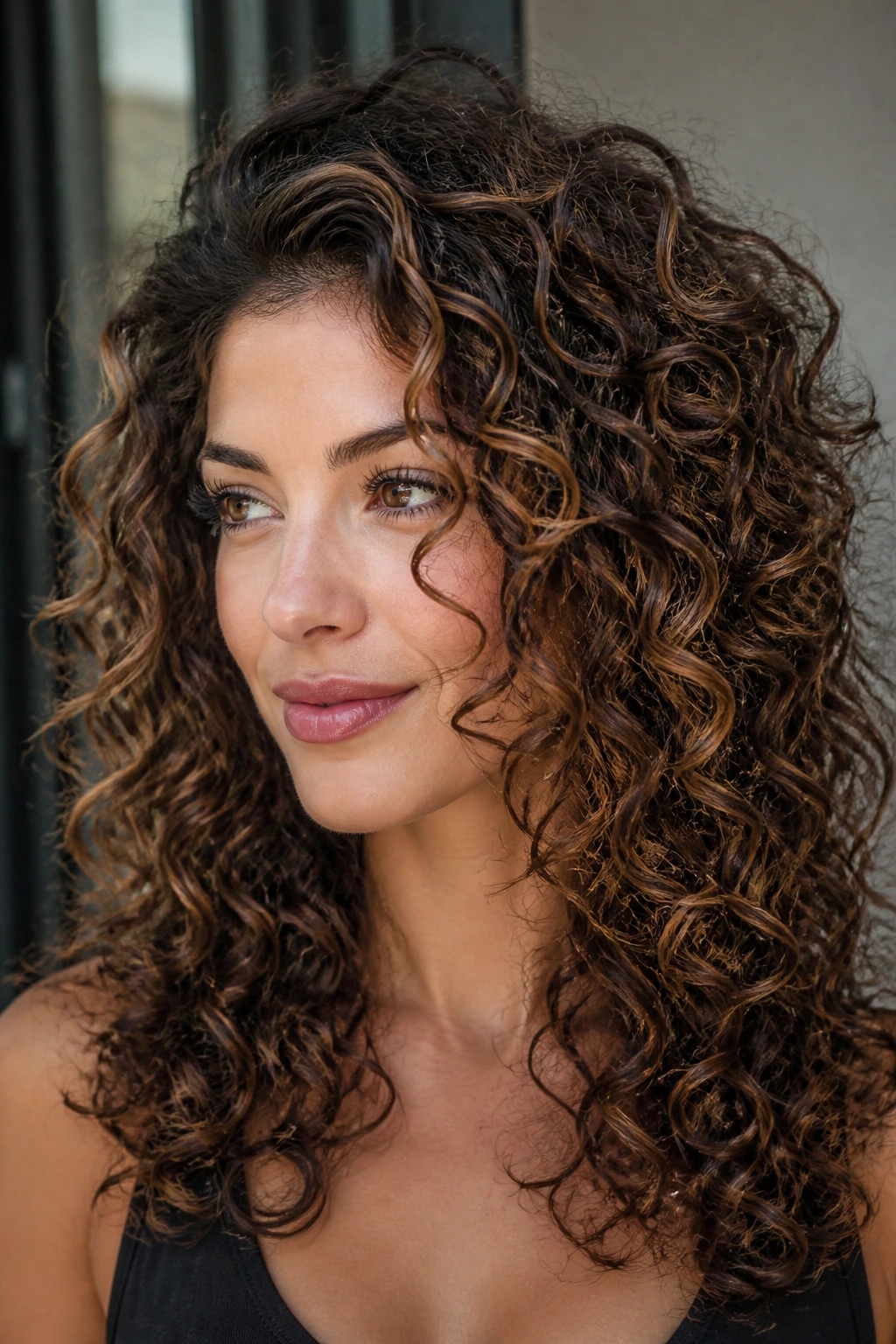
Curly hair loves contrast when the contrast is done with a light hand. Walnut and espresso together give curls two layers of depth, so the pattern separates more cleanly and each curl clump can stand out on its own.
Unlike one-dimensional brown color, a mix like this keeps the curl family from collapsing visually. Espresso pieces create shadow. Walnut pieces soften the transition. That combination is especially good on curls that frizz at the surface but stay defined underneath, because the darker tones make the shape easier to read.
I’d choose this when the goal is definition rather than brightness. Curly hair does not need to be overworked to look dimensional. It just needs enough tonal difference to let the texture do its thing.
19. Taupe Brown Lowlights for Neutral Skin Tones
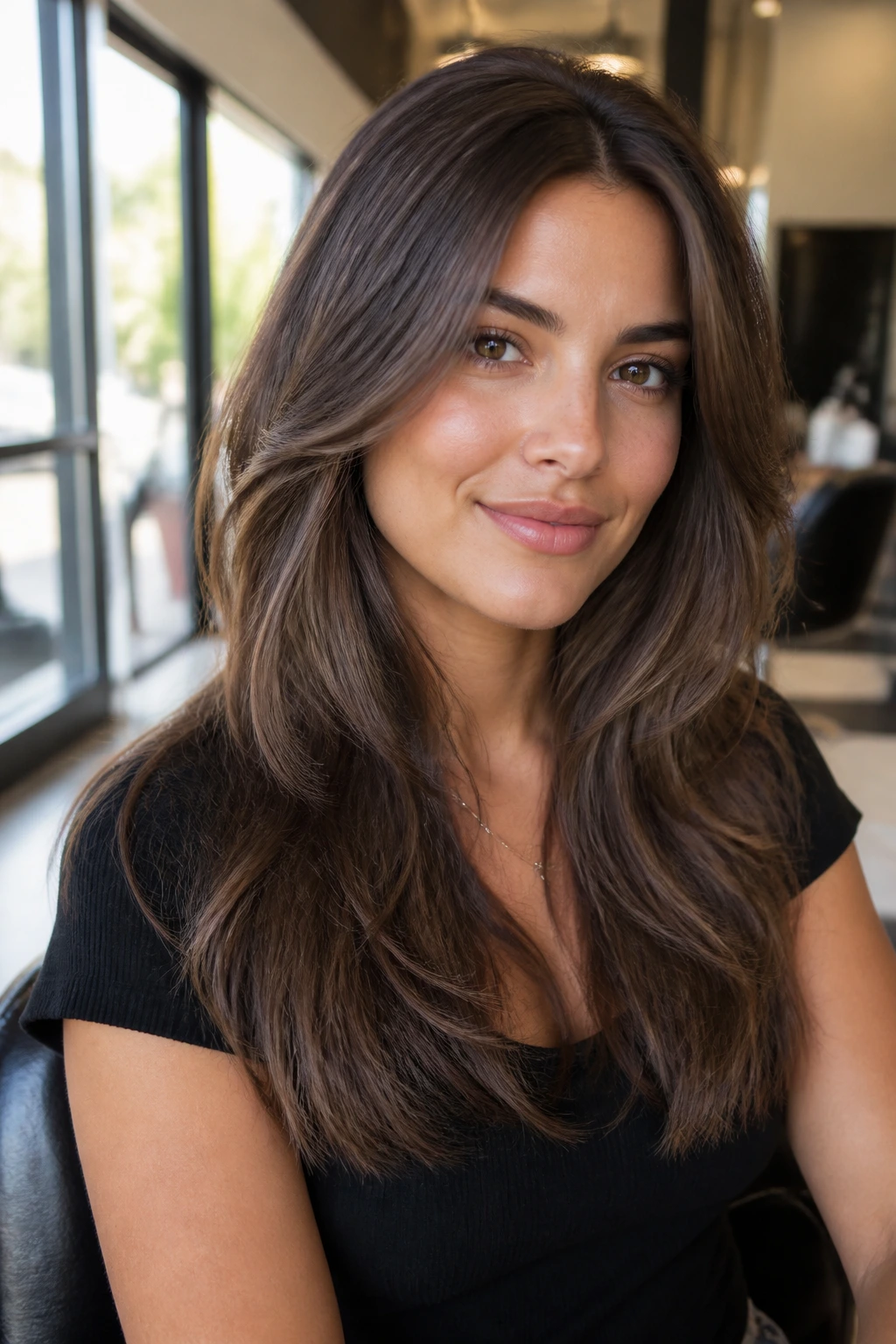
Taupe brown is one of those shades that sounds understated and then ends up being the thing that makes the whole style work. It sits between cool and warm, which is useful if your skin tone and natural brunette base both sit somewhere in the middle.
How to Get the Tone Right
Ask for a neutral brown with a soft beige cast, not an ashy color that drains the hair and not a warm brown that turns red. Taupe is a balancing act.
A few useful cues:
- best on neutral or olive skin,
- works on medium brown and dark blonde-brown bases,
- can be woven into face-framing pieces or scattered through the crown,
- pairs well with a clear gloss for shine.
Taupe lowlights are especially good if you hate tonal surprises. They behave. They don’t swing warm in one light and gray in another. That steadiness is underrated.
20. Mahogany Brown Lowlights for Red Undertones
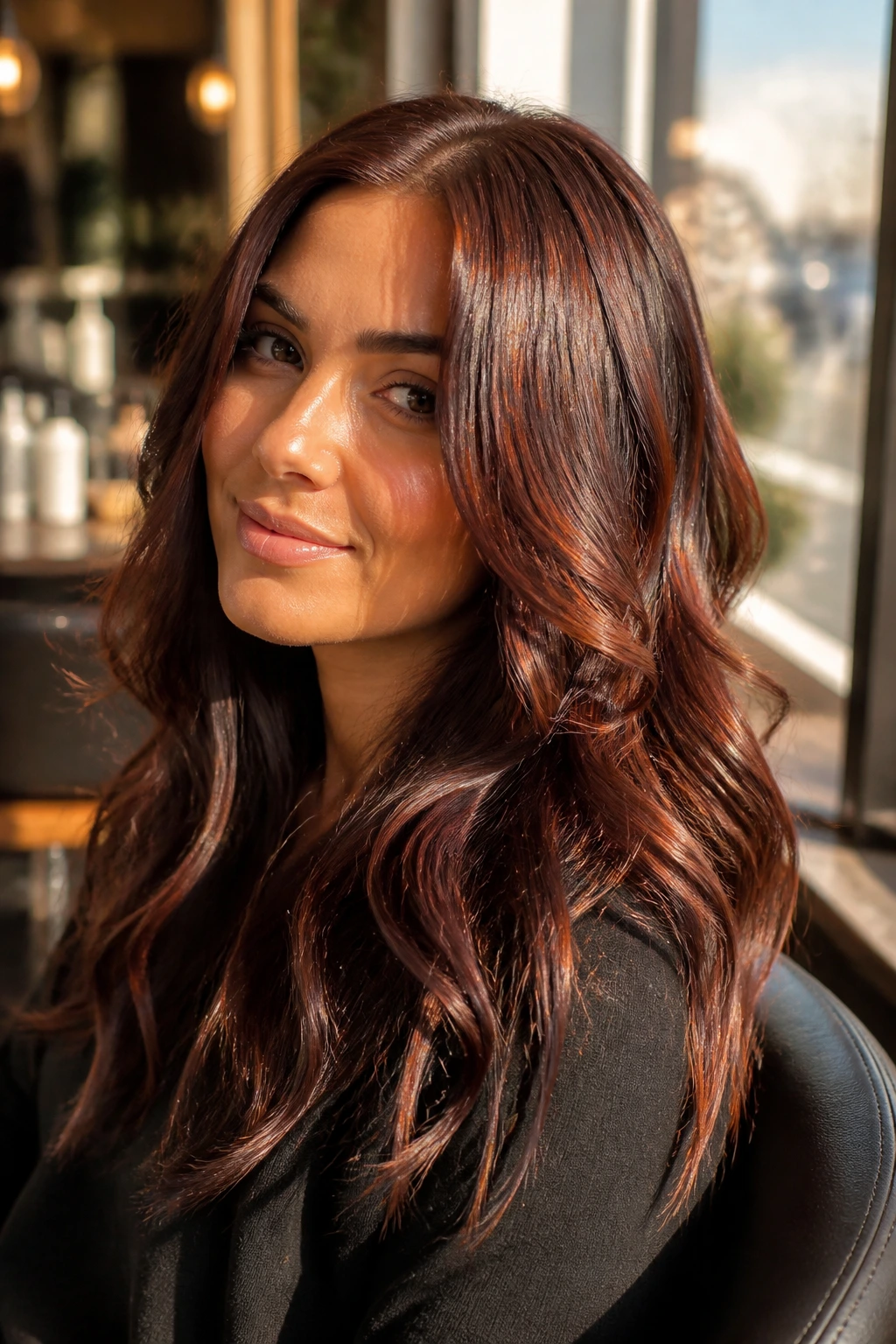
Mahogany lowlights are the rich, moody cousin in the brown family. They carry a red-brown undertone that gives brunette hair more depth without crossing into obvious auburn. On the right base, they look lush, not flashy.
This shade shines when the hair already has warmth. If your natural brunette pulls a little red in sunlight, mahogany can deepen that effect instead of fighting it. The finish feels more polished because the color has a little more body.
The best placement is not all over. Mahogany works best in deeper pieces through the lower half and around the face, where the color can catch movement without taking over. On very light brunette bases, keep it thin. Too much mahogany can look wine-colored fast, and that is a different conversation entirely.
21. Soft Contour Lowlights at the Temples and Jawline
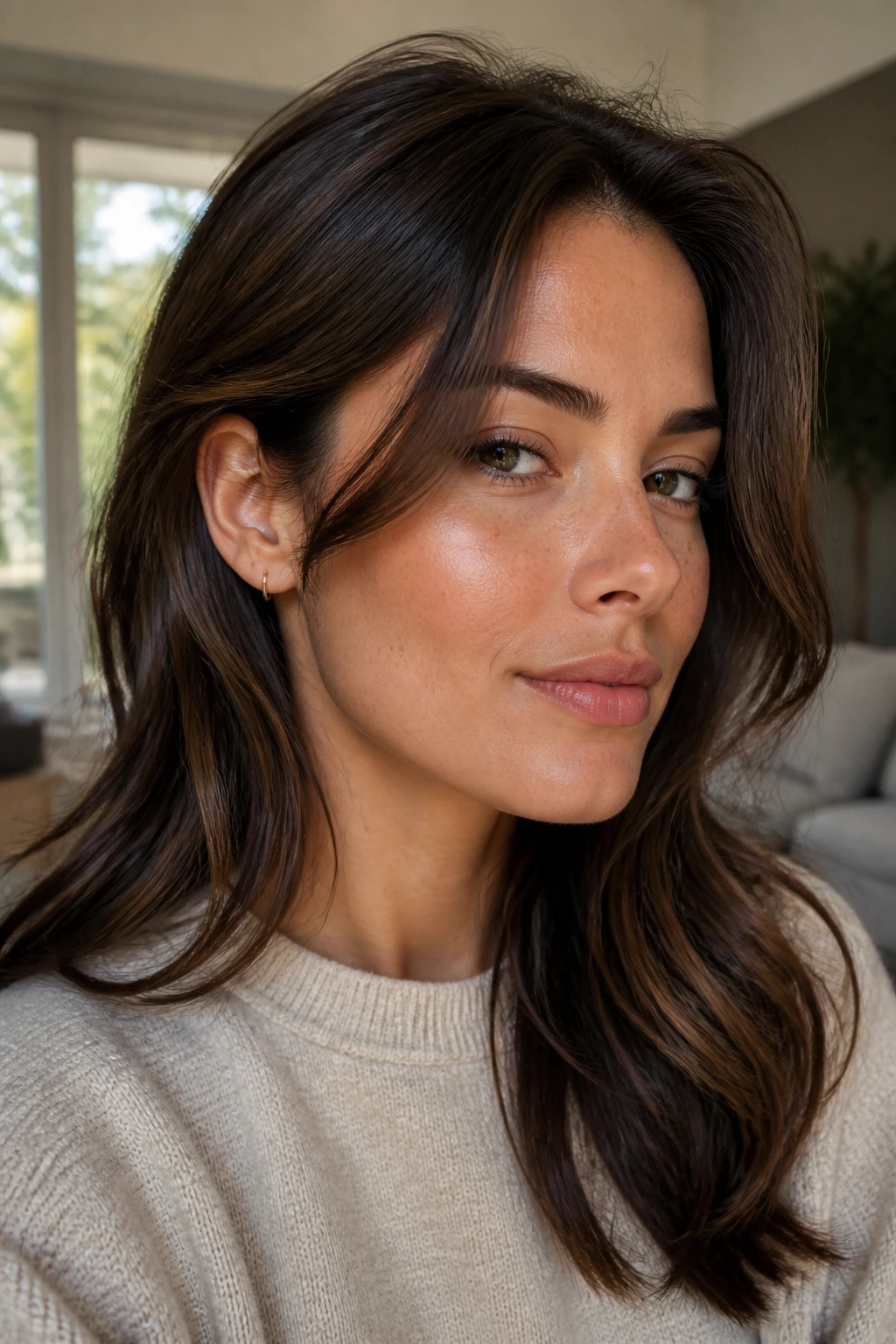
Can lowlights shape the face? Yes, and they do it more subtly than highlights. Darker brown pieces around the temples, above the ears, and near the jawline can make a brunette haircut look more contoured without obvious coloring tricks.
How to Ask for It
Tell your colorist you want slightly deeper brown pieces around the perimeter of the face, with the heaviest concentration near the temples and below the cheekbone line.
This placement works well if:
- your hair feels too wide around the face,
- you want the cheek area to look softer,
- or your layers need a little more definition near the front.
The nice part is that this kind of contouring is wearable even when the rest of the hair is simple. You don’t need a dramatic color service to get a cleaner shape. You just need the darker pieces in the right place. That’s usually enough.
22. Grow-Out Friendly Lowlights for Low Maintenance
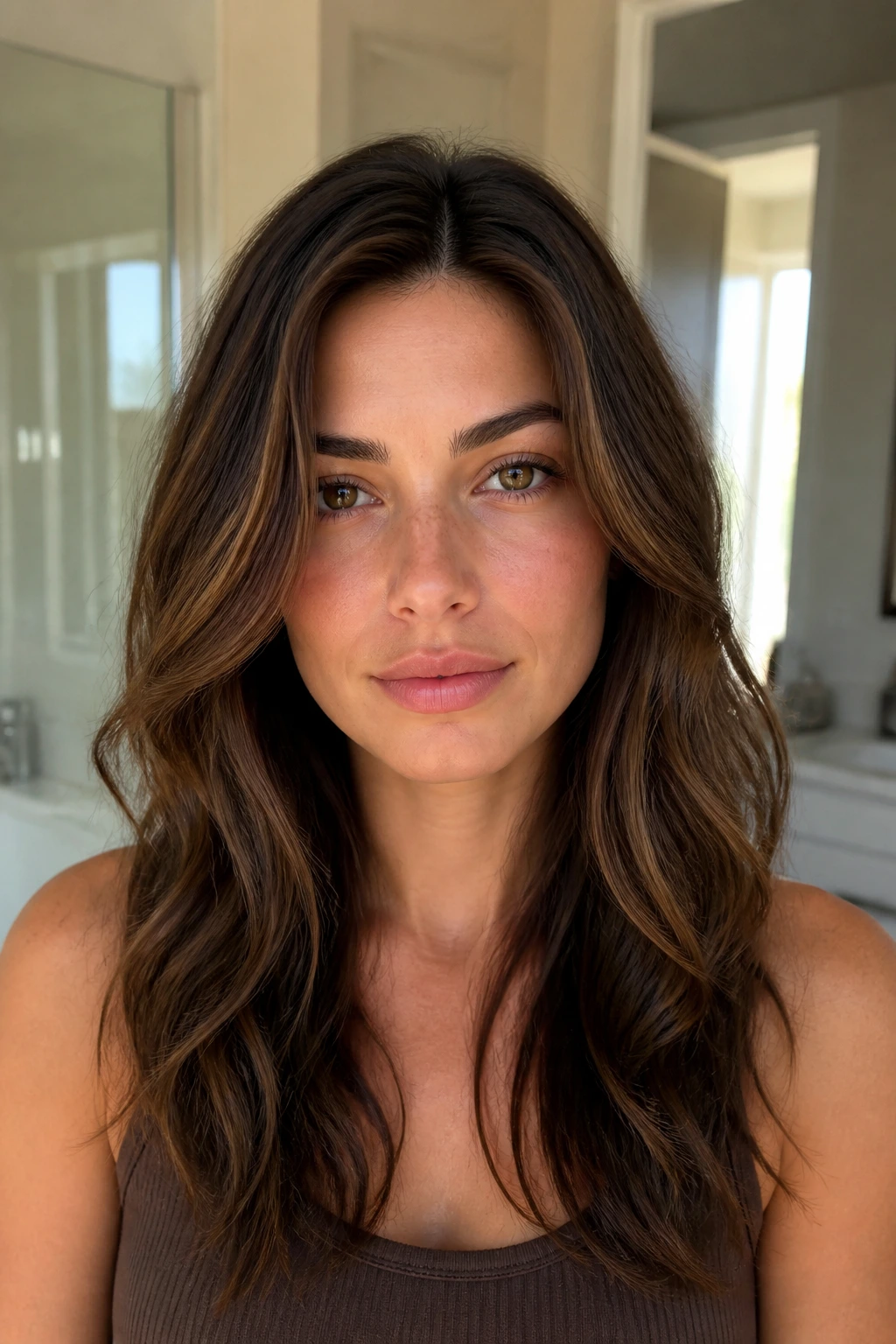
Some color looks beautiful on day one and annoying by week four. Grow-out friendly lowlights are the opposite. They’re placed close enough to your natural brunette base that the new growth line stays soft, which makes them a strong pick if you do not want to live in the salon chair.
The trick is keeping the shade within about one to two levels of your base and avoiding obvious section lines. A gentle melt works better than a hard foil pattern here. Your hair should look like it belongs to you after it grows, not like it has a deadline.
I also like this approach for people who wear their hair up a lot. Roots, part lines, ponytails, clips — all of them can expose bad placement. Grow-out friendly brown lowlights hold up because they already look low-contrast from the start. Low effort. Good result.
23. Glossed Coffee Brown Lowlights That Catch the Light Without Looking Stripey
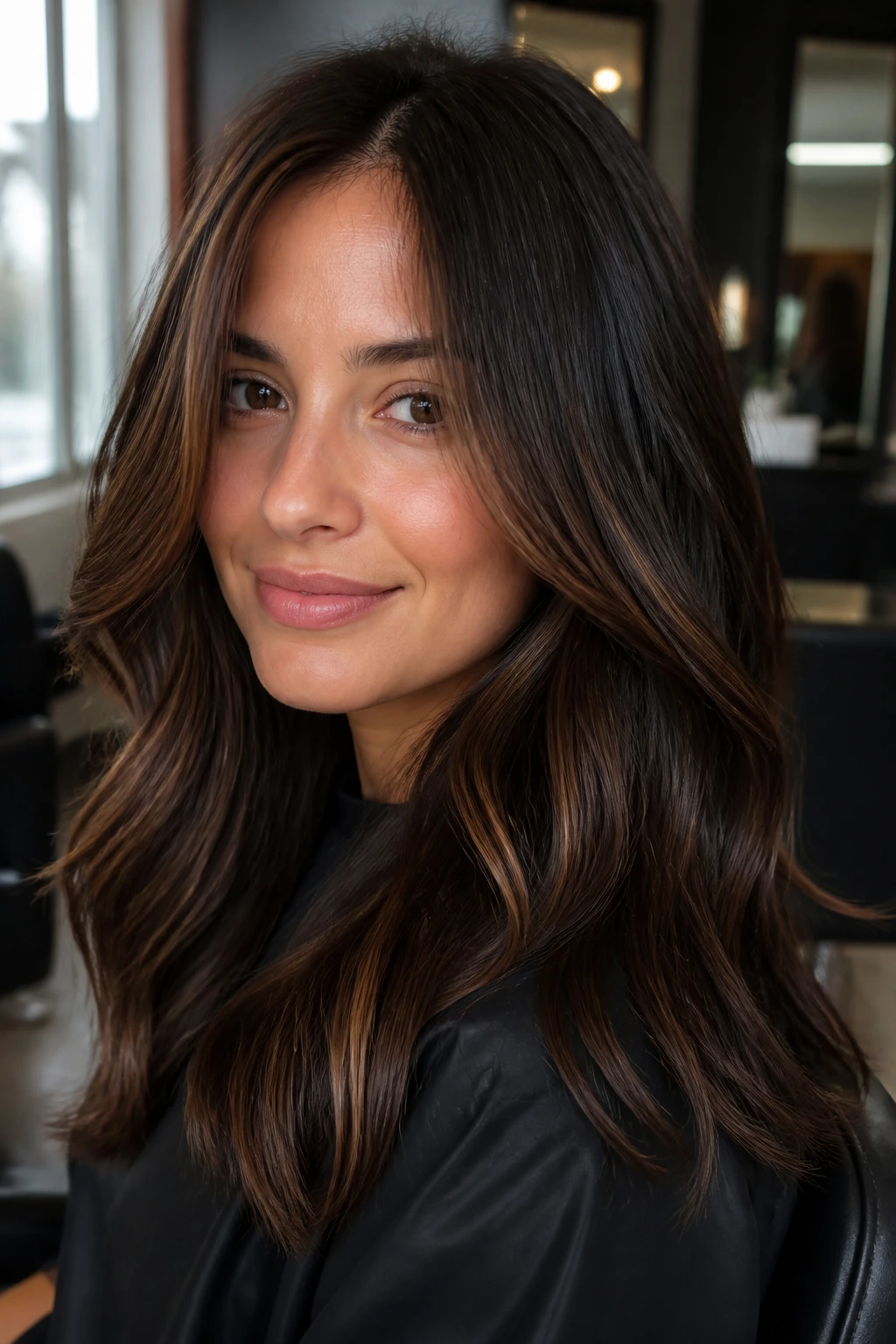
Coffee brown lowlights are the finish I reach for when the hair needs shine as much as depth. They can be rich and reflective at the same time, especially if the colorist finishes with a demi gloss to seal the cuticle and smooth the tone.
That gloss matters. Without it, coffee brown can look a bit flat on porous brunette hair. With it, the color reads as soft and polished, and the strands separate more clearly when you move. It’s a small step that changes the whole feel of the service.
This is a smart choice on hair that has been through a lot of lightening or heat styling. The darker coffee pieces bring the base back down, and the gloss keeps the surface from feeling rough. If the hair has a dry texture, ask for a shine treatment along with the lowlights instead of relying on color alone.
24. Dimensional Lowlights for Gray Blending
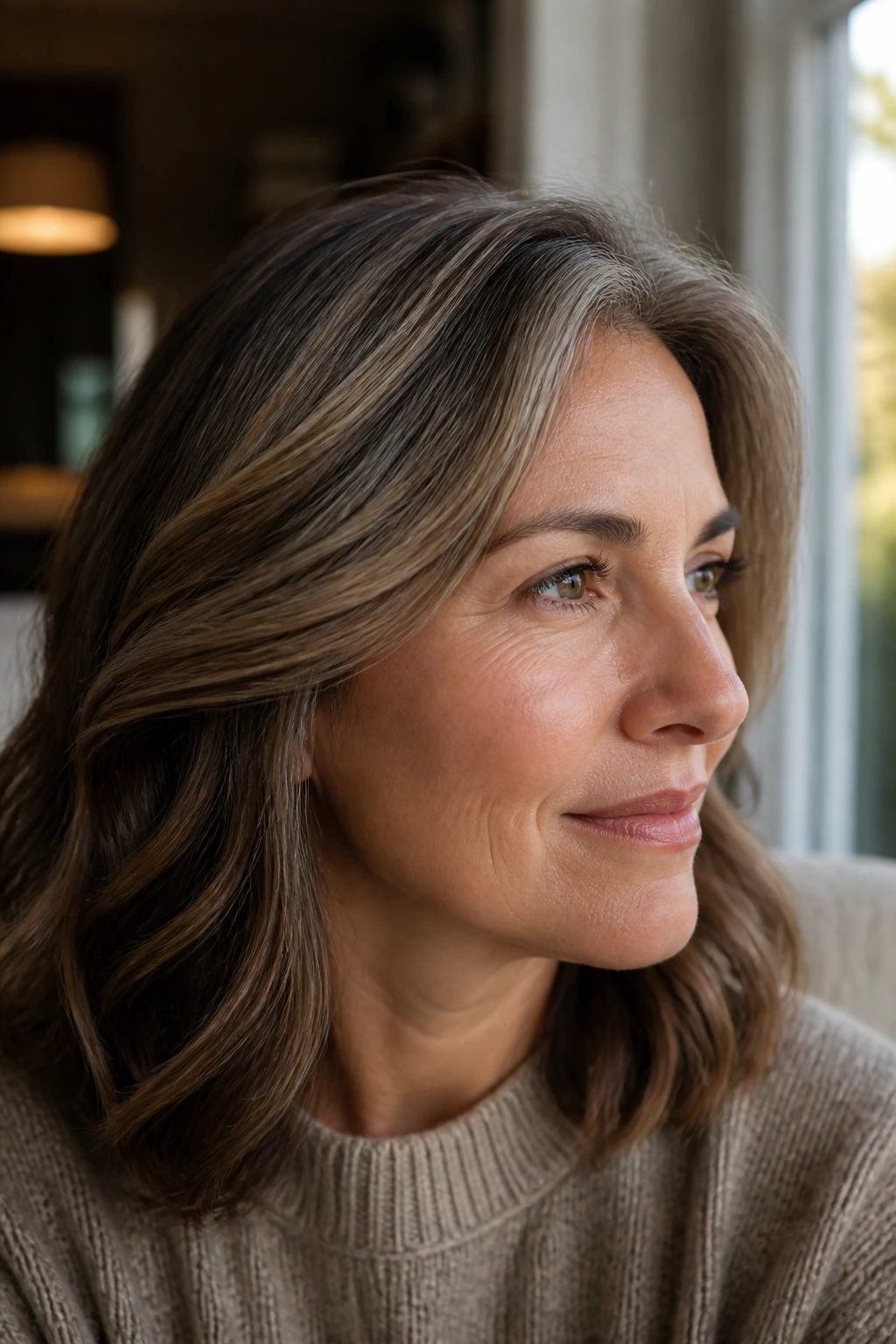
Gray blending is not the same as covering gray, and that matters here. Brown lowlights can help gray hairs disappear into the mix by breaking up the contrast between silver strands and the rest of the brunette base. The hair looks mixed, not masked.
This works especially well around the temples and crown, where gray tends to show up first and where solid color can look harsh. A few deeper brown strands make the lighter ones less obvious, which buys you time between color appointments without making the hair look dyed to death.
Unlike full gray coverage, this approach keeps some of the natural variation. That is part of the appeal. The result feels softer and less uniform, and the grow-out is usually kinder too. If your gray is scattered rather than dense, this may be the better move.
25. Dark Chocolate Ribbons for the Deepest Brunette Bases
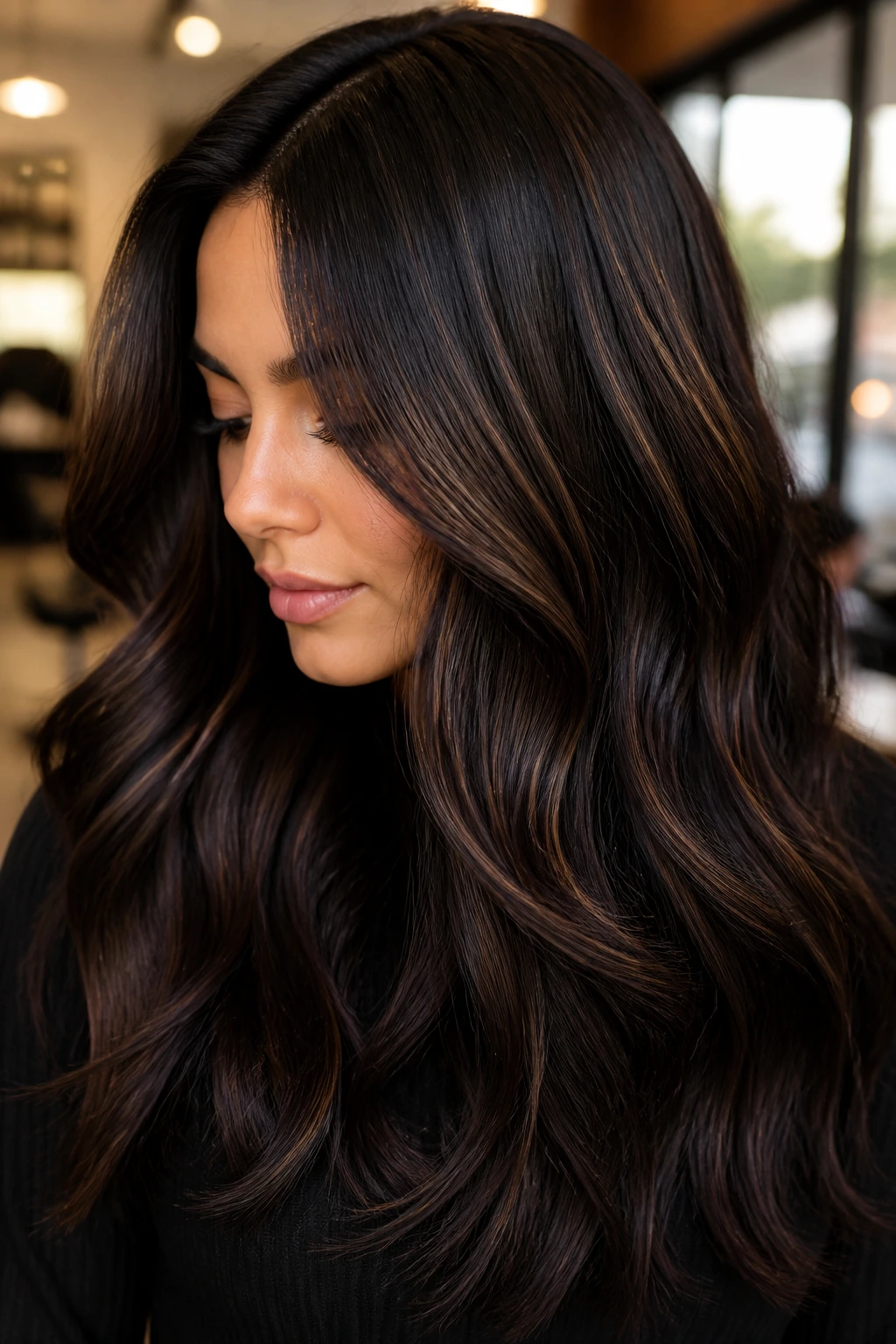
If your hair is already very dark, you do not need a dramatic brown. You need ribbons that are just a little deeper, or maybe a touch richer, than what you already have. Dark chocolate lowlights do exactly that. They add separation without turning the whole head muddy.
When It Works Best
This shade is strongest on naturally deep brunettes who want their hair to look glossy and full, not lighter or warmer. A few dark chocolate ribbons through the mid-lengths can stop the hair from reading as one flat block.
A few things to keep in mind:
- avoid jet black unless that is the look you want,
- keep the pieces visible enough to show movement,
- place some around layers and some beneath the surface,
- refresh with a gloss when the tone starts to fade.
Dark chocolate is one of those shades people underestimate. It does not scream for attention. It just makes the hair look denser, healthier, and more finished. That counts.
Final Thoughts
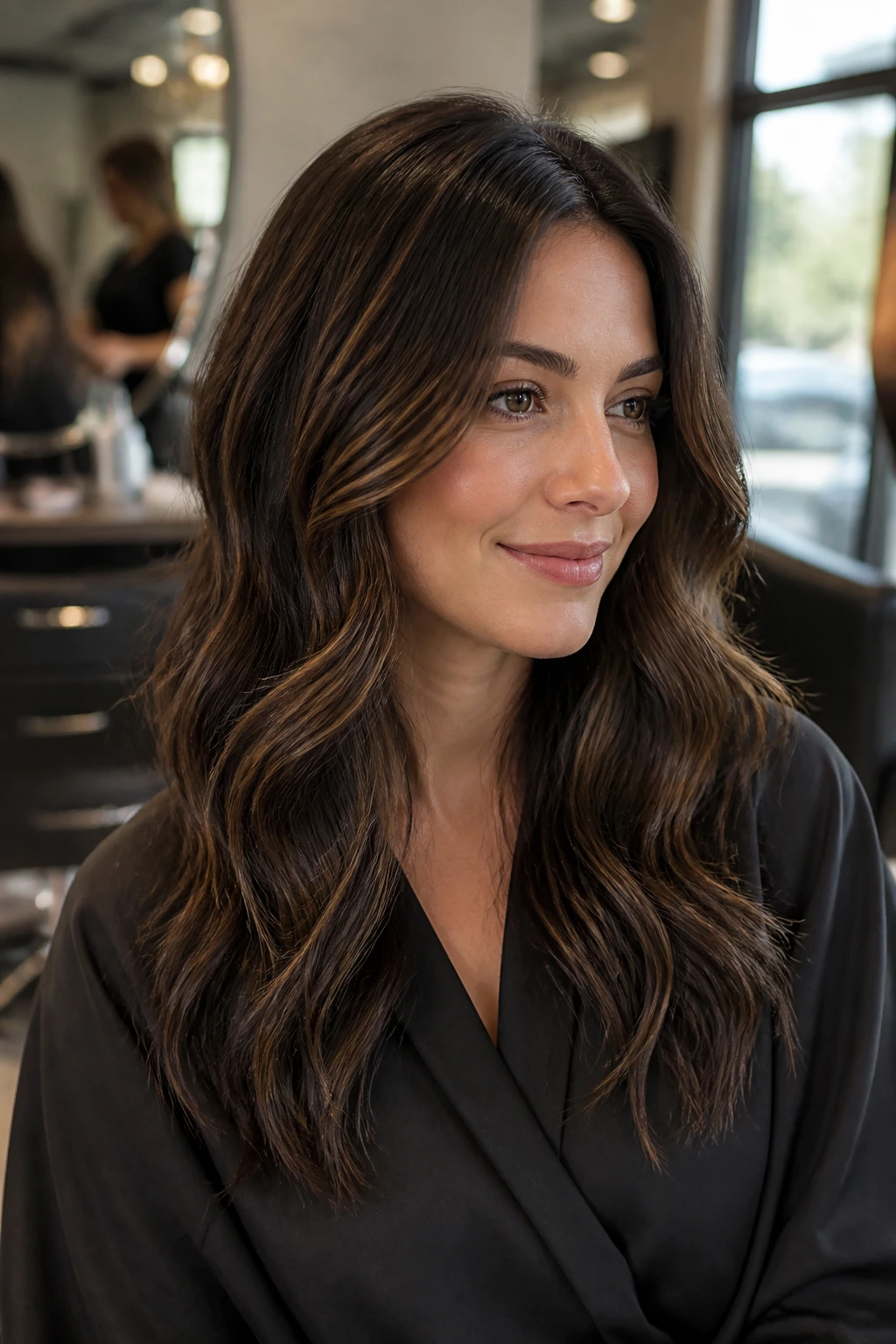
The best brown lowlights for brunette hair are the ones that respect your base instead of fighting it. That means matching the tone to your undertone, then deciding where the depth should live: under the surface, around the face, through the ends, or across the crown.
If you’re trying to choose, start with the question colorists ask each other all the time: do you want the result to look softer, richer, or more defined? That answer points you toward the right brown shade faster than a long wish list ever will.
And bring photos. Not five of the same thing — just two or three that show the tone and placement you actually like. That makes the conversation easier, and it keeps the service from drifting into something heavier, warmer, or stripier than you meant to ask for.
