



Brown hair can go flat in a heartbeat if every strand sits in the same brown family. Add rose gold highlights, and the whole thing changes. The color starts moving. Light hits the hair and you get that soft pink-copper shimmer that looks deliberate, not loud, which is exactly why this shade keeps showing up on brunettes who want something noticeable but not cartoonish.
The tricky part is that rose gold is not one shade. It can lean blush, peach, dusty pink, antique copper, champagne, or a warm beige with a rosy cast. On brown hair, that difference matters a lot. A chocolate base can hold deeper pink-copper ribbons. A light brown base can take a softer, airier gloss. A dark espresso base usually needs smarter placement and a little lift first, or the rose tone barely shows at all.
That’s where so many color jobs go wrong. People ask for “rose gold” as if it were one fixed thing, then wonder why it looks orange on one head and faded mauve on another. Brown hair is forgiving, but it is not magical. The best version of this look depends on depth, undertone, porosity, and where the color sits — not just the color itself.
So the real fun is in the details. Thin babylights, face-framing panels, lowlighted ribbons, smoky glosses, hidden peekaboo sections, and soft balayage all change the mood of the shade in a big way. The base matters. The placement matters more.
Why Rose Gold Flatters Brown Hair
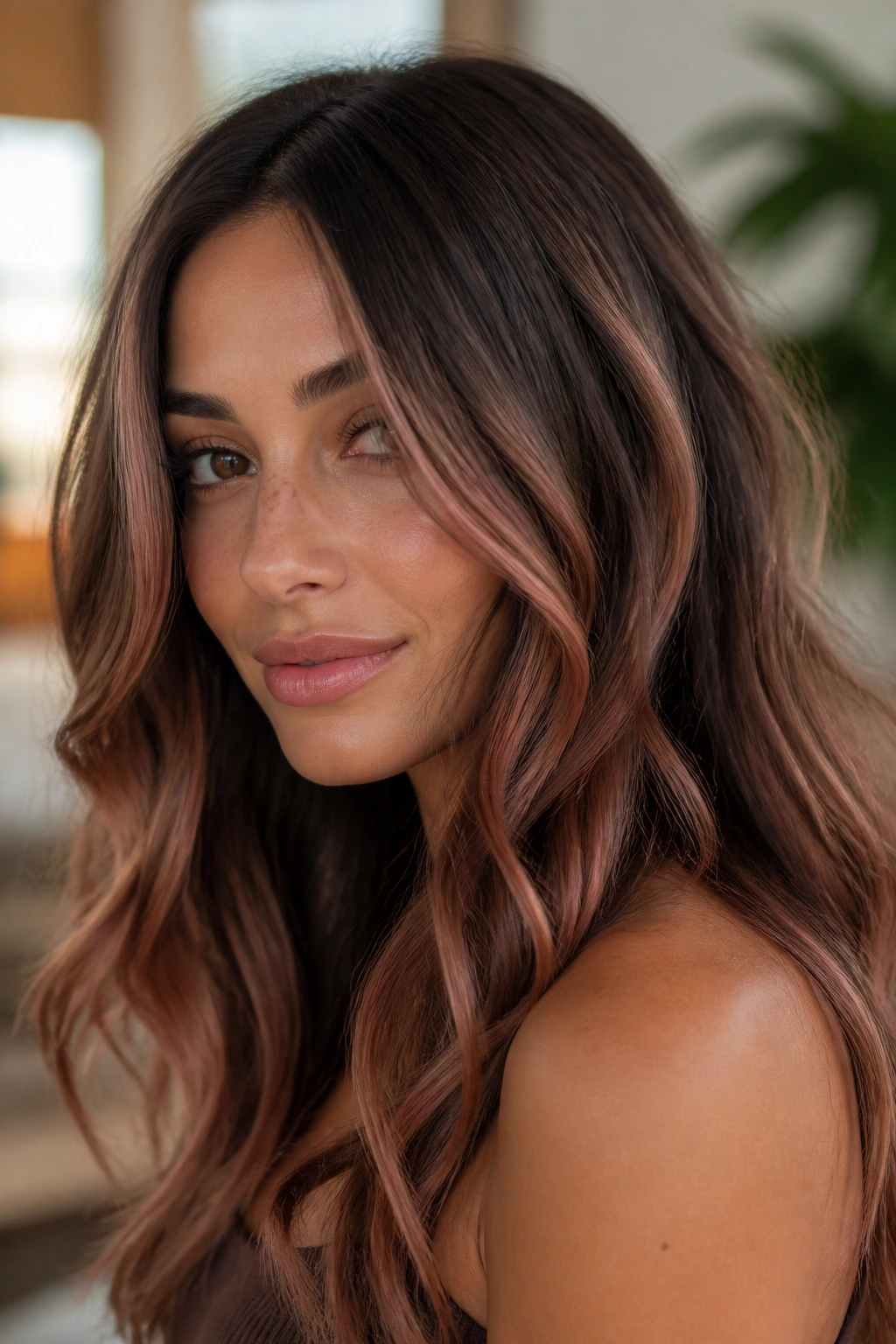
Rose gold has a built-in advantage on brunettes: it lives close to the same warm family as caramel, copper, amber, and honey, but it still gives you that pink-tinted twist that keeps the hair from feeling predictable.
That balance is the whole reason the color works. On brown hair, a straight copper can go fiery fast, and a cool ash tone can look muddy if the base is too warm. Rose gold sits in the middle. It borrows warmth from copper and softness from pink, so the result feels polished without looking stiff.
The shades that usually play nicest
- Chocolate brown gives rose gold a rich backdrop, which makes the lighter pieces look glossy rather than washed out.
- Chestnut brown tends to show dusty rose and peach-rose tones best, especially around the face.
- Light brown and dark blonde brunettes can wear a softer champagne-rose finish without needing heavy contrast.
- Deep espresso brown usually needs a little lift or a strategic placement plan, or the pink disappears into the base.
Some people assume rose gold only works on light hair. Not true. On darker brunettes, it can be one of the prettiest ways to add movement without going full blonde. The color just needs to be placed where the eye can catch it — mid-lengths, ends, part lines, or face-framing pieces.
Where the tone goes wrong
If the highlights are lifted too much, the pink can turn hollow and pale. If they’re under-lifted, they can read copper-orange instead of rose. That line is thin, and it’s why a good colorist usually checks the underlying pigment before choosing the toner.
A soft rose beige toner often works better than a flat pink dye. It keeps the finish believable. On brown hair, believable usually looks better than bright.
Choosing Between Highlights, Lowlights, and Babylights
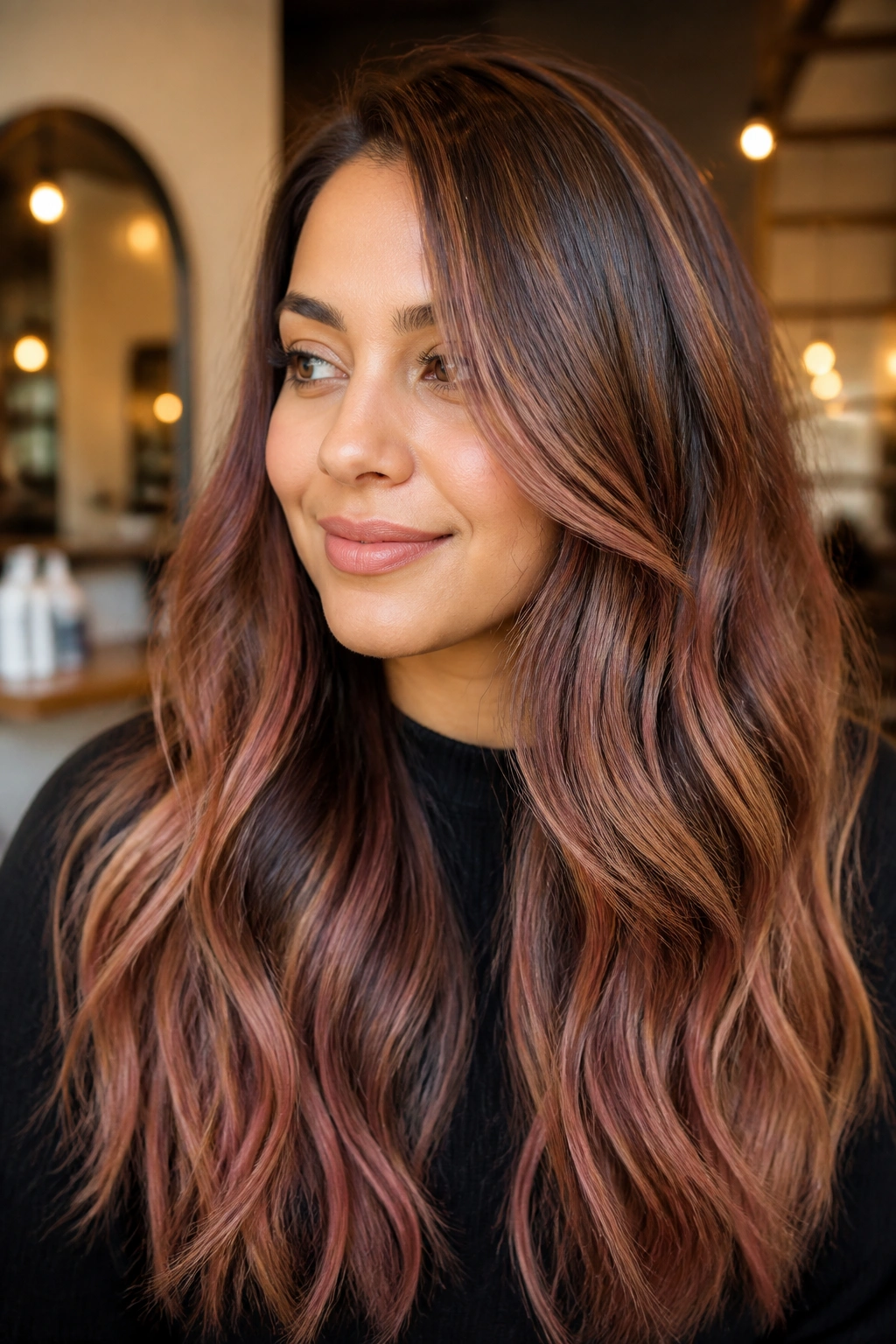
The word “rose gold” sounds simple, but the method changes everything. Babylights give you tiny threads. Highlights give you visible contrast. Lowlights add depth and make the pink pieces look richer because the brown around them does some of the work.
Think of it this way: babylights whisper, highlights speak, and lowlights frame the whole conversation. If you want that soft, expensive-looking shimmer, babylights and fine ribbons usually win. If you want a color that reads from across the room, chunkier highlights or a bolder money piece will get you there faster.
A quick way to choose
- Babylights work best if you want a subtle rose sheen and less obvious grow-out.
- Balayage highlights suit layered cuts and long hair because the color can blur into the ends.
- Lowlights help deepen a warm brown base, especially if the hair already looks a little flat.
- Money pieces and face-framing highlights are the fastest route to a visible change.
- Peekaboo placement works when you want the color to show only when the hair moves.
The nicest rose gold looks on brown hair usually mix two of these approaches. A few babylights around the crown, a brighter ribbon near the face, and a deeper lowlight underneath can make the whole head look more dimensional than one all-over tone ever could.
And that’s the part most people miss. Placement does half the styling for you.
1. Soft Ribbon Rose Gold Highlights on Chocolate Brown Hair
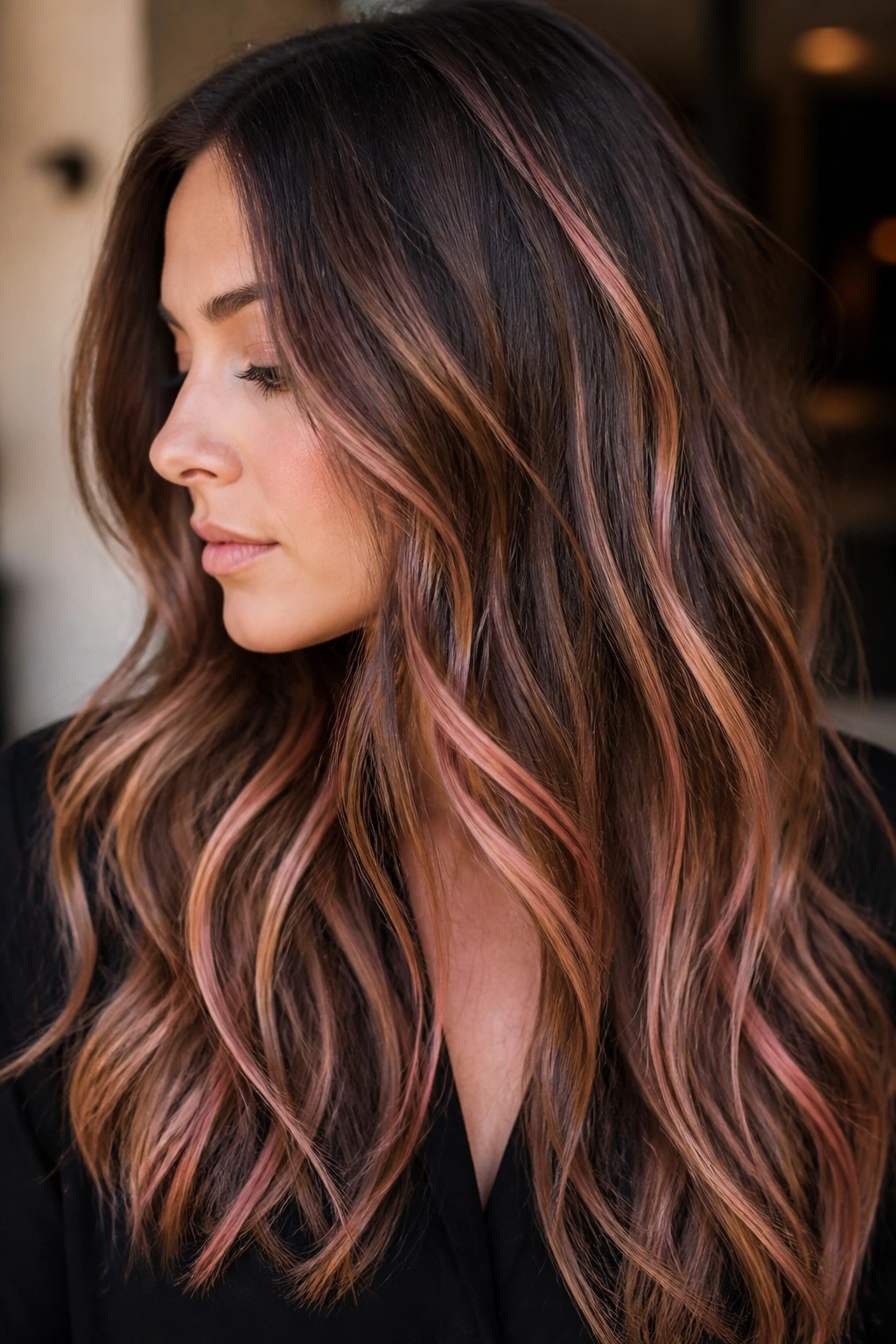
Chocolate brown hair is made for soft ribbon placement. The richness of the base gives rose gold something deep to sit against, so the highlight doesn’t look thin or chalky. Instead, it catches the light in long, smooth strokes that feel expensive without being fussy.
Why It Works
The best version of this look uses fine to medium ribbons painted through the mid-lengths and ends, not a heavy block of color at the root. That keeps the grow-out soft and prevents the rose tone from overwhelming the brown.
A few well-placed pieces around the face help, but the magic is really in the movement through the back. On layered cuts, especially, the color shows up when the hair swings. That is where the shine lives.
- Use a deep chocolate base if you want the rose tone to read polished and warm.
- Ask for micro-weave or fine ribbon placement for a softer finish.
- Keep the ends a touch lighter than the mids so the color has a gentle fade.
- Pair with loose curls or a round-brush blowout to show the dimension.
Best for: brunettes who want rose gold highlights for brown hair without a loud contrast line. It’s one of the easiest ways to look styled on a regular day.
2. Face-Framing Rose Gold Pieces That Wake Up the Complexion
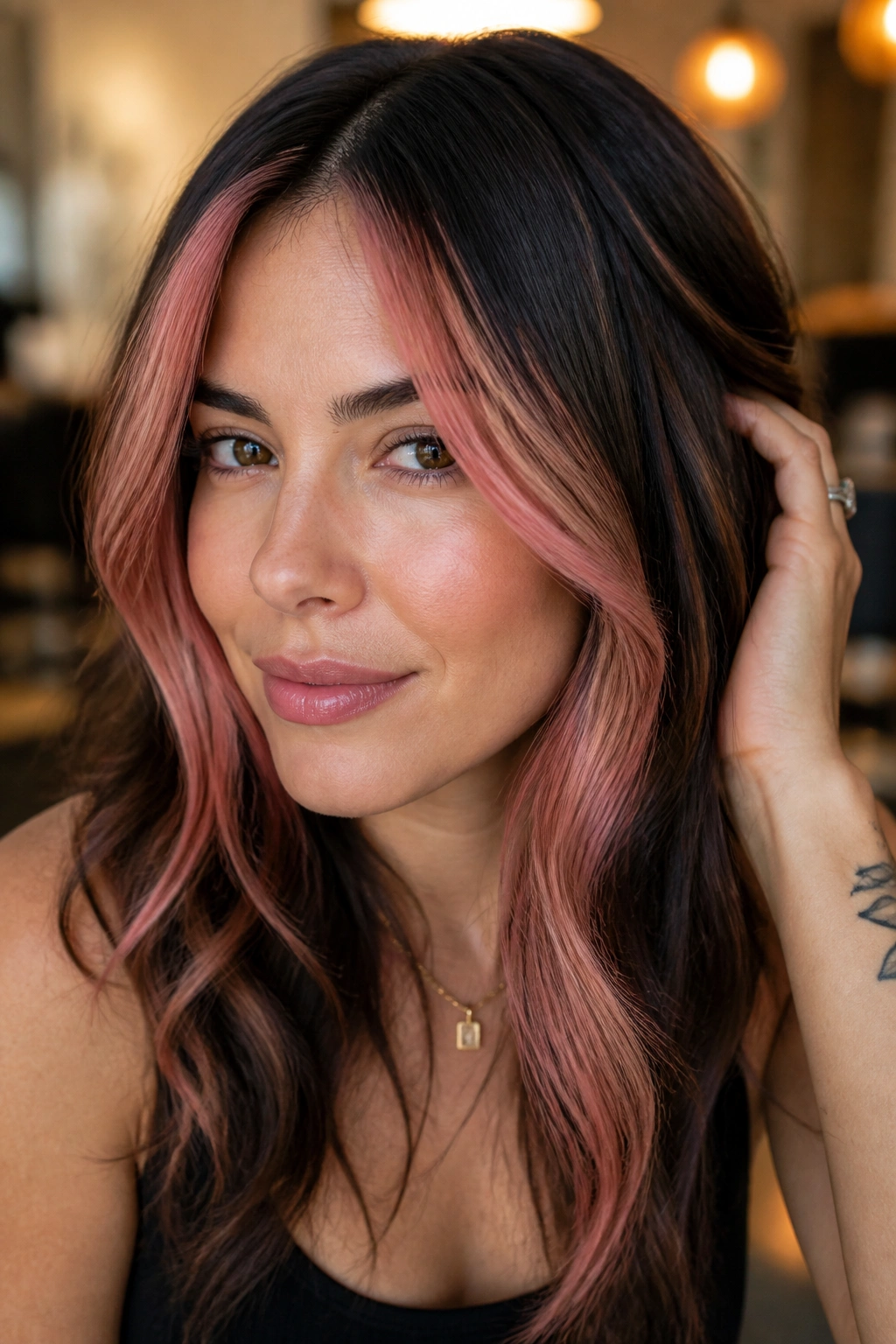
A money piece is the fastest way to make rose gold look intentional. One bright section on each side of the face can change the whole haircut, even if the rest of the hair stays quiet and brown.
The trick is placement. If the highlights sit too far forward, they can look stripey. If they start just behind the hairline and melt into the front layers, they soften the face instead of shouting at it.
That’s why I like this version on medium brown and chestnut bases. The pink-copper tone sits next to the skin like a warm filter, especially when it’s broken up by a few softer pieces in the front third of the hair. You get brightness near the cheeks and a little movement through the temples, which matters more than most people think.
For upkeep, this is one of the better choices if you want a visible effect without committing to a full-head blonde session. The rest of the hair can stay deeper, so the grow-out looks easier. The face-framing pieces may need refreshing first, though. They catch the most sun, water, and heat from styling tools. No mystery there.
And yes, this style can lean glam if you want it to. A sharper money piece gives you that. A softer blur turns it into something much easier to wear.
3. Smoky Rose Babylights on Chestnut Brown Hair
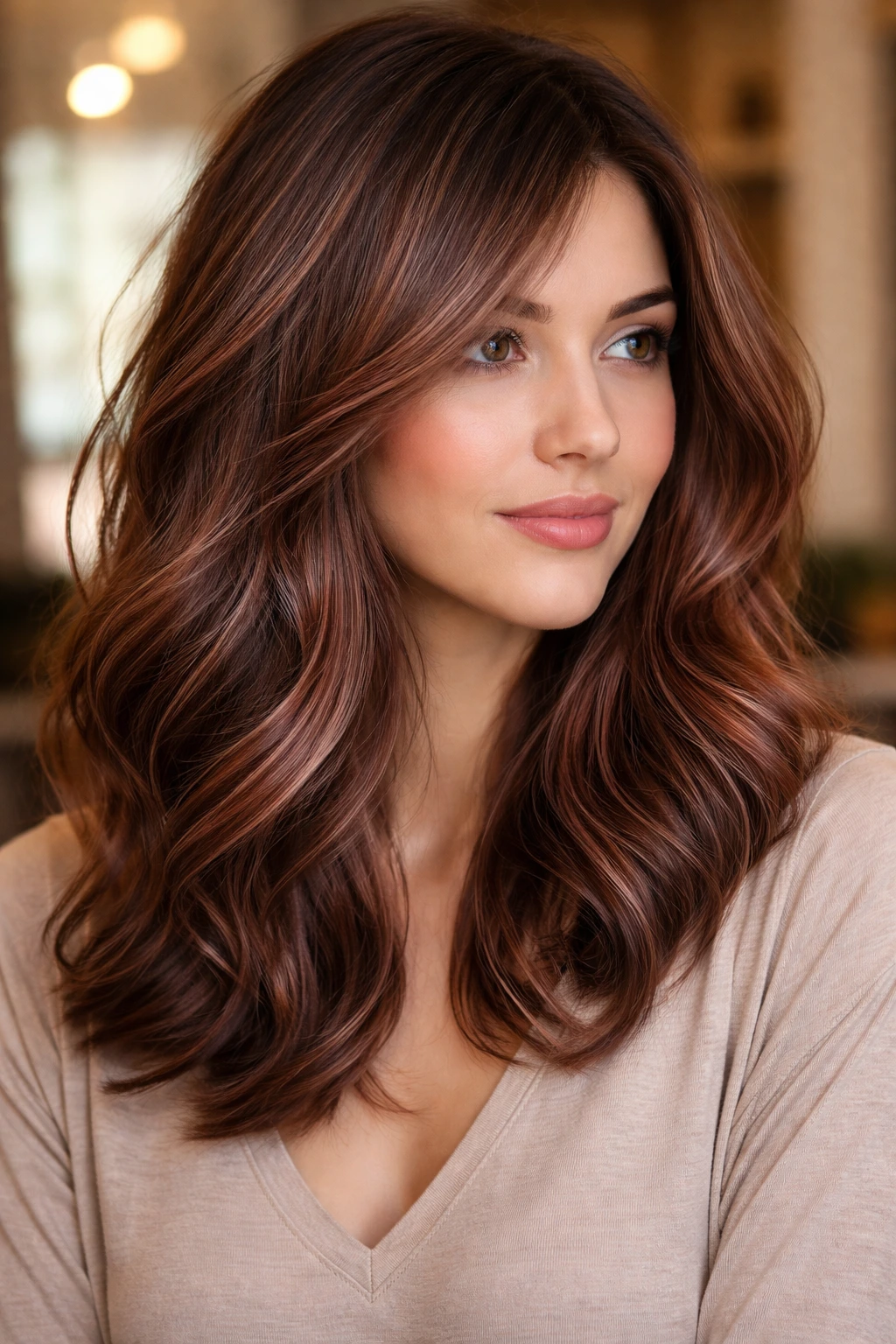
Why do smoky rose babylights look so good on chestnut brown? Because chestnut already carries a little warmth and red in the base, so the rose tone doesn’t have to fight for attention. It settles in. Quietly. Then it glows.
The finest version of this look uses tiny, almost thread-like sections that are lifted just enough to hold a dusty pink-beige gloss. That gives the hair movement without obvious streaks. On straight hair, it looks sleek. On wavy hair, it looks softer and more expensive, though I dislike that word because people use it lazily. Here, it actually fits the way the color falls.
How to wear it
A shoulder-length cut or long layers usually show this color best, since the tiny pieces can scatter light as the hair moves. Strong curls can wear it too, but the placement needs to follow the shape of the curl pattern or the color disappears in the bulk.
Ask for a smoky, not pastel, rose tone. That matters. Pastel pink can vanish fast on brunette hair and sometimes leaves the ends looking dry or overprocessed. Smoky rose stays grounded.
If you want a low-maintenance version, keep the babylights concentrated around the part line and upper crown. That gives the impression of all-over shine without turning the whole head blonde.
4. Rose Gold Balayage Painted Through Layered Brunette Hair
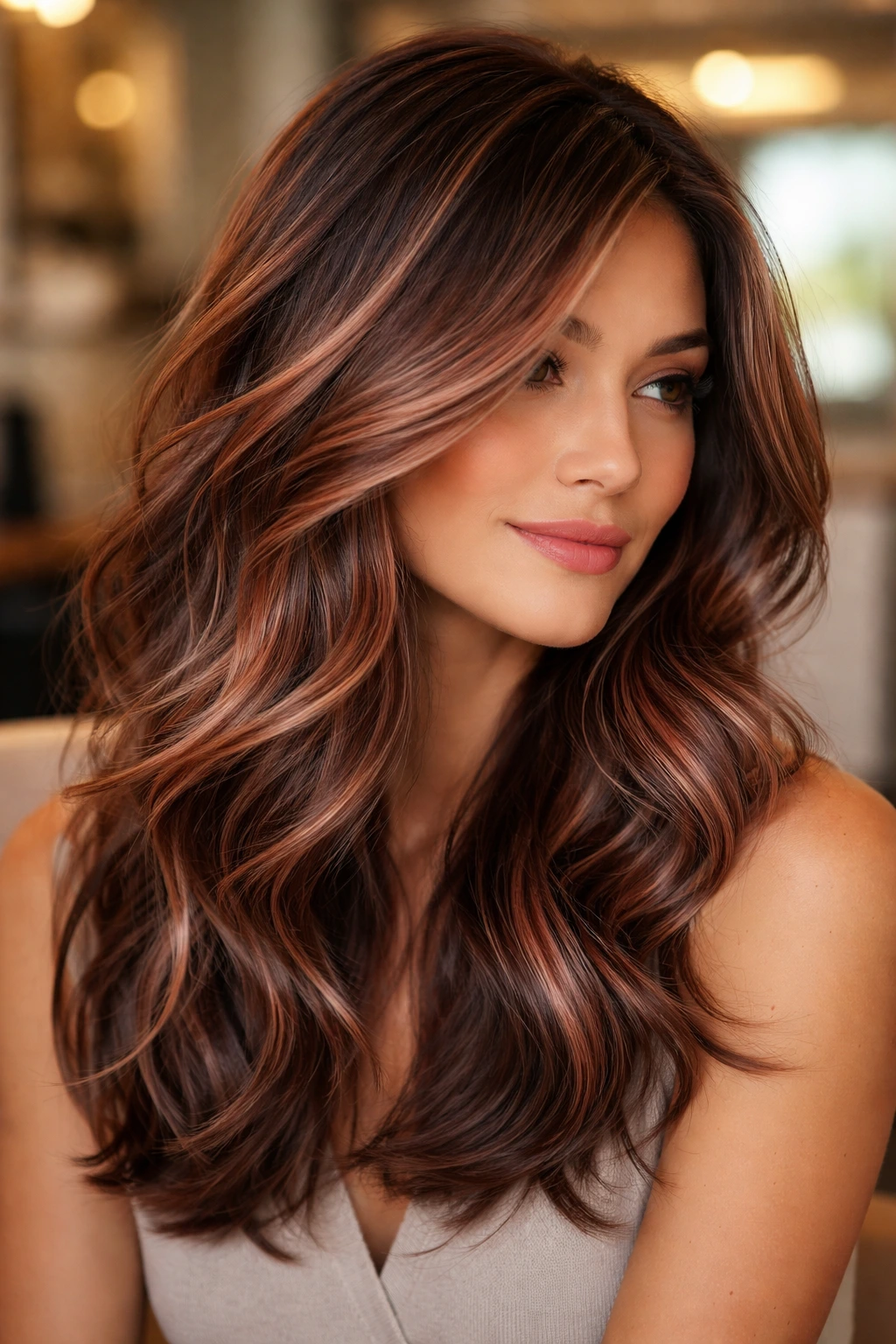
A layered brunette cut gives rose gold a lot to work with. Every flip of hair exposes a different piece, and balayage uses that movement instead of fighting it.
The result is softer than foil work and less obvious than thick streaks. That’s the appeal. Balayage lets the rose gold sit like sunlight rather than dye blocks. On brown hair, that distinction matters. You want the highlight to feel swept on, not stamped in.
A long layered cut is the easiest canvas because the color can start higher near the mids and melt toward the ends. Shorter layers can do it too, but the painterly effect gets busier fast. Too many short layers with too much rose gold can read frizzy if the toner leans too warm.
- Keep the bright pieces focused on the outer layers.
- Leave some deeper brown underneath for contrast.
- Ask for a gloss that leans pink-beige or dusty rose, not neon pink.
- Style with a bend, not a tight curl, so the color bands stay visible.
This is the kind of placement I like for someone who wants visible rose gold highlights for brown hair but hates the idea of obvious root lines. It grows out gracefully, and that counts.
5. Dusty Rose Melt on Deep Espresso Brown
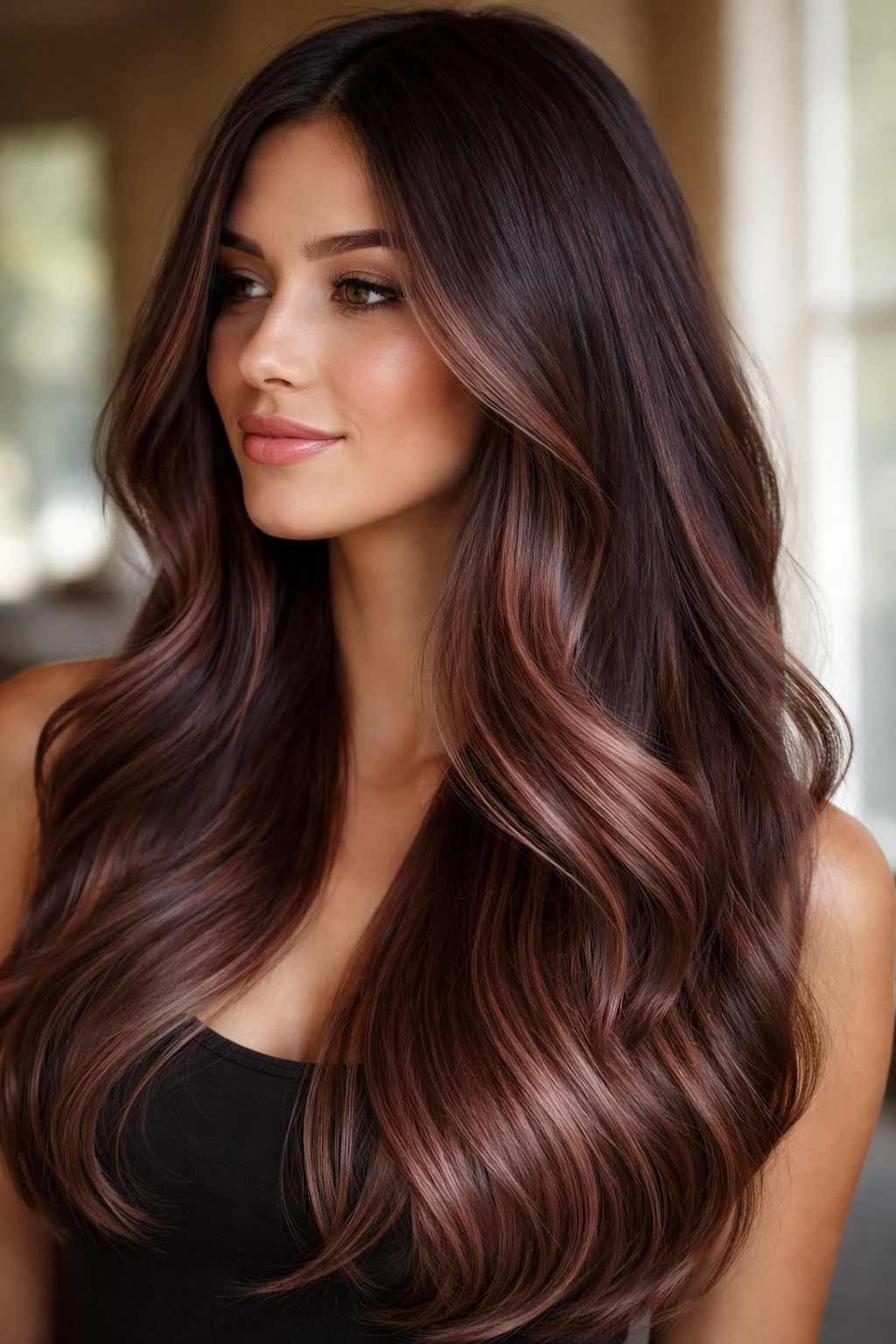
Deep espresso brown can wear rose gold beautifully, but only when the transition is handled with restraint. Jumping straight from dark brown into a bright pink tone usually looks harsh. A melt fixes that.
The color should start with a soft brown-to-rose shift through the mids, then go a little brighter at the ends. Dusty rose works better than candy pink here because it respects the depth of the base. You get the color story without losing the richness that made the hair appealing in the first place.
This style is especially good if you like wearing your hair straight or in a smooth blowout. A sleek finish shows the gradation between tones. Curls can still wear it, but the fade gets cloudier when the hair is textured heavily.
One thing to watch: dark hair usually needs lightening before rose tones show up properly. If the ends are under-lifted, the result can be a copper haze instead of rose gold. That is fixable, but it’s not the same effect. Don’t settle for it if you wanted pink.
A good dusty melt should look like the brown is softening into rose, not like the color was dropped on top as an afterthought.
6. Curly Rose Gold Highlights That Follow the Curl Pattern
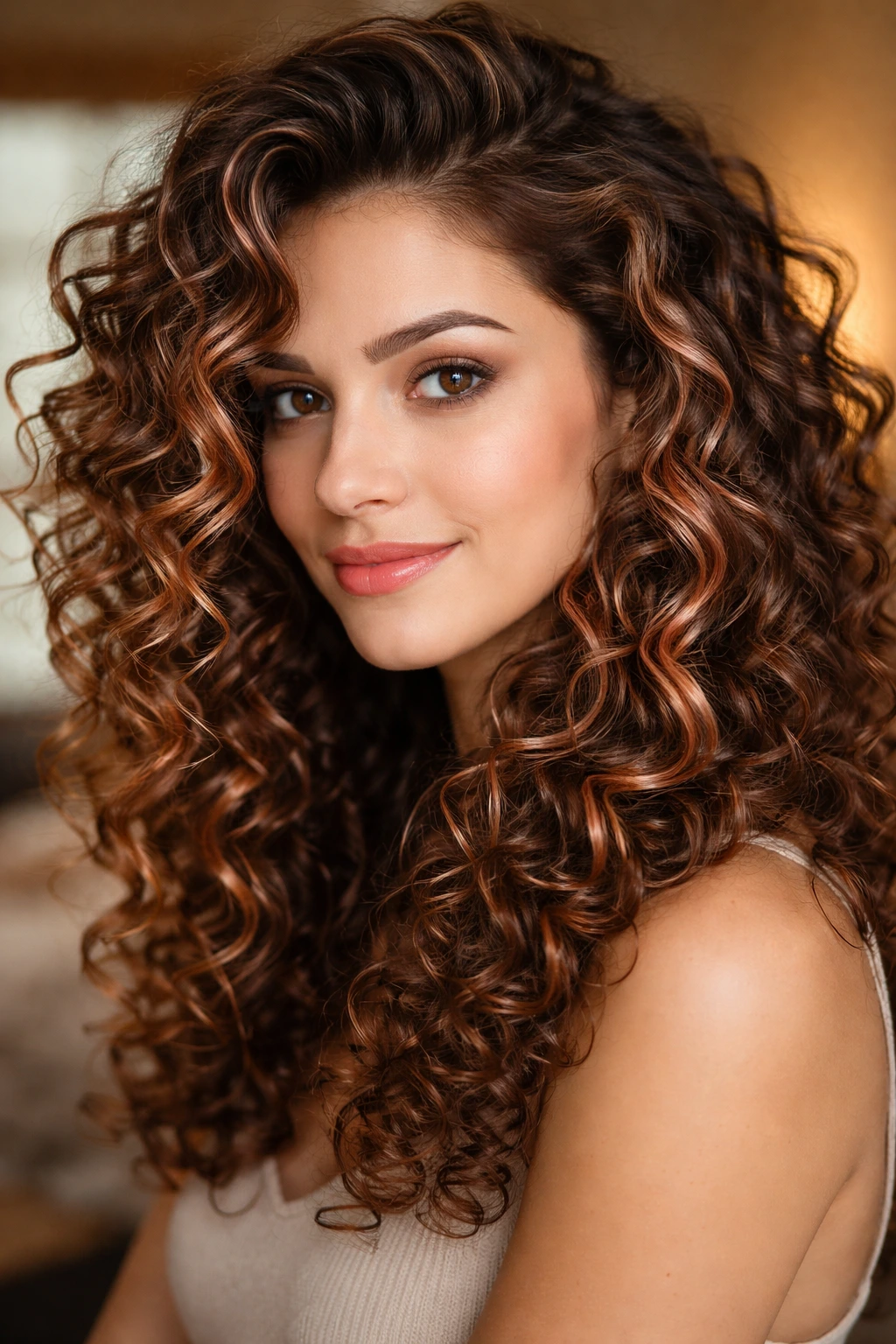
Curly hair asks for a different kind of highlight placement. Straight stripes can look harsh in coils and ringlets, while curved placement lets the rose gold follow the shape of the curl itself.
That’s the real difference here. The highlight should support the pattern, not interrupt it. A colorist who places rose gold in a curl-by-curl rhythm can make the hair look fuller, brighter, and more alive. The finished effect is less like streaks and more like warm light sitting inside the curl.
Unlike straight hair, curls shrink and expand, so the highlight needs enough depth to show after the hair dries. Thin babylights can work, but only when they’re placed with the curl map in mind. Otherwise they disappear. Or worse, they cluster into odd bright spots that make the texture look uneven.
This version suits curly brunettes who want warmth but not a loud blonding job. The rose tone brings out the shape of the curl and keeps the brown from feeling heavy. A soft diffuser and a touch of curl cream do half the work once the color is in place.
If you’ve got dense curls, ask for a few brighter ribbons near the outer halo and softer pieces underneath. The hair will move. So will the color.
7. Hidden Rose Gold Peekaboo Pieces Under a Brunette Bob
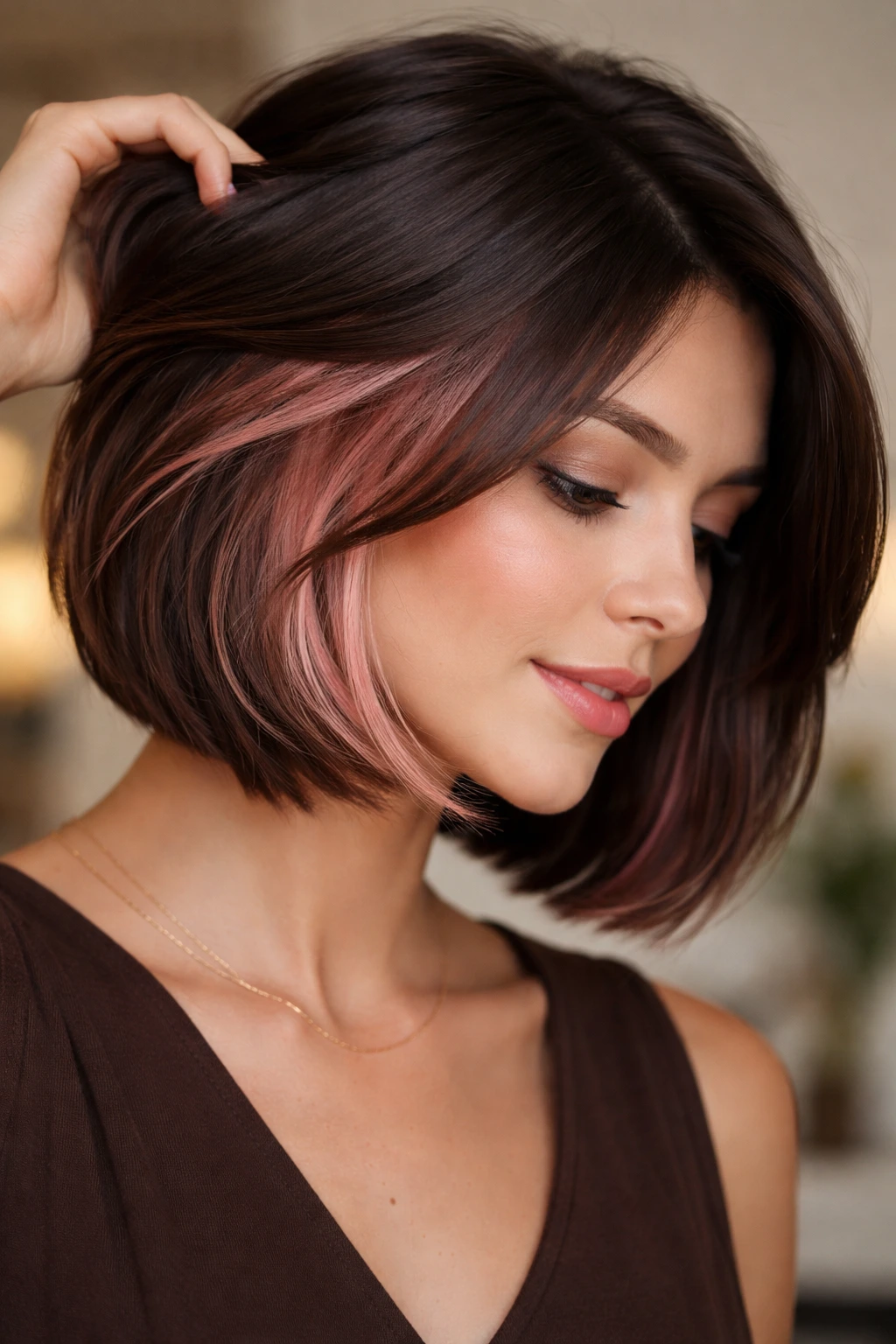
A bob can look sharp on its own. Add a hidden rose gold layer underneath, and it gets a little mischievous.
That’s the charm of peekaboo color. From the front, the hair may read like a clean brown bob with a smooth shape. Tilt your head or tuck one side behind your ear, though, and the rose gold flashes through. It feels playful without being full-on bold.
What Makes It Different
The hidden placement means the color is protected a bit more from heat and sun, which helps keep the rose from fading too fast. It also lets you wear the look in an office or on a day when you want the color to stay quiet. Then it shows up when you move.
- Best on chin-length to shoulder-length bobs with clean edges.
- Works well with underlayers and nape sections that sit just beneath the top surface.
- Looks best when the top layer stays deeper brown for contrast.
- Needs less frequent toning than full-surface rose gold, since the color is partly sheltered.
I like this on brunettes who want to test the waters. It’s not timid. It’s controlled. And control is underrated in hair color, honestly.
8. Caramel-Rose Highlights With Soft Lowlights
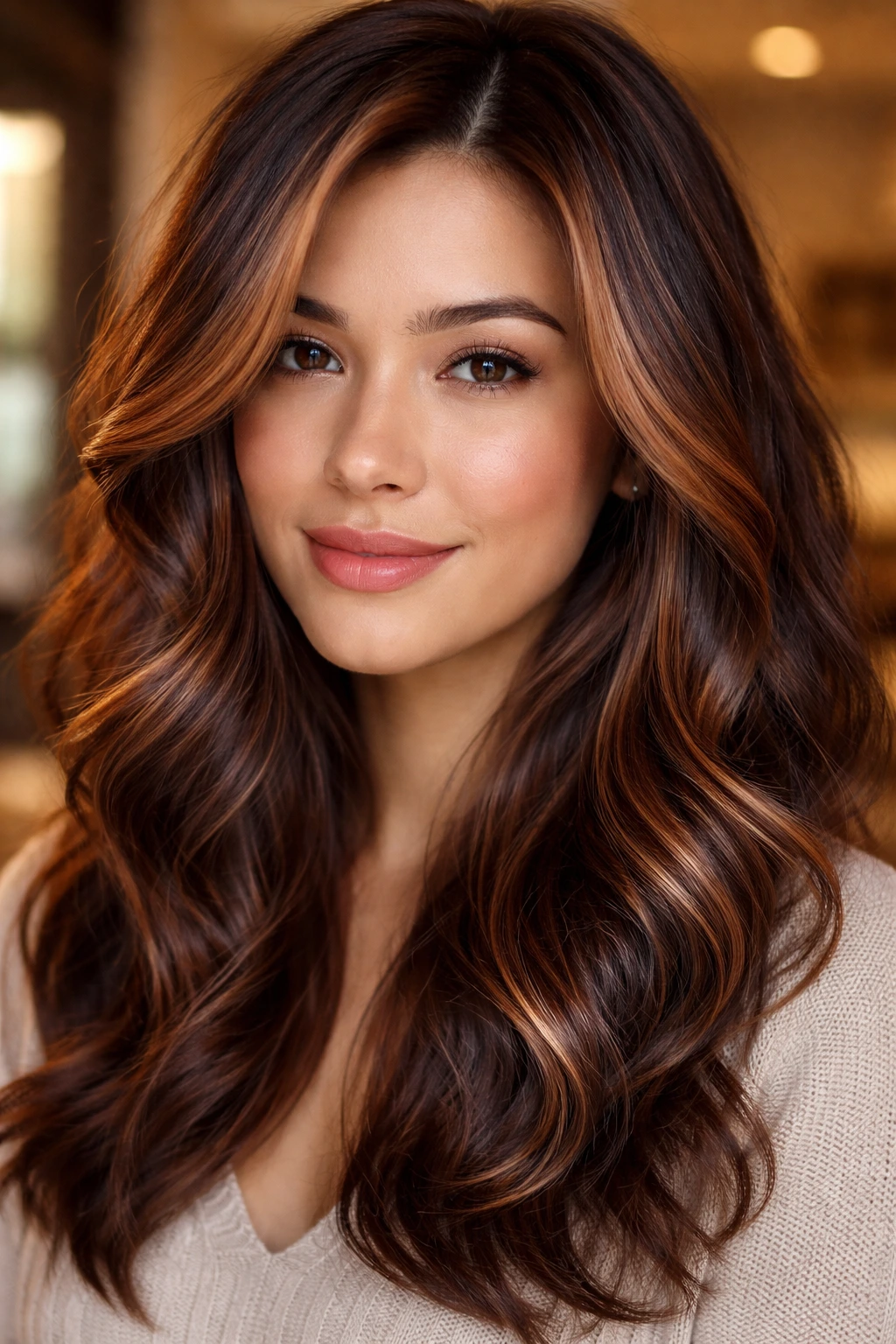
Caramel-rose is one of those color mixes that sounds sweeter than it looks. In practice, it gives brown hair a warm, glowing finish that feels richer than plain caramel and less pink than a classic rose gold.
The lowlights matter here. Without them, the highlights can look a little thin or overly bright. With them, the whole head gets depth, and the rose pieces have something to bounce against. That contrast is what makes the color feel expensive and dimensional.
This version works especially well on medium to dark brown hair that already leans warm. Golden, olive, and neutral skin tones tend to wear it easily, but the hair color itself is the bigger story. The rose stays visible because the caramel underneath keeps it from going flat.
A few face-framing strands can brighten the complexion, while lowlights in the underlayers keep the crown from looking too blond. That mix also helps the color last longer visually, since the darker pieces hide some of the fade.
If you like warmth but want a little more softness than copper, this is a strong middle ground. Pretty, yes. Also practical.
9. Shadow-Root Rose Gold Money Pieces on Brown Hair
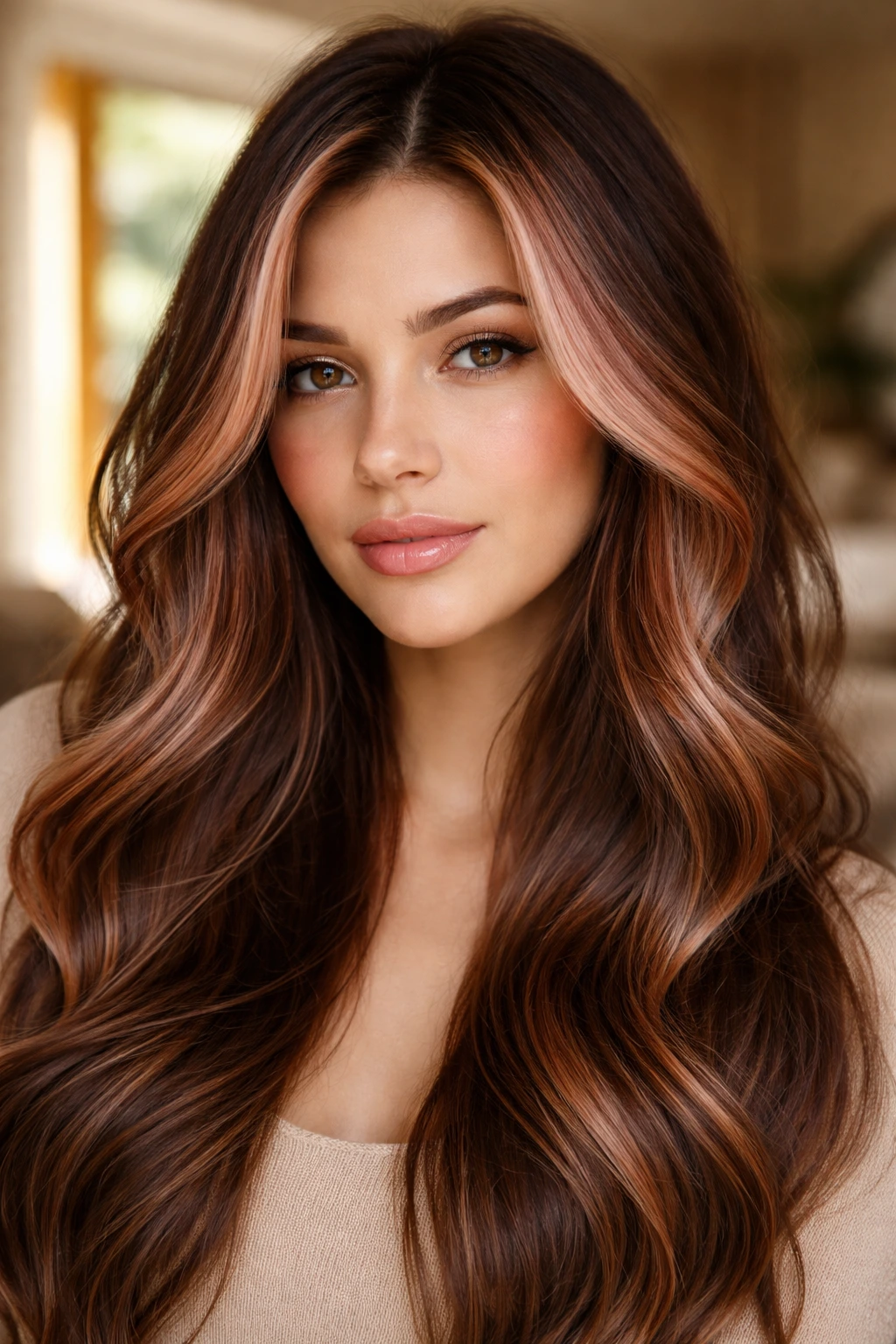
What makes a shadow-root money piece so wearable? The root blur. That little inch or two of deeper brown at the scalp gives the front highlights a cleaner grow-out and stops the color from looking pasted on.
A rose gold money piece can be bright, but it doesn’t have to be high maintenance. The root shadow keeps the front section anchored, which is useful if you wear your hair back a lot or part it the same way every day. The eye goes to the lightest pieces first, but the darker root makes the whole thing feel settled.
How to ask for it
- Keep the root about 1 to 2 inches deeper than the highlight midsection.
- Ask for a soft blend through the first panel, not a hard line.
- Choose a rose tone that matches your base warmth — peach-rose for golden brown, dusty rose for chestnut, copper-rose for deeper brunette.
- Avoid over-lightening the money piece if your hair is already fine; it can look frayed.
This style is a good compromise for someone who wants visible rose gold highlights for brown hair but does not want to baby the color every few weeks. The shape of the face gets the brightness, and the rest stays calm.
10. Sunlit Rose Gold Babylights on a Medium Brown Lob
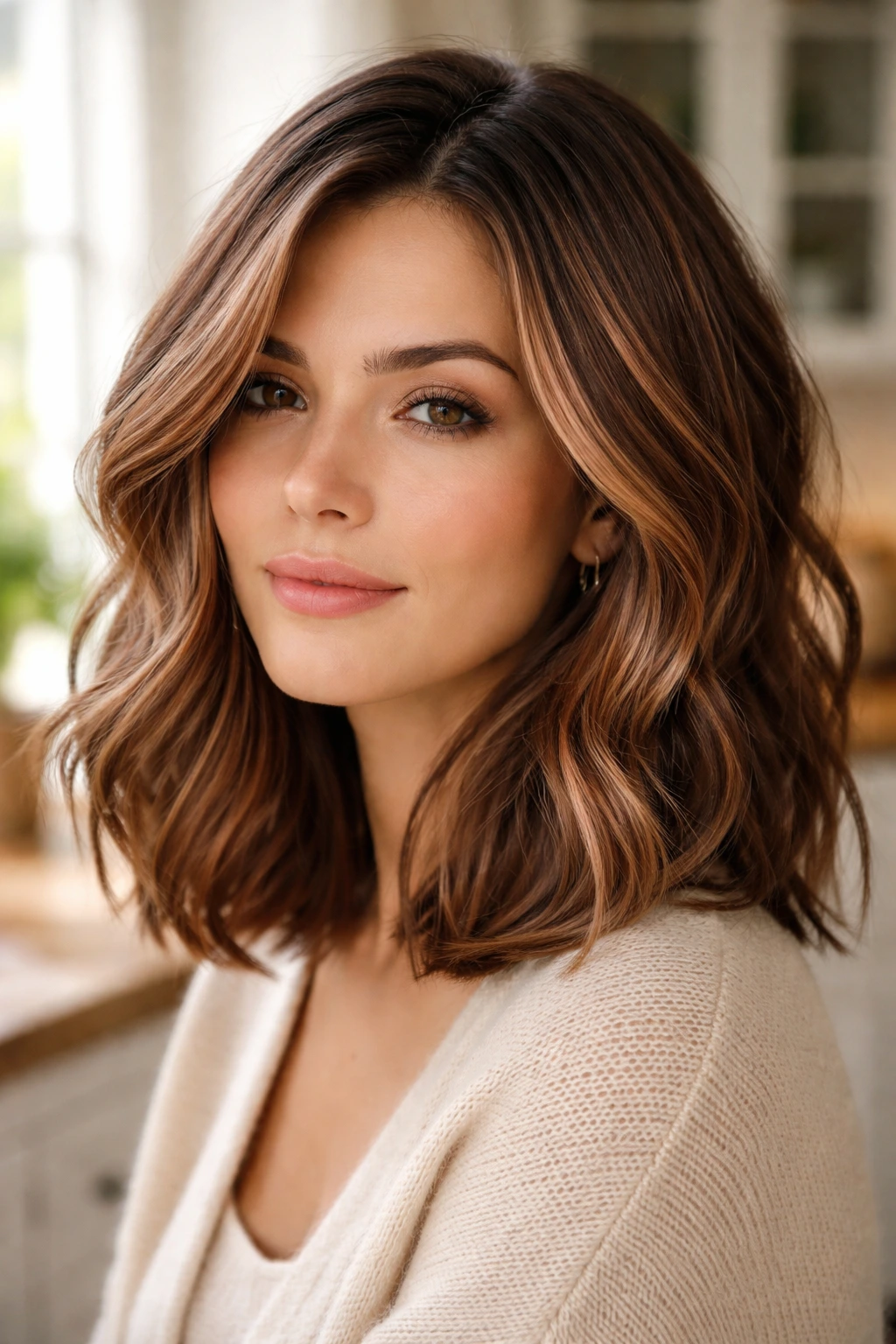
A lob gives babylights room to breathe. There’s enough length for the color to spread out, but not so much that the tone gets lost in the ends.
The best rose gold babylights on a medium brown lob look barely there until the light hits them. Then they show that pink-beige sheen all at once. It’s a nice effect because it doesn’t announce itself from across the room. You notice it when the hair moves, which feels more natural than a hard streak pattern.
Medium brown is a good base for this because it usually sits in the sweet spot between warm and neutral. The rose tone doesn’t have to carry the whole look. It just adds a whisper of color on top of the brown structure.
Keep the lightest pieces around the face and across the top section of the head. That way the lob keeps its body at the bottom and its brightness at the top, where light naturally lands. The cut does some of the styling work for you.
A flat iron bend or loose wave really helps here. Straight hair can still show the tone, but a small movement in the ends makes the babylights easier to see.
11. Metallic Rose Gold Gloss Over Light Brown Hair
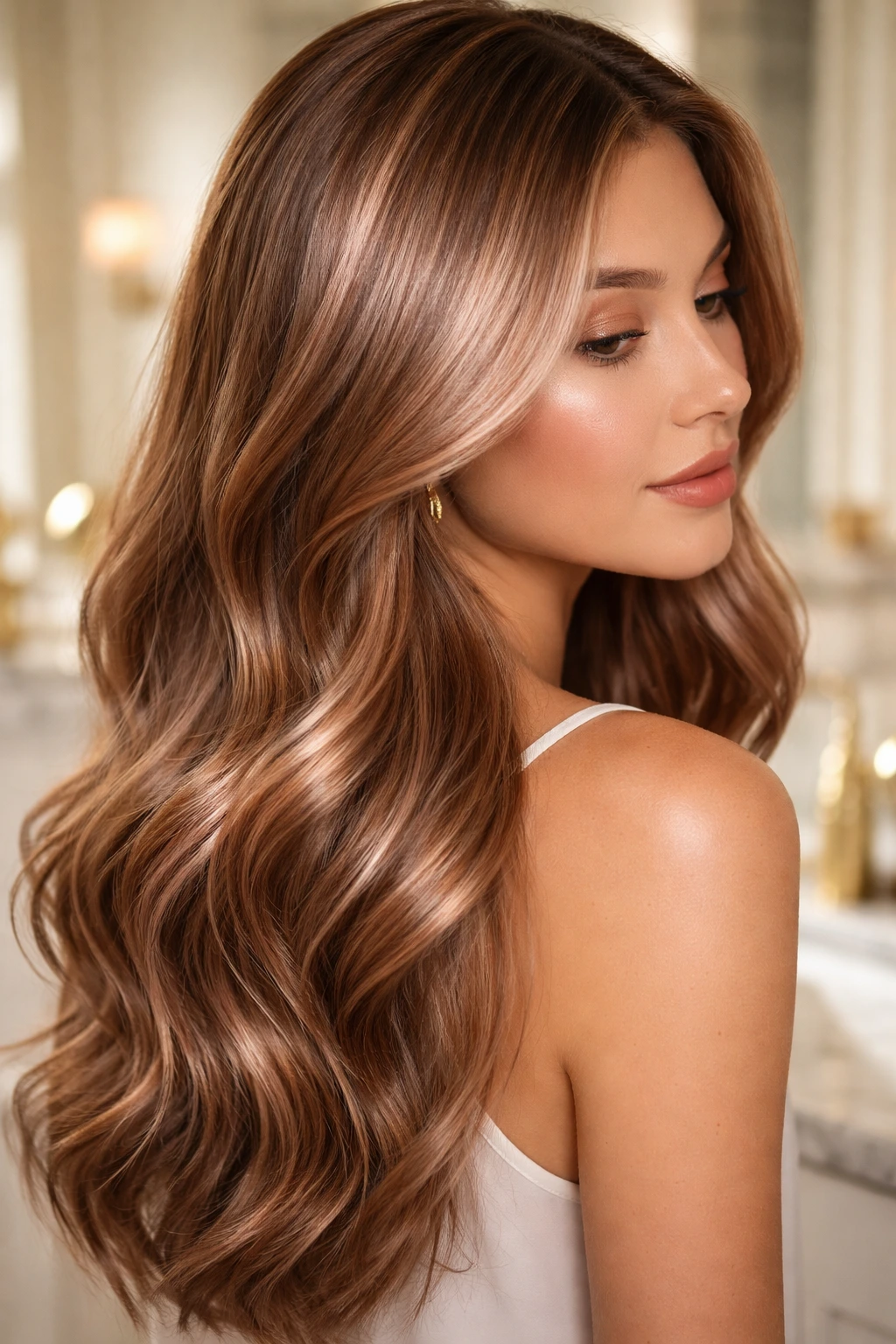
Light brown hair can take a metallic rose gold gloss in a way that feels polished rather than loud. The base is already close enough to blonde territory that the gloss sits on top like sheen, not patchwork.
That is the main difference here. You are not trying to create dramatic contrast. You are trying to tune the tone. A rose gold gloss can cool down a too-yellow light brown base and warm up a dull ash one at the same time, which is why stylists reach for it when the hair needs polish more than major lightening.
The finish works best when the highlights underneath are already present and healthy. A gloss cannot fix damaged hair. It can only make healthy-looking hair look richer. That’s the plain truth, and it matters more here because metallic tones show every rough edge.
A medium-to-light brown base with a few lighter threads is ideal. The gloss should sit for the right amount of time, then get rinsed before it turns too peachy or too smoky. If it stays on too long, the tone can skew muddy. If it’s rinsed too fast, it barely shows.
This is a smart choice for someone who wants a softer, shinier version of rose gold highlights for brown hair without making the hair look highly processed.
12. Plum-Rose Lowlights Woven Into Warm Brown Hair
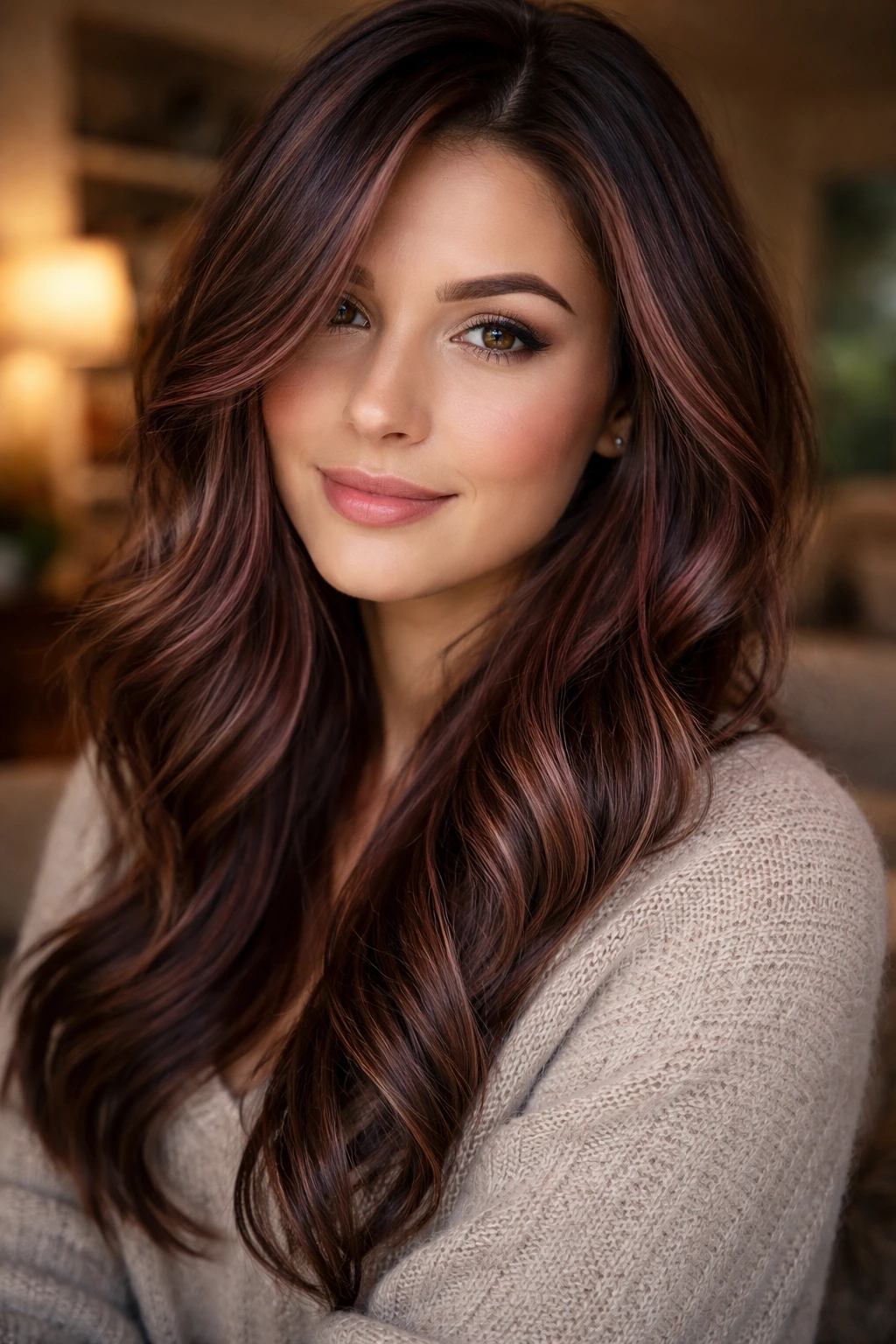
Not every rose gold look has to be bright. Sometimes the smartest move is to go darker.
Plum-rose lowlights add depth, especially in warm brown hair that already leans a little copper or gold. Instead of lifting the whole head, you tuck in darker rosy sections that make the brighter pieces look richer by comparison. The brown hair suddenly has more shadow, and shadow is what gives color shape.
This works well if your hair is already lightened in places and you want to calm it down without losing the rose family altogether. It also suits people who prefer a dressier, moodier finish. There’s a velvet feel to it. Not soft in the childish sense. Soft in the sense that it folds light instead of reflecting it straight back.
Best uses for this look
- Refresh faded rose gold without going lighter again.
- Add depth to warm brunettes that look a little washed out.
- Give wavy hair a richer, layered finish.
- Pair with warmer makeup tones if you want the hair to look harmonious.
I like this one because it proves rose gold does not need to be sweet. It can be sultry. That shift changes the whole mood of the hair.
13. Chunky Rose Panels on Chocolate Brown Hair
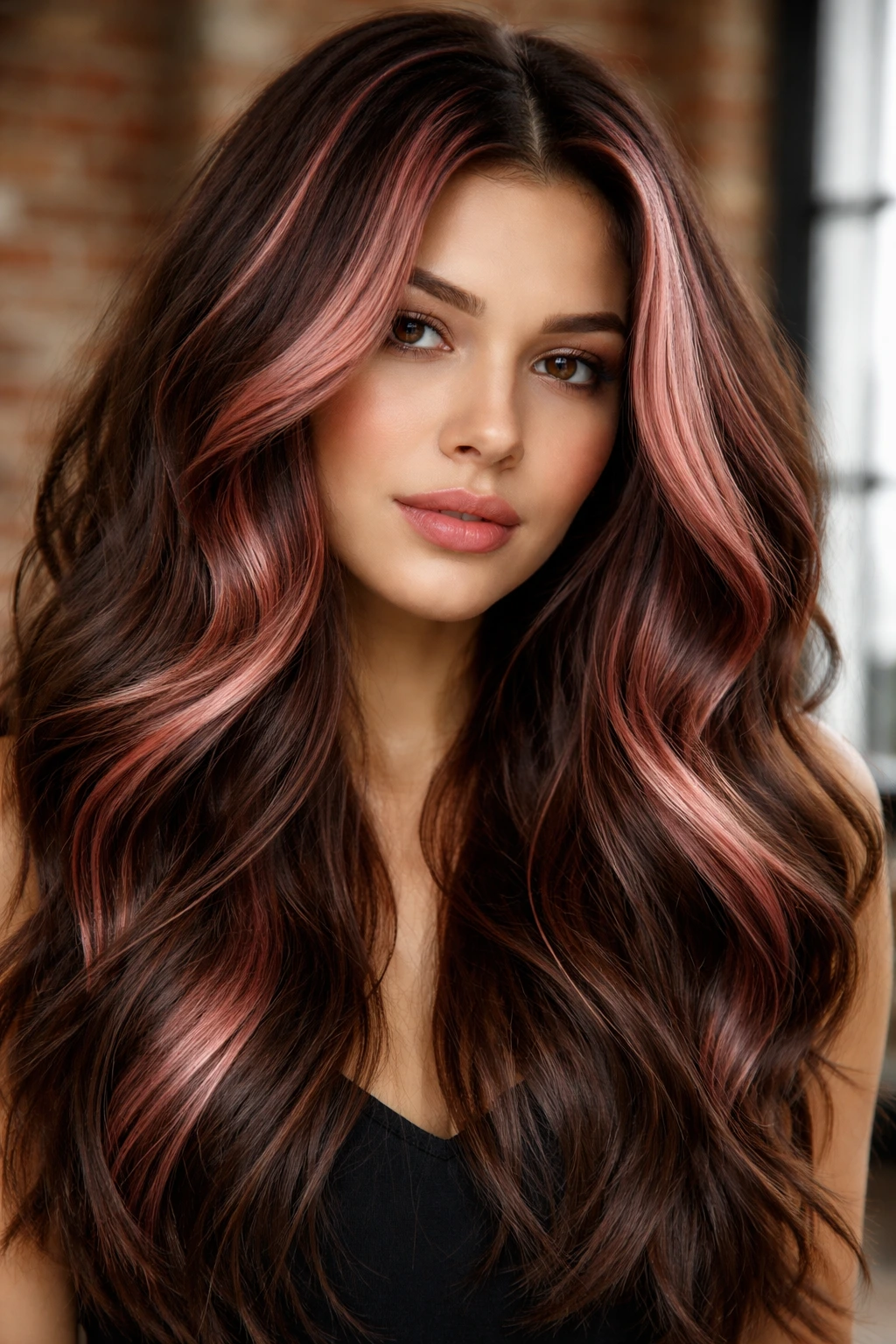
Chunky rose panels are a nod to the bolder color work that came back into fashion after years of ultra-fine highlights. On chocolate brown hair, they can look dramatic in a good way if they’re placed with some restraint.
The key is not to scatter them everywhere. Two or three clean panels near the front and through the mid-lengths usually do more than a dozen random ribbons. You want visible shape, not confusion. The brown should still be the main story.
What to ask for
- Ask for larger, deliberate panels instead of blended micro-threads.
- Keep the rose tone in the pink-copper family, not bubblegum.
- Use a few deep brown sections between panels so the contrast stays clean.
- Style with straight lengths or soft bends to show the line of the color.
This style is not for someone who wants invisible color. It is for the brunette who likes a little edge and does not mind a stronger visual statement. On thick hair, the panels can look gorgeous. On fine hair, too many of them can make the head look broken up. That is the tradeoff.
And yes, they grow out faster in terms of visibility. That is part of the deal.
14. Mushroom Brown With Rose Gold Veils
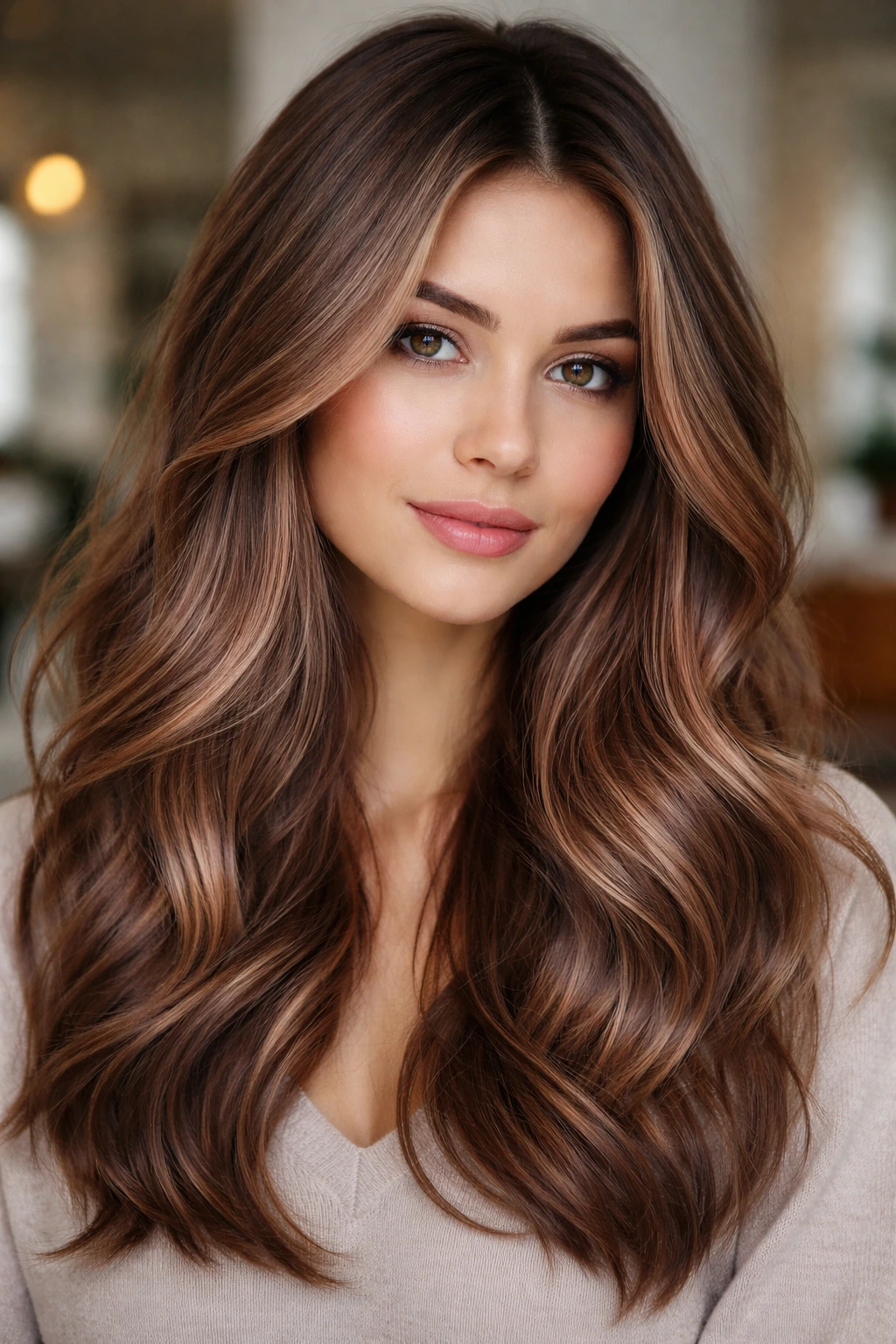
Mushroom brown has a cooler, muted base, which makes it a sharp backdrop for rose gold veils. The rose tone does not need to shout here. It just needs to flicker.
That flicker is the point. A veil is softer than a ribbon and more visible than a babylight. It sits in that middle ground where the color looks like it belongs inside the hair, not sitting on top of it. Cool brown plus soft rose is a surprisingly good match because the contrast is gentle, not harsh.
This one suits people who lean toward neutral wardrobes, soft makeup, and hair that should look polished under indoor lighting. The rose gold won’t always show the same way outside and inside, and that’s part of the appeal. It shifts. It behaves differently from one setting to another.
A mushroom base also helps keep the rose from going too sweet. That is a real concern with pink-toned hair on brunettes. Too much sweetness and the color can feel out of place. The cooler brown reins it in.
If you’ve been wanting rose gold highlights for brown hair but worry about warmth, this is one of the quietest and smartest ways in.
15. Apricot Rose Highlights on Warm Brunette Lengths
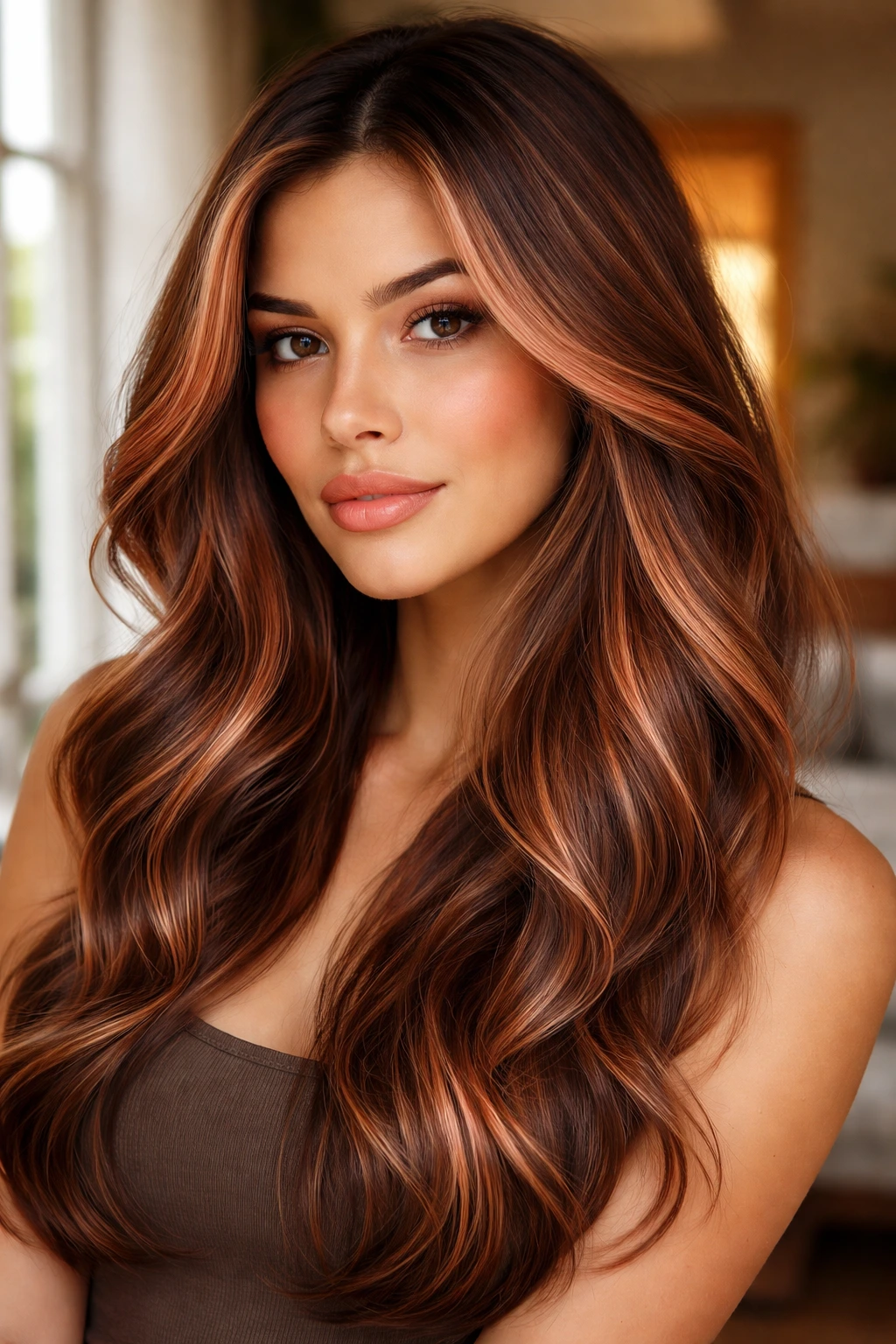
Why do apricot-rose highlights flatter some brunettes more than icy pink ones? Because warm brunette bases already hold red and gold pigment, so an apricot-leaning rose rides that warmth instead of fighting it.
This version is especially good if your hair sits in the light brown to chestnut range. The apricot note keeps the rose from going too violet or dusty, and the hair gets a sunlit finish that feels easy rather than precious. It’s one of the more forgiving rose tones because it doesn’t depend on ultra-precise pink placement.
Warm undertones in the skin often like this shade, but that is not the only reason to choose it. It also works on cooler skin when the hair itself is doing the warming. That can soften the whole look without dragging the complexion into orange territory.
The best result usually comes from mid-length painting with lighter ends. Think of it as a soft burnished glow, not a full blush effect. A curling wand or large barrel brush helps keep the warm reflections visible.
If the goal is rose gold highlights for brown hair that feel natural in bright daylight, this version is an easy one to wear.
16. Copper-Rose Ribbon Lights on Deep Brown Hair
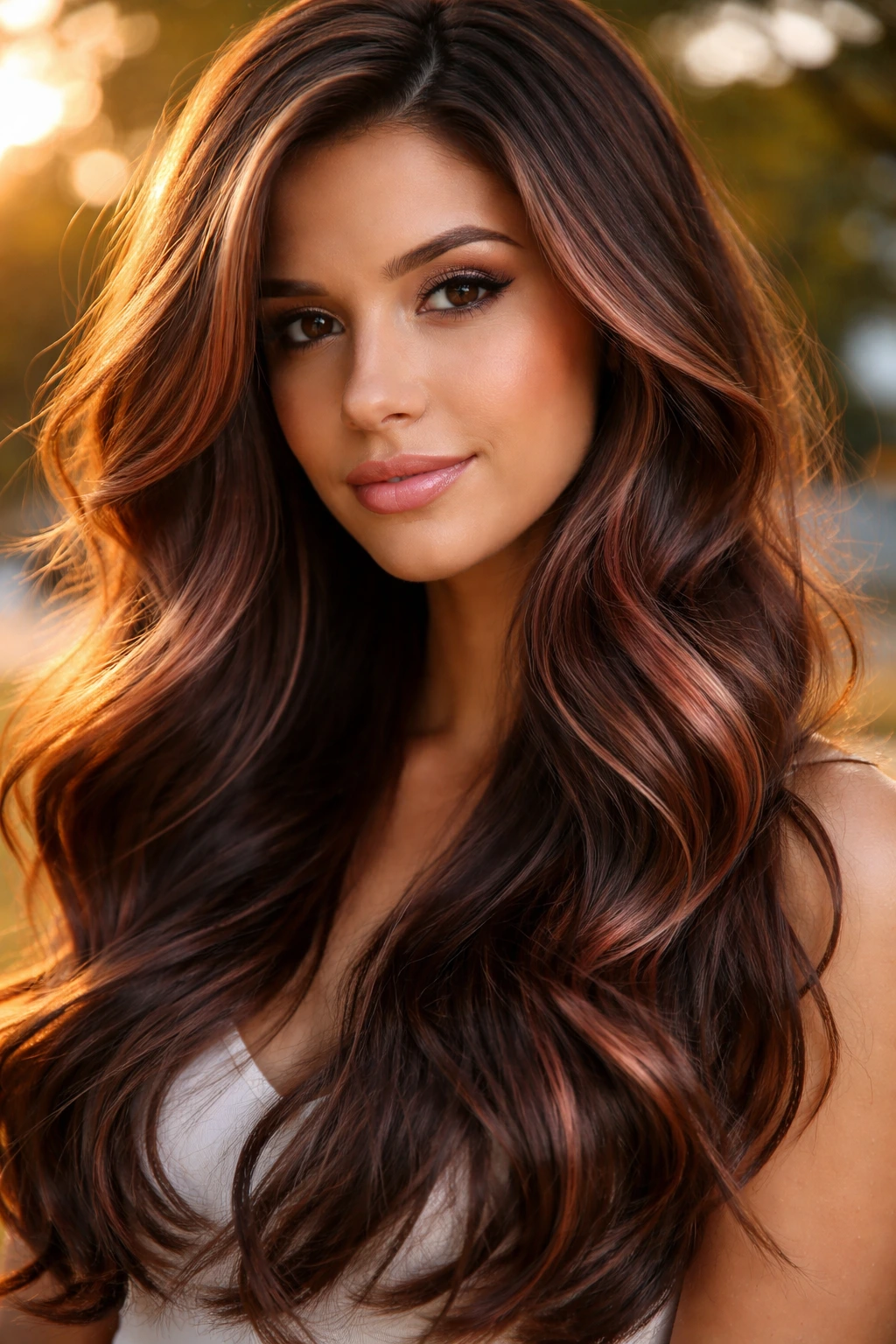
Copper-rose is louder than dusty rose, and that’s not a flaw. On deep brown hair, the warmer edge can look lush, especially if the base is dark enough to anchor the color.
I tend to like this on long brunettes with movement in the cut. A blunt style can hold it too tightly. Layered hair lets the copper-rose ribbons fall and separate, which makes the color feel richer. It also catches on waves in a way that’s hard to fake.
A few things that help
- Keep the rose tone warm and copper-forward if your base is espresso or dark chocolate.
- Add the brightest ribbons where the hair naturally bends, usually around the face and upper mids.
- Use a deep conditioning mask once a week so the lighter pieces stay smooth.
- Avoid over-toning the color too cool; deep brown hair can swallow it fast.
This is a strong choice for anyone who wants the warmth of copper but likes the softer finish rose gives. It’s more noticeable than a whisper-light blush, and that can be a good thing. Hair should be allowed to make a little noise sometimes.
17. Soft Rose Gold Ombré on Long Brown Hair
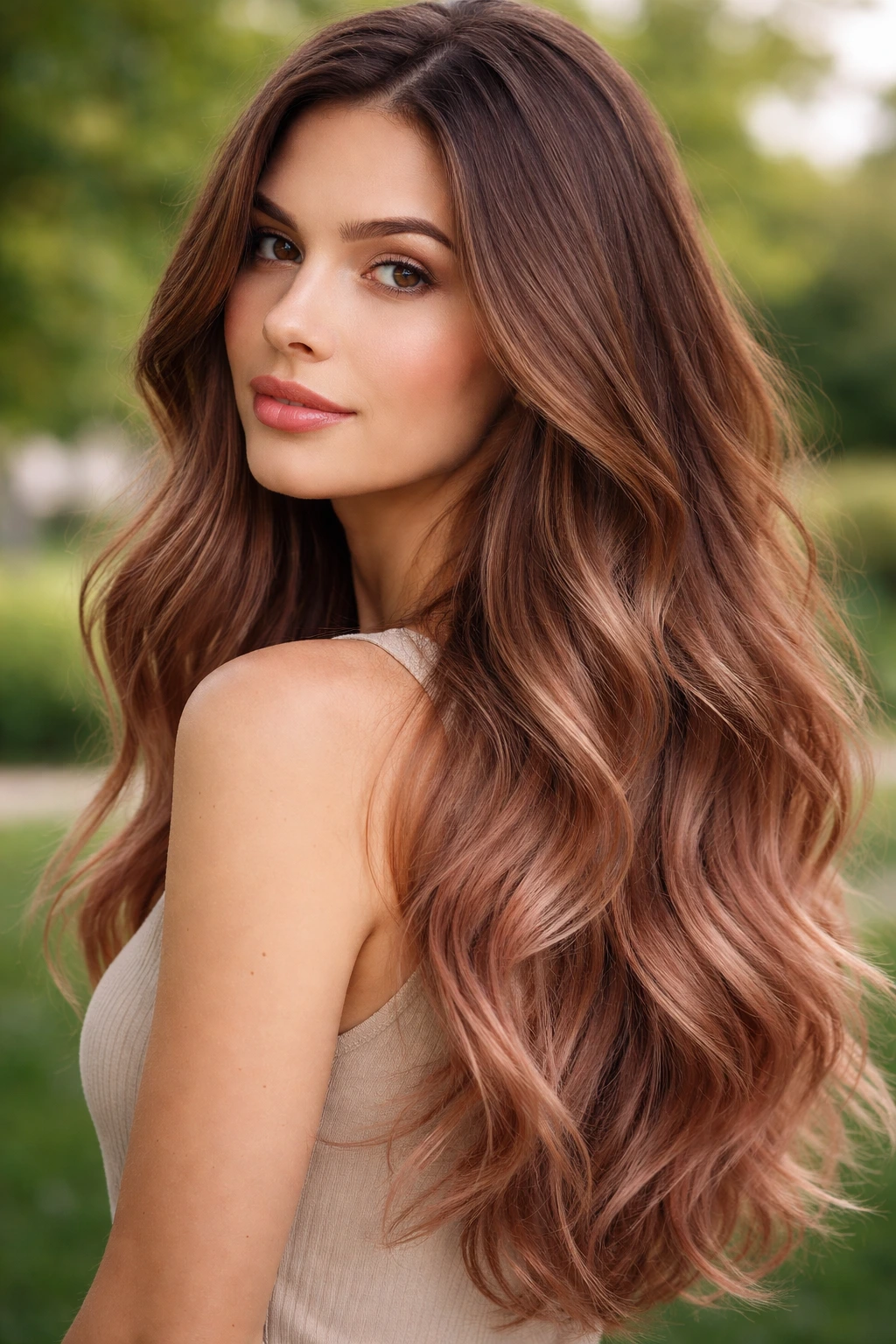
Long brown hair gives ombré room to stretch. That matters. If the fade is too short, the color looks abrupt. If it has space, the rose gold can melt from the brown root into a softer, lighter end without showing every inch of the transition.
The best ombré version keeps the root area untouched or only slightly lifted, then gradually deepens the rose tone through the lengths. The shift should feel like a slow change in light, not a hard color border. On very long hair, this can be one of the easiest ways to wear rose gold because the grow-out is built into the design.
This style suits people who use their hair as a canvas for waves, braids, and half-up styles. Every twist reveals something different. The rose gold looks richer when the hair is pulled over one shoulder or tucked into a loose braid, because the gradient stacks on itself.
Maintenance is a little kinder here than with all-over bright rose. The roots stay natural, and the ends can be refreshed with a gloss rather than a full color redo. That said, the lightest parts will fade first, so the ends should be treated well. Heat protectant matters. Skipping it is a bad deal.
18. Crown Babylights That Give Brown Hair a Soft Halo
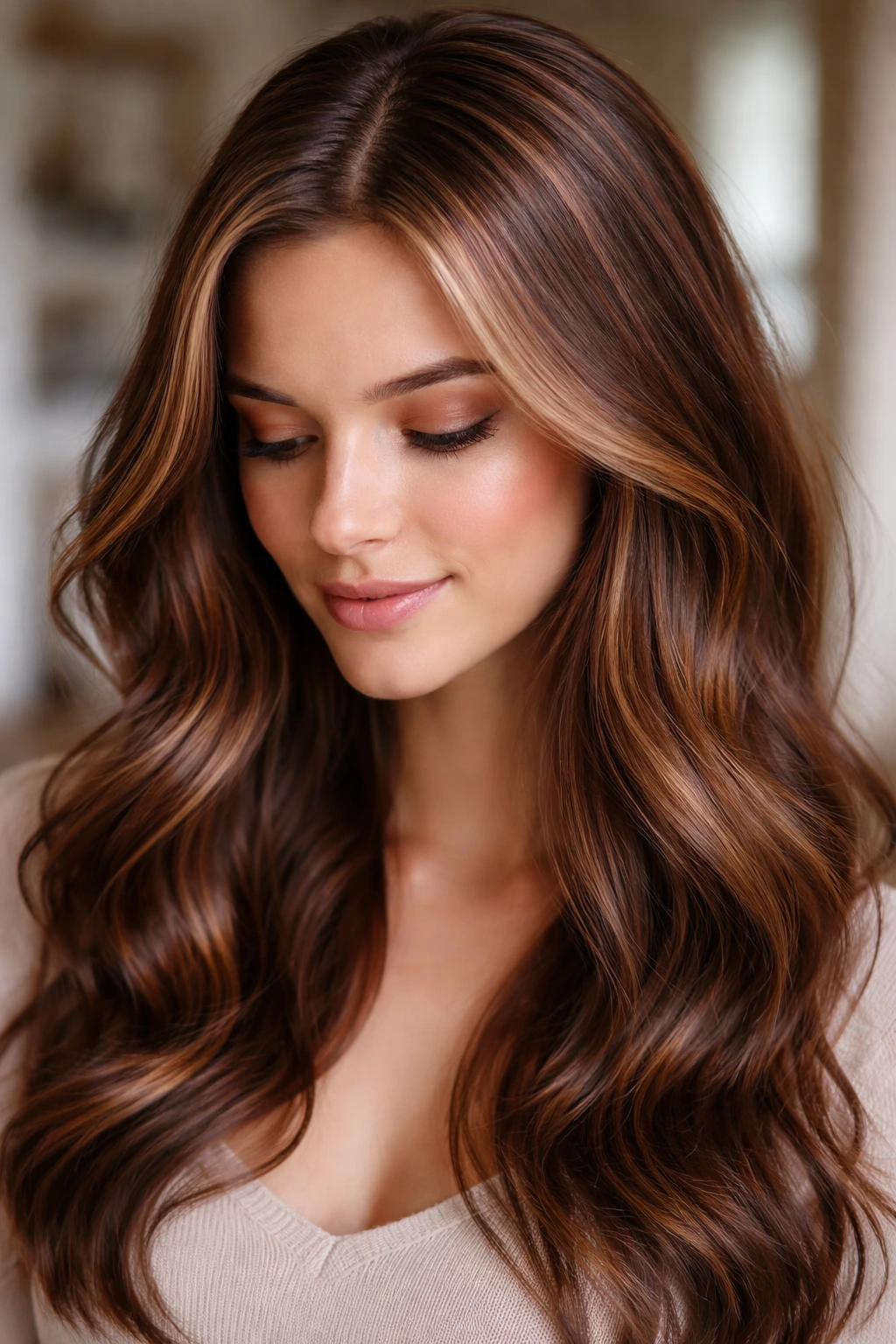
If you want rose gold highlights for brown hair to look like shine instead of color, crown babylights are the cleanest move. The tiny lightened threads sit around the part line and upper head, where the eye catches them first. The effect is subtle. Quiet. Pretty much the opposite of chunky highlight energy.
Unlike a money piece, this version does not scream for attention. It surrounds the hair with a soft halo, which is especially nice on brown hair that can look flat at the top. A few ultra-fine rose threads near the crown can make the whole head look brighter, even if most of the lengths stay deep.
This is probably the best choice for someone who wants to test rose gold without a big color commitment. It also suits people who wear their hair down a lot and part it the same way every day. The babylights show up exactly where the hair needs movement, not where it needs drama.
Ask for the lightest pieces to stay very fine and well spaced. Too many and the effect gets cloudy. Too few and you lose the halo. The sweet spot is small, and that is why this look works.
Final Thoughts
Rose gold on brown hair works best when the color respects the base instead of trying to bulldoze it. That is the whole trick. A good placement plan — ribbons, babylights, lowlights, a money piece, or a soft melt — can make the shade look polished even when the tone itself is subtle.
If you want the safest place to start, choose a softer rose beige or dusty copper-rose and keep most of the brightness near the face or the outer layers. If you want something bolder, go wider with the panels or warmer with the copper notes. Either way, the brown underneath should still feel like the star.
The prettiest rose gold hair usually has a little shadow left in it. That contrast gives the color depth, and depth is what keeps brunettes from looking overprocessed. Start there, and the rest falls into place.
