



Round faces and lilac brown highlights can be a gorgeous match, but the placement has to do the heavy lifting. If the color sits too wide across the cheeks, the face can look broader than it really is. If the light pieces run a little more vertical, drop below the cheekbones, and taper toward the jaw, the whole cut starts to feel longer and slimmer.
That’s why the best lilac brown highlights for round faces are rarely the loudest ones in the room. Smoky mauves, dusty lilac ribbons, cool mocha bases, soft babylights, and shadow roots tend to look smarter than bright purple stripes. The brown keeps the color grounded. The lilac keeps it interesting.
The sweet spot is usually a mix of face-framing lightness, deeper roots, and softer ends. That combination lets the eye travel down instead of side to side. And when you add lowlights or a little root shadow, the result stops looking flat. It gets depth, which matters a lot on round faces because depth is what keeps the color from ballooning outward.
Placement matters more than brightness.
1. Soft Lilac Face-Framing Ribbons That Start Above the Cheekbone
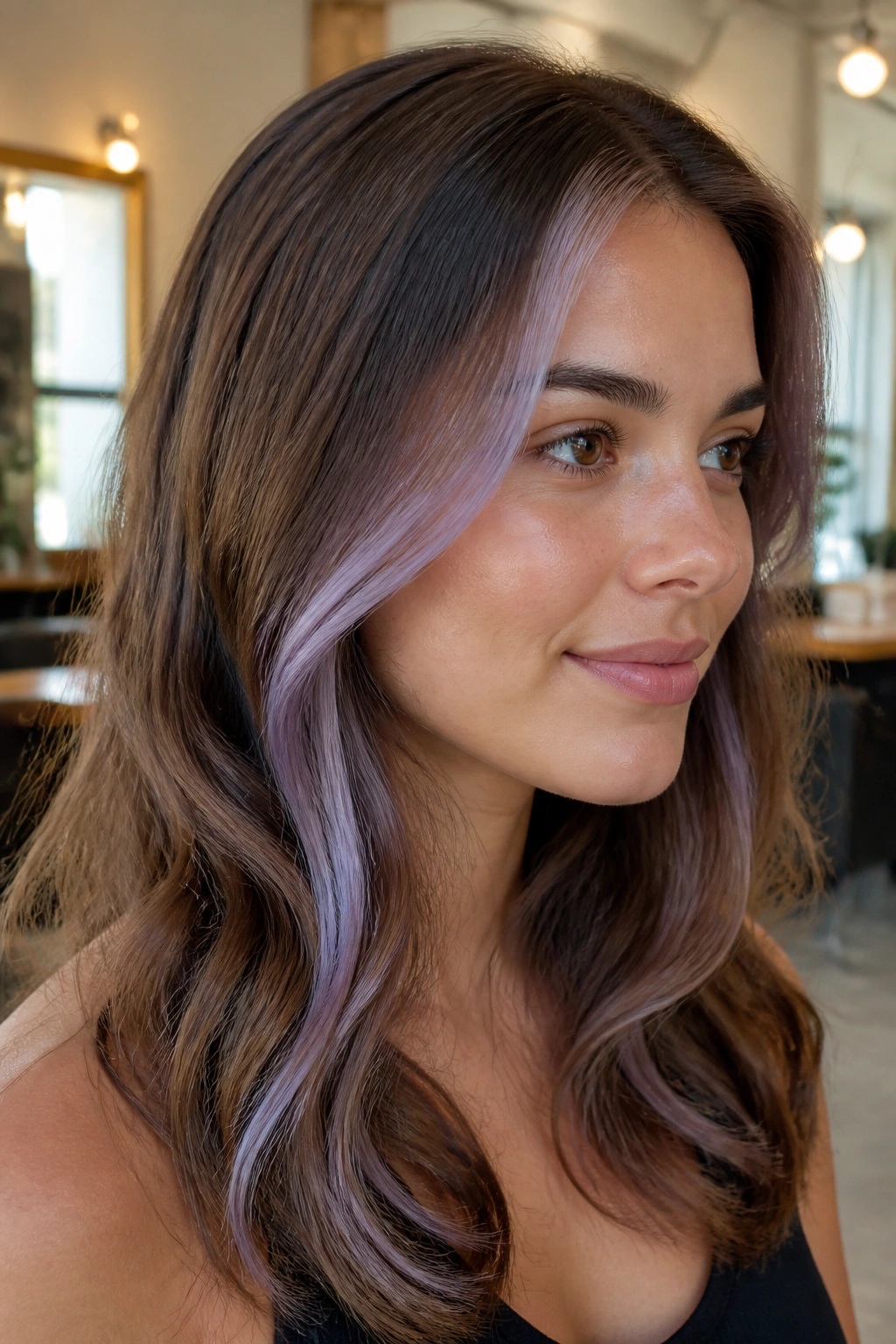
A narrow ribbon of lilac around the face can do a lot of work when it begins high and slides downward. The piece should start near the temple, not at the fullest part of the cheek, then taper as it moves past the jaw. That simple shift gives the eye a clear vertical line.
Why It Flatters Round Faces
Round faces tend to look best when the brightest color sits just outside the face’s widest point. Keep the ribbon slim at the top, then let it widen a little as it falls. That shape pulls attention downward and stops the color from spreading sideways across the cheeks.
A brown base with a soft lilac ribbon also reads cleaner than a full pastel panel. It gives you contrast without the cartoon effect some people get from stronger violet shades.
- Ask for a 1/2-inch to 1-inch face-framing section on each side.
- Keep the lilac smoky, dusty, or mauve-leaning rather than icy.
- Blend the ribbon into brown ends so it doesn’t stop abruptly at the jaw.
- Use a side part if you want a little extra length through the face.
Pro tip: If your hair is layered, ask the colorist to place the brightest part of the ribbon just below the eyebrow line. That tiny adjustment changes the whole shape.
2. Mushroom Brown Balayage With a Smoky Lilac Veil
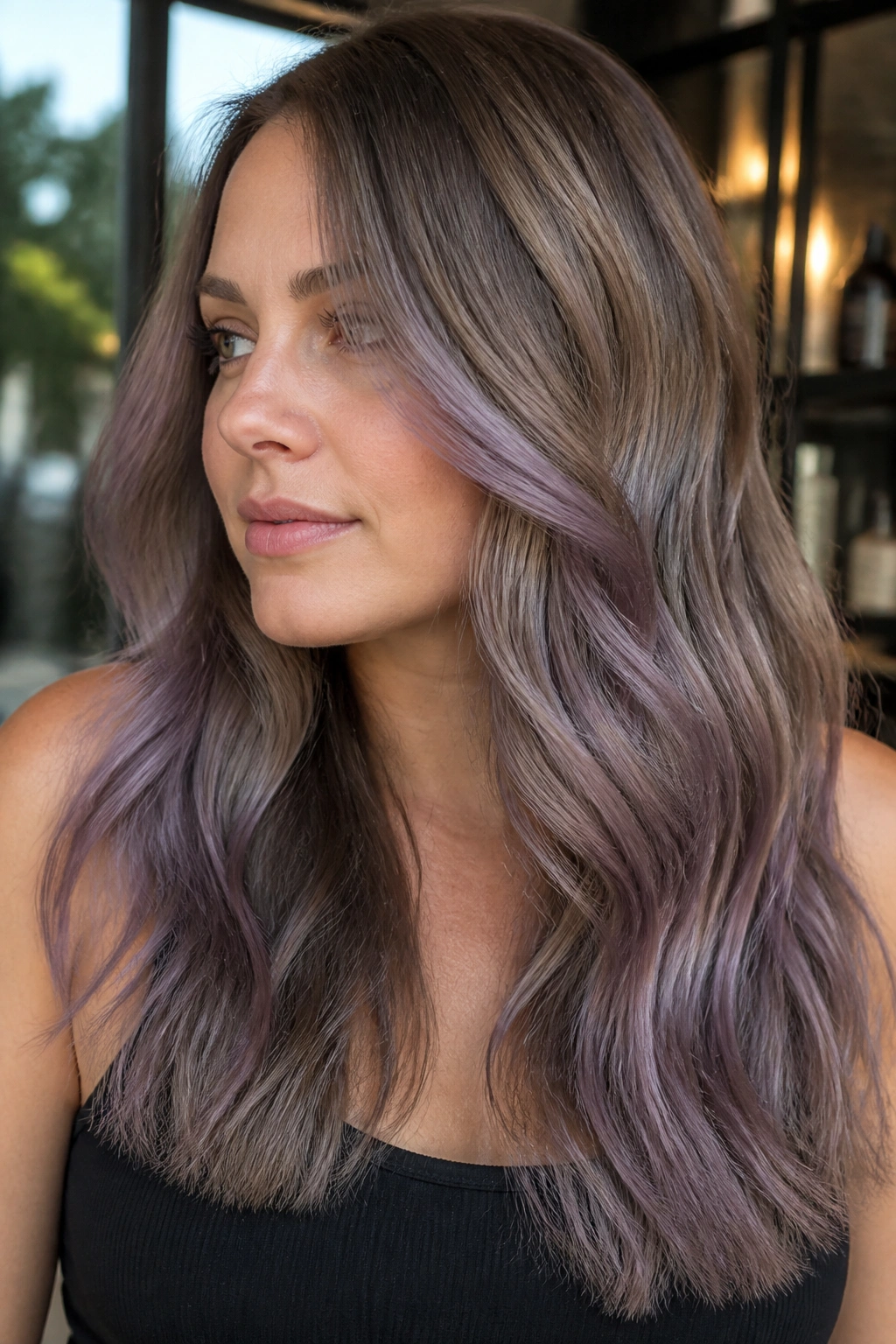
A smoky veil looks softer than a loud stripe, and that is exactly why this version works. The mushroom brown base keeps the overall tone cool and grounded, then the lilac gets washed through the mid-lengths in a way that looks more like mist than marker. On round faces, that softness matters because hard stripes can widen the face fast.
The color should not sit all over the surface. It works better when the lilac is painted into the outer layer and left more muted underneath, so the hair moves and reveals it in flashes. That keeps the look light without turning the head into one flat panel of color.
This is a good choice if you wear waves, because the bends in the hair break up the color. Straight hair can handle it too, but the finish should be fine and blended. Anything chunky will pull the eye sideways, which is the one thing a round face usually does not need.
3. A Deep Chestnut Money Piece That Pulls the Eye Downward
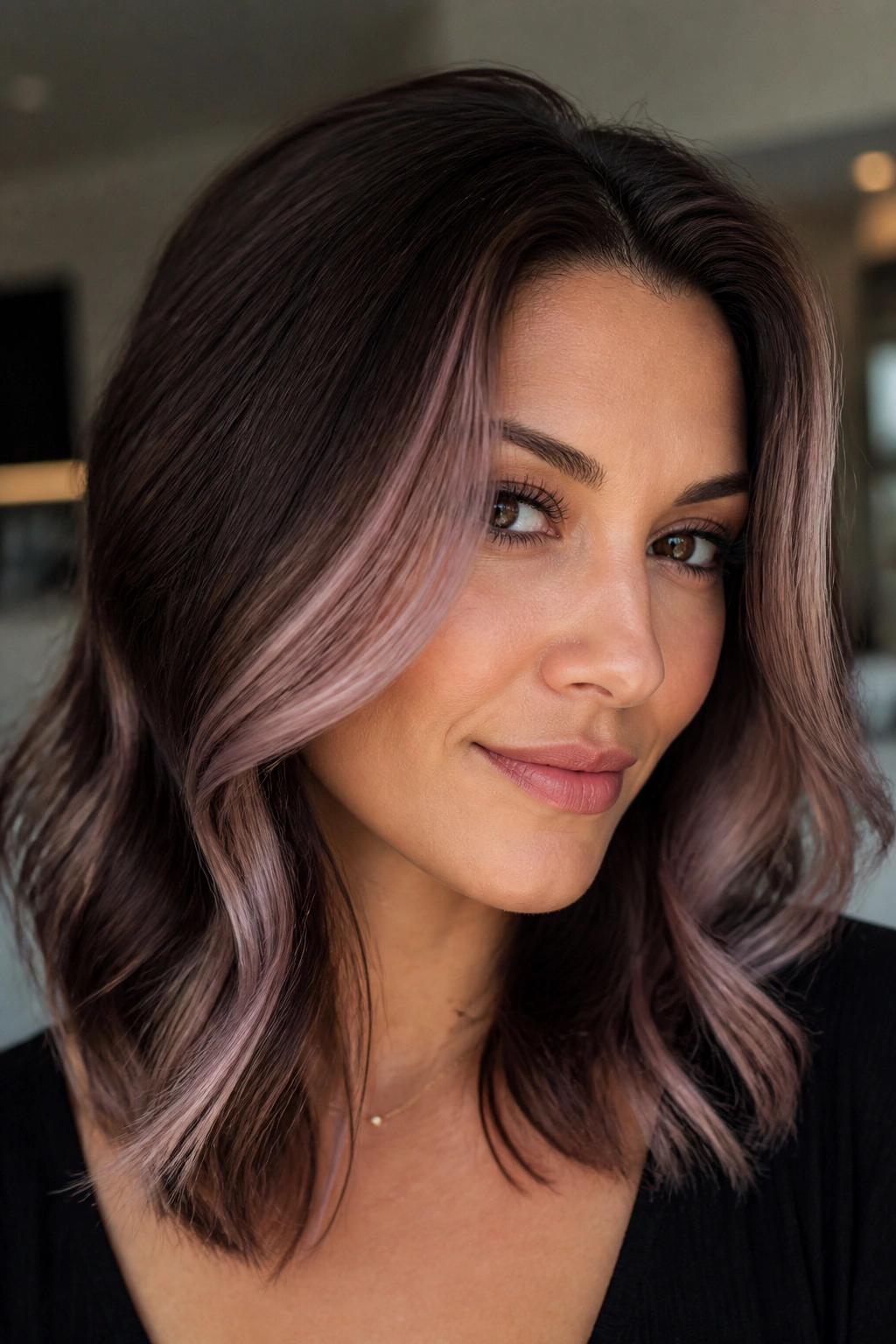
Can a money piece work on a round face? Yes, if it behaves itself. The mistake is making it too wide at cheek level, where it can make the face look broader. A better version starts a little higher at the temple, stays narrower through the upper face, and opens slightly as it falls toward the jaw.
What to Ask For
Tell your colorist you want a deep chestnut base with a lilac money piece that thins out near the cheek. That wording matters. You want contrast, but you want the brightest area to travel down, not sit like a spotlight across the middle of the face.
A money piece like this works well on medium and thick hair because the stronger base gives the lilac a place to land. Without that depth, the color can look fuzzy. On a round face, fuzziness is not your friend.
If you like a bolder look, keep the rest of the hair quieter. That contrast makes the face-framing section look intentional instead of random.
4. Collarbone Waves Packed With Lilac Babylights
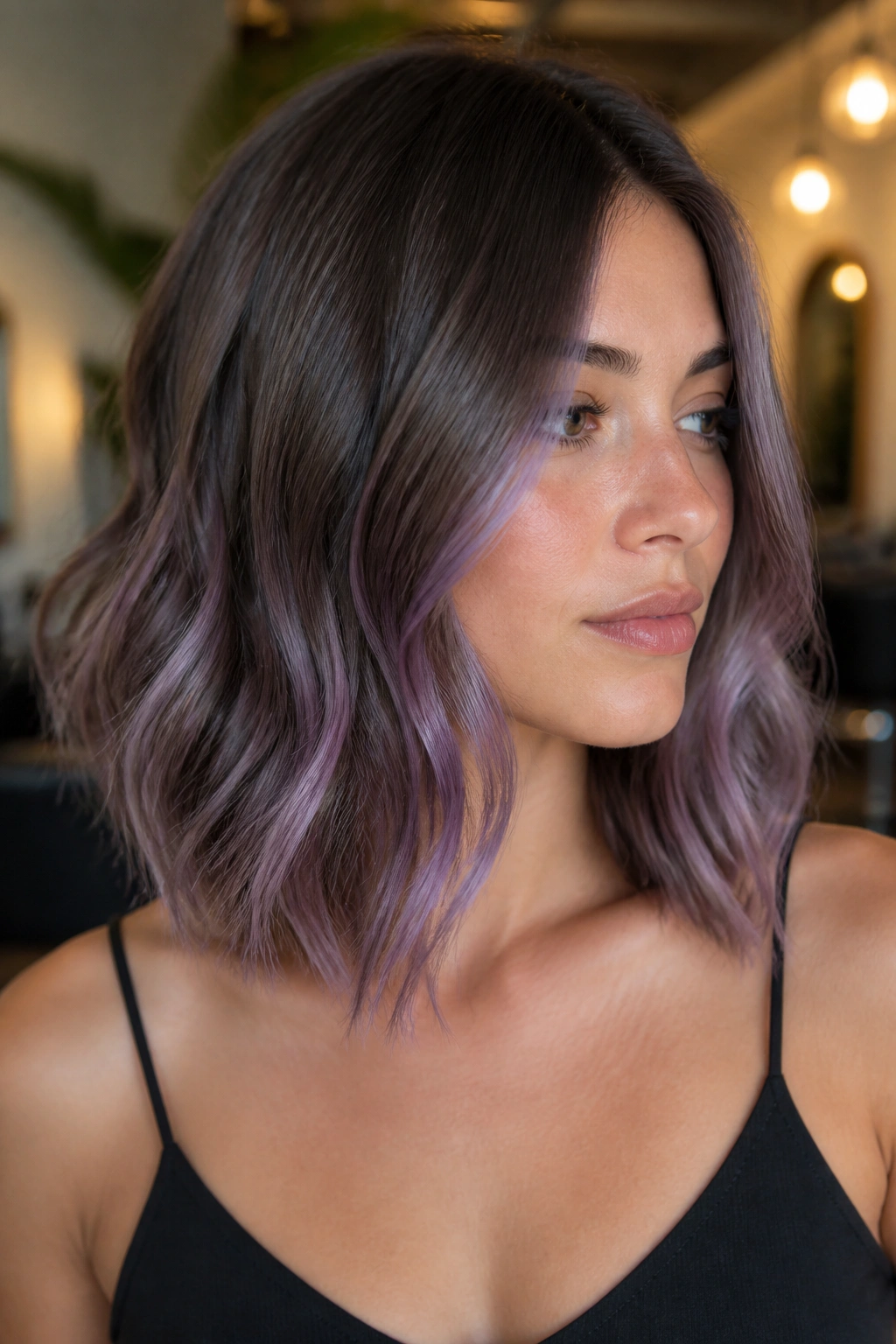
Picture shoulder-length waves with tiny lilac threads woven through the ends. That is the idea here. The babylights are so fine that they don’t read as stripes; they read as shimmer. On round faces, that kind of softness is useful because the color adds movement without adding width.
The best placement starts just under the crown and gets denser below the cheekbones. You want the eye to travel down the wave pattern, not stop at the side of the face. If the lilac is concentrated around the lower half of the hair, the face gets a longer frame.
Tiny Details That Matter
- Use micro-slices, not chunky foils.
- Keep the brightest pieces below cheek level.
- Leave some brown between the highlighted strands.
- Let the waves be loose, not tight and puffy.
A collarbone cut helps too. It gives the color room to show, and it keeps the overall shape from sitting right at the widest part of the cheeks. The look is soft, easy to grow out, and far less high-maintenance than a full pastel block.
5. Shadow-Root Lilac Ombré on Long Layers
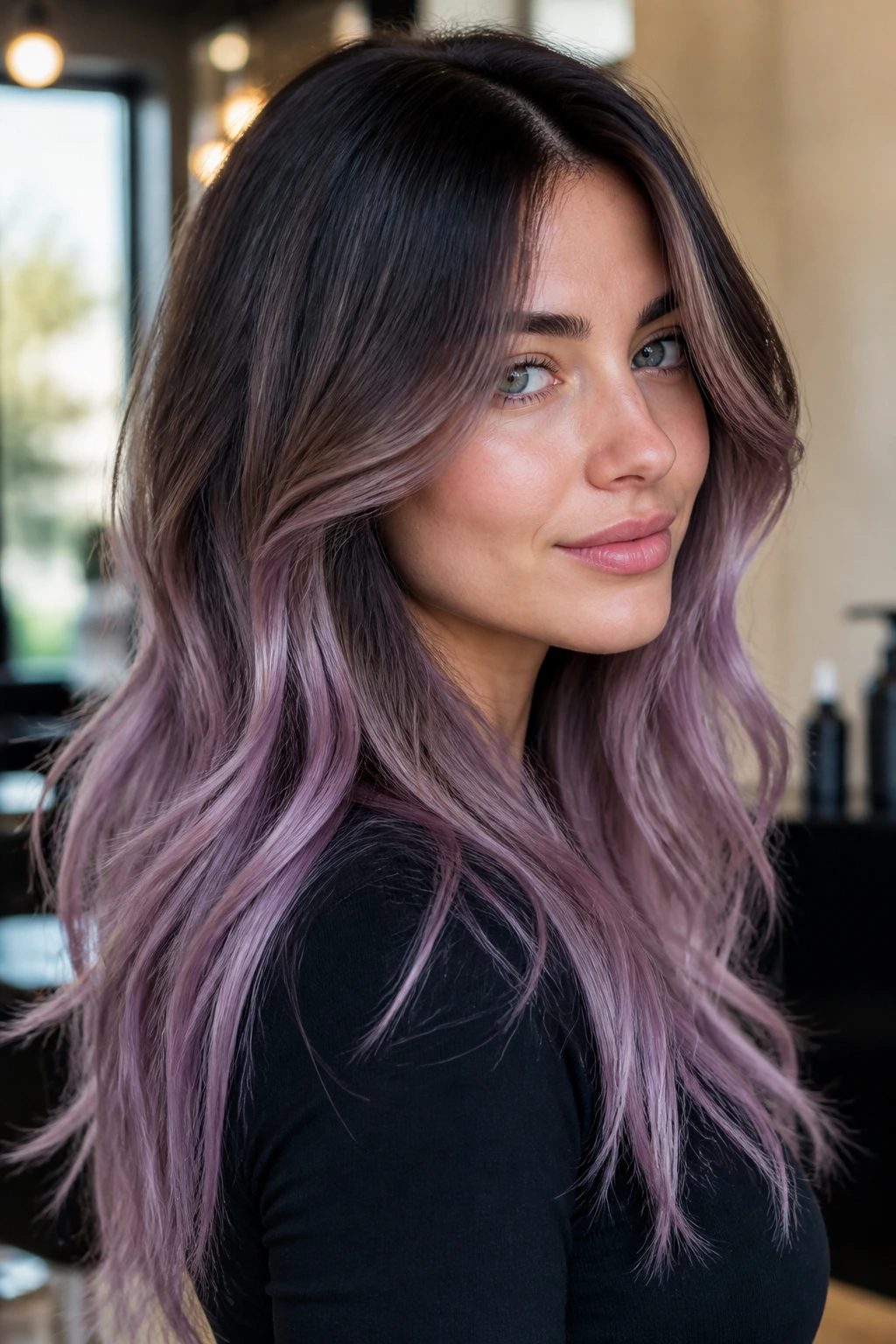
Long layers and a shadow root are a strong pairing because they stretch the line of the hair. With lilac ombré, that effect gets even better. The darker root keeps the top quiet, then the lilac lightens the ends in a way that naturally draws the eye downward.
This is one of the easiest lilac brown highlights for round faces to wear if you like length. The color sits where the face wants elongation most: below the cheeks, around the collarbone, and through the lower third of the hair. You get a cleaner outline without needing to pile brightness around the face.
It also grows out with less drama. That matters. A hard line of color at the root can look harsh around a round face, while a shadow root keeps the transition soft and the hair shape more vertical.
6. Curly Shag With Hidden Lilac Lowlights
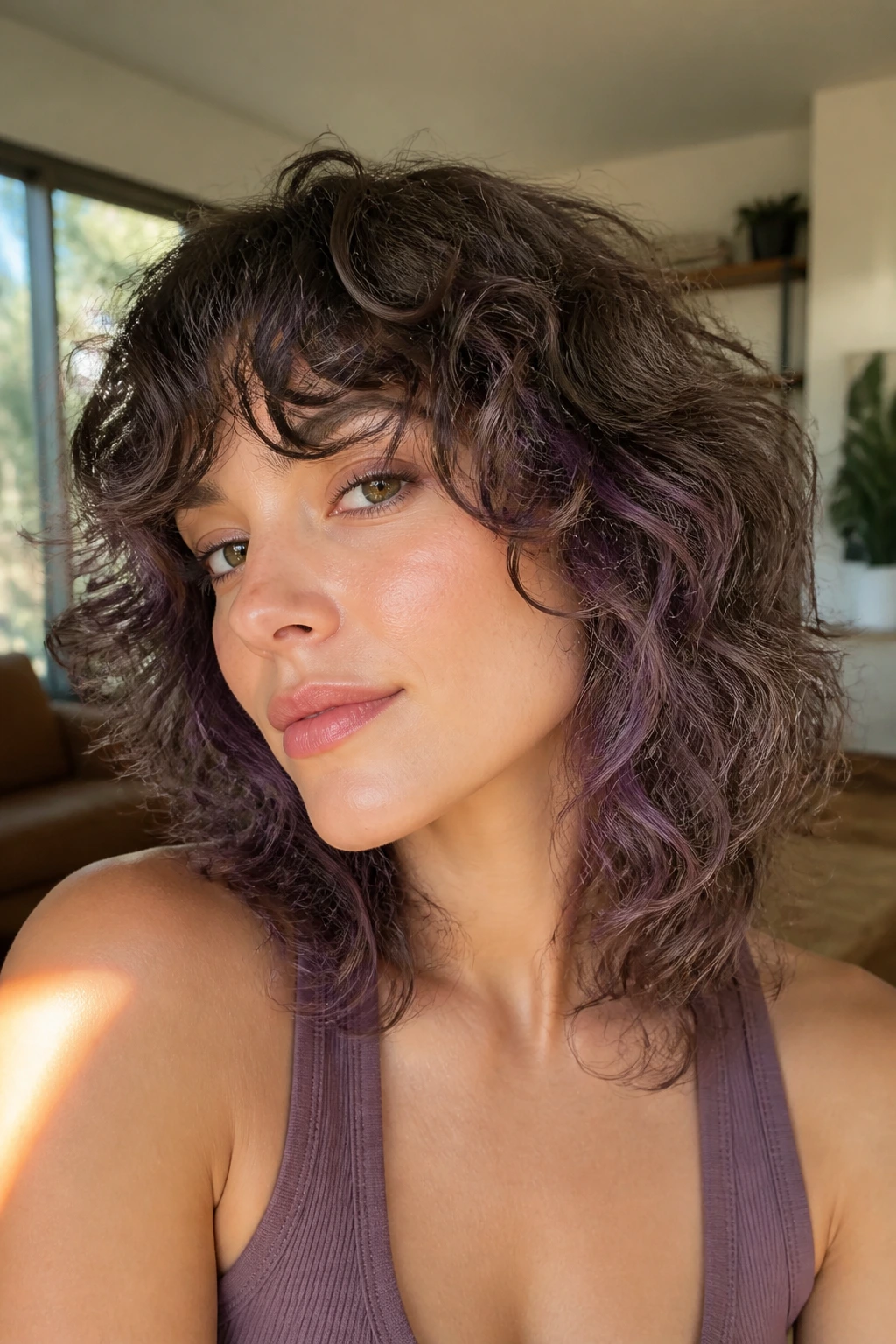
Unlike bright surface highlights, hidden lowlights make curls look deeper and more layered. That’s the whole charm here. On a curly shag, the lilac sits inside the curl pattern, where it peeks out when the hair moves but does not shout from every angle. The brown stays dominant, which keeps the shape from expanding outward.
This is a smart choice if your curls already have a lot of volume at the sides. The lowlights create pockets of darkness between the curls, and those pockets help the face look narrower. The shag layers do the rest. They add lift up top and break up the roundness around the cheeks.
The result is more textured than polished. Good. That slightly undone finish is part of what makes it work. You want the color to look like it belongs inside the curl, not pasted on top of it.
7. Cool Mocha Bob With Soft Lilac Ribbons
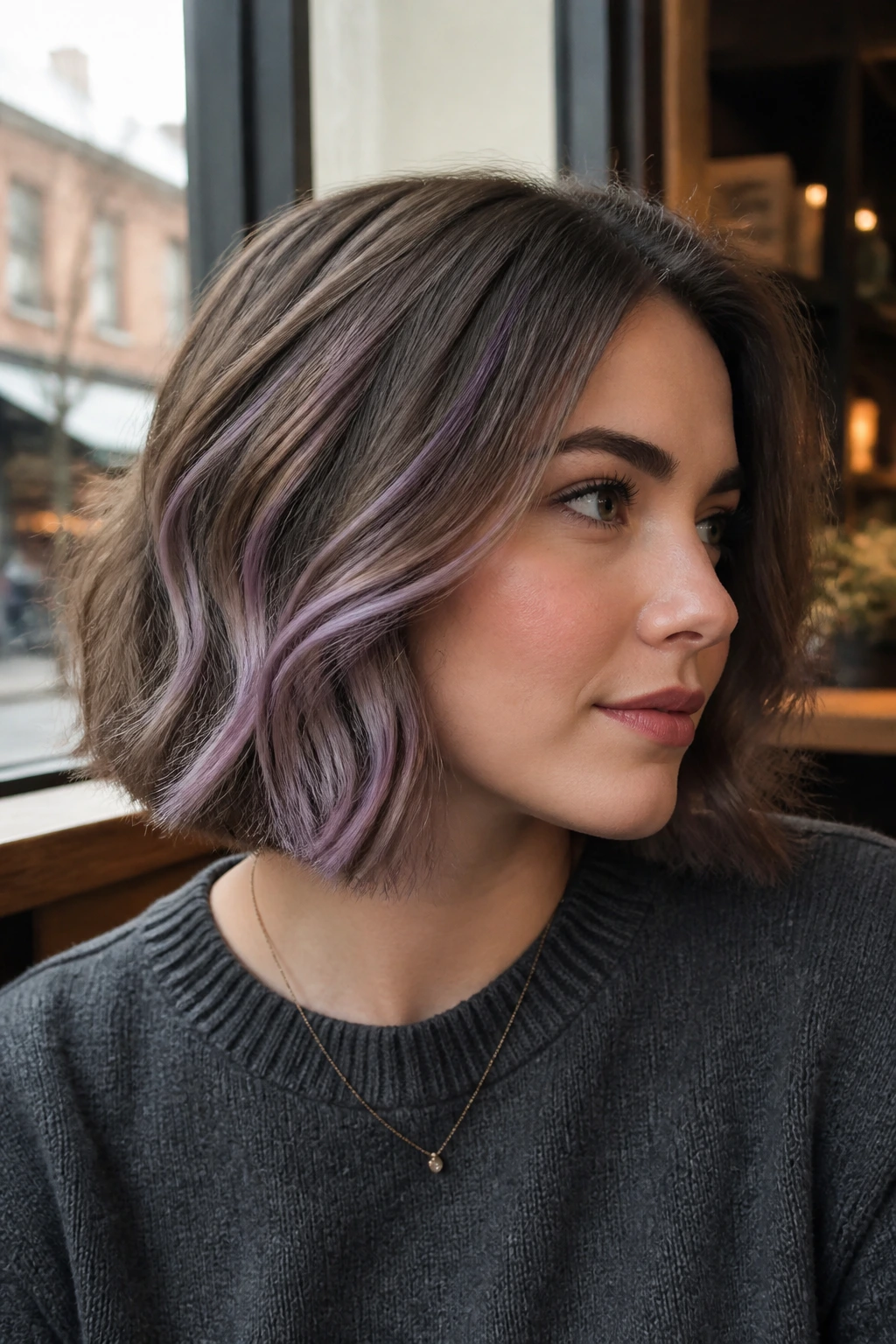
A bob can work on a round face if the color keeps the eye moving downward. A cool mocha base does that cleanly, and the lilac ribbons add just enough contrast to keep the shape from feeling boxy. The key is to keep the ribbons soft and slightly diagonal rather than horizontal.
The bob itself should sit a touch below the jaw or closer to the collarbone. A chin-length cut can work, but it needs the right angle and enough layering to avoid puffing out at the sides. A lilac ribbon tucked into the interior of the bob gives the cut a lighter feel without making the outline wider.
I like this version because it feels neat without being stiff. The color brings personality. The length keeps it flattering. That combination is hard to beat.
8. Side-Swept Fringe and Thin Lilac Streaks
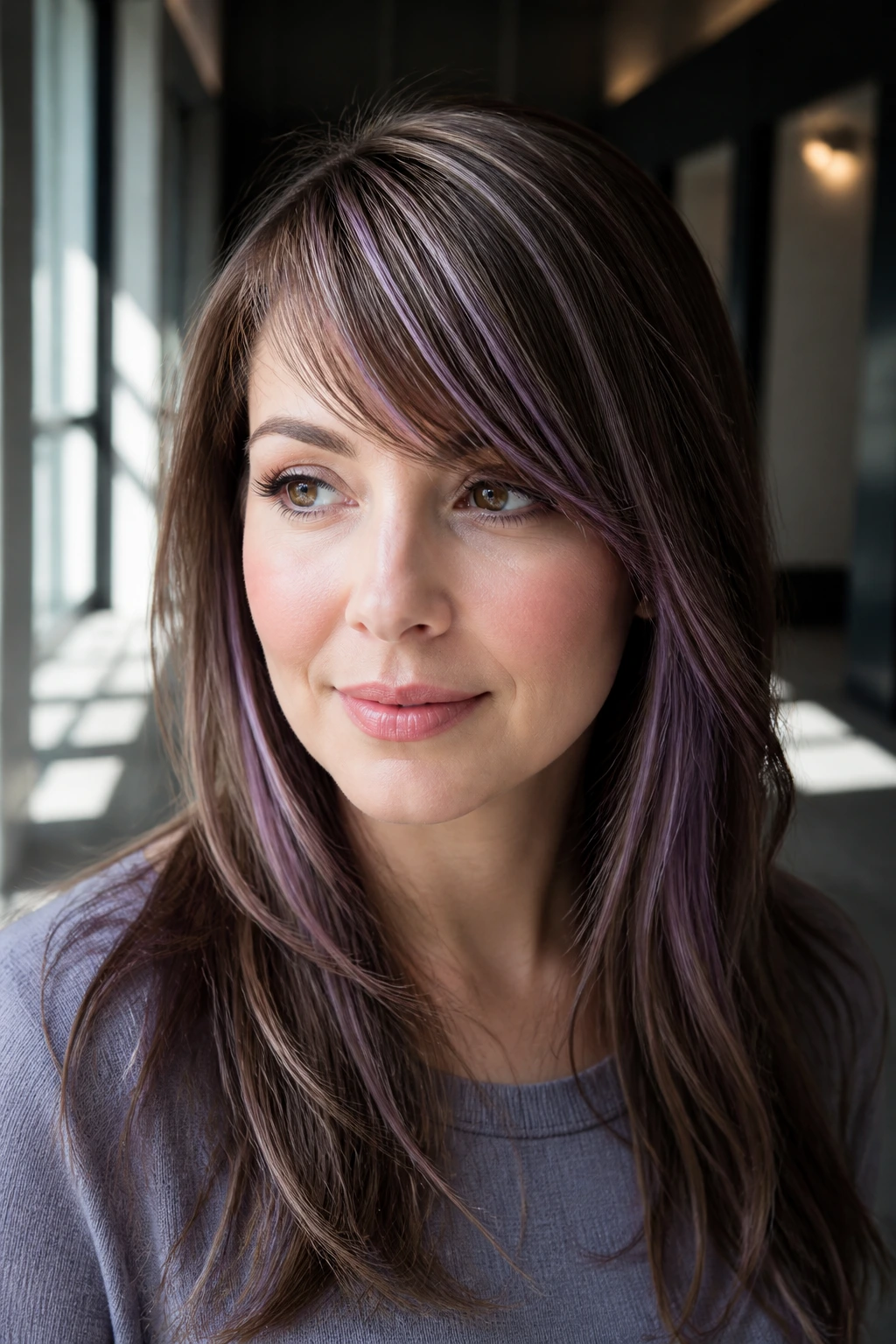
Need a side part that does more than hide one cheek? A side-swept fringe can help a round face a lot, especially when the lilac streaks follow the same diagonal line. That angle cuts across the face instead of echoing its curve, which is exactly what you want.
The fringe should stay soft, not helmet-like. Too much bulk across the forehead can make the face feel shorter. Keep the lilac streaks thin and feathered, then let them continue down the side of the head into the upper lengths. That creates one clean movement line.
Best Use Case
This works well if you wear your hair straight or slightly bent. The streaks show up clearly, and the diagonal shape stays visible. If the hair is too rounded at the ends, the effect gets lost.
A side-swept fringe also gives you room to shift your part depending on the day. Small change. Big payoff.
9. Espresso Brown With Smoky Amethyst Panels
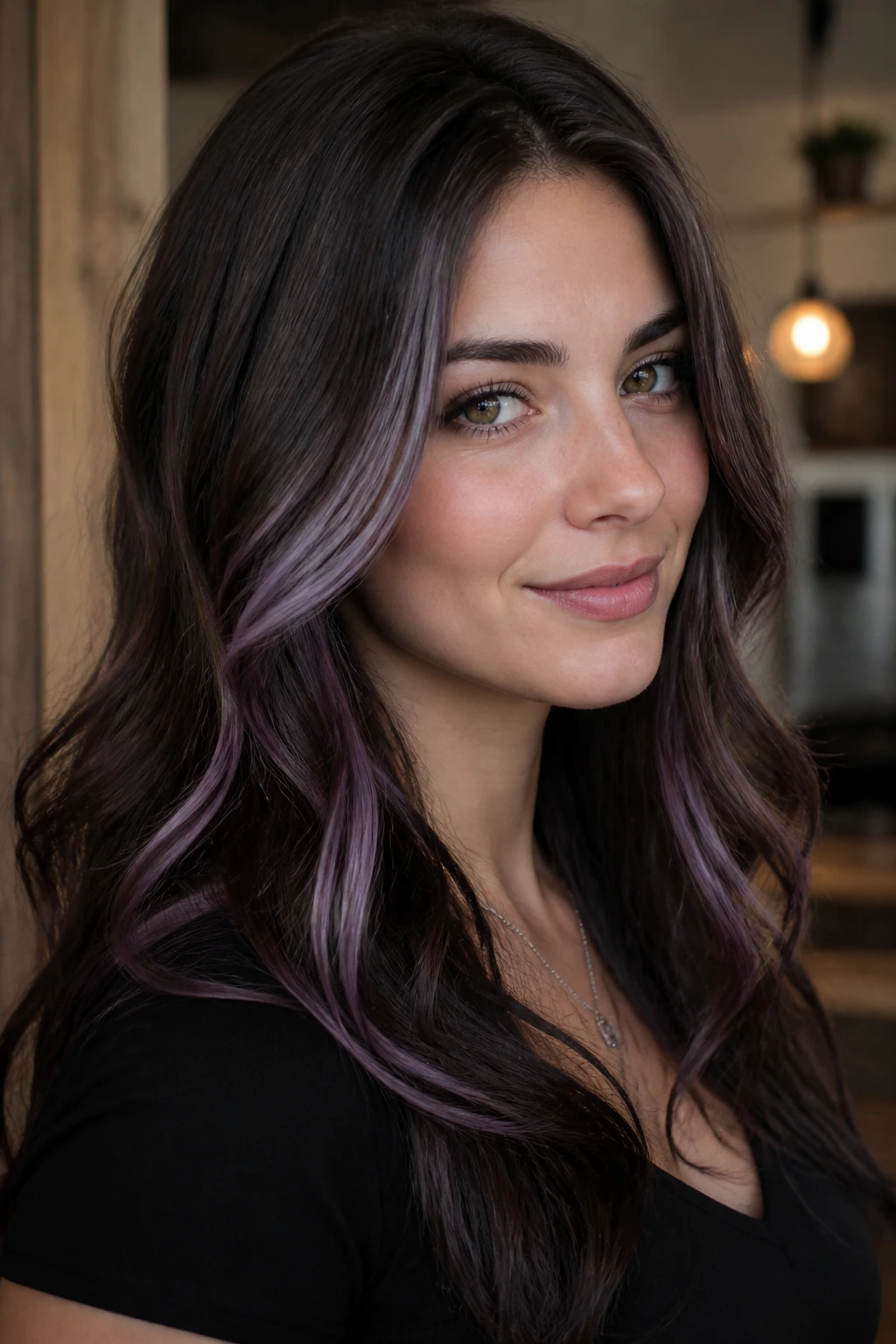
On thick hair, big panels can turn heavy fast, so the placement has to be deliberate. Espresso brown gives the cut a dark, steady base, and smoky amethyst panels add color without making the whole head look busy. The trick is to keep the panels narrow near the face and broader only as they fall lower.
I’d think of this as a statement look with a built-in brake pedal. The lilac is there, but the brown stays in charge. That balance keeps the color from widening the face, which can happen when panels are too wide at cheek height.
- Use 2 to 3 panels per side, not a wall of color.
- Let the first panel begin above the cheekbone.
- Keep the darkest brown near the roots and crown.
- Fade the amethyst toward the ends for a softer edge.
This is a strong option if you want something a little edgy but still wearable at work.
10. Soft Beige Brown Melt With Orchid Ends
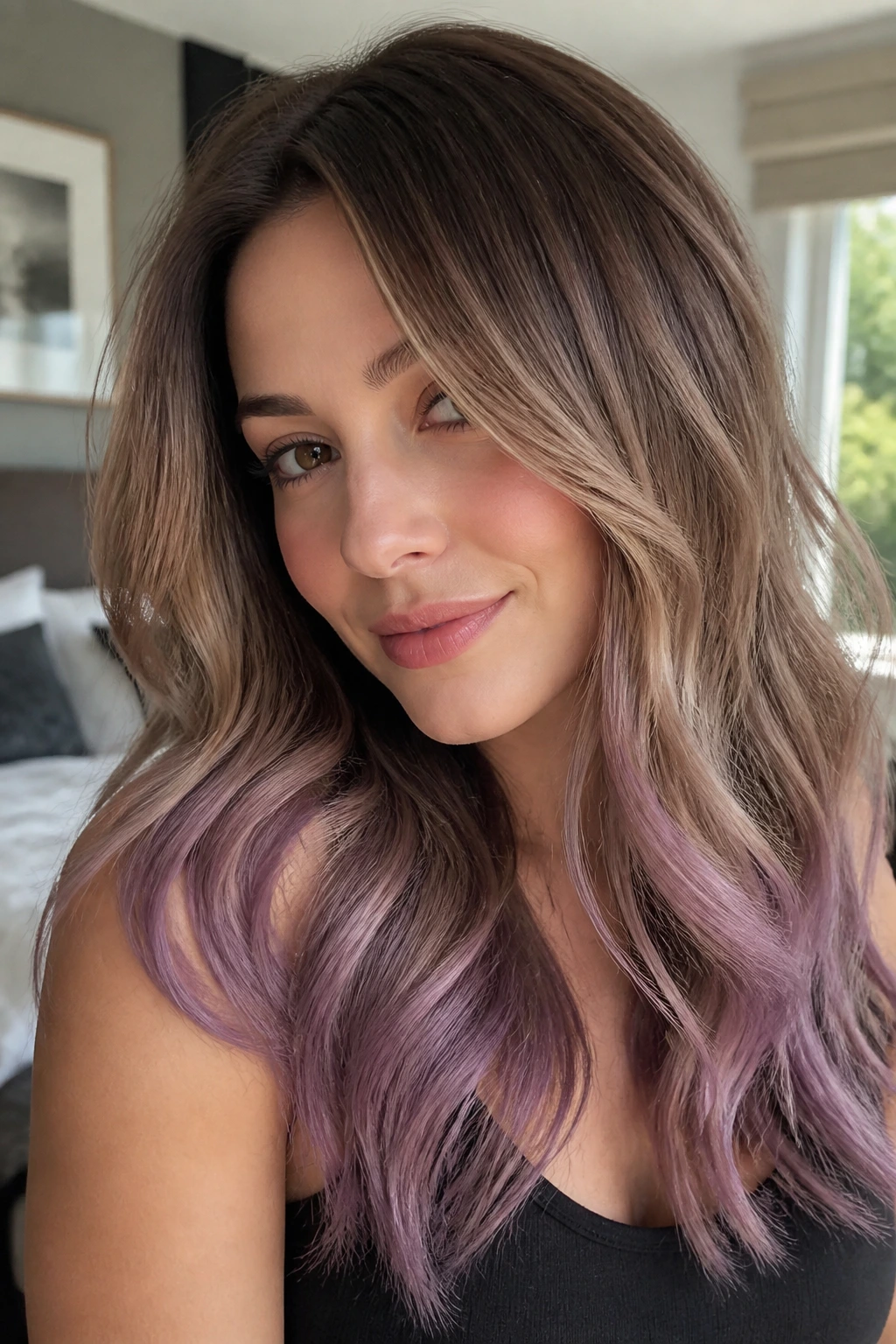
A beige brown melt is one of the prettiest ways to wear lilac if you like a softer finish. The brown sits in the middle range, so the hair does not look too dark or too warm. Then the orchid ends bring the lilac in gently, almost like a tint rather than a full color shift. On round faces, that downward fade is useful because it pushes the eye toward the ends of the hair.
This works especially well on layered hair. Layers break the gradient up so it does not look like a solid block. A blunt cut can still handle it, but the color needs more careful blending or it may look too heavy at the bottom.
The best part is how forgiving it is. Even when the lilac fades a little, the end result still looks intentional because the beige brown base carries the style.
11. Cinnamon Brown With Dusty Lilac Lowlights
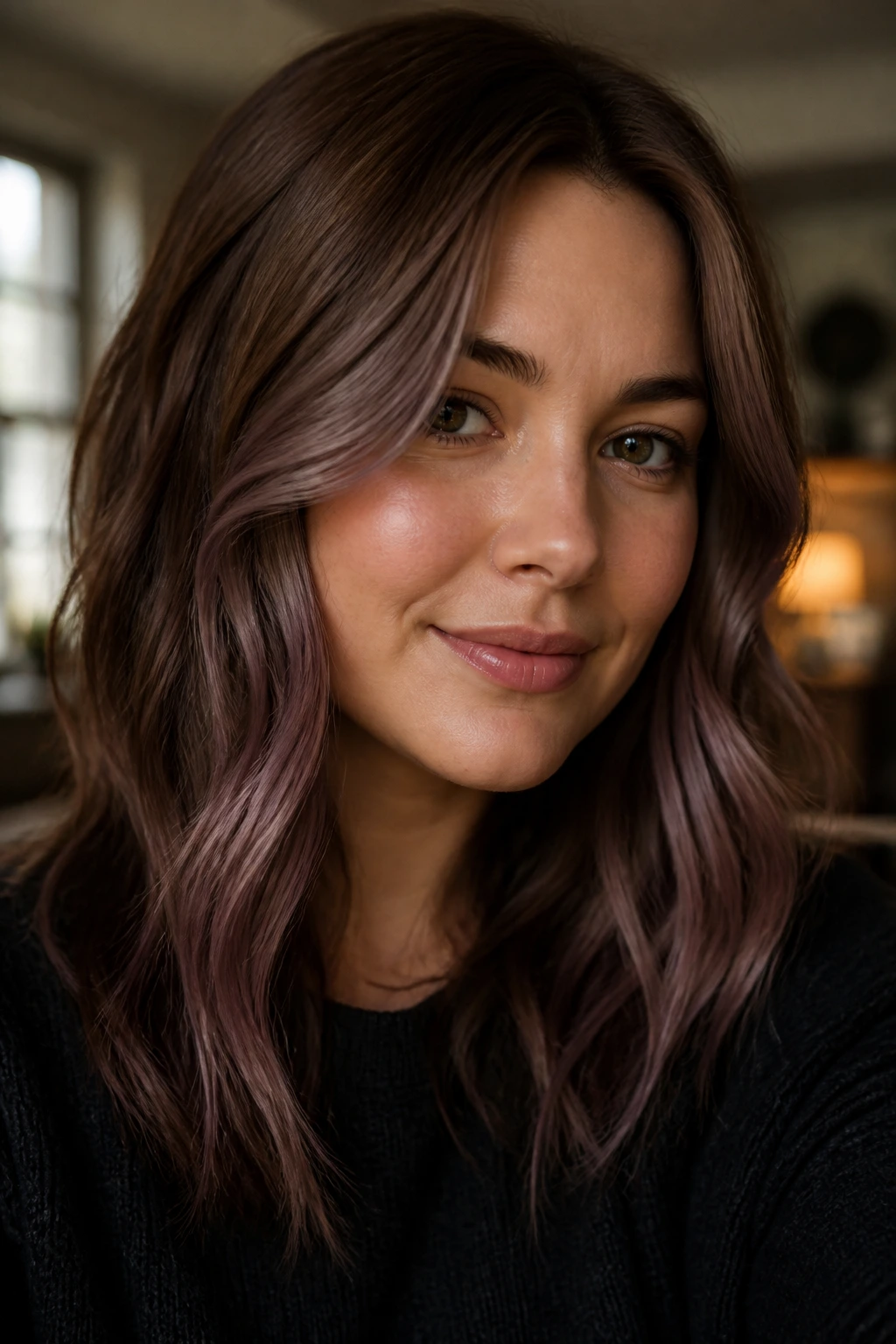
Warm brown and cool lilac can fight each other. That is the point. When the lilac stays dusty and tucked into lowlights, the contrast becomes subtle instead of loud, and the round face gets a leaner outline. Cinnamon brown gives the hair warmth and shine; the lowlights create narrow lines that visually break up width.
This is a particularly good pick if you don’t want the lilac to dominate. The color peeks through when the hair moves, which makes the whole head feel more layered. It also works nicely on medium-density hair because the darker strands can sit between the lighter ones without making the style look sparse.
If you usually wear your hair loose and touch it a lot, this kind of lowlight placement is forgiving. It does not depend on perfect styling. It just needs movement.
12. Rounded Bob With Micro-Babylights
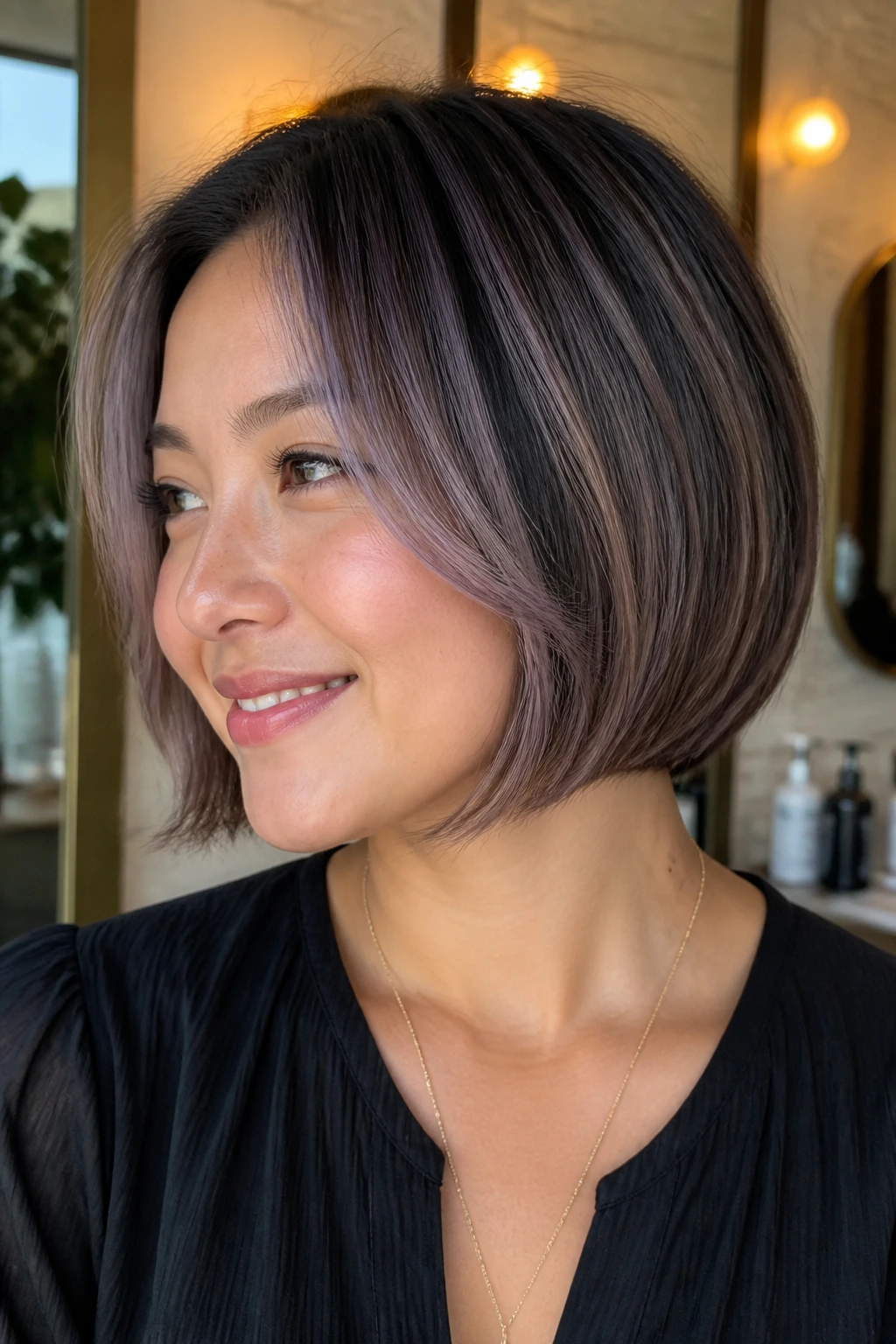
A rounded bob needs tiny color, not stripes. Micro-babylights give you that. The strands are so fine that the highlights look more like light reflecting off the surface than obvious color chunks. For a round face, that subtlety is useful because the shape of the cut can stay close to the head instead of puffing out around the cheeks.
The lilac should be concentrated at the crown, interior, and lower perimeter. Keep the sides lighter in tiny pieces only. That spacing stops the bob from turning into a halo of color around the widest part of the face.
The cut itself should have a gentle bend under the jaw or just below it. A bob that ends exactly at the cheekline can be tricky. A few inches more length makes the whole look calmer.
13. Textured Pixie With Lilac Tips
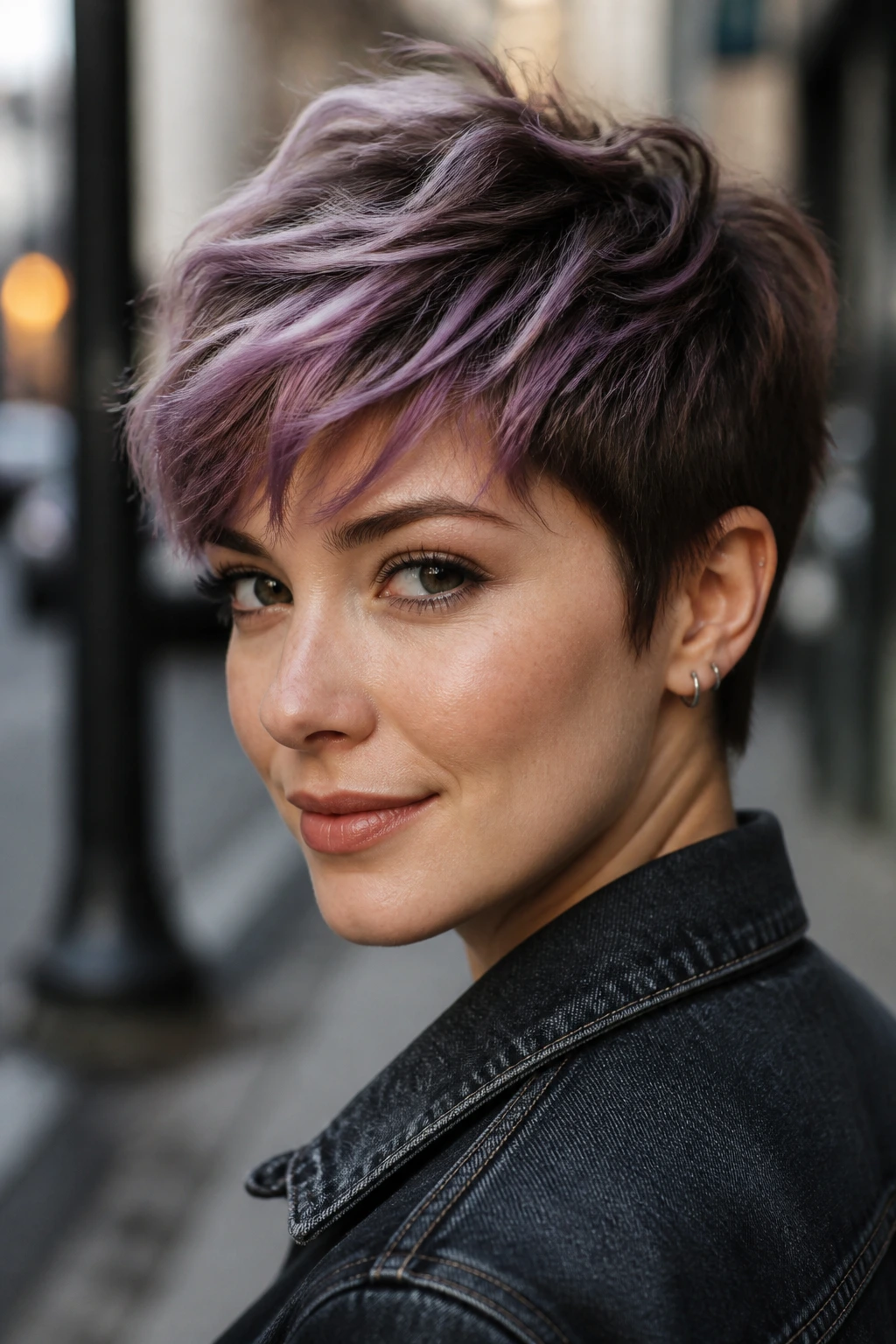
Does lilac belong on a pixie? Absolutely, if it lives in the right places. A textured pixie on a round face looks sharper when the sides stay close and the top carries the color. Lilac tips on the fringe and crown create lift, and that lift stretches the face upward.
Where the Color Should Sit
Keep the brightest lilac on the top layers, around the fringe, and at the very tips of the texture. The sides should stay deeper brown or only slightly lighter. That contrast narrows the face and keeps the cut from bulking out at the temples.
A pixie like this is not for someone who wants the color hidden. It is for someone who wants movement and a bit of edge. The good news is that the short length lets the color read clearly without a lot of product or styling.
If you like a little mess in your hair, this one has personality. A lot of it.
14. Layered Curls With Color Tucked Under the Top Ring
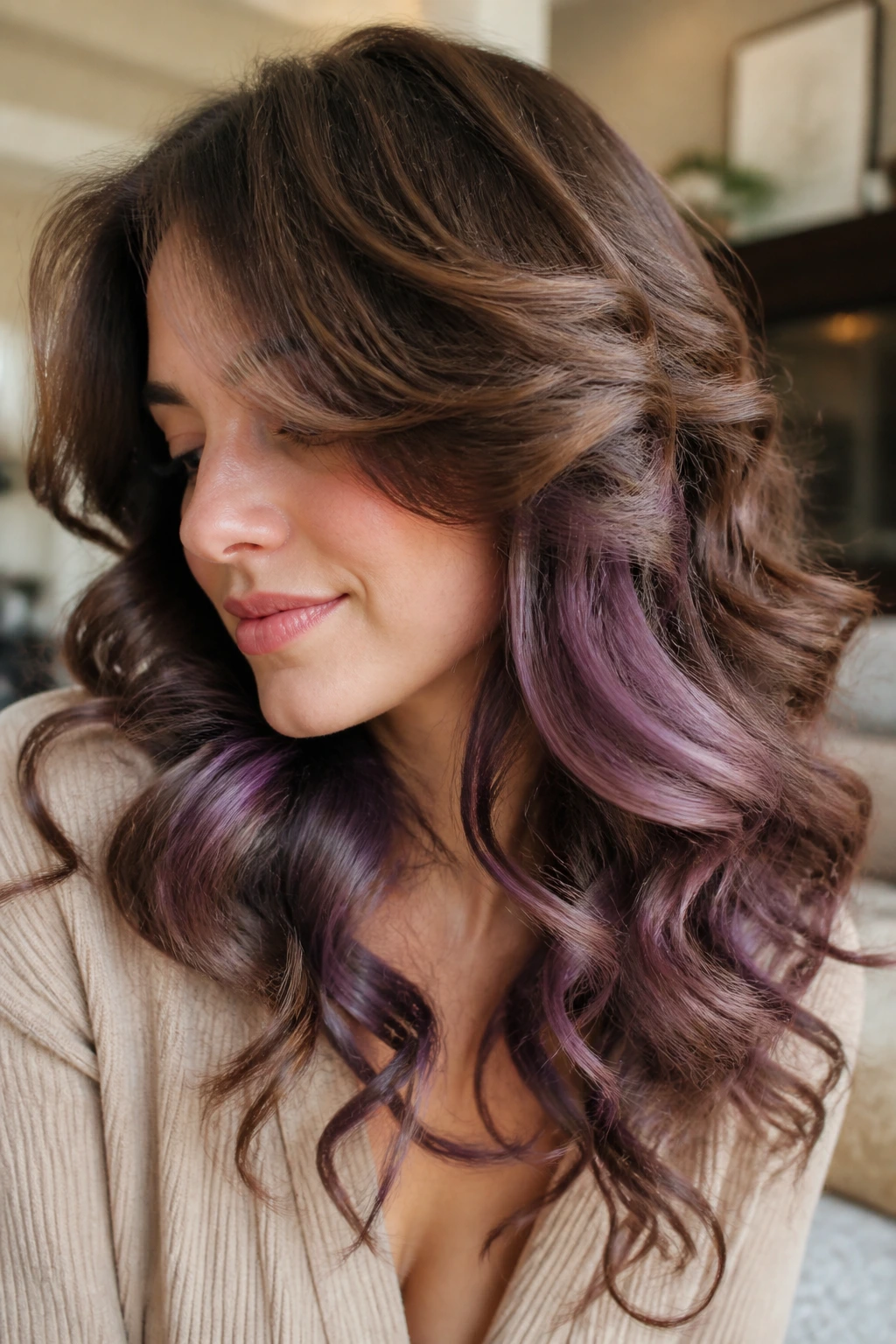
I like this look on loose curls because it rewards movement. The top ring of curls stays brown, while the lilac sits underneath and flashes through only when the hair shifts. That layered placement keeps the face from feeling boxed in, which is a real risk when curls have too much bright color at the sides.
The color should be painted where the curl naturally folds, not just on the outer surface. That makes the lilac look integrated. It also keeps the ends from looking dry or overprocessed, which can happen when every curl gets the same amount of lightness.
There is a practical upside too. Hidden color grows out gracefully. You can go longer between touch-ups and still keep the hair looking intentional, not faded in the wrong places.
15. Warm Cocoa With a Mauve Gloss
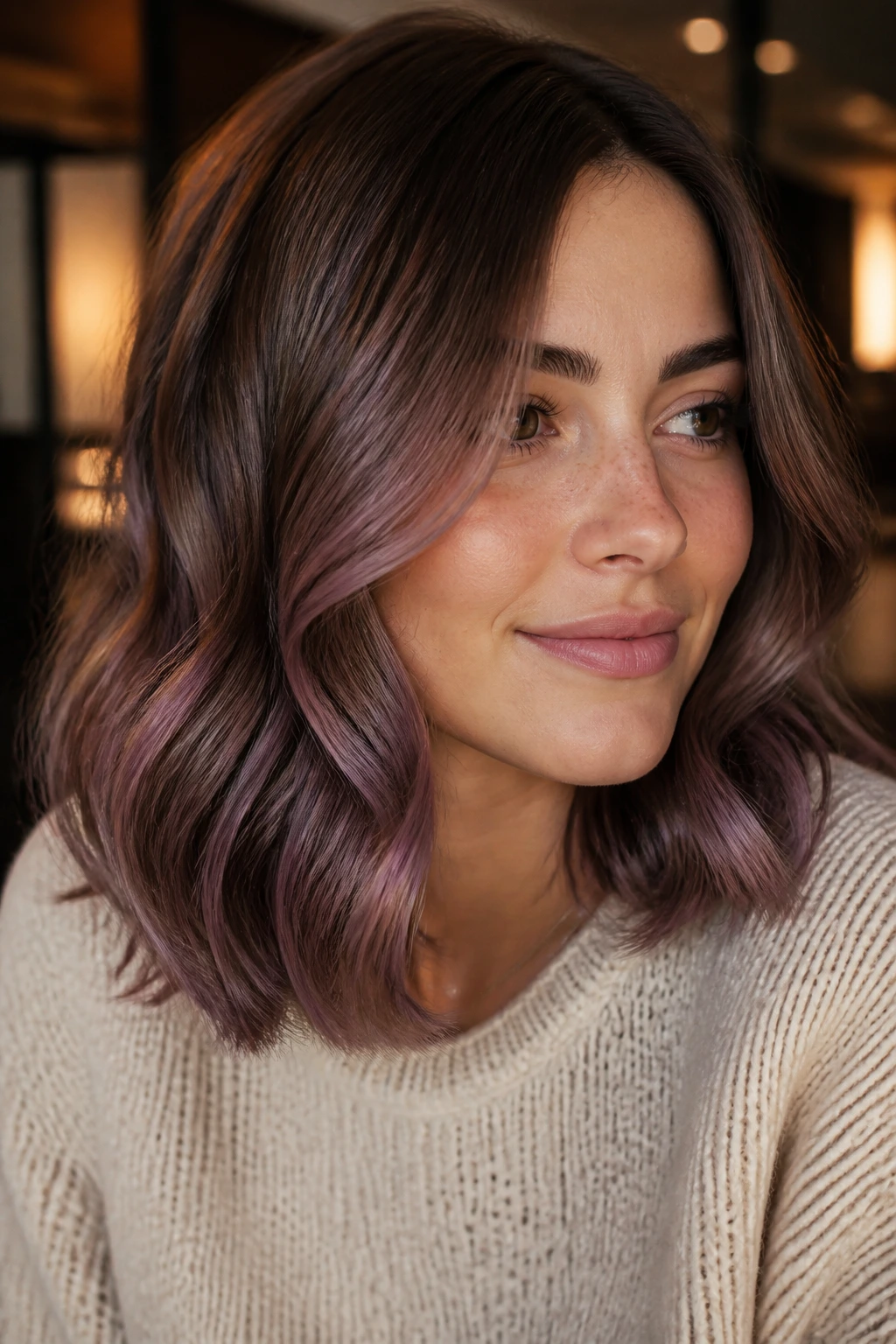
A mauve gloss is the easiest way to test the waters if you want lilac brown highlights without committing to dramatic lightening. The warm cocoa base keeps the hair rich, and the gloss lays a soft violet haze over the mid-lengths and ends. It does not need to be loud. In fact, it works best when it isn’t.
This is one of those looks that looks expensive because it is controlled. The brown shines. The lilac is there, but only as a shift in tone. On a round face, that kind of restraint helps. The hair gets dimension without building too much width around the cheeks.
A gloss is also a good move if your hair is already a little dry. You get color and shine without the heavy, piecey look that comes with stronger highlighting.
16. Straight Hair With Long Ribbon Highlights
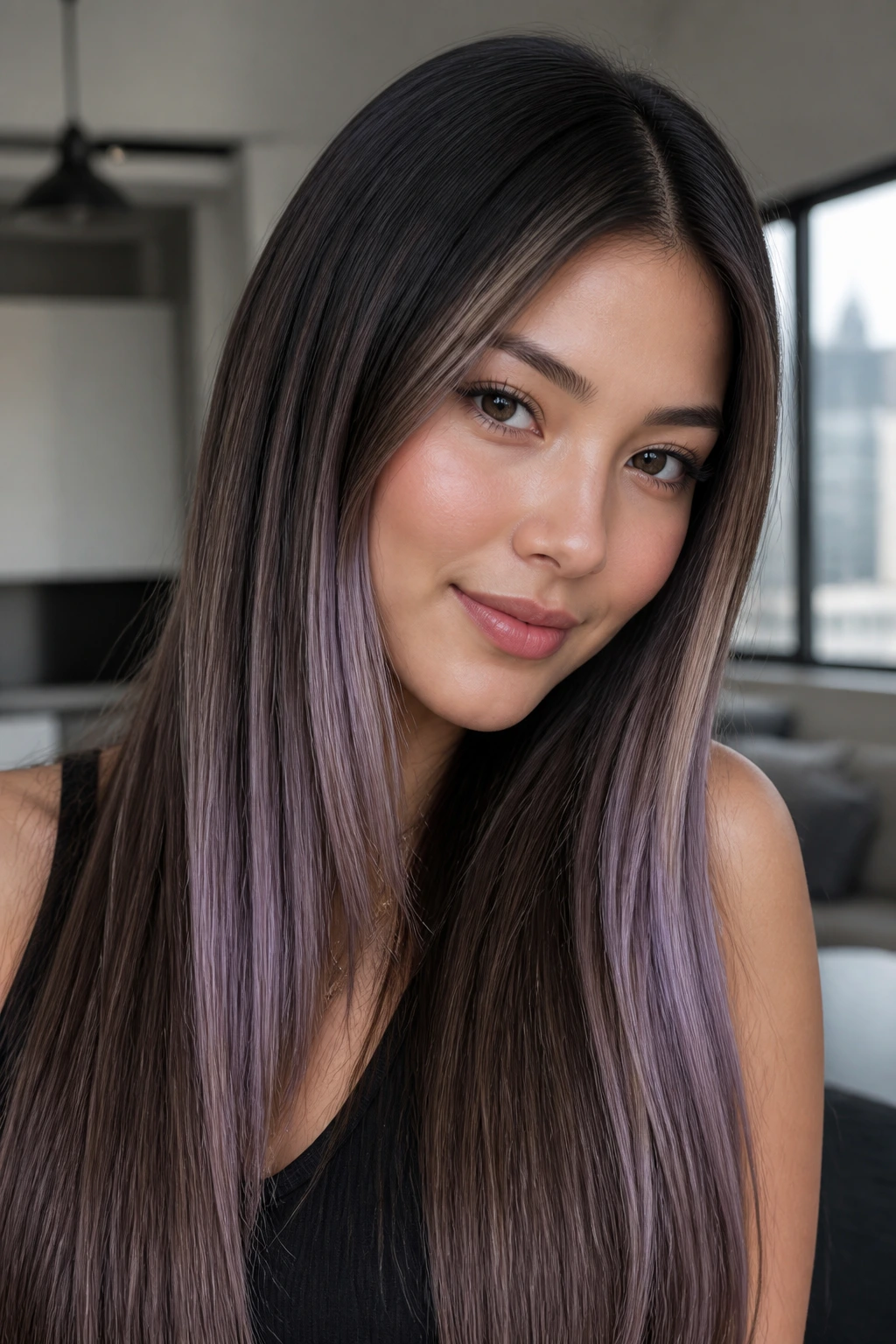
Straight hair shows every line, so the placement has to be clean. Long lilac ribbons work because they create vertical movement from the upper lengths down to the ends. On a round face, that lengthening effect matters more than extra brightness at the sides.
The ribbons should be thin near the face and fuller below the cheekbone. If they’re too blunt, the eye stops at the wrong place. An off-center part helps too. It breaks the symmetry just enough to keep the face from looking overly circular.
Unlike layered waves, straight hair does not hide bad placement. That means the colorist needs to be precise. The upside is that when the placement is right, the result looks crisp and modern without any extra styling tricks.
17. Wavy Shag With a Lilac Underlayer
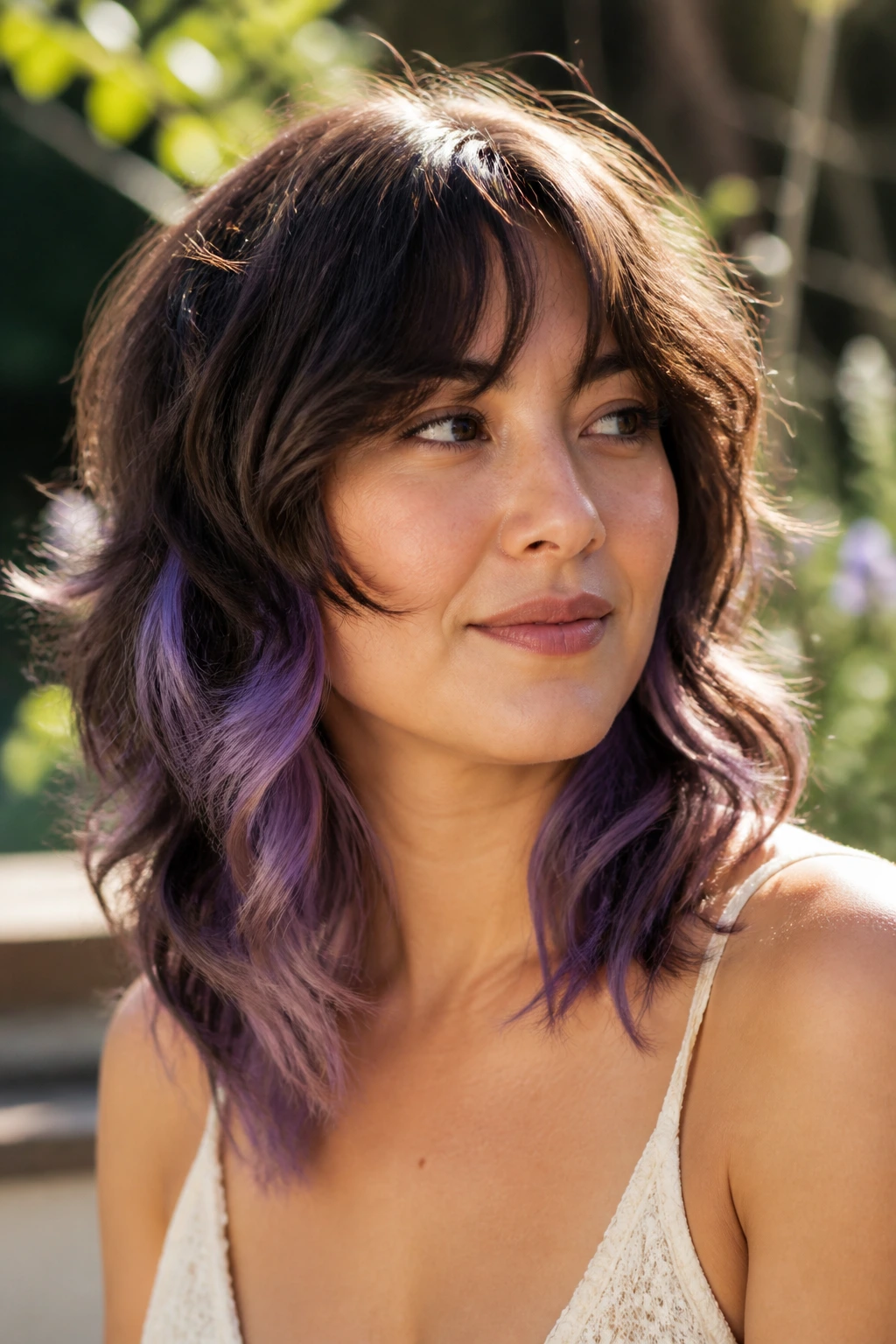
Want lilac that moves in and out of view? A shag with a hidden underlayer does that well. The brown top layer keeps the hair grounded, while the lilac underneath flashes through the ends and inner bends of the waves. That hidden placement gives round faces a slimmer outline because the brighter color does not sit along the outer edge of the cheeks.
Why the Shag Helps
A shag already adds vertical texture through the crown and around the face. When lilac lives under the top layer, the cut keeps its softness without looking heavy. The waves break up the color, too, which keeps it from reading as one wide band.
This is a good choice if you like hair that looks a little different when you flip it, tuck it, or let the wind catch it. There’s some drama in that. Not loud drama. Just enough.
18. Thick Hair With Broad Diagonal Balayage Strokes
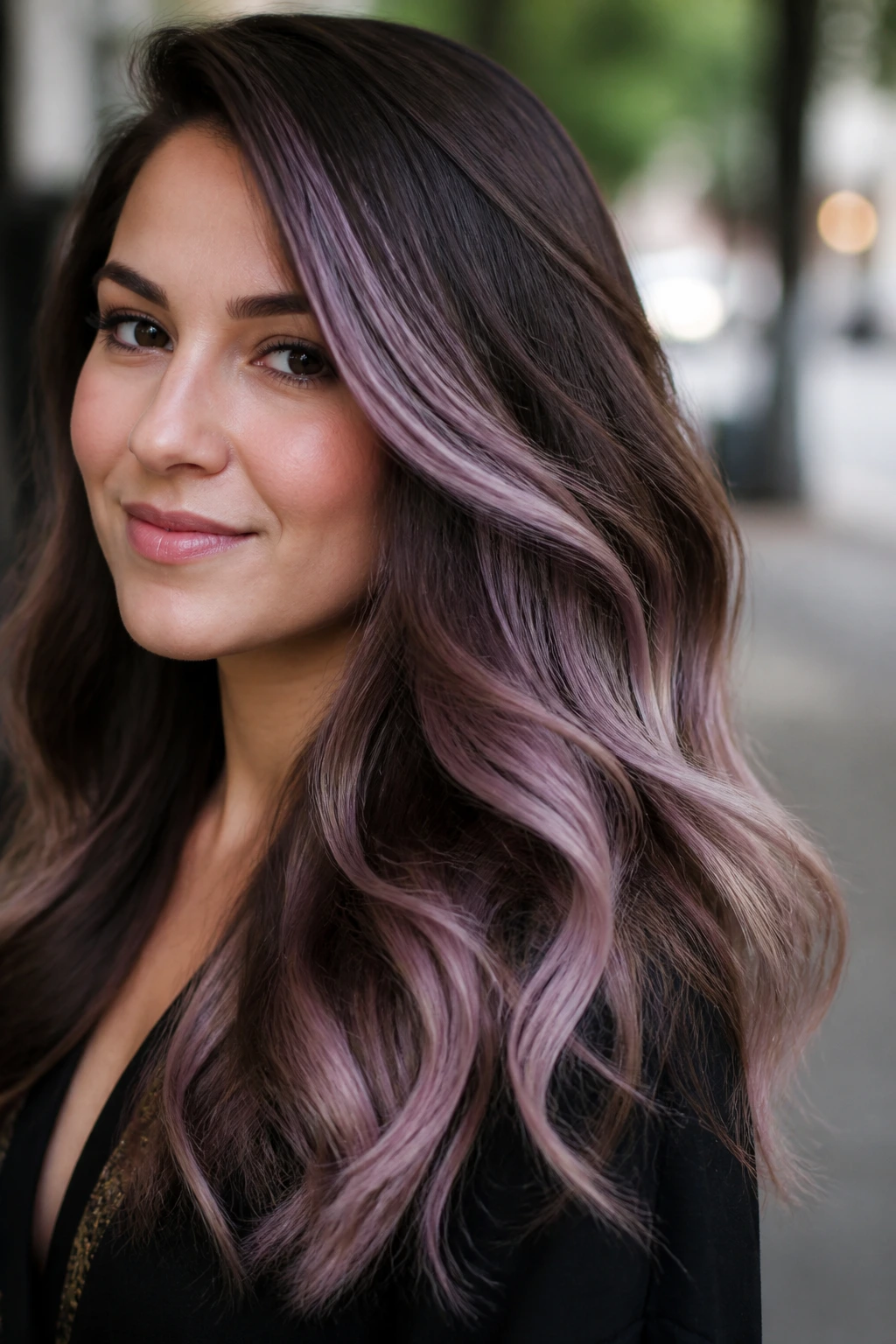
Thick hair can carry wider strokes, but only if the highlights are spaced with some breathing room. Broad diagonal balayage from the temple toward the ends gives the hair shape without stacking brightness around the face. That diagonal line helps round faces because it pulls the eye down and away from the widest point.
Spacing matters here. If the strokes are packed too closely, the hair can look heavy. Leave brown between the lilac pieces so the depth stays visible. A little shadow around the face goes a long way.
- Place the first stroke above cheek level.
- Keep the widths uneven so the color doesn’t look stamped on.
- Focus the lightest area around the lower mid-lengths.
- Let the ends carry the strongest lilac tone.
On thick hair, this kind of color looks expensive because it has room to breathe. Tight, busy highlighting usually loses that effect fast.
19. Fine Hair With Airy Babylights and a Soft Root Shadow
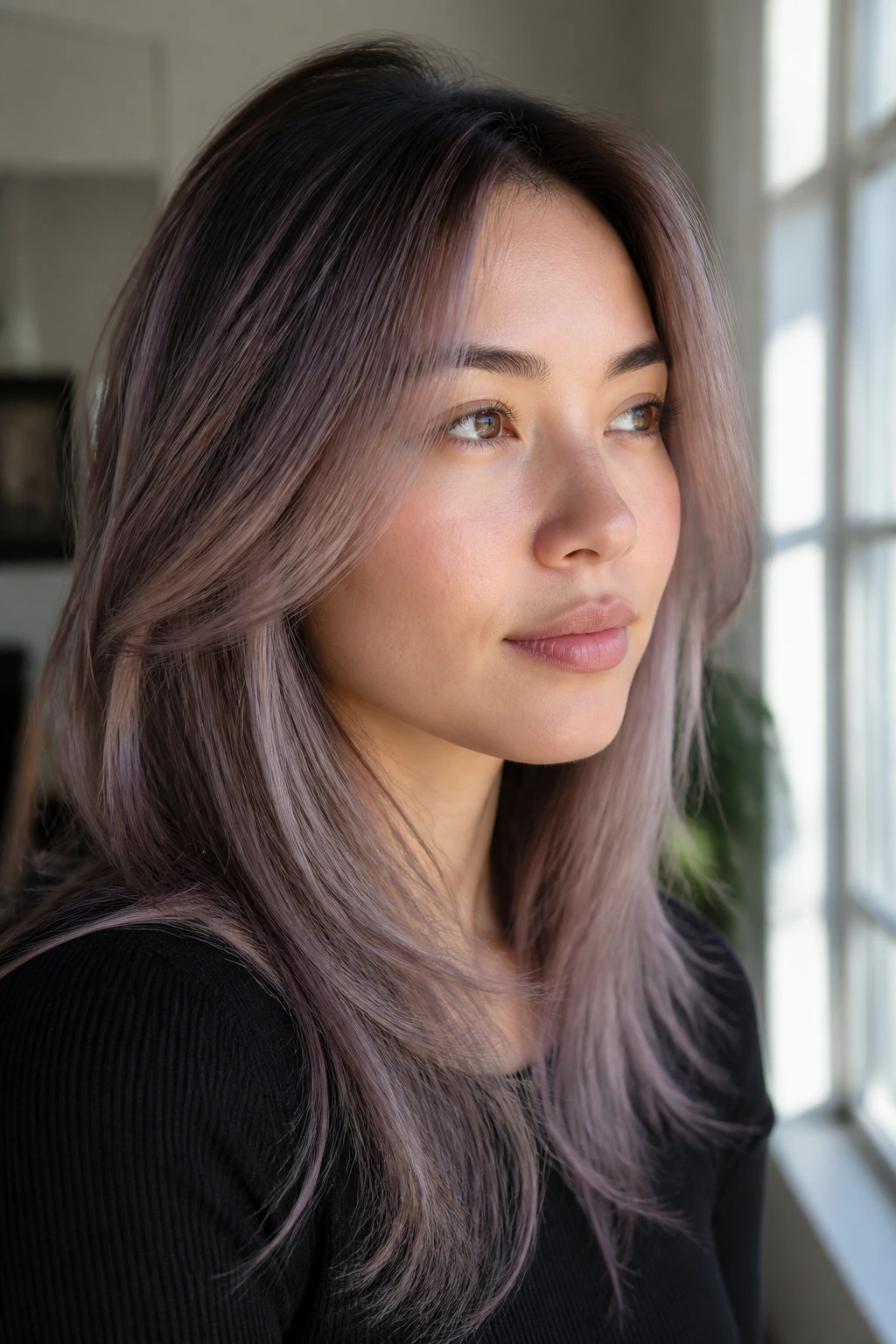
Fine hair is where babylights earn their keep. Tiny lilac-brown threads give the illusion of more strands without making the hair look stripped out. The root shadow keeps the top darker and steadier, which helps the overall shape feel longer rather than wider.
What to Avoid
Skip chunky foil pieces. They can separate fine hair in an unflattering way and make the face feel rounder. You want light, airy strands that blur together when the hair moves.
A soft root shadow also gives fine hair more depth at the scalp, which keeps the color from looking thin. Then the lilac can sit mostly through the mids and ends, where it adds dimension without stealing density from the top.
This is one of the most practical options if you want color that looks fuller in daylight but still soft indoors.
20. Long Lob With Peekaboo Lilac Panels
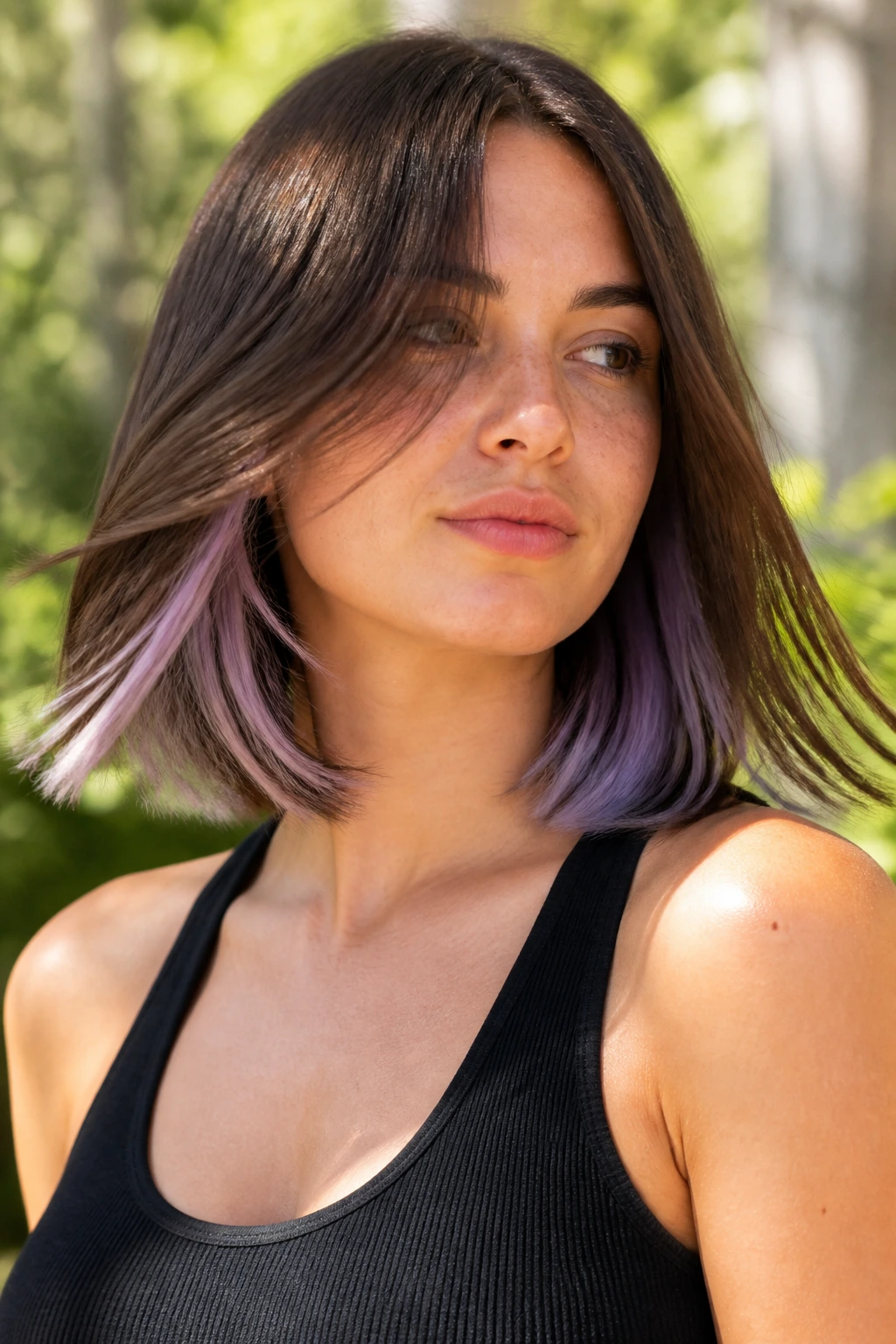
Peekaboo panels hide the color until the hair swings, and that little reveal is useful on a round face. The brown on top stays in control, while the lilac underneath shows through near the nape, under the crown, or behind the ears. Because the brightest color is tucked away, it does not add width around the cheeks.
The long lob is a nice length here because it gives the panels room to appear in a clean vertical line. If the cut is too short, the hidden color can bunch up and lose the effect. A lob grazing the collarbone keeps the shape long and neat.
This style also gives you flexibility. Wear it sleek, and it reads polished. Curl it or clip it back, and the lilac comes alive.
21. Half-Up Hair With Lift at the Crown
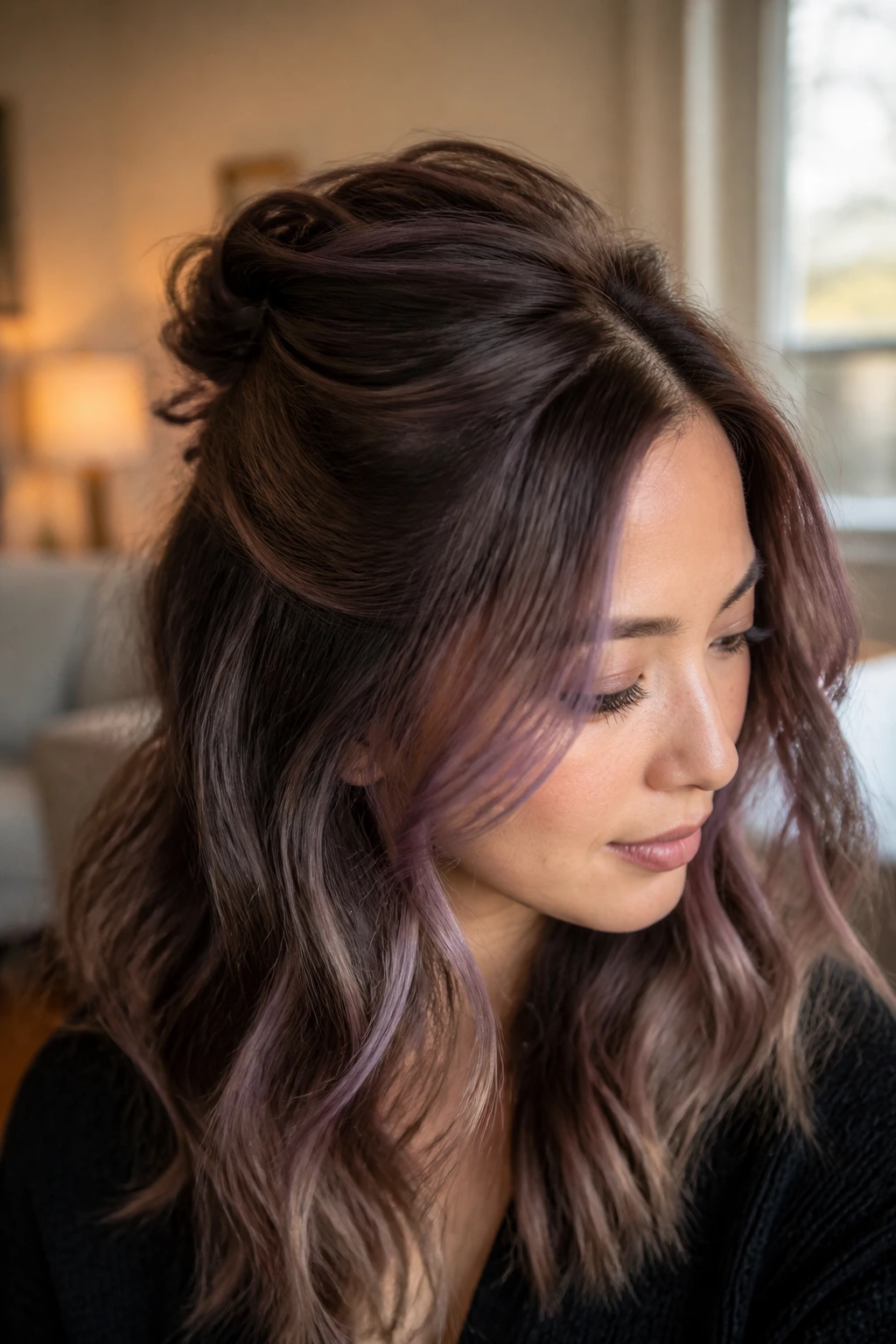
What happens when you pull a round face up instead of out? You get a better shape fast. A half-up style lifts the crown, which stretches the face vertically, and lilac brown dimension around the top makes that lift more visible. The key is not to drag the sides too tight. Tight sides can make the cheeks look fuller.
Best Placement for the Color
Keep the brighter pieces around the crown, temple edges, and top layers that fall beside the face. Let the lower lengths stay a little deeper. That contrast makes the top half feel higher and the face a touch slimmer.
This is one of those styles that works even when the rest of the hair is simple. A clip, a half knot, or a soft twist can show off the color without needing a full blowout. Nice. Fast too.
22. The Most Wearable Lilac Brown Blend for Everyday Round Faces
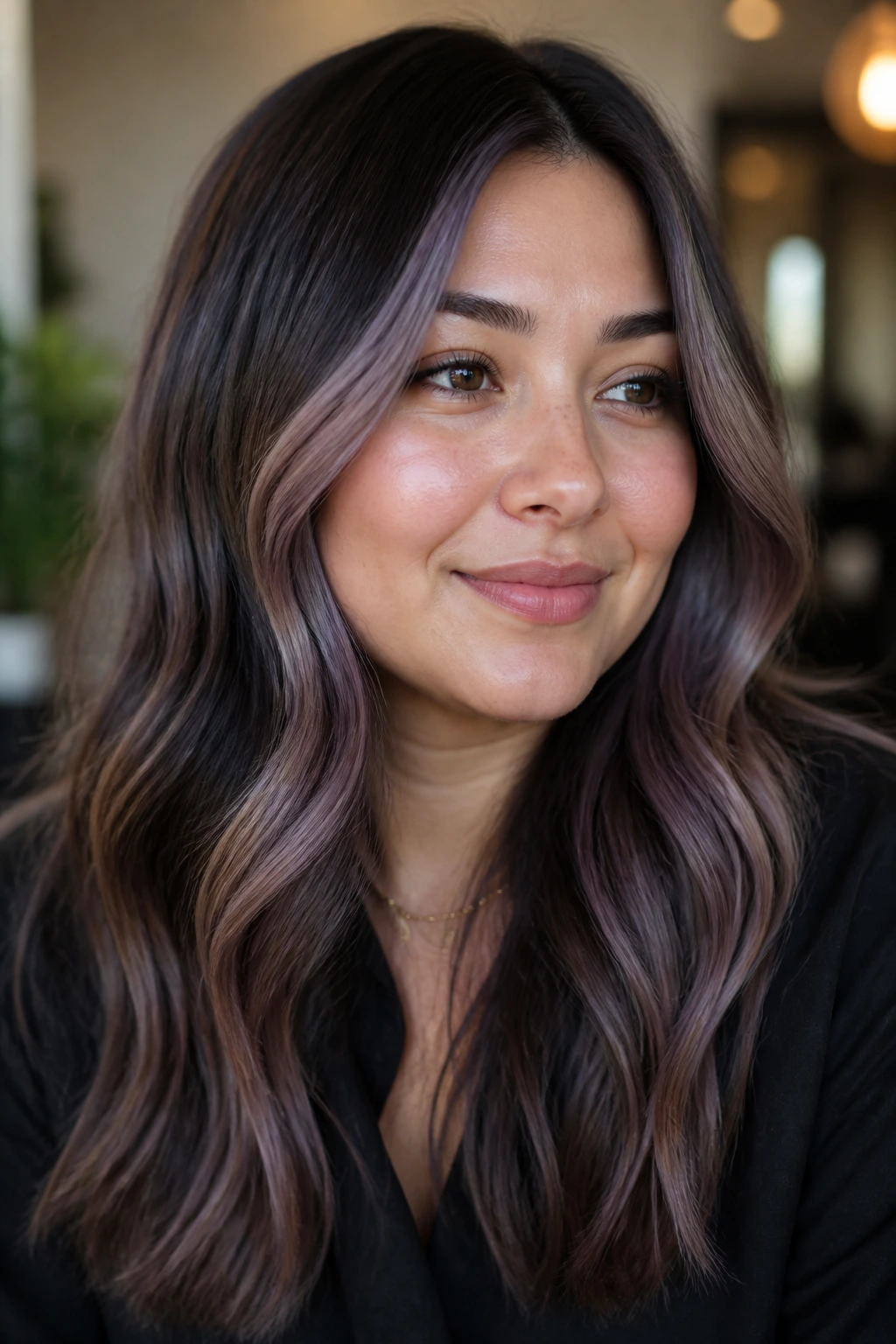
If you want the safest version to bring to a colorist, this is the one I’d hand over first: a medium brown base, soft lilac babylights through the mids and ends, and two slim face-framing ribbons that begin above the cheekbone. It is balanced, it grows out cleanly, and it does not rely on a lot of styling to keep the face looking longer.
The lilac should stay dusty rather than bright. Bright lilac can be fun, but dusty lilac sits better against brown hair and feels easier to live with. Add a soft shadow root if your hair is lighter around the crown. That keeps the color grounded instead of floating.
Bring photos if you can, but also bring a clear point of view: you want the lightness to run downward, not outward. That one sentence saves a lot of bad appointments. And honestly, it is the rule that makes almost every one of these lilac brown highlights for round faces work in real life.
