



Round faces can wear blonde beautifully when the brightness is placed with a little restraint. The right long blonde face framing highlights for round faces do one thing that all-over light color often doesn’t: they pull the eye down instead of letting it sit across the widest part of the face.
Placement is everything.
When the brightest pieces sit too high across the cheeks, the face can look wider than it is. When they’re tapered from temple to collarbone, with soft depth left at the roots and behind the ears, the whole shape looks longer, slimmer, and a little more lifted. That’s why a good blonde highlight plan is never only about the shade. It’s about where the shade lands.
The looks below lean into that idea in different ways. Some are soft and airy, some are bold and face-brightening, and some borrow from lowlights and babylights to keep the front from turning into one solid block of color. If you’ve got long hair, a round face, and you want blonde that does more than just look pretty in a photo, this is where the useful stuff lives.
1. Soft Cheekbone Money Piece
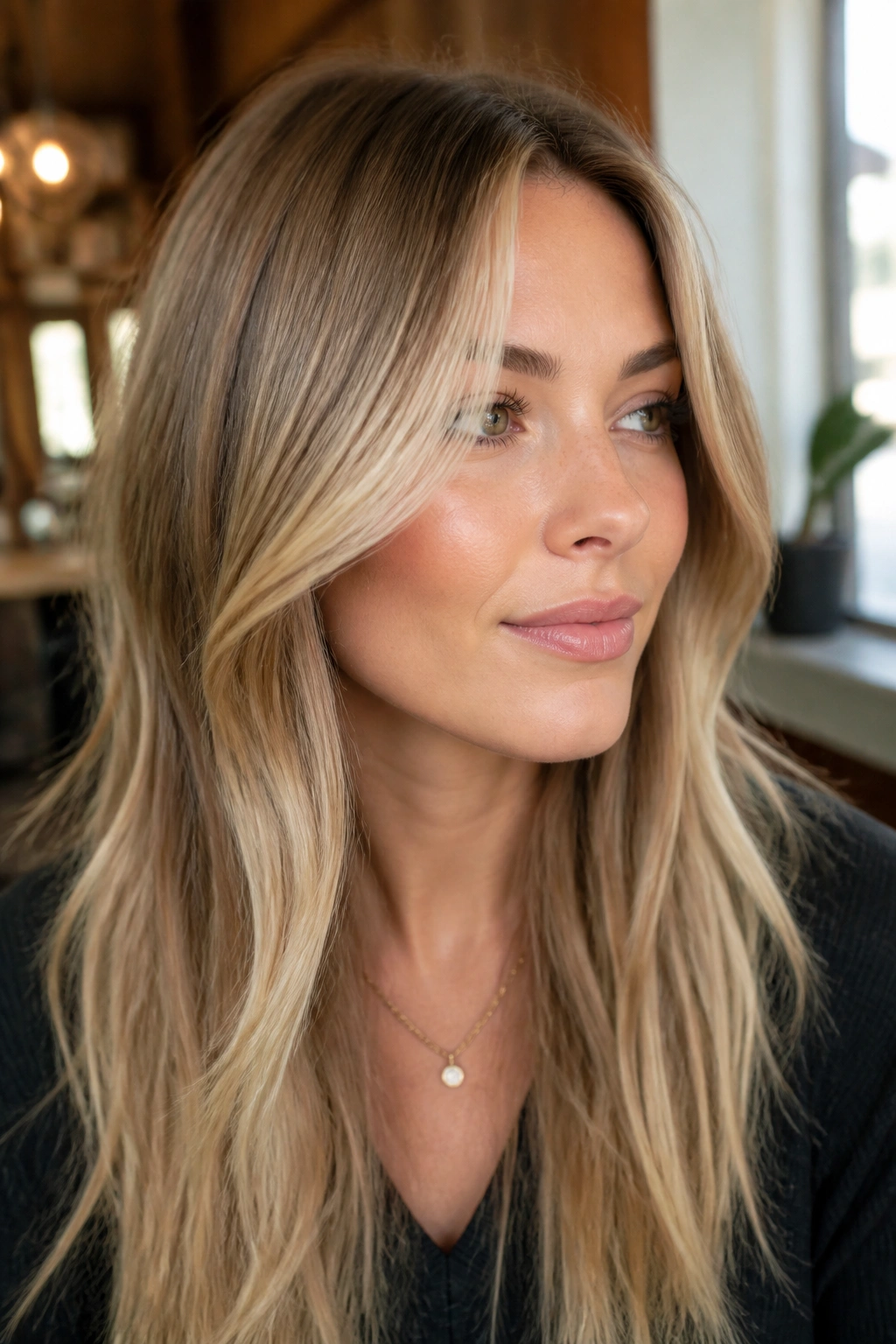
A soft money piece is one of the easiest ways to start, and it’s still the look I reach for when someone wants noticeable brightness without a harsh line. The brightest blonde sits just in front of the face, usually beginning around the cheekbone and melting downward in a narrow ribbon, not a wide stripe. On a round face, that narrowness matters. Wide front pieces can make the face feel boxed in. A slim one feels elongated.
Why It Flatters a Round Face
The trick is to keep the light where the eye should travel. A money piece that starts a little above the cheekbone and ends below the jaw gives the face a vertical line to follow, which softens width fast. If the highlight is too blunt at the top, it fights the shape you’re trying to create.
- Ask for a piece about ½ to 1 inch wide on each side.
- Keep the root slightly deeper so the brightness doesn’t float.
- Feather the ends with a babylight finish, not a hard stripe.
- Have the lightest point sit near the cheek, then fade toward the collarbone.
Best tip: keep the two front pieces a touch softer than the rest of the blonde if your hair is very fine; that keeps the face frame from looking pasted on.
2. Curtain Bang Blonde Ribbons
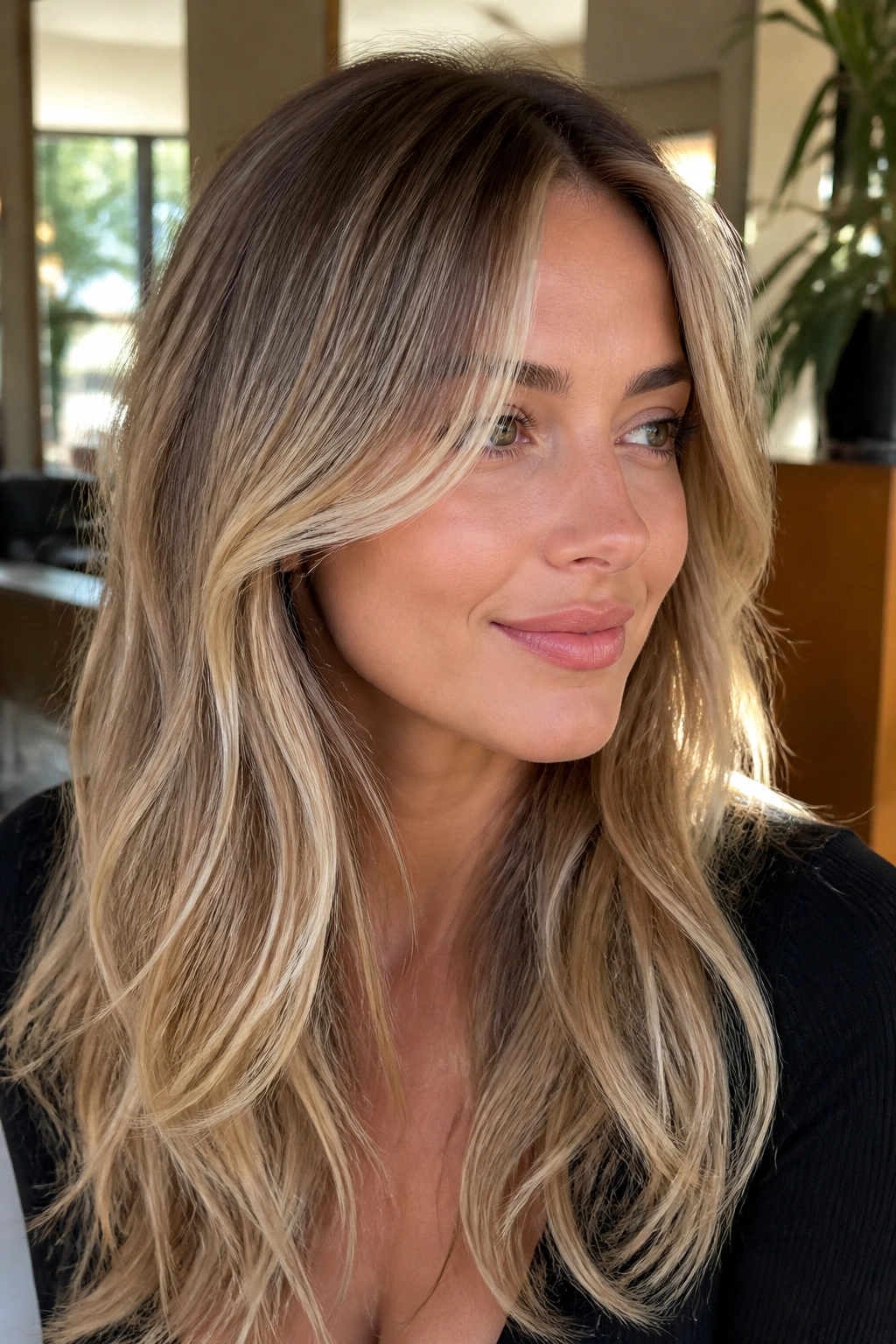
This one works because curtain bangs already break up the width of a round face. Add blonde ribbons to the bend of the bang, and the whole front starts to feel longer and more open. It’s one of the most flattering choices for center parts. The light moves with the fringe instead of sitting like a static stripe.
What I like here is the balance. You do not want the brightest blonde right at the root line across the entire forehead. That can look heavy. Instead, ask for brightness that starts just off the part, then follows the sweep of the bangs as they drop toward the cheekbones. It feels airy, not striped.
If your hair is long and layered, this look gets even better because the bang pieces connect to the front layers. The result is soft movement around the face, and that movement does a lot of the work. A round face looks less circular when the eye keeps sliding downward.
3. Long Diagonal Highlights From Temple to Jaw
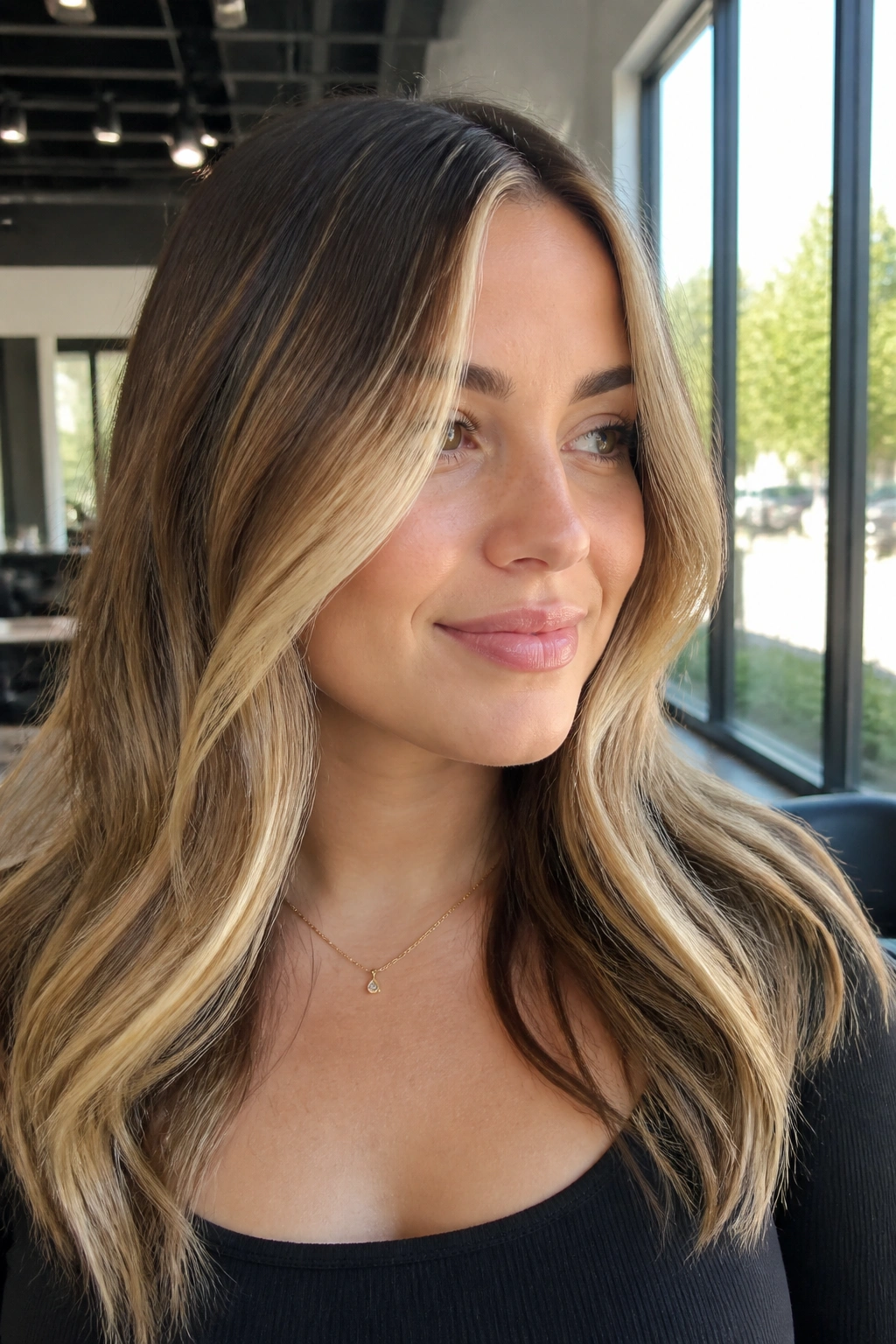
Why does this placement work so well? Because a diagonal line is naturally lengthening. A blonde piece that starts near the temple and slides toward the jawline changes the way the eye reads the face, almost like an invisible contour. It’s subtle, but not tiny.
How to Use It
Tell your colorist you want the front pieces placed on a diagonal, not straight down. That usually means the brightest section begins near the side part or temple, then gets softer as it moves past the cheek. The front should feel stretched, not wide.
A few details make the difference:
- Keep the light one shade brighter near the temple than near the jaw.
- Use a soft foil or hand-painted ribbon rather than a chunky slice.
- Leave a shadow at the top so the diagonal has contrast.
- Blend the ends into the rest of the blonde so the eye doesn’t stop at one spot.
This is one of those placements that looks especially good when hair is tucked behind one ear. You get a clean side line, and round faces tend to love that kind of structure.
4. Shadow-Root Vanilla Blonde
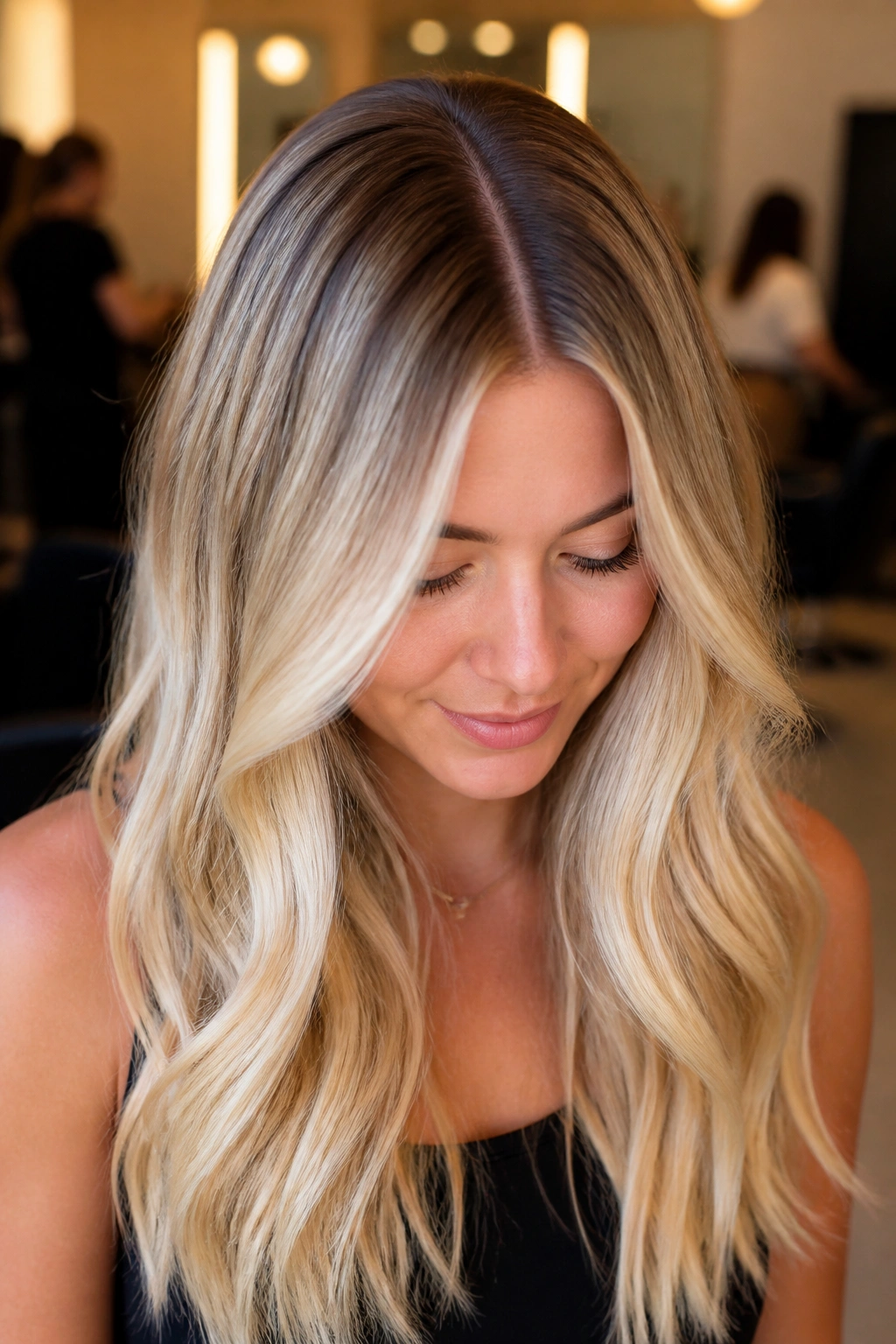
A shadow root sounds boring until you see what it does in person. Then it makes perfect sense. The darker root gives the face frame a place to start, and the vanilla blonde through the mids and ends keeps the whole look light. On a round face, that depth at the top matters more than people think. Without it, the blonde can spread out and feel broad.
Picture a front section that stays a little deeper for the first inch or two, then softens into a creamy beige blonde by the chin. That transition is flattering because it avoids a hard frame right at cheek level. The eye moves from dark to light, which creates lift.
This style is also friendlier to grow-out than a super bright money piece. You can go several weeks between appointments and still keep the shape. If you wear your hair in waves, the shadow root disappears into the bend of the curl and looks expensive without trying too hard. No drama. Just clean placement.
5. Honey Balayage With Warm Lowlights
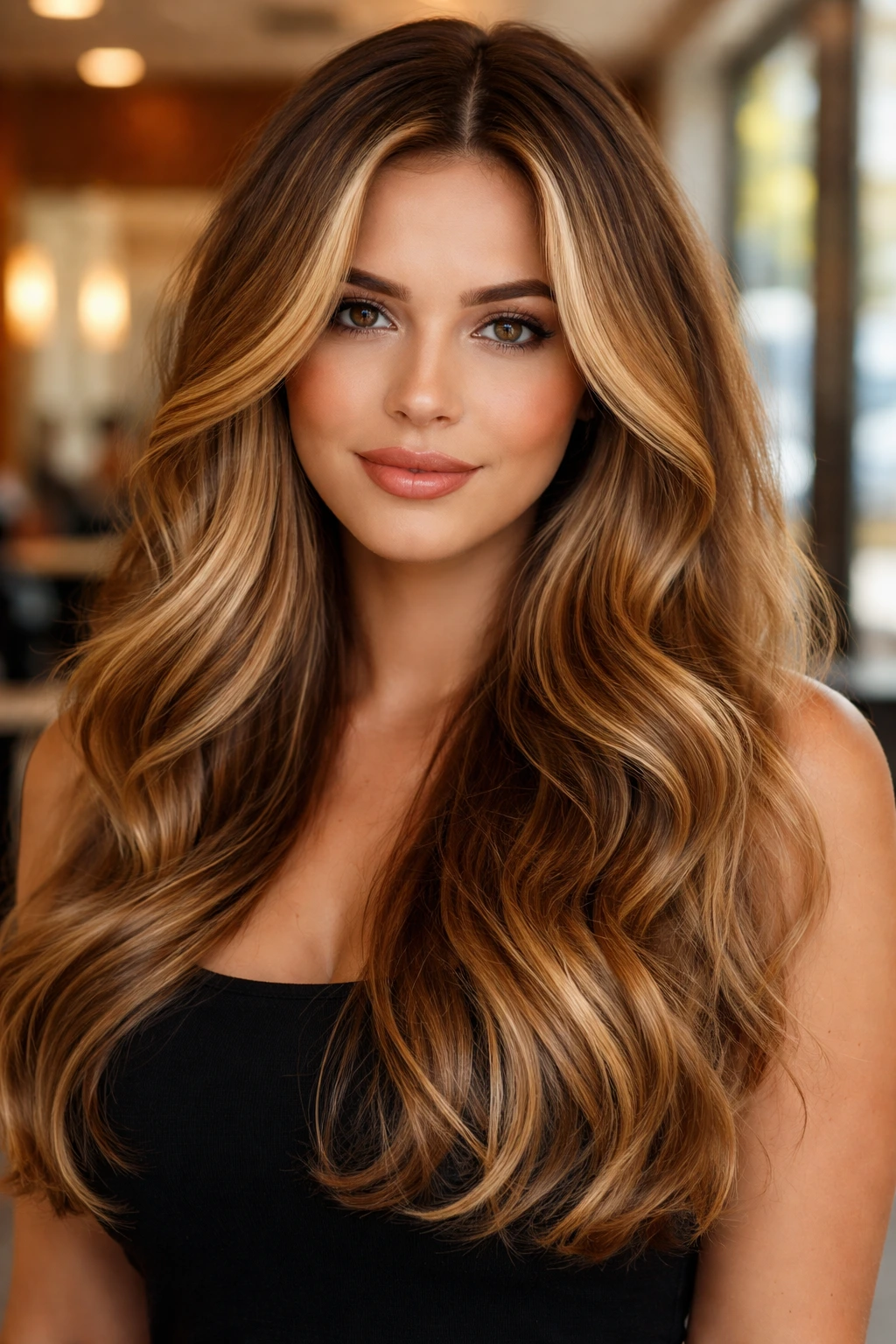
Honey balayage is one of those shades that flatters more faces than it gets credit for, and round faces are near the top of that list. The warmth softens the cheek area, while the lowlights keep the blonde from puffing out visually. That second part matters. Too much uniform light can make long hair look wider than it is.
I like honey tones when the skin has warmth, freckles, or a golden cast, because the color doesn’t sit cold against the face. A few deeper lowlights behind the front pieces help carve out shape, especially if the hair is thick. The result is less “all-over glow” and more “carefully placed light.”
The best version of this look usually has the brightest honey around the front layers and a little less brightness under the surface. That hidden depth makes the hair move. And movement is your friend here. Round faces look longer when the hair sways rather than sitting in one solid curtain.
6. Pearl Blonde Babylights
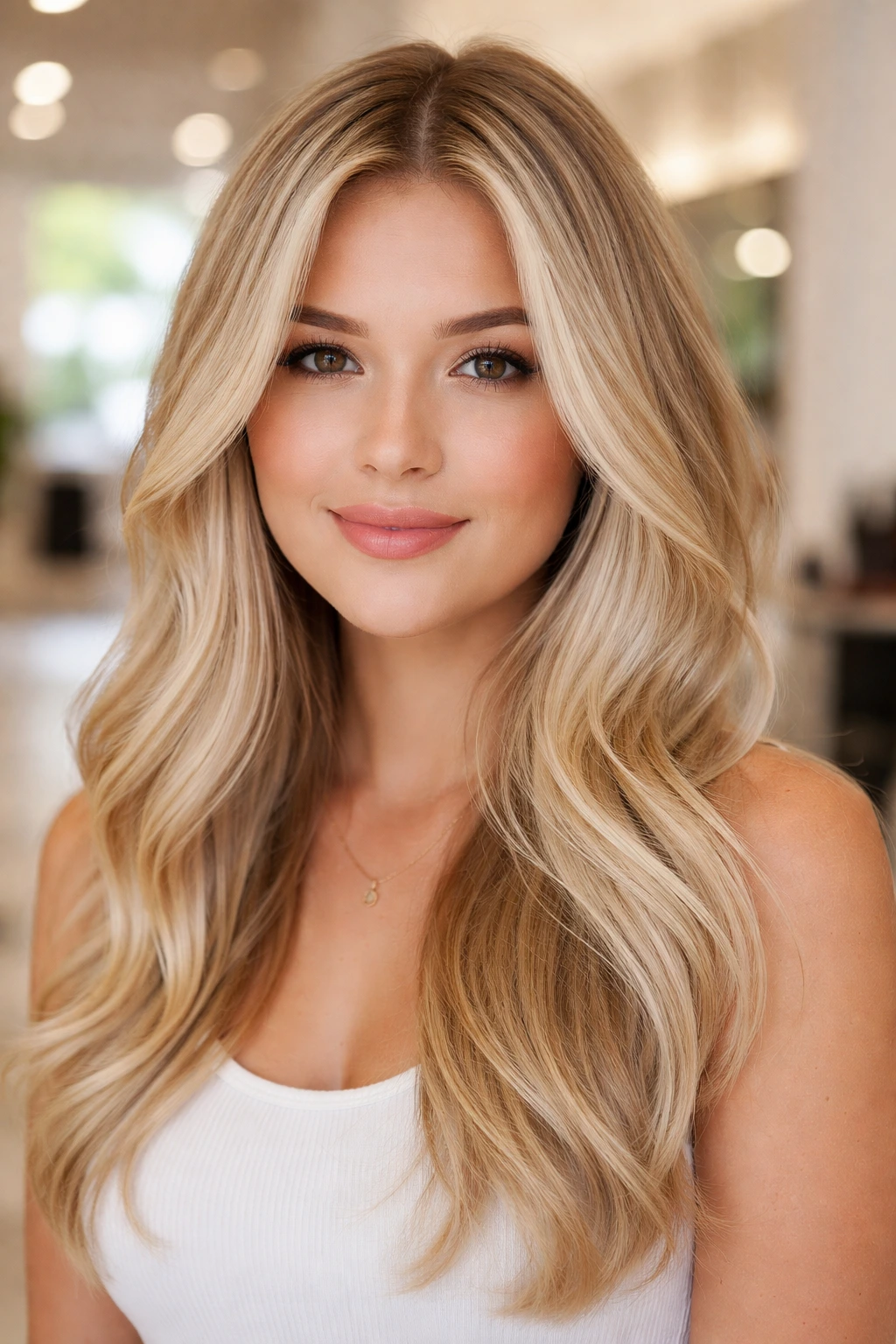
Pearl babylights are a cleaner, finer choice than chunky highlights, and they suit people who want the face to look longer without shouting about the color. Unlike big ribbons, babylights soften the front line instead of widening it. That’s the whole appeal.
This is especially good for fine hair, because the tiny strands create texture without making the front feel heavy. If the hair is very thick, babylights can still work, but you’ll want a few slightly brighter face pieces mixed in so the color doesn’t disappear. Pearl blonde sits in that cool-beige zone that reads polished without going icy.
What Makes It Different
The magic is in how little contrast there is at the root. Instead of a strong stripe, you get a veil of brightness that starts near the hairline and fades into the mids. It’s softer on a round face because the front doesn’t become the focal point all by itself.
- Best on hair that already has a little natural movement.
- Great if you want brightness that grows out quietly.
- Works well with a blunt cut or long layers.
- Needs a toner refresh more often than honey or beige blonde.
7. Chunky Front Panels With Blended Edges
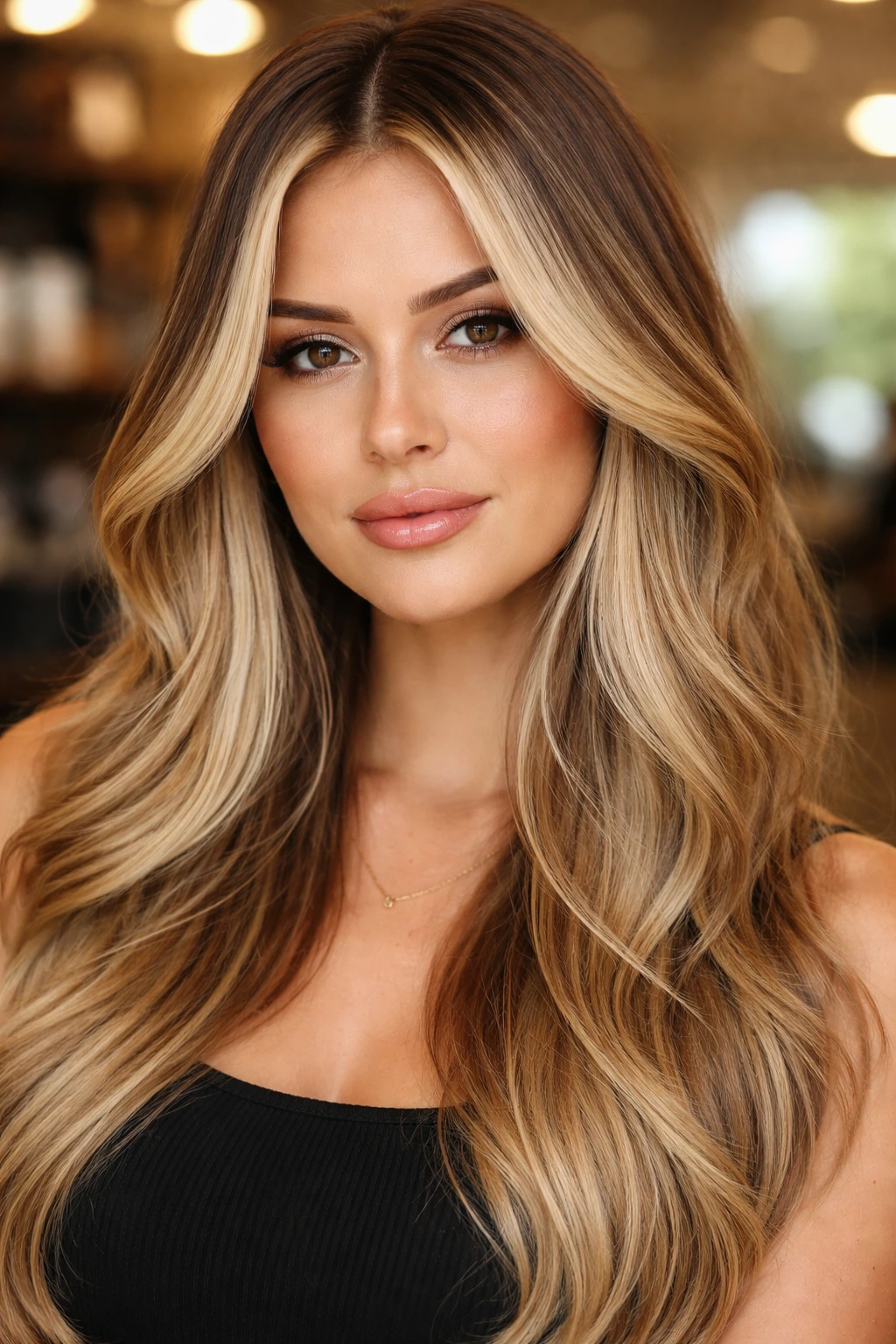
Chunky highlights can go wrong fast, but when they’re placed with enough softness, they do something really useful for round faces: they create bold vertical lines. The key is keeping the edges blurred. A sharp stripe across the front can look dated. A thicker panel with feathered sides looks intentional and flattering.
This is a good choice if you like a little drama. You keep the rest of the blonde quieter, then place a thicker face frame near the temples and cheekbones. The contrast gives the illusion of more length, especially if the front pieces are slightly longer than the rest of the haircut.
The best versions of this look are usually paired with a soft root shadow and a few babylights behind the chunkier panel. That blend matters. Without it, the front can feel disconnected from the rest of the hair. With it, the face frame looks like part of the whole shape, not a separate block added on top.
8. Side-Part Spotlight Highlights
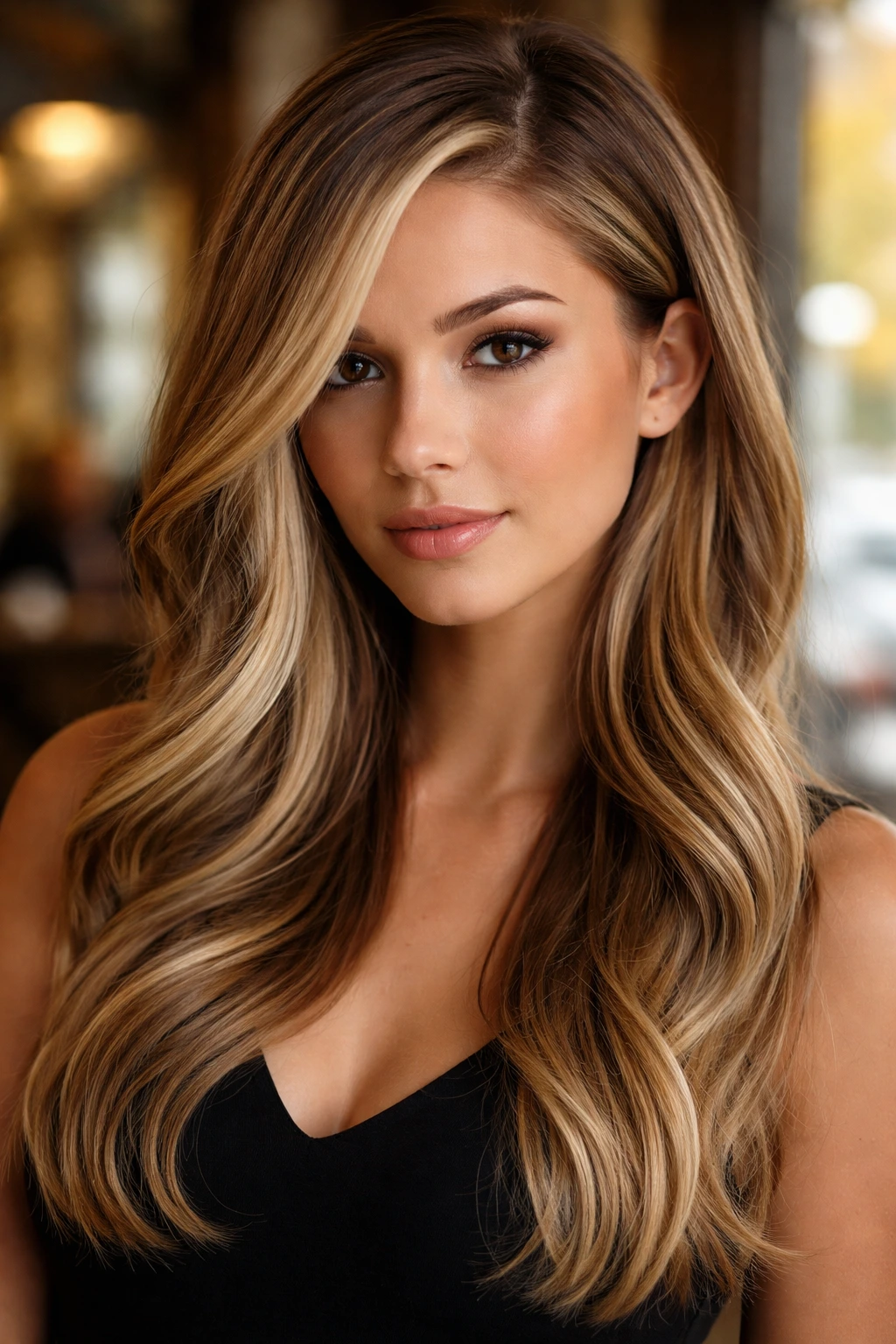
A deep side part can change the entire read of a round face, and blonde highlights make that part work harder. The asymmetry alone helps break up width. Add one strong spotlight piece on the heavier side, and the face starts to look longer almost immediately.
This is a smart look if your hair naturally falls to one side. Instead of fighting the pattern, you use it. The brighter section should sit near the highest curve of the part and drop into the front layers, while the opposite side stays softer. That contrast keeps the look from feeling too symmetrical, which is often the problem with round faces and face-framing color.
I like this on long waves because the light follows the sweep of the hair. It has a little drama when the hair is tucked behind one ear, and it can look surprisingly elegant in a low ponytail too. The face frame doesn’t have to be identical on both sides to be flattering. In fact, it usually shouldn’t be.
9. Feathered Hairline Babylights
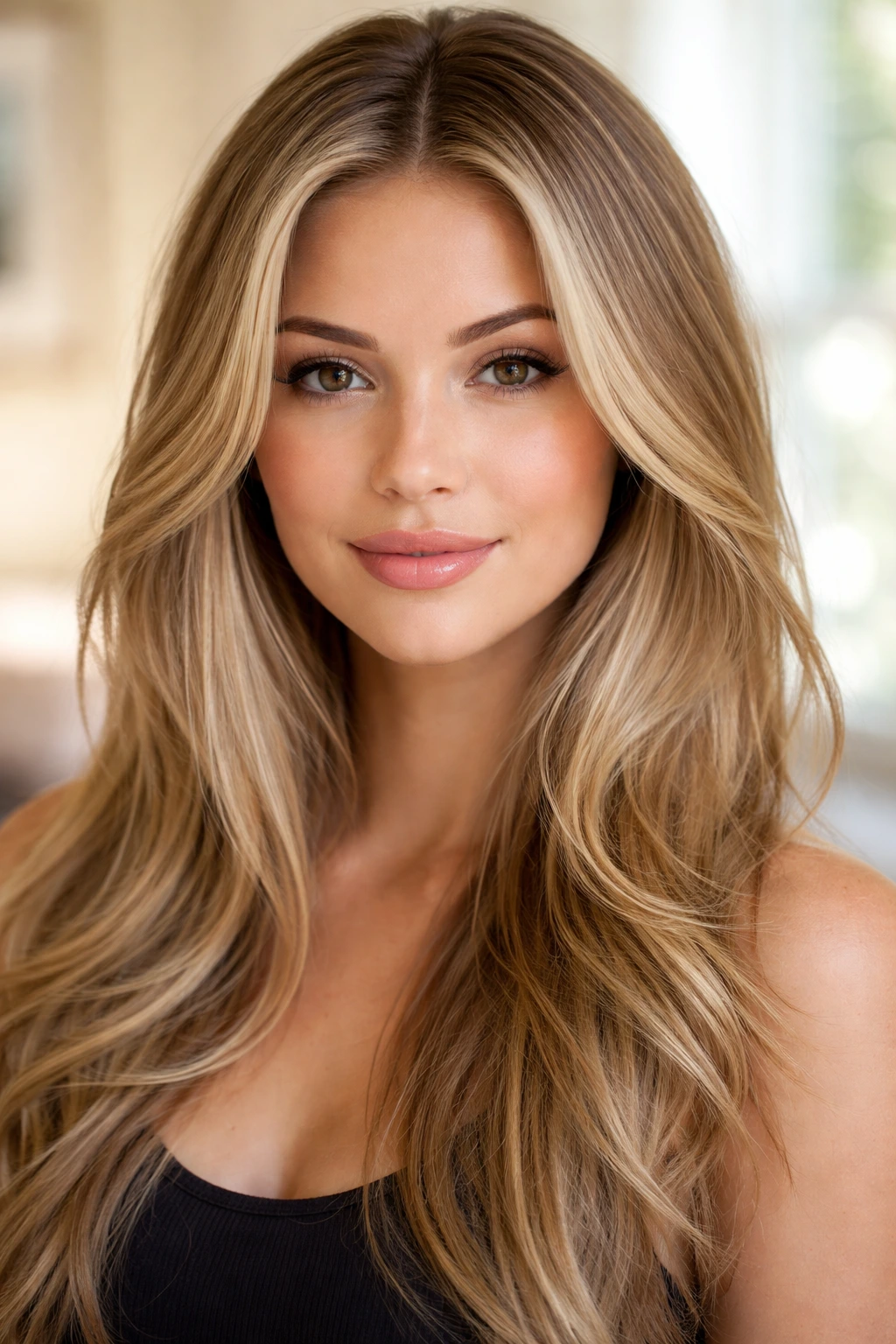
Can something this soft actually change the face shape? Yes, and that’s the funny part. Feathered babylights around the hairline are tiny, but they build a halo of brightness that lifts the front without making it look wide. On a round face, that gentle halo often works better than a hard stripe.
The pieces should be narrow—think almost threadlike—and placed right along the first inch of hair around the face. The goal is to blur the edge between skin and hair so the front feels lighter. If the hair is long and layered, the babylights can follow the shape of the layer rather than sitting in a straight line.
How to Get the Most From It
This look is especially good if you wear your hair half-up or in loose bends. The tiny blonde strands keep showing through, which means the shape stays alive even when the hair is pulled back. If you want more contrast, pair the babylights with a barely deeper root and a few brighter strands at the temples.
10. Collarbone-Brightening Ribbons
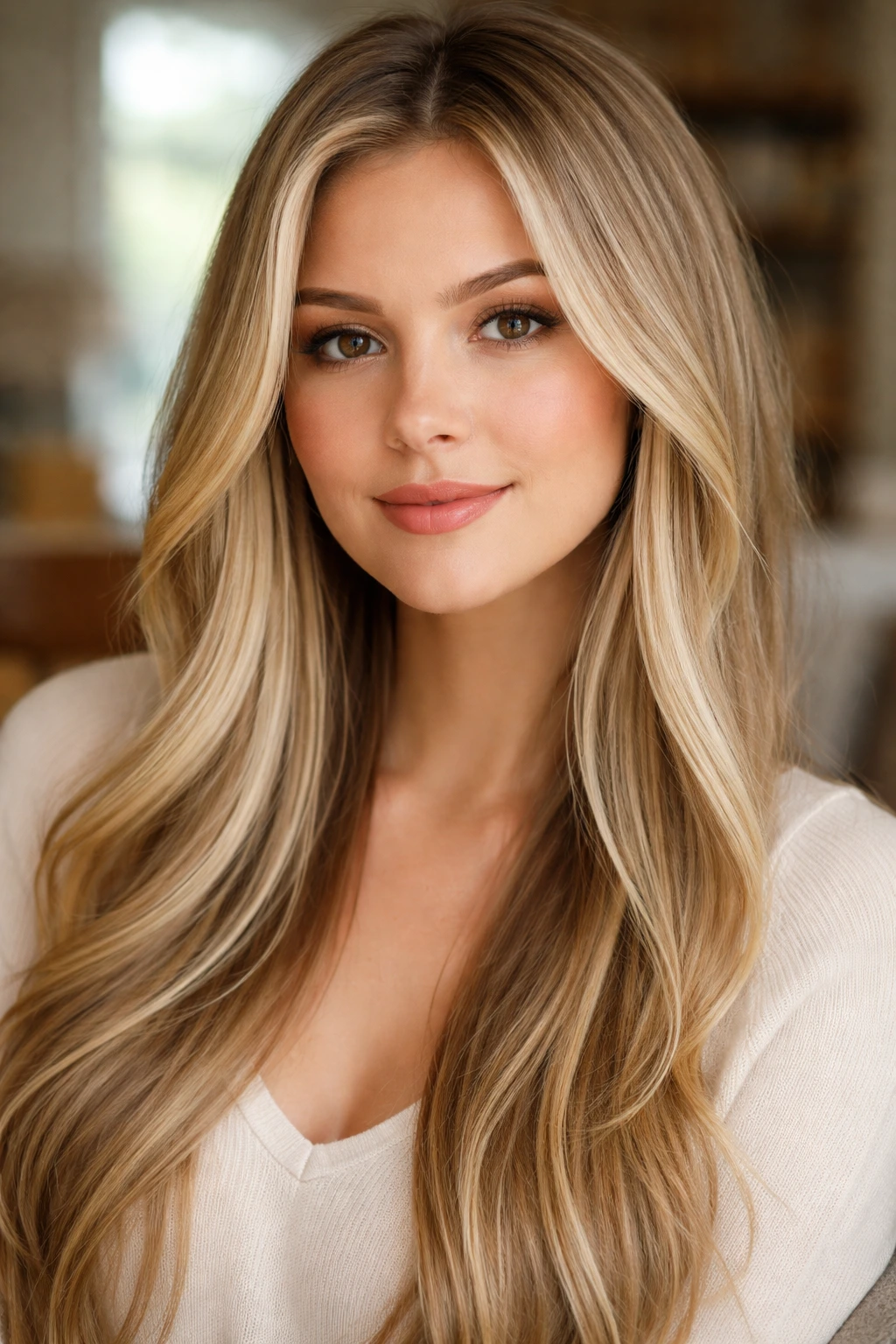
A lot of people stop the face frame too high. That’s a mistake. When the blonde keeps dropping to the collarbone, the eye has a longer line to follow, and the face looks less circular. This style is one of the best ways to work with long hair because it uses length instead of fighting it.
Think of it this way: the brightest ribbons begin near the front and continue through the length that sits beside the jaw and collarbone. That path creates a long, clean edge. If the hair is waved, the ribbons break up even more, which keeps the color from looking flat.
- Keep the highlight slightly narrower at cheek level.
- Let it widen just a little below the chin.
- Use soft, blended ends rather than a blunt finish.
- Add a few lowlights underneath to keep the ribbon from taking over.
This is a strong pick for someone who wears hair down most of the time and wants the blonde to do the shaping work without looking obvious.
11. Ash Beige Frame With Lowlights
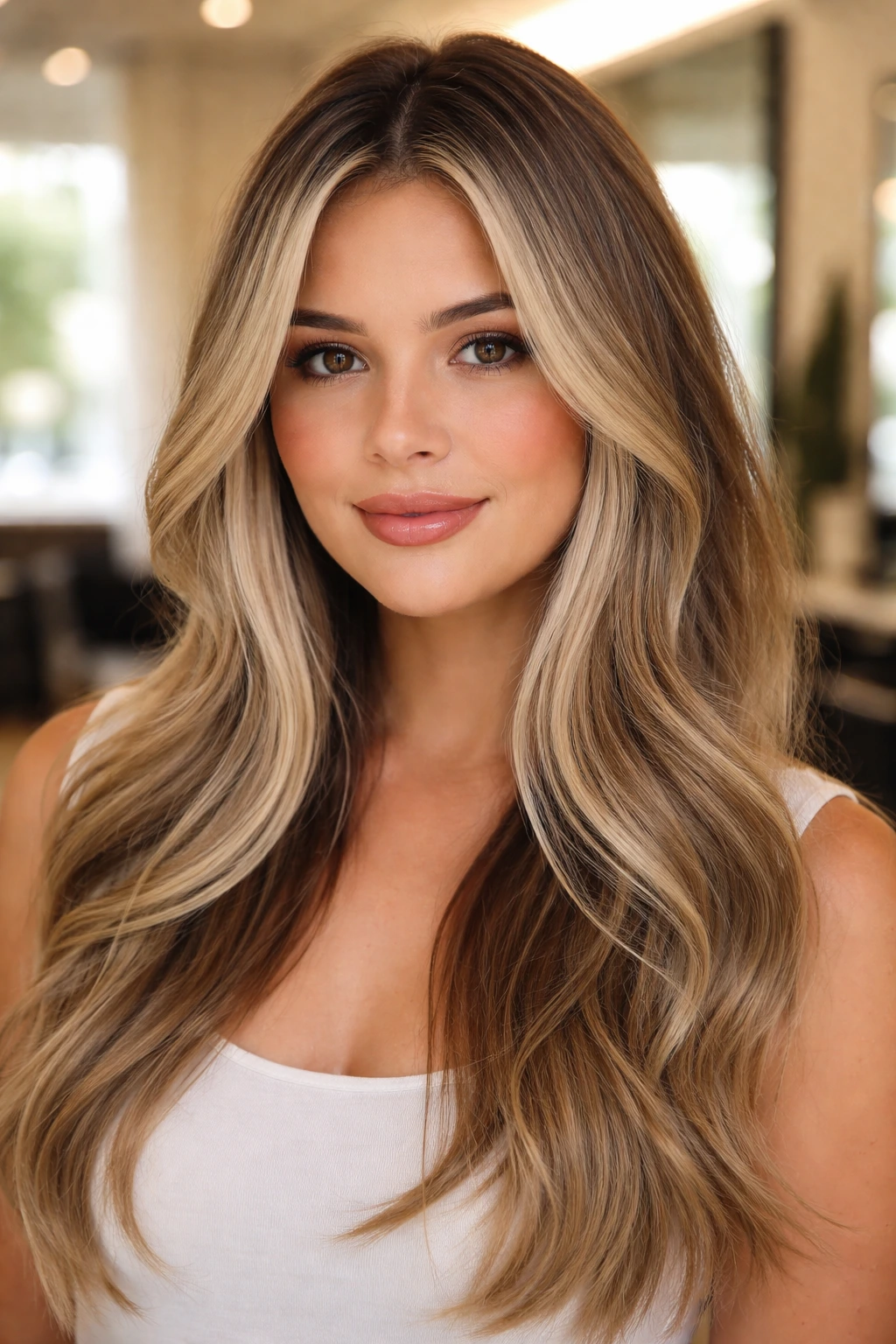
Ash beige can be tricky. Too much ash, and the hair looks flat. Too little, and the blonde turns yellow faster than you want. But when it’s balanced with lowlights, it becomes one of the smartest options for round faces because it keeps the front from blooming outward visually. The depth is quiet, which is exactly the point.
The lowlights should sit just behind the face frame and through the lower mids, not all over. That gives the front brightness room to breathe. A round face benefits from that contrast because the color reads as narrow and vertical instead of broad and fluffy.
I also like this shade for people who wear strong makeup or defined brows. The cooler beige blonde gives the face a clean edge without fighting the rest of the look. It feels tailored, and it’s forgiving when the hair grows a little longer between salon visits. That softer grow-out is worth a lot more than people admit.
12. Butter Blonde Around Soft Layers
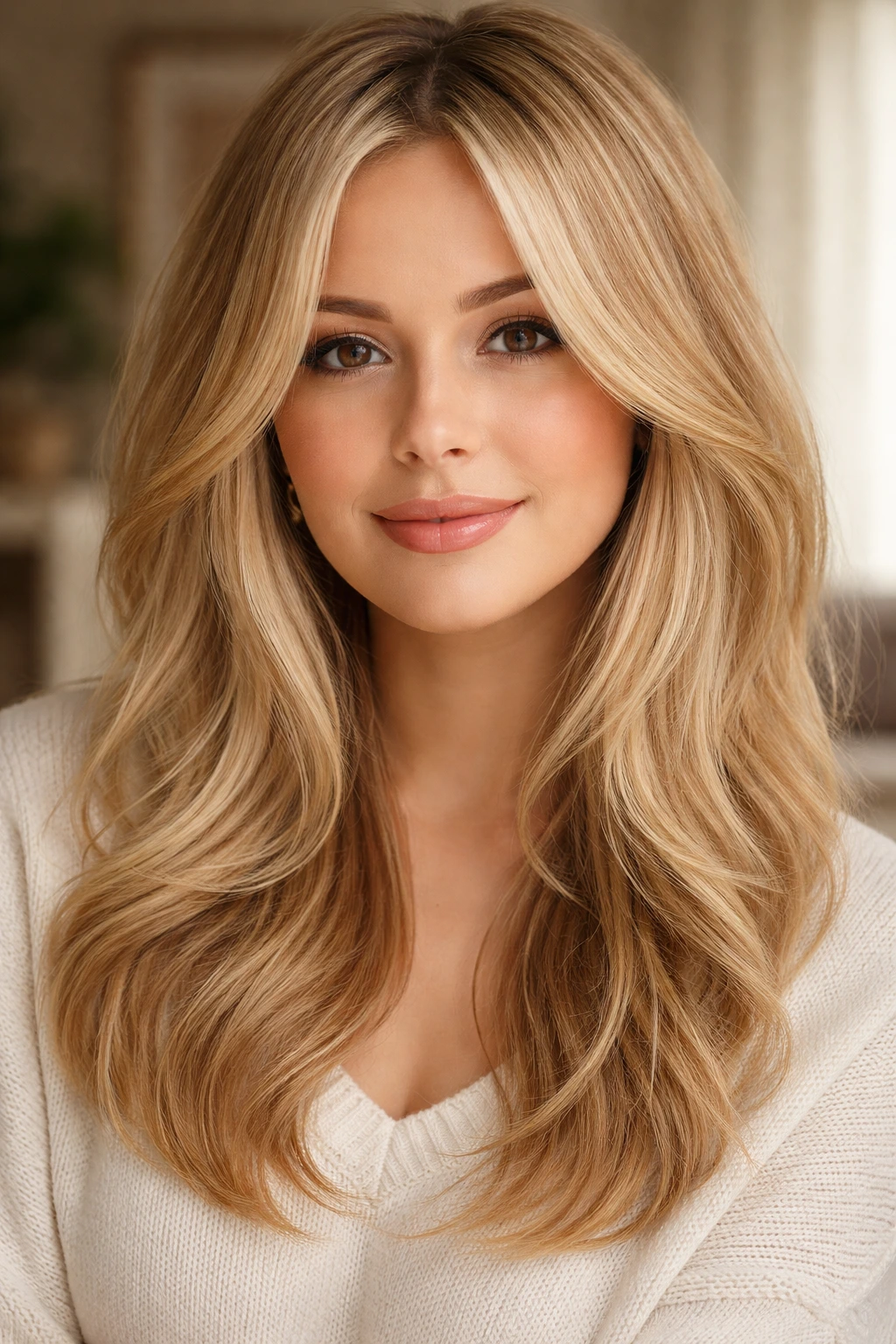
Butter blonde has a warmer, creamier feel than ash or pearl, and it suits soft layered cuts beautifully. Unlike icy blonde, butter tones are easier to wear on warm skin and less likely to look harsh around a round face. The softness matters. Harsh color can make the cheeks stand out more than you want.
The layers do half the work here. When the blonde follows a long layer that starts around the chin and falls below the shoulders, the front gets a nice taper. That taper pulls attention downward. If the ends are a touch lighter than the face frame, the look feels open rather than heavy.
This is one of the easier blondes to live with if you like air-drying or loose waves. The warmth blends into natural texture instead of demanding perfect styling. And honestly, that’s often the sweet spot for round faces: enough brightness to sculpt, enough softness to keep the style from looking stiff.
13. U-Shape Perimeter Lights
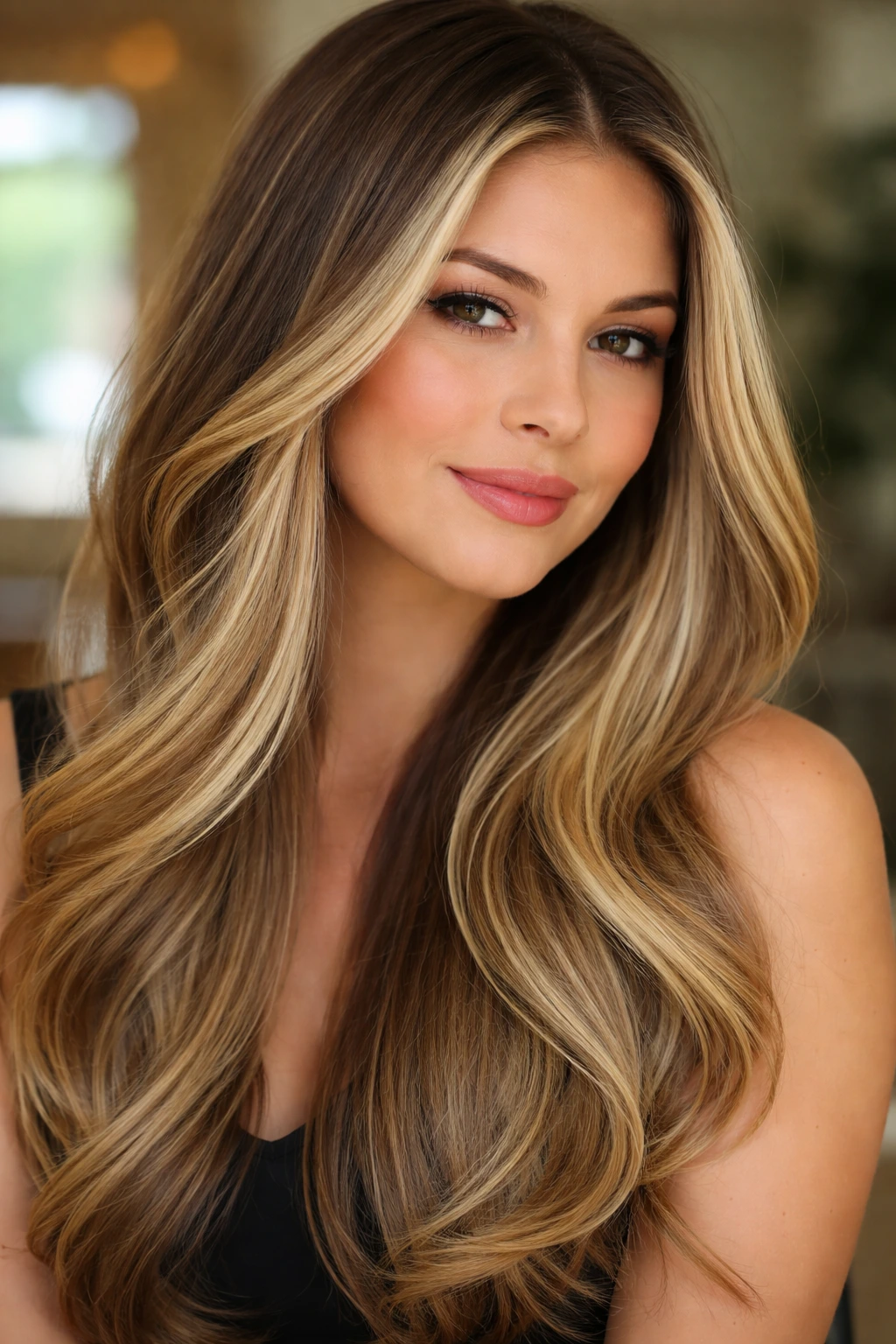
A U-shaped highlight pattern wraps the light around the outer edges of the hair, which gives long hair a broader curtain of brightness while still keeping the center more grounded. On a round face, the trick is that the brightest points sit lower on the sides, not right across the cheek line. That keeps the shape lengthening instead of widening.
Why It Works
The U shape creates movement along the perimeter, and that perimeter is what most people see first. By leaving the top and inner sections deeper, you get a frame that feels airy around the face without putting the spotlight on the widest part of the cheeks. It’s a nice middle ground between subtle and bold.
- Best when the haircut has long layers or soft ends.
- Works well with both center and side parts.
- Needs a few brighter ribbons at the front so it doesn’t look too hidden.
- Looks especially good in waves because the edge of the U shows through.
If you want blonde that feels expensive and easy to wear, this is a strong one.
14. Foilyage Lift at the Hairline
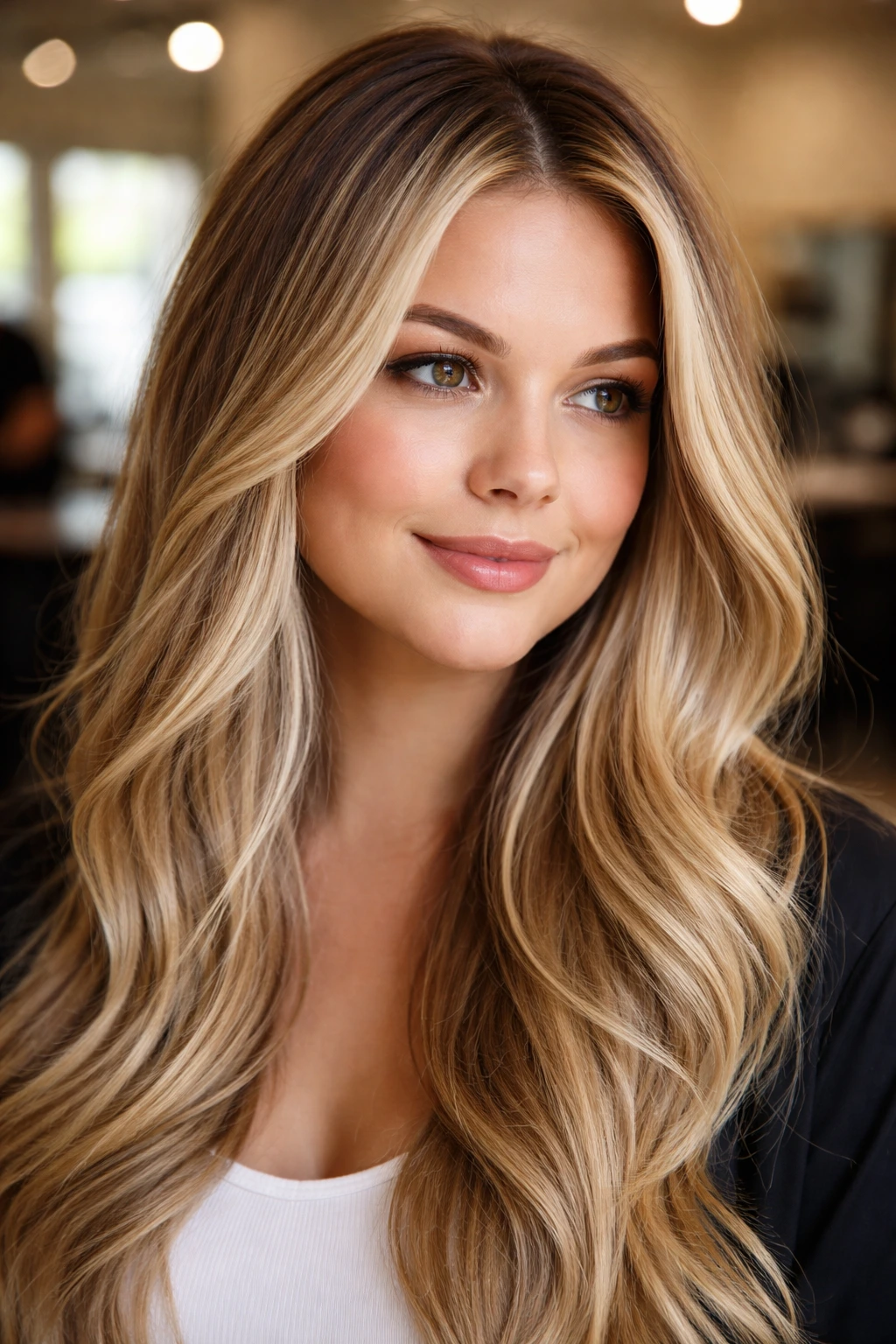
Foilyage is useful when balayage alone won’t lift enough brightness around the face. The foil adds a little heat, which helps the blonde get lighter near the hairline. That matters if your hair is naturally dark blonde or light brown and you want the front to stand out more against a round face.
The result is brighter and more noticeable than a soft hand-painted ribbon, but it still grows out better than a hard foil line. The front pieces should be painted with enough dimension that they don’t look pasted on, then wrapped in foil for lift. That combination gives you strong face framing with a softer transition into the rest of the hair.
This is one of the better choices if you want to see the blonde from across the room but still keep the overall look wearable. It pairs well with long hair because the length carries the brightness downward. Shorter styles can handle foilyage too, but with long hair you get more room for the fade to do its job.
15. Platinum Accent Pieces
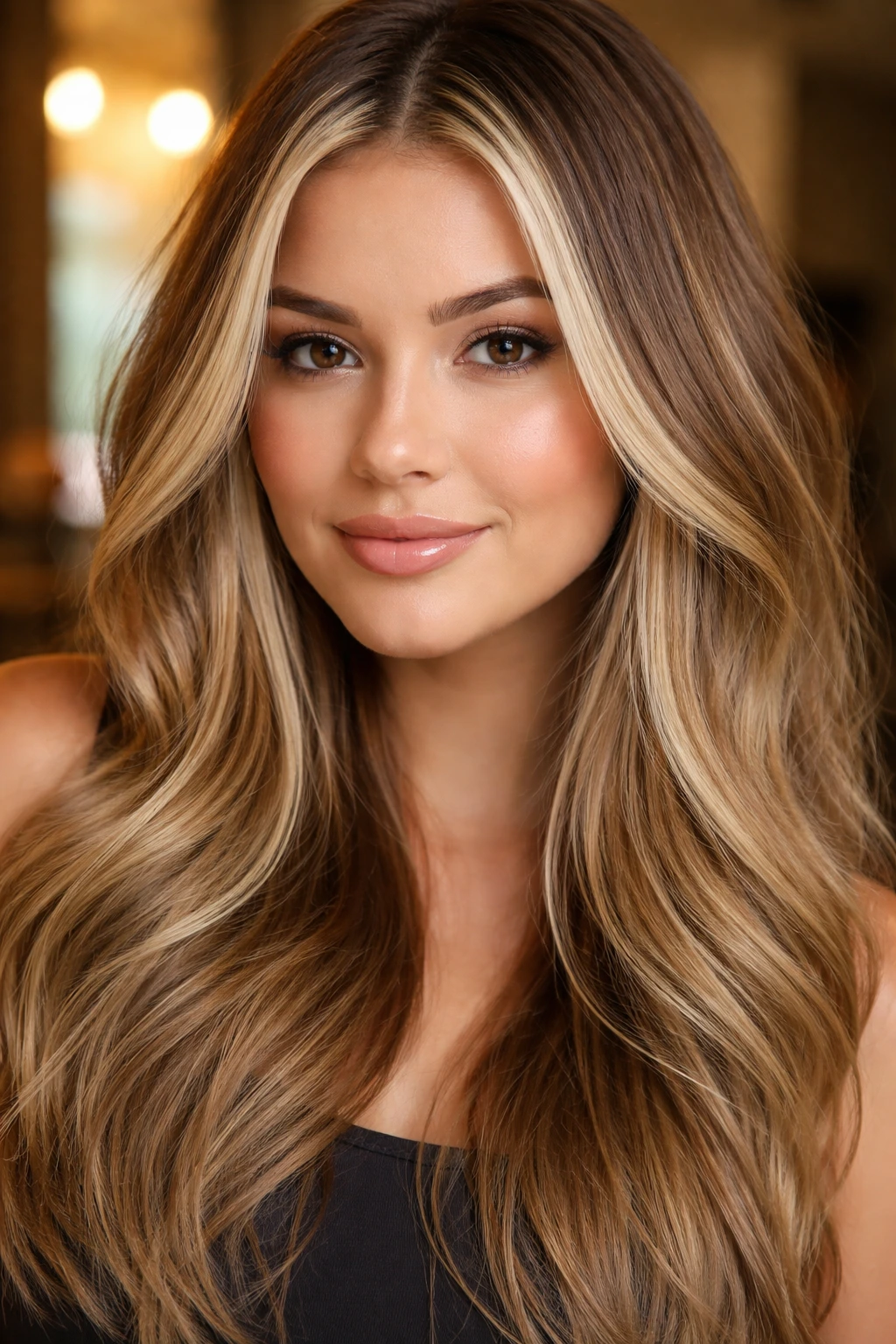
Do platinum pieces work on a round face? They do, if you’re disciplined about placement. The main rule is to keep the platinum narrow and controlled. Two skinny accent pieces can slim the face much more effectively than one wide, blinding stripe.
I’d keep platinum closest to the part and the outer edge of the face frame, then soften the rest with beige or pearl blonde. That contrast is what makes the shape read vertically. If the entire front goes platinum, the effect can get too broad and lose the contouring benefit.
How to Use It
Platinum is best when the base stays a little deeper. A level 7 or 8 base with level 10 front pieces creates enough contrast to sharpen the face without washing it out. If your skin tone runs cool, this can look crisp and modern. If you’re warmer, add a slightly beige toner so the platinum doesn’t feel stark.
16. Caramel-to-Cream Melt
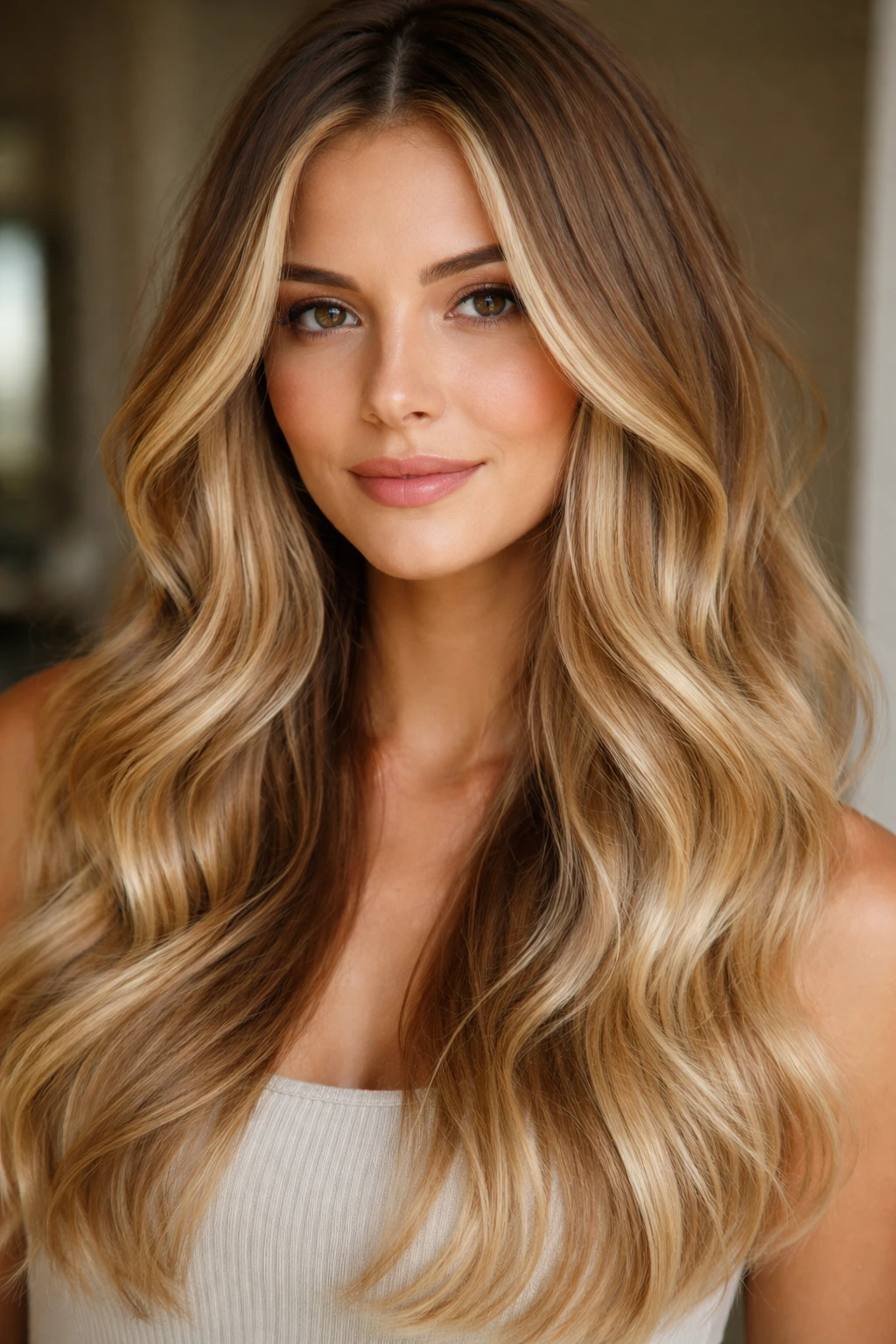
This one is for people who like dimension more than bright contrast. The front starts in a warm caramel or beige tone, then gradually melts into creamier blonde through the ends. On a round face, that slow fade helps because the eye doesn’t stop at one hard line. It keeps traveling.
I like this kind of melt on long waves, especially when the haircut has a few face-framing layers around the chin and chest. The warmer front pieces soften the cheeks, while the creamier ends keep the length bright. That combination keeps the blonde from feeling heavy near the face.
There’s also a nice practical side to it. A caramel-to-cream blend grows out quietly, and it gives you room to stretch salon visits a little without losing the shape. If your hair tends to get dry, this is easier to keep healthy-looking than an all-over pale blonde, because there’s less pressure to keep every inch ultra-light.
17. Long Layered Face Frame
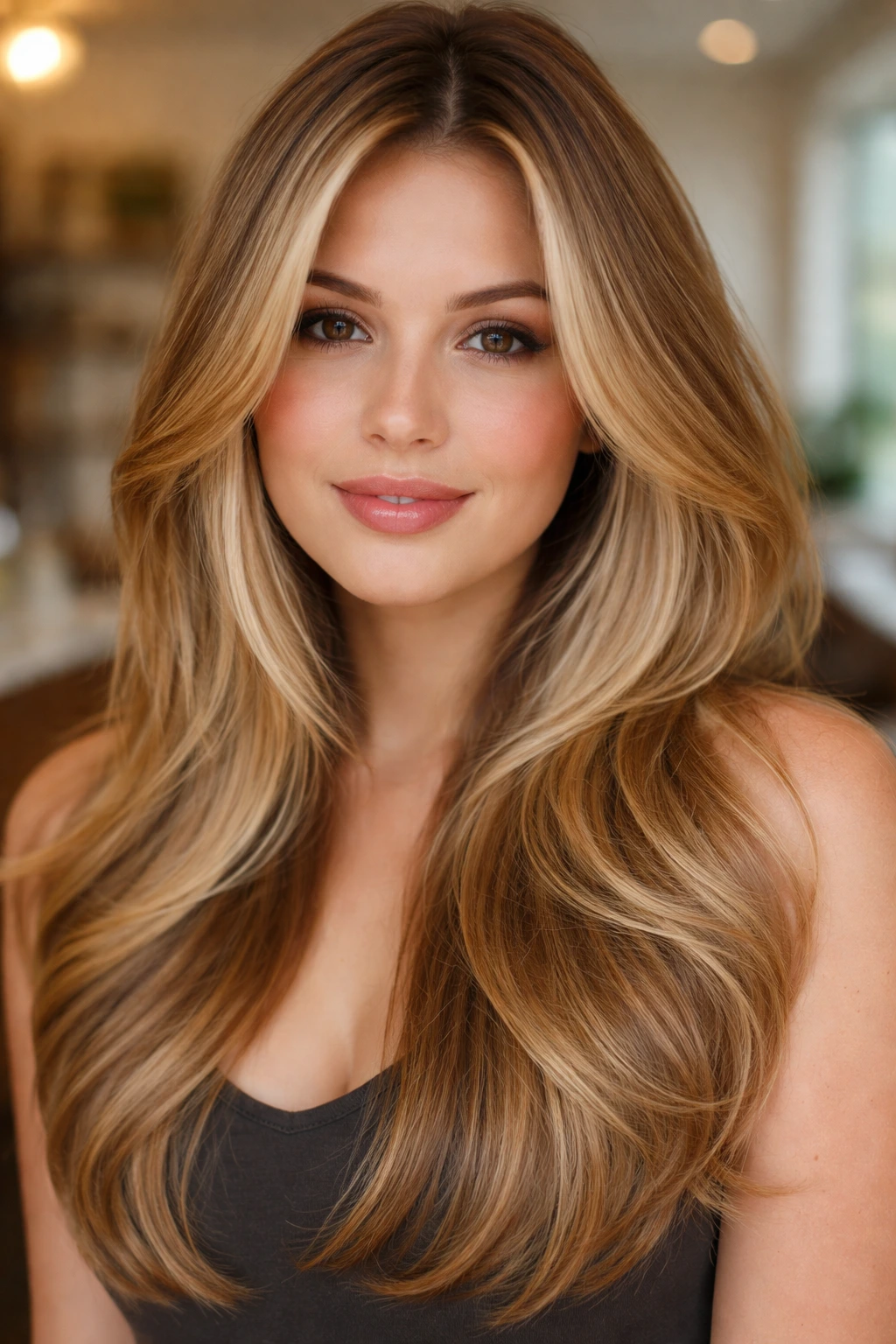
A face frame is only as good as the cut underneath it. If the layers are too blunt, the highlight sits on top like an accent stripe. If the layers are long and soft, the color follows the shape of the hair and looks much more natural. For round faces, that long-layered structure is the difference between flattering and merely bright.
The highlight should usually begin around the level where the first front layer falls, then continue into the longer lengths below it. That creates a taper. You want the eye to move down the section, not stop at the cheek. A good cut gives the blonde somewhere to land.
This is one of the few looks where the haircut and the color really have to talk to each other. If you’re growing out bangs, for instance, the face frame can help bridge the gap. If you already have long curtain layers, the blonde can sharpen their shape. Either way, the front should feel soft, stretched, and a little loose around the face.
18. Soft Ombré With Bright Front Pieces
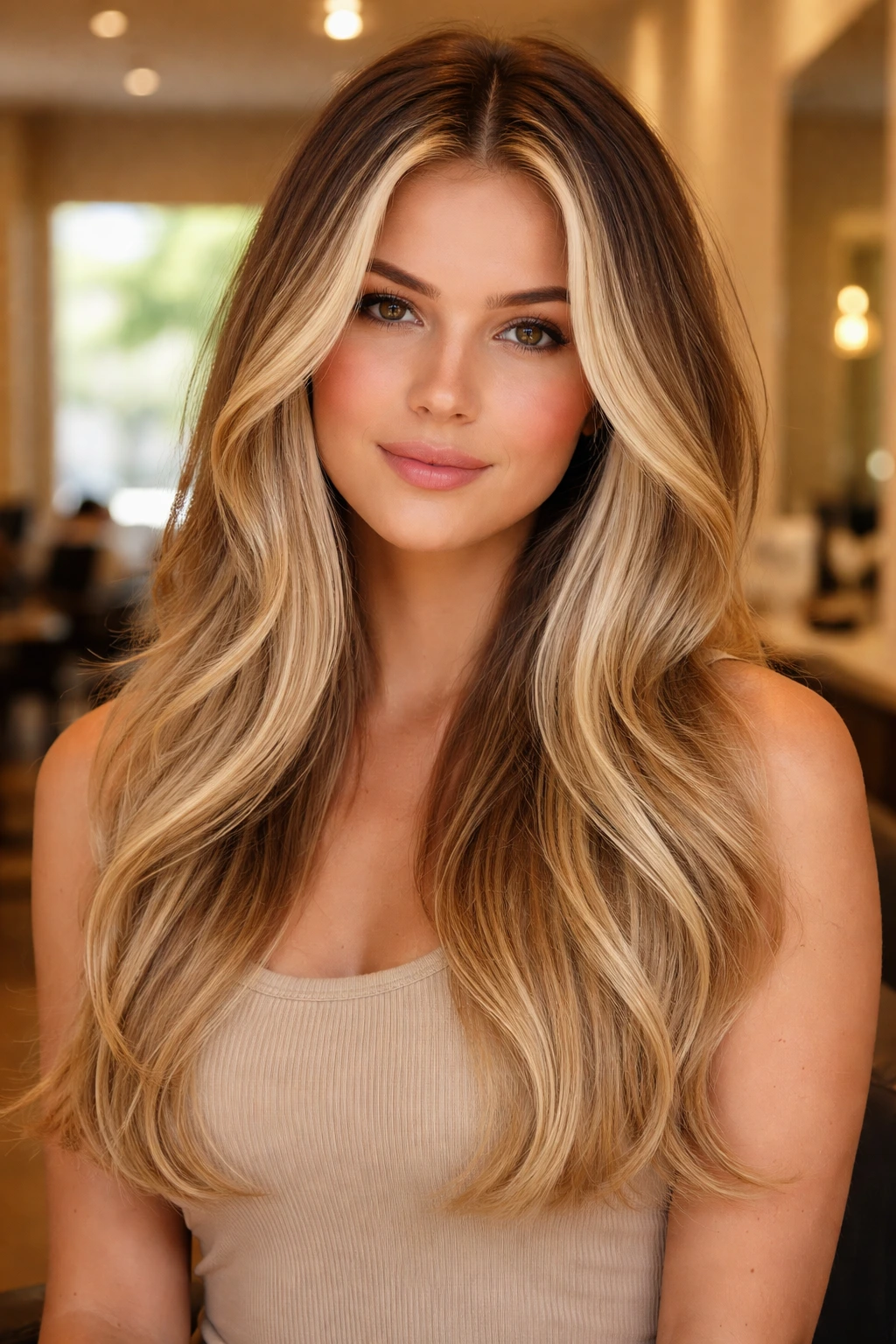
Ombré gets a bad reputation when it’s too flat, but it can be excellent for round faces when the front pieces are kept brighter than the rest. Unlike a global blonde refresh, this keeps the eye moving from bright front to softer lengths. That motion helps lengthen the face without making the whole head look wide.
The best version of this look has a gentle transition through the mids, then a cleaner lift around the face. Think of the front pieces as the anchor and the ombré as the background. If the background is too bright, the face frame loses its job.
This is a strong option if you want lower maintenance. Because the transition is softer, regrowth is less obvious, and the front still does the framing work even as the root grows out. It suits long hair especially well, since the extra length gives the ombré room to fade in a believable way.
19. Lived-In Rooted Blonde
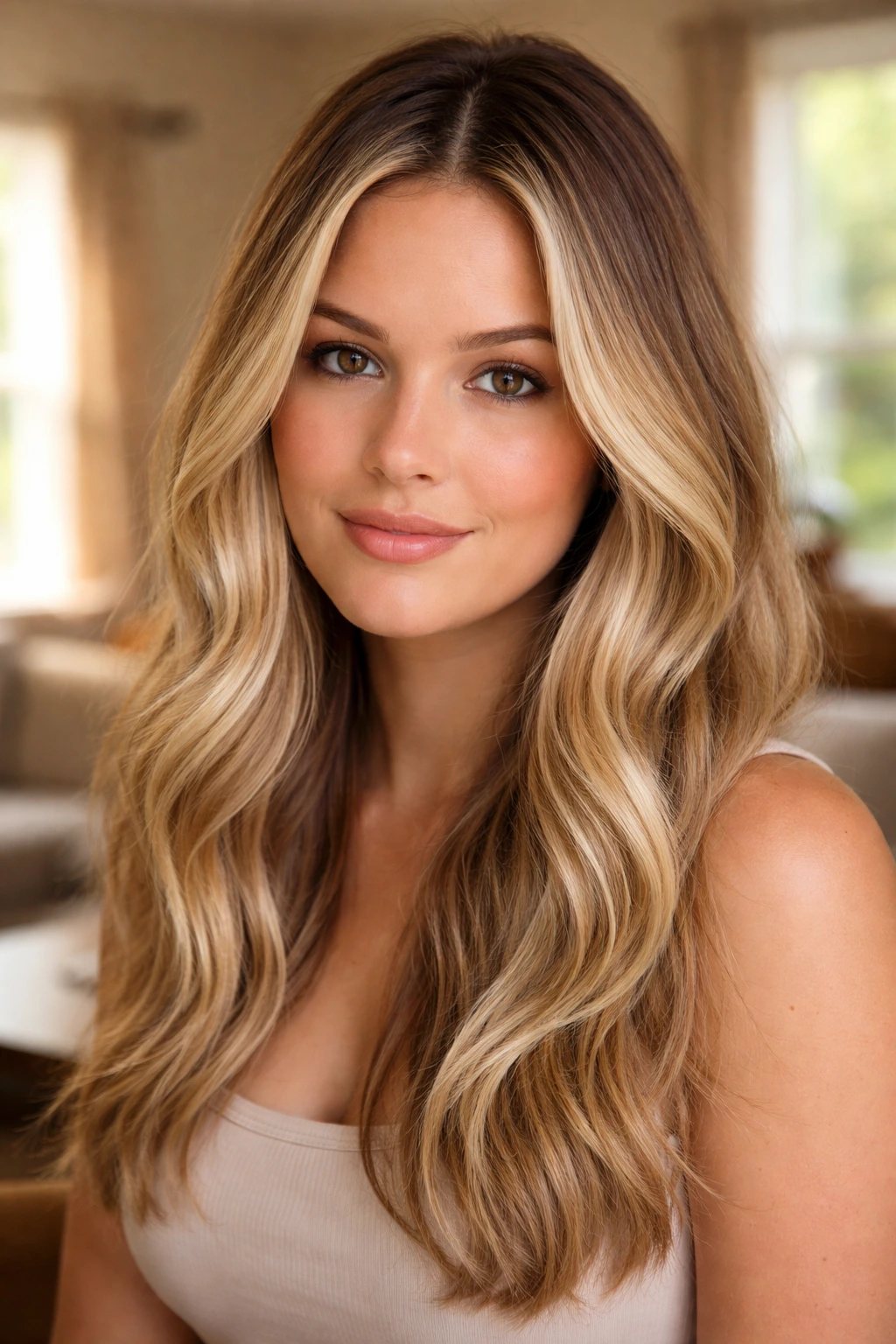
A rooted blonde can sound too casual, but when it’s done well, it gives round faces a nice built-in frame. The darker root adds shape right where the hair meets the scalp, and the blonde drops lower around the cheek and jaw. That contrast quietly narrows the face.
What to Ask For
Ask for a root shadow that stays about 2 to 3 inches deep, then soften the blonde around the front layers. The front pieces should still be bright enough to matter, but the rooted base keeps them from looking like one solid bleach strip. A little depth at the crown also helps the head look taller.
This is a good pick if you wear your hair in loose waves or low buns most of the time. The root gives the color some grit, which sounds odd, but it keeps the style from looking too delicate. If your natural color is already medium brown or dark blonde, this may be the easiest route to a flattering grow-out.
20. Interior Lights For Movement
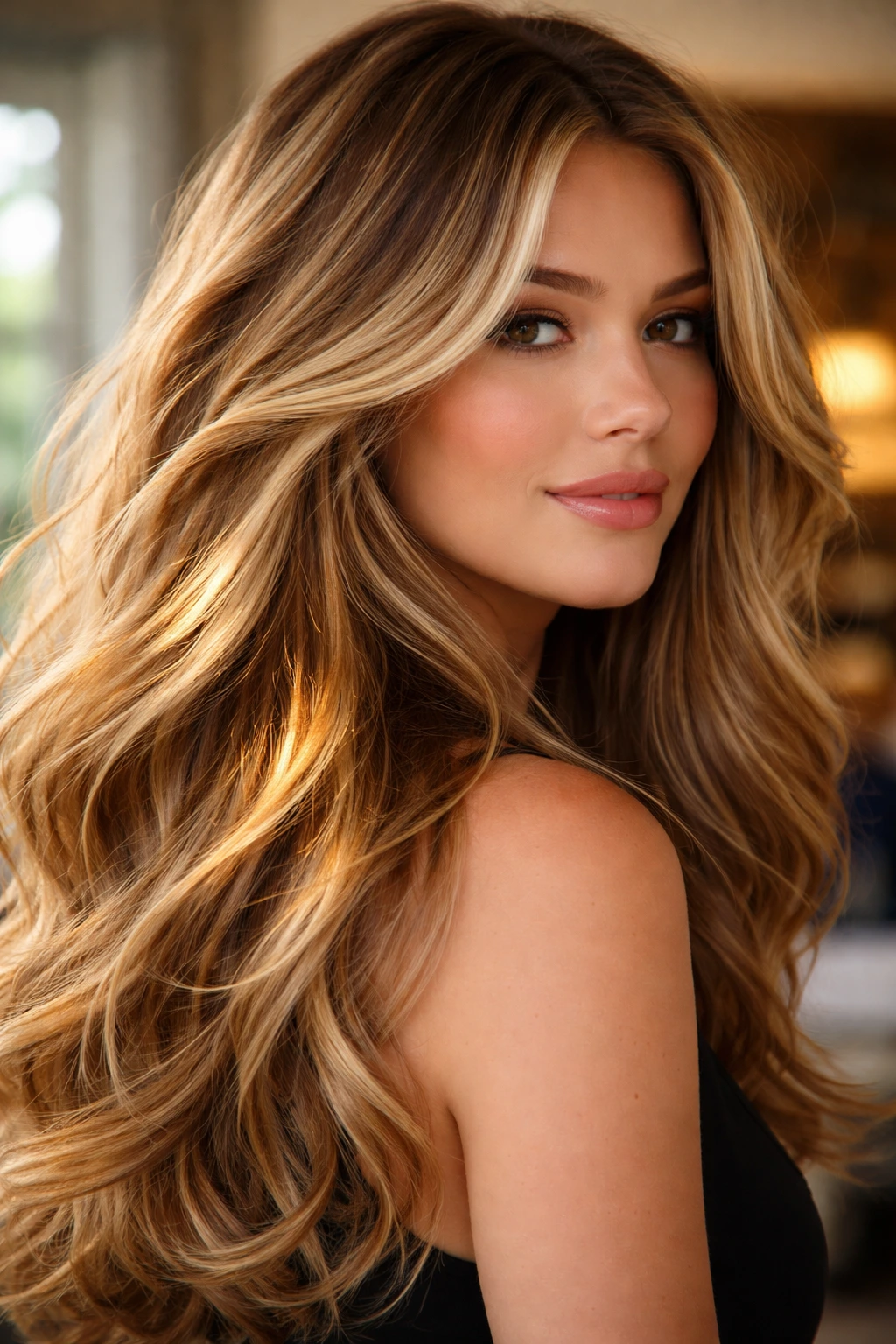
Most people only think about the outside of the hair, but interior lights can make a round face look longer by adding motion inside the shape. That hidden brightness stops the style from reading like a helmet. It keeps the outer frame light while the inner sections break it up.
I like this approach on thick hair. Heavy hair can sit in one solid mass, and that’s not ideal when you want a round face to look a little narrower. Interior lights tucked into the mid-lengths and around the crown create flickers of blonde every time the hair moves. The face frame still matters, but it no longer has to do all the work.
This can be combined with babylights or a money piece, and that’s where it gets useful. The front gives you the shape, the interior adds motion, and the ends keep the whole thing from turning boxy. It’s a more thoughtful way to wear blonde, and honestly, it usually looks better than loading all the brightness into the front two inches.
21. Wide Curtain Fringe Glow
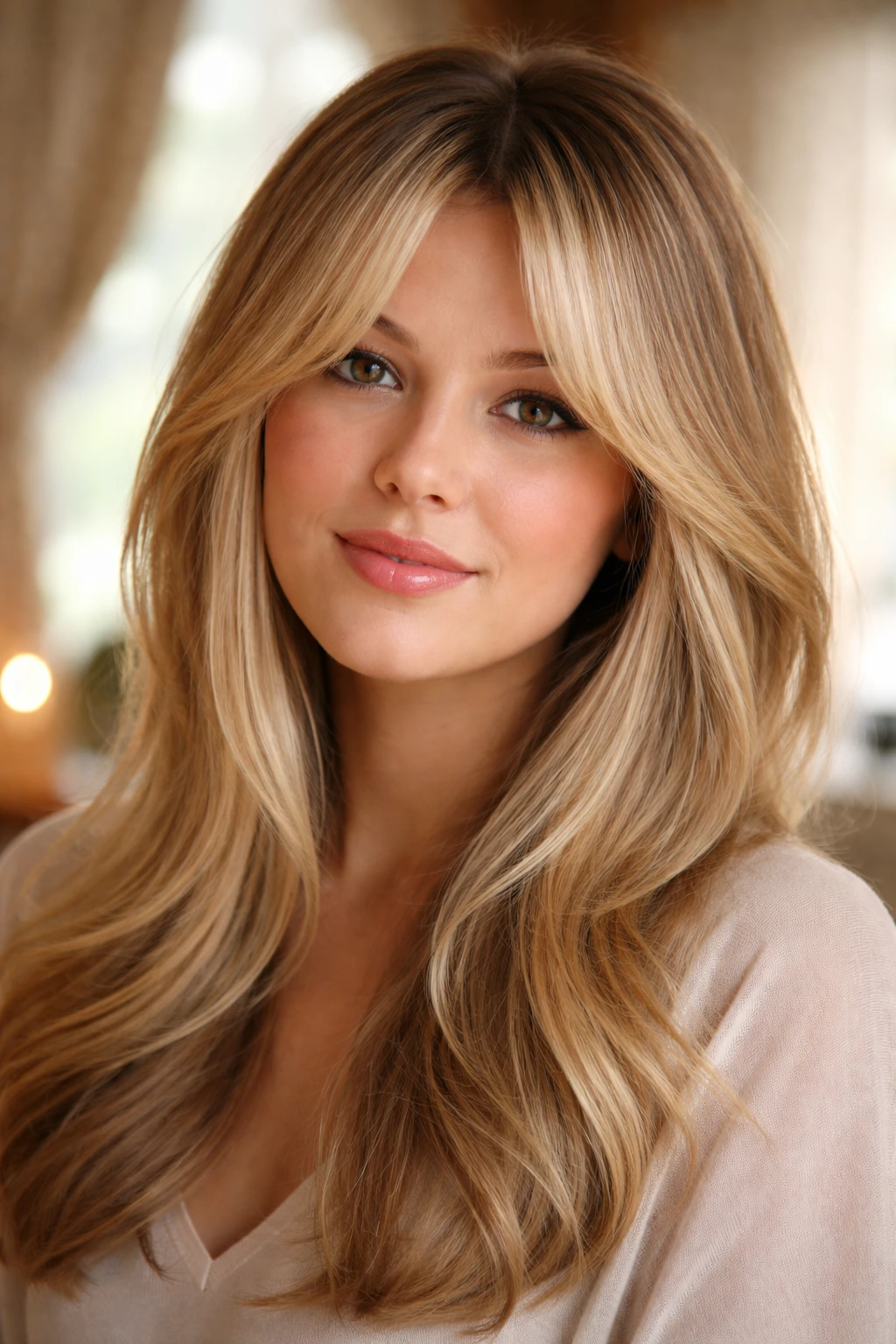
Curtain fringe and round faces are old friends for a reason. The fringe breaks up the forehead width, and the blonde glow around it keeps the face open. The trick is not to over-light the entire fringe zone. You want a soft halo, not a white band across the top.
The brightest bits should sit where the fringe bends away from the center part and drops toward the cheekbones. That gives the eye a diagonal path and keeps the face from looking squat. If the fringe is long enough to graze the jaw or collarbone, even better. The longer sweep helps elongate the face.
How to Style It
Blow the fringe away from the face with a medium round brush, then let the ends curve softly. When the blonde catches a bend instead of lying flat, the whole style feels lighter. A round face benefits from that airiness because it keeps the front from looking packed in.
22. Beige Blonde With a Lifted Front and Soft Root Melt
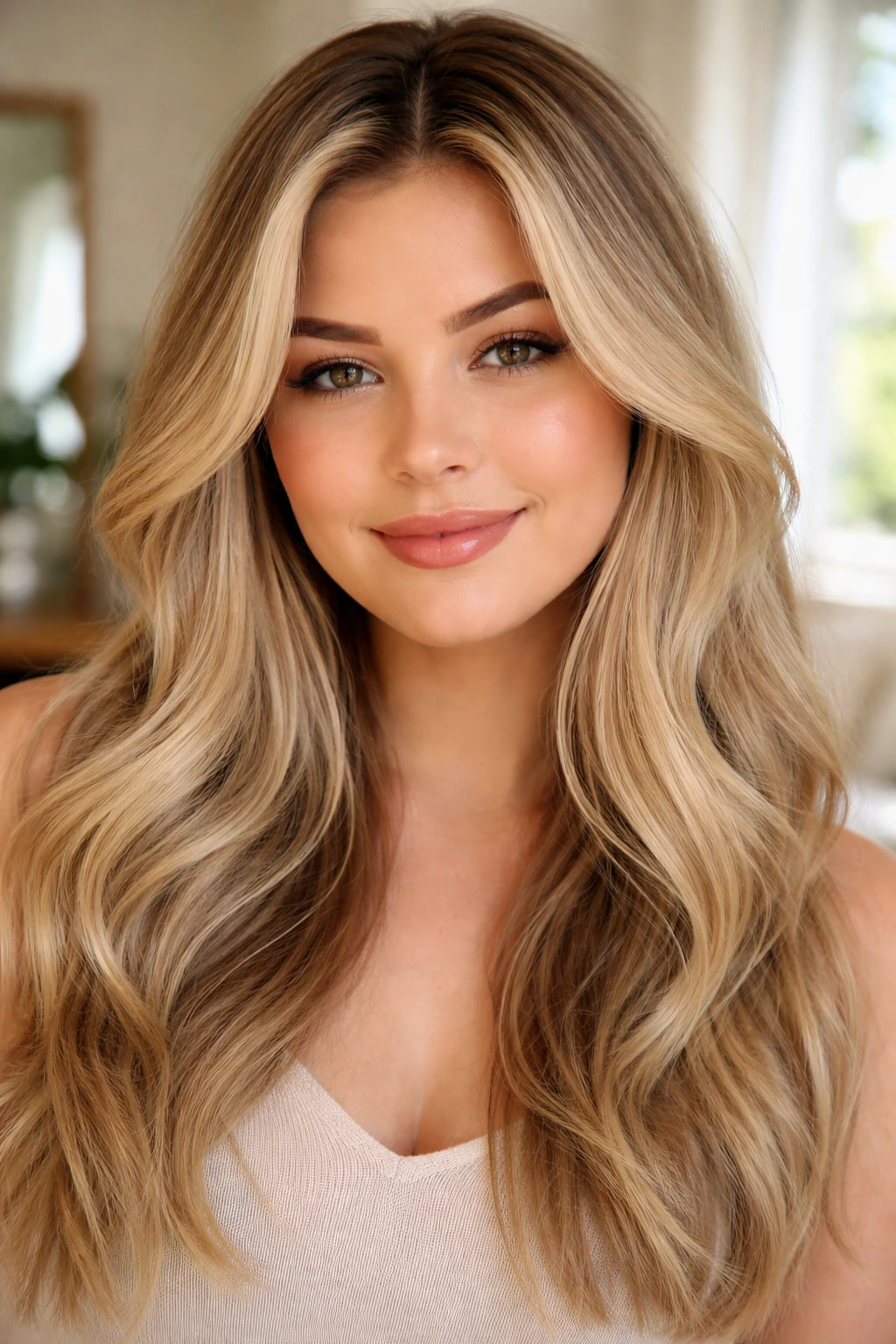
This is the cleanest all-around choice if you want blonde that flatters without making a big speech about itself. The front stays lifted, the root stays soft, and the beige tone keeps the color wearable. On a round face, that combination is hard to beat.
A good version usually has the brightest pieces sitting just outside the part and tapering down past the chin, while the root stays one or two levels deeper. That small shadow gives the face frame shape. The beige finish keeps the whole thing from looking yellow, icy, or too high-contrast.
If you want one simple salon request, make it this:
- Brighten the front around the temples and cheekbones.
- Keep the root slightly shadowed for depth.
- Use beige or pearl toner instead of a flat gold.
- Leave a few softer ribbons behind the face frame so the blonde doesn’t stop at the cheeks.
This is the kind of blonde that tends to age well on the face, and I mean that in the best way. It doesn’t trap the eye in one spot. It guides it.
A round face looks best when the color has shape, not noise. That’s the real thread running through every style here, and it’s why the right highlight placement matters more than choosing the brightest blonde on the chart.
