



Lilac on brown hair looks softer than people expect, and that’s the point. Brown gives purple its best backdrop: enough depth to keep the color grounded, enough warmth or coolness to change the mood completely, and enough contrast to make even a thin ribbon of lilac show up with a little attitude. Done well, it doesn’t look costume-y. It looks deliberate.
Not neon. Not flat pastel either.
What makes lilac highlights for brown hair so appealing is the range. A chocolate base can hold a smoky lavender veil, a chestnut brown can wear a dusty mauve ribbon, and a dark espresso brunette can go all the way into silver-lilac if the hair is lightened cleanly first. The catch is that lilac is not a forgiving color when the bleach job is sloppy. Uneven lift, brassy patches, and dry ends will show up fast, especially once the toner starts to fade and the pieces drift toward gray, pink, or dull beige.
That’s also why placement matters so much. A face frame can brighten the whole haircut. Hidden panels can keep the look quiet until the hair moves. Babylights can add shimmer without looking striped, and chunkier pieces can make curls or waves read from across the room. Brown hair gives you room to play, which is half the fun.
1. Face-Framing Lilac Ribbons
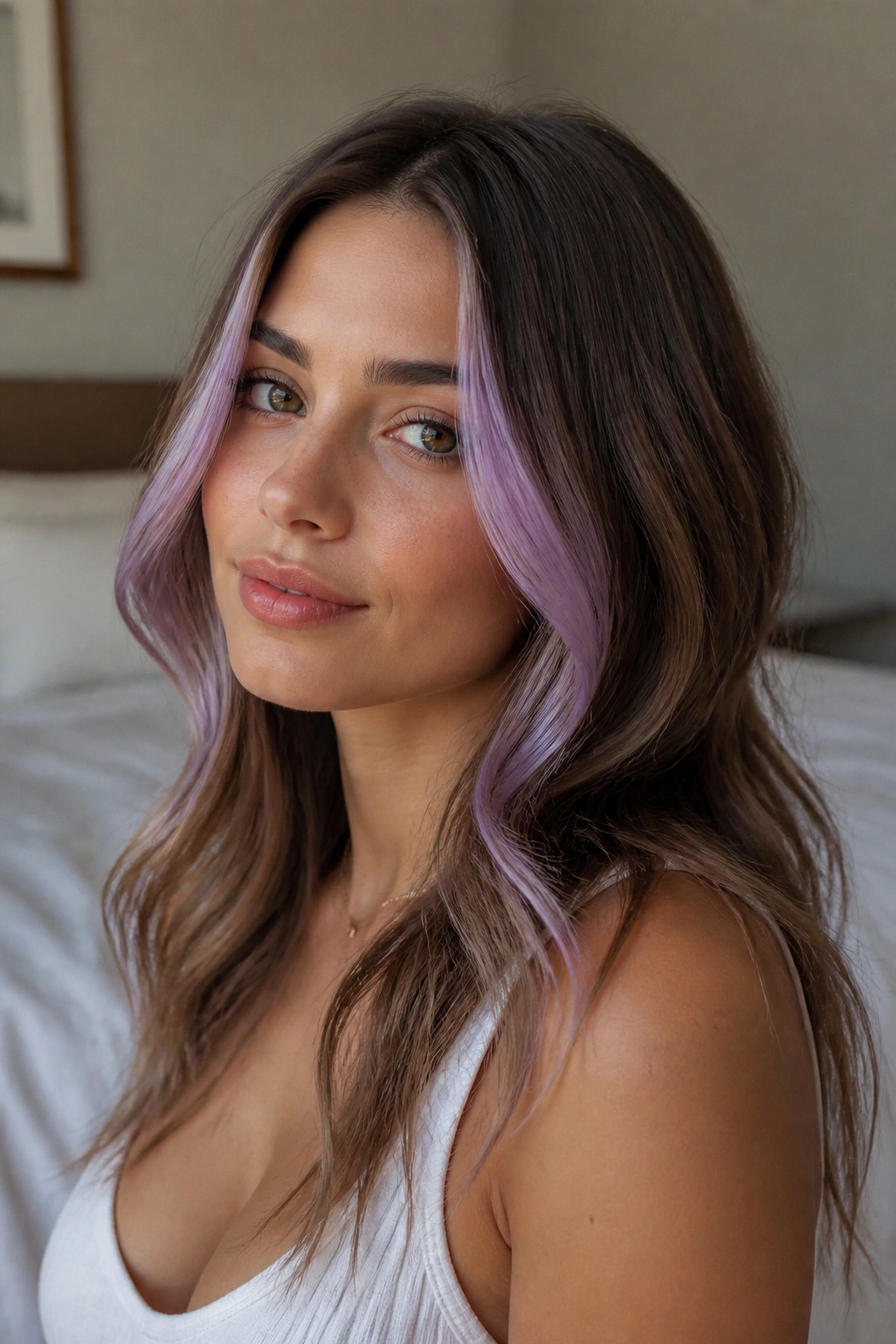
Lilac framing pieces near the face are the easiest way to make brown hair look fresher without changing the whole head. They pull attention to the cheekbones and eyes, and they give you that little hit of color every time you tuck your hair behind your ear. On medium brown or chestnut hair, I like a ribbon that starts a few inches below the root and softens toward the ends.
Why It Works
The front sections catch the most light, so even a narrow panel reads clearly. That matters if you want lilac without a full pastel commitment. The rest of the brown base stays in charge.
Ask for the lift to be clean and even, then tone with a soft lilac or lavender gloss. If the front pieces are too yellow, the lilac will go muddy fast. If they are lifted to a pale blond first, the color stays airy and fresh for longer.
- Best on straight, wavy, and softly curled hair.
- Looks strongest on shoulder-length cuts and long layers.
- Needs a trim every 8 to 10 weeks so the front pieces do not fray.
- Works well with a half-up style, where the lilac sits right at eye level.
My favorite part: this is the kind of placement that looks polished on a workday and playful on a weekend. That’s a rare combo.
2. Soft Lilac Balayage Through Milk-Chocolate Brown
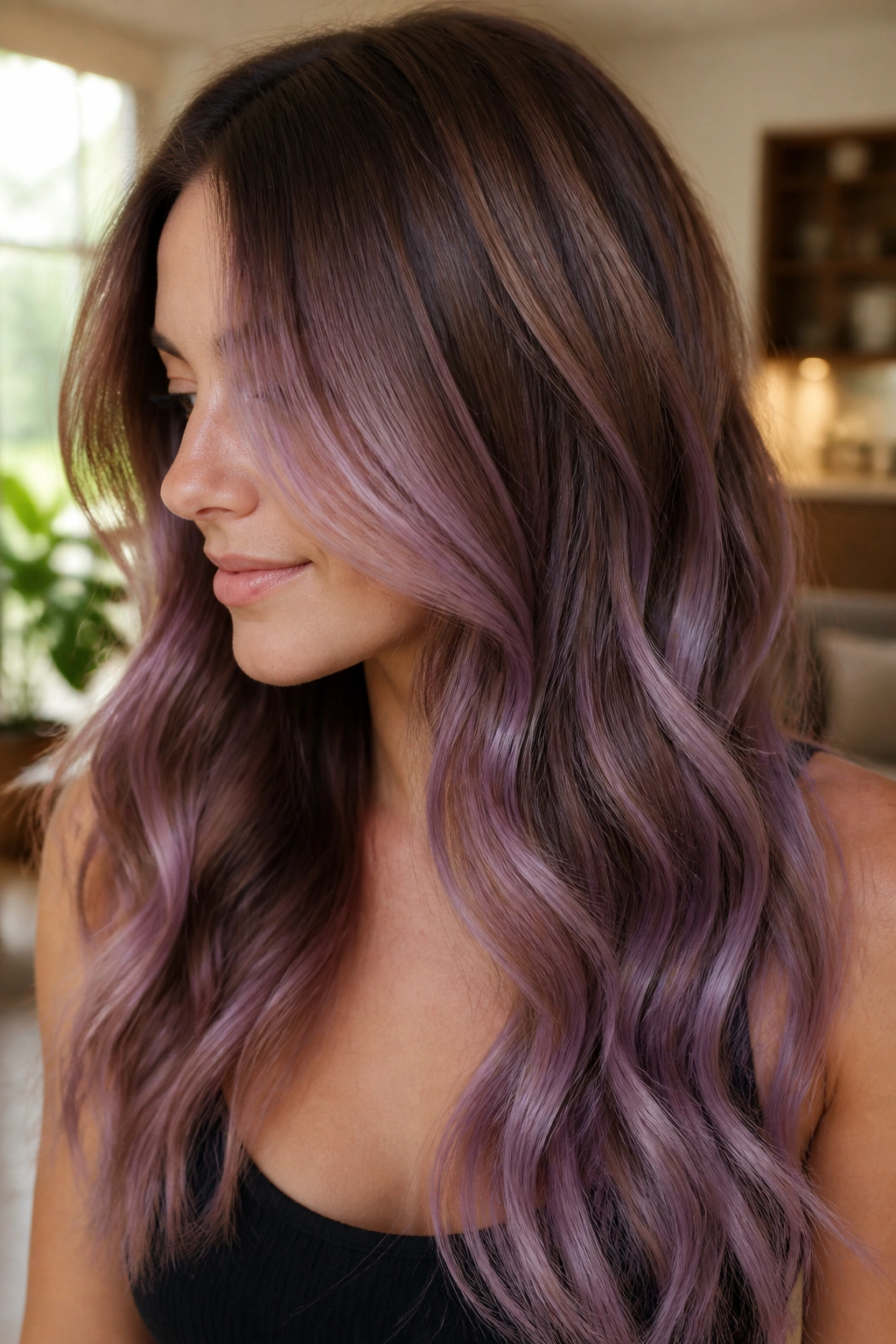
Soft lilac balayage is the least fussy way to wear lilac highlights for brown hair. The color is painted in sweeping ribbons instead of packed into foils, so the result feels melted rather than striped. On milk-chocolate brown, the contrast is gentle enough to stay wearable but still strong enough to read as color, not just shine.
The trick is keeping the lilac diffused. You want the shade to appear in the mid-lengths and ends, with a few lighter touches near the top layers so the whole style does not look heavy. When the colorist feathers the transition well, the grow-out is kinder too. That matters more than people admit.
Balayage like this suits wavy hair best, because the bends break up the color and show the different tones as the hair moves. Straight hair can wear it too, but the placement needs more precision or it will look too uniform. On a layered cut, the lilac can hide in some sections and flash in others, which is half the charm.
If you want one look that feels soft, grown-up, and easy to live with, this is the one I’d start with.
3. Peekaboo Lilac Layers Under Dark Brown Hair
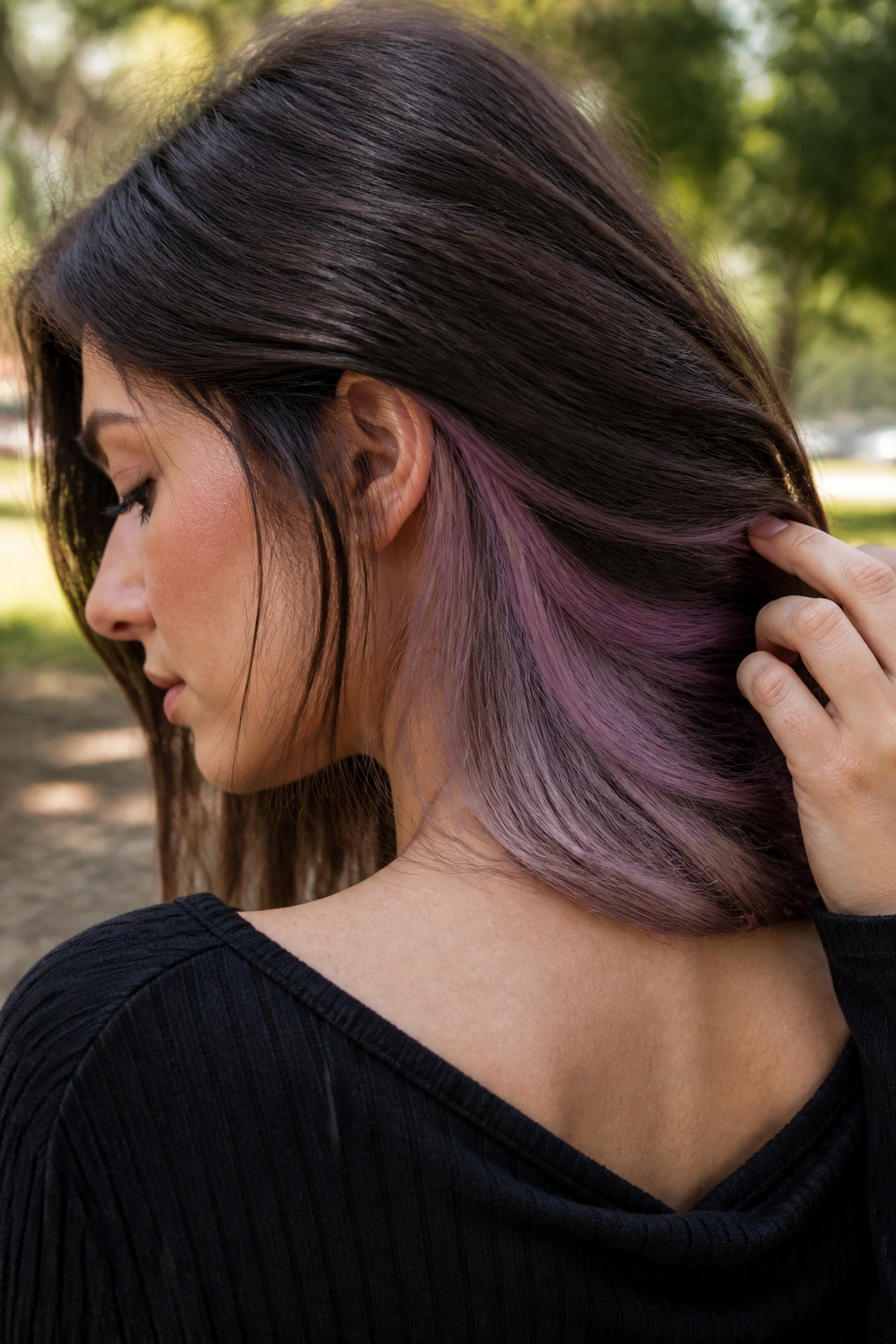
Want the color hidden until your hair swings? Peekaboo lilac is the answer. The top layer stays dark brown, while the lighter lilac pieces sit underneath, usually around the nape, the inner sides, or the lower back section. You catch it when you tuck your hair up, braid it, or turn your head. Nice little surprise.
What Makes It Different
Because the lilac lives under the top layer, you do not need every strand to be perfect. That makes this a smart choice for anyone nervous about maintenance or office dress codes. The outer brown layer also protects the hidden color from constant sun and heat, which helps the lilac hang on a bit longer.
This look needs some structure in the cut. Long layers, a lob with movement, or a heavy curtain of hair all help the hidden color peek through naturally. If the hair is blunt and heavy, the lilac can disappear too much.
The best part is how it changes with styling. Wear it down, and it stays subtle. Pull it into a ponytail or loose bun, and suddenly the lilac pops out in a much louder way. That’s not a flaw. It’s the whole point.
4. Smoky Lilac Money Piece
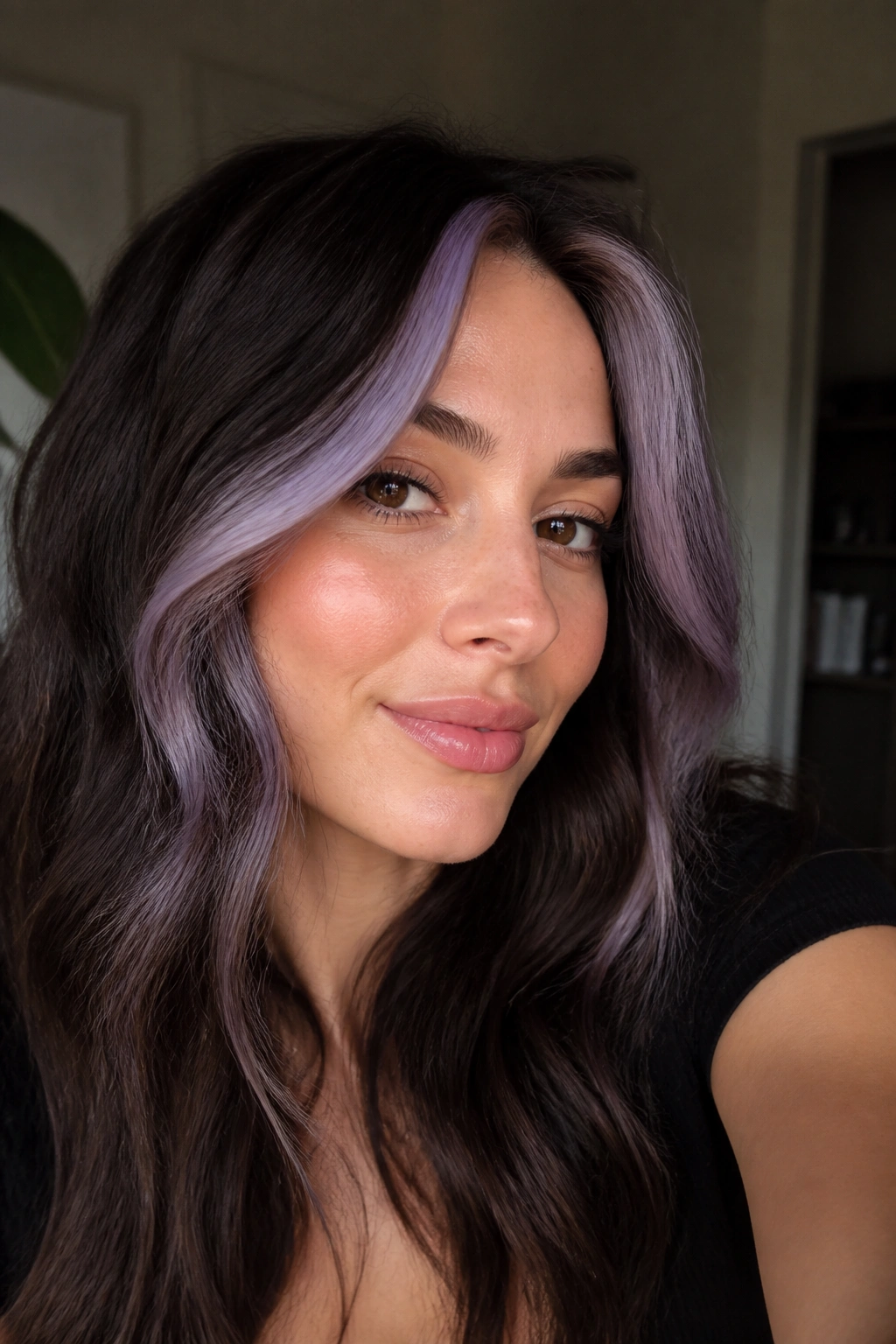
A smoky lilac money piece can wake up dark brown hair faster than a full head of highlights. The front sections are brighter, sometimes almost silver at the base, then washed with a muted lilac toner that keeps the color cool instead of candy-like. It has edge, but not in a loud way.
Picture a rich espresso base with two bright curtains of color around the face. That contrast is doing a lot of work. The rest of the hair can stay dark and glossy, which makes the lighter front sections look sharper by comparison.
This style tends to flatter straight hair and smooth blowouts because the clean lines show off the placement. On curly hair, it still works, but the section needs to be wide enough that the color doesn’t vanish into the curl pattern. If the money piece is too thin, you lose the effect.
A smoky toner is useful here because pure pastel lilac can skew too sweet against a dark base. The smoky note gives the whole style a little grit. I like that. It keeps the look from drifting into bubblegum territory.
5. Chunky Lilac Streaks on Curly Brown Hair
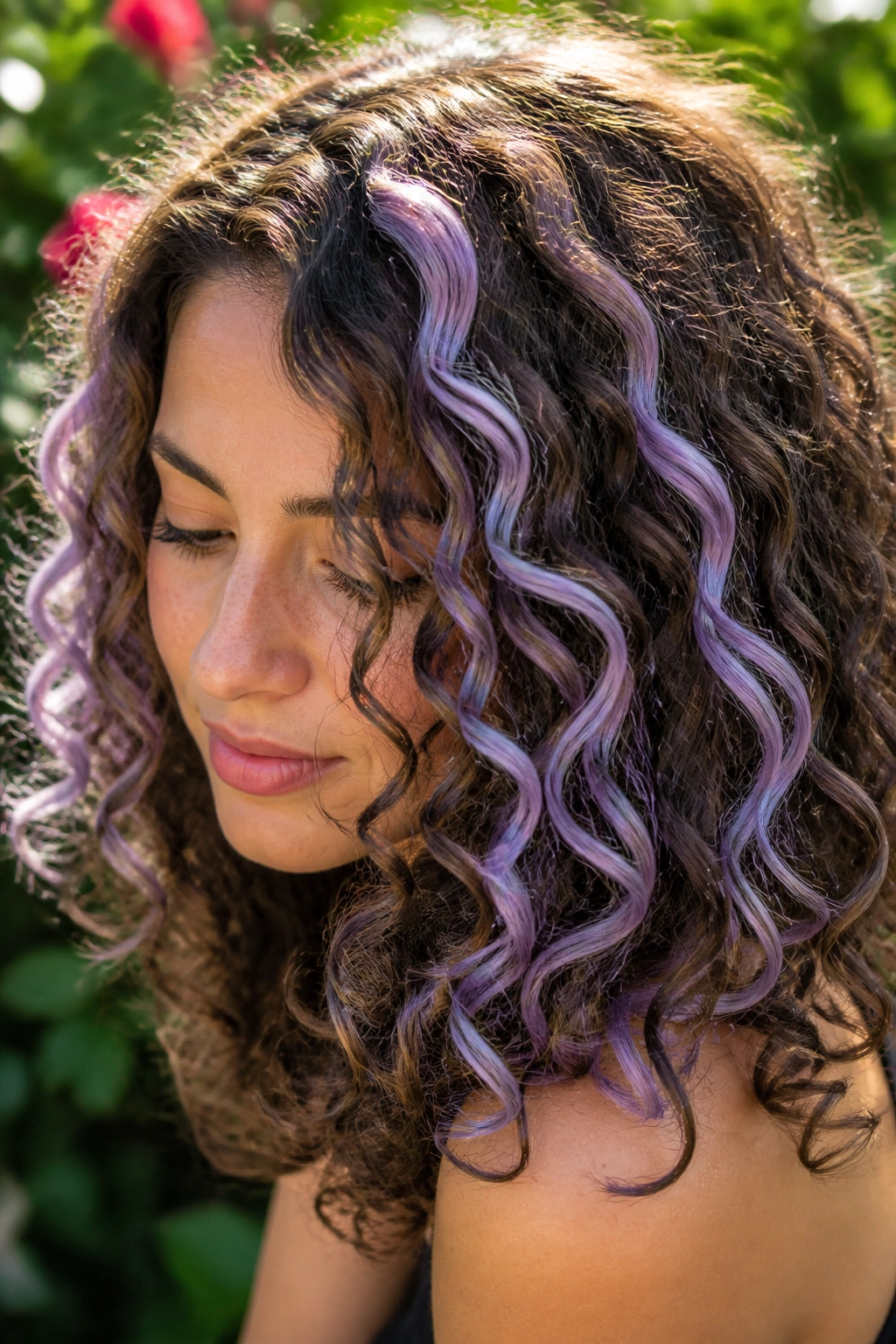
Chunky lilac streaks are bold in the best possible way on curly brown hair. Curly texture breaks up the color, so those larger ribbons do not read as flat bands. They catch on the bends and coils, which gives the lilac more movement and helps it show even when the hair is not perfectly styled.
How to Get the Most From It
The sections need to be wide enough to survive curl shrinkage. That sounds obvious, but it gets missed all the time. A narrow strip on stretched hair can disappear once the curls spring back, and then the whole idea falls apart.
Ask for alternating placements rather than evenly spaced stripes. That keeps the curl pattern from looking too lined up. It also makes the grow-out look more natural, which matters because chunky pieces will announce themselves more than babylights ever could.
- Best on curly bobs, shags, and long layered curls.
- Stronger lilac tones hold up better than pale pastel on textured hair.
- Diffused drying helps show the color without frizz stealing the spotlight.
- A curl cream with low hold keeps the pieces separated.
A blunt truth: this is not the quiet choice. If you want subtle, skip it. If you want personality, curly hair can wear chunky lilac better than sleek hair ever could.
6. Dusty Lilac Melt From Mid-Lengths to Ends
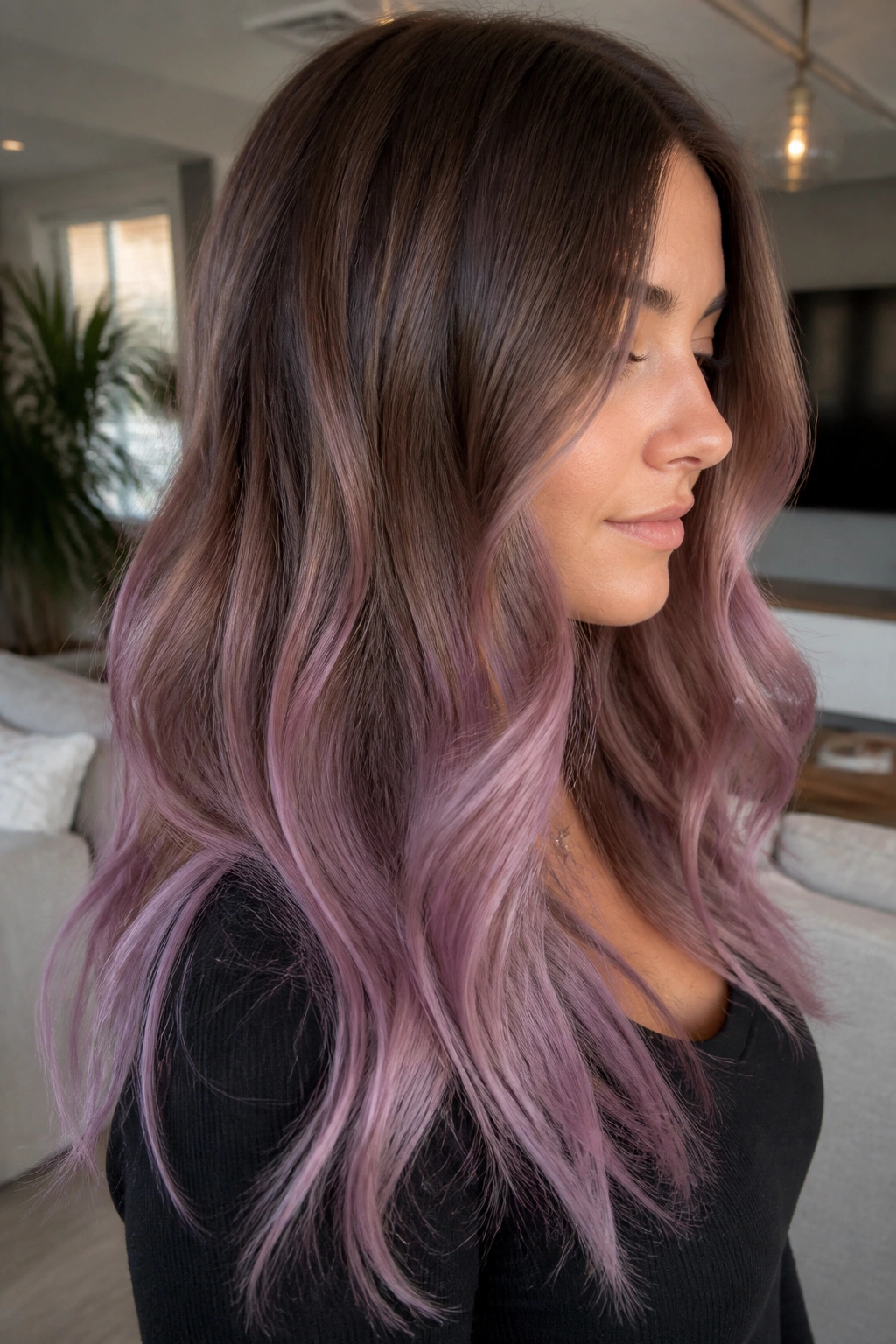
Dusty lilac is one of my favorite shades on brown hair because it behaves like a grown-up pastel. It has enough gray in it to keep the color muted, which means it sits comfortably against warm brunette bases instead of fighting them. A melt from mid-lengths to ends keeps the root area soft and lets the lilac get lighter as it moves down the hair.
That fading effect matters. Rather than a hard line where brown stops and lilac starts, the two colors blur together for several inches. The hair looks softer, and the color reads more expensive, even if that phrase gets used too casually. Here, it actually means something.
This style plays well with waves and bends, because the lighter ends catch the eye while the darker mid-lengths provide depth. On very long hair, the melt can start low enough that the top half stays mostly brown. On shoulder-length hair, the color appears faster and feels more playful.
If you’ve ever liked pastel color but worried it might fight your wardrobe, dusty lilac solves a lot of that. It works with black, cream, denim, and the usual everyday clothes people actually wear.
7. Espresso Brown With Thin Lilac Babylights
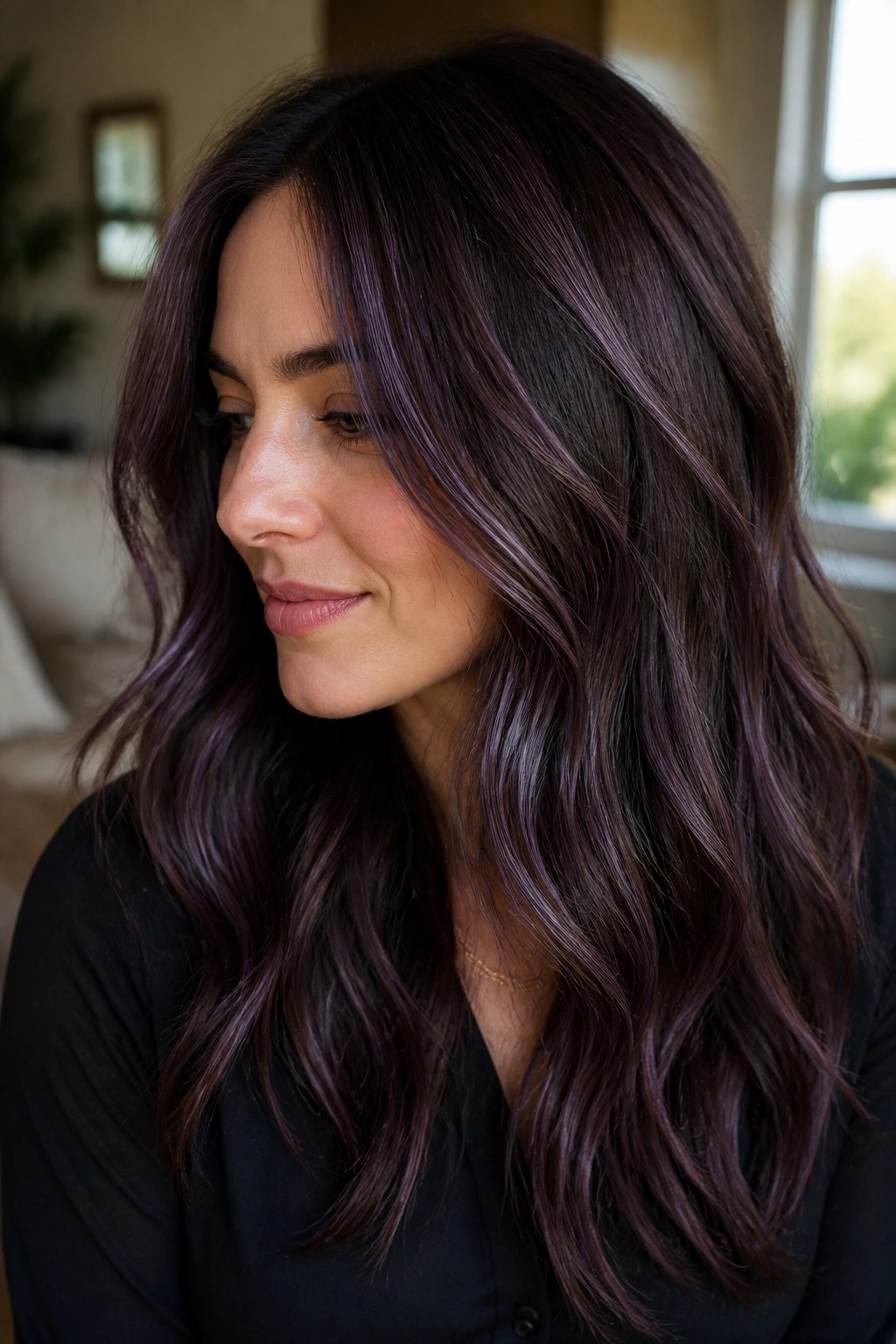
Babylights are the quietest way to work lilac into espresso brown hair. The sections are tiny, so the color looks like a shimmer instead of a stripe. That makes this option ideal if you want dimension first and color second.
Why It Stands Out
Thin lilac babylights mimic the way natural hair catches light in fine streaks, but with a cooler twist. On dark brown hair, that slight violet sheen can be enough to change the whole feel of a cut. It softens heavy-looking lengths and stops the color from feeling one-note.
The best placement is scattered, not overly neat. A good colorist will vary the spacing so the lilac pieces do not line up like piano keys. When done badly, babylights can look busy. When done well, they simply make the hair look richer.
A gloss on top helps the lilac stay translucent instead of chalky. Too much pigment will erase the subtle effect. Too little, and the pieces may fade to plain blond too fast. That balance is the whole game.
If you wear your hair up often, this is a smart route. The lilac shows just enough at the surface to keep the look interesting, but it doesn’t demand attention every second.
8. Orchid Lilac Highlights on Warm Brunette Hair
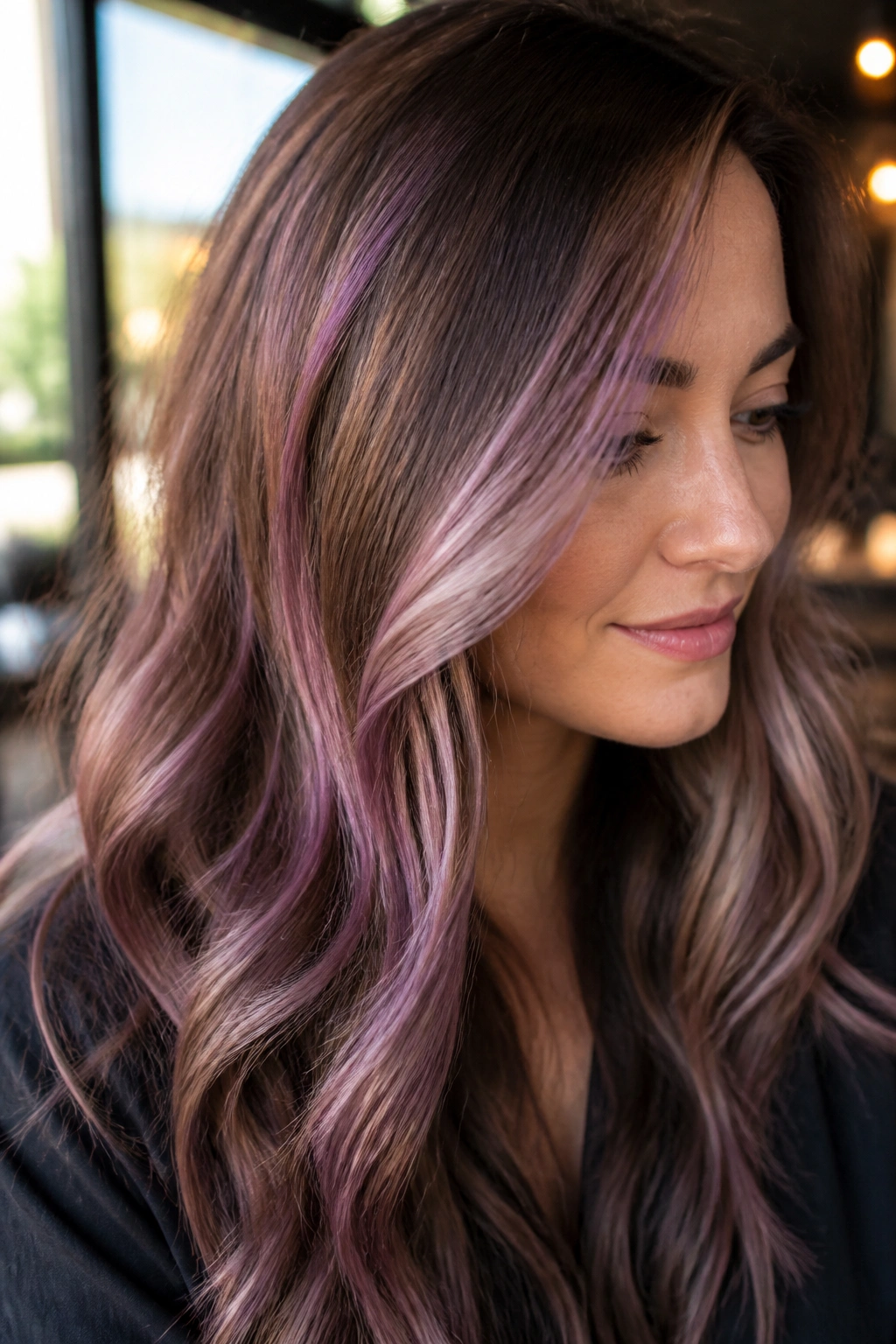
Orchid lilac leans brighter and a touch pinker than dusty lilac, which makes it a strong match for warm brunette hair. The warmth in the brown base keeps the orchid from looking icy, and the lilac pieces help the overall color feel more polished. It’s a good middle ground if you want color that looks intentional, not timid.
Warm brunettes sometimes worry that cool tones will clash with their base. They can, if the toner is too gray. Orchid avoids that problem by bringing in a little more softness. The result sits somewhere between lavender and pale plum, and that range makes it easier on the eye.
This shade tends to look especially good in loose curls or brushed-out waves. The bends let the pink-lilac tones show from different angles, and the warm base underneath keeps the whole thing from turning flat. I’d avoid making every section the same brightness; a little variation gives the orchid room to breathe.
It’s a flattering choice for anyone who likes a visible color shift but does not want the high-contrast feel of silver-lilac. Bright, yes. Harsh, no.
9. Rooted Lilac Ombre on Long Brown Hair
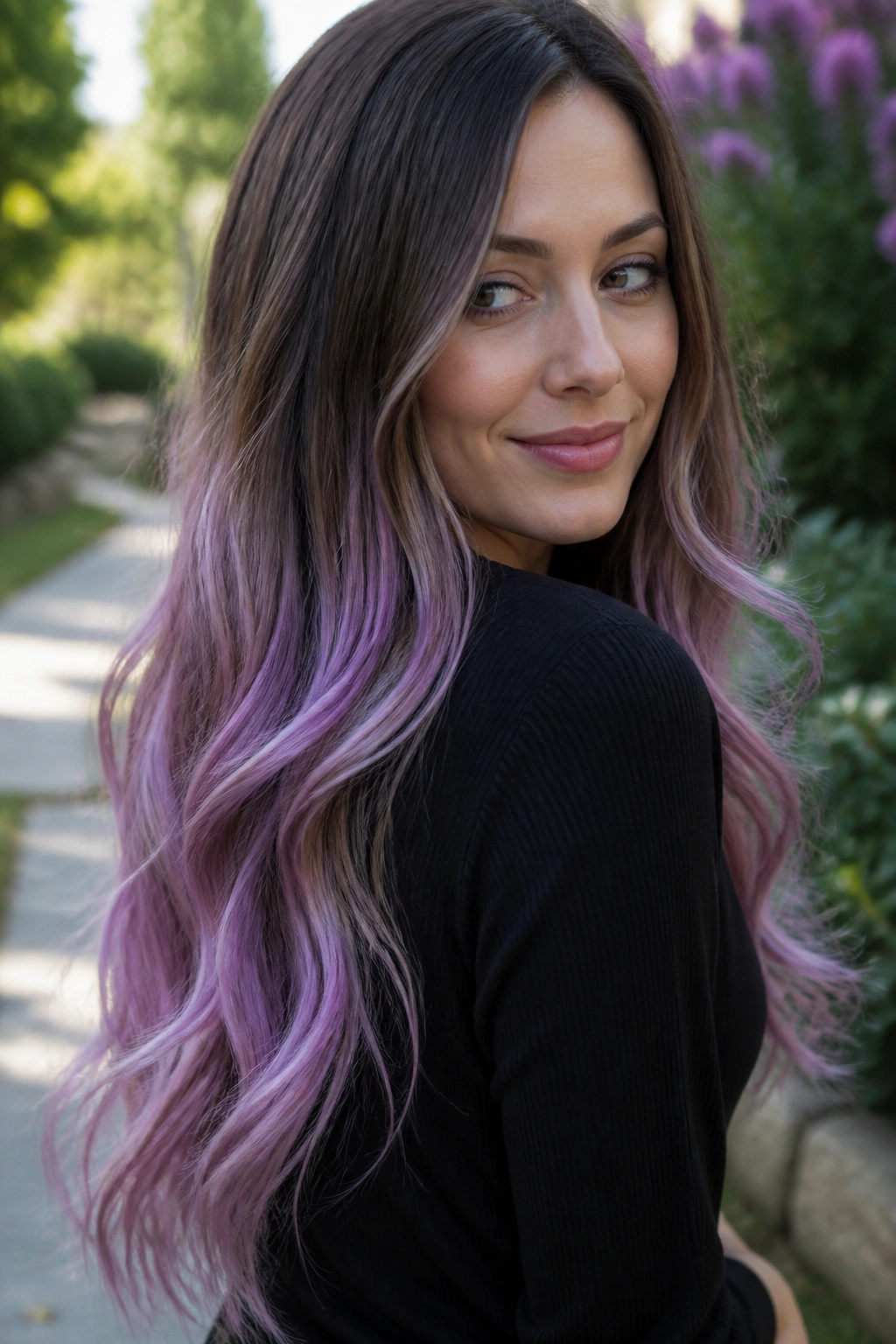
A rooted lilac ombre starts dark at the top and travels into soft lilac through the mid-lengths and ends. On long brown hair, that kind of sweep looks especially good because the length gives the color room to fade properly. Short hair can do ombre too, but long hair gives the gradient a better story.
Is it high maintenance? Not nearly as much as a full pastel head. The root shadow buys you time, and the lilac can fade gracefully instead of exposing a harsh line. That matters if you do not want to sit in the salon chair every few weeks.
The main thing to watch is the transition zone. If the brown stops too abruptly, the style feels blocky. If the fade is too soft, the lilac disappears before it gets a chance to matter. Good ombre lives in that narrow middle space.
I also like this on layered cuts because the layers create little pockets where the lilac can sit at different heights. You get movement without having to overwork the color. It’s a clean solution for long hair that feels a little too heavy on its own.
10. Mushroom Brown and Lilac Veil
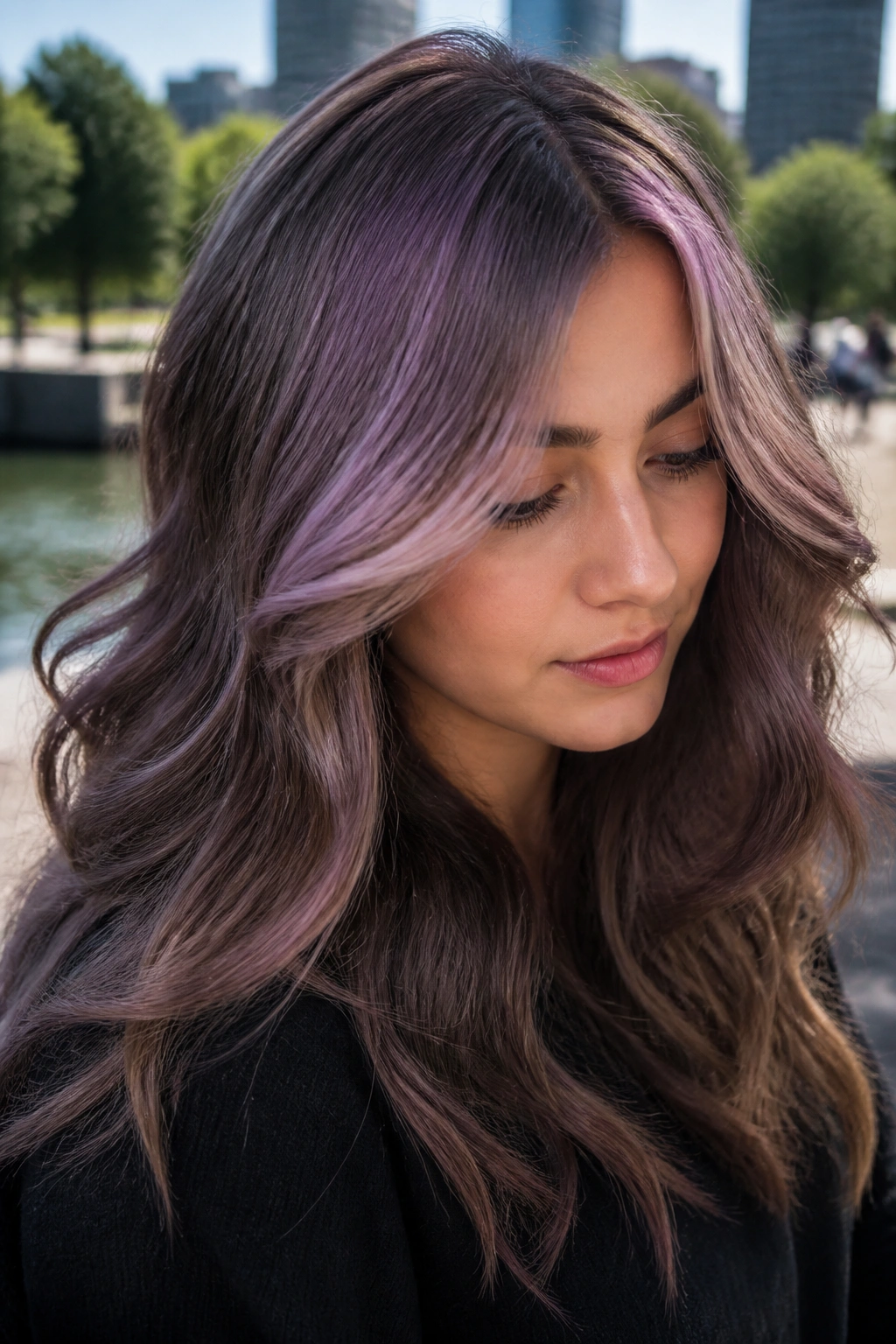
Mushroom brown has an earthy, muted quality that plays nicely with a lilac veil. The brown is cool but not icy, and the lilac is sheer enough to sit on top like a wash rather than a block. If you like your hair color to feel understated at first glance and more interesting up close, this is a strong pick.
What to Watch For
The veil effect works best when the lilac is diluted a bit, often with a clear gloss or conditioner-based toner. Too much pigment and the mushroom brown loses its softness. Too little and the lilac barely shows at all.
This is one of those shades that looks especially good in daylight. Indoors, it may read as soft brown with a faint cast. Outside, the lilac opens up and the cooler tones start to show. That changing behavior is part of the appeal.
- Best for cool brunettes who like muted colors.
- Fits blunt bobs, long lobs, and soft layers.
- Needs gloss refreshes more often than a deeper plum shade.
- Pairs well with minimal makeup and neutral clothing.
The whole point is restraint. If your taste runs toward subtle color that still feels special, mushroom brown with a lilac veil does a lot with a small amount of pigment.
11. Plum-Lilac Ribbon Highlights for Thick Hair
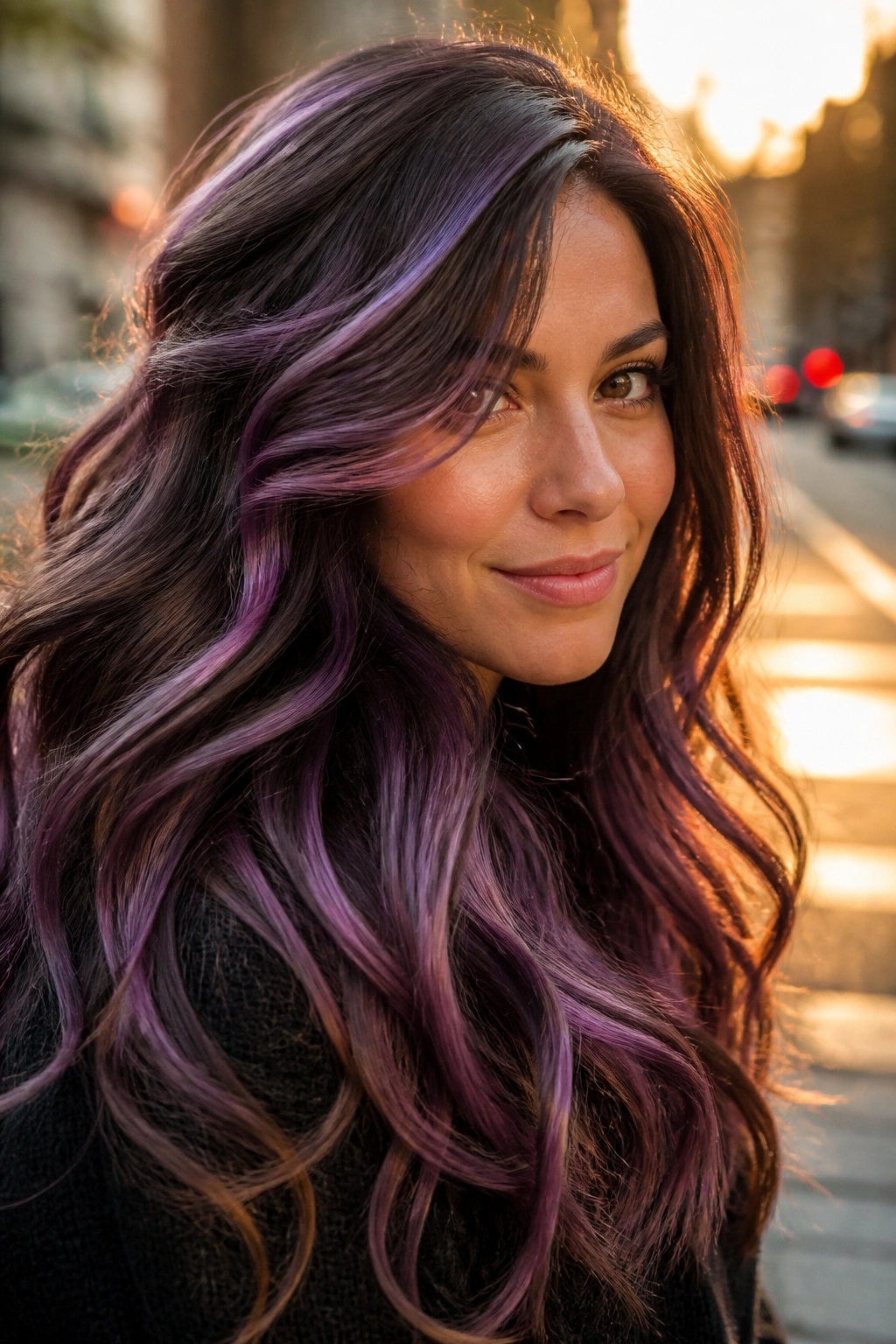
Thick brown hair can handle bolder ribbon highlights, and plum-lilac is a smart way to do it. The deeper purple tone keeps the color from getting lost in the density, while the lilac edge stops it from feeling heavy. On thick hair, skinny pastel pieces often vanish. Wider ribbons solve that.
That said, the sections should still be placed with some air between them. Too much color packed together can make the hair look blocky, especially if the cut is one length. A layered shape gives the ribbons space to move and lets the lilac show from different angles.
I like this shade on people who want purple without drifting into full fashion color. Plum gives the hair depth. Lilac gives it light. Those two pieces keep the look from flattening out.
The finish matters too. A shiny blowout makes the ribboning obvious, while a loose natural wave softens the contrast. Both are good, just different. If you’re the type who likes a hair color that changes with styling, this one has real range.
12. Frosted Lilac Tips on a Wavy Lob
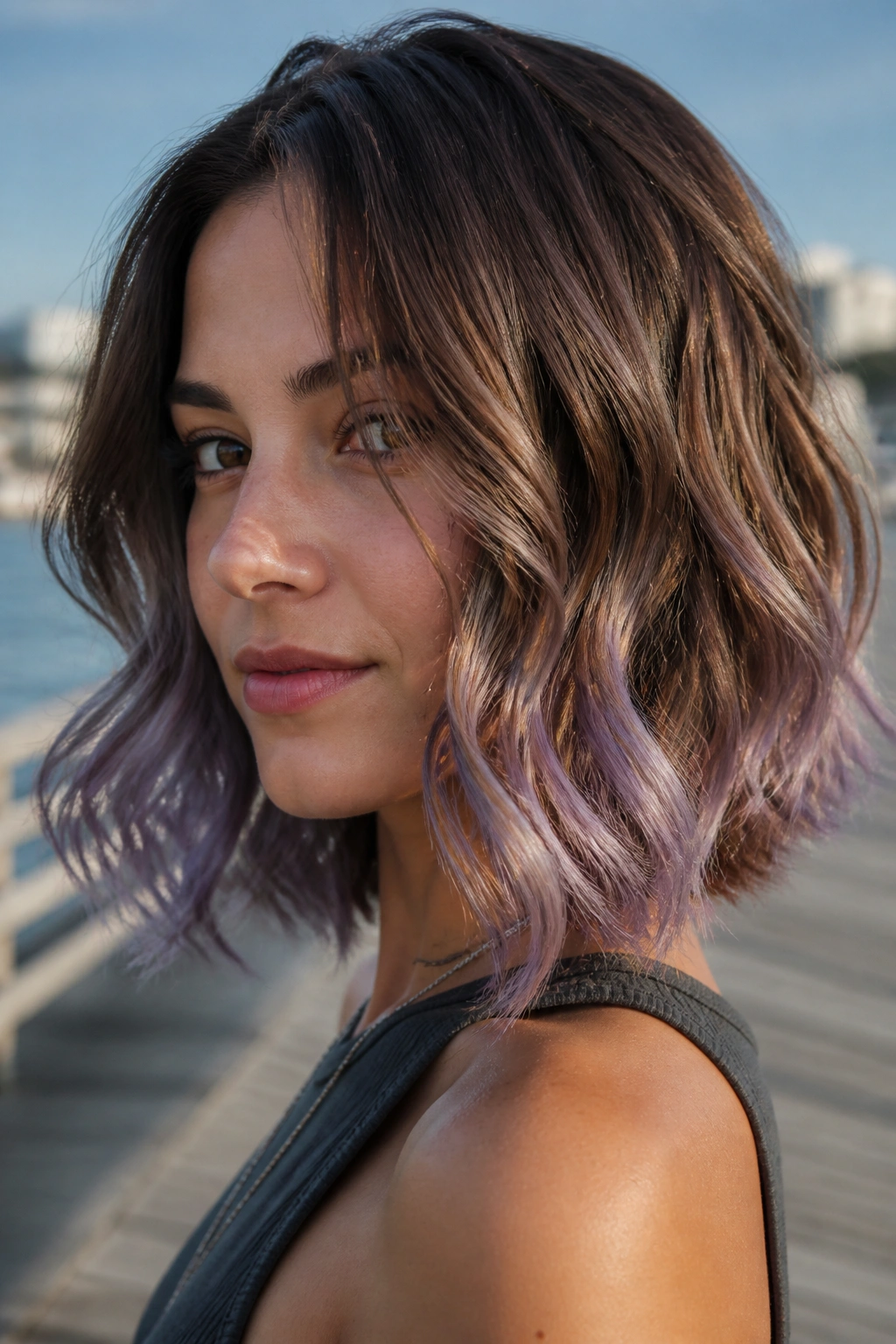
Frosted lilac tips feel playful without taking over the whole haircut. On a wavy lob, the ends catch the light and the lilac sits right where the movement is strongest. That gives the color a bit of bounce. It also keeps the maintenance focused on the part of the hair that already gets trimmed the most.
The frost effect works best when the tips are lifted to a pale blond and then toned to a soft lilac, almost like pastel ice cream that has melted a little. That sounds fussy, but it matters. If the tips are too yellow, the lilac gets muddy. If they’re too dark, the frost effect disappears.
This is a good option for anyone who wants color that still feels tied to a haircut. A blunt lob with lilac tips looks sharper. A shaggy lob feels messier and more lived-in. Same color, different attitude.
And since the color lives at the ends, you can usually get a little more life out of the root area. That’s useful if your natural brown grows fast or if you do not love visible regrowth.
13. Iridescent Lilac Panels on Straight Hair
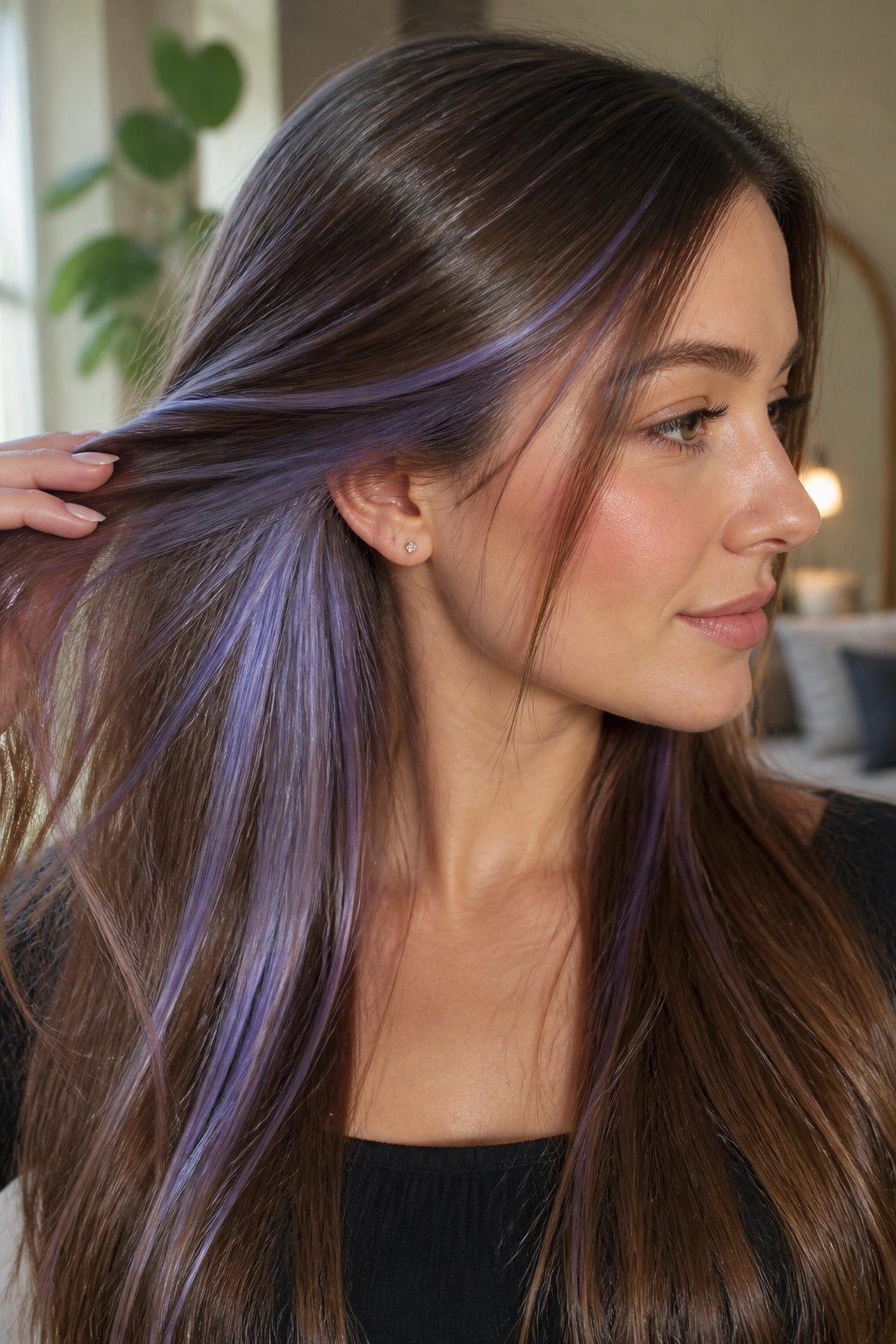
Straight hair shows lilac panels in a very clean way. There’s nowhere for the color to hide, which is either the appeal or the risk, depending on your taste. I like this when the panels are placed strategically under the top layer so they flash only when the hair moves or when you tuck it behind the ear.
The iridescent quality comes from mixing lilac with a little pearl, silver, or pale violet tone. That keeps the pieces from looking flat. On straight brown hair, flat color can read harsh fast, so the shimmer matters.
This style asks for precise sectioning. Uneven panels stand out more on straight hair than they do on textured hair. But when the placement is clean, the effect is crisp and modern without leaning cold.
A flat iron can exaggerate the shine, while a smooth blow-dry makes the panels look more like a ribbon of color through the hair. If you like polished finishes and a clear line of design, this is one of the sharpest ways to wear lilac.
14. Bronze Brown With Hidden Lilac Peekaboo
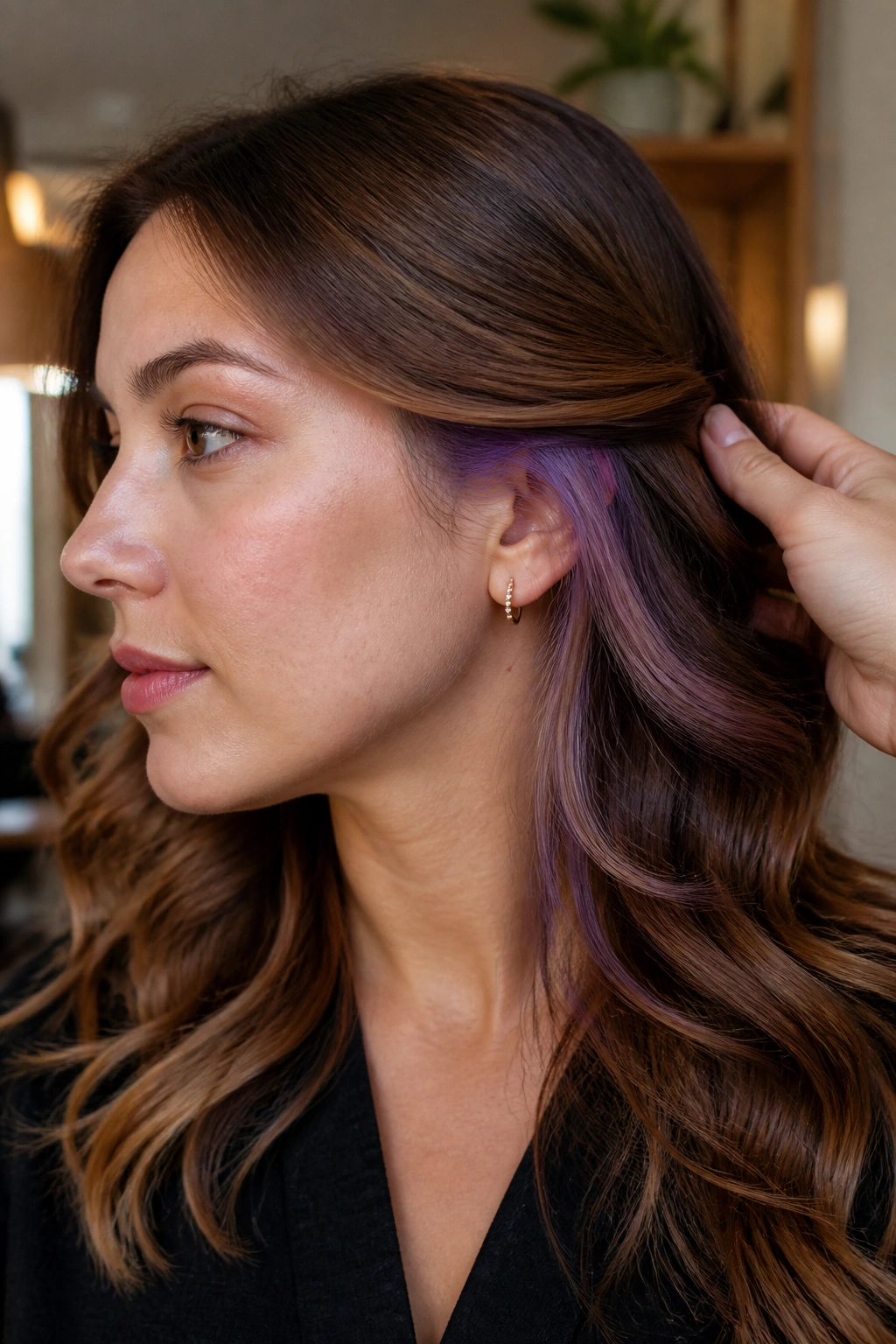
Bronze brown and hidden lilac sound like opposites, which is why they work. The warm brown keeps the overall style grounded, while the lilac sits underneath in the interior layers. You might see it when the hair is flipped, pinned, or worn in a bun. Small moment. Big payoff.
This is the kind of color choice that suits someone who wants a little secret in the haircut. It’s not loud from the front, and that’s useful if your days call for something more restrained. The hidden lilac can live at the nape, just behind the ears, or deep in the mid-layer where it shows only when the hair swings open.
Because the outer bronze is warm, I’d keep the lilac a touch smoky rather than pure pastel. The two tones hold hands better that way. A very icy lilac can look disconnected next to bronze, while a mauve-leaning shade feels smoother.
It’s a smart move for medium-length cuts, especially if you like wearing your hair half-up. The hidden color gets just enough exposure to make the style feel intentional instead of accidental.
15. Mauve-Lilac Face Frame With Soft Ends
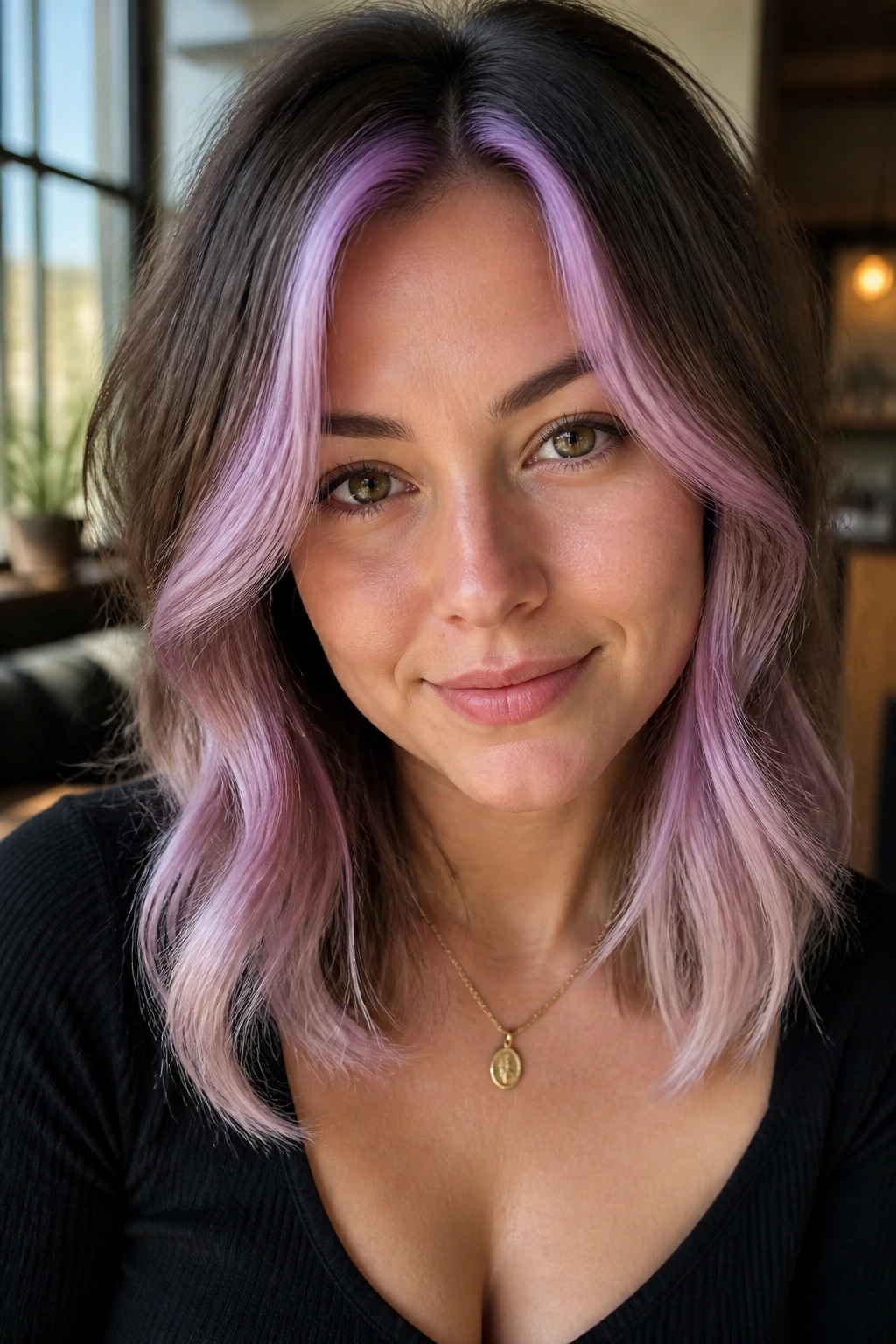
Mauve-lilac is softer than vivid purple and warmer than icy lavender, which is why it flatters so many brown bases. A face frame in this shade gives the haircut a gentle lift, then softer ends carry the color down without making the whole head look busy. It’s a good choice if you want a romantic feel rather than a sharp one.
How to Ask for It
Tell the colorist you want the front pieces brighter than the rest, with a mauve-lilac gloss that fades into softer pastel ends. That wording matters more than people think. If you only ask for “purple highlights,” you may end up with something much brighter or much cooler than you wanted.
This look works well on layered cuts, curtain bangs, and shoulder-length shapes. The front pieces frame the face, while the lighter ends keep the style from feeling top-heavy. It’s a neat little trick.
- Good for medium brown, chestnut, and warmer brunette bases.
- Feels softer than chunkier highlight placement.
- Needs a color-safe conditioner that won’t strip the mauve tone fast.
- Looks especially nice with warm lipstick or berry blush.
I like this one for people who want lilac that feels wearable every day, not just on special occasions.
16. Dimensional Lilac Lowlights and Highlights Combo
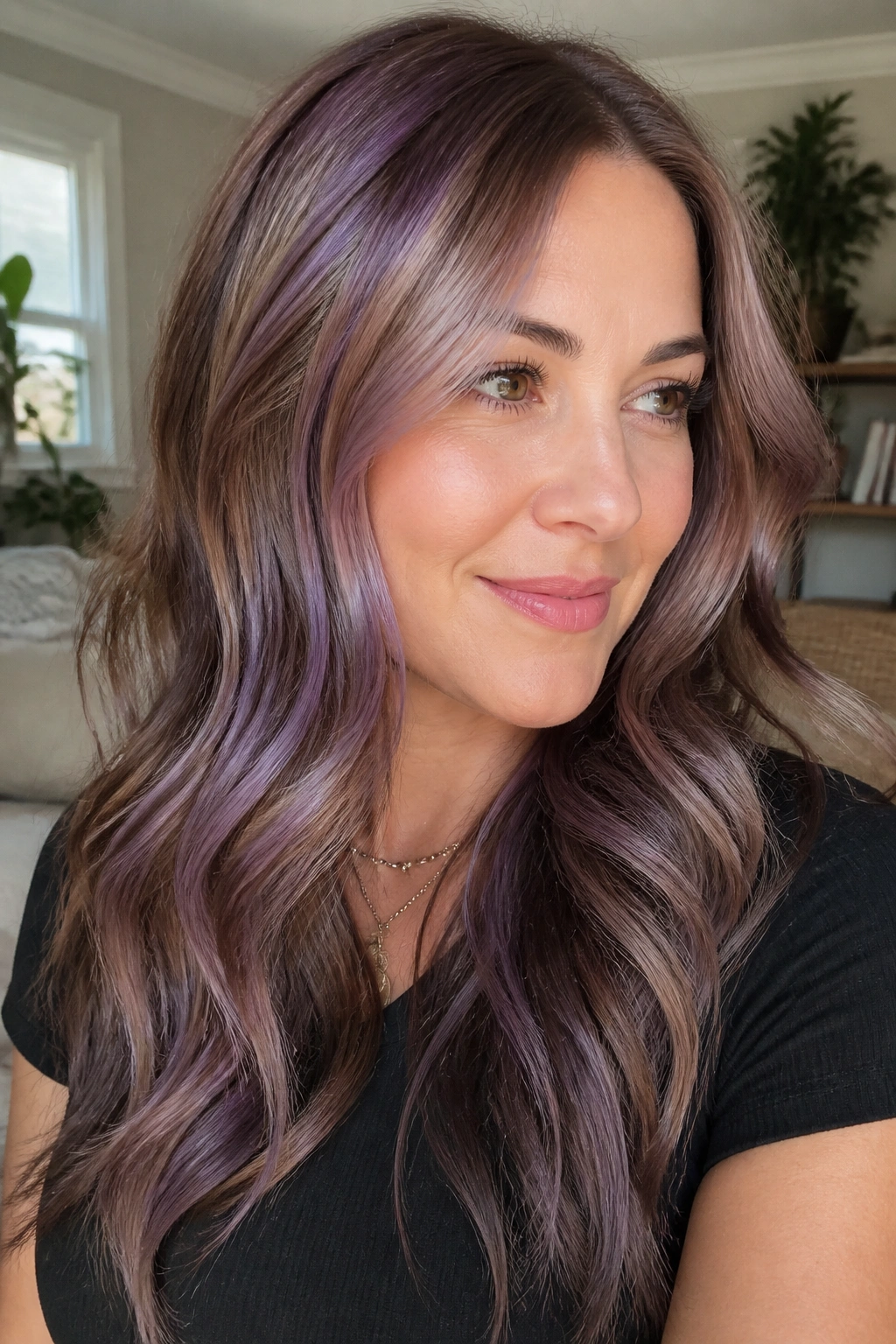
A lot of people think lilac means light pieces only, but adding deeper lavender lowlights makes the color richer. On brown hair, that mix can stop the style from flattening out as it fades. The lighter lilac pieces bring brightness. The deeper pieces keep depth in the shape.
This is especially useful on finer hair, where one flat pastel shade can look thin fast. With lowlights underneath, the hair keeps a little shadow. That shadow gives the highlights something to sit on, which makes the whole head look fuller.
It’s a more layered approach, and yes, it takes a careful hand. Too many cool tones at once and the hair can drift gray. But if the balance is right, the color looks expensive in that unforced way people always try to describe and usually get wrong.
I’d choose this if you like dimension more than novelty. It’s less about one loud strip of lilac and more about the hair moving through different tones. The effect is subtle up close, but it adds a lot from a distance.
17. Silver-Lilac Accent Pieces on Dark Chocolate Hair
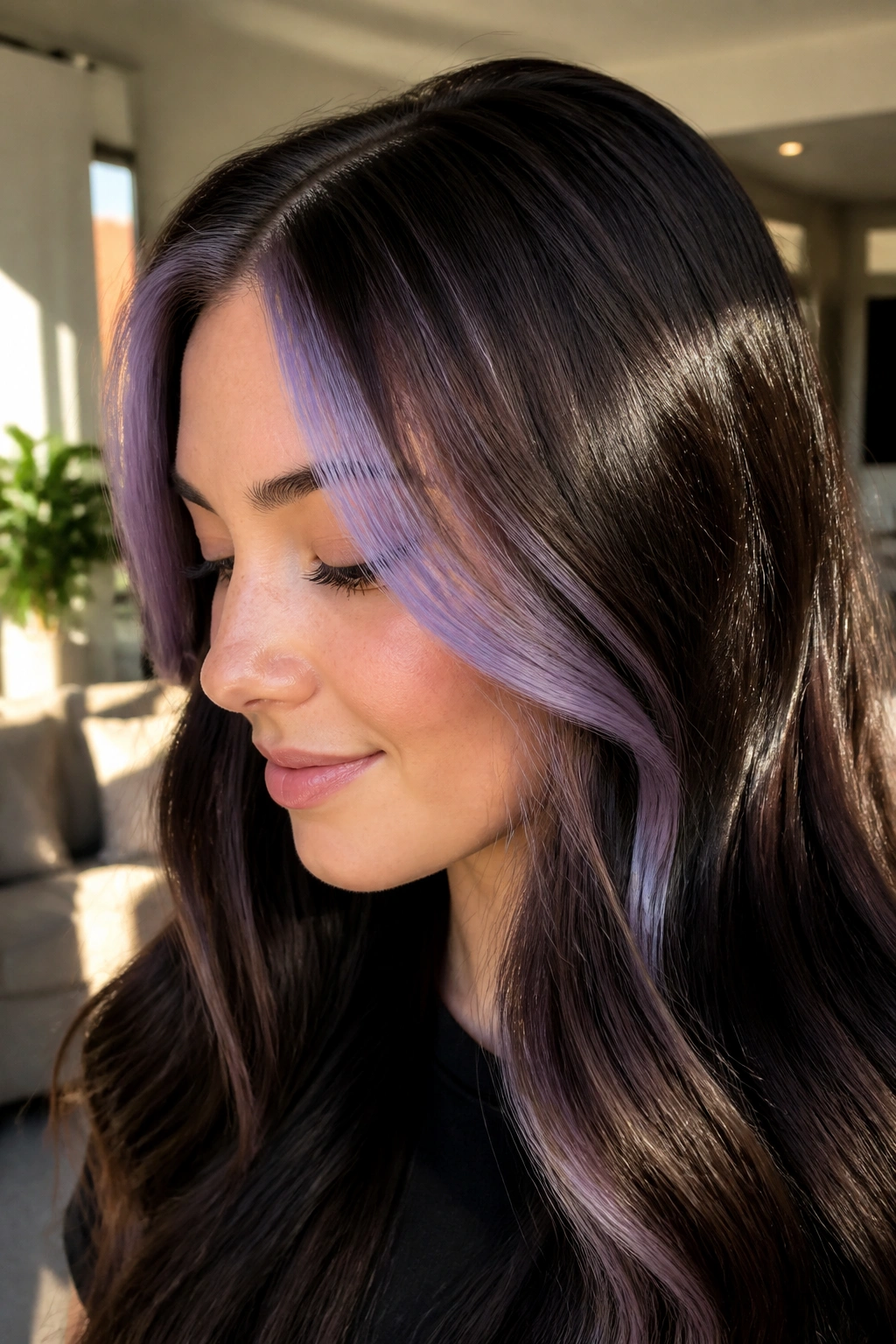
Silver-lilac on dark chocolate hair is for someone who wants contrast. Real contrast. The pieces need to be lifted cleanly, because dark brown will not forgive patchy lightening, and the silver-lilac tone only looks sharp if the base is even. When it works, it looks sleek and a little moody.
The reason I like accent pieces instead of a full head here is simple: a few stronger panels do more than a half-committed scatter of color. Around the face, at the crown, or through the top layer, those accents can change the whole tone of a haircut. You see the lightness, then the silver edge gives it bite.
Straight styles show this shade off best, but glossy waves can hold their own. The key is shine. Without it, silver-lilac can veer a little flat, especially on dark hair that already carries a lot of depth.
This is not the softest choice in the list. It’s one of the boldest. If that’s the goal, it earns its place fast.
18. Diffused Lilac Halo Around Loose Curls
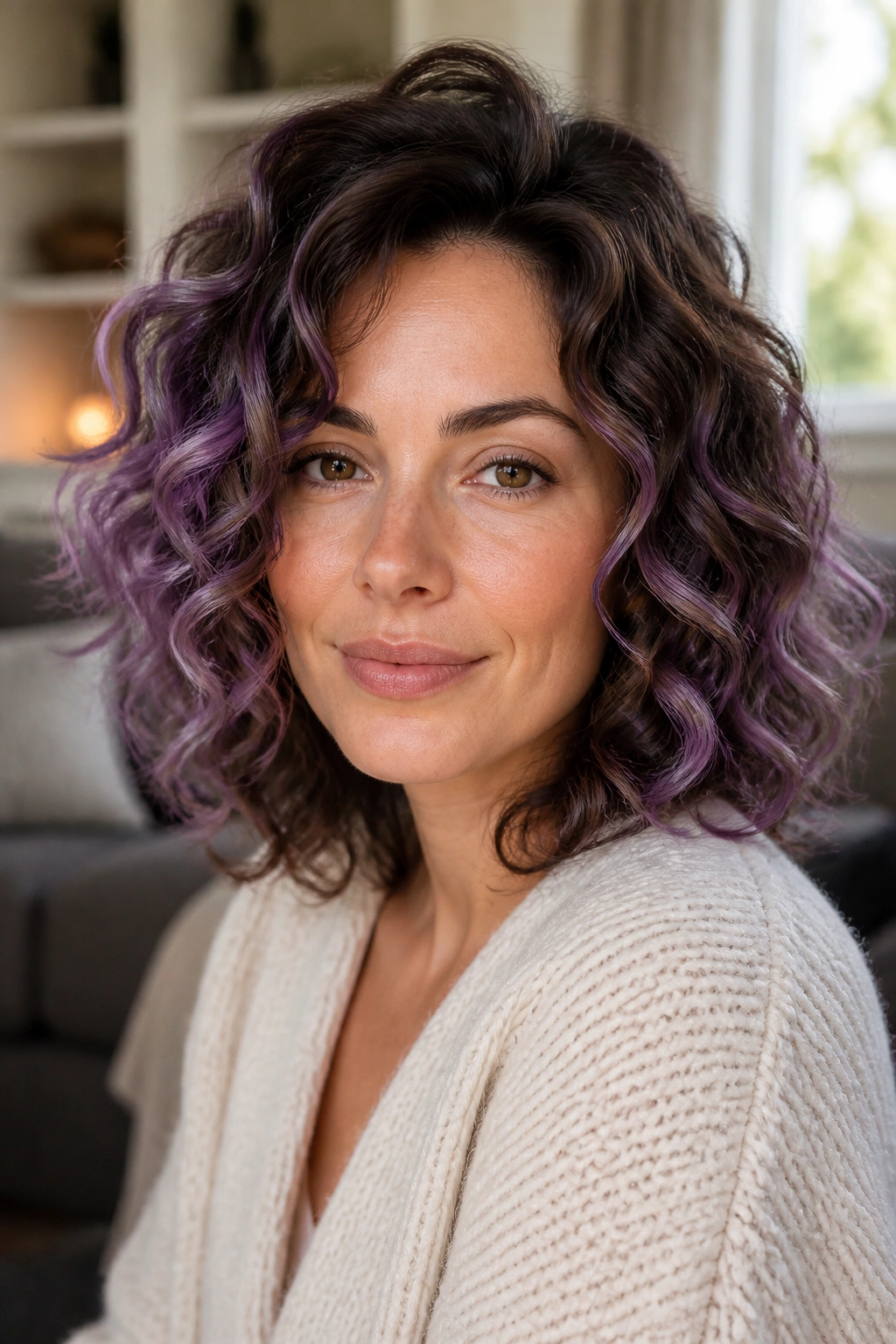
A diffused lilac halo is one of the prettiest ways to color brown curls because it works with the hair’s natural movement instead of fighting it. The lilac sits around the outer layer and through the upper curve of the curls, so you get flashes of color without hard lines. On loose curls, that halo can look almost airy.
The best version is not sprayed all over. It’s placed where the curls form their outer ring, then softened with a glaze so the color feels woven through the shape. That gives the halo a kind of glow from the outside in. It’s subtle from a distance, but it wakes up the curl pattern immediately.
This look is especially kind to brown hair that has a little natural warmth. The lilac softens the warmth, while the curls keep the color from feeling too precious. I think that matters. Hair should move.
If you want one lilac look that can grow out without a dramatic line and still look good in a messy bun, this is the one I’d choose first.
