



A round face can wear dark hair beautifully, but bright pieces in the wrong place can make the face read wider than it is. That’s why black brown highlights for round faces work best when they move vertically, skim the sides instead of camping on the cheeks, and keep enough depth at the root to keep the whole shape lean.
Placement matters more than people want to admit. A soft caramel ribbon starting near the temple can do more for balance than ten foils scattered through the middle of the head, and a cool mocha panel under a wave can quietly sharpen the outline without looking stiff.
I keep coming back to the same idea: dimension should shape the face, not flood it. The strongest looks in this family are the ones that leave the center of the face calm, put the light where the eye should travel, and let the cut do some of the work.
1. Soft Caramel Money Piece
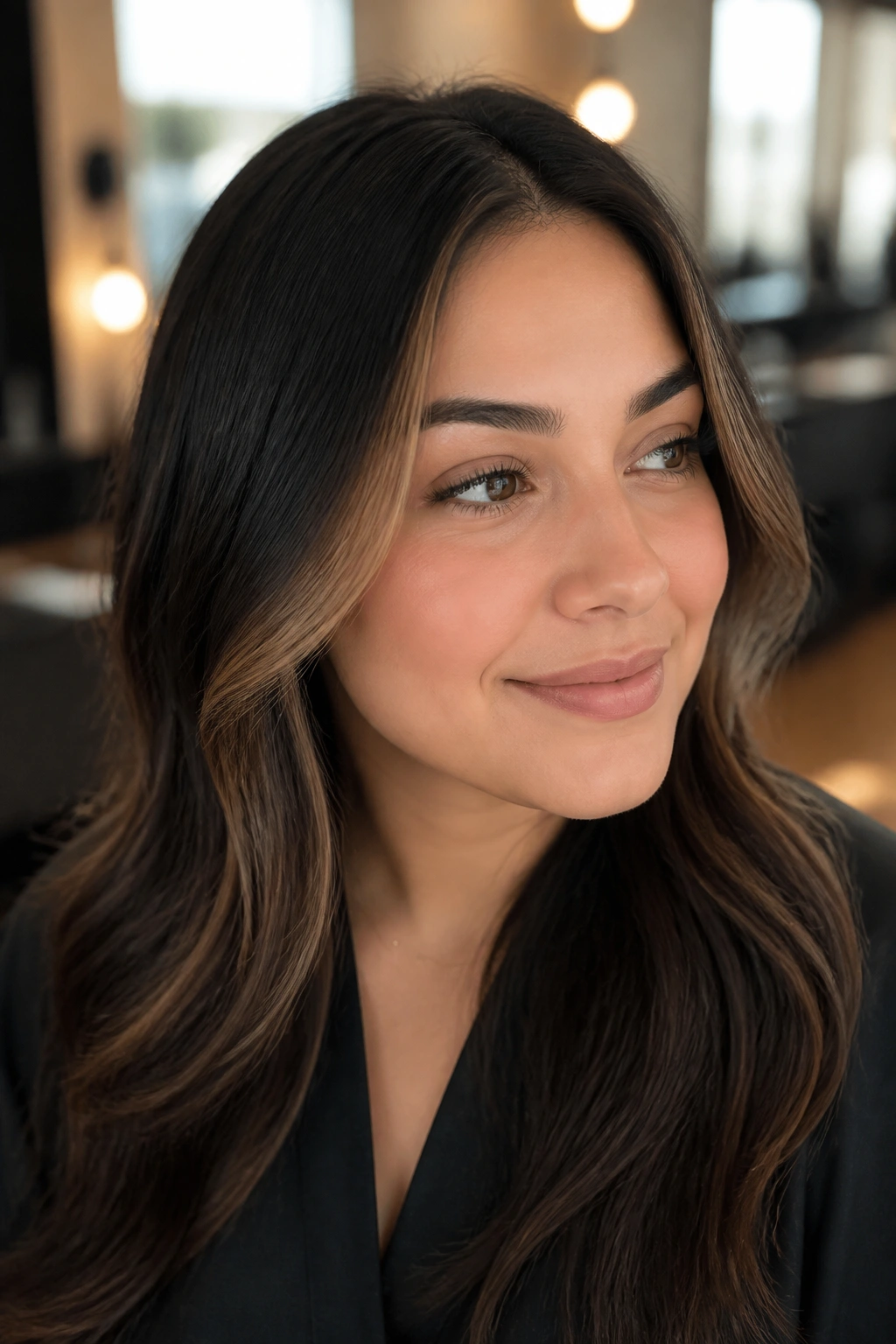
A soft caramel money piece is one of the easiest ways to lighten a black or very dark brown base without making a round face look broader. The trick is to keep the brightness narrow and slightly longer than you think it needs to be, so the eye reads a vertical line instead of a bright block.
Why It Helps the Face Read Longer
The best placement starts just off the part and drops through the front layers. That gives you lift near the eyes and a gentle line along the cheek, which is far better than a wide stripe sitting right on the widest part of the face.
- Ask for two slim front pieces, not a thick panel.
- Keep the lightest part around the eyebrow to chin zone.
- Let the root stay deep for at least 1 to 2 inches.
- Finish with a loose blowout or bend, not a tight curl.
Best tip: if the piece looks too chunky when you hold your hair forward, it probably is.
2. Mocha Balayage Through the Mid-Lengths
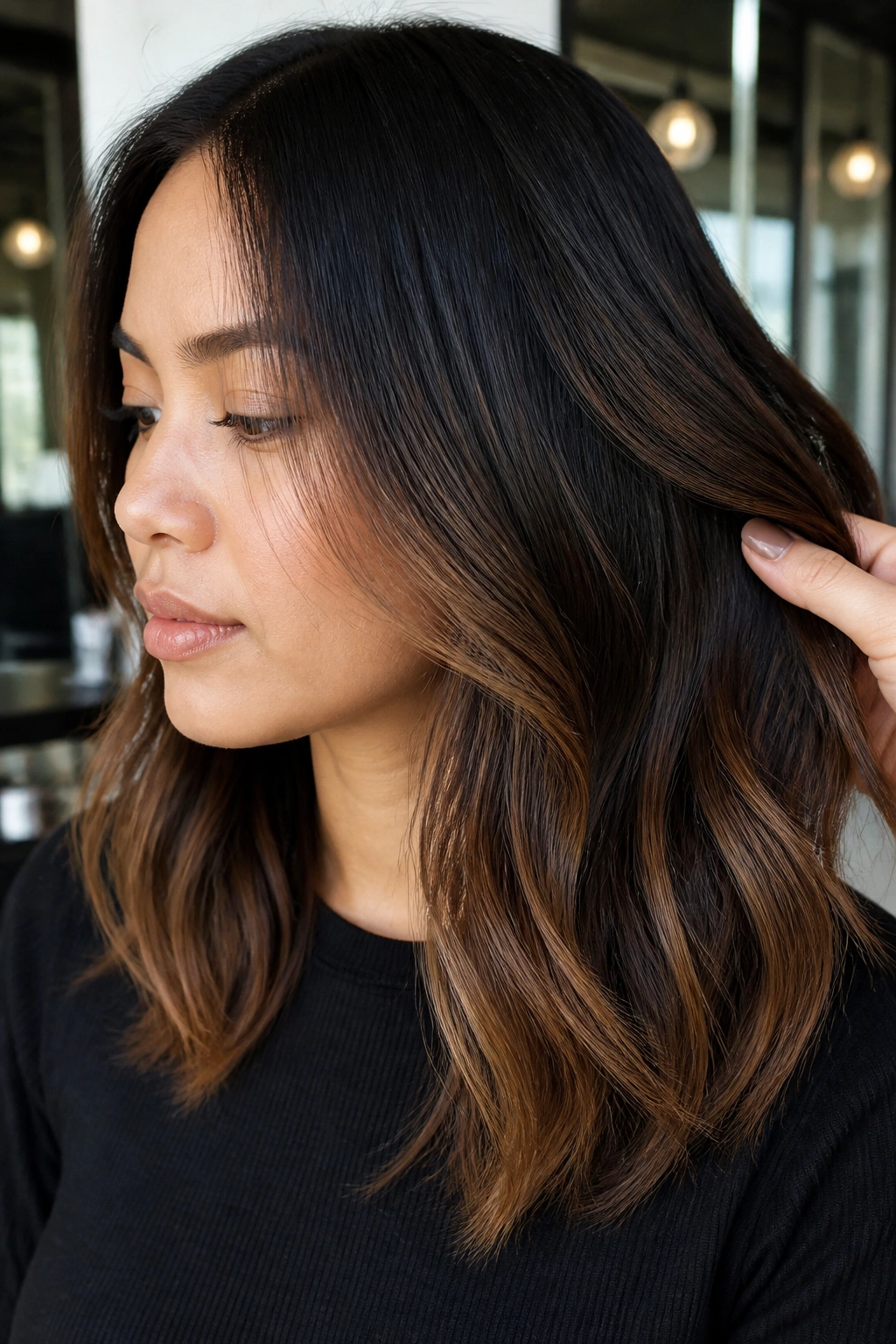
Mocha balayage through the mid-lengths is quietly flattering because it adds movement below the cheekbone, where a round face usually benefits from a little visual length. I like this one on shoulder-length cuts and longer waves, where the color can drift down the hair instead of sitting as a band.
The important part is restraint. Keep the top section darker and let the mocha start below the eye line, then feather it out toward the ends. That gives you a soft fall of color that feels polished rather than striped.
Wear it straight and it reads sleek. Wear it in waves and it looks deeper, almost like the hair has more layers than the cut alone provides. That’s the whole point.
3. Micro Babylights at the Crown
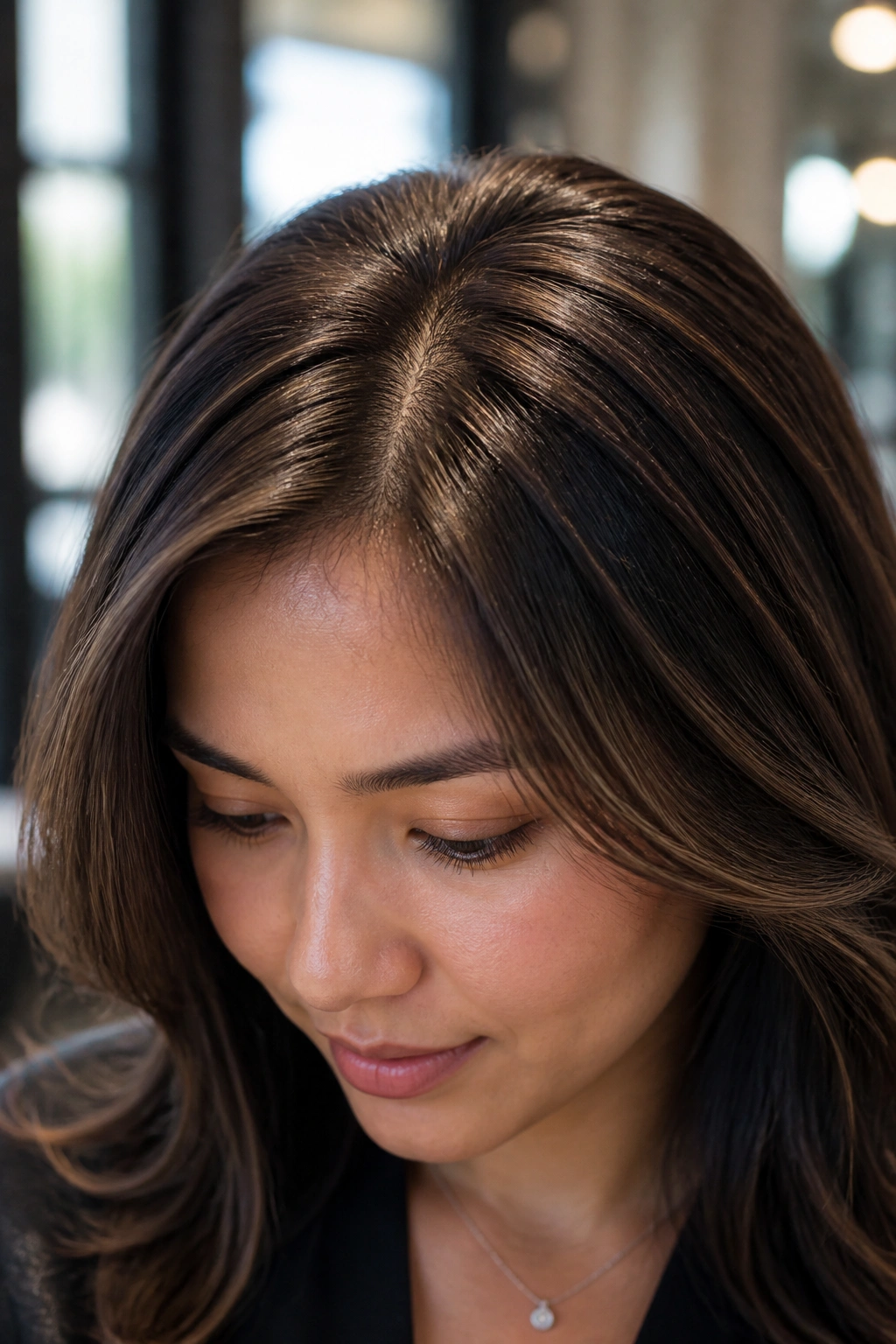
Can tiny highlights make a round face look slimmer? Yes, and this is where they earn their keep. Micro babylights at the crown add lift at the top of the head, which pulls the eye upward and keeps the width from clustering around the cheeks.
How to Ask for Them
Tell your colorist you want a fine weave with plenty of dark hair left between the lighter pieces. The goal is a soft sparkle, not obvious stripes.
A good version usually has:
- Very thin foils through the top section
- Brightness concentrated around the part and crown
- No heavy lightening through the lower sides
- A finish that still looks dark overall from a distance
The effect is subtle, but that’s the point. These highlights are for someone who wants movement first and color second. They are not loud. Good.
4. Chestnut Ribbons on Soft Waves
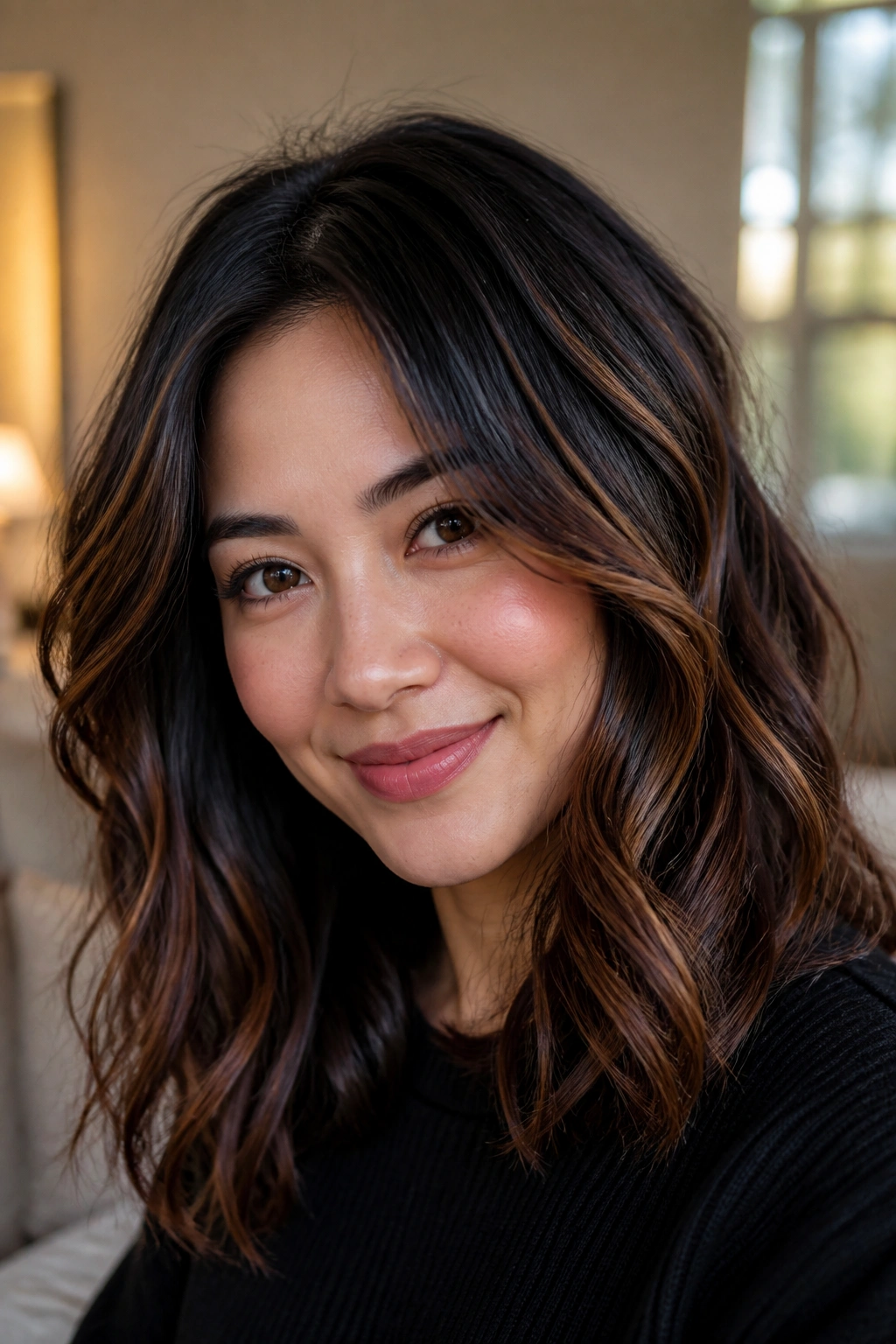
Picture soft waves falling just below the shoulders, then a few chestnut ribbons slipping through the bends like thin lines of satin. That’s a smart choice for round faces because the light catches on the curve of the wave, not on the widest part of the face.
The mechanism is simple. Chunky brightness can widen a shape fast; narrow ribbons placed between wave ridges create length instead. Keep them slightly staggered, so they do not form a neat line across the side of the head.
- Best on cuts with at least 2 or 3 layers
- Looks strongest when waves are loose, not tight
- Works well if the base is black-brown or espresso
- Needs a gloss every so often to keep the chestnut tone rich
That little bit of movement matters more than another level of lightness.
5. Ash Brown Contour Stripes
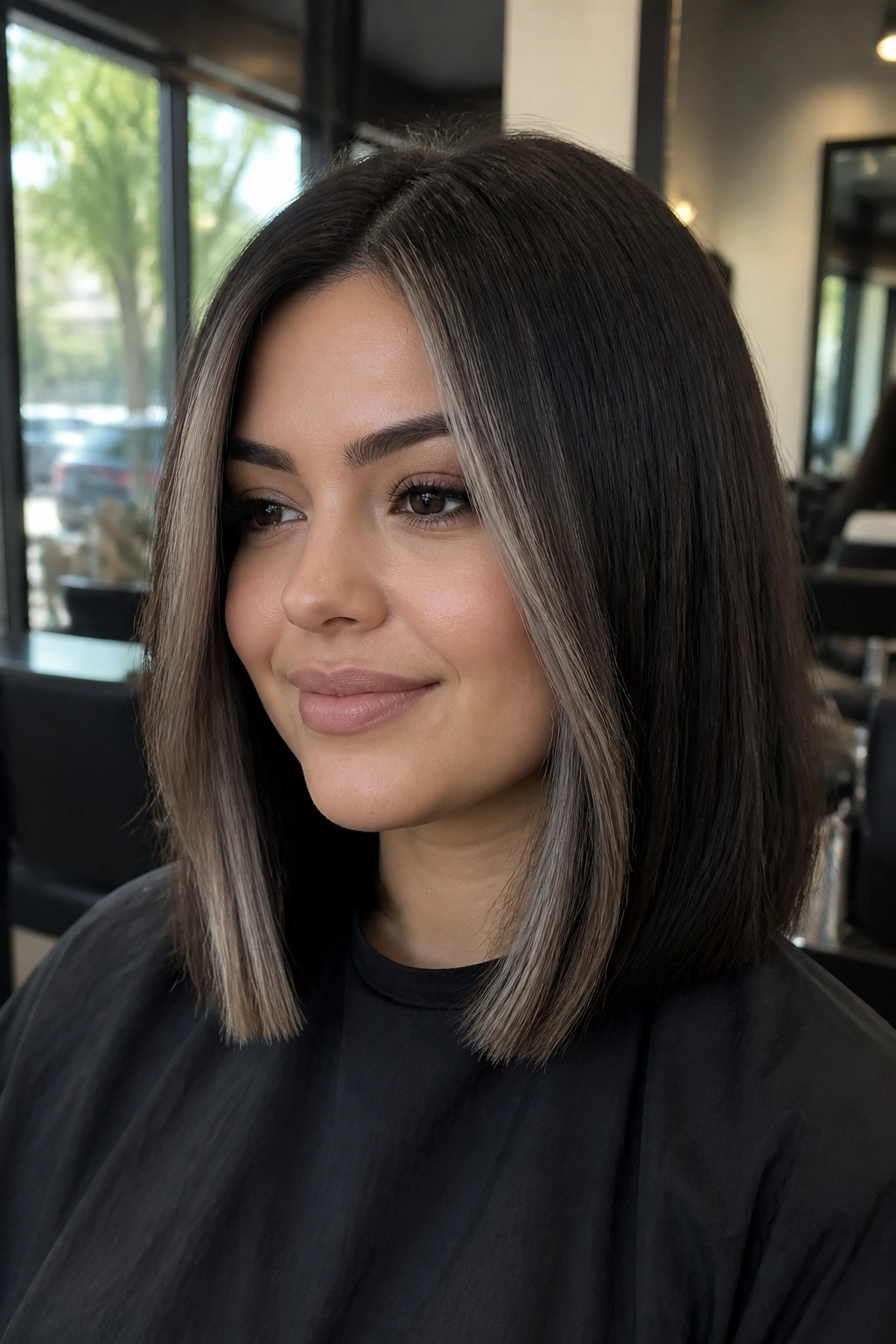
Ash brown contour stripes are a cooler, cleaner answer for anyone who wants the face to look more sculpted without going warm or golden. On a round face, that cooler tone can carve a sharper edge along the front panels, especially if the rest of the hair stays deep and dark.
I like this style when the hair cut already has some shape. A blunt lob, a long layered cut, even a shoulder-skimming bob — all of them give the ash brown something to sit against. Without that contrast, the look can feel flat. With it, the face gets definition.
The best version does not sit right on the cheekbone. It starts a little above or a little below and moves through the front in a long line. That small shift keeps the color from widening the middle of the face.
6. Honey Brown Face Frame with Shadow Root
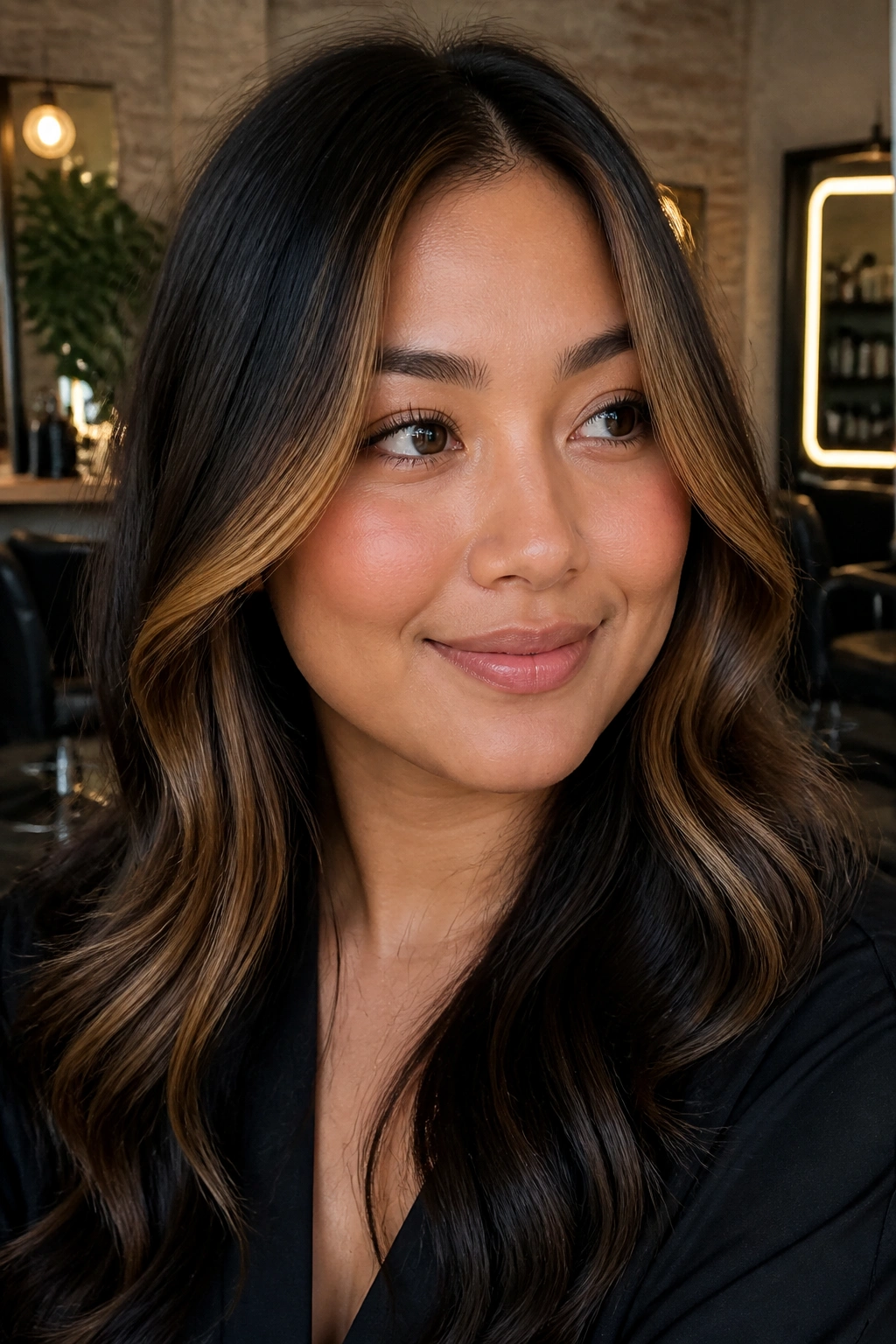
A honey brown face frame with a shadow root is the kind of color that looks softer than it sounds. The dark root keeps the crown grounded, while the honey brown front pieces brighten the eyes and lengthen the face from top to bottom.
What Makes It Different
Unlike a full bright frame, this one leaves a lot of depth in place. That depth matters on round faces because it prevents the front from becoming one bright, horizontal band.
It’s a good pick if you want low maintenance and a little warmth. The shadow root buys you grow-out time, and the honey pieces can be placed in a curved line that starts near the temple and slides down toward the jaw.
If your hair gets fluffy around the face, this style helps tame that shape. The contrast does the sculpting for you.
7. Toasted Almond Peekaboo Highlights
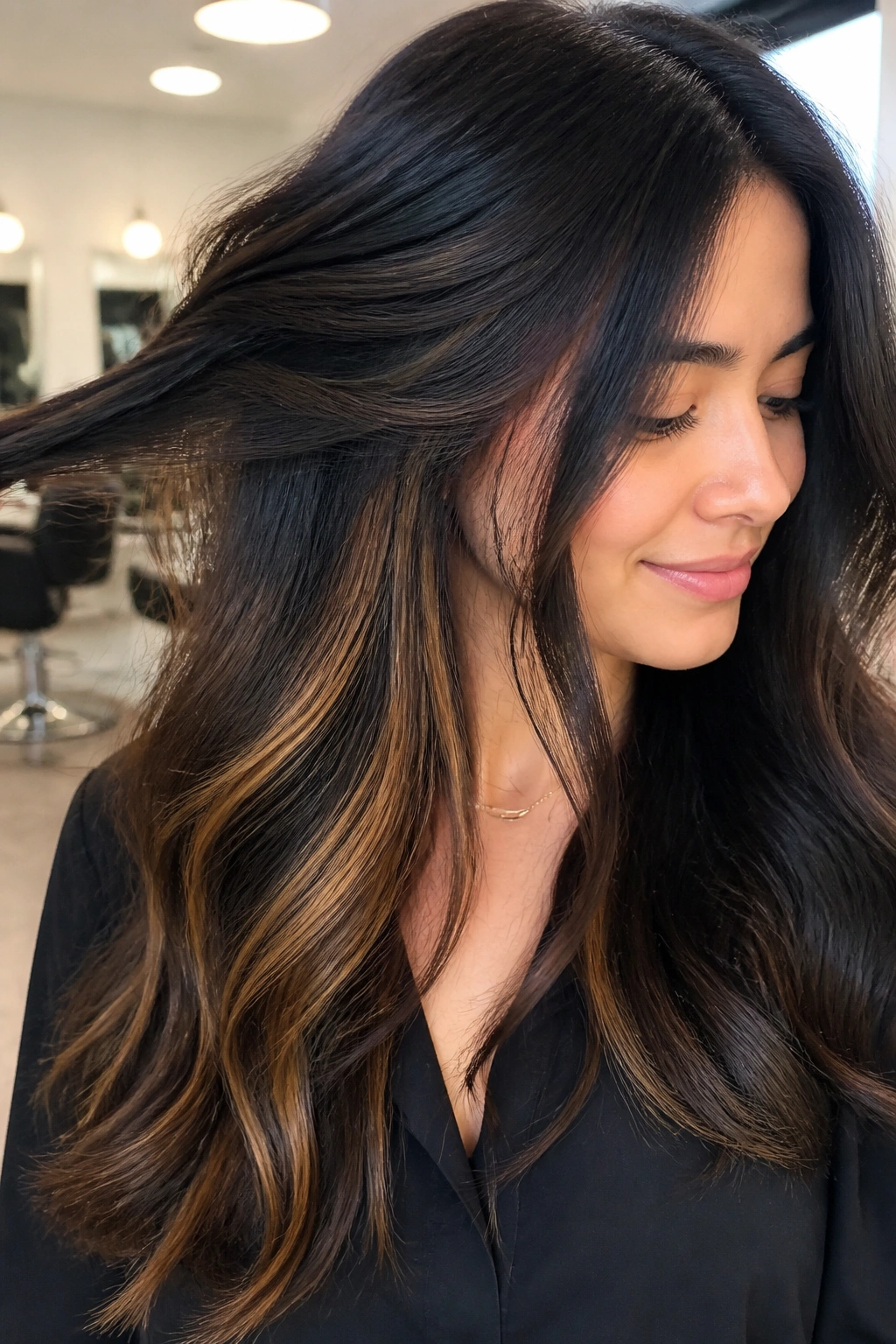
Peekaboo highlights are a smart move when you want dimension but not a lot of surface brightness. Toasted almond tones hidden under the top layer create movement when the hair swings, which feels perfect for round faces that need a little extra length.
Where the Light Lives
Keep the lighter pieces underneath the crown and around the lower sides, not right at the widest point of the face. Then let them appear only when the hair moves. That hidden placement gives you interest without turning the whole head into a bright halo.
A few things make this version work:
- The top layer stays deep black-brown
- The light sits underneath the part line
- The almond tone stays soft, not pale
- The cut should have enough movement to reveal the color
It’s understated in the best way. You notice it when the hair turns, and that surprise is part of the appeal.
8. Cinnamon Brown Ribbon Lights
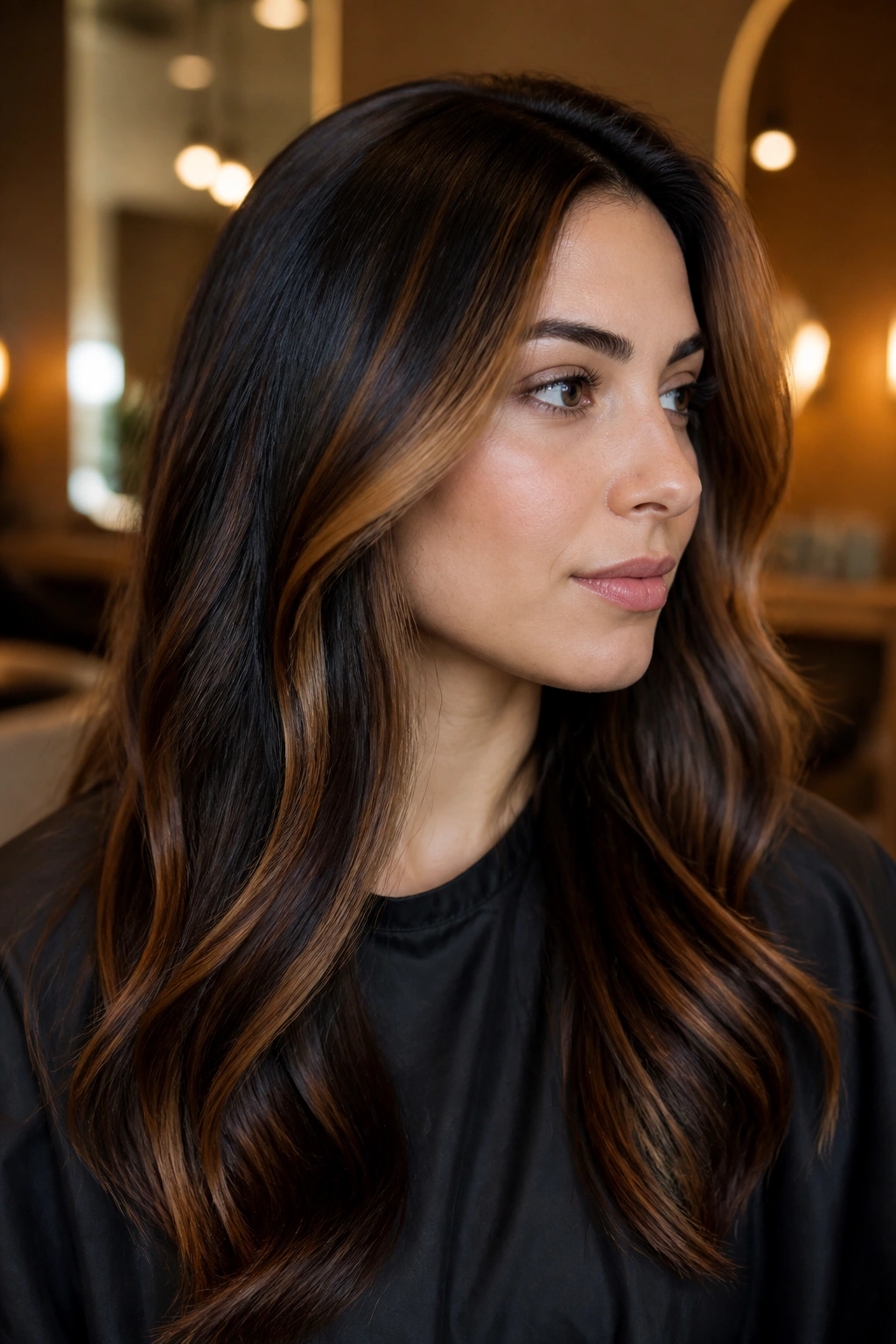
Cinnamon brown ribbon lights bring a little heat to dark hair, and that warmth can be a good thing when the placement is precise. The color itself draws the eye, but the real advantage is how ribboning creates a vertical path through the length.
A round face often looks best when the brightest parts travel downward, not outward. Cinnamon brown does that well because the tone stands out against black hair without needing thick panels. It feels lively, but not noisy.
I’d use this on medium to long cuts with soft layering. The ribbon should start around the temple or just below it, then taper as it goes down. Too much cinnamon near the cheek area can widen the face. Lower it a touch, and the whole look settles into place.
9. Black-to-Cocoa Soft Ombré
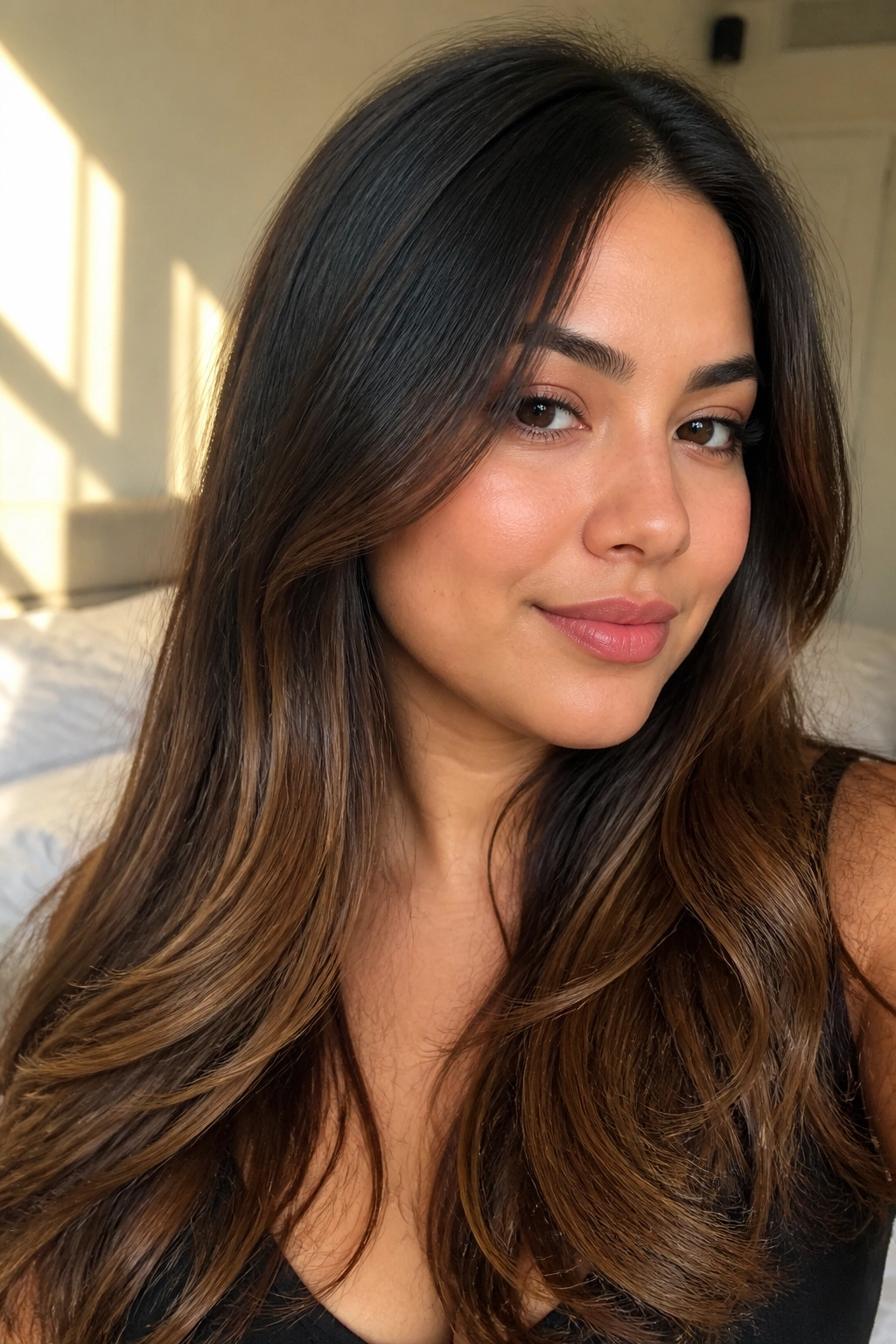
Does ombré work on a round face? Yes, if the fade is soft and the transition starts low enough. A black-to-cocoa blend keeps the root heavy and grounded, then opens up toward the ends, which helps stretch the shape visually.
How to Keep the Fade from Looking Blunt
The fade should never look like a hard line. Ask for the cocoa to melt in gradually through the mid-lengths, with the brightest cocoa sitting closer to the ends than the cheeks. That avoids the wide, blocky effect that can happen when the lighter color starts too high.
This is a strong choice if you wear your hair straight a lot. Straight hair shows the gradient cleanly, and the dark-to-light move feels long and clean. With waves, it gets softer. Either way, the face stays framed by depth.
10. Sandy Brown Pieces on a Lob
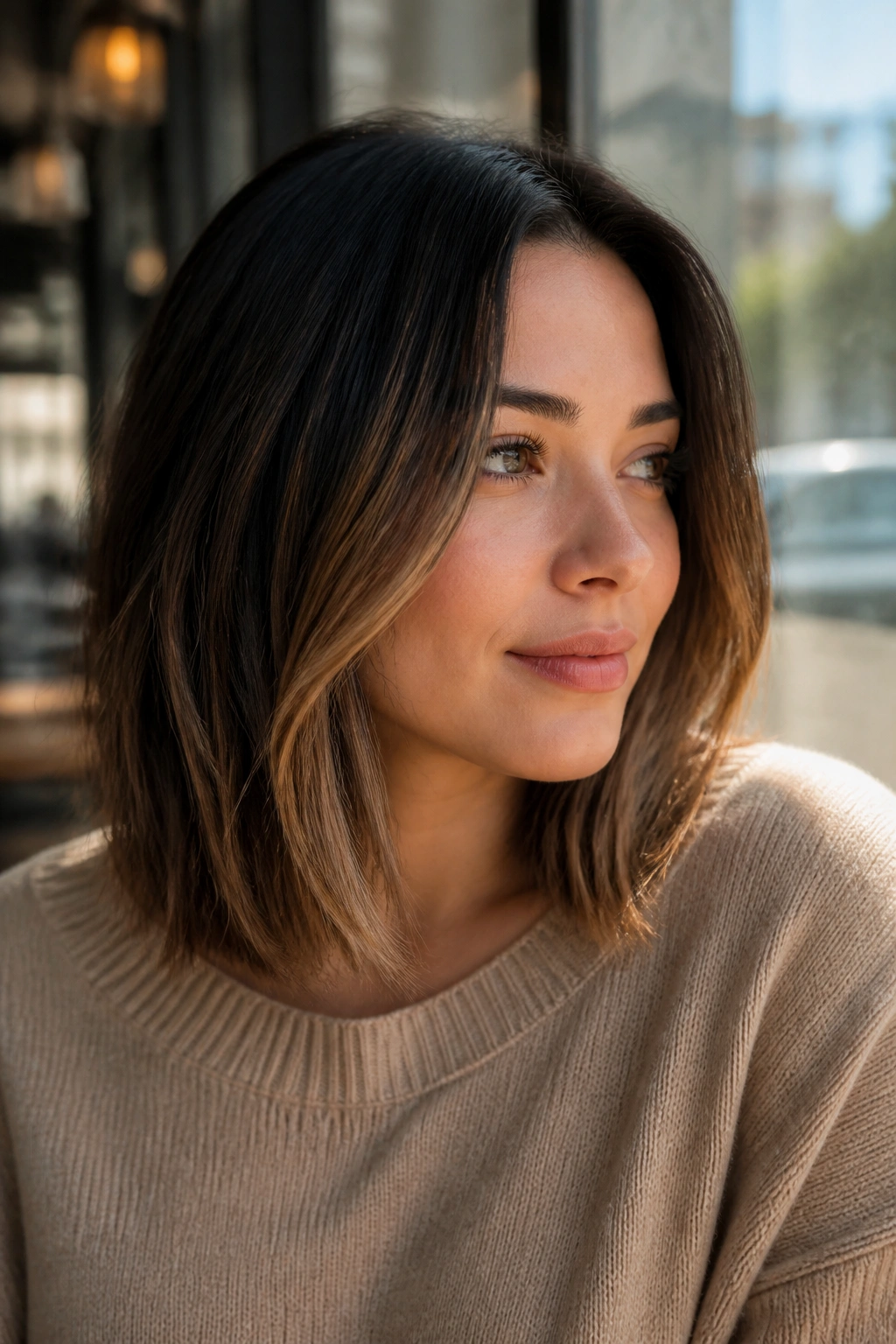
A lob can be a gift for round faces, and sandy brown pieces sharpen it even more. The cut already gives you a clean line near the jaw or collarbone, so the highlights only need to echo that length instead of fighting it.
I’d ask for pieces that start below the cheekbone and sit mostly through the outer surface of the lob. That way the lighter bits travel along the cut’s shape rather than spreading outward at the face. The result feels neat, airy, and a little brighter around the lower half of the head.
- Keep the front pieces slimmer than the back pieces
- Let the light stop around the collarbone zone
- Pair with an off-center part if you want more asymmetry
- Style with a soft bend for extra length
It’s a tidy look. Not boring. Tidy.
11. Espresso Lowlights with Brown Lift
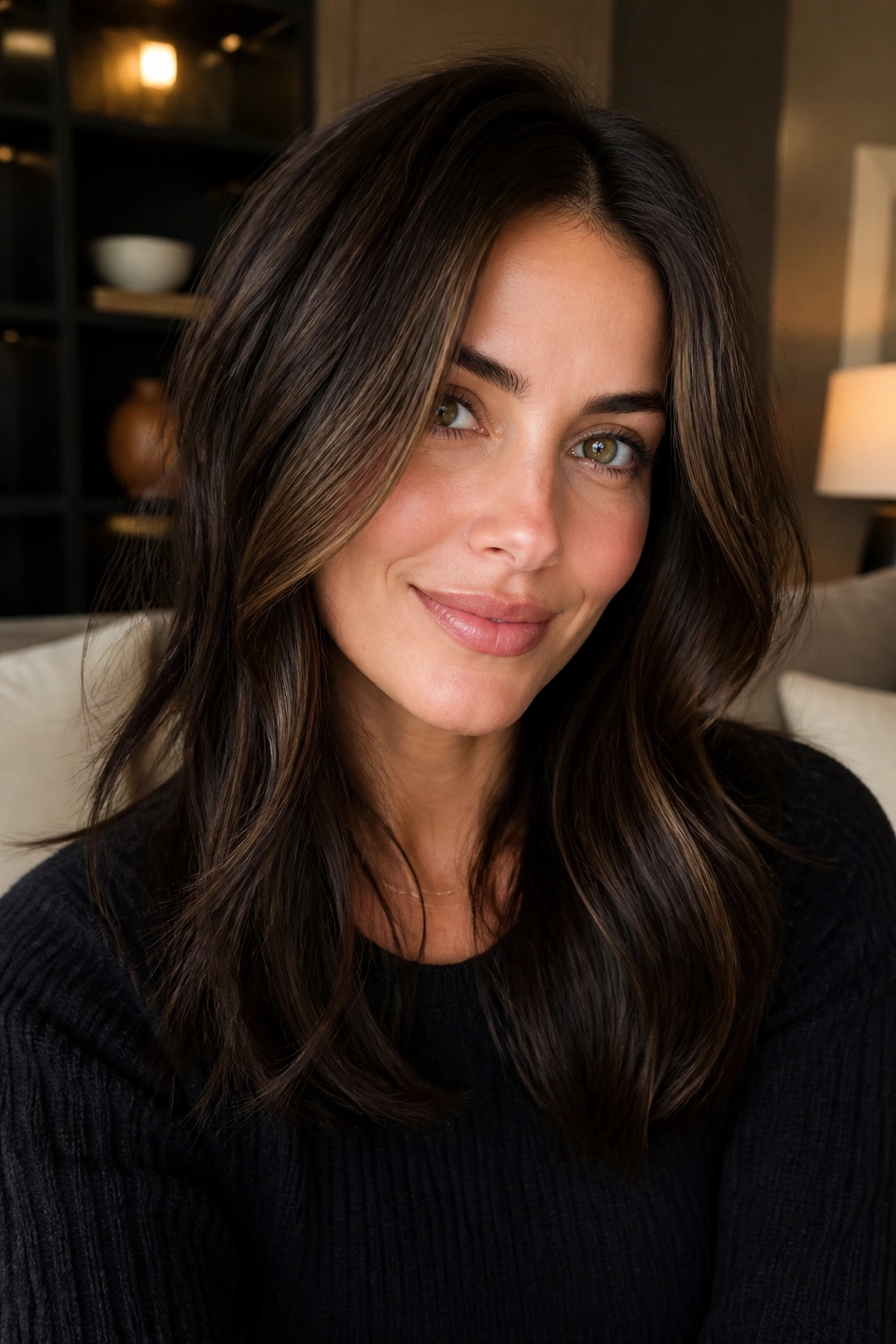
Most people think highlights are the whole story, but lowlights do a lot of heavy lifting on round faces. Espresso lowlights tucked through an already brown-black base create shadow, and shadow is what makes the brighter pieces look sharper and more intentional.
Purely light hair can blur the face shape. A mix of espresso and softer brown pieces gives the hair depth at different points, which helps the eye travel up and down instead of side to side. That’s the whole trick.
I like this on thicker hair because lowlights stop the color from swelling outward. They also make waves and curls look richer. The finish is less shiny than a full bright balayage, but often more flattering. That trade-off is worth it.
12. Toffee Highlights on Long Layers
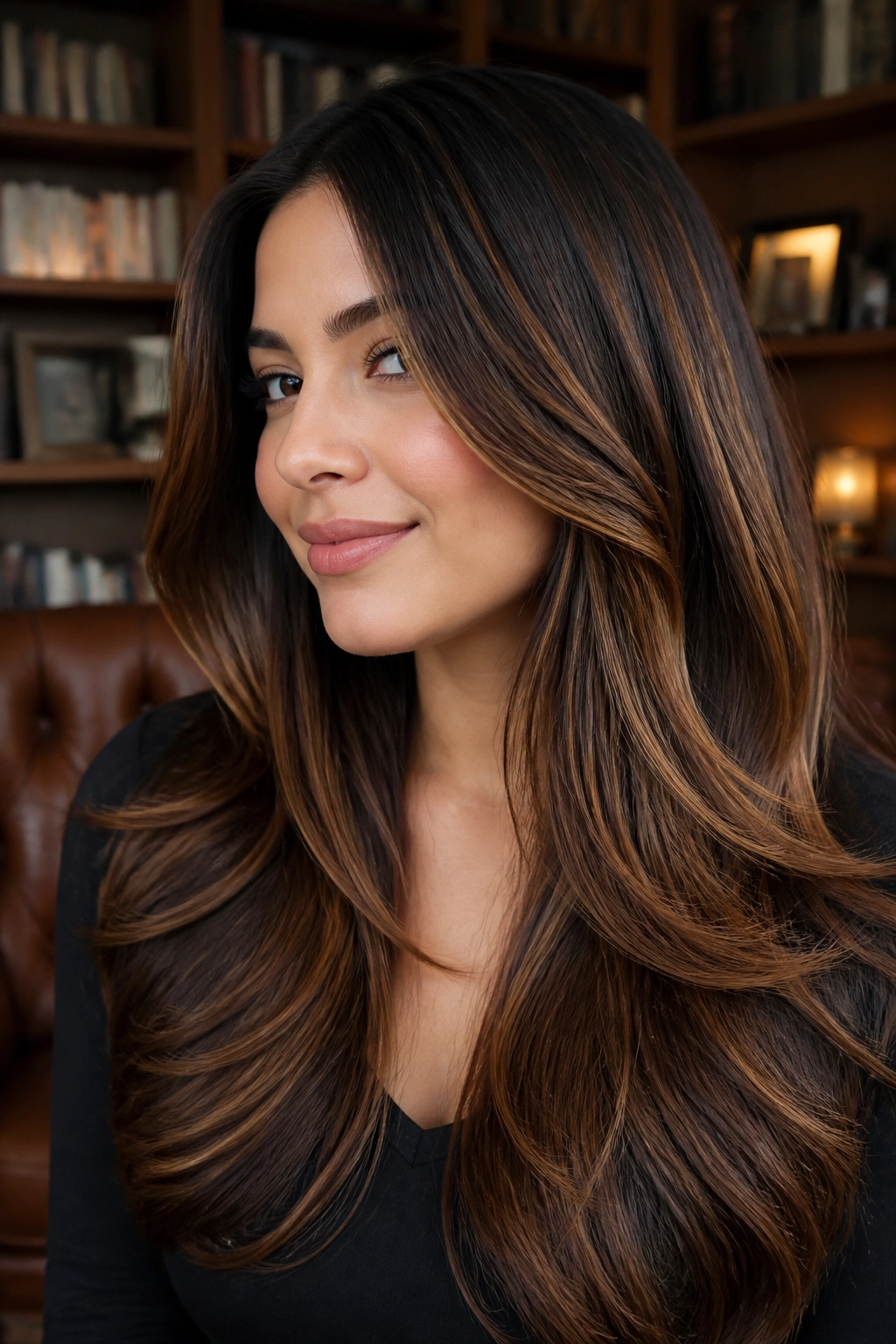
Toffee highlights on long layers give you warmth without turning the hair sugary or flat. The long layers provide the movement; the toffee pieces follow those layers and make the cut feel more open around the face.
Unlike Caramel, This Reads Softer
Caramel can lean brighter and a little louder. Toffee usually sits one step deeper, which is useful when you want the color to support the face shape instead of announcing itself first.
This style is strongest when the light pieces are painted to follow the haircut’s natural fall. The top stays dark. The longest layers get the most light. The result pulls the eye downward, which is exactly where a round face tends to benefit.
If your hair tends to puff at the sides, this is kinder than chunky front highlights. It gives you movement without extra width.
13. Smoky Brown Balayage on Curls
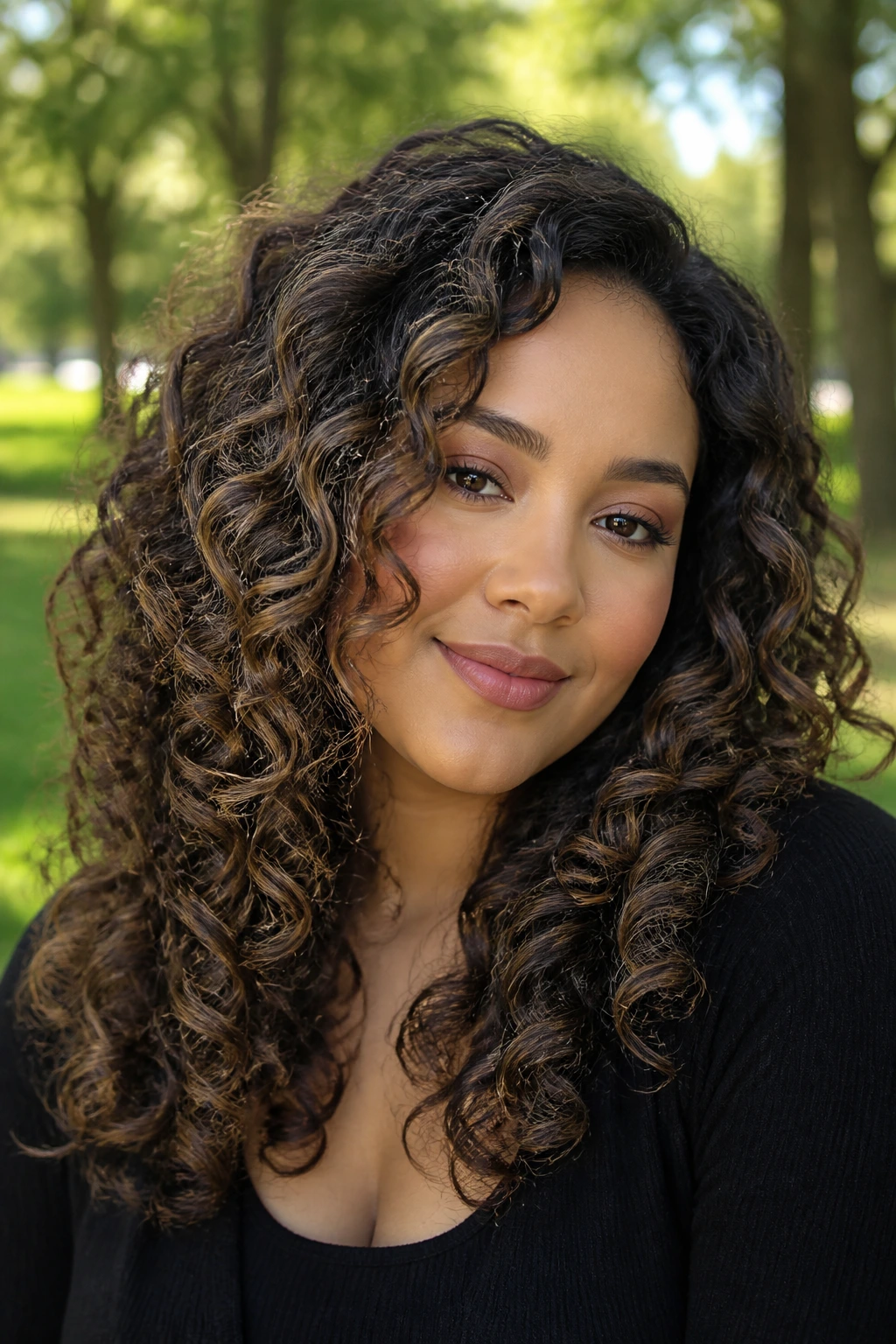
Curly hair loves dimension, and smoky brown balayage can make a round face look longer by sending the eye through the curl pattern instead of across it. The color should sit on the raised parts of the curl, with enough depth left between ribbons to keep the shape from ballooning.
Why It Works on Curl Patterns
When curls are colored in broad patches, the eye reads roundness fast. Thin, smoky ribbons break that up. They create lines inside the curl mass, which feels more vertical and controlled.
A few useful details:
- Paint the lightest pieces on the top half of the curl
- Leave the underlayer deeper for shadow
- Keep the tone smoky, not orange
- Cut the curls so the light falls through in layers
I’d avoid a heavy hand near the cheeks. Let the curls do the framing, and let the color ride on top of them.
14. Mushroom Brown Veil Highlights
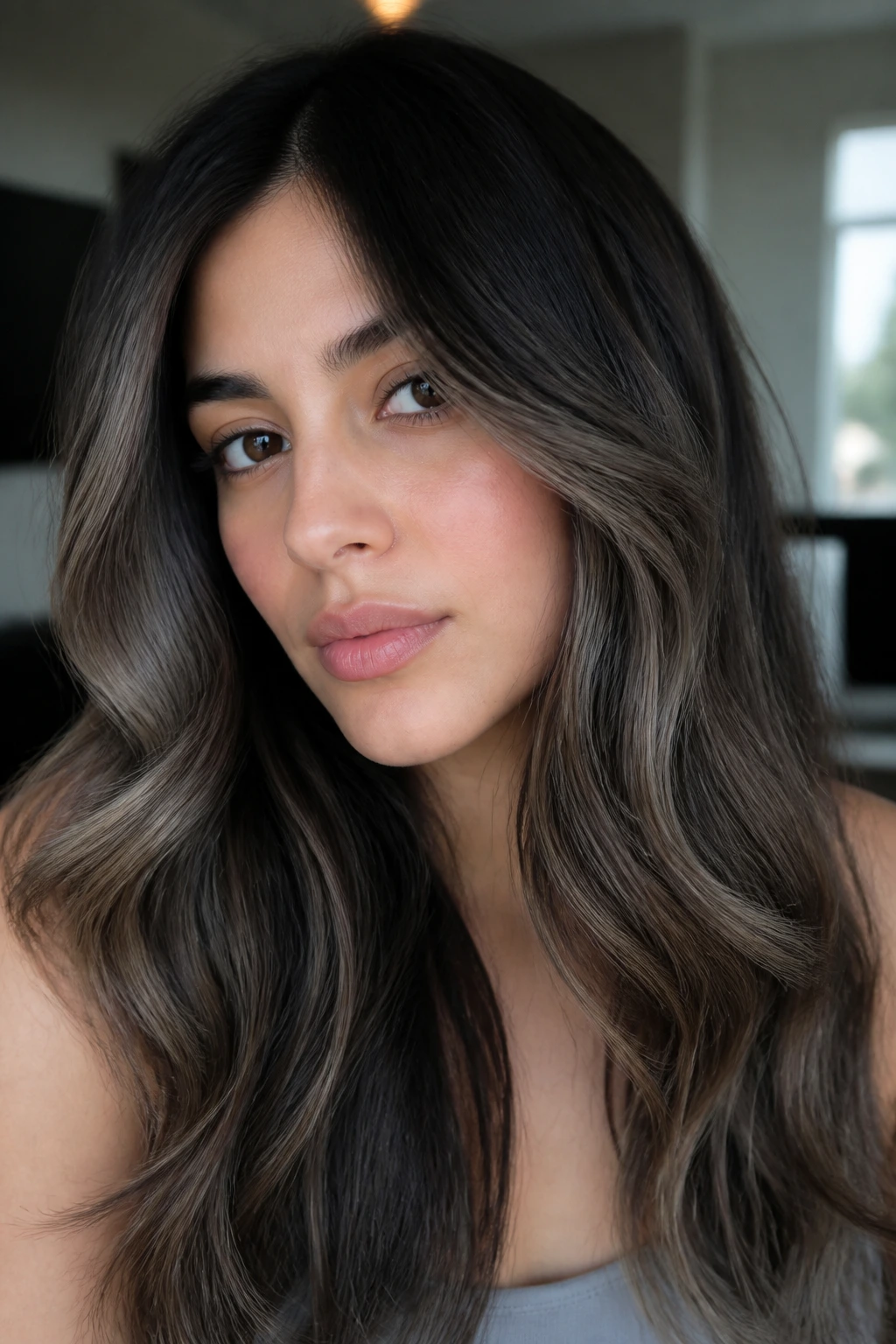
Mushroom brown veil highlights are for someone who wants softness, not sparkle. The color sits in that cool-neutral zone where the hair looks dimensional without pushing warmth toward the face, and that can be especially nice on round shapes that need quiet structure.
The “veil” part matters. These highlights should look like a thin surface haze, not a bold stripe. They work best when they’re spread through the upper layers and around the outer edges of the haircut, while the core stays darker.
That dark core gives the face a frame. The lighter veil softens it. If you keep the tone matte and airy, the result feels modern without getting stiff.
15. Cheekbone Highlights in Warm Brown
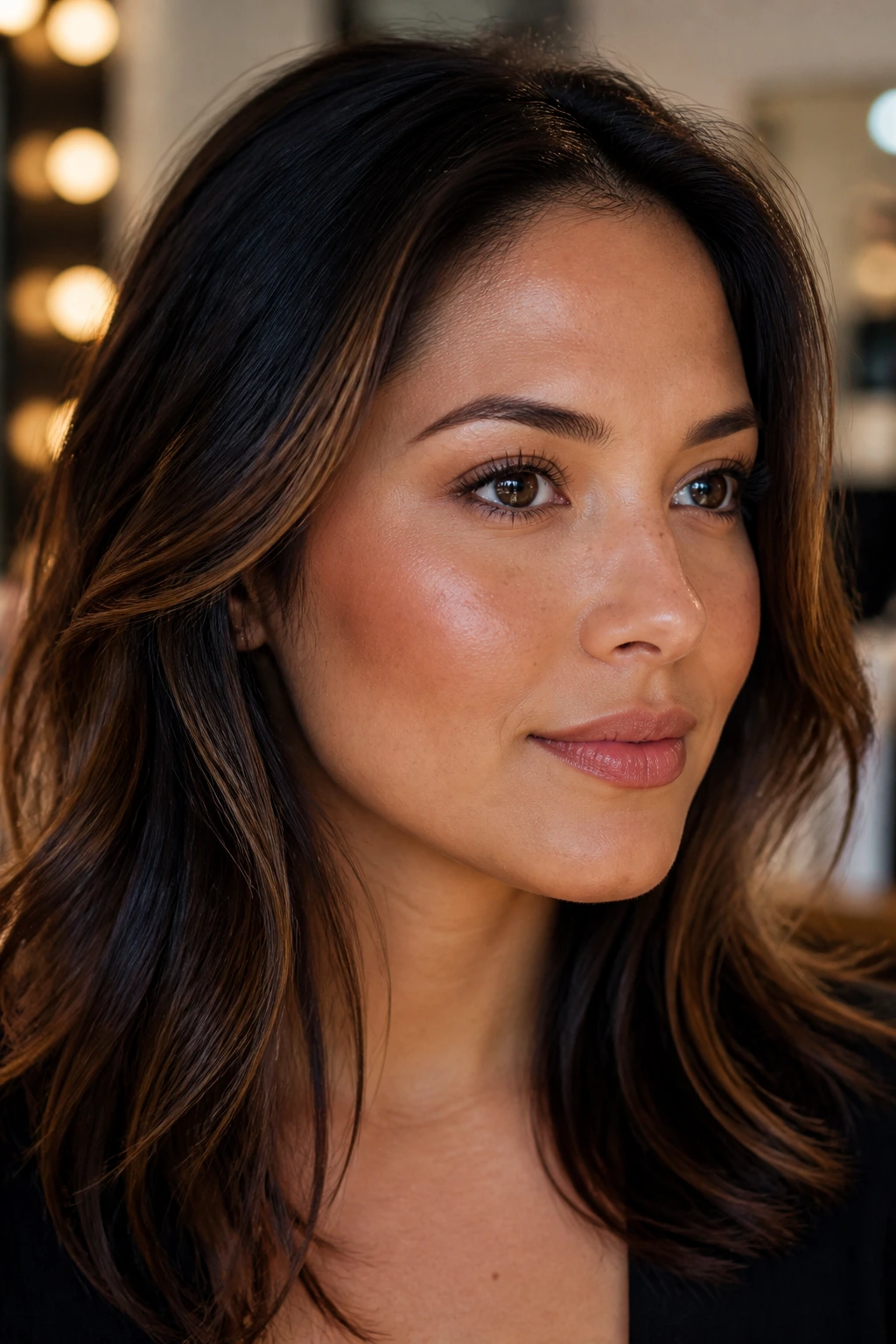
Can highlights sit near the cheeks and still flatter a round face? They can, if they begin at the cheekbone and taper down fast enough. The mistake is parking brightness right on the fullest part of the face and leaving it there.
How to Place the First Bright Ribbon
Ask for the front ribbon to start just above the cheekbone, then melt into a softer brown as it reaches the jaw. That short bright stretch draws the eye up, while the taper keeps the width from lingering.
The best versions are subtle from the front and richer from the side. That’s a nice balance. It means the face still feels open, but the color does not square off the face shape.
Warm brown suits this placement because it reflects a bit more light without looking harsh. If you want the look to feel easier to wear, keep the shade close to cinnamon, chestnut, or soft caramel.
16. Caramel Streaks on a Side Part
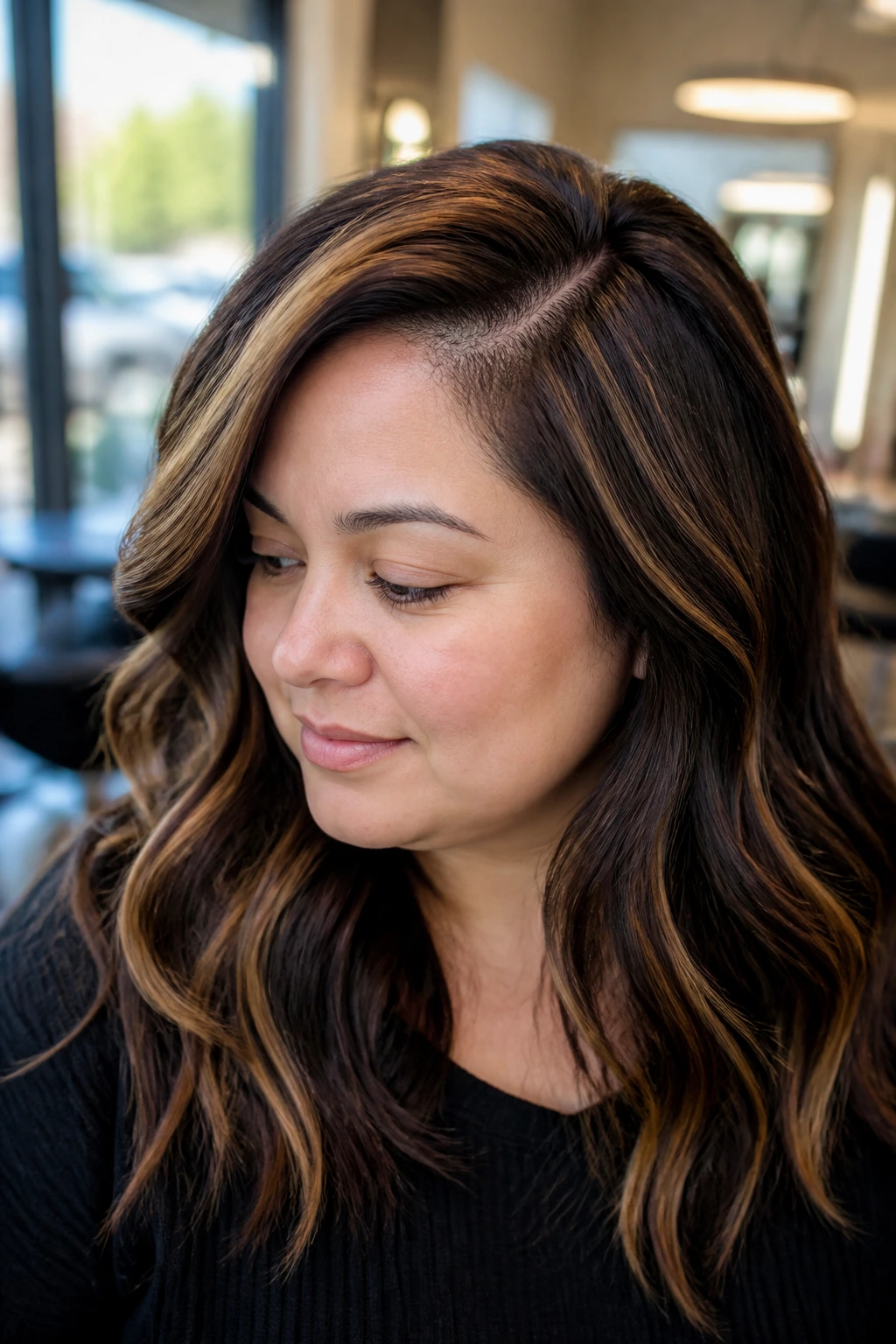
A side part changes everything. It breaks symmetry, adds lift at the crown, and gives caramel streaks a path to follow that feels longer than a center part usually does on a round face.
That’s why this one works so well. The part line creates a diagonal, and the streaks echo it. The face looks less circular because the eye keeps moving off to one side and downward. Small change. Big effect.
- Choose a side part with slight lift at the root
- Keep the streaks concentrated on the heavier side
- Leave the opposite side darker for balance
- Finish with a bend, not a tight wave
This style has a little attitude to it. Not too much. Just enough to make the face feel less even and more sculpted.
17. Cocoa and Hazelnut Blend
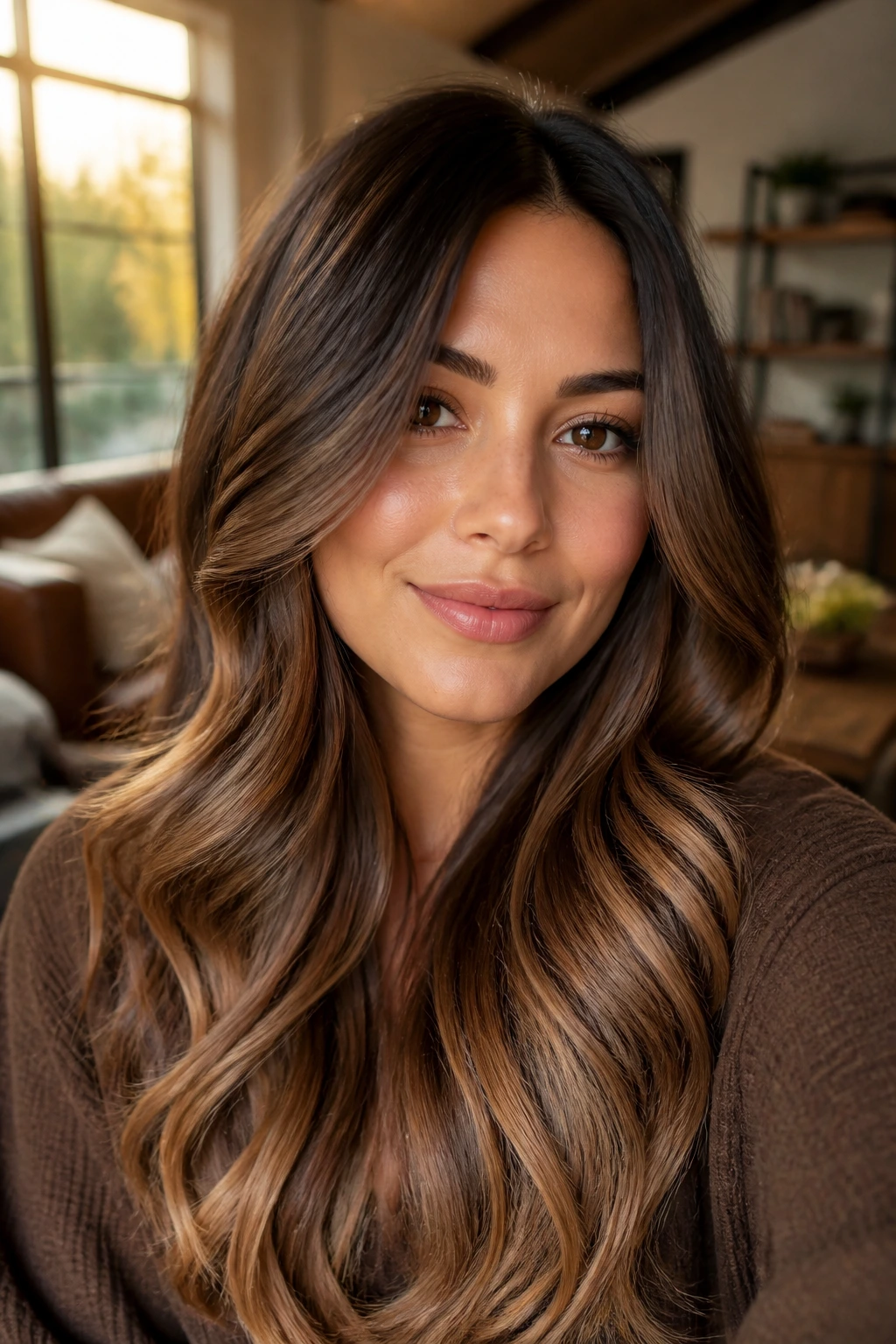
A cocoa and hazelnut blend is one of my favorite ways to keep dark hair from looking flat. Cocoa provides the depth, hazelnut gives a warmer middle note, and together they make the color look layered without needing dramatic contrast.
Round faces tend to look best when the color changes gradually. This blend does that. It moves from dark to mid-brown in soft shifts, so the eye keeps traveling through the length instead of catching on one bright spot at the cheeks.
Pure black-brown can sometimes feel heavy around the face. This mix lightens that load without stealing the depth that keeps the shape narrow. It’s a very practical compromise. And practical usually wins here.
18. Bronze Brown Glints on Feathered Ends
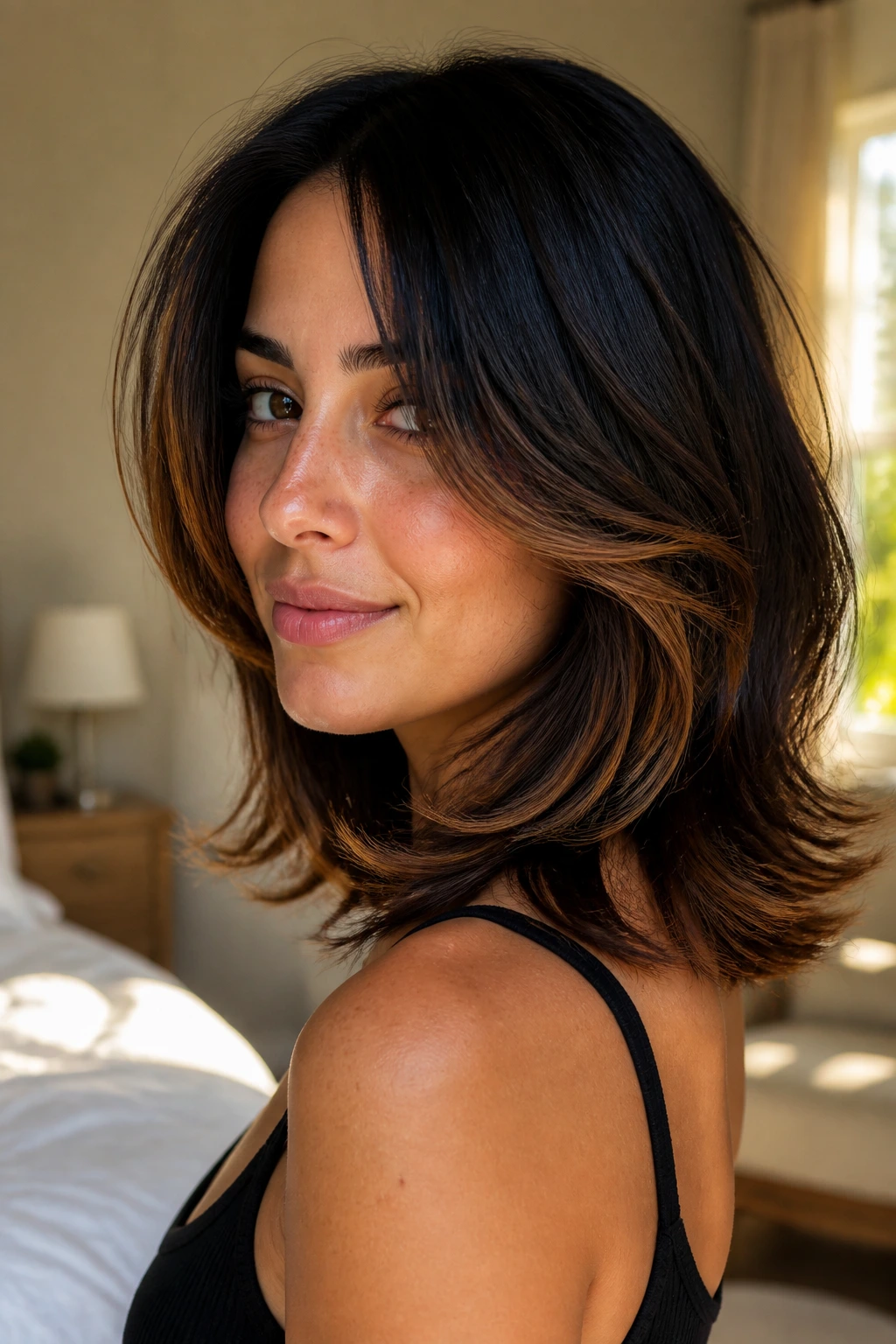
Bronze brown glints are a good match for feathered ends because the color follows the movement instead of fighting it. Feathered cuts already taper outward, so adding small bronze-brown bits near the ends gives the hair a lighter finish while keeping the face close and controlled.
Compared with Chunky Highlights, This Is Easier to Wear
Chunky panels can look bold, but they can also widen the head if they sit too close to the sides. Thin glints on the feathered tips stay low and soft, which works better when you want length.
This is a smart option for blowout styles. The ends flip, the bronze catches the light, and the face stays framed by darker roots and mid-lengths. If your hair has a natural swing, this one uses it instead of covering it up.
19. U-Shaped Face-Framing Balayage
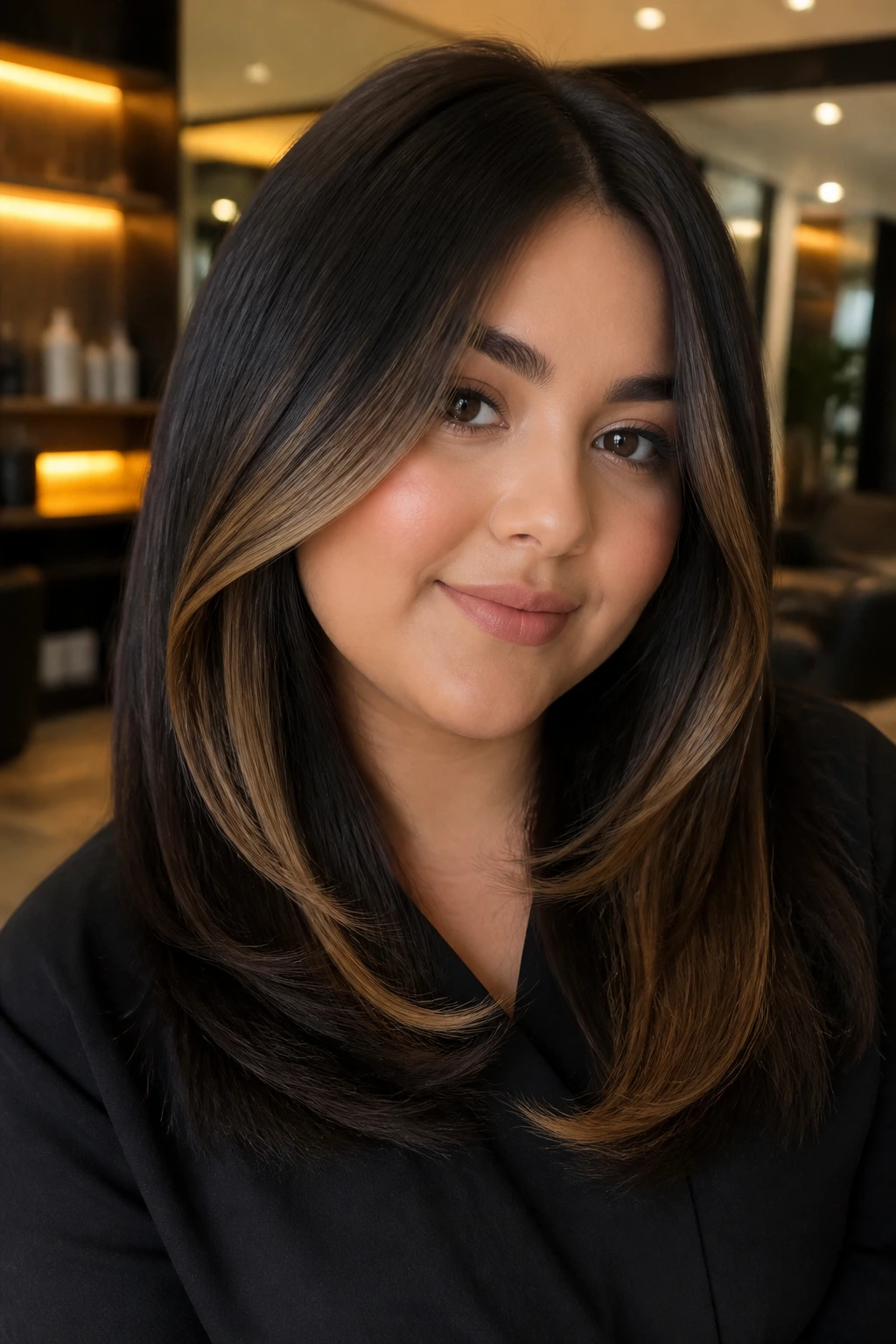
A U-shaped placement sounds technical, but it’s really about following the curve of the haircut and leaving the center heavier. That curve helps round faces because the light opens the front and then falls away before it can make the cheeks look wider.
Why It Feels More Balanced
The brightest pieces begin near the temples, sweep down toward the jaw, and then soften as they move into the ends. That shape creates a long outline around the face rather than a flat band across it.
- Keep the brightest arc outside the cheek width
- Let the center part or crown stay deep
- Use a gentle transition, not a hard painted edge
- Pair with layers that move away from the face
I like this one because it looks expensive without needing a big contrast jump. It’s built on shape first, color second.
20. Brown Peekaboo Panels Underneath
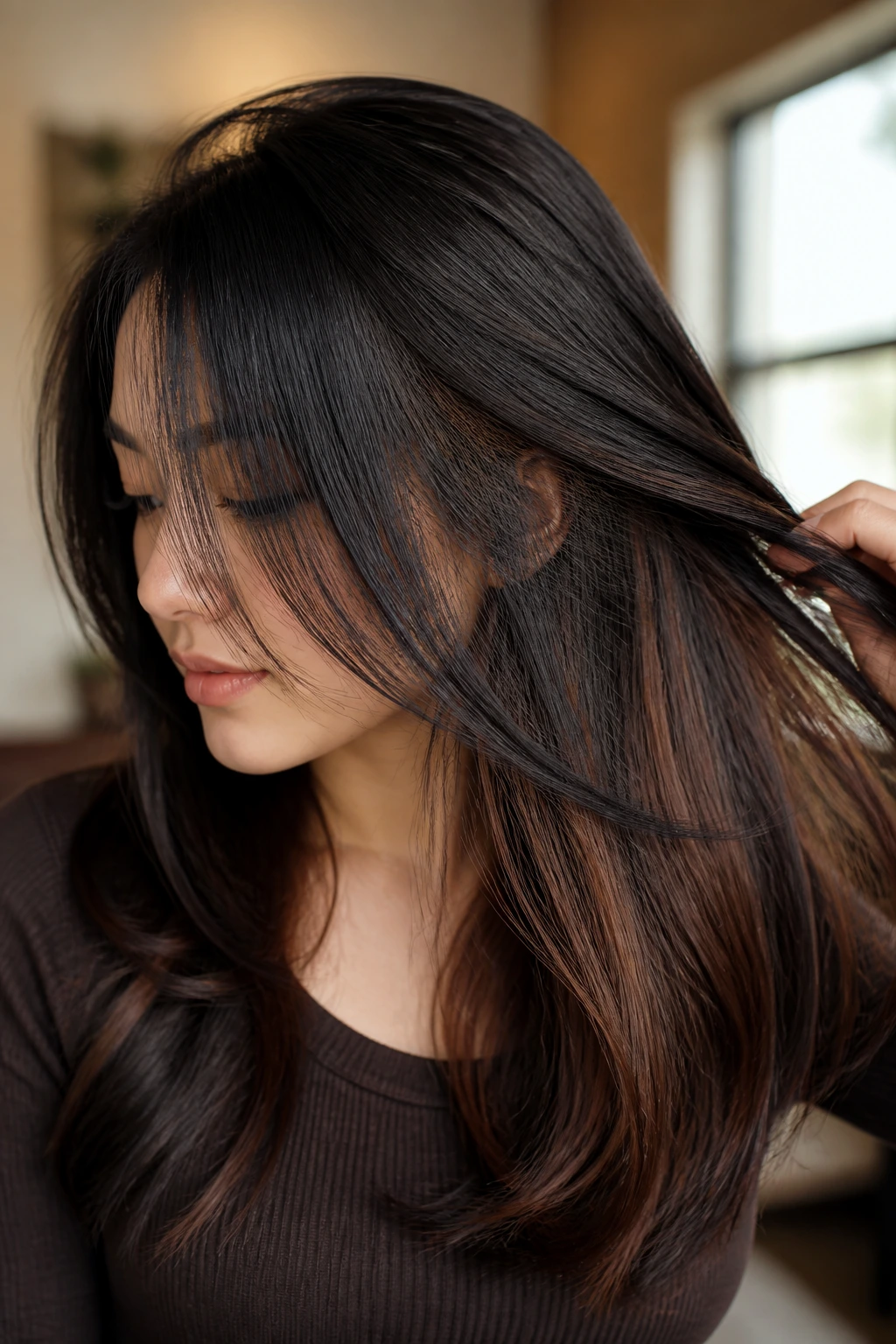
Peekaboo panels are useful when you want the hair to look dark and polished in stillness, then reveal something softer when it moves. On a round face, that hidden brightness keeps the surface calm while still adding dimension below.
The panels should sit underneath the top layer and just behind the front sections, not all over the sides. That placement gives the haircut some lift without spreading color across the widest part of the face. The result is more depth, less bulk.
I especially like this on straight or softly waved hair. Movement shows the color in flashes, which keeps it from feeling heavy. It’s a quiet choice, but not a timid one.
21. Bold Front Panels with Soft Edges
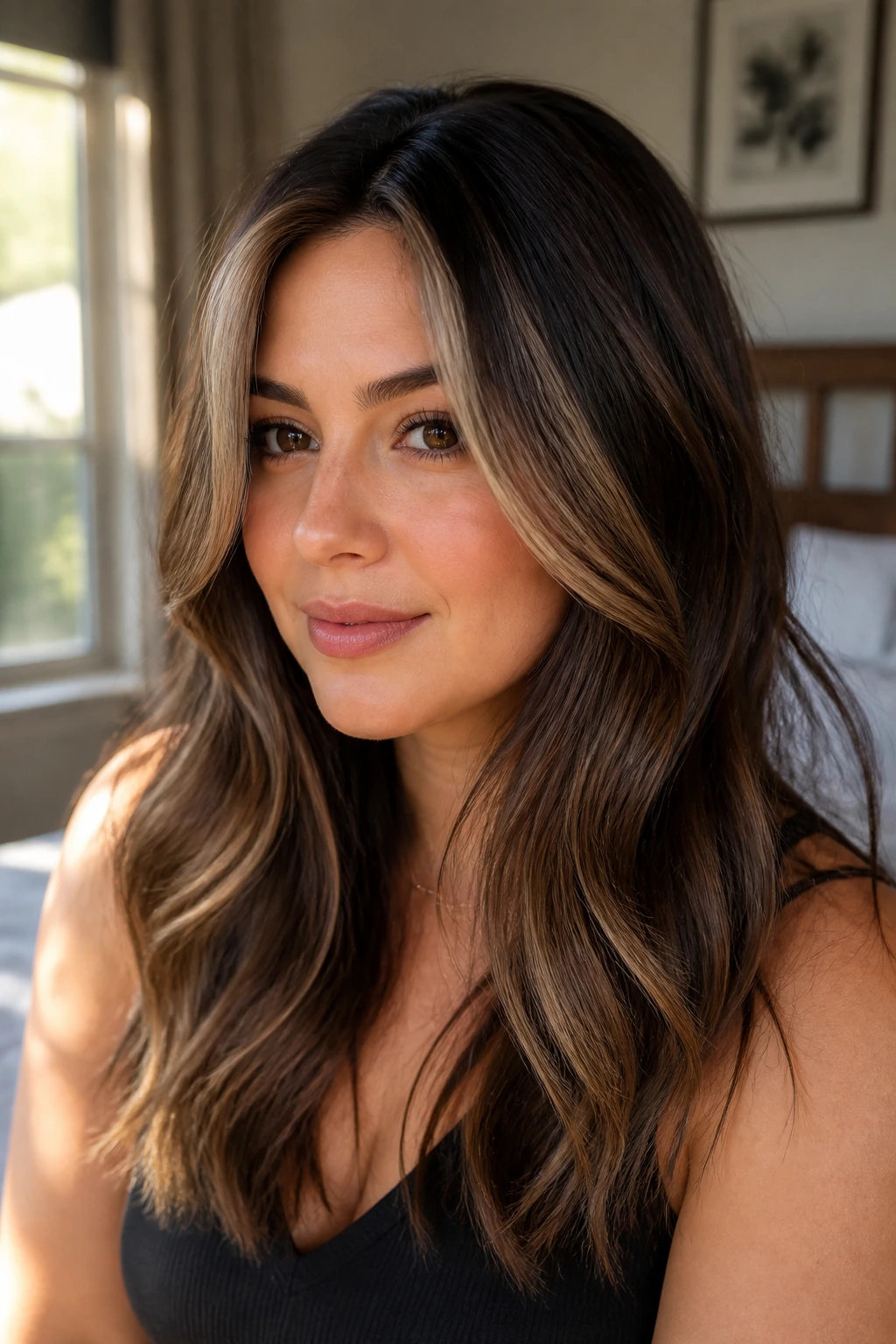
Can a bolder front panel still flatter a round face? Absolutely, if the edges stay soft and the panel narrows as it drops. Hard edges are the enemy here. Soft edges are your friend.
The front pieces should be brighter near the top, then diffuse quickly toward the jaw. That gives you the lengthening effect of a stronger panel without the blocky look that can widen the face. A center section of dark root helps too. It keeps the panel from becoming a curtain across the forehead.
How to Wear It Without Overdoing It
Keep the rest of the color quiet. Let the sides and back stay low-contrast. Then style the hair so the front pieces fall slightly away from the cheeks, not straight across them.
It’s a strong look, but the softness keeps it wearable.
22. Rooted Beige Brown Highlights on Straight Hair
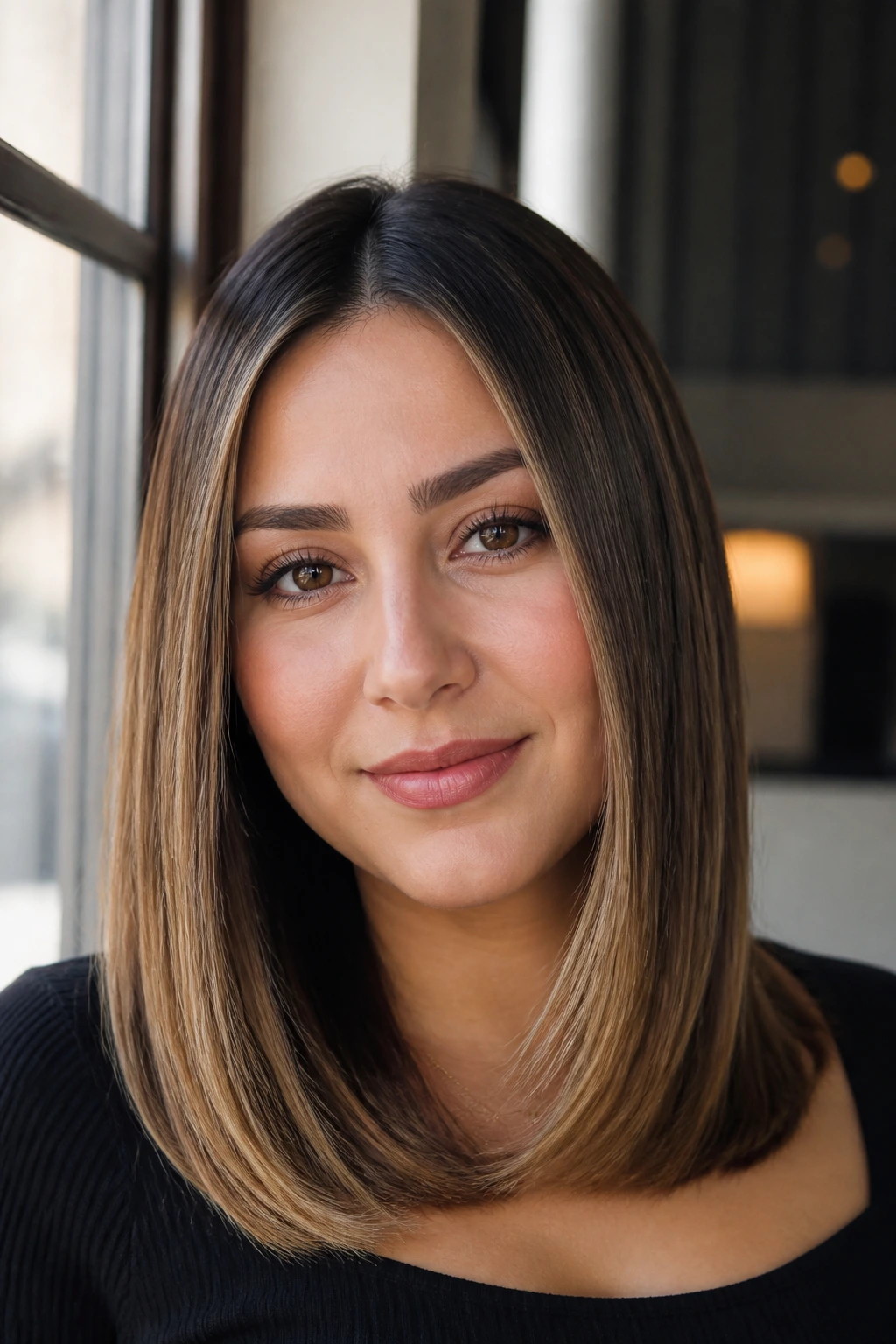
Straight hair can show every line, which is both a blessing and a problem. Rooted beige brown highlights use that clarity to your advantage by creating slim, clean lines that travel downward instead of fanning outward.
That root shadow is doing a lot. It keeps the top dark, anchors the face, and prevents the beige from starting too high. The lighter pieces sit through the length and ends, where straight hair can show them clearly without making the sides feel wide.
- Ask for a soft root melt
- Keep beige pieces fine, not chunky
- Concentrate the brightness from mid-length to ends
- Straighten with a slight bend under the chin
This is a neat, orderly look. If you like clean lines, it has plenty to offer.
23. Espresso and Walnut Dimension
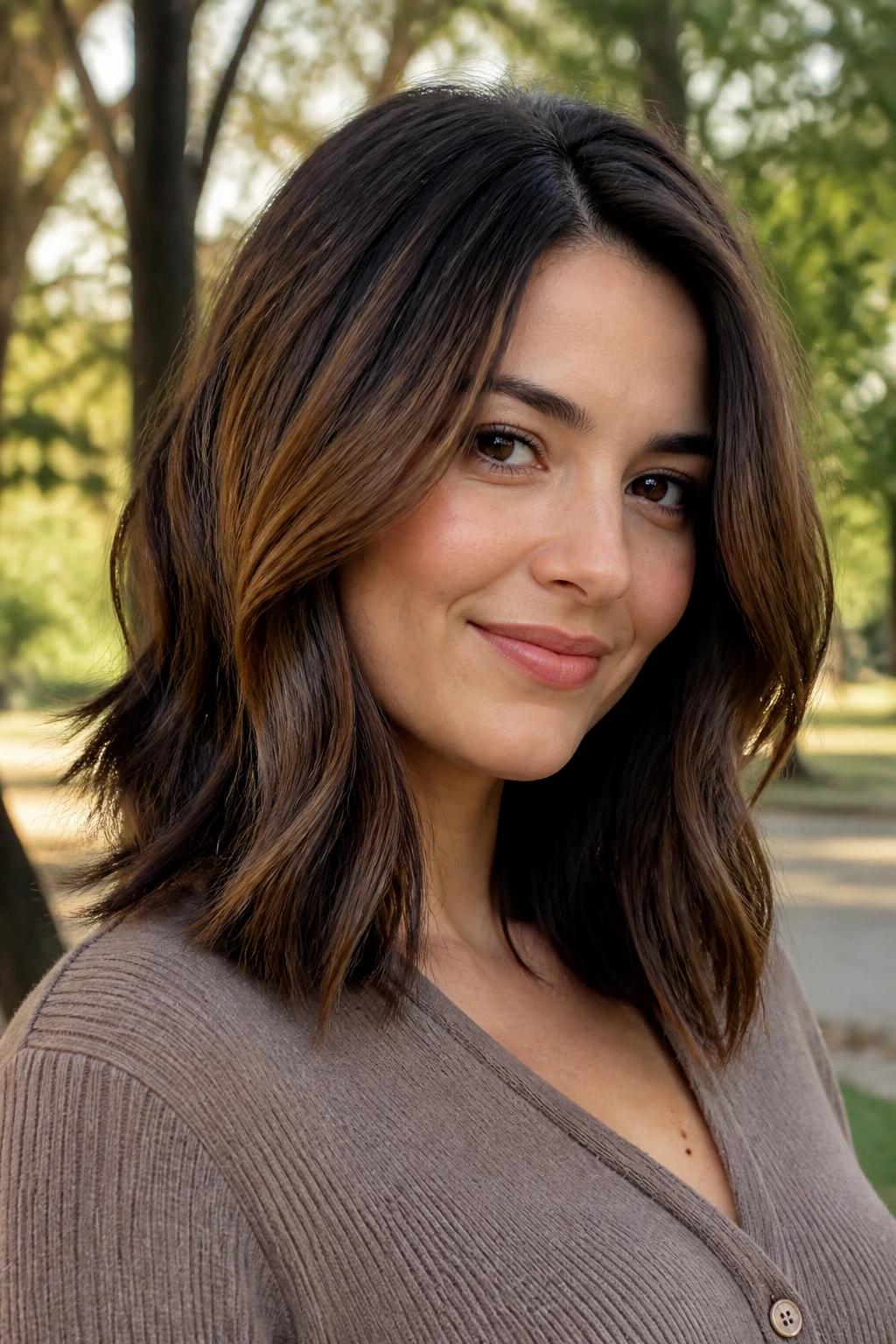
Espresso and walnut together give dark hair the kind of depth that makes a round face look more carved out. Espresso keeps the base rich and shadowy; walnut adds a warmer, softer brown that stops the whole thing from feeling too hard.
One flat color can press a round face wider than you want. A layered mix changes that by putting darker and lighter browns in different zones, which creates vertical movement. The face gets framed by tone changes instead of one big dark sheet.
I’d use this on medium-length cuts with some shape around the jaw. Walnut around the outer layers, espresso in the underlayers — that’s the useful pairing. It feels natural, not manufactured.
24. Halo Highlights Around the Outer Layers
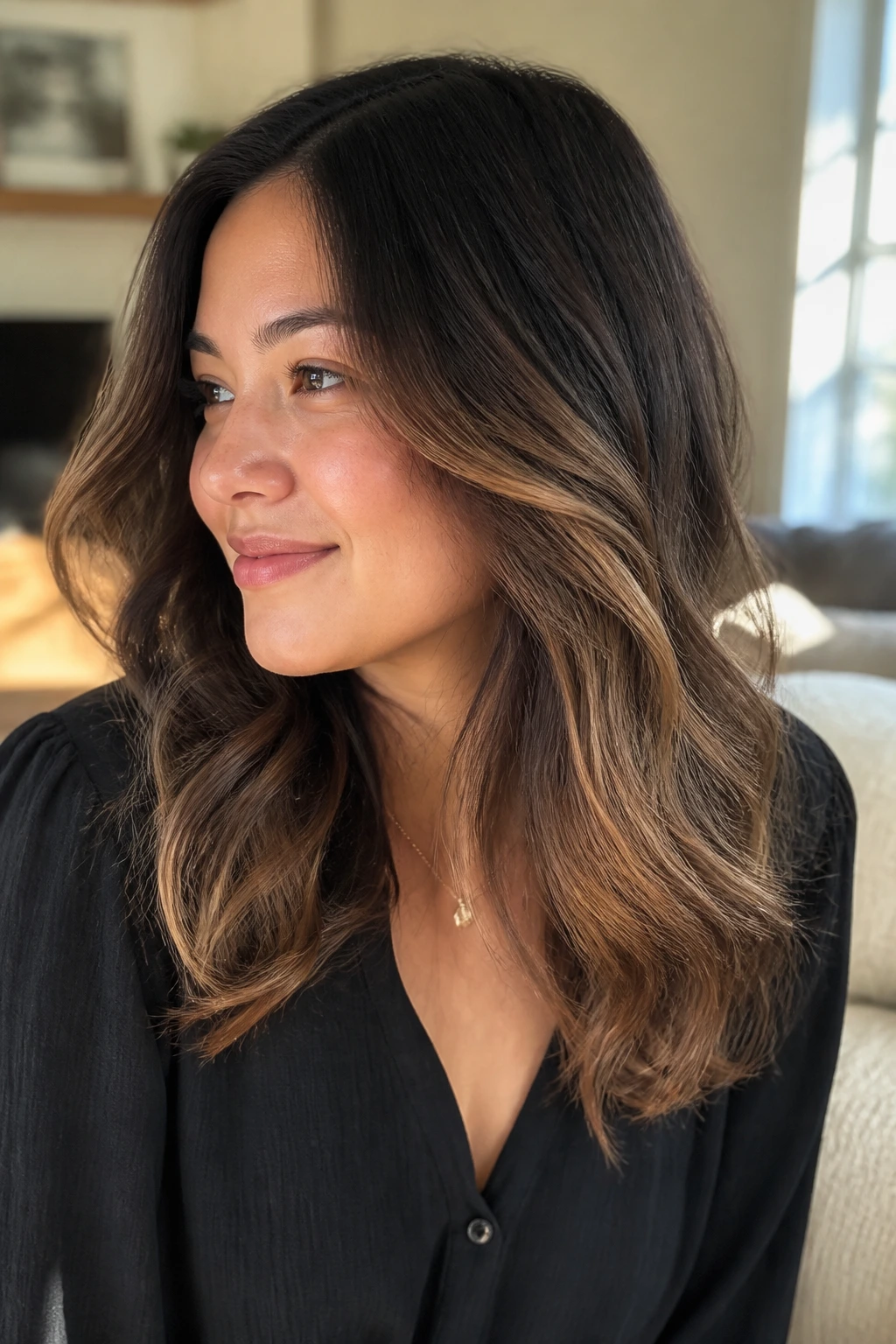
Halo highlights can sound dramatic, but the better version is quieter than that. Think of them as brightness placed around the outer layers of the haircut, not all the way around the face like a circle. On round faces, that distinction matters.
Unlike a Money Piece, This Wraps the Hair, Not the Face
A money piece is front-and-center. A halo works on the perimeter. It adds light to the edges, which gives the whole cut movement and keeps the focus off the cheeks.
This is a good move for thick hair because the outer layers can take color without looking sparse. If the ends feel heavy, the halo effect opens them up. I’d keep the top dark and the halo very broken-up so it never becomes a bright ring.
It’s softer than it sounds. Which is the reason it works.
25. Feathered Brown Fringes and Bangs
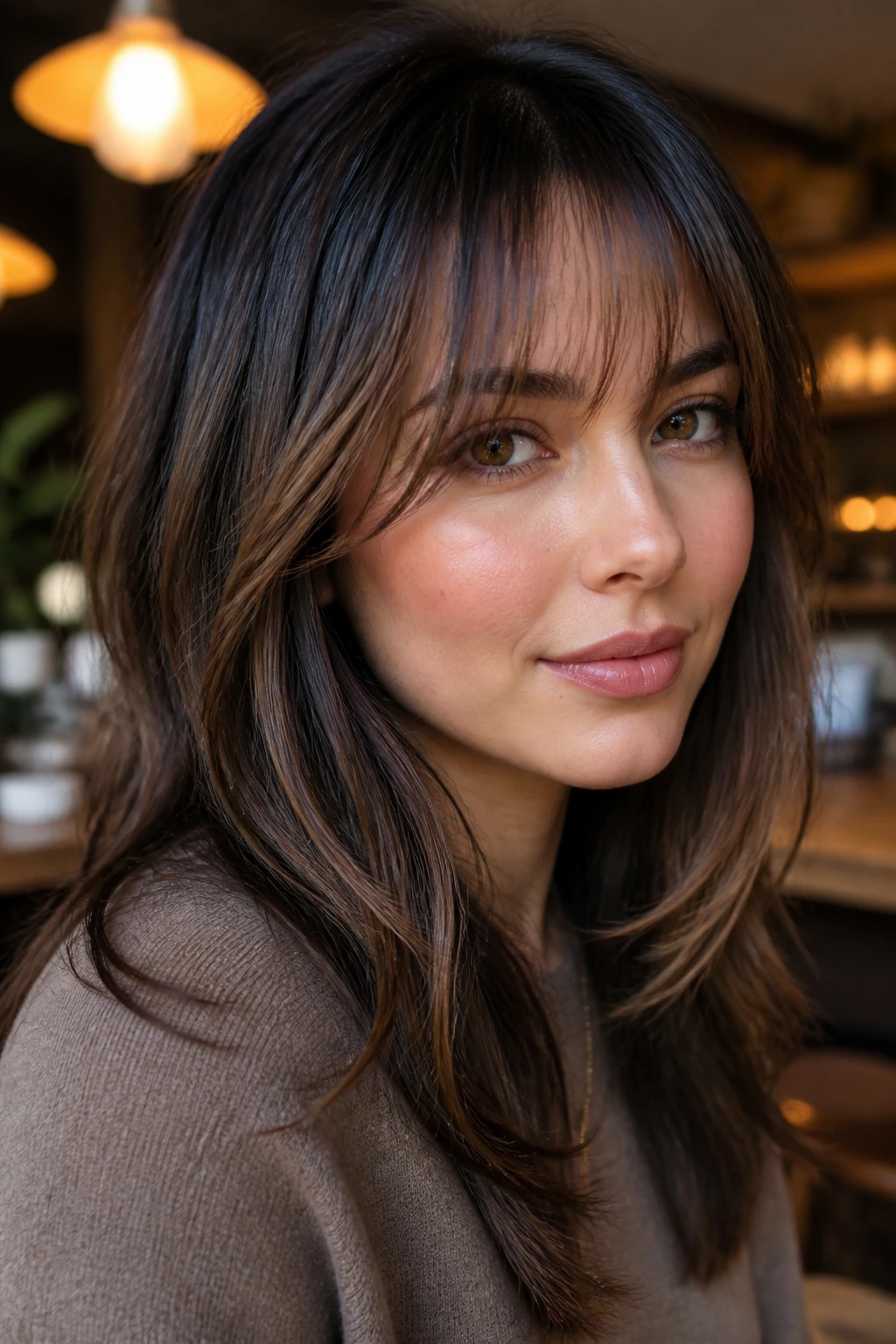
Fringes and bangs are tricky on round faces, but feathered brown highlights can make them easier to wear. The color should be placed in the fringe’s longer pieces, where it helps the bangs separate and fall instead of forming one solid curtain.
Why the Fringe Needs Tiny Ribbons
A heavy bang across the forehead can shorten the face. Thin brown ribbons inside the fringe do the opposite by breaking the line and guiding the eye downward.
- Keep the brightest bits on the longer fringe pieces
- Leave the shortest bang pieces darker
- Blend the side pieces into the length
- Use a soft blow-dry so the fringe bends rather than sticks
This one is for people who like bangs but do not want them to feel blunt. It’s a small adjustment, and small adjustments matter a lot here.
26. Warm Mocha Ends with Dark Roots
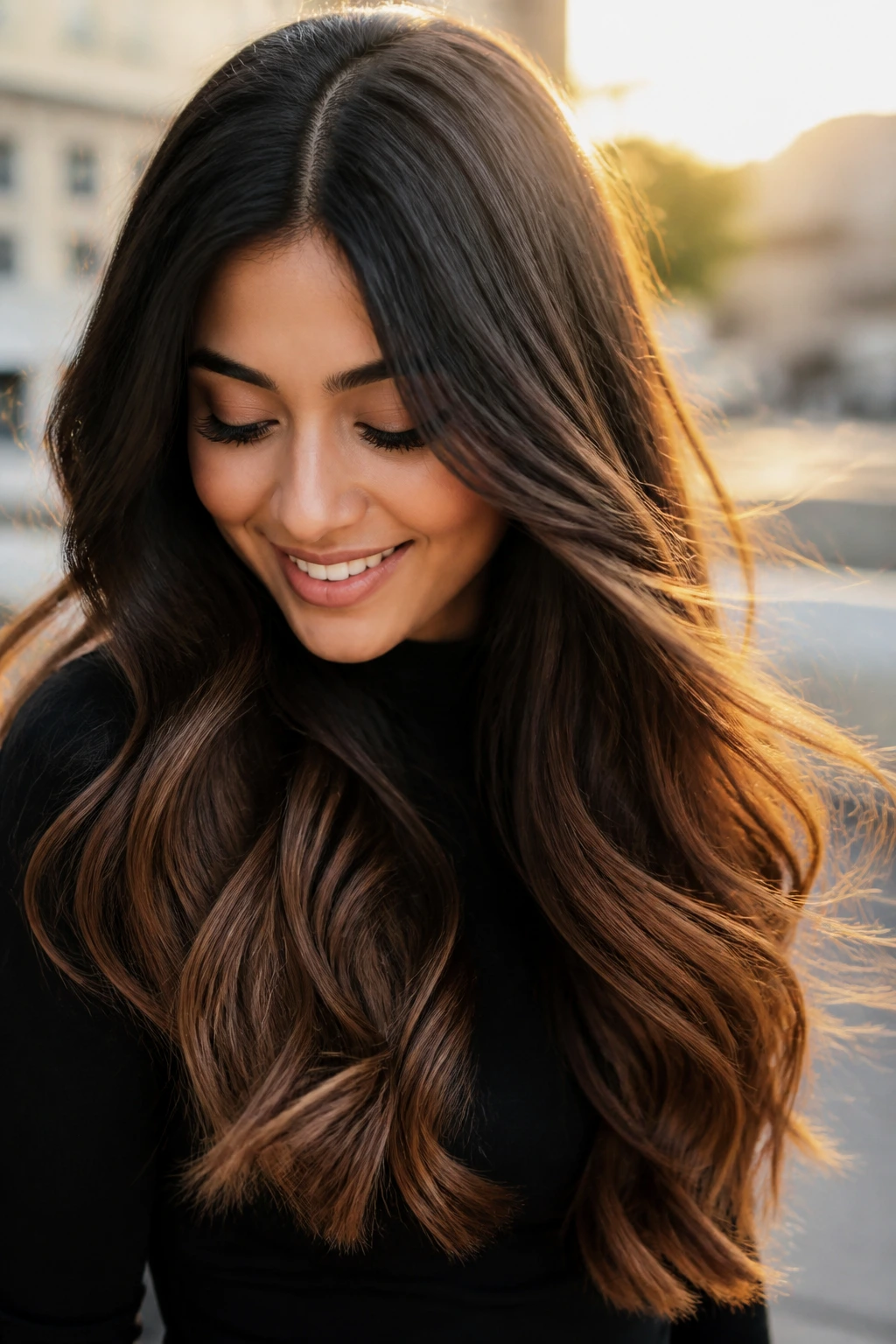
Warm mocha ends with dark roots give you a long, drawn-out color story, and that longer story is flattering on round faces. The root stays deep and close to black, while the ends open into mocha, which pulls the eye down the length of the hair.
That downward shift helps more than people expect. It makes the face feel longer because the brightest area sits away from the cheeks and closer to the bottom of the cut. A little warmth at the ends also keeps the look from feeling severe.
If your hair is long already, this is an easy win. If it’s medium length, keep the mocha low and soft. No hard fade. No blunt jump.
27. Micro-Babylights for Fine Hair
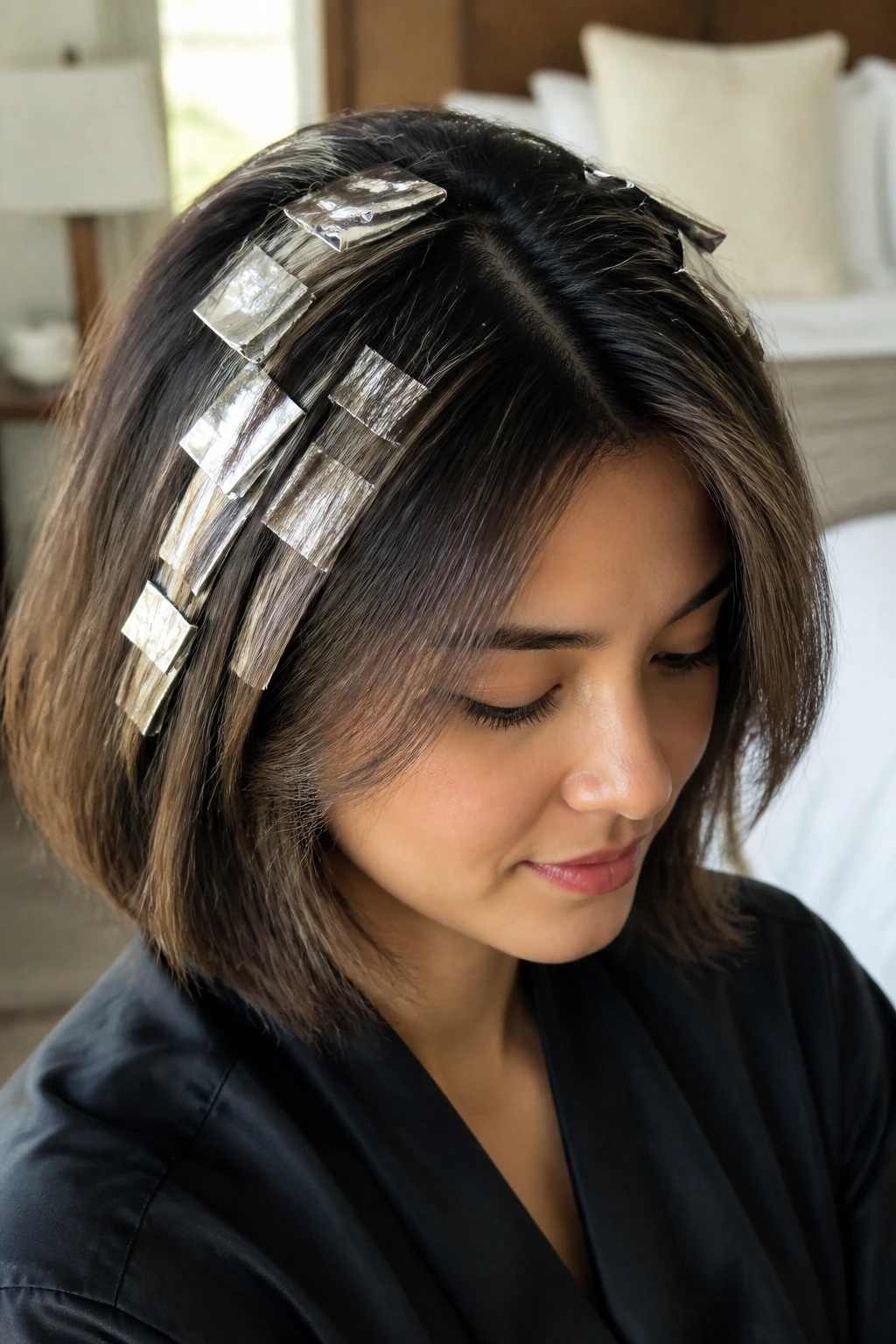
Fine hair needs a gentle hand. Micro-babylights can add the look of density without creating visible stripes, and that matters on round faces because you want body, not width.
How to Build Density Without Bulk
Use very fine sections and keep the pieces close together at the crown and upper sides, but not so close that the color turns washed out. The goal is a soft woven effect. It should look like the hair has more strands than it actually does.
A few practical notes:
- Keep the foil weave almost thread-thin
- Leave some dark hair between each lighter slice
- Focus on the top third of the head
- Use a gloss after lifting to keep the tone rich
This is not the place for chunky contrast. Fine hair usually looks best when the highlights feel like texture, not decoration.
28. Contour Blend for Thick Waves
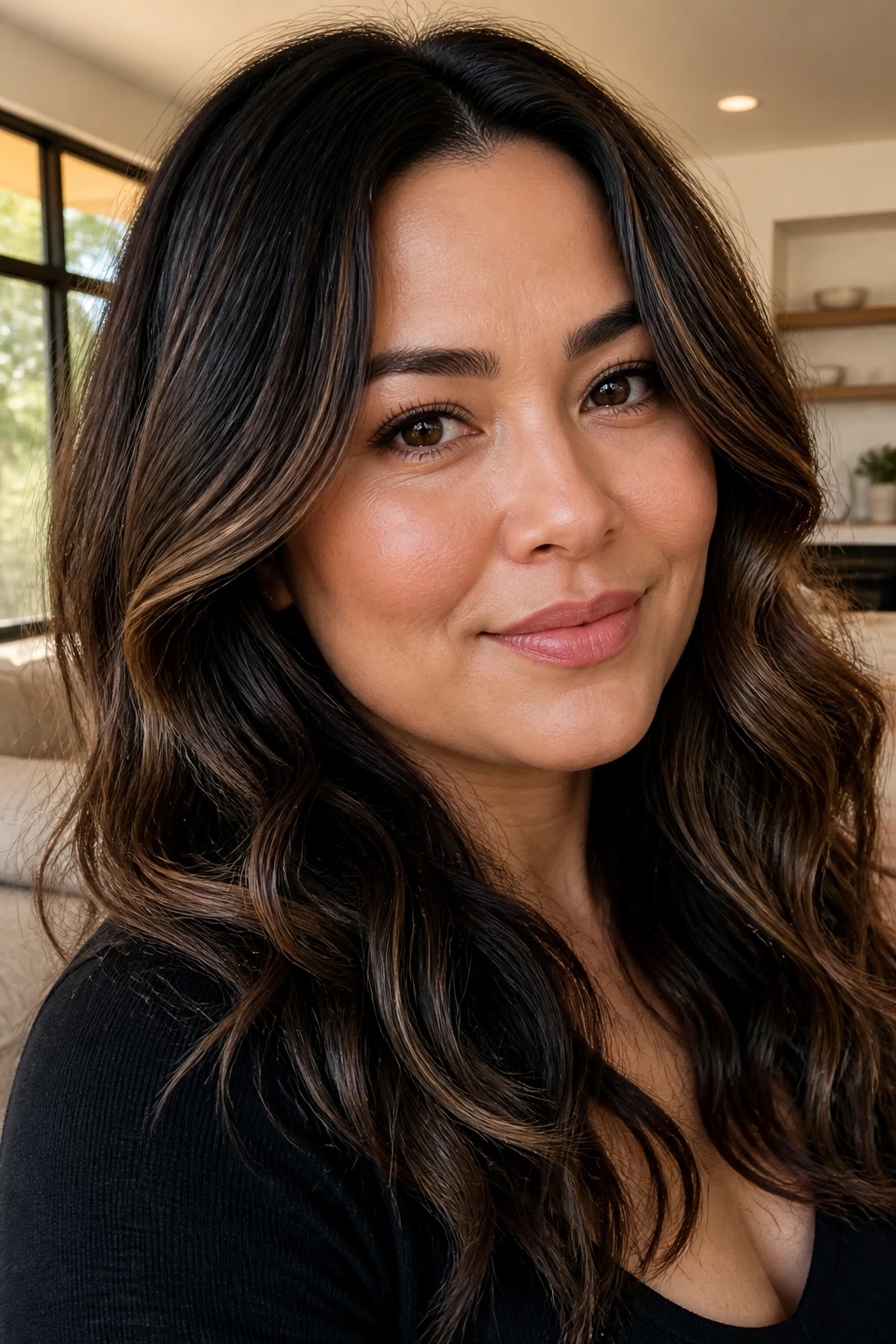
Thick waves can get big fast, and a contour blend is a smart way to manage that. The idea is to place lighter brown where you want the eye to go and leave deeper brown where you want the shape to recede.
That’s useful on a round face because it lets the hair narrow at the sides while staying lively through the length. If you paint too much brightness across the widest part of thick waves, the whole head can spread outward. A contour blend avoids that.
- Put light on the outer curves
- Keep shadow inside the wave valleys
- Let the front pieces stay slightly longer
- Style with a bend that follows the haircut, not a fluffy curl
The result is controlled, full, and easy to read.
29. Face-Slimming Vertical Ribbons
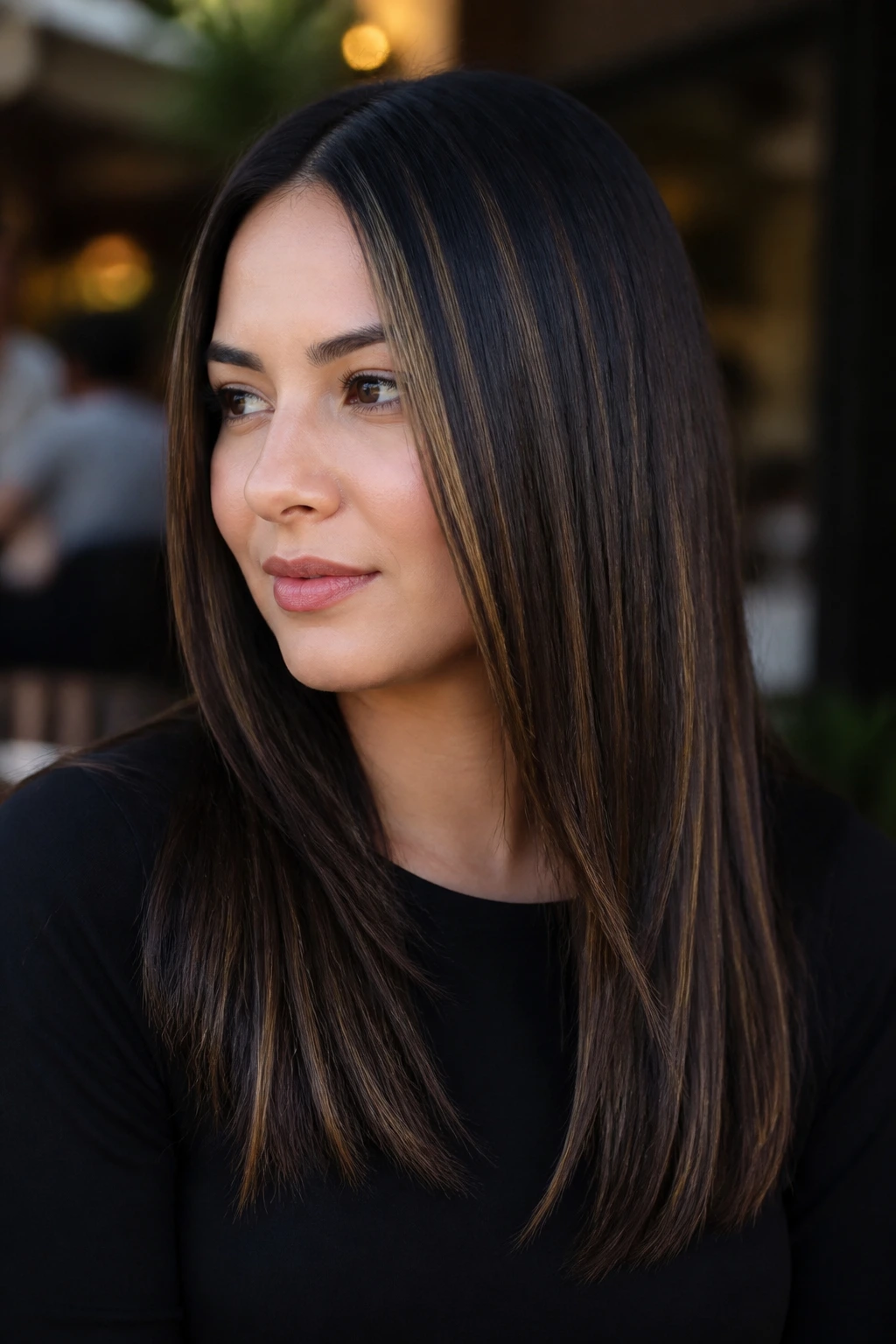
Vertical ribbons are one of the cleanest ways to flatter a round face because they keep the eye moving up and down. That matters more than perfect color matching. You can have the best brown tone in the room, and if the placement runs sideways, the face still reads wider.
These ribbons should be narrow, long, and slightly separated from one another. I like them starting near the temple or upper cheek area, then continuing through the mid-lengths and ends in a straight fall. They do not need to be bright to work. They need to be directional.
The nice thing about this approach is how flexible it is. You can make it caramel, mocha, chestnut, ash brown, or warm cocoa. The shape is the real star. Color just follows along.
30. Soft Lattice of Brown Lights
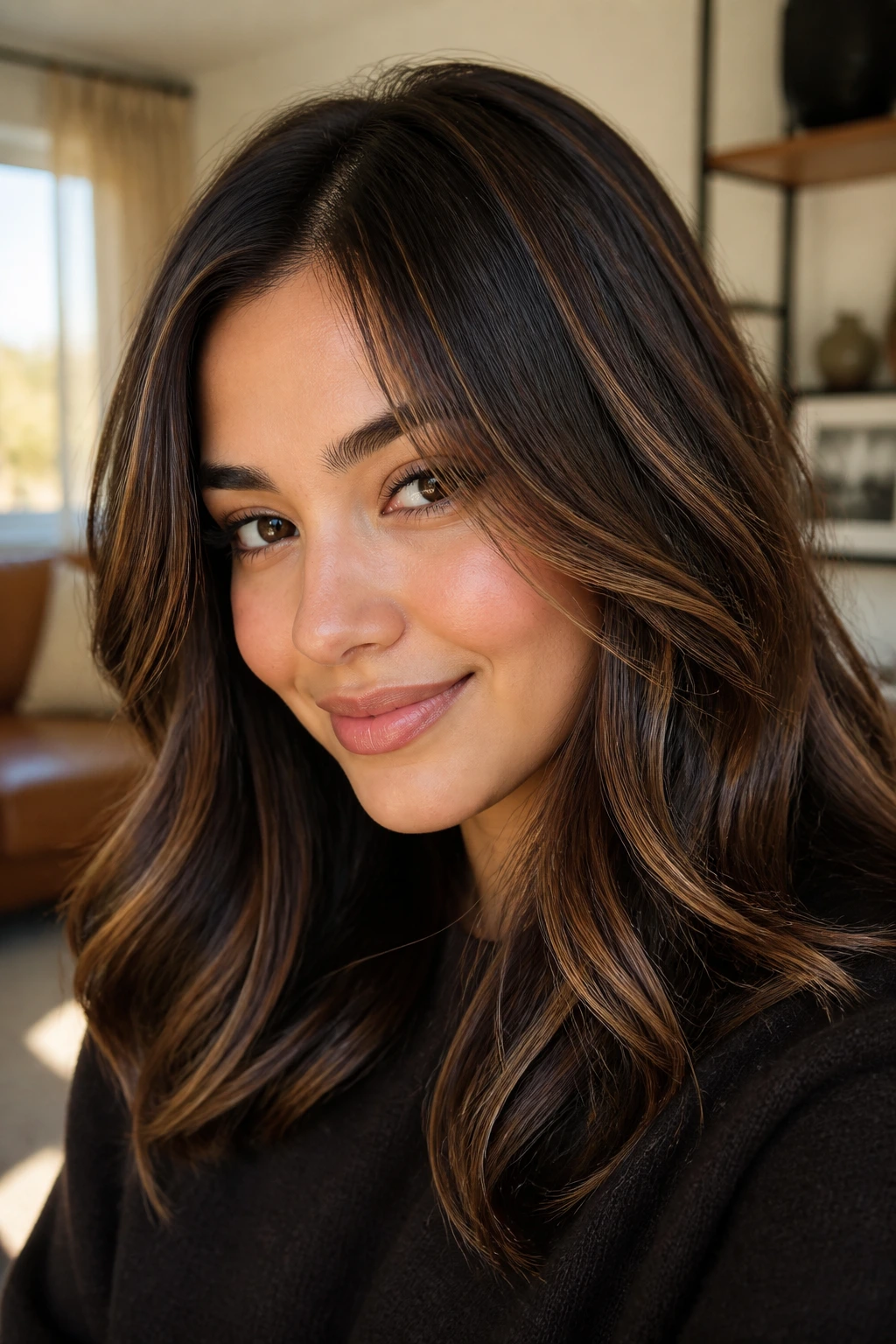
A soft lattice of brown lights is the kind of color work that looks understated at first glance and better the longer you stare at it. Thin pieces of black-brown, cocoa, mocha, and warm chestnut weave through the hair in a broken pattern, which keeps a round face from feeling boxed in.
What Makes This One Worth Asking For
Unlike a single highlight style, this uses several tones in a loose grid. That variety stops the hair from forming one obvious bright zone and gives the face room to breathe around the edges.
It’s a good fit if you want color that feels lived-in and not overly finished. Keep the lighter bits thin, let the darker strands stay visible, and avoid packing too much brightness at the cheeks. The whole effect should feel soft and slightly irregular — that irregularity is what keeps it flattering.
If you want one look from this list that can stay pretty for a long time without shouting for attention, this is the one I’d point to first.
