



Brown hair has a habit of looking perfectly fine until you put a cool color next to it. Then the whole head wakes up. That is why blue highlights for brown hair can look smoky, sharp, soft, or jewel-bright depending on where you place them.
The trick is restraint. A strip of sapphire near the face changes the haircut in seconds; a few denim babylights through the mid-lengths can make curls look more layered; a hidden navy panel underneath stays quiet until the hair swings. Blue is a better chameleon than people expect, and brown is the base that makes it interesting.
The biggest mistake is asking for blue without talking about depth. Dark espresso brown can carry a deeper navy or blue-black sheen, while lighter chestnut usually needs a bit more lift before cobalt reads clean instead of muddy. That is the part people skip at the salon, then wonder why the shade looks flat after one shampoo.
Some of these looks are gentle. Some are loud enough to stop a room. The range runs from whisper-soft veils to chunky streaks with a real attitude, and the sweet spot depends on how visible you want the color, how often you like to style your hair, and how much grow-out you can live with.
1. Sapphire Money Piece
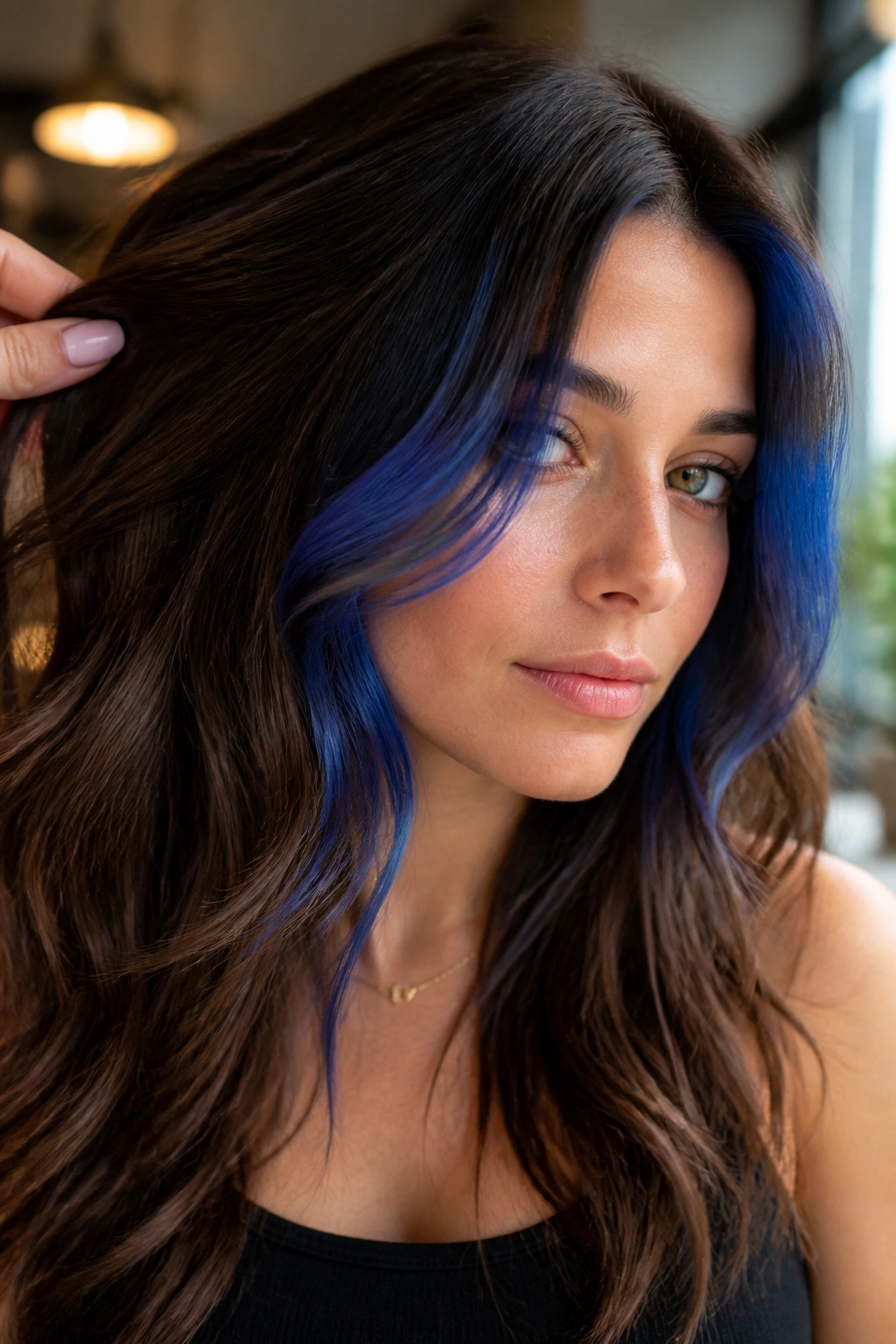
A sapphire money piece does one job better than almost any other blue placement: it wakes up brown hair around the face. The color lands where the eye goes first, so even a narrow section can change the whole mood of the cut. On medium brown hair, it looks crisp; on deeper brunette bases, it feels richer and more dramatic.
Why It Works
The money piece sits from the temple area down toward the cheekbone, so it frames the face instead of hiding in the back. That matters. Blue on brown hair can disappear if it is buried too deep in the layers, but a bright front piece gives the shade a clear job.
For the cleanest result, the front sections usually need a bit more lift than the rest of the head. Think of it as giving the blue a stage. Without that, sapphire can go muddy against a very dark base.
- Best on medium to deep brown hair with a center or off-center part
- Usually needs 1 to 2 levels of lightening before the blue goes in
- Looks strongest on blunt cuts, lobs, and layered shags
- Pairs well with a loose wave that keeps the front panel visible
Pro tip: keep the money piece slightly thinner at the roots and fuller through the mid-lengths. It grows out cleaner that way.
2. Midnight Peekaboo Panels
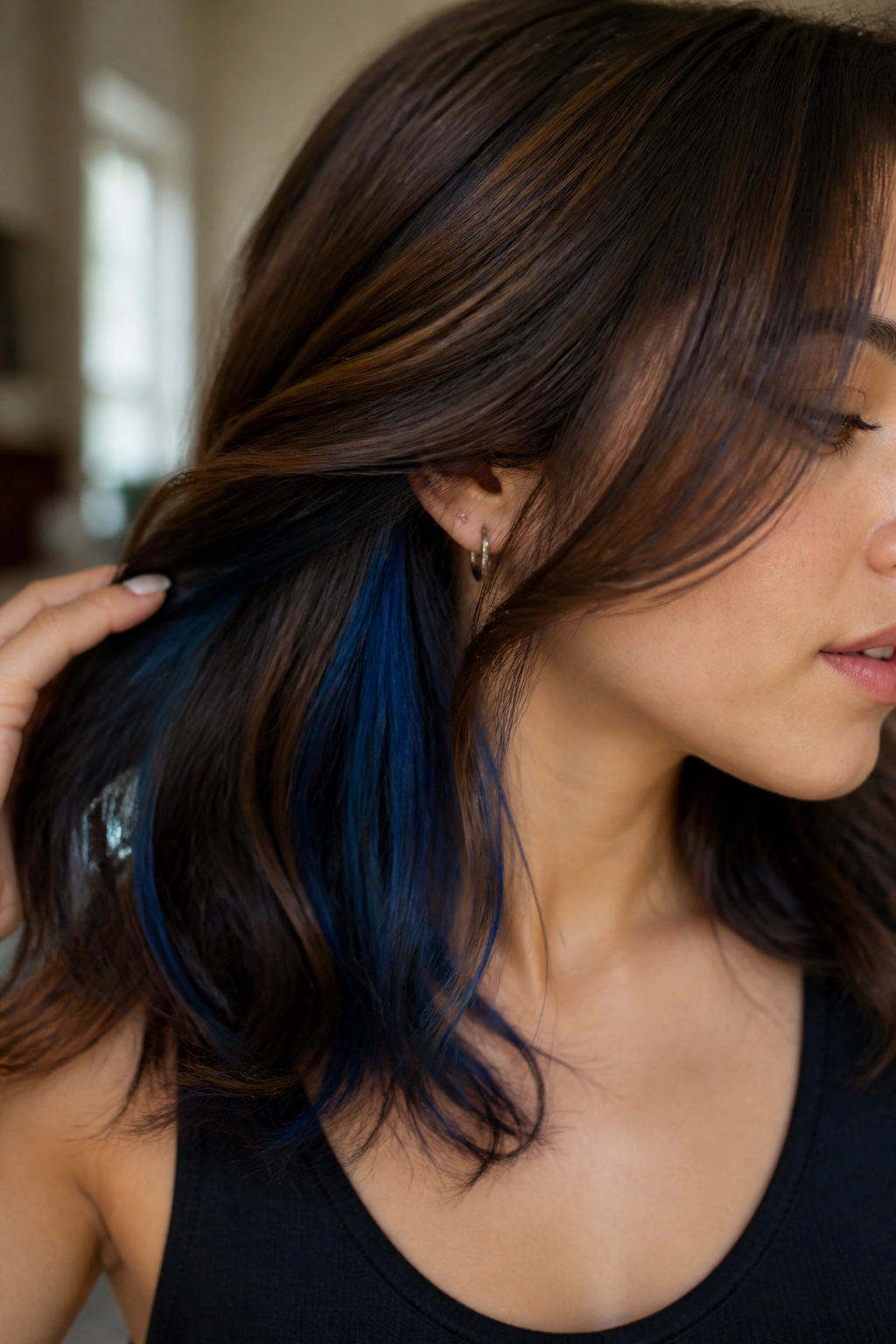
Want blue that only shows when your hair moves? This is the one. Midnight peekaboo panels sit under the top layer, so the brown stays dominant while the blue flashes through braids, curls, and flipped hair. It is the least needy way to wear a visible blue accent.
The placement matters more than the shade. Put the panels too high and they start reading like obvious streaks. Tuck them low enough, and they become a little secret that shows up when you turn your head or push hair behind your ear.
How to Wear It
A few hidden panels behind each ear usually do more than a full section at the back. That is enough. On long brown hair, the movement creates the reveal. On shorter cuts, the color peeks out in pieces and feels sharper.
This works well for people who want blue hair without living with blue hair every second of the day. There is a nice balance in that. You get the fun part, but the top layer still looks office-safe or low-key if that matters to you.
3. Cobalt Balayage Ribbons
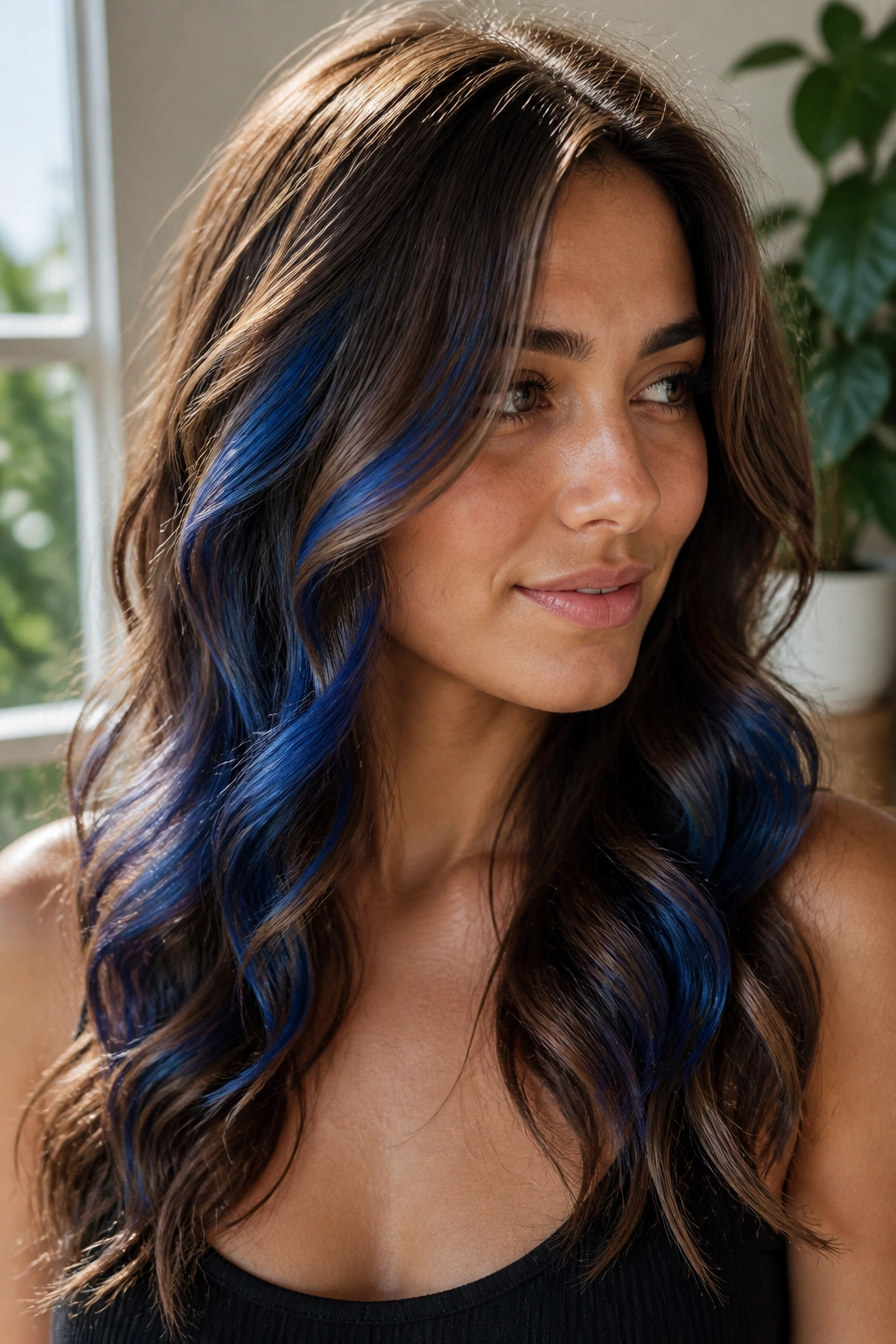
Picture chestnut hair with loose waves and two cobalt ribbons bending through the middle of the length. That’s the appeal here. Cobalt balayage looks painted, not striped, which gives brown hair a brighter blue story without turning the whole head into a color block.
The most flattering versions follow the haircut. A layered cut gets ribbons that bend and stack; a blunt cut needs the blue a little lower so it does not fight the line of the ends. That detail is easy to miss, and it makes a big difference.
- Ask for softly painted mid-lengths rather than solid streaks
- Use the color to follow the bend of the wave, not fight it
- Keep the root area darker for a more natural grow-out
- Best on shoulder-length hair or longer, where the ribbon pattern can breathe
Loose curls show this style best. Straight hair can still wear it, but the ribbons become more graphic and less fluid.
4. Denim Babylights

Denim blue is the quiet one in the room, and that is exactly why it works. Babylights are tiny, feather-thin pieces, so the blue reads as texture first and color second. On brown hair, that gives a faded denim look instead of a hard stripe.
The best part is how the shade sits in motion. A matte denim tone can look almost gray indoors, then pick up a cool blue cast near a window. It feels lived-in rather than newly dyed, which is a nice break from the usual “look at me” color story.
Fine hair loves this placement. Big streaks can swallow it. Tiny blue threads make the hair look fuller because they break up the brown without taking over the whole head. On curls, the effect gets even better, because each coil catches a slightly different slice of color.
This is the style for someone who wants to test blue without going all in. It is also one of the easiest ways to keep a brunette base looking dimensional between appointments. The color does not shout. It murmurs.
5. Electric Blue Chunky Streaks
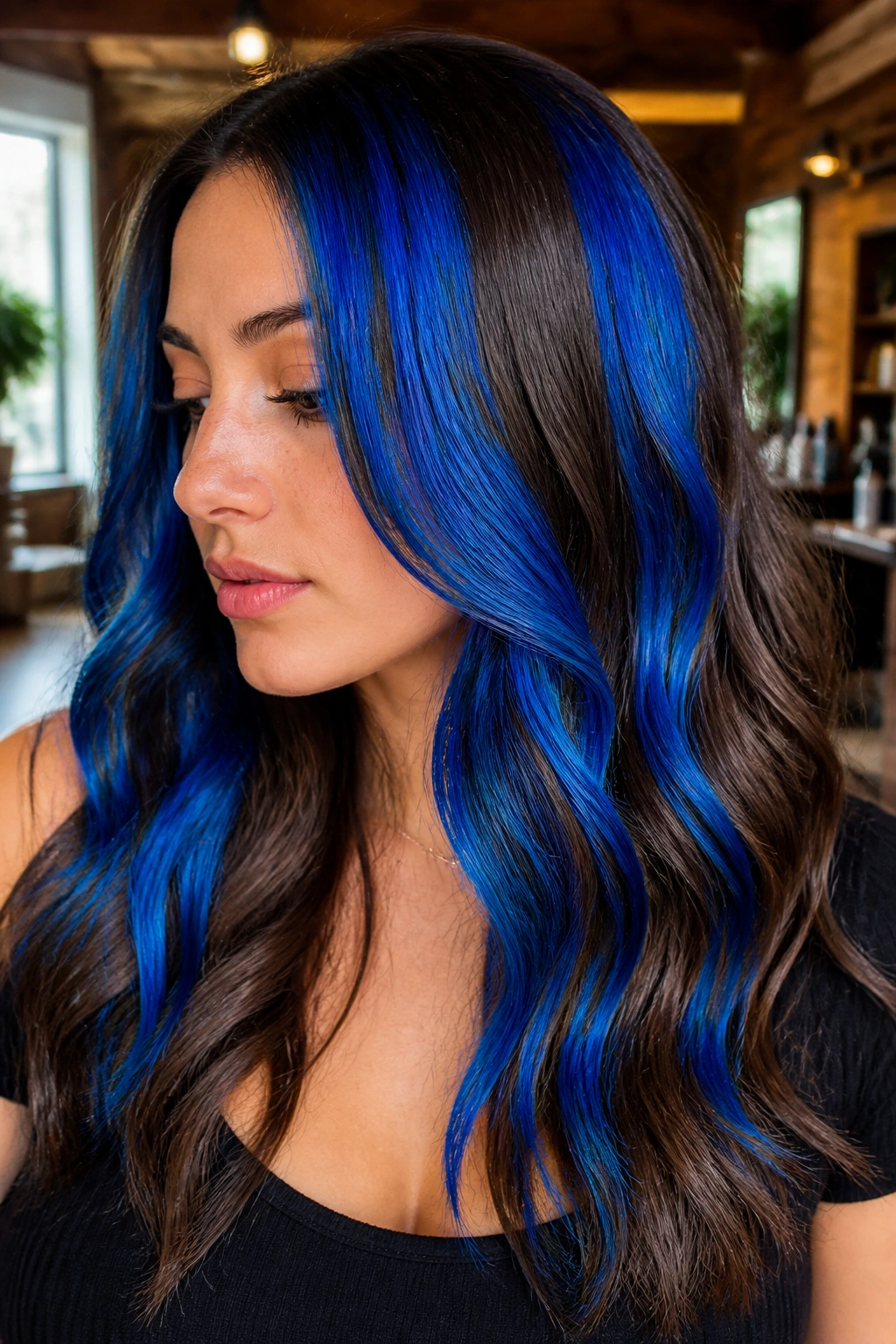
If babylights whisper, chunky electric blue streaks speak up fast. This look has a 90s edge that does not try to hide itself, and that is half the charm. Brown hair becomes the backdrop, not the main event.
The contrast is the point. Thick panels of vivid blue look sharper against dark brunette than against lighter brown, where the edge can blur. That makes this style a better match for people who want the color to read from across a room and not only in sunlight.
What Makes It Different
Unlike fine ribbons, chunky streaks give the haircut a graphic line. A shag cut, a wolf cut, or even a blunt bob can carry that line well because the shape already has attitude. Long, one-length hair can wear it too, but the effect is softer.
This is also the one style where styling matters a lot. A flat iron makes the streaks look bold and sleek; beach waves break them into larger pieces. Both work. The mood changes fast.
Best for: people who want a visible blue statement and do not mind regular touch-ups on the brighter sections.
6. Indigo Ombré Ends
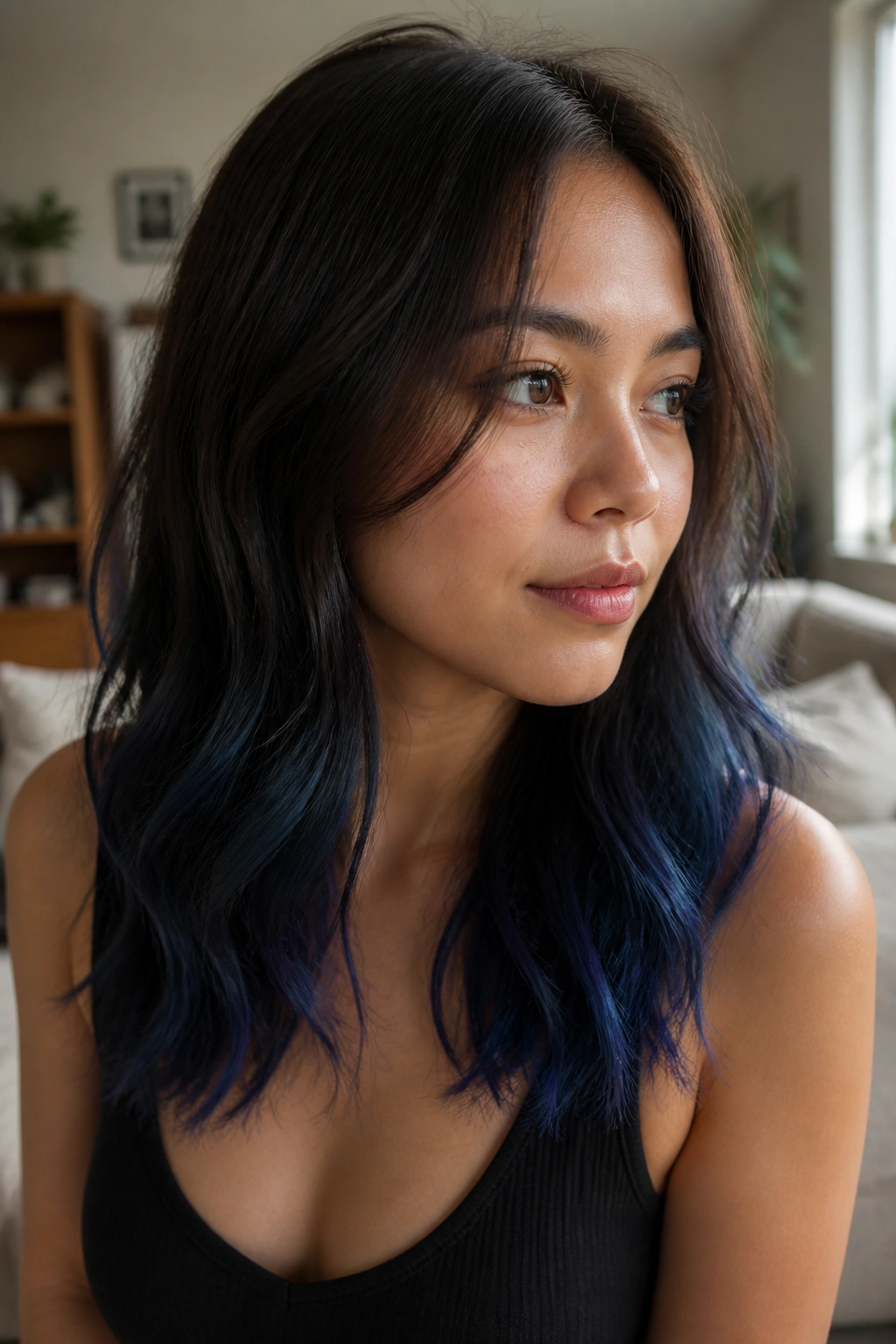
The easiest blue look to grow out is the one that lives at the ends. Indigo ombré starts with brown roots and moves into a blue finish near the last few inches, so the color fade feels intentional instead of awkward. That is a huge reason people keep coming back to it.
The shape of the haircut matters here. Long layers give the blue room to spread, while a blunt hemline makes the transition feel heavier and more solid. If the hair is very dark, the ends may need a stronger lift first so the indigo doesn’t sink into a dull navy-brown mix.
A good ombré is about blur. You do not want a hard line where brown stops and blue starts. You want the shades to melt into one another over 2 to 4 inches, sometimes more if the hair is thick.
This is the style for someone who tucks hair up a lot. Even when the ends are hidden, the blue is still there when the hair falls back down. It does not disappear. It just waits.
7. Teal-Blue Fusion Highlights
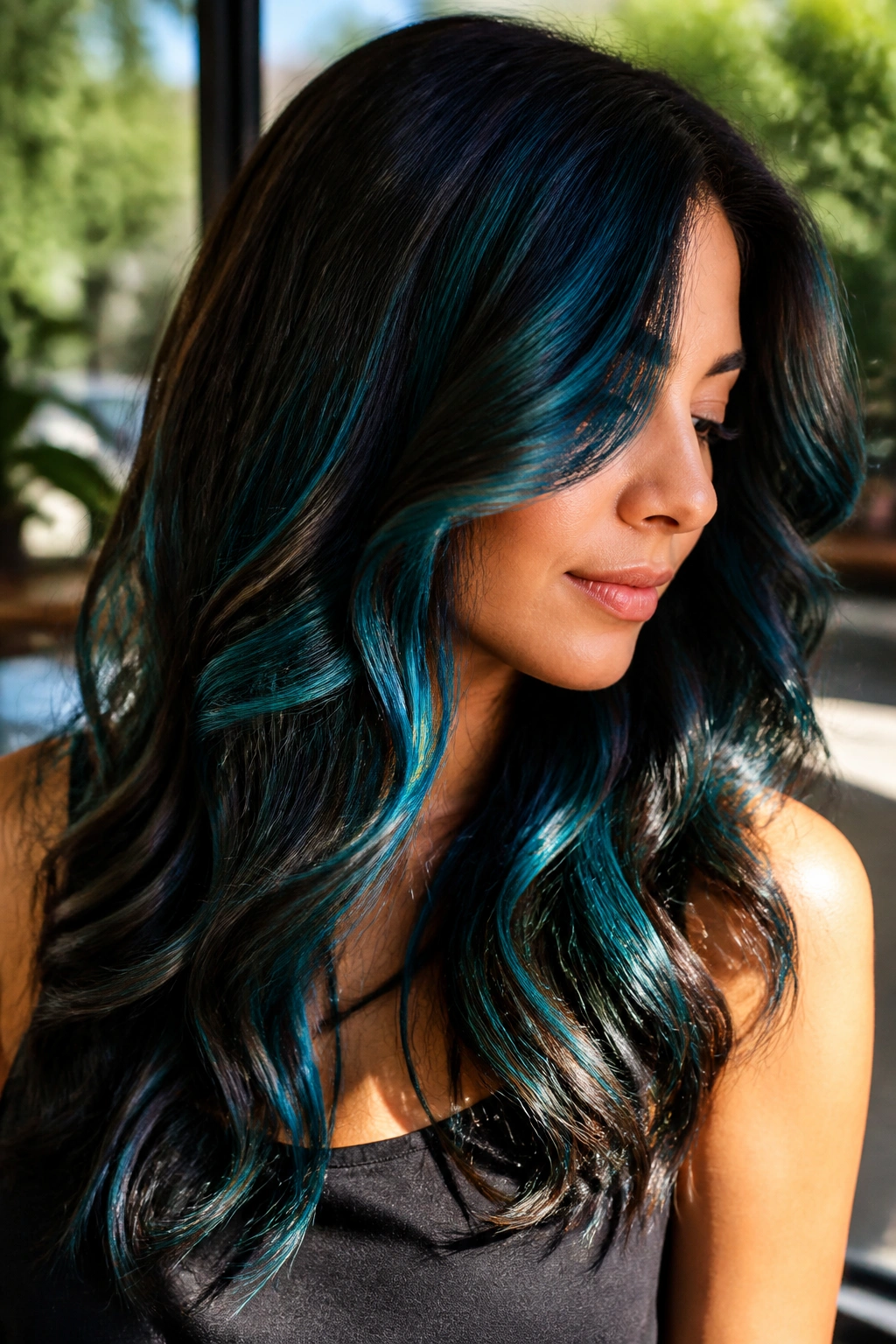
Why choose one cool shade when you can mix two? Teal-blue fusion highlights give brown hair a watery jewel tone that sits between blue and green, and that middle ground softens the whole look. It is less icy than cobalt and less dark than navy, which makes it easier to wear on warm brunette bases.
Where Teal Helps
Teal brings a little warmth of its own, so it can sit next to chestnut, caramel brown, or hazel-brown hair without looking harsh. That does not mean it turns warm. It means the contrast feels friendlier.
A few face-framing pieces can be enough, or you can weave the color through the lower layers for a more layered effect. On wavy hair, teal and blue shift as the curl turns, which keeps the color from looking flat.
- Best on medium brown or warm brunette hair
- Looks richer with a soft wave or curl
- Can be placed as a few bright pieces or a broader balayage
- Needs a slightly lighter base if you want the teal to stay clean
If you like jewel tones more than neon, this is the sweet spot.
8. Deep Navy Underlights
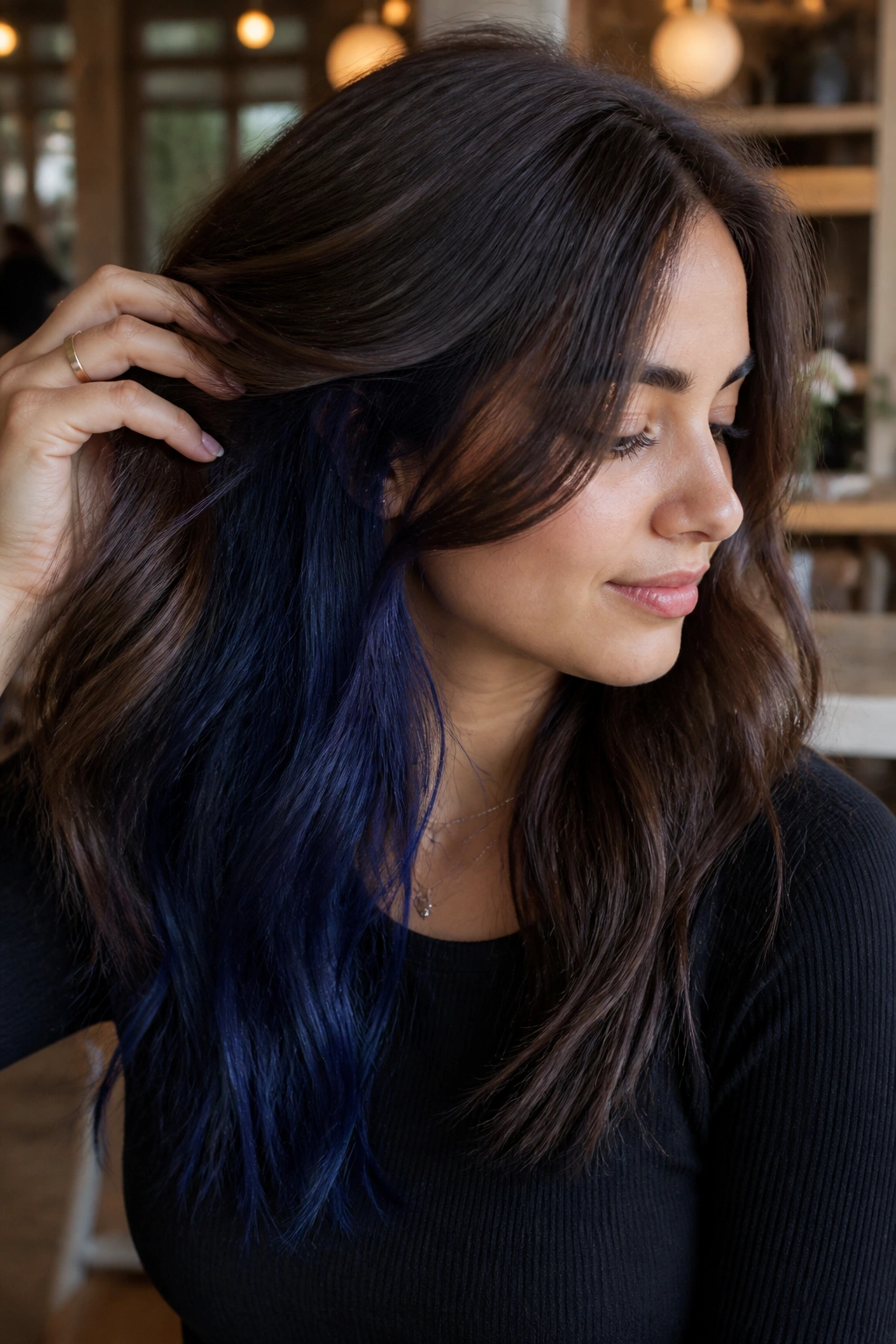
A braid, a ponytail, or a twist can turn deep navy underlights into a little surprise. The top layer stays brown, but the darker blue sits underneath and flashes only when the hair opens up. It is a smart choice for anyone who wants color with a quieter day-to-day feel.
The placement is what sells it. Underlights need enough depth to hide under the top section, so they work best on medium to thick hair. Thin hair can still do it, but the reveal becomes broader and less concealed.
- Strongest in half-up styles and loose braids
- Good for people who wear their hair down most days
- Better on layered cuts than on one-length hair
- Keeps a polished look from the front and a surprise from the back
That little bit of hidden color has a practical upside too. Grow-out is softer because the blue is not sitting right on the hairline. You get more wear before the style starts asking for a touch-up.
9. Smoky Blue-Black Gloss
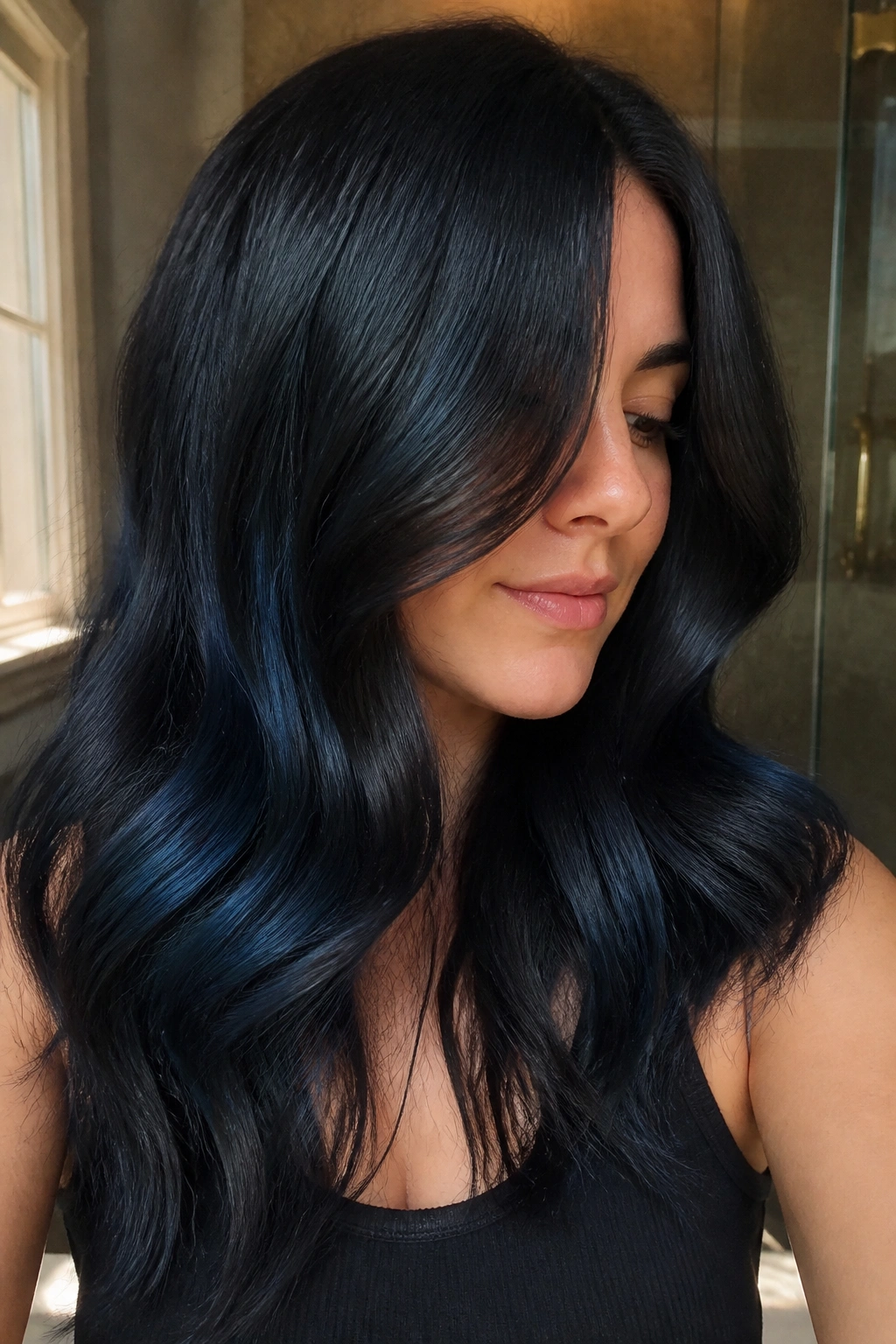
Sometimes the prettiest blue is the one you barely notice until the light hits it. Smoky blue-black gloss works more like a tint than a stripe, and that is why it looks so smooth on brown hair. The shade deepens the brunette base and gives it a cold, inky shine.
This is not the place for strong contrast. It is for shine, depth, and a hint of cool color that lives just under the surface. On dark chocolate hair, it can read as blue-black. On lighter brown, it leans more smoky and reflective.
A gloss like this is also a good answer for people who hate visible lines of demarcation. There are no obvious streaks to grow out. The color softens as it fades, which suits the whole idea.
One small warning: this look depends on healthy-looking hair. Frizzy ends steal the effect. Smooth cuticles keep it sleek.
10. Blue Chunky Streaks with a 90s Edge
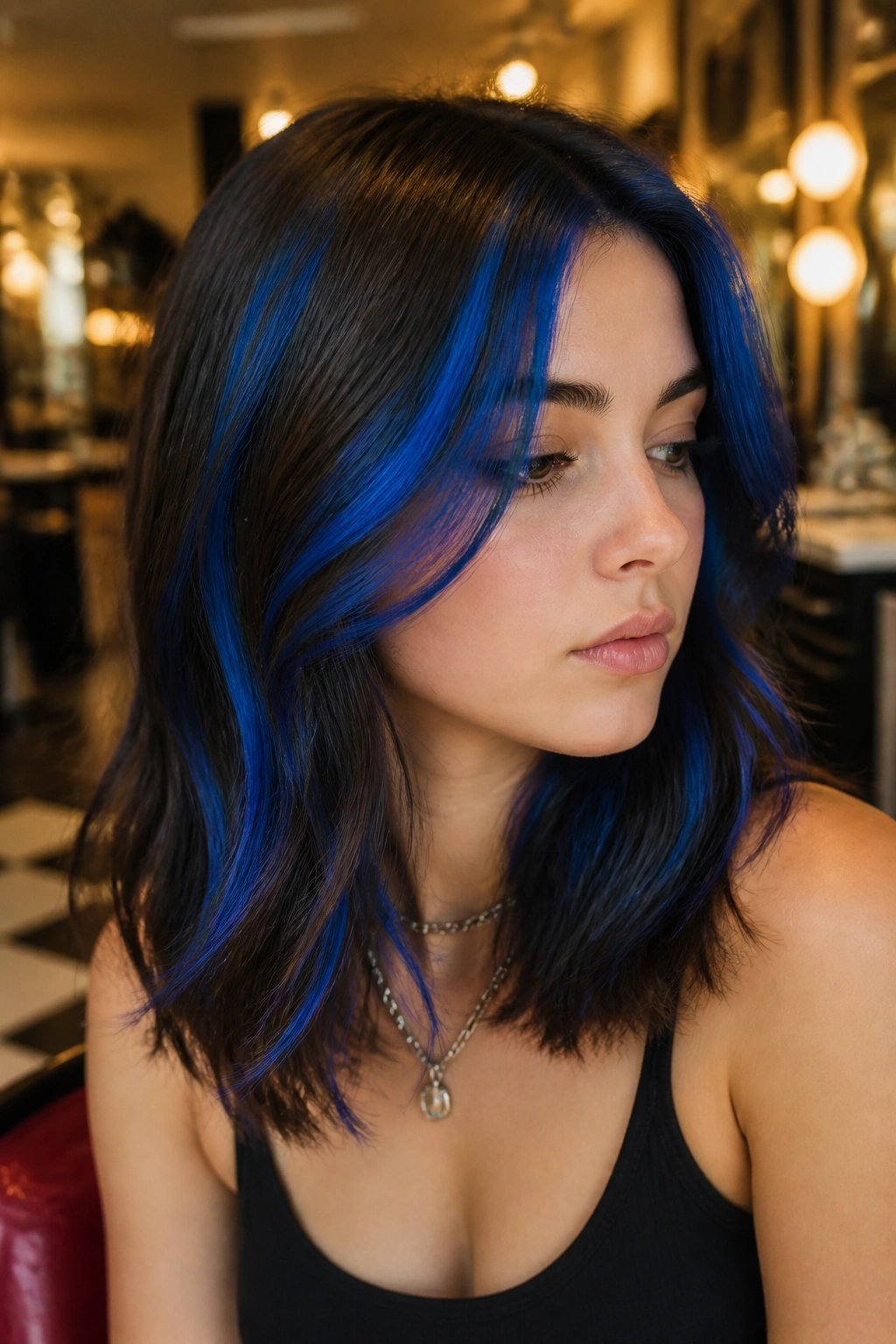
Chunky streaks are the opposite of shy. Unlike babylights, which melt into the brown base, these pieces sit there with full intention. On brown hair, the blue has to be strong enough to hold its own, or the whole thing looks like a faded accident.
This style shines on cuts with movement: shags, mullets, layered lobs, and shoulder-length hair with a bit of texture. The streaks can sit near the front, through the crown, or in the lower half of the head. A few well-placed panels usually work better than spraying color everywhere.
The appeal is simple. It looks playful and a little rebellious, but still deliberate. That’s not easy to do.
If you like a more fashion-heavy look, keep the brown base deep and the blue unapologetic. If you want it softer, choose a denim or cobalt shade rather than electric cobalt. That tiny shift changes the whole personality of the cut.
11. Blue and Caramel Ribbon Lights
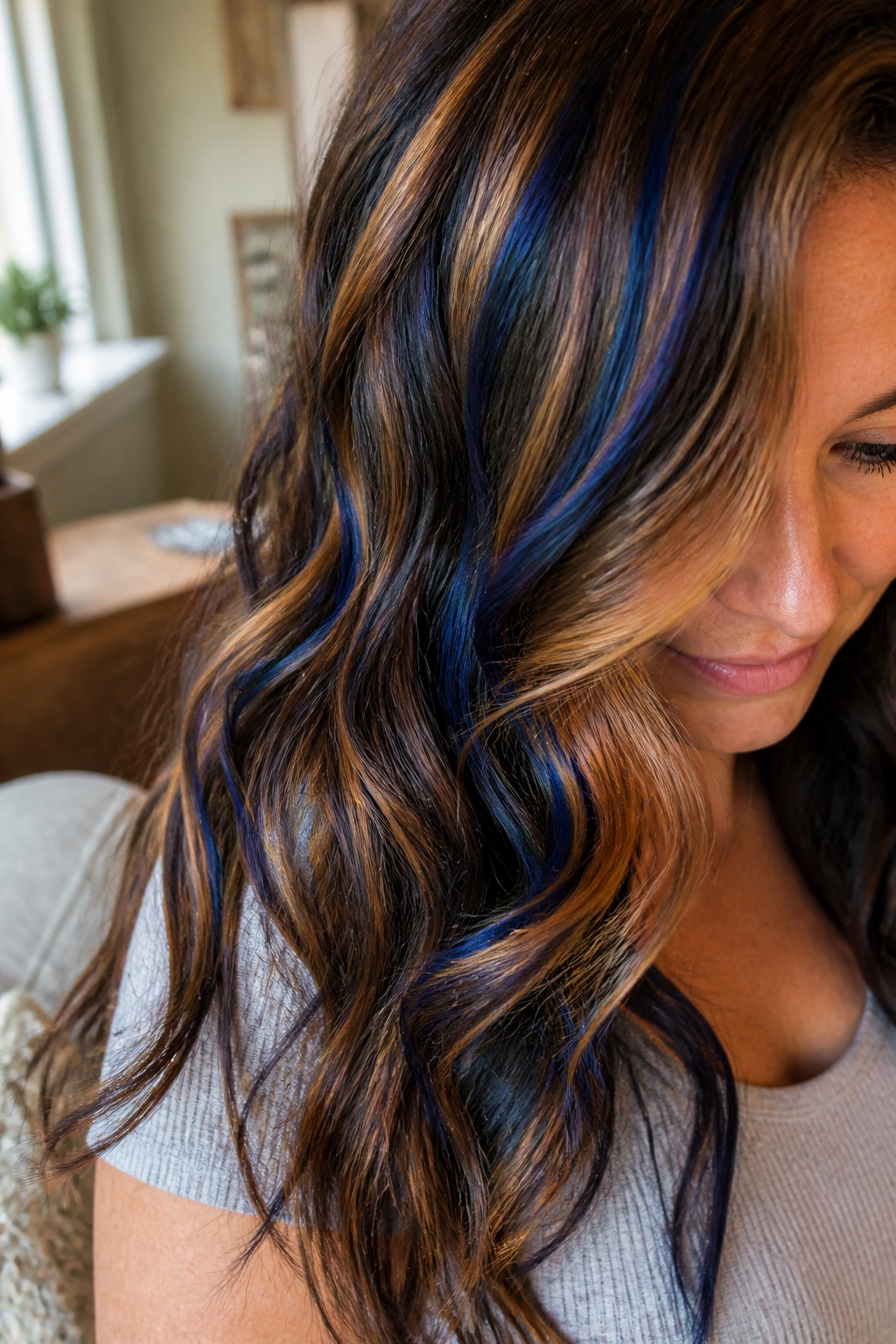
Can blue work with warm brown hair? Absolutely, and blue with caramel ribbon lights proves it. The caramel keeps the brunette base cozy while the blue drops in as a cooler accent, so the whole look feels balanced rather than icy.
This is one of the better choices if your hair already lives in the warm-brown family. Chestnut, toffee, and soft mocha all handle caramel well, and the blue gets a little breathing room instead of fighting the warmth. The result is more wearable than a full cool-toned transformation.
Why the Combo Succeeds
The ribbons should not sit side by side in huge blocks. Better to let the caramel and blue alternate in smaller sections, especially through the mid-lengths and ends. That gives the hair more movement and stops the color from reading flat.
A loose blowout shows this pattern nicely. So does a tousled wave. The contrast is strongest when the hair shifts, not when it hangs motionless.
If you want a brunette look that still feels playful, this is a strong place to start.
12. Peacock Blue Layers
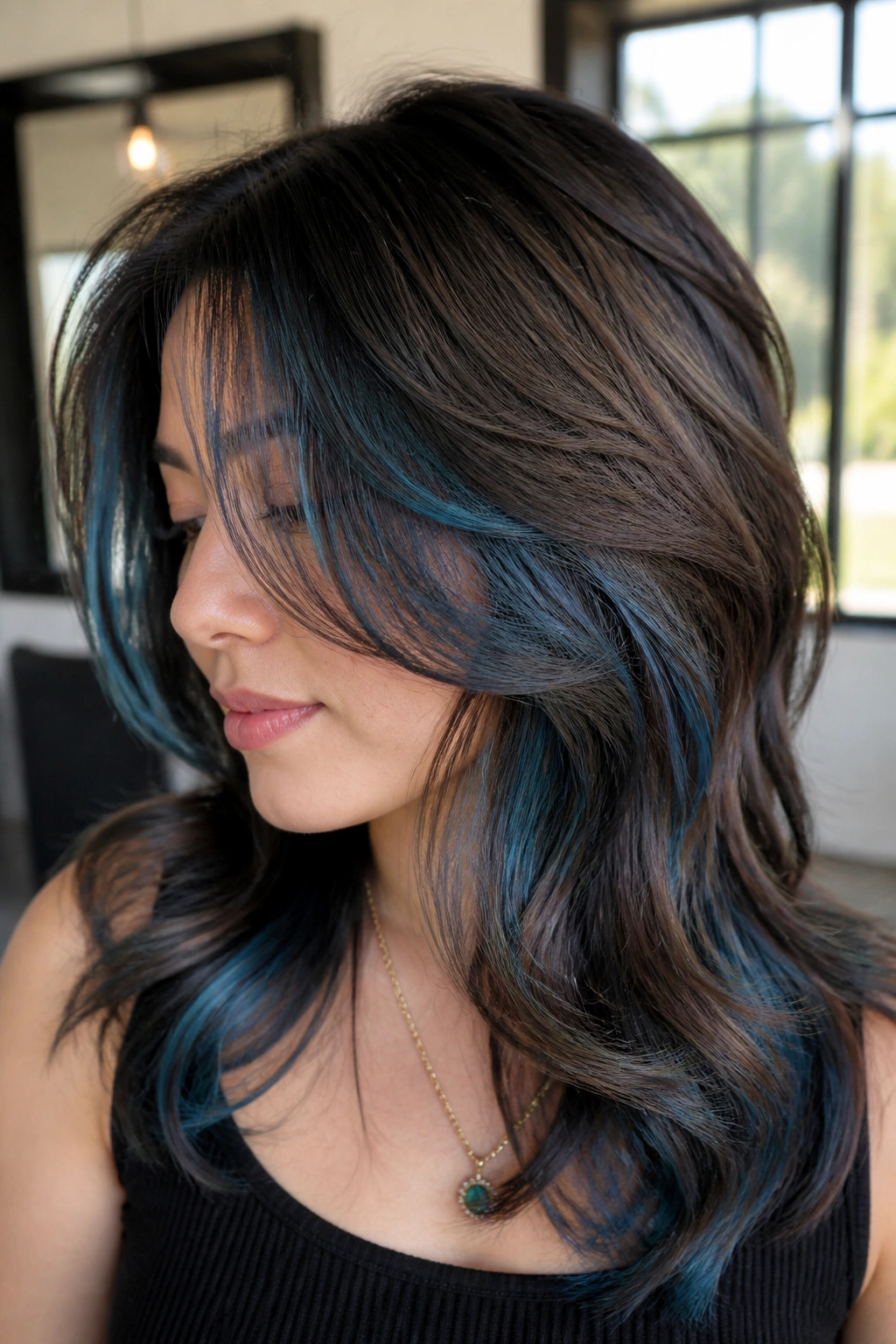
The first time peacock blue moves through layered brown hair, the shade seems to change every few inches. Peacock blue pulls in blue-green depth, so it catches light in a way that plain cobalt does not. On curls, it can look richer still, because each bend of hair shows a slightly different tone.
This version works well when the color follows the haircut. A layered shape gives the blue pockets to sit in, and the ends can be lighter than the mid-lengths without looking choppy. That small shift keeps the color from feeling heavy.
How to Style It
A diffuser helps bring out the mix of blue and green on curly hair. On straighter hair, a round brush or loose bend with a flat iron shows the tone variation better.
- Strong on layered cuts
- Best when the blue is painted through the lower half and ends
- Looks especially good on brown hair with a neutral or cool base
- Needs a little more care on porous ends, which can grab the green side of the dye
It is a lively shade, but not cartoonish. That balance is what makes peacock blue worth the trouble.
13. Frosted Blue Tips on a Wavy Lob
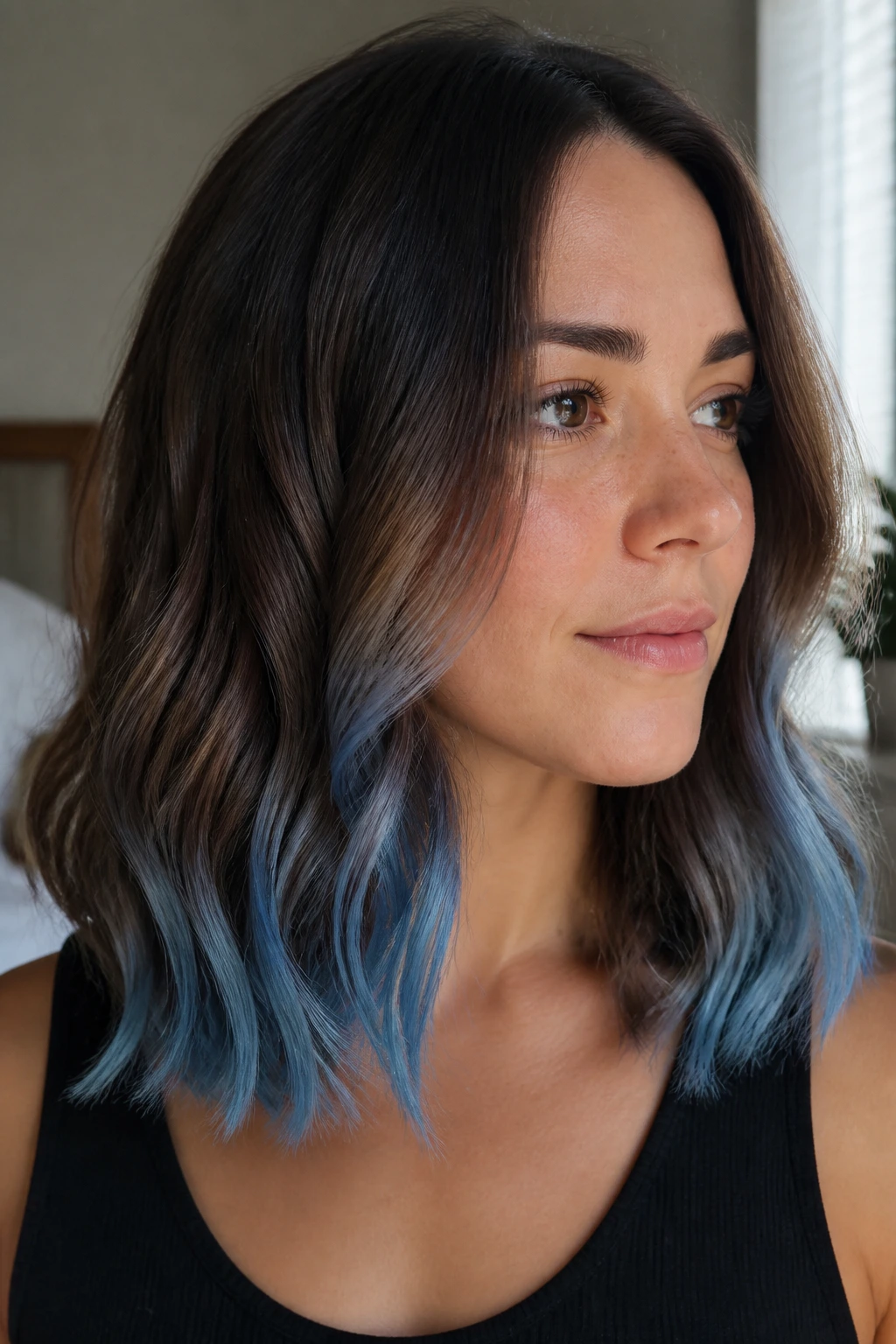
What happens when you keep the blue only at the very ends? You get frosted blue tips, and on a wavy lob they can look sharp without feeling heavy. The brown stays dominant at the roots and mid-lengths, while the ends carry the cool payoff.
A lob is a good cut for this because the blue sits close to the face and shoulders. It does not vanish in the back of a long head of hair, and it does not need huge length to make sense. Wavy texture helps, because the color catches on the bends and makes the ends look thicker.
This is one of the few blue styles where the haircut does a lot of the work. Slightly piecey layers keep the ends from looking blunt, and that makes the frosted effect feel more natural. A single solid line of blue at the bottom can look stiff. Tiny variation looks better.
The tradeoff is upkeep. The tips take the most wear from heat and friction, so they fade faster than hidden color. Worth it if you like a crisp finish. Annoying if you never trim.
14. Blue-Gray Ash Highlights
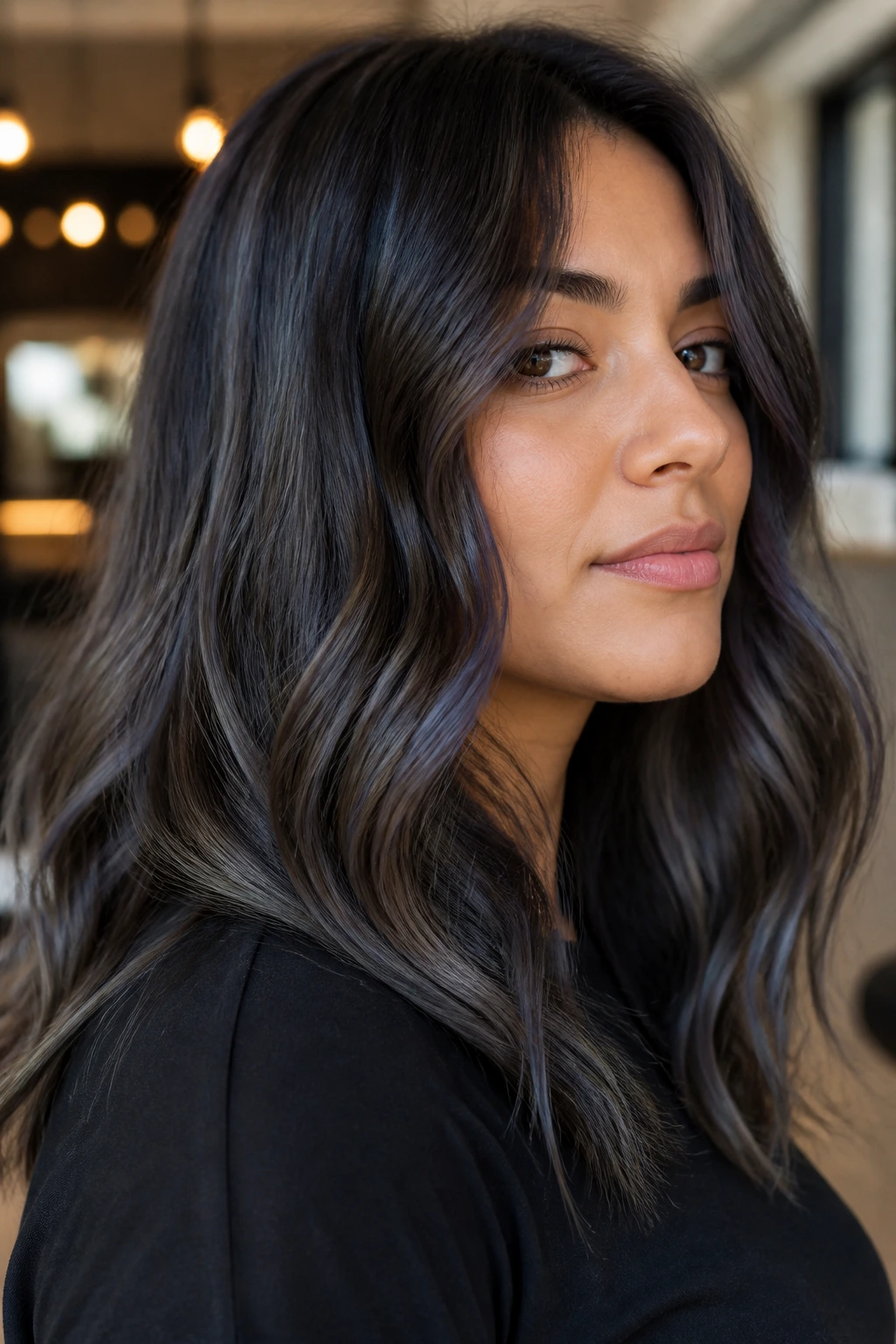
Blue-gray is the calmest version of blue highlights for brown hair, and that is exactly why it works. The shade sits between slate and soft denim, so it adds cool tone without shouting. On brunette hair, it can look like a shadow with a blue edge.
This style is especially good when the goal is dimension, not drama. The highlights can be thin and scattered, or a little wider through the surface layers if you want the cool tone to show more clearly. Either way, the result feels muted and modern without leaning flat.
- Best on cool or neutral brown bases
- Blends well with straight hair and soft waves
- Needs enough lift to avoid looking dingy
- Works nicely for anyone who wants blue that reads more chic than bright
There is a catch, and it matters. If your brown hair is very warm and gold, blue-gray can fade into a dull cast unless the underlying lightness is there. Once the base is prepared properly, though, the finish looks clean and elegant in a way louder blues do not.
15. Ink-Dipped Curtain Bangs

Curtain bangs are where blue goes from accent to frame. Ink-dipped curtain bangs draw the eye straight to the face, and that makes them a bold little move even when the rest of the hair stays brown. A dark blue on the fringe can look moody, sleek, and a bit editorial without taking over the whole head.
The shape of the bang matters more than people think. Curtain bangs split in the middle, so the blue needs to be placed where it can still show when the pieces fall away from the face. Too much color at the very ends and it gets lost. Too high and it looks blocky.
This is also one of the more maintenance-heavy placements. Bangs meet water, sweat, heat, and styling products more often than the rest of the hair. They fade first. They always do.
That does not make the look a bad idea. It just means the person who loves bangs and reaches for blue should be ready to refresh the front more often than the back. Small price for a strong frame.
16. Royal Blue Balayage on Warm Brunette Hair
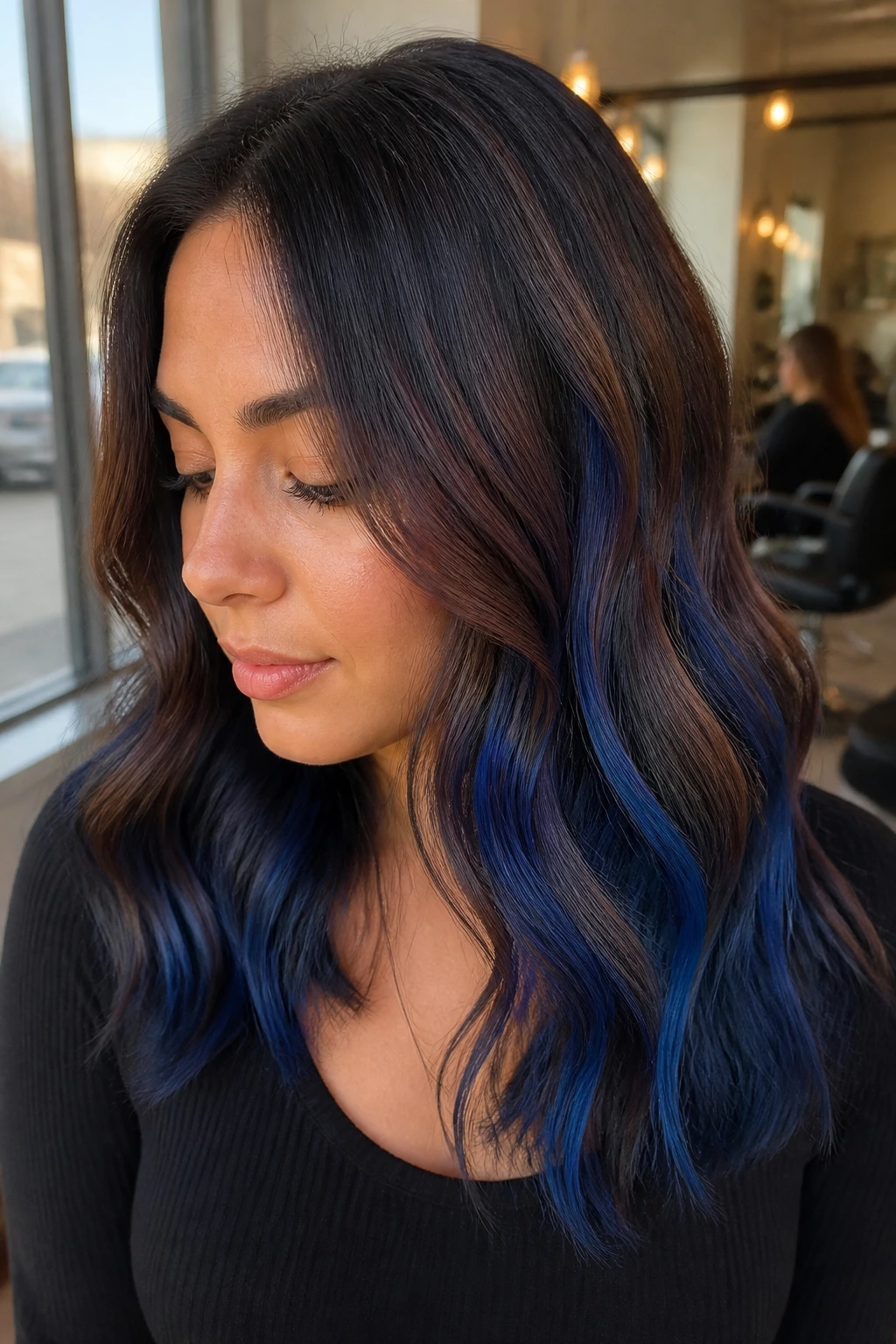
If denim feels too muted, royal blue balayage gives the same hand-painted placement with more saturation. It suits warm brunette hair better than people expect, especially when the brown stays rich and the blue is built with soft edges instead of hard stripes.
Warm brunettes often need a color that can stand beside gold, chestnut, or mahogany without looking like a different species. Royal blue does that if the blue is concentrated through the mid-lengths and ends. Keep the roots darker, and the whole thing reads intentional rather than patchy.
The best version is usually a blurred balayage, not a harsh ombré. The color should move from brown into blue in a way that feels brushed on, not chopped in. Curly and wavy textures help that transition look smoother because the color bends with the hair.
This is a strong choice if you want blue that still feels rich. Not icy. Not faded. Rich.
17. Split-Dye Blue Panels
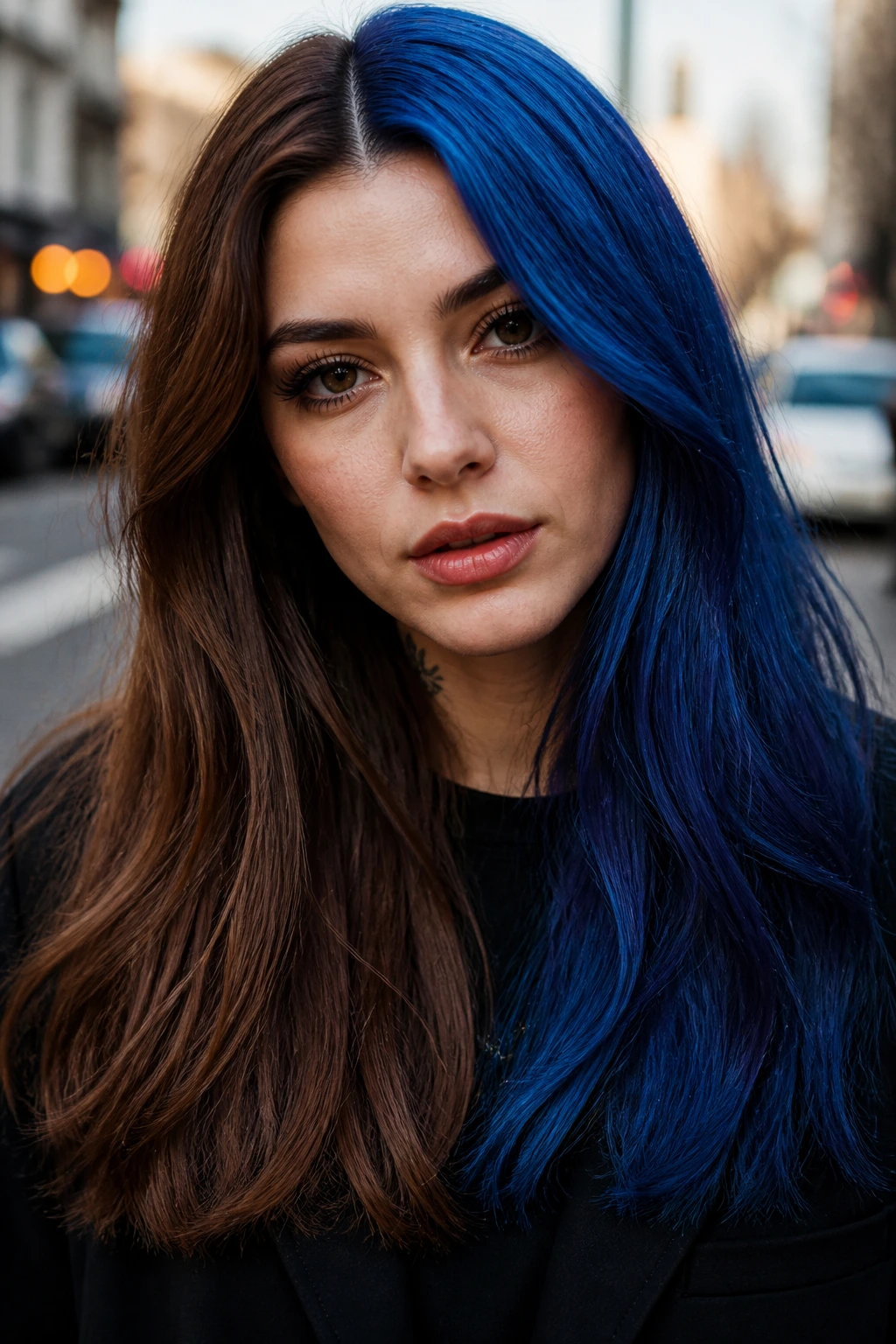
Split-dye blue panels are not for the timid, and that is part of the fun. One side of the hair stays brown while the other side carries a full blue section, or the color is divided into bold vertical panels around the part. The result is graphic and immediate.
This look needs a haircut that can support the division. Blunt bobs, sharp lobs, and sleek long hair all work better than heavily layered shapes, which can blur the line too much. The drama comes from the clean contrast, so the cut has to respect that.
A center part makes the split obvious. A side part softens it a touch. Either way, the color is carrying the visual weight, and the placement should stay precise from roots to ends.
If you want something softer, keep the blue panels under the top layers. If you want full impact, let the divide show. There is no middle ground here, and honestly, that is why the style has staying power.
18. Subtle Blue Veil Highlights
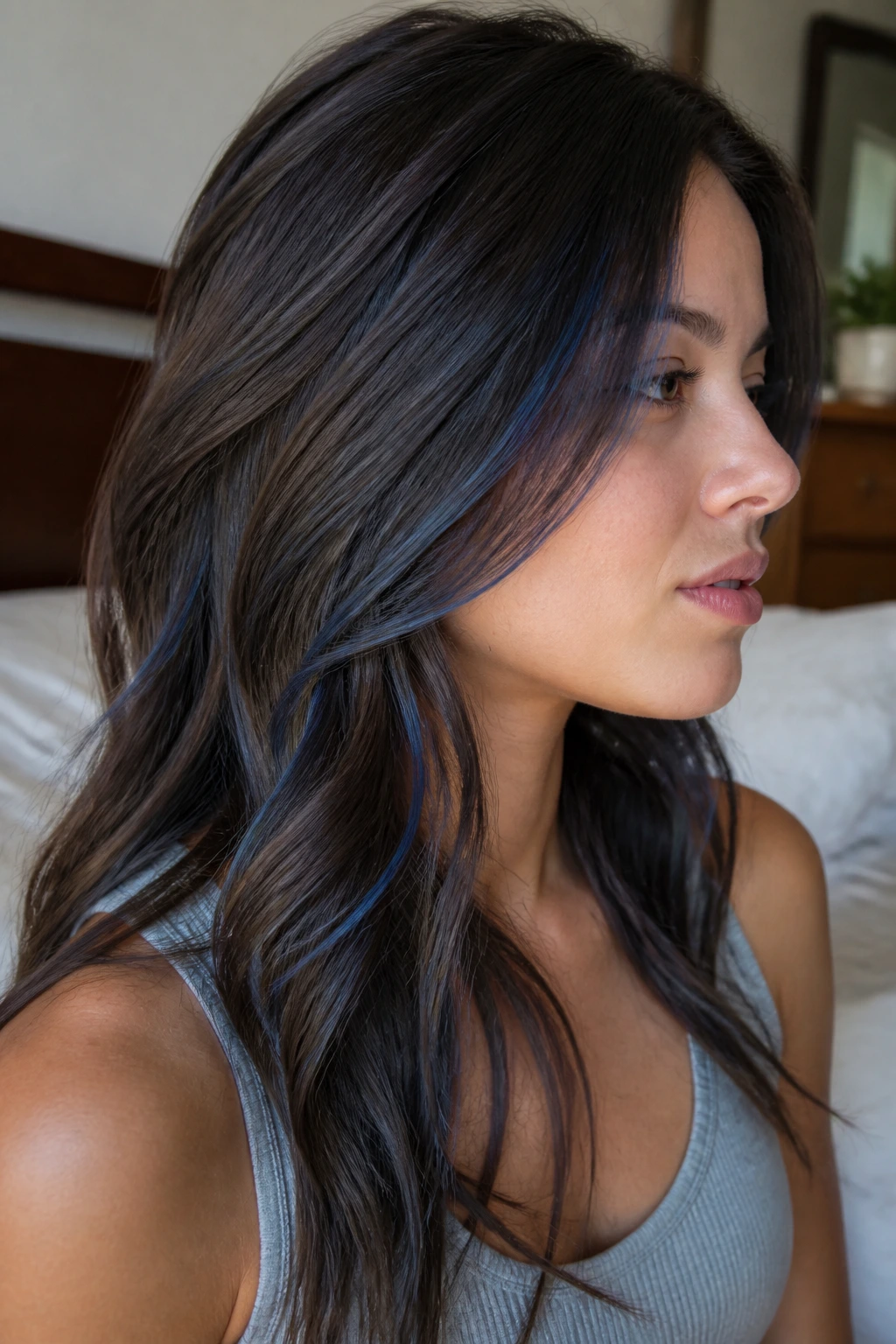
Sometimes the smartest move is the quietest one. Subtle blue veil highlights add a faint cool cast over brown hair so the color only really appears when the light moves across it. It is a good fit for first-time color clients, conservative workplaces, or anyone who wants blue without turning the whole head into a statement.
The veil effect works best when the blue is scattered in soft, thin pieces through the surface layers. It should feel like a tint, not a stripe pattern. On straight hair, the effect is restrained and sleek. On waves, the color opens up a little and gets more obvious without losing that gentle feel.
This is also a useful style if you are testing whether blue belongs on your head at all. Start small. See how it fades, how it feels in different light, how often you want to refresh it. That tells you far more than a dramatic first appointment ever will.
A faint blue veil can be enough. And sometimes that is the look that ends up feeling the most lived-in.
