



A round face does not need to be “fixed.” It needs smart light placement. That’s the part people miss when they sit in the chair and ask for blonde highlights as if brightness alone will do the job. It won’t. If the light sits in the wrong place, it can widen the cheeks, soften the jaw even more, and make the whole face read broader than it is.
The good news is that blonde highlights can be one of the easiest ways to change that balance without going dramatic. A strong colorist thinks in lines, not streaks: a little lift near the temples, a soft sweep along the front, some depth left under the cheekbone, and a brighter finish that pulls the eye downward. That’s how you make a round face look a touch longer, a touch leaner, and a lot more intentional.
Babylights, lowlights, money pieces, balayage, ribbon highlights — all of it can work. The trick is choosing the version that moves light vertically instead of letting it sit in a flat band across the widest part of the face. And yes, some blonde shades are better than others here too. Beige, honey, champagne, ash, pearl, platinum — each one changes the feel of the cut and the shape of the face in a different way.
1. Long Face-Framing Money Pieces
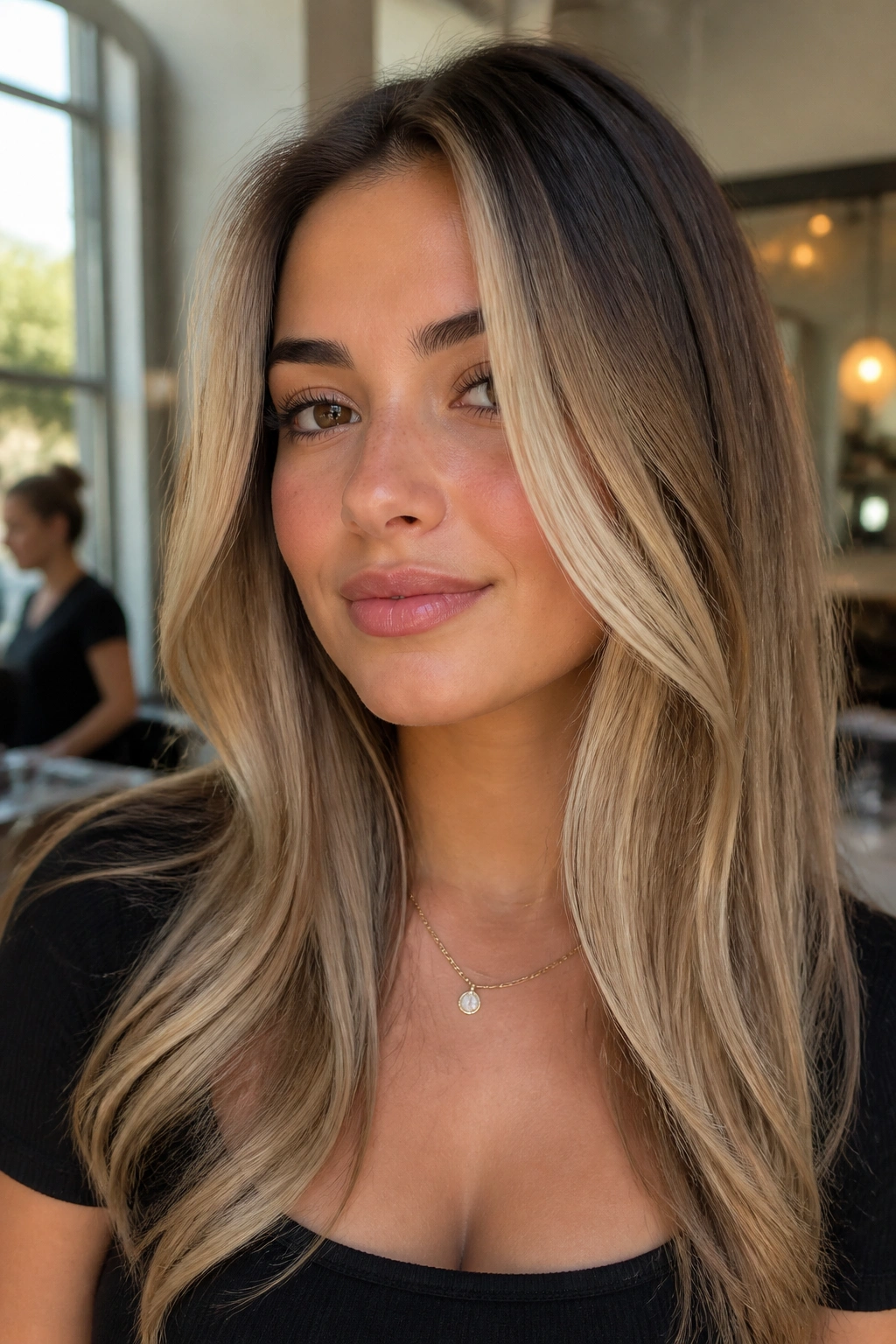
The cleanest way to stretch a round face is to keep the brightest blonde right where the eye wants to travel downward. Long money pieces do that beautifully. They start near the front hairline, graze the cheekbone, and keep going past the jaw so the face doesn’t look boxed in at the sides.
Why It Works
The key is length. Short face-framing highlights can stop right at the fullest part of the cheek, and that’s where the face already has width. Longer pieces create a vertical line, which is what you want if the goal is more shape and less roundness.
A good version is usually one to two shades brighter than the rest of the blonde around it. Not stripey. Not harsh. Just enough contrast to pull attention outward and down. If your hair is layered, the front sections can be painted a little thinner near the top and a little brighter through the mid-lengths.
- Ask for the brightest blonde to begin at or just below the cheekbone.
- Keep the root area a little softer for depth.
- Style with a center or soft off-center part for the cleanest line.
- Blow-dry the front pieces away from the face so they open instead of hugging it.
Best tip: keep the front pieces longer than you think you need. A highlight that reaches the collarbone does more for a round face than one that stops at the chin.
2. Soft Babylights at the Crown
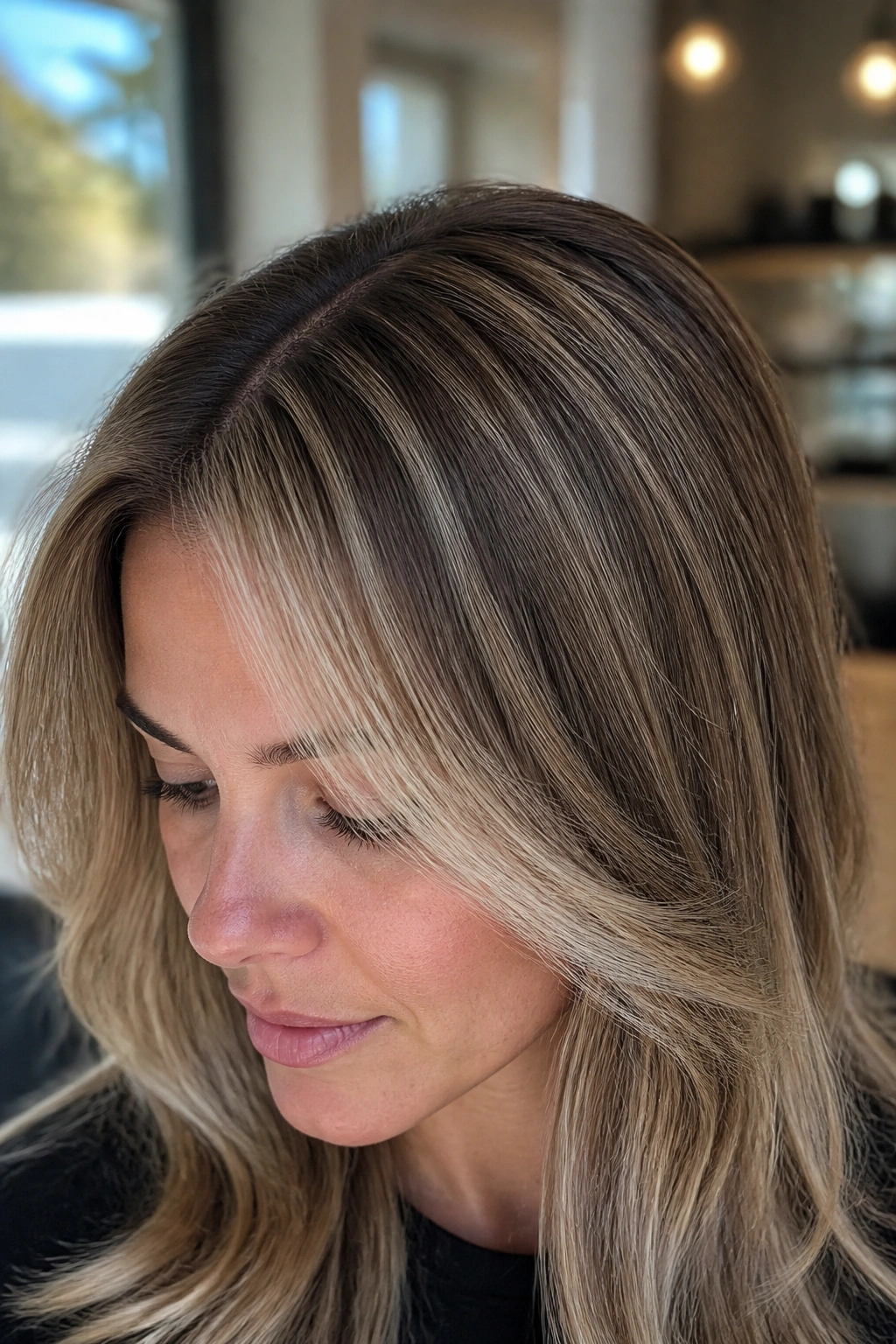
If you want a subtle shape change, babylights at the crown are a sneaky good move. They don’t scream “highlighted hair,” but they do lift the eye upward, which is exactly what helps a round face look a little longer.
The crown is one of the most overlooked zones in hair color. People focus on the front and forget that a brighter top can create height. Fine babylights give you a softer, more expensive-looking blonde than chunky ribbons, and they avoid that flat helmet effect that can happen when the top is too dark and the sides are too light.
What Makes It Different
Babylights are tiny woven sections, often painted so closely together that they look like natural sun exposure. On round faces, that fine texture is useful because it breaks up the width without putting obvious lightness at the cheeks. The result is airy, not busy.
If your hair is straight or softly wavy, this placement keeps the top from collapsing visually. If your hair is curly, it adds a bit of lift through the roots and lets the curl pattern keep its shape. A lighter crown also works well with a side part because the brightness shifts upward and slightly off-center.
Practical note: babylights need a decent toner. Without one, the color can turn too yellow and lose that soft, diffused look that makes this placement so flattering.
3. Champagne Balayage on Long Layers
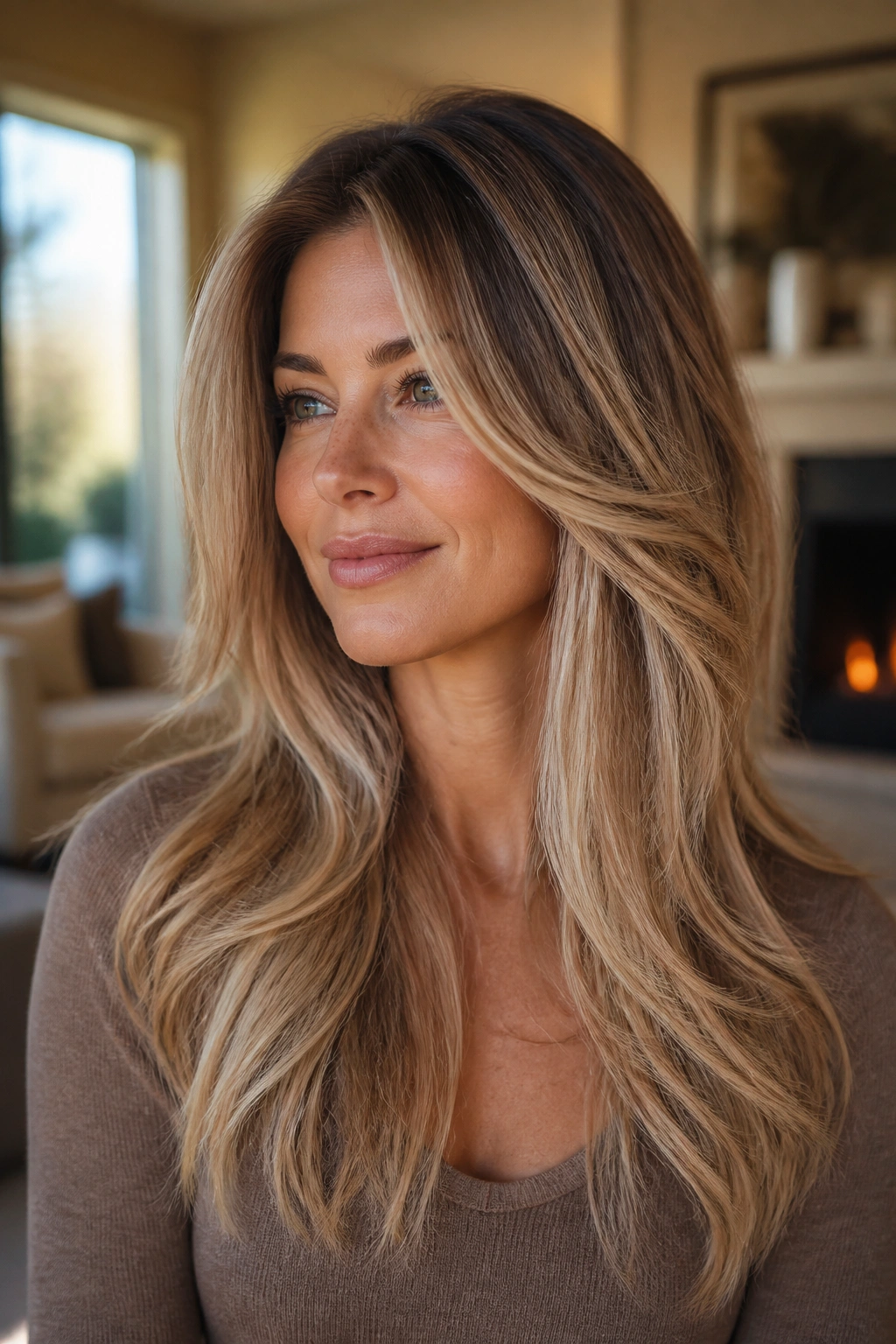
Why does champagne blonde work so well on a round face? Because it looks light without looking sharp. That matters. You do not want the face to feel boxed in by hard lines; you want the hair to move.
Champagne balayage usually sits somewhere between beige and soft gold, and on long layers it gives the whole cut a gentle sweep. The lighter pieces can be painted lower on the head, which keeps width away from the cheek area and lets the eye follow the hair down through the ends.
How to Ask for It
Tell your colorist you want soft, blended ribbons rather than a high-contrast stripy look. Ask for the brightest pieces to live through the mid-lengths and ends, with just a few lighter touches around the face. On longer hair, that keeps the silhouette vertical. On shoulder-length hair, it prevents the ends from puffing out too much around the cheeks.
This is also a nice option if your hair tends to hold warmth. Champagne blonde tolerates a little gold better than icy shades, so it usually looks flattering longer between toning appointments.
Leave the roots slightly shaded. Seriously. That shadow keeps the style from reading wide at the top and gives the hair a little depth, which round faces need more than they get credit for.
4. Cool Ash Ribbons Around the Temples
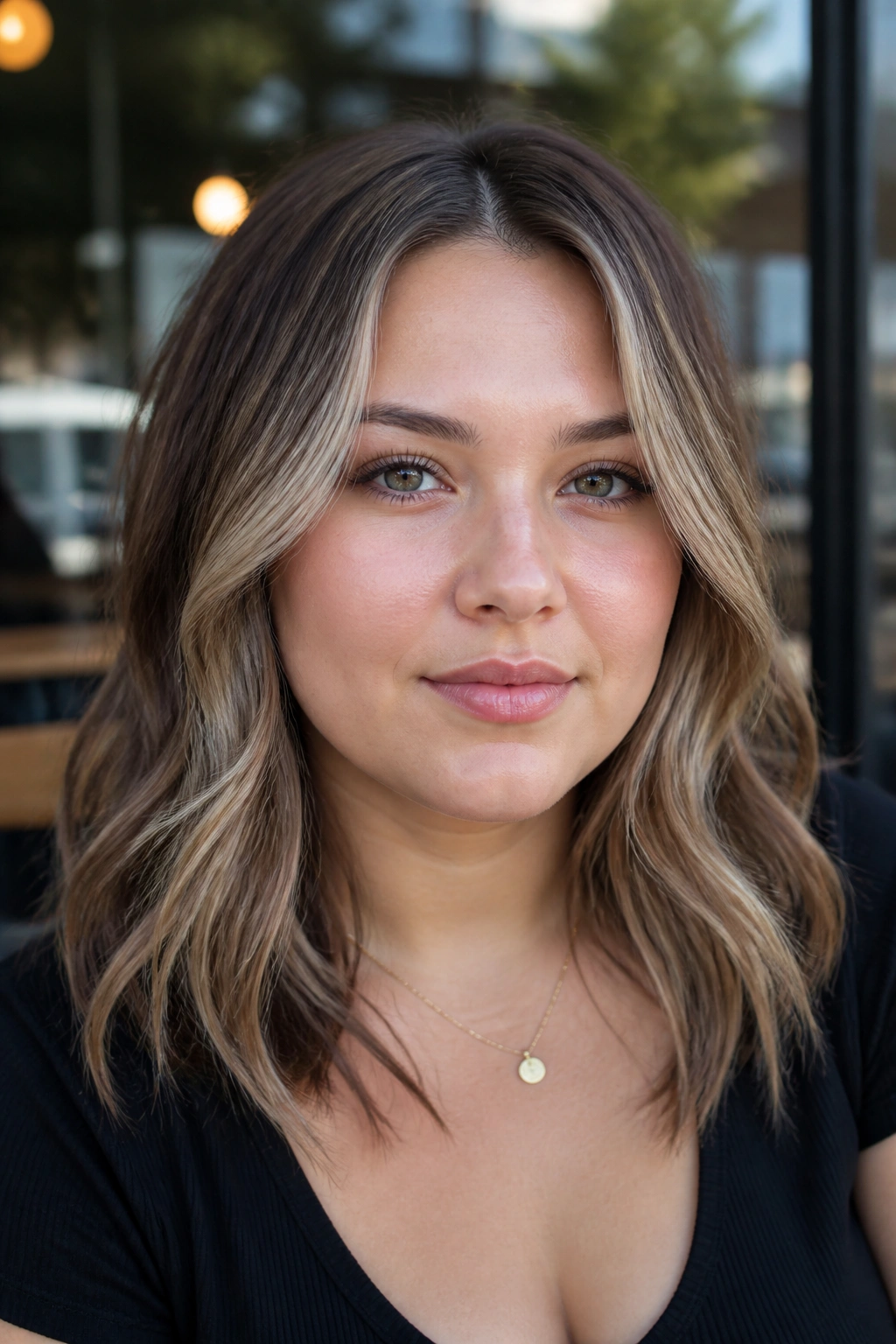
A round face can handle cool blonde. In some cases, it needs it. Ash ribbons placed around the temples and upper cheek area create a crisp line that trims visual width without making the whole look harsh.
This is a strong choice if your skin has pink, neutral, or cool undertones. The cooler tone makes the blonde feel sharper, and the placement keeps it from spreading across the cheeks like a band of light. You want narrow ribbons, not a flood of brightness.
What to Watch For
Cool blonde can go muddy if it is overtoned. That’s the trap. The color should look clean, not gray. If the toner is too strong, the hair can lose shine and start to look dull, which is never the point.
A good temple placement looks almost like contouring with color. The blonde starts high near the hairline, then tapers back through the side layers. It gives the illusion of structure without making the hair feel heavy.
- Best on layered bobs, lobs, and collarbone cuts.
- Works well with a side part or a loose tuck behind one ear.
- Usually needs toner maintenance every 6 to 8 weeks if you want the ash tone to stay crisp.
- Keep the rest of the blonde soft so the cool pieces don’t feel too severe.
My take: this is one of the sharpest-looking placements on a round face, but only if the pieces are thin and intentional. Blunt ash stripes are a mess.
5. Rooted Beige Blonde on a Lob
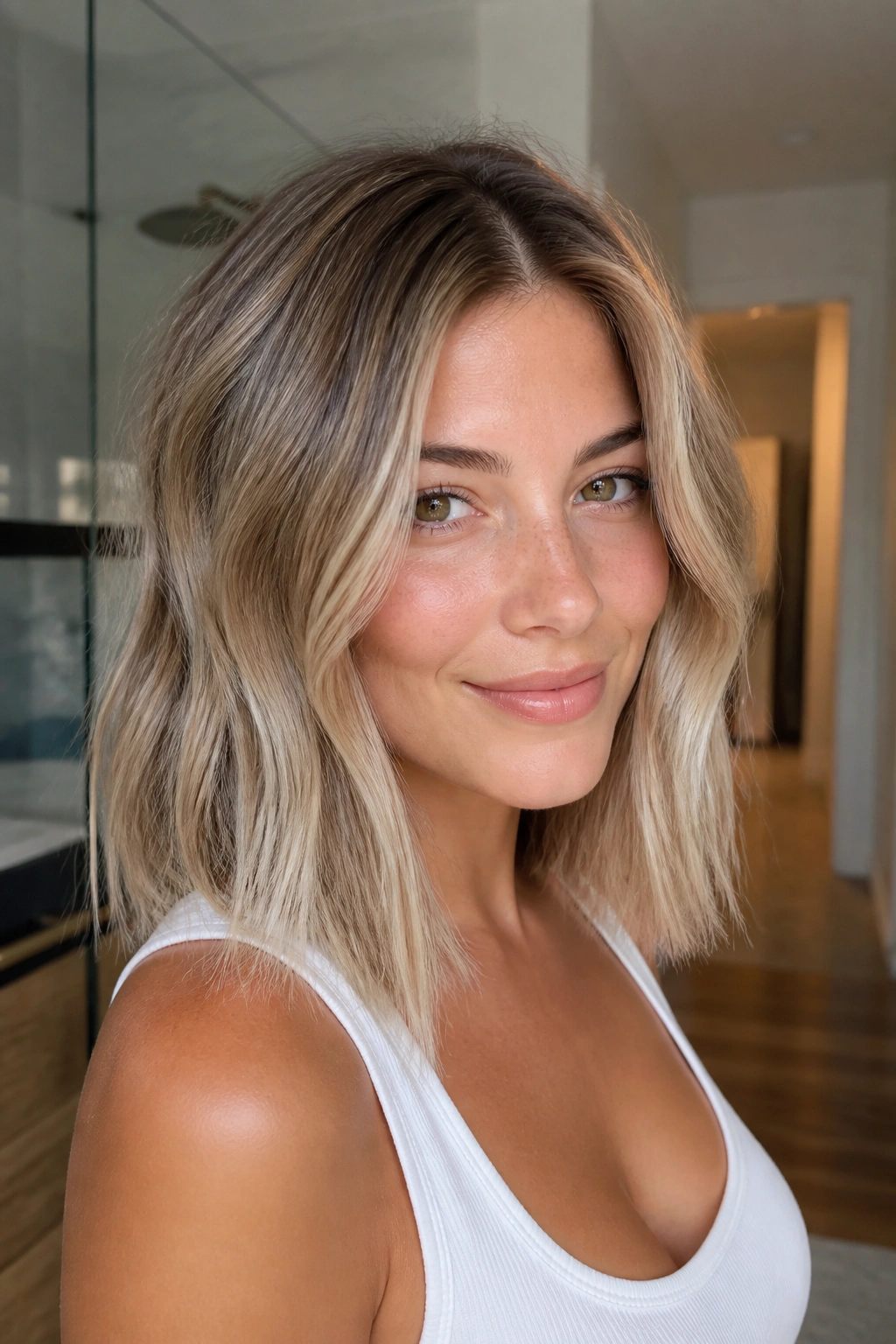
A lob and a round face get along when the color helps the shape, not when it fights it. Rooted beige blonde does exactly that. The soft root adds depth at the scalp, while the beige tones keep the blonde from looking too yellow or too white.
The reason this works is simple: a darker root creates a little vertical weight, and beige ends stop the style from feeling overly wide or puffy. On a collarbone-length cut, that combo can make the hair look longer and slimmer without losing brightness.
Practical Application
Ask for a root shadow about one shade deeper than the mid-lengths. That tiny bit of darkness at the base keeps the highlight from starting too high on the head. Then ask for beige blonde through the lower half, especially around the face and just under the chin.
This is one of those colors that looks especially good when the hair has a bend instead of a tight curl. A soft wave or a quick round-brush blowout lets the lighter pieces fall in clean vertical lines.
If you like low-maintenance color, this is a smart choice. The regrowth is softer, the beige tone hides a little warmth, and the cut still gets enough brightness to pull the face visually downward. Not flashy. Just smart.
6. Chunky 90s-Inspired Blonde Panels
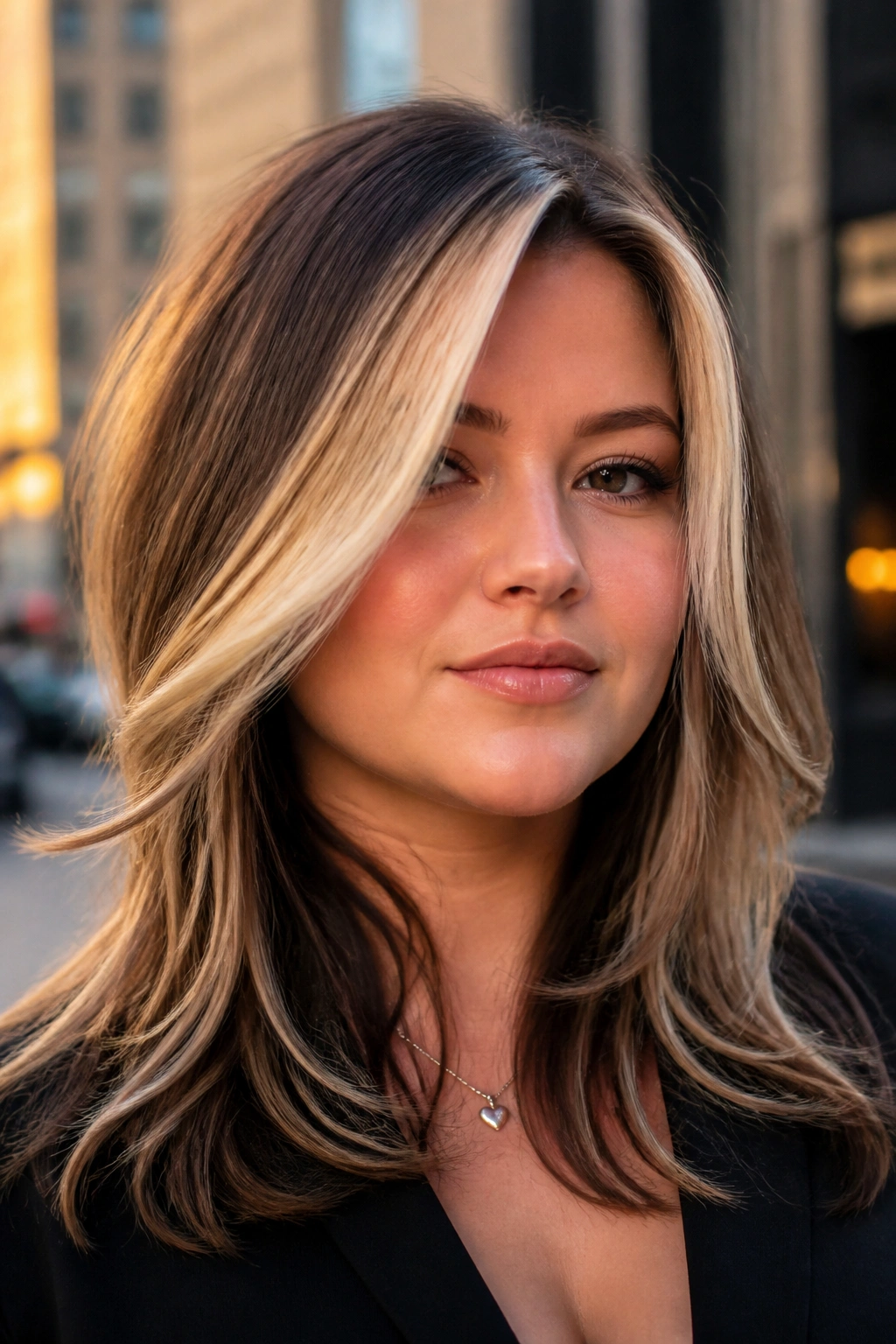
Chunky highlights are back in a more grown-up form. The trick is not to copy the old blocky look that could make a face feel wider. Instead, use a few larger blonde panels placed with space around them so the light and dark can do their job.
On a round face, chunky panels work best when they are not placed evenly all over. That even spacing is what creates width. A smarter version puts the brightest pieces at the front, a few through the top layer, and then leaves darker pockets underneath.
How to Get the Most From It
This style is best if you want an obvious blonde moment without losing shape. It pairs well with shoulder-length cuts, shaggy layers, and hair that has a little natural texture. The wider ribbons create contrast, but the darker in-between sections keep the face from looking too open.
Ask for the panels to start higher in the hairline and continue diagonally downward. Diagonal placement matters. It keeps the eye moving, while straight horizontal placement can make the face seem broader.
Use this look if you like a little attitude in your color. It’s not delicate. It has edge. And when it is done properly, it can sharpen a round face in a way soft babylights never could.
7. Curtain Bang Highlights That Open the Face
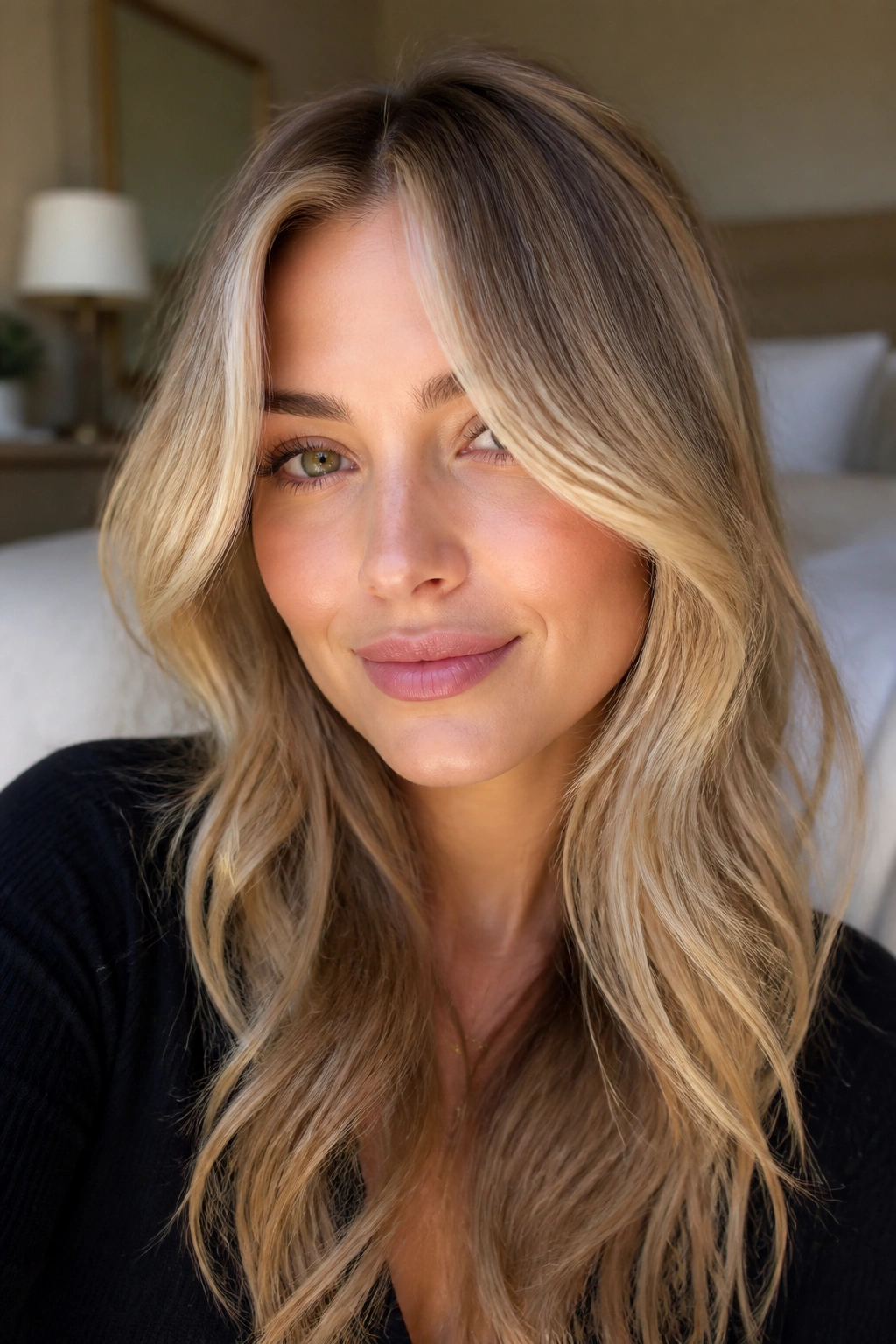
Curtain bangs can be tricky on a round face, but the right blonde placement makes them work instead of flattening everything out. The brightest pieces should sit just at the outer curve of the bang, not across the whole forehead.
That little shift matters. If you brighten the middle of the bangs too much, you can draw attention to the center width of the face. If you keep the light on the sides, the bangs open outward and frame the cheeks in a softer, longer shape.
Why It Works
Curtain bangs already create a vertical break in the face. Add blonde to the outer edges and the break becomes more obvious. The bangs seem to part with less weight at the center, and the face reads a little more oval than round.
A face-framing highlight here should blend into the front layers. You do not want the bang to look disconnected from the rest of the cut. The prettiest version feels like the color follows the natural sweep of the fringe.
- Best on shoulder-length cuts and layered shags.
- Ask for brightness only on the outside curtain sections.
- Keep the center of the fringe a touch darker for shape.
- Style with a round brush, lifting at the roots and turning the ends away from the face.
A tiny detail, but it matters: if the bangs are too short, this whole look loses its lengthening effect. The longer curtain shape is doing the heavy lifting.
8. Diagonal Sliced Highlights on a Wavy Bob
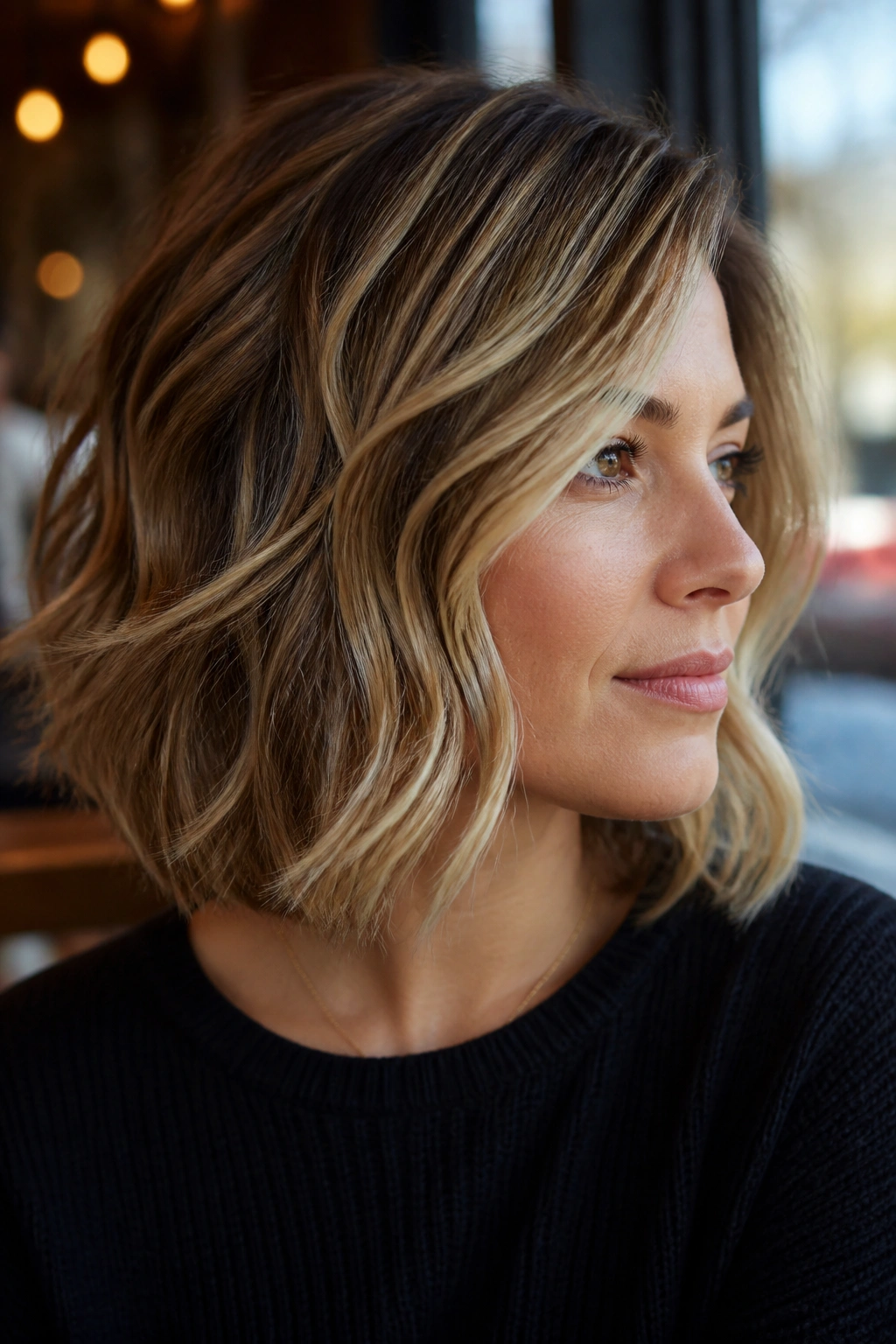
A wavy bob can look boxy fast if the color is too even. Diagonal sliced highlights fix that by breaking up the width and steering the eye along the length of the cut instead of across it.
The slices should move from higher near the back toward lower at the front, or from the top outer section down toward the jawline. That angle creates flow. It keeps the blonde from sitting in a hard horizontal band, which is the last thing a round face needs.
The Science Behind It
Hair color has shape, even when we don’t talk about it that way. Diagonal highlights make the bob feel longer because they move the viewer’s eye in a slant. Straight across color tends to widen. Diagonal color narrows.
This is a great choice for fine hair because sliced highlights can create the look of thicker movement without needing a ton of brightness. If the slices are too thick, though, the bob can look chunky in the wrong way. Thin-to-medium slices usually work best.
A wavy bob also gives the highlights something to catch on. When the hair bends, the light and dark shift together, which makes the face look a bit leaner from almost any angle.
9. Pearl Blonde Micro-Highlights Over a Darker Base
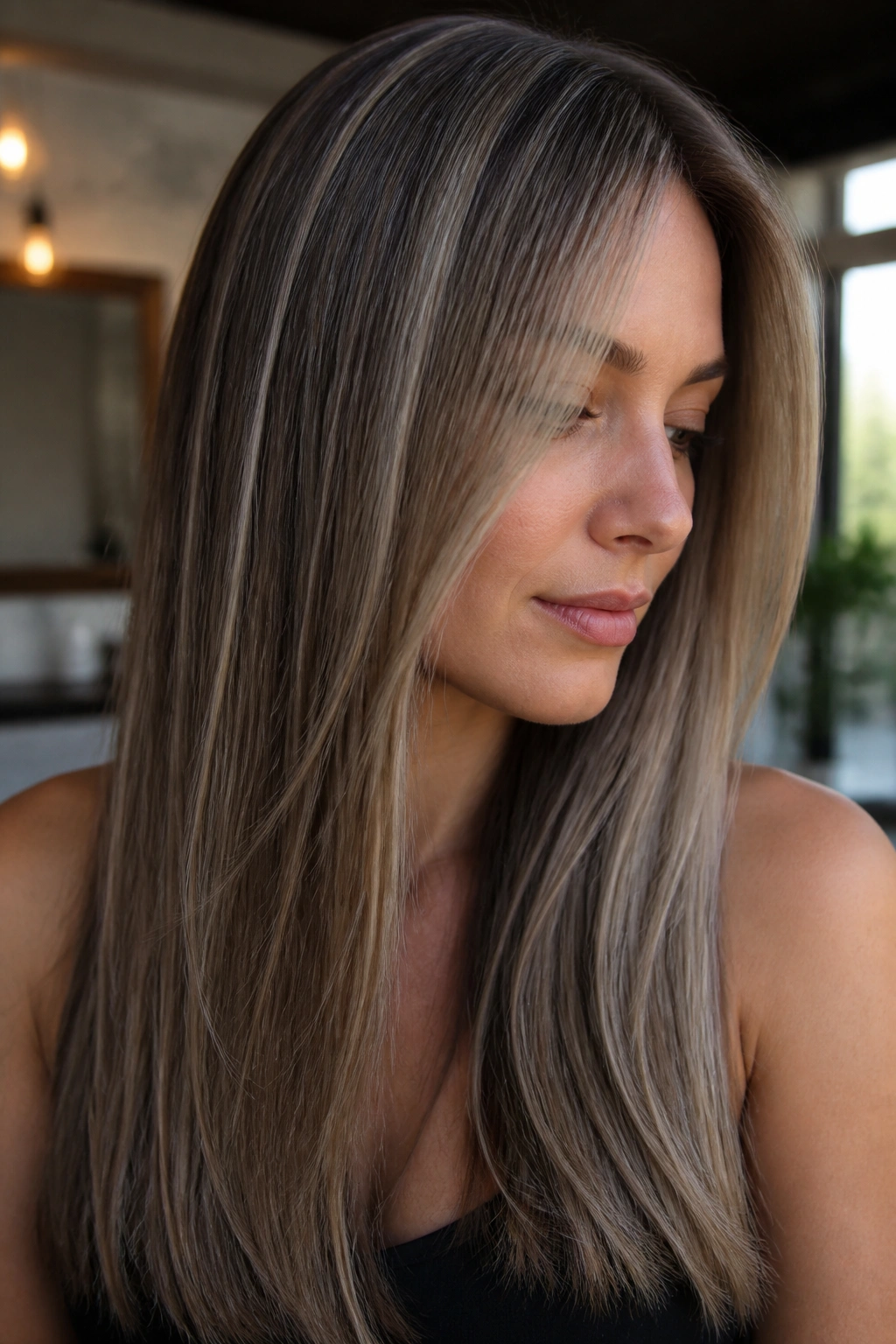
Pearl blonde is one of those shades that can look expensive without trying too hard. On a round face, micro-highlights in this tone are useful because they create polish without a hard color line.
The base stays deeper, and the pearls of blonde are woven in so finely that the hair gains texture instead of obvious stripes. That texture matters more than people think. A round face benefits from a soft, broken-up finish more than one big pale sheet of color.
How to Ask for It
Ask for micro-weaving through the top and front thirds of the head. The pieces should be small enough that you see shimmer, not bands. Pearl tones work especially well if your natural shade is light brown or dark blonde, because the contrast stays gentle.
This color is a nice fit if you wear your hair straight. Straight hair can show every line, which means the placement has to be clean. Micro-highlights solve that by staying delicate and even. If your hair is wavy, they add a soft glow through the bends.
One-sentence truth: this is not the color for someone who wants drama. It is for someone who wants the face to look smoother, the hair to look finer in a good way, and the whole result to feel quietly polished.
10. Golden Blonde Ends with a Soft Shadow Root
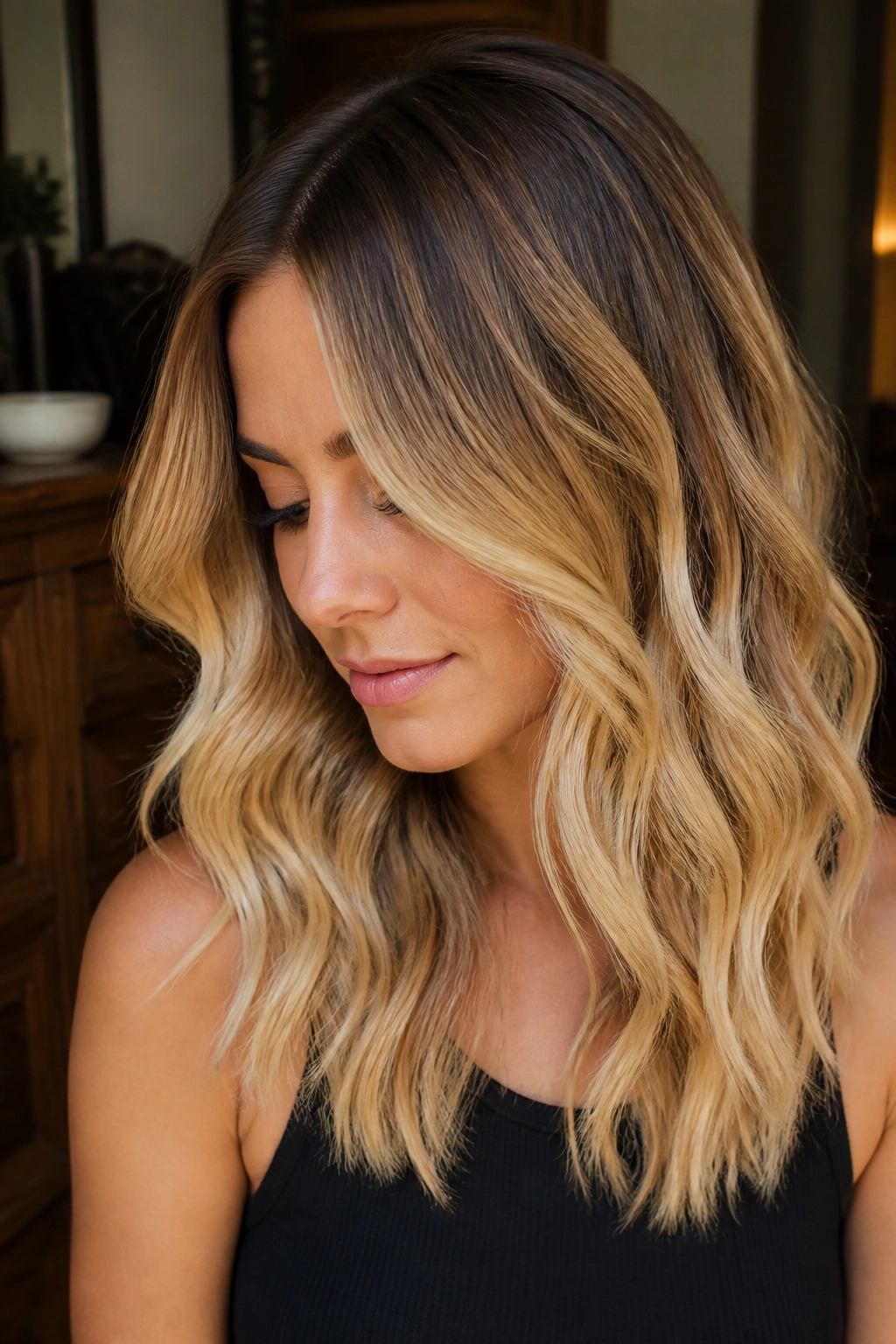
Bright ends can slim a round face faster than a face-framing streak. That sounds backward if you are used to thinking only about the front, but the eye follows light downward, and that is the trick.
A soft shadow root lets the crown stay anchored while the ends carry most of the blonde. Golden tones keep the finish warm and easy to wear, especially if your skin likes a little color. The face looks longer because the brightness lives lower in the silhouette.
What to Watch For
Don’t let the blonde start too high on the sides. If the light begins near the cheeks, the roundness can come right back. The safer move is to keep the brightest color from mid-length to ends, with just a whisper of brightness around the front pieces.
This works well on long hair with layers or on a soft U-shape cut. It also looks good when the ends are textured, because the light catches the movement and creates a slim, flowing line instead of a blunt edge.
The root shadow should be soft, not muddy. Think one level deeper, not three. That’s the difference between natural depth and hair that just looks dark at the top.
11. Blonde Highlights with Lowlight Depth
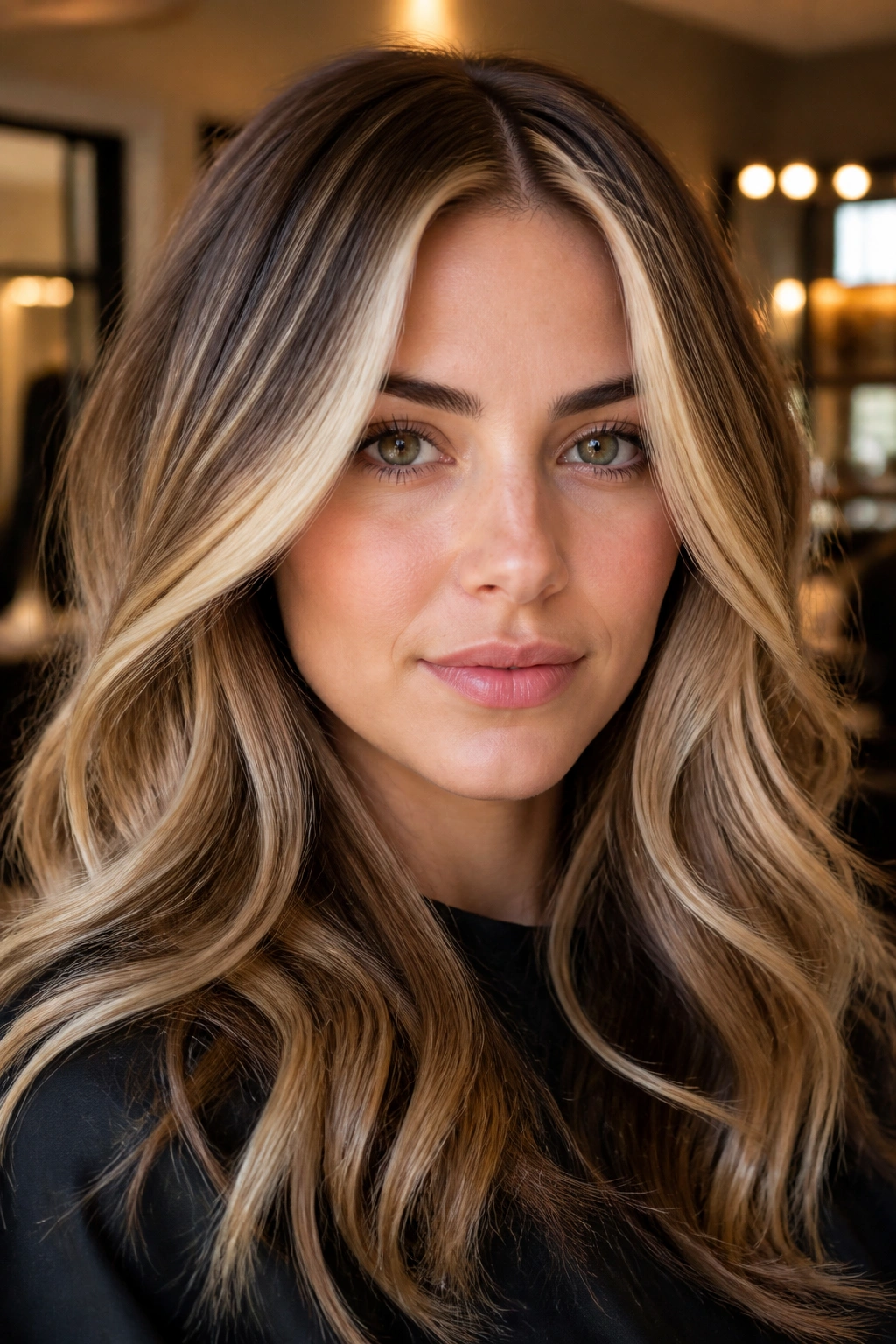
A round face rarely looks best with all-over blonde. It wants contrast. That is where lowlights earn their keep.
By threading in a few deeper strands between the blonde pieces, you carve out shape around the cheeks and jaw. The blonde becomes more visible because it has something to sit against. Without that depth, the whole head can turn into one flat light block, and flatness is what makes round faces feel wider.
Why It Makes a Difference
Lowlights are especially useful if your hair is very light to begin with. People often think lighter means slimmer, but on hair it can be the opposite when there is no contrast. A few caramel, beige-brown, or soft taupe strands create shadow under the bright pieces, and shadow is what gives dimension.
This placement is best around the sides of the head and beneath the surface layers. Keep the front pieces brighter, then tuck the deeper tones just behind them. That way the face still gets the lift, but the width gets controlled.
- Best for medium and thick hair.
- Helpful if your blonde tends to look washed out.
- Great when you want the color to last longer between salon visits.
- Works with waves, curls, and loose blowouts.
My opinion: lowlights are boring in theory and excellent in practice. They make almost every blonde on a round face look better.
12. Platinum-Edge Highlights on Layered Hair
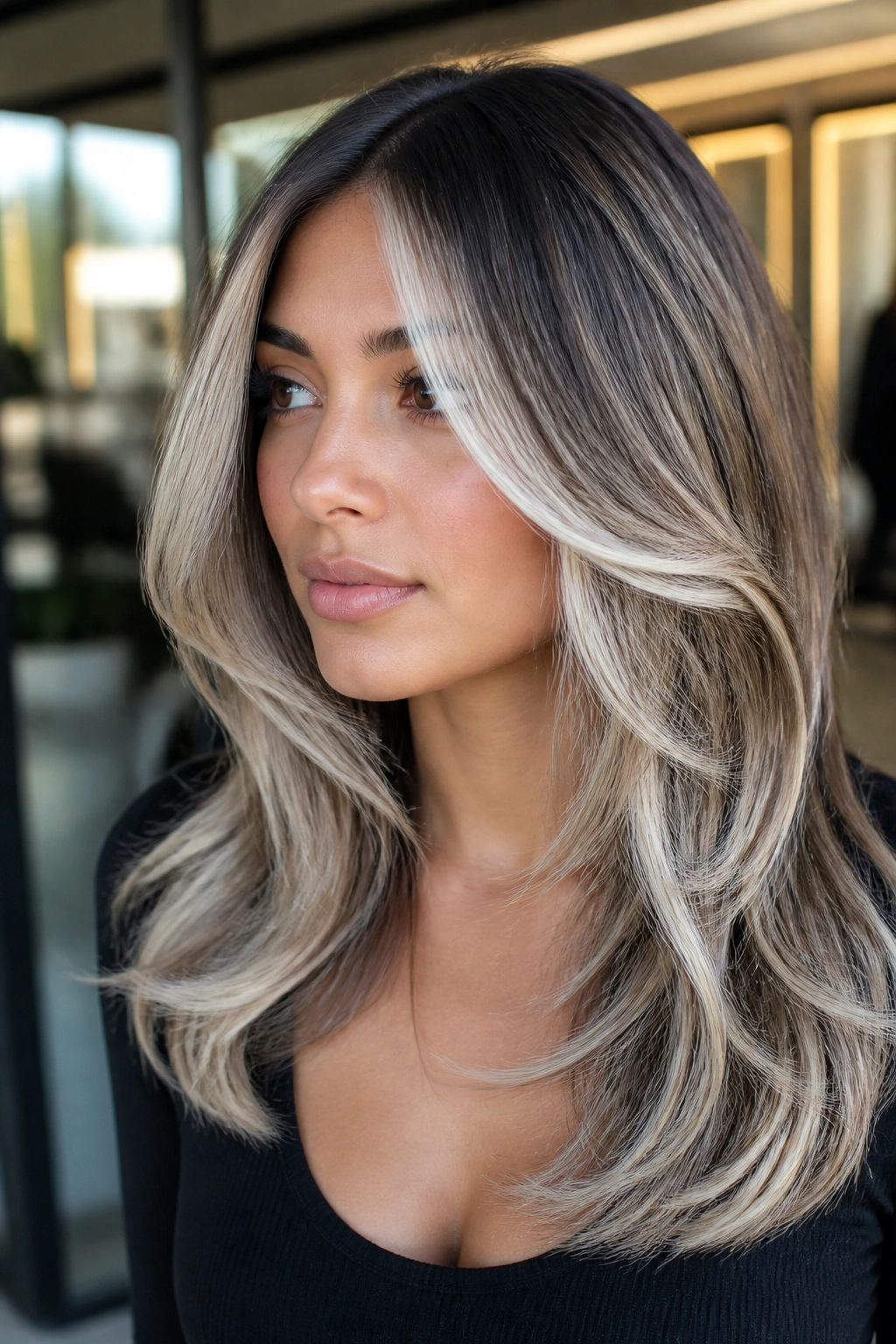
Platinum can work on a round face if you keep it at the edges. That is the part people get wrong. They see platinum and assume it has to cover everything. It does not.
A few icy, bright pieces along the outer layers and front edge can sharpen the shape of the face in a way softer blondes sometimes can’t. The key is to let the middle remain a touch deeper so the platinum acts like a frame instead of a blanket.
What Makes It Different
Platinum needs structure. On layered hair, that structure comes from the cut itself. The layers break up the brightness, so the face doesn’t get swallowed by a single pale sheet. The lighter edge pieces also make the hairline stand out, which gives the face more definition.
This look is strongest on layered lobs, long shags, and collarbone cuts with movement. It can be too much on one-length hair if the platinum goes too wide, because then the face starts to look open on the sides.
Keep the toner cool but not flat. Platinum that leans chalky or matte can make the skin look tired. The better version has shine, even if it is very light.
13. Hidden Underlayer Highlights for Movement
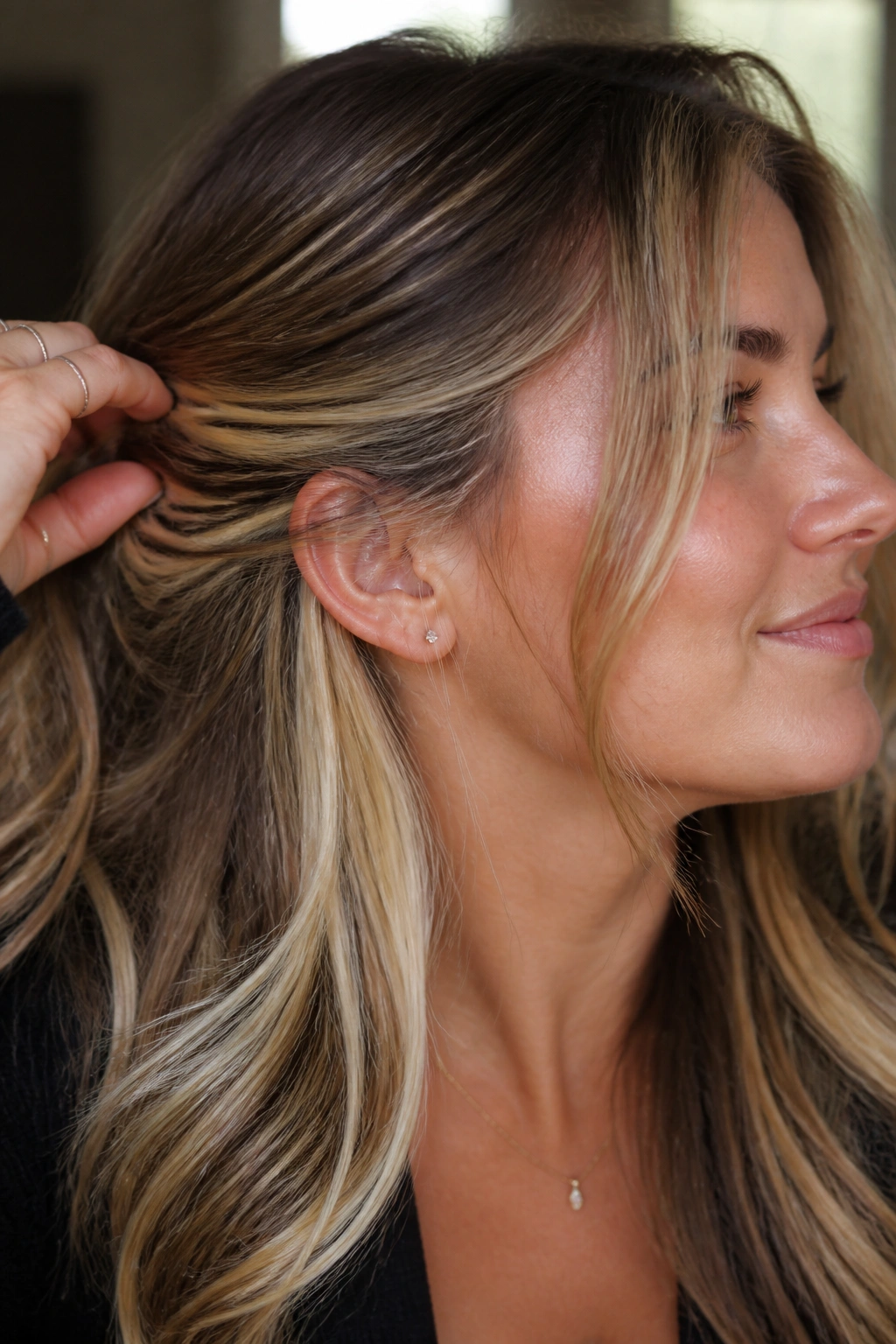
Hidden highlights are underrated. People think of them as a fun surprise, which they are, but they also happen to be good face-shapers because they keep brightness away from the widest parts of the head.
The underlayer stays in motion when you walk, turn, or tuck your hair behind your ears. That movement makes the blonde peek through from underneath instead of announcing itself all at once. On a round face, that means you get depth and interest without adding visual width at the surface.
How to Get the Most From It
Ask for highlights under the top layer, concentrated from just below the ear down to the ends. Keep the top a little darker or more blended. That contrast creates lift without obvious side width.
This is a smart choice if you wear your hair up a lot, because the blonde still shows in braids, twists, and half-up styles. It is also kind to damaged hair. Since the visible surface stays less processed, the style can look full without every strand being lightened.
The best part? It grows out quietly. You can stretch the appointment longer than you can with a face-heavy blonde.
14. Honey Blonde Halo Around the Crown
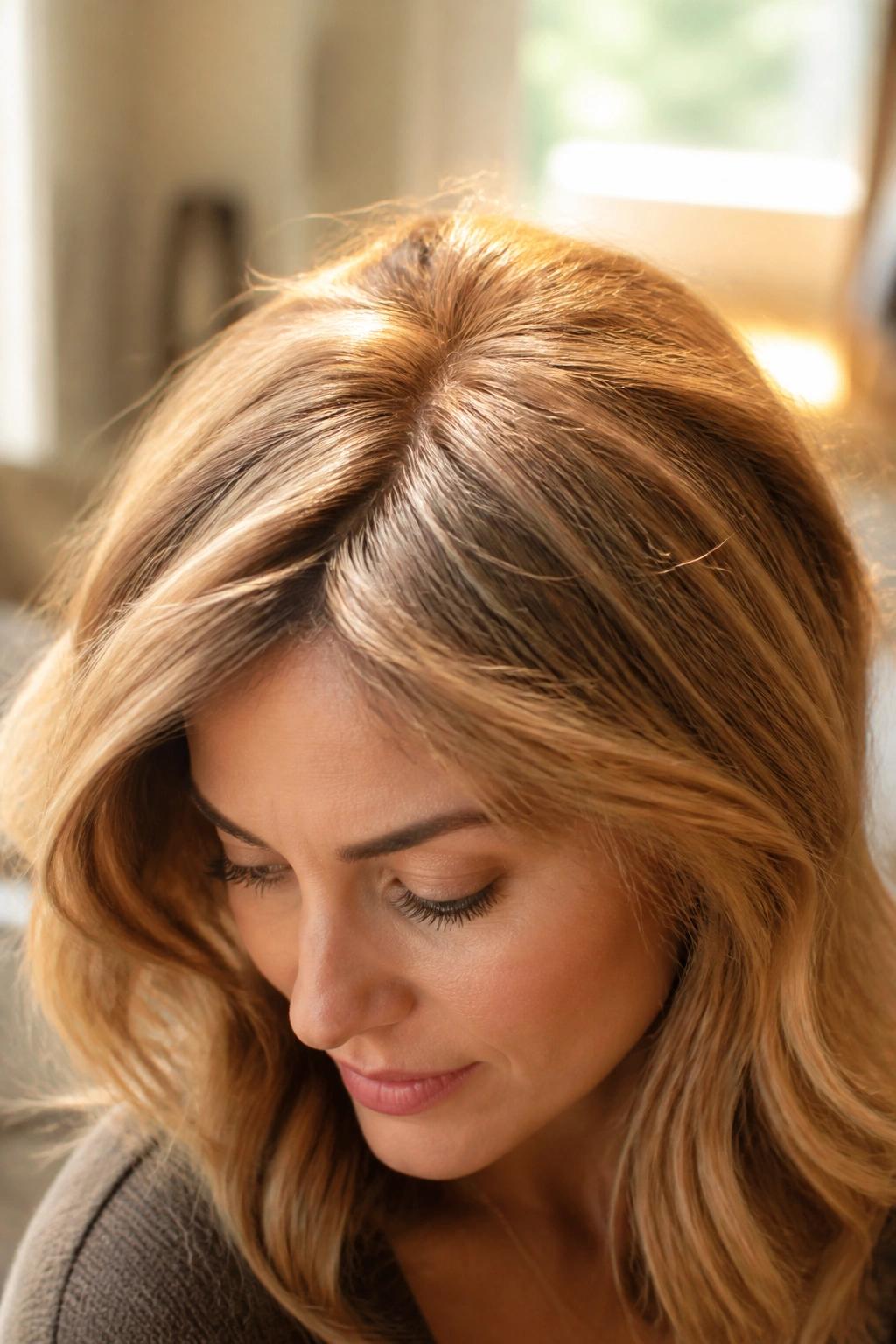
A halo of honey blonde around the crown can make a round face feel taller without looking severe. That brightness lifts the eye upward first, then lets it travel down through the rest of the hair.
Honey tones are warm, soft, and easy to wear on a lot of skin tones. They don’t have the edge of ash or platinum, which means the result feels more natural. Around the crown, that warmth creates a gentle brightness that reads as height, not width.
Practical Details
This placement works especially well if your hair is layered on top. The layers let the crown light catch and separate, which adds volume where you need it. If the crown is flat, the whole face can look wider. If the crown has lift, the shape changes fast.
Try to avoid pulling the honey too far down the sides. The light should live mostly above the cheekbone area and then taper out. Too much side brightness can make the face seem fuller than it is.
A middle or slightly off-center part helps. It gives the halo a shape that feels organic rather than too neat. And neat is not always flattering here.
15. Face-Framing Balayage on a Shag Cut
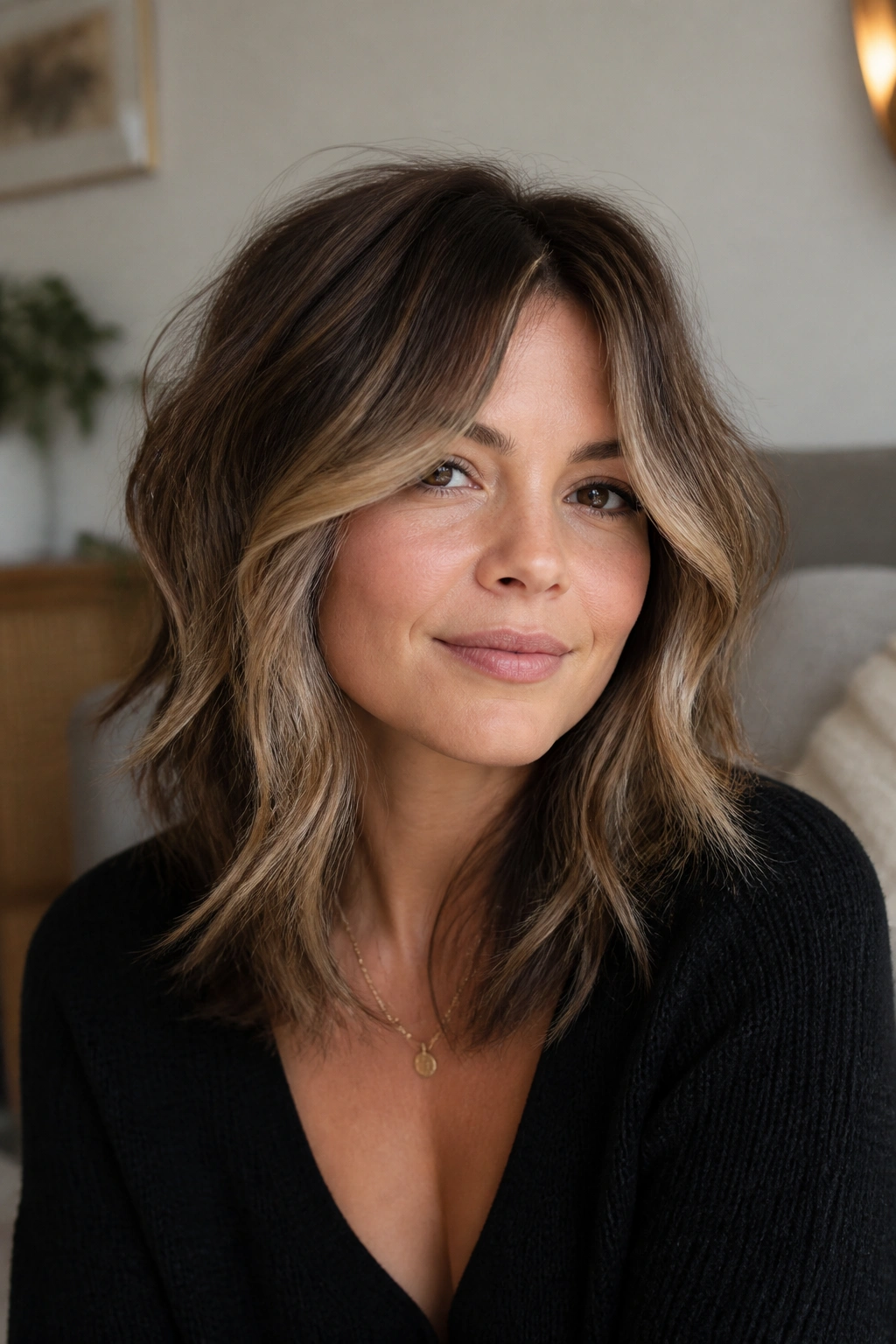
A shag cut already brings movement, so the color should follow that same loose, broken rhythm. Face-framing balayage does exactly that. It softens the front, adds light around the eyes, and keeps the rest of the blonde scattered enough that the face does not widen out.
The shag’s layers make this one easy to wear. Because the cut has texture, the highlights don’t need to work as hard. A few soft strokes near the cheekbones and longer pieces through the front layers are usually enough.
How It Works
The best part of a shag on a round face is the unevenness. The hair doesn’t sit in one flat line, so the color can move in the same relaxed way. Balayage painted onto the front layers creates shape without overdefining the cheeks.
If your shag has a fringe, keep it lightly highlighted at the edges only. If there’s no fringe, start the blonde a little lower and let the front pieces taper into the jaw. That keeps the eyes moving vertically.
This is one of those styles that looks better a little undone. A clean, glossy blowout is fine, but a soft lived-in wave really shows why the placement was chosen.
16. Beige Blonde Ribbon Highlights on Straight Hair
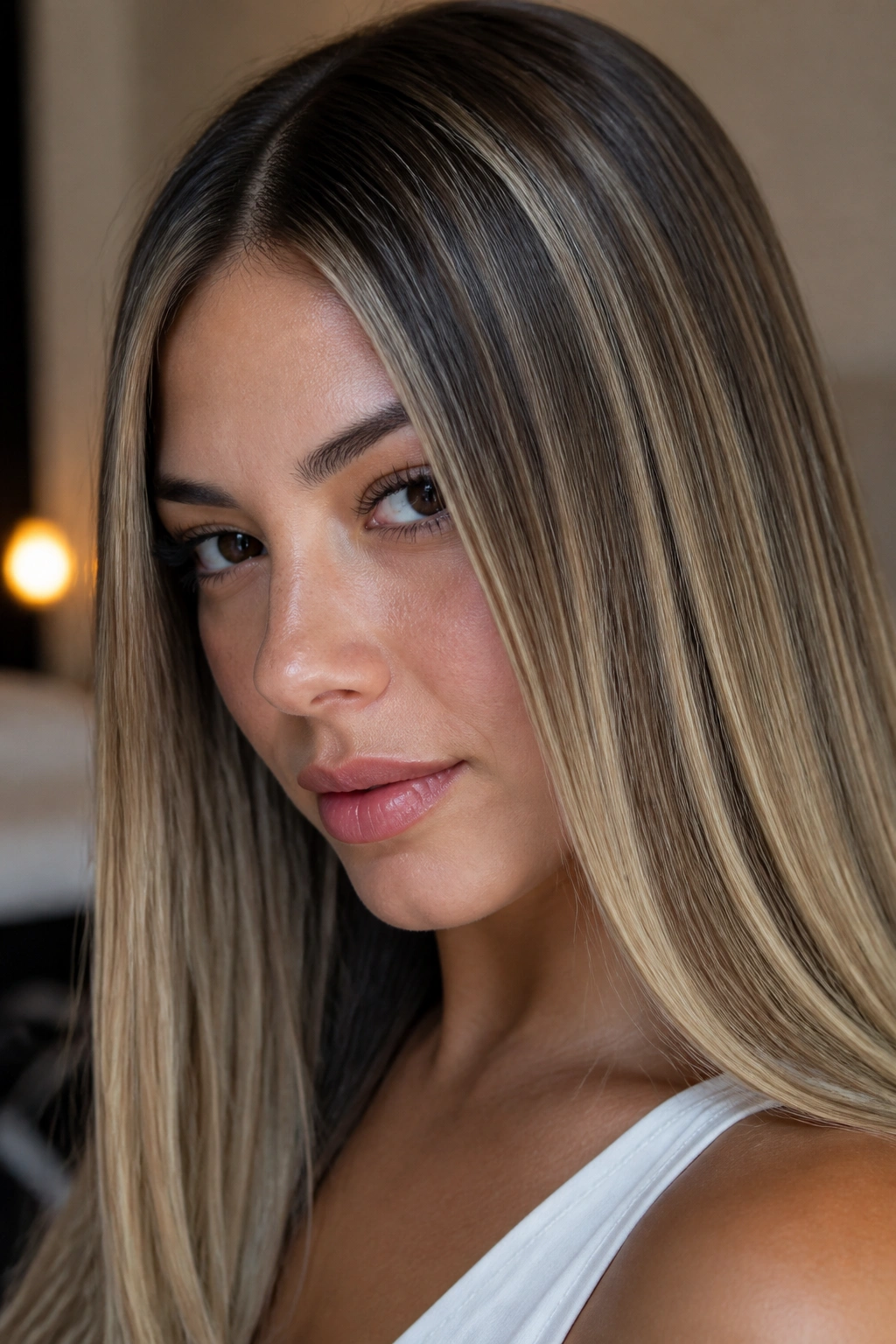
Straight hair can be unforgiving with color. Every line shows. Every stripe shows. That’s why beige blonde ribbons are such a good fit — they soften the geometry without losing the clean look straight hair gives you.
The ribbons should be thin enough to read as movement, not bands. Beige tones are useful because they sit between gold and ash, so they don’t fight with the straight finish. The result is sleek, but not stiff.
Comparison Angle
Unlike chunky highlights, beige ribbons won’t make a round face feel wider at the sides. Unlike icy platinum, they don’t create a stark frame that can look severe on smooth hair. They sit in the middle, which is often the sweet spot.
Best for:
- Straight or lightly bent hair
- Shoulder-length cuts and longer
- People who want polish without a lot of upkeep
- Faces that need softness more than drama
A clean middle part can work here, but a soft off-center part usually gives a better shape if the face is very round. The tiny shift creates asymmetry, and asymmetry is your friend. Straight hair loves precision, but a little imperfection helps it flatter more.
17. Deep Side-Part Highlights with Scattered Babylights
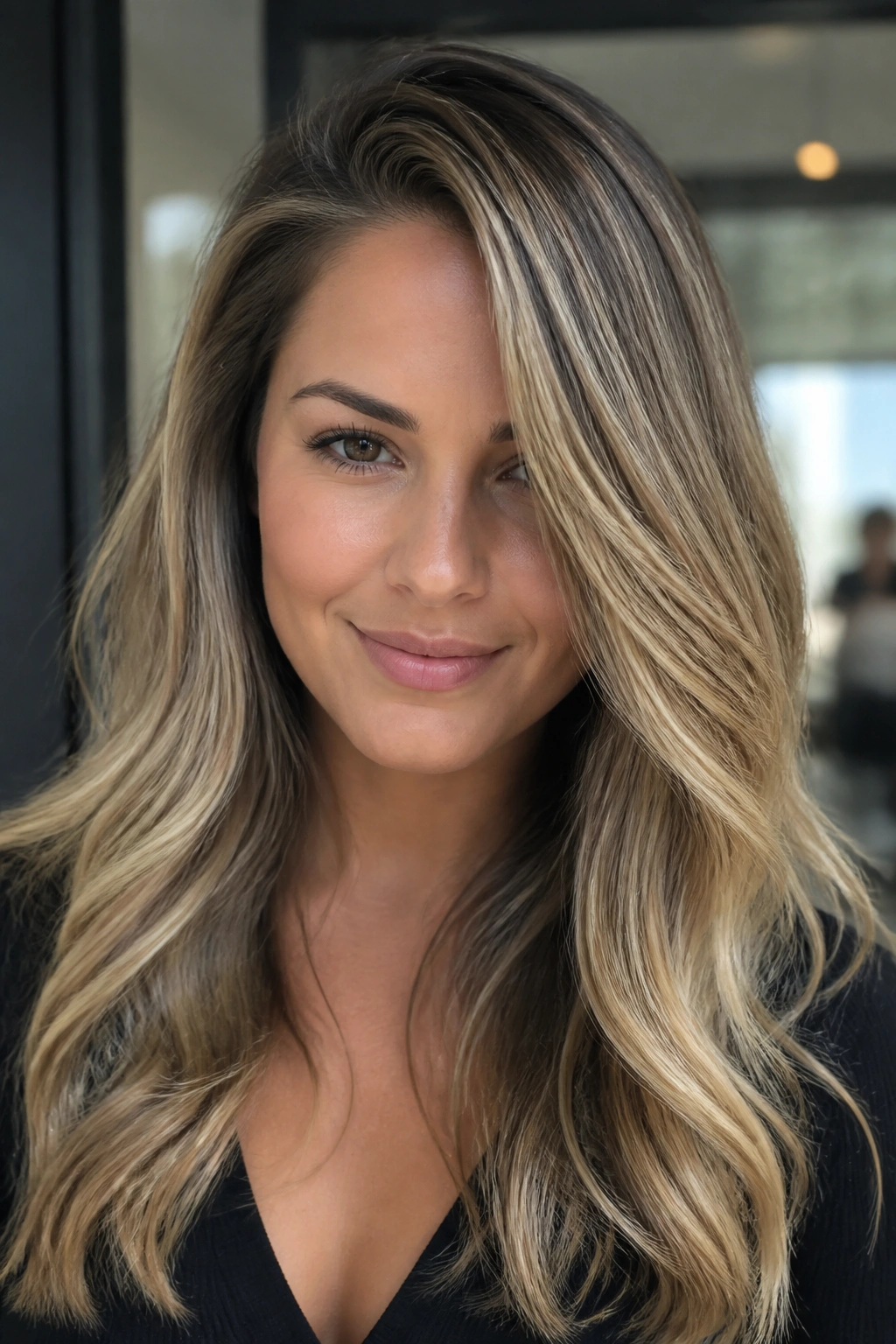
A side part changes everything. On a round face, it breaks the symmetry that can make the face look broader, and when you add scattered babylights, the effect gets even better.
The highlights should be denser on the heavier side of the part and softer on the other. That asymmetry pulls the eye upward and diagonally across the face instead of straight across it. The result is less “circle,” more shape.
What to Look For
Babylights are tiny, so the impact comes from placement rather than size. If the side part is deep, the brighter sections should appear mostly in the front third and upper layers. That leaves the lower sides softer and less bulky.
This style works well if you like to tuck one side behind your ear. The exposed side will show the blonde, while the other side stays a touch darker and more contained. That contrast makes the face look a little narrower without looking done-up.
Don’t over-highlight the temple area. A few pieces are enough. Too much brightness there can make the side of the face seem puffy, and that’s the opposite of what you want.
18. Root Tap with Bright Mid-Lengths
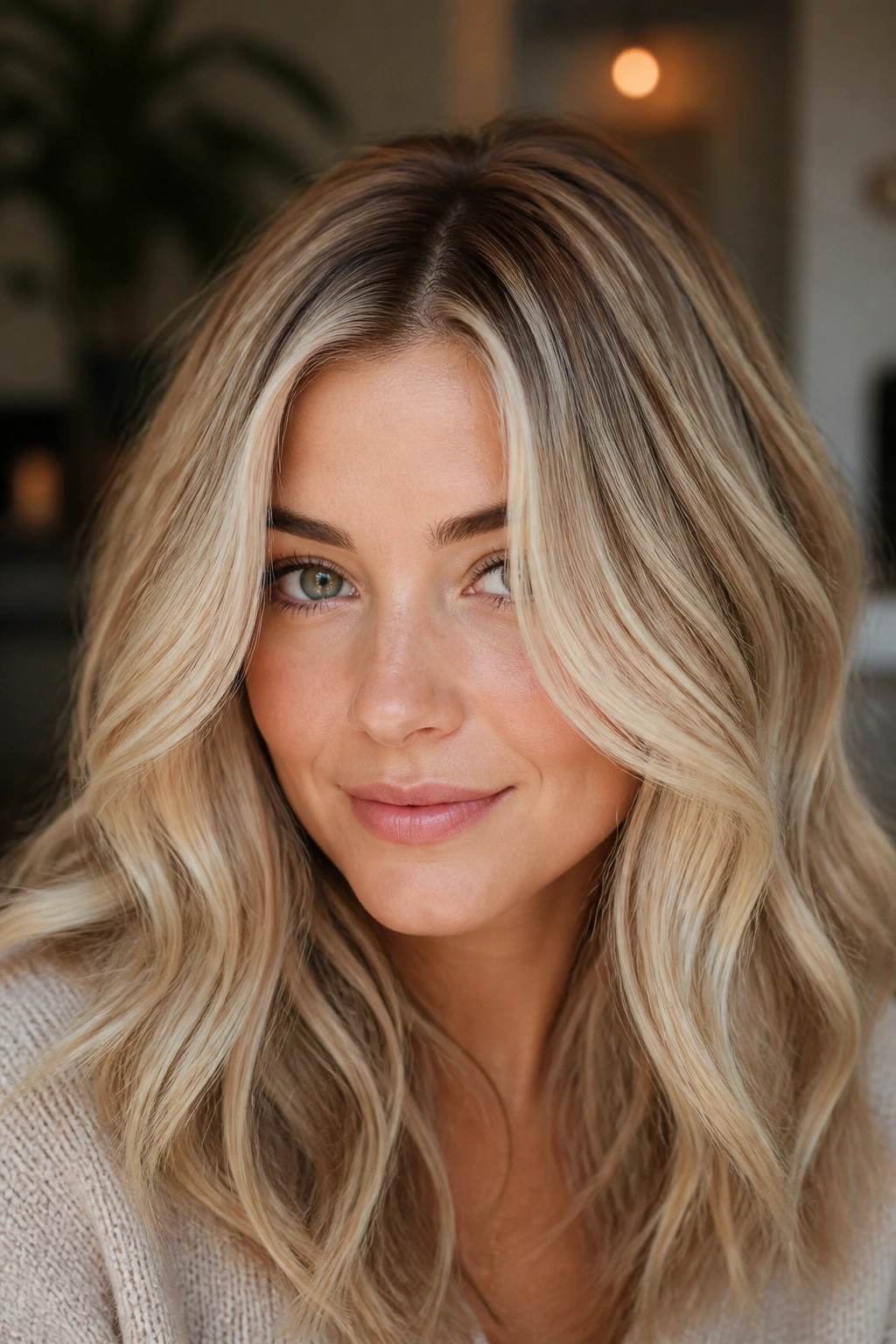
A bright mid-length is one of the safest ways to flatter a round face. The color sits away from the cheek width, but it still gives the hair a strong visible lift.
A root tap softens the grow-out and keeps the top from looking too wide or too flat. Then the mid-lengths carry the brightness, which draws the eye to the center of the hair shape rather than the outer edges. That subtle shift matters more than people think.
Why It’s Smarter Than All-Over Lightness
All-over blonde can blur the face shape, especially if the shade is pale and evenly spread. A root tap plus bright mid-lengths gives you direction. The eye sees depth at the scalp, then light in the middle, then a softer finish at the ends.
This is a nice choice for thick hair because thick hair often needs control, not more volume at the sides. It also works on curls, where the light sits inside the curl pattern and gives the hair movement without turning the outline too wide.
If you want the style to last, ask for a root tap that is soft enough to blur, not cover. That one detail can make the color grow out looking expensive instead of obvious.
19. Frosted Tips on Long Waves
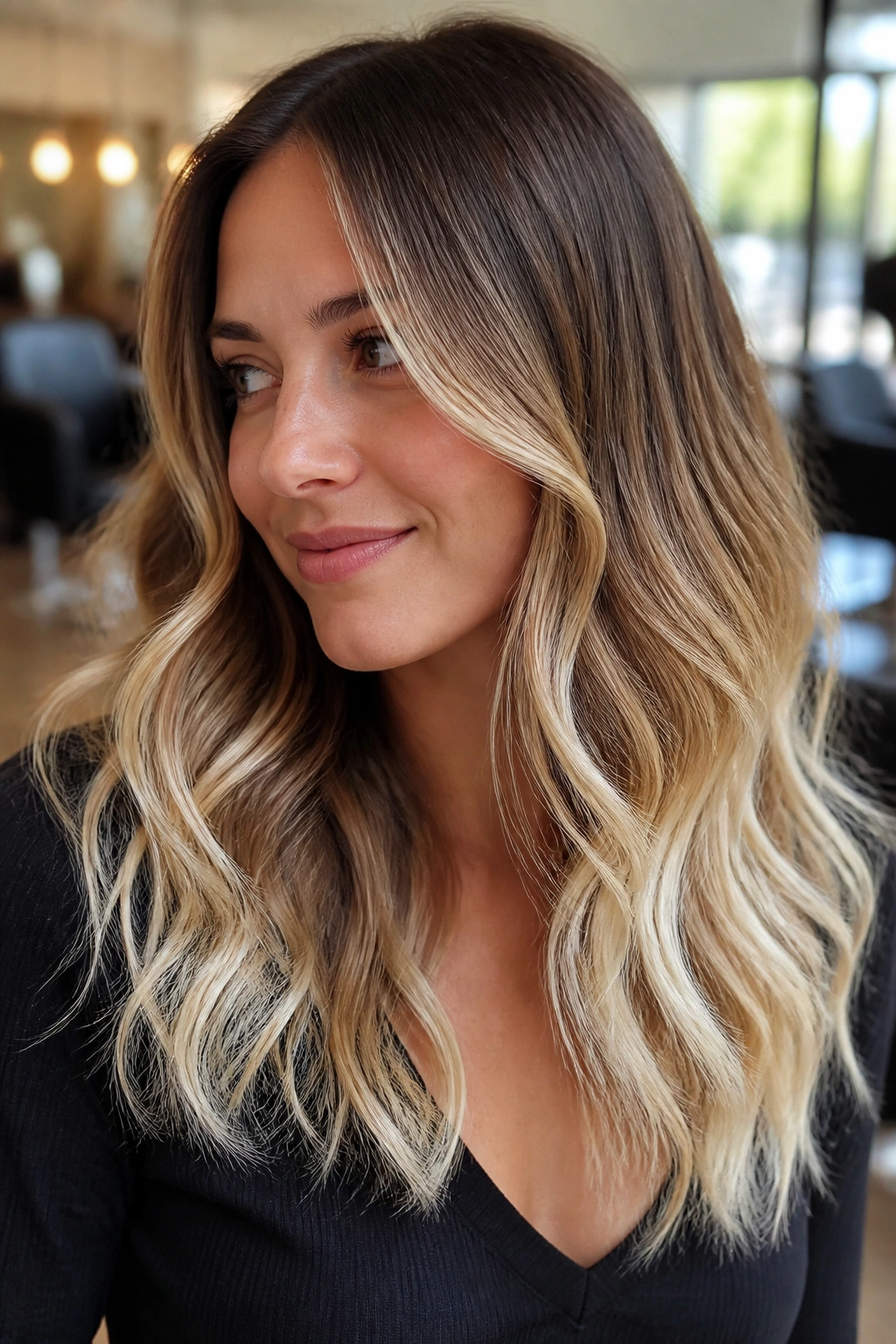
Long waves and frosted tips are a better pair than people give them credit for. The long wave shape gives the highlights somewhere to flow, and the frosted ends pull the eye down the length of the hair.
This is not the old school frost that sat in stiff little caps. The modern version is softer and more diffused, with brightness concentrated toward the outer bends and ends. On a round face, that lower emphasis helps stretch the overall shape.
A Brief Scenario
Picture a shoulder-length wave that starts dark near the root, opens into blonde through the middle, and finishes with the brightest ends near the collarbone. The face reads longer almost immediately because the light travels in a line. That line matters.
- Best on hair with natural wave or heat-styled bend.
- Good if you want a lighter finish without a heavy front frame.
- Works well when the ends are textured, not blunt.
- Needs careful toning so the frosted effect stays soft instead of brassy.
This one can look expensive or cheap depending on the finish. Keep the tones soft, keep the placement loose, and let the waves do part of the work.
20. Soft Blended Full-Head Blonde With Dimension
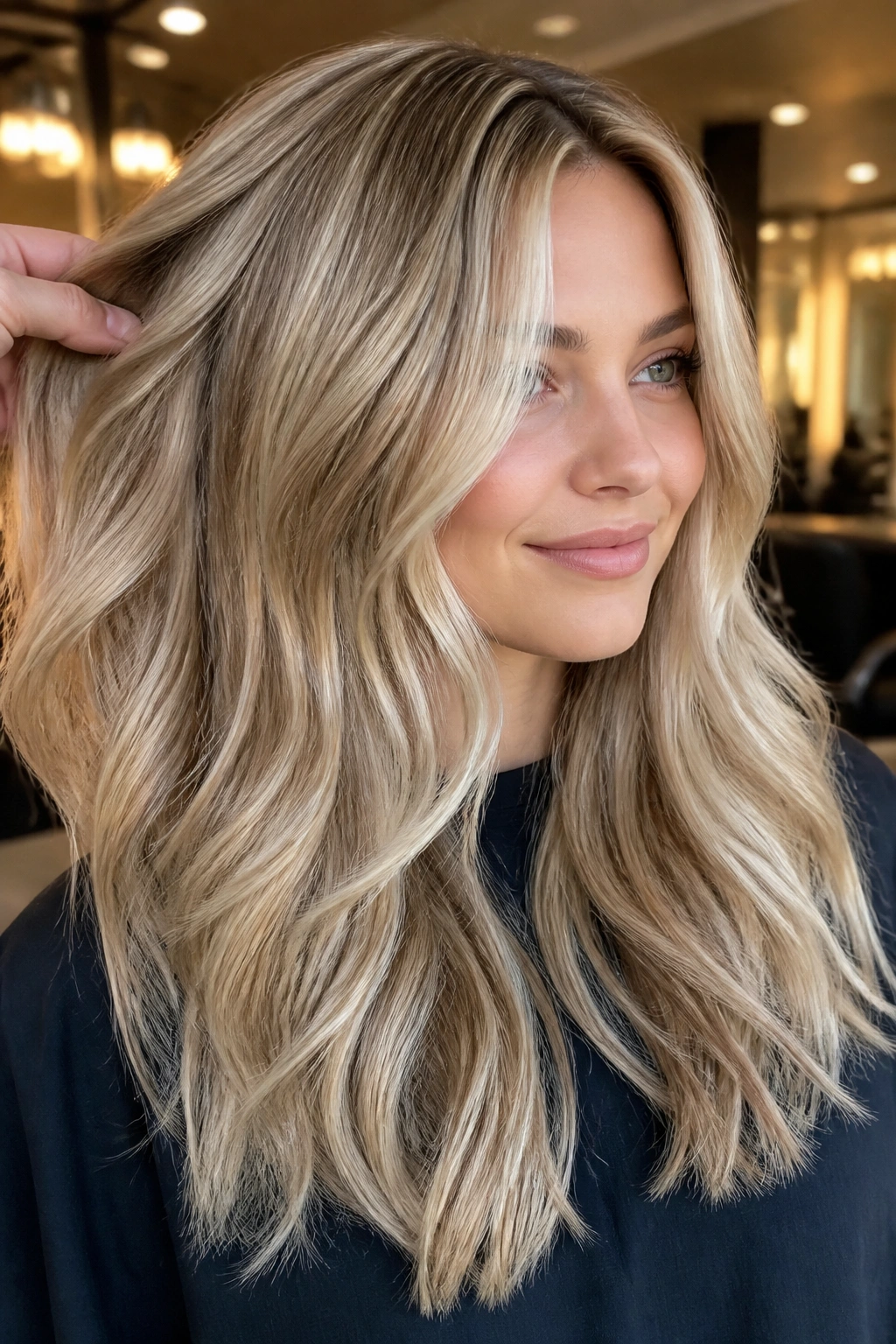
A full blonde can flatter a round face if it has dimension built in. That means multiple tones, soft spacing, and enough shadow to stop the color from turning into one big pale cloud.
The best version mixes babylights, a few broader ribbons, and tiny lowlights underneath. The blonde stays present everywhere, but it never sits in a single thick band. That variation gives the face shape and keeps the cut from feeling wide.
How to Use It
Ask your colorist for dimensional blonde from root to end, with the lightest pieces placed through the front third, crown, and mid-lengths. Keep the sides slightly softer and the base one shade deeper than the brightest blonde. That balance is what keeps the style flattering.
This is the most high-maintenance option on the list, but it pays off if you love a bright blonde finish. It looks especially good on layered cuts, where the pieces can separate and show off the different tones.
If your face is round and your hair is dense, this may be the most balanced big-blonde option of all. It gives you brightness without that awkward widening effect some full blondes can create.
Final Thoughts
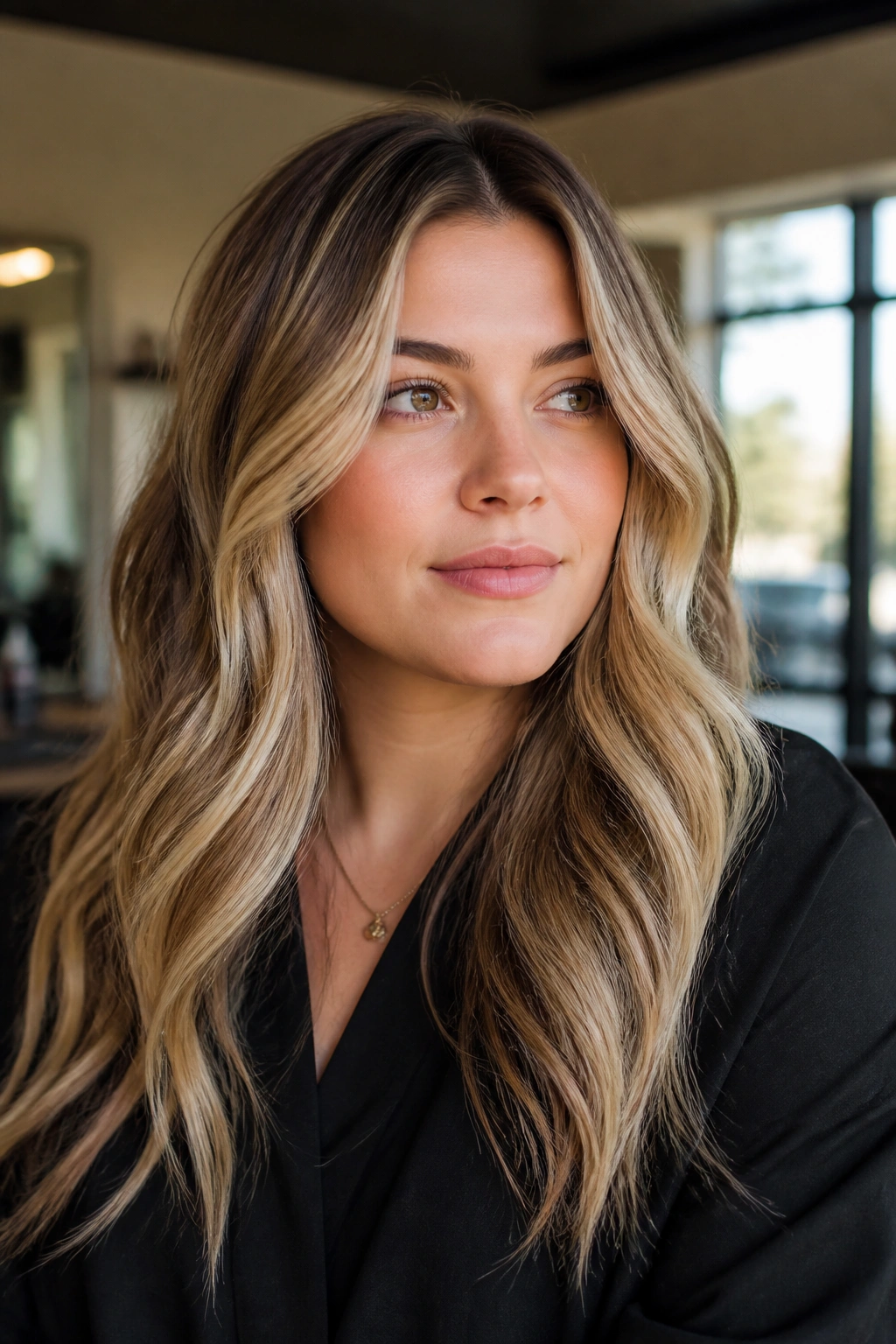
The best blonde highlights for round faces are the ones that create shape first and brightness second. That usually means a little more depth at the root, a little more light where the hair travels vertically, and a little less saturation across the cheeks.
I’m partial to placements that look thoughtful from the side view. That is where so many color jobs fail. Front-on, they seem fine. Then you turn your head and the whole thing reads broad. A good colorist plans for movement, not just a mirror shot.
If you are torn between two ideas, choose the one with more shadow and more length in the front. That combination does a lot of quiet work.
