



A round face can wear silver highlights better than most people think, but the placement has to work hard. If the light lands in the wrong spots, the face reads wider; if it falls in vertical ribbons, side-swept bands, and cheekbone-length pieces, everything looks cleaner and longer.
That’s the difference between icy hair and a good cut-color pairing.
Silver is tricky because it exposes every line in the haircut. A blunt highlight run across the widest part of the face can make the cheeks look broader, while a darker root with bright edges near the jaw can pull the eye downward. The best silver highlights for round faces use contrast with restraint, which is a nicer way of saying they know where to stop.
If you have ever looked at a toner job in the bowl and thought it looked flat or a little too gray, that is normal. The shape of the highlights, the part, and the cut do most of the heavy lifting once the color is in place.
1. Silver Money Pieces That Stretch a Round Face
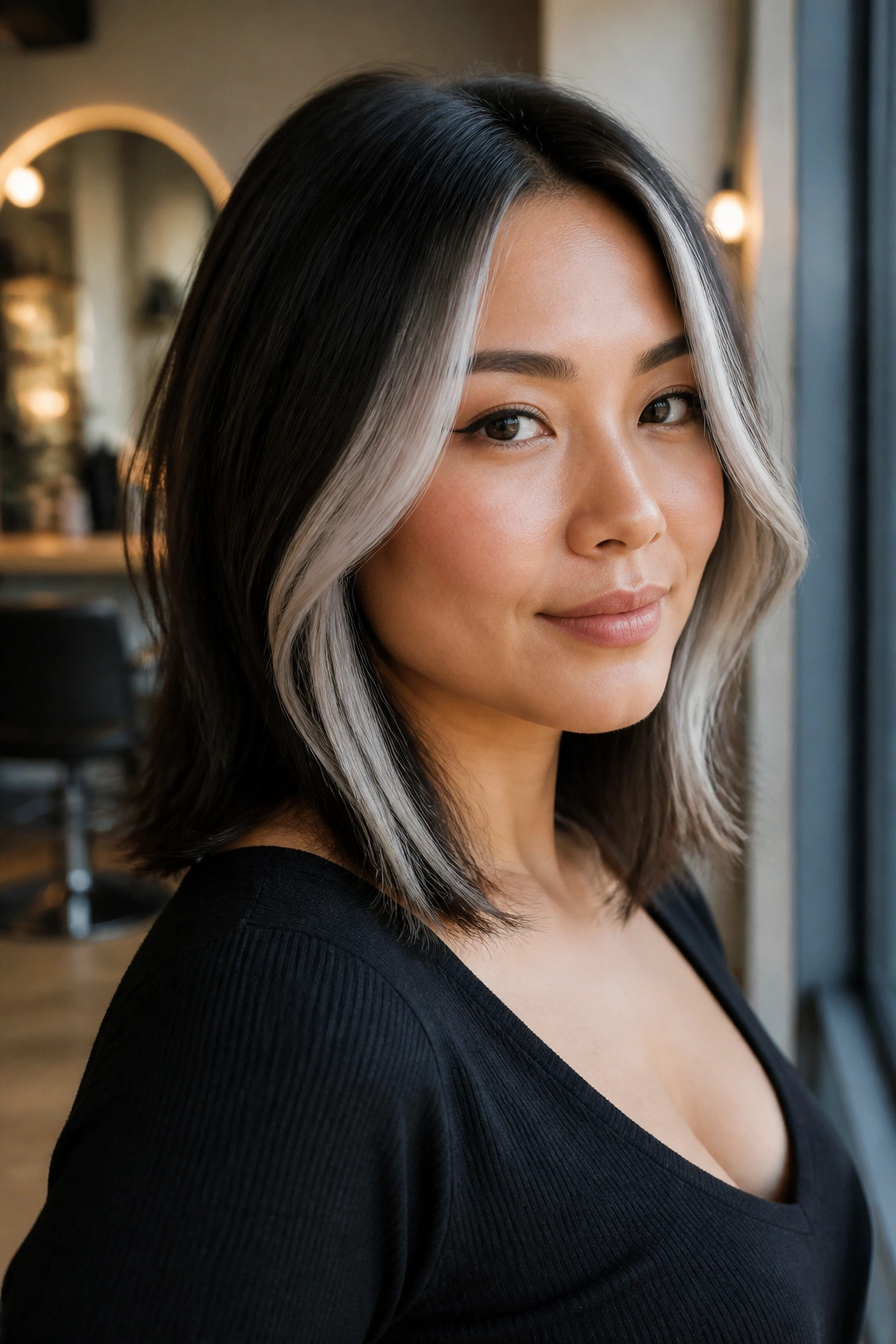
Silver money pieces are the bluntest, fastest way to change how a round face reads. The trick is not making them huge. It is putting the brightest strands just off the part and letting them fall past the cheekbone before they lighten out.
Where the Brightest Strands Belong
Ask for two face-framing sections that start at the temple, stay narrow through the root, and widen only as they move toward the jaw. That placement creates a clean vertical line without flooding the sides of the face with brightness. Keep the heaviest silver below the cheekbone so the color pulls down instead of out.
A good money piece on a round face should look deliberate, not striped. If the front pieces are too thick, they can turn into a white curtain. Too thin, and they disappear once the hair is styled. Somewhere between those two is the sweet spot.
- Best on lobs, long bobs, and layered cuts
- Ask for a root shadow that is 1 to 2 shades deeper
- Keep the bright panel no wider than 1/2 inch at the hairline
- Finish with a side part or a slightly off-center part
Pro tip: tuck one side behind the ear once in a while. It shows the shape of the face-frame instead of flattening it.
2. Side-Swept Silver Balayage for Round Faces
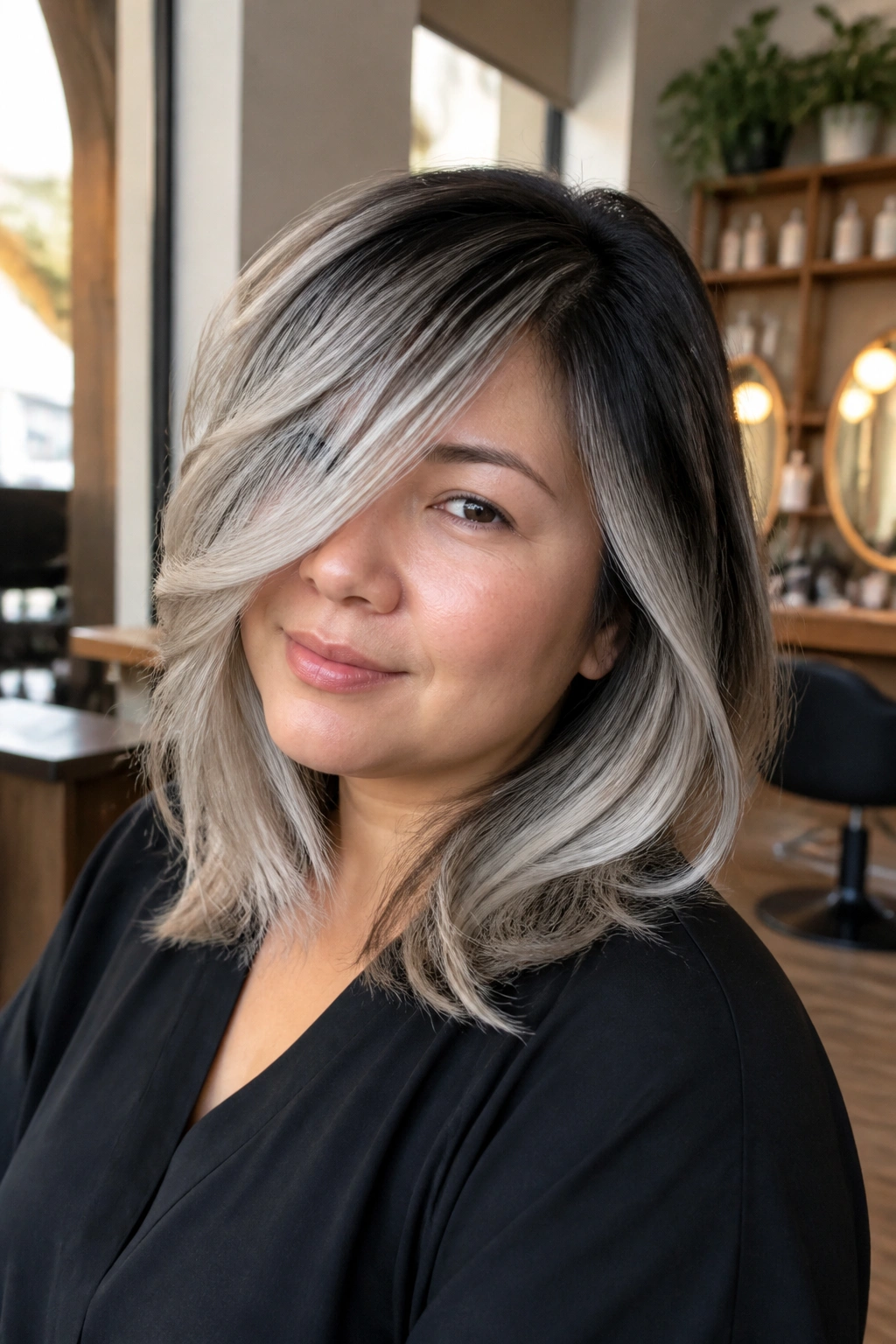
A side part can do half the work before the color even shows. When the silver balayage sweeps from a deeper root into a brighter side panel, the face stops feeling so circular and starts feeling a little longer, a little sharper.
That is why this look works so well on hair that falls past the chin. The balayage should trail from one temple, drift through the lengths, and finish with a brighter edge near the collarbone. The part is part of the color story. If you keep everything centered and symmetrical, the effect gets softer and wider.
This style suits people who want movement without hard stripes. The silver can be smoky, icy, or steel-toned, but the real win is the diagonal line. Diagonals are kinder to round faces than horizontal bands. They just are.
3. Micro Babylights That Frost the Surface
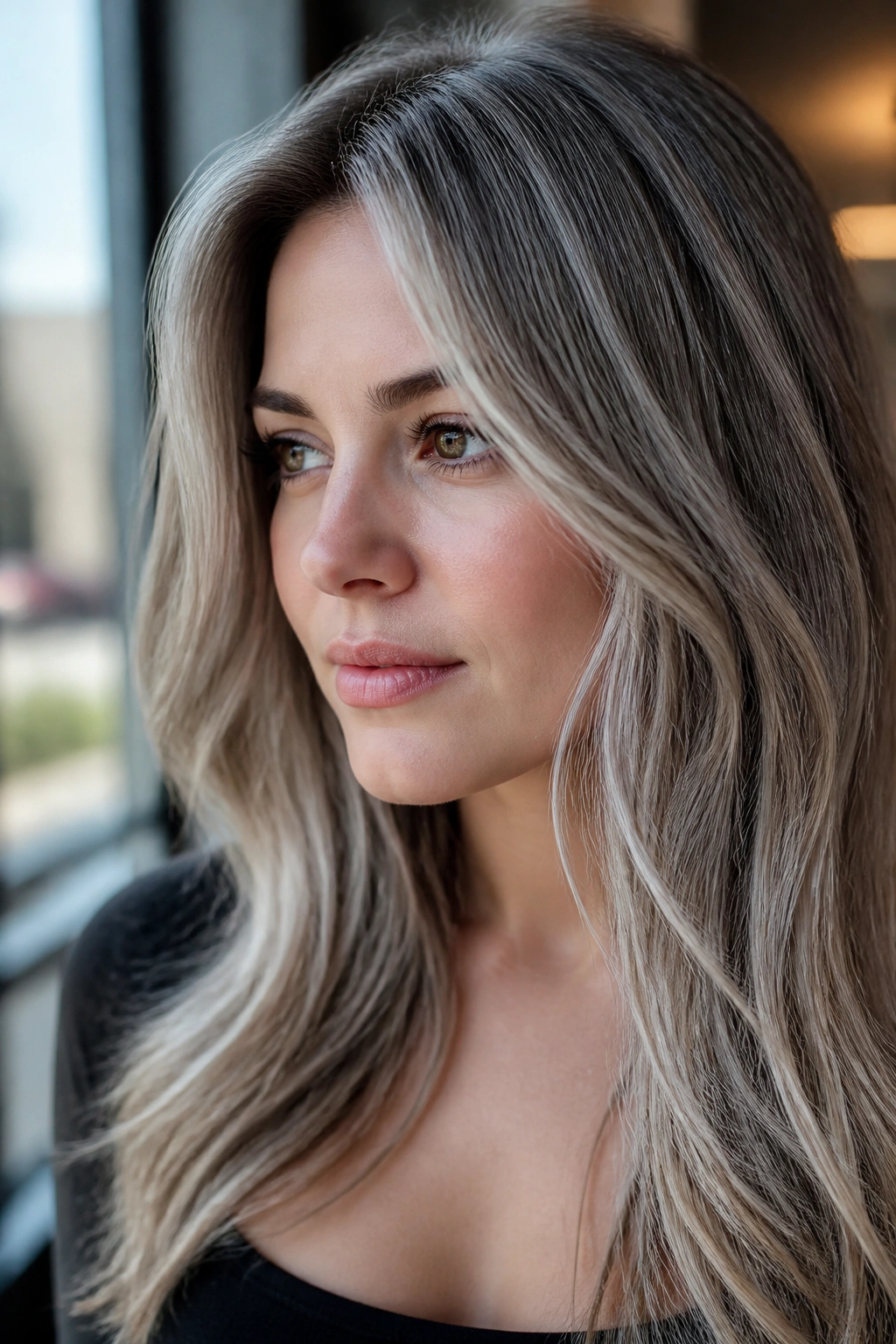
Why do tiny silver babylights work so well on round faces? Because they add texture without making one area too heavy. The eye reads lots of fine, broken lines as lift, not bulk, and that matters more than people think.
A colorist usually weaves these in very fine sections, often with a lighter hand around the crown and a softer hand near the cheeks. The goal is a whisper of frost, not a solid sheet of silver. On a round face, that kind of restraint keeps the sides from looking puffed out.
How to Ask for the Right Weave
Ask for silver babylights that are spaced more closely at the top and a little farther apart around the lower sides. You want a soft scatter, not a checkerboard. If your hair is fine, this is one of the few silver looks that gives body without making the ends look see-through.
- Use on straight, wavy, or gently curled hair
- Ask for a toner with a muted pearl or ash finish
- Keep the ends slightly deeper for contrast
- Style with a loose bend so the tiny lights can catch the movement
The result is subtle, but not boring. That matters.
4. Silver Ribbon Highlights on a Wavy Shag
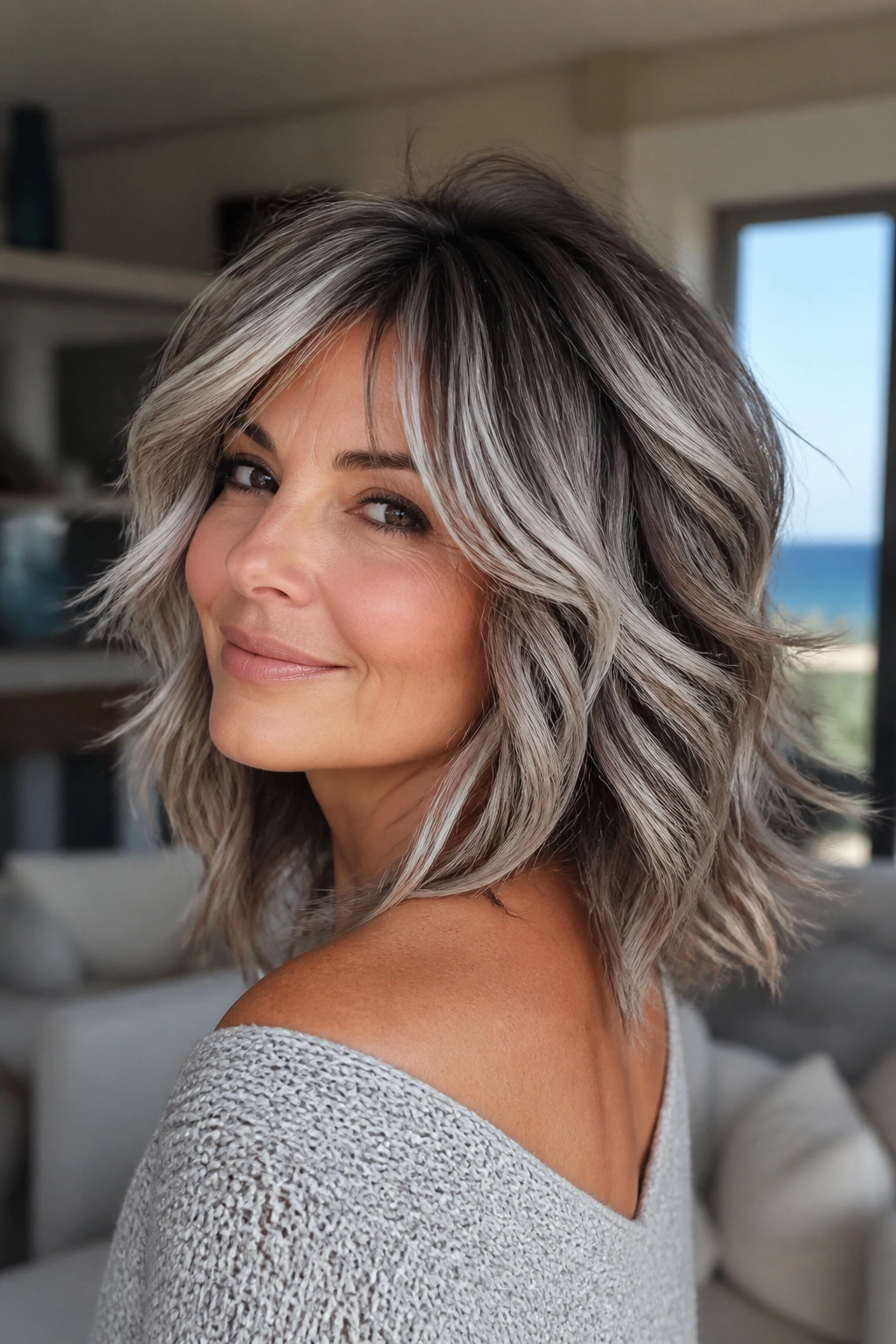
Picture a shag that moves when you turn your head. That is where silver ribbon highlights come alive. The longer face-framing pieces flick forward, the shorter crown layers lift, and the silver ends up looking like motion instead of decoration.
This style is especially good if you want a round face to look more angular without leaning on blunt contour lines. A few wide ribbons beat a dozen random streaks. Keep them placed through the upper sides and mid-lengths, then let the lighter pieces break up when the hair bends.
A wavy shag can take more contrast than a neat bob. The layers prevent the silver from sitting in one big block, which is the part that can make the face feel wider than it is. Add a rough-dry finish or a few bends with a 1-inch iron, and the highlights start to look lived-in instead of painted on.
5. Face-Framing Platinum Streaks With Root Shadow
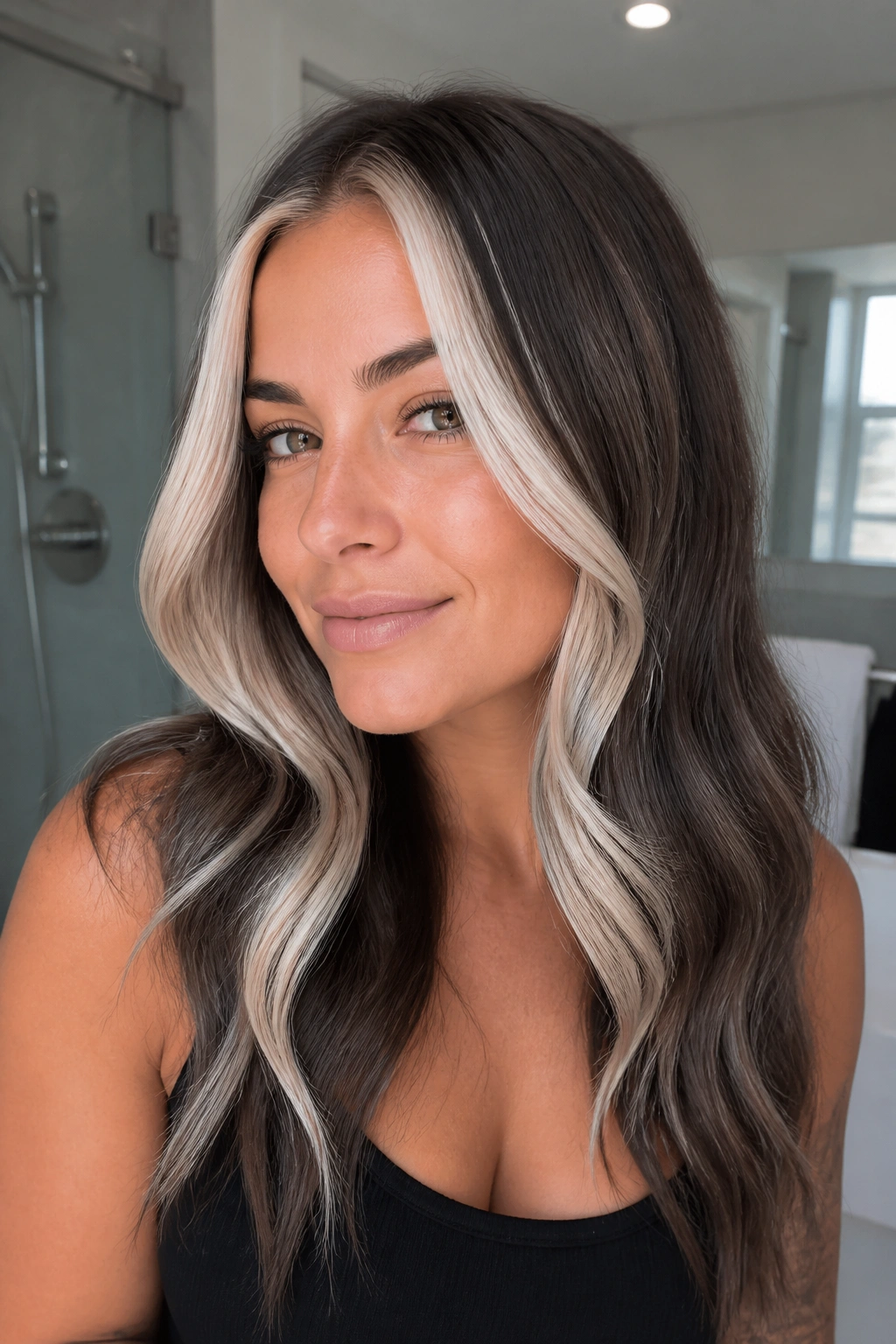
Pure silver around the face can be a little too sharp if the root is pale too. A root shadow fixes that. It gives the front streaks a place to start, and it keeps the whole look from turning into one bright sheet from scalp to ends.
The best version starts with a deeper root, then shifts into platinum at the temples and cheek line. By the time the hair reaches the jaw, the color should be creamy silver, not yellow-white. That soft dark-to-light shift does a lot of face-shaping work.
This one suits straight hair and smooth blowouts especially well. The clean lines let the color do the talking, and the root shadow keeps growth softer between salon visits. If you like crisp color but do not want to be in the chair every few weeks, this is a smart place to spend your money.
6. Mushroom Brown With a Silver Veil
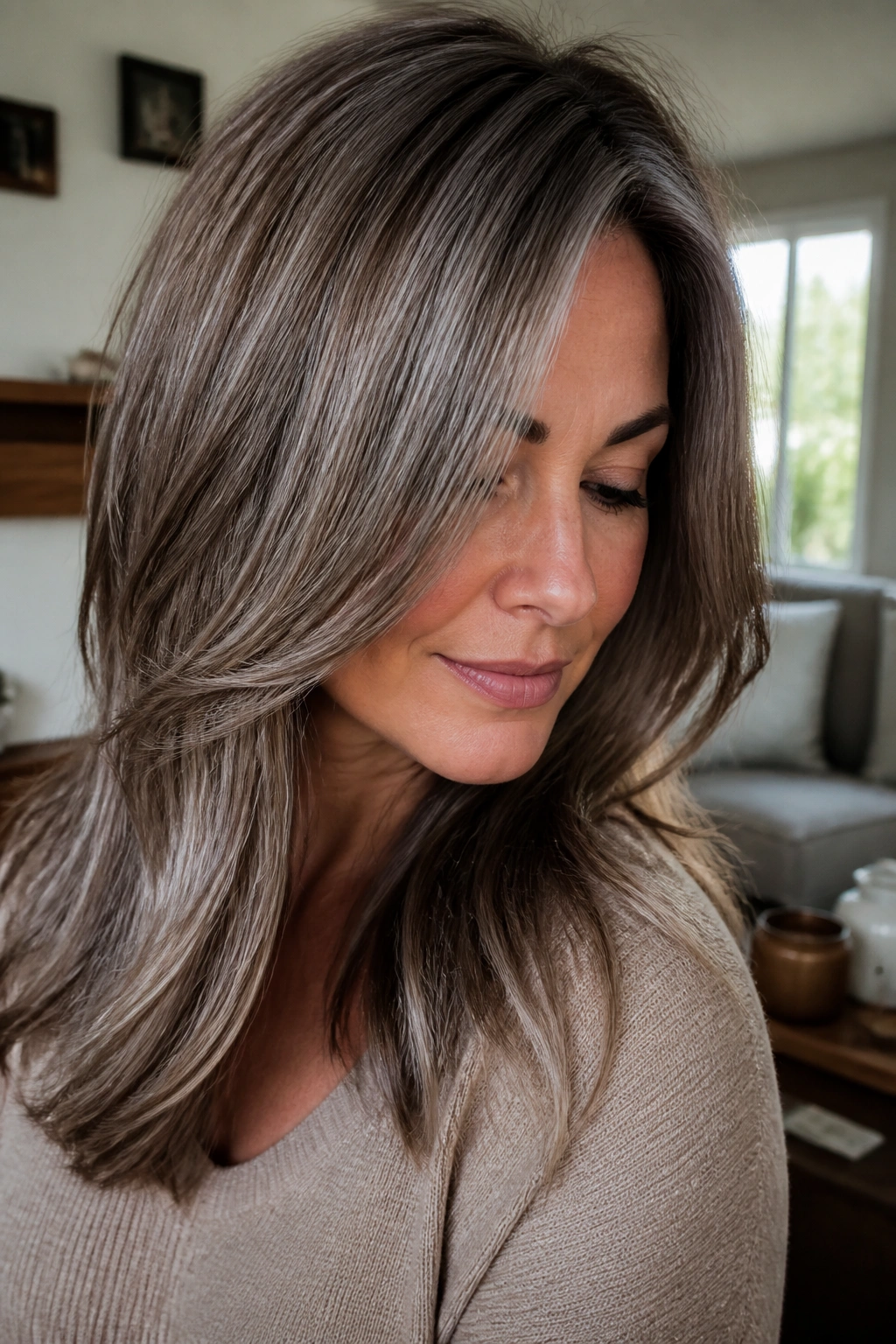
Unlike full-head silver, a mushroom brown base with a silver veil keeps the mood low and smoky. That matters on a round face because the sides stay darker, which stops the head from reading too wide in bright light.
The silver sits over taupe, ash brown, and pale gray tones instead of fighting them. Think of it as mist, not chrome. That softer contrast means the highlights can sit higher around the crown and front without pulling too much attention to the cheeks.
It is a useful choice if you want silver that feels grown-up and a little quieter. The finish is cool, but not icy. The hair looks like it has depth from root to end, which gives rounder faces more shape than a flat, all-over light color ever could.
7. Peekaboo Silver Panels Under Dark Hair
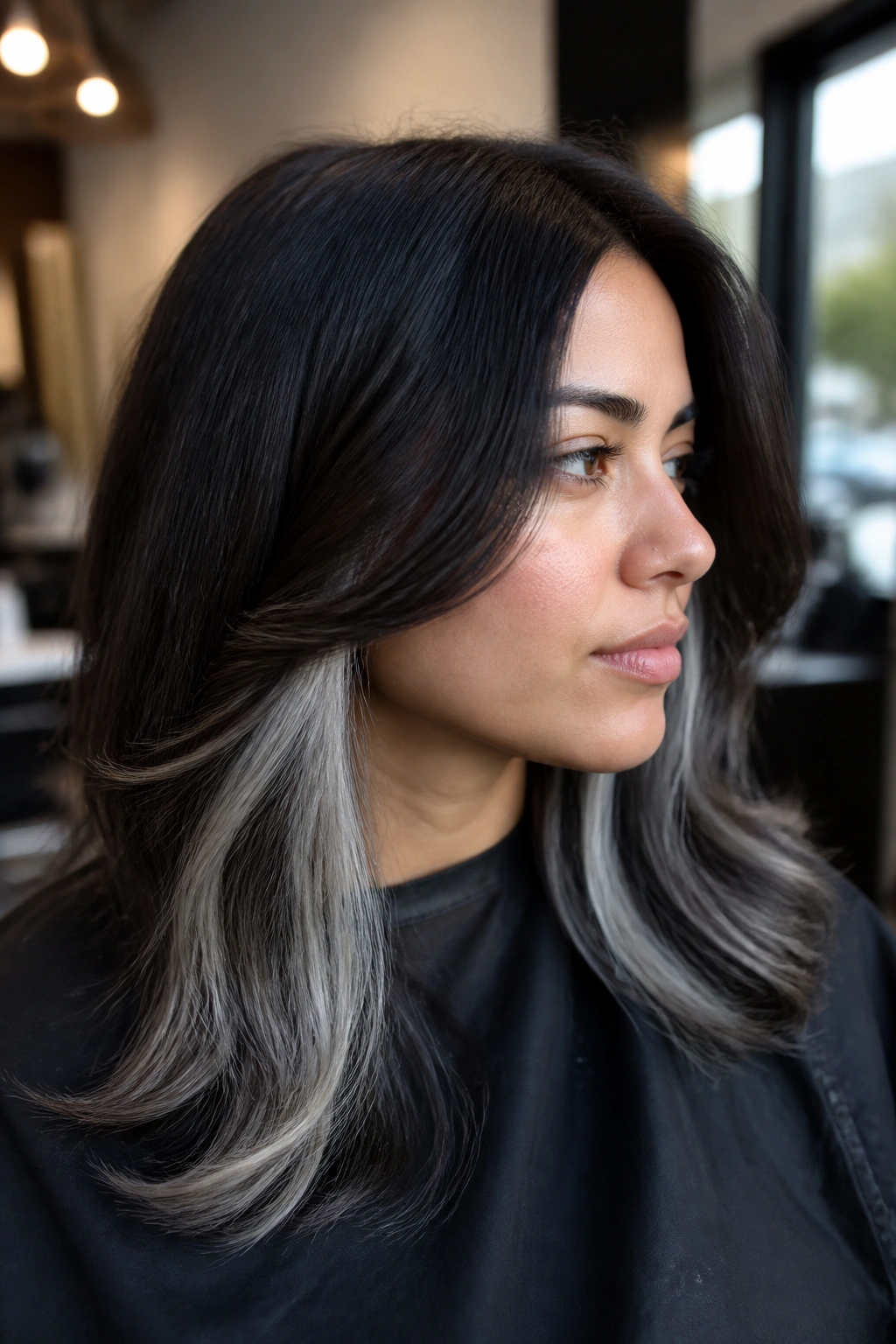
Peekaboo silver is the sneaky one. On first glance, the hair looks mostly dark, which is excellent for a round face because the outer shape stays slim. Then the head turns and the silver panels flash through the lengths.
That hidden contrast keeps the focus away from the widest part of the face. It works especially well if the silver is tucked underneath the top layer and placed closer to the back than the front. The surprise is the point. You get movement without committing to a full bright frame.
This style also gives you room to live with the color before going bolder. If the silver feels like too much, you can keep the top layer deeper and still have that flash of cool tone when the hair moves. It is one of the more practical silver looks, and I mean that as a compliment.
8. Frosted Curtain Bangs for Round Faces
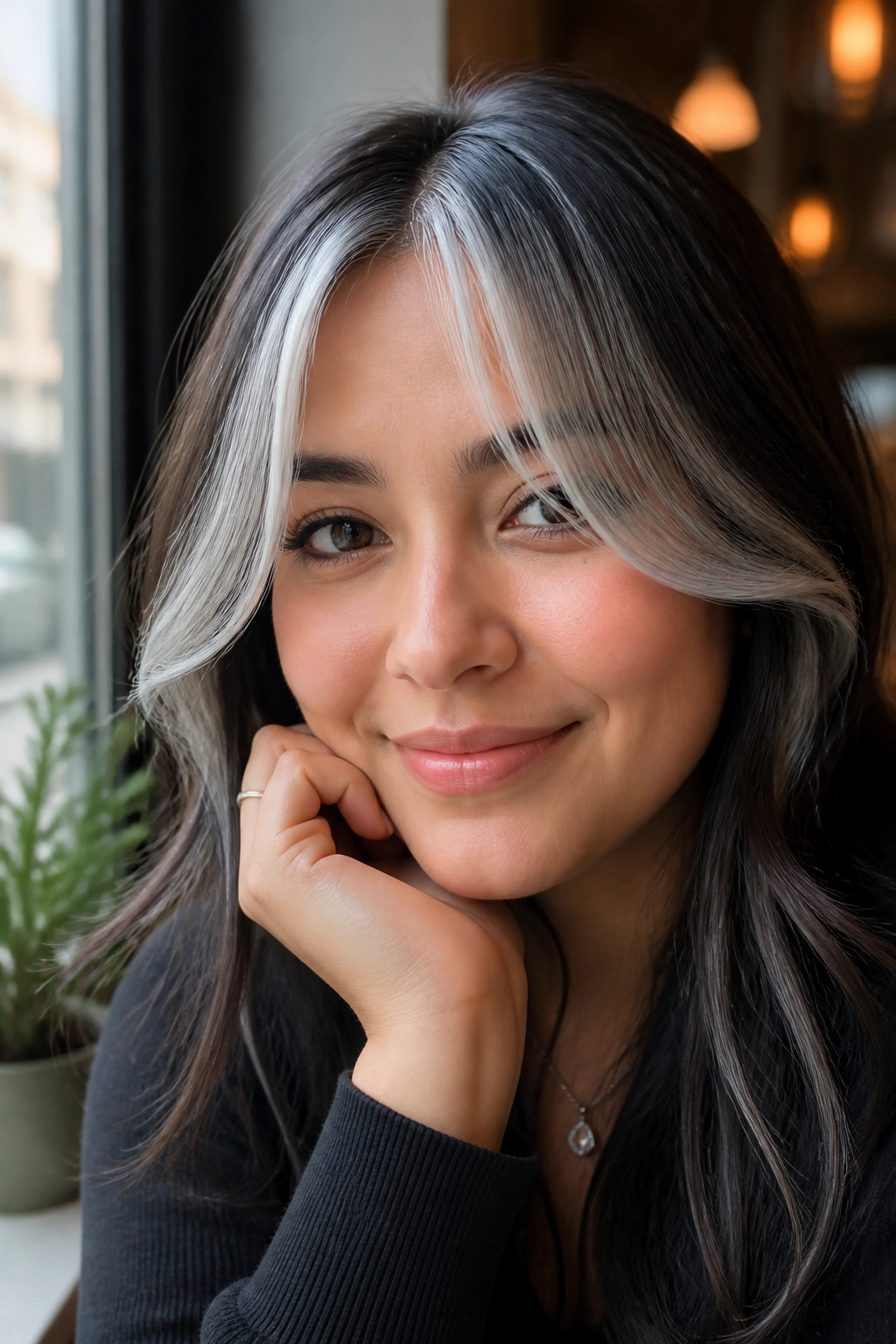
Curtain bangs can be a little dangerous on round faces if they stop too high and too wide. Silver changes that. When the bangs are frosted through the middle and slightly darker at the edges, they draw a clean line down the center instead of puffing out at the temples.
The best version hits somewhere between the brow and cheekbone, then opens softly toward the jaw. That length matters. Short curtain bangs can widen the upper face; longer ones can pull the eye down and outward in a better way.
I like this look most on medium-length cuts with a bit of bend. The silver can live mostly on the bang area and the first few inches beside it, while the rest of the hair stays more muted. It is sharp without feeling severe, which is a rare thing with cool-toned front pieces.
9. Cool Silver Ombre From Mid-Lengths Down
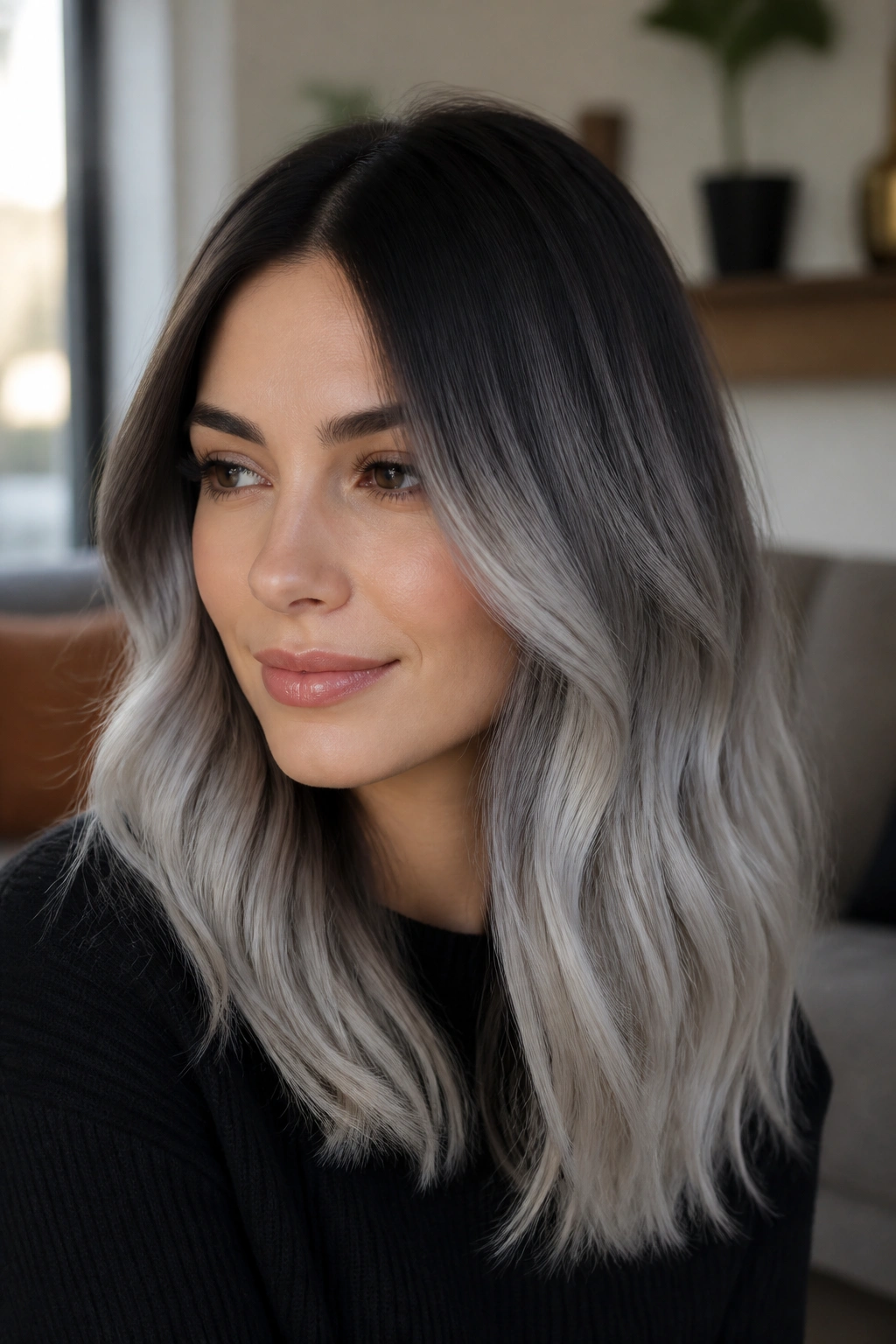
Why does silver ombre suit a round face so well? Because it delays the brightest part until below the face’s widest point. That simple shift makes the whole head look longer.
The root area stays deep, the mid-lengths soften into smoke, and the silver shows up more fully at the ends. The color change should feel gradual, not stacked. If the silver starts too high, it can widen the cheeks. If it starts lower, the eye reads the face as more vertical.
This is also one of the easier silver looks to wear if you do not want constant root touch-ups. The grow-out is part of the design. A slightly darker root and a pale end create a clean line that still feels soft when the hair is curled or air-dried.
10. Chunky Silver Streaks for a Bold Angle
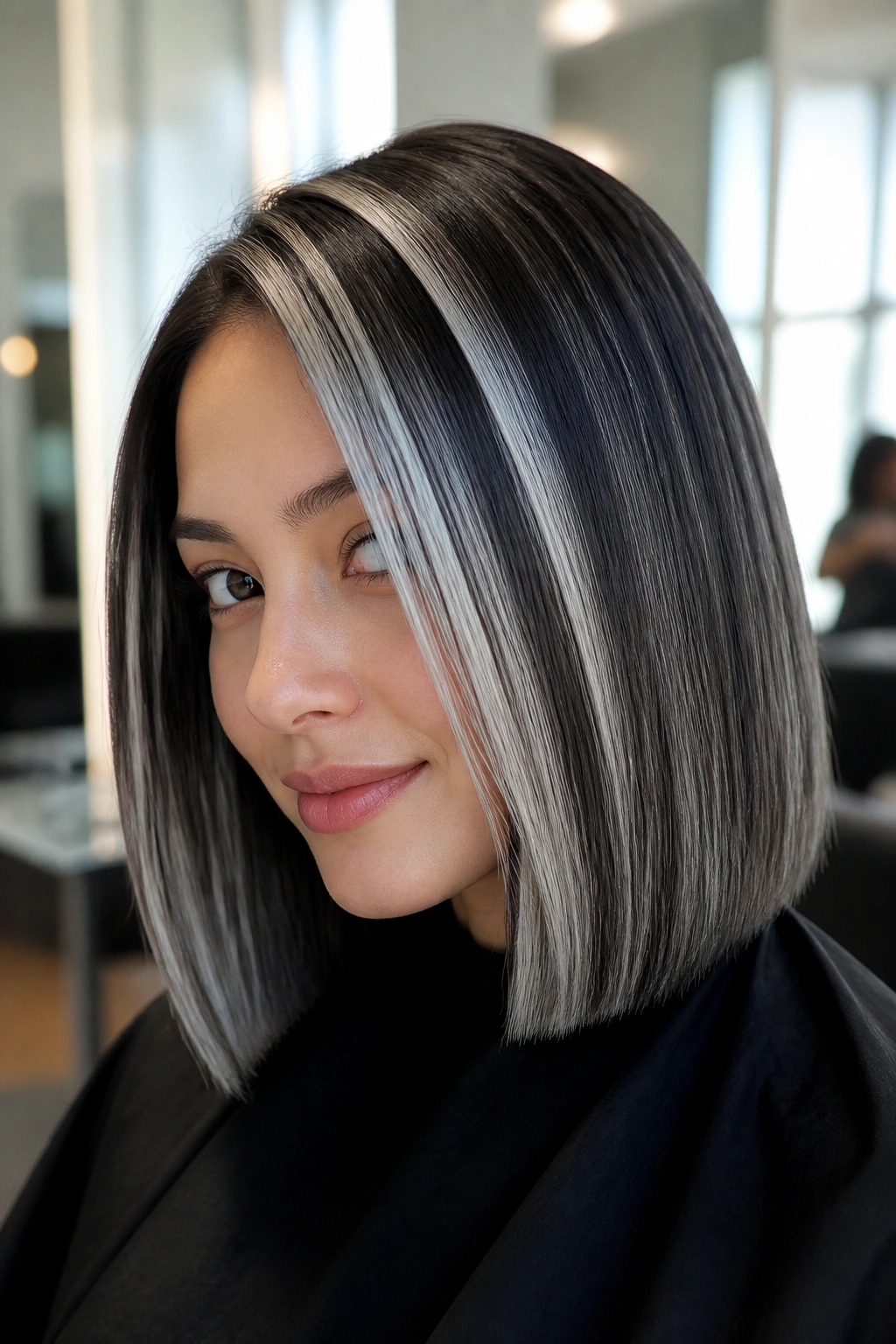
Chunky silver streaks can look expensive on a round face, but only when they are placed with some nerve. Straight-across stripes are the wrong move. Diagonal placement near the part and through the front layers gives the face a better line.
This style works best on sleek cuts, strong bobs, and blunt lobs with a little length left in front. The streaks need room to breathe. If they are packed too tightly together, the color turns noisy. A few decisive silver ribbons, spaced with intent, are far better than a busy head of streaks.
It is a good choice for anyone who likes contrast and can handle a little maintenance. Silver stripes fade toward gray fast, and chunky pieces can show regrowth sooner than babylights. Still, when the cut is clean, the look has real presence.
11. Feathered Pixie With Silver Tips
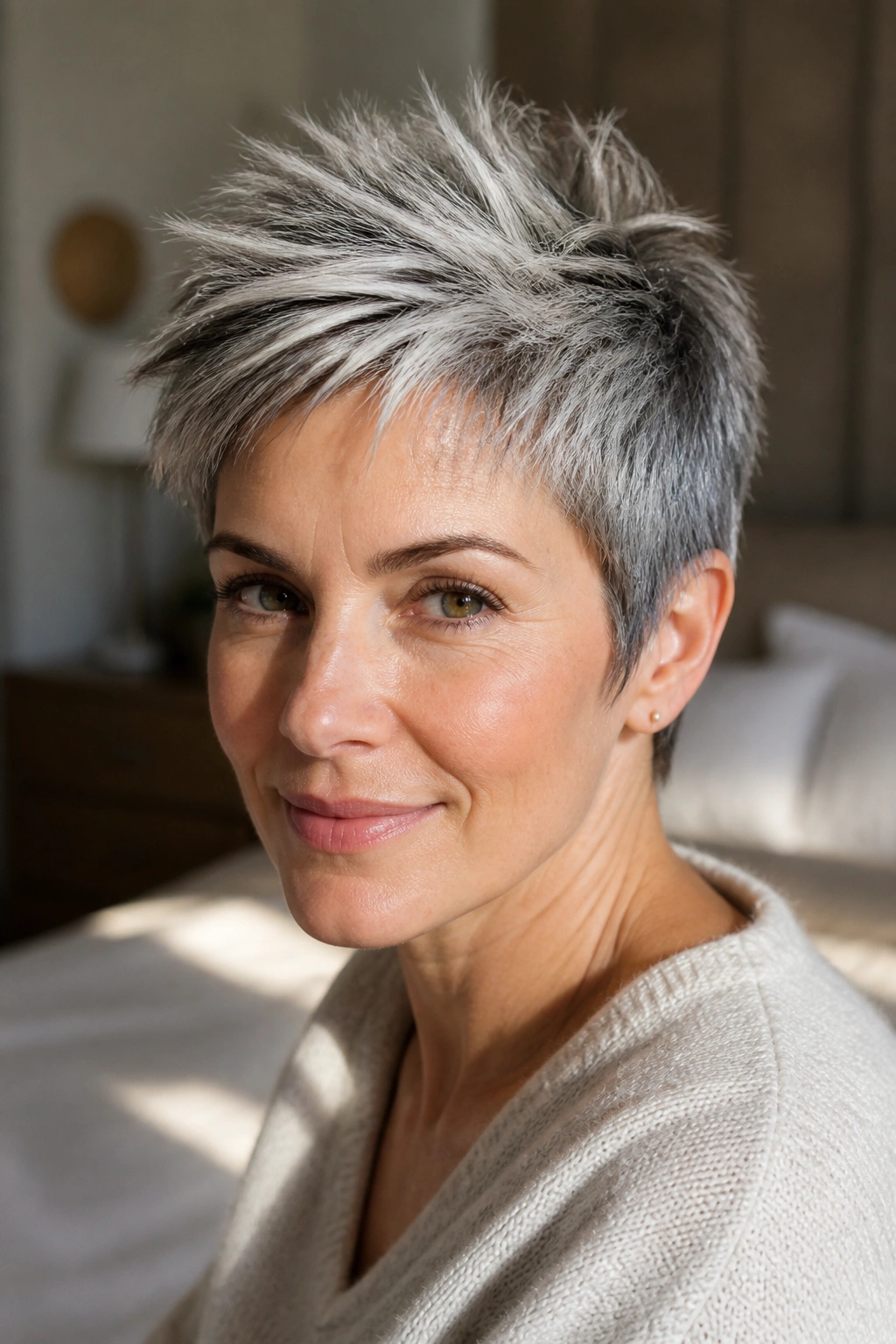
Short hair can handle silver, and a feathered pixie proves it. The important part is keeping the brightness higher on the head, where it builds lift, instead of letting it spread across the sides. Round faces need that extra height.
Ask for silver tips on the top layers, with the sides kept softer and slightly darker. The crown should carry most of the light. That draws the eye upward and gives the haircut a little more edge. It is a small thing, but on a short cut, small things matter a lot.
A feathered pixie also keeps the silver from feeling heavy. The chopped ends catch light in broken bits, which looks better than a smooth block of color. If you want something easy to style with a little wax or paste, this is one of the neatest silver options around.
12. Silver Highlights on Curly Round Faces
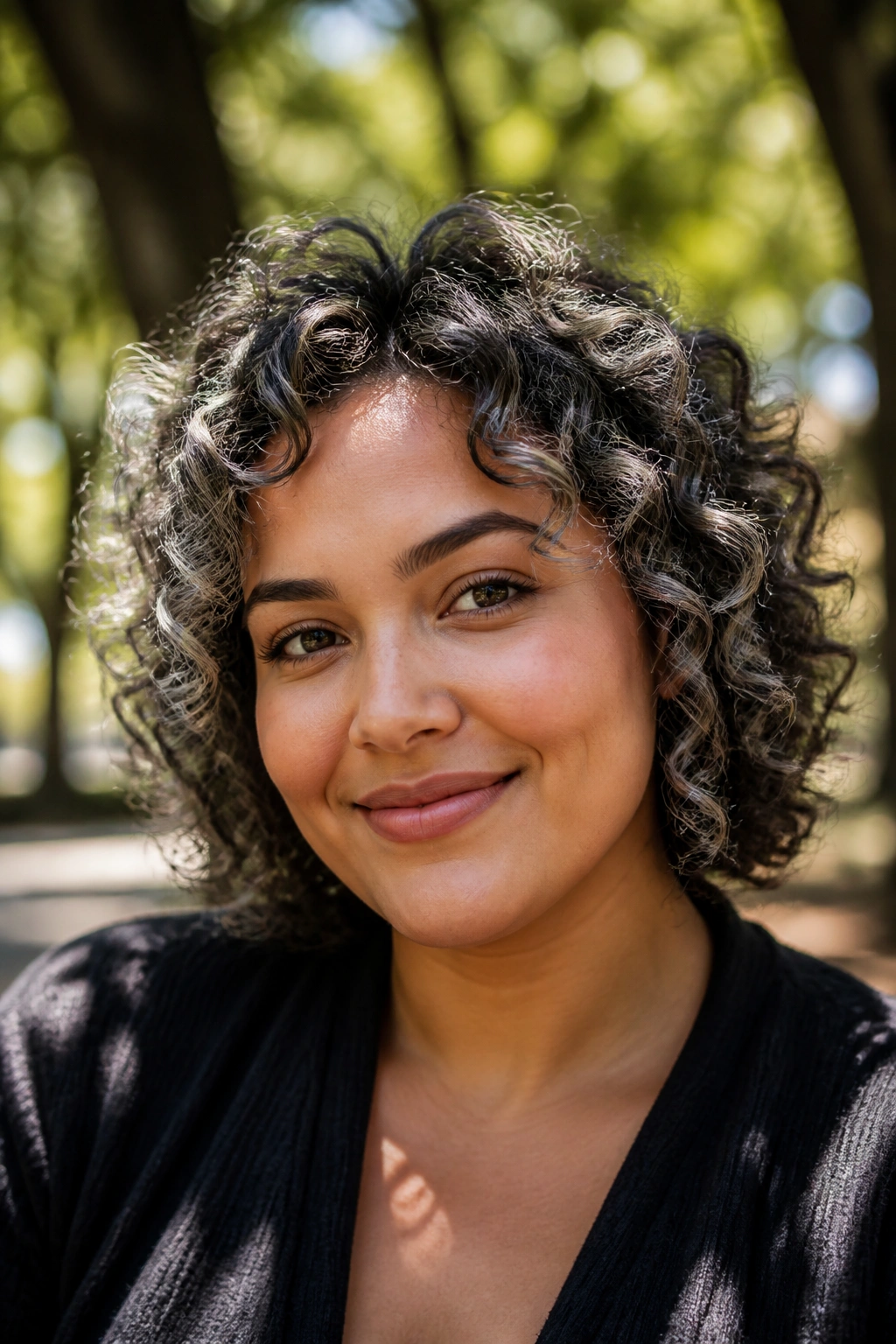
Curly hair needs a different kind of silver placement. Put too much light all the way around the head, and the curls can balloon. Keep the highlights in soft clusters, and the shape gets definition instead of bulk.
I like silver placed around the outer ring, with a few brighter curls near the crown and the front curl pattern. Do not light up every curl. Leave some deeper pieces between the silver ones so the texture has room to show. That spacing gives round faces a more carved-out look.
What to Watch For
Curly hair also shifts color faster in the sun and under heat tools, so tone matters. A cooler silver with a little smoke often behaves better than a bright white-silver on curl patterns that already reflect a lot of light. Let the curls dry without being stretched too much, and the highlights will look more vertical than puffy.
13. Woven Silver Foils Around the Crown
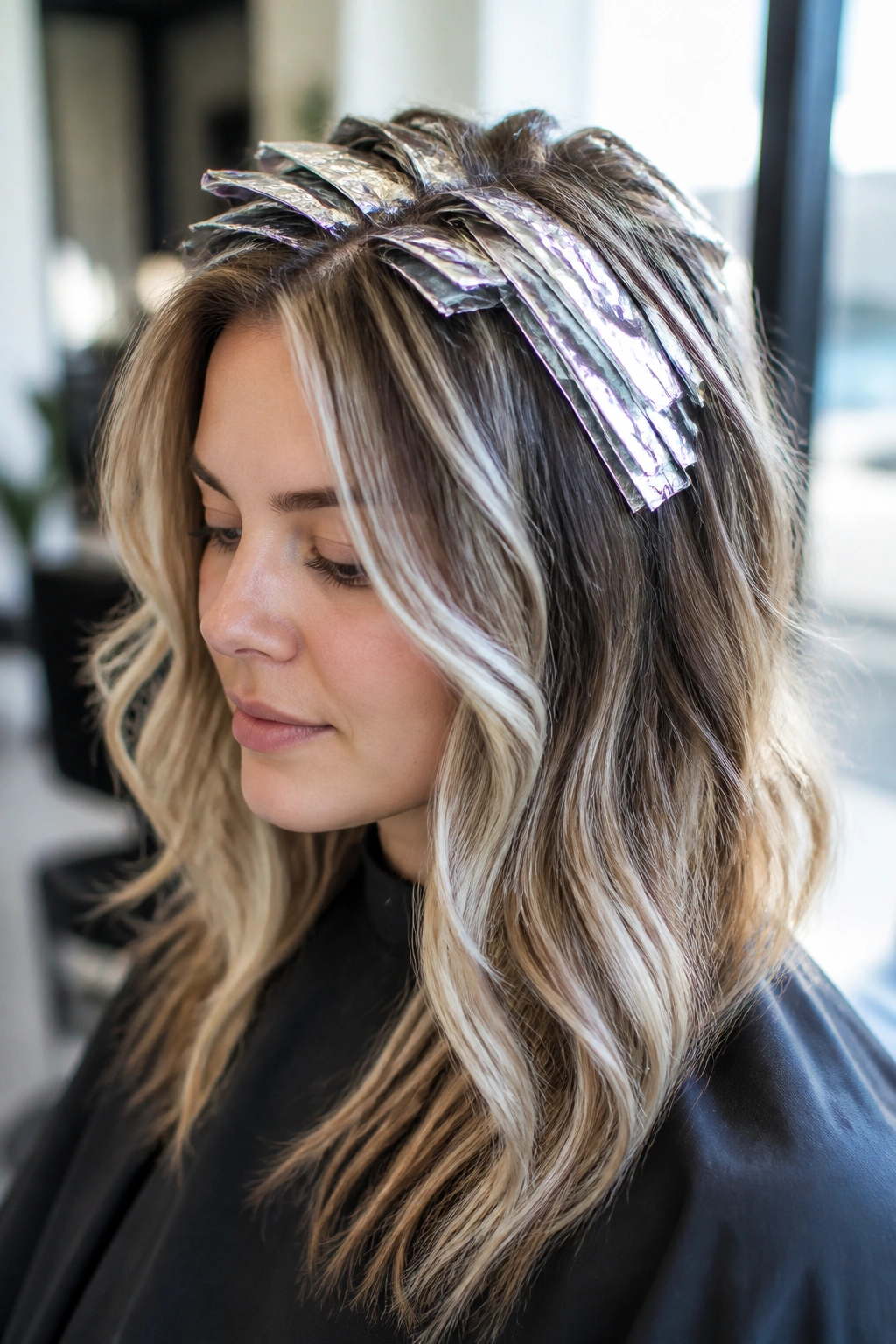
A bright crown can change how a round face reads from across the room. The eye goes up first, then down. That is the whole idea.
Woven foils around the crown should be fine enough to avoid a helmet effect. Keep the sides one shade deeper, and let the lightest silver live on the top third of the head. Height beats width here. If the color sits too low, it can widen the face. If it sits higher, it makes the hair look fuller without adding bulk at the cheeks.
This is a good choice for people with medium to thick hair who want their color to show in natural light and in photos. The crown takes bright silver well, especially when the cut has layers that can break up the light. It is a quiet way to get lift without teasing the hair into a nest.
14. Ash-Silver Money Pieces With a Side Sweep
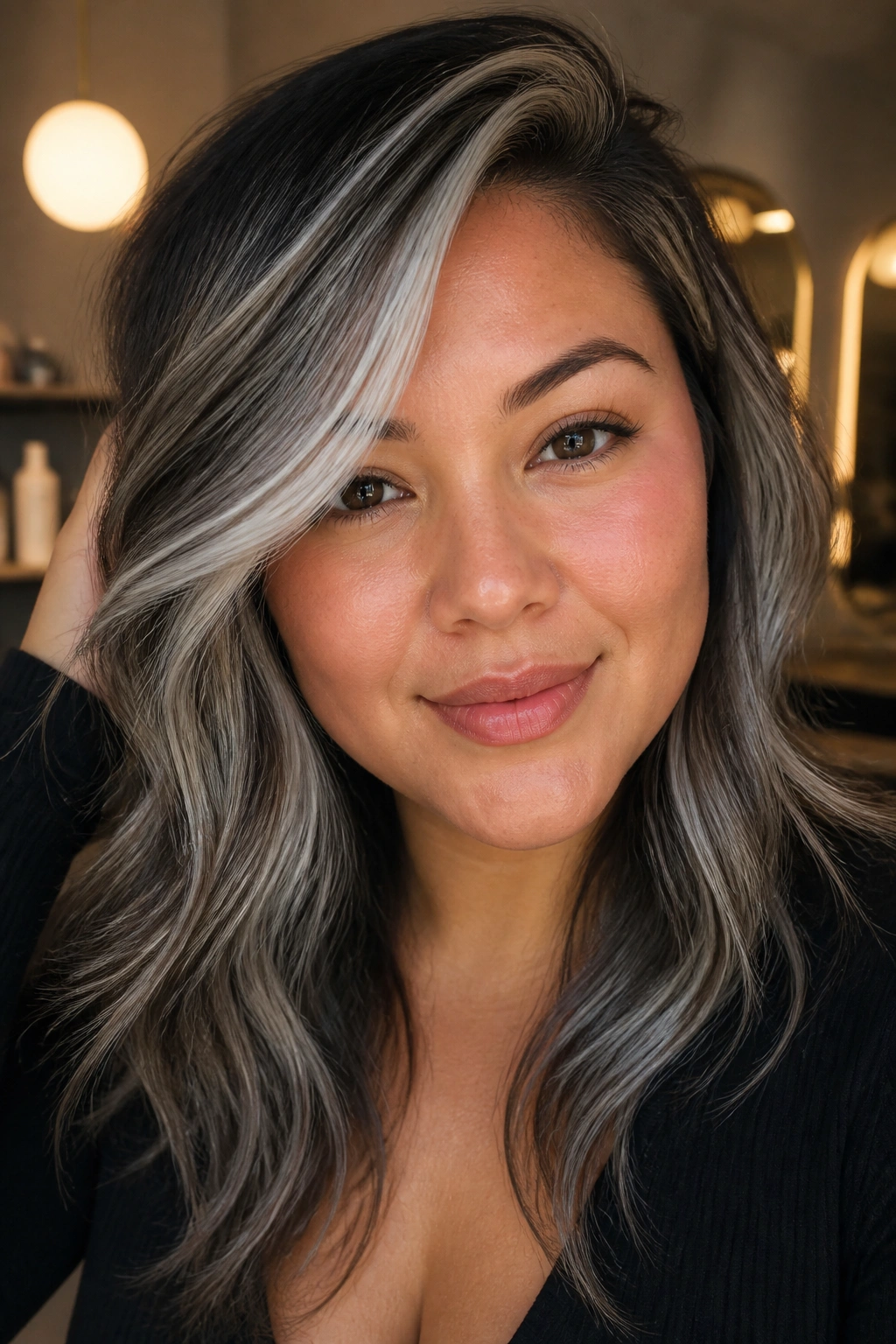
A side sweep changes the mood of silver money pieces completely. Instead of sitting symmetrically around the face, the bright strands travel with the part and fall across the forehead in one clean angle.
That angle matters on a round face. Asymmetry is your friend. It interrupts the softness of the face shape and gives the eye a clear path to follow. The ash-silver tone keeps the front from looking too white, which is handy if your skin leans pink or cool.
This version feels a little more dressed up than a standard face-frame. It works well with blowouts, bendy curls, and styles where one side tucks back behind the ear. If you want silver that looks intentional rather than playful, this is a strong direction.
15. Soft Silver Blend With Long Layers
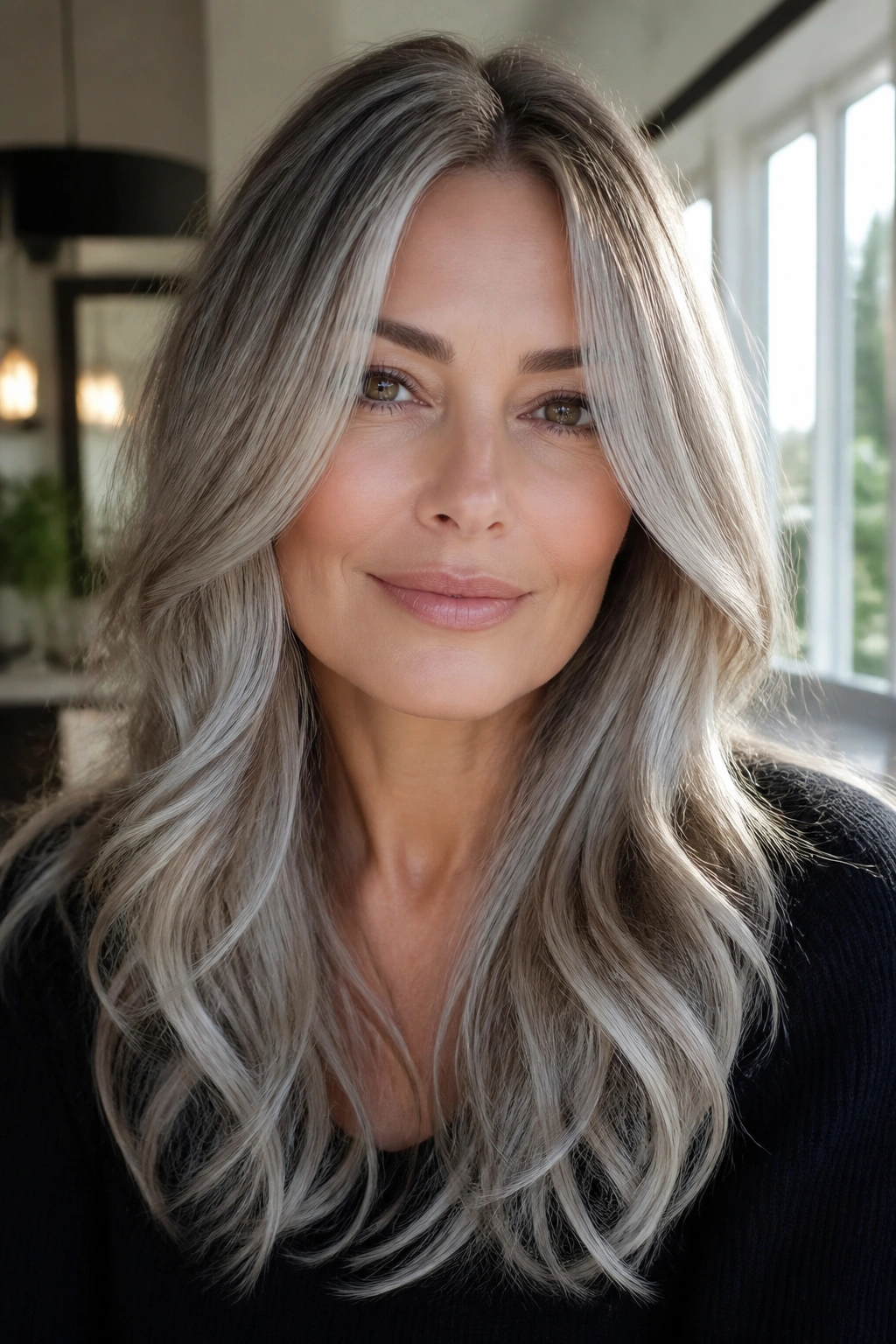
Long layers and silver highlights get along because the layers stop the color from lying in one flat sheet. On a round face, that texture matters. The hair moves, the silver breaks up, and the sides do not feel heavy.
The blend should be soft from root to end, with the brightest pieces living in the lower half of the longest layers. That keeps the color from sitting across the widest part of the face. A few paler strands near the front are enough; the rest can drift into smoky gray, beige-silver, or pearl.
This look is easy to wear because it does not depend on a dramatic cut or a bold streak pattern. It is a better choice if you want your hair to feel expensive in sunlight and calm in low light. Long layers do the balancing, silver does the lifting.
16. Smokestack Gray-Blue Silver Tones
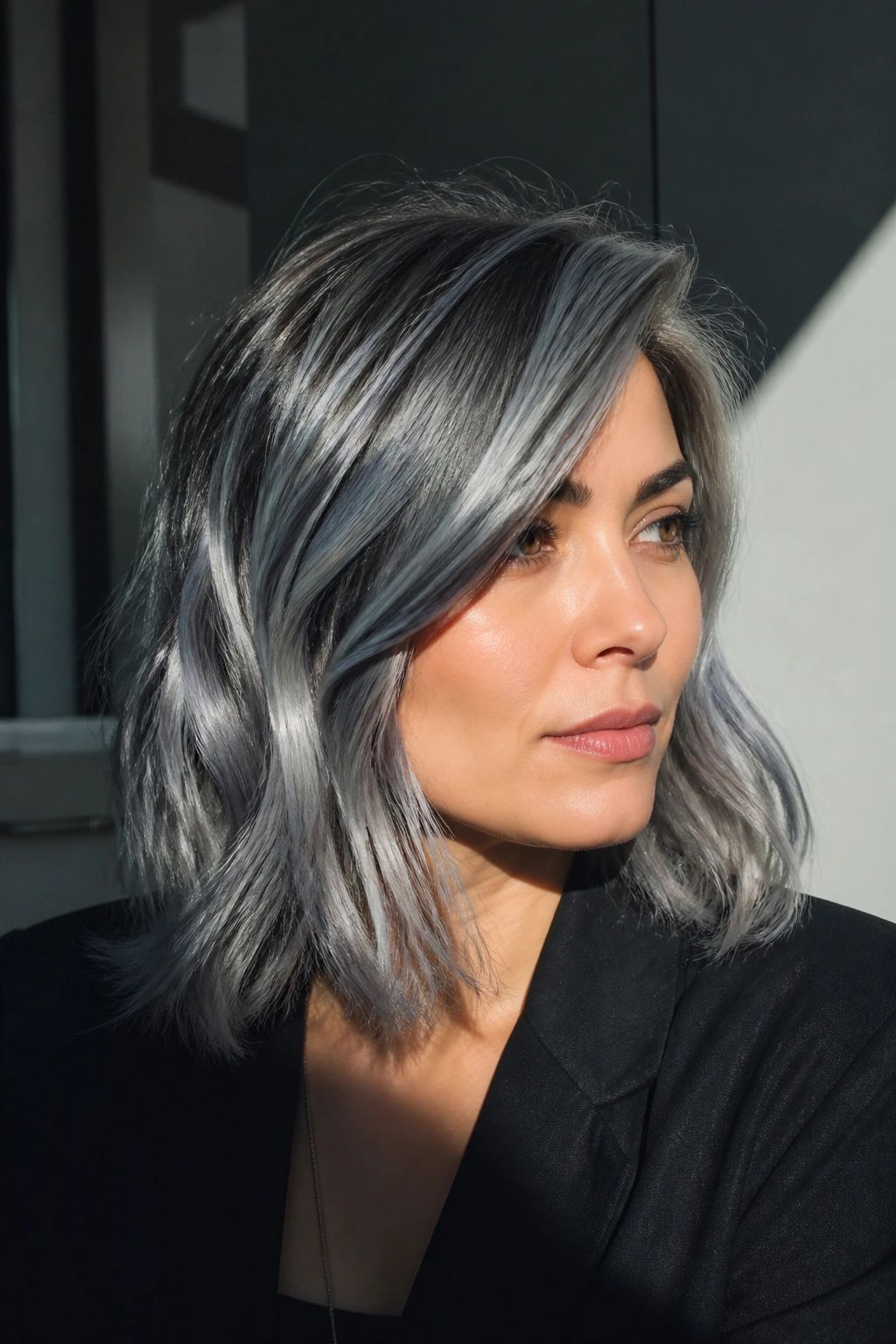
Gray-blue silver is not for everyone, and that is part of its charm. It has a cooler, moodier feel than pearly silver, and on a round face it works best when the tone stays deeper near the roots and temples.
The blue note can keep the color from feeling too flat. Flat silver is the enemy of shape. A trace of blue or graphite gives the hair more shadow, which helps define the face instead of washing it out. It is especially useful on dark natural bases.
This tone also pairs well with structured cuts: strong bobs, blunt ends, and layered lobs with clean lines. You do not want too much softness here. Let the color feel a little architectural, and the roundness of the face gets countered in a tidy, controlled way.
17. Silver and Beige Balayage Mix
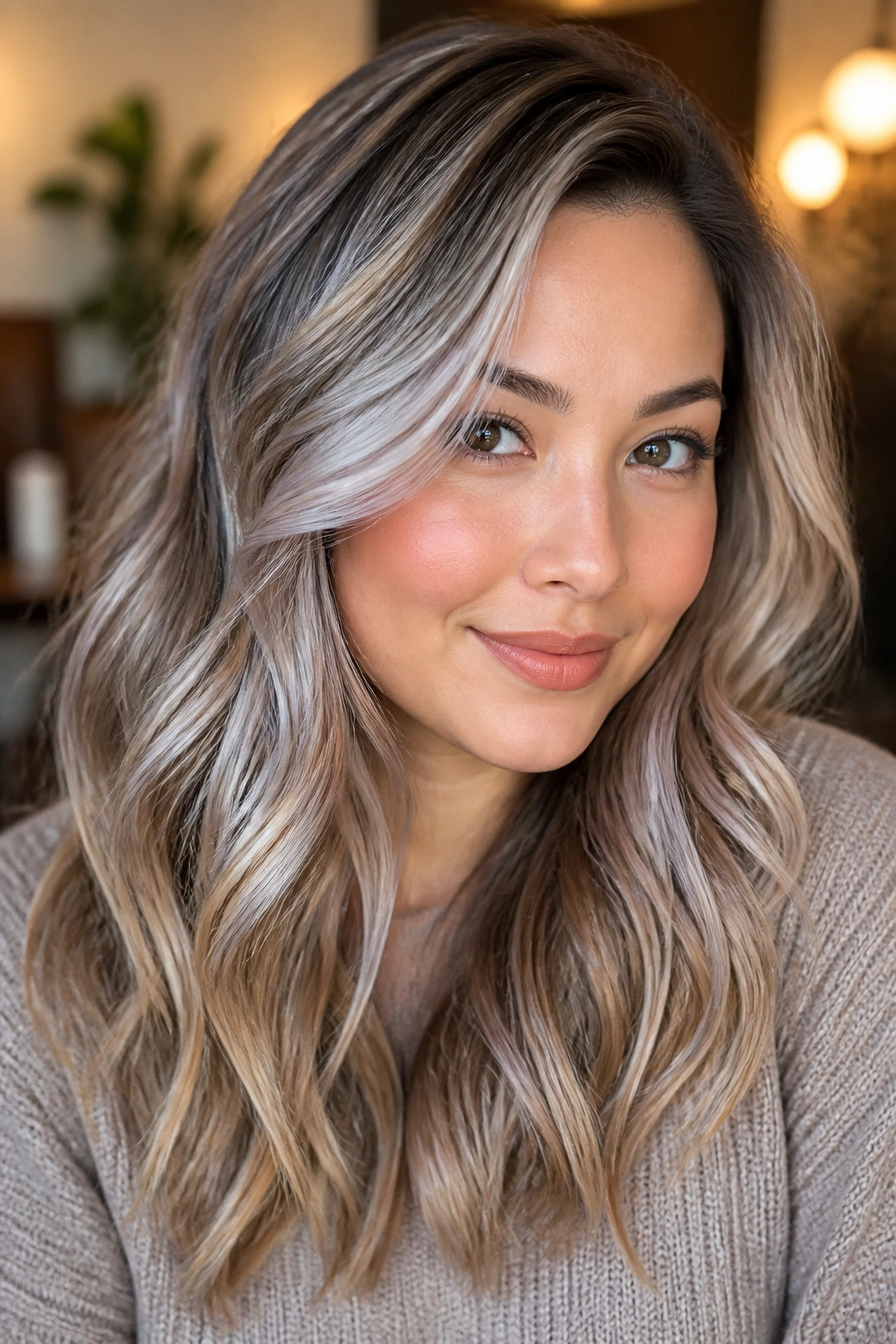
If icy silver feels too hard, beige silver is the softer door in. It brings warmth back into the mix without losing the cool edge, and that matters when you want round-face silver highlights that do not shout from across the room.
The beige keeps the face from looking washed out, while the silver still gives the ends and front pieces enough pop. It is a blended look, not a costume-color look. The trick is to keep the silver in the brighter strands and let the beige sit between them, so the hair keeps depth.
This version works on people who want shine more than drama. It is also one of the easiest silver tones to live with if you spend time under indoor lighting, where pure silver can sometimes look a bit stark. Beige silver is softer on the eyes. And on round faces, softer can be smarter.
18. Tapered Lob With Silver Ends
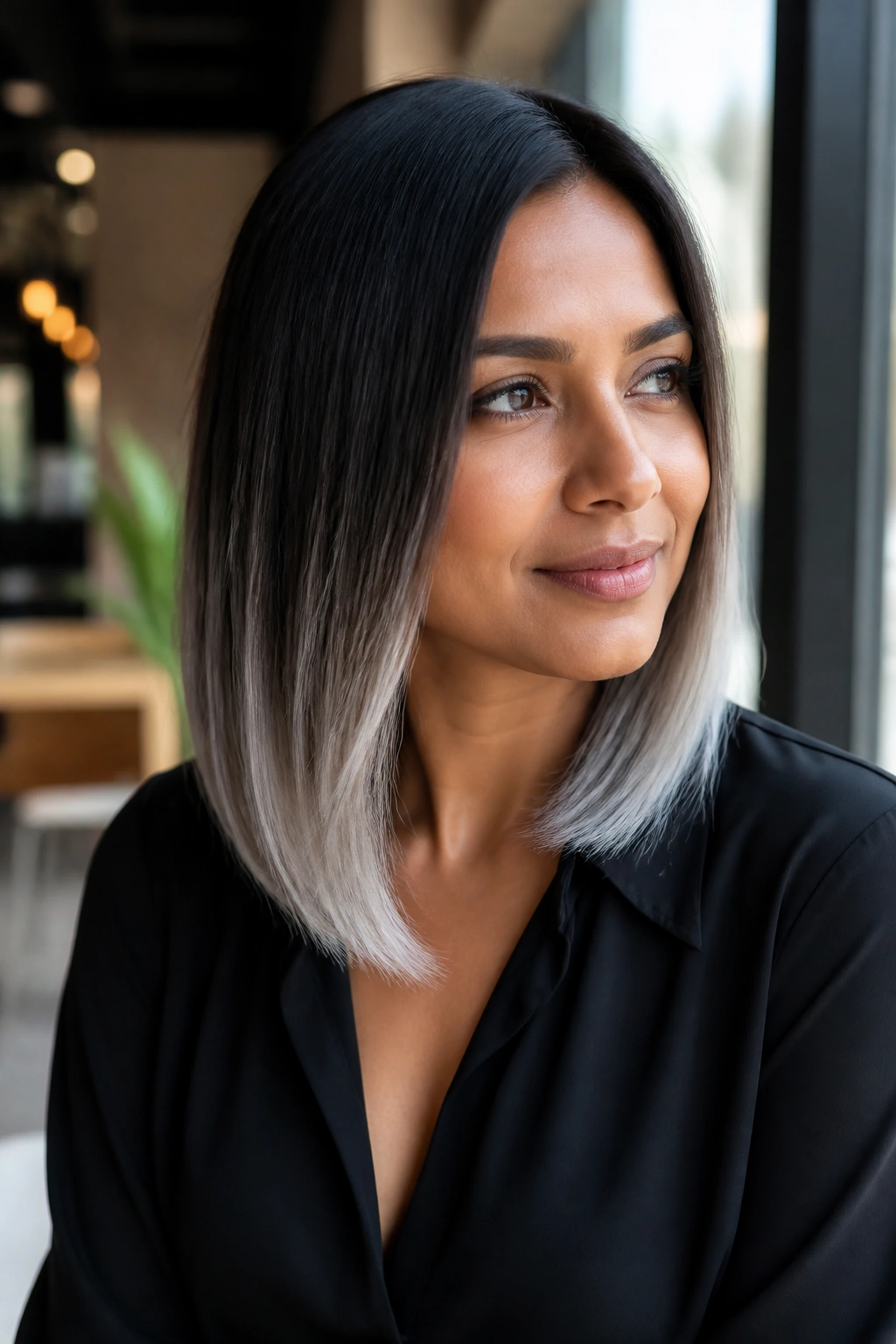
A tapered lob already does some face-lengthening work before the color shows up. Add silver at the ends, and the eye follows the line downward, which is exactly what you want on a round face.
The color should be strongest at the bottom 3 to 4 inches, with the mid-lengths softened so the transition is not harsh. The ends need to feel intentional, not dipped. If the silver starts too high, the lob can look wide at the jaw. When it stays low, the cut reads leaner.
This is one of my favorite practical silver looks because it wears well with both straight and waved styling. The shape stays neat, the color feels modern, and the grow-out is forgiving. You can keep the root shadow a little darker and still have the ends shine.
19. High-Contrast Silver Panels for Thick Hair
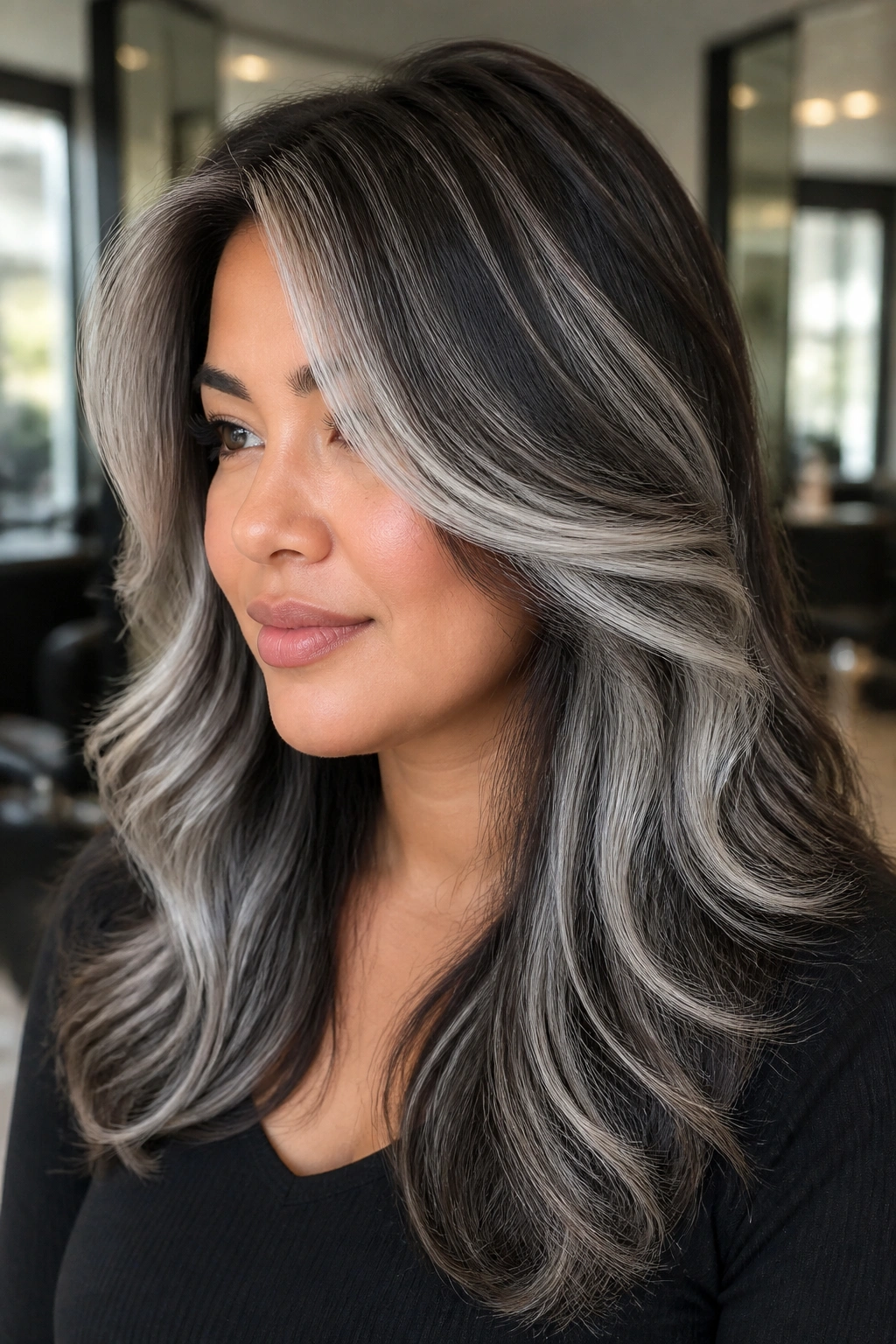
Thick hair can handle bigger pieces of silver, and sometimes it needs them. Thin streaks can disappear into a dense cut, while wider panels show off the movement and stop the style from looking muddy.
On a round face, the placement has to stay thoughtful. Keep the brightest panels a bit higher and closer to the outer front, then let them trail down through the lengths. Avoid a solid halo of light around the head. That can make thick hair expand sideways in all the wrong places.
The Best Spots for the Light
- Outer face frame, just in front of the ear
- Top layers around the crown
- Long front pieces that skim the collarbone
- A few hidden panels in the back for movement
This is a bolder silver look, so the haircut should support it. Layers, thinning where needed, and a clean outline make the contrast look deliberate instead of bulky.
20. Dimensional Silver Highlights on Dark Brunette Hair for Round Faces
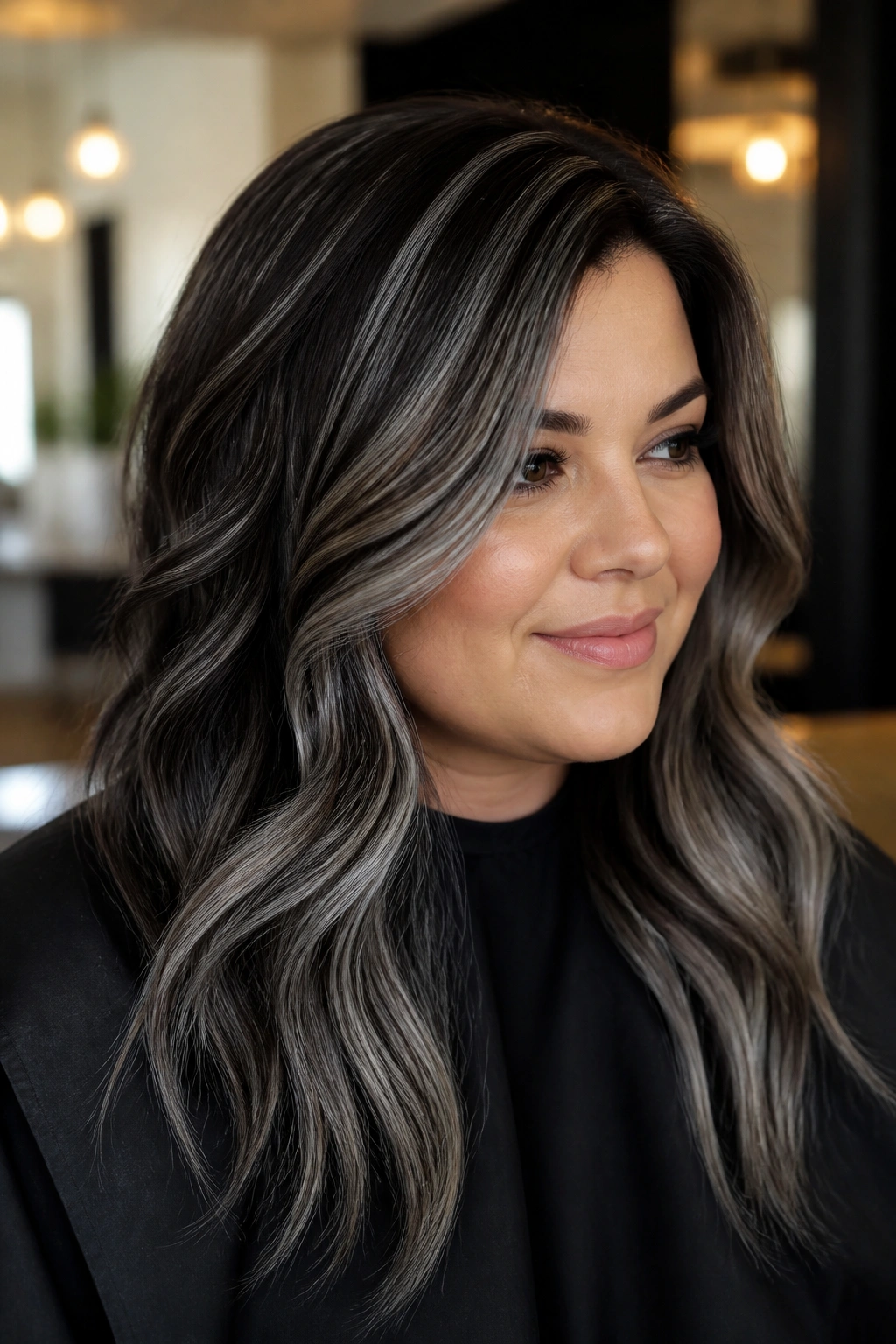
Dark brunette hair gives silver a sharper edge, and that contrast can be fantastic on round faces. The darkness under the silver acts like shadow contour, which keeps the face from feeling too broad.
The key is spacing. Do not pack the highlights too tightly through the sides. Leave pockets of brunette between the silver pieces. That negative space matters more than people think. It gives the face shape and keeps the highlight pattern from turning into a wide bright band.
This look works especially well when the silver sits around the crown, the outer front, and the lower lengths. The brunette base stays visible, so the light pieces look deliberate and expensive rather than washed out. It is a strong choice if your natural color is deep brown and you want the silver to stand out instead of blending away.
21. Silver Tones With a Deep Side Sweep
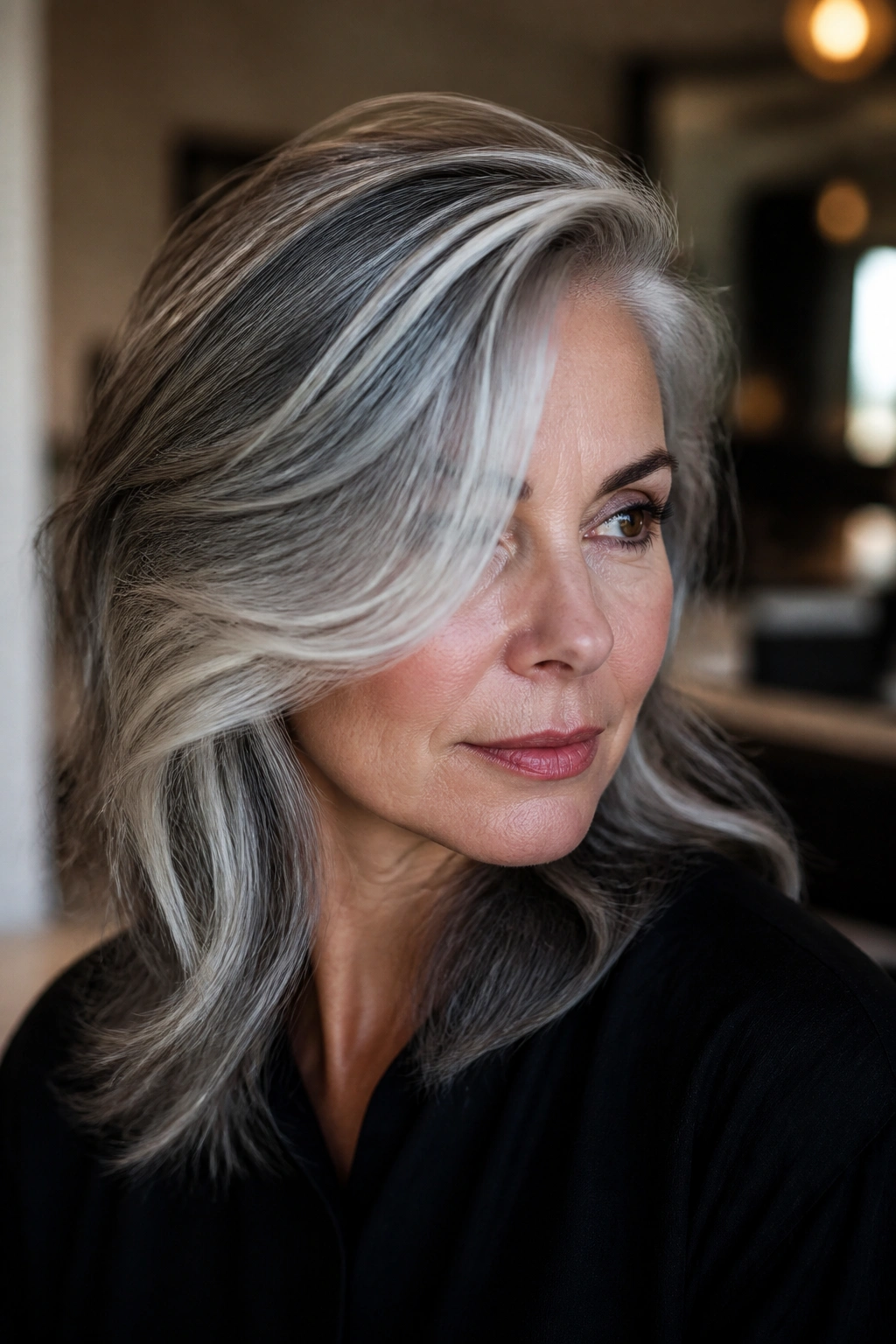
A deep side sweep is one of the easiest ways to make silver feel flattering on a round face. The extra height at the part line adds lift, and the side-swept silver follows a diagonal path instead of sitting straight across the cheeks.
The silver itself can be pale, smoky, or even slightly beige, but the part is what makes the shape work. The forehead gets more open, the cheek area gets less emphasis. That shift may sound small, yet on a round face it changes the whole read of the cut.
This style is a good fit for blowouts and soft bends. It does not ask for a severe finish. Keep the front pieces polished and the rest of the hair loose, and the silver starts to look like a bright path through the haircut instead of a block of color.
22. Soft Silver Panels Tucked Behind the Ear
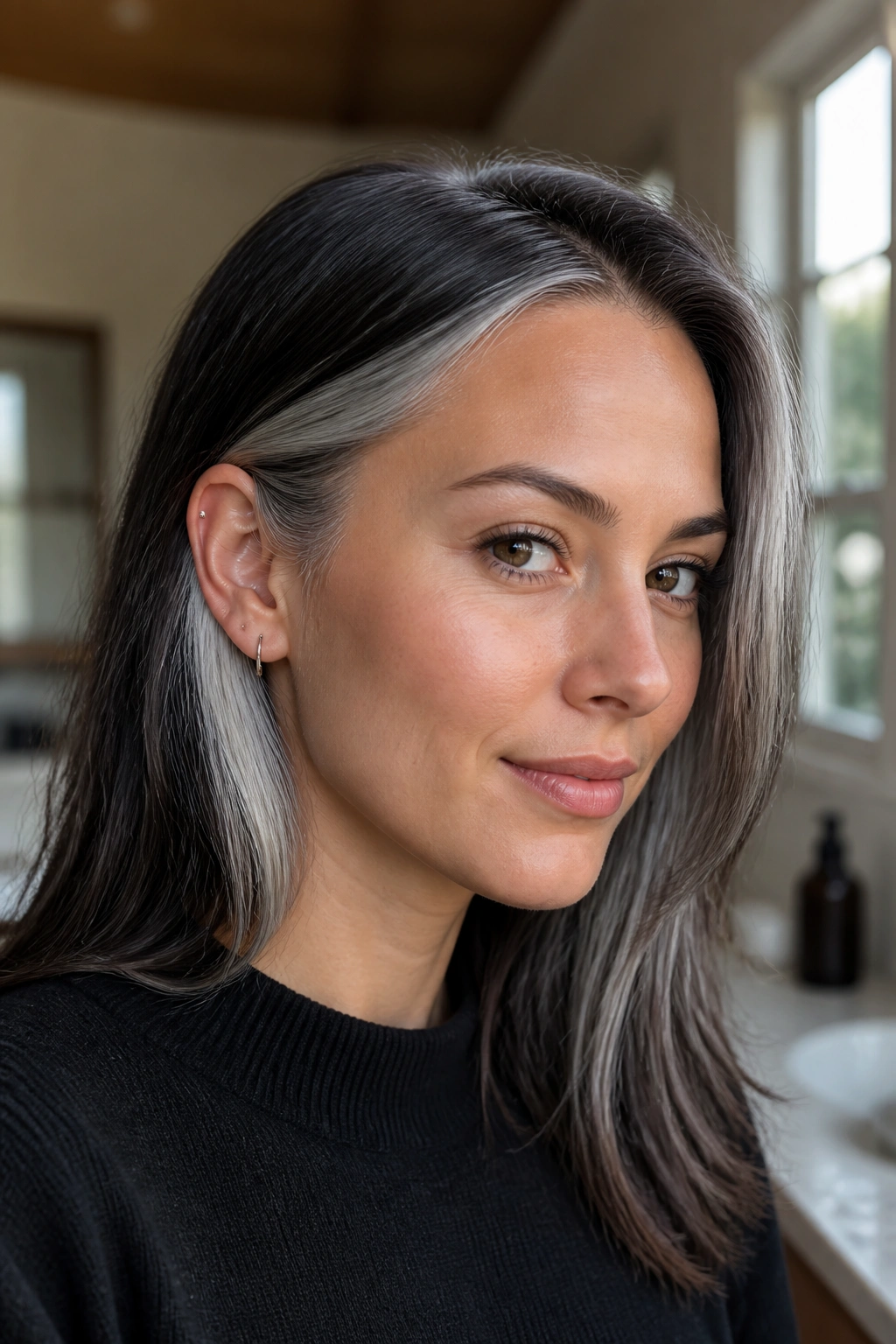
There is something quietly sharp about silver that only appears when the hair moves behind the ear. The face stays open, the silver flashes at the temple and jaw, and the round shape looks a little more elongated.
That tucked-back moment matters because it creates contrast without filling the sides with light all the time. You get brightness in motion, not brightness everywhere. This is especially useful if you want silver highlights for round faces but do not want the maintenance of a heavy front frame.
A stylist can place the panels just inside the hairline and through the first few layers, then keep the outer veil slightly deeper. When the hair is worn down, the silver is soft. When it is tucked, the shape shows up. Nice trick. Simple, too.
23. Micro Babylights for a Natural Frost
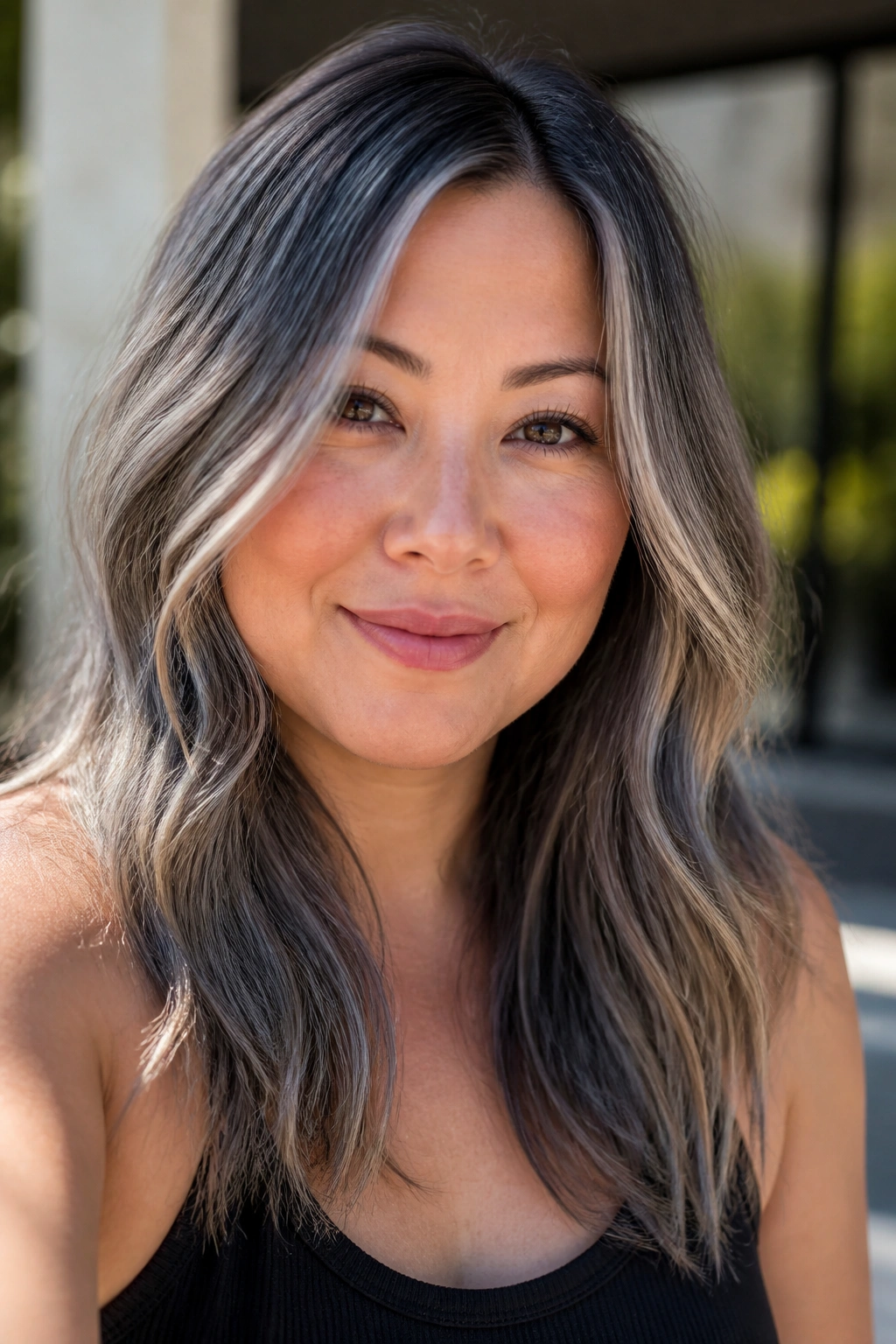
Micro babylights are the closest thing to a frost that still looks believable on everyday hair. They are tiny, scattered, and much easier on a round face than one giant block of silver.
The small sections keep the color from looking too heavy around the cheeks. That fine weave matters more than the tone. You can go cooler, warmer, or slightly smoky, and the haircut still reads soft because the pattern is so delicate.
This is a smart option if you want the hair to look lighter in sunlight but not obviously highlighted from across the room. It also grows out quietly, which means less obvious regrowth and fewer harsh lines. If you like silver but prefer it to show up in pieces rather than in big statements, this is probably your lane.
24. Silver Melt With a Shadow Root
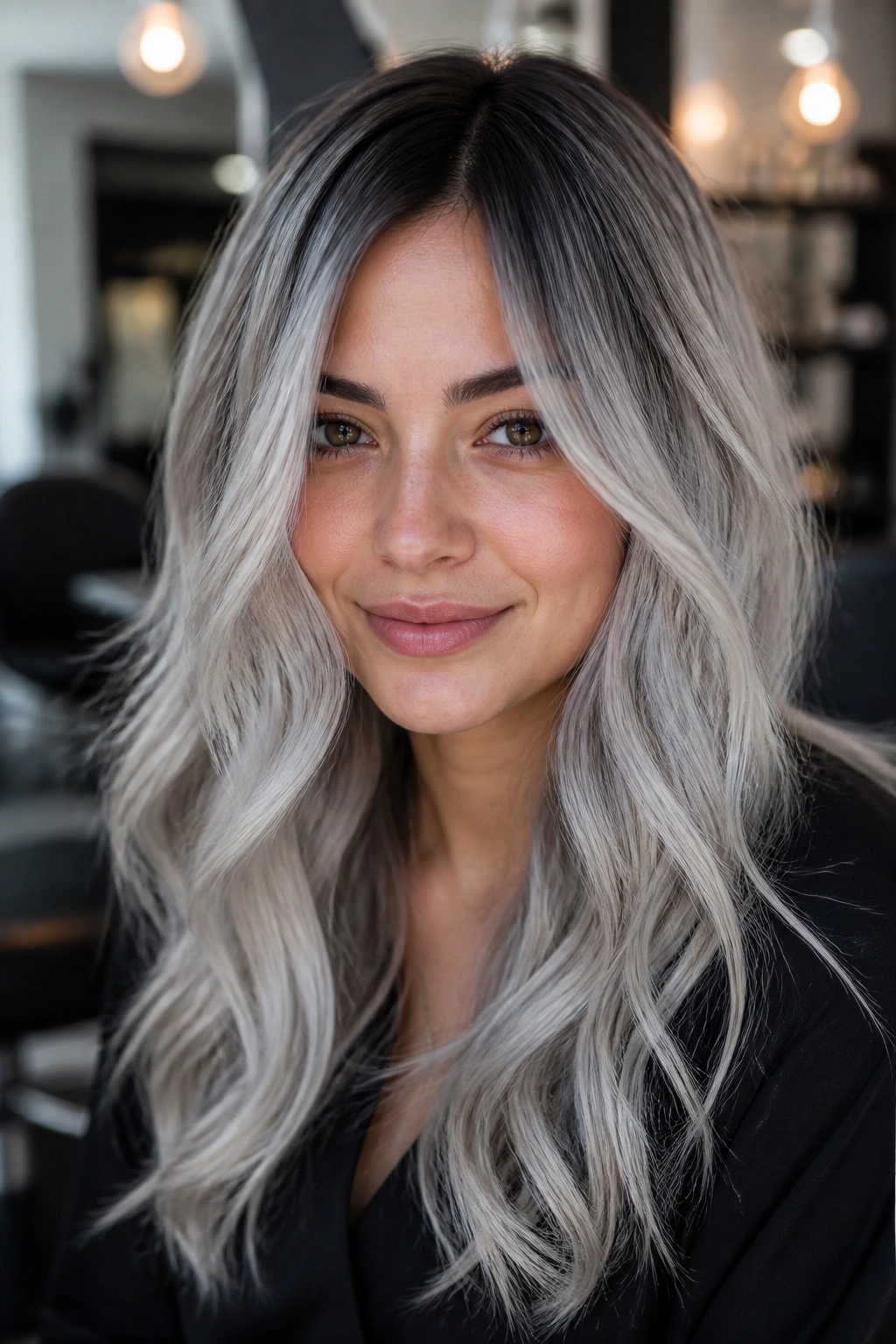
A silver melt gives round faces an easy line to follow from scalp to ends. The dark root stays in place, the mid-lengths blur into slate or smoke, and the silver arrives at the bottom without a hard stop.
That gradual shift is doing a lot. No hard line means no wide band around the face. The eye slides down the hair, which is better than stopping at the cheeks. A shadow root also keeps the grow-out from looking abrupt, especially if your natural color is medium brown or deeper.
This one works beautifully on layered hair because the melt can live on different lengths at once. A few brighter pieces can sit near the front, but the main event stays lower. If you want low-drama maintenance with a polished finish, this is one of the better silver options to bring to a salon chair.
25. Textured Shag With Scattered Silver Lights
A textured shag can carry silver in a looser, more playful way than a smooth cut can. The choppy layers break up the brightness, and that keeps the face from looking too round or too full at the sides.
Scatter the silver through the top layers, the bangs if you have them, and a few longer pieces around the jaw. The spacing should feel irregular, not neat. That irregularity is what gives the shag its edge. A perfect grid of highlights would fight the haircut.
Air-dried texture helps here. So does a little grit spray or a light styling cream with a rough finish. The silver catches on the bends, the layers separate, and the face ends up framed by movement rather than a fixed shape. It feels casual, but not lazy.
26. Silver Highlights on Fine Hair Without Flatness
Fine hair can be tricky because too much silver in the wrong places makes it look thinner, not fuller. The answer is vertical placement. Thin ribbons, feathered through the length, create lift without exposing too much scalp.
Keep the front pieces light enough to show, but not so pale that they turn wispy. A soft contrast works better than a harsh one on fine hair. A little depth at the root and between sections gives the hair body, which is more useful than a bright all-over finish.
This look is especially nice on short lobs and shoulder-length cuts where the ends can move a little. A gloss or toner with a clean pearl finish can help the silver stay bright without looking chalky. If your hair is fine, the placement matters more than the shade.
27. Bold Face-Frame With Soft Interior Lights
A strong face-frame does not have to mean a loud head of color. Pair a bold silver front with softer interior lights, and the round face gets shape at the edges without losing softness in the middle.
The face-frame should begin near the brow or temple, then narrow as it moves past the cheekbone. The inside lights stay quieter. That contrast creates depth, which is better than flooding the whole head with bright strands. It keeps the face open without making the sides feel heavy.
This is a good middle ground for anyone who likes a little drama but does not want the color to wear them. The front pieces get the attention, the interior pieces support them, and the hair still moves. It is a tidy setup, and it photographs cleanly without looking overdone.
28. Soft Frosted Finish for a Polished Look
A soft frosted finish is the calm ending point in this whole silver conversation. No big stripes, no harsh silver blocks, just a cool sheen that sits on the outer layers, the fringe, and the ends.
On a round face, that kind of restraint can be the nicest choice of all. You get brightness where the eye wants to go, not where the face is widest. The hair looks cooler in tone, cleaner in shape, and easier to grow out. A faint root shadow and a pale pearl gloss are usually enough to keep the finish from going flat.
This look suits people who want silver highlights that feel polished instead of flashy. It is also the one I would point to if you are nervous about going too icy too fast. Keep the light pieces longer than you think, leave some depth at the sides, and let the cut do part of the styling for you. That usually works better than chasing brightness everywhere.
