



Brown hair looks expensive when the color moves. Leave it flat and it can read heavy; add the right ribbons of blonde caramel and the whole head wakes up with shape, shine, and a little bit of soft contrast that feels more natural than stark blonde ever does.
That’s why blonde caramel highlights for brown hair are such a reliable choice. Caramel sits in that sweet spot between gold and beige, so it warms brunettes without turning them orange, and it brightens without making the hair look striped.
Placement matters as much as tone. A few foils too close to the root can look loud in a bad way; a softer hand through the mid-lengths, or a bright money piece around the face, gives you movement that still feels believable.
Some color jobs want drama. This one wants dimension. And that’s usually the better move.
1. Blonde Caramel Ribbons Through the Mid-Lengths
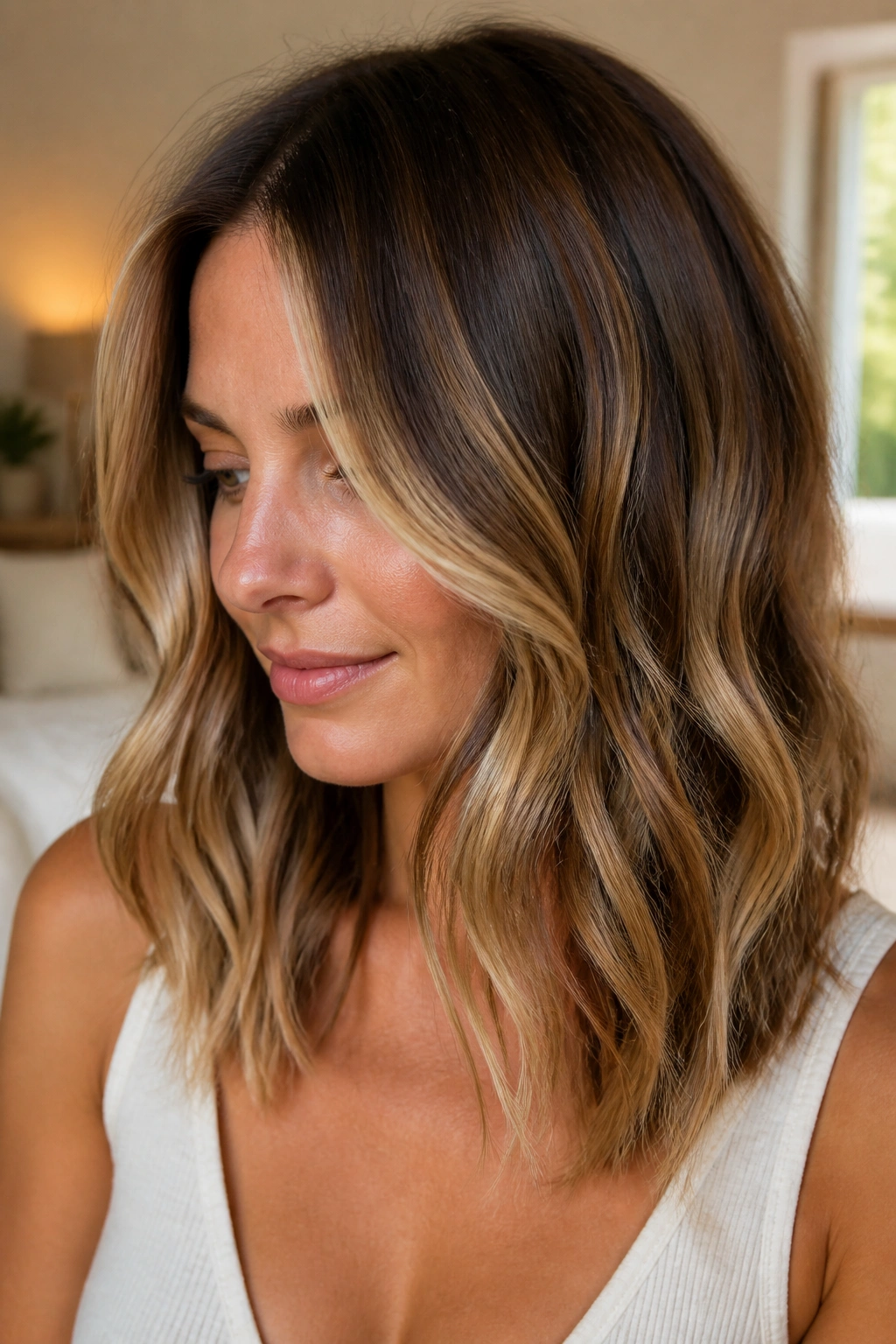
This is the easiest place to start if you want blonde caramel highlights for brown hair without losing the depth that makes brunette hair look rich. The ribbons sit mostly from the cheekbone area down, so the roots stay grounded and the lighter pieces show up when your hair moves.
Why It Works
Mid-length placement keeps the color from reading too busy near the scalp. The eye sees softness first, then brightness, which is a nicer order than a hard block of light at the top.
Ask for thin ribbons that are a shade or two lighter than your base, not a pale blond wash. That small gap in depth is what keeps the look warm and polished.
- Best on medium to dark brown hair
- Works especially well on layered cuts
- Needs a gloss every 6 to 8 weeks if the blonde starts to look too yellow
- Flat-ironed hair shows the ribbon effect more clearly, while waves soften it
Pro tip: Keep the lightest pieces away from the very top layer if you wear a center part. It stops the color from looking streaky.
2. Blonde Caramel Money Piece Around the Face
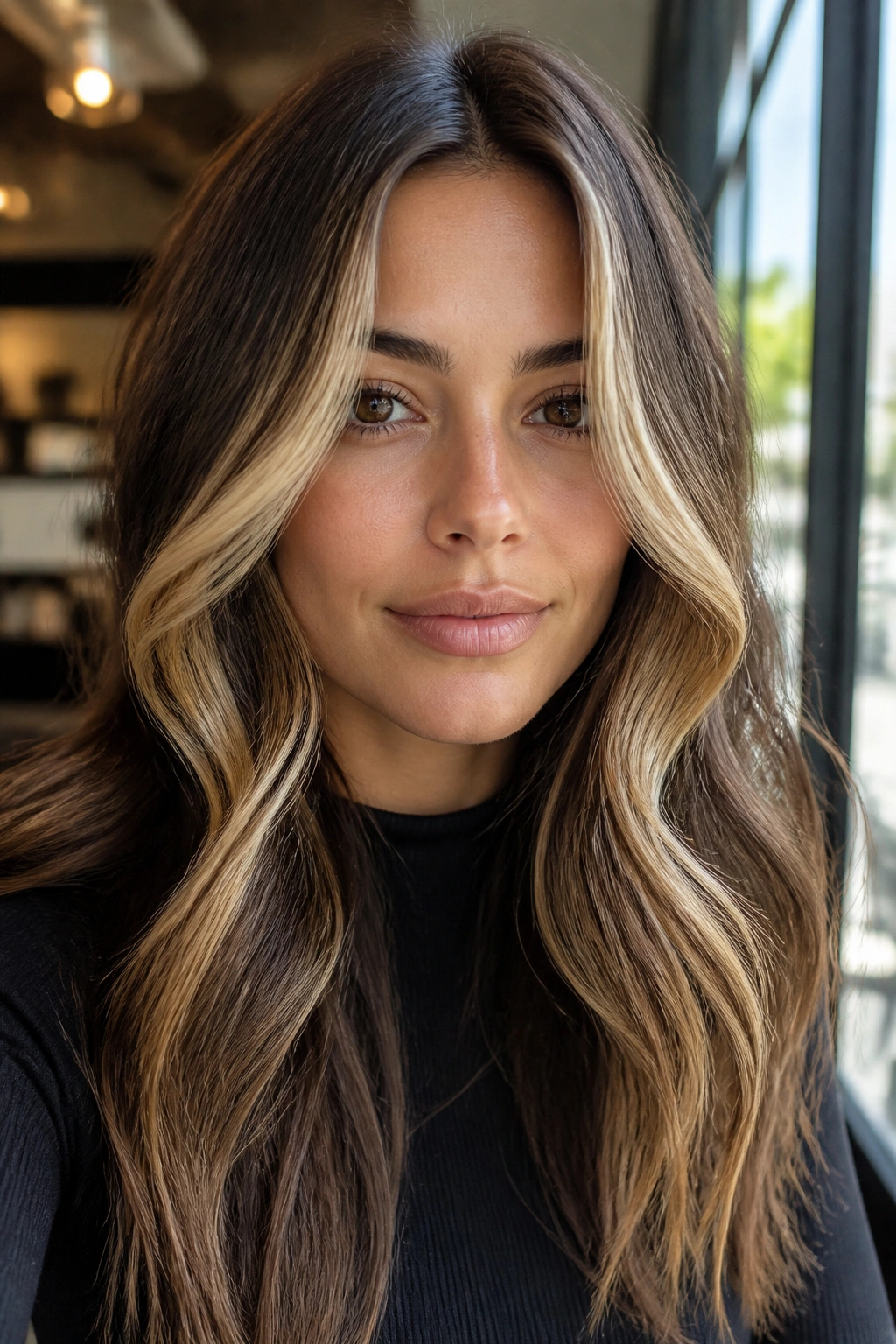
A bright money piece can do more for a brown haircut than a whole head of foils. It wakes up the face, softens heavy cheek lines, and gives you that little pop people notice first, even if the rest of the color stays quiet.
The trick is restraint. You want the front pieces light enough to catch the eye, but not so blonde that they look pasted on. A beige-gold toner usually keeps the front from getting too icy or too yellow.
A face frame like this is great if you wear ponytails, half-up styles, or curtain bangs. The brightness stays visible even when the rest of the hair is tucked back.
That’s the whole point.
3. Blonde Caramel Babylights Across the Crown
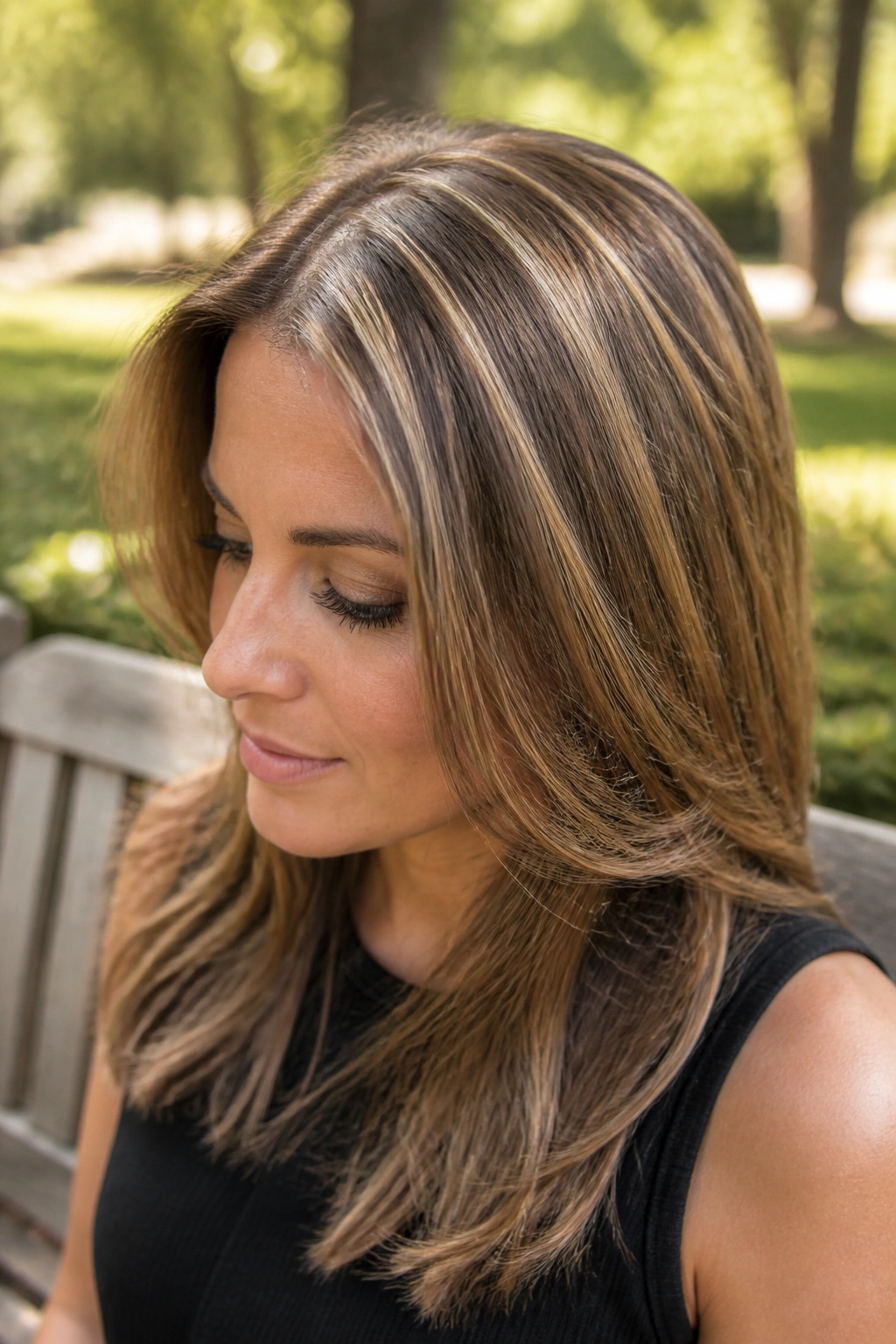
Why do some brunettes look glossy even when their hair is tied up? Tiny babylights. They’re narrow enough to mimic natural lightening, so the crown looks soft instead of spotted.
How to Ask for It
Tell your colorist you want very fine weaves through the part line and crown, with the lightest pieces no more than a couple of shades above your brown base. That keeps the result airy rather than chunky.
Babylights are a smart pick if you hate obvious grow-out. They blur into the base faster than wider highlights, which means the line at the roots stays gentler for longer.
On straight hair, this gives a polished shimmer. On waves, it looks like little threads of honey running through the top layer.
4. Chunky Caramel Panels With Soft Edges
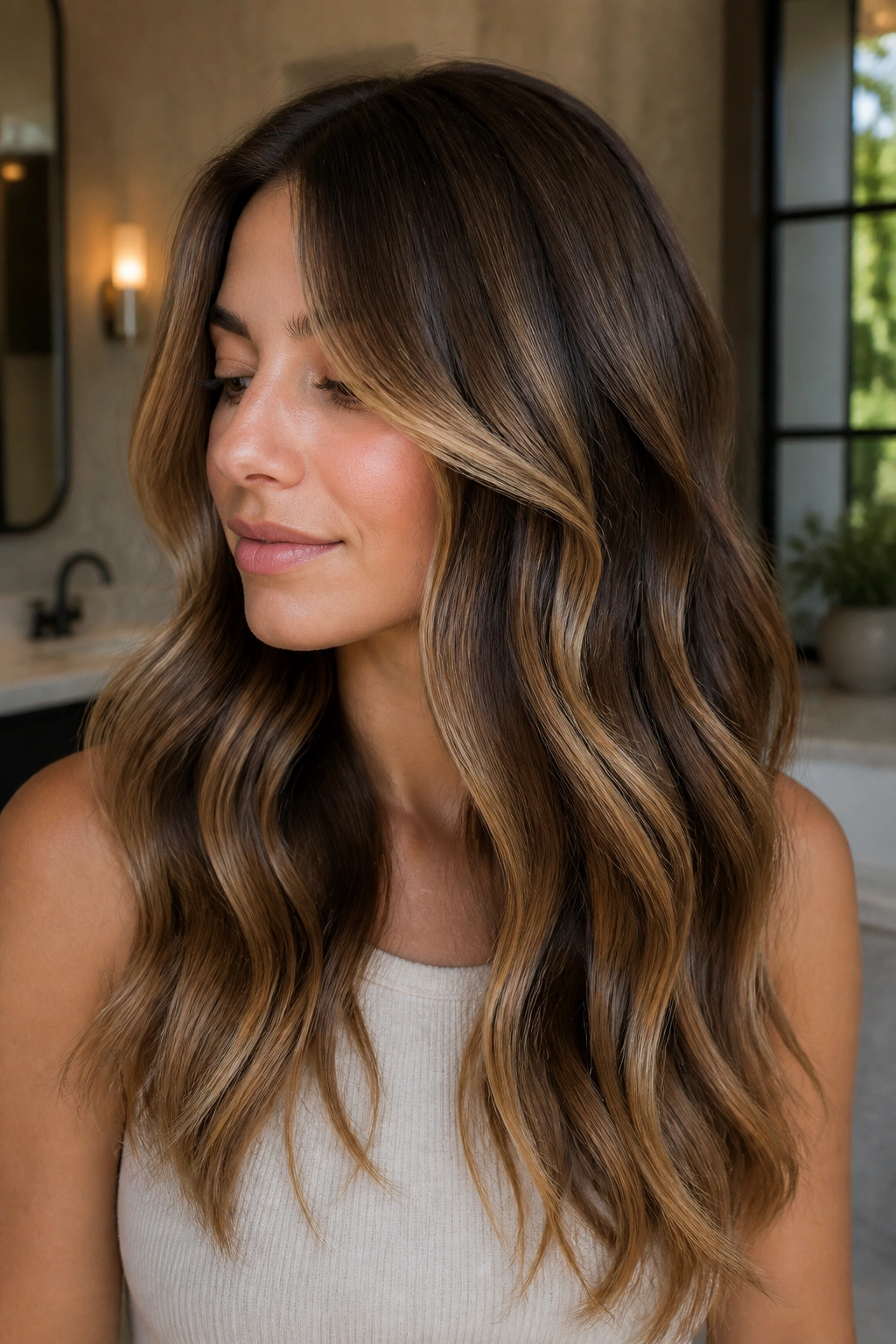
If you like a little attitude in your hair, chunky caramel panels are worth a look. They bring back some of that old-school stripe energy, only cleaner and more controlled, so the result feels intentional instead of harsh.
The key is soft blending at the edges. You still want the panels visible, but the transition from brown to caramel should blur just enough that the color looks painted, not boxed in.
- Best when you want clear contrast
- Works well on long hair and blunt cuts
- Needs toner to keep the blonde pieces from turning brassy
- Looks strongest in loose waves or a big blowout
A few bolder pieces around the front can carry the whole look. Keep the rest quieter, and the hair does the talking without looking overdone.
5. Balayage Starting Below the Ear
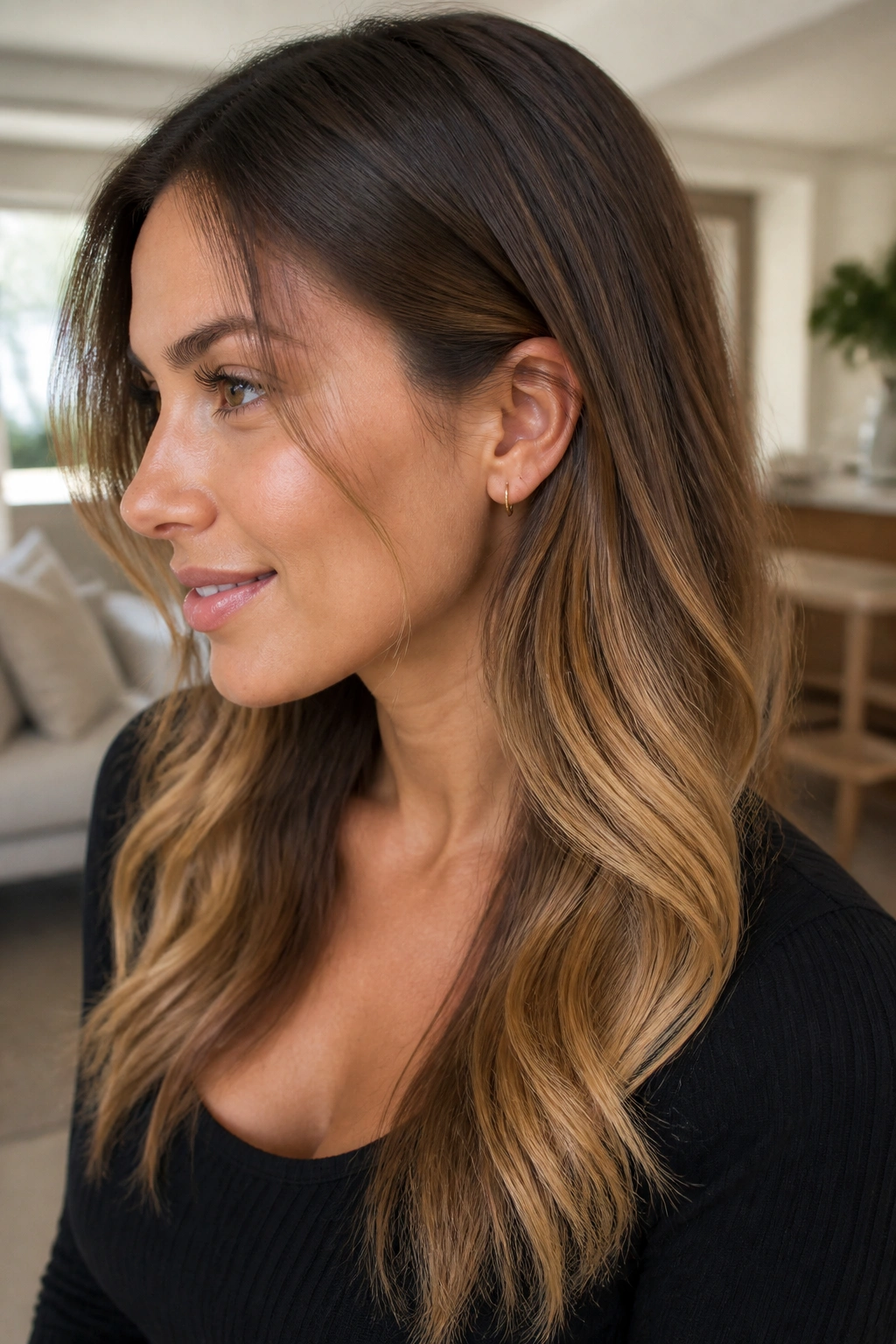
This is the low-maintenance version people keep coming back to. The lightener starts below the ear or just under the top layer, so your brown base stays rich and the blonde caramel shows up mostly when the hair bends or swings.
The grow-out is forgiving because the root area stays darker on purpose. That makes it a good choice if you do not want to live at the salon every few weeks, or if you like hair that still looks decent pulled into a bun.
Balayage like this feels especially good on layered cuts. The lighter pieces land where the hair naturally falls, so the dimension looks less forced and more lived-in.
6. Beige-Blonde Ribbons on Mocha Brown Hair
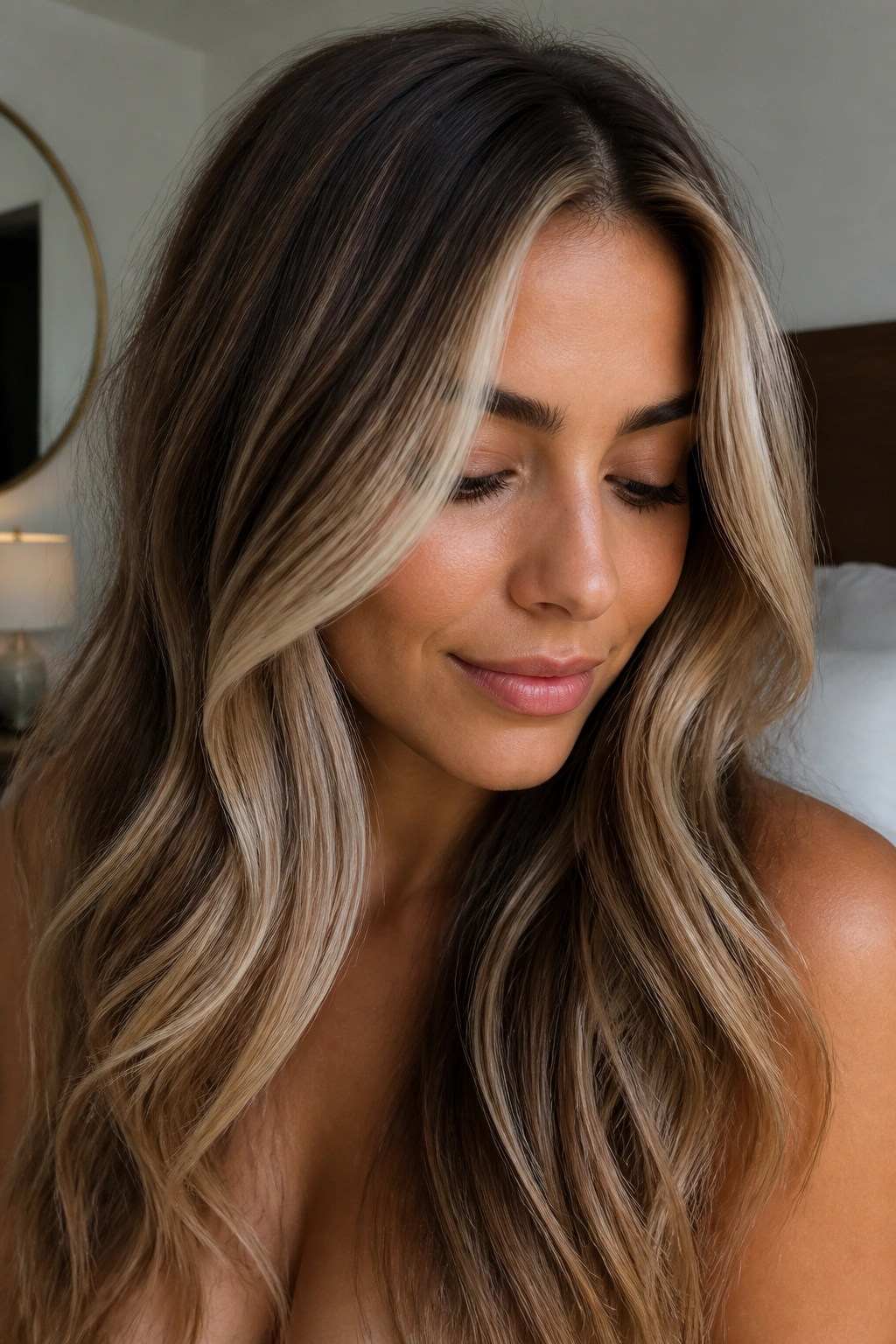
Unlike gold caramel, beige-blonde ribbons keep the finish cooler and a little more muted. They’re a strong match for mocha brown hair, which usually has enough depth to handle a softer blonde without getting washed out.
That cooler beige tone matters if your skin leans pink or neutral. Gold can sometimes fight with that; beige tends to sit back and let the haircut do more of the work. The result is cleaner, smoother, less sunny.
This is the color I’d pick for someone who wants lightness but hates warmth. It’s also a nice option if your wardrobe lives in black, cream, gray, or denim.
7. Cinnamon-Caramel Ends on Long Hair
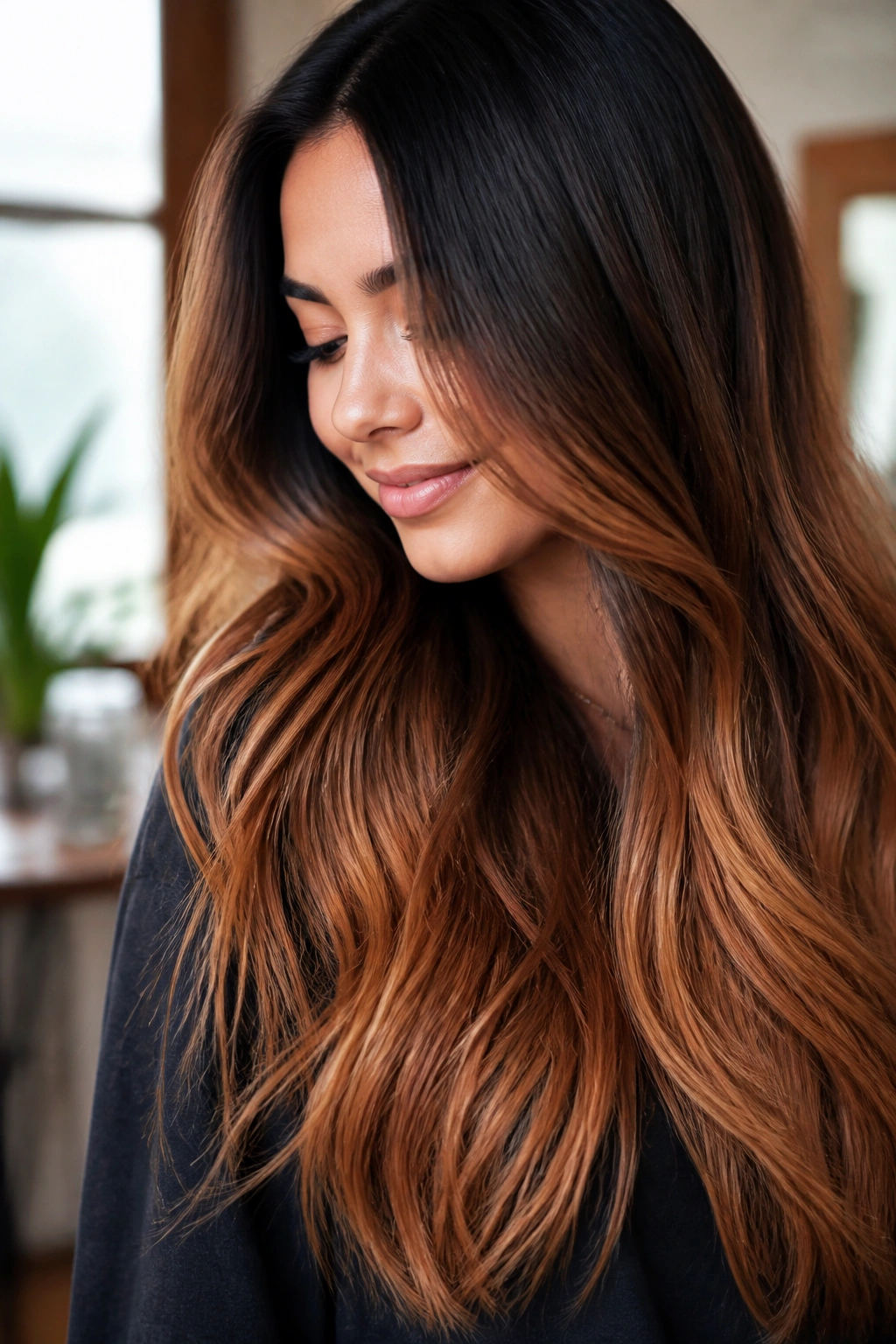
The ends carry most of the visual weight here. Brown hair stays darker at the top, then the last few inches drift into a warm caramel with a cinnamon edge, which gives the whole length a soft fade without a hard ombré line.
There’s a little drama in it, but not too much. That contrast is the point. The ends look lit up, and the roots keep the style grounded, which means you can wear it loose or in a low ponytail and still see the color shift.
It works best if your hair is at least collarbone length. Shorter cuts can lose the gradient too fast.
8. Sliced Highlights Through Long Layers
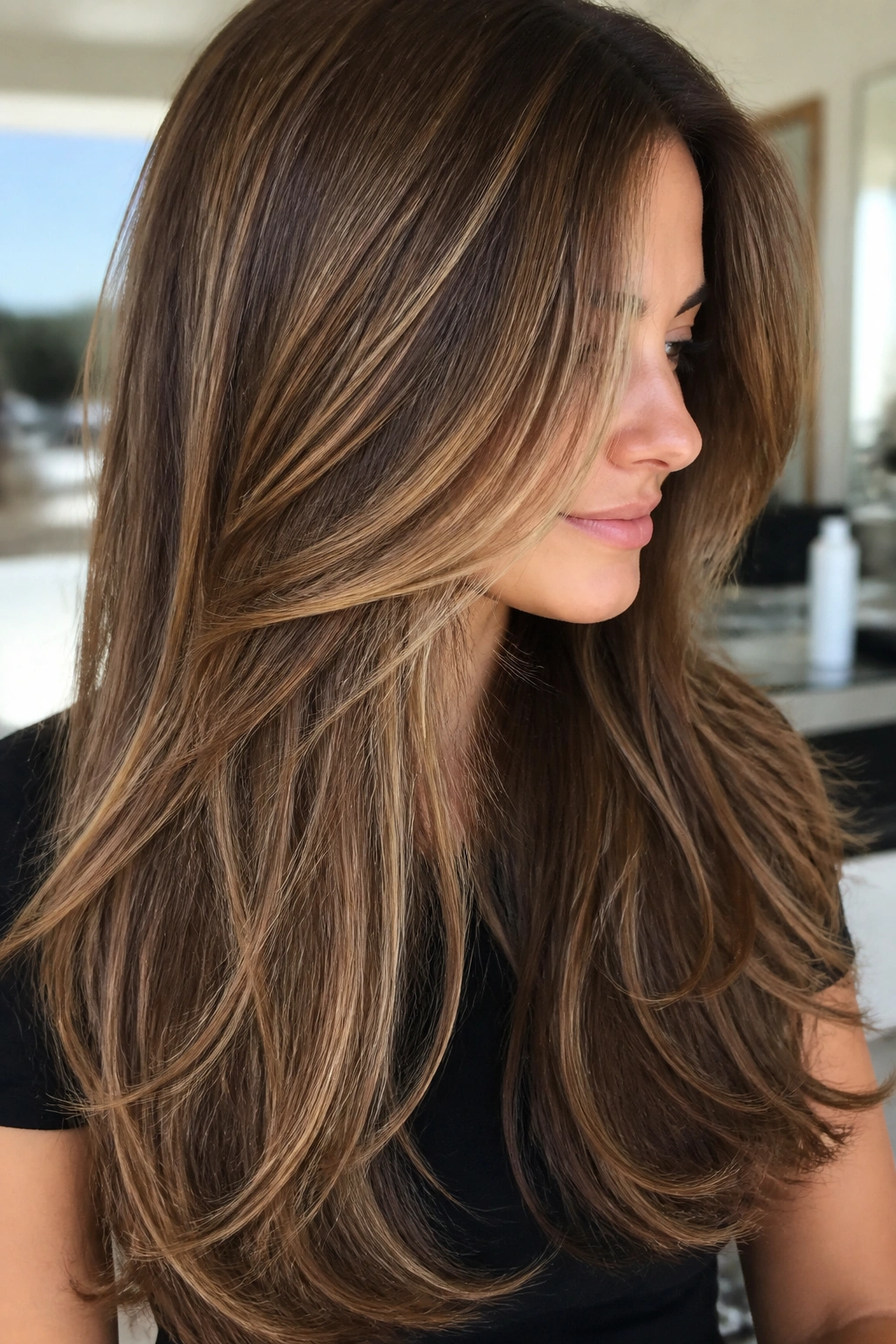
Sliced highlights are broader than babylights, but they’re thinner and cleaner than chunky panels. On long layers, they create those sleek flashes of blonde caramel that show up when the hair splits open as you move.
What Makes It Different
The color sits in neat, slim sections, usually placed to follow the fall of the haircut. That makes the hair look thicker because the light and dark pieces sit beside each other in sharper bands.
- Best for long layers and medium-density hair
- Gives strong movement without a heavy foil line
- Looks polished on straight blowouts
- Needs a good conditioner because the wider lightened sections can feel drier at the ends
If your hair is fine, ask for fewer slices. Too many can make the whole head look thin.
9. Root Shadow With Buttery Lengths
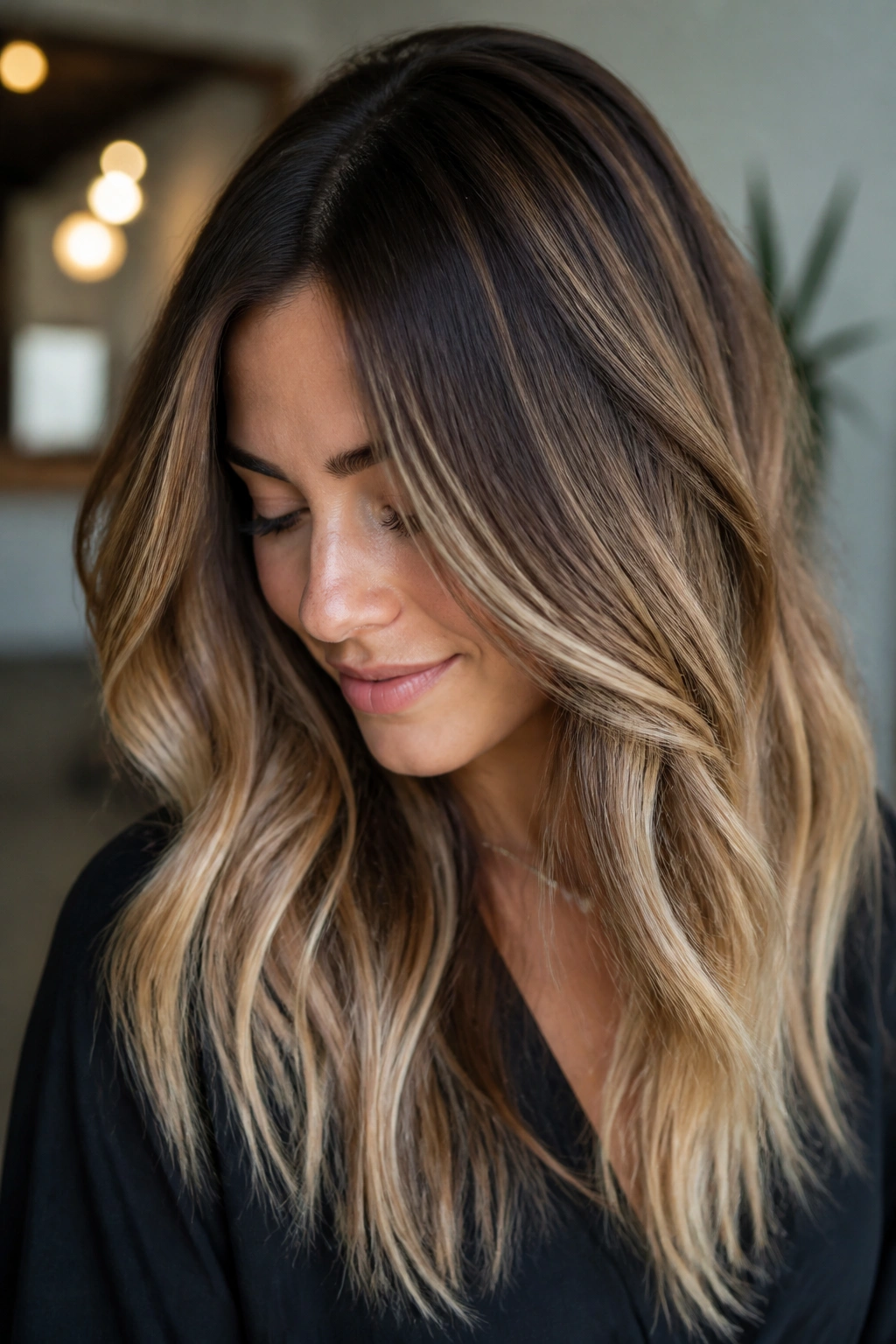
Why do some highlights grow out so gracefully? Root shadow. A shade or two of depth is kept at the scalp, then the blonde caramel gets brighter through the lengths, which makes the whole color look soft and expensive.
The shadow is not there to hide anything. It’s there to make the blonde believable. That darker root is what lets the lighter pieces shine without shouting.
This is a good salon plan if you want brightness but not constant upkeep. It also works well on brown hair that tends to go warm fast, because the shaded root gives the toner something to lean against.
How to Get the Most From It
Ask for a soft melt, not a hard line. The transition should blur over about an inch or so, maybe a little more on thick hair.
10. Curly Hair Painted Spiral by Spiral
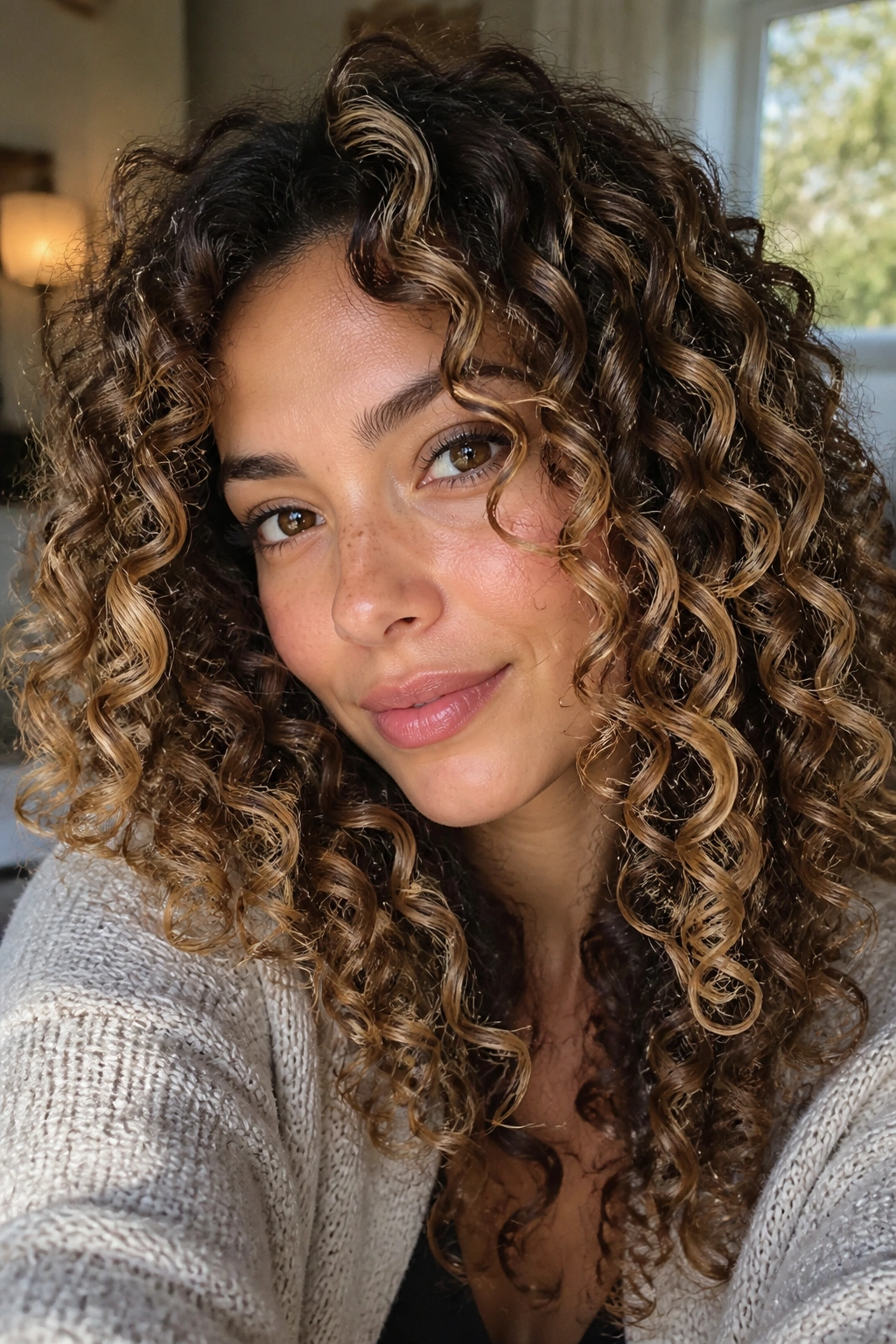
Curly hair needs a different hand. If highlights are painted like the hair were straight, the curls can look patchy once the shape dries, and that is nobody’s favorite surprise.
When caramel pieces are placed spiral by spiral, the brightness lands where the curl bends and catches light. That creates a halo effect around the head instead of stripes stacked on top of one another.
The best version keeps the underside a touch deeper so the curls keep their shape. You get shine on the outside curves and depth underneath, which gives the hair some weight. On a dry curl pattern, that contrast looks especially good.
11. Peekaboo Caramel in a Short Bob
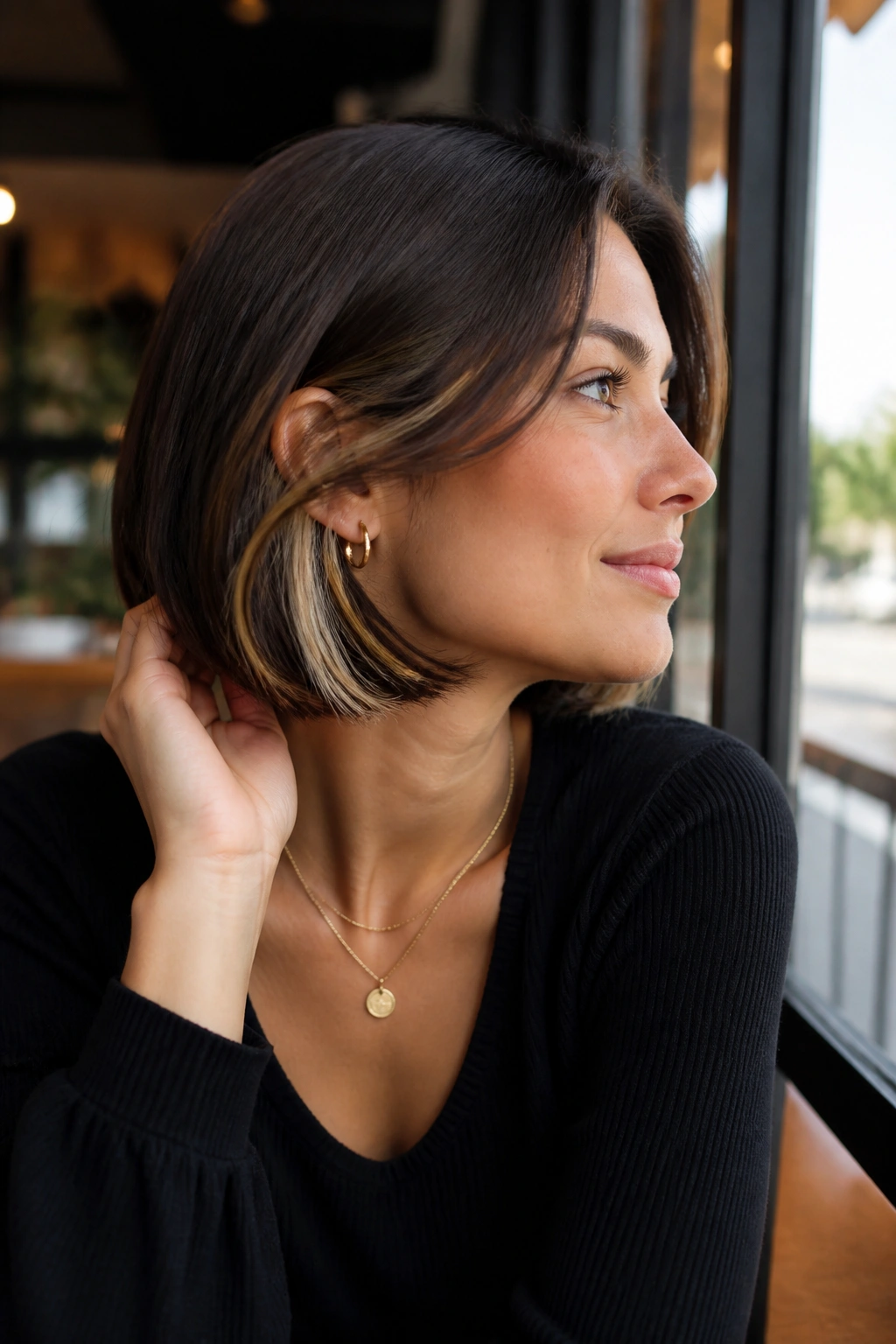
A bob can absolutely take highlights, but the placement has to be tighter. Peekaboo caramel sits just under the top layer, so the color moves when the hair swings but doesn’t turn the whole cut into a loud block of blonde.
That hidden placement is smart on blunt bobs, since too many surface foils can make the cut look busy. Keep the top darker, brighten the interior, and the shape stays sharp.
This is one of those styles that surprises people when you turn your head. Front on, it looks neat. From the side, the caramel shows up in flashes.
12. Golden Caramel Over Chestnut Brown
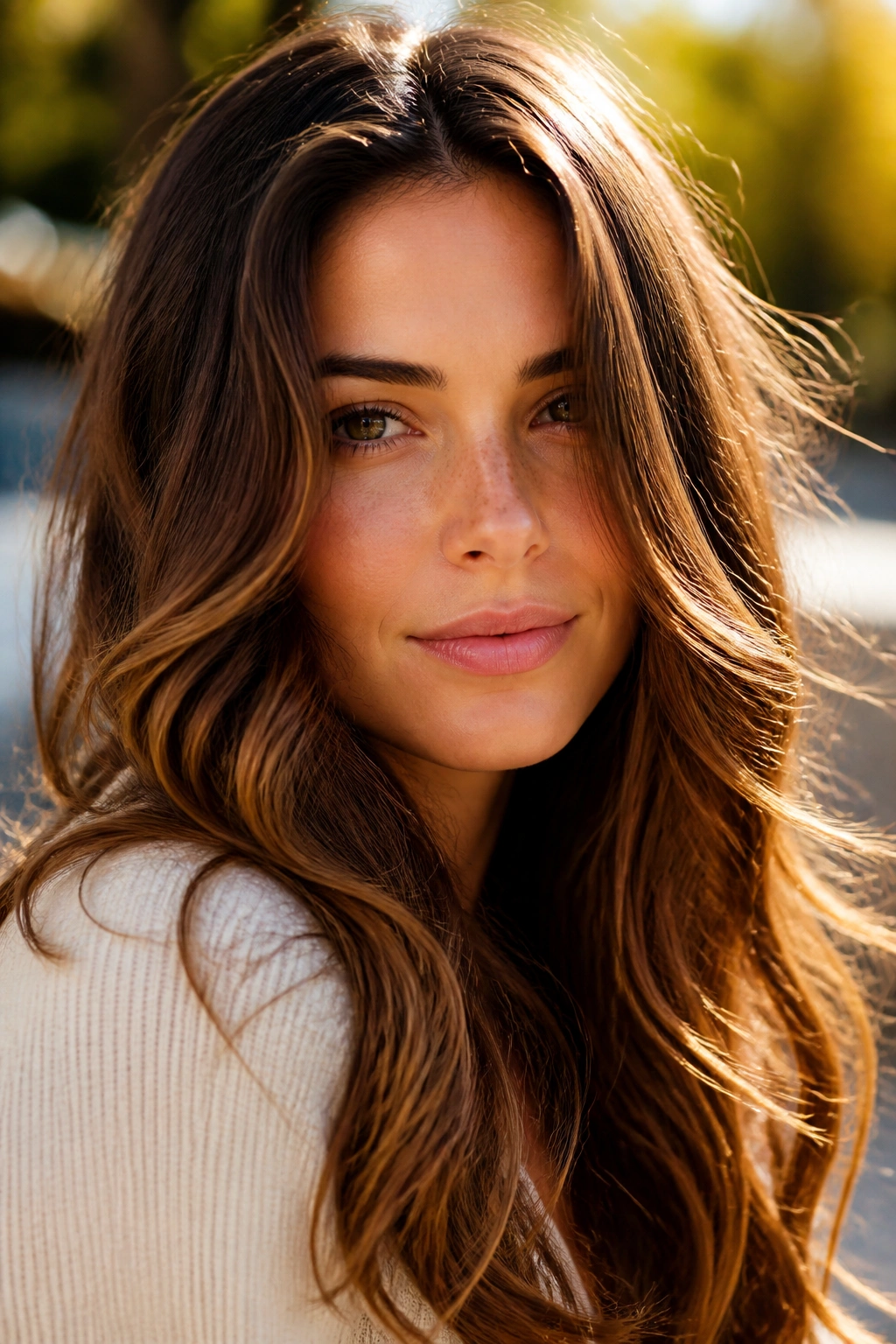
Warm chestnut hair can handle gold better than most brunette bases, and that makes this a happy middle ground. The caramel leans golden, almost buttery, so the contrast feels sunlit instead of smoky.
Best for Warm Undertones
If your skin already pulls peach, olive, or golden, this tone usually sits in the right lane. It brings warmth back into the face and stops chestnut hair from reading too heavy in low light.
- Works well with medium brown and chestnut bases
- Looks richest with a loose wave or soft bend
- Often needs a beige or neutral toner, not a very warm one
- Plays nicely with warm makeup tones and bronzy blush
The only catch is brassiness. If the blonde goes too yellow, it stops looking expensive fast.
13. Mushroom Brown With Sandy Accents
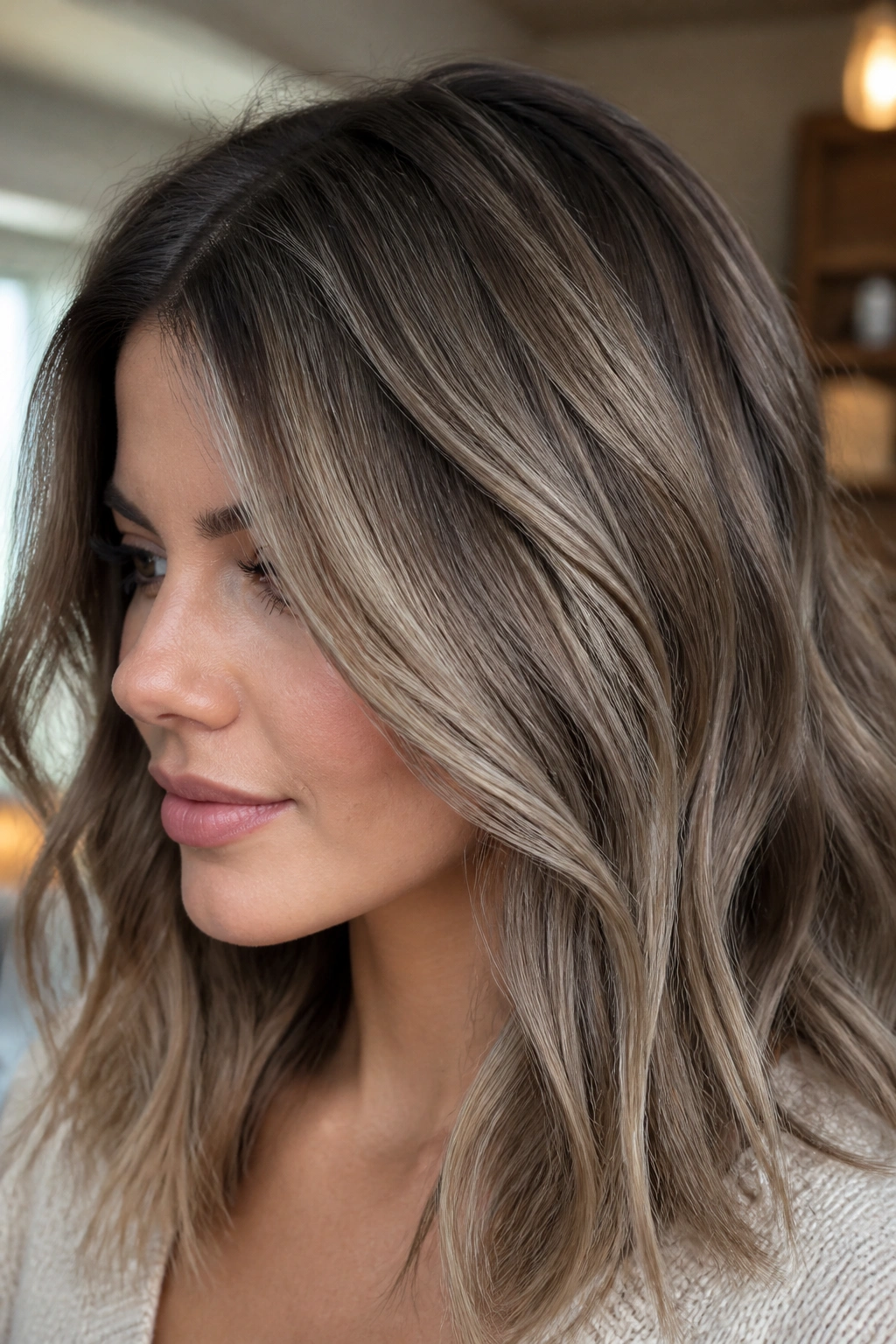
Mushroom brown is cool, muted, and a little smoky, so the blonde caramel here needs to stay sandy rather than gold. The light pieces should look like they belong in the hair, not like they were dropped on top of it.
This style is good if you like brunette depth more than blonde brightness. The color stays understated, but the sandy accents keep it from going flat or muddy. That balance is harder to get than it looks.
Warmth is the enemy here, so the toner matters. Ask for a neutral or cool finish and keep the highlight pieces fine. Big light streaks would ruin the whole mood.
14. Thick-Hair Foilayage
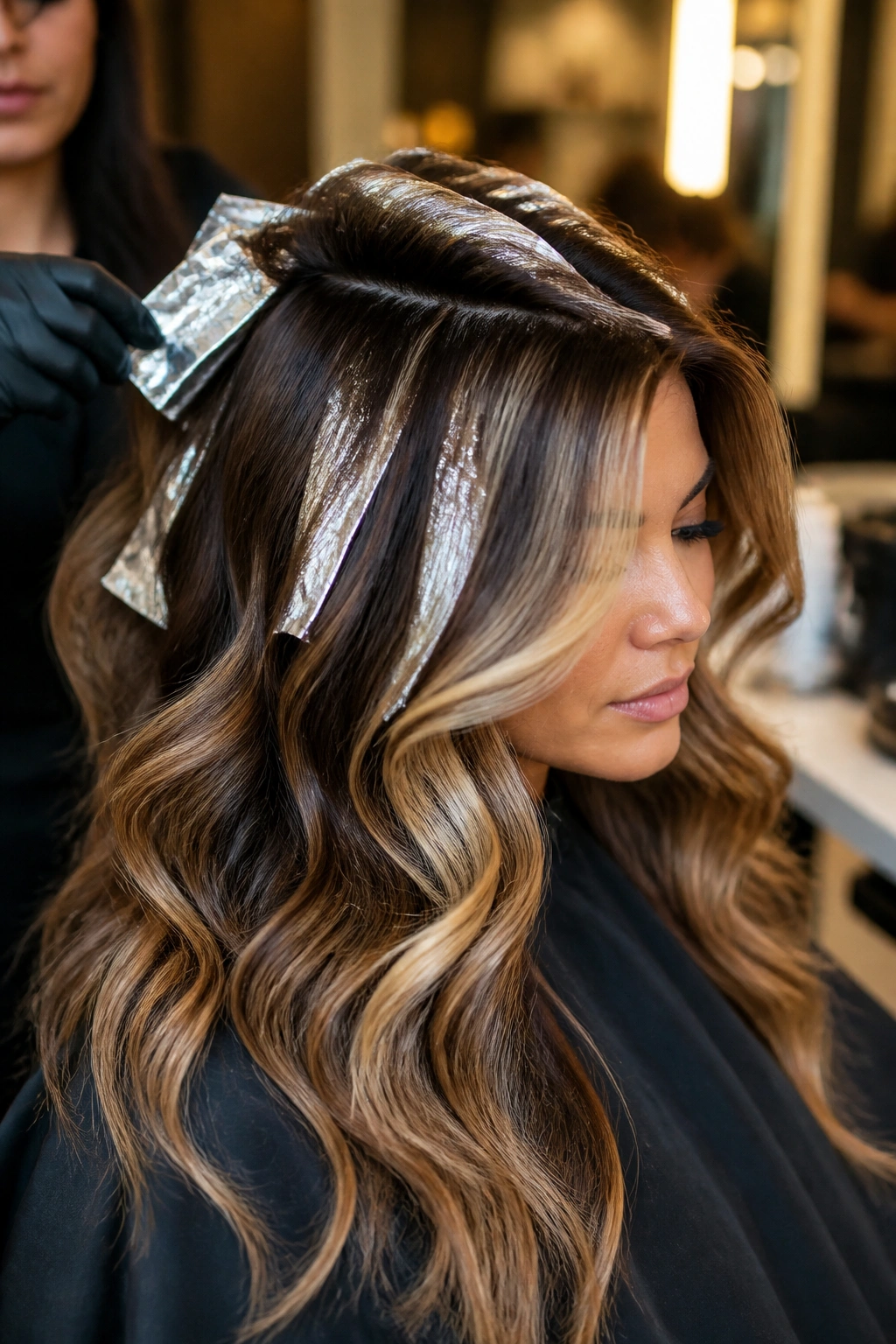
Thick hair can swallow fine highlights if the placement is too timid. Foilayage solves that by giving you the lift of foils and the soft blend of balayage, which is handy when the hair is dense and needs more visible dimension.
The bigger sections also help the blonde caramel show up through all that volume. A few properly placed foils can do more than a dozen tiny ones if your hair is heavy and hard to move.
- Ideal for dense, coarse, or very full hair
- Lifts brighter than open-air painting alone
- Needs careful toning because thick hair can hold warmth
- Looks especially good in layered blowouts
If your hair takes forever to dry, this is one of the smarter highlight methods.
15. Fine-Hair Baby Foils
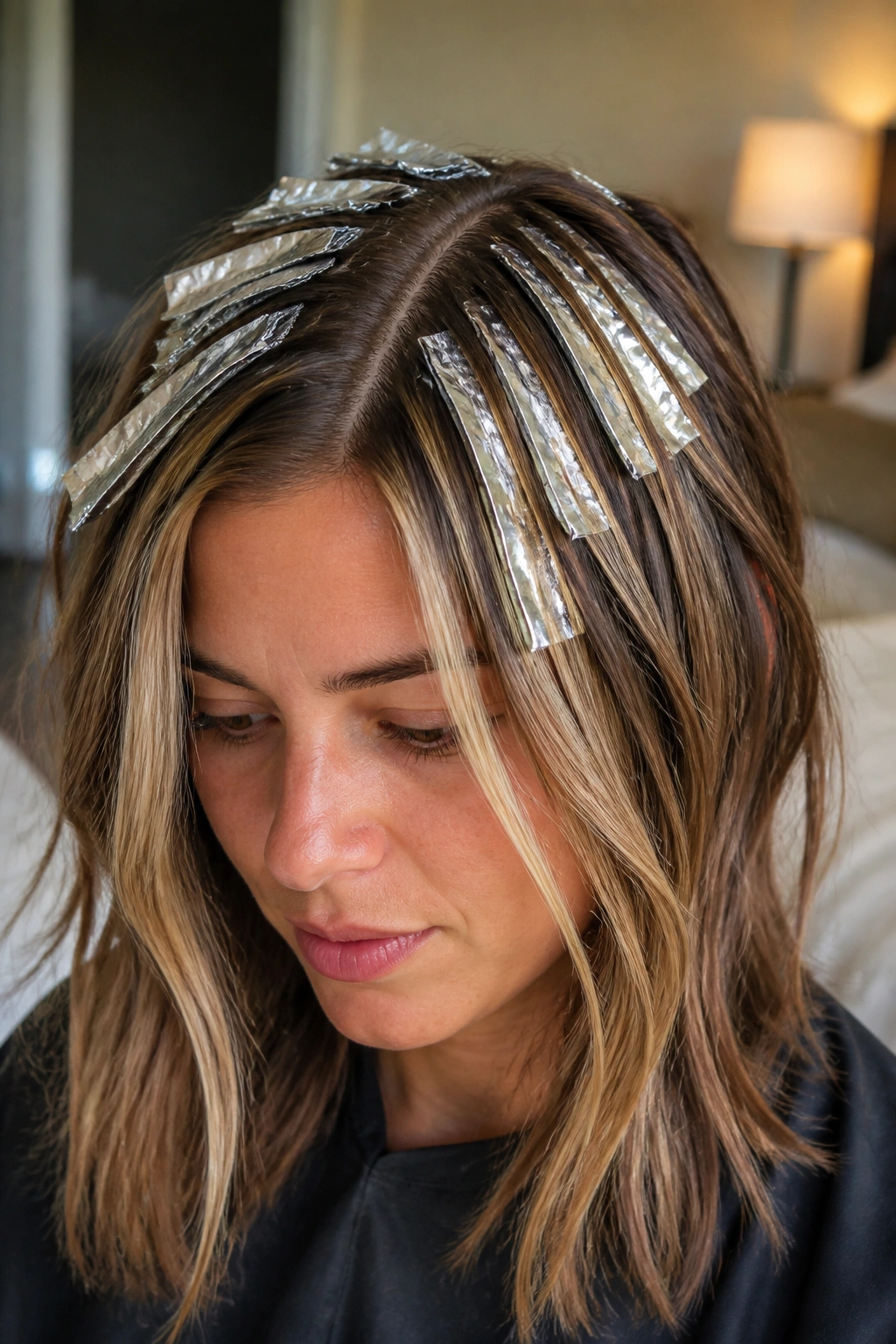
Fine hair can look amazing with highlights, but big stripes are a mistake. Baby foils keep the pieces narrow, which gives you the look of softness and fullness without leaving big gaps between light sections.
Why It Suits Fine Hair
Very small weaves make the brown base and blonde caramel mix together almost like thread. That creates the illusion of thicker hair because the eye reads more texture.
The other benefit is control. Fine hair lifts quickly, so tiny foils keep you from overshooting into pale blonde territory. You want brightness, not fragility.
How to Ask for It
Tell your colorist you want narrow, delicate foils concentrated around the part and face framing, with a few scattered through the back. Less is more here.
16. Bronde Melt With a Soft Edge
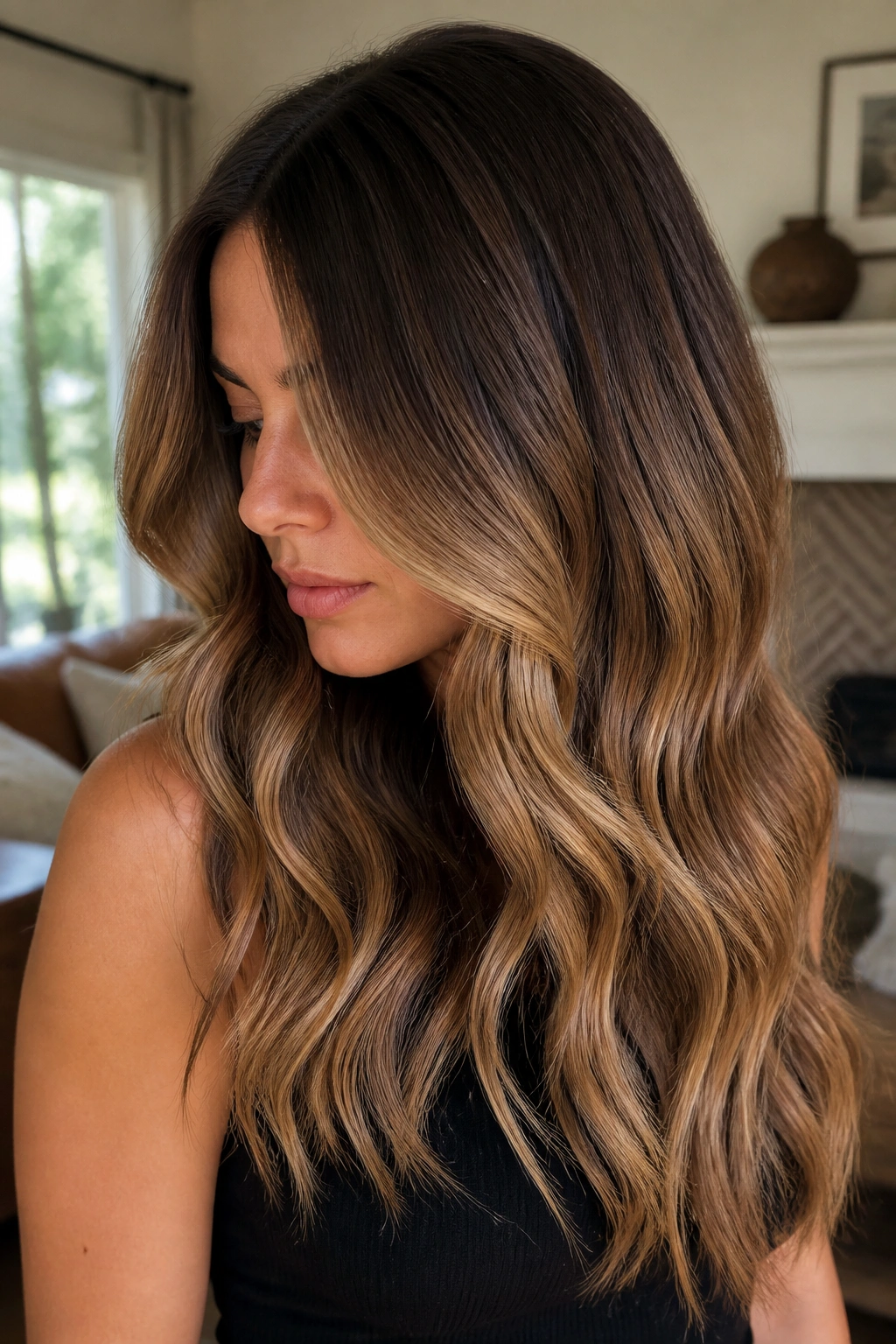
Bronde is still the best answer for anyone who wants to live between brunette and blonde. The brown base stays visible, the caramel drifts into blonde territory, and the whole thing melts together instead of showing a hard stop.
This version works because the lighter pieces are not treated like separate streaks. They belong to the haircut. That makes the result feel expensive in a quiet way, which is a strange phrase, but it fits.
If you’re nervous about going too light, this is the safe lane. It gives you brightness without forcing you into full blonde maintenance.
17. Crown-Brightening Highlights With Face Framing
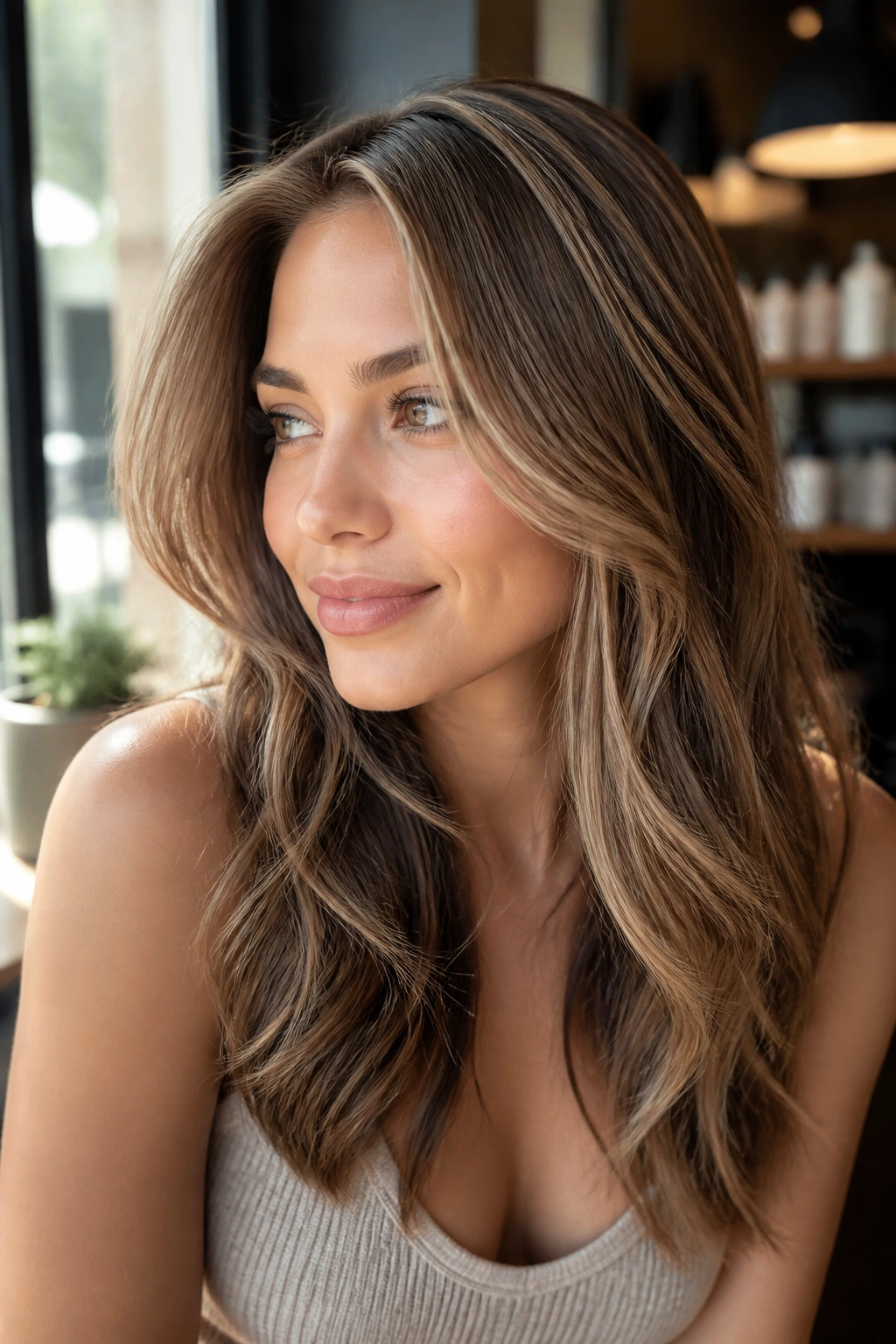
A lot of people chase brightness through the ends and forget the top. Crown-brightening highlights fix that by lifting the area around the part line, then adding face-framing pieces so the haircut feels open from every angle.
Compared with a single money piece, this spreads the light a little wider. The effect is softer and less dramatic, which can be better if you wear your hair down most of the time.
It also helps the haircut look fresher on day two or three, when the roots are no longer perfectly neat. The brightness sits where the eye naturally lands.
18. Copper-Caramel Crossover
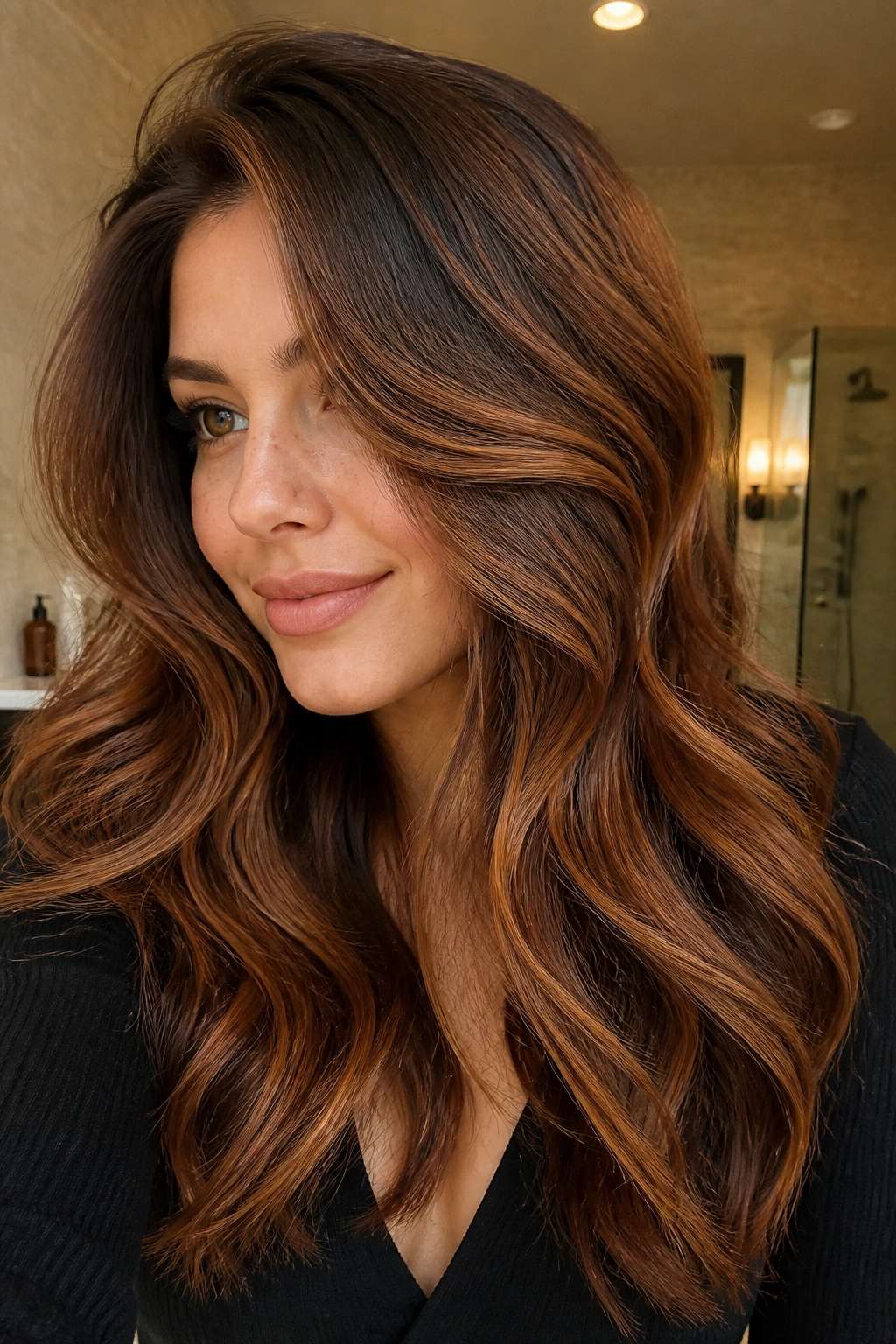
This one is for brunettes who like warmth and don’t mind a little fire in the mix. The blonde side of the caramel leans copper, so the color feels richer and more vivid than a beige or sandy highlight.
The base should stay brown, not red-brown, or the whole thing can get muddy. But when it’s done well, the result is lively and glossy, with enough warmth to make the hair look thick.
Warm tones need care. A gloss is usually the difference between rich copper-caramel and flat orange.
Don’t skip the gloss.
19. Smoky Brunette With Champagne Caramel
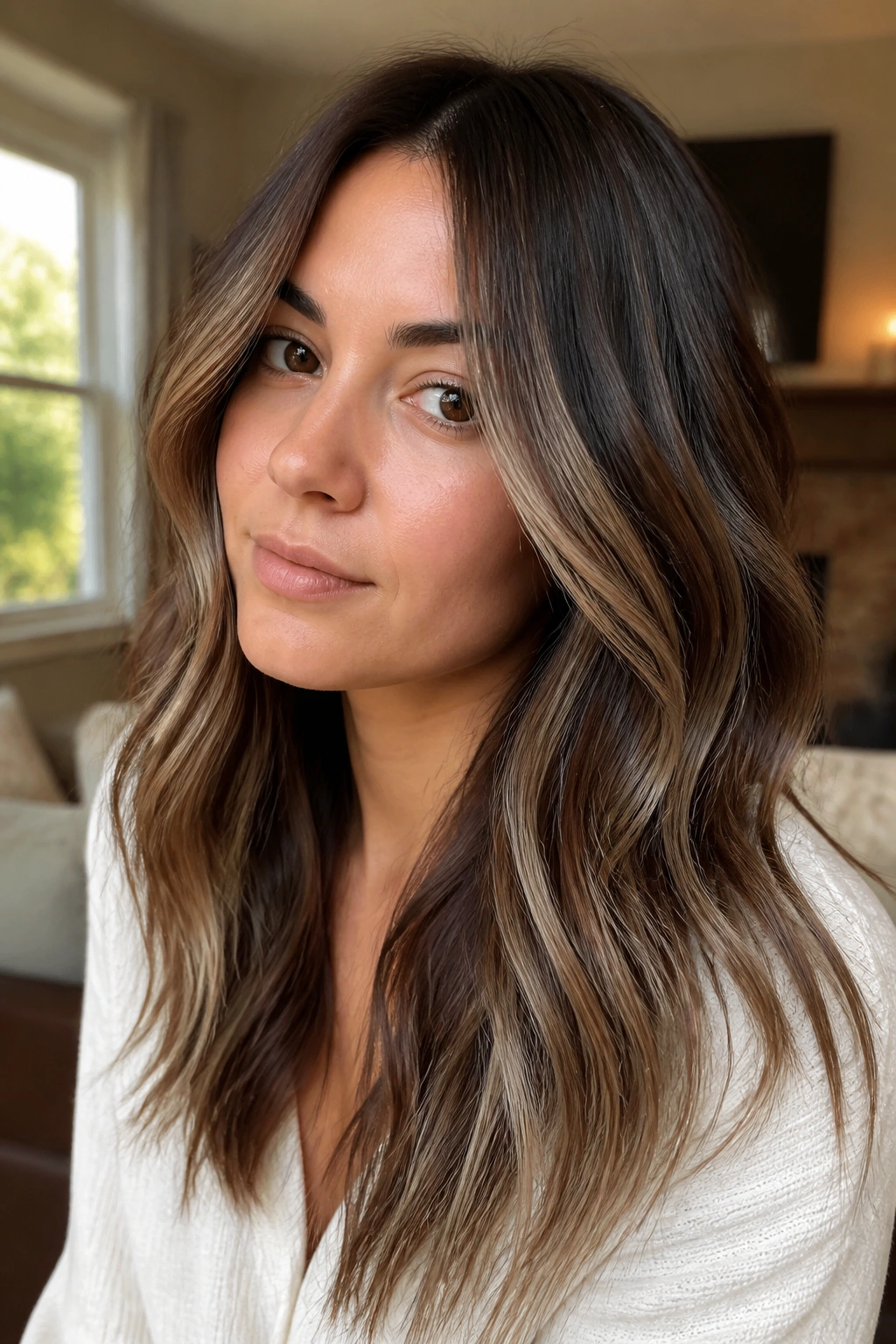
Smoky brunette hair gets a clean lift from champagne caramel, which sits between beige and pearl. It’s lighter than a classic caramel ribbon, but it doesn’t go icy, so the finish stays soft and grown-up.
This style looks especially good when the brunette base has a cool or neutral cast. If the base is too warm, the champagne can disappear or turn dull. A careful toner keeps that from happening.
You get the nicest result with loose waves, because the bright pieces catch the bends and the smoky base keeps the whole thing from looking sweet. It’s understated in a way that still reads polished.
20. Hairline Framing Highlights Only
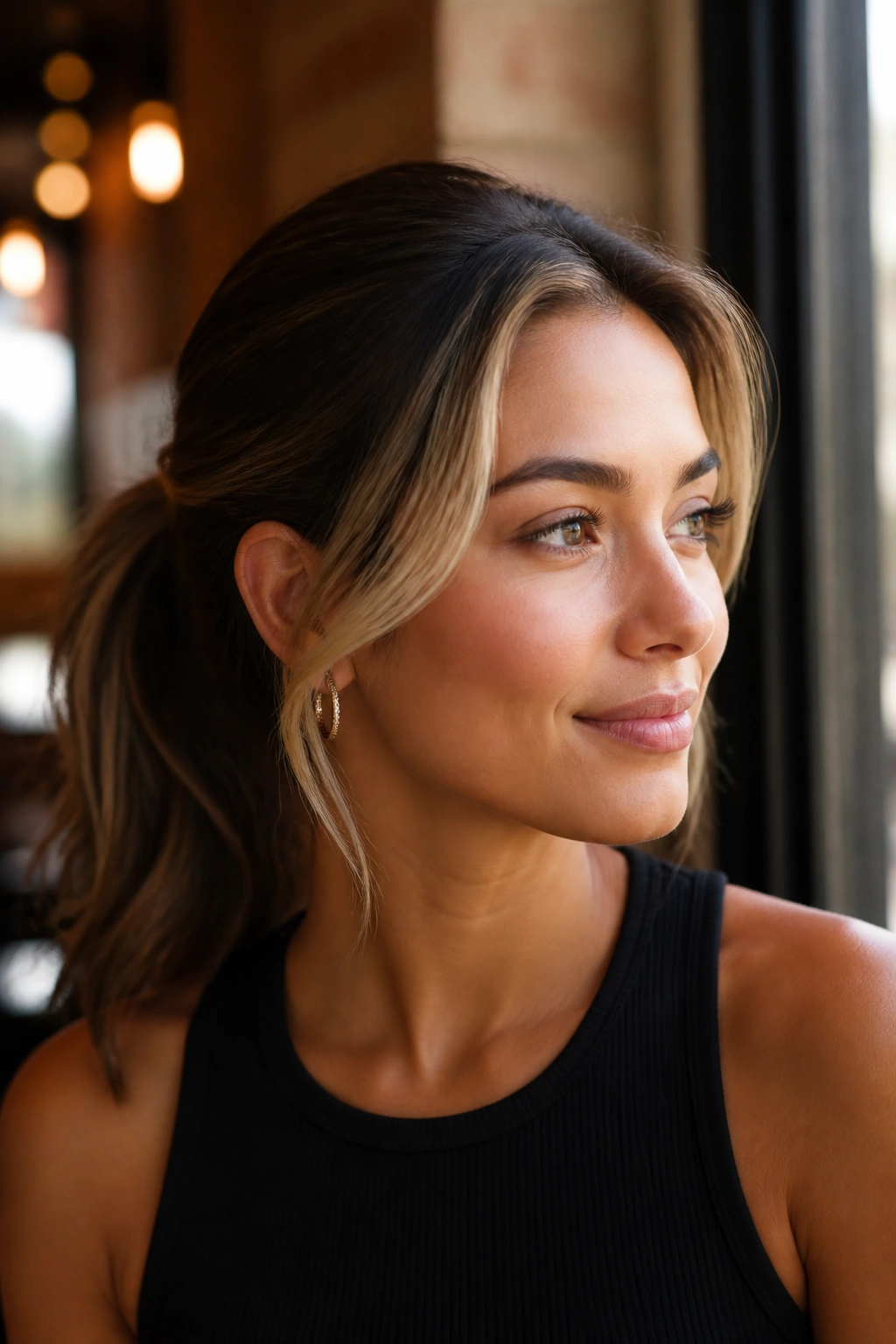
Why lighten the whole head if you only want a cleaner face? Hairline framing focuses the blonde caramel around the temples, part line, and the first inch or two around the face, then leaves the rest mostly alone.
Best for Low Commitment
This is a smart first color service if you’re nervous. The grow-out is tiny, the appointment is faster, and you can still tell a difference when you look in the mirror.
It also helps brunettes who wear their hair back a lot. A ponytail with a lit-up front section looks finished even when the rest of the hair is plain.
A few carefully placed foils can do the job. No need to flood the whole head.
21. Lived-In Caramel Balayage on Long Waves
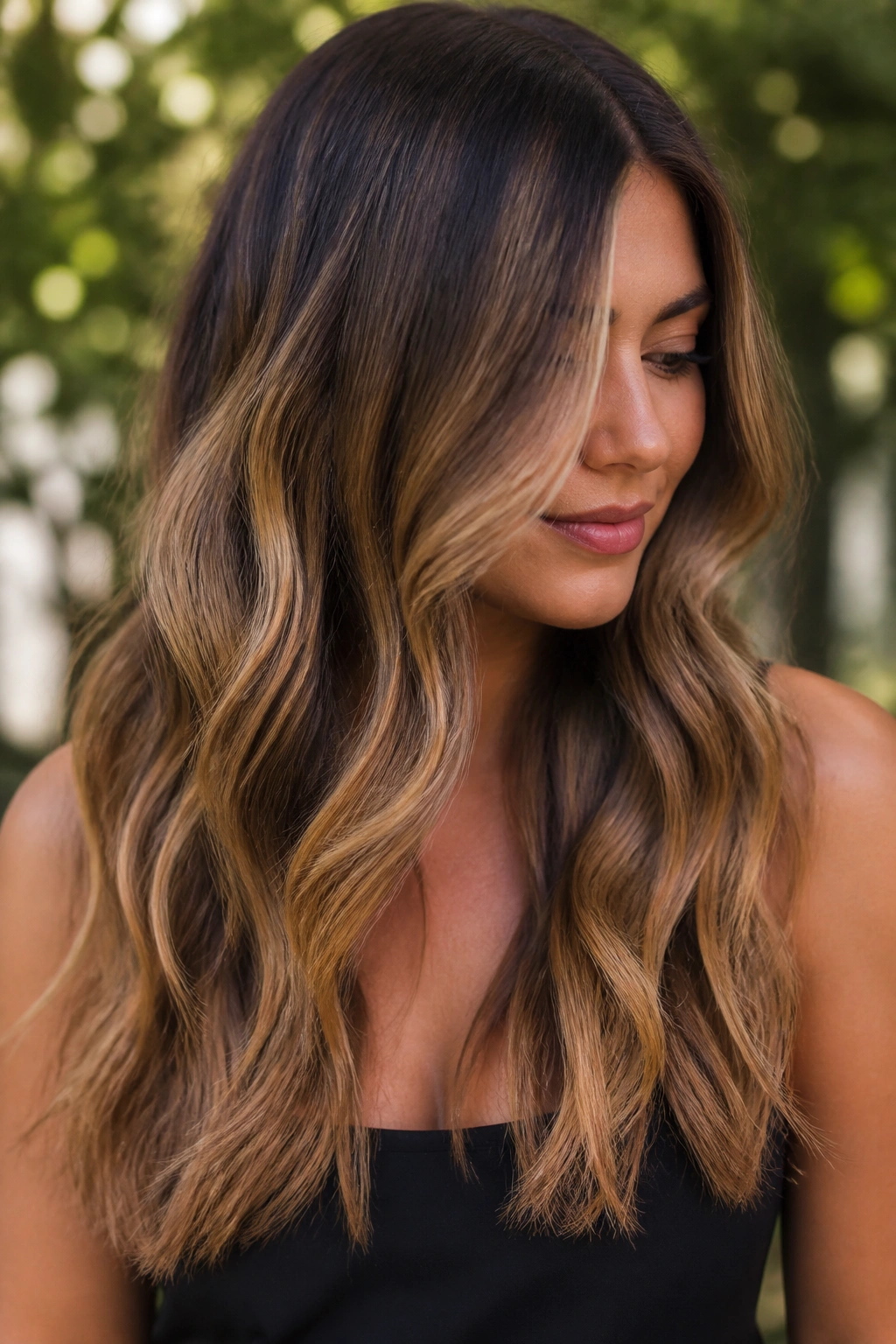
Long waves are where blonde caramel really gets to stretch out. The lighter pieces are painted through the mid-lengths and ends, then softened so the whole style feels loose rather than sectioned off.
The lived-in part matters. You want the color to look like it has been there for a while, even when it was just done. That means softer roots, blended transitions, and enough brown left behind to hold the shape.
On long hair, this kind of balayage is forgiving. It still looks good when the waves relax, and it doesn’t demand perfect styling every day.
22. Sliced Panel Lights on Straight Hair
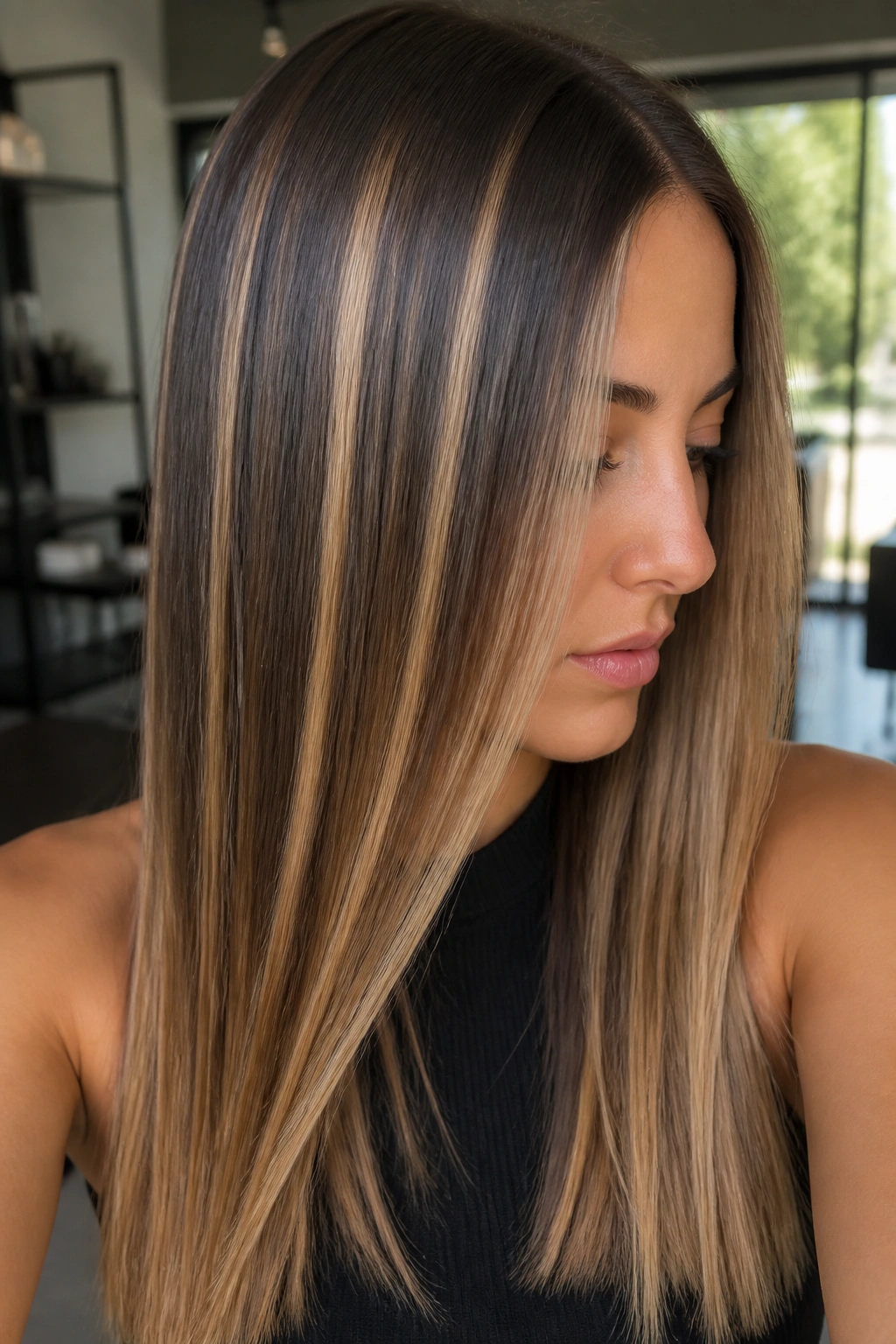
Straight hair shows color lines more clearly than wavy hair, so sliced panel lights have an easier job here. The blonde caramel appears in clean, sleek sections that read almost like brush strokes across the length.
That is a feature, not a flaw. When the hair is flat-ironed, the contrast looks crisp and intentional. When you tuck one side behind the ear, the light catches in a way that makes the cut look sharper.
This is a strong option for blunt cuts, long lobs, and shiny brown hair that tends to reflect light well. If the hair is textured or very layered, the effect can get lost.
23. Hidden Underlights in the Interior
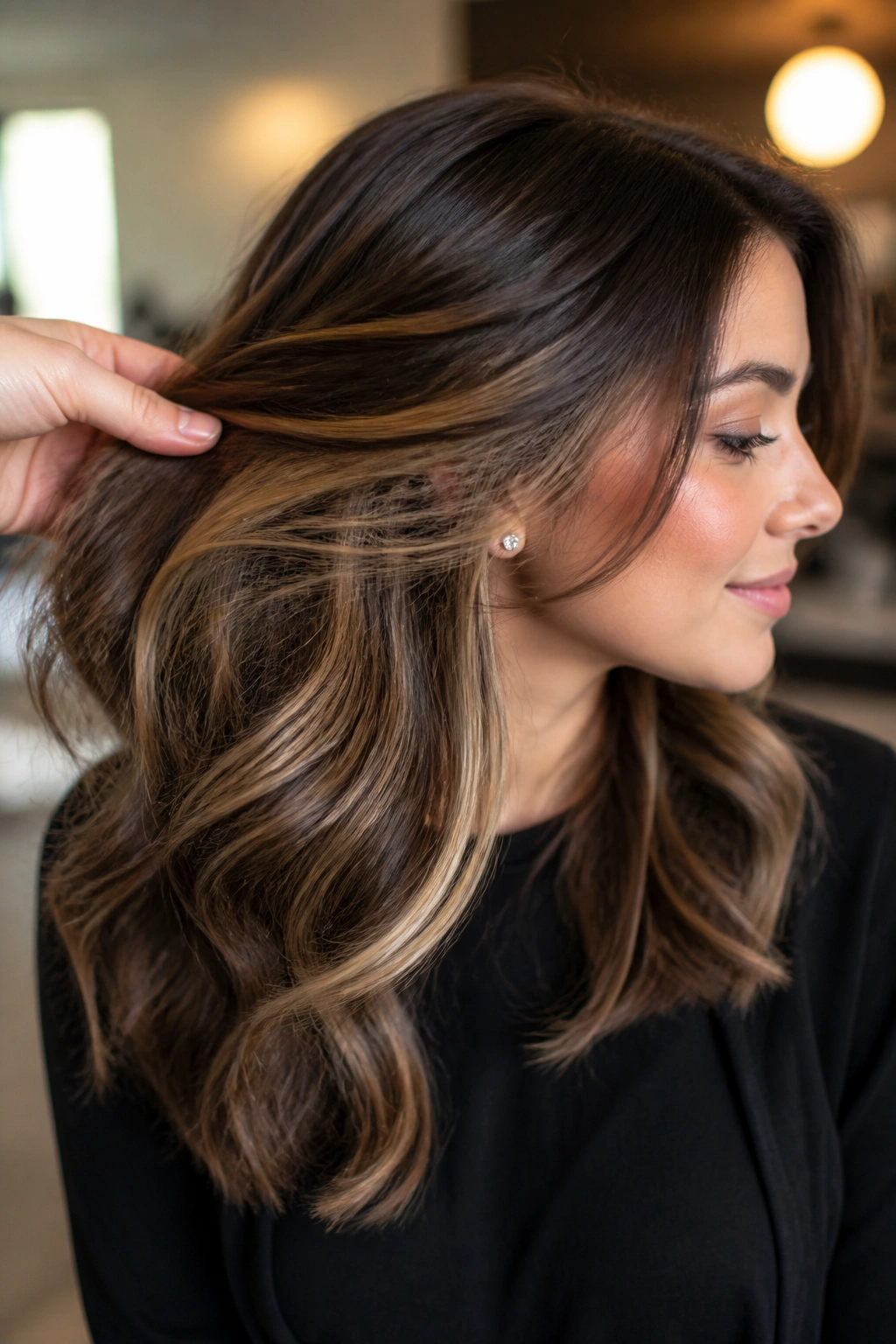
Hidden underlights are for people who want a little surprise. The blonde caramel sits underneath the top layer, so it stays mostly out of sight until the hair shifts, moves, or gets thrown into a half-up style.
That placement makes the color feel playful without forcing it into every moment. It also keeps the top darker, which helps the cut stay sleek and keeps grow-out calmer.
This is one of my favorite options for people who wear their hair up a lot. The light shows at the neck, at the sides, and when the wind catches it, which is enough to make the color feel alive.
24. Ash-Caramel Contrast on Medium Brown Hair
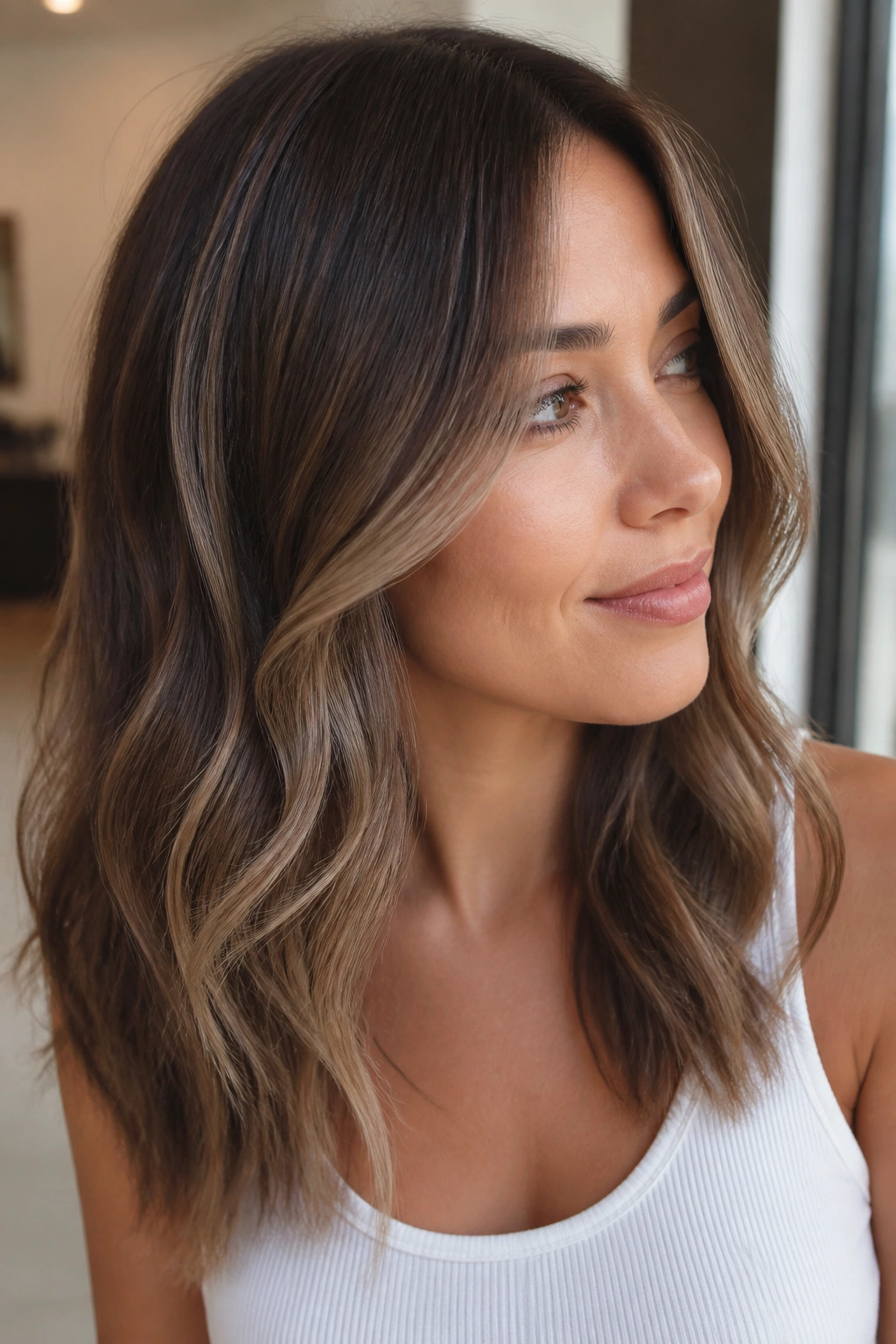
Medium brown hair with a cool cast can handle ash-caramel highlights better than many people expect. The trick is keeping the blonde muted so it doesn’t fight the base.
What to Watch For
If the caramel is too golden, the contrast turns awkward. If it is too gray, the hair can look dusty. The sweet spot sits somewhere in the middle, where the blonde feels soft and smoky.
- Works well on neutral or cool brown bases
- Good choice for someone who dislikes gold tones
- Needs a toner that stays neutral, not overly warm
- Pairs well with a clean middle part or sleek blowout
A cooler caramel can look expensive in a subtle way. It’s not flashy, which is exactly why it works.
25. Sun-Kissed Ends on Layered Hair
Layered hair loves lighter ends because the shape already creates movement. The caramel sits where the layers taper, so every bend and flip shows a different amount of blonde.
The best versions keep the top section mostly brown. That stops the haircut from getting noisy. What you want is a gradual drift toward light, almost like the sun reached the last few inches and left the rest alone.
This is a good summer-look without being tied to a season. It simply gives brown hair a lighter finish that still makes sense in real life.
26. Glossed Caramel Ribbons After Toning
Why do some highlights look fresh for longer? The gloss. A good gloss pulls the blonde caramel into one shade family, smooths out brass, and gives the hair that slick, almost liquid finish.
What to Ask Your Colorist
Ask for a gloss that matches the warmth of your skin, not one that blindly turns everything golden. If your hair is already warm, a neutral-beige gloss usually works better than a copper one.
The gloss also softens the line between brown and blonde, which matters more than people think. A highlight job can be fine, and still look rough without that last step.
This finish is easy to overlook and hard to fake at home.
27. Front Fringe Lights With Curtain Bangs
Curtain bangs and fringe pieces eat up light fast. A few thin caramel highlights around that area keep the bangs from blending into the rest of the brunette base and disappearing.
Compared with a full money piece, this is more selective. The light stays mostly around the bend of the fringe and the outer corners of the face, so the cut feels airy but still controlled.
It’s a good match for medium and long hair with face layers. The front stays soft, the rest of the hair can stay quieter, and the whole style looks a little more styled even on a simple blow-dry.
28. Deep Espresso Base With Warm Blonde Veils
This is the strongest contrast on the list, and I like it more than people expect. The espresso base stays dark and glossy, while thin veils of blonde caramel are woven through just enough to break up the density.
The reason it works is simple: the light pieces are narrow. If they were wider, the contrast would look striped. Kept fine, they read like shine.
Warm blonde over a deep brown base is bold, but not messy. It suits someone who likes brunette hair first and brightness second.
29. Mixed-Width Highlights for Movement
Some hair needs one size of highlight. Some hair needs three. Mixed-width highlights combine babylights, medium ribbons, and a few wider face-framing pieces, which gives the brown base more motion than a single placement pattern ever could.
Why It Looks More Natural
Hair does not grow in one neat texture, so using one foil width everywhere can look flat. Different widths create a mix of bright flashes and soft blend, which feels closer to how sunlight actually lands.
- Use fine pieces near the part line
- Use medium ribbons through the mid-lengths
- Keep one or two wider pieces near the front for emphasis
- Best on wavy or layered cuts
It’s a little more work for the colorist, but the finish is worth it.
30. Cool Beige-Caramel Melt for the Softest Grow-Out
If I had to hand one reference idea to someone who wants low-maintenance blonde caramel on brown hair, this would be it. The base stays brown at the root, the beige-caramel melts through the mid-lengths, and the lighter pieces stay soft enough that regrowth never looks harsh.
The best part is how forgiving it is after a few weeks. A root shadow, a beige toner, and a few face-framing strands are enough to keep the color readable even when the salon-fresh look fades a bit. That’s the version you choose when you want pretty hair without babysitting it.
It suits almost everyone, which is a rare thing to say without sounding lazy. If you’re unsure where to start, start here.
