



Brown hair and blond highlights can look soft and expensive, or they can look striped and a little off. The split usually comes down to placement, lift, and the tone of the blonde. Get those three things right, and the color reads as part of the hair instead of something sitting on top of it.
Blond highlights for brown hair work best when they fit the base, not when they fight it. A warm chestnut can carry honey, caramel, and beige with ease. A deeper espresso base needs more care, because pushing it too pale too fast often leaves the hair looking orange at one stage and muddy at the next.
The best brunette blonde work is rarely the brightest. It leaves some brown showing through, which is what gives the hair movement and keeps it from turning flat under indoor light. That depth matters more than people think, especially once the haircut starts moving around your face.
Some of these looks are soft and sunlit. Others have a little edge. Each one solves a different problem, and the right one usually comes down to how much contrast you want and how much upkeep you’re willing to live with.
1. Caramel Blond Balayage
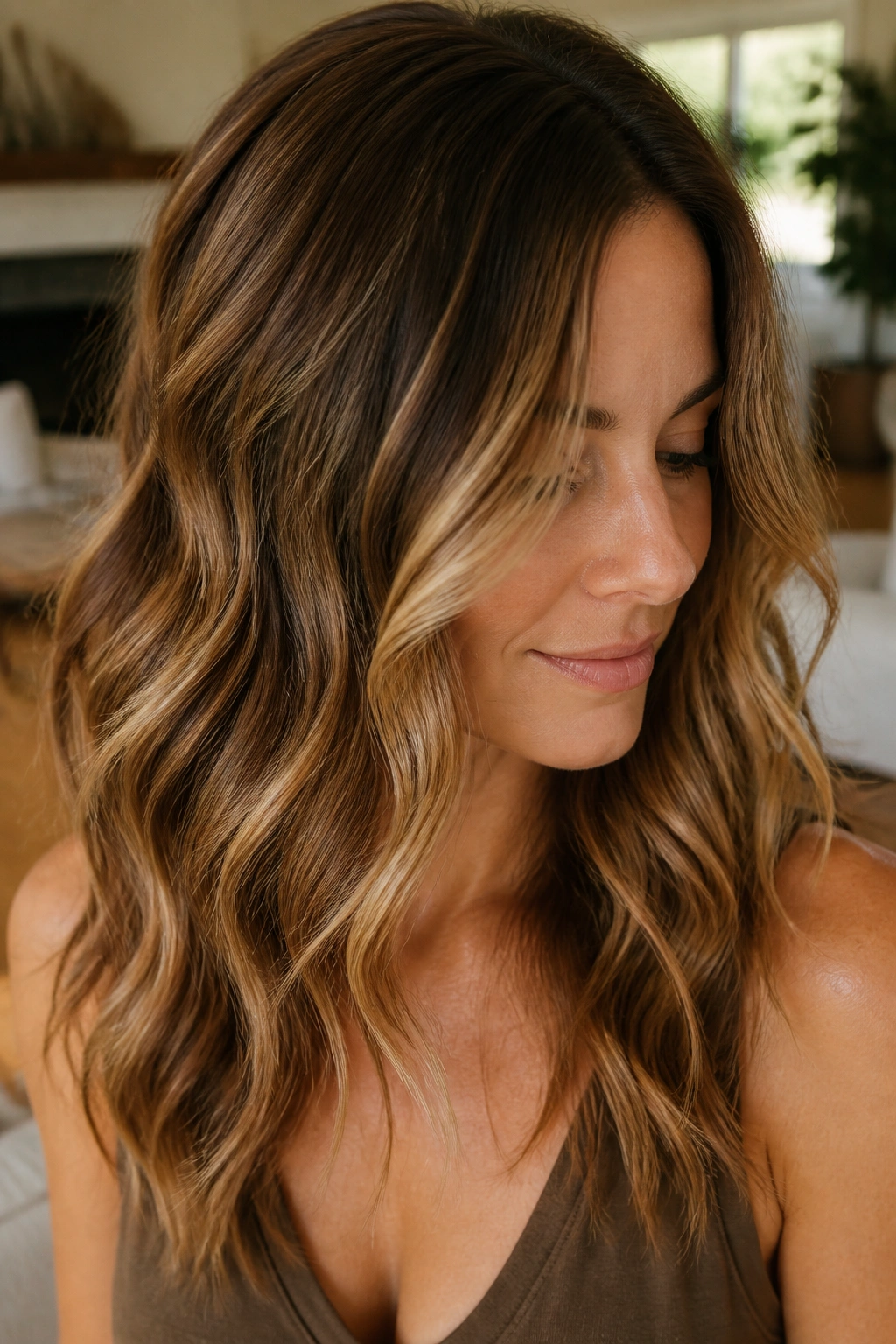
Caramel balayage is the easiest place to start if you want blond highlights for brown hair without a dramatic shift. The painterly placement keeps the root area darker, then drifts lighter through the mid-lengths and ends, so the color feels grown-in from day one.
Soft warmth is the whole point here. On medium brown hair, caramel blond sits between gold and beige, which gives you brightness without the sharpness of a pale blonde. It looks especially good when the hair has loose bends or soft waves, because the lighter pieces break up the brown in motion.
Ask for one to two levels of lift on the longest pieces first, then a gloss in honey-beige if the blonde comes up a little orange. That small toner step changes the whole finish.
What makes it worth choosing
- The grow-out stays soft for weeks.
- It flatters warm, olive, and neutral skin tones.
- It works on long layers, lobs, and shoulder-length cuts.
- It looks calm under indoor light and brighter outside.
If you like color that does not demand a salon visit every few weeks, this is a smart first pick. It is not loud. That is the appeal.
2. Face-Framing Money Piece
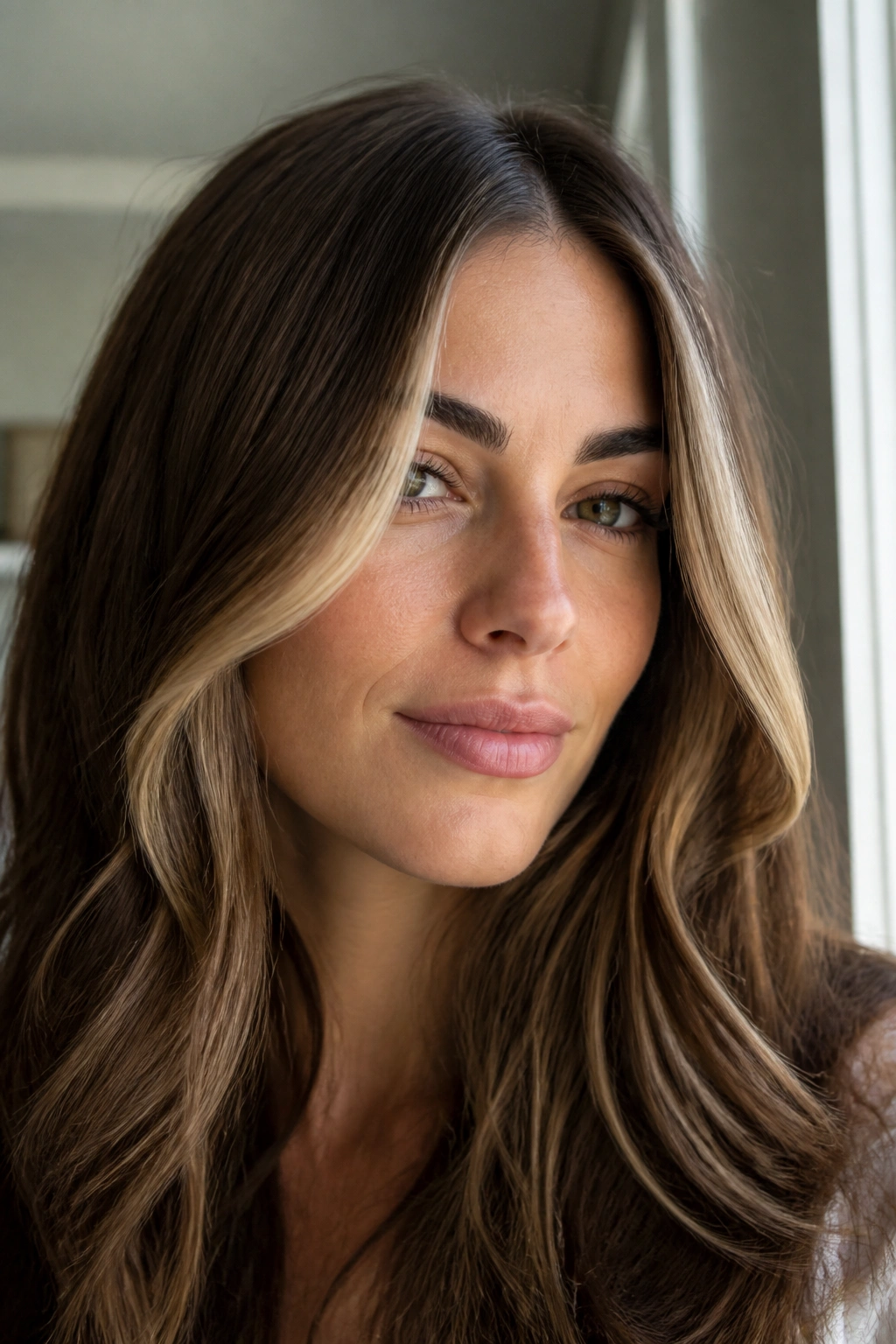
A money piece is the fastest way to make brown hair look brighter without coloring the whole head. Two lighter blond sections around the face can change the feel of the cut in one appointment, which is why this look gets used so often.
Why does it work so well? Because the eye goes straight to the front. If the hairline is lighter, the face reads brighter too, even if the rest of the hair stays mostly brown. The contrast can be soft or sharp depending on how light you go.
What to ask for
- Two front pieces about 1/2 inch to 1 inch wide on each side.
- Slightly lighter blond at the cheekbone level for balance.
- A softer tone if you wear warm makeup.
- A cooler beige if your skin leans pink or neutral.
If you wear your hair up a lot, this is one of the better choices. The lighter pieces still show when the hair is pulled back, and that little flash around the face keeps the style from feeling flat. Short and simple. It works.
3. Fine Babylights
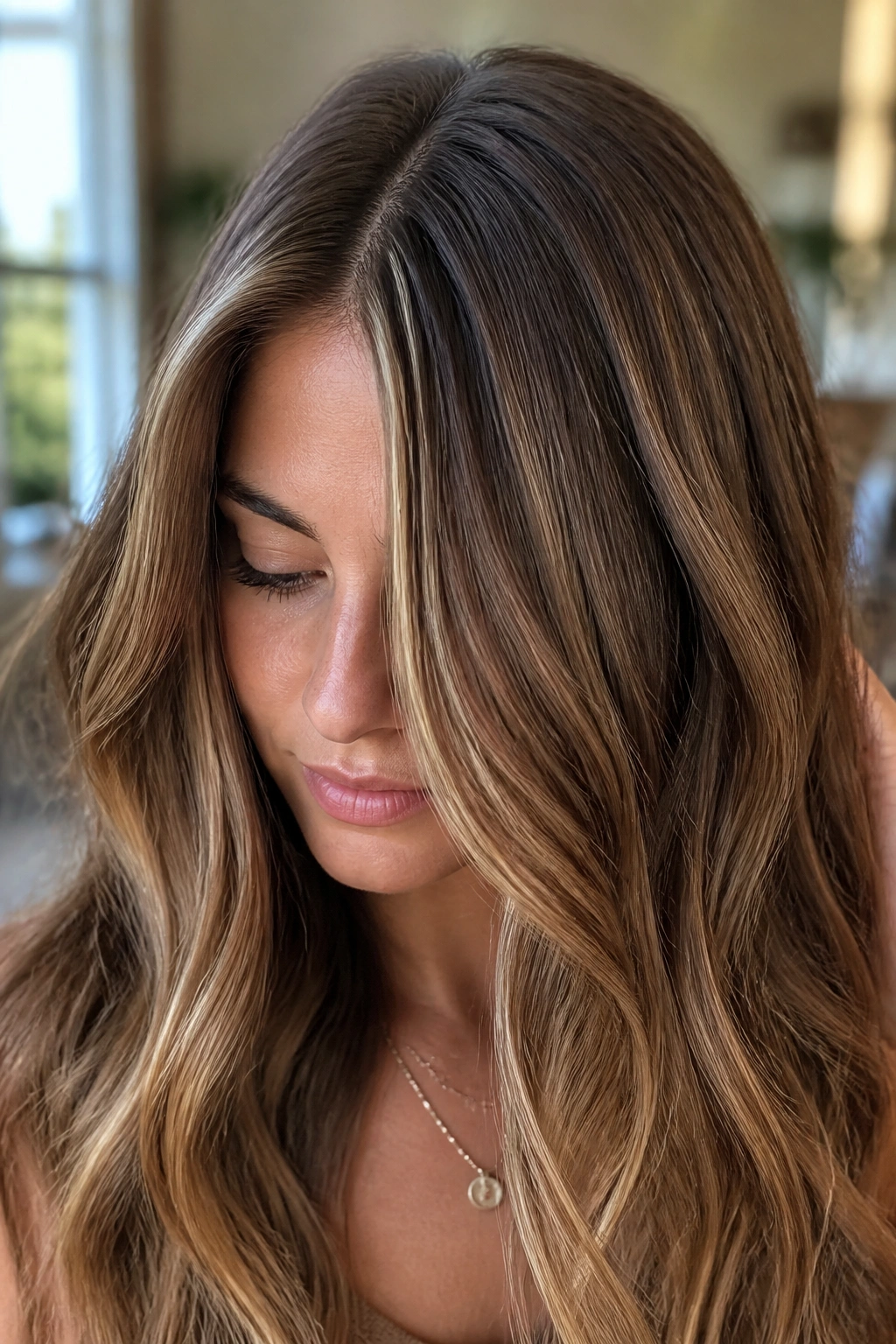
Babylights are the delicate version of blond highlights, and on brown hair they can look almost like natural sun-lightening. The sections are tiny, the weave is fine, and the result is a soft shimmer rather than obvious streaks.
This is the choice for people who hate stripey color. The lighter strands blur into the brown base, so the hair keeps its depth. That makes babylights a good fit for fine hair, straight hair, or anyone who wants blonde that shows up as movement instead of blocks of color.
The best babylights are placed where the sun would hit first: around the part, along the crown, and through the top layers. If they’re packed too densely, the look loses its charm and starts to feel overworked.
Why people come back to this look
- It grows out softly.
- It keeps brown hair looking full.
- It doesn’t scream “fresh color.”
- It plays well with glossy blowouts.
A tiny note that matters: babylights need patience. They take longer to place, and that is part of why they look clean. Rushing them is how you end up with a highlight pattern that feels busy instead of airy.
4. Chunky Blond Ribbons
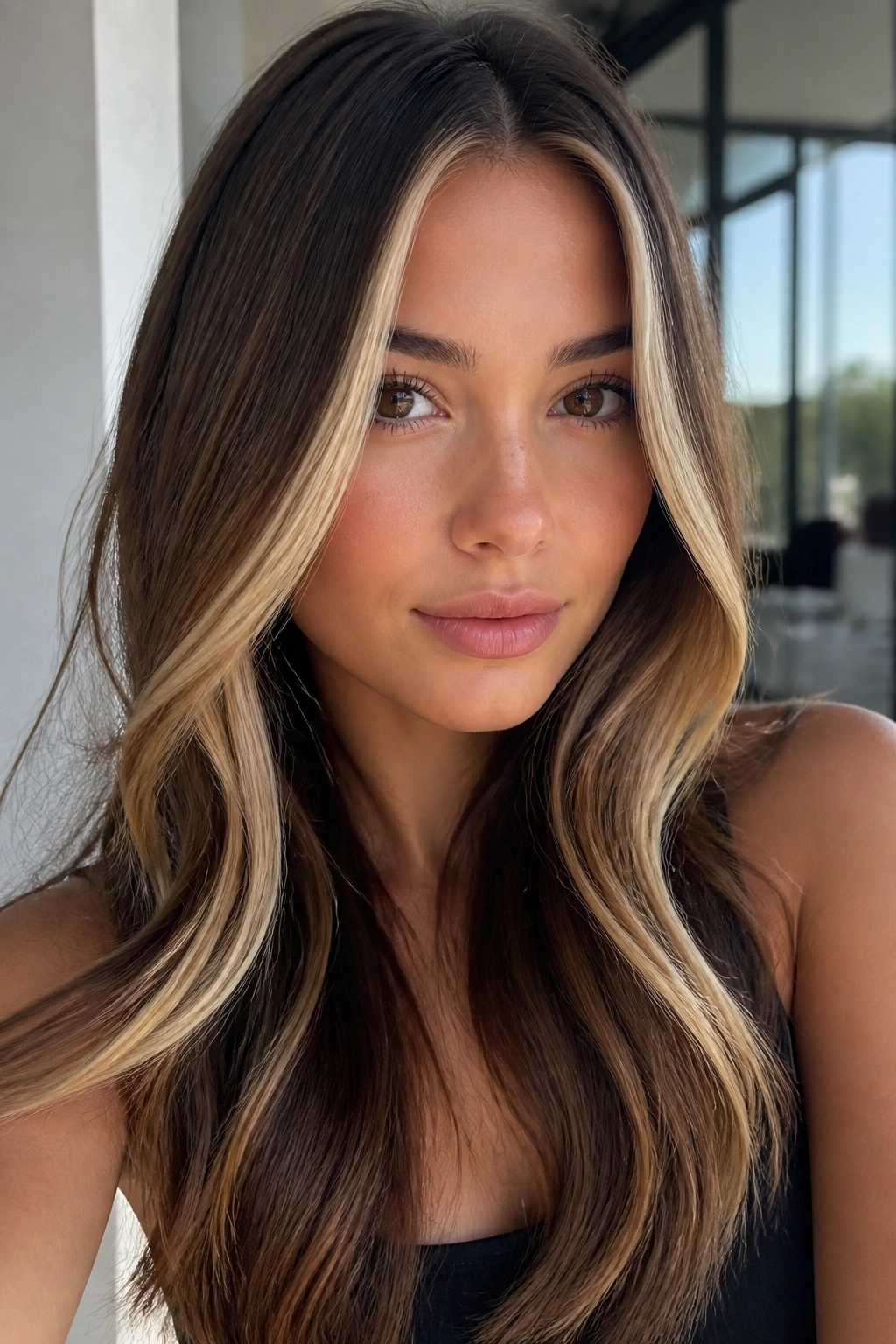
Chunky blond ribbons are for someone who wants the highlights to be seen from across the room. The sections are wider, the contrast is louder, and the whole look has a bit of attitude to it. On brown hair, that contrast can be sharp in a good way.
These highlights sit more like visible ribbons than a fine veil of color. They’re especially strong on layered cuts, because the movement of the hair keeps the lighter pieces from reading as one solid stripe. Straight hair can wear this look too, but it needs a careful hand so the panels don’t look dated.
What to watch for
- Ask for wide but spaced pieces, not random blocky streaks.
- Keep the toner soft so the blonde doesn’t turn brassy.
- Use this look if you like styling your hair, since waves show it best.
- Skip it if you want a barely-there grow-out.
There’s a reason this style keeps coming back. It gives brown hair a graphic line and a bit of drama without needing full bleach from root to tip. Bold? Yes. Messy? It shouldn’t be.
5. Honey Blond Highlights
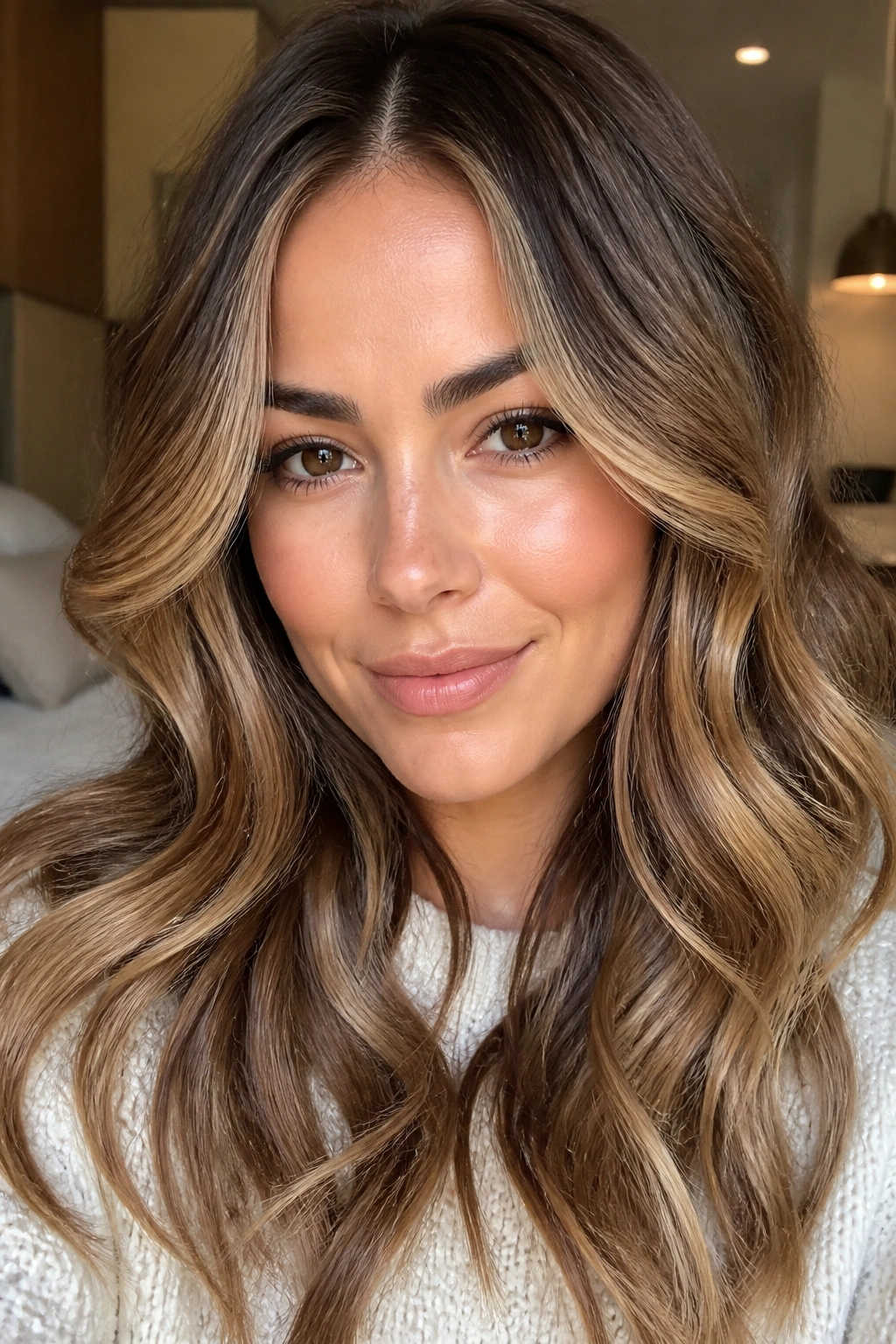
Honey blond is one of the easiest blond shades to wear on brown hair because it brings warmth without looking flat. It has a golden, almost syrupy glow that sits nicely on chestnut, cocoa, and medium brown bases.
On warm skin tones, honey can look like it belongs there. On cooler skin, it still works if the colorist keeps the tone from going too orange. That’s the line to watch. Honey should look sweet and glowing, not coppery.
This is one of those shades that looks even better when the hair has a little shine product in it. Not a heavy serum. Just enough to make the surface catch the light as the hair moves.
Best ways to wear it
- With soft curls and a middle part.
- On layered medium-length hair.
- Around the crown and front instead of only the ends.
- Paired with a chestnut or mocha base.
If you want the color to feel natural but not dull, honey blond does a lot of the work for you. It is warm in the right way. That matters.
6. Ash Blond Dimension
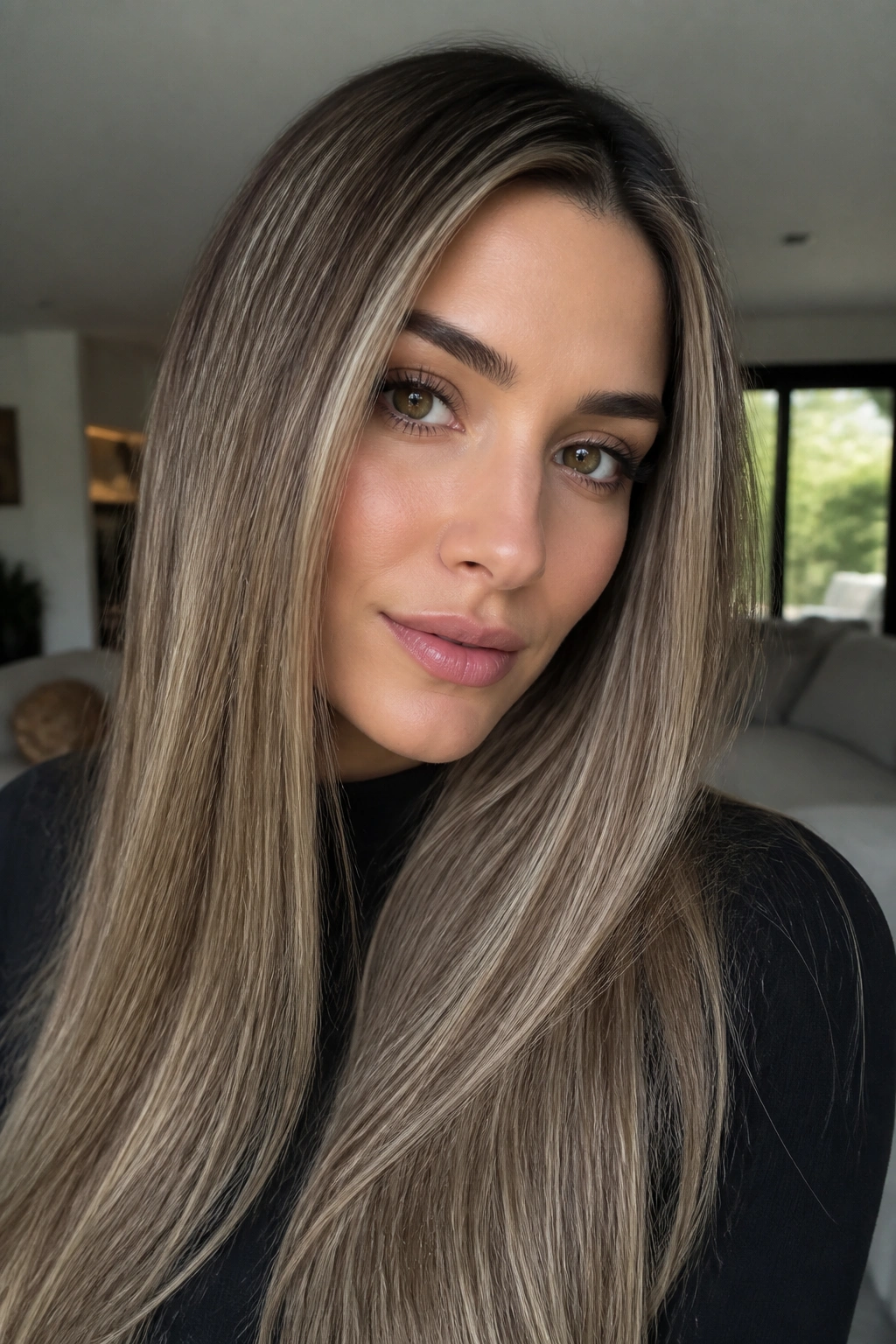
Ash blond on brown hair has a cooler, smokier finish. It takes the warmth out of the result and leaves you with something more beige-gray than gold. That makes it a strong choice if your natural brown pulls red or orange when lightened.
Cool tones need enough lift first. That part gets skipped too often. If the hair is still too dark underneath, ash toner won’t fix it; it will only mute the wrong shade. The blonde has to lift cleanly before the cooler finish makes sense.
This look tends to read well on sleek hair, blunt cuts, and darker brown bases with cool undertones. It can also make green or gray eyes stand out because the color has less warmth fighting for attention.
What makes it different
- It softens warmth in the brown base.
- It looks polished on straight styles.
- It works well if gold tones are not your thing.
- It can go dull if the toner is too heavy.
A good ash blonde should look smoky, not muddy. That difference is smaller in photos than it is in person, which is why this one needs a careful colorist more than a fast appointment.
7. Beige Blond Highlights
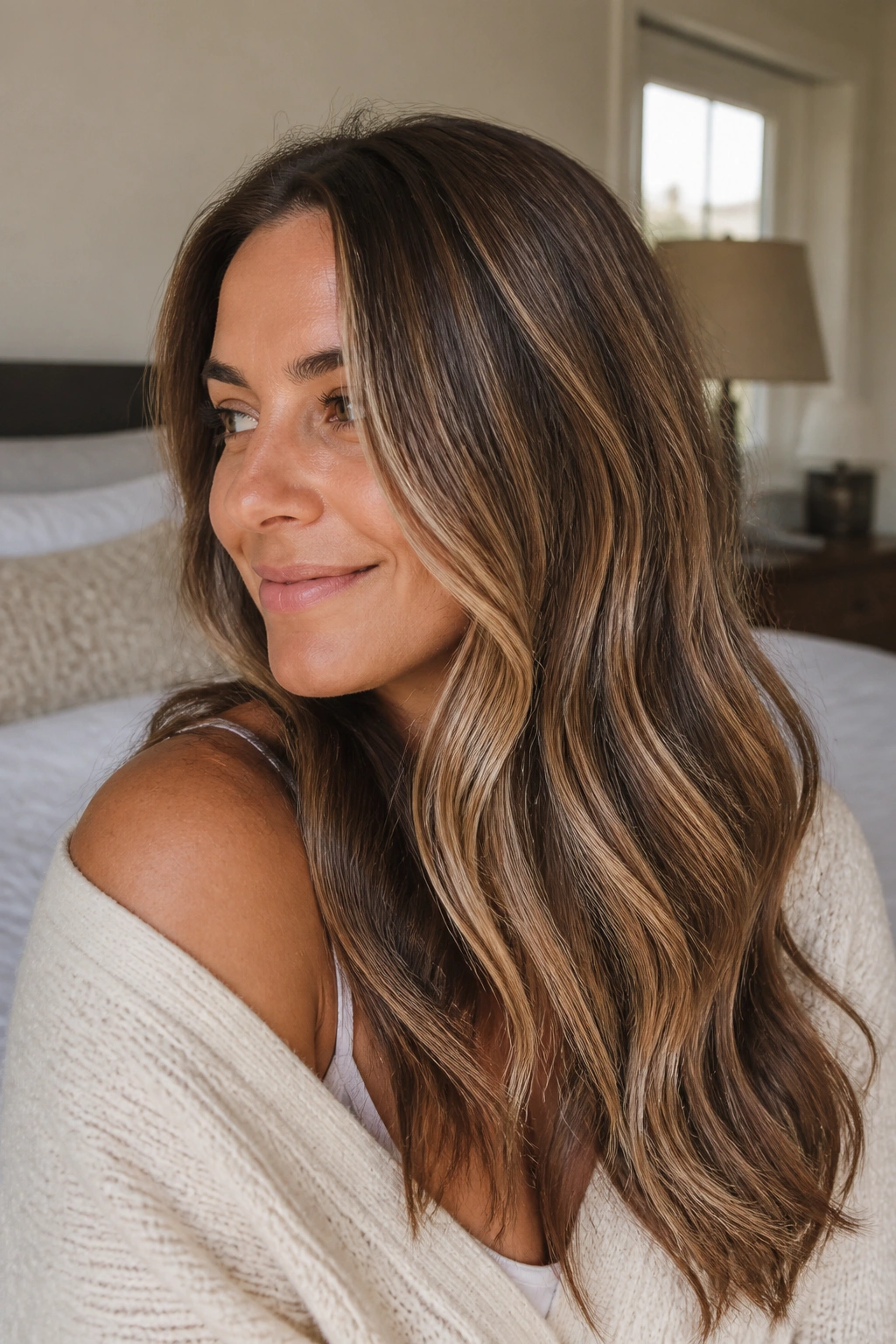
Beige blond is the middle ground that people overlook, and it’s usually the safest bet. It sits between warm and cool, so it doesn’t lean gold, and it doesn’t go flat gray either. On brown hair, that neutrality can be a relief.
If honey feels too warm and ash feels too cold, beige often lands in the right spot. It gives the hair a soft, clean brightness that works with a lot of skin tones. The color also tends to age well as it grows out, which means the roots don’t jump out the way they can with a harsher blonde.
How it wears in real life
- It looks good on wavy and blow-dried hair.
- It suits medium brown and light brown bases.
- It pairs with glosses better than strong purple shampoo.
- It’s easier to keep believable than icy blonde.
There’s nothing flashy about beige blond, and that’s exactly why it works. It gives you lightness without forcing the whole style into one temperature.
8. Champagne Blond Gloss Lights
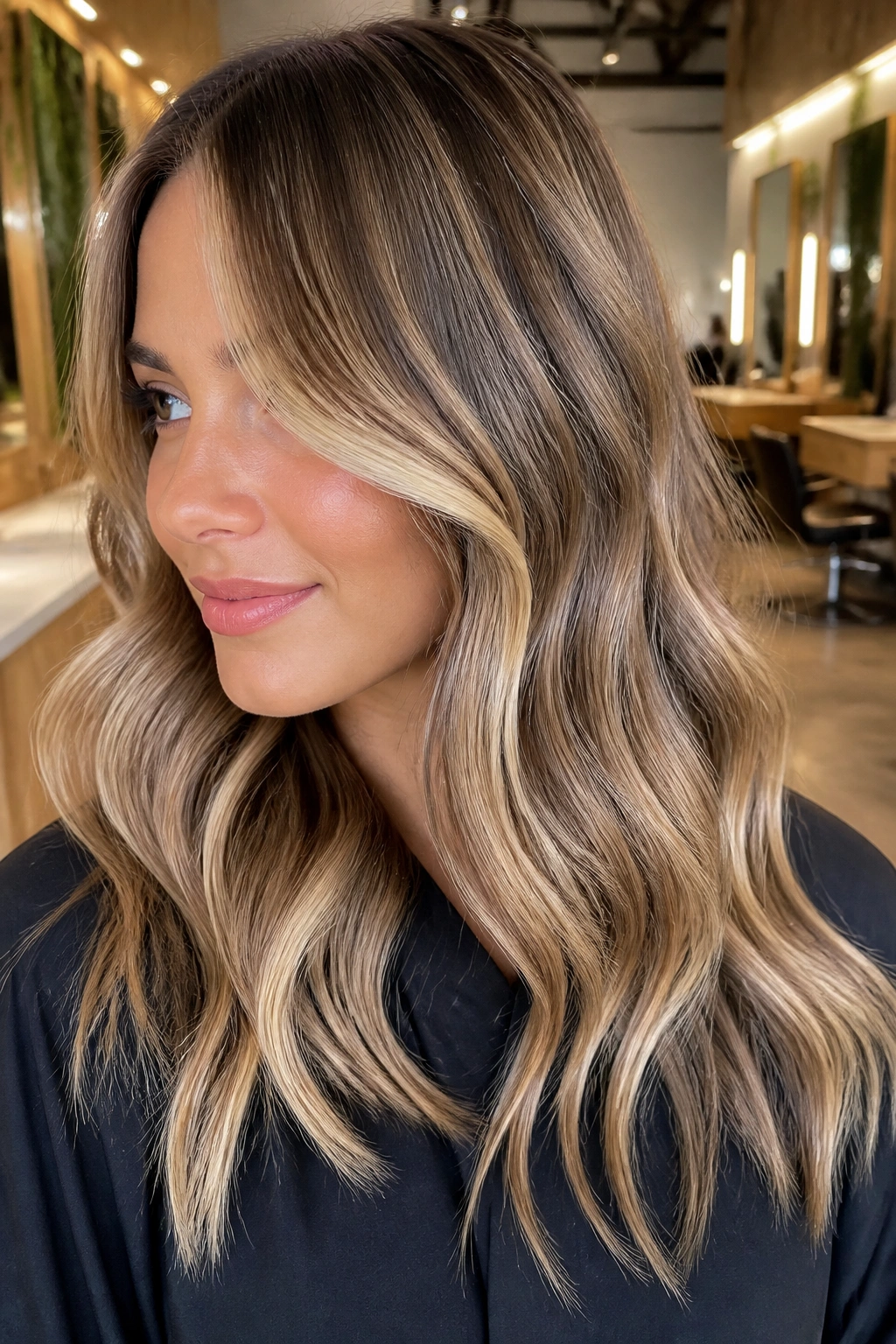
Champagne blond has a pearly, slightly luminous finish that sits beautifully on lighter brown hair. It is softer than platinum and cleaner than gold, which gives the hair a sleek, dressed-up feel without making it look stiff.
The best version is usually done with fine highlights and a glossy toner, not with huge strips of bleach. That combo is what creates the pale, silky look people are after. If the brown base is very dark, the result will be softer and deeper; if the base is light brown, the champagne tone can read more clearly.
A few things that matter here
- The color works best when the hair is healthy and shiny.
- It needs gentle toning, not harsh stripping.
- It can flatten out if every strand is lifted the same amount.
- It looks strongest on smooth blowouts or polished waves.
This is one of the prettiest options for someone who wants a lighter look without a brassy finish. It feels clean. Not icy. Not gold. Just bright enough to notice.
9. Foilyage for Extra Lift
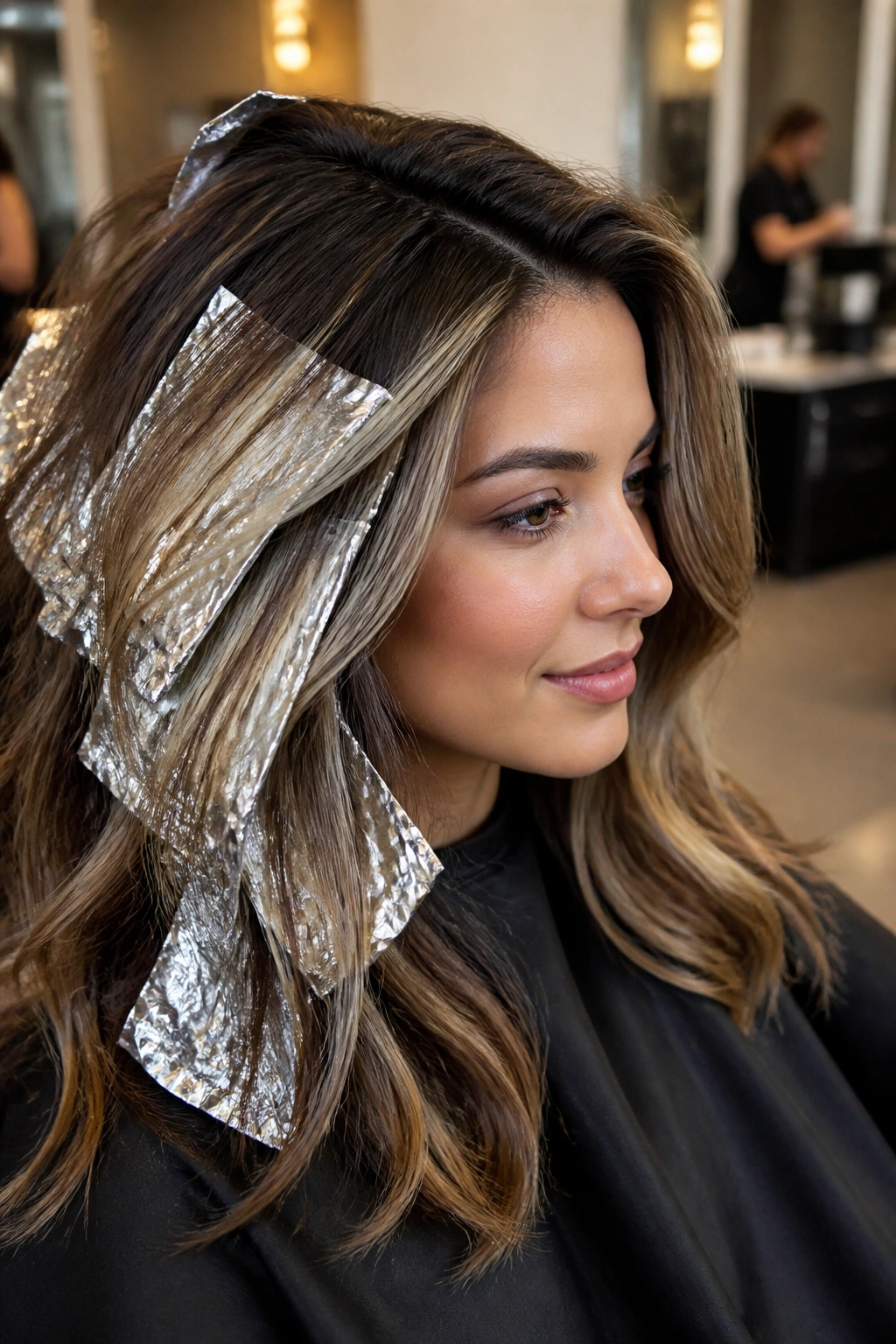
Foilyage is the hybrid technique that gives brown hair more brightness than open-air balayage usually can. The colorist paints the blonde, then wraps selected pieces in foil so they lift a little more. That extra heat matters on darker brown hair.
If your base is deep chocolate or espresso and you want clear blond highlights, foilyage is often the better route. It lets the lighter pieces reach a more visible blonde while the unwrapped sections stay soft and natural-looking. You get contrast, but you do not get the whole head blown out into one flat shade.
Why this technique works
- Foils help the hair lift faster and lighter.
- Painted placement keeps the edges soft.
- It gives depth near the root and brightness through the mids.
- It suits people who want a more noticeable shift.
I like this option for brunettes who say they want blonde but don’t want the maintenance of full platinum. That sentence gets said a lot, and foilyage is usually what they actually mean.
10. Sunkissed Partial Highlights
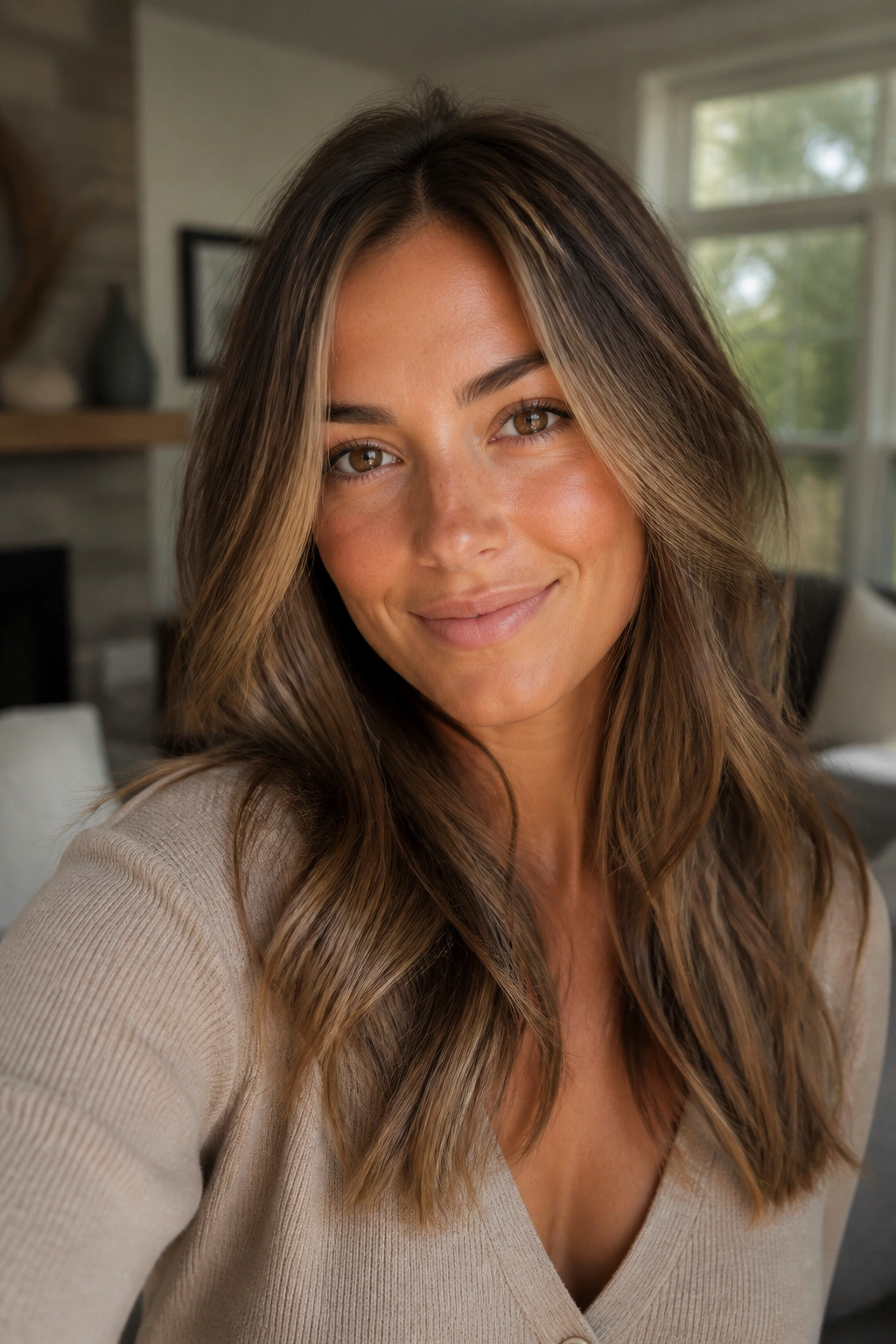
Partial highlights focus on the top half of the head, the part line, and the pieces around the face. The underlayers stay mostly brown, which keeps the result light and easy to wear. On brown hair, that can be enough to change the whole mood.
This is the kind of color that looks casual in a good way. It catches light when you move, but it doesn’t announce itself from every angle. If you wear your hair down most of the time, partial highlights may be all you need. If you part your hair the same way every day, the brightness shows right where it should.
Best fit for this look
- First-time highlight wearers.
- Anyone who wants less time in the chair.
- Hair that already has some natural movement.
- People who like easy grow-out.
It’s also a practical choice when you’re testing the waters. You can always add more brightness later. Starting small is not a compromise. Sometimes it’s the smarter move.
11. Full-Head Blond Weave
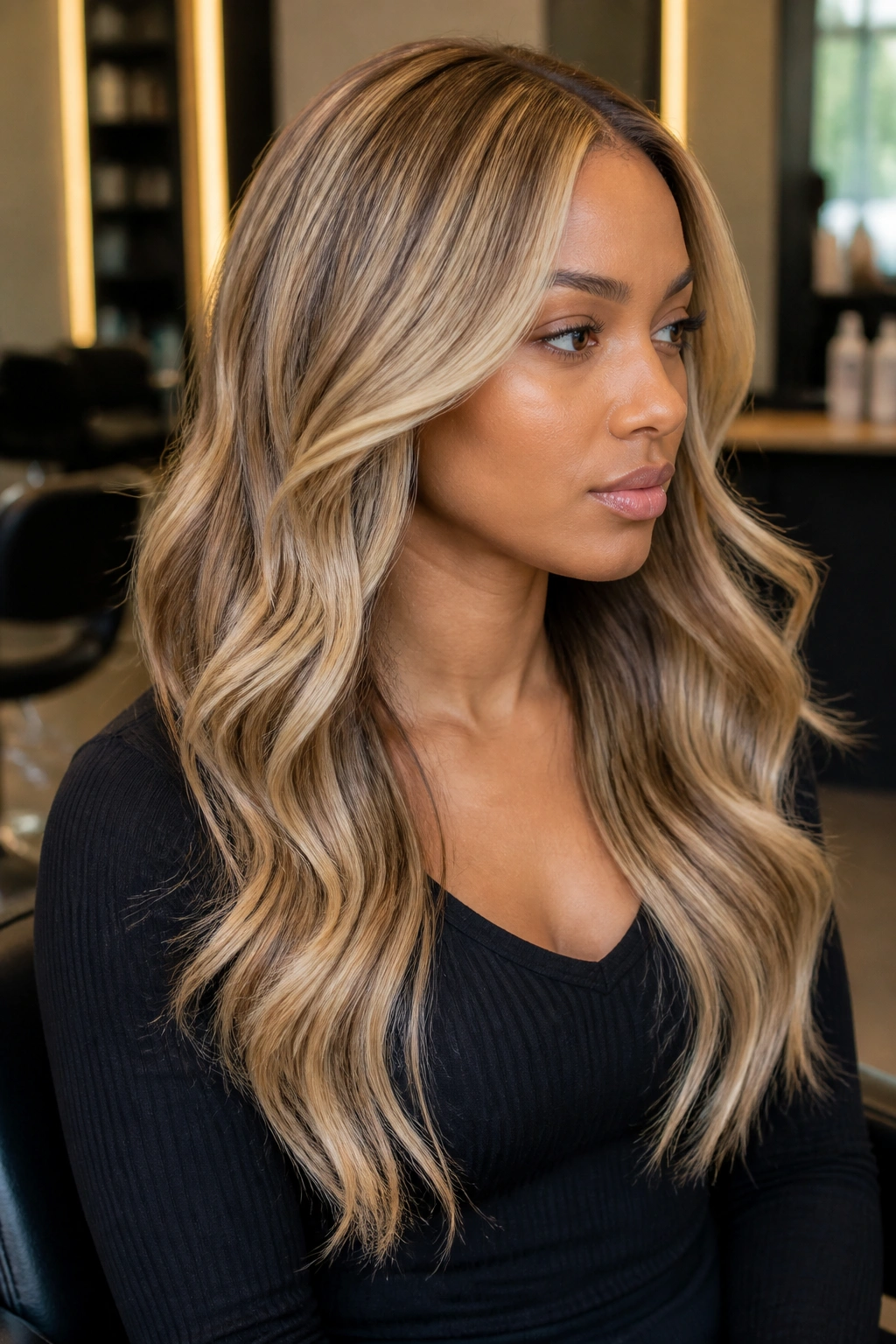
A full-head weave brings blond highlights through more of the hair, not just the top layers. The result is a more even spread of brightness, which can be helpful if brown hair feels heavy or one-note.
Unlike partial highlights, this version reaches into the underlayers and nape area too. That matters when you wear ponytails, buns, or half-up styles, because the lightness shows from more angles. It also makes the hair feel fuller, since the lighter strands interrupt solid blocks of color.
What to expect
- More appointment time than a partial.
- More visible maintenance as the roots grow.
- A better match for people who like a brighter look.
- Extra payoff if the haircut has layers or movement.
This is the look for someone who wants the blonde to show, not hide. It is not the lowest-maintenance route, but it does give brown hair a lot more life when the base has started to feel too dark or too heavy.
12. Peekaboo Blond Underlayers
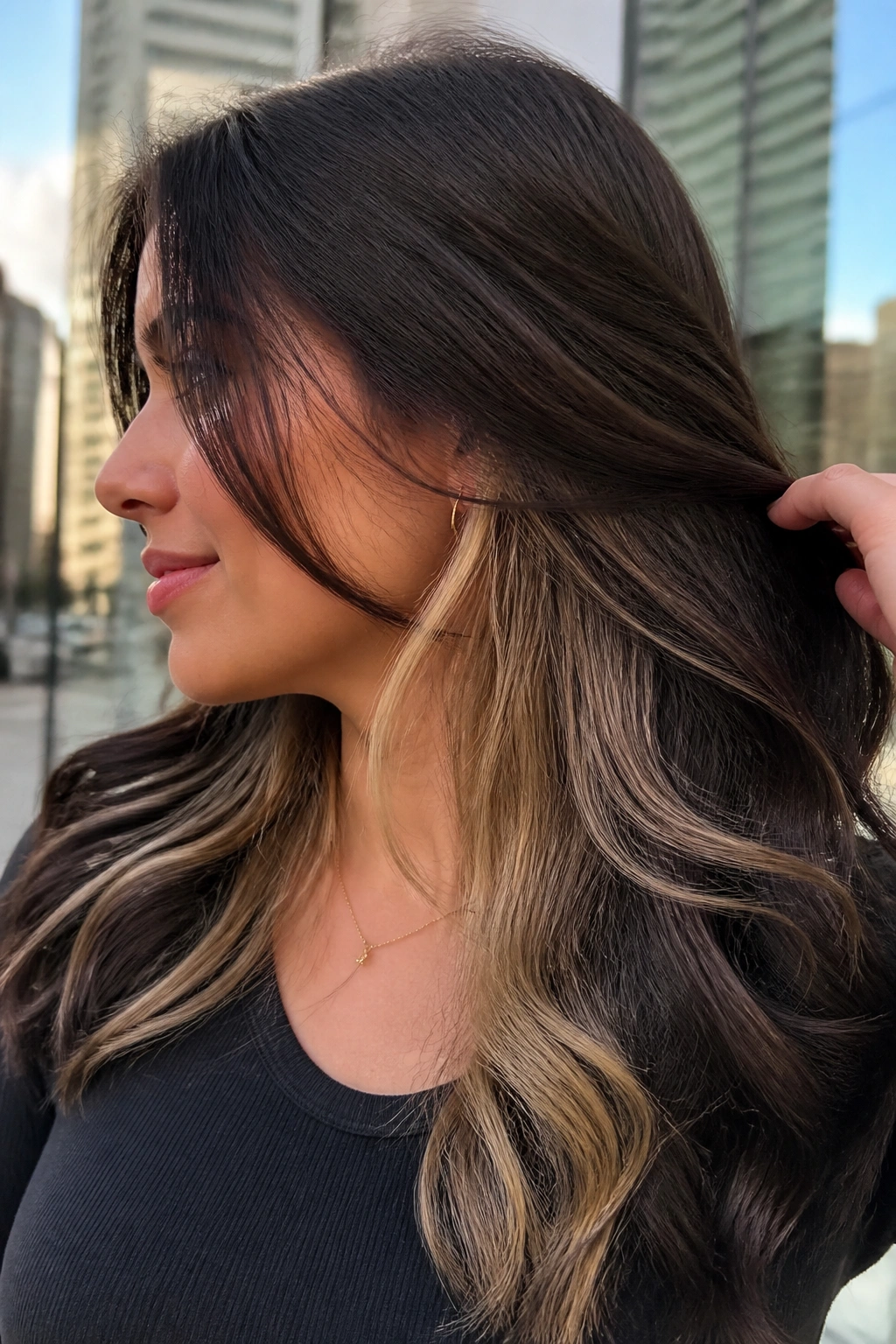
Peekaboo highlights are tucked underneath the top layer of brown hair, which gives you a flash of blonde only when the hair moves, lifts, or gets tied up. The top stays rich and dark. The surprise lives below.
That hidden placement makes this one fun without being too loud. You get contrast in a ponytail, in a bun, or when the wind catches the ends. On loose hair, the blonde can stay mostly private, which is the appeal for people who want something a little unexpected but still wearable at work.
Where it shows up best
- Thick hair that naturally covers the underlayer.
- Lob cuts and shoulder-length shags.
- Updos and half-up styles.
- Color lovers who want a low-commitment change.
It’s a good reminder that highlights do not have to be obvious to matter. Sometimes the best part is the little flash you catch in the mirror when your hair shifts.
13. Bronde Ombre Into Blond Ends
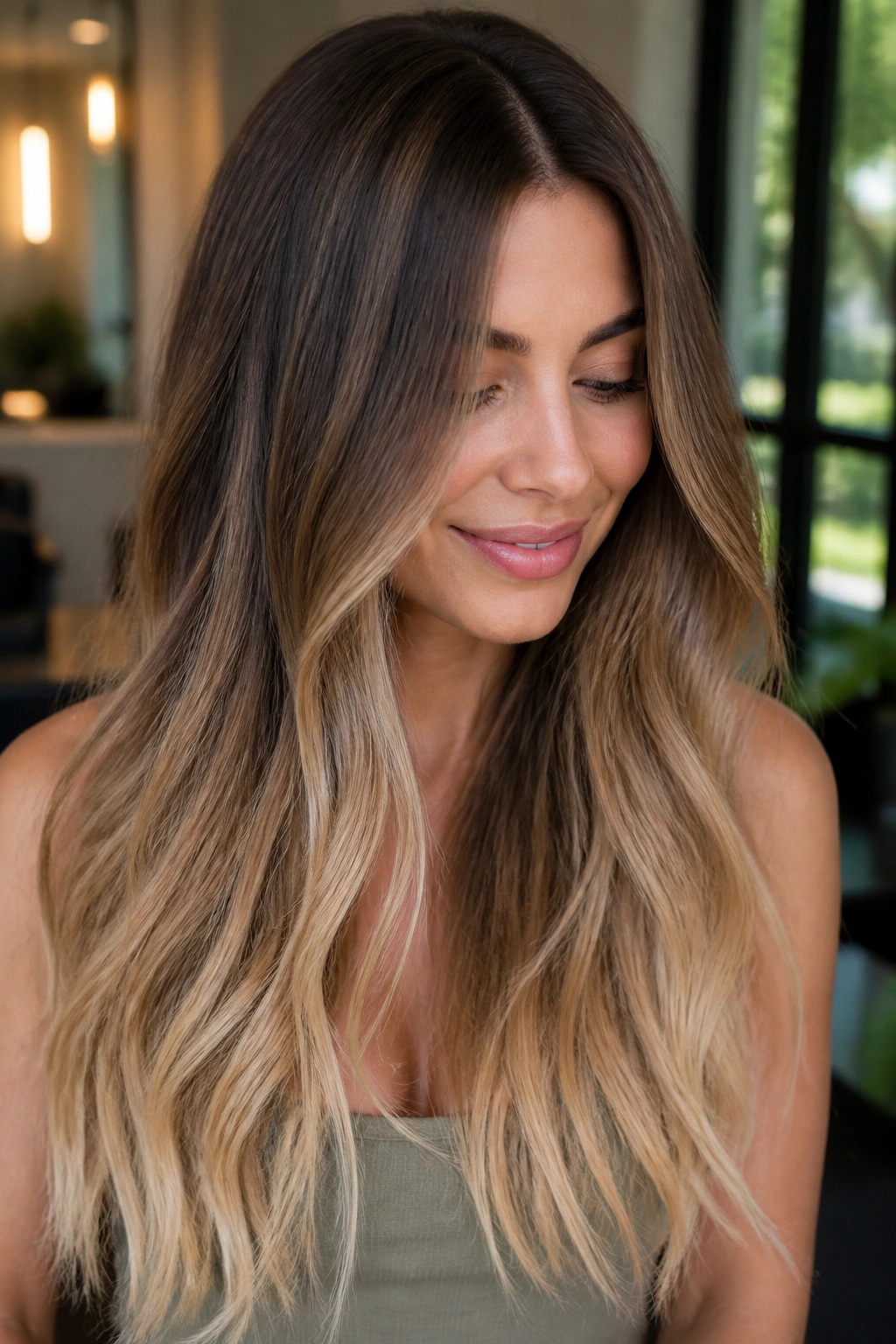
Bronde ombré starts with brown at the roots and gradually lightens toward the ends, where the blonde shows up more clearly. The whole thing feels smoother than a hard dip-dye because the shift happens over a longer stretch of hair.
This look is especially good on longer lengths. The gradient needs room to breathe, and short hair can make it feel cramped. On long brown hair, though, the fade from brunette to blond can look expensive and easy at the same time.
Why it wears well
- The roots stay close to your natural shade.
- The ends carry most of the brightness.
- It stretches out salon visits.
- It looks best when the ends are healthy, not frayed.
If the hair is already dry at the bottom, this is where damage shows first. That’s the catch. The color can be lovely, but it asks the ends to behave. A trim before coloring is rarely a bad idea.
14. Blond Highlights for Curls and Waves
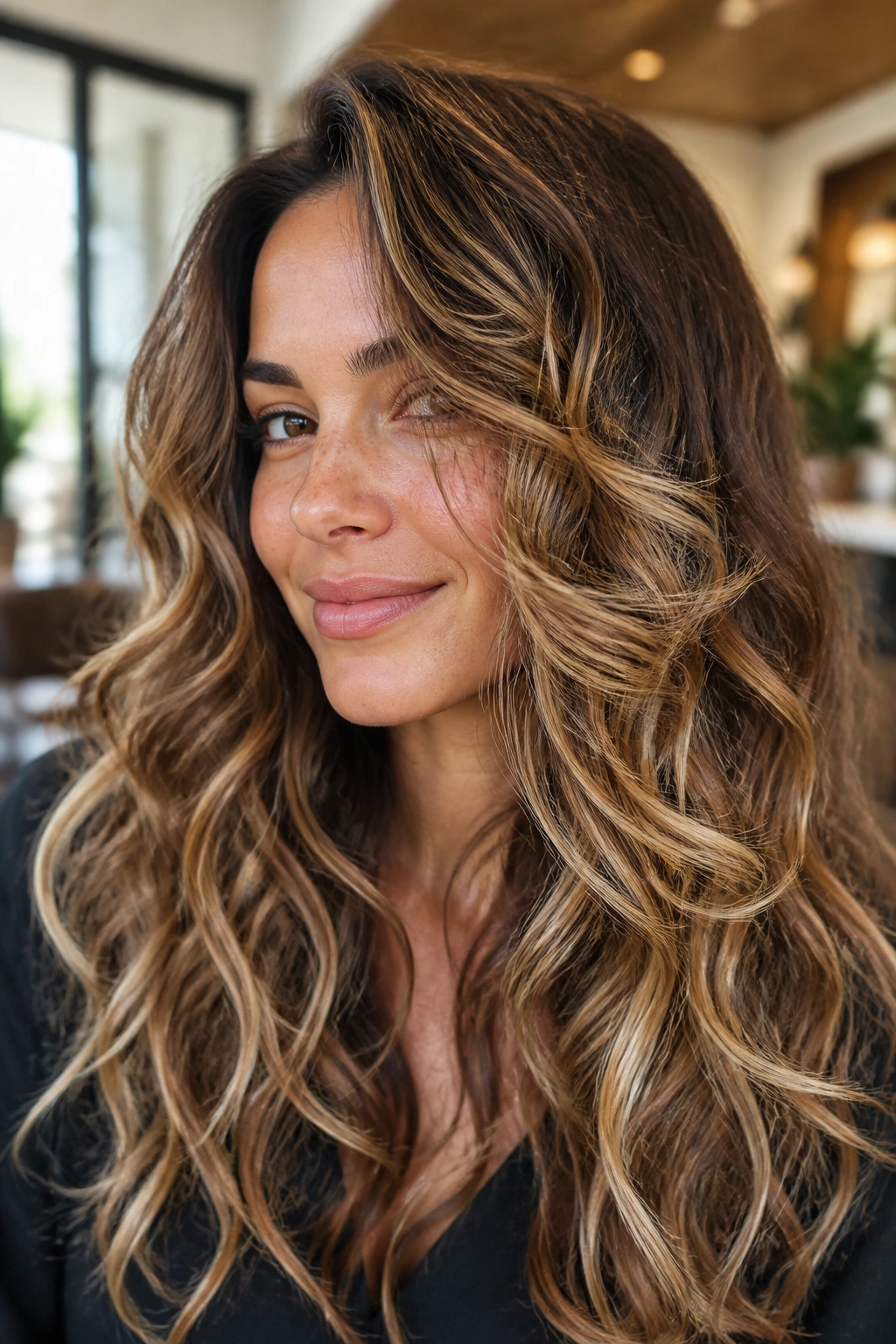
Curls do not wear highlights the same way straight hair does, and that’s where a lot of color work goes wrong. Blond pieces need to follow the curl pattern, not cut across it like a striped shirt.
On wavy and curly brown hair, the best highlights are placed where the curl opens and where the shape naturally catches light. That might be the outer bend of a ringlet, the top of a wave, or the face-framing curve near the cheek. The goal is movement. Not uniformity.
Placement tips that matter
- Use wider ribbons on loose waves.
- Keep tighter curls more softly painted.
- Leave some depth at the root so the curl pattern stays visible.
- Work with the haircut, not against it.
When the placement is right, the blonde looks like it belongs inside the curl. When it’s wrong, you get pale stripes that fight the texture. That one detail makes all the difference.
15. Sliced Highlights for Straight Hair
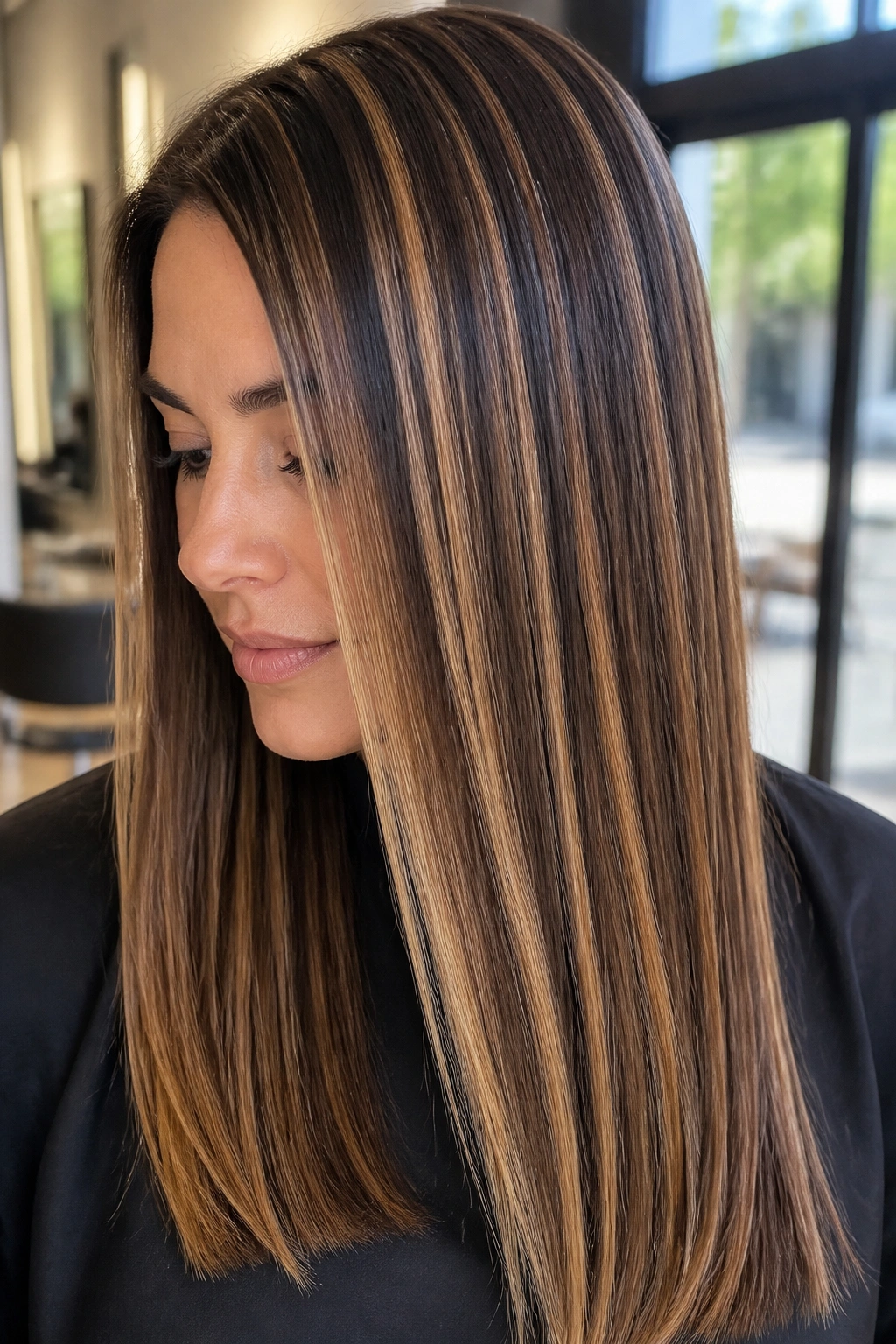
Straight hair can carry bolder blond highlights than people expect, but the placement has to be clean. Sliced highlights use longer, flatter sections that show up clearly when the hair lies smooth, which makes them a strong match for blunt cuts and straight blowouts.
This is not the same as babylights. Babylights blur in the hair; slices show structure. That crisp line is what gives straight styles a little edge. On brown hair, it keeps the blonde from disappearing into the base.
A few things to ask for
- Longer slices near the surface.
- A few hidden pieces underneath for movement.
- A toner that keeps the blonde soft, not yellow.
- Enough spacing so the color doesn’t turn blocky.
This style works especially well if you wear your hair glassy, pin-straight, or tucked behind the ears. The highlights show the cut. They also show any bluntness in the application, so precision matters here more than it does in softer looks.
16. Golden Blond on Chestnut Brown
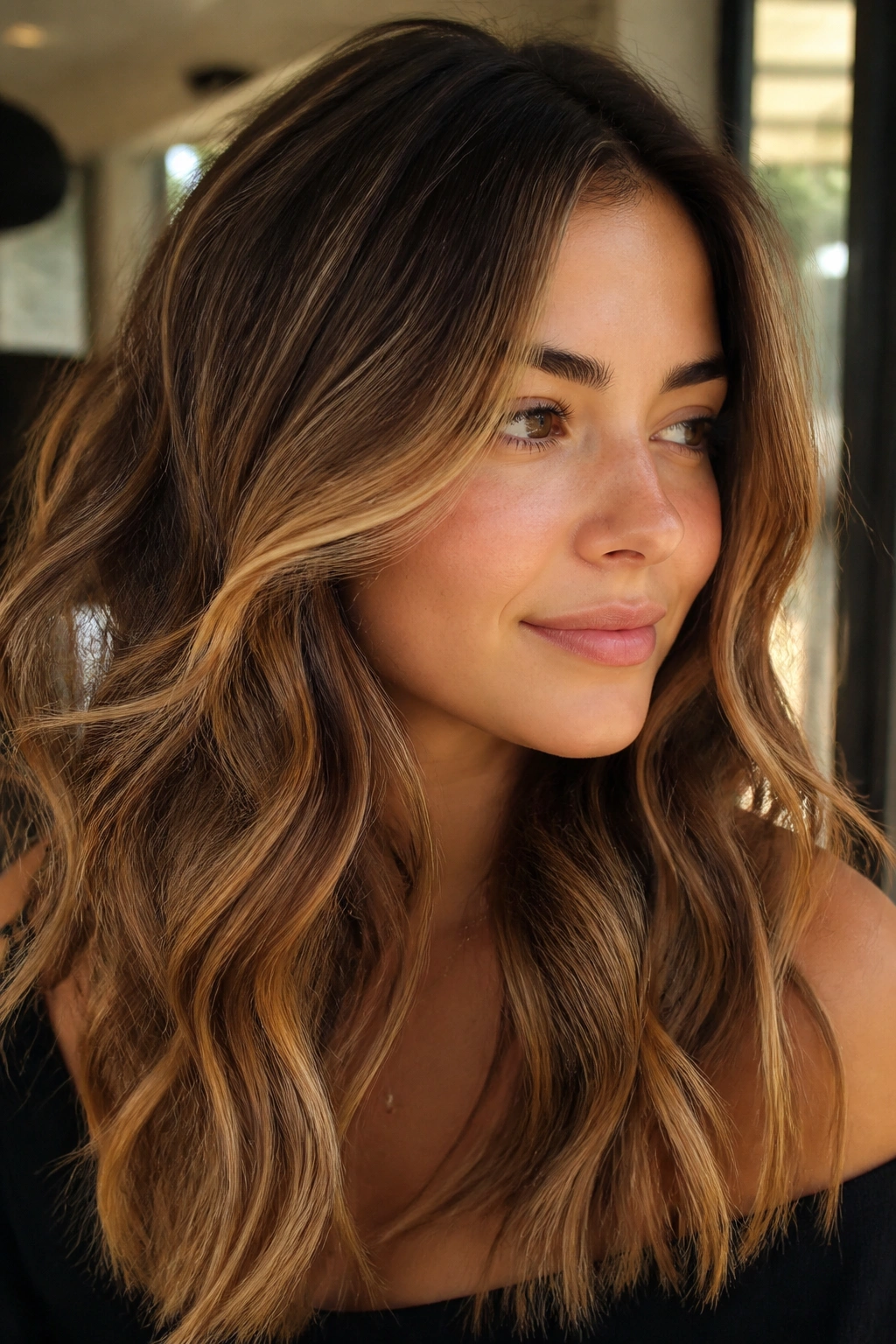
Golden blond is rich, warm, and easy to read against chestnut brown hair. It is brighter than caramel and deeper than pale blonde, which gives the whole style a sunny, almost reflective feel.
This shade works best when the brown base already has warmth in it. If the hair is cool and smoky, gold can look out of place. On a chestnut base, though, it looks natural and full. There is a reason so many brunettes gravitate toward it. It flatters the hair instead of sitting on top of it.
Why it stands out
- It adds warmth without going copper.
- It looks especially good on brown eyes.
- It brings shine to layered haircuts.
- It pairs well with loose curls and brushed-out waves.
A good golden blond should look rich, not orange. That sounds obvious, but in the chair it is a real distinction. One shade too far, and the whole thing changes tone.
17. Creamy Platinum Ends
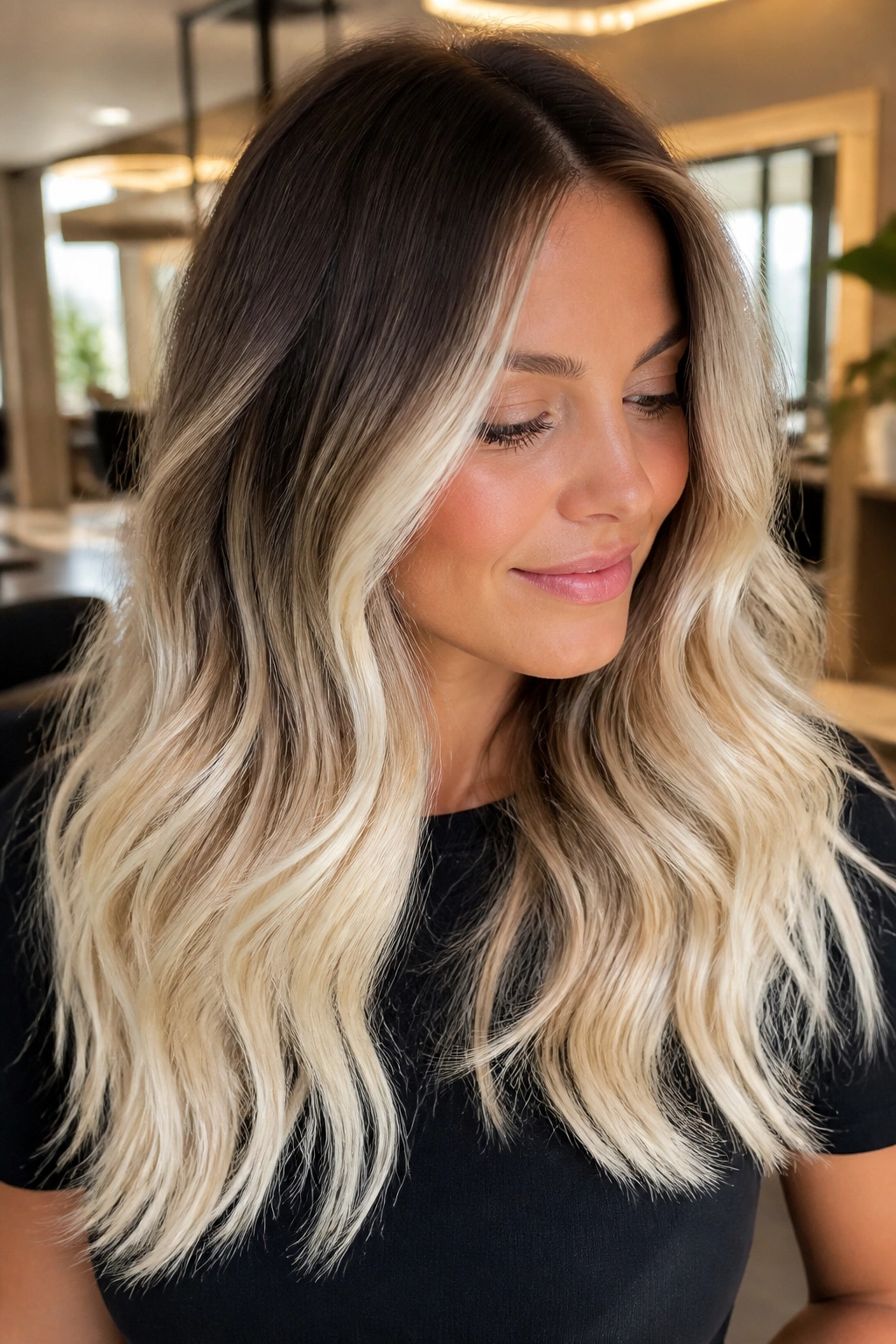
Creamy platinum ends give brown hair a sharper contrast than most of the looks on this list. The root stays dark, the mids soften the shift, and the ends go pale enough to read almost white, but with a creamy tone instead of a harsh silver cast.
This is a bolder choice. It works best on healthy hair that can handle pre-lightening and regular toning. The shape of the haircut matters too, because platinum ends on long, heavy hair can look flat if there is no movement. Mid-length cuts and layered styles usually wear it better.
What to keep in mind
- The ends need moisture before and after coloring.
- The root melt should stay soft, not chunky.
- The tone should be creamy, not yellow.
- Frequent toning may be part of the deal.
If you want blond that really changes the silhouette of brown hair, this is one of the strongest options. It asks for upkeep, though. There’s no clean way around that.
18. Toffee-and-Blond Ribbon Blend
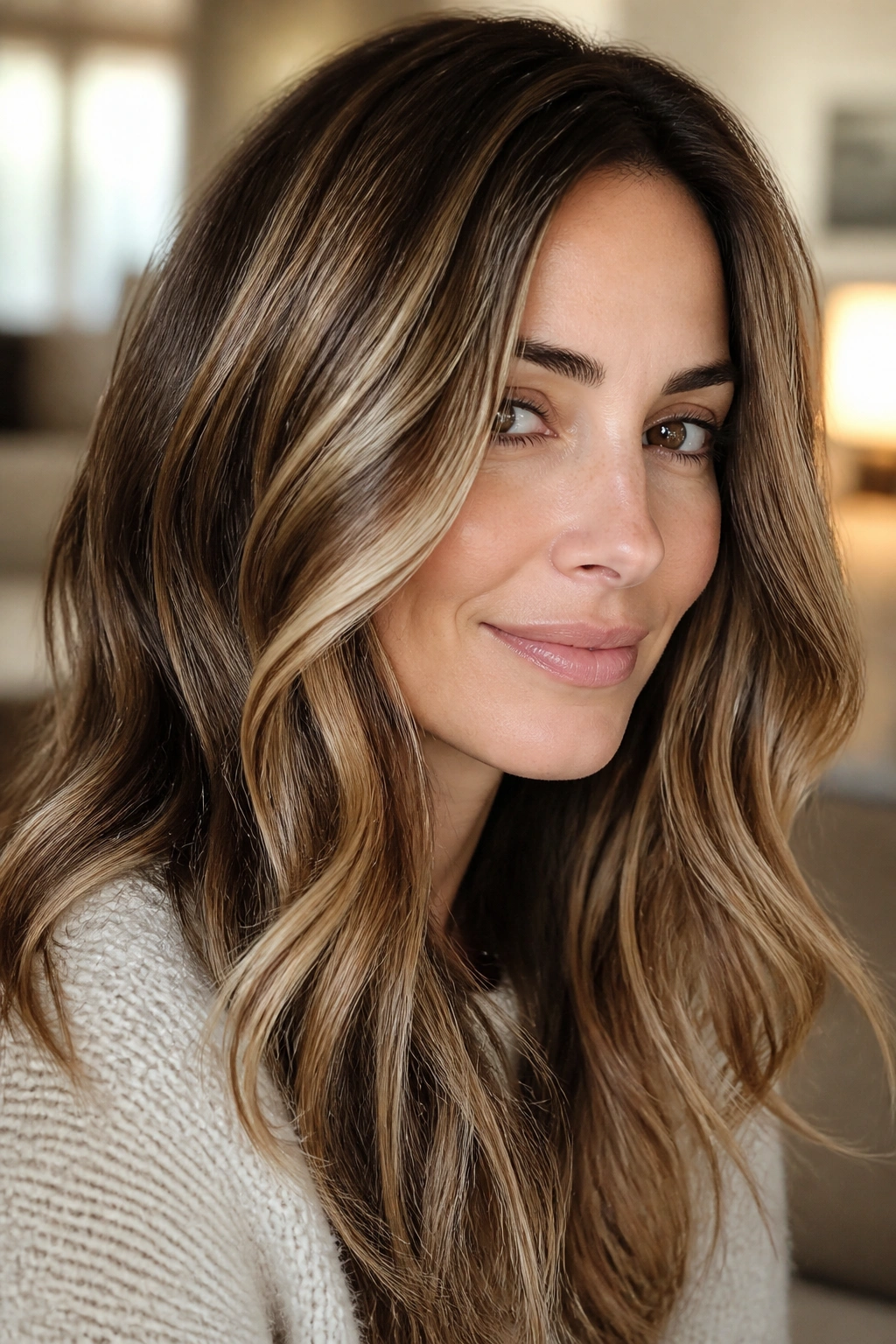
Toffee-and-blond ribboning mixes warm brunette pieces with lighter blond ribbons so the hair keeps depth instead of turning one flat shade. It is a good answer when brown hair feels dense but you do not want a full blonde overhaul.
The toffee keeps the base rich, while the blond pieces stop it from looking heavy. That contrast gives the hair movement, especially in layered cuts or styles with some bend at the ends. A lot of people call this “dimension,” but the real payoff is simpler: the hair looks more alive.
Why it works on brown hair
- It breaks up solid color.
- It looks good on thick or medium-density hair.
- It softens harsh grow-out.
- It gives enough contrast to notice in the mirror.
This is a practical color choice, not a flashy one. It is the kind of look that quietly fixes the problem of brown hair feeling too solid. That’s the whole job, and it does it well.
19. Mushroom Blond on Cool Brown Hair
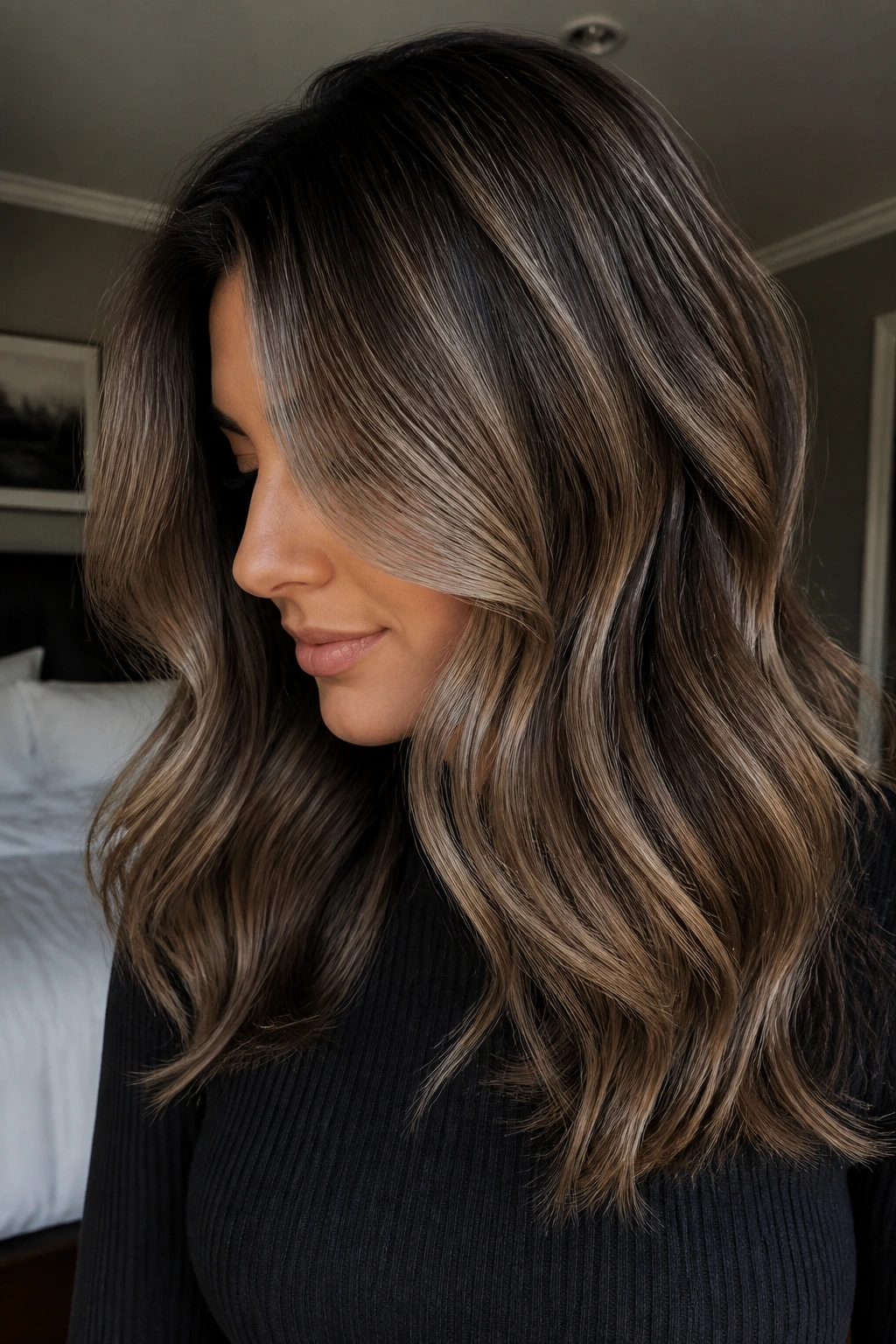
Mushroom blond sits in that smoky zone between beige and taupe. It has less gold than honey and less brightness than champagne, which makes it a strong fit for cool brown bases and people who want something earthy.
On dark brown hair, mushroom tones can feel subtle but still different enough to matter. The effect is less “blonde bombshell” and more soft, cool dimension. If your hair naturally carries ash or neutral undertones, this is one of the easiest blond directions to wear without constant fighting at the toner bowl.
What makes it appealing
- It avoids warm brassiness.
- It suits cool skin and cool makeup looks.
- It grows out in a calm, believable way.
- It looks good with textured cuts and soft waves.
This shade can go flat if it is over-toned, so the balance matters. You want smoke, not dust. That line is narrow, and a good colorist knows it.
20. Rooted Blond Highlights for Easy Grow-Out
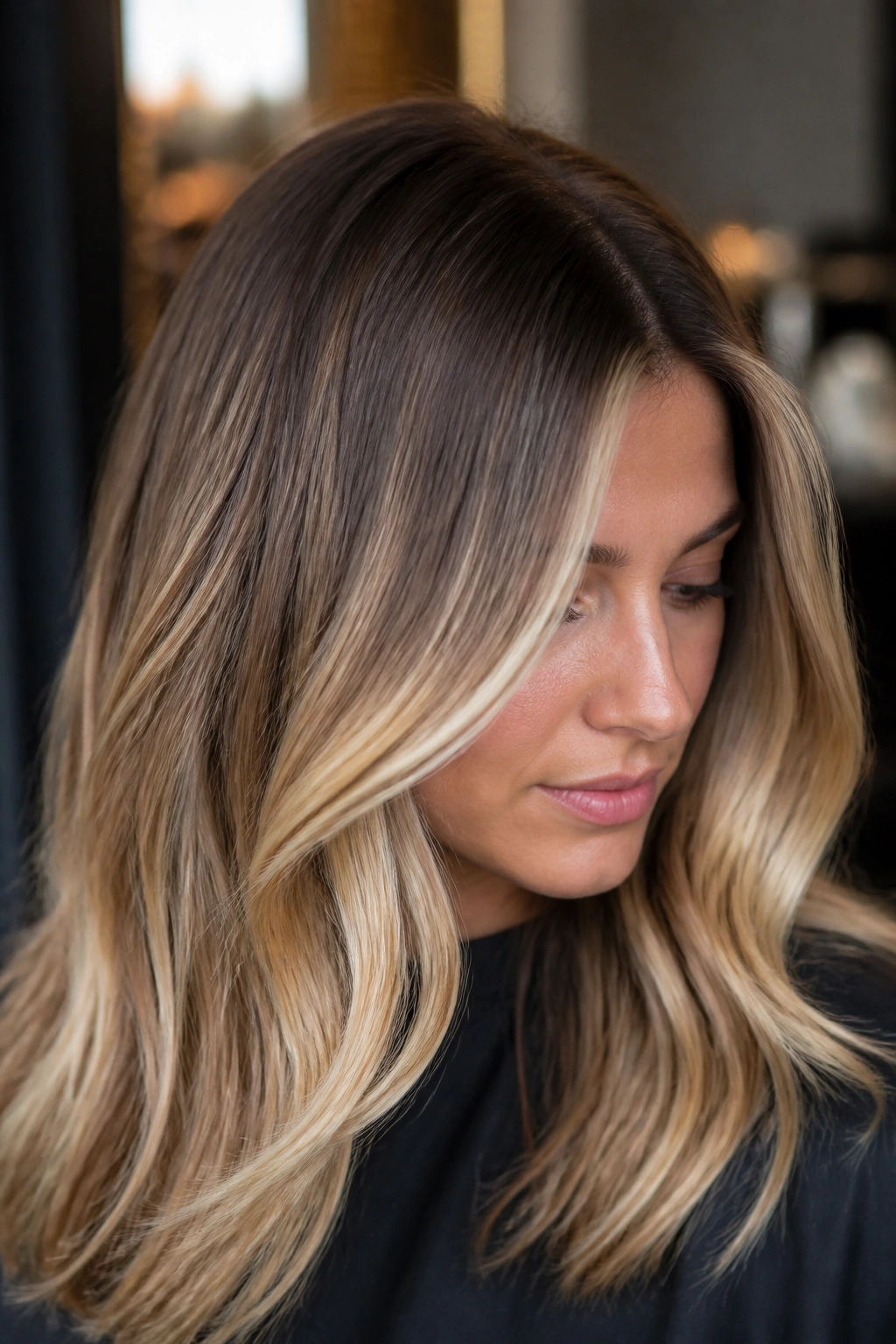
Rooted blond highlights keep the base darker at the scalp and let the lighter pieces start lower, then fade softly through the mid-lengths and ends. The root shadow makes the blonde easier to wear, especially if you dislike hard regrowth lines.
This is the low-drama version of going lighter. You still get brightness through the hair, but the dark root keeps the whole look grounded. On brown hair, that contrast can be flattering because it keeps the color from washing out the face. It also buys you time between appointments, which is no small thing.
Best details to ask for
- A root melt about 1/2 inch to 1 inch deep.
- Softly feathered transitions, not a hard line.
- Lighter pieces around the front for balance.
- A toner that keeps the ends soft and not yellow.
If you part your hair in different spots, this style holds up well because the root shadow stays believable from several angles. It is one of the most practical ways to wear blond highlights for brown hair without committing to a rigid maintenance schedule. And if you ask me, that matters as much as the color itself.
