



Purple-blue highlights on brown hair have a funny habit of looking expensive even when they’re subtle. On a deep chocolate or chestnut base, those cooler tones don’t sit on top of the hair like paint. They sink in a little, catch the light, and give you that glossy, dimensional look that plain brown hair sometimes misses.
The trick is placement. A thin indigo money piece changes the face fast. Fine lavender babylights whisper through the mids. Hidden panels, chunky streaks, and soft balayage each tell a different story, and they do not behave the same once they start growing out. Blue usually needs more lift than purple if you want it crisp, while purple can go muddy if the toner leans too warm. That’s the part people skip, and it’s usually why a good idea looks flat in the chair.
Brown hair can carry these shades better than a lot of people expect. Cool water, a color-safe shampoo, and the occasional gloss help keep the blue from fading into a tired greenish cast and keep purple from losing its edge. The styles below move from loud to quiet, hidden to obvious, and soft to graphic. The first one is where I’d start if you want a change people notice right away.
1. Midnight Indigo Money Piece
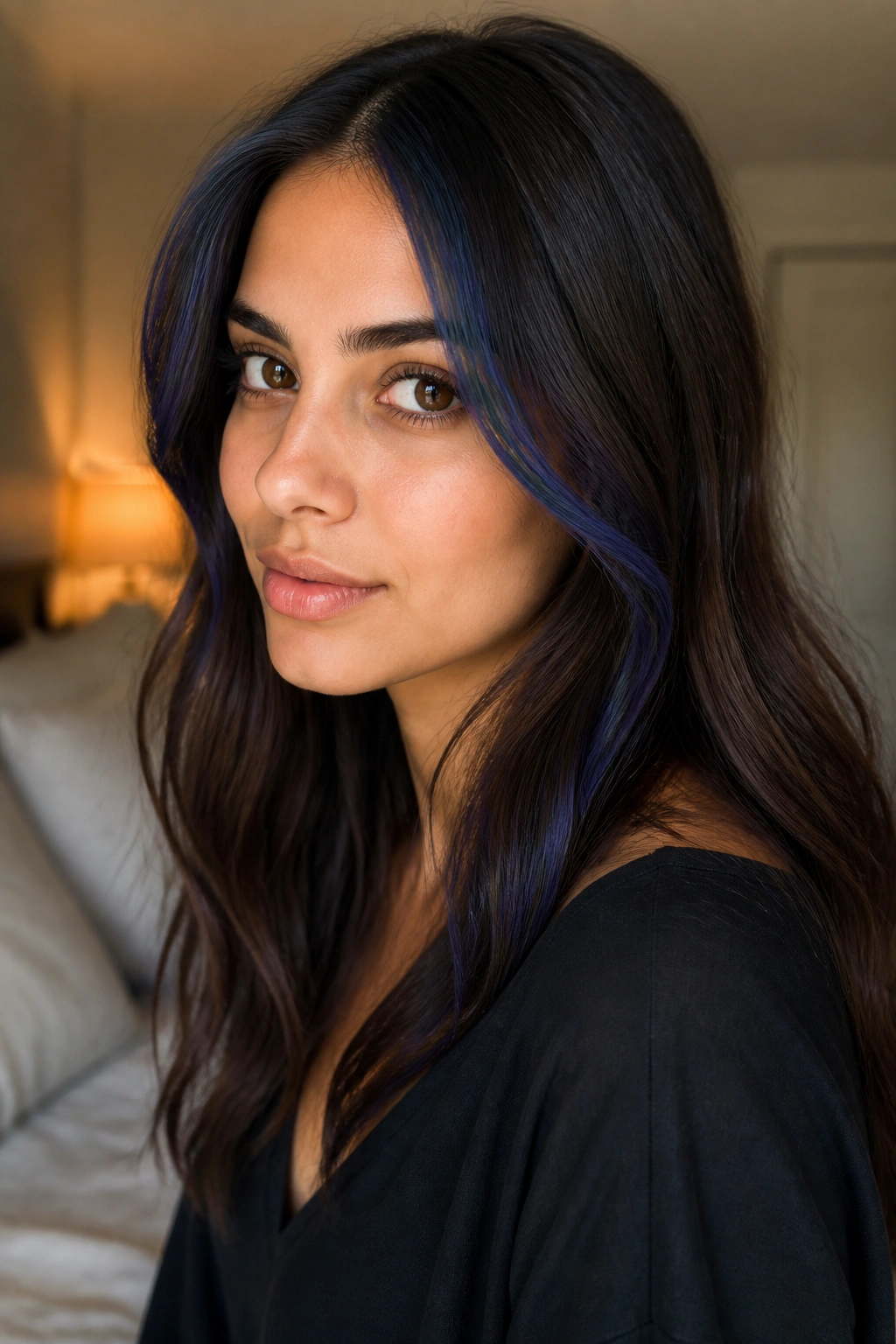
A thin indigo frame around the face can change brown hair in one shot. It’s the kind of placement that makes the eye go straight to the front, which is exactly why it works so well on chocolate or espresso bases.
Why the Front Pieces Matter
The money piece gets more light than the rest of the head. That means the purple-blue reads cleaner there, even when the rest of the color stays darker and more natural. If your hair is medium to dark brown, this is one of the easiest ways to get contrast without turning the whole head into a color project.
- Best on dark brown, chestnut, and espresso bases.
- Ask for 2 to 4 fine foils on each side, not a wide block.
- Works with straight hair, waves, and soft curls.
- A shadow root keeps the grow-out gentler and keeps the front from looking choppy.
Best tip: keep the pieces near the cheekbones a touch lighter than the rest. That small shift makes the whole front of the hair look brighter without needing more color.
2. Smoky Amethyst Balayage
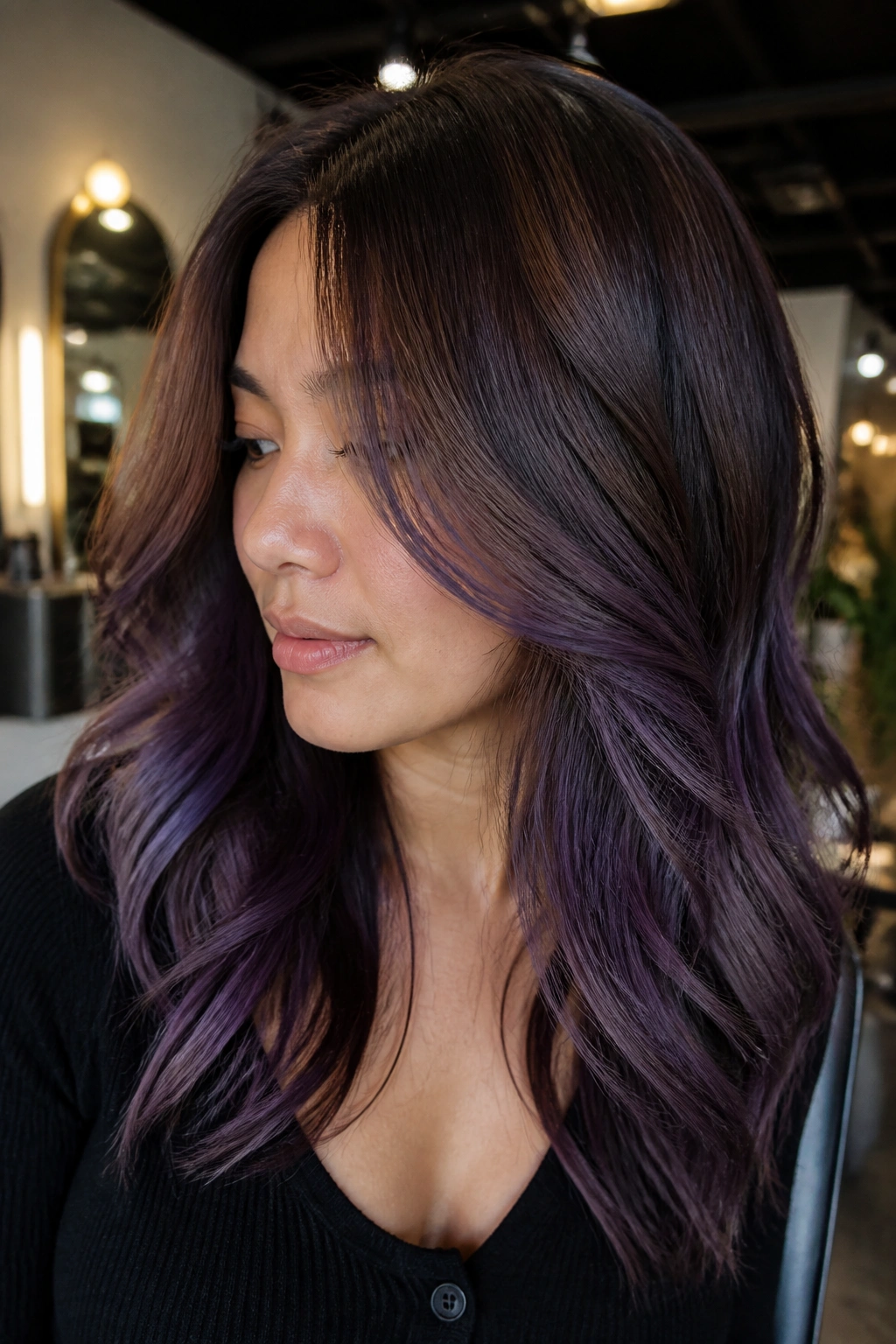
This is the look for anyone who wants purple-blue highlights that whisper instead of shout. Smoky amethyst balayage lands between violet and cool blue, which gives brown hair a soft, expensive-looking haze rather than a hard stripe.
The hand-painted placement matters as much as the shade itself. You want the color to start lower on the head, usually around the cheekbone or collarbone area, then fade toward the ends so the brown stays visible at the roots. That blend is what keeps the style from looking patchy three weeks later. On layered hair, the movement is even better because the lighter ribbons break up the shape of the cut.
If you like your hair to look polished but not stiff, this one is hard to beat. The finish should feel airy, not striped. Ask for a cool violet gloss after the lightening step so the purple stays smoky instead of leaning warm and grape-like.
3. Cool Lavender Babylights
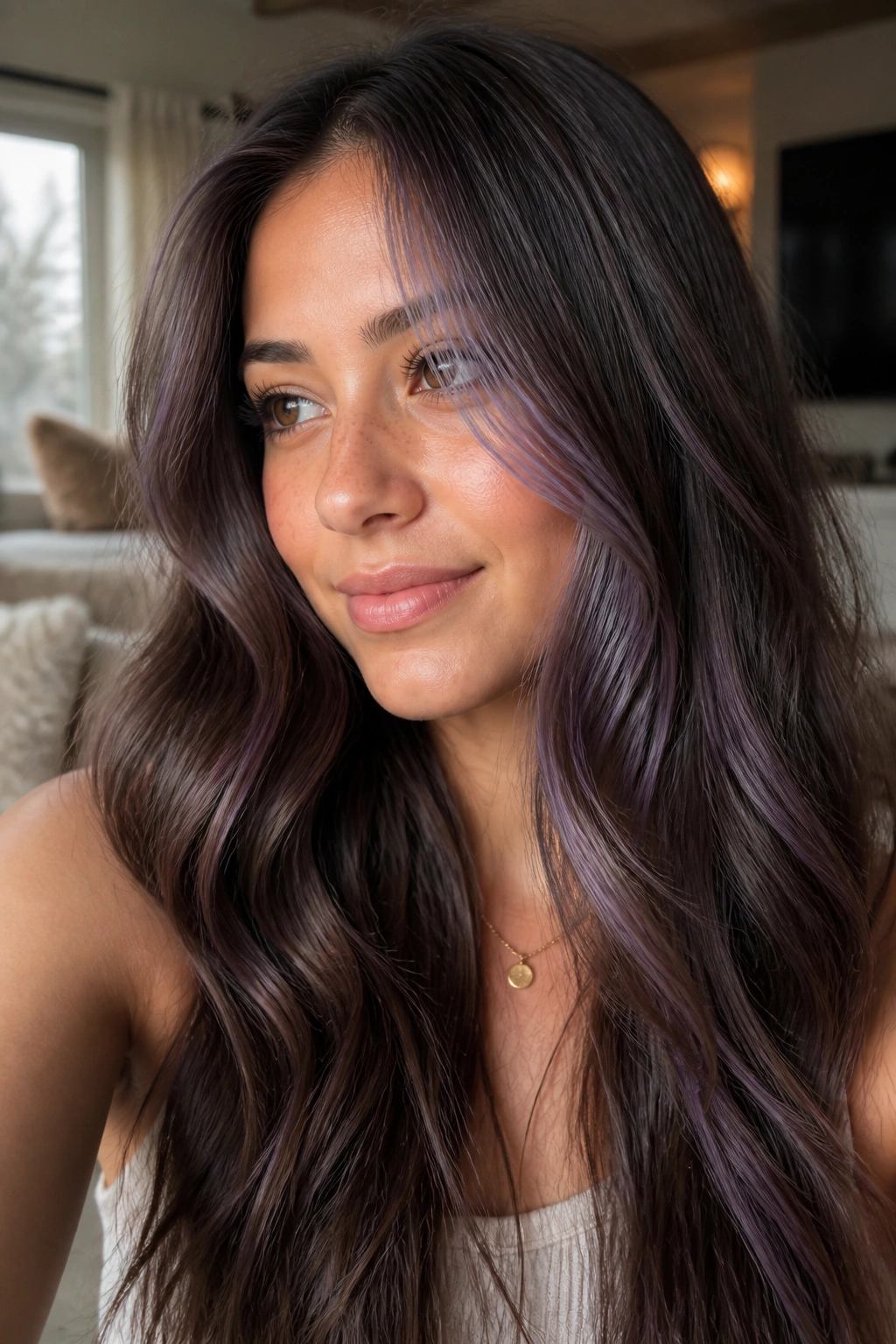
How do you make purple-blue highlights look soft instead of streaky? You make them tiny. Babylights are whisper-thin sections, and on brown hair they can create a haze of lavender that moves more like shine than color.
How to Wear It
This look is best when the pieces are almost too fine to spot at first glance. On medium brown hair, the lavender can sit on top of the base and still read clearly; on darker brown, the hair usually needs a little more lift so the blue side of the tone does not disappear.
- Use 1/16-inch to 1/8-inch sections for the highlights.
- Keep the placement mostly through the top layers and around the face.
- Choose a cool lilac toner instead of a warm purple glaze.
- Works especially well on fine hair, where chunky panels can feel heavy.
The charm here is restraint. A little goes a long way, and that’s the whole point.
4. Hidden Peacock Underlayers
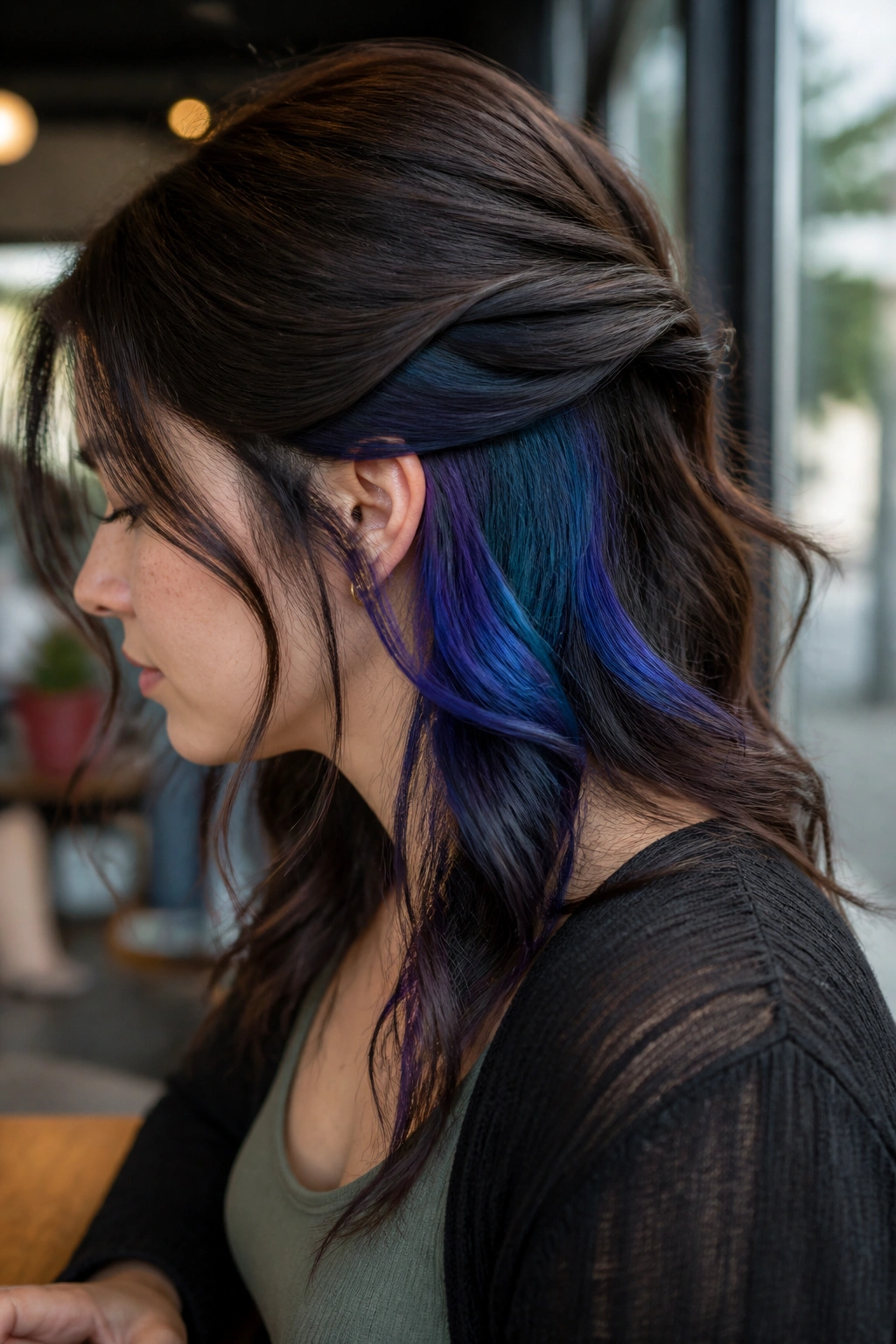
Picture brown hair from the front. Quiet, polished, easy to wear anywhere. Then you move it, tie it up, or tuck one side behind the ear, and the blue-purple underlayer flashes through. That contrast is the entire appeal.
Hidden underlayers are a smart choice if you want color without a constant spotlight. The top section stays brunette, which makes the purple-blue feel like a secret instead of a full-time statement. It also gives you a bit of freedom. A bun, braid, half-up knot, or clipped-back front section can show as much color as you want on a given day.
The palette works best when the blue and purple are mixed in narrow slices, not broad panels. I like this look on shoulder-length cuts and longer bobs because the movement is enough to reveal the hidden color without forcing it to show all the time. It’s a practical kind of fun. That’s rare.
5. Violet Melt on Chocolate Brown
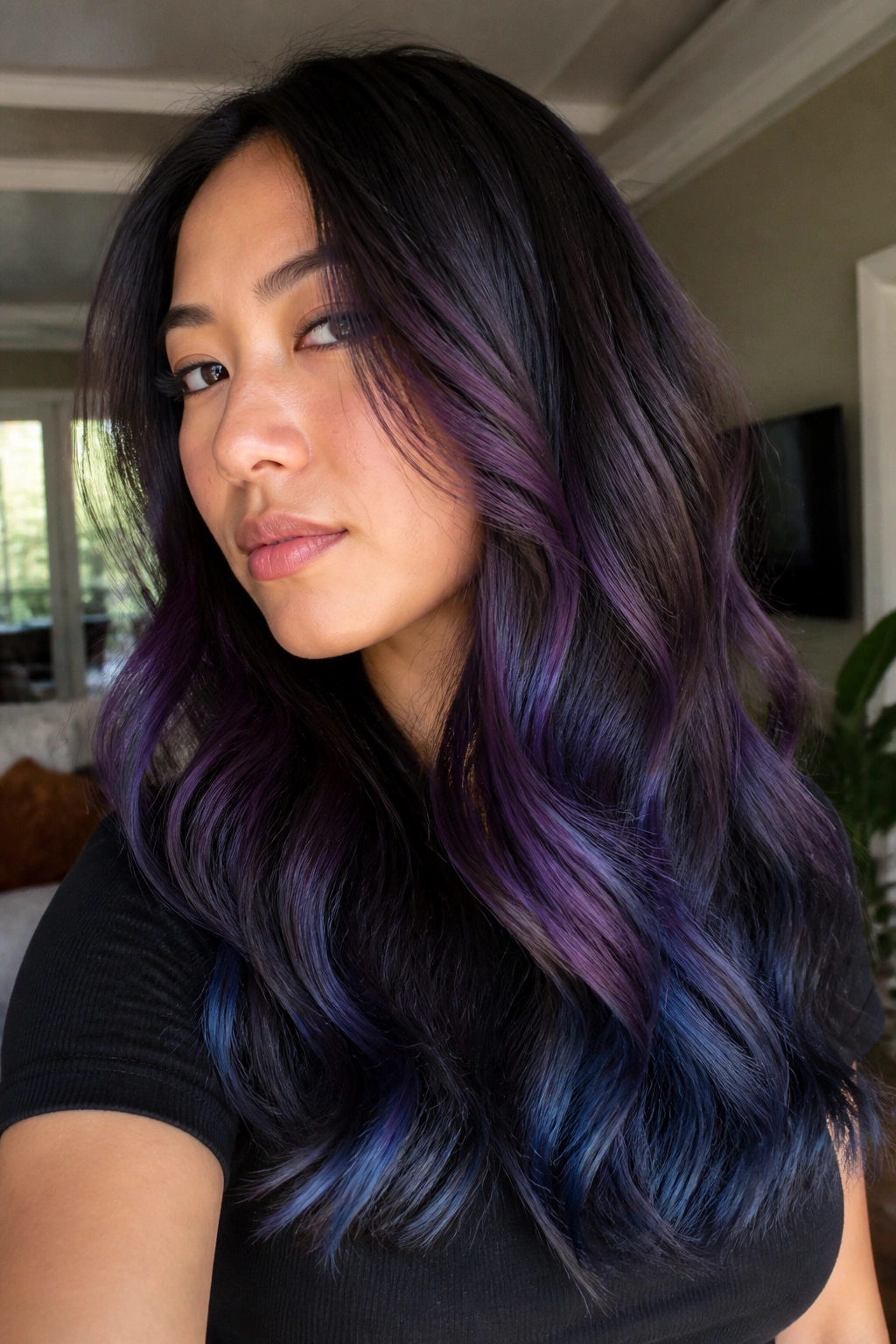
Chocolate brown hair and violet get along. They have to, really. The brown gives you depth, and the violet-to-blue transition gives you motion, which is why this melt style feels richer than a single streak ever could.
The best version starts with a deep violet through the midlengths, then slips into blue at the ends. Not a hard switch. A melt. That softer shift keeps the color from looking like two separate stripes fighting for attention. On long hair, especially with loose waves, the tones catch in layers and the whole thing looks almost woven.
What I like most here is how forgiving it is. If you wear your hair curly one day and straight the next, the color still makes sense. The base stays brown, the violet handles the warmth, and the blue cools the whole thing down without making it look icy. That’s a nice balance, and not many shades do that without help from a good toner.
6. Denim Blue Peekaboo Pieces
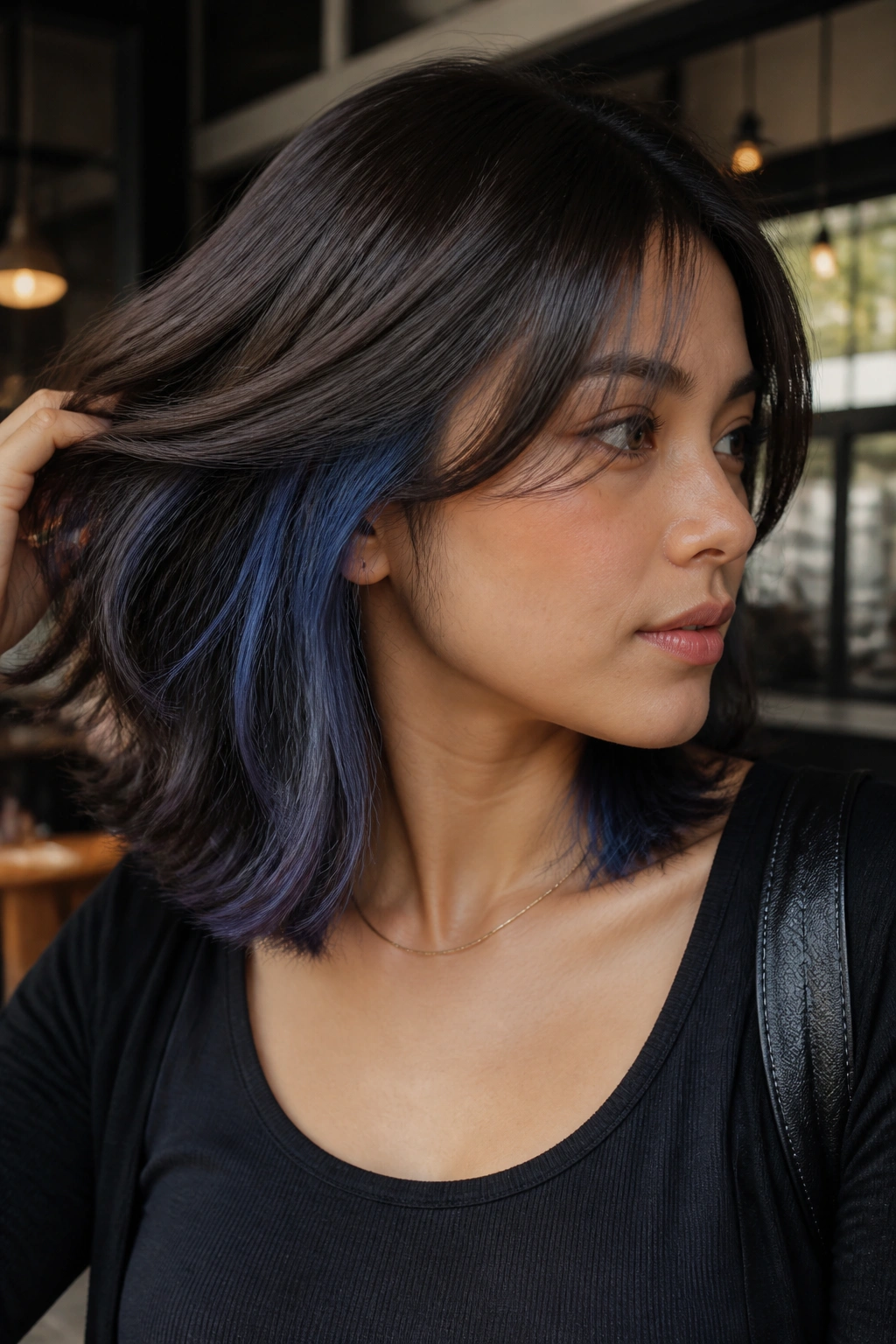
Denim blue sits in that sweet spot between obvious and wearable. It’s cooler than teal, softer than cobalt, and a little less loud than royal blue, which makes it a strong choice for brown hair that needs edge without full drama.
Unlike brighter streaks, denim blue looks a little lived-in from day one. That’s part of the appeal. The tone feels woven into the brown instead of pasted over it, especially if the pieces live under the top layer or near the temples where they show only when the hair moves. It’s the kind of color that looks better in motion than in a mirror held inches from your face.
This is a good pick if your wardrobe leans toward black, gray, denim, olive, or cream. The shade stays interesting without fighting everything else you wear. I’d ask for medium-width peekaboo sections around the nape and a few near the ear; that keeps the effect casual and avoids the overdone striping you get from too many panels.
7. Periwinkle Face-Frame Streaks
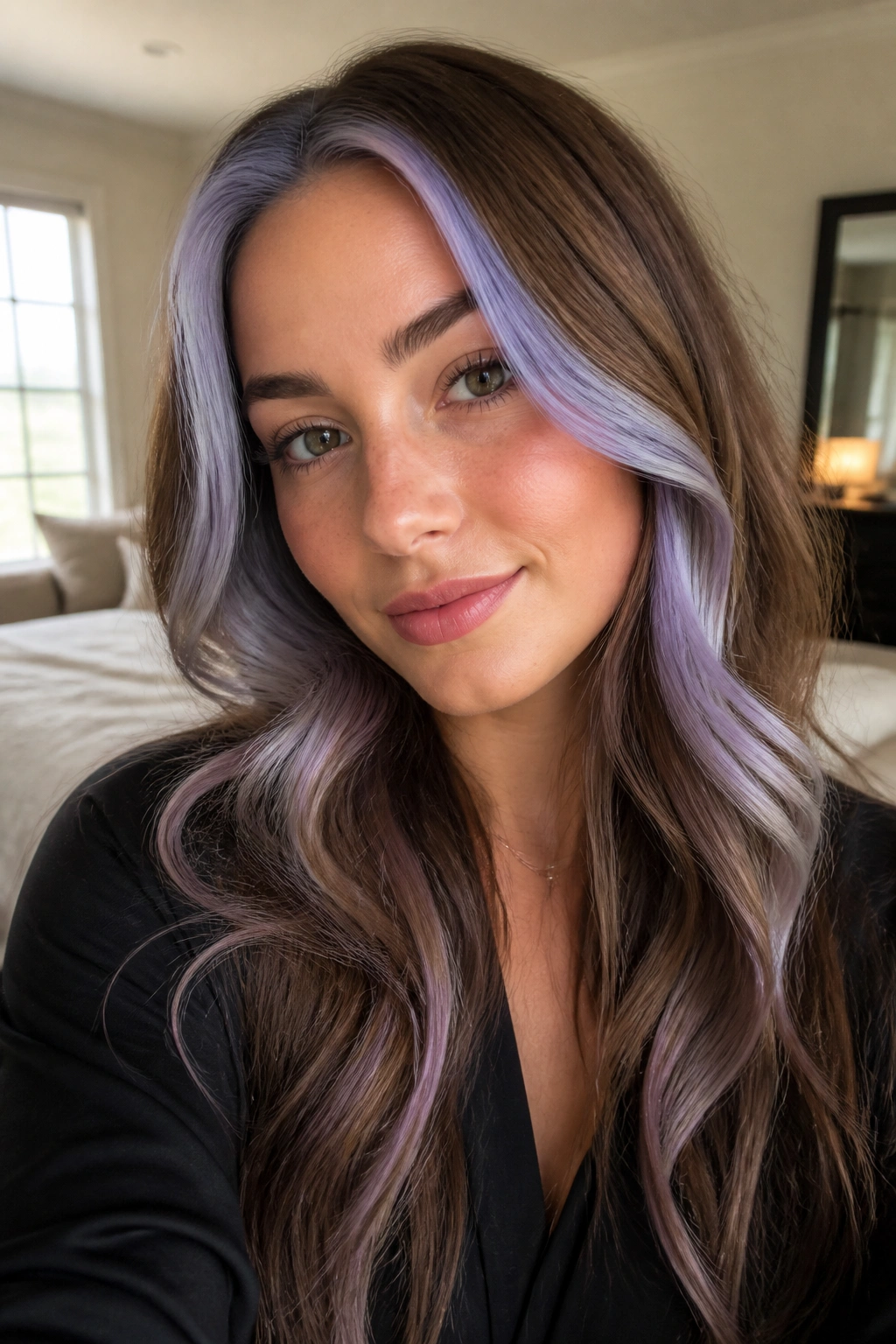
A pale periwinkle frame changes the whole mood of brown hair. It’s softer than cobalt, cooler than lilac, and light enough to give the front of the hair a fresh, airy look without turning it bright or harsh.
Where It Sits Best
Periwinkle behaves best when it has room to breathe. That means a few front pieces, not a thick curtain of color. On light to medium brown hair, the shade can sit right where the hair opens around the face and still keep its soft blue-purple cast. On deeper brunettes, a little pre-lightening helps it stay from going chalky.
- Best with side parts, curtain bangs, and soft waves.
- Ask for a few painted ribbons near the temples.
- Keep the ends slightly lighter than the roots for a gentle fade.
- Works well if you want color that looks more airy than bold.
Small but useful detail: periwinkle shows beautifully when the hair is tucked behind the ear. That one move can change how the whole cut looks.
8. Galaxy Mix with Purple and Blue Foils
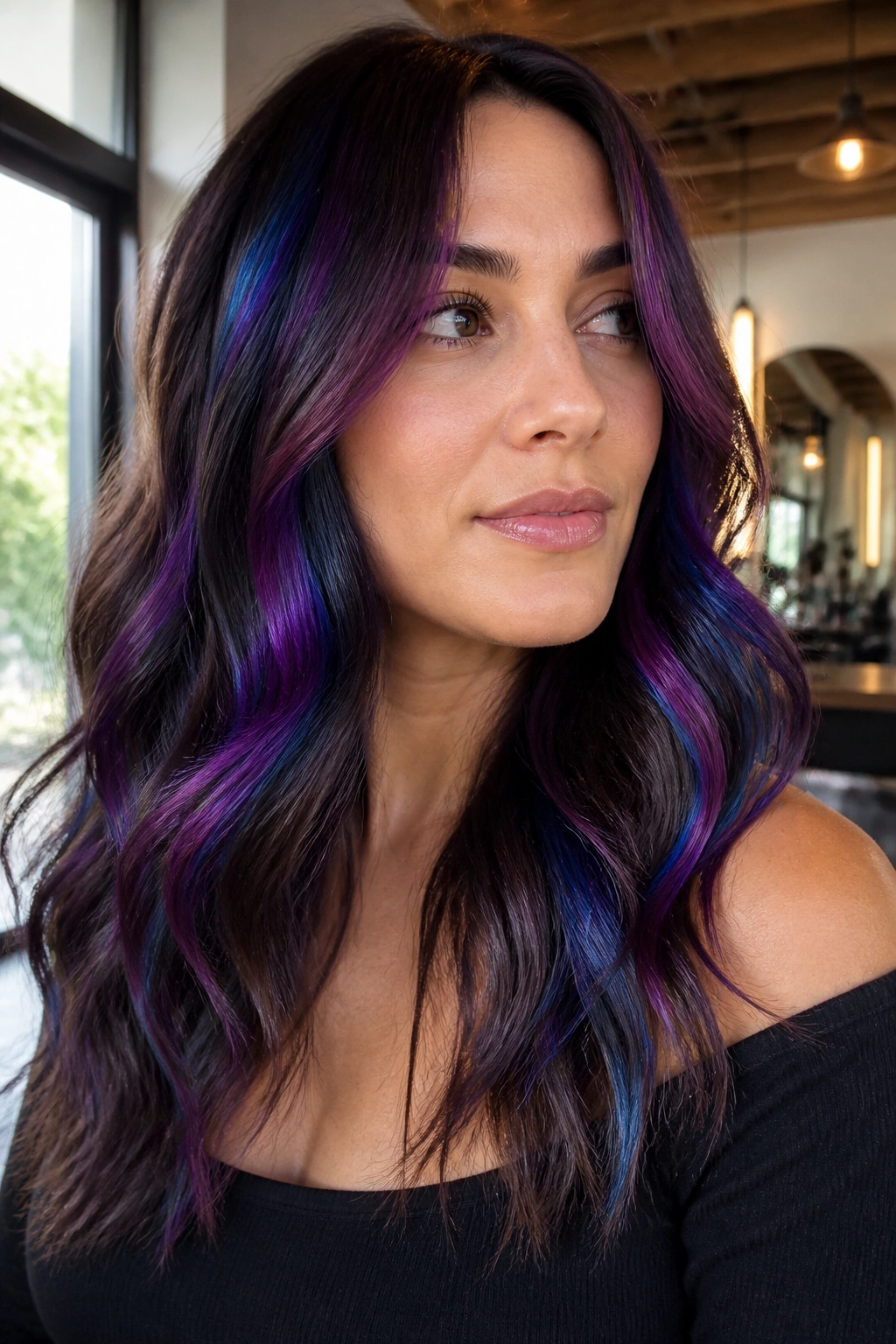
A real galaxy blend is never one flat color. It has little jumps in tone, and that’s why the purple-blue foil mix on brown hair can look so rich when it’s done well.
The idea here is to alternate violet, cobalt, and midnight blue foils in different widths so the hair doesn’t fall into a predictable rhythm. Some pieces should be fine. Some should be broader. A few should sit closer to the surface, while others hide under the top layer and show when the hair swings. That mix gives the color depth without making it muddy. On waves, especially, the different tones break apart and catch the light in separate ways.
This style suits people who like their color to have movement and a little mystery. It’s not quiet, but it isn’t flat either. Ask for a colorist to keep the darkest pieces close to the brown base so the lighter purple-blue strands have something to bounce off of. Otherwise it can start to look like one shade fighting another.
9. Soft Orchid Veil Through the Ends
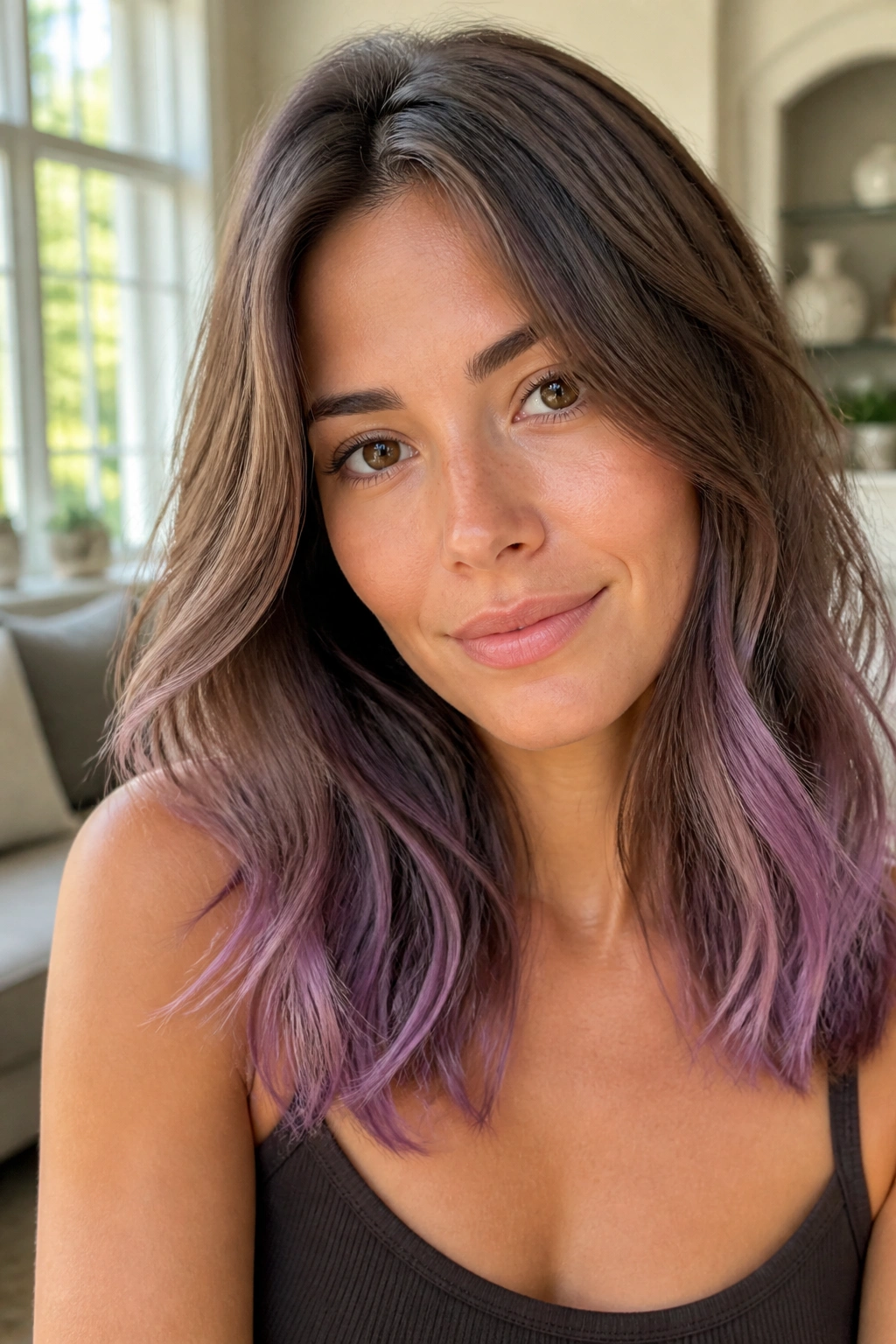
What if you only want the ends to whisper color? That’s where a soft orchid veil comes in. The brown stays in charge, and the purple-blue slips in at the bottom like a light wash.
The main thing to protect here is translucence. You do not want thick, obvious blocks of color. You want the ends to look as if they were dipped in cool light. On layered hair, the effect is especially pretty because each tier catches the tone at a slightly different angle. The result is subtle, but not boring. There’s a difference.
How to Keep It Soft
A veil like this works best when the lightening is even and the toner stays cool. If the blue side gets too pale, it can lose its depth. If the purple side runs too warm, it starts to look pinkish, and that’s a different mood entirely.
- Keep the color focused on the bottom 2 to 4 inches.
- Use a sheer orchid toner rather than a saturated violet.
- Choose it for layered cuts, long bobs, and wavy hair.
- Ask for soft blending so the ends do not look chopped off.
This is the version I’d pick if you want the least fuss and the gentlest grow-out.
10. Chunky 90s Blue-Violet Streaks
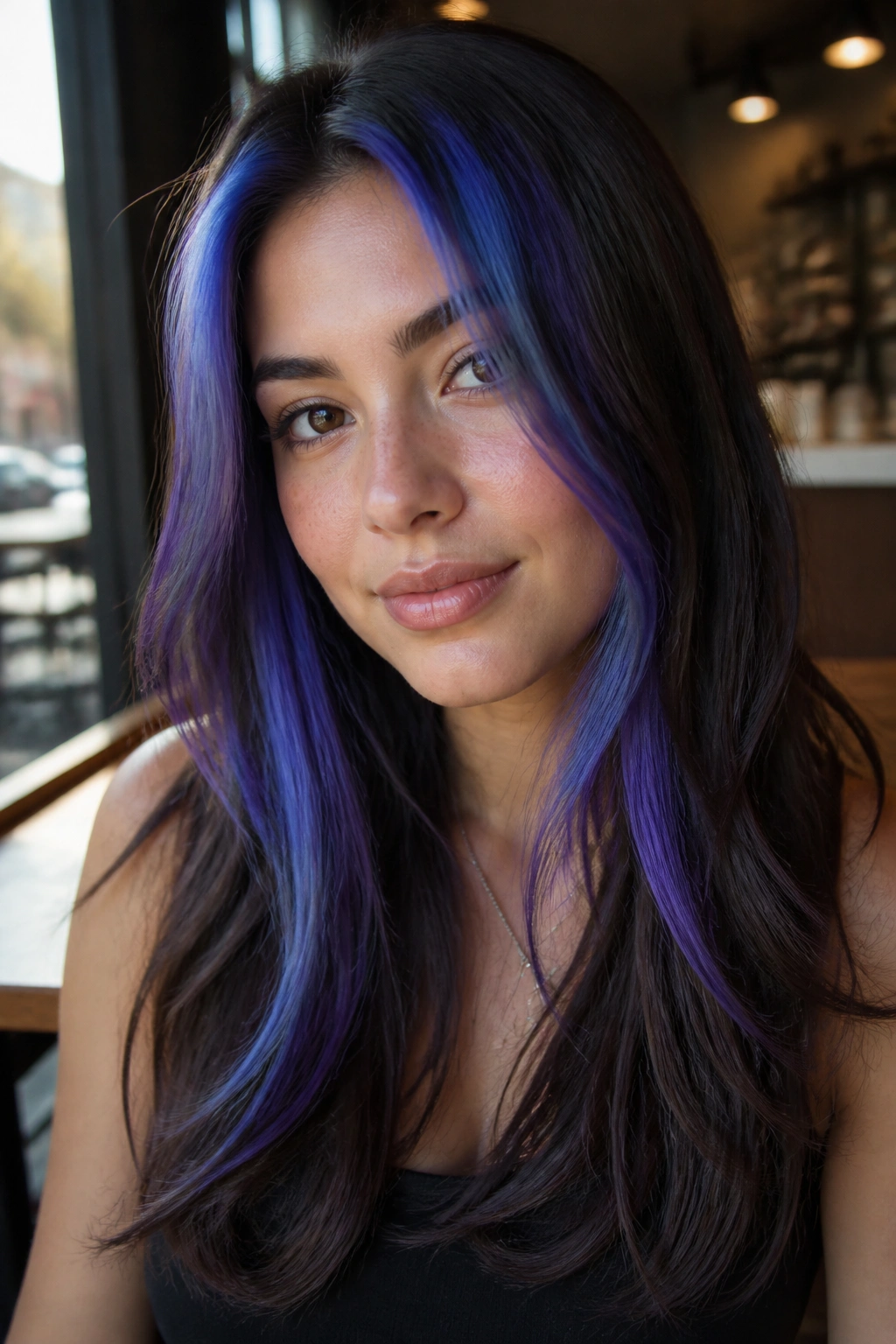
I’ve seen people think chunky streaks are too bold until they see them on brown hair with the right tone. Then the whole thing clicks. The trick is choosing a blue-violet that looks cool rather than neon.
This style leans into thicker panels, usually about half an inch to an inch wide, placed so they show clearly when the hair moves or gets tucked back. On a straight blowout, the stripes feel sharp and graphic. On loose curls, they soften a little and start to look more blended. That flexibility is what makes the style fun instead of costume-like.
What Makes It Work
The brown base needs to stay strong. If too much of it gets lifted, the streaks lose their punch and the whole thing turns washed out.
- Use thicker foils than you would for babylights.
- Keep the streaks near the front, crown, and top layers.
- Ask for a blue-violet that stays cool and deep.
- Best on cuts with clean lines, like blunt bobs or straight mid-length hair.
A little attitude helps here. So does confidence.
11. Blueberry Tint on Espresso Hair
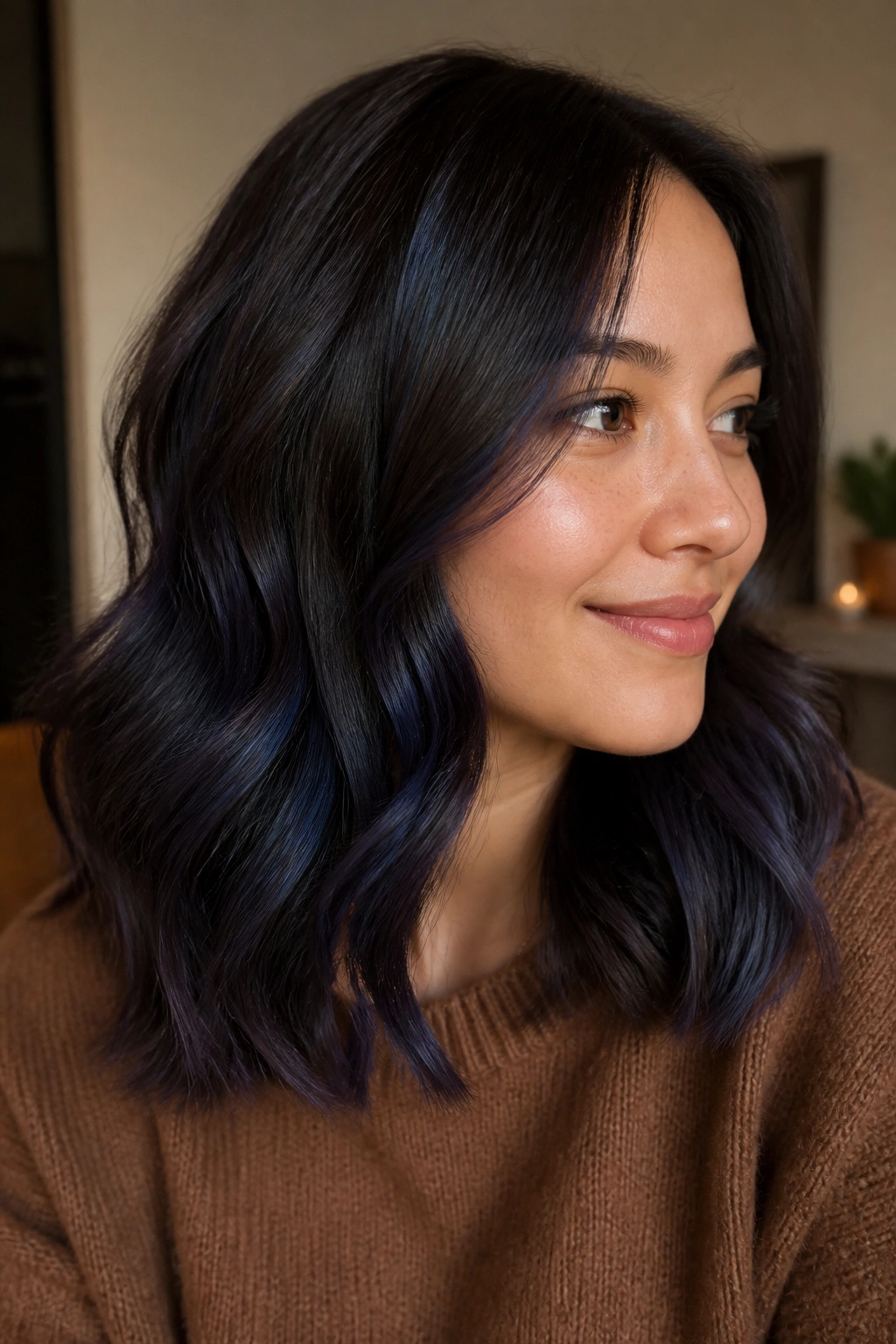
Espresso brown hair can handle blueberry tones in a way lighter browns often can’t. The shade stays moody and glossy, and the blue only shows fully when the light hits it at the right angle.
That’s why this look is more about sheen than streaks. It sits close to the brown base, so the color reads as deep and polished indoors, then flashes cooler outside or under bright light. If you like hair that looks dark at first glance but reveals more on a second look, this is a very good lane to be in. Blueberry tones can also help disguise the brassiness that sometimes creeps into warm brunettes.
I’d keep the placement concentrated through the mids and ends, with a few thinner pieces around the face if you want more movement. A blue-violet gloss over pre-lightened strands keeps the tone from flattening out too soon. This one is less about “look at me” and more about polished depth.
12. Icy Lilac Ribbons Around Curls
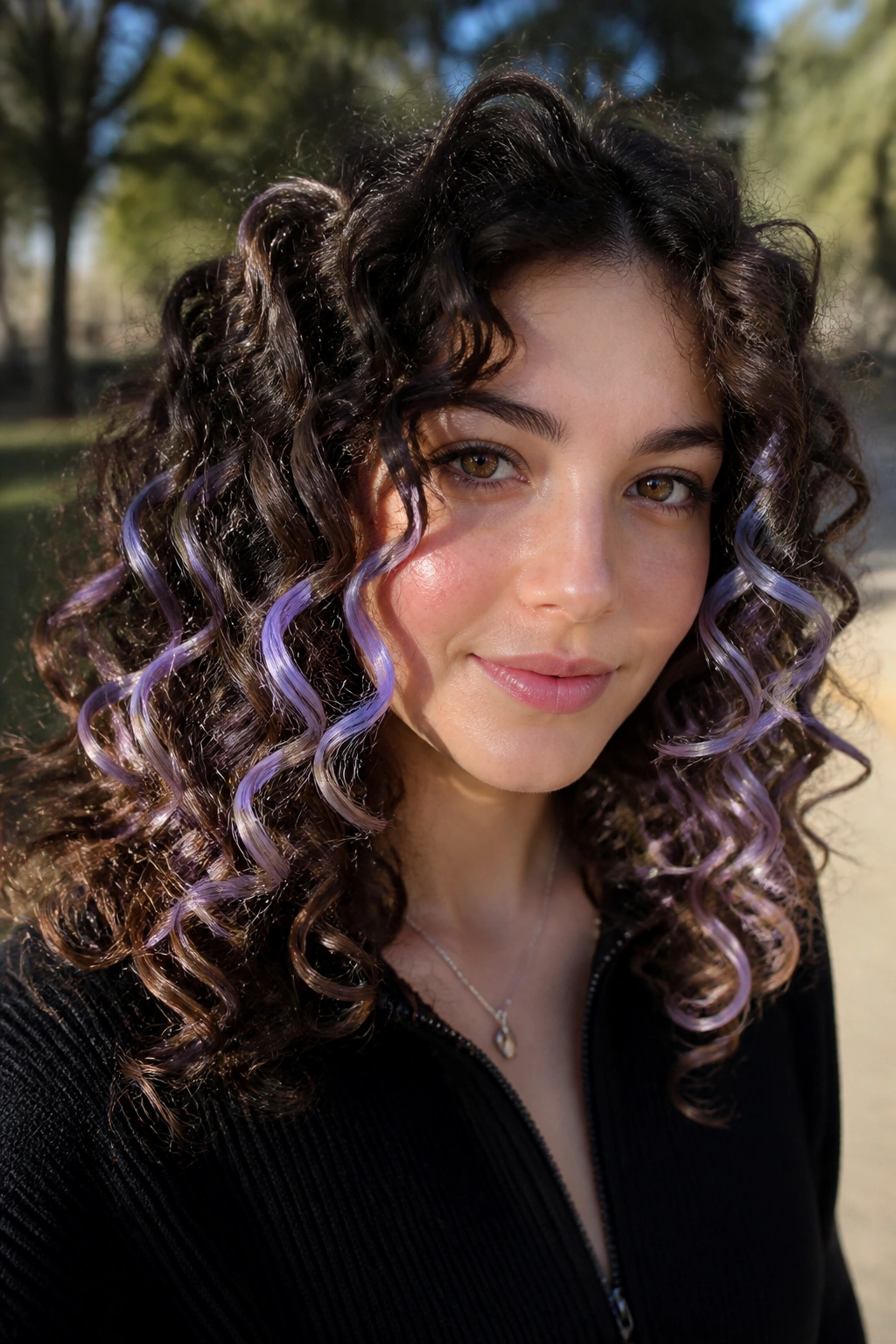
Unlike flat color, curls keep reopening the highlight every time the hair bends. That’s why icy lilac ribbons look so good on brown curls and waves. The shape does half the work for you.
The color should sit on the outer curve of the curl, not buried deep in the interior. That way each coil catches a bit of lilac and blue as it moves. If the highlight is placed well, it can make the whole shape look lighter without needing to brighten the base much at all. On tighter curls, a thinner ribbon is better. On loose waves, you can go a little wider and still keep the look delicate.
How to Get the Most From It
The cut matters. Layers help the color show. So does definition.
- Ask for color on the outermost curl pattern, not the full strand.
- Use cool lilac with a blue cast, not pink-lilac.
- Works best with layered curls, shags, and wavy lobs.
- A light curl cream helps the ribbons separate instead of clumping together.
This is one of those styles that looks even better on day two, when the curls have settled a little.
13. Sapphire Tips on a Wavy Lob
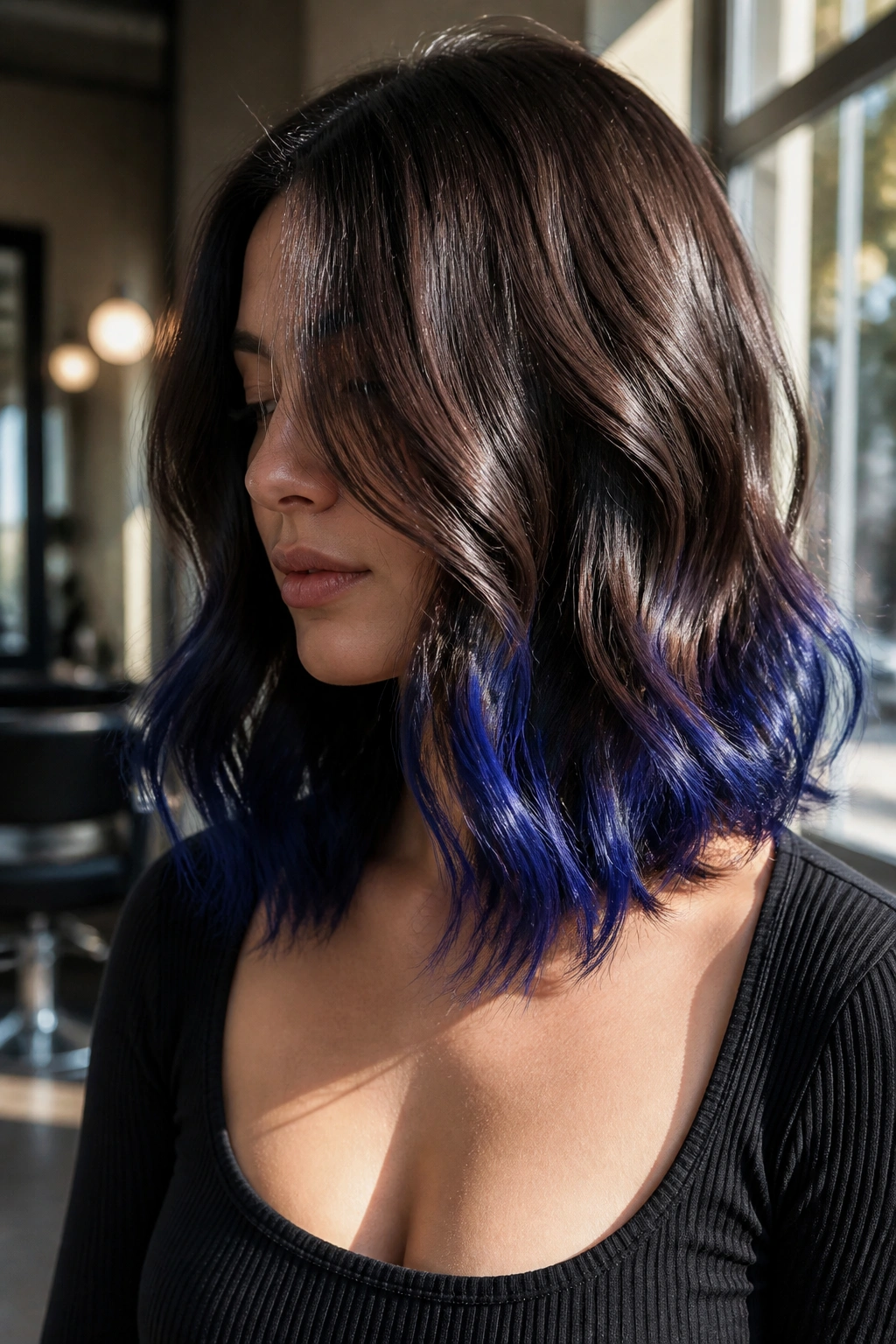
A wavy lob gives you a clean place to stop the color, and sapphire tips use that shape well. The ends pick up the blue-purple first, which makes the style look intentional instead of accidental.
How to Place the Color
Keep the sapphire low. Really low. You want the deeper brown to stay dominant through the top half of the hair, then let the cooler color collect in the last few inches. On a lob, that edge is easy to see, especially when the hair flips or bends at the shoulders. The result has a tidy, modern feel.
- Focus color on the bottom 2 to 3 inches.
- Let the waves expose a little brown between each colored piece.
- Ask for a deep sapphire-blue violet, not a pastel.
- Works best when the lob has blunt ends or soft internal layers.
One thing that helps: a slight bend with a medium barrel iron makes the tips look more lively than pin-straight hair does.
14. Stormy Blue Lowlight-Style Highlights
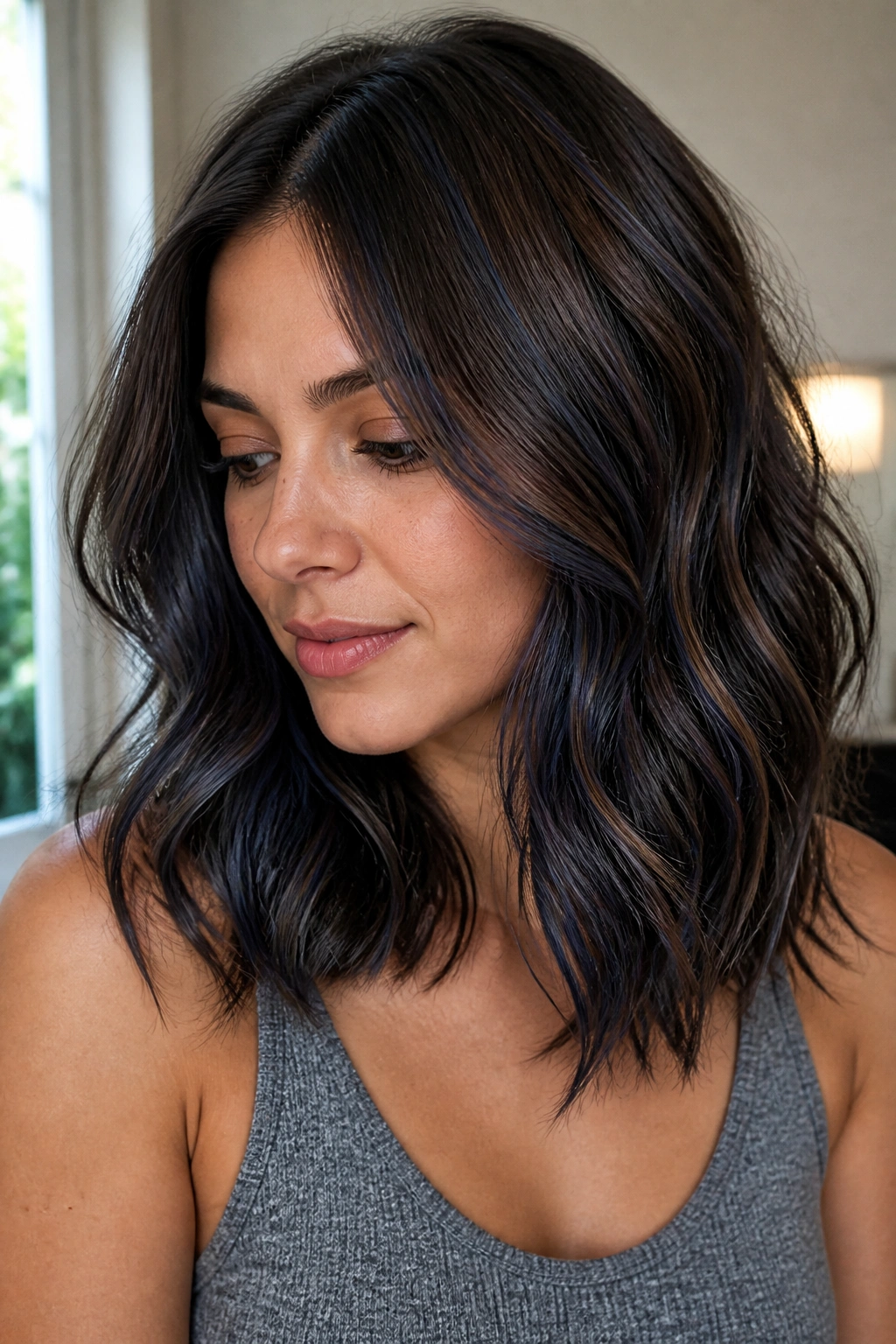
This one is a little sneaky. Instead of brightening the brown hair, the stormy blue pieces sit in the hair like cool shadows, which gives the whole style more depth.
That’s why it works so well for people with fine or flat-looking brown hair. The darker blue-violet ribbons create the illusion of thickness because they interrupt the base color without shouting for attention. When the pieces are placed between lighter brown strands, the contrast feels layered, not striped. It’s a quiet trick, but it changes the shape of the cut more than people expect.
I like this on shoulder-length hair with movement around the ends. Too much structure and the darker blue can look heavy. Too much warmth in the base and the cool tone gets lost. A balanced brunette with a cool glaze is where this style really lives.
15. Plum-Blue Halo at the Crown
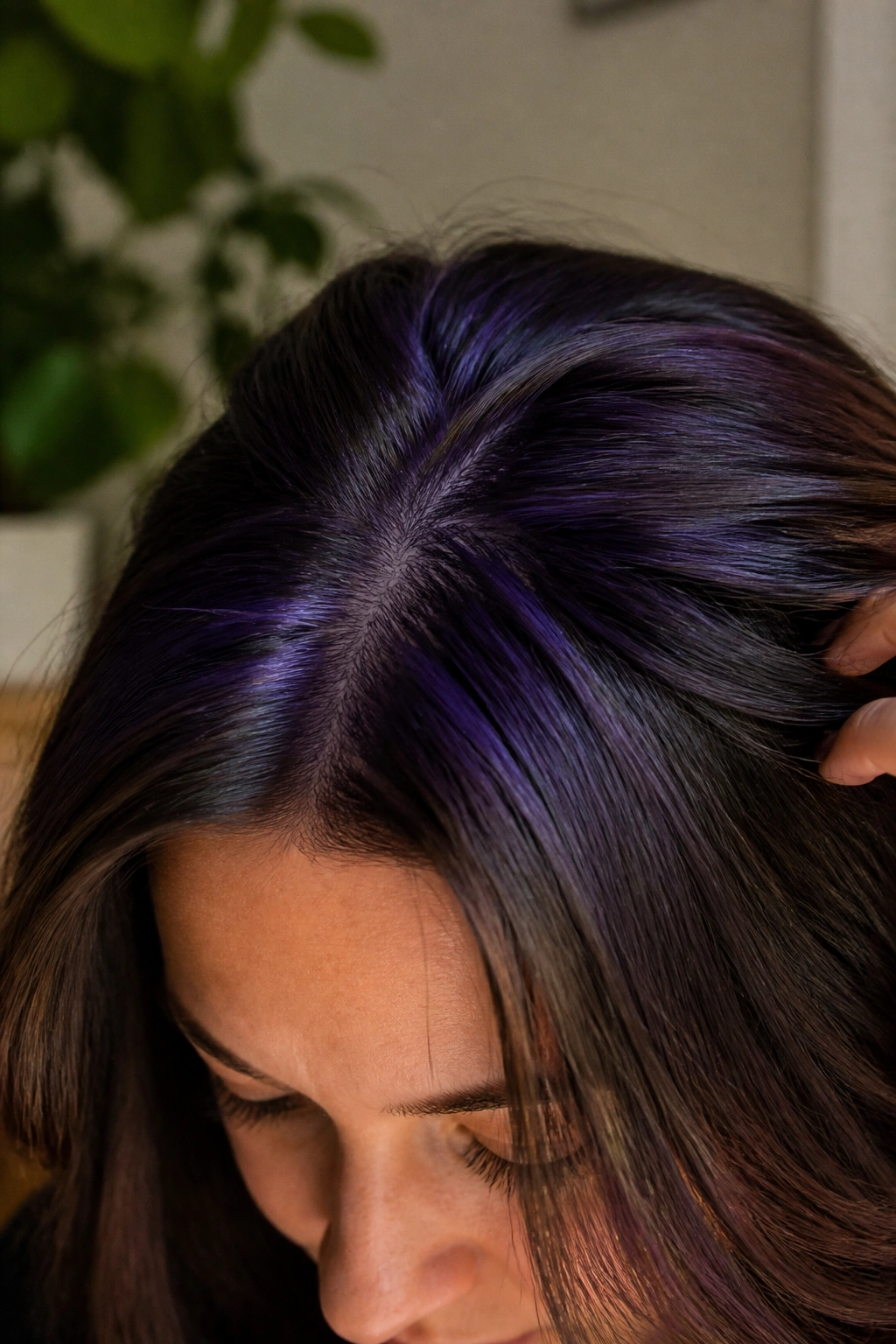
Why do some brunette color jobs look fuller the moment you part the hair? Often it’s the crown area. A halo of plum-blue pieces around the top can change the whole shape of brown hair without touching every strand.
How to Place the Halo
The goal is to brighten the top and the part line while keeping the rest grounded. That means small sections near the crown, around the temples, and just behind the part. The effect is subtle when the hair is worn down, then stronger when it’s tucked, pinned, or lifted into a clip.
- Keep the halo pieces fine and close together.
- Use a plum base with blue reflection so it doesn’t look flat.
- Best for people who wear the same part most days.
- Works nicely on medium and long cuts where the crown needs lift.
If your hair tends to fall limp at the top, this placement can make it look more alive without a full-color overhaul.
16. Smoky Mauve with Navy Veins
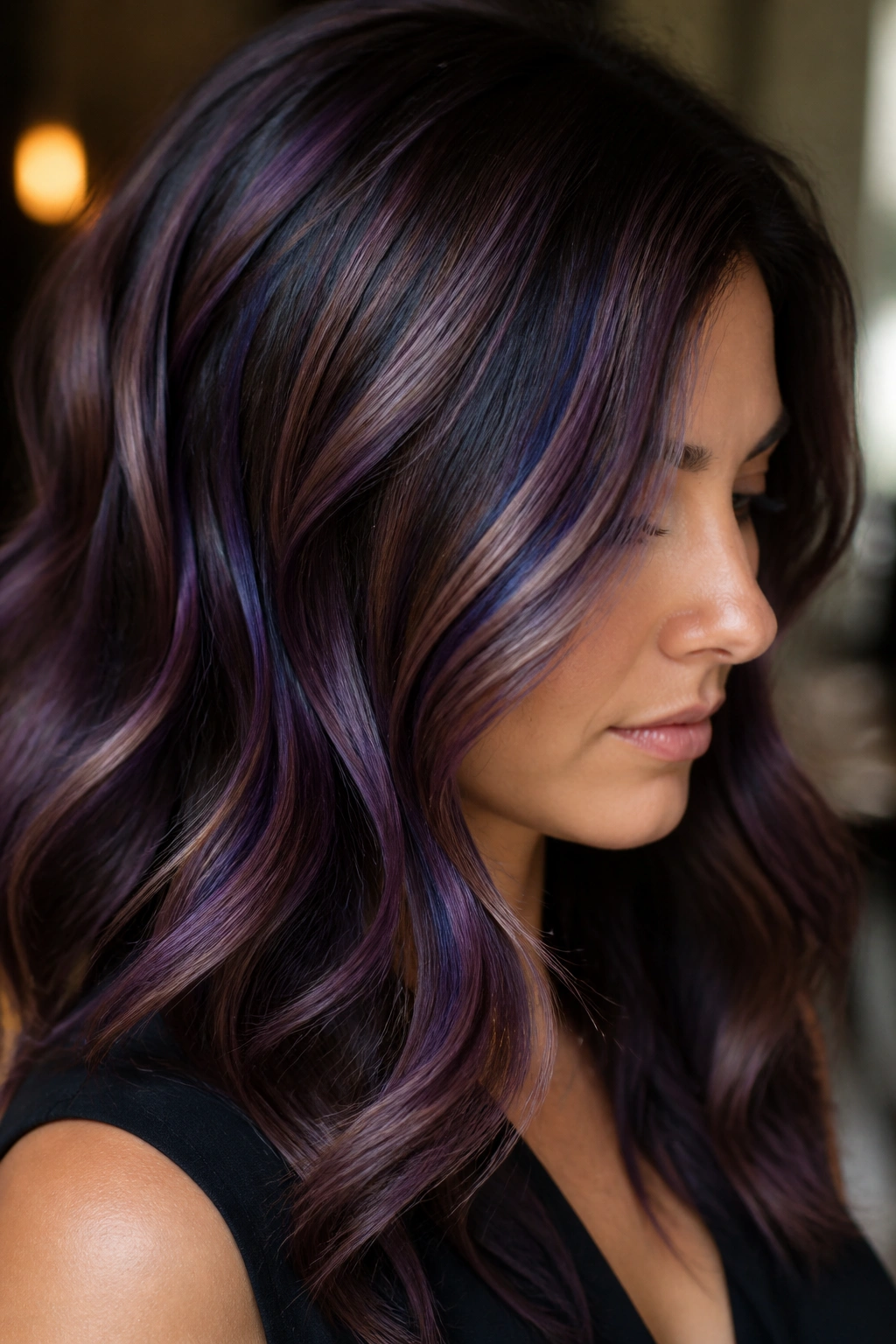
Seen from a distance, smoky mauve with navy veins can look almost like a cool brunette. Up close, the navy threads show through, and that’s where the appeal lives.
The color story is darker than many purple-blue highlight looks, which makes it feel refined rather than flashy. The mauve softens the blue, while the navy gives the whole thing a little edge. On brown hair, that combination works because the base is already carrying the depth. You’re just adding shape to it. That’s why this style can look especially good on layered cuts or hair with a bit of natural bend.
A colorist has to be careful with the placement here. Too much navy and the hair can go flat. Too much mauve and it loses the cool contrast that makes it interesting. Small, irregular ribbons are the sweet spot. Nothing needs to be too neat.
17. Bright Royal Blue Underlights
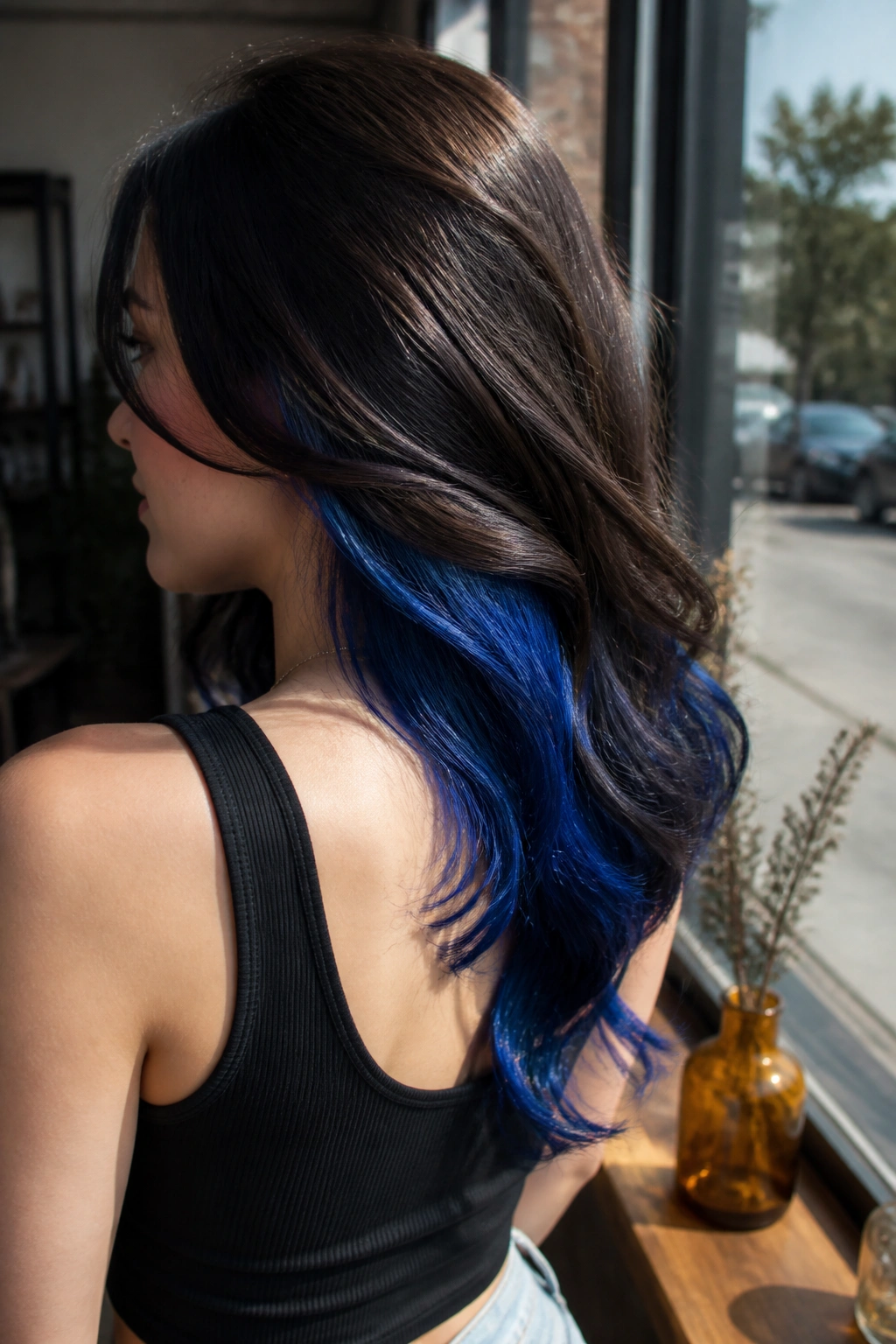
Bright royal blue underlights are for the person who likes a little drama but still wants the top layer of brown hair to stay in charge. The blue hides until the hair moves, then it shows up with a sharp, clean hit of color.
This is one of the most satisfying styles on long hair tied into a ponytail or clipped half-up. The underlayer falls free and the blue becomes the surprise. It also works well on blunt cuts because the edge of the hair gives the color a strong line to sit against. On very dark brown, the royal blue can look almost electric; on medium brown, it tends to feel lighter and more vivid.
The key is keeping the top layer dense enough to hide the underlight when you want it hidden. If the top gets too thin, the blue shows all the time and the effect changes. That’s not bad, just different. Hidden color has its own rules.
18. Amethyst Foilayage for Long Hair
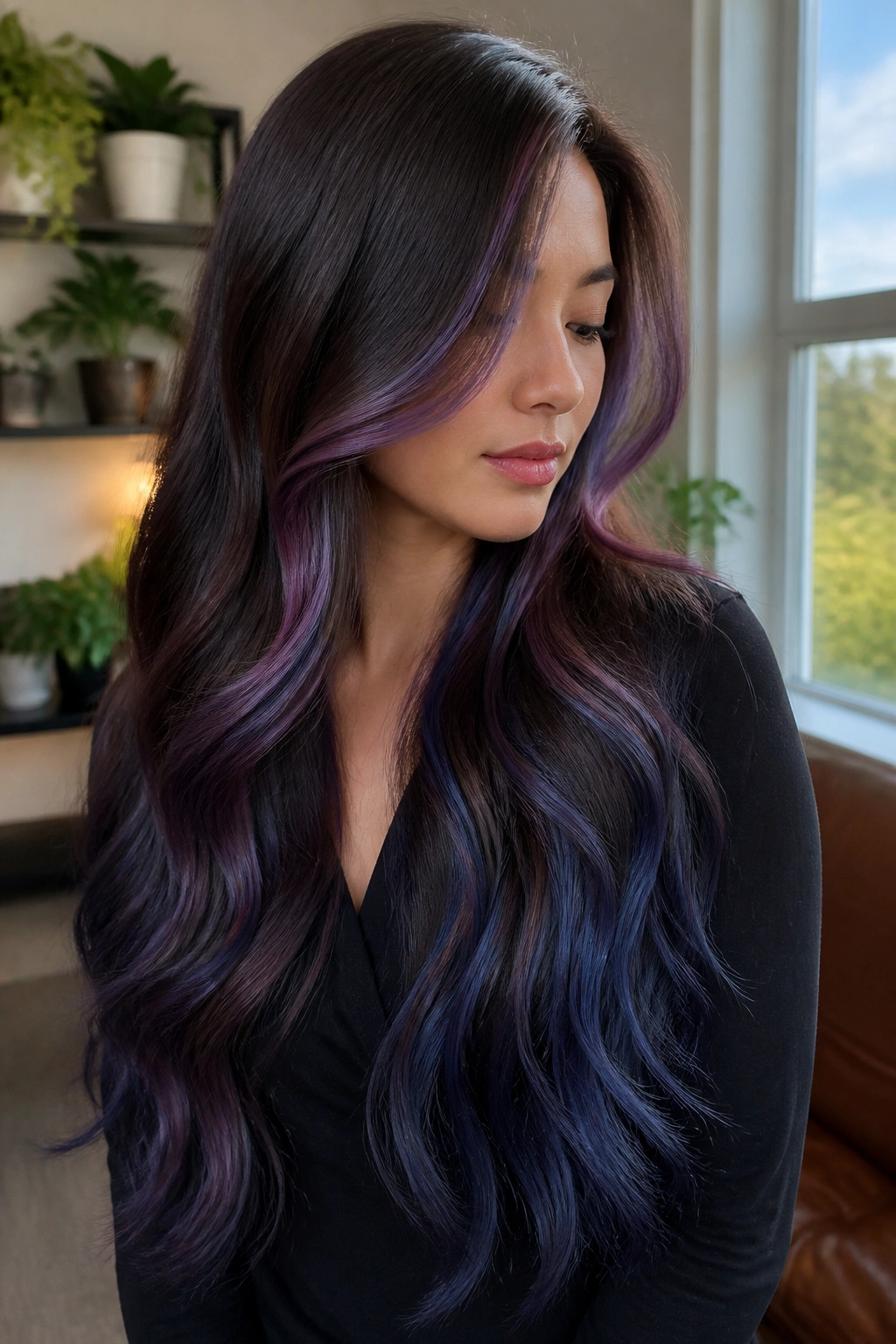
Unlike a classic foil set, foilayage leaves softer roots and brighter ribbons where the light lands. On brown hair, that makes amethyst and blue tones look less like stripes and more like part of the hair’s own movement.
Long hair is where this style really opens up. The painted placement can stretch from the midlengths to the ends, with brighter amethyst near the front and cooler blue hidden deeper in the layers. That mix keeps the color from feeling one-note across a lot of hair. It also helps the style grow out more gracefully, which matters when the hair has a lot of surface area to cover.
If the cut is layered, even better. The color can sit on the longer pieces and peek through the shorter ones. Ask for the brightest lift near the face and collarbone, then let the back stay a touch deeper. That keeps the shape from getting too busy.
19. Cool Twilight Ends
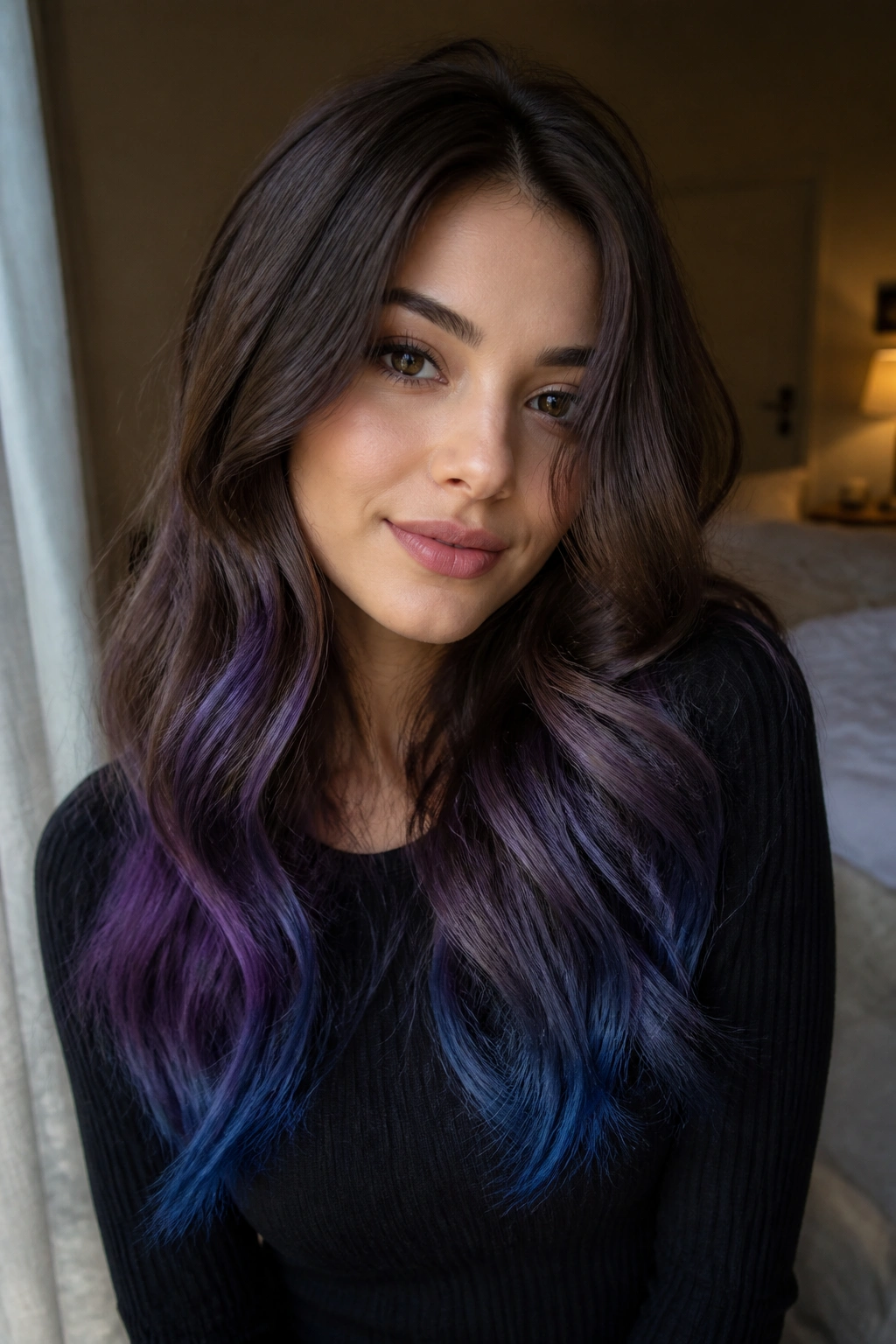
The ends do the talking here. Cool twilight color concentrates the purple-blue tone at the bottom of brown hair and leaves the top almost untouched, which creates a moody fade that never feels heavy.
Why the Fade Matters
A twilight end should move from brown into purple, then into blue, without a hard stop. The placement matters more than saturation. If the shift is too abrupt, it looks blocky. If the gradient is smooth, the hair feels longer and softer, even if the cut is modest.
- Keep the color focused below the midpoint of the hair.
- Ask for a fade that moves from violet to blue at the tips.
- Best on long layers, shags, and curled ends.
- Works well if you want color that still leaves the roots low-maintenance.
Good sign: the ends should look cooler than the mids, but not pale. That contrast gives the style its shape.
20. Dusty Iris Highlights for Short Cuts
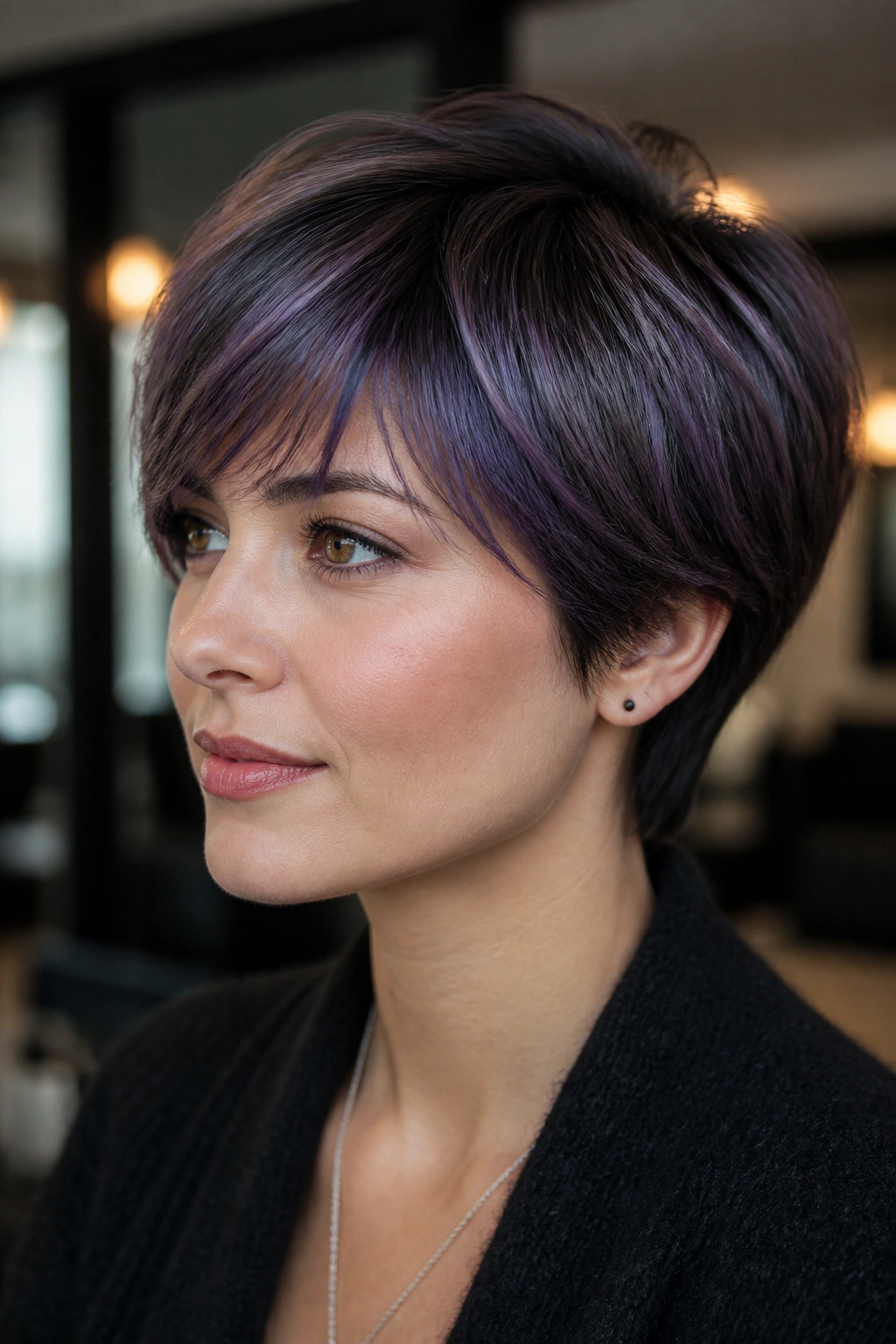
Short cuts love color that lands in the right places. Dusty iris highlights do that well because the shade is cool, muted, and strong enough to show on a pixie, bixie, or bob without needing a lot of length to explain itself.
On short hair, the placement has to be smarter. The color belongs near the fringe, crown, and the top ridge where light naturally lands. If you drop the highlights too low, the cut can lose its line. Dusty iris keeps the purple-blue tone soft enough to look sophisticated while still being visible when the hair is cropped close.
This is a nice option if you like short hair that feels sharp instead of plain. The color gives the cut extra shape. Even a small amount can change the whole read of the style, especially if the edges are neat and the top has a little texture.
21. Electric Orchid Money-Piece and Fringe
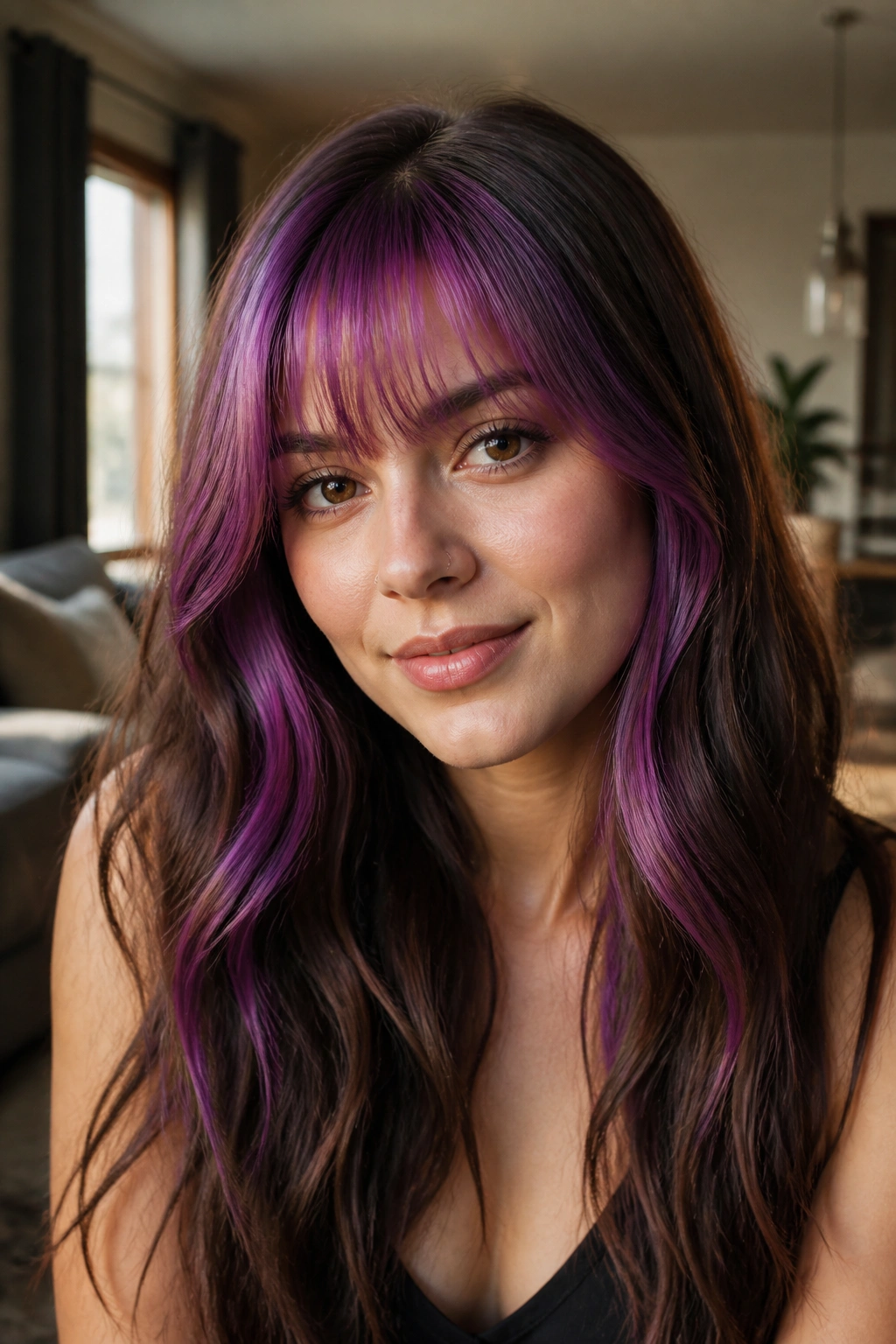
How do you give brown hair a jolt without coloring the whole head? Put the color where the eye lands first. An electric orchid money piece and fringe does exactly that, and it can look fierce or playful depending on the rest of the cut.
How to Keep Bangs from Looking Heavy
Bangs can swallow color if the section is too thick. The fix is smaller pieces and a little space between them so the fringe still moves. On curtain bangs, the purple-blue can sweep out from the center and brighten the face. On straight bangs, a thinner application keeps the line crisp.
- Use fine slices inside the fringe, not one solid block.
- Keep the money piece slightly brighter than the rest of the color.
- Best on bobs, shags, and layered hair with face-framing bangs.
- A cooler orchid tone keeps the finish from getting too red.
This is bold, yes. But it’s also practical if you want the front of your hair to do the talking.
22. Cobalt Confetti Babylights
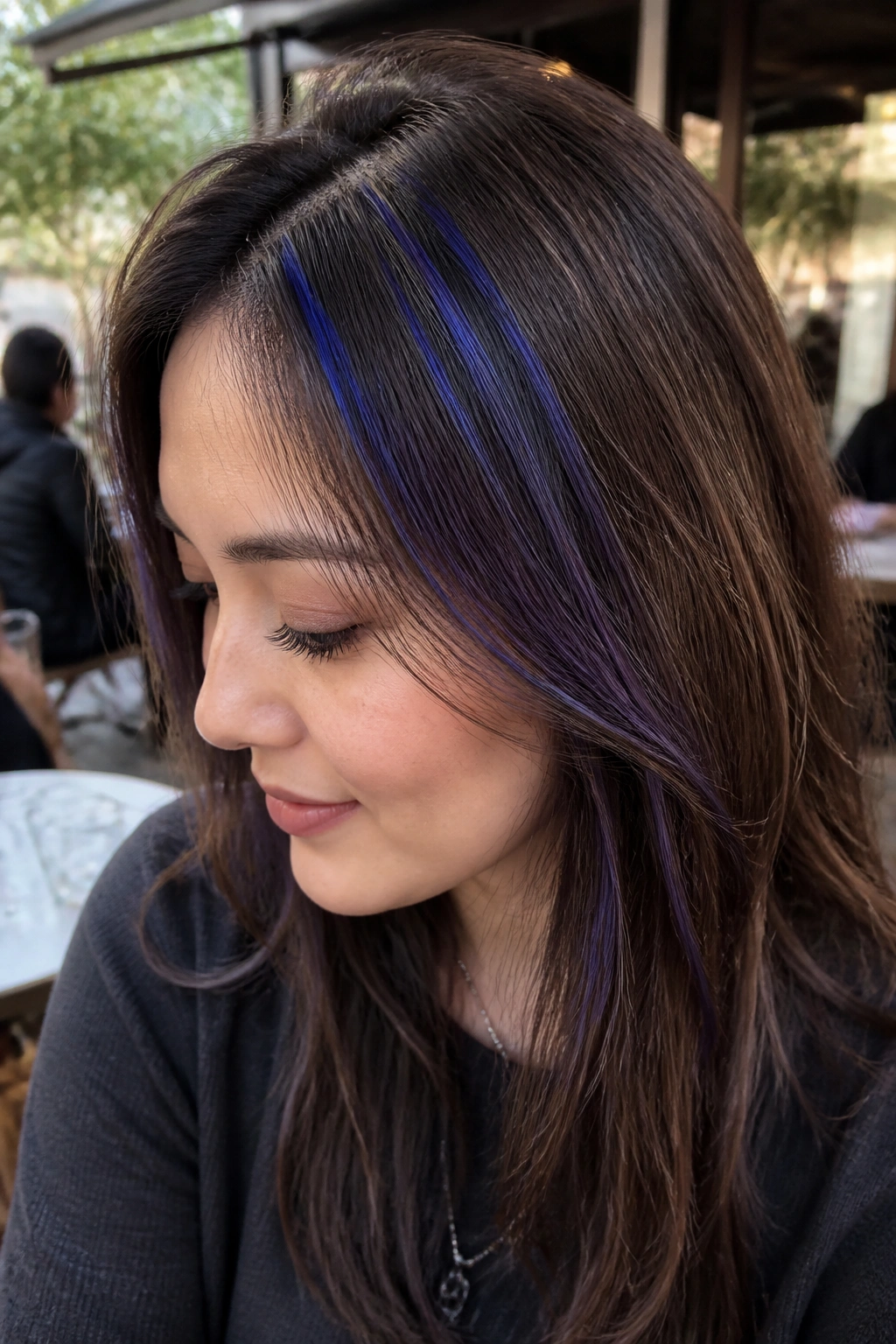
The nicest thing about cobalt confetti babylights is that they don’t try too hard. Tiny blue-purple flashes scattered through brown hair create sparkle without turning the whole head into a statement piece.
Think of it as color placed in little surprises. A few strands near the part. A few around the temples. A few hidden in the back so they show only when the hair shifts. That scattered feel is what makes the style work. It avoids the problem of uniformity, which is where a lot of bright color jobs start to look rigid. Here, the tiny sections keep everything loose.
What to Watch For
Because the pieces are so fine, the lift has to be clean. If the lightening is uneven, the cobalt can look blotchy instead of crisp.
- Use micro-slices about 1/16 inch to 1/8 inch wide.
- Scatter them through the top layers and part line.
- Choose a cobalt that has a purple cast so it fits the brown base.
- Good for people who want color that reads as movement, not blocks.
The result feels light on the hair, even when the tone itself is strong.
23. Midnight Plum with Blue Sheen
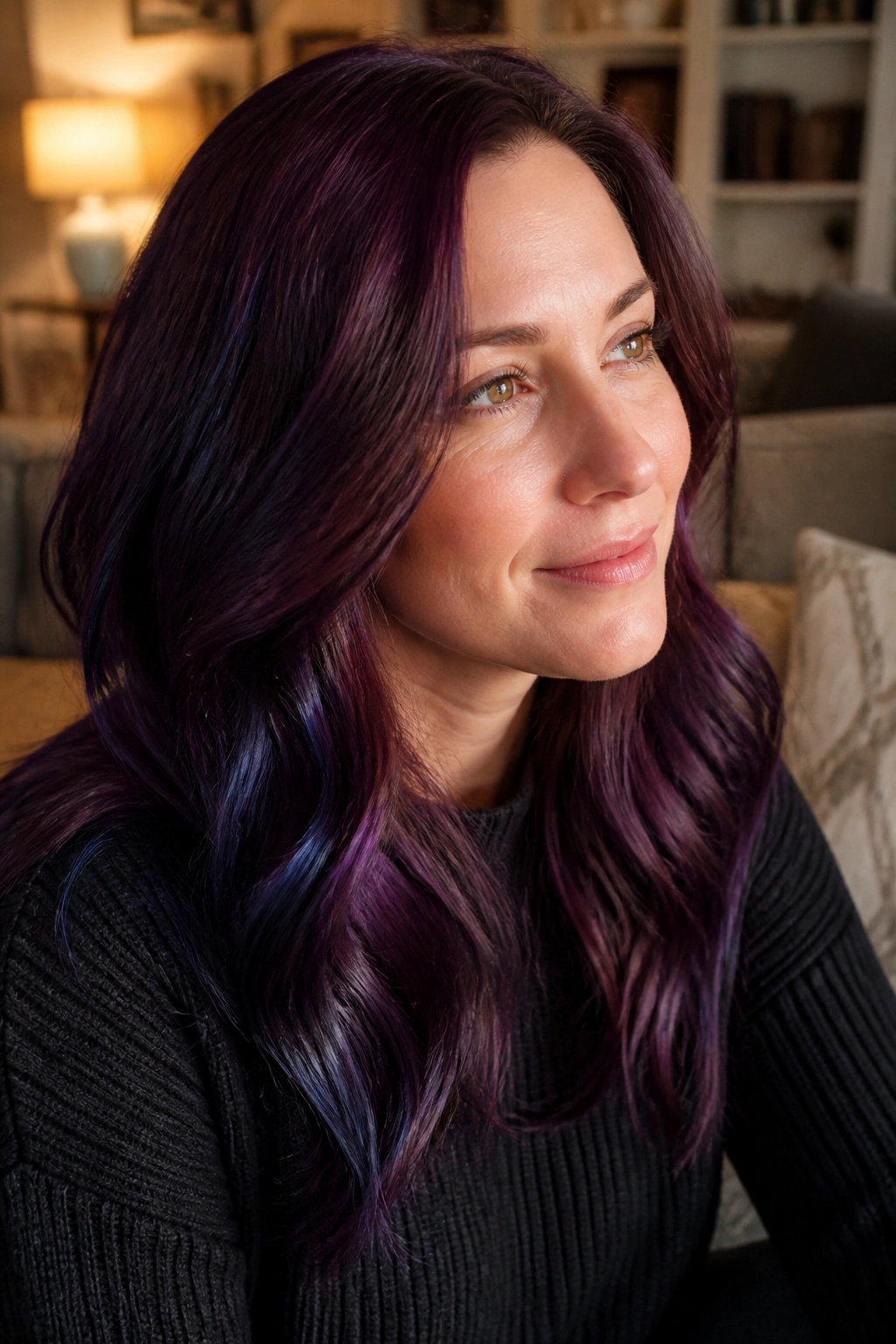
Midnight plum with blue sheen works best when the purple does most of the work and the blue appears only at the edges, in motion, or under strong light. That makes the color feel deep instead of loud.
On brown hair, the plum shade gives warmth and richness while the blue sheen cools it down just enough to stop the color from looking flat. It’s a good choice for darker brunettes who don’t want a lot of visible lightening. In the right light, the hair looks almost black with a cool reflection; in brighter light, the plum opens up and the blue comes through.
I’d choose this if you like hair that changes mood depending on the room. It’s not flashy in the way electric color can be, but it still has a point of view. A good gloss matters here. So does keeping the ends healthy, because shiny hair shows off these darker tones far better than dry hair ever will.
24. Soft Galaxy Blend for Brown Hair
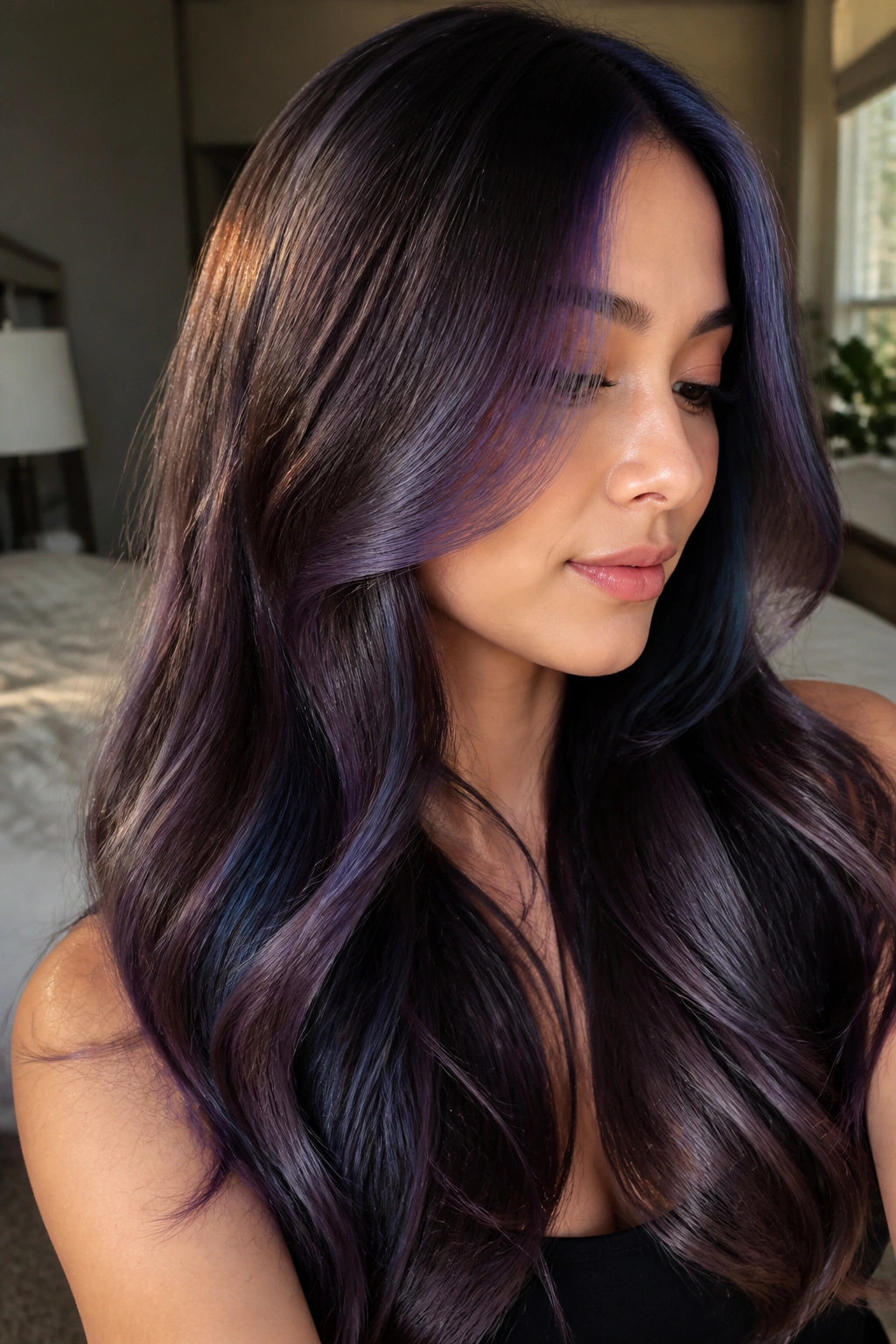
Unlike the brighter galaxy look earlier, this version keeps the saturation lower. That makes it easier to wear every day, while still giving brown hair the blue-purple depth people usually want from a fantasy shade.
The blend should move through several cool tones, but nothing should feel neon. A little violet near the face. A little dusty blue through the mids. Deeper plum or indigo underneath. That mix creates a sense of motion when the hair moves, and it also hides any harsh line between the natural base and the colored strands. On long layers, the effect can be gorgeous in a restrained way.
This is a smart pick if you want the color to be visible but not loud. The brown stays present. The purple-blue stays cool. And because the tones overlap instead of fighting for space, the whole style feels smoother than a single bright streak ever could.
25. Starlit Temple Panels
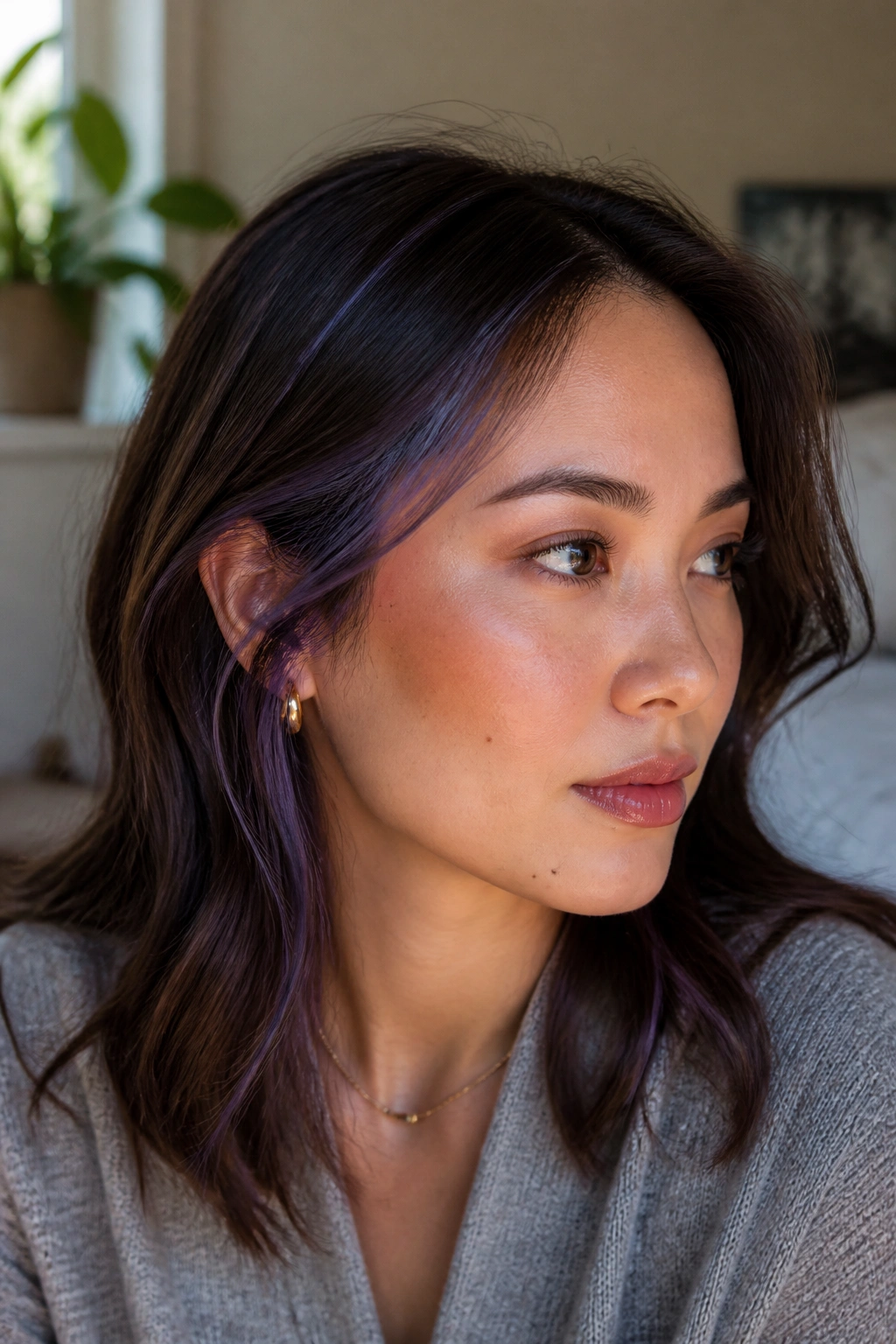
Starlit temple panels are one of those ideas that sounds tiny on paper and ends up changing the whole haircut. A few purple-blue slices around the temples and just behind the ear can make brown hair look sharper, cleaner, and more styled even when you haven’t done much to it.
Why the Small Panels Work
The temple area gets moved around all day. Glasses, tucking hair back, pushing it out of the face, all of that exposes the color in quick flashes. That makes the placement feel active without needing a lot of hair color. It also works beautifully with ponytails, low buns, and half-up styles, because the panels show exactly when you want a little surprise.
- Keep the panels narrow and slightly elongated.
- Ask for a mix of blue-violet and soft indigo so the color shifts in light.
- Best for side parts, tucked styles, and shorter face-framing layers.
- A few pieces are enough; too many and the effect loses its edge.
If you want a purple-blue highlight idea that feels modern but not overbuilt, this is the one I keep circling back to.
