



Round faces can wear more contrast than people think. The trick is not to scatter light everywhere. It is to place it where the eye reads length: above the temples, through the front lengths, and down toward the collarbone instead of straight across the cheeks.
Brown-black highlights are a sweet spot for that. Espresso, mocha, cocoa, ash brown, mushroom brown, walnut, and smoky taupe all give dark hair movement without yanking the look into blonde territory. On straight hair, they look sleek and precise. On waves or curls, they read softer and a little more expensive-looking, which is usually the point.
The wrong placement can make a round face look wider. A bright stripe sitting right at cheek level does that fast. Better choices are vertical ribbons, fine babylights, shadow roots, and face-framing pieces that start lower and taper longer. That combination pulls the shape downward in a way that feels natural, not forced.
And yes, you can keep the hair dark. That is the nice part.
1. Soft Espresso Brown-Black Babylights
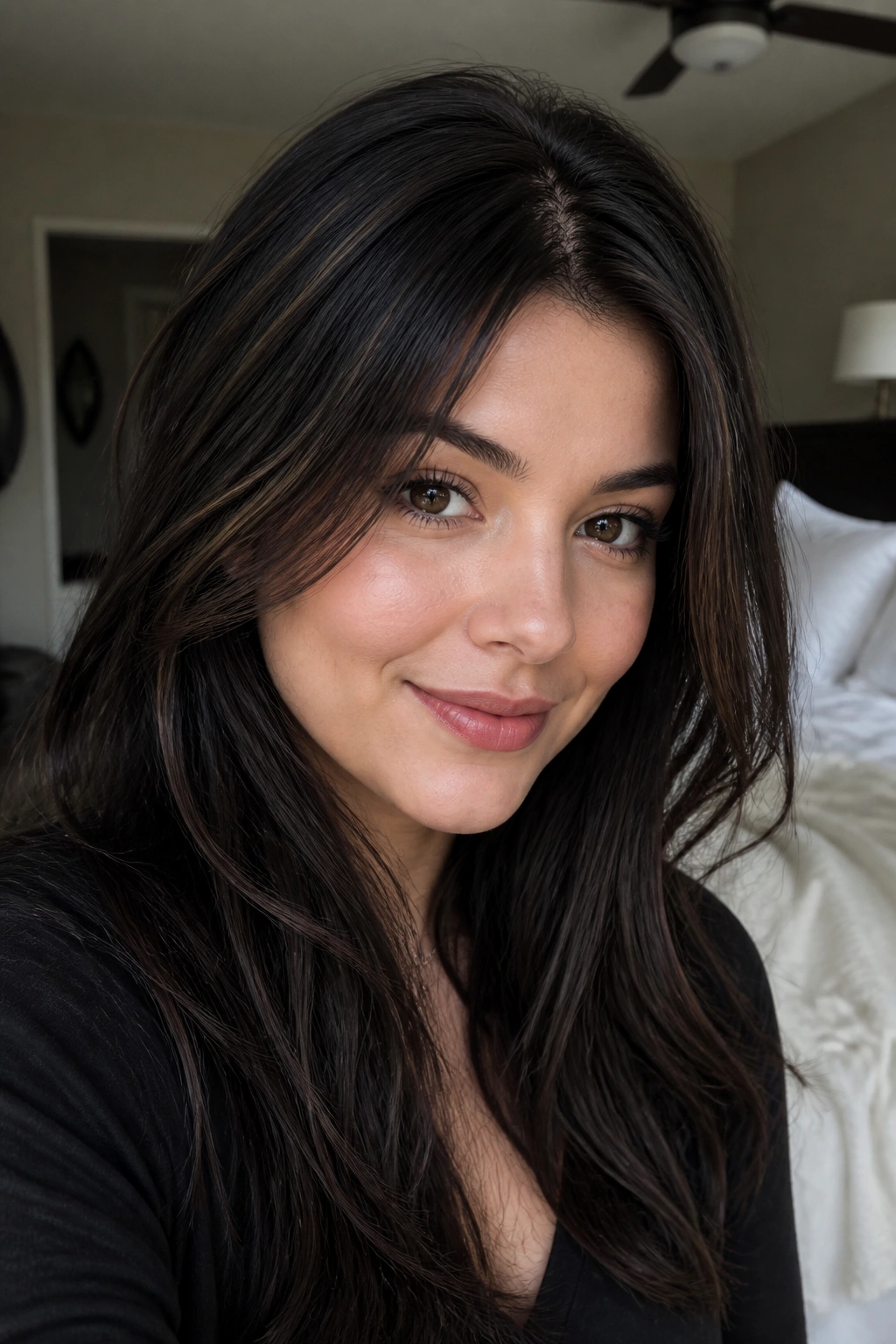
If you want the least dramatic change, start here. Babylights are so fine they barely read as streaks, which is exactly why they’re so good on round faces. They break up a solid dark base and give the hair a little air around the hairline.
Why It Works on Round Faces
The smaller the highlight, the less chance it has of widening the cheeks. Thin espresso pieces along the part and crown draw the eye upward, then the front sections can fall longer around the jaw. That gives the face a longer read without making the color obvious from across the room.
Keep the lightest micro-pieces a little back from the hairline, not plastered right on the widest part of the face. That tiny shift matters.
- Ask for pieces thinner than a pencil.
- Keep most of the brightness near the part and top layer.
- Choose espresso, cocoa, or soft brown-black tones instead of coppery brown.
- Let the front lengths stay a shade deeper than the crown.
Best tip: babylights look best when the roots stay dark and the ends are barely softened, not heavily bleached.
2. Mocha Brown-Black Balayage with a Lower Face Frame
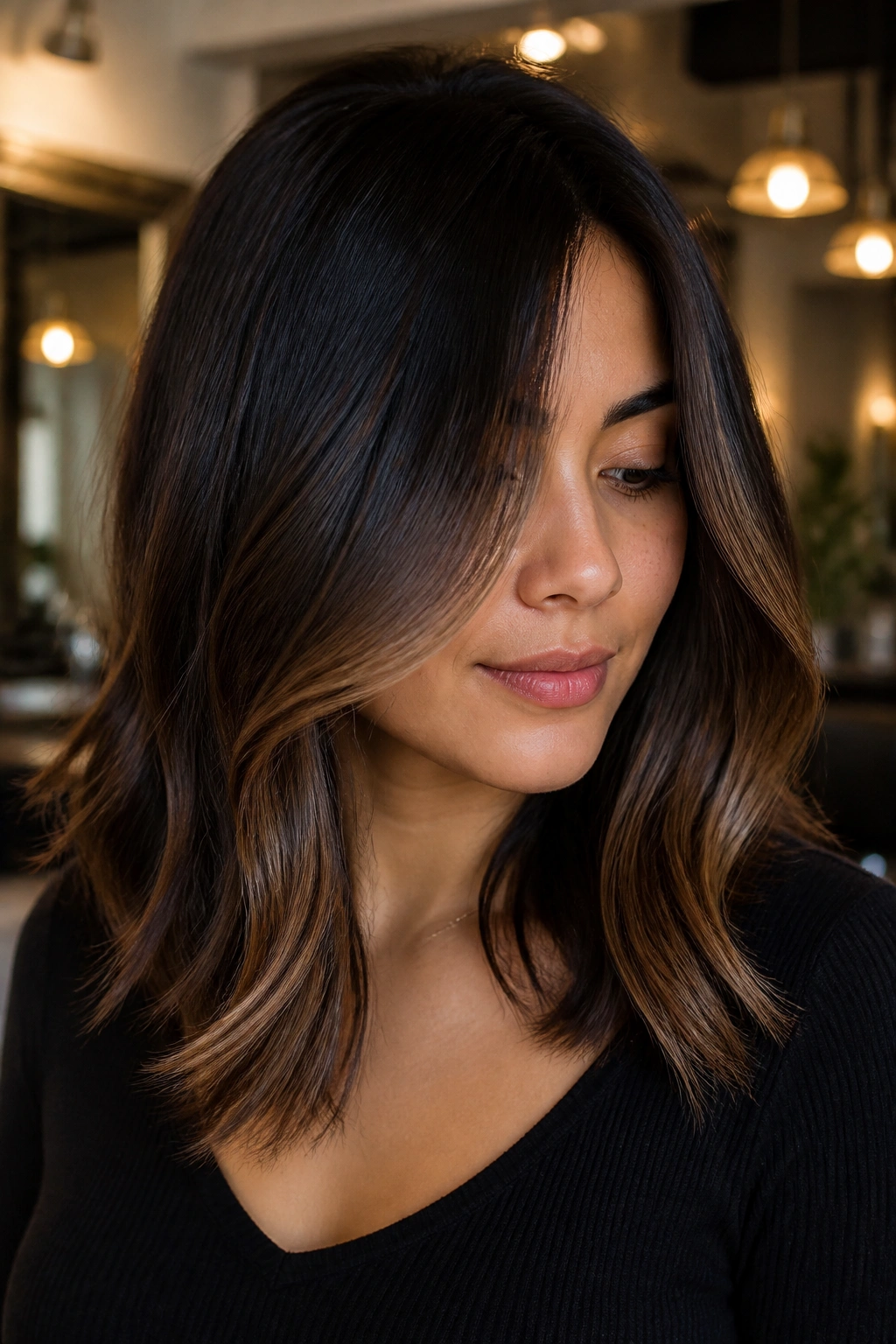
A mocha balayage can make a round face look longer without screaming for attention. That’s the appeal. The painted pieces start lower, usually around the mid-lengths, so the brightest part of the hair sits below the cheeks instead of cutting across them.
The front sections should sweep down past the cheekbone and, if the hair is long enough, graze the collarbone. That long line pulls the eye vertically. It also keeps the color from puffing out the sides of the face, which is where a lot of round-face color jobs go wrong.
This works especially well on shoulder-length cuts and longer, where the balayage has room to fade softly. A loose bend in the hair shows the ribbons better than stiff curls do.
And no, you do not need to go lighter to get dimension. A deep mocha on a dark base gives plenty of contrast when it is placed well.
3. Chestnut Money Piece with Long Face-Framing Layers
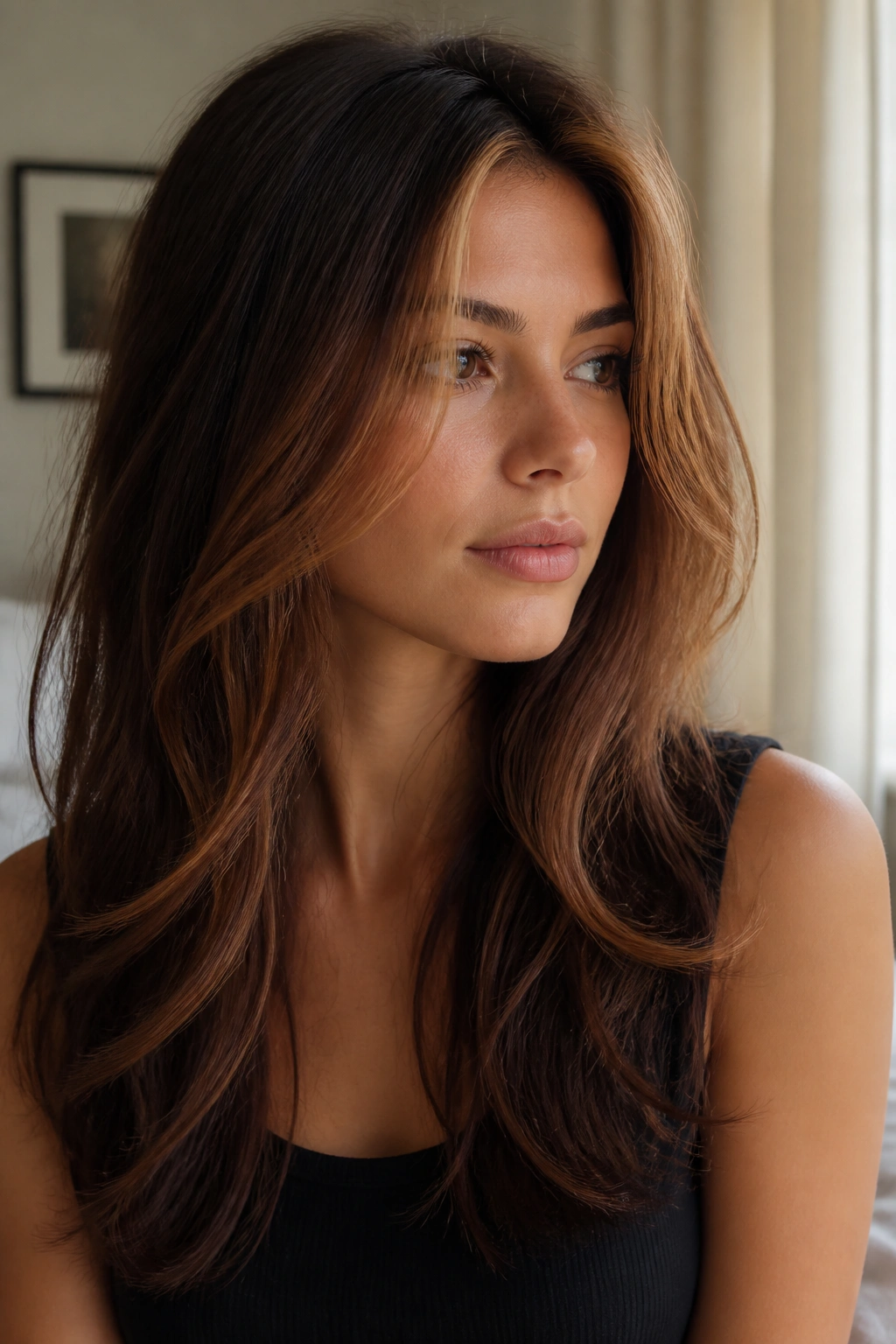
Picture a chin-length cut with a bright stripe dumped right at the temples. That can get busy fast. Now picture the same cut with a chestnut money piece that starts lower, blends into longer face-framing layers, and slips toward the jaw. Much better.
What Makes It Different
The money piece is the brightest part, so it needs discipline. On a round face, I like it soft enough to look intentional but not so chunky that it feels like a billboard. Chestnut is a smart choice because it warms the face without turning orange.
Quick Details to Ask For
- Keep the money piece one to two shades lighter than the base.
- Blend it through layers that hit below the chin.
- Avoid a hard block of color at the temple.
- Pair it with a darker crown for more lift.
Small warning: if the bright piece stops at cheek level, it can widen the face instead of lengthening it.
4. Smoky Ash-Brown Ribbon Lights
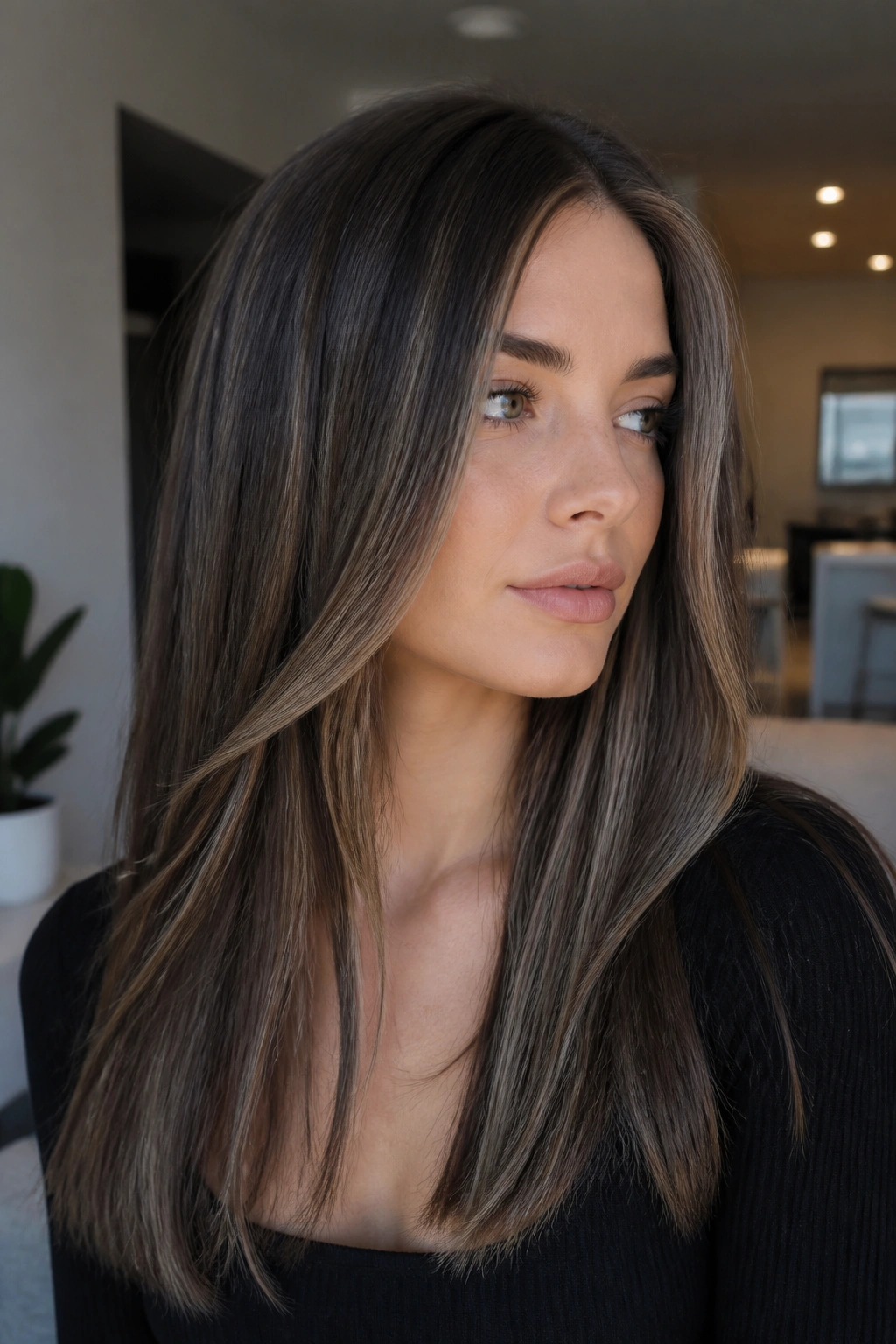
Smoky ash-brown ribbons have a cool, misty look that plays nicely with round faces, especially if the hair is naturally dark. The reason is plain: cool tones tend to feel lighter and flatter less at the sides, so the face keeps a narrower visual line.
This shade can go muddy if the base is too warm. I’d rather see a clean ash-brown ribbon than a faded beige-brown that looks tired two weeks later. A gloss helps here. Not a thick, opaque gloss — just enough to keep the brown from turning flat or greenish at the ends.
On straight hair, the ribbons show as clean vertical movement. On waves, they read softer and the effect is almost smoky around the cheeks. That soft edge matters on a round face. Hard contrast around the widest point does not.
If you wear a center part, ash ribbons near the front can make the whole cut feel longer in a subtle way.
5. Cocoa Ombré That Stays Dark at the Roots
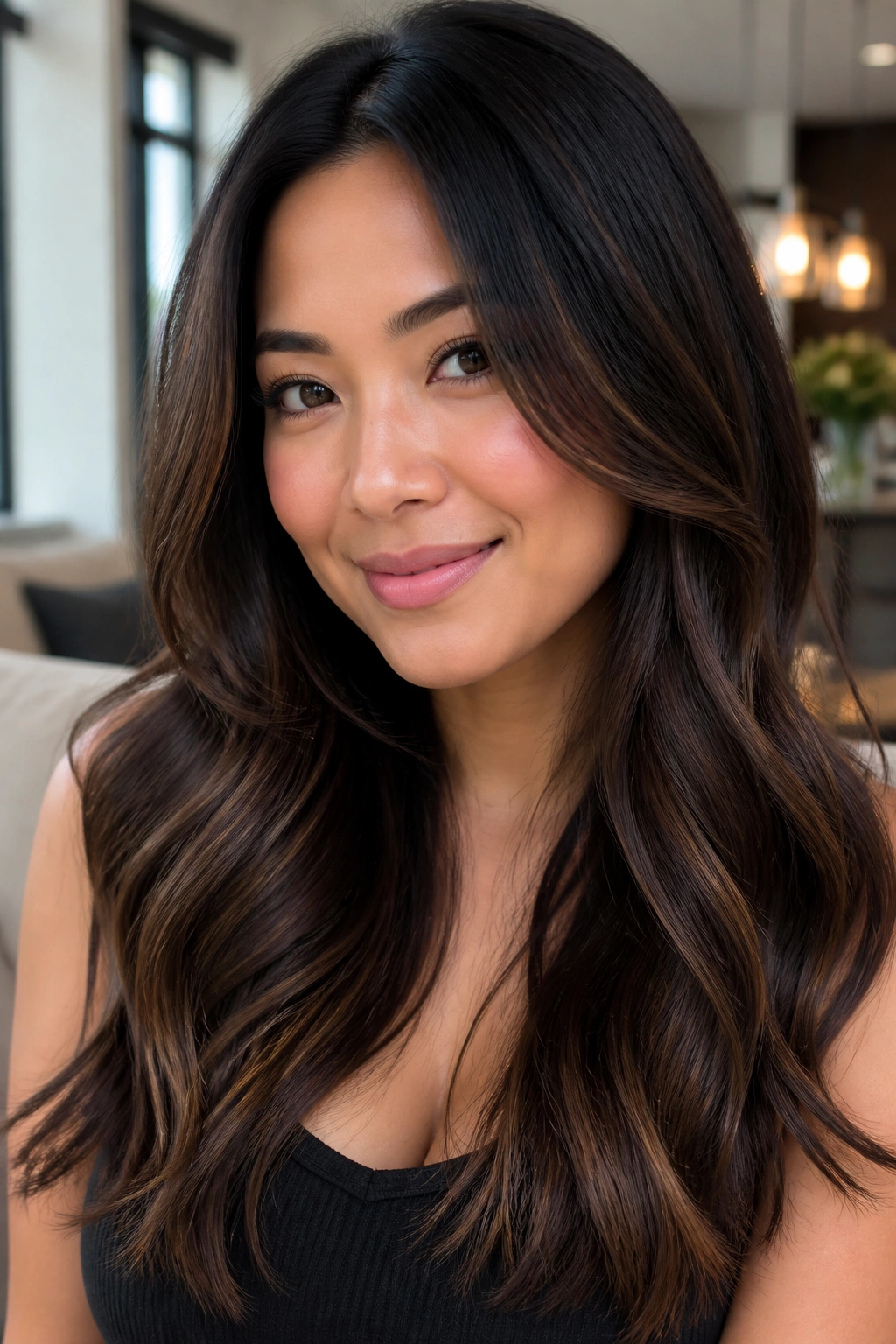
Why does a cocoa ombré work so well on a round face? Because the darkness stays on top, and the brightness arrives lower, where it can lengthen the shape instead of widening it. That simple shift changes the whole read of the hair.
How to Wear It
The best cocoa ombré starts with a deep black-brown root and melts into cocoa through the mid-lengths and ends. The transition should be soft enough that you cannot point to a hard line. If you can, the blend is too sharp.
This is a smart pick for medium to long hair, especially if the cut has layers. Long layers give the ombré room to move, and the ends stop looking heavy. On a round face, that movement helps more than a blunt block of color ever will.
What to Ask Your Colorist
- Keep the root area dark and glossy.
- Start the lighter cocoa tone below cheek level.
- Ask for soft ends, not a big color jump.
- Wear it with loose waves or a smooth blowout.
A blunt fade at the jaw can shorten the face. Lower is better.
6. Caramel Micro-Lights on a Black-Brown Base
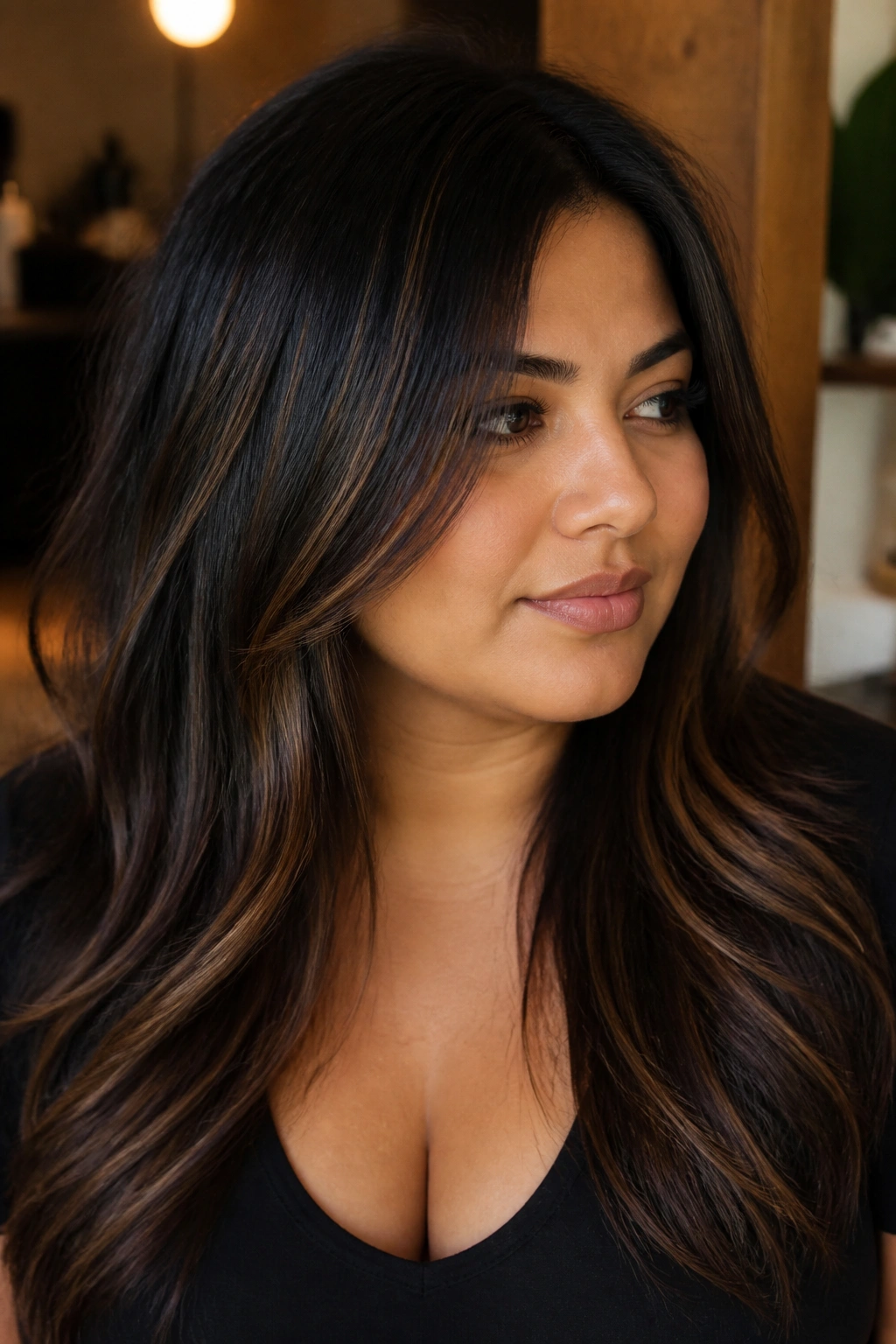
Unlike chunky highlights, caramel micro-lights do not shout for attention. They whisper. That is why they work on round faces that want shape without a lot of contrast.
Micro-lights are tiny, woven pieces that sit close together. On a black-brown base, they create a shimmer effect instead of striped color. The surface looks fuller, which is useful if your hair is fine, but the face stays soft because the light is scattered in thin lines rather than wide bands.
They’re a strong choice for people who like a polished finish and hate visible grow-out. The root line stays quieter, and the color ages more gracefully than bigger panels do.
I’d keep the caramel tone muted rather than golden. Strong gold can drag the eye sideways. A subdued caramel reads more like depth, which is what you want if your cheeks already carry width.
This is one of those looks that seems small on paper and does a lot in person.
7. Mushroom Brown Shadow Root
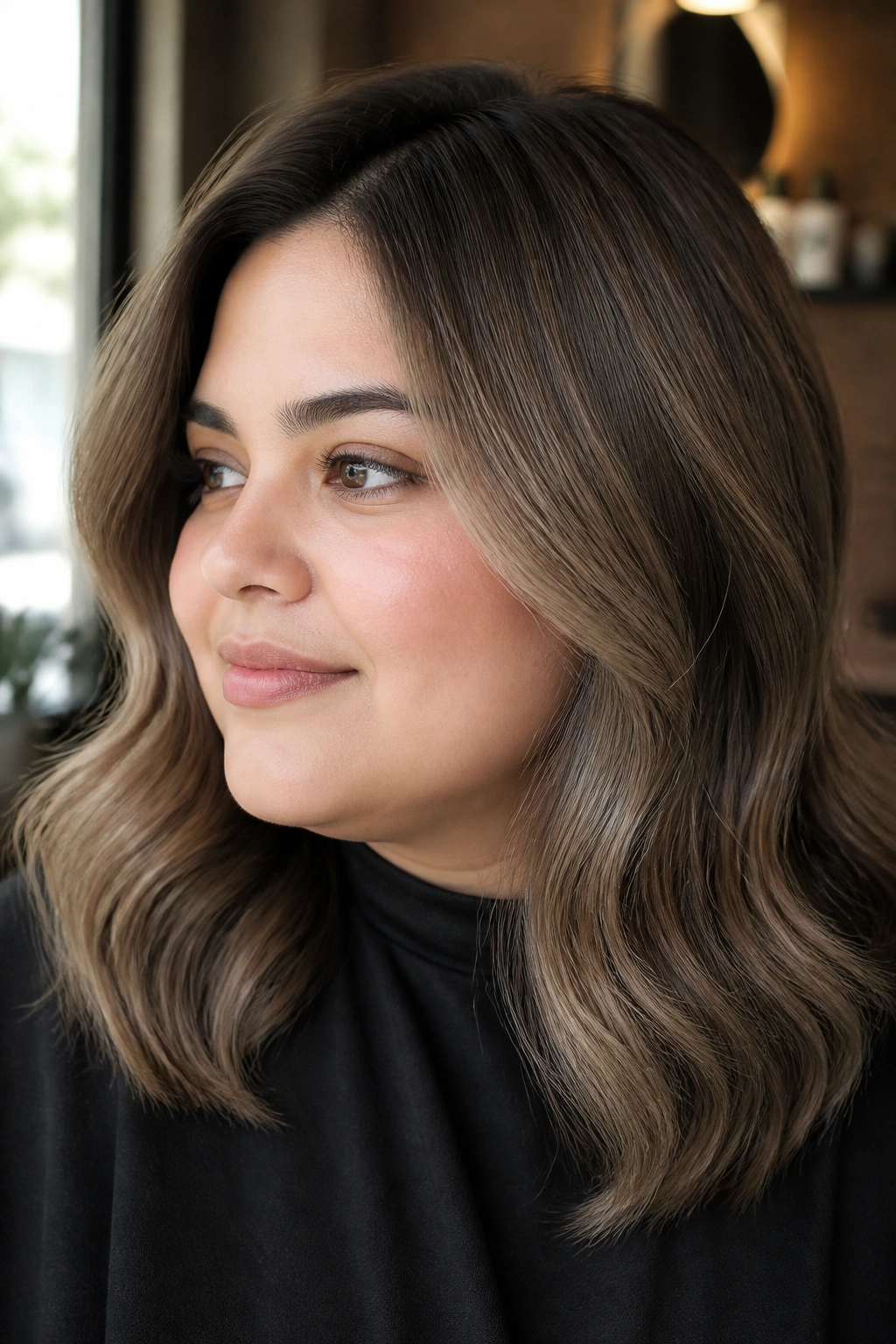
Mushroom brown has a cool-beige, almost earthy finish that takes the edge off black hair. On a round face, that cool softness matters because it keeps the sides from feeling too heavy or shiny.
The shadow root is the part I like most. Leaving the roots deeper and slightly smoky gives the cut a lift at the top. Then the mushroom brown can spread through the mid-lengths and ends without screaming for attention. It’s understated in the best way, though that word gets thrown around too often. Here, it just means the hair looks expensive and calm.
What to Watch For
- Keep the root shadow around 1/2 inch to 1 inch for a soft start.
- Ask for a beige-brown, not a yellow-brown.
- Let the lightest pieces sit below the cheekbone.
- Use loose styling so the tonal shift shows.
This shade is especially good for medium-density hair that needs movement. It won’t fix a blunt cut by itself, but it does help the shape feel less boxy.
8. Toffee Ribbons Hidden Under the Top Layer
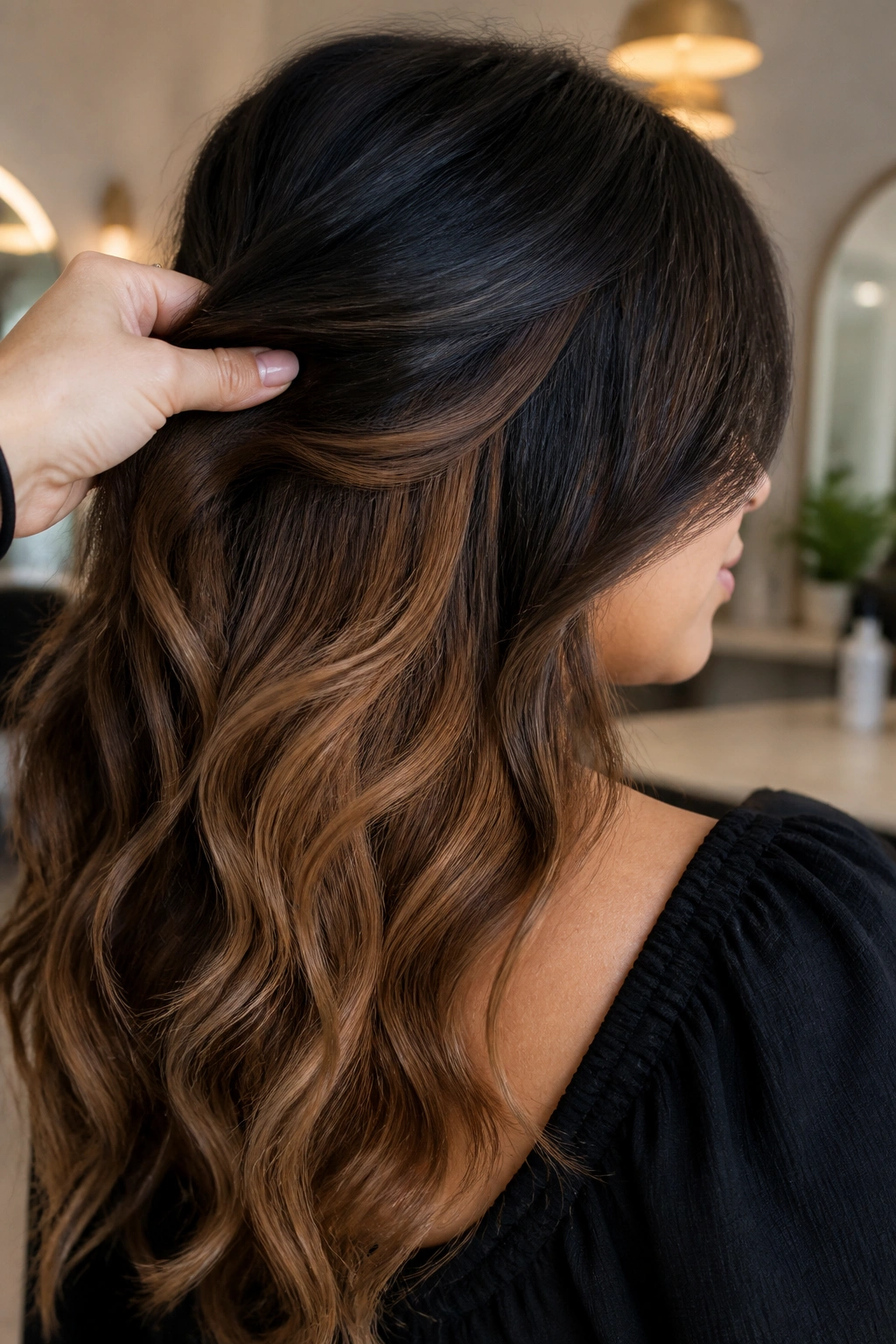
Toffee ribbons hidden under the top layer are a smart move if you wear your hair up half the time. A round face does not need every bright piece sitting on the surface. Sometimes the best dimension is the kind that appears when the hair moves.
The darker top layer keeps the crown smooth, and the toffee underneath catches light when the hair swings. That gives you brightness lower down, away from the widest part of the face. It’s a nice little trick for people who want color with less upkeep and less obvious grow-out.
This works well on wavy hair, but straight hair can wear it too. The key is placement. The ribbons should peek out from beneath the outer layer, not sit in a thick stripe near the temples.
If your hair is shoulder length or longer, this is one of the better low-commitment choices. It looks deliberate even when it’s subtle. And subtle hair color is underrated.
9. Walnut Lowlights for Extra Depth
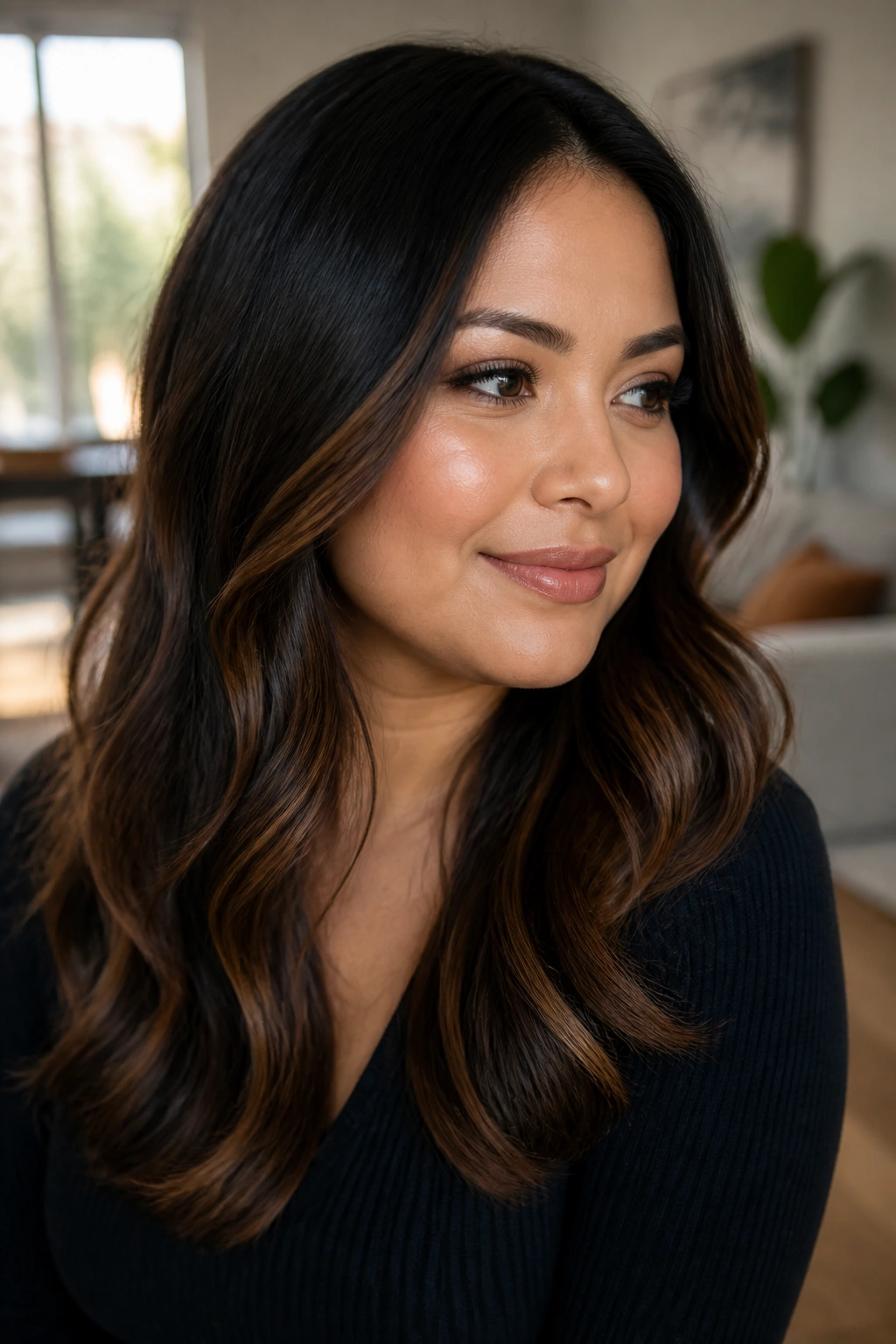
Walnut lowlights are the move when your hair already has brightness and needs a little grounding. Round faces often look better with some shadow at the sides, because too much light at the widest points can make everything feel broader.
This is especially useful on thick hair. Thick hair can balloon out at the cheeks, and walnut lowlights help break up that wall of color. They create gaps of depth, which makes the hair look less heavy. I like walnut more than harsh black fillers because it blends into brown-black hair without looking drawn on.
The best lowlights are placed in panels under the top layer and around the mid-lengths, not packed too close to the front hairline. You want the face to stay open, but not bright in a way that stretches sideways.
A good walnut lowlight job is one of those things people notice without knowing why. The shape just seems better. That’s the whole point.
10. Cinnamon-Brown Peekaboo Panels
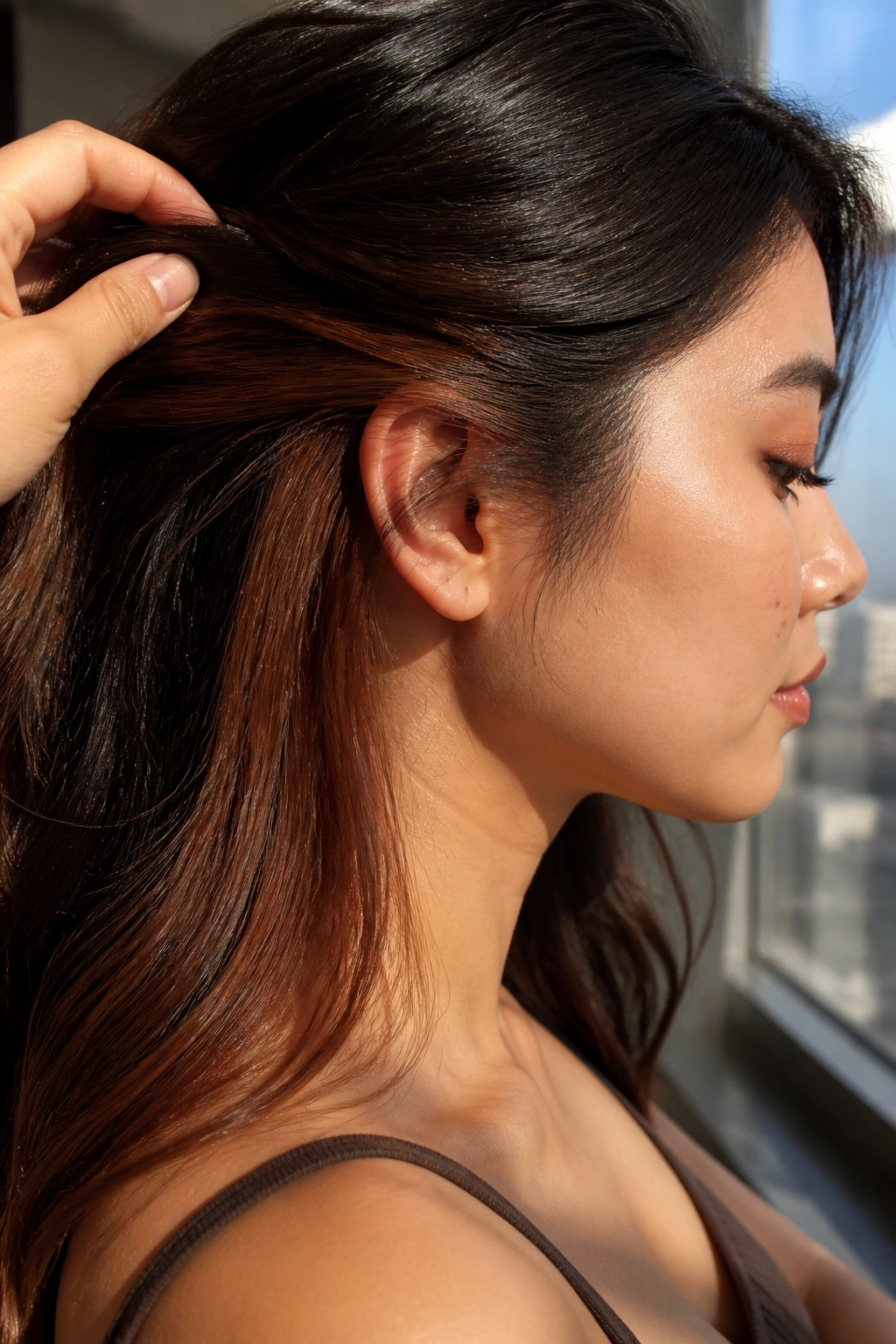
Why do peekaboo panels work on a round face when chunky highlights don’t always? Because the color sits lower, where it adds movement without widening the face at the cheek line. Cinnamon-brown gives you warmth, but the hidden placement keeps it from taking over.
How to Get the Look
Ask for panels under the top layer, usually from the ear back to the nape and a few angled pieces toward the front. The cinnamon tone should live underneath, then flash out when the hair is tucked behind the ear or lifted into a clip. That little reveal is half the fun.
This look suits people who want to keep a dark surface but still have some color play. It also works well if your job or routine calls for a more restrained look during the day. The top stays polished. The movement comes later.
Round faces benefit because the bright panels do not sit flat across the cheeks. They move. They hide. Then they show up again. That kind of placement is better than a loud stripe almost every time.
11. Dark Auburn-Brown Glints
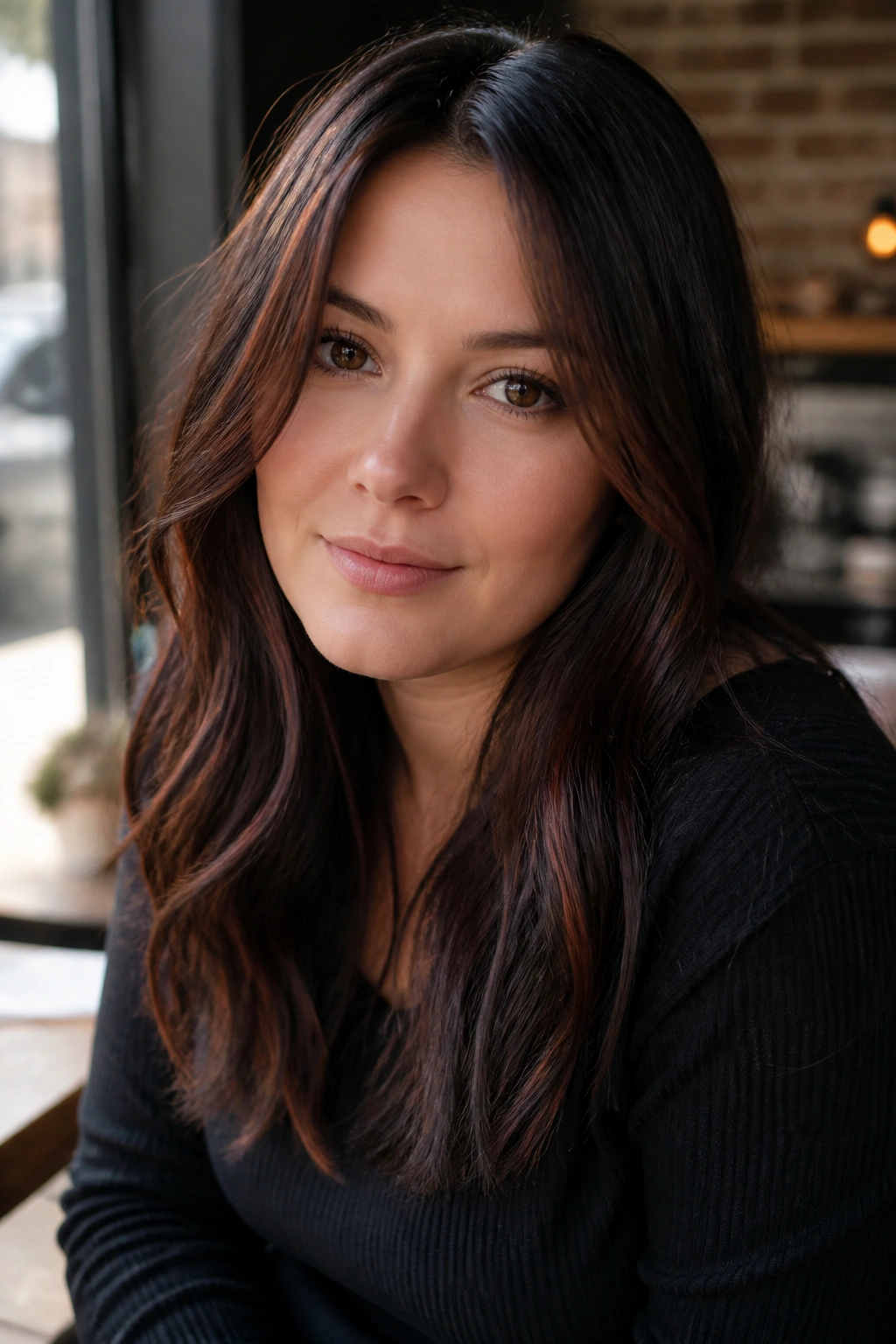
Dark auburn-brown glints add warmth without sliding into copper. That matters on round faces because warmth near the face can soften the shape, but too much red can push the hair outward visually. Auburn-brown stays in the middle, which is where it gets useful.
This shade is strong on neutral and warm undertones. It also plays well with black-brown bases that need a little life around the front. The glints should be thin, almost like a soft reflection, not obvious red streaks. Think of them as a tint inside the darker hair rather than a separate color.
I like this look on medium-length cuts with movement at the ends. The warmth shows best when the hair bends, and that bend helps the face appear a little longer. Straight hair can wear it too, but the effect is gentler.
Auburn-brown is not the loud cousin in this group. Good. It does not need to be.
12. Cool Taupe Highlights on Black Hair
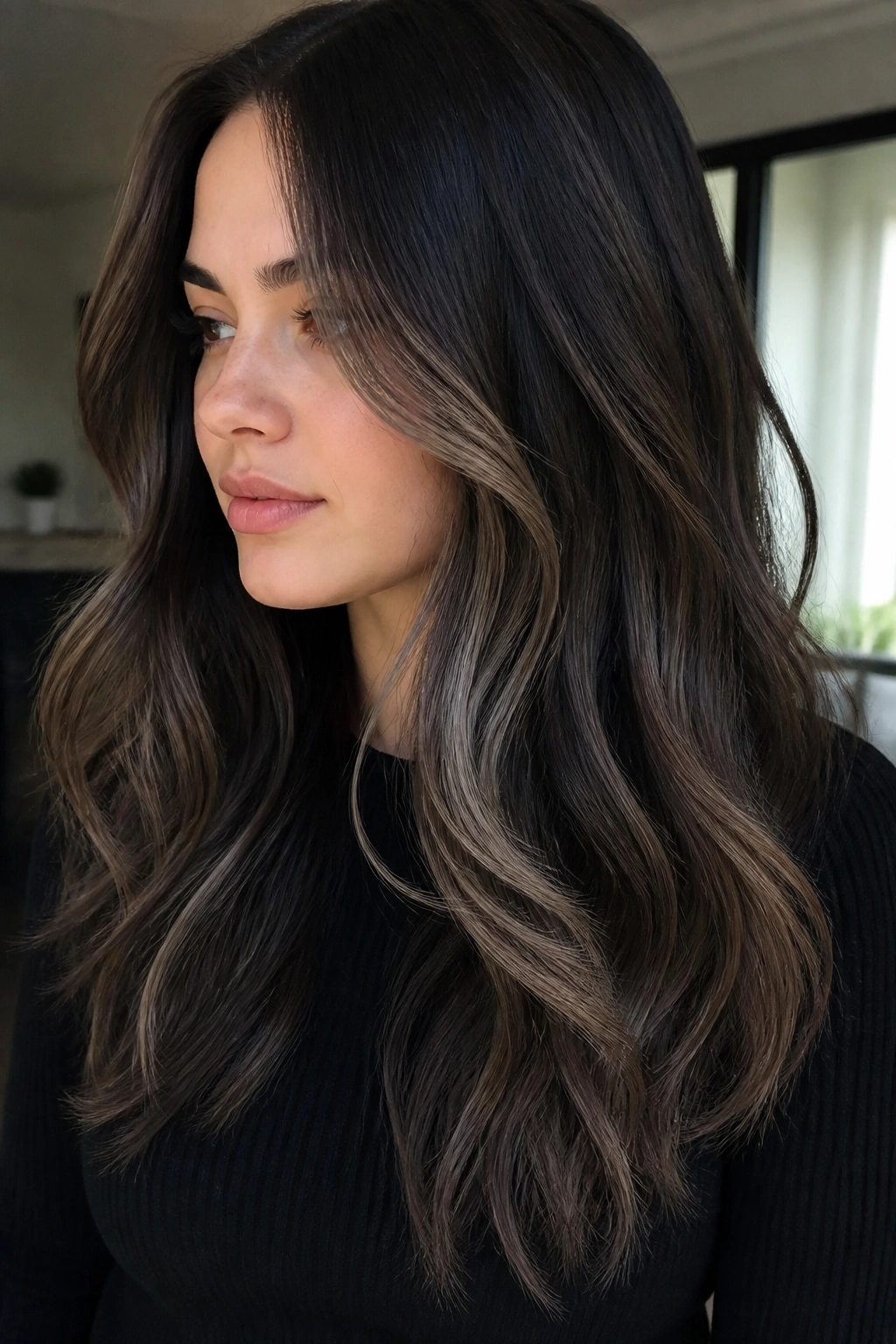
Taupe highlights are for people who hate brass. They sit in that smoky gray-brown space that looks crisp against black hair and cleaner than gold on a round face.
Unlike caramel, taupe does not pull the eye sideways with warmth. It has a cooler edge, so it reads as length and texture instead. That makes it a strong match for sleek cuts, blunt lobs, and straight styles that need a little motion without too much brightness.
Best For
- Cool or neutral undertones.
- Hair that’s naturally dark and straight.
- Cuts that hit the collarbone or a little longer.
- People who want a modern, muted look.
Keep the taupe pieces narrow and soft around the face. A wide band of light can flatten the shape. Thin sections around the front lengths are much better.
If you like a dark wardrobe and silver jewelry, taupe can feel easier than warmer brown shades. It sits in the same quiet lane. No shouting.
13. Chocolate Melt with Curtain Bangs
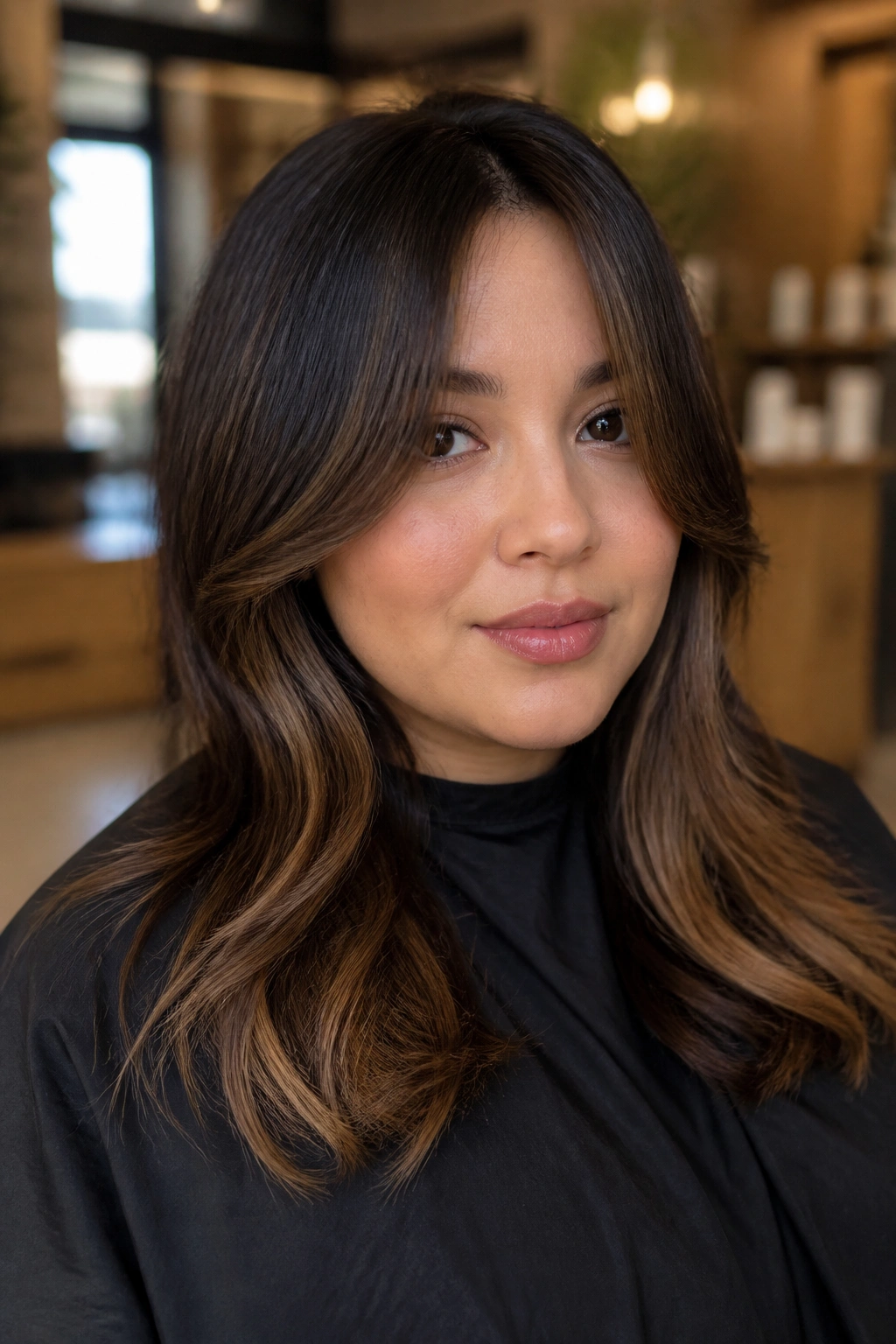
A chocolate melt gets even better when curtain bangs are part of the cut. The bangs split the face vertically, and that alone helps a round face look less full through the center. Add a soft chocolate gradient and the whole style starts to move in the right direction.
Why the Combo Works
The melt keeps the roots deep, then eases into softer brown through the mid-lengths. Curtain bangs open the forehead and bring the eye down in a gentle V shape. That V is doing a lot of work here. It softens the width of the cheeks without needing dramatic contrast.
Styling Notes
- Blow the bangs away from the face with a round brush.
- Keep the chocolate tone richer at the crown.
- Let the lighter pieces live below the cheekbone.
- Finish with a light wave through the ends.
This is a good option if you want shape and softness at the same time. It also grows out well, which matters because bangs get annoying if the color underneath fights them.
14. Bronze-Brown Contour Pieces
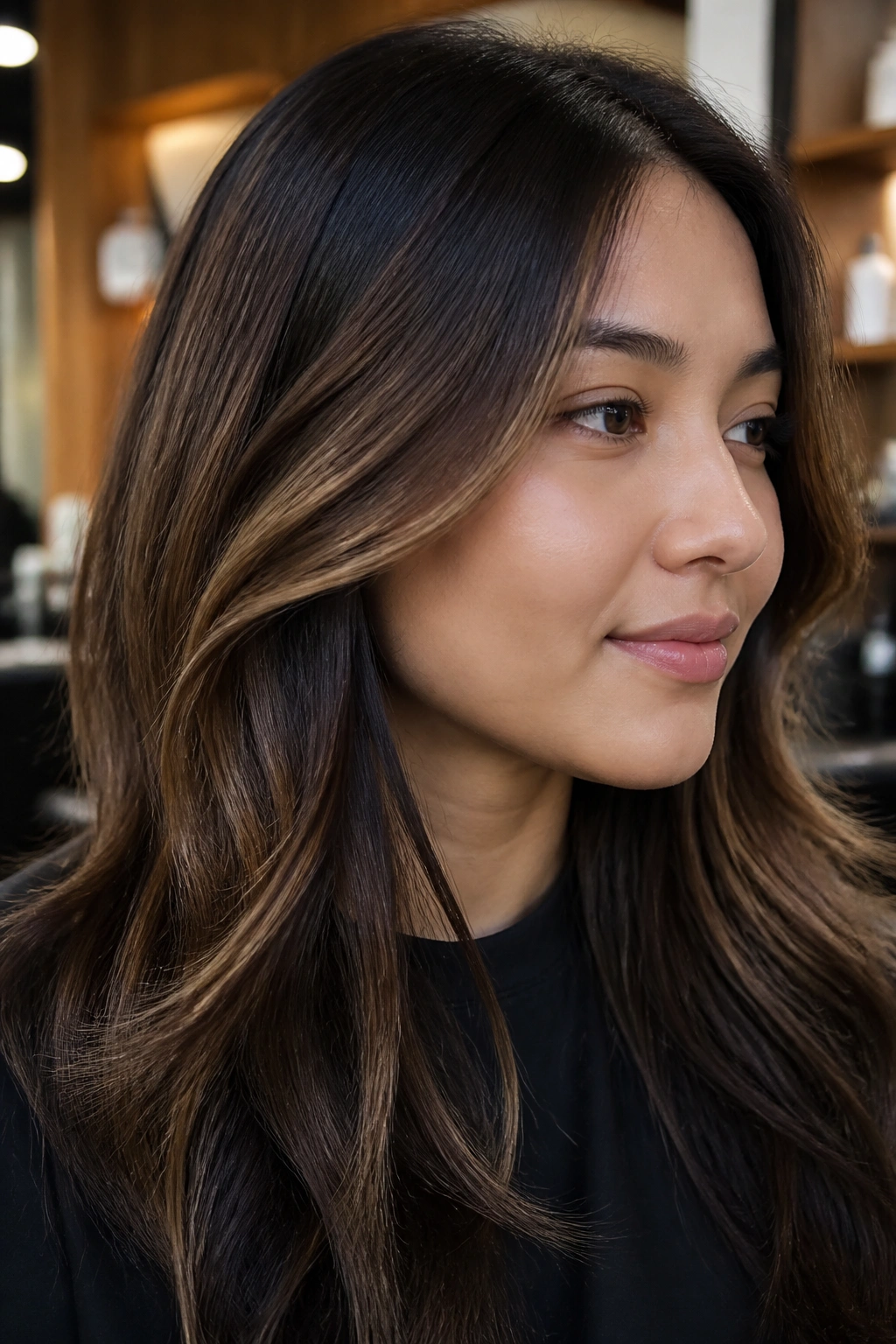
Bronze-brown contour pieces can change the shape of a round face faster than almost any other placement. That sounds dramatic, but the effect is real. Put warmth at the temples and just below the cheekbone, and the eye starts reading a longer outline instead of a wider one.
The trick is keeping the pieces narrow and angled. Straight horizontal brightness is the enemy here. Bronze-brown should sweep diagonally from the temple toward the jaw, then dissolve into the rest of the hair. That creates a contour effect without looking like makeup on the hair.
This is especially good with layered cuts or textured blowouts. The pieces move when the hair moves, which keeps them from sitting like hard stripes. I also like this on brunettes who wear hair tucked behind one ear. The color shows in just the right spots.
Skip the too-gold bronze. A deeper, reddish bronze-brown is cleaner and easier to wear on darker bases.
15. Sable Ribbon Lights Through a Curly Bob
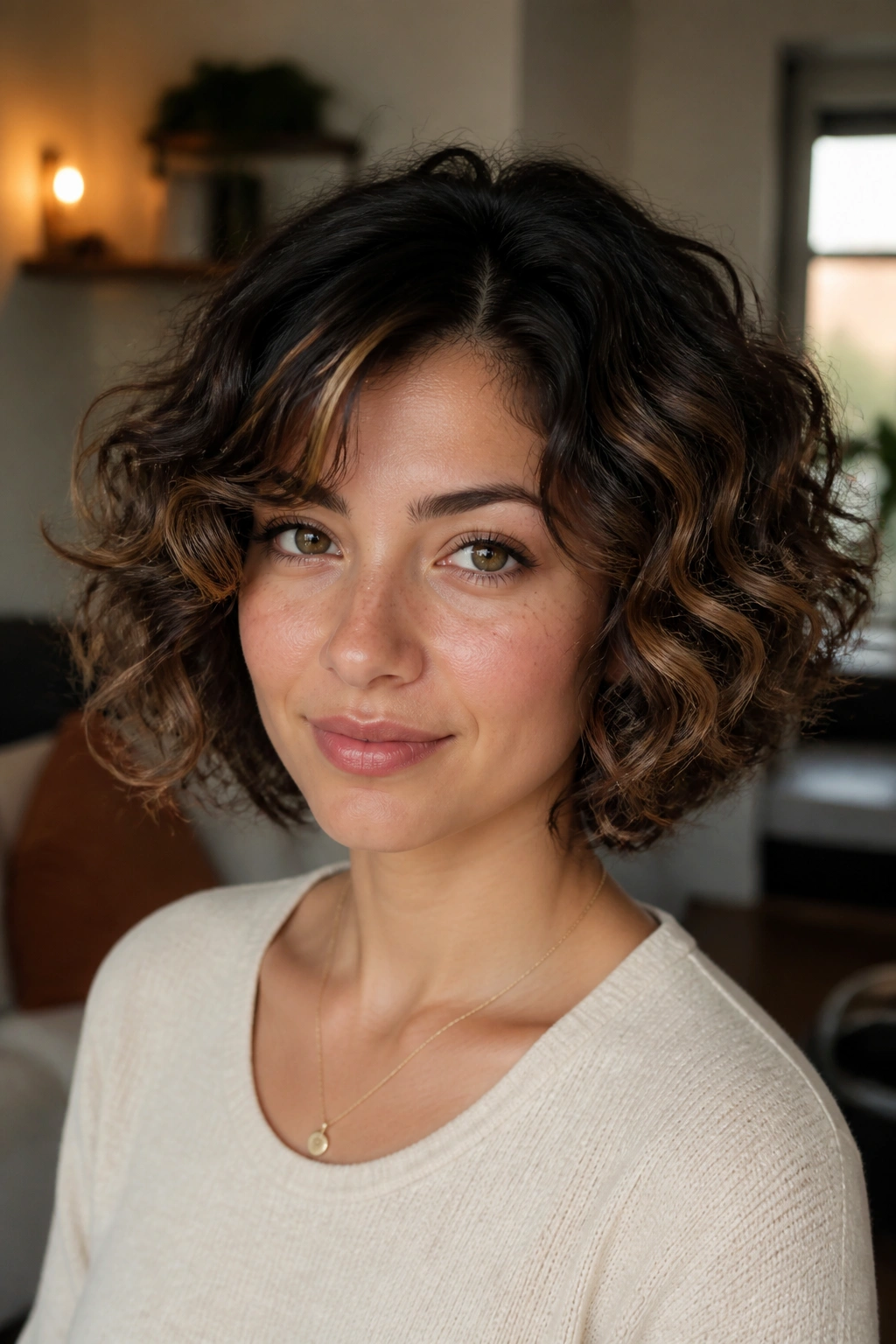
Curls eat color fast. That is just how it goes. A curly bob with sable ribbon lights is a good answer because the ribbons show movement without turning the whole shape fuzzy around the cheeks.
The ribbons should follow the curl pattern, not fight it. When the light pieces sit inside the curl clumps, the eye reads bounce and shape. When they sit too high or too wide, the bob can start to look rounder than it needs to be. Sable is a useful shade here because it stays dark enough to preserve depth while still showing texture.
What to Ask For
- Fine ribbons, not broad panels.
- Placement through the outer curl layers.
- Extra depth near the sides of the face.
- A darker crown to keep lift at the top.
A curly bob already has personality. The color should support it, not crowd it. Sable ribboning does that well.
16. Mahogany Lowlights for Thick Hair
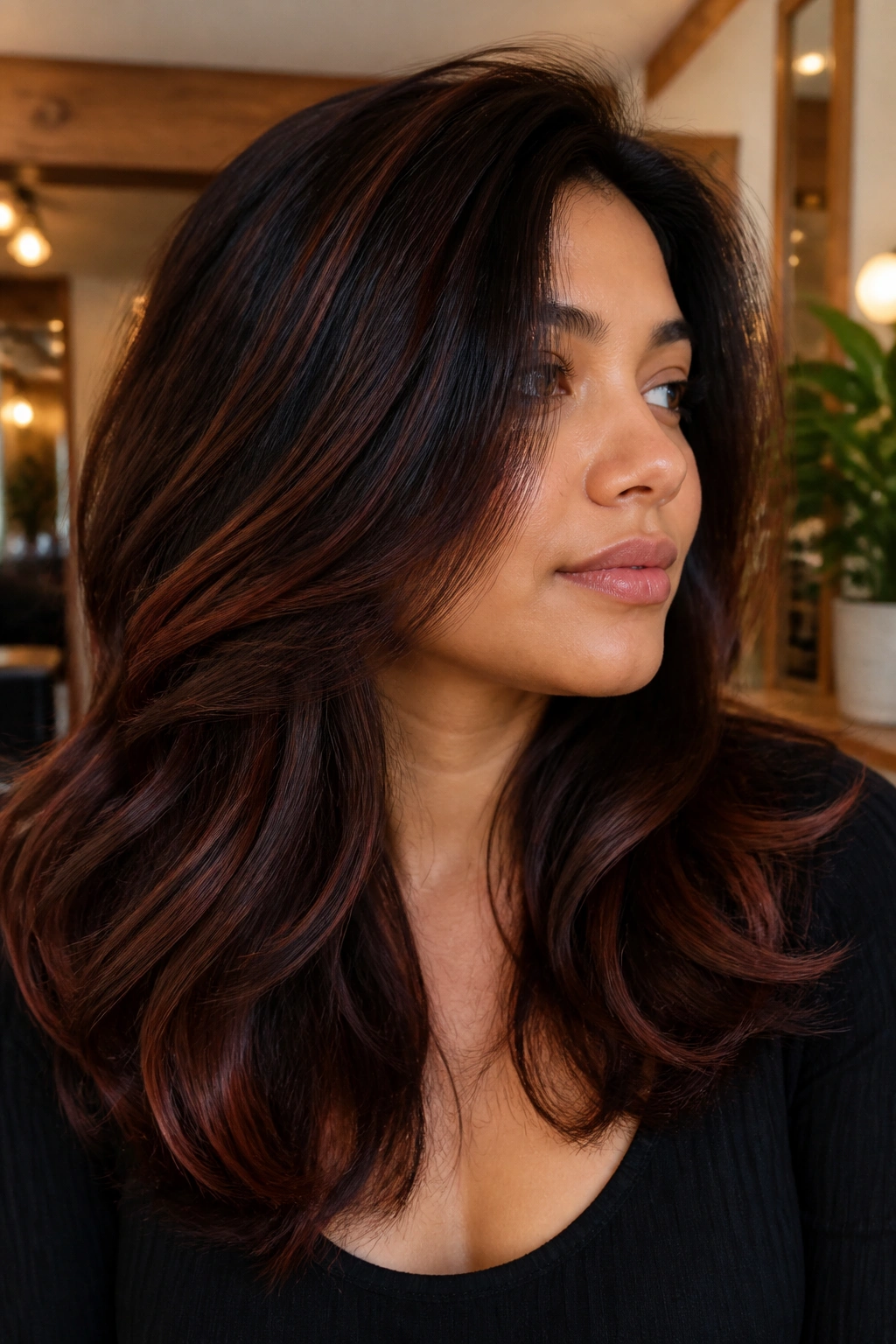
Thick hair can look gorgeous and heavy at the same time. On a round face, that heaviness sometimes lands right at cheek level, which is not the look most people want. Mahogany lowlights break up that mass and give the hair some breathing room.
I like mahogany because it adds warmth without going bright. The darker red-brown pieces live inside the hair, so the ends feel softer and the sides look less puffy. It is a useful fix for hair that expands when it dries, especially if the cut has a blunt perimeter.
A lot of people think they need highlights to make thick hair lighter. Sometimes the better move is the opposite. Add shadow, not shine. Mahogany lowlights do that while still keeping the hair rich and dimensional.
If the hair is long, place the lowlights through the mid-lengths first. If it is shorter, keep them tucked under the surface and around the lower sides. The shape feels neater almost right away.
17. Coffee-and-Ash Color Melt on Long Layers
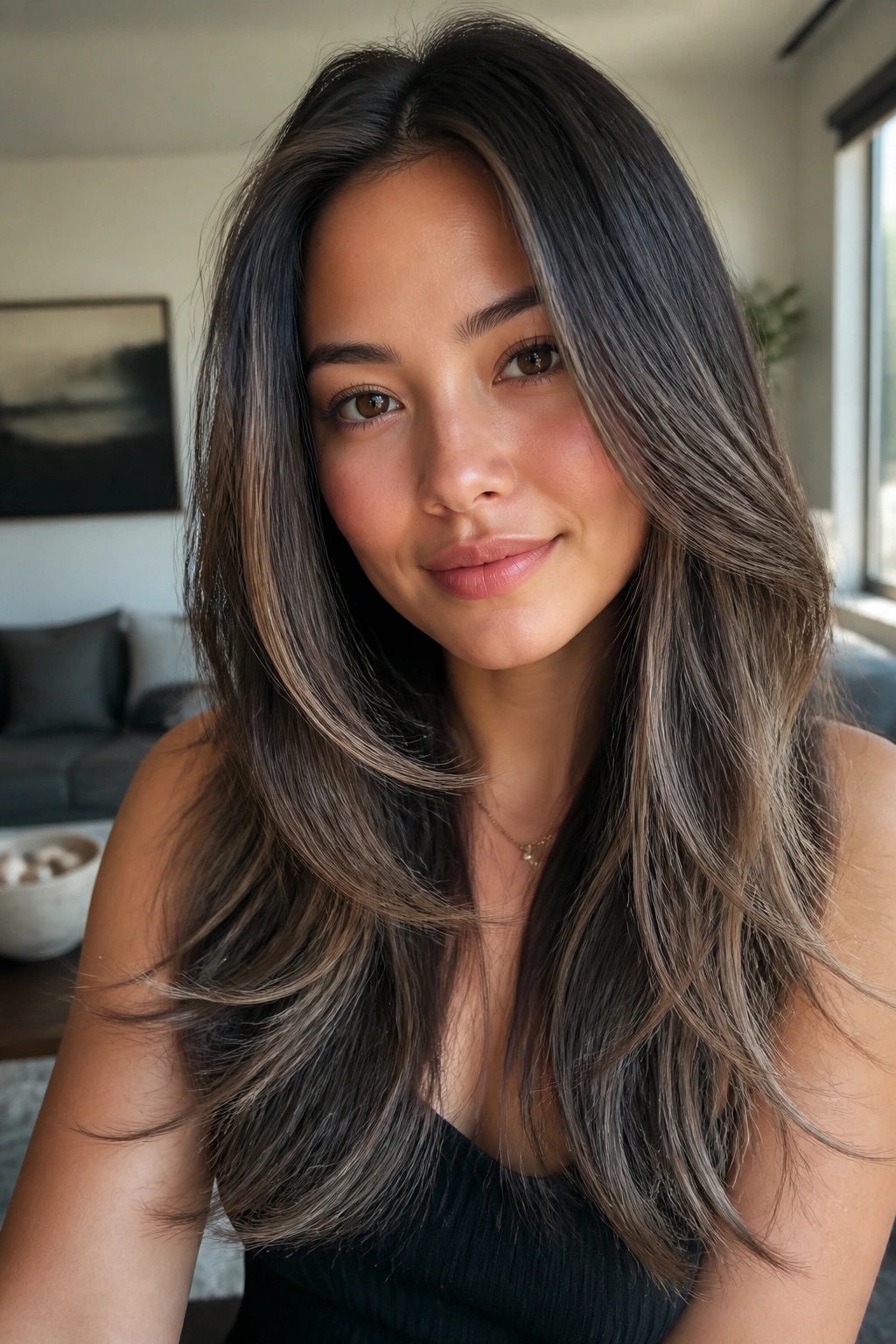
Why does long layered hair love a coffee-and-ash melt? Because the layers give the color room to move vertically. On a round face, that vertical movement matters more than a loud stripe near the cheeks.
The roots stay coffee-dark, then the color drifts into ashier brown through the mid-lengths and ends. That shift keeps the look from feeling flat. It also gives long layers a cleaner edge, since each bend catches a slightly different tone.
How to Style It
- Wear a center or off-center part to keep the face open.
- Add a loose bend, not a tight curl.
- Keep the front layers longer than the chin.
- Finish with a gloss if the ash starts looking dull.
This is one of the better choices for someone who wants dark hair with obvious depth but no harsh contrast. It looks especially good when the lengths are healthy and smooth, because the ash tone can show every bit of shine.
18. Maple Brown Halo Highlights
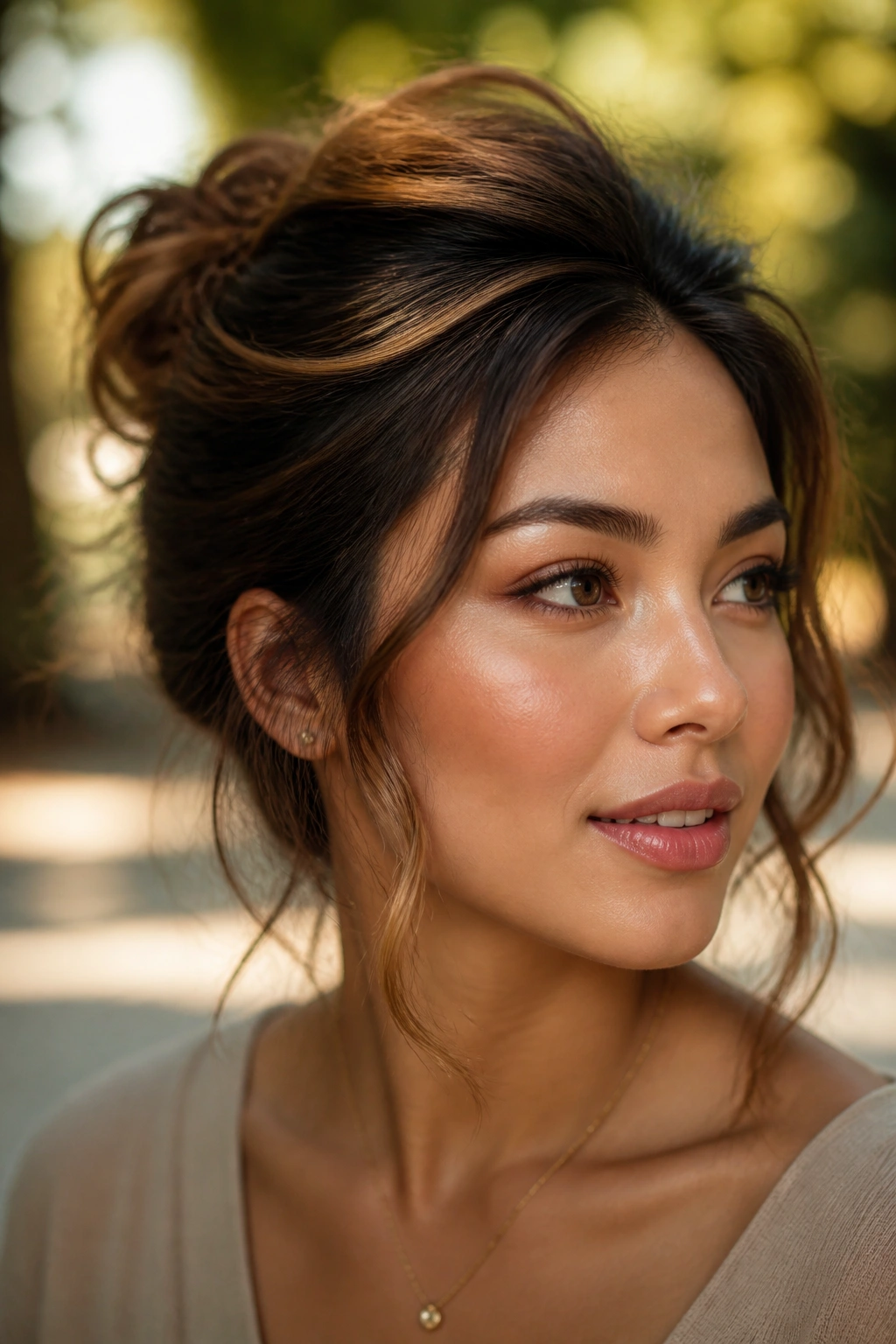
Halo highlights sit around the perimeter of the head instead of living in one loud chunk near the front. That makes them a nice pick for round faces, especially if you want brightness that shows in ponytails, half-up styles, and loose buns.
Maple brown gives the halo a warm, soft finish. It is lighter than espresso but not as bright as caramel. The placement can circle the crown and outer layers, then fall toward the back so the face keeps its length. I prefer this to a heavy money piece when someone wants lift without drawing a hard frame around the cheeks.
Who It Suits
- Medium to long hair.
- People who wear their hair up a lot.
- Wavy or straight textures.
- Anyone who wants color that looks good from the back too.
This is a sneaky-good option. It adds glow from the edges instead of the center, which is a nice change from the usual face-framing formula.
19. Soft Black Ribbons with Smoky Brown Ends
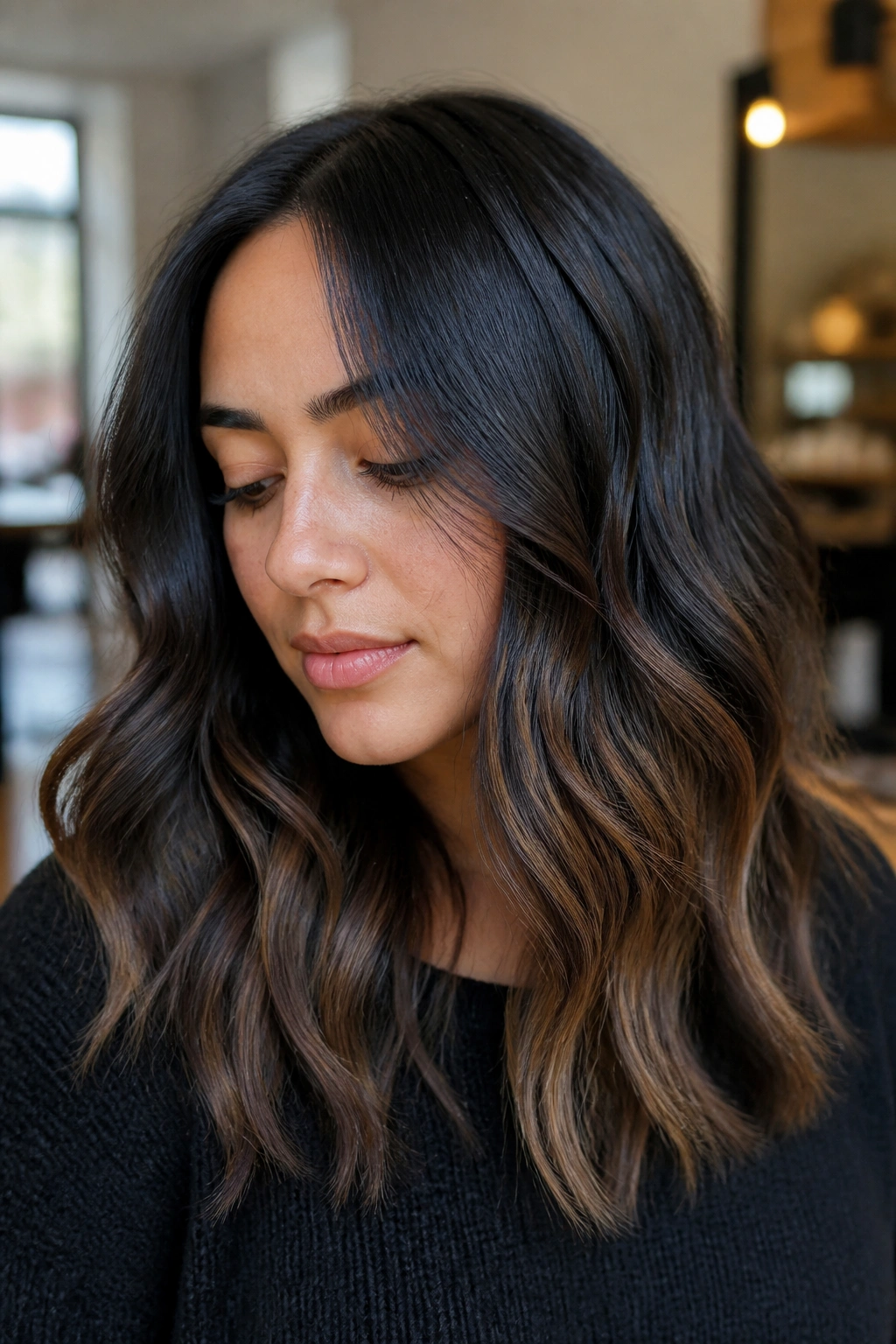
If you are nervous about looking too light, this is the safest door in. Soft black ribbons keep the roots rich, while smoky brown ends bring in just enough movement to soften a round face.
The beauty of this look is restraint. You do not need obvious highlights to get shape. A few dark ribbons threaded through the mid-lengths, then a smoky brown finish at the ends, can shift the whole cut. The eye follows the length of the hair instead of stopping at the cheeks.
This works well on coarse hair and on anyone who likes low-maintenance color. The grow-out is gentle, and the contrast stays subtle even after several weeks. I’d keep the brown ends cool rather than warm if the base is already near-black. That keeps the finish sleek instead of red.
Small Care Notes
- Use a shine serum on the ends.
- Ask for a soft glaze, not a chunky lightener.
- Keep the ribbons narrow around the face.
- Trim the ends before they start looking dusty.
20. Glossed Espresso Balayage for a Clean Finish
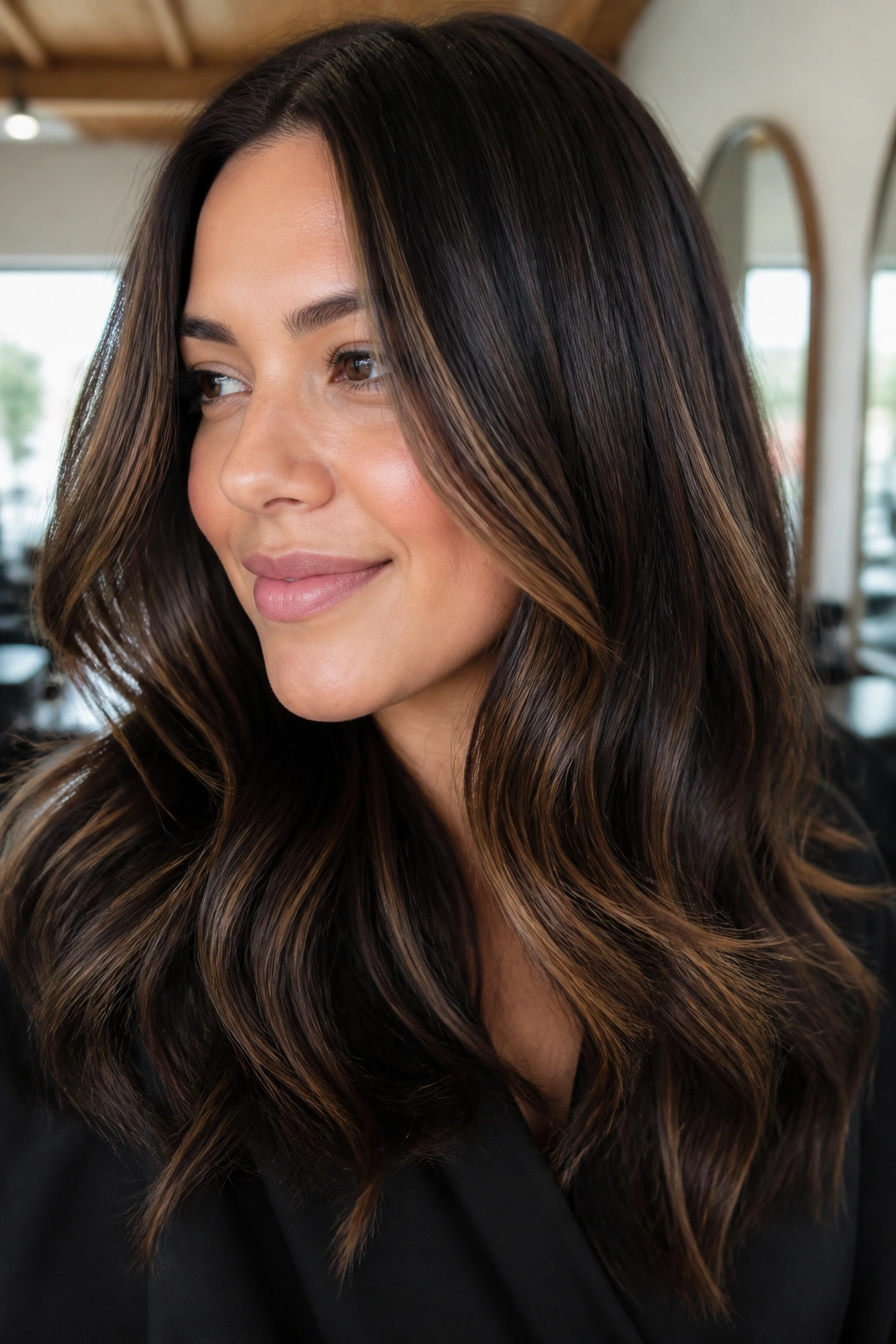
Sometimes the best look is the one that looks freshly brushed, not busy. Glossed espresso balayage does that well. It keeps the hair dark enough to feel grounded, then adds soft painted ribbons that catch the light as the head turns.
On a round face, this kind of finish works because the eye sees polish first and width second. The brighter bits stay long and controlled, usually through the mid-lengths and lower front sections. A clear gloss or demi gloss on top helps the espresso tone stay rich instead of flat. That shine matters. Flat dark color can sit heavy around the face.
I like this look for people who want to wear dark hair but still need motion. It reads expensive in the plainest sense of the word: healthy, smooth, and considered. Not flashy. Not fussy. Just well placed.
A round face does not need a lot of brightness. It needs the right lines, the right depth, and a little restraint.
