



Brown blonde highlights for round faces can be flattering in a way that feels almost sneaky. The right placement doesn’t just add brightness; it changes where the eye goes first, and that matters when the goal is to make cheeks look a little narrower and the face a little longer.
That’s why the same shade can look fine on one person and fall flat on another. A thick blonde stripe near the widest part of the cheeks tends to widen things. Soft ribbons that start higher, skim the temples, and drop below the chin do the opposite. Small move. Big effect.
Brown and blonde is a good mix for this face shape because it gives you contrast without the hard edge of full platinum. Add lowlights, baby-fine highlights, or a face frame in the right spot, and the whole cut starts to feel more sculpted. It’s less about going lighter everywhere and more about being smart with where the light lives.
1. Soft Caramel Brown Blonde Money Piece
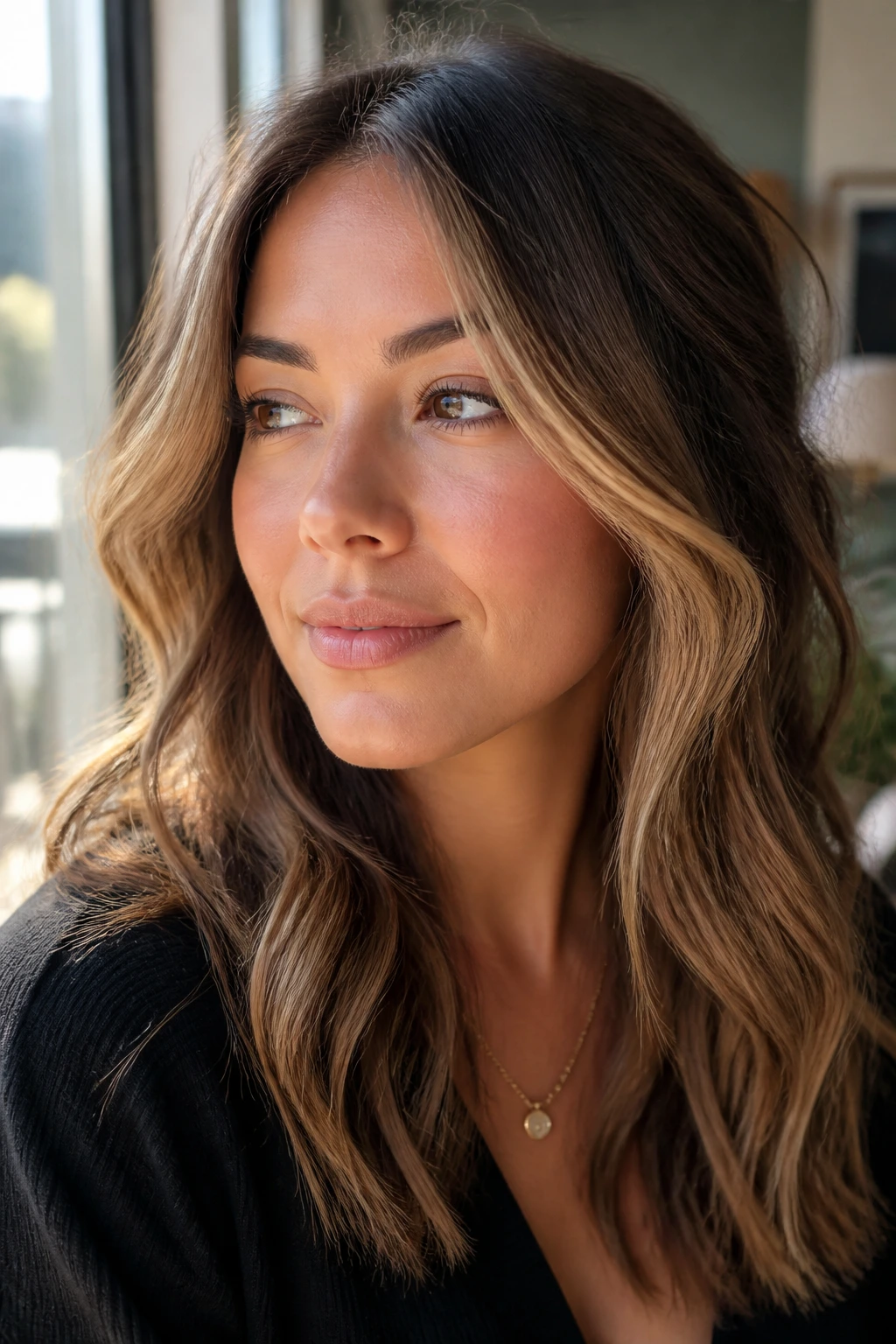
A money piece can do a lot of work fast. Two brighter strips around the front hairline pull attention upward and outward, which is exactly what you want when a round face needs a little length.
Why It Works on Round Faces
The trick is keeping those front pieces soft, not stripey. Ask for caramel or beige-blonde ribbons that start near the brow and drift past the cheekbone, not a thick block that sits right at the widest part of the face. If the colorist places the lightest pieces just outside the eyebrows and feathers them into the rest of the hair, the face reads longer almost instantly.
Small pieces do the heavy lifting.
- Keep the money piece about 1/2 inch to 3/4 inch wide on each side.
- Ask for a shadowed root so the bright front pieces don’t look pasted on.
- Let the ends of the frame fall below the chin if your hair is medium or long.
- Keep the tone in the caramel-beige family instead of icy blonde, which can look harsh near the face.
Best tip: if your face is especially soft through the cheeks, keep the brightest part of the money piece just under the eyebrow arch. That little lift matters.
2. Chestnut-to-Beige Balayage
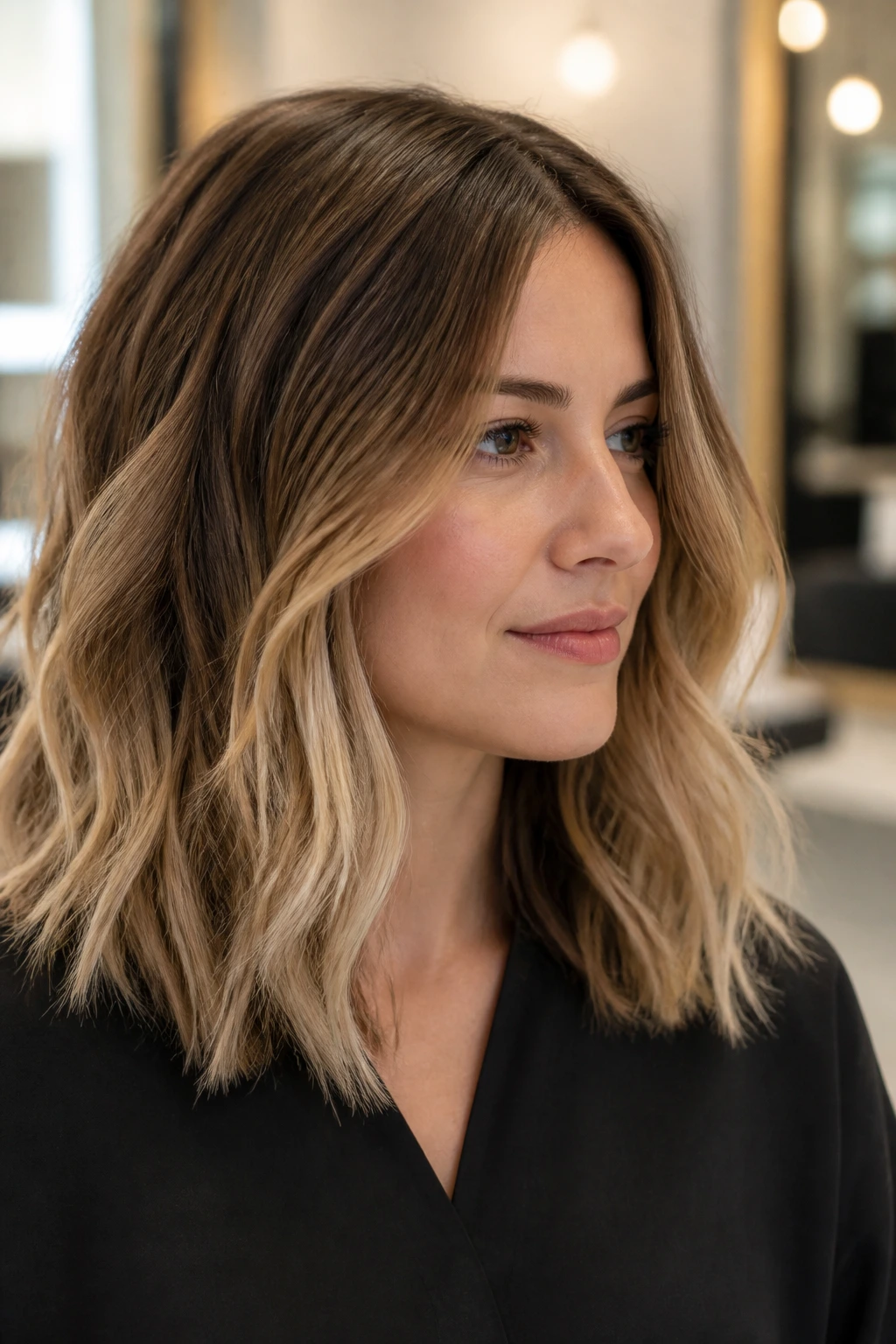
Why does a slow fade look better than chunky streaks here? Because a round face usually benefits from movement that travels vertically, not color that cuts across the head in obvious bands.
Chestnut at the roots and beige through the ends gives you exactly that. The darker base keeps the top of the head grounded, while the lighter lengths pull the eye downward. It’s one of those looks that feels easy, but the placement has to be thoughtful or it turns puffy around the cheeks.
I like this style on shoulder-length cuts and long layers, especially if your hair has a natural wave. The wave breaks up the color, so the blonde reads as soft dimension instead of separate streaks. On straight hair, the same color can still work, but the transition should be gradual and the face frame should start a little higher than the cheekbone.
If you want a low-maintenance brunette-blonde mix that doesn’t fight a round face shape, this is one of the safer bets.
3. Honey Ribbon Highlights Through Mid-Length Waves
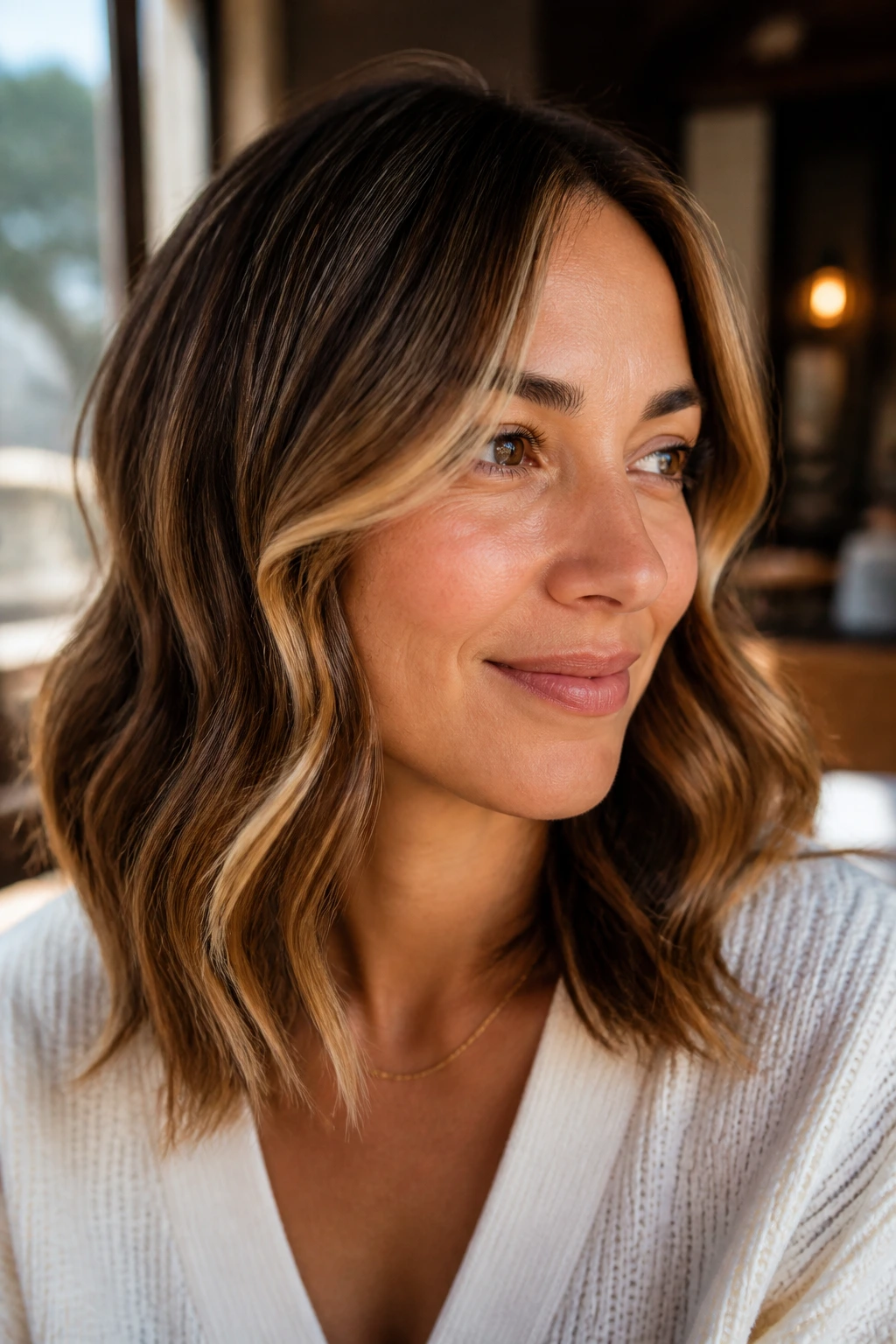
Picture a blunt shoulder-length cut with honey ribbons tucked into the bends of the wave. It’s warm, soft, and much less fussy than a high-contrast blonde job.
This look works because the ribbons show movement without widening the sides of the face. The honey pieces should live mostly from the temple down through the ends, with a few delicate strands near the front. That creates a vertical line when the hair moves, which is a friend to round cheeks.
How to Ask for It
Tell your colorist you want thin ribbons, not chunky panels. Then ask for the brightest pieces to stay a little farther from the cheekbone and a little closer to the outer face frame. That keeps the color from landing right where the face is widest.
A few details help:
- Choose honey, beige, or light caramel rather than pale yellow blonde.
- Keep the wave loose, not crimped or overly tight.
- Pair it with a side part or a soft off-center part if you want extra length.
- Let some darker brown peek through so the color has depth.
Pro tip: this one looks best when the ends are clean and slightly tapered. Thick, blunt ends can make the whole style feel heavy.
4. Toffee Peekaboo Layers
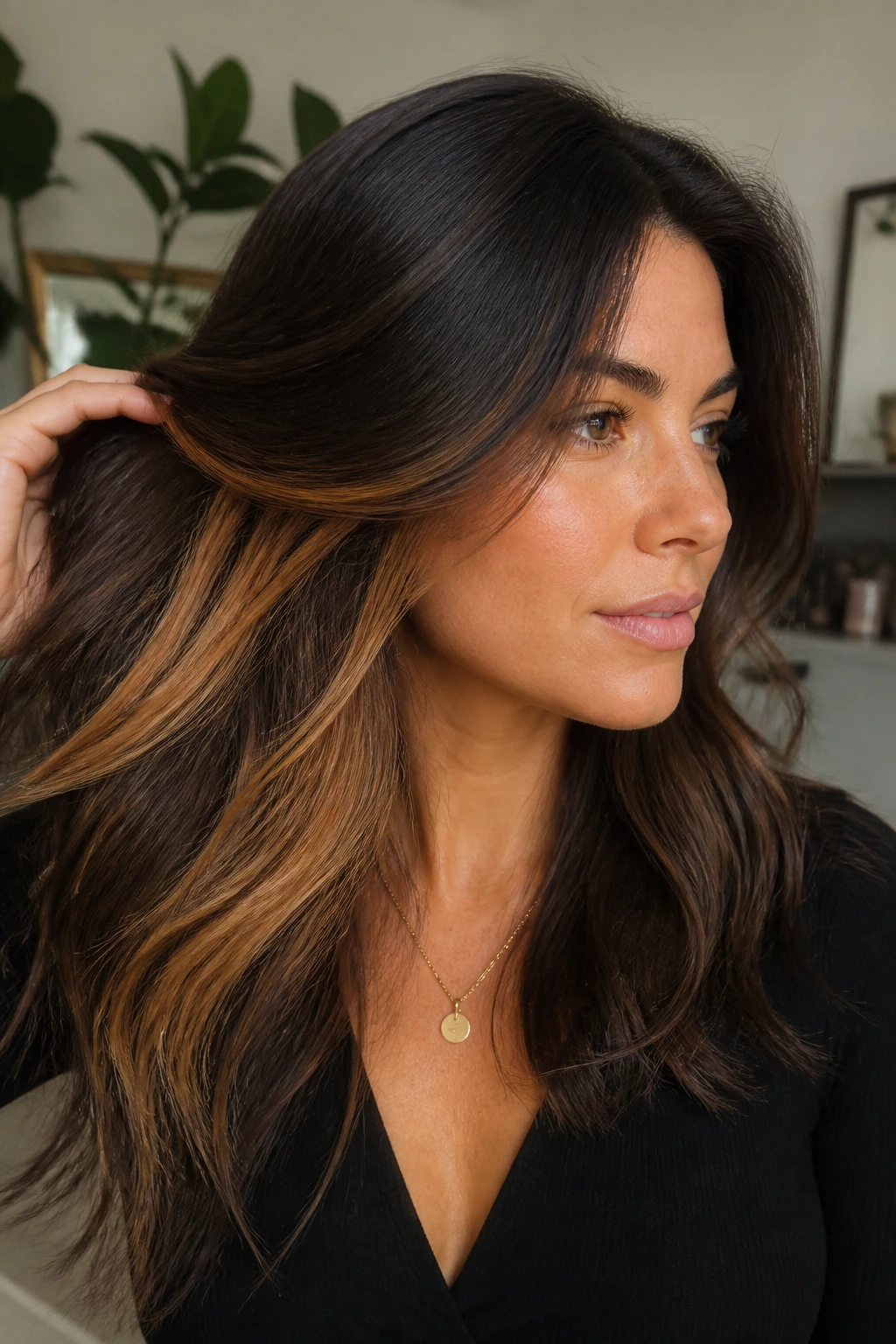
Toffee peekaboo highlights are for the person who wants color that shifts when the hair moves, not color that announces itself from across the room. Underneath layers of brown, the lighter pieces flash in motion and keep the top surface darker, which helps the face stay visually narrow.
Unlike all-over highlights, peekaboo color hides some of the blonde under the top layer. That means you get brightness without creating a wide band around the widest part of the face. It’s a good choice if you wear your hair up a lot or if you like that little surprise of color when the wind catches your hair.
This works especially well on layered cuts with shoulder-length or longer hair. The layers open the color up. Without layers, peekaboo tones can disappear.
The toffee tone matters too. It should look warm enough to flatter brown hair, but not so orange that it fights the rest of the color. Ask for a blend that shows more at the ends and less at the root.
5. Mushroom Brown with Sandy Blonde Ends
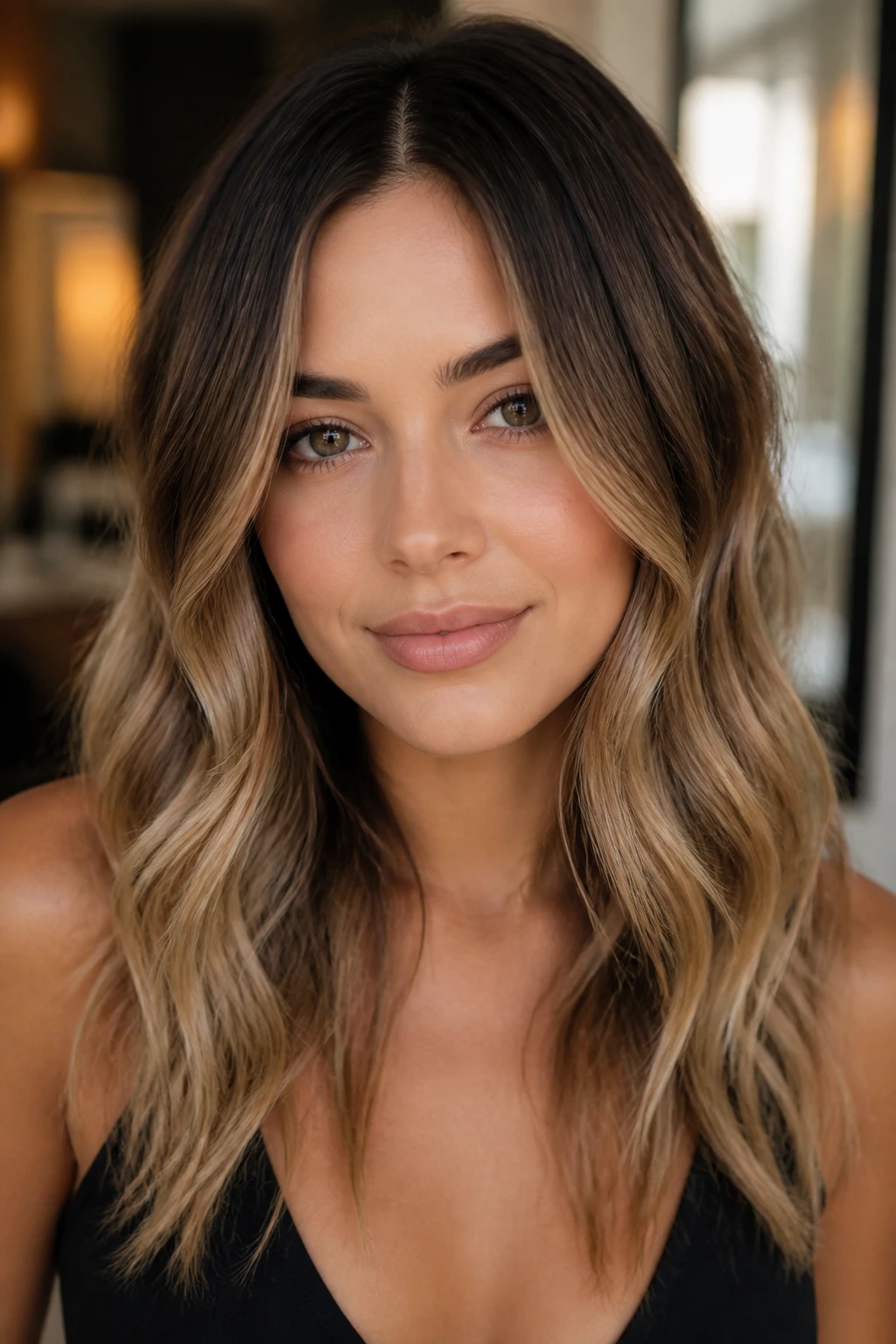
Mushroom brown has that smoky, cool feel that keeps brunette hair from looking flat, and sandy ends stop it from going too dark or heavy. On a round face, that darker top-to-lighter bottom shift is useful because it stretches the shape in a quiet way.
The color works best when the blonde stays a few inches below the cheekbone. If the sandy tone starts too high, it can make the middle of the face look wider. If it starts lower, around the lip line or beneath, the eye naturally follows the length of the hair instead.
I’d pick this for someone who likes a softer, more muted look. It’s not flashy. That’s the point. The cool brown at the top keeps the scalp area neat, and the sandy ends add enough brightness to keep the color from feeling flat or wintery.
One more thing: this shade lives or dies by the glaze. If the blonde goes too gold, the whole look loses that mushroom softness and starts to feel ordinary.
6. Ashy Beige Face Frame
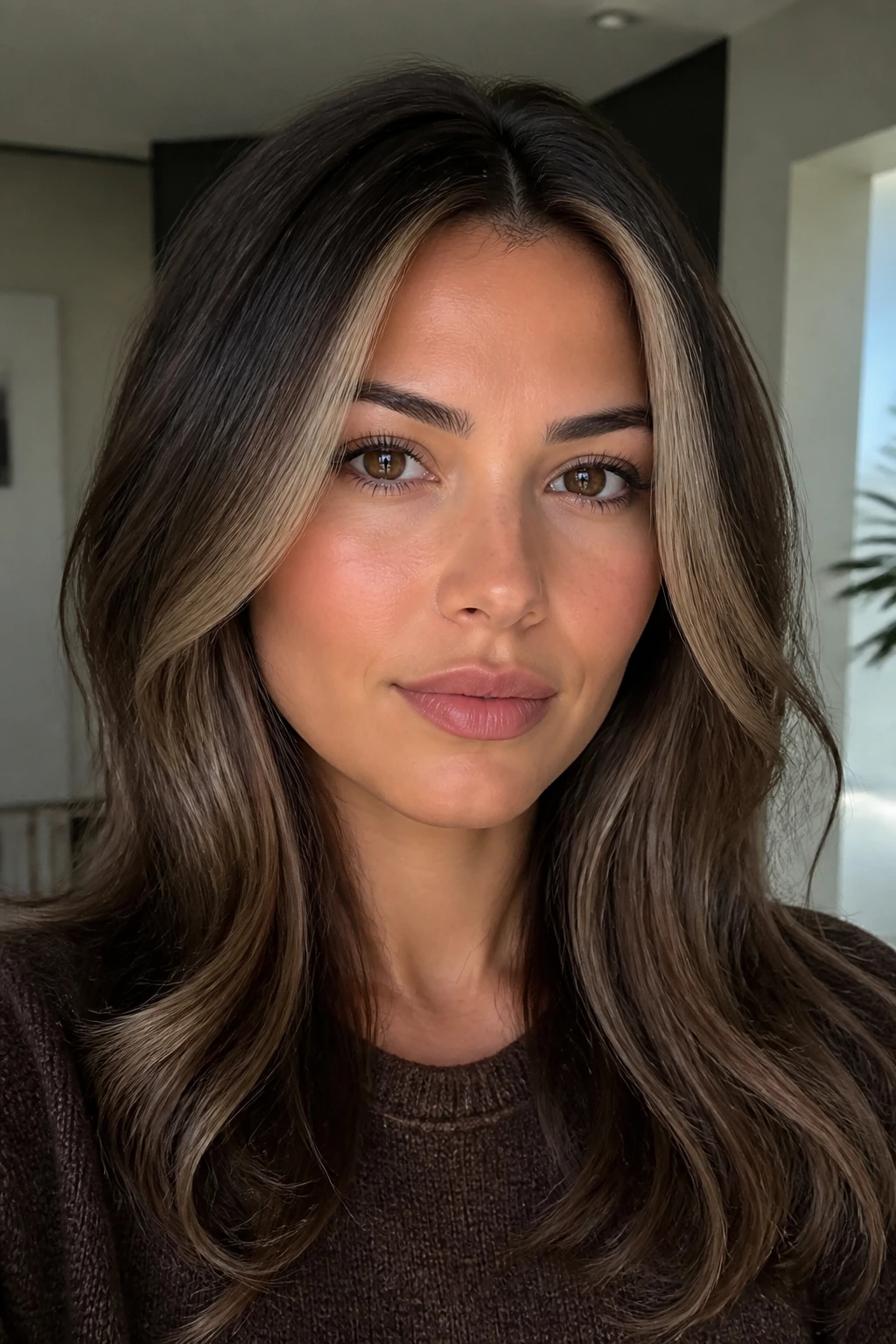
Cool beige is one of the cleanest ways to brighten a round face without making it look wider. It gives you light, but not the warmth that can sometimes puff up the sides of the face in photos.
What to Watch For
The face frame should be soft and narrow, with the brightest strands sitting near the temple and just outside the eyebrow. If the blonde is too chunky, the color starts doing the opposite of what you want. You lose the vertical line and gain width.
A few smart details keep this look sharp:
- Ask for beige-blonde, not icy platinum.
- Keep the root slightly deeper for contrast.
- Place the lightest strands around the upper face frame, not across the full cheek area.
- Add a neutral gloss if your skin runs warm and the ash tone feels a touch flat.
This is a good choice if you like polished hair that still moves. It looks especially nice on smooth blowouts, because the sleek finish lets the color placement show. And yes, it can work on waves too, but the front pieces should stay fine and feathered, not thick and obvious.
7. Cinnamon Swirl Highlights on a Warm Brunette Base
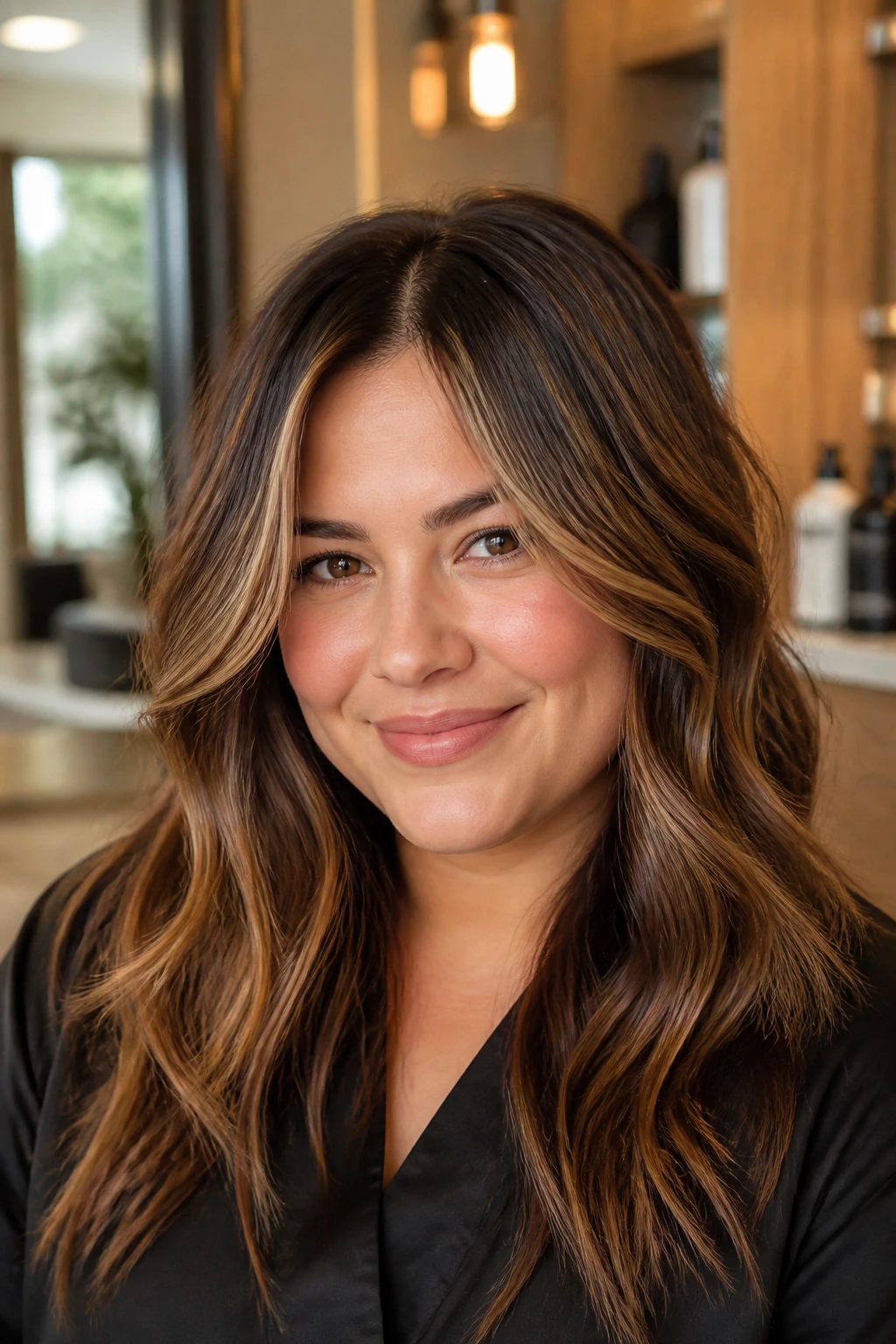
Cinnamon and blonde together can be a lovely mix when the brunette base has warmth in it already. The color feels cozy, but the lighter pieces keep it from sinking into one dark block.
I like this look on medium brown hair with a bit of red in it. The cinnamon gives the brown more depth, and the blonde flicks near the face keep the style from feeling heavy. On a round face, that small amount of brightness near the front can make the cheek area seem softer and less broad.
How to Get the Most From It
Ask for fine cinnamon ribbons through the mid-lengths and a few softer blonde pieces around the front, especially if you wear your hair with loose bends. The ribbons should not start all at the same height. That staggered placement keeps the eye moving.
A blunt, even highlight line would ruin the effect.
The best version of this look has a little mess in it. Not sloppy. Just not too exact. Hair that moves a bit — a bend at the ends, a touch of root shadow, a soft side part — makes the color feel alive and keeps the face shape from looking boxed in.
8. Bronde Lob with Baby Lights
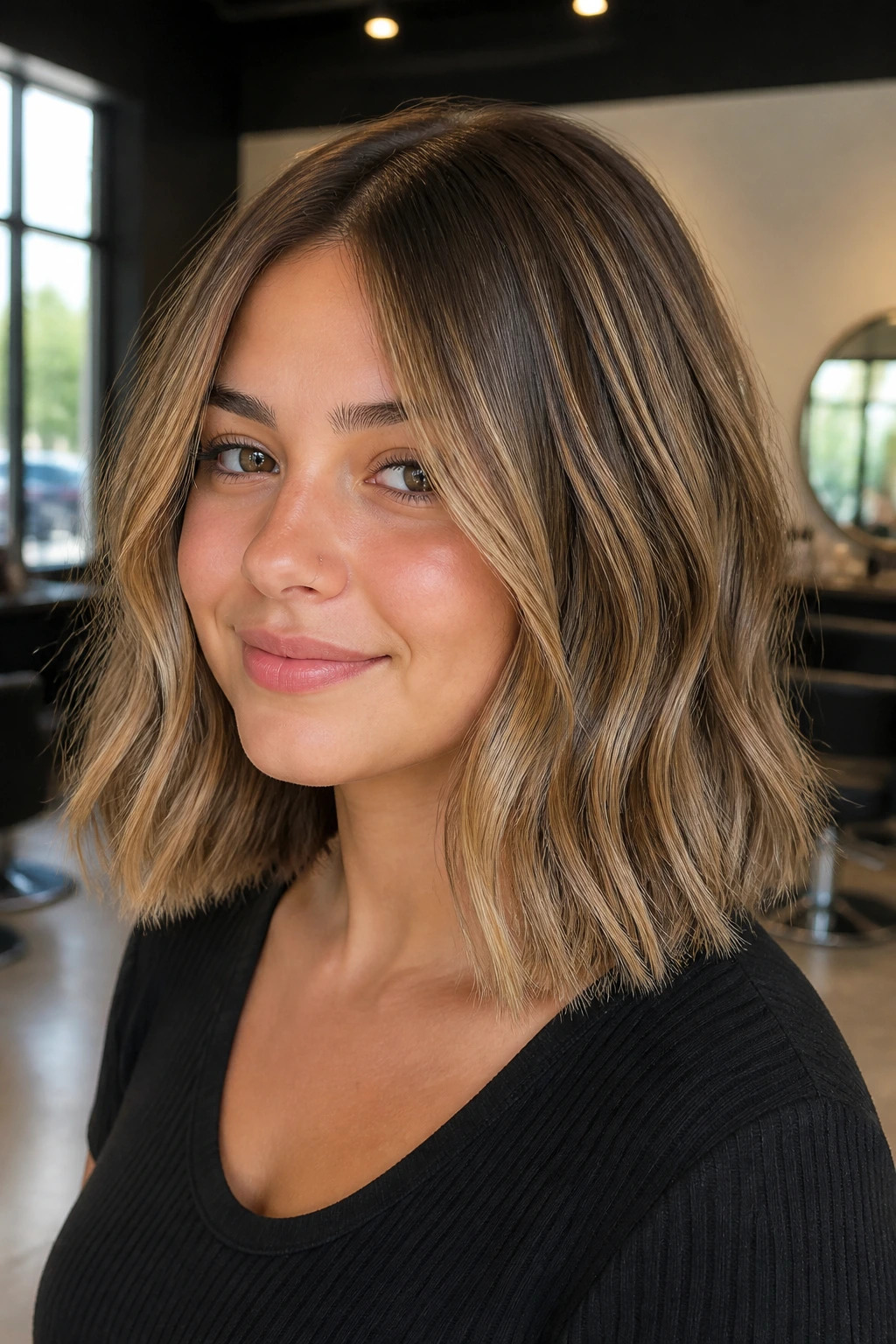
Can tiny highlights matter that much? Yes. In a lob, baby lights can do more for a round face than a few chunky streaks ever will, because the strands melt into the base instead of drawing a hard line around the face.
Bronde sits in that middle ground between brown and blonde, which is part of the reason it works. There’s enough contrast to keep the cut from looking dull, but not so much that the head seems wider. On a lob that grazes the collarbone, the effect is neat and modern without looking severe.
The best thing about baby lights is how quiet they are. They don’t scream “highlighted hair.” They just make the whole head look more expensive, for lack of a better word, and they play nicely with a round face because they avoid obvious horizontal bands.
If your hair is fine, this is a smart move. If it’s thick, it’s still smart — you just need enough slices to keep the color from disappearing under the top layer.
9. Contour Highlights at Cheekbone Level
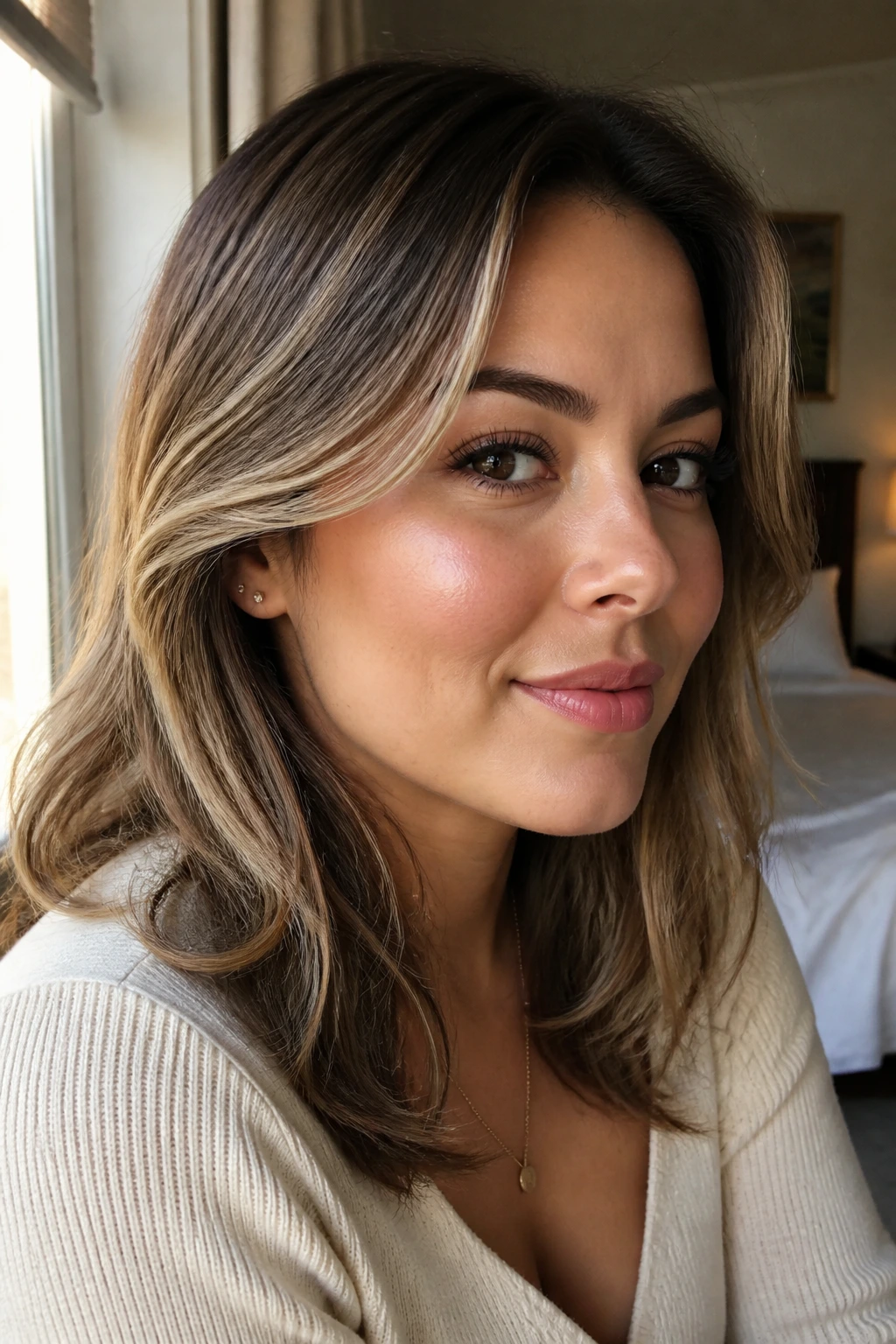
Placement matters more than shade here. A highlight that lands at cheekbone level, then softens as it drops, can shape the face in a way that a lighter blonde all over never will.
The idea is simple: use brightness where you want the eye to go, and keep the rest a touch deeper. Around a round face, that usually means a lighter temple area, a softened line beside the cheekbone, and darker pieces just beneath the widest part of the face. It’s color contouring, plain and simple.
I prefer this on layered cuts because the layers help the contour pieces sit in the right places. Straight, one-length hair can still use it, but the shape has to be deliberate. If the face-framing pieces are too wide, they’ll feel like side panels. Too thin, and they disappear.
A good contour highlight should look like the hair has more shape than it did before. Not more color. More shape.
10. Chocolate and Champagne Brown Blonde Blend
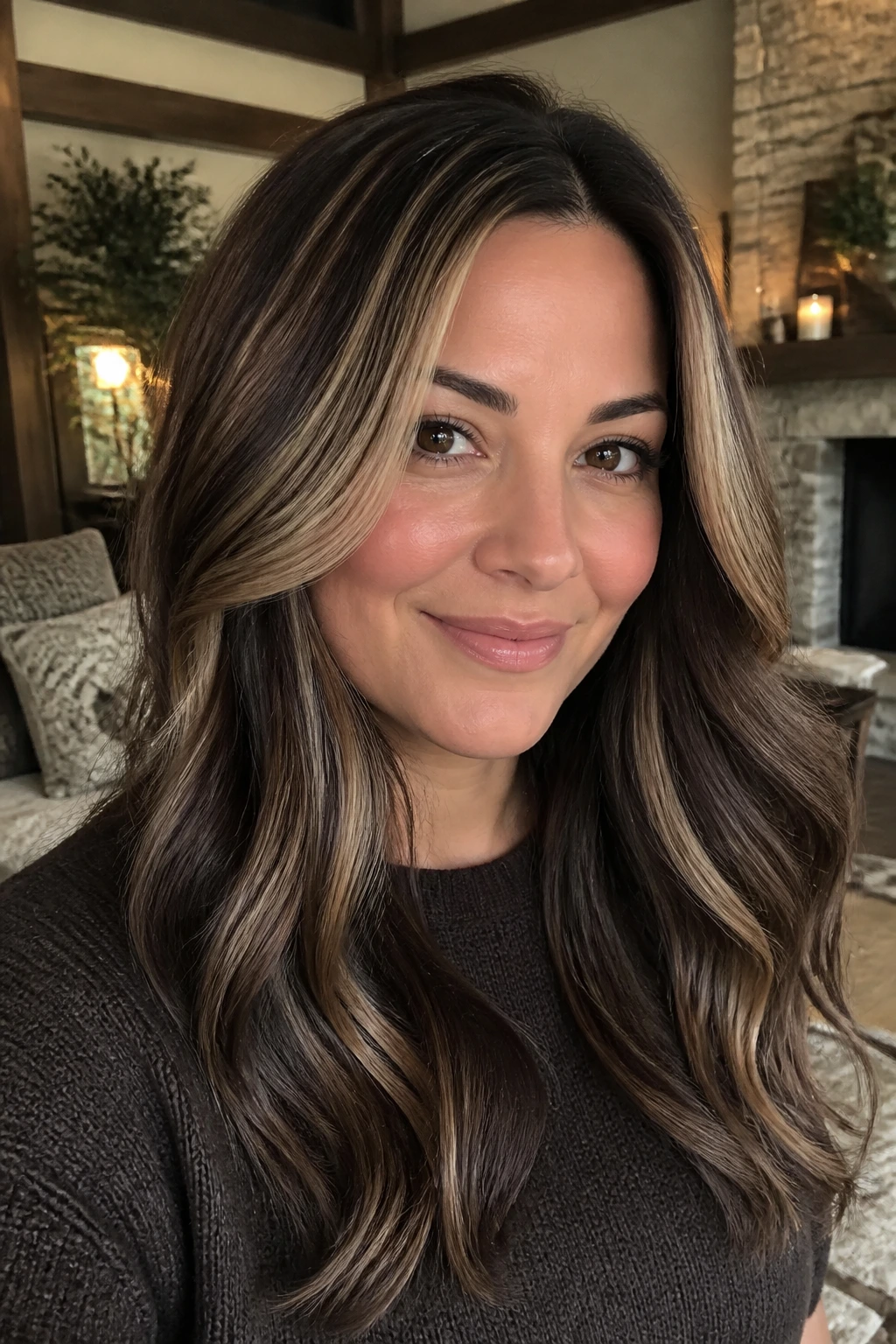
This is for someone who wants contrast, but not a stripey head of hair. Chocolate at the base gives weight and richness, while champagne blonde pieces add that light, airy edge without going neon.
What makes it work on round faces is the difference between where the light sits and how much of it you see. A few champagne pieces through the front and on the top layers can lift the face, but the color should not spread evenly from side to side. That would widen things. Keep the strongest brightness slightly higher and slightly longer, then let the darker chocolate frame the cheeks.
Where the Contrast Should Live
- Brightest pieces near the front and crown.
- Deeper chocolate under the top layer.
- Champagne blonde concentrated in thin, vertical ribbons.
- Soft ends that stay lighter than the mid-lengths.
This one looks especially good on wavy hair because the champagne catches movement without becoming a solid band. On very straight hair, the effect is sleeker and more graphic, so the ribbons should stay finer. Either way, the point is the same: lift the eye upward, then pull it down through the length.
11. Rooted Bronde with Wispy Layers
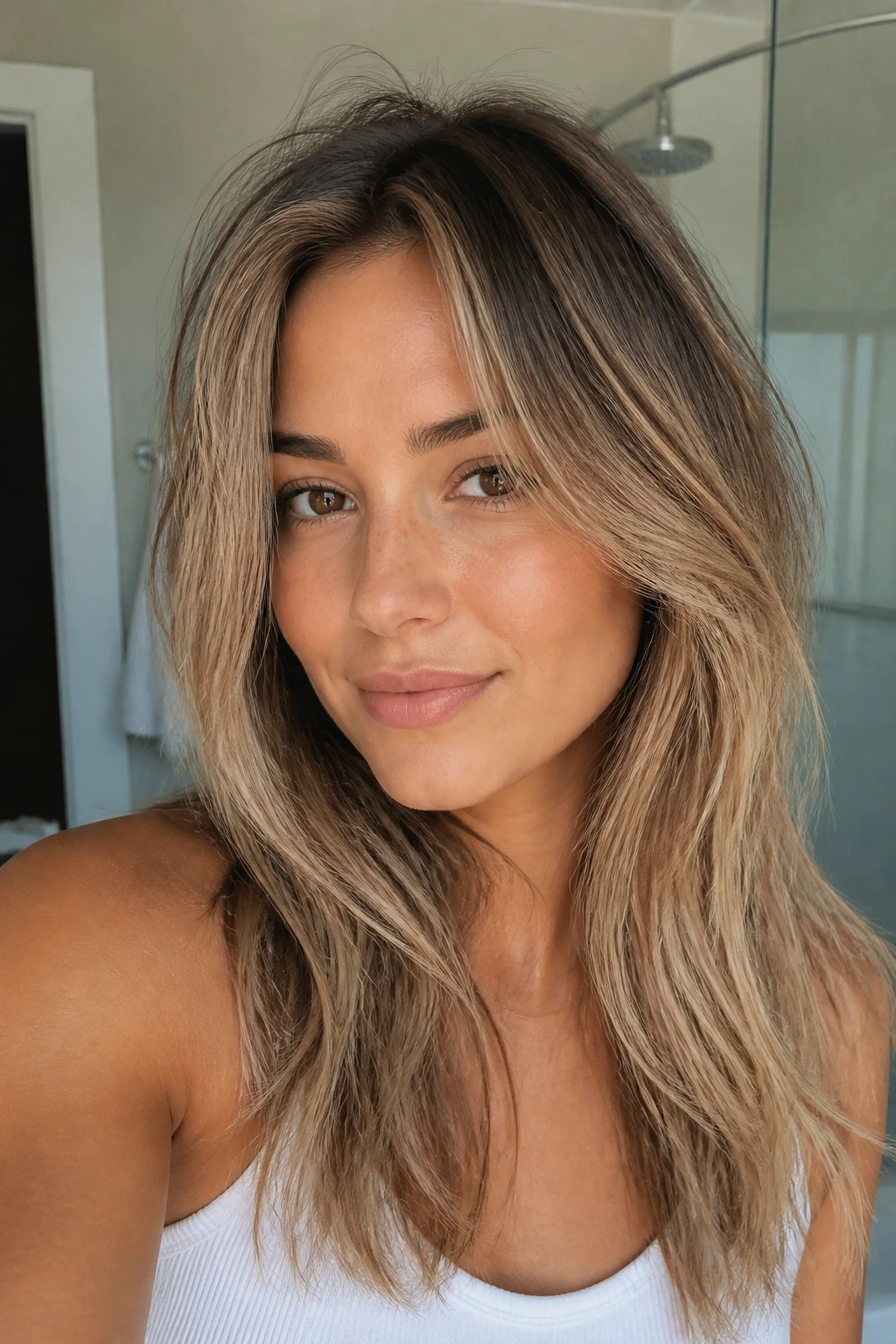
A soft root is not lazy color. It’s what keeps a light brunette style from spreading too wide across the face.
Rooted bronde gives you that built-in shadow at the scalp, which makes the blonde feel more lifted and the face feel longer. Add wispy layers around the front, and the whole shape starts moving instead of sitting in one heavy outline. That movement matters. It breaks up the roundness in a way blunt color blocks can’t.
This is one of those looks that gets better when the cut is light. The ends should not be heavy or blunt. They need some air. If the layers are too thick, the blonde can bunch up around the cheeks and create width where you don’t want it.
A rooted bronde is also easy to wear between salon visits. The darker base grows out with less drama, and the lighter lengths still show enough contrast to keep the style interesting. I’d call that a practical win.
12. Buttery Balayage on Long Waves
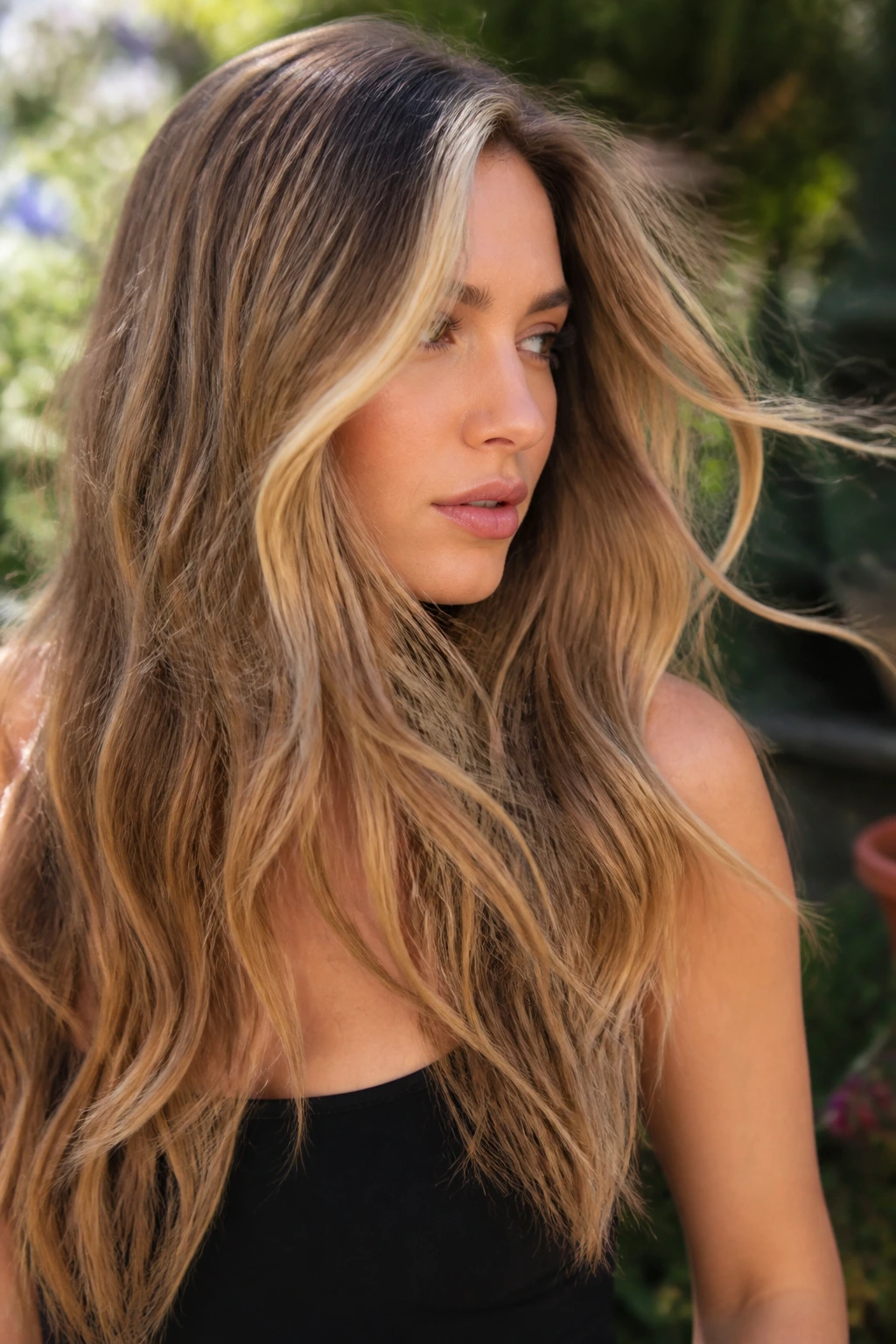
Long waves and buttery balayage are a good pair because the wave pattern keeps the light pieces from sitting in one fixed place. The hair moves, and the color moves with it. That helps a round face by keeping the eye traveling downward instead of across.
The buttery tone should be warm enough to soften brunette hair, but not so yellow that it flattens the skin. Think soft cream, warm beige, and a hint of golden brown. The face frame can start high, near the temple, then get richer and lighter toward the lower lengths. That creates a longer line on the side of the face.
I’d ask for a little more brightness underneath the outer layer if your hair is thick. Otherwise the top section can swallow the blonde. And if you wear your hair on one side most days, make sure the brighter face-framing side is the one that gets seen most often.
This one is easy to love because it looks done without looking stiff. That’s a rare thing.
13. Espresso Base with Wheat Blonde Veils
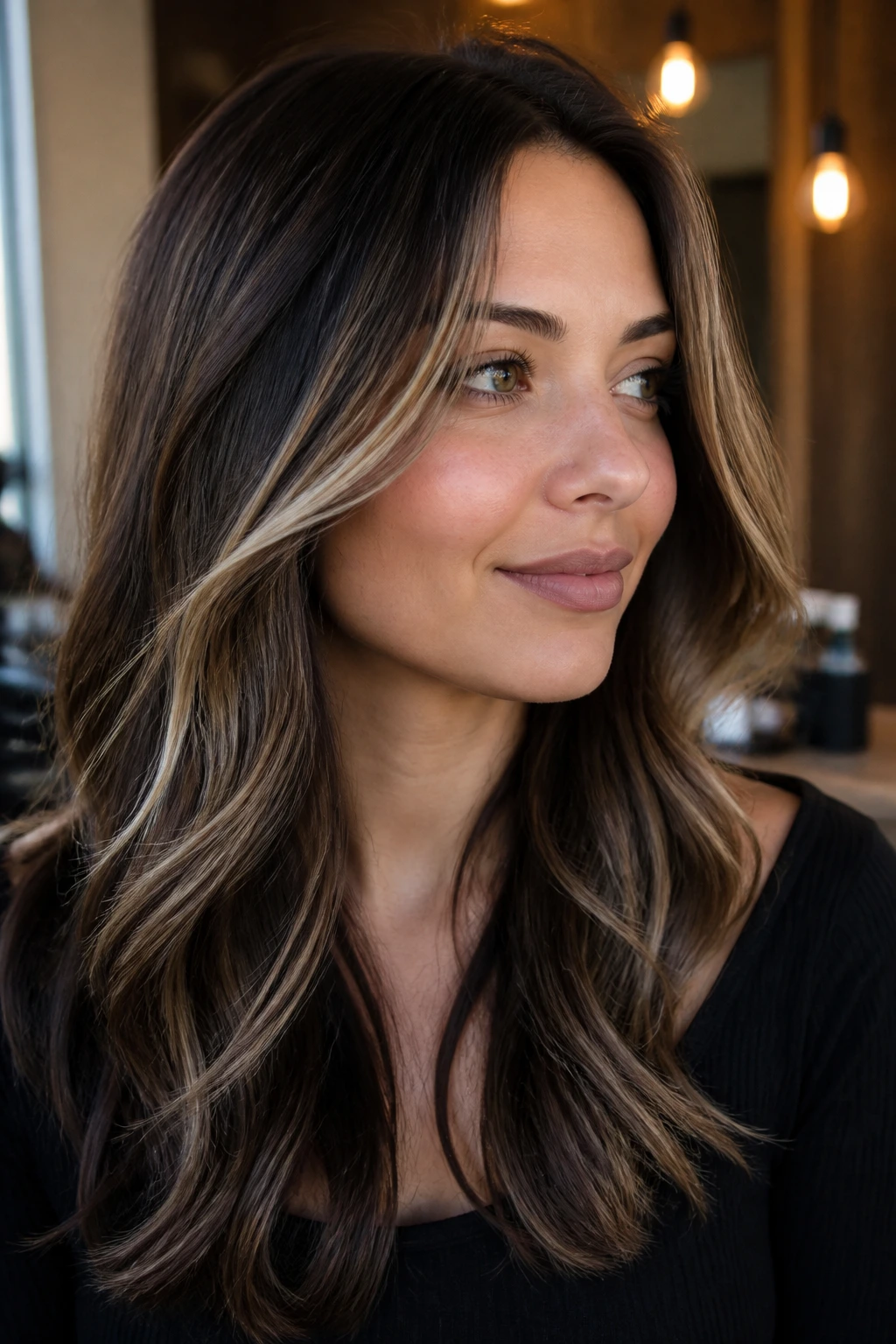
What if you want the blonde to whisper instead of shout? Veil highlights are the answer. They’re so thin and soft that the brunette base still reads first, while the lighter strands simply add a bit of lift around the face and crown.
Espresso and wheat blonde work well together because the contrast is gentle but still visible. On a round face, the key is to avoid placing those veils in a wide horizontal zone through the middle of the head. Keep them finer near the temples, then allow a few to trail down through the ends.
How to Ask for the Veil Effect
Tell your colorist you want fine, translucent blonde pieces that you can see through, not thick strips. That wording helps. Ask for softness around the face and more saturation through the lower lengths.
A few smart requests:
- Keep the top layer mostly espresso.
- Use wheat or beige blonde instead of pale ash.
- Let the lighter strands sit in vertical lines.
- Add a gloss so the brown and blonde blur together a bit.
This is a smart option if you like hair color that looks expensive from a distance and even better up close. It does not try too hard.
14. Side-Part Sweep with Light Ends
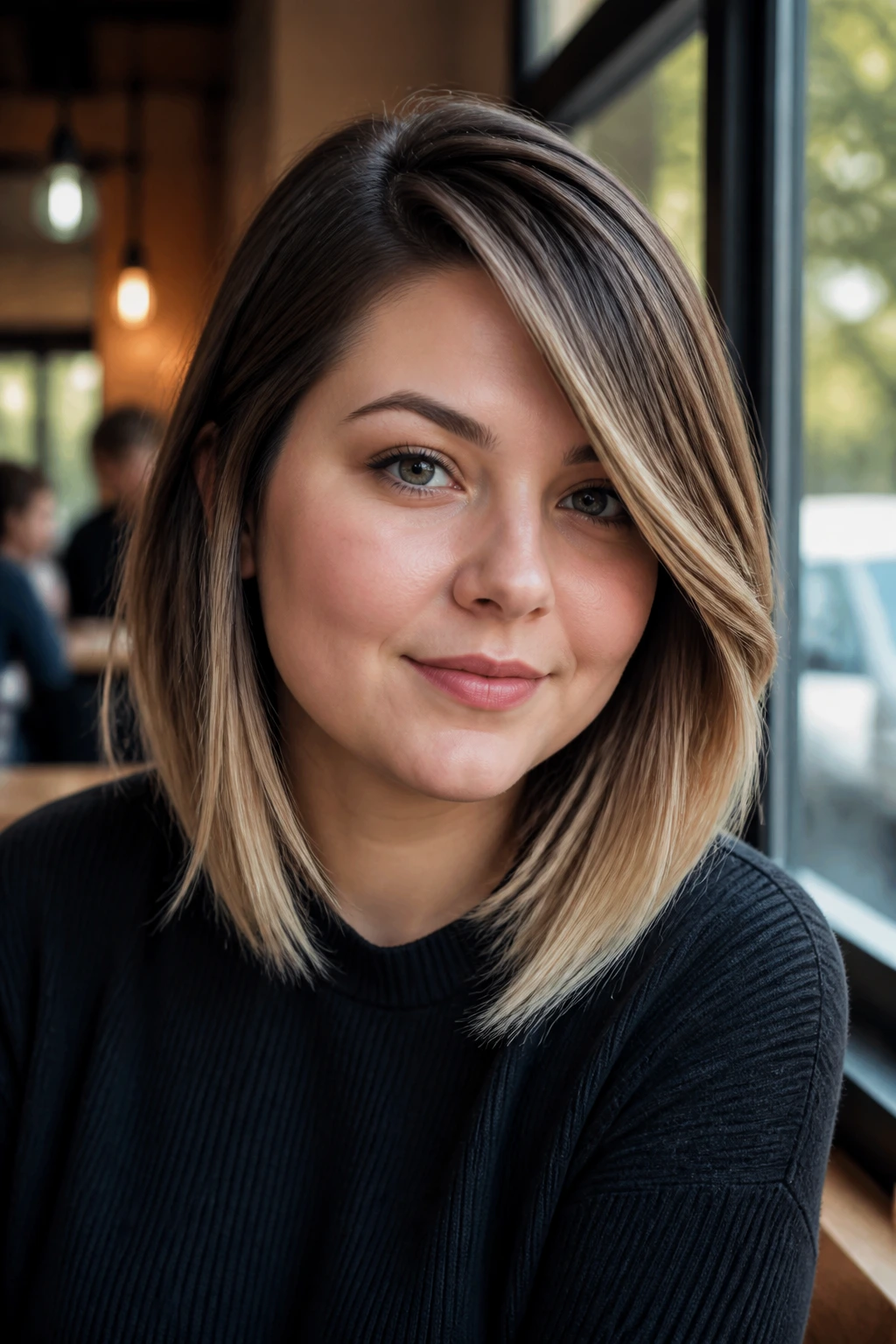
A side part can change a round face faster than people expect. Move the part off center, and the whole head gets a diagonal line that breaks up the circle around the cheeks.
The light ends help too. They pull the eye downward, especially if the bright pieces live below the jawline. That gives the face a little more length and keeps the lighter color from sitting only beside the cheeks. If you keep the front pieces sleek and the ends airy, the shape gets cleaner.
This style works for a lot of lengths, but it’s especially useful on medium hair that tends to flip outward. The side part gives it direction. The blonde ends give it movement. Together, they stop the hair from ballooning out at cheek level, which is the thing a lot of round faces want to avoid.
If you’re nervous about a deep side part, start with a soft one. Even an inch off center can change the whole feel. Small adjustment. Real payoff.
15. Layered Shag with Thin Blonde Threads
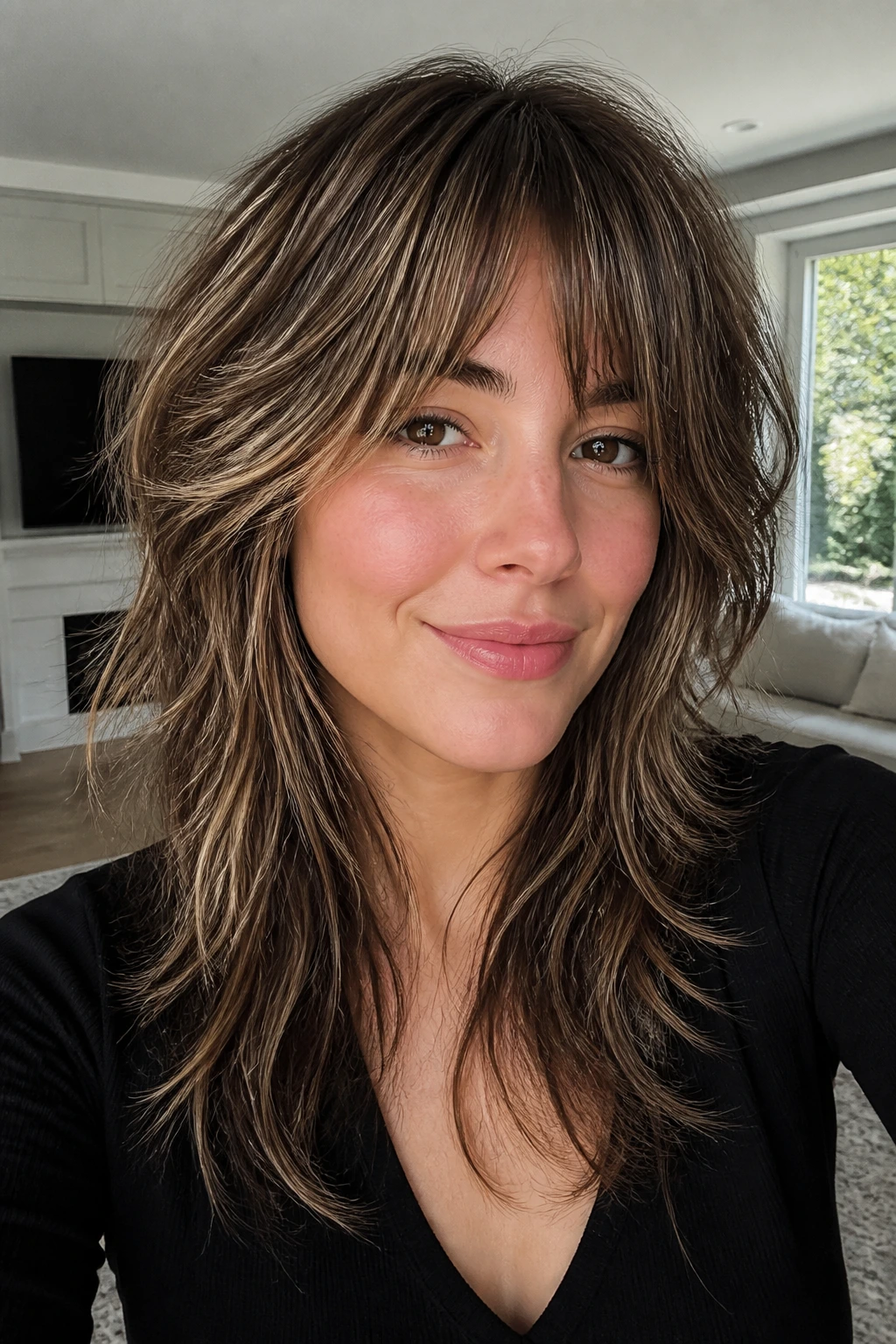
A shag is one of the few cuts that can make a round face look sharper without trying too hard. The texture breaks up the outline, and the thin blonde threads keep the layers from turning muddy.
The blonde should not be chunky here. Tiny threads scattered through the shag give the movement more definition, especially around the crown and the longer face-framing pieces. If the highlights are too wide, the shag starts looking heavy. If they’re too sparse, the cut can go flat.
I like this on people who already live in texture — air-dried hair, loose bends, or a little product scrunched in. The cut likes movement. The color does too. Round faces tend to benefit when the shortest pieces aren’t all sitting at cheek level, so the fringe and upper layers should be a bit feathered and uneven.
What Makes It Work
- Blonde threads should stay narrow and broken up.
- The longest pieces need to hit below the chin.
- A soft fringe works better than a blunt, straight-across bang.
- Root depth gives the shag shape.
This one has energy. It isn’t trying to be polished.
16. Soft Mushroom Brunette with Beige Ends and Curtain Bangs
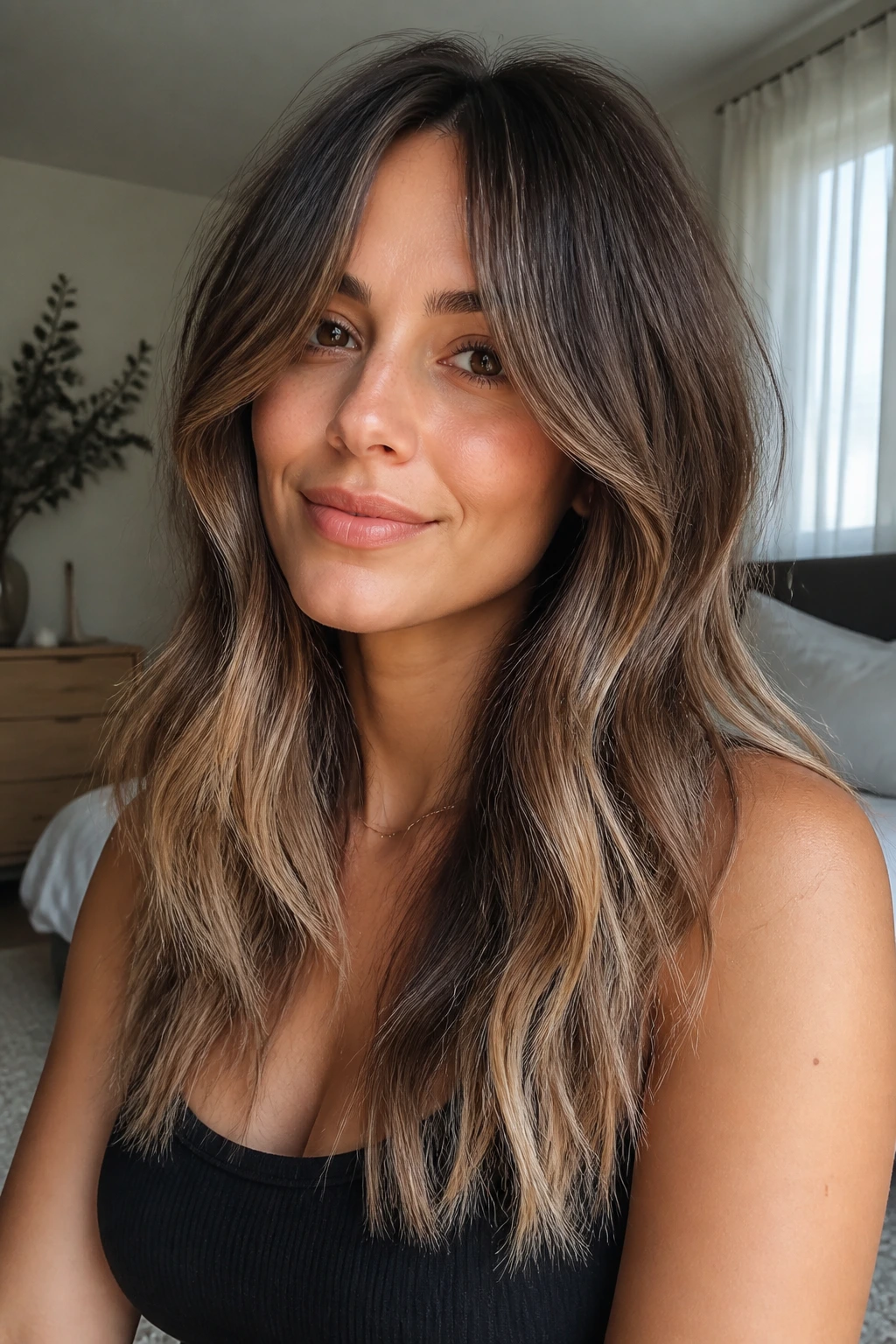
Curtain bangs can be a lifesaver on a round face, if they’re cut with enough length. They open in the middle, skim the cheeks, and then fall away toward the jaw. That’s exactly the kind of line that works here.
Pair that with mushroom brunette and beige ends, and you get a color story that stays cool at the top while the lower half of the hair gets lighter and airier. The beige should be soft, not chalky. It’s there to lighten the perimeter, not shout for attention.
This look is especially good if you want to slim the face without losing softness. The bangs help direct the eye down the center, and the lighter ends stretch the length of the hair. Together they create shape without turning the style severe.
The only caution is density. If the bangs are too thick, they can compress the face. Keep them airy and parted at the center, with a little bend at the ends. That bend matters more than people think.
17. Copper-Brown with Blonde Flicks
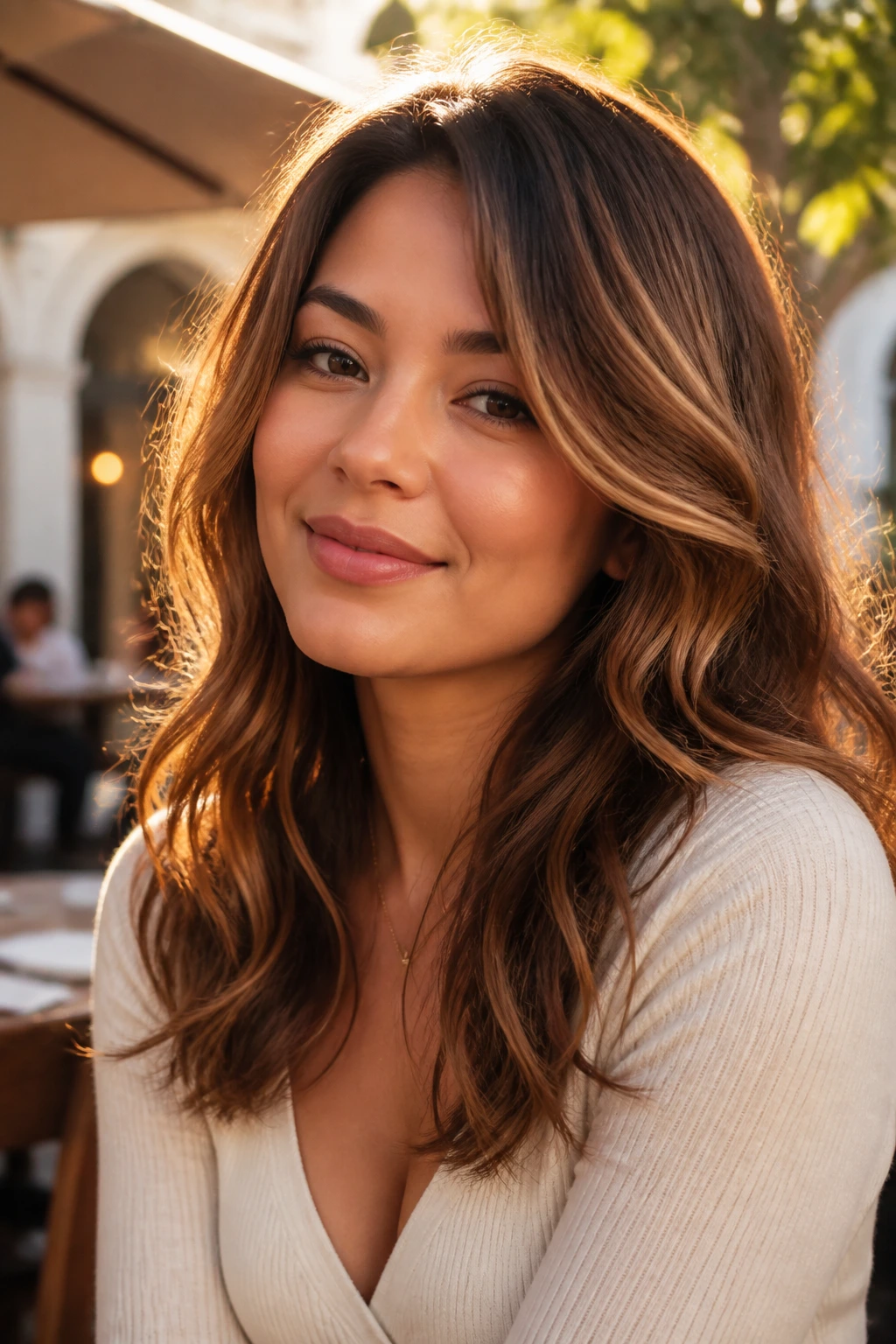
Copper-brown with blonde flicks is warmer and a little more playful than the safer beige looks. It suits people who want dimension that feels lively instead of neutral.
The blonde flicks should be quick, fine, and a bit irregular. Not ribbons. Flicks. That shape keeps the highlights from sitting in one solid band around the head. On a round face, those broken-up pieces are useful because they keep the sides from looking broad and heavy. The copper base does its own work by deepening the roots and adding shape.
This style is especially good if your skin likes warmth or if your natural brown has a red cast. The blonde should still be soft enough to mix with the copper rather than stand apart from it. Think wheat, soft gold, or beige-gold rather than pale ice.
I’d avoid making the front pieces too thick. A few quick flashes near the cheekbone are enough. The whole point is motion, not a loud stripe.
18. Collarbone-Length Cut with Lived-In Highlights
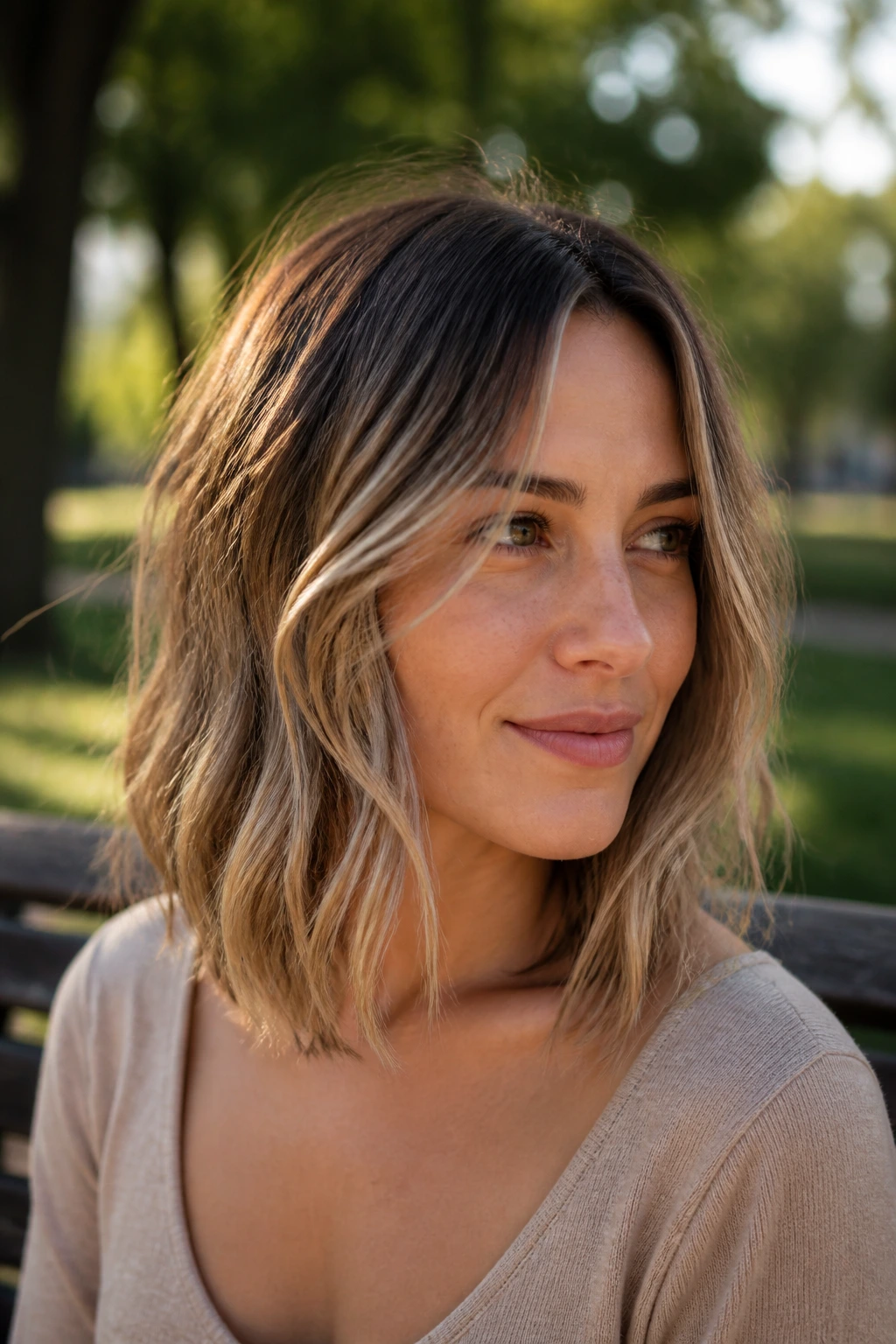
Why does collarbone length keep showing up in flattering cuts for round faces? Because it falls past the widest part of the cheeks and gives the eye a place to travel downward. Hair that stops right at the jaw can feel boxy. Hair that lands around the collarbone tends to soften the whole shape.
Lived-in highlights make the cut even better. The color should be a blend of brown and blonde pieces that grow out gracefully, with the brightest bits around the front and a little extra light on the ends. That keeps the cut from feeling blunt, which matters when the face is already soft and full.
This is one of those styles that looks expensive without needing a lot of drama. The cut does most of the work. The highlights just support it. If you want a low-stress option that still reads polished, this is a strong one.
A gentle wave at the ends helps a lot, too. Straight can work, but a slight bend gives the color room to move.
19. Dark Mocha with Champagne Babylights
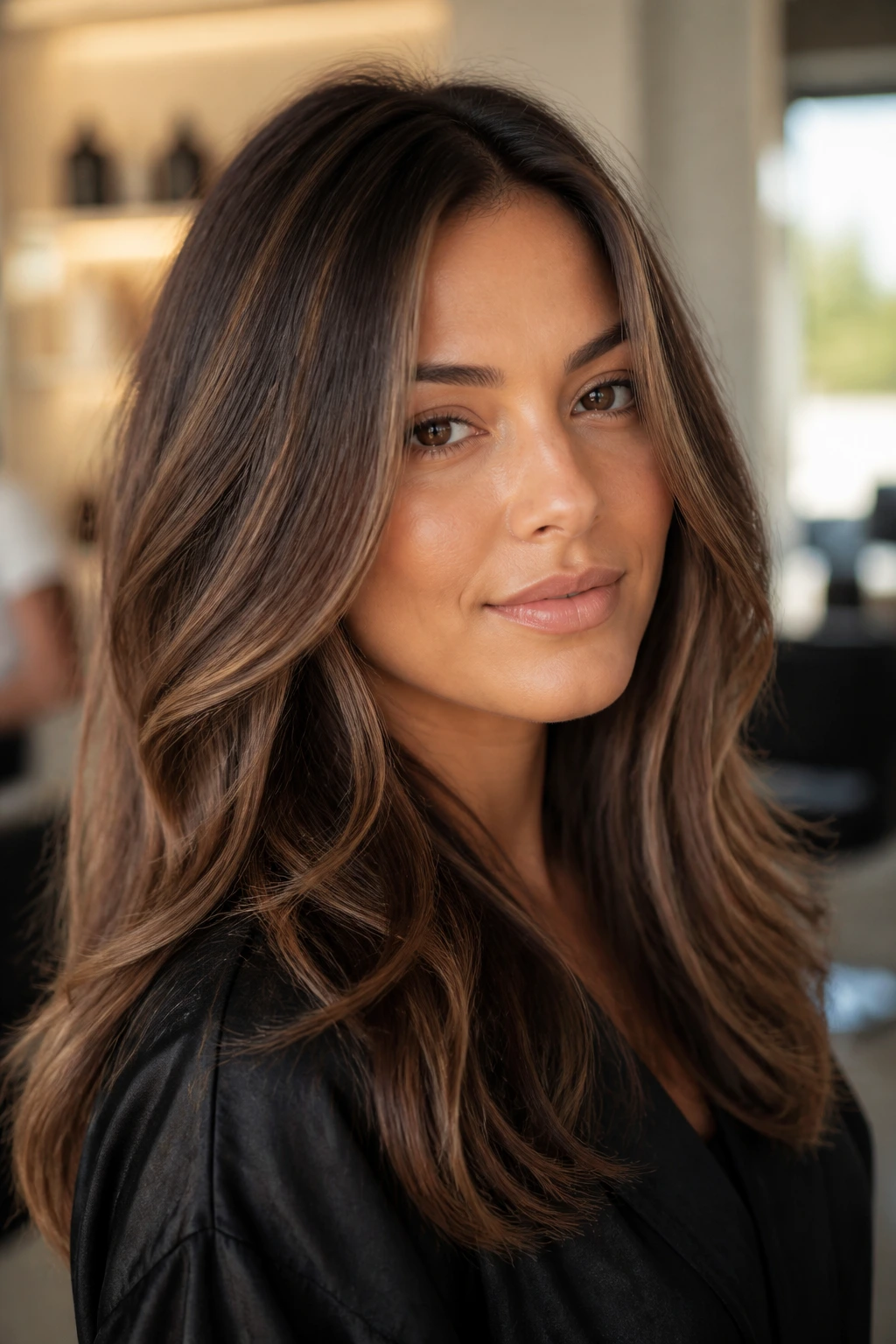
Babylights are tiny for a reason. On dark mocha hair, they add just enough sparkle to keep the color from going flat, but they don’t carve a hard line around the face.
That matters on round faces because the soft, fine strands keep the head shape looking light instead of broad. Champagne is a smart tone here — brighter than beige, softer than platinum, and much less harsh than a stark blonde stripe. Add a few lowlights back into the mid-lengths, and the whole look gains depth.
How to Keep It from Looking Flat
- Use very fine slices through the top and face frame.
- Keep some mocha lowlights between the brighter pieces.
- Ask for a champagne tone with a soft beige base.
- Let the front pieces fall just past the cheekbone.
This is a good choice if you want brown blonde highlights that don’t take over the entire hairstyle. It’s subtle, but not boring. And on straight hair, the fine width of the babylights keeps the color from getting blocky.
20. Soft Beige Brown Blonde Melt
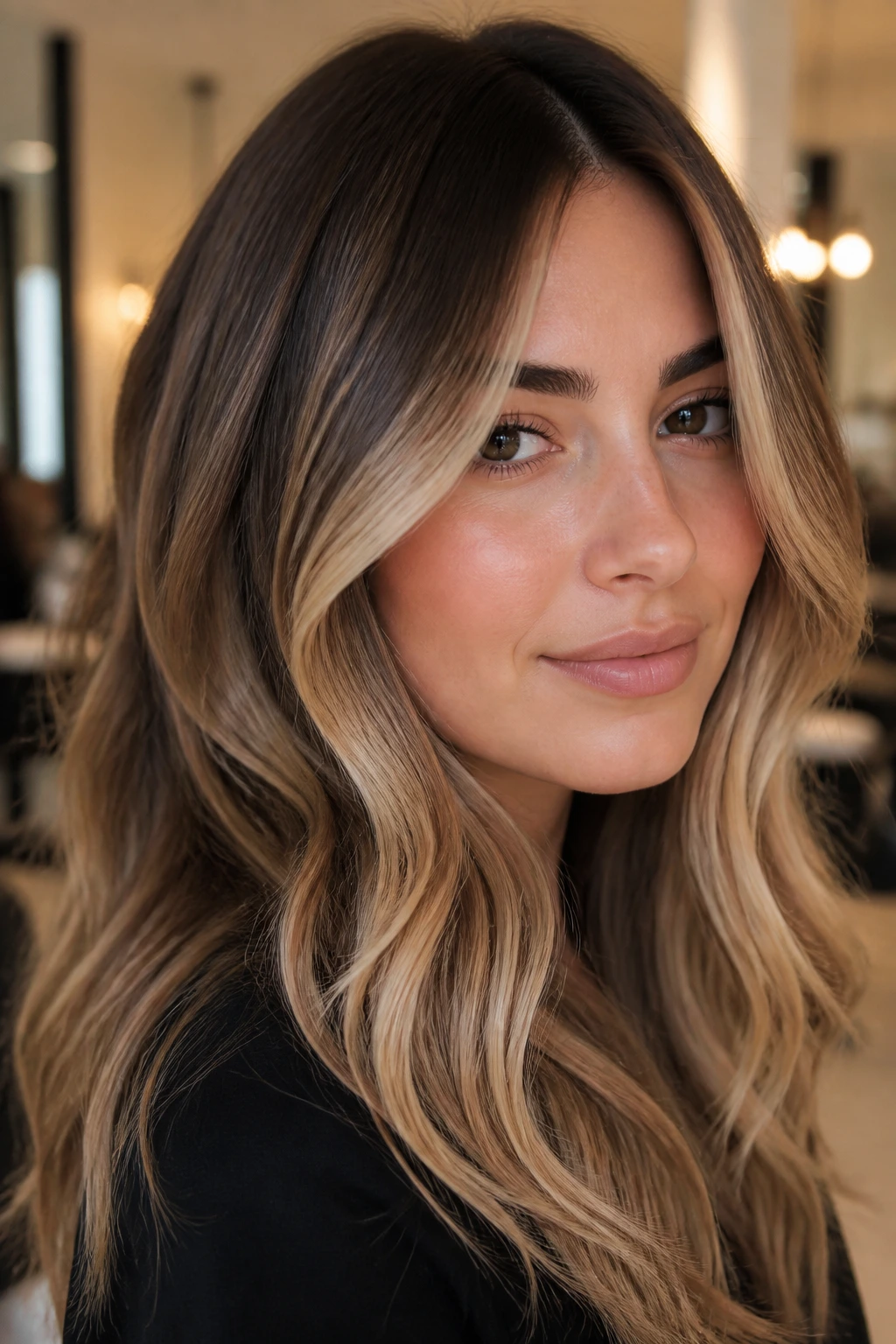
If you want one look that quietly does a lot, this is it. A beige melt with brown roots and blonde mids and ends gives the face length, keeps the color soft, and grows out in a way that doesn’t ask for constant attention.
The best version starts with a deeper brown near the scalp, then eases into beige ribbons around the front and through the lower lengths. The blonde should be blended enough that you can’t point to one harsh line. That softness is the whole point. On a round face, hard transitions can make the head feel wider. A melt keeps everything moving downward instead.
This is also the most forgiving option if you’re torn between warm and cool tones. Beige sits in the middle. It plays nicely with caramel, mushroom brown, honey, and soft champagne, so your colorist can adjust it to your base without changing the whole plan.
Bring a photo of the front and the side. That little detail saves a lot of guesswork.
