



Brown blue highlights can look soft, modern, and a little moody on a round face when the color is placed with intent instead of dumped across the widest part of the head. That’s the whole trick. The blue matters, sure, but the placement matters more — especially if your face is fuller through the cheeks and softer at the jaw.
A round face usually reads widest at the cheek area, with a gentle curve from temple to chin. Hair color can either work with that shape or fight it. The smartest blue-on-brown looks create vertical movement, keep the crown a touch darker, and let the lighter pieces fall lower than you’d expect.
Blue helps because it breaks up brown in a way that feels clean and directional. Navy, denim, sapphire, steel blue, indigo — they all behave a little differently. Some feel whisper-thin and airy. Others make a sharper statement. The good ones don’t sit in one loud band near the cheeks. They slide down, frame, and lengthen.
1. Brown Blue Highlights: Espresso Brown with Navy Babylights
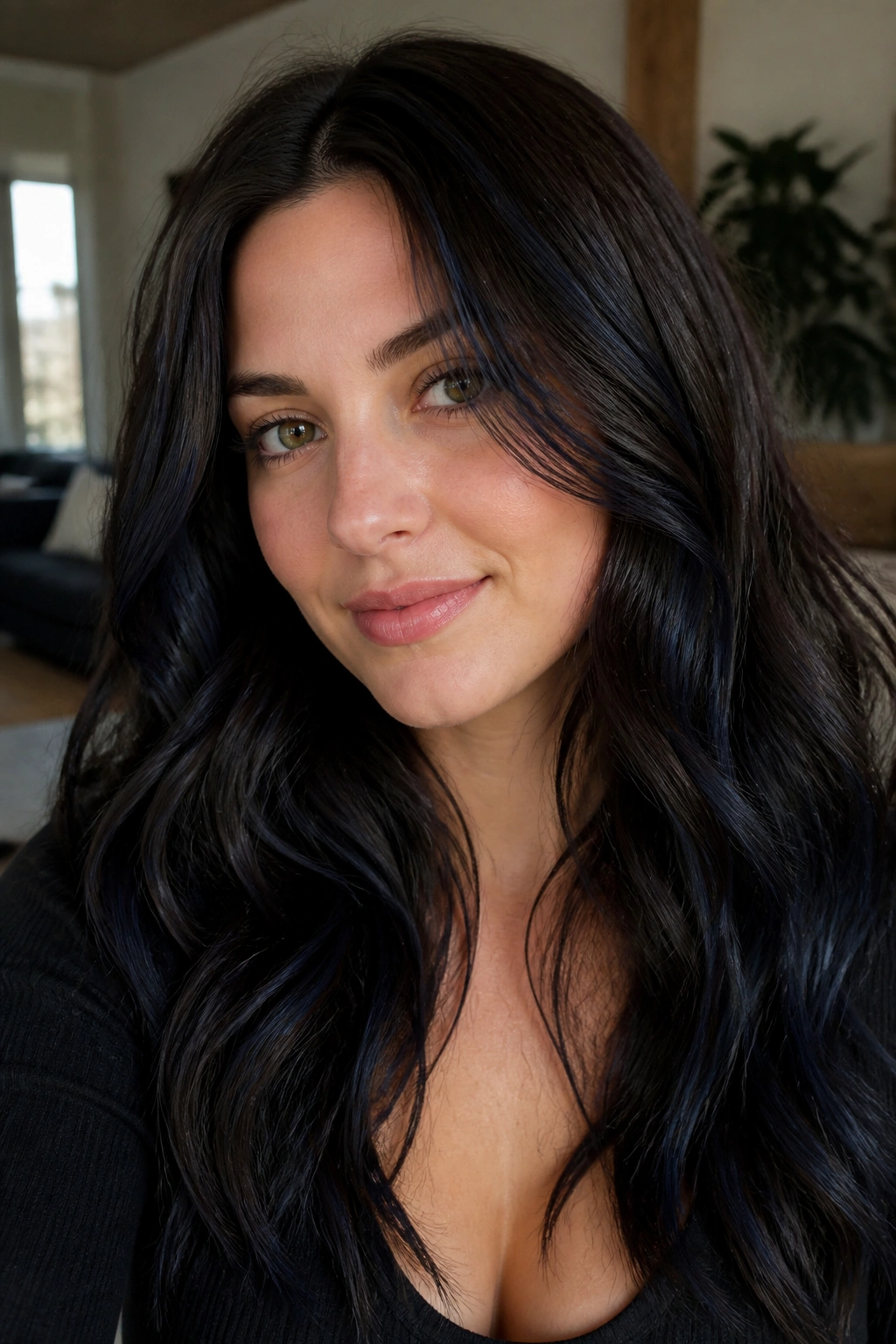
Espresso brown is a smart base for tiny navy babylights because the contrast stays controlled. The color reads as movement first and blue second, which is exactly what you want when the goal is to flatter a round face without widening it.
Why It Works on a Round Face
Babylights are ultra-fine weaves, usually somewhere around 1/16 to 1/8 inch. That tiny size matters. Instead of creating one obvious stripe near the cheeks, the color breaks up into soft vertical shimmer that guides the eye down the hair.
Ask for the brightest pieces to start around the temple and continue into the lower mids, not all the way around the face. Keep the roots deep espresso. That darker top section gives lift, and lift is your friend here.
- Best on straight, wavy, or softly layered hair
- Looks cleanest when the blue is navy or inky, not bright cobalt
- Works well if you part your hair slightly off-center
- Touch-up needs are gentler than with chunkier streaks
Pro tip: ask for a cool gloss over the blue pieces so they stay smoky instead of turning flat and dull.
2. Chocolate Brown with Cobalt Money Pieces
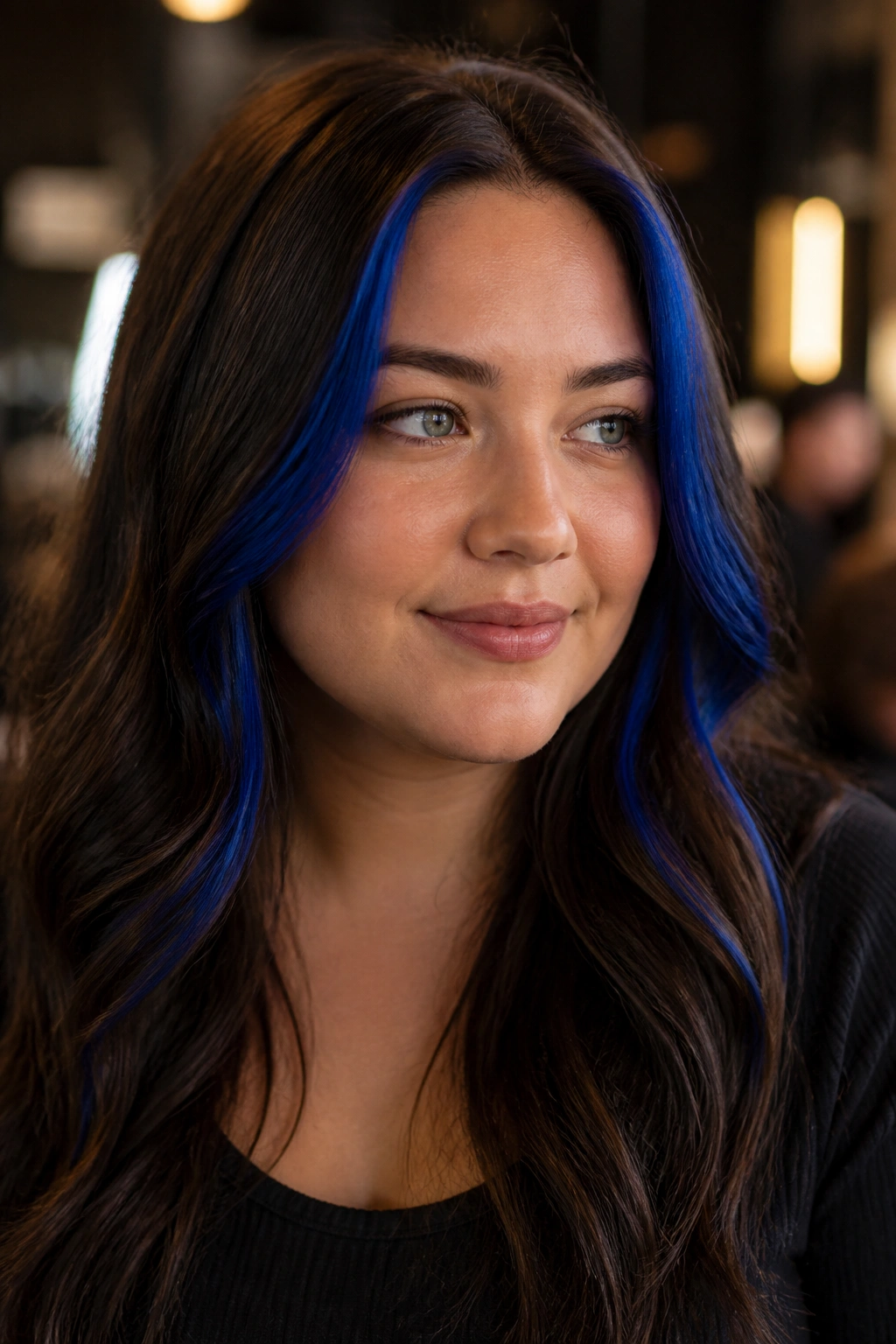
A strong money piece can slim a round face if it’s placed with discipline. The mistake people make is starting it too low and too wide, which just throws color across the cheek line. Keep the cobalt high and narrow, and it does the opposite.
Think of the money piece as a vertical frame, not a curtain. Two clean ribbons at the front, beginning near the temple and tapering below the cheekbone, pull the eye downward. That’s the move.
This look has more punch than babylights, so it suits someone who wants the blue to be seen from across the room. The brown should stay rich and chocolatey, not too red, because the cooler base keeps the cobalt from feeling chaotic. Side parts work especially well here. They stretch the face visually, and the color follows that line instead of sitting flat.
One more thing. Don’t make both front pieces equally thick. A slightly fuller side and a slimmer one feels more natural and breaks the roundness better.
3. Chestnut Brown with Denim Balayage
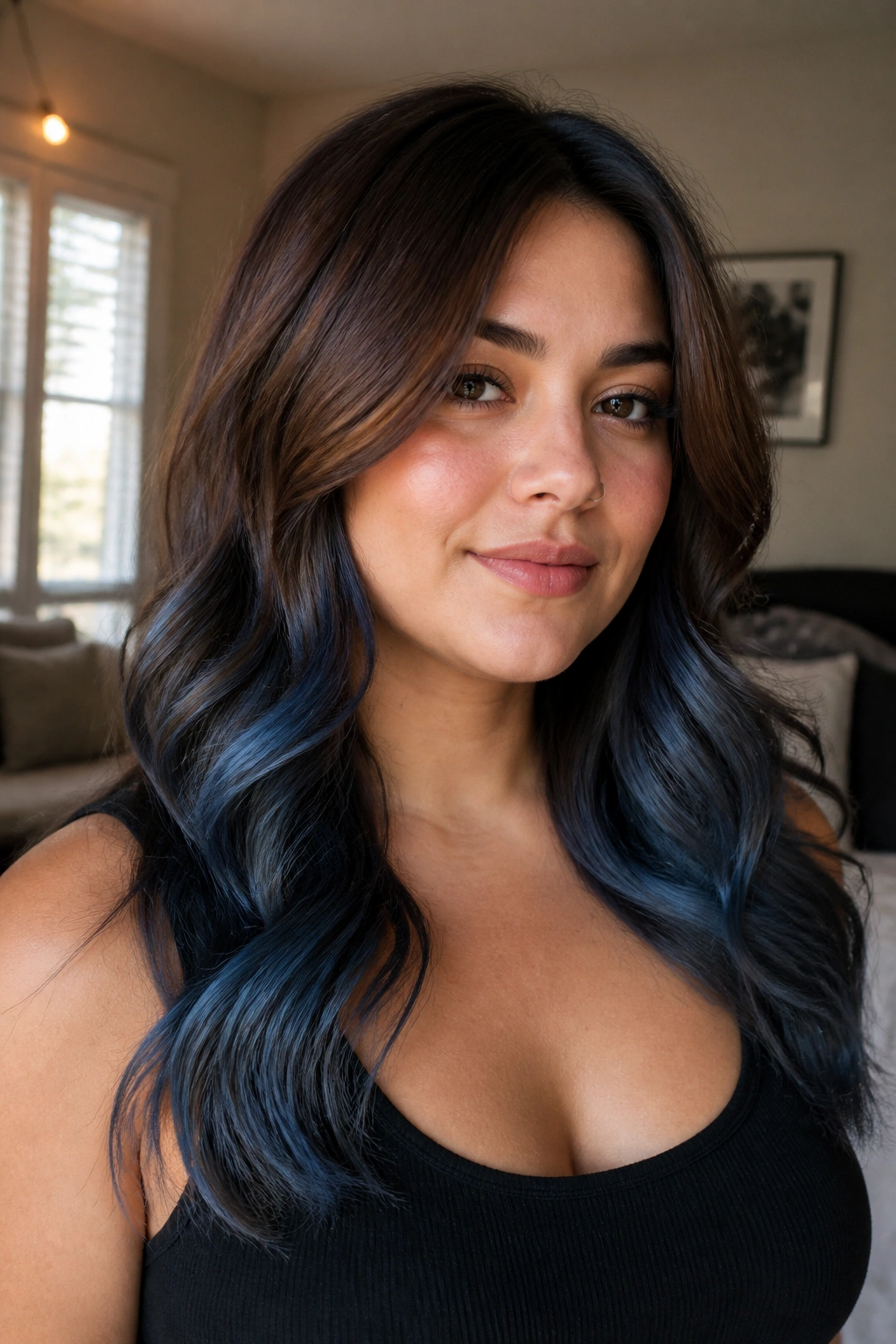
Can blue still feel soft? Absolutely. Denim balayage is one of the easiest ways to bring blue into brown hair without making the look harsh. The shade is muted, dusty, and a little lived-in, which suits a round face nicely because it never reads blocky.
Balayage is painted, not foiled into sharp sections, so the lightness can start lower — around mid-length — and drift into the ends. That lower placement helps because it keeps attention away from the widest part of the face and sends it toward the bottom third of the hair. Chestnut brown gives the denim a warm cushion, so the color doesn’t go cold or flat.
How to Wear It
If your hair bends easily, loose waves are the sweet spot. They separate the denim ribbons just enough to show depth without making them stripey. A 1-inch curling iron, wrapped away from the face, gives the color some nice movement.
- Best on layered cuts
- Looks strongest from mid-length to ends
- Ideal if you want blue that feels wearable, not loud
- Works well with a soft center part
Pro tip: finish with a light mist of shine spray. Denim color can look dry if the hair has too much texture on top.
4. Mocha Brown with Teal Peekaboo Panels
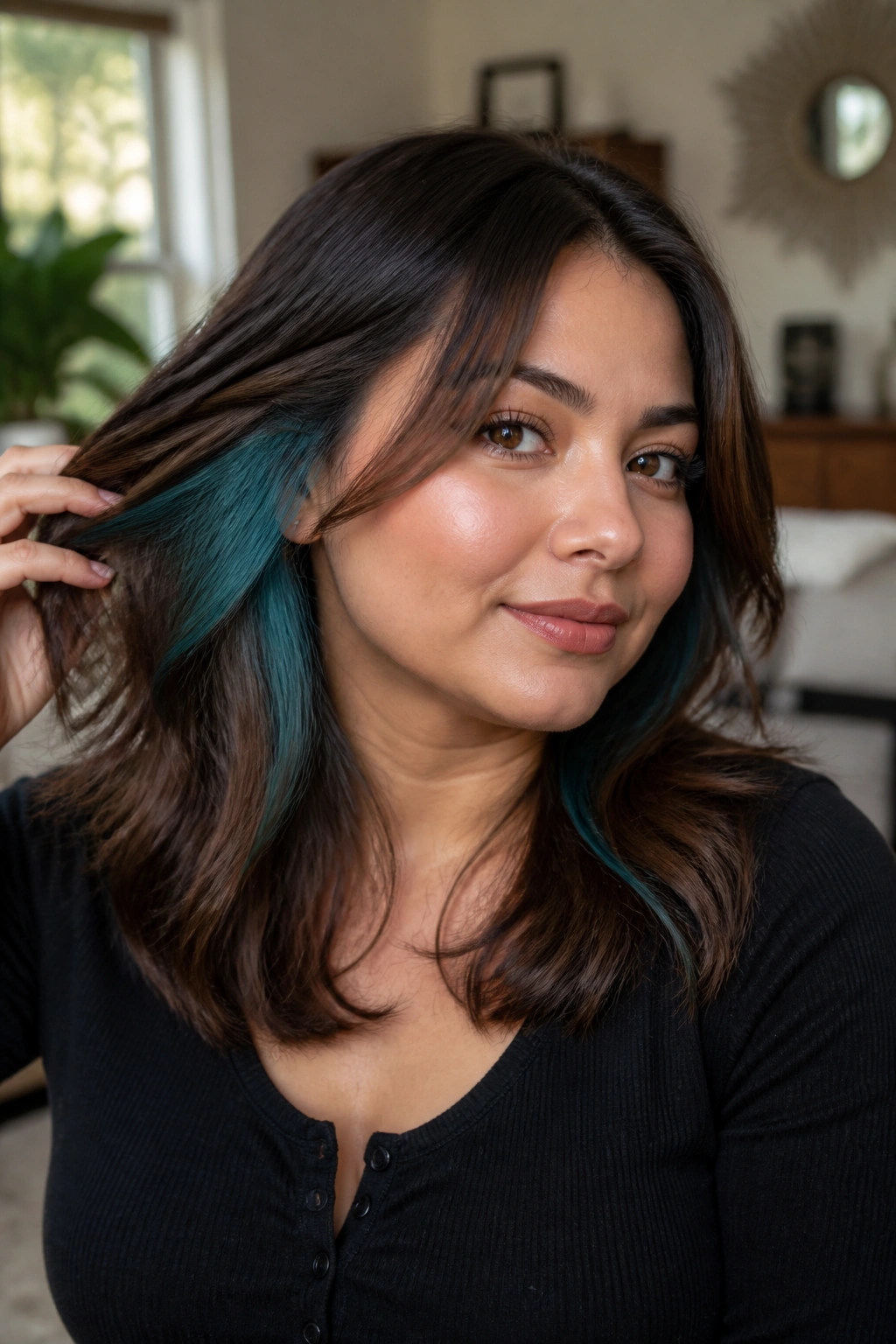
Peekaboo panels are the sneaky choice, and I mean that in the best way. The blue sits underneath the top layer, so the roundness at the cheeks doesn’t get boxed in by color. Instead, the blue flashes when the hair moves, which keeps the style lively without crowding the face.
Teal is a nice twist here because it sits between blue and green. On mocha brown, that little green note keeps the color from feeling too icy. It also looks good on hair that gets pulled back a lot — low ponytails, half-up knots, clipped sides. You see the color when the hair shifts, not all at once.
Use these panels under the ear line and through the lower back layers. Keep the top brown intact around the temples and cheekbone area. That dark frame acts like a border, and the border is what gives the face a longer read.
If you get bored fast, this is a good one. The color changes every time you tuck your hair behind your ear.
5. Walnut Brown with Sapphire Face-Framing Ribbons
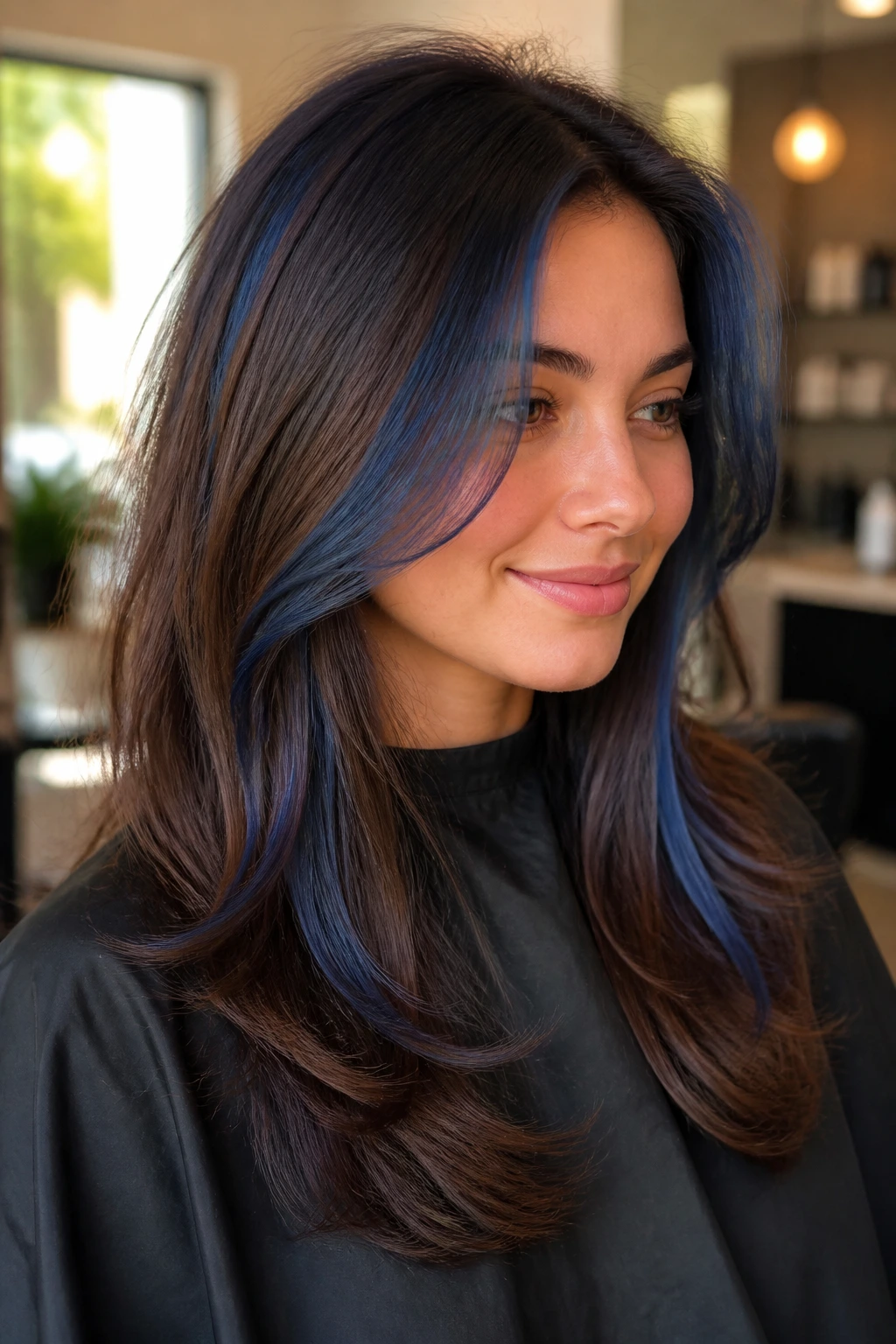
Sapphire face-framing ribbons are bolder than babylights, but they still flatter a round face when the sections are narrow and long. The trick is to let the blue start high enough to lift the eye, then travel downward in a clean line. No wide chunk across the cheek. That’s the part to avoid.
Walnut brown gives sapphire a deeper landing pad. You get contrast, but not the kind that feels harsh. The two colors sit well together because walnut usually has enough neutral depth to support a jewel tone without looking brassy.
I like this look on layered blowouts. The ribbons catch on the front bends of the hair and create a pair of long vertical accents that make the face feel a little slimmer. One side can be slightly fuller than the other, which keeps it from looking too symmetrical. Symmetry is not always flattering on a round shape. A little imbalance helps.
If you wear your hair behind your ears a lot, this is worth asking for. The ribbons stay visible even when the rest of the hair is tucked back.
6. Ash Brown with Steel-Blue Micro-Lights
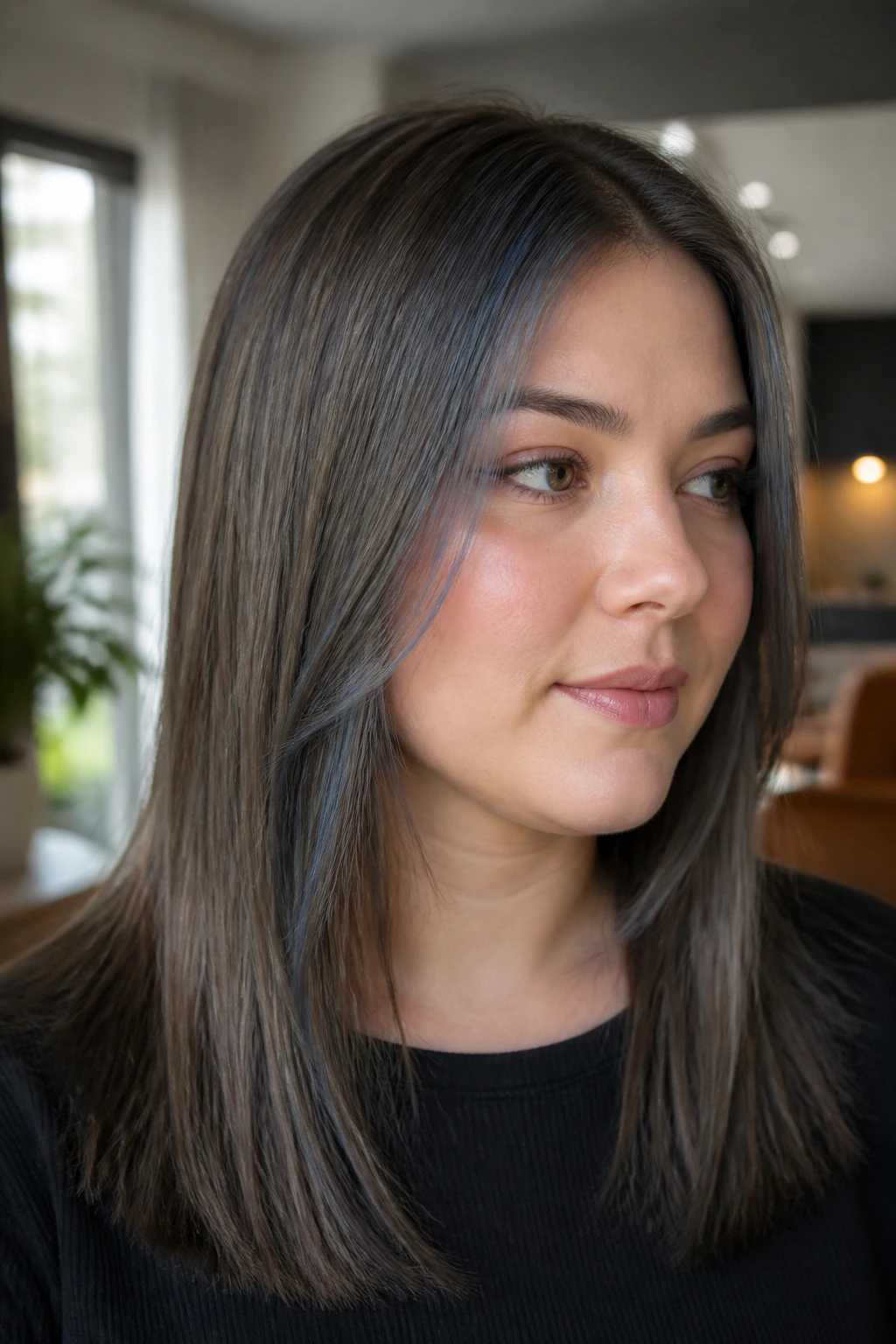
Steel-blue micro-lights are for someone who wants the color to feel almost private. From a few feet away, the hair still reads as ash brown. Up close, the blue appears in tiny threads that shimmer through the light. That kind of restraint can be very flattering on a round face because it never adds bulk.
Unlike chunky highlights, micro-lights don’t interrupt the shape of the hair. They move with it. The result is a soft vertical texture that helps elongate the silhouette without forcing attention to one spot near the cheeks.
This style works especially well on straight hair, sleek layers, and blunt cuts that need a little motion. The steel tone keeps the look cool and modern, and the brown base prevents the whole thing from going flat. If your hair is naturally fine, micro-lights are a nice choice because they won’t eat up too much visual space.
Ask for extremely fine weaving through the top and front thirds, then let the blue fade into the mids. Keep it light on the sides closest to the widest part of the face. That restraint is what makes it work.
7. Dark Cocoa with Blue-Black Shadow Root
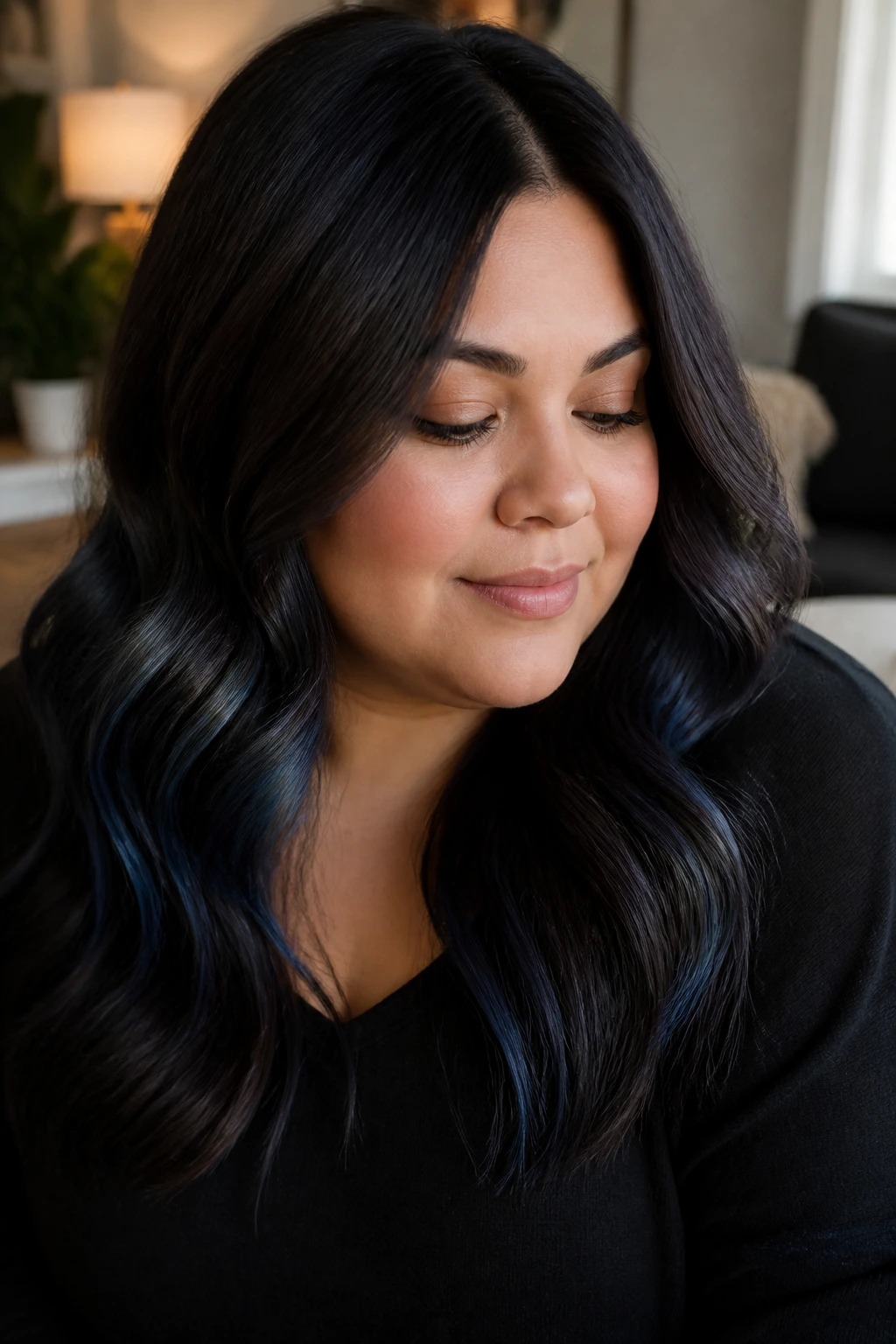
Not every blue look has to shout. A blue-black shadow root is the low-drama option for people who want depth, shine, and a little edge. On a round face, that darker root keeps the eye up near the crown, which gives the whole face a longer feel.
The idea is simple: the top stays dark cocoa, then the blue gets more visible as it moves through the mids and ends. Because the root area is deeper, the hair doesn’t balloon visually at the temples. It just falls. That’s helpful.
This is also one of the easiest ideas to live with if you hate hard regrowth lines. The root blends into the rest of the color, so the grow-out looks intentional instead of messy. When the blue shifts toward black, it also behaves better in low light, which is useful if you want the style to feel subtle at work or school and sharper at night.
If you wear waves, keep them loose. Tight curls can compress the shadow effect and make it harder to read.
8. Mushroom Brown with Indigo Micro-Highlights
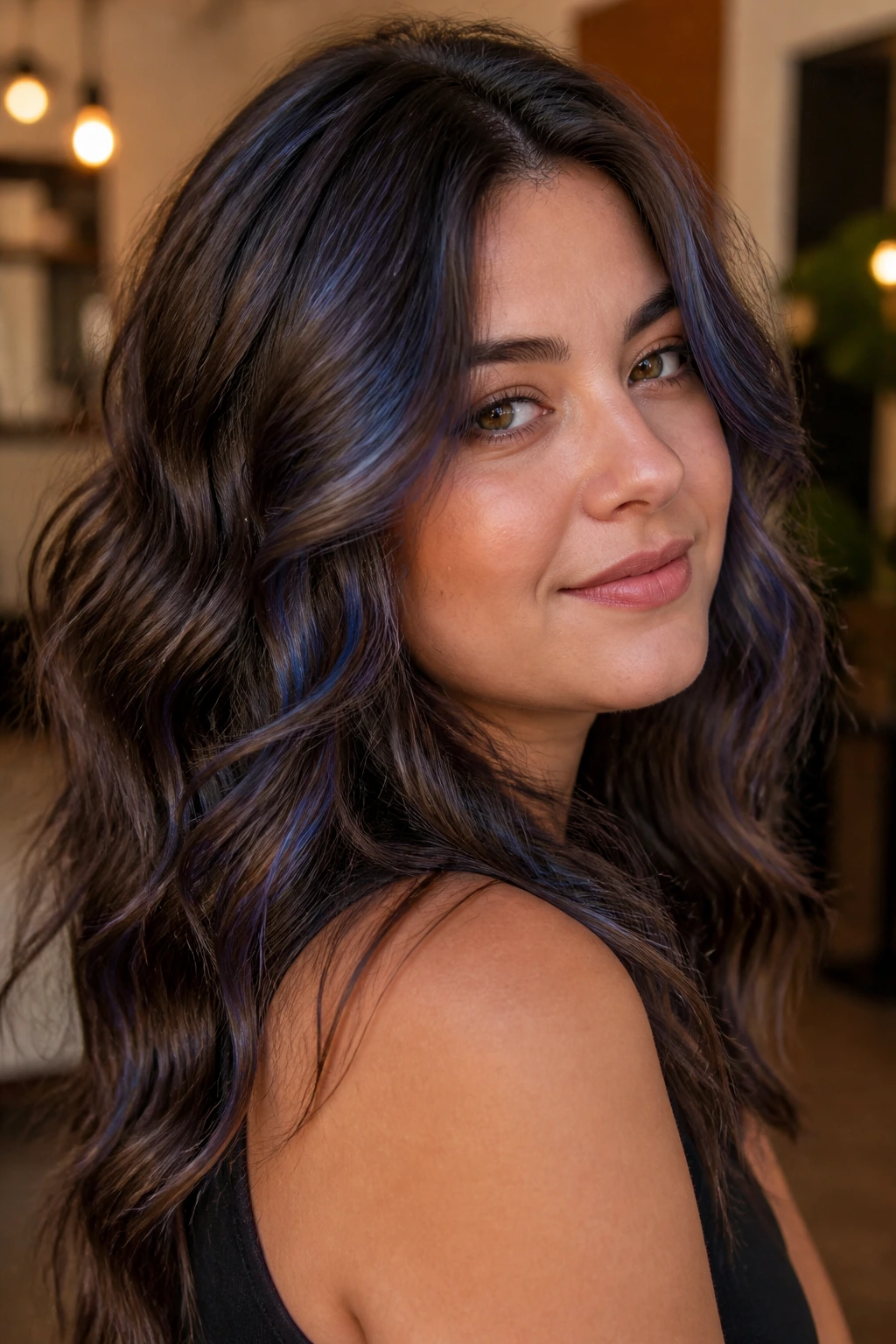
Why does mushroom brown work so well with indigo? Because both shades live in that smoky, neutral zone where nothing feels too warm or too icy. The base doesn’t fight the blue. It lets it sit in the hair like a quiet tint.
Indigo micro-highlights are best when they’re woven in tiny pieces around the crown and face frame, then allowed to drift lower. That placement helps a round face because it builds vertical texture near the top and moves the eye downward. If the blue is too dense at cheek level, the whole effect gets boxy. Nobody wants that.
How to Ask for It
- Request tiny, irregular micro-weaves instead of chunky panels
- Keep the front pieces softer than the back
- Ask for a smoky gloss finish so the blue stays muted
- Keep the lightest bits below the cheekbone
Curly and wavy hair loves this look because the texture breaks up the color in a natural way. The indigo shows and hides as the hair moves, which keeps the overall shape softer.
9. Caramel Brown with Peacock Blue Woven Strands
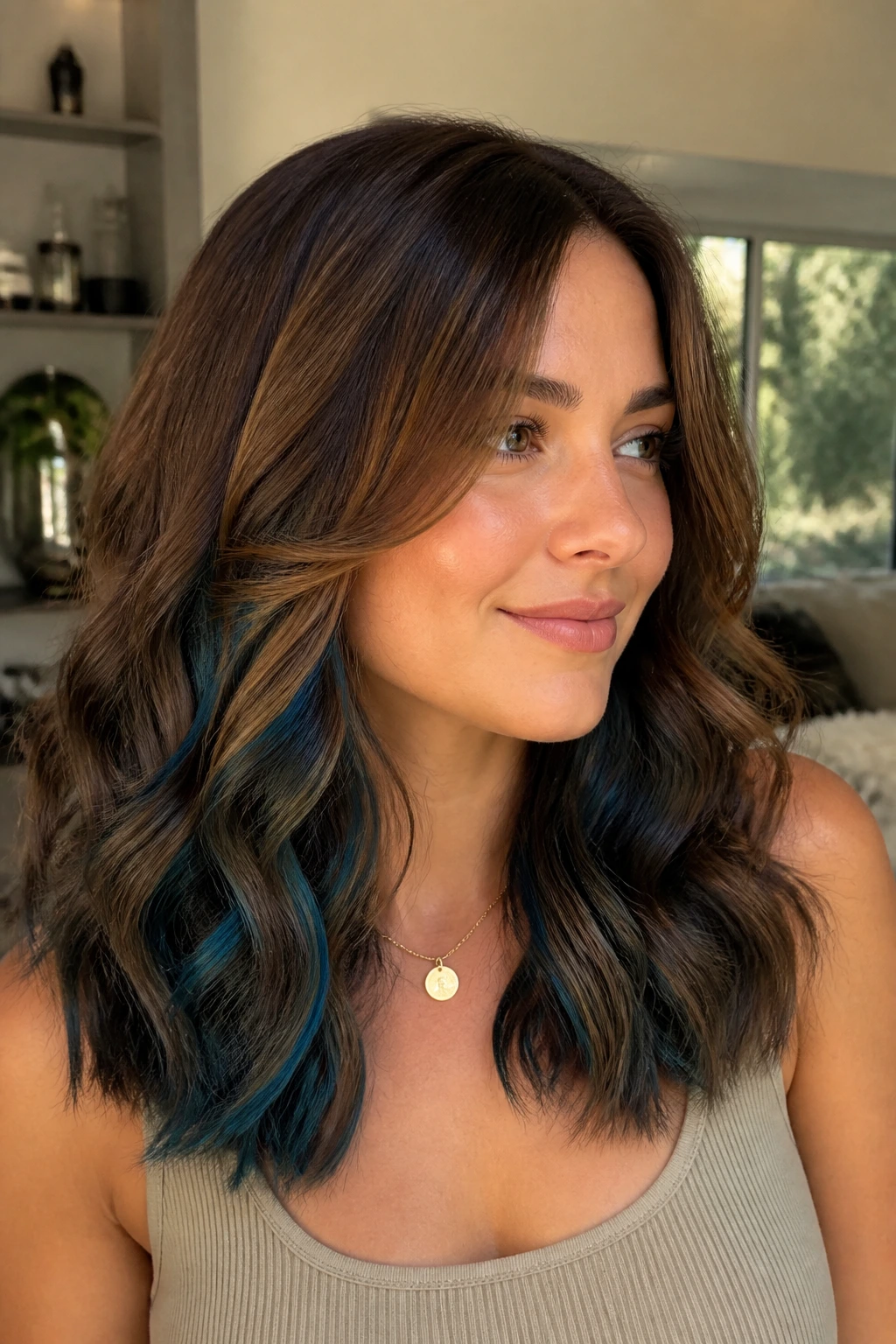
Peacock blue brings a little green into the mix, and that matters more than people think. On caramel brown, the green-blue cast warms up the look enough to keep it from feeling chilly. It also gives thicker hair a richer, more layered effect.
Woven strands are broader than micro-lights but softer than chunky streaks. That middle ground is useful on a round face because the color is visible without forming one hard line across the side of the head. Place the ribbons from just above the cheekbone into the collarbone area. Let them travel. That downward stretch is the whole point.
This look suits beachy waves, layered blowouts, and long cuts that need a bit of edge. It’s also good if you like braids or half-up styles, because the peacock blue shows in little flashes as the hair twists. The color feels alive instead of painted on.
If your base has golden warmth, don’t fight it. The caramel and the peacock blue can play together nicely as long as the blue isn’t neon.
10. Brown Blue Highlights: Toffee Brown with Midnight Blue Ribbon Lights
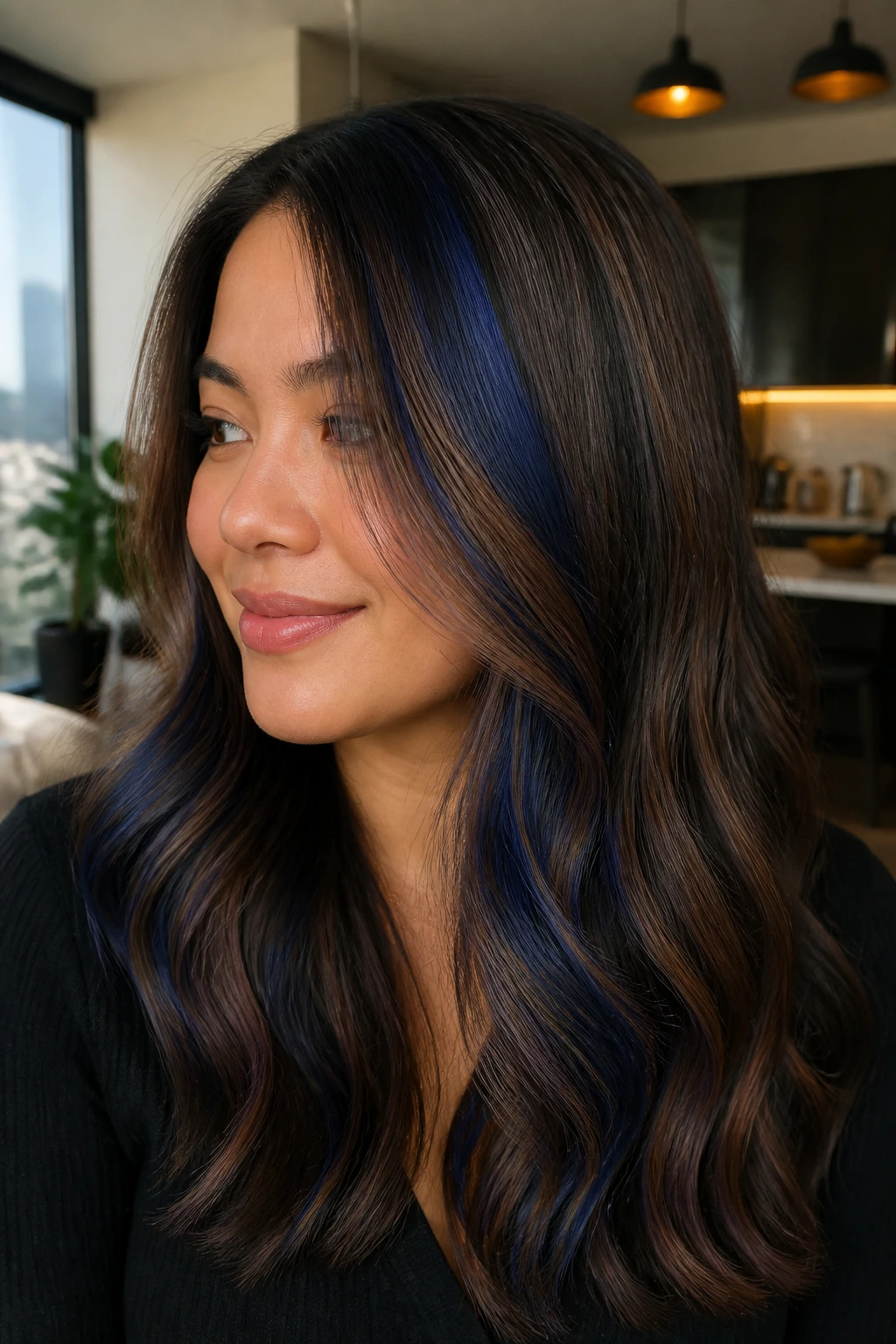
Need something darker and softer than cobalt? Midnight blue ribbon lights are the answer. The shade sits deep in the hair, and that depth is what makes it flattering on a round face. It doesn’t spread sideways. It drops.
Toffee brown gives the whole look a little warmth at the base, which keeps the blue from turning severe. Ask for ribbon lights about 1/4 inch wide, placed diagonally from the temple toward the lower mid-lengths. Diagonal placement matters here. Straight-across ribbons can make the face look wider. Diagonal ones pull the eye down and back.
Best Way to Wear It
A smooth blowout shows the color cleanly, but soft bends are even better if you want movement. Keep the front slightly tucked under at the ends, not flipped outward. Outward bends widen the line around the jaw, and that works against the shape you’re trying to sharpen.
- Good for medium to thick hair
- Great with side parts or soft center parts
- Easy to tone darker if you want less contrast later
- Looks polished without trying too hard
This is the kind of blue that feels calm. Not boring. Calm.
11. Layered Lob with Hidden Blue Underlayer
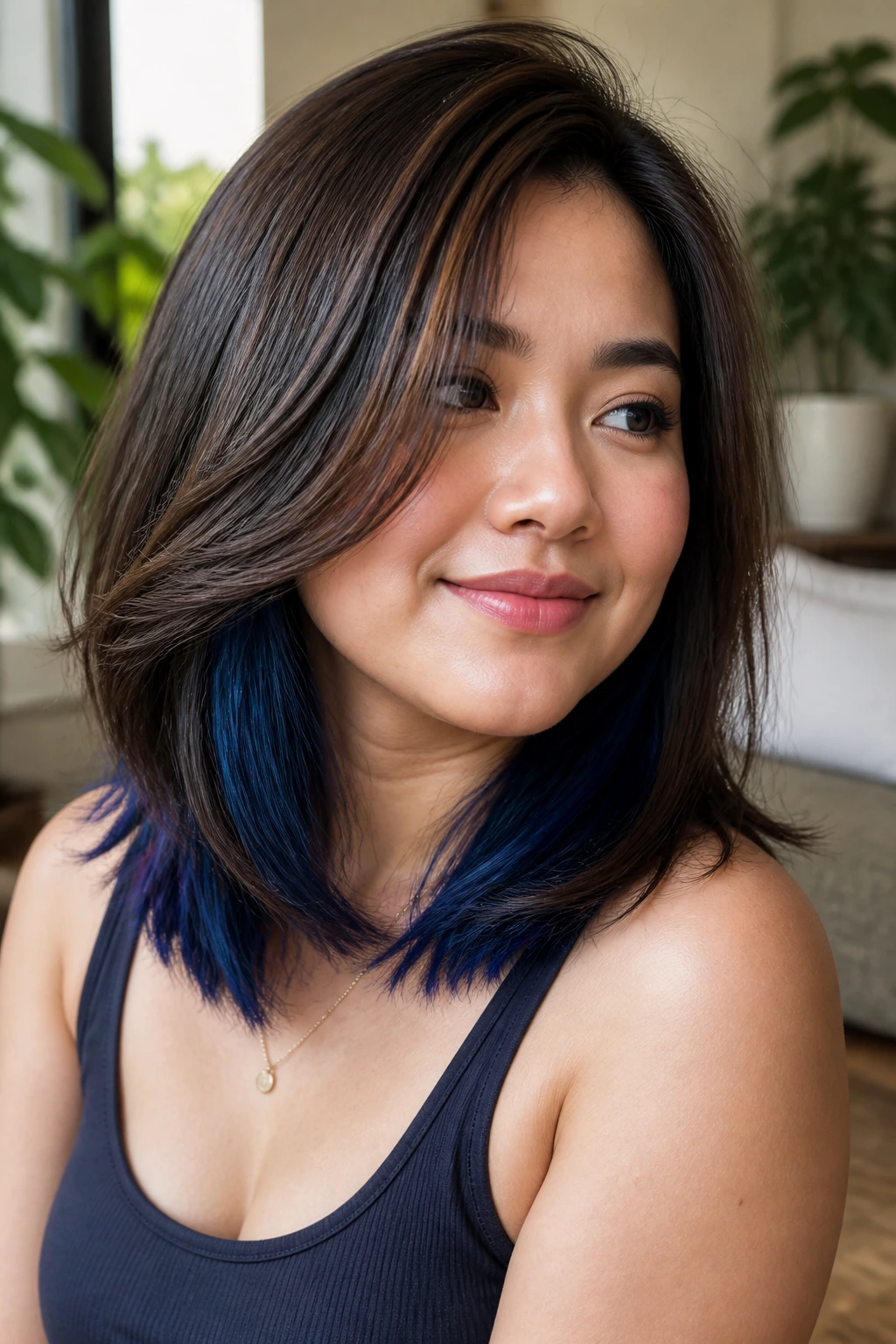
A hidden underlayer is one of the best tricks for a round face because the color sits below the widest part of the face and still gives you something interesting when the hair moves. On a layered lob, that blue peeks out at the shoulders and collarbone, which is exactly where you want the eye to travel.
The top stays brown and smooth. The lower layer gets the blue. That contrast creates depth without crowding the cheeks. It also gives the lob a little swing, especially if you wear it tucked on one side or pulled into a low clip. A round face often looks best when the hair creates a vertical line below the jaw, and this cut does that almost by itself.
I like this look for people who want color but don’t want to live with it in their face every second. That’s the honest version. Peekaboo color is less fussy, and it grows out gracefully. A 2- to 3-inch band of blue under the bottom layer is usually enough. You don’t need the whole underside painted to get the effect.
One small warning: if the haircut is too blunt and too short, the underlayer can disappear. Keep a little movement in the ends.
12. Curly Espresso Hair with Slate-Blue Babylights
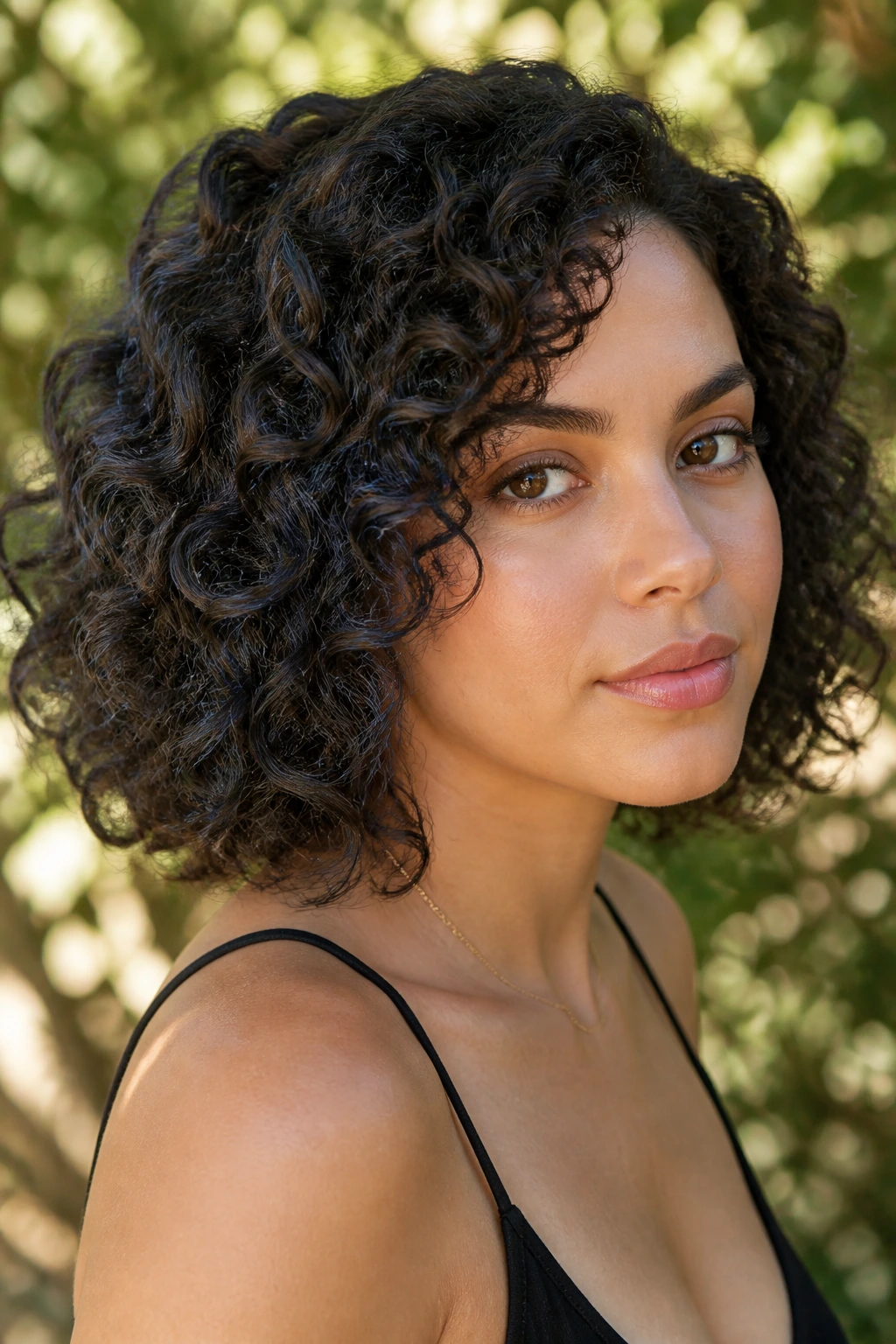
Curly hair changes the game because the texture already brings width and volume. That means the blue has to be placed with a lighter hand. Slate-blue babylights do that nicely. The color is dusty, muted, and narrow, so it slips through the curls instead of sitting on top of them like a stripe.
The best placement starts above the cheek line and moves downward through the outer curl pattern. You want the color to follow the curl’s shape vertically, not wrap all the way around the face. On a round face, that detail matters a lot. A ring of brightness near the cheeks just makes the shape feel fuller.
The slate tone is a good match for espresso brown because it softens the contrast. If the blue is too bright, curly hair can look busy fast. If it’s too dark, the color disappears. Slate lands in the middle. It shows in sunlight, soft indoor light, and on second-day curls when the shape gets a little looser.
If your curls are dense, ask for babylights only on selected curl groupings. That keeps the color from turning fuzzy.
13. Chocolate Shag with Chunky Cobalt Streaks
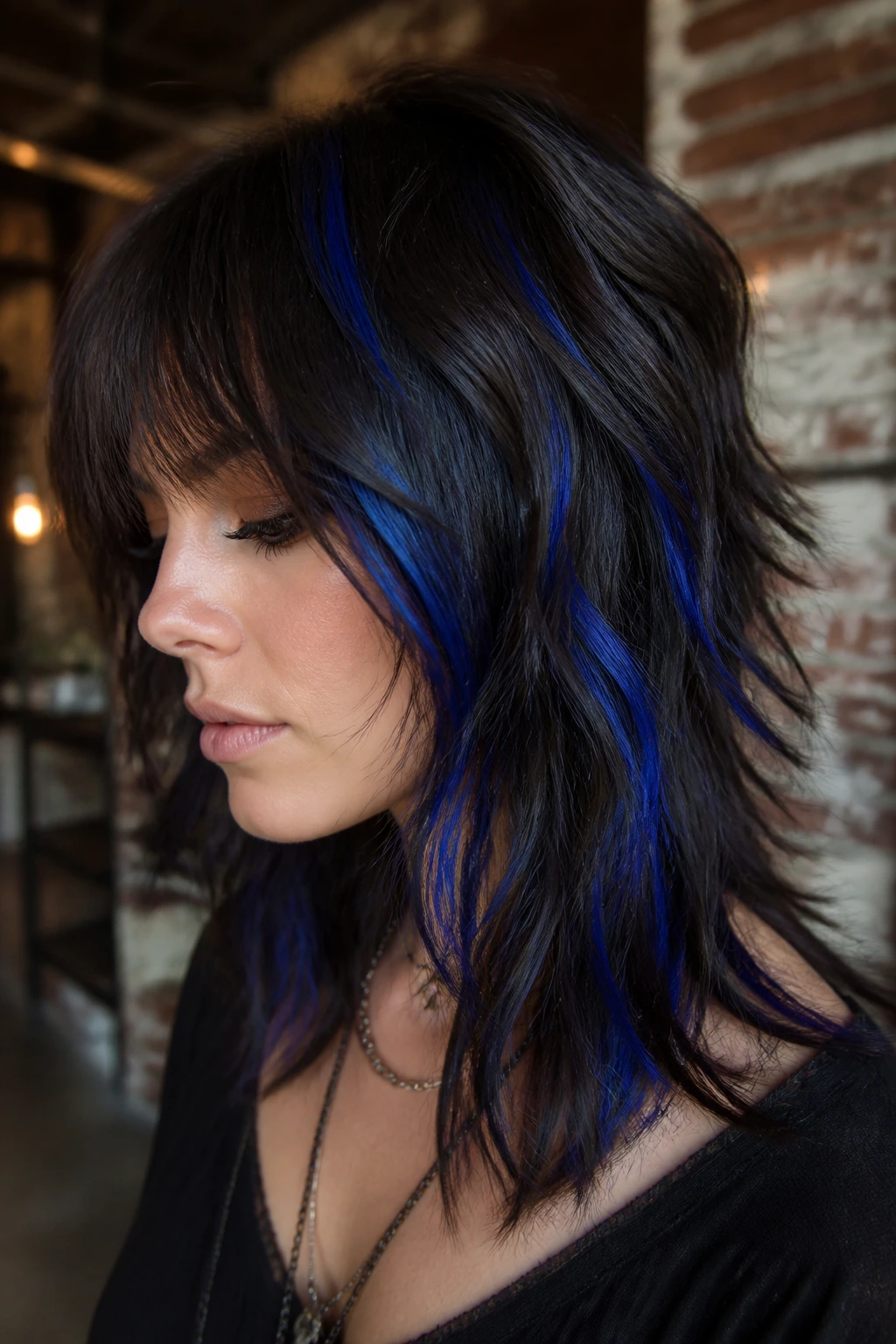
A shag can handle more color than a blunt cut. The layers already break up the shape, so chunky cobalt streaks don’t feel as heavy here. They feel intentional. That’s why this style works on a round face even though the color is bolder than most of the others on this list.
The trick is placement. Keep the thickest streaks from the crown through the lower lengths, and don’t park them right at cheek level. You want the eye moving up and down through the shag, not stopping in the middle. Three or four cobalt streaks, each about 3/8 to 1/2 inch wide, is usually enough to make the point without making the face look wider.
This is a good choice if your style leans edgy, messy, or piecey. It likes texture. It likes air-dried bends. It also likes a little root shadow so the blue doesn’t look pasted on. If you’re afraid of bold color, skip this one. If you want the cut to have attitude, it’s one of the strongest options here.
The shag already does the face-flattering work. The color just pushes it further.
14. Denim Curtain Lights on a Mocha Lob
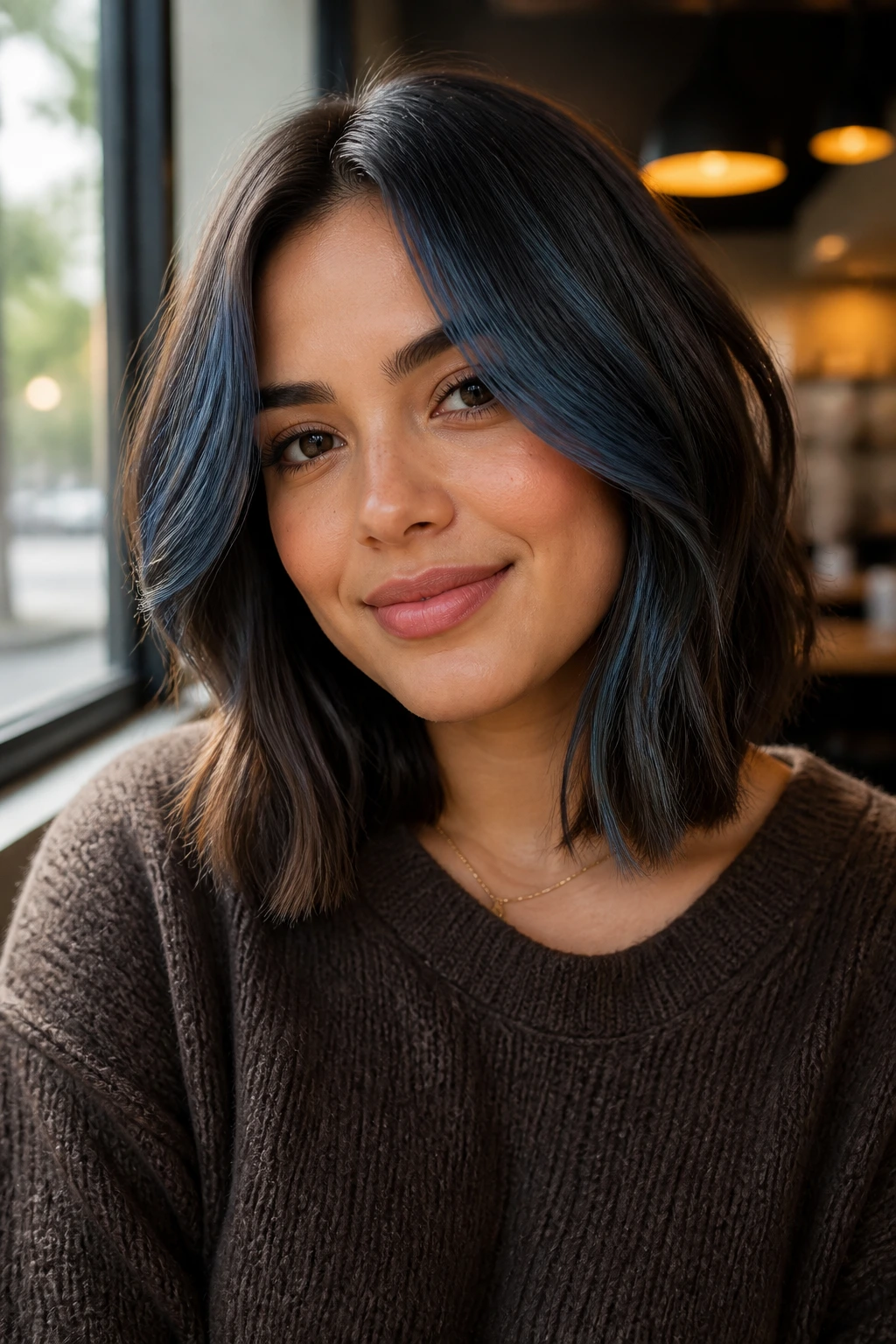
Curtain lights are one of those placements that make sense the second you see them on a round face. The color opens away from the center, then falls along the sides like a soft frame. That shape gives the face room in the middle while still pulling the eye downward.
Denim is a smart tone for this because it feels relaxed, not neon. On mocha brown, it sits in the hair with enough contrast to be visible but not so much that it crowds the face. Ask for two front pieces that start near the brow line and taper toward the collarbone. Keep the rest of the blue on the outer layers, not across the cheek line.
How to Style It
A 1.25-inch round brush or a medium curling iron works well here. Bend the hair away from the face through the front sections, then let the ends curve softly back in. That gives you a long, opening effect instead of a puffy one.
- Best with medium layers
- Looks good on a side part or a soft center part
- Easy to show off with half-up styles
- Needs a gloss refresh if the denim gets dull
This is one of the prettiest choices if you want color that feels shaped, not sprayed on.
15. Brown Bob with Cobalt Ends
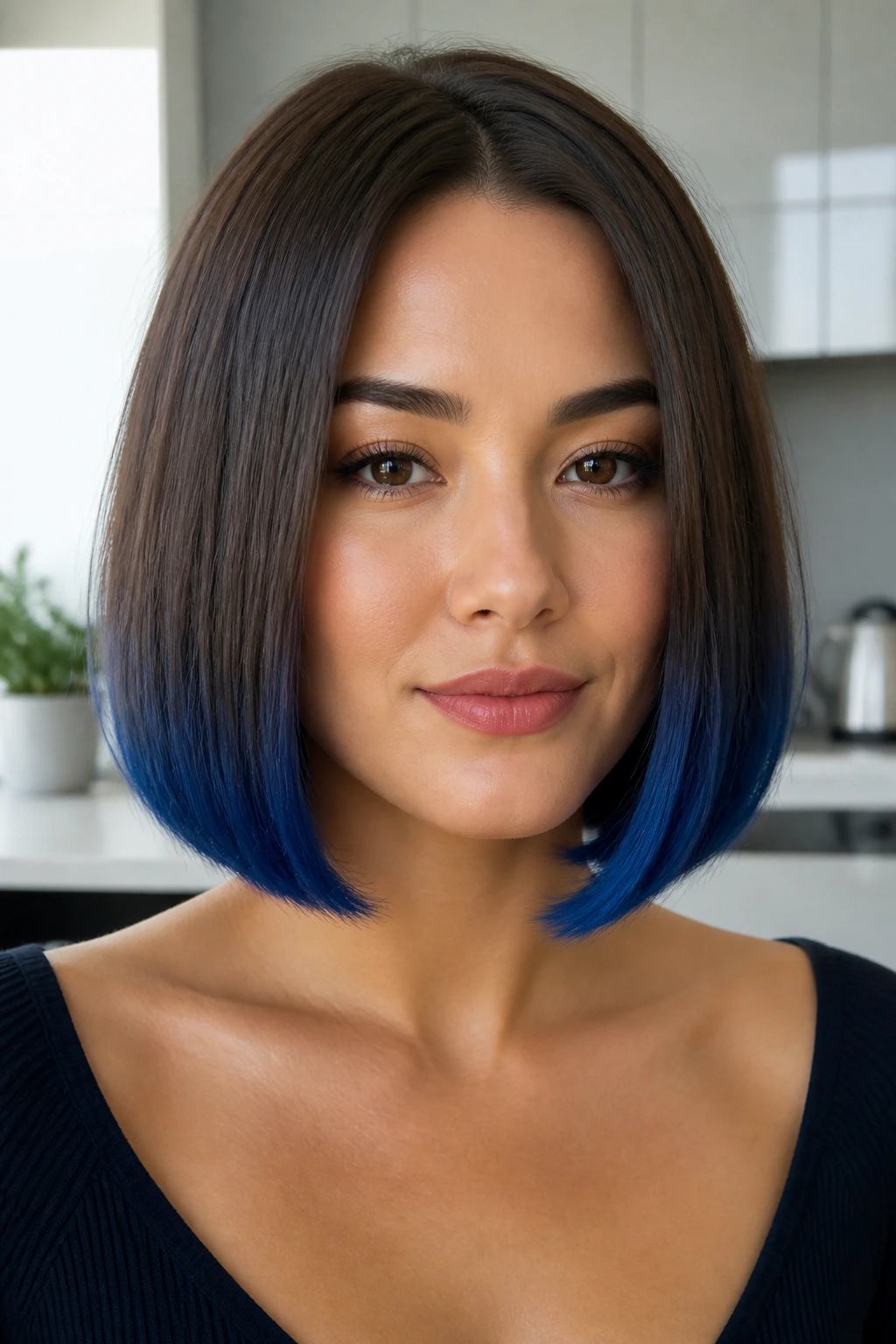
A bob can feel shorter on a round face if the color stops at the wrong place. Cobalt ends fix that. By keeping the blue only on the last 2 to 3 inches, the eye goes straight to the bottom edge of the cut. That gives the bob a longer, leaner read.
Unlike face-framing highlights, this one doesn’t try to contour the cheek area at all. It uses the line of the haircut itself. That’s a nice move if your bob is blunt or slightly angled. The shape already defines the face, so the color only needs to sharpen the finish.
This look works best when the brown stays rich through the top and mids. If the blue starts too high, the bob can look busy. If it starts at the ends, it feels crisp. Straight styling shows the cobalt edge cleanly, while a soft tuck under the jawline gives it a more polished shape.
If you want a blue look that still feels neat and grown-up, this is a strong pick.
16. Long Brown Layers with Sapphire-to-Denim Gradient
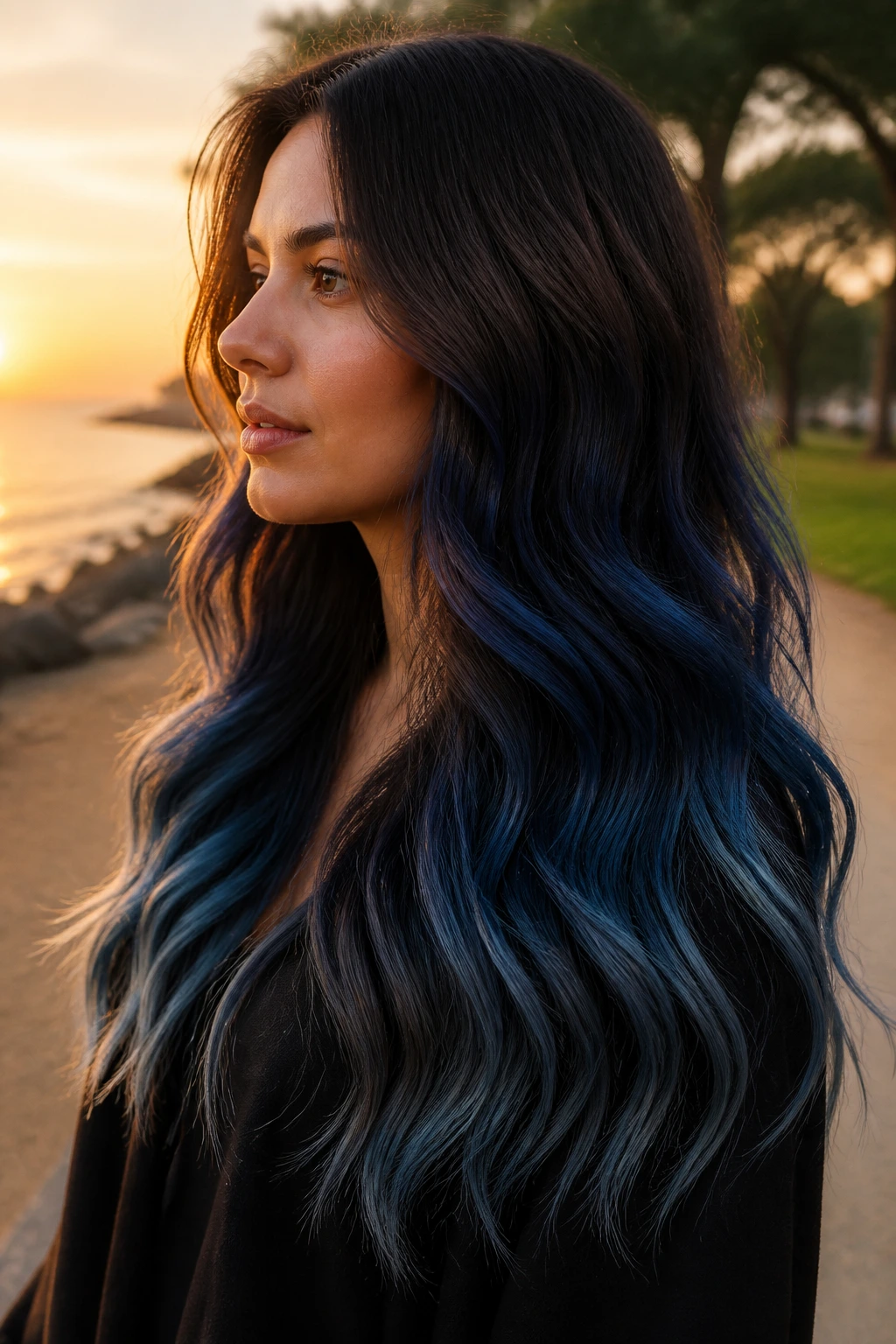
A gradient is one of the best ways to wear blue on long hair because it creates a downward pull. The color starts deeper and richer near the mid-lengths, then shifts into denim at the ends. On a round face, that movement matters. The eye follows the fade downward instead of spreading out sideways.
Sapphire near the middle gives the hair some weight. Denim at the ends softens that weight and keeps the finish airy. Long brown layers help even more because the cut already creates vertical lines. Add the gradient, and the whole style starts to feel longer without looking stiff.
This one is especially good with loose waves. Waves expose the transition between shades in a gentle way, so the gradient looks expensive in the plain old sense of the word — carefully blended, not overworked. Straight hair can wear it too, but the transition needs to be smooth or the fade looks abrupt.
Keep the root area darker. That simple choice lifts the face and makes the whole color story read cleaner.
17. Cocoa Pixie with Frosted Blue Tips
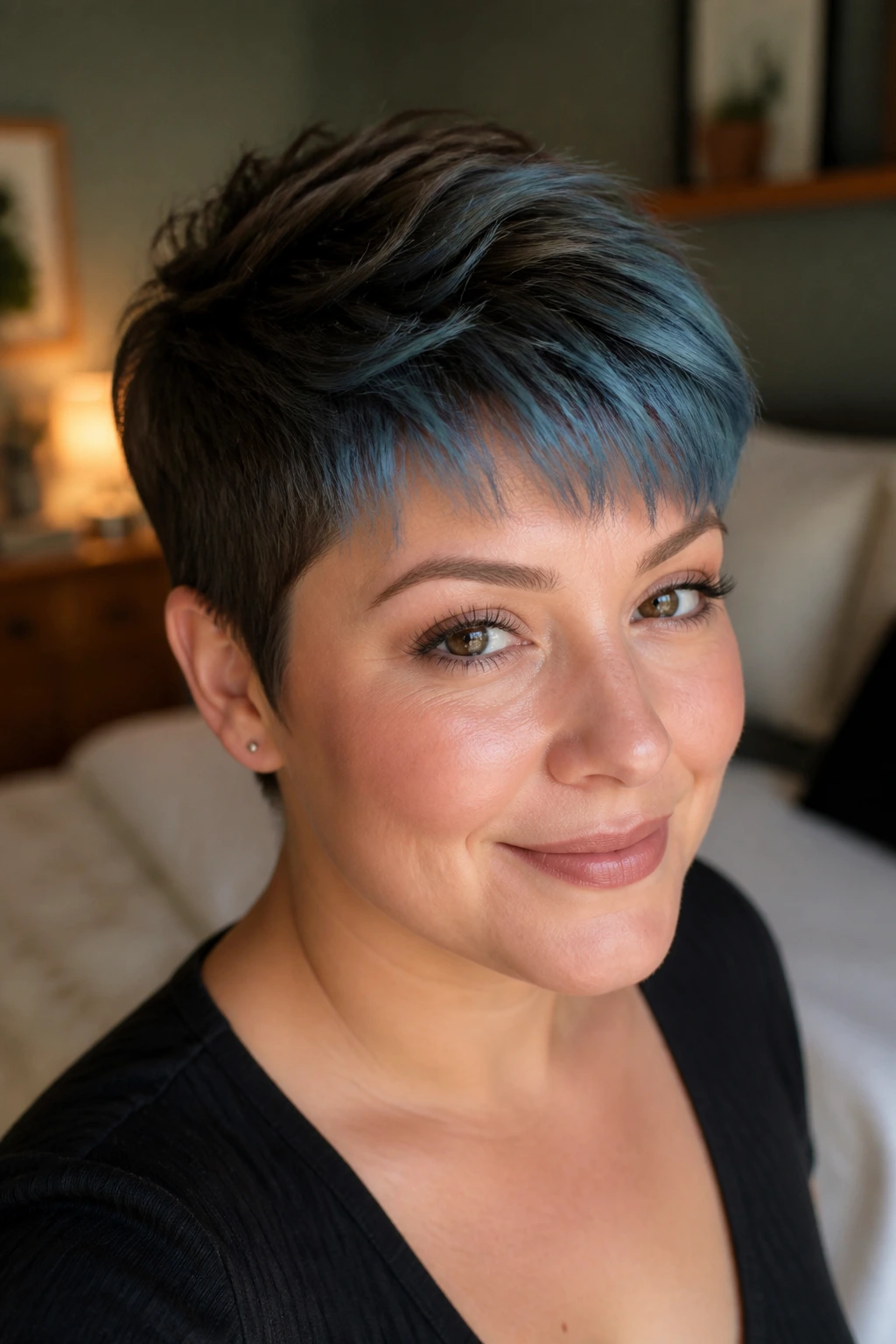
A pixie can wear blue just fine. It just needs precision. Frosted blue tips at the fringe and crown add lift where a round face needs it most, while keeping the sides controlled and close. That balance keeps the haircut sharp instead of puffy.
The blue should live on the top and outer edges, not around the temples in thick bands. Short cuts leave less room for error, and the wrong placement can widen the face fast. Keep the tips light and cool, almost icy. That gives the pixie a crisp finish without making it look toy-like.
What to Watch For
- Ask for blue only on the upper third of the cut
- Keep the sides deeper and closer to the natural brown
- Use a matte paste or light cream, not heavy gel
- Schedule touch-ups more often than you would on longer hair
This is a fun choice if you like structure and don’t mind a little upkeep. The payoff is a sharp, lifted shape that does a lot for a round face.
18. Brunette Waves with Teal Contour Pieces
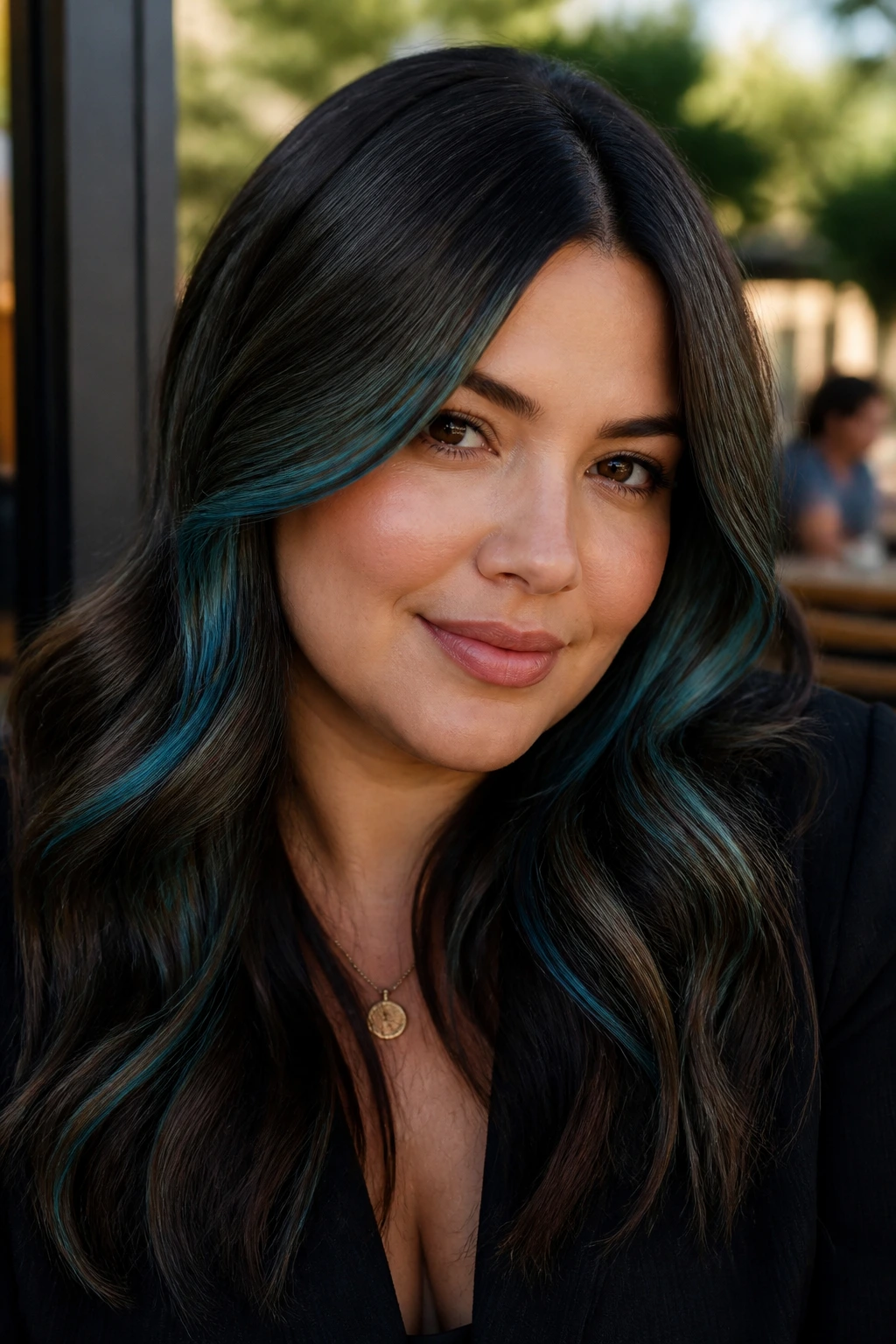
What if the blue followed your face shape instead of fighting it? That’s what contour pieces do. Instead of painting color everywhere, you place teal strands along the outer temple, then let them descend near the cheekbone and jaw. The effect is subtle, but the shape is strong.
Teal is useful because it has enough blue to count, yet enough green to soften the contrast on brunette hair. On waves, the pieces separate naturally and create two clean vertical lines. That helps a round face feel a little longer, especially if the hair is parted slightly off-center.
I’d keep these pieces about 1/2 inch wide, no thicker. The goal isn’t to build a block of color. It’s to create contour. A round face doesn’t need more width. It needs direction. Teal contour pieces give you that without making the hair feel overdone.
If you like the idea of blue but want it to behave like a styling trick rather than a statement, this is one of the smartest ways to do it.
19. Warm Brown with Smoky Blue Sheen
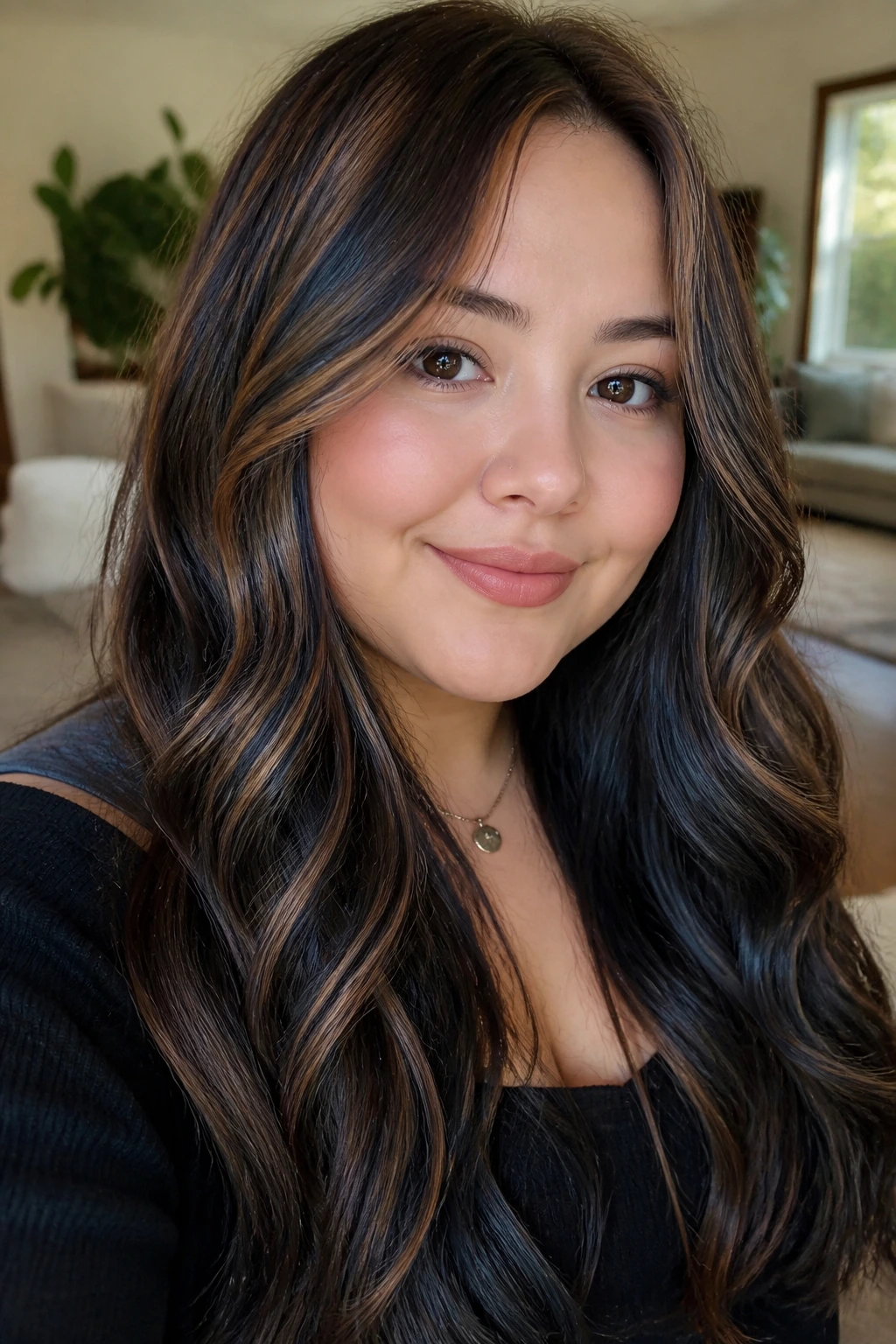
Not every blue highlight has to show itself in a stripe. A smoky blue sheen acts more like a glaze over lightened brown ribbons, and that can be very flattering on a round face because it keeps the color soft, vertical, and almost misty.
Warm brown gives the sheen something to sit on top of. The result is less about contrast and more about depth. You see blue when the light hits, then it disappears back into the brown. That makes the whole look easier to wear if you need it to feel calm in different settings.
This kind of finish works best on medium to long hair with a bit of bend. Straight hair can look a little flat unless there’s a clean shape underneath. Wavy hair catches the smoky tone in a nicer way because the color slips along the curve of the hair instead of sitting still. A round face benefits from that softness. Hard lines are the enemy here.
If you want blue without the obvious stripe effect, this is the understated route. Quiet, but not plain.
20. Brown Blue Highlights: Deep Brown with Blue Panel Color-Blocking
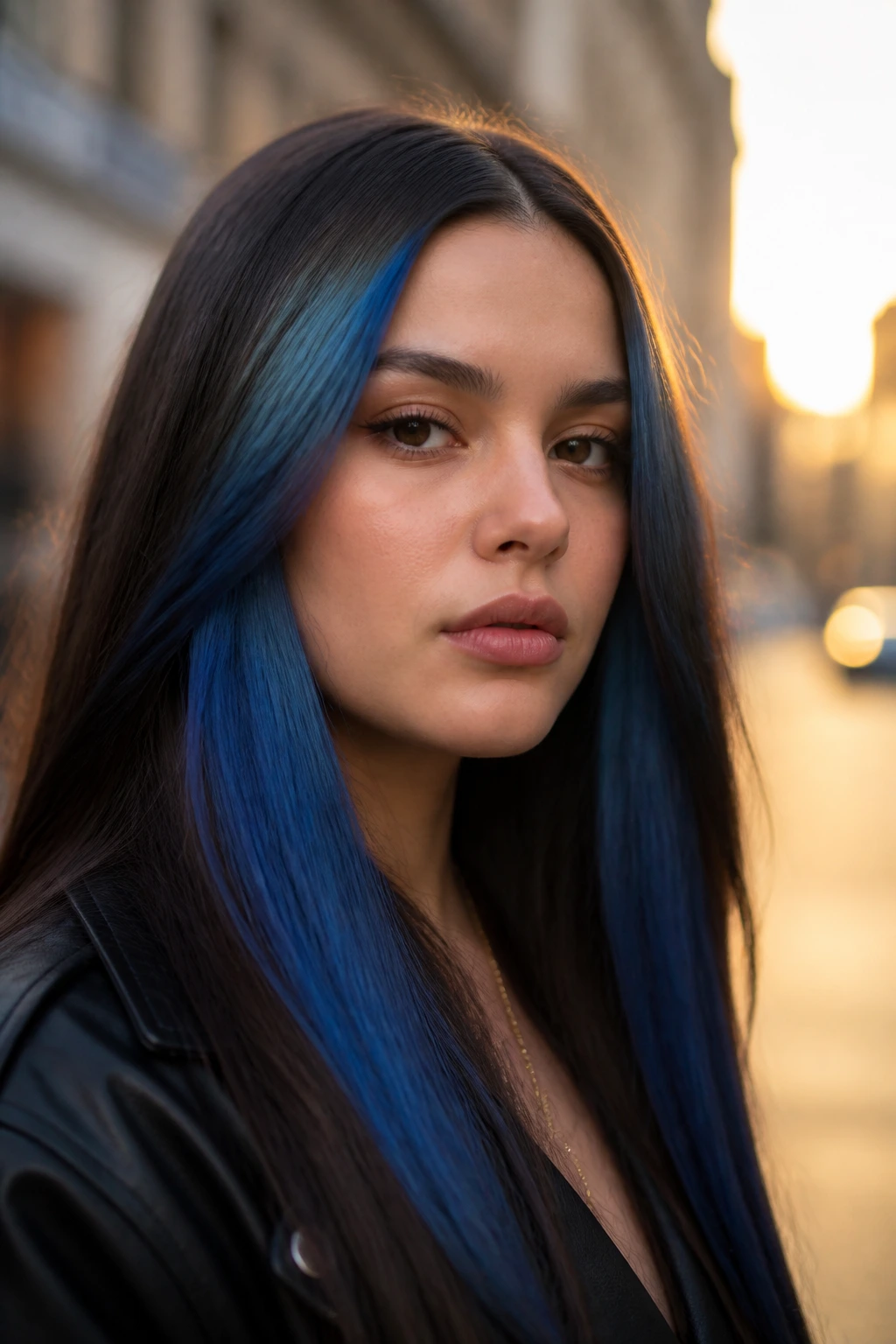
Color-blocking is the boldest option here, and it can still flatter a round face if the panels stay long and vertical. Think two narrow blue panels that begin around the temple or upper cheek area and run down past the collarbone. That length is what matters. Short panels can look chopped and wide. Long ones slim.
Deep brown underneath gives the blue a dark frame, which makes the color feel graphic instead of messy. If you wear your hair straight, the panels look especially clean. A center part adds more length through the middle of the face, while the blue on the sides creates a strong outline. It’s a sharp look. Not subtle.
This is the best choice for someone who likes fashion color and doesn’t mind attention. It works on thick hair, medium hair, and layered long cuts. It can even make a simple ponytail look deliberate, since the panels stay visible as the hair moves back.
Keep the rest of the hair dark and calm. That’s the whole point. The blue should read like architecture, not decoration.
Final Thoughts
The most flattering brown blue highlights for round faces usually do one thing well: they move the eye downward. That can happen with babylights, money pieces, hidden panels, or a stronger color block. The shape matters more than the shade strength.
If you want the safest starting point, go for navy babylights, denim balayage, or a smoky underlayer. If you want more drama, cobalt front pieces or sapphire ribbons can work beautifully as long as they stay narrow and long. Keep the color away from the widest part of the cheek, and you’ve already solved half the problem.
Bring photos, yes, but bring one more thing too — a clear idea of where you want the blue to live on your head. That little detail makes the whole look better.
