



Brown lowlights for brunette hair can do something bright highlights sometimes can’t: they give the hair shape. A brunette shade with a few darker ribbons looks fuller at the roots, softer through the ends, and less like one flat block of color under indoor light. That’s the whole trick.
The shade choice matters, but placement matters just as much. A lowlight that sits one level deeper than your base can look plush and expensive; go too dark and it can turn harsh fast, especially on finer hair. Go too warm in the wrong place and the whole head starts reading copper when you wanted brown.
There’s a lot of room to play here. Espresso, walnut, chocolate, mocha, chestnut, truffle — each one behaves differently on straight hair, curls, layered cuts, and blunt bobs. If you’ve ever looked in the mirror and thought your brunette color needed something but not blonde, this is the lane.
1. Espresso Ribbons on Deep Brunette Hair
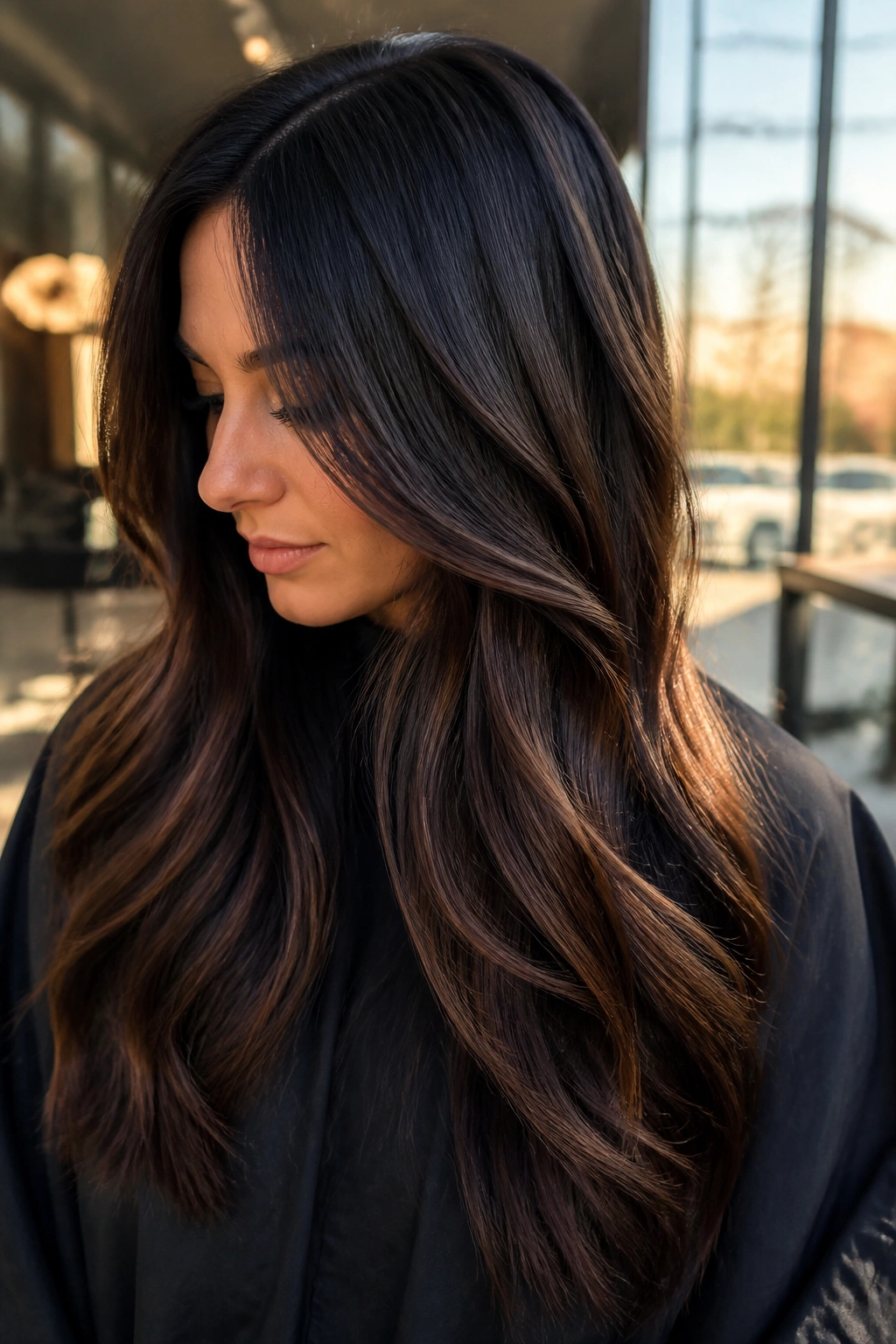
Espresso lowlights are the first place I’d start if you already have dark brown hair and want the color to look richer, not lighter. They’re deeper than your base, but only by a little, which means the eye reads the hair as denser and smoother instead of stripey. That matters on long brunette hair, where a single flat tone can look a little heavy at the ends.
What to ask for
Ask for fine espresso ribbons placed through the mid-lengths and lower crown. A colorist can use a demi-permanent brown that sits around level 3 or 4, depending on how dark your base is. Keep the pieces thin. Thick espresso panels can look too obvious unless your hair is very dense.
This shade works especially well if your brunette is warm or neutral. It gives the color a shadowy finish that looks polished in daylight and indoors. And no, it does not need to cover the whole head.
- Best on dark brown bases
- Works well with long layers
- Keeps thick hair from looking puffy at the ends
- Looks strongest when the finish is shiny, not matte
Pro tip: leave a few strands around the face a touch lighter, or the whole style can read flat.
2. Milk Chocolate Lowlights for Medium Brunette Hair
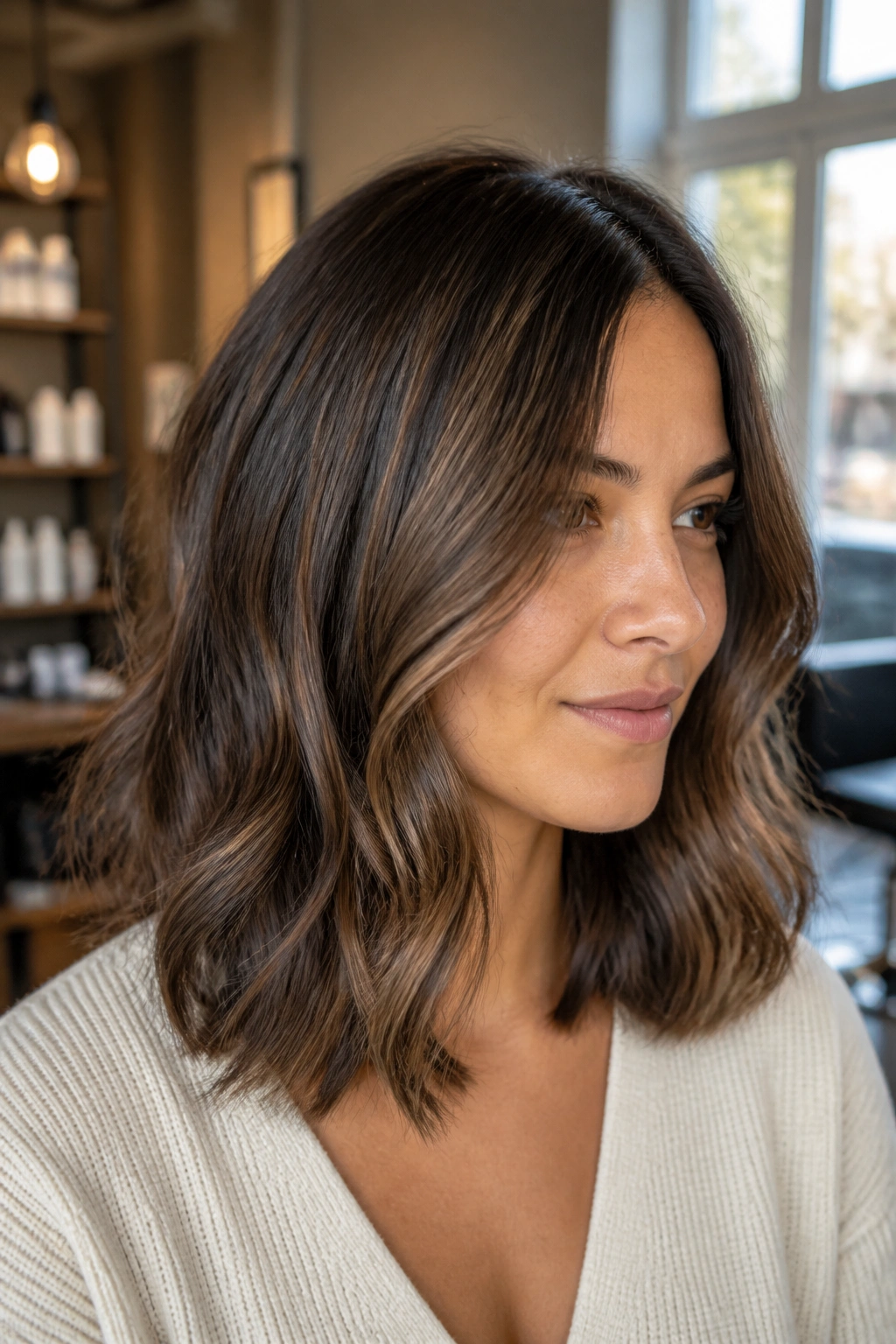
Milk chocolate is softer than espresso and easier to wear if you’re nervous about contrast. It sits just a little deeper than a medium brunette base, so the result looks blended instead of dramatic. That makes it a smart choice for people who want depth without making the hair look darker overall.
The finish is especially nice on shoulder-length cuts and soft waves. The lowlights fall into the bends of the hair and make each curve stand out a little more, which is one of those small changes people notice without always knowing why. That’s the appeal here.
Milk chocolate lowlights also play well with warm skin tones. They don’t scream red, and they don’t go ash-green the way some cooler browns can under certain lighting. If you want a safe, wearable brunette refresh, this is one of the most forgiving options.
It’s a calm color. That’s the point.
3. Walnut Lowlights for Cool Brunette Hair
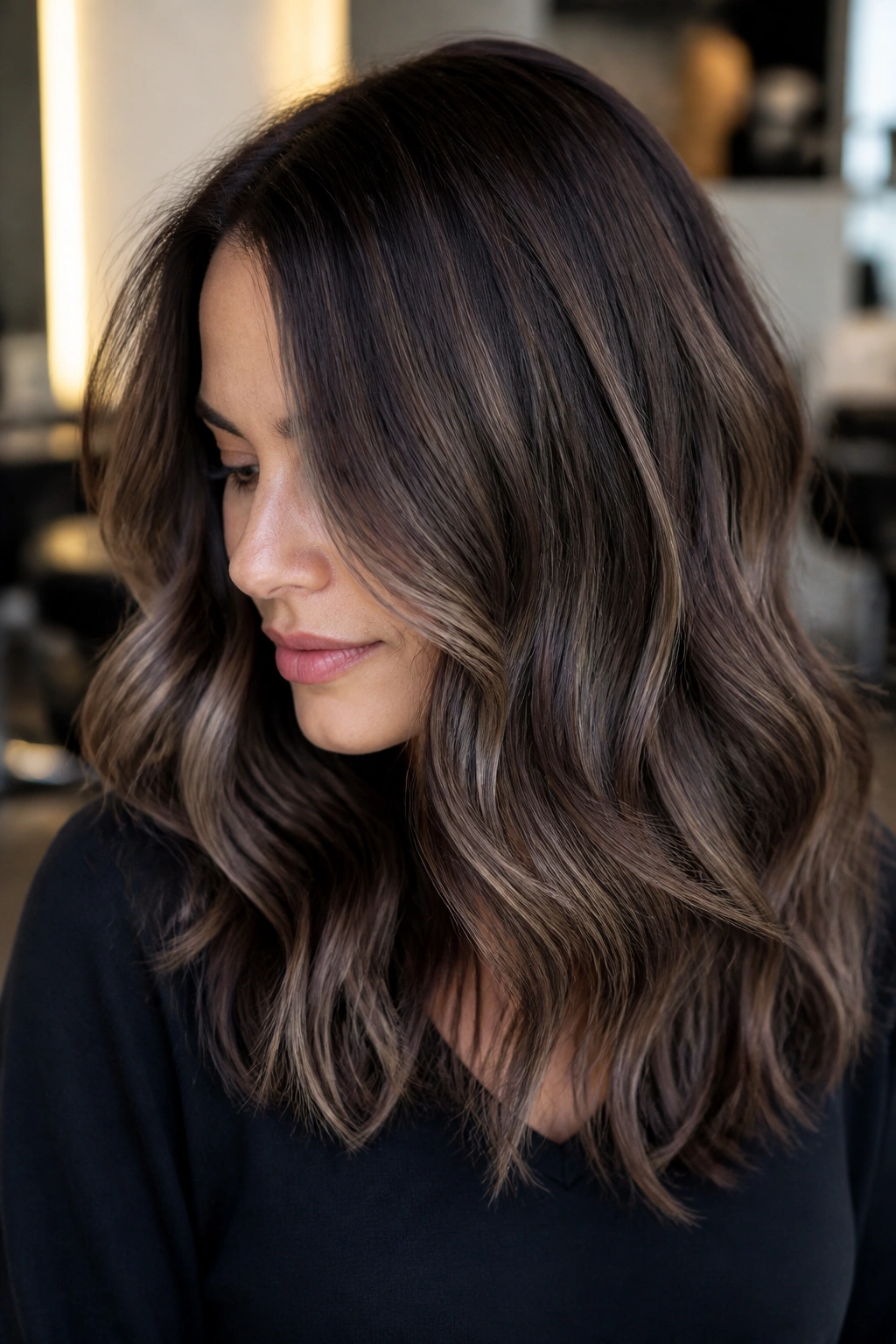
Why do walnut tones work so well on cool brunettes? Because they keep the hair from drifting too warm while still adding depth. Walnut sits in that easy middle ground: brown enough to feel rich, ash enough to stay clean-looking, and soft enough not to fight your natural base.
How to wear it
Walnut lowlights are a good match for brunette hair with a hint of ash, especially if your color tends to pull orange after a few washes. A colorist can weave these through the mid-lengths in narrow sections, then place a little extra at the back where the hair often looks washed out first. That tiny placement choice changes the whole silhouette.
A few things make walnut stand out:
- It suits cool or neutral undertones
- It looks good on straight, blunt cuts
- It helps overly warm brunette color look calmer
- It pairs well with a cool brown gloss afterward
Skip walnut if you love copper or auburn tones. It can look a little muted next to them.
4. Chestnut Contour Pieces Around the Face
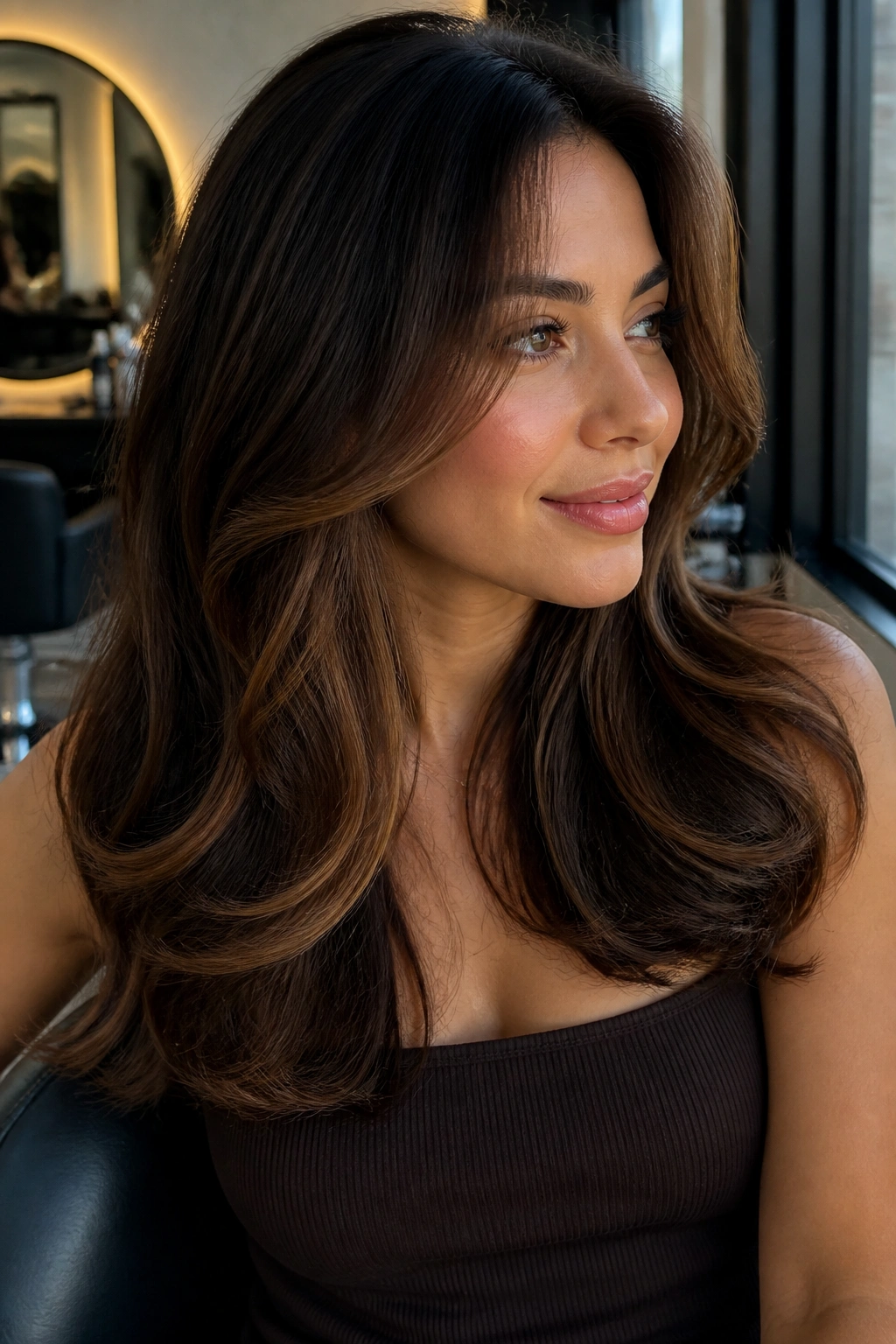
Picture hair that looks fine from the back but a little blank from the front. Chestnut contour pieces fix that fast. They sit around the hairline and front layers, where the eye lands first, and they give brunette hair a more shaped, face-framing look without making the whole head darker.
I like chestnut here because it has a soft warmth that feels alive. Not orange. Not red. Just enough glow to keep the color from looking sleepy.
Where it lands
- Around the temples
- Just behind the front money pieces
- Through the first few layers near the jaw
- Lightly through the ends if the haircut is very blunt
The trick is not to overpack the front. Too many chestnut pieces and the effect gets loud fast. A few well-placed ribbons do more than a heavy weave ever will.
That’s especially true on mid-length brunettes who wear their hair tucked behind the ears a lot. The color shows when the hair moves. That’s where it earns its keep.
5. Cocoa Balayage Through Long Layers
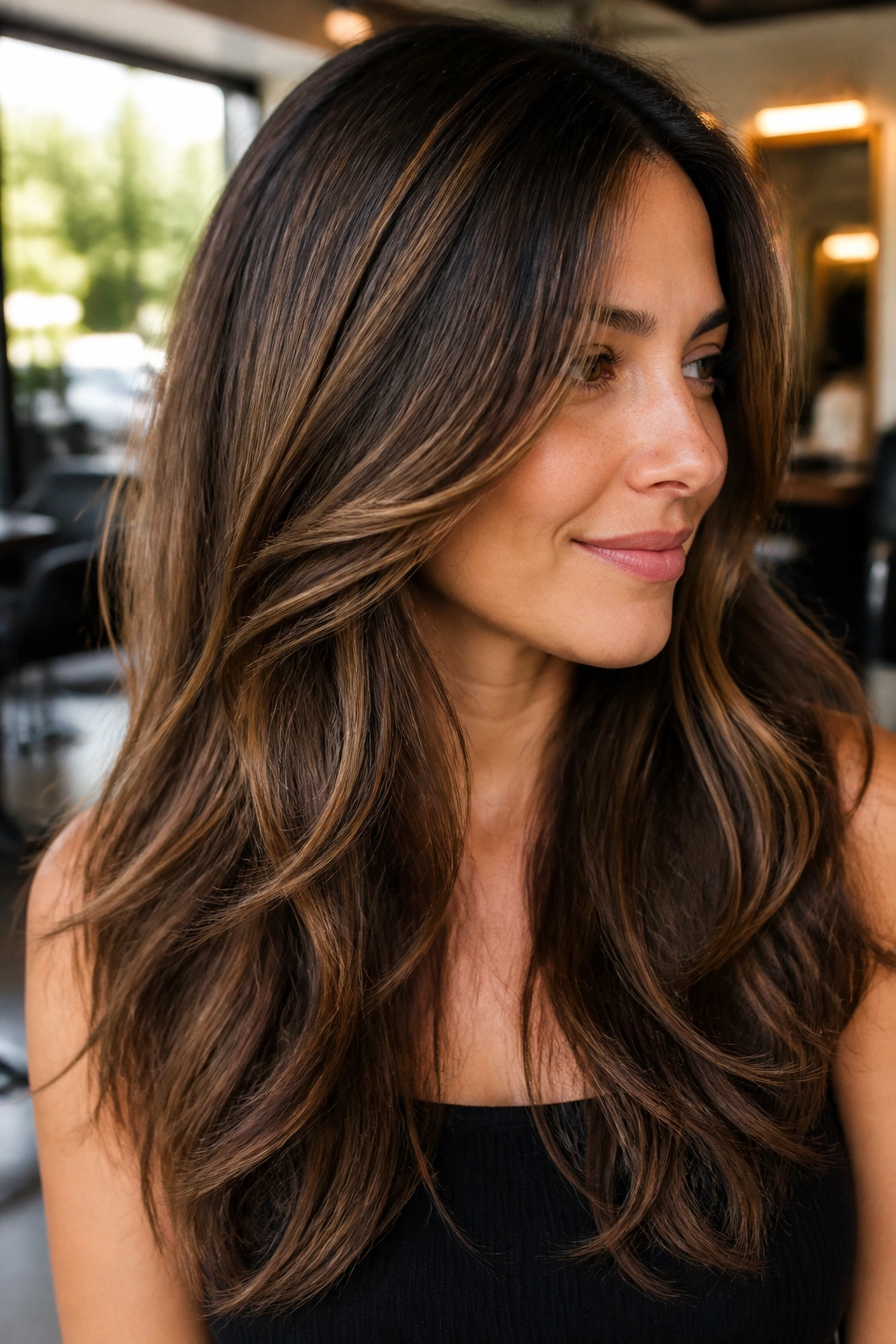
Cocoa lowlights are one of those choices that look simple in the chair and expensive on the street. They’re painted through long layers in a soft sweep, usually starting below the roots so the grow-out stays gentle. On brunette hair, cocoa deepens the shape of the cut and keeps the ends from feeling thin or stringy.
Why it works on layers
Long hair can swallow detail. Cocoa fixes that because it follows the movement of the haircut instead of sitting in one place. A colorist can hand-paint wider strokes through the mid-lengths, then taper the color lighter at the very ends so the layers still move.
A few useful notes:
- Ask for mid-length placement first, not all-over depth
- Keep the roots mostly untouched
- Use a neutral brown, not a red-brown, unless warmth is the goal
- Style with a loose bend so the lowlights catch the curve of the hair
Cocoa is one of my favorite choices for people who want the hair to look finished but not “done.” There’s a difference.
6. Mushroom Brown Lowlights for Ash Brunettes
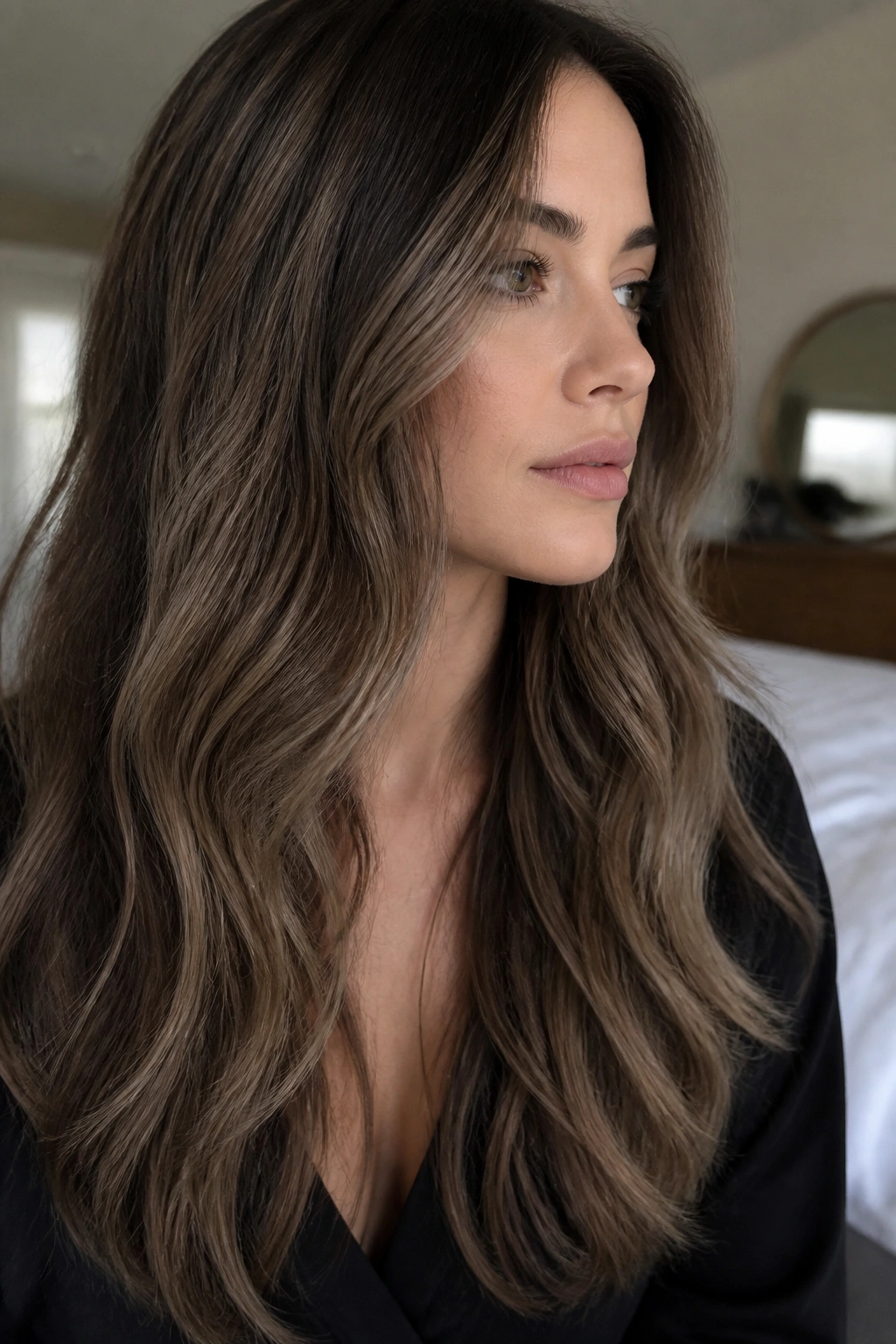
Mushroom brown is for brunettes who want the color to feel cool, earthy, and a little smoky. It has that muted brown-gray cast that keeps ash brunettes from looking too warm or brassy. Done well, it gives the hair a soft velvet look.
The shade is quieter than chocolate or chestnut. That’s why it works so well on people who hate obvious streaks. Instead of seeing clear dark pieces, you see a softer shift in tone, almost like the color got a shadow pass.
This is a smart move if your natural brunette base has a cooler cast and you’re tired of fighting warmth every time you wash. It can also help heavily highlighted hair look calmer again, especially when the blonde has gone a little yellow and the overall tone feels loud.
One caution: mushroom lowlights need a careful hand. Too much gray-brown can make the hair look flat. Keep them woven and broken up, not stacked in heavy panels.
7. Cinnamon Brown Threads for Warm Brunette Hair
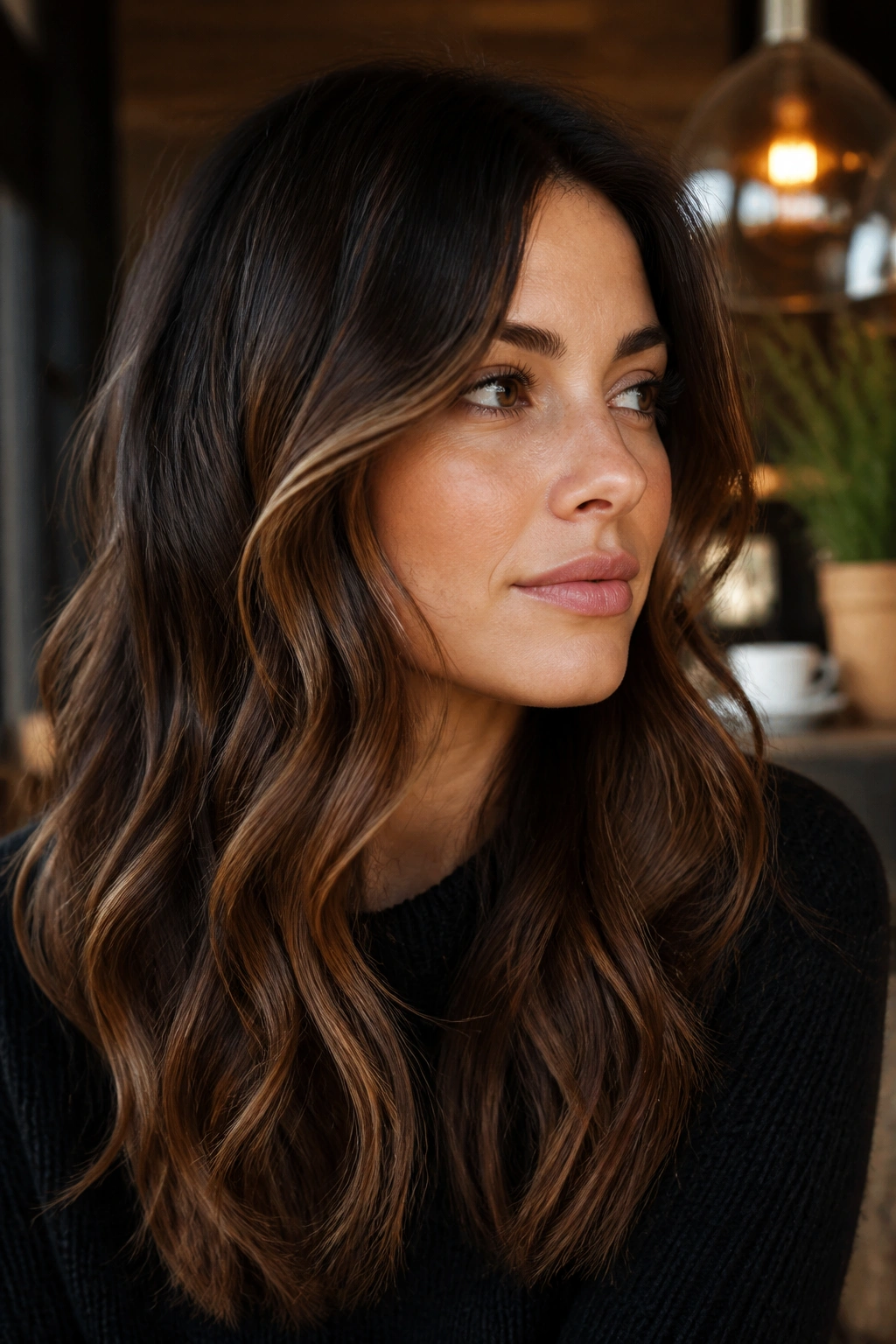
Do cinnamon lowlights make brunette hair look hotter? Yes, but in a controlled way. The shade brings a warm brown glow that can make medium and deep brunettes look richer, especially if the hair has gone a little dull from sun, heat styling, or too much ash toner.
Who should skip it
If your hair already pulls orange or red in sunlight, cinnamon might be too much. If your skin tone leans cool and you hate warmth near your face, same story. This shade is flattering on golden, olive, and neutral complexions, where a soft copper-brown note feels alive instead of brassy.
The best cinnamon lowlights are thin and broken up. Think narrow pieces through the mid-lengths, plus a few more around the front if you want the warmth to show near the cheekbones. Pair them with loose waves, and the color starts to move.
It’s a lively brunette look. Not fiery. Just awake.
8. Mocha Slice Lowlights for Thick Hair
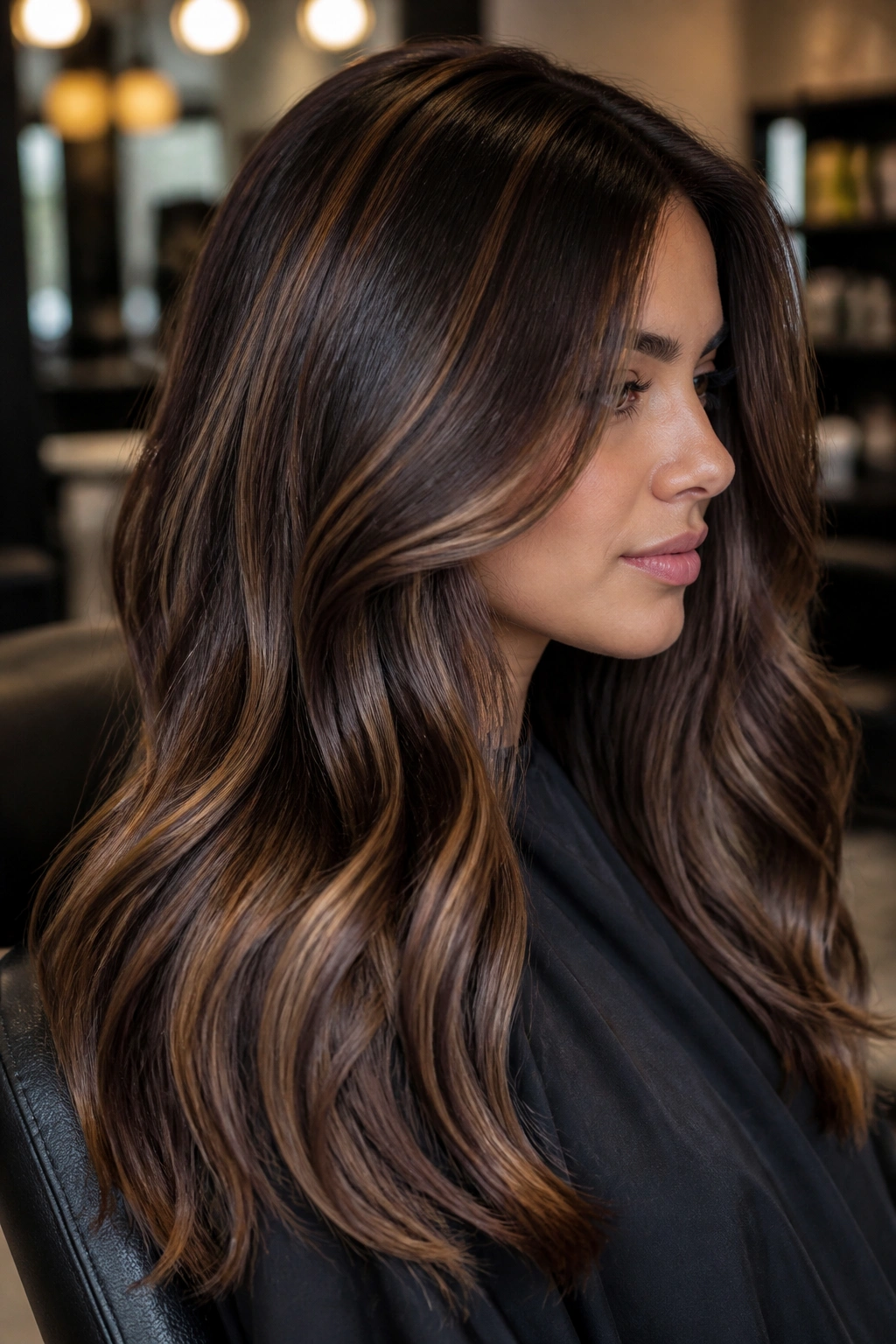
Unlike fine woven pieces, mocha slices use wider sections of color, which makes them a strong choice for thick brunette hair. Thick hair can handle more contrast without looking busy, and those broader slices help break up a heavy shape fast. The result is a darker, more sculpted brunette finish.
This is the kind of lowlight I like on blunt lobs, dense midi cuts, and hair that tends to puff out at the sides. Mocha pieces drop the visual weight just enough to make the cut look more intentional. The color itself should stay soft brown, not black-brown.
A clean parting helps here. So does working the slices a little deeper under the surface layer, where they show through movement rather than shouting from the top. You get the depth without losing shine.
If your hair is already coarse or broad in strand size, mocha slices can be a lot more flattering than tiny delicate pieces. They match the texture instead of fighting it.
9. Truffle Panel Lowlights for a Glossy Finish
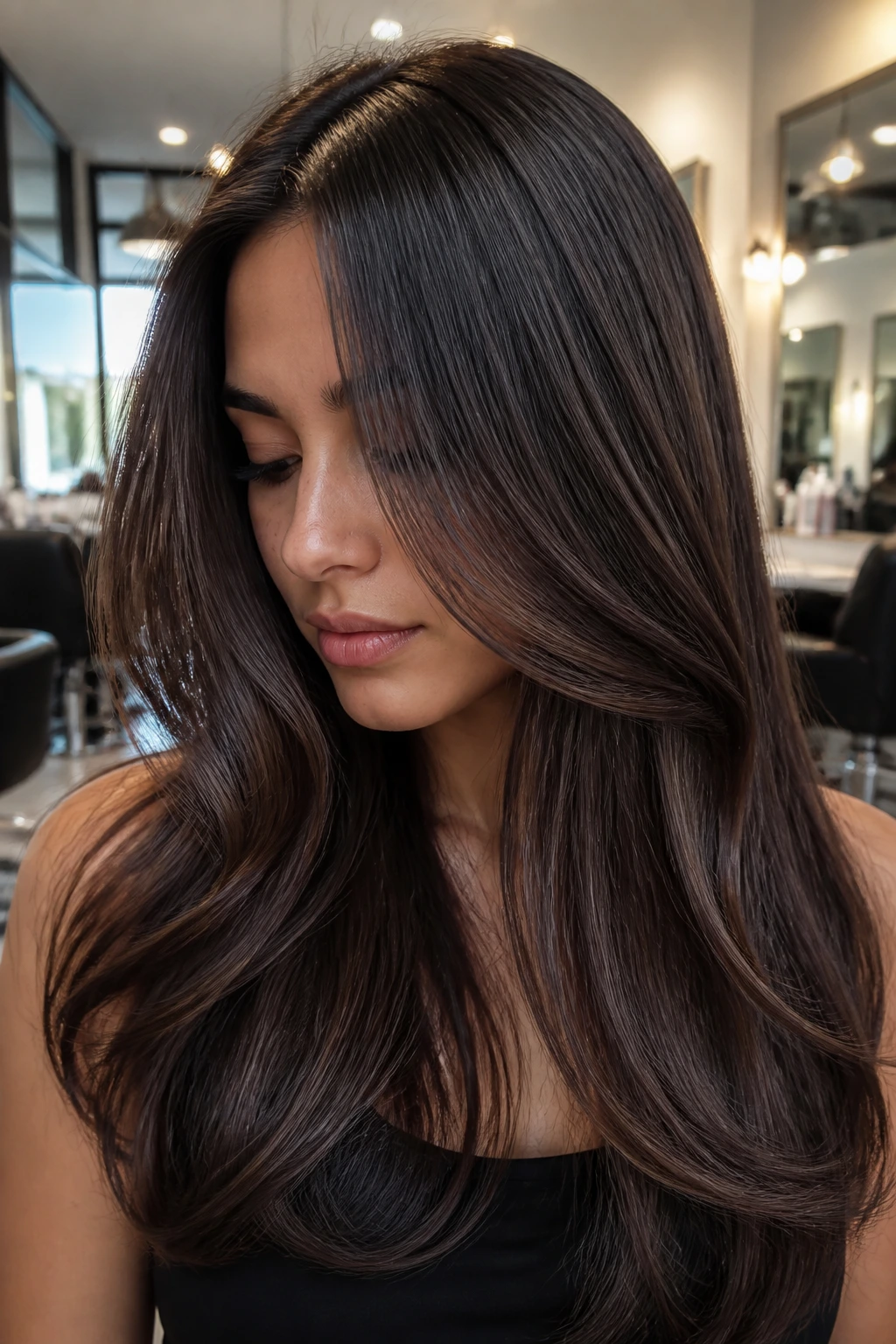
Truffle brown lowlights are darker, richer, and more neutral than milk chocolate. They’re a good pick when brunette hair needs polish more than drama. Think of them as the color equivalent of a clean, tailored jacket: they don’t ask for attention, but they sharpen everything around them.
The best truffle lowlights are placed in panels that follow the haircut’s natural fall. On wavy hair, they move in and out of view. On straight hair, they give a more sleek, reflective look. Either way, the finish depends on shine. Matte truffle can look heavy; glossy truffle looks expensive.
This shade is especially nice if your brunette base is between medium and dark brown and you want a cooler, deeper result. It can also help colored hair grow out more gracefully because the truffle tone blends old and new strands instead of creating a hard line.
A clear gloss on top makes it better. Not mandatory. Just better.
10. Maple-Brown Lowlights for Curly Brunette Hair
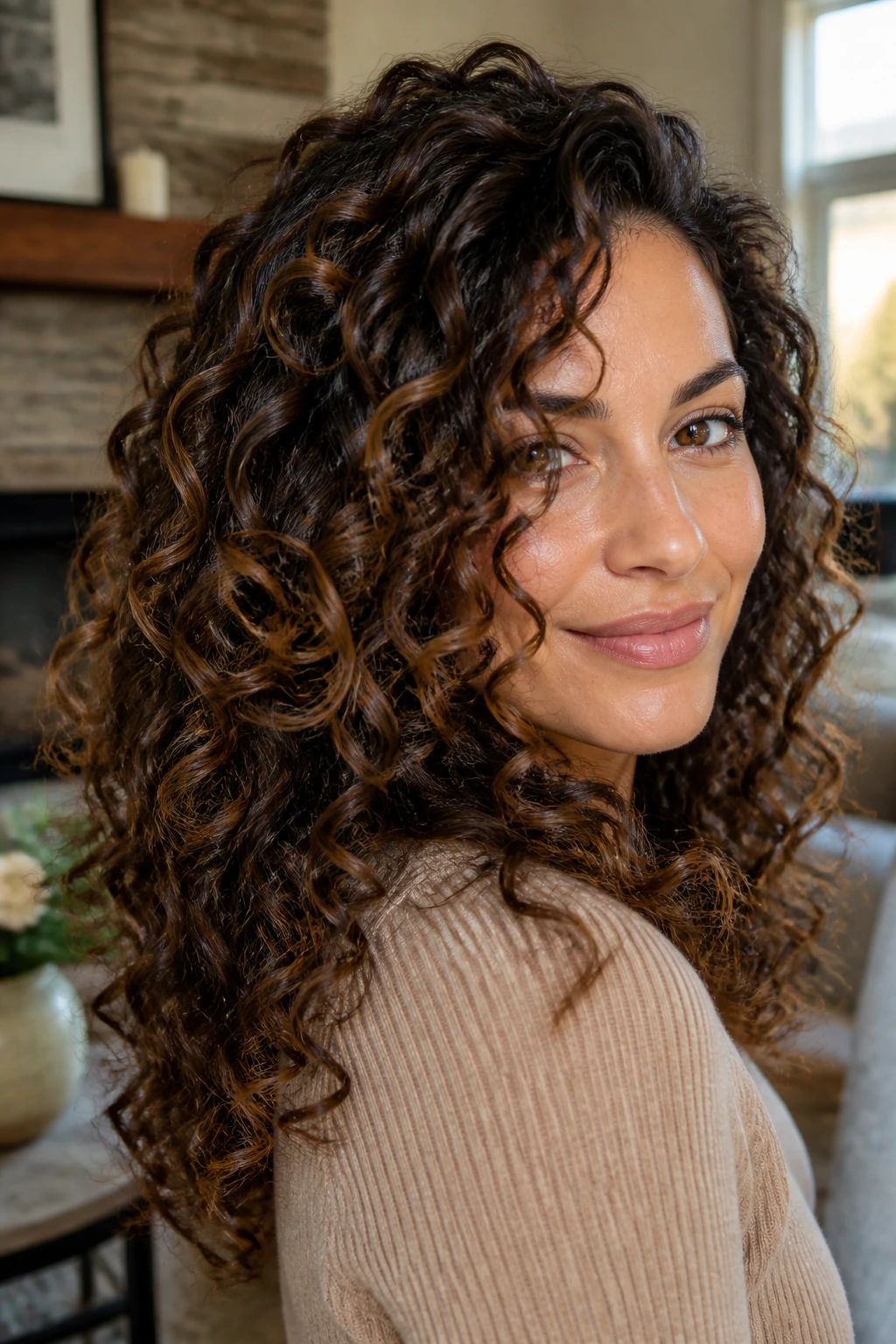
Curly hair is where brown lowlights can look especially good, because the curl pattern naturally breaks up the color and keeps it from reading flat. Maple-brown adds a warm, soft depth that lands beautifully on spirals, coils, and loose curls alike. It’s warm without turning copper-heavy.
The important part is placement. Put the lowlights under the top layer and through the mid-shaft, where the curl clumps start to separate. That keeps the hair looking dimensional from every angle, not just from the front. Curly hair already has movement built in; the color should follow that movement, not fight it.
A few placement notes
- Keep pieces curved, not straight
- Avoid packing the same area too densely
- Concentrate color where the hair expands at the sides
- Leave some lighter brown at the crown so the curl pattern still pops
Maple is a friendly shade for curls because it softens the profile of the hair. The ringlets look fuller, but not frizzy. That’s the sweet spot.
11. Mahogany Brown Lowlights for Black-Brown Hair
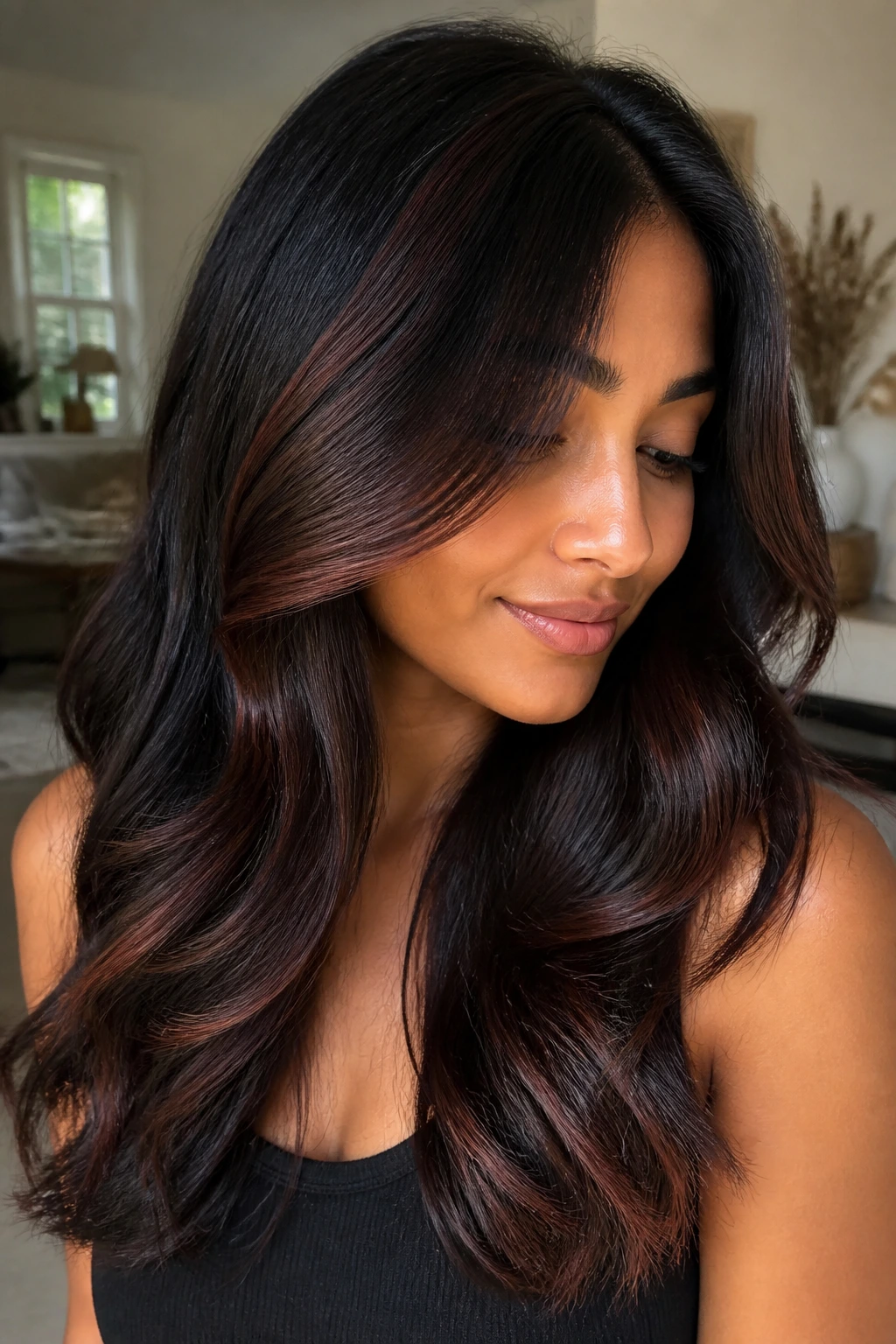
Mahogany lowlights are the answer when black-brown hair needs life but not blonde. They add a subtle red-brown note that shows up most in sunlight and under warm indoor light. On very deep brunette bases, that little warmth can keep the color from looking like one solid block.
The shade is richer than chestnut and darker than auburn. That means it gives black-brown hair a bit of warmth without turning the whole head red. Good placement matters here, because mahogany can pick up fast. A few ribbons at the mid-lengths and ends are usually enough.
I’d reach for this if your hair feels severe or too dark against your skin tone. Mahogany softens that edge. It also looks lovely on layered cuts because the color slips in and out of the movement rather than sitting on top of it.
If you want a brunette color that feels a little moody but still wearable, this one lands in the right place.
12. Hazelnut Lowlights for Shoulder-Length Cuts
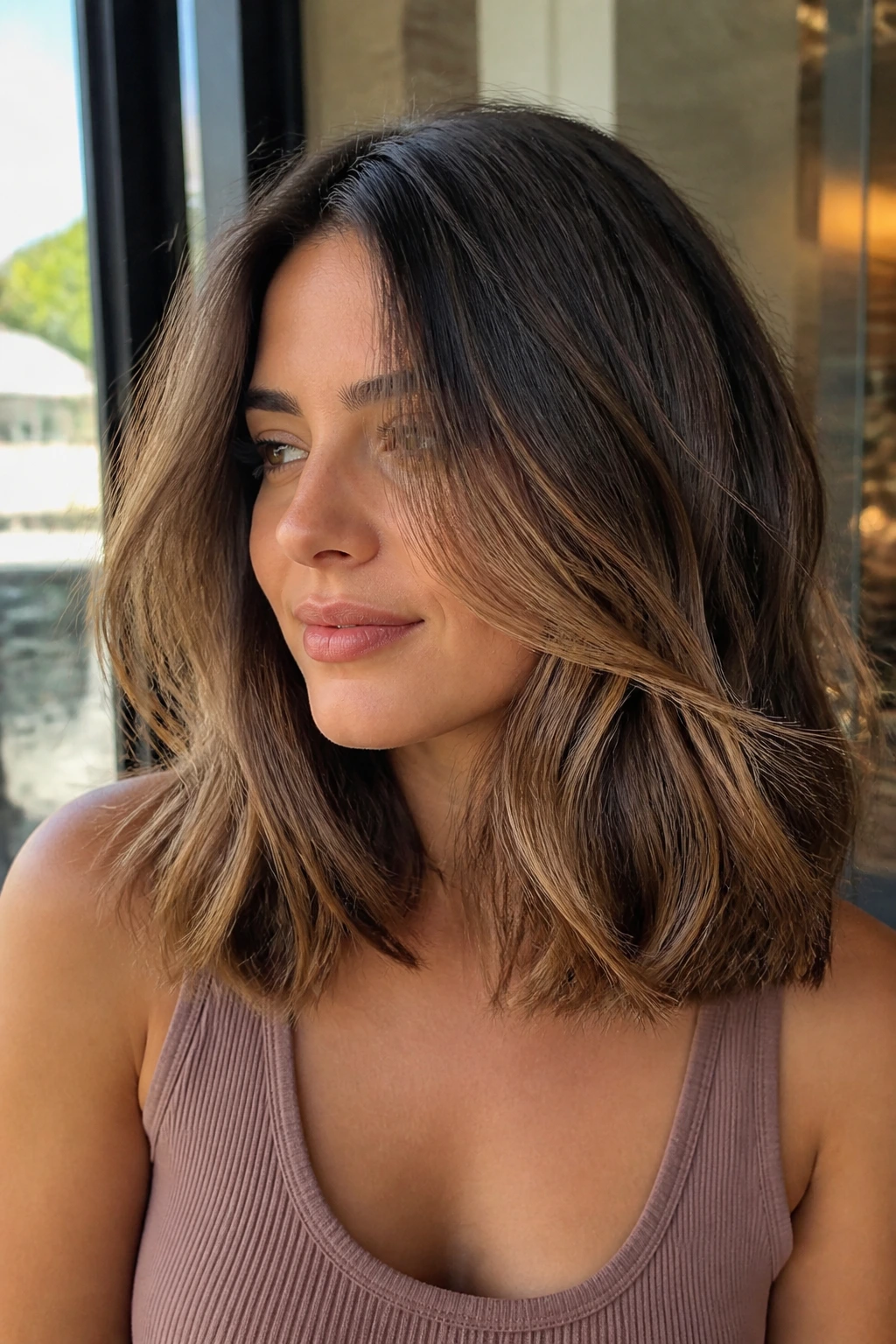
Shoulder-length hair can look blunt in a hurry, especially if the ends are thick and the color is one-note. Hazelnut lowlights solve that by breaking up the body of the haircut with a warm, nutty brown that feels lighter in mood even though it’s still a lowlight.
Why hazelnut? Because it sits between golden brown and neutral brown, which keeps the cut from feeling harsh. It softens the line where the hair hits the shoulders and gives the style a little swing when you move. That matters more than people think.
A good salon note is to keep the lowlights concentrated in the lower half of the hair and around the outer layers. If they sit too high, shoulder-length hair can lose its shape. If they sit too low, they disappear.
This is a good everyday brunette look. It doesn’t shout. It just makes the haircut feel more alive.
13. Smoky Taupe-Brown Lowlights for Ash Brunettes
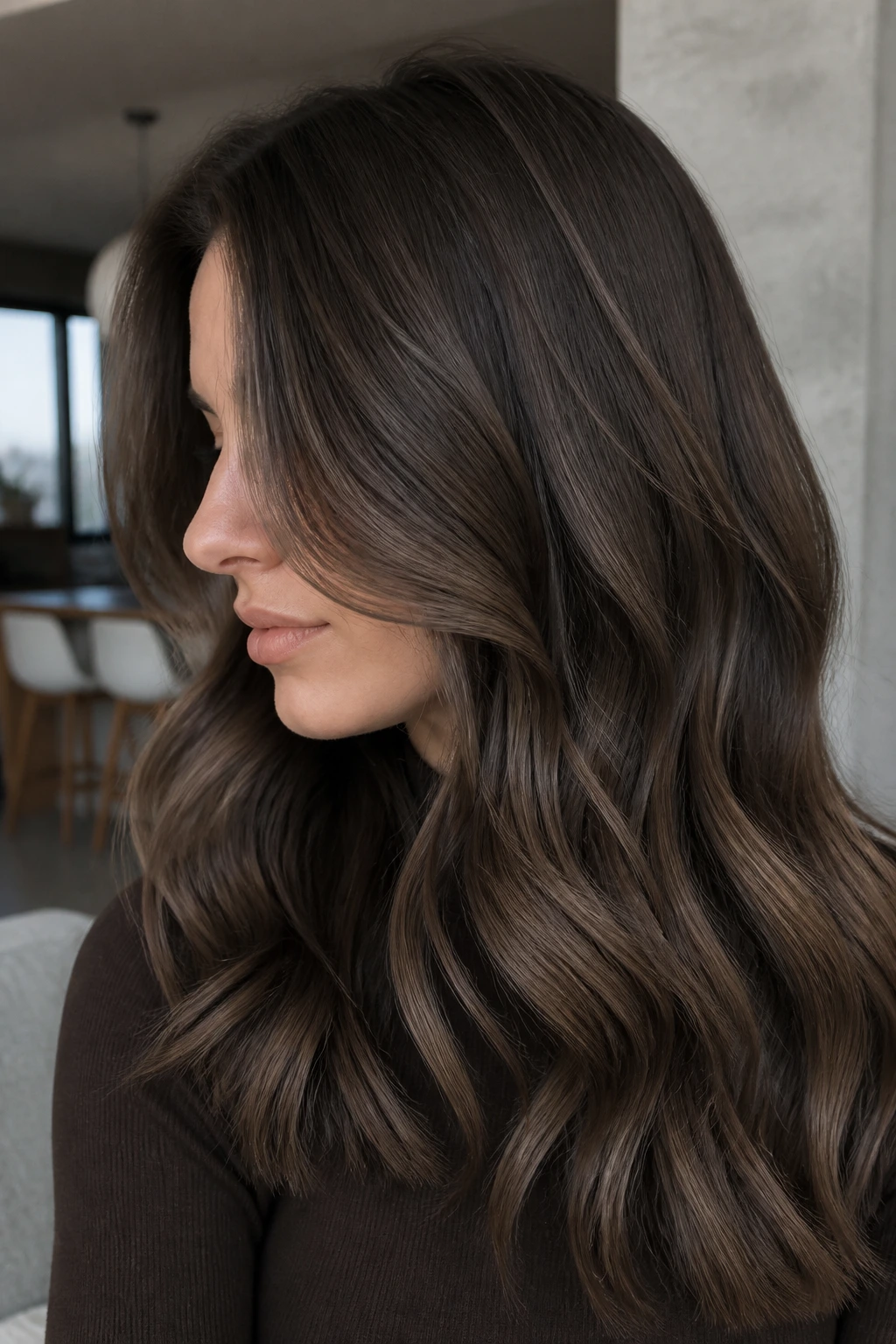
Smoky taupe-brown is a little cooler than walnut and a touch softer than mushroom. It’s one of the best choices if your brunette base already leans ash and you want the color to stay controlled instead of warming up every time you see sun. The tone is dusty, muted, and clean.
Unlike warmer lowlights, smoky taupe doesn’t compete with silver jewelry, cool makeup, or a naturally cool skin tone. That makes it a quiet favorite for people who hate seeing red or orange in their brown hair. It gives the strands shape without shifting the whole color family.
This shade works well on straighter hair, where the tone can be read clearly, but it also suits soft waves because the slightly smoky cast follows the bends in the hair. Ask for thin, scattered pieces rather than big blocks. Taupe can look muddy if it’s packed too tightly.
If walnut feels too brown and mushroom feels too gray, taupe sits in the middle.
14. Auburn-Brown Lowlights at the Ends
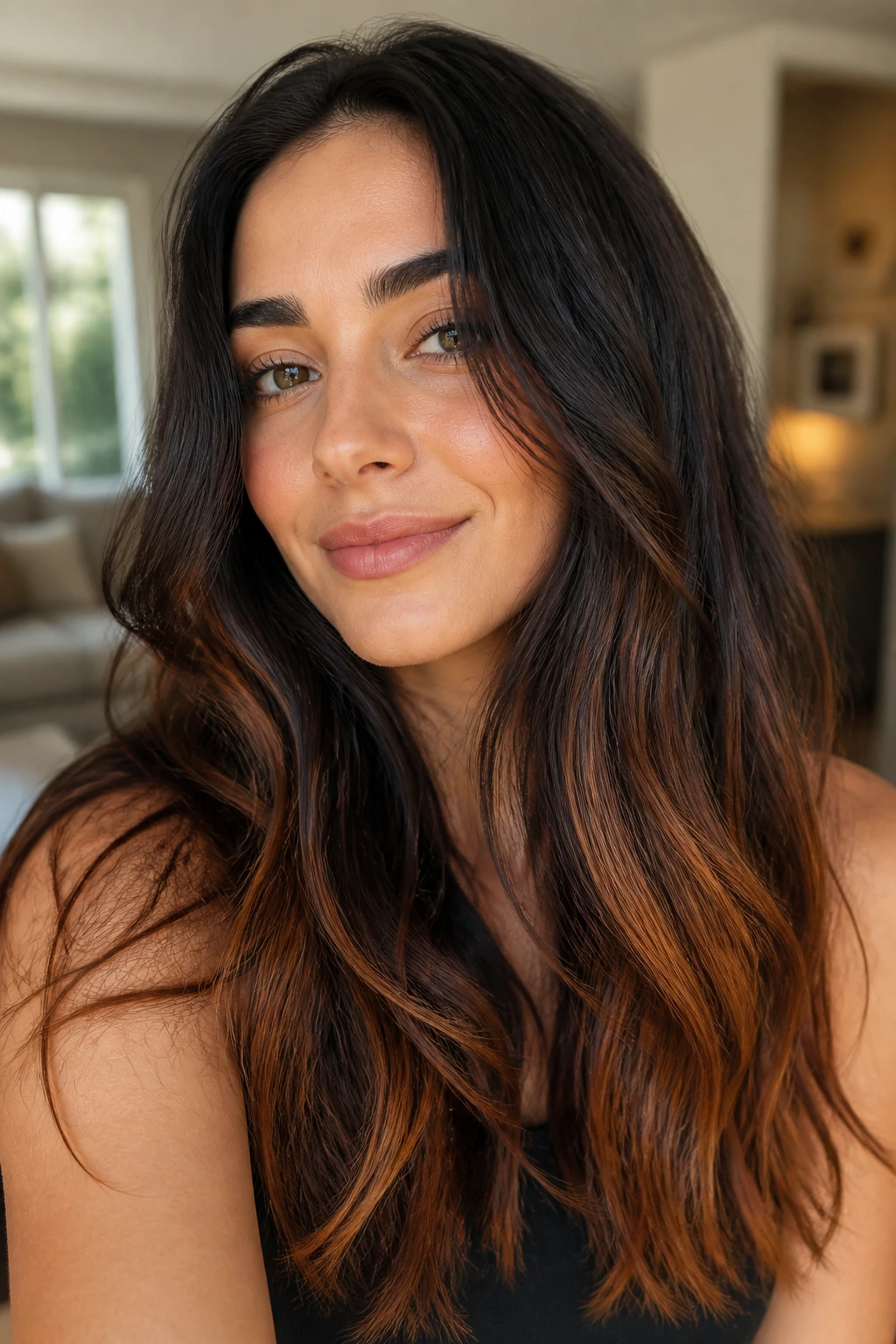
Here’s the practical move for brunette hair that looks tired at the bottom: put the lowlights only through the last few inches. Auburn-brown ends give older lengths a richer finish without forcing a full-color refresh from root to tip. That’s a nice fix when you want the hair to feel newly cut even if you’re keeping the length.
The auburn note should stay brown first, red second. A tiny hit of warmth at the ends can make the whole style feel less stale, especially on long hair that has seen a lot of heat styling. Too much red and you lose the brunette feel. Too little and the effect disappears.
This works best when the ends are already a little lighter than the mids. That way the lowlights settle into the faded area and give the cut more weight. It’s not a root solution. It’s a length solution.
Sometimes the back of the hair just needs a reset. This is that.
15. Hairline Contour Lowlights for Face Shape
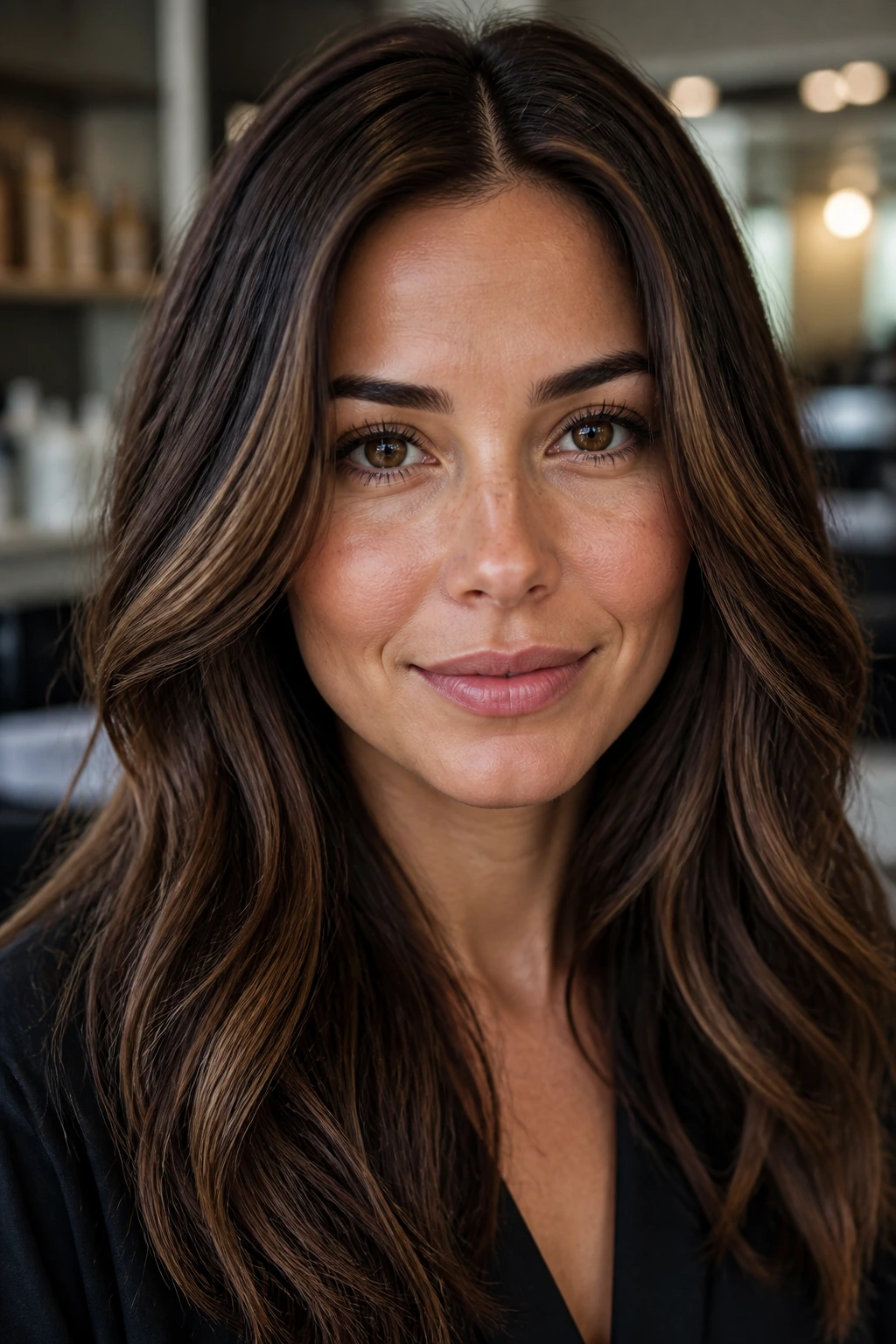
Hairline contour lowlights are underrated. Put darker brown pieces right where the hair meets the forehead, temples, and sideburn area, and suddenly the face looks framed in a more deliberate way. The effect is subtle, but the change in balance is real.
This is especially useful if your brunette color is very uniform and the front starts blending into your skin tone. A few darker strands near the hairline can create contrast without stealing attention from your features. It also makes ponytails, half-up styles, and tucked-behind-the-ear looks feel more finished.
Why placement matters here
- Keep the pieces narrow near the temples
- Go a touch wider near the jaw if the haircut needs shape
- Use a shade only one to two levels deeper than your base
- Avoid overloading the front edge, or it can look blocky
Hairline contour lowlights are one of those choices you only notice once they’re missing. Then the front of the hair starts to look blank again.
16. Peekaboo Lowlights Under the Top Layer
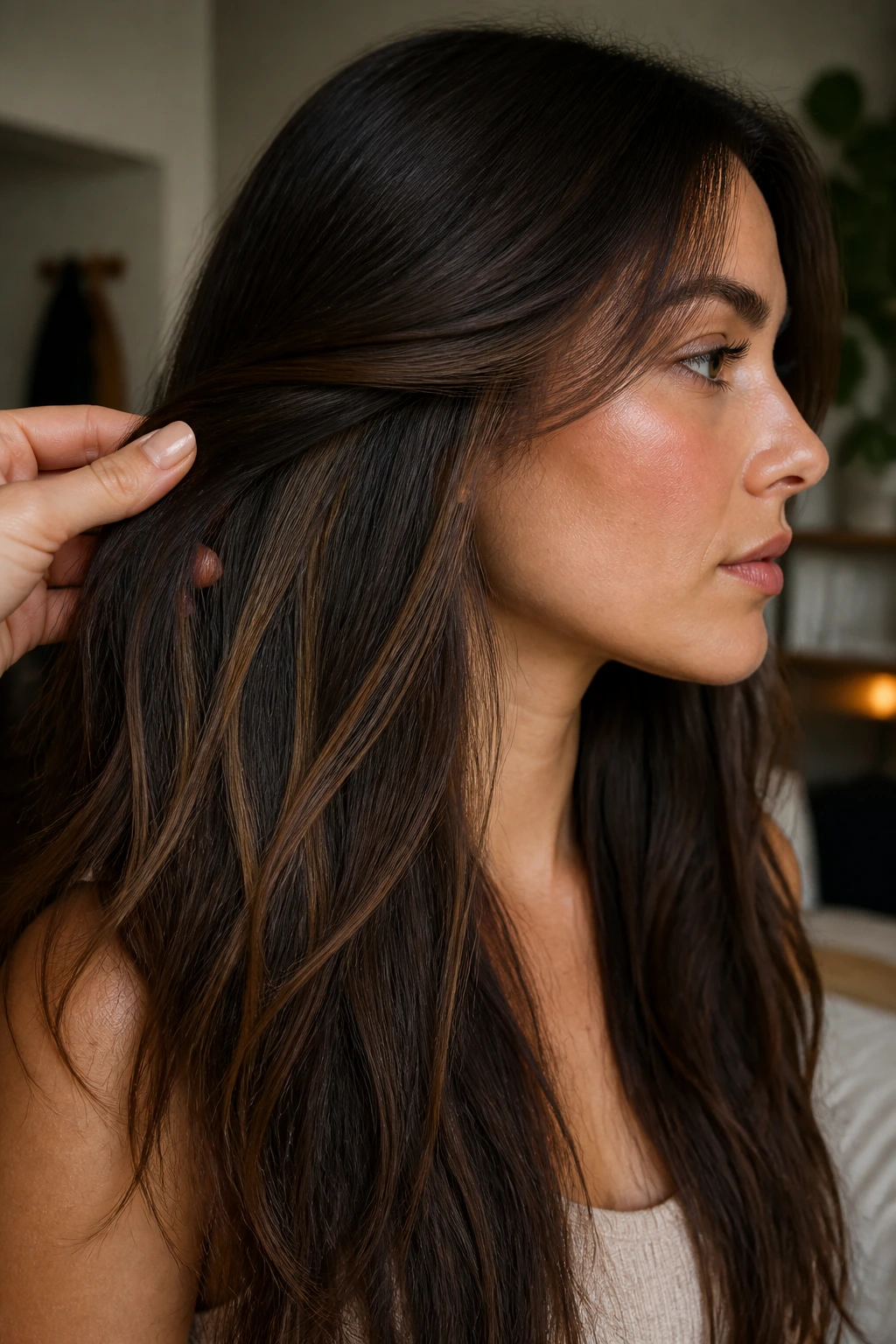
Peekaboo lowlights are for people who want depth but don’t want the effect to scream from every angle. The darker pieces sit under the top layer, so they show when the hair moves, when you tuck it behind your ears, or when you twist it into a bun. Quiet, but not boring.
They’re especially good on brunettes who work in conservative settings or prefer a cleaner top layer with a little hidden contrast underneath. You get the benefit of extra depth without changing the look of the hair when it’s worn straight and smooth.
The color itself can lean chocolate, walnut, or espresso, depending on how much contrast you want. The point is not the exact shade. The point is where it lives.
If you’ve ever liked the idea of dimension but hated seeing obvious streaks from across the room, peekaboo lowlights are the neatest answer. They’re also easier to grow out than front-heavy color, which is a nice bonus.
17. Chunky Brown Ribbons for Dense Brunette Hair
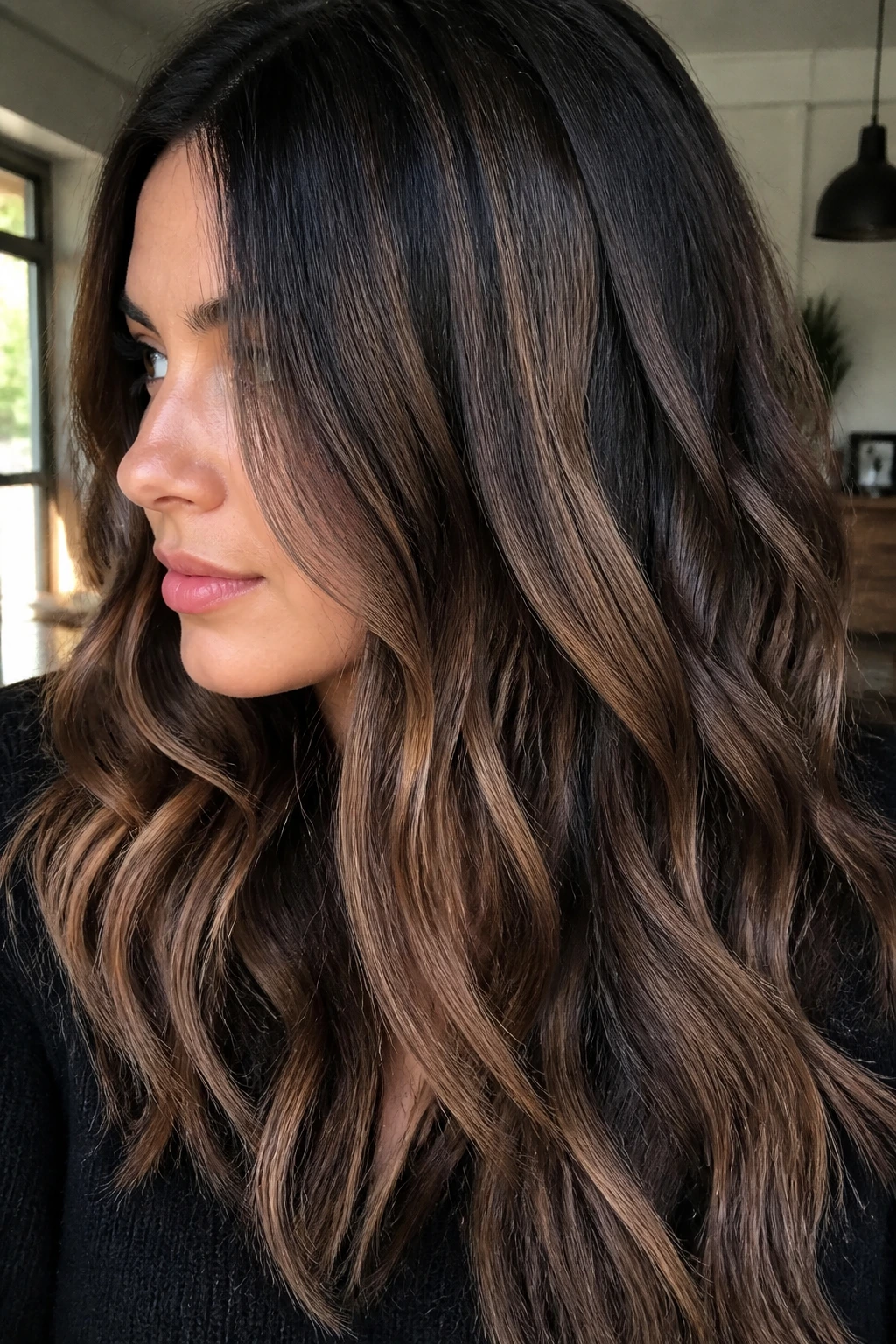
Chunky brown ribbons are the opposite of whisper-thin baby pieces. They’re wider, more visible, and they work beautifully on dense brunette hair that can handle a stronger pattern. On a thick mane, tiny pieces sometimes disappear. Chunky ribbons do not.
This look has a bit of a throwback feel, but that’s not a bad thing. It creates a stronger contrast inside the brunette base and keeps very full hair from looking like one giant mass. The color blocks should still be brown, not blond, so the overall feel stays grounded.
The best place for chunky ribbons is through the mid-lengths and around the underside, where they show in movement. If you put them too evenly across the head, the look gets heavy. A few deliberate placements give you more shape.
This is a good one for people who like their hair to look bold without leaving brunette territory. It’s not subtle. It doesn’t need to be.
18. Micro Lowlights for Fine Hair
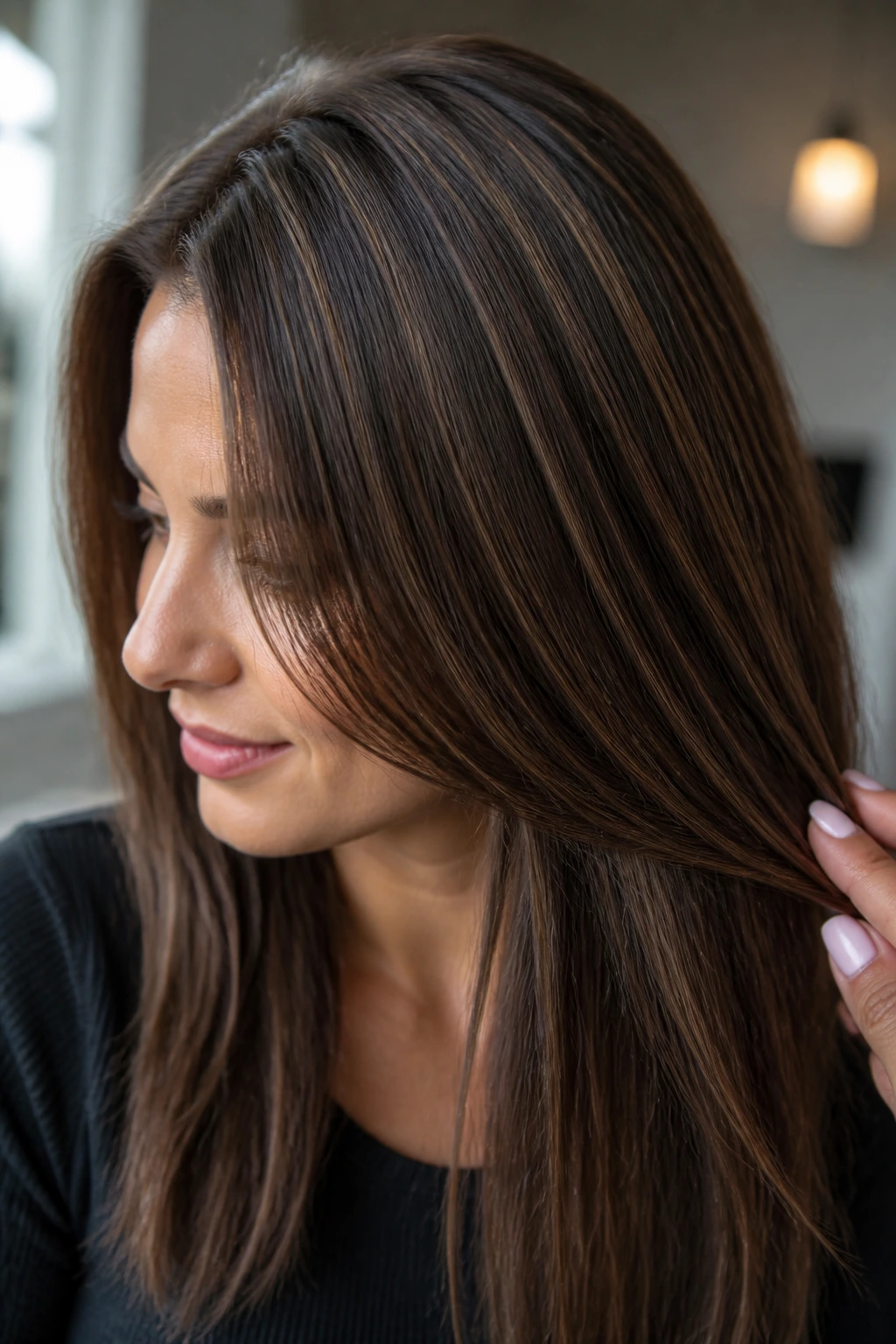
Why do micro lowlights work so well on fine brunette hair? Because they build the look of density without making the hair look striped. Tiny, closely spaced pieces add depth in a way that feels soft and natural, which is exactly what fine hair needs. Heavy panels can swallow it whole.
How to ask for them
Tell your colorist you want very fine lowlights woven sparingly through the crown, sides, and ends. A shade one level deeper than your base is often enough. You’re aiming for texture inside the color, not a dramatic darkening.
- Use narrow sections, almost babylight size
- Keep the spacing airy so the hair still looks light
- Focus on the areas that go flat first, usually the crown and part line
- Finish with a gloss so the strands reflect light instead of looking dull
Micro lowlights are sneaky in the best way. They make the hair look more substantial from a distance, but close up they still feel soft. That balance is hard to fake with one solid shade.
19. Face-Framing Mocha Panels for Shorter Cuts
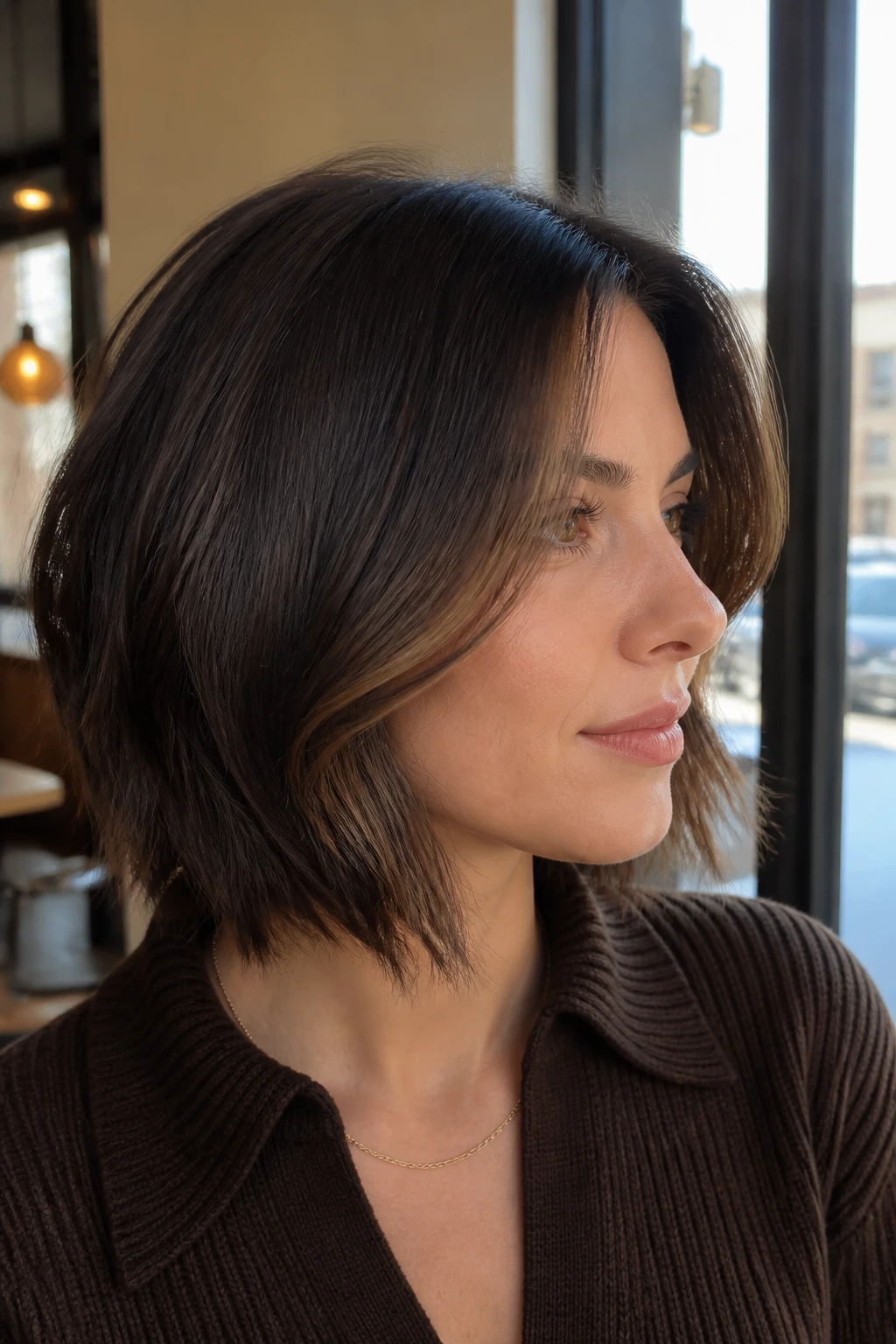
Mocha panels around the face can do more for a short brunette cut than a full head of color ever will. They create a clear frame, which helps bobs, lobs, and collarbone cuts look more structured right away. The mocha tone is deep enough to anchor the style but soft enough to stay wearable.
Unlike all-over lowlights, face-framing panels make the front of the haircut carry the whole look. That’s useful if the back is already full or if you wear your hair one way most of the time. A few broader pieces near the cheekbones and jaw can sharpen the shape of the cut.
This choice suits people who wear glasses, because the color creates a little contrast without fighting the frames. It also works nicely if you style your hair with a side part, since the darker pieces land where the eye naturally starts.
Shorter cuts need clean lines. Mocha panels give them.
20. Glossy Deep-Brown Lowlights for an Easy Grow-Out
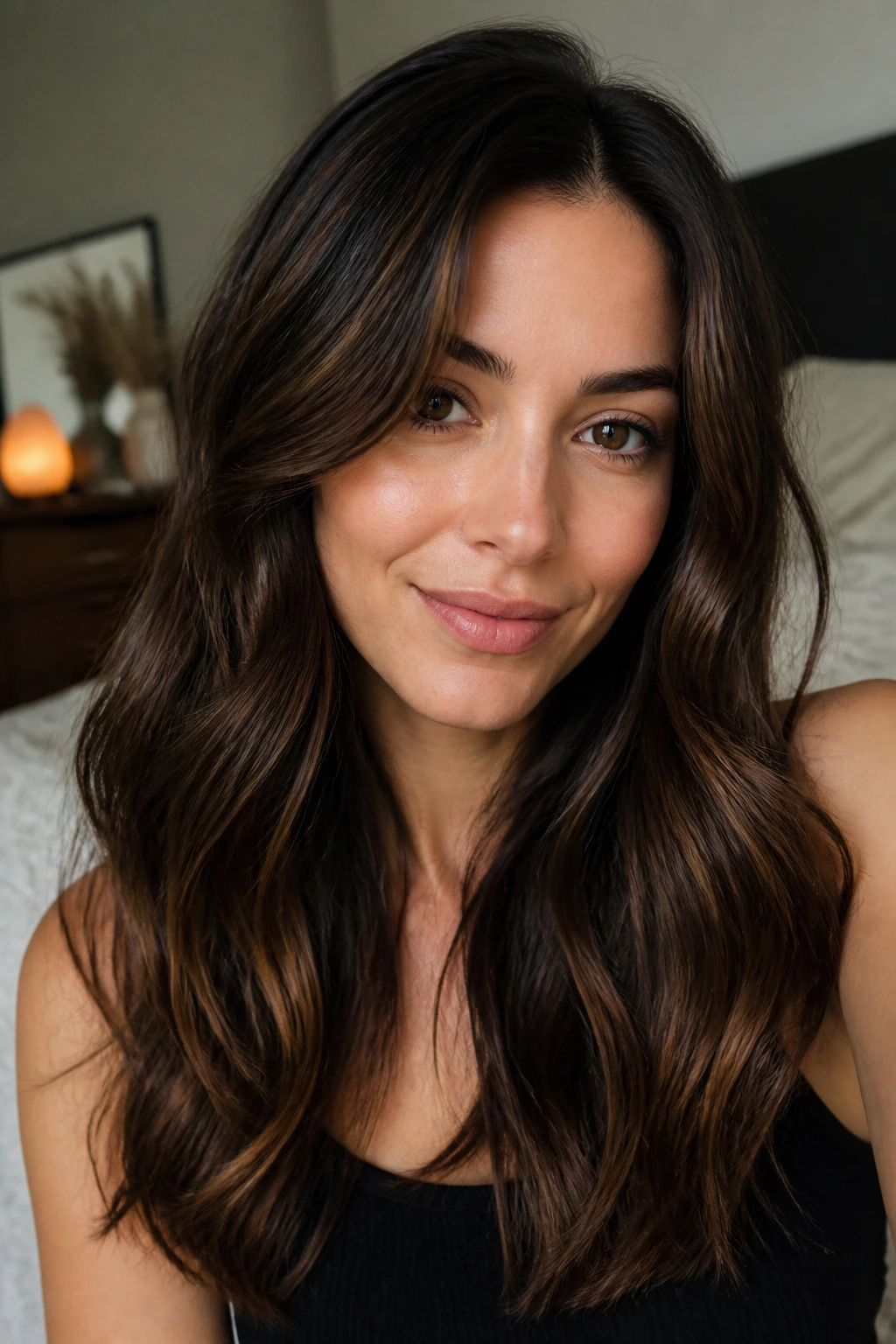
Glossy deep-brown lowlights are the polished, low-drama finish for brunette hair that needs a reset. The color sits below the base just enough to give the hair body, but not so far below that the grow-out turns harsh. That makes this one of the easiest brunette refreshes to live with for months, not days.
The real win here is tone control. A deep brown gloss over the lowlights keeps the hair reflective and soft, which matters if your ends tend to look dry or your brunette shade has gone a little faded. Ask for a neutral or slightly cool deep brown, then keep the pieces spread through the mid-lengths rather than clustering them at the top.
This look is a good final answer when you want brunette hair to feel richer, darker, and smoother without crossing into near-black territory. It also plays well with straight styles, big waves, and even air-dried bends.
If you want one brown lowlight idea that stays elegant across different cuts, this is the safest bet.
