



Black highlights for round faces work best when they act like structure, not decoration.
A few dark ribbons can sharpen the cheek area, stretch the eye downward, and make a soft jawline look more deliberate. The catch is placement. Put the darkest pieces too high or too wide, and the face reads fuller; keep them narrow, vertical, and a little lower, and the whole haircut suddenly feels longer.
I’ve always liked black accents more than people expect, especially on brown, caramel, or brunette bases. A deep black panel near the temple can look sleek and expensive; a heavy block right over the cheek can look boxy. That difference is tiny on paper and obvious in the mirror. The haircut matters too — a layered bob, a lob, a shag, even a pixie can all handle black dimension if the color follows the shape of the cut instead of fighting it.
Some of the looks below are soft and barely there. Others are bolder, with chunkier contrast or a sharper money piece. The useful thread is the same: keep the face slimmer where it’s widest, build movement where the hair needs lift, and let the black outline the cut instead of swallowing everything in sight.
1. Soft Face-Framing Black Panels
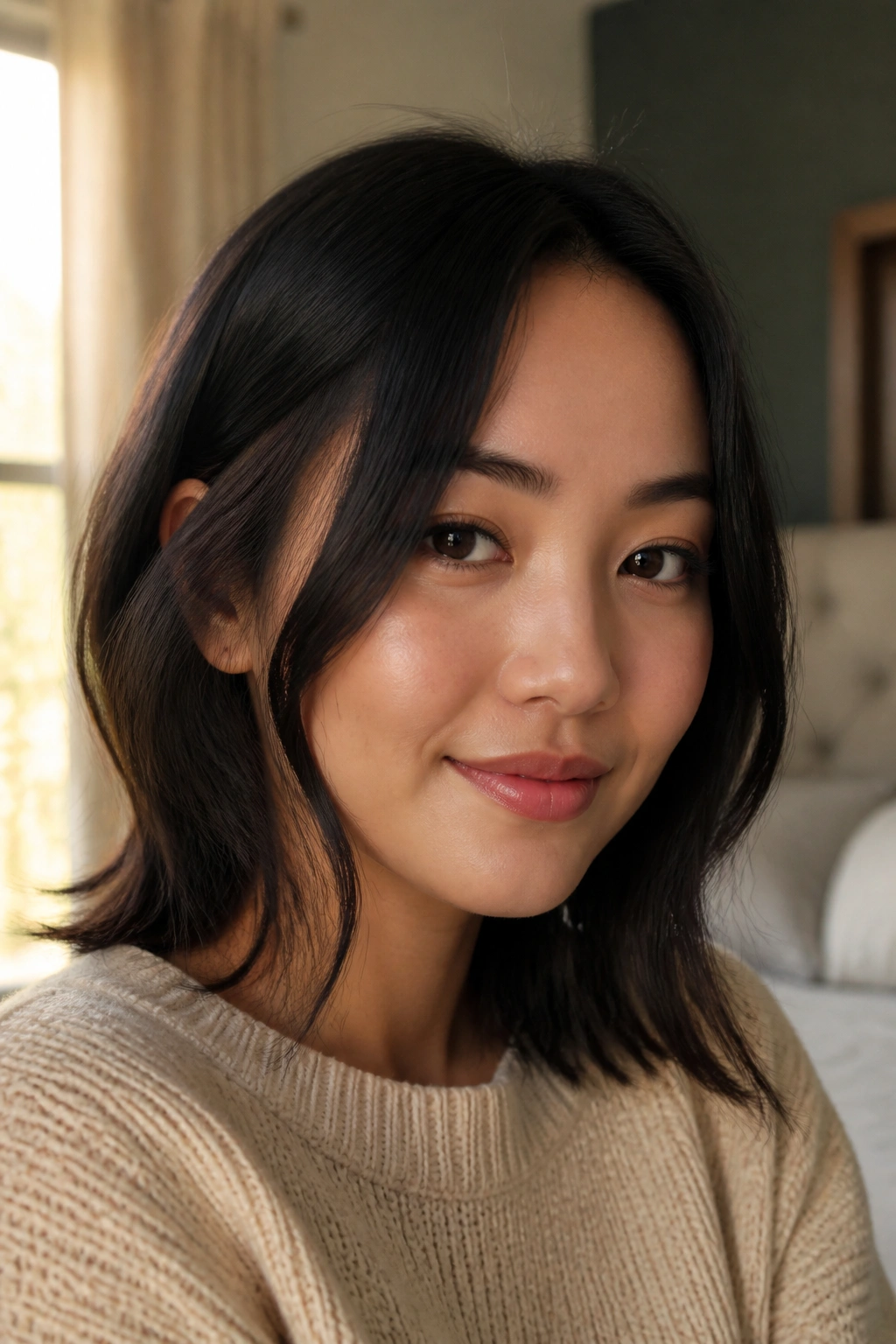
A soft face frame is the easiest black highlight idea to wear on a round face because it gives you shape without making the front look heavy. The panels should skim the temples, then taper below the cheekbone. If they stop right at the widest part of the face, the effect turns blunt. That’s the bit people miss.
Why It Works
A face-framing panel creates two long vertical lines near the front of the hair. That pulls the eye down, which helps a round face look a little longer and cleaner through the middle.
Ask for panels that are about 1/2 inch wide at the front and softly feathered through the mid-lengths. The goal is not a stripe. It’s a shadow.
- Best on shoulder-length cuts and longer bobs
- Looks strongest with a side part or soft off-center part
- Works well when the front pieces start near the temple and slide past the jaw
- Easier to wear than a full money piece
Pro tip: Keep the front panel softer than the rest of the black pieces. If the front is too dense, it steals the whole cut.
2. Subtle Black Babylights Through the Crown
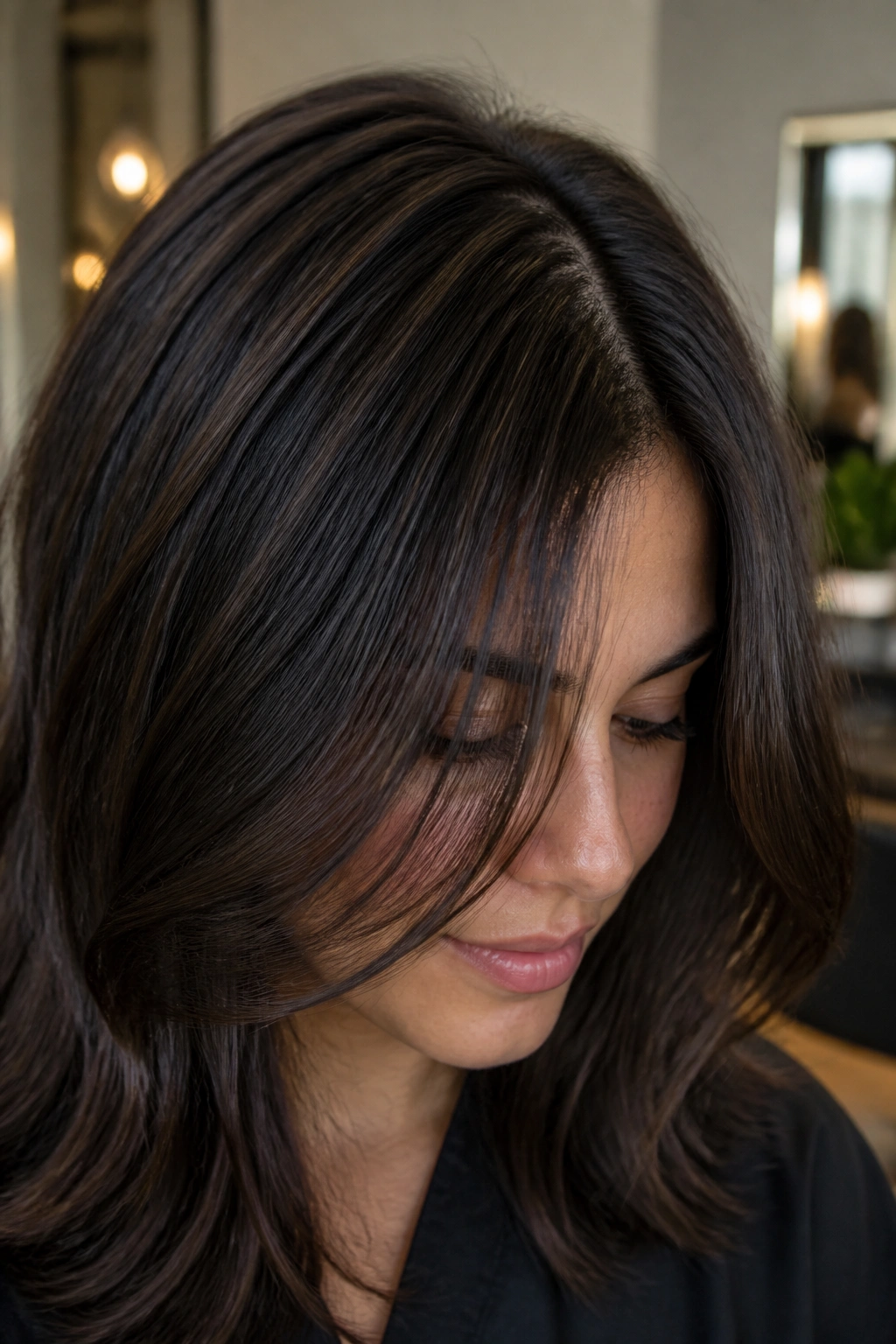
A tiny amount of black at the crown can do more for a round face than a big dramatic streak ever will.
Babylights are thin. That’s the point. When they’re woven through the top layers, they create little strips of shadow that make the hair look taller and less wide. On a round face, that extra height at the crown matters because it shifts attention upward before the eye comes back down.
The trick is to keep the placement airy. Think scattered micro-weaves, not dense foils. If the crown is packed with black, the hair can look flat and heavy. If it’s spaced out, the texture stays soft and the head shape looks a touch longer.
I like this look on brunettes who want dimension but hate obvious color lines. It also plays nicely with layered cuts, since the movement in the hair keeps the dark pieces from feeling painted on. The finish should read as depth, not blocks.
3. Deep Black Money Piece Around the Cheekbones
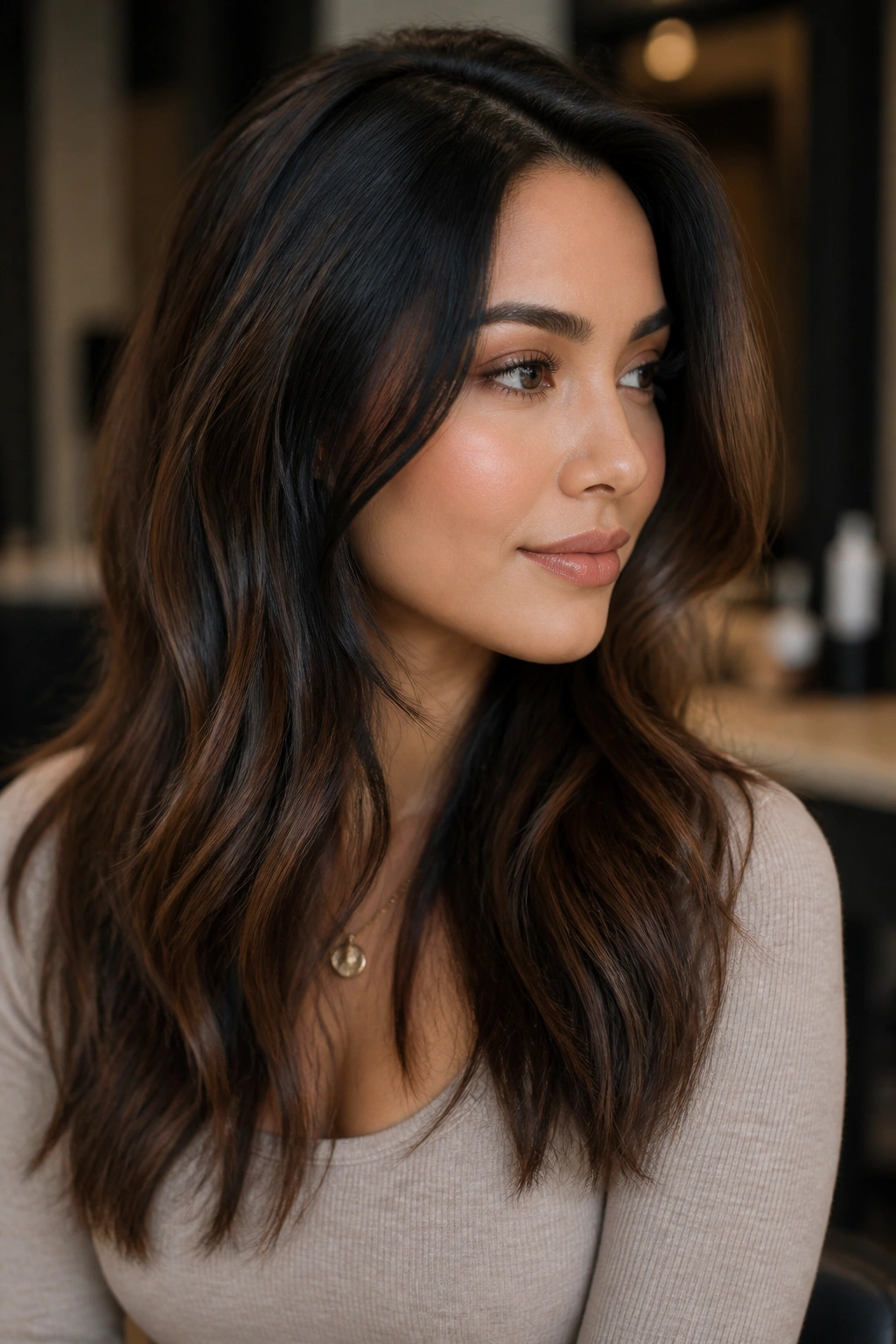
Can a money piece work on a round face? Absolutely — if it sits in the right place and doesn’t swamp the cheeks.
The best version starts a little higher at the temple and slides down in a narrow, controlled shape. You want the black to frame the face, not squeeze it. If the light pieces sit too close to the cheek fullest point, they can make the face look wider. Shift them lower and slimmer, and the line gets cleaner fast.
How to Wear It
Ask your colorist to keep the money piece soft at the root and feathered at the edges. Hard edges around the face are where this style goes wrong. A little melt is your friend.
- Works best with a side part or loose center part
- Strong on layered lobs and collarbone cuts
- Better when the front is blended, not blunt
- Looks sharper with glossy styling, like a smooth blowout or soft bend
One thing to watch: If your face is already very full through the cheeks, keep the money piece narrower than you think you need. Small is usually smarter here.
4. Glossy Black Lowlights on a Brown Base
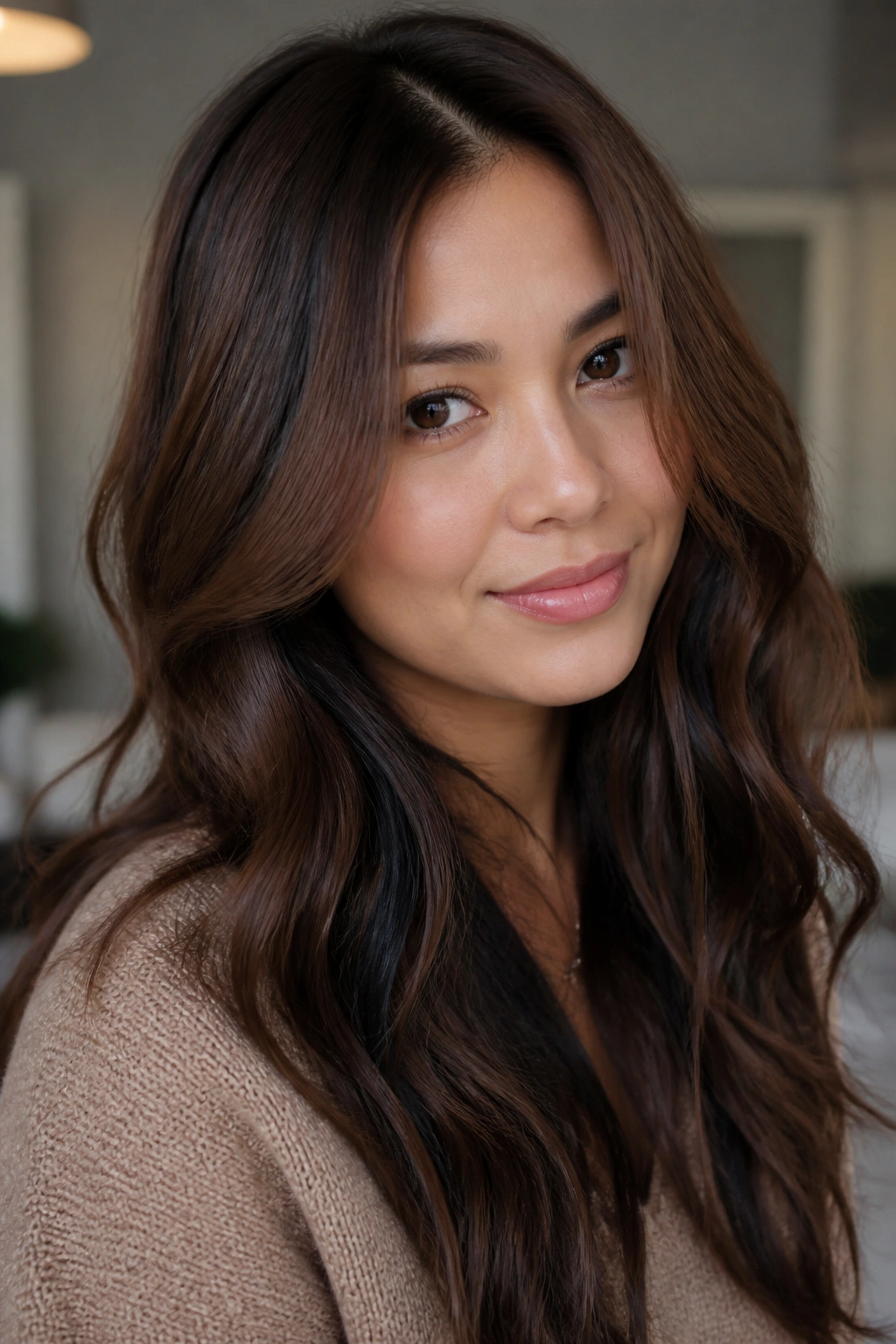
A chestnut or mocha base can feel round and flat when all the color lives in the same range. Black lowlights fix that by carving out darker lanes under the surface.
This is one of my favorite choices for someone who wants contrast but doesn’t want the front of the hair to scream. The lowlights sit under the top layer, so they don’t widen the face. They add depth instead, which makes the cut look more layered and the jawline feel a little more defined.
Placement Notes
- Keep the darkest pieces under the surface, not on top
- Use them through the mid-lengths and lower sides
- Leave the very front softer so the face doesn’t close in
- Pair with a loose wave or bend to show the dimension
The best part is the grow-out. Because the black is tucked into the hair, it tends to soften nicely as it grows. That makes it a good low-drama choice if you want shape without constant upkeep.
5. Smoky Black Balayage on Medium Hair
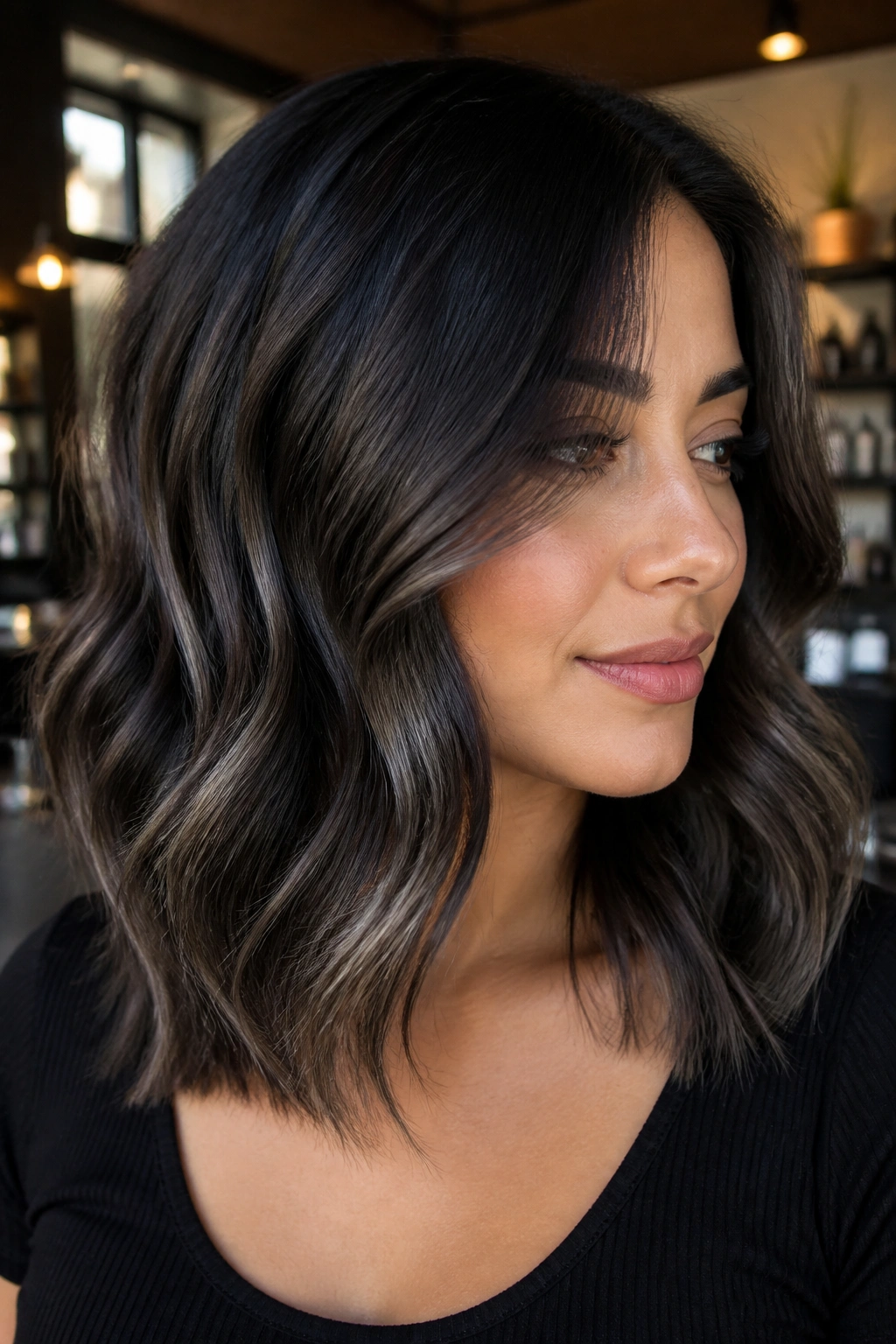
Smoky black balayage is for the person who wants depth that moves. Not a stripe. Not a helmet. Movement.
On medium-length hair, the hand-painted black pieces can start below the cheekbone and drift into the ends, which is exactly where a round face needs help. The eye sees length first, then texture. That order matters. If the black begins too high, the face can feel boxed in. If it starts lower, the style reads softer and longer.
What I like here is the blurred edge. Balayage lets the dark bits melt into the base instead of sitting on top like marks made by a marker. The finish is more forgiving, too. When the hair bends or flips, the black shows in different places, which keeps the cut from looking stiff.
A shoulder-skimming wave makes this even better. Straight hair can wear it, sure, but a little curve through the ends gives the black dimension something to cling to.
6. Feathered Black Highlights on a Layered Lob
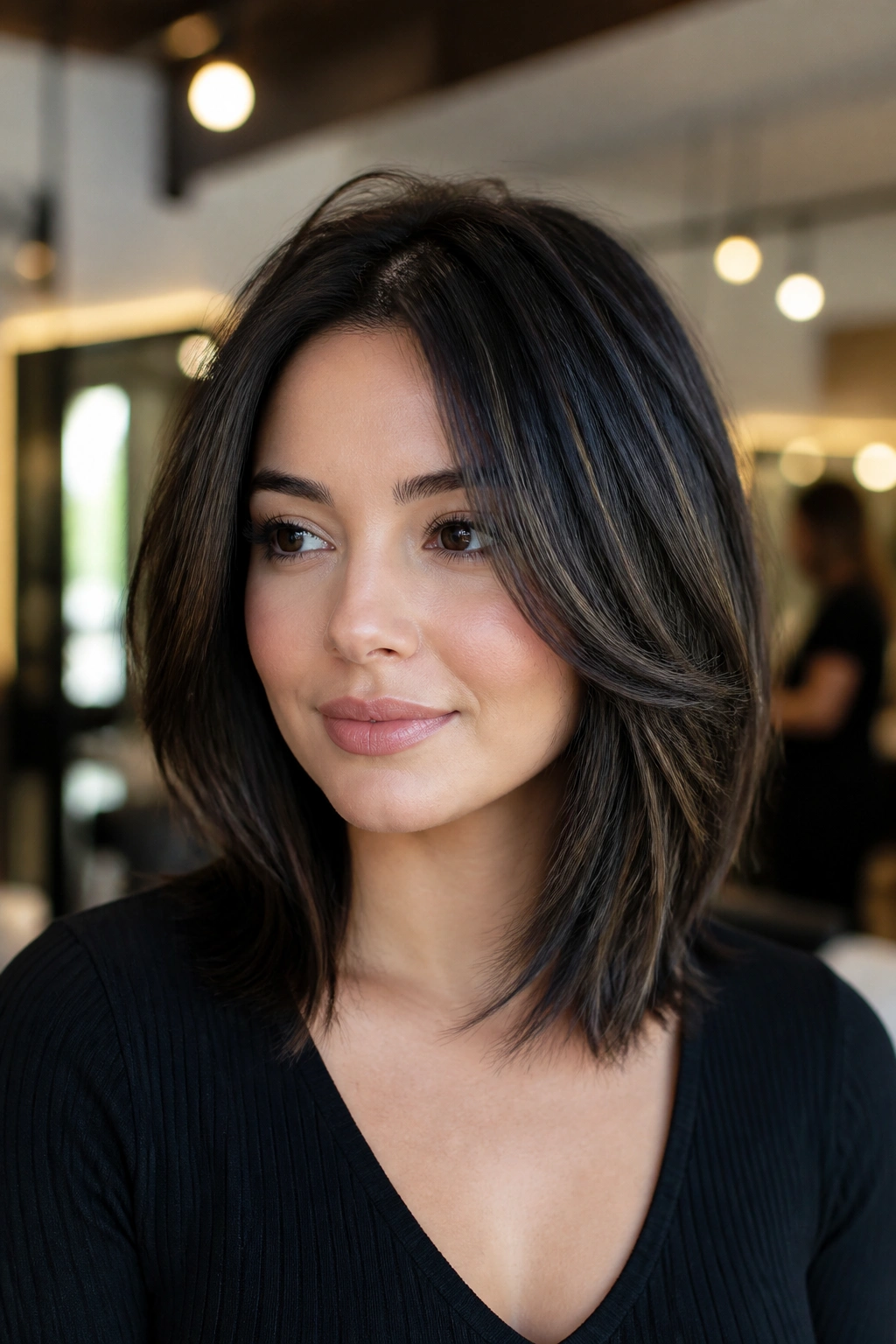
Unlike chunky streaks, feathered black highlights disappear into the cut until the hair moves. That’s why they work so well on a layered lob.
The layers do most of the face-shaping work here. Black pieces cut through the middle of the hair create slim shadows between the layers, and those shadows make the lob look lighter at the edges. For a round face, that’s a useful trick because it avoids adding width at cheek level.
What Makes It Different
Feathered highlighting uses softer slices and a lighter hand with the color. You don’t want one thick band. You want many slim, broken-up ribbons that look almost like shading.
This style suits people who wear their lob with a bend, a tucked side, or a piecey blowout. On very blunt lobs, the effect can feel too graphic. On layered ends, it looks cleaner and a little more expensive.
Best recommendation: Ask for the darkest pieces to live from the ear down, not around the widest part of the face. That one choice changes the whole balance.
7. Jet Black Peekaboo Pieces Underneath
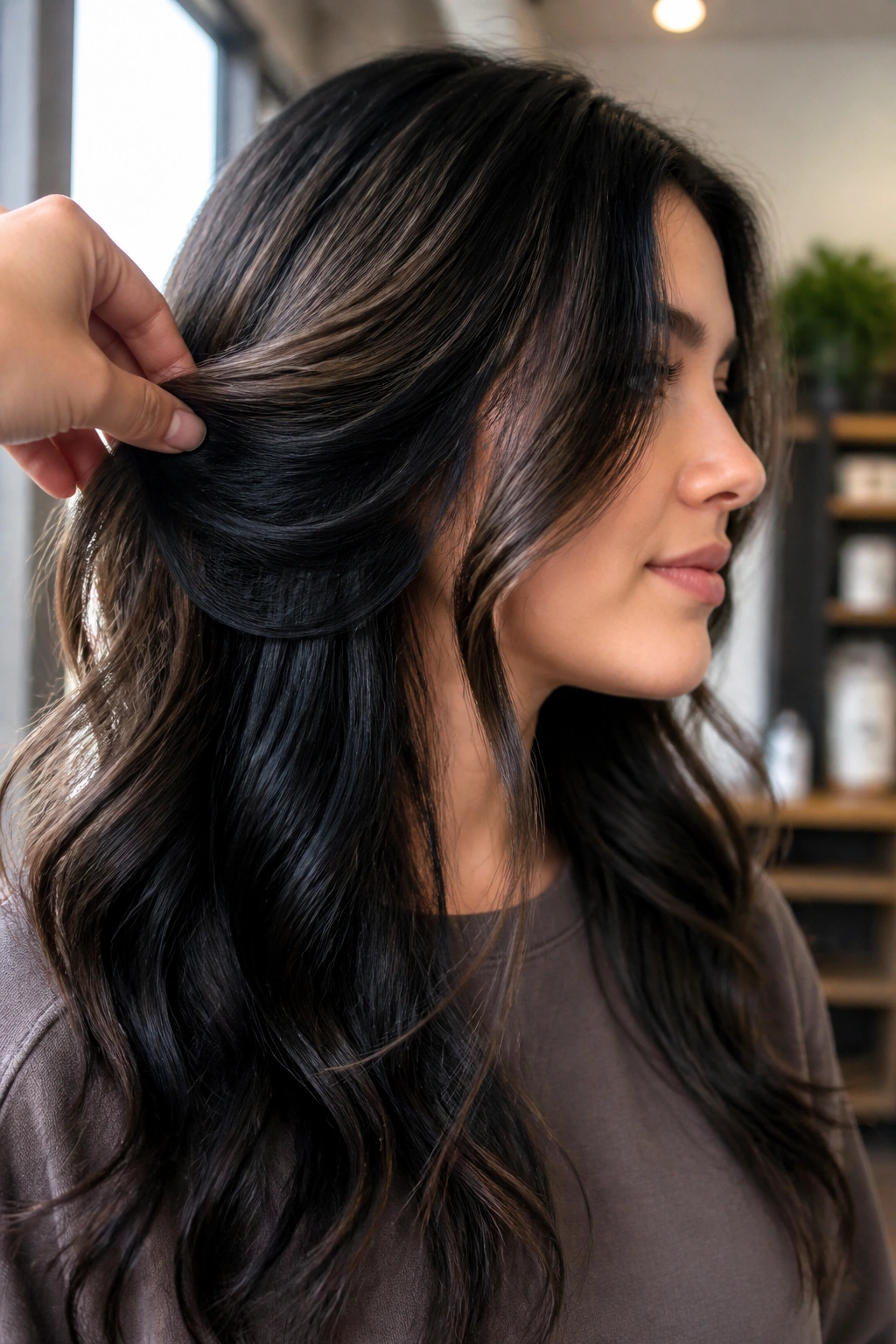
Hidden color sounds playful, but it can also be smart. Jet black peekaboo pieces underneath give a round face contrast without putting the strongest shadow right on the cheeks.
The top layer stays softer and brighter, which keeps the face open. Then the darker pieces move when the hair swings, bends, or tucks behind the ear. That little flash of black is enough to add depth without turning the front of the haircut heavy.
Quick Facts
- Best on medium to thick hair that can cover the underneath layers
- Looks good in ponytails and half-up styles
- Works especially well with bobs, lobs, and shoulder-length cuts
- Keeps the top surface lighter, which helps the face stay open
A peekaboo placement also gives you a lot of styling range. Wear it sleek and the black reads as a clean surprise. Wear it wavy and the color becomes softer and more dimensional. Either way, the face frame stays manageable.
Small warning: If the top layer is too thin, the black can show through too much and flatten the look. You want hidden, not obvious.
8. Black Ribbon Highlights on Curly Hair
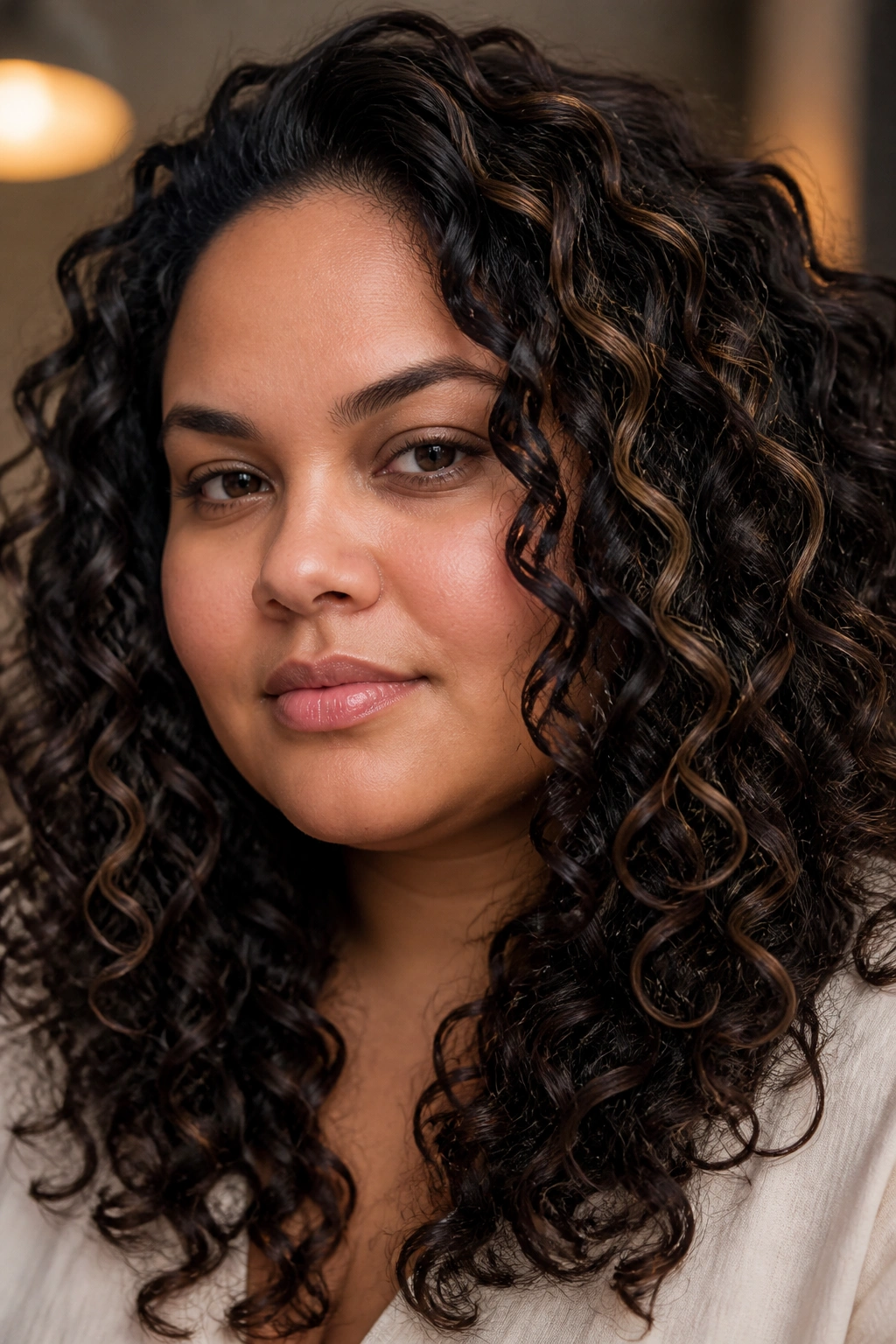
Curly hair needs black highlights that follow the curl pattern, not fight it.
Ribbon highlights do that better than blocky streaks. The color winds through the curls in soft bands, so the black shows when the curl clumps and disappears when the coil turns away. That movement is ideal for a round face because it keeps the silhouette alive instead of widening into one solid shape.
The best ribbon placements usually sit a little lower through the sides and more lightly near the temples. Curls already have volume. You do not need to pile more darkness on the exact widest point. Keep the front pieces airy, then let the darker bands live through the mid-lengths and ends.
This look is especially good when the cut has some shape in the layers. The shadows help define each curl family, and the face gets a bit of contour at the same time. It’s one of those styles that looks casual at first glance but surprisingly polished once the curls dry.
9. Choppy Black Highlights on a Pixie Cut
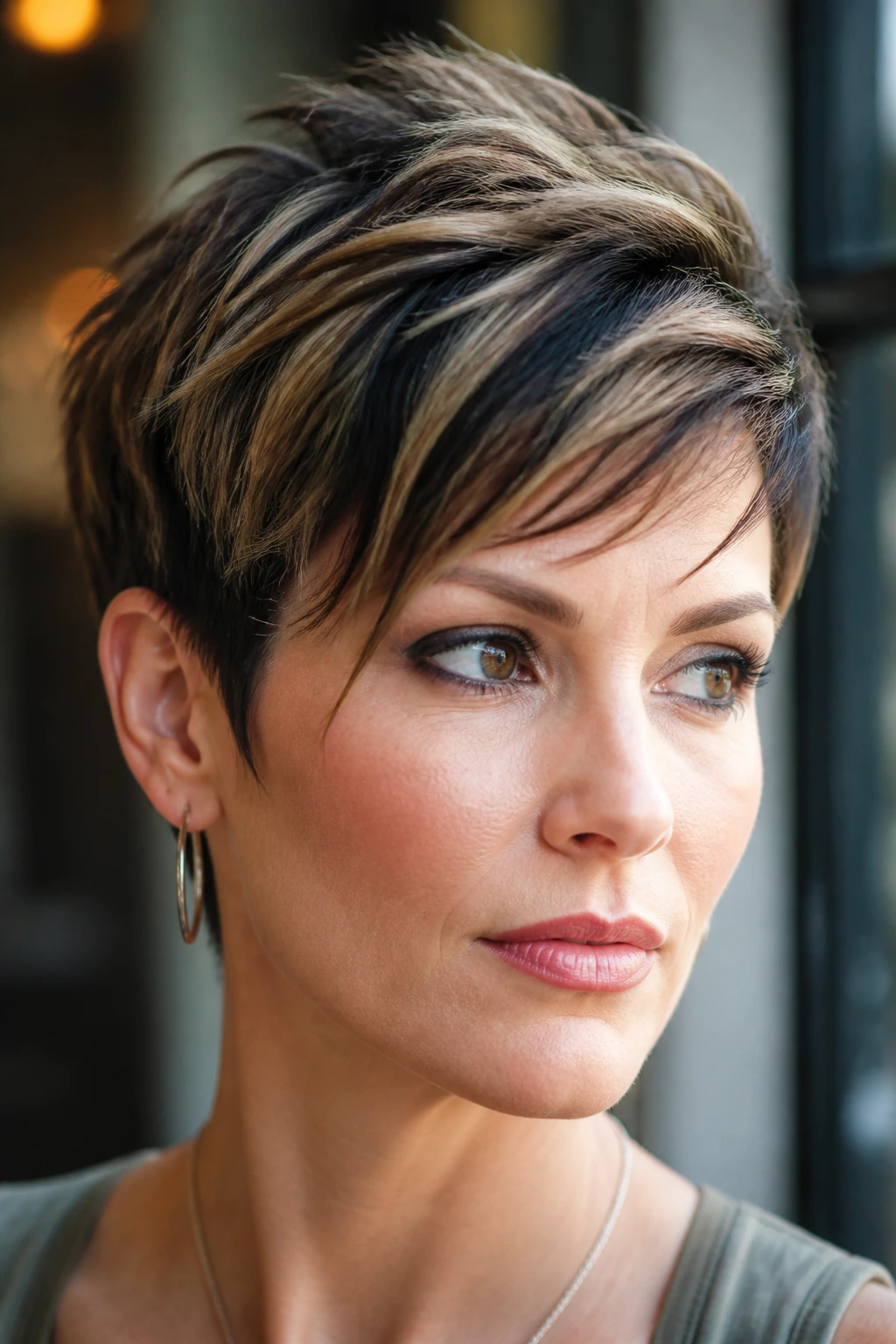
Does a pixie leave room for black highlights? Yes — and sometimes it needs them more than long hair does.
Short cuts live or die by shape. On a round face, choppy black pieces can sharpen the top, break up the sides, and keep the cut from swelling outward. The best placement is usually across the crown, the upper fringe, and a touch at the nape, where the contrast can slim the profile without crowding the cheeks.
How to Use It
The smartest version is broken and uneven, not neat. A few dark pieces near the fringe can create a diagonal line across the forehead, which lengthens the face. A little darkness through the crown adds lift. The sides should stay softer.
- Ask for piecey placement, not a solid block
- Keep the temples lighter or more diffused
- Pair with texture paste or a matte cream for separation
- Use the black to show off the cut’s shape, not cover it
A pixie with black accents can look sharp, modern, and a little daring. It just needs space to breathe.
10. Midnight Black Ombre With a Soft Fade
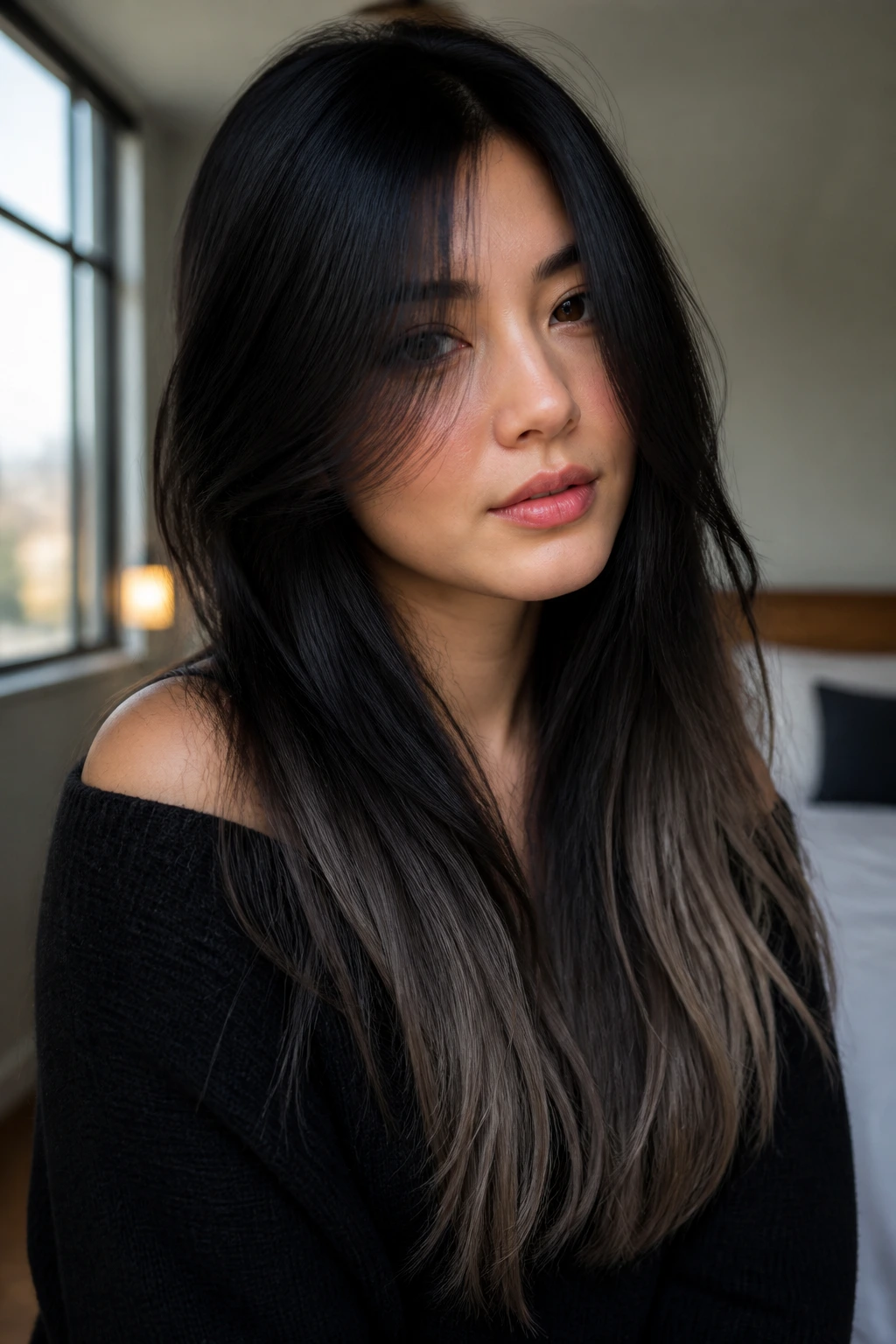
A hard ombre line on a round face can feel clumsy. A soft fade is the cleaner move.
Midnight black ombre works because it starts with depth and then eases into a lighter end, which drags the eye downward. That lengthening effect is welcome on rounder shapes, especially when the fade begins below the chin or around the lower face. If the transition starts too high, the face can feel wider in the middle. If it starts lower, the whole cut feels longer.
I like this look on straight or slightly wavy hair, where the fade can show clearly. On curly textures, the transition can be beautiful too, but the fade needs a very gentle hand or the curls can make the line jump out too much.
What to Ask For
- A gradual fade, not a sharp line
- Darkest placement at the roots or upper mids
- A lighter tone at the ends to pull the eye down
- Soft blending through the front, especially near the cheeks
Closing thought: Ombre gets a bad reputation when it’s too obvious. Done softly, it can be one of the easiest ways to lengthen a round face.
11. Narrow Black Babylights Along the Part
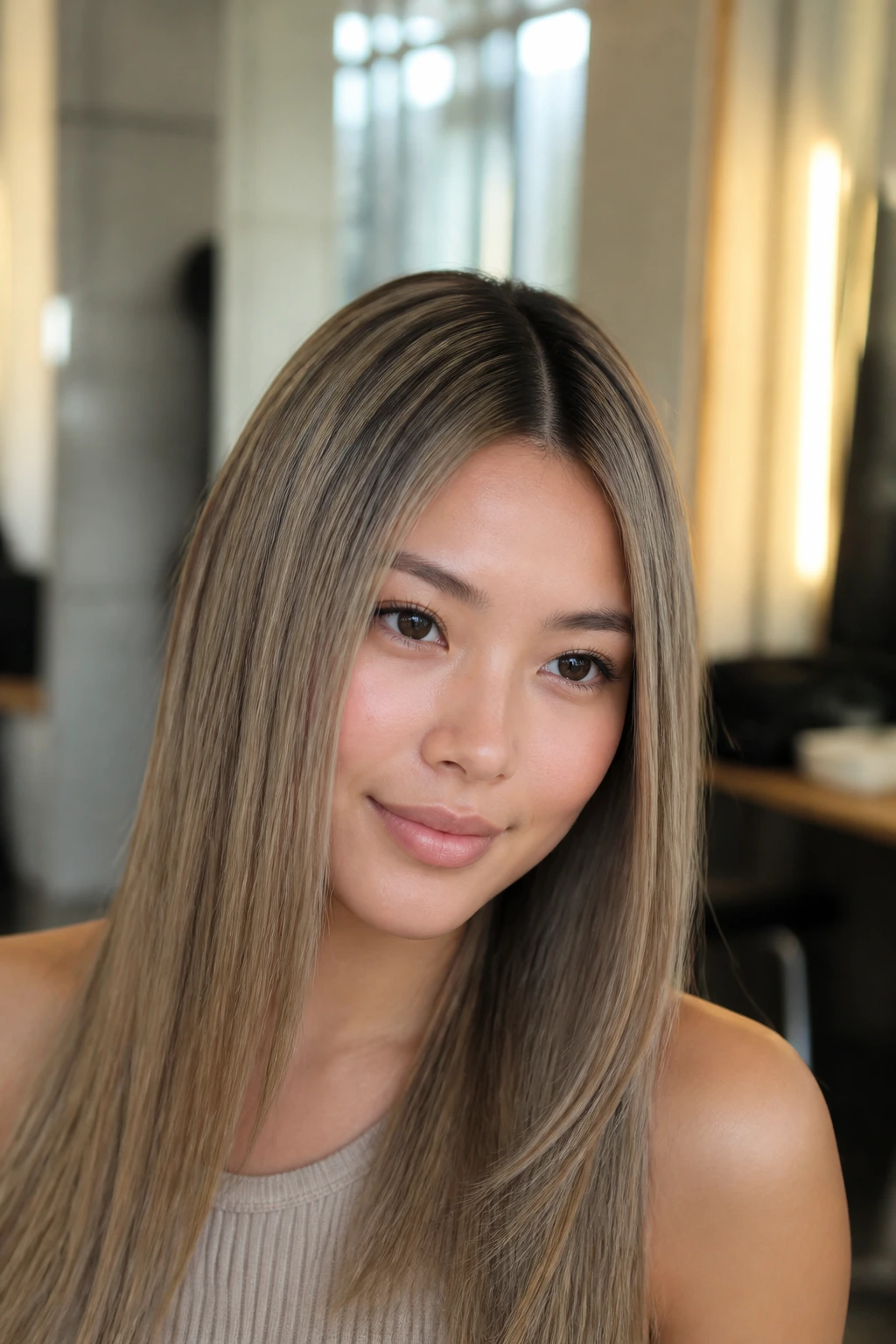
A skinny line of black near the part can change how a haircut sits on the face.
These babylights act like a center seam. They create a narrow visual lane down the scalp, which helps a round face read a little longer at the top. The trick is restraint. You are not painting the whole crown. You’re threading thin, controlled pieces along the part so the hair gets depth without bulk.
This is a nice option for fine or medium hair because the color doesn’t eat the volume. The piecey effect stays delicate, and the part itself becomes part of the style. I like a slightly off-center part here because it keeps the look from feeling too symmetrical. Symmetry can make a round face feel rounder. A gentle shift helps.
If you wear your hair straight, the result looks sleek and precise. If you wear it with a bend, the little black strands break up the surface in a softer way. Either version works. The whole point is to keep the darkness narrow and neat.
12. Satin Black Highlights on Blonde Hair
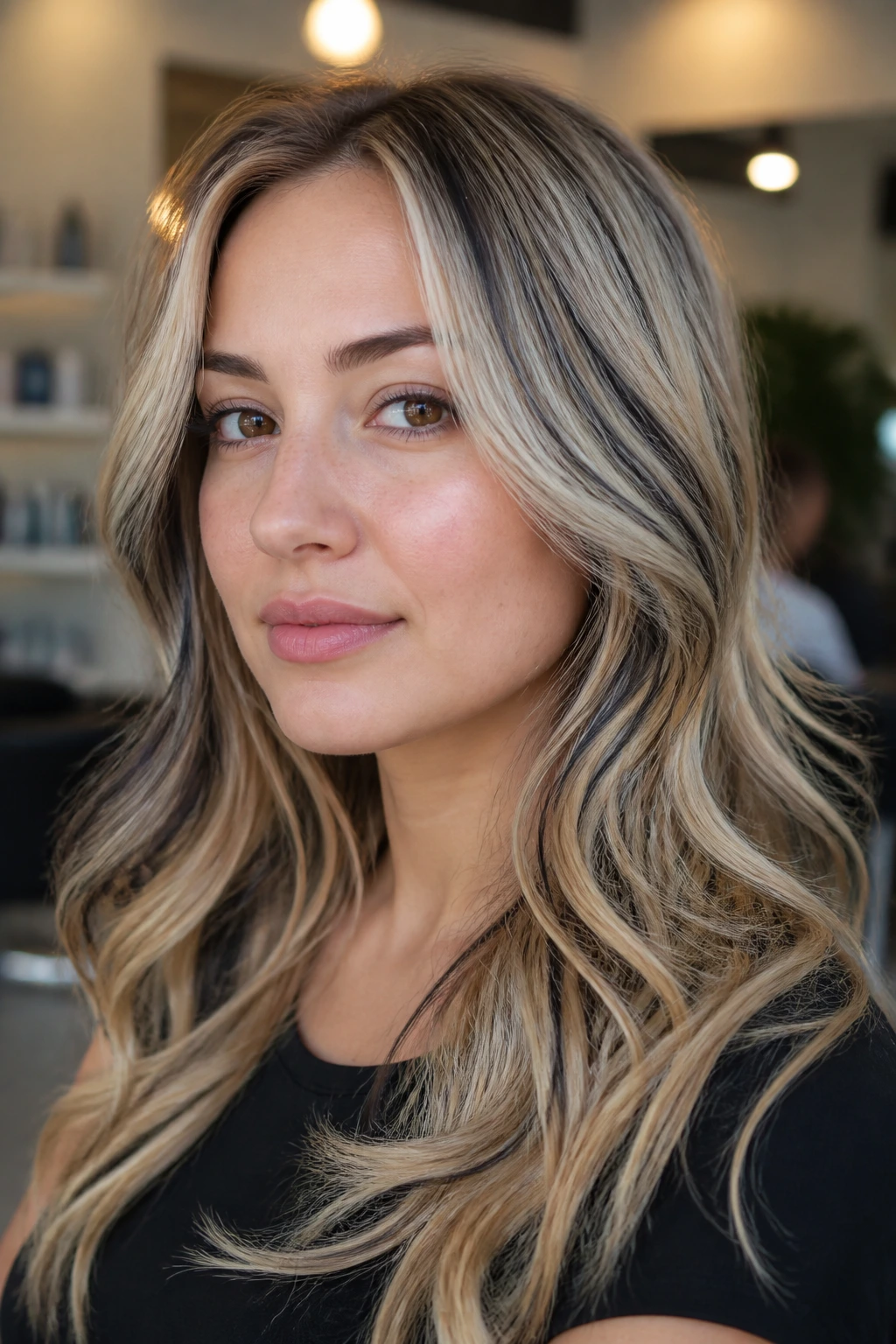
Black on blonde can look harsh fast, which is exactly why a satin finish matters.
Satin black highlights are softened, cool, and a little sheer at the edges. On a blonde base, they create contrast without turning the front into a hard frame. For a round face, that softer edge matters because it keeps the eye moving. A blunt black stripe around the cheeks can be heavy. A satin version feels lighter and more tailored.
What Makes It Different
Unlike solid black streaks, satin black pieces are usually blended with a gloss or toned to sit one step softer than ink black. The effect is smoother, almost brushed on.
This works best if the blonde is not too pale and the haircut has movement. A blunt platinum bob with thick black blocks can be a lot. A layered lob or a long cut with bends handles it better because the color can fold into the shape.
The best recommendation? Keep the black away from the widest part of the cheek and let it live more through the temple, mid-lengths, and ends. That keeps the blonde bright where the face needs openness.
13. Black Contour Highlights at the Jawline
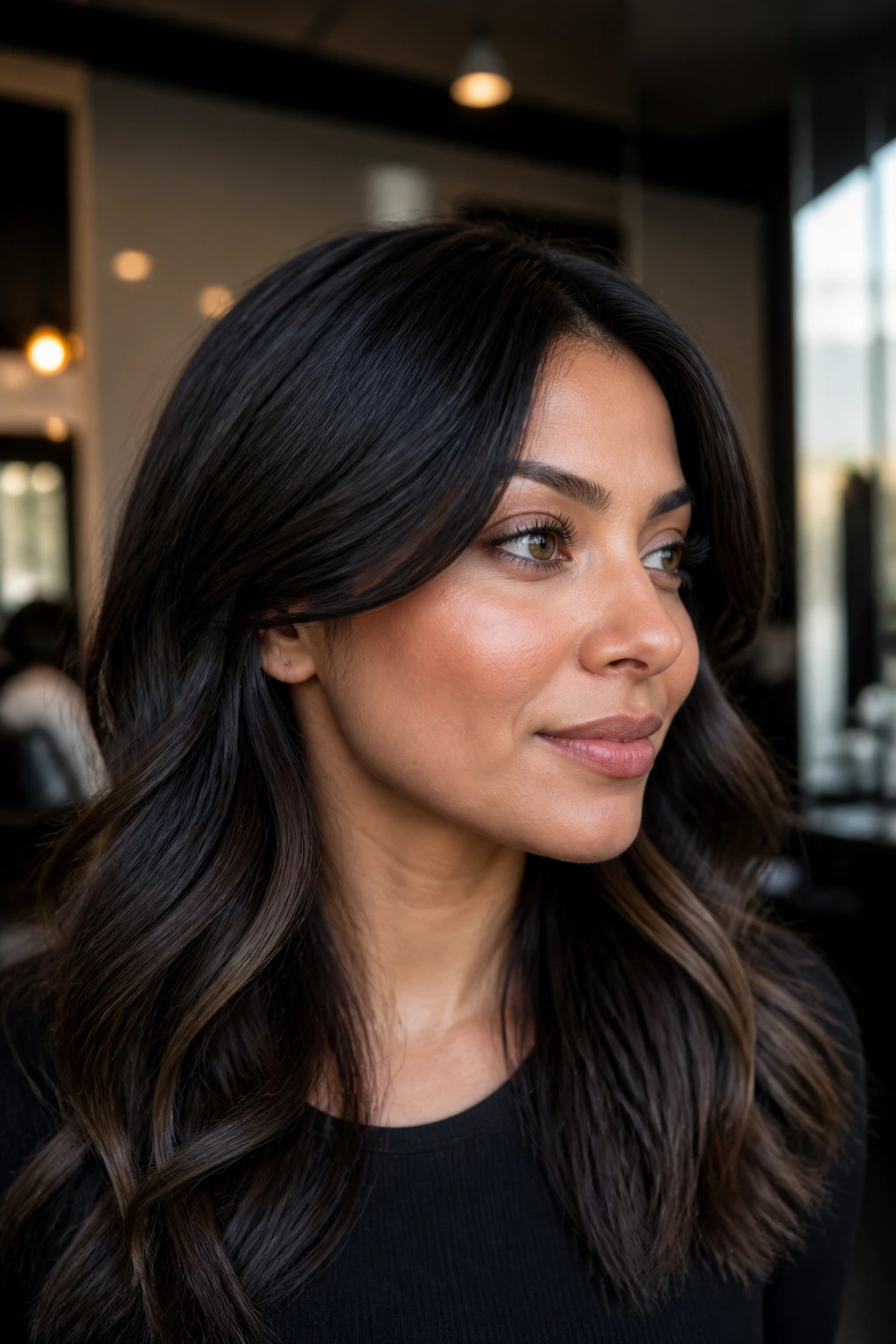
Contour color is one of those ideas that sounds fussy until you see what it does.
Around a round face, jawline contour highlights use black to draw a shadow under the cheek and along the lower edge of the cut. The result is a more sculpted look without changing the haircut itself. It’s subtle, but the effect is there. Your eye reads the jaw as more defined because the dark pieces frame it from underneath.
Where They Go
The best placement sits just below the cheekbone line and follows the curve toward the jaw. You want the darkness to support the face, not sit right on top of the fullest point.
- Good for bobs, lobs, and longer layered cuts
- Strongest when the darkest pieces are underneath the top layer
- Works with a side part or a soft off-center part
- Needs feathered edges to avoid a hard contour line
Pro tip: Ask for the contour pieces to stay slimmer near the cheek and slightly richer toward the jaw. That small shift makes the face look longer, not wider.
14. Soft-Edged Black Streaks on Straight Hair
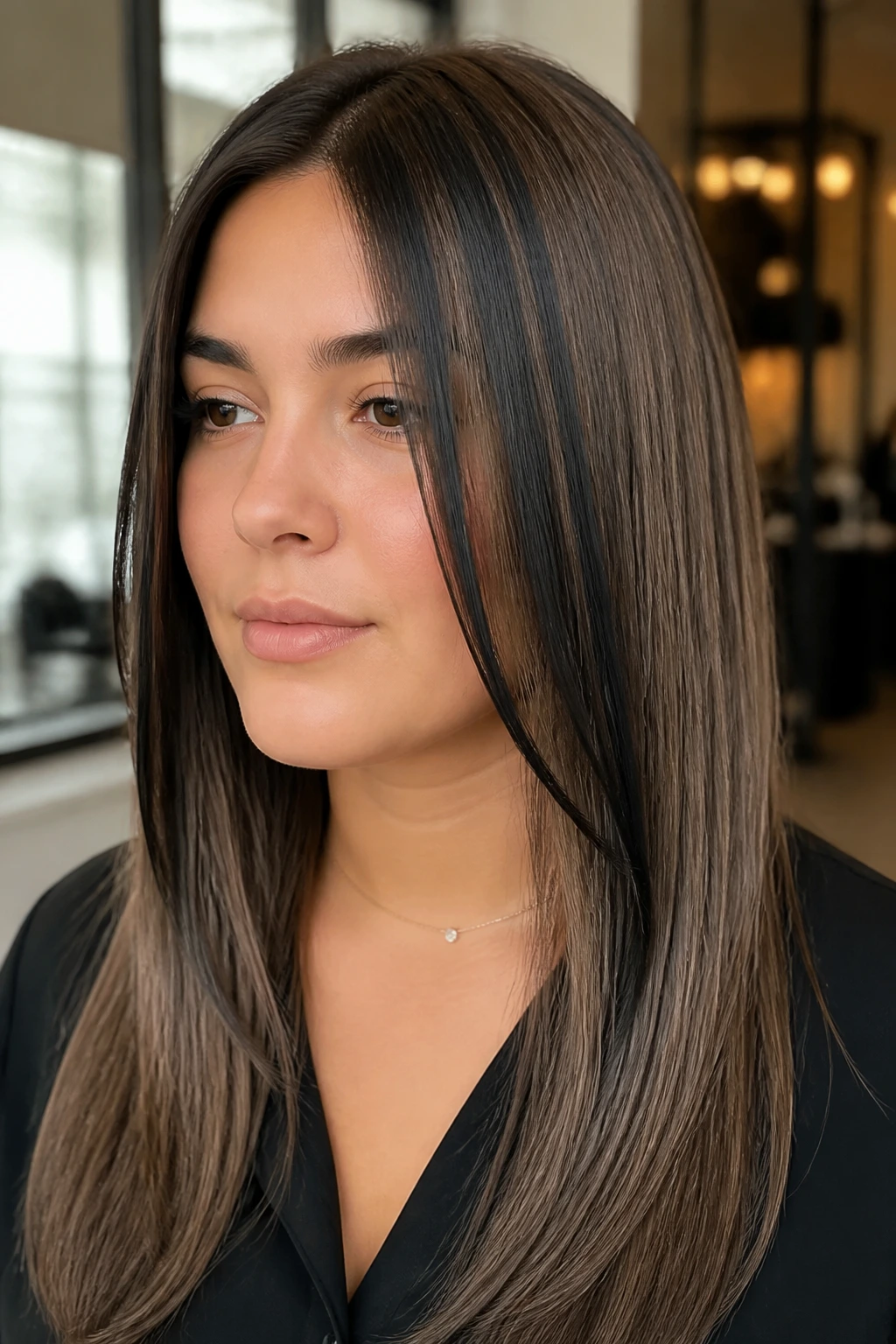
Straight hair shows everything. That’s the blessing and the headache.
With black streaks, the edge has to be soft or the whole thing looks stripy. On a round face, stripy color can be a problem because it breaks the line of the haircut in the wrong place. Soft-edged streaks fix that by blurring the transition between black and the base color, so the hair still feels sleek but not harsh.
I like this on naturally straight hair that can hold a clean line through the ends. The black pieces should be long enough to create vertical movement and thin enough that the face doesn’t get boxed in. A few narrow streaks near the front can be enough. You do not need many.
The other thing that helps is shine. Straight hair reflects light well, and that shine keeps black from looking flat. A gloss or smoothing serum can make the difference between sharp and severe. Small shift. Big payoff.
15. Smudged Black Shadow Root With Bright Ends
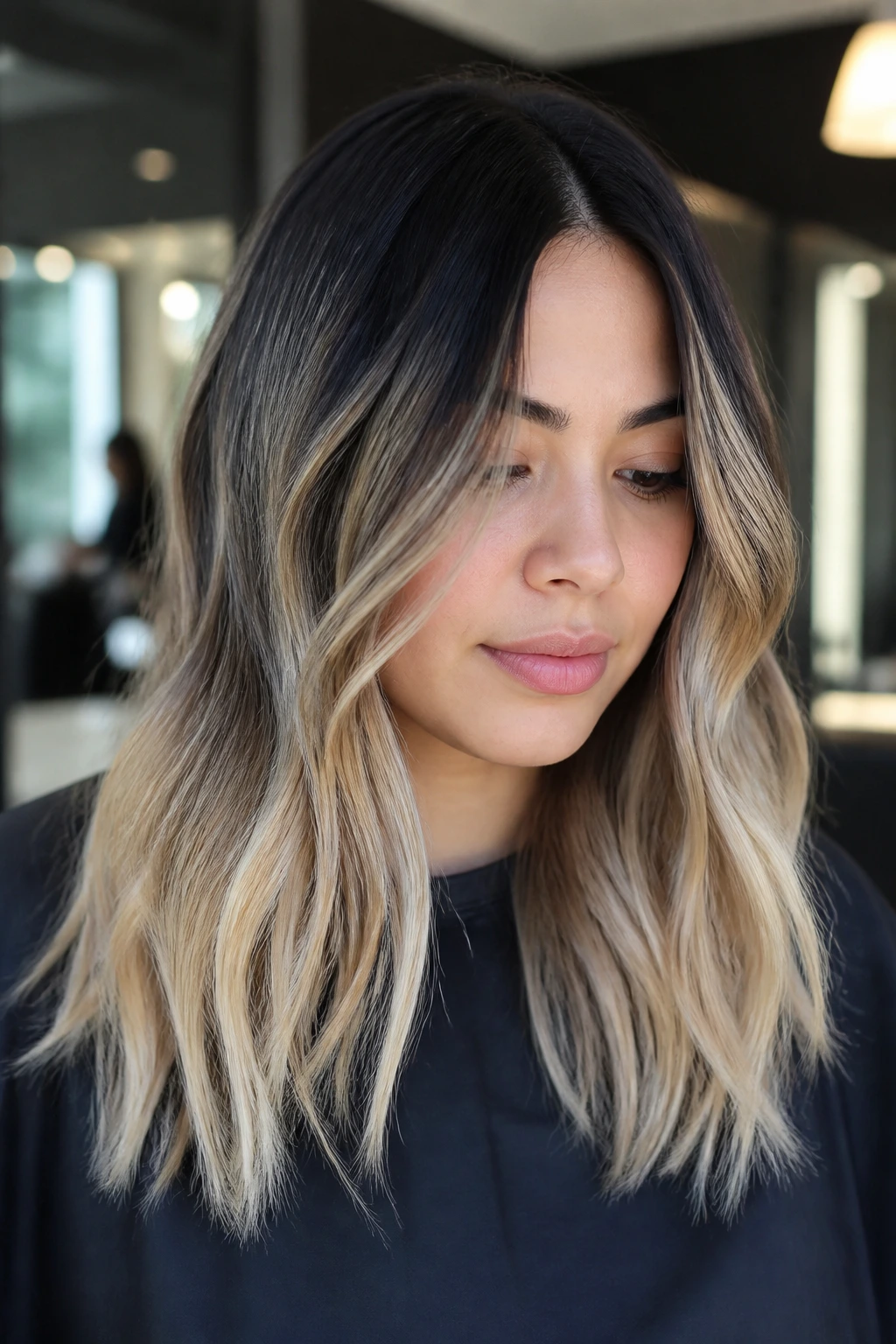
Can dark roots help a round face? They can, if the root melt is smudged instead of obvious.
A shadow root keeps the eye closer to the scalp and gives the face a little lift, especially when the lighter ends hang below the chin. That vertical stretch is useful on round shapes. The bright ends pull the eye down, while the deeper root keeps the top from feeling wide or puffy.
What to Ask For
Ask for a soft black or near-black root that fades into your chosen lighter color over a few inches. Not a line. A fade.
- Best when the melt begins around the upper mid-lengths
- Needs a soft hand near the temples
- Works well with layered cuts and loose waves
- Makes grow-out look intentional instead of messy
This style is also one of the easiest to live with if you hate frequent appointments. The root is supposed to be darker, so it stays pretty even as hair grows. That matters more than people admit.
16. Chunky Black Highlights With a Retro Edge
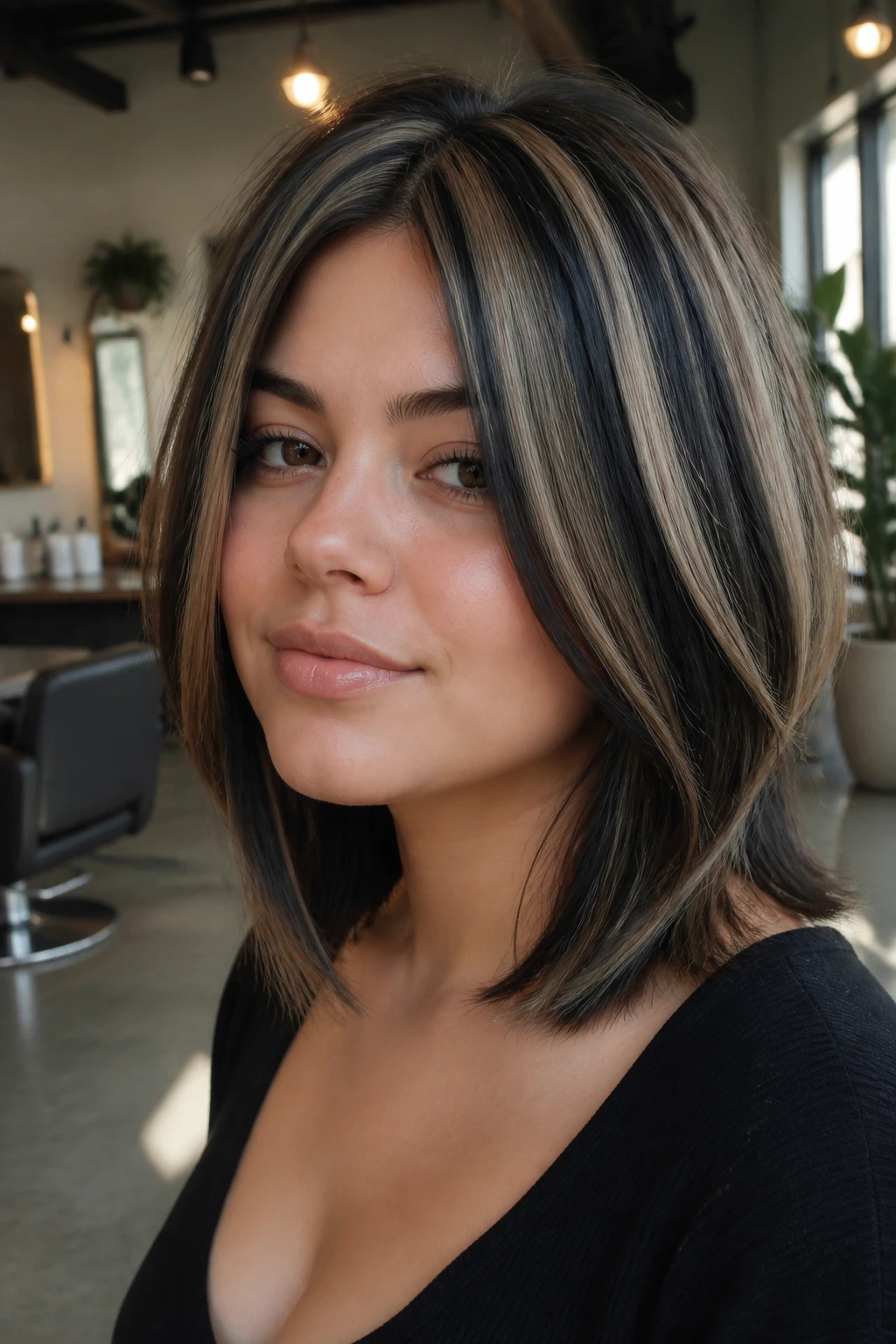
Chunky black highlights sound bold because they are bold. Still, they can work on a round face when the pieces are placed with some discipline.
The retro version uses thicker ribbons, but not everywhere. The front stays controlled, the sides stay broken up, and the black pieces fall in vertical lanes rather than wide blocks. That keeps the face from widening out. The look has energy, though. A little attitude. It’s not quiet hair.
Key Details
- Best on medium-length cuts with movement
- Strongest when the chunks are separated by lighter panels
- Needs height at the crown or layers through the ends
- Should avoid a heavy band at cheek level
I’d pick this when the client wants something fashion-forward and doesn’t mind a little edge. On a round face, the cut itself has to help out. A blunt one-length shape with chunky black panels can feel boxy. Add layers or a bend, and the whole thing loosens up.
My honest take: This look looks better when it’s slightly imperfect. Too neat and it turns costume-like.
17. Black Crown Lights for Extra Height
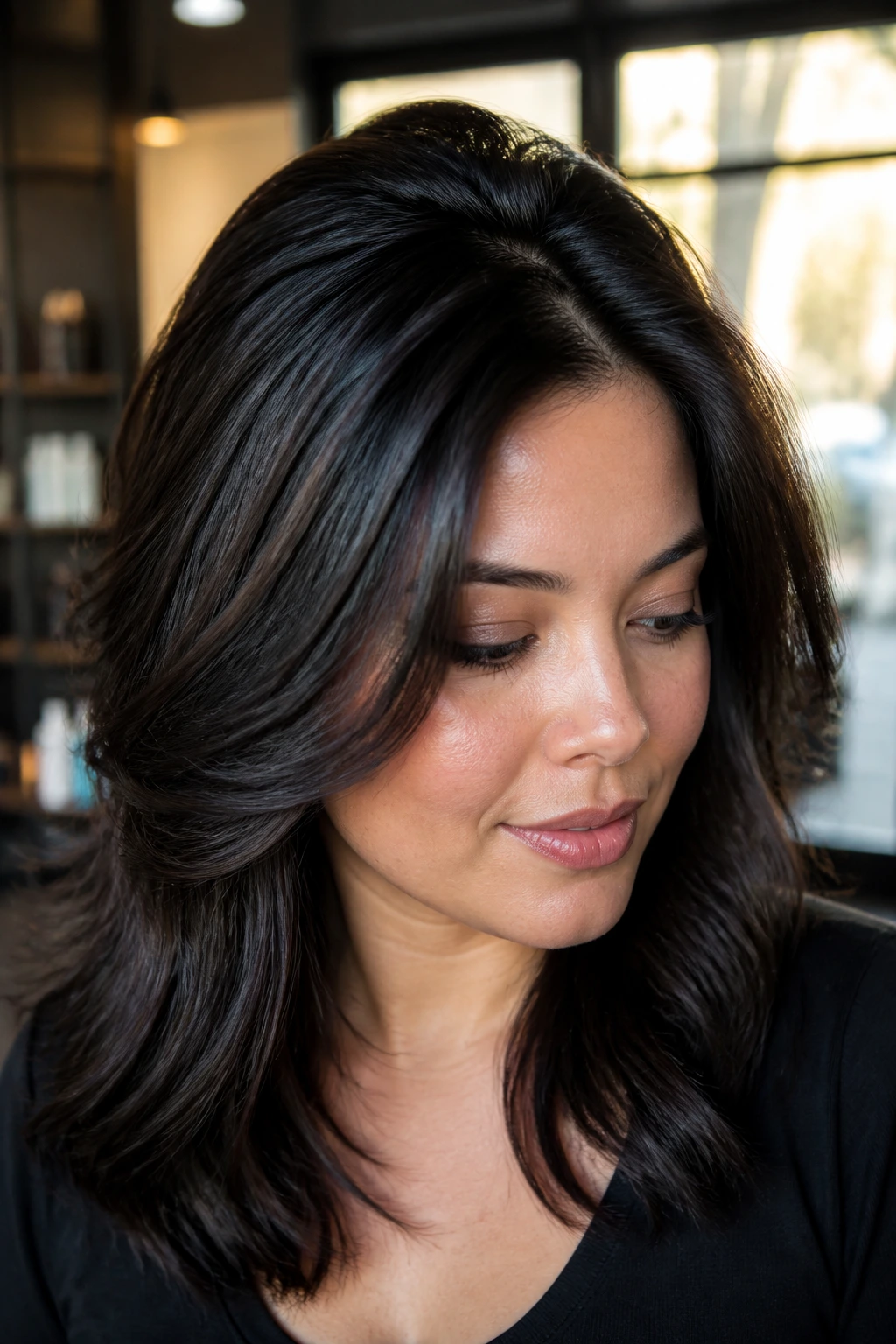
Height changes a round face more than people expect.
Crown lights put the dark pieces at the top of the head, where they can deepen the roots and create a little visual lift. Instead of widening the sides, you get more attention upward. That shift can make the face appear longer and the hairstyle a bit more structured.
This works especially well if the cut already has volume on top. A soft blowout, a layered shag, even a rounded bob with lift at the crown can take advantage of the placement. The black should never sit in a solid cap. It has to be broken, airy, and mixed through the upper layers so the hair still moves.
I also like this look on people who wear sunglasses often or pull hair back a lot. The crown stays interesting even when the front is tucked away. It’s one of the more practical choices in the whole group, which is not a bad thing at all.
18. Ink-Black Underlights for Fine Hair
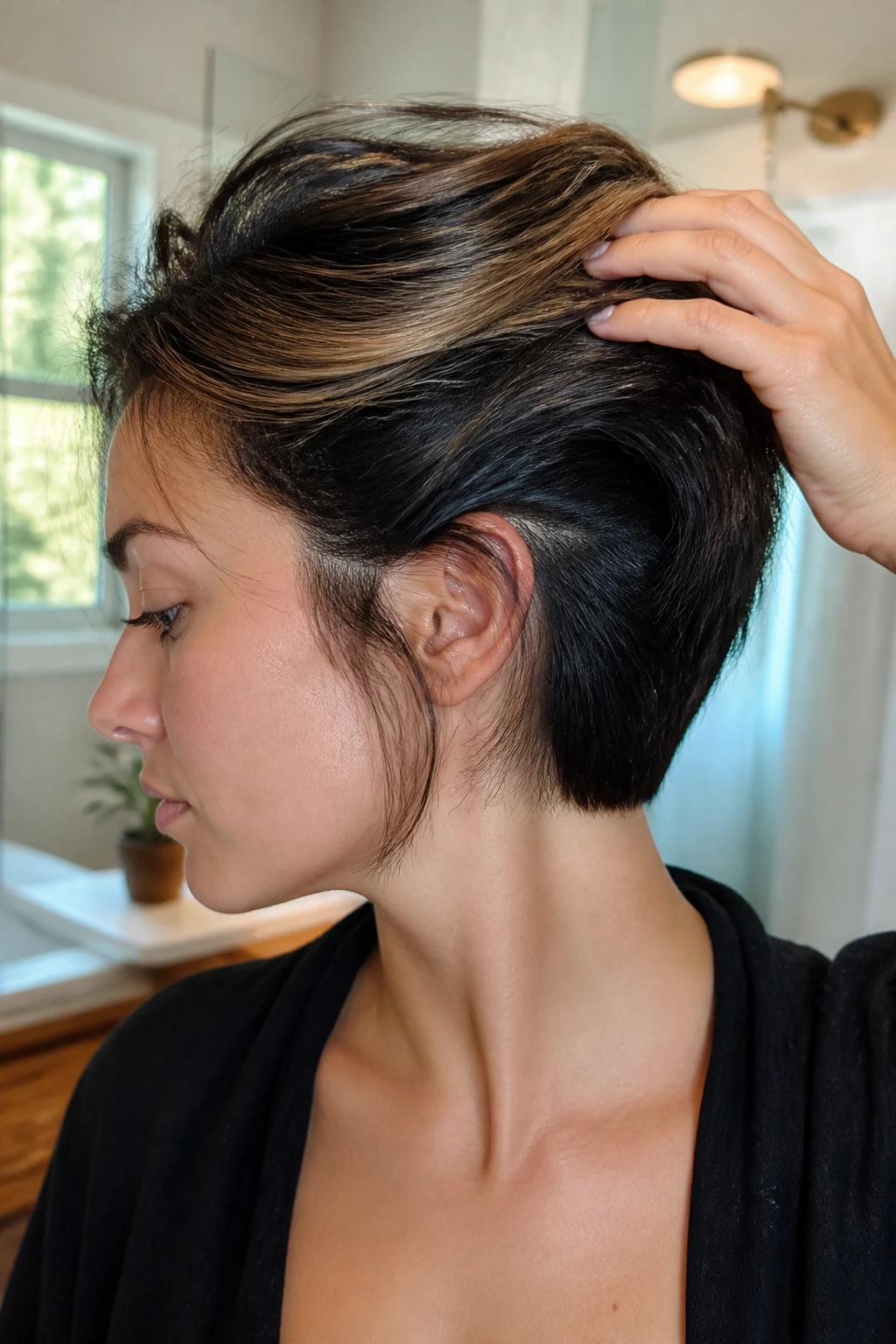
Fine hair needs contrast that doesn’t steal the fluff.
Ink-black underlights give depth from below while keeping the surface light and lift-friendly. That matters on a round face because you want the top to stay open. If you darken too much of the visible top layer, the whole style can sink. Underlights hide the darkness where it adds shape without killing movement.
What Makes It Different
Unlike surface highlights, underlights live underneath the top veil of hair. That means they show when the hair moves, bends, or gets tucked behind the ear.
This is a strong choice for fine hair because the visible top layer still catches light. You get the feeling of density underneath without sacrificing air on top. It can also make a bob feel fuller at the ends, which is handy if your hair tends to look stringy.
For a round face, I’d keep the front and sides soft and let the ink-black live mostly through the lower interior. The result is cleaner, longer, and less fussy than a surface-heavy look.
19. Textured Black Balayage on Shoulder-Length Waves
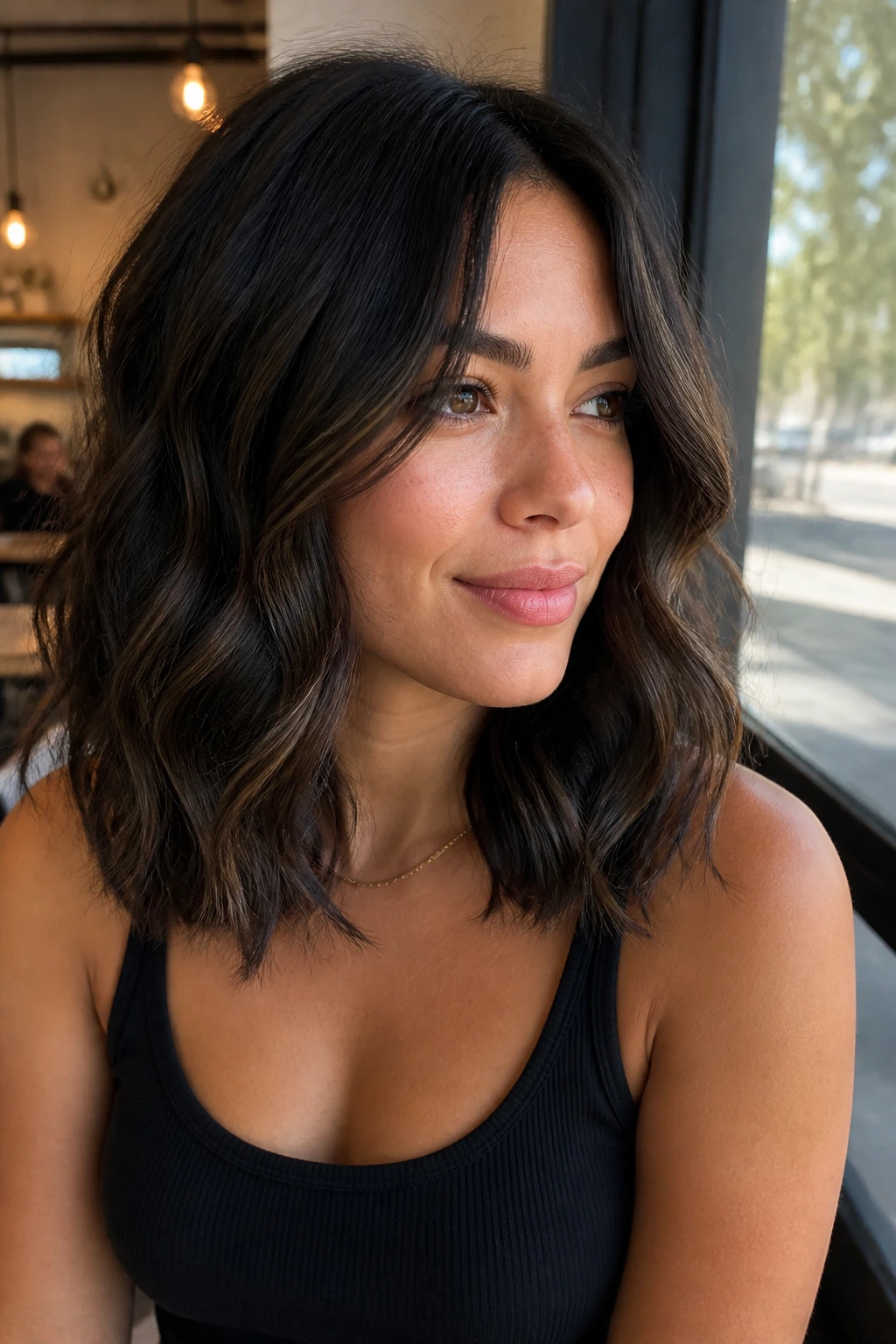
Textured balayage gives a round face the kind of movement that straight stripes never quite manage.
On shoulder-length waves, the black pieces can land in a staggered pattern through the mid-lengths and ends, which keeps the face from feeling cut in half. The waves break up the darkness and make the whole shape feel more vertical. That’s useful if you want black highlights for round faces without a heavy front.
Why It Works
The texture does a lot of the visual work. A loose S-wave lets the dark pieces peek through and then disappear again, so the style never sits still for long. That movement keeps the face open.
- Best with collarbone or shoulder-length cuts
- Looks cleaner when the black starts below the cheekbone
- Works well with a loose, lived-in wave
- Needs a soft blend so the ends do not look chopped
One thing I’d skip: overly thick balayage sections. The charm here is the broken-up texture. If the pieces are too wide, the softness goes away.
20. Cool-Toned Black Highlights for Olive Skin
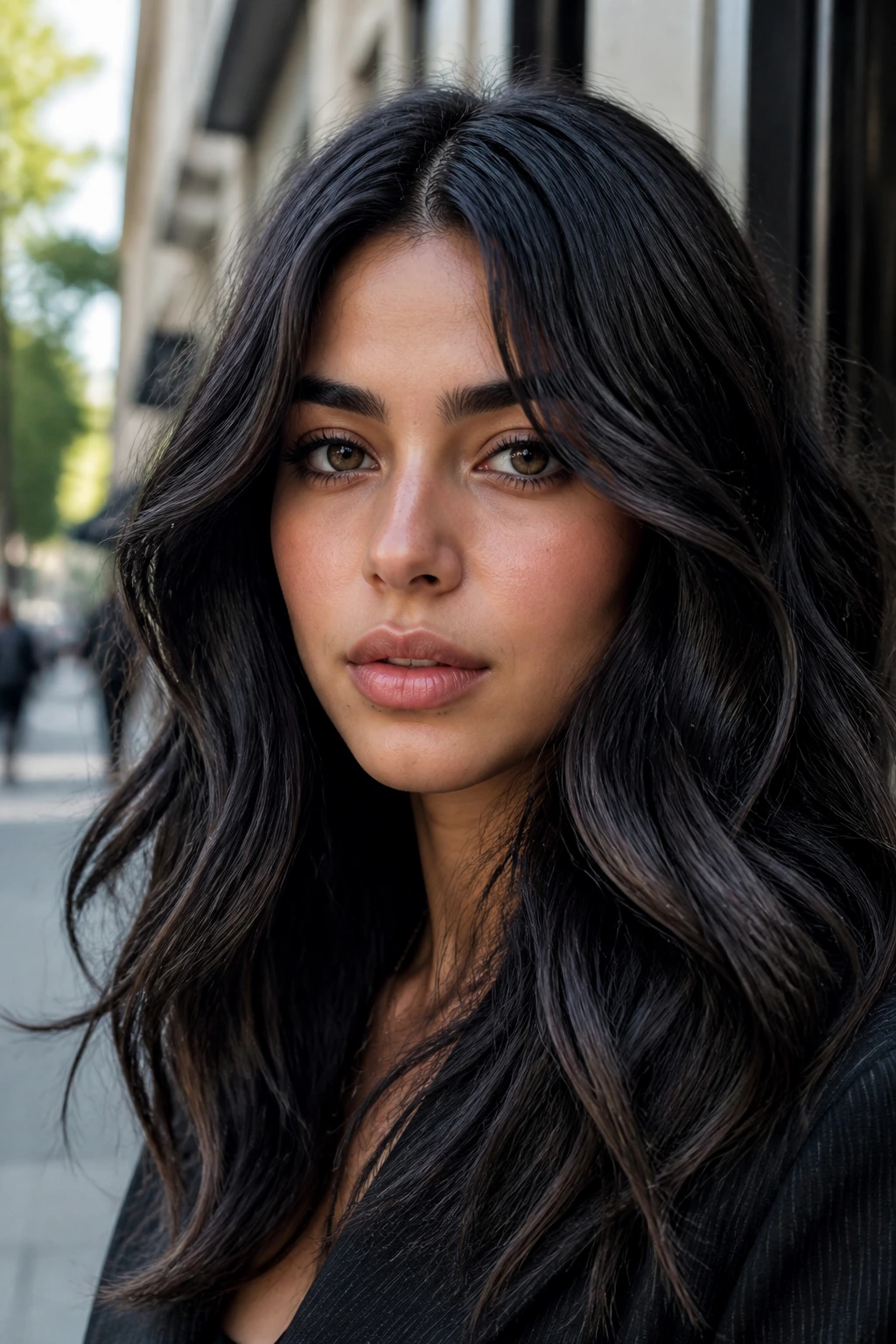
Cool black tones can be a smart match for olive skin because they keep the whole look clean instead of muddy.
Blue-black, graphite-black, and soft ash-black all sit on the cooler side of the color wheel. On a round face, those tones can sharpen the outline a little and make the skin look more defined. The effect is subtle, but it matters. Warm black can sometimes lean brown and soften the face more than you want. Cool black keeps the shape crisp.
What I like most here is the contrast against the skin and the haircut at the same time. A cool black highlight around the temples or through the mid-lengths can make the cheek area feel narrower, especially if the rest of the hair is a level or two lighter. It is a neat look. Clean. Controlled.
If you’re olive-toned and want dimension without brassiness, this is worth a look. The shade should feel rich, not inky in a flat way. There’s a difference, and you can see it right away in natural light.
21. Espresso-and-Black Dimension on Thick Hair
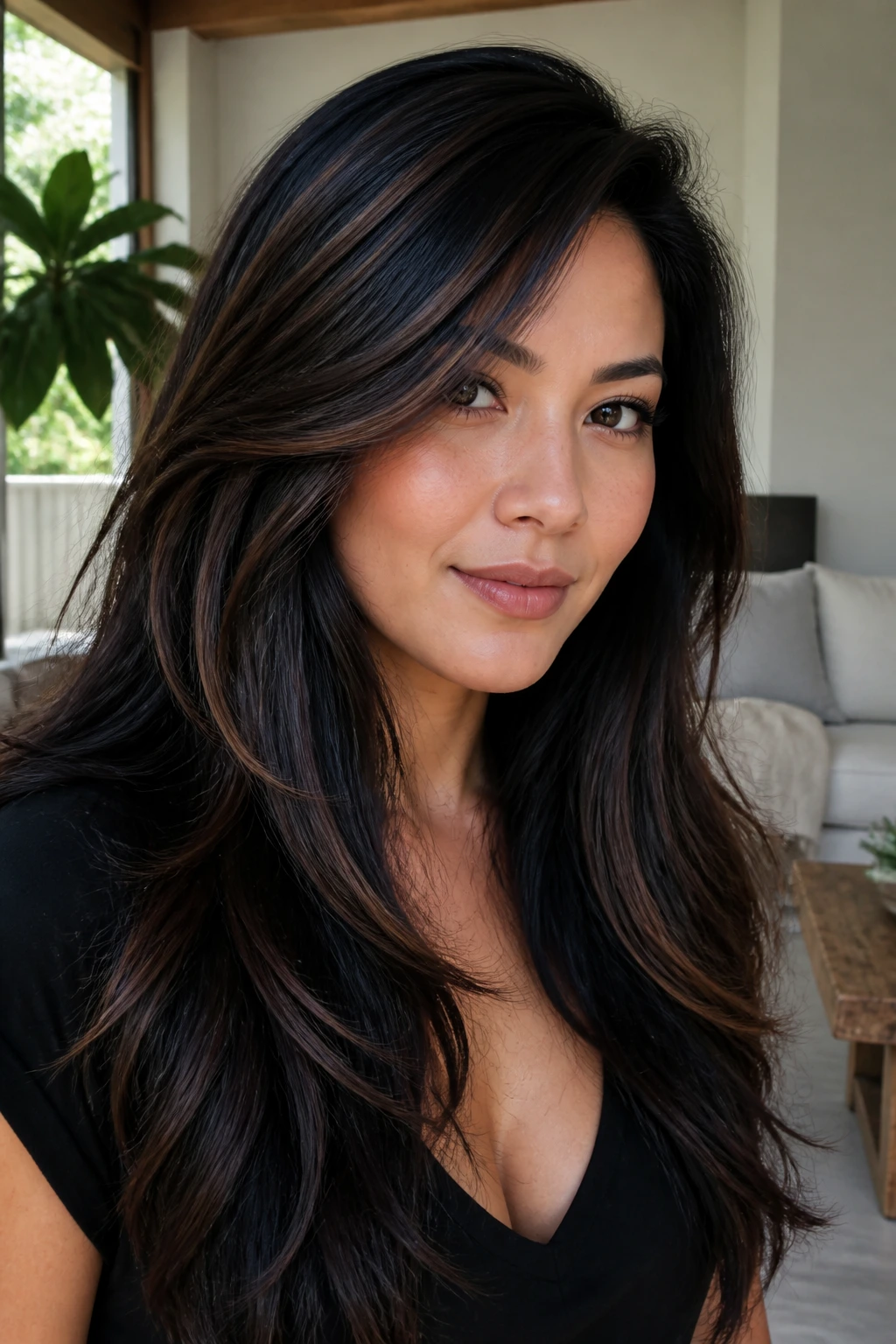
Thick hair can swallow color unless the dimension is planned out.
Can black highlights help? Yes, but they need a little more space to breathe. On thick hair, espresso tones mixed with black pieces keep the hair from turning into one solid wall. That matters on a round face because a heavy curtain of color can make the cheeks feel wider. Break it up, and the shape gets cleaner.
How to Keep It Light Enough
Ask for alternating ribbons rather than dense color blocks. The espresso pieces soften the black and keep the overall look readable. If everything is too dark, the hair can look bulky.
This is also where layering pays off. Thick hair with long layers lets the black move instead of sitting like a slab. A side part helps too, since it creates a diagonal line across the face and breaks up width.
I’d choose this look for someone who wants richness more than drama. It feels polished, not loud. And that matters, because thick hair already brings enough presence on its own.
22. Sleek Black Accent Strips for a Side Part
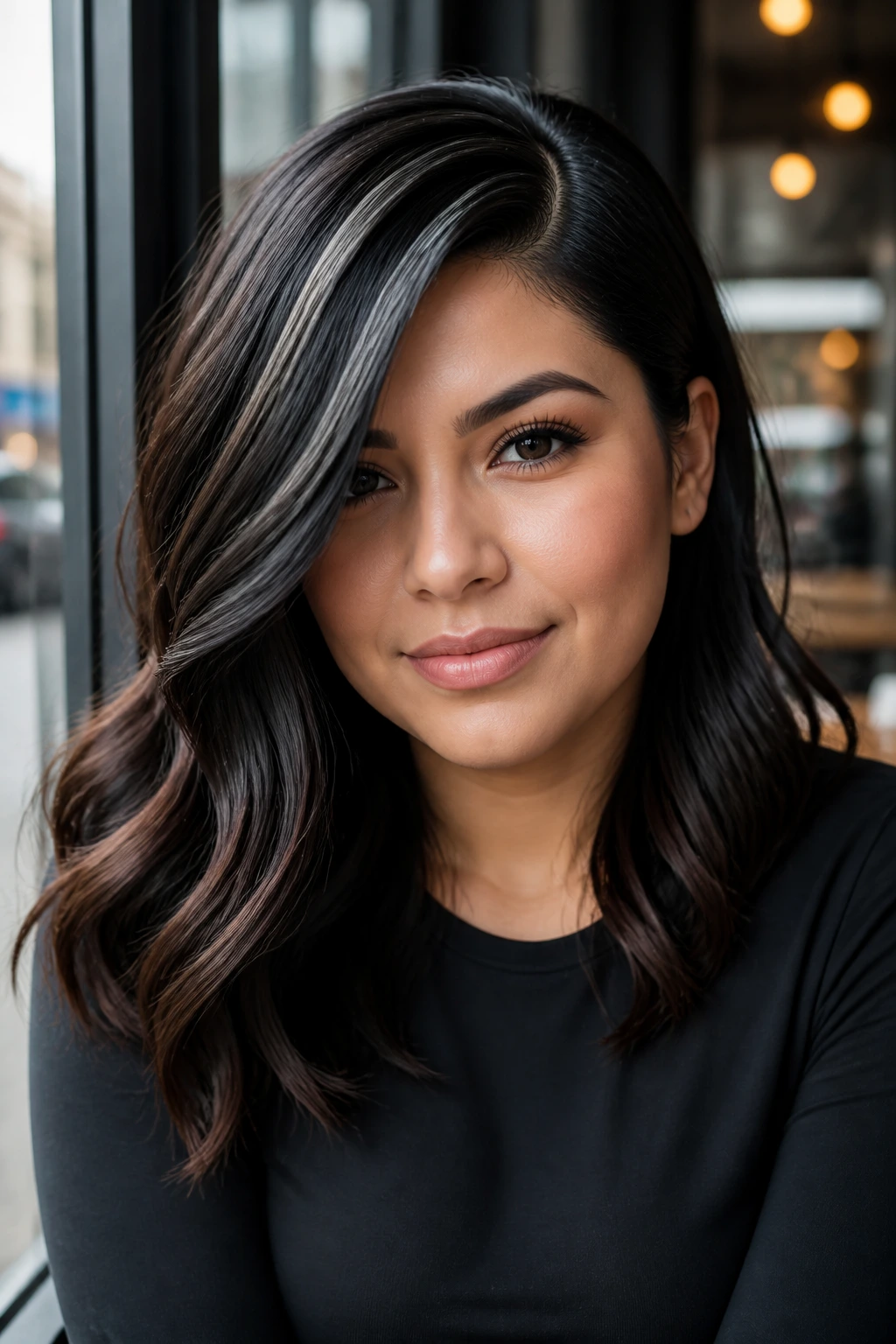
A side part can do half the face-shaping work before the color even shows up.
That’s why sleek black accent strips are such a good finishing move for a round face. The part breaks symmetry, the strips create long diagonal lines, and the whole style feels lengthened without needing a big color story. On straight or smoothed hair, the effect is especially crisp. The face looks a little narrower at the cheeks and a little taller through the top.
I like this style on cuts that already have a strong outline — a lob, a long bob, or even long hair with a sharp edge at the ends. The black strips should follow the direction of the part and stay clean, not chunky. If they’re too wide, they start to dominate. If they’re narrow and well placed, they do their job quietly.
That’s the real pattern with black highlights on round faces. Quiet usually wins. Keep the darkest pieces where they can lengthen, soften the front, and let the cut carry the drama. The result looks considered, not forced, and it holds up whether the hair is worn loose, tucked back, or tossed over one shoulder.
