



Brown hair and blue never had to be a risky combo. The trick is getting the blonde right so the blue has something to sit on. When the blonde is too yellow, the blue can go muddy fast. When it’s lifted cleanly, the whole thing feels sharper, brighter, and a little bit mischievous in the best way.
Blonde blue highlights for brown hair work because the brown base does half the styling for you. It gives depth. Blonde gives lift. Blue gives the attitude. Put them together the right way and the color doesn’t read flat or costume-like; it reads dimensional, glossy, and expensive-looking even when the actual placement is simple.
The part most people miss is placement. Blue can hide under the top layer, run through a face frame, sit in curls, or flash only when hair moves. Blonde can be honey, vanilla, ash, platinum, beige, or pearl. Those choices change the mood more than the blue shade itself, which is why the same idea can look soft on one head and loud on another.
Some of these looks are quiet. Some are not. A few are office-friendly from the front and playful from the side. Others are pure drama. That range is the fun of it, honestly — there’s a version here for nearly every brown base, every length, and every comfort level with color.
1. Blonde Blue Highlights for Brown Hair with Hidden Cobalt Panels
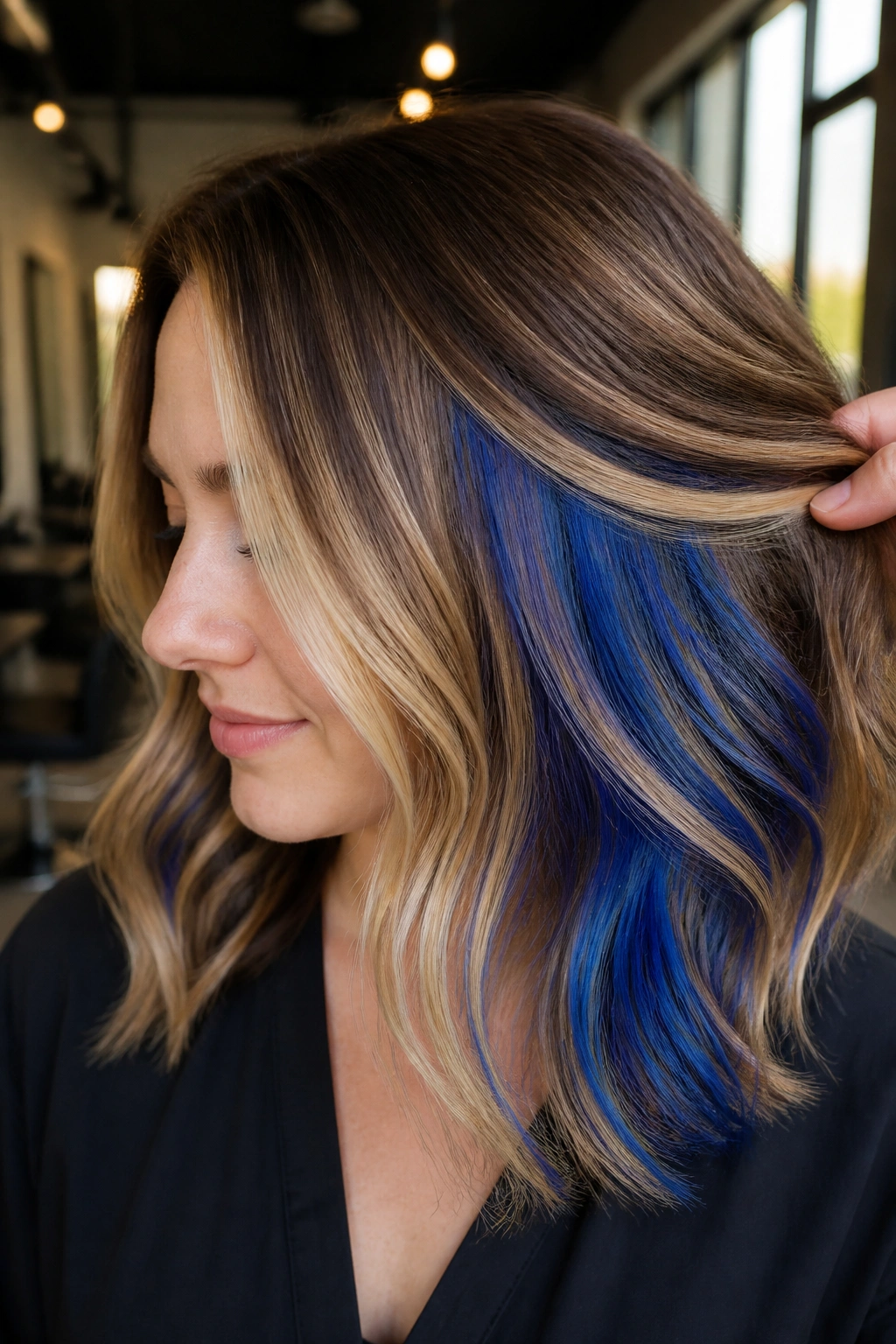
Brown hair looks especially good when the color surprise is tucked under the surface. Hidden cobalt panels let the blonde do the public work while the blue waits for movement, part changes, or a quick twist of the head. It’s a smart choice if you want color that feels deliberate instead of loud.
Why it works
The top layer stays soft and wearable. Underneath, the blue gives depth, almost like a secret lining in a coat. On medium brown or chocolate hair, a few blonde ribbons on top keep the look bright, and the cobalt panels stop it from feeling too sweet.
- Best on shoulder-length or longer hair
- Ask for interior cobalt panels with honey or vanilla blonde on the top layer
- Works well if you wear your hair in half-up styles, loose buns, or curls
- Blue shows more when the hair swings or is pinned back
Pro tip: keep the roots a shade deeper than the mids. That little shadow helps the hidden blue look intentional instead of random.
2. Face-Framing Vanilla Blonde and Blue Money Pieces
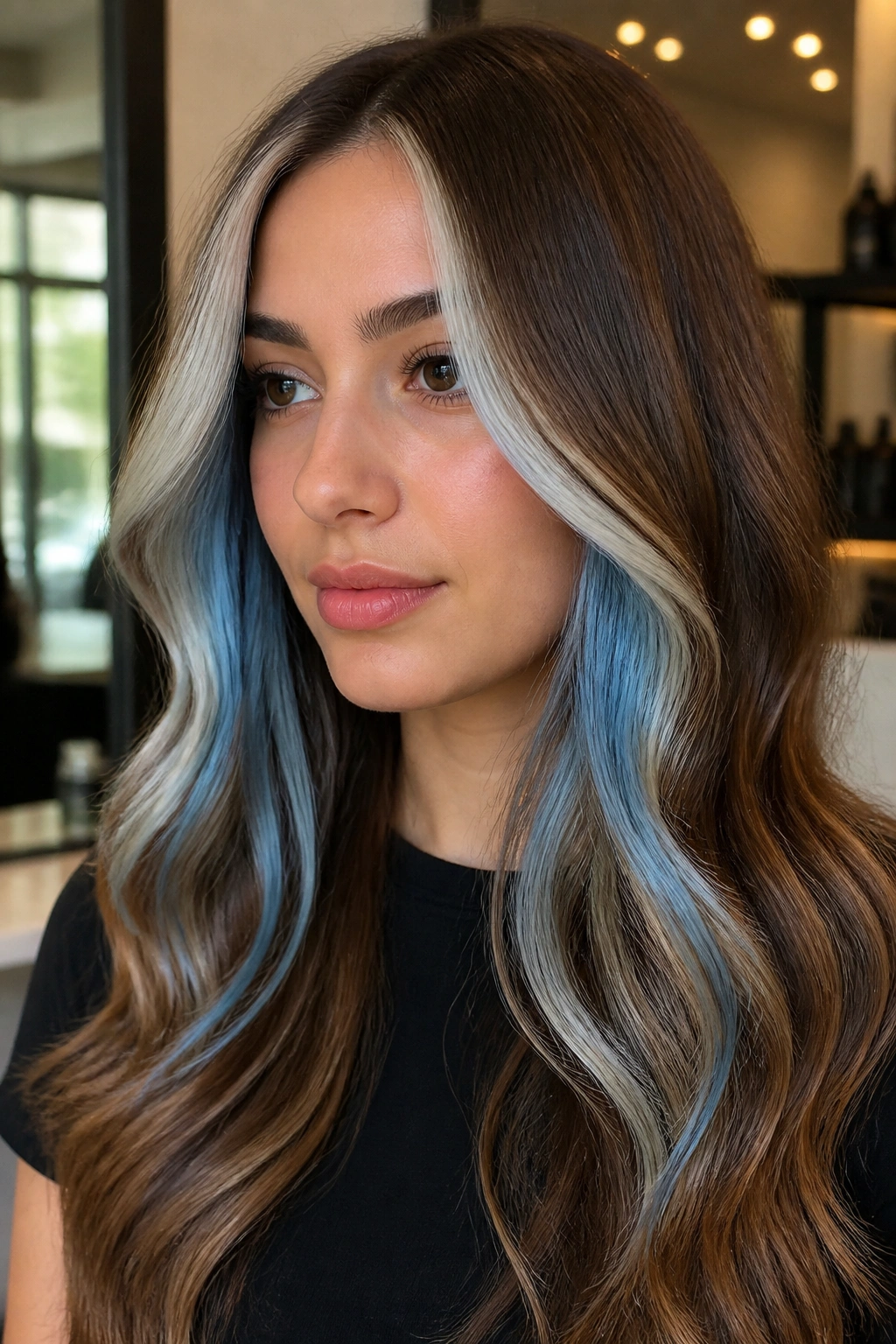
The face-framing money piece earns its keep fast. It brightens the front of the hair, gives the cheekbones a little lift, and makes the blue impossible to miss in the best possible way. If you want the color to be seen without committing to a full head of bright streaks, this is the lane.
Vanilla blonde keeps the front pieces soft enough to live with every day. A pale blue, icy blue, or blue-violet tint on the same section adds contrast without turning the whole style harsh. On brown hair, the effect is clean and modern, especially if the rest of the hair stays chestnut or mocha.
This one is also easy to style. A center part makes the blue read sharper. A side part pushes one side forward and lets the lighter pieces frame the face like a spotlight. Flat-ironed hair gives the strongest stripe effect, while loose bends make the blue feel softer.
Worth the effort.
3. Chocolate Balayage with Icy Blue Ends
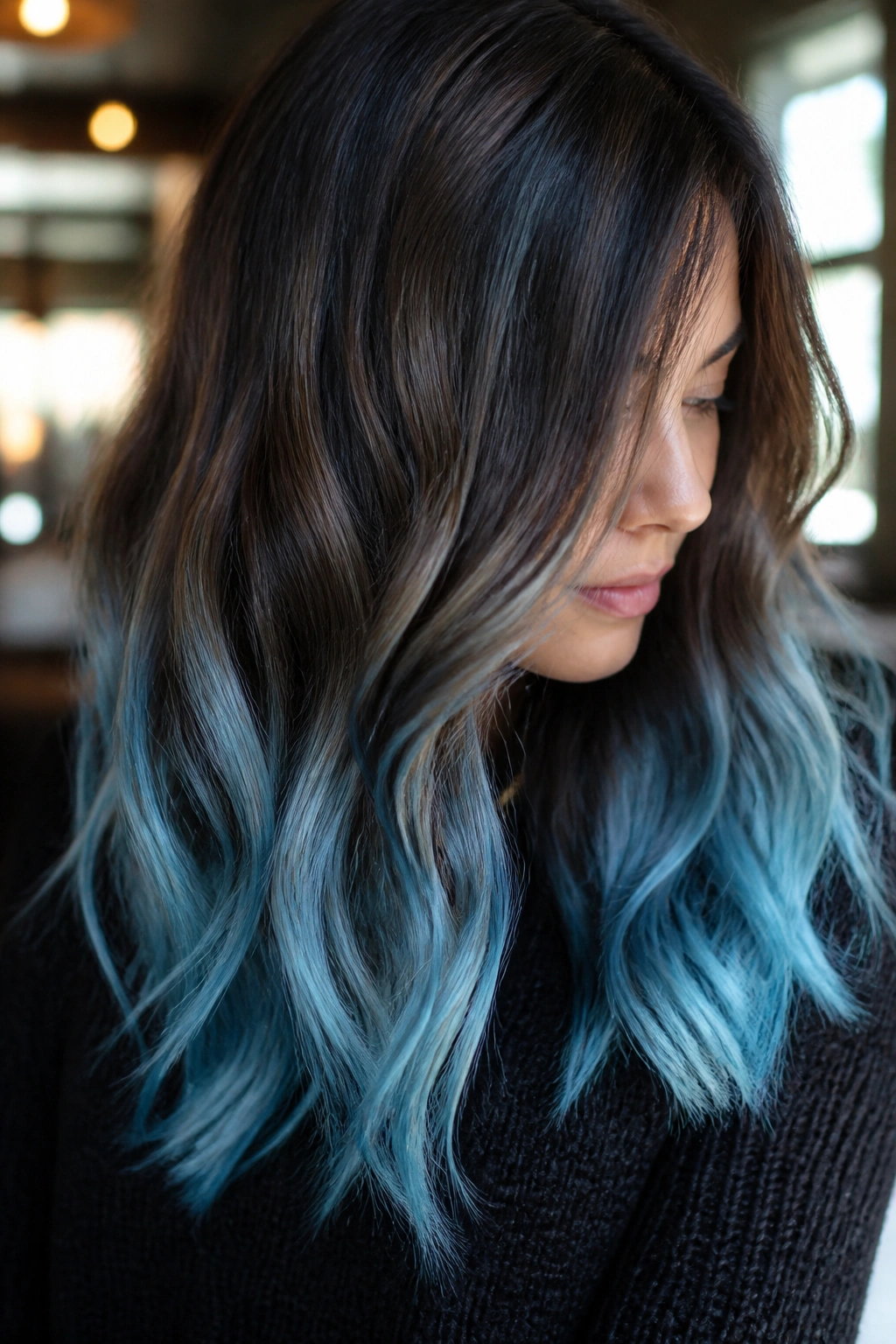
Can blue ends stay soft on brown hair? Yes, if the blonde base is lifted cleanly enough first. Chocolate balayage with icy blue ends is one of those looks that depends on smooth fading. The brown starts rich at the roots, the blonde softens through the mids, and the ends slip into blue like the color drifted there on purpose.
How to wear it
The ends need to be light enough for the blue to hold its clarity. If they stay too orange or too gold, the blue can go dull. A pale blonde base gives the icy shade room to stay crisp.
This look loves movement. Loose waves show the fade best because the eye follows the transition from brown to blonde to blue. Straight hair works too, but the contrast looks harsher and more graphic. That can be a good thing if you like a sharper finish.
If the hair is long enough, ask for the blue to sit mostly in the bottom 2 to 4 inches. That keeps the style grounded and stops it from looking overworked. A gloss between color sessions helps the ends keep their shine.
4. Espresso Waves with Platinum and Navy Stripe Lights
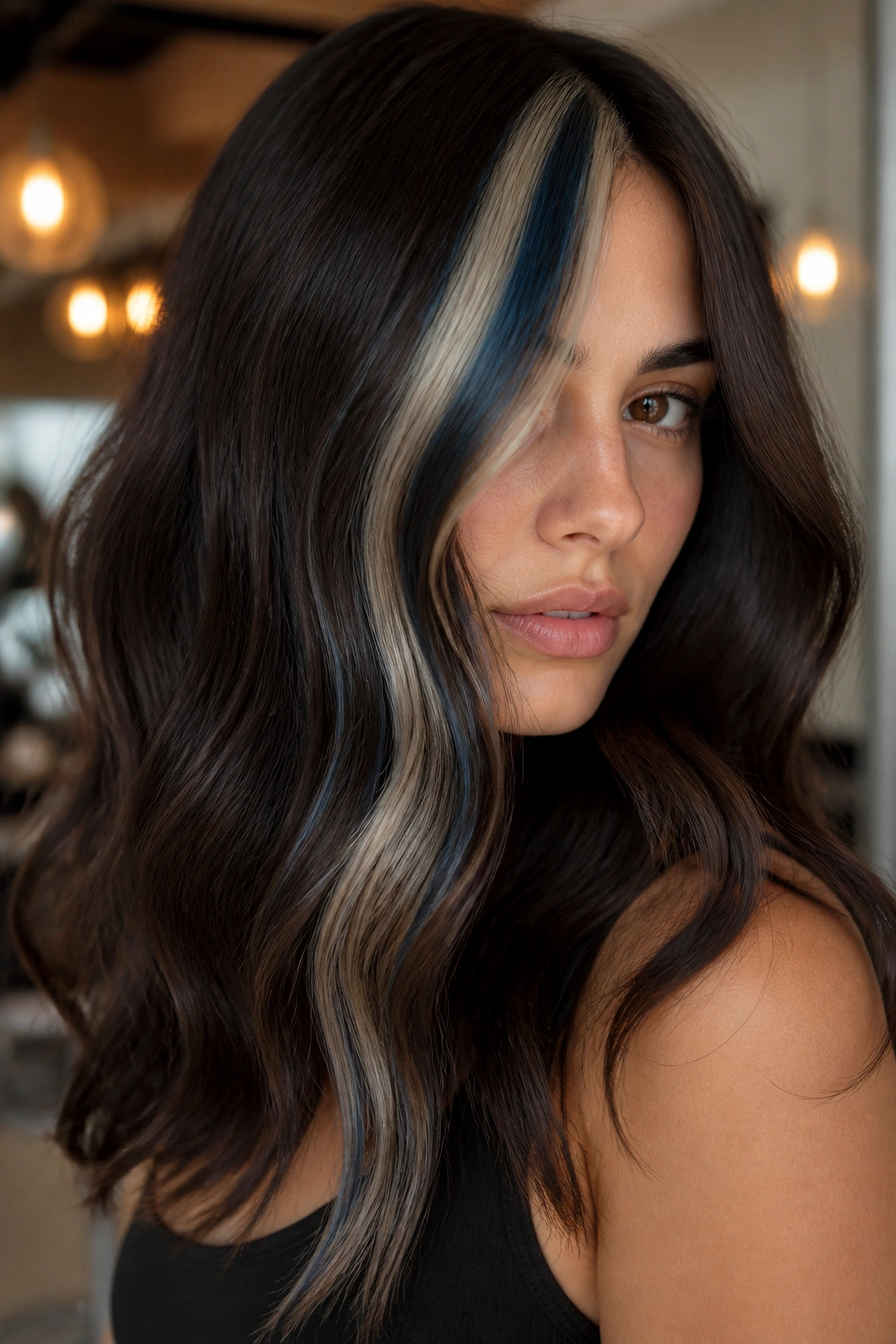
A single stripe in the right place can do more than ten tiny highlights. Espresso waves with platinum and navy stripe lights look especially good when the placement is slightly off-center, so the color shows one way when the hair is tucked and another when it falls forward. It feels tailored, almost architectural.
The platinum section gives a sharp hit of brightness against the dark brown base. Navy keeps it from going too stark. Together they make a stripe that reads polished instead of messy. This is the kind of look that works on a blunt lob, a long bob, or layered lengths with a smooth blowout.
- Best on medium-thick hair
- Ask for one to three thick foil stripes
- Navy should sit beside platinum, not muddy into it
- Works best when the hair is worn sleek or in soft waves
A stripe like this needs confidence. It is not shy. But that is exactly the point.
5. Curly Brown Hair with Denim Blue Babylights
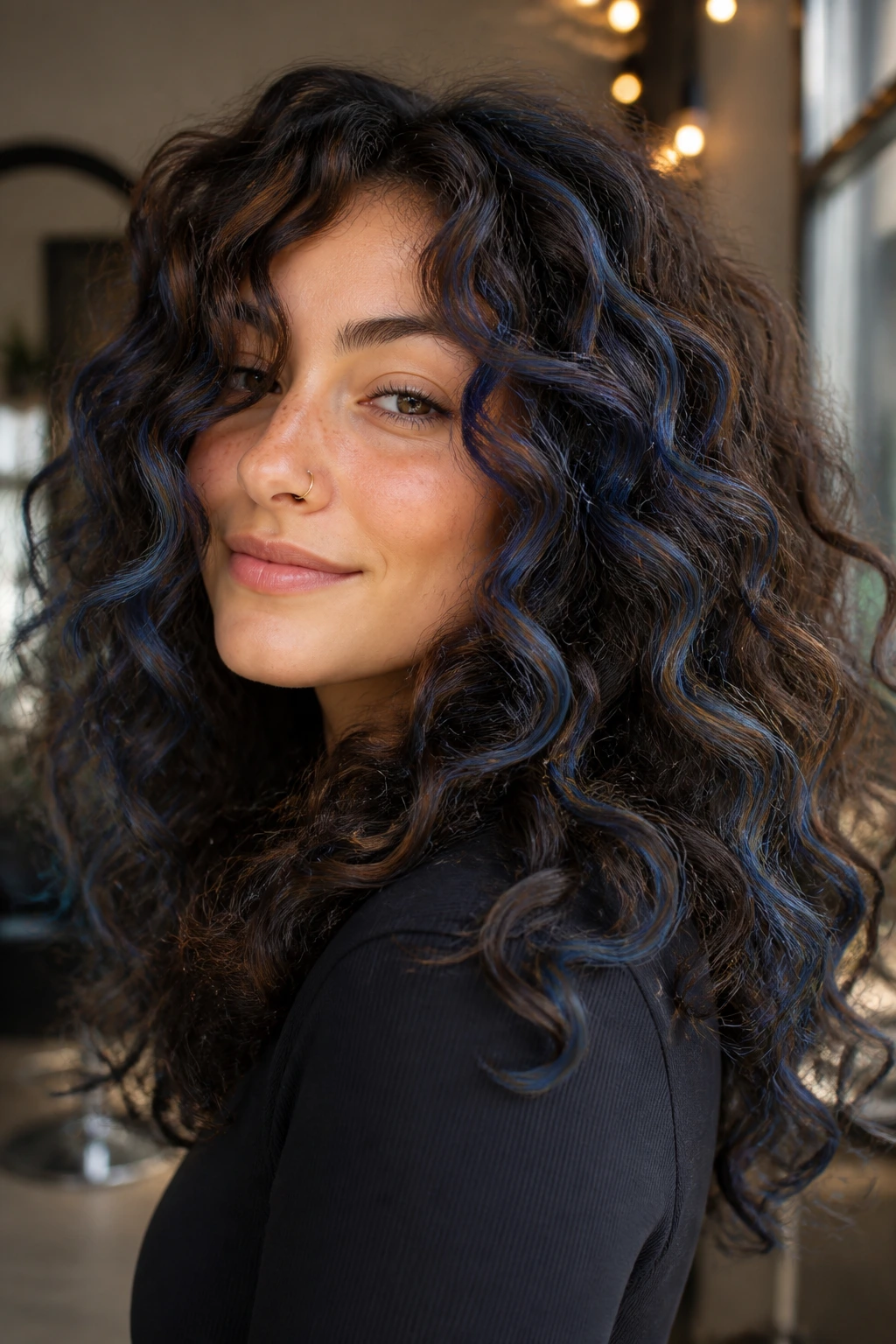
On curls, placement matters more than shade. Curly brown hair with denim blue babylights works because the highlights are fine enough to follow the curl pattern instead of cutting across it like a loud line. The result looks soft, scattered, and a little bit smoky.
Denim blue is a good choice here because it has that muted, worn-in feel that plays nicely with texture. On a brown curl pattern, it can flash steel-blue in some light and read almost navy in others. That shifting quality keeps the color from looking too flat once the curls shrink up.
Babylights are tiny for a reason. Big chunky pieces can get lost in curls, while smaller strands hold their shape and show dimension when the hair is diffused or air-dried. If the base is a deep brunette, a few lighter blonde threads can keep the blue from disappearing into the background.
Hydration matters here. Blue looks better on curls when the curl cuticle lies smooth, not fuzzy.
6. Chestnut Lob with Smoke Blue Underlights
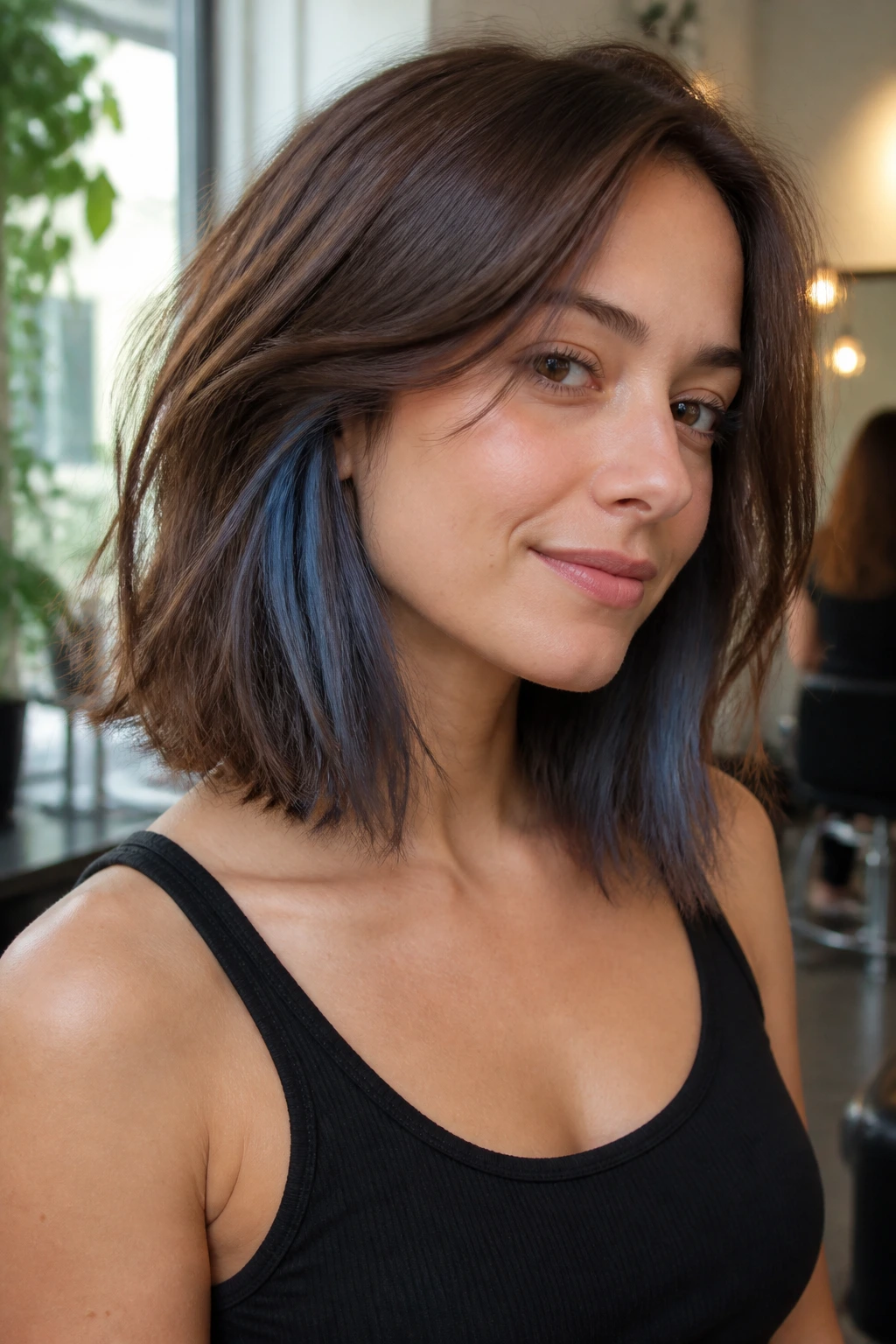
Underlights are the quiet ones. They sit beneath the top layer and only show when the hair moves, parts, or gets tucked behind the ear. On a chestnut lob, smoke blue underlights feel cool without taking over the whole head, which makes this a strong pick for someone who wants a little edge and not a full-on color story.
Unlike surface streaks, underlights have a built-in reveal. A shoulder-length lob is perfect for that because the cut naturally flips and swings. The blue catches near the neckline and through the lower layers, while the chestnut top stays warm and easy.
This style looks especially good with a smooth bend through the ends. Air-dried texture can blur the underlights a little too much unless the blue is very vivid. A curved iron wave helps separate the layers enough for the color to show.
If you like your hair to look different from every angle, this one is hard to beat.
7. Ash Blonde Foilayage with Sapphire Threads
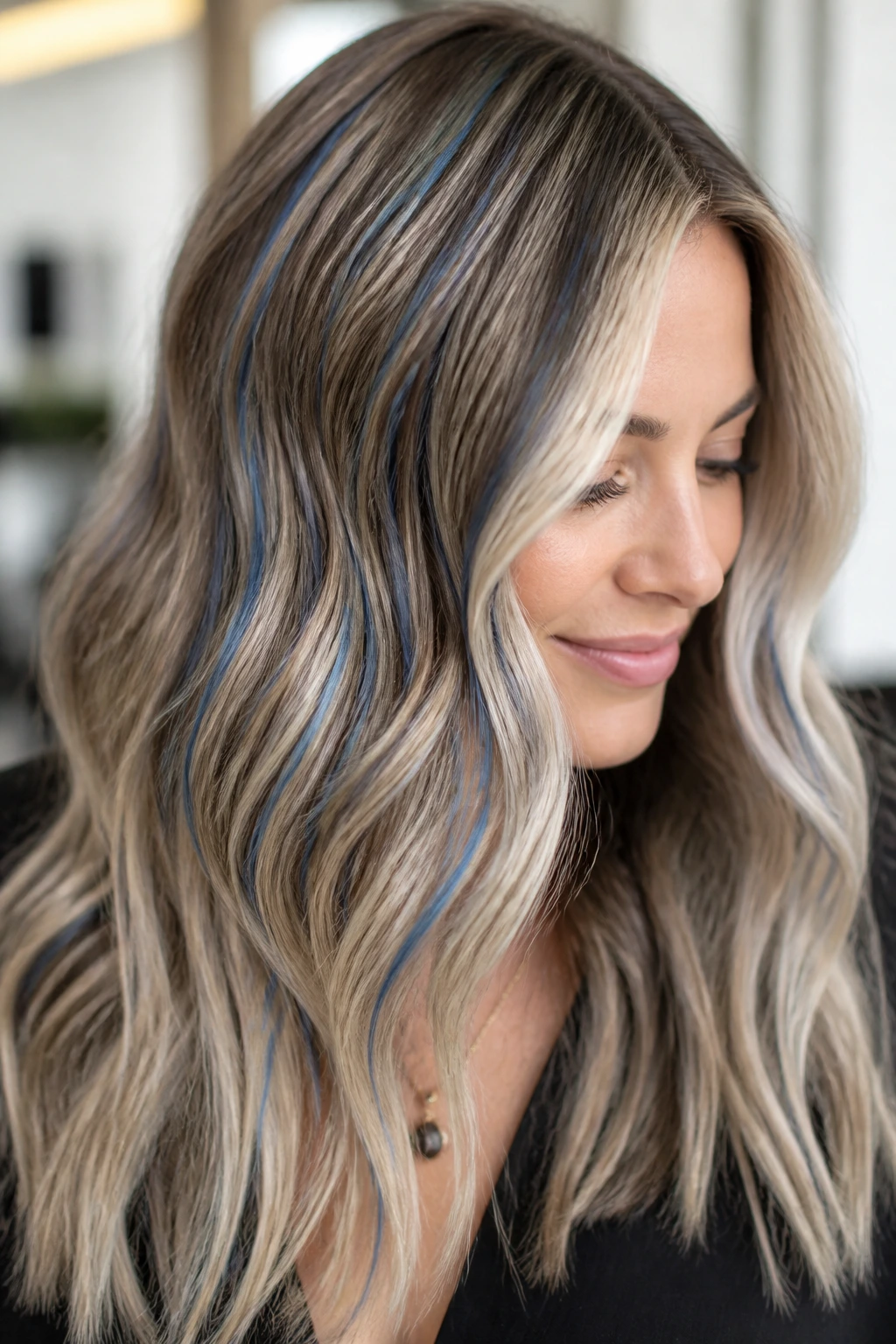
Ash blonde and blue threads can look almost icy when the placement is clean. Foilayage makes that easier because it combines hand-painted softness with foil lift, so the blonde gets bright enough for sapphire to stay clear. The effect is cool, crisp, and a little bit expensive-looking without trying too hard.
What makes it different
Foilayage gives more lift than open-air painting. That matters on brown hair, especially if the base is medium dark or deeper. You need the blonde light enough that the blue doesn’t sink into the warmth underneath.
- Best for brown hair that needs strong lightening
- Sapphire threads should be thin and deliberate
- Ash blonde keeps the overall tone cool
- Works well on layered cuts where the blue can peek through
A lot of people ask for blue and then forget that the blonde is doing the heavy lifting. It isn’t glamorous to say, but it’s true. The cleaner the lift, the cleaner the blue.
8. Mocha Brown with Teal-Tinted Blonde Ribbons
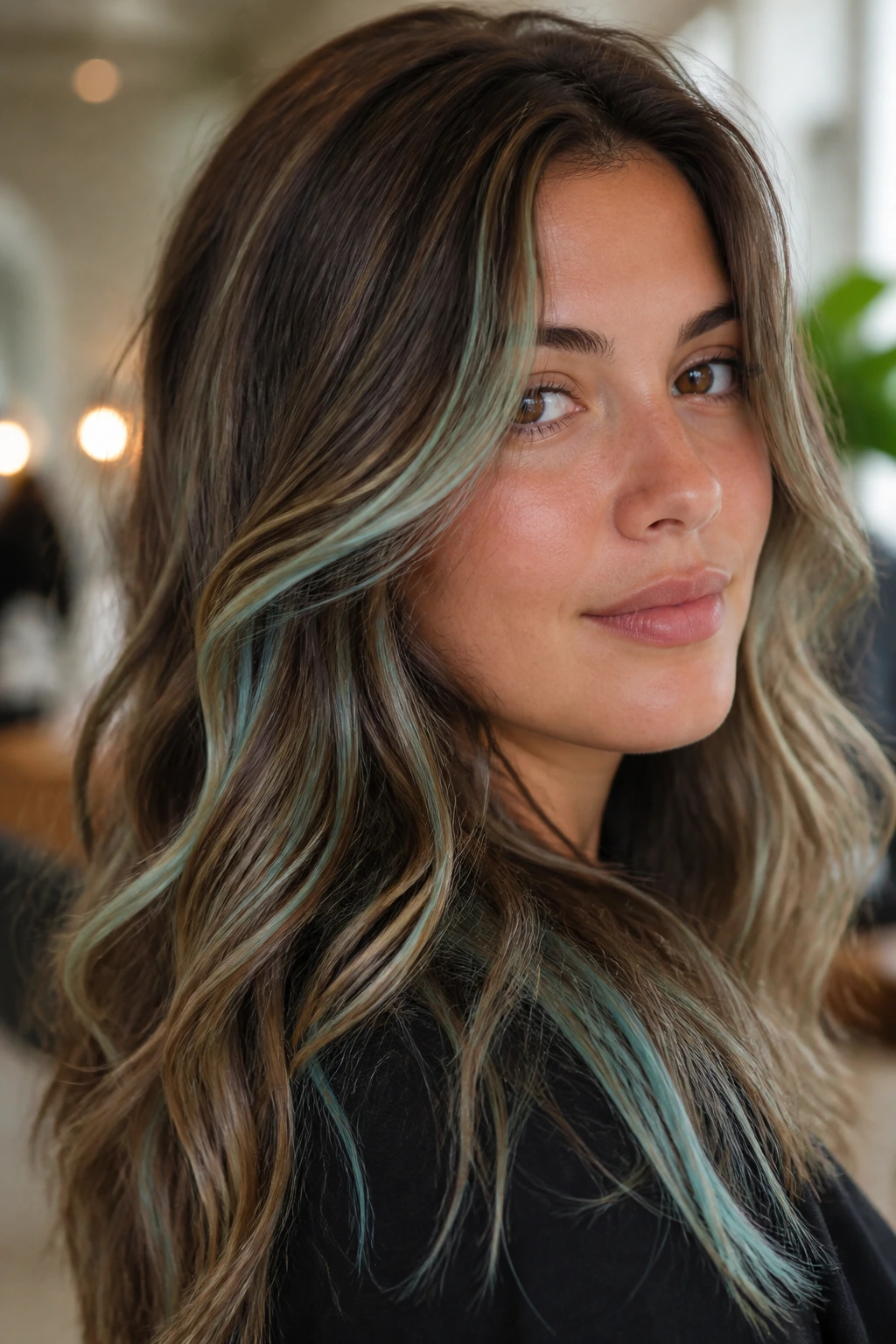
Teal is the shade I reach for when a bright blue would feel too sharp. On mocha brown hair, teal-tinted blonde ribbons soften the contrast and give the whole look a richer, more blended finish. It still reads colorful, but it doesn’t shout from across the room.
The ribbons work best when the blonde is pale enough to take the teal as a tint rather than a solid block. That’s what creates the fluid, almost watercolor feel. Mocha brown has enough warmth to keep the color from looking chilly, and the teal adds a slight green cast that makes the style feel deeper than plain blue.
This is a strong option for someone who wears earth tones, cream, black, or gold jewelry. It doesn’t fight those shades. It sits beside them nicely. On waves, the ribbons spread out and show a soft flicker. On straight hair, they line up into a more graphic finish.
A little teal goes a long way here. That’s the charm.
9. Bob-Length Babylights in Powder Blue and Beige
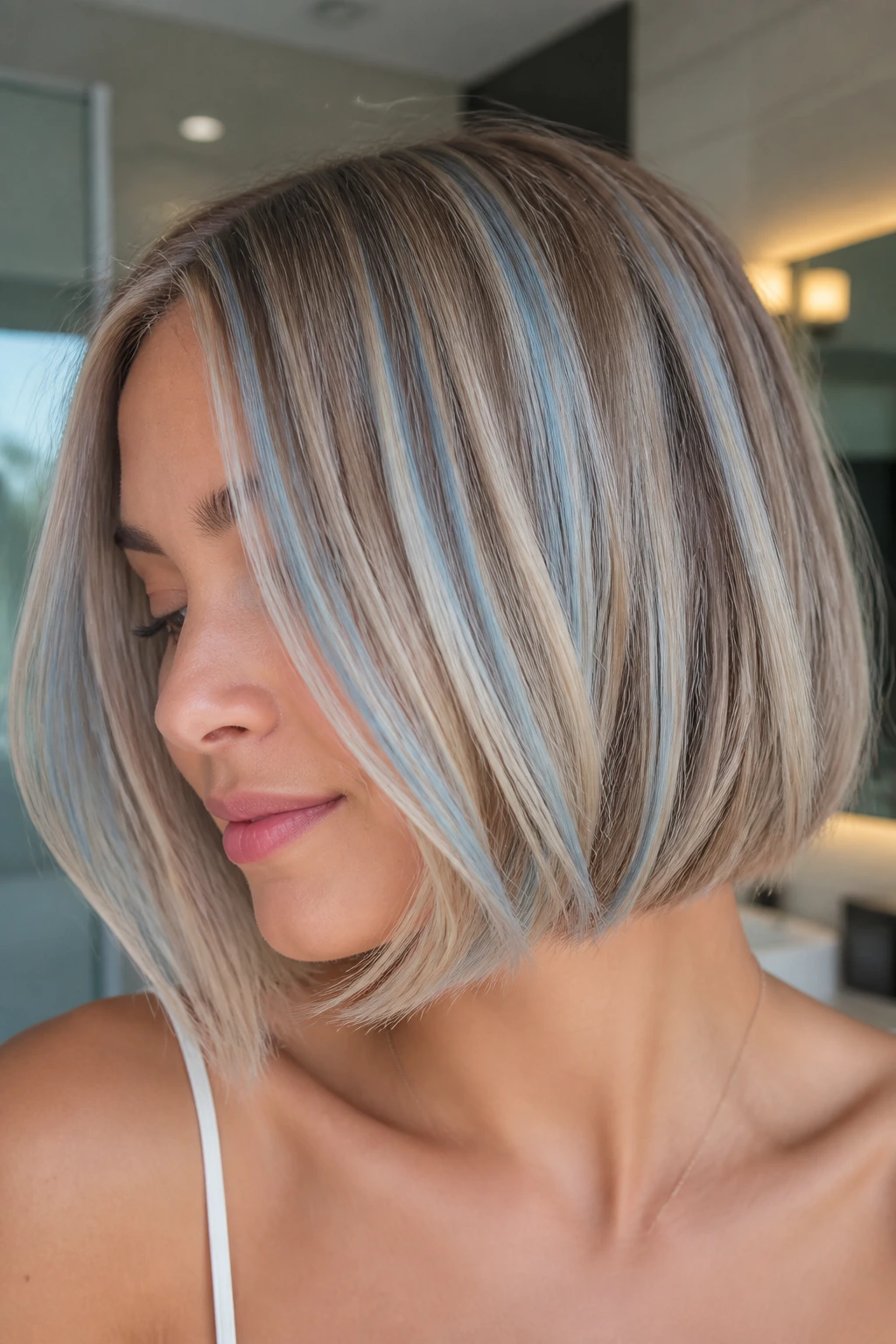
What if you want color that almost disappears until the light hits it? Bob-length babylights in powder blue and beige do exactly that. The blonde stays soft and creamy, the blue stays airy, and the short length keeps everything neat instead of heavy.
How to use it
Babylights need precision on a bob because there isn’t much hair to hide behind. Fine, evenly spaced slices give the color a shimmer effect rather than a stripe effect. Powder blue is a good fit because it stays gentle, almost like tinted glass.
A blunt bob makes the placement look sharp. A slightly layered bob gives the blue more room to move. Both can work, but the cleaner cut will always show the color more clearly. That’s useful if you want the look to feel polished.
This is a nice choice for someone testing blue for the first time. It isn’t a full commitment. It is more like a whisper, and on short hair, that’s often enough.
10. Long Layers with Midnight Blue Dip-Dyed Ends
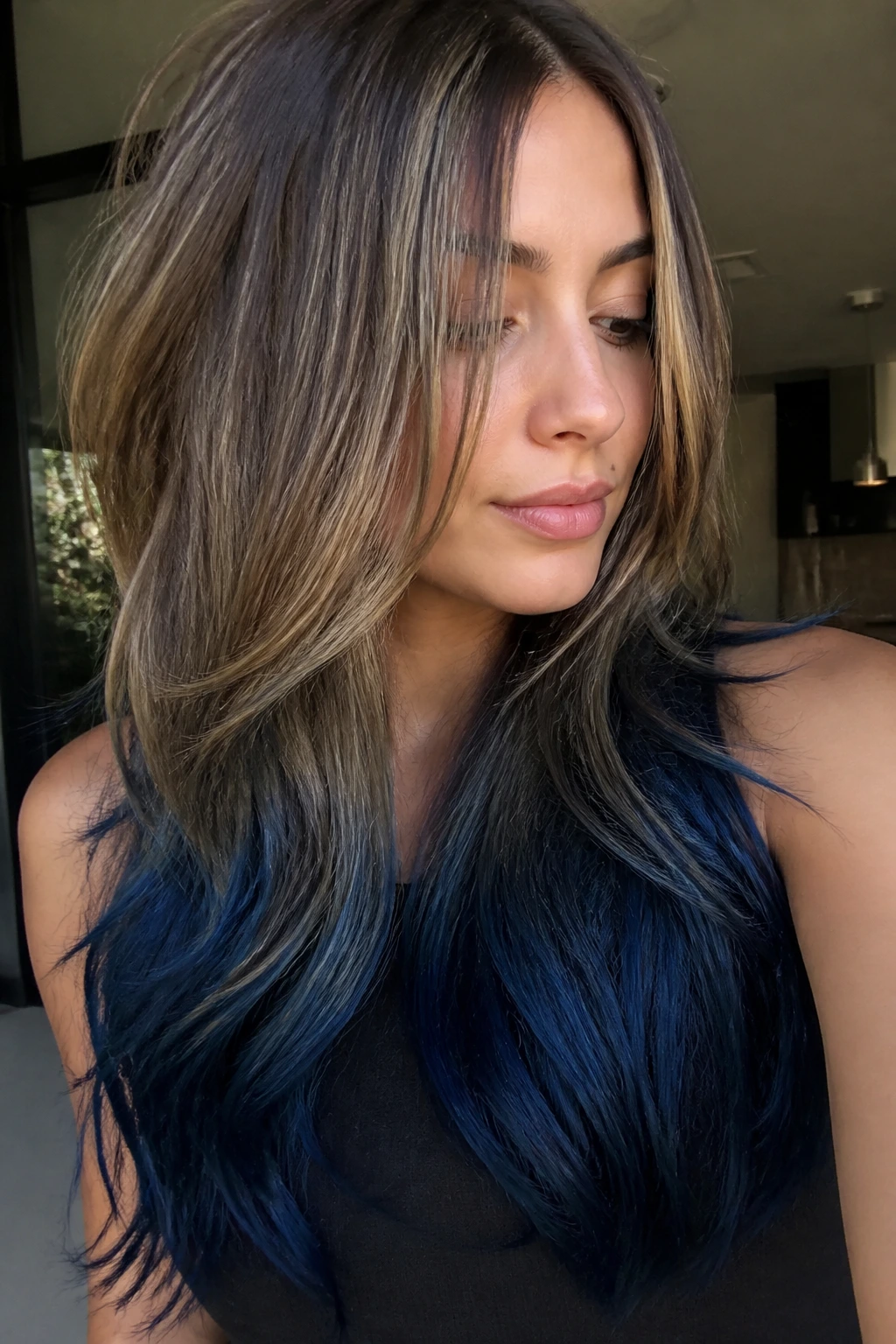
A dip-dyed end section changes the mood of long hair fast. The brown and blonde live up top, then the midnight blue gathers at the bottom like ink in water. It’s bold, but in a controlled way, which is why it works so well on long layers.
The layered cut matters. Without some movement in the shape, dip-dyed ends can look like a hard line. Layers soften the drop and help the blue blend into the blonde mids before it reaches the ends. Midnight blue is a smart pick because it stays deep and moody even if the hair has a little warmth left in it.
- Best if the ends are well-bleached before toning
- Works on thick hair, where the blue has enough weight to show
- Looks strongest in braids, curls, or a loose blowout
- Keep the last few inches trimmed clean so the dip-dye looks fresh
One blunt trim can make the whole style feel more finished. Skipping it can make the ends look tired fast.
11. Caramel Brunette Shag with Sky Blue Face Pieces
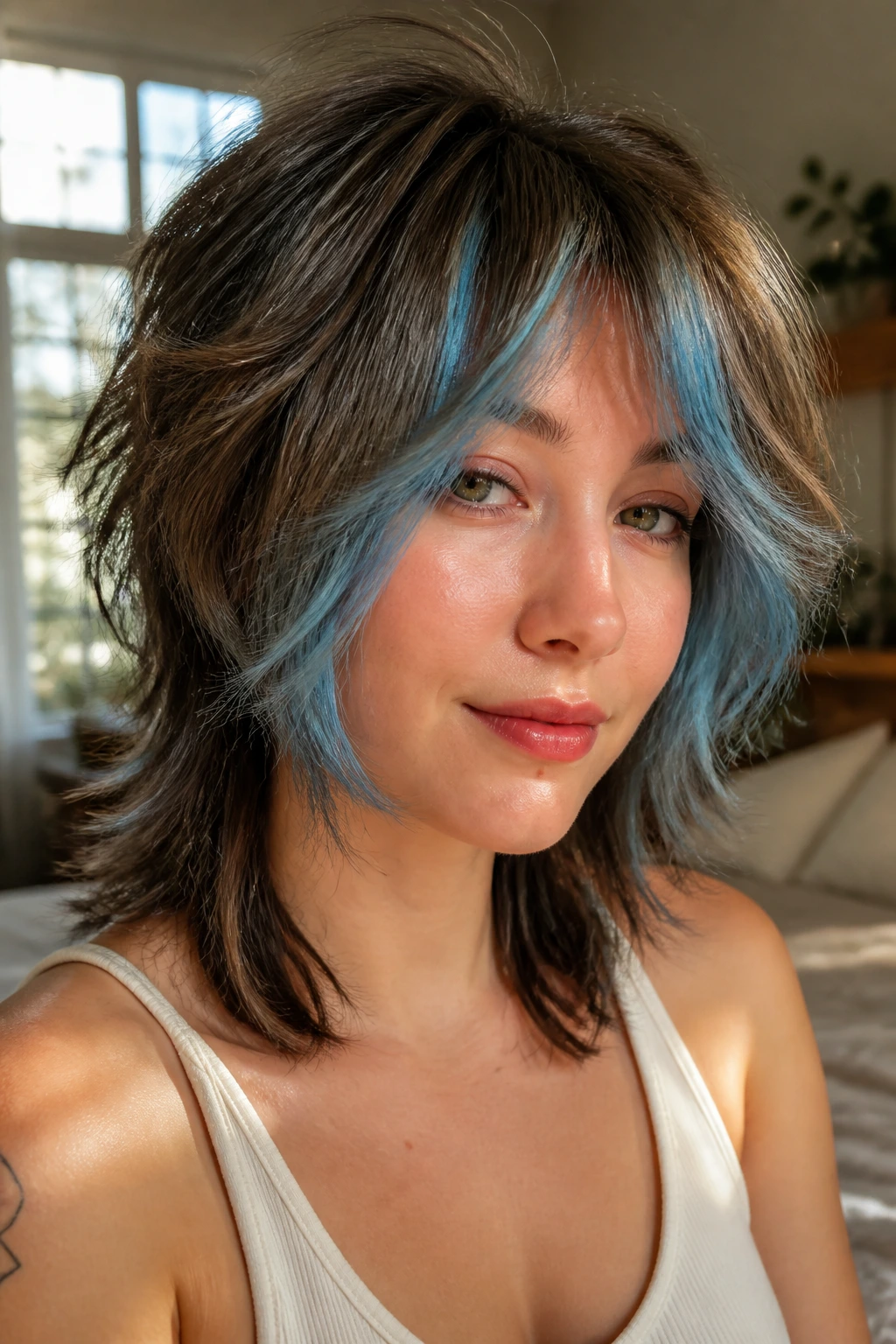
Caramel and sky blue sounds odd until you see it on a shag cut. The texture breaks everything up, so the lighter face pieces don’t sit there too neatly. They move. They bend. They catch light in little flashes that feel playful instead of precious.
The shag gives the color some attitude. Curtain bangs or shorter fringe pieces help the blue show near the eyes, while the caramel blonde through the rest of the cut keeps the palette warm enough to stay wearable. Sky blue works here because it feels airy, not heavy. It can look almost pastel on lighter blonde sections and slightly brighter on cleaner lifts.
This is a nice shape for someone who likes messy styling. A bit of mousse, a rough blow-dry, and some finger-combing are enough. The cut does most of the work. Straightening it makes the blue pieces sharper, but the shag really lives when there is a little texture left in it.
Easy, but not boring.
12. Deep Brown Hair with Pearl Blonde and Cobalt Contrast
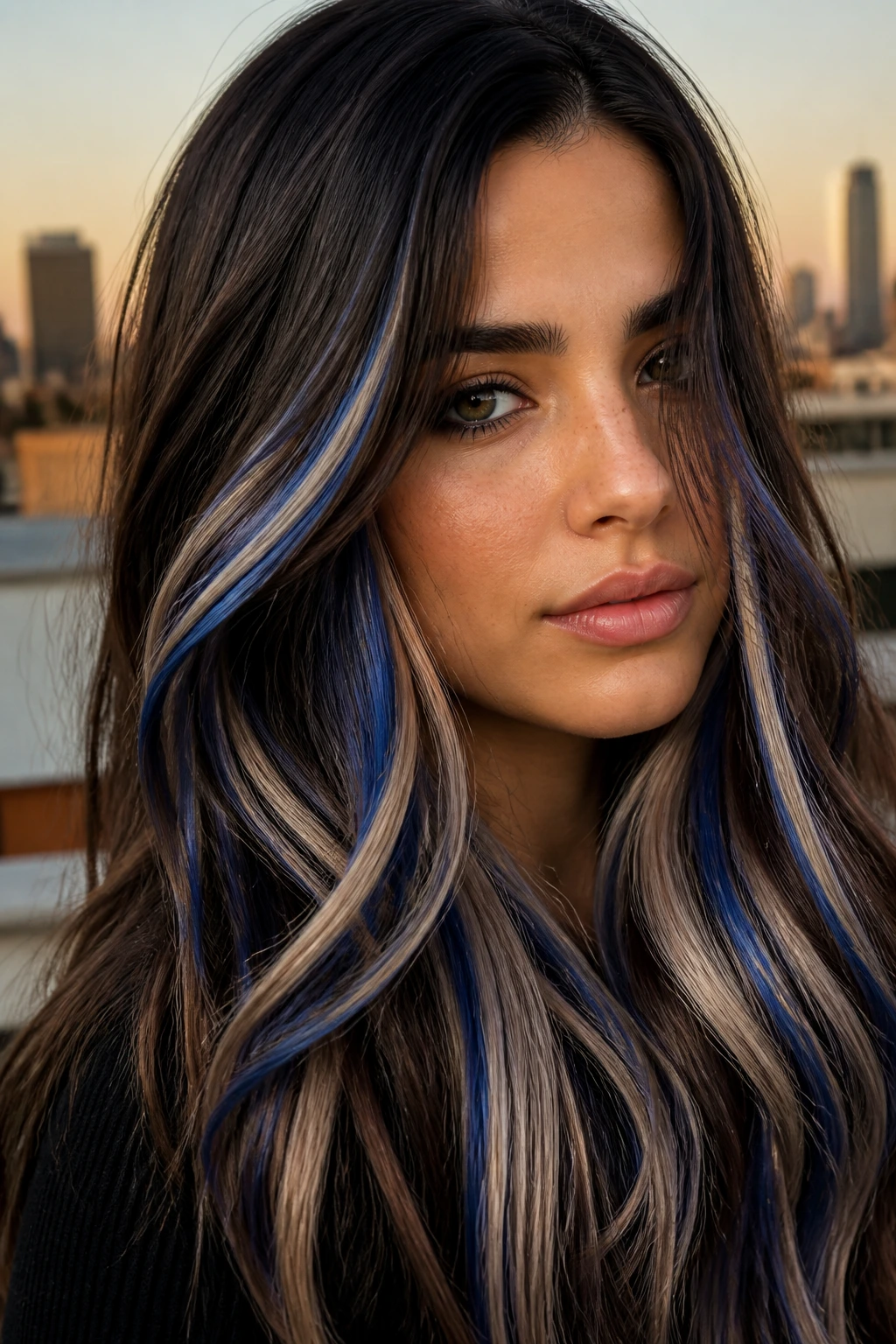
Pearl blonde and cobalt do not behave the same way, and that is exactly why this combo works. Pearl blonde has a soft, cool shine that feels refined on deep brown hair. Cobalt is the louder partner. Together they make a contrast that looks deliberate rather than random.
This look leans bolder than the softer blue ideas in the list. It suits someone who likes strong makeup, clean clothes, or a hair color that makes its own statement. The brown base should stay rich and dark so the pearl blonde can pop without turning brassy. Then the cobalt slices bring the color back down and keep it interesting.
Best way to wear it
This style shows best on straighter textures or smooth waves. Heavy curls can scatter the contrast a little too much unless the color placement is very strategic.
It also helps to keep the blue to a few strong pieces instead of spreading it everywhere. Too much cobalt can flatten the pearl blonde. A little restraint goes a long way here.
13. Braids with Blonde Blue Accent Strands
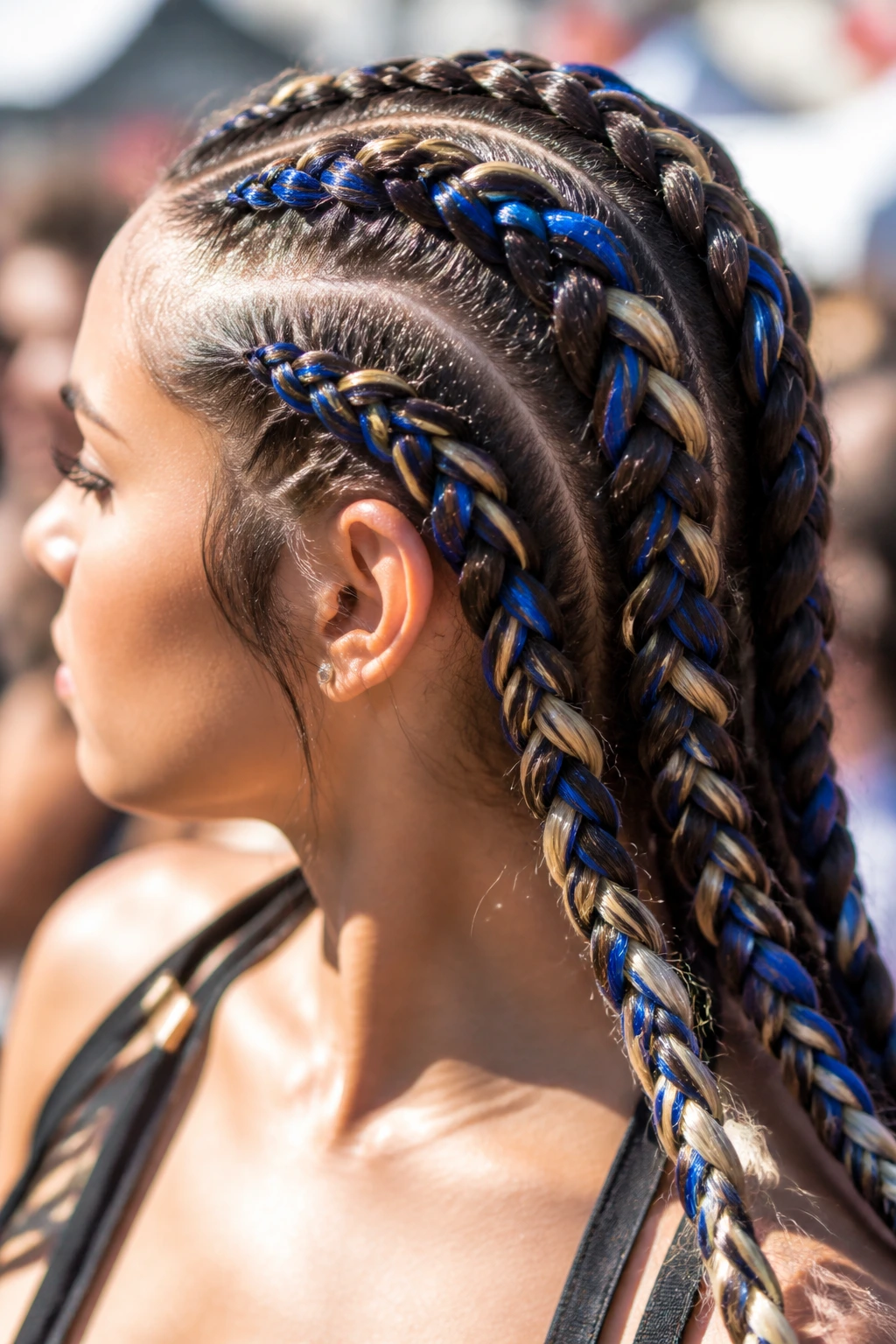
Braids turn highlight placement into a moving pattern. Blonde blue accent strands show up in a very different way once the hair is woven, which is why this style feels so fresh on brown hair. The color doesn’t just sit there. It twists through the braid and changes every time the plait shifts.
What to ask for
Accent strands work best when they’re placed where the braid will actually reveal them. A few blonde pieces near the outer sections, plus a blue strand or two tucked closer to the middle, give the braid a striped, woven look.
- Works on Dutch braids, fishtails, and rope braids
- Best when the hair has medium to long length
- Blue reads stronger if the braid is slightly pancaked
- A mix of honey blonde and cobalt keeps the braid from looking too flat
This is a good option for festivals, workouts, protective styles, or any day when you want your hair to do something a little unexpected. Unbraid it later and the color story changes again.
14. Dark Brunette with Navy Peekaboo Panels
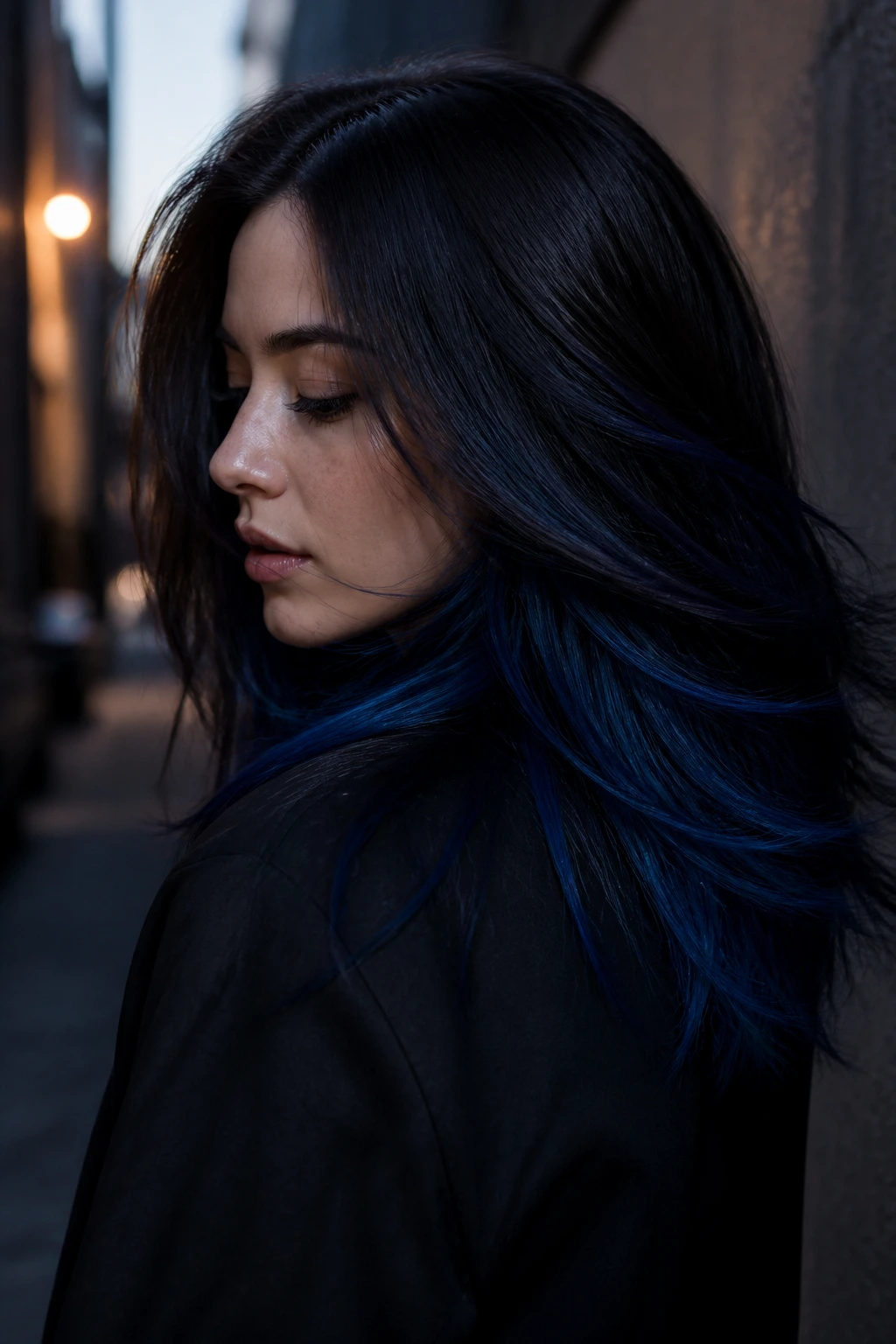
Navy is the sleeper shade here. On very dark brunette hair, it can be easier to wear than bright blue because it still belongs to the depth of the base. Peekaboo panels give you that dark-on-dark contrast with just enough lift from the blonde pieces to keep the look from vanishing.
The panels should sit underneath the top layer so they only flash when the hair moves. That makes the style flexible. Straight hair shows the panels in sleek strips. Waves soften them. A high ponytail can expose a lot more color than you’d expect, which is part of the fun.
This version is a good fit if you want something subtle in low light and more visible outdoors. The navy reads richer than electric blue, and the blonde can stay limited to the crown or front sections. That keeps the overall feel moody rather than playful.
For brown hair that is very deep, this is one of the easiest blue ideas to live with.
15. Brown Curls with Soft Sky Blue Halo Highlights
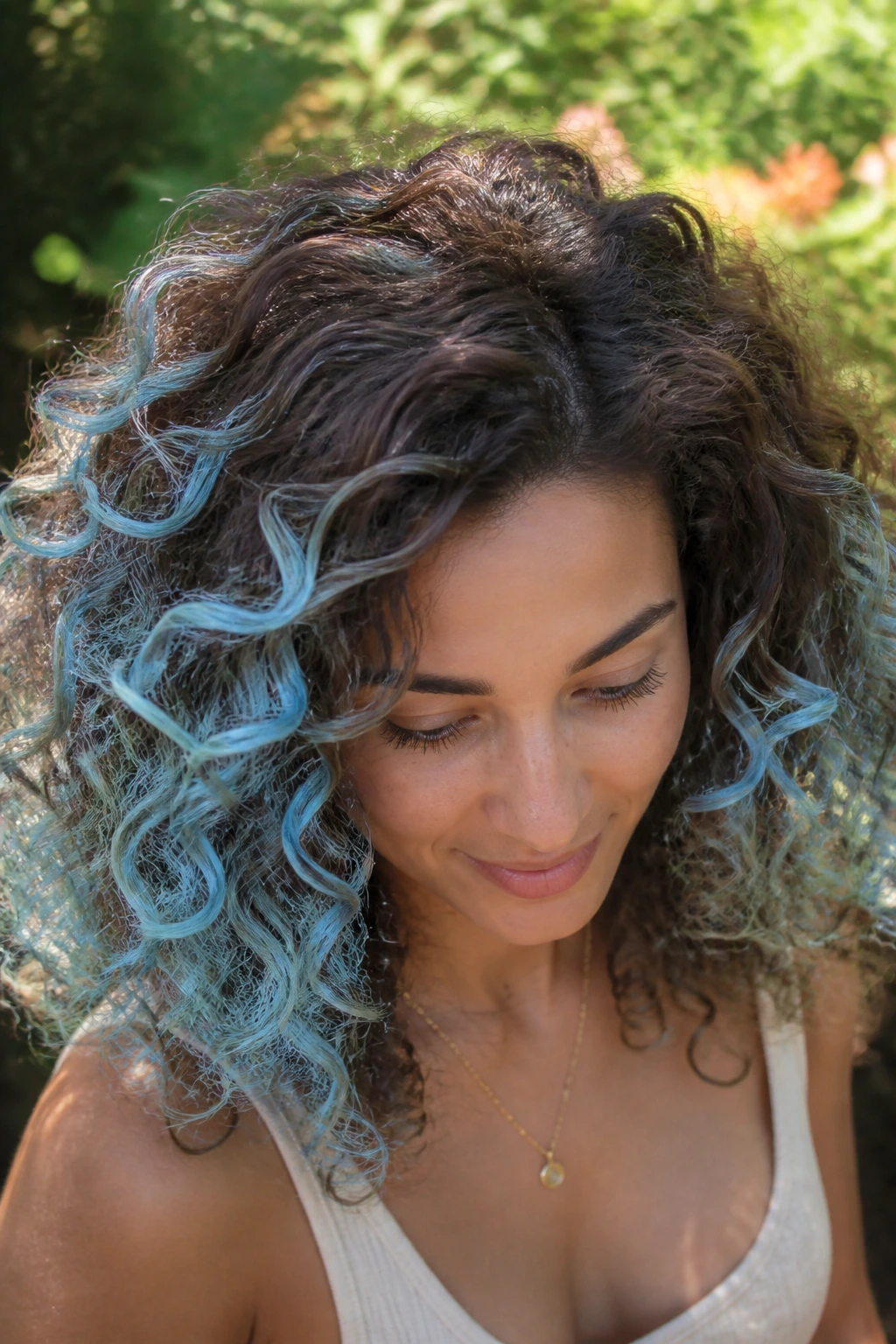
Do curls need a halo instead of streaks? Sometimes, yes. Brown curls with soft sky blue halo highlights place the lighter and bluer pieces near the outer edge of the shape, where they can frame the face and catch light around the top of the head. The effect feels airy and lifted.
The halo idea works because curls already have so much texture. A full, even highlight pattern can look busy fast. By keeping the sky blue near the perimeter, the color feels more like a glow than a stripe. The blonde gives the blue a place to sit, and the curl pattern makes everything break up in a nice way.
This style loves volume. If the curls are flattened, the halo loses a lot of its impact. A diffuser, curl cream, or a gentle finger-coil routine can help keep the shape round enough for the color to read properly. Sky blue is especially pretty here because it lightens the mood without stealing the show.
Soft. Clean. A little dreamy.
16. Cinnamon Brown with Ice Blonde and Cobalt Foils
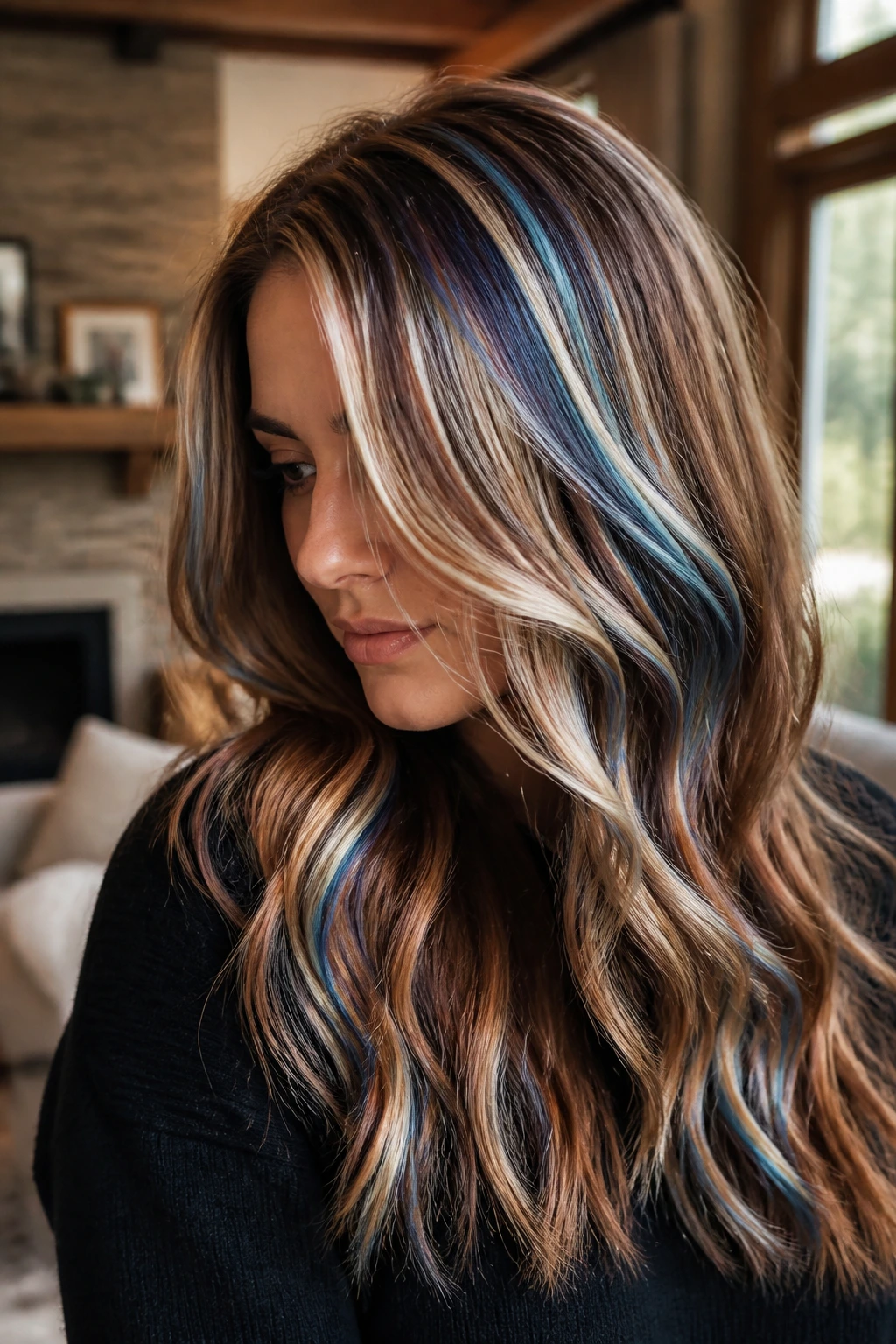
Thin foil slices can do more work than chunky ones. On cinnamon brown hair, ice blonde and cobalt foils create a sharp, bright rhythm that feels rich rather than overdone. The warmth in the brown keeps the cool tones from going harsh, which is a nice balance when you want contrast but not shock value.
The foil placement matters a lot here. Narrow slices create shine and movement, especially if they’re concentrated through the front and top layers. Ice blonde lifts the brightness level, and cobalt slips in as the cool accent that stops the blonde from looking too warm.
- Best on medium to long layered hair
- Ask for fine foils, not broad panels
- Keep the blonde pale and cool-toned
- Cobalt works best in small, separated pieces
This look is especially good if your hair catches red or copper tones fast. The icy pieces calm that down. The cobalt gives the whole thing a little bite.
17. Layered Brunette with Smoky Blue Shadow Roots
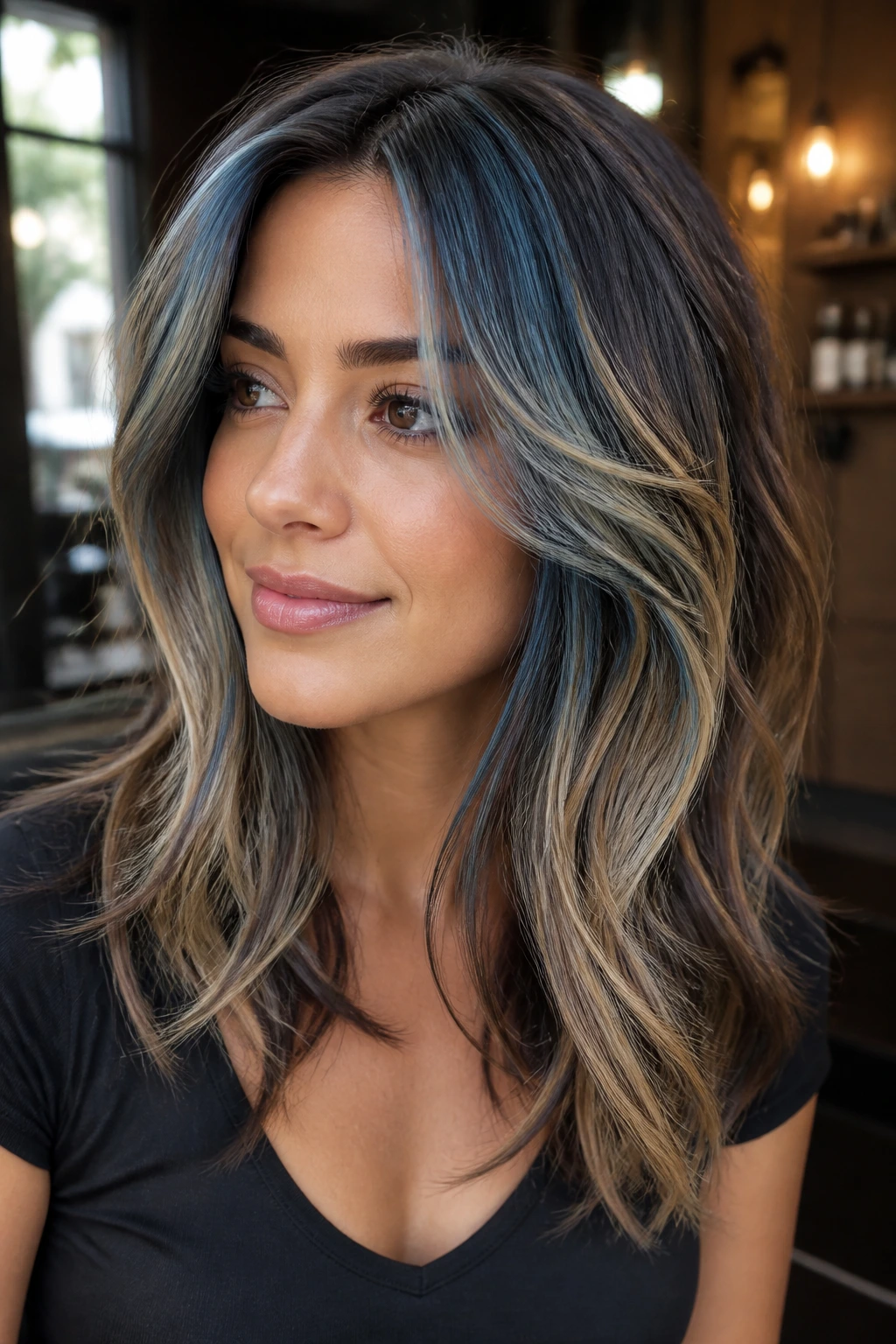
Shadow roots are not a mistake. They’re a choice, and on layered brunette hair, they can make blonde and blue highlights feel much more blended. A smoky blue root melt starts deep at the scalp, then eases into lighter lengths and brighter pieces below. The effect is moody and grown-in, not fussy.
The reason this works is simple: layers give the root color places to disappear. A blunt cut can make a shadow root feel heavy if it isn’t done carefully. Layers break that up, so the transition from brown to smoky blue to blonde feels softer. The blue at the root also helps the rest of the blonde look cleaner.
This is a strong option for anyone who wants less obvious regrowth. The darker root area buys you time between salon visits, and the smoky blue makes the grow-out feel part of the design. It is one of the more practical choices in this whole set, which is probably why it keeps showing up in good color work.
18. Wavy Lob with Denim Blue Ribbon Lights
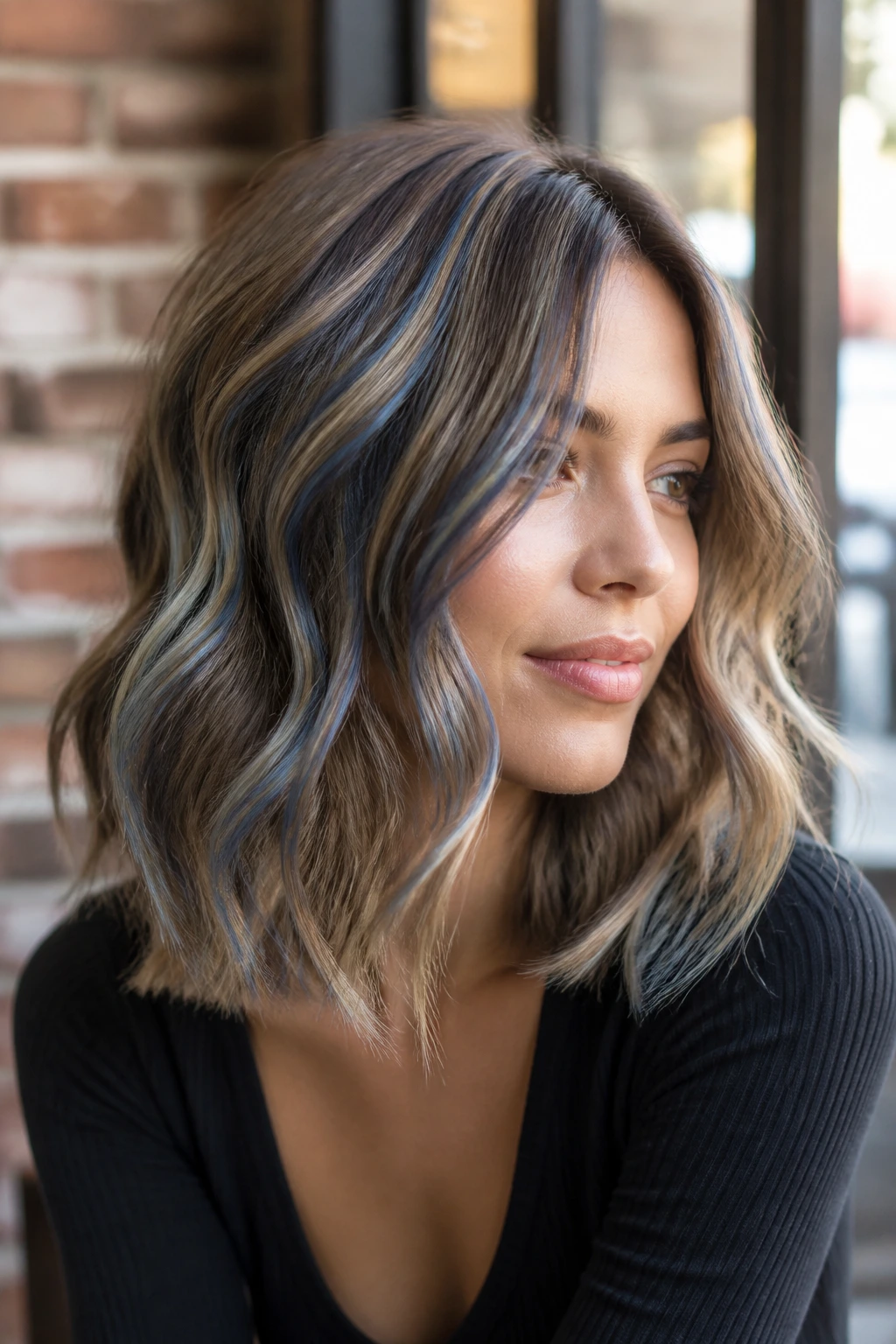
Denim blue sits nicely in a wavy lob because the cut has enough length to show the ribbons but not so much that the color disappears into layers. Ribbon lights are wider than babylights and softer than stripes, which makes them a useful middle ground for brown hair.
The blonde pieces help the denim blue stay visible without feeling dark or flat. On a lob, the wave pattern spreads the color across the head in a loose curve, so the ribbons look like they’re moving even when the hair is still. That’s a nice effect if you wear your hair down most days and want the color to feel alive.
A lob also keeps maintenance manageable. You can trim the ends clean, keep the wave pattern loose, and let the color grow out without losing the shape. It is a good style for someone who likes cool tones but doesn’t want the blue to dominate every glance.
Quietly dramatic. That’s the sweet spot.
19. Warm Brown Hair with Beige Blonde and Blue Color Melt
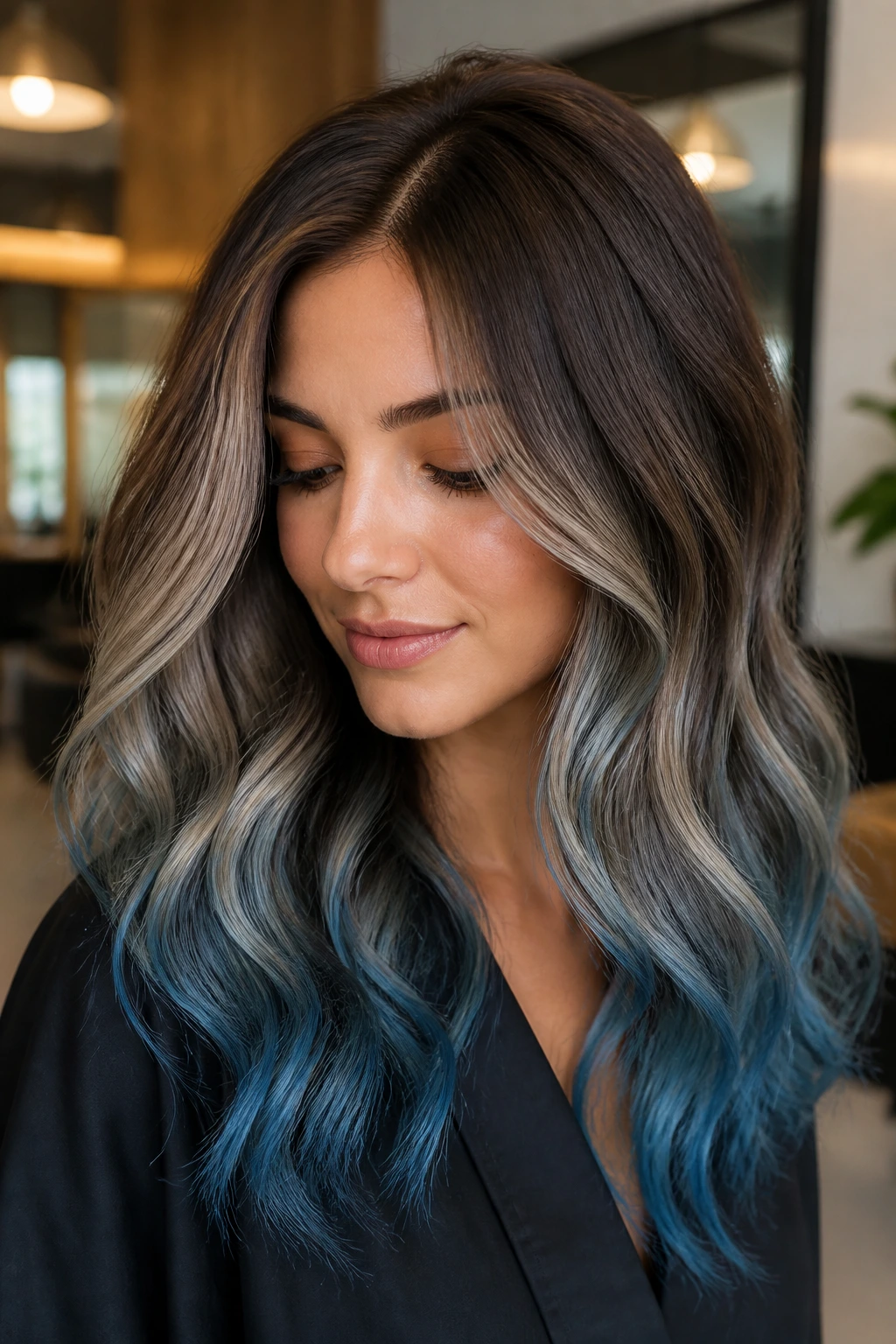
Beige blonde softens the whole story. On warm brown hair, it gives the blue a gentler landing point, which keeps the color melt from turning too stark. The transition from brown to beige to blue feels smooth, almost hazy, and that haze is what makes the style wearable.
Salon note
Ask for the blue to melt into the blonde rather than sit on top of it. That little difference changes everything. A true color melt looks blended at the seam, while a blocky application can feel disconnected.
This style works especially well if you like soft waves or brushed-out curls. The movement lets the beige and blue overlap a bit, and that overlap is where the magic happens. Straight hair can show the fade too, but it will look sharper and more graphic.
If you want color that feels polished without looking severe, this is a strong pick. It’s one of the easiest places to start if you like blue but don’t want a hard split between shades.
20. High-Contrast Brunette with Stripey Blonde Blue Blocks
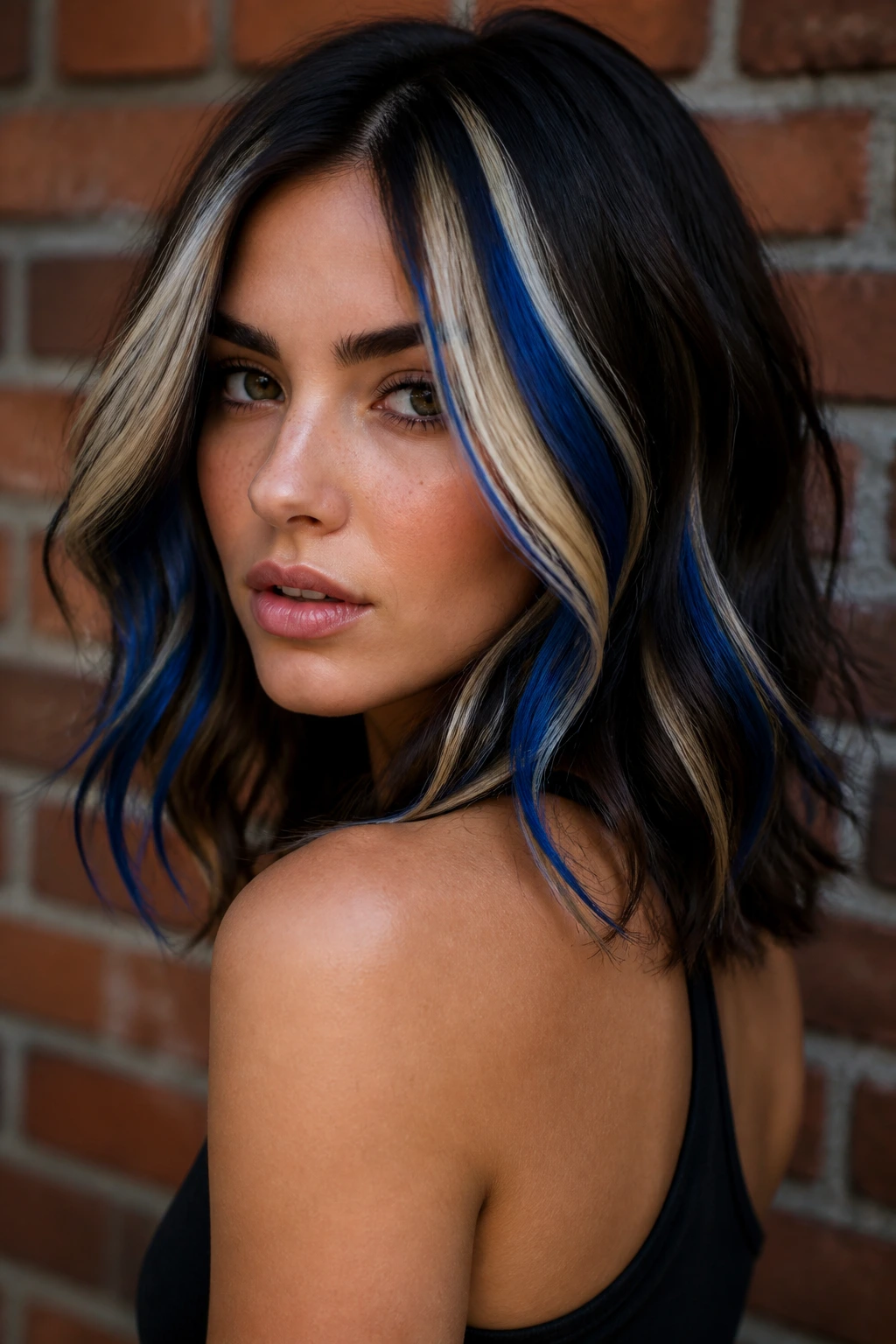
Some hair wants blocks, not blends. High-contrast brunette with stripey blonde blue blocks leans into that. The look is bold, clean, and a little editorial, which makes it a good fit for blunt cuts, sleek blowouts, or anyone who likes hair that announces itself.
The blonde blocks should be light enough to stand on their own. The blue blocks need enough saturation to keep up. When both are strong, the contrast with the brown base feels crisp instead of muddled. This is not the place for timid placement or half-measures.
The style reads best on straight hair or styles with clear shape. Soft curls blur the block effect, which can be pretty, but it changes the whole point. If you want the color to look graphic, the cut needs some structure too.
There’s no pretending this one is subtle. It isn’t. That is the charm.
21. Chocolate Curls with Sky Blue Whispers
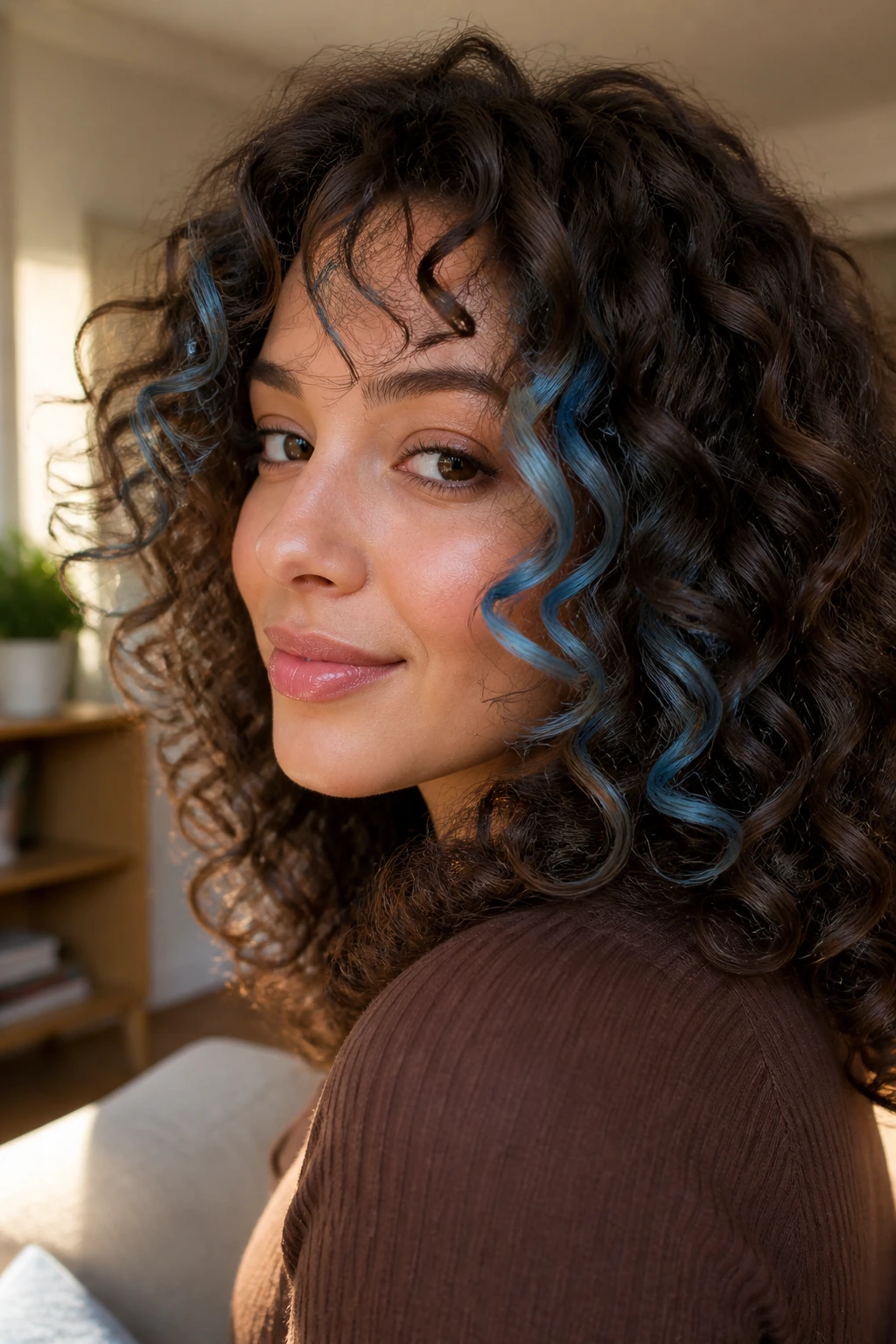
Sky blue on curls reads like a whisper. Chocolate curls already have warmth and bounce, so tiny blue pieces can float on top of them without taking over. The blonde highlights help the sky blue stay visible, but the overall effect remains soft and airy.
This is a beautiful choice if you want color that shows up in motion more than in a flat mirror shot. A few blue whispers around the face, through the upper curl layers, or near the ends can be enough. Too much, and the curl pattern starts to fight the color. Too little, and the blue disappears. The middle ground is where this style lives.
It also works well when the curls are healthy and defined. Fuzzy curls can scatter the blue in a way that makes it hard to read. A smooth curl cream, a little hold, and a diffused finish help the color settle into the shape.
Soft does not mean boring here. Not even close.
22. Blonde Blue Highlights for Brown Hair with Glossy Ends
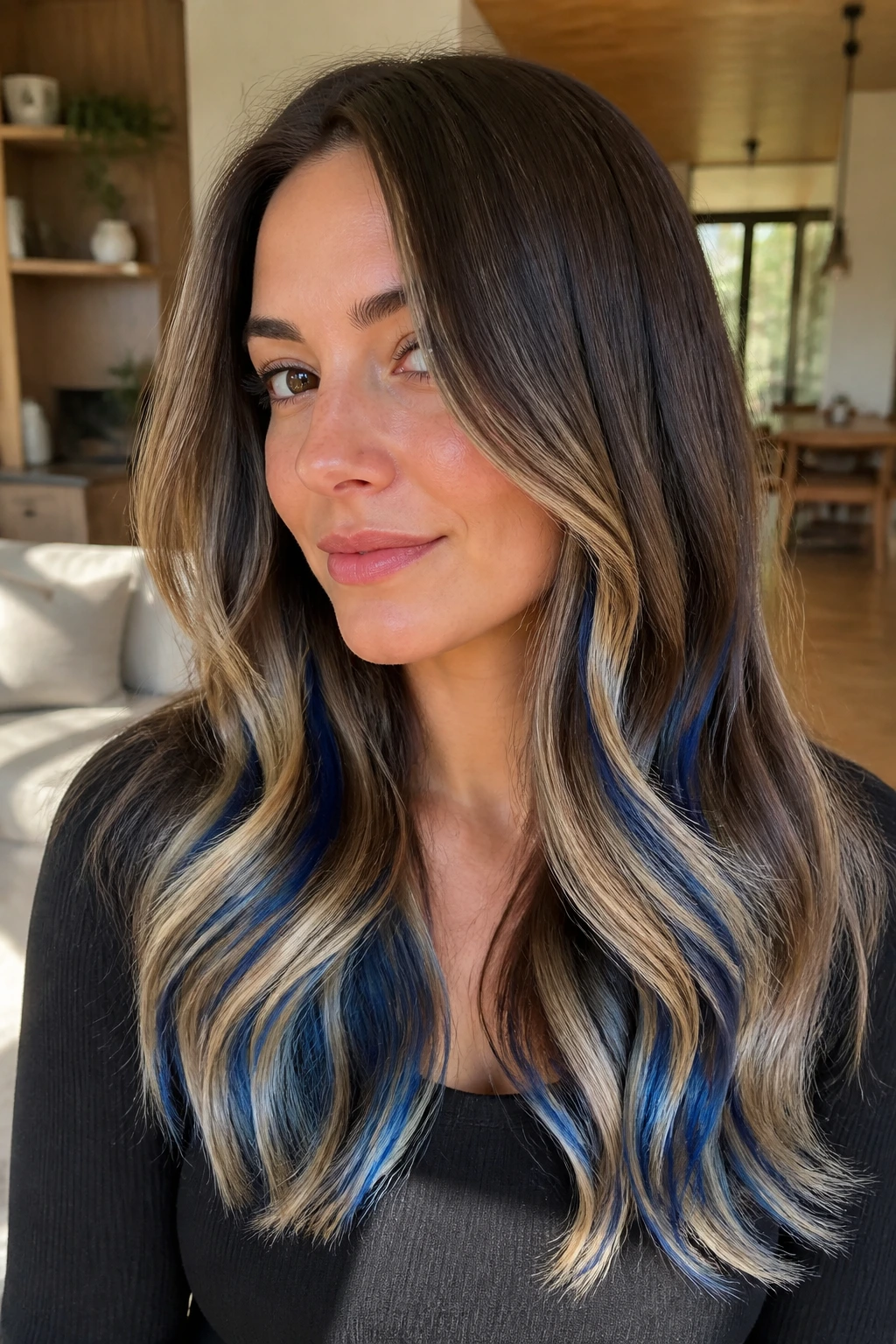
A glossy finish keeps the blonde from looking chalky and helps the blue stay crisp at the ends. On brown hair, that matters more than people think. Once the base, blonde, and blue are all in the mix, shine becomes part of the design. A dry finish can make the whole thing feel tired fast.
This version works best when the blonde and blue are concentrated through the lower half of the hair. The ends carry the most visual weight, so a clear gloss or toner refresh keeps the color from drifting muddy. If the hair is long, a soft wave through the bottom few inches lets the shades blend without losing their separation.
It is a good closing look because it pulls the whole idea together: brown for depth, blonde for lift, blue for personality, shine for finish. Simple recipe. Strong result.
Final Thoughts
The strongest versions of blonde and blue on brown hair are the ones that respect the base. If the brown is deep, the blue usually needs more lift or a darker shade like navy, denim, or smoky cobalt. If the brown is lighter, honey, vanilla, pearl, and beige blonde give the blue room to breathe.
Placement matters just as much as shade. Hidden panels, money pieces, babylights, underlights, and color melts all change the mood without changing the color family. That’s why one look can feel quiet and another can feel loud even when they share the same blue.
If you’re handing this to a colorist, bring one idea from the subtle side and one from the bold side. That makes the conversation easier, and it usually gets you closer to the result you actually want.
