



Brunette hair can look flat fast when every strand sits at the same depth. Chocolate lowlights for brunette hair fix that in a way bright highlights often can’t — they add shadow, movement, and a little bit of mood without dragging the whole head lighter or brassier.
Too many people ask for “just a few darker pieces” and end up with chunky stripes. That usually happens when the shade is too far from the base, or the placement is too wide near the part. Chocolate lowlights work best when they stay close to the natural brown family and slip in like quiet depth instead of shouting for attention.
A solid lowlight usually sits one to three levels deeper than the base color. On a level 5 brunette, that might mean espresso or cocoa. On a level 4 brunette, a softer mocha or truffle tone can keep the result rich instead of inky. The haircut matters too. Long layers can take ribboned dimension. A blunt bob needs finer weaving or the color can look heavy.
Some brunettes need subtle contouring at the face, some need interior shadow, and some need enough contrast to make curls wake up. The 28 ideas below cover that spread, from barely-there cocoa threads to deeper chocolate panels that change the way the cut sits.
1. Chocolate Lowlights for Brunette Hair in Classic Espresso Ribbons
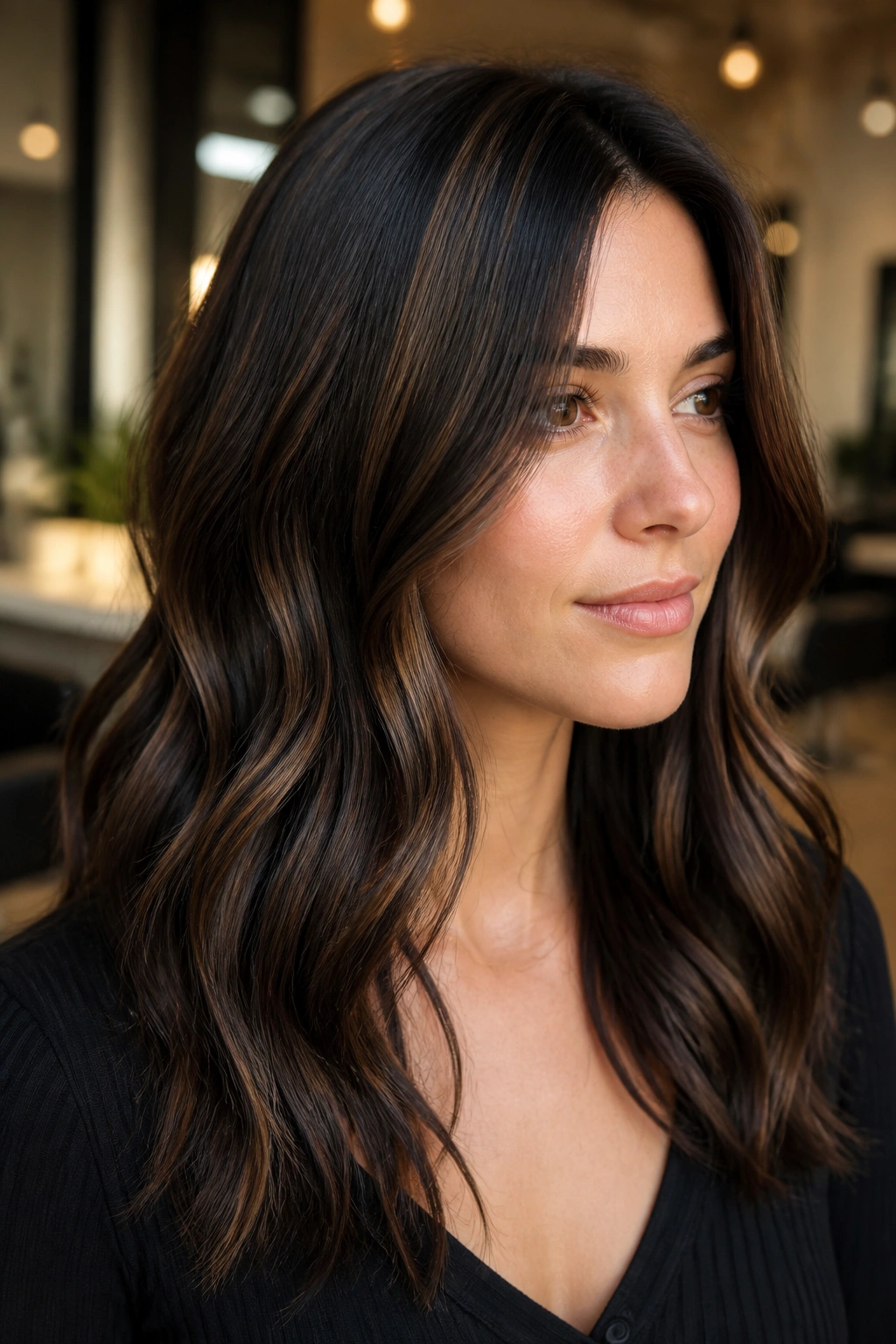
Espresso ribbons are the safest place to start if you want depth that still looks like your own hair. They’re dark enough to create real contrast, but not so dark that they turn the head into one solid block.
Why it flatters medium brunettes
The trick is spacing. Thin ribbons scattered through the mid-lengths keep the brown from reading flat, especially when the hair swings or bends. On a medium brunette base, espresso often looks cleaner than a warm brown because it stays in the same family as the natural shadow already in the hair.
- Best on level 4 to level 5 brunettes.
- Ask for demi-permanent color if you want softer grow-out.
- Keep the pieces finer near the part and a touch wider underneath.
Tip: If your hair is layered, put the darkest ribbons where the layers separate. That’s where the color shows up most.
2. Milk Chocolate Lowlights Around the Face
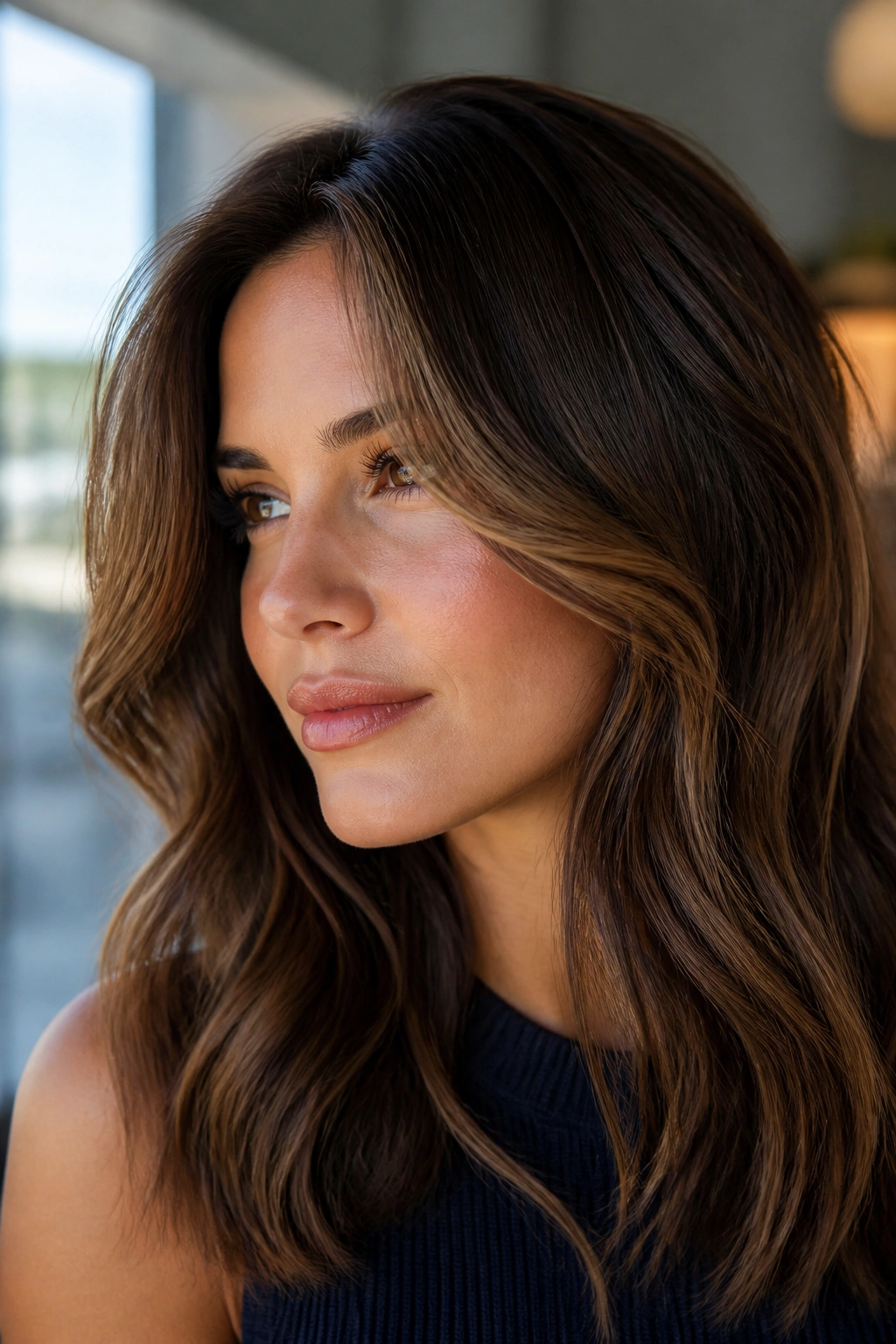
Milk chocolate sounds gentle, and that’s exactly why it works when you want the front to look softer without turning the whole head darker. A few face-framing lowlights can calm down brightness at the hairline and make the haircut feel more balanced.
The best version does not sit right on the outer edge of the face. It lives just behind the front line, where it shows when hair moves but doesn’t cast the face in shadow. That small shift matters. A lot.
This is a smart choice if your brunette base already has warmth and you want a softer edge rather than a dramatic color change. It works especially well with loose waves, since the front pieces bend and reveal the darker tones in motion.
3. Cool Cocoa Panels for Ash Brown Hair
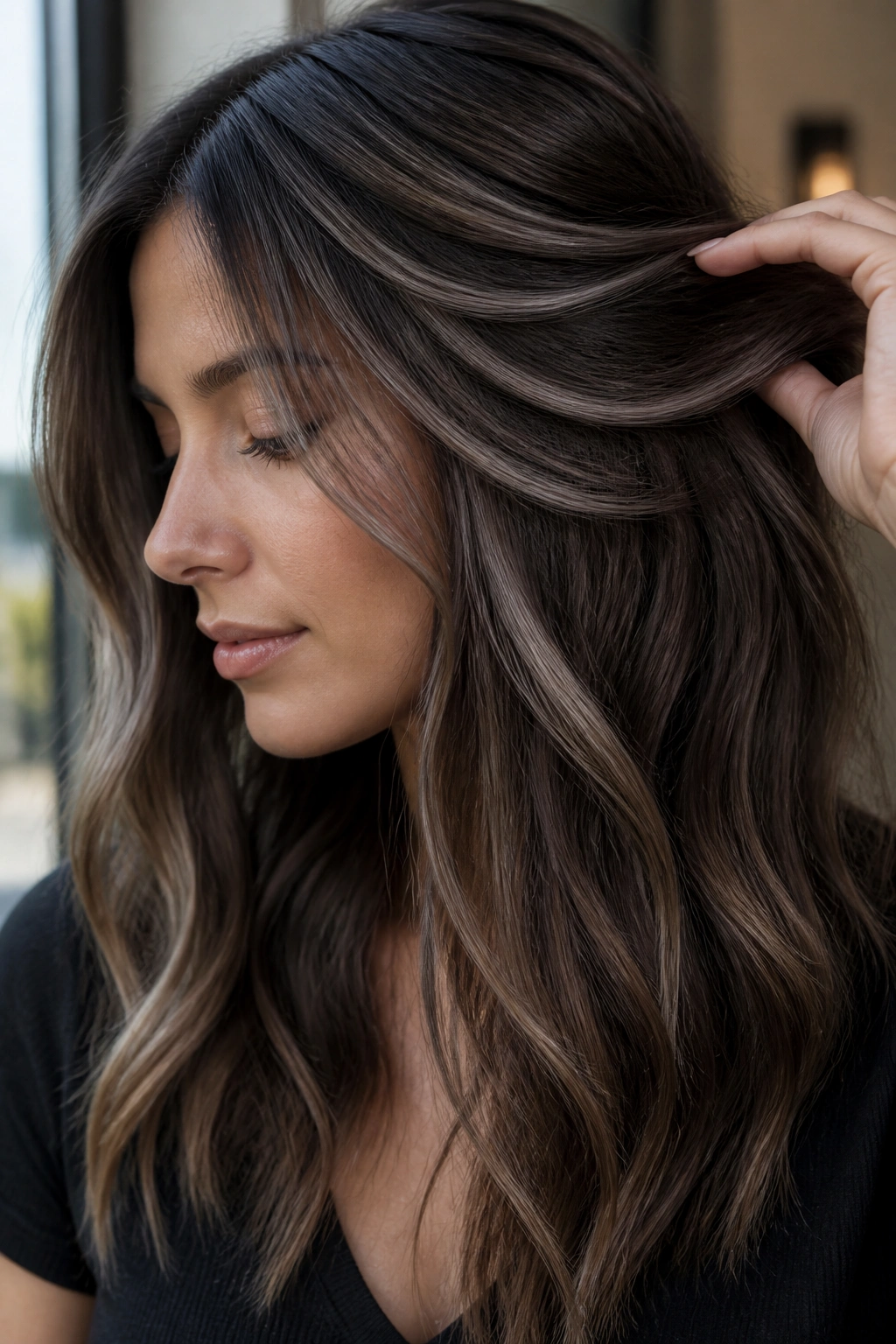
Why does ash brown sometimes look muddy after the wrong lowlights? Because warm chocolate can fight the base and make the whole color look muddy instead of cool and sleek.
What to ask for
Cool cocoa lowlights use a brown that leans neutral or slightly smoky, not red, not gold. On ash brunettes, that keeps the finish clean. The goal is depth that feels quiet, not a muddy brown haze.
- Choose a cool or neutral brunette formula.
- Ask for sliced panels if you want more visible dimension.
- Avoid anything with a copper cast.
- Keep the contrast moderate, not harsh.
A good colorist will usually place these pieces through the interior and underlayers first. That way the ash tone still owns the surface, while the darker cocoa creates shadow beneath it.
4. Mocha Veil for Fine Hair
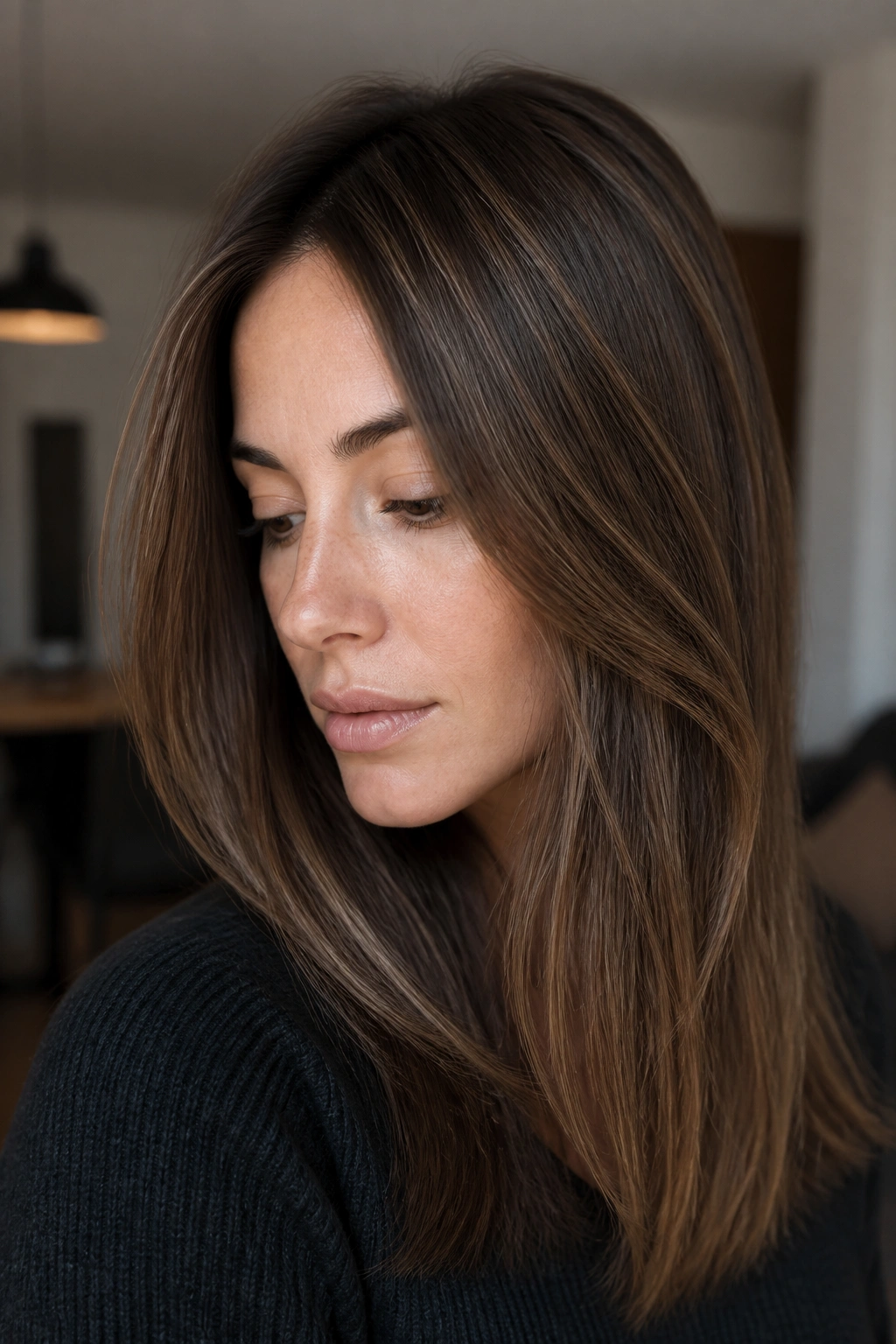
Fine hair can look thinner when the color placement is too bold. Big stripes expose too much scalp and make the surface feel patchy. A mocha veil solves that by using babylight-thin lowlights that blur into the base.
Think of this as softening, not painting. The darker pieces should be narrow enough that they read as texture when the hair moves, not as separate bands when it sits still.
Why a veil beats chunky pieces
Fine hair needs the illusion of density. Too much contrast can do the opposite and make the ends look see-through. A veil of chocolate lowlights, placed mostly through the mid-shaft and interior, gives the hair a fuller outline without making the cut look heavy.
This style is especially good if your brunette hair is straight or only lightly waved. There’s no big curl pattern to hide behind, so the blending has to do the work.
5. Hidden Underlayer Chocolate Lowlights
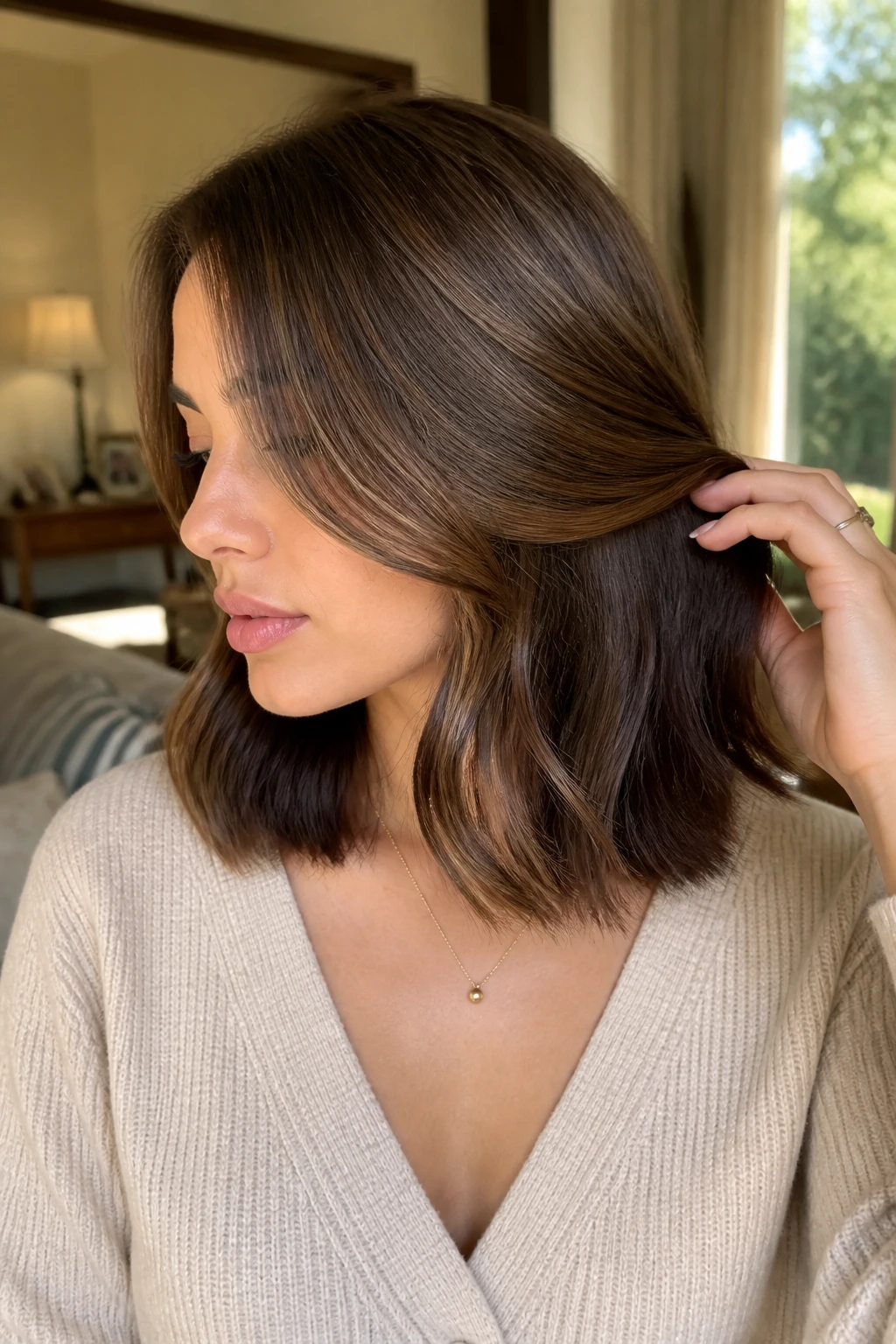
If your hair lives in a clip, a ponytail, or a half-up twist, hidden underlayer lowlights are the move. You get the richness when the hair falls, but the top stays mostly untouched, which keeps the overall look soft.
That placement also gives a nice surprise when you bend, tuck, or sweep the hair back. It’s subtle in the mirror and a little more interesting in motion. I like that. It feels lived-in.
The underlayer approach works well for people who want to test chocolate depth before committing to more visible contrast. It also gives long brunette hair a thicker look from the side, where flat color often shows first.
6. Truffle Lowlights for Wavy Bob Cuts
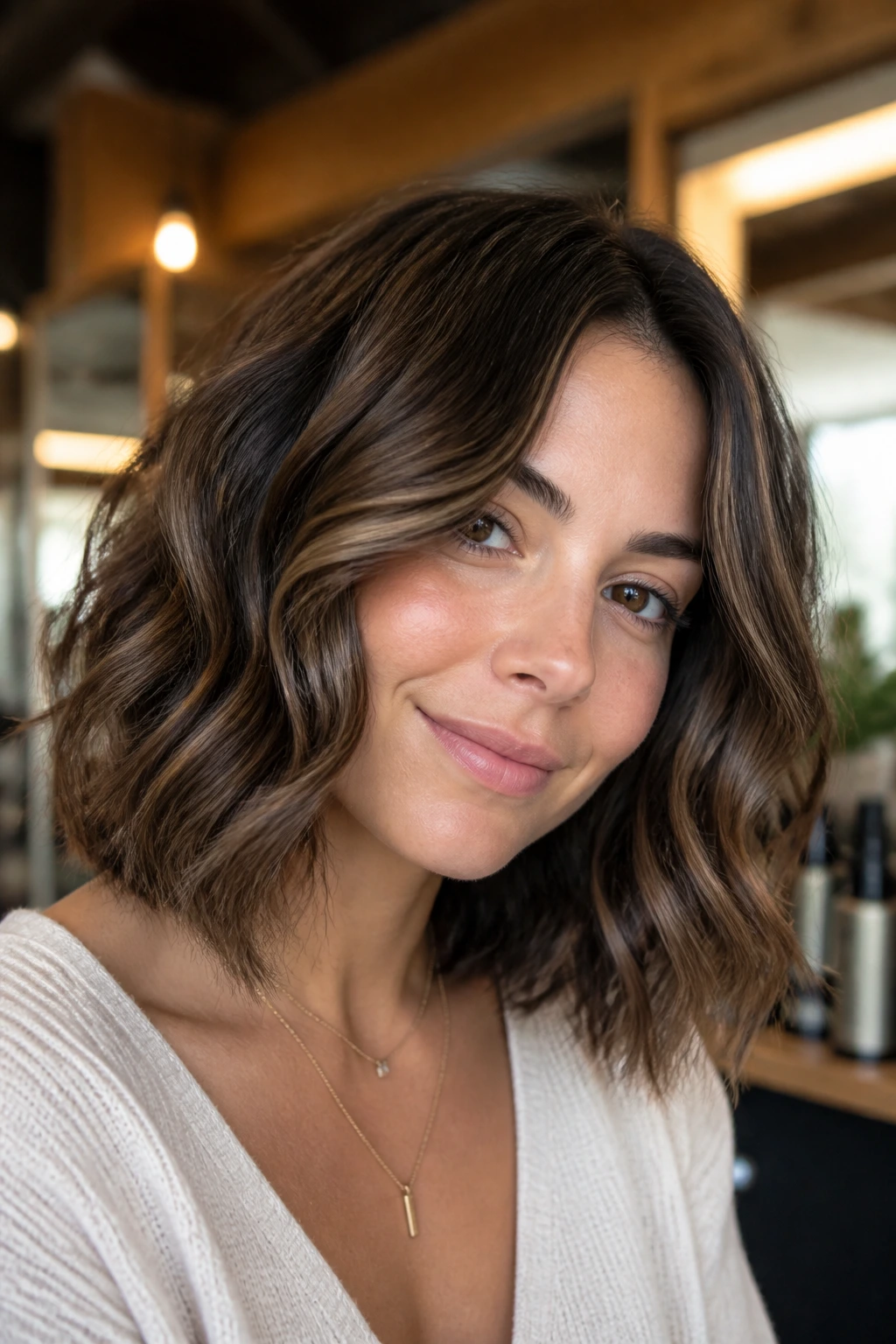
A wavy bob can swallow color if the contrast is too mild. Truffle lowlights fix that by giving the bends and folds of the cut a darker edge, so the shape reads clearly even when the hair is air-dried.
The key is to keep the pieces soft at the root and a touch more obvious through the body of the wave. If the lowlights start too bluntly, the bob can look boxed in. Nobody wants that.
A bob like this usually needs placement that follows the haircut, not just the head shape. Ask for lowlights that sit inside the curve of the wave and under the crown where the hair naturally folds. The result feels textured without looking busy.
7. Velvet Chocolate Dimension on Straight Hair
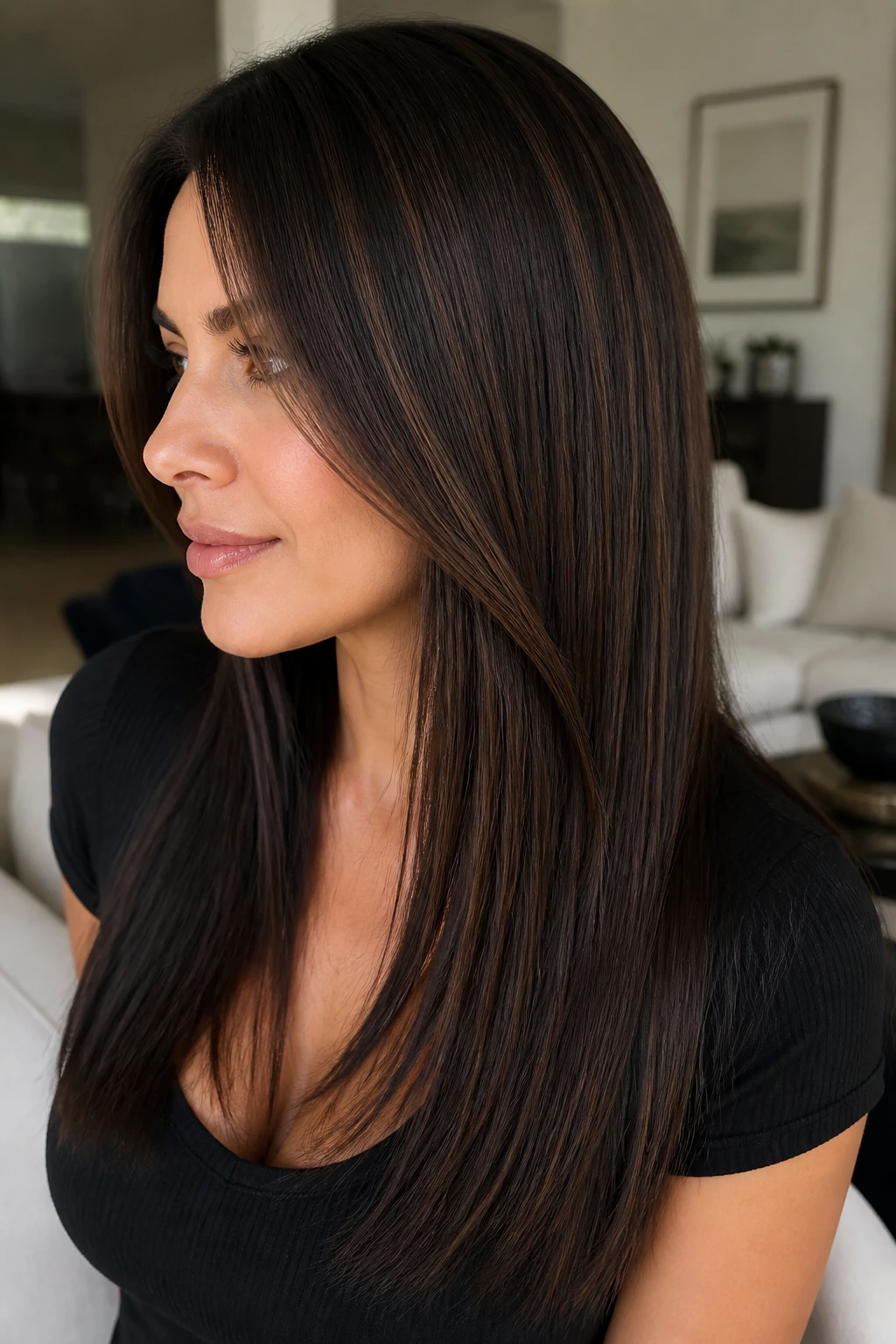
Straight hair is ruthless. Every line shows. Every bad placement shows even faster.
That’s why velvet chocolate lowlights work so well here. The color should be feathered into the hair with narrow slices and soft edges, so the brunette looks richer when it moves but still polished when it hangs straight. Chunky panels can look harsh on sleek hair, and they tend to repeat too visibly from root to tip.
This look suits people who wear blowouts, flat-ironed styles, or a natural straight pattern and want depth that doesn’t depend on curls for camouflage. It’s a clean version of lowlight work — controlled, smooth, and more elegant than dramatic.
8. Walnut-Chocolate Depth for Warm Brunettes
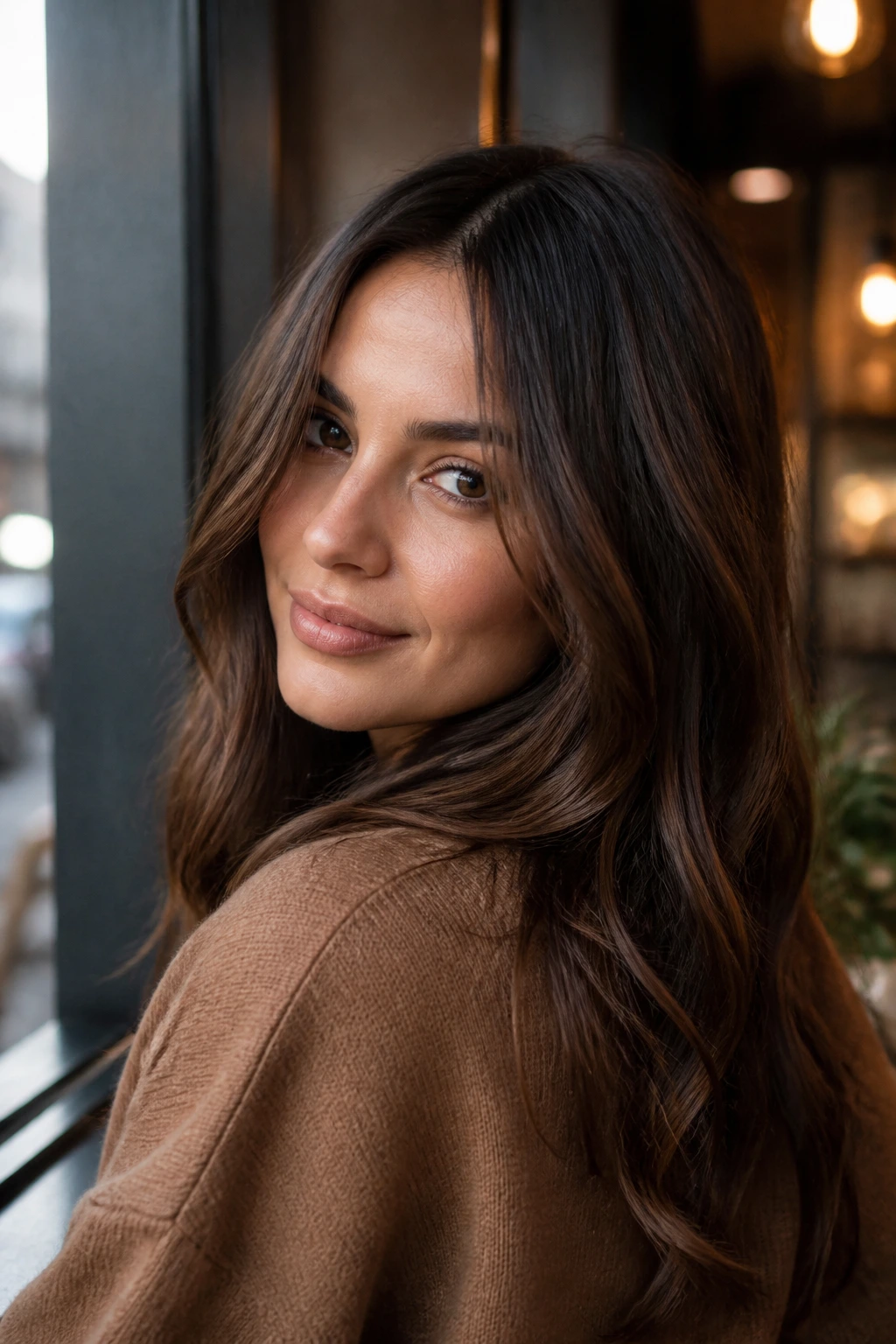
Walnut-chocolate sits in a nice middle place. It has enough warmth to stay friendly on golden brunette bases, but it doesn’t go so red that the hair turns coppery.
Unlike caramel, this stays grounded
That difference matters. Caramel-style dimension can read light and bright, which is fine if that’s the goal. Walnut-chocolate lowlights do the opposite: they pull the tone back toward earth and make the brown look deeper, not lighter.
This is a strong choice if your brunette hair picks up orange in sun or indoor light. A warm-but-controlled chocolate tone keeps the color rich and helps the hair look intentional rather than faded.
9. Mushroom Brown Lowlights for Cool Brunettes
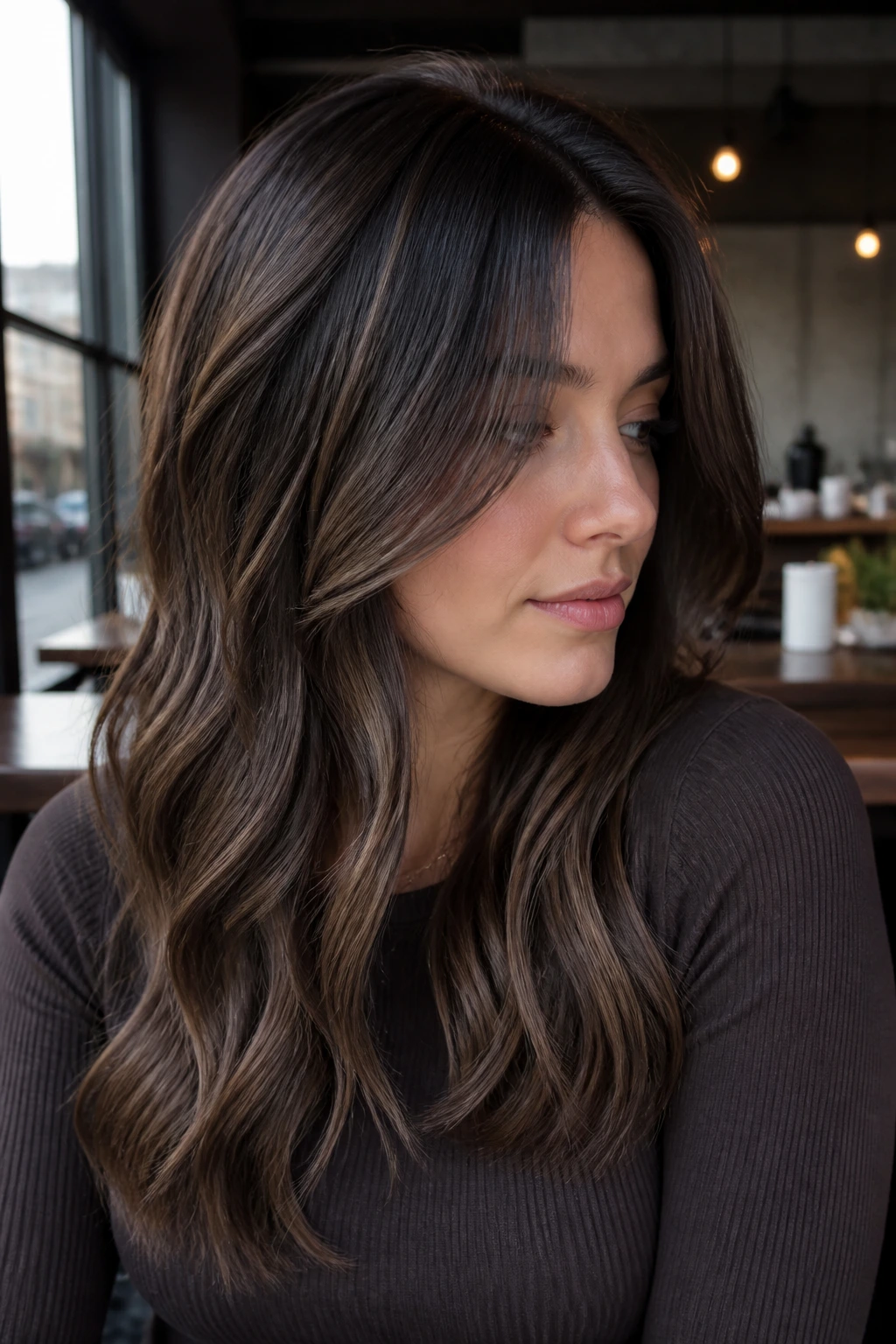
Mushroom brown lowlights are for brunettes who live on the cool side and want depth without warmth sneaking in. Think smoky brown, not gray dye, and definitely not anything that turns the hair flat.
The appeal here is restraint. Mushroom shades have enough softness to blend into a brunette base, but they still keep the overall look clean and modern. They’re especially useful when the natural hair is ashy and the ends have started to drift warmer than the roots.
This kind of lowlight works best when the contrast stays subtle. If the pieces go too dark, the whole finish can look muddy under indoor light. Keep them airy. Let the cooler tone do the quiet work.
10. Micro-Lowlights for Curly Hair
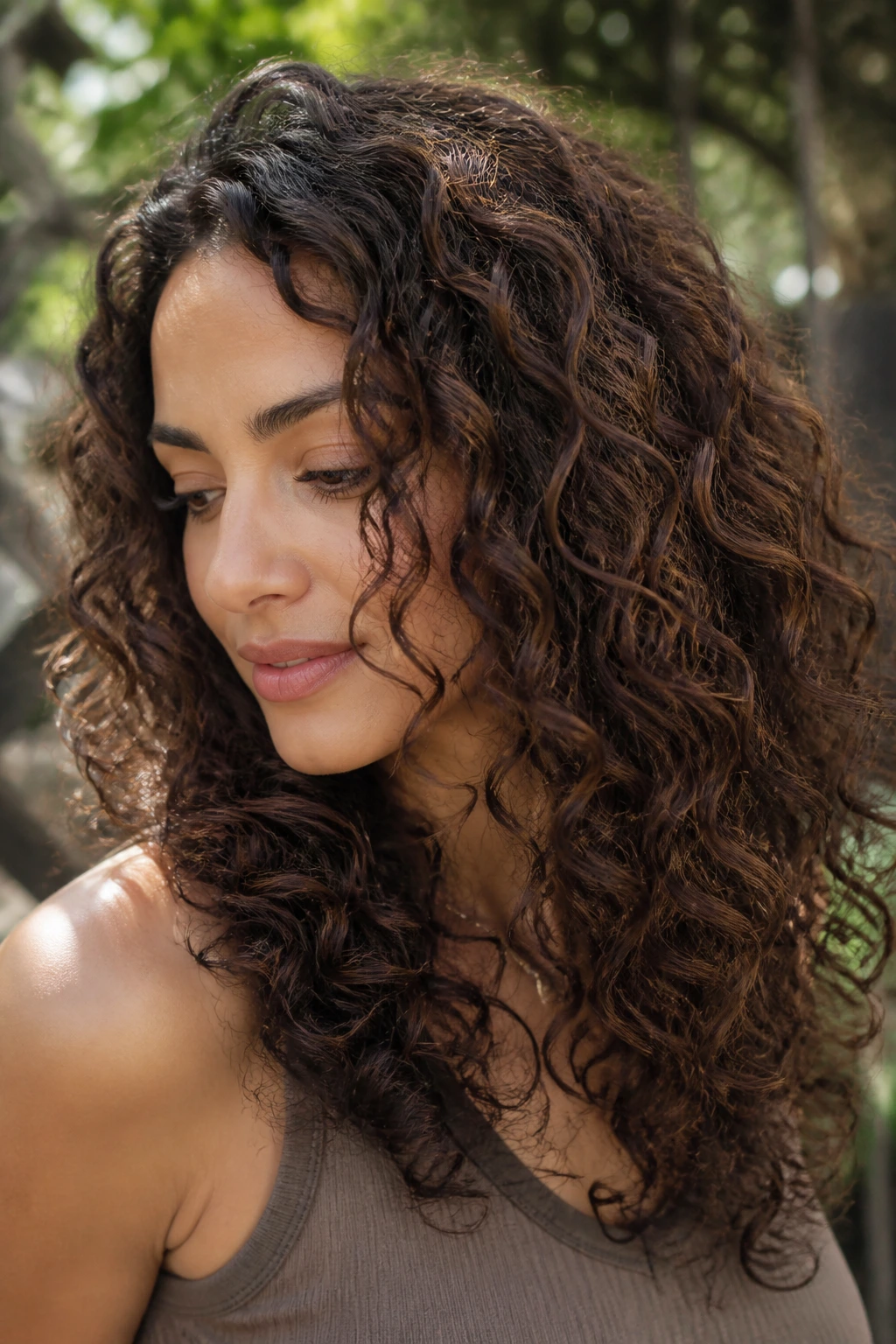
Curly hair doesn’t need big color blocks. It needs tiny shifts that follow the curl pattern.
Micro-lowlights — basically very fine chocolate threads woven through the curls — keep the shape lively without breaking up the clumps that make curls look full. That part matters more than most people realize. If the placement is too chunky, curls can separate in strange places and the hair starts to look wide instead of dimensional.
How to get the most from it
- Ask for babylight-thin weaving.
- Keep the lowlights a shade or two deeper than the base.
- Focus on the outer curves of the curl, not every inch of every section.
- Leave enough lighter brown between pieces so the curls still pop.
The finish should look like shadow moving through the coil, not painted stripes sitting on top.
11. Chocolate Lowlights for Brunette Hair with a Deep Grow-Out Shadow
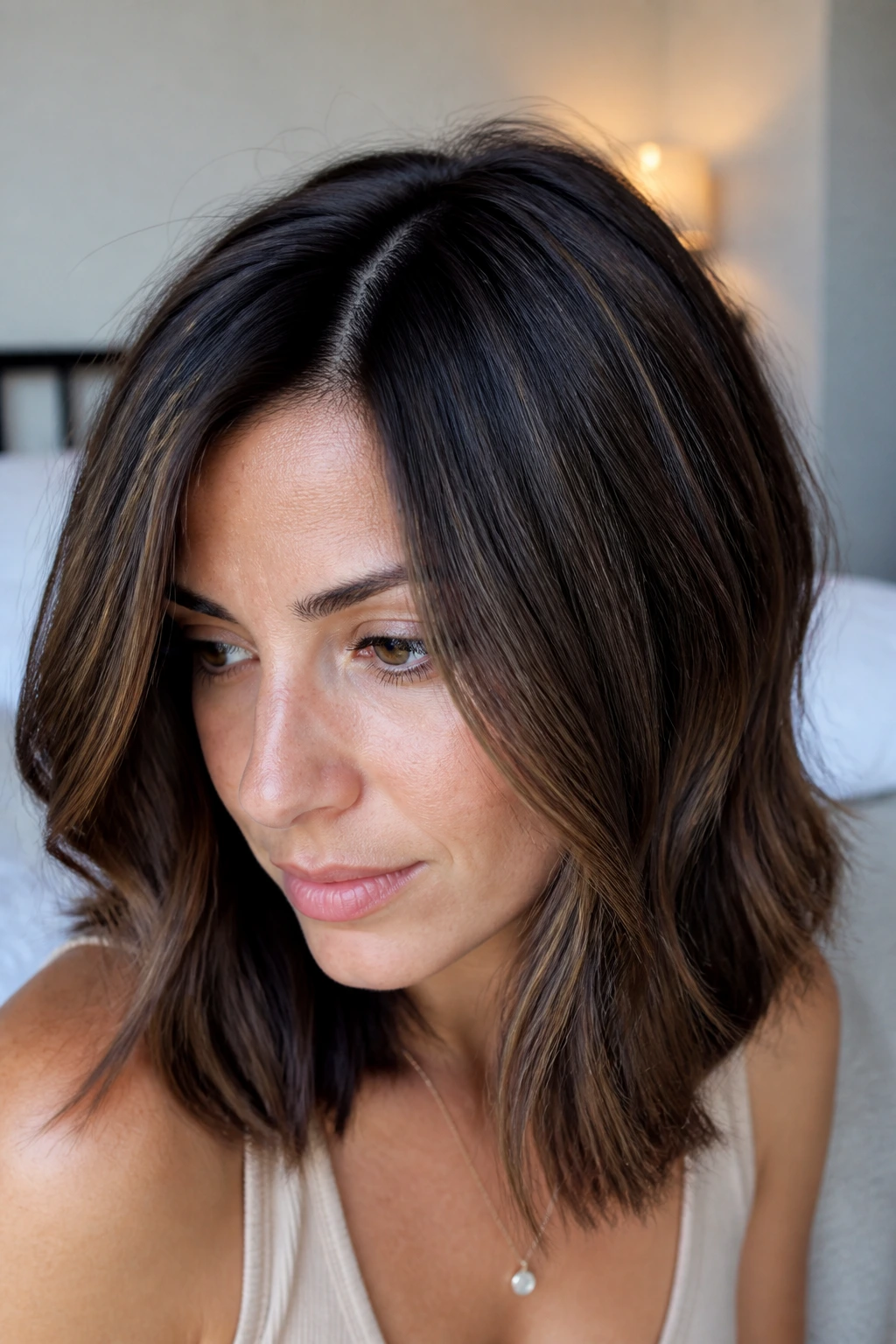
A deep grow-out shadow is for people who do not want to babysit color every few weeks. The lowlights sit a little farther from the scalp and create a darker zone that makes roots less obvious as the hair grows.
What to ask for
Tell your colorist you want the root area to stay soft, not hard. A demi-permanent chocolate formula in the crown and mid-lengths usually gives the best blend, because it fades in a gentler way than a permanent dark brown.
- Start the darker pieces slightly below the root.
- Keep the transition soft near the part.
- Use a tone that matches the natural root depth.
- Avoid a black-brown result unless your base is already very deep.
This look is practical. Plain and simple. It also happens to be one of the cleanest ways to wear chocolate lowlights for brunette hair if you want less upkeep and more movement.
12. Cheekbone Contour Lowlights Around the Face
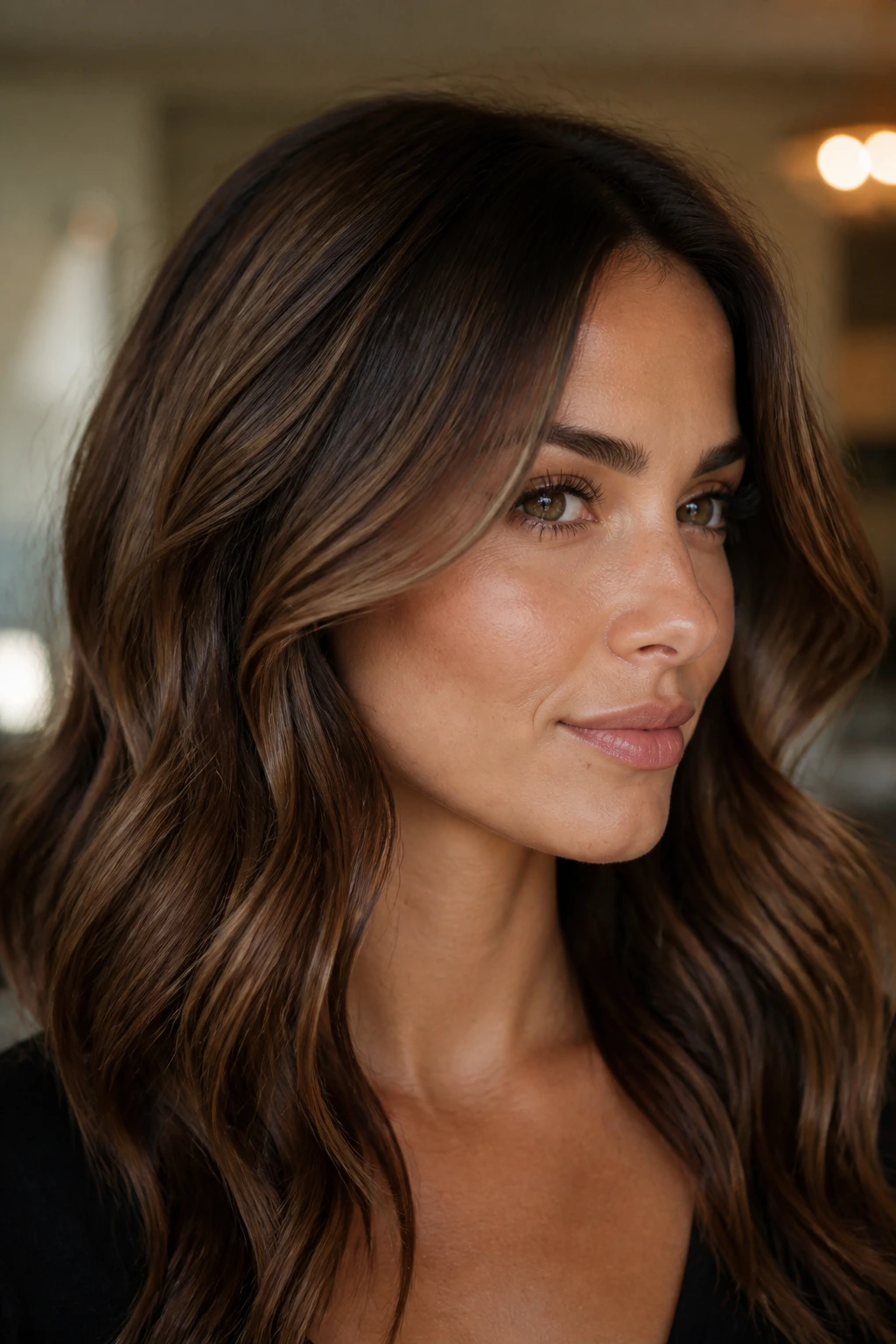
Contour lowlights are the color version of cheekbone shadow. They sit where the face needs a bit more shape, usually near the temples, under the cheekbone, and just inside the hairline.
The effect can be subtle or more obvious, depending on the brunette base. On lighter brunettes, just a few darker strands around the face can make the haircut feel more finished. On deeper brunettes, the same placement gives a stronger frame without needing to darken the whole head.
This is one of those ideas that looks small on paper and makes a real difference in person. That said, keep it restrained. Too much darkness at the front can drag the face down. The point is structure, not shadow for shadow’s sake.
13. Thick-Hair Ribbon Lowlights That Keep Movement
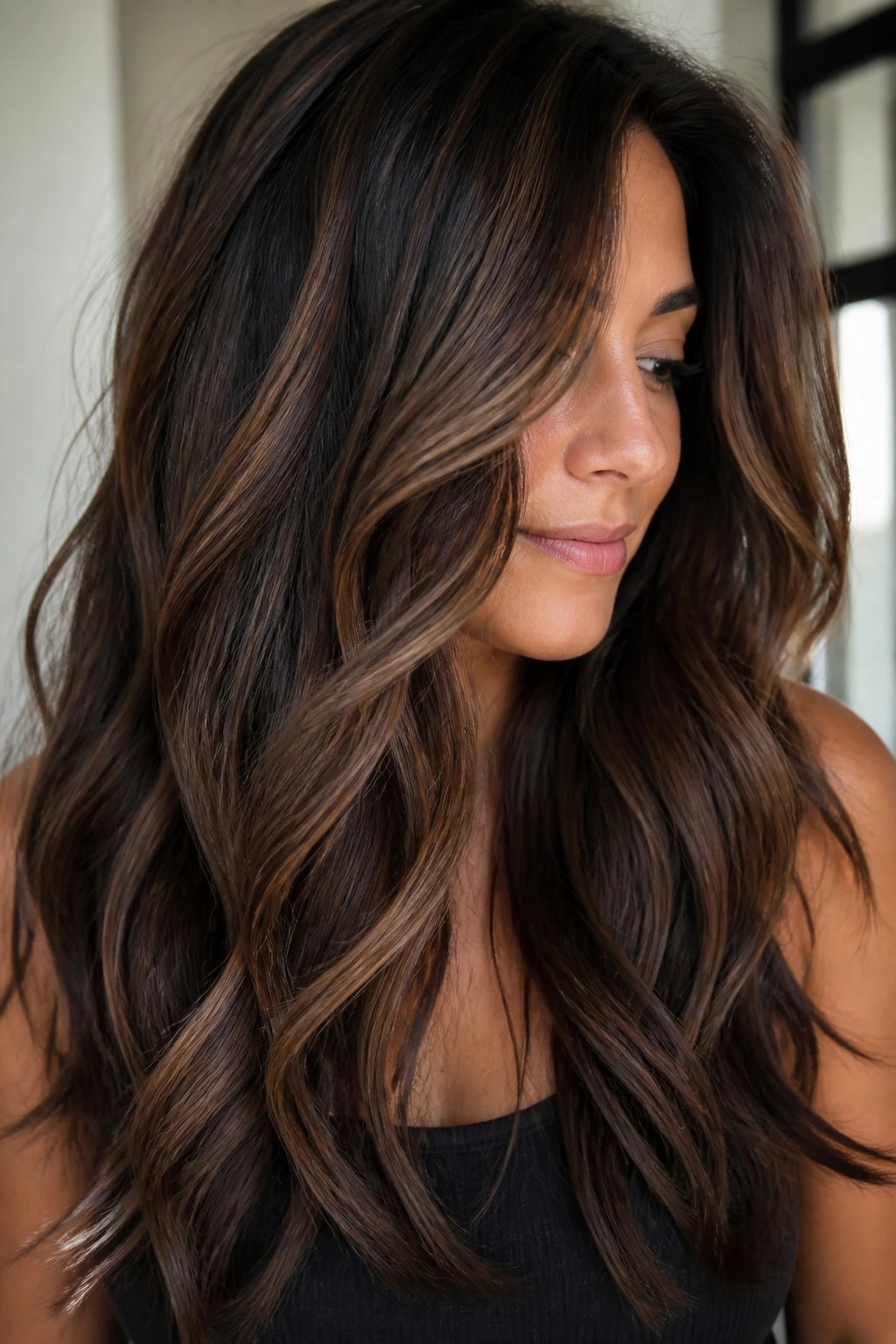
Thick hair can handle more contrast than fine hair, and it often needs it. If the sections are too delicate, the whole head reads as one heavy brown mass.
Ribbon lowlights solve that by using wider slices of chocolate that create visible lanes of depth through dense hair. The ribbons should follow the haircut’s natural fall. That keeps the finish from looking carved up.
A few useful details
- Use slightly wider sections than you would on fine hair.
- Place the darkest pieces where the hair is heaviest.
- Let layers and internal movement show the color off.
- Keep the ends soft if the hair is already blunt.
Dense brunette hair can look luxurious with this approach. It just needs enough depth to break the surface.
14. Bittersweet Panels for Sleek Straight Styles
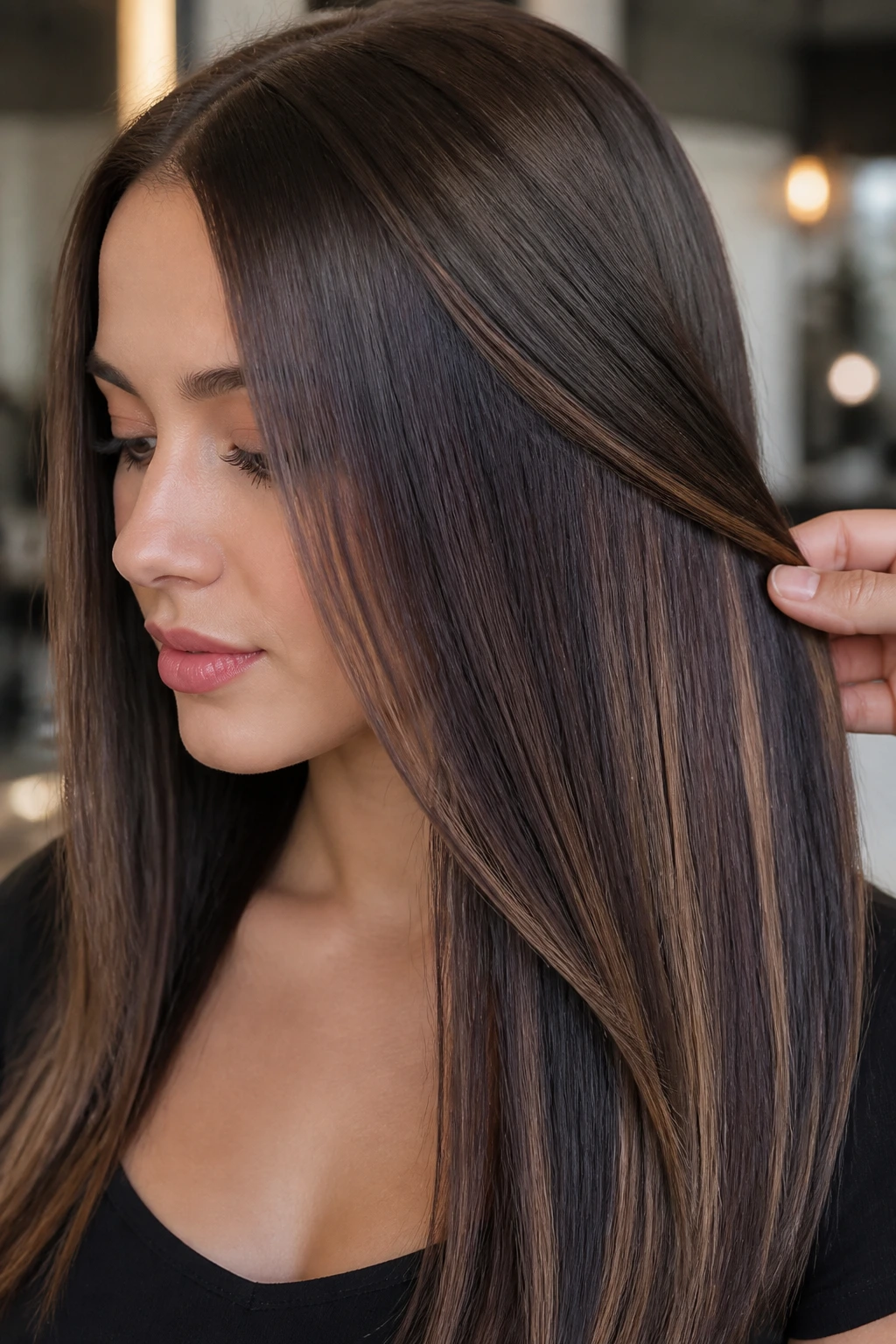
Bittersweet panels are the stronger cousin of soft chocolate ribbons. They work best on sleek, straight brunette styles where you want the color to show even when there’s no wave or curl to help.
The placement should be deliberate. Paneling under the top layer gives the hair a more expensive-looking shadow line when it’s blown smooth. If the panels are placed too high or too wide, the result can start to look blocky. That’s the trap.
This is a smart choice for anyone who likes a sharp middle part, a glassy blow-dry, or long lengths that fall in a clean sheet. The darker pieces help the shape stay visible instead of turning into one flat wall of brown.
15. Peekaboo Chocolate Lowlights Under the Top Layer
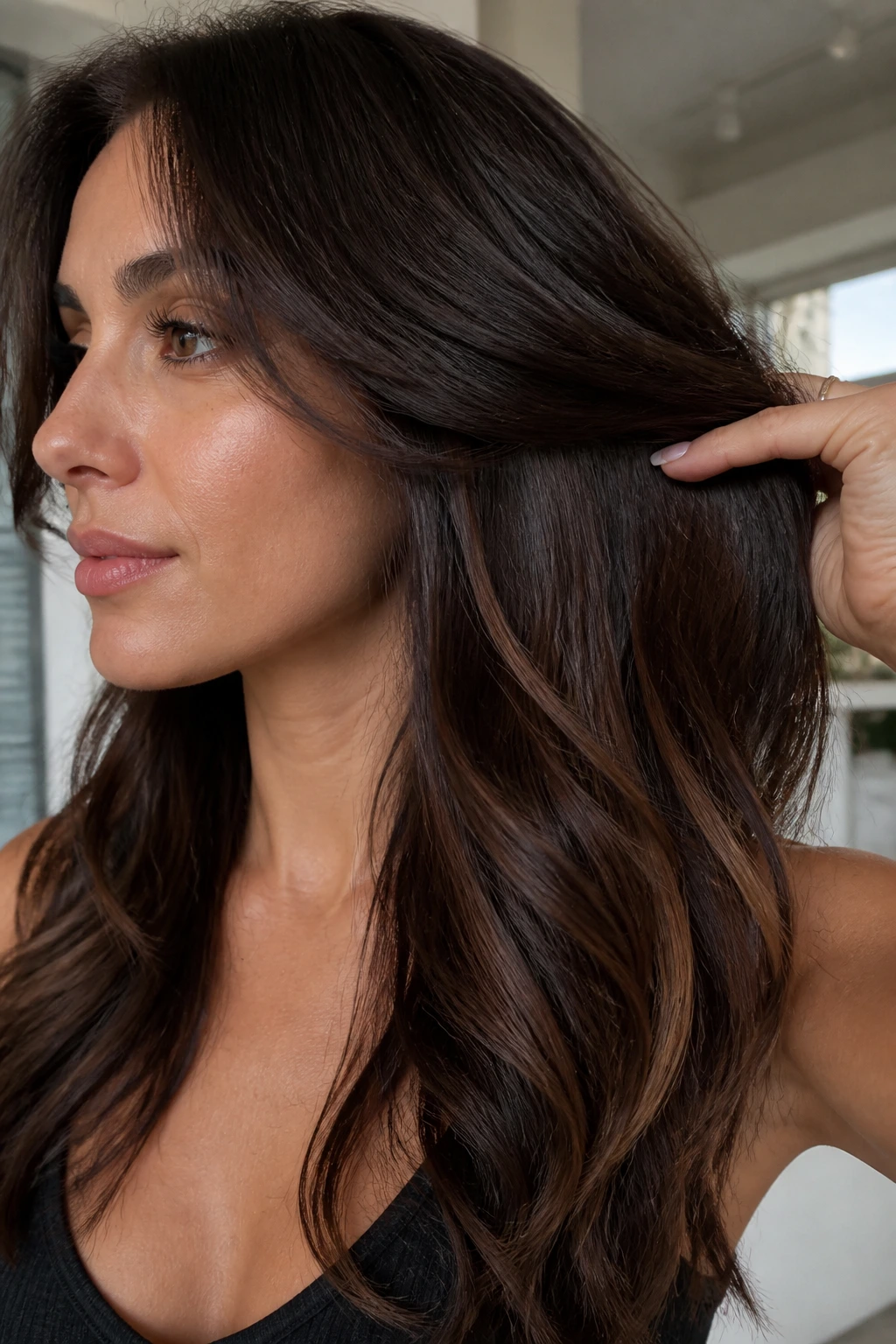
Peekaboo lowlights are for the brunette who wants a little hidden drama. You barely see them when the hair is down, then they flash through when the hair swings, twists, or gets pinned back.
That hidden quality makes them feel playful without making the whole color loud. They also let you keep the surface lighter and softer while still adding depth inside the hair. I like that balance. It keeps things from feeling overdone.
They work especially well in layers, braids, and half-up styles. If you wear your hair in a knot or clip often, peekaboo chocolate lowlights give you a second look without forcing the whole head darker.
16. Chestnut-Chocolate Blend for Medium Brunette Bases
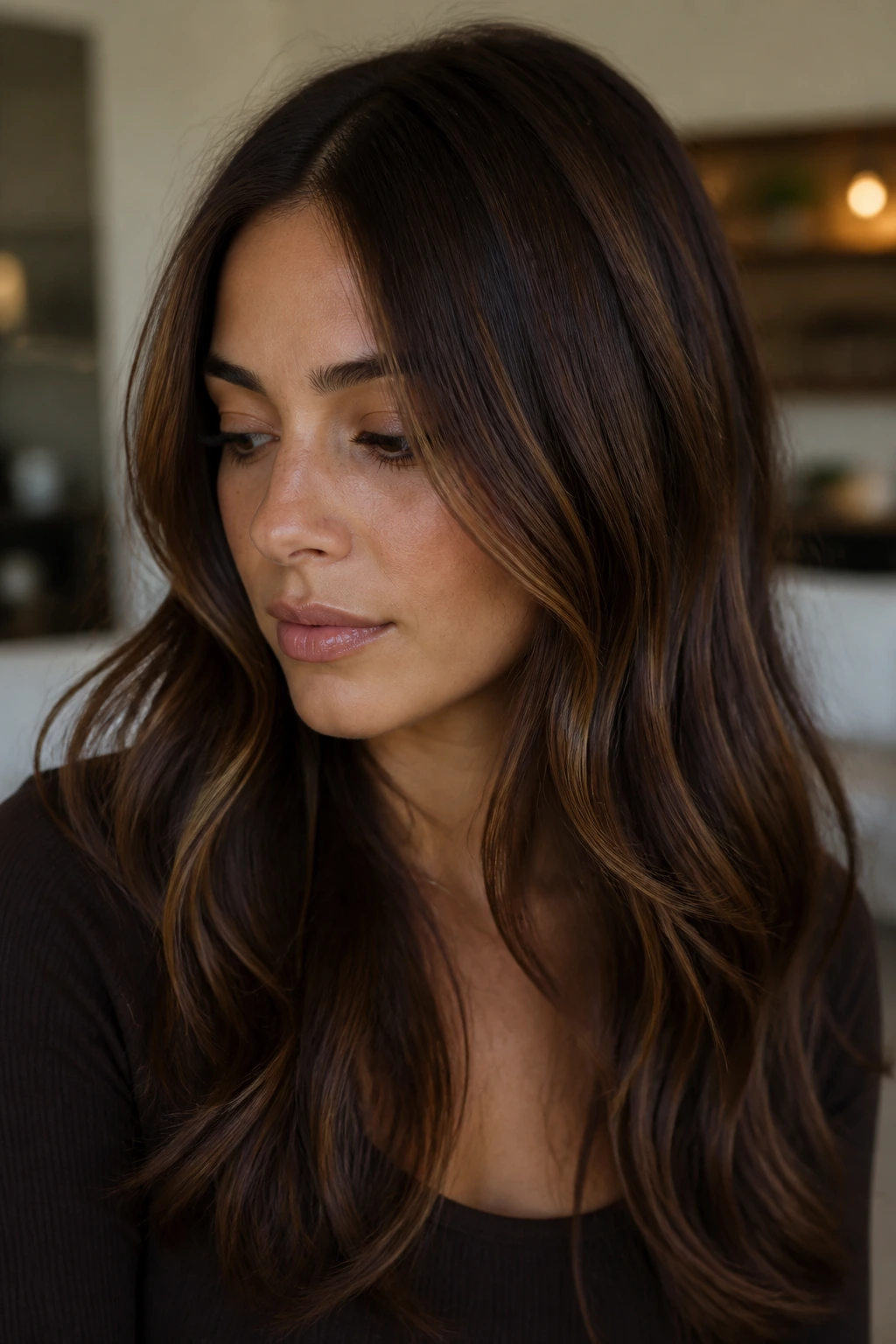
Chestnut-chocolate is a good choice when a brunette wants warmth but doesn’t want to drift into copper. The tone sits between earthy brown and soft red-brown, which makes it feel rich without turning shiny in the wrong way.
On medium brunette bases, this kind of lowlight adds life where the hair might otherwise feel a little dull. The catch is balance. Too much chestnut and the brown starts to lean orange; too much dark chocolate and you lose the warmth that makes the tone flattering.
A blended result works best when the pieces are scattered rather than packed together. You want the color to read as depth first and warmth second.
17. Soft Espresso Lowlights for Layered Bobs
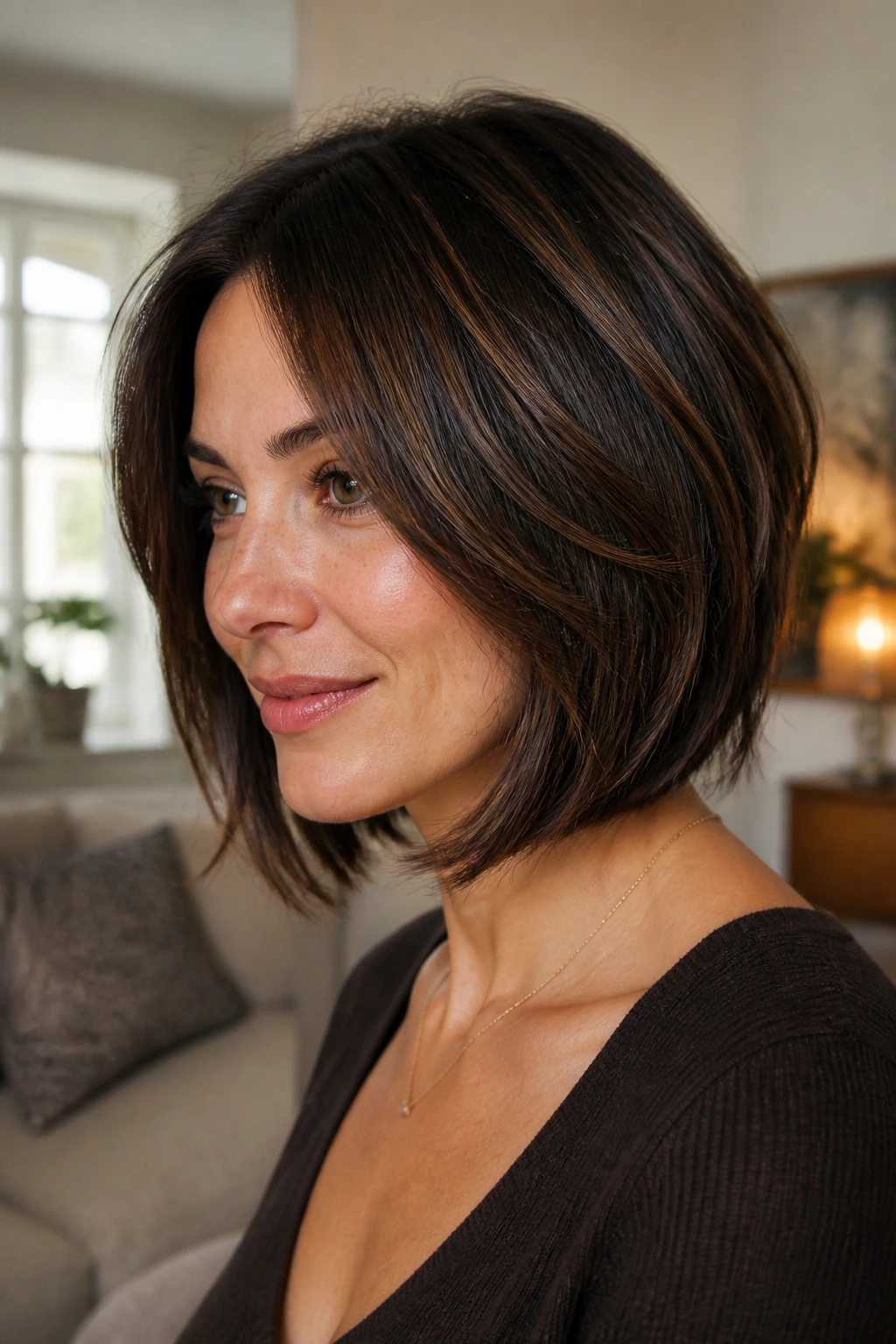
Layered bobs need depth where the layers split, not just at the outside edge. Soft espresso lowlights help each tier read more clearly, which is what gives the cut that airy, lived-in shape people actually want.
Why bobs need interior depth
If the lowlights only sit on the surface, the bob can look heavy underneath and flat on top. Interior placement changes that. The darker pieces peek out when the ends bend, so the haircut looks more deliberate.
This is especially nice on brunettes who wear their bob tucked behind one ear or flipped under at the ends. The shadow gives the cut some personality.
18. Demi-Permanent Chocolate on Faded Balayage
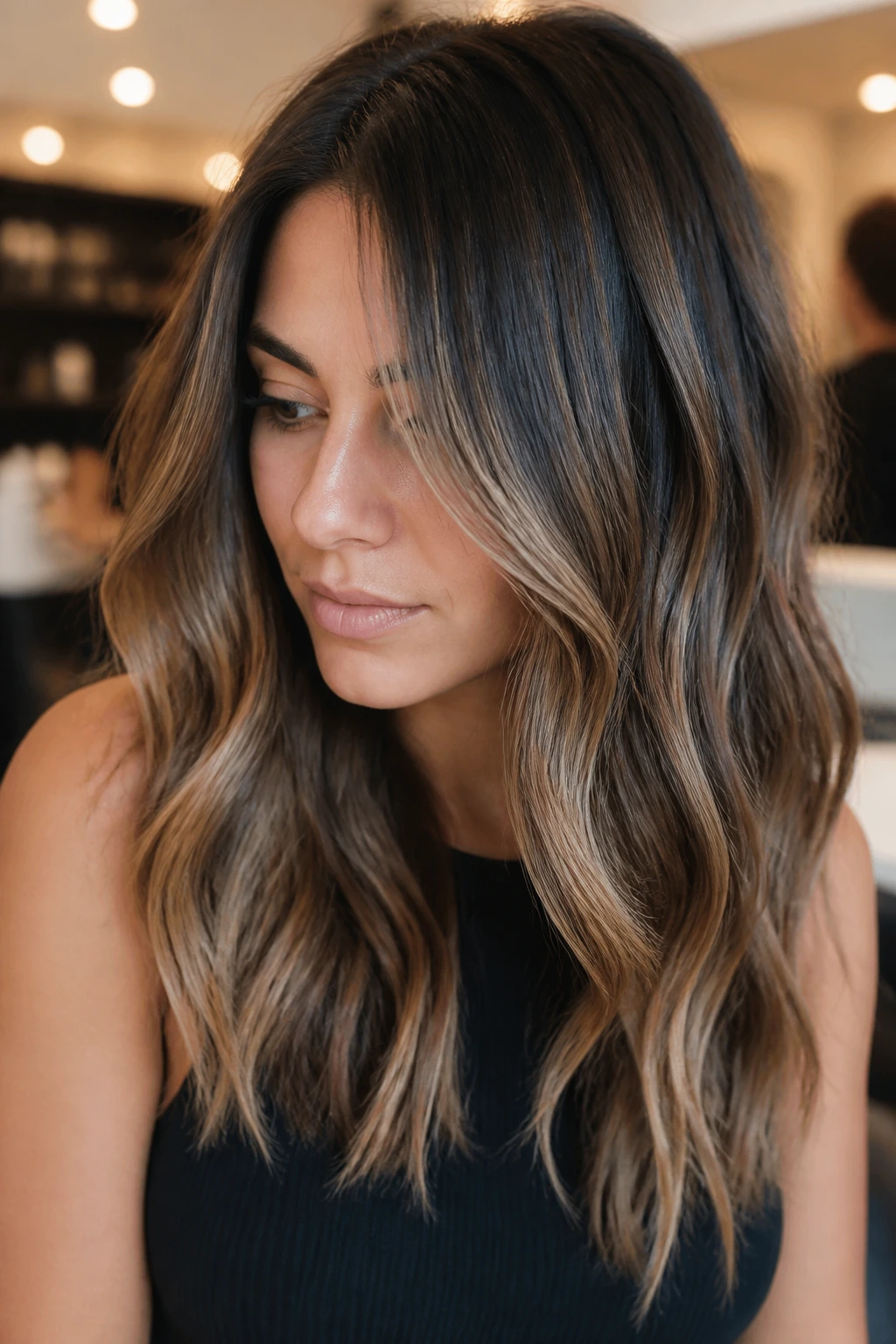
Faded balayage can leave brunette hair looking tired. Not light — tired. The ends start to feel empty, the tone turns patchy, and the whole color loses the weight that made it interesting in the first place.
Demi-permanent chocolate lowlights are a solid fix because they restore depth without turning the hair one heavy color. They’re also kinder to porous ends than a harsh permanent brown, which matters when the hair has already been lightened.
The best version does not erase all the brightness. It just reins it in. That means the balayage still has shape, but the brunette base comes back to life instead of looking washed out.
19. Ash Cocoa Lowlights That Quiet Red Undertones
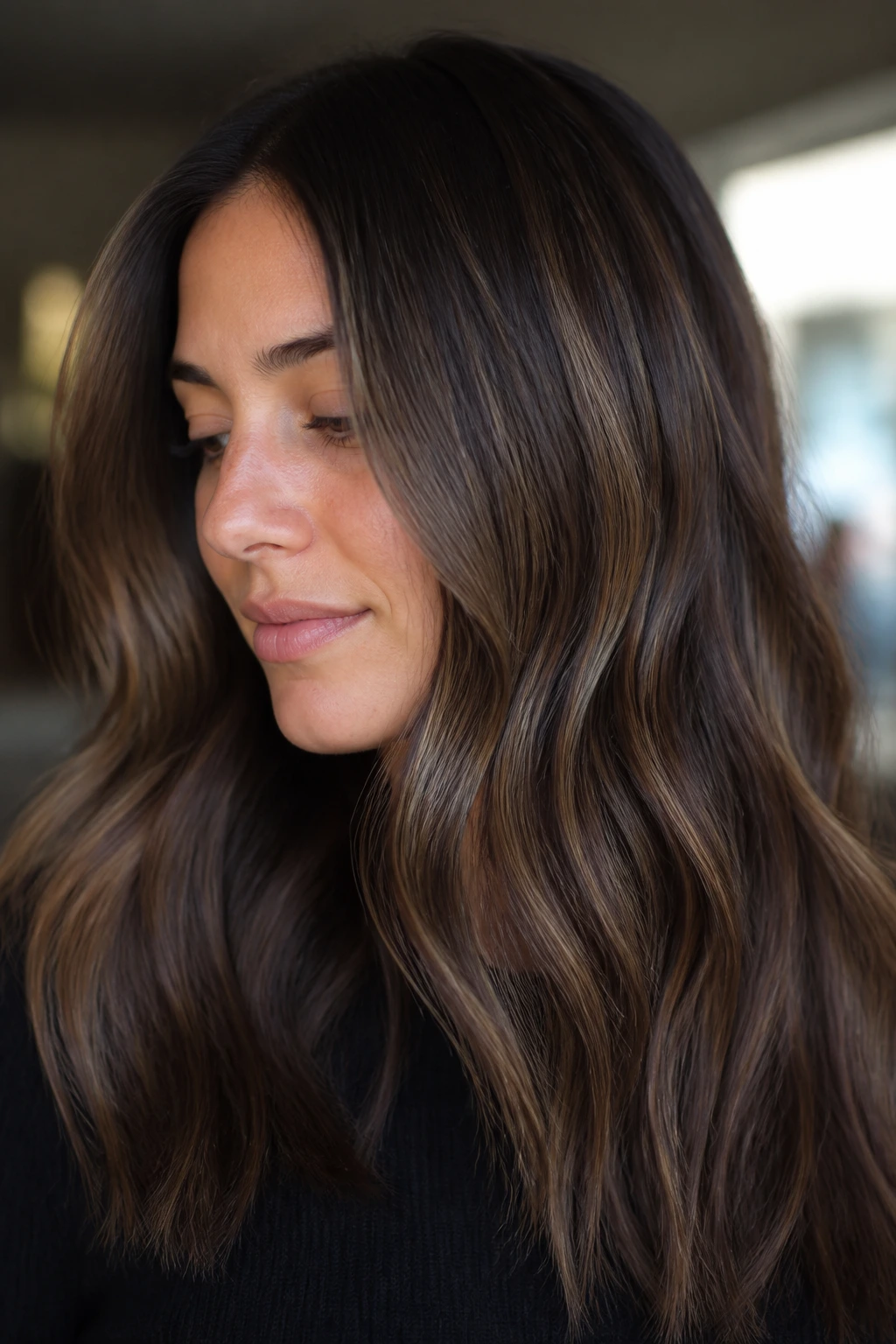
Red undertones can sneak up on brunette hair fast. Sun, hard water, old color, and repeated heat can all nudge brown into a warmer place than you wanted.
Ash cocoa lowlights help pull that warmth back. The tone should lean cool and neutral, with enough brown in it to stay believable on a brunette base. Too much ash and the hair looks dull. Too much warmth and the red comes right back.
What to watch for
- Avoid formulas with strong copper or auburn notes.
- Ask for a cool brunette shade, not black-brown.
- Keep the depth soft if your skin leans warm.
- Pair with a gloss that reinforces the cool finish.
This is one of the most useful lowlight choices for brunettes who keep saying, “My hair always goes red.” Usually it does because the tone is off, not because the hair is being difficult.
20. Warm Truffle Depth for Olive and Golden Skin Tones
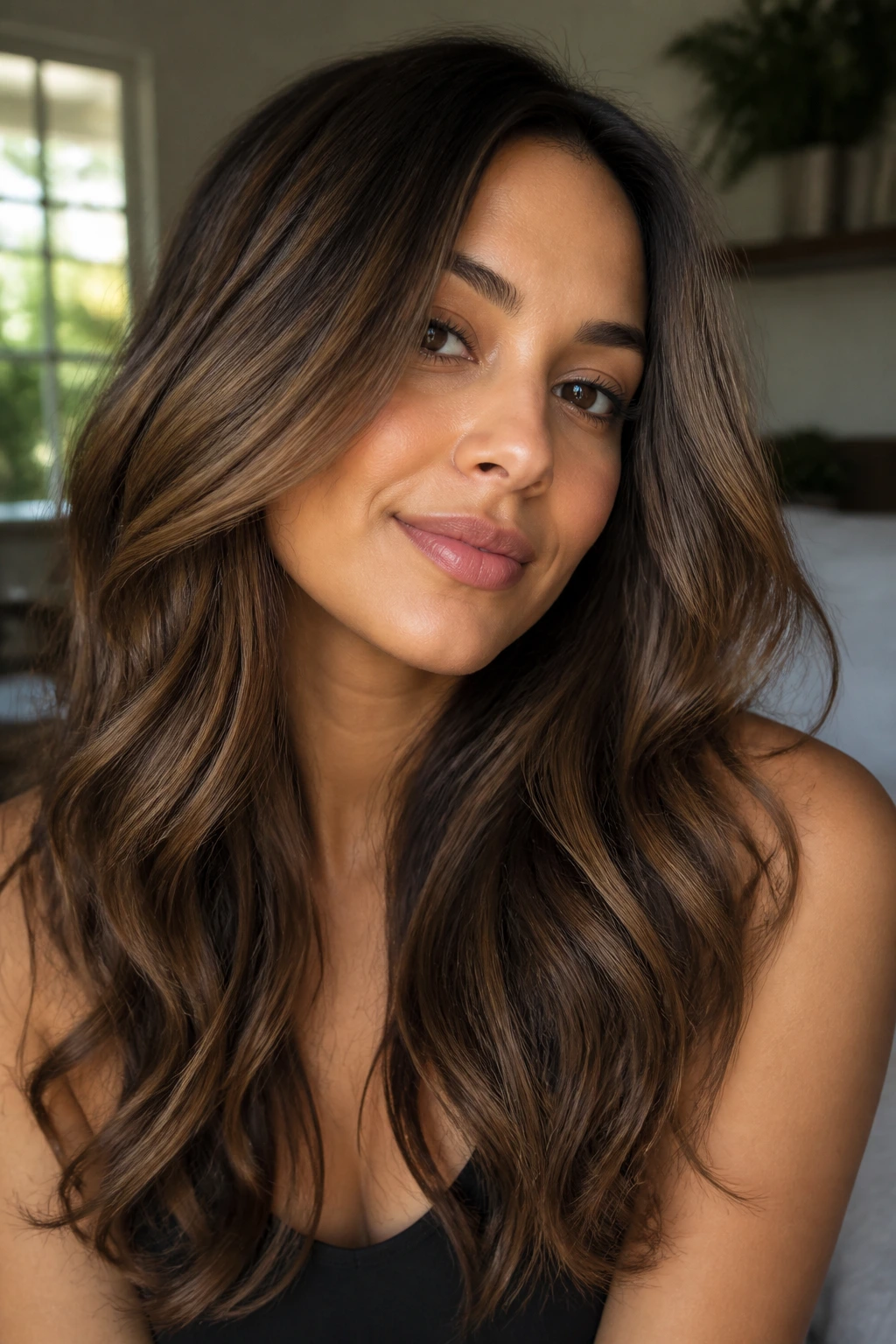
Some brunettes look best when the brown has a little heat in it. Warm truffle lowlights do that without slipping into obvious red or orange, which is the line you do not want to cross.
If cooler brown shades make your face look washed out, this is the fix. The darker pieces should feel rich, soft, and grounded — never rusty. On olive or golden skin, that warmth keeps the hair from looking like it was chosen in a hurry.
The shape of the haircut still matters, of course. A soft wave or bend will show the warmth better than a pin-straight finish. But even on straight hair, the tone adds a natural depth that feels easy to wear.
21. Chocolate Lowlights for Blending Early Gray
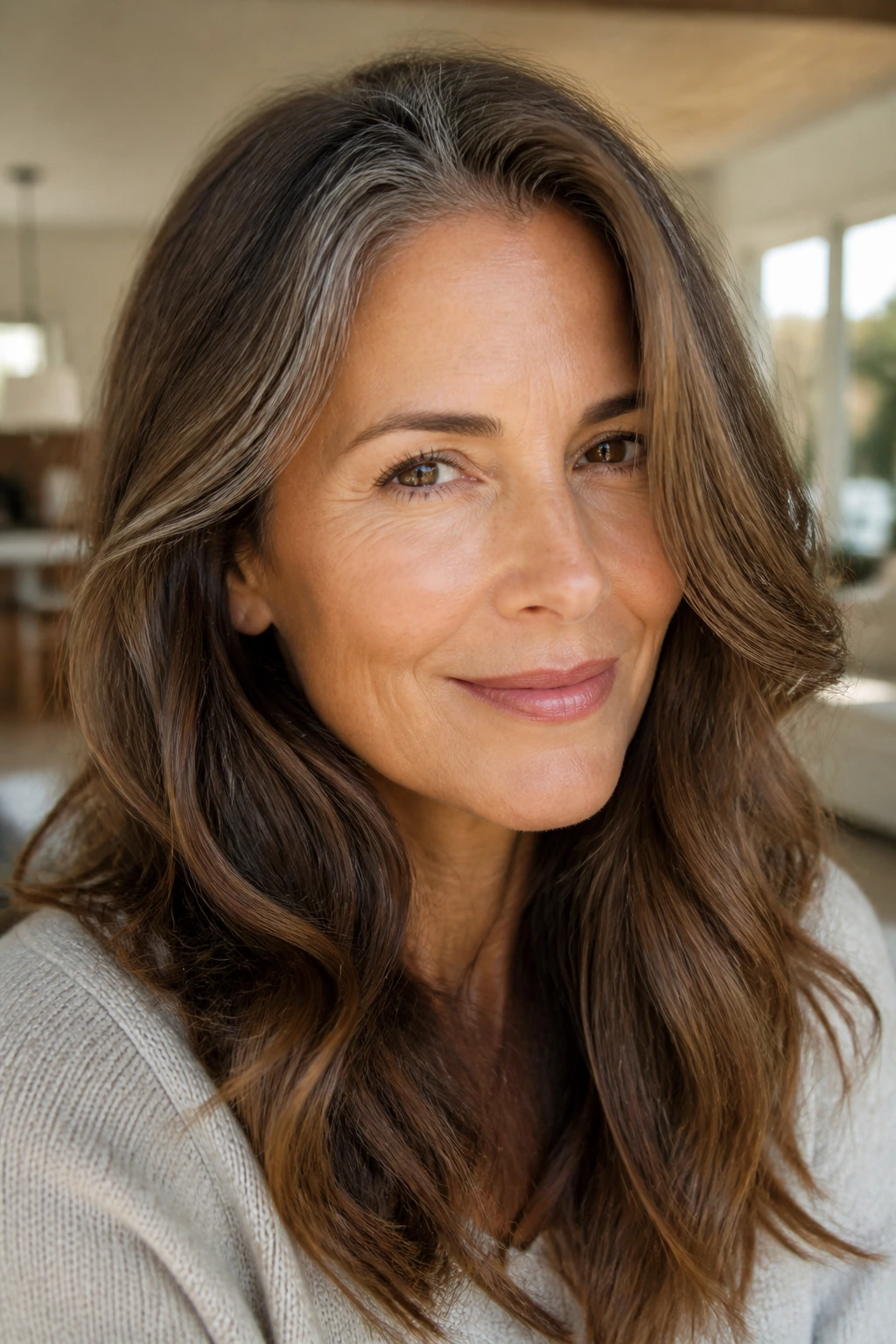
Early gray can be stubborn in brunette hair because the contrast shows before the gray itself looks dramatic. Dark chocolate lowlights help blur that difference so the grow-out line reads softer.
This is not about hiding every silver strand. It’s about making them part of the pattern. When the brunette base has chocolate depth woven through it, gray hairs catch less attention and the overall color feels more mixed, less obvious.
That can be a relief. The hair looks more dimensional, and the regrowth edge stops shouting every time you look in the mirror. A soft chocolate formula usually works better than anything too deep or too shiny.
22. Low-Maintenance Shadow Blend at the Root
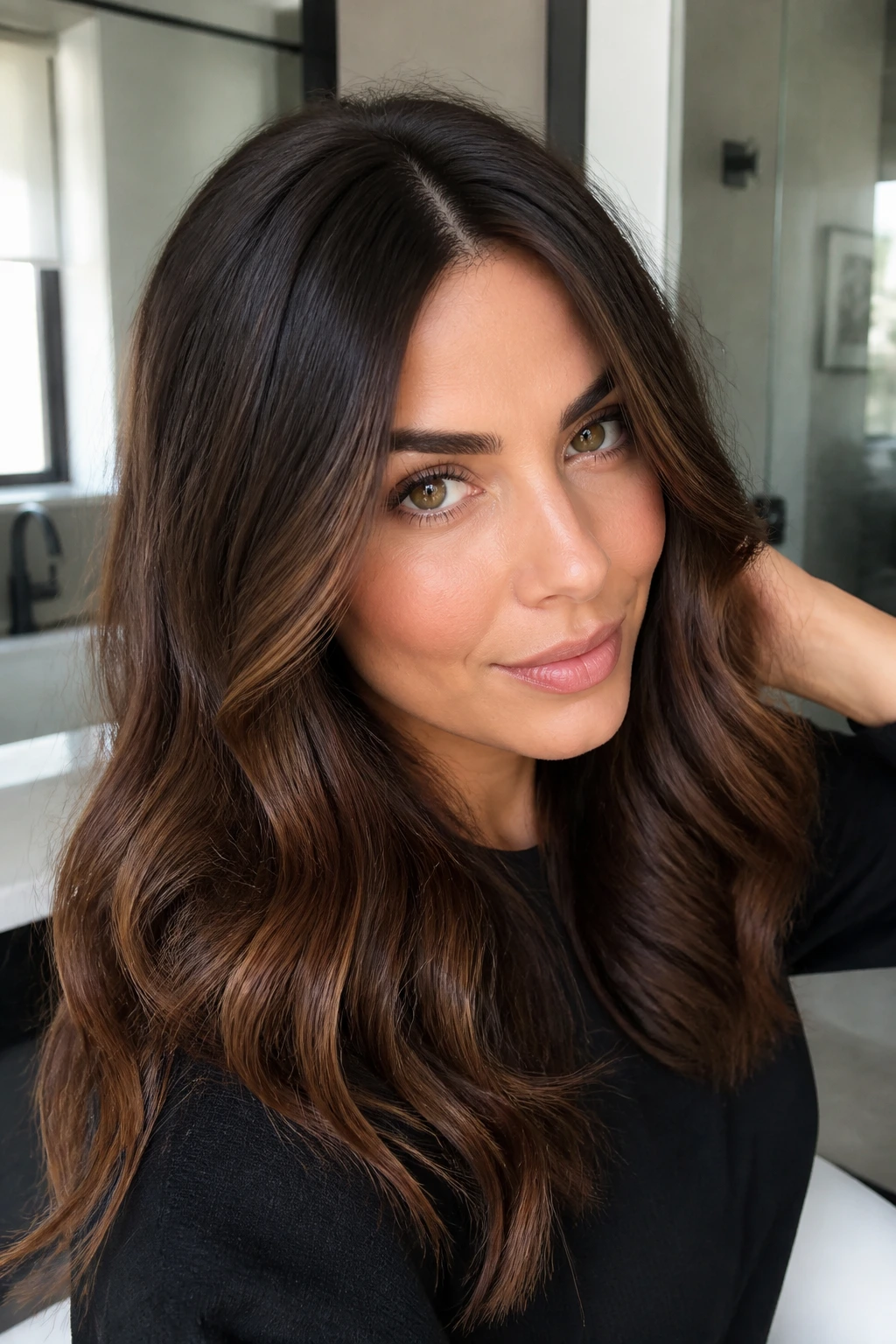
A root shadow blend is what you ask for when you want your brunette to look done without looking freshly colored every single week. The dark area near the scalp melts into the rest of the hair, so new growth doesn’t hit like a hard line.
Where this works best
- Brunettes with lighter mids and ends.
- People who wear their hair parted the same way often.
- Anyone who wants a softer, lived-in finish.
- Cuts with movement through the top layers.
The shadow does its best work when it starts a little below the scalp and fades into the chocolate lowlights through the mid-lengths. That transition is the whole point. Keep it sharp, and the style loses its ease.
23. High-Contrast Chocolate Lowlights for Dense Hair
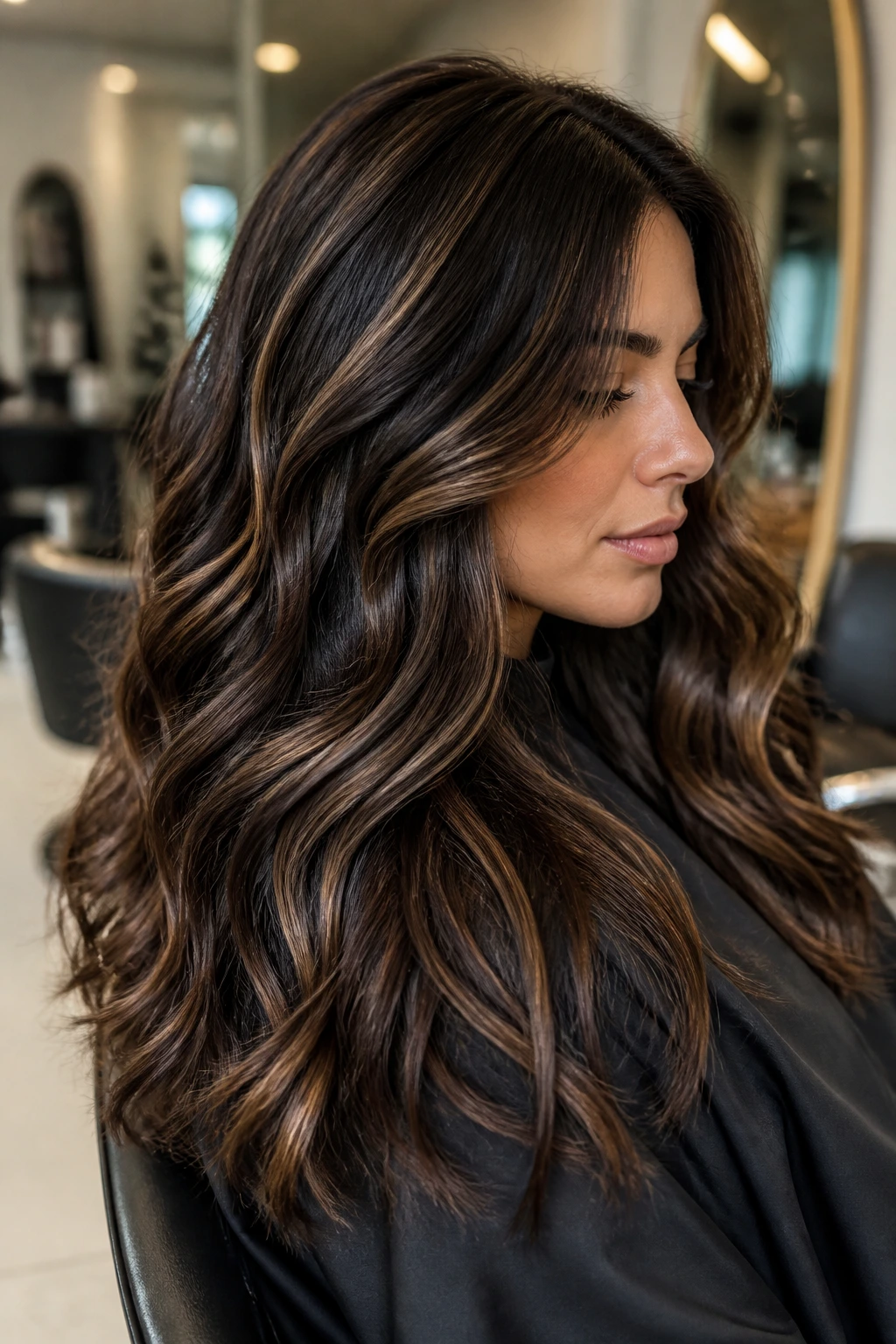
Dense hair can take contrast that would overwhelm finer textures. That’s why high-contrast chocolate lowlights often look richer on thick brunette hair than on anything airy or wispy.
The darker pieces make the shape easier to read. Without them, heavy hair can look like one solid color block, especially when it’s long and layered only a little. With them, the surface breaks up and the cut starts to move.
This is a good place for slightly bolder placement — not huge stripes, but visible slices that show through the hair when it shifts. It makes the style look intentional. A little more structure. A little less bulk.
24. Softly Smudged Chocolate Lowlights on Already-Colored Brunettes
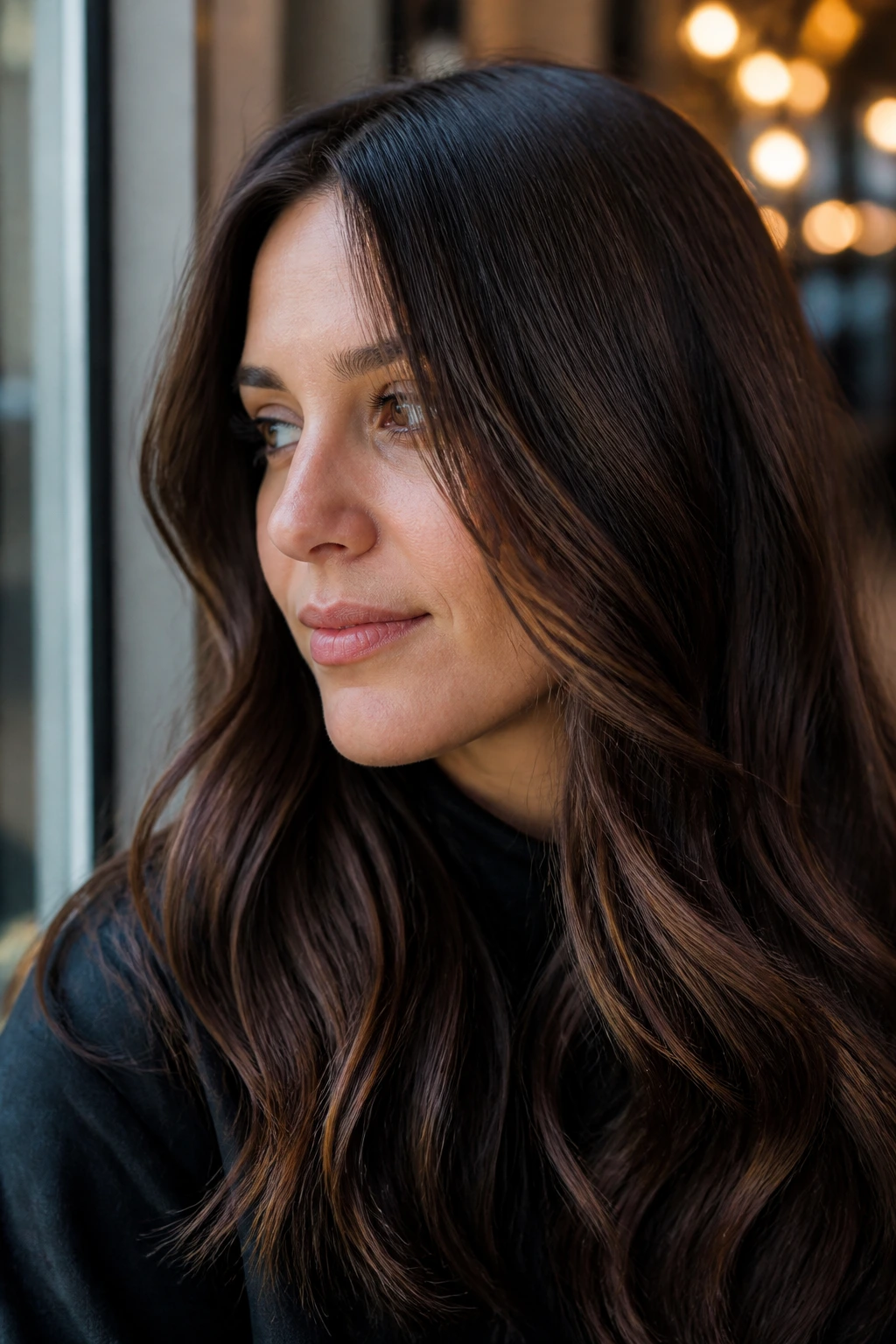
Already-colored brunettes can get banded fast if each new service is too different from the last one. Smudging the chocolate lowlights through the old color softens those lines and keeps the tone from stacking up in ugly layers.
This is where the transition matters more than the actual shade. A soft blend at the root and through the mid-shaft keeps the brunette believable. If the new lowlights start hard and dark, the old color underneath can show in patches.
That’s why glossing and smudging are worth the extra minute. They keep the brown from looking patched together. And patched together is the look nobody wants.
25. Chocolate Lowlights for Long, One-Length Hair
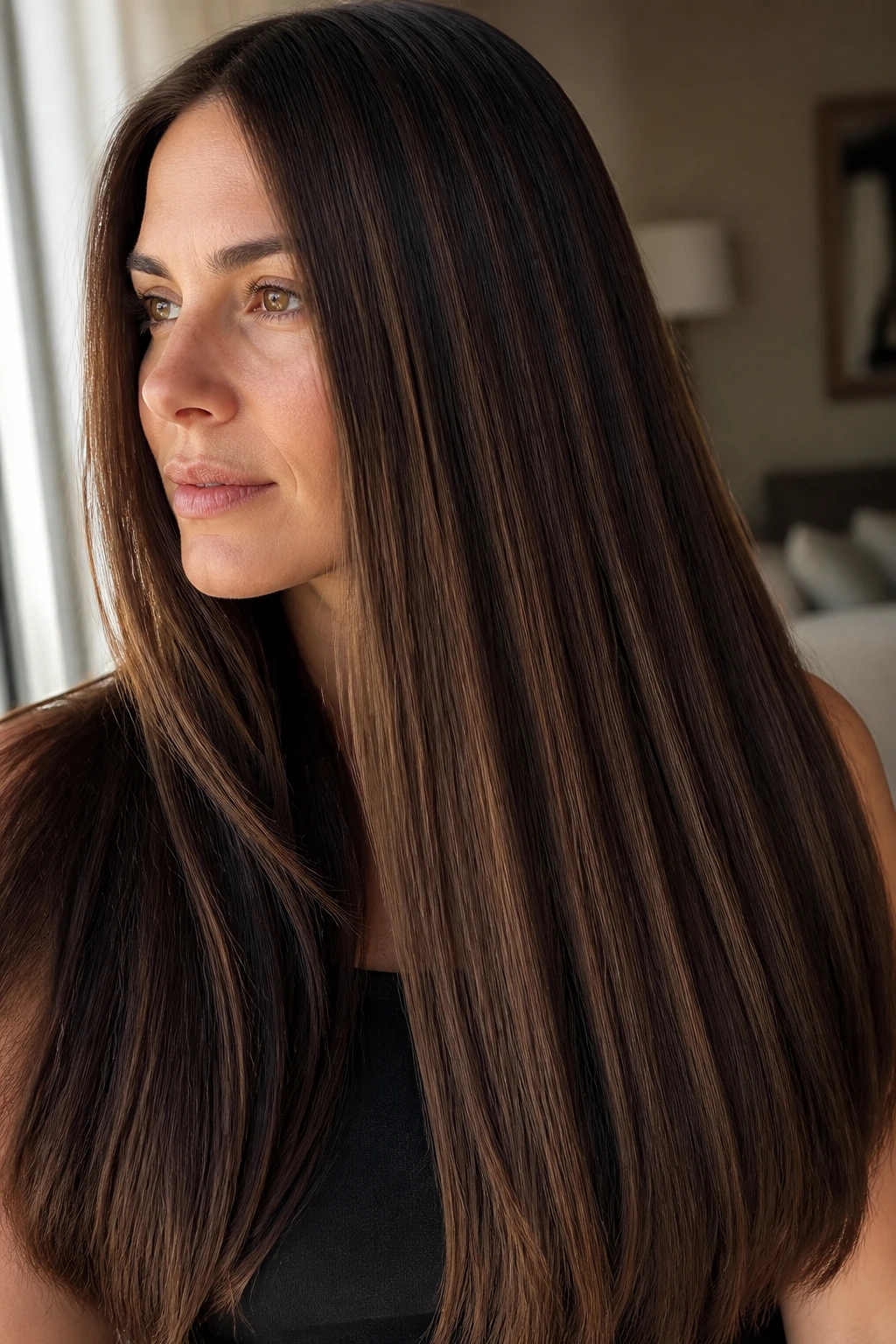
Long, one-length hair can look beautiful and heavy at the same time. If the color sits too evenly, the length loses shape and starts to read as a curtain.
Chocolate lowlights help break that up. The best placement sits through the mid-shaft and interior sections, not just the very ends. That keeps the hair from looking thin at the bottom while still giving the length a stronger outline.
A one-length cut also benefits from slight variation in tone near the front and around the back curve of the head. Tiny shifts there do more than people expect. They keep the length from swallowing itself.
26. Chocolate Lowlights for Short Pixie Cuts
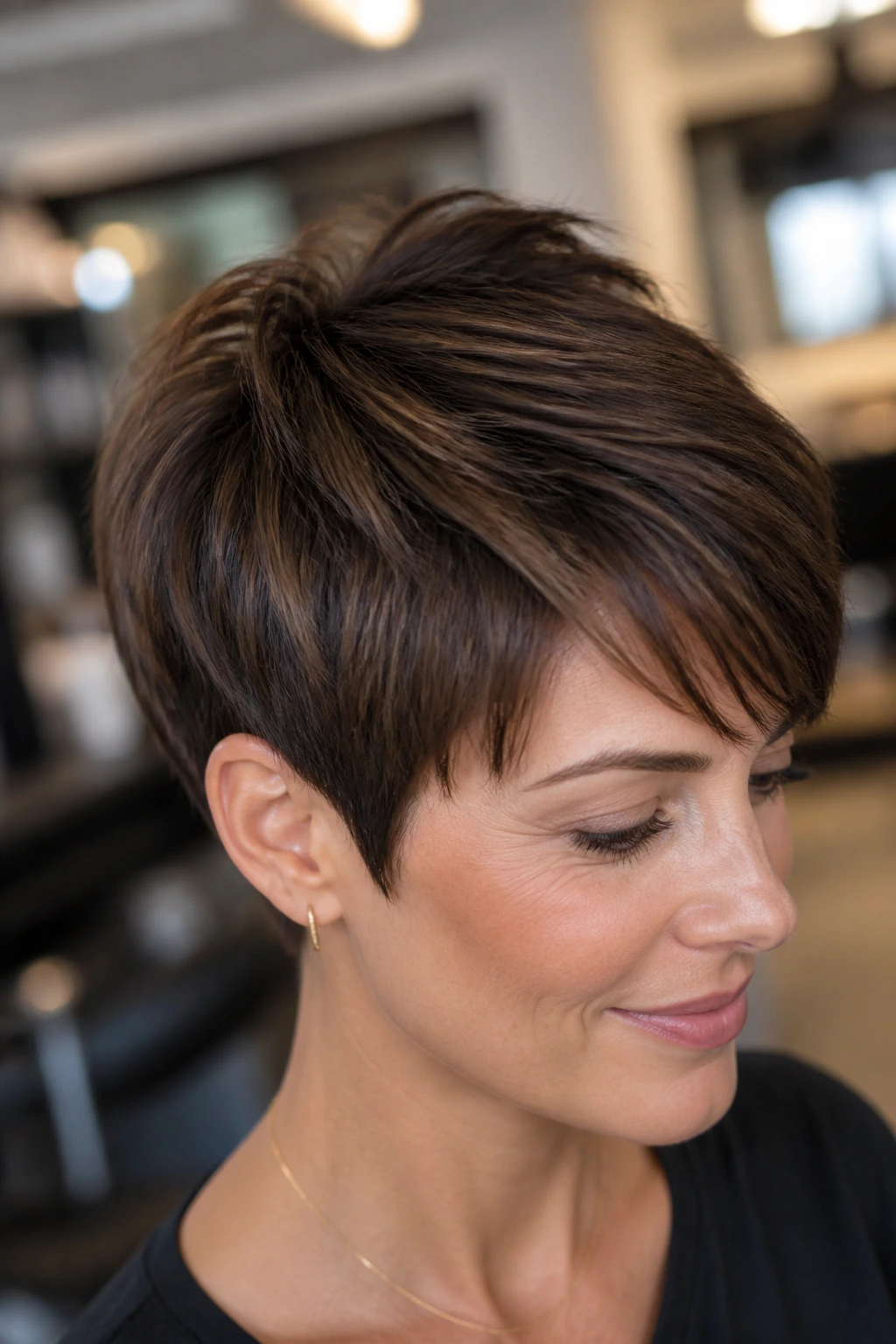
Short cuts are tiny, but they still need dimension. A pixie with one flat brunette tone can look helmet-like fast, especially when the hair is thick or coarse.
Micro chocolate lowlights solve that by adding tiny shadows through the top, crown, and side panels. The pieces should be small enough to move with the cut, not sit on top of it like decoration. That’s the mistake people make with short hair color. They go too big.
- Keep the placement close to the crop.
- Focus on the crown and fringe.
- Use thin slices, not wide panels.
- Stay within the brunette family.
A pixie with this kind of depth looks sharper, lighter, and much more alive.
27. Chocolate Lowlights Finished with a Clear Gloss
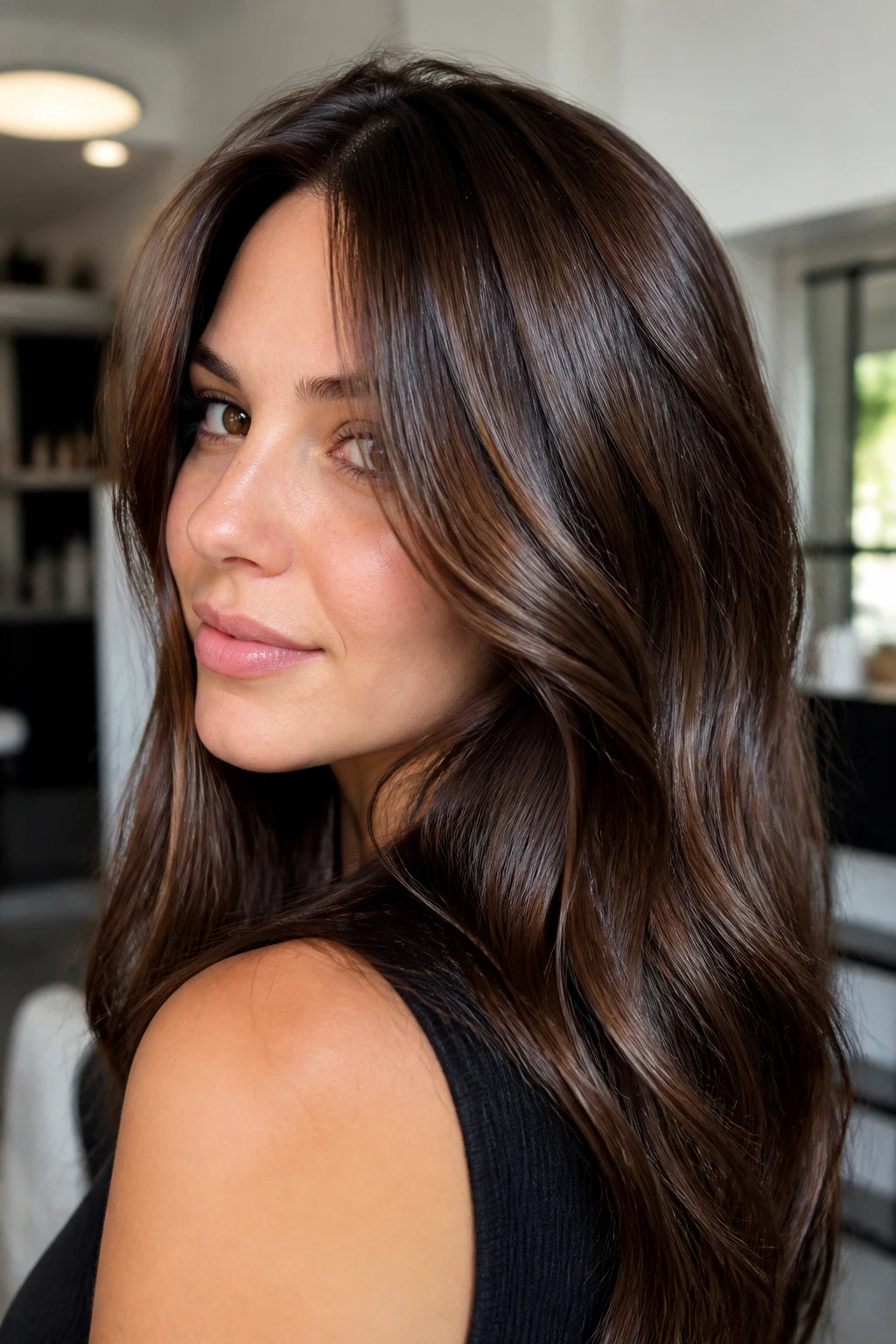
A clear gloss is the thing that makes chocolate lowlights look polished instead of merely darker. It smooths the finish, calms rough ends, and gives brunette hair that reflective surface people often want but can’t name.
It also helps the tones sit together. Without gloss, some chocolate shades can look dry or slightly chalky, especially if the hair has been lightened before. A clear gloss pulls the whole result back into one neat surface.
This is a smart finishing step for almost any brunette, but it matters most on porous hair and on lengths that spend a lot of time under heat styling. Shine sells the illusion. Not fake shine. The real kind that comes from the cuticle lying flat.
28. Everyday Dark-Chocolate Dimension That Grows Out Clean
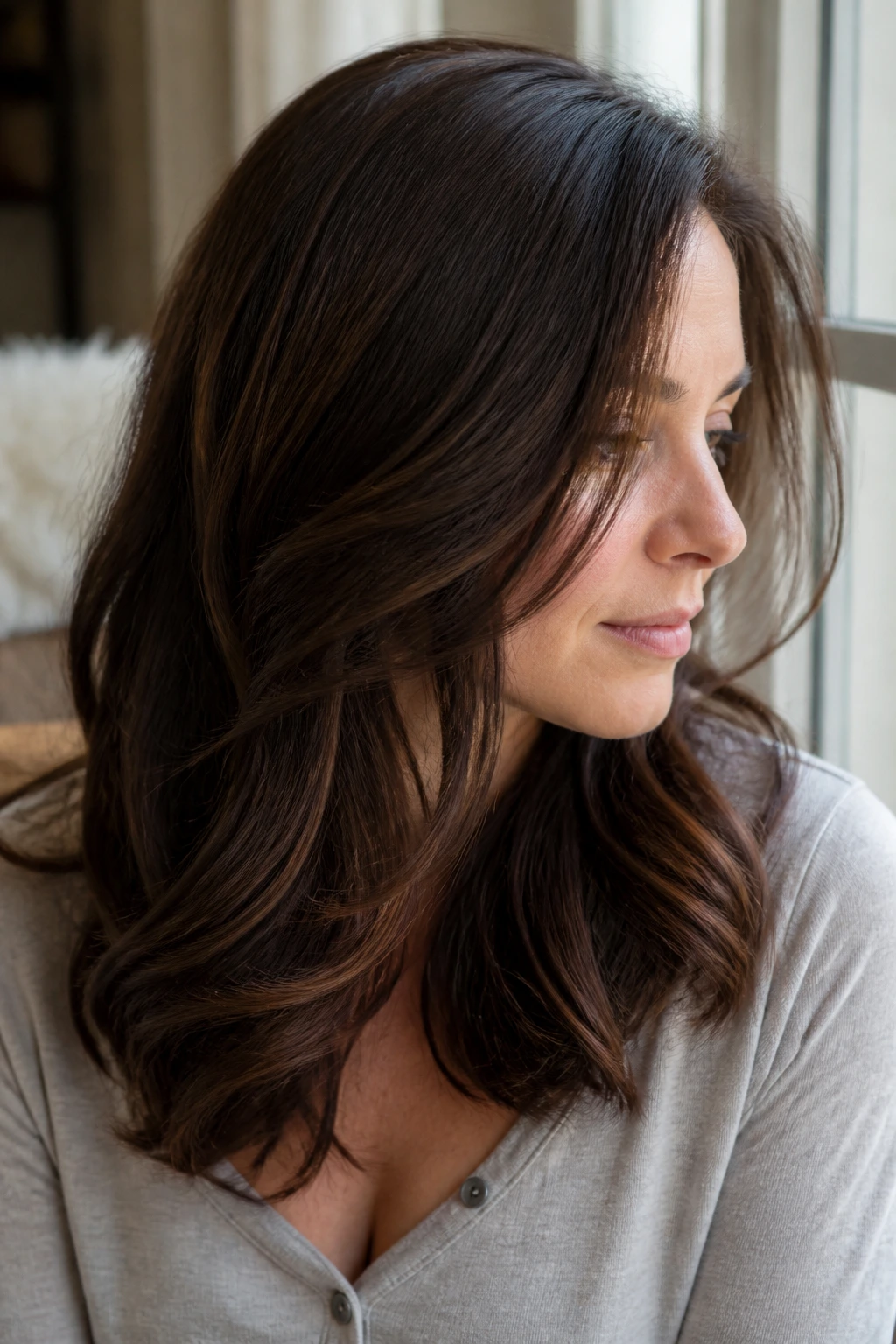
The most wearable version of this whole look is often the simplest one: dark-chocolate depth placed where the hair already wants shadow. That might be the crown, the underlayers, the bend of a wave, or the area around the face where the haircut falls forward.
A good chocolate lowlight service should make brunette hair look richer, not painted. That difference is smaller than it sounds and bigger than it seems. If the color starts to call attention to itself before the haircut does, the placement missed the mark.
Bring a photo, sure. Better yet, bring two or three — one with the tone you like, one with the placement you like, and one with the amount of contrast that feels safe. Those three things are rarely the same photo. A good colorist can work with that, and it usually leads to a better result than asking for “darker pieces” and hoping for the best.
The cleanest dark-chocolate finish usually comes from keeping the pieces thin near the part, a little fuller underneath, and soft around the edges. That gives the hair room to grow out without a hard line. It also means the color still looks good when you skip a blowout, throw it in a claw clip, or let the natural texture do whatever it wants.
And that’s the whole point, really. Chocolate lowlights should make brunette hair look like it already had good depth — just more of it.
