



Mahogany highlights for brown hair can do the one thing plain brunette color often can’t: make the hair look richer without making it look striped or obvious. That is the sweet spot people keep chasing when they say they want “something warm, but not red-red.” Mahogany sits in that narrow middle ground where brown, wine, plum, and chestnut all shake hands.
That matters because brown hair can go flat fast. One tone from root to tip is neat, but it can also look a little sleepy, especially on layered cuts, curls, or hair that needs a bit of shine to come alive. Mahogany changes the way light lands on the hair. Indoors it reads deep and cozy; in daylight it can flash red-brown, berry, or smoked plum depending on the placement.
The trick is not picking the loudest mahogany shade. It’s choosing the right level, the right slice size, and the right place to put it. Too much copper and the result turns orange. Too much darkness and the highlights disappear into the base. The good versions look like they belong there.
The 22 looks below move from barely-there babylights to bolder panels, so you can match the color to your cut, your texture, and your patience for upkeep.
1. Soft Mahogany Ribbons on Dark Chocolate Brown Hair
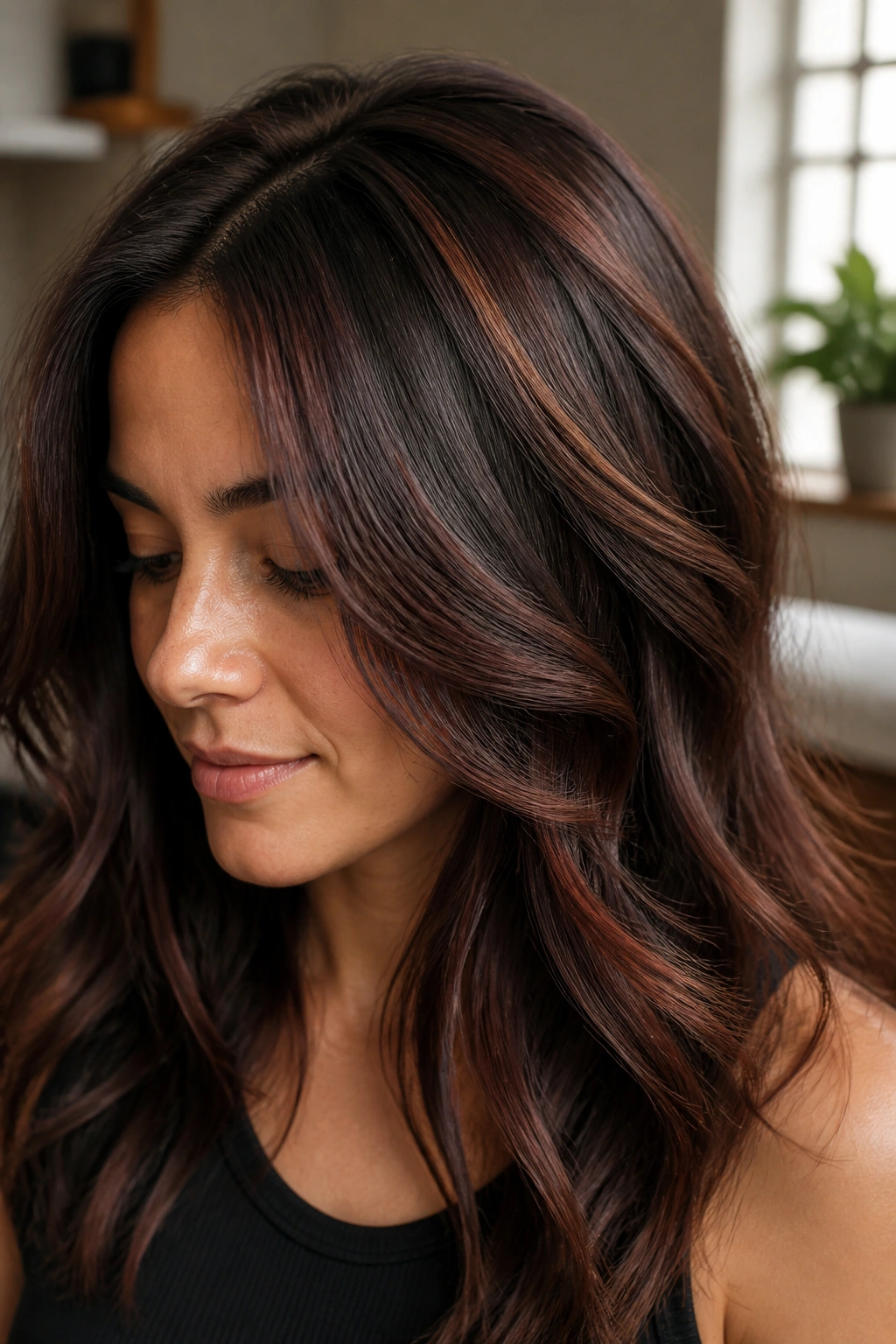
Soft ribbons are the easiest way to warm up dark chocolate brown hair without making the change feel dramatic. The color should sit just a shade or two lighter than your base, with enough red-brown tone to show movement when you turn your head. That is the whole point. It should not look like a stripe.
This look works because the mahogany pieces are fine enough to melt into the darker brown, but still visible enough to catch light on the mid-lengths and ends. On a smooth blowout, the color looks polished. On loose waves, the red-brown pieces break up the depth and keep the hair from reading as one solid block.
What to Ask For
- Fine woven slices through the top layer and around the crown.
- A demi-permanent mahogany glaze that stays close to your natural brown depth.
- The root kept nearly untouched so the grow-out stays soft.
- Slightly brighter pieces around the front, not all over the head.
My tip: part your hair the same way you wear it most days before the appointment. A center part and a side part show the color in different places, and your colorist should know which one matters most.
2. Mahogany Balayage Through Medium Brown Waves
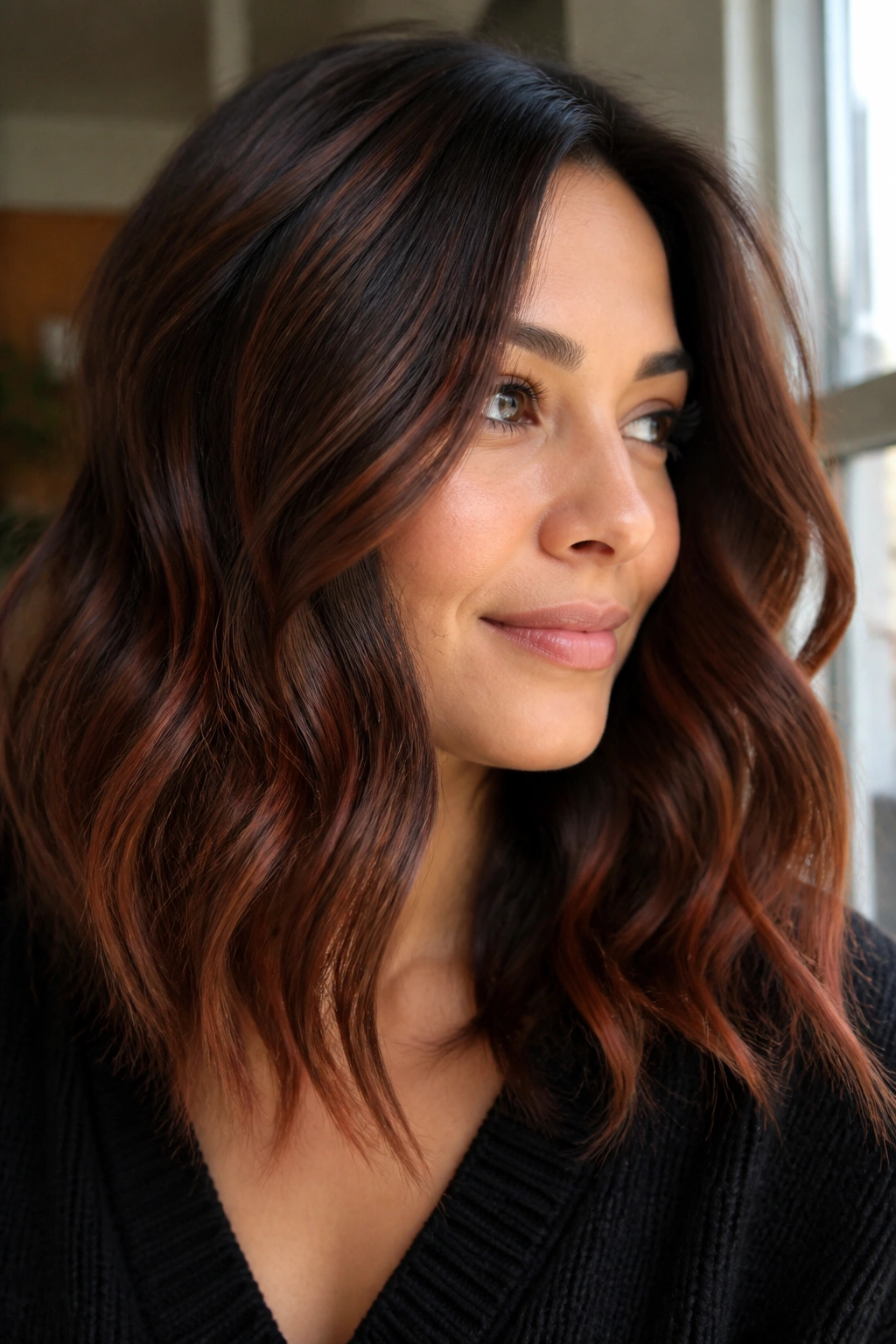
Want something that moves when you walk? Mahogany balayage is the answer. On medium brown waves, the hand-painted placement lets the red-brown tone pool a little more at the bends and fade out toward the ends, which gives the hair that lived-in look people keep asking for. It feels softer than foils, and less “salon straight.”
The nice thing about balayage is that it respects the cut. If the hair has layers, the mahogany lands where the shape already lives. If the hair is one length, the color creates the movement for you. Either way, waves make the transition easier on the eye.
Why It Moves So Well
The color is painted where the light naturally hits, so it does the work of a shadow and a highlight at the same time. That sounds fancy, but in practice it just means the hair looks fuller.
How to Style It
Use a 1-inch or 1.25-inch curling iron and leave the last inch out. Brush the waves apart after they cool. No fuss. A little bend is enough.
3. Chestnut-Mahogany Face-Framing Pieces
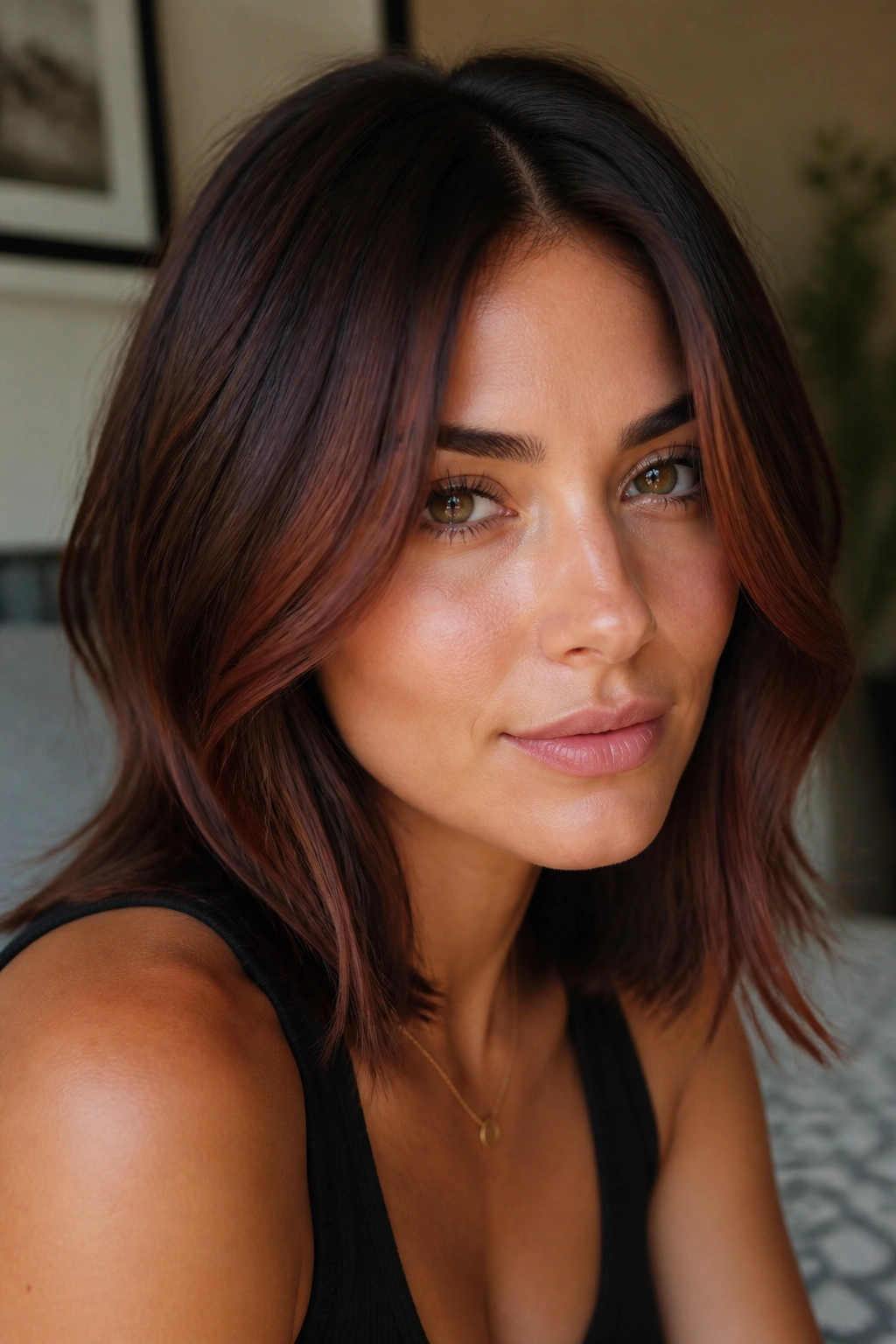
Picture a shoulder-grazing lob, a soft side part, and two chestnut-mahogany pieces tucked right around the face. That tiny placement can do more than a full set of highlights, which is why I keep coming back to it for brown hair that needs shape more than drama.
Face-framing pieces pull attention toward the eyes and cheekbones. They also let you test the tone without committing to a full head of red-brown strands. If the color feels too warm, your stylist can dial it back next time. If it feels right, you can widen the frame later.
- Best on lobs, long bobs, and shoulder-length layers.
- Ask for the front pieces to be one shade brighter than the rest.
- Keep the pieces soft near the hairline so they don’t look blocky.
- A middle part gives the frame a clean line; a side part makes it feel looser.
One small front piece can change the whole face. Strange, but true.
4. Deep Merlot-Mahogany Lowlights on Brunette Hair
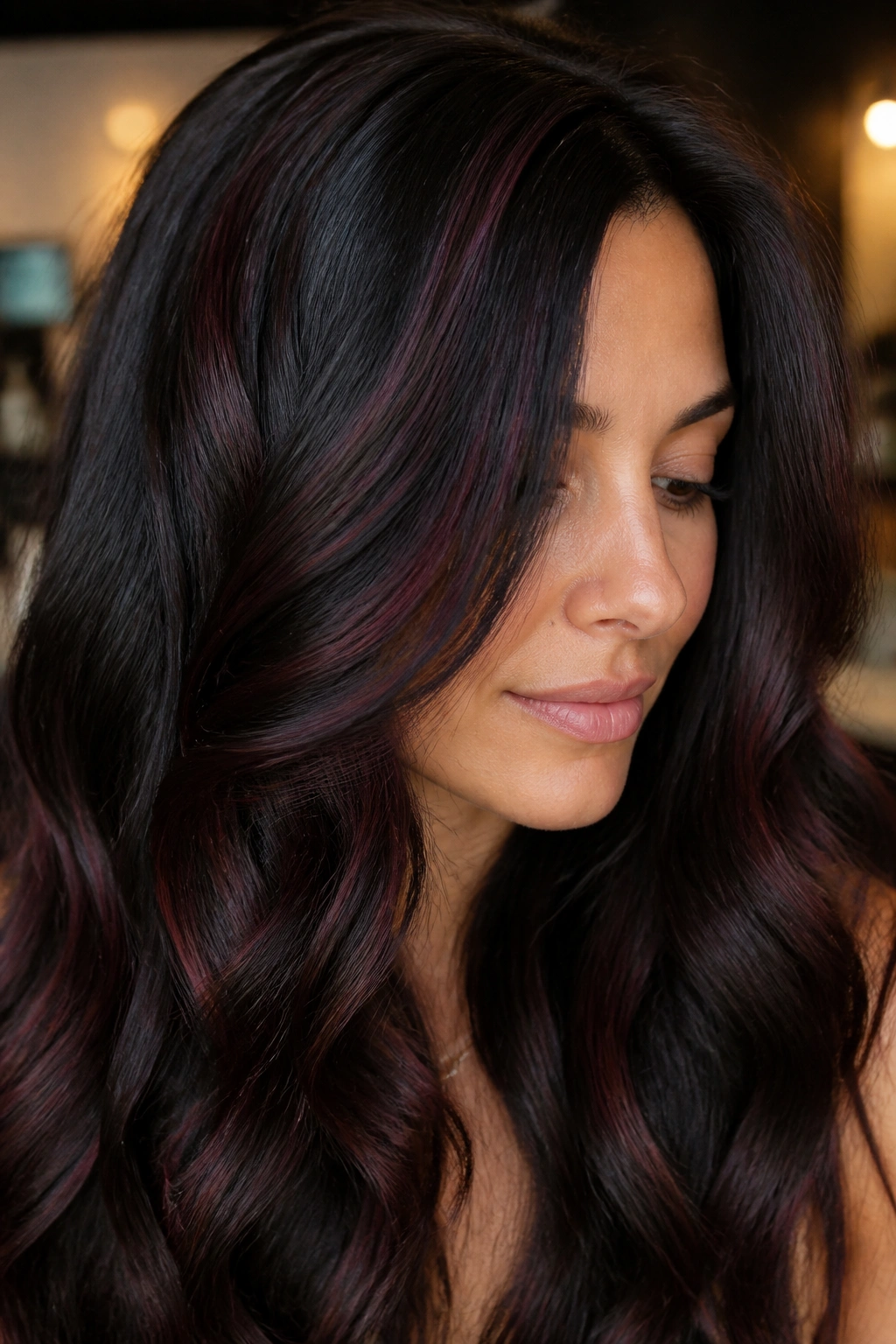
Lowlights do more work than highlights when a brunette base has started to look dusty. That is especially true if your brown hair has been lightened before and now feels a little tired. Deep merlot-mahogany lowlights slide into the darker parts of the hair and rebuild richness from the inside out.
This is not a loud look. Good. It shouldn’t be. The point is to put depth back where everything has gone a bit flat. On darker brunettes, the merlot tone can appear almost invisible until the light shifts, then the red-brown shadow shows up and gives the hair a more expensive feel without asking for attention.
The best placements are usually under the crown, through the sides, and near the nape. That keeps the top layer bright enough to move, while the underneath gives the eye something to read. If your hair is already warm, this style keeps it from going copper. If your hair is cool, it can add just enough depth to stop the brown from feeling washed out.
5. Warm Auburn-Mahogany on Curly Brown Hair
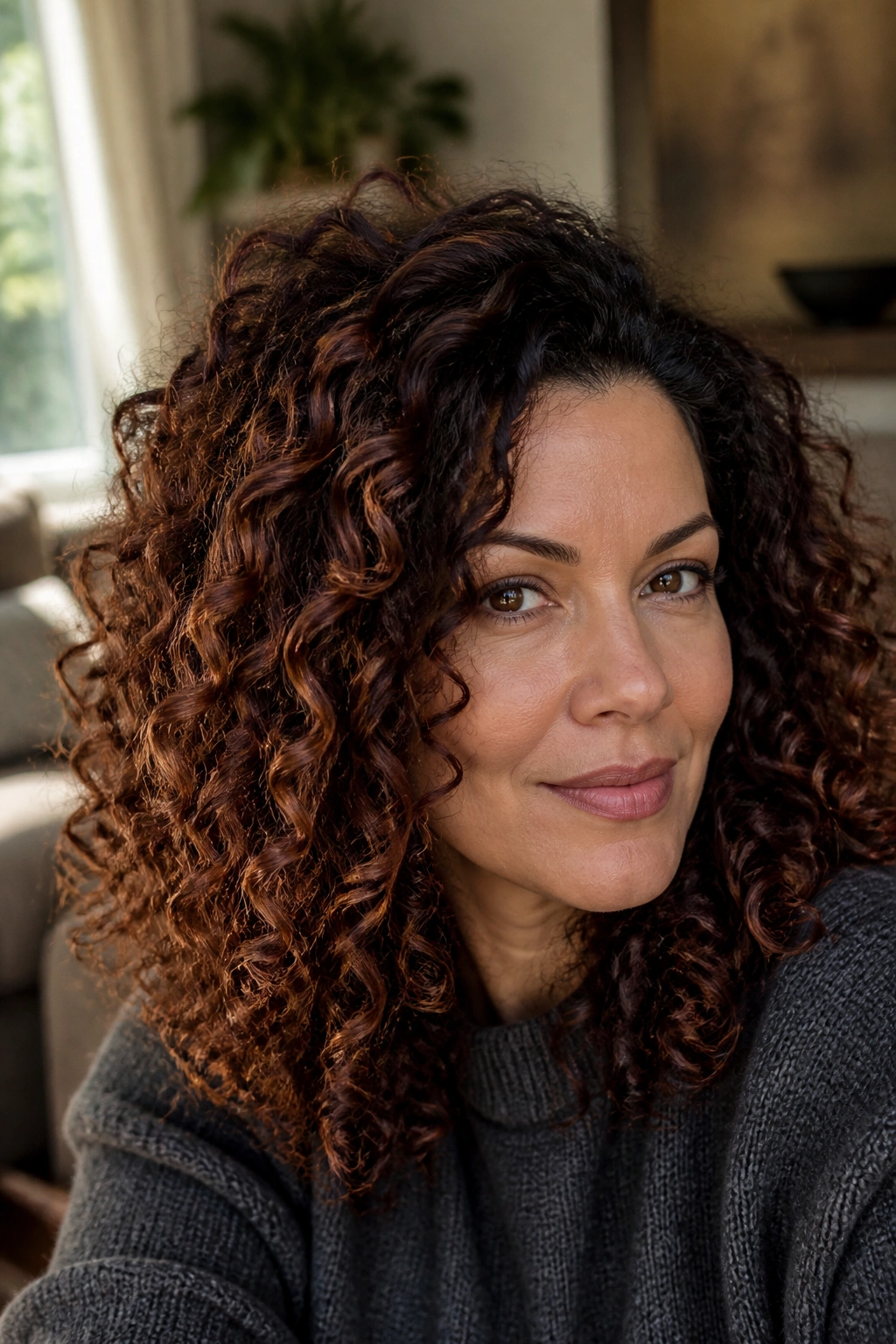
Curly hair tells on color immediately. Every bend, coil, and ringlet catches a different amount of light, so warm auburn-mahogany shows up in flashes instead of one flat band. That is why it looks so good on curls. The color gets to play.
The trick is surface painting. You want the mahogany to live on the outer shell of the curl pattern, then dip in and out of the interior. If every curl gets painted the same way, the result can look busy. If the placement is broken up, the hair reads dimensional and soft.
How the Curl Pattern Changes the Look
Tighter curls show mahogany as a peppered red-brown glow. Loose curls show more of the ribbon effect. Either way, dry curl shape matters more than the product bottle. Let the pattern fully dry before you judge the tone.
What Helps Most
- Ask for painted panels, not chunky foils.
- Keep the brightest pieces around the outer layers.
- Diffuse on low heat to protect the color and the curl shape.
- Trim every 8 to 10 weeks so the ends don’t steal the shine.
6. Cinnamon Mahogany Babylights on Straight Brown Hair
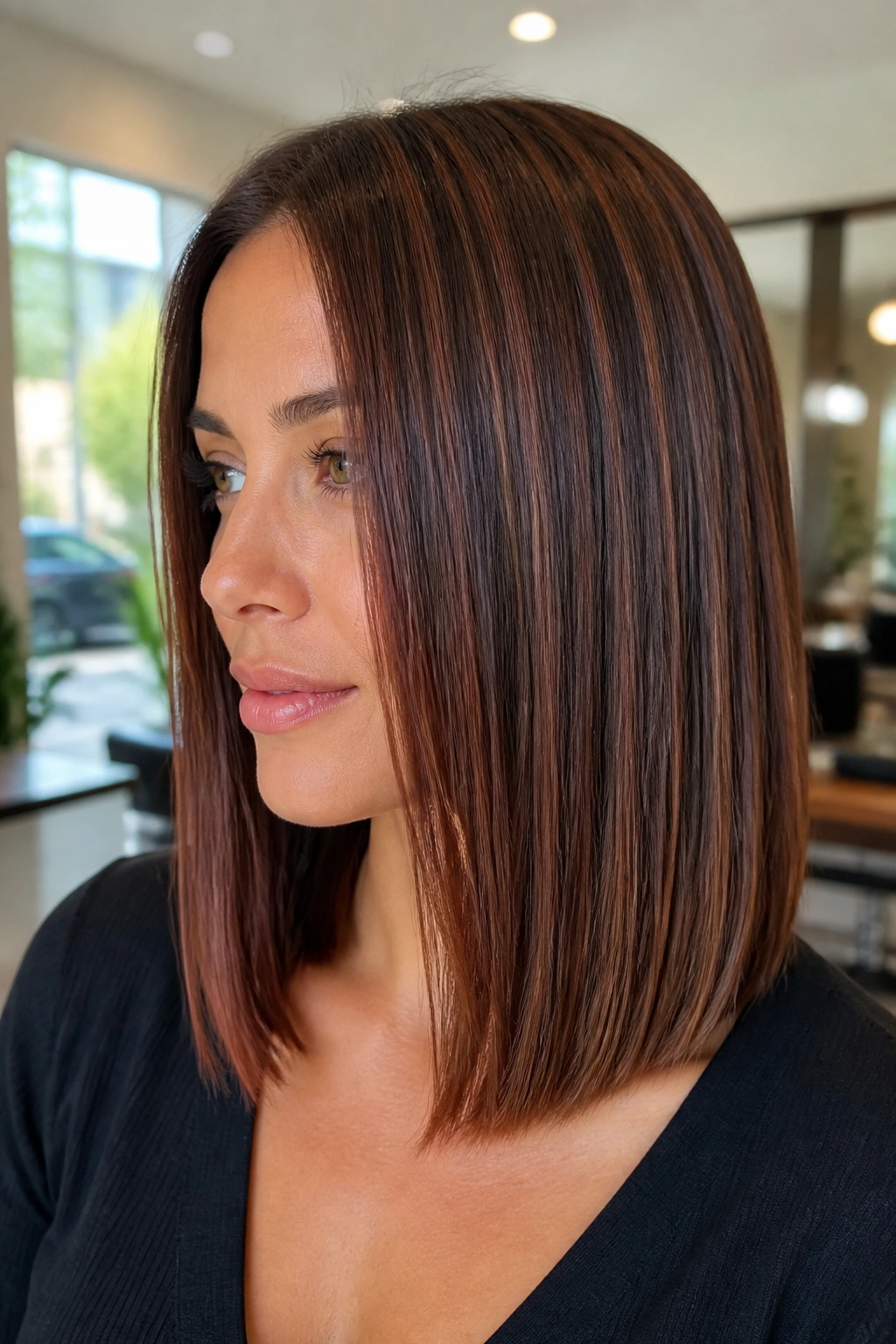
Straight hair is unforgiving. There, I said it. It shows every line, every skip in placement, and every over-bright streak, which is why cinnamon mahogany babylights are such a smart fix for straight brown hair. Tiny highlights keep the look delicate instead of graphic.
The color should be fine enough that you almost question whether it’s there at all until the light catches the top layer. That faintness is useful. It makes the hair look smoother and denser at the same time, especially when the cut is blunt or long and even.
Best for These Cuts
- Blunt lobs
- Long layers with little bend
- Fine to medium straight hair
- Styles worn down more than tied up
A sleek blowout helps the shine, but a flat iron can be too much if the hair already feels thin. Keep the pieces narrow, keep the warmth controlled, and let the movement come from the cut.
7. Glossy Mahogany Highlights on Espresso Brown Hair
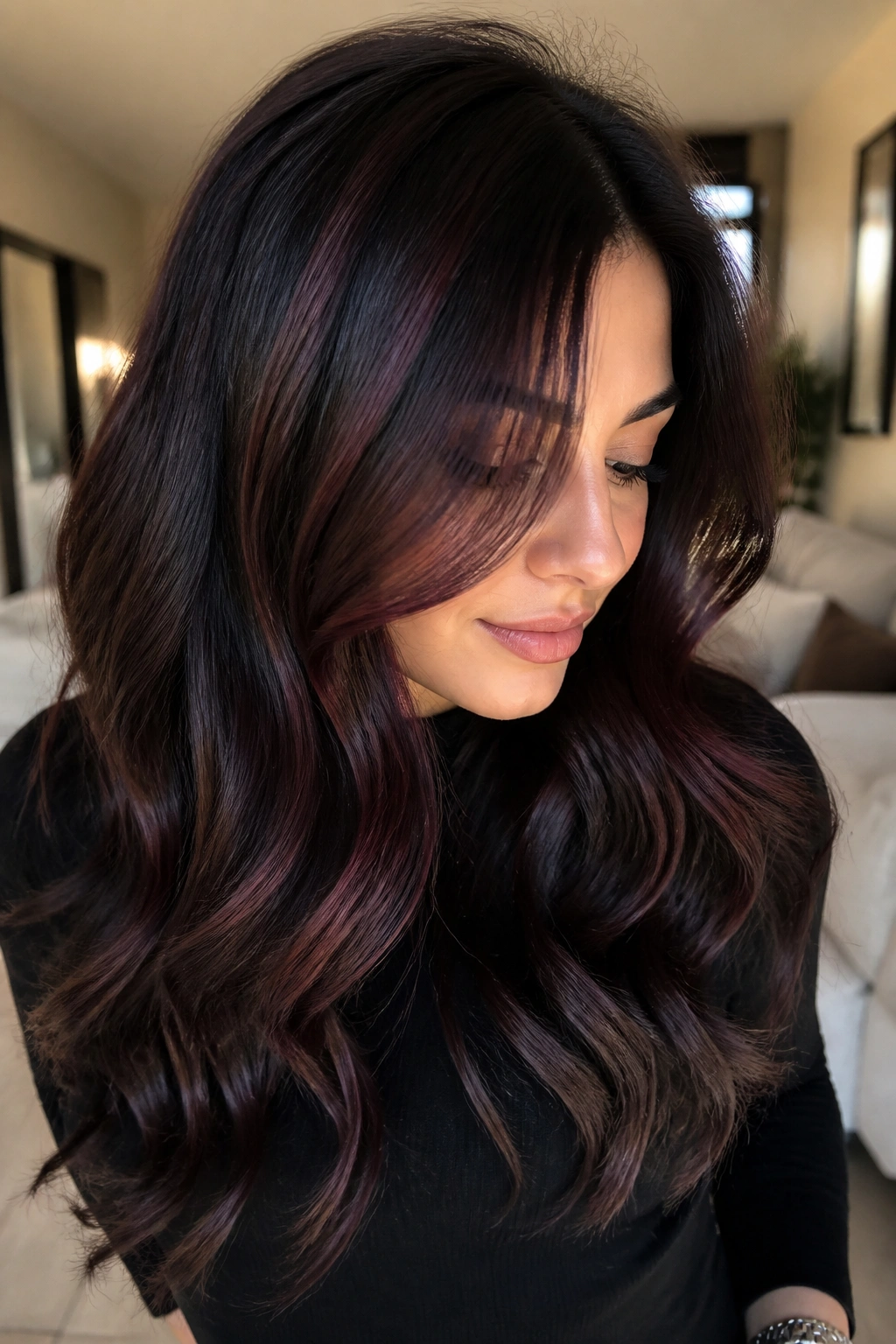
Three or four micro-foils can change a whole espresso brown base. That is the part people underestimate. On very deep brunette hair, mahogany does not need to be loud to be visible. It just needs enough lift to separate from the base and enough shine to reflect.
This version is all about gloss. The highlights are usually concentrated around the face, the top layer, and maybe the ends of a few longer pieces. The rest stays dark. That contrast makes the mahogany look like it lives inside the hair rather than sitting on top of it.
The Shine Factor
Ask for a high-gloss finish or a color glaze after the highlights process. Without it, the red-brown can look dull against the espresso base. With it, the color has a smooth, polished finish that reads expensive without trying too hard.
Keep in Mind
- Best on dense hair that can carry contrast.
- Works well with a blowout or polished waves.
- Too many foils will break the depth.
- A tiny amount of brightness does the job.
8. Smoky Mahogany Money Piece
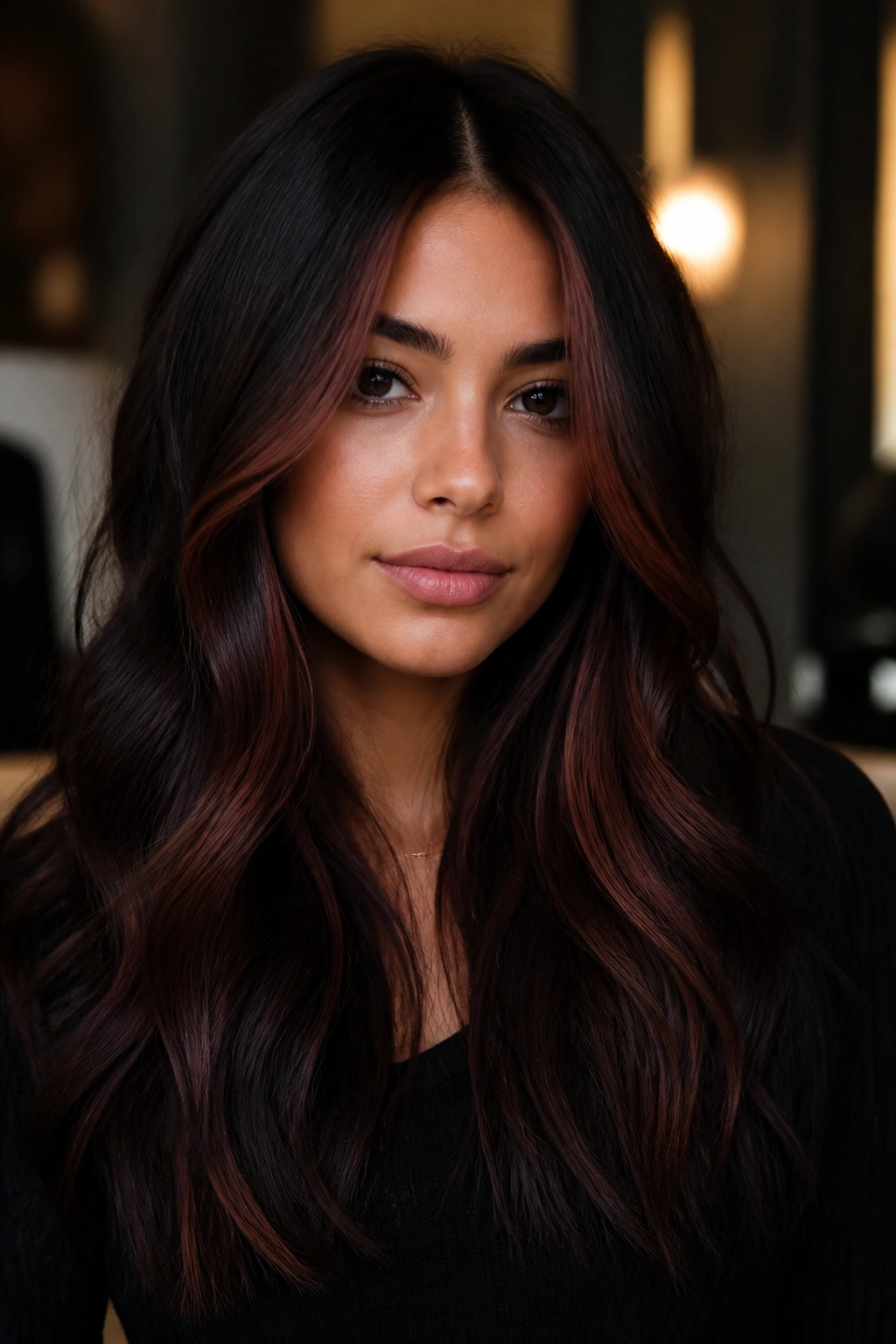
A money piece does not need to be blonde. A smoky mahogany money piece can frame the face with far more character, especially if you like darker hair but still want the front to stand out. The smoke comes from keeping the red tone muted and the brown base strong.
This look is made for a middle part or a curtain fringe. The front panels are brighter, but not in a sunny way. They should feel moody. A little glossy. Maybe even slightly shadowed at the root so the color melts back into the rest of the hair instead of starting with a hard line.
If the mahogany gets too bright at the front, it loses the point. You want the face-framing pieces to pull the eye in, not shout from across the room. That means controlled lift, a cool or neutral brown glaze, and a soft finish around the hairline.
9. Rosewood Mahogany on a Cool Brown Base
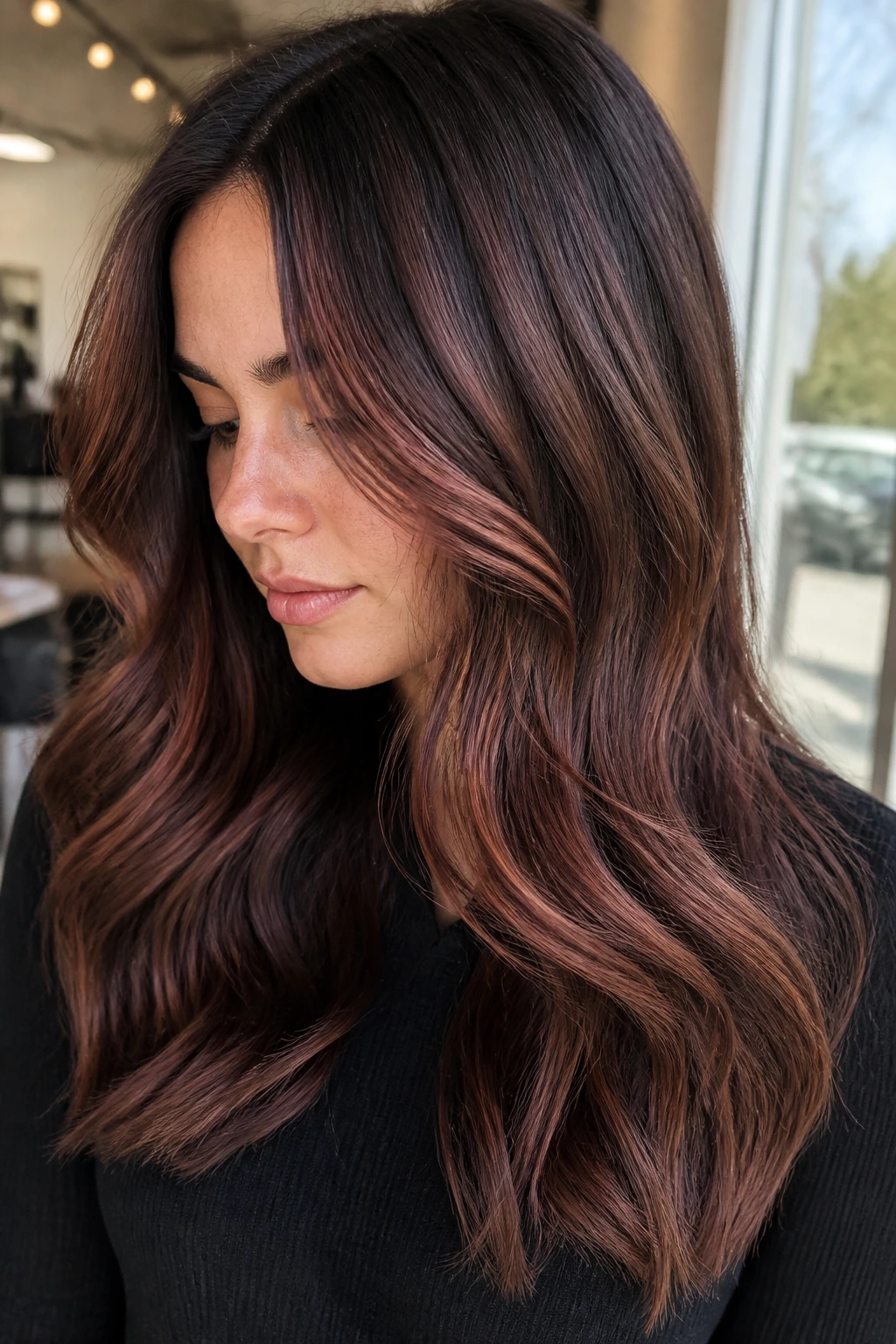
Why do some mahogany looks feel soft while others turn sharp? Tone. A rosewood mahogany finish works best when the base brown is cool or ash-leaning, because the rosy note sits beside the brown instead of fighting it. You get depth, not orange.
This is a prettier, quieter version of mahogany. More berry skin than red wine. More muted wood tone than copper. On cool brown hair, the color can feel almost velvety, especially when the highlights are thin and blended instead of wide and obvious.
How to Steer the Tone
- Ask your colorist to keep the finish rose-brown, not copper.
- Avoid too much gold in the formula.
- Use a shine glaze that keeps the cool side of the color intact.
- Best on medium to dark brown bases with a cooler undertone.
The payoff is a look that reads refined in daylight and richer indoors. No drama required.
10. Curly Mahogany Halo Highlights
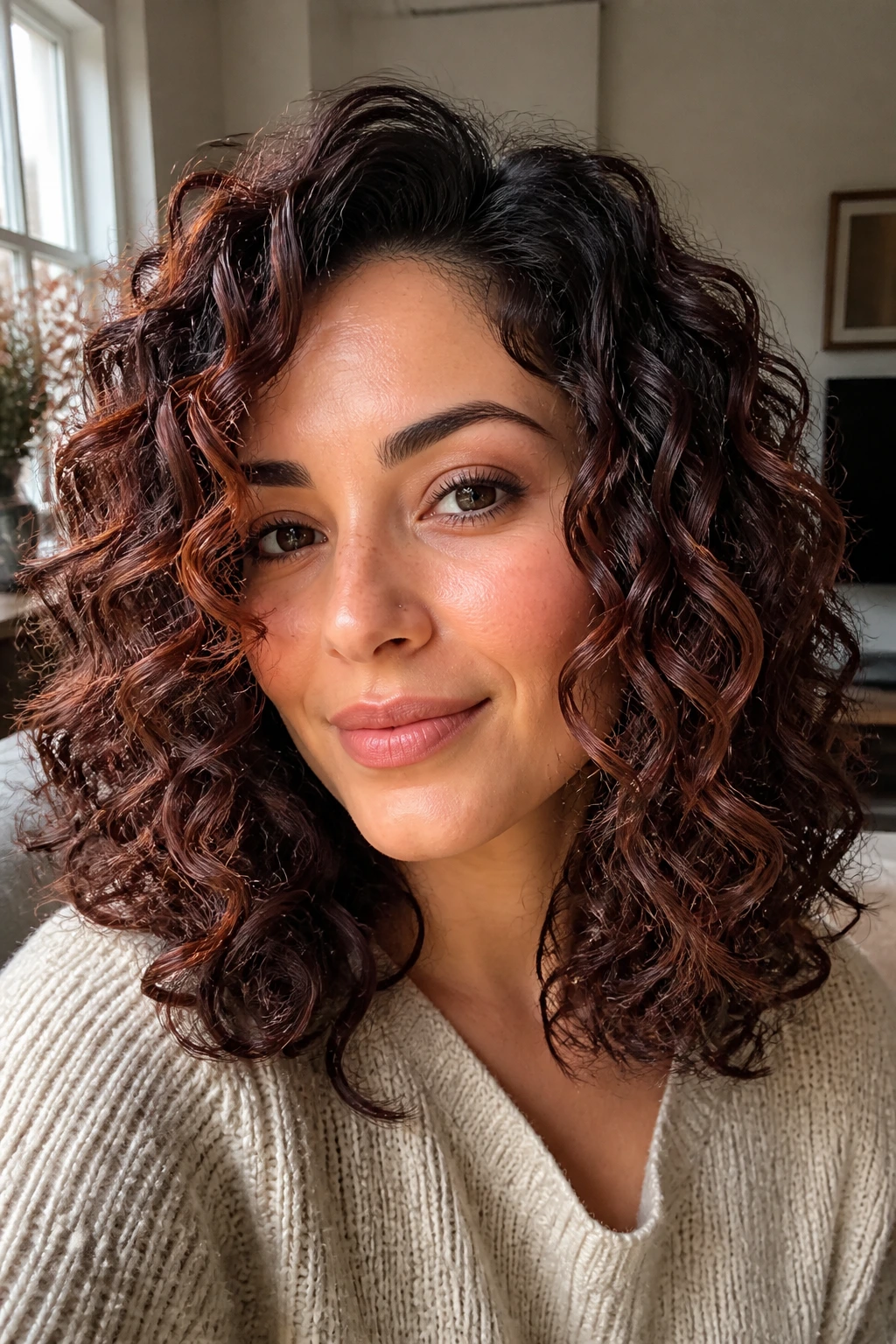
If your curls already build a shape around your face, paint the outer ring and let the hair do the rest. Halo highlights follow the edge of the curl pattern instead of fighting it, so the mahogany shows up where the eye naturally lands. That makes the hair look fuller without turning it into a solid red-brown halo.
This placement is especially good on shoulder-length curls and layered cuts. The ends of the curls catch the color, while the inside of the shape stays deeper and darker. That contrast gives the style a rounder silhouette. It also keeps the root area calm, which matters if you don’t want to be in the salon every few weeks.
The best version of this look is painted by curl family, not by random sections. A good colorist will watch how the curls spring up, then place the mahogany where the shape opens. That takes time. Worth it.
11. Ribboned Mahogany Foils for Dimensional Brunettes
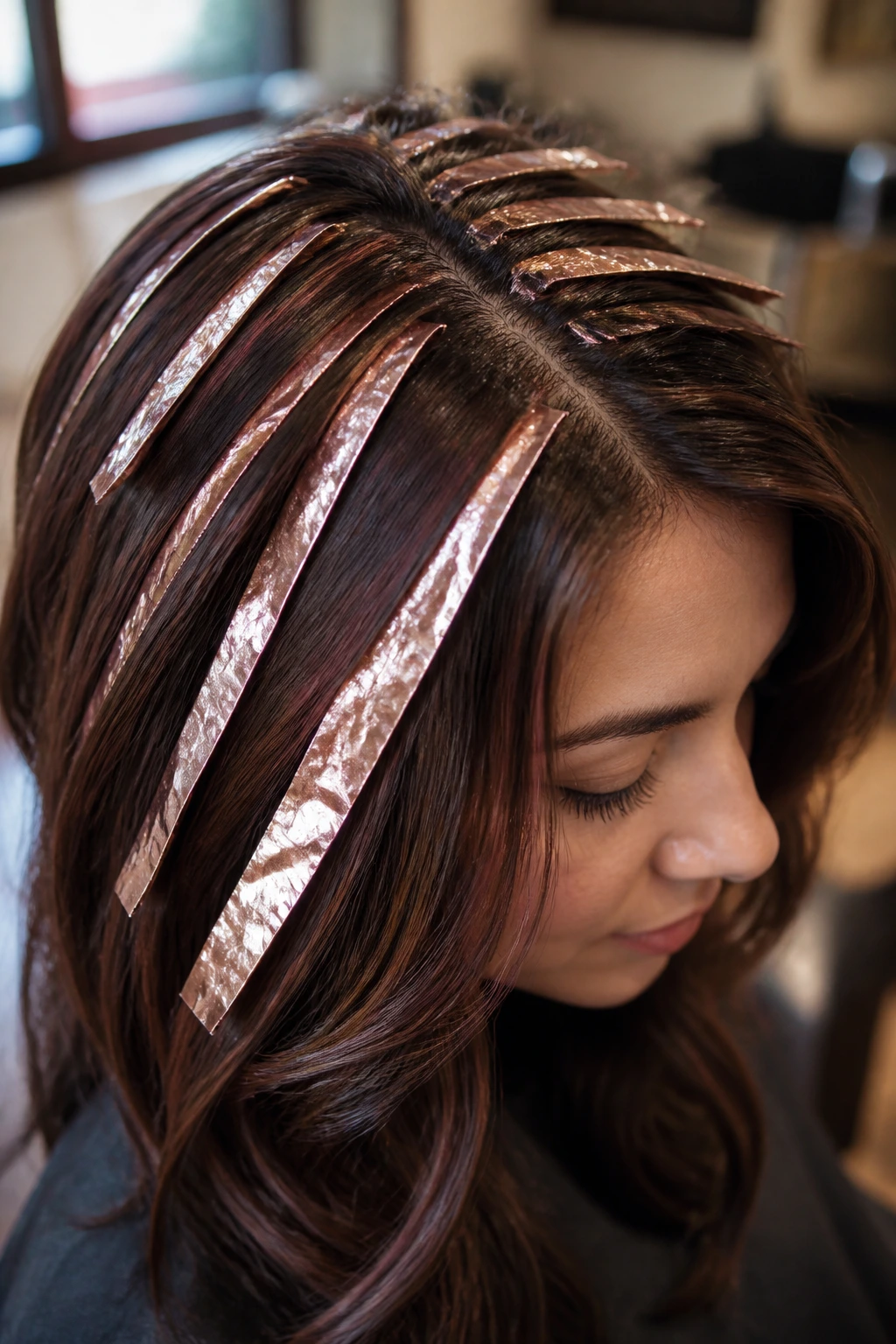
Foils still matter. A lot. Especially when the goal is clean, dimensional mahogany that shows up clearly against brown hair. Freehand painting can be soft, but foils give you a more controlled ribbon effect, which is useful if your cut has layers or your hair tends to lose shape.
This look gives the hair a crisp, glossy finish. The highlights sit in narrow strips through the crown and sides, then taper out through the ends. On wavy hair, that creates movement. On straight hair, it gives the impression of fullness. On thick hair, it keeps the color from disappearing inside the mass.
Why Foils Beat Freehand Here
Foils lift a little more evenly, which helps mahogany stay visible without turning muddy. They also let your colorist place the brightness in a predictable pattern, which is handy if you prefer a neater result.
What to Skip
- Big chunky sections.
- Too much warmth at the ends.
- Heavy lightening through the root area.
A good foil set should look deliberate, not busy.
12. Vivid Mahogany Peekaboo Panels
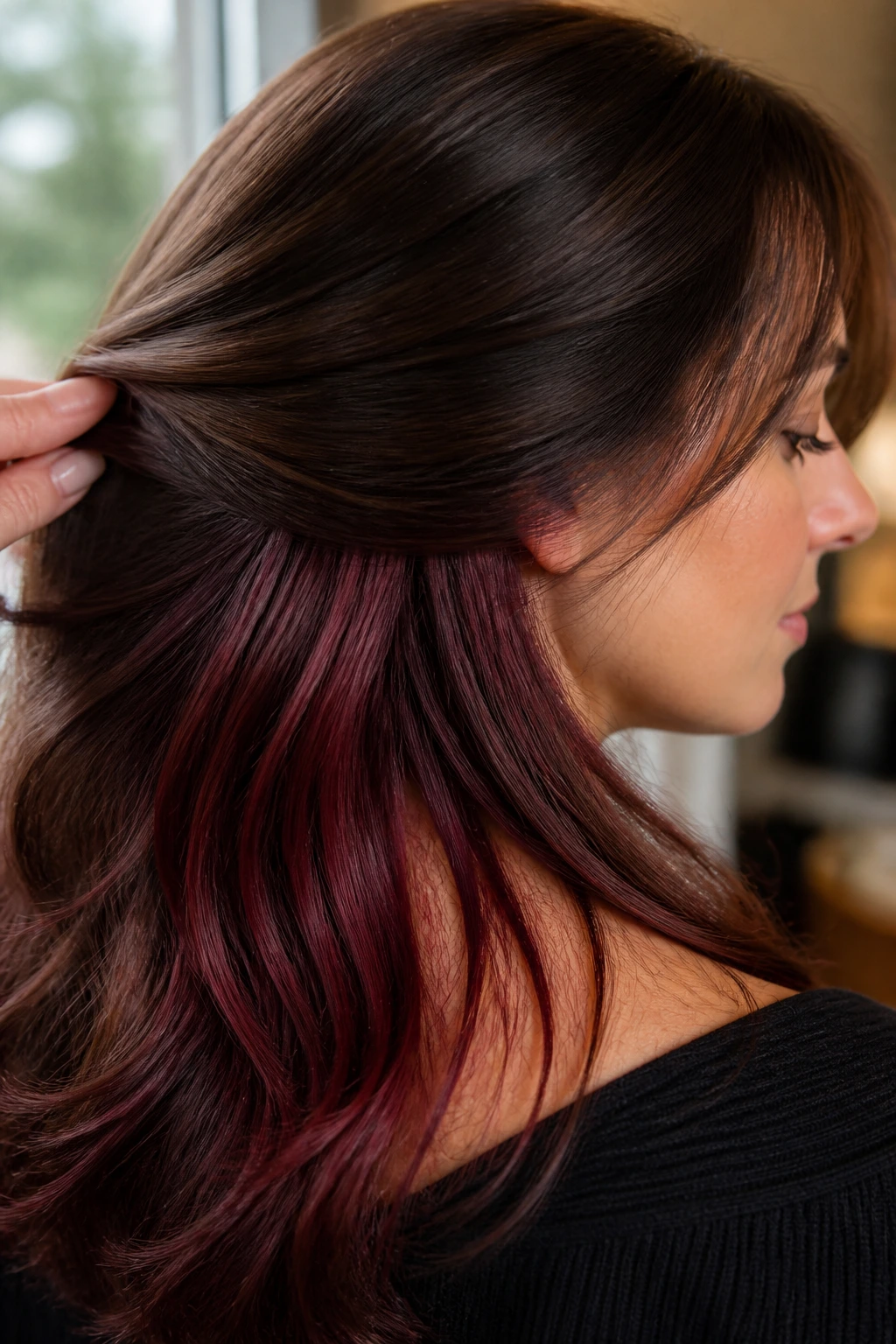
Hidden color is more fun than obvious streaks. There, I said it too. Peekaboo mahogany panels live underneath the top layer, which means they show up only when the hair moves, gets tucked behind the ear, or goes into a ponytail. That makes the style feel a little mischievous.
This is a smart choice if you work in a more conservative setting but still want something with personality. It’s also useful if you’re nervous about a full mahogany commitment. The top layer stays brown and calm. The panels underneath bring the red-brown surprise.
The best peekaboo placement usually lives around the nape, under the crown, or inside the lower sides. When the color is too close to the surface, it stops being peekaboo and starts being high-contrast. That’s a different look entirely.
A deep wine-mahogany tone tends to read best here. Bright red can look flashy fast. The hidden version should feel like a secret, not a billboard.
13. Auburn Mahogany Babylights for Fine Brown Hair
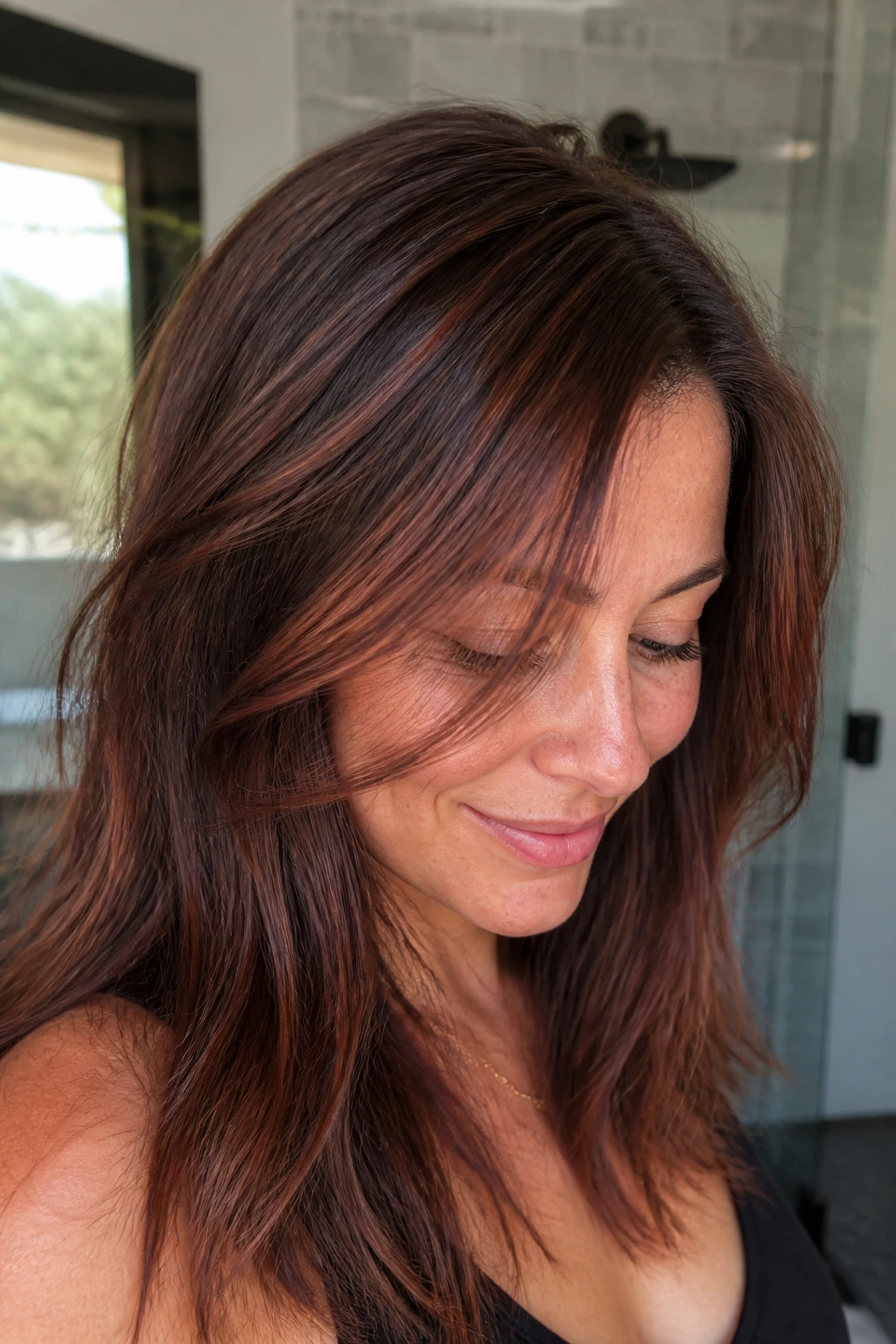
Fine hair needs density, not giant streaks. That is why auburn mahogany babylights work so well. The pieces are tiny, close together, and soft enough to make the hair look fuller instead of stringy. One big highlight can expose too much scalp and make the hair look thinner. Little ones do the opposite.
What Makes It Work
The babylights break up the brown base in a way that feels natural, almost like sun-faded color, except warmer. They also keep the red-brown tone from jumping out too hard. That matters on fine strands, which can go see-through if they’re over-lightened.
Ask For This
- Narrow slices through the top layer and hairline.
- Brightness concentrated around the part and crown.
- A soft auburn-mahogany glaze, not a high-copper formula.
- Minimal contrast between the base and the highlight.
If your hair has very little body, this is one of the best ways to fake more of it. Quietly. No fuss.
14. Mahogany Ombré Ends
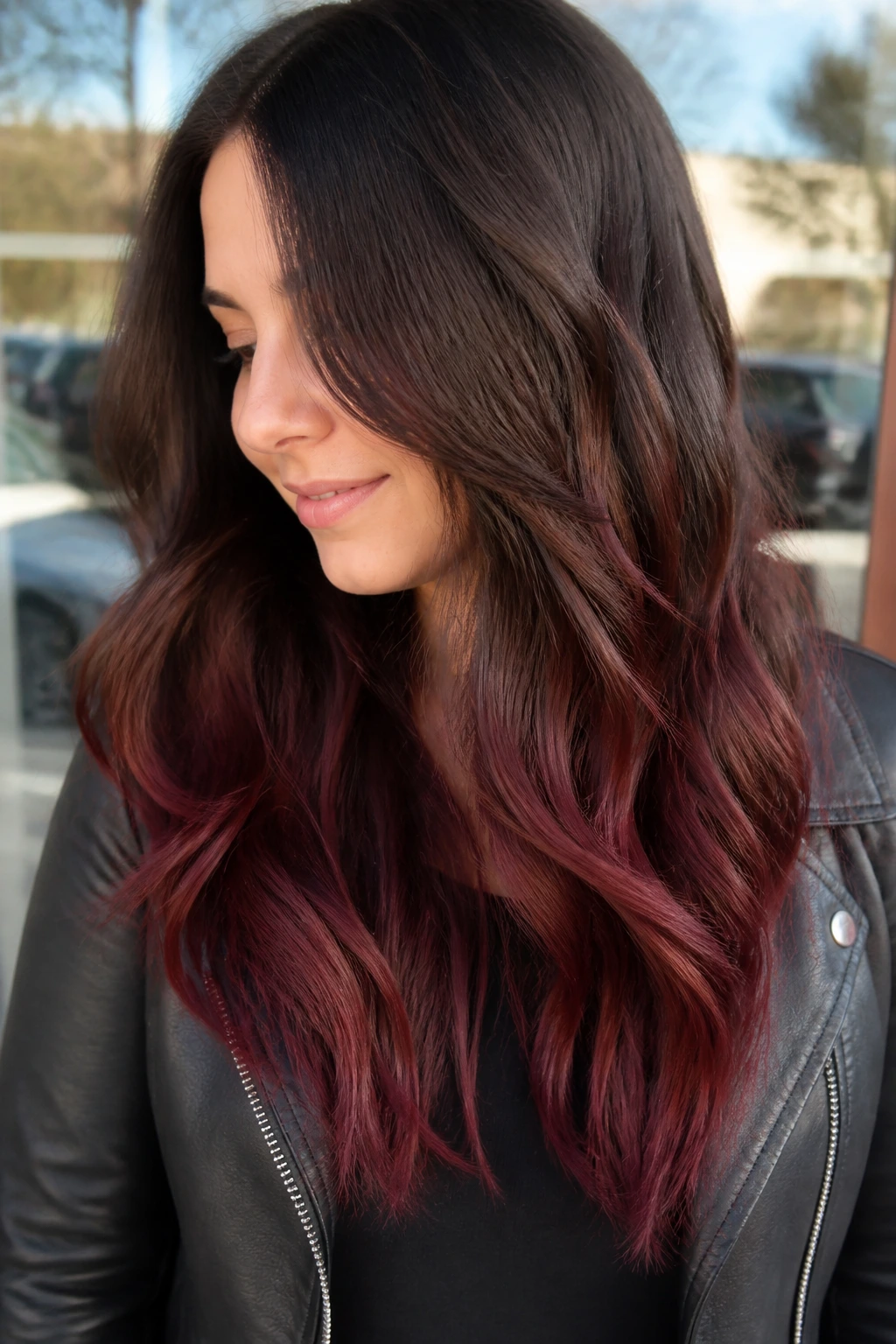
Ombré is not lazy when the fade is done with care. A mahogany ombré lets the roots stay close to your natural brown while the ends shift into a deeper red-brown. The result is lower maintenance, yes, but it also gives long hair a little edge without committing to highlights all over the head.
The fade should look gradual, not painted in bands. Mid-lengths usually carry the softest transition, while the ends hold the richest mahogany tone. That gives the style a heavier finish at the bottom, which works especially well on long layers.
This is the right pick if you like to stretch appointments. It grows out without a hard line, and the darker root keeps the style grounded. The downside? If your ends are already dry, the color can make them look a bit rough. Trim first. Color second.
15. Warm Wine Mahogany on Golden Brown Hair
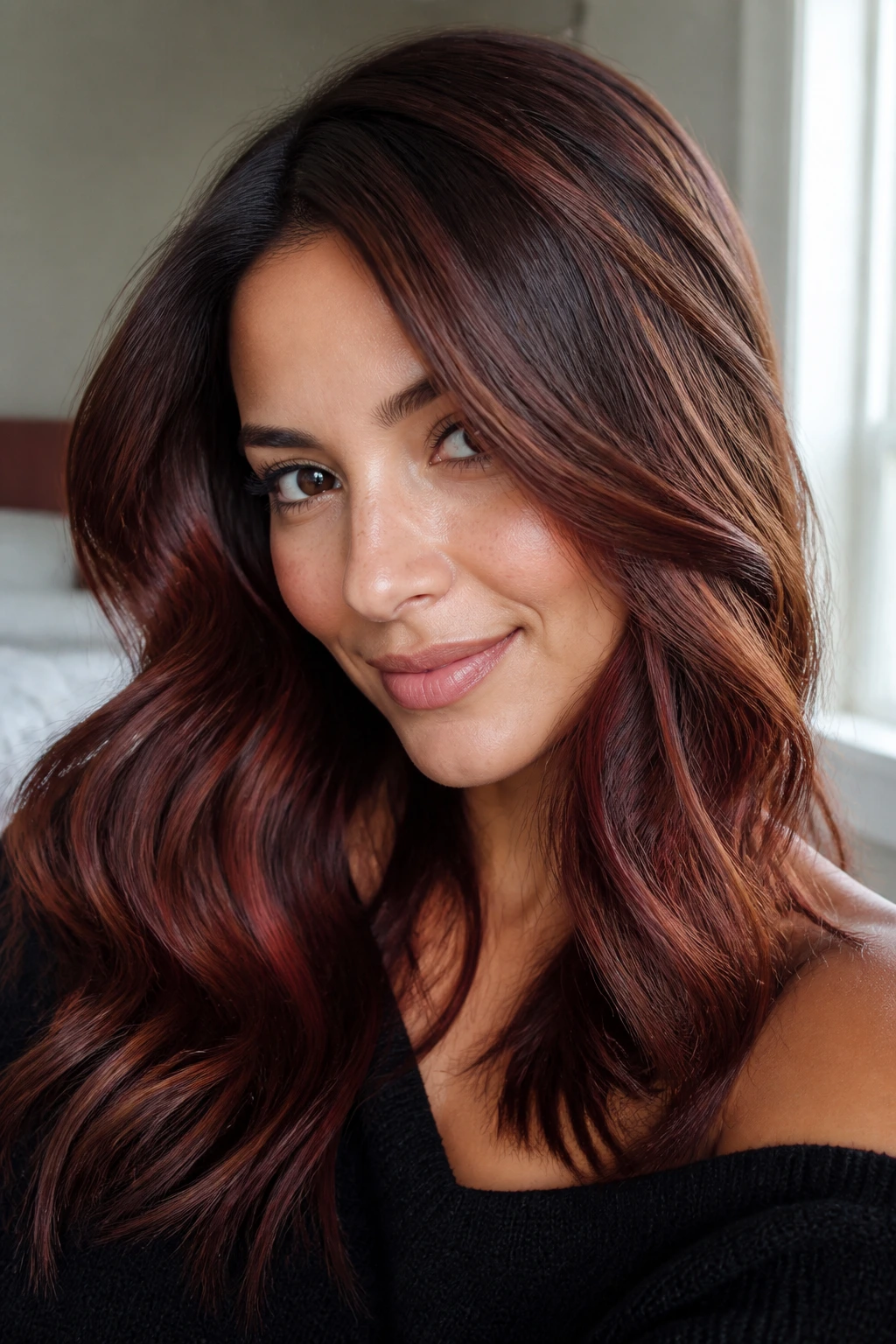
Warm wine mahogany looks like crushed berries stirred into cocoa. That sounds dramatic, but the color itself is only slightly richer than that image. On golden brown hair, the warmth from the base and the warmth from the mahogany sit in the same family, which makes the result feel especially smooth.
This version is less red than auburn and less brown than chestnut. The wine note gives it depth. The gold underneath keeps it from going flat. On layered cuts, the two tones bounce off each other and make the hair feel thicker than it is.
What Keeps It Rich
- Ask for the mahogany to stay wine-leaning, not orange.
- Keep the highlights thin at the ends.
- Use a gloss between salon visits if the color starts to look matte.
- Air-dried waves show the color more softly than a blunt blowout.
A little shine goes a long way here. The tone needs light to breathe.
16. Cool Plum-Mahogany for Ash Brown Hair
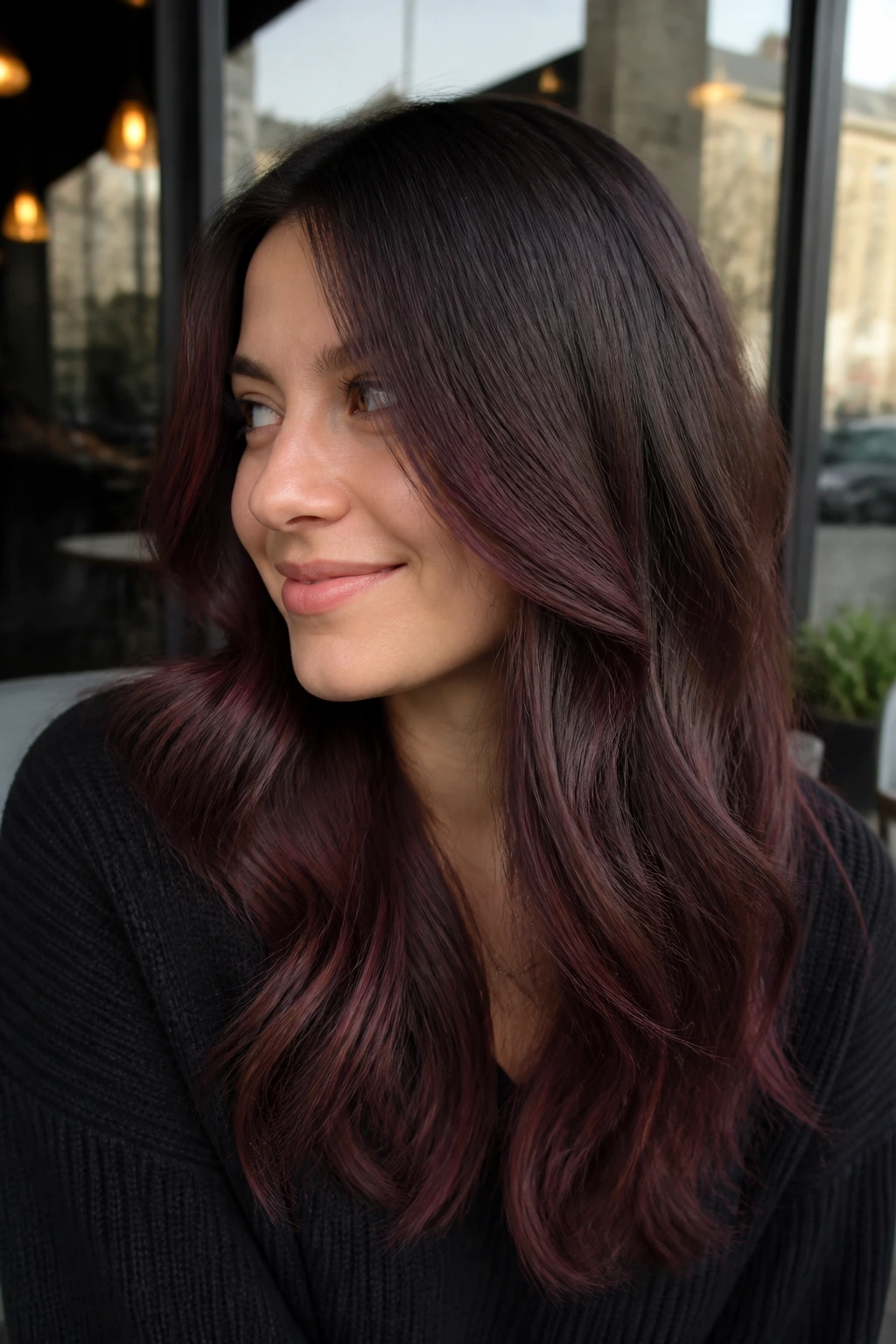
Ash brown can fight warm red. That’s the blunt version. If your base is cool and smoky, a plum-mahogany tone usually behaves better than a redder one because it stays in the same temperature range. The color looks intentional instead of like a warm patch dropped onto a cool canvas.
This is one of the better choices for people who like brown hair that leans sleek and muted. The plum note keeps the mahogany from reading coppery, while the brown holds the whole look together. On straight styles, it can look polished and clean. On waves, the color gets a little softer and more dimensional.
How to Keep It From Turning Warm
- Ask for a violet-brown glaze or a plum-brown finish.
- Keep the lift modest.
- Avoid formulas loaded with gold.
- Style with smooth bends or a blunt blowout to show the cool tone.
If your skin tends to suit cool shades, this one is a strong pick.
17. Contrast-Heavy Mahogany on Dark Mocha Hair
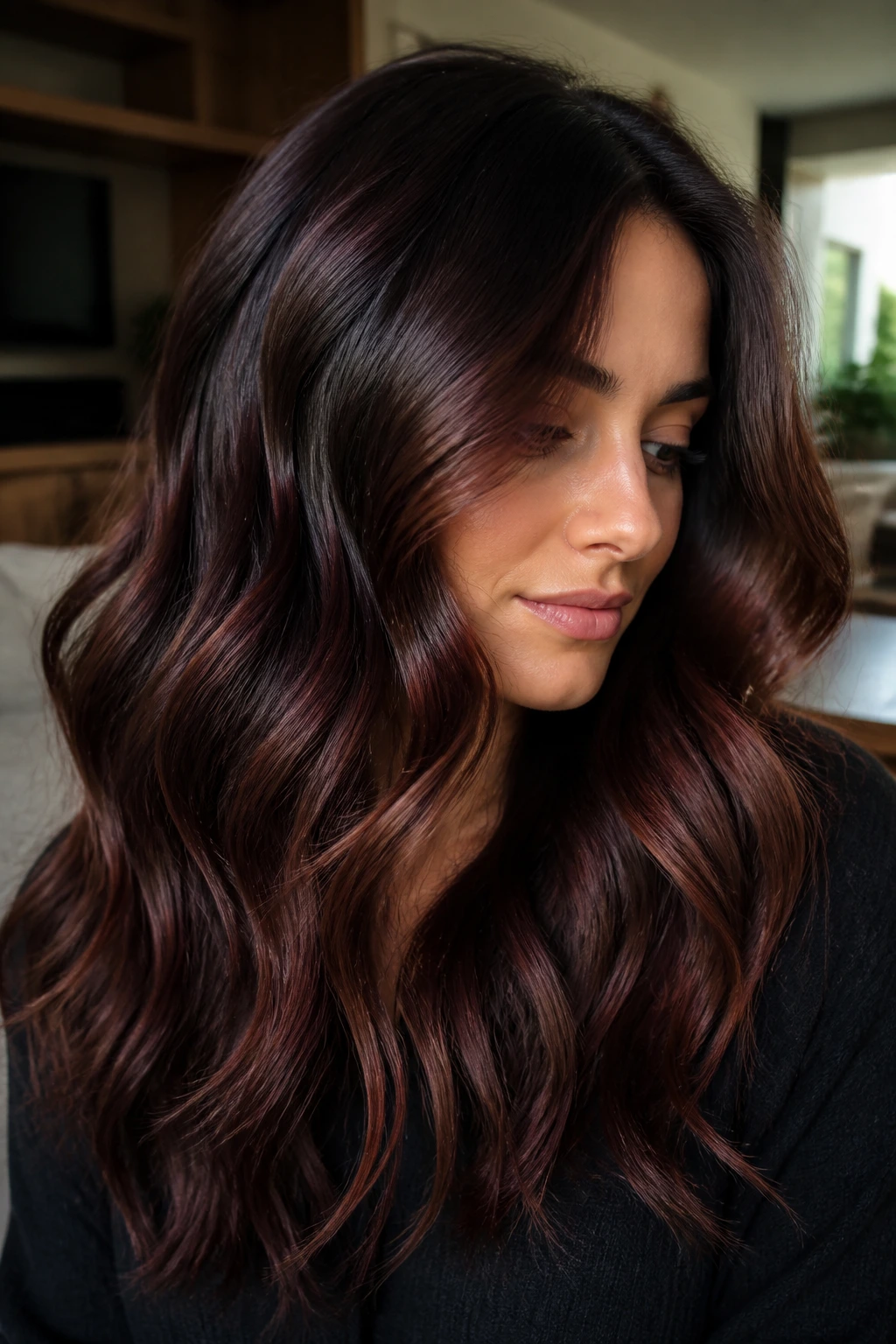
Two levels of lift are enough to show the shade. Three can go loud fast. On dark mocha hair, that line matters, because mahogany needs some contrast to show up, but not so much that the base gets lost. This is the version for people who want the color to be seen, not whispered.
The contrast-heavy look usually works best on layered cuts, lob lengths, or long waves. The movement keeps the brighter pieces from sitting like stripes. If the hair is very straight and one-length, the contrast can feel harsher than intended. That’s not a color problem. It’s a placement problem.
Best Texture for It
- Loose waves
- Soft layered blowouts
- Medium-to-thick hair
- Cuts with some internal movement
A brunette this dark can carry more drama than people think. The key is to keep the mahogany rich and grounded, not neon-red and not too thin.
18. Soft Rooted Mahogany Balayage
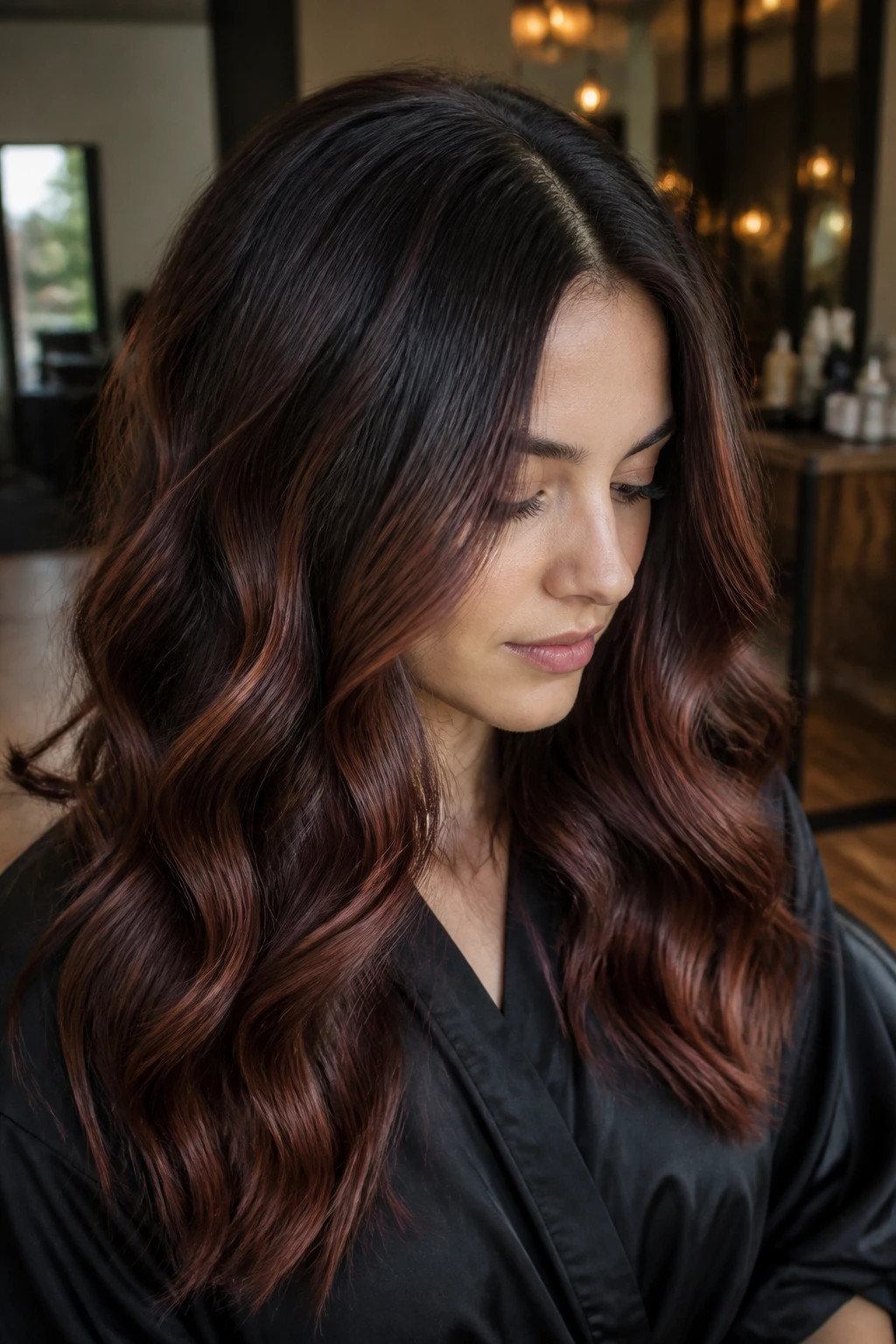
Rooted balayage is the least fussy way to wear mahogany. A soft root melt keeps the top close to the natural brunette base, then the color opens up through the mids and ends. That gives you depth at the scalp and warmth where the eye naturally falls.
This version is especially good if you hate a hard grow-out line. The root stays dark, so even when the color fades, the style still makes sense. The balayage sections can be painted thicker than babylights but softer than foils, which gives the hair an easy, brushed look.
It’s also one of the most forgiving choices if your hair is a mix of textures. Smooth roots. Warm ends. A little movement through the middle. Done well, it looks calm on day one and even calmer four weeks later.
19. Sunlit Mahogany on a Brunette Lob
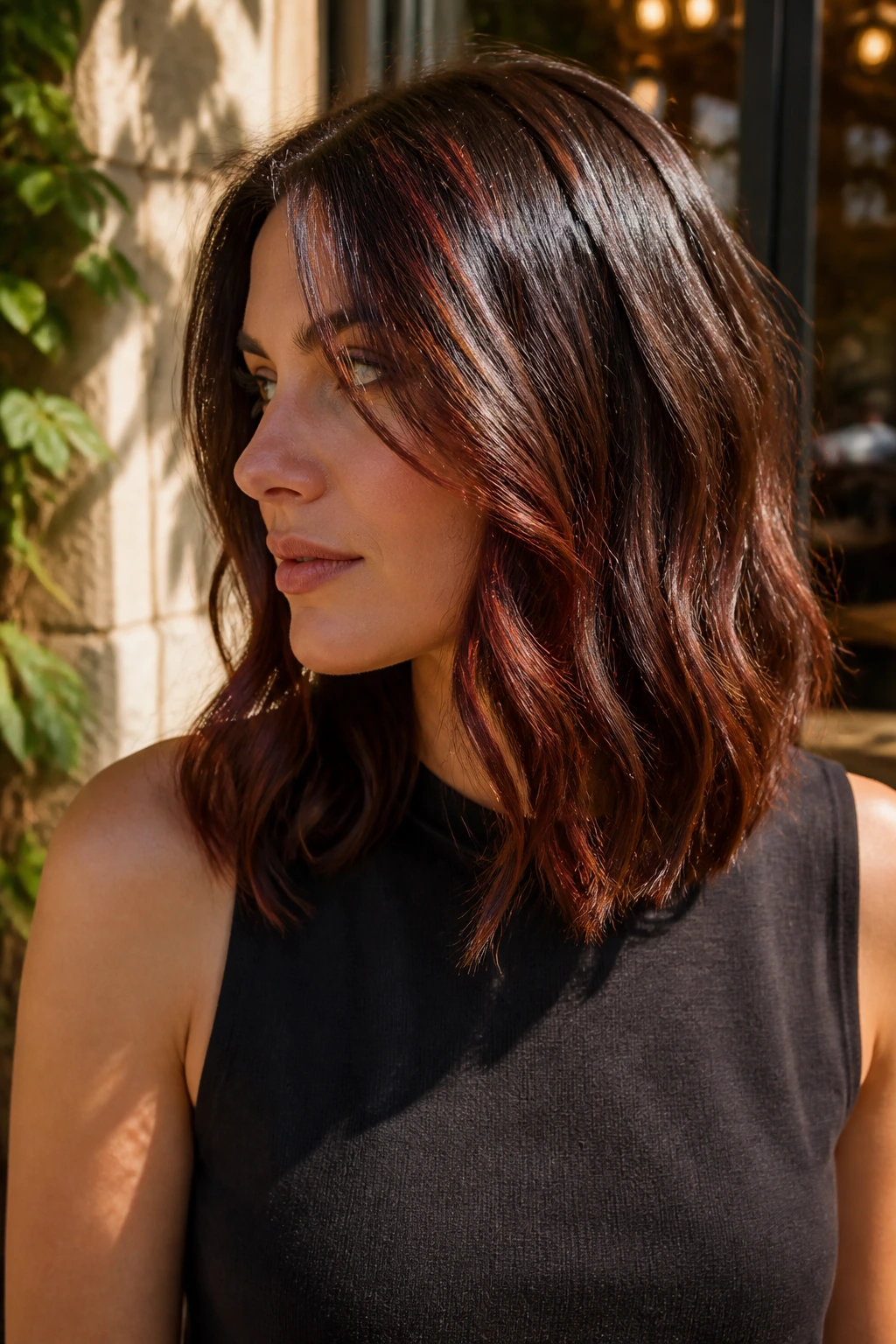
Why does a lob wear mahogany so well? Because the length sits right where the light hits movement. A brunette lob gives the color enough surface area to show off, but not so much length that the mahogany disappears into the ends. It’s the sweet spot between short and long.
Sunlit placement means the brighter pieces stay on the bends, the outer layer, and the front edge near the face. When the hair swings, the mahogany flashes. When it’s tucked behind the ears, the darker base takes over again. That back-and-forth keeps the look fresh.
What to Ask For
- Thin ribbons through the crown and lower sides.
- A slightly brighter front edge.
- Soft ends so the color doesn’t look chopped.
- Styling with a round brush or loose wave pattern to show off the shifts.
This is one of those cuts where color and shape really help each other. Nice pairing. No drama.
20. Dimensional Mahogany With Low-Contrast Toning
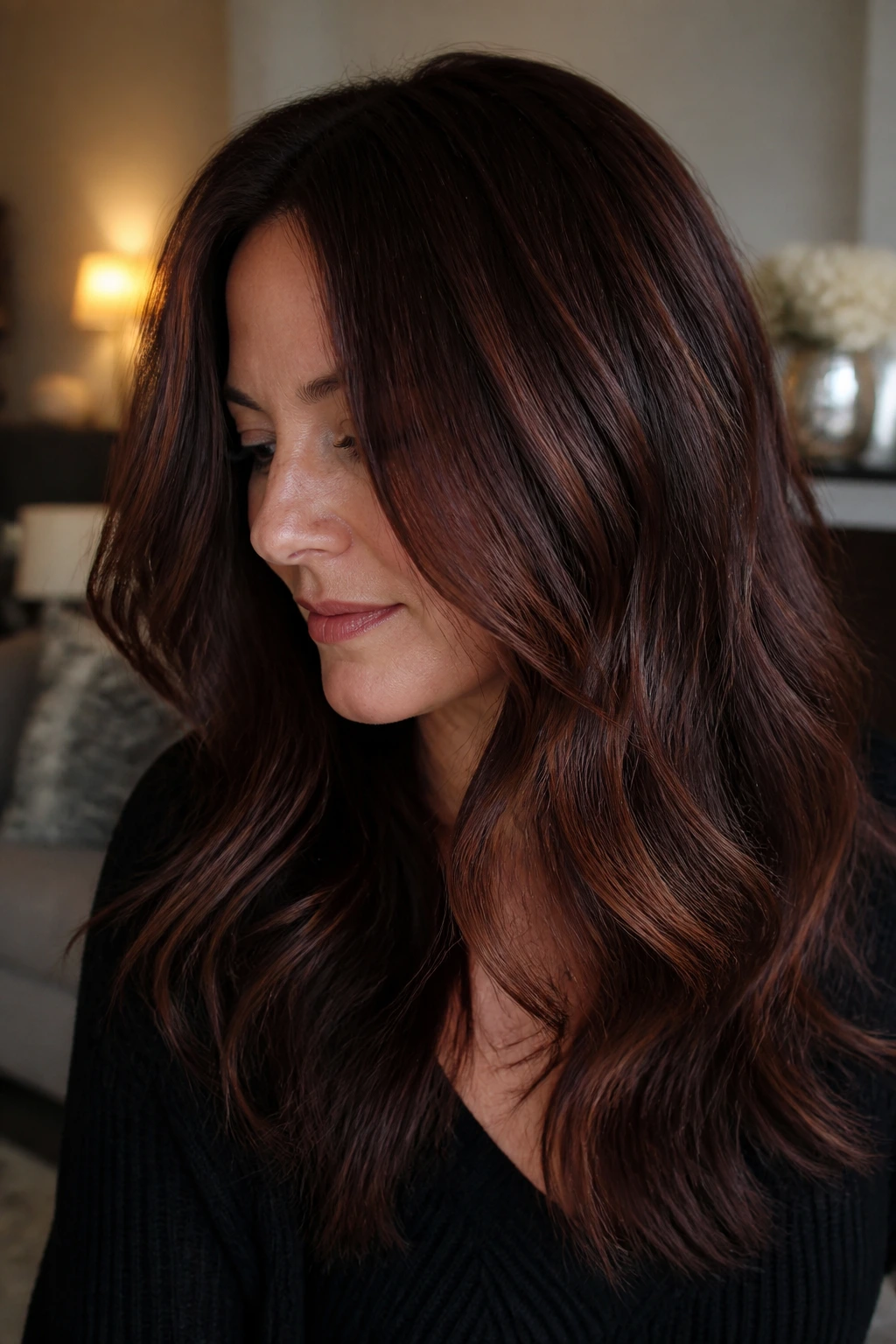
Low-contrast toning is where mahogany looks the most natural. Instead of making the highlights obviously lighter, this approach keeps the base, mids, and ends close enough in depth that the eye reads the whole head as rich, not streaky. It is a quiet look, but not a boring one.
That matters on brown hair that already has a lot going on — curls, layers, wave, shine, or thick density. Too much contrast can make all that movement feel busy. A low-contrast mahogany plan keeps the color tied together. The hair looks softer from a distance and more detailed up close.
Color Map
- Base stays near your natural brown.
- Mids shift into mahogany brown.
- Ends hold the richest red-brown tone.
- The glaze keeps everything linked.
If you like people to wonder whether your hair is natural, this is the version to choose.
21. Rich Mahogany Highlights for Gray-Transition Brown Hair
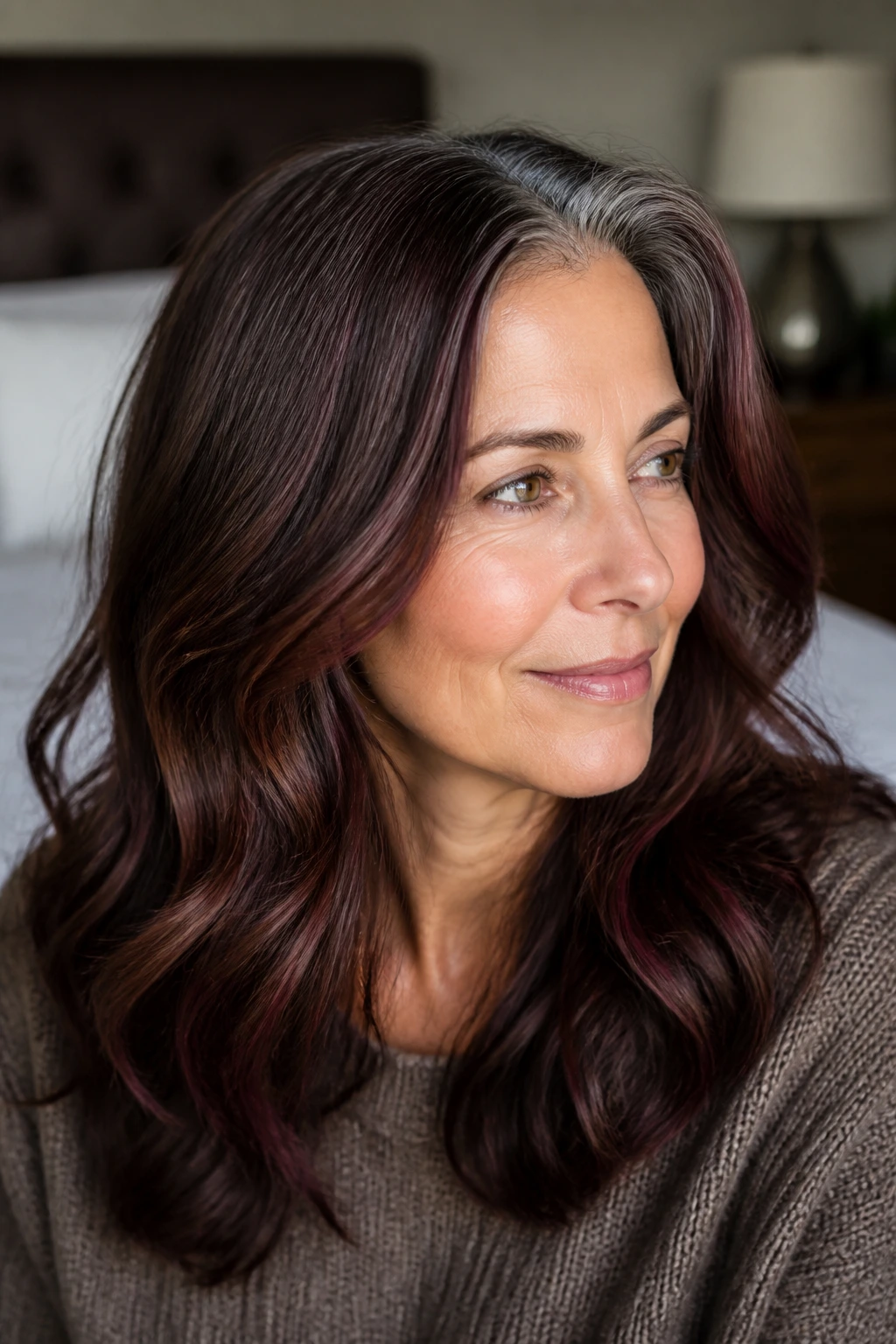
Gray strands take mahogany in a different way. They reflect light, so even a small amount of red-brown can show up with a little shimmer. That makes gray-transition brown hair a good candidate for mahogany highlights and lowlights together, especially if you want blending rather than total coverage.
The best placement usually sits near the temples, part line, and top layer, where grays show up first. A few richer pieces through the lengths keep the hair from looking patchy. The result is less about hiding silver and more about giving it a warmer, cleaner neighbor.
What Helps Most
- Keep the color translucent rather than opaque.
- Blend a few deeper lowlights into the crown.
- Ask for a finish that reads brown first, red second.
- Refresh with a gloss when the warmth starts to fade.
This is one of the most forgiving ways to wear mahogany because the gray actually helps the shine. Odd, but useful.
22. Brown Hair With a Soft Mahogany Gloss
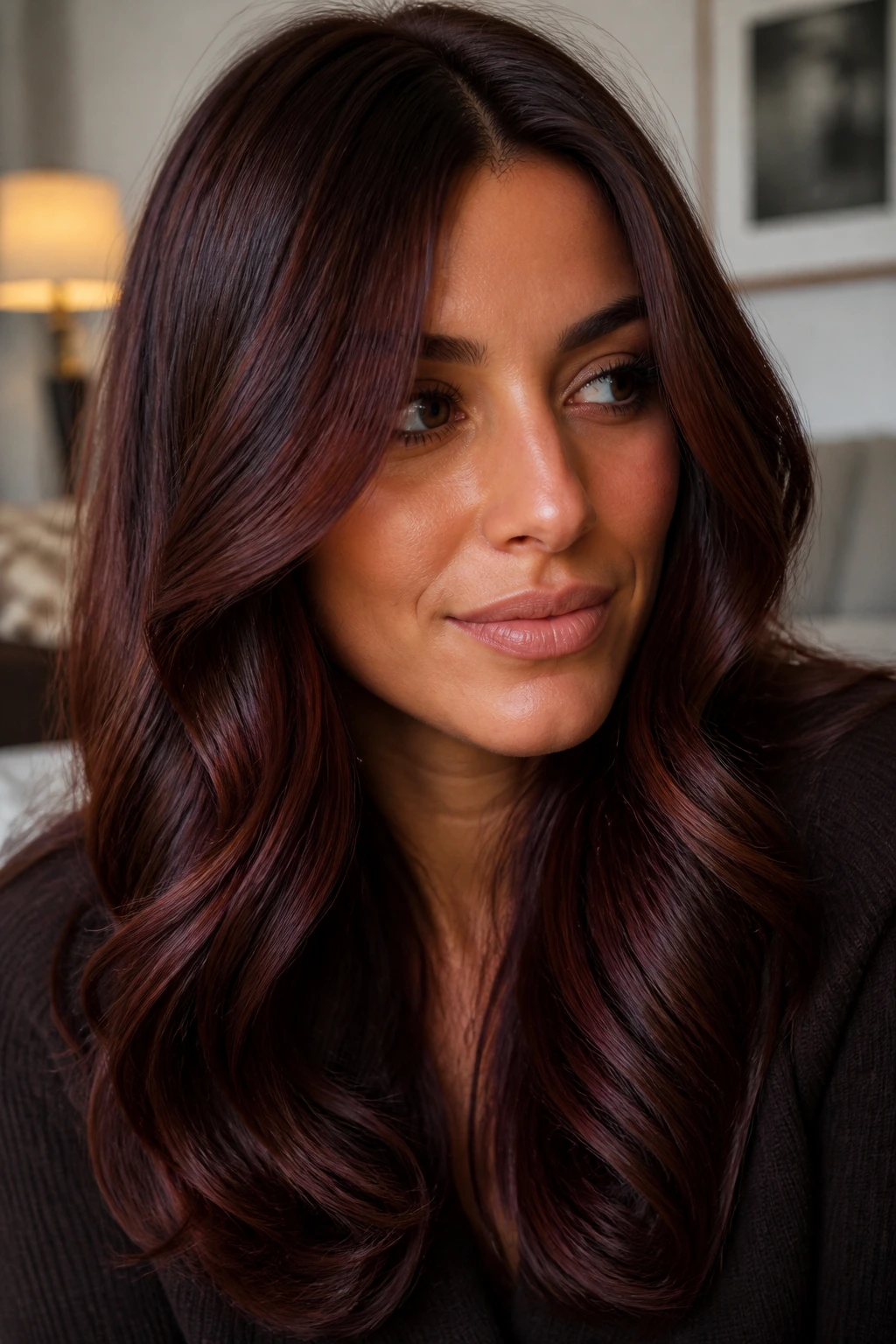
A soft mahogany gloss is the look I’d hand to anyone who wants warmth without obvious streaks. It is the quietest version on this list, and honestly, that is why it works so well. The color simply deepens the brown, adds a red-brown sheen, and keeps the hair looking polished for weeks.
This option is especially good if you are testing mahogany for the first time. You can always go brighter later. Starting with a gloss gives you a sense of how the tone sits on your base, how it changes in daylight, and whether you prefer the red side or the brown side of the shade. No guesswork needed.
A gloss also plays nicely with almost any haircut. Layers, blunt ends, waves, curls — it doesn’t matter much. The finish just makes the hair look more awake.
Bring two photos to the salon if you can: one shot in indoor light and one in daylight. Mahogany can look surprisingly different depending on the room, and that one small detail saves a lot of back-and-forth.
