



Brown hair gets its fastest lift right at the face. Money piece highlights for brown hair work because they hit first, brighten the features, and change the way the rest of the color reads without forcing you into an all-over blonde job.
That sounds simple. It isn’t.
A caramel front piece on chestnut brown can feel soft and cozy, while a beige slice on espresso hair can look crisp and modern, and a copper frame on chocolate brown can make the whole haircut feel warmer in a way that catches the eye fast. Placement, undertone, and how much contrast you want matter more than the lightener itself. A good money piece can make straight hair look sharper, curls look more defined, and layers look like they have more movement even when the cut hasn’t changed at all.
Placement is the whole game.
The trick is picking a front highlight that suits your base color instead of fighting it. Some brunettes need warmth. Others need a cooler beige to keep orange tones in check. And once you start looking at the front sections as their own little color story, the choices get a lot more interesting than “blonde or not blonde.”
1. Warm Caramel Face Frame for Dark Brown Hair
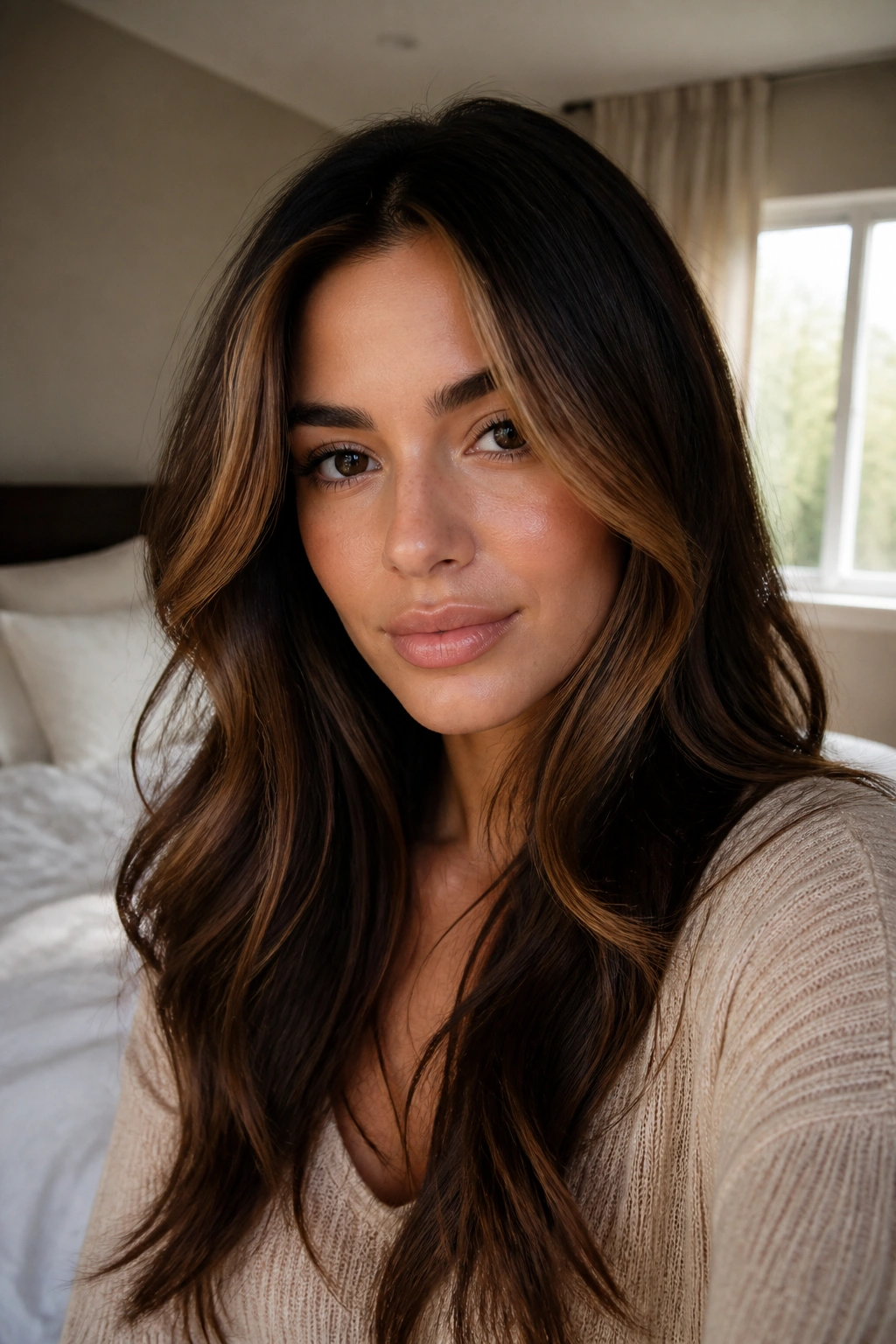
Caramel is the easiest place to start if you want lightness without the shock of high contrast. On a level 4 or 5 brunette, a caramel money piece can lift the face in a way that still feels tied to the base color, which is why it rarely looks forced.
Why it flatters deep brunettes
The warmth does the work here. Caramel sits close enough to brown that it softens the jump between shades, but it still reflects enough light to make cheekbones and eyes stand out. That makes it a smart pick if your hair already has gold or red pigment underneath.
Ask for this:
- Two to four foils on each side of the part
- A lift to roughly level 7
- A beige-gold toner, not a pale icy one
- Feathered edges near the temples so the highlight doesn’t stop in a hard line
My favorite part: it grows out calmly. You can wear this for months and it still looks intentional.
2. Honey Blonde Money Piece for Soft Contrast
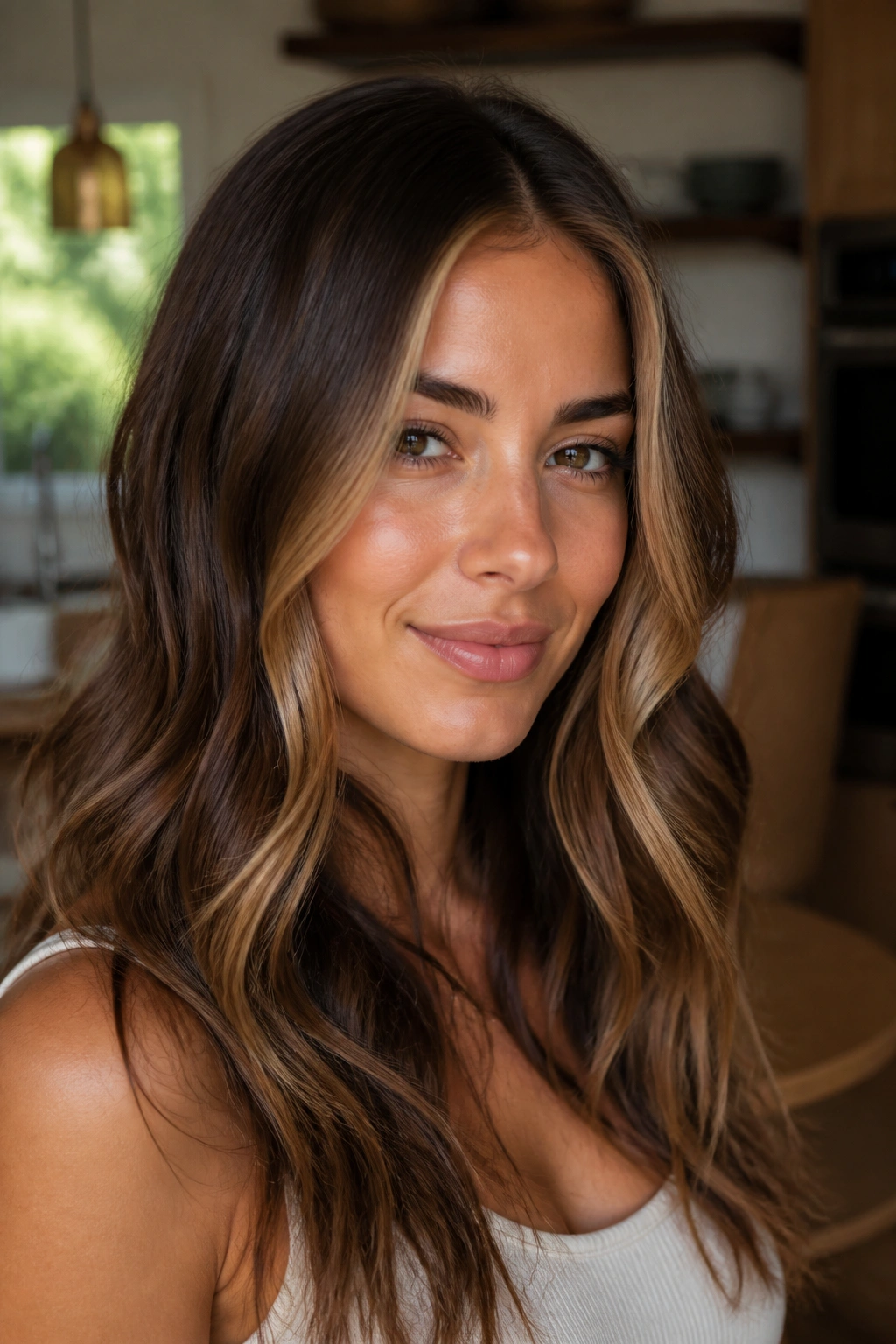
Why does honey blonde work so well on brown hair? Because it gives brightness without that chalky, overprocessed feel some blondes get when they sit against a brunette base. Honey carries enough gold to stay friendly next to chestnut, mocha, or medium brown hair.
I like this version for people who wear their hair loose and a little undone. Waves make the honey tones look richer, and even a simple blowout gets a lift around the cheeks. The color should sit one or two levels lighter than your natural brown, not jump so high that it starts reading as a separate color block.
A honey money piece also plays nicely with warm makeup. Think peach blush, brown liner, and soft gold jewelry. The whole look feels connected, which matters more than people think. A good face frame can look weird if the rest of the styling is too cool or too flat.
3. Beige Blonde Slice for Cool Brunettes
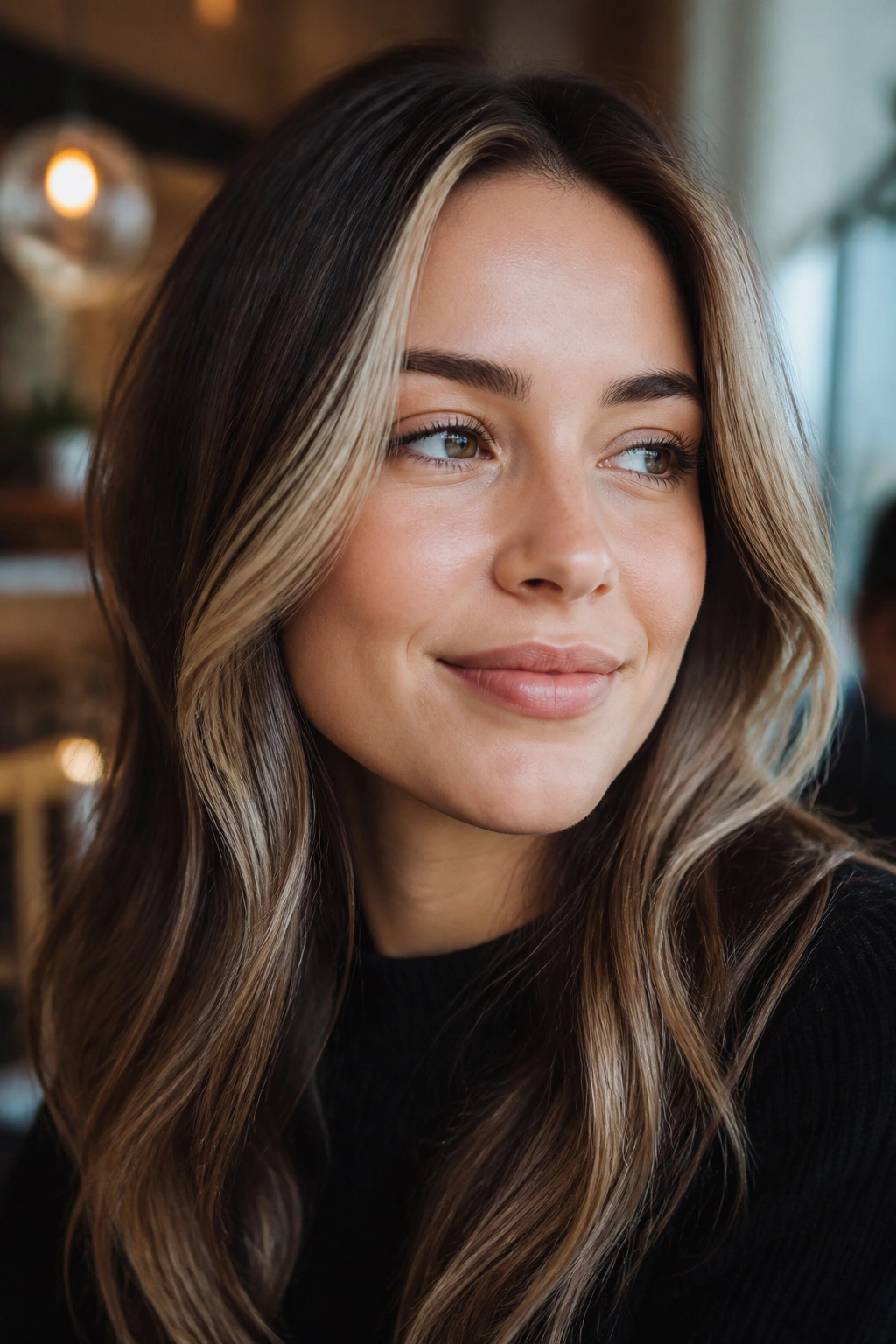
Cool brunettes often get skipped over in money piece conversations, which is a shame, because beige blonde can be the prettiest option in the whole bunch. It has enough softness to sit beside ash brown, mushroom brown, or neutral brunette shades without turning the front of the hair yellow.
How to ask for it
Ask your colorist for a neutral-beige lift, then make one thing clear: you do not want a bright gold finish. That one detail matters. Beige tones usually sit between ash and gold, so they can look creamy instead of brassy when the lift is done right.
If your base is naturally cool, this kind of highlight keeps the haircut looking clean and expensive-looking without shouting. It suits sharper cuts too — lobs, blunt ends, curtain bangs, the whole group. The front slice should be thin enough to frame the face, but thick enough to show from a few feet away.
4. Copper Money Piece on Chocolate Brown Hair
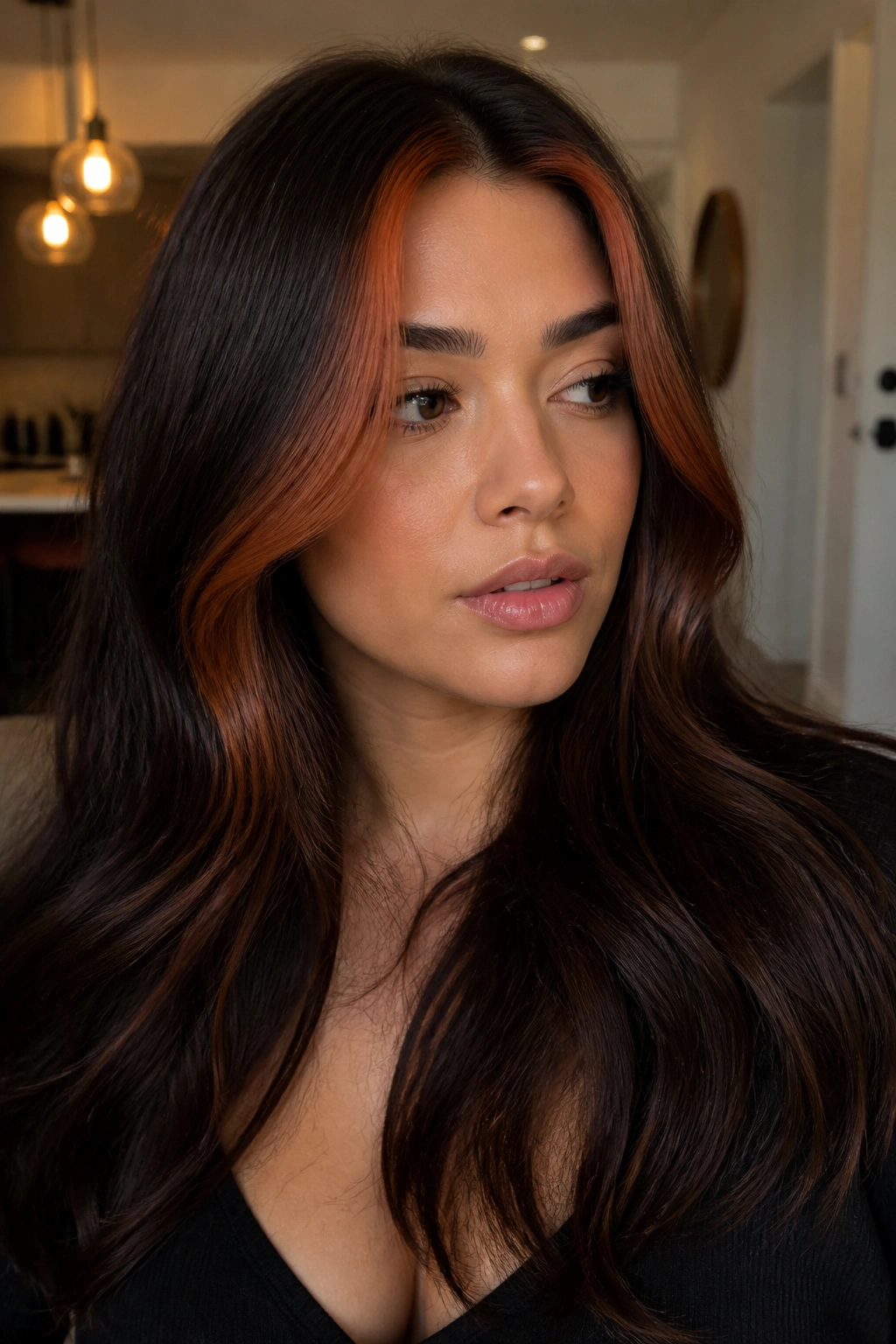
Copper on chocolate brown is for someone who wants warmth with a little attitude. It doesn’t try to look sun-lightened. It looks deliberate, almost like the front of the hair was painted to match a favorite jacket or lipstick.
I love this on brunettes with green or hazel eyes. The warmth in the front pieces pulls the eye straight to the face, and the rest of the brown hair acts like a dark, glossy backdrop. If your hair already leans red, you may not need much lift at all — the copper can sit on top of a medium brunette base and still read clearly.
A few practical notes help here:
- Copper fades faster than beige or caramel.
- Glosses keep it shiny between appointments.
- Curl patterns make the tone look richer because the light hits each bend.
If you like hair color that feels a little moody, this is the one.
5. Chestnut Lowlights with Bright Front Pieces
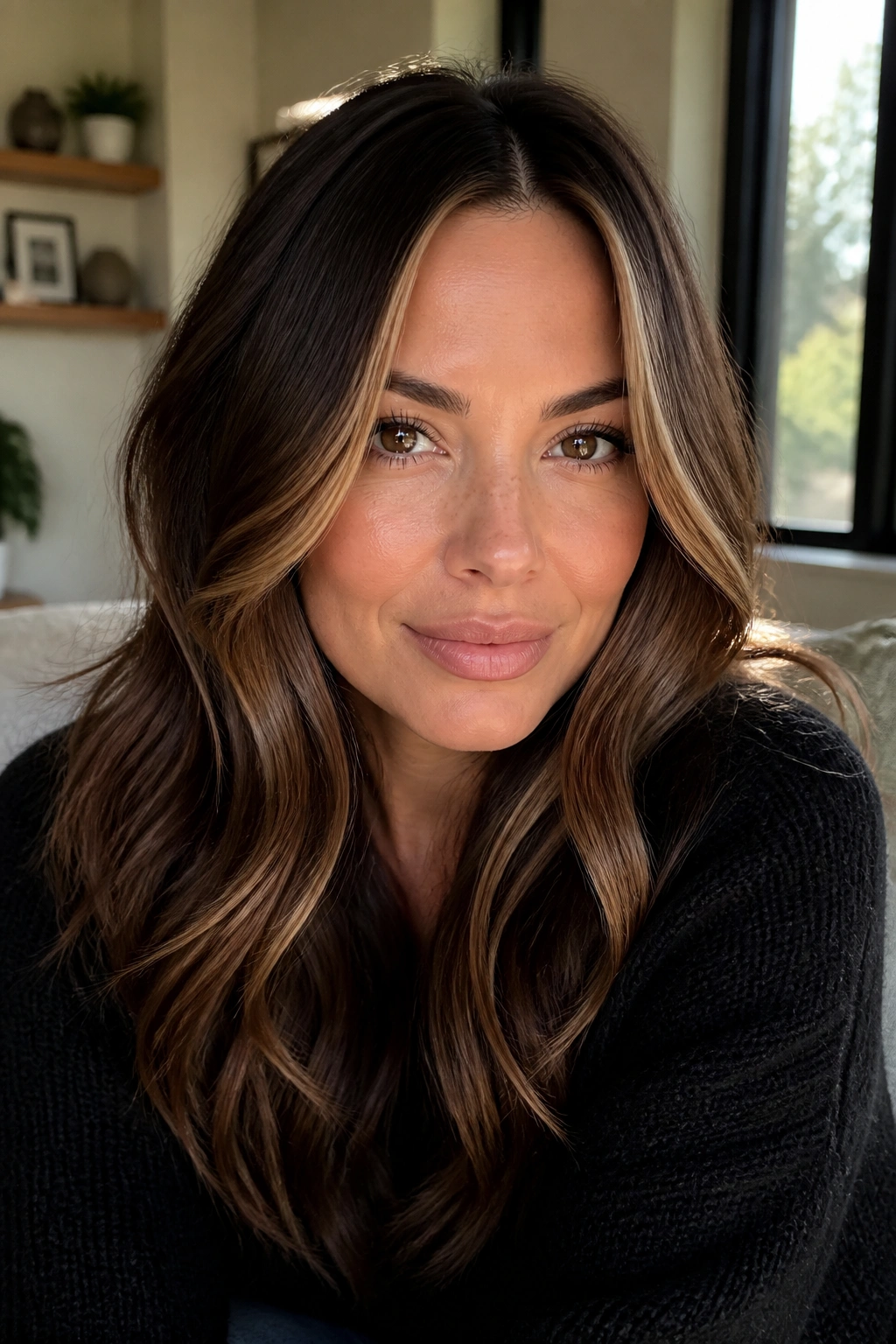
A bright face frame looks better when there’s depth behind it. That’s the part people skip, and it’s why some money pieces look flat even when the color is technically nice.
Chestnut lowlights solve that. By dropping a few deeper brown pieces through the crown or around the top layers, you make the lighter front sections read brighter without having to crank the blonde all the way up. On brown hair, that contrast is often more flattering than simply making the whole front lighter and lighter.
This is one of my favorite options for fine hair because the lowlights add the look of density. The hair looks fuller at the root, and the bright pieces at the front do not get lost. If your hair is thick, the deeper tones also help break up the mass so the color doesn’t all blur together.
6. Ash Blonde Ribbons for Mocha Hair
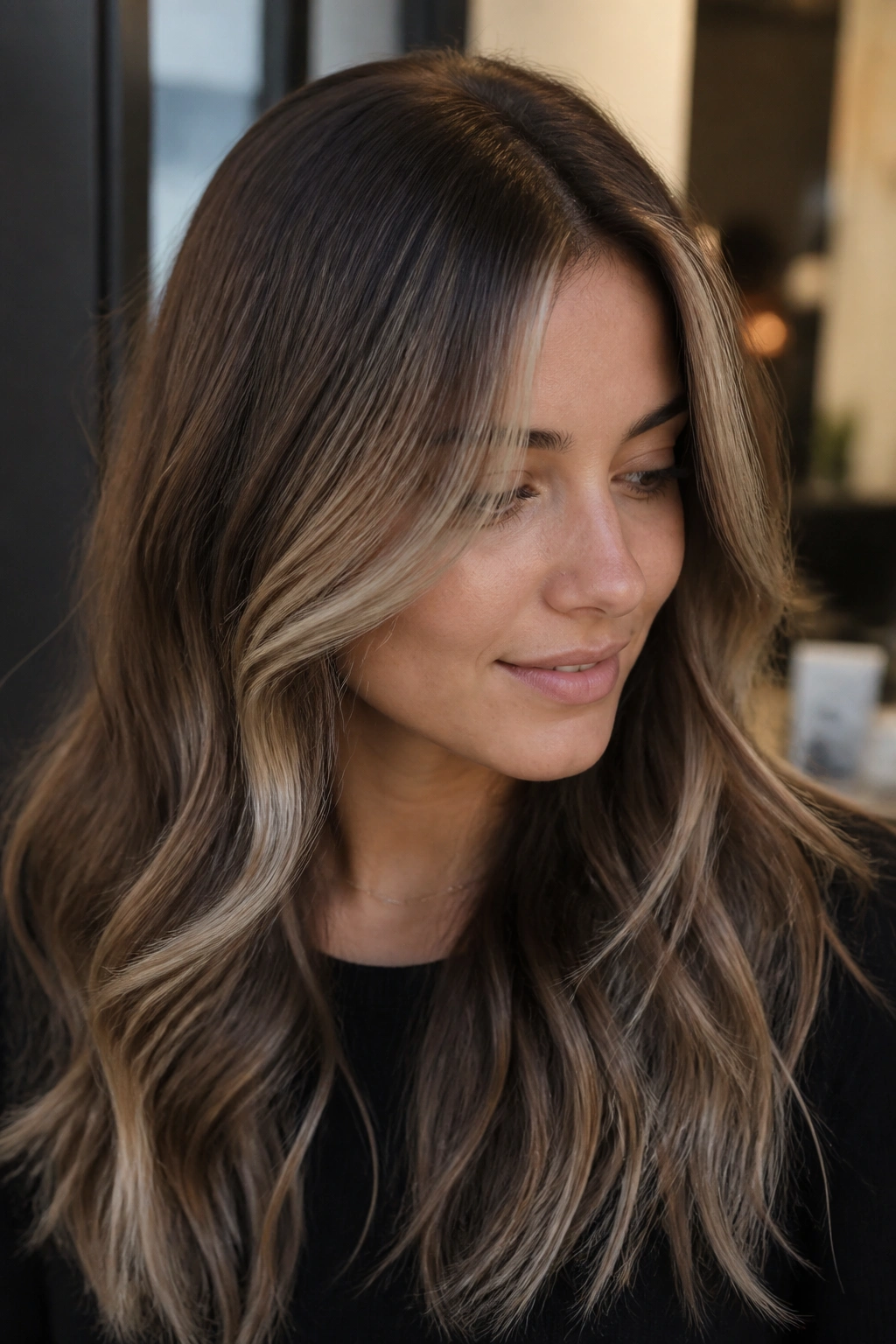
Ash blonde on mocha brown sounds cool and polished, but it can go wrong fast if the lift is too yellow. The color has to stay clean, or the whole thing turns muddy against the darker base.
The good version is thin, ribbon-like, and slightly scattered. You do not want a giant block of pale blonde sitting next to mocha hair. You want a few brighter strands that trace the front layers and pick up light when your hair moves. That little bit of motion makes a big difference.
This is the look I’d choose for someone who loves neutral clothes, silver jewelry, and a haircut with soft layering. It pairs well with a center part, but it can also soften a side part if you like a little asymmetry. Keep the toner cool, though not gray. Too much ash and the front can look dull instead of refined.
7. Toffee Balayage Around the Hairline
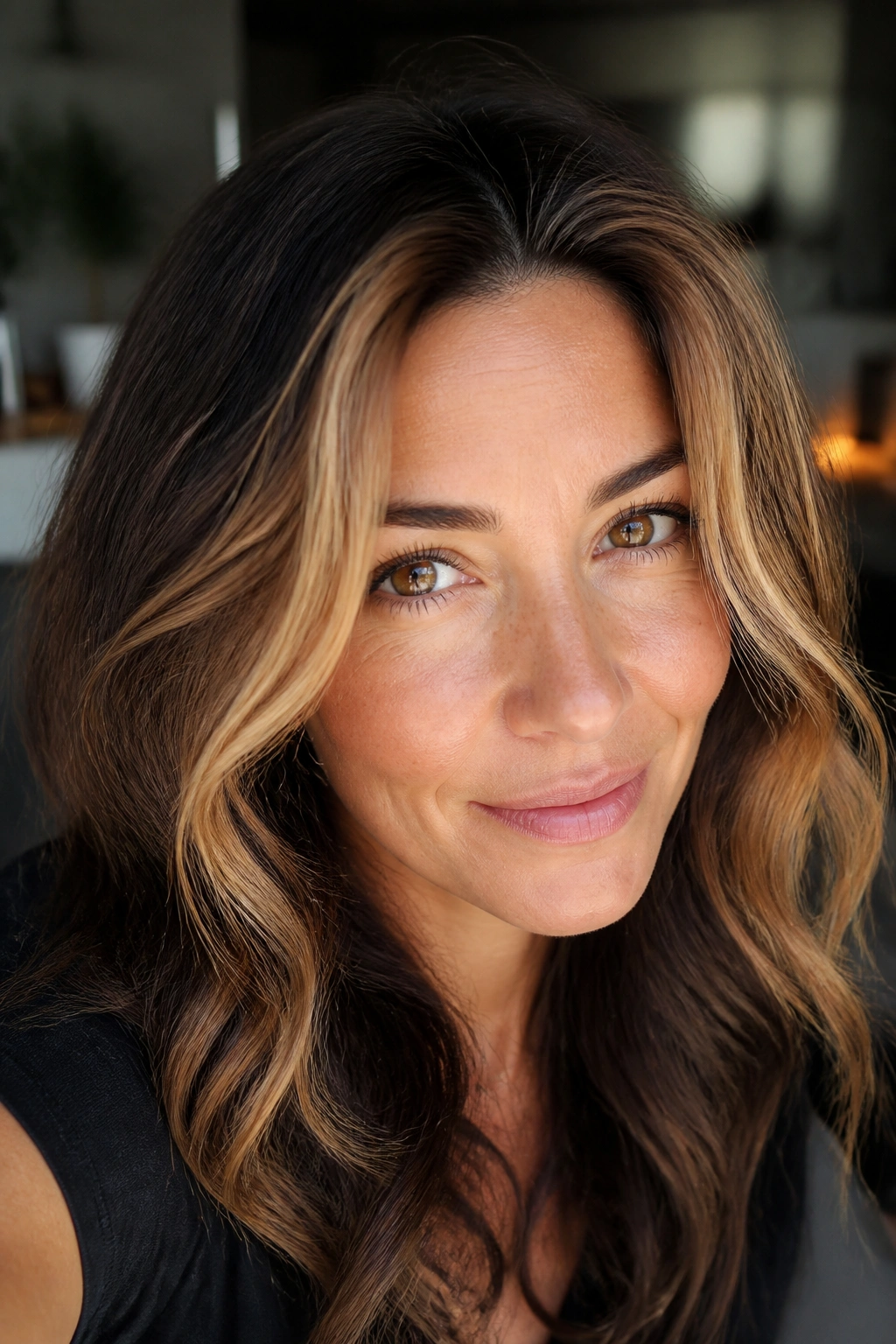
Toffee is what I reach for when a client wants something warmer than beige but less rich than caramel. Around the hairline, it gives a soft halo effect that feels bright in daylight and still believable indoors.
Placement matters more than brightness
A lot of people think a money piece has to be bold to work. Not true. If the brightest part sits in the right place — usually just inside the hairline and along the first inch or two of the part — even a subtle toffee tone can change the whole face. The rest of the hair can stay deep brown, which is half the charm.
How to use it
- Keep the lightest pieces around the temples and part line
- Blend them into the front layers rather than stopping them abruptly
- Ask for a toffee gloss if your base leans neutral-warm
- Leave some depth underneath so the front still stands out
This is the kind of color that looks easy, but the placement takes a steady hand.
8. Chunky 90s Contrast for Curly Brown Hair
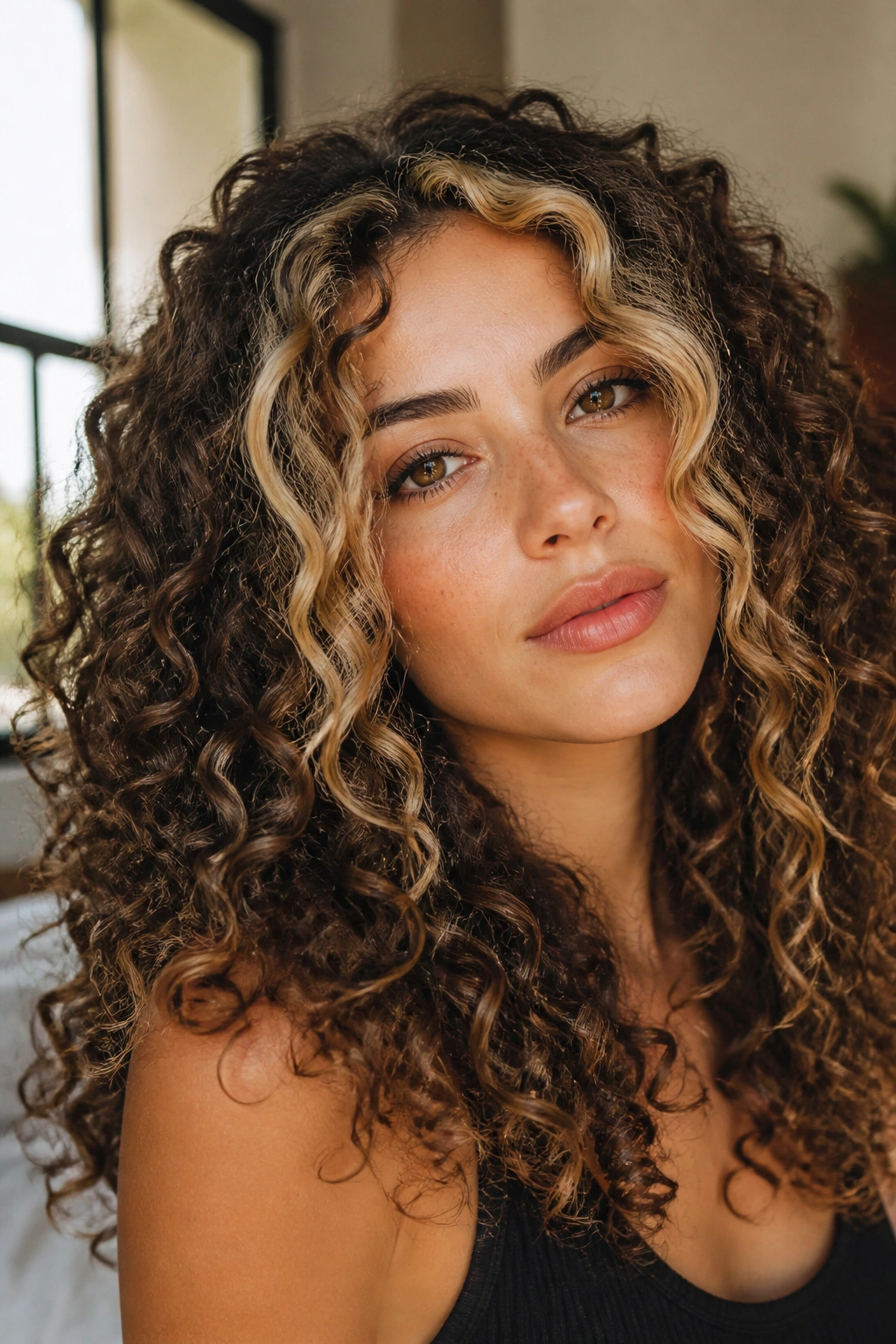
Curly hair swallows thin highlights. That’s the blunt truth. Tiny stripes can disappear into the curl pattern, which is why chunkier face-framing money pieces make so much more sense for curls and coils.
With a brown base, a wider blonde or caramel panel near the front gives the curl pattern something to show off. Each bend catches the light differently, so the color looks lively instead of flat. That old-school contrast can feel fresh again when it’s placed with some care and not sprayed all over the head.
I’d choose this for someone who likes visible color and does not mind a little drama. It looks especially good with layered curly cuts, where the front sections can spring away from the face. The key is not making the chunk too wide. Big enough to show. Small enough to still frame, not overwhelm.
9. Fine Babylights That Barely Read as Highlights
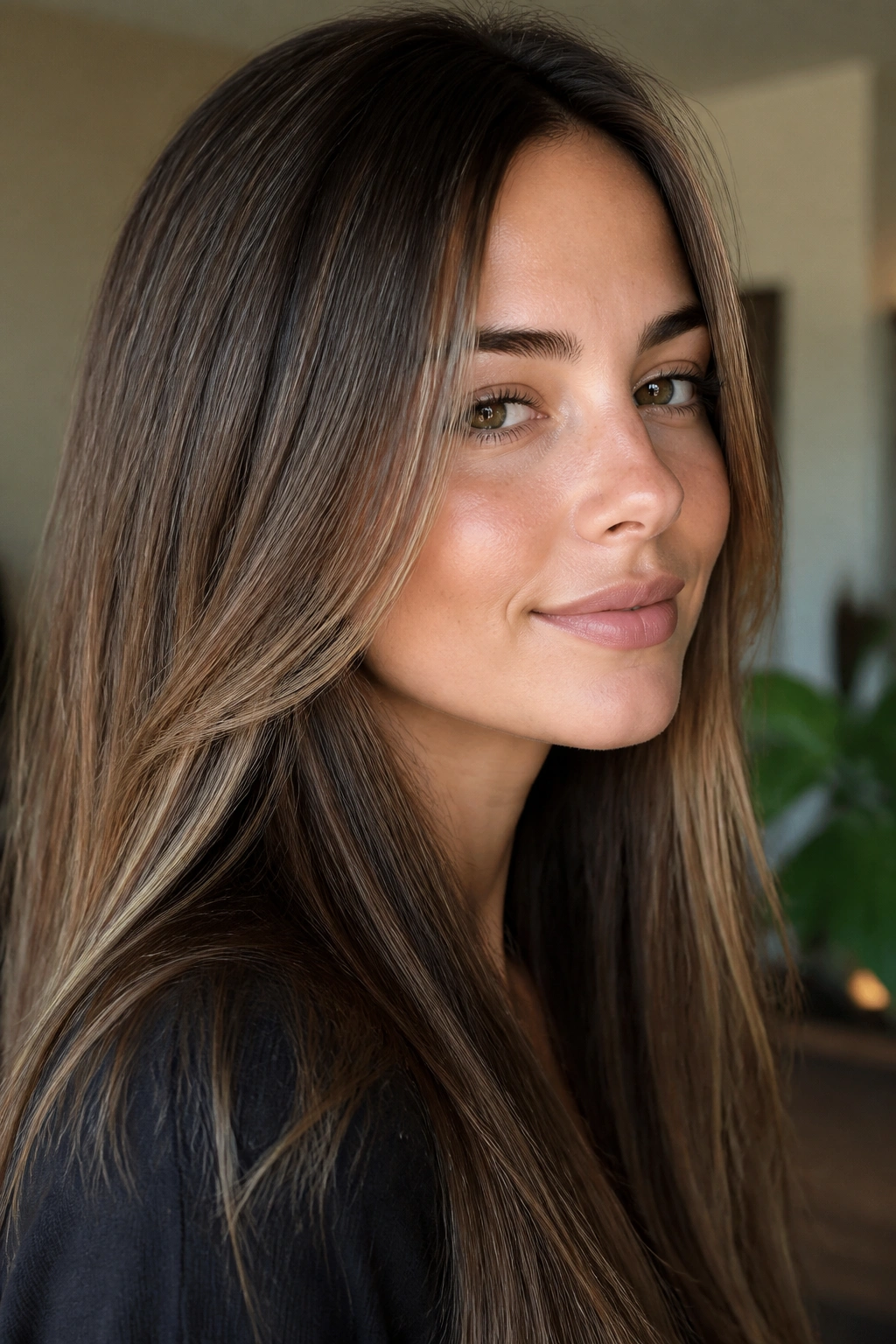
Sometimes the smartest money piece is the one that barely announces itself. Fine babylights give brown hair a soft glow around the face without the obvious stripe that some people hate the second they see it in the mirror.
Babylights are tiny woven sections, so the lightness lands in a very fine pattern. On a brunette base, that makes the front look more luminous rather than obviously highlighted. The effect is especially good if you wear your hair straight or in loose bends, because the threads of color move around when you do.
This is the version for a person who wants subtle upkeep. Regrowth is gentler, and the color can be refreshed with a gloss instead of a full re-lightening service every time. If you want a big visual change, skip this one. If you want your face to look a little fresher without everyone asking what you changed, it does the job.
10. Curtain Bang Highlights That Open the Face
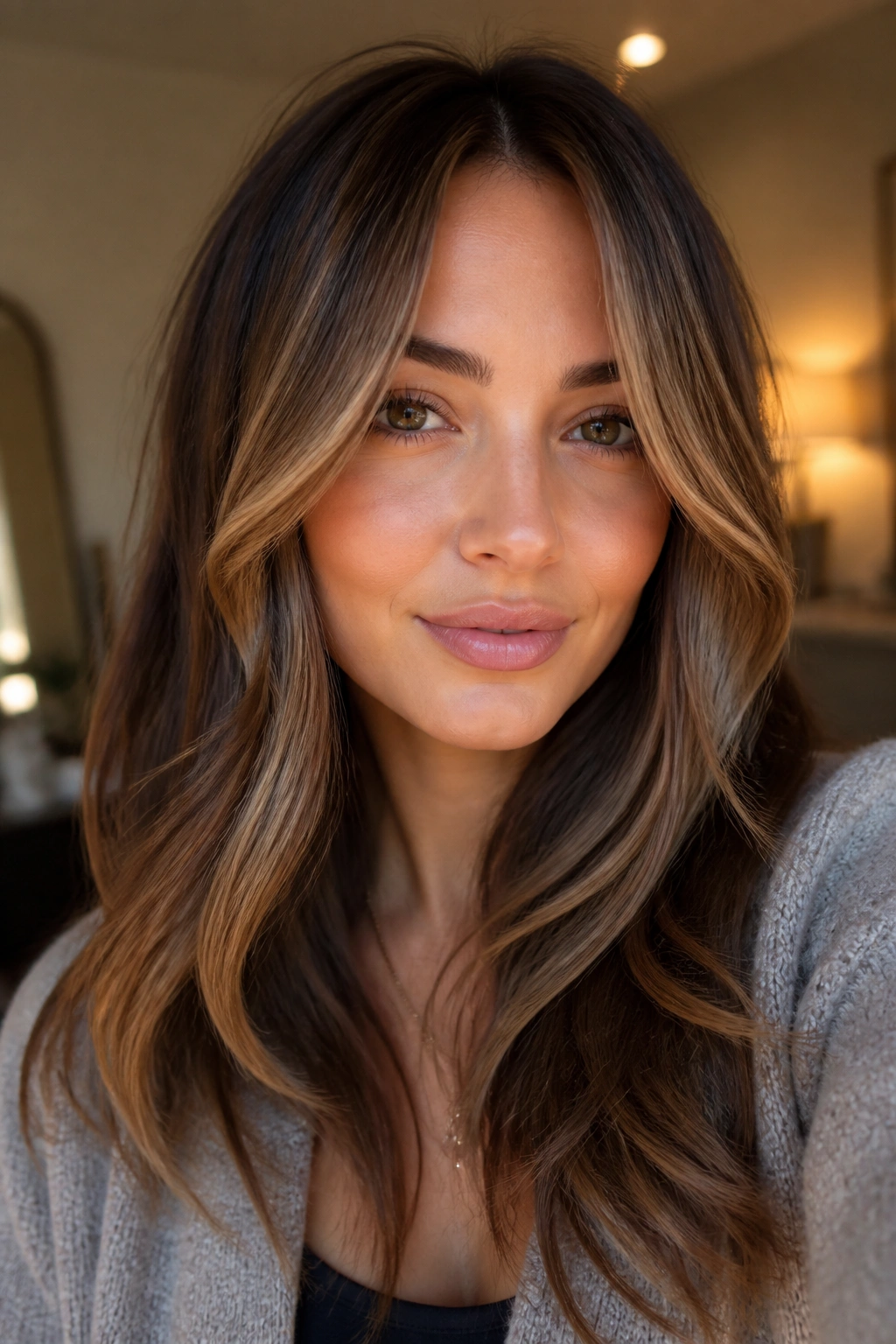
Curtain bangs and money pieces are cousins. The shape already splits the hair around the face, so a lighter color right where the bangs fall makes that opening feel even more intentional.
The trick is keeping the brightness soft enough to blend into the bang area. If the front pieces are too light, the bangs can look disconnected from the rest of the cut. If they’re too dark, the shape disappears. A medium blonde, caramel, or beige tone usually sits in the sweet spot.
This works particularly well on brown hair that has a lot of movement in the front. Think blowouts, soft waves, and layered cuts that flick away from the cheeks. The highlight does not need to be huge. It just needs to sit in the right place so the bangs and the face frame feel like one shape.
11. Rooted Blonde Money Piece for Easy Grow-Out
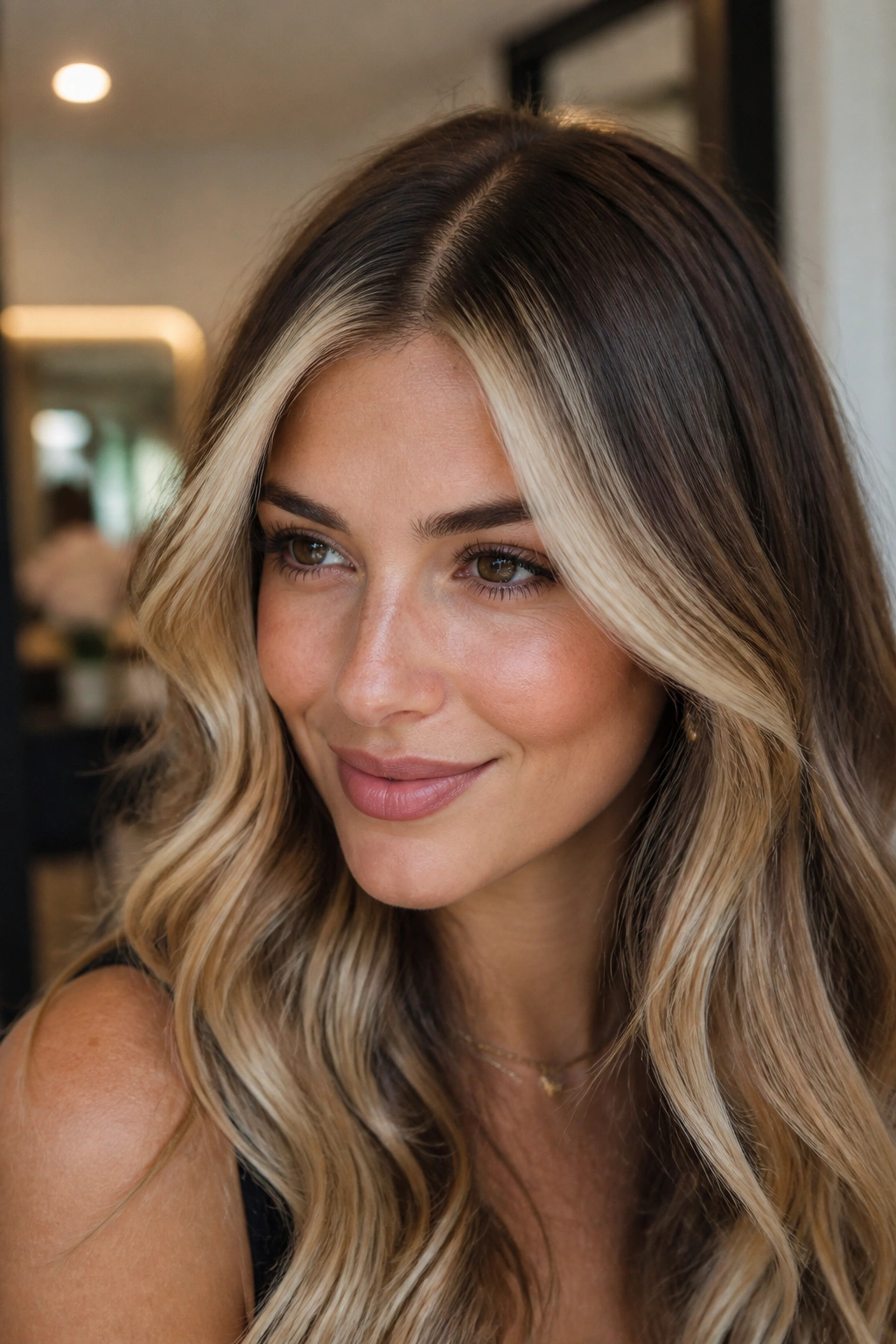
What happens when you want brightness but hate obvious regrowth? You keep the root. That’s the whole reason rooted blonde has stuck around for so long on brown hair.
What to ask for in the salon
Ask for a soft shadow root or root smudge that stays one shade deeper than the lightest front pieces. That keeps the money piece from looking like it was glued on. It also makes the color easier to live with, since the darker root softens the line as the hair grows.
A rooted blonde frame is smart if you wear your hair pulled back often. It still shows in a ponytail or bun, but it does not scream for maintenance. The front pieces should be bright enough to catch light when your hair moves, yet dark enough near the root that the grow-out feels gentle. That balance is the point.
12. Cinnamon and Auburn Framing for Warm Brunettes
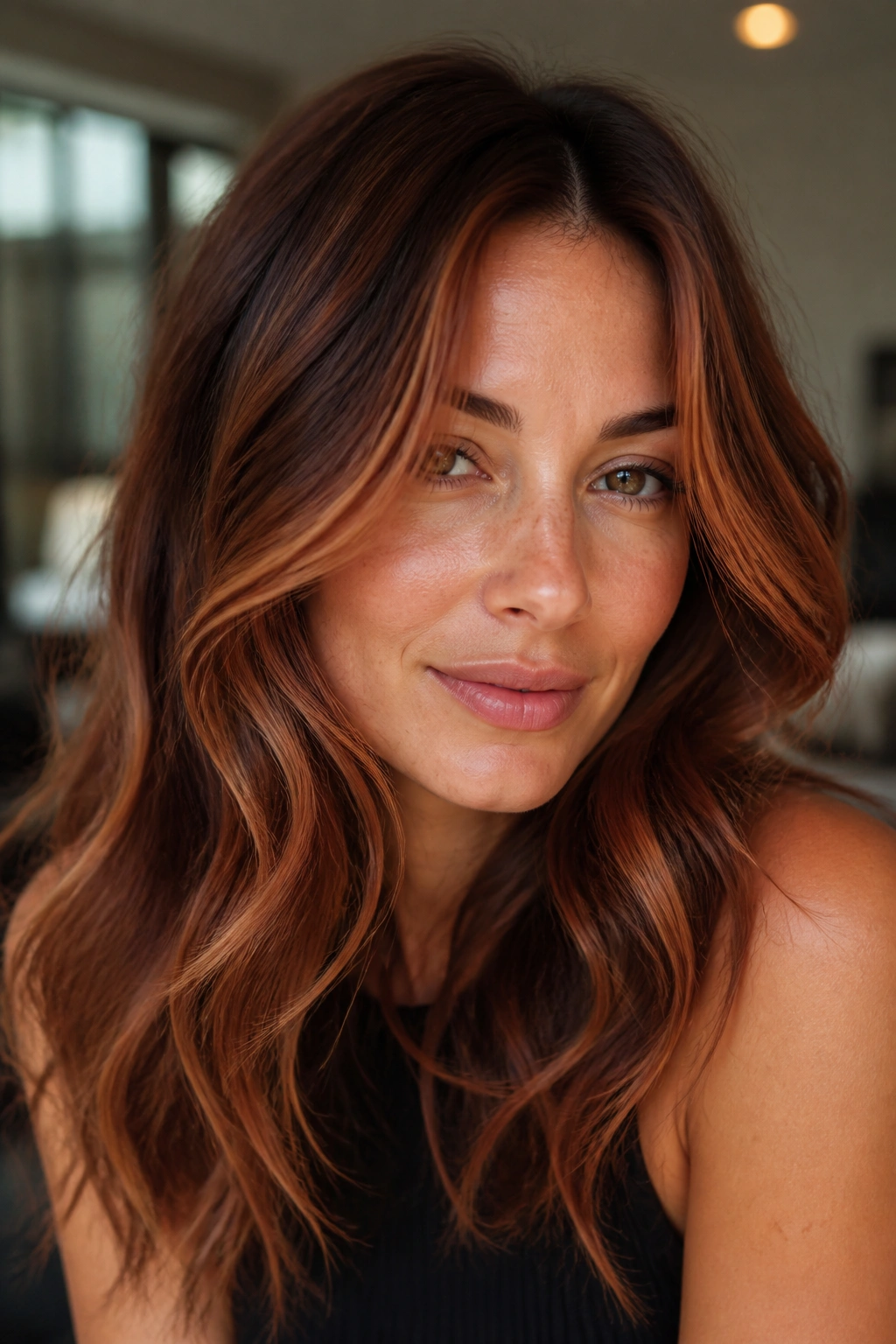
If your brown hair already carries red in the base, cinnamon and auburn can look richer than blonde ever will. This is the route for someone who wants the face to glow without chasing a pale finish.
I like this look on warm brunettes because it reads as dimensional, not bleached. The hair can stay in the brown family while still feeling changed. Around the face, the auburn and cinnamon pieces pick up warmth from the skin and make the whole style feel more alive.
There’s also a nice practical side. Red-leaning tones often need less lift than blondes, so the hair can keep more of its shine. The tradeoff is fade — warm tones do soften over time. A gloss helps, and a sulfate-free shampoo is worth using if you want the front to keep that rich copper-brown glow.
13. Mushroom Brown with a Champagne Face Frame
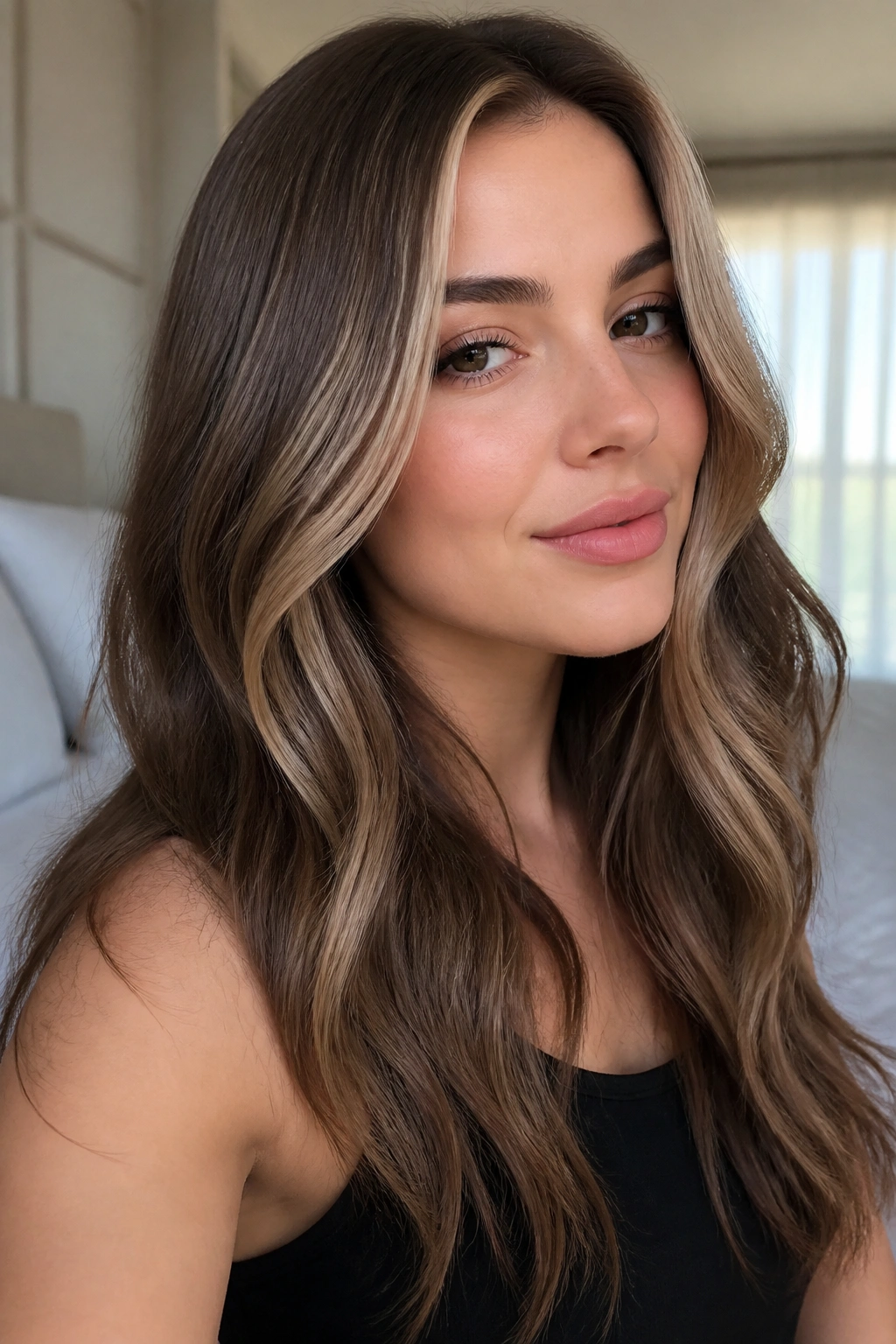
Mushroom brown is one of those shades people either love instantly or ignore until they see it on the right person. It’s cool, muted, and a little earthy, which makes a champagne front piece feel even brighter next to it.
The contrast here is subtle but sharp. Champagne is not as warm as honey and not as icy as platinum. That middle ground is what makes it work with mushroom brown. The result looks creamy without getting yellow, and the front of the hair lifts the face without turning the whole style into a blonde moment.
This one is especially good if your skin tone sits somewhere in the neutral range. It doesn’t fight peachy makeup or cool-toned clothes. And because the base is still brunette, you keep the depth that makes the highlight stand out in the first place. That depth is doing more than most people realize.
14. Platinum Panels for High-Contrast Drama
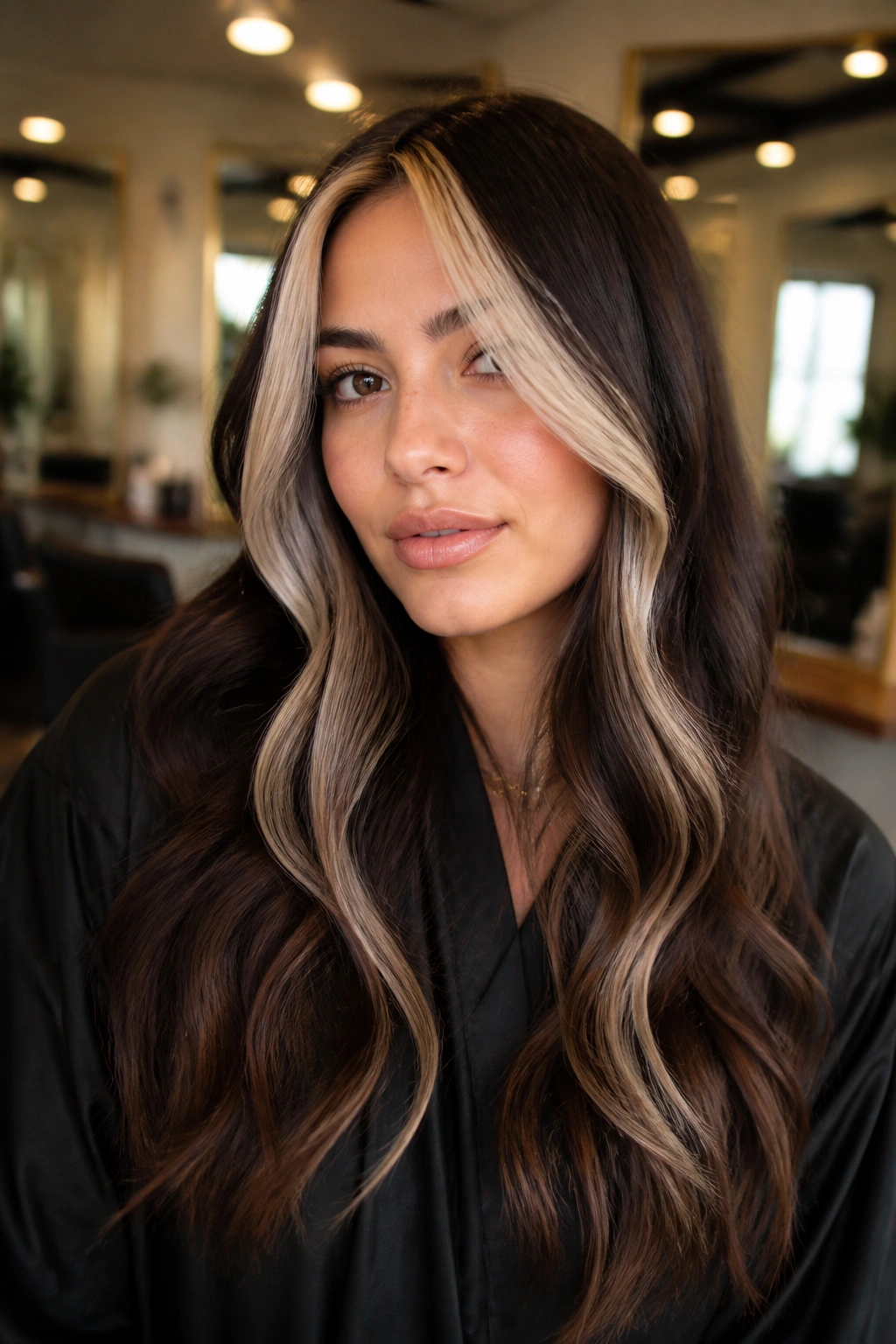
A platinum money piece on brown hair is not subtle. That’s the appeal. The contrast is the whole story, and when the placement is clean, it can look sharp in a way softer tones never will.
This version works best when the brunette base is deep and glossy. On a dark brown background, even one or two platinum panels around the face can look almost graphic. The cut matters here too. Sleek layers, blunt lobs, and polished waves all help the brightness read as intentional instead of random.
The one thing I’d warn against: platinum shows every uneven lift. If your hair has already been colored dark or pulled through a lot of box dye, this is not the low-stress option. When it does work, though, it’s striking. Not shy. Not soft. Just bold and clean.
15. Bronde Money Piece for Medium Brown Hair
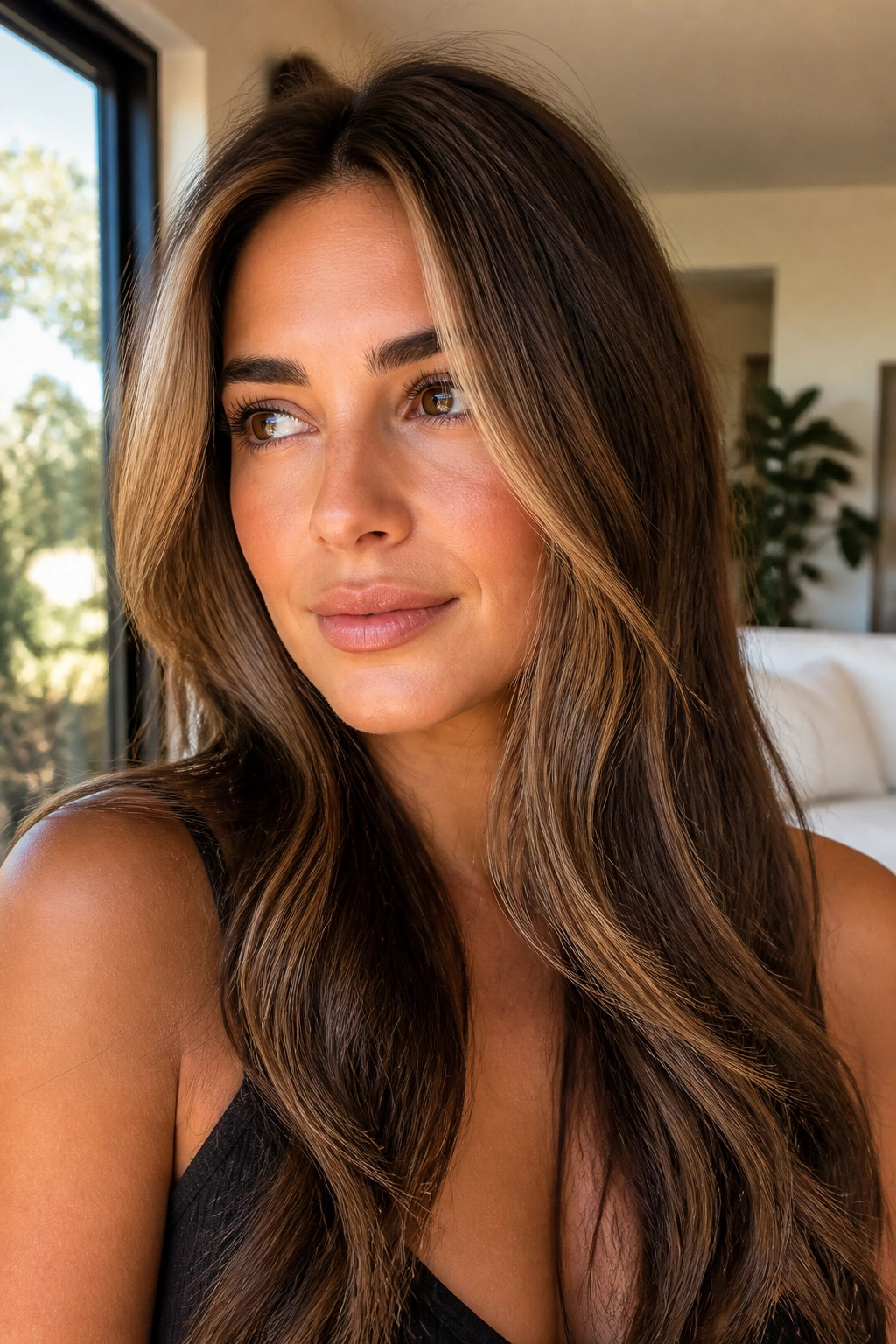
Medium brown hair gives you the easiest landing spot for bronde because the base is already sitting between brunette and blonde. That middle ground lets the front pieces lighten enough to feel fresh without looking separate from the rest of the head.
Bronde money pieces usually mix beige, gold, and a bit of brown shadow. The result is softer than a pure blonde frame, but lighter than a caramel one. If you have medium brown hair and want a color that still looks like your own, this is one of the smarter choices.
I’d pair it with loose waves or a long layered cut. The mix of tones shows up better when the hair bends, and the face frame can blur into the lengths instead of ending in a hard line. On very straight hair, the bronde effect can still work, but it needs careful blending so the lightness doesn’t look stuck to the front.
16. Deep Mocha Lowlights with a Light Front Panel
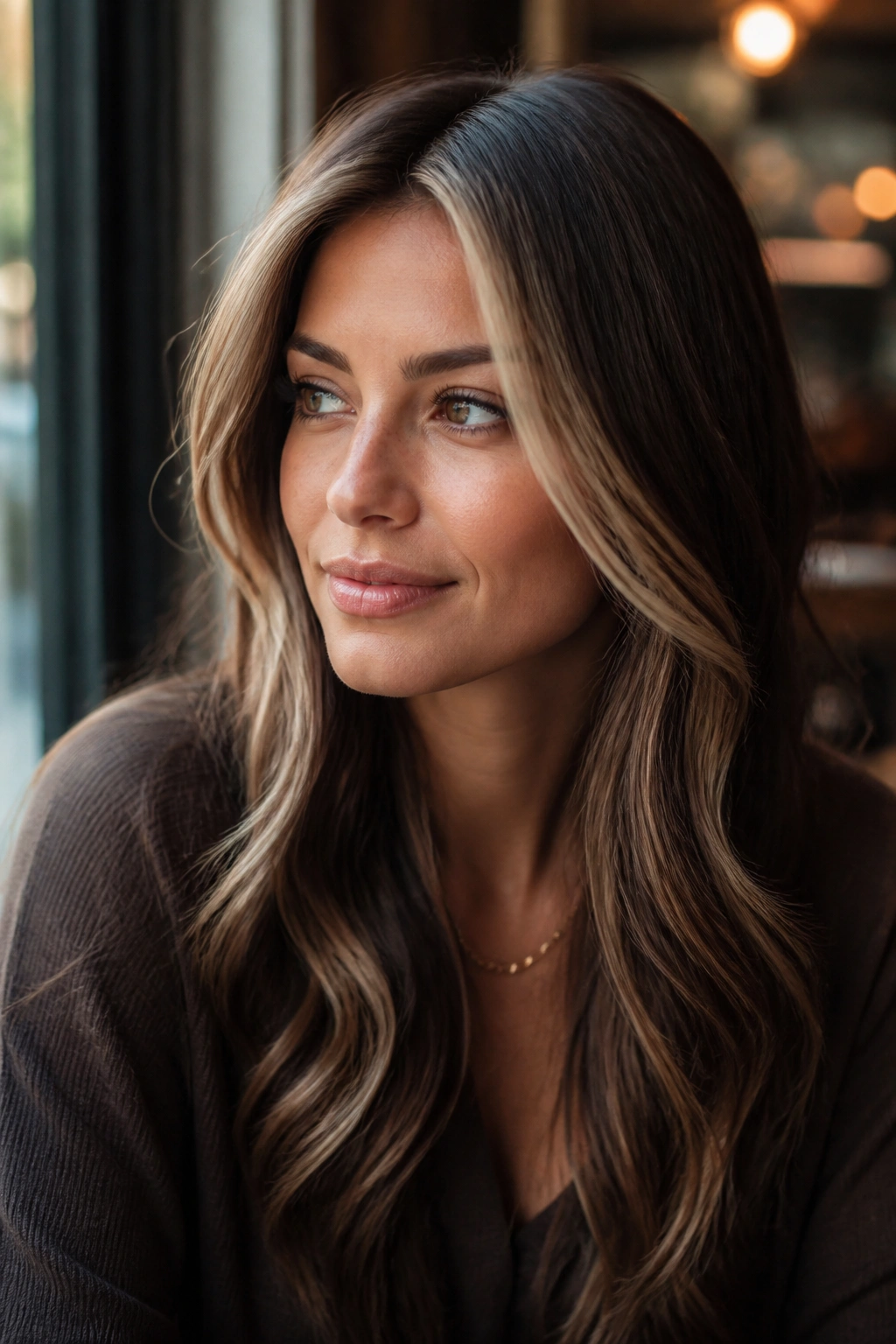
Sometimes the cleanest way to make a money piece stand out is to darken the rest of the head a touch. Deep mocha lowlights give the front panel something to pop against, which is especially useful if your brown hair has faded out or started to look a little washed.
The balance that makes it work
The lowlights should sit about one to two shades deeper than your base, not black. That keeps the color dimensional without making the hair look heavy. Then a lighter panel at the front — caramel, beige, or soft blonde — creates the face-brightening effect people usually want from a money piece.
Good candidates
- Medium brown hair that looks flat at the crown
- Fine hair that needs visual density
- Brunettes who want contrast but not all-over blonde
- Haircuts with layers, since the depth shows movement better
This is one of those looks that can be surprisingly flattering in low light. The dark pieces hold the shape; the front panel brings the glow.
17. Melted Caramel Layers That Blend Into the Ends
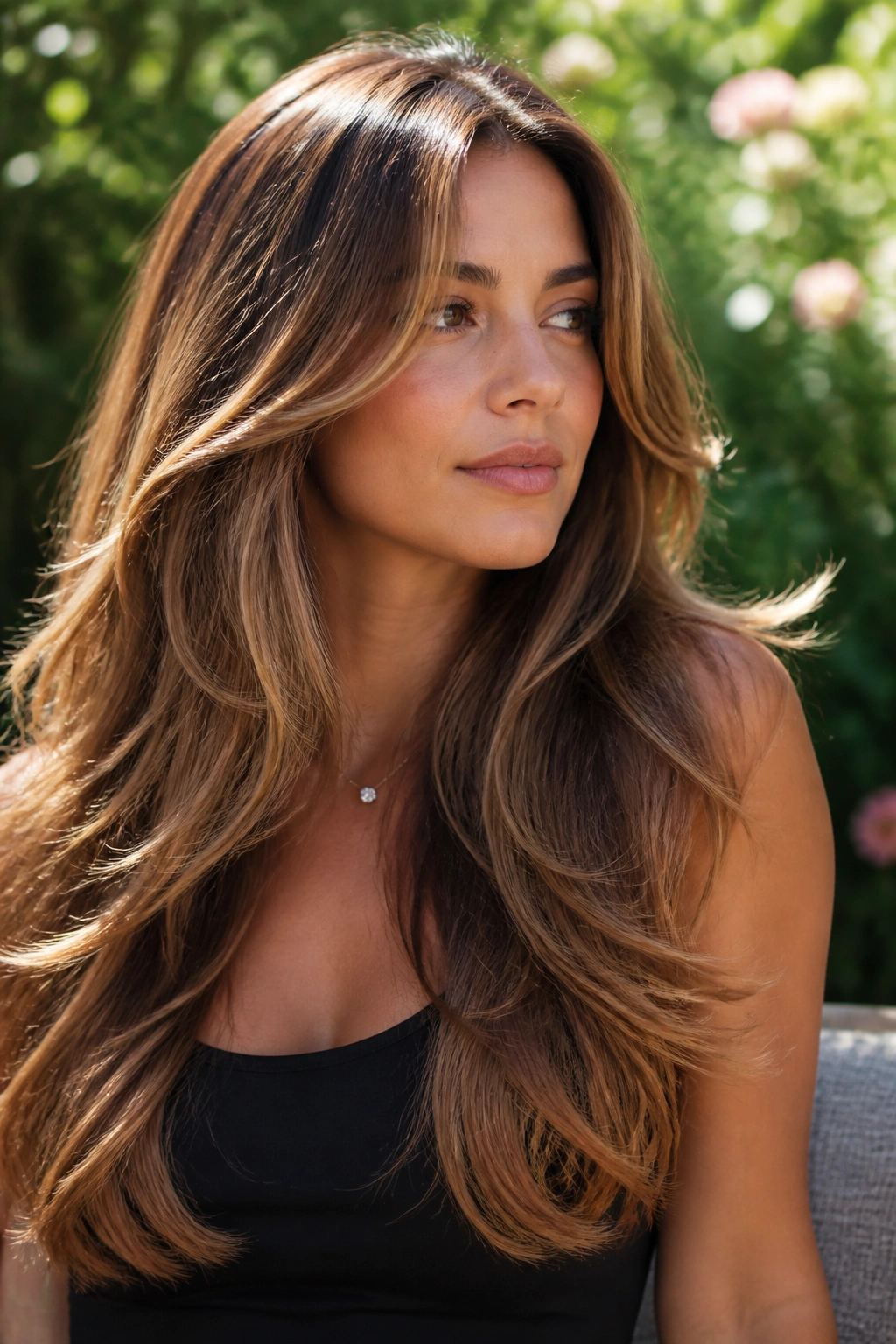
The prettiest caramel money piece is often the one you can barely find where it starts. When the front highlight melts into the layers instead of stopping at a blunt line, the whole haircut looks softer and more expensive — though I’d rather say finished than use a bigger word.
Where the melt should start
Ask for the lightest point to begin near the hairline, then feather the color back through the front layers in a gradual shift. If the blend starts too low, the front can look like an isolated strip. If it starts too high, the highlight loses the face-framing effect. That middle zone is where the good stuff happens.
This style works beautifully on long layers, but it also helps shoulder-length cuts that need a bit of movement. The ends pick up some of that caramel tone, which keeps the front from looking chopped off. You still get contrast. Just not the harsh kind.
18. Pearl Beige Money Piece for a Clean Bright Finish
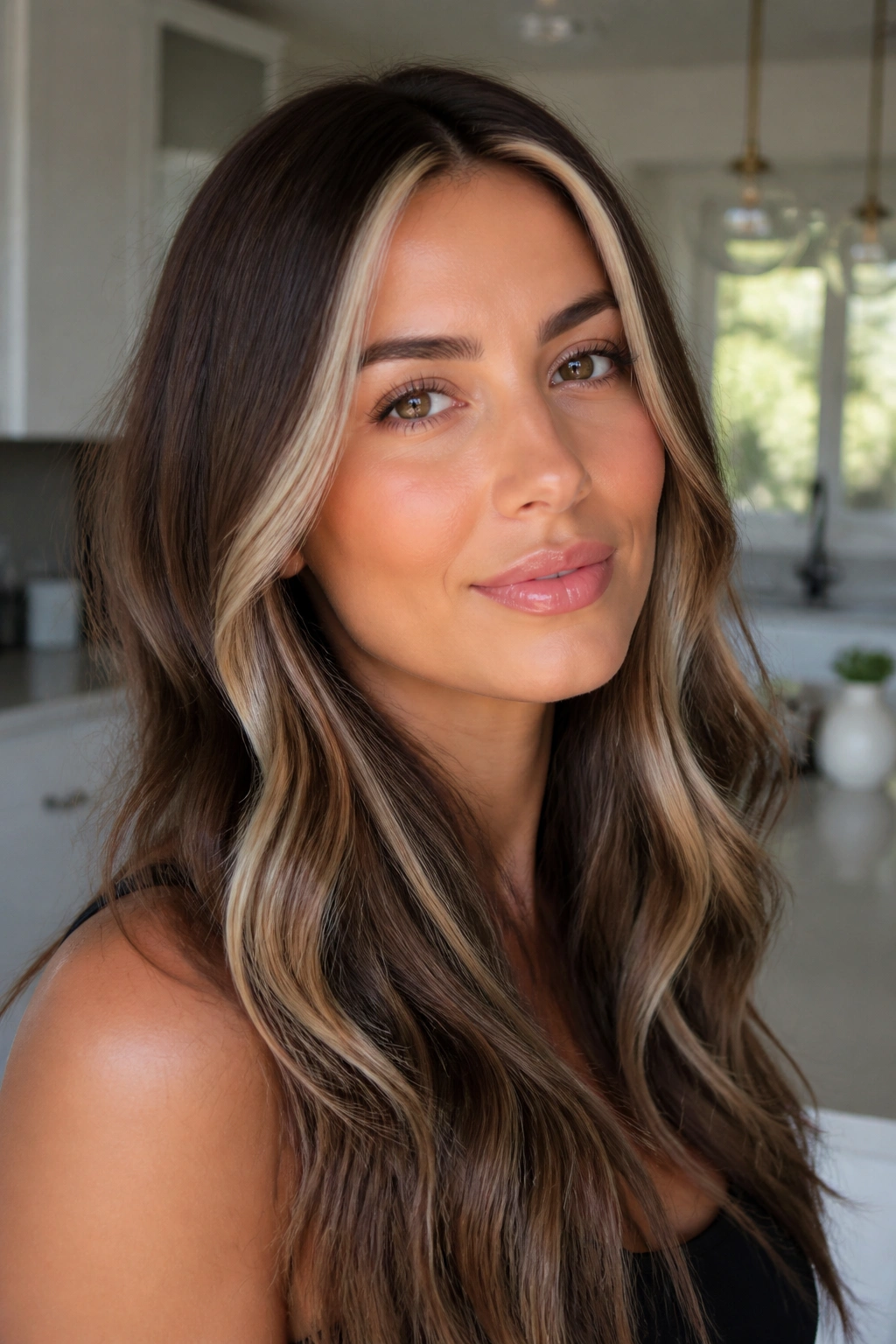
Pearl beige is for brunettes who like a softer, cooler blonde without going full ash. It has a creamy edge, but it stays light enough to brighten the face in a clean, polished way.
If gold tones tend to look too yellow on your hair, pearl beige is a smart fix. It sits in a cooler lane, yet it still reflects enough light to feel fresh. That makes it a good match for brown hair with neutral or slightly cool undertones, especially if your ends already carry some previous color and you need a shade that blends instead of yelling for attention.
The finish matters. Pearl beige looks best when the toner stays glossy and a little translucent, not chalky. Think soft shine, not flat bleach. A center part makes the contrast look sleek, while a side part gives it a more casual shape.
19. Temple Babylights for a Soft Sunlit Edge
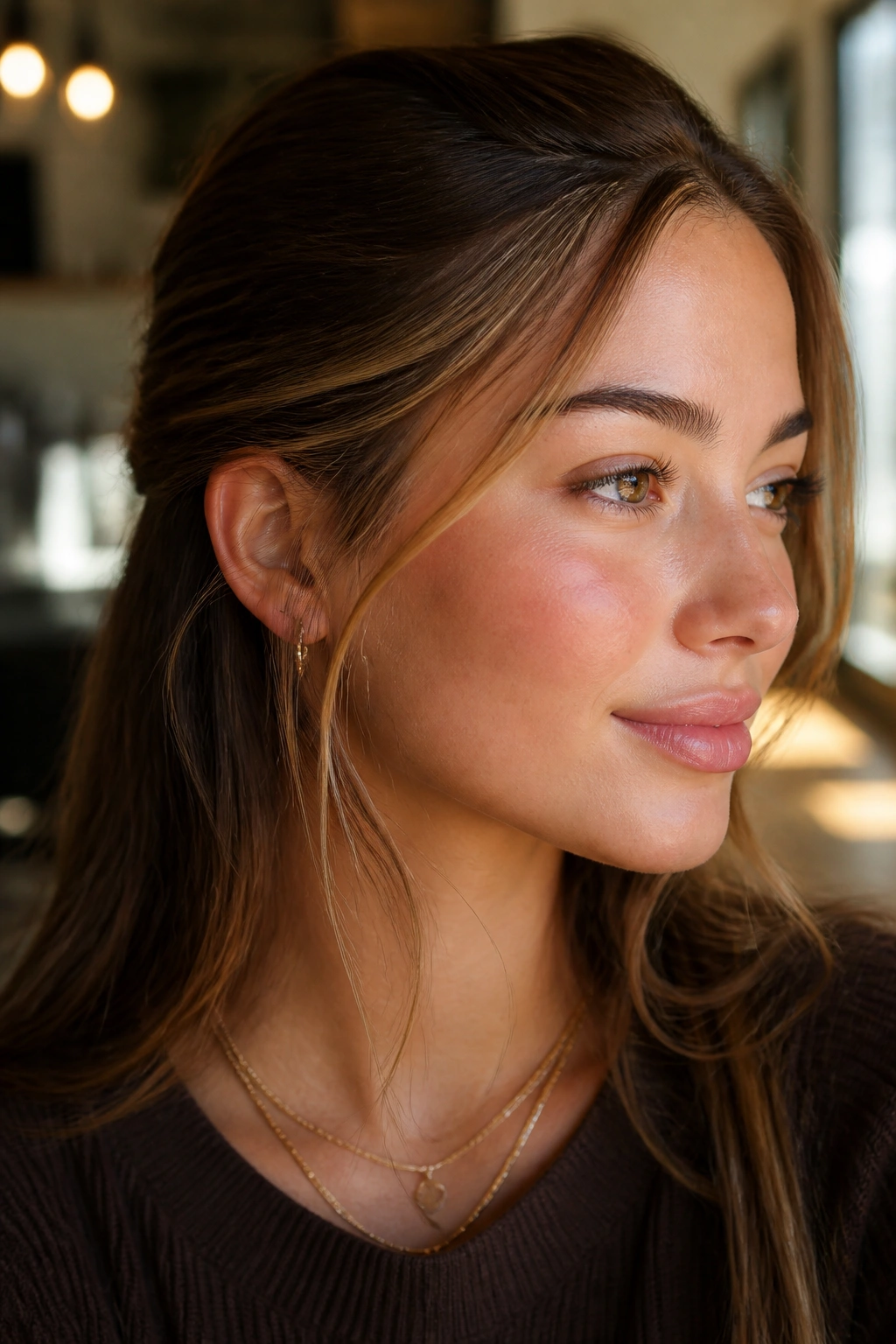
Why do some face frames feel gentle while others feel loud? Placement, mostly. Temple babylights sit near the sides of the face and at the outer edge of the hairline, which lets the brightness show up in a quieter way.
This is a good pick if you like movement around the eyes and cheekbones but do not want a strong stripe through the front. The color can be blonde, caramel, or beige. What matters is that the pieces stay fine and scattered enough to blur when the hair moves. On brown hair, that can look almost like the light is catching naturally, especially if the layers are soft.
I’d choose this for someone who tucks hair behind the ears a lot. It shows off the color in a small, flattering way without needing a big appointment every few months. Tiny detail. Big payoff.
20. One Bold Front Panel on a Dark Brunette Base
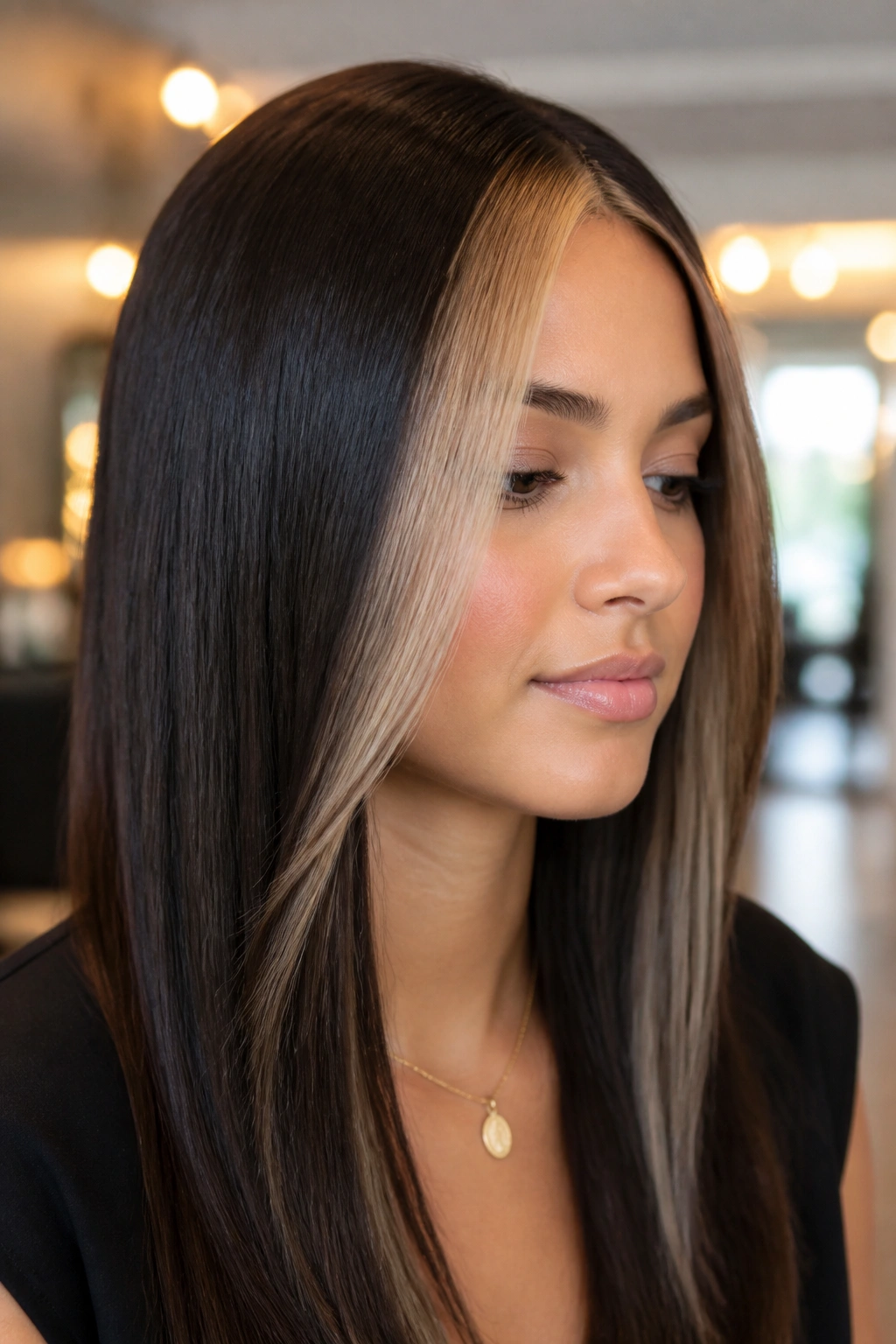
A single bold front panel is not for the indecisive. It’s for the brunette who wants the face to pop immediately, even from across the room.
The panel can be blonde, copper, or even a creamy beige, but the shape has to stay clean. Usually that means one thicker section near the part line and hairline, not a scattered mess of lighter strands. On a dark base, that clear block of color becomes the focal point of the whole haircut.
This style has a slightly fashion-forward feel, which is why it looks sharp with straight hair and strong parts. It can also look cool with waves, though the contrast will read a little softer once the hair bends. If you like your color to make a statement, this is the loudest option in the group.
21. Rose-Gold Tint on Brown Hair
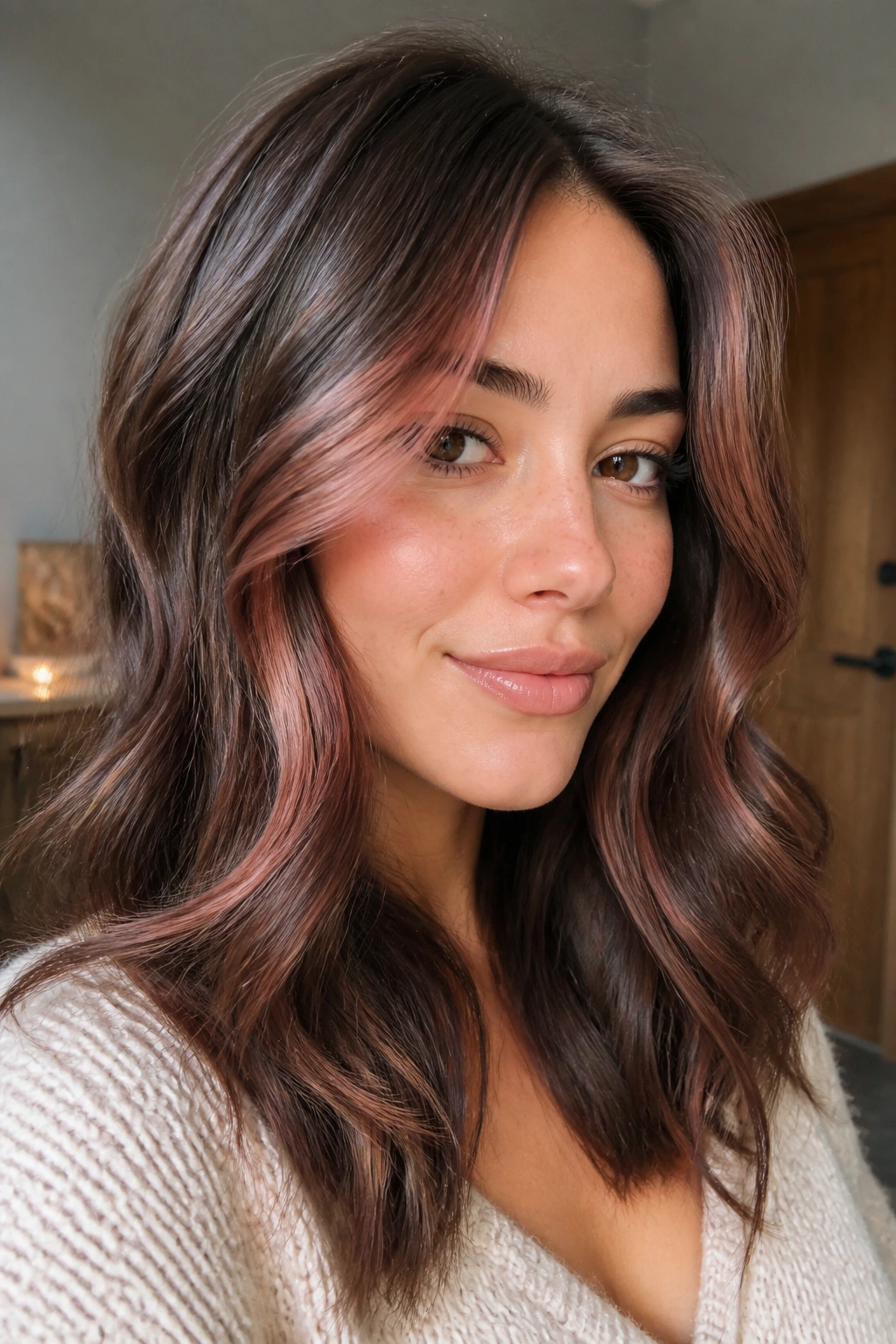
Rose gold can get cheesy fast if it is too pink or too shiny. On brown hair, though, a soft rose-gold tint near the face can look unexpectedly good because the brunette base keeps it grounded.
The trick is restraint. You want the highlight to hold a blush tone, not turn bubblegum. Around chestnut or medium brown hair, rose gold can add warmth that feels fresh and a little playful. It also works well on wavy hair, where the pink-gold blend catches on the bends and softens the finish.
I’d reach for this if the rest of your style leans romantic, vintage, or slightly undone. It pairs nicely with warm-toned makeup, but it can also look good with bare skin and simple clothes because the color does the talking. Keep the roots deeper, though. A little shadow keeps rose gold from drifting into novelty territory.
22. The Soft Everyday Money Piece with a Shadow Root
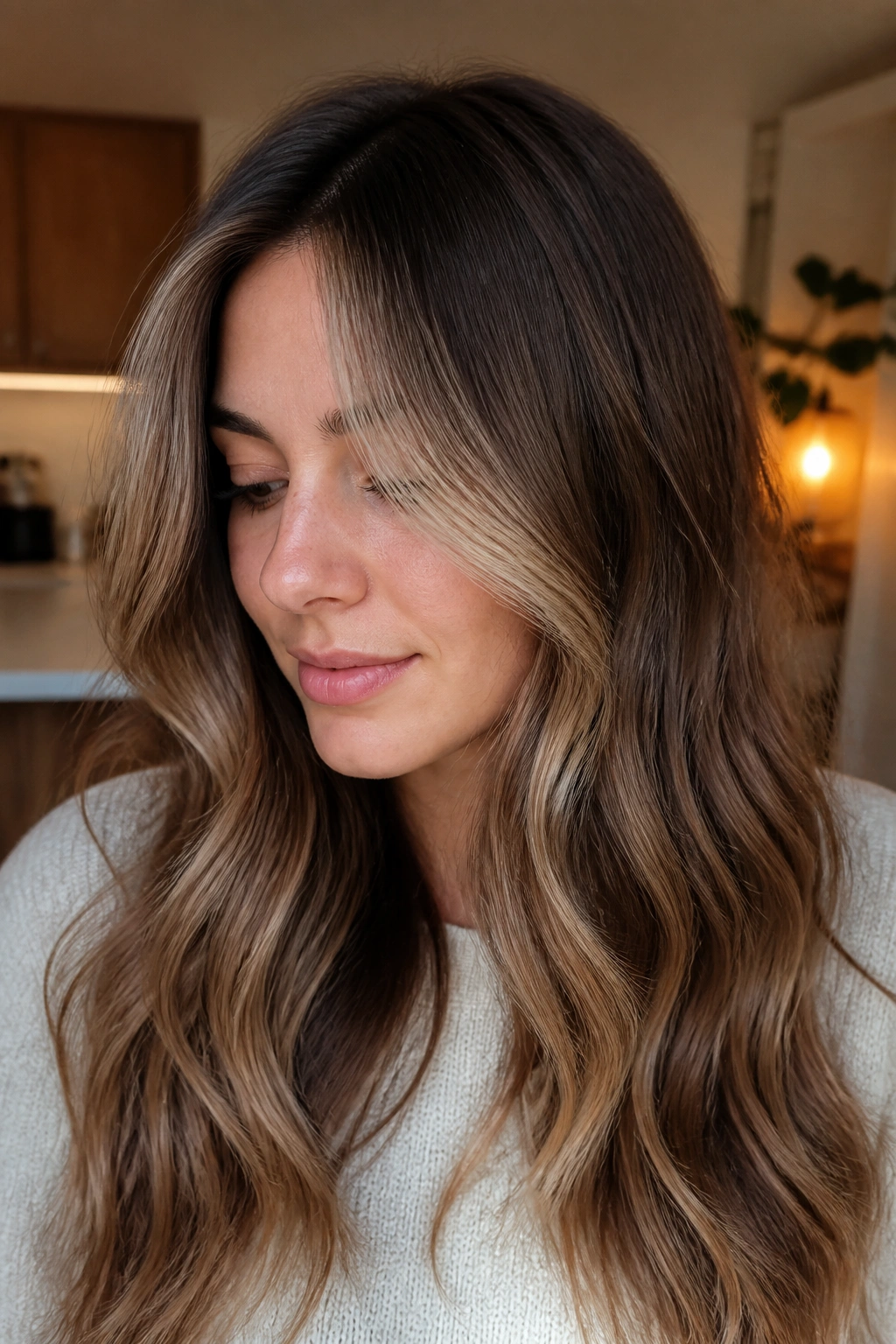
Not every brunette wants a big reveal at the front. Some people want the hair to look brighter, cleaner, and more awake without giving away how much work went into it.
That’s where the soft everyday version comes in. A shadow root, a light beige or caramel face frame, and a gentle blend into the front layers can do more than a louder highlight ever will. The color should look like it belongs to the haircut, not like it was dropped on top after the fact. If the front pieces move with the rest of the hair and the root stays just a touch deeper, the whole style feels calm and expensive-looking without trying too hard.
I keep coming back to this version because it solves the problem most brunettes actually have: they want light around the face, but they still want to recognize their own hair in the mirror. That is the sweet spot, and it’s not boring at all. It’s the kind of color that survives busy mornings, second-day hair, and the occasional bad blow-dry without falling apart.
