



Brown hair and red highlights can look timid in a color chart and striking in real life. The trick is not “adding red” and calling it a day. It’s choosing the right red, placing it in the right spots, and deciding how loud you want the contrast to feel.
On brown hair, red behaves differently depending on depth. A level 5 chocolate base can make copper look like molten metal, while a lighter caramel brown can carry cherry or ruby without the color taking over the whole head. That difference matters. A lot.
The other piece people miss is placement. A few face-framing foils can change a haircut more than a full head of scattered color, and a hidden panel under the top layer can give you that flash of red without making the whole style read bright from every angle. I keep coming back to this because it saves people from the same mistake: picking a pretty red shade and ignoring how it will sit on brown hair.
So the best versions usually do one of three things. They warm the brown base, they sharpen the face, or they add movement that only shows when the hair shifts. That’s where the fun starts.
1. Copper Ribbon Highlights
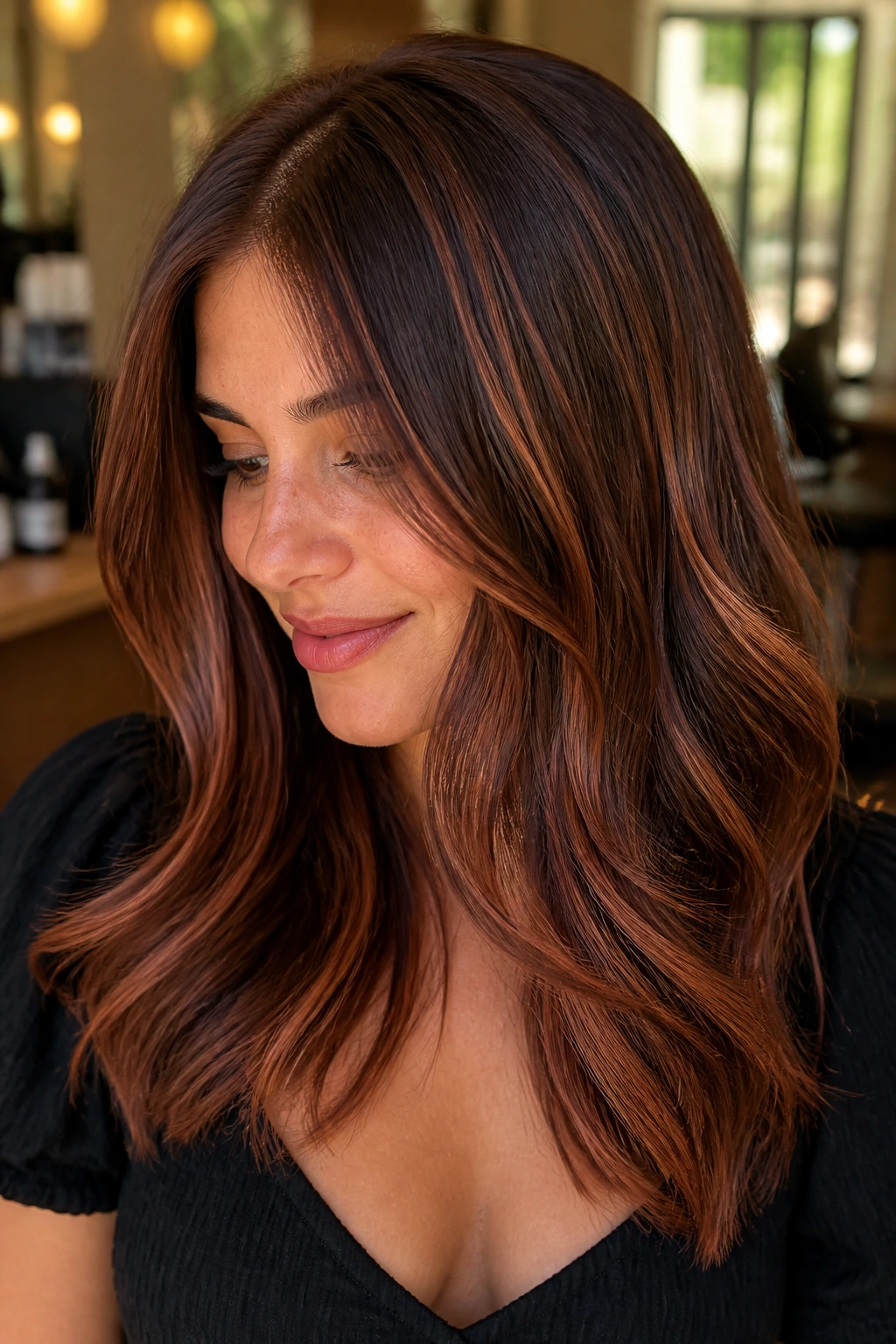
Copper ribbons are the easiest red-adjacent choice for brown hair because they sit right between gold and red. On a medium brown base, they look like sunlight caught in the hair; on a darker brunette base, they read richer and a little more dramatic.
What makes this one work is the softness. Thin ribbons woven through the midlengths keep the hair from looking striped, and that matters more than most people think. If you like color that moves when you turn your head, copper is a clean place to start.
Ask for this
- Fine foiled ribbons through the surface layers.
- A copper tone with a little gold if your base is warm.
- A gloss every few weeks if your hair pulls dull at the ends.
Copper looks best when the brown underneath still shows through. That contrast gives the hair depth instead of a flat orange wash, and it’s the kind of color that still looks good when you throw your hair into a loose bun.
2. Cherry Money Piece
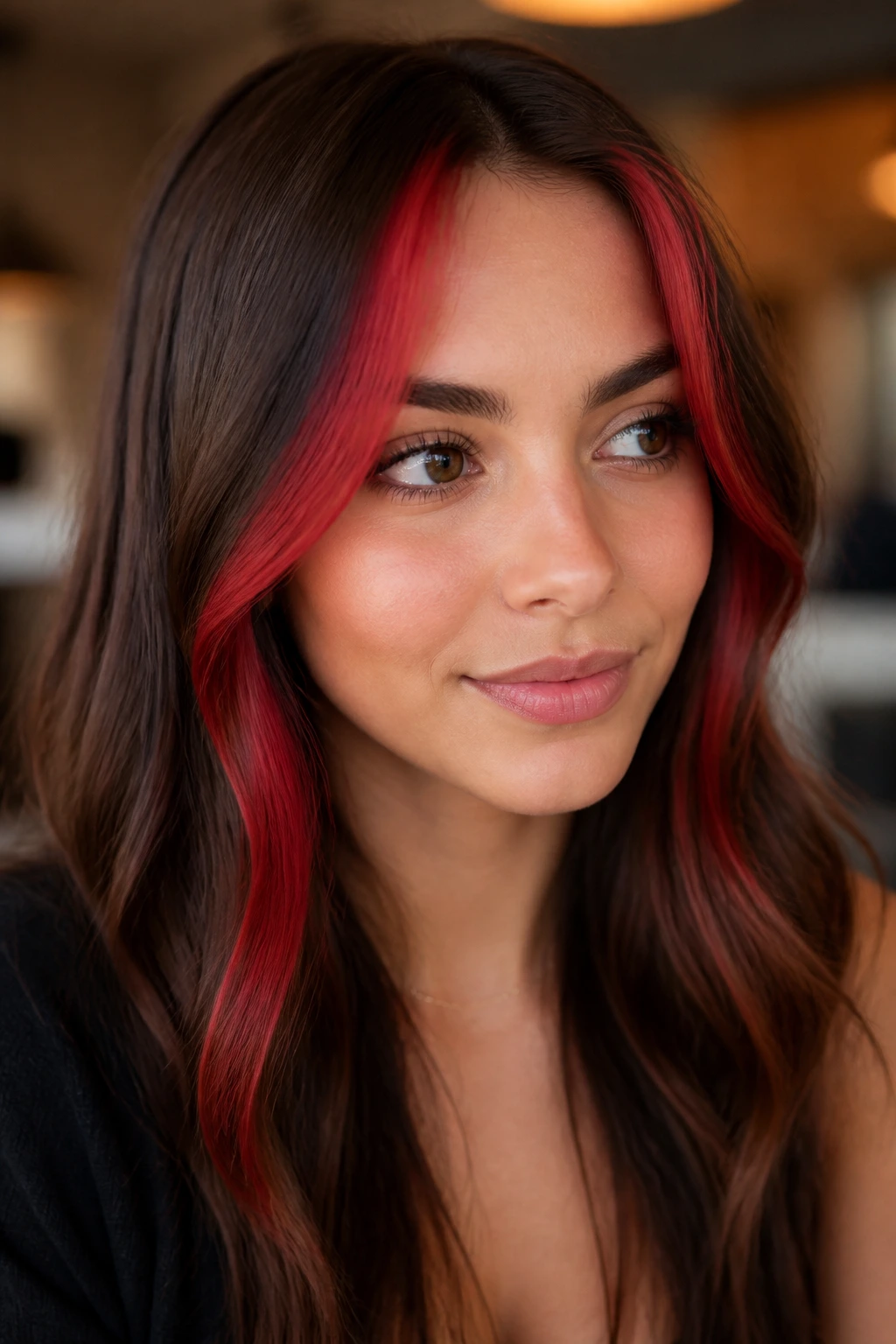
A cherry money piece is the fast route to red on brown hair. Put the brightest color around the face, and suddenly even a simple cut looks more awake. It’s blunt, yes, but in a good way.
Why does it work so well? Because the face frame is where people notice movement first. Two bright front sections can sharpen cheekbones, soften a heavy fringe, and make brown hair look glossy even when the rest stays quiet.
What to ask for
- Two to four face-framing foils from the hairline back toward the temple.
- A cherry red that leans more berry than orange.
- A soft root so the grow-out does not look harsh.
Cherry is a little bolder than copper, and that’s the point. If you want your hair to read modern without turning the whole head red, this is one of the smartest places to spend the color.
3. Auburn Balayage
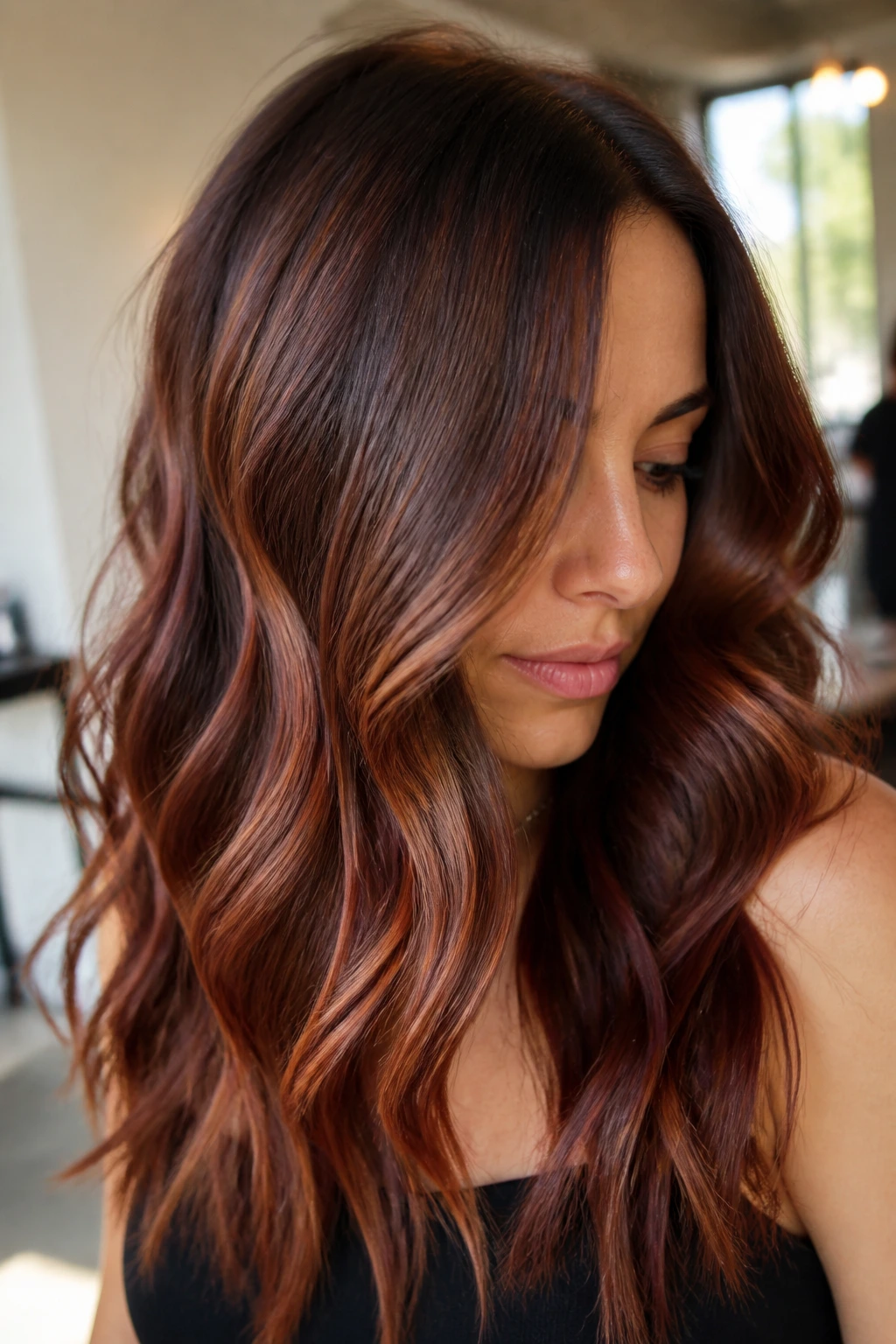
Auburn balayage is the one I’d hand to someone who wants red highlights for brown hair without the drama of obvious stripes. The hand-painted placement keeps the color soft, and the auburn tone ties in neatly with most brown bases.
The nice part is the grow-out. Balayage leaves the root area darker, so you do not get that hard line after a few weeks. Instead, the color fades into the base in a way that feels intentional, even when the style is a little messy.
Auburn also plays well with waves. The bent pieces catch light and reveal the red in slices, which keeps it from looking too solid. If your brown hair is thick or a little heavy, this kind of placement lifts it without making it busy.
4. Burgundy Babylights
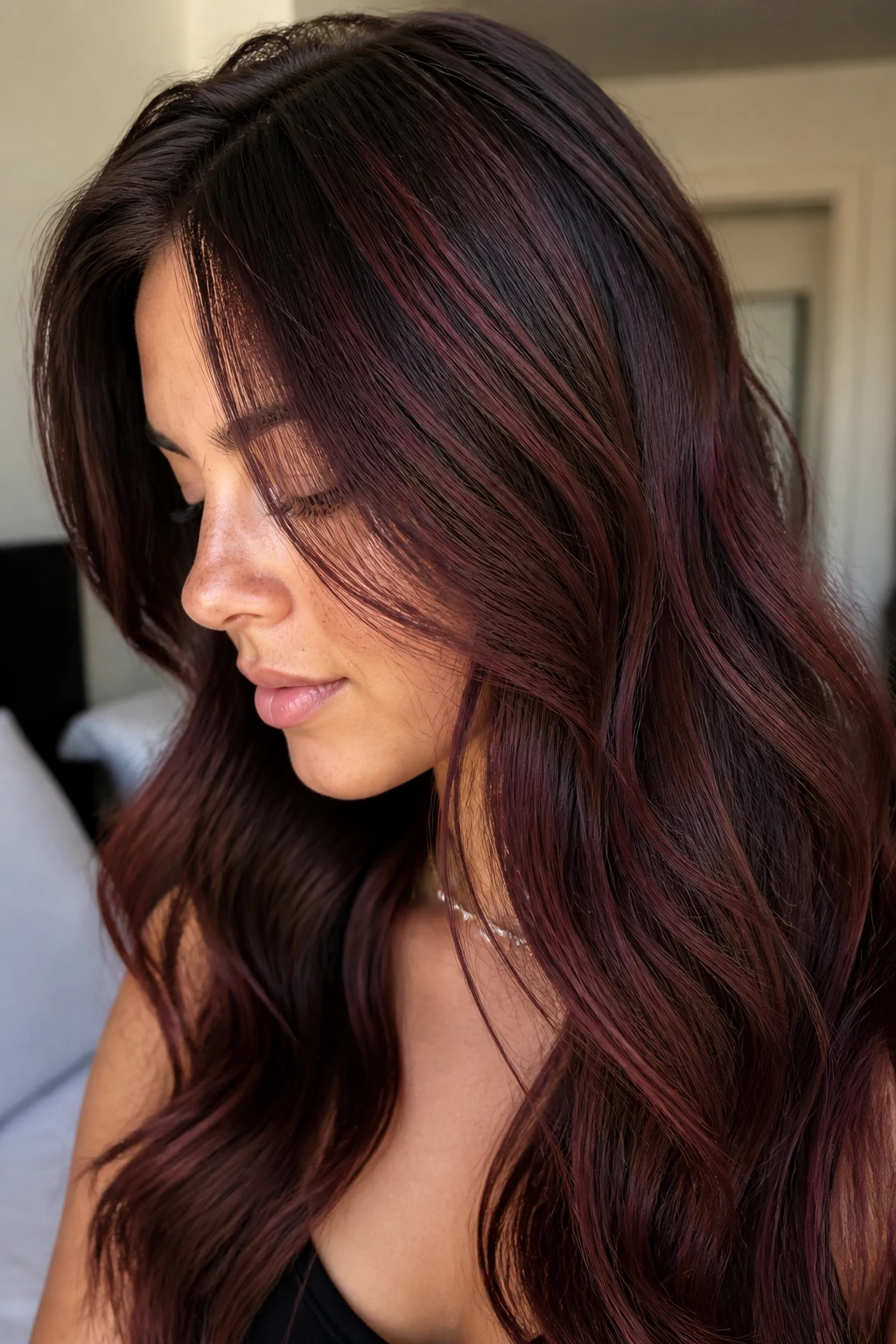
Tiny burgundy babylights can make brown hair look expensive without shouting. The sections are so fine that the color only really shows when light moves across the hair, and that makes the whole thing feel polished instead of loud.
Babylights are especially good if your brown hair is dark or dense. Broad red pieces can look pasted on when the base is deep, but very fine weaving lets the burgundy sit inside the hair rather than on top of it.
The detail that matters
- Ask for 1/16- to 1/8-inch sections.
- Keep the pieces closer together around the part.
- Leave the lengths softer so the top does not look overdone.
Burgundy is one of those shades that looks almost plum indoors and deeper red outside. That little shift is the whole point. It gives the hair a richer read without making every strand compete for attention.
5. Mahogany Face-Framing Streaks
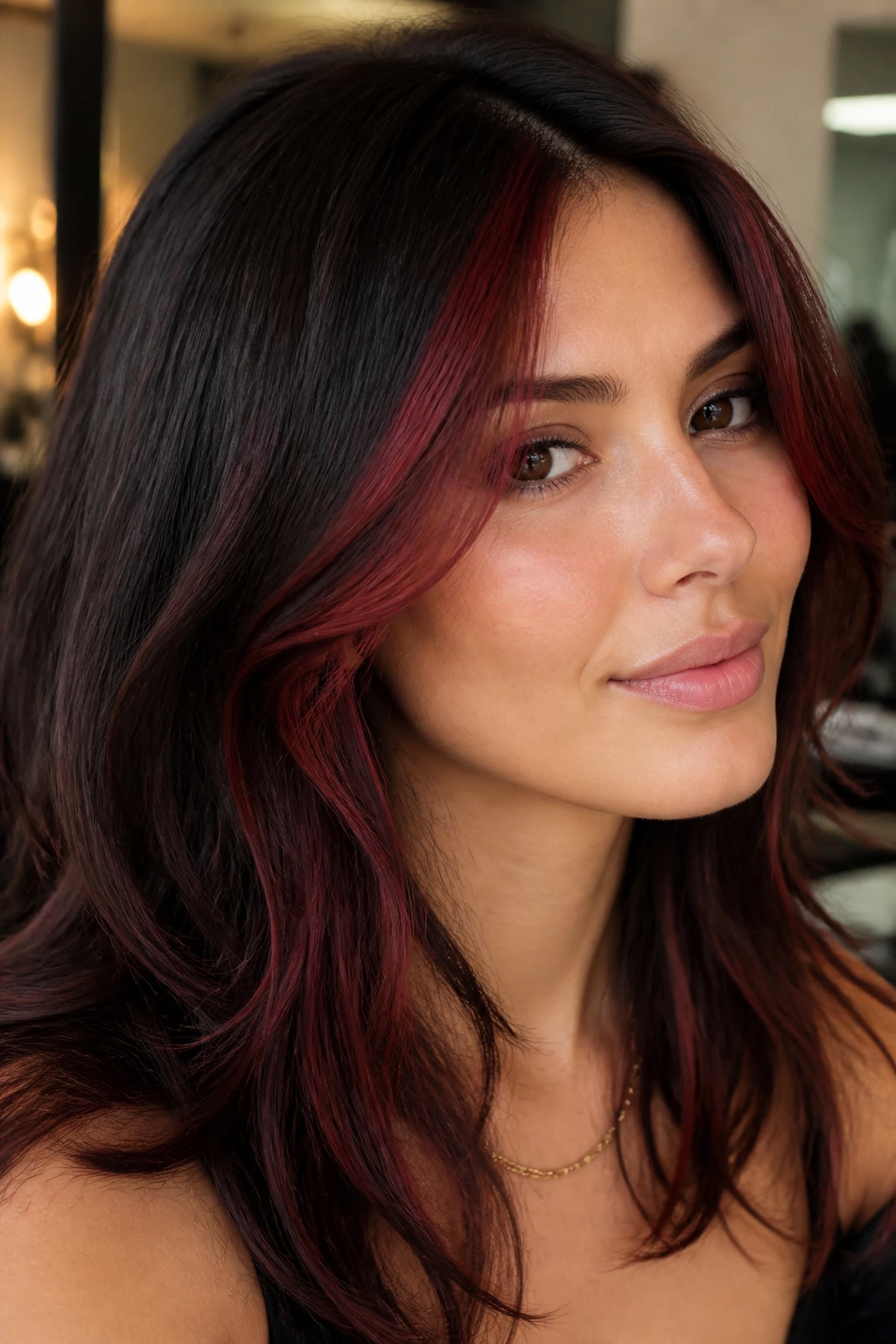
Mahogany is the grown-up cousin of bright red. It has enough warmth to show up on brown hair, but it stays grounded, which is why it works so well around the face. You get definition, not costume energy.
Unlike cherry, mahogany does not fight a neutral wardrobe. It blends more easily with chocolate, chestnut, and espresso bases, and it tends to flatter haircuts with cheekbone-skimming layers because the color follows the shape of the cut.
If you want a red that looks deliberate in a meeting and still pretty under evening light, this is a strong pick. Ask for streaks that start near the temple and fall just past the jaw. That length gives the color room to move.
6. Cinnamon Highlights on Wavy Brown Hair
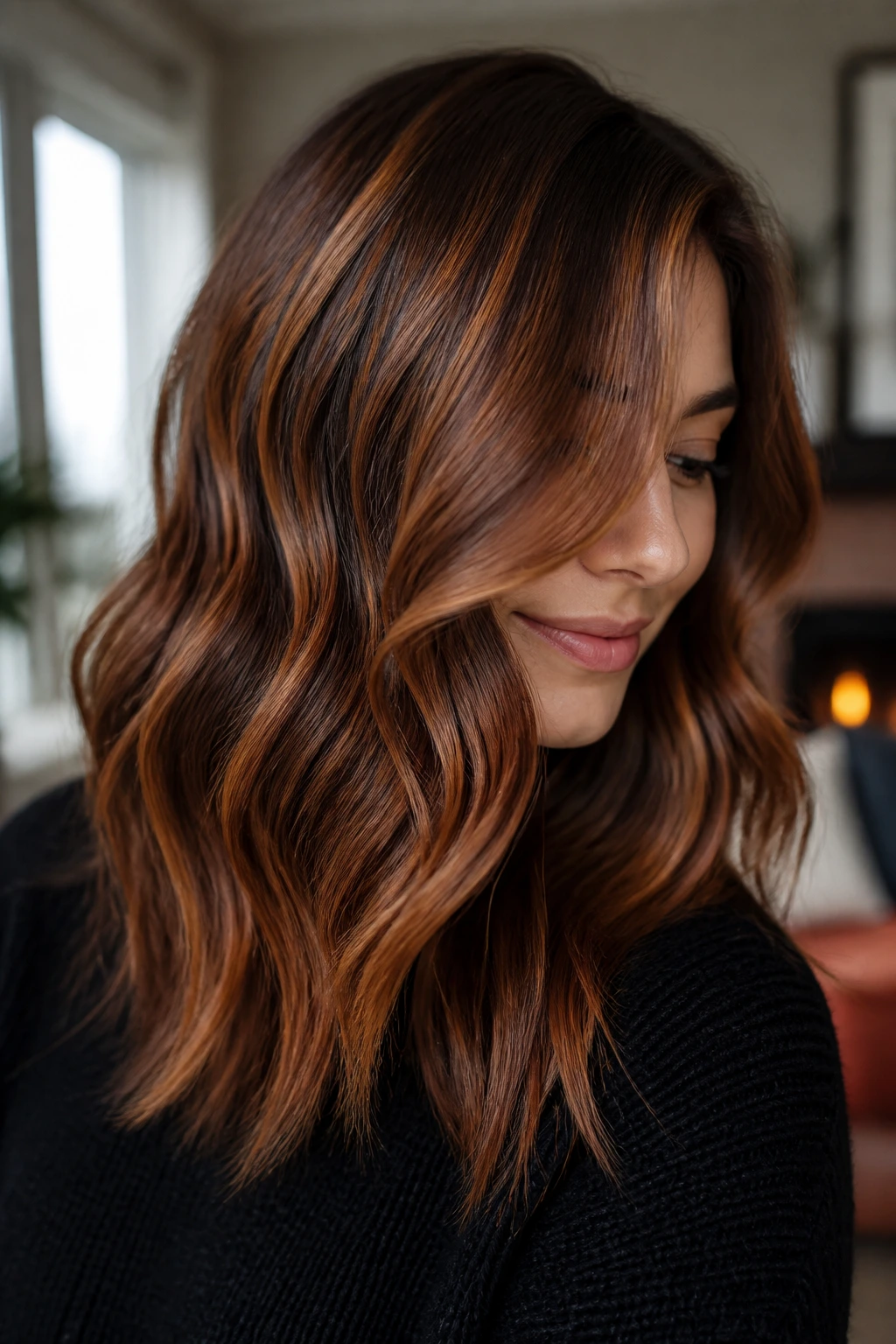
Cinnamon is one of the easiest reds to wear on brown hair because it has warmth without feeling too saturated. On waves, it looks even better. Every bend in the hair catches a different part of the tone, so the color never sits flat.
The thing about wavy hair is that it breaks up highlights for you. You do not need a ton of color to get dimension. A few cinnamon ribbons across the top layer and through the side sections can do more work than a heavy panel job ever could.
Cinnamon also grows out with grace. The red stays visible, but the edge softens as the brown root comes through. That makes it a good option if you want something flattering and low-fuss. Not boring. Just sensible.
7. Wine Red Peekaboo Panels
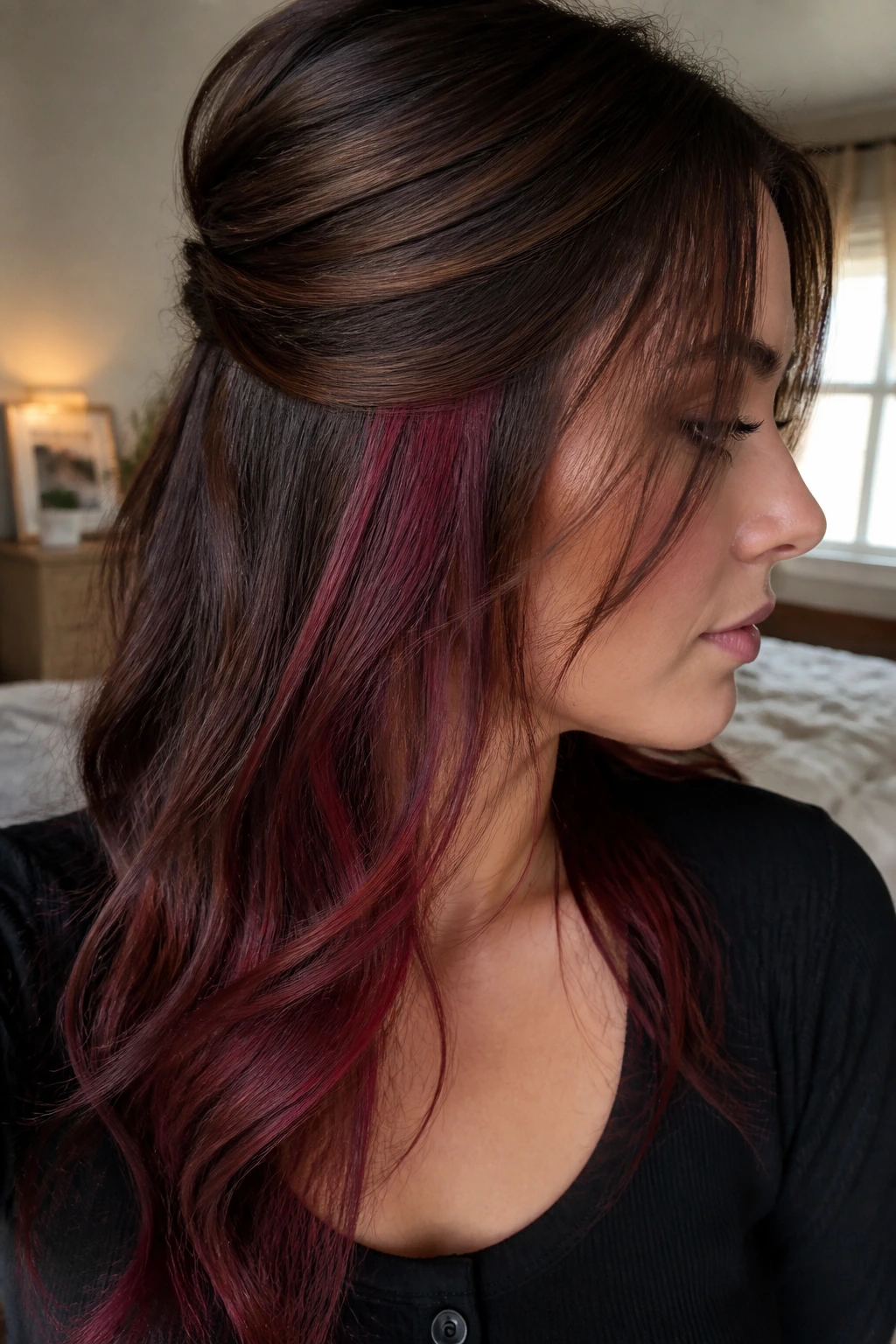
Peekaboo color is for the person who likes a little secret. Wine red panels hide under the top layer and only flash when hair moves, which makes the color feel playful instead of permanent in your face.
This placement works especially well on brown hair because the contrast shows best in motion. A ponytail, a half-up style, or a tucked-behind-the-ear moment reveals the red without changing the whole head. It’s a nice middle ground if you want red but still need the top layer to stay workplace-friendly.
Best uses
- Under the crown for a hidden flash.
- Through the nape on layered cuts.
- Behind the ears if you want the color to appear in side views.
Wine red leans deeper and cooler than copper, so it suits brown hair that already has some ash or espresso tones. Very tidy. Very effective.
8. Rust-Toned Midlength Ribbons
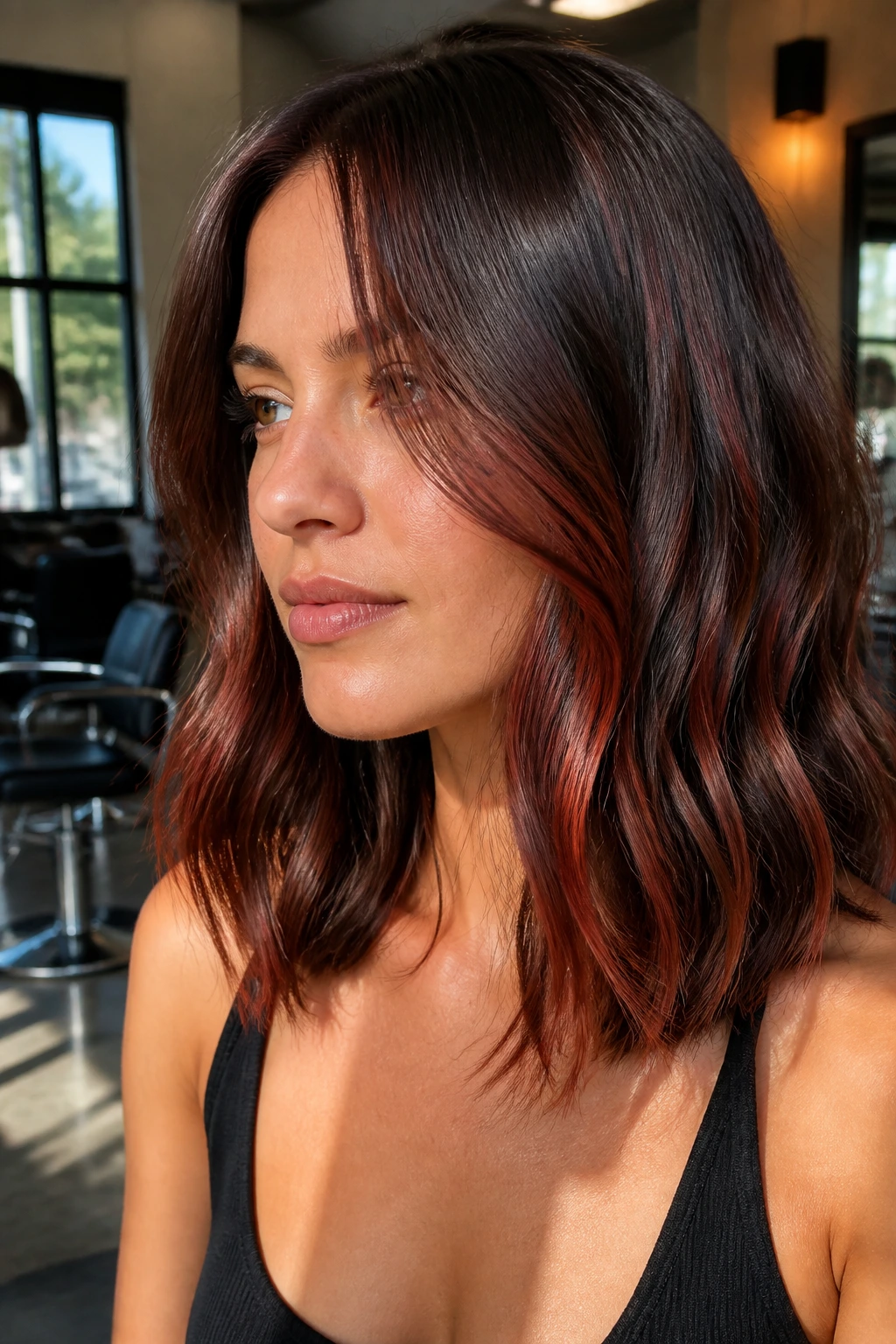
Rust-toned ribbons are underrated. They do not scream red, and that’s exactly why they work. On brown hair, rust gives warmth and movement, especially from the shoulders down where hair starts to lose shape.
Midlength placement matters here. If you put the color only near the ends, the effect can feel thin. Spread it through the middle third of the hair, and the style gets that lived-in, dimensional look people usually want from balayage.
This shade is good for haircuts that sit at the collarbone or just below it. The red shows when the hair bends inward or flips out at the ends, which makes even a plain blowout look more textured. That’s a win, honestly.
9. Scarlet Tips on Long Layers
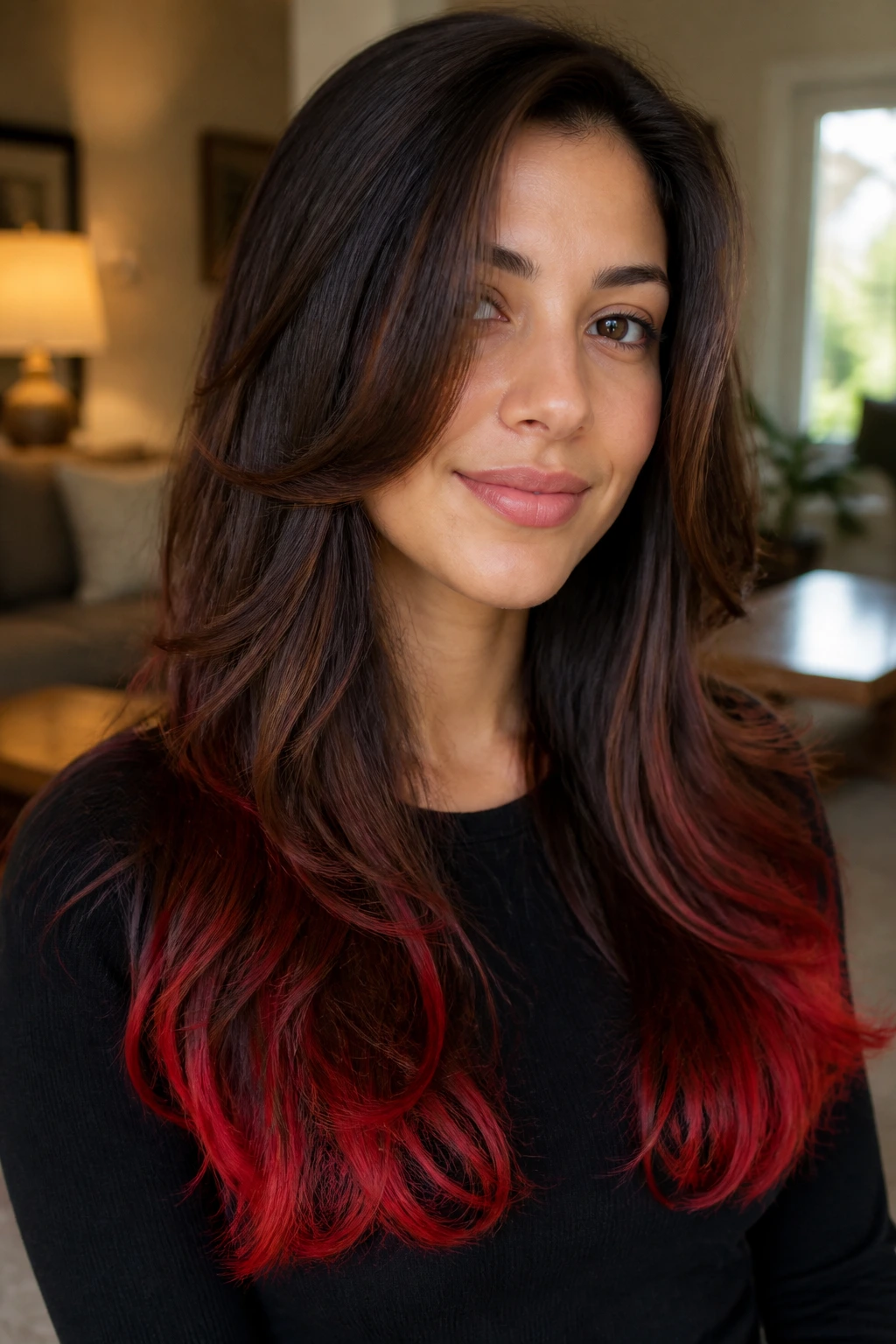
Scarlet tips are not subtle, and they are not pretending to be. On long brown hair with layers, the lighter ends give the color room to shine without taking over the whole length. It reads edgy in a way that still feels wearable.
Can scarlet work on brown hair? Absolutely, if the base stays deep enough to frame it. The contrast is the whole trick. Long layers help because each piece ends at a different place, so the red does not form one heavy line at the bottom.
How to wear it
- Keep the scarlet mostly on the last 2 to 4 inches.
- Ask for softer pieces through the face so the ends do not look detached.
- Trim often, because bright red tips show dryness fast.
Scarlet tips suit someone who likes visible color and does not mind maintenance. They fade faster than darker reds, but the payoff is a clean, punchy finish.
10. Merlot Balayage on Espresso Brown
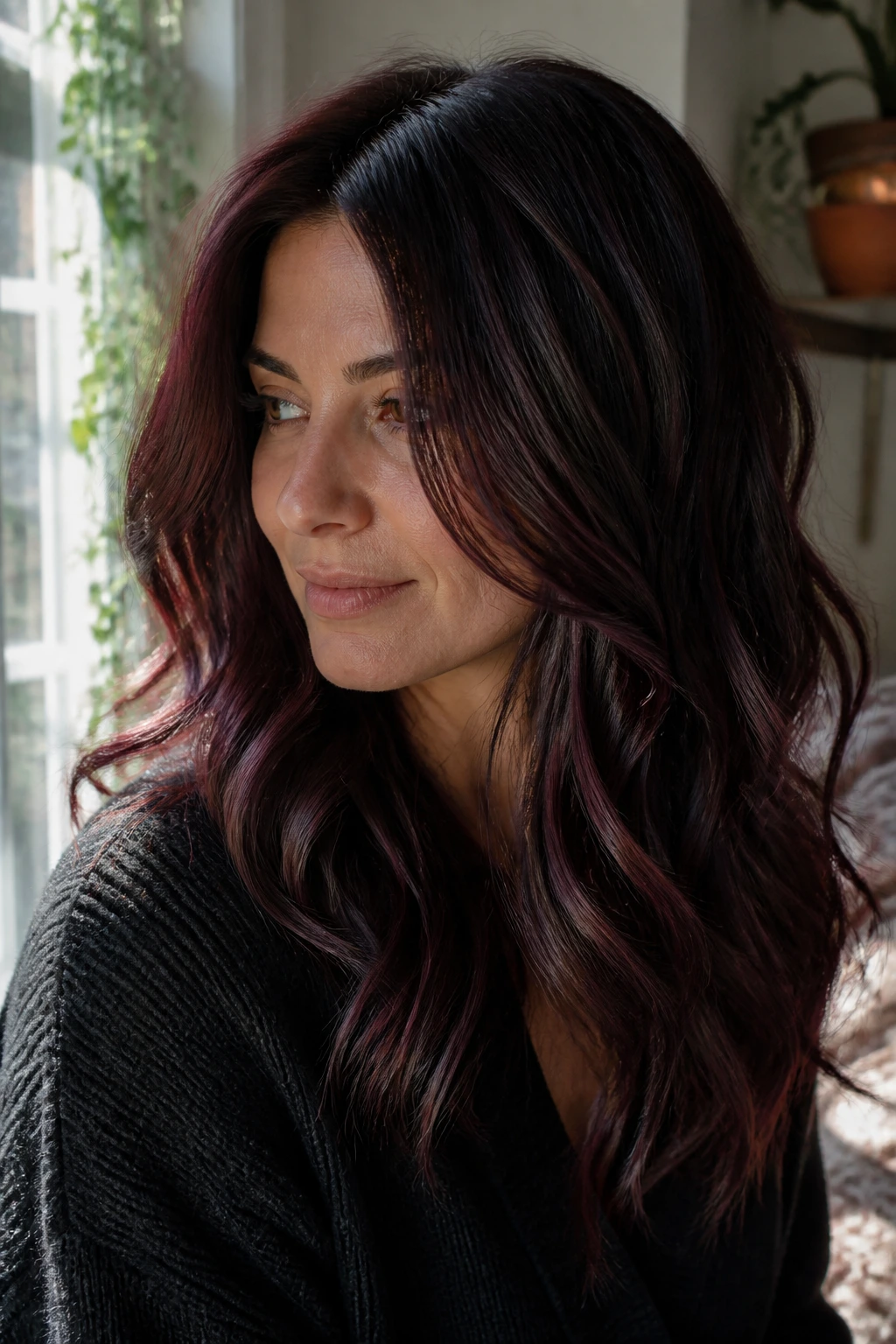
Merlot balayage is what you reach for when brown hair is already deep and glossy. Instead of forcing a bright red contrast, merlot adds a wine-dark shimmer that looks richer than obvious. It’s moody in the best way.
Compared with cherry, merlot feels denser. The red is still there, but the purple-brown undertone keeps it from reading too bright. That makes it a strong choice for espresso hair, where lighter reds can vanish or turn patchy if the lift is uneven.
The color looks especially good on medium-thick hair because the hand-painted pieces show through the bulk. Under low light, it can almost look like a dark brown with a hidden red cast. Then the light hits, and the whole thing changes. Nice trick.
11. Strawberry-Copper Gloss Lights
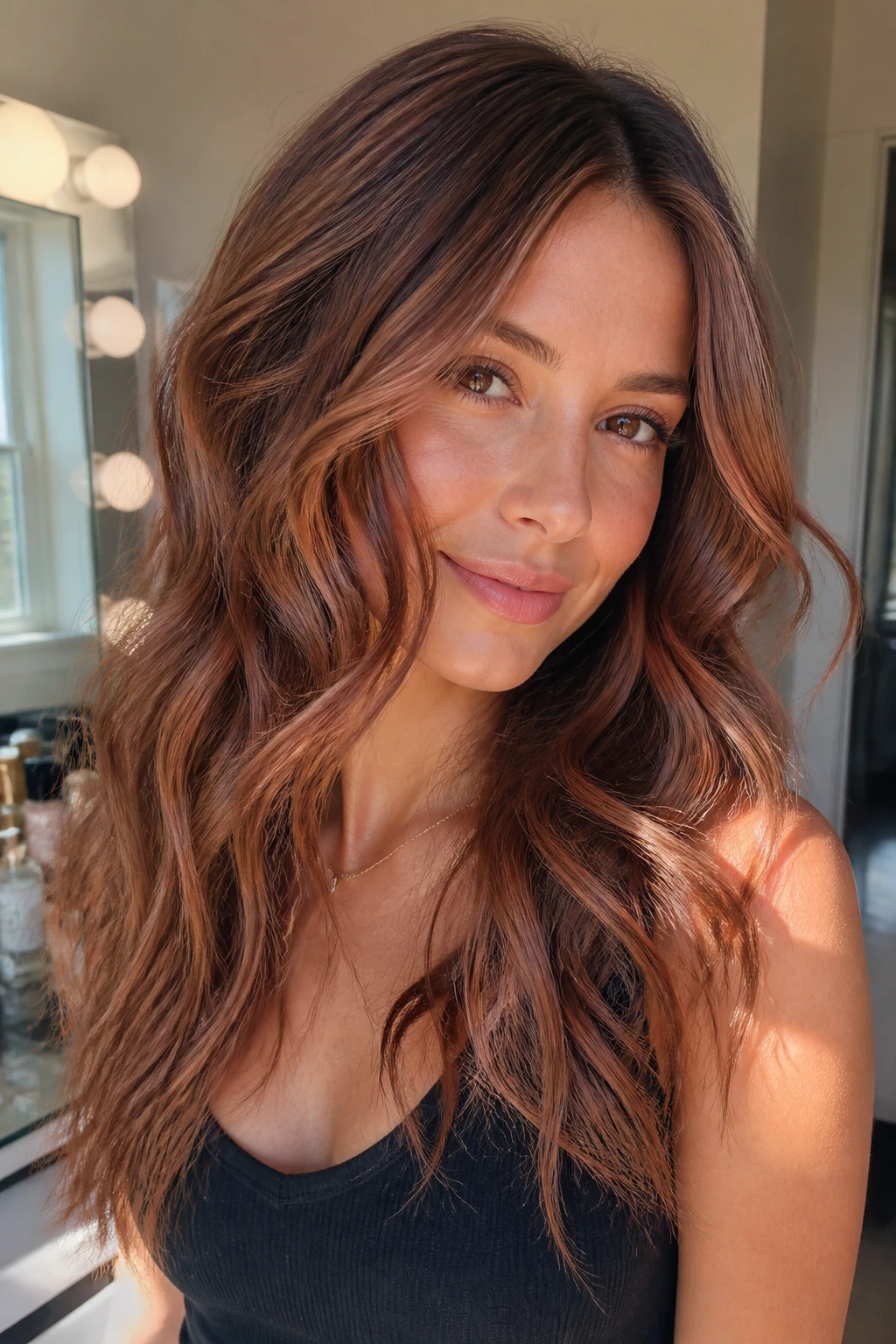
Strawberry-copper is softer than straight copper and warmer than pink. On lighter brown hair, it creates a gentle red glow that feels more airy than bold. Think of it as a color wash with a few brighter threads, not a full-on stripe job.
Why it feels softer
The mix of pink and gold keeps the red from looking flat. Brown hair often has enough depth to hold both, so the result is shiny rather than muddy. That matters on straight styles, where every line is easy to see.
A gloss-based version is useful if you want temporary commitment or you are testing how red looks against your skin. It can refresh faded balayage too, especially on the mids and ends where brown hair tends to lose warmth first.
12. Cranberry Chunks Around the Crown
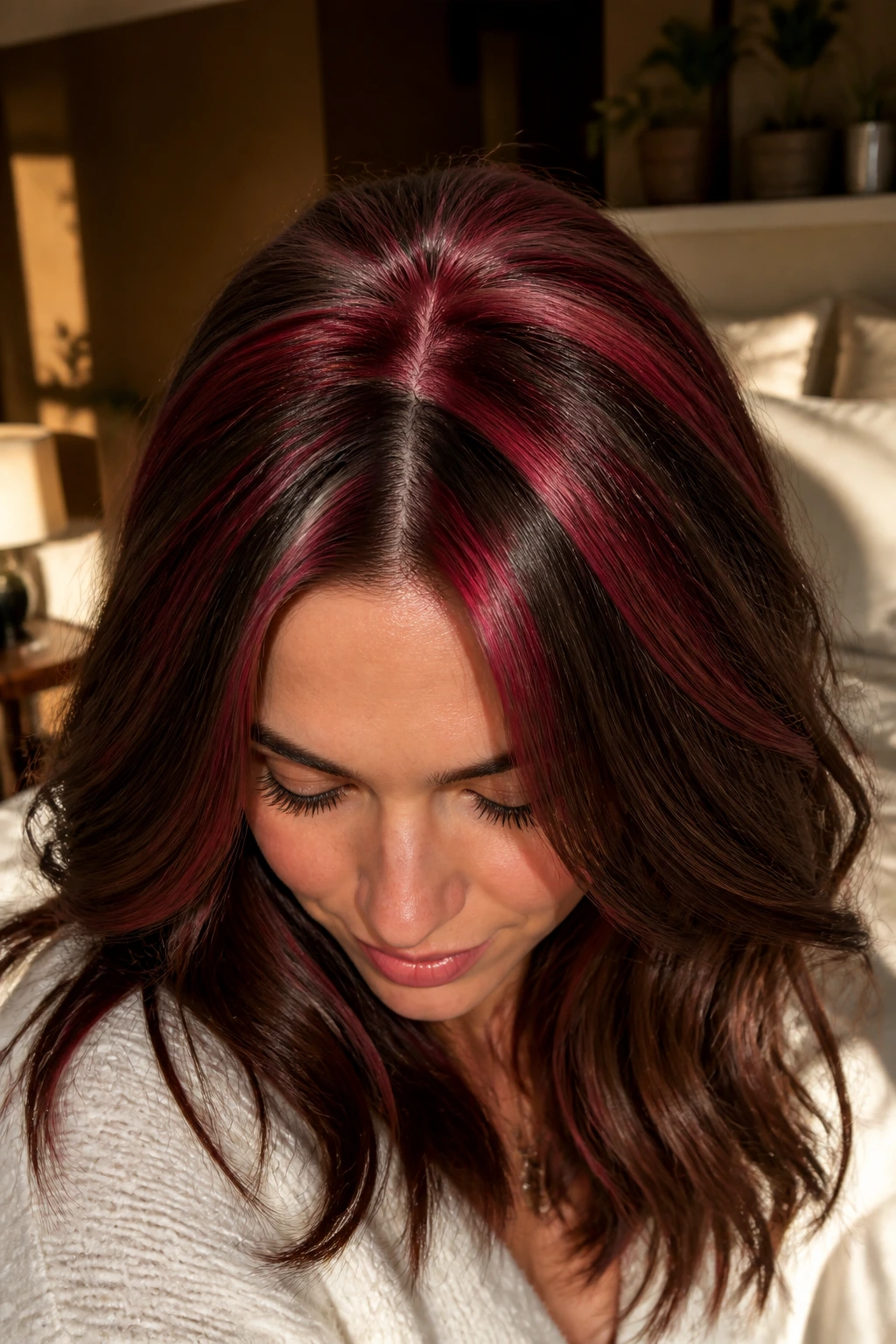
Cranberry around the crown gives brown hair lift in the part area, where a lot of styles can look a little flat. The color sits up top and spreads outward when the hair moves, so the whole head looks fuller.
A lot of people focus on the front and forget the crown. Big mistake. Crown placement can change the shape of a haircut, especially on shorter bobs or shoulder-length cuts where volume matters. A few cranberry pieces near the top make the style look more awake.
This is not the place for tiny little barely there strands. You want visible chunks, but not so many that the base disappears. If the brown hair beneath is healthy and shiny, the cranberry reads richer because it has something solid to sit on.
13. Rose-Gold Highlights on Neutral Brown
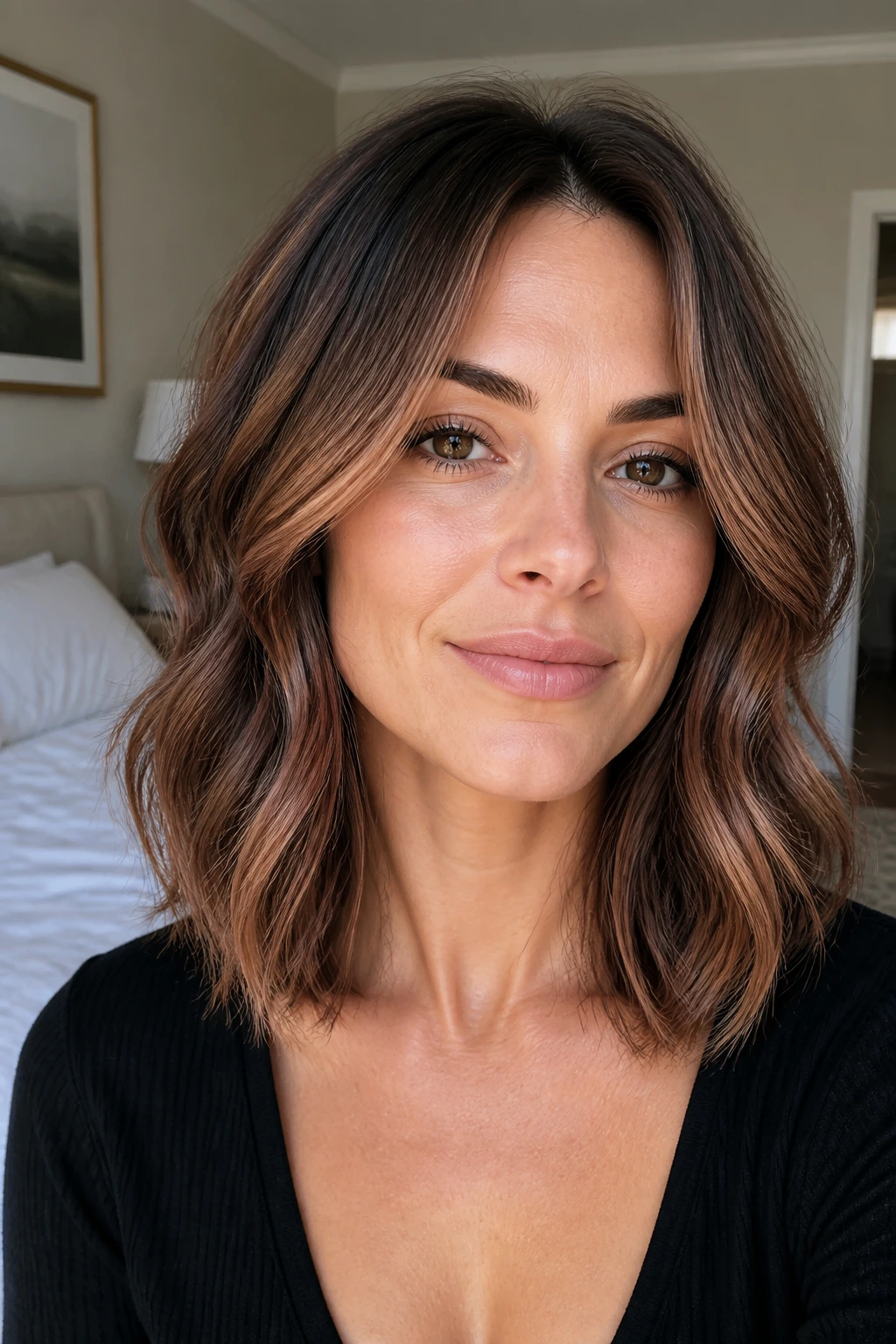
Rose-gold on brown hair is a nice way to bring red in without pushing the color too warm or too cool. The pink-red softness sits well on neutral brunettes, especially if the base does not lean strongly golden or ash.
This one is for subtle people. Not boring people. Subtle people.
The effect is prettiest when the highlights are fine and placed through the outer layer. Too much rose-gold in one place can look overly sweet, but scattered softly, it gives the hair a soft shimmer that shifts between brown, copper, and blush.
A rose-gold gloss can also soften older red highlights that have gone too orange. That little pink veil pulls the tone back into something more polished.
14. Brick-Red Panels Through Curly Hair
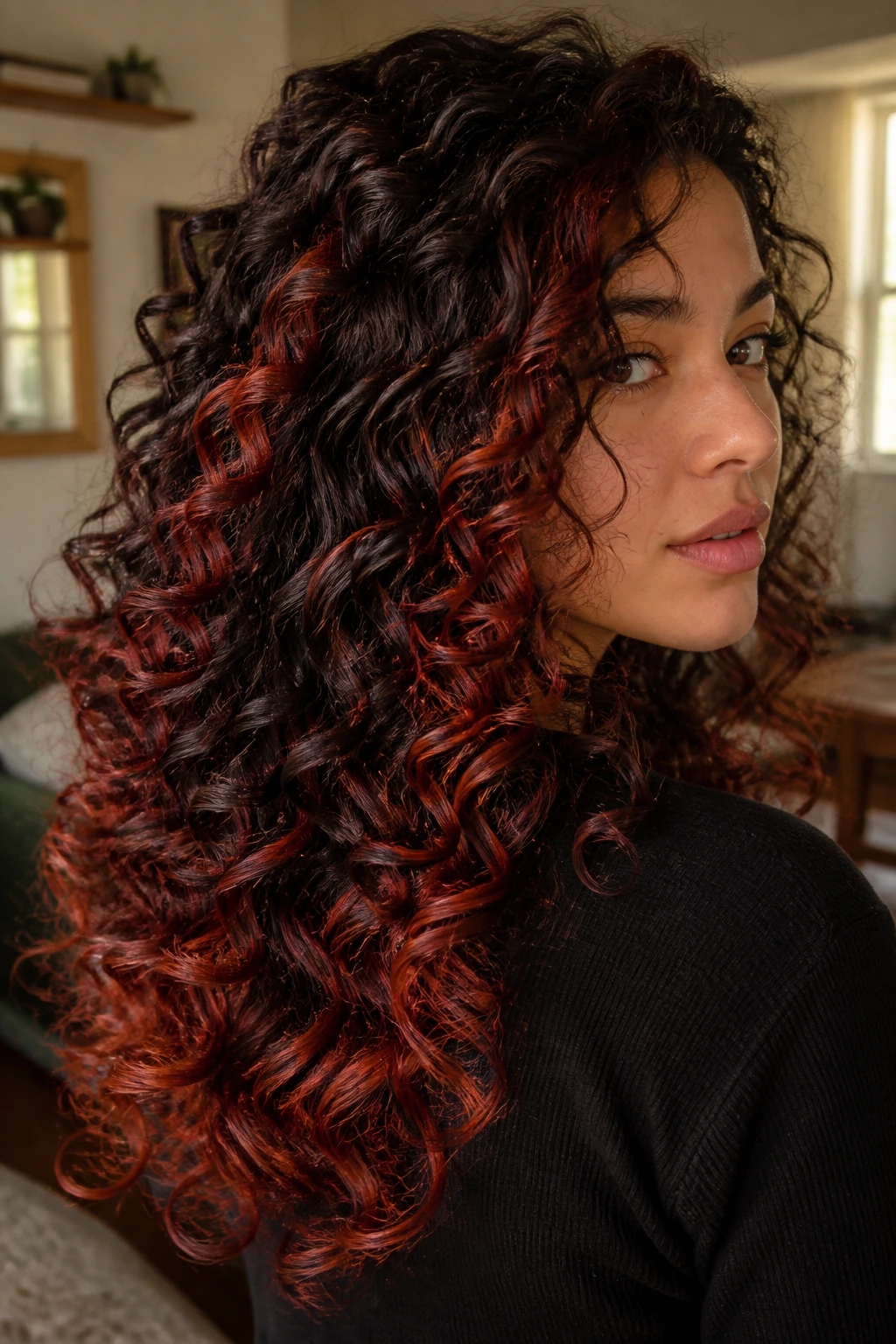
Curly hair shows color differently because the curls bend and break the light. Brick-red panels use that to their advantage. On brown curls, the red appears in slices, and every twist of the coil gives you a new angle.
The key is placement. Curly hair usually needs wider painted sections than straight hair, because the curl pattern naturally shrinks and hides some of the color. If the pieces are too thin, they disappear. If they are too broad, the look gets heavy. Middle ground wins.
Good placement ideas
- A few painted panels around the face.
- Several pieces through the upper back of the head.
- One or two brighter curls near the part.
Brick-red is warm, grounded, and a little earthy. It gives curls definition without making them look coated in paint. That balance is harder to get than it sounds.
15. Sangria Streaks on Dark Brunette
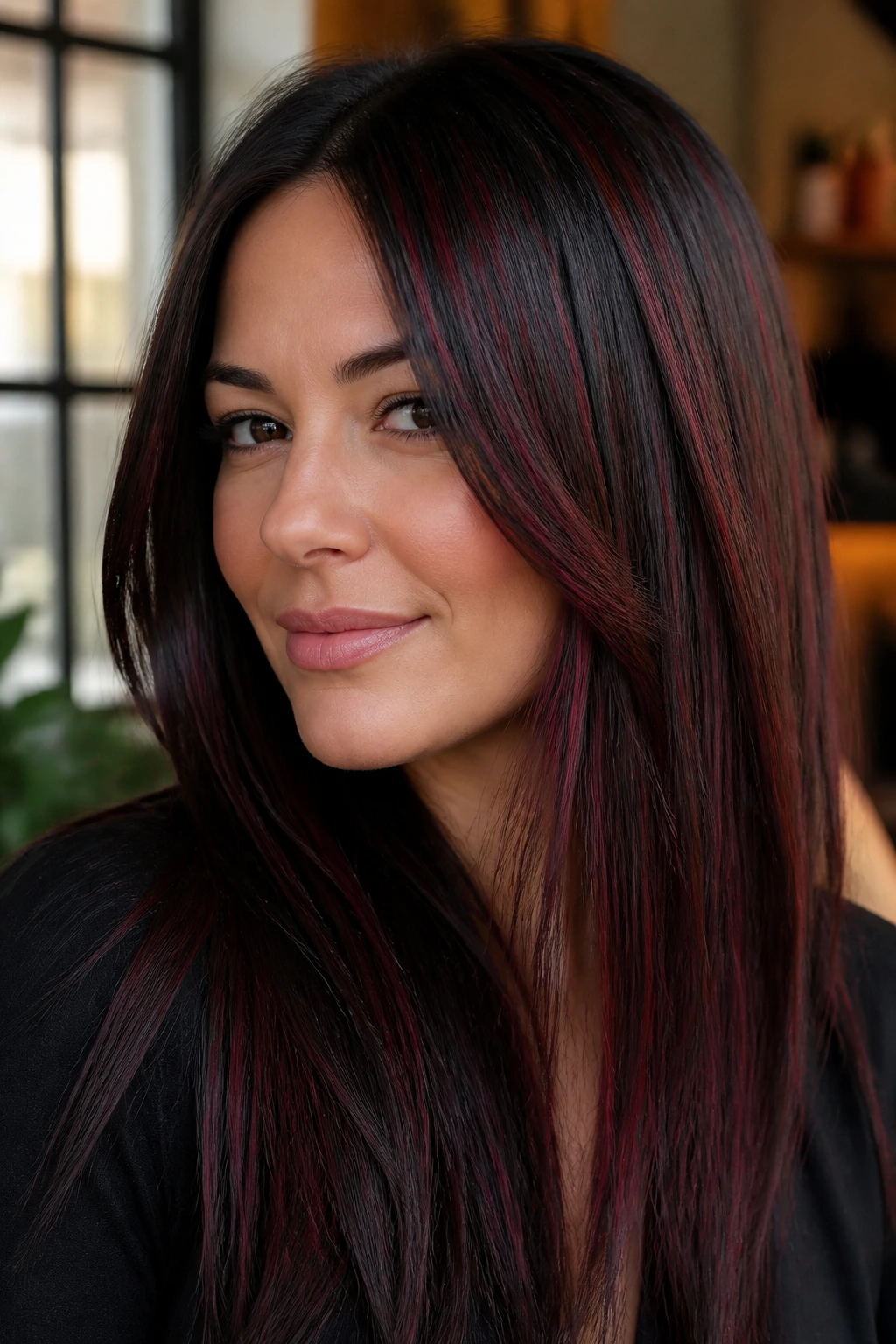
Sangria streaks are made for dark brunette hair that needs color with depth. Bright red can look sharp against a very dark base, but sangria brings enough berry and wine tone to sit naturally beside espresso or chocolate brown.
The effect is richer than flashy. Under indoor light, the red looks almost hidden; outside, it flashes more clearly. That makes it a nice option for someone who wants the color to feel layered rather than obvious from across the room.
Sangria also pairs well with sleek styles. Straight hair lets the streaks show in clean lines, while soft curls turn them into scattered flashes. If you like a dark, glossy look with a little bite, this shade has range.
16. Auburn Money Piece with Curtain Bangs
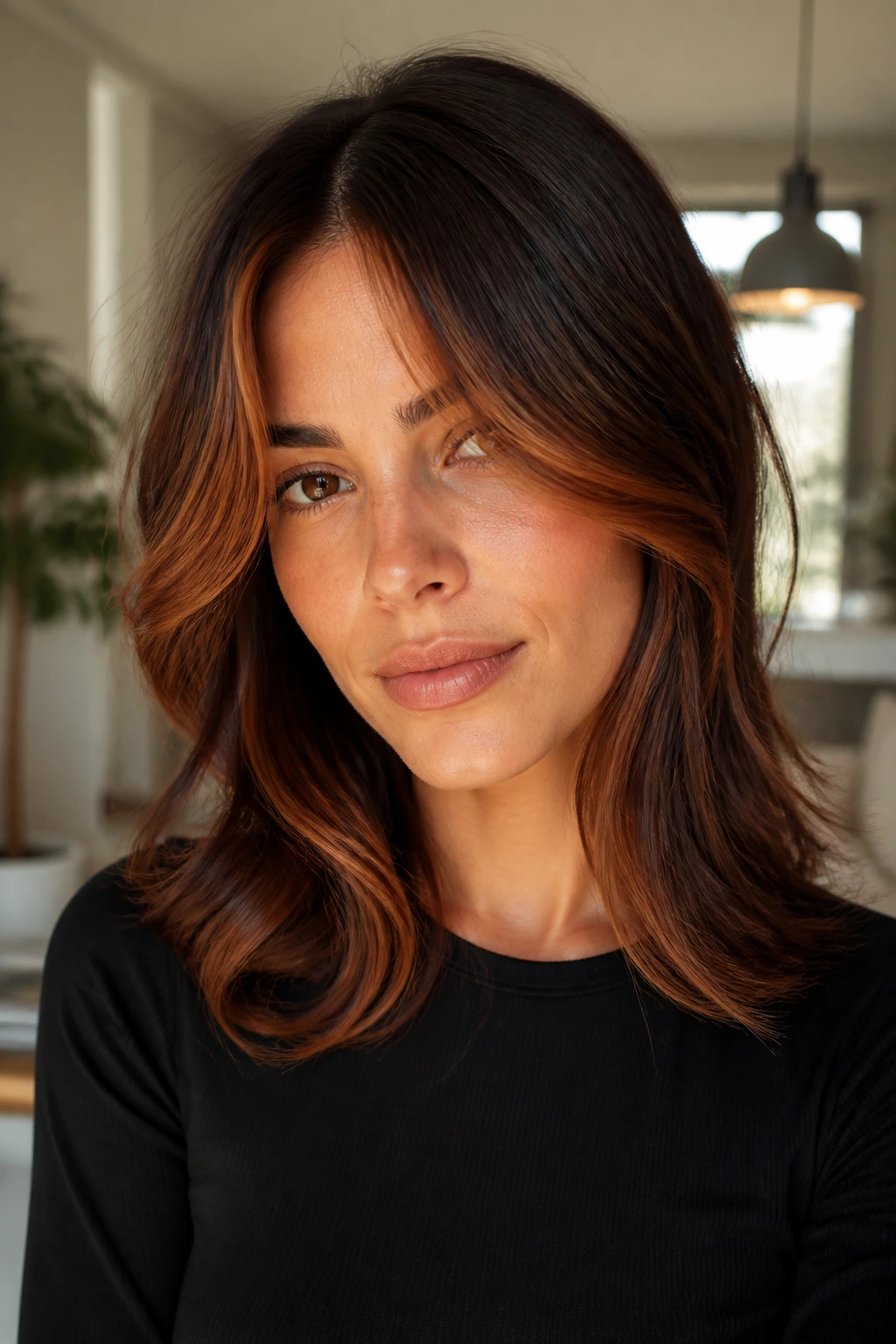
Curtain bangs and auburn pieces are a smart match because the fringe gives the color extra movement. As the bangs part away from the center, the red shows in a soft frame around the eyes and cheekbones.
This is one of those styles that can look expensive without trying too hard. The auburn stays warm enough to flatter brown hair, but the placement keeps it from swallowing the cut. Even a simple blow-dry picks up the color well.
Ask for the bangs to stay a touch lighter than the rest of the red pieces. That tiny shift helps the frame stand out in a really flattering way. It also keeps the front from looking blocky, which is the last thing anyone wants.
17. Fire-Red Dip Ends
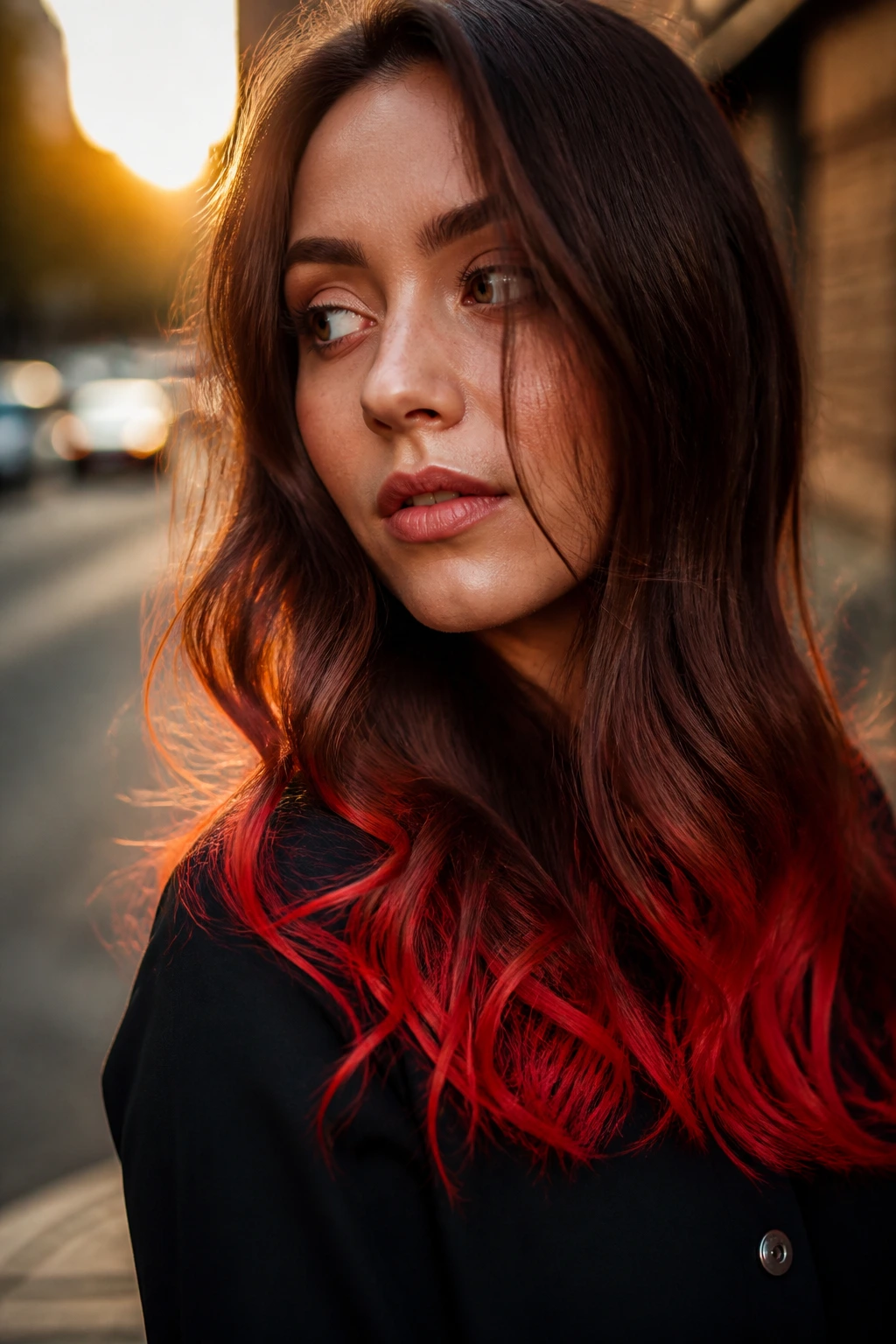
Fire-red dip ends are the bold choice. Brown hair stays natural at the root and through the mids, then turns full red toward the bottom. The contrast is dramatic, clean, and easy to read.
It works best on medium to long hair because the length gives the color a real runway. On short cuts, dip ends can look abrupt. On long layers, they feel intentional, especially when the ends curl under or flick out.
One warning: the ends will always take the most wear. Friction, heat, and dryness show up fast on bright red tips, so this look needs trims and a little care. If you love a crisp edge, though, it delivers.
18. Chestnut-and-Red Dimension
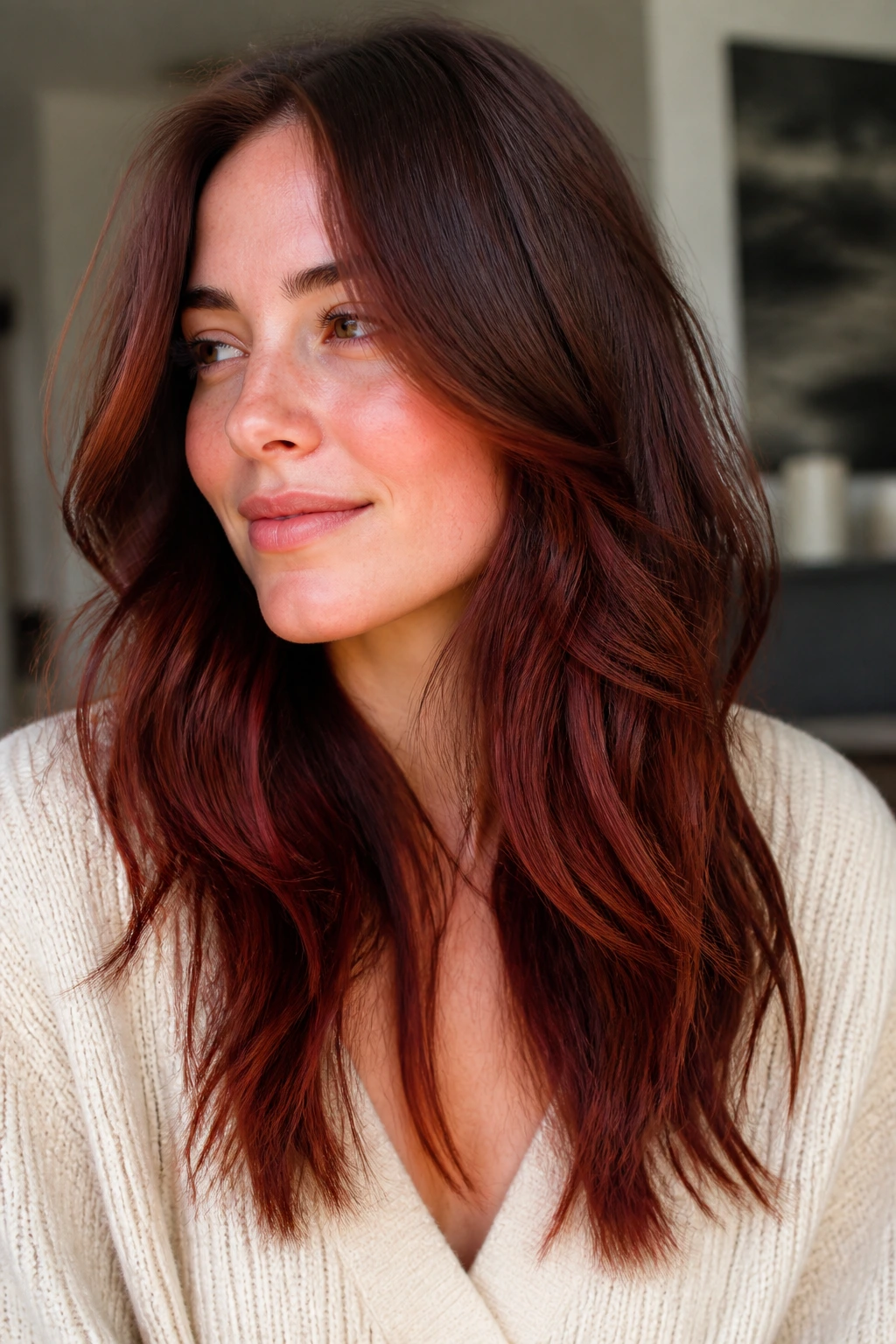
Chestnut with red ribbons is the quiet version of red highlights for brown hair. It does not try to fool anyone into thinking the color is just shine, but it also does not shout for attention. That in-between quality is the appeal.
The chestnut base keeps the style grounded, while the red ribbons add warmth through the midlengths and ends. On medium brown hair, that can make the whole head look thicker because the eye keeps following the color changes. Nice illusion, simple setup.
If you want a style that works with natural texture, this is a strong one. Straight hair gets clean lines. Waves get soft movement. Curly hair gets depth. It’s one of the most forgiving red directions, and that counts for a lot.
19. Paprika Face Frame
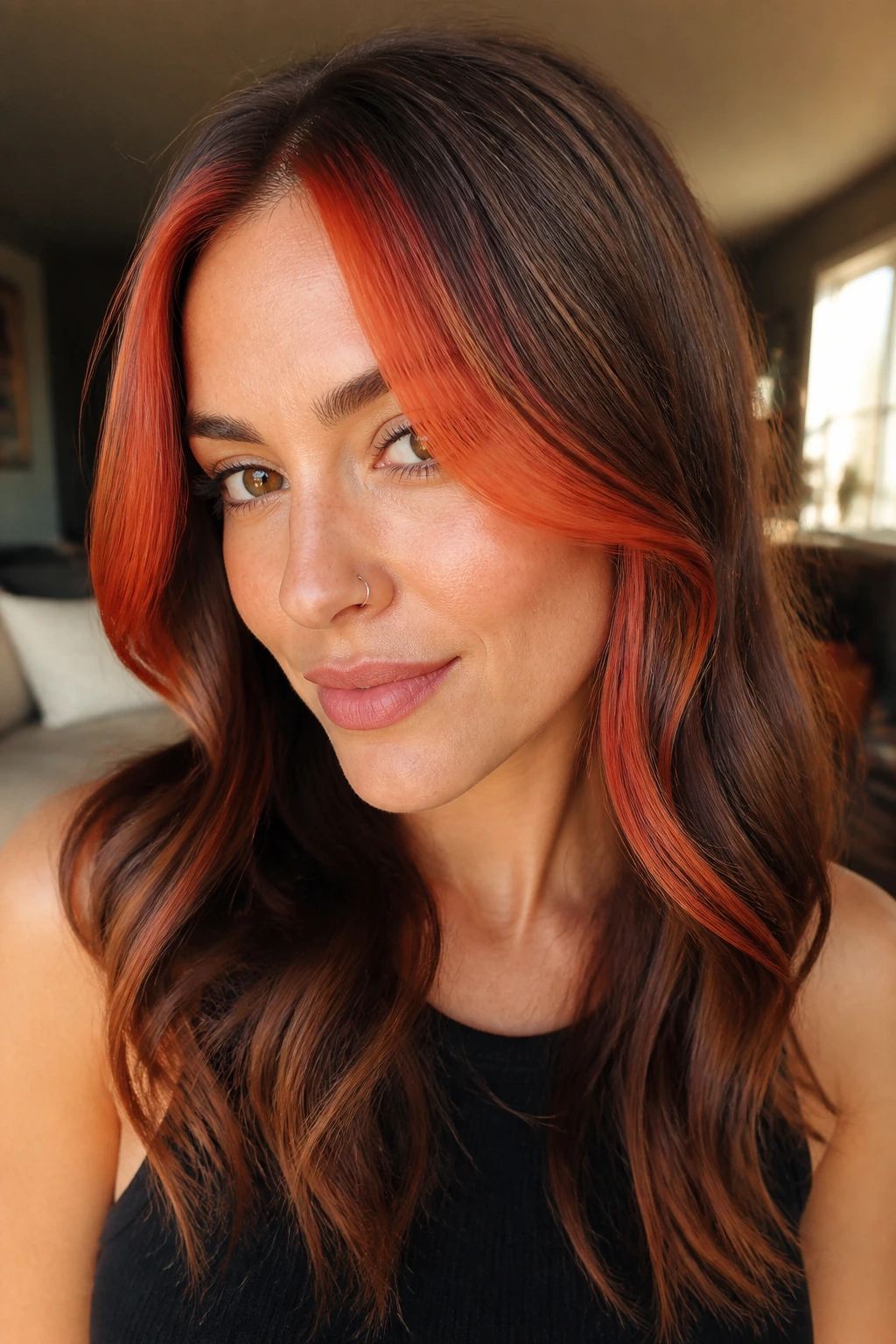
Paprika is a spicy red-orange that wakes up brown hair fast. Around the face, it gives the whole style a brighter, fresher read, especially if the rest of the hair stays in the brown-to-copper family.
How to keep it from looking stripy
- Keep the front pieces slightly softer at the root.
- Blend the color into the side layers instead of stopping at one line.
- Use fewer pieces if your hair is very fine.
Paprika works best on warm brunettes because the undertones already talk to each other. If your brown hair leans ash or cool, the color can still work, but it may need a softer finish so it does not feel too orange. The payoff is lively, and yes, a little fiery.
20. Mulled Wine Ribbons
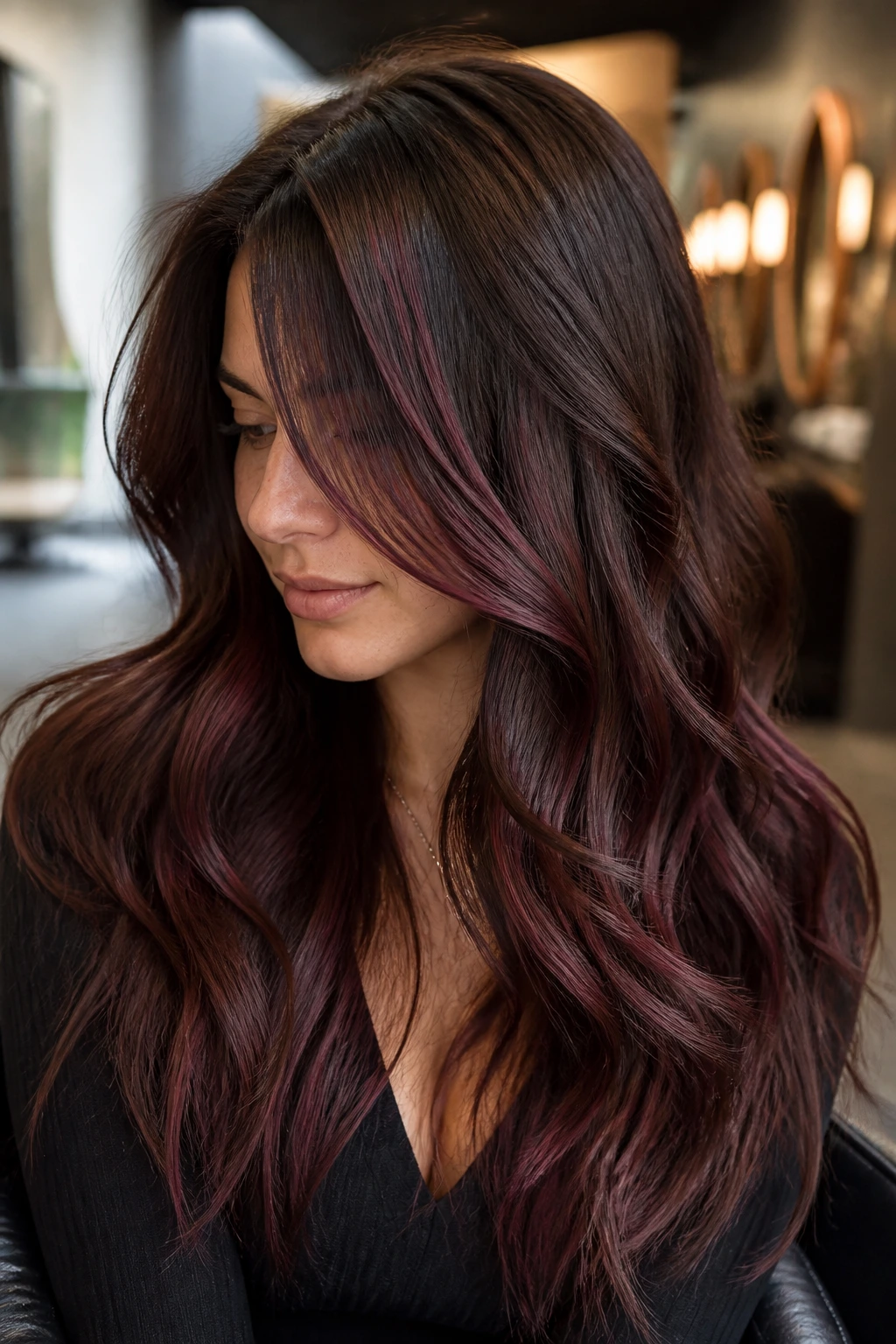
Mulled wine ribbons are deep, spiced, and a bit mysterious. They sit between burgundy and brown, which means they do not scream for attention, but they absolutely change how the hair reads in motion.
This is the kind of red that suits thick hair well. Thick brown hair can swallow lighter highlights, but a deeper red stays visible through the density. It also plays nicely with long layers, where the pieces move enough to show flashes of color.
A good mulled wine ribbon is never too wide. You want enough brown between the pieces to keep the style dimensional. Too much red, and you lose that rich, layered feel. Too little, and the shade just disappears.
21. Sunset Red Balayage
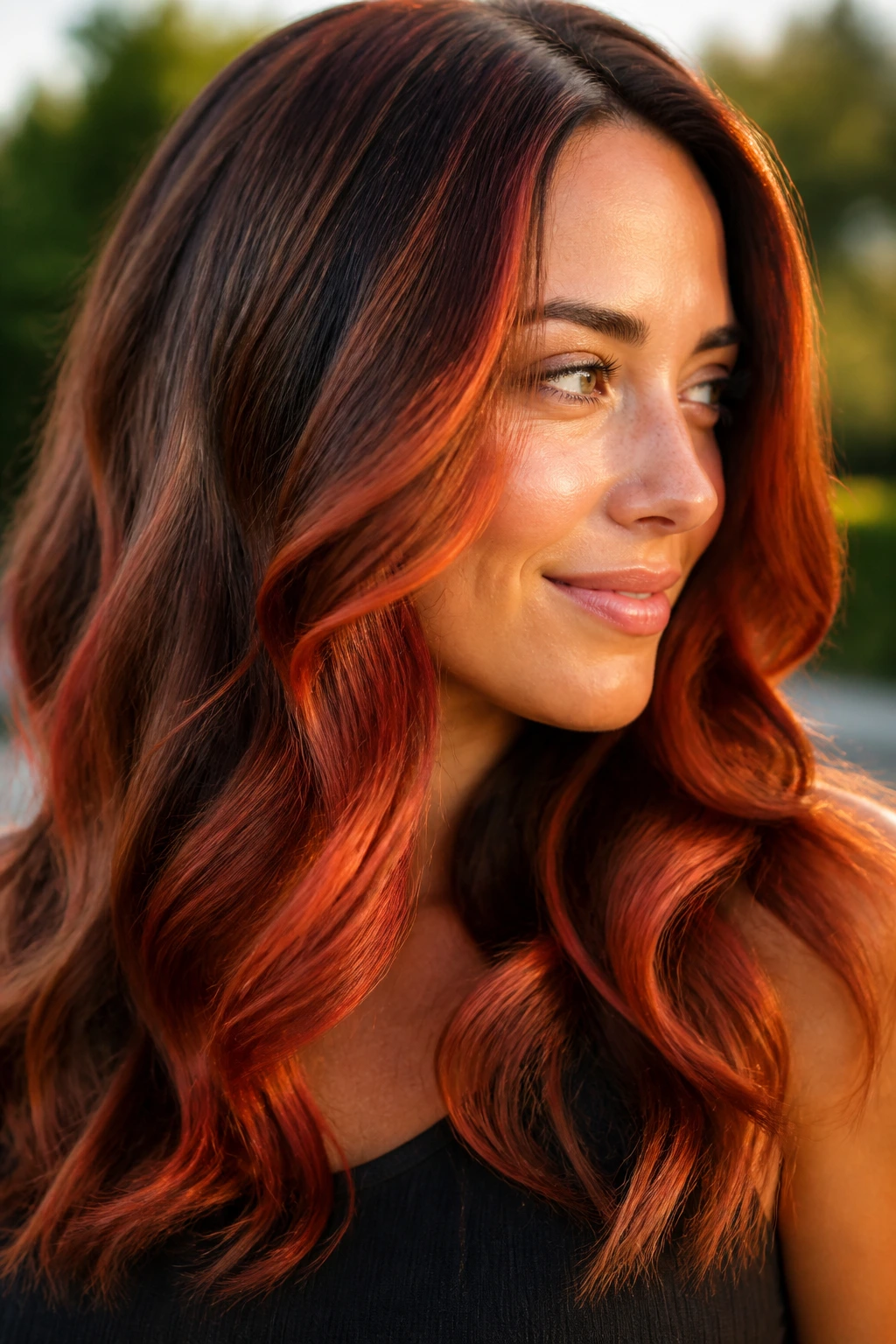
Sunset red balayage blends copper, red, and a touch of orange in one sweep, which makes it one of the most dimensional options for brown hair. It looks warm without settling into one flat shade.
The color works especially well when the base has been lifted to a medium brown or light brown first. That little bit of lift lets the reds show clearly while keeping the overall look soft. On darker bases, the same palette can lean more berry-copper than true sunset, which is still pretty good, honestly.
This is a style for hair that already has movement. Waves, bends, soft curls — they all help the mixed tones show. On pin-straight hair, the effect is cleaner and more graphic. Either way, the color changes with the angle, and that is the fun of it.
22. Velvet Burgundy Ribbons
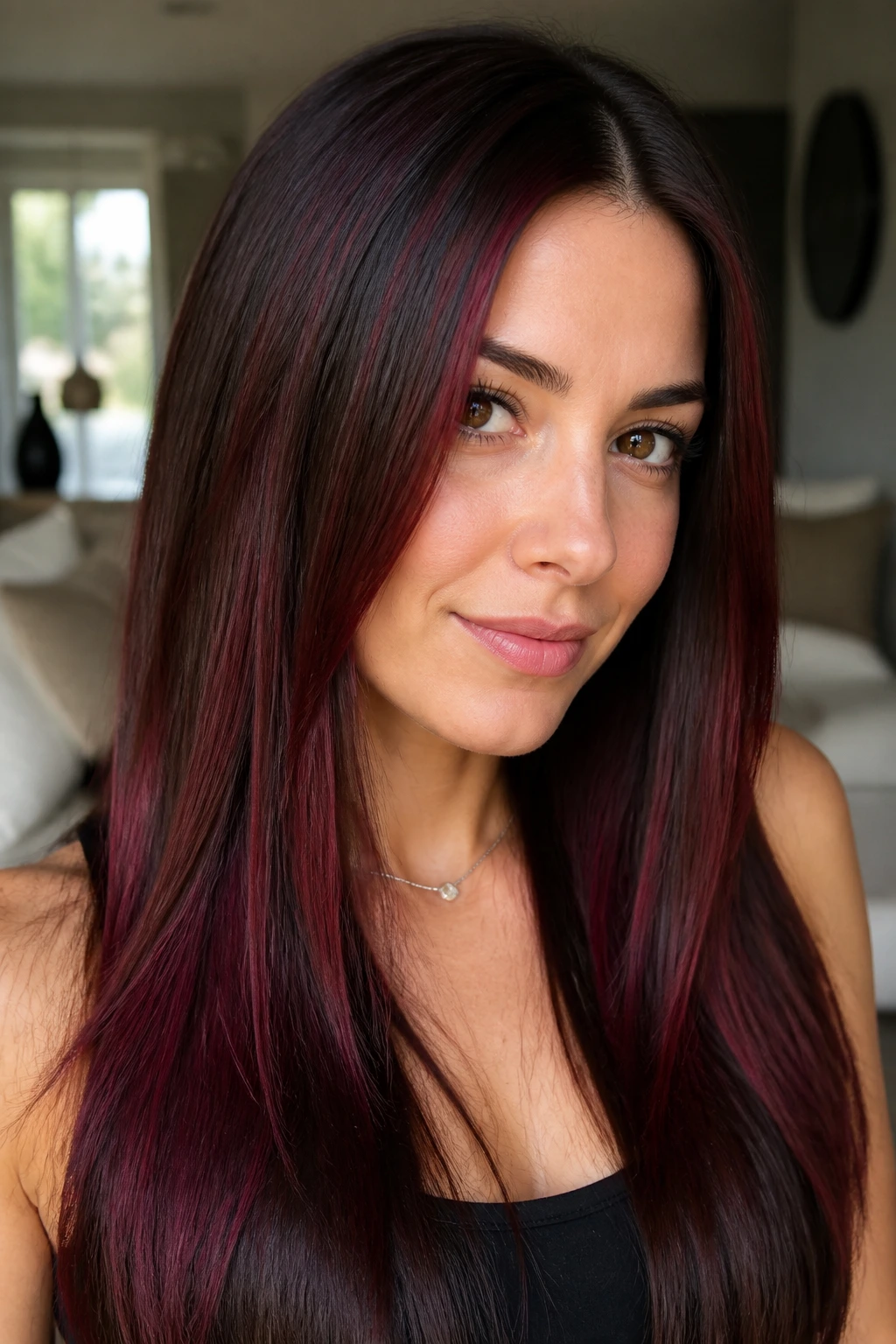
Velvet burgundy has a deep, plush look that sits beautifully on brown hair. The color is rich enough to show, but not so bright that it fights the base. Under soft light, it feels almost matte; under direct light, it shines with a dark red glow.
That shift is why it works so well on straight, glossy hair. The smooth surface lets the color line stay crisp. On brown hair with a blunt cut, the effect can be especially good because the red highlights outline the shape of the haircut instead of just sitting in it.
Velvet burgundy is also forgiving if your hair tends to look brassy. The deeper tone helps mute unwanted warmth while still giving you the red payoff. A rare useful compromise.
23. Ruby Slice Highlights
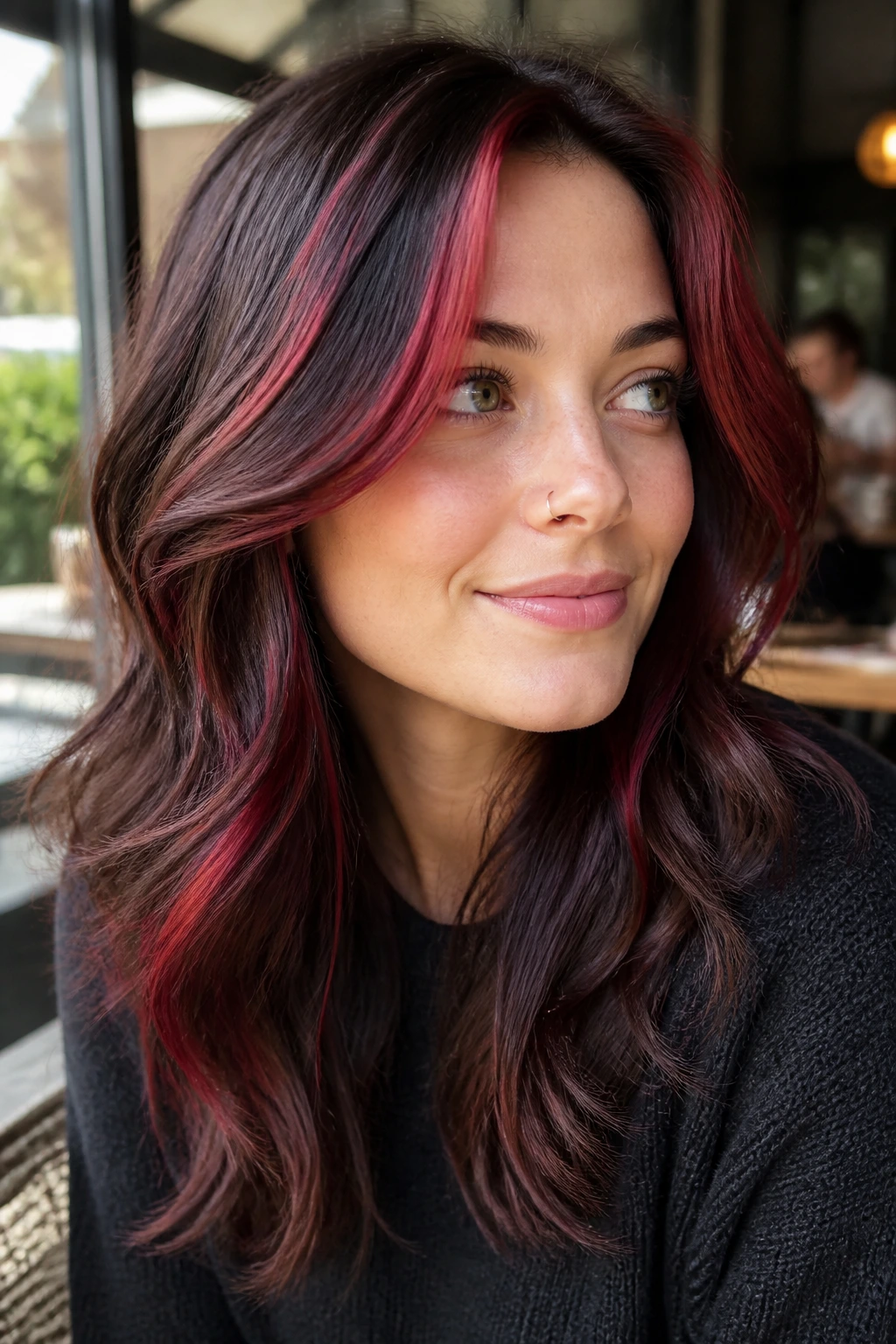
Ruby slices are for people who want a cleaner, brighter red on brown hair. The word “slice” matters here because the pieces are more deliberate than whisper-thin babylights. They show up clearly and give the style a sharper edge.
Compared with cherry, ruby looks a touch cooler and more jewel-like. That makes it stand out against chocolate and espresso brown without turning orange. It’s a good move if you like crisp color and you do not want the red to blend too far into the base.
This style works best when the slices are placed where the hair naturally falls apart — around the part, near the temples, and through the top layers. If the pieces are placed too evenly, the result can look mechanical. Uneven spacing looks more natural and far better.
24. Spiced Cranberry Halos
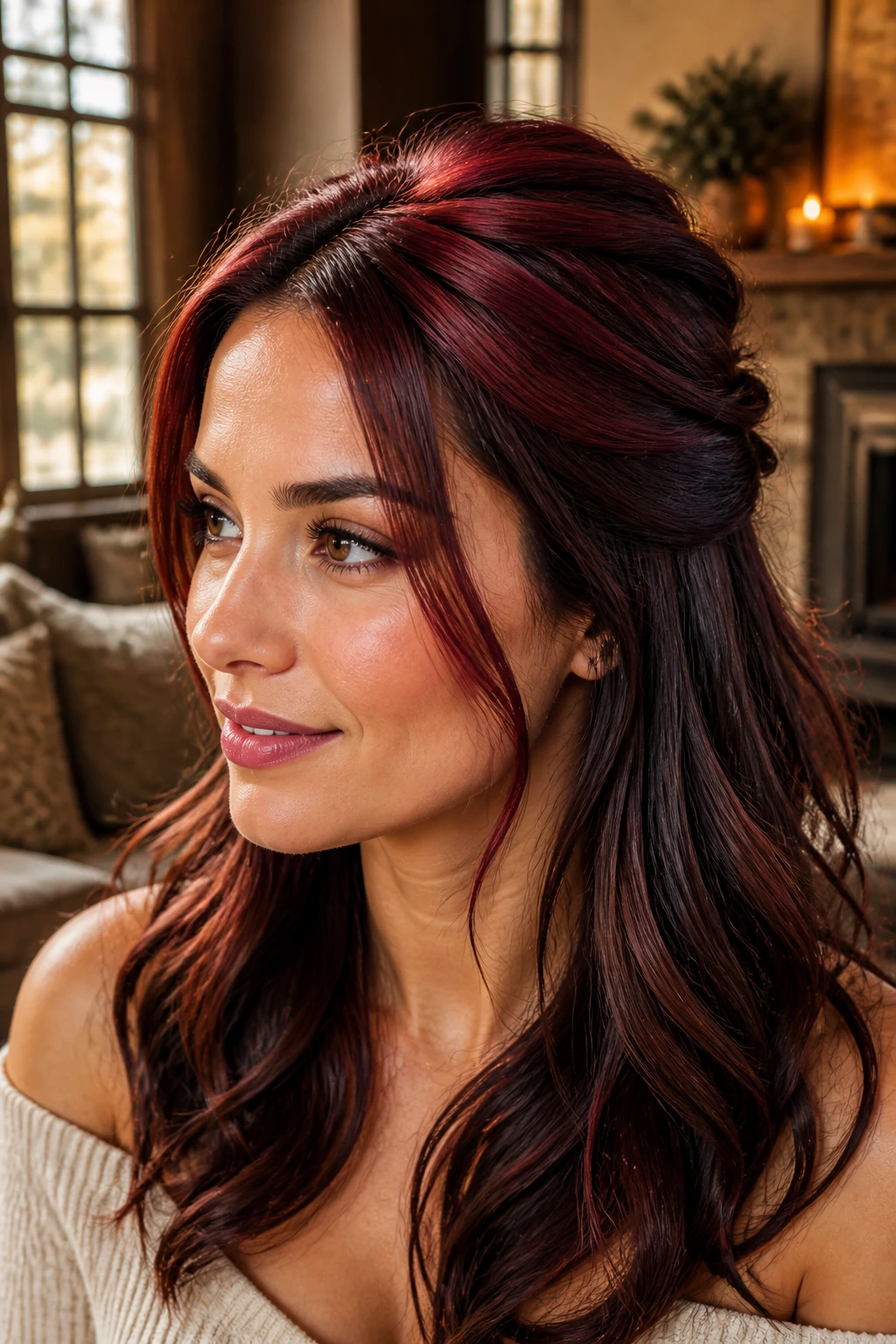
A cranberry halo circles the upper part of the head, which gives brown hair a lifted, face-brightening effect. It’s a smart choice for updos, ponytails, and half-up styles because the color becomes visible around the crown and temples.
The halo approach is different from random all-over highlights. You are creating a ring of brightness that shows when the hair moves or is pinned up. On brown hair, that can make a basic style feel much more finished.
Best for
- Medium-length hair that gets pulled back often.
- People who like color near the face.
- Haircuts with soft layers around the crown.
Spiced cranberry sits nicely between red and copper, so it does not feel too cool or too orange. That flexibility is part of why it works.
25. Garnet Peekaboo Highlights
Garnet peekaboo color hides under the top layers and flashes only when the hair shifts. It’s a deeper, richer red than cherry, which makes it a smart fit for brown hair that needs dimension more than brightness.
The hidden placement is useful if you want color that feels personal. Braids show it. Ponytails show it. Wind shows it. A plain down style keeps it mostly secret. That contrast gives the hair a little drama without making the whole head look red all the time.
Garnet is especially flattering on darker brunettes because the base and highlight both stay in the same dark family. The result is smooth and moody, not disconnected. That matters more than people realize.
26. Copper-Lava Highlights on Straight Hair
Straight hair can be unforgiving. Every line shows. That is exactly why copper-lava highlights work so well here. The stronger red-copper tone cuts through the flatness and gives the style movement even when the hair is not bent or waved.
Unlike babylights, which can disappear on poker-straight hair, copper-lava pieces need a little more width. Think ribbons rather than thread. The extra space lets the color stay visible from root to tip and keeps the look from getting lost.
This shade is a good choice if your brown hair tends to look one-note after a blowout. The copper brightness catches the eye immediately, and the lava depth keeps it from looking too bright. Sharp, but still wearable.
27. Tinted Red Gloss on Brown Ends
Sometimes the best red highlight is barely a highlight at all. A tinted gloss on the brown ends gives the hair a red cast without carving out obvious streaks, which is perfect if you want softness and shine first.
This works especially well on porous ends that grab color fast. A gloss can enrich the ends, smooth the tone, and make the whole length look healthier. It is not as dramatic as foils, but it has a lovely finish. Clean. Polished. Easy to live with.
If you already have balayage or faded red pieces, a gloss can refresh the tone without another full lift. That makes it a smart maintenance move between bigger color appointments.
28. Flame-Kissed Layers
Flame-kissed layers are what I’d call a red highlight style for anyone who likes movement above all else. The red sits on the bends, the layers, and the ends where the hair flicks around, so the color seems to appear and disappear as you move.
This look is strongest on shaggy cuts, butterfly layers, and long hair with plenty of texture. The different lengths catch light in different ways, which helps the red look alive instead of painted on. Straight one-length cuts can wear it, too, but the effect is less playful.
A flame-kissed finish can lean copper, cherry, or auburn depending on how bright you want it. That flexibility is what makes it useful. You are not locked into one shade. You are building a shape around the color.
29. Deep Cherry Contour Highlights
Cherry contour highlights shape the face the way makeup contour does: by placing color where you want the eye to go. On brown hair, deep cherry pieces around the cheekbones and jawline can make a haircut look more structured.
This is not about random brightness. It is about placement. A few well-situated pieces can widen the face slightly, sharpen a layered cut, or bring balance to long hair that feels heavy at the sides. The effect is subtle enough to wear every day, but it still changes the silhouette.
Where to place them
- Around the temples for lift.
- Beside the cheekbones for softness.
- Through the front lengths for a framing effect.
Deep cherry is a good compromise for someone who wants red highlights but does not want the color to dominate the whole style. It gives shape first and color second.
30. Soft Auburn Blend for First-Timers
Soft auburn is the easiest way to test red highlights on brown hair without leaping into a high-contrast look. The tone stays close enough to brown that it grows out smoothly, but the red warmth still shows when the light hits it.
If I had to pick one starting point for a nervous color client, this would be near the top. It works on light brown, medium brown, and even darker brunette bases, as long as the placement stays soft and the pieces are not too chunky. The color should look like an upgrade, not a costume change.
Ask for a few fine foils through the face frame and mids, plus a warm auburn glaze to tie everything together. That combination gives you the red effect without the maintenance headache of brighter shades. And if you end up liking it more than you expected, well, that happens a lot.
