



A round face does not need to be hidden.
It needs direction. The right caramel pieces can pull the eye upward, lengthen the cheeks, and keep the face from looking wider than it is. Brown caramel highlights for round faces work best when the lighter pieces do a little sculpting instead of sitting in one blunt band across the widest part of the face.
That part gets missed a lot. People see caramel and think warmth first, shape second. But placement matters more than the shade alone. A level 7 or 8 caramel ribbon placed near the cheekbone can sharpen a soft face in a way that a flat all-over brown never will, while a deeper root keeps the style grounded and grown-up rather than stripey.
And the nicest thing? You do not need loud contrast to get the effect. A brown base with soft caramel, honey-brown, toffee, chestnut, or beige-caramel pieces can do the job if the colorist keeps the light where it adds length and leaves a little shadow where width tends to sit. That balance is the whole game.
1. Soft Brown Caramel Highlights for Round Faces
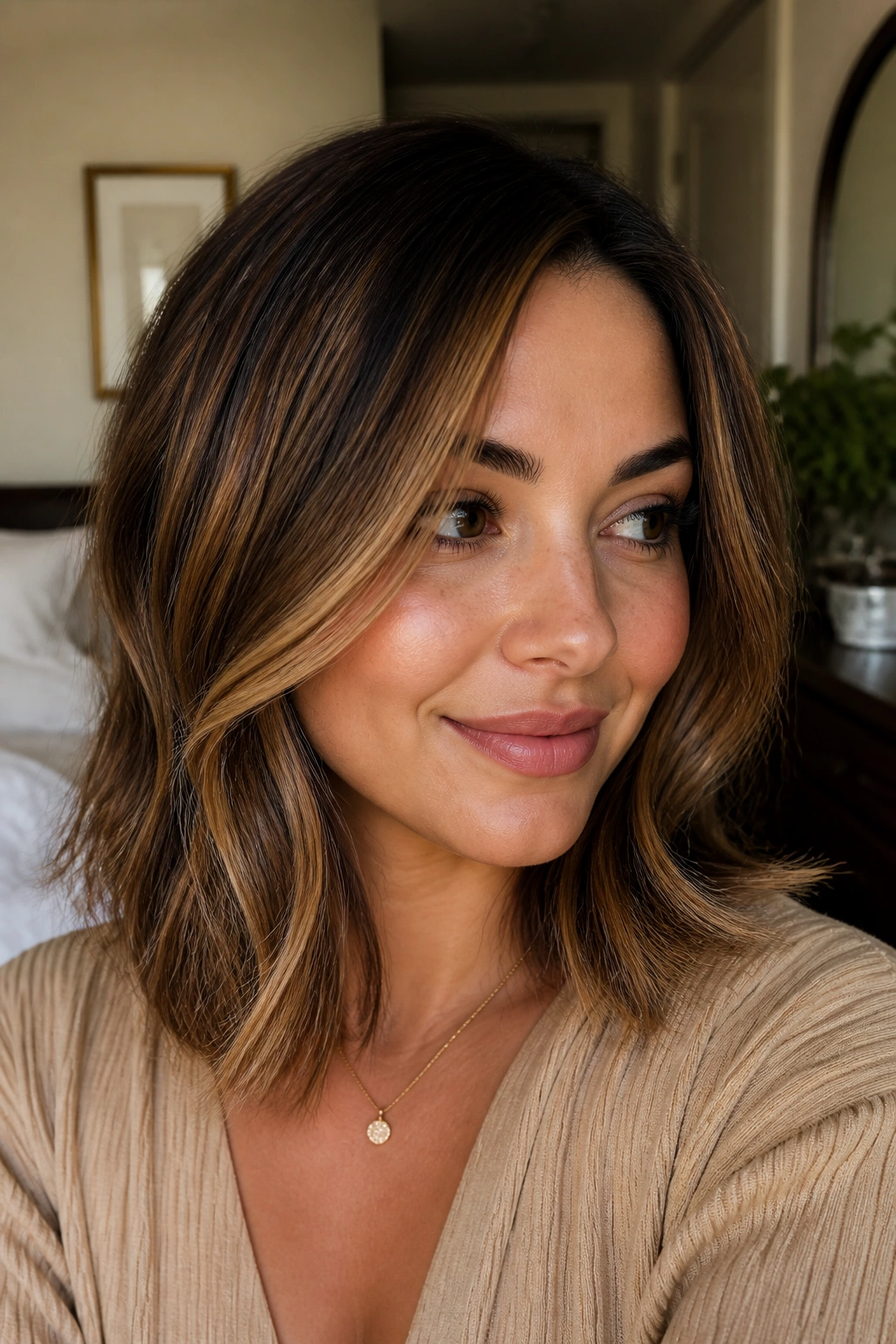
Soft face-framing pieces are the safest place to start, and I mean that in the best way. They give you brightness without turning the front of the haircut into a block of light. On a round face, that little bit of lift near the cheekbone and temple can make the whole cut feel longer.
Why This Placement Works
The first bright piece should usually start a touch below the cheekbone, not directly across it. That keeps the eye moving downward instead of stopping at the widest part of the face. If the lightest caramel sits too high and too wide, the effect can feel broad.
Ask for thin ribbons, not thick stripes. A ribbon about the width of a pencil gives you softness and movement, especially if your hair is medium to dark brown. The goal is a glow that looks like sunlight, not a marker line.
- Best for shoulder-length cuts and long layers
- Looks strongest when the root stays 1 to 2 shades deeper
- Works well with a side part or a deep off-center part
- Keep the front pieces lighter than the back for shape
Pro tip: Ask your colorist to feather the color into the lower half of the front section. That little blur makes the highlight look expensive without looking loud.
2. Shadow-Root Caramel Balayage on a Mocha Base
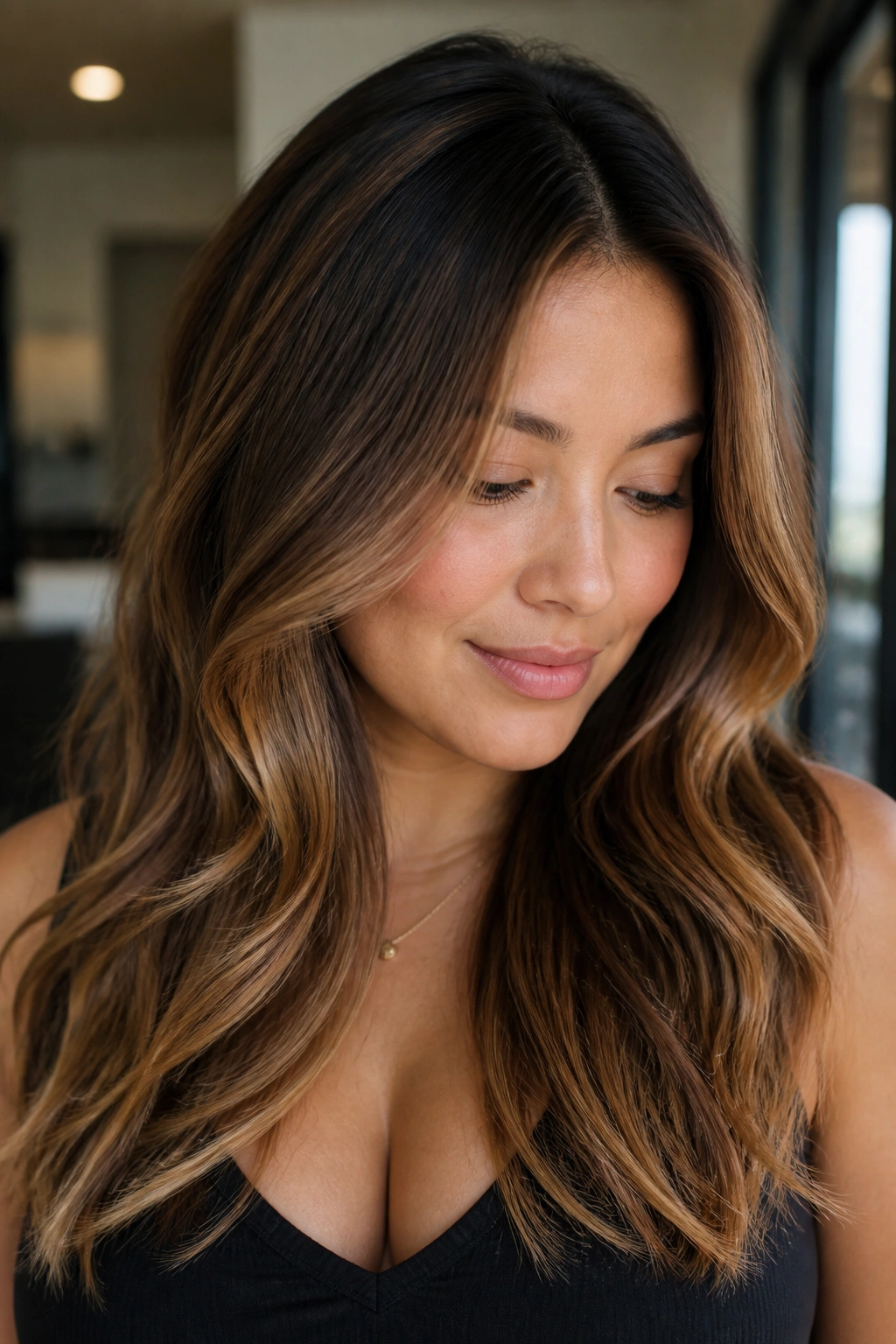
A shadow root is one of the smartest tricks for a round face because it creates vertical movement right away. The root stays deeper, the caramel floats lower, and the eye travels down the length of the hair instead of cutting straight across the cheeks.
This look is especially good if you hate hard grow-out lines. The darker root gives the style some stay-put structure, while the caramel balayage breaks up the width around the middle of the face. It’s the kind of color that looks better after a few washes, which is rare and honestly lovely.
What makes it different from basic highlights is the softness of the blend. You want the caramel to melt into the mocha base over a few inches, not sit on top of it. That blur is what keeps the face from feeling boxed in.
A good version of this look usually has the brightest pieces around the lower cheek and collarbone area. That placement draws the face downward. Very useful. Very simple. And it works.
3. Chestnut Babylights Woven Through Long Layers
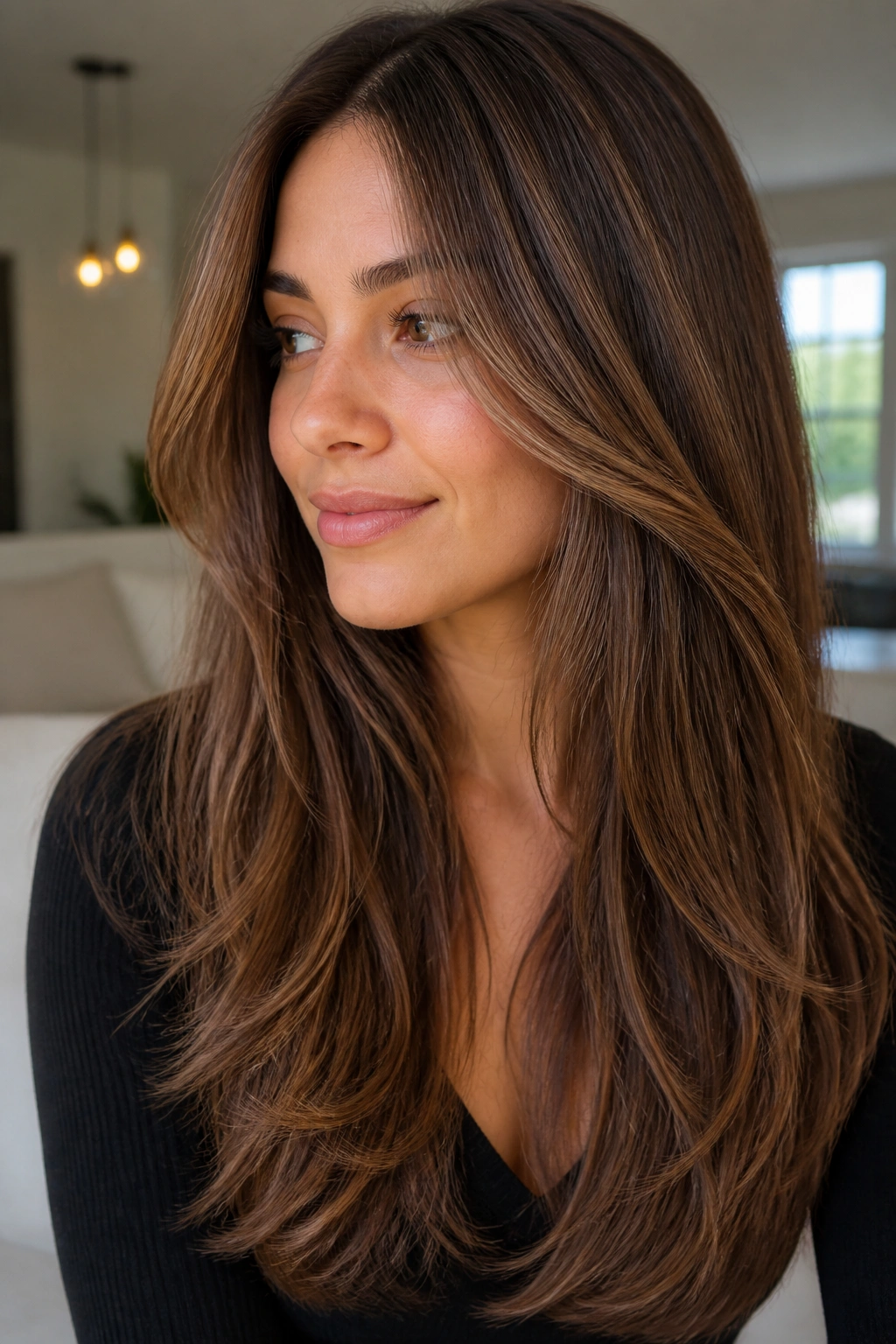
Why do babylights flatter round faces so often? Because they do the job quietly. Tiny woven pieces create texture without obvious stripes, and that matters when you want dimension without extra width.
Babylights are finer than a classic highlight, often almost threadlike. On long layers, they add a soft shimmer from root to tip, and chestnut-caramel is a lovely middle ground if you want warmth but not that orange-gold look some people worry about. The color feels rich, not sugary.
How to Ask for It
Bring up three things at the salon: fine sections, cool-to-neutral caramel, and placement that follows the layers. You want the light to move with the haircut, not sit in one heavy frame around the face.
- Keep the pieces very thin near the temples
- Let a few brighter strands fall below the jawline
- Ask for a gloss that softens brass without flattening warmth
- Skip chunky front blocks if your face is already full through the cheeks
The prettiest part of this look is how little it asks for. It doesn’t shout. It just makes the hair look denser, softer, and a bit longer.
4. Caramel Ribbons on a Deep Brown Lob
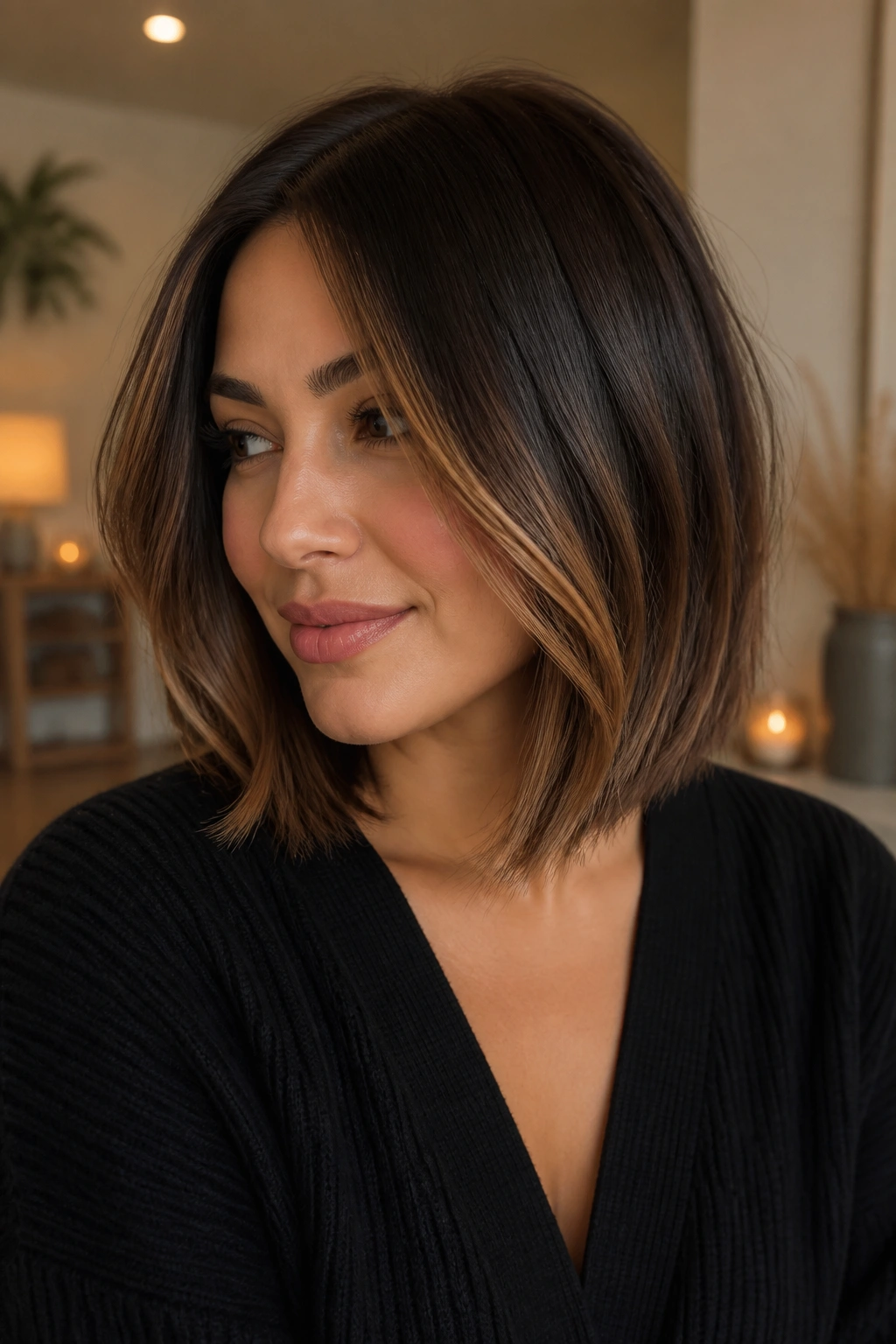
A lob can go flat fast if the color is too even. Caramel ribbons fix that problem in a way that still feels clean and modern, especially on a round face where you want shape without too much bulk around the cheeks.
Picture a deep brown bob grazing the collarbone with a few caramel ribbons angled forward. That angle matters. Straight-across lightness can widen the face, but diagonally placed pieces guide the eye down and out toward the jaw, which is much kinder to a round shape.
The best version of this style keeps the back quieter and lets the front sections do the work. A few brighter strands around the face are enough if the rest of the cut has movement. You do not need a full head of highlight to get the effect.
- Best on blunt lobs with a soft bend
- Works well with a round brush blowout
- Ask for brighter caramel around the front perimeter only
- Leave some deeper brown under the top layer for depth
One thing to avoid: a thick band of caramel right at cheek level. It sounds harmless. It is not.
5. Curly Brown-Caramel Halo Highlights
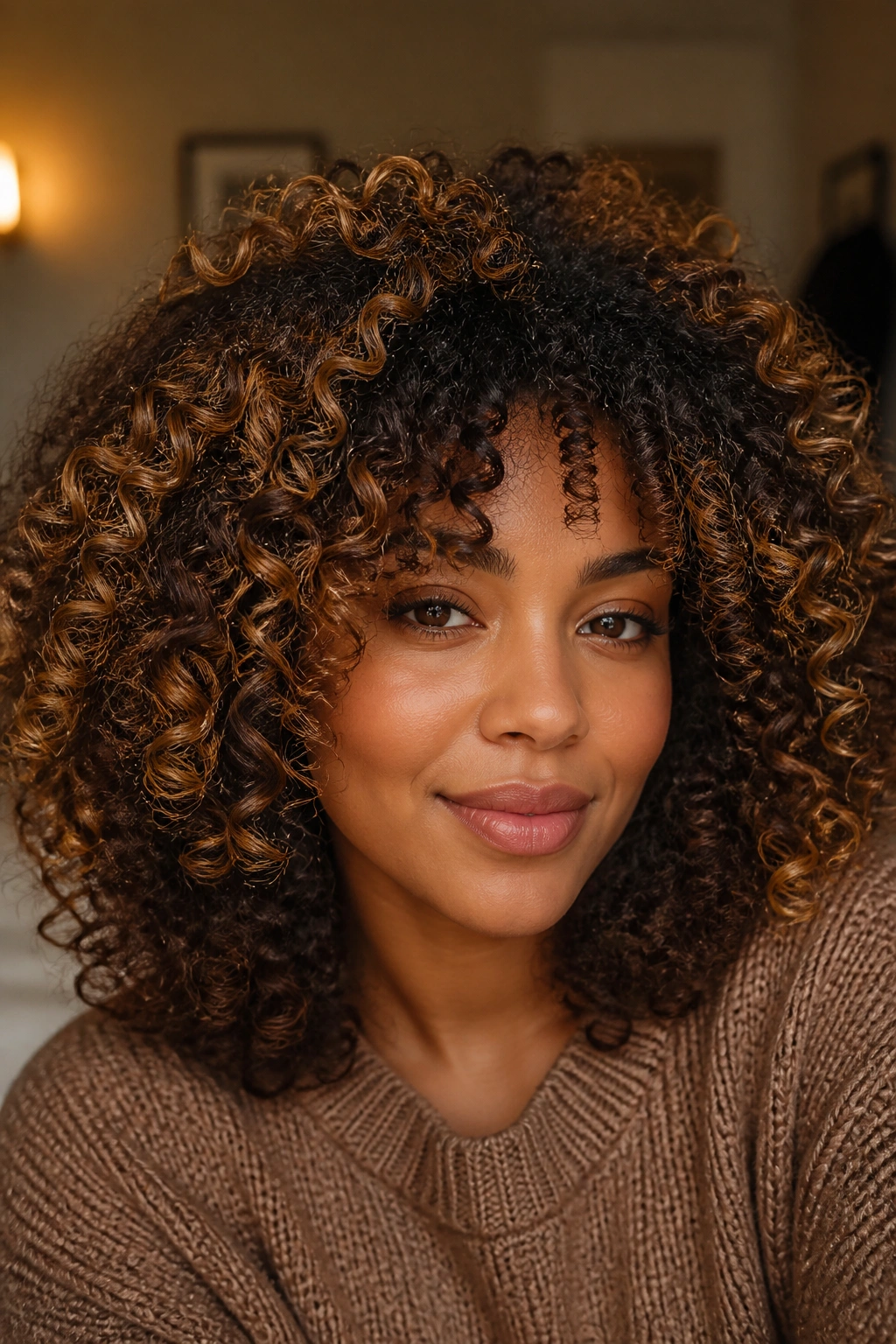
Curly hair changes the rules a little, and that is a good thing. Curls already create natural lift, so brown caramel highlights can follow the spiral instead of fighting it. On a round face, a halo of lighter pieces above and around the outer curls helps lengthen the overall silhouette.
The trick is spacing. Too much light at the fullest part of the curl pattern can puff things out. Better to concentrate the brightest strands on the top third of the head and let the lower curls keep some depth. That way the hair still looks full, but the face does not feel wider.
Curly clients often look best with warm caramel that sits between honey and toffee. It shows up in the curl pattern without turning harsh. And because curls catch light in little pockets, even one or two lighter spirals near the face can make a big difference.
I like this look most when the stylist leaves a few deeper brown curls between the lighter ones. The contrast gives the shape room to breathe. Flat color on curls is a waste. Really.
6. Side-Parted Toffee Pieces That Lengthen the Face
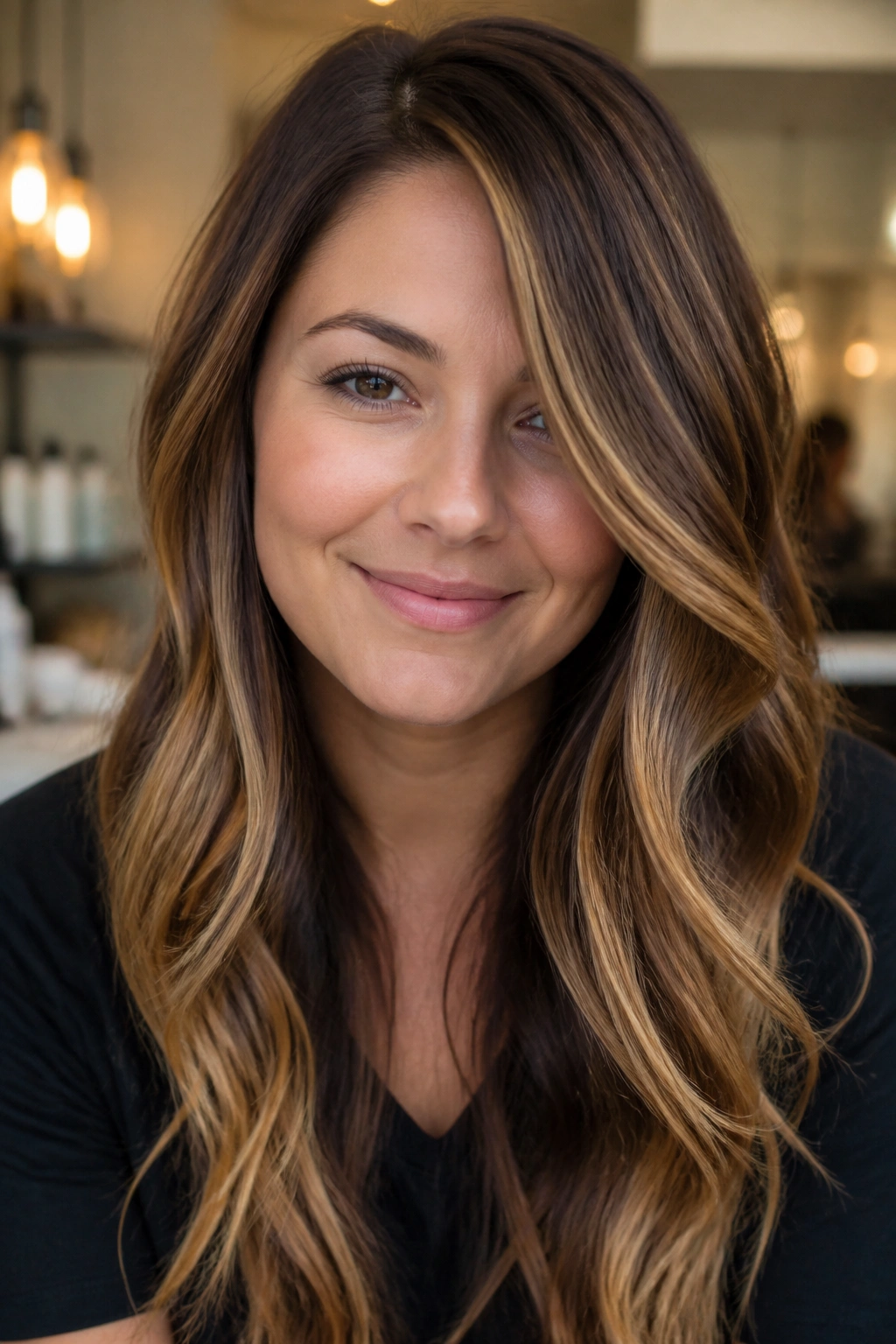
A side part changes the entire read of a haircut. It breaks the symmetry of a round face and lets the caramel pieces fall in a more vertical line, which is exactly what you want if you are trying to add length.
What Makes It Different
Unlike center-heavy placement, a side part lets one side carry a little more light while the other side stays deeper. That asymmetry narrows the face visually. Toffee is a smart choice here because it is warm enough to feel soft, but not so golden that it swells around the cheeks.
The front piece on the heavier side should be the brightest strand in the whole look. The opposite side can stay softer. That difference gives the haircut a gentle pull, almost like the color is tugging the face into a longer shape.
Who is this best for? Anyone with medium brown hair, a round face, and a habit of wearing hair tucked behind one ear. The tucked side shows the depth. The looser side shows the light. It’s a nice little contrast, and it feels natural.
My take: if your face is round and your part is always dead center, try this before you do anything else. It changes the whole mood of the cut.
7. Cinnamon Caramel on a Shag With Wispy Fringe
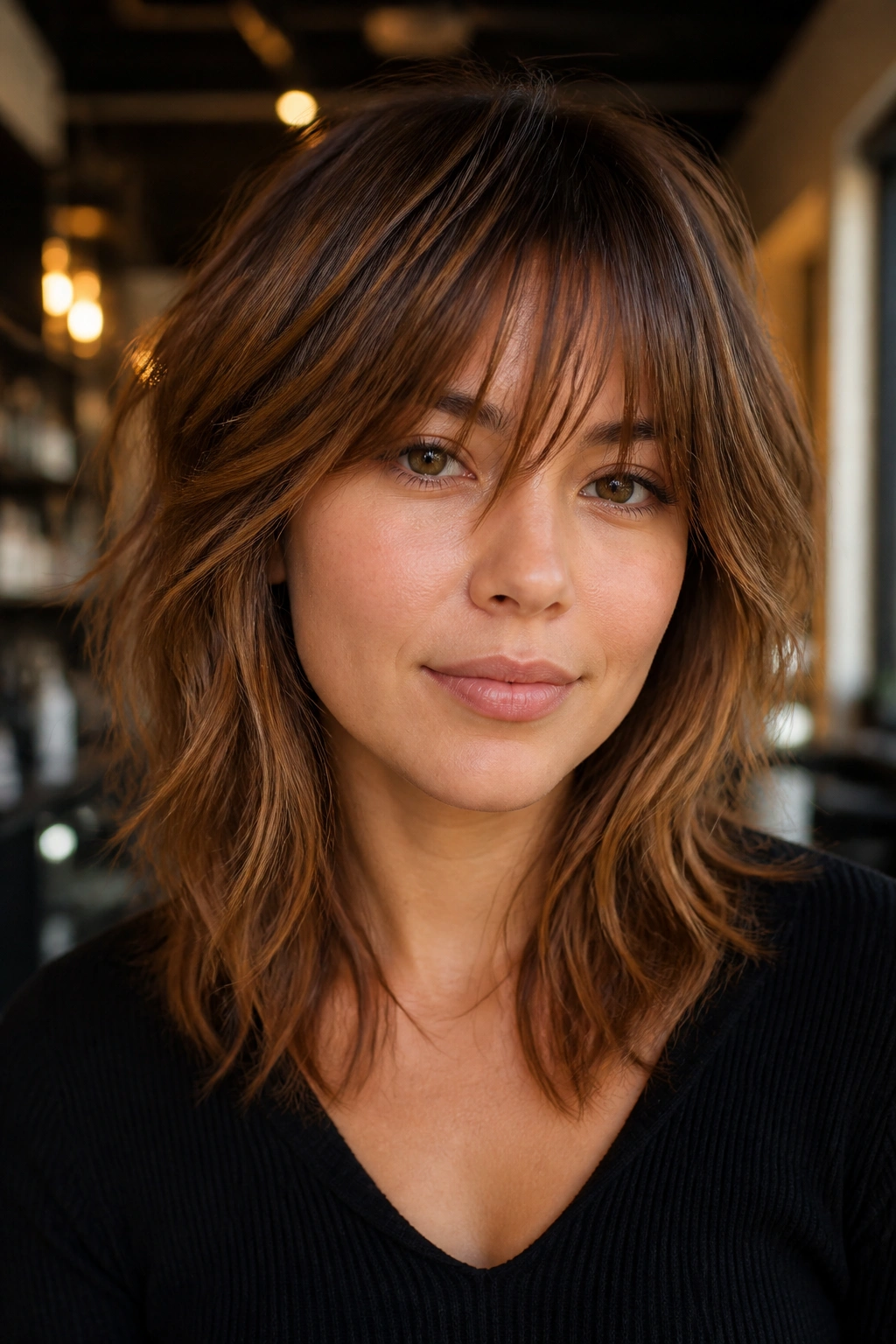
A shag can be a gift for round faces because it builds movement up and down instead of out to the sides. Add cinnamon caramel, and the texture gets even more visible. The color works because it catches every broken layer, every edge, every soft bend.
Wispy fringe changes the equation too. A heavy straight bang can make a round face feel shorter, while a feathered fringe lets the forehead show through a little. That space matters. Cinnamon-caramel pieces can live in the fringe and the crown without creating a hard line.
This is one of those styles where the finish matters as much as the formula. If the hair is rough-dried and bent with a medium barrel iron, the highlights show in little flashes, not as one flat sheet. That keeps the cut airy.
A shag with caramel can look too busy if every layer is equally bright. Keep the crown softer and let the ends do more of the talking. That gives the face room. It also keeps the haircut from turning into a triangle, which nobody wants.
8. Peekaboo Caramel Lowlights Under the Top Layer
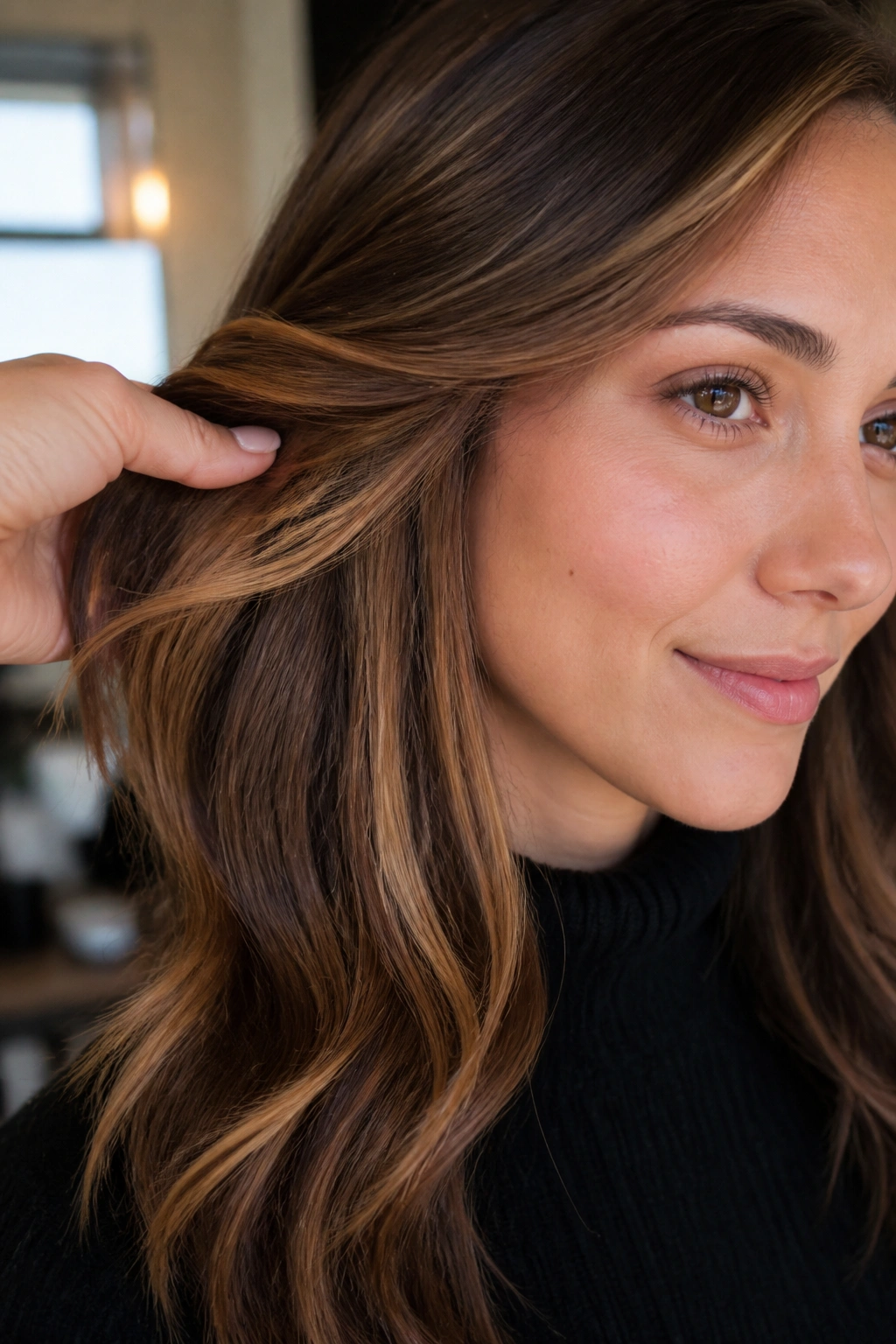
Can lowlights help a round face? Absolutely. Sometimes the smartest move is not adding brightness, but putting depth back in the right places. Peekaboo caramel lowlights under the top layer give the surface dimension while keeping the outer shape lean.
This technique works when the top layer is left a touch lighter and the hidden underlayer drops deeper into chocolate or toasted brown. The contrast creates shadow near the nape and under the mids, which stops the style from blooming outward. A round face benefits from that kind of quiet contour.
The best part is movement. When the hair swings, the lower pieces show through in flashes. It feels richer and less predictable than all-over highlights. And if you’re nervous about commitment, peekaboo placement is a softer entry point than a full-head color change.
How to Use It
Ask for lowlights 1 to 2 levels deeper than your base, then keep the caramel highlights sparse on top. That mix gives you dimension without loading brightness around the cheeks.
A little shadow goes a long way here. No need to overdo it.
9. Brown Caramel Highlights for Round Faces With Curtain Bangs
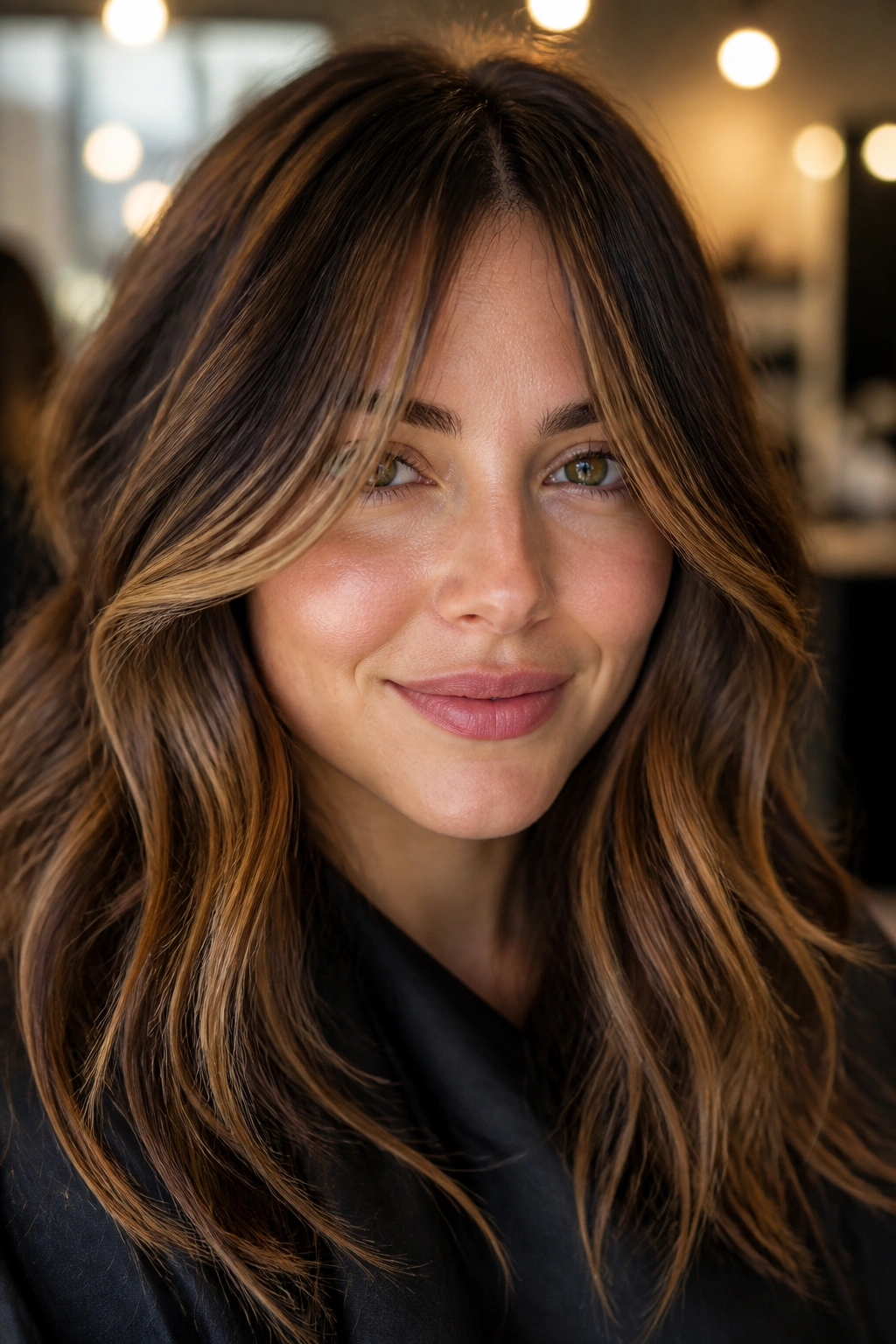
Curtain bangs can be a miracle for fuller faces when they’re cut with the right curve. They open the center of the face, skim the temples, and give the eyes a place to land that is not the widest point of the cheeks.
Brown caramel highlights for round faces with curtain bangs work best when the bangs are slightly lighter through the middle and softer at the edges. You want the blend to feel airy. A chunky bang with a heavy stripe beside it can make the front feel boxy, and boxy is the enemy here.
Think about the first face-framing pieces as an extension of the bangs. They should connect, but not merge into a hard block. The color can be a little brighter where the bangs split, then melt into a deeper brown along the sides. That creates a narrow center line and keeps the eye moving vertically.
Ask for a light hand near the roots and a softer beige-caramel finish at the ends of the fringe. Heavy warmth right at the fringe line tends to spread width. A little restraint is better.
10. Toasted Caramel Ends on a Soft Ombré
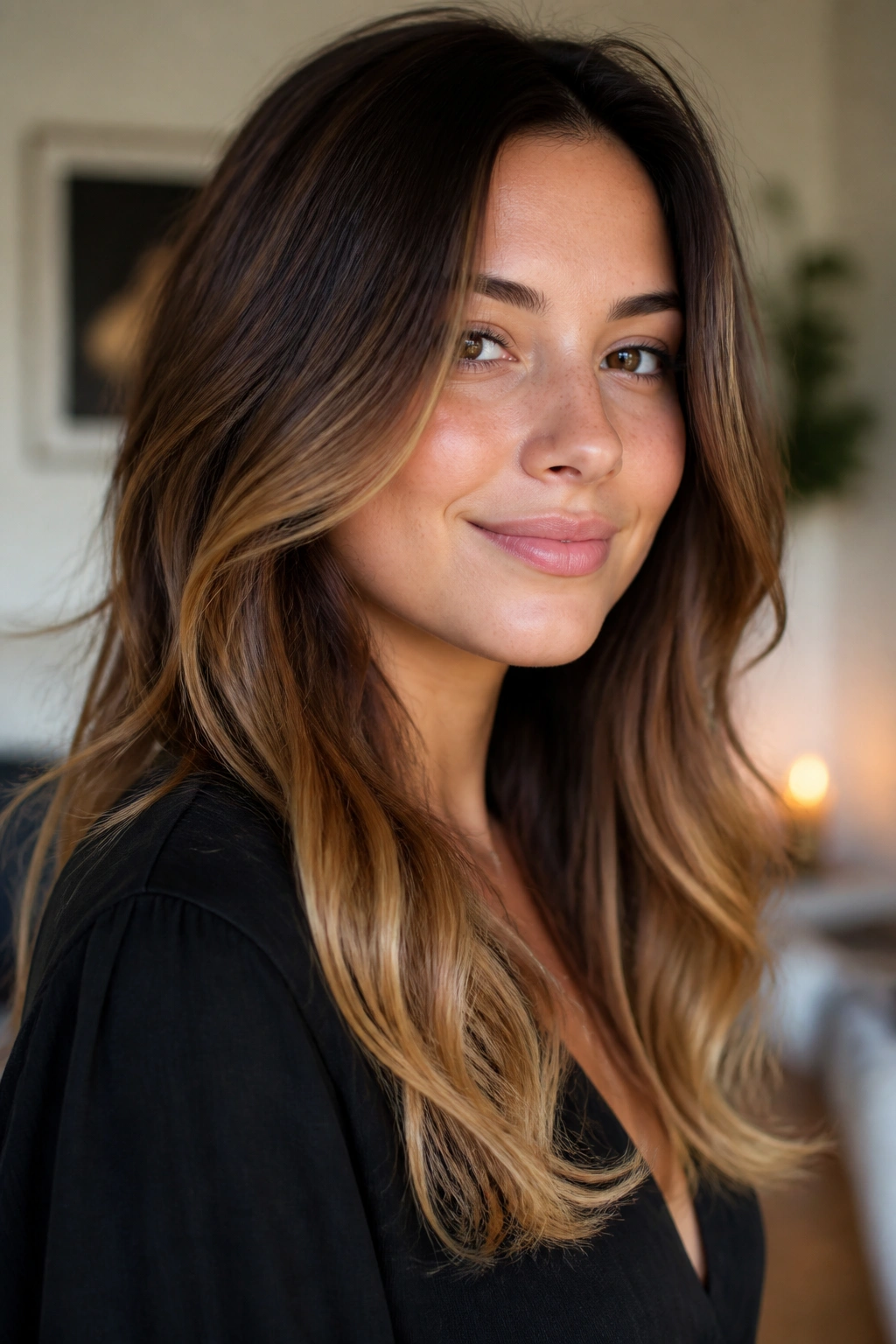
Ombré gets a bad rap when it’s too obvious. But a soft version can work beautifully on round faces because the brightness stays lower, where it helps lengthen the silhouette instead of widening the upper half.
Toasted caramel ends on a brown base are especially good if your hair is medium to long. The darker top keeps the crown anchored. The lighter ends draw the eye downward. That long line is the whole point. It is almost cheating, and I mean that kindly.
The trick is to keep the transition slow. You want the color to deepen from root to mid-length, then brighten only in the bottom third. A sharp drop looks dated fast. A smoky fade feels much better.
This style also gives you more room to play with heat styling. Loose waves show off the gradient; straight styles make the length even more obvious. If your face is round and your hair is past the shoulders, this is a very easy shape to live with.
11. Ash-Brown and Caramel Mix for Cooler Skin Tones
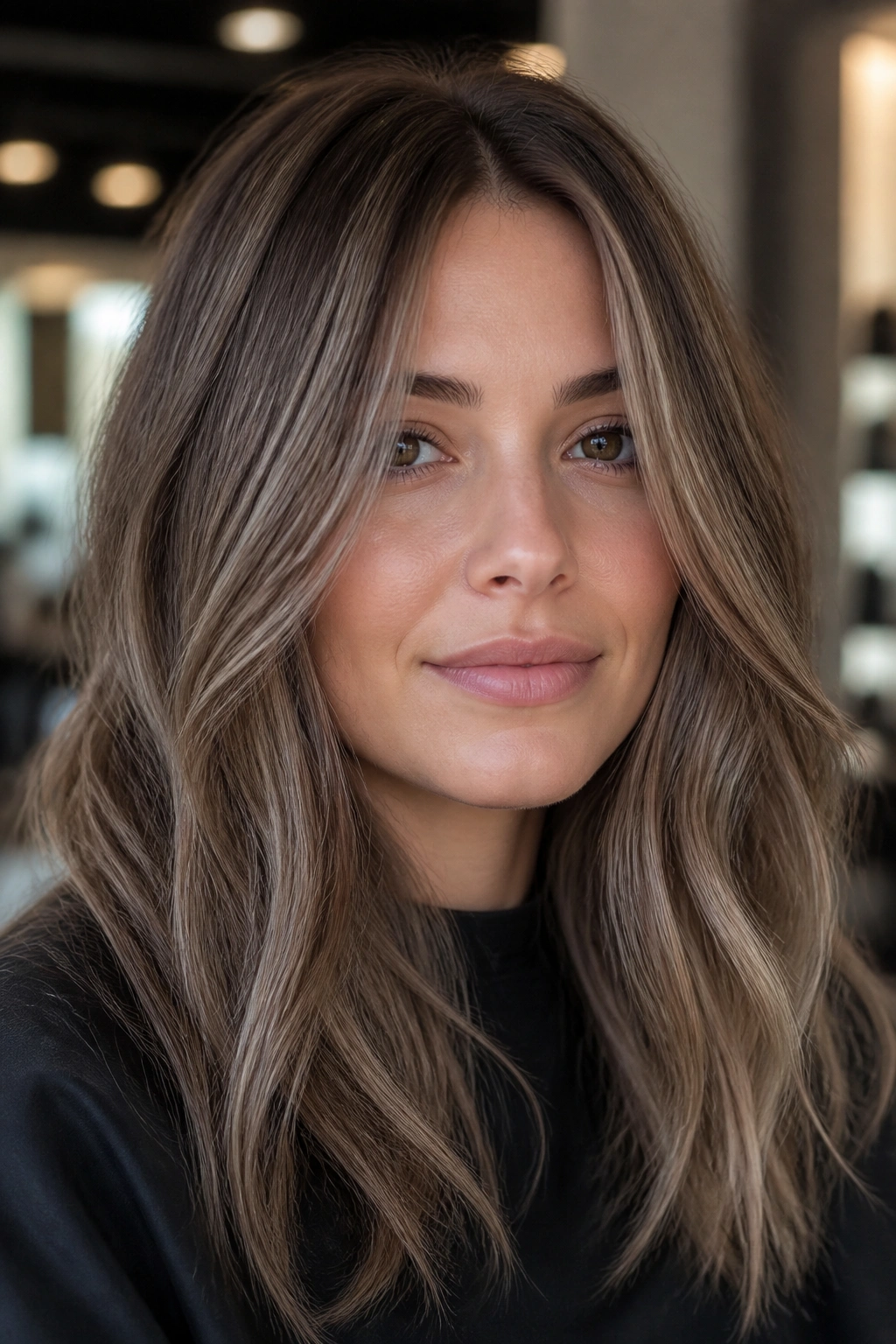
Warm caramel is not the only answer. If your skin has cooler or pinker undertones, an ash-brown base with restrained caramel pieces can keep the color from looking brassy or orange. That matters more than people think.
The face-shaping part still follows the same rule: lighter near the front, deeper near the sides, and soft transitions through the mids. What changes is the tone. Ash-brown tones down the warmth so the caramel reads beige or smoky instead of golden.
There’s a nice balance here for round faces because the cooler base creates a cleaner outline around the cheeks. Warm highlights alone can sometimes puff the face out a bit if the shade is too yellow. Ash-brown reins that in. A little.
Best Pairings
- Soft waves with a middle or slightly off-center part
- Collarbone-length cuts
- Fine to medium hair that needs dimension
- Neutral makeup with taupe or rose lip color
If you’re between warm and cool, ask for a beige-caramel gloss rather than a gold one. That wording helps more than people realize.
12. Chunky But Softened Retro Ribbons
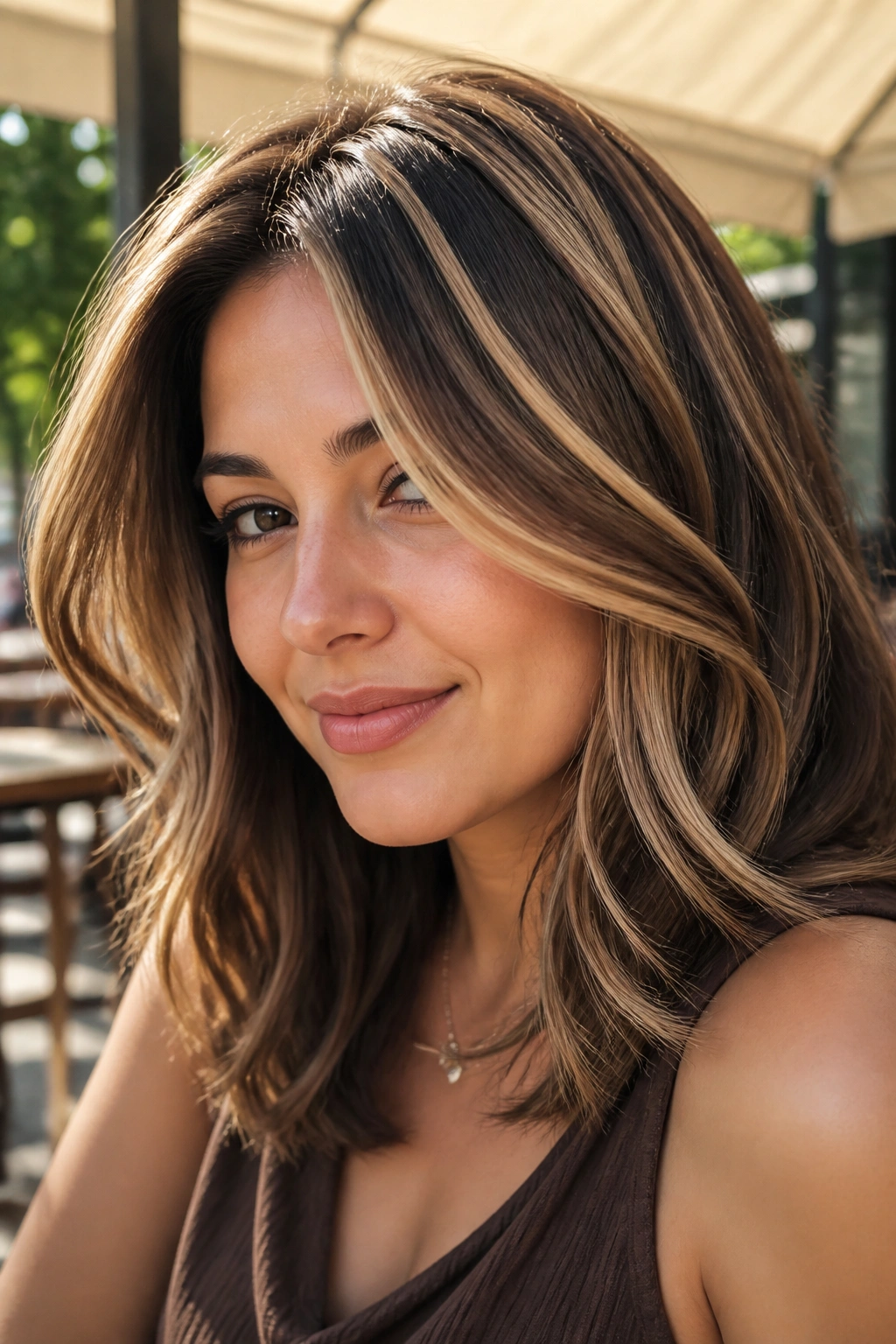
Chunky highlights can work on a round face if the edges are blurred and the placement is disciplined. The mistake is not the chunkiness itself. The mistake is putting the brightness everywhere and leaving no shadow to shape the face.
A softened retro ribbon look gives you a little throwback energy without the harsh stripe effect. The front pieces are wider than babylights, maybe half an inch to an inch across, but they’re tapered so they don’t look blocky. The caramel sits against a brown base in a way that feels bold, yet not loud.
Why does this flatter round faces? Because the width of the ribbon can be used vertically. A long, tapered ribbon pulls the eye down the hair shaft. A flat horizontal stripe does the opposite. Small distinction. Big result.
This is best on shoulder-length cuts or layered long hair where the strands move freely. If the hair is too compact, the ribbon can feel heavy. If it’s loose and airy, it sings.
13. Face-Contouring Caramel Around the Jawline
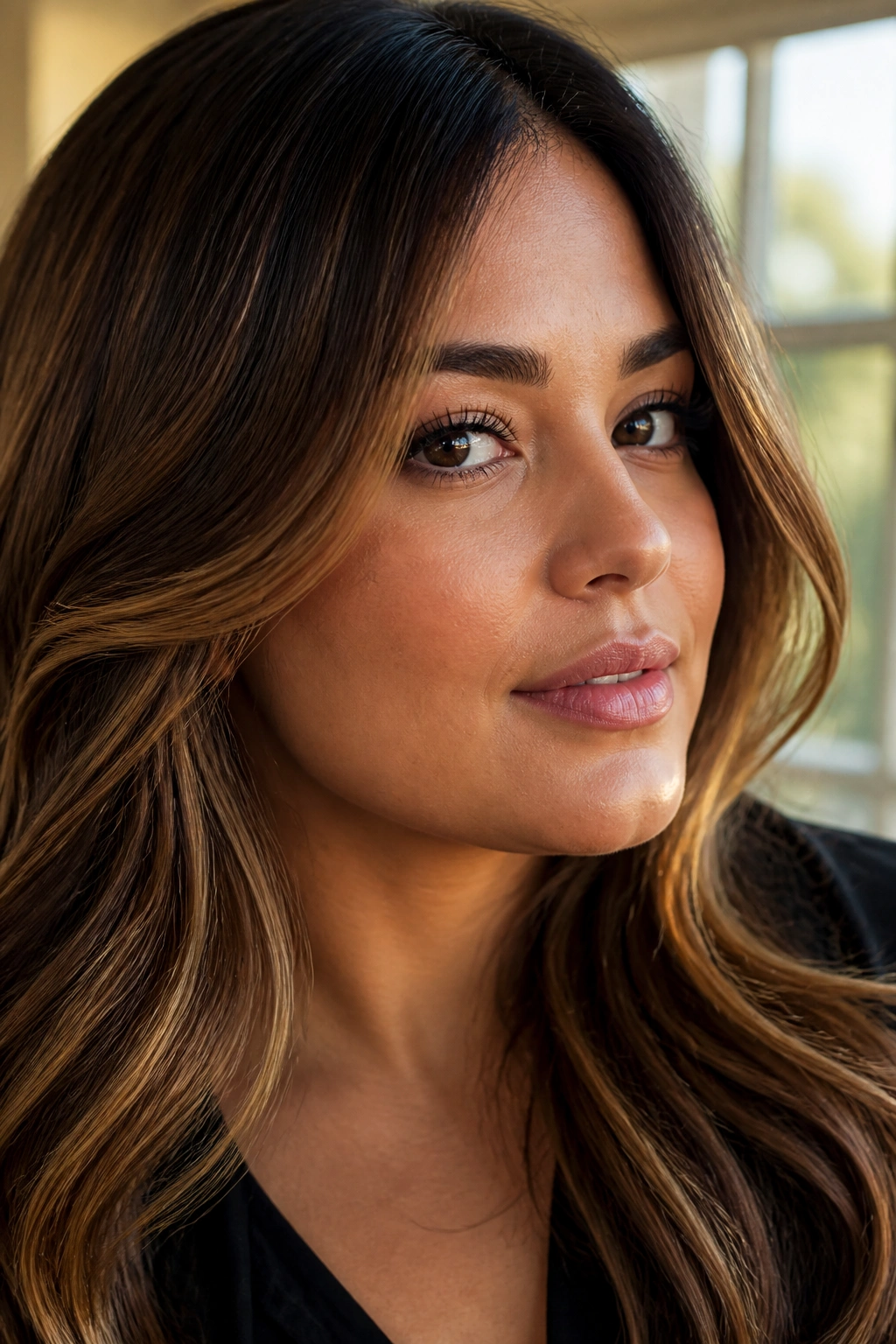
A lot of people brighten the front and forget the jawline. That’s a mistake if your face is round, because the lower edge of the face is where you can create the strongest sense of length.
Face-contouring caramel around the jawline works by placing the light just below the cheeks and along the first few inches under the chin. The eye follows the line down. The face looks a bit slimmer, and the haircut gets a more deliberate shape.
I like this approach on medium brown bases because the contrast is enough to register, but not so high that it looks streaky. The caramel should be softer than the money piece, more like a controlled glow. You want contour, not spotlight.
What to Watch For
- Keep the brightest part below the widest cheek point
- Blend the caramel into long layers, not one blunt sheet
- Leave the temple area slightly deeper for balance
- Avoid piling too much light on both sides of the face at once
If you’ve ever felt that highlights made your face look broader, this is the move to try. It solves the placement problem instead of just adding more color.
14. Micro-Babylights for Fine Hair
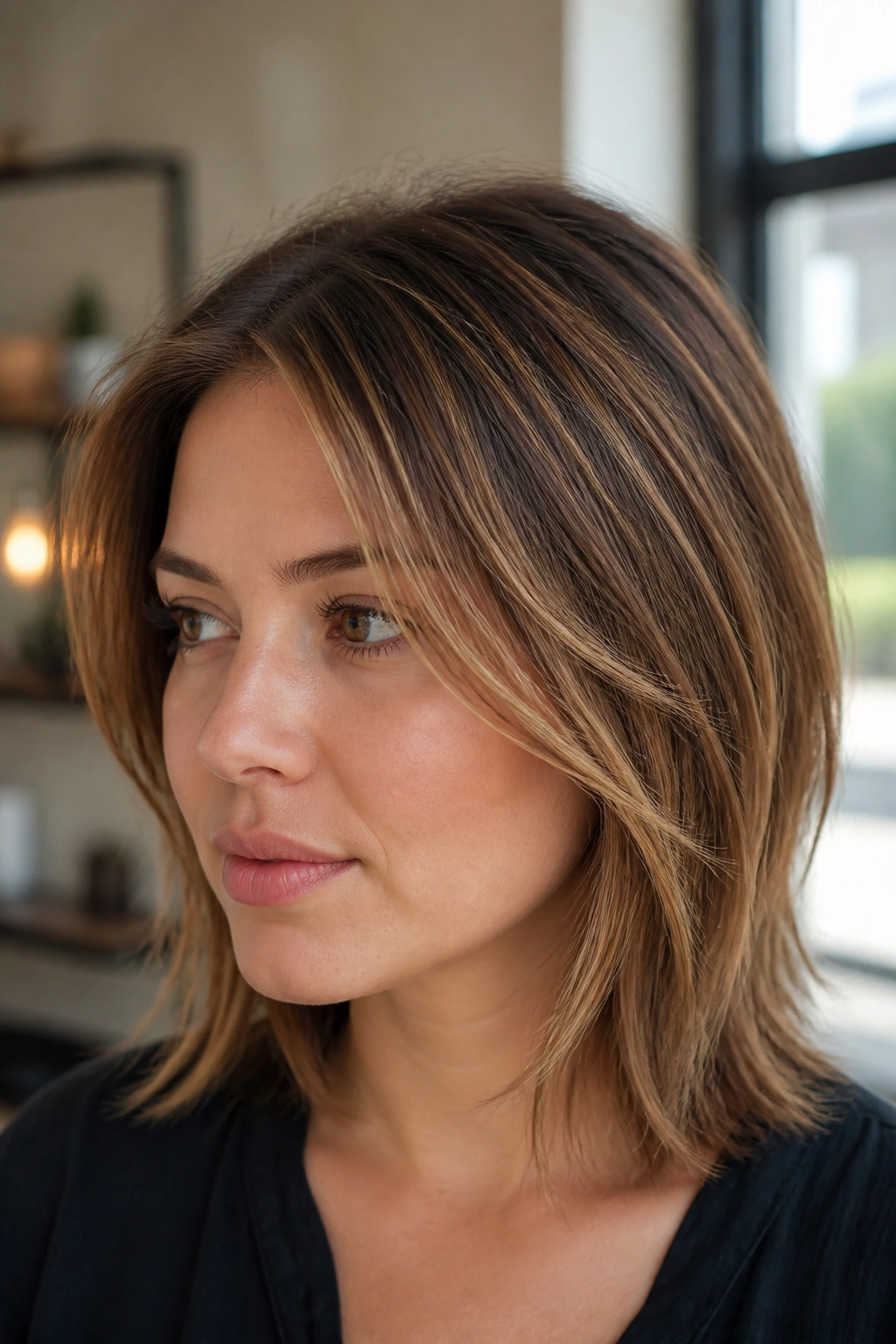
Fine hair needs a lighter touch. Big chunky highlights can make it look thinner because they separate the strands too much. Micro-babylights do the opposite. They add sheen and density, and on a round face they help keep the hair soft around the perimeter.
The pieces should be tiny. Think threadlike, not ribbon-like. Caramel micro-lights scattered through a brown base give the illusion of fuller hair while the eye still sees a narrow, lengthening shape. That’s a useful combination if your hair falls flat at the sides.
Question: can such small highlights make a visible difference? Yes, because the eye reads shimmer as volume. The hair looks thicker, not lighter in a dramatic sense. That is the charm of this technique.
How to Get the Most From It
Ask your colorist to focus the micro-babylights on the top half and front third of the head. Let the nape stay deeper. That contrast keeps the style from ballooning outward.
A gloss every few weeks helps, too. Fine hair shows brass faster than thick hair does, and a clean beige-caramel tone holds the look together.
15. Honey-Caramel Waterfall Highlights on Long Waves
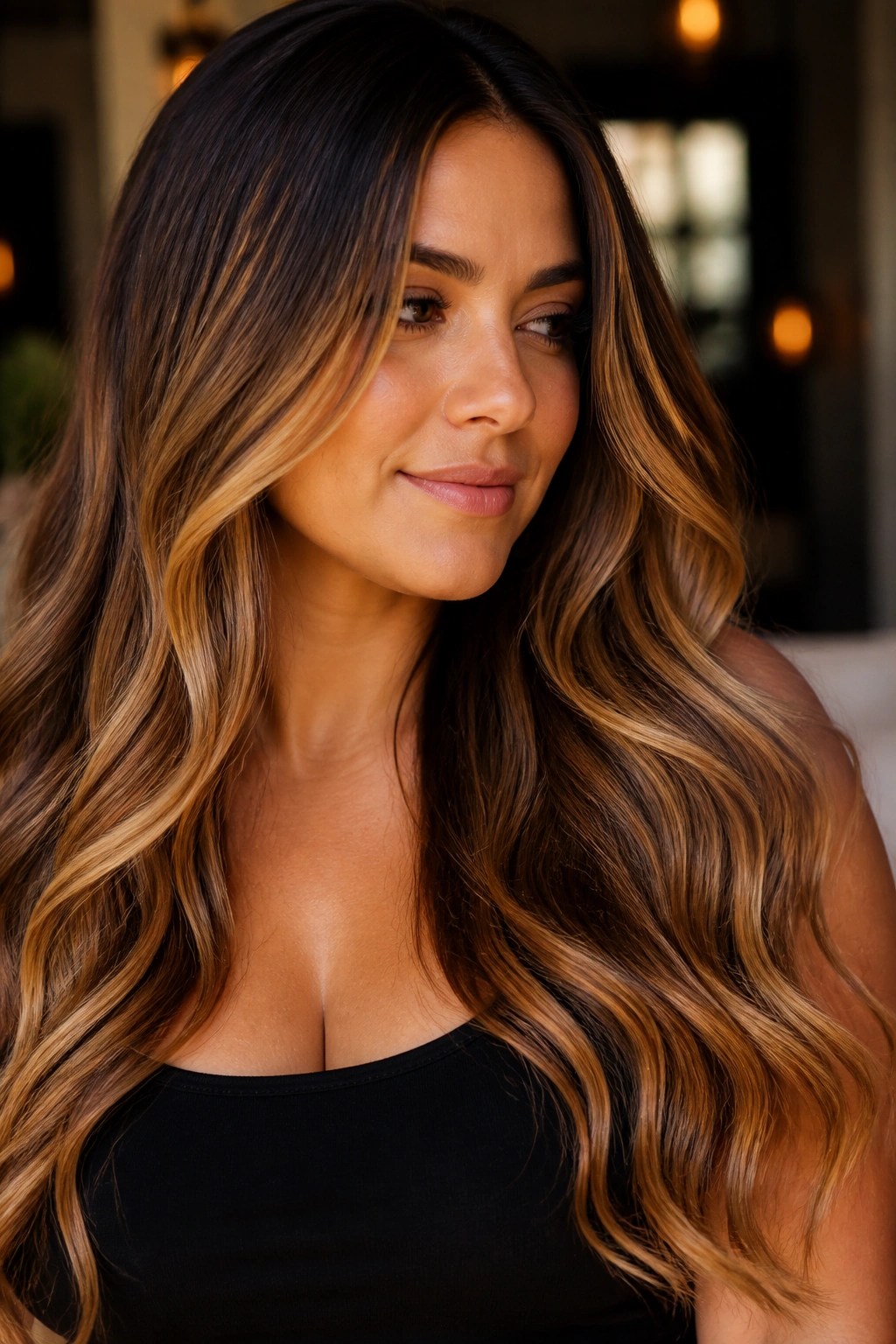
Long waves already give a round face some vertical help, so the color should support that shape instead of fighting it. Honey-caramel waterfall highlights do exactly that. The light cascades from the top layer down through the ends, and the result feels fluid.
The reason this works is simple: waves create motion, and waterfall placement amplifies motion in one direction. Down. The eye follows the darker root, then the warmer mid-lengths, then the lighter ends. That line is flattering on a fuller face because it keeps the width from settling around the cheeks.
This is one of my favorite looks for hair that has some natural bend. On pin-straight hair, the effect can feel a little flat unless you add a loose bend with a 1-inch iron or rollers. On wavy hair, it practically does the work itself.
A honey-caramel finish is a little brighter than toffee but softer than gold. That middle ground makes the style feel easy to wear, not high-drama. Nice on a sweater, nice with makeup, nice when you just want your hair to look healthy.
16. Espresso Base With Beige-Caramel Accent Pieces
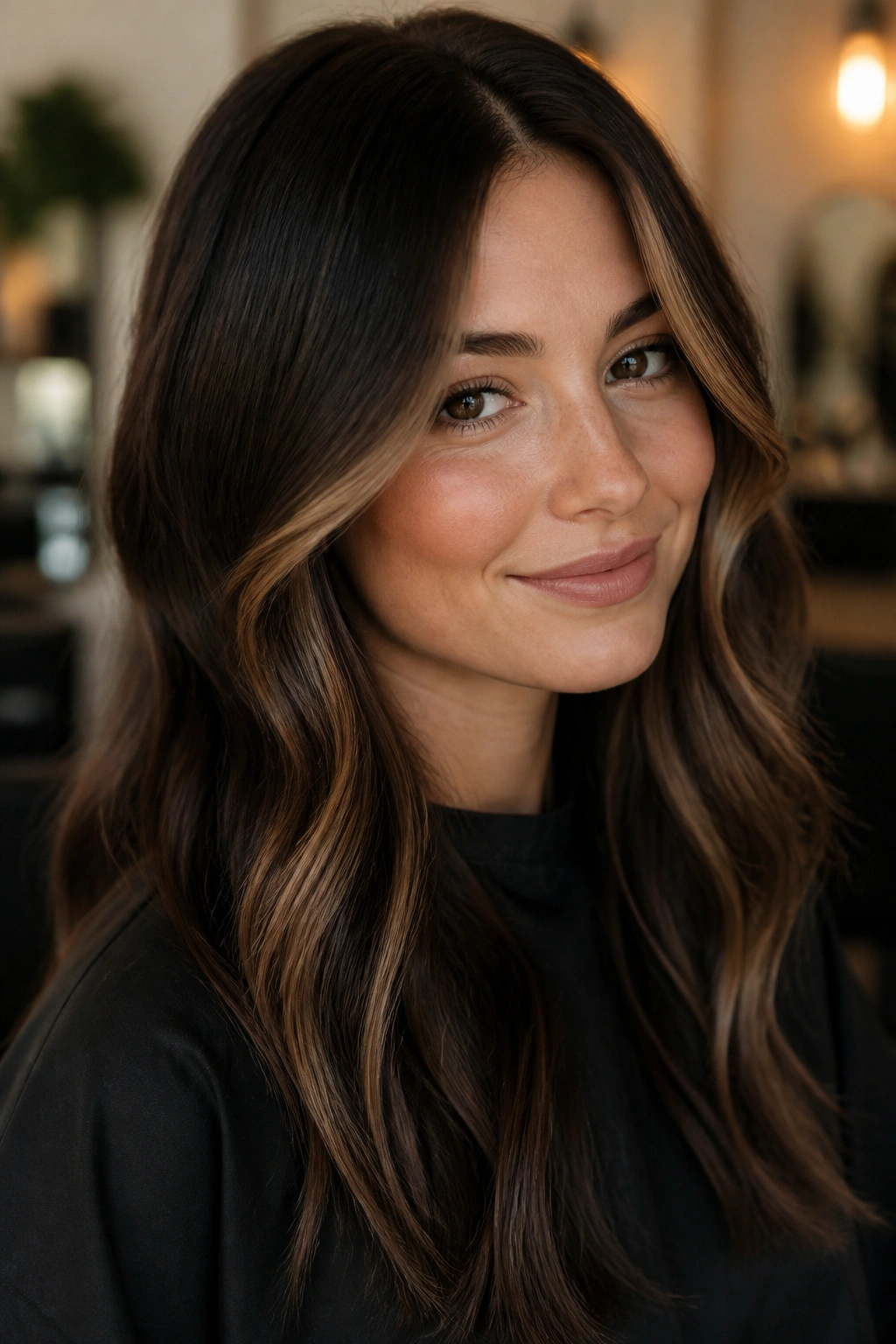
If you love dark hair, don’t push it too light. An espresso base with beige-caramel accent pieces keeps the depth while giving the face enough lift to avoid looking heavy. That depth is especially useful on round faces because it creates a cleaner frame.
Unlike all-over caramel, this approach keeps the brightness controlled. The accent pieces are placed where the haircut needs movement most: the front curves, the lower mid-lengths, and a few ends. The rest stays dark. That contrast gives the style shape, which is exactly what a round face needs.
What Makes It Different
It’s moodier. It’s also easier to maintain if you hate frequent toning. Beige-caramel accents fade more gracefully than bright gold, and the espresso base hides grow-out better than lighter brown.
Best for:
- Thick hair that needs definition
- Dark brunettes who want dimension, not a full color shift
- Cuts with face-framing layers or a collarbone length
- People who wear richer makeup shades like berry, plum, or brick
My recommendation: keep the accent pieces narrow and slightly feathered. The more blended the transition, the more polished the result feels.
17. Warm Chocolate and Caramel Panels on Shoulder-Length Cuts
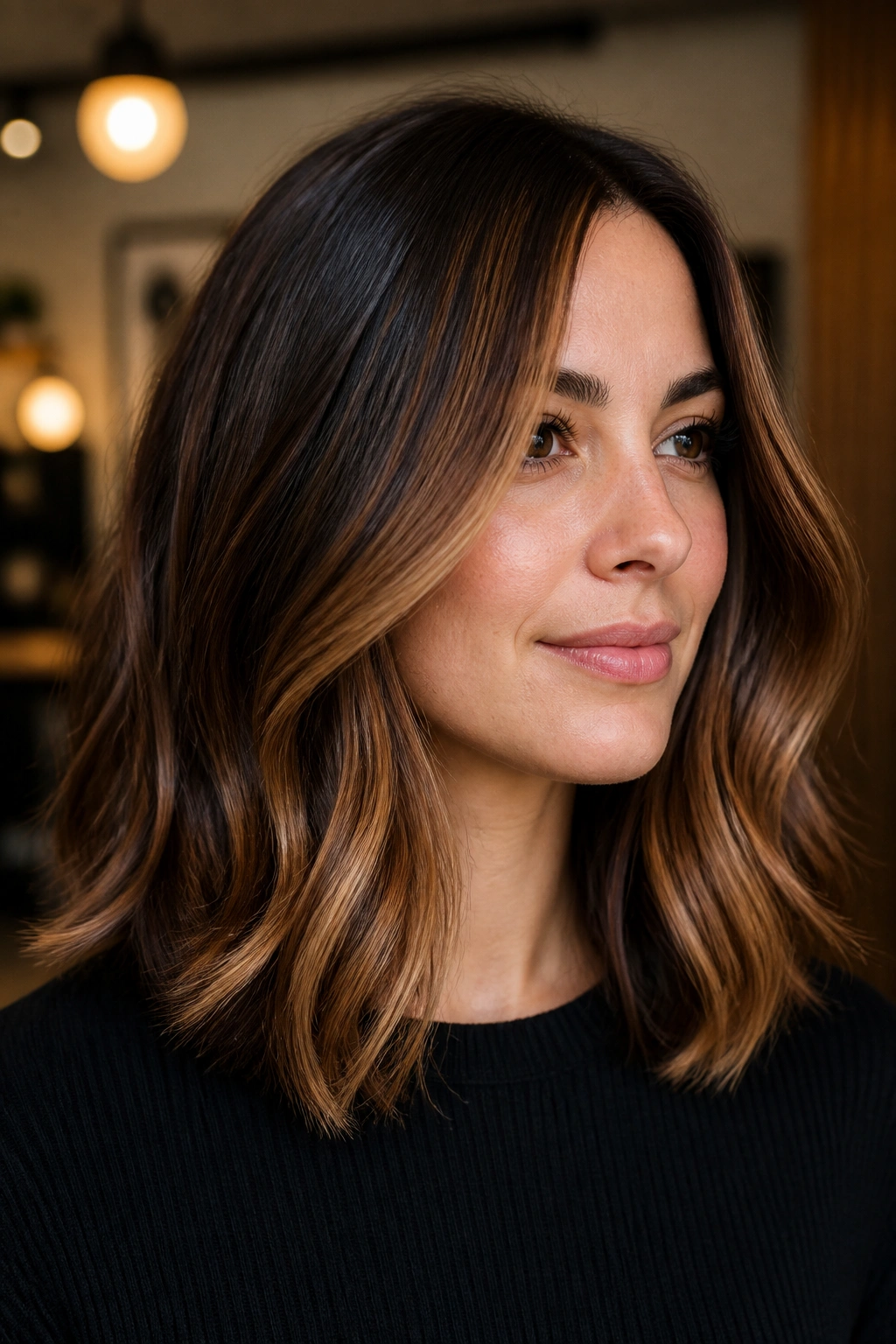
Shoulder-length hair sits in a sweet spot for round faces. It is long enough to create a vertical line, but short enough to keep movement near the jaw. Add warm chocolate and caramel panels, and the haircut picks up shape without getting fussy.
Panels are broader than ribbons, but they should still be placed with care. The brightest panel can live just forward of the cheekbone, while a deeper chocolate panel sits behind it. That alternating rhythm creates depth, and depth is your friend when the face is soft.
This style looks best when the cut has a few internal layers. Otherwise the panels can feel too neat, and neatness is not always flattering. A little looseness helps the color breathe.
I also like this look for people who blow-dry their hair smooth. The color reads clean and expensive under straight styling, but the same panels get even better with a loose bend at the ends. You get shape both ways. Hard to argue with that.
18. Long Brown Caramel Highlights for Round Faces That Want More Length
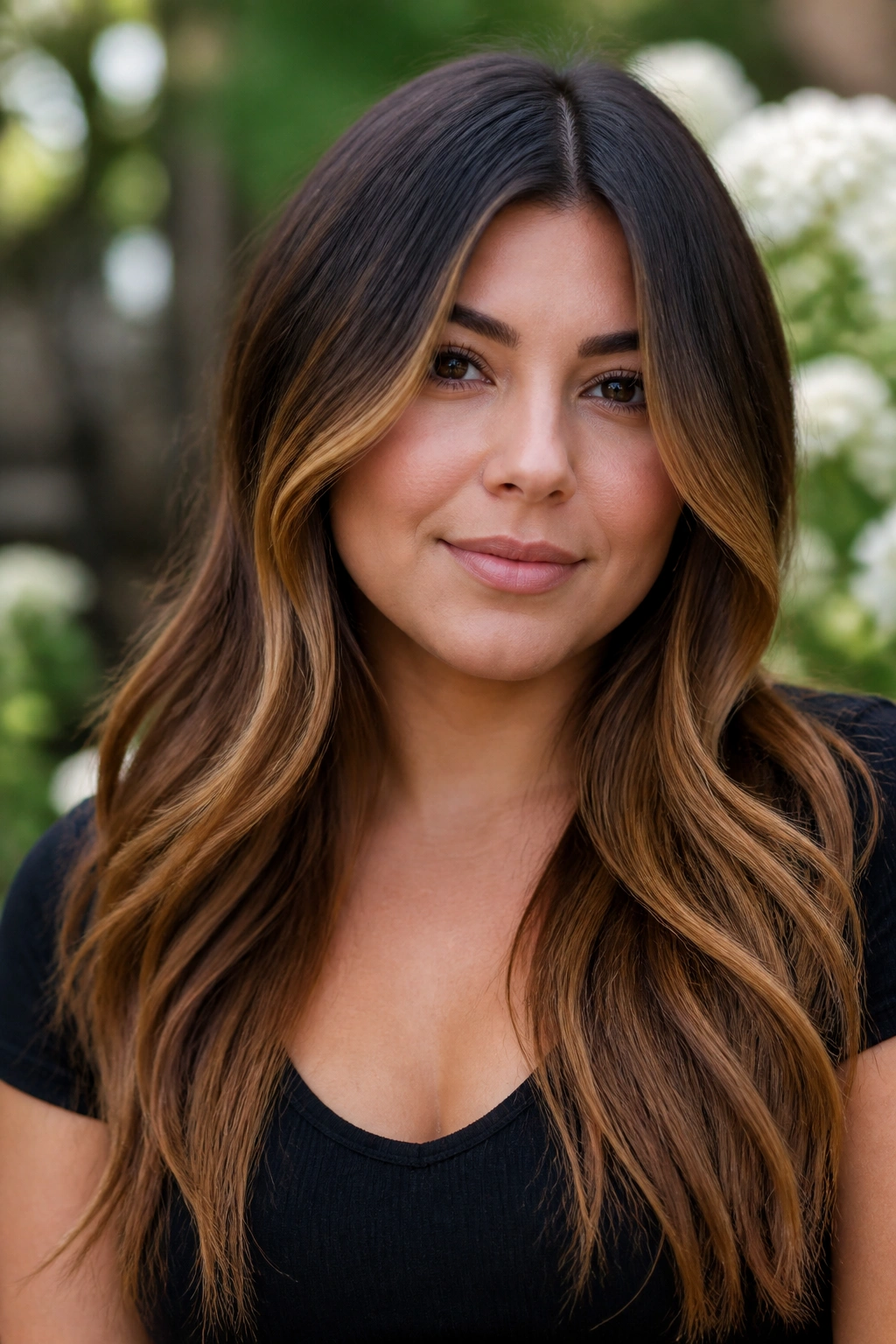
Some styles are about drama. This one is about stretch. Long brown caramel highlights for round faces work best when the light begins below the eyes, tracks through the length, and ends in a soft, brighter finish near the bottom. The whole point is to make the hair seem longer than it is.
A darker root does the heavy lifting here. It keeps the top of the head from feeling wide, while the caramel lowers the visual weight toward the ends. That downward pull is useful if your hair is long, thick, or both. It also looks good with layers that start under the chin, because the color follows the shape.
This is the kind of look that benefits from restraint. Too much brightness near the temples can undo the effect. Let the sides stay a bit deeper. Let the ends carry the light. It sounds simple because it is simple.
If you wear your hair straight, this style gives you a sleek line. If you wear it wavy, the highlights ripple through the lengths and create movement. Either way, the face gets the same advantage: a longer read, a softer edge, and a color that feels rich without trying too hard.
Final Thoughts
Round faces usually look best when the color does three things at once: keeps some depth at the roots, places brightness below the cheekbone, and avoids a hard light band that cuts straight across the widest part of the face. That’s the real trick. Not more color. Better color placement.
If you’re taking a photo to the salon, crop it to the front and the side. A good colorist needs to see where the light starts, how wide it is, and whether the ends are being used to lengthen the shape or just fill space. Those small details change everything.
And if you’re stuck between two shades, go a touch deeper on the base and a touch softer on the caramel. Hair that moves is more flattering than hair that flashes from every angle. That little bit of restraint usually wins.
