



Copper red highlights can make brown hair look rich, glossy, and alive in a way that plain brunette color sometimes just doesn’t. The catch is placement. Put the color in the wrong width, wrong tone, or wrong spot, and you get stripy orange bands instead of depth.
Brown hair is a good canvas for copper because the base gives the red something to sit against. That depth keeps the color from looking flat. It also means you can choose your lane: soft and smoky, bright and fiery, or somewhere in that sweet middle where the warmth shows up only when the light hits.
I’ve always liked copper best when it looks like it belongs in the hair, not pasted on top of it. Tiny babylights can make brown hair shimmer. Chunkier money pieces can wake up a tired cut. A shadow root can keep the whole thing from turning into a maintenance headache. The fun part is that each version creates a different mood, even though the palette stays in the same warm family.
1. Cinnamon Copper Ribbons
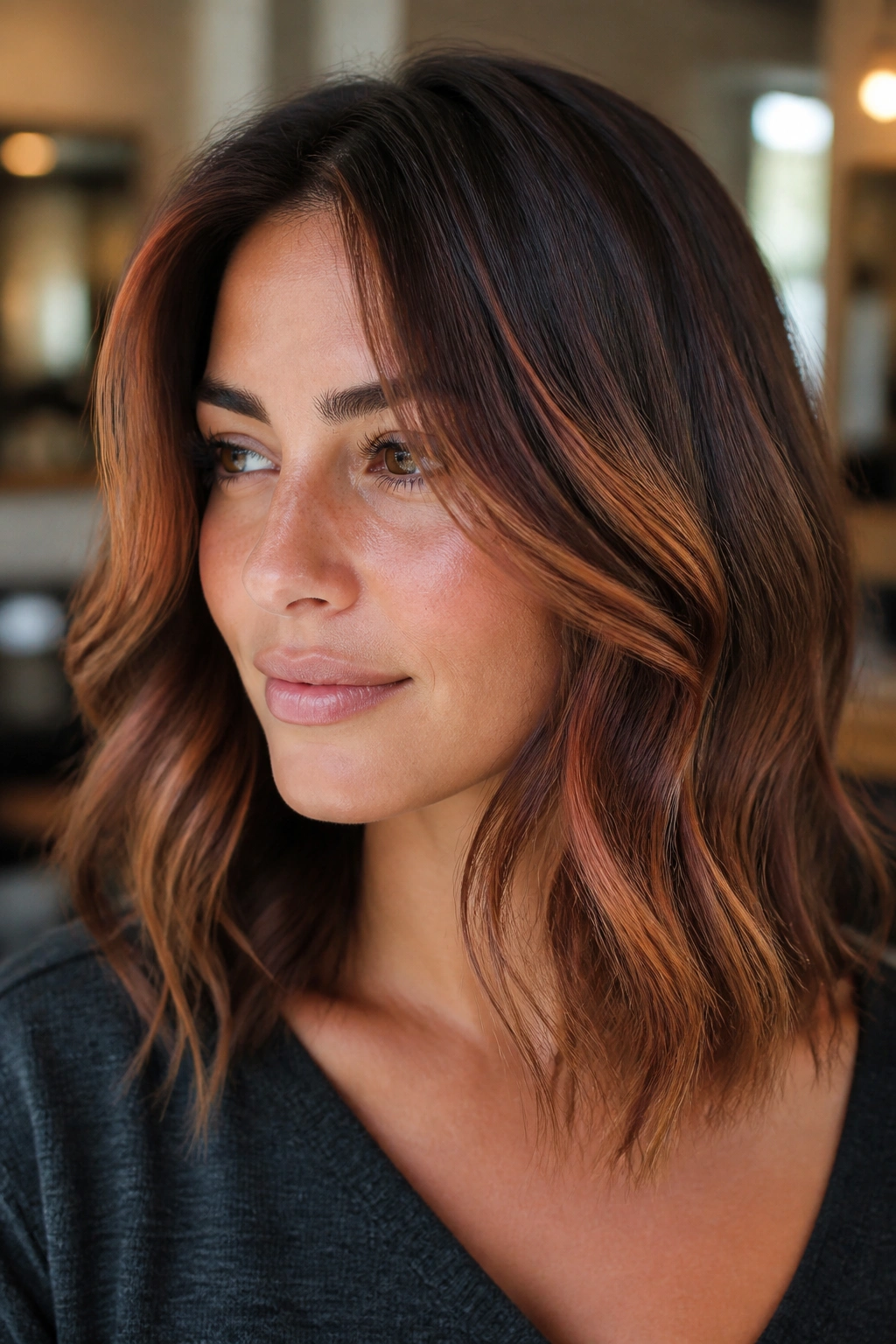
Cinnamon copper ribbons are the easiest place to start if you want copper red highlights for brown hair without going straight into loud territory. The color sits somewhere between toasted spice and fresh penny, which gives medium and dark brown bases a warm lift without making the ends look flat.
Why It Works
The ribbon shape matters as much as the shade. Instead of scattering tiny bits of color everywhere, the colorist paints wider, softer strands through the mid-lengths and ends, usually about 1/4 to 1/2 inch wide. That keeps the brown base visible, which is what makes the copper pop instead of blur.
A shoulder-length cut with loose waves is probably the easiest place to wear this look. The bends catch the lighter pieces and make the copper read as movement, not just color. Straight hair can wear it too, but the effect is cleaner and more polished there.
- Ask for soft ribbons through the top layer and around the face.
- Keep the brightest pieces two to three levels lighter than your base, not five.
- Ask for a warm gloss at the bowl so the copper stays cinnamon instead of orange.
My favorite part: this shade grows out with less drama than brighter red-copper work, which makes it a good first step if you’re color-shy.
2. Auburn Money Piece
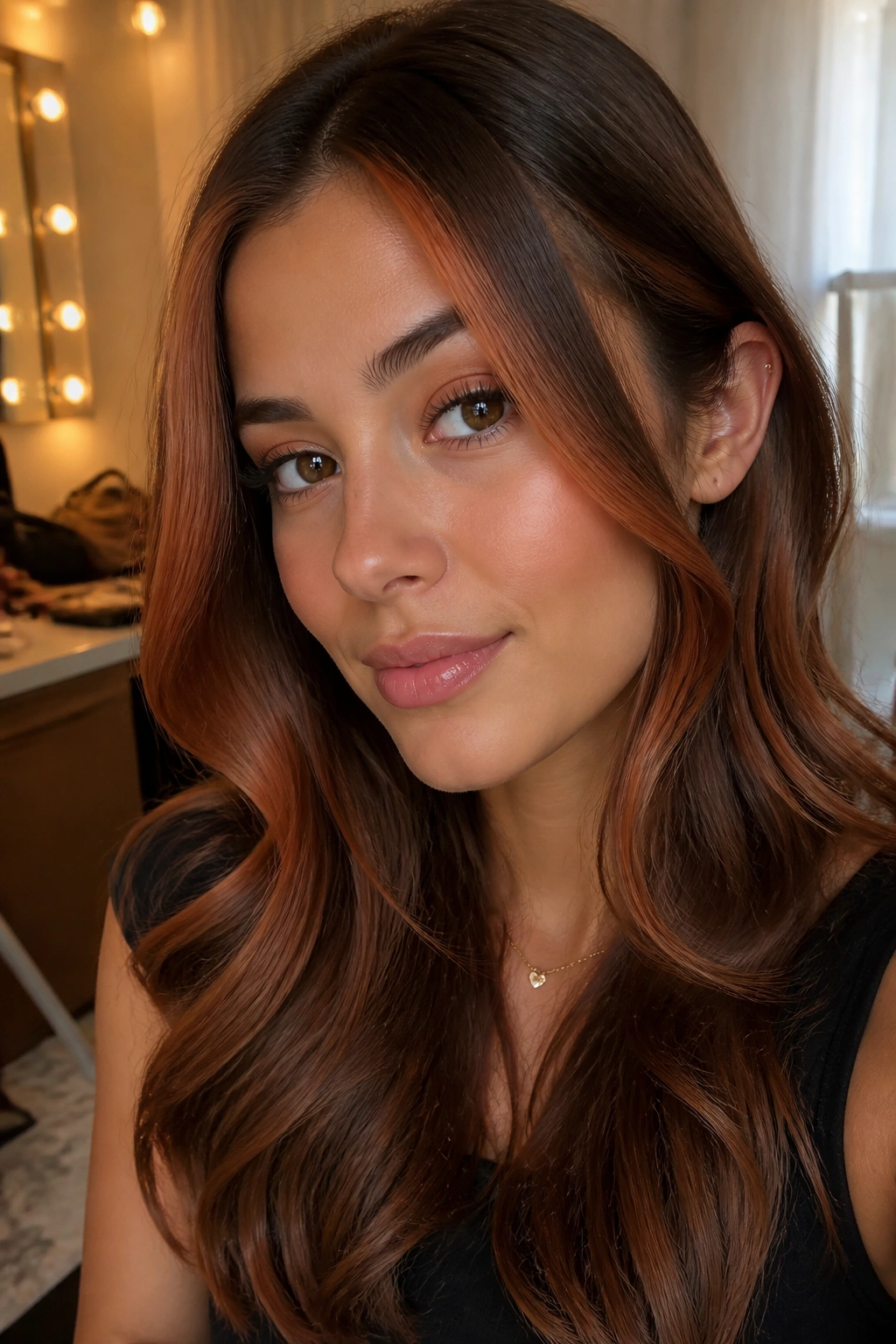
Auburn money pieces do a lot of heavy lifting. They light up the front of brown hair fast, and they do it without needing full-head color everywhere else. If your cut feels a little dull around the face, this is the quickest fix.
The money piece should be bold enough to frame your features, but not so wide that it looks like a disconnected stripe. I like it best when the front sections are painted about 1 to 1 1/2 inches wide, then feathered back so the color melts into the rest of the hair. Auburn gives the copper a deeper red edge, which suits dark chocolate and chestnut bases especially well.
This works best if you wear your hair tucked behind one ear, clipped back, or styled in soft bends. You want the front to catch the eye first. That’s the whole point. And if your hair is layered, the front pieces can follow the cut instead of fighting it.
A good colorist will keep the root soft and the ends brighter. That little shift makes the money piece look expensive instead of harsh. Skip the chunky block look. Seriously. It dates fast.
3. Copper Babylights on Chocolate Brown
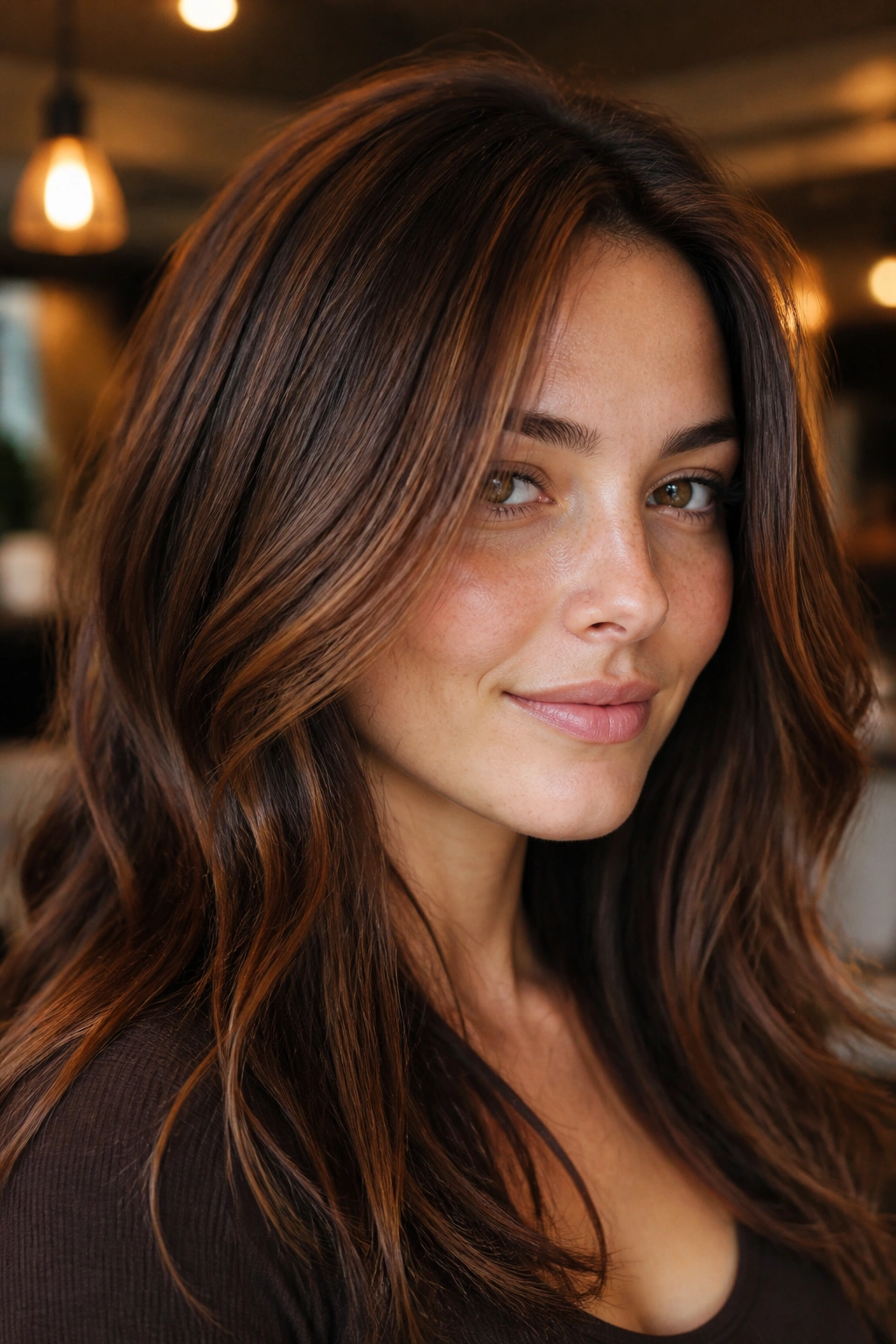
What happens when you want copper red highlights but you don’t want anyone to be able to point at a single streak? You ask for babylights.
Babylights are micro-fine highlights, often woven thinner than a pencil line, and they work beautifully on chocolate brown hair because they create a shimmer effect instead of obvious stripes. The result feels more like light moving through the hair than a color job shouting for attention. That’s the whole charm.
How to Wear It
On dense brown hair, copper babylights can be placed closer together on the top layer and looser underneath. That gives you brightness where the eye lands first and leaves the rest of the head soft and dimensional. If the hair is long and straight, the tiny pieces keep it from looking like one solid block.
The tone matters here. A true copper babylight should lean warm and golden, not coral-pink. Think sunlit penny, not neon red. If the base is very dark, the color may need to be lifted a little more than you’d expect so the copper doesn’t disappear.
- Best for fine or medium hair that needs movement.
- Great when you want low-contrast color.
- Ask for a rooty finish so the grow-out stays soft.
This is one of those looks that reads expensive because it’s quiet. Not boring. Quiet.
4. Burnished Copper Balayage
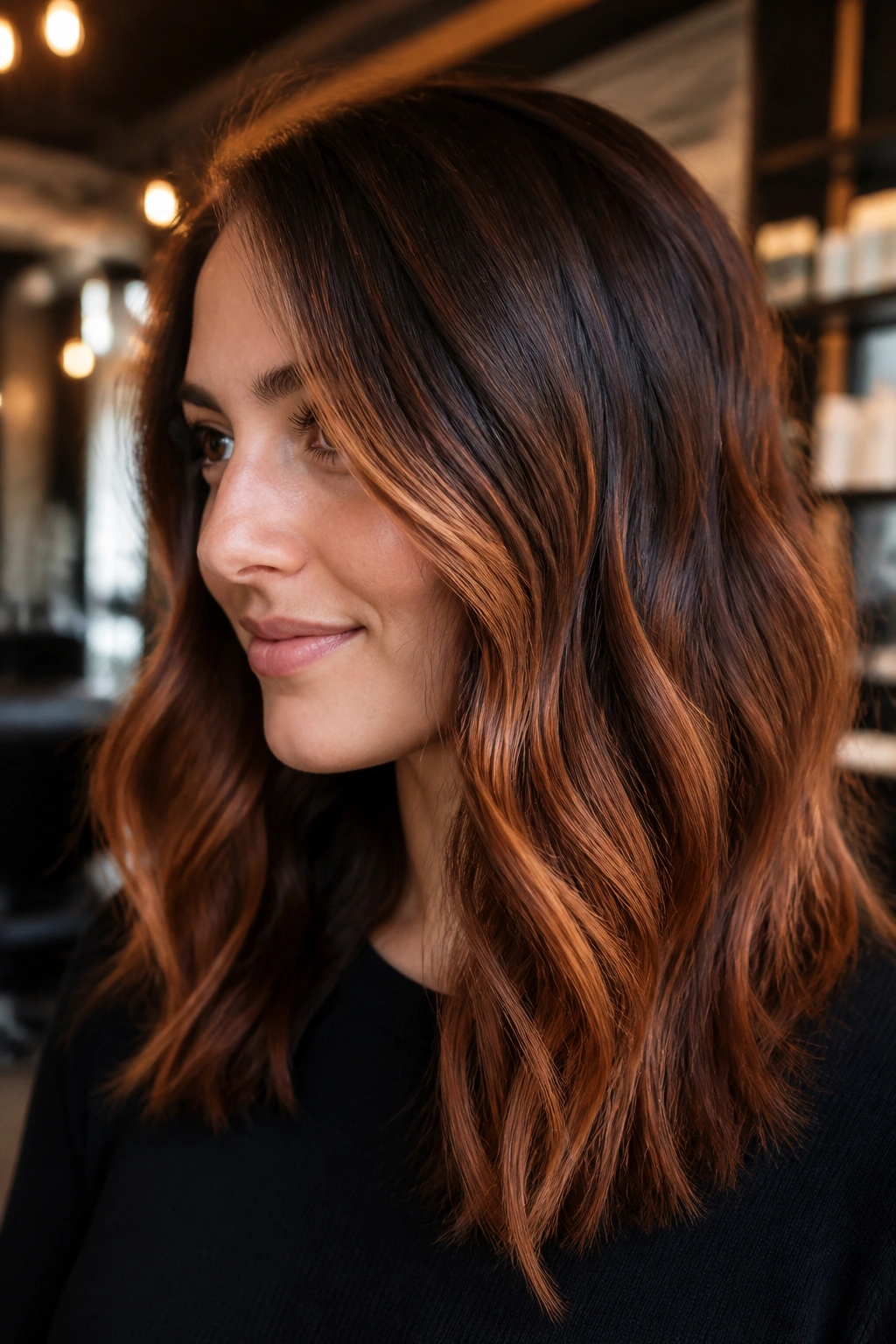
Picture a brown bob with loose bends, a few face-framing waves, and warm copper painted through the mid-lengths like the light hit it in motion. That’s burnished copper balayage, and it has a little more drama than ribbons without going full fire-engine red.
Balayage works because the color is painted by hand, usually starting lower on the shaft and becoming brighter toward the ends. On brown hair, that gives the copper room to breathe. The effect is less “highlighted” and more “shaded by sunlight,” which is why people keep coming back to it.
The burnished finish is what keeps it from looking too bright. A gloss with a bronze or copper base softens the red and makes the whole thing feel richer. I like this choice on wavy hair, shoulder-length layers, and longer cuts that need shape without more cutting.
A good way to think about it: if babylights are a whisper, balayage is a smooth sentence. It has a little more weight. A little more swing.
5. Peekaboo Red-Copper Underlayers
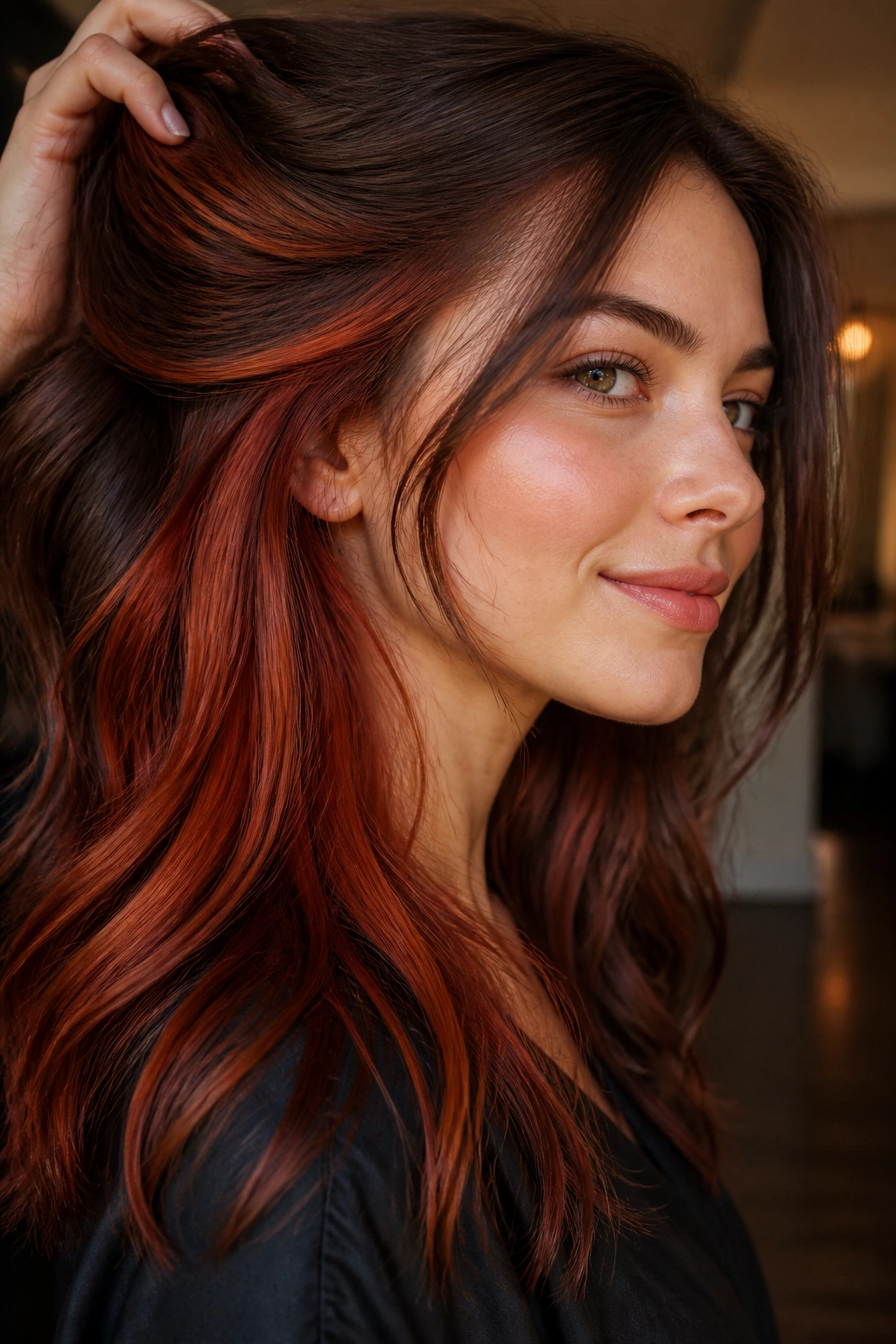
Peekaboo copper is for the person who wants color with a bit of mischief. The top layer stays brown, while the underlayer carries the red-copper pieces, so the color only shows when the hair moves, lifts, or gets pinned up.
That hidden placement makes this style useful if you work somewhere conservative or just don’t want to see the same color every minute of the day. It also gives brown hair a layered look from the inside out, which is harder to fake with surface highlights alone. When the underlayer peeks through, the whole head feels thicker.
The copper can be bolder here because it’s partially hidden. Deep auburn, rust, and red copper all work. If the hair is straight, the contrast shows most when you tuck the top section behind the ears. On curls, the underlayer keeps showing up naturally, which is half the fun.
One small warning: peekaboo color needs a cleaner parting and a little more planning when you style it. Messy hair can still look good. It just won’t show the reveal as sharply.
6. Mahogany-Copper Melt
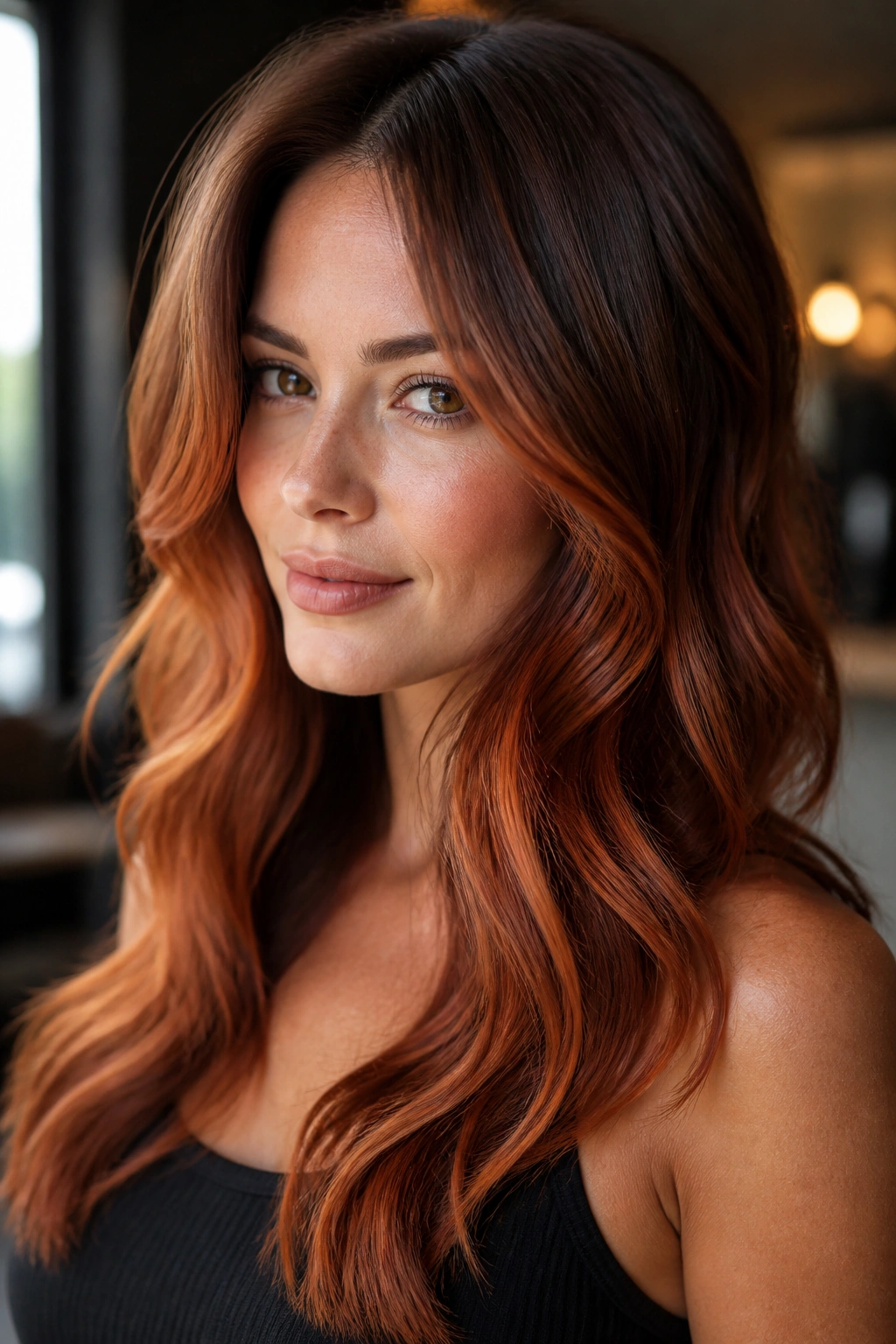
Mahogany-copper melt is the safer, richer cousin of brighter copper highlights. Instead of separate streaks, the color shifts smoothly from brown into red-brown into copper, so the eye sees one long gradient instead of hard lines.
That difference matters. A traditional highlight can look stripey on very dark hair if it’s too wide or too light. A melt avoids that problem because the tones overlap. On brown hair, especially medium brunette bases, the result feels plush and dimensional. It has depth before it has brightness, and that is what keeps it wearable.
This look suits people who like warm hair but don’t want their color to scream from across the room. It’s especially good on layered cuts, since the movement helps show each tone. A mahogany root with coppery ends can also make thick hair look more polished.
I’d pick this over a high-contrast highlight job if your wardrobe runs earthy, black, camel, or cream. The hair won’t fight your clothes. It just sits there looking expensive and a little moody.
7. Soft Copper Contour Highlights
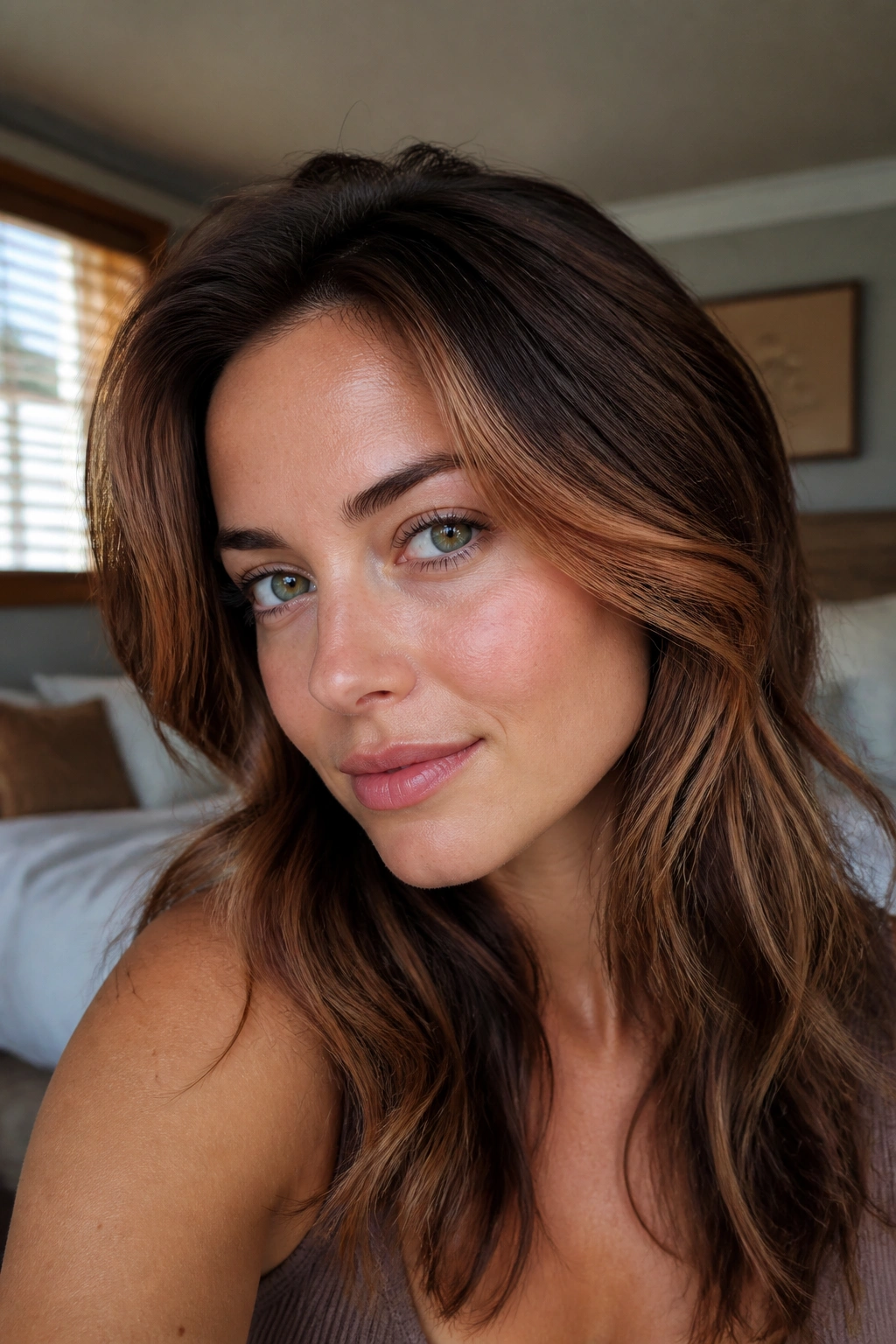
Soft copper contour highlights are placed where the face naturally needs lift: the temples, the cheekbone line, and the outer edges of the front layers. The whole idea is to shape the face with color, not just brighten the hair in general.
Where to Place Them
A colorist will usually keep these pieces finer near the part and a touch wider toward the bottom of the front section. That creates a subtle visual line that follows the face instead of boxing it in. On brown hair, the copper contour can make eyes look brighter and skin look warmer without changing the entire head.
This is a smart option if your haircut already has movement. Curtain bangs, face layers, and collarbone cuts all benefit from it. The highlights sit in the exact spots where the cut already wants attention, so the whole look feels coordinated.
What Makes It Different
- Uses light placement, not heavy coverage.
- Brightens the face without taking over the length.
- Works well with wavy styling or a round brush blowout.
- Can be toned from gold-copper to red-copper depending on skin tone.
I like this method because it respects the haircut. That sounds small, but it’s not. Good color and good cutting should talk to each other.
8. Copper and Caramel Threading
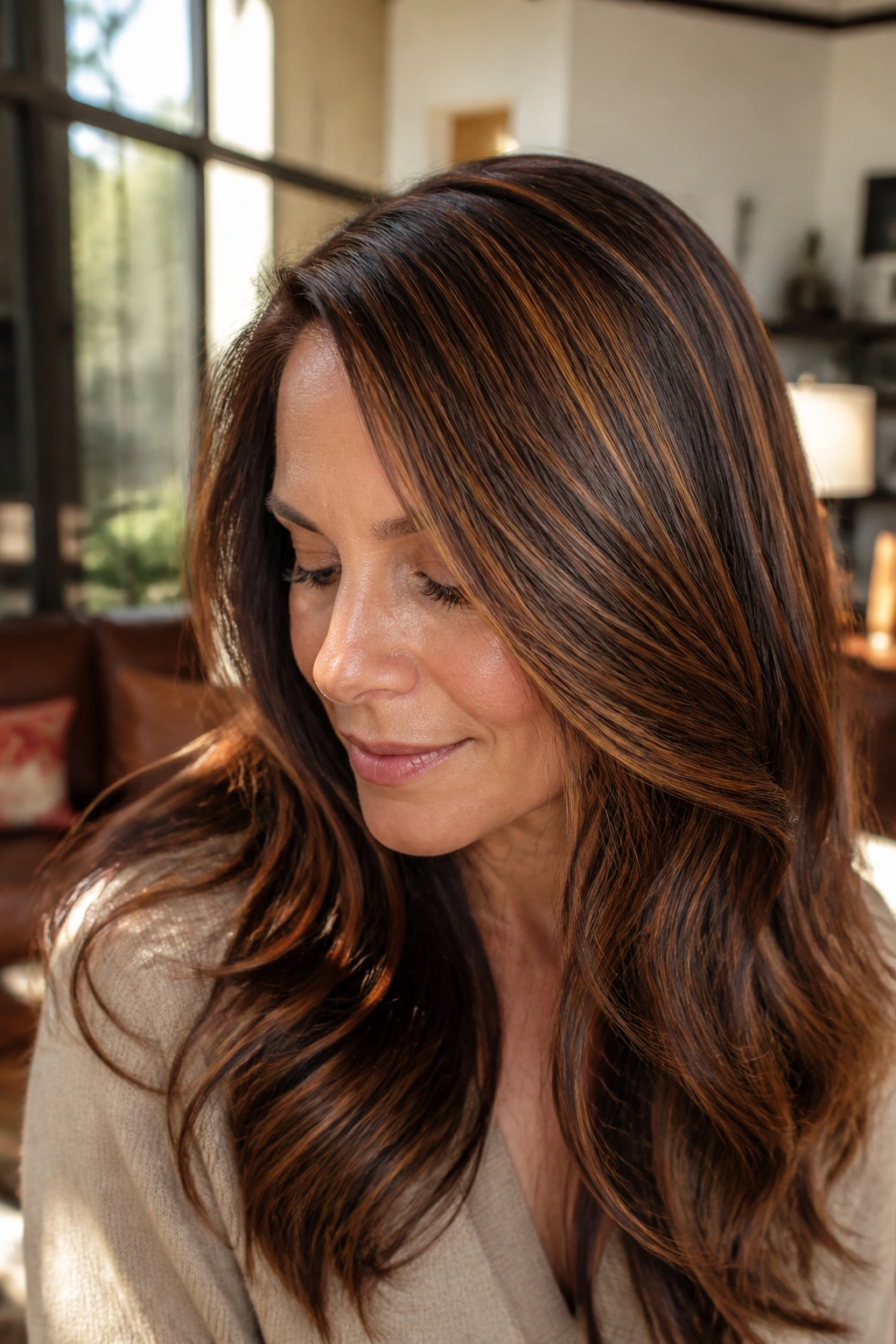
Copper and caramel threading is a little softer than a pure red-copper job, and that’s exactly why it works so well on brown hair. The caramel keeps the copper from tipping too orange, while the copper gives the caramel something warmer to do.
The technique usually involves very fine, alternating strands rather than big panels. That gives the hair a woven look. You notice the shine before you notice the color formula, which is a nice way for brunette hair to wear warmth. If the base is medium brown, this can look almost glossy in sunlight. If the base is dark chocolate, it reads more like shimmer than highlight.
I tend to like threading on people who wear their hair down a lot. The texture needs a little movement to show off the variation between the two tones. Flat ironing can still work, but it makes the effect more linear and less soft. Some people like that. I usually prefer a little bend in it.
The main thing here is restraint. Too much copper and the caramel gets buried. Too much caramel and the red disappears. Keep the ratio close enough that both shades stay visible.
9. Rusty Copper Ends
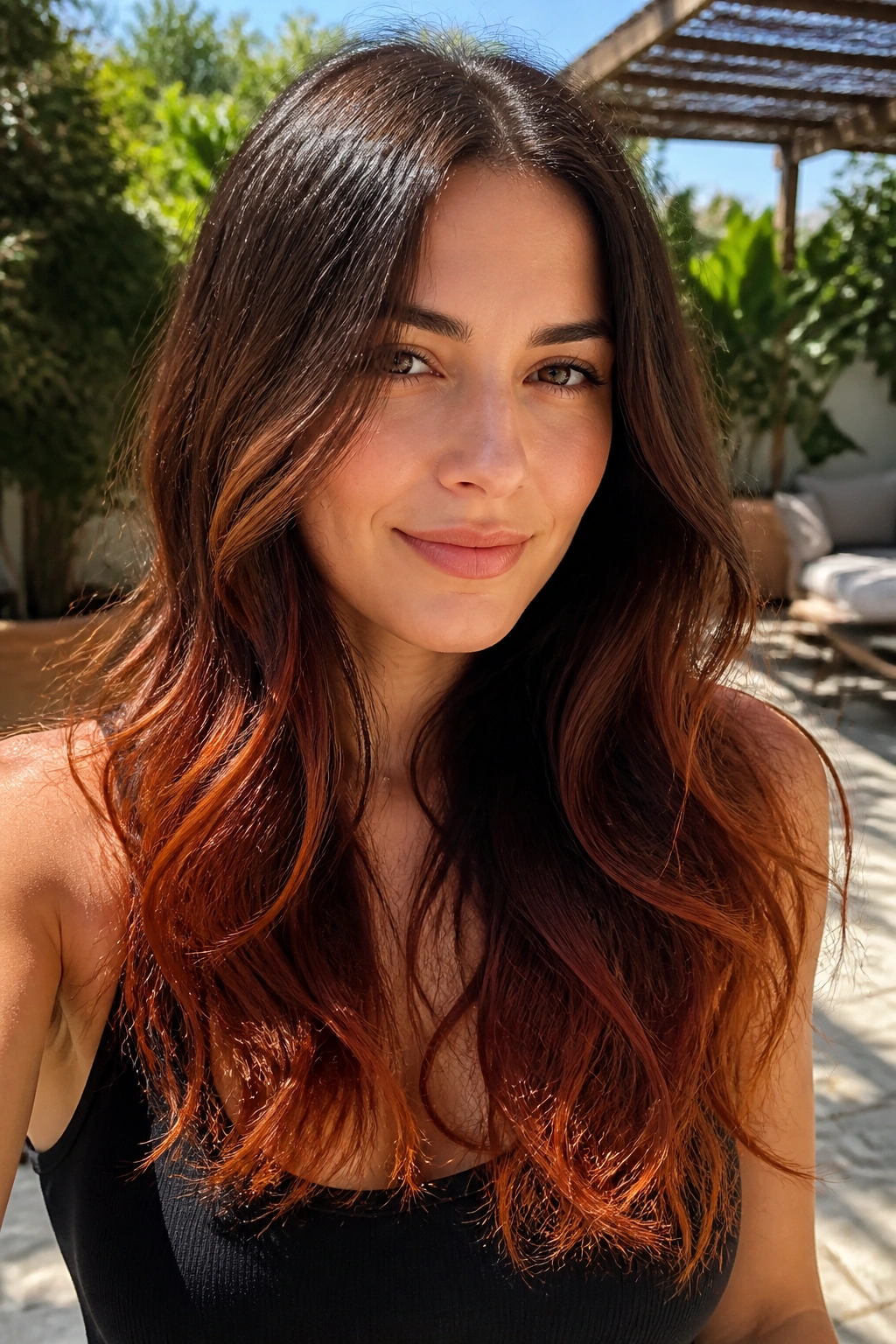
Rusty copper ends are for long hair that needs a jolt. Instead of spreading color from the root down, the copper stays concentrated through the lower half, then gets richer and more saturated near the last few inches. It’s bold, but it doesn’t overwhelm the whole head.
Why does this work so well? Because the ends are where brown hair can look the dullest. That’s where the light frays, where old color lives, where length sometimes starts to feel heavy. A rusty copper finish wakes up that lower zone and gives the cut a sense of motion again.
How to Use It
This style looks best on layered hair, loose curls, and longer lobs. Keep the top near the natural brown, then let the copper show in the bottom third. If the ends are already dry, ask for a gentler lift and a richer gloss instead of pushing for pale orange. Dry ends and strong lightener are a bad mix.
A blunt cut can wear this too, but the line will look sharper. That’s not wrong. It’s just a different mood.
Rusty copper ends have a bit of an edge. Not punk. Just honest.
10. Strawberry Copper Face Frame
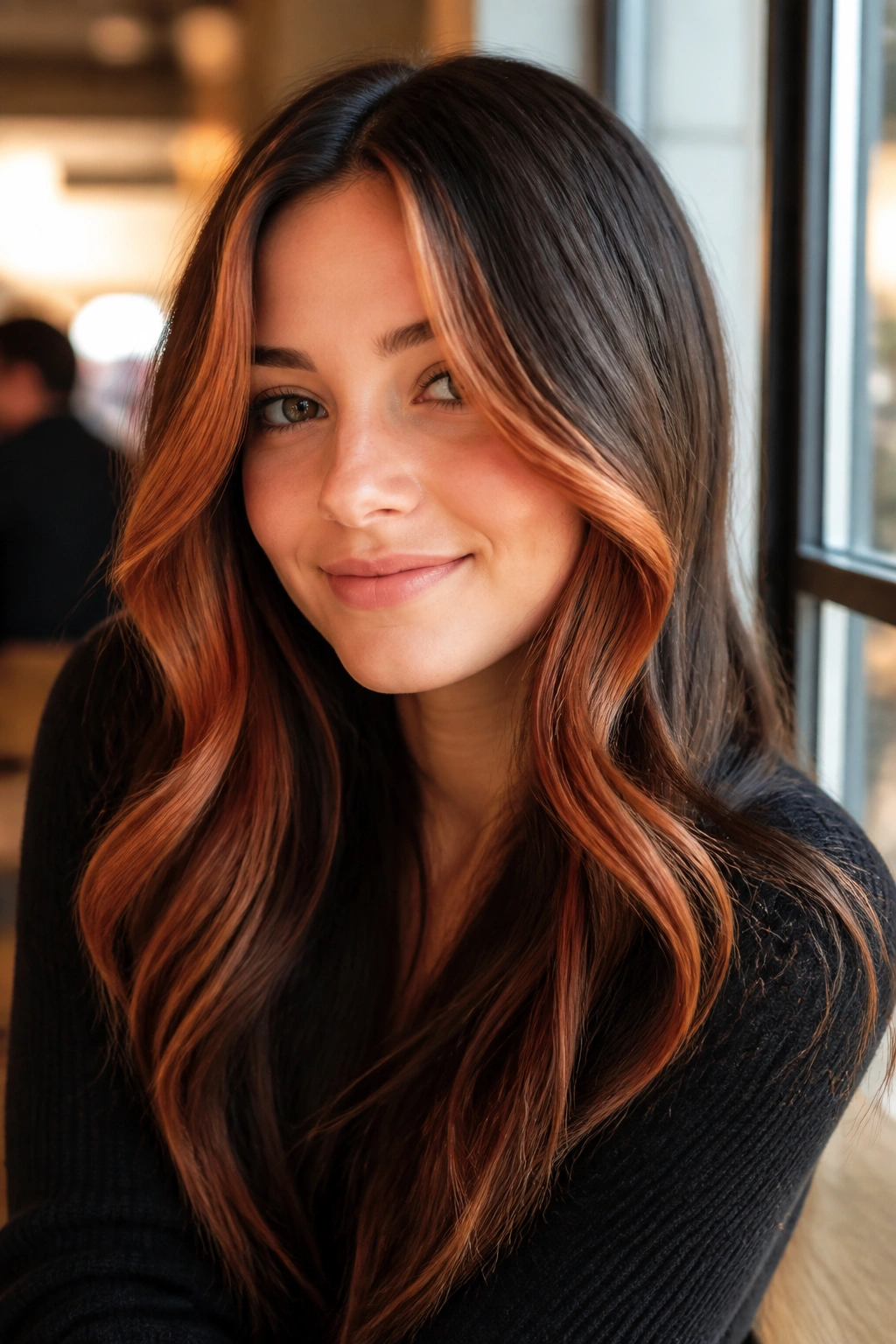
A woman with a deep brown lob and just a few strawberry-copper pieces around the face can look like she spent an hour on her hair when she actually spent ten minutes styling it. That’s the appeal here. The frame does the work.
This color leans more red than orange, which makes it a nice pick if true copper feels too golden for you. The strawberry tone softens the warmth and gives the front of the hair a fresher, brighter feel. On brown hair, especially if the base is neutral or cool, it keeps the warmth from looking brassy.
What to Ask For
- Fine to medium face-framing pieces only.
- A tone that sits between strawberry blonde and copper red.
- Brightness concentrated from the cheekbone down to the ends.
- A soft blend at the root so the front does not look pasted on.
This works well with center parts, but it can also look nice with a deep side part if you want one side to show more color. I’d choose it for anyone who likes a little flirtiness in their hair. It’s playful, but not silly.
11. Chestnut Base with Copper Lowlights
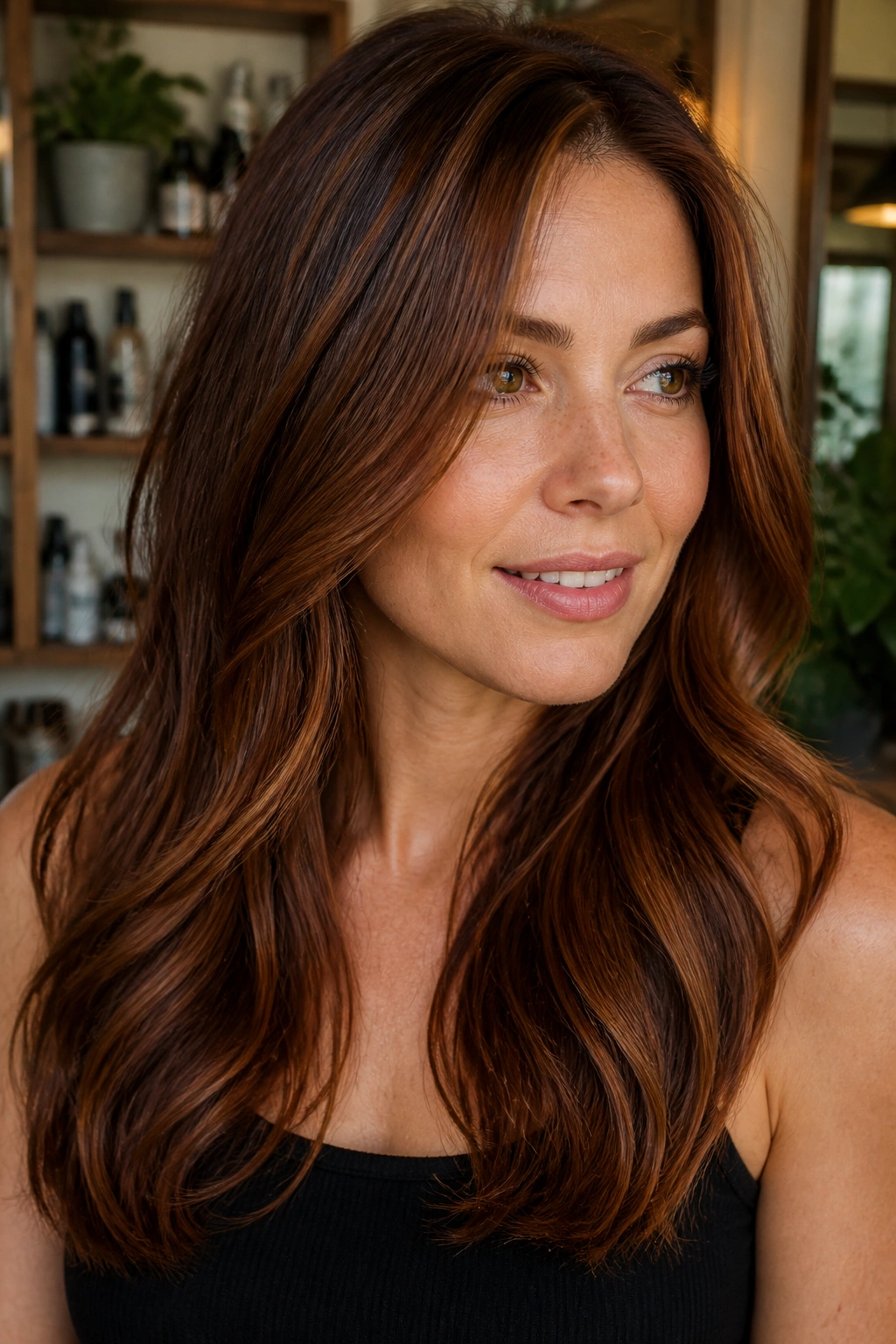
Lowlights are the move when your brown hair is already light enough and you want depth instead of more brightness. That sounds backwards at first, but it makes a lot of sense once you see it.
Copper lowlights are woven into a chestnut base in thinner, darker sections, which creates shadow and keeps the hair from looking washed out. The copper is still there. It just sits in the darker family, closer to rust, auburn, and penny brown than bright orange-red. The result is especially good on fine hair that needs the look of thickness.
This style can be overlooked because people think highlights are always better. They’re not. If a brown base already has enough light pieces, adding more brightness can make it frizzy-looking or disconnected. Lowlights pull everything back together.
A chestnut base with copper lowlights also grows out gracefully. The new growth blends into the darker sections, and the color stays wearable longer between salon visits. That matters more than people admit.
12. Smoked Copper Ribboning
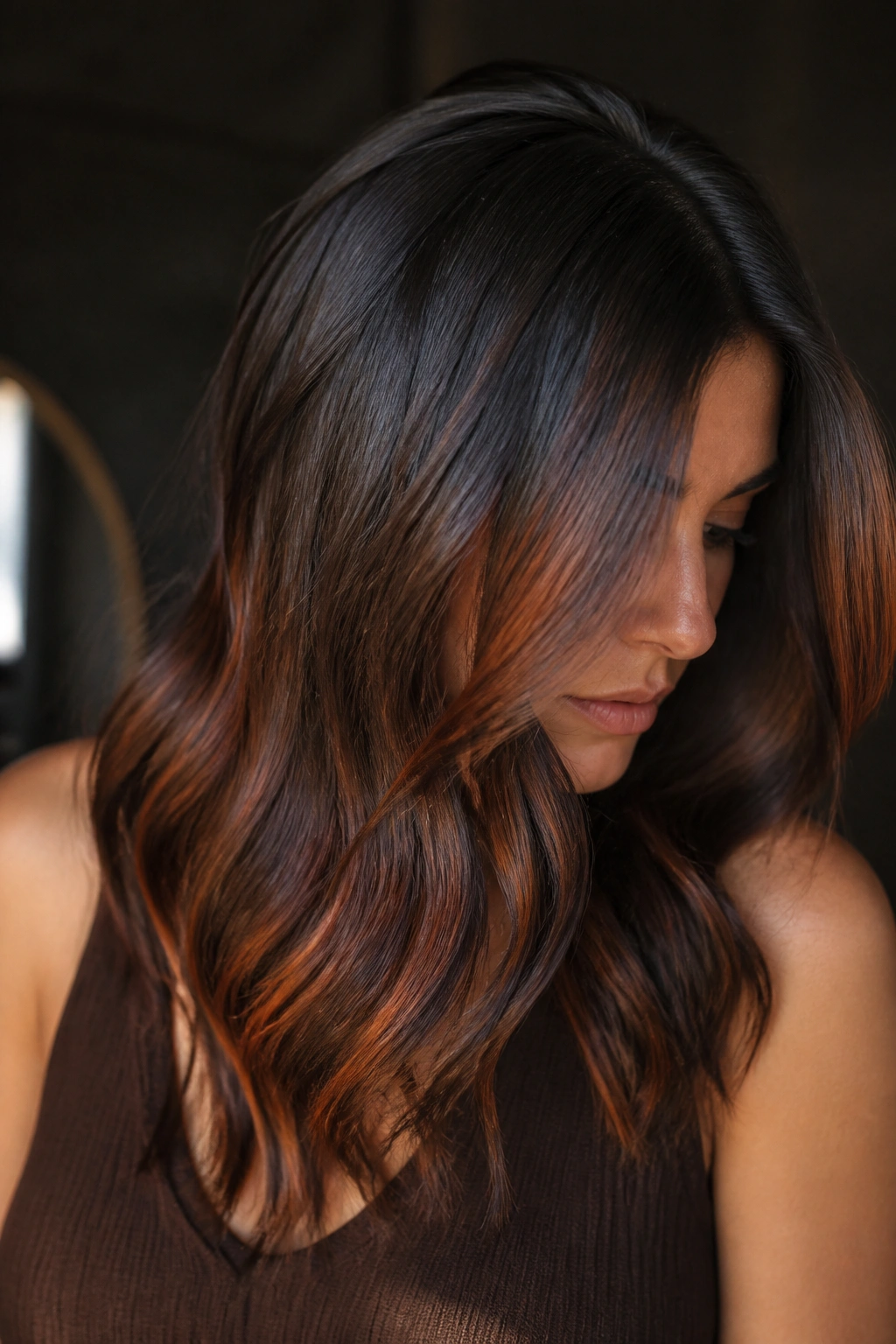
Smoked copper ribboning is what happens when you want copper red highlights, but you want them to feel muted, not shiny and loud. The copper sits under a veil of brown and ash, which gives the color a smoked, soft-focus finish.
Unlike bright copper streaks, smoked ribboning works better on brunettes who have cooler skin tones or a wardrobe full of black, navy, and gray. The tone doesn’t fight the clothes. It just warms the hair enough to keep it from looking flat. A few waves help, but even straight hair can wear this because the color contrast is gentle.
This version is a smart pick if your hair tends to turn orange when lightened. Ask for copper that leans more red-brown than gold-orange, then finish with a gloss that cuts brass. That last step matters more than people think. A good glaze can save the whole look.
I like this one on shoulder-length cuts because the ribbons can travel from the crown into the ends without feeling too busy. It’s quiet, but not shy.
13. Ginger Spice Foils
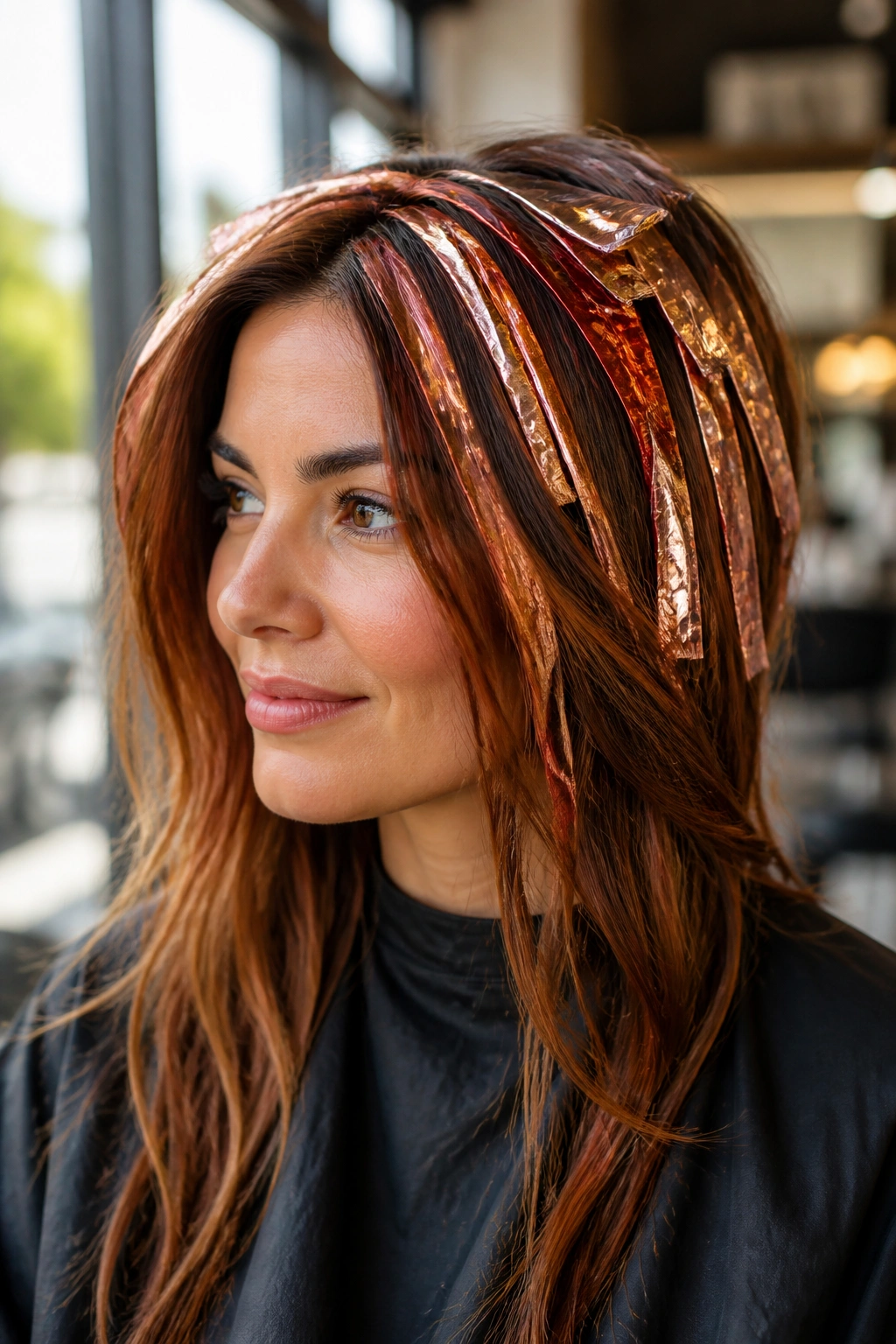
Ginger spice foils are brighter and more structured than balayage. If you like seeing the actual strands of copper and red, this is the route to take. Foils give the color a cleaner lift, which is handy when brown hair needs a noticeable change.
What Makes It Different
The foils usually sit closer together than a low-key highlight job, often with 1/4-inch slices or fine weaves spaced through the top and sides. That means the copper has a stronger visual presence. On a medium brunette base, ginger spice can look lively and fresh. On dark brown hair, it may need a second tone underneath so the color doesn’t read flat.
There’s a little retro energy here. Not costume-y. Just a touch of old-school salon color, the kind that looks crisp and deliberate. If you wear a blunt cut, the foils can look graphic. If you wear layers, they soften up fast.
Best Ways to Style It
- Loose curls make the copper pieces stand out.
- A blowout shows the contrast between each foil.
- A half-up style keeps the brightest sections near the crown.
- A shine spray helps the red tones stay glossy.
This is one of the most visible copper-red options on brown hair, and I mean that in a good way. It shows up.
14. Toffee Brown with Copper Streaks
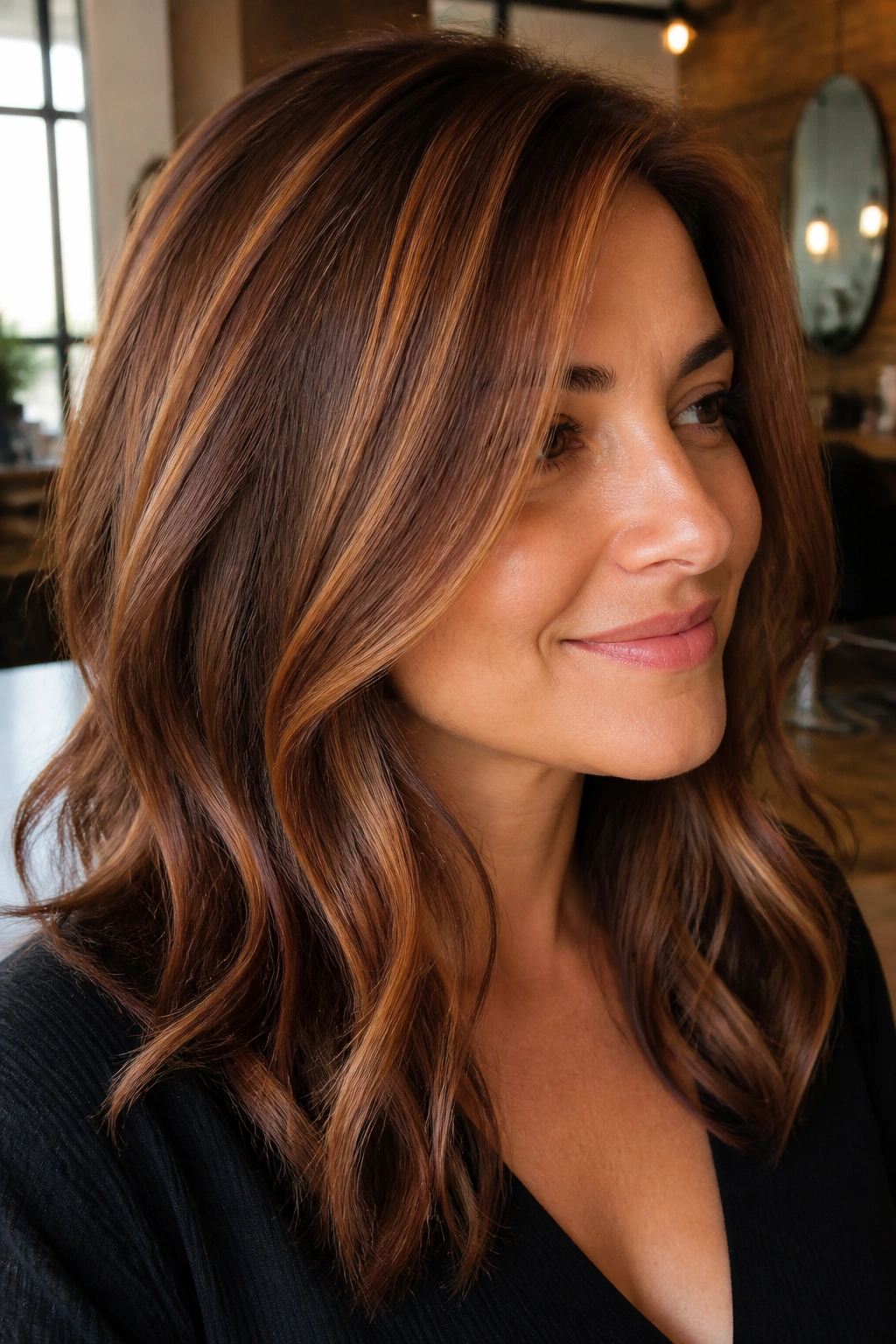
Toffee brown with copper streaks is for people who want warmth first and drama second. The copper sits inside a toasted brown base, so the whole look feels cohesive even when the highlights are visible.
The streaks should be thin enough that they read as texture, not blocks of color. I usually prefer them around the part line, temple area, and top layers where the head gets the most light. That gives the hair a lifted look without making the lower lengths too busy. On straight hair, it can look sleek. On wavy hair, it gets a nice, soft flicker.
This is also one of the easiest copper looks to wear to work or in settings where you want color that behaves. It’s not invisible. It just isn’t trying to take over the room. That’s a useful quality, honestly.
A toffee base helps the copper stay warm rather than red-hot. If your natural hair sits in the medium brown range, this may be one of the easiest styles to maintain because the grow-out is forgiving and the contrast is moderate.
15. Cherry Copper Accent Pieces
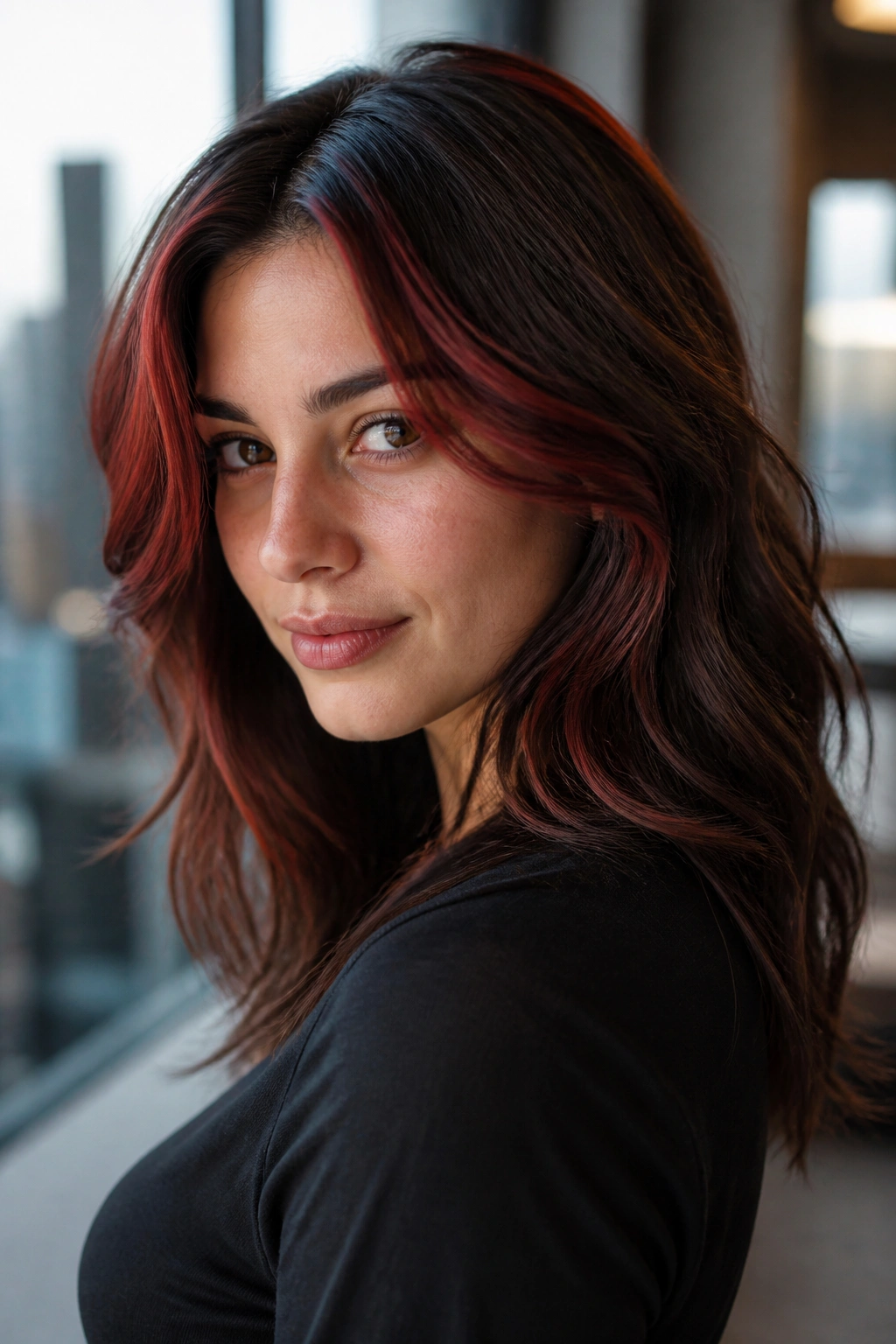
Why do a full head of copper when a few cherry-toned pieces can change the whole read of brown hair? Because sometimes the best move is not more color. It’s smarter color placement.
Cherry copper accent pieces lean a little redder and a little darker than classic copper. They work especially well in layered bobs, lobs, and long cuts with movement because the accent pieces can hide, then flash when the hair shifts. That little reveal is what makes this style feel alive.
How to Place Them
- Put the brightest pieces near the front and crown.
- Keep the lower sections more natural so the accent pieces stand out.
- Use a fine weave if you want a subtle finish.
- Use a chunkier slice if you want a bolder streak effect.
The cherry note gives the color more depth than a plain orange-copper piece. It can also flatter brown eyes and warm complexions in a way that feels richer than pure ginger. The color looks especially good when the cut has a bend or a slight wave.
This one is for a person who wants a little attitude. Not a lot. Just enough.
16. Copper Shadow Root with Bright Ends
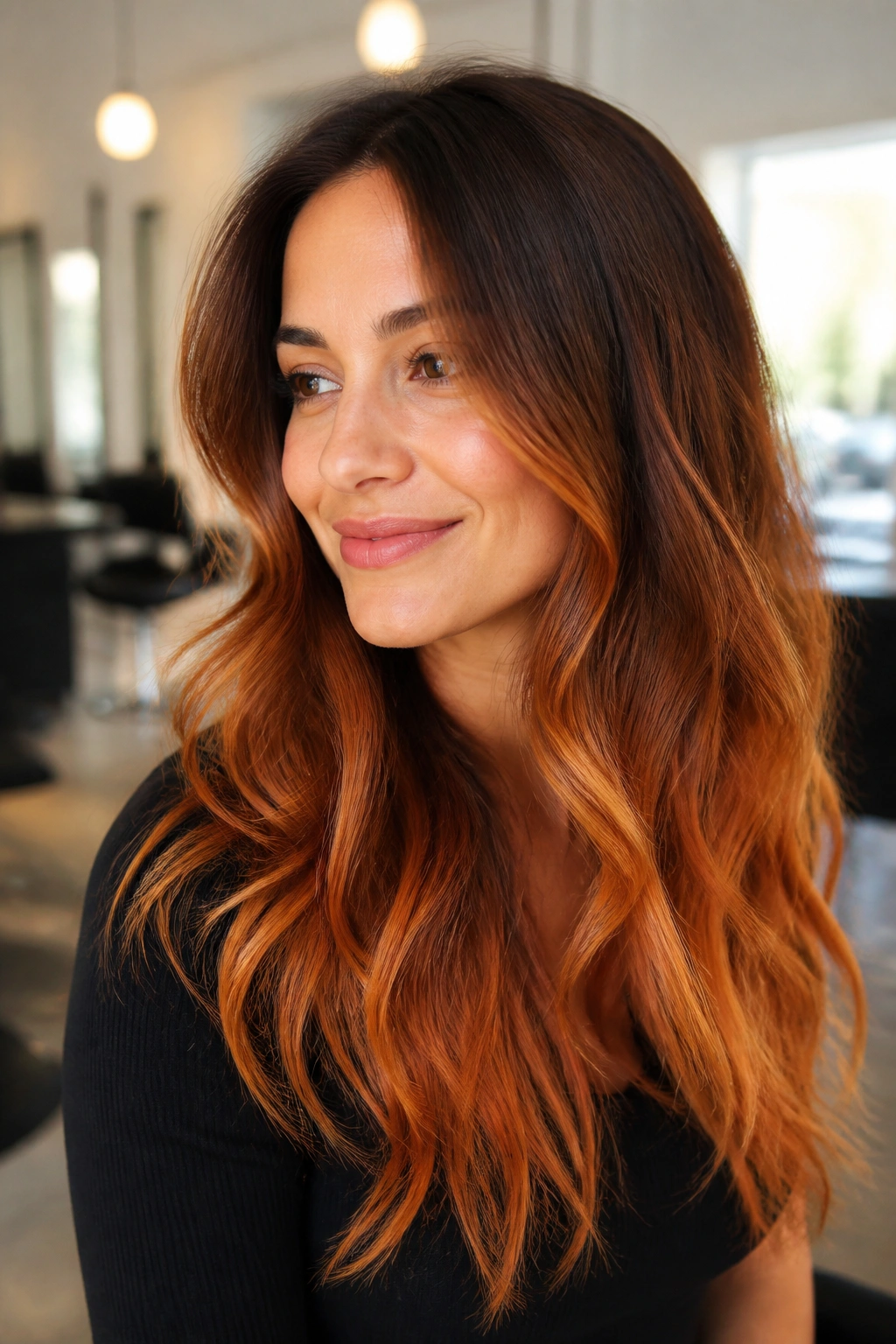
A copper shadow root solves one of the biggest problems with bright red highlights on brown hair: grow-out. Keep the root dark, brighten the mids and ends, and suddenly you have a color that can survive real life.
The root shadow usually stays close to the natural brunette level for the first 1/2 inch to 1 inch, then the copper opens up underneath. That makes the whole style feel softer from day one, and it keeps regrowth from looking obvious later. The bright ends catch light when the hair moves, which gives you the drama where you want it most.
A Practical Setup
This style is smart for people who like to go a little longer between salon visits. It also helps if your natural base is deep brown and you don’t want to commit to frequent root touch-ups. The copper can be vivid, but the root keeps it grounded.
- Best on long layers or textured mid-length cuts.
- Works well with a demi-permanent gloss on the ends.
- Keeps the crown lower-maintenance than all-over copper.
- Gives curls and waves a stronger color payoff at the bottom.
I like this choice because it understands how hair actually grows. That seems small until you’re three months out and still not panicking.
17. Rose-Copper Brown Blend
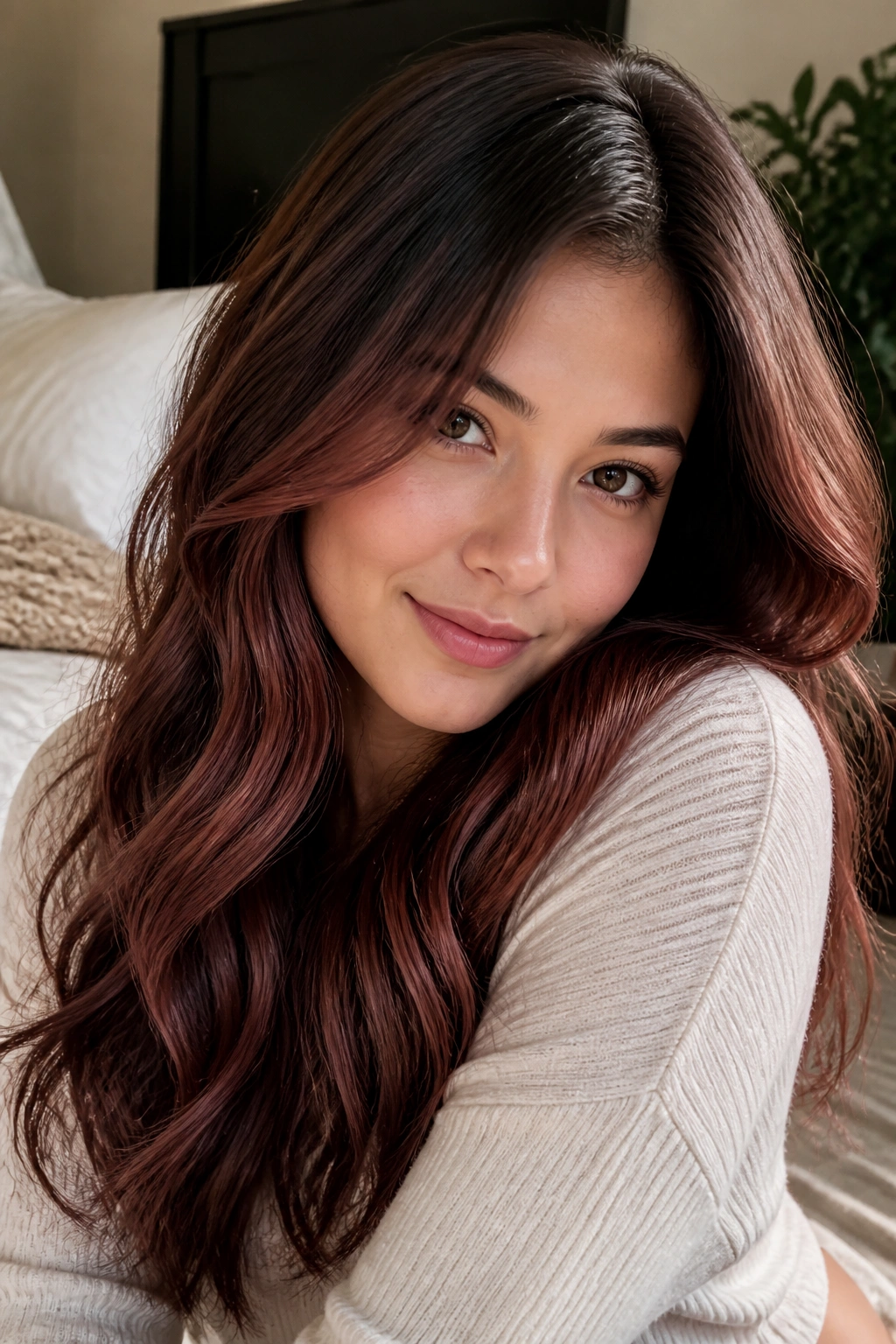
Rose-copper brown is the softer, more romantic side of the copper family. It has a pink-red undertone tucked inside the warmth, which keeps it from reading as plain orange on brown hair.
The blend works beautifully when the goal is color that feels polished but not stiff. The rose note softens the copper and gives the whole finish a gentler glow. On chestnut or mocha hair, it can look almost velvety. On darker brown, it appears in flashes rather than full brightness, which is part of the appeal.
This is a good fit if bright copper tends to feel too warm against your skin. The pinker edge can make the shade more flattering without needing a huge contrast. You still get dimension. You just get it in a quieter way.
I’d pair this with soft styling — bends, loose twists, or a brushed-out wave. Sharp curls can push it too far toward red. Soft movement keeps it plush.
18. Dimensional Copper Gloss on Espresso Hair
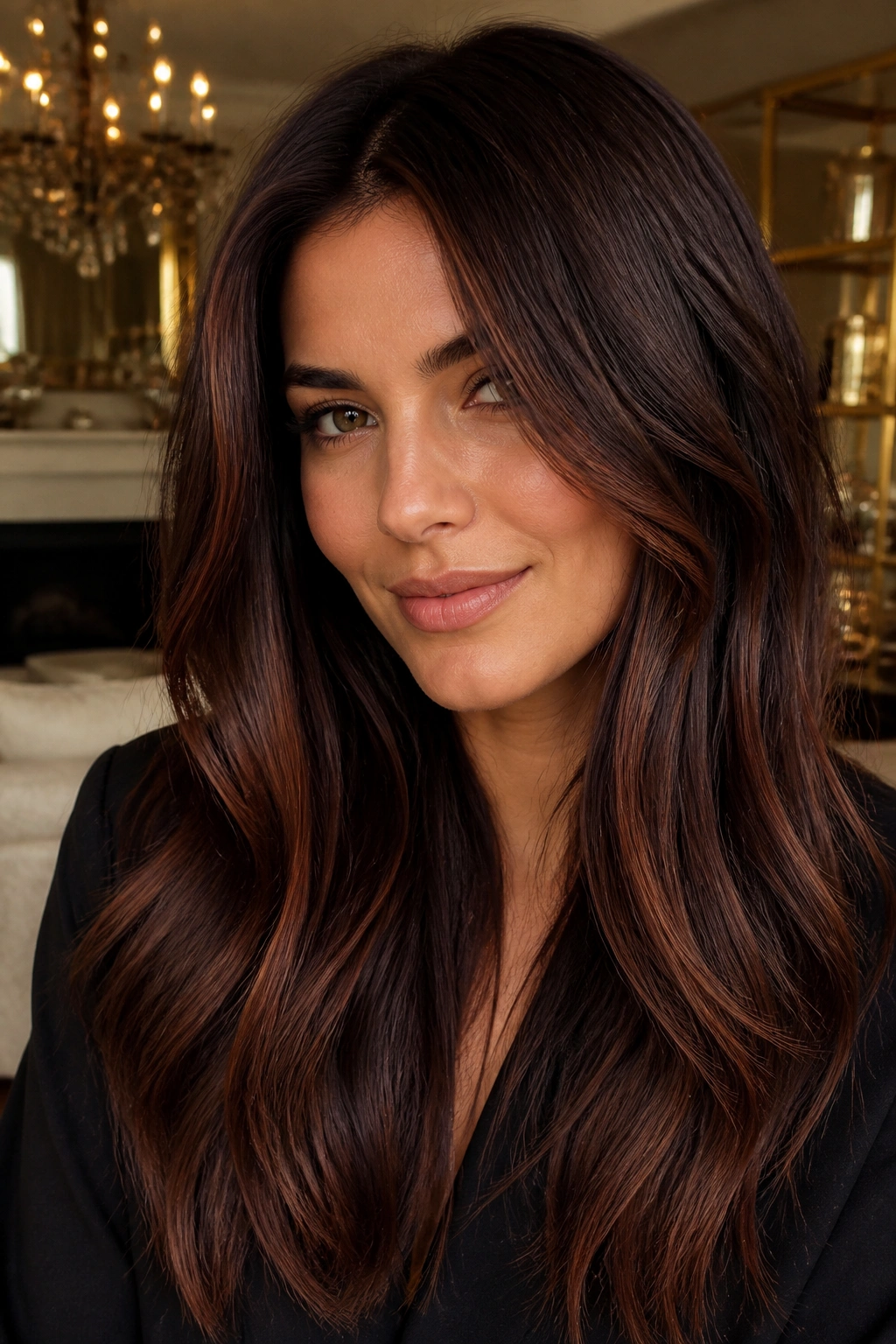
Espresso brown hair does not always lift cleanly into bright copper, and frankly, that is fine. A copper gloss can give you the warmth without asking your hair to do too much.
This look is less about obvious highlights and more about a translucent layer of color that sits over very fine lightening. The result is dimensional because the base stays dark while the gloss catches in the lighter strands. It’s a smart option when you want copper red highlights for brown hair but your starting shade is deep enough that traditional highlights would need a lot of processing.
Why It’s Worth Considering
A demi-permanent gloss usually fades softer than permanent color, which means the look can settle in nicely instead of going harsh as it grows out. On espresso hair, that matters. The shine often ends up being the first thing people notice, then the copper shows up as they move.
This style works best if you like sleek hair, polished curls, or a shiny blowout. It can also be refreshed without redoing the whole head, which saves time and keeps the ends from getting overworked.
If your hair is dark brown and you hate stripy highlights, start here. It gives you warmth, movement, and a cleaner finish than a lot of brighter copper jobs.
Final Thoughts
Copper red highlights on brown hair work because they respect the base instead of fighting it. Some versions are soft and threaded. Some are loud in the front and quiet everywhere else. The best one is the one that fits your haircut, your upkeep tolerance, and how much you want the color to show when the light moves across it.
If you’re choosing between a few shades, think about depth first and brightness second. That’s the part most people skip, and it’s why some copper jobs look flat while others look expensive. A good colorist can shift the tone warmer, cooler, redder, or more muted, but placement is what decides whether the result feels polished.
My blunt advice: bring photos of the finish you want, not just the shade. A copper ribbon, a babylight, and a money piece can all be called “copper highlights,” and they do not behave the same way. Pick the one that matches the way you actually wear your hair, and the color will do the rest.
