



Red lowlights for brunette hair do something highlights rarely manage: they make brown look deeper, richer, and a little more alive without stripping away what makes it brunette in the first place. A good red lowlight can read like cherry in the sun, wine in shade, or a soft copper glow when the hair moves. The wrong red? That’s when brown starts drifting toward orange, or worse, looking like one flat block of color.
The trick is matching the red to the brown. Dark espresso hair can take blue-reds, merlot, and blackberry tones with ease. Medium brunette shades usually look best with auburn, cinnamon, and copper-brown ribbons that sit one or two levels deeper than the base. Placement matters too. A few well-placed panels near the face can wake up a whole cut, while hidden underlayers give you movement that only shows when the hair sways or gets pulled up.
Red is also less forgiving than brown. It fades faster, especially if the hair is washed hot or overexposed to heat. That does not mean you should avoid it. It means the shade needs to be chosen with a little care, and the finish needs to be thought through instead of slapped on.
1. Cherry Cola Lowlights
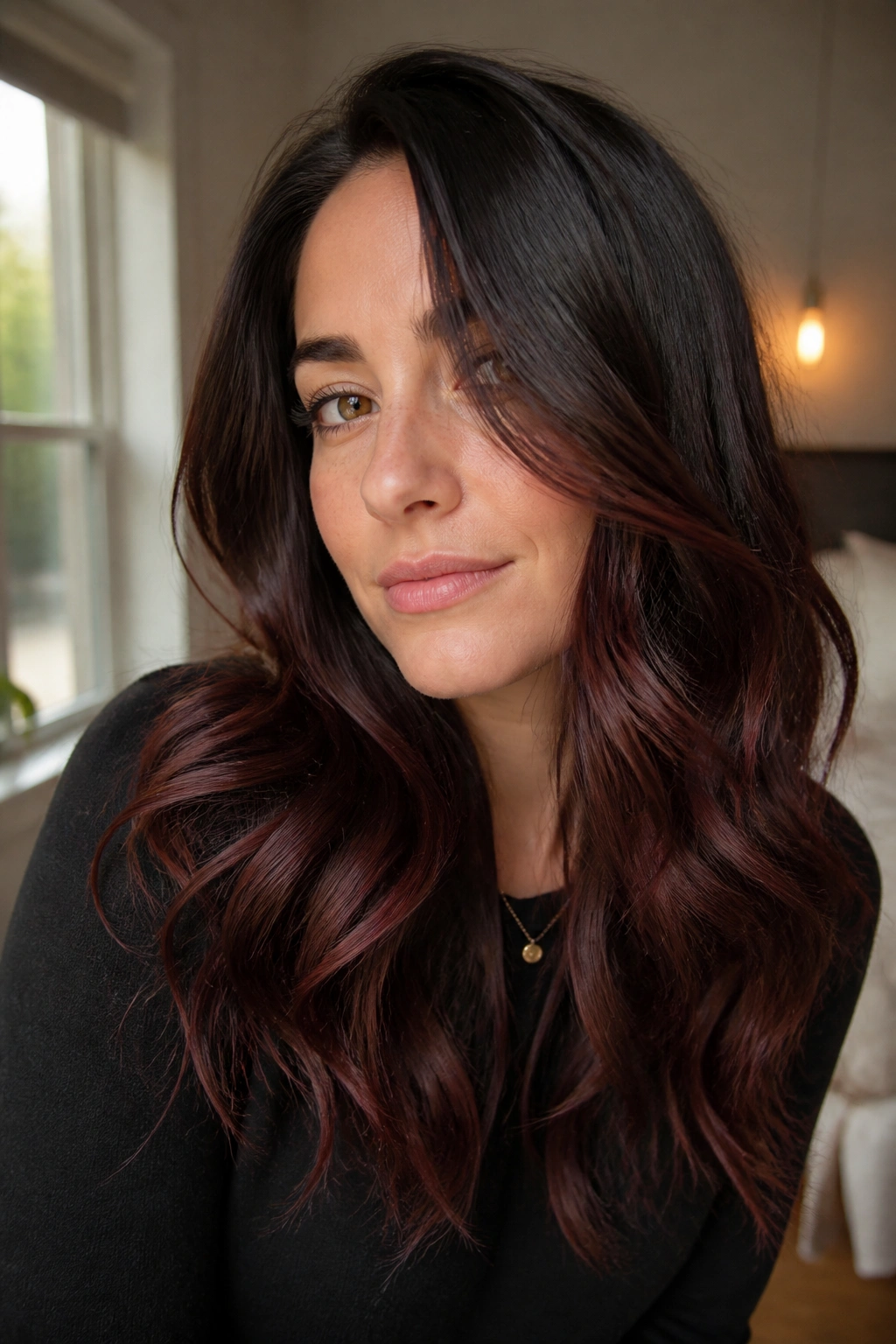
Cherry cola is the red brunette choice that never looks accidental. On deep brown hair, it reads like velvet with a wine tint; on medium brunette hair, it gives the kind of shine that makes layers look more expensive than they are. It works because the red leans cool enough to stay grounded.
Why It Works on Dark Brunettes
Cherry cola lowlights are best when the brunette base sits around level 3 or 4. That depth gives the red enough darkness to feel rich instead of loud. Ask for red-violet ribbons about 1/8 to 1/4 inch wide, woven through the midlengths and ends.
- Best for espresso, dark chocolate, and deep chestnut bases
- Looks strongest in movement, especially on wavy hair
- Fades into a soft berry tone instead of a harsh orange cast
My favorite way to wear it: keep the top surface a shade quieter and let the red live underneath. That gives you surprise when the hair swings, which is far better than having color shout from every angle.
2. Auburn Ribbon Lowlights
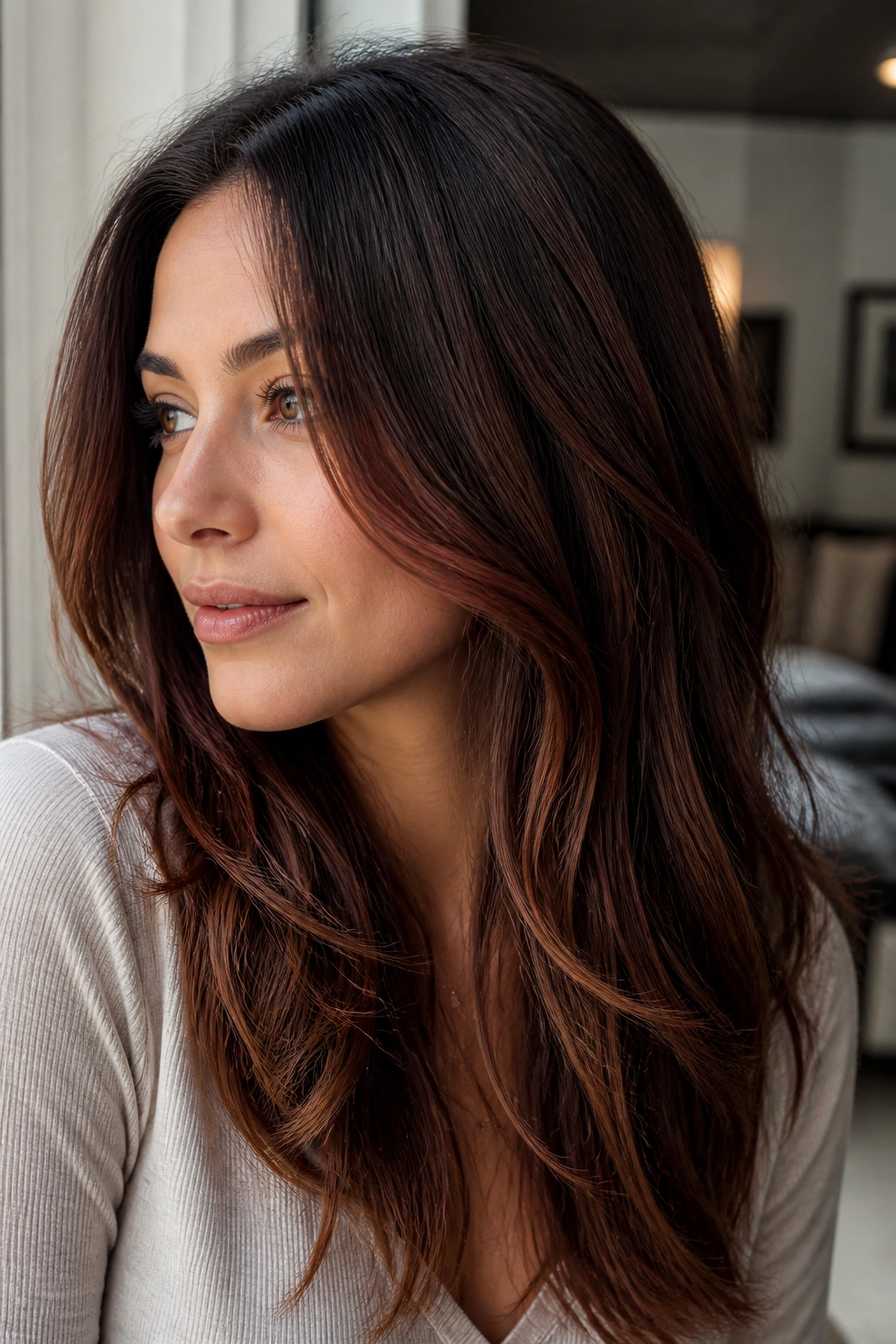
Auburn ribbons are the easiest warm red to wear on brunette hair. They bring softness without making the color look cooked or overly bright, and that matters if you wear your hair straight most days. Auburn has a brown backbone, so it blends instead of sitting on top like paint.
The sweet spot is medium brunette hair with golden or neutral undertones. If your brown base already leans warm, auburn lowlights can be kept subtle and placed through the midlengths for a sun-warmed feel. If your hair is cooler, ask for a softer auburn with a touch of brown mixed in so it does not tilt orange.
The thing I like here is the grow-out. Auburn does not demand perfect upkeep every few weeks. It softens gracefully, which is rare for red.
3. Mahogany Veil
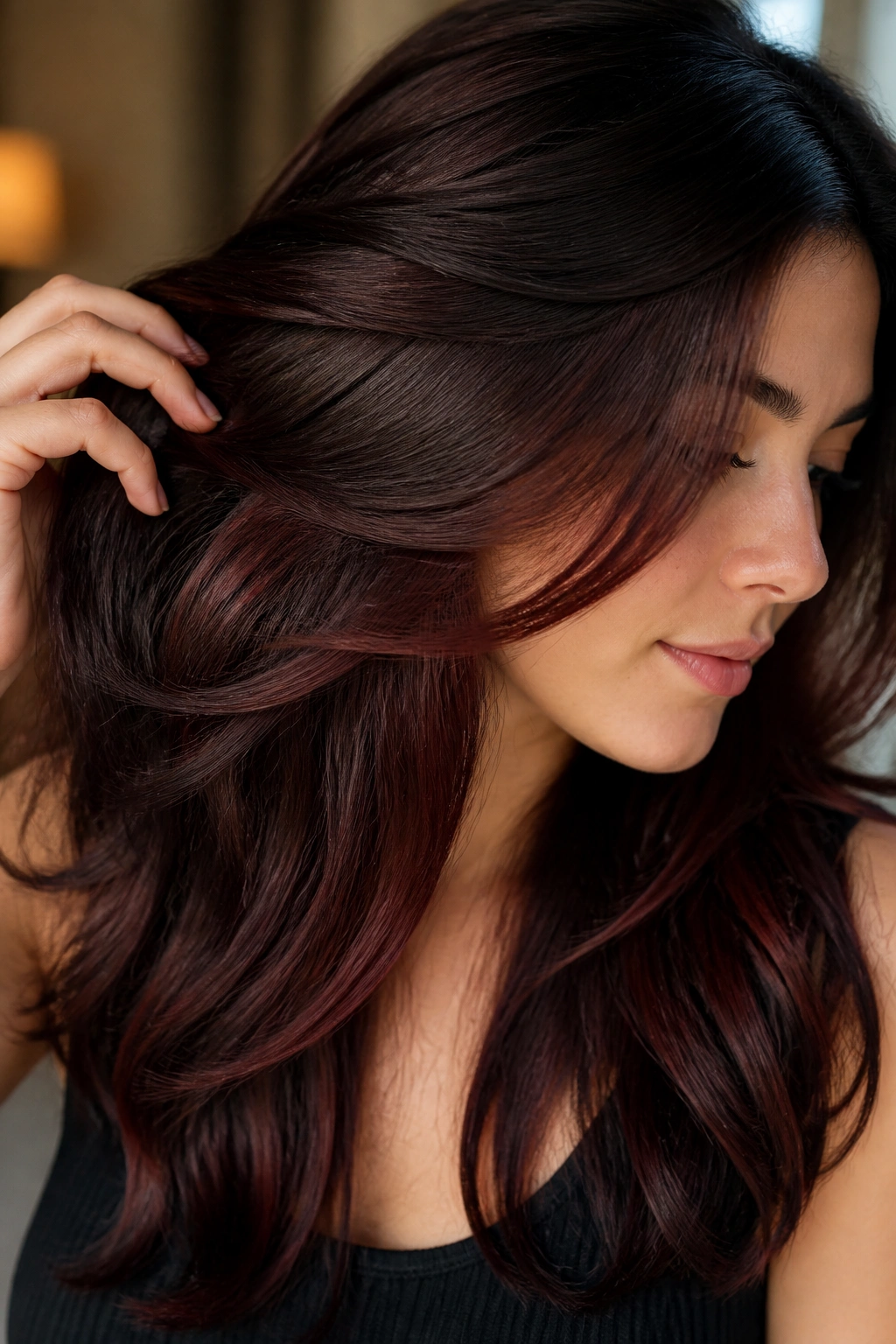
Why does mahogany look so clean on brunette hair? Because it behaves like shadow first and color second. That is the whole appeal. It does not sit on top of the brown; it slips into it, which makes the finish look polished even when the placement is loose.
Mahogany veil lowlights work especially well on layered cuts, where the color can peek through in thin sheets rather than chunky blocks. Ask for a demi-permanent mahogany glaze through the interior layers and nape, leaving the top surface lighter and more natural. That creates depth without making the hair look striped.
How to Ask for the Veil
Tell your colorist you want soft mahogany panels, not obvious streaks. A few interior foils around the crown and underlayers are usually enough. If the hair is fine, keep the saturation light; fine hair can get overwhelmed fast.
4. Copper Face-Framing Lowlights
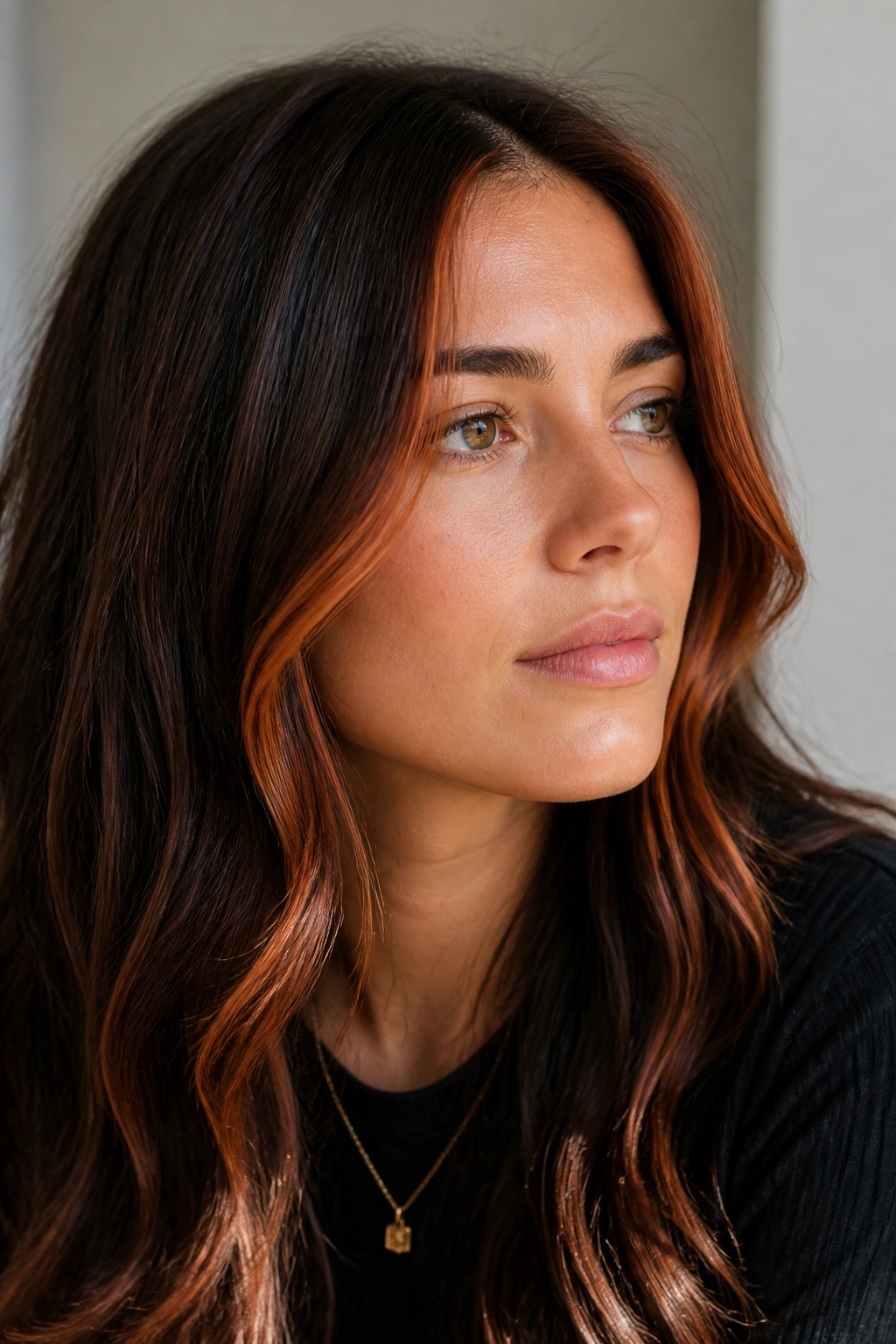
A copper face-framing lowlight can change a whole cut in about ten minutes. Well, not literally ten minutes in the chair, but that is the part people notice first. Around the face, even a narrow copper ribbon can make brunette hair look fresher and the skin look less flat.
- Place the copper around the cheekbones and jawline
- Keep the width narrow, around 3/8 inch
- Choose a deeper copper on dark brown hair; use a softer copper on chestnut bases
- Ask for a gloss finish if you want shine without harsh contrast
This works because the front pieces catch light every time you move. It is a good option if you wear your hair down often and want the color to do some of the work for you. The rest of the hair can stay quiet.
5. Burgundy Underlayer
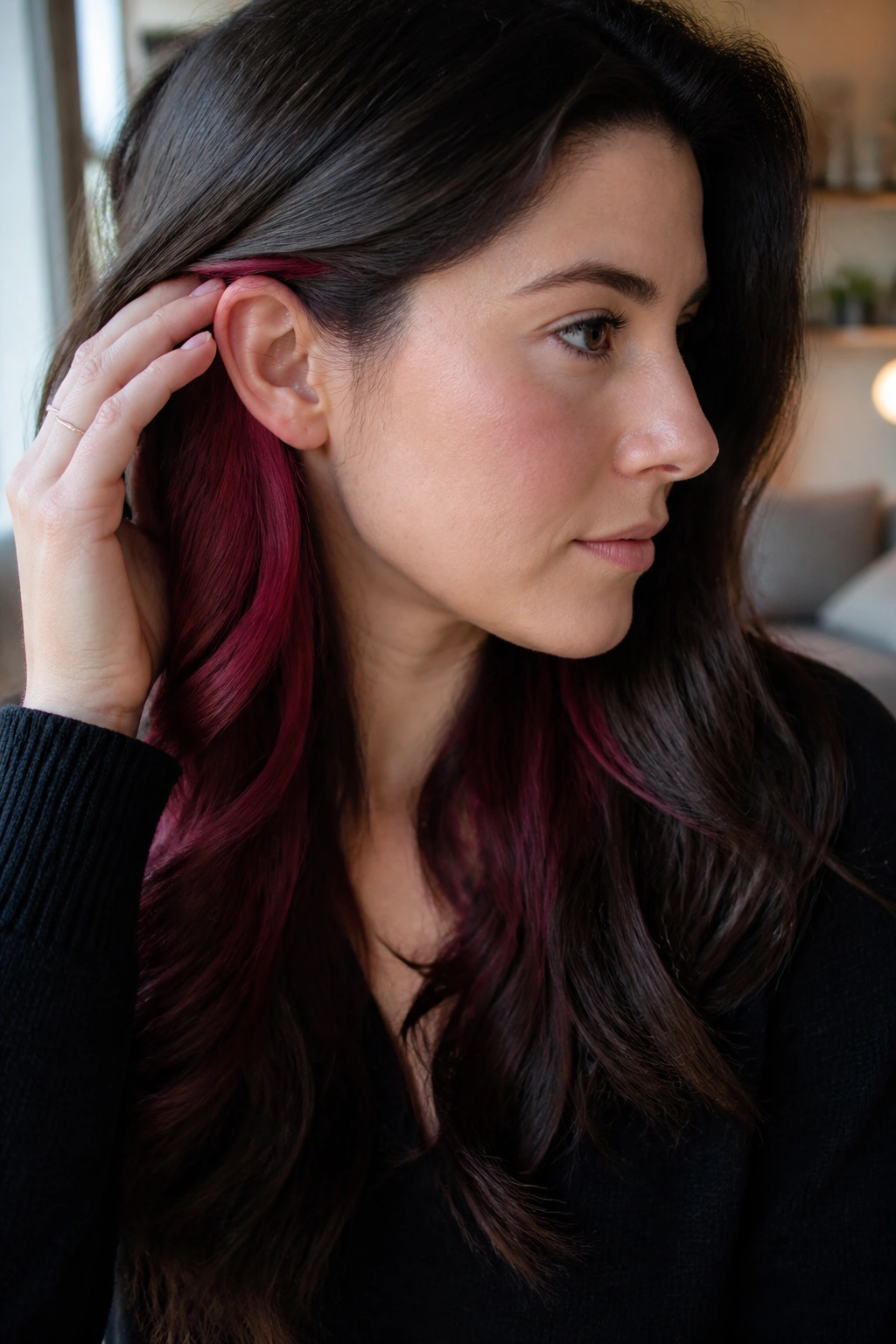
Burgundy underlayers are for the person who likes a little drama but does not want every mirror moment to feel obvious. The color sits beneath the outer sheet of brunette hair, so it reveals itself only when you tuck your hair behind an ear, wear a ponytail, or catch a breeze. That hidden quality is the charm.
This idea suits long bob cuts, layered shags, and straight hair that needs movement. Ask for burgundy lowlights concentrated at the nape and inner crown, then keep the top layer darker and softer. The contrast should feel like a secret, not a stripe.
I like this placement because it keeps the brunette base dominant. The red still matters. It just does not need to announce itself from across the room.
6. Rosewood Lowlights
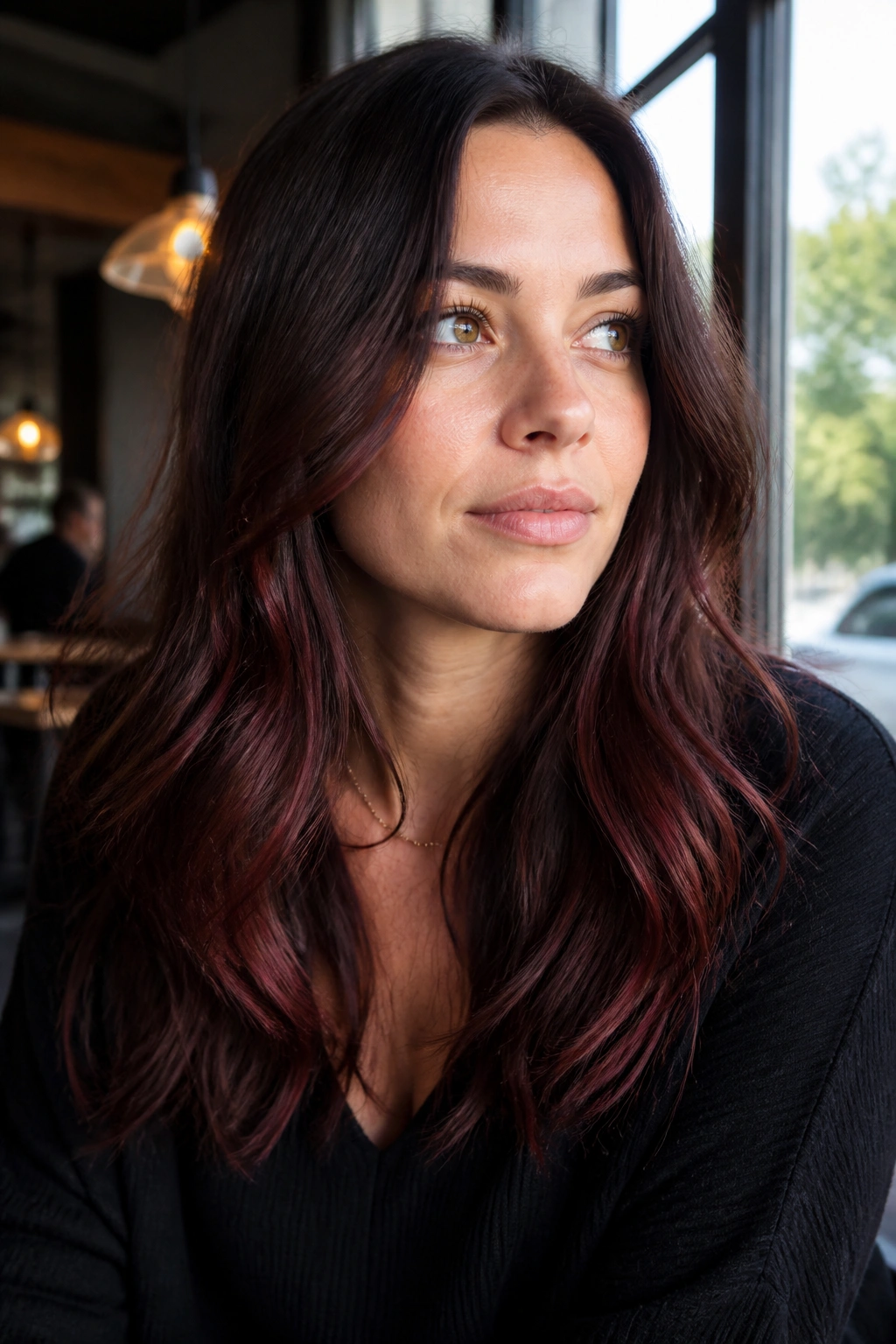
Rosewood sits between red and brown, and that is why it is so easy to wear. Compared with mahogany, it has a softer, slightly dustier finish. Compared with auburn, it feels less fiery and more muted. If you want red that behaves like a grown-up version of pinkish brown, rosewood is the lane.
It flatters cooler brunettes, especially hair with ash or neutral undertones. Ask for a rosewood glaze one level deeper than your base and keep the placement thin through the midlengths. On a blunt bob, that gives the cut texture. On long layers, it gives the ends a lived-in richness.
This is the kind of red that looks expensive in ordinary daylight. No sparkle needed.
7. Rusted Brunette Ends
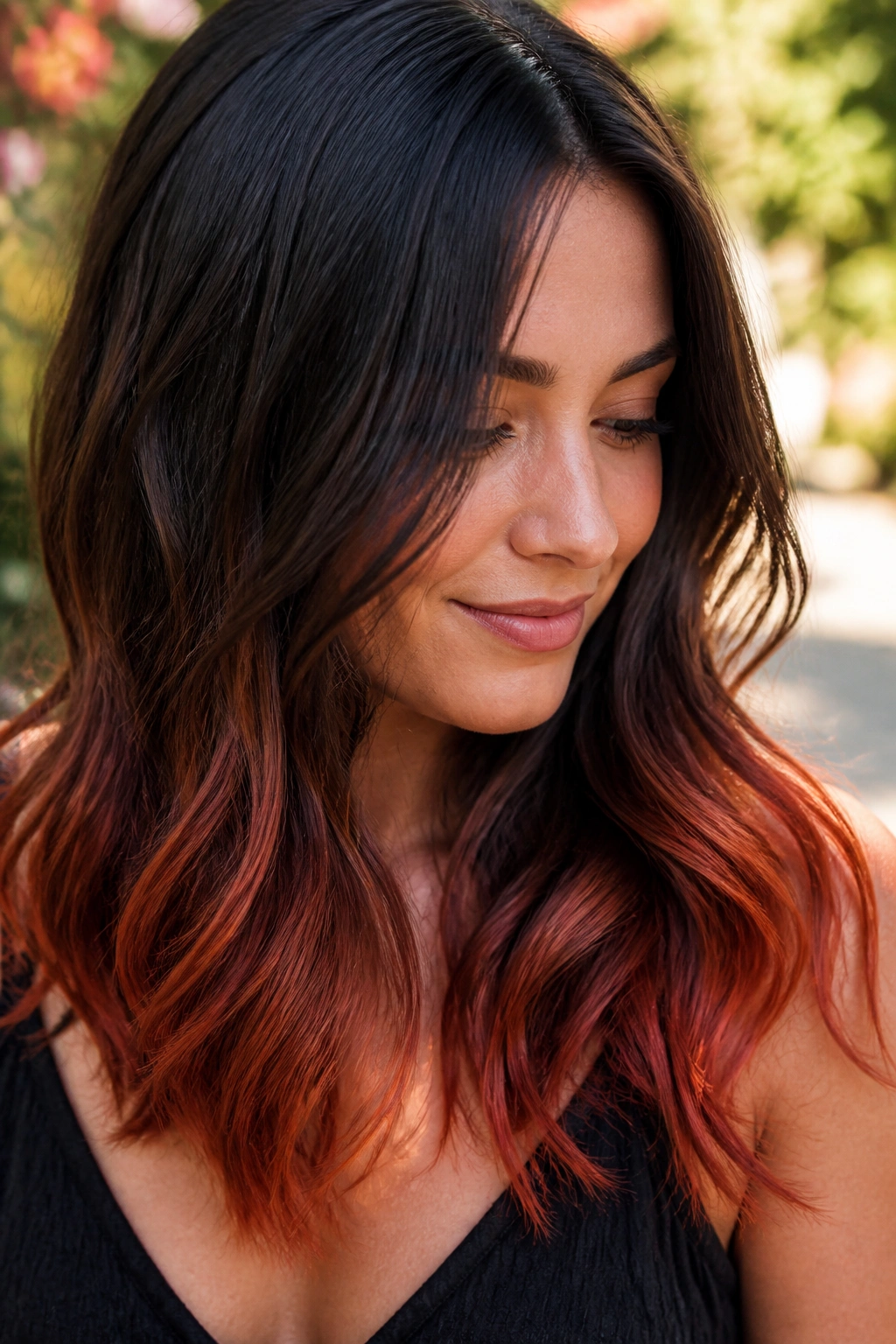
Rusted ends are a smart choice when you want the red to feel concentrated instead of spread everywhere. The color lives mostly on the bottom 3 to 4 inches, so the upper half of the hair stays brunette and the lower half picks up a burnished rust tone. That makes the cut look heavier in a good way.
This is especially nice on long hair that tends to look thin at the ends. The rust color gives the bottom more visual weight, which helps the whole style look fuller. Ask for a soft rust-red tone with brown mixed in, not a bright orange red. That distinction matters.
Wear it loose. Braids and half-up styles show it off well, and they keep the finish from looking too neat.
8. Merlot Panels
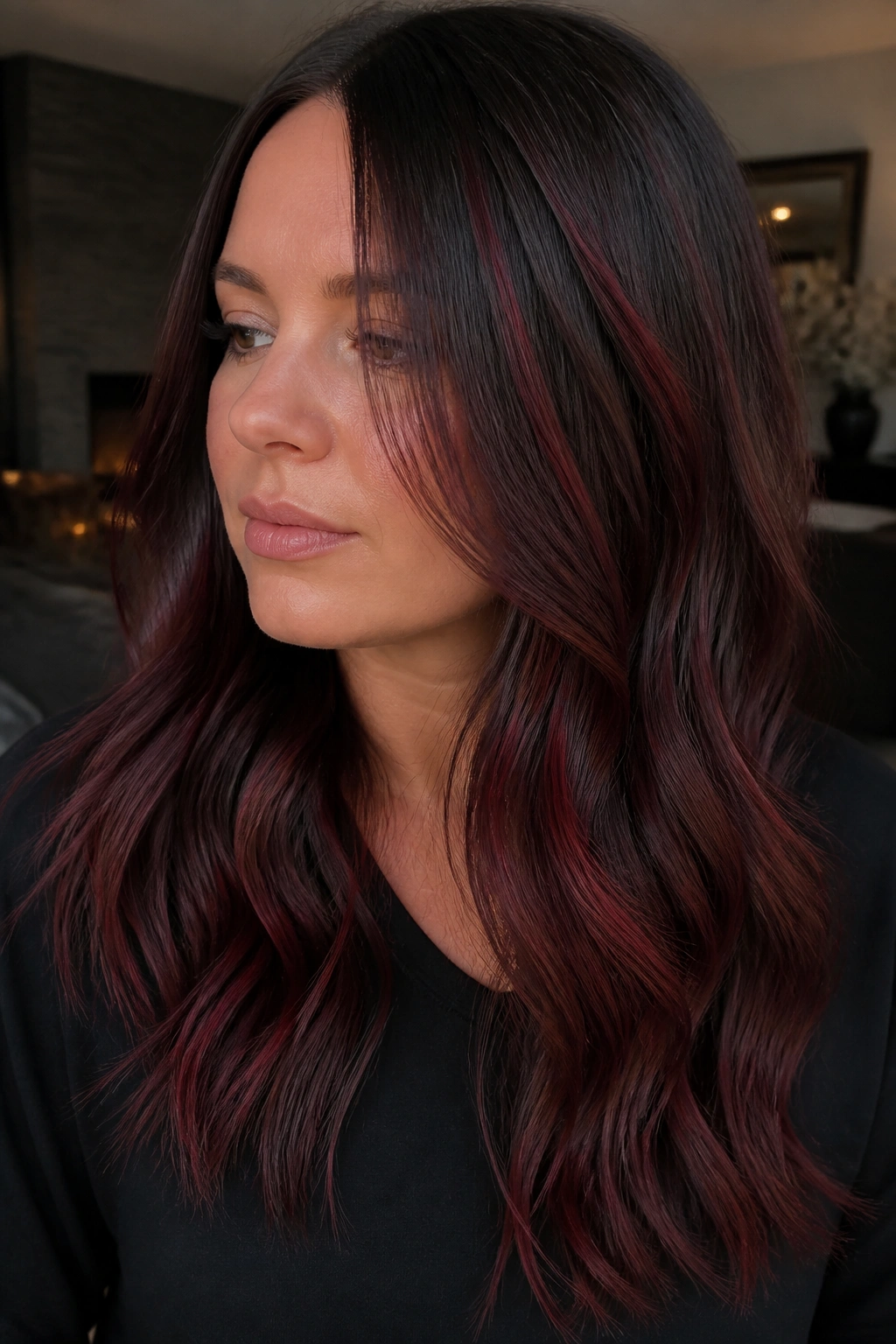
Merlot panels are for brunette hair that needs deeper shadows, not a lighter red glow. The color is darker and wine-like, which makes it feel elegant on thick hair and dramatic on blunt cuts. This is not a soft whisper of red. It is a richer statement.
If your hair is dense, broad panels work better than tiny ribbons. They give the eye something to follow and keep the color from disappearing into the base. Ask for diagonal sections through the midlengths, about an inch wide, so the red shows in slices rather than patchy blocks.
The best thing about merlot is how it changes under different light. Indoors, it reads nearly brown. In daylight, the red comes alive.
9. Cinnamon Babylights
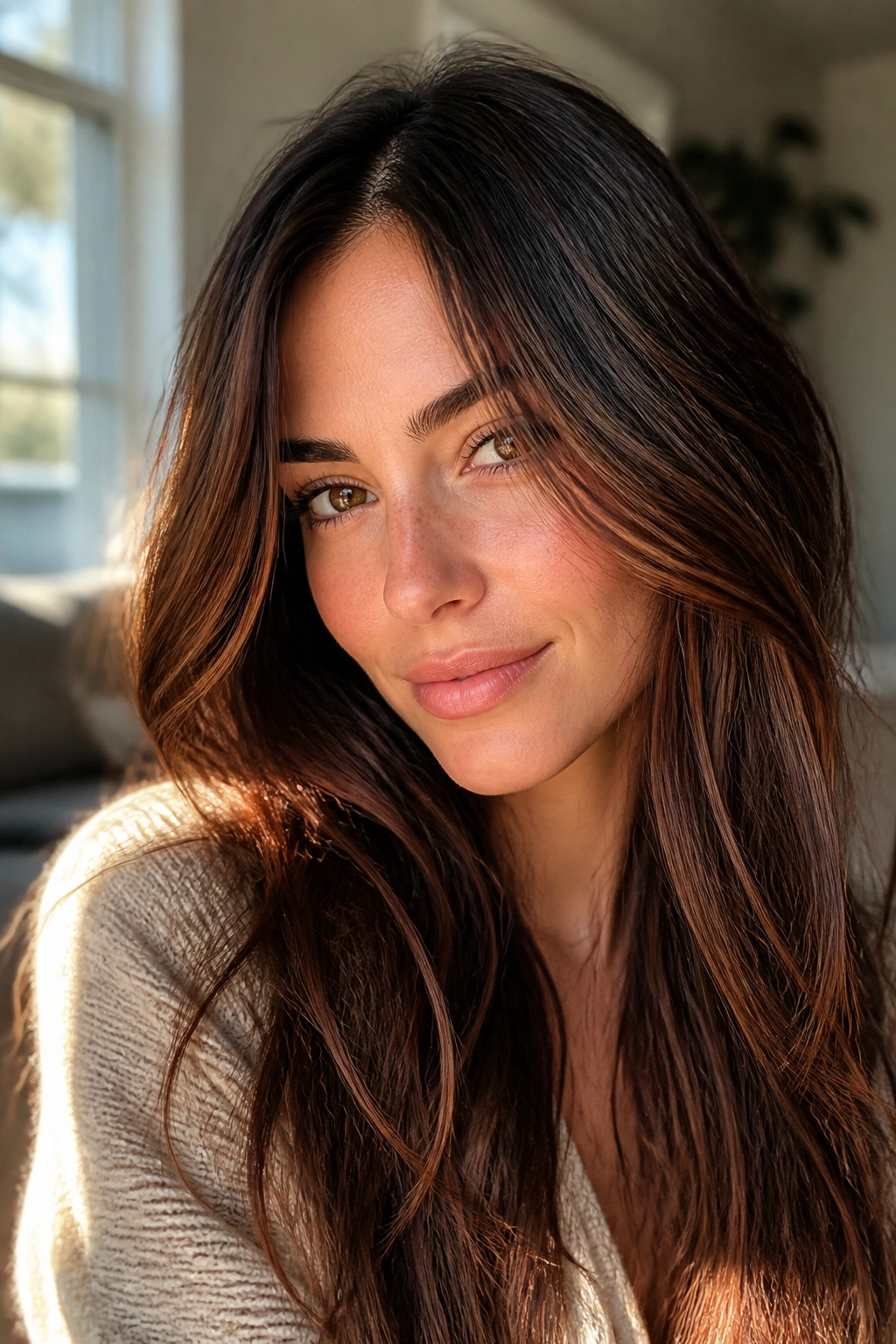
Cinnamon babylights are tiny, fine, and quietly useful. They are a good answer when brunette hair needs warmth but you do not want the color to look like a full styling decision every morning. The strands are so small that the red-brown effect feels woven in rather than painted on.
What Makes Them Different
Babylights usually sit close to the surface and around the part line, which means they show just enough to break up a flat brunette base. Ask for cinnamon-red weaves no wider than a needle tip in the crown area and keep the rest soft through the midlengths.
- Best on fine to medium hair
- Easy to grow out because the contrast stays low
- Good if you wear your hair parted the same way most days
How to Get the Most From It
Pair cinnamon babylights with a soft blowout or loose bend. Straight, shiny hair can make them disappear. A little movement brings out the warmth.
10. Garnet Peekaboo
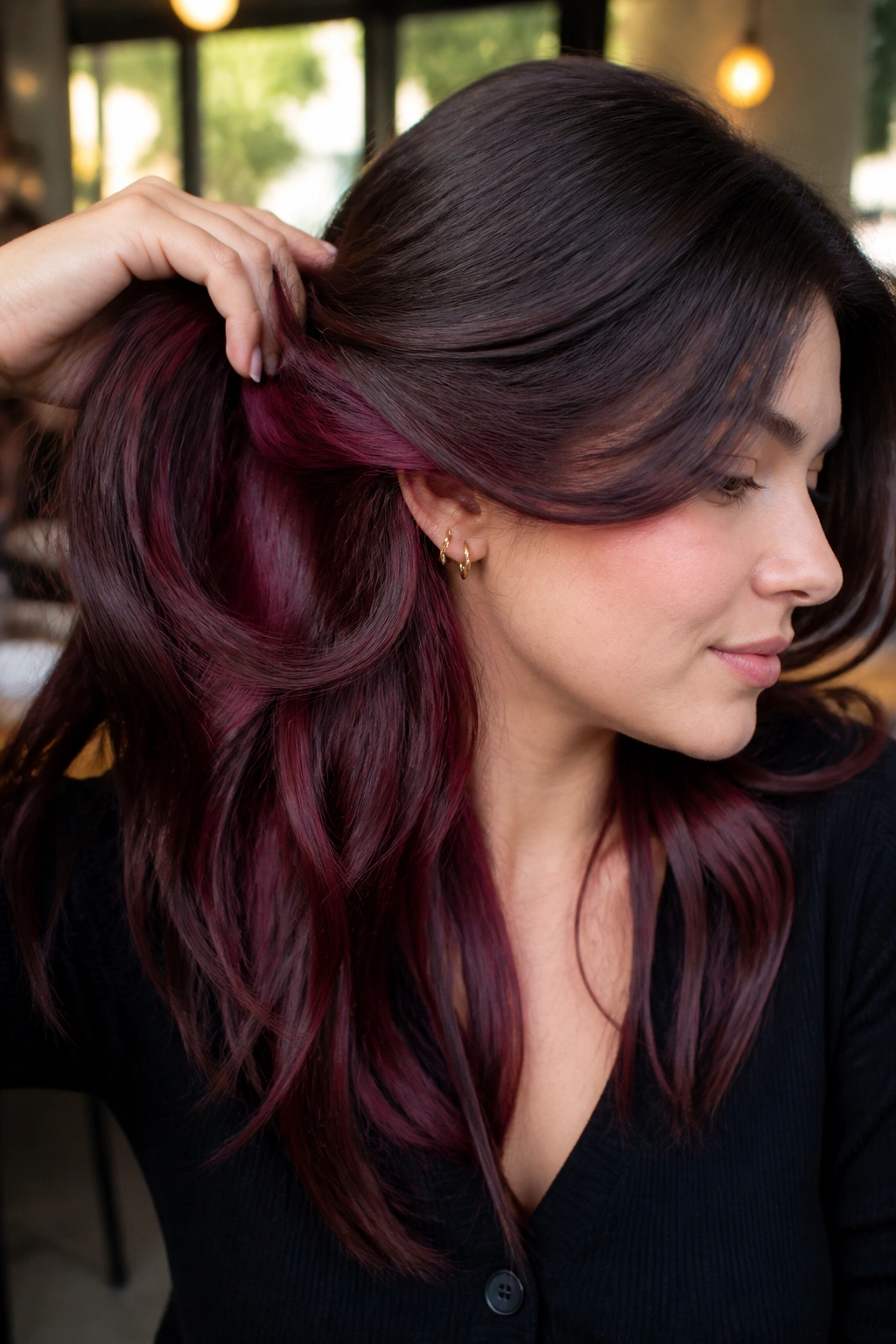
Garnet peekaboo color is for people who like a flash of color that does not live on the surface. It sits under the top layer of brunette hair and shows itself only when you move, flip, or tuck. That hidden placement keeps it from reading too bright.
This idea works beautifully on shoulder-length cuts and longer bobs. Ask for garnet lowlights placed in the underside panels, especially around the nape and behind the ears. Keep the top layer untouched or only slightly warmed, so the red stays a surprise.
The best part is the payoff in motion. A simple ponytail turns into something sharper. A braid turns into something better.
11. Chestnut and Copper Melt
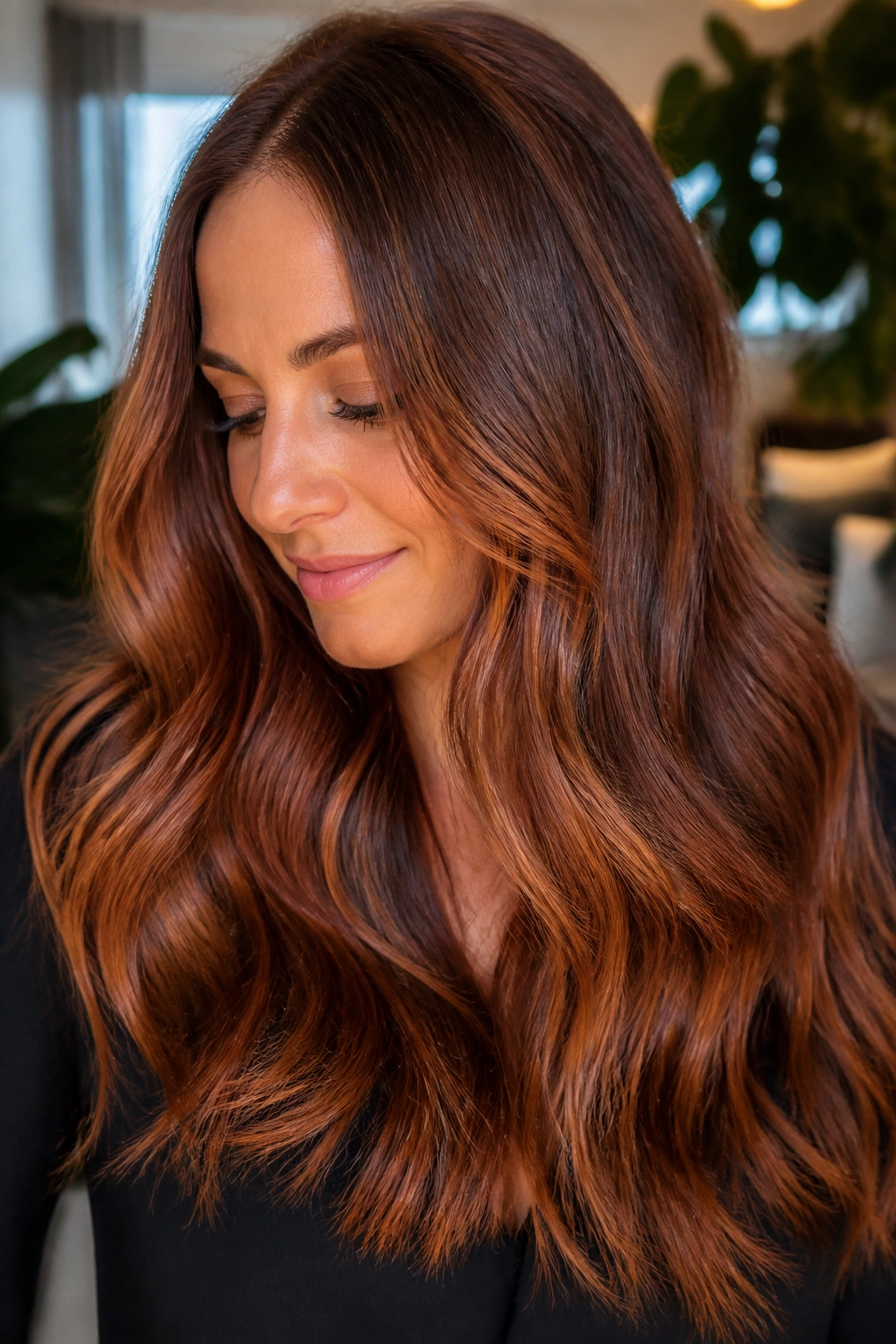
Chestnut and copper together make a brunette feel softer without pushing it into high-contrast territory. This is the red to choose when you want warmth that still looks natural in plain daylight. It is less dramatic than merlot and less sweet than auburn.
The melt works because the copper does not start and stop hard. It should fade into the chestnut base over a few inches, especially through the midlengths. Ask for hand-painted copper lowlights blended into chestnut pieces, with the ends staying slightly darker so the color feels anchored.
This is one of those looks that flatters hair with loose waves. The bends catch the copper and the chestnut, which makes the whole cut feel fuller. No stripey lines. Good.
12. Brick Red Lowlights
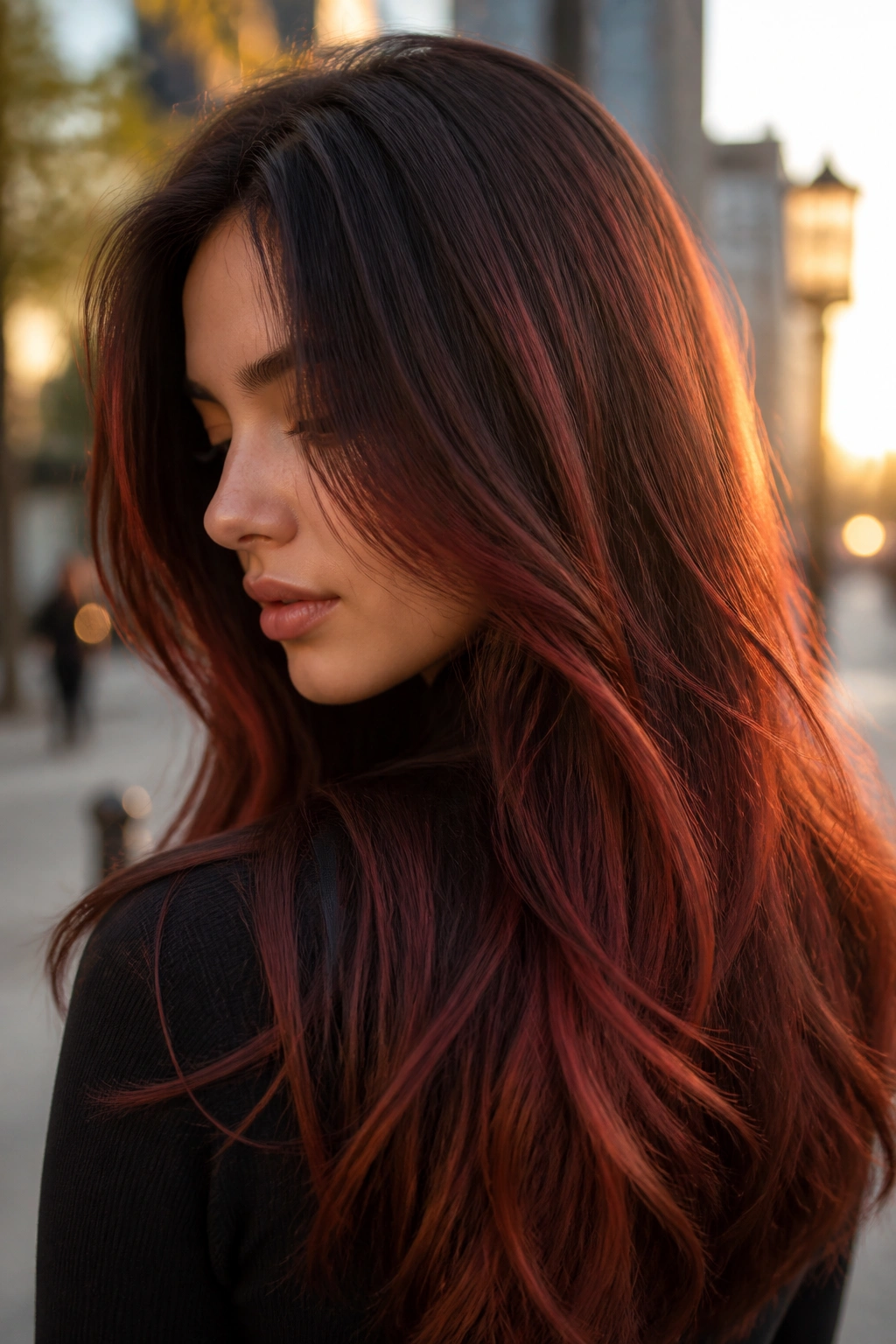
Brick red looks sharper than people expect. It has that earthy, clay-like feel that sits well in brunette hair without going sugary or too bright. If auburn feels too sweet and burgundy feels too dark, brick red lands in the middle.
It is best for straight or slightly waved hair where the clean color shape can show. Ask for brick-red lowlights in medium-width panels through the side sections and back. Keep them a shade or two deeper than your base so the result stays dimensional instead of flat.
Compared with copper, brick red has less shine and more depth. That makes it a nice choice if you want the red to feel grounded and a little architectural.
13. Cranberry Ribbons
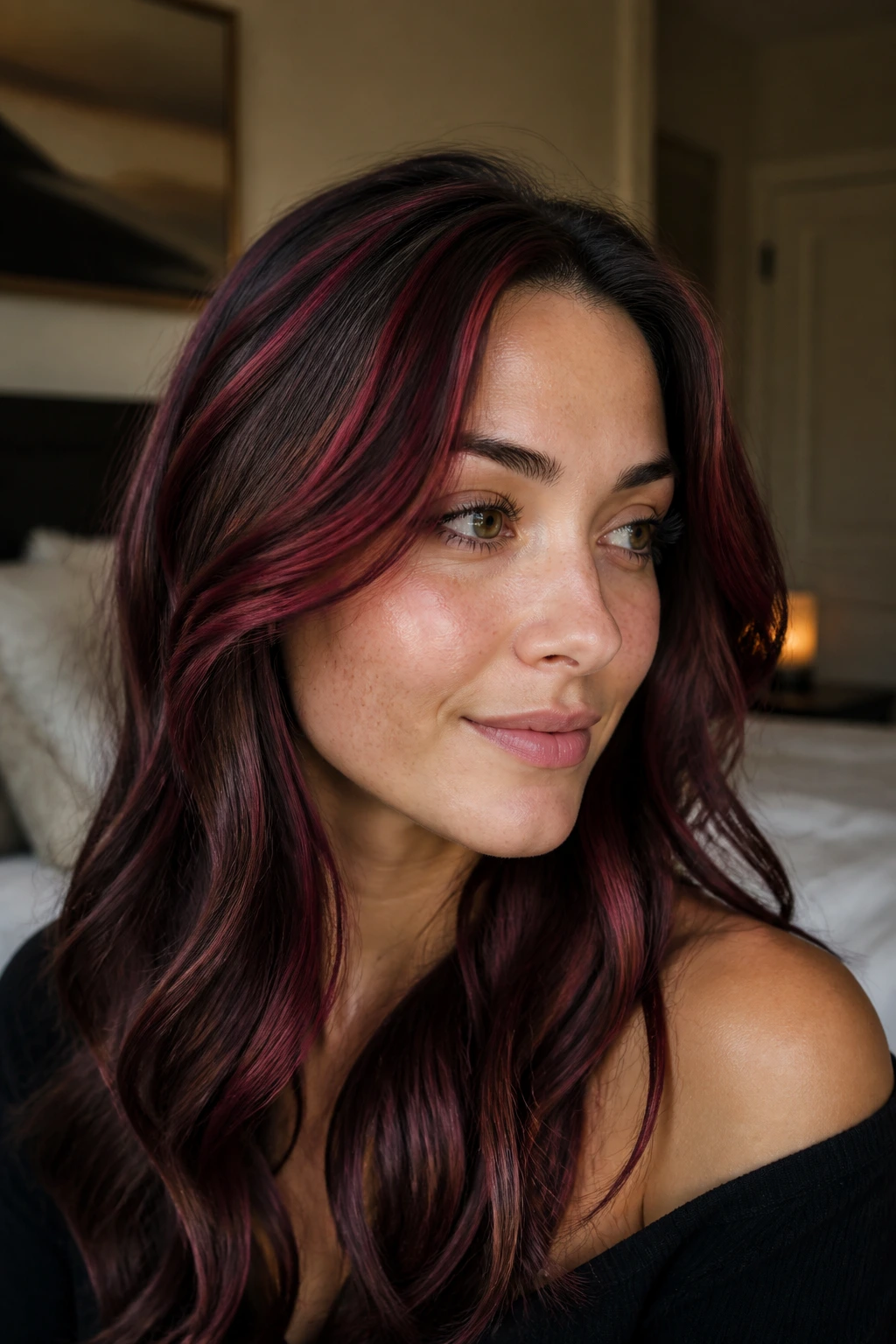
Cranberry ribbons bring a cooler red tone to brunette hair, and that cool edge keeps the look crisp. On dark brown hair, cranberry reads like berry wine. On medium brown hair, it can look brighter, but still controlled if the ribbons stay thin.
When Cranberry Works Best
Cranberry lowlights are strong on hair that already has ash or neutral undertones. If the brown base leans golden, cranberry can still work, but it needs brown mixed in so it does not read pink. Ask for thin cranberry ribbons around the face and crown, then keep the rest lower-key.
That placement matters. A few cool red streaks near the top catch light fast, which keeps the overall style lively. The look is good for anyone who wants color with a little bite.
14. Wine-Root Shadow
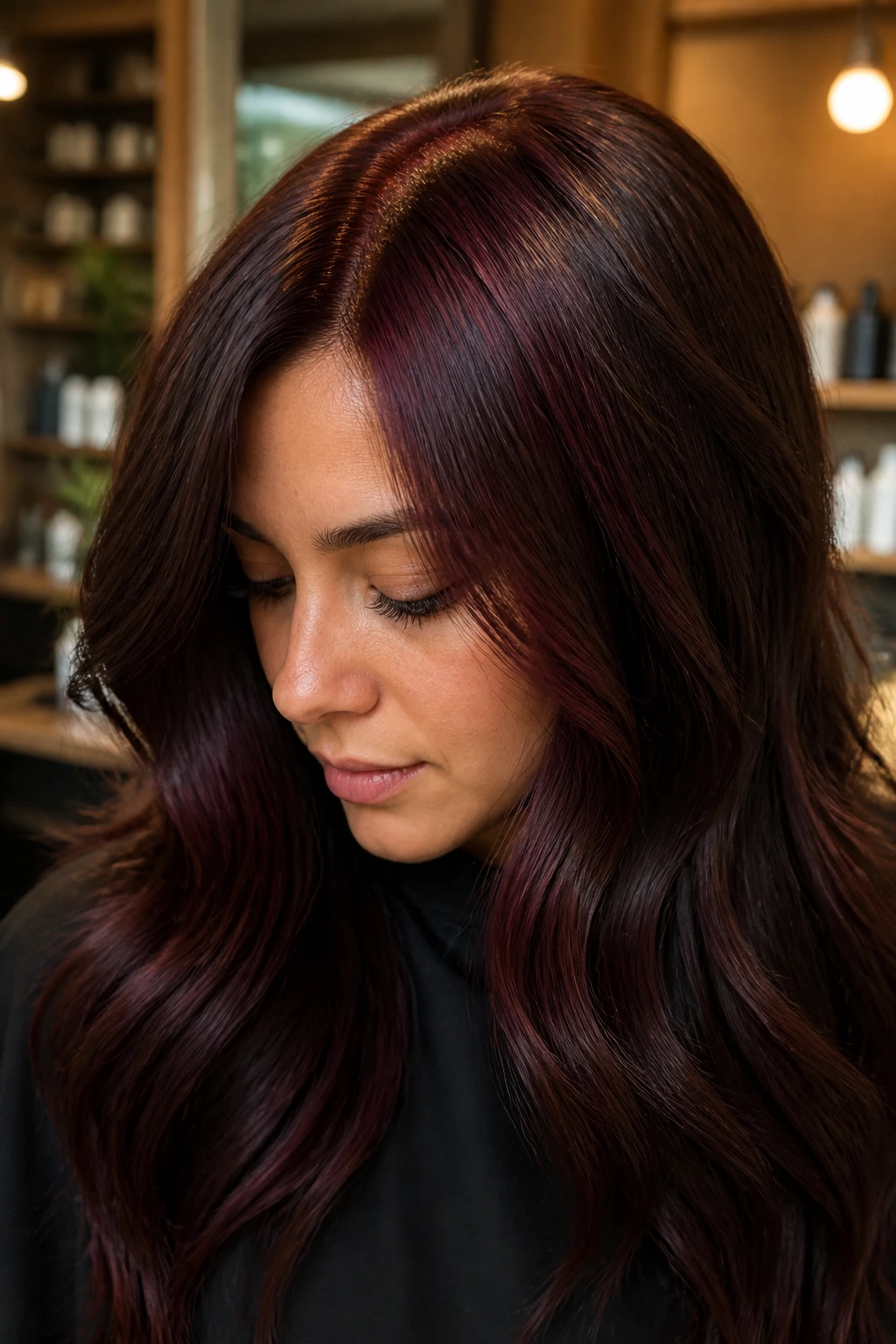
A wine-root shadow sounds dramatic, but it is one of the easiest ways to deepen brunette hair without changing the whole head. The root area gets a dark red-wine tint, then the color melts softly into the rest of the brown. It creates an anchored top and a softer lower half.
This is useful when a brunette base feels too light near the scalp or too one-note at the crown. Ask for a deep wine shadow through the first 1 to 2 inches, then a softer fade into the mids. The result should not look like a strip of color. It should look like the hair grew that way.
The style is especially flattering on long layers because the root depth gives the cut a fuller shape. There is a reason people keep coming back to this one.
15. Sienna Slice Lowlights
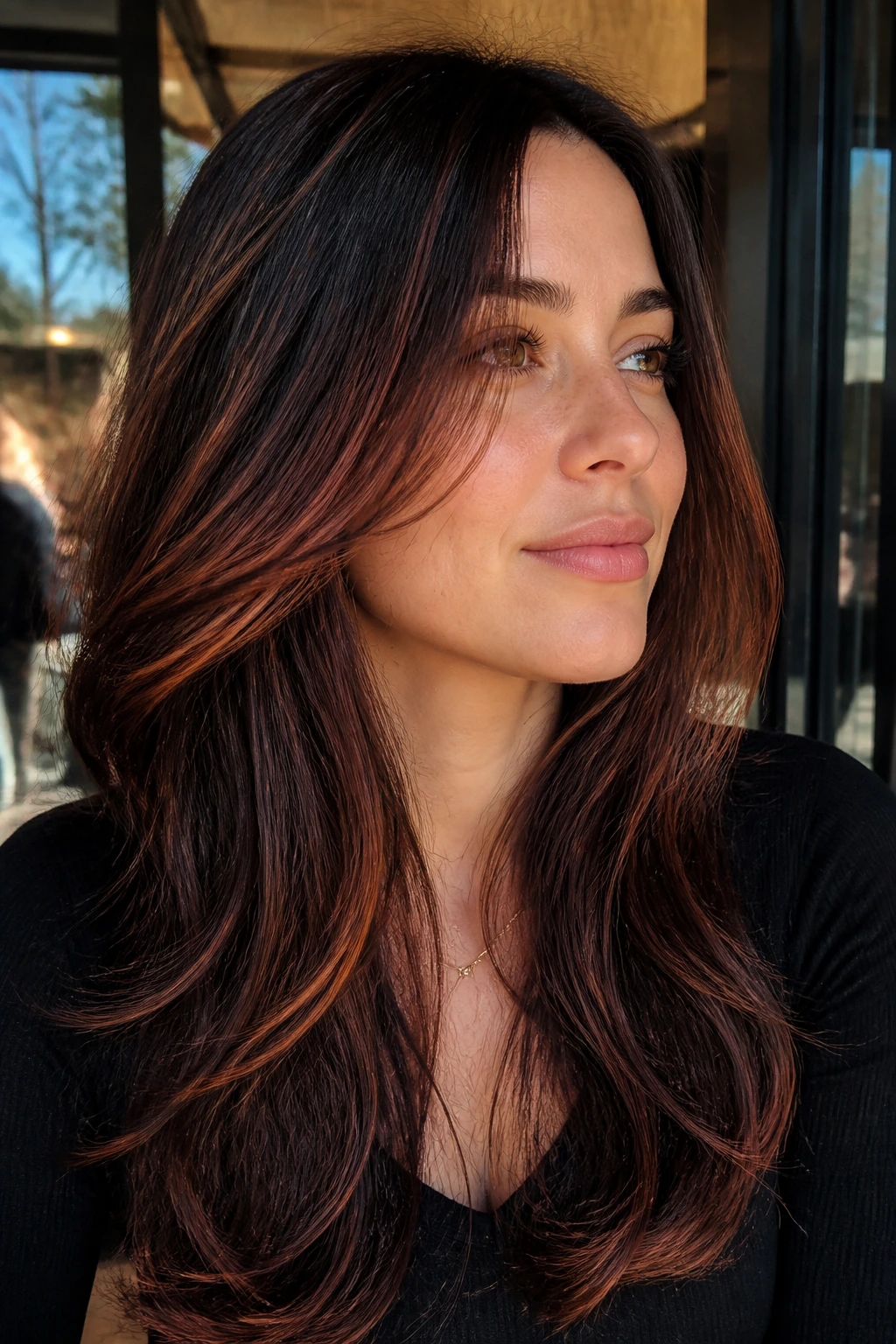
Why do sienna slices work so well on layered hair? Because the color follows the movement of the cut. Sienna is warmer than burgundy and less bright than copper, so it behaves like red clay folded into brunette strands. The slices show up when the hair shifts, which gives the style momentum.
How to Ask for It
Tell your colorist you want broad sienna slices through the midlengths, especially where the layers open up. Keep the slices diagonal, not horizontal, so they look softer as the hair falls.
A few notes:
- Best for layered cuts and blowouts
- Works on medium brunette bases with warm undertones
- Needs less frequent touch-up than brighter reds
- Looks strongest around the perimeter and outer layers
The result feels warm, earthy, and a little sun-touched without being sunny. That is a nice line to walk.
16. Ruby Micro-Lights
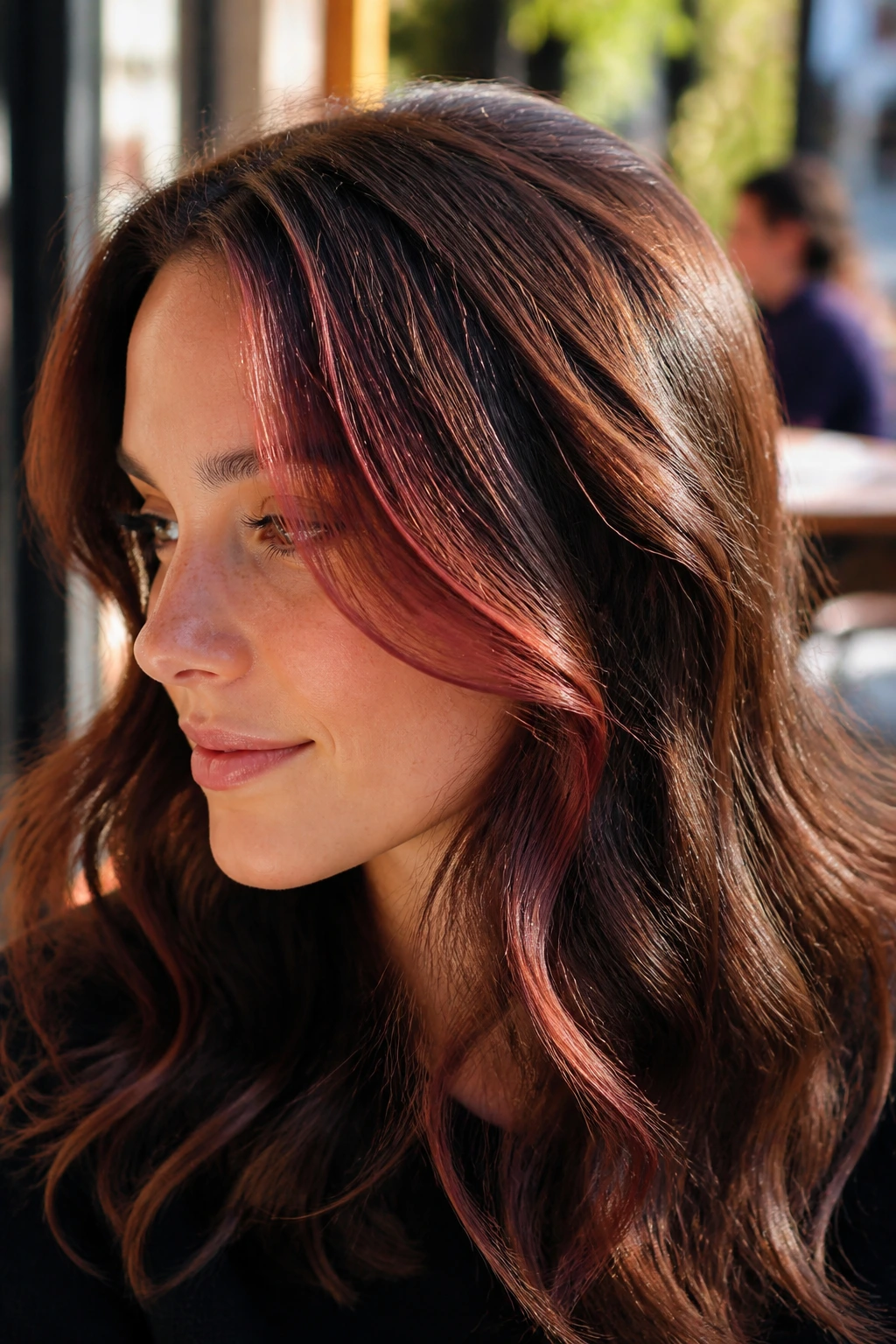
Ruby micro-lights are tiny, but they move a lot. They bring a subtle red glint to brunette hair without building obvious stripes. If you want red that disappears until the light hits it, this is the one.
The micro size matters. Ask for very fine ruby weaves around the temples, part line, and front third of the head, then keep the rest more diffuse. On straight hair, the result is delicate. On wavy hair, it looks almost like the hair is reflecting a hidden layer of color.
This is a good choice for people who are nervous about red. It gives the feeling of change without the hard commitment of chunky panels or bright face framing.
17. Cola-Red Dimension
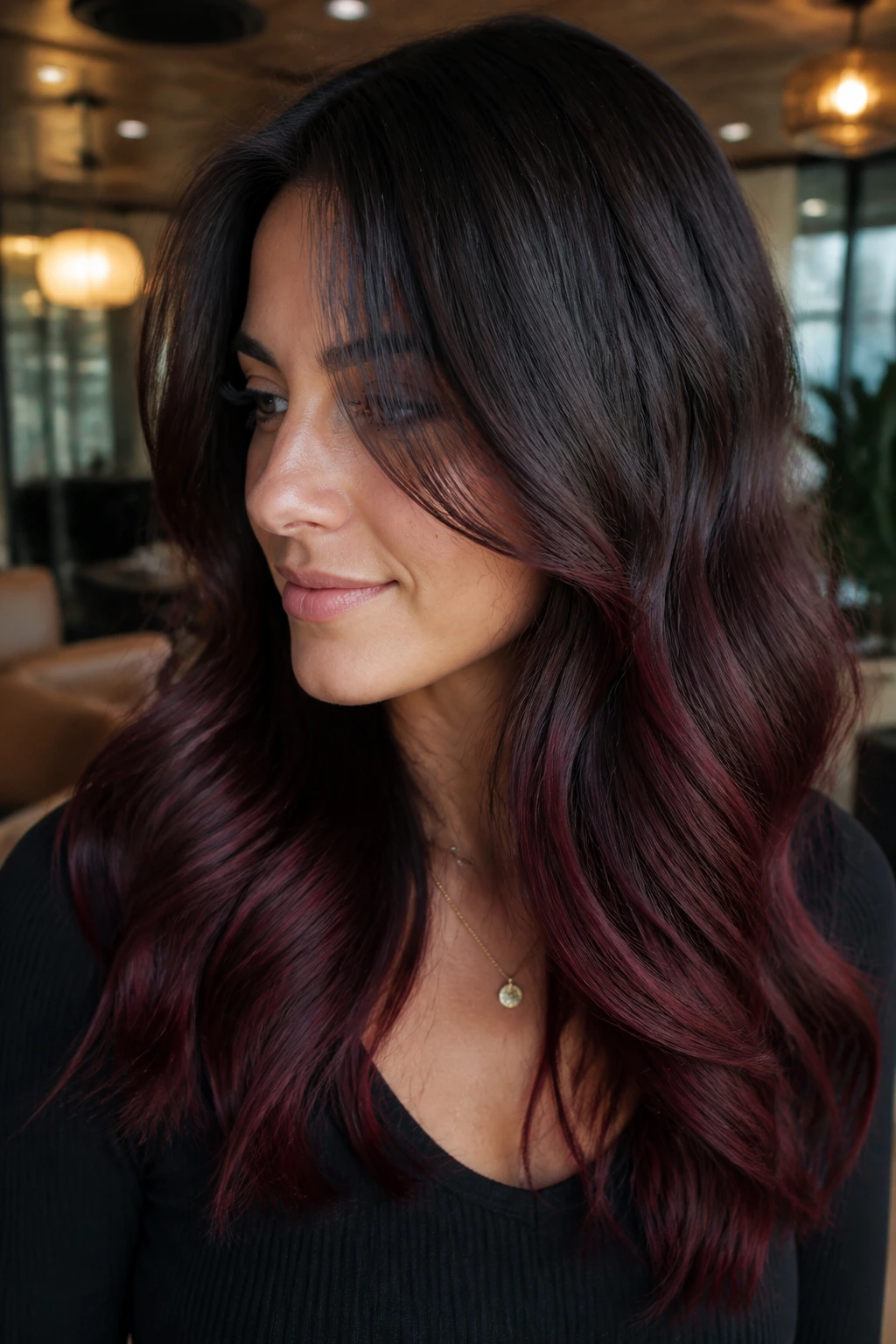
Cola-red dimension is a quieter cousin of cherry cola. The red stays darker, closer to mahogany, which makes it blend into brunette hair instead of sitting on top of it. It is an especially good fit for people who want warmth but hate the look of obvious colored strands.
The beauty of cola-red is its restraint. The lowlights should be placed through the interior and ends, leaving the top surface mostly brown. That keeps the hair looking natural from a distance and richer up close. Ask for deep cola-red lowlights one shade darker than the base, not anything vivid.
This one is easy to wear with professional clothes, school clothes, all of it. It does not fight with the rest of your style.
18. Paprika Accents
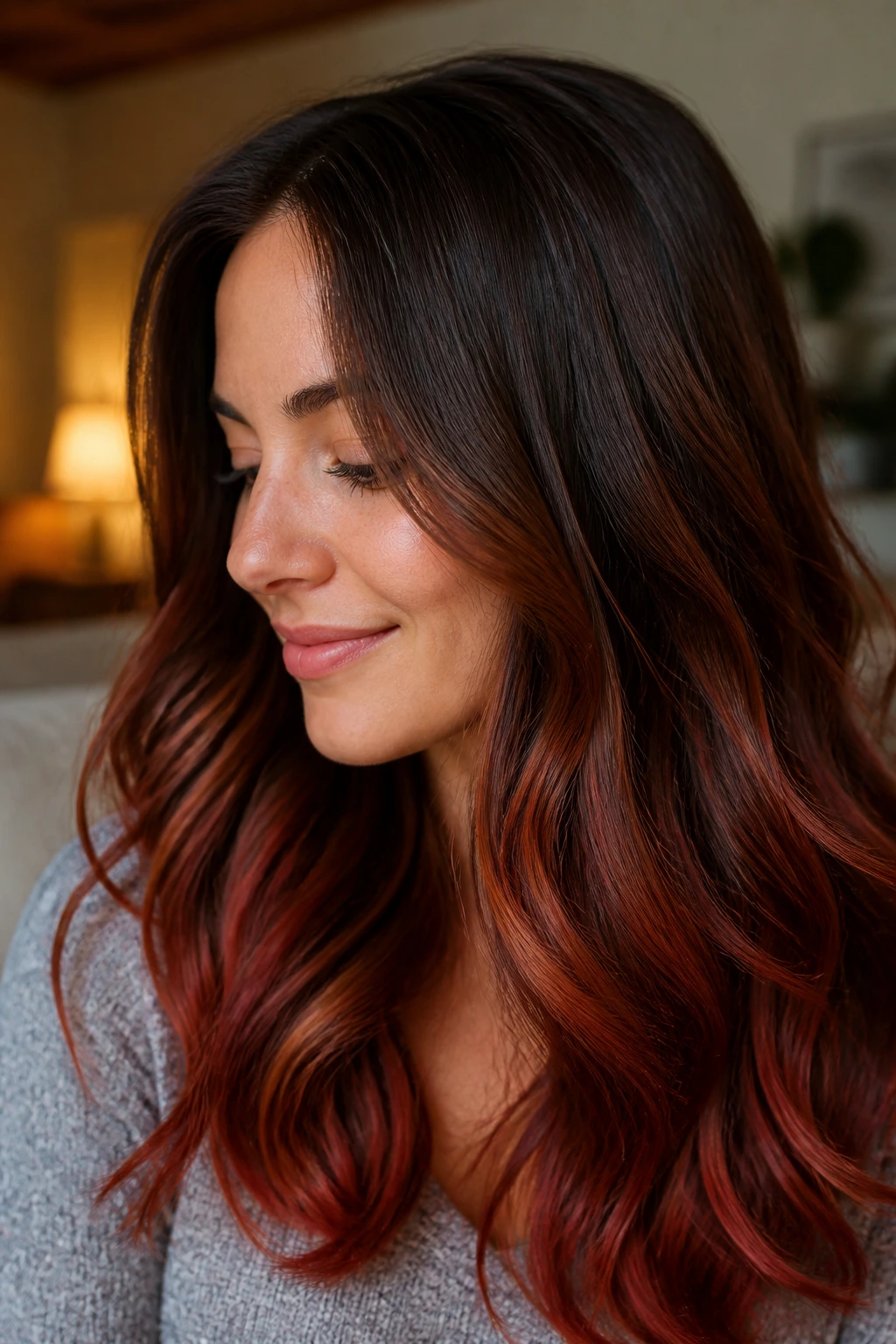
Paprika accents work when brunette hair looks a little sleepy. The color is warm, spiced, and slightly smoky, which can wake up a brown base without making it loud. It is more energetic than rosewood and less dark than burgundy.
On medium brown hair, paprika accents can sit through the ends and outer layers. On dark brown hair, keep them thinner so they do not look orange in harsh lighting. Ask for paprika-toned lowlights woven in soft bands around the lower half of the hair.
Compared with copper, paprika feels a little drier and earthier. That makes it a good match for shag cuts, textured bobs, and lived-in waves. It has edge without looking edgy for the sake of it.
19. Auburn Money Piece
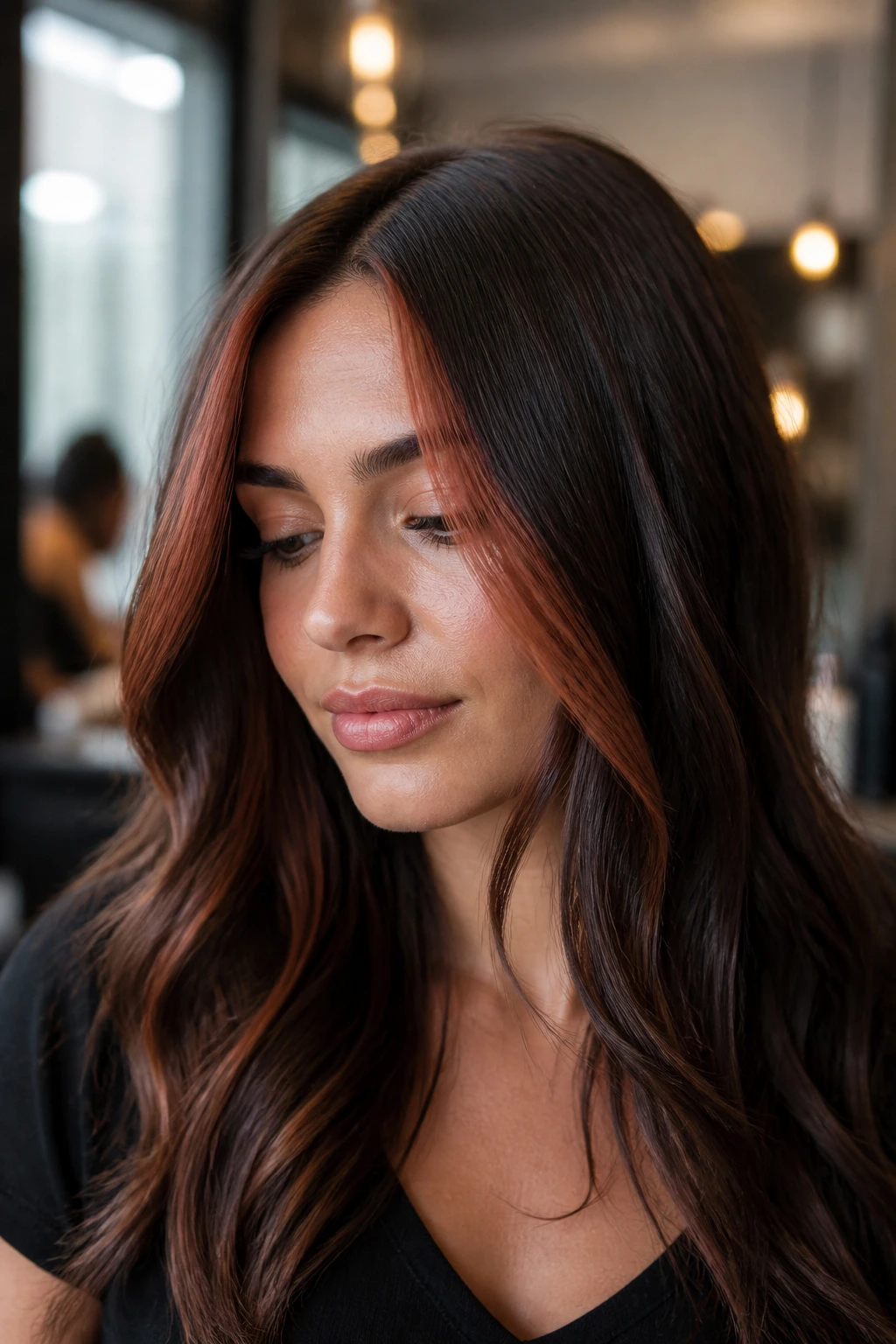
An auburn money piece can warm the whole face without turning the rest of the hair copper. Since the front sections frame everything, even a few auburn lowlights there can change how the skin reads and how the cut lands. It is a clean way to test red on brunette hair.
Best Ways to Wear It
Use the money piece if you want the color to be visible most of the time. Ask for two narrow auburn sections at the front, one on each side of the part, and keep them about 1/2 inch wide at the root, widening slightly toward the ends.
- Best on center parts and soft side parts
- Works well with lob cuts and shoulder-length hair
- Good if you want a clear red note without full-head color
The rest of the hair can stay brunette and quiet. That contrast is the point.
20. Merlot Smudge at the Crown
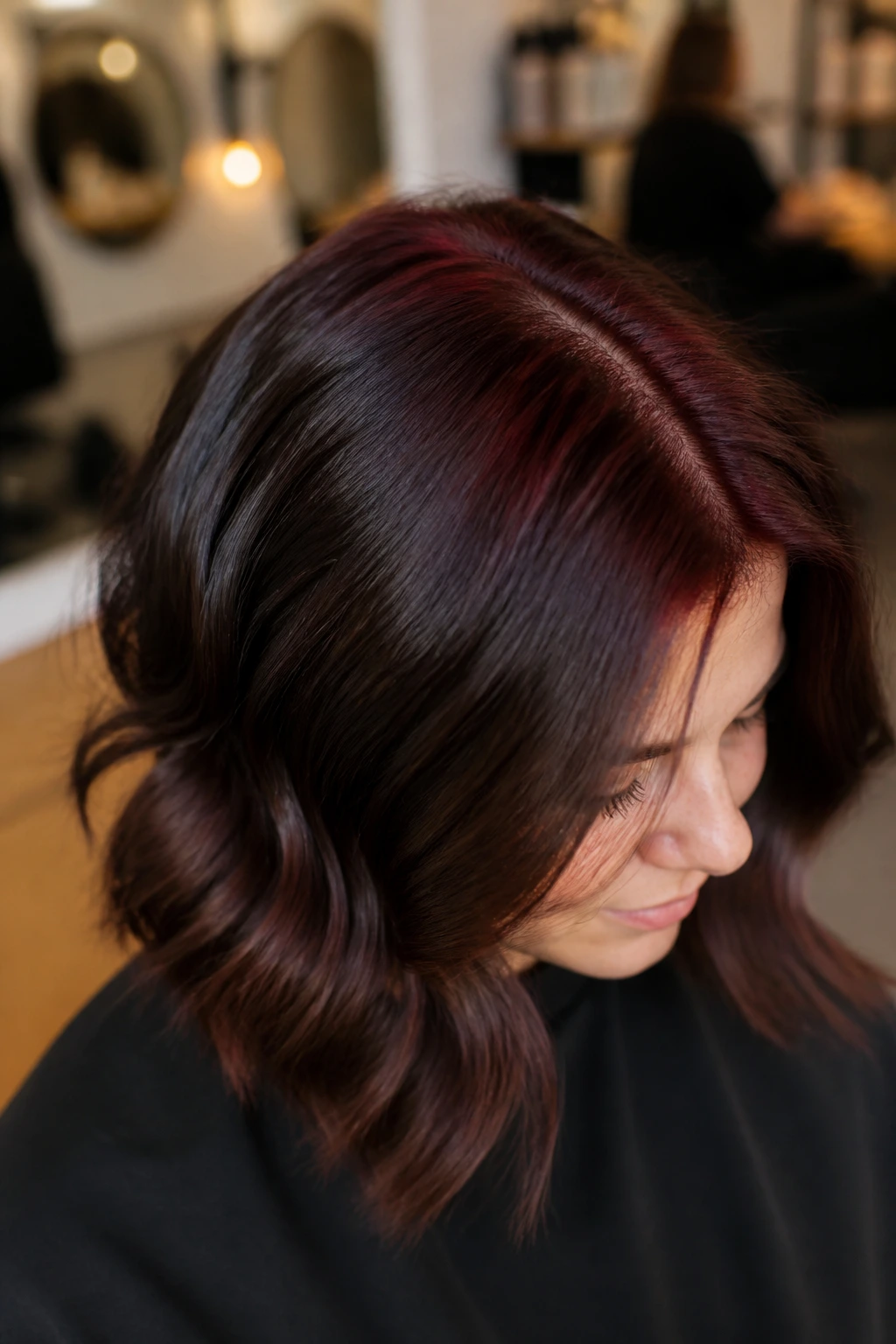
A merlot smudge at the crown does quiet work. It gives the top of brunette hair more depth, which can make fine hair look thicker and make a blunt cut feel less heavy. The red is dark enough to sit under the brown, so the effect is more shadow than streak.
This is a nice move if your hair part is wide or your crown area looks flat. Ask for soft merlot lowlights concentrated near the root area and crown, blended downward for about 2 inches. You want the top to feel denser, not painted.
The payoff is subtle from the front and stronger in motion. It is the kind of detail people notice without being able to point to why.
21. Burnt Sugar and Red Blend
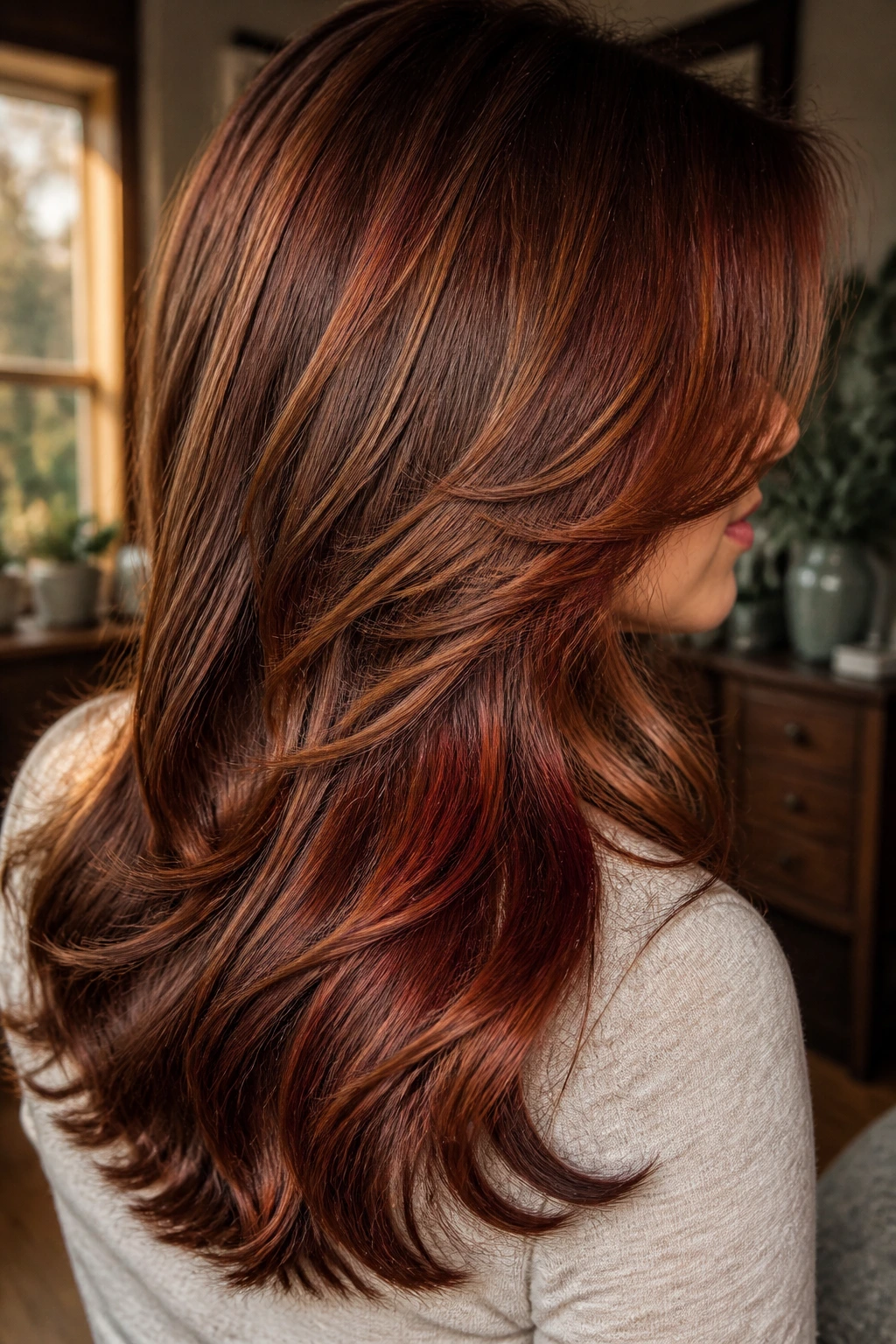
Burnt sugar and red together is softer than it sounds. The idea is to keep the brunette base warm and glossy, then thread in a red-brown tone that feels toasted rather than bright. On hair with lots of layers, this can look rich without pushing into obvious color-blocking.
Why does it work? Because the warmth sits in the same family as brunette. The lowlights should be thin through the sides and a little heavier at the back, where the hair usually needs more visual depth. Ask for burnt sugar tones with a red glaze finish, not a pure red formula.
This is a good choice if you like subtle dimension and hate the idea of constant maintenance. It fades into a warm brown rather than a strange pinky cast.
22. Pomegranate Lowlights
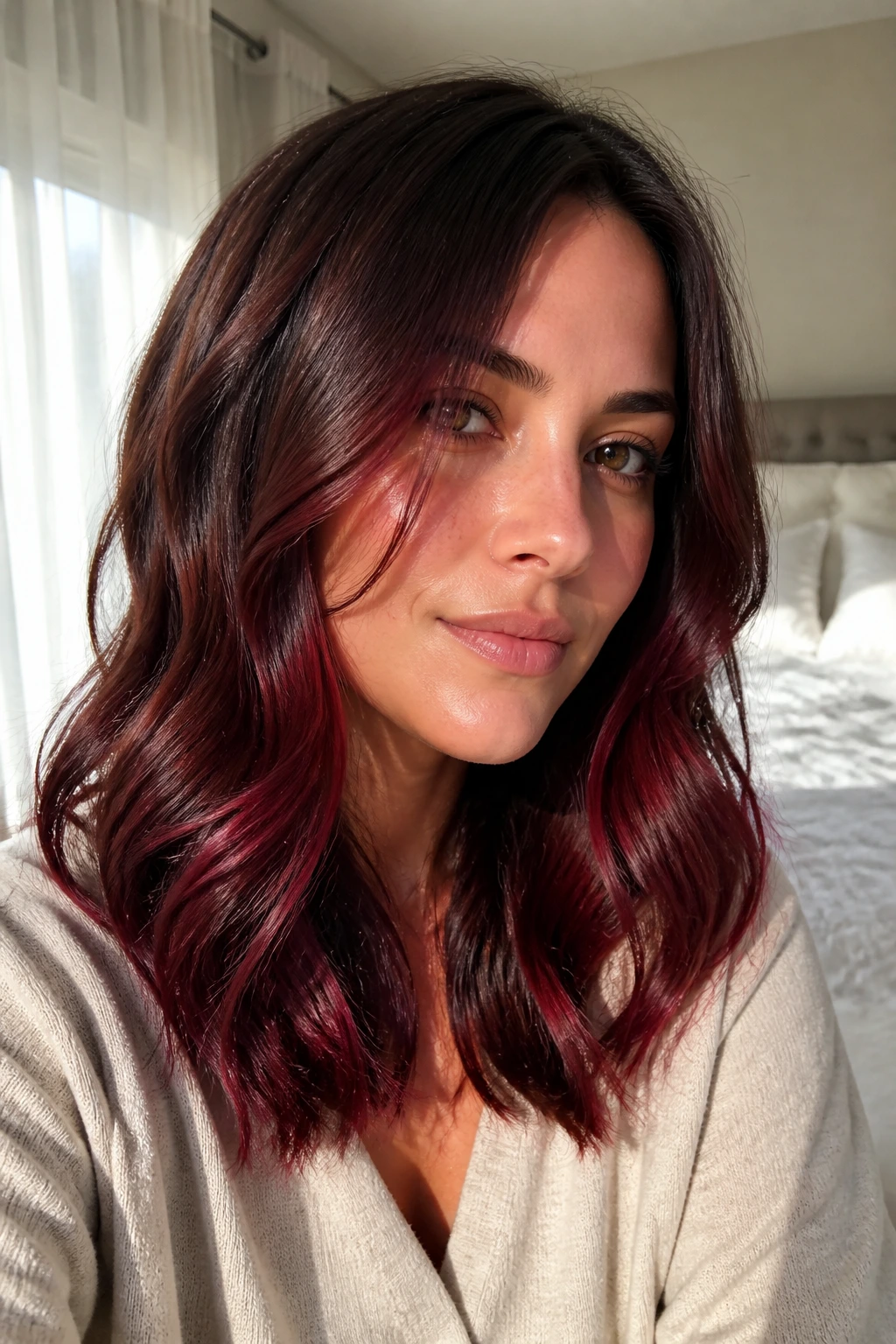
Pomegranate lowlights bring a berry tone that still reads brown. The shade has a little juice to it, but not the kind that makes brunette hair look neon. It is one of the easiest ways to add freshness to a dark base without losing polish.
Placement That Makes It Work
Pomegranate looks strongest when it is placed in midwidth ribbons through the midlengths and ends, with a few thinner pieces near the face. If all the color stays under the top layer, the effect can be too hidden. If it sits everywhere, it can feel busy.
A few practical notes:
- Best on chocolate brown and dark chestnut hair
- Can be warmed slightly for olive skin
- Needs a gloss refresh to keep the berry tone from dulling
The color is lively, but it does not shout. That balance is the whole point.
23. Copper-Brown Ribboning
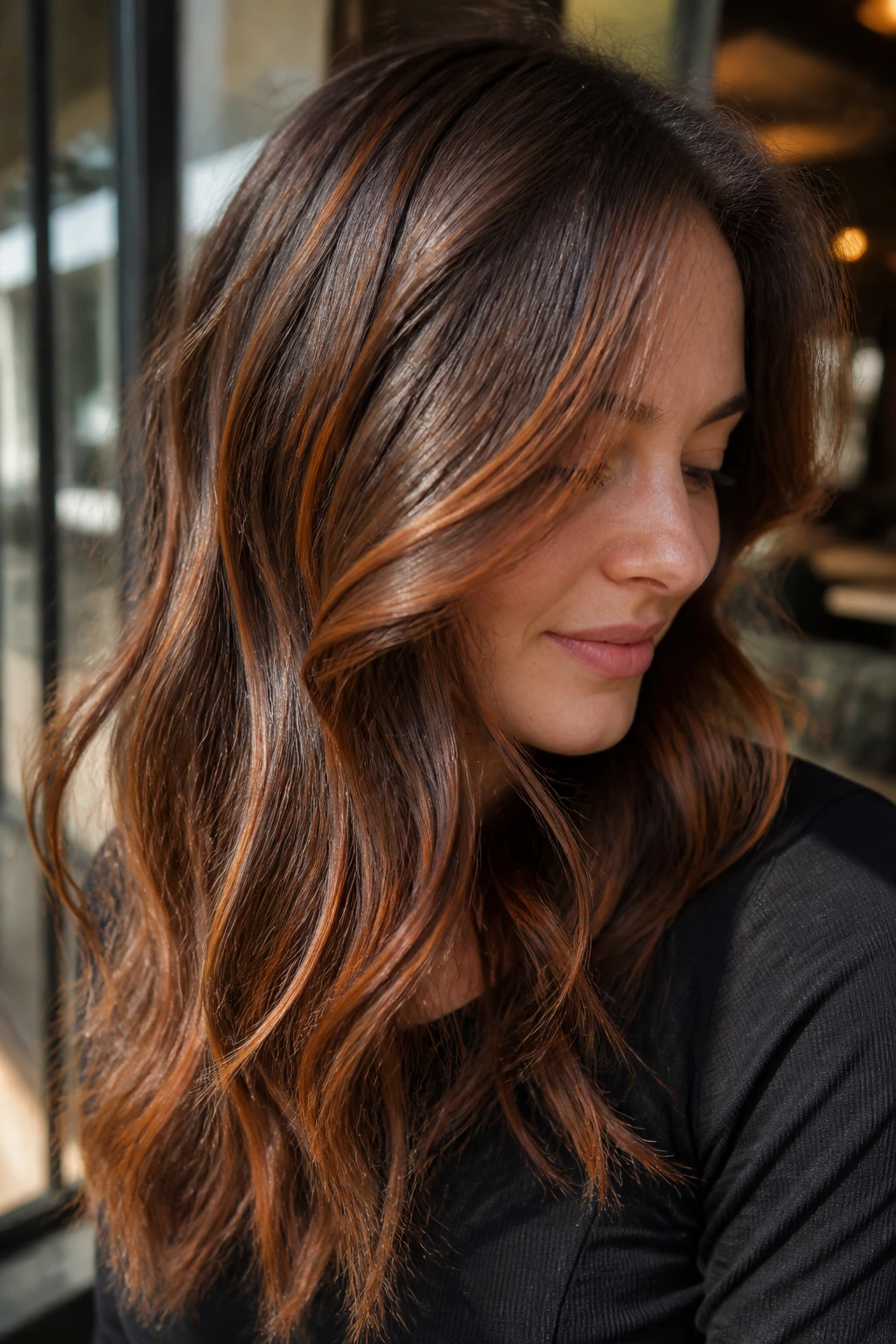
Copper-brown ribboning is one of the easiest red looks to grow out, which makes it a very sensible option. The copper is softened by brown, so the contrast stays low and the regrowth line is less obvious. That matters if you do not want constant salon visits.
The ribbons should be fine enough to move with the hair, but not so thin that they disappear. Ask for alternating copper and brown ribbons through the outer layers, with a little extra concentration at the sides and ends. That gives you warmth and movement without hard blocks.
It is a strong fit for loose waves, because the bend breaks up the color in a flattering way. Straight hair still works, though. It just looks cleaner and more polished.
24. Deep Sangria Panels
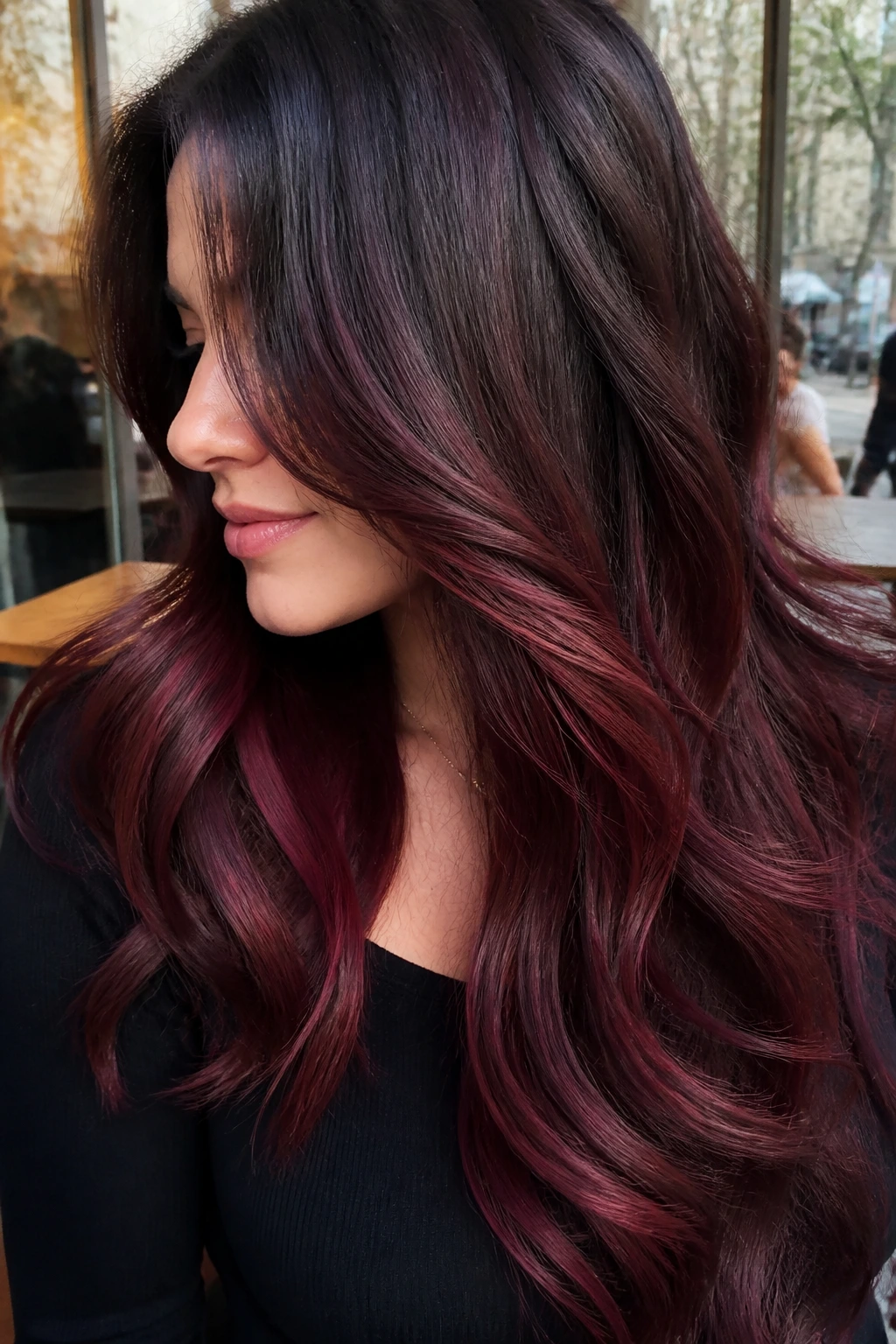
Deep sangria panels are for long hair and thick density. The color is dark, rich, and a little moody, which means it can handle larger sections without turning flashy. On very dark brunette hair, sangria gives the finish a velvet look. On medium brunette hair, it reads more obviously red, but still controlled.
Compare it with cherry cola: sangria is deeper and less bright. Compare it with merlot: sangria has a touch more berry in the undertone. That difference matters if you are trying to pick a shade that suits your base instead of fighting it.
Ask for diagonal sangria panels through the interior and lower sides, leaving the top a touch quieter. Long hair needs that structure or the color can vanish into the lengths.
25. Cinnamon-Glaze Lowlights
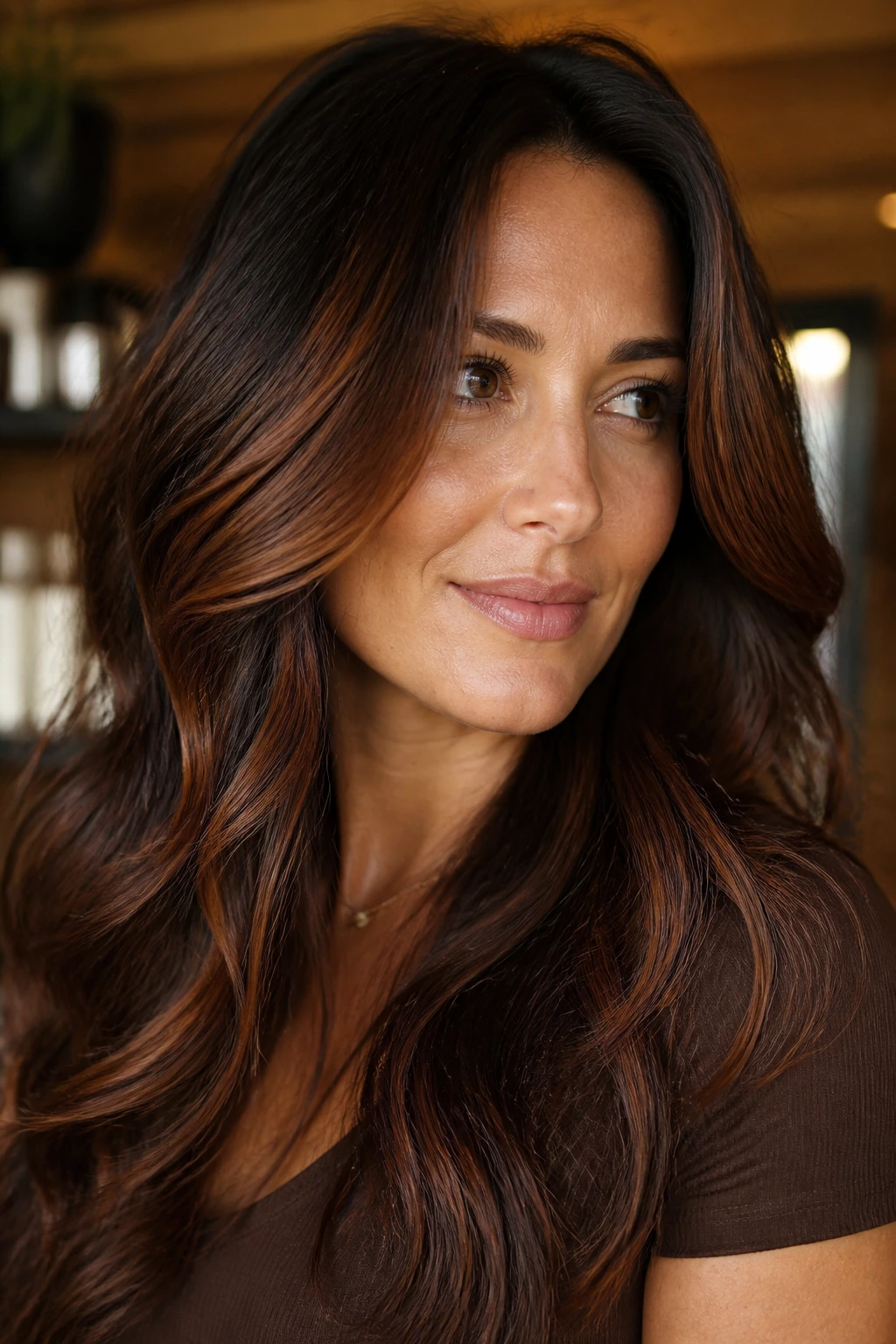
Cinnamon-glaze lowlights are about shine as much as color. The tone is warm and soft, and a glaze finish keeps the red looking polished rather than matte or dusty. On brunette hair, that softness is a gift.
Why a Glaze Changes the Whole Look
A glaze does not have to be dramatic to matter. Even a thin cinnamon overlay can make brown hair reflect more light, which is why this idea works so well on dull or tired-looking hair. Ask for a cinnamon-brown glaze over selected lowlight pieces, especially around the top layers and ends.
This is best if you want red that behaves like a finish, not a full color statement. It works on straight hair, curly hair, and everything in between. The shine is what sells it.
26. Scarlet Underlights
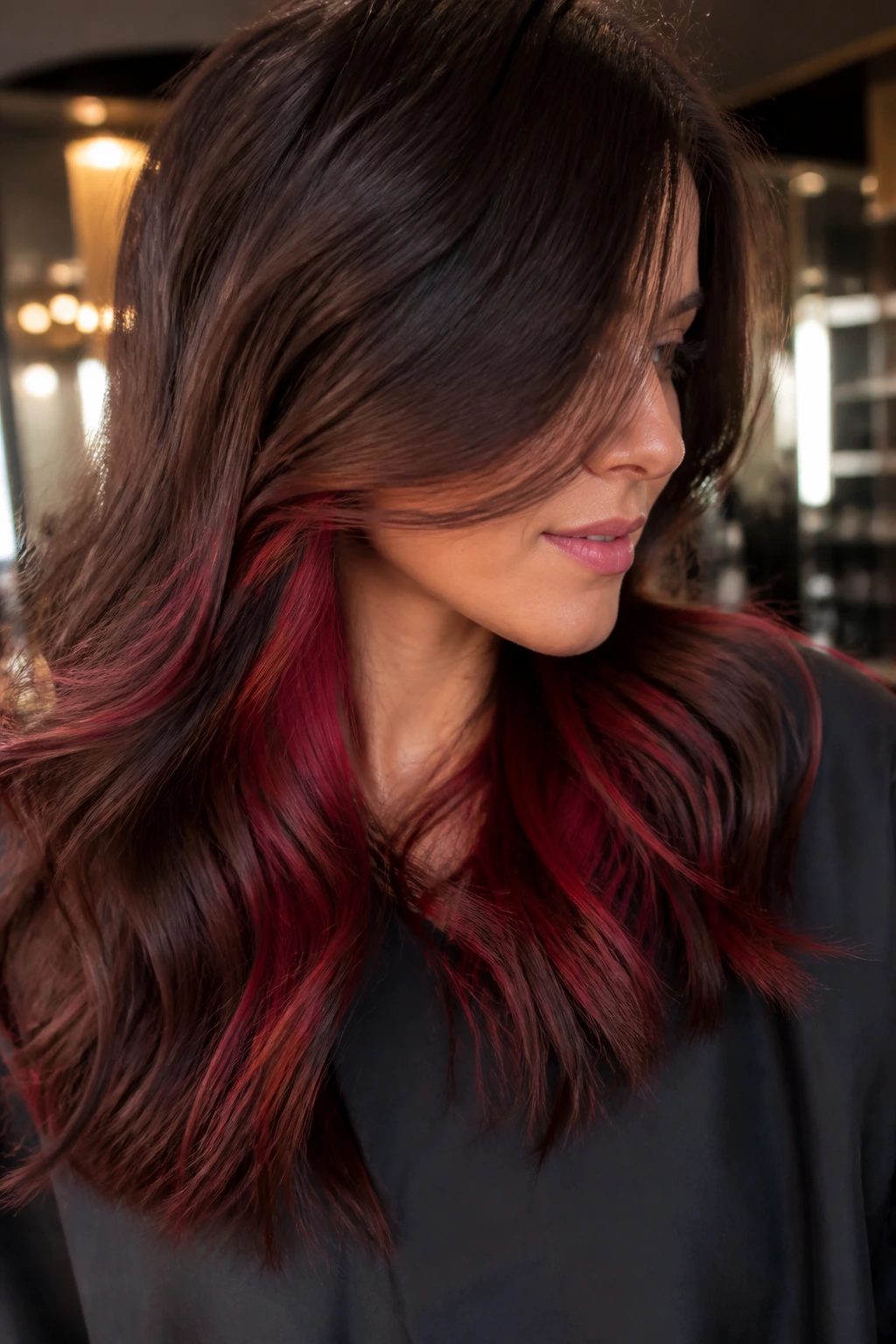
Scarlet underlights are for people who like a flash of drama. The red sits underneath the outer brunette layer, so it stays hidden until the hair moves. That means you get a stronger color payoff without committing the whole head to red.
This can look especially good on shorter cuts, where the underlayer peeks out more often. Ask for scarlet panels at the nape and lower back sections, kept a shade deeper so they read as red-brown rather than bright fire-engine red. The trick is depth. Too bright and the whole thing tilts costume-y.
A tucked-back style or high ponytail is where this one comes alive. It is not subtle, but it can be controlled.
27. Terracotta Ribbons
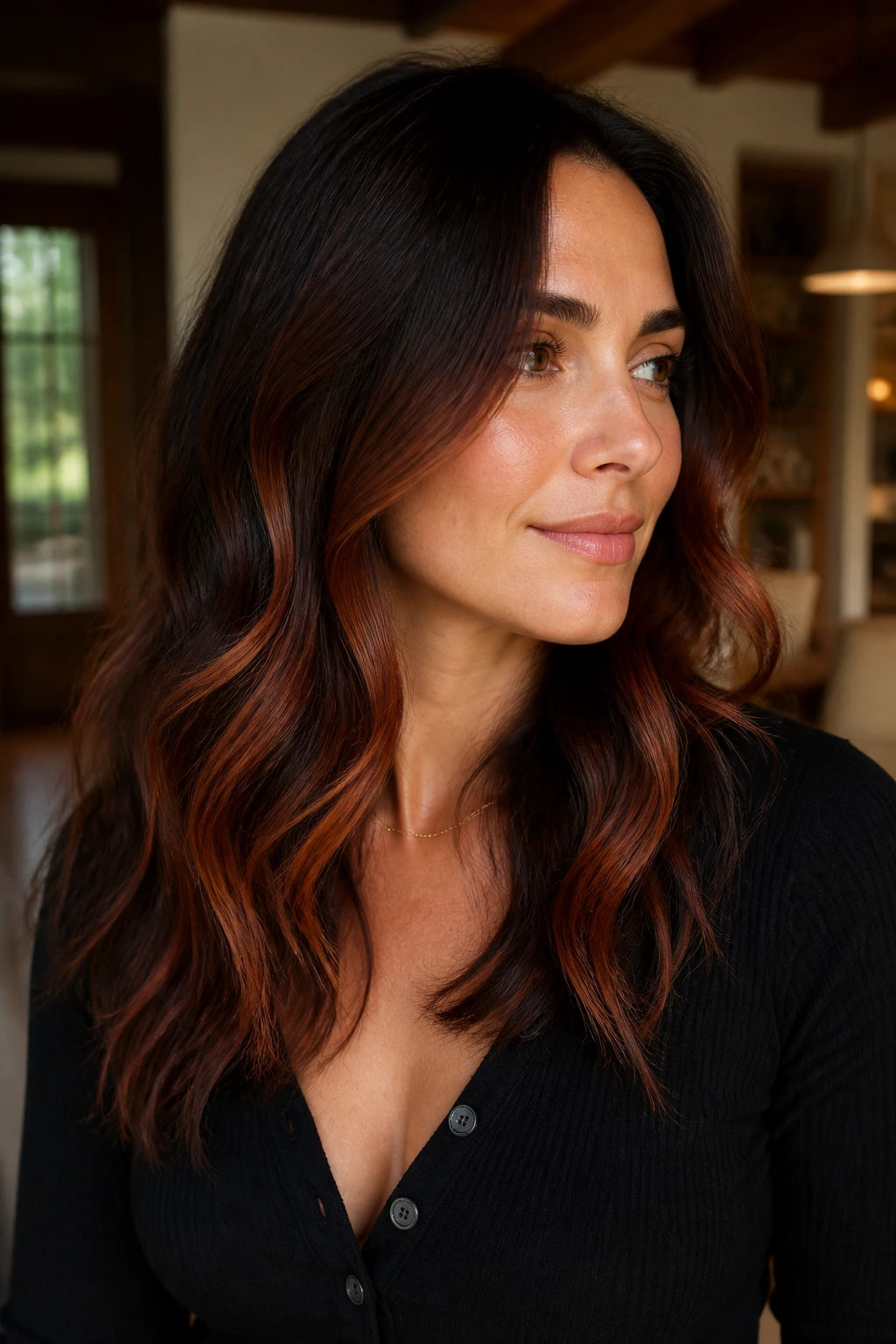
Terracotta ribbons bring earthiness to brunette hair. The tone is red, yes, but it leans clay and stone instead of candy or wine. That gives it a grounded feel that pairs well with warm skin, olive undertones, and textured cuts.
What to Pair It With
Terracotta looks especially good when the brunette base already has some warmth. Ask for soft terracotta ribbons through the lower half and around the face, keeping the strands irregular so they do not look regimented.
- Great on wavy shoulder-length cuts
- Friendly on medium brunettes with golden undertones
- Easy to blend with copper or auburn if you want more warmth later
- Reads earthy rather than bright
The effect is understated in the best sense. It gives brown hair a little spice and keeps the overall look relaxed.
28. Mahogany Money Piece
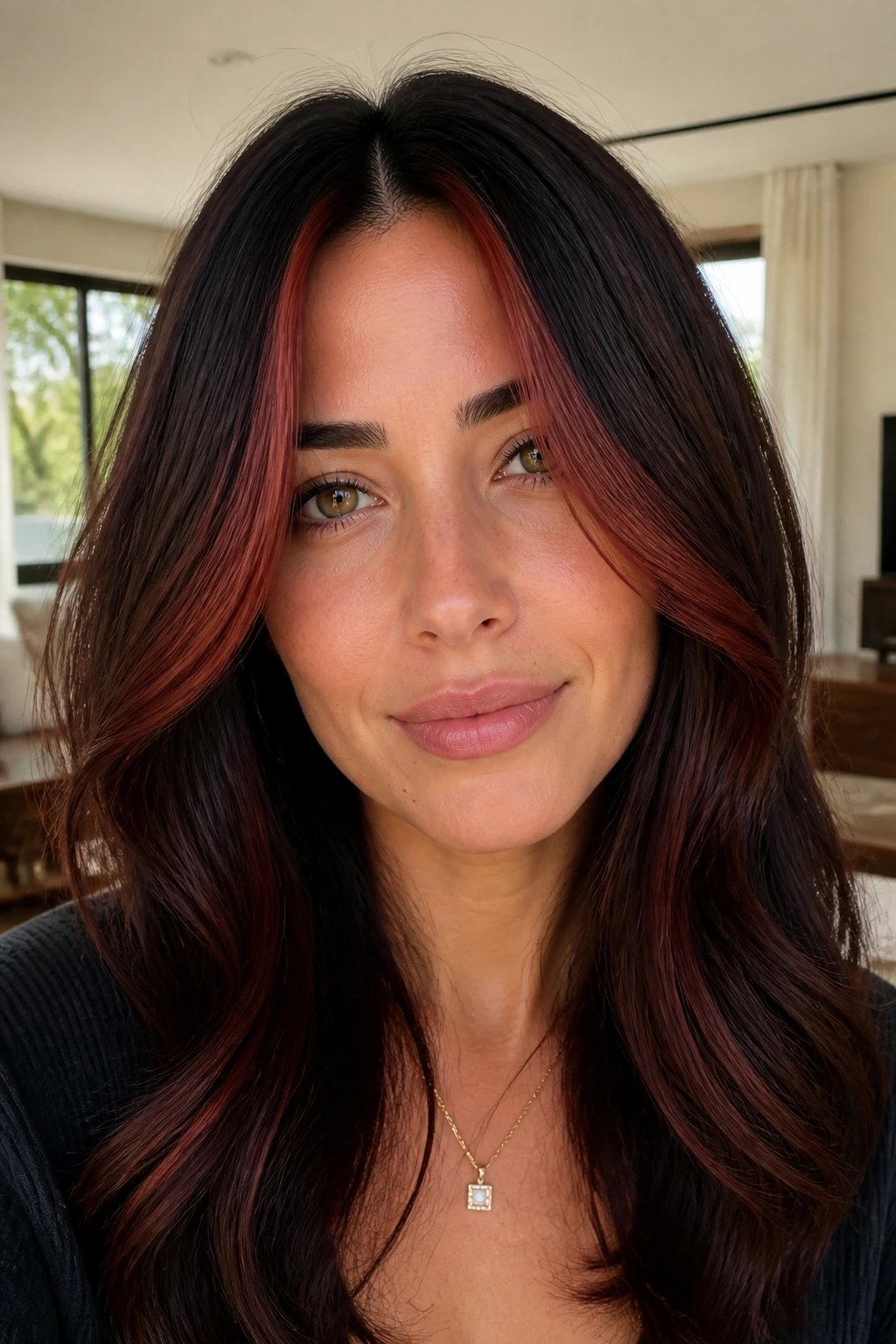
Mahogany money piece can be more flattering than copper if you want richness instead of brightness. The front sections still frame the face, but mahogany does it with depth and polish. It is less sunny, more composed.
This is a smart choice for brunettes who like a center part or a strong front section. Ask for two mahogany face-framing panels, one on each side of the part, and keep them slightly darker at the root. That keeps the line soft as the hair grows out.
The result is elegant without trying too hard. I prefer this over brighter front pieces when the rest of the hair is already full of movement, because the face frame does not need to compete with the cut.
29. Blackberry Red Lowlights
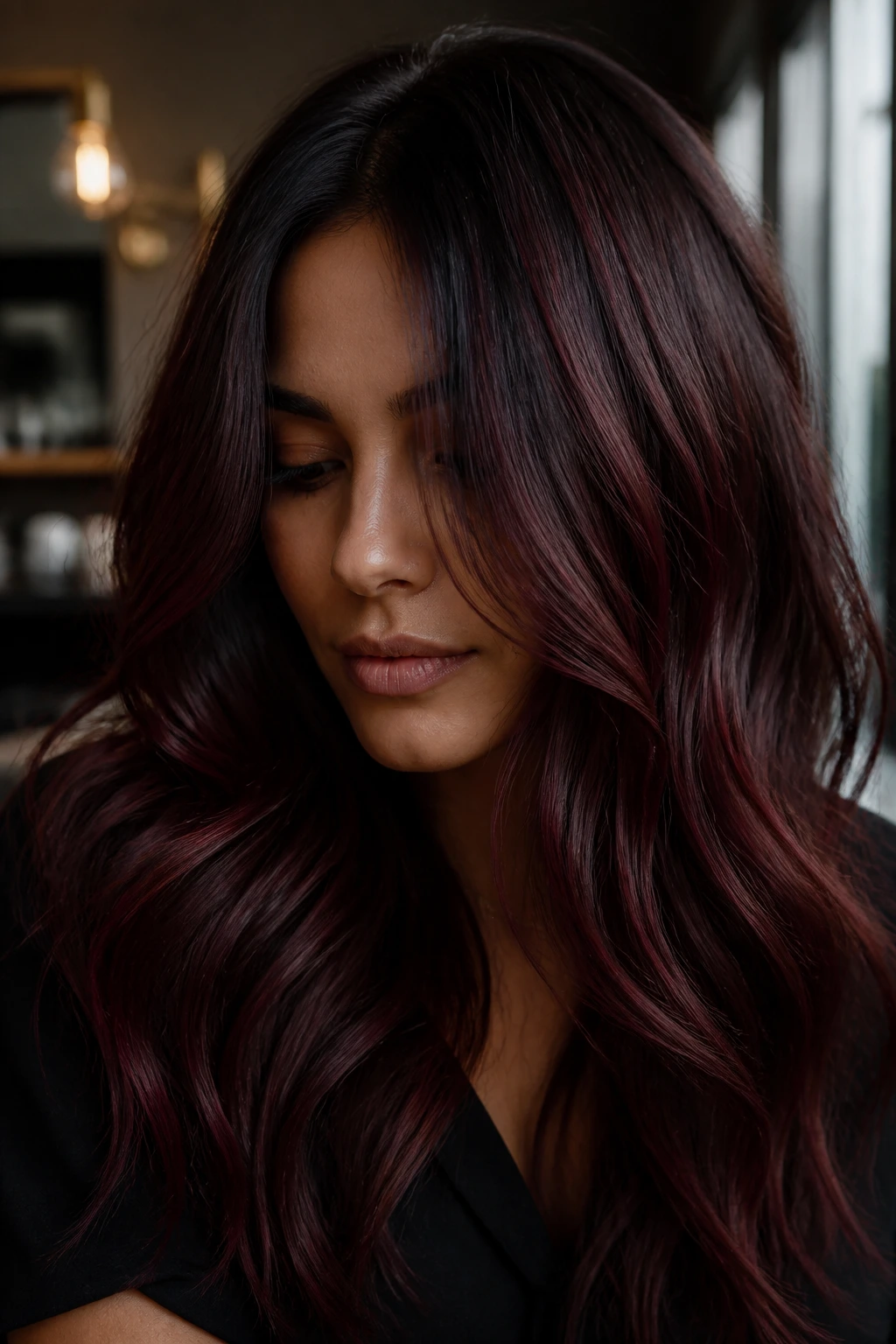
Blackberry red lowlights are the darkest, coolest red idea in the bunch. They sit close to brunette, which makes them easy to wear on very dark hair. The berry note shows in daylight and then sinks back into shadow indoors.
What to Watch For
Because the shade is so dark, placement matters. Keep the blackberry pieces around the interior layers, ends, and a few framing strands so the color can move. If everything is too concentrated, the result can look muddy. Ask for blackberry-red lowlights with a violet edge, especially if your base is espresso or near-black brown.
This is a strong pick if you like a moody finish and do not want anything coppery. It also grows out cleanly, which is one reason it tends to stay wearable longer than brighter reds.
30. Glossed Burgundy Brown Finish
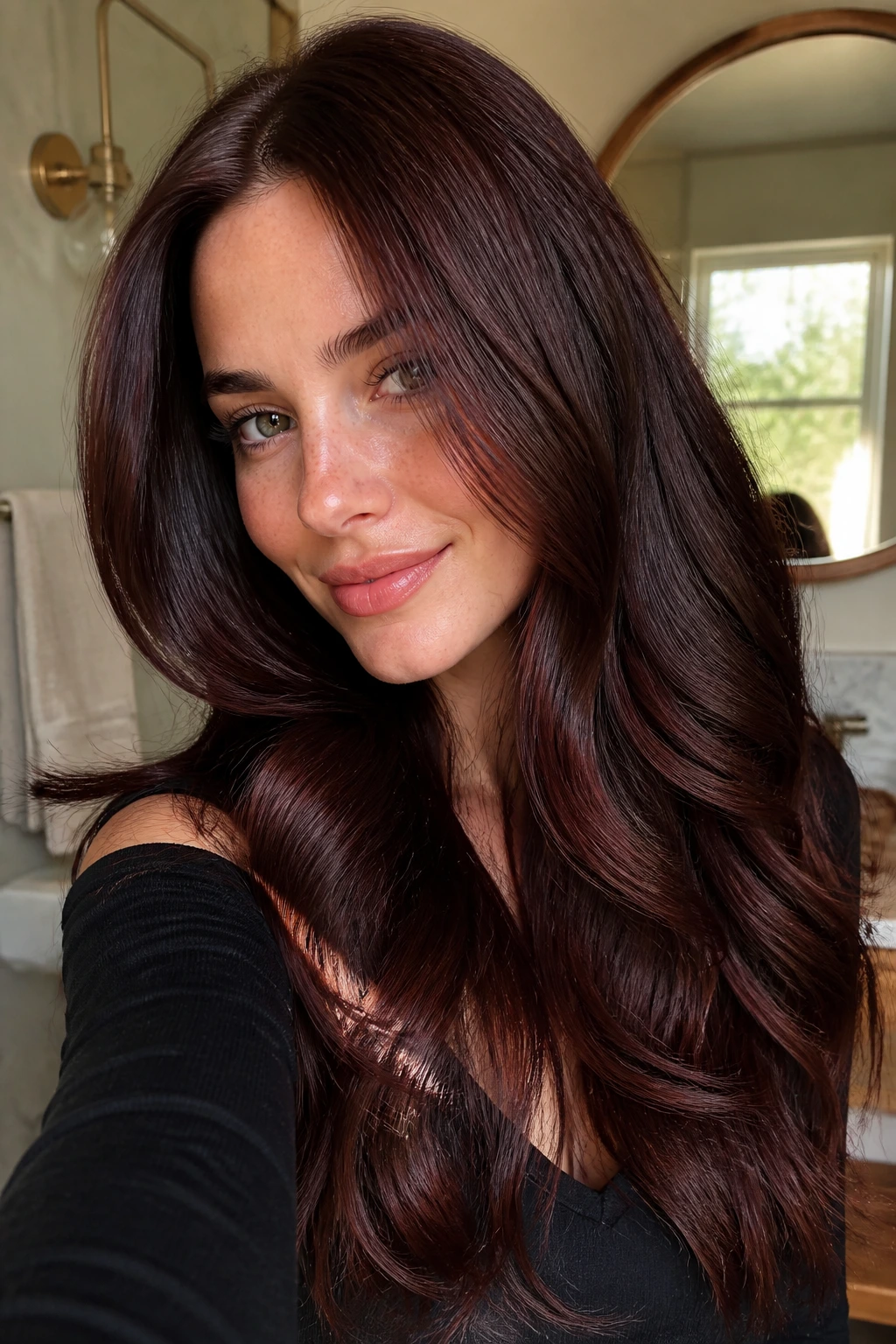
Glossed burgundy brown keeps the red soft, which is usually the smartest move when brunette hair already has enough presence on its own. Instead of trying to turn the hair red, this finish deepens the brown with a burgundy cast and a clear shine on top. The result is rich, smooth, and easy to live with.
Think of this as the low-maintenance version of red lowlights for brunette hair. Ask for fine burgundy pieces through the interior and ends, then finish with a clear or tinted gloss so the color looks smooth rather than dry. A good gloss also keeps the brown from swallowing the red completely.
If you want a red that looks polished in daylight, in office lighting, and in the mirror at home, this is the one I’d start with. It is quiet, but not boring. And on brunette hair, that is often the sweet spot.
