



A round face doesn’t need to be hidden. It needs shape.
That’s why choppy haircuts work so well on this face shape. The uneven ends, broken layers, and off-center parts keep the eye moving, which helps the face look a little longer and a little leaner. When the cut is done right, the result feels light and modern, not soft and puffy around the cheeks.
The trick is placement. Too much width at the sides can make a round face look wider, and short layers that sit right at the cheekbones can do the same thing. The better cuts push texture higher, keep the outline a touch narrower, and leave enough length to create that vertical line people usually want.
Some of these cuts are polished. Some are messy on purpose. A few are sharp and edgy. All 18 can work on a round face, but they do different jobs, and that’s the part worth paying attention to.
1. Choppy Lob with Side Part for Round Faces
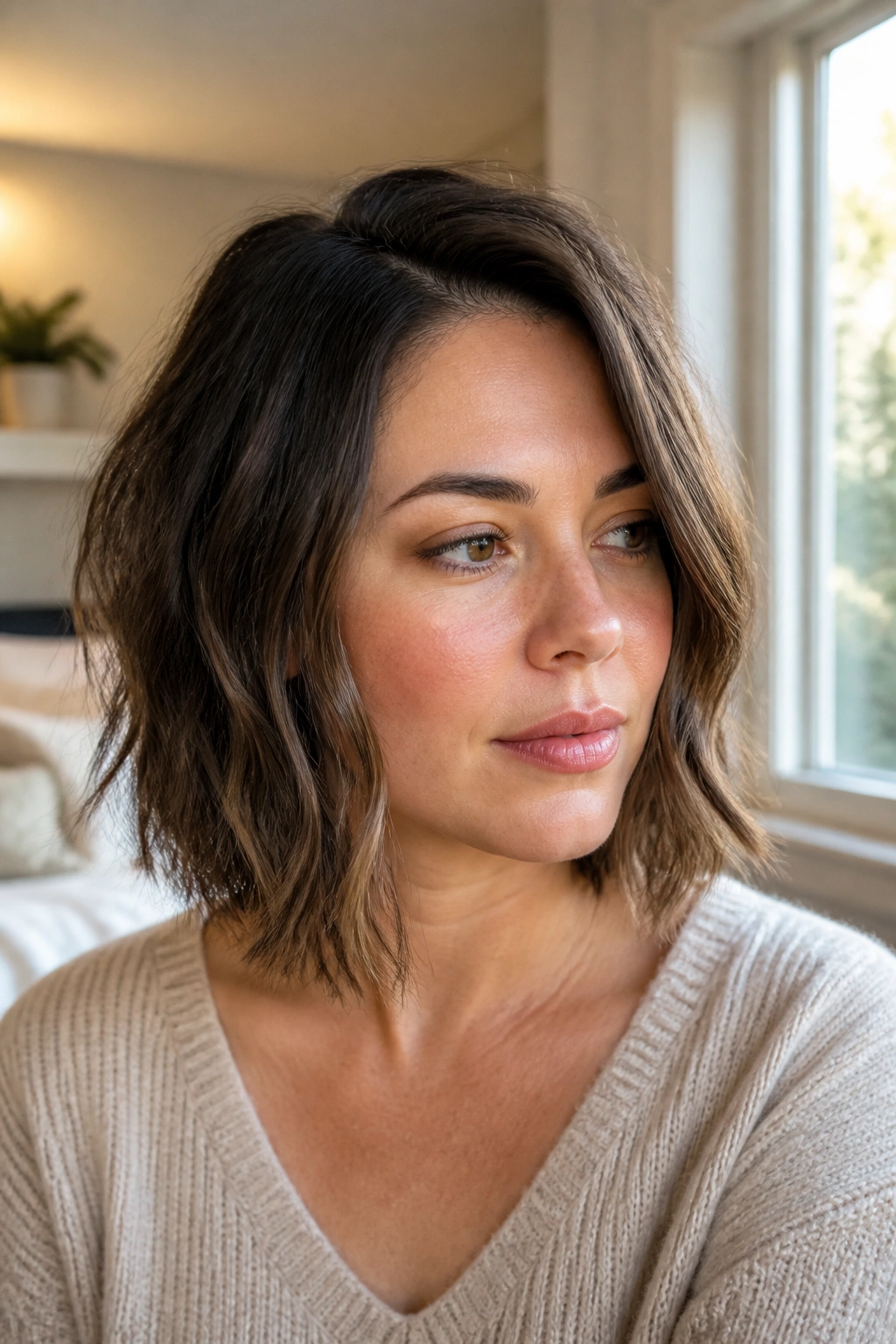
A choppy lob with a side part is one of the safest bets if you want shape without going too short. It usually falls somewhere between the collarbone and the top of the chest, which gives the face room to look longer without dragging everything down.
Why It Works
The side part pulls weight away from the middle of the face. That matters more than people think. A center part can be lovely, but on a round face it sometimes makes the width feel more obvious. A side part, especially one with a little lift at the roots, changes the whole balance.
Ask for point-cut ends rather than a blunt line. The soft, broken finish keeps the cut from looking boxy. If your hair is straight, this style benefits from a few loose bends with a 1-inch curling iron. If your hair is wavy, you may not need much at all.
- Best length: collarbone to upper chest
- Best parting: slightly off-center
- Best styling product: light texturizing spray
- Best face-framing detail: long pieces that start below the cheekbone
Best move: keep the front pieces a touch longer than the back. That small tilt helps a round face look more vertical.
2. Shaggy Mid-Length Cut with Curtain Bangs
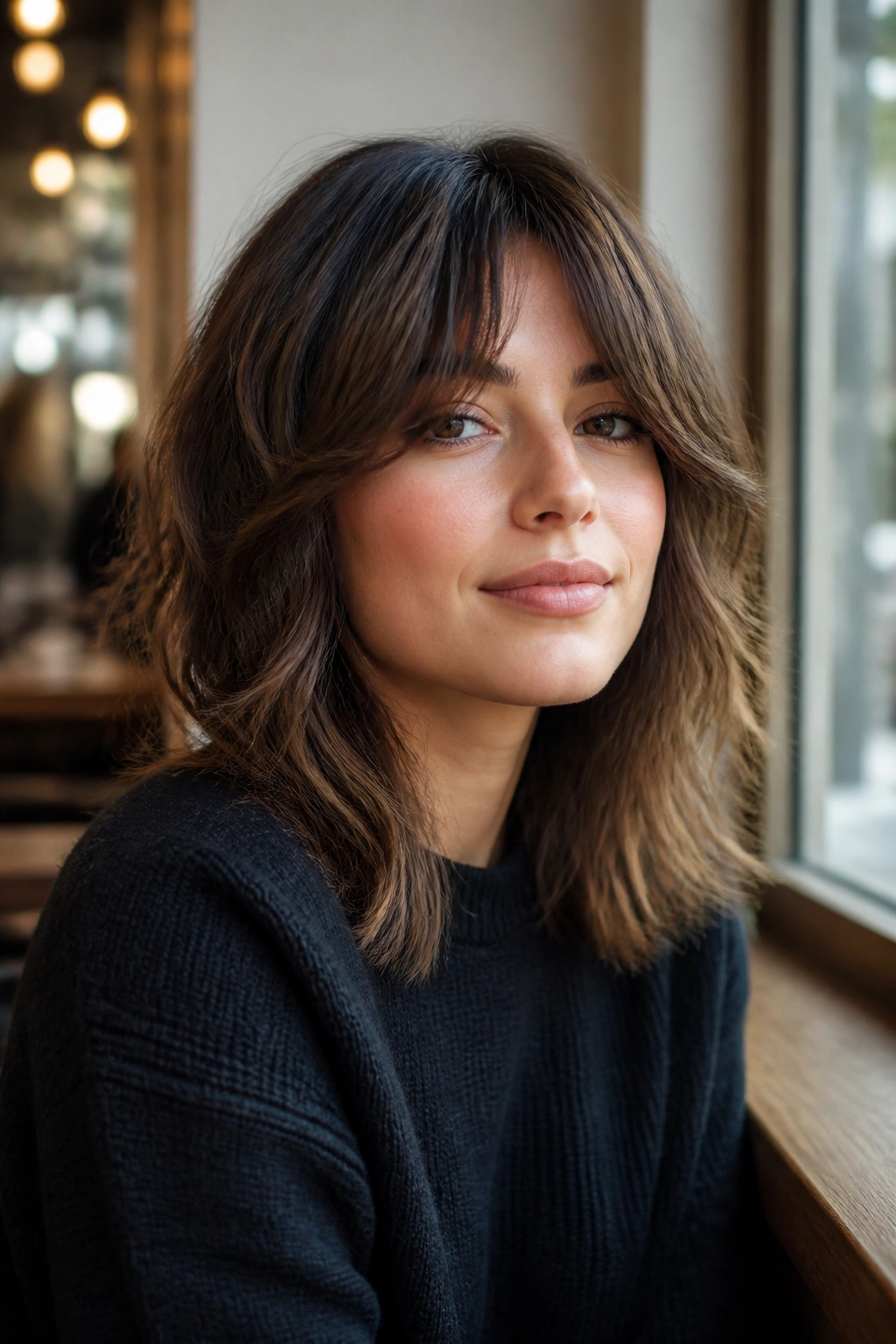
This cut can change the whole mood of your hair fast. A shaggy mid-length shape with curtain bangs gives you movement at the crown and a soft opening around the eyes, which is a smart combination for round faces.
Curtain bangs should not sit too short here. That’s where things go wrong. If they land right at the cheekbone and curl outward, they can widen the middle of the face. You want them to part cleanly and drift down toward the jaw, where they act more like a frame than a shelf.
The shag itself should feel broken up, not feathered into sameness. Ask for layers that remove bulk through the mids and ends, especially if your hair tends to lie flat. A little lived-in texture is the point. Too much polish takes the energy out of it.
Wear this one air-dried with a bit of mousse, or rough-dried with a round brush if you want the bangs to sit in a cleaner arc. It’s one of the few styles that looks good even when it’s slightly imperfect. That’s part of the charm.
3. Piecey Pixie with Crown Volume
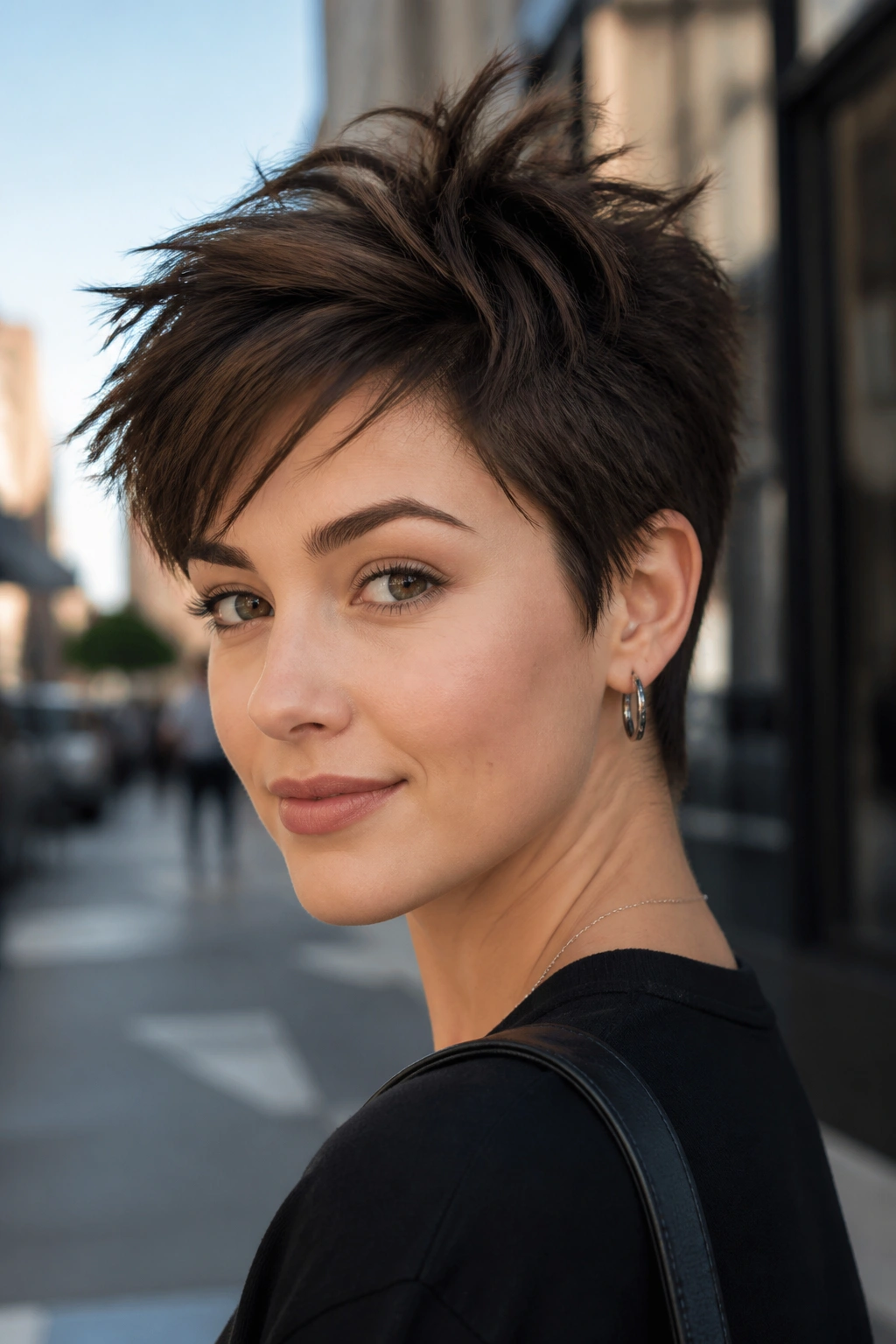
Can a pixie flatter a round face? Absolutely, if the top has lift and the sides stay close enough to the head.
What Makes It Work
A piecey pixie needs height at the crown and texture on top, not puffiness all around. The crown volume draws the eye upward, which stretches the face. The sides should be tapered, not bulky, and the fringe should be soft enough to sweep to one side or break into small, uneven pieces.
A cropped cut like this is one of the boldest options on the list, and I like it best on people who don’t want to hide their features. It shows the cheeks, yes, but it also sharpens them. That can be a good thing. Really good, in fact.
How to Style It
- Blow-dry the top forward first, then lift it back with your fingers.
- Use a pea-sized amount of matte paste.
- Keep the sides neat, not slicked flat.
- Ask for a little extra length at the fringe so you can change the direction later.
This cut is not for someone who wants to roll out of bed and do nothing. It asks for a quick five-minute style. Still, the payoff is huge when the shape is clean.
4. Chin-Length Bob with Internal Layers
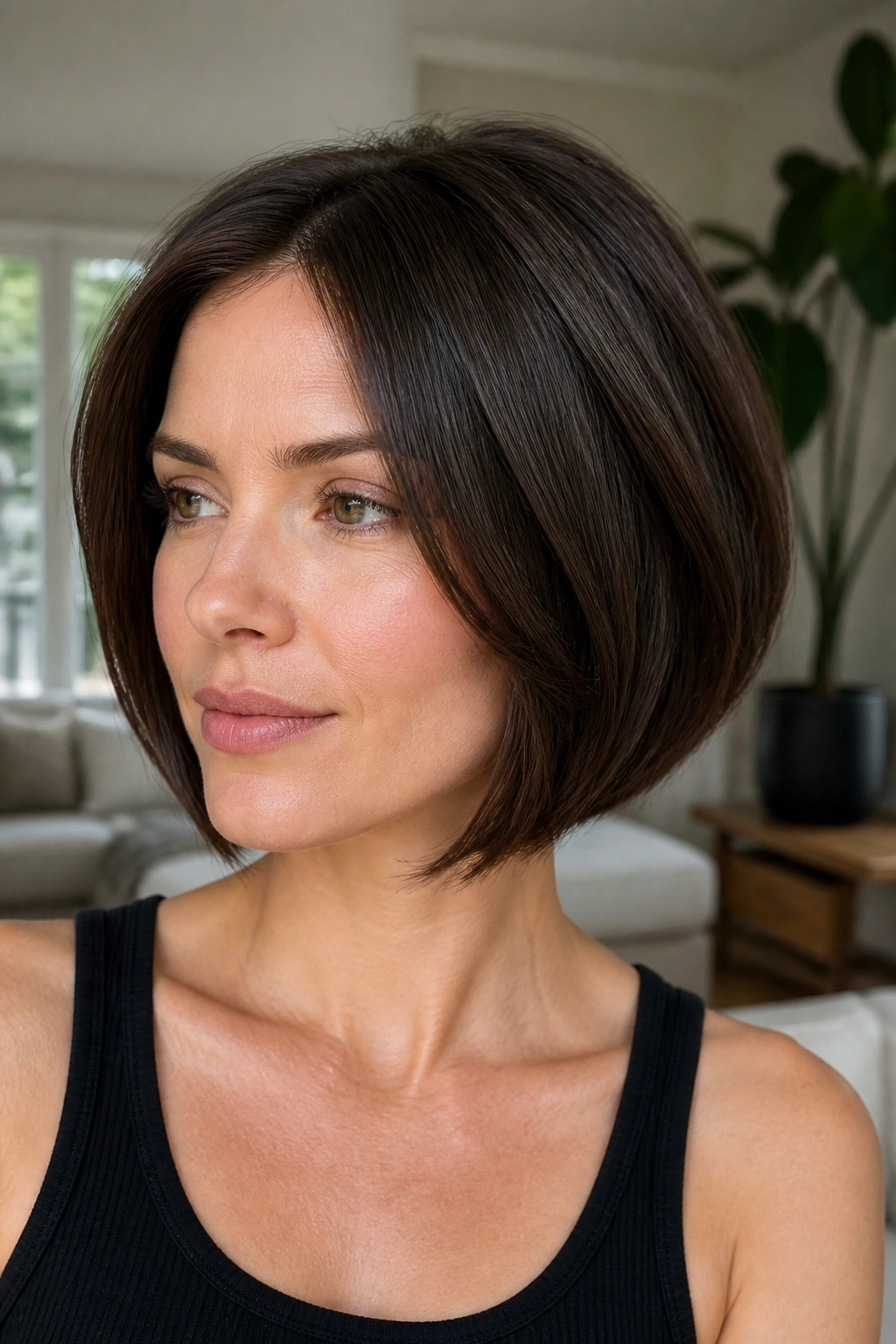
Picture a blunt bob that sounds too boxy for a round face, then cut a few hidden layers inside it. That’s the difference here.
The outer line stays near the chin, which helps define the jaw. The internal layers remove the heavy block that can make short bobs feel wide. You get movement without losing the shape, and that is exactly why this version works better than a plain one-length cut for a lot of people.
The neat part is how subtle it is. From the front, it still reads as a bob. Up close, though, the inside has been thinned out just enough to keep it from sitting like a helmet. That makes styling easier too, especially if your hair has a natural bend.
- Keep the length right at or just below the chin
- Ask for light interior layering
- Use a blow-dry brush to tuck the ends slightly inward
- Skip heavy serums that make the silhouette collapse
A chin-length bob can be sharp on a round face. It just needs a little break in the line. Not a lot. Just enough.
5. Shoulder-Skimming Cut with Feathered Ends

A shoulder-skimming cut is one of those styles that looks casual until you notice how well it balances the face. The length lands in a useful place: long enough to stretch the silhouette, short enough to feel fresh.
Feathered ends matter here. Without them, the cut can sit like a slab, especially if your hair is thick. Feathering keeps the perimeter airy and stops the ends from stacking out at the sides. On a round face, that can be the difference between flattering and just okay.
This is a good choice if you want flexibility. You can wear it sleek, bend the ends with a flat iron, or add loose waves that start below the cheekbone. I prefer the last version. It gives the cut motion without building width in the wrong spot.
It also grows out well. That’s a practical bonus people overlook. A lot of face-flattering cuts look best for two weeks and then lose their shape. This one hangs on longer because the shoulders support the line and the feathers keep it from getting heavy too fast.
6. Wolf Cut with Soft Face Frame

A wolf cut can go wrong fast on a round face if it gets too puffy at the sides. The version that works keeps the wild texture, but softens the face frame and trims the bulk at the cheeks.
Unlike a Heavy Shag, This One Needs Direction
The wolf cut is built on contrast: short layers near the crown, longer lengths below, and a choppy finish throughout. On a round face, the best version keeps the shortest layers high enough to lift the eye upward. If those layers sit too low, they widen the face instead of stretching it.
The face frame should be subtle. Think broken pieces that skim the jaw, not thick pieces that stop at the fullest part of the cheek. That one detail changes everything. It’s the reason a wolf cut can look cool instead of chaotic.
Best For
- Wavy hair that already has movement
- Thick hair that needs weight removed
- Anyone who likes a slightly undone finish
- People who don’t mind a little styling time
If you want the cut to look deliberate, use a diffuser or rough-dry the roots and leave the ends a little piecey. Too much smoothing kills the shape.
7. Angled Bob with Textured Ends for Round Faces
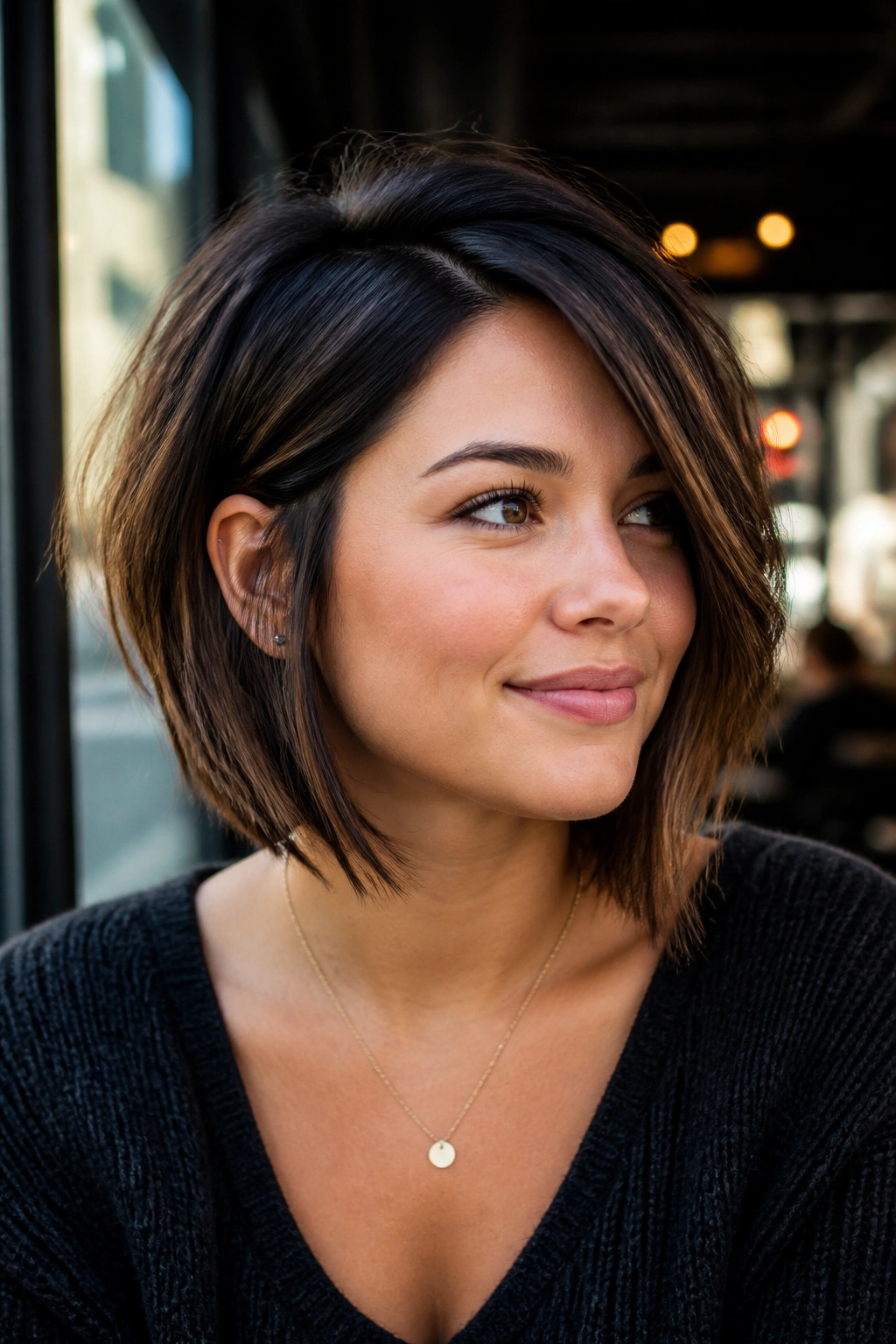
An angled bob earns its place here because it gives you a built-in line that points downward. Shorter in the back, longer in the front — that diagonal shape is friendly to round faces from the start.
Textured ends keep it from feeling severe. A clean, blunt angled bob can be stylish, but it sometimes looks too hard if the hair is fine or very straight. Add a little broken texture at the perimeter and the whole cut feels lighter, softer, and less boxy.
This is one of those styles that looks especially good tucked behind one ear. That tiny asymmetry is doing real work. It shows the jaw on one side, creates a shift in the outline, and helps the face feel less circular.
If you like precision, this one is satisfying. If you like movement, it still works. The key is not to let the front pieces stop at the widest part of the cheek. Keep them below that line, and you get the lengthening effect people are usually after.
8. Long Layers with Broken-Up Ends
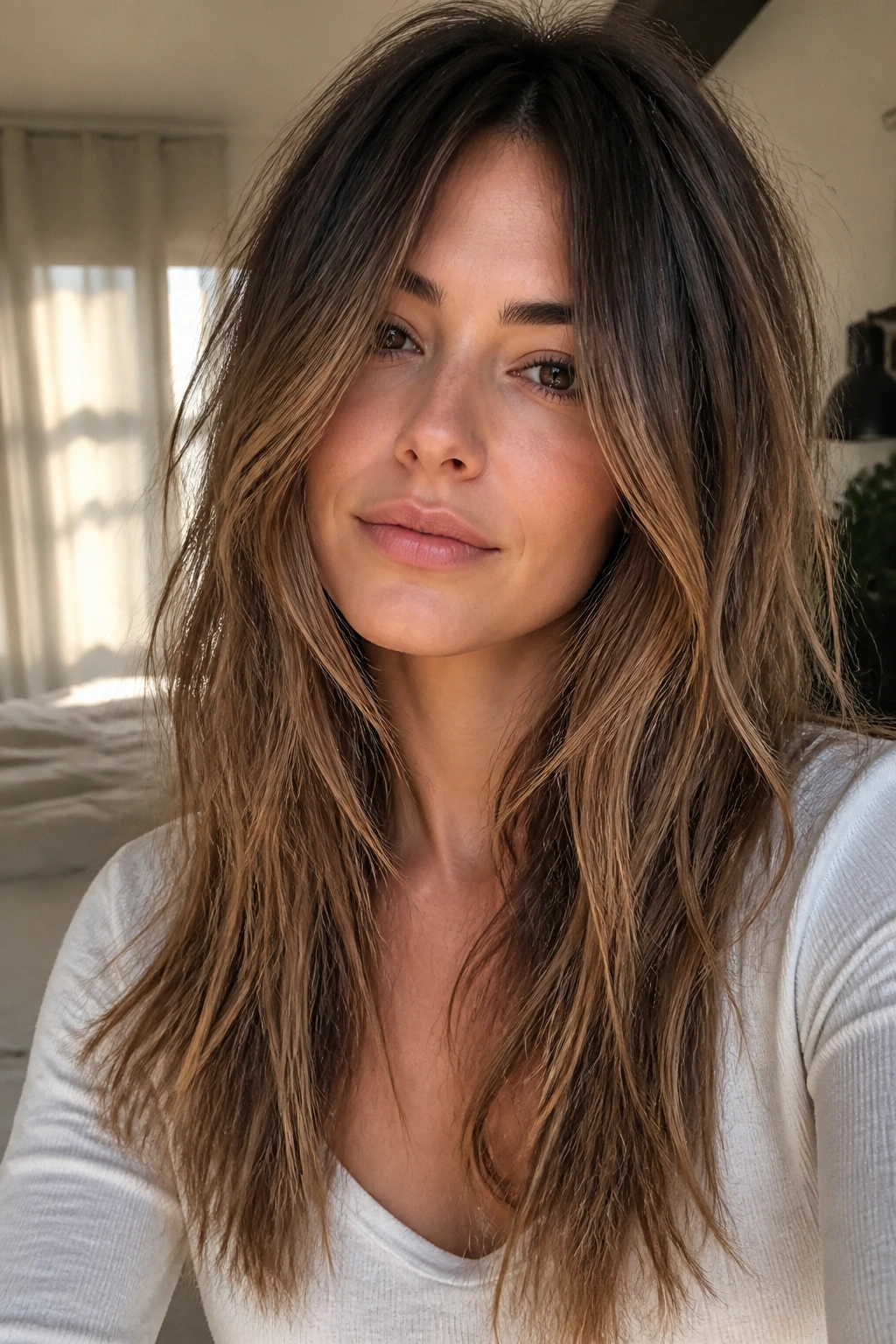
Long hair on a round face can be beautiful, but the wrong layers make it shapeless fast. The answer is not more length alone. It’s length with broken-up ends and layers that move.
The Real Job of the Layers
Long layers should create vertical lines, not soft puffs. That means the shortest face-framing pieces need to start lower than people expect — often around the mouth or just below the cheekbone, depending on density. When those pieces are cut too high, they balloon outward. No one wants that.
The ends should be chipped, sliced, or point-cut so the hemline doesn’t sit like a curtain. That tiny irregularity keeps the cut from looking heavy at the bottom. It also helps straight hair keep some life instead of hanging flat.
This style is especially good if you like to wear your hair down a lot. It doesn’t fight with a middle part, though a slight offset usually looks better on a round face. It also gives you room for ponytails, braids, and clips without making the cut feel too short to manage.
A small note: long layers need upkeep. Not constant, but enough. If they grow out too far, the shape blurs and the face starts to look wider again.
9. French Girl Bob with Soft Fringe

The French girl bob sounds polished, but the version that suits a round face is a little messier than the photos usually show. It sits around the jaw or just under it, with a soft fringe that doesn’t fight the face.
The fringe is the part to watch. It should be airy, not dense. A thick, straight-across fringe can shorten the face, which is not the move here. A soft fringe that splits a little in the middle or falls slightly off-center is kinder. It frames the eyes and gives the face some structure without boxing it in.
I like this cut when the texture is a bit imperfect. A slight bend, a little frizz, even a rough wave can make it better. Too much round brushing can make it feel too sweet. This cut works best when it has a bit of attitude.
Ask your stylist for a line that sits just under the jaw and ends that are lightly shattered. That keeps the bob from turning into a circle around the face. Small detail, big payoff.
10. Mid-Length Mullet with Tapered Sides
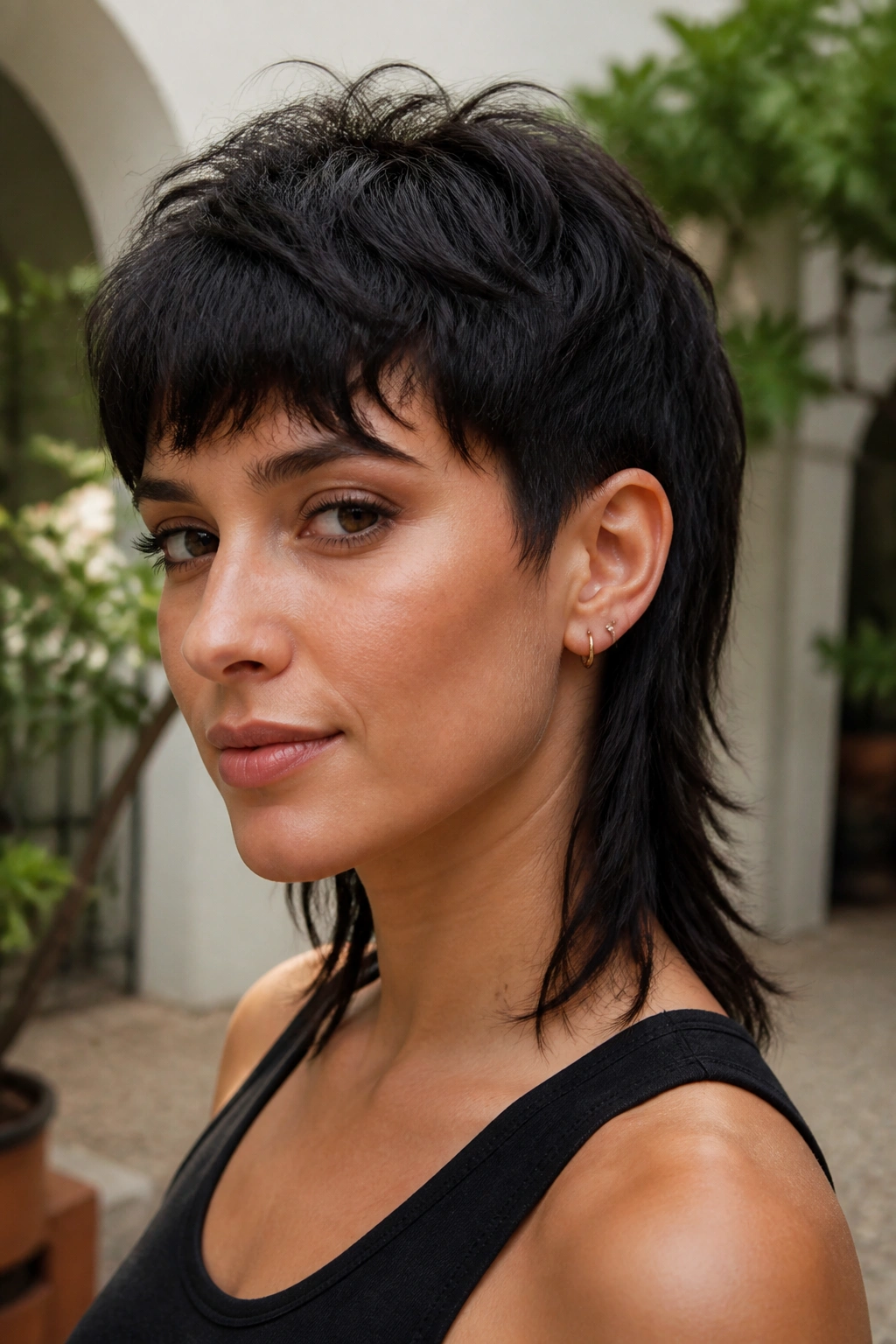
Yes, the mullet can work. No, it does not have to look extreme.
A mid-length mullet with tapered sides is one of the best cuts for a round face if you want something sharper than a shag but less predictable than a lob. The shorter crown and longer back create a vertical pull, while the tapered sides keep the width under control.
Why It Works Better Than People Expect
The shape moves the eye in two directions: up through the crown and down through the back. That’s useful on a round face because it breaks the circular read of the face shape. The sides stay narrow, which matters a lot. If they flare out, the whole effect disappears.
This cut can be worn soft or edgy. Soft means loose texture and a gentle fringe. Edgy means more separation, tighter tapering, and a bit of wax at the ends. Either way, the back should not be so long that it drags the whole style down. You want contrast, not weight.
It suits wavy and thick hair especially well. Straight hair can do it too, but it needs more styling to keep the layers visible.
11. Collarbone Cut with Razor Texture
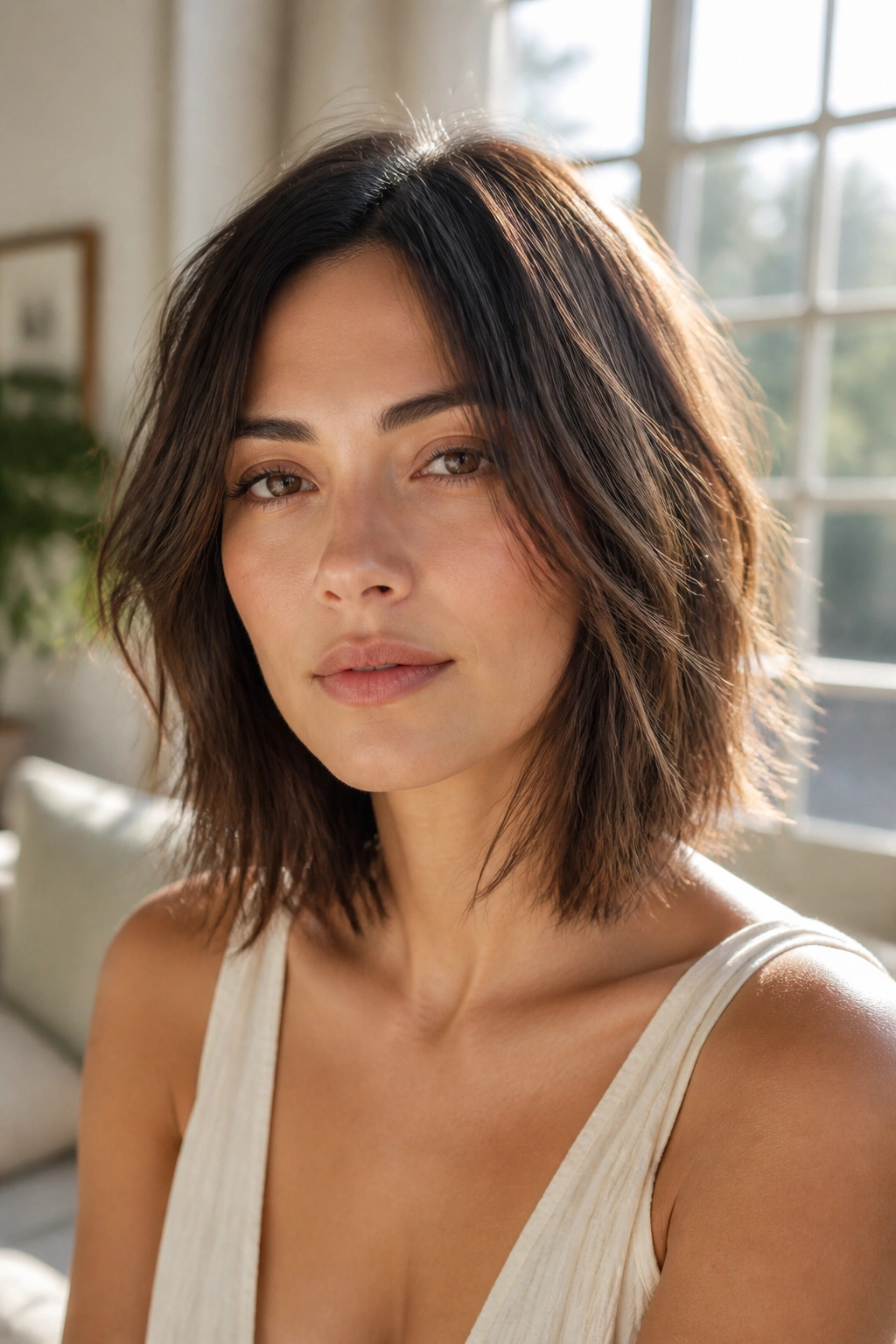
A collarbone cut is a workhorse. Add razor texture, and it becomes a lot more interesting.
The collarbone length helps elongate the face because the eye travels farther down before the hair ends. Razor texture breaks the bluntness that can make a mid-length cut feel heavy. On a round face, that balance is useful. You get softness without losing line.
What to Ask For
Ask for soft ends, not severe thinning. There’s a difference. Razor work should create movement, not frayed edges that look damaged. If your hair is fine, the texture should stay light. If your hair is dense, the razor can remove enough bulk to make the cut swing instead of sit.
This style is also one of the easiest to dress up or down. Air-dried waves? Fine. Sleek and tucked behind the ears? Also fine. A flat iron bend on the ends? That works too. It doesn’t demand a specific mood.
I’d call this a quiet favorite. Not flashy. Just dependable, flattering, and easy to live with. That counts for a lot.
12. Curly Choppy Cut with Light Layers
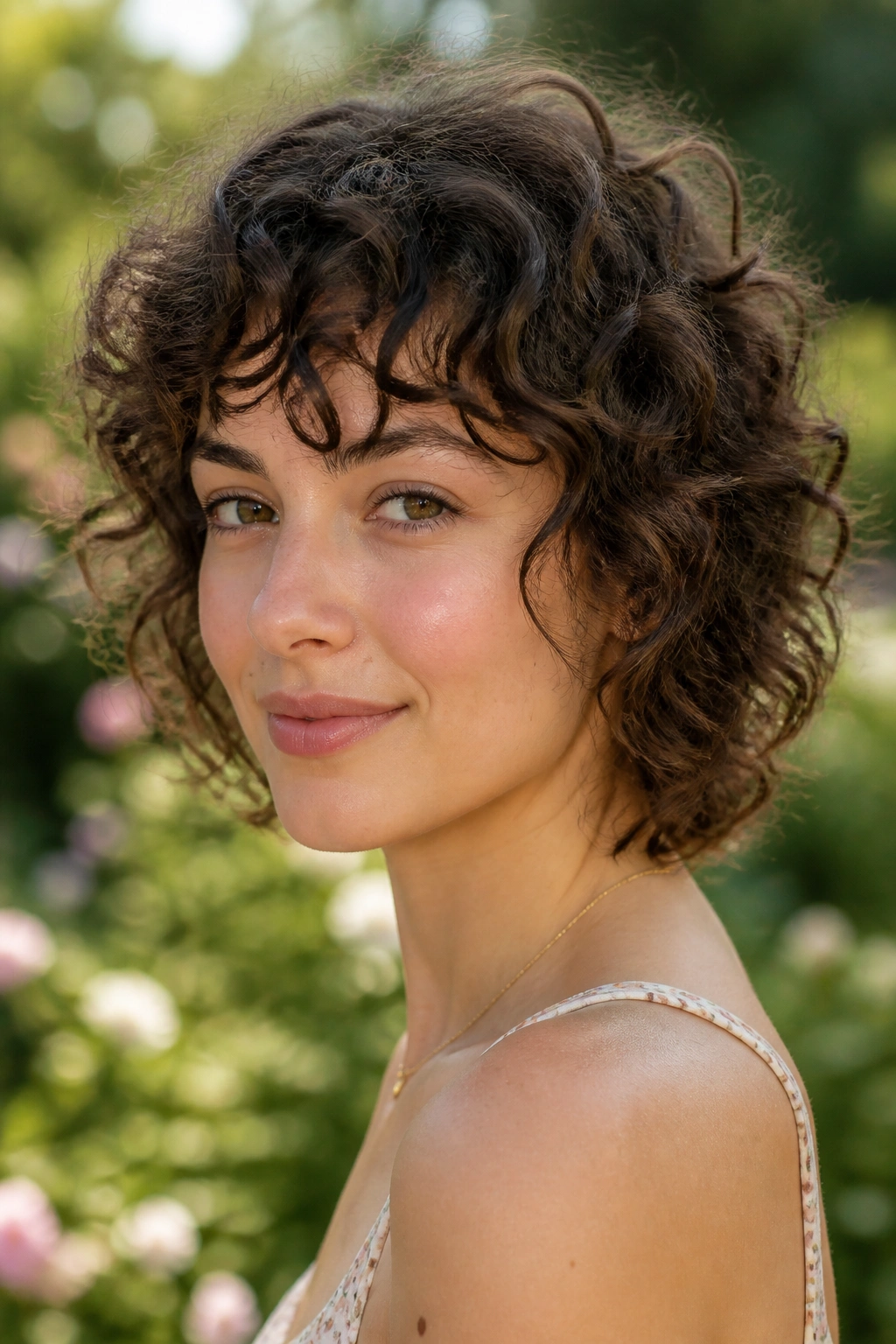
Curly hair and round faces can be a lovely pairing, but the layers have to respect the curl pattern. A choppy curly cut with light layers keeps the shape springy without turning it into a mushroom.
The goal is lift at the top and room through the sides. Heavy layers cut too high can create a halo that widens the face. Light layers, placed with the curl pattern in mind, let the hair move while keeping the outline narrower. A good curl specialist will usually cut this dry or mostly dry so they can see where each curl lands.
What Makes It Different
Unlike straight-textured choppy cuts, this one is about shrinkage. Curly hair rises when it dries, so a piece that looks chin-length when wet may end up much shorter. That’s why the finishing length matters more than people realize.
Use a cream that defines the curls without weighing them down, then scrunch out the cast once the hair is dry. The ends should look separated, not swollen. If the sides start puffing outward too much, the cut needs a little more length or a less aggressive layer pattern.
This is one of the most forgiving styles on the list when it’s cut correctly. A bad version can be wide. A good one is soft, lively, and balanced.
13. Deep Side-Part Lob for Round Faces
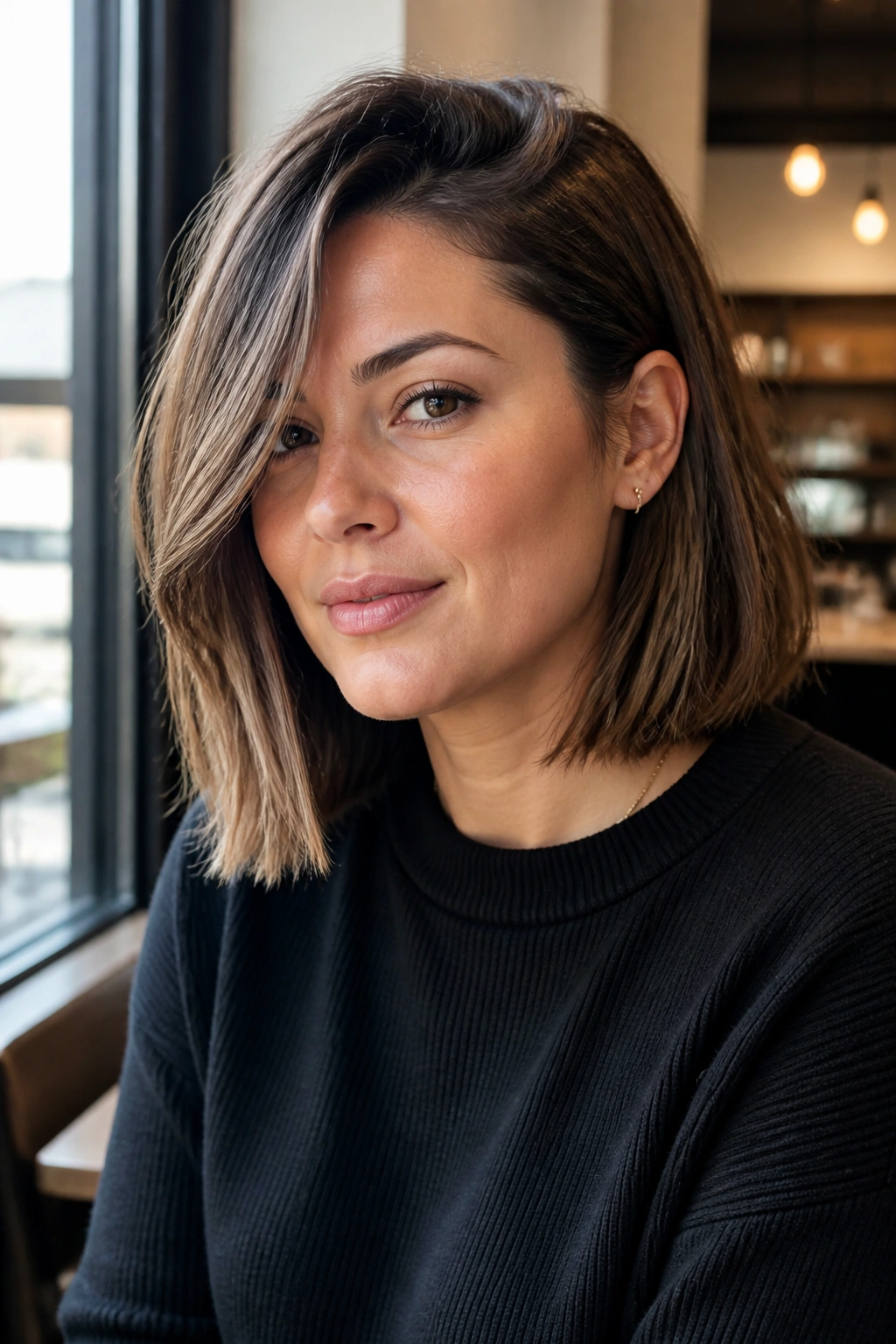
A deep side part is one of the easiest shape tricks in the book, and it never gets old. On a round face, it creates instant asymmetry, which is exactly what many choppy cuts need.
The lob length keeps the line long enough to slim the face. The side part lifts one side of the hair up and over, creating height where a round face benefits most. If your hair falls flat, this is a strong choice because the part does a lot of the heavy lifting.
The cut itself can be simple. It doesn’t need dramatic layers. A little broken texture through the ends is enough. In fact, too many layers can muddy the shape and make the style lose that crisp diagonal feel.
This version works well when you tuck the heavier side behind one ear and leave the other side loose. That small shift creates a clean visual break. It’s subtle, but so is a lot of good haircutting. The best results are often the least noisy.
14. Airy Shoulder Cut with Bottleneck Bangs
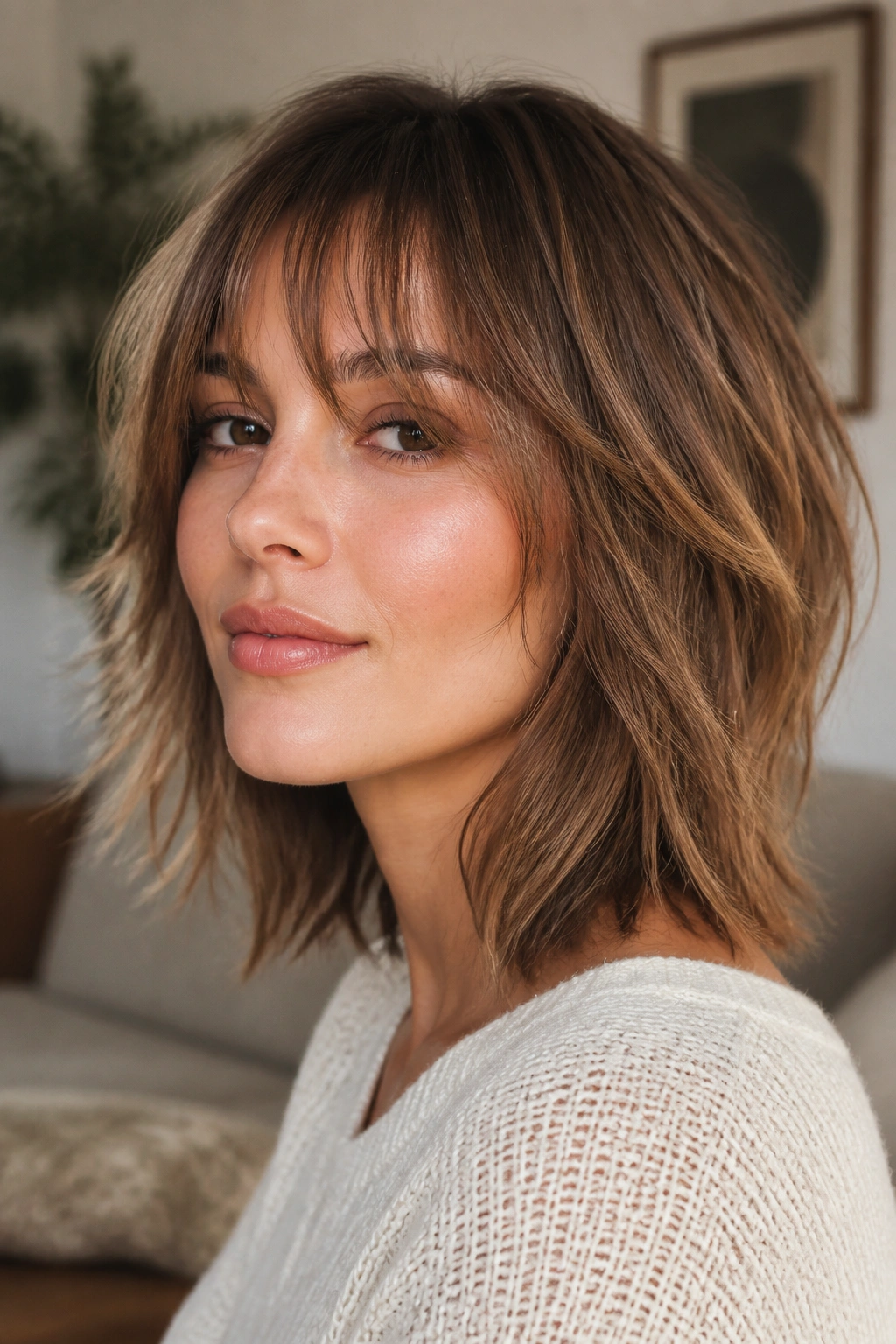
Bottleneck bangs are softer than blunt bangs and more open than a straight fringe, which makes them a smart pairing for a round face. Add a shoulder-length, airy cut, and you get movement without bulk.
The bang shape is the star here. It starts a bit narrower at the top, then opens as it comes down toward the cheekbones. That opening helps frame the eyes while avoiding the square block effect of heavier bangs. It’s a good compromise if you want fringe but don’t want your face to look shorter.
The shoulder cut should stay light through the ends. If the perimeter is too dense, the bangs lose their balance. A few internal layers keep the hair from sitting like one big shape, and that softness matters.
This is a nice option if you like styling variety. You can blow the bangs smooth, wear them with a loose bend, or push them apart and let them sit like curtain fringe on lighter days. It gives you some range, which is always useful.
15. Textured Crop with Longer Top
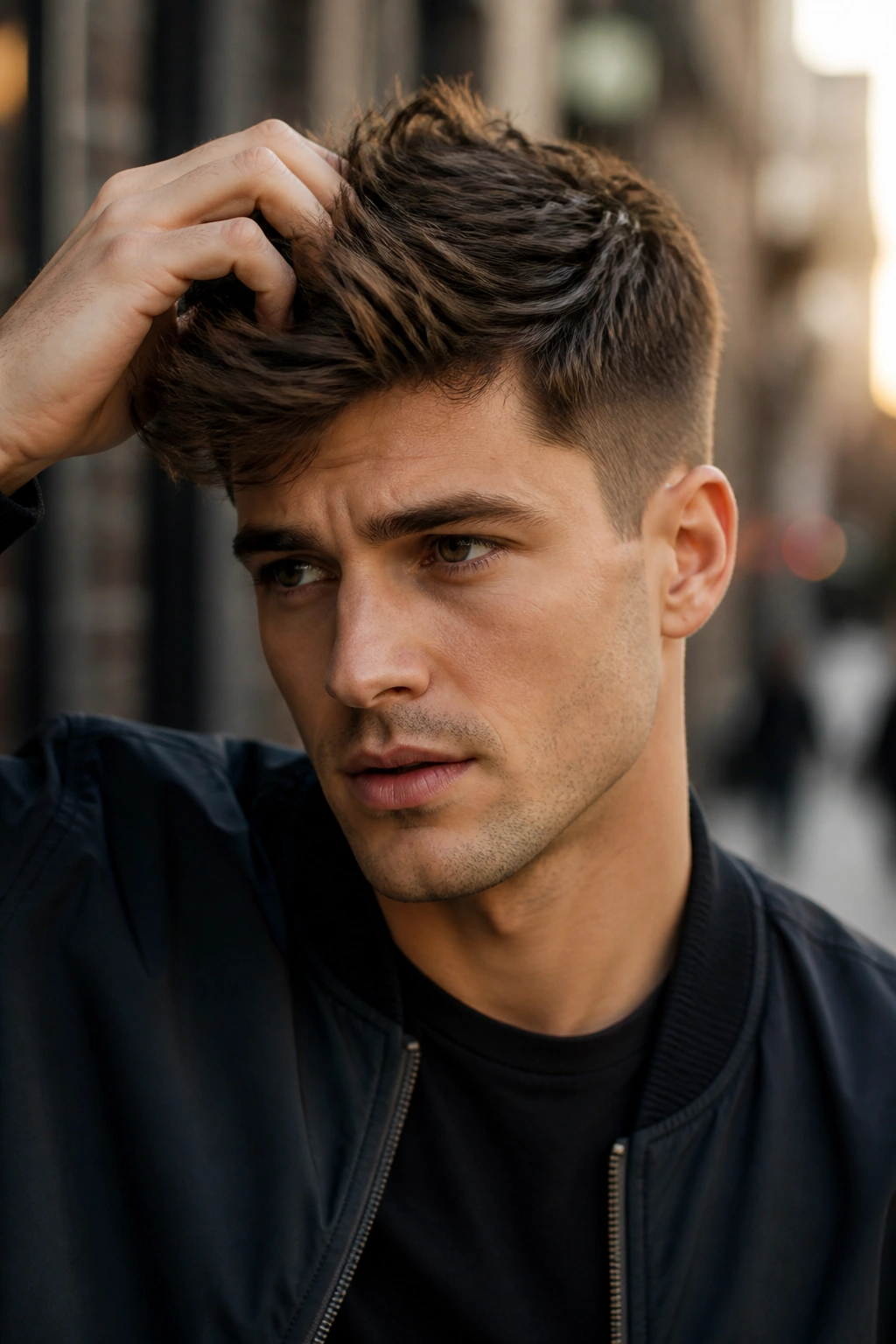
A textured crop with a longer top can look clean, sharp, and surprisingly flattering on round faces. The trick is making the top long enough to build height while keeping the sides tight and neat.
How It Changes the Face Shape
Short cuts expose more of the face, so proportion matters here. The longer top creates vertical lift, and the shorter sides stop the silhouette from spreading out. That combination brings balance. It also draws attention to the eyes and cheekbones instead of the widest part of the face.
This is a good cut for people who like something low-fuss. You can work a small amount of matte product through the top, push it slightly forward, then mess it up just a bit with your fingers. Done. No round brush needed unless you want a cleaner finish.
- Keep the top long enough to pinch and piece out.
- Ask for tapered sides, not a hard shelf.
- Avoid over-thinning the crown.
- Use a small amount of paste, not glossy gel.
It’s a neat cut. Honest, too. If you want softness, this is not it. If you want edge and shape, it’s strong.
16. Layered C-Shape Cut
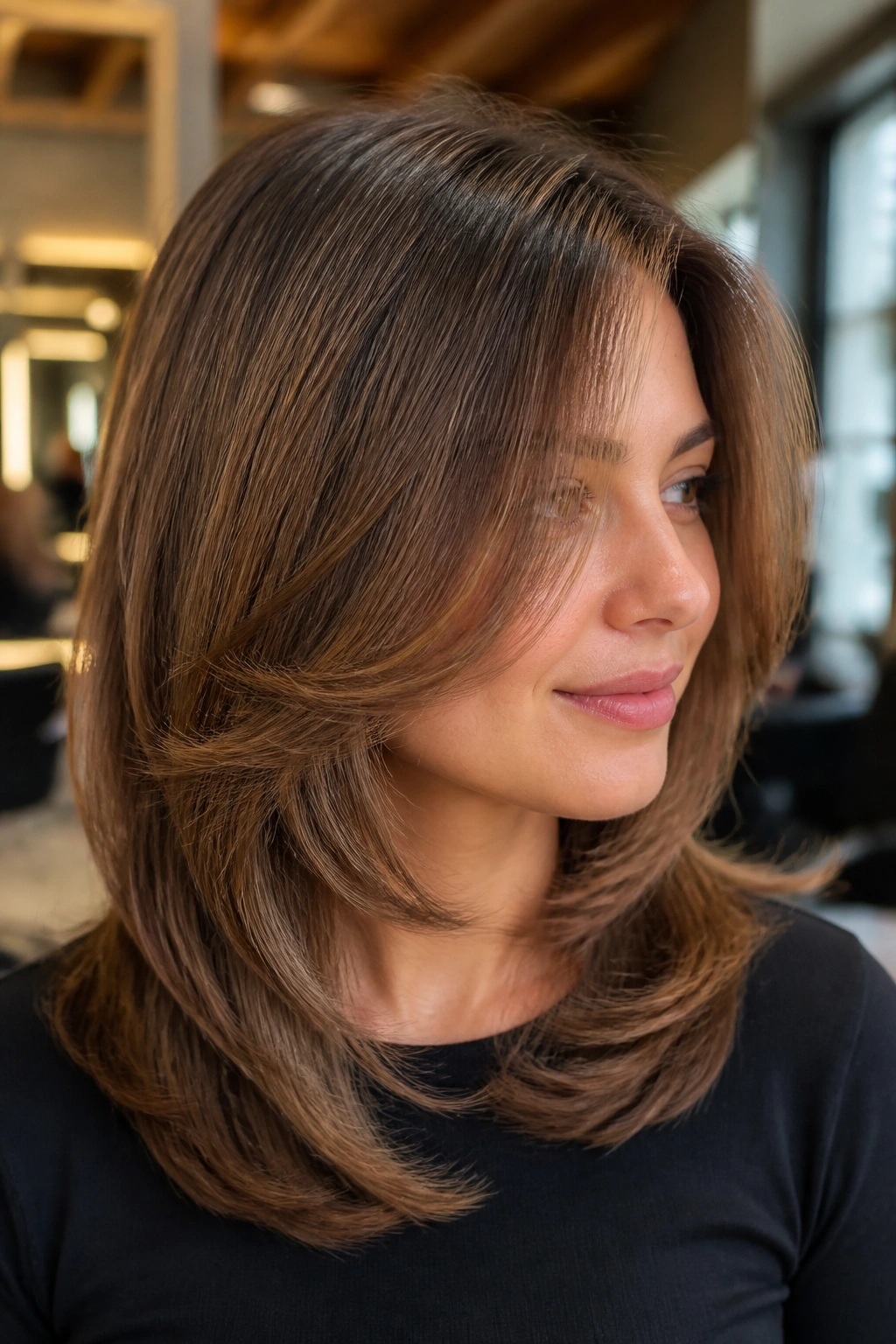
The C-shape cut gets its name from the way the layers curve in toward the face and away again at the ends. On a round face, that curved motion can be a useful way to add length without losing softness.
The layers should start below the cheekbone and sweep downward in a gentle arc. Too much curve at the cheeks brings the eye back to the widest part of the face, which defeats the purpose. Lower placement is better. Always.
This shape is one of my favorite options for medium to thick hair because it takes weight out while keeping the outline smooth. The hair feels lighter, but it does not look choppy in a harsh way. That matters if you want texture without an edgy finish.
A blowout brush helps here, especially if you want the front to bend inward a bit and the ends to flick away from the neck. The result feels polished, but not stiff. There’s a difference, and you can see it right away.
17. Sliced Bob with Tucked Nape
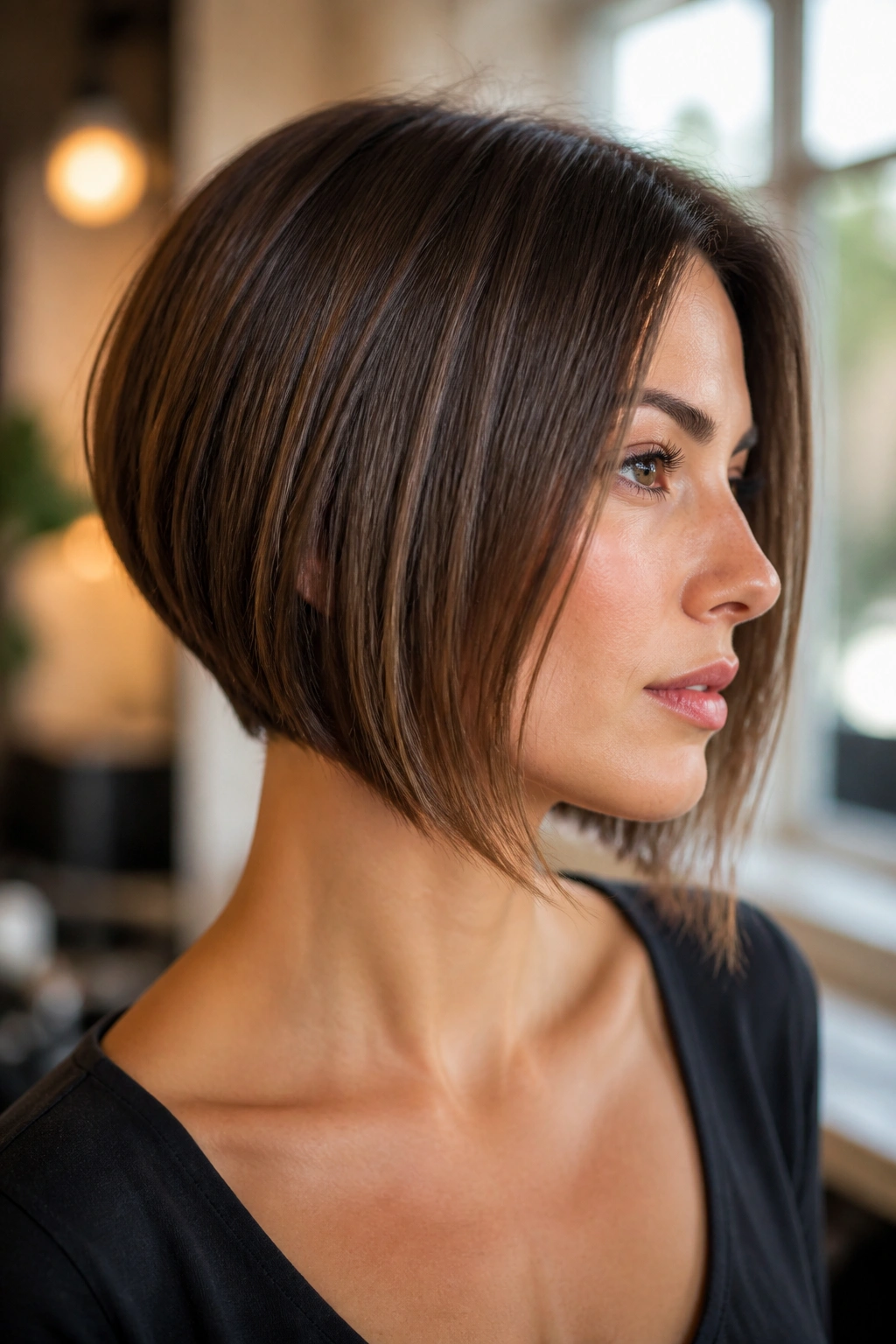
A sliced bob is cleaner than a shag and sharper than a soft bob. It uses sleek, separated layers that let the hair move without turning fluffy, which can be a nice fit for round faces.
The tucked nape keeps the back close to the neck, which opens up the jawline. The front can stay a little longer and slightly angled, giving the face that useful downward pull. If the ends are too blunt, the bob can feel heavy. Slicing the ends changes the whole mood.
Best for Straight or Slightly Wavy Hair
This cut shows off texture, but it also rewards smooth hair. Straight hair makes the angles easier to see. Slight wave adds a little looseness. Very curly hair can do it, though the shape needs more careful cutting so the nape doesn’t puff up.
The haircut looks especially good when the side part is shallow and the front pieces are tucked behind the ears on one side. That bit of asymmetry keeps the face from feeling boxed in. It’s neat, but not severe.
If you want a bob that feels modern without leaning shaggy, this is a strong option. Clean line. Soft movement. Good control.
18. Soft Choppy Shag with Wispy Bangs

A soft choppy shag with wispy bangs is probably the easiest way to get texture, movement, and a little personality all at once. On a round face, it works because the layers are broken up, but the edges stay airy rather than bulky.
Wispy bangs are the difference-maker. They do not cover the forehead in a heavy block, which keeps the face from feeling shorter. Instead, they skim across the top of the face and leave space around the eyes. The shag layers then carry that same lightness through the rest of the cut.
This is a forgiving style if you want something that grows out without looking sloppy. That said, it needs a bit of styling. A diffuser, a light mousse, or a spritz of texturizing spray usually helps the layers separate the way they should. If the hair is left too smooth, the shape loses its charm.
It suits wavy hair especially well, though straight hair can work too if you’re willing to add bend. The cut has enough softness for everyday wear and enough edge to feel intentional. That combination is hard to beat.
If you’re choosing just one rule for round faces, make it this: keep the width controlled and the movement vertical. That’s the difference between a haircut that sits on the face and one that flatters it.
