



When you have a round face, standard beauty advice often pushes you toward one extreme: hide it behind long, shapeless curtains of hair or pull it back entirely to emphasize the “fullness.” But there is a third, significantly more interesting option that doesn’t get enough credit. Asymmetry. It is the architectural fix for a soft, circular face shape. By intentionally disrupting the symmetry of your hair, you trick the eye into seeing angles where there are curves. You introduce diagonal lines that slice through the roundness, creating a sense of elongation and structure that a standard, even-length haircut simply cannot achieve.
The goal with a round face is almost always to create verticality and definition. A perfectly symmetrical bob that hits right at the jawline often serves to highlight the width of your cheeks. Shift that same bob so it is longer on one side, and suddenly you have a diagonal line that draws the eye downward, lengthening the neck and slimming the jawline. It is a simple geometric trick, but it requires a stylist who understands balance and weight distribution. You are not just cutting hair; you are creating a frame for your features that works with, rather than against, your natural bone structure.
1. The Deep Side-Parted Lob
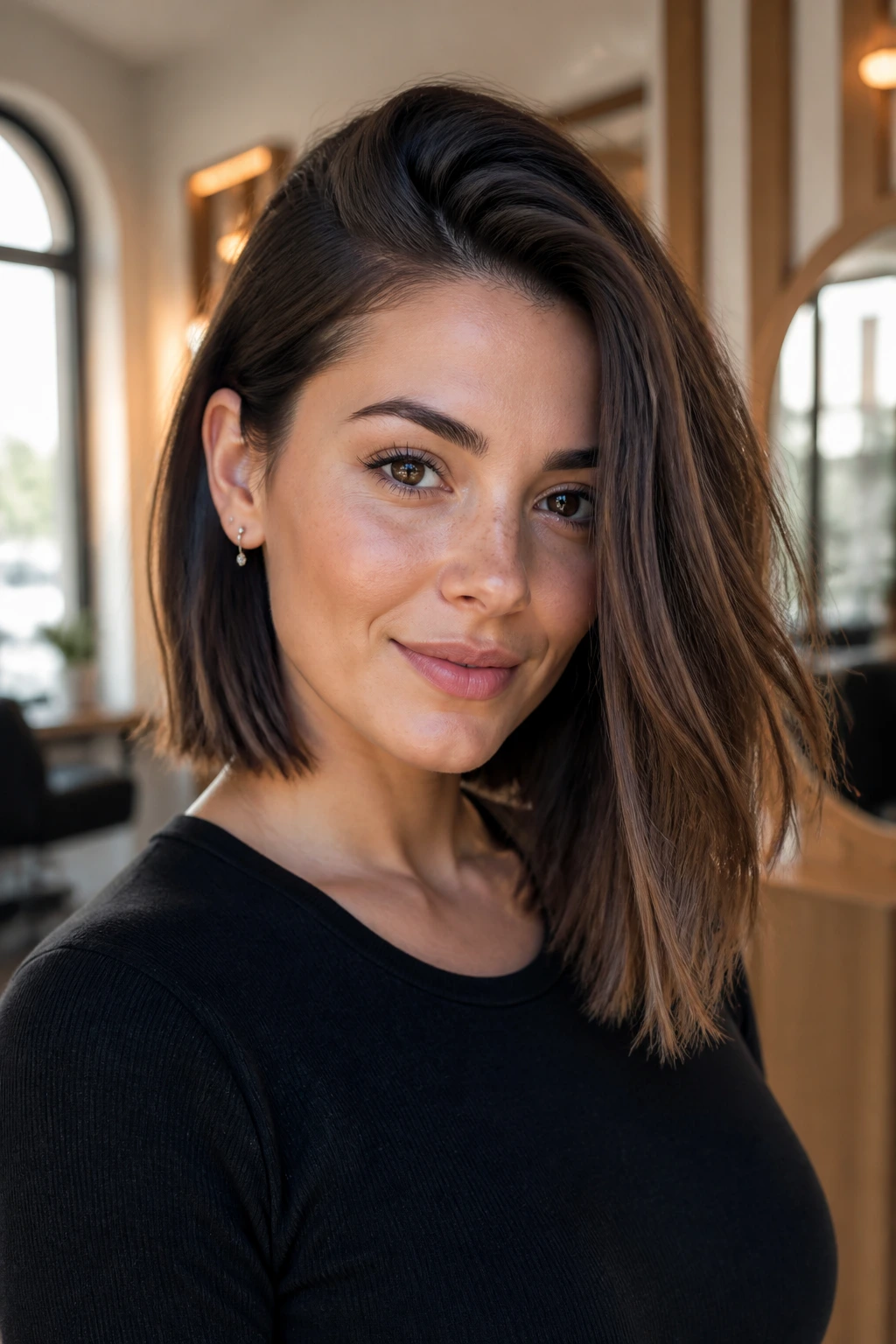
This is perhaps the most reliable way to dip your toes into asymmetrical styling. The lob—or long bob—is already flattering because it clears the shoulders and avoids the heaviness of long hair, but the secret here is the deep side part. By parting your hair significantly off-center, you create a sweeping diagonal across the top of your head. This instantly breaks the horizontal line of the forehead and directs attention toward the eyes rather than the width of the cheeks.
Why It Works for Round Faces
The length of the lob is usually the sweet spot, sitting just below the chin or hitting the collarbone. Because the hair is longer on one side, it creates a vertical plane that elongates the neck. You are effectively shifting the center of gravity of your haircut.
Styling for Maximum Asymmetry
Do not just flip your part over and hope for the best. Use a tail comb to create a sharp, clean part line. Apply a lightweight volumizing mousse to the roots while the hair is damp to ensure the heavy side doesn’t just lie flat against your scalp. You want height on that deep side to accentuate the slant of the cut.
Pro Tip: If your hair has a natural tendency to part in the middle, train it by blow-drying it in the opposite direction while wet. The heat sets the root pattern, making the deep sweep look intentional and effortless.
2. The Sharp, Angled Bob
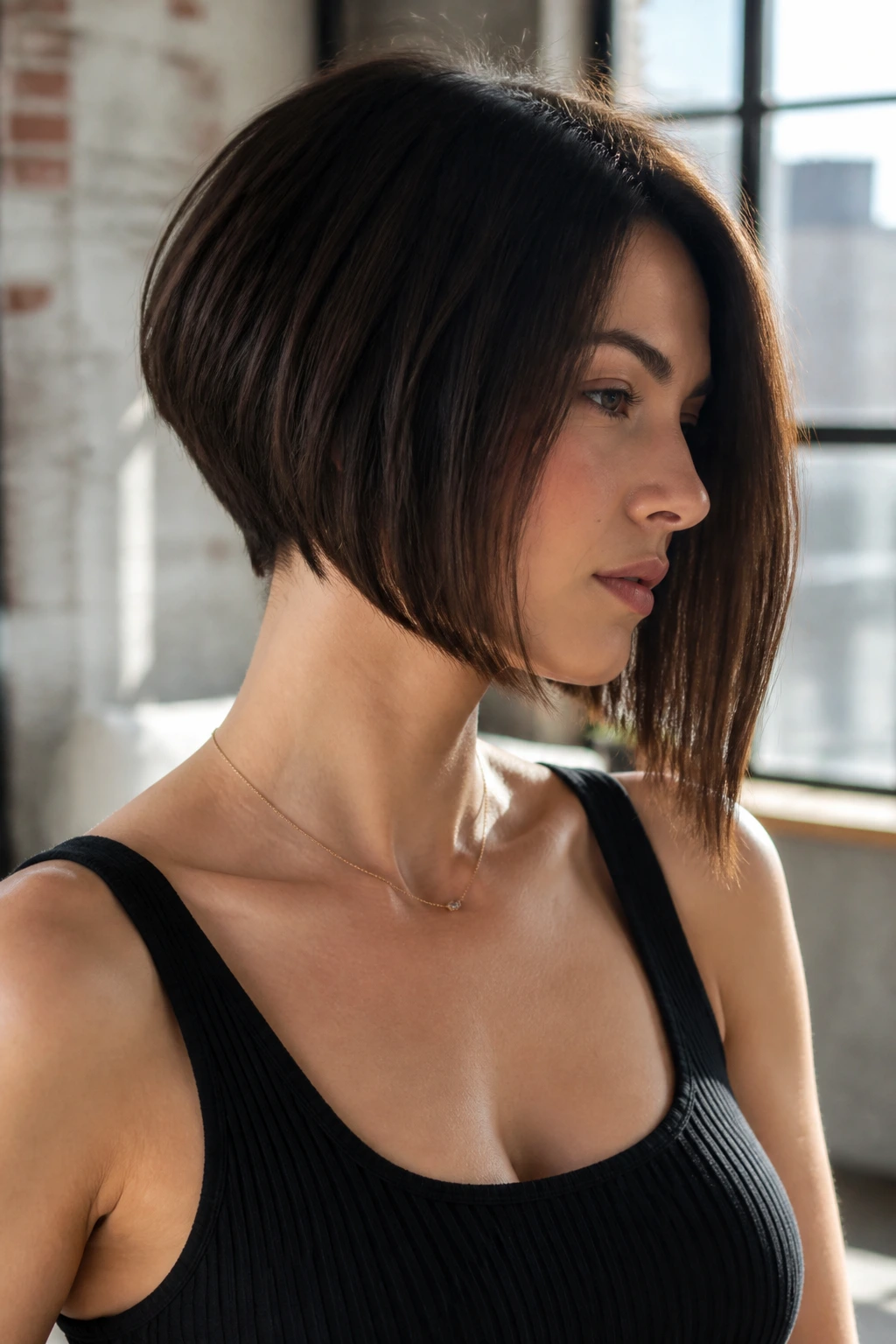
If you want to lean into the asymmetry, the sharp, angled bob is the definition of bold. In this cut, the back is kept short, often slightly stacked, and the front gradually angles down toward the jaw. When you make this asymmetric, one side of that angle is cut noticeably longer than the other. It is aggressive, geometric, and unapologetically modern.
The Geometry of the Cut
The contrast between the short nape and the elongated front creates a dramatic silhouette. The longer side acts as a curtain that hides the widest part of the face, while the shorter side exposes the jawline. This combination creates a “slimming” effect that is far more effective than trying to hide your face behind layers.
Maintenance Considerations
Because this cut relies on precise, sharp lines, it requires regular maintenance. You cannot let this grow out for three months without losing the shape. Plan for a trim every six to eight weeks to keep the angle crisp. If the edges soften, the cut loses its purpose and starts to look like a standard bob that just grew out unevenly.
3. Textured Pixie with Undercut
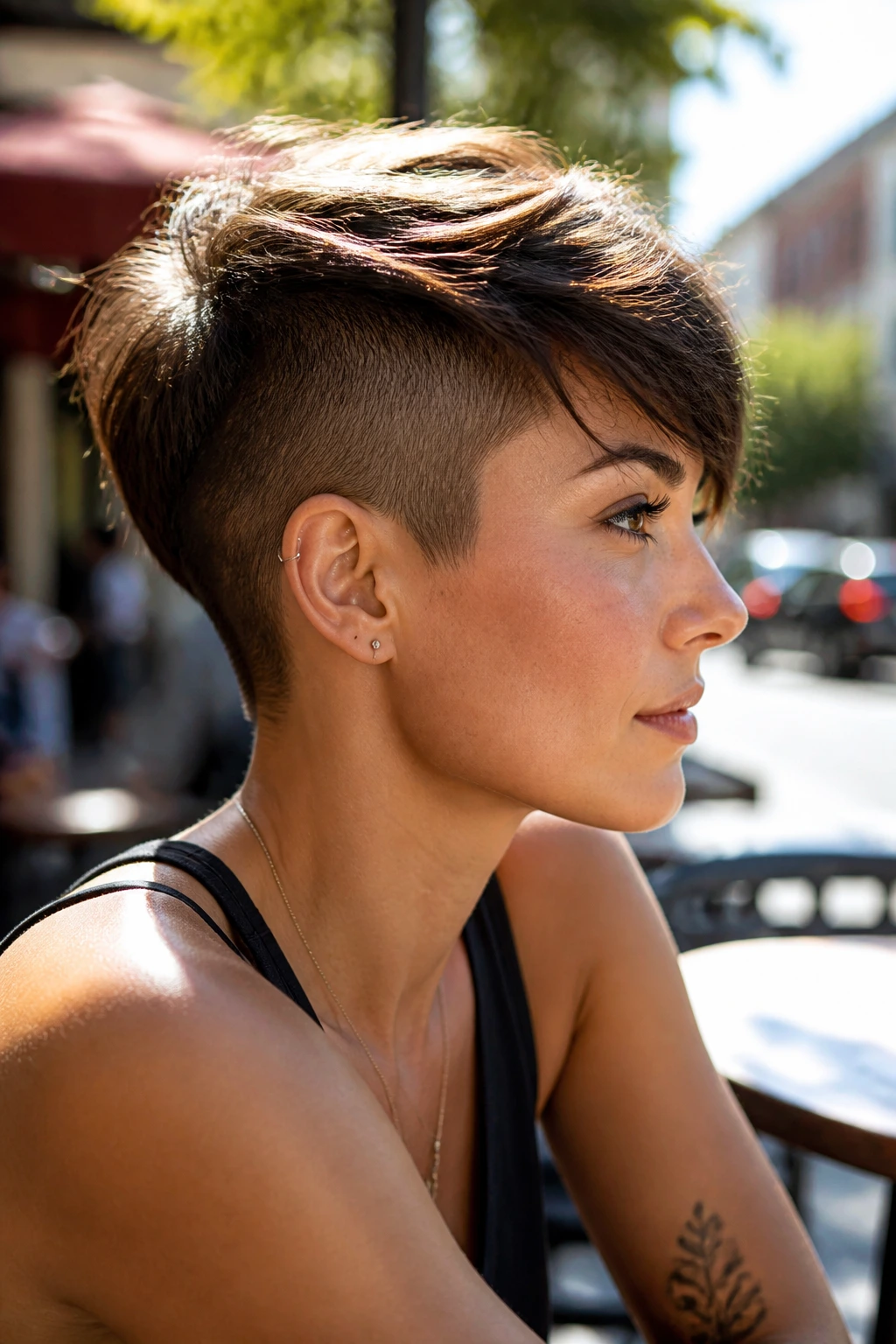
A pixie cut on a round face can be intimidating, but when you introduce an undercut on one side, it transforms the entire look. By removing the bulk from one side of the head, you eliminate the width that usually makes a pixie look “too round.” The remaining hair on the top and the other side is left longer, textured, and sweeping.
Why This Style Succeeds
The shaved or tightly cropped section on one side immediately removes volume, which is exactly what a round face needs. The asymmetry creates a bold focal point. People are too busy looking at the cool, edgy contrast to focus on the shape of your face. It is a distraction technique that actually works.
Texture Is Mandatory
Do not try to wear this look sleek and flat unless you have incredibly fine, straight hair. For most people, this cut needs texture. Use a sea salt spray or a matte clay to muss up the longer section. You want it to look lived-in and piecey, not like a helmet. The messier the top, the more it distracts from the roundness of the face.
4. The Long, Layered Asymmetrical Cut
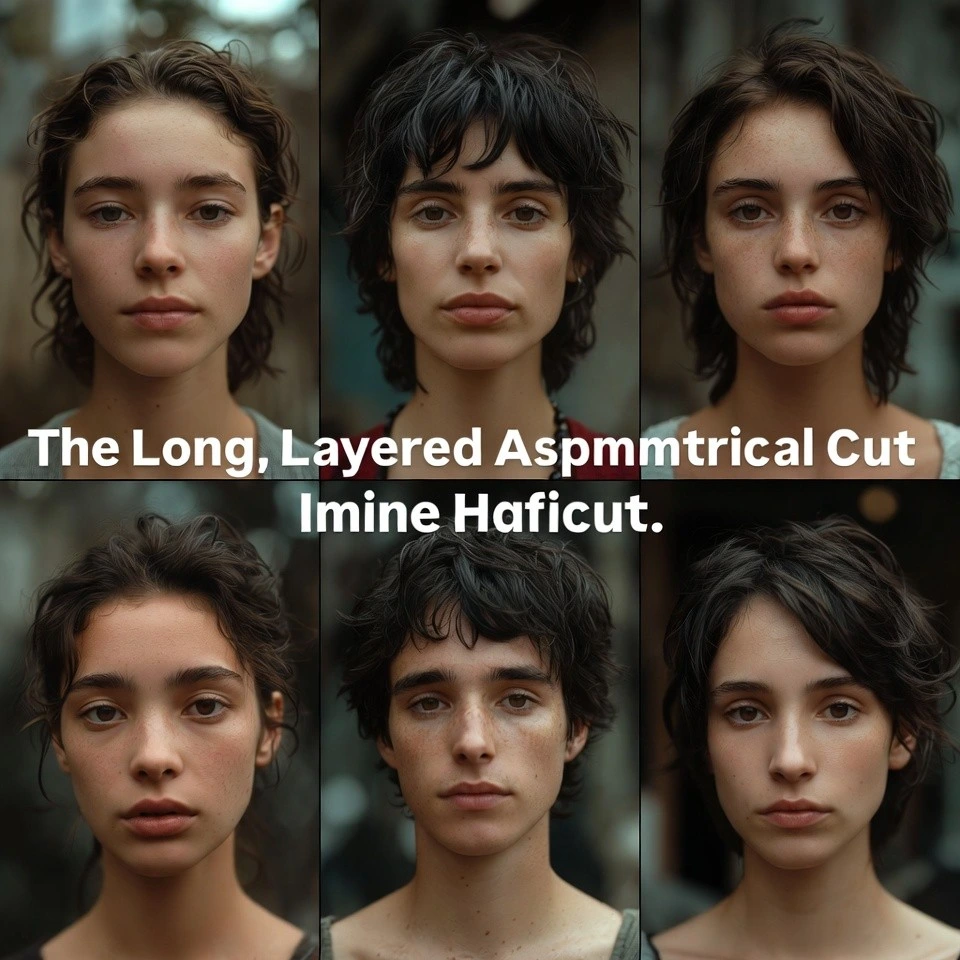
Not everyone is ready to chop off their length. If you are deeply attached to your long hair, you can still achieve asymmetry through layers. In this style, the hair is cut in a way that one side is shorter than the other near the face, with long, internal layers that provide movement. It is a “stealth” asymmetrical cut—it looks like a normal long haircut at a glance, but the movement gives it away.
Creating the Asymmetrical Effect
Ask your stylist for “face-framing layers” that start at different points on each side. One side might start near the chin, while the other begins at the cheekbone. This creates a staggered framing effect that disrupts the circularity of your face. It is subtle, but effective.
Keeping the Ends Healthy
Long hair with heavy, uneven layers can quickly start to look stringy if the ends are damaged. Focus your energy on the bottom three inches. Use a quality hair oil to keep the ends smooth. Because you are layering the hair to create asymmetry, you are removing density, so you need to make sure the hair that remains looks healthy and full.
5. The Shaggy Asymmetrical Bob
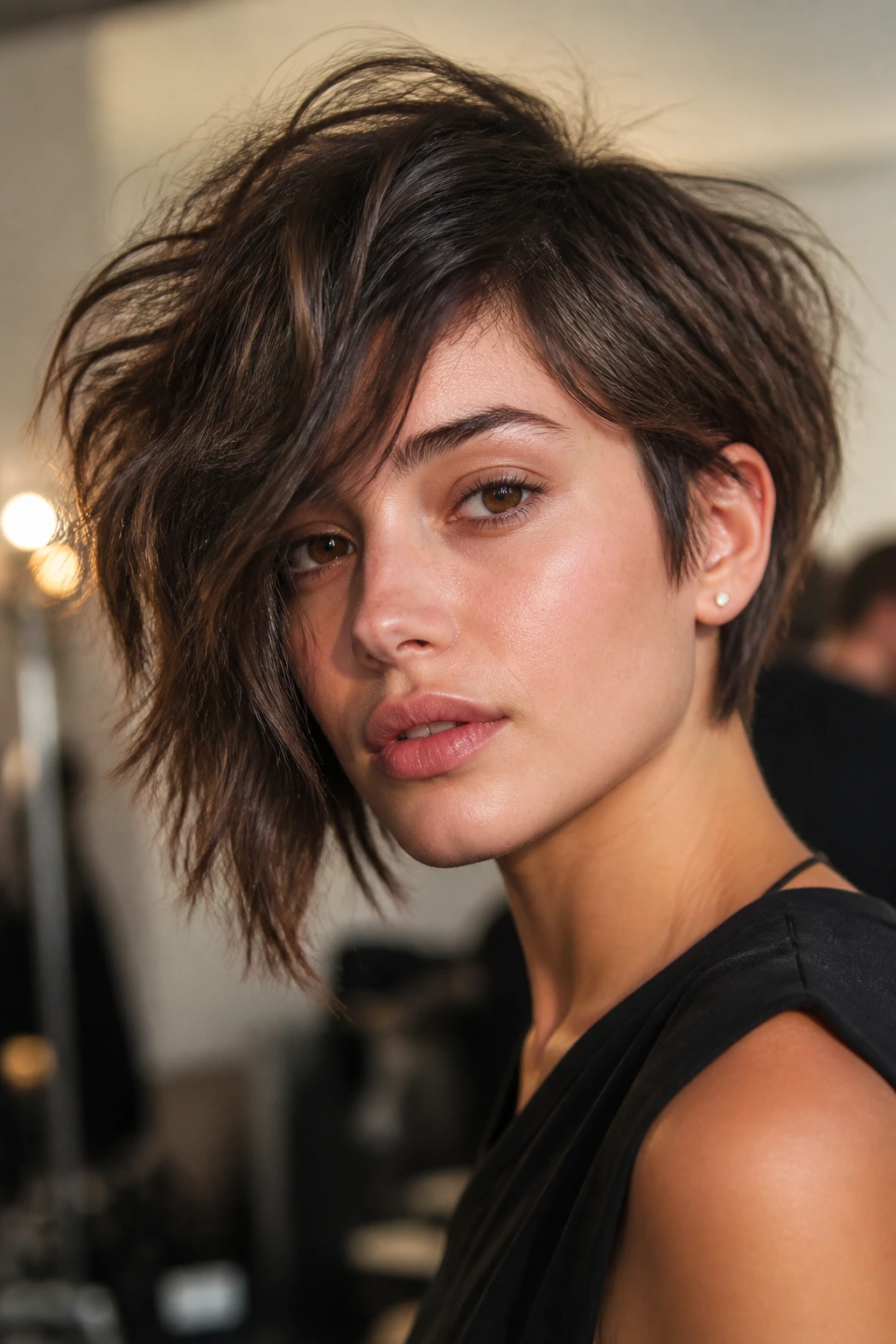
The shag is inherently messy and chaotic, which makes it perfect for incorporating asymmetry. Unlike the sharp, angled bob, this version relies on layers, razoring, and a very deliberate lack of precision. One side is kept longer and more jagged, blending into the rest of the hair, while the other side is shorter and punchier.
Why the Shag Wins
Round faces often benefit from volume at the crown and texture throughout. The shag provides both. Because it is inherently piecey, it breaks up the face in multiple directions. You aren’t fighting your hair; you are letting it create angles.
Styling the “Bedhead” Look
This is a low-maintenance style that thrives on a little bit of grease and texture. If your hair is too clean, the layers won’t hold their shape. Apply a texturizing powder to your roots after washing to give it that “just rolled out of bed” volume. The asymmetry in the cut does the heavy lifting, so you don’t need to spend hours styling it.
6. The Asymmetrical Bixie
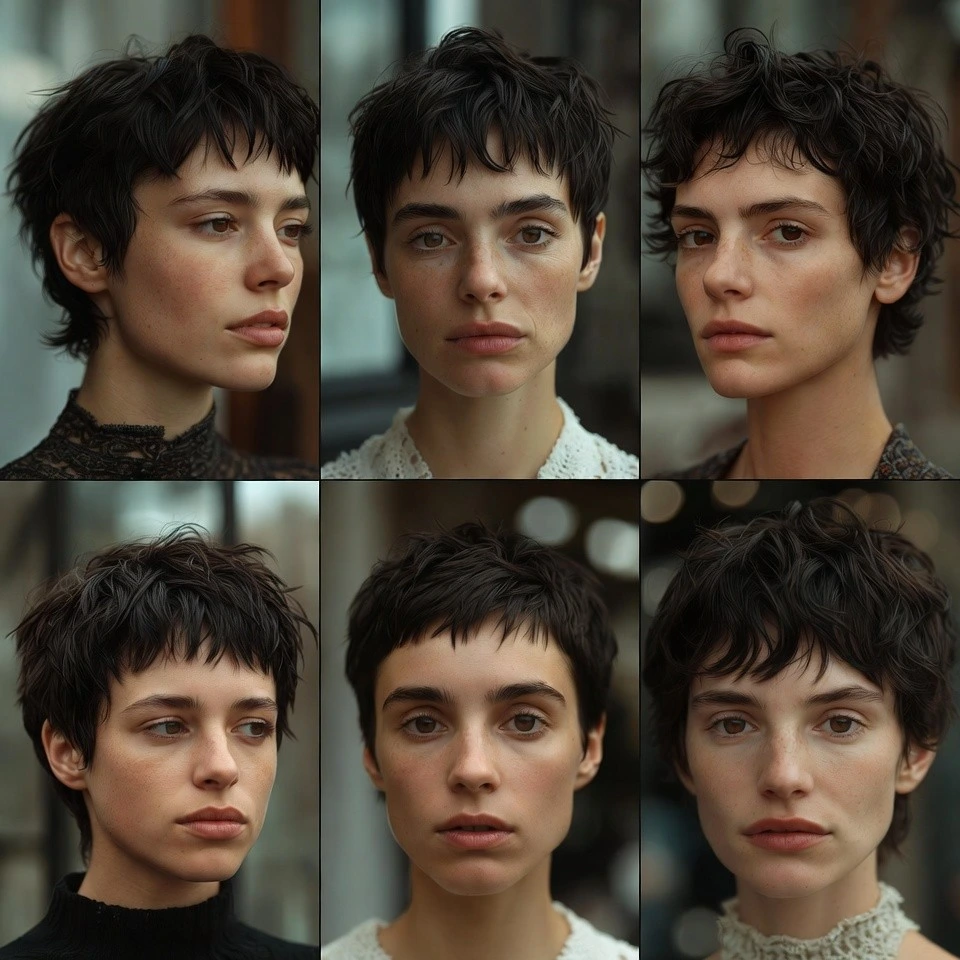
The “bixie”—a cross between a bob and a pixie—is a fantastic option for someone who wants the ease of short hair but the versatility of a bob. When cut asymmetrically, it creates a really playful, youthful look. Think of it as a bob that has been cut into on one side, leaving the other side long enough to tuck behind your ear.
The Best Hair Types for This Cut
This cut works exceptionally well for those with a slight wave or natural texture. If your hair is poker-straight, it can look a bit severe, but with a bit of a bend, it looks romantic and effortless. The key is the layering around the crown—you need that height to prevent the style from laying flat and highlighting the roundness of your face.
Transitioning Between Lengths
If you are currently growing out a pixie, this is your best friend. You can keep the back short and tight while letting the front grow out into that long, swooping side. It is a strategic way to transition without looking like you have simply given up on your haircut.
7. The Blunt-Cut Asymmetrical Fringe
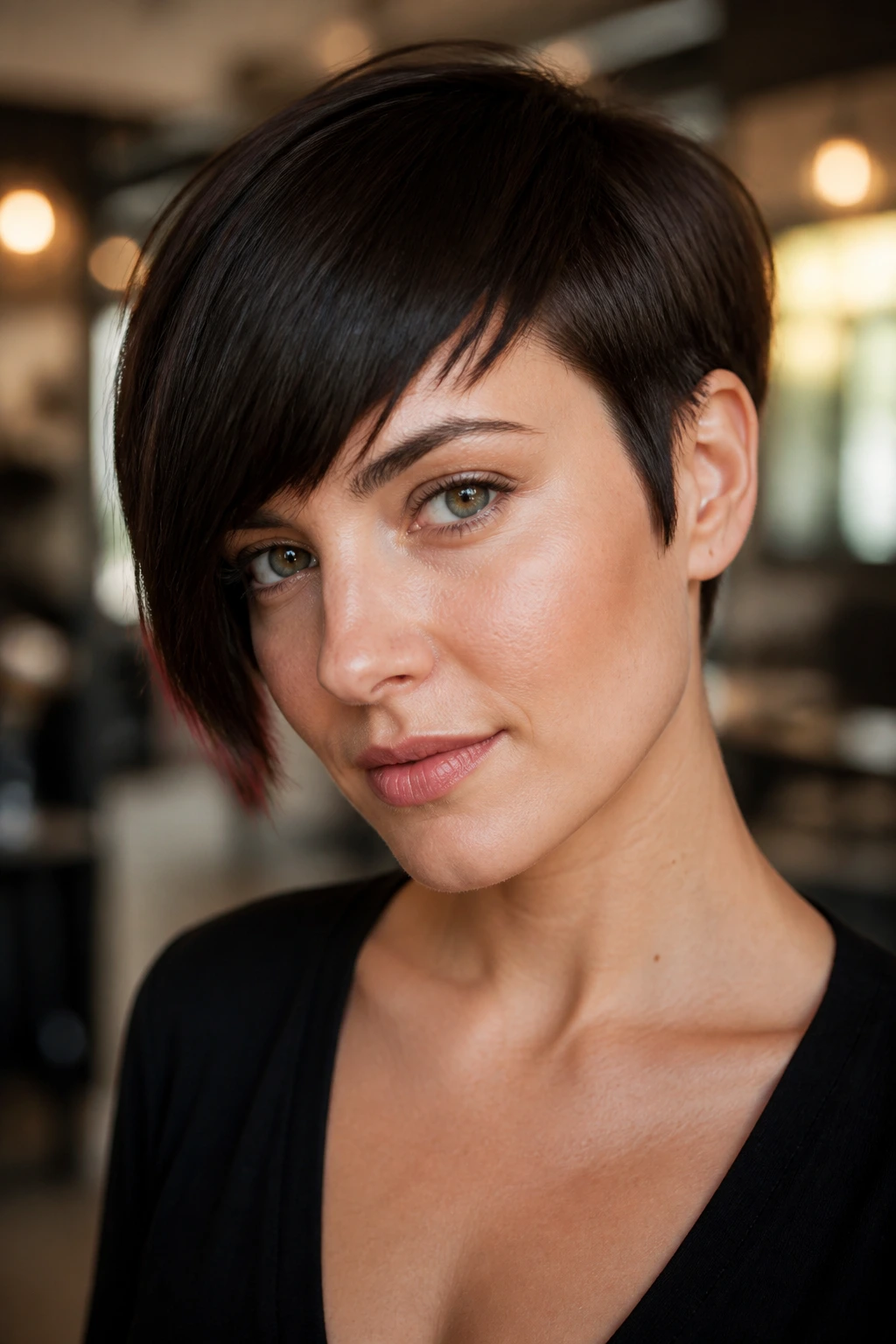
Bangs on a round face are often considered a “don’t,” but that is only true if they are blunt, heavy, and straight across. An asymmetrical fringe, however, is a different story. By cutting the bangs at a diagonal, you create a sharp line that crosses the forehead, breaking up the symmetry of the face.
The Mechanics of the Fringe
The longest part of the bang should graze the eyebrow, while the shortest part should taper off toward the temple. This slant draws the eye across the face rather than stopping abruptly at the brow bone. It feels sharp, modern, and decidedly cool.
Avoiding the “Bowl Cut” Trap
The risk with bangs is that they can make a round face look like a perfect circle. Avoid bangs that are too wide. They should be concentrated in the center of the forehead. If they extend all the way to the ears, you will widen your face. Keep the fringe narrow and focus the asymmetry on the taper.
8. The Voluminous Curly Asymmetrical Cut
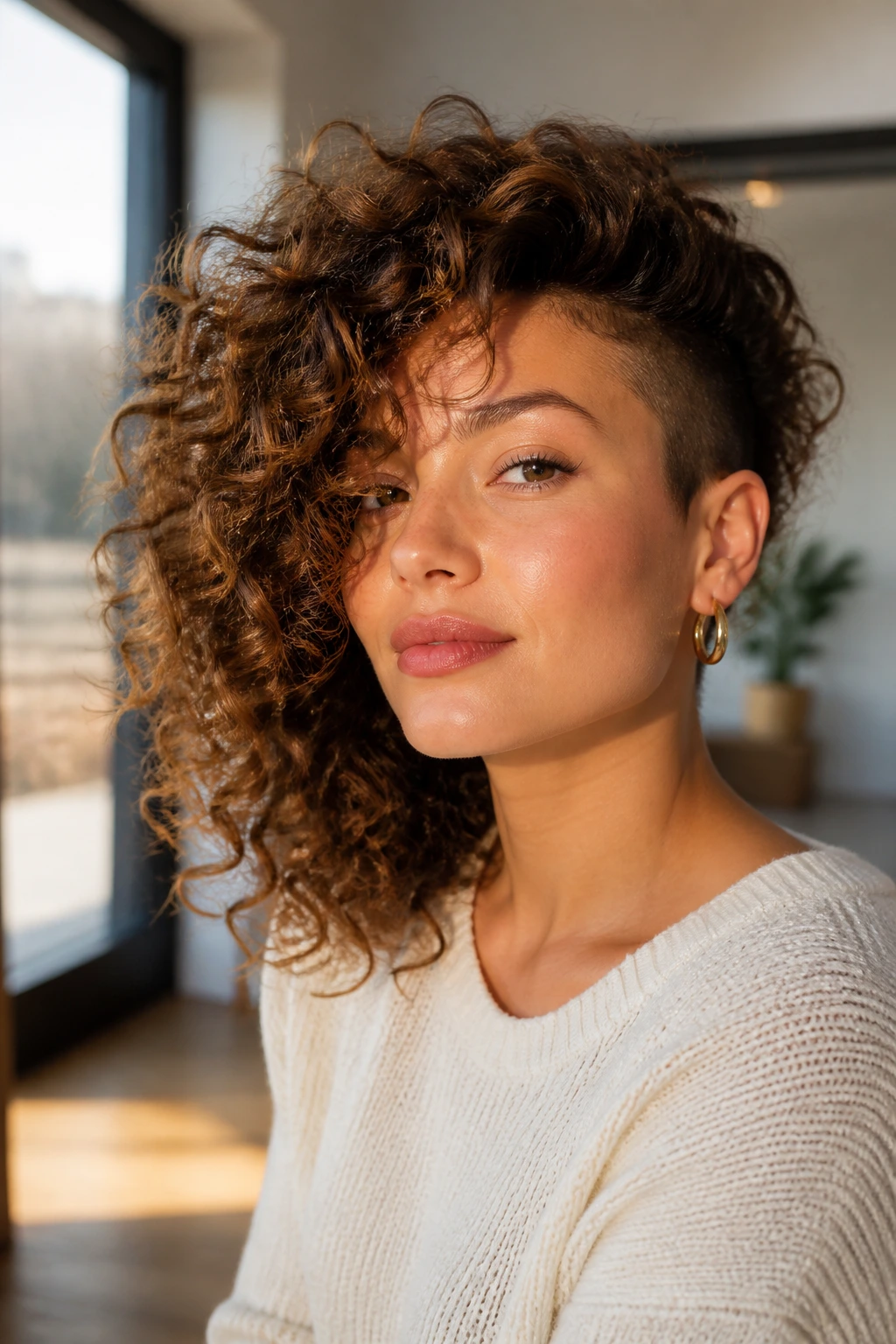
Curls have a mind of their own, and trying to force them into a symmetrical bob is often a losing battle. Instead, embrace the natural tendency of curls to be uneven. An asymmetrical curly cut utilizes layers of varying lengths to distribute the weight of the hair, preventing the “triangle” shape that often plagues curly bobs.
Managing the Weight
With curls, volume is rarely the problem; it is the placement of the volume. By cutting one side shorter, you remove the weight that pulls the curls down. This allows the curls on that side to spring up and create height, which is exactly what a round face needs to look more oval.
Essential Products
You need a good curl cream or defining gel. Because the cut is asymmetrical, you want your curls to be well-defined so the shape of the cut is actually visible. If your curls are frizzy and unformed, the asymmetry just looks like tangled hair. Use a diffuser when drying to encourage volume at the roots.
9. The Sleek, One-Side Tucked Bob
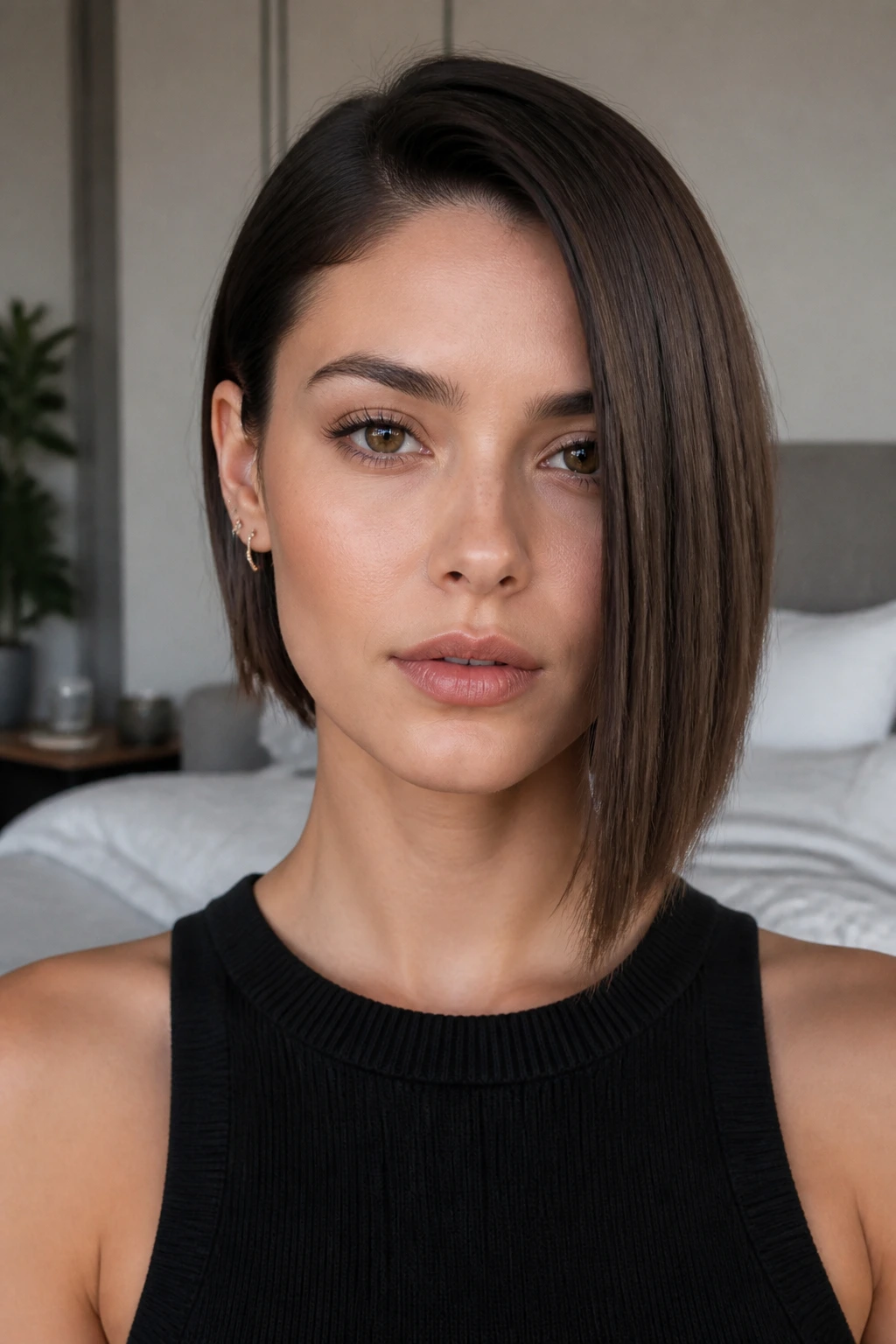
Sometimes you do not need to cut your hair in a drastic asymmetrical shape to get the benefit of one. If you have a standard bob, you can create a temporary asymmetrical look by tucking one side behind your ear and leaving the other side long and loose. It sounds simple, but it is one of the most effective ways to break up the width of a round face.
Why It’s Effective
Tucking one side behind the ear exposes your jawline and neck on that side, creating a clear vertical line. Leaving the other side down creates a diagonal, framing the face and hiding just enough of the cheek to create shadow and depth. It is instant contouring with your hair.
The “Slick” Factor
This style works best when the tucked side is kept very tight. Use a dab of pomade or styling cream on the tucked side to keep it flat against your head. You want a distinct contrast: the tight, sleek side versus the loose, voluminous side.
10. The Edgy Razor-Cut Lob
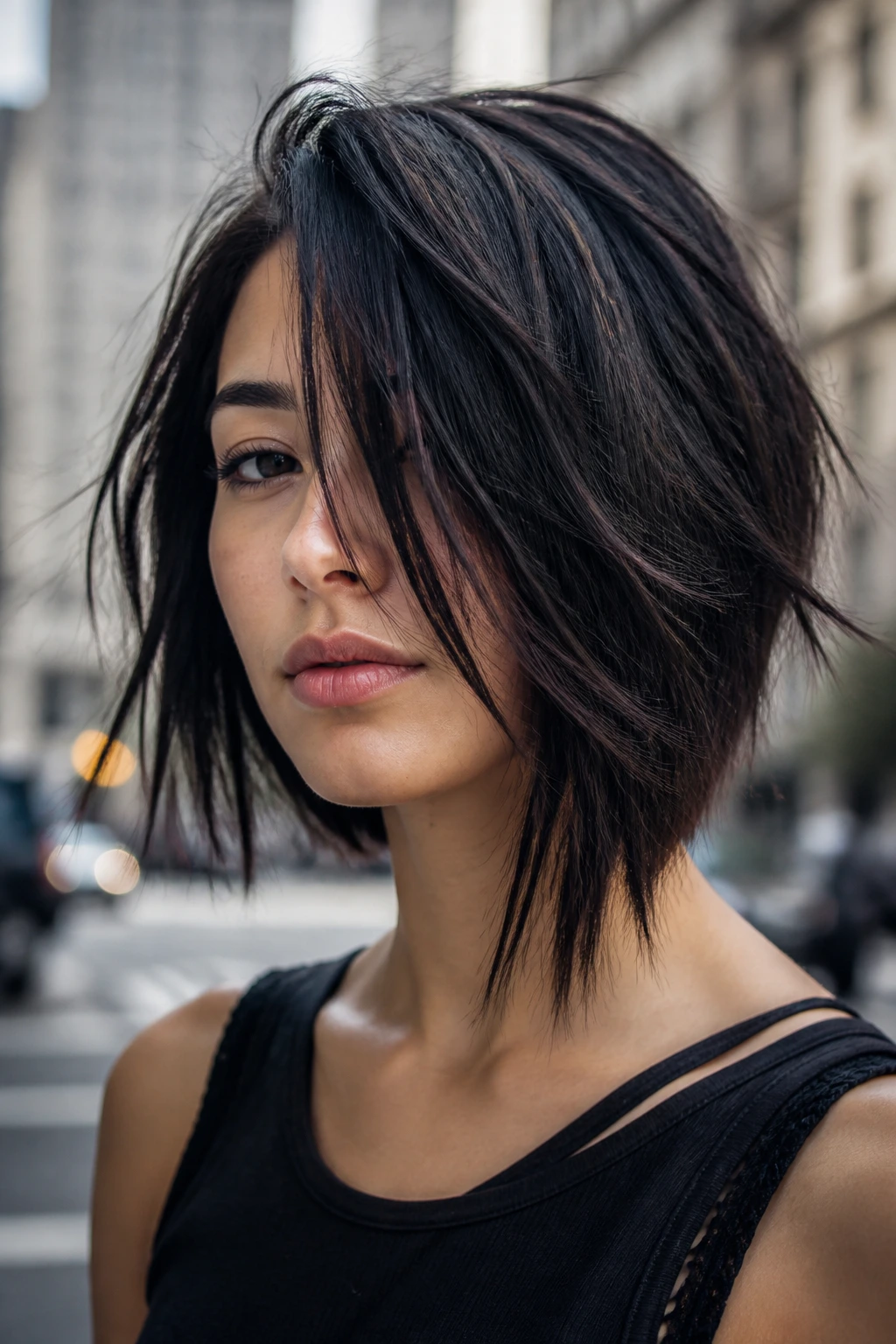
Razoring creates a different kind of edge than scissors. It leaves the ends of the hair wispy, tapered, and slightly shattered. When applied to an asymmetrical lob, this creates a soft, modern aesthetic that feels less “salon-perfect” and more like street style.
Why Razoring Suits Round Faces
Heavy, blunt ends can make a round face look like it is resting on a pedestal. Razored, wispy ends soften the silhouette. They create a “shattered” effect that breaks up the outline of the hair, making the overall look less heavy and more ethereal.
The Maintenance Reality
Razored ends can be prone to frizz if your hair is naturally dry or damaged. Because the blade cuts the hair at an angle, it exposes more of the hair shaft. Make sure you are using a good leave-in conditioner. This isn’t a cut for someone who ignores their hair care routine; you have to keep the ends moisturized to prevent them from looking like straw.
11. The Asymmetrical Shag with Curtain Bangs

Curtain bangs are a staple for a reason—they frame the face beautifully. But on a round face, standard curtain bangs can sometimes look too soft. Pair them with an asymmetrical shag, and you get the best of both worlds: the face-framing effect of the bangs and the structural, elongating power of the asymmetric cut.
The Hybrid Approach
The shag provides the volume and texture to counteract the roundness, while the curtain bangs provide the framing. The asymmetry in the shag ensures that the hair doesn’t just sit like a curtain around your face. It has peaks and valleys, movement, and life.
Styling for Success
This cut relies on “second-day” texture. If you wash your hair, it might be too fluffy. Use a bit of dry shampoo at the roots to give it grip. You want the bangs to be slightly separated and the ends to have a bit of a bend. Use a round brush to flick the ends of the curtain bangs away from your face to open it up.
12. The Graduated Stacked Bob

This is a classic cut, but it can be modernized with an asymmetrical twist. The traditional stacked bob has a short, graduated back and longer sides. To make it asymmetrical, one side is cut at a steeper angle than the other, or one side is slightly shorter than the other near the jaw.
The Stacked Benefit
The “stack” refers to the layers at the back of the head. This adds immediate volume at the crown. For a round face, height at the crown is the holy grail. It physically elongates the head, tricking the eye into seeing an oval shape rather than a circle.
The Importance of the Nape
The success of this cut is in the nape. It should be clean, tapered, and tight. If the back gets too shaggy, the “stack” disappears. This is a high-maintenance cut that requires a visit to the salon every few weeks, but the impact it has on the face shape is undeniable.
13. The Asymmetrical Undercut Lob
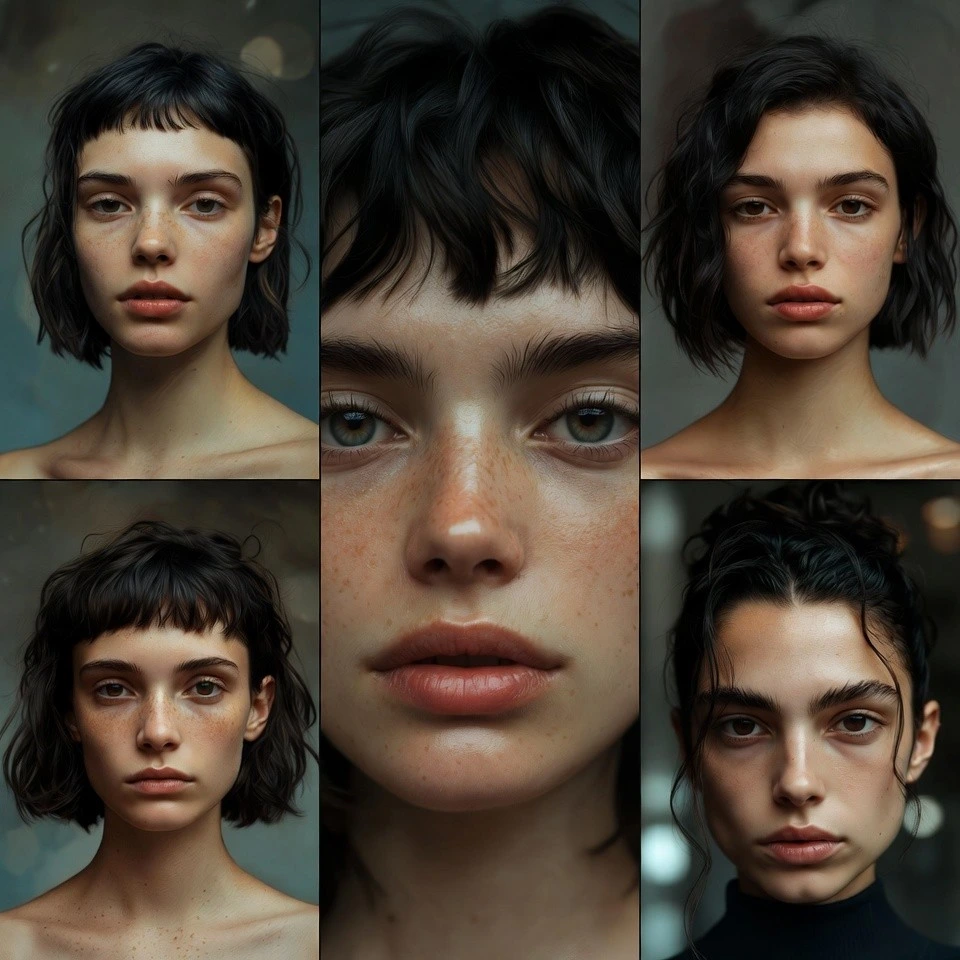
If you want something truly daring, the undercut lob is where you go. This involves shaving the hair at the nape of the neck or on one side, while keeping the rest of the hair at a lob length. It is hidden until you move your hair or tie it up, making it a “surprise” style.
Why It’s Cool for Round Faces
The undercut removes a massive amount of weight. If you have thick, heavy hair that drags your face down, this is the solution. The weight removal allows the remaining hair to move more freely and sit with more lift. It creates a sleek profile that is very slimming.
Styling Versatility
You can wear this down, and no one will know it is there. Or, you can pull your hair into a half-up style to show off the undercut. It adds a rebellious, edgy element to your look that draws focus upward and away from the cheeks.
14. The Wispy, Face-Framing Asymmetrical Cut
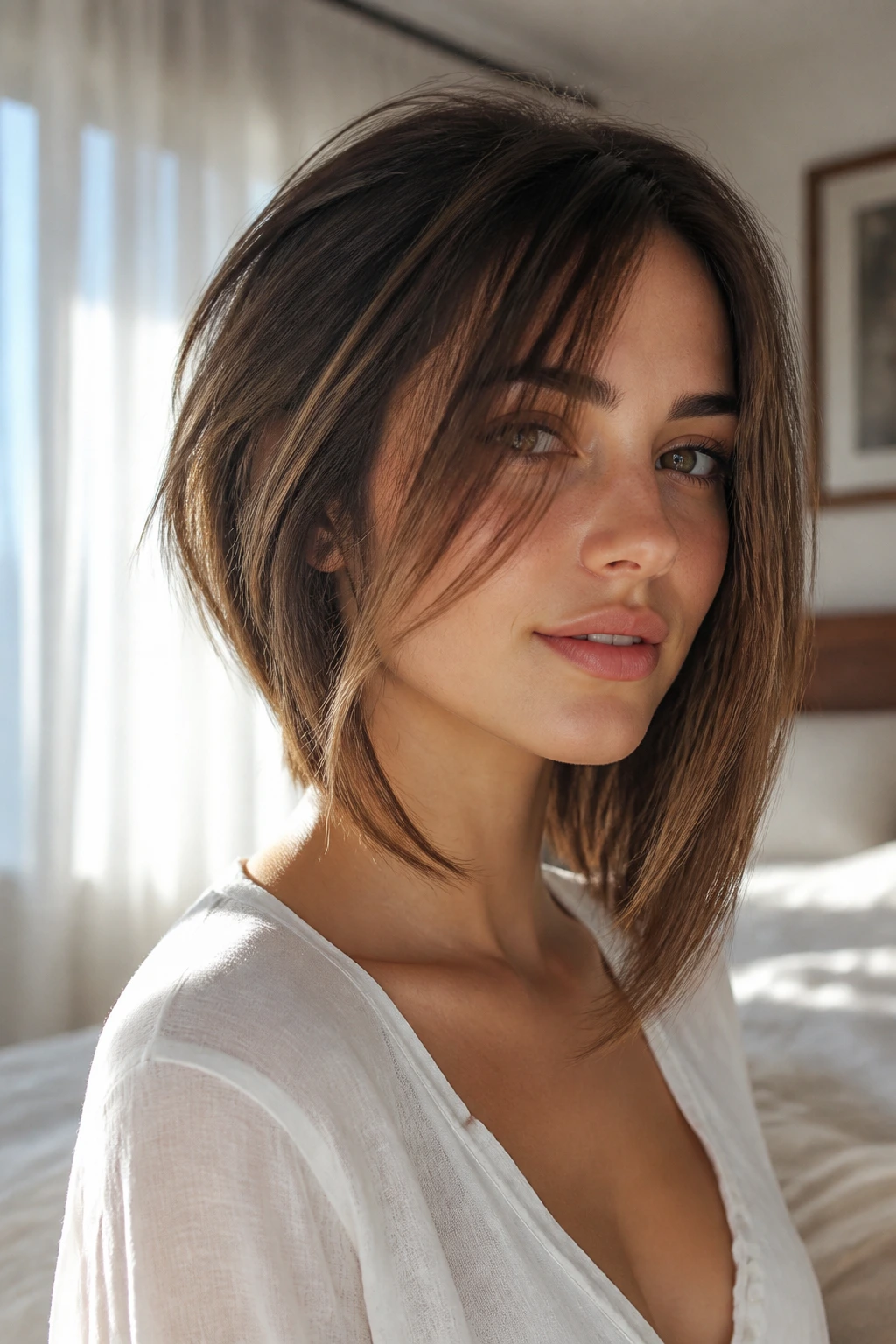
If you prefer softness over edge, the wispy asymmetrical cut is your best bet. This style features long, face-framing pieces that are cut at an angle. The hair is kept relatively long, but the front section is significantly shorter on one side, tapering down into the longer length.
The “Soft” Angle
This is the least “intense” of the asymmetrical options. It doesn’t have the sharp, geometric lines of a bob or the chaos of a shag. It is gentle. The asymmetry comes from the way the hair frames the face, not the shape of the overall haircut.
Product Selection
Since the goal is wispy and soft, avoid heavy gels or waxes. A light shine spray or a smoothing cream is all you need. You want the hair to look touchable and light. Heavy products will clump the wispy pieces together and ruin the effect.
15. The Deep Side-Sweep Pixie
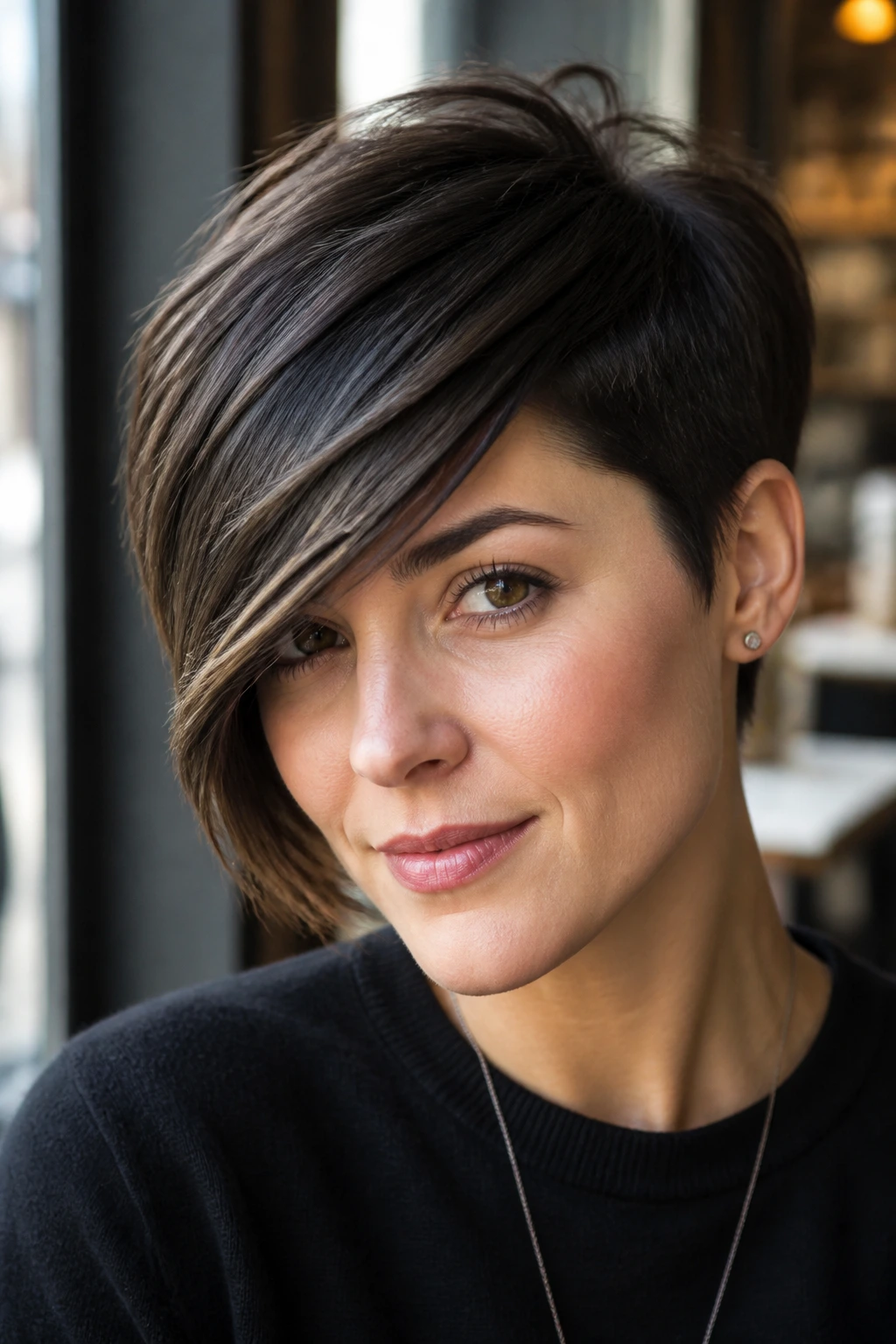
Think of this as the more intentional, grown-up version of the pixie. It features a very long fringe section that is swept deeply across the forehead, covering one eye partially, while the rest of the hair is kept close to the head. It is dramatic and deeply flattering.
Why It Elongates
The long, sweeping section creates a diagonal line that stretches all the way from the temple to the chin. This is a massive vertical line that disrupts the circle of the face. It is arguably the most effective haircut on this list for visually slimming a round face.
The Danger Zone
The only danger with this cut is having the fringe fall flat. You need to use a root-lifting spray and a blow dryer to give that sweeping section lift. If it falls limp against the forehead, it will just make your face look smaller. You need the volume to get the elongating effect.
16. The Asymmetrical Bob with Heavy Layers
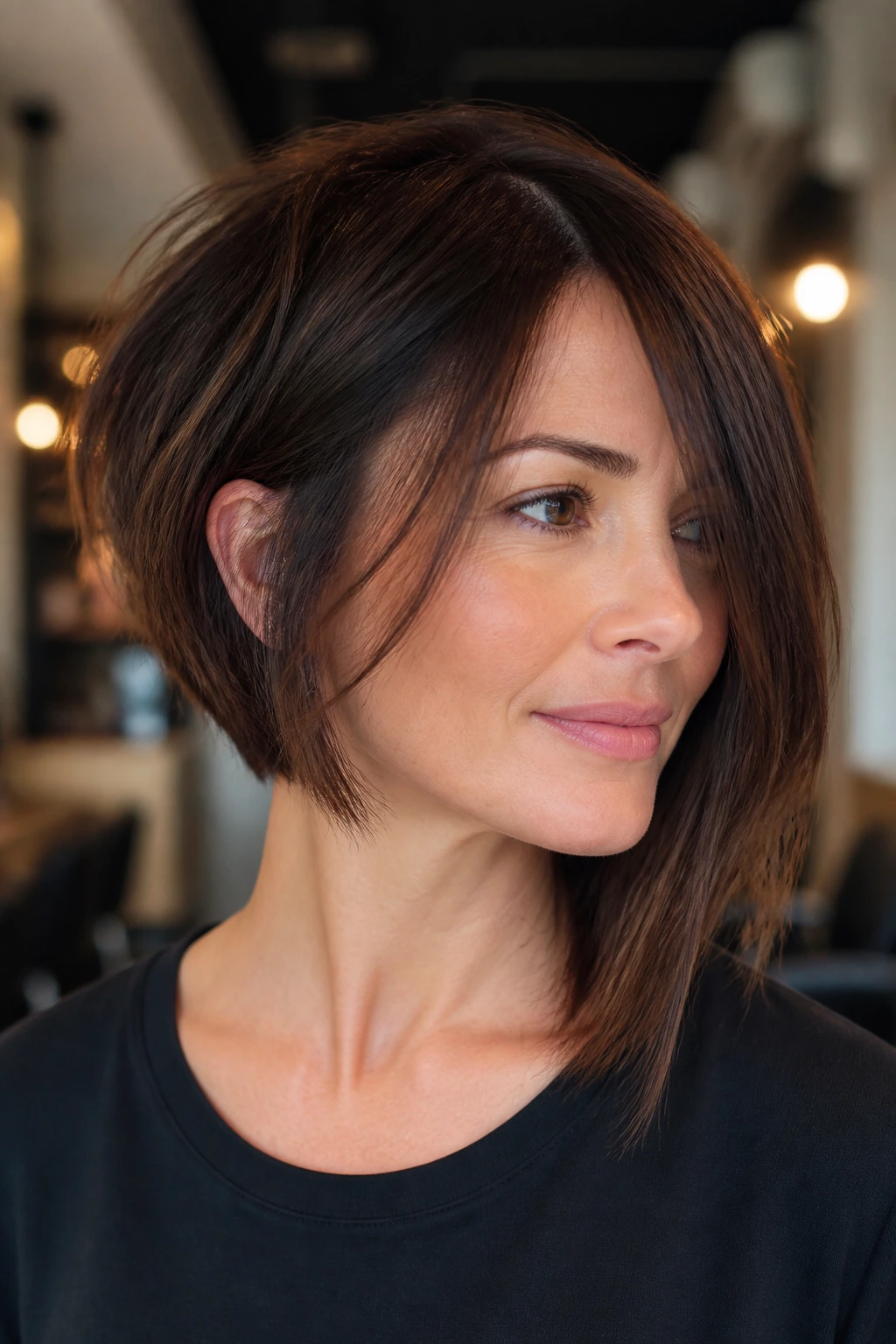
Layering is how you remove volume, and heavy layering in an asymmetrical bob creates a look that is light, airy, and textured. By cutting the layers at an angle—shorter on the left, longer on the right—you create a dynamic style that never sits the same way twice.
The Benefit of Movement
A round face often looks better with movement than with static, heavy hair. Heavy layers break up the mass of the hair. When you turn your head, the layers fall at different lengths, creating a shifting, interesting shape that keeps the eye moving.
Cutting the Layers
Ask your stylist for “internal layering.” This means they cut the bulk of the hair underneath to remove weight, but they don’t leave the top layer looking choppy or frizzy. It’s a delicate balance that keeps the hair looking full but not puffy.
17. The Textured Wolf Cut with Asymmetry

The “wolf cut” has become a popular modern silhouette, combining the shag and the mullet. When you incorporate an asymmetrical length—perhaps by cutting the front framing pieces shorter on one side—you modernize it even further. It is a bold, “cool girl” look that works surprisingly well with round faces.
The Volume Balance
Wolf cuts are all about volume. The key for a round face is ensuring the volume is at the top and crown, not at the cheekbones. If the hair poofs out at the cheeks, it will widen your face. Ensure the stylist keeps the layers at the cheekbones slightly shorter and more swept back, while leaving the crown layered and voluminous.
Embracing the Mess
This is not a style for the perfectionist. If you try to make this look neat, it will fail. You have to embrace the mess. Run your fingers through your hair, tousle it, and let the asymmetrical framing pieces fall where they want. The deliberate lack of perfection is the point.
18. The Modern Mullet-Inspired Asymmetric Cut
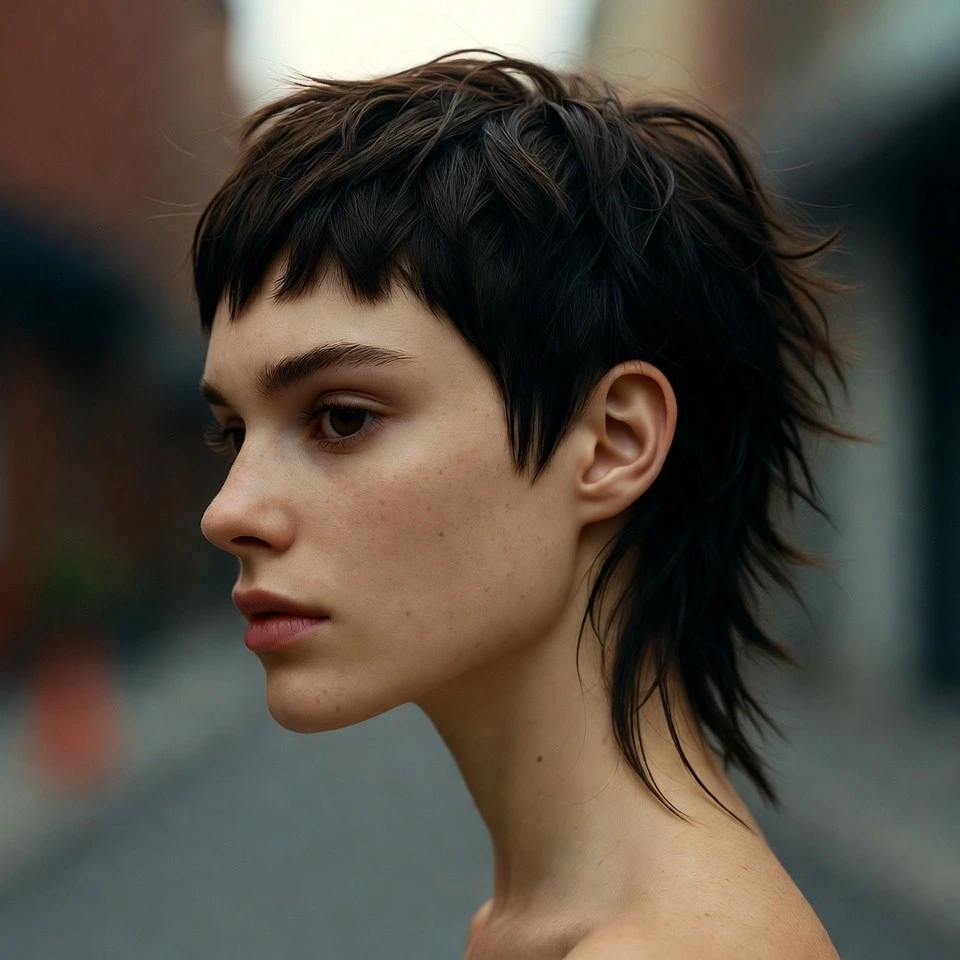
Hear me out—the modern mullet is not the caricature from the eighties. It is a legitimate, high-fashion cut that plays with length contrasts. In a round-face-friendly version, you keep the front shorter (framing the face) and the back longer. Add asymmetry by varying the length of the side-burn/framing pieces.
Why the Contrast Helps
The shortness in the front exposes the neck and jaw, while the length in the back provides the verticality that round faces crave. It is a masterclass in using proportion to balance a face shape.
Who Is This For?
This is for the person who is bored. If you feel like every haircut you have ever had just looks “nice” but lacks character, this is your wake-up call. It is a commitment, but it is one of the most effective ways to change your face shape without surgery or fillers. Just a really, really good haircut.
Final Thoughts
Choosing an asymmetrical haircut when you have a round face is really about reclaiming the geometry of your own appearance. You are moving away from the “softening” advice that dominates beauty magazines and moving toward structure. You don’t need to hide; you need to contrast.
The biggest mistake people make is settling for a cut that they think is “safe.” Safe cuts often do nothing to change the way your face is perceived. A sharp, asymmetrical bob or a layered, jagged shag does the work for you—it draws the eye, creates movement, and builds the angles that your face naturally lacks.
At your next appointment, bring photos, but be ready to talk about the weight of the hair. Tell your stylist that you want to disrupt the symmetry. Tell them you want diagonal lines. If they seem hesitant, move on. A good stylist will understand immediately what you are trying to achieve, because creating balance through imbalance is exactly what professional hairdressing is all about.
