



Round faces have a shape problem and a shape advantage at the same time. The problem is obvious: a blunt line in the wrong place can make the cheeks look wider than they are. The advantage is better. A side part, even a small one, changes how the eye moves, and that tiny shift can make a haircut feel longer, sharper, and more deliberate.
That is why side haircuts for round faces work so well when they’re cut with some thought. A part that sits about 1 to 2 inches off center, a front section that sweeps across one brow, a length that lands below the chin — these things sound small on paper. On the head, they can change everything.
The mistake I see most is too much volume sitting right at cheek level. Pretty? Sometimes. Helpful? Not usually. The smarter cuts either add lift at the crown, angle the front pieces downward, or keep the bulk lower so the widest part of the face does not get boxed in.
The 18 cuts below cover short hair, long hair, curls, waves, and straight textures, because round faces don’t all need the same trick. Some people want softness. Some want edge. Some want a cut they can air-dry and leave alone. All of that is on the table.
1. Deep Side-Parted Lob for Round Faces
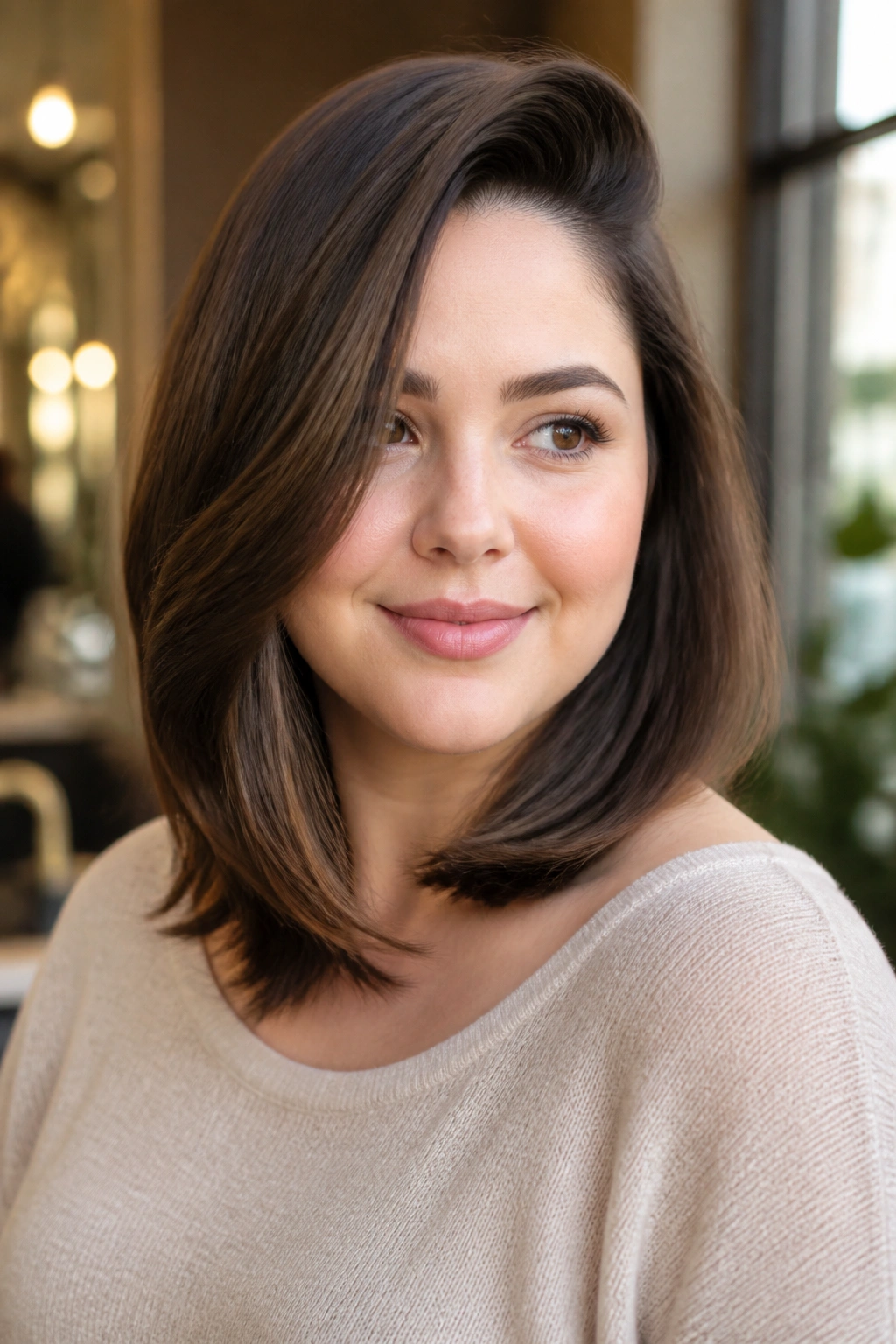
This is the haircut I recommend first when someone wants a safe change that still feels like a change. The lob lands around the collarbone or just above it, which gives the face room to breathe instead of stopping right at the jaw. Add a deep side part, and the whole shape starts moving diagonally instead of sitting in a neat little circle.
Why the Shape Works
A round face usually looks best when the hair creates a line that points down, not out. The deep side part does exactly that. It shifts one side of the hair across the forehead, then lets the rest fall past the cheekbones and toward the shoulders.
The cut also gives you enough length to tuck one side behind the ear or bend the front away from the face with a round brush. That little bit of asymmetry matters. It keeps the style from feeling too symmetrical, which is where round faces can start looking wider.
- Keep the length just below the collarbone for the cleanest effect.
- Ask for the side part to sit about 1.5 inches off center, not dramatically far over.
- Add a soft bend from mid-length down, not a curl that balloons at the cheeks.
- Use a light blowout cream or smoothing spray so the front stays sleek.
Tip: If your hair is fine, keep the ends blunt. Blunt ends make the lob look fuller without puffing out around the face.
2. Long Layers with Side-Swept Bangs
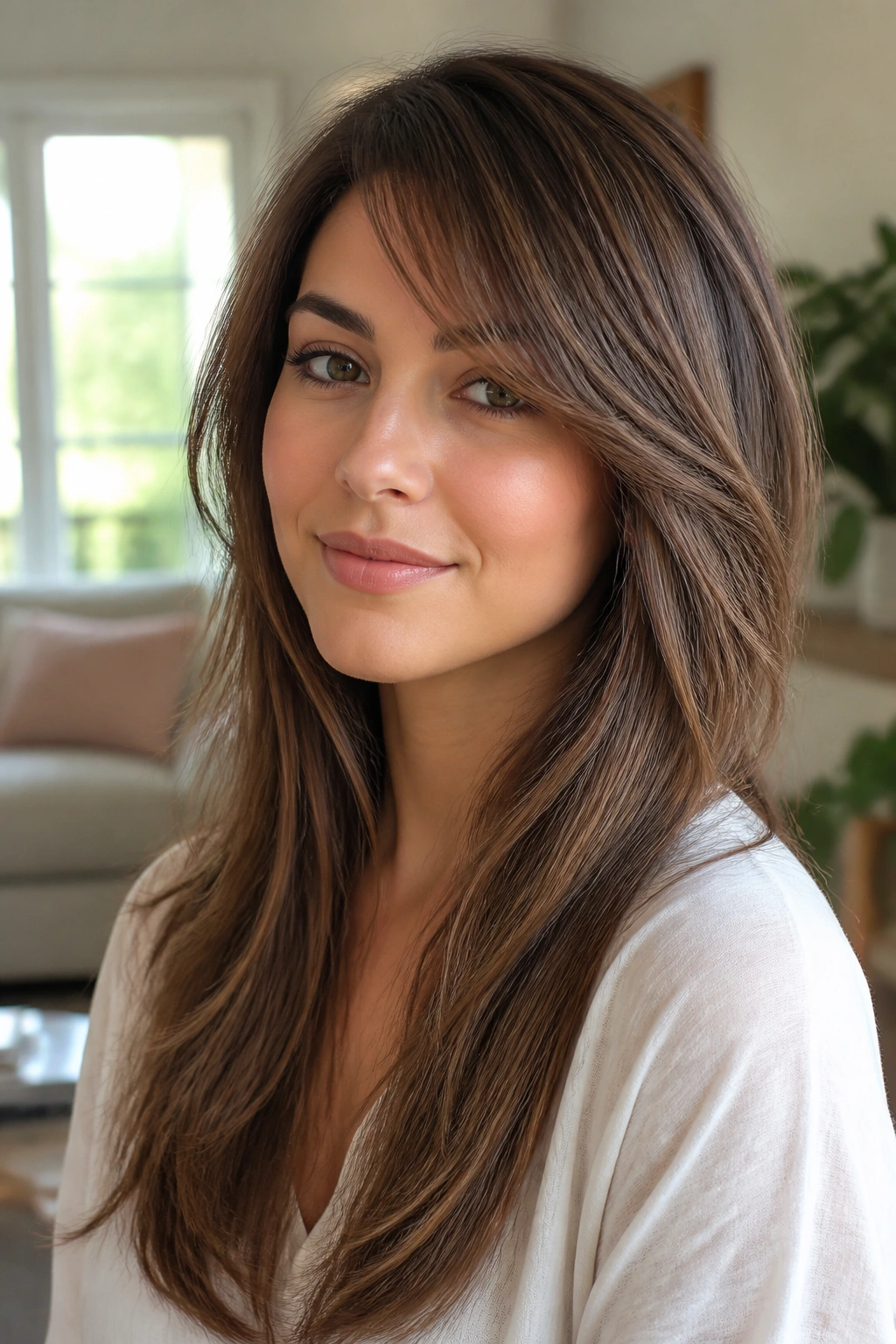
Side-swept bangs are the fastest way to make long hair look intentional on a round face. They do not hide your features; they draw a clean line across the forehead and send the eye downward. That diagonal line is the whole point.
The best version starts with layers that begin below the cheekbone, usually around the lip or chin. If the shortest pieces hit too high, the cut can widen the face instead of softening it. Keep the front pieces long enough to graze the cheek and then disappear into the rest of the hair.
I like this cut best when the bangs are soft, not helmet-like. A heavy chunk of fringe can feel dated fast. A feathered sweep with a little movement through the ends looks easier and frames the face without trapping it.
If you blow-dry, aim the bangs across the forehead with a medium round brush and a touch of heat protectant. If you air-dry, clip the fringe to one side while it sets. That tiny bit of direction keeps the shape from drying in a straight curtain.
3. Asymmetrical Bob with a Soft Side Sweep
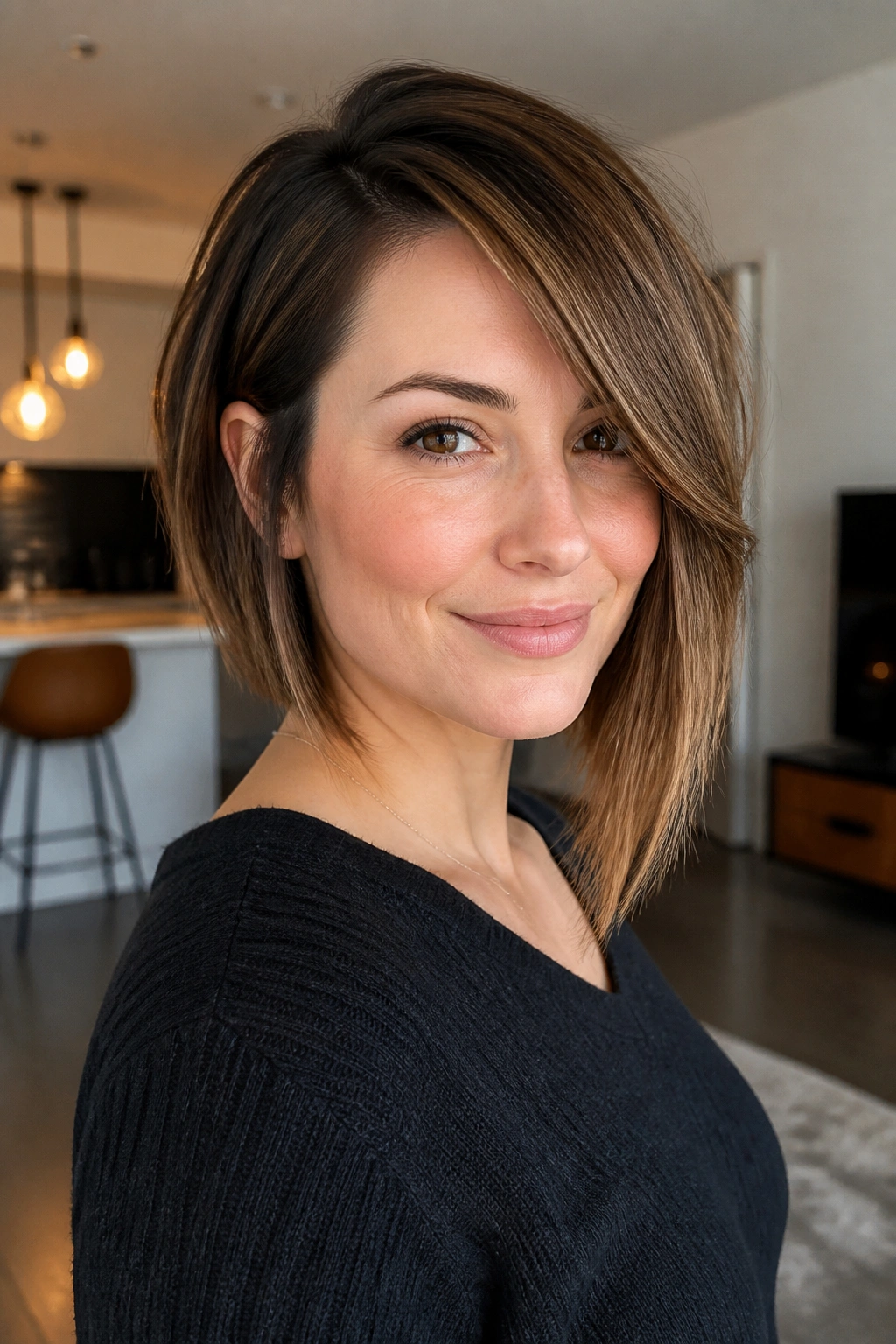
Want a shorter cut that still gives a round face some edge? An asymmetrical bob does the job without getting fussy. One side is left a little longer than the other, usually by 1 to 2 inches, and that difference gives the face a longer, less circular line.
The reason it works is simple: the eye has to travel. A perfect bob ends all at the same place, which can make the face feel boxed in. An uneven hemline changes the shape of the whole haircut. It reads as sharper, even when the texture is soft.
How to Style It
A small bend at the ends helps here, but not too much. You want the hair to skim the jaw, not puff out beside it. A flat iron with a slight turn at the front pieces usually looks better than a tight curl.
- Keep the shortest side below the cheekbone.
- Ask for the longer side to fall toward the collarbone, not mid-neck.
- Smooth the ends with a pea-sized amount of styling cream.
- Tuck the shorter side behind the ear when you want a cleaner line.
Use this if: you want a polished cut that still looks modern with almost no styling drama.
4. Collarbone Cut with Soft Side Layers
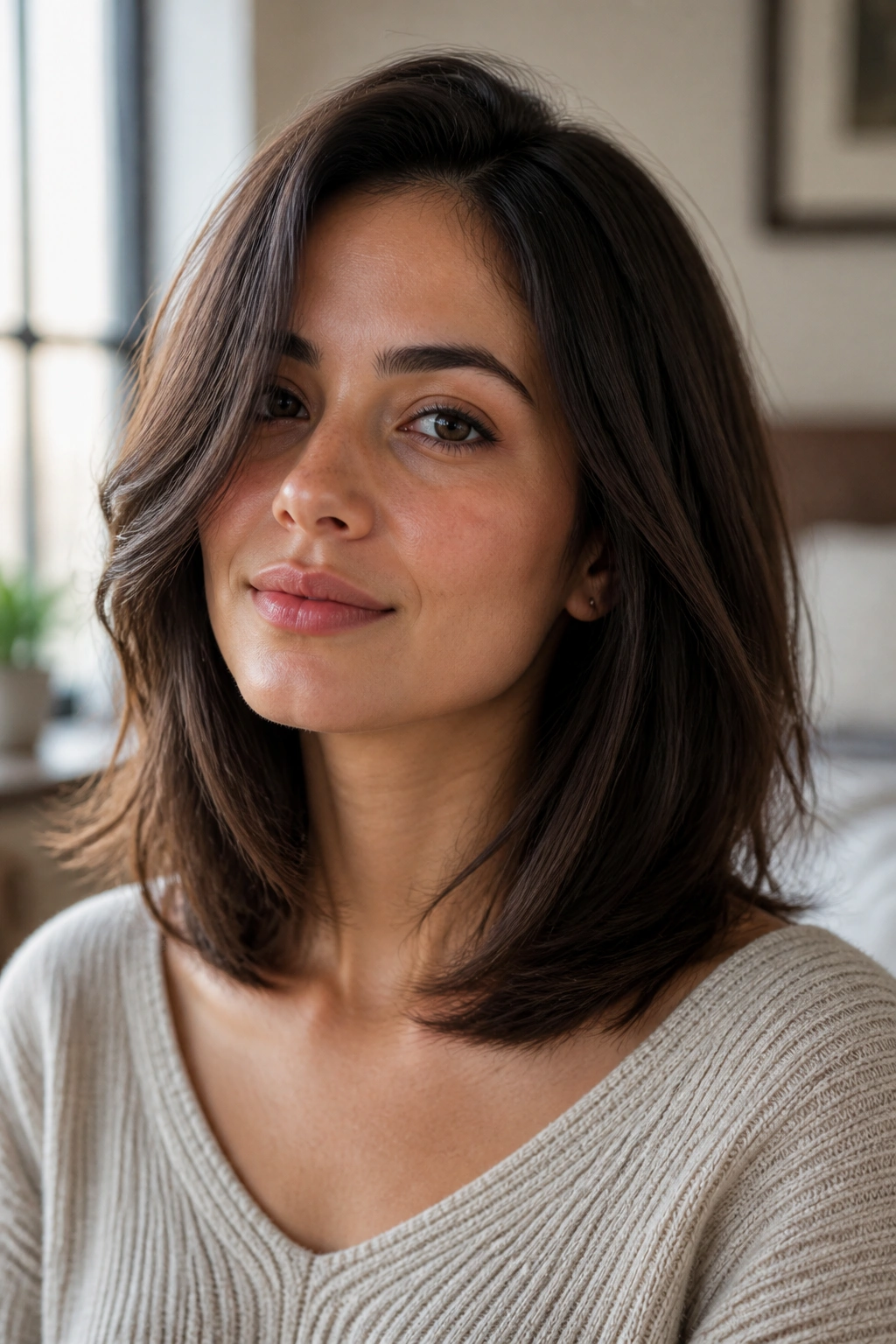
A collarbone cut is one of those shapes that looks easy but quietly does a lot. It sits long enough to make a round face look taller, yet short enough that you are not babysitting waist-length hair every morning. Add soft side layers, and the cut starts to slide around the face instead of hanging straight down.
Think of this one as a middle ground. It is not blunt, and it is not heavily layered. The layers start low, which matters more than most people think. When the first layer begins below the nose or near the chin, it lets the cheek area stay calm instead of crowded.
This cut is especially nice if your hair has a little wave. The movement shows up without needing a curling iron, and the side part gives the whole thing a relaxed slant. It feels lived-in, not stiff.
If you want to ask for this at the salon, say you want the perimeter to hit the collarbone with soft internal layers and a side part that can switch sides if needed. That gives you room to wear it neatly or mess it up a little. Both work.
5. Side-Parted Shag with Airy Ends

A shag can be a mess on a round face if it’s cut the wrong way. Too much width at the cheeks, too many short layers around the temples, and suddenly the hair is doing the exact opposite of what you wanted. But a side-parted shag with airy ends? That’s a different animal.
What makes it work is the imbalance. The side part pushes the fringe off-center, so the top does not sit like a halo. The layers then break up the shape in a way that feels loose, not puffy. You get movement near the eyes and cheekbones without a full circle of volume.
I prefer this cut on hair that has some grit to it already. Straight, slippery hair can lose the shag effect unless you add texture spray or a little mousse at the roots. Wavy hair does the heavy lifting for you. Curly hair can wear this beautifully, too, but the layers need to be placed with care so the shape doesn’t inflate at the sides.
This is one of those cuts that gets better when it’s not too neat. A little roughness is the point. Clean it up too much, and you lose the attitude.
6. Pixie with a Long Side Fringe for Round Faces
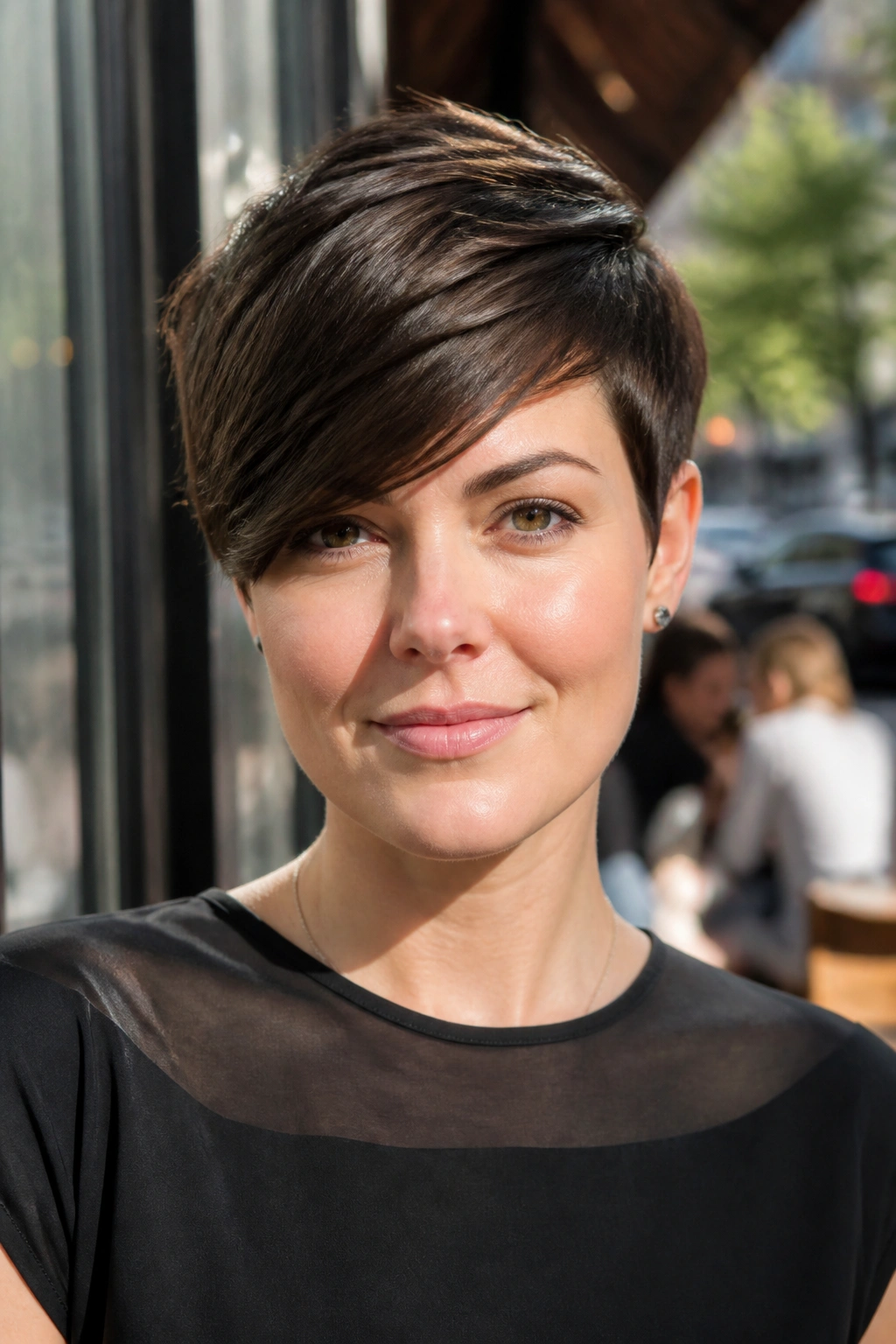
A pixie can work on a round face, but not every pixie can. The version that wins here keeps the sides close and leaves a long fringe sweeping across one side of the forehead. That fringe becomes the line that stretches the face.
Unlike a tight crop that hugs the whole head, this version leaves enough length on top to create height. Height matters. It pulls the eye upward and keeps the face from feeling wide. The longer side fringe also breaks up the forehead and softens the transition from temple to cheek.
If your hair is thick, this cut can be a relief. There is less bulk around the ears, less fluff to fight with, and less time spent trying to force the shape into place. Fine hair can wear it too, but the top needs a bit of lift from a root spray or light pomade.
The trick is not to let the fringe sit flat against the forehead. Sweep it across and slightly upward. That diagonal line is what stops the style from reading as a helmet. Small detail. Big payoff.
7. Angled Lob That Slants Forward
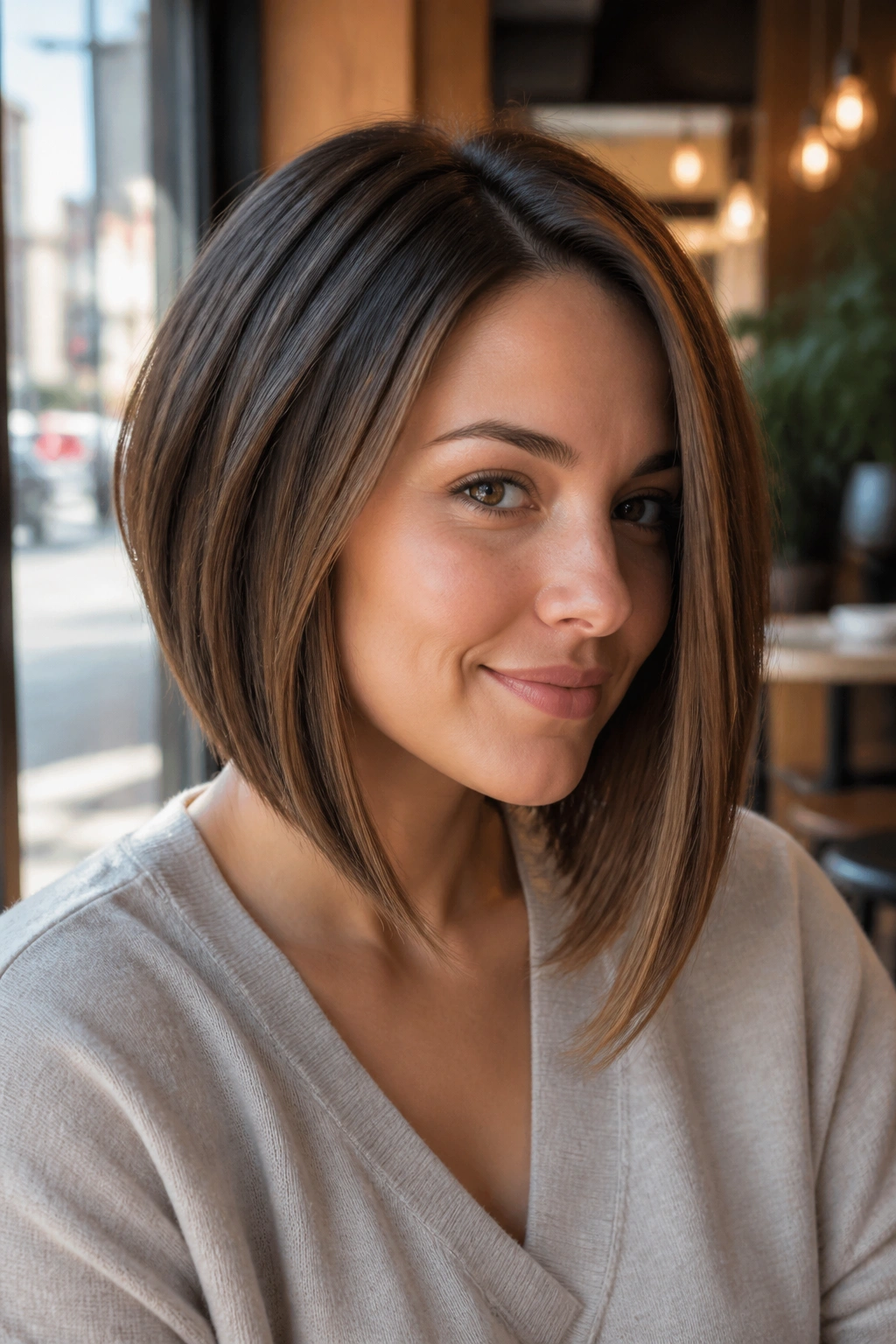
The angled lob is cleaner than the asymmetrical bob and a little easier to wear every day. The back sits shorter, the front slides longer, and the whole cut points forward toward the collarbone. On a round face, that forward slant makes a real difference.
Why the Angle Matters
Hair that falls straight across the widest part of the face can make cheeks look fuller. Hair that angles forward cuts through that width. It gives you a visual line from the back of the head toward the front of the jaw, which is exactly the kind of movement that works on rounder shapes.
This cut looks especially good when the front pieces land 2 to 3 inches below the chin. That extra length keeps the jaw from feeling crowded. A slight side part adds even more lift, but you do not need to go dramatic here.
Styling Notes
- Blow-dry with the head tilted slightly forward to keep roots smooth.
- Curve the ends inward just a touch, so they frame the jaw instead of flaring out.
- Use a light heat protectant and a medium round brush.
- Skip heavy oils near the roots; they flatten the angle fast.
Best for: straight and wavy hair that wants shape without looking overstyled.
8. Shoulder-Length Waves with a Side Flip
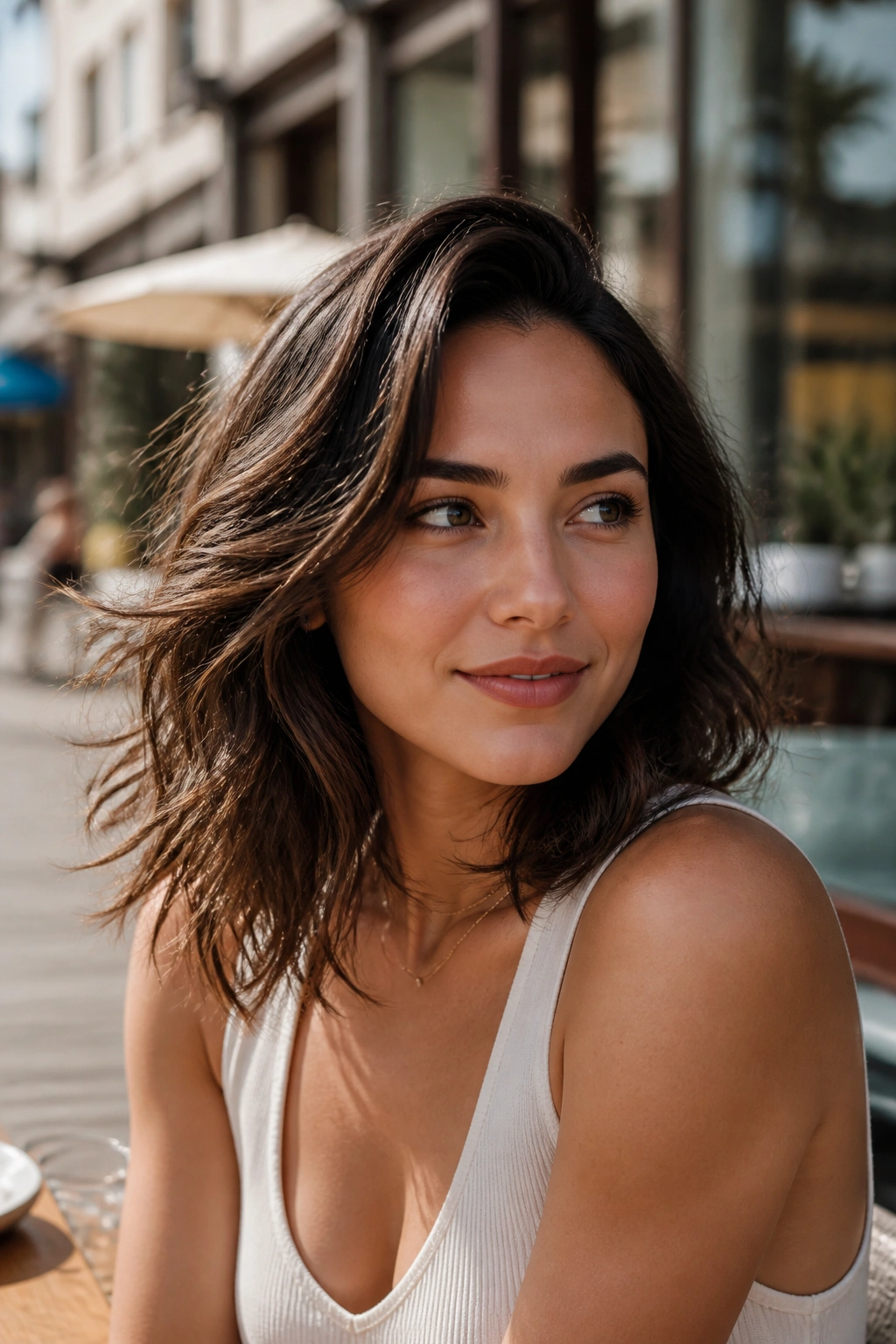
Shoulder-length waves can widen a round face if the volume sits right beside the cheeks. Move the part off center, flip the front section away from the face, and the whole cut changes shape. It feels looser. It looks longer. It behaves better.
The side flip is doing more work than it gets credit for. By sending the front hair away from one side of the face, it clears space at the cheek and opens the forehead a little. The wave pattern still gives softness, but it no longer wraps around the widest part of the face like a scarf.
Keep the wave pattern a bit lower than the cheekbones if you can. Loose bends from the ears down usually look better than tight curls that start at the temple. A 1.5-inch curling iron or a flat iron bend works well, and you can brush it out for a softer finish.
I also like this cut for people who want hair that moves when they turn their head. That sounds silly until you see it in a mirror. Then it makes perfect sense.
9. Chin-Length Side-Swept Bob
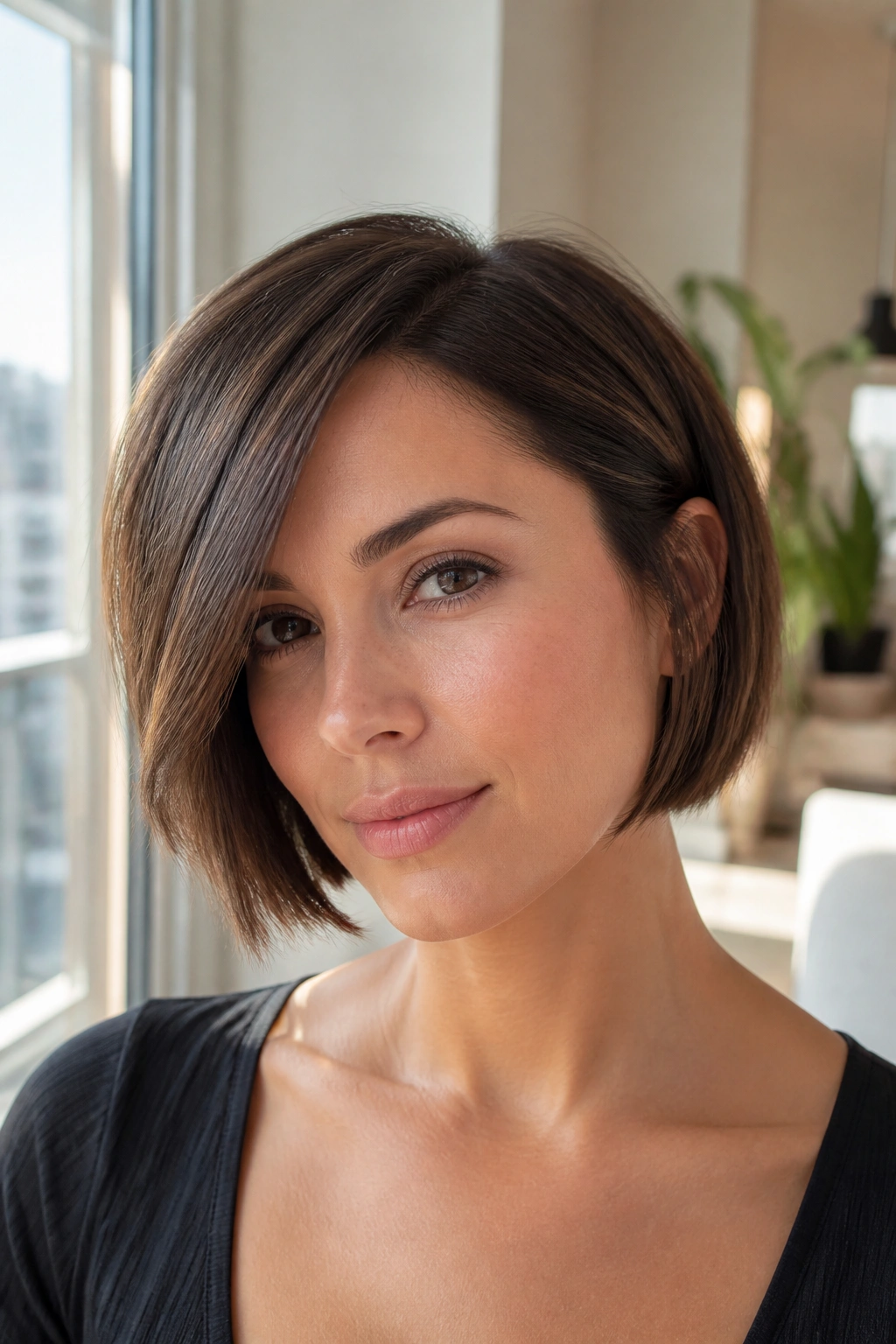
Is chin-length risky on a round face? Yes, if the bob is blunt and centered. With a side-swept front and a little internal layering, it becomes a lot more flattering than people expect.
The reason is that the side sweep breaks the hard horizontal line that chin-length cuts can create. Instead of stopping right at the cheeks, the hair drifts across one side of the face and leaves the other side a little more open. That imbalance helps the face look longer.
You need to watch the volume carefully here. If the bob puffs out at the jaw, the face can feel wider. Keep the ends smooth and slightly tucked under, or wear one side behind the ear when you want a cleaner outline. A small round brush and a smoothing balm are usually enough.
How to Wear It Without Ballooning
The cut looks best when the shortest front pieces land just below the chin and the rest follows the jawline softly. If your hair is thick, ask for point-cut ends or subtle thinning through the interior so the shape doesn’t get boxy.
A chin-length side-swept bob is a good choice if you want something fresh but not severe. It has enough structure to look deliberate, and enough softness to stay friendly.
10. Feathered Layers Around the Jaw
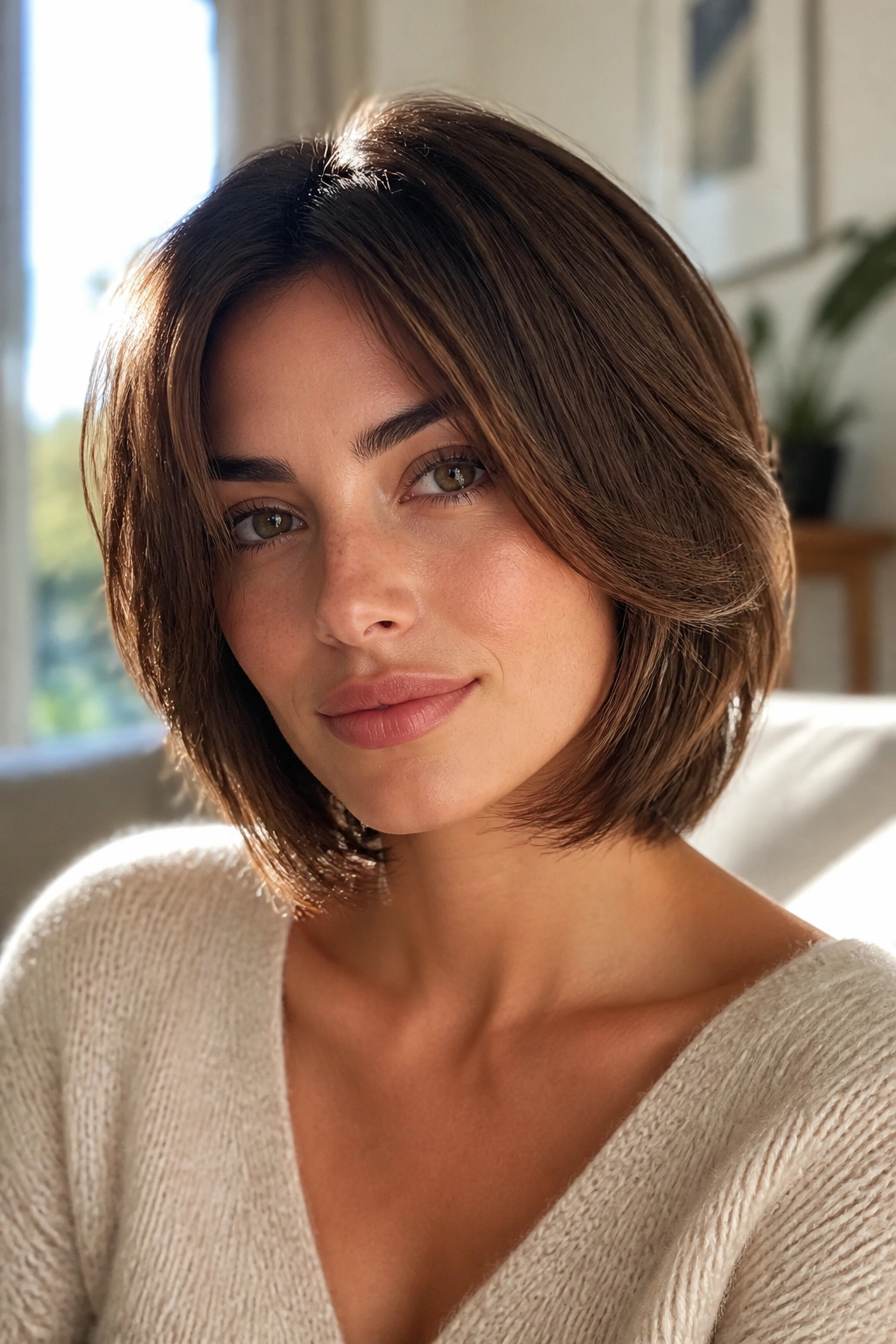
Feathered layers around the jaw have a light, brushed-out feel that can be very kind to a round face. The edges do not sit in one hard block. They taper. They move. They let the jaw show up without making a frame around it.
Picture the haircut after a quick blow-dry. The ends do not stick out; they skim. That skim is the useful part. It softens the lower face while keeping the shape open, and it works especially well if you want something that does not look too trendy or too fixed.
This style does not need a dramatic side part to work, but a small offset helps. It lets the feathering fall in two different directions, which stops the haircut from feeling too uniform. If your face tends to look widest at the cheeks, that little asymmetry is a blessing.
- Ask for soft feathering at the jawline, not a heavy shag through the crown.
- Keep the length between the chin and shoulders.
- Use a blow-dry brush or a medium round brush for the ends.
- Avoid blunt, heavy lines at the bottom.
Good match: medium-density hair that wants shape but not too much layering.
11. Side-Parted Curly Cut with a Lifted Crown
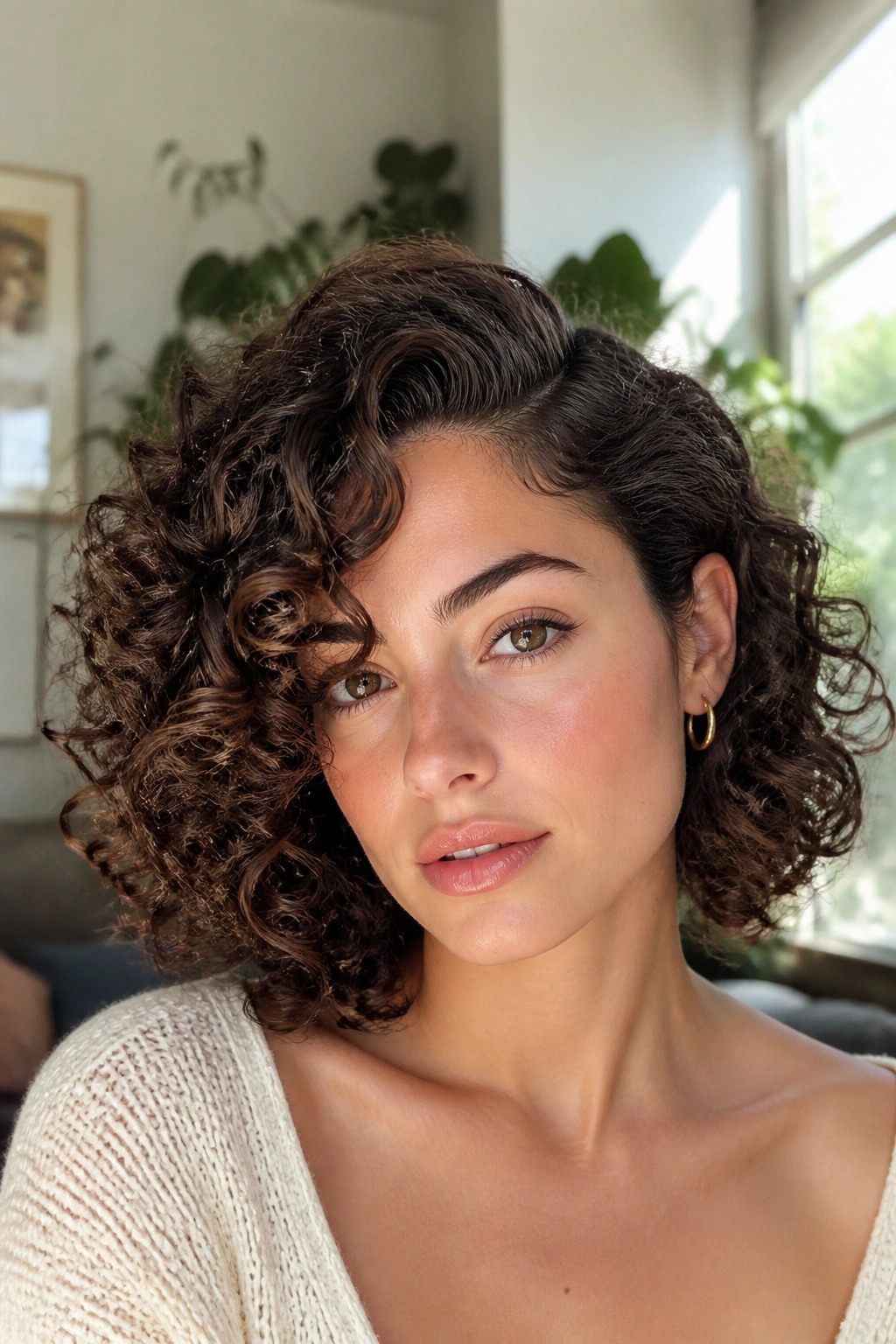
Curly hair and round faces can be a beautiful pairing, but only when the curl pattern is cut with purpose. A side part shifts the bulk away from the middle of the face, and a lifted crown gives the head a little height. That combination matters more than people think.
The biggest mistake with curls is letting them expand evenly all the way around the face. Nice in theory. Not so helpful in practice. A side part makes the curl pattern stack more naturally on one side, which creates a diagonal shape instead of a perfect halo. The face looks longer. The curls still feel full.
A good curly cut here usually keeps the layers long enough to let the curl clump stay intact. Too many short layers can turn the top into a puff. Better to cut the shape in a way that lets the curls fall with gravity, then add lift only at the roots or crown.
Use a diffuser on low heat and stop once the curls are about 80 percent dry. Leave a little moisture in the mids and ends, scrunch in a cream, and let the rest finish on its own. The finished shape should feel springy, not dry and frizzy. That’s the sweet spot.
12. Wolf Cut with a Heavy Side Part
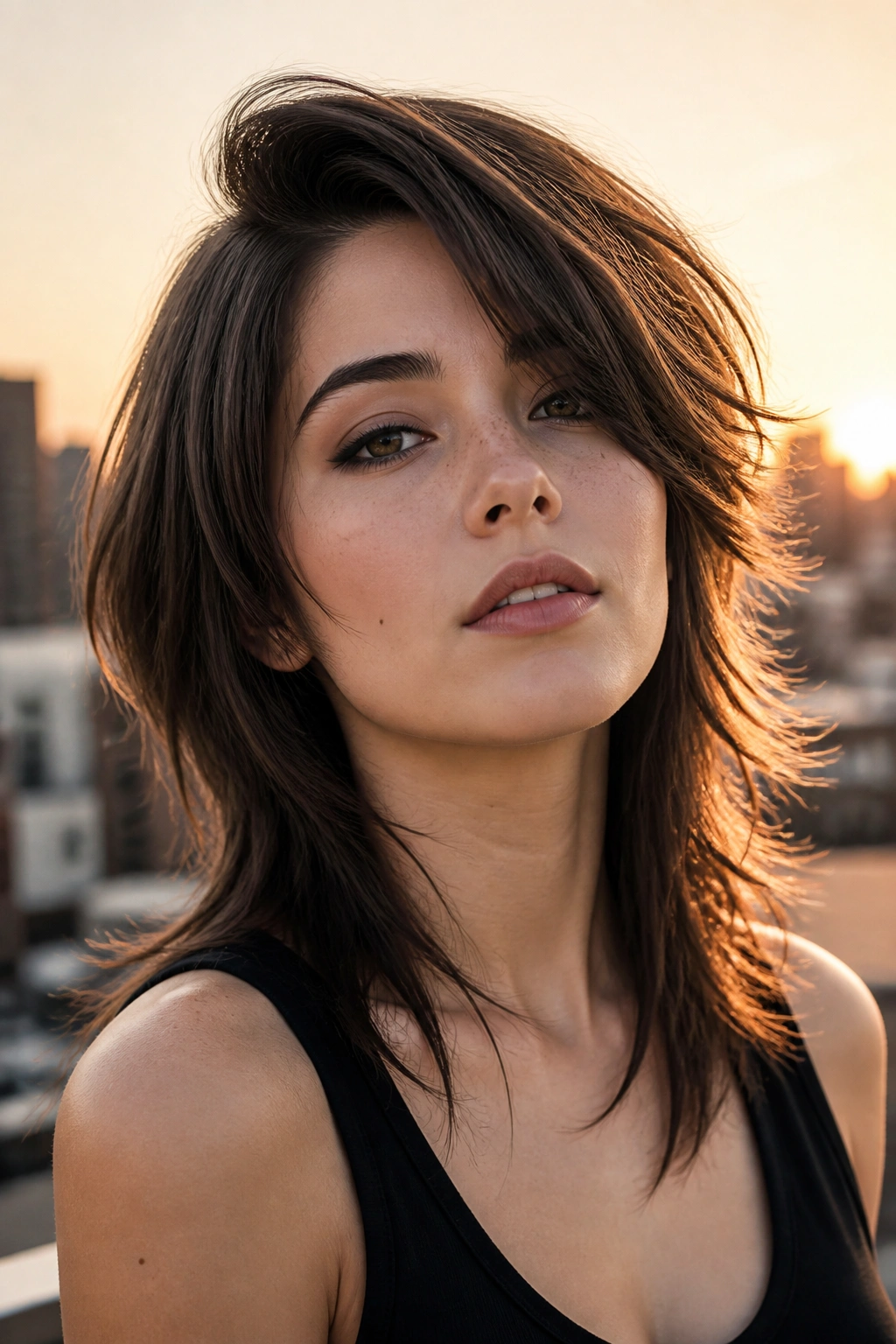
Unlike a standard wolf cut, which can spread volume all around the head, a heavy side part steers the mess into a line the eye can follow. That’s why this version works better on a round face than the classic center-parted version you see everywhere.
The wolf cut already has attitude. Layers, choppy texture, a little mullet energy in the back. A heavy side part gives it direction so the face does not get swallowed by width. The shorter layers around the crown add lift, while the front pieces angle down past the cheeks.
This is not the cut I’d recommend if your hair is very fine and flat with no styling help. It can collapse fast. But if your hair has some natural texture, or you like using mousse and texture spray, it’s a fun one. It has shape even when it is slightly messy.
Who should wear it? Someone who wants a less polished look and does not mind running their hands through the hair in the morning. If that sounds annoying, skip it. If it sounds easy, this cut will probably make sense right away.
13. Tucked-Behind-the-Ear Lob
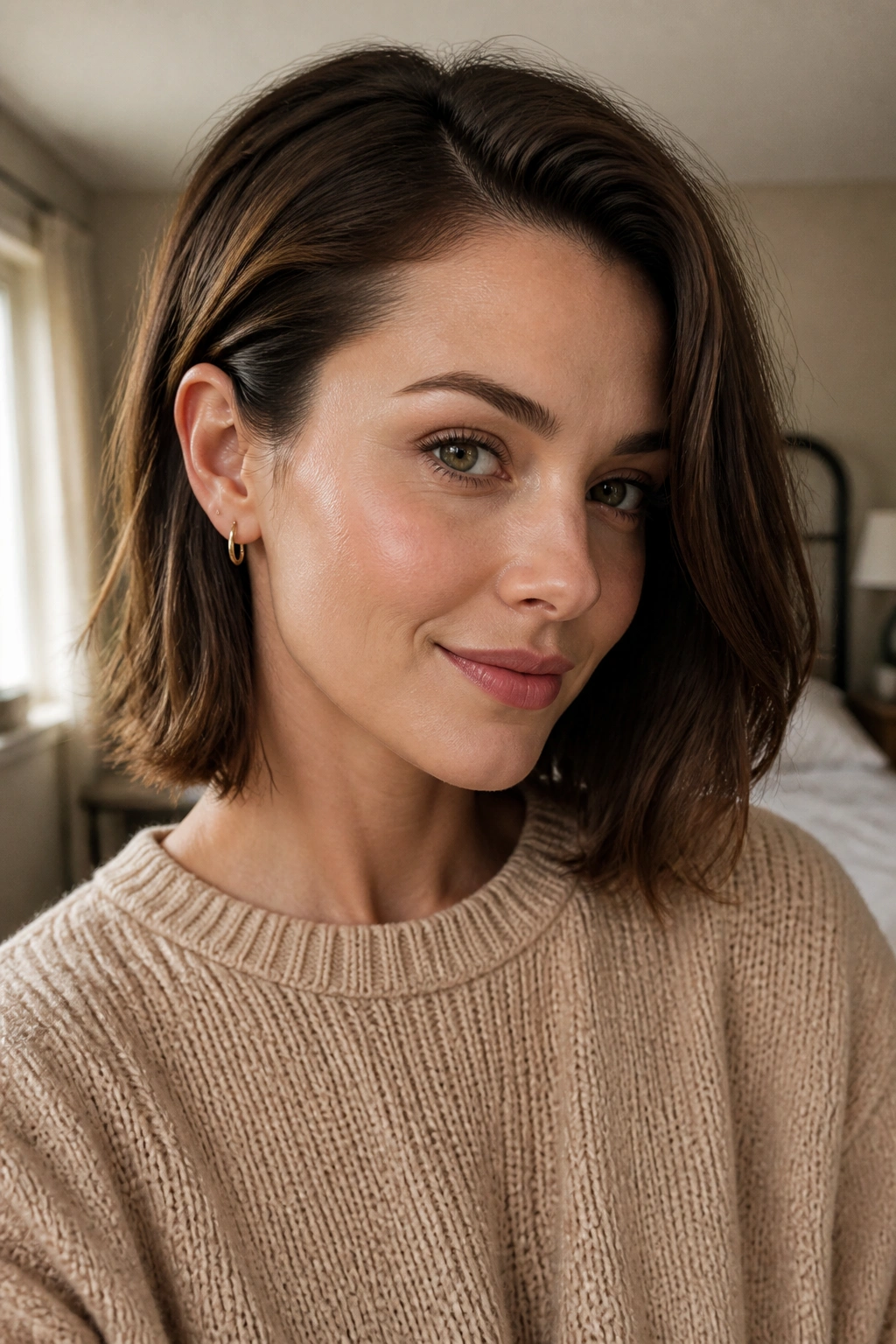
A tucked-behind-the-ear lob is one of the simplest side haircuts for round faces, and I mean that in a good way. One side stays loose, the other gets tucked cleanly behind the ear. That exposed cheekbone and jawline create instant shape.
The contrast is what makes it work. The tucked side opens the face and pulls the eye outward, while the untucked side keeps the cut from looking too severe. On a round face, that contrast can be more flattering than a lot of fancy layering.
Why the Tuck Works
The ear tuck gives you a hard line on one side and a soft fall on the other. That’s a nice trick if you wear glasses, earrings, or anything else that sits near the face, because the haircut gives those details room to show up. It also works with straight, wavy, and even lightly curled hair.
- Keep the length at the collarbone or slightly above.
- Part the hair just off center, then tuck only one side.
- Use a small clip or pin if the tuck keeps slipping.
- Let the other side fall forward past the jaw.
Small note: this cut looks best when the untucked side has a little bend, not a perfect poker-straight sheet.
14. Long Straight Cut with Face-Framing Side Layers
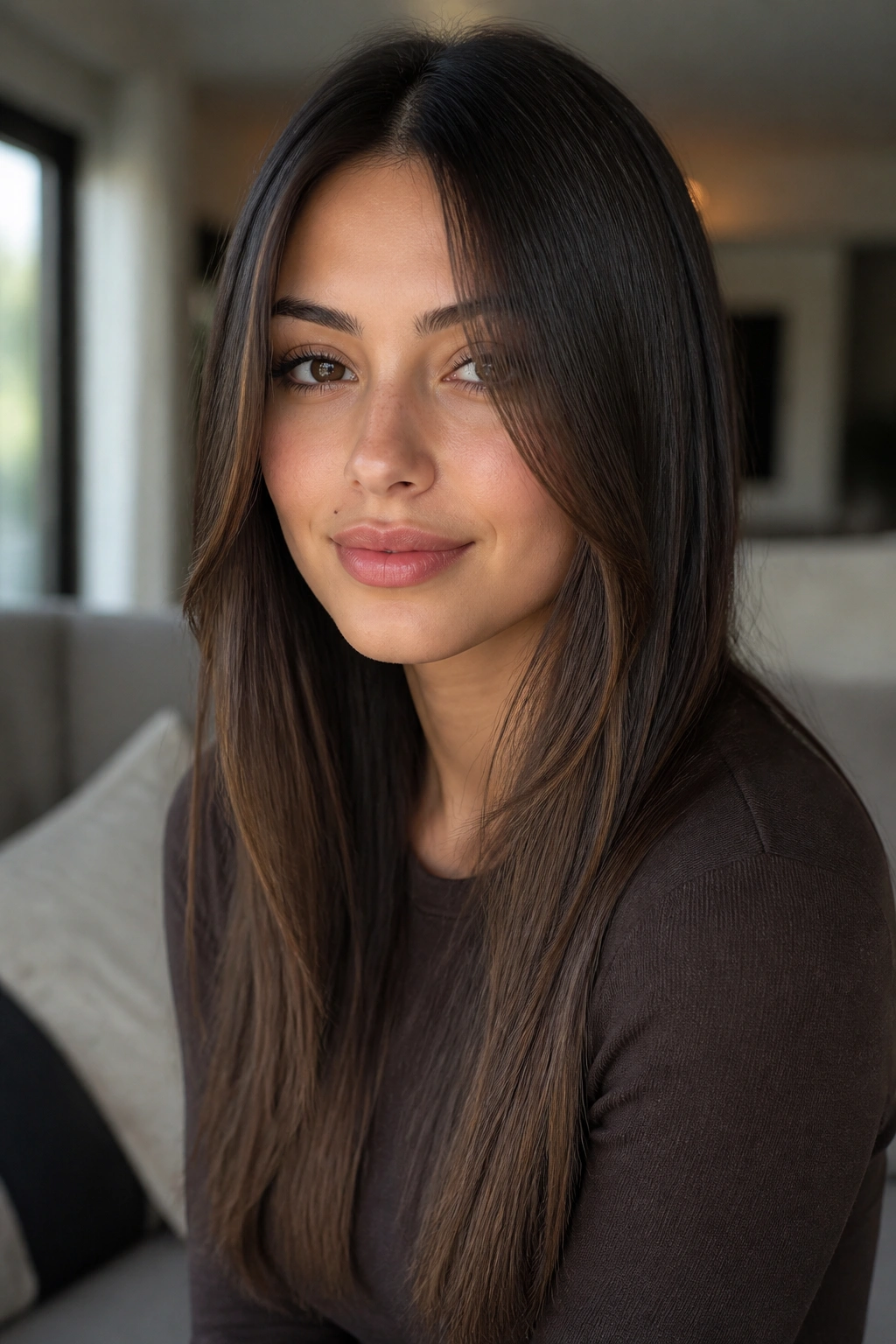
Long hair can work on a round face, but only if the front pieces do some actual work. A long straight cut with face-framing side layers keeps the length dramatic while giving the face a longer outline near the cheeks and jaw.
A blunt curtain of long hair can feel heavy on a round face. Add side layers that start around the lip or chin, and the whole thing changes. Those front pieces draw the eye down the side of the face, which softens the width across the cheeks. The straight length in back keeps the look sleek.
This cut is especially good if you like to wear your hair down most days. It does not need constant shaping. A middle or side part can both work, but the side version usually feels a little friendlier to a rounder shape because it breaks symmetry at the front.
If your hair is very straight, put a slight bend just in the front pieces with a flat iron. Not a curl. A bend. That tiny curve keeps the hair from hanging like a curtain and helps the layers show up where they matter.
15. Undercut Pixie with Side Volume for Round Faces
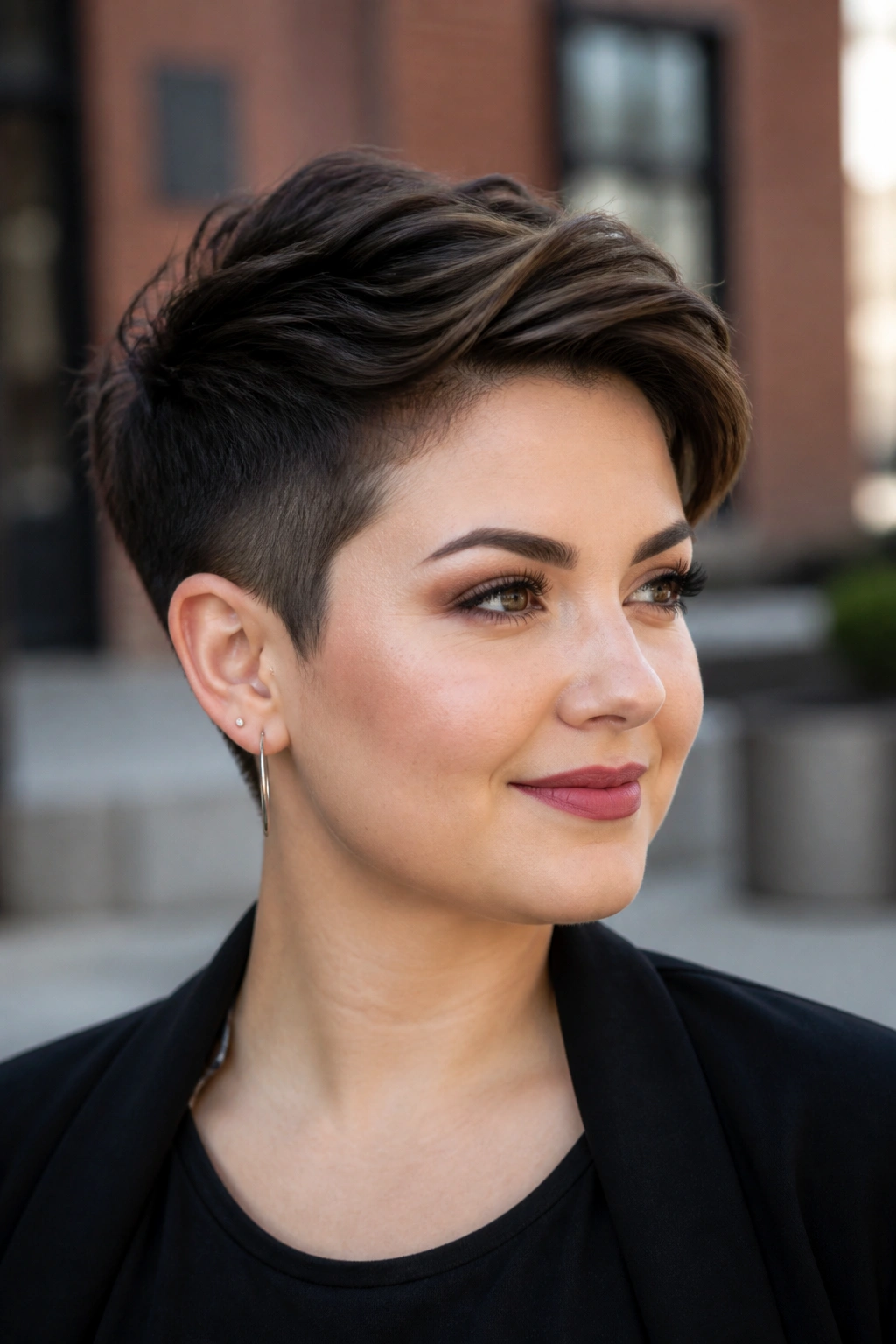
Can a round face wear a close-cropped pixie? Absolutely, if one side keeps some height and the sides stay tight. The undercut removes bulk around the temples and ears, and the side volume keeps the cut from flattening the face into a circle.
This is a bolder look than the long-fringe pixie. It shows more of the head shape, which means the cut has to be clean. But when it is cut well, it gives the face a lot of lift. The top and side volume push the eye upward, which is a useful trick for round faces.
I’d call this a better fit for people with thicker or coarser hair, because the undercut helps control the bulk. Fine hair can wear it too, but the shape needs a little product and more frequent trims. A matte paste or lightweight pomade usually does the job without making the top sticky.
If you want something short that still looks sharp from every angle, this is one to consider. It is not soft. It is not shy. That is the point.
16. Curtain Bangs with an Off-Center Part
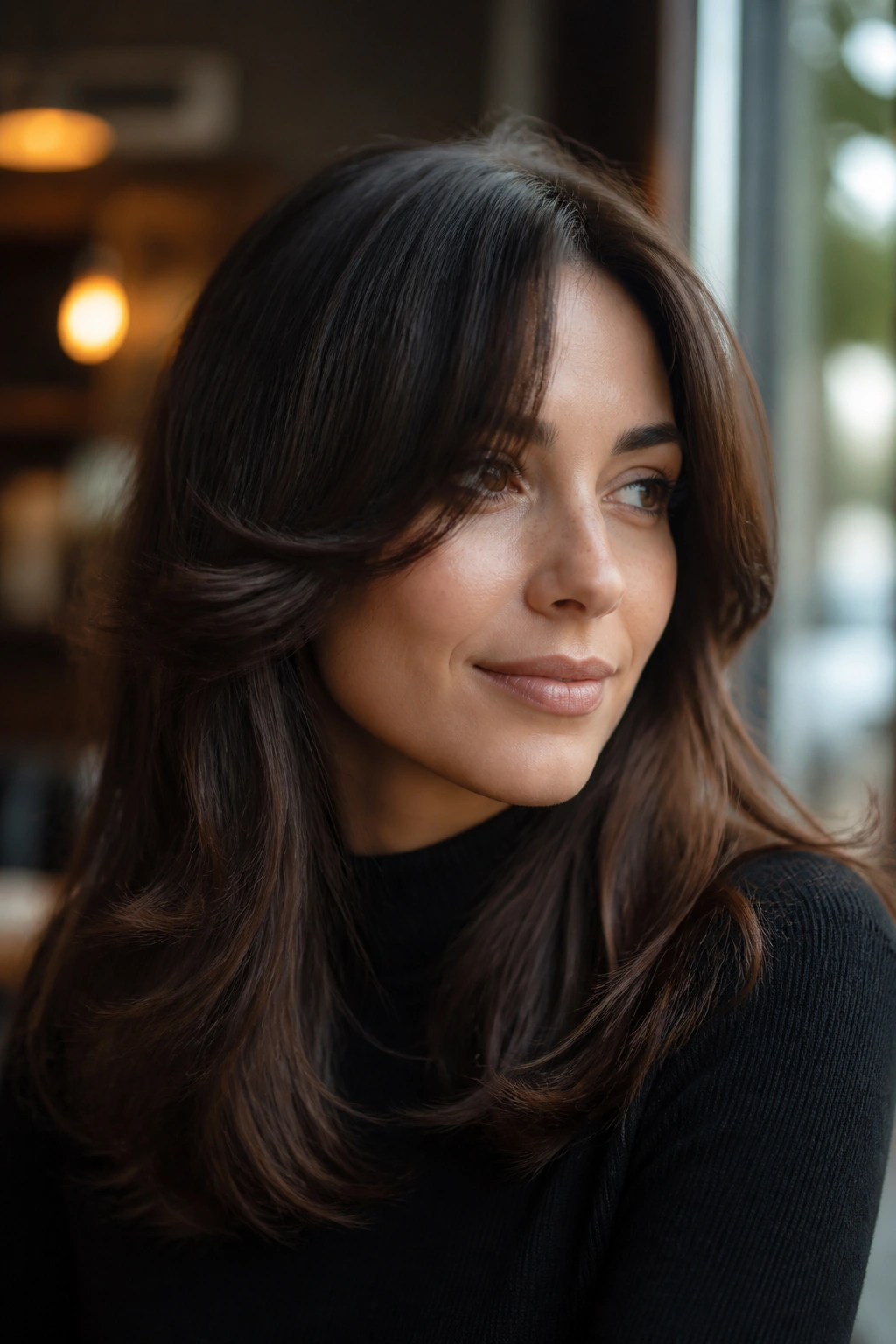
Curtain bangs are not limited to a perfect middle part. Shift the part a couple of inches, and the bangs still open at the center while sending the rest of the hair diagonally across the face. On a round face, that diagonal line is gold.
The sweet spot for curtain bangs on this face shape is usually around the cheekbones or a touch below. Too short, and the bangs can make the face feel wider. Too long, and they lose the framing effect. You want the pieces to skim the sides of the face and then blend into the rest of the cut.
This works especially well with shoulder-length or longer hair. The bangs set the frame, and the rest of the hair carries the length. If you like styling, a round brush and a little mousse at the roots keep the front lifted. If you don’t, let them air-dry with a quick finger twist away from the face.
A small off-center part also keeps the bangs from feeling too formal. They move a little. They fall a little unevenly. That looseness is what makes them feel modern instead of stiff.
17. Rounded Layers with Diagonal Movement
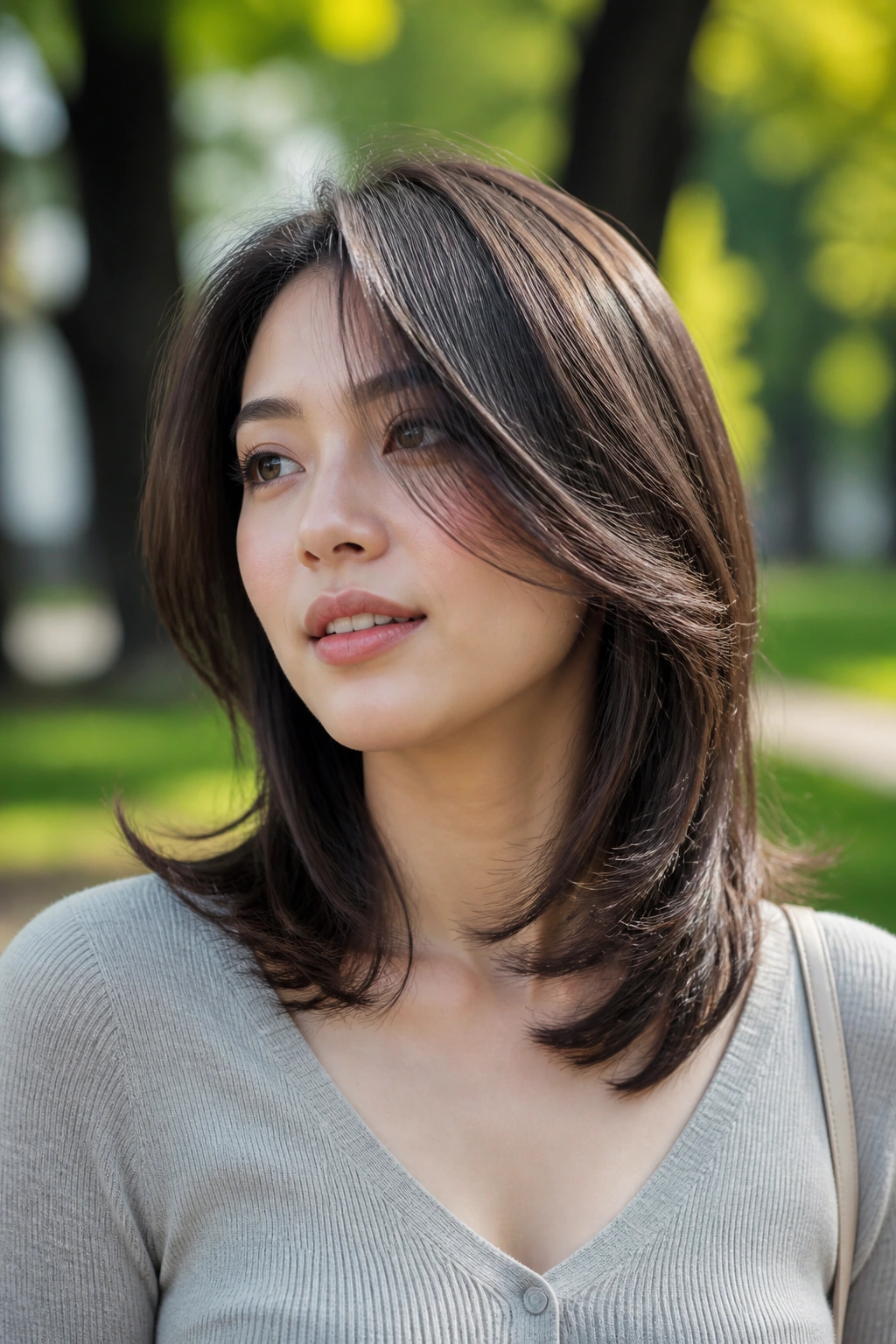
Rounded layers sound like they might make a round face look rounder, and that’s the part people get wrong. The cut is not about copying the face shape. It is about putting roundness in the back and diagonal movement in the front, which gives you softness without width.
The layers should begin lower than people often expect. Think lip, chin, maybe just below the jaw if the hair is thick. That keeps the top from puffing out around the cheeks. Then the front pieces are cut to fall slightly forward, so the eye moves from temple to collarbone instead of stopping at the widest point of the face.
This cut works well on medium to thick hair because the layering removes weight without leaving the ends stringy. It also responds nicely to a blowout. A medium brush, a little root lift, and a bend at the front are usually enough.
I like this cut when someone wants softness more than edge. It is not a sharp bob. It is not a shag. It sits in the middle, and that middle ground is often easier to wear day after day. There’s a reason stylists keep coming back to it.
18. Side-Parted Cut With Soft, Grow-Out Friendly Ends for Round Faces
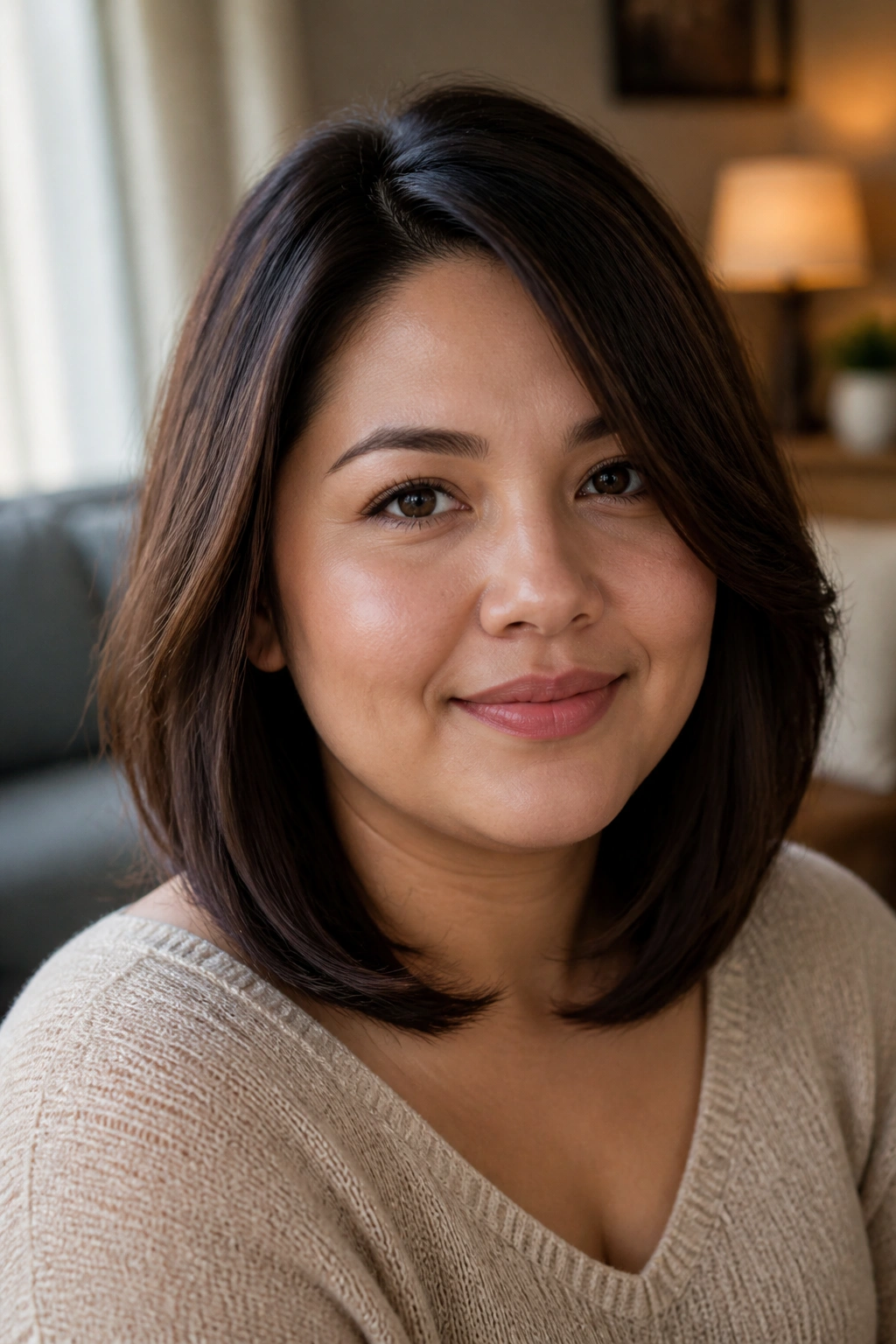
If you hate frequent salon visits, this is the cut to ask for. The shape stays flattering as it grows because the ends are soft, the part is slightly off center, and the front still falls in a line that opens the face instead of boxing it in.
A grow-out friendly cut should not depend on a perfect blowout. That’s the whole idea. The ends can be a little blunt, a little feathered, or somewhere in between, as long as they don’t flare out at the cheeks. A side part gives the top enough movement that the whole cut keeps its shape between trims.
This is also the easiest cut to live with if you switch between polished and messy days. One day you tuck one side back and smooth the other. The next day you rough it up with texture spray and let it fall where it wants. Both versions still work because the cut has enough shape built in.
Ask your stylist for soft sides, a little lift near the crown, and no width at cheek level. That sentence covers a lot of ground, and it is better than asking for something vague. The best side haircuts for round faces are the ones that behave well when life gets busy, and this one does exactly that. If you want a final rule, it’s this: keep the front moving and the cheeks open. Everything else is detail.
