



Thick hair can be a blessing, but short haircuts for thick hair only work when the cut respects the bulk instead of fighting it. Too many people walk out with a shape that looks tidy for ten minutes, then starts puffing at the sides, flipping out at the ends, or sitting like a helmet.
The trick is never “make it thinner everywhere.” That’s the mistake. Thick hair usually needs weight removed in the right places and a perimeter that still has enough strength to hold its line. A clean bob can look sharp. A cropped pixie can look expensive. Even a shag can behave, if the layers are placed with some restraint and not hacked in at random.
There’s also a big difference between hair that is thick because each strand is coarse and hair that is thick because there are simply a lot of strands. Those two situations need different handling. Coarse hair often wants softer shaping and fewer blunt bulk points. Dense hair can handle more structure, but it still gets bulky fast if the cut is too boxy.
The 28 cuts below move from classic to a little bolder, with options for straight, wavy, curly, and coily hair. Some are neat and polished. Some are messier on purpose. All of them can work beautifully on thick hair — if the shape is right. The blunt bob is a good place to start.
1. Blunt Bob
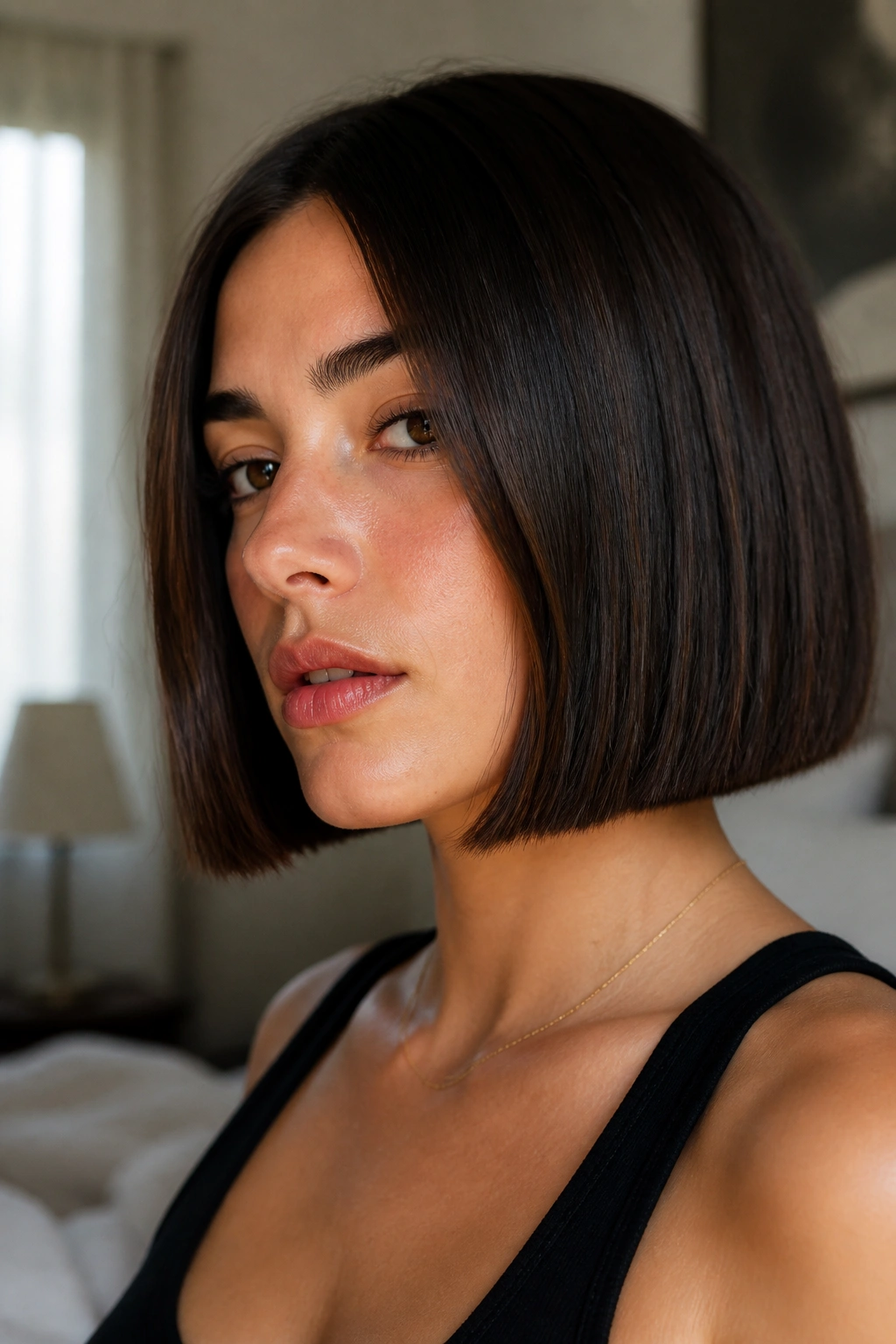
The blunt bob is the simplest answer, and honestly, one of the strongest. Thick hair gives this cut real presence, because the ends land in a solid line instead of looking wispy. If you like a clean shape that sits well after a quick blow-dry, this is hard to beat.
Why it works
A one-length perimeter keeps the bottom from feathering out. That matters on thick hair, where too many short layers can make the outline look puffy. Ask for a line that sits at the chin, just below it, or slightly higher depending on your face shape.
- Best for: straight, wavy, or slightly coarse hair
- Salon note: ask for light internal debulking, not heavy thinning at the ends
- Styling: a paddle brush or flat brush gives it a tidy finish fast
Pro tip: If your hair flips out at the hem, keep the bob a touch longer and blunt the ends with scissors rather than a razor.
2. Layered Pixie
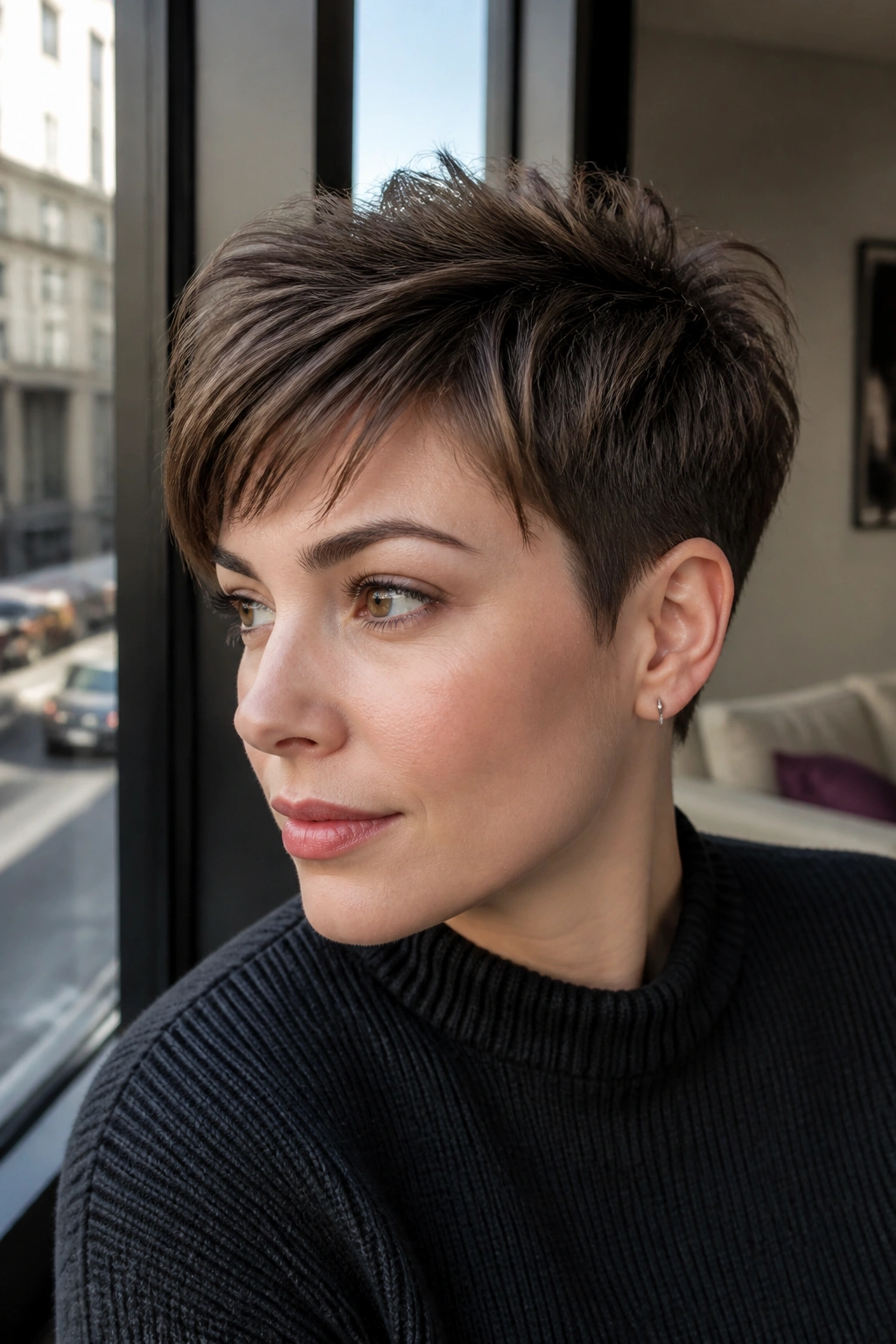
A pixie can handle thick hair better than people think. In fact, thick strands often give it the lift and texture that finer hair has to fake with product. The key is leaving enough length on top so the cut does not sit flat against the head.
Short sides and a longer crown make this shape feel airy instead of bulky. The best versions use soft, piecey layers through the top and around the fringe, then taper the nape so the back lies close. It is a small cut, but it still needs a strong outline. Otherwise it turns fuzzy fast.
This one suits people who do not want to spend ten minutes fighting a blow-dryer every morning. A little matte paste or cream is enough. Work it through the crown with your fingers, then push the fringe forward or off to the side. Easy. No drama.
3. Bixie
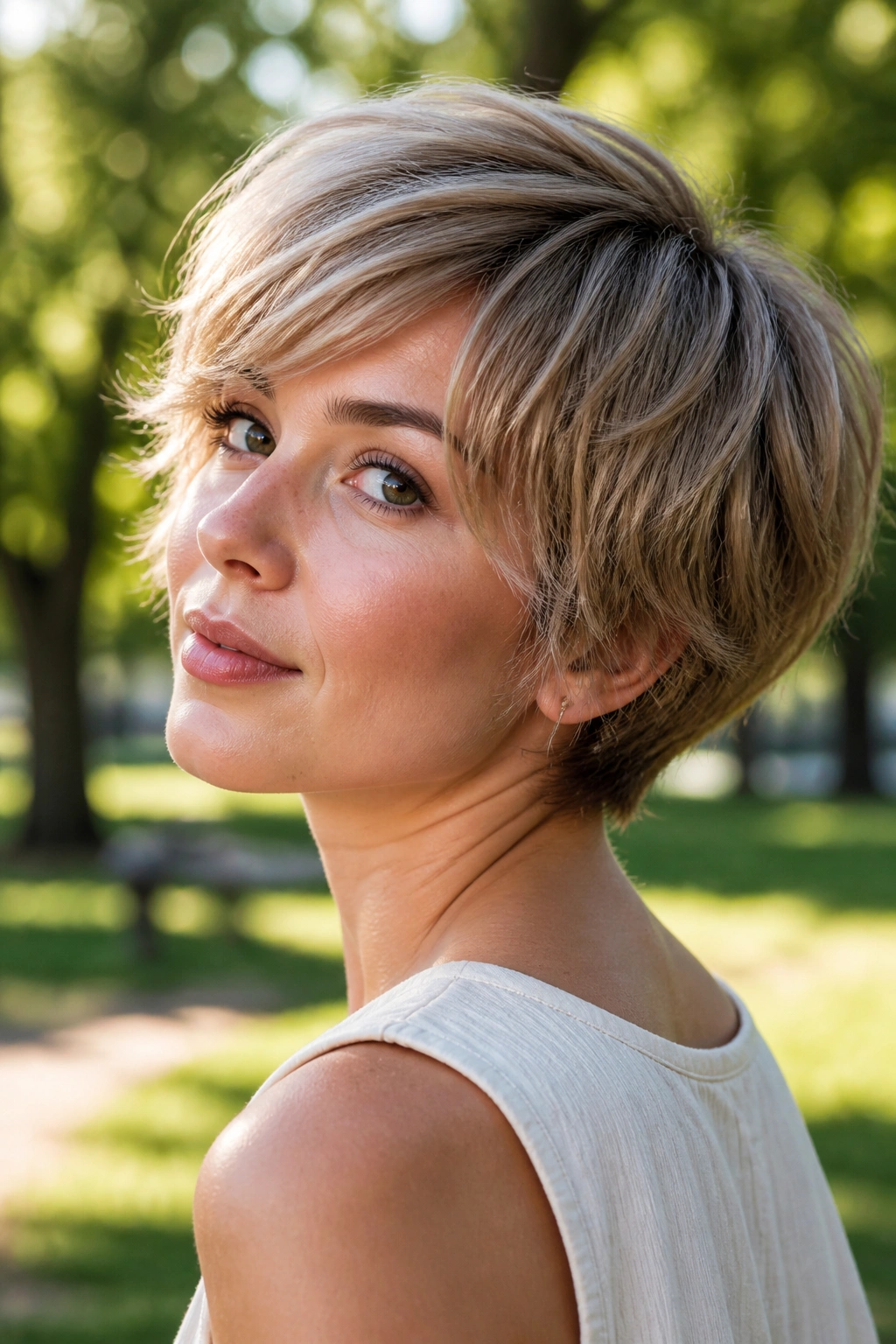
The bixie lives between a bob and a pixie, and that middle ground is exactly why thick hair likes it. You get enough length to tuck behind the ears, but the nape stays cropped and light. It feels freer than a bob and less severe than a full pixie.
What makes the bixie work is the contrast: softer length around the face, shorter shape at the back, and textured ends through the top. That balance keeps thick hair from ballooning at the sides. It also gives you a little room to play. You can rough it up with your hands for a casual look or smooth the front sections for something neater.
What to ask for
- A cropped nape
- Longer, feathered pieces around the temple
- A fringe that can sweep sideways or break apart
This cut is a good pick if you want change without jumping straight to very short hair. It grows out better than a pixie, too.
4. Italian Bob
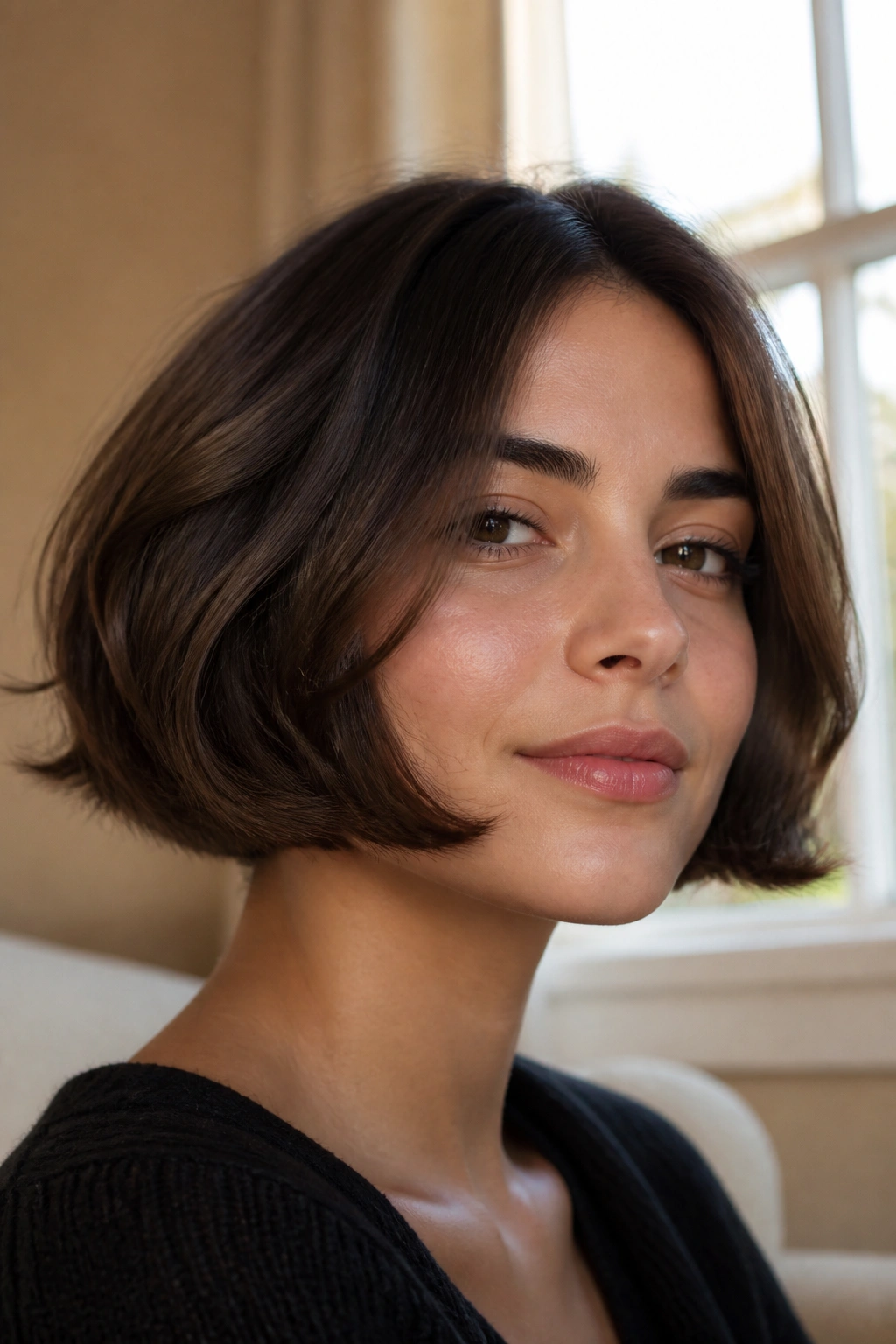
The Italian bob is plush in a way that thick hair does well. It sits a little fuller than a standard blunt bob, with enough length to graze the jaw or skim the neck. The shape usually has some bend and movement, but not so much layering that the outline loses weight.
That slight softness is the point. Thick hair already has body, so the cut should shape it rather than chase volume. A center part can make the whole thing feel polished, while a side part gives it more swing. Either way, the line stays strong.
I like this cut for someone who wants hair that looks styled even when it only got a rough blow-dry. Use a round brush at the ends if you want that inward curve. Or let it air-dry with a little cream and keep the texture a bit looser. It holds both moods well.
5. A-Line Bob
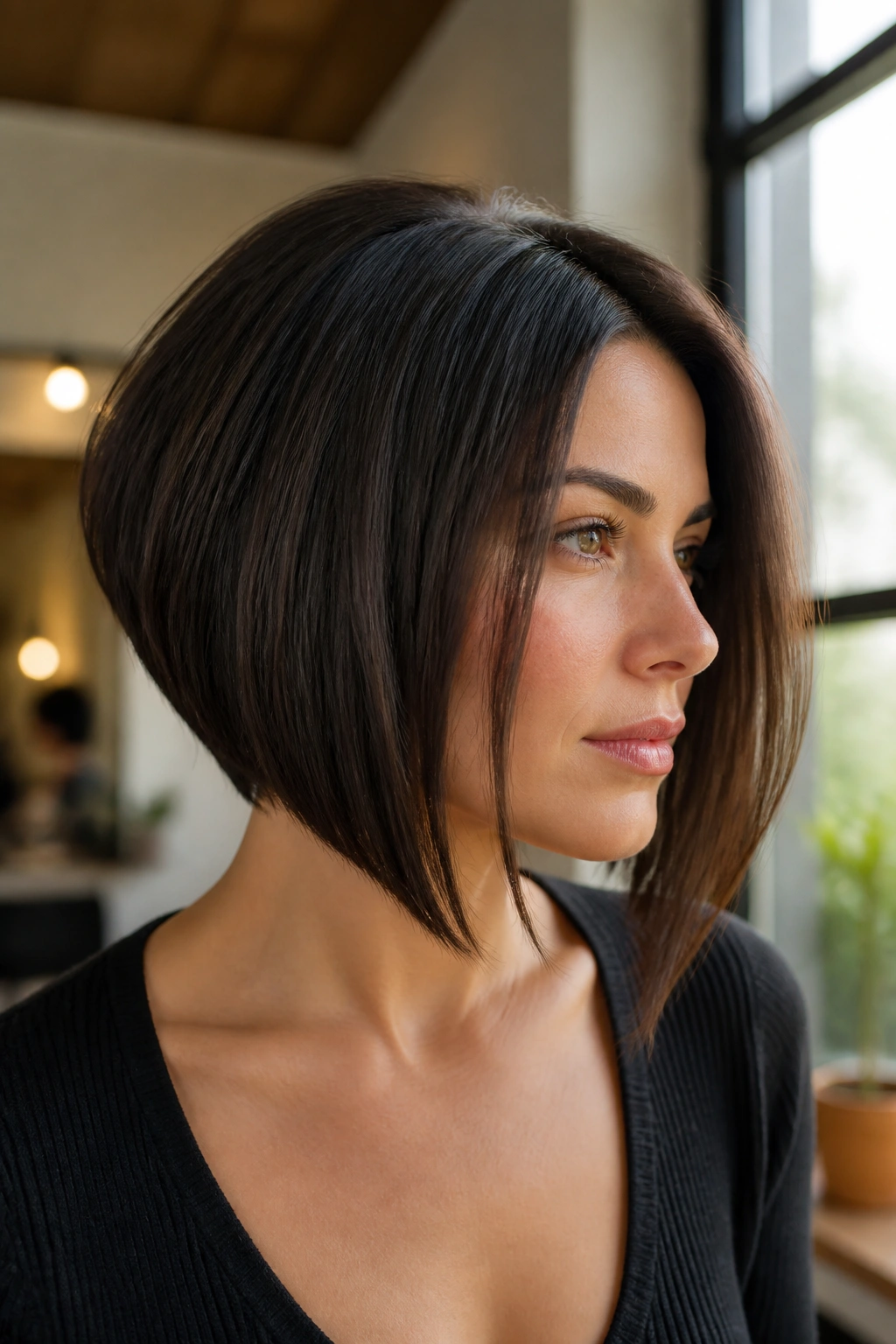
An A-line bob is longer in the front and shorter at the back, and that angle does real work on thick hair. The shorter nape removes some weight where hair likes to stack up, while the longer front pieces give the cut a sleek edge. It is one of those shapes that looks more deliberate than a plain bob.
This cut also plays nicely with faces that want a little length near the jaw. The front corners can soften a rounder face or make a square jaw feel less boxy. The angle does the visual lifting; you do not need a lot of texture to make it interesting.
How it behaves
- Straight hair: shows off the angle best
- Wavy hair: gets a softer, more relaxed shape
- Styling note: tuck one side behind the ear to show the line
Keep the back trimmed so it does not get too bulky. Thick hair can swallow the shape if the nape grows out for too long.
6. Shaggy Bob

The shaggy bob is for thick hair that wants movement more than polish. Instead of one solid edge, you get broken-up layers, soft ends, and a little swing through the mid-lengths. That makes the hair feel lighter without turning the outline into a mess.
This is one of the better short haircuts for thick hair if your texture is naturally wavy. The layers wake up the wave pattern and stop the bottom from hanging like a heavy curtain. On straighter hair, it creates texture that you can rough up with a bit of spray or cream.
The catch? It needs a careful hand. Too much thinning and the ends start to frizz. Too little and it becomes a bulky triangle. The good versions still keep enough weight at the edge to look like a real haircut, not a pile of chopped pieces.
7. French Bob

A French bob usually sits around the jaw and often pairs with a fringe. Thick hair gives this cut a crisp, chic shape because the fullness adds a little drama without needing extra length. It can look sharp, slightly romantic, or very blunt depending on how it’s cut.
The fringe matters here. A soft brow-skimming bang can take some of the heaviness out of the front, especially if your hair tends to puff at the crown. If you do not want bangs, the bob still works with a center part and minimal layering. The key is keeping the ends blunt enough to hold their line.
What makes it different
Unlike a longer bob, this one feels compact. It sits higher, frames the face more tightly, and shows the neck. That makes it a strong choice if you want a cut with a little attitude.
A good French bob should look deliberate, not fluffy. If it needs constant touch-ups to keep the ends in place, the shape is too weak.
8. Textured Crop
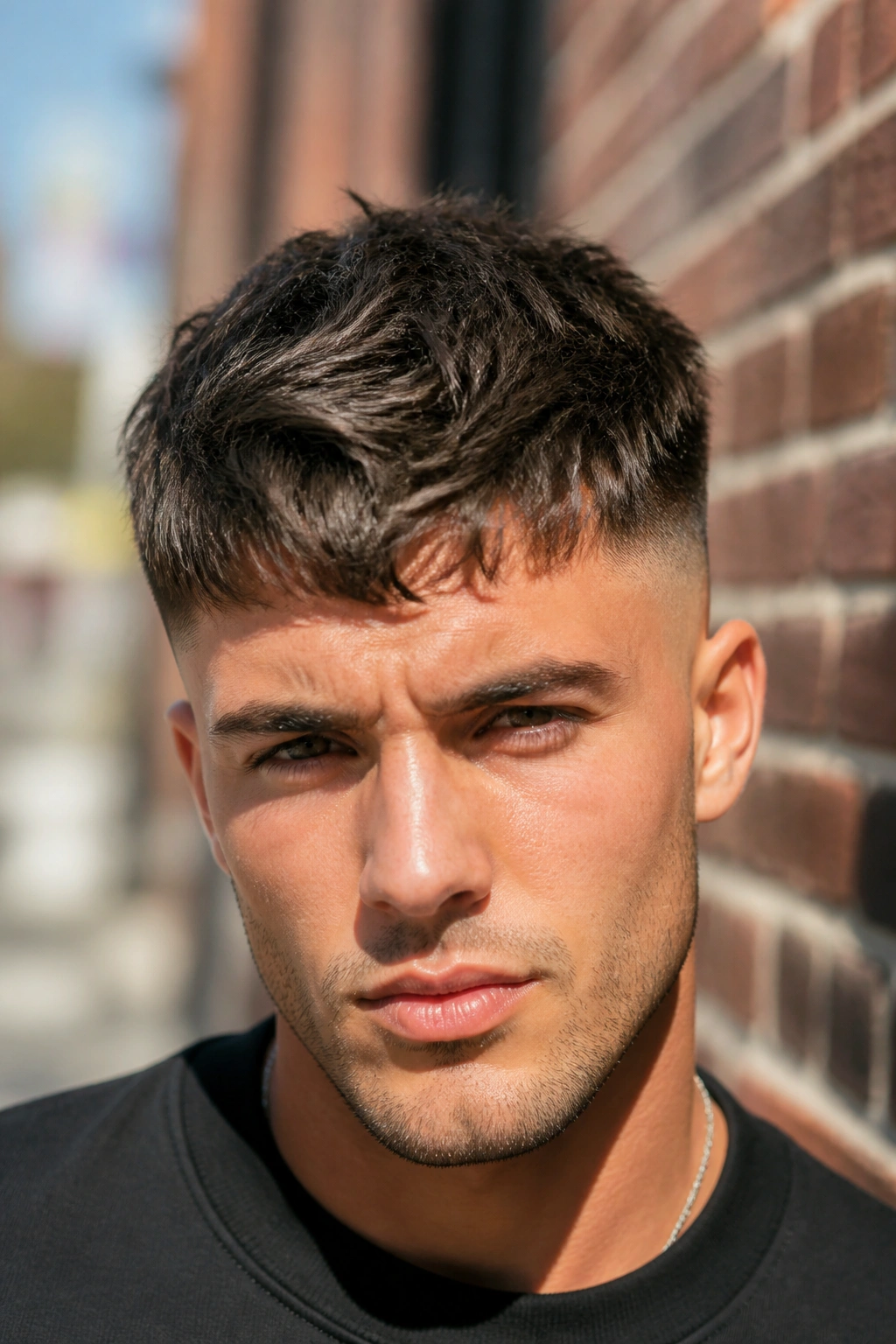
A textured crop is short, sharp, and very practical. Thick hair can give this cut body on its own, so the stylist’s job is mostly to remove bulk where it gets in the way and leave enough movement on top for a piecey finish.
This is a good cut for people who hate spending time on hair. Finger-combing a little paste through the top is usually enough. The shape is short around the sides and back, with the top left long enough to push forward, up, or slightly to the side. It looks especially good when the texture is not too perfect.
Best features
- Fast to style
- Easy to wash
- Works well with strong brows and clean lines
Do not overdo the thinning scissors here. Thick hair can still look plush in a crop, and that is better than ending up with a dry, fuzzy top. I’d choose this cut for someone who wants the shortest end of the spectrum without going full buzzed.
9. Inverted Bob
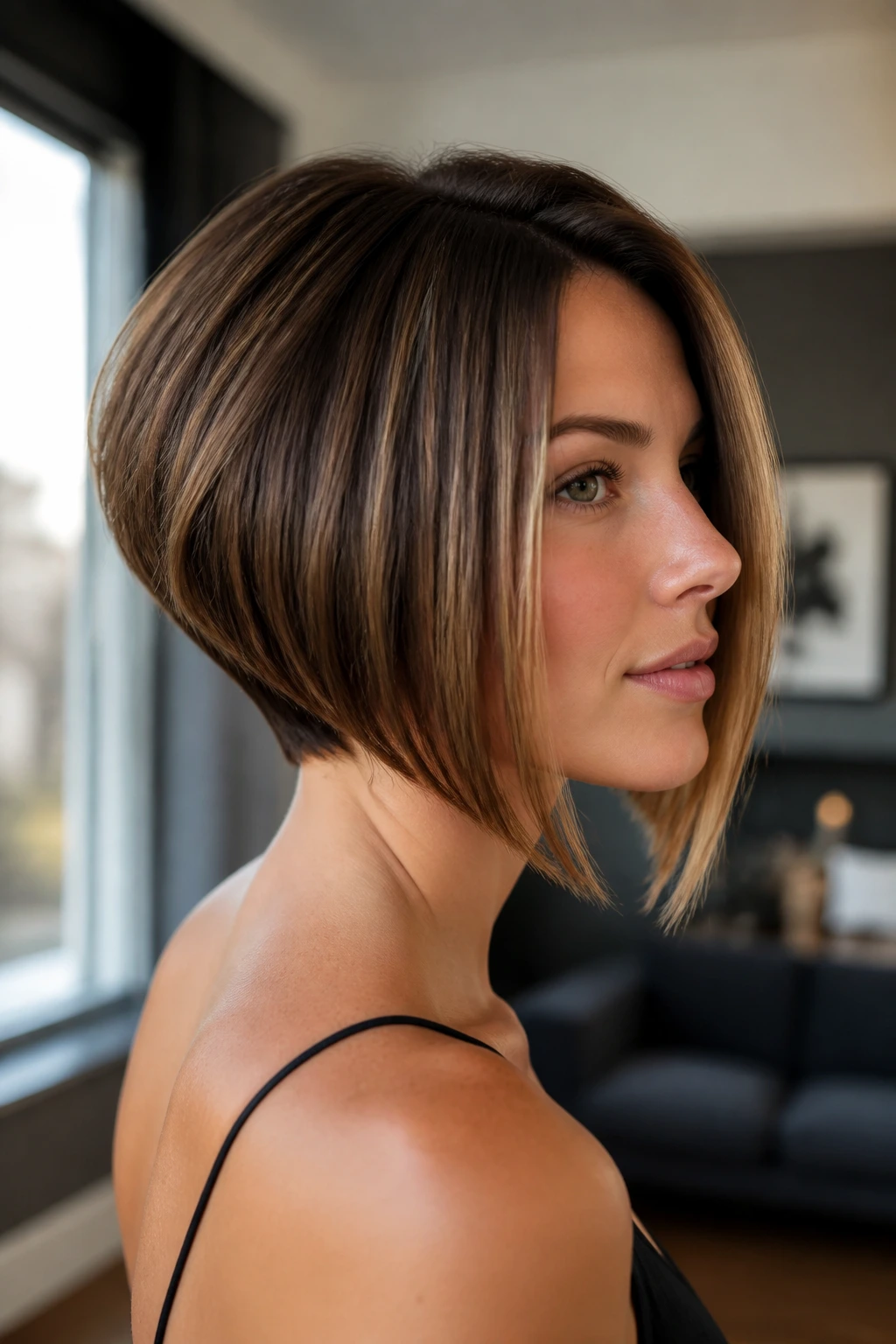
An inverted bob stacks more weight in the back and lets the front fall longer, so it naturally suits dense hair. The shorter layers near the nape create lift at the crown, while the forward length keeps the whole cut from looking boxy. It has a stronger profile than a straight bob.
That profile is why it works. Thick hair can look heavy when it hangs in one block. The inverted shape gives the back some rise and directs the eye forward instead of straight down. It is especially useful if your hair tends to sit flat at the crown but puff at the jaw.
A clean blowout makes the angle pop, but you do not need fancy styling. A round brush and a bit of smoothing cream usually get it there. If the back starts to grow out, the whole shape can lose its lift fast, so keep the neckline tidy.
10. Curly Bob
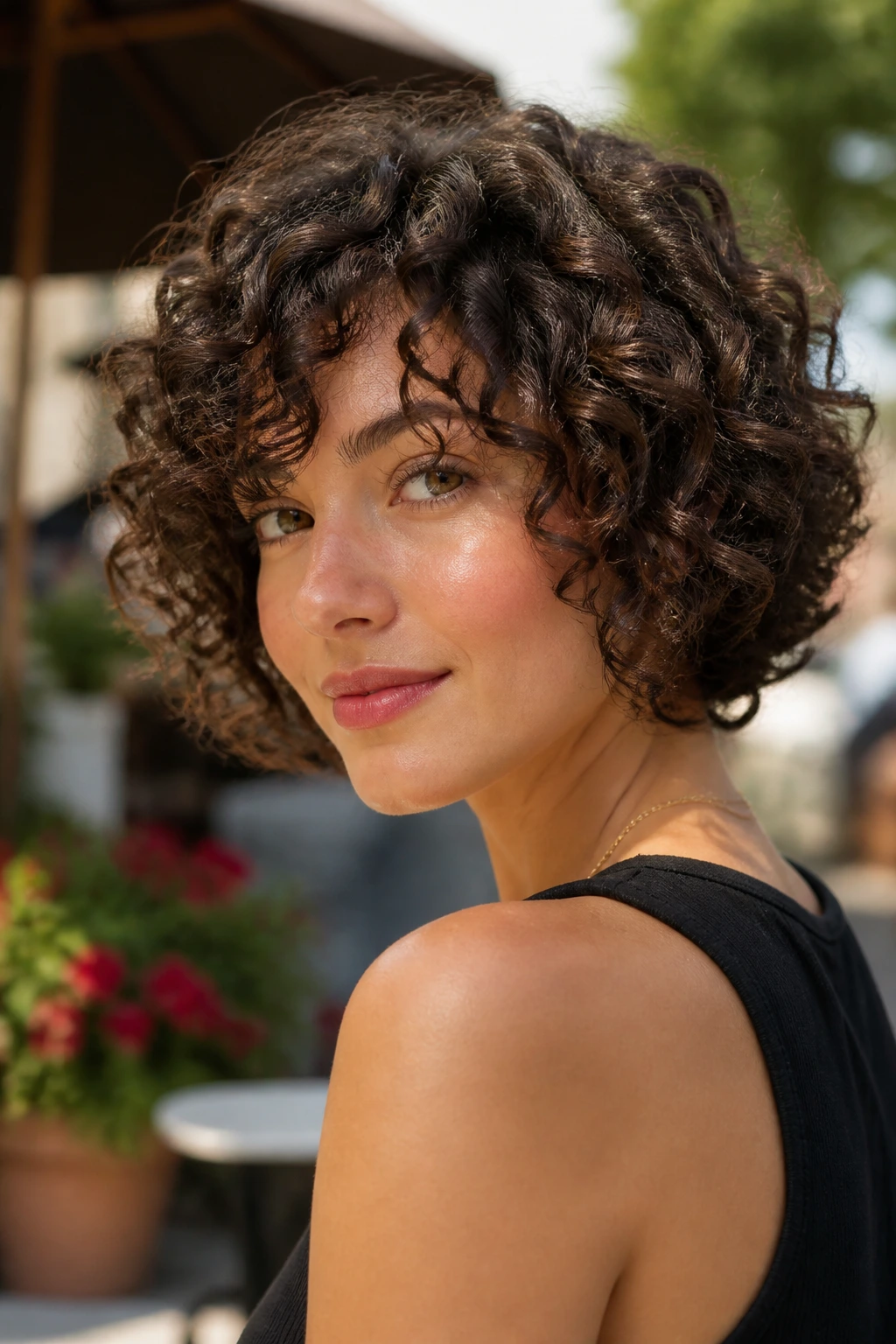
Curly hair and thick hair often arrive as a pair, and a curly bob is one of the smartest ways to work with both. The biggest mistake is cutting it too blunt while wet and expecting the curls to behave the same way dry. They never do. Curls spring, shrink, and spread.
A good curly bob respects the curl pattern. The shape should follow the way your curls sit when dry, not force them into a straight line that fights the texture. Some curl specialists cut it dry for that reason. Others work wet, then refine once the curls have settled.
A few things to watch
- Keep enough length for the curls to form
- Avoid over-thinning the sides
- Use a curl cream or gel that holds without making the hair crunchy
This cut can look bouncy and full in the best possible way. Thick curls finally get room to move instead of stacking up into a wide triangle.
11. Undercut Bob
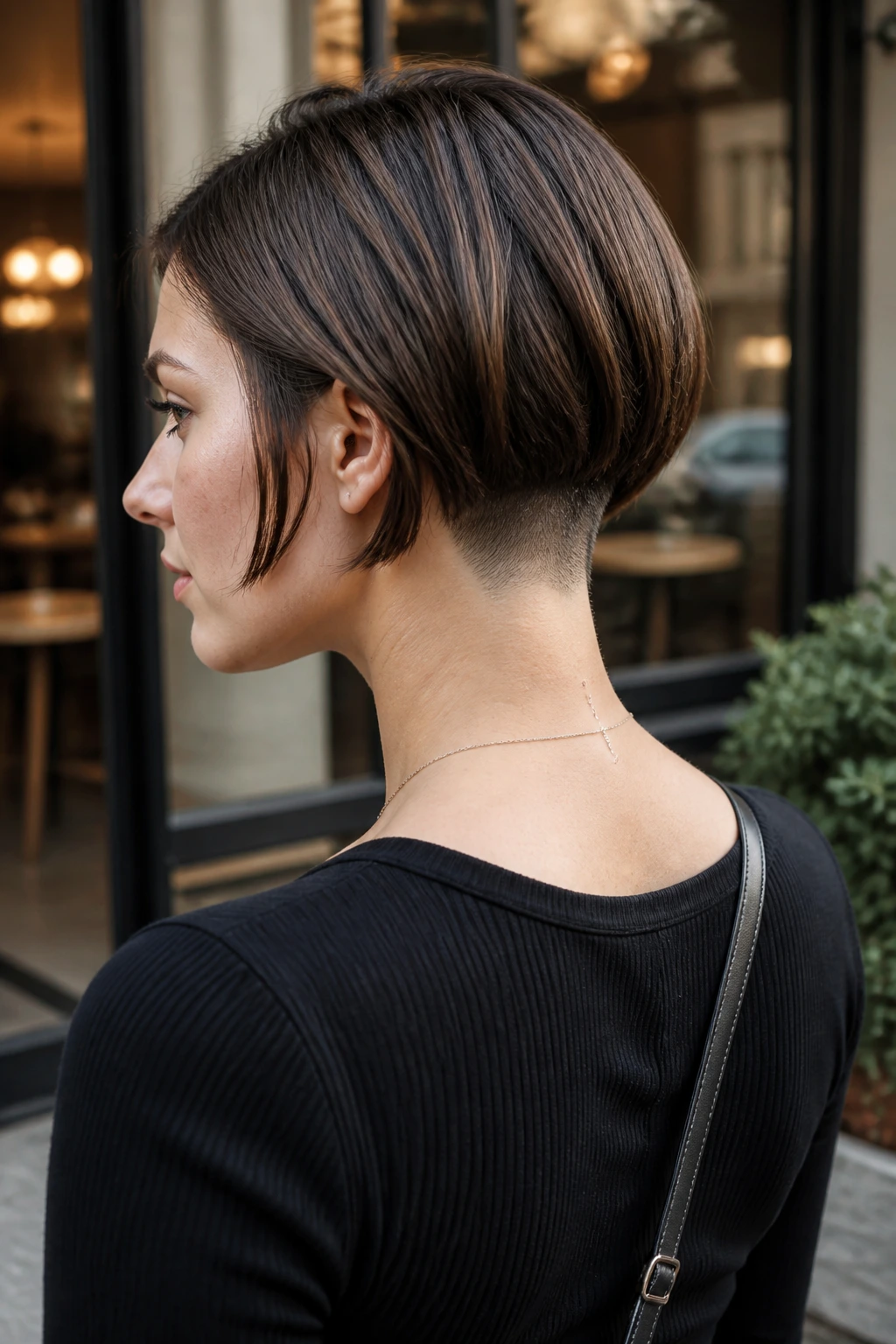
An undercut bob is one of the most useful cuts for heavy hair, even though you rarely see the hidden part. The surface still reads as a bob, but the nape or lower sides are taken shorter underneath to remove bulk. That makes a huge difference when thick hair keeps pushing outward.
The nice thing about this cut is that it keeps the visible shape sleek while handling the real problem behind the scenes. You get less sweating at the neck, less puffing under collars, and less time spent trying to flatten the back of your head. It’s a practical cut, not a flashy one.
It does need upkeep. When the undercut grows, the bulk creeps back. But if you like neat hair that does not fight you all day, that trade is worth it. Ask your stylist to keep the upper bob long enough to cover the undercut cleanly.
12. Long Fringe Pixie
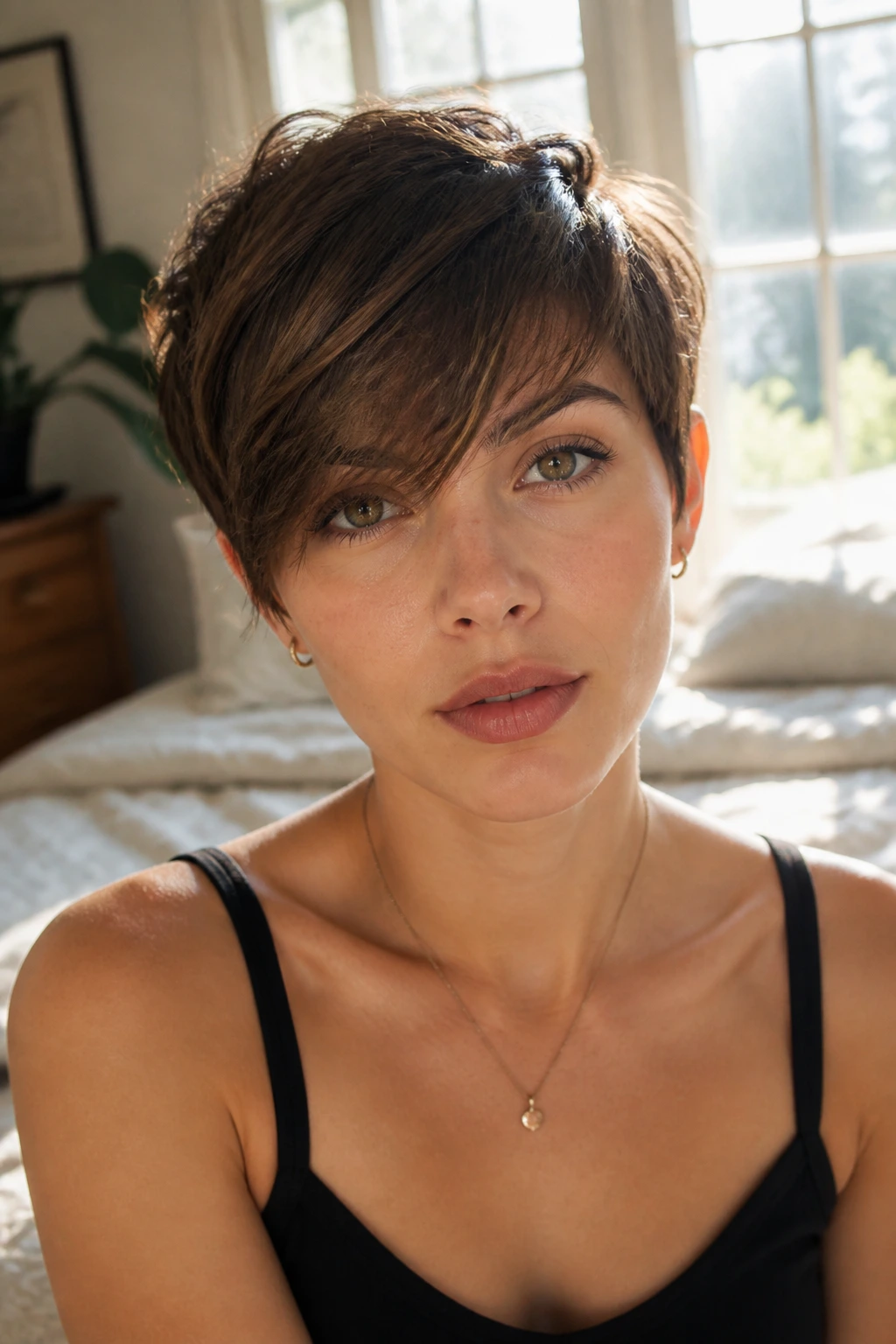
A long fringe pixie is a smarter choice than a super-short all-over crop when your hair is thick. The longer front pieces keep the cut from feeling severe, and they help balance the fullness that thick hair can bring near the crown and temple.
The fringe is the selling point. It can sweep across the forehead, drop forward in a soft piece, or sit a little messy for a more relaxed look. That gives you more control over the face shape than a standard short pixie. It also makes grow-out easier, which matters more than people admit.
Why it helps thick hair
Because the front stays longer, the cut has somewhere to “land.” Without that length, thick hair can spring up and feel too compact. A long fringe takes some of the visual weight away from the top.
Use a light paste or cream, not a heavy wax. Thick strands already have enough structure.
13. Stacked Bob
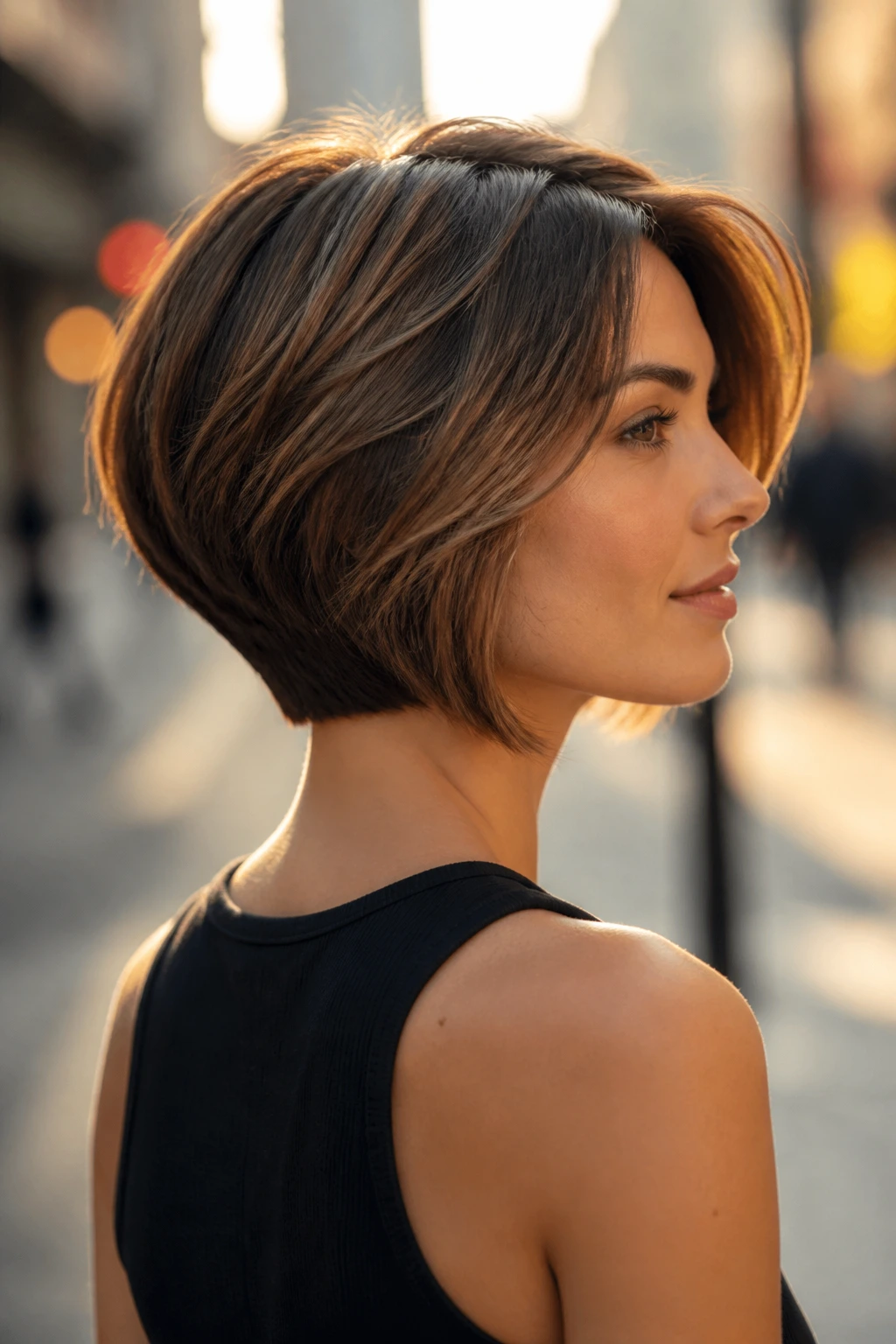
A stacked bob builds short layers in the back so the crown rises and the neckline stays clean. On thick hair, that extra graduation can be a lifesaver. Instead of one heavy block, the hair bends into a rounded shape that feels lifted and neat.
This cut is different from the inverted bob even though people mix them up. A stacked bob usually leans rounder and fuller at the back, while the inverted version pushes the front angle harder. If you want a softer profile with a little height, stacking is the better route.
It does well with straight or slightly wavy hair. Coarser hair can handle it too, but only if the stylist keeps the layers controlled. Too much stack and the back can look puffy. Too little and the whole point disappears.
I like this cut for someone who wants a bob that does more of the work on its own. It has shape even before you pick up the brush.
14. Micro Bob
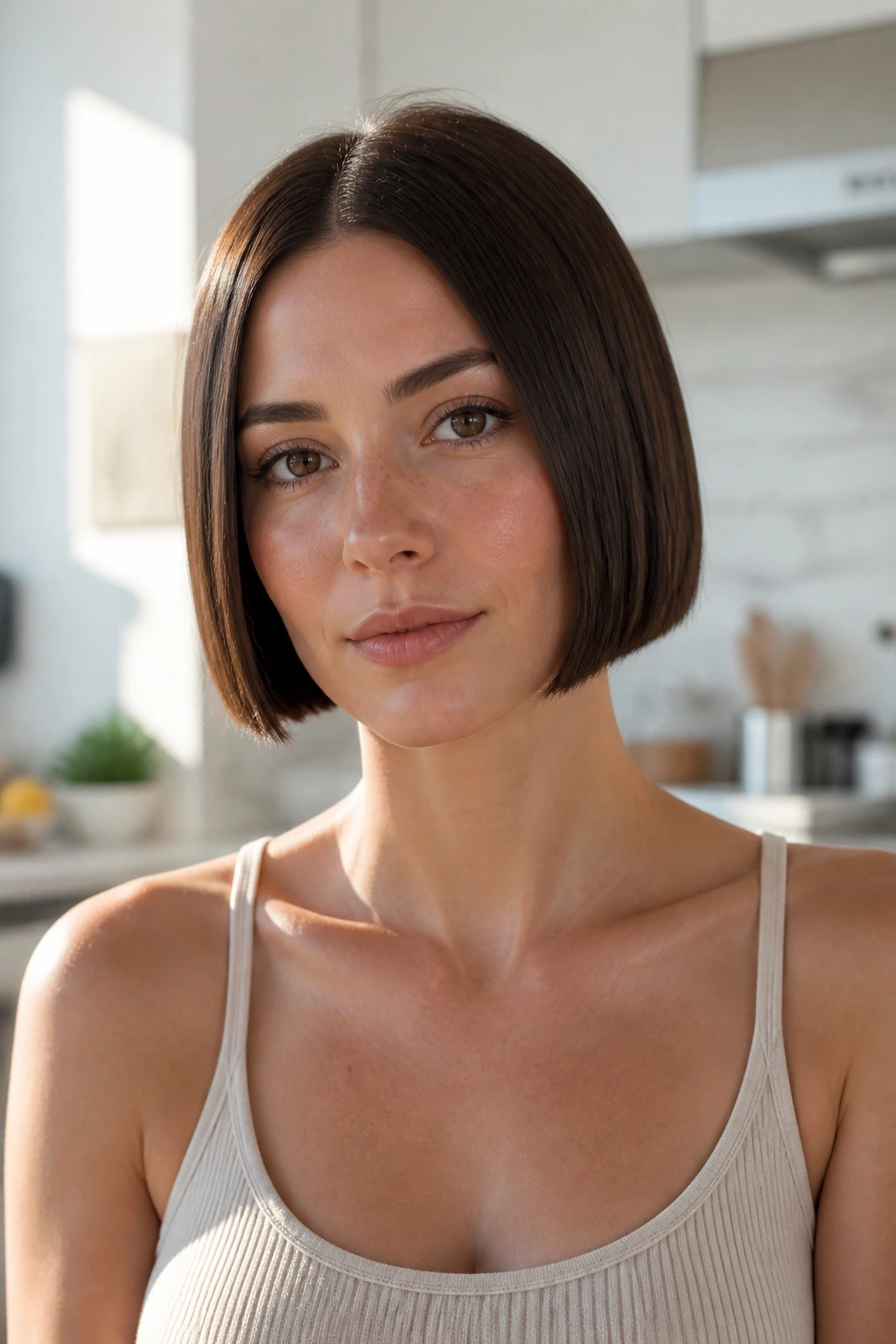
A micro bob is short enough to feel clean but long enough to stay wearable for daily life. Usually, it sits somewhere between the ear and the jaw, with a blunt or nearly blunt edge. Thick hair makes this cut look deliberate because the line has enough density to stand up on its own.
The shorter length removes a lot of bulk instantly. That is the appeal. There is less hair to dry, less hair to detangle, and less chance of the ends turning into a puffball. If your hair grows out with a strong outline, a micro bob can look sharp for a long stretch.
Styling note
A small flat brush or quick blow-dry keeps the edge tucked under. If you want a messier look, a touch of texture spray at the ends is enough.
This cut is not for someone who likes a lot of ponytail options. It is for someone who wants a clear shape and does not mind a little boldness.
15. Wolf Cut Bob
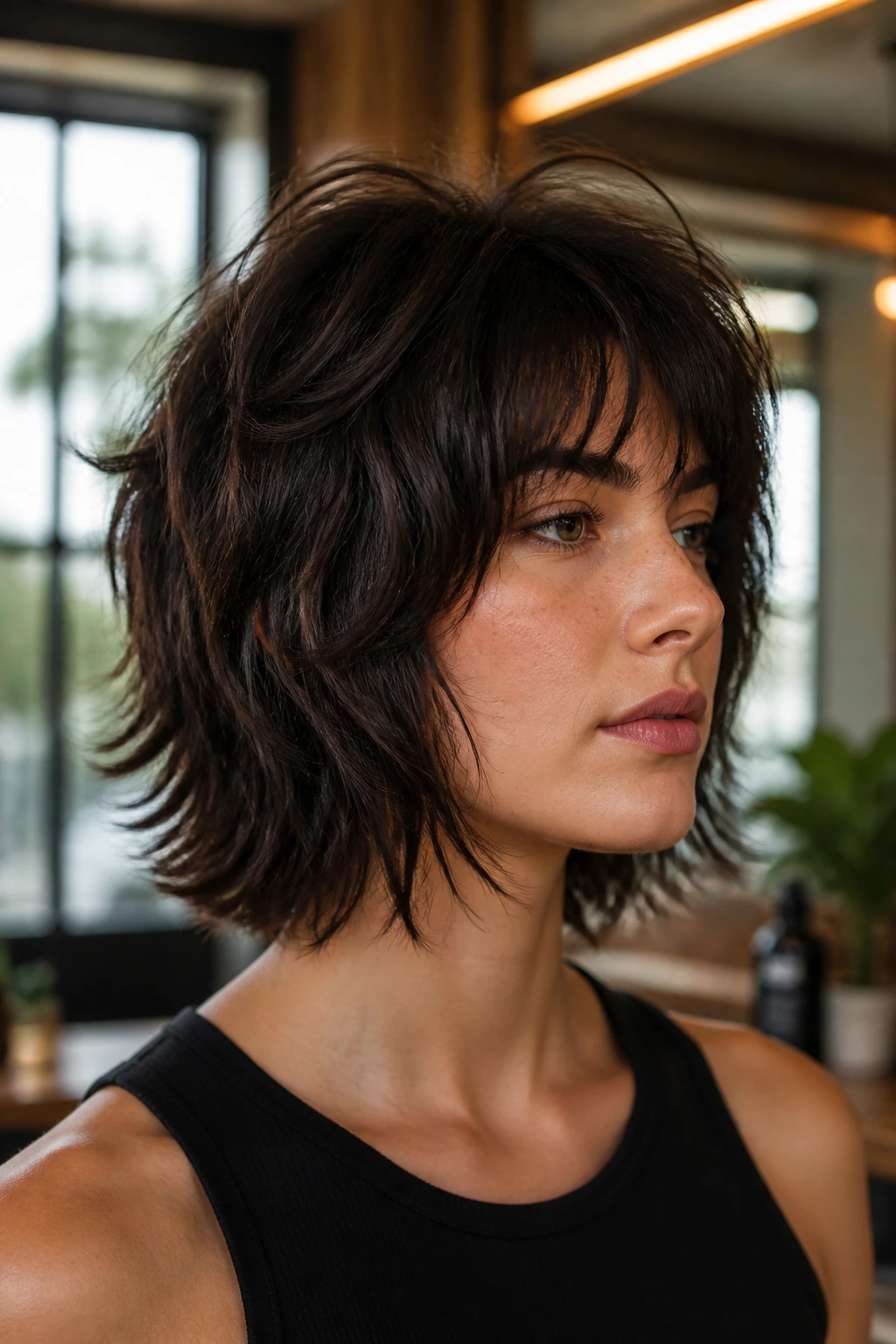
The wolf cut bob is a shag with more attitude. Thick hair gives this shape the body it needs, especially if your natural texture leans wavy. The layers are shorter at the top and softer through the bottom, which breaks up density and keeps the whole cut from feeling heavy.
There is a reason this cut keeps showing up in salons. It lets thick hair move. Not all at once, not in a perfect blowout way, but in a way that feels loose and lived-in. If you like hair that can be scrunched, air-dried, and left alone, this is a strong option.
How it differs from a shaggy bob
The wolf cut usually has more height up top and a little more edge around the face. It is less polite. The ends are often more uneven on purpose.
That said, it can get chaotic if the layers are overdone. Ask for shape, not random choppiness. The difference matters.
16. Pageboy
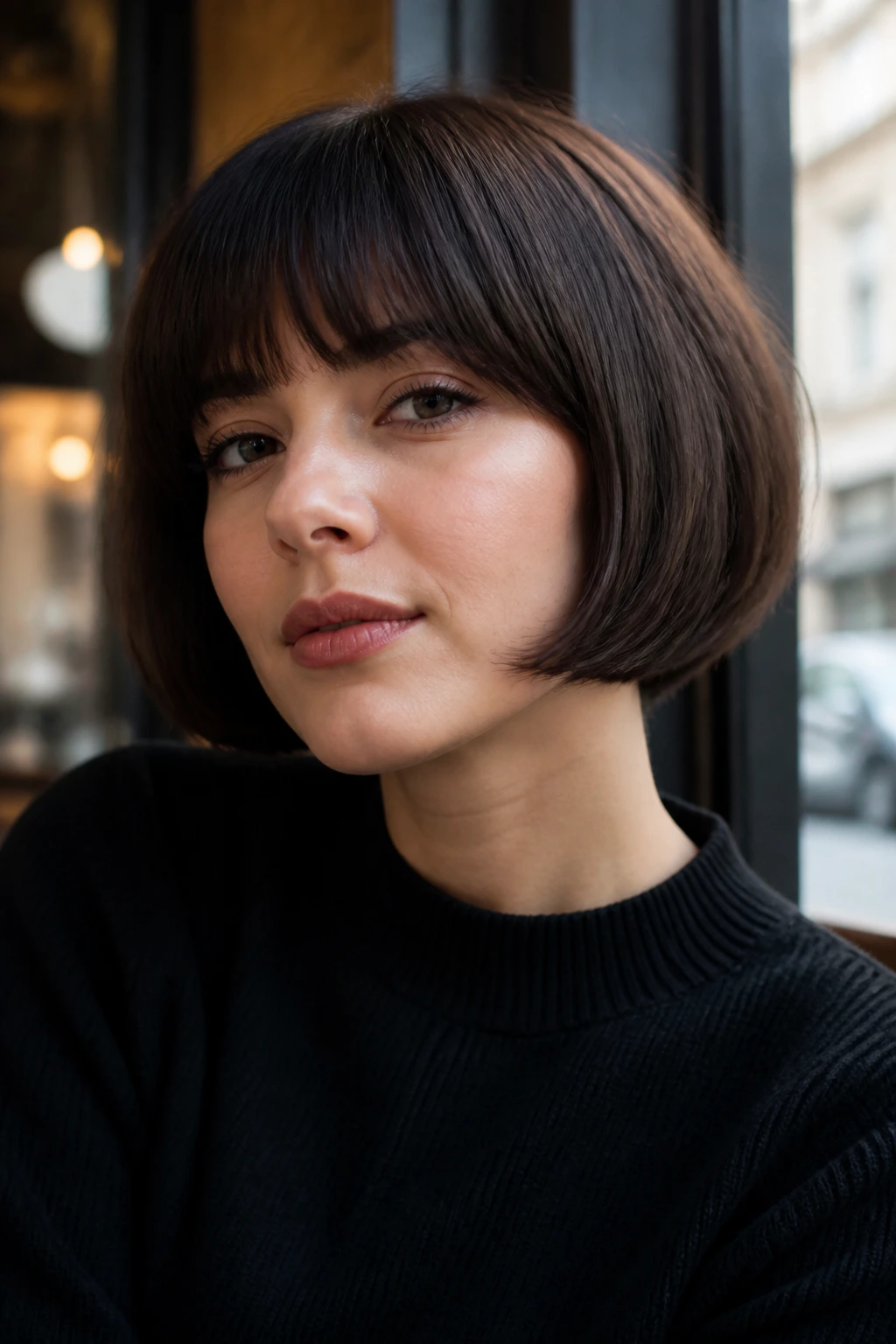
The pageboy is underrated, and thick hair makes it better. The classic version has a rounded outline, a tucked-under end, and often a fringe or soft front edge. Because thick hair naturally carries weight, it helps the pageboy hold that curved shape instead of collapsing.
This cut is a good pick if you like structure. It feels neat, a little retro, and very intentional. On straight hair, the shape reads cleanly. On wavy hair, it softens into something gentler. Either way, the cut has enough mass to sit close to the head where needed.
It also works when you do not want visible layers. The pageboy can be blunt and smooth without looking flat, which is rare on thick hair. Use a round brush to tuck the ends in, or leave the surface a little smoother and let the shape do the talking.
17. Invisible Layers Cut
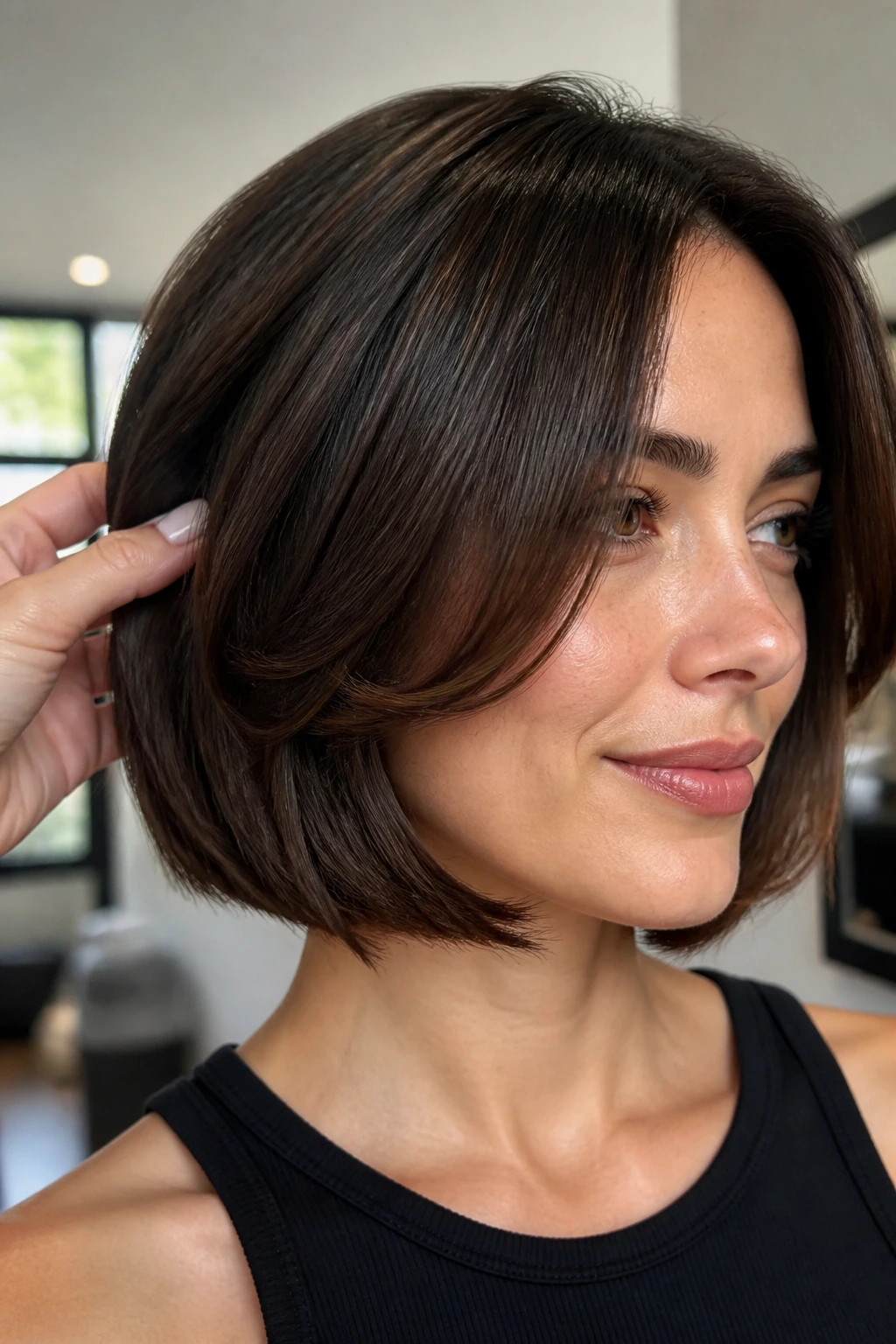
Invisible layers are one of my favorite fixes for dense hair, because they remove weight without advertising it. The outside can still read like a clean bob or lob, but the inside has layers that keep the hair from swelling outward. That means less bulk, less triangle shape, and less time wrestling the ends.
This is the haircut for someone who likes tidy lines but hates that “too much hair” feeling. The layers sit within the haircut, not across the surface, so the outline stays strong. It is a neat compromise when you want movement without obvious choppiness.
What to ask the stylist for
- A solid perimeter
- Internal weight removal only where the hair feels heavy
- No aggressive thinning near the bottom edge
It sounds subtle, and it is. But subtle can be the whole point when thick hair is involved. The cut works because it fixes the structure, not because it tries to look flashy.
18. Choppy Pixie-Bob
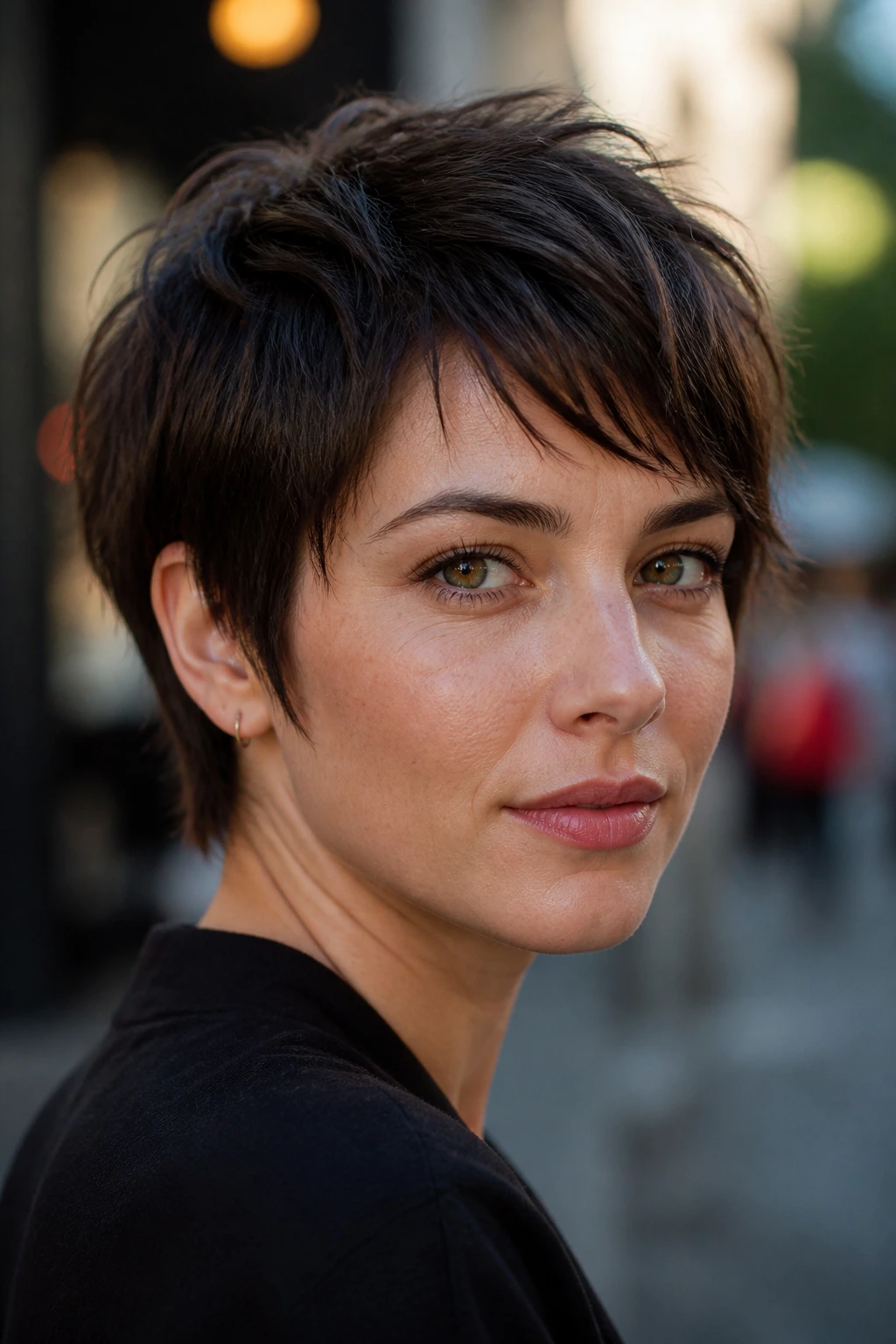
A choppy pixie-bob splits the difference between a cropped pixie and a short bob, then adds a bit of broken texture through the ends. Thick hair gives this cut enough body to stay interesting, while the short length keeps it from feeling dense or square.
The chopped ends are what make it feel modern. They soften the perimeter and stop the hair from forming one solid block. At the same time, the cut still has enough length around the face to frame the cheekbones or jaw. That makes it easier to wear than a very short pixie for a lot of people.
This is a good choice if you want edge but not a severe look. A little pomade, rubbed between the palms and pressed into the ends, brings out the piecey feel. Too much product kills the movement, so use less than you think you need.
19. Asymmetrical Bob
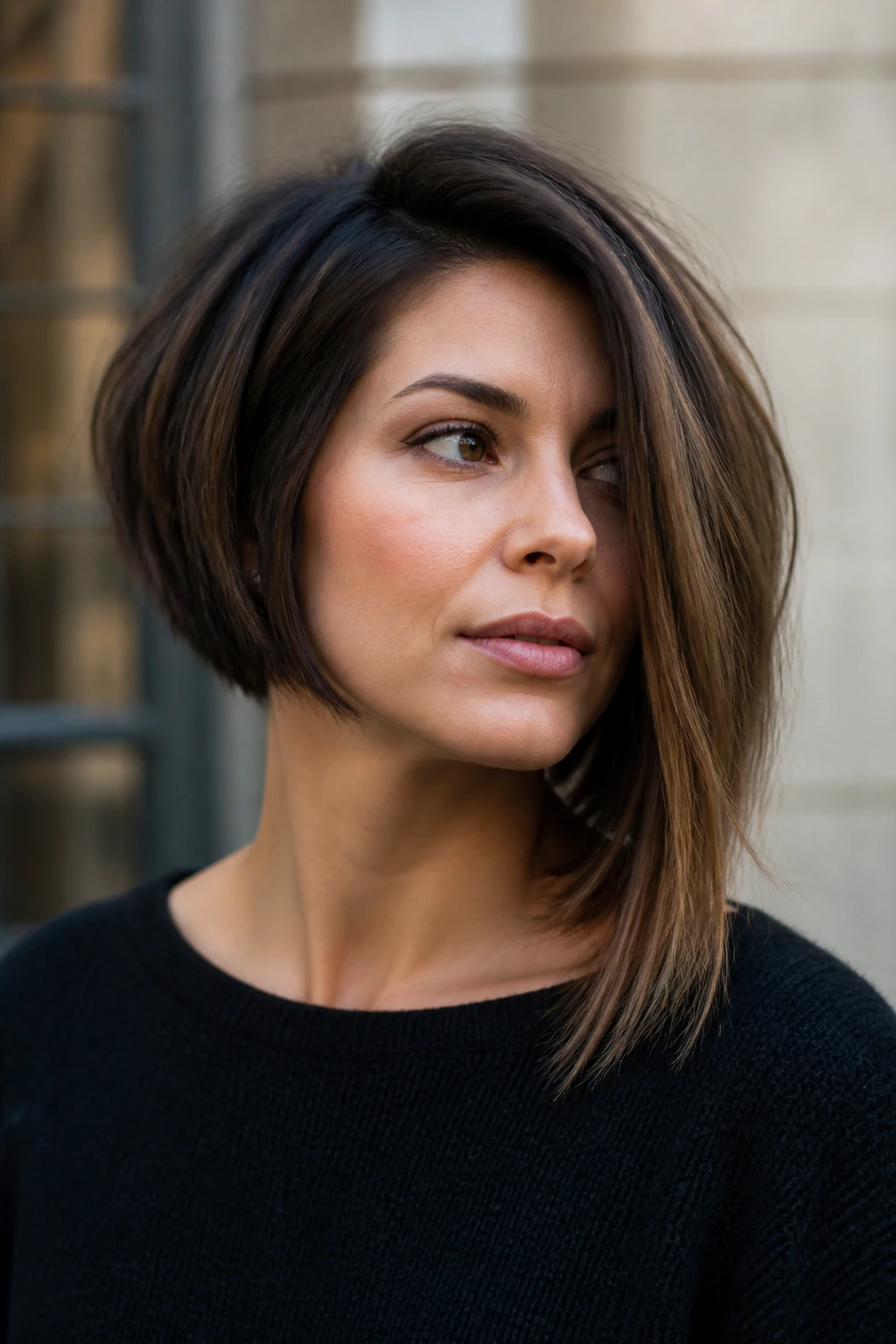
An asymmetrical bob is one of those cuts that looks simple until you stand in profile. One side is longer, and that off-balance line gives thick hair somewhere to go. Instead of puffing evenly on both sides, the shape directs the eye and creates movement.
It works especially well if your hair likes to sit heavy at the jaw. The longer side stretches the face a little, while the shorter side keeps the neckline from feeling crowded. Thick strands can hold the difference in length better than fine hair, which is why this cut often looks more confident on dense textures.
How it behaves
- Strong side parts sharpen the shape
- Smooth finishes show the length difference best
- Wavy texture softens the asymmetry
The only real rule here is precision. If the cut is sloppy, it just looks uneven. If the lines are clean, it looks deliberate and a bit cool without trying too hard.
20. Sleek Side-Part Bob
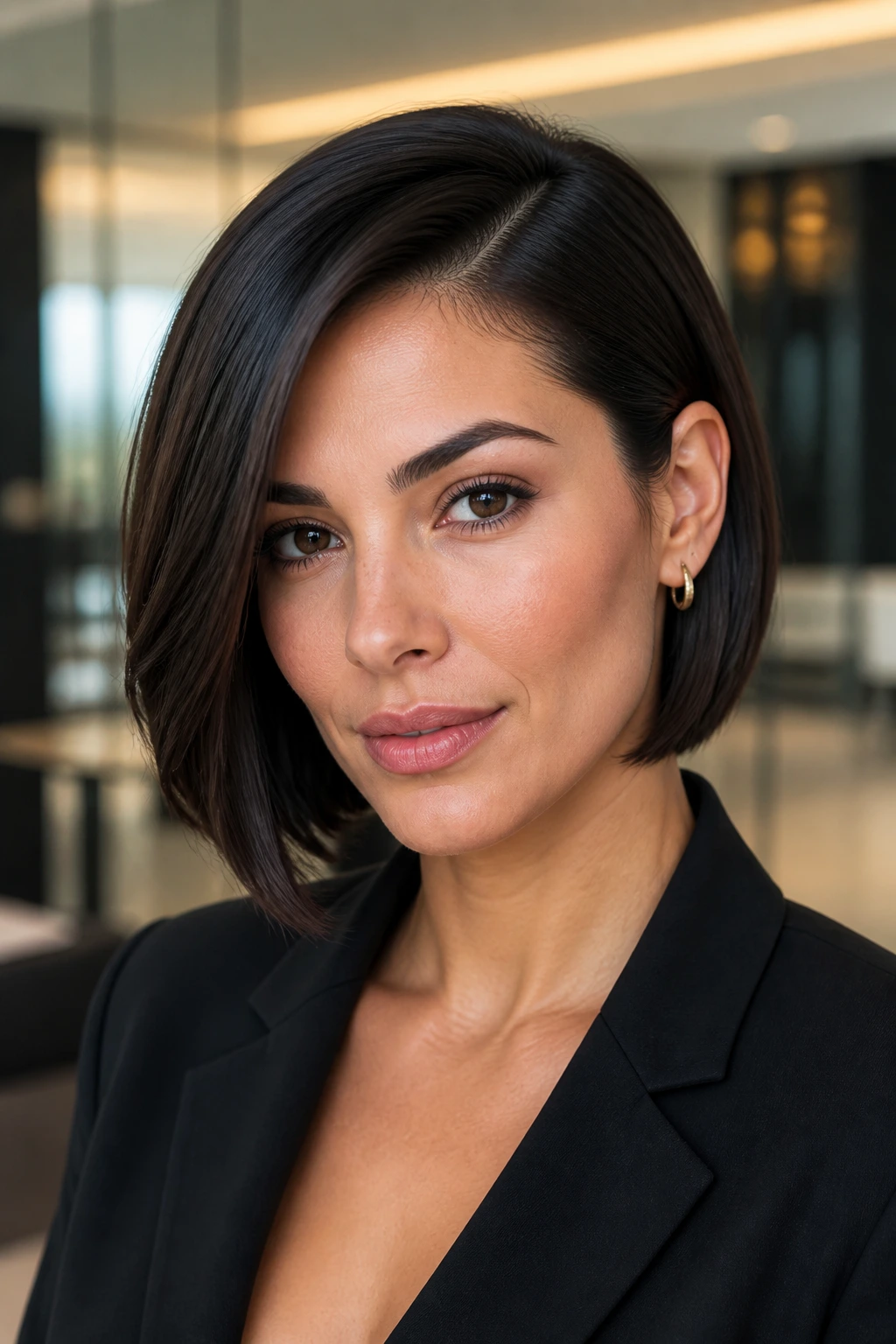
A deep side part changes everything on thick hair. It gives the bob direction, lifts one side, and lets the other side lie flatter, which cuts down on that all-over puffiness dense hair can create. The result is a sleek bob with a little drama built in.
This is not the bob for air-dried chaos. It works best when you smooth the top with a brush, tuck one side behind the ear, and let the part do the heavy lifting. Thick hair has enough body to support the shape, so you do not need to fight it into submission.
What I like about this cut is how clean it feels without being stiff. It can look polished for work, then loosen up by the end of the day and still hold its shape. If you want a short haircut that reads neat from every angle, this is a strong choice.
21. Curtain Bang Bob
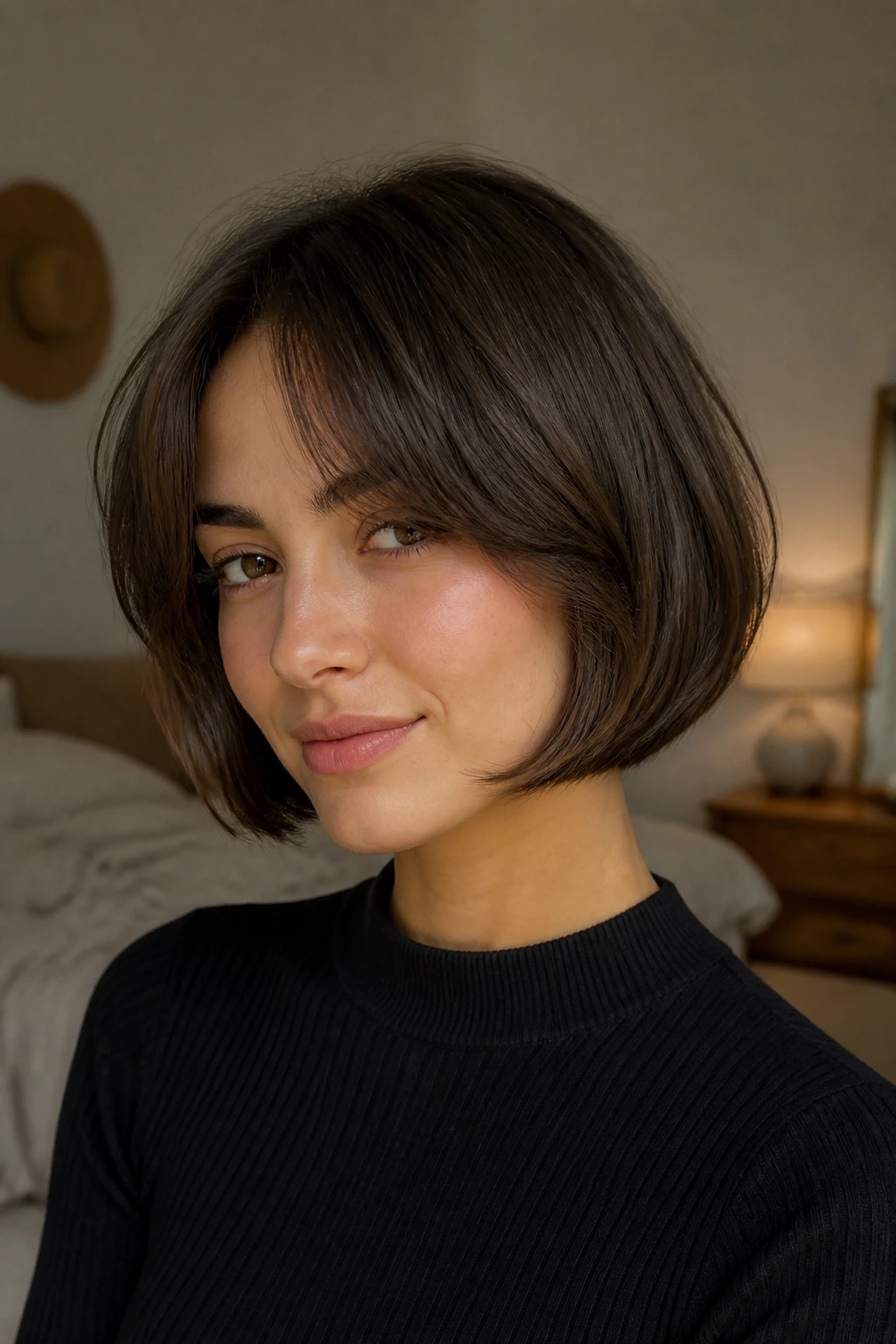
Curtain bangs can be a smart move on thick hair because they break up the front without boxing the face in. Paired with a bob, they soften the density around the forehead and give the haircut a little flow. The whole shape feels lighter up top.
The bangs should graze the cheekbones or skim just below them, not sit in one heavy slab. Thick hair can make fringe look bulky fast, so the split should open naturally in the middle or slightly off-center. That keeps the front from feeling crowded.
Why people like this pairing
The bob gives structure. The bangs give movement. Together, they stop thick hair from looking too solid around the face.
This cut grows out well too, which is part of the appeal. Even when the bangs get longer, they just fall into face-framing pieces instead of becoming a problem. That’s useful. Haircuts should not punish you for missing one trim.
22. Rounded Bob
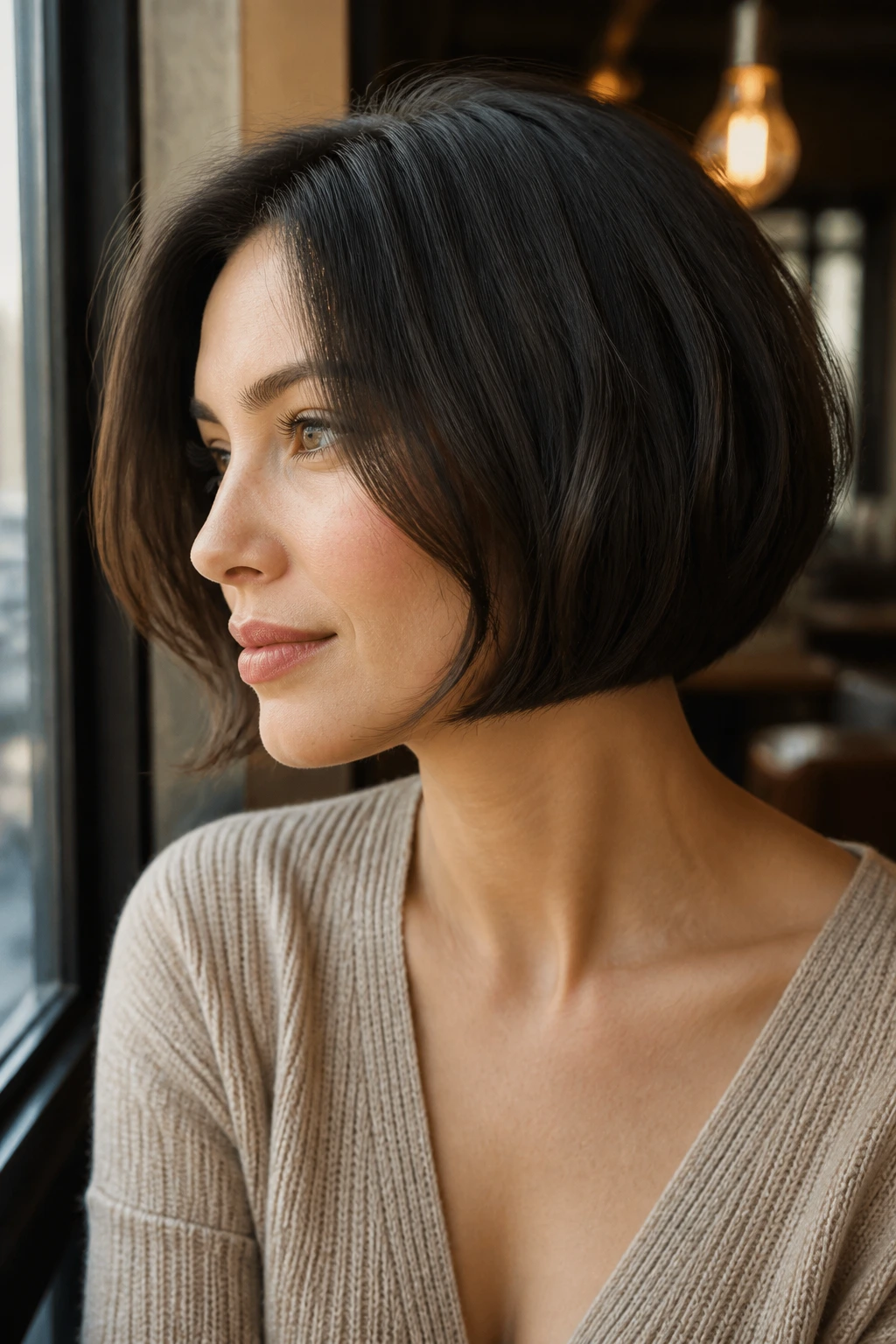
A rounded bob curves inward around the jaw and neck, which makes thick hair feel more controlled. The shape is softer than a blunt bob and less angular than an A-line cut. It’s a good middle road for anyone who wants structure without a hard edge.
Thick hair helps the rounded silhouette hold up. The weight in the hair supports the curve instead of letting it collapse. If you blow-dry with a round brush, the ends can tuck under neatly. If you let it air-dry, the shape relaxes into something looser but still defined.
The main thing to avoid is too much width at the sides. The curve should be shaped, not puffed out. A stylist who understands weight placement can make this cut look elegant in a very practical way. No fuss. No extra drama.
23. Tapered Crop
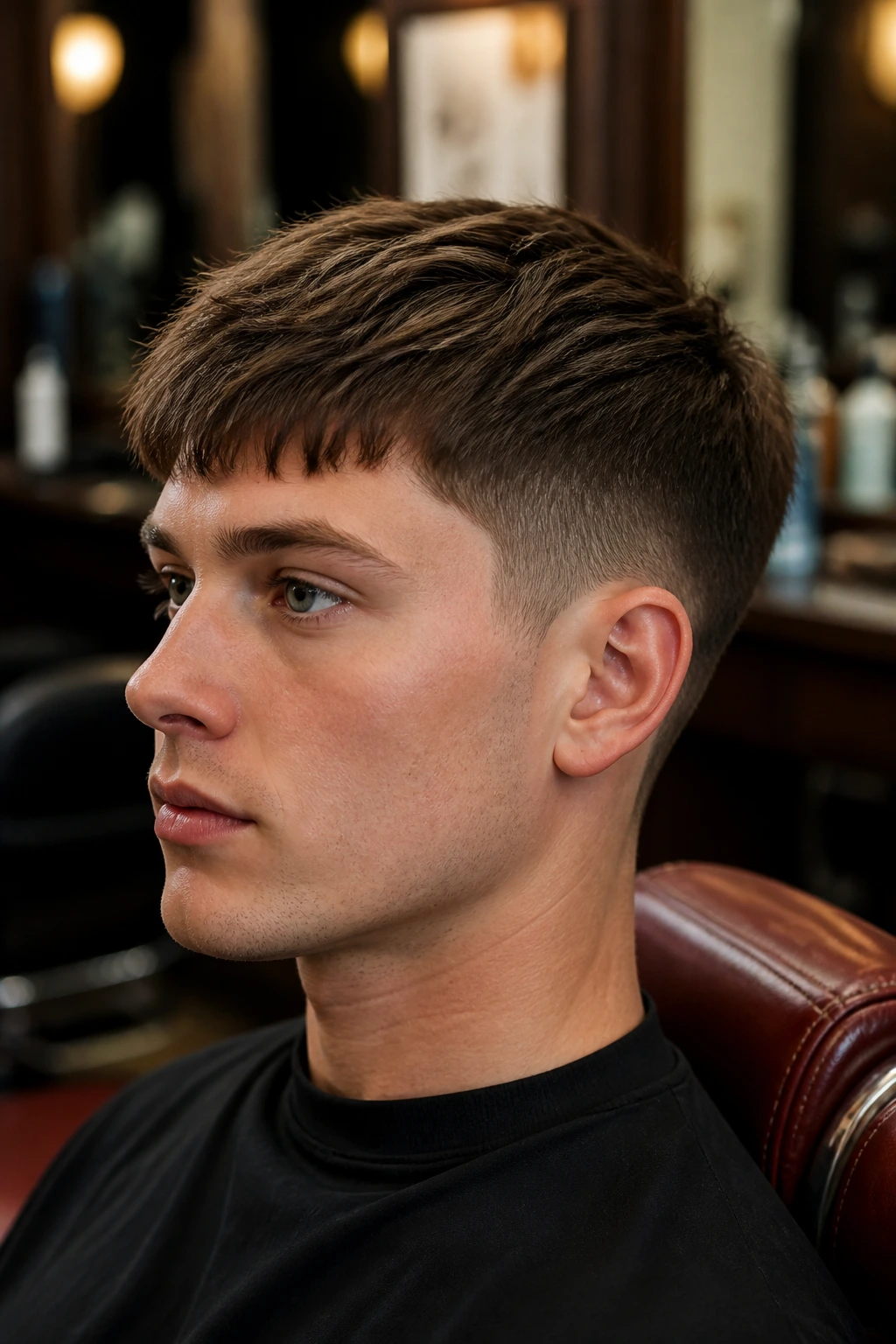
A tapered crop takes the sides and nape shorter while leaving enough length on top to keep the shape interesting. Thick hair responds well to this because the taper removes bulk where it tends to pile up, especially around the ears and neckline.
This cut works across textures, but it shines on coarse or coily hair that wants a little control. The top can stay soft, curly, or piecey, while the edges stay neat. That contrast gives the haircut structure. It also makes daily styling easier, since you only have to focus on the top section.
Good details to ask for
- A close nape taper
- Soft edges around the ears
- Enough top length to shape with fingers or a comb
If you like a cut that feels tidy but not severe, this one sits in a nice spot. It is short without looking plain, and it handles thickness in a direct, practical way.
24. Razor Cut Bob
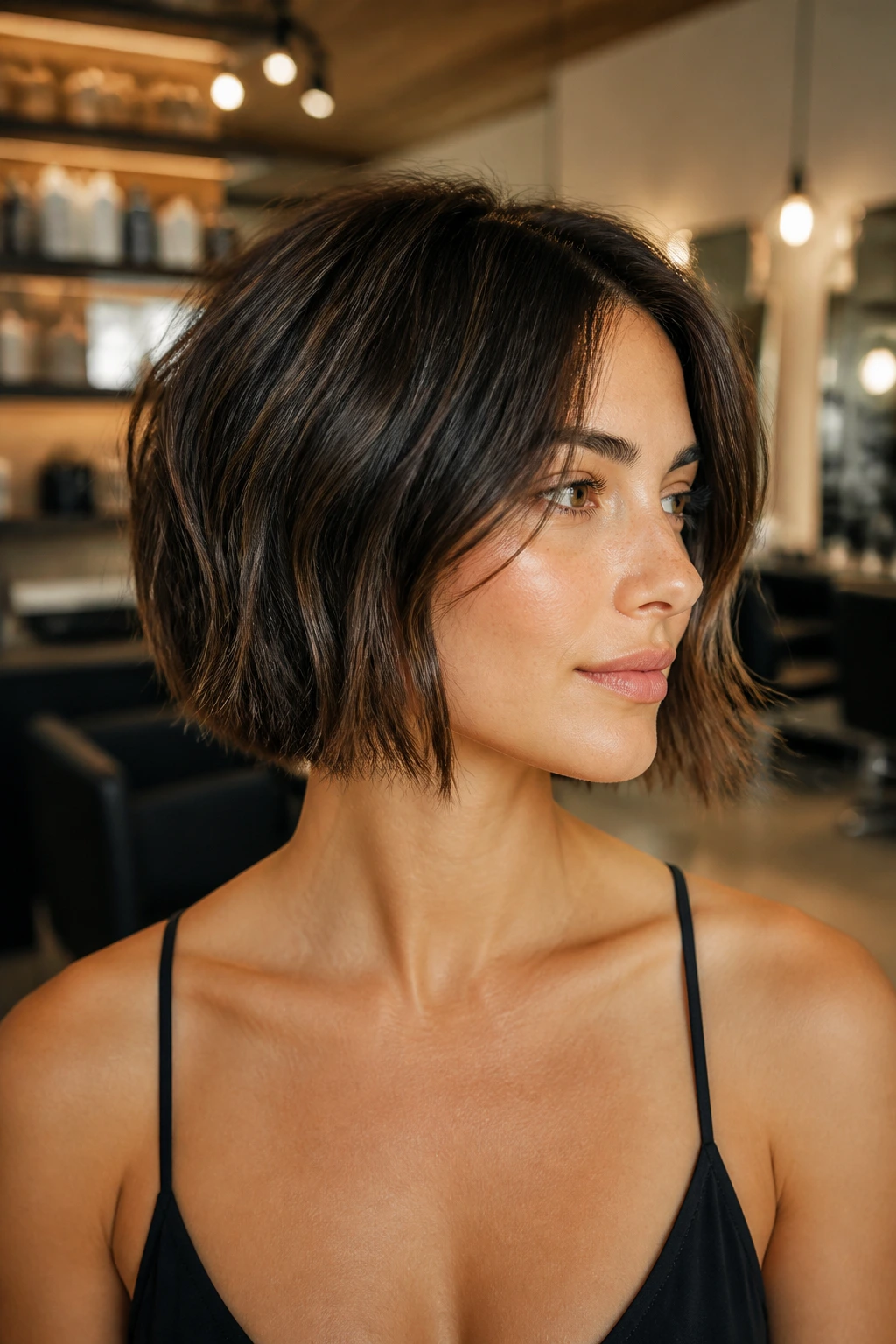
A razor cut bob can soften thick hair quickly, but it needs a careful hand. The razor removes some of the hard edge from the ends, which can make the haircut move more easily. On the right hair type, that gives a lighter, airier feel.
Here’s the catch: if your hair is very coarse, very frizzy, or prone to splitting, a razor can make the ends look rough. It is not automatically the best choice just because your hair is thick. It’s best when the stylist knows exactly how much texture the hair can take.
This cut usually works better on straight to wavy hair than on dry, expansive textures. If you want softness around the perimeter and you are okay with a slightly undone finish, it can be a smart option. If you want a crisp line, skip it and go blunt.
25. Lob with Invisible Layers

A lob is the longer cousin of the bob, and for thick hair it can be a relief. It gives you length to tuck, twist, clip, and tie back, while still sitting short enough to feel light around the shoulders. Invisible layers keep the shape from swelling out.
This is the cut for someone who wants to go shorter without losing too much versatility. The perimeter can stay clean, while the interior gets just enough removal to stop the hair from building up at the bottom. You get a smoother fall and less of that heavy shelf effect thick hair can create.
What it feels like
The hair moves more freely, dries faster than longer lengths, and still gives you room for a low ponytail or half-up style. That matters more than people think.
If you are nervous about going very short, start here. It is a safer cut than a pixie, but it still solves a lot of the weight problem.
26. Curly Pixie
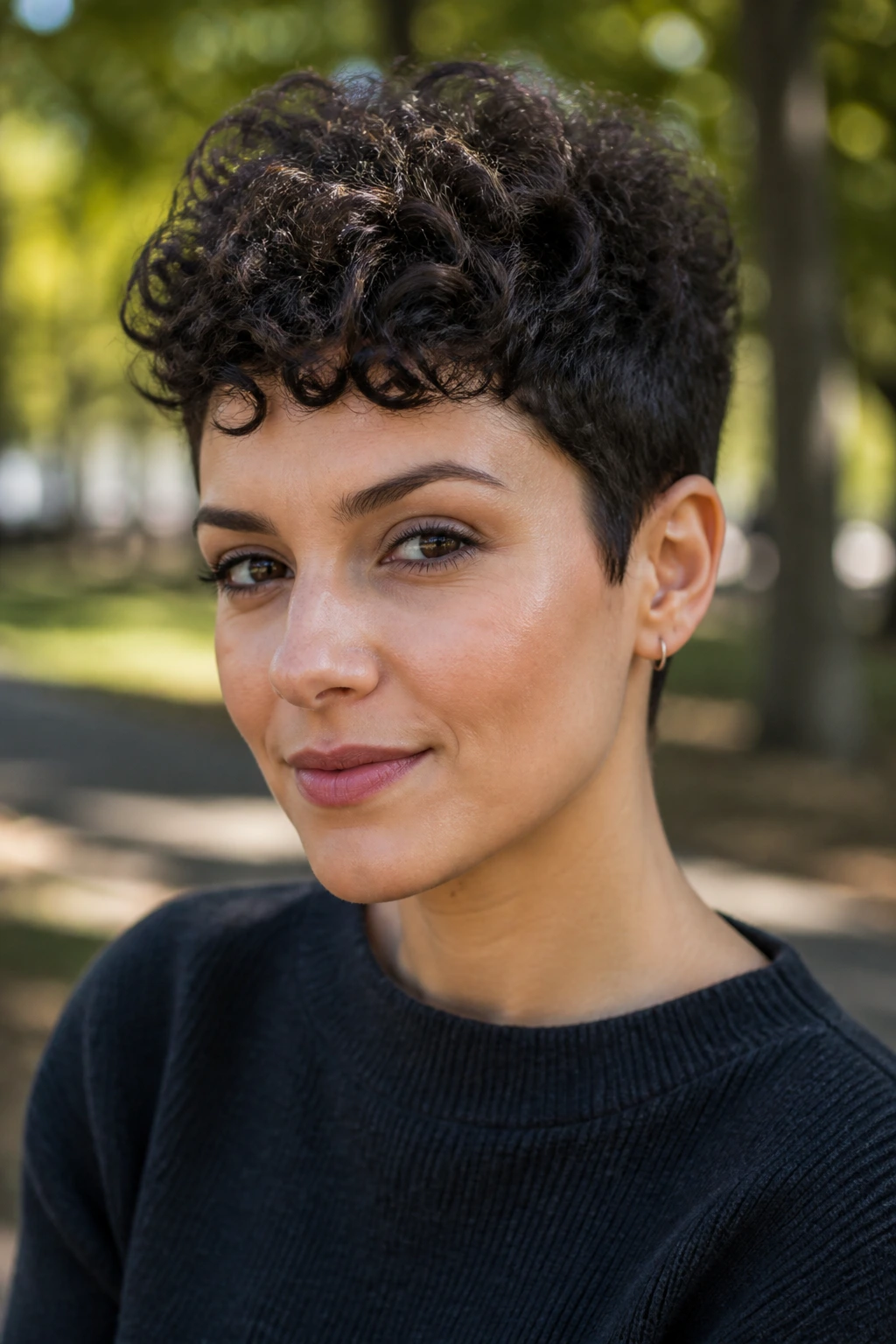
A curly pixie can look fantastic on thick curls, because the short length lets the curl pattern show instead of hiding under excess weight. The sides are usually tapered or clipped close, while the top keeps enough length for the curls to spring up and form.
The important thing is shape. Curly hair should not be cut like straight hair and then expected to behave. A good curly pixie respects shrinkage, volume, and how the curls cluster. If the top is left too short, it can stand up like a brush. If it is too long, the shape gets wide and heavy.
Use a curl cream or lightweight gel, then scrunch while the hair is damp. Let it dry fully before touching it much. That part matters. Thick curls can look great in a pixie, but they need a little discipline at the start.
27. Tapered Afro Crop
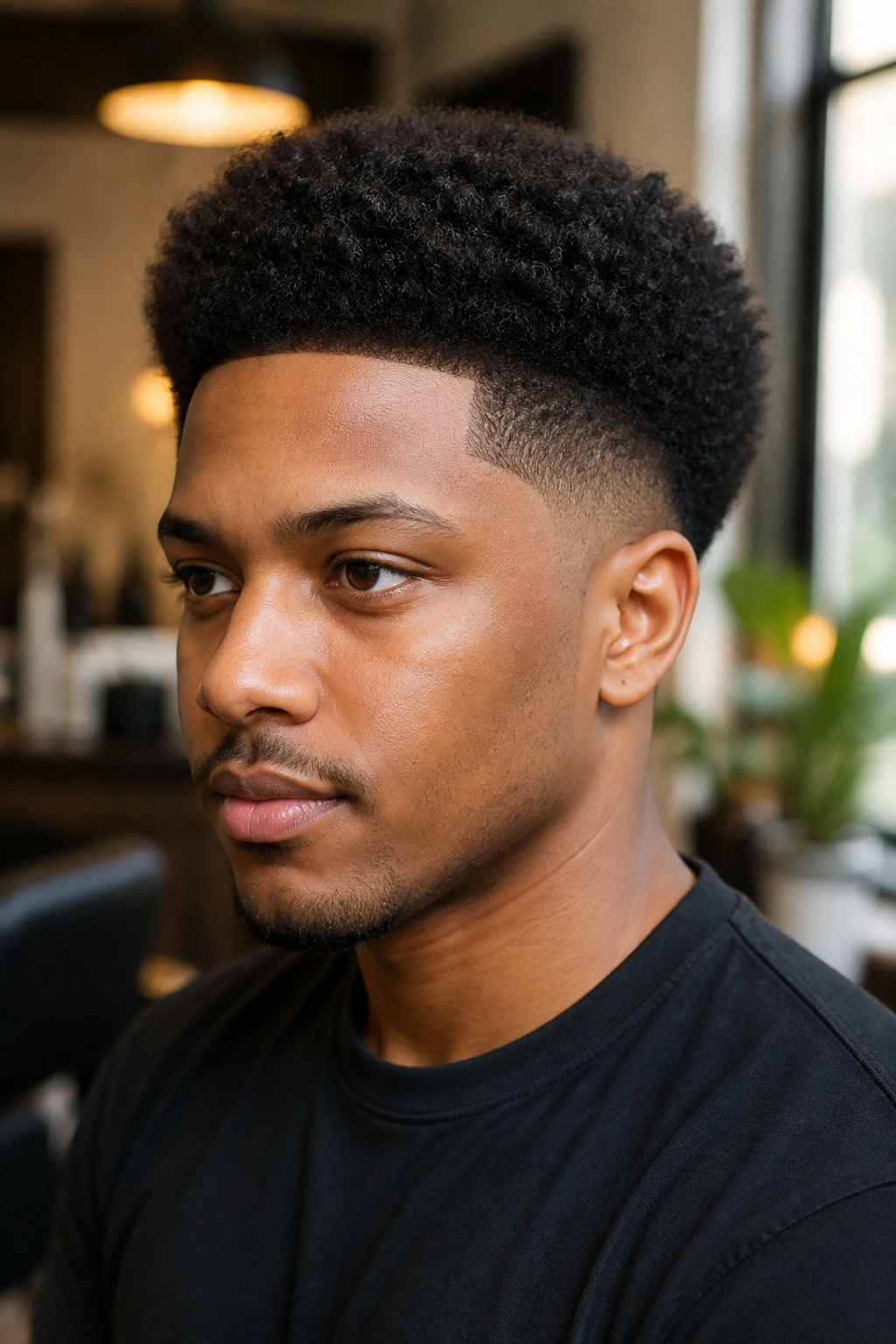
A tapered afro crop is one of the cleanest ways to shape thick coily hair. The sides and nape are tapered close, while the top keeps enough length to show the texture and create a rounded silhouette. It’s compact, balanced, and very practical.
The strength of this cut is that it respects shrinkage. Coily hair often looks shorter once it dries, so the shape has to be planned with that in mind. The taper keeps the outline tidy, while the top gives you room to make the texture visible and full.
Why it works so well
- Keeps bulk off the neck and ears
- Shows the curl pattern instead of hiding it
- Makes daily styling fast
This cut looks best when the hair is moisturized and shaped with a little cream or butter while damp. Dry, flaky coils can make the whole thing look unfinished. Healthy texture is part of the cut here.
28. Soft Mullet
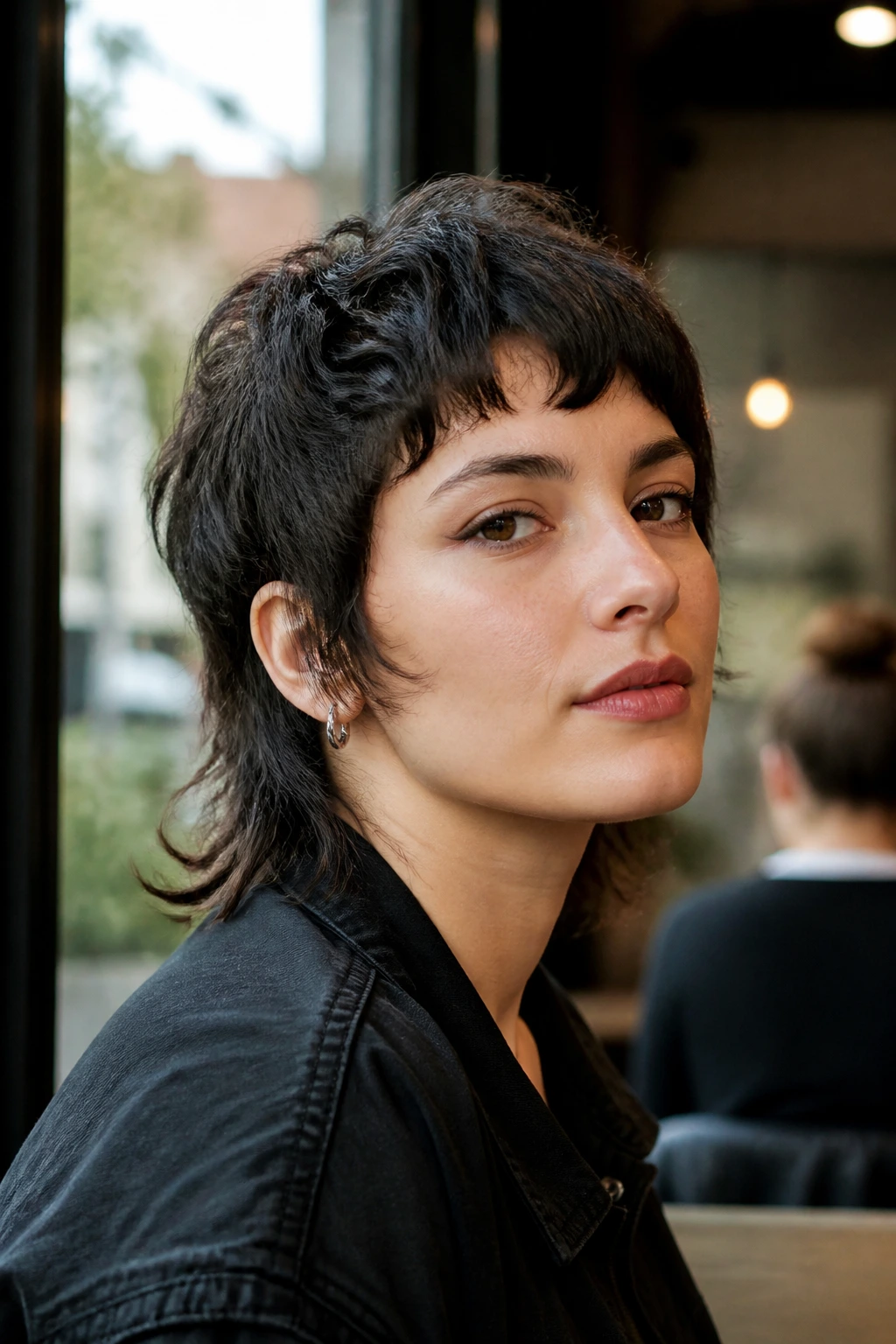
The soft mullet has more shape than people expect. On thick hair, it can look surprisingly balanced because the shorter front and crown keep the hair from hanging like one heavy piece, while the slightly longer back adds movement. The “soft” part matters. This is not a sharp, retro costume cut.
It suits wavy and thick straight hair especially well. The layers around the face break up density, and the length at the nape gives the silhouette a little swing. If you want something with personality but you are not ready for a huge leap, this is a solid option.
A good soft mullet should still have clear structure. The front pieces need purpose, the crown needs lift, and the back should not grow into a shaggy mess. When it’s cut well, it feels cool without being messy for the sake of being messy.
Final Thoughts
Thick hair gives you more to work with, not less. That’s the part people miss. The wrong cut can make it look bulky, but the right shape gives it structure, movement, and a lot less daily fighting with brushes and clips.
If you want the safest bets, start with the blunt bob, the Italian bob, or the lob with invisible layers. If you want something shorter and lighter, the bixie, layered pixie, or tapered crop can take the weight off fast. The bolder shapes — the wolf cut bob, soft mullet, or asymmetrical bob — make sense when you want the haircut to do some talking.
The one thing I’d push hard is this: do not let anyone thin your hair into fluff just because it is thick. Clean lines, smart layering, and good weight control beat random texturizing every time. That’s the difference between a haircut that sits there and one that actually works for you.
