



Short haircuts for men work best when they fit the hair that’s actually on your head, not the picture in your phone. A clean #2 on the sides and a little texture on top can look sharper than a flashy cut that fights your crown, your hairline, and your morning schedule. The wrong cut gets annoying fast. The right one keeps looking intentional while it grows out.
Some guys want a cut that needs almost no styling. Others want something with a little shape so they can wear it with a suit, a hoodie, or a beard and not feel underdone. Short hair is not one look. It’s a whole range, and the details are where the good ones separate from the forgettable ones.
Those details matter more than people think: taper versus fade, blunt fringe versus textured top, a soft side part versus a hard line, a guard #1 versus a #3. A haircut can change how wide your face looks, how much scalp shows, and how often you need a trim. That’s why the most useful short cuts are the ones that keep doing their job after the barber chair.
So let’s stay practical and a little opinionated. Guard numbers, clipper work, top length, growth patterns, and the stuff barbers notice right away all matter here. Start with the shortest options, then move toward the ones with more shape if you want a little extra room to style.
1. Crew Cut
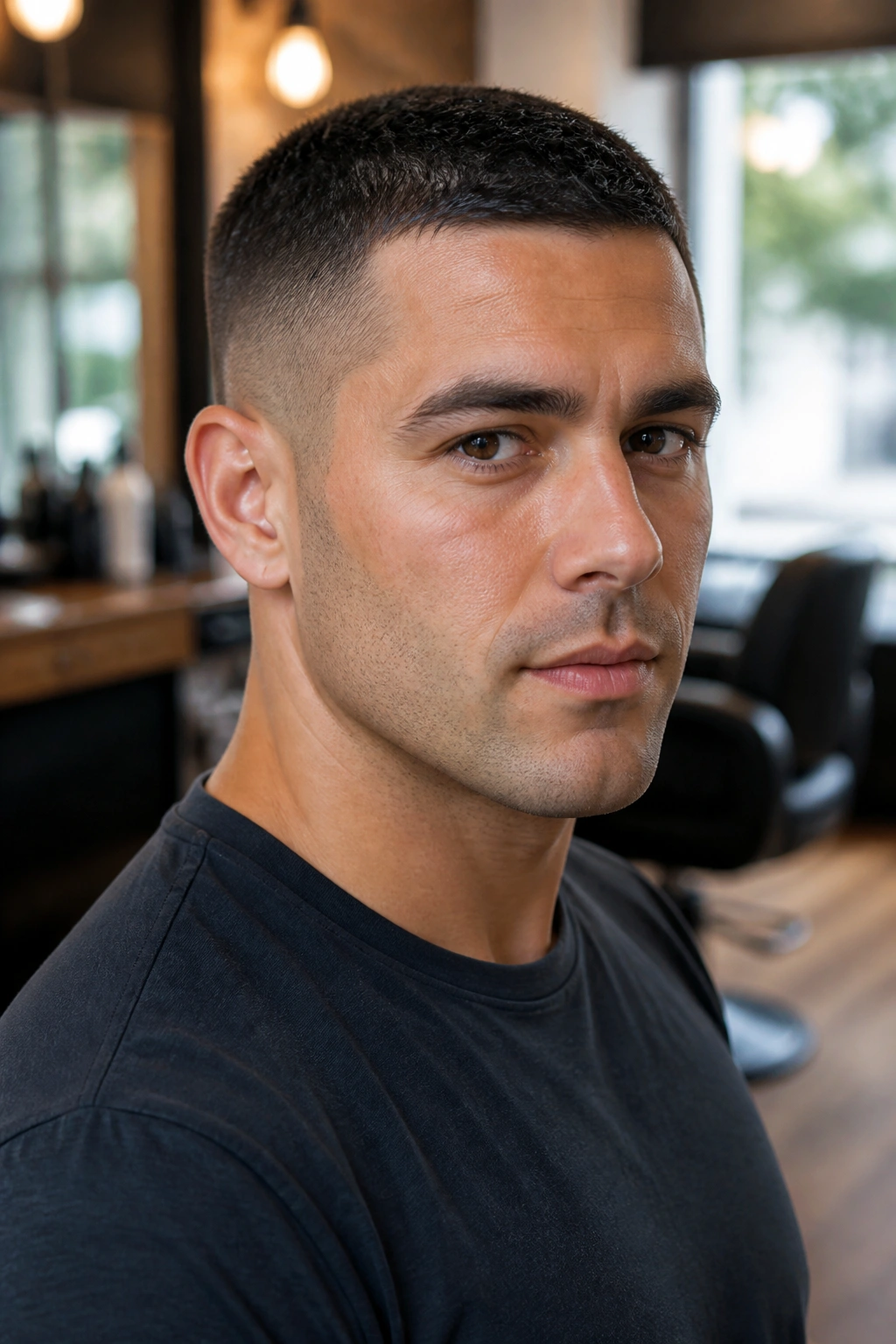
The crew cut is the haircut I recommend to men who want structure without fuss. It keeps the top short — usually around 1 to 2 inches — and the sides tight with a taper or a low fade, so the whole cut looks neat even when you run your hand through it once and leave the house.
It’s a good fit for straight hair, thick hair, and wavy hair that tends to stick out if it gets too long. If your crown has a swirl, ask for a touch more length there so the back does not collapse into a flat patch. That tiny adjustment matters more than people expect.
I like a crew cut because it grows out in a civilized way. Clean. Fast. Done.
A pea-sized dab of matte cream is enough if you want a little separation on top. If you don’t, a towel and ten seconds of finger combing will do the job. That’s the appeal: it looks intentional without asking much from you.
2. Buzz Cut
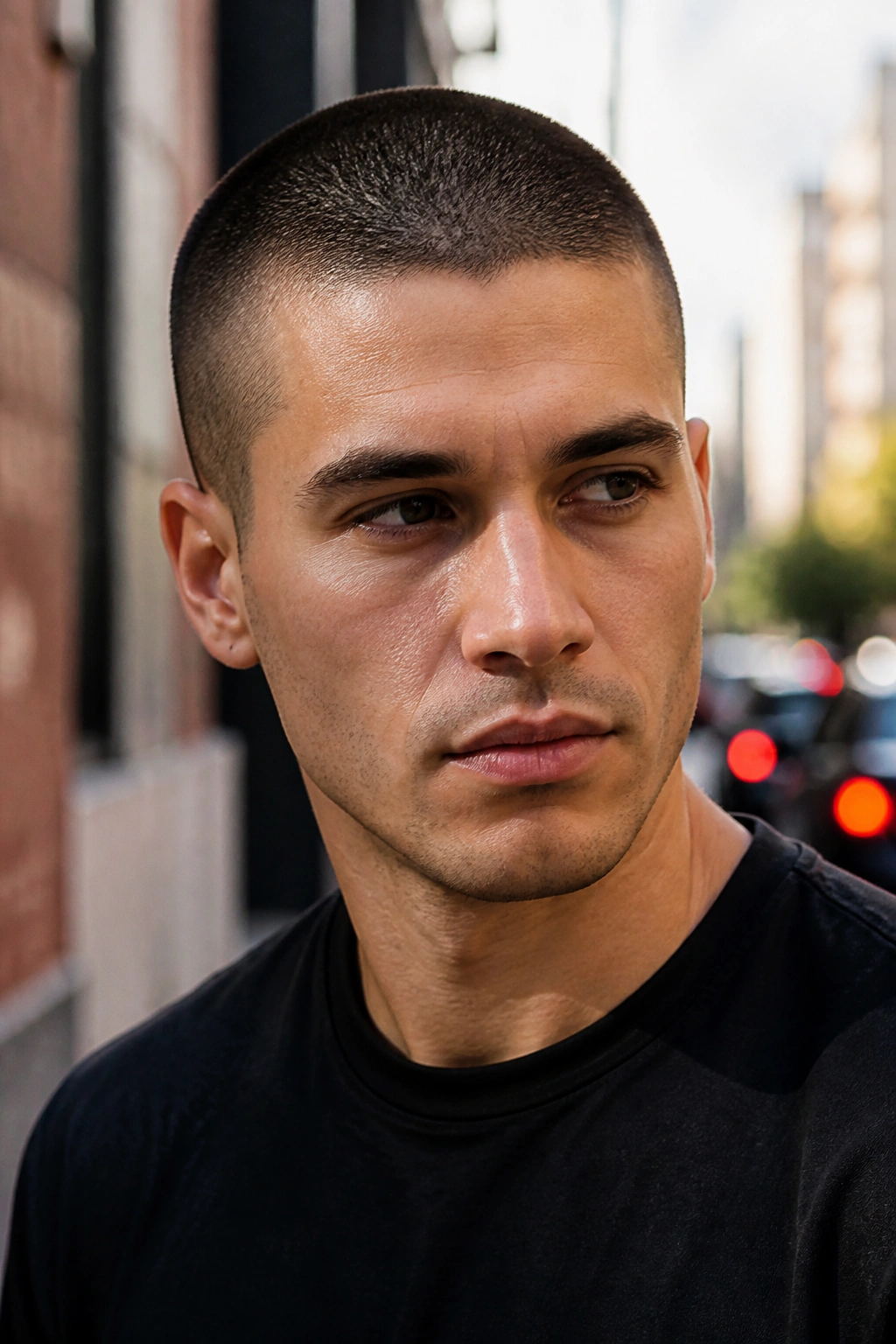
A buzz cut is blunt in the best way. Everything is clipped short with a guard all over — usually a #1, #2, or #3 — and that uniform length gives the cut its clean, even look. No styling. No morning drama. No comb hiding in a drawer.
Guard Lengths That Change the Look
- #1 shows the shape of your head more clearly and sits closest to the scalp.
- #2 is a little softer and hides small bumps or uneven growth better.
- #3 still reads as short, but it gives fine hair a bit more presence.
The trick is choosing the guard with honesty. If your head shape is smooth, a tighter buzz looks crisp. If you’ve got scars, dents, or a crown that grows in a weird spiral, leave more length on top. A buzz cut is low-maintenance, not magic.
My blunt advice: if you’re trying it for the first time, start with a #2 or #3. You can always go shorter next time.
3. Induction Cut
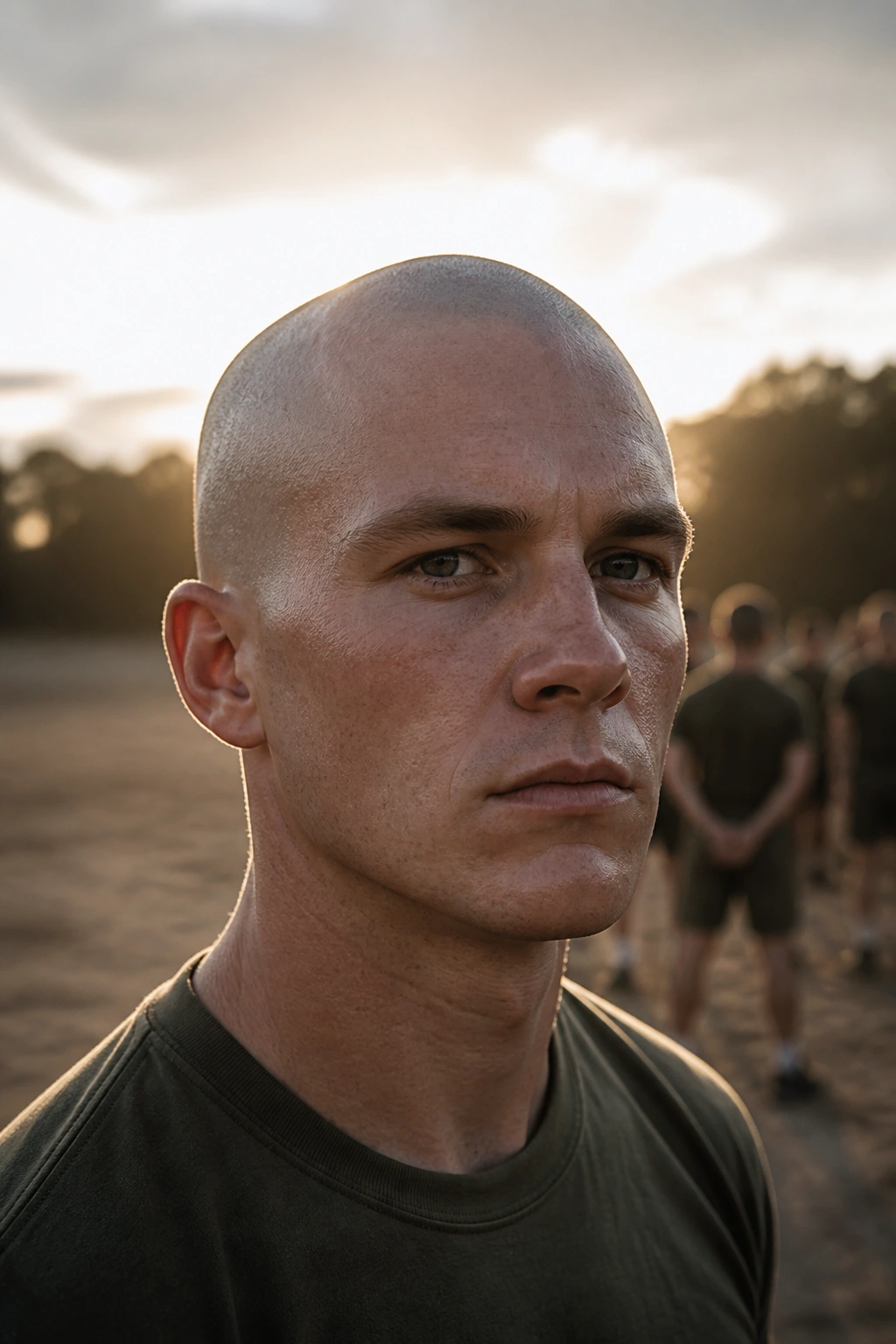
The induction cut is the shortest of the short. It’s the kind of cut that leaves almost no room for negotiation, usually with the clippers set very close and the whole head taken down to a near-scraped finish. It looks military for a reason. It was built for speed, uniformity, and zero distraction.
That makes it a strong choice for men who want the scalp to feel cool, want hair out of the way completely, or just want a reset. It also puts everything on display. Head shape, hairline, scars, cowlicks — all of it. Some men like that honesty. Others find out very quickly that they don’t.
The best thing about this cut is the silence around it. No product. No brush. No fuss. Just a very short line between you and your hair.
If you’re curious but cautious, grow out from an induction cut slowly. The jump from nearly bare to a #2 is more forgiving than people think.
4. Burr Cut
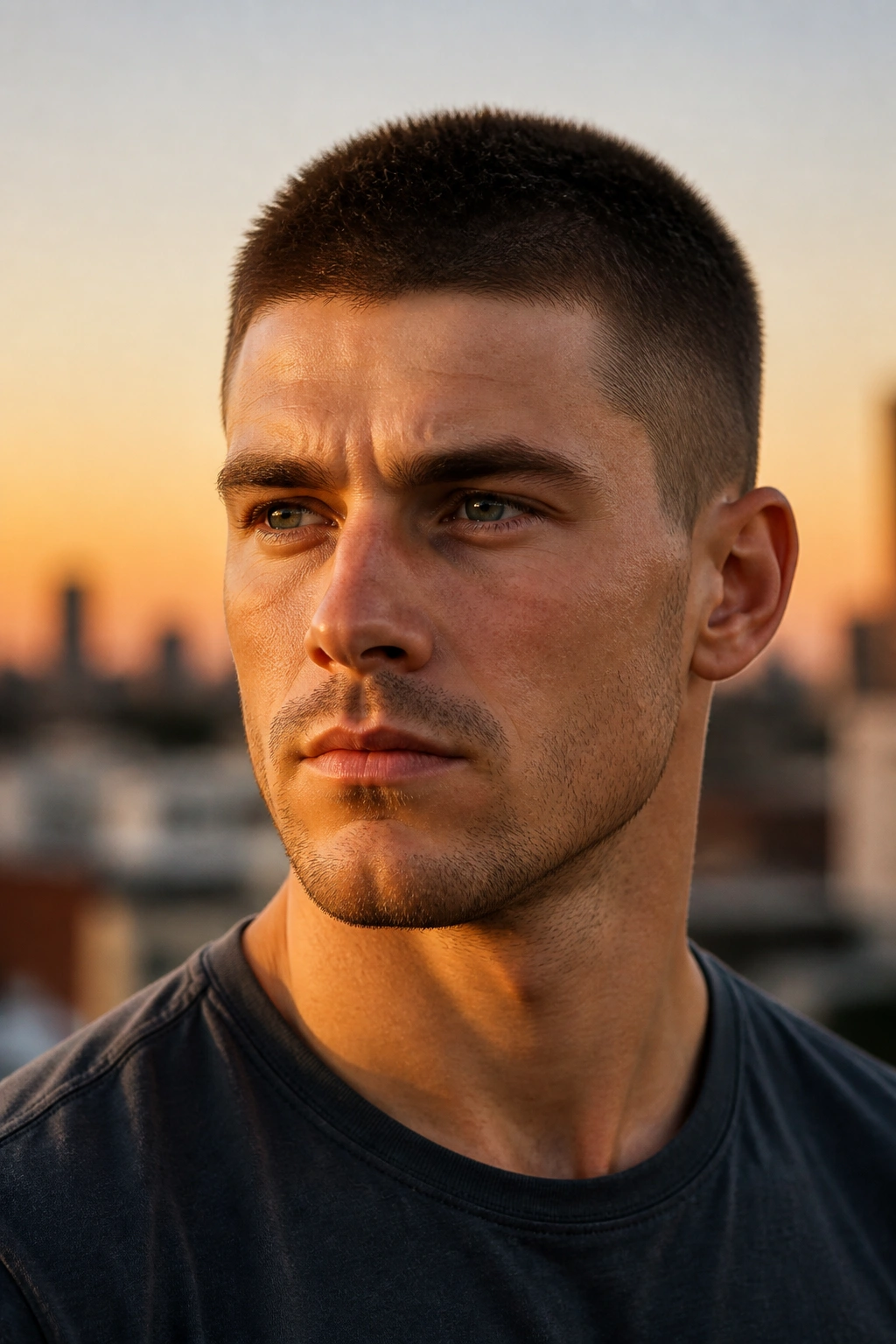
A burr cut sits between a buzz cut and a crew cut, and that middle ground is why it works so well. It keeps the hair short enough to stay neat, but long enough that the scalp does not dominate the whole look. Think #1.5 to #2 territory, give or take a little depending on texture.
This is the cut for guys who want short hair without the hard edge of an induction cut. It softens the skull shape a little, which helps if your head is angular or if your hair grows in different directions. It’s also a smart move for thick hair, because it cuts down the bulk without making the top feel flat.
Unlike a tighter buzz, the burr cut still catches a bit of texture in the light. Not flashy. Just enough. That’s the part I like.
Ask for a clean neckline and a light taper around the ears. It keeps the whole thing from looking unfinished.
5. High and Tight
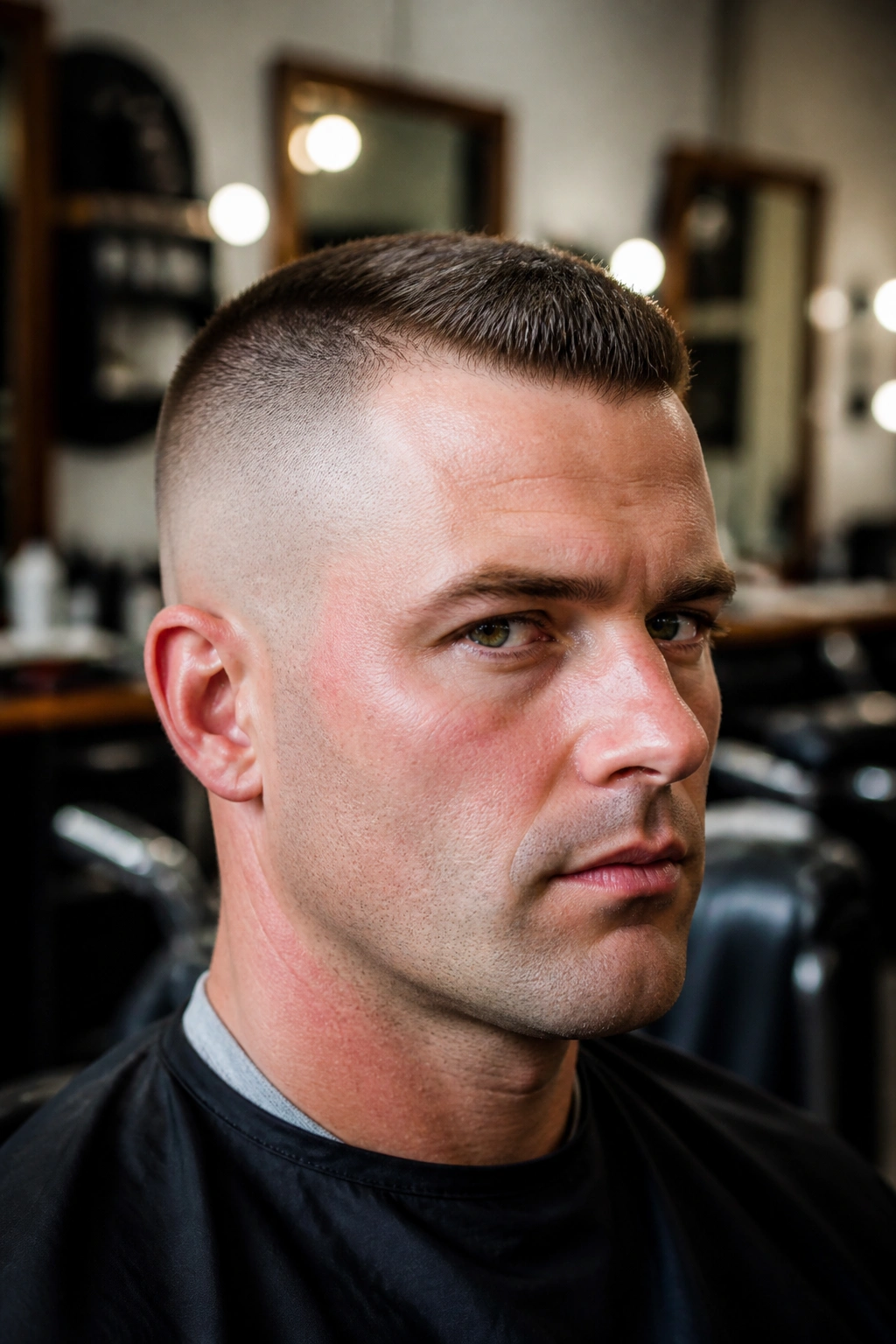
The high and tight is all about contrast. The sides are taken very short — often down to skin or close to it — while the top is left as a narrow strip of short hair that looks almost like a disciplined ridge. It’s sharp. It’s severe. It does not try to be soft.
That makes it a strong option for men with thick hair who want the sides to disappear and the top to hold a little shape. It also helps if your temples are starting to recede, because the short sides can make the front look cleaner instead of thinner. The top should stay short enough to stand on its own, not long enough to flop.
Best use: strong jawlines, square faces, and guys who want a cut that feels purposeful the second they step out of the chair.
Keep the neckline tight and the edges clean, because a high and tight grows out sloppy faster than most short cuts. It’s a cut that rewards regular maintenance.
6. Butch Cut
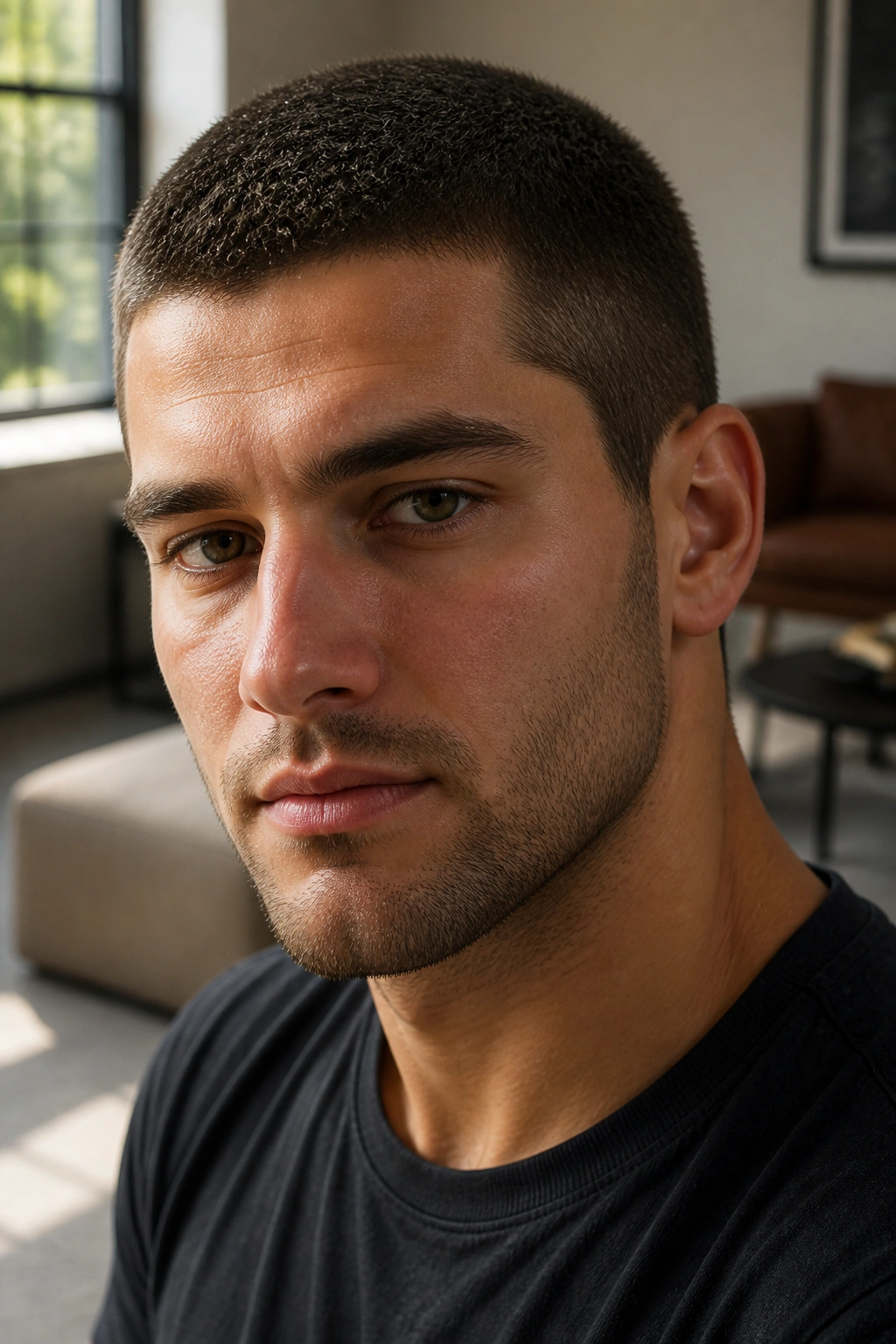
A butch cut is what happens when you want short hair but you do not want the scalp showing through as much as a buzz cut. The length is usually a bit longer all over — often around a #4 or #5 — which gives it a thicker, fuller look. It’s plain in the best possible way.
This cut is useful for men with dense hair, because it removes bulk without making the head look shaved. It also works well if you’ve got cowlicks or a strong natural part and you don’t want to fight them every morning. The hair is short enough that the pattern of growth matters less.
I’d call this one the quiet cousin of the crew cut. Less shape, less styling, less to think about.
If you’re going to pair it with anything, a tidy beard works nicely. The beard gives the face some weight while the hair stays simple up top.
7. Ivy League
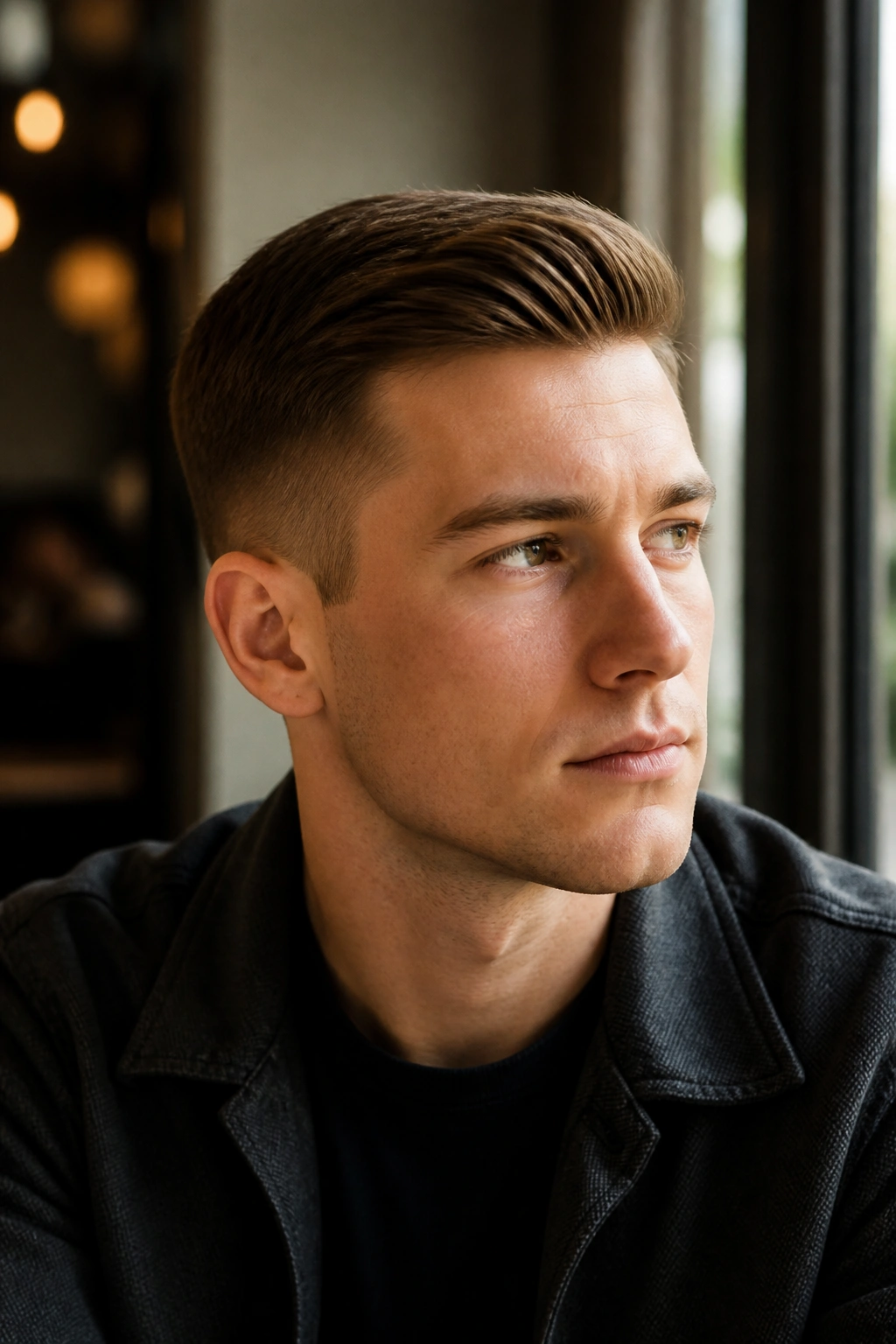
The Ivy League is a crew cut with manners. The top stays short, but not too short — usually long enough to part and sweep to one side — while the sides stay tapered and clean. It’s one of those short haircuts for men that can look relaxed at brunch and polished under a blazer without changing a thing.
What to Ask Your Barber For
- Top: leave around 1.5 to 2.5 inches.
- Sides: keep them tapered, not aggressively faded.
- Front: allow a little extra length for a soft side sweep.
That small increase in length on top gives you options. You can comb it neatly or rough it up with a bit of matte paste. If your hair is fine, keep the top shorter so it does not fall apart by noon. If it’s thick, a little more length helps the shape stay visible.
I like the Ivy League because it doesn’t scream for attention. It just looks put together.
8. Regulation Cut
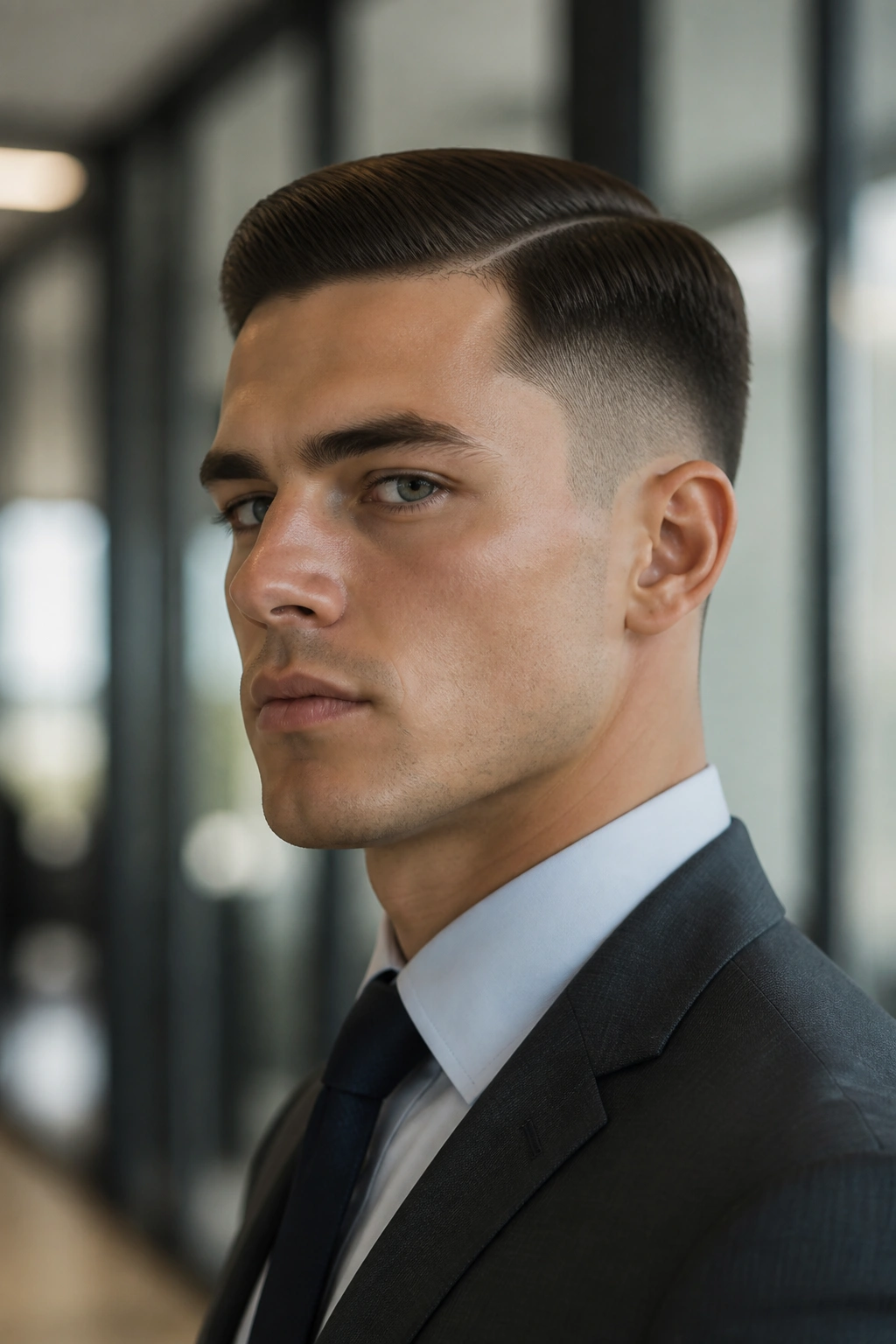
The regulation cut is close to the Ivy League, but sharper around the edges and a bit more disciplined on top. It grew out of military grooming, so the whole shape feels orderly: short sides, neat taper, and a top long enough to part without getting floppy. It’s one of those cuts that makes a man look like he has somewhere to be.
What separates it from a looser side-part style is the control. The part is cleaner, the top is flatter, and the sides don’t wander. That makes it a strong choice for straight hair and for anyone who likes structure more than texture. If your hair naturally lies flat, this cut is easy to wear. If it tends to puff up, you’ll need a light pomade and a comb.
It also works well with a clean shave or a trimmed beard. The haircut gives order to the face, and that can be a good thing when the rest of your look is simple.
9. Side Part Taper
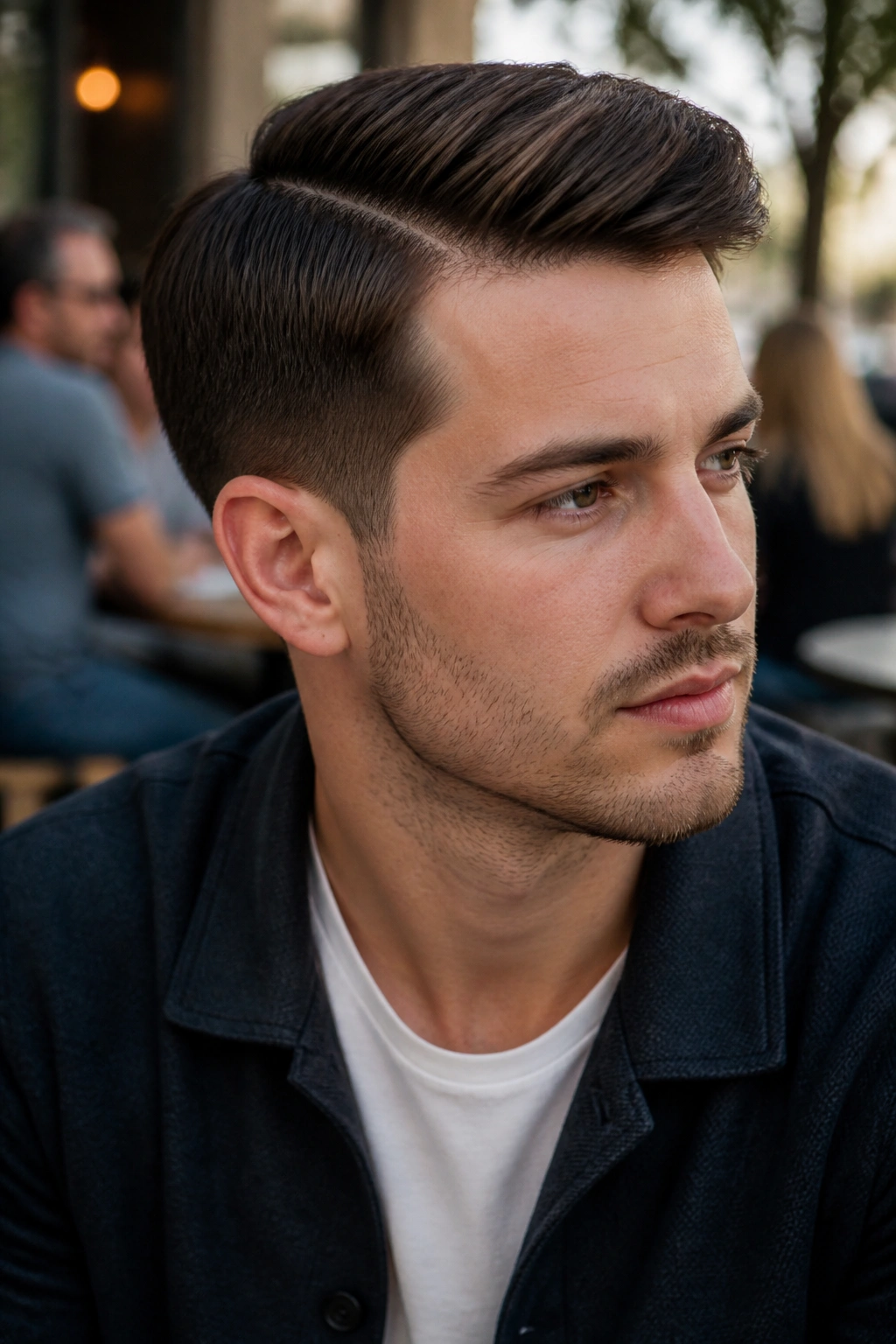
A side part taper is the haircut I reach for when a man wants something classic but not stiff. The part is there, the top is kept short, and the taper around the sides and nape makes everything look soft rather than boxy. It’s less severe than a hard-part style and easier to grow out cleanly.
The best version uses just enough length on top to sweep across without hanging in your eyes. Usually that means around 2 to 3 inches, depending on thickness. The taper does the quiet work here. It cleans the neck and temples without turning the whole cut into a fade-heavy statement.
If you wear glasses, this style often sits nicely because it does not crowd the face. And if your hairline is starting to recede, a softer side part can be kinder than a razor-sharp line.
A small amount of light pomade or styling cream is plenty. Comb it once, then leave it alone.
10. Short Haircuts for Men with a French Crop
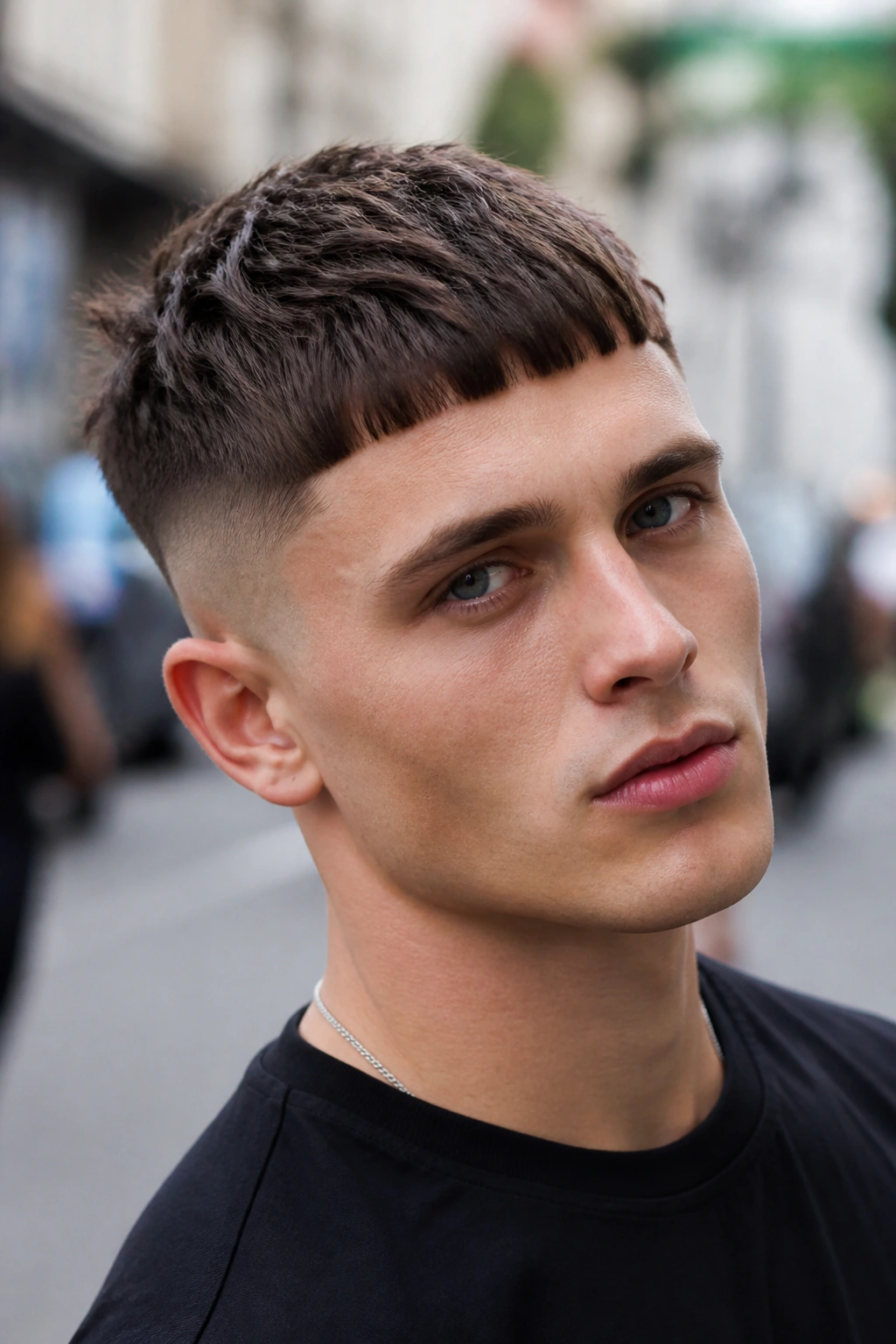
The French crop is one of the smartest short haircuts for men because it solves a lot without looking like it’s trying to solve anything. The fringe is pushed forward, the top stays short, and the sides are clipped down so the shape feels tight and modern. It has a blunt edge that reads strong, not fussy.
This cut is especially useful if your hairline is uneven or your temples are starting to thin. The forward fringe gives you coverage without pretending to be a different haircut. A good crop should look deliberate, not like you’re hiding. There’s a difference, and people can tell.
I prefer the version with a bit of texture on top rather than a dead-straight fringe. It moves better, grows out better, and looks less helmet-like. Ask for the top to stay around 1 to 2 inches, then have the barber rough up the front slightly so it doesn’t sit in a hard sheet.
A matte clay or paste works well here. Keep it light, or the fringe gets heavy fast.
11. Caesar Cut
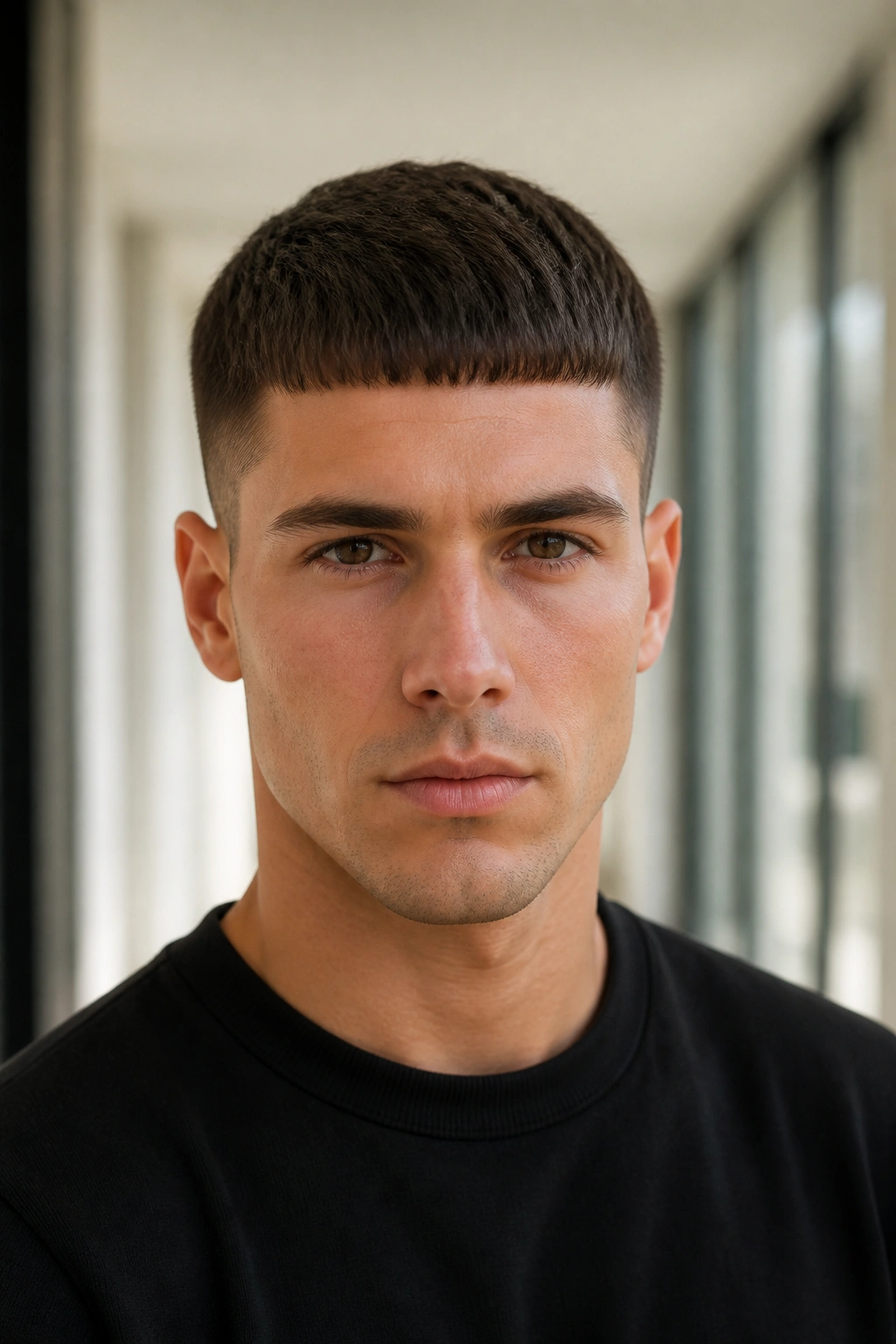
Why does the Caesar cut keep coming back? Because it solves a common problem without much fuss. The fringe is short, straight, and pushed forward, usually with the top kept close to the same length all over. It gives the face a tidy frame and keeps stray hair from doing whatever it wants.
The Caesar works especially well if you have a cowlick at the front, since the forward direction helps control it. It also suits men who want a short cut that still has a clear shape. If the hairline is a little uneven, the fringe covers enough to smooth things out without looking dramatic.
How to Wear It Well
- Keep the top around 1 to 1.5 inches.
- Ask for the fringe to stay blunt or slightly textured.
- Trim it every 2 to 3 weeks if you want the line to stay neat.
This is one of those cuts that looks plain on paper and surprisingly strong in person. That’s its whole point.
12. Textured Crop
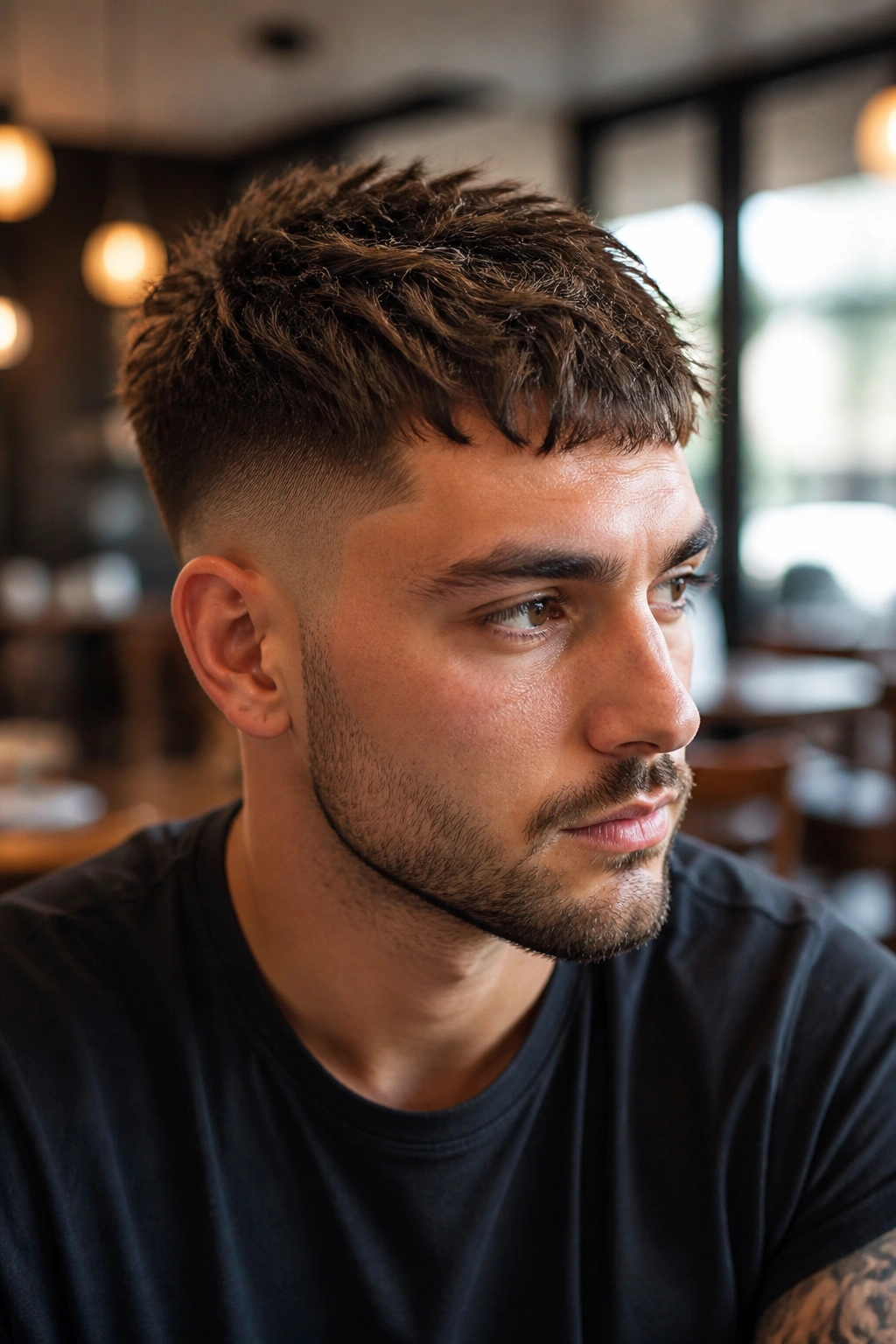
A textured crop is a French crop with more bite. The top gets chopped in a way that creates movement and separation, and the sides are usually faded or tapered tight enough to keep the whole thing compact. It is short, but it never looks stiff.
That texture matters if your hair is thick or naturally wavy. Instead of forcing the hair into a flat line, the cut works with the roughness and lets it show. A little messiness is part of the appeal. Too much polish kills it.
What Makes It Different
The crop is short enough to be practical, but the choppy top gives you more shape than a basic fringe. It’s a good choice if you want a haircut that looks styled even when you only use a fingertip of paste. In barber terms, it often means point-cutting or chipping into the top so the ends don’t sit like a solid block.
Use a dry matte product, not a shiny one. Shine makes crop cuts look greasy fast. And if your hair grows straight out from the crown, leave a touch more length there so the back doesn’t puff up.
13. Spiky Crop
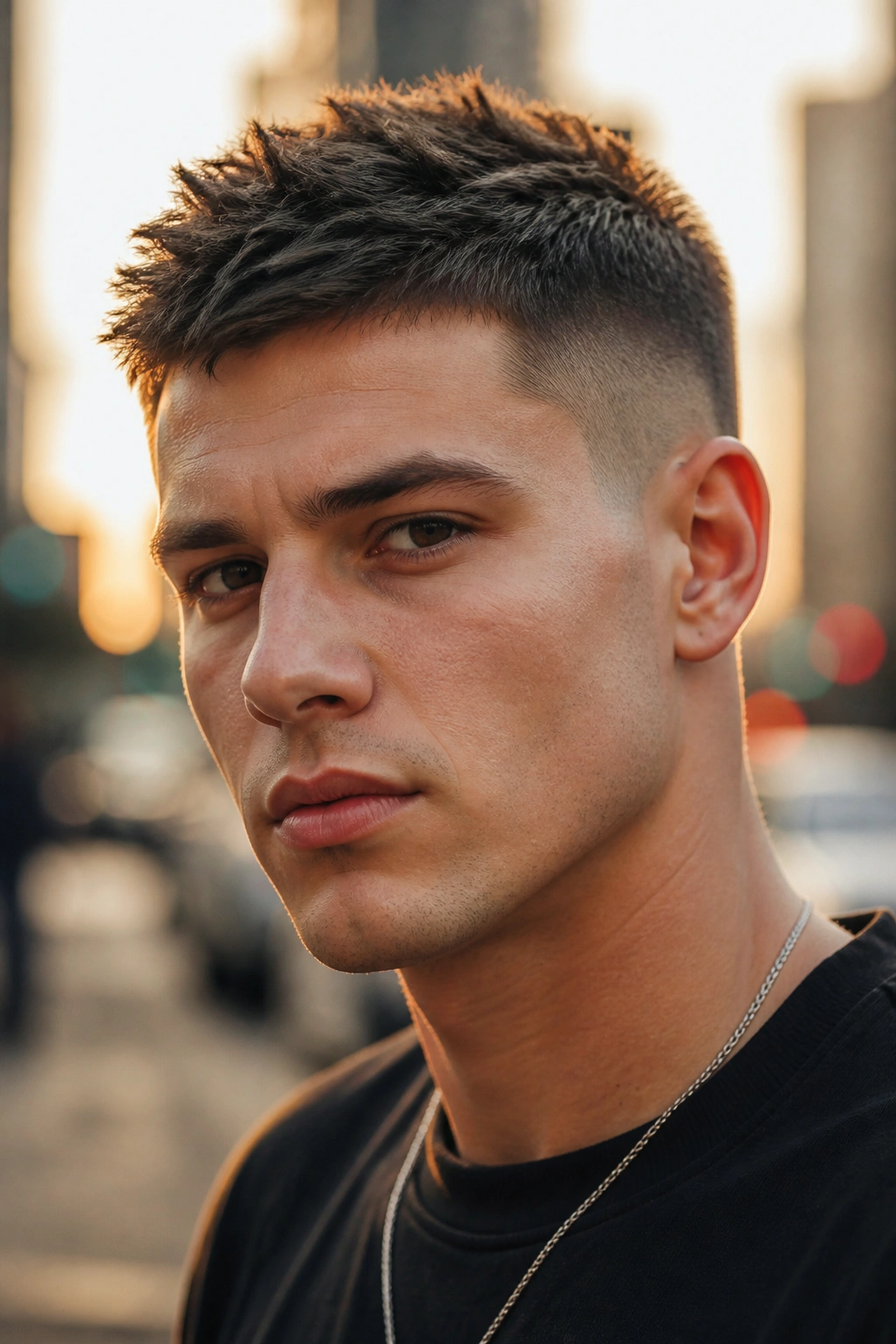
A spiky crop is the short cut for men who want some energy without committing to a full blown spiky style from the early days of gel. The top is short enough to stand up in small pieces, the sides stay tight, and the overall look is sharp but casual.
The key is restraint. You want separation, not stiff little needles. A fiber paste or matte clay does the job better than old-school gel, which tends to lock the hair into one shape and make it look hard. Work the product through towel-dried hair, then pinch the top with your fingers. That’s enough.
This cut works well on thick hair and medium-density hair. On very fine hair, it can fall flat unless the top is left a little longer. On very curly hair, the spikes turn into texture, which can look good too, just different.
It’s a cut that likes movement. Leave it too perfect and it loses the point.
14. Short Quiff
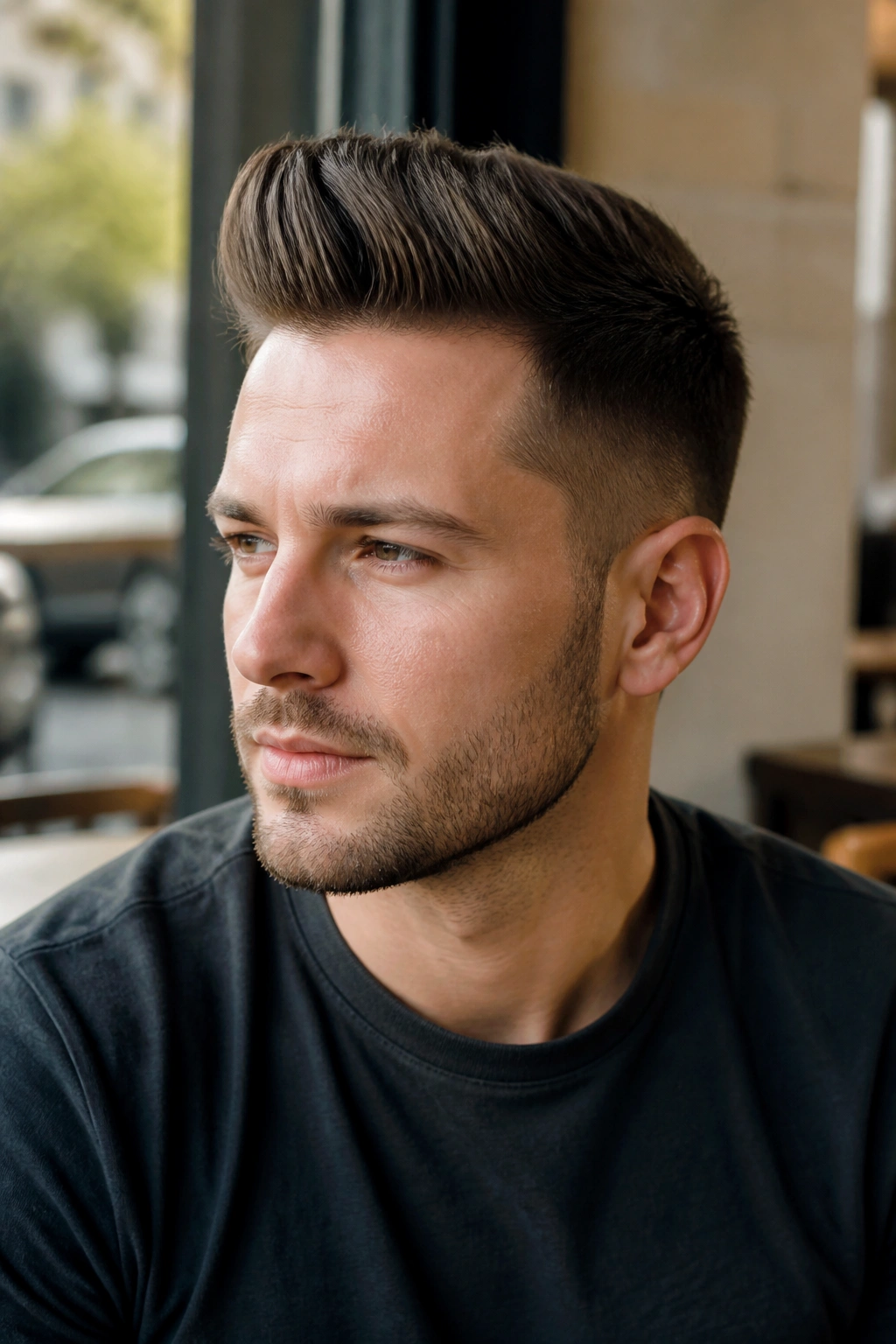
The short quiff is for men who want height without a lot of length. The front is brushed up and back just enough to create lift, while the sides stay tight so the shape stays centered. It’s cleaner than a pompadour and easier to wear than people expect.
How to Keep the Lift from Falling Flat
- Blow-dry the front upward first, using your fingers or a vent brush.
- Use a small amount of matte paste or light clay.
- Start with less product than you think you need.
The hair at the front does the work here, so the cut has to leave it long enough to stand up, usually around 2 to 3 inches. If it’s too short, it will just sit there. If it’s too long, the quiff starts getting heavy and loses its shape.
I like this cut for men with oval or longer faces because the extra height balances things out. It’s polished, but not precious.
15. Brush Up
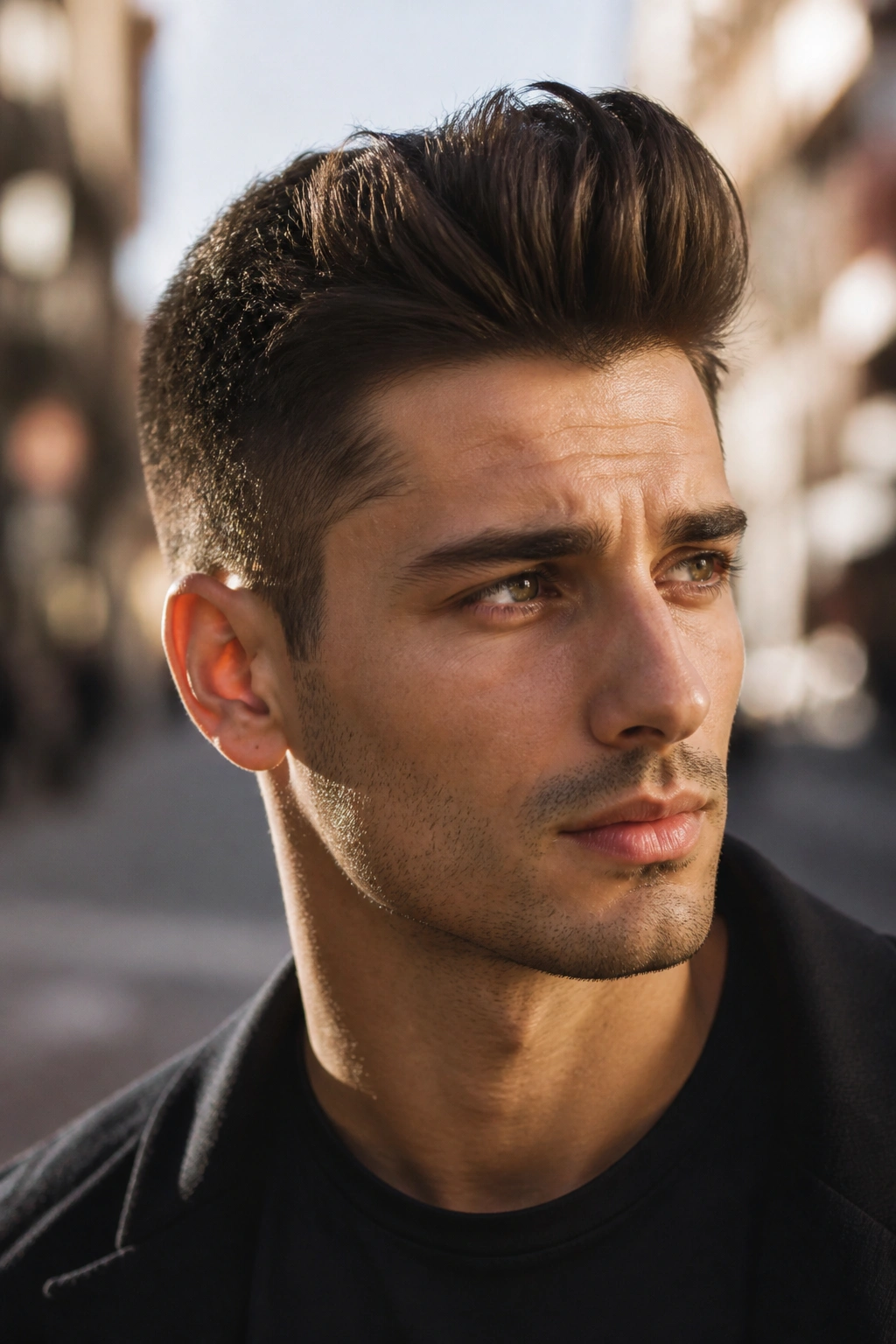
A brush up looks a little like a quiff’s leaner cousin. The front hair is directed upward, but instead of curling it back into a wave, you push it up and slightly away from the forehead for a clean vertical lift. The result is sharper and more direct.
This cut is a solid choice for thick hair that wants to rise on its own. You can keep the sides tapered or faded, depending on how much contrast you want. If you want the top to stay neat, leave enough length at the front to grab hold of with a brush or fingers. About 2 inches is often the sweet spot.
Unlike a slicked-back style, the brush up keeps the forehead open. That can make the face look longer and a little leaner. Good or bad, depending on your head shape. If your face is already long, you may want something with less height.
Use a blow dryer for 20 to 30 seconds. That small bit of heat changes the finish more than most products do.
16. Comb Over Fade
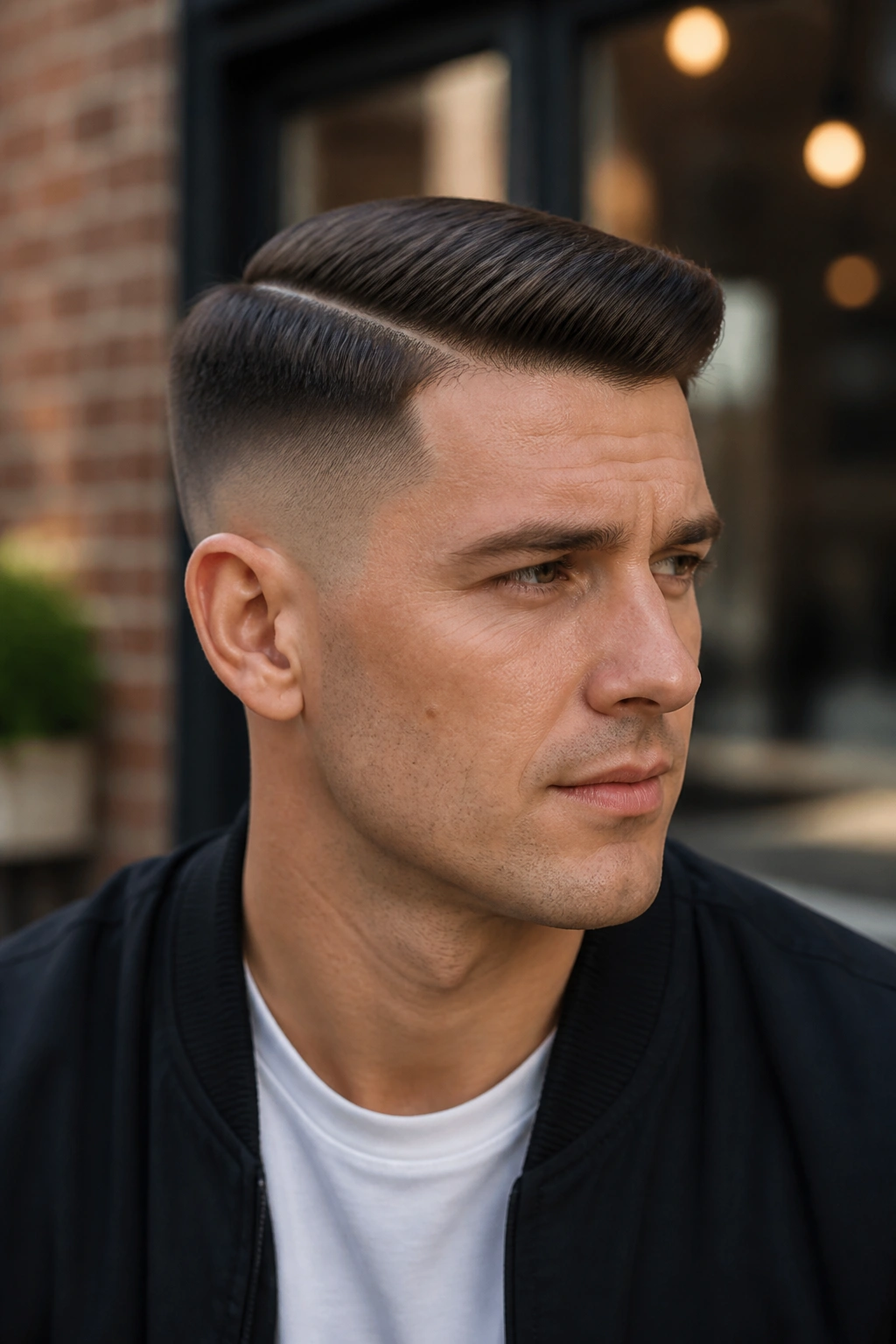
A comb over fade is not the sad old-school combover people joke about. When it’s cut well, it’s a clean side-swept style with faded sides and enough top length to move naturally across the head. The fade keeps it fresh; the parting keeps it organized.
It works best when the top has enough density to cover the scalp without looking stretched. If your hair is thinning heavily on top, a comb over can go wrong fast because the part gets too wide and the contrast gets obvious. If the density is decent, though, it looks sharp and easy to wear.
The product should stay light. A soft pomade or styling cream gives the hair direction without making it stiff. Comb the top over once, then break the front a little with your fingers so it does not look painted on.
I’d avoid making the fade too high if you want a cleaner, more wearable daily cut. Low and mid fades usually age better.
17. Short Slick Back
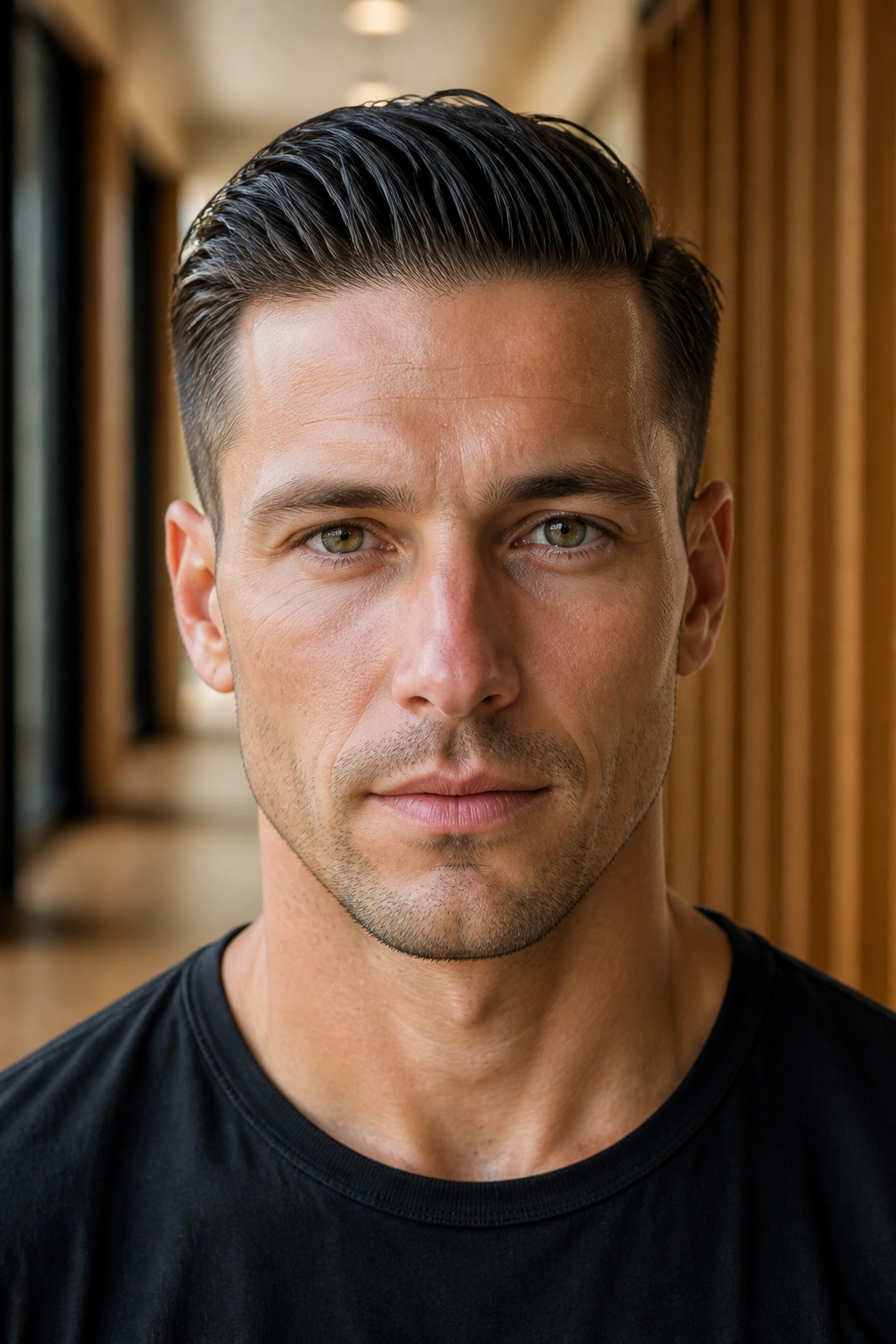
Can a slick back still count as short? Yes, if the top stays trimmed down and the hair is swept straight back without a huge wave or a big ridge. The result is clean, masculine, and a little old-school in a good way.
This cut works best on straight or slightly wavy hair that can lie back without fighting every inch of the way. If your hair is curly, it can still work, but it tends to become more of a brushed-back texture than a classic slick back. That is fine. Better, even, if you want something less rigid.
Use a lightweight pomade or grooming cream, not a greasy heavy one. Heavy product makes short slick backs collapse into a wet sheet, and that’s rarely flattering. A comb helps, but don’t overdo the perfect lines. Too much polish can look stiff.
If you keep the sides short and the top around 2 to 4 inches, you get the shape without the drama.
18. Hard Part
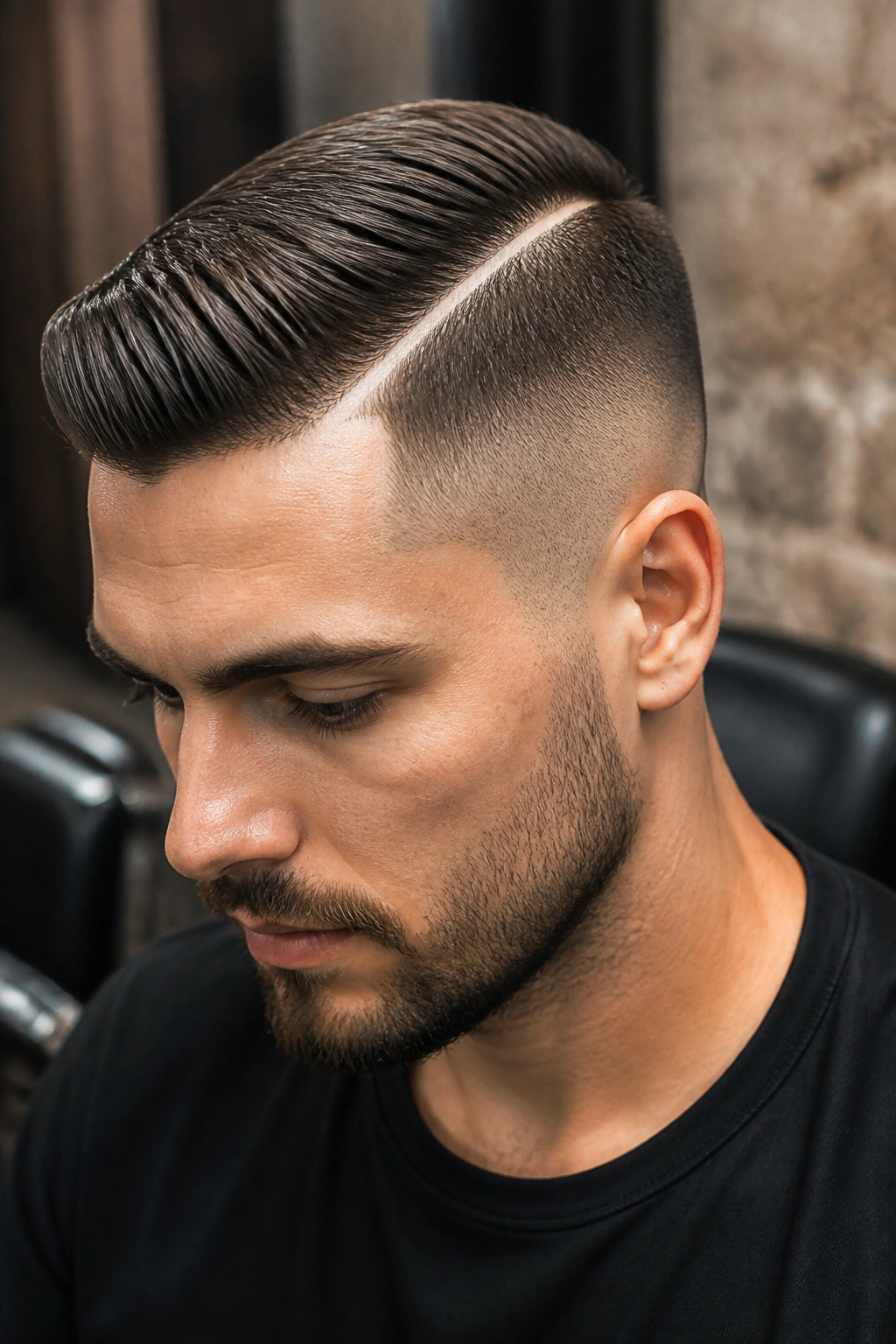
A hard part is one of those details that changes a haircut without changing its overall length. The barber shaves a clean line into the parting, which gives the style a sharper edge and makes the separation unmistakable. It works with side parts, comb overs, and some short pompadour shapes.
What You Need to Know Before You Ask for One
- The line needs regular upkeep, usually every 1 to 2 weeks.
- It looks strongest on dense hair with clear contrast.
- It is less forgiving if you like your hair to look soft and loose.
The hard part is not for everyone. I like it when the rest of the haircut is neat and controlled; otherwise the line can feel tacked on. If you wear suits, clean shirts, or a neatly trimmed beard, it adds a nice edge. If your style is more casual and messy, a soft side part may fit better.
One crisp line. That’s all it takes.
19. Low Taper Fade
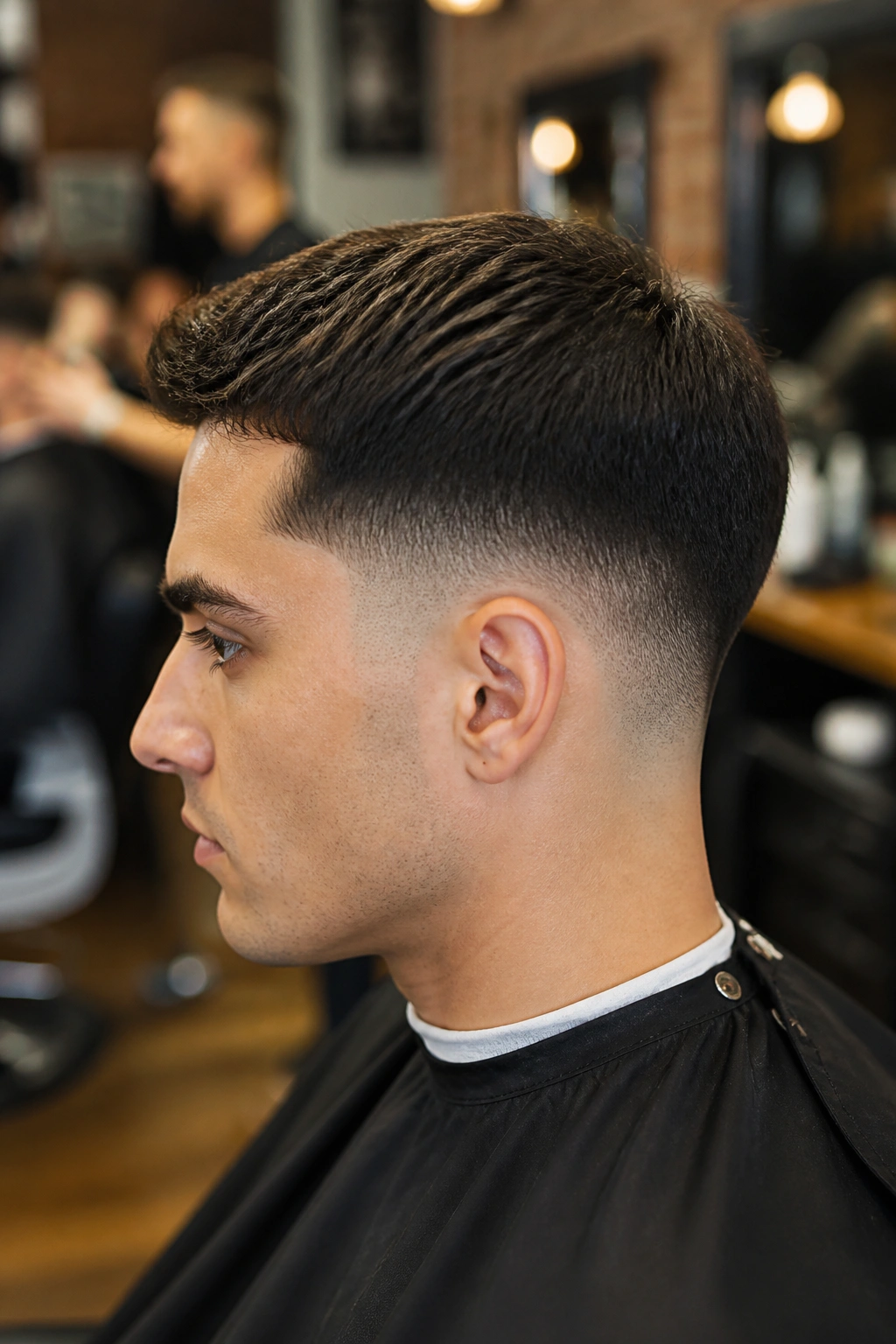
A low taper fade is one of the quietest ways to make a short haircut look finished. The fade starts low around the sideburns and nape, then blends slowly into the longer hair above. It keeps the edges clean without turning the haircut into a high-contrast statement.
That’s why I like it so much. It works with nearly everything: crew cuts, crops, side parts, even short curls. If you do not want your haircut to shout, a low taper is the better choice than a skin fade. It grows out gently, which means fewer awkward in-between days.
It’s also a smart pick if your hairline needs a little softness. The taper does not carve into the head too aggressively, so the shape stays natural. Ask the barber to keep the taper neat around the ears and neckline, but not too high on the sides.
This is the kind of cut that quietly makes the rest of the haircut look more expensive. Not flashy. Just tidy.
20. Short Haircuts for Men with a Skin Fade
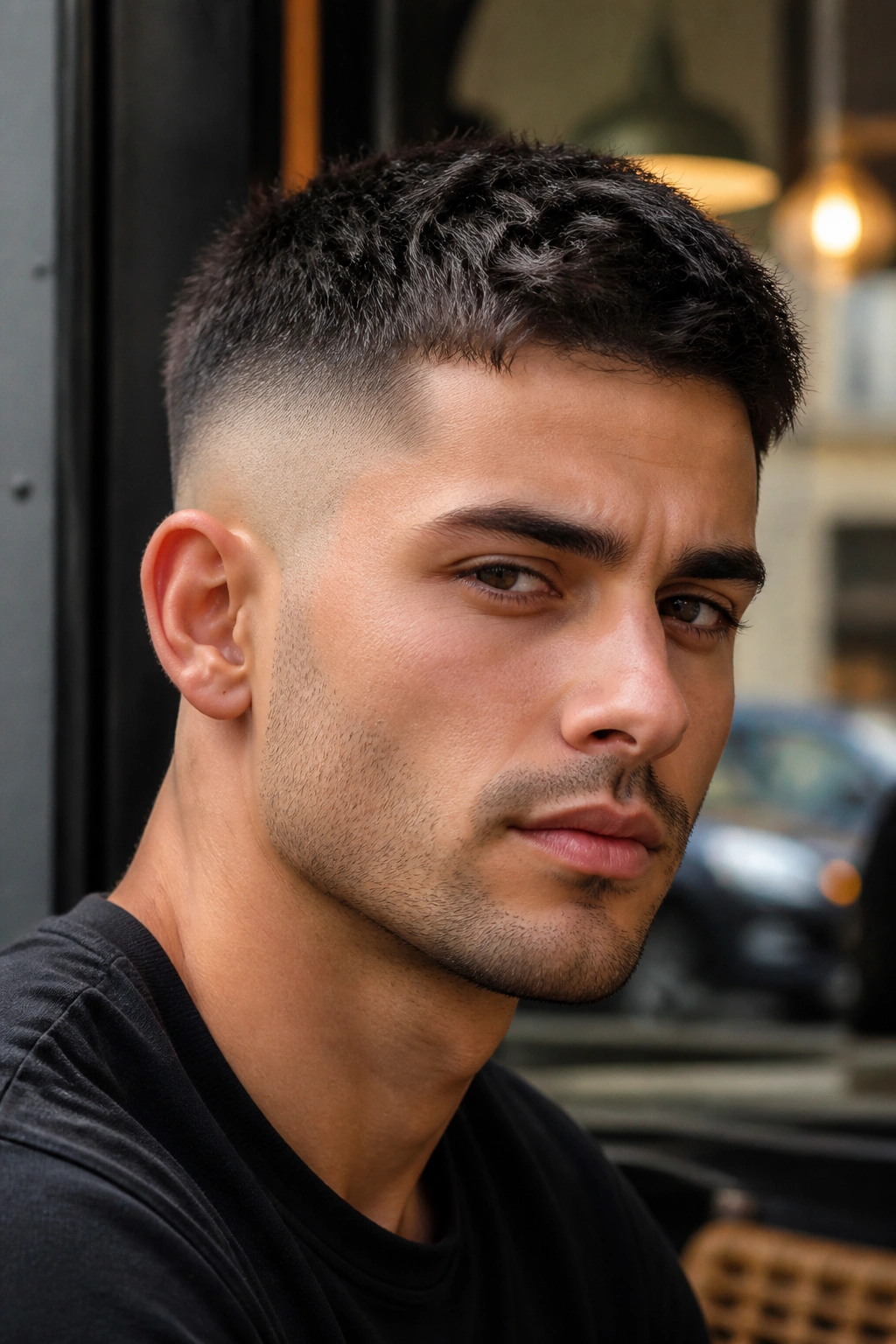
A skin fade is the cut for men who want the sides as tight as possible. The hair fades all the way down to bare skin at the bottom, then builds upward into a short top. It creates strong contrast, and that contrast makes even a simple top look sharp.
Why It Works So Well
- It makes thick hair look lighter and cleaner around the sides.
- It gives short crops, quiffs, and brush-ups a harder edge.
- It keeps the neckline and temples looking fresh longer than a basic taper.
The thing to remember is that a skin fade shows everything. The barber’s blend has to be smooth or the line will look patchy. It also means the haircut needs more upkeep than a taper. If you let it grow for too long, the contrast softens fast.
I like skin fades on men who wear their hair with confidence and do not mind a sharper outline. If you want something subtle, this is not it. If you want something crisp, it’s hard to beat.
21. Temple Fade with Beard
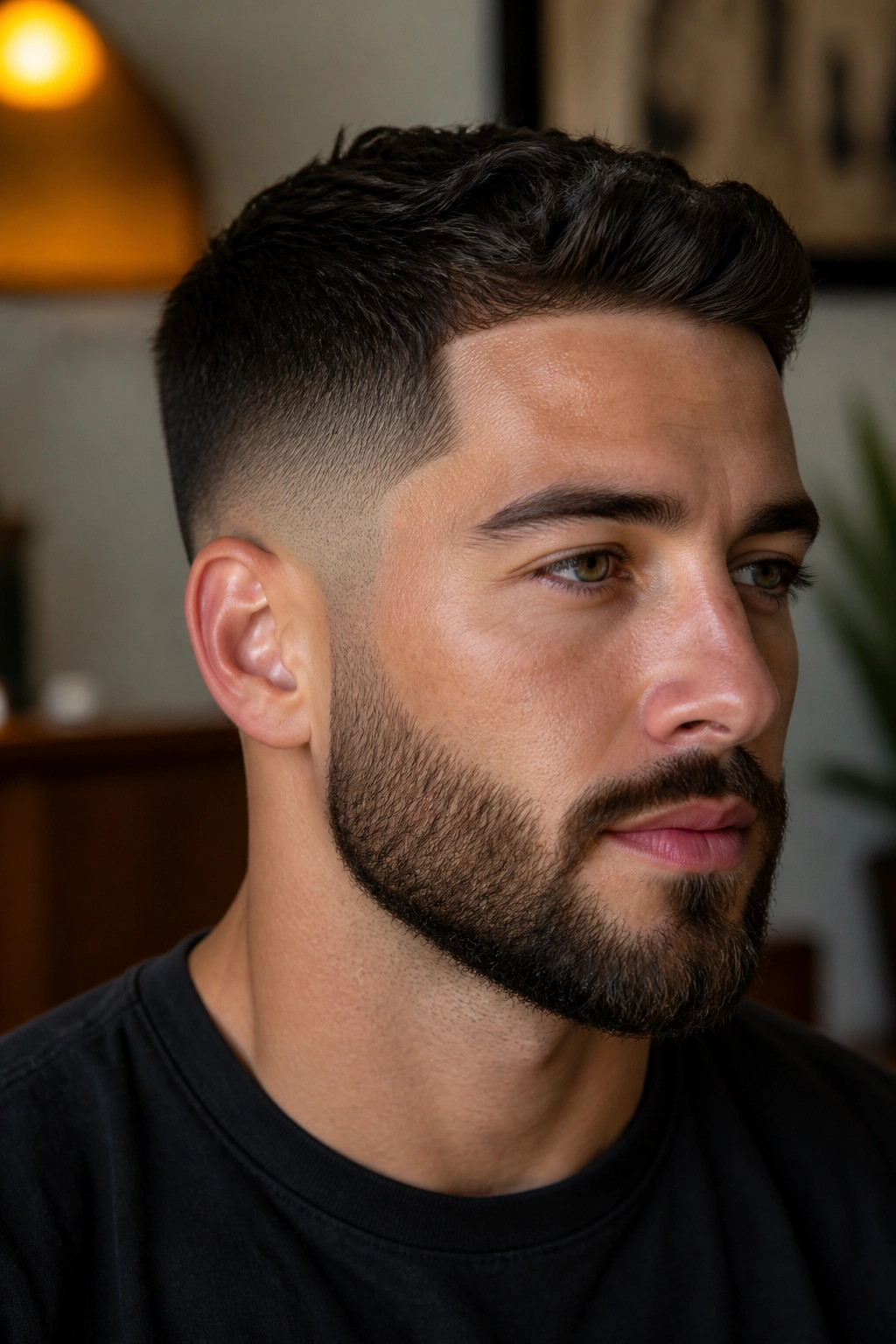
A temple fade with beard blend is a small detail that changes the whole face. The hair is faded neatly around the temples and sideburns, then blended into the beard so the side profile looks connected instead of chopped apart. It’s a strong choice if you keep facial hair and want the haircut to frame it properly.
The best part is how tidy it makes the sides look without needing a full high fade. You get clean edges near the ears, a smooth transition into the beard, and enough length on top to keep the haircut practical. That balance matters if you prefer a short style that still feels masculine and full.
Ask for a crisp line around the cheek and a soft blend into the beard. Too much contrast can make the jawline look harsh in the wrong way. The barber should leave the temple area neat and let the beard do the rest of the work.
It’s a small move. It changes the whole read of the haircut.
22. Mid Fade with Crop
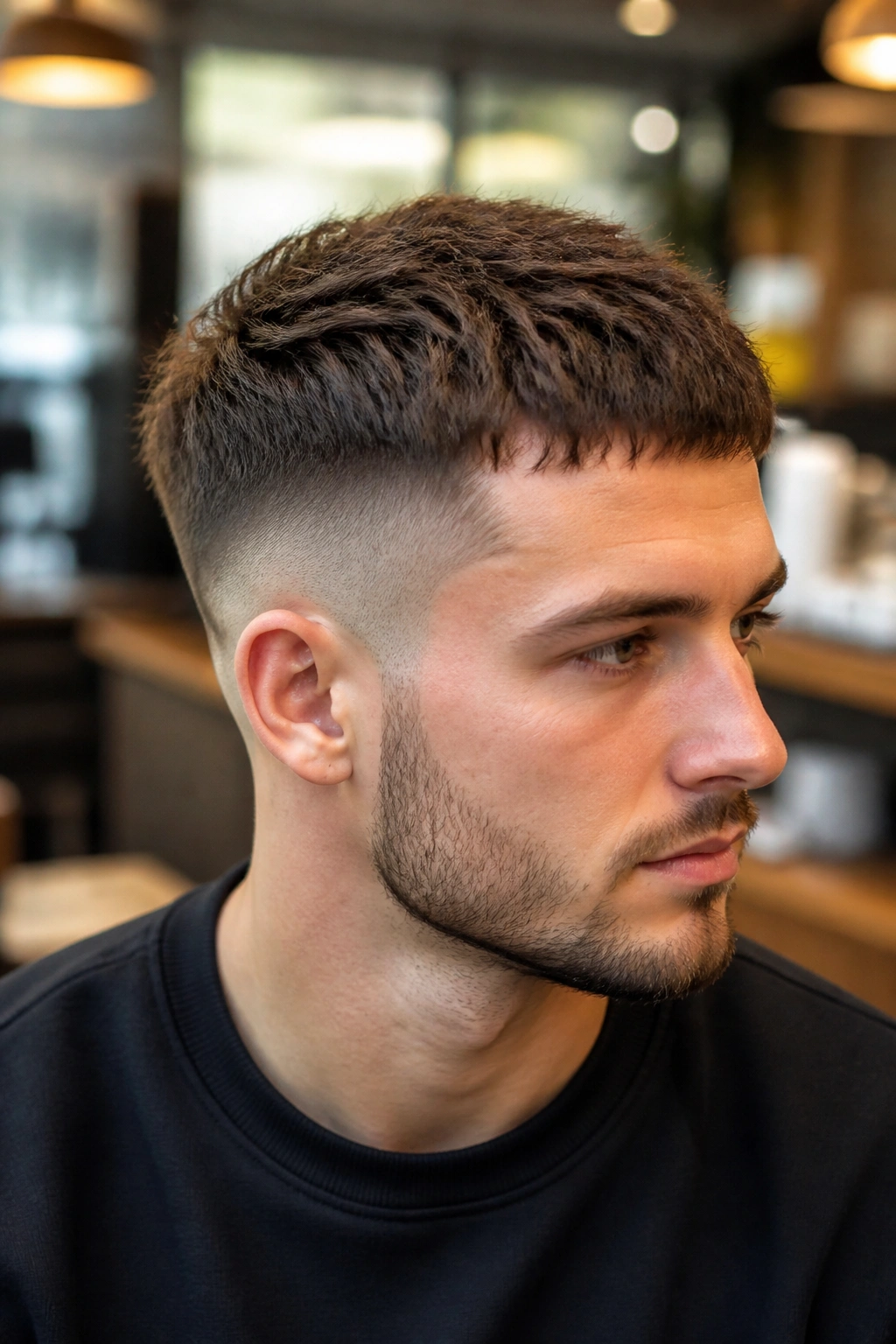
A mid fade with a crop sits in a very useful middle ground. The fade starts around the middle of the sides, which gives more contrast than a low taper but less drama than a skin fade. Pair that with a short, textured crop on top, and you get a cut that looks modern without becoming hard to wear.
This cut is especially good for thick, straight, or slightly wavy hair. The crop keeps the top short enough to manage, while the mid fade clears the sides so the shape stays open around the ears and temples. If you like a little messiness on top, this is an easy place to start.
I’d ask for texture on the top rather than a solid blunt block. That keeps the cut from feeling heavy. A dry paste or matte clay is usually enough for styling. No need to make it shiny. Shiny and short rarely live happily together.
23. Drop Fade with Fringe
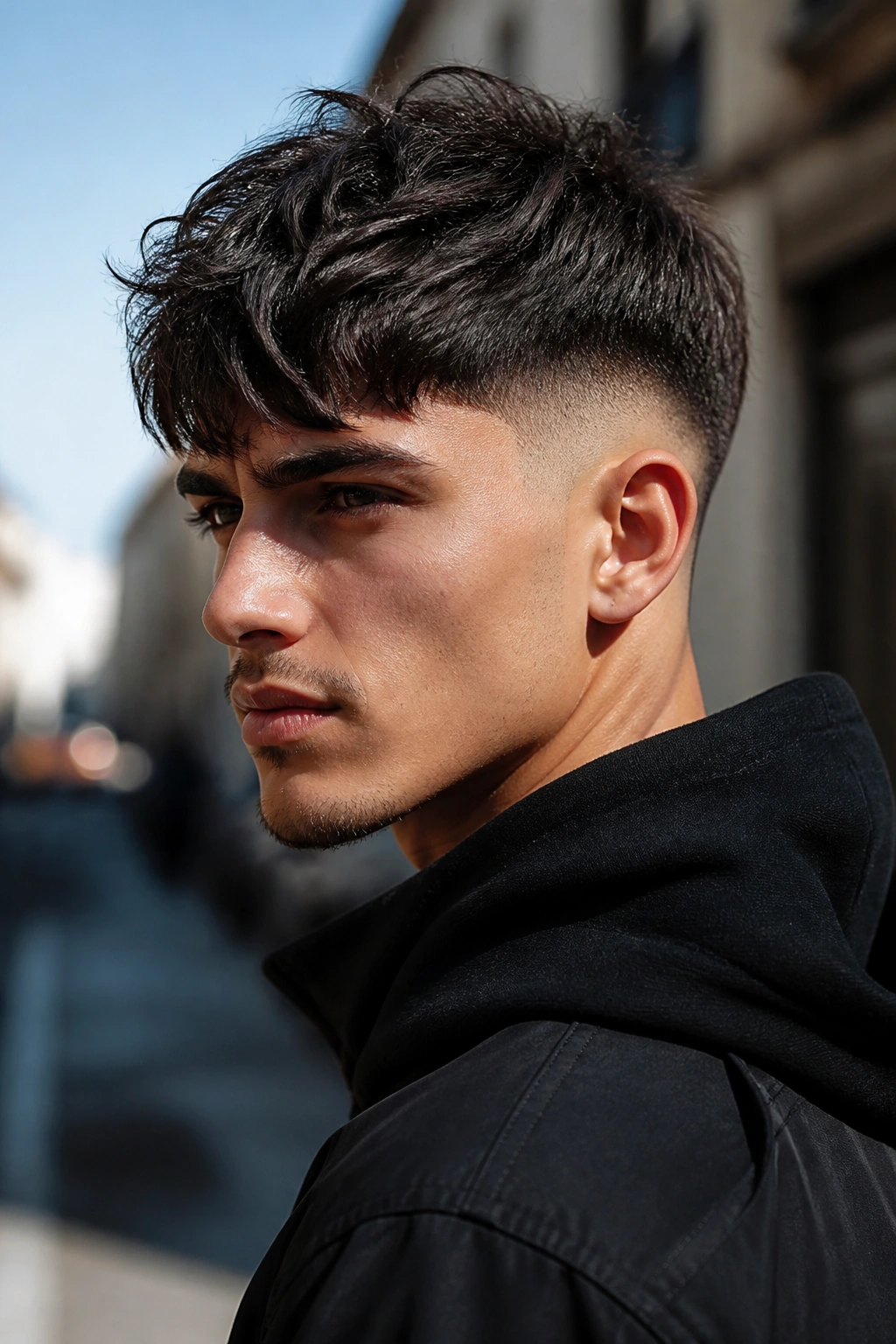
Why does a drop fade with fringe look so good on the right head shape? Because the fade curves lower behind the ear, which follows the natural line of the skull instead of slicing straight across it. The fringe at the front keeps the haircut grounded.
That shape helps if your head is round, if your hairline is uneven, or if you want a little extra movement at the front. The fringe can be blunt, broken up, or slightly side-swept, depending on how much texture you want. The fade underneath does the heavy lifting and keeps the profile clean.
A drop fade is more technical than it looks. If the curve is too high, it loses the point. Too low, and it can look saggy. A barber who knows how to balance the arc is worth listening to here.
I like this cut when the top stays short and the front has a bit of lift. It feels athletic without being loud.
24. Burst Fade Mohawk
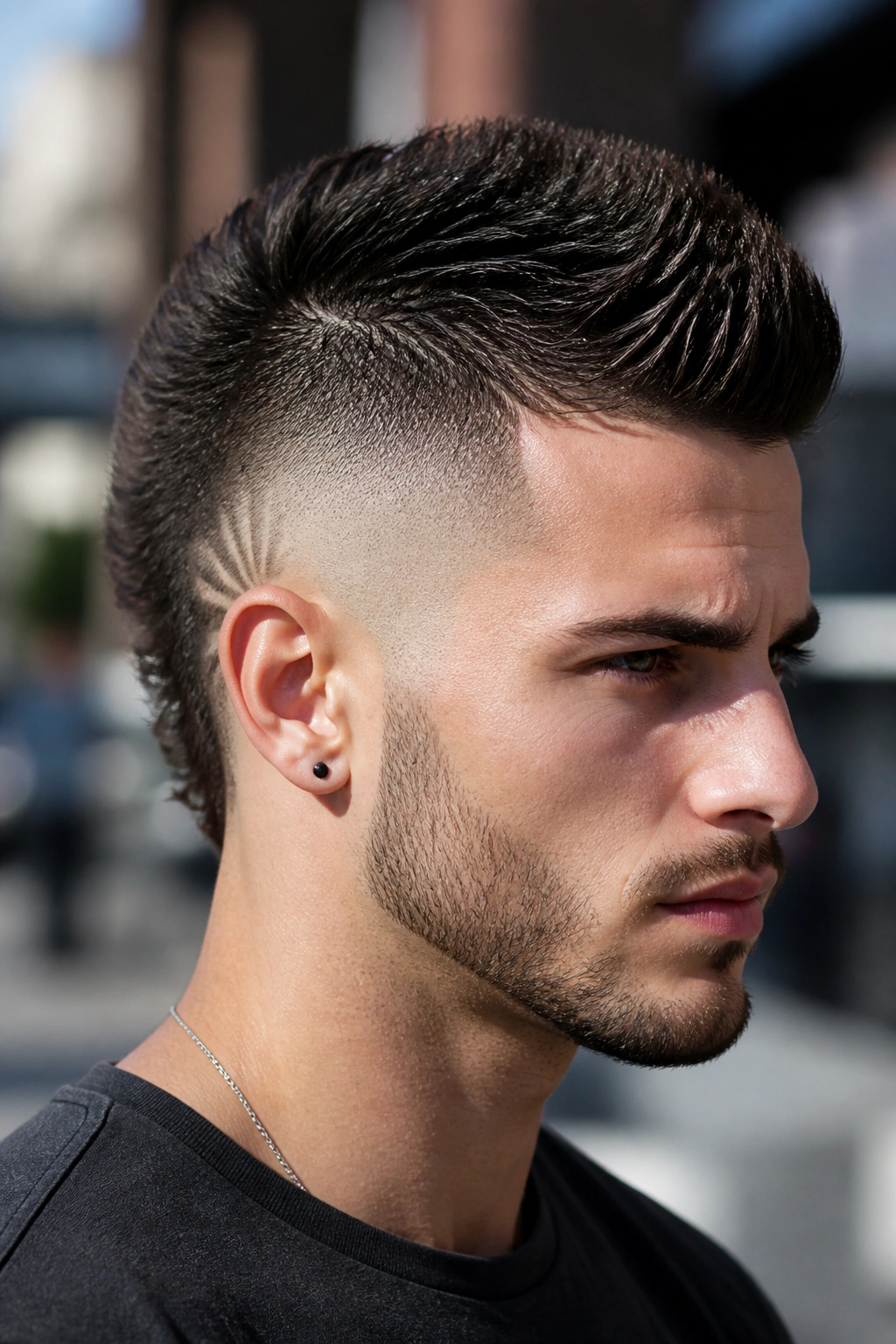
A burst fade mohawk is bolder than most short haircuts for men, but it does not have to be extreme. The fade bursts around the ear in a rounded shape, while the center strip stays longer from front to back. Keep the top short and textured, and it reads modern instead of costume-y.
What Makes It Different
- The fade curves around the ear instead of running straight across.
- The top can be short and still hold a mohawk line.
- It works well with thick, curly, or coarse hair.
This cut likes texture. If the top is too flat, the whole thing feels dead. If it’s too long, it starts looking like a statement cut from another decade. The sweet spot is usually short enough to stand up a little but not so long that it falls over.
I think this cut looks best when the edges are neat and the shape is intentional. Messy around the sides? No. A little rough on top? Absolutely.
25. Flat Top
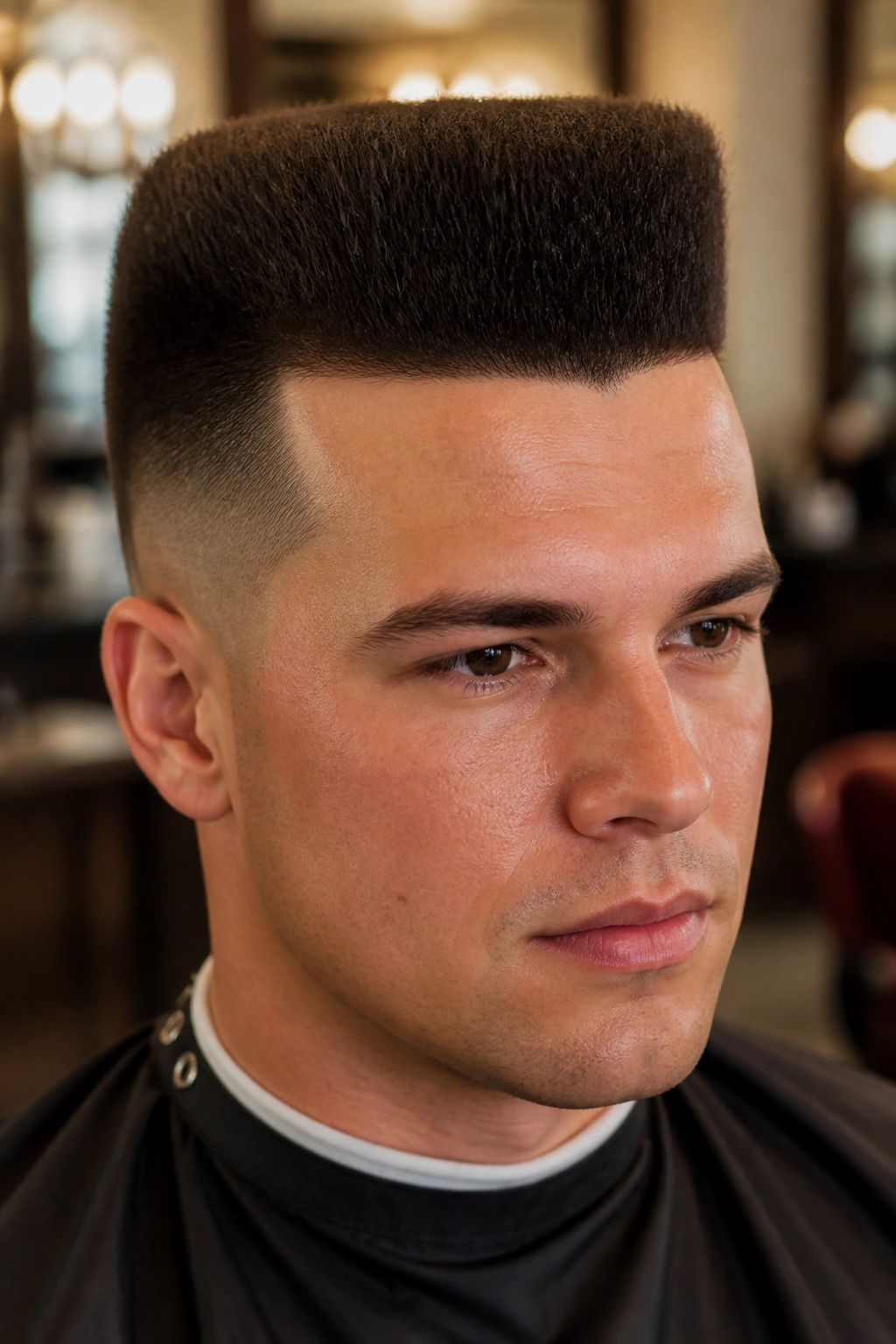
The flat top is the haircut with a strong opinion. The top is cut level, like a flat shelf, while the sides are clipped short enough to make the shape stand out. It’s boxy, direct, and impossible to miss. Done well, it has real presence.
This cut works best on hair that has enough density and stiffness to hold a clean top line. Coarse hair is a gift here. Fine hair can do it, but the top may collapse without more product or a bit more length. The shape also depends on regular maintenance, because even a quarter inch of growth can start to soften the edges.
The part I respect most is the discipline it demands. The barber has to keep the top level from front to back and side to side. That sounds simple until you try to get it truly even.
If you like structure and do not mind a cut with personality, the flat top still has teeth.
26. Curly Top Fade
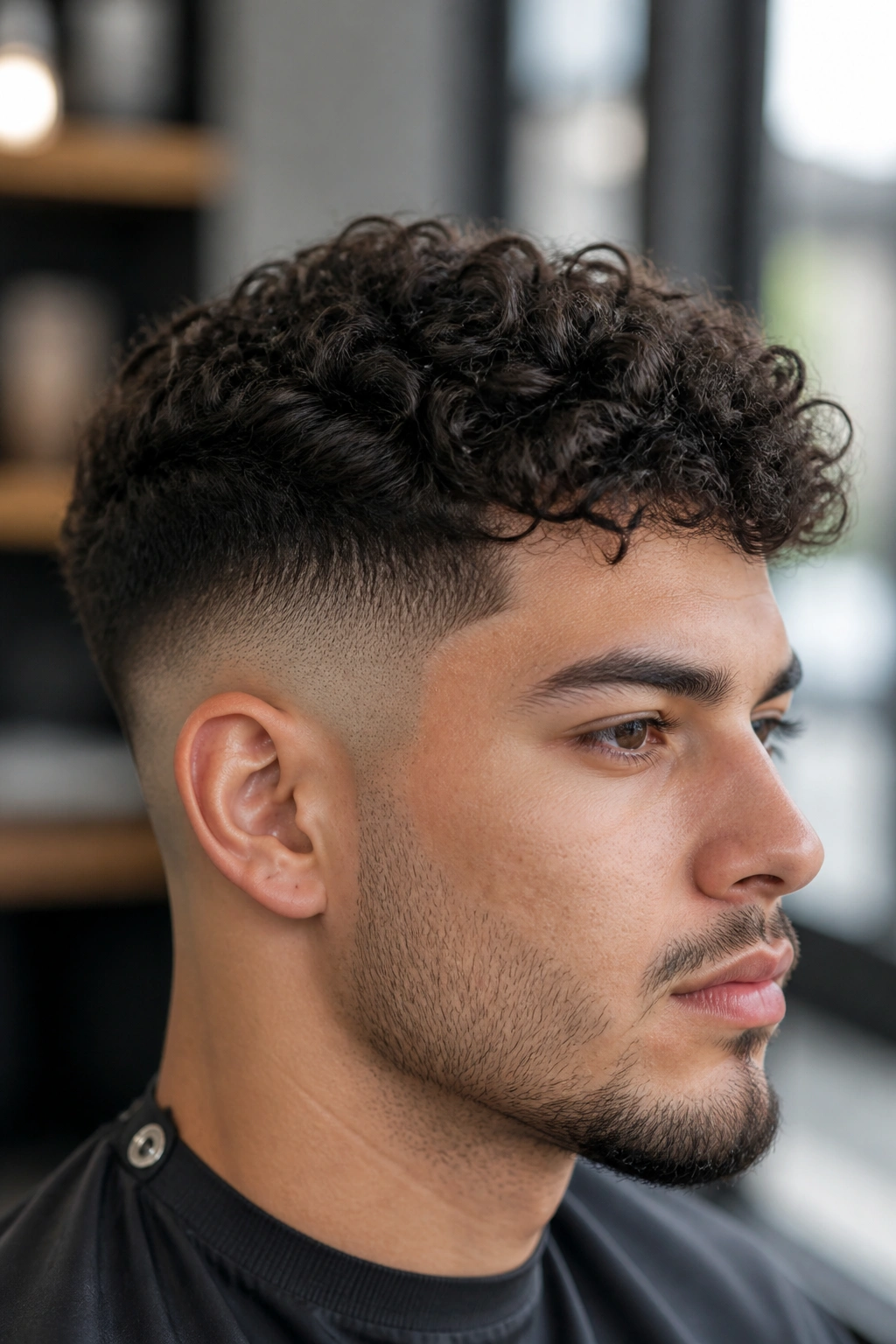
A curly top fade lets the curls stay visible while the sides stay tight and tidy. That combination is hard to beat. You get the texture and movement from the curls, but the fade keeps the sides from getting puffy or wide.
The top should not be cut too short, or the curls lose their shape and turn into a fuzzy line. Around 1.5 to 3 inches on top is often enough, depending on curl tightness. The barber should shape the curls, not mow them down. That’s the difference between a cut that flatters your texture and one that fights it.
Use a curl cream or light leave-in product so the curls stay soft and defined. Dryness is the enemy here. If the curls frizz, the whole silhouette gets messy faster than straight hair would.
I like this cut because it doesn’t ask curly hair to pretend to be straight. It just cleans the edges and lets the texture do what it already wants to do.
27. Short Haircuts for Men with Curls: The Afro Taper
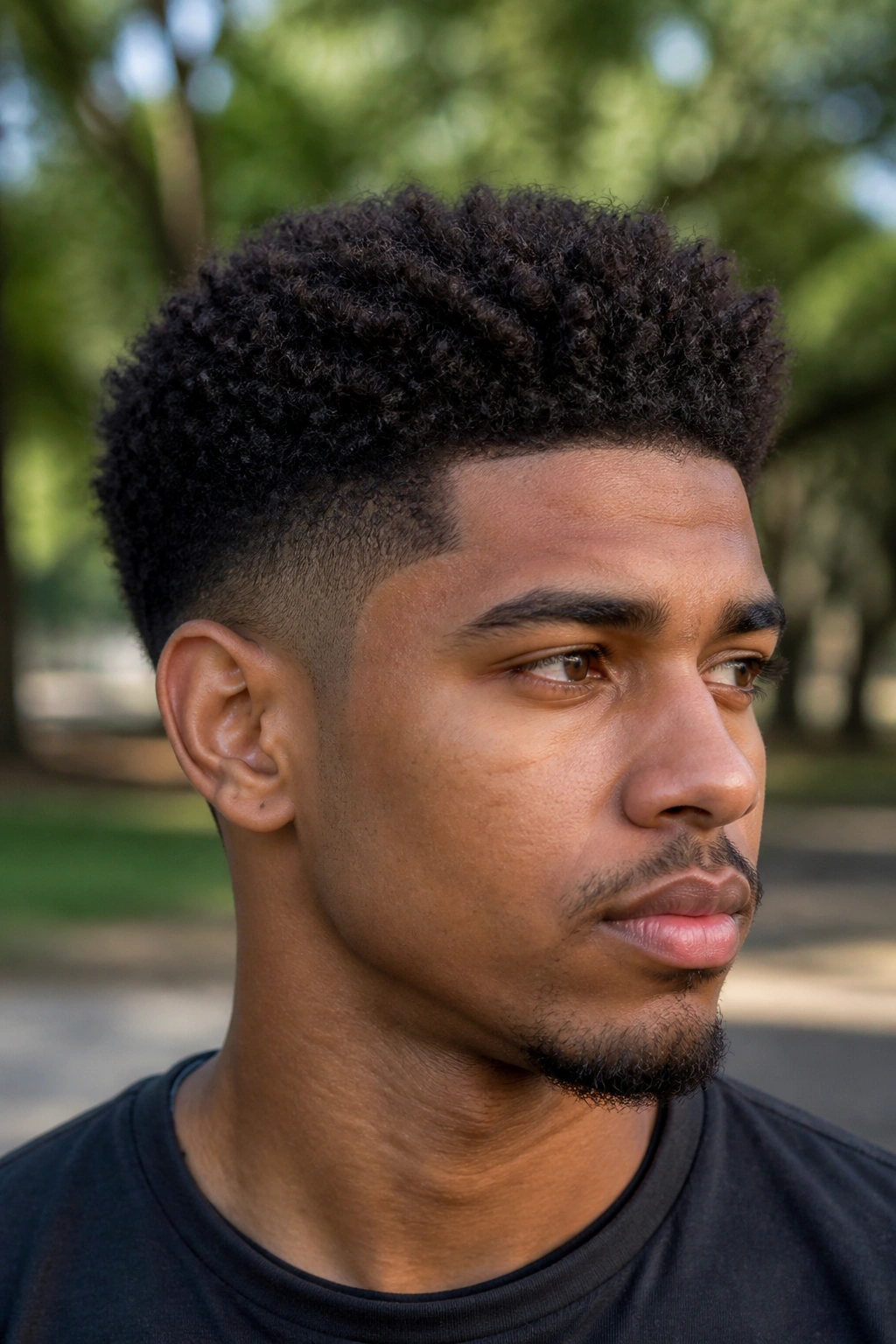
The afro taper is one of the cleanest short haircuts for men with curls or coils, because it respects the shape of textured hair instead of trying to flatten it. The taper sharpens the sides and neckline, while the top keeps enough length to show the natural pattern. That balance is the whole haircut.
What to Ask For
- Keep the top shaped, not pushed too flat.
- Taper the sides and back gradually.
- Line up the edges only if you want a sharper finish.
This cut looks especially good when the beard or sideburn area is also cleaned up. The edges around the temples and neckline make the whole shape feel intentional. I’d avoid overtrimming the top just to make it “even.” Textured hair does better when the shape follows the head, not a ruler.
Moisture matters here. A light leave-in or curl cream keeps the hair from drying out and turning puffy. If you have curls or coils, this cut can look polished without stripping away the natural character of the hair.
28. Disconnected Undercut
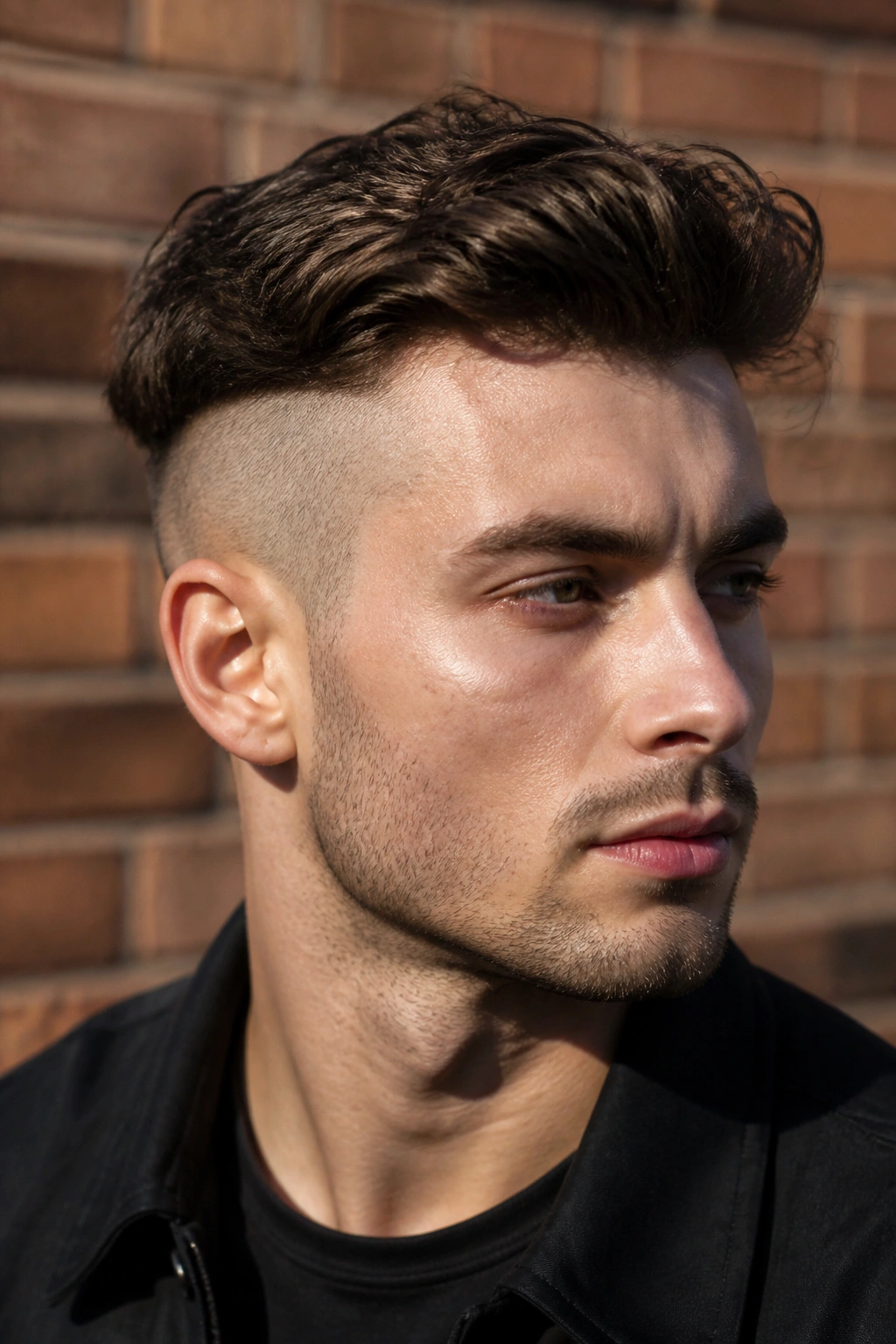
A disconnected undercut is a sharp, deliberate haircut with a clear break between the short sides and the longer top. The difference in length is the point. There is no soft blend trying to hide it. That hard contrast makes the cut feel modern and a little daring, even when the top itself stays short.
It works best when the top has enough length to sit on its own — think 2 to 4 inches — while the sides stay very short or clipped close. If the contrast is too small, the disconnect loses its edge. If it is too big, the haircut can feel heavy on top. The balance matters more than the label.
I like this cut on men who want short hair with a little attitude. It pairs well with a beard, strong brows, and simple clothes. It does not need much styling, but it does need confidence. A cut this blunt looks best when the rest of the grooming is tidy.
Final Thoughts
Short haircuts are at their strongest when they fit your hair type, your face shape, and how much effort you want to spend before breakfast. A crew cut or buzz cut can be the right answer for one man, while a French crop or low taper fade works better for another. The haircut is only half the story. Growth pattern, texture, and maintenance matter just as much.
If you want the easiest path, start with a taper or a crew variation. If you want sharper edges, go toward skin fades, hard parts, or a disconnected shape. And if your hair has curls or coils, do not fight that texture — cuts like the curly top fade or afro taper usually give you a cleaner result than trying to force a straight-haired finish.
The best short cut is the one that still looks good when it has grown out a little. That’s the test worth caring about.
