



Thick hair can look rich and effortless right up until it starts doing its own thing. One wrong cut and suddenly you have a triangle at the bottom, a mushroom at the sides, or a crown that insists on standing one inch away from your head.
The good news is that thick hair gives you options most people would envy. It holds shape. It takes movement well. It can wear blunt lines, airy layers, short crops, and heavy bangs without collapsing into nothing by noon. The catch is that density changes the way a cut behaves, so the shape matters more than the idea on the inspiration photo.
A lot of bad advice about thick hair comes from treating it like one single category. Fine, coarse, wavy, curly, straight, high-density, low-density — those are different animals. The same bob can sit sleek and sharp on one head and turn into a helmet on another. That’s why the smartest haircuts for thick hair are the ones that remove bulk in the right place, keep weight where it helps, and make styling easier instead of turning it into a part-time job.
Some cuts are all about control. Some are about movement. A few are for people who want their hair to look full without feeling heavy on the neck. The shape you choose changes how your hair falls before you even touch a blow-dryer, and that’s where the real difference lives.
1. Long Layers for Thick Hair
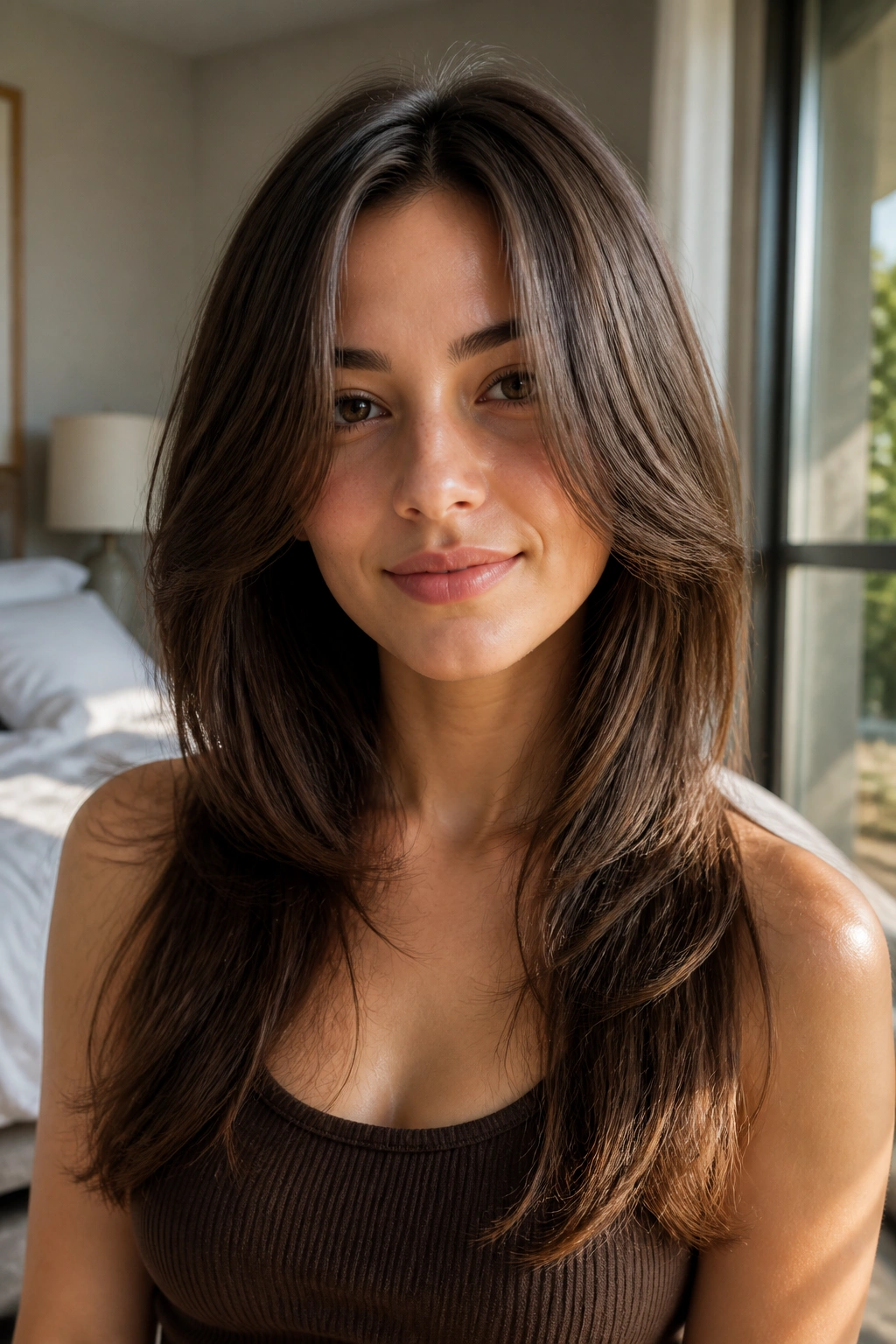
Long layers are the safest place to start if you want to keep your length and stop your hair from feeling like a weighted blanket. The trick is restraint. You do not want layers that start too high and leave the ends looking thin and scraggly. You want internal movement below the chin, with the bottom line left strong.
What to ask for
- Layers that begin around the collarbone or a few inches below it
- A soft face frame instead of heavy chopping near the cheeks
- A dense perimeter so the ends still look full
This cut works especially well if your thick hair is straight, wavy, or a little frizzy and you still want ponytail length. It gives you swing without making the shape collapse into bulk at the sides. If your hair tends to puff out at the bottom, long layers are the first fix I’d try.
Best for: people who want movement without losing the feeling of long hair.
Skip it if: you want a razor-sharp outline all the way around.
2. Blunt Lob With a Clean Edge
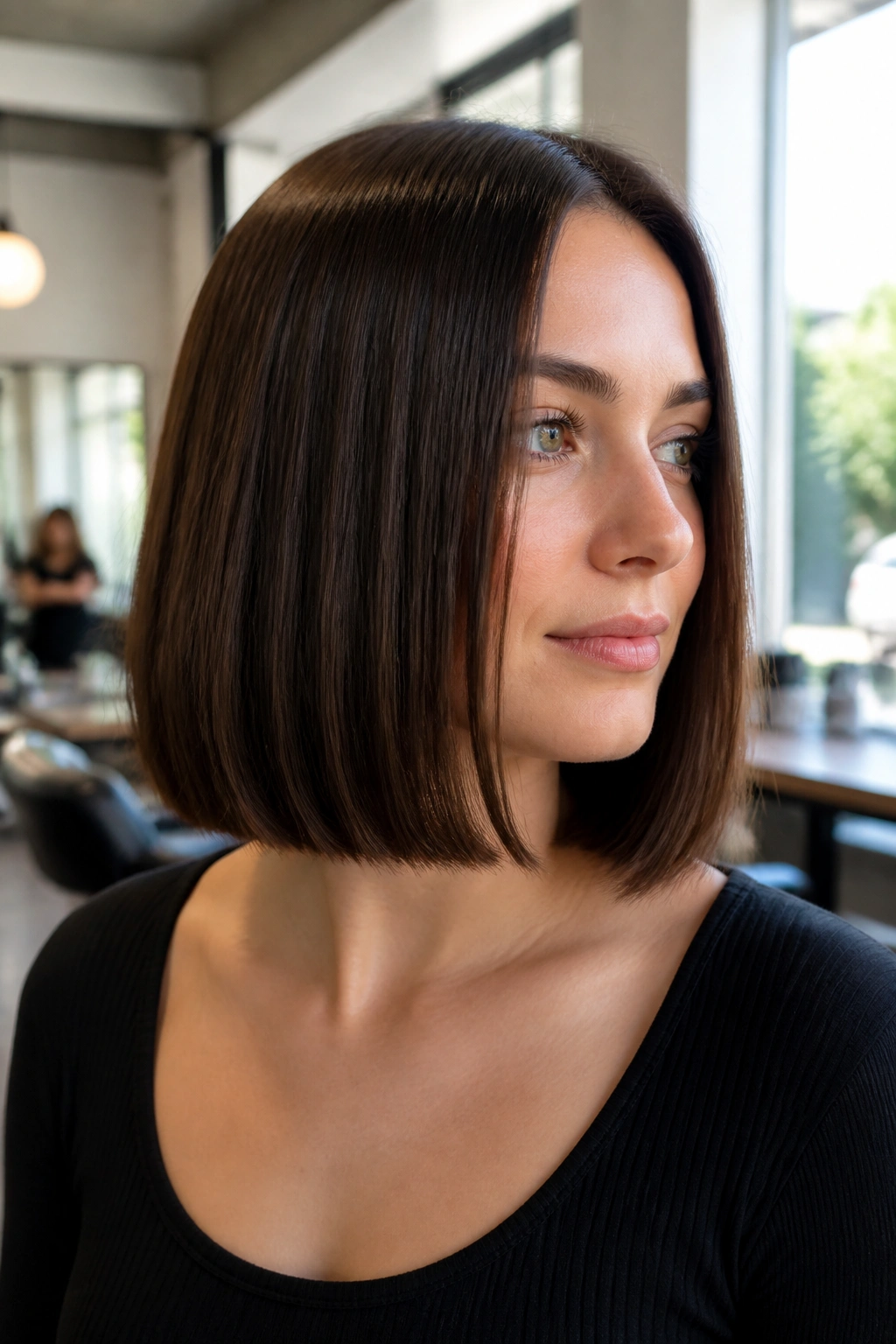
A blunt lob is the haircut that makes thick hair look expensive in the most unflashy way possible. One solid line at the shoulders or just above them creates a shape that feels controlled, not puffy. The ends sit heavy on purpose, which keeps the style from flaring out at every bend.
The reason it works is simple: thick hair often looks better when the bottom has enough weight to anchor everything. Too many layers can make it balloon. A blunt lob does the opposite. It gives you a polished edge, and you can still tuck it behind one ear or bend it under with a round brush if you want it softer.
Keep the length at the collarbone if your neck is wider or you wear glasses. Go a little shorter if your hair is very dense and you want less daily fuss. This is one of those cuts that looks sharp even when air-dried.
3. The Textured Shag

A shag is the haircut that stops thick hair from acting stiff. It adds broken-up movement from crown to ends, which is useful if your hair has wave, body, or a little bit of natural chaos in it. A good shag should feel lived-in, not hacked at with scissors by someone in a hurry.
The best version keeps the top light and the lower layers soft. You still want shape around the face, but the cut should never strip the sides so far that the ends look stringy. On thick hair, that balance matters. Too much texturing and the cut turns fuzzy. Too little and you miss the whole point.
How it wears
If you like a messy finish, this is easy. Scrunch in mousse, rough-dry it, and let the layers do the work. If you prefer neat hair, the shag is a tougher match. It likes a little disorder.
Stylist note: ask for soft point-cutting, not aggressive thinning.
4. Butterfly Layers for Thick Hair
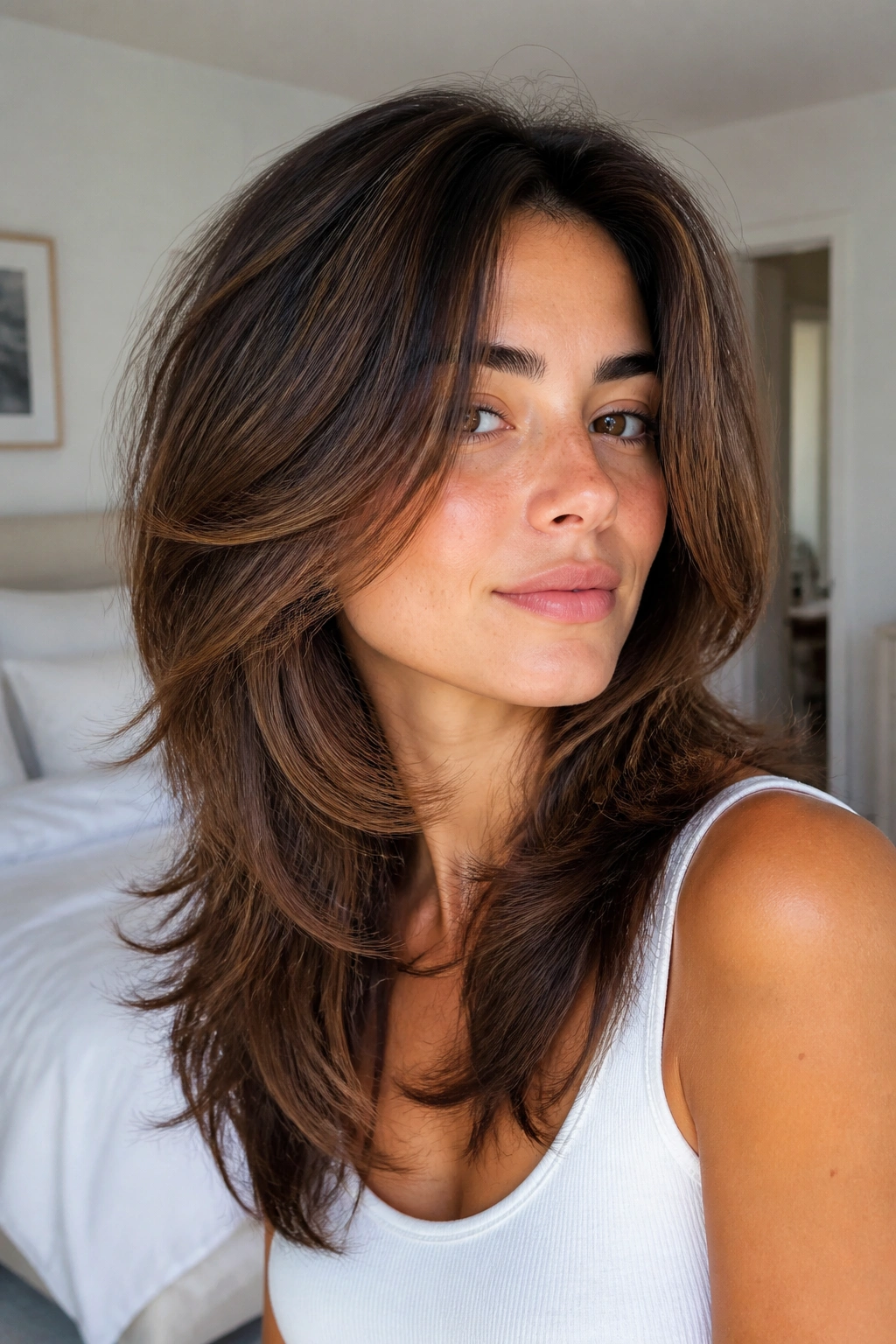
Butterfly layers are built for people who want the drama of shorter pieces around the face without giving up long hair. The upper layers hover around the cheekbones and chin, while the lower length stays long and full. On thick hair, that can be a smart compromise. You get lift near the face and a lighter feel around the shoulders.
This cut has a nice trick: it makes a blowout look bigger without making the whole head look overdone. That matters if your hair gets heavy fast. The shorter front sections bounce away from the face, and the back keeps its weight so the style does not fall flat.
I like this cut most on hair that already has some bend. Straight, heavy hair can wear it too, but the styling takes more time. Use a large round brush or a hot brush and turn the front pieces away from the face. You’ll see the shape immediately.
5. A Tapered Pixie That Knows How to Behave
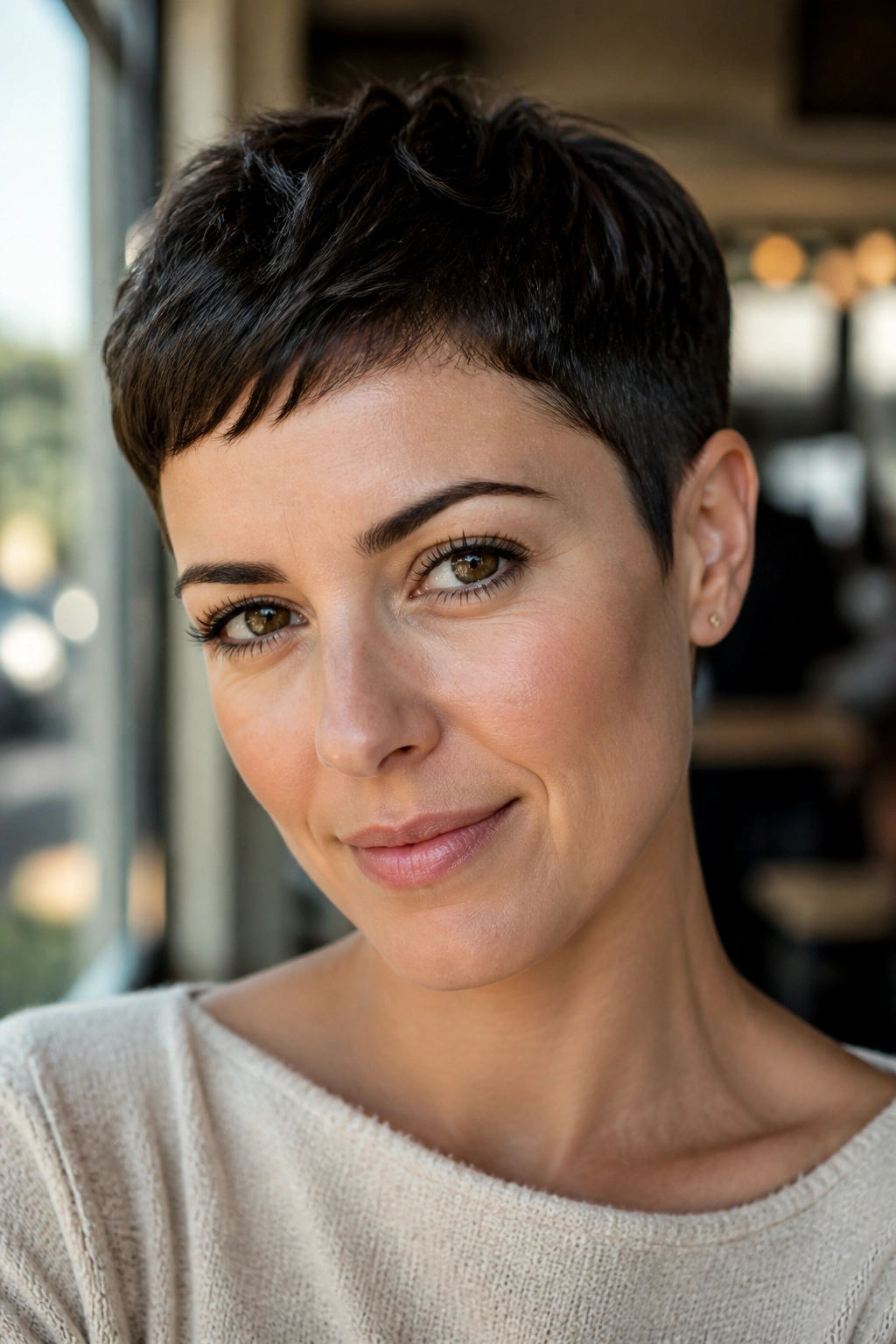
A pixie on thick hair is not a punishment. It can be one of the easiest cuts to live with if you like structure and hate spending twenty minutes wrestling your hair into place. Thick hair gives a pixie body, which means it doesn’t usually go limp by midday.
The catch is shape. A good pixie on dense hair needs tight sides, controlled nape length, and enough texture on top to keep it from puffing up like a mushroom. That balance makes the cut feel modern instead of bulky. If your hair grows out fast, plan on trims every 4 to 6 weeks. That part is non-negotiable.
Why it works
- Thick strands hold the cropped shape instead of disappearing
- The neck feels lighter right away
- Styling often takes less than 5 minutes
This is a strong choice if you like seeing your face. It is not the right move if you want to keep pulling your hair into a bun by default.
6. Rounded Mid-Length Hair
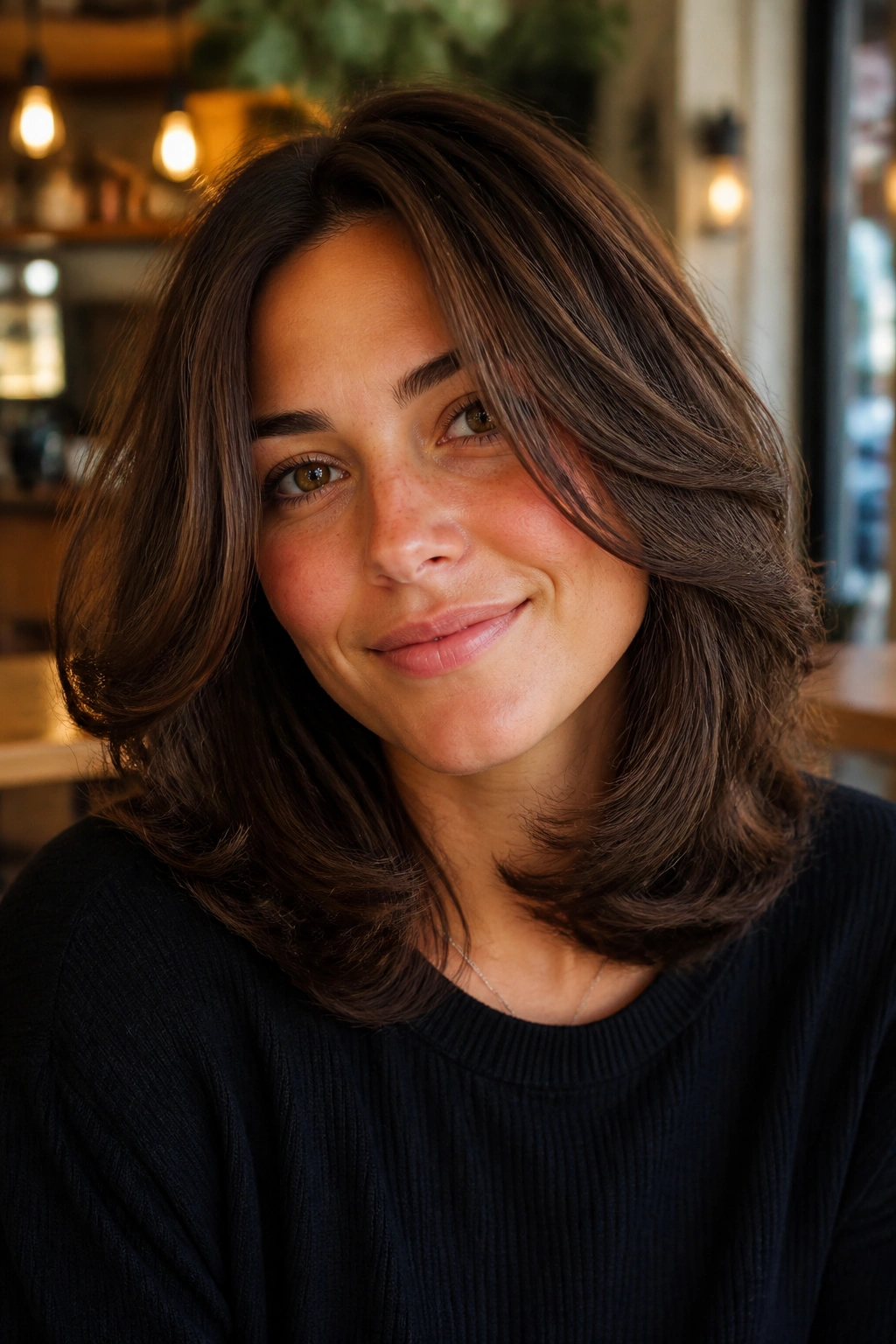
A rounded mid-length cut sits in that useful space between shoulder grazing and long. The outline curves gently instead of hanging straight down, which helps thick hair fall closer to the head and away from that triangle shape so many people fight.
The roundness matters. A square finish can make dense hair look wide at the sides. A soft curve keeps the silhouette smoother, especially if your hair has any wave at all. This shape also plays nicely with natural volume at the crown, which is a gift when you’re working with a lot of hair.
If you want something that looks tidy even when you air-dry it, this is one of the strongest options. Ask for minimal layering and a subtle internal removal of bulk near the jaw and shoulders. The result is full, but not puffy.
7. Chin-Length Bob for Thick Hair
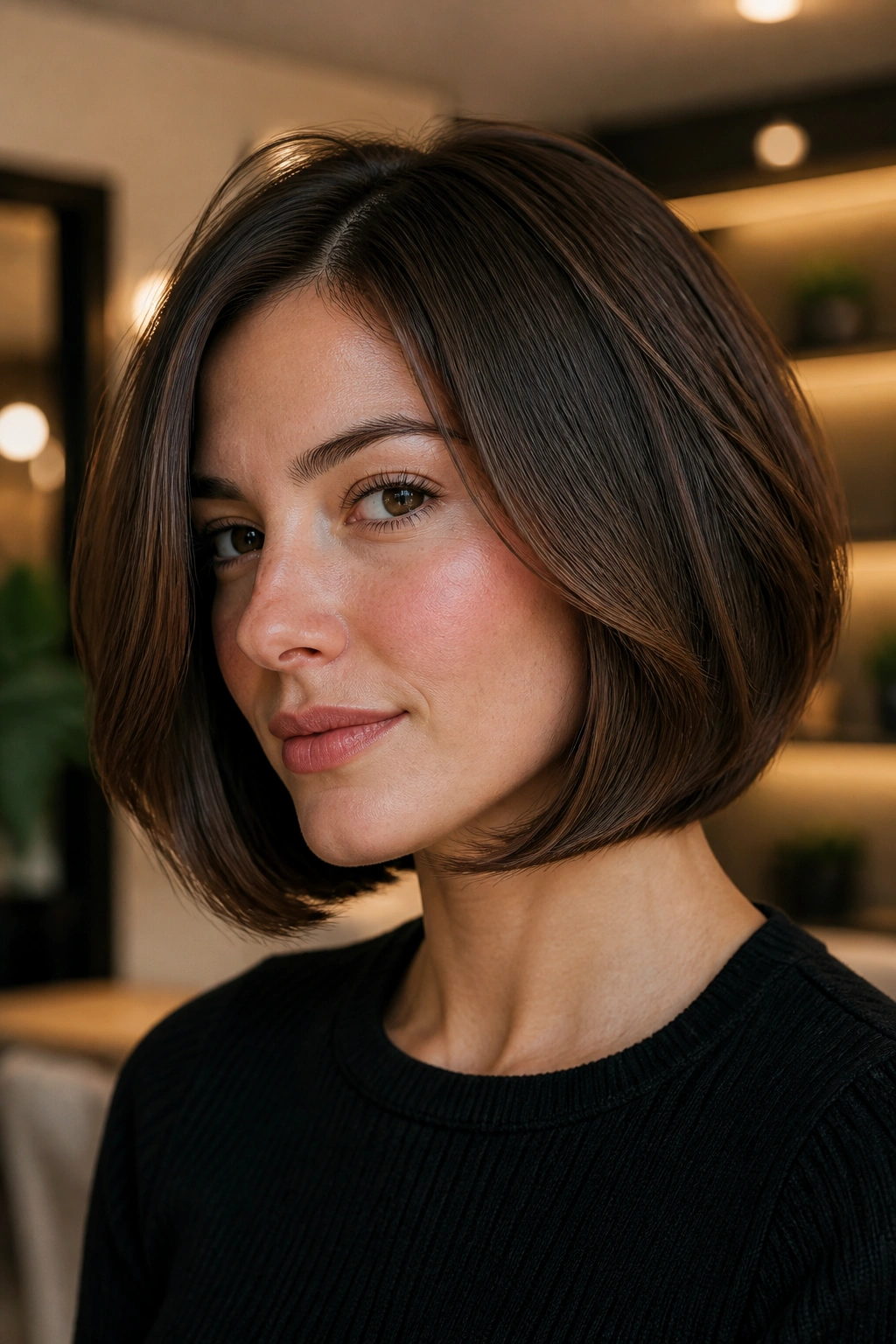
A chin-length bob can look amazing on thick hair, but only if the cut is precise. Too blunt and too wide, and you’ll get a blocky shape that sits out from the face. Done well, though, it gives thick hair a clean, expensive line and a lot of personality.
The best version usually includes a touch of interior weight removal so the bob doesn’t kick outward at the bottom. That matters a lot at this length. The hair sits close to the jaw, so every inch counts. If your hair is curly or very coarse, the bob needs even more tailoring. Otherwise, it can bloom wider than you want.
What to watch for
- The ends should lie flat or tuck slightly inward
- The shape should follow the jaw, not fight it
- A slight side part can soften the line fast
This cut looks best when the neck is visible. It is crisp. It does not apologize.
8. Face-Framing Layers That Start Low
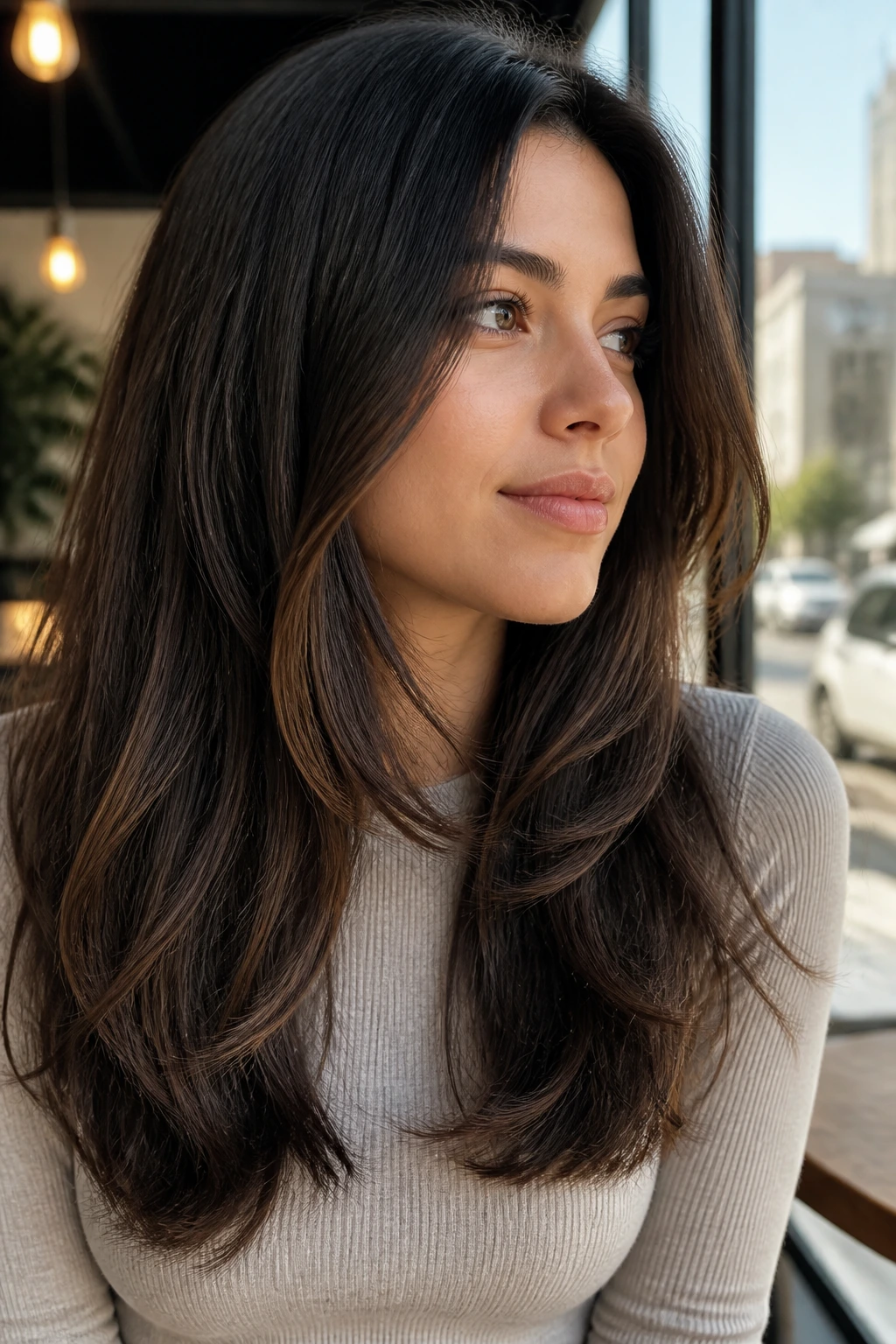
Face-framing layers are for people who want change without surrendering their length. On thick hair, they can be the easiest way to lighten the front half of the haircut without making the rest of it feel choppy. The key is where the layers begin. Too high, and you get a dated, feathered look. Too low, and the face frame barely shows up.
A better starting point is around the chin or collarbone. That gives the hair a soft sweep away from the cheeks and keeps the density from sitting like a curtain around the face. If you wear your hair up often, these pieces also make a simple ponytail look more styled.
I like this approach for readers who are nervous about layers. It feels like a small move, but it changes the whole mood of the cut. The haircut stays long. The face gets lightness. Nobody has to chop off six inches to make the hair behave.
9. The Mixie for Thick Hair
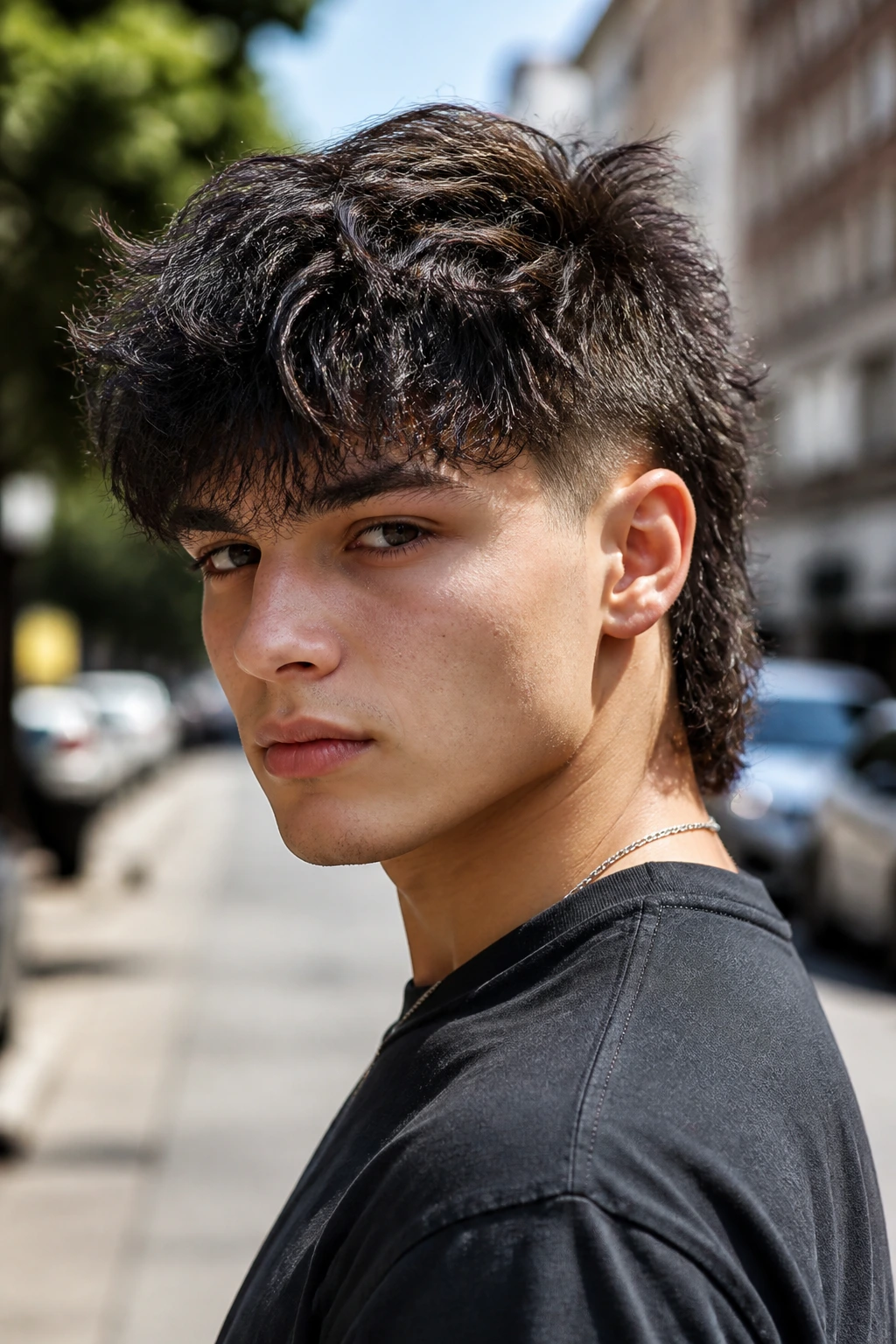
A mixie is the weird cousin of the pixie and the mullet, and that is exactly why it works. Thick hair gives it shape, so you don’t end up with the flat, wispy version that can happen on finer hair. You get texture on top, some length at the back, and edges that feel a little cooler than a classic short cut.
This is a strong choice if you want short hair but still want some movement around the ears and neck. The sides should stay tidy. The top should have enough texture to move, but not so much that it puffs up. If your stylist knows how to cut short hair on dense strands, this can be sharp and easy to wear.
It also grows out better than people expect. The back softens first, which can actually improve the shape for a while. Strange little haircut. Useful little haircut.
10. The U-Shaped Cut

A U-shaped cut keeps the length at the back fuller than a straight line would, while the front pieces sweep down a touch shorter. On thick hair, that slight curve makes the ends feel softer and more natural. It’s a quiet fix, but a smart one.
The U shape is especially helpful if you want to keep long hair from looking like one heavy sheet. It preserves fullness at the bottom while taking some of the weight off the sides. That means your hair can move instead of hanging like a curtain. If you wear your hair in braids or low buns a lot, this shape also gives you nicer texture when you take it down.
No drama here. Just a shape that makes long, dense hair look more intentional and less boxy.
11. Curly Layers That Follow the Curl Pattern
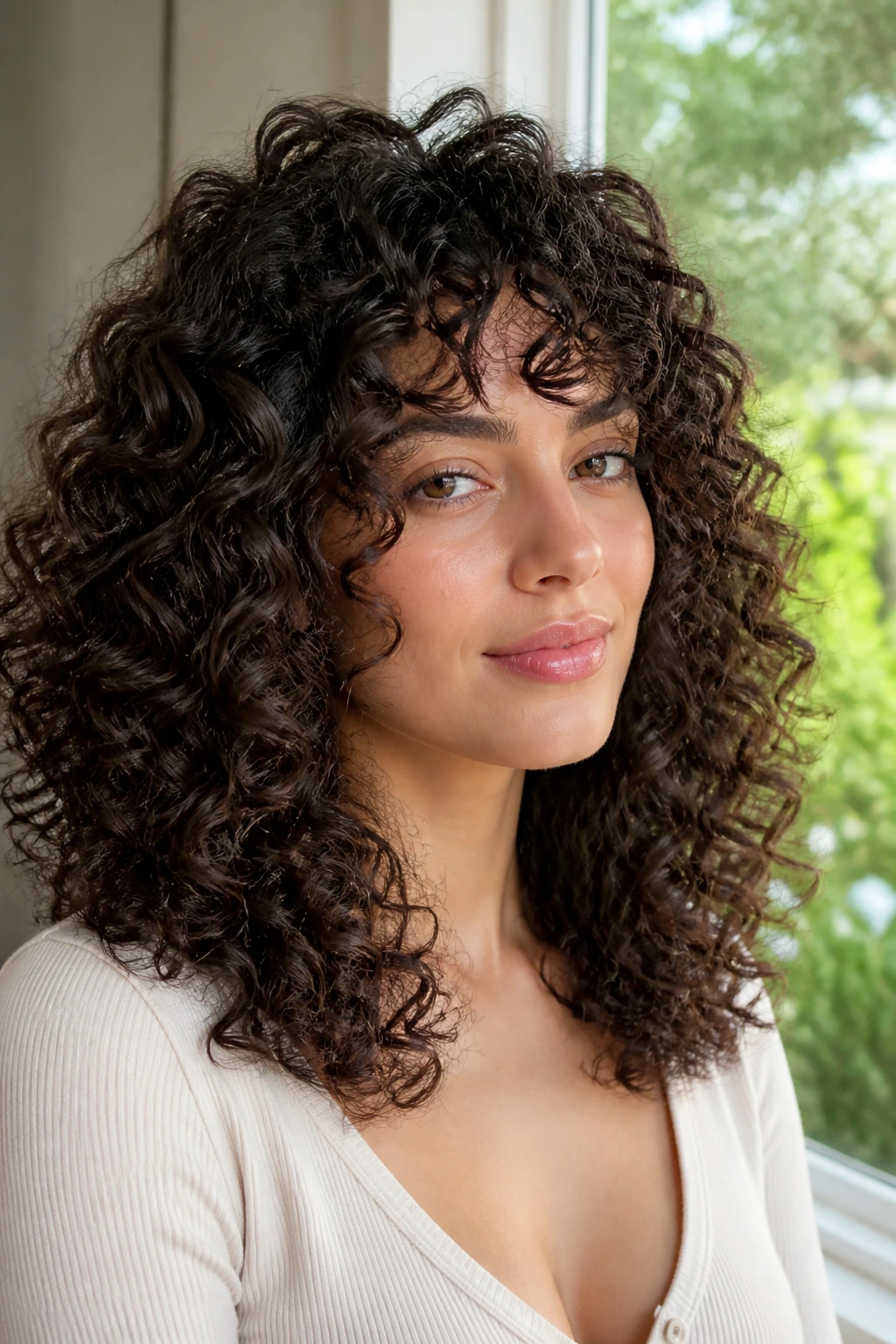
Curly thick hair needs a different kind of logic. A blunt perimeter can work for some curl patterns, but many people do better with layers that follow the way the curls stack. If the cut ignores the curl pattern, the hair can go wide at the sides or heavy at the bottom. That’s where the pyramid shape creeps in.
A good curly cut usually happens with the hair in its natural state or close to it. The stylist looks at where each curl wants to sit and removes bulk where the hair bunches up. That creates room for the curl to spring instead of fighting for space. Dry cutting is common for a reason. Wet hair lies.
How it should feel
- Light at the ends, not stringy
- Rounded through the sides
- Fuller at the crown without a shelf effect
If your curls shrink a lot, keep the layers conservative. Too much lift can change the shape more than you wanted.
12. A Soft Wolf Cut
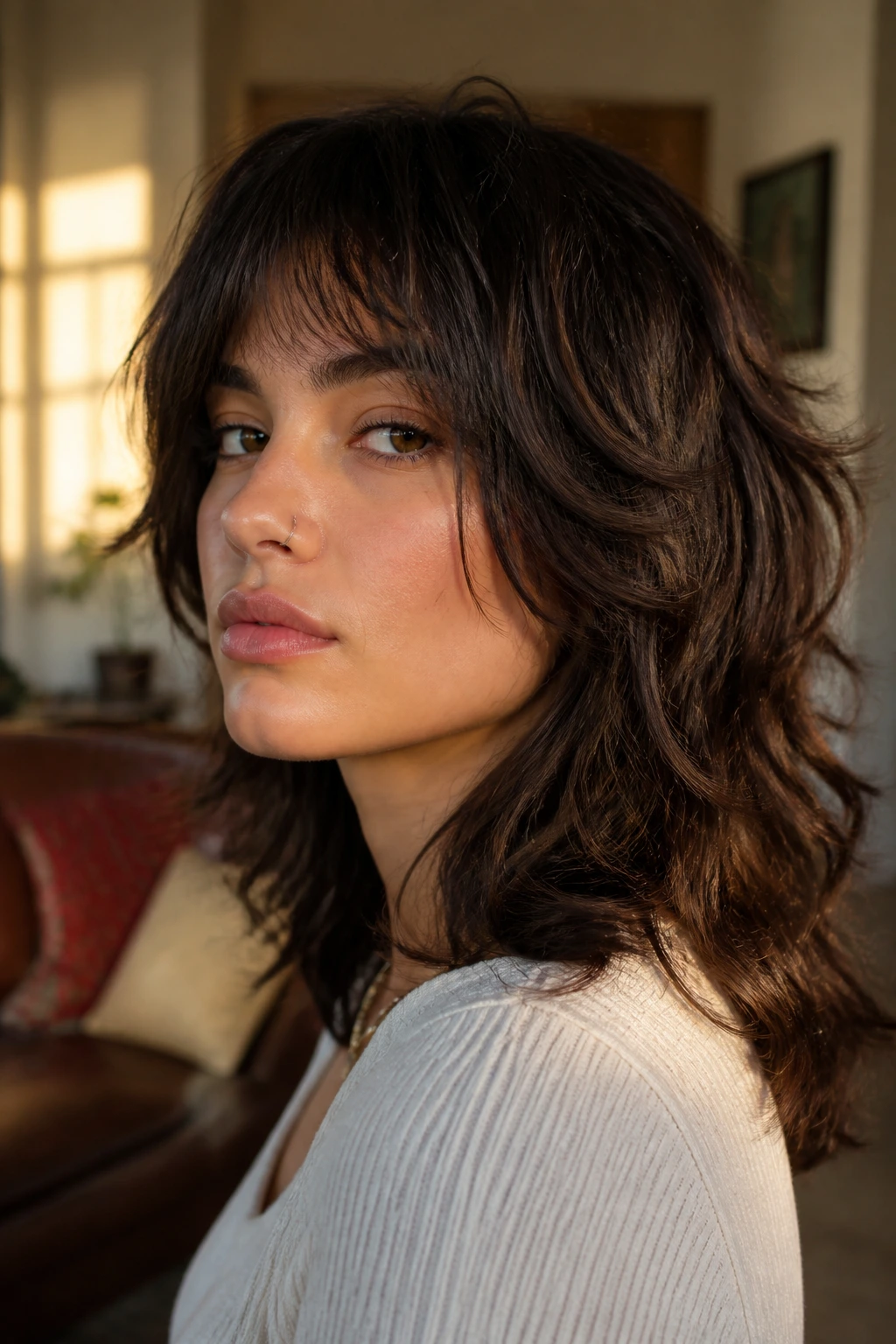
The wolf cut has a reputation for being loud, but the softer version is much easier to live with. On thick hair, it can remove heaviness around the crown and sides while keeping enough length at the back to avoid a mullet look that feels too sharp. The result is shaggy, yes, but not outrageous.
This cut works well if your hair has wave or loose curls and you like a little edge. It gives you movement without requiring a perfect blowout. You can air-dry it, rough dry it, or use a diffuser and let the shape do its own thing. That’s the appeal. It looks better when it is not too polished.
Ask for a version with softer disconnect between the top and the length. Hard contrast can look costume-y fast. Soft contrast just looks like hair with attitude.
13. The Asymmetrical Bob
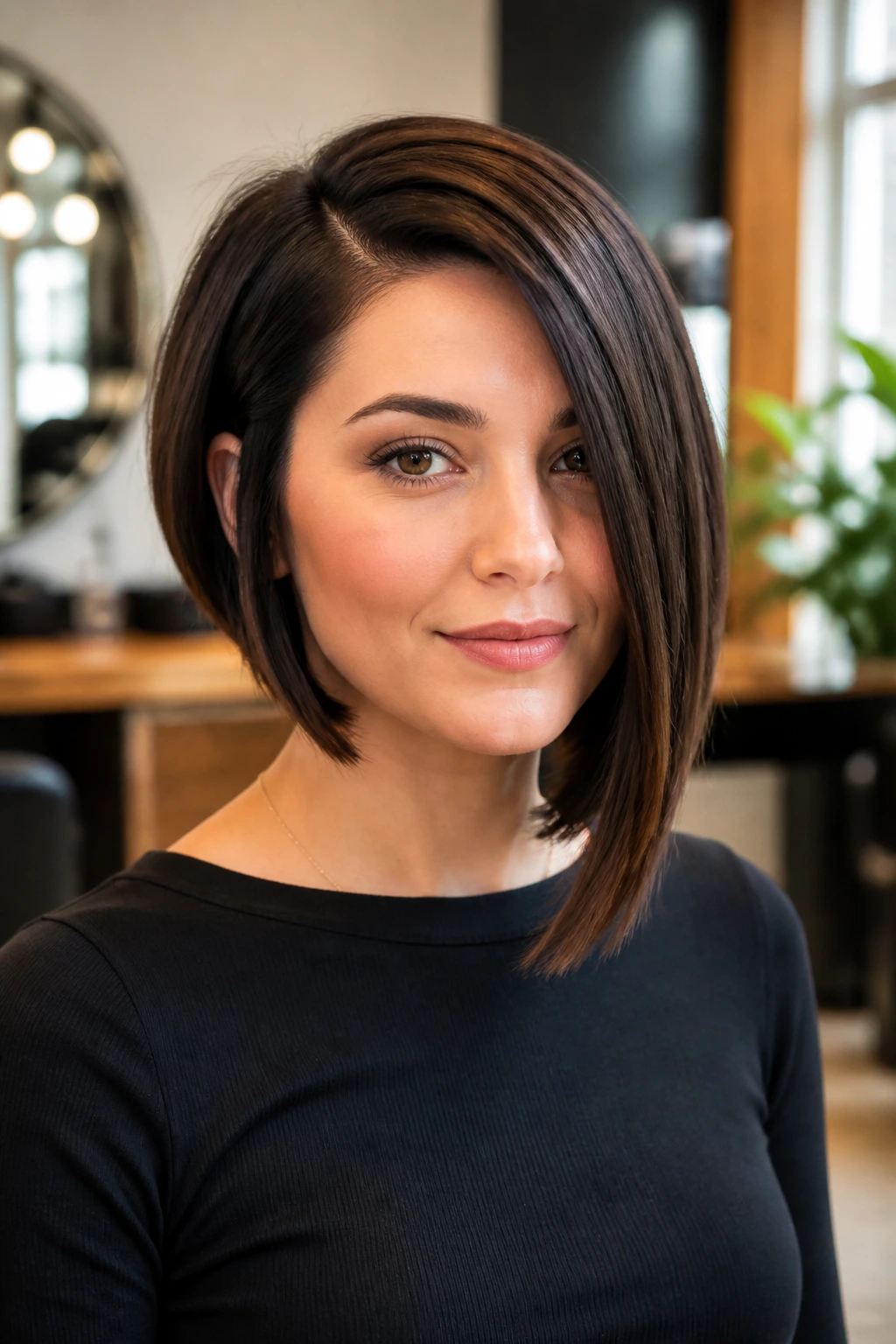
An asymmetrical bob is one of those cuts that sounds dramatic and then turns out to be practical. One side is slightly longer than the other, which breaks up the visual weight of thick hair. That little imbalance keeps the haircut from feeling too square or too heavy at the jaw.
This is especially good if your hair grows outward instead of down. The off-balance line gives your eye something to follow, and that makes the whole style feel lighter. It also works well with a side part, which helps the haircut fall more naturally if your hair has a strong growth pattern on one side.
You do need precision here. A sloppy asymmetrical bob looks accidental. A clean one looks deliberate and a bit sharp. That’s the whole point.
14. Shoulder-Length Hair With Internal Weight Removal
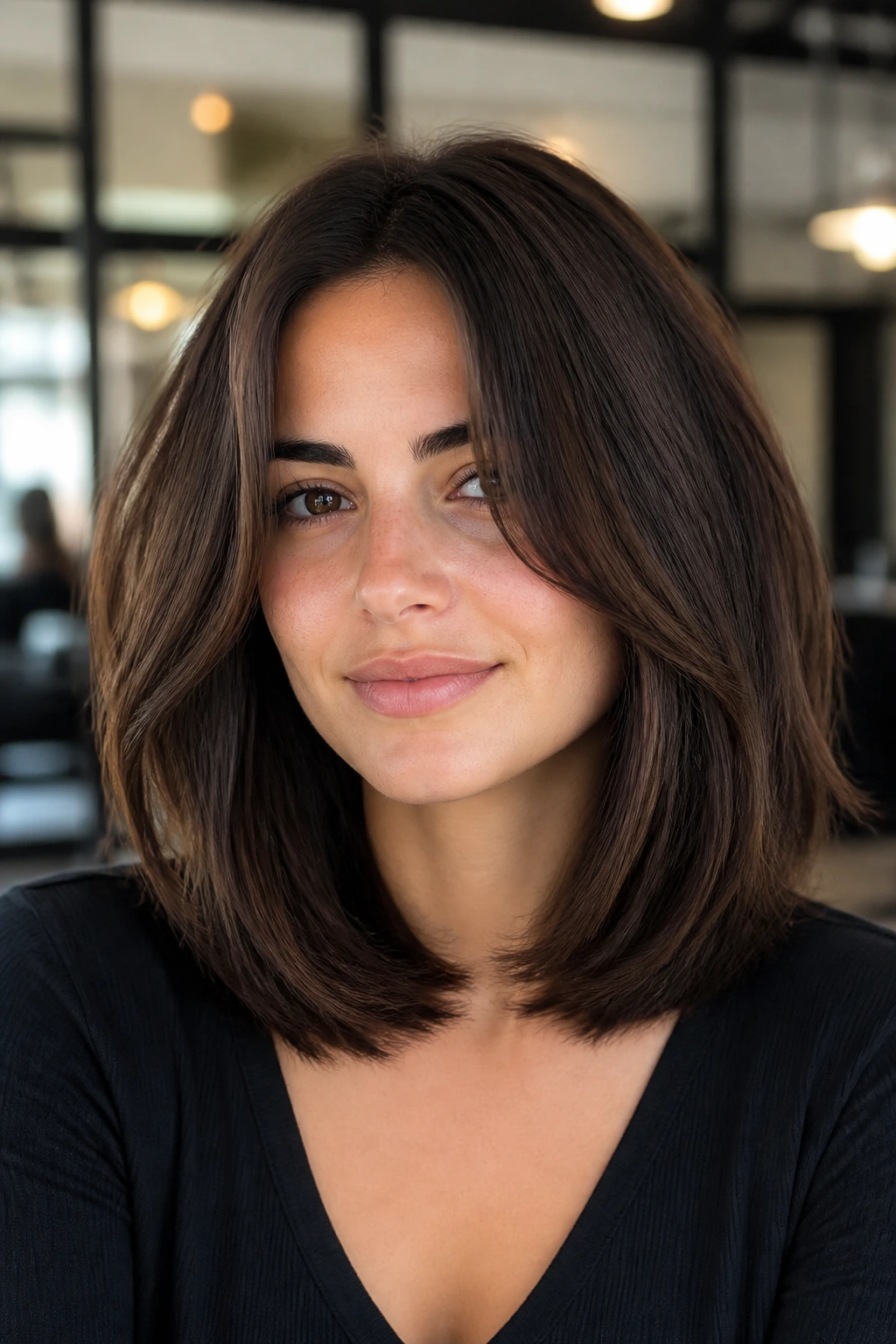
Shoulder-length thick hair is where many cuts go wrong. If the ends are too blunt and the inside is too full, the hair can sit out from the body in a way that feels bulky, especially at the collarbones. The fix is not always more layers. Sometimes it is smarter placement inside the haircut.
Internal weight removal means taking bulk out from the inside so the outer line still looks full. The surface stays smooth. The shape gets lighter. This is one of the reasons a good stylist matters so much on thick hair — the difference between a decent cut and a great one is often hidden inside the hair.
Practical details to ask about
- Interior debulking near the shoulders
- Soft layering around the face only
- No aggressive thinning shears unless your stylist really knows your texture
The haircut should fall, not balloon. That’s the test.
15. Curtain Bangs With Long Layers for Thick Hair
Curtain bangs can be a gift on thick hair because they use density instead of fighting it. A wispy fringe on thick hair often ends up looking too airy and needs constant repair. Curtain bangs, though, have enough body to split cleanly and sit with shape. Paired with long layers, they soften the face without forcing a big chop.
The sweet spot is usually between the brow and cheekbone, with the longest pieces blending into the cheek line. That keeps the bang from feeling separate. If your hair is coarse or bends easily, these bangs will need a quick round brush pass or a velcro roller while they cool. Not hard. Just a habit.
How to keep them from splitting
Use a small amount of mousse at the roots and blow-dry them forward first, then sweep them apart with your fingers. If you let them dry flat in the wrong direction, they can stick there all day. Thick hair is stubborn like that.
16. The French Bob
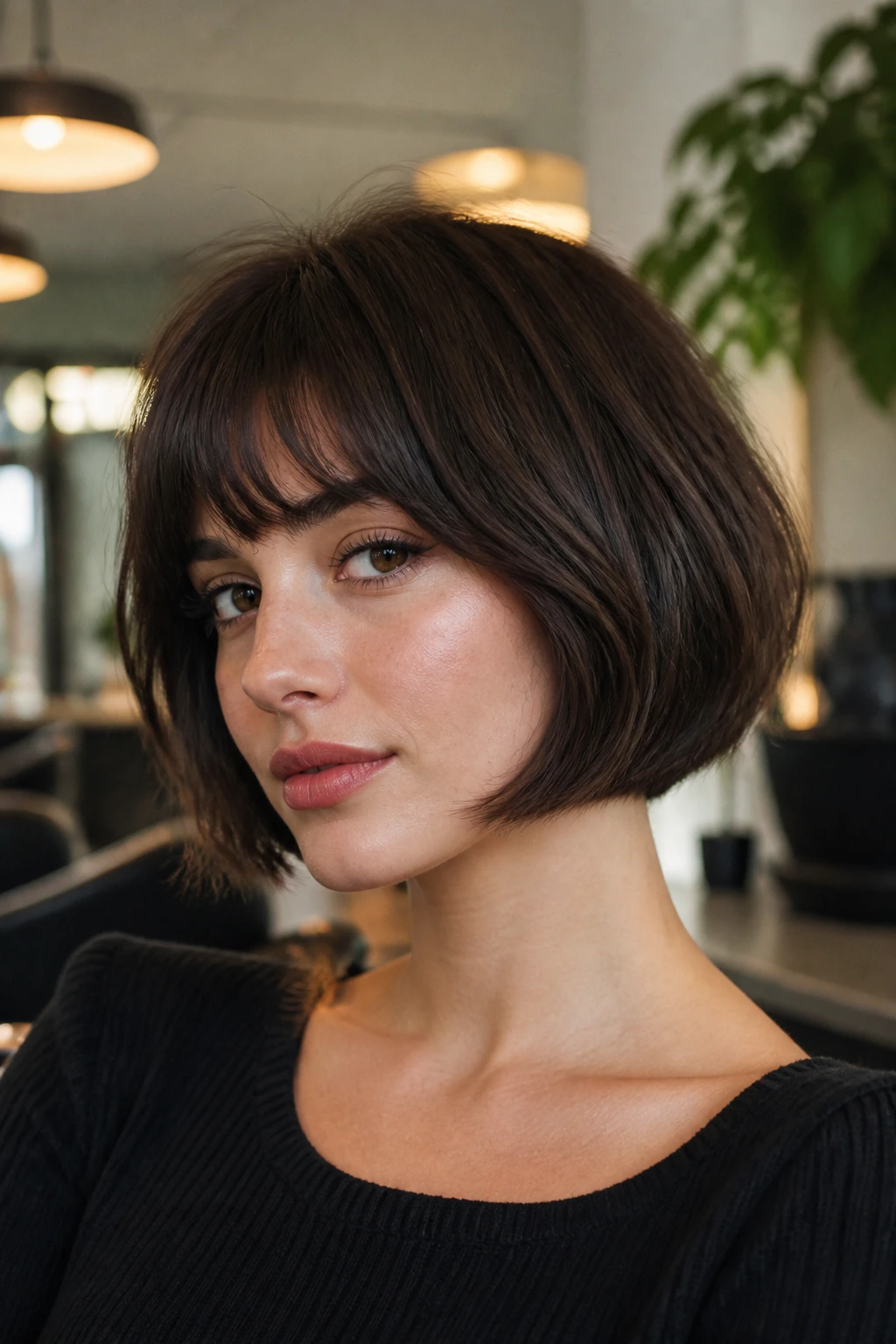
A French bob sits around the jaw and usually has a bit of fringe or a soft bend to it. On thick hair, it can look charming and crisp at the same time, which is rare. The shape works because it’s short enough to control the bulk but not so short that the hair loses its personality.
The key is not to over-texturize it. Thick hair already brings body to the table. A French bob needs some air, yes, but it also needs a clean edge so it doesn’t turn fuzzy. If your hair is straight or lightly wavy, this cut can be a fast morning style. A bit of cream, a rough dry, and you’re done.
Very curly or extremely coarse hair can still wear it, but the shape has to be customized. Otherwise the bob expands too much at the sides. And nobody wants a bob that looks like it has its own agenda.
17. The Angled Lob
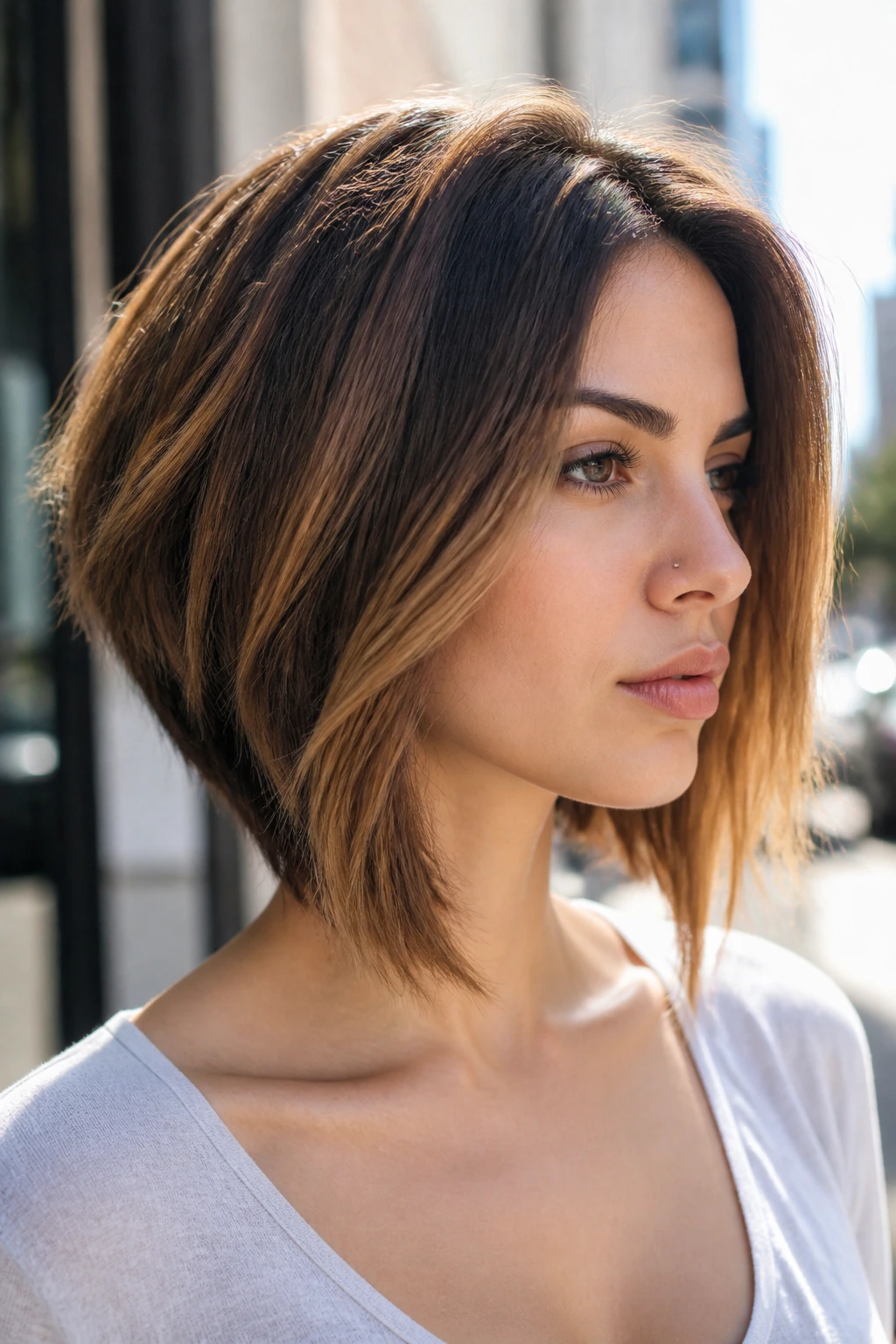
An angled lob is shorter in the back and longer in the front, which sounds simple until you see what it does on thick hair. That forward slope helps the hair fall away from the neck and keeps the front pieces from looking too heavy. It also creates a little visual lift, especially if your hair is dense enough to sit flat on top.
This cut is a nice middle ground if you want something cleaner than a shag but softer than a blunt bob. The angle gives the style motion without a pile of layers. That makes it easier to wear straight, tucked behind the ears, or with a loose wave.
It’s a smart option for people whose hair tends to feel too wide at shoulder length. The angle cuts that bulk down without making the whole cut short. I like that. It solves a real problem instead of decorating one.
18. A Soft Crop With a Tapered Nape
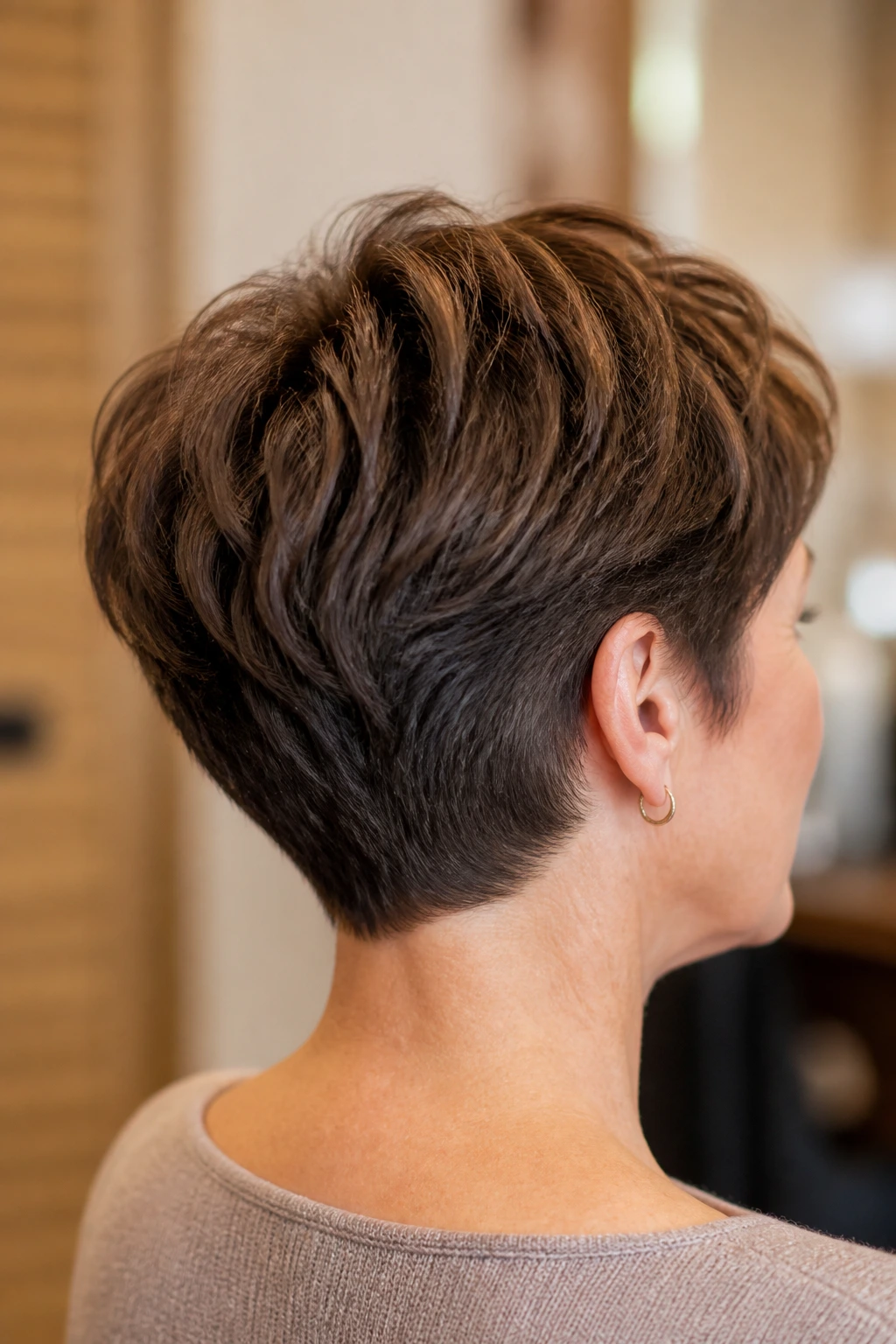
A soft crop gives thick hair a neat shape without making it severe. The nape is tapered close, the top stays a little longer, and the sides are shaped so they don’t puff out. If you want short hair that still feels feminine, relaxed, and easy to move around in, this cut deserves a look.
It’s especially good for coarse thick hair. Coarse strands have enough strength to hold the line, so a crop can look plush rather than flimsy. The shape also dries fast, which is one of those practical pleasures people forget to mention until they live with the cut.
Why people like it
- Less bulk around the neckline
- Quick styling with pomade or cream
- A tidy outline that grows out in a manageable way
This is not the same thing as a harsh undercut. It should feel soft at the edges, not shaved into a box.
19. Long Hair With Invisible Layers for Thick Hair
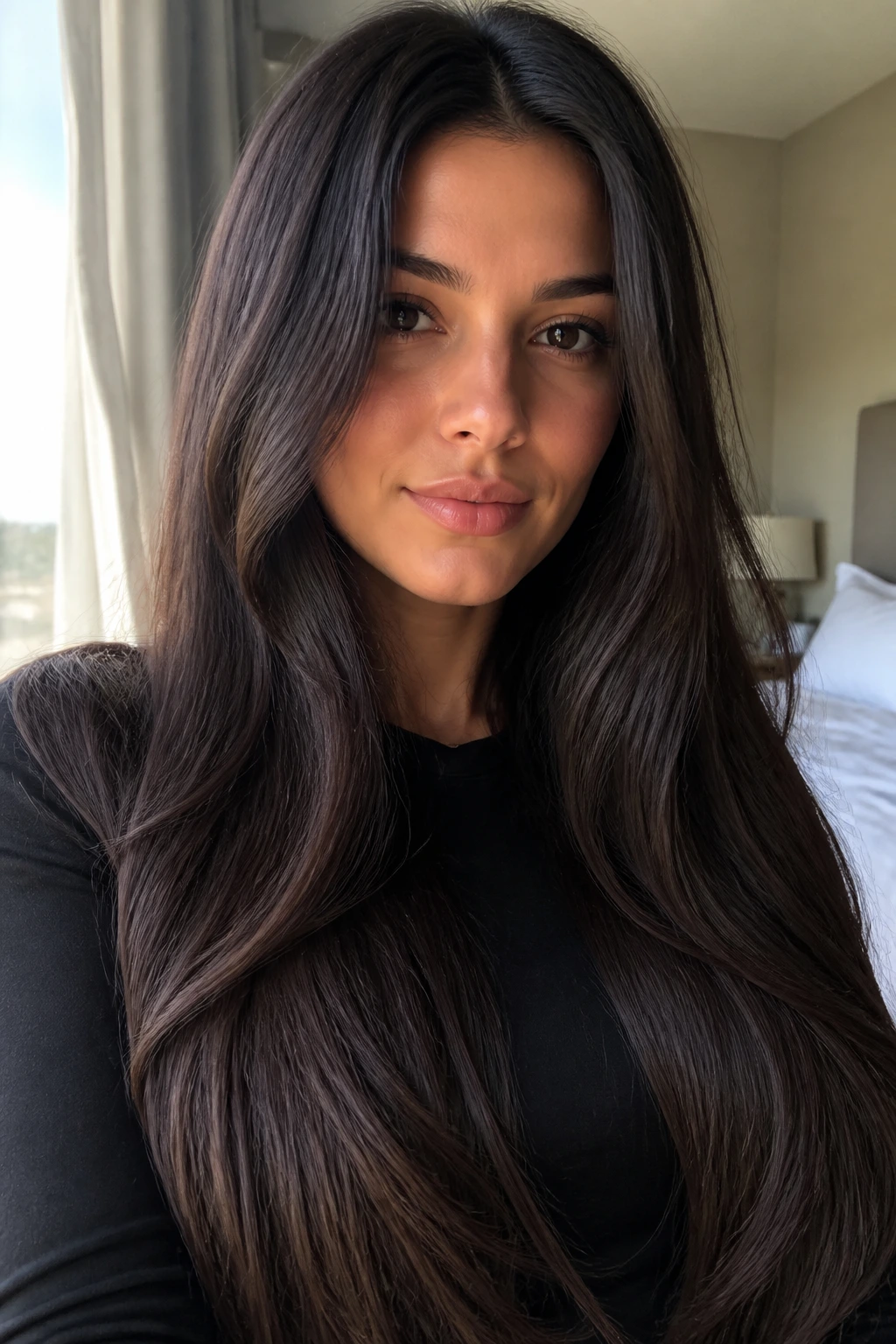
Invisible layers are the quiet answer for people who want long hair to stay long but stop feeling so heavy. The layers are cut deep inside the hair rather than in obvious steps, so the surface still reads as one long shape. That matters if you love length but hate the weight that comes with it.
The effect is subtle until you move. Then the hair swings a little more and sits closer to the head. It’s a useful trick for thick hair that’s straight or slightly wavy, because the outer line stays sleek while the inside loses some of the bulk. If you’re attached to putting your hair up, this cut also keeps the ponytail from feeling like a brick.
Ask for soft interior layering, not a choppy ladder of pieces. The goal is to make the hair behave better, not advertise the layers from across the room.
20. Graduated Layers With a Lifted Back
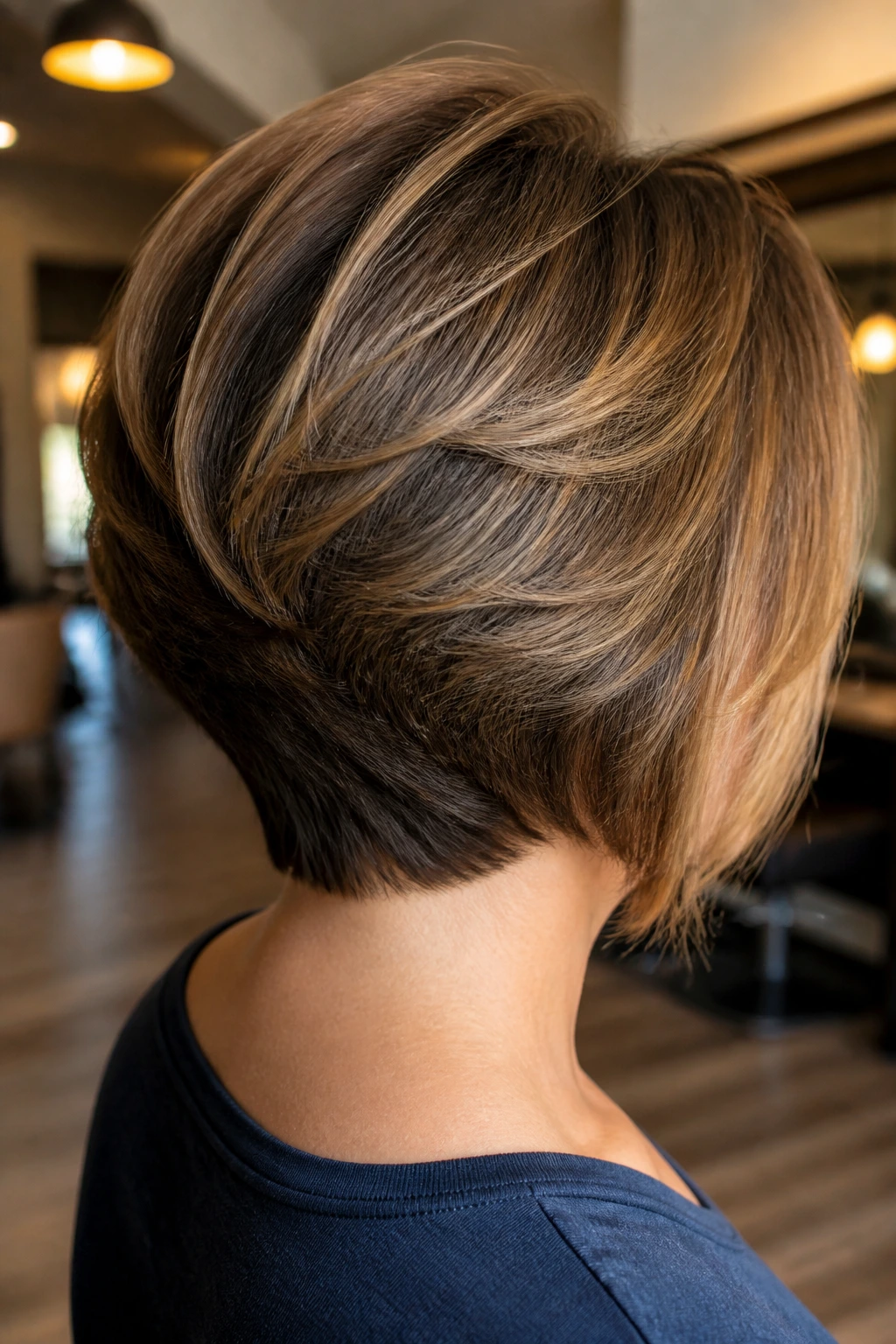
Graduated layers are the cut I’d choose for thick hair that feels heavy at the crown and flat near the roots. The hair is cut shorter in the back and gradually longer toward the front, which builds shape and lift where you want it most. It’s not as dramatic as a stacked bob, but it has a similar sense of structure.
This works well if your hair needs support at the back of the head and a little softness around the face. It can also help with thick hair that grows outward at the nape. The graduation helps the hair tuck in instead of kicking out. That detail matters more than people think.
If your hair is very dense, this cut can remove a lot of visual bulk without making the shape thin. If you wear a lot of high-neck tops or jackets with collars, you’ll probably notice the difference right away. The haircut sits better. Simple as that.
Final Thoughts
Thick hair does not need to be tamed into something small. It needs a shape that respects what it already does well. A blunt lob, a layered shag, a clean bob, or a long cut with hidden movement can all work — as long as the weight is placed with some care.
The real question is not whether your hair is too much. It’s where the hair is doing too much. Once you answer that, the right cut gets easier to spot, and the wrong ones start to look obviously wrong. That saves time in the chair and months of annoyance after it.
If you’re heading to a stylist, bring photos that show the silhouette from the side and the back, not just the front. Thick hair lives in those angles. That’s where the truth is.
