



Round faces are not hard to style. They just ask for a little strategy.
A blunt cut that lands right at the cheek can make the widest part of the face feel wider than it really is. The better move is usually more texture, more vertical line, and a little softness around the jaw so the cut shapes the face instead of fighting it. That’s why textured haircuts for round faces tend to work so well: they break up the edges, create movement, and keep the eye moving up and down rather than side to side.
Texture does a lot of the heavy lifting here, but texture is not the same thing as fuzz or frizz. A good textured cut is planned. It can come from point-cut ends, razor work, internal layers, feathering, or curls that have been shaped dry so they sit where they should. The goal is never to make hair look messy. It’s to make it look alive.
The nicest part is how many directions this can go. You can wear a cropped pixie with choppy top layers, a collarbone lob with broken ends, a shag with curtain bangs, or long hair with face-framing layers that start lower than the cheekbone. Different hair types need different tools, but the logic stays the same: build height, soften width, and avoid a hard line that stops right at the fullest part of the face.
1. Textured Curtain Shag
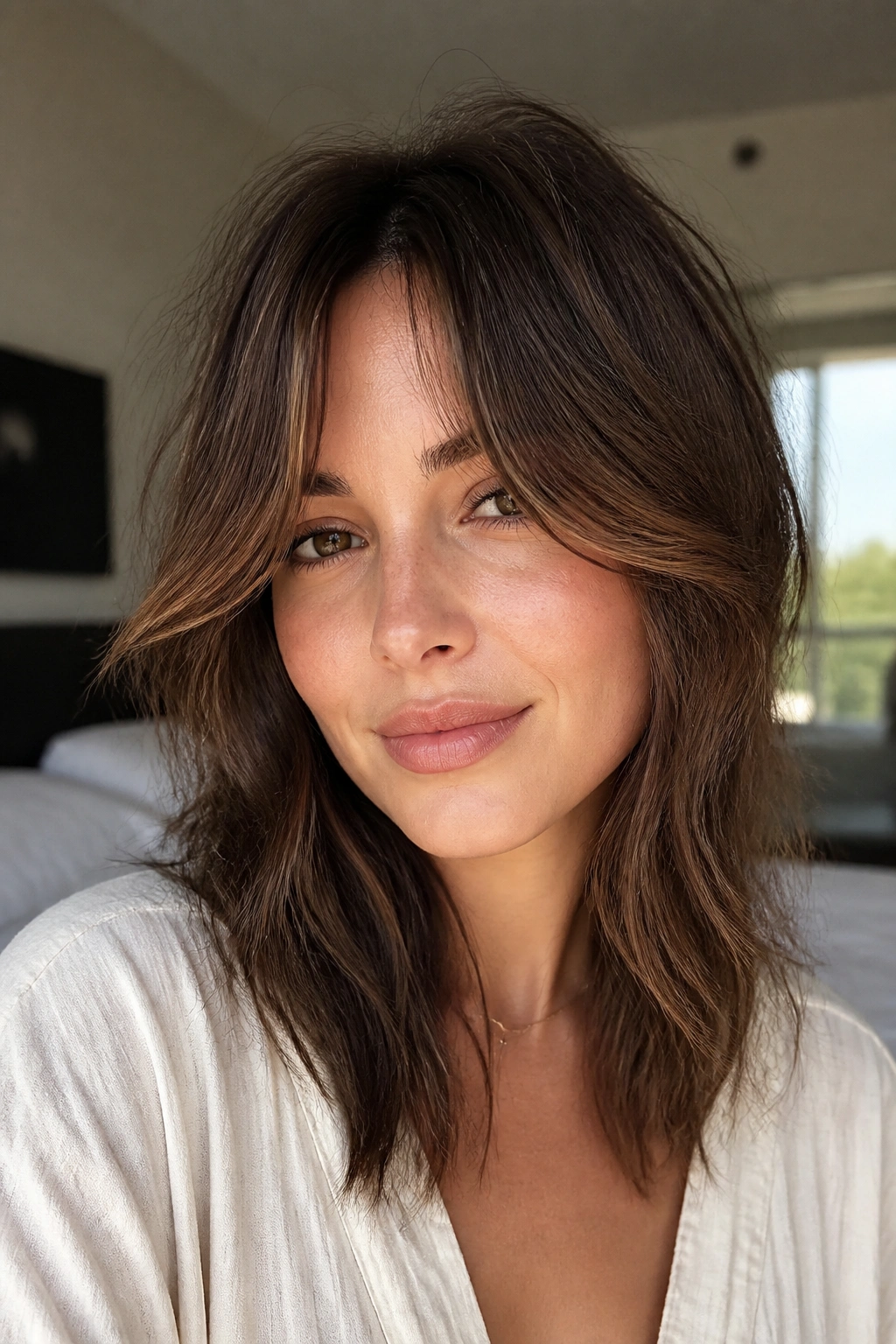
A curtain shag is one of the easiest places to start because it gives you movement without making the face look boxed in. The shorter pieces sit around the cheekbone and eye line, then drift longer toward the jaw and collarbone, which keeps a round face from feeling too wide at one spot.
Why It Works
The center part opens the face, and the curtain fringe creates two diagonal lines that pull the eye downward. That diagonal matters more than people think. Straight-across fringe can cut the face in half; curtain bangs let it breathe.
Ask for:
- Shortest face-framing pieces that start around the cheekbone, not the chin
- Soft, pieced layers through the crown
- Ends that are point-cut or razor-finished, not blunt
- A fringe that can split cleanly in the middle
Styling tip: Blow-dry the fringe forward first, then sweep it away from the face with a round brush or your fingers. That little bend keeps the front from collapsing flat.
2. Collarbone Lob With Shattered Ends
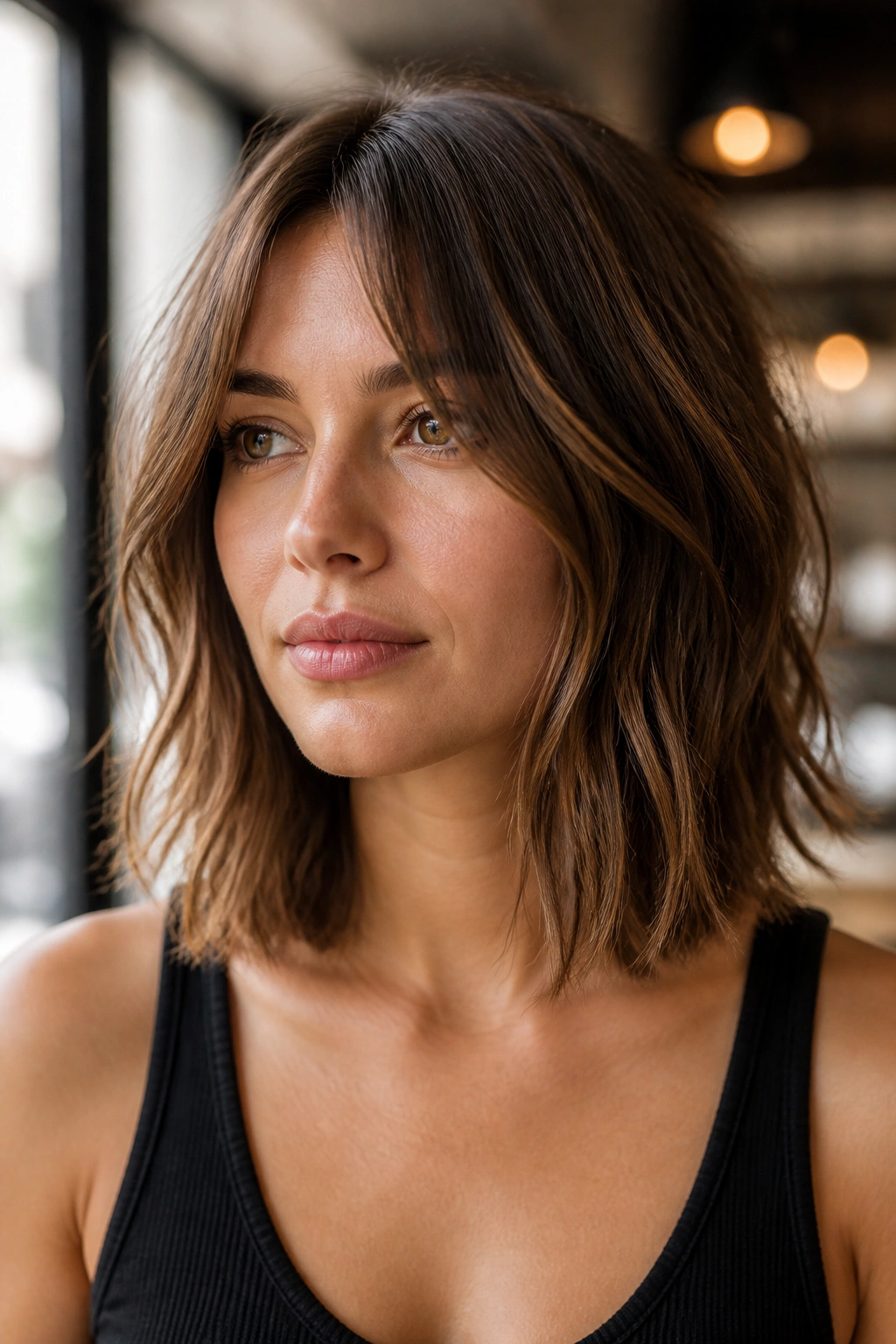
A collarbone lob is a safe bet, but it gets a lot better once the ends are broken up. The length skims past the widest point of the face, which is the whole reason this cut works so well on round faces. Add shattered ends and it stops looking heavy.
The Shape Detail That Matters
I like this cut most when the front is just a touch longer than the back. Not a dramatic angle. Just enough to make the line feel lifted. If the hair ends right at the jaw, it can feel boxy. A collarbone landing point is usually kinder.
You can wear it sleek, but it really comes alive with a loose bend through the mid-lengths. Think one-inch sections wrapped away from the face, then brushed out. That soft separation keeps it from looking too polished or too round.
Best for: medium hair, finer hair that needs the illusion of fullness, and anyone who wants length without committing to long hair.
3. Bixie With Crown Height
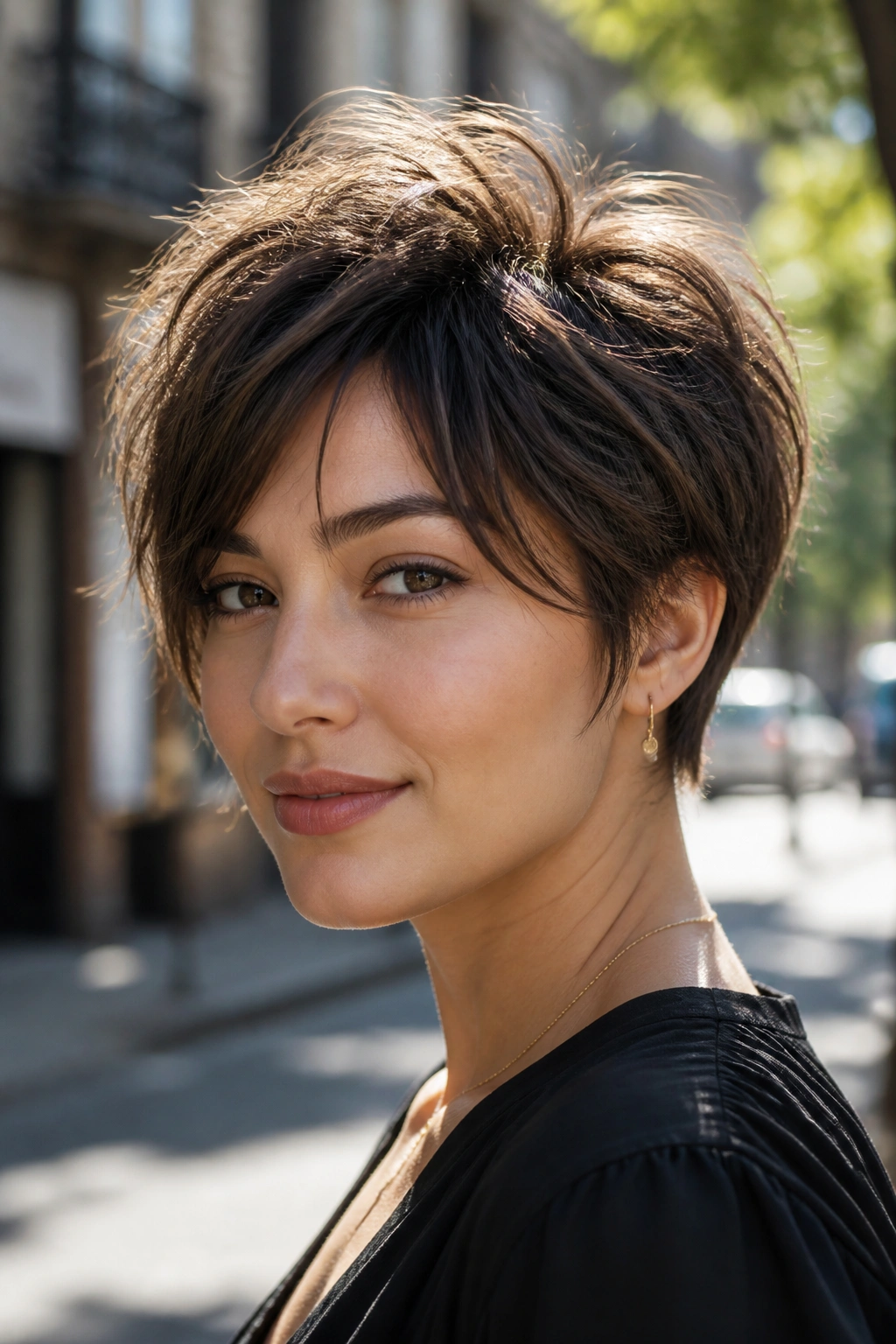
A bixie is the kind of cut that looks sharper in person than in a salon photo. It sits between a pixie and a bob, but the trick for round faces is all in the top length. You want lift at the crown and softness around the sides, not a mushroom shape.
What to Tell the Stylist
Keep the top pieces around 2 to 3 inches long so they can be pushed up and slightly forward. The nape should stay close to the head, and the sides should taper in a bit near the cheek. That keeps the width from building in the wrong place.
This cut is especially good if your hair falls flat fast. A tiny amount of root lift spray, then a quick blast with a small round brush, changes the whole mood of the cut. Without that lift, it can collapse. With it, the face looks longer and more open.
One warning: if the top is cut too short, the bixie can become rounder than the face it’s meant to flatter.
4. Asymmetrical Bob

If you want structure, this is the bluntest line I’d recommend for a round face. One side sits a little longer than the other, and that small difference creates a visual shift that makes the face look less circular. The effect is subtle. It does not need to scream for attention.
Compared With a Straight Bob
A one-length bob can sit like a frame around the cheeks. An asymmetrical bob breaks that frame. The side part helps too, because it changes where the weight sits and creates a longer line through the front.
This cut works best when the longer side falls below the chin by at least an inch. Shorter than that, and you risk landing right on the widest part of the face again. If your hair is straight, a little wave through the ends keeps it from reading too rigid.
Ask for a soft diagonal, not a dramatic slant. Too much angle can feel dated fast, and too little won’t do enough.
5. Butterfly Cut With Cheekbone Layers
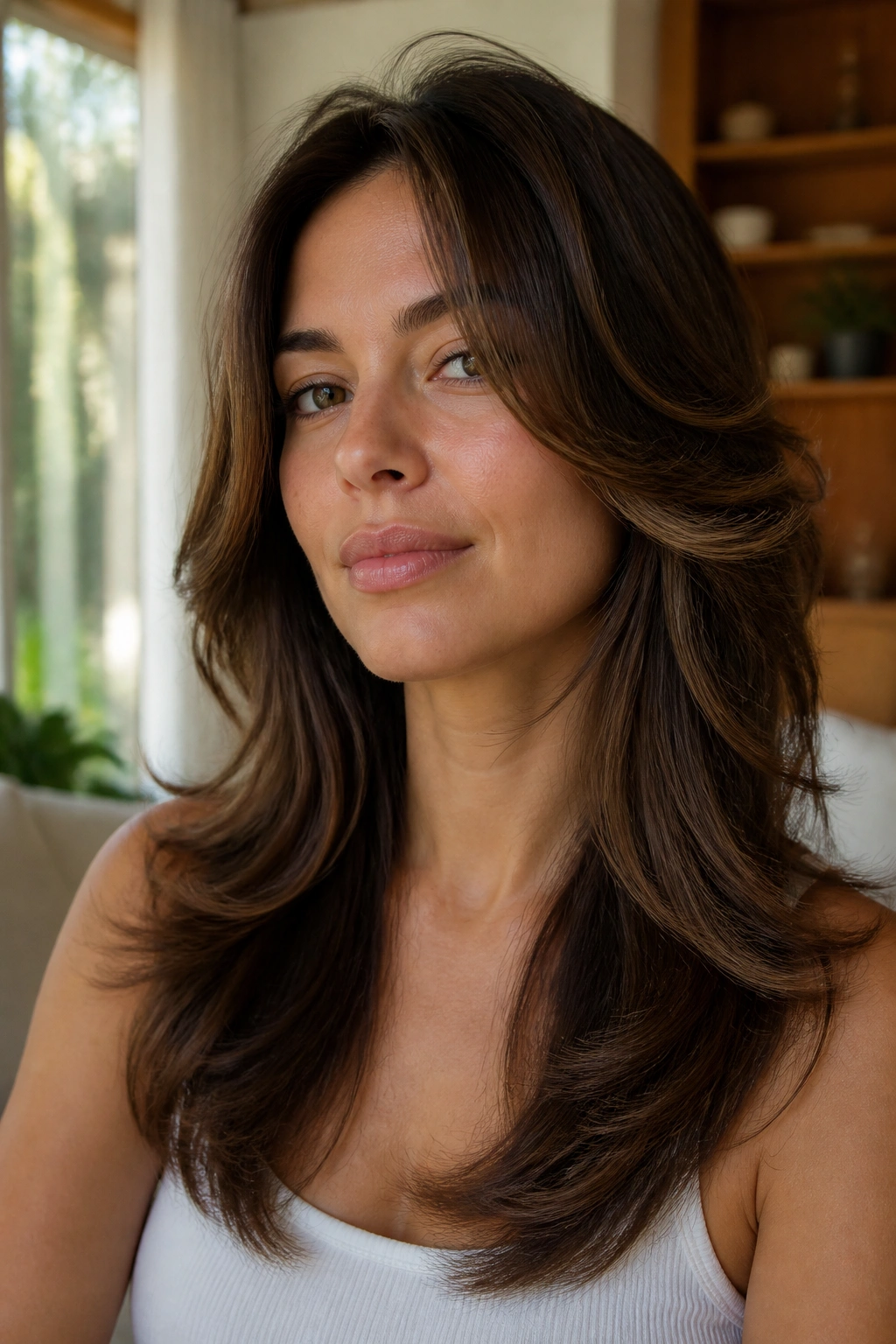
Does a butterfly cut sound too big for a round face? Not if the layers are placed well. The trick is to keep the length but carve out shorter pieces around the cheekbone and jaw so the top has movement and the bottom still falls long.
How to Wear It
The upper layers should be light enough to flip away from the face. The longest layer can stay well past the shoulders, which gives the face room to look longer. That’s the whole appeal here: volume on top, length underneath.
It’s a good cut for hair that gets heavy. A round face often looks better when the hair has some lift through the crown instead of a solid curtain of weight on the sides. Blow-drying with a large round brush gives the layers a soft bend, and that bend is what keeps the cut from feeling flat.
What to Watch For
- Don’t let the shortest pieces land right at the cheeks
- Keep the face frame soft, not choppy
- Ask for movement, not a lot of short layers all over
6. Long Layers With Face-Framing Pieces
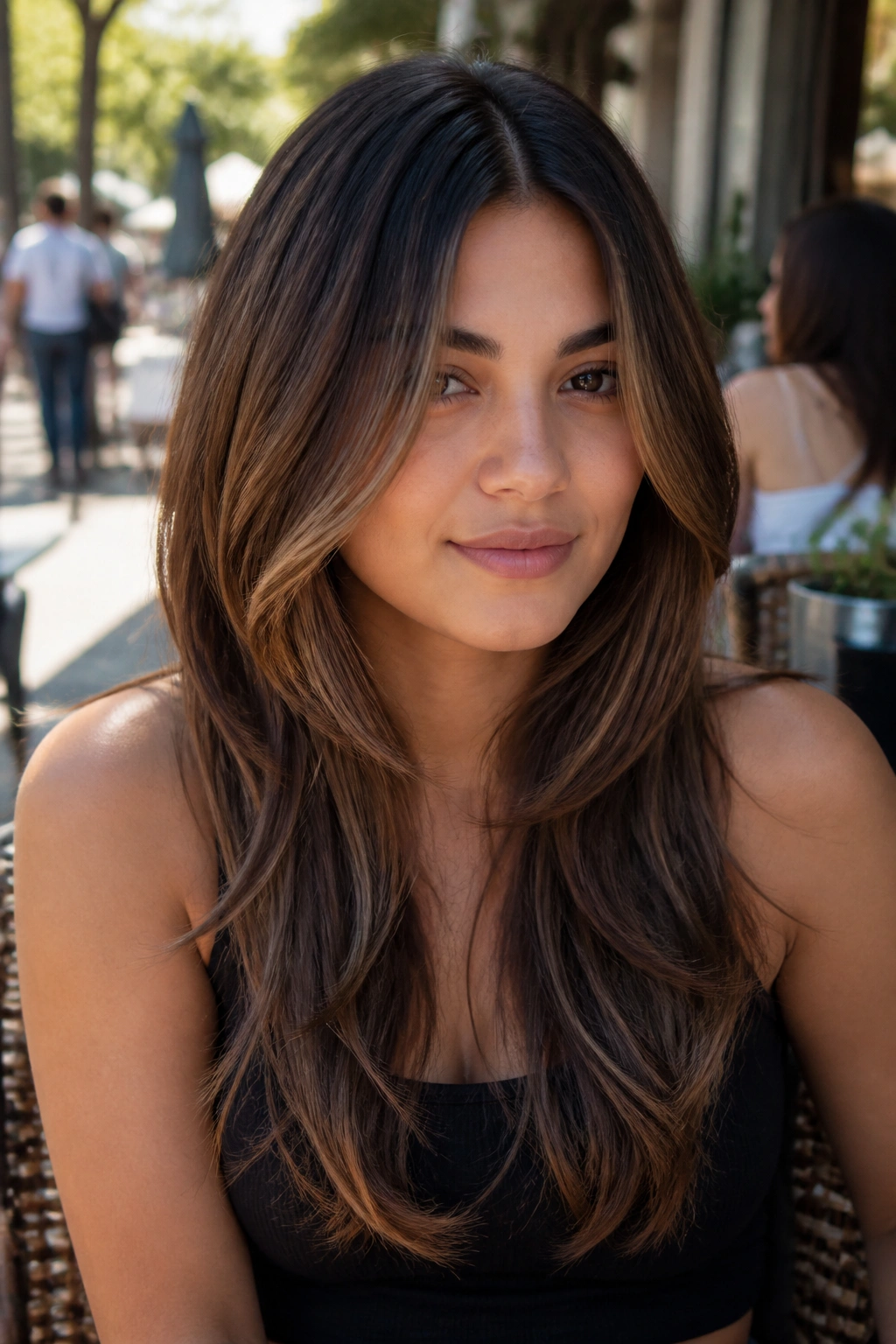
Long hair can work beautifully on a round face, but plain long hair can also drag the whole look down. Long layers fix that. They remove bulk without chopping the length, which means you keep the softness of long hair while giving the face a cleaner outline.
The face-framing pieces matter most when they start around the lip or just below the chin. Anything shorter can widen the cheeks if the hair is thick. Anything too long can miss the point entirely. The sweet spot is a layer that bends around the face instead of sitting on it.
This is the cut I’d hand to someone who says, “I want change, but I’m scared of losing length.” Fair enough. You don’t need a dramatic haircut to get a better shape. You need the right layers in the right places.
A center part works fine here, but a soft off-center part often gives the face more lift.
7. Wolf Cut With Soft Edges
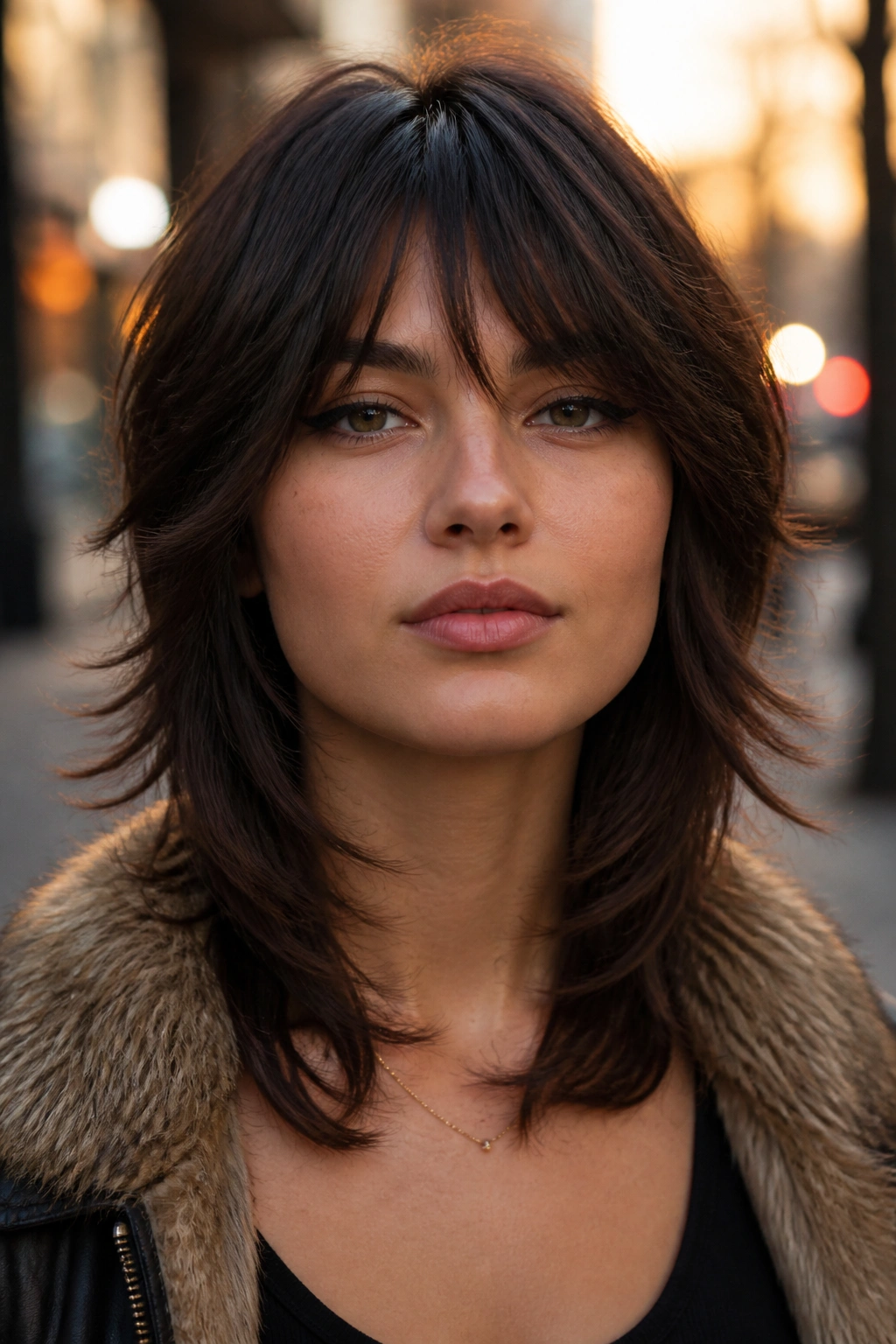
A wolf cut can be rough and cool-looking, but on a round face I like it best when the edges are softened. You still get the shag-meets-mullet shape, just with less bite around the cheeks.
Why It Flatters Rounder Features
The shorter crown layers create height, and the longer perimeter gives the face a bit of vertical length. That contrast is the whole point. If the top and bottom are too close in length, the cut can turn into a puffball. You do not want that.
For straighter hair, use a texturizing spray and rough-dry with your hands. For wavy hair, scrunch in a light mousse and let it set naturally. The pieces should separate a little, not clump into hard spikes. That’s the difference between a good wolf cut and a costume.
Pro tip: keep the front pieces a touch longer than the highest crown layers. It makes the face look more open, not shorter.
8. Side-Swept Layered Pixie
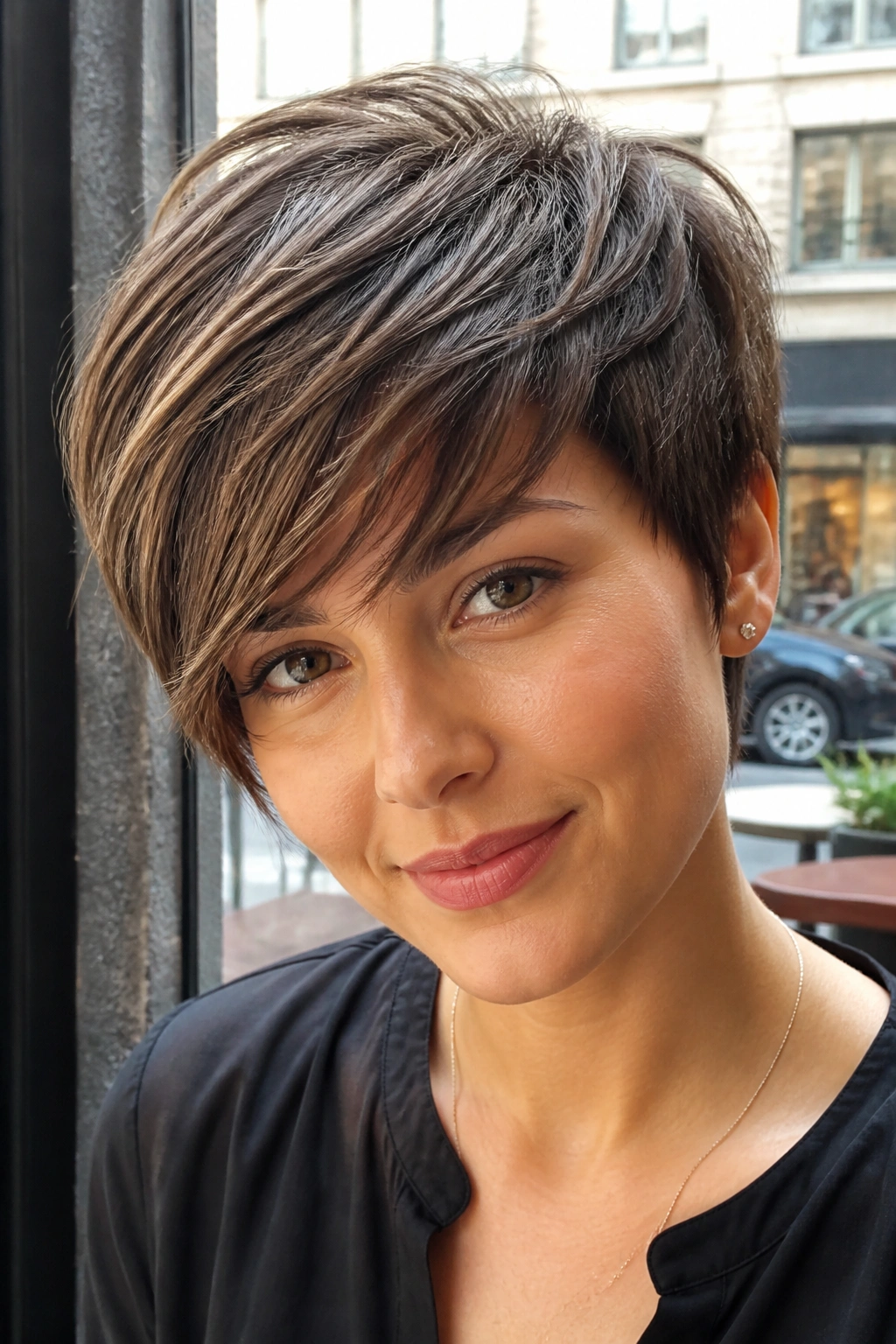
A side-swept pixie has a real advantage on round faces: it redirects attention. Instead of sitting symmetrically around the cheeks, it moves the eye across the face in a diagonal line, which gives the whole shape more length.
What Makes It Different
The fringe should fall heavy enough to sweep, but not so heavy that it becomes a curtain. The top needs enough length to be styled over, and the sides should stay tapered close to the head. That keeps the width under control.
This cut is a good fit if you like short hair but don’t want a severe crop. It feels softer than a classic pixie because the top has motion. A little pomade, warmed between the fingers, is usually enough. Work it only through the ends and the fringe. If you put product everywhere, the cut loses its lift.
Short hair on a round face can be excellent. It just has to be shaped with purpose.
9. Bottleneck Bangs and a Textured Lob

Bottleneck bangs sit in a nice middle zone. They start narrow at the center and open wider near the cheekbones, which makes them a smart pairing with a lob. The face gets framing without a hard horizontal line.
Why This Combo Works
The lob gives you length past the jaw. The bangs keep the front interesting. Together, they make the face feel longer and the hair feel lighter. It’s a neat little fix for people who want bangs but don’t want the harshness of a full blunt fringe.
A textured lob with this fringe should not be one-length. The ends need a bit of breakup so the whole cut moves. If your hair is thick, ask for internal debulking under the surface. If it’s fine, keep the layers subtle so the hair doesn’t lose body.
That opening at the center of the bangs is key. It lets the forehead show through, and that helps a round face feel less enclosed.
10. Curly Shag With a Rounded Silhouette

Curly hair and round faces are a tricky pairing only when the shape gets too wide at the sides. A curly shag solves that by putting the right layers in the curl pattern itself. The silhouette stays rounded, but it’s not boxy.
The Curly Detail That Matters
Dry cutting helps here. Curls shrink, and if the layers are cut too aggressively when wet, the shape can jump up in strange places. A good shag for curls respects the curl family and lets the hair fall where it wants to.
Keep some length around the front so the cheeks don’t become the widest point. The top layers should encourage lift without creating a triangle. That’s the line to watch. A diffuse, airy crown looks good. A puffed-out side triangle does not.
A light cream or gel on damp curls can help the layers clump in a way that shows off the cut instead of fighting it.
11. Razor-Cut Shoulder Cut
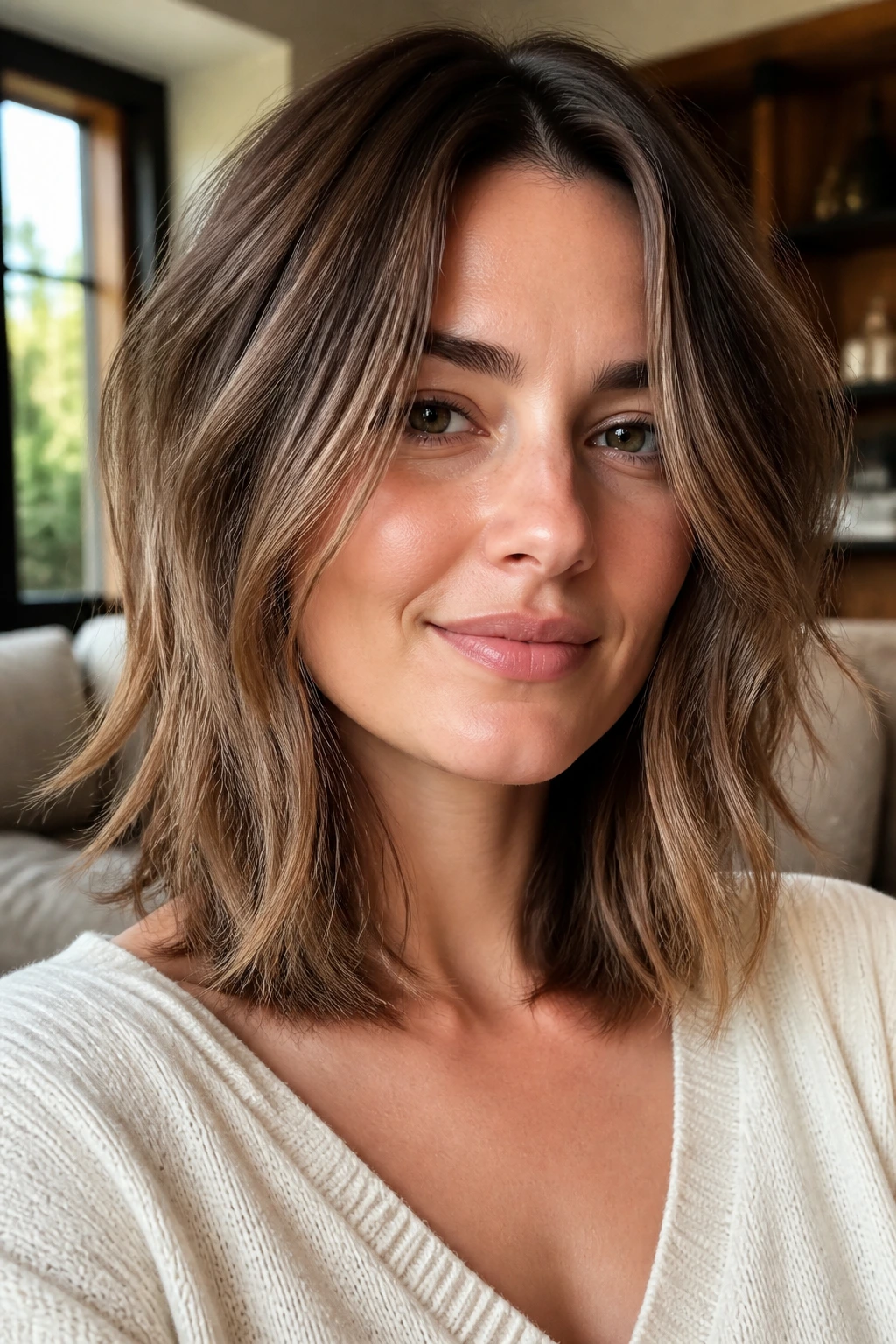
Razor cutting gives shoulder-length hair a broken, airy edge that can be a gift for round faces. The ends don’t sit as one hard line, so the face gets softness instead of a wall of hair at cheek level.
Ask For the Right Version
Not every hair type likes a razor. Very fine or damaged hair can look wispy if the blade is used too aggressively. But on healthy medium-texture hair, a razor-cut shoulder shape can look clean and lived-in at the same time.
The front pieces should fall below the jaw and move gently toward the collarbone. If the shortest face frame lands too high, the face can feel fuller. If the texture is spread through the lower half, the cut feels lighter without losing shape.
This is a nice option if you want a cut that air-dries decently. A little scrunching cream and a bend through the ends often does enough. No fussy styling needed.
12. Feathered Midi Cut

Feathering does a very specific job: it breaks up the hair so it doesn’t sit in one solid block. On a round face, that’s useful because it creates vertical movement and keeps the sides from swelling out too much.
The midi length gives the face room, and the feathered layers stop it from feeling heavy. This cut has a bit of a soft blowout look to it, which is why it often reads elegant without trying too hard. I’m fond of it for thick hair that tends to sit flat at the top and bulky at the bottom. Feathering solves both problems at once.
Styling Note
Use a large round brush and direct the front layers away from the face. That outward bend opens the cheeks. A little shine spray on the ends helps the feathering look clean instead of frayed.
If you like a softer, more polished result than a shag gives, this is a good middle road.
13. Deep Side-Part Bob

A deep side part can change a round face faster than a lot of people expect. It breaks the symmetry, adds a diagonal line, and gives the top a little lift. Pair it with a bob that sits just below the chin, and the result is neat but not severe.
The Balance Point
The bob should not end exactly at the widest part of the face. That’s the trap. Make the line either a little shorter and angled, or a little longer and broken up. I prefer the longer route, because it keeps the jaw from looking crowded.
A side-part bob works well when the ends are textured with point cutting. That texture keeps the edge from feeling helmet-like. If the hair is stick straight, a slight bend under the ends helps the cut sit closer to the neck and less flat against the cheeks.
It’s a clean shape. Very clean. And the side part keeps it from reading too round.
14. Micro Shag
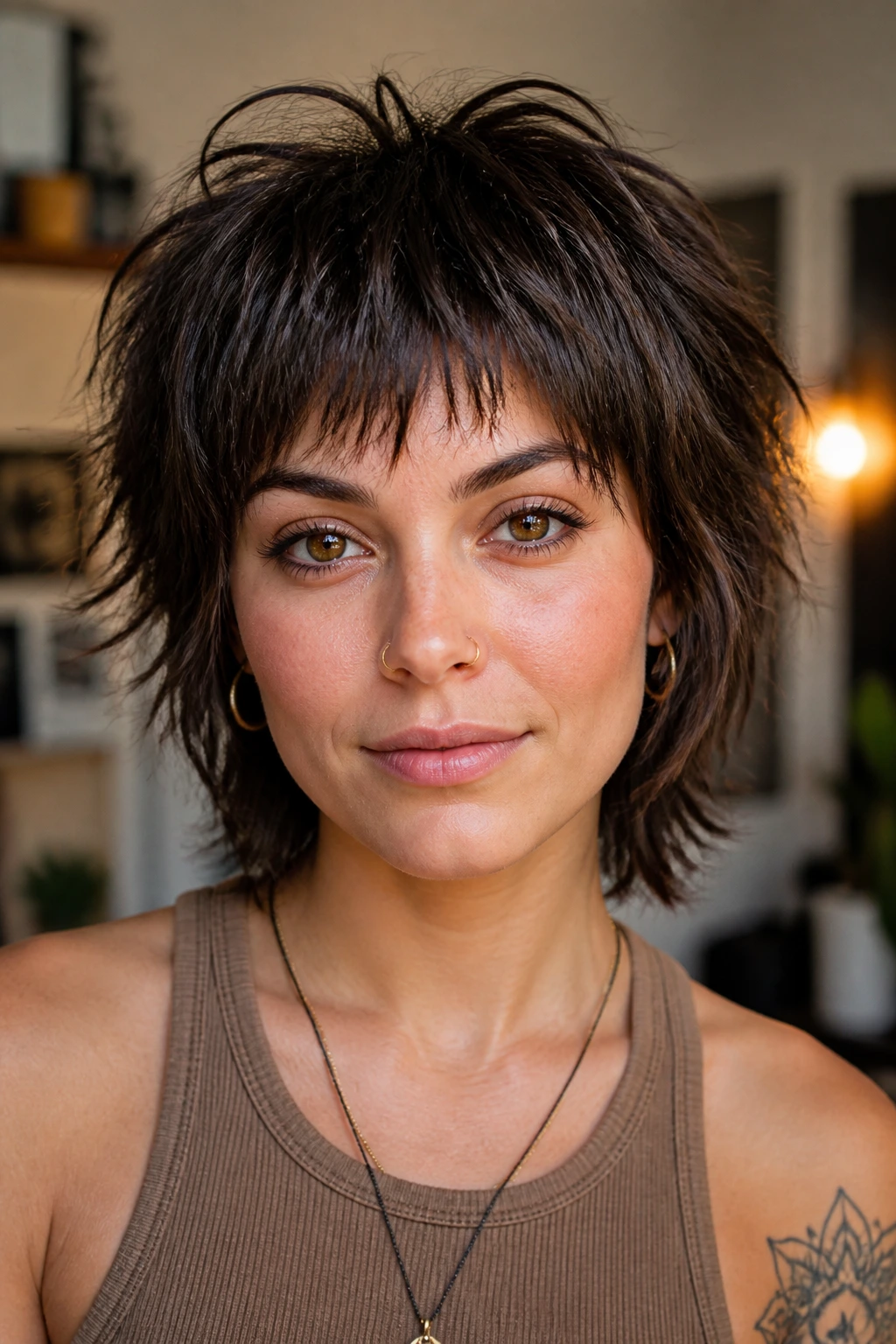
A micro shag is a short shag with attitude, and it can be a smart choice when you want lots of movement in a tiny length. The crown carries the shape, while the sides stay soft and broken up so the face doesn’t look wide.
What to Ask For
Keep the fringe light, the layers choppy, and the nape close. You want a cut that looks intentional even when it’s a little tousled. That means the texture needs to be built into the haircut, not dumped on later with product.
This cut works best on fine to medium hair that wants lift. A touch of mousse at the roots, then a quick blast with a diffuser or your fingers, brings the shape out. Too much cream can weigh it down fast. Short textured cuts are unforgiving that way.
A micro shag is not shy. That’s the appeal. The round face gets sharpened by the small pieces and the lifted crown.
15. Tapered Curly Bob
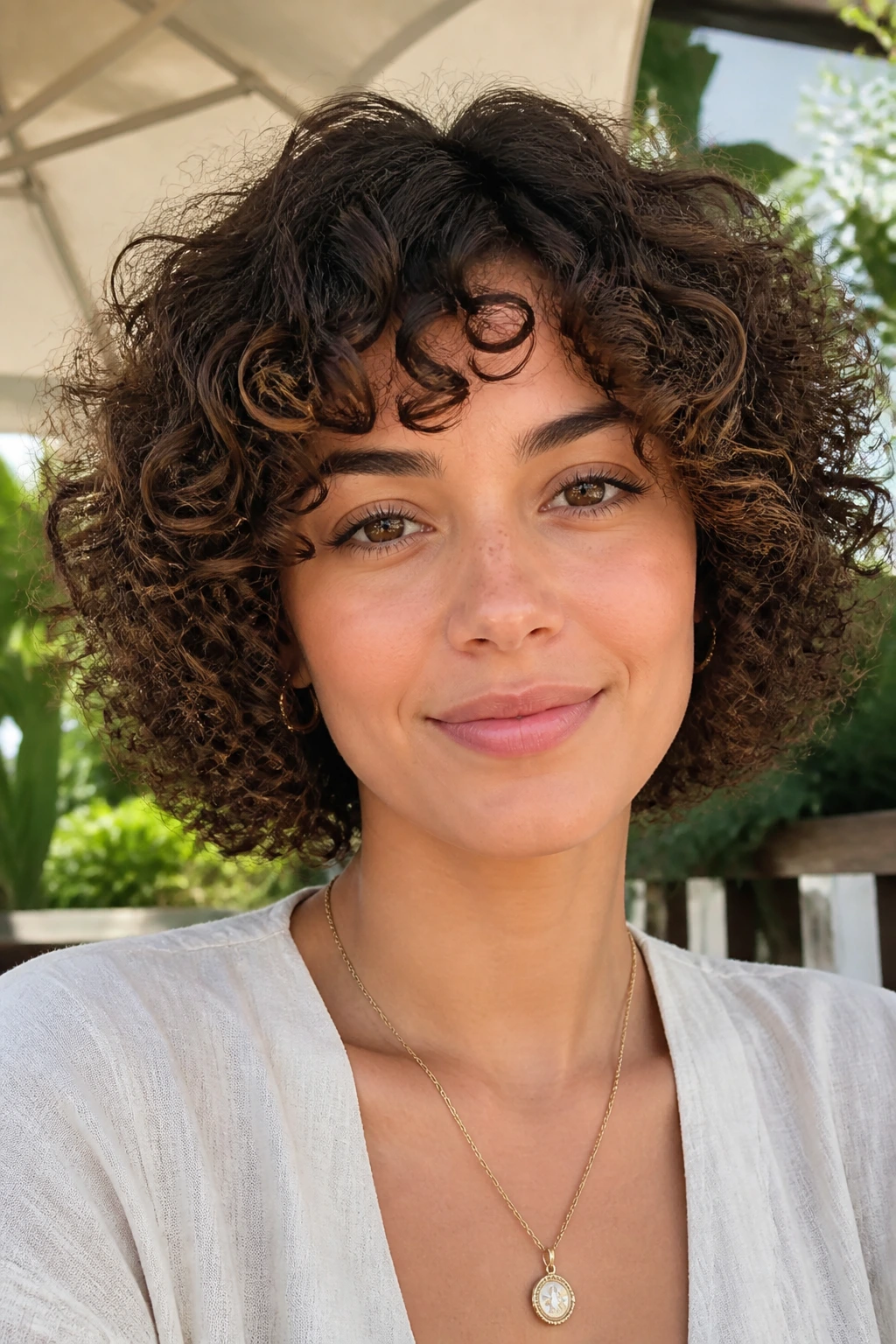
A curly bob can be a disaster if it turns into a wide circle. Tapered properly, though, it becomes one of the best cuts for round faces because it keeps the volume under control while letting the curl pattern do its thing.
Why Tapering Helps
The back and sides should be shaped so the bulk is reduced near the widest part of the face. The top can stay fuller, especially if the curls spring upward. That gives the eye a higher place to rest.
This is one of those cuts that looks better when the stylist works with the curl pattern instead of against it. A wet cut alone often misses the true shape. Dry shaping or a final dry detail pass can make a huge difference, especially around the jaw.
Use a light gel and let the curls set before you touch them. If you rake through too early, the shape fuzzes out. Patience helps here.
16. Long U-Shape With Internal Layers
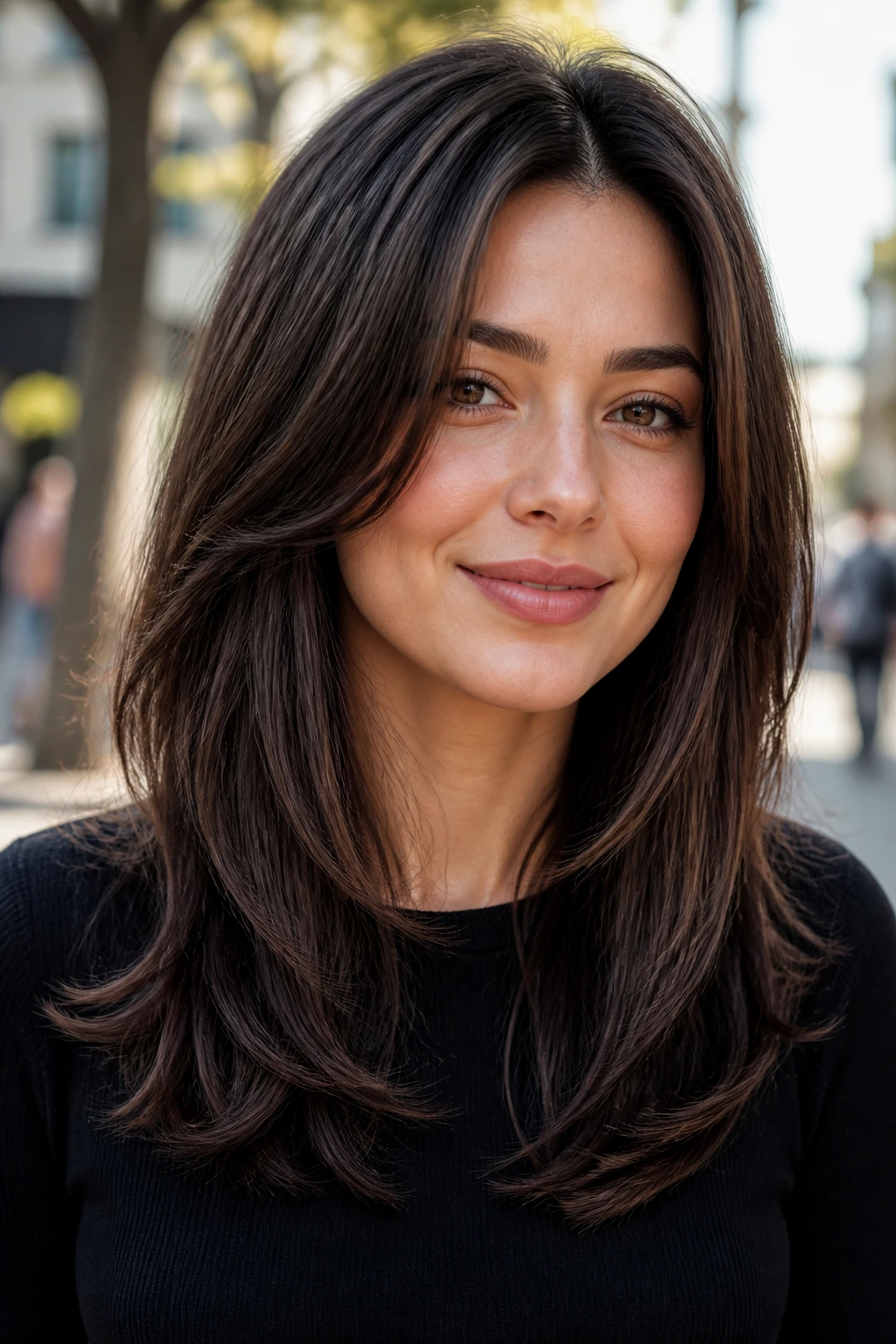
A long U-shape is quieter than a shag or wolf cut, but it can still flatter a round face if the inside of the hair has some movement. The outside line stays long and soft. The internal layers remove the heaviness that can make long hair sit like a curtain.
The Quiet Advantage
A U-shape keeps the perimeter from feeling harsh. That matters when you want length but don’t want a flat, wide slab of hair on each side of the face. Internal layers let the hair swing a little more easily, which creates a better line around the cheeks.
Ask for the face frame to start below the chin and the internal layers to be feathered through the mid-lengths. That keeps the density in check without making the ends thin. If the hair is thick, this cut is gold. If it’s fine, go lighter on the layers so you don’t lose the tail of the shape.
It’s not flashy. It just works.
17. Flipped-End Layered Cut
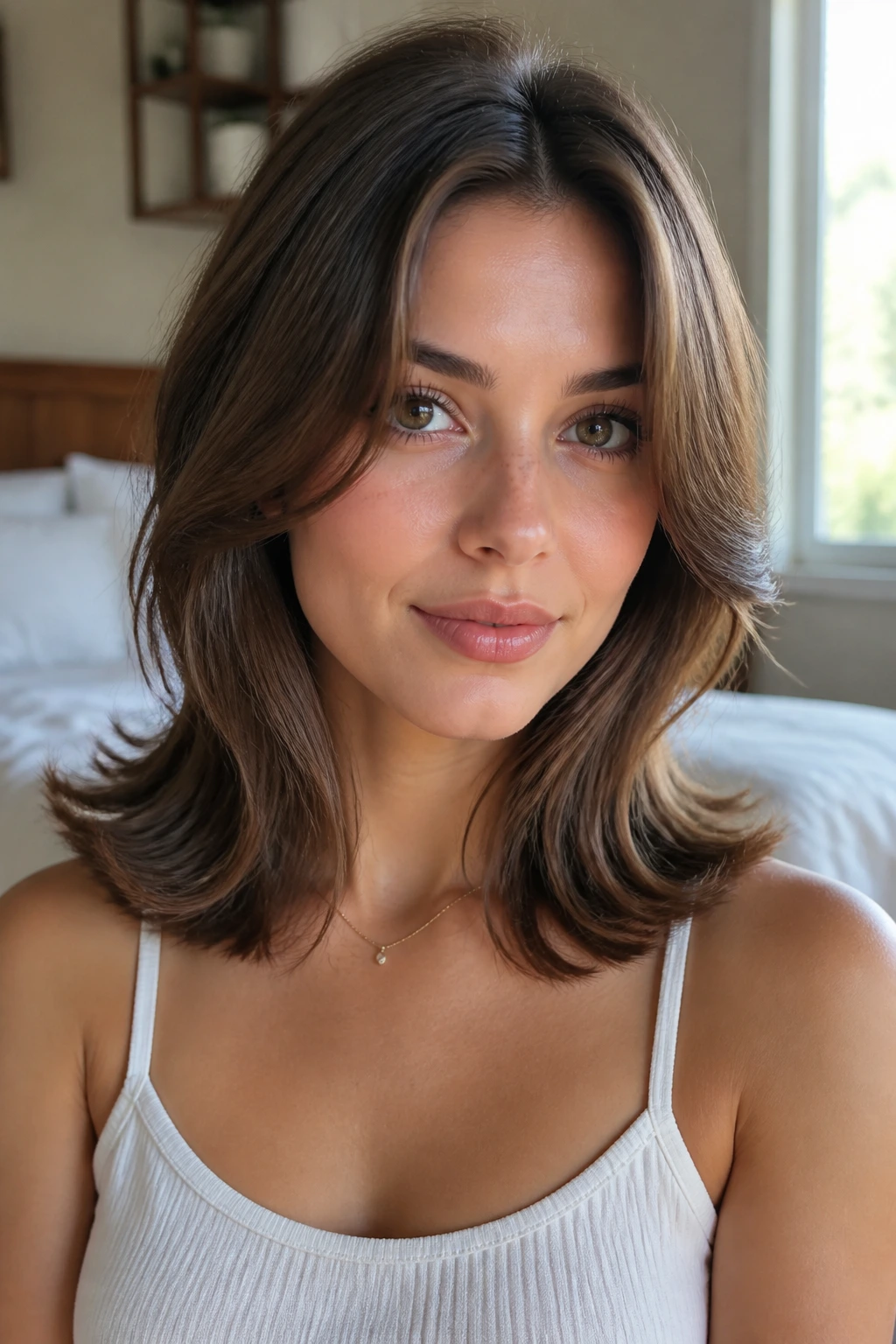
A flipped-end cut brings a little 90s energy, but it also gives round faces something useful: outward movement away from the cheeks. The ends curl out just enough to keep the line from collapsing inward.
How the Shape Helps
The layers should sit below the chin, and the flip should happen near the collarbone or lower. That way the hair opens the face rather than boxing it. A center part can work, but a soft off-center part often makes the front feel more relaxed.
You can get the flip with a blowout brush, a large roller brush, or even a quick pass with a curling iron on the last inch or two. That last-inch detail matters. You do not need the whole head curled. You need the ends to move.
I like this cut for people who want a polished look without going rigid or stiff. The hair has shape, but it still feels light.
18. Choppy Crop With a Long Fringe
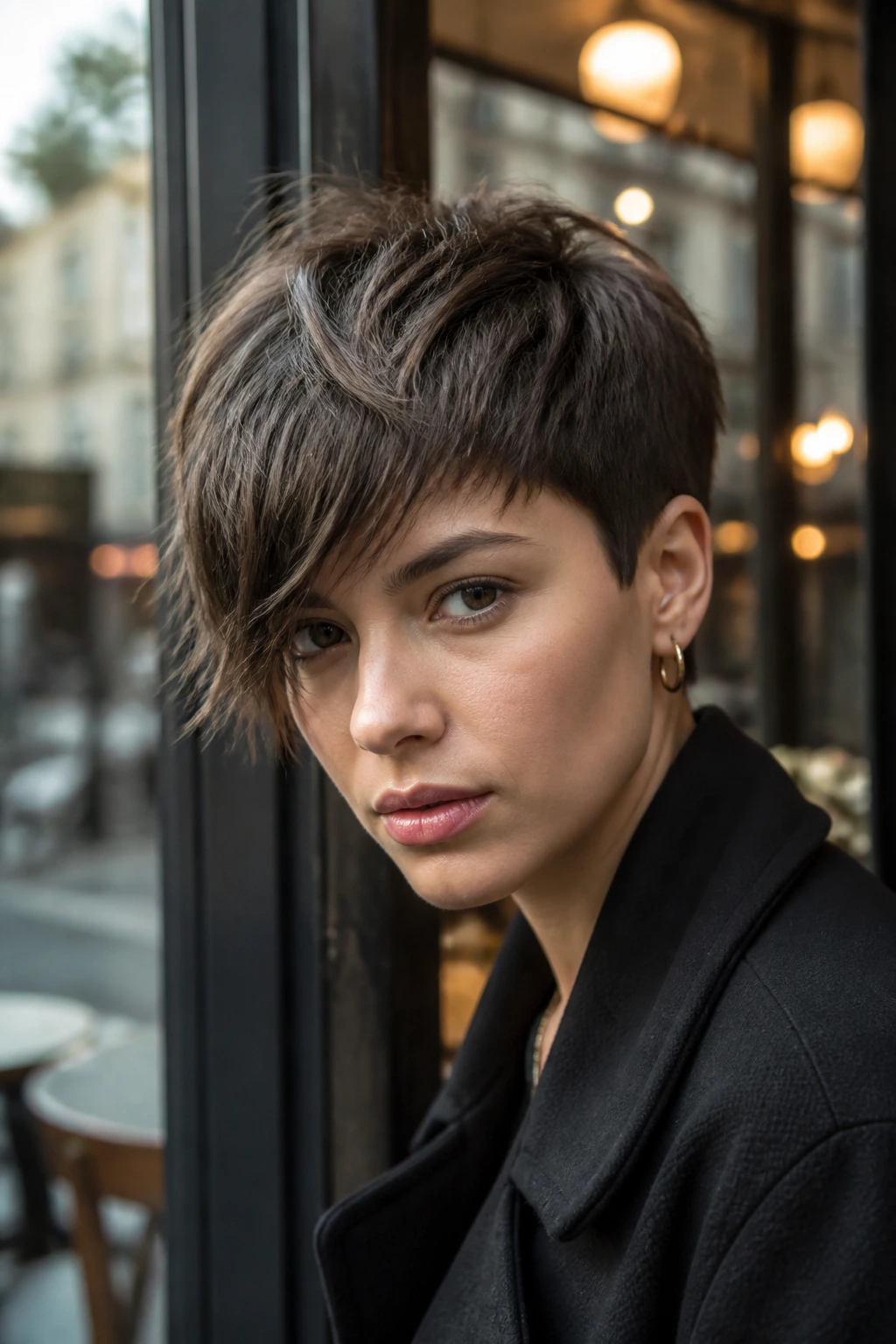
A short crop with a long fringe can be surprisingly good on a round face because it gives you contrast. The crop keeps the sides tight, and the longer fringe creates a vertical line that stops the face from reading too wide.
A Shape With Edge
The fringe should not sit straight across. It needs separation, maybe a slight diagonal, maybe a piecey sweep. The top can be rough and choppy, but the outline should still feel controlled. If it gets too uneven, the cut loses the face-shaping job and just looks busy.
This is a cut for someone who likes short hair but wants some softness around the forehead and temples. It works especially well when the crown has a little lift. A root spray and a quick dry with fingers can do more than a round brush if the hair is naturally straight.
Short hair can be sharp on a round face. It just needs one longer element to stretch the shape.
19. Wavy Mullet

A wavy mullet sounds bold because it is bold, but it can be one of the best textured options for a round face when the proportions are right. The short layers at the top and sides create height, and the longer back gives the face a lengthening line.
What Keeps It Balanced
The face frame should stay soft and slightly longer than the cheekbone. That keeps the hair from puffing out right where the face is widest. The waves do the rest. They add movement and keep the style from feeling too sharp.
This cut is less about perfection and more about shape. If the top is too flat, it loses the lift. If the back is too short, the whole outline can go round. So the balance matters. A little mousse, a diffuser, and a handful of scrunching usually bring it to life.
It’s a cut with personality. No pretending otherwise.
20. Textured Pageboy With Softer Edges

A pageboy can be a bad idea on a round face if it’s too uniform. Too helmet-like. Too neat. But soften the edges, break up the ends, and keep the front a little longer, and it turns into a very wearable shape.
The Difference Is in the Ends
A classic pageboy hugs the jaw. That can be too much. A textured pageboy skims the jaw and then moves past it with a bit of swing. The fringe can stay full, but the edges around the cheeks should feel airy, not hard.
This is a good option for straight or slightly wavy hair that needs shape without endless styling. A paddle brush and a bend through the front are usually enough. If the hair is dense, the stylist should remove bulk underneath so the line doesn’t balloon out.
The word “pageboy” scares some people off. I get it. But the softer version can look tidy in a way that still flatters the face.
21. Spiral-Layer Cut for Coils
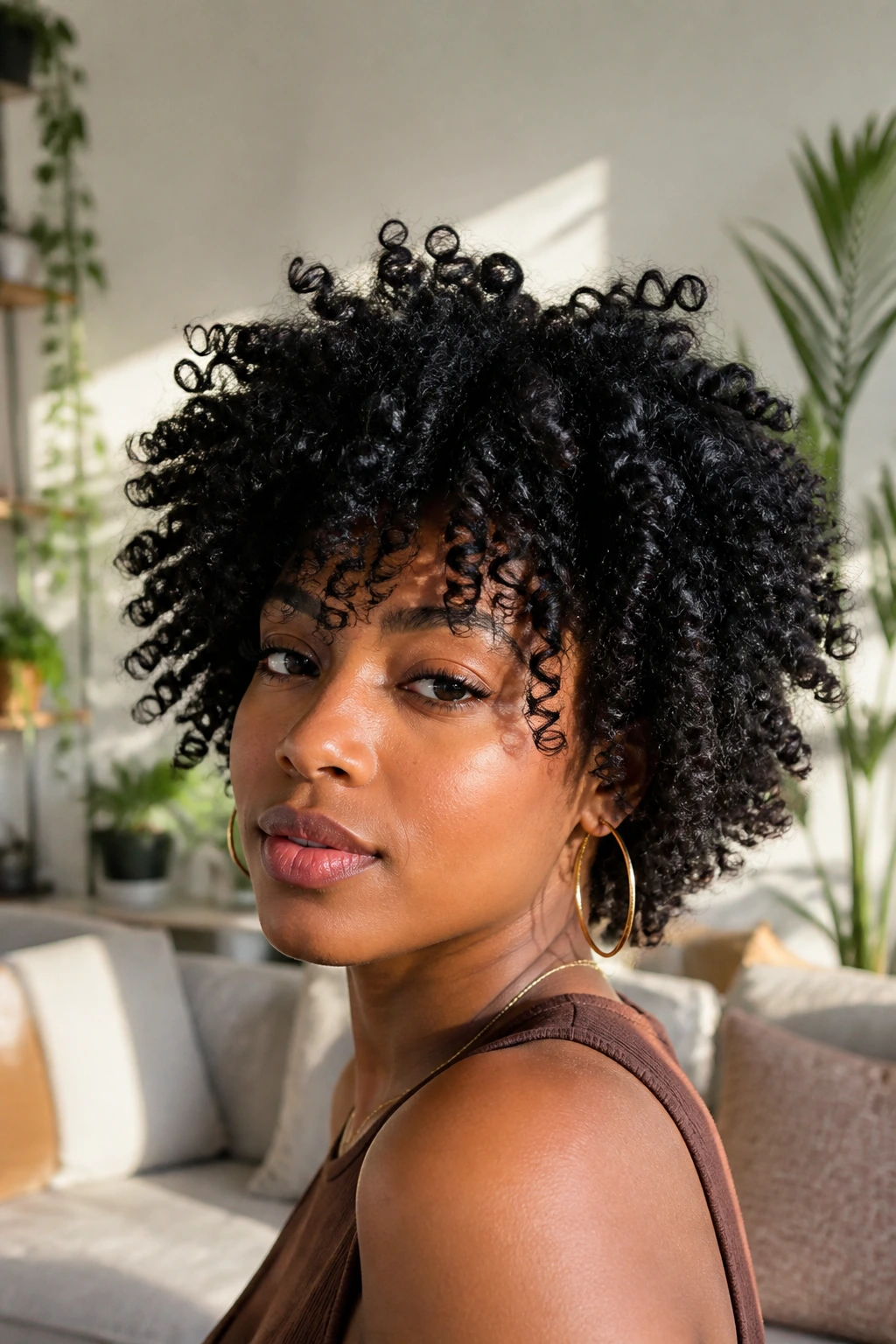
Coily hair needs a different kind of thinking. A spiral-layer cut is built around the curl group, not against it, and that matters a lot for round faces. The goal is height at the top and shape through the sides without building a wide circle.
What to Protect
The shortest layers should not cluster right at the cheekbones. That’s the easiest way to add width where you do not want it. Instead, keep the top shaped to rise and the side layers to fall with some length. The silhouette should feel lifted.
Dry shaping helps a lot with coils because shrinkage can change everything. A cut that looks balanced wet may sit very differently once it dries. A good stylist will check the shape in stages, not just once.
Use a leave-in and a styling gel with enough hold to keep the coil definition. The haircut does the shaping, but the product keeps the shape visible. Without that, the layers can blur.
22. Chest-Length Cut With Invisible Layers
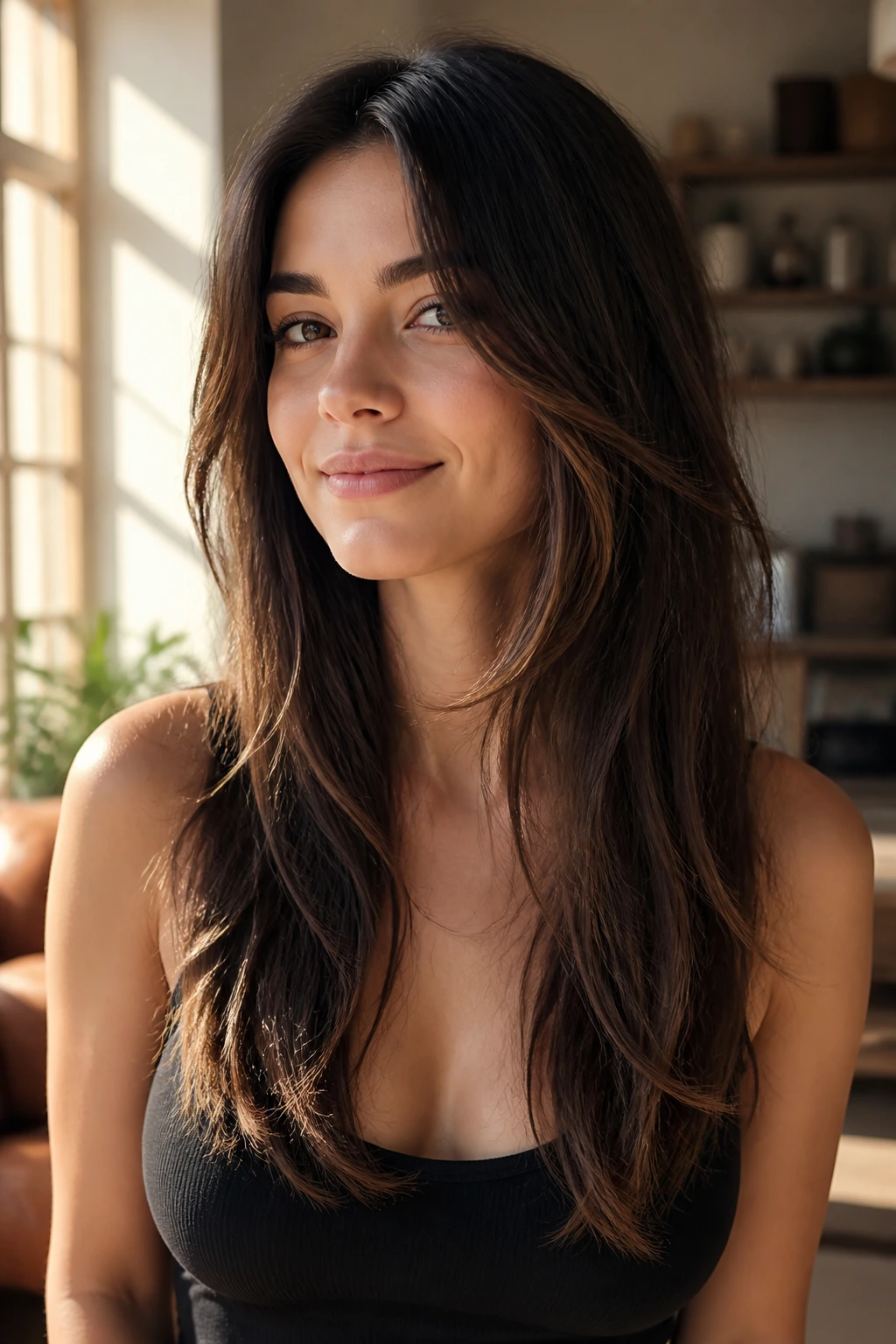
If you want long hair that still feels light, invisible layers are the quiet answer. The outside line stays long and smooth, while the inside layers remove weight and give the hair movement. On a round face, that means less bulk around the cheeks and more flow down the body of the hair.
Why “Invisible” Matters
You do not see these layers as separate steps. You feel them when the hair swings. That’s the nice part. The shape stays clean, but the hair doesn’t sit like a heavy blanket on each side of the face.
Ask for the first face-framing layer to begin below the chin, and keep the longest length at chest level or lower. That keeps the eye moving downward. If the hair is thick, the layers should be carved in under the surface rather than chopped aggressively through the top.
This is one of the most low-drama cuts on the list. It still shapes the face, but it does not shout about it.
23. Piecey French Bob
A French bob can be risky on a round face if it’s too blunt and too short. Make it piecey, keep it a touch below the cheekbone, and give it a little movement at the front, and it becomes a different animal.
The Softening Trick
The bob should skim, not clamp. The fringe can be airy and broken, or you can leave the forehead open and let the front pieces fall around the temples. Either way, the cut needs air. That’s the part people miss.
A piecey French bob works well when it has a slight bend at the ends. You can get that with a small round brush, a curling iron, or even pinching the ends while they’re still warm from the dryer. The result should feel chic but not frozen in place.
Round faces can wear short bobs. They just need a little asymmetry and a little movement to stop the shape from rounding out too much.
24. Airy Shoulder-Length Wolf Bob
This is the cut for someone who likes the attitude of a wolf cut but wants the wearability of a bob. The shoulder length gives the face room, and the airy top layers keep the style from looking dense.
A Good Middle Ground
The crown should have lift, but the sides should not puff. That’s the entire challenge. Keep the layers soft and let the texture fall in broken pieces around the face instead of one heavy block. A slight off-center part can help too.
This works especially well on wavy hair because the natural bend fills in the shape without making it bulky. A little mousse, a diffuser, and a finger-combed finish are enough most days. If the hair is straight, a few loose bends with a flat iron can create the same effect.
It feels casual, but the shape is doing serious work.
25. Curly Lob With a Center Part
A center part can be a friend on a round face when the cut underneath is shaped properly. A curly lob with enough length and the right internal layering keeps the face open while the curls provide height and movement.
What Makes It Work
The lob should fall below the chin, ideally near the collarbone, so the curls don’t bunch up at cheek level. The center part creates a clean vertical line, and the curls on either side soften the look instead of widening it.
This is one of those cuts that depends on curl pattern and density. Loose curls may need more layering to avoid heaviness. Tighter curls may need less, or the shape can balloon. A stylist who cuts curl by curl will usually do better here than someone who tries to force a single shape on the whole head.
A little definition cream and gel go a long way. The cut should show off the curl, not hide it.
26. Temple-Focused Layered Cut for Thick Hair
Thick hair on a round face can get wide fast, so the temple area deserves special attention. A temple-focused layered cut removes bulk near the sides while keeping the crown and lengths in better balance.
Why It’s Worth Asking For
Most thick-hair cuts remove weight at the ends and call it a day. That is not enough here. If the bulk sits at the temples, the face looks wider no matter what happens below. A good cut trims that area more carefully and keeps the outer outline softer.
You still want enough length to make the face feel elongated. So this is not a thinning-out job. It is a shape job. The stylist should leave the lower lengths full enough to swing and use internal layering to stop the sides from puffing.
This cut can be a lifesaver if your hair grows out triangular. That shape is hard on a round face. A better balance at the temples changes everything.
27. Textured Pixie With a Long Top
A long-top pixie is one of the most useful short cuts for round faces because it keeps the sides neat and gives you height right where you need it. The top can be styled forward, sideways, or slightly back, which makes the cut feel flexible without becoming bulky.
What to Keep in Mind
The top should be long enough to piece out. If it’s too short, the style can puff up in a circle. If it’s long enough to separate, the face looks sharper. Keep the sides close and tapered so the shape stays clean.
This cut is especially nice if you wear glasses. The longer top interacts well with the frames and keeps the face from getting overwhelmed. A tiny dab of matte paste is enough most days. Work it through dry hair, pinch out a few ends, and stop there.
It is short, but not severe. That balance matters.
28. Drop-Layer Shag for Fine Hair
Fine hair often benefits from a shag that drops a little lower in the front and stays airy through the crown. The layers give body without demanding too much density, which is a common problem with lighter hair on round faces.
The Fine-Hair Trick
The layers should be feathered, not hacked. Fine hair can lose shape fast if the haircut is too aggressive. You want enough texture to create movement, but you still need a solid outline so the hair does not disappear around the cheeks.
I like a drop-layer shag because it creates a small dip in the front, which lengthens the face visually. The back can stay slightly fuller, and the crown can get just enough lift to keep the style from lying flat. That soft drop is subtle, but it works.
A volumizing mousse at the roots and a rough-dry finish are usually enough. Too much product weighs fine hair down. Every time.
29. Shape-Heavy Afro With Lifted Sides
A rounded afro can be stunning on a round face when the shape is carved with intention. The key is height and side control. You want the silhouette to rise upward and stay a little narrower at the widest points, especially around the temples and cheeks.
The Shape Conversation
This is not about making textured hair smaller. It is about shaping it so the round face and the hair shape support each other instead of competing. Lift at the crown helps. A softer outline around the sides helps too.
A good cut will follow the curl pattern and build a shape that feels balanced in profile. The sides shouldn’t stick straight out, and the top should not get flattened. That’s where the face can look wider than it is. A shape with a bit more height than width usually wins here.
Moisture matters, but so does the cut itself. Leave-in cream, a pick, and some careful shaping can finish the job, but the haircut has to set the structure first.
30. Soft Shaped Shag With a Longer Nape
If I had to pick one cut here that lands safely between trendy and practical, this would be it. The soft shaped shag keeps the movement and cheekbone lift of a classic shag, but the longer nape gives the whole cut a cleaner, lengthening line down the back of the neck.
Why It Stays Useful
The front layers can open the face without crowding it, while the back keeps enough length to avoid that too-round silhouette some shags can create. It is a nice answer for someone who wants texture without the wildness of a wolf cut or the shortness of a pixie.
Styling is easy enough. A bit of mousse, a medium round brush, and a few bends around the face are usually all it needs. If the hair is straight, you can push the top forward and out slightly, then let the ends fall in broken pieces. If the hair is wavy, let the natural texture do most of the work.
It’s the sort of cut that looks thoughtful even on a rushed day. That counts for a lot.
