



A round face does not need more length at any cost. It needs shape, and that’s where stacked haircuts for round faces earn their keep. The right stack trims weight where the hair would otherwise puff out, then builds a cleaner line through the crown and nape so the face reads a little longer and a little leaner. Get the balance wrong, though, and the cut can widen the cheeks in a way nobody asked for.
The trick is not “go short” or “go layered.” It’s where the shortest layers live, how the front falls, and whether the styling leaves room around the cheekbones. A good stack usually keeps the back compact and controlled while the front does a little of the face-shaping work. That can mean a chin-length bob, a collarbone lob, or a short pixie-bob with a tight nape. Same idea. Different attitude.
Texture matters too. Fine hair likes a crisp stack because it gets lift from the cut itself. Thick hair usually needs more internal removal so the back does not turn into a shelf. Curly and wavy hair need a lighter hand, because too much stacking can make the sides flare. And bangs? They can help, but only when they are chosen on purpose. Heavy, blunt fringe is rarely the friendliest move here.
These 30 looks cover sleek, soft, edgy, and low-maintenance takes on the stacked cut, with enough variety that you can match the shape to your hair instead of fighting it every morning.
1. Chin-Length Stacked Bob With a Side Part
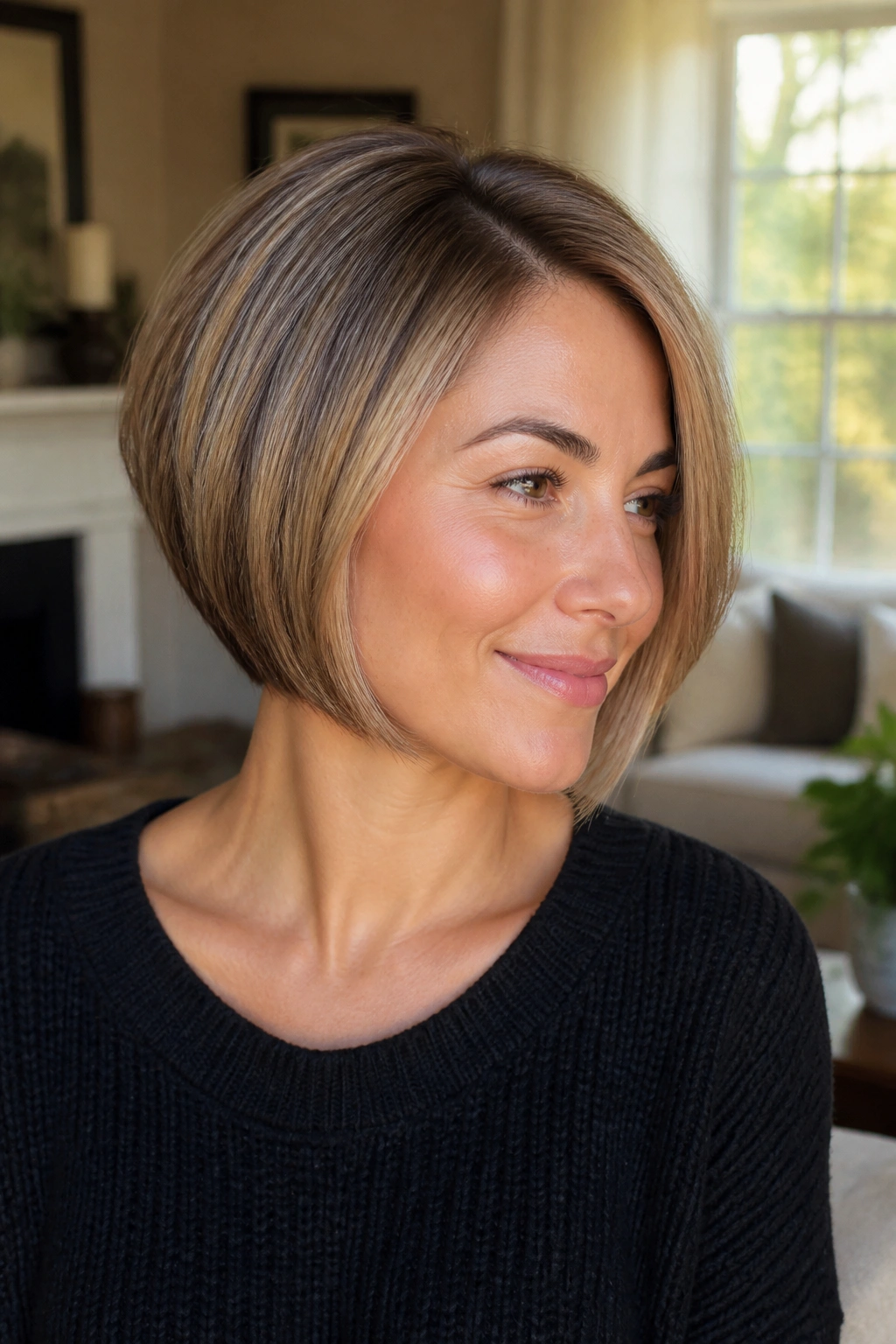
A chin-length stack is the easiest place to start if you want shape without losing softness. The length gives your face room, while the shorter back adds lift so the silhouette does not feel boxy. On round faces, that bit of vertical movement matters more than people think.
Why It Works on a Round Face
A side part breaks up the symmetry that can make a round face look wider than it is. Keep the shortest layers behind the ear and let the front skim the chin, not the cheek. That little difference changes the whole read of the cut.
- Ask for tight stacking at the nape and a gentle graduation up the back.
- Keep the front at or just below the chin so the eye moves downward.
- Style with a 1-inch round brush and lift the roots, not the sides.
Pro tip: If the side part keeps collapsing, blow-dry the roots in the opposite direction for 10 seconds before settling the part back down.
2. Angled A-Line Stack That Skims the Jaw
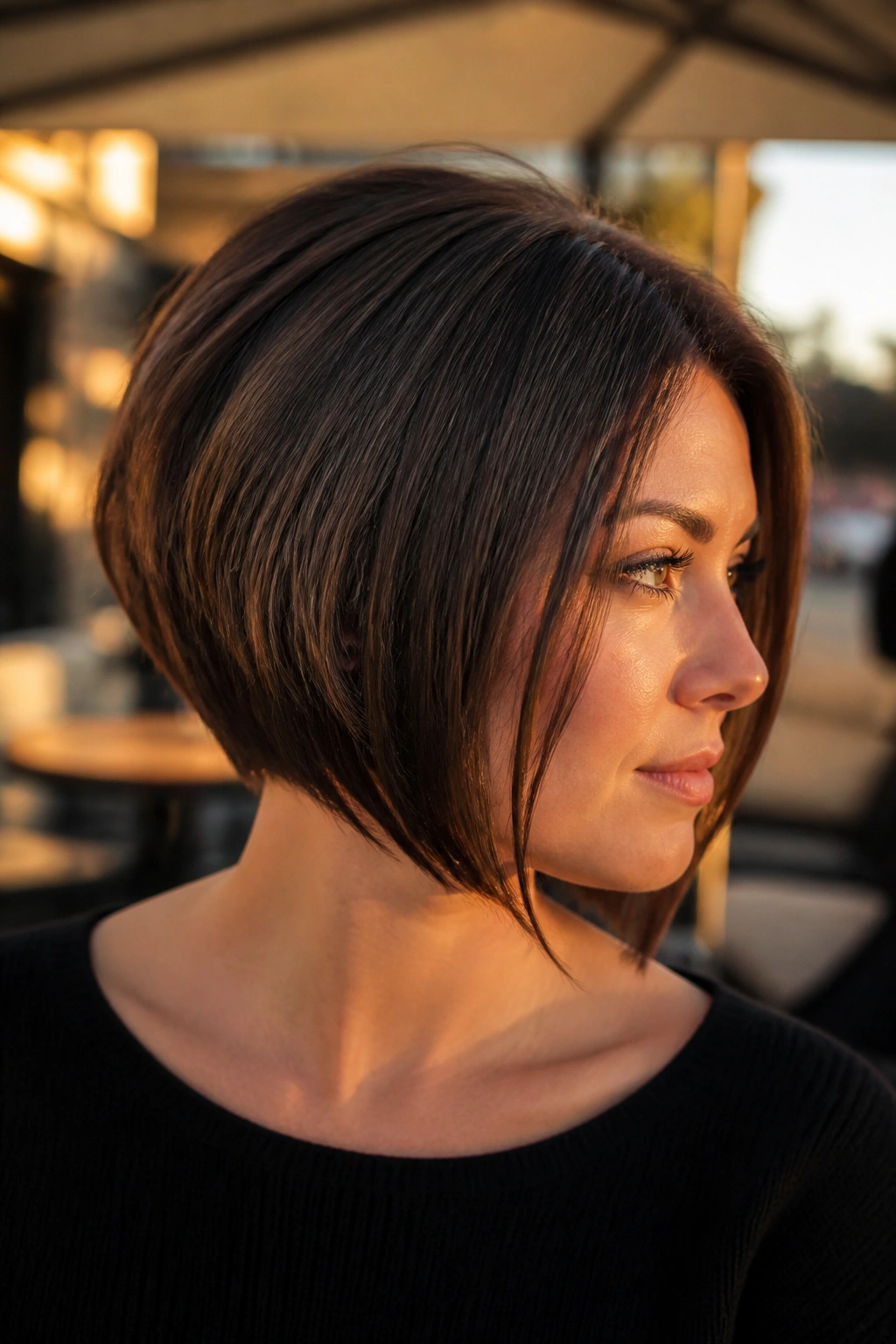
Can a bob slim a round face without looking severe? Absolutely, if the angle is handled well. An A-line stack keeps the back compact and lets the front fall longer, which pulls the eye forward instead of straight out at the cheeks.
The cleanest version starts with a short, stacked nape and gradually extends toward the front corners. I like this cut when the hair is straight or only slightly wavy, because the line stays visible and the shape reads crisp. If the front lands 1 to 2 inches below the jaw, it usually gives enough length to flatter without dragging the whole style down.
Wear it with a smooth blowout or a soft bend at the ends. Too much curl at the jaw makes the face look fuller. Too little movement can feel flat. That middle ground is the sweet spot.
3. Stacked Bob With Side-Swept Bangs
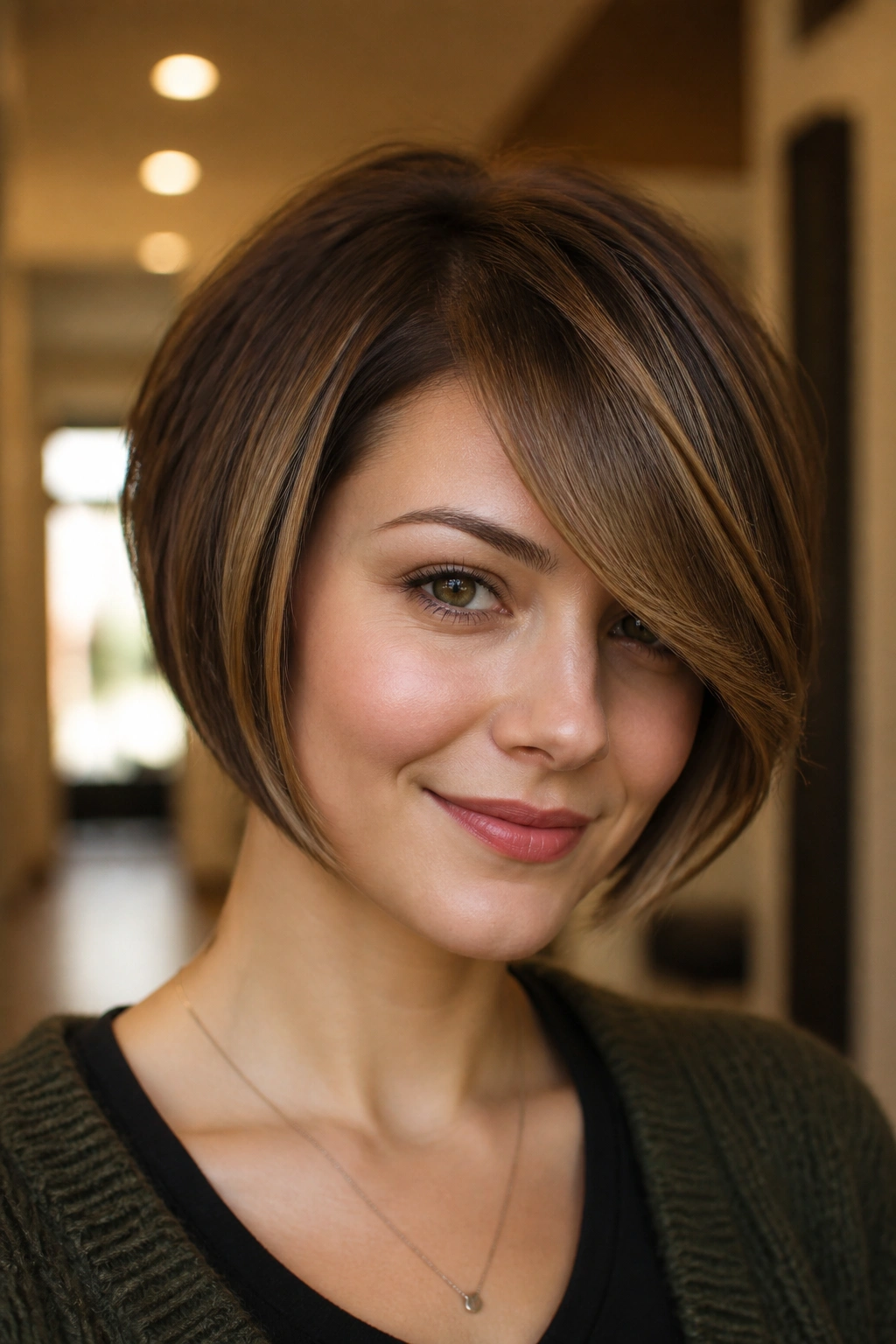
Side-swept bangs are not a shortcut. They are a shape fix. When they start a little deeper on one side and sweep across the forehead, they create a diagonal line that pulls attention upward and away from the widest part of a round face.
How to Ask for It
Tell your stylist you want the fringe to begin about 1 inch back from the hairline on the heavier side, then blend into the front layers. The bangs should graze the brow or cheekbone, not sit in a hard line. That softness matters.
This cut works best when the rest of the bob stays tidy through the nape and crown. If the sides balloon out, the fringe loses its job. A quick round-brush blow-dry and a tiny bend at the ends is usually enough; you do not need big curls or a lot of product.
4. Wavy Stacked Lob at the Collarbone

If your hair already bends into waves, a collarbone-length stack can be a smart move. The extra length keeps the face from feeling boxed in, while the shorter layers at the back stop the shape from drooping.
The best part is how forgiving this cut is on day two. A loose wave hides minor growth, and the collarbone length gives you room to tuck one side behind the ear without losing the outline. That tiny styling trick opens the face fast.
- Use a 1.25-inch curling iron and leave the ends out for a softer finish.
- Work in 1-inch sections so the wave pattern stays loose.
- Mist the roots with a light lift spray before drying.
Round faces usually look better when the wave starts below the cheekbone, not right at it. That keeps the widest part of the hair from sitting exactly where the face is fullest.
5. Curly Stacked Bob With Airy Layers
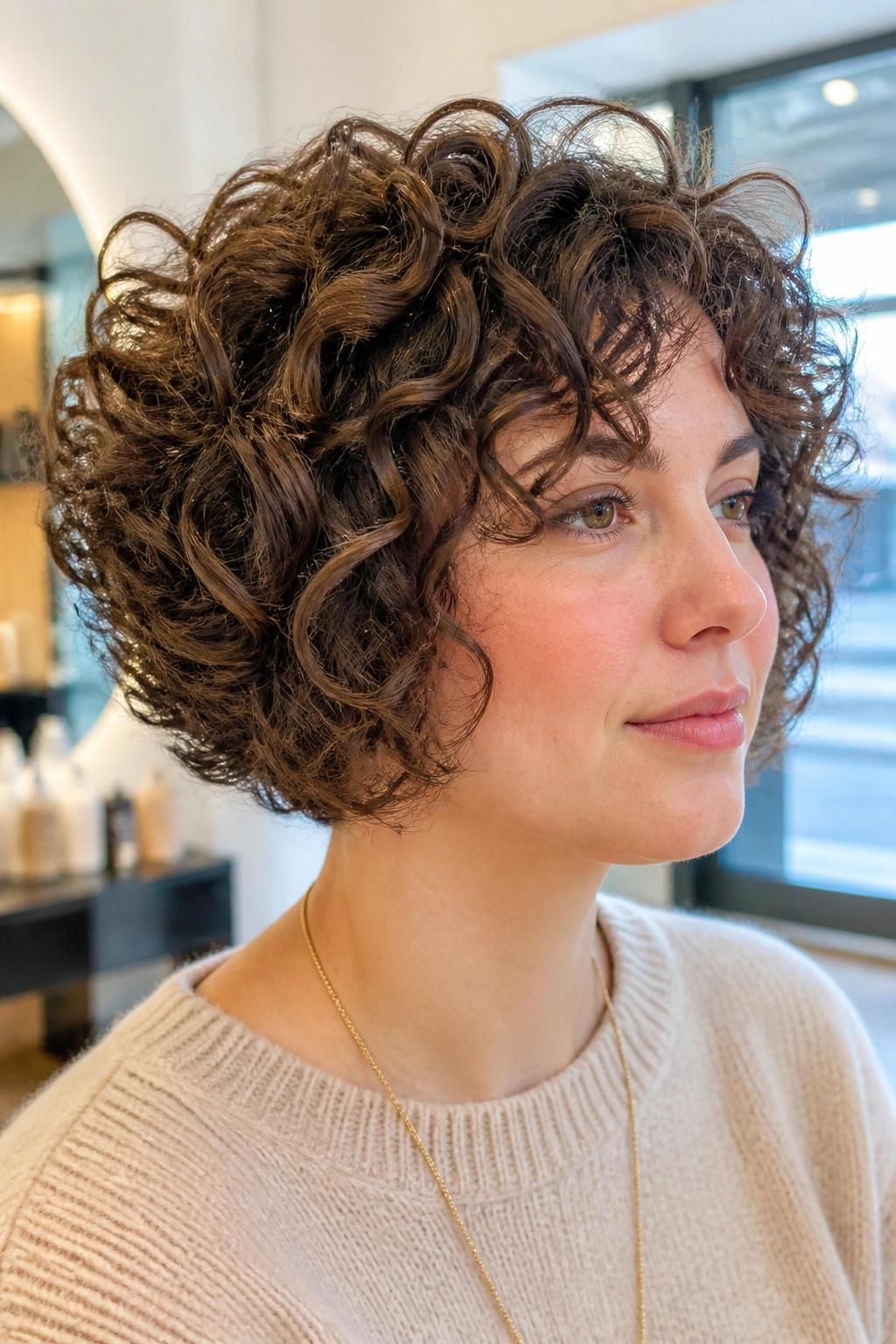
Curly hair and stacking can get strange fast if the cut is too aggressive. Done well, though, a curly stacked bob gives the back shape and removes the heavy triangle effect that makes many curly cuts feel bottom-heavy.
I’d ask for dry cutting or at least a stylist who respects shrinkage. Curly hair springs up, and the nape can end up much shorter than expected if the shape is judged wet. The back should be stacked, yes, but the sides need enough length to fall past the cheekbones so the face does not widen.
The best curls for this look are bouncy, not puffy. A cream with a little hold and a diffuser on low heat will keep the stack visible without turning the crown into a halo. That’s the real target: shape, not bulk.
6. Feathered Stack With a Soft Crown
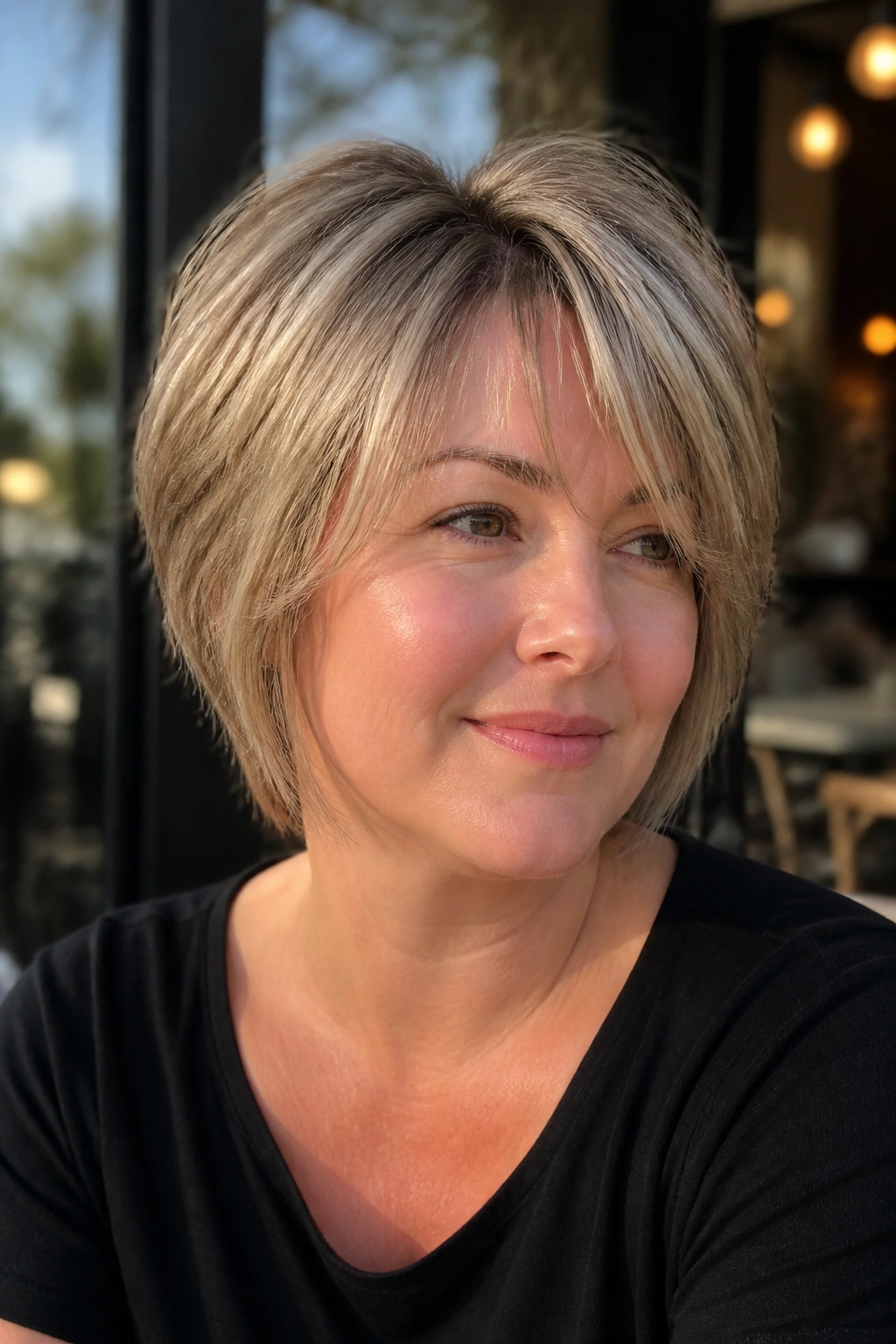
Unlike a blunt bob, a feathered stack moves. It gives the hair lift through the crown and a lighter finish through the ends, which is useful when a round face needs a little more vertical line and a little less width.
This version works especially well on fine to medium hair that falls flat by noon. Feathering the interior removes enough weight to keep the back from collapsing, but the ends stay soft so the cut does not look choppy. Ask for feathering with shears, not a heavy razoring job, if your hair frizzes easily.
For styling, a medium round brush and a root-lift mousse are enough. Blow the crown upward for about 15 seconds per section, then tuck the ends under just slightly. That small curve keeps the silhouette neat.
7. Wedge Bob With a Clean Nape
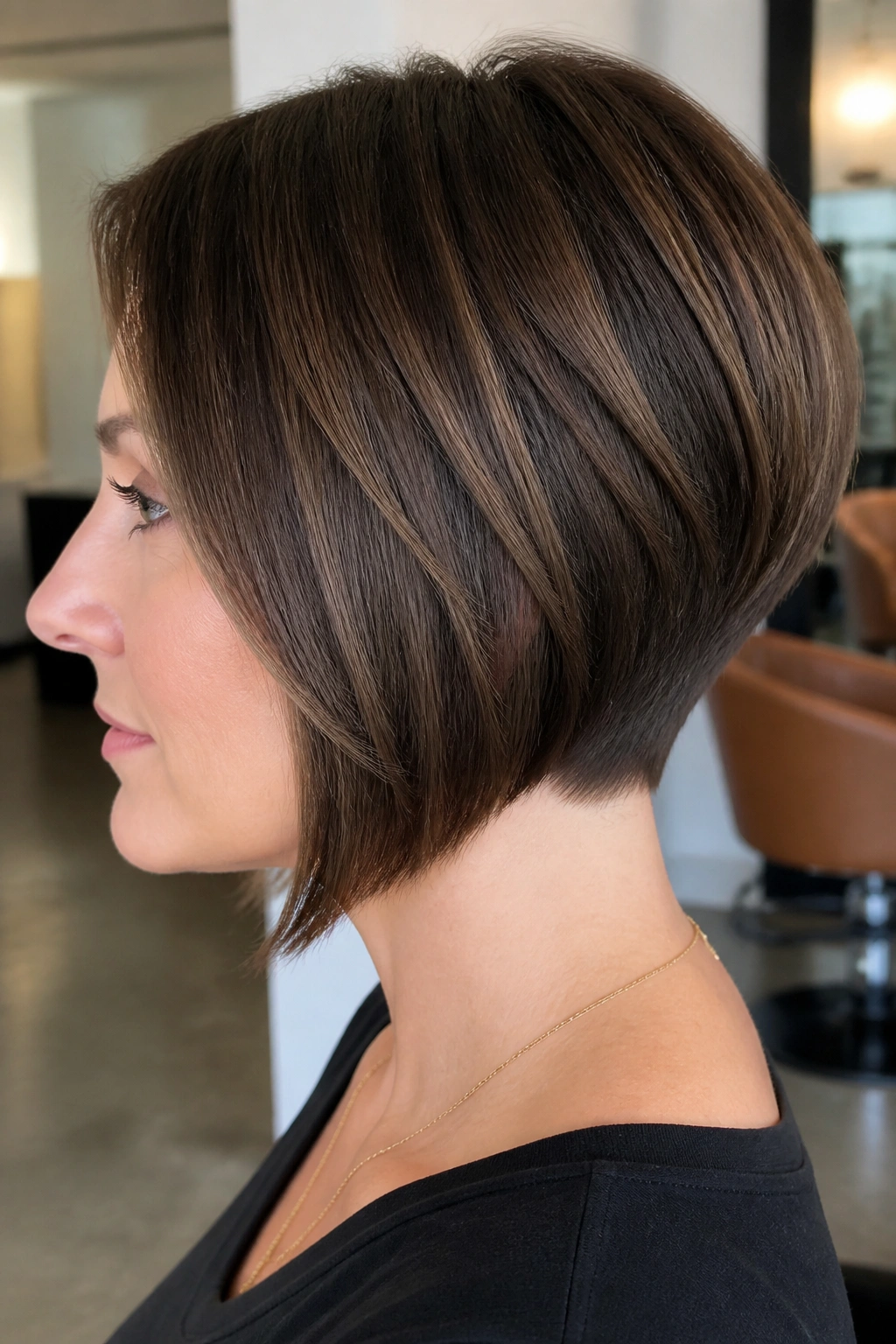
A wedge bob should feel tidy at the neck. If the nape is too fluffy, the whole shape loses the sharp line that makes this cut work on a round face.
The reason it flatters is simple: the back rises in a controlled slope, while the front stays longer and a little more relaxed. That contrast makes the head shape look more oval. I like this cut on straight hair, but it also behaves nicely on coarse hair when the weight is removed from the lower back.
How to Wear It
- Keep the nape close and tapered, not rounded out.
- Ask for the front to graze the jawline or just below it.
- Flat-wrap the hair when drying if you want the cleanest finish.
A wedge can look severe if the edges are too hard. A tiny bend at the ends keeps it modern and stops it from reading helmet-like.
8. Asymmetrical Stacked Bob for Round Faces
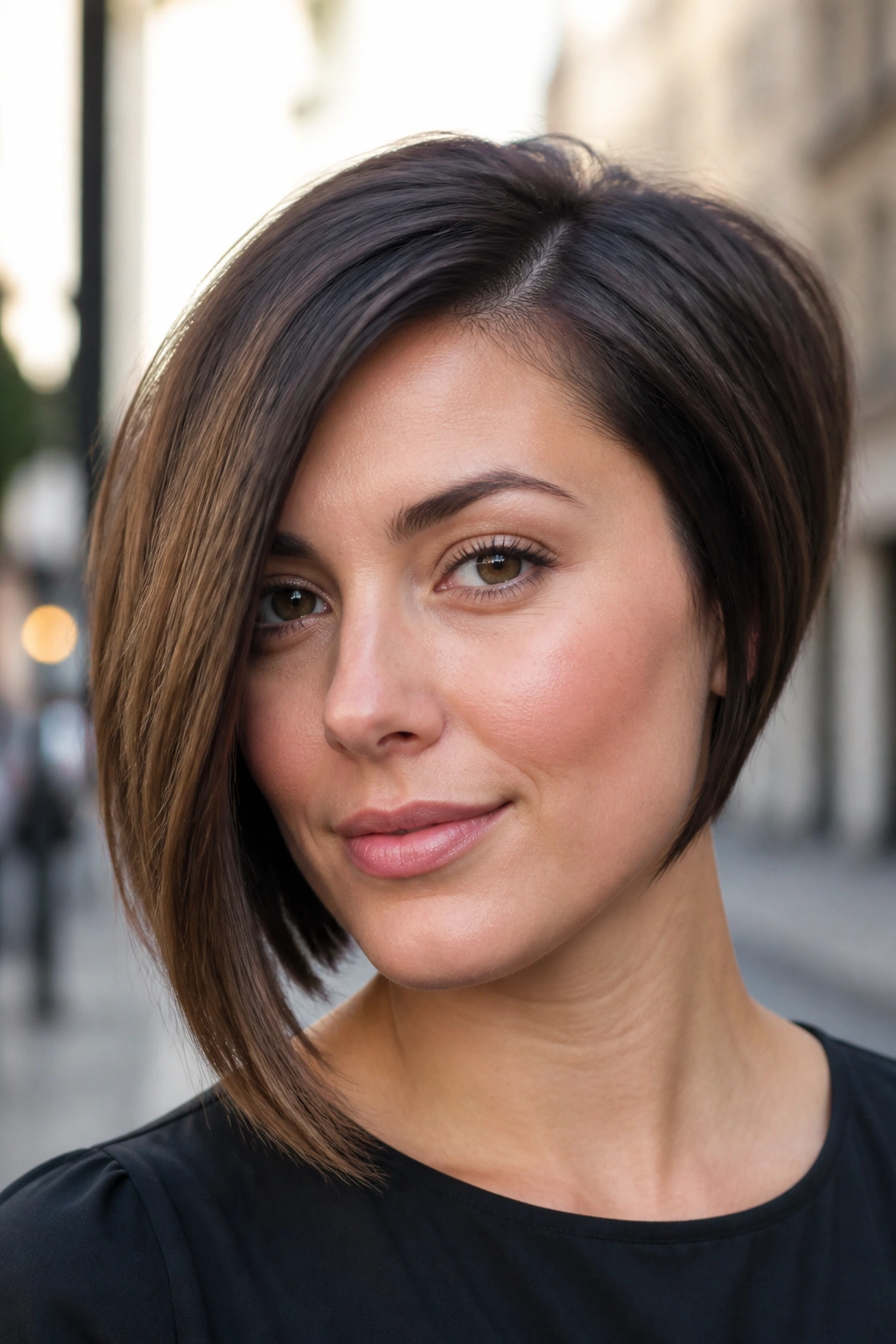
This is the cut for someone who wants the face to look a touch longer without shouting about it. One side sits a little longer than the other, and that uneven line breaks up the roundness in a way a perfectly even bob never will.
The difference does not need to be dramatic. Even half an inch to 1.5 inches of length change can shift the whole balance. The back stays stacked and compact, while the longer side gives the face a diagonal edge that feels sharper. It is a smart choice if you like haircuts with a bit of personality but do not want a full punk moment.
Wear it smooth for polish or tousled for a softer look. Either way, keep the shorter side from ending exactly at the fullest part of the cheek. That’s where the line gets fussy.
9. Pixie Bob With a Tapered Back
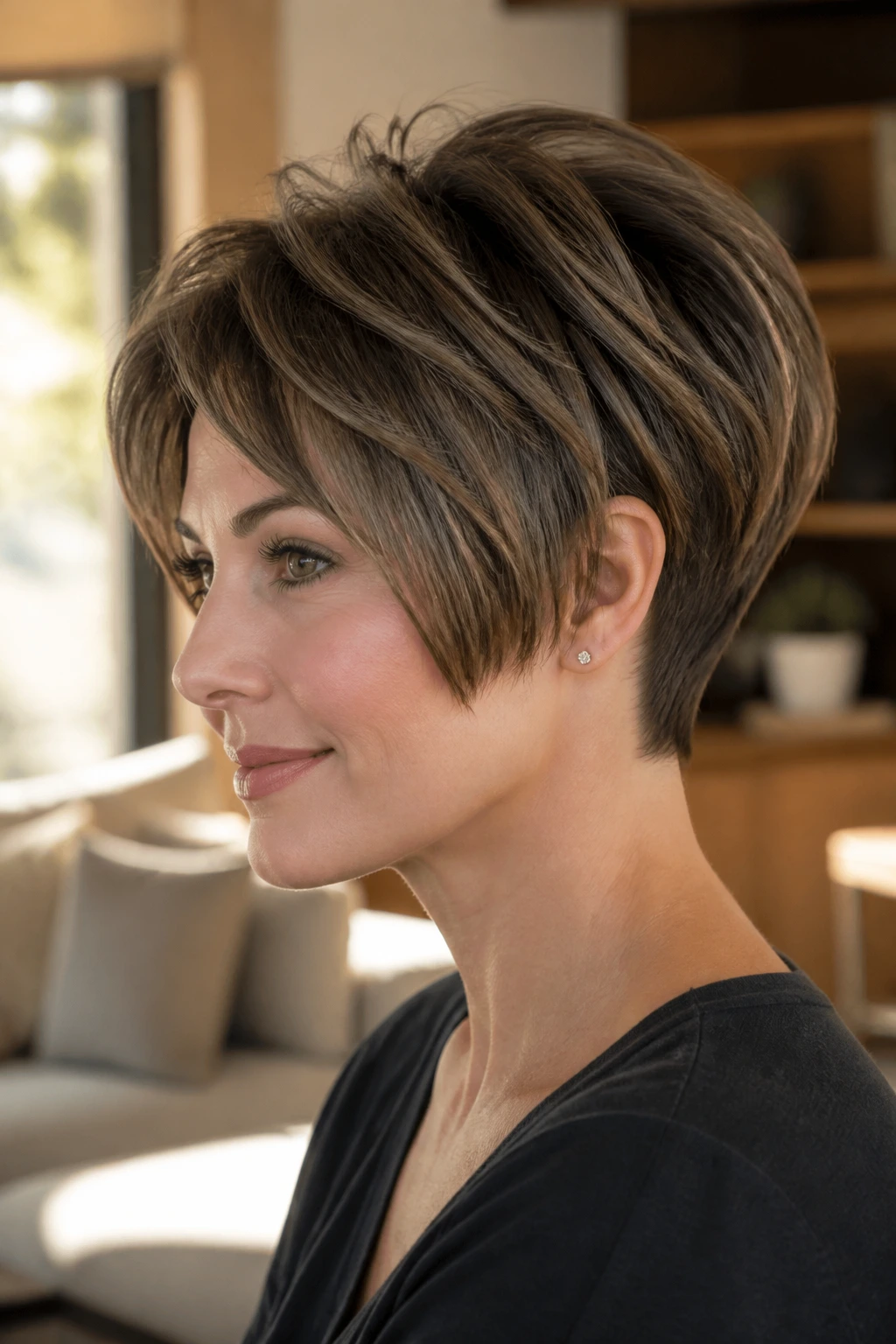
A pixie bob is a nice middle ground when you want short hair but not a full crop. The stacked back gives lift, and the longer top keeps enough movement around the face to avoid that too-wide feeling round faces can get from short cuts.
The best version has a tapered nape, soft ears, and a top layer long enough to sweep forward. That top length is doing real work. It prevents the eyes from stopping at the cheeks and gives you room to create height at the crown without teasing the hair into a nest.
This cut is also honest. If your hair grows fast, you’ll need neat-up trims every 4 to 6 weeks. Skip them and the shape loses its clean line. When it’s fresh, though, it looks sharp and easy in a way that still feels feminine.
10. Deep Side-Part Stacked Cut
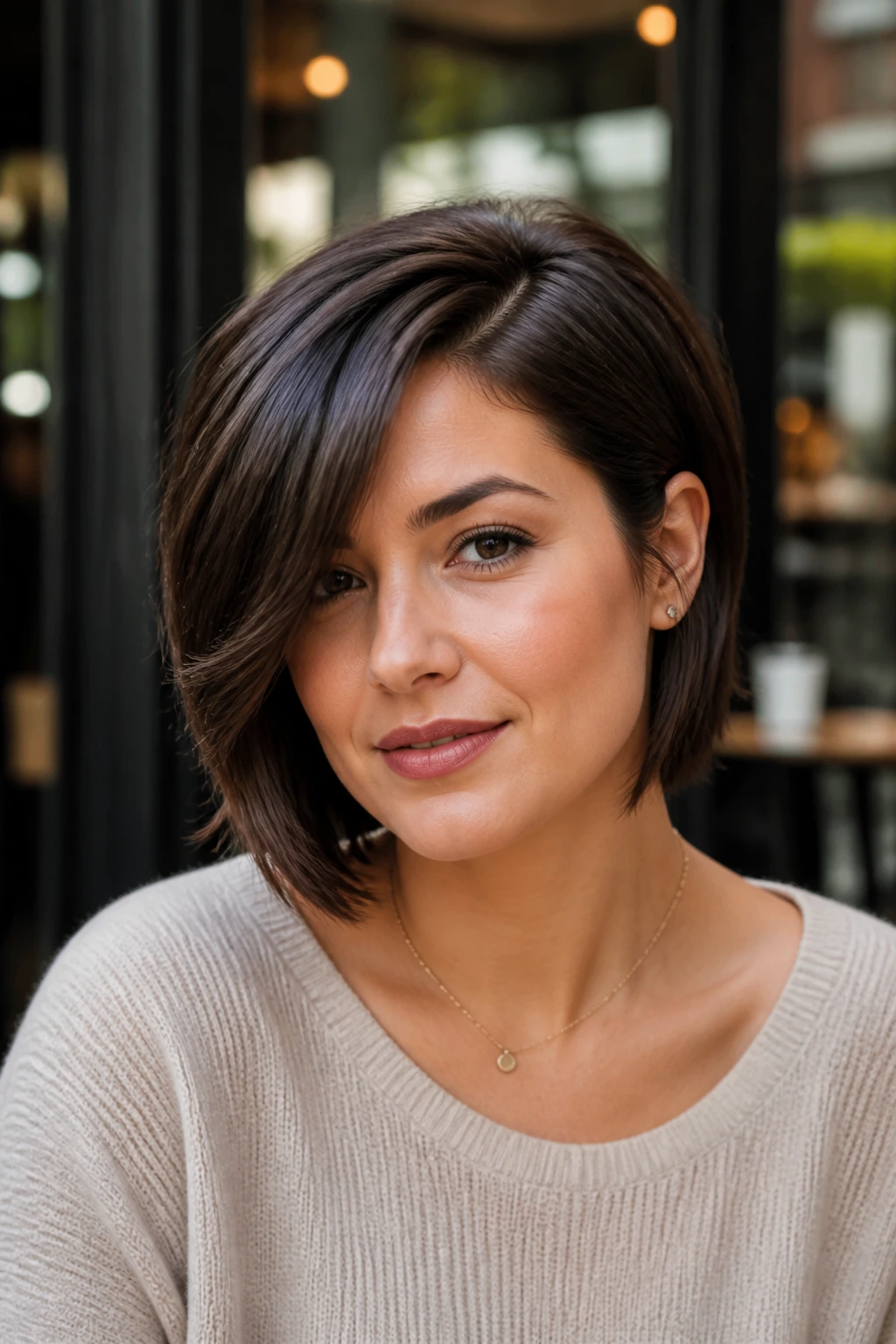
Why does a deep side part help so much on a round face? Because it breaks the face into uneven planes. That asymmetry makes the haircut feel longer and less centered, which is exactly what you want when width is the thing you are trying to soften.
The stack underneath should stay controlled, almost quiet. The drama comes from the part and the sweep across the forehead, not from giant volume at the sides. I like this with shoulder-skimming or chin-length cuts because the length gives the part something to fall into.
What to Ask Your Stylist
Ask for the part to sit about 2 inches off center, then have the front layers cut to follow that line. Blow-dry the hair in the direction of the part first, then flip the top section over while it cools. That keeps the root lift from collapsing.
11. Curtain Bangs With a Rounded Stack
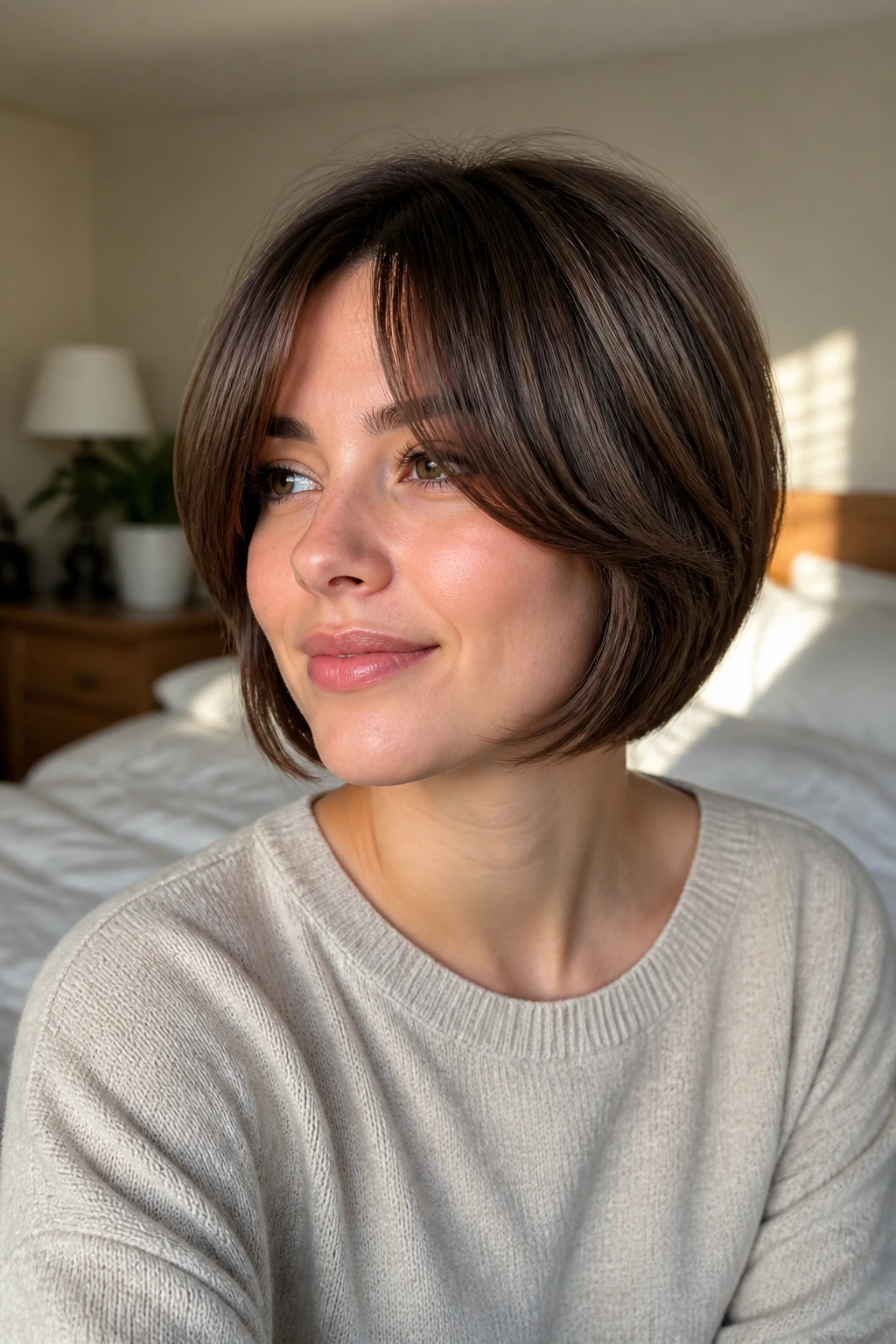
Curtain bangs can be a win on round faces when the stack underneath stays neat. The bangs open the forehead in the middle and skim out toward the cheekbones, so the face gets softness without a blunt edge sitting across it.
The key is length. Short curtain bangs can make a round face look shorter. Longer ones, usually grazing the lash line and then falling toward the jaw, give you more balance. Pair that with a stacked bob that sits snug at the nape, and the shape starts to feel airy instead of heavy.
I prefer this look on hair with a little bend. It dries into a lived-in shape faster, and the bangs blend instead of sitting like a separate piece. A light round-brush pass through the fringe is enough. Do not overcurl it. That gets fussy fast.
12. Shaggy Stacked Bob With Piecey Ends
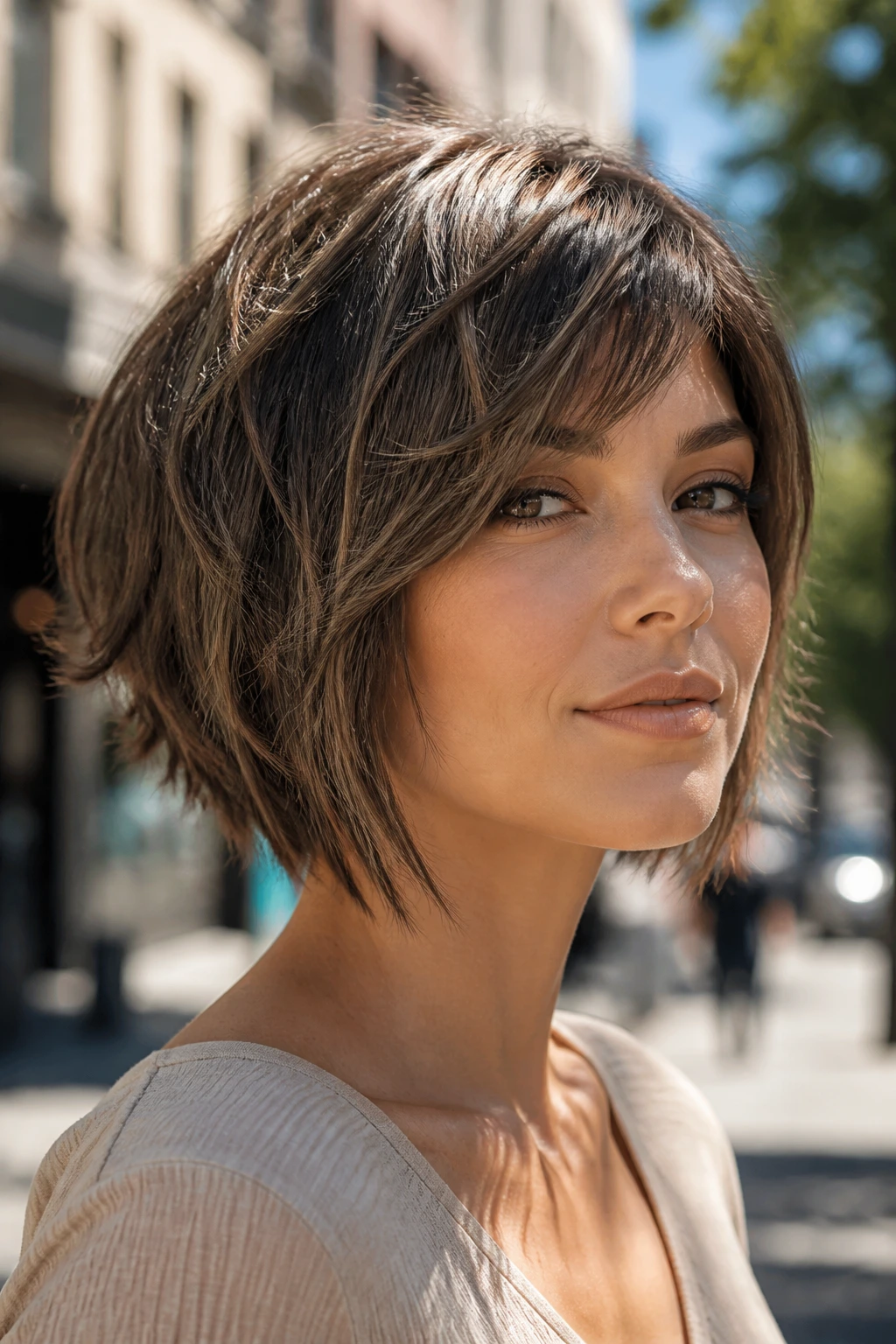
A shaggy stack is the relaxed cousin of the classic bob. It keeps the short, lifted back, but the ends are broken up so the haircut moves instead of sitting in one hard shape.
That looseness helps round faces because it interrupts the smooth outer line that can sometimes exaggerate width. A little texture near the jaw and collarbone gives the eye more to follow. It also works well if your hair has natural bend or a slight wave, because the style looks better a touch undone.
Be careful with the crown. Too much shagging up top can make the head look tall and narrow in an odd way. Keep the internal layers light, then use a texturizing spray only on the mid-lengths and ends. That gives you mess without chaos.
13. Sleek, Blunt-Finished Stack
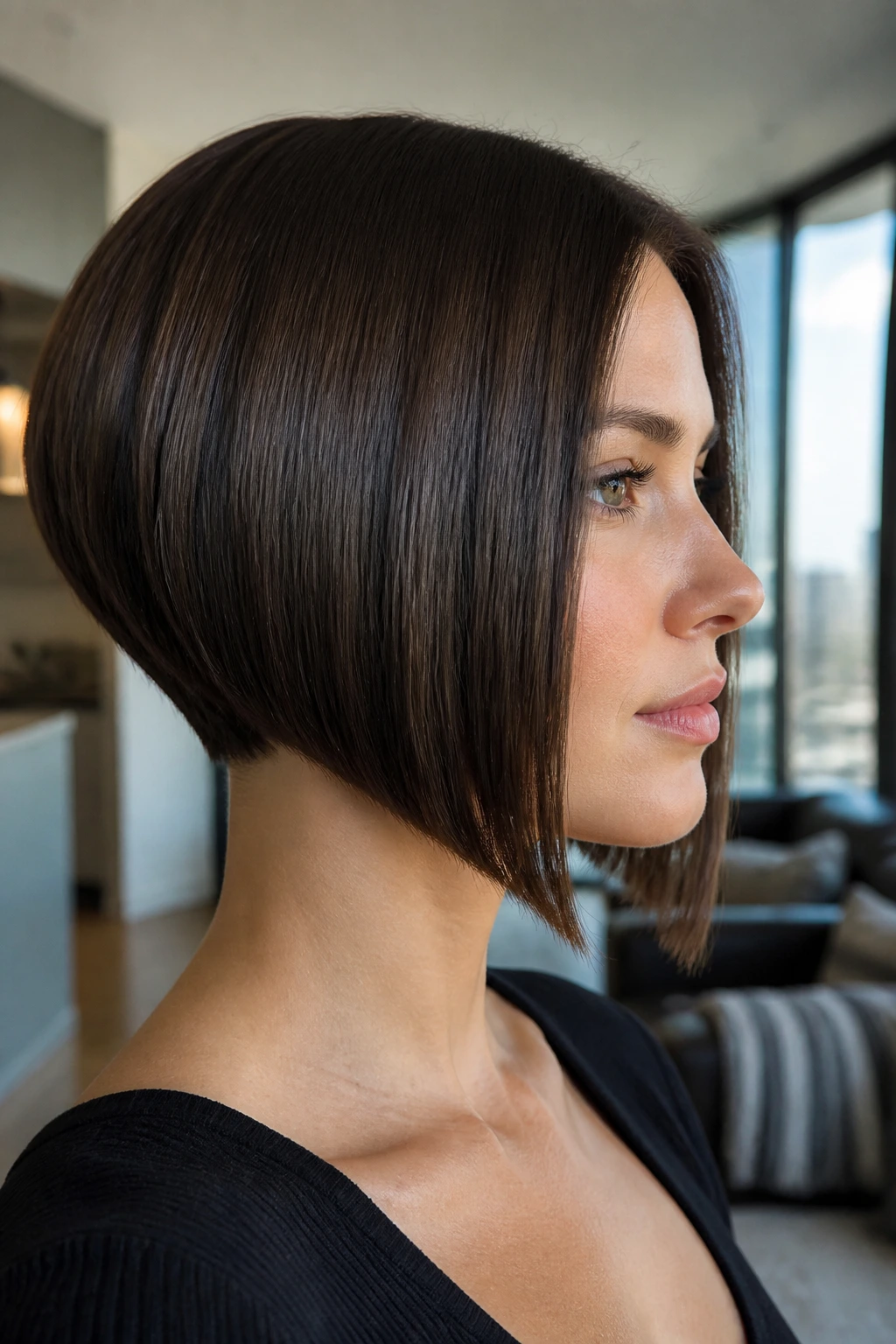
A sleek stack can flatter a round face if the line is controlled and the ends are crisp. The mistake people make is thinking soft is always better. Sometimes a clean edge through the front gives the face more structure than loose layers ever could.
This cut works best when the back is stacked tightly and the front falls in one clean panel. The blunt finish should not flare outward at the jaw. Keep it tucked under by a quarter inch when you blow-dry, and the whole shape looks deliberate instead of puffy.
I like this most on straight hair or hair that can be smoothed without a fight. Use a heat protectant, dry in sections with a nozzle attachment, then pass a flat iron through the front only if needed. A little polish goes a long way here.
14. Inverted Bob With a Longer Front
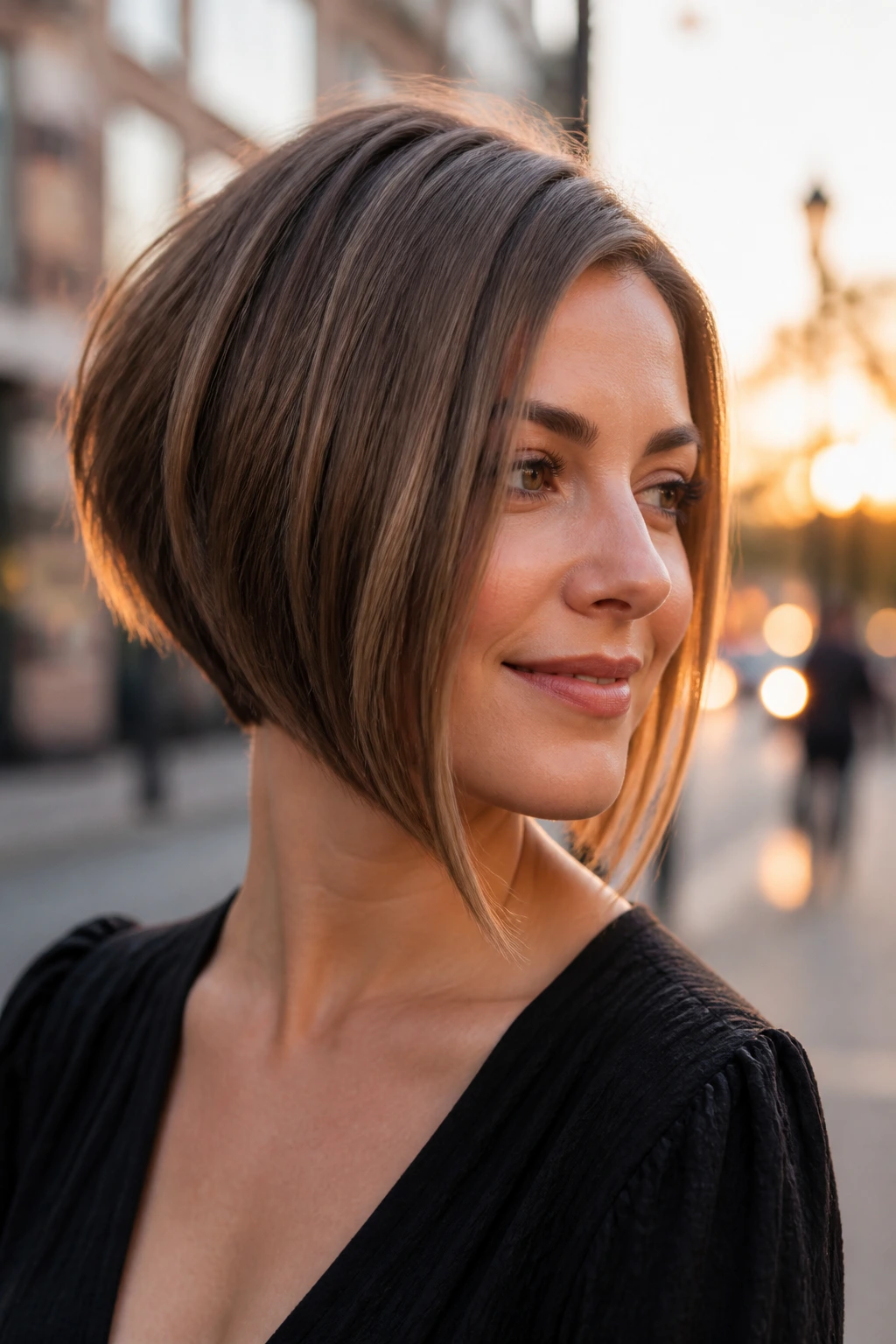
A good inverted bob creates a visible diagonal from the nape to the front corners. That line is flattering on round faces because it pulls the eye downward and forward, which lengthens the face without making the haircut feel severe.
The back should be shorter and closer to the neck, while the front lands somewhere between the jaw and collarbone depending on how bold you want the shape. I prefer a softer inversion rather than a dramatic one. The dramatic version can get a little sharp around the cheeks if the front stops too high.
Key Details to Keep in Mind
- Ask for graduation in the back, not a heavy shelf.
- Keep the front long enough to move past the cheekbones.
- Style with a slight bend, not a hard curl.
A soft inversion grows out better, too. That matters more than people admit.
15. Face-Framing Stack With Long Front Pieces
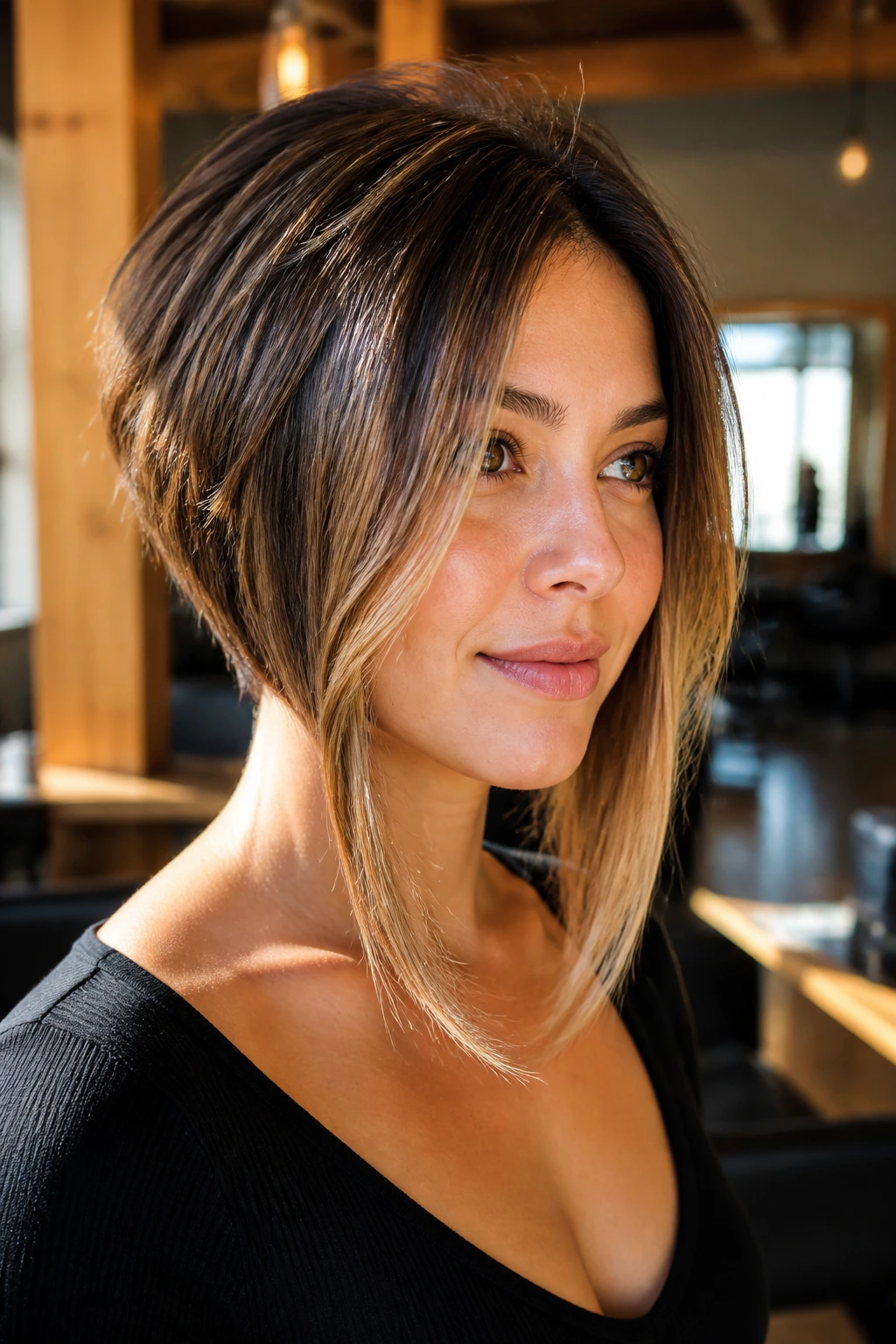
This is one of my favorite approaches because it gives you the benefits of a stack without forcing the face to live inside a tight bob. The back still rises and trims weight, but the front pieces stay long enough to skim the collarbone or chest.
Those long front sections do something useful on round faces: they create a downward line. The eye reads length, not width. At the same time, the stacked back keeps the cut from dragging flat or getting too heavy around the shoulders.
The style looks best when the front pieces are cut with a little angle, not all one length. That tiny graduation keeps them from hanging like curtains. Add a center part if you want a softer finish, or a side part if you want more cheekbone lift.
16. Textured Bob for Fine Hair
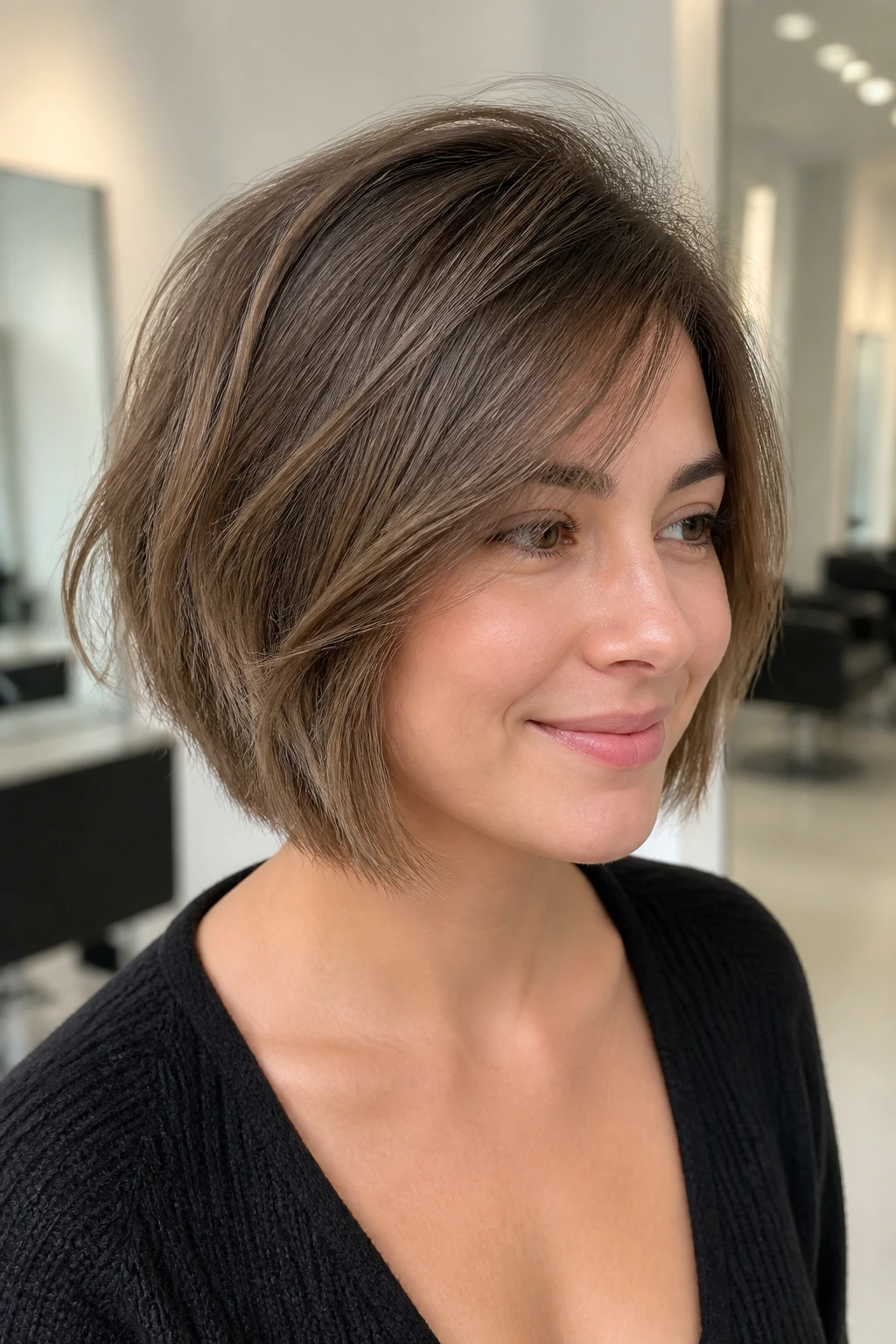
Fine hair loves a stack when the layers are light and smart. Too much length makes fine strands collapse against the head, and too much thinning leaves the ends wispy. A textured bob solves that by building shape in the back while keeping the outline full enough to feel substantial.
The trick is subtle texture, not a hacked-up finish. Ask for internal layers that remove weight from the crown and nape, then keep the perimeter fairly clean. That gives the hair more lift without making the ends look frayed. A small mousse at the roots and a quick rough-dry can already make the cut look better than it did in the chair.
This is also one of the easier stacked cuts to style on busy mornings. A 2-minute blow-dry upside down, then a quick smoothing pass over the top, is often enough. Fine hair does not need a lot of convincing when the cut is right.
17. Heavier Stack for Thick Hair
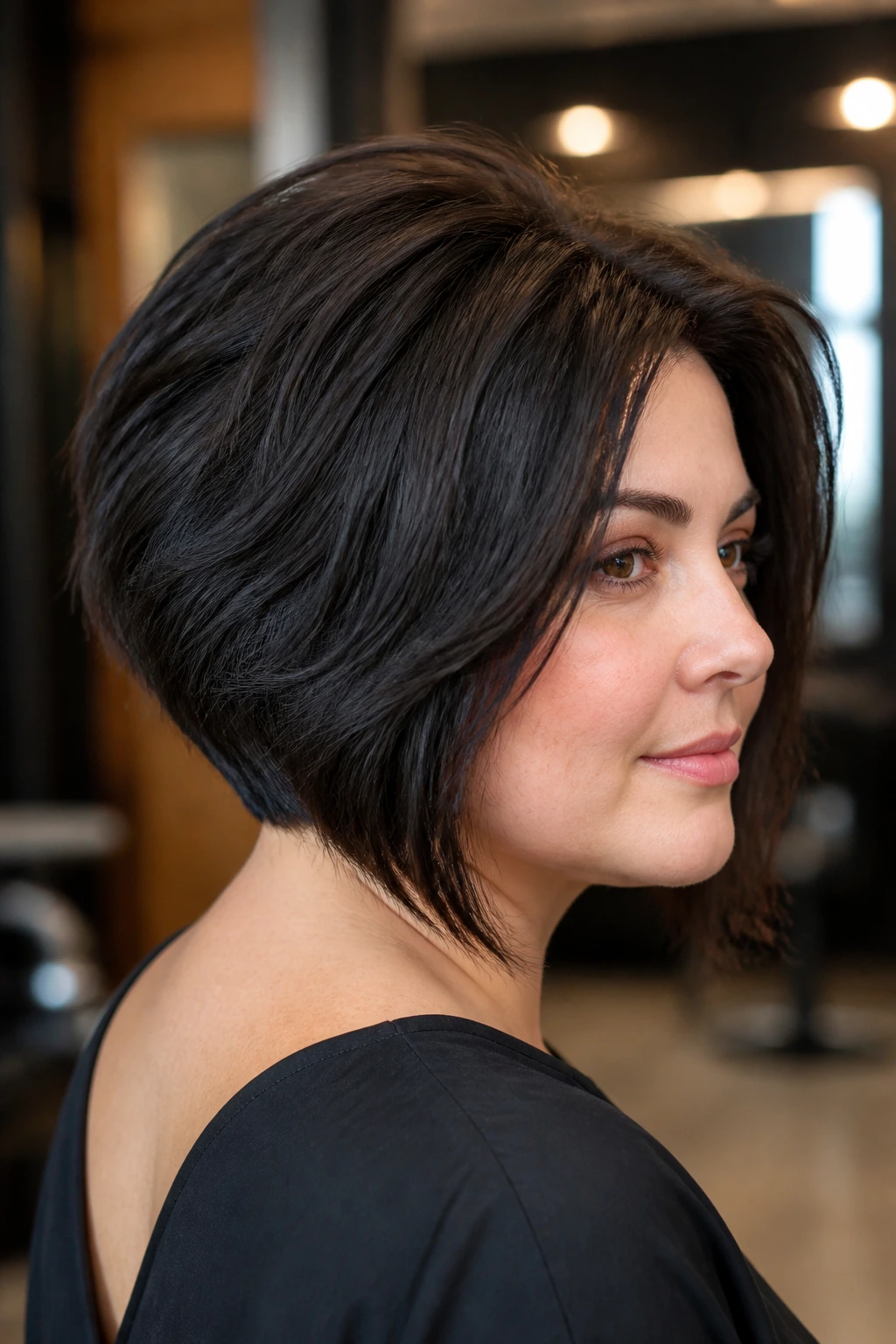
Can thick hair handle a stacked bob? Yes, but only if the interior is managed with a firm hand. Thick strands have a way of building their own shape, and on round faces that can turn into a wide halo if the weight is not removed properly.
The best version takes bulk out of the nape and lower back while leaving enough density through the front to keep the cut grounded. I’d avoid over-layering the top. That can make thick hair spring out in all the wrong places. A stacked shape should feel contained, not chopped into pieces.
What to Watch For
- Ask for slide cutting or interior removal, not aggressive thinning shears on the surface.
- Keep the front pieces longer than the jaw so the profile stays balanced.
- Use a smoothing cream if your hair expands in humidity.
This cut looks expensive when it lies flat and clean. It looks messy fast when it does not.
18. Stacked Lob With Loose Waves
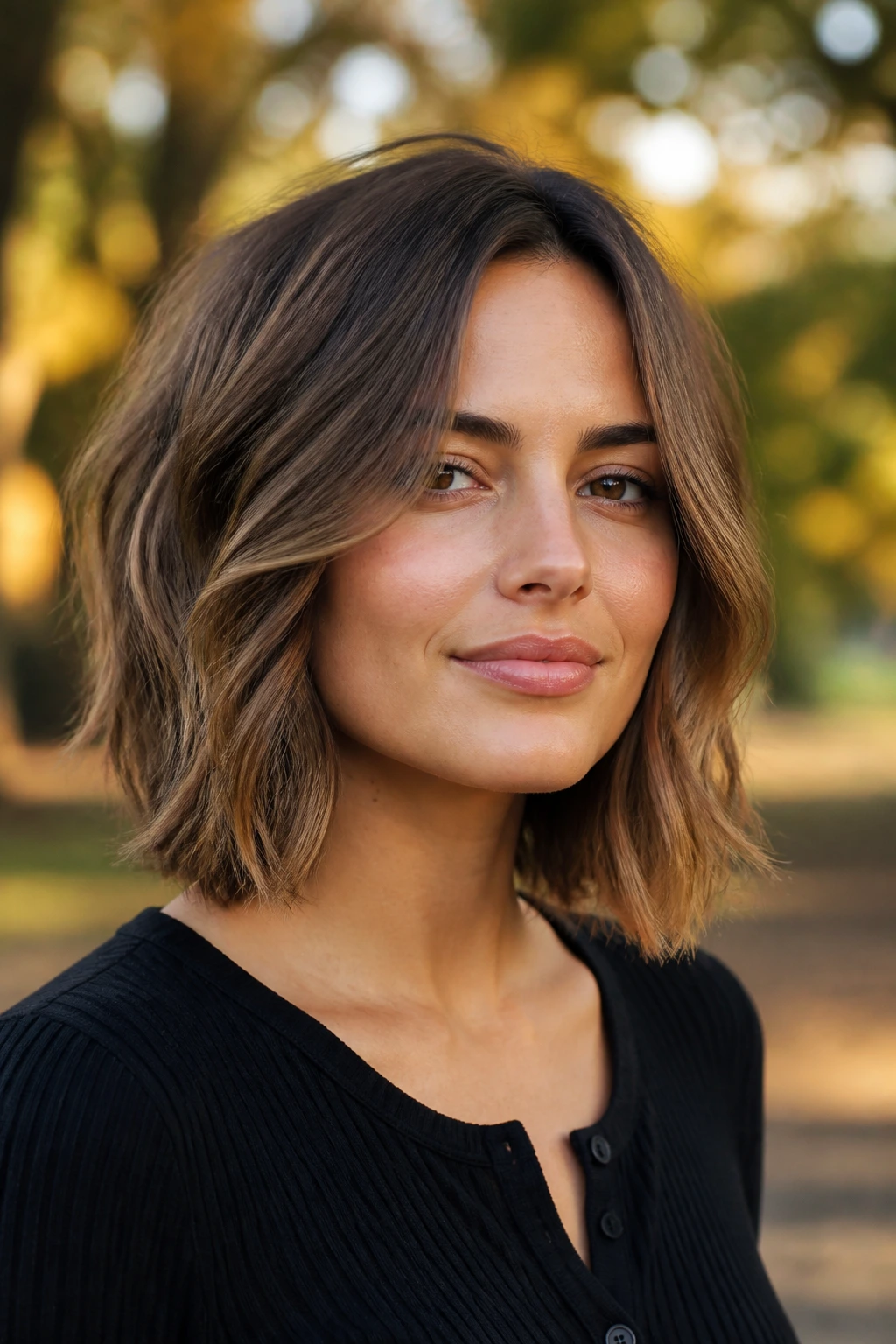
A stacked lob is a nice compromise for someone who wants the security of length but still likes the lift of a shorter back. Loose waves keep it from feeling too rigid, and the longer shape works well on round faces because it gives the cheeks breathing room.
The waves should start below the cheekbone. That is the part I care about most. If the curl or bend begins too high, the face can read fuller. Keep the motion lower and the top smoother, and the outline starts to look longer.
- Wrap hair around a 1.25-inch iron for 6 to 8 seconds per section.
- Leave the first 1 inch of hair out for a softer bend.
- Brush the waves out with fingers, not a paddle brush.
The result is casual, but not sloppy. That matters.
19. Rounded-Back Bob With Volume at the Crown
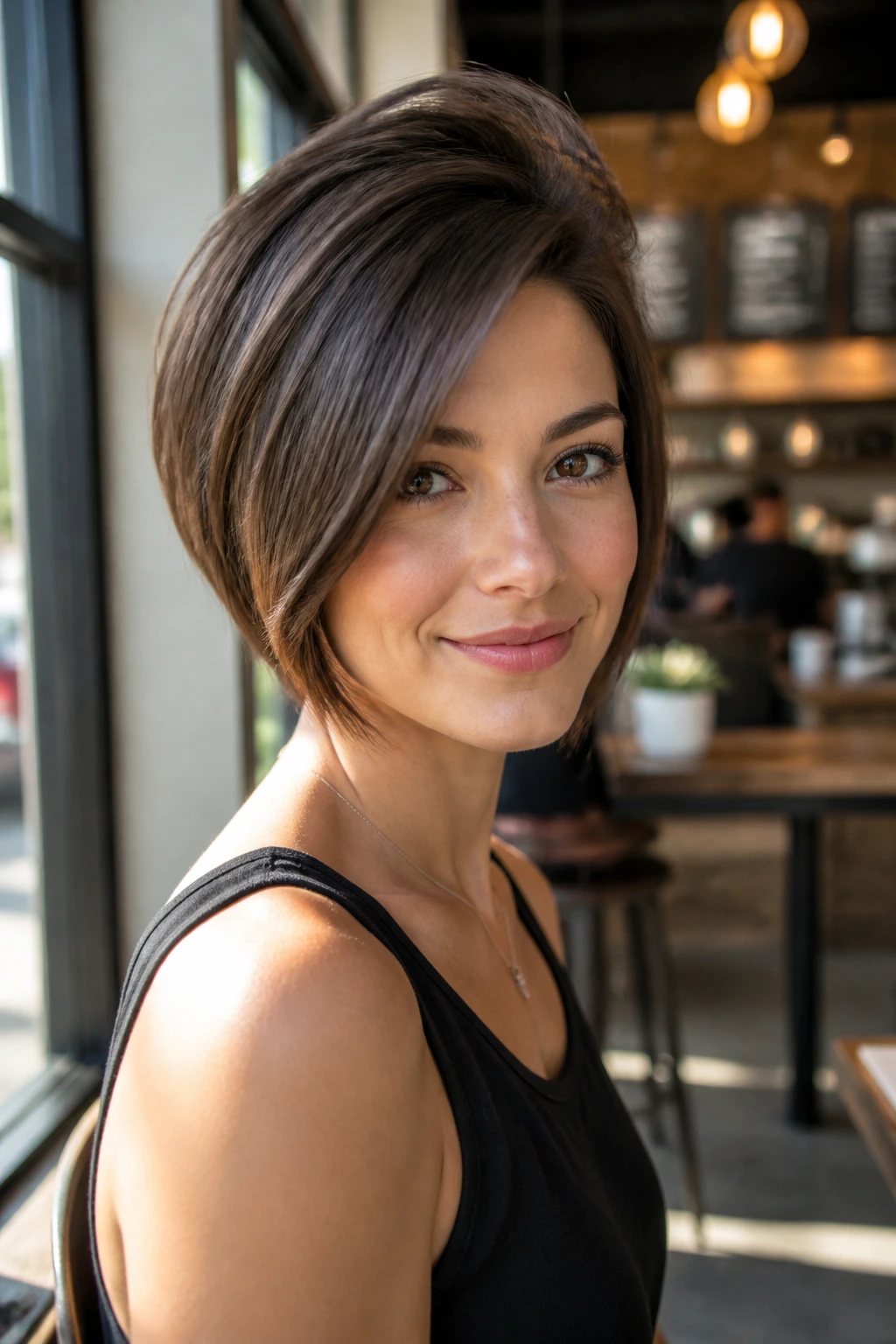
This cut is all about controlled lift. The back has a soft rounded shape, and the crown gets enough volume to add height without making the sides flare out. On round faces, that upward motion is the whole point.
A rounded-back bob can look dated if the ends are too tucked under or the crown gets too puffy. Keep the shape smooth through the side panels and build the lift mostly at the roots. A small round brush and a little root spray will do more than heavy backcombing ever will.
I like this cut when the hair is medium density and the neck line is neat. It gives a clean frame around the face and feels polished without being severe. If you wear glasses, it also plays nicely because the top shape sits above the frames instead of crowding them.
20. Razor-Cut Stacked Bob
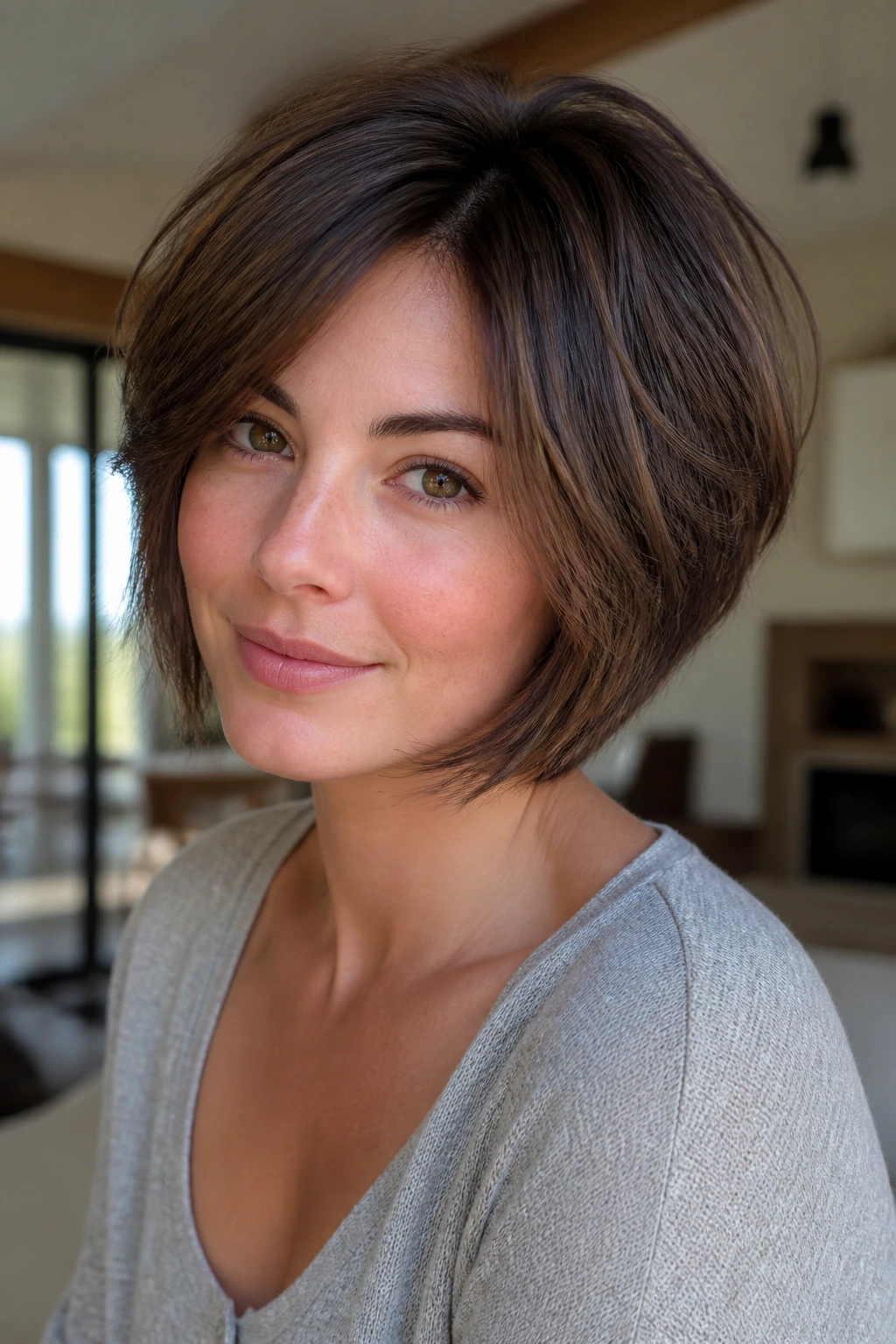
Unlike a scissor-cut stack, a razor-cut version has softer ends and a little more movement. That can be useful on round faces if you want the haircut to feel lighter around the jaw and less exact at the edges.
The catch is texture. Razor cutting loves straight to slightly wavy hair. On coarse or frizz-prone strands, it can make the perimeter fuzzy if the stylist goes too far. I’d ask for a gentle razor finish only on the interior and maybe the front pieces, not through the entire head.
This is a good choice if you like your bob to look a little undone by default. It does not need stiff styling. A bit of serum on the ends and a blow-dry with your fingers can keep it soft without flattening the stack.
21. Jaw-Length Stack With Micro Fringe

A jaw-length stack with a micro fringe is a bold move, but it can work when the fringe stays narrow and the rest of the cut adds vertical lift. The trick is to keep the bangs piecey, not full across the forehead. That prevents the face from looking shorter.
The stack underneath should be clean and precise. If the back gets heavy, the tiny fringe loses its edge and the whole cut feels accidental. A narrow fringe can be cut with point cutting to keep it from looking stiff, and the rest of the style should taper toward the jaw rather than balloon out.
Small Details That Matter
- Keep the fringe 1/2 inch above the brows if you want a sharp look.
- Leave a few soft pieces around the temples.
- Style the top flat and the ends tucked slightly under.
This is not the quiet choice. It is the interesting one.
22. Soft Layered Bob With Long Bangs

Long bangs can be a gift on a round face when they skim the cheekbones and blend into a stacked bob that keeps the back tidy. The length on the front gives the face room, while the layers stop the cut from feeling heavy.
I like this shape when someone wants movement but not a lot of obvious chopping. The long bangs can be parted slightly off center, pushed to either side, or worn forward on a busy day. That flexibility makes the haircut feel easy in real life, not just in a salon mirror.
The layers should sit softly, with the shortest pieces near the crown and the longest ones dropping toward the collarbone. That gives the style an easy slope. If the front pieces are cut too short, the face gets boxed in. Keep them long, and the whole cut reads calmer.
23. Short Stacked Bob With an Undercut Nape
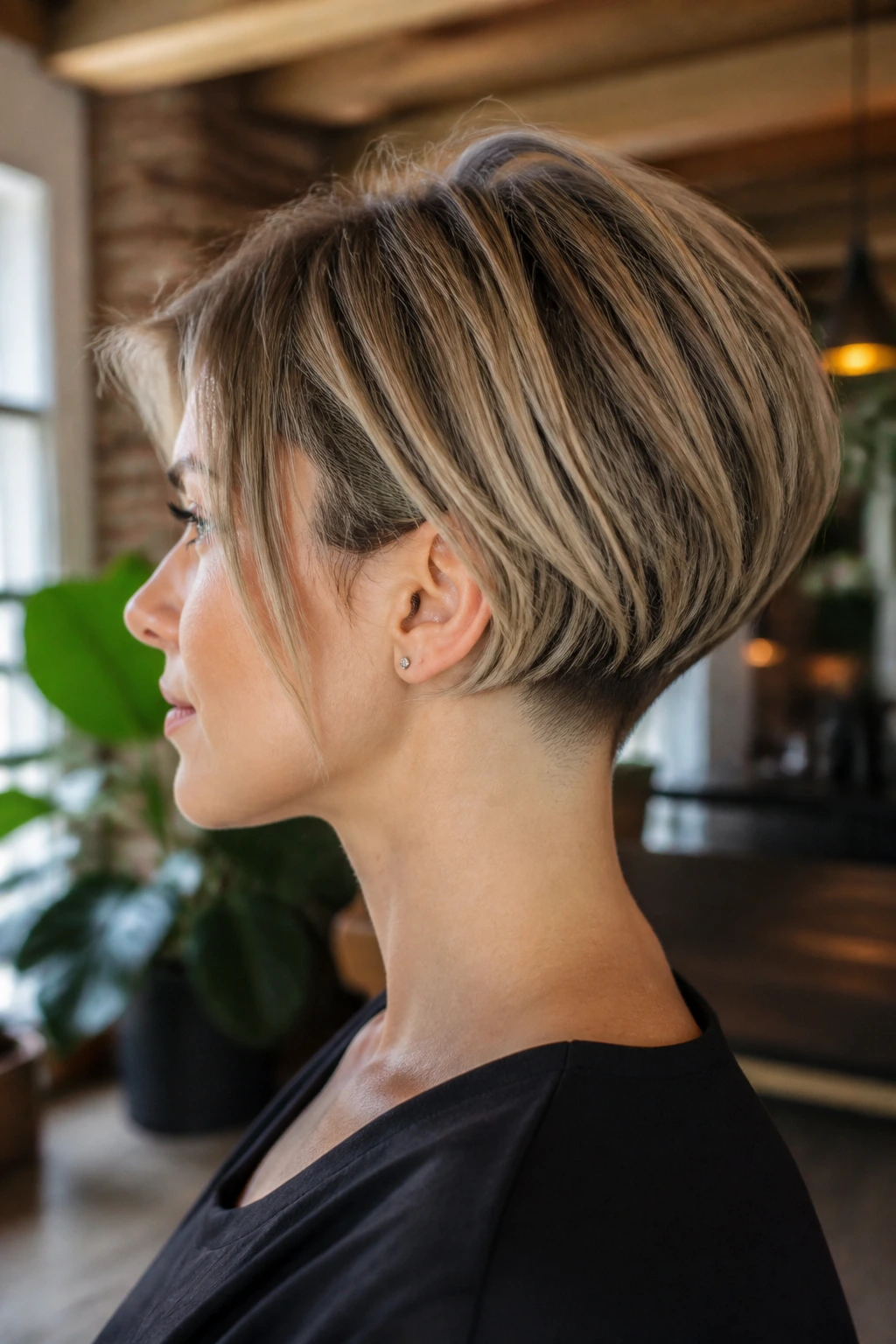
A short stack with an undercut nape is one of the cleanest fixes for dense hair that keeps swallowing its own shape. The undercut removes bulk right where the hair tends to puff, and the stacked layers above it create a sharper line for round faces.
This cut has attitude. It also grows out better than you’d think, because the hidden undercut keeps the back from turning bulky between trims. I like it when the top stays soft and the front drops just past the jaw. That way the style has edge without making the face look wider.
If your hair is thick, ask for the undercut to stay subtle. A full shave is not necessary unless you want one. Even a small removal of weight at the nape can change how the whole bob sits.
24. Shoulder-Grazing Stacked Cut With Internal Layers

Can a stacked cut work when it reaches the shoulders? Yes, if the stacking lives mostly inside the shape instead of showing up as an obvious shelf. That makes the cut feel longer and softer, which is useful on round faces that want some length around the jaw.
The internal layers keep the back from dragging flat, and the shoulder length gives you room to wear it tucked, waved, or blown straight. I especially like this on medium to thick hair, where a full bob can feel too compact. The longer length gives movement without losing the structure.
Best Styling Approach
- Blow-dry with a paddle brush if you want a smooth finish.
- Add a bend with a 1-inch iron only through the bottom third.
- Keep the crown sleeker than the ends.
That contrast keeps the face open and the cut from feeling bulky.
25. Tucked-Under Blowout Stack
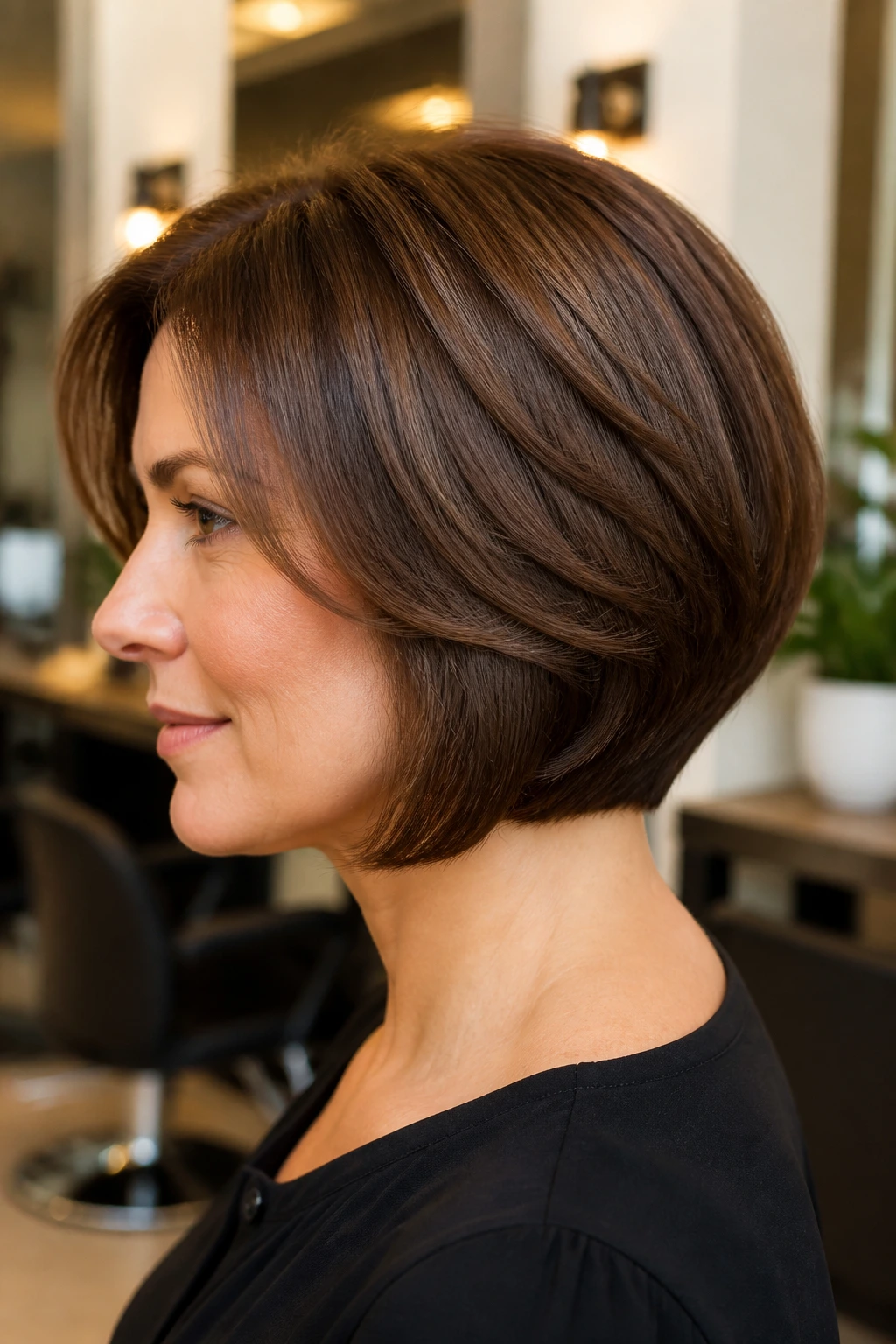
A tucked-under blowout stack has that polished salon feel, but it is not as fussy as it looks. The back is stacked enough to hold shape, and the ends roll under just enough to give the neckline a neat frame.
This works on round faces because the smooth line draws the eye downward. The blowout also creates height at the roots, which helps the face read a little longer. It is especially pretty on chin-length and shoulder-length versions, where the movement at the ends can be controlled with a round brush.
Use a nozzle attachment and dry in 2-inch sections. Pull each section slightly forward as you round the brush under the ends. If the brush stays too close to the sides, you build width where you do not want it. A little discipline here pays off.
26. Tapered Stack for Naturally Wavy Hair
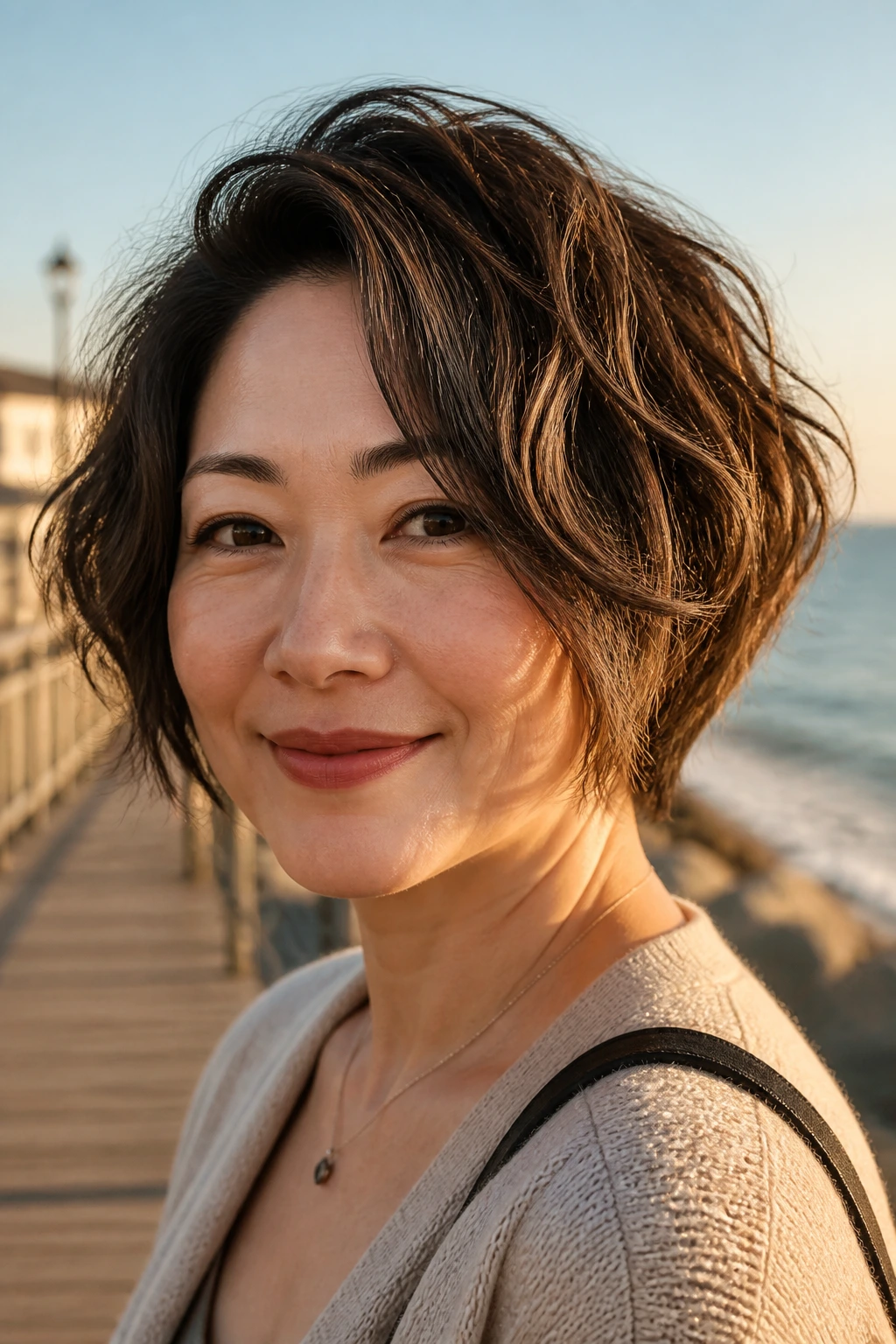
A tapered stack is one of the smartest cuts for wavy hair on a round face. The natural bend of the hair does half the styling for you, while the taper keeps the back from swelling out into a wide shape.
The cut should follow the wave pattern instead of fighting it. Shorter layers at the back, longer pieces around the face, and enough length through the front to keep the shape from floating up too high. If the stylist cuts it too bluntly, the wave pattern can turn bulky. If they cut too aggressively, it can get stringy. The balance matters.
I like this version with a sea-salt spray or a light cream, then a rough dry with the fingers. No need to polish every bend. The easy movement is the point.
27. Tapered Stack for Coily Hair
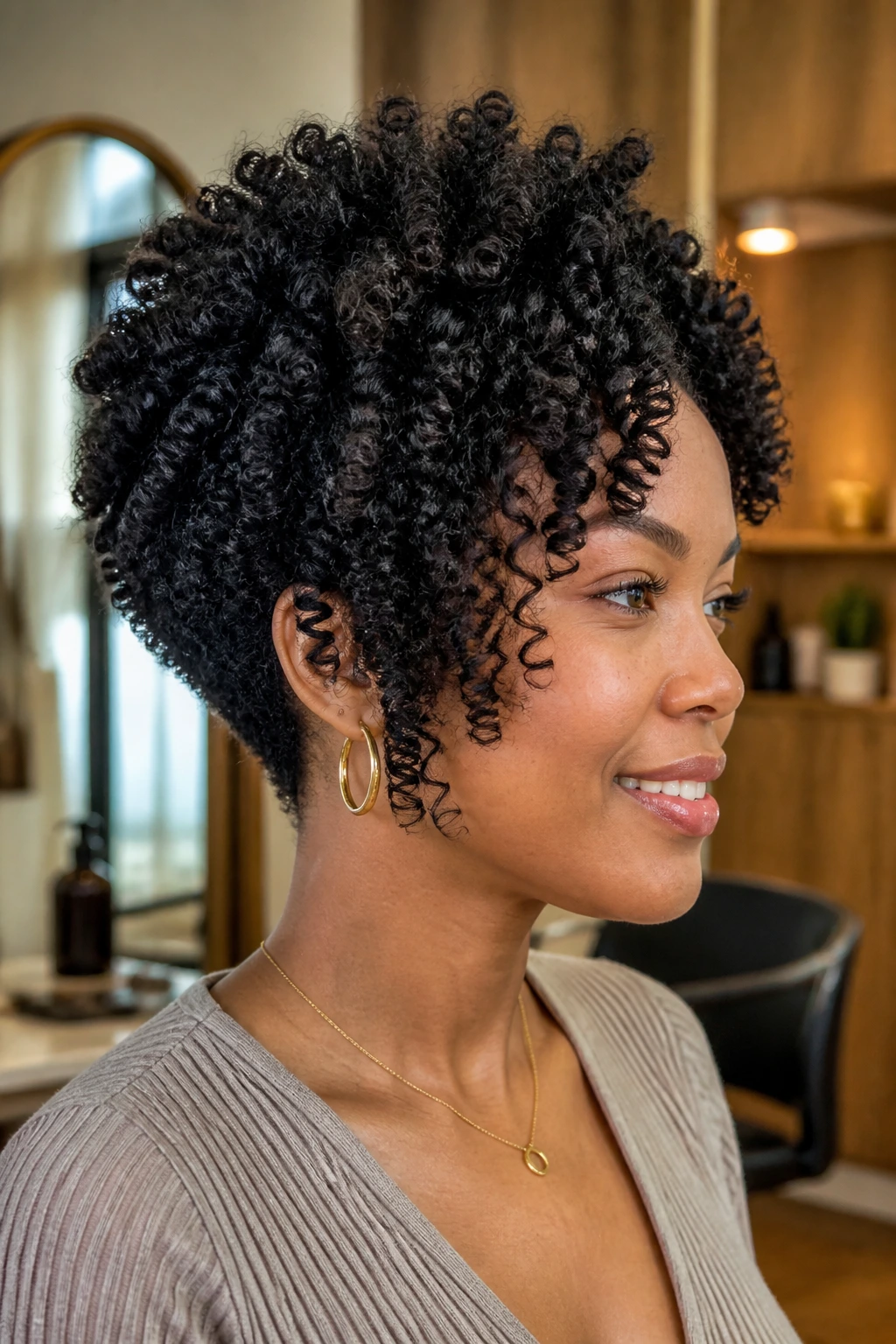
Coily hair needs a stack that respects shrinkage and shape. The outline should be planned with the hair in its natural state, not stretched into something it won’t stay as. That is especially true on round faces, where the silhouette can widen if the sides are cut too short.
A good tapered stack keeps the nape neat and builds length gradually toward the front and top. The front pieces can sit longer to create a soft frame around the cheeks, while the back stays compact enough to keep the head shape clean. Dry-cutting or a stylist who cuts with coily shrinkage in mind makes a huge difference.
This cut works beautifully when it is refreshed with moisture and a little hold. Cream, gel, or a mousse-soft combo can define the shape without turning it stiff. The hair should look shaped, not frozen.
28. Low-Maintenance Stacked Cut With Minimal Styling
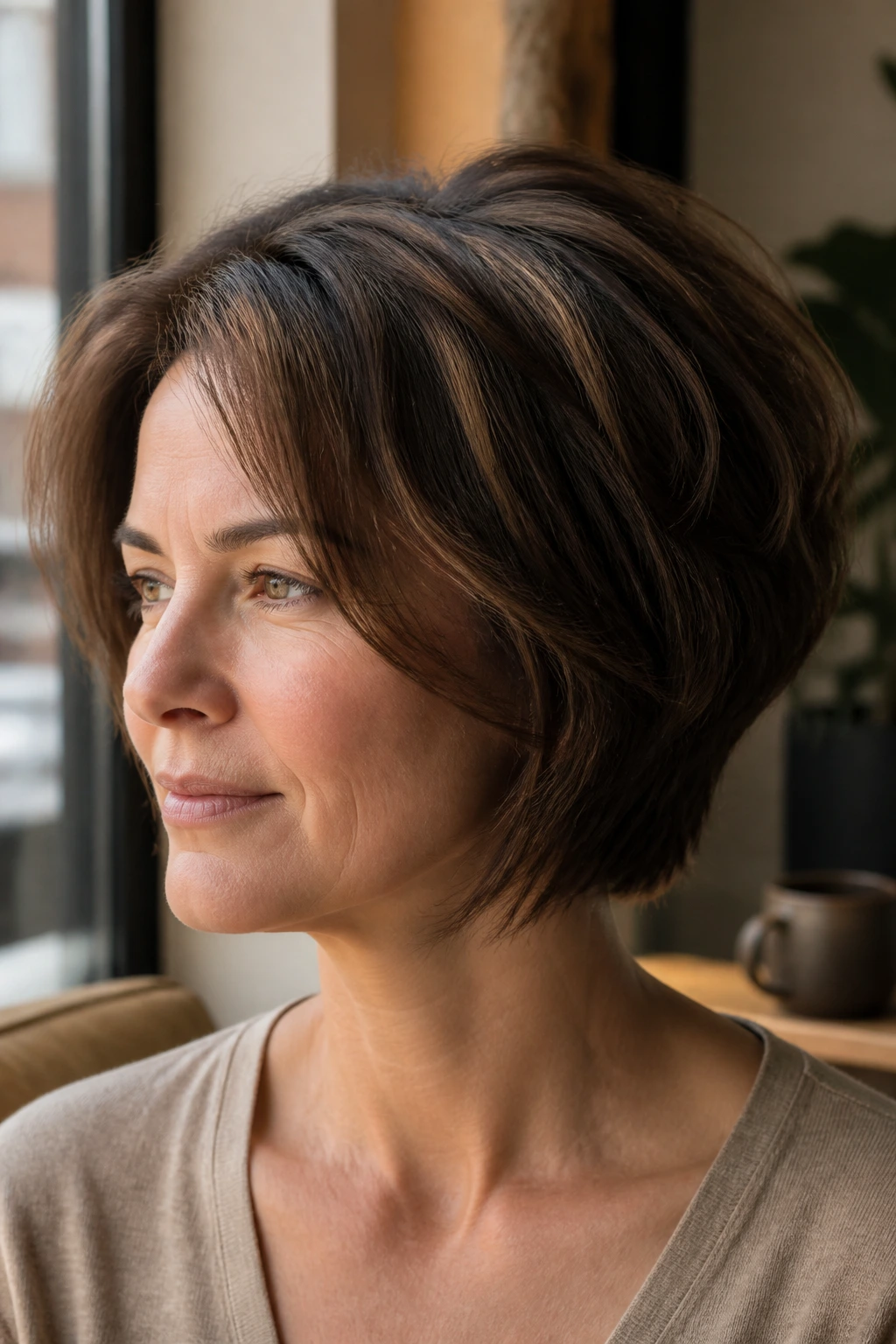
Do you want a stacked cut that behaves with almost no effort? Then keep the layers soft, the part flexible, and the front long enough to sit on its own. The secret is not magic. It is restraint.
A low-maintenance version avoids hard corners and dramatic angles. The back is still stacked, but the transition is gentle enough that it grows out cleanly. That means fewer awkward weeks between trims and less time wrestling with a brush in the morning. On round faces, the softer stack still gives shape without begging for perfect styling.
Ask for a cut that can air-dry with a slight bend. If the hair looks decent rough-dried, it will usually look even better with a 5-minute blow-dry. That is the kind of haircut people actually keep wearing.
29. High-Contrast Stacked Bob With Heavy Layers
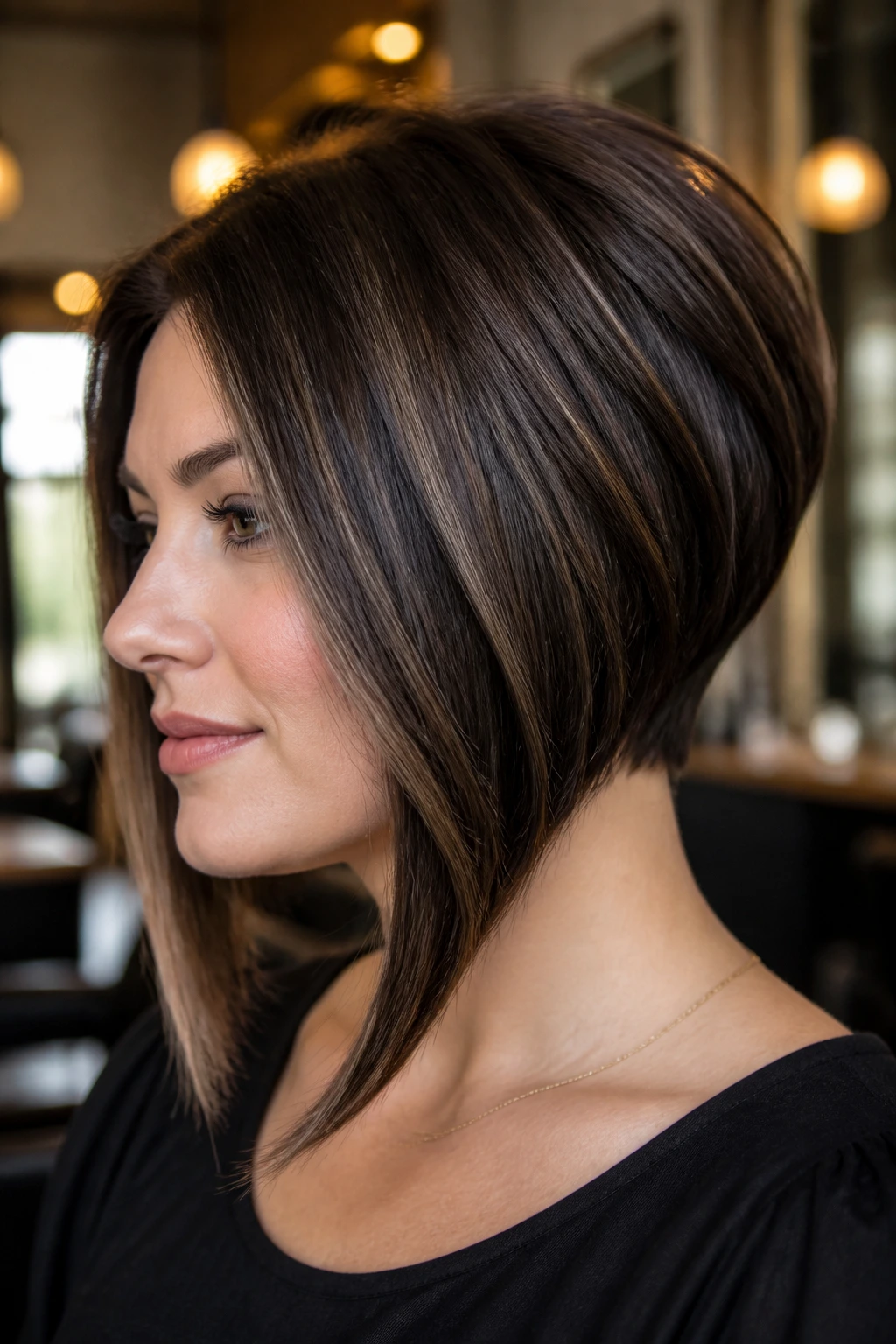
A high-contrast stacked bob is for someone who wants the back short and the front noticeably longer. The difference between those lengths creates a strong diagonal, and that diagonal is what helps a round face look less wide.
This style needs precision. If the top layers are too high or the sides are too puffy, the cut gets loud in the wrong way. Keep the back compact, let the front sweep past the jaw, and build the heavy layers where they support the shape rather than steal it. This is one of those cuts that looks expensive when the corners are exact.
What Makes It Work
- A clear length gap between back and front.
- Smooth graduation instead of choppy stacking.
- A side part or off-center part to keep the face from feeling too even.
It is a stronger look, and that is the point. Some haircuts whisper. This one has opinions.
30. Elegant Collarbone Stack With Soft Ends
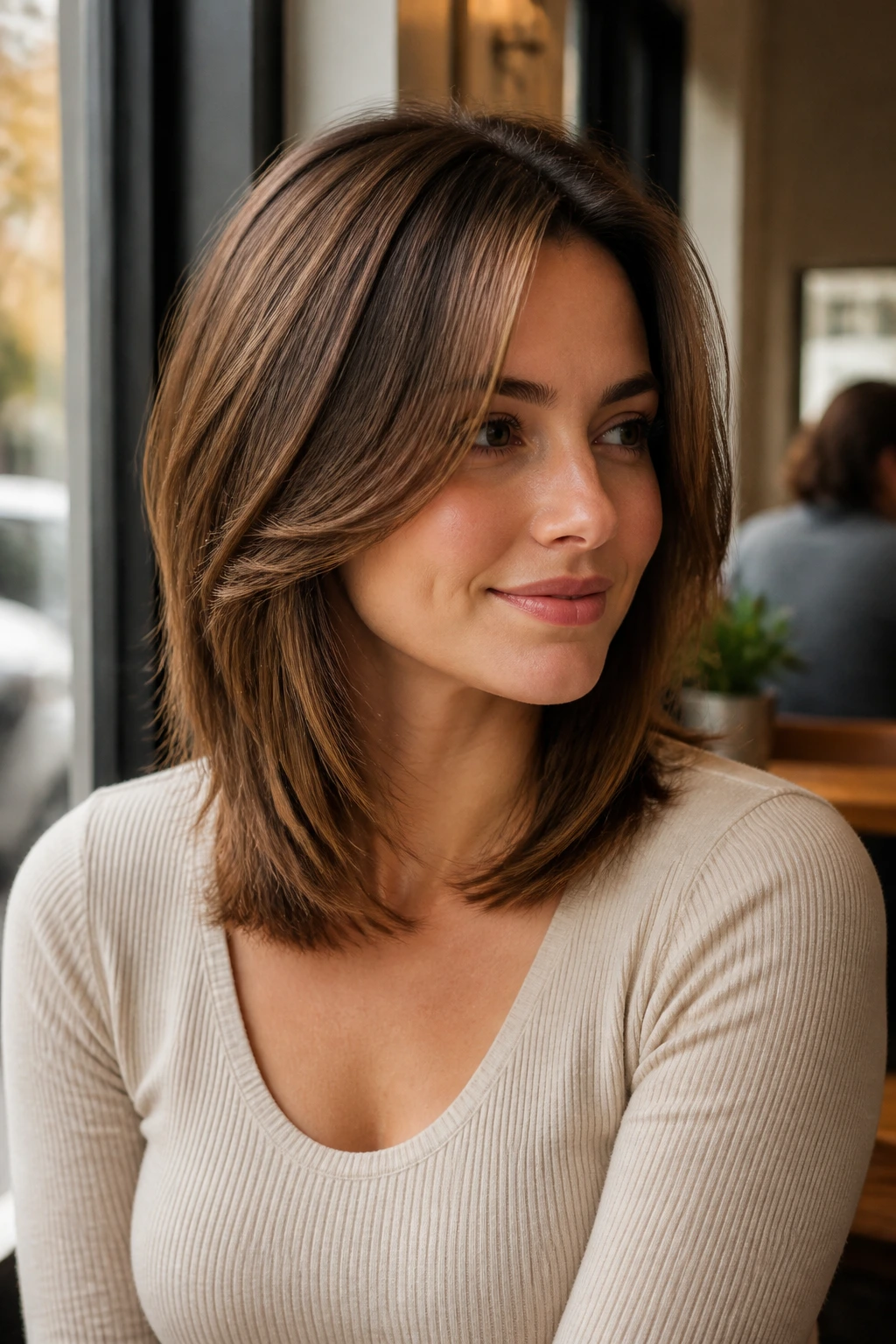
A collarbone stack with soft ends is the kind of haircut that looks easy even when it has been cut with a lot of thought. The back stays lifted, the front stretches the face visually, and the soft ends keep it from looking too geometric.
This is a good final stop if you want something grown-up and wearable. It flatters round faces because it gives length without making the head look narrow or severe. The collarbone length also means you can tuck one side behind the ear, wear it in loose bends, or smooth it straight when you want the cut to feel cleaner.
I like this version with a soft center part or a gentle side part. It grows out in a flattering way, which matters if you do not live in a salon chair. The shape keeps its manners for a while.
Final Thoughts
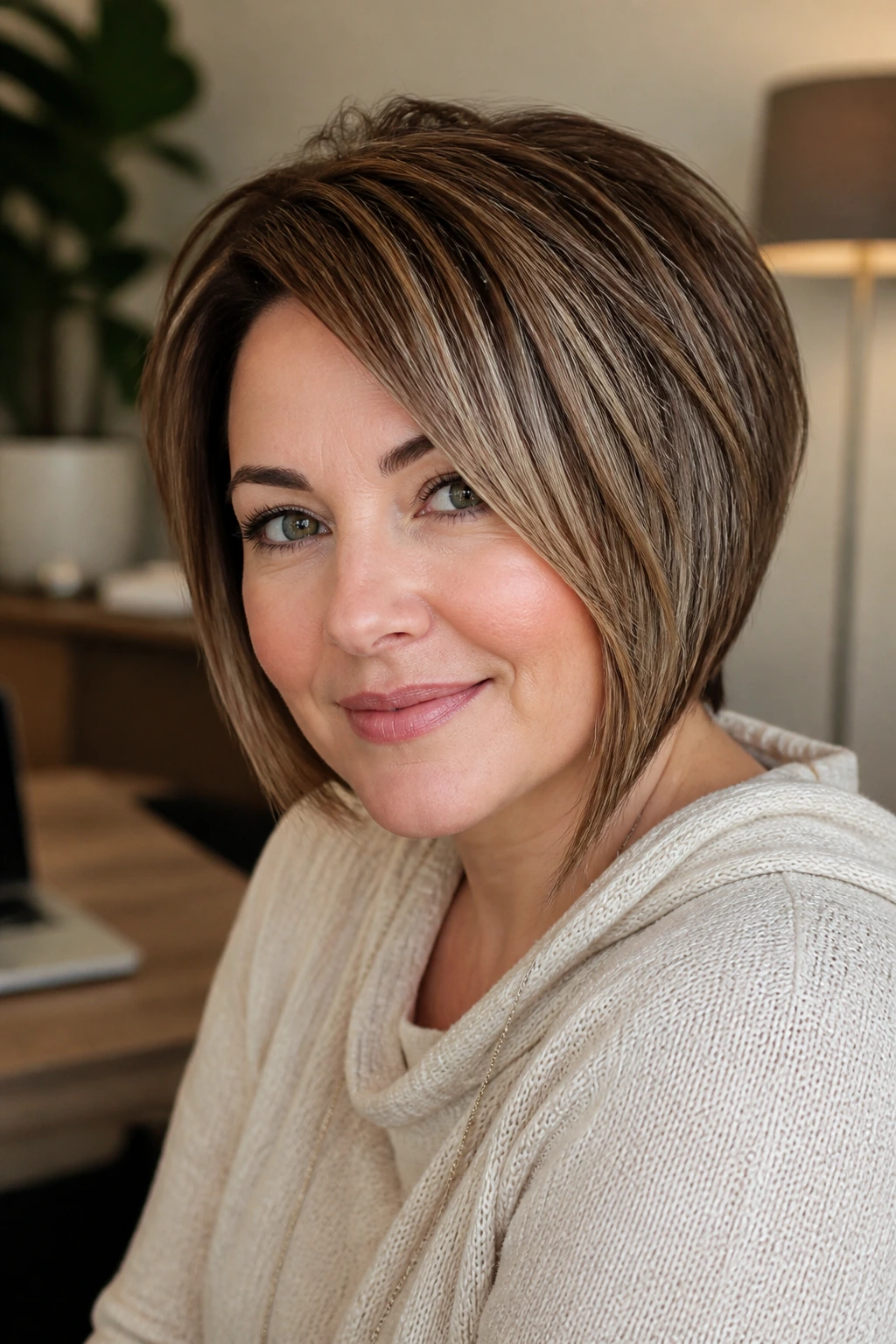
The smartest stacked haircuts for round faces do one thing well: they create lift without dumping volume right at the cheeks. That sounds simple, but it is where a lot of cuts go wrong. A little stack in the back, a little length in front, and a part that does not split the face into a perfect circle — that combination does most of the work.
If you are choosing between two versions, pick the one with the cleaner line through the front. Round faces usually look better with a shape that moves diagonally or vertically, not one that expands outward at the widest point. Keep that in mind, and the haircut starts doing the flattering for you.
