



The best medium haircuts for fine hair do one thing well: they make the ends look full. Fine hair can go limp fast, especially when the cut gets too wispy or the layering starts too high, and that is why a shoulder-skimming length often works better than hair that hangs much longer.
A medium length gives you room to move, tuck, wave, or blow-dry, but it still keeps enough weight at the bottom to stop the whole shape from looking see-through. That matters more than people think. A blunt line at the collarbone can make a bigger difference than a dozen extra styling products.
I’ve always thought fine hair needs a steady hand, not an overworked one. Too much texturizing can chew up the perimeter and leave the ends looking scraggly by midafternoon, which is exactly the wrong effect if you want body and shine.
The cuts below focus on shape, weight, and clean lines. Some are sleek, some are softer, and some rely on just enough movement to keep the style from falling flat. All of them are built to make fine hair look thicker, fuller, and a little more alive.
1. Blunt Collarbone Lob for Fine Hair
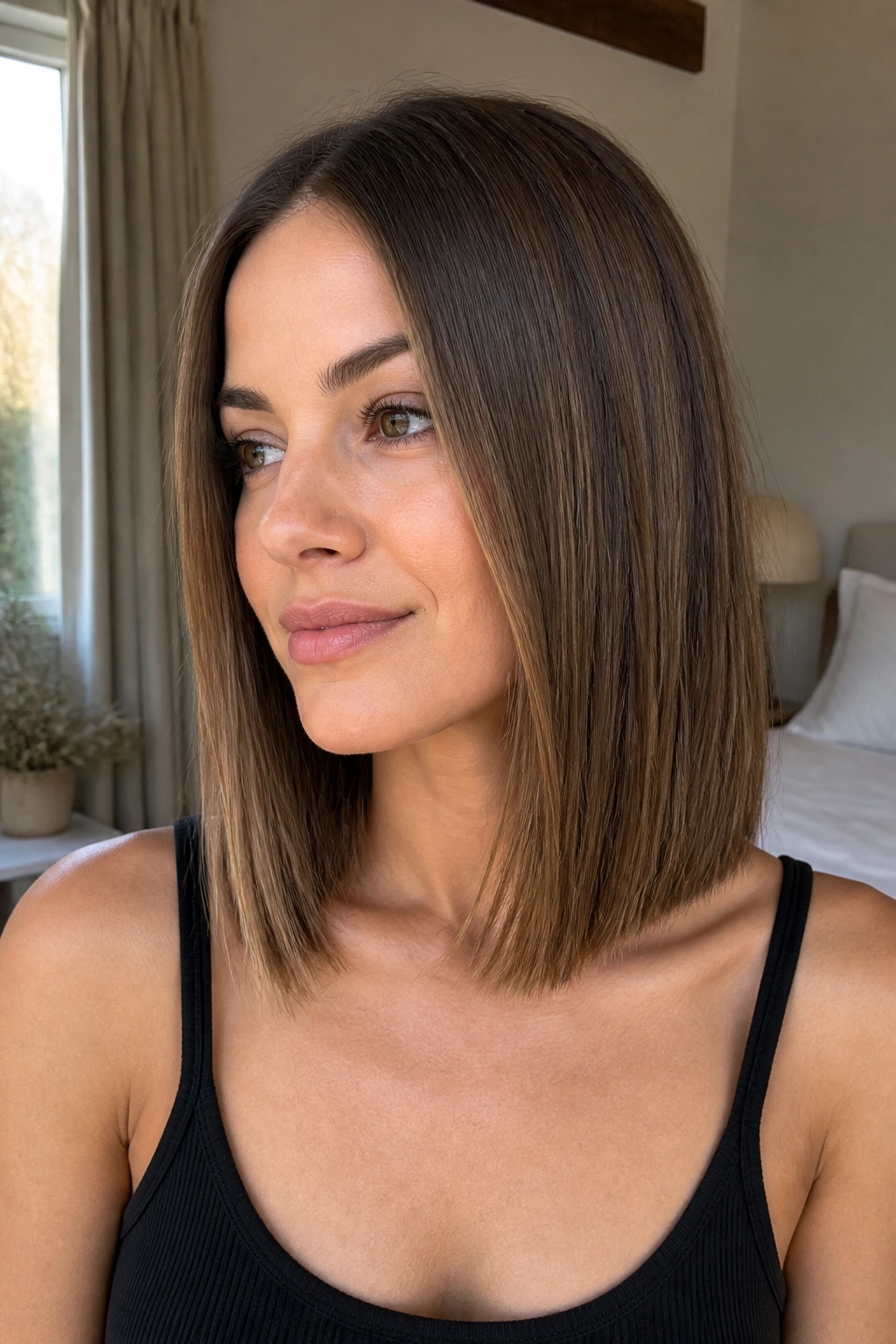
A blunt collarbone lob is the cut I reach for first when someone wants their hair to look denser without giving up length. The straight edge creates a stronger visual line, and that line makes the ends look heavier than they really are.
Why It Works
Keep the perimeter blunt and the layer count low. That’s the whole trick. When fine hair is cut in a clean, even line at the collarbone, it stops looking stringy at the bottom and starts reading as one solid shape.
Ask your stylist to keep the cut one length through the back with only the lightest face-framing pieces, if any. If your hair already falls flat at the crown, a deep side part or a rough blow-dry can give the cut more lift without sacrificing the thick-looking edge.
A single pass with a flat brush and a round of root spray is usually enough. You do not need to pile on mousse, cream, and oil all at once.
2. Soft U-Shaped Cut
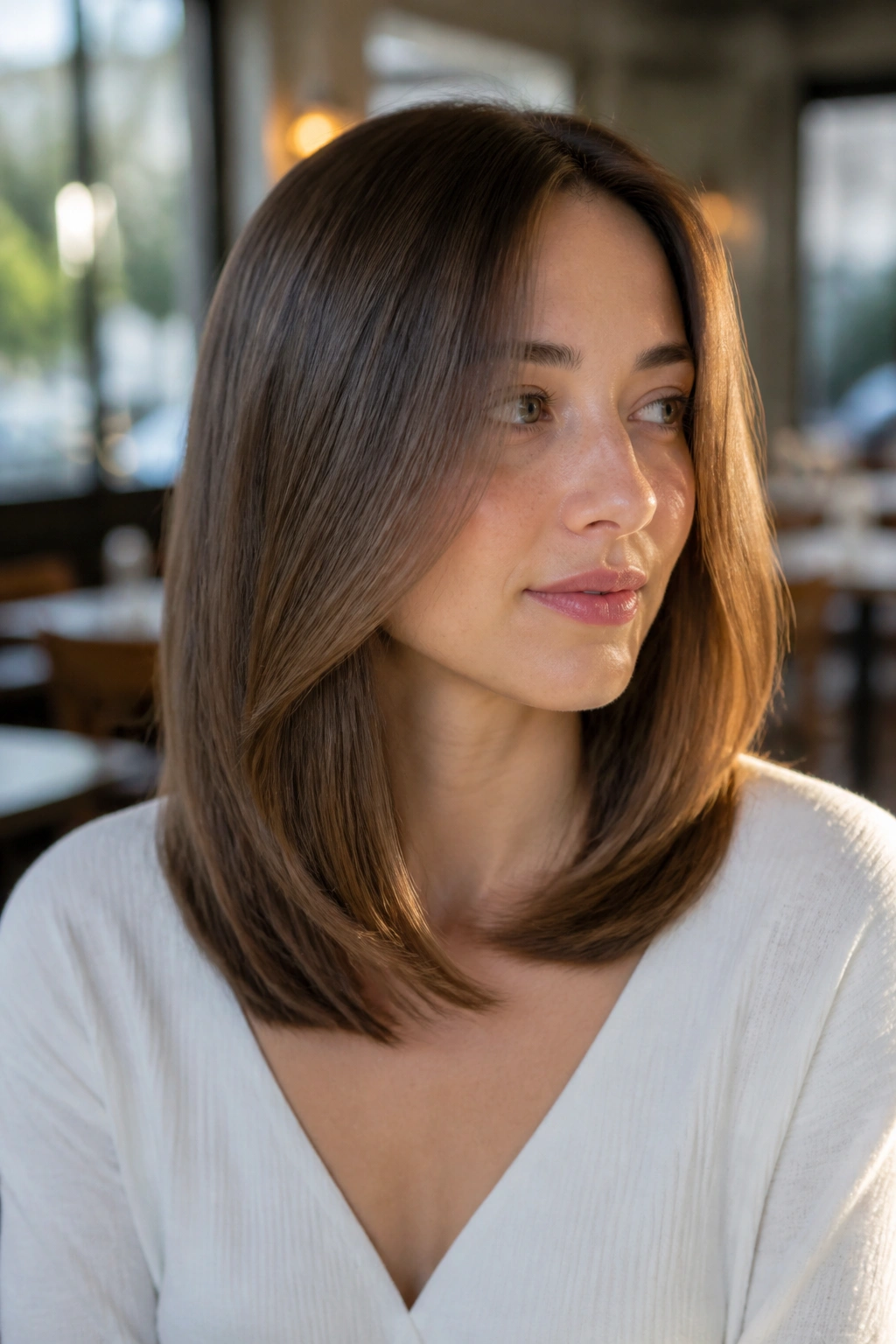
A soft U-shape is a quieter version of the blunt lob, and that’s what makes it useful. The front sits a touch longer than the back, so the cut has movement, but the curve is gentle enough to keep fine hair from looking thin at the sides.
Does that sound too subtle? It shouldn’t. Fine hair often looks better when the haircut looks calm. A hard angle can make the ends appear sparse, while a soft U keeps the outline friendly and full.
I like this cut for people who tuck hair behind one ear, wear sweaters with high necklines, or want a shape that still looks neat after a long day. The curve also helps if your hair tends to flip out awkwardly at the shoulders.
A small bevel at the ends can be enough. Ask for a soft, rounded finish, not a heavily layered blowout shape that depends on daily effort.
3. Shoulder-Length Cut With Curtain Bangs
Curtain bangs can do a lot for fine hair, but only when they’re kept light. Thick, heavy fringe can swallow the face and make the hair around it look even finer. A feathered curtain bang opens things up instead.
Why the Fringe Helps
The split at the center draws the eye upward, and that makes the crown feel fuller. It also gives the haircut more shape around the cheeks, which is handy when the rest of the hair is fairly fine and straight.
The best version starts around the cheekbone, not the jaw. That gives the fringe room to sweep back without turning into a block of hair. Pair it with shoulder length or just-below-the-shoulder length so the whole cut feels balanced.
How to Style It
- Blow-dry the bangs forward first, then sweep them apart with a round brush.
- Keep the rest of the hair loose and slightly bent at the ends.
- Use a pea-sized amount of light cream, not a thick balm.
This is one of those cuts that looks done even when it isn’t. Nice little bonus.
4. Layered Lob With Face-Framing Pieces
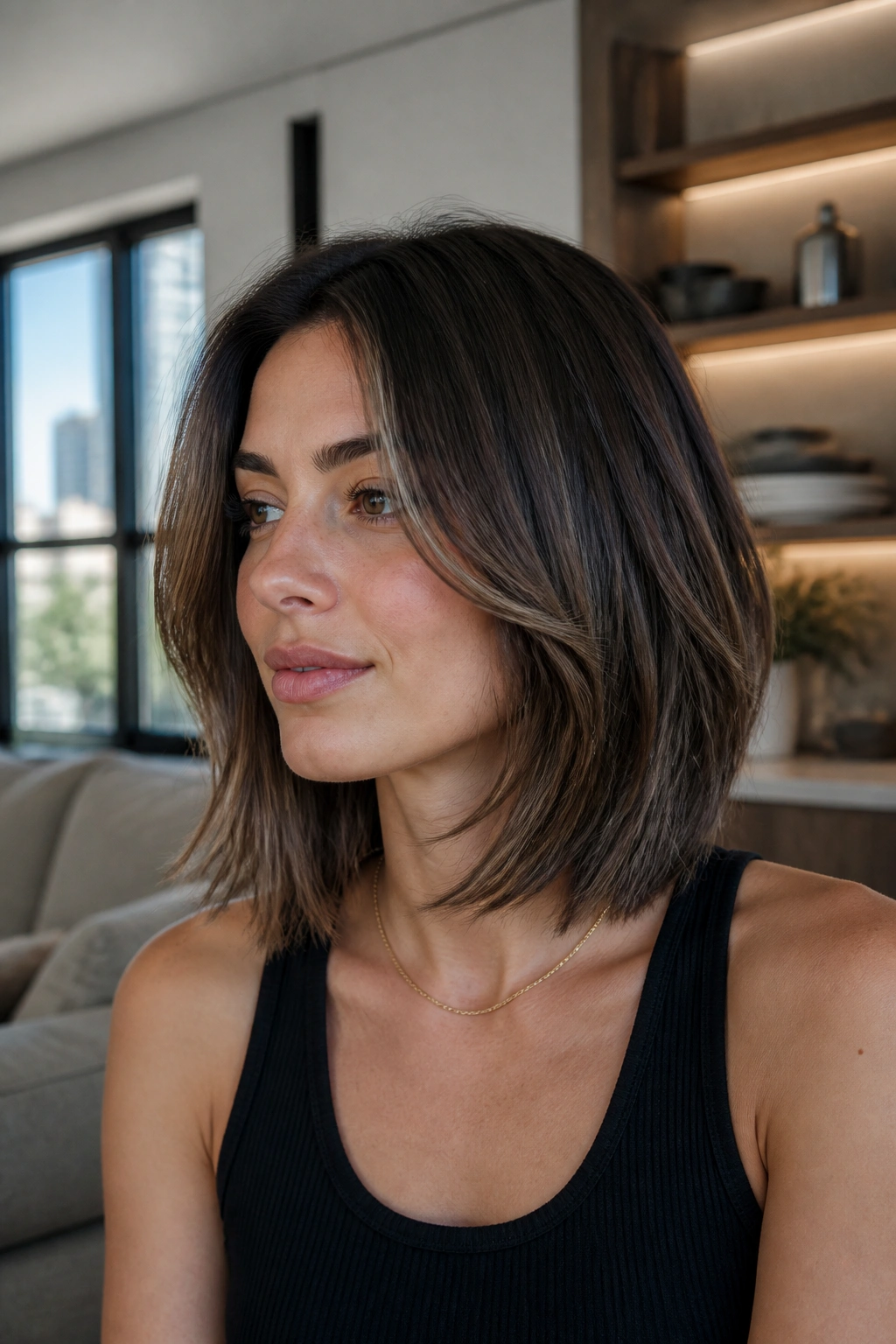
A few strategic layers beat a lot of them. That’s the short version, and I stand by it. Fine hair usually looks better with movement around the face and a preserved perimeter through the back.
The face-framing pieces should start near the cheekbone or just below it. Any higher, and the front can get too airy. Any lower, and the frame loses its job. The goal is lift near the face while keeping enough mass at the ends to make the cut feel solid.
This cut works especially well if your hair has a slight wave, because the layers show without looking busy. On straight hair, a quick bend with a 1-inch curling iron at the front pieces can wake it up in under 5 minutes.
What to Tell Your Stylist
- Keep the bottom line full.
- Place the shortest face-framing layer at cheekbone level.
- Avoid razor-heavy thinning through the mids.
- Leave the crown mostly intact unless it truly needs lift.
That last point matters. Crown layers can help, but too much removal up top can leave you with nice movement and no actual shape. Not the trade you want.
5. One-Length Mid-Length Bob
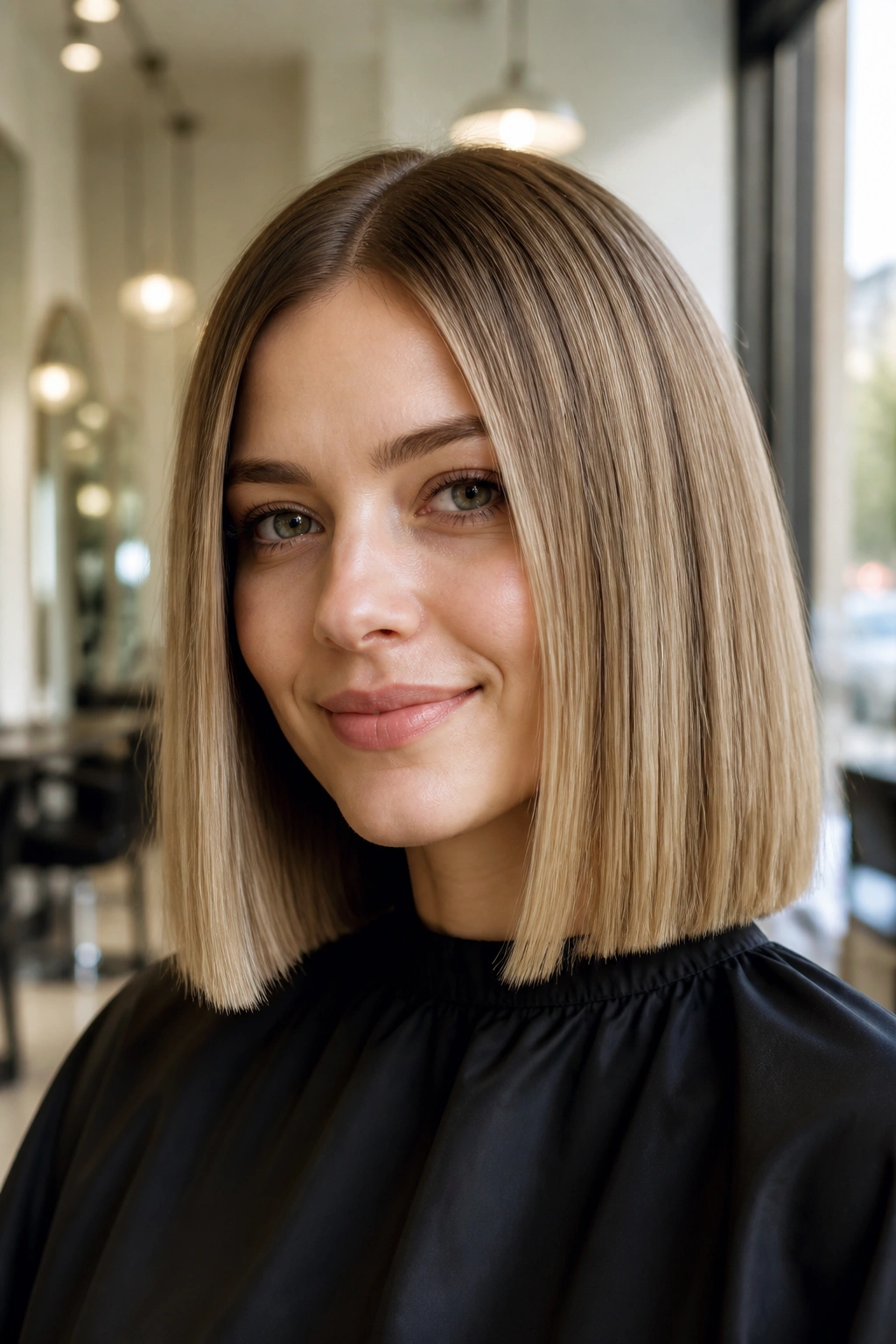
A one-length bob that lands around the shoulders has a clean, almost crisp feel. On fine hair, that clarity helps. The eye sees a thick edge, and the hair itself behaves better because there isn’t a bunch of internal cutting fighting the shape.
This is a good choice if you like hair that falls into place fast. It also works when your hair is naturally straight and you don’t want to spend time fussing with round brushes or curling irons. A middle part keeps it modern, while a side part gives the cut more lift.
The cut can feel plain in the chair. That’s fine. Plain is not the enemy here. For fine hair, a plain, blunt line often looks much more expensive than a complicated cut that loses density at the bottom.
I’d skip aggressive texturizing on this one. If you want a little movement, bend only the last inch of the ends inward or outward. That’s enough.
6. Soft Shag With Light Ends
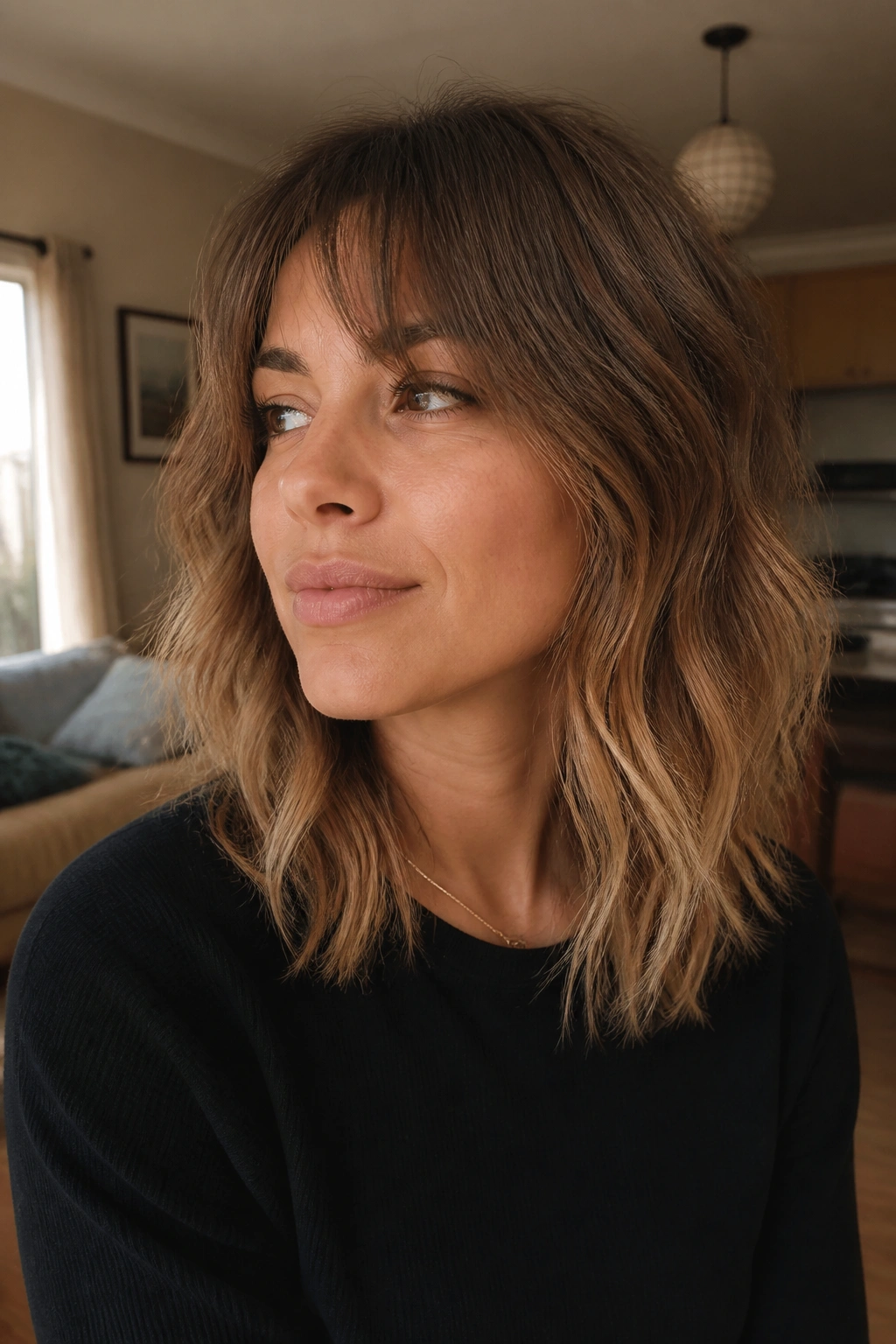
A soft shag can be terrific on fine hair, but only when it stays soft. A shag with too many short layers will eat up the density and leave the ends looking sparse. The good version keeps the texture light and the perimeter present.
This cut likes a little natural wave. Air-dried hair with a dab of mousse at the roots and a scrunched finish can give it that easy, lived-in shape without making it look messy. If your hair is pin-straight, you may need a quick bend with a curling wand to show the layers properly.
The fringe can be airy, brow-skimming, or curtain-like. The important thing is that it doesn’t look chopped to bits. I prefer a shag that still respects the outline of the hair.
Good Signs to Ask For
- Long, soft layers through the top half
- A fuller bottom line
- Light texture near the face
- No heavy thinning at the ends
If your hair breaks easily, this is not the place to get adventurous with a razor. Keep it controlled.
7. C-Shape Layers Around the Face
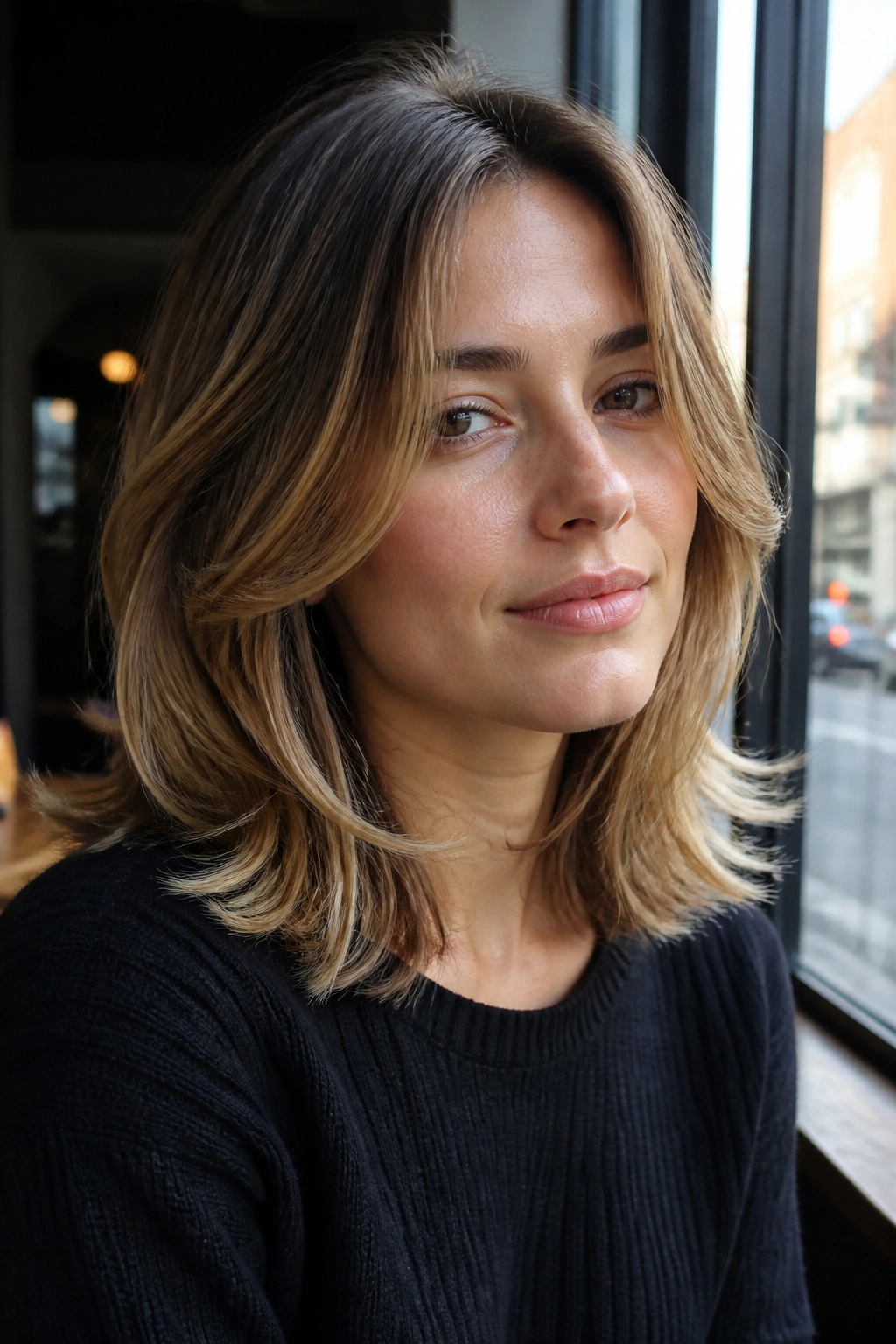
C-shape layers wrap the hair toward the face in a soft curve, and that curve gives fine hair a useful lift. The shape is subtle from the front, but it makes the cut feel more dimensional without stripping away the bottom weight.
Think of it as a cleaner, gentler version of a face frame. The curve starts near the cheek or jaw and sweeps back into the rest of the length, which means the haircut still reads as full when you look at it straight on.
This shape is especially handy if you wear glasses, because it keeps the hair away from the face without creating a harsh line. It also plays nicely with soft waves. The bend around the face helps the cut look styled even when the rest of the hair is kept simple.
A small round brush and a quick blow-dry at the front sections can make the shape pop. Don’t overdo the ends. You want curve, not curls fighting each other.
8. Side-Part Lob With Full Perimeter
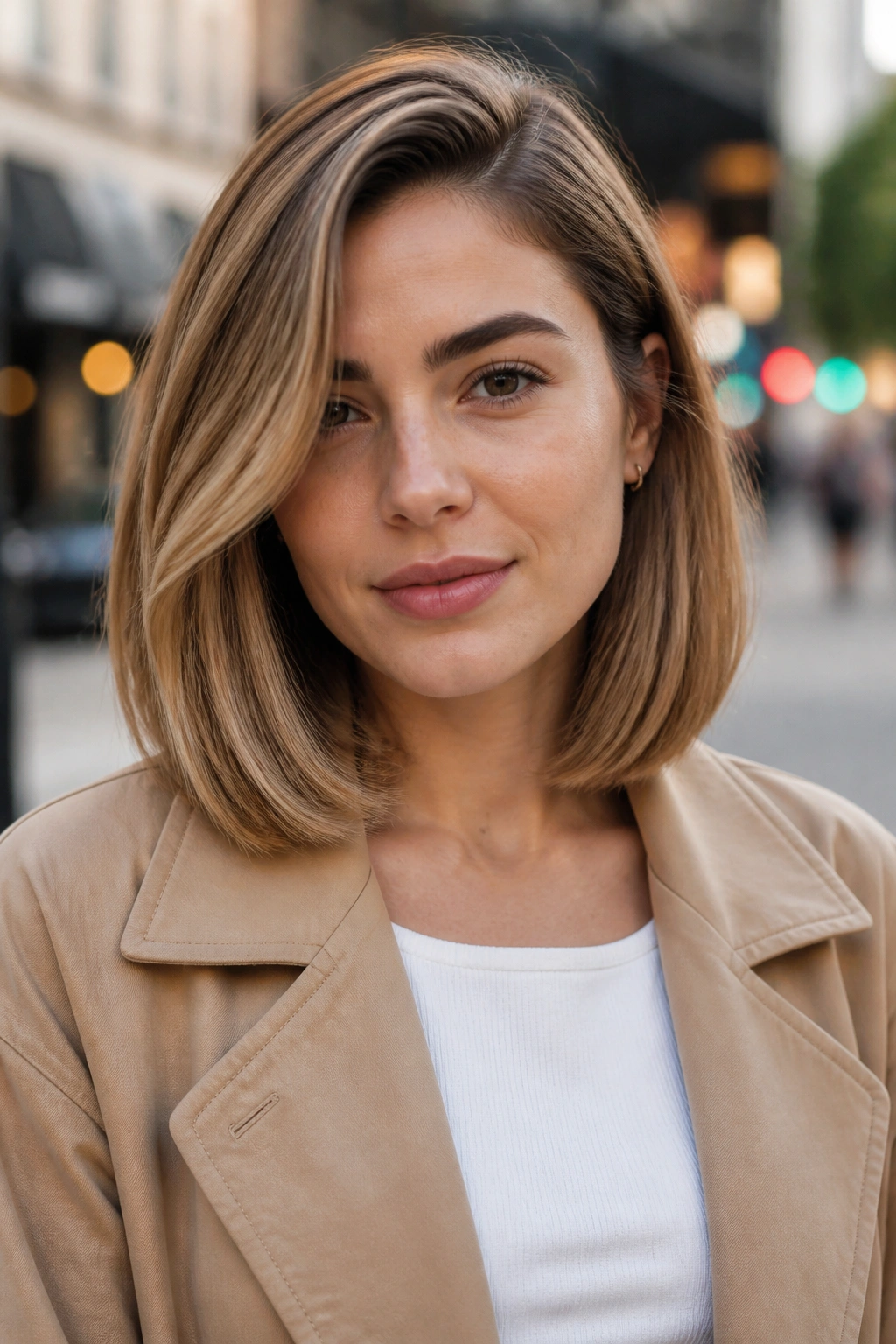
A side part can do more than people give it credit for. On fine hair, it shifts volume to one side, gives the roots a lift, and keeps the top from lying too flat against the scalp. Add a full perimeter, and the whole cut gains presence.
This is a smart choice if your hair collapses at the crown by lunch. A deep side part creates a little tension at the root, which helps the hair stand up instead of settling into a flat sheet. The cut itself does not need to be complicated.
The ends should stay blunt or only lightly beveled. That keeps the shape firm. If the side part feels too dramatic for everyday wear, move it an inch or two off center. Even a small shift can change the volume.
Best paired with: a root-lifting spray, a medium round brush, and a quick blast of cool air at the scalp. That last step matters. Hot air builds the shape; cool air helps it stay there.
9. Flipped-End Shoulder Cut

A flipped-end shoulder cut is one of my favorite answers for hair that falls a little too straight and a little too politely. The slight flip at the ends adds width and energy without making the hair look puffy.
This cut works because the movement happens at the perimeter, where fine hair needs it most. Instead of slicing through the interior, you keep the body in the lower half of the hair and let the ends move outward or under. It’s a small thing. It changes the whole mood.
You can create the flip with a round brush, a flat iron, or a quick wrap around a curling iron barrel. Keep the bend soft. A hard flip can look dated fast, while a relaxed one feels easy and fresh.
If your hair is very straight, use a light-setting lotion before blow-drying. If it has some wave already, you may need almost nothing at all. Sometimes the hair already wants to do half the job.
10. Invisible Layers for Fine Hair
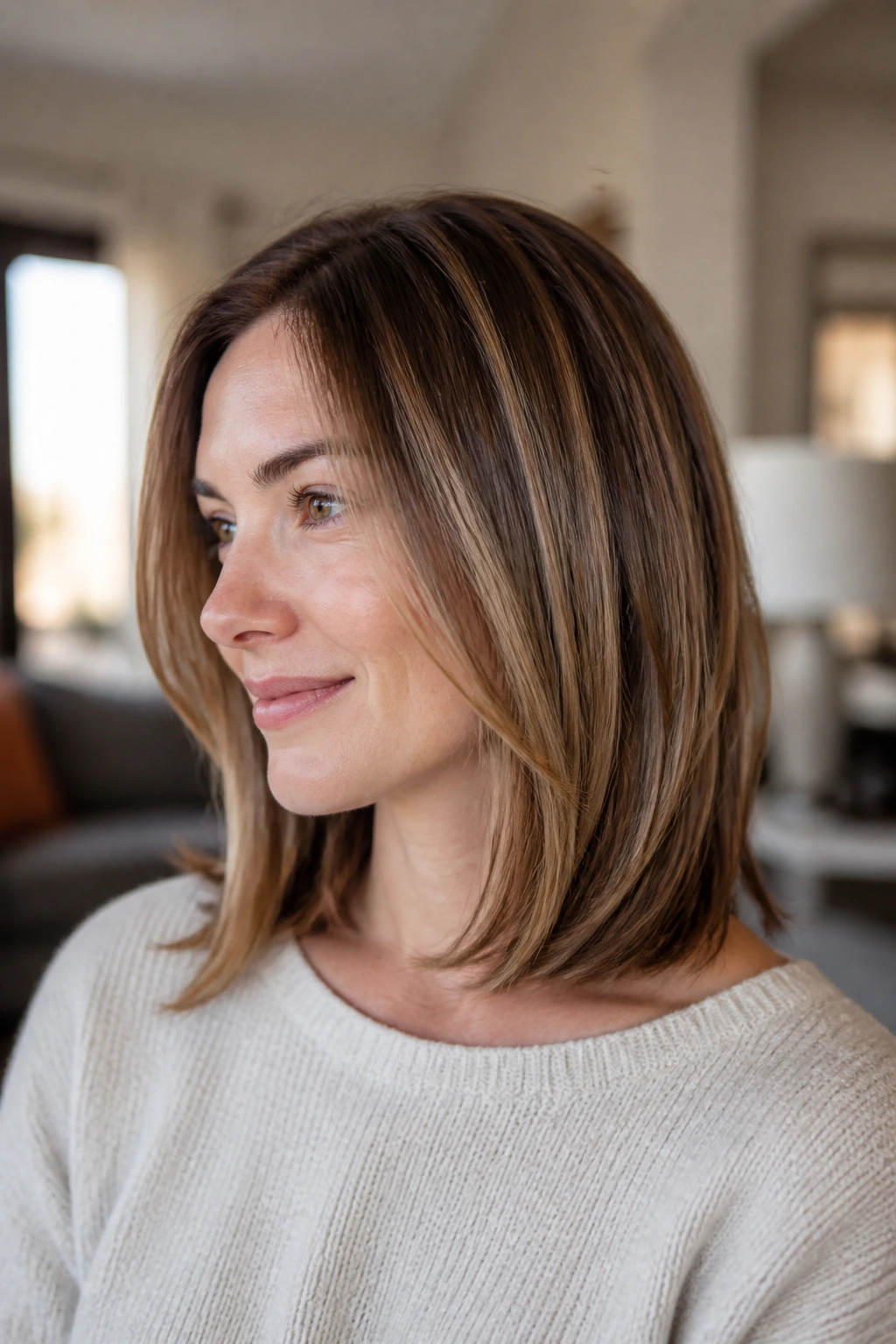
Invisible layers are one of the smartest cuts for anyone who wants movement without visible choppiness. The layers sit inside the haircut, so the outer shape still looks full and clean while the interior gains a bit of lift.
What to Ask For
- Long internal layers placed below the top surface
- A perimeter that stays blunt or nearly blunt
- Minimal removal from the bottom 2 inches
- Soft face framing only if needed
The beauty of this cut is that it gives the hair some breath without making the ends look thin. That’s the balance most fine-haired people are chasing, whether they say it out loud or not.
I like this cut for hair that is fine but plentiful, because it takes away weight in the right places. If your hair is fine and sparse, keep the internal layers longer and lighter. Short internal layers can make the top look airy in a way that is not flattering.
A smooth blow-dry shows the effect best. The surface stays neat; the inside gets a little lift. Nice and quiet. No drama.
11. Bottleneck Bangs and a Medium Length

Bottleneck bangs are a good middle ground when you want fringe but do not want to commit to a heavy curtain. They start narrow at the bridge of the nose, then open slightly toward the cheeks, which helps fine hair look fuller around the front.
Do they suit every face? No. But they do a strong job when the rest of the hair is kept medium length and softly layered. The front becomes the focal point, which can make the hair behind it feel thicker by comparison.
How to Wear Them
The trick is to keep the bangs light enough to move. If they’re too dense, they can drag down the rest of the cut. If they’re too wispy, they disappear. A good bottleneck bang lands in the middle, with enough length to tuck away on busy days.
Use a small round brush or Velcro roller while the bangs are still warm from the dryer. That gives them a bend without making them stiff. I’d avoid heavy oils near the fringe. They make fine hair separate too quickly.
12. Choppy Lob With Micro-Texture
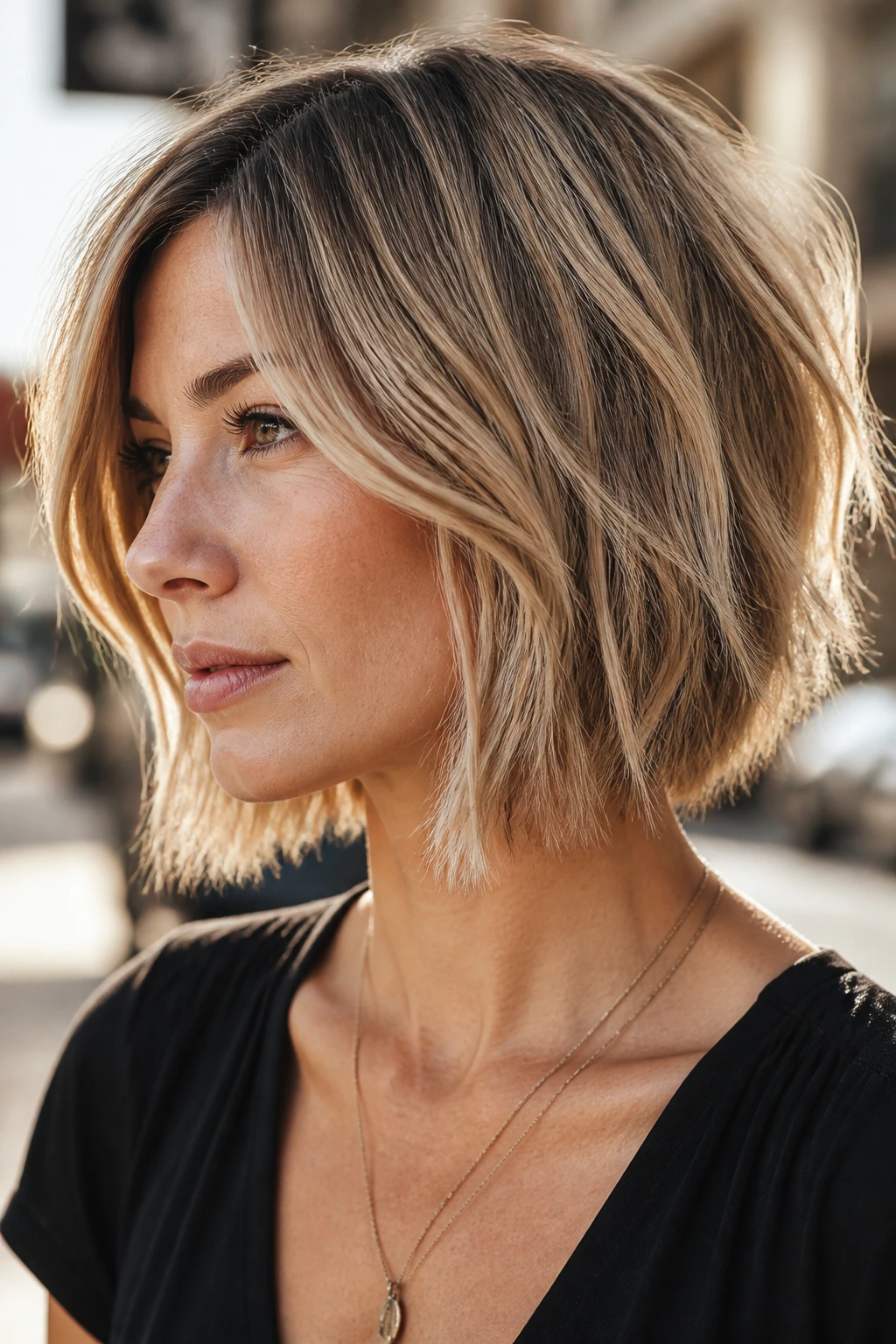
A choppy lob can be a friend or a disaster, and the difference usually comes down to restraint. Fine hair does not need to be shredded into pieces. It needs a little roughness at the ends so the shape has life.
I like this cut on hair that feels limp no matter what you do. Micro-texture at the bottom can make the ends move without taking away the line completely. Think of tiny changes, not a dramatic chop.
The styling should stay light too. A texturizing spray at the mid-lengths and a few finger-shaped bends are enough. If you pile on too much product, the hair can look dry before lunch.
What Makes It Different
- Ends are lightly broken up, not thinned to dust
- The outline still looks like a lob
- Works well on straight or softly wavy hair
- Looks better with a little undone finish than with perfect curls
This is the cut for someone who likes a bit of edge but still wants the hair to look like it has a proper shape.
13. Sleek Mid-Length Cut for Air-Dry Days
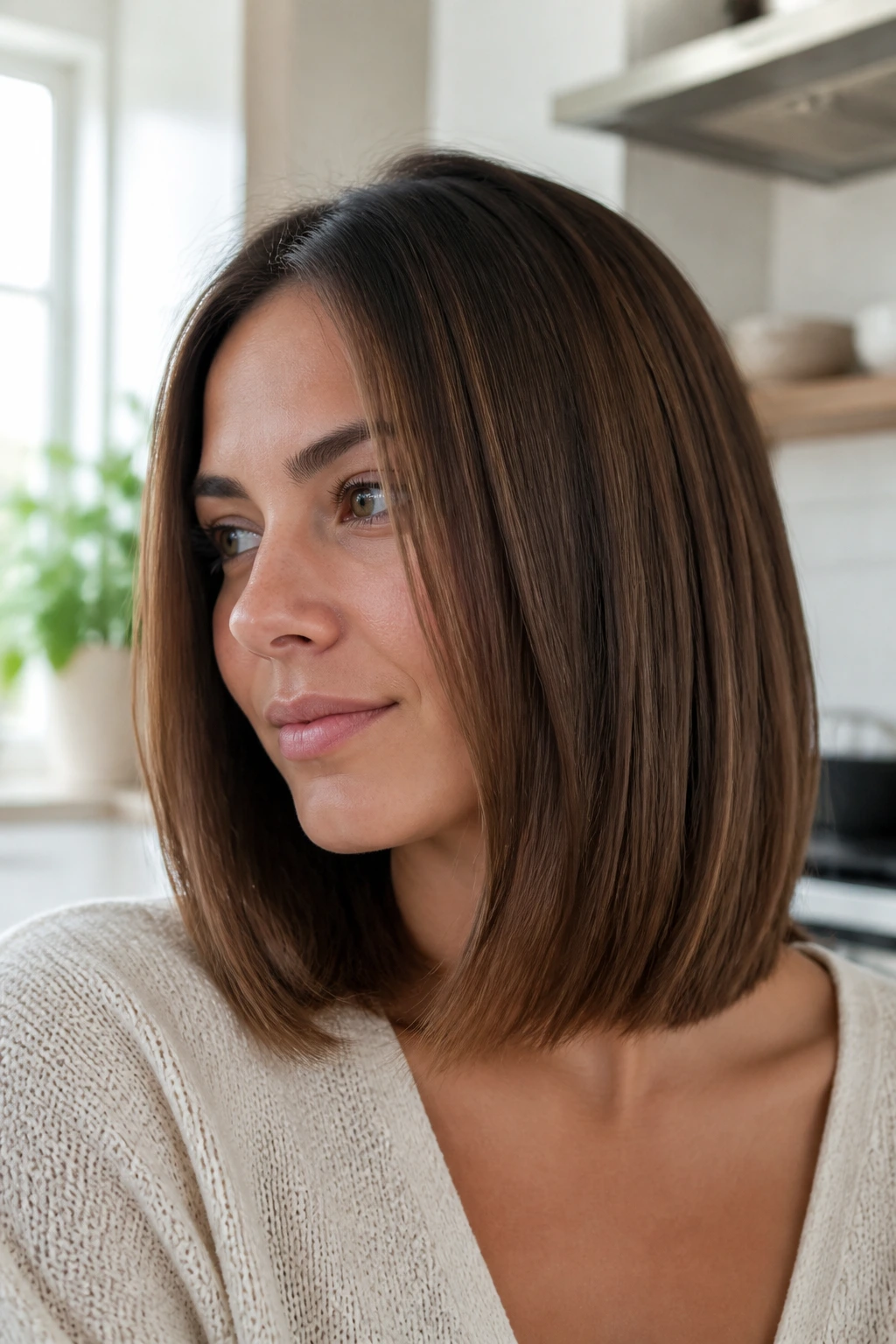
A sleek medium cut is underrated for fine hair. People assume fine hair needs texture to look full, but sometimes the cleanest line is the thickest-looking one. When the hair air-dries with a neat perimeter, the result can be sharper and denser than a style that has been pushed into too much movement.
The key is a controlled shape and a small amount of smoothing product. Nothing heavy. Fine hair gets greasy fast, and a greasy finish kills the illusion of volume. A drop of serum through the ends is enough for most heads of hair.
This cut works well if you like low-effort mornings. Wash, squeeze out the water, comb through a light cream, and let the hair dry in place. If the ends want to kick out, tuck them behind the ears while they dry for a cleaner line.
I’d choose this over a choppy cut when the hair is naturally straight and the scalp gets oily quickly. Less fuss. Better payoff.
14. Rounded Shoulder Cut
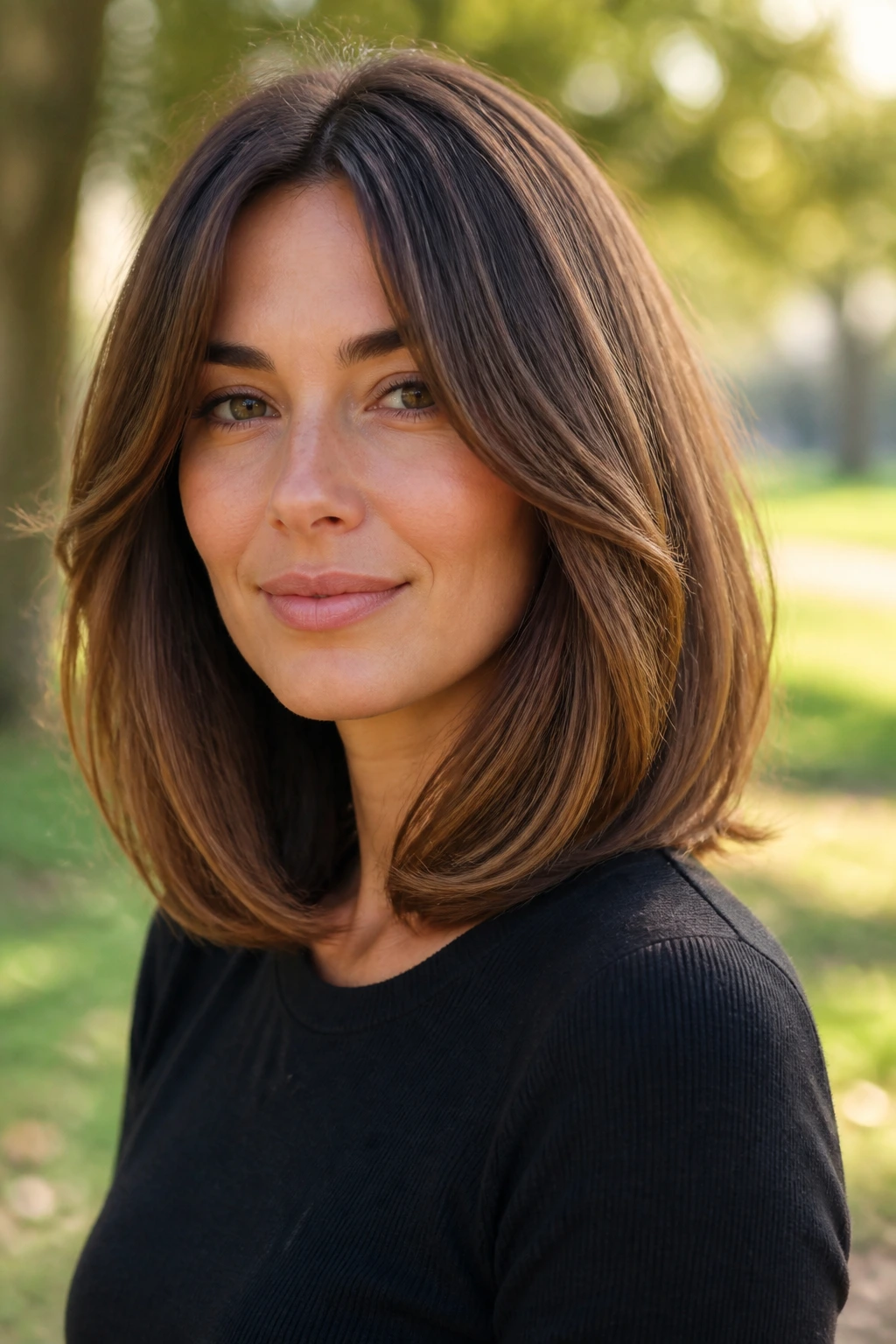
A rounded shoulder cut curves softly around the ends, which helps fine hair appear fuller on the sides and bottom. The shape has a little architecture to it, but it never feels stiff.
The nicest thing about this cut is that it frames the shoulders in a way that straight cuts do not. That rounded edge catches the eye and makes the hair look more deliberate, even when the styling is bare-bones. It also works well with sweaters, scarves, and open necklines because the line stays visible.
What to Watch For
- Keep the arc gentle, not helmet-like
- Ask for fullness through the lower half
- Avoid over-thinning the perimeter
- Use a round brush only at the last 2 inches
This is one of those cuts that looks expensive when it is done well. Not flashy. Just tidy, balanced, and full in the places that matter.
15. Heavy-Ended Cut With Internal Movement
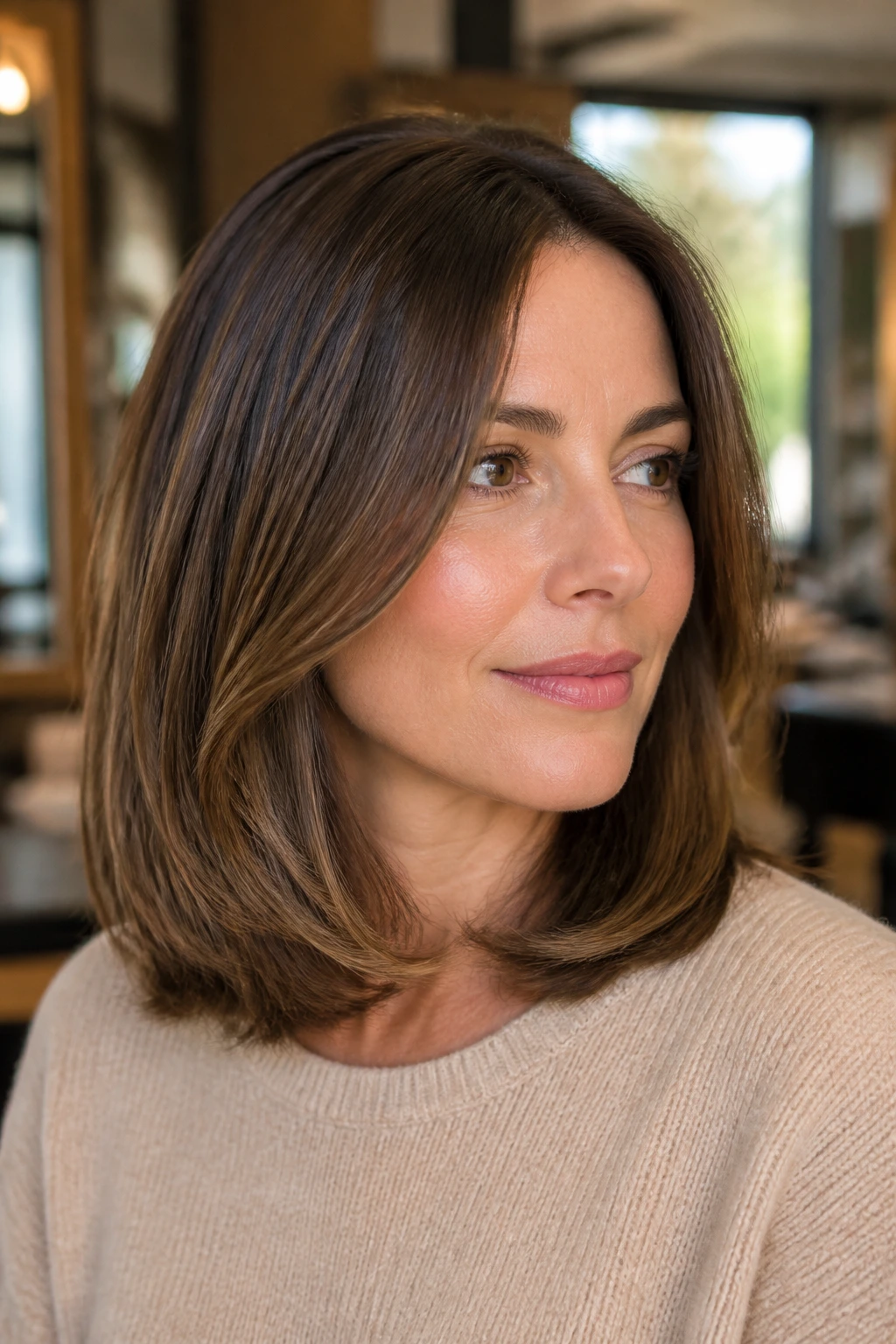
If fine hair tends to go soft at the bottom, a heavy-ended cut can help. The idea is simple: keep weight in the perimeter and sneak movement into the inside of the haircut instead of the outside.
Unlike a light shag, this style protects the visible edge. That makes a big difference. Fine hair often loses its shape because the ends are cut into too many pieces, and then the whole haircut looks frayed. Here, the surface stays strong.
This is a solid choice if you wear your hair mostly down and want it to look thicker without constant styling. It also works well for people who like to curl the ends under with a blow-dryer brush, because the weight helps the shape hold.
Ask for internal movement, not short layers scattered everywhere. That wording matters. Some stylists hear “movement” and reach for the thinning shears. Don’t let that happen.
16. Wavy Lob With Subtle Graduation
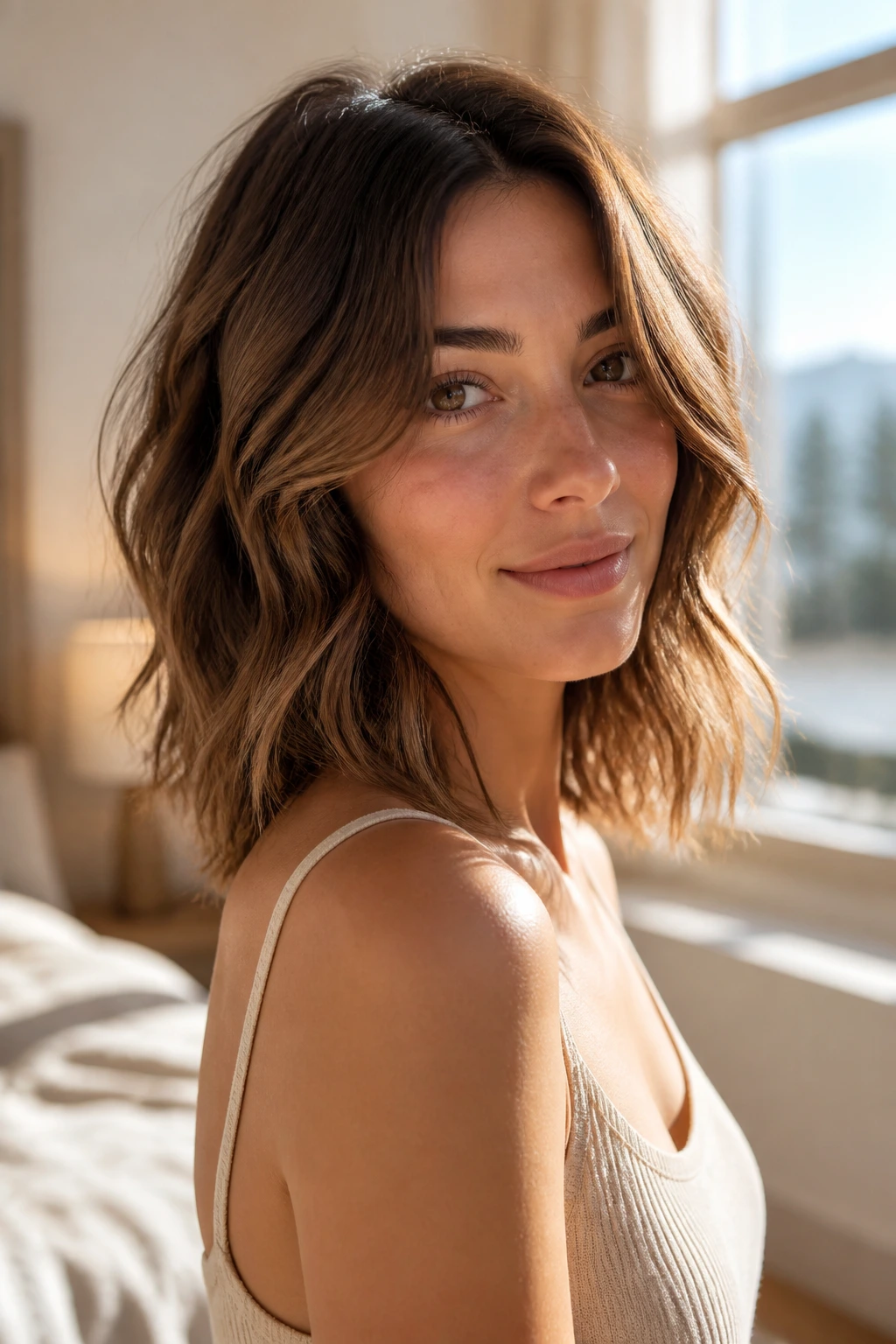
A wavy lob with subtle graduation gives fine hair a bit of lift at the back and a little swing through the front. The graduation is mild, so the haircut still feels smooth, not stacked or blunt in a harsh way.
This shape loves a 1-inch curling iron or a waving iron. Use it only on the mid-lengths and ends, then brush the waves out with your fingers. You want a soft, loose bend, not ringlets. Fine hair usually looks fuller when the wave pattern is calm and broken up.
The slight shift in length from back to front adds movement without making the ends look hollow. That’s the real win. If the back is too short and the front too long, the cut can feel disconnected. Keep the difference subtle.
A spritz of light hold spray at the roots and a touch through the ends is enough. Heavy hairspray can make the whole thing stiff, and stiff fine hair is not a pretty sight.
17. Asymmetric Lob
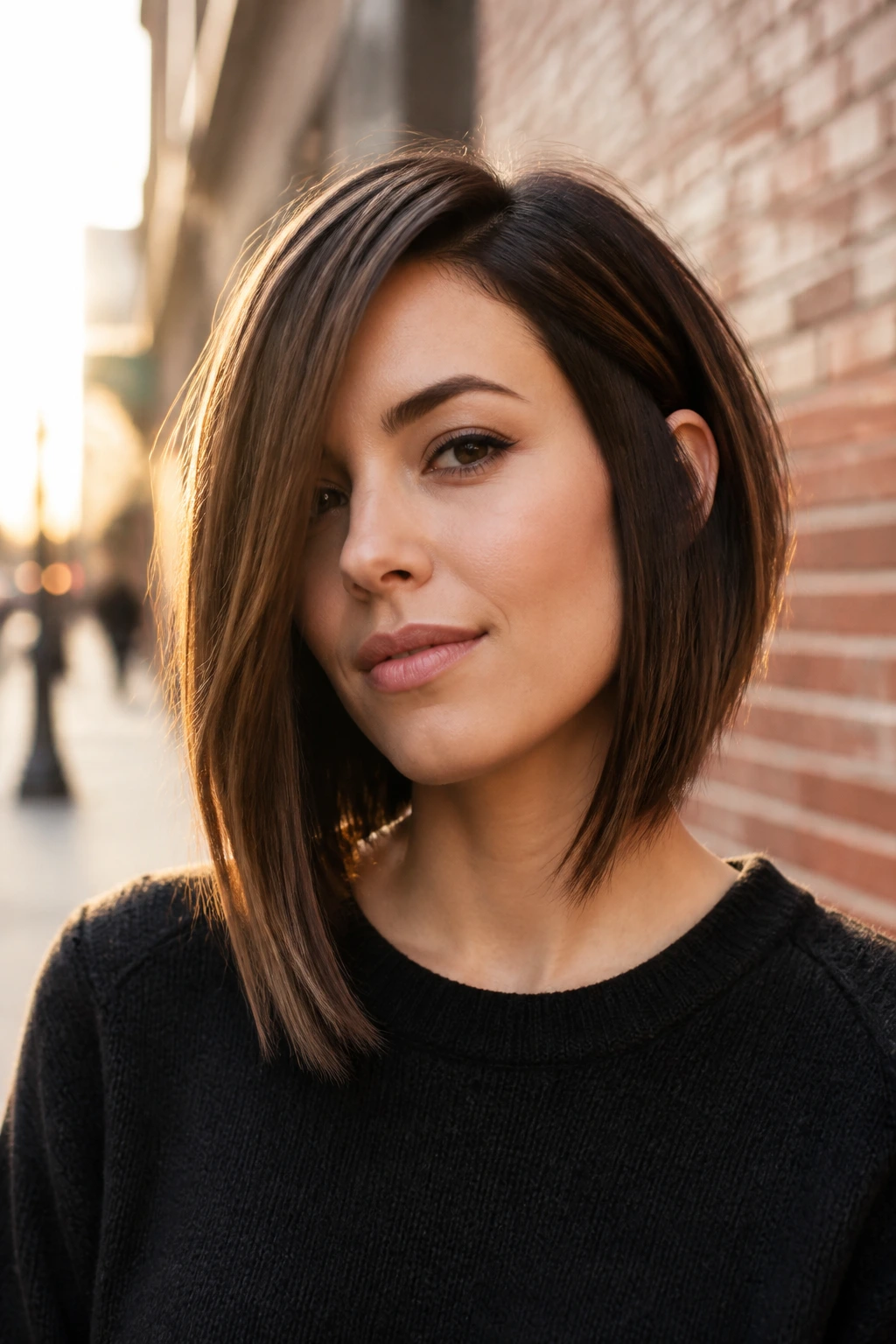
An asymmetric lob brings just enough edge to keep fine hair from looking too neat. One side sits a little longer than the other, and that slight imbalance creates visual interest right away.
The difference does not need to be dramatic. Half an inch to an inch is often plenty. A sharper angle can work, but on fine hair it can also expose the ends if the hair density is low. Keep the shift modest and the perimeter solid.
This cut is a good fit if you like a side part, tuck one side behind the ear, or want the haircut to feel a little more personal. It also helps if one side of your hair naturally lies flatter than the other. The asymmetry turns that into a feature instead of a problem.
Best For
- Straight or softly bent hair
- Faces that look good with a diagonal line
- People who want shape without heavy layering
- Anyone bored by a standard lob
You do have to maintain the balance. Once the asymmetry grows out, it can start looking accidental.
18. Razor-Soft Shoulder Cut
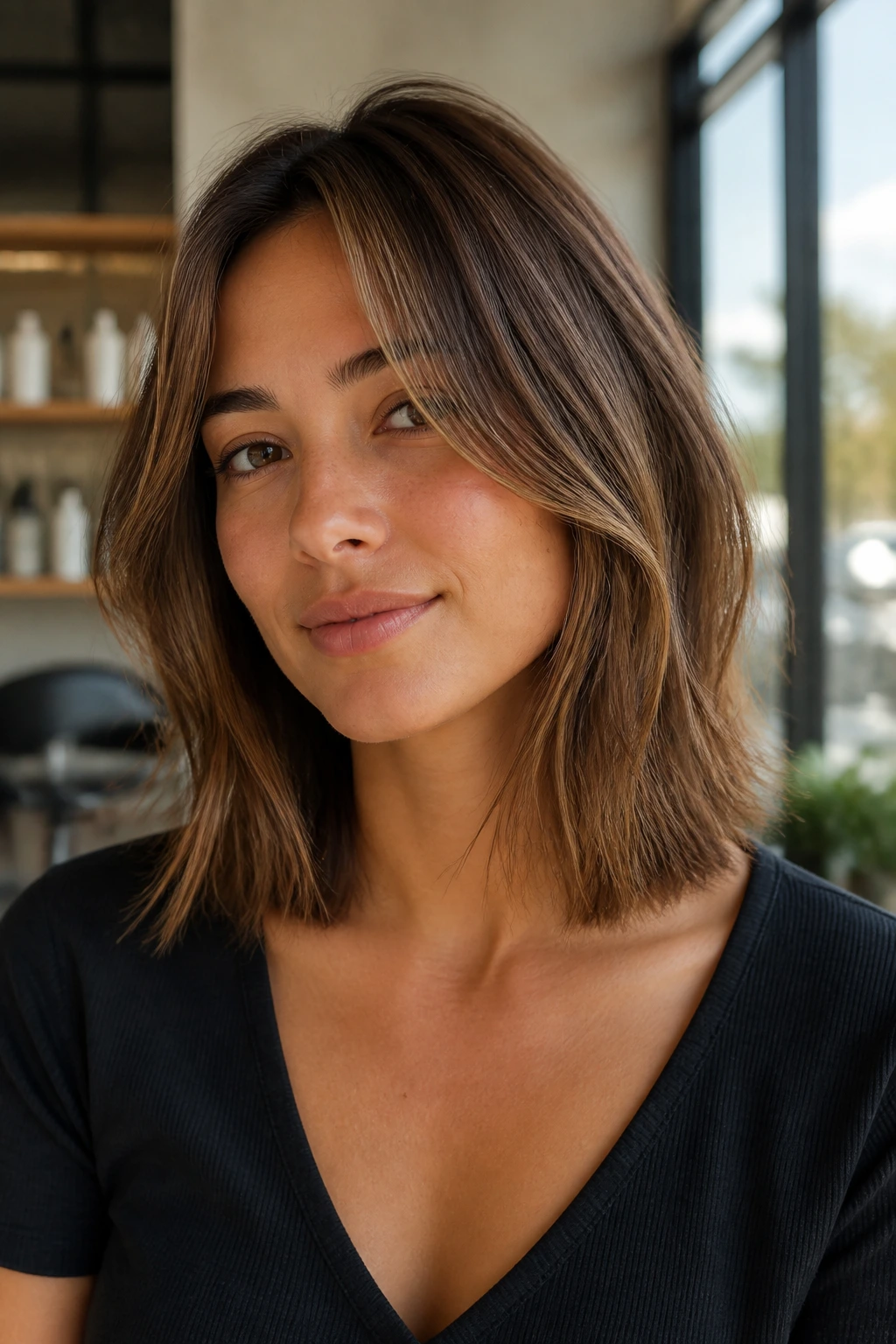
A razor-soft shoulder cut can be lovely on fine hair, but only when it is handled with restraint. I’m not a fan of over-razored ends on fragile hair. They fray fast and can look dry even when the hair is healthy.
The better version uses the razor lightly, mostly to soften the line and keep the haircut from feeling too rigid. The result is airier than a blunt cut, but it still keeps enough structure to look polished. If your hair is very fine and breaks easily, scissors may be the safer choice.
This cut suits hair that has some natural slip and a bit of movement. It can also help if you hate hard edges and want something that falls in a looser way around the face and shoulders. The styling is easy: a light cream, a rough dry, and a quick touch with a flat iron on the ends if needed.
Skip this if your hair is already thin at the ends. Seriously. There are better ways to get movement.
19. Deep Side-Part Cut With Long Face Framing
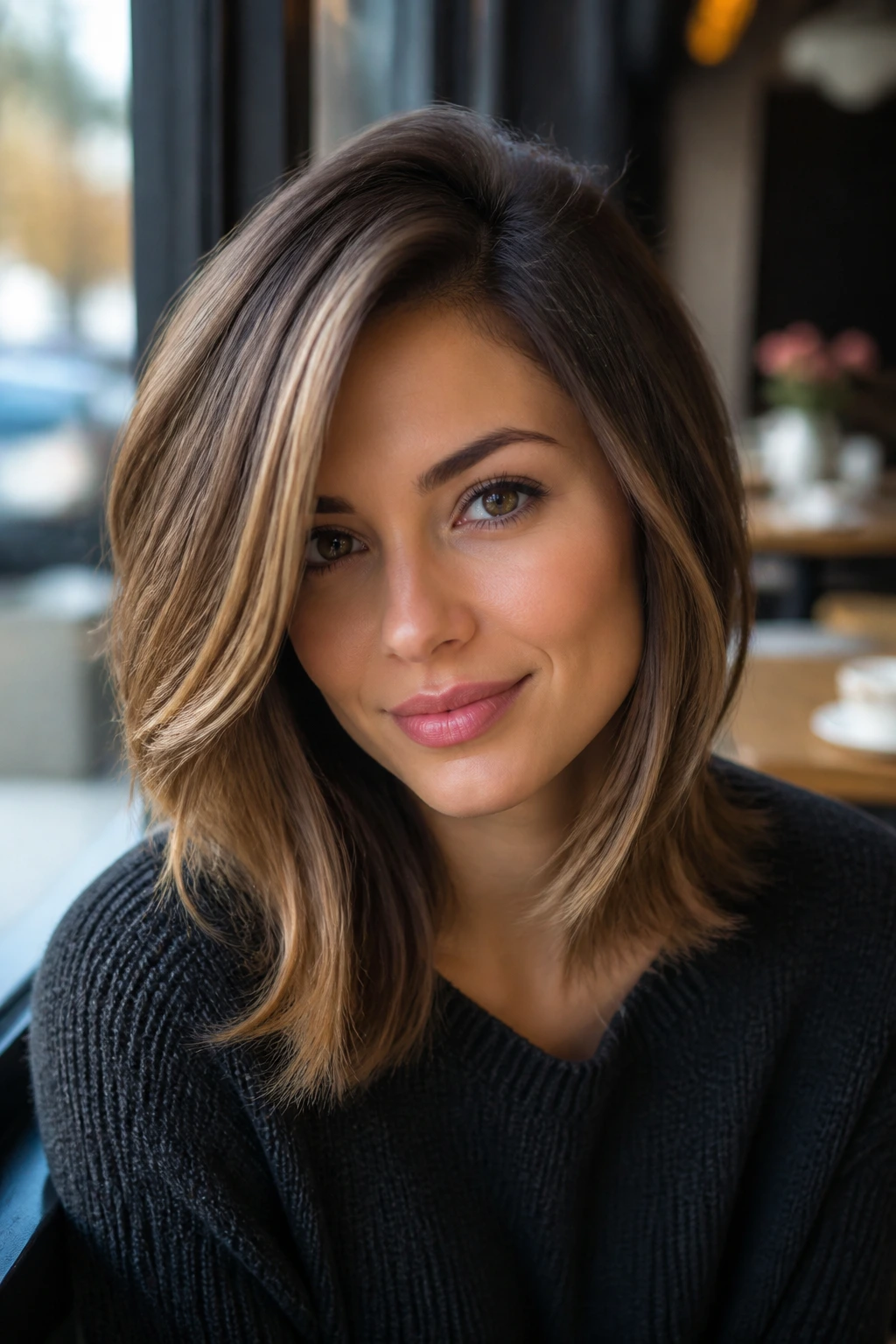
A deep side part and long face-framing layers can wake up flat fine hair in minutes. The side part lifts the crown, and the longer front pieces create shape without stealing too much density from the rest of the cut.
How to Style the Lift
- Part the hair at its strongest side, then blow-dry the roots opposite the part for the first minute.
- Roll the front pieces away from the face with a round brush.
- Finish with a cool shot to lock in the bend.
The face-framing sections should start low enough to keep the front from looking thin. Chin to collarbone is usually a safer zone than cheekbone for this style, especially if the hair is very fine.
I like this cut because it feels adaptable. Wear it sleek and polished, or add a loose wave and let the front pieces do the work. It’s one of the few medium cuts that can look full even when the rest of the hair is behaving lazily.
20. Soft Modern Wolf Cut for Fine Hair

A wolf cut can work on fine hair, but I only like the softer version. The extreme version depends on a lot of texture and short layers, and that can leave fine ends looking threadbare. The modern version keeps the crown light, the fringe soft, and the perimeter long enough to hold its shape.
This is the haircut for someone who wants movement first and neatness second. It has a little edge, a little bend, and enough layering to keep the top from lying flat. But the bottom still needs to stay strong. That’s the part a lot of people miss.
Ask for longer layers through the top half, a face frame that blends instead of chops, and a collarbone-length base. If the stylist starts talking about removing a huge amount of weight, pump the brakes. The shape only works when the hair still has enough substance to sit on.
A soft wave looks best here. A diffuser, a light mousse, and a scrunch through the mids can make the cut come alive without much effort. It’s messy in the right way.
Final Thoughts
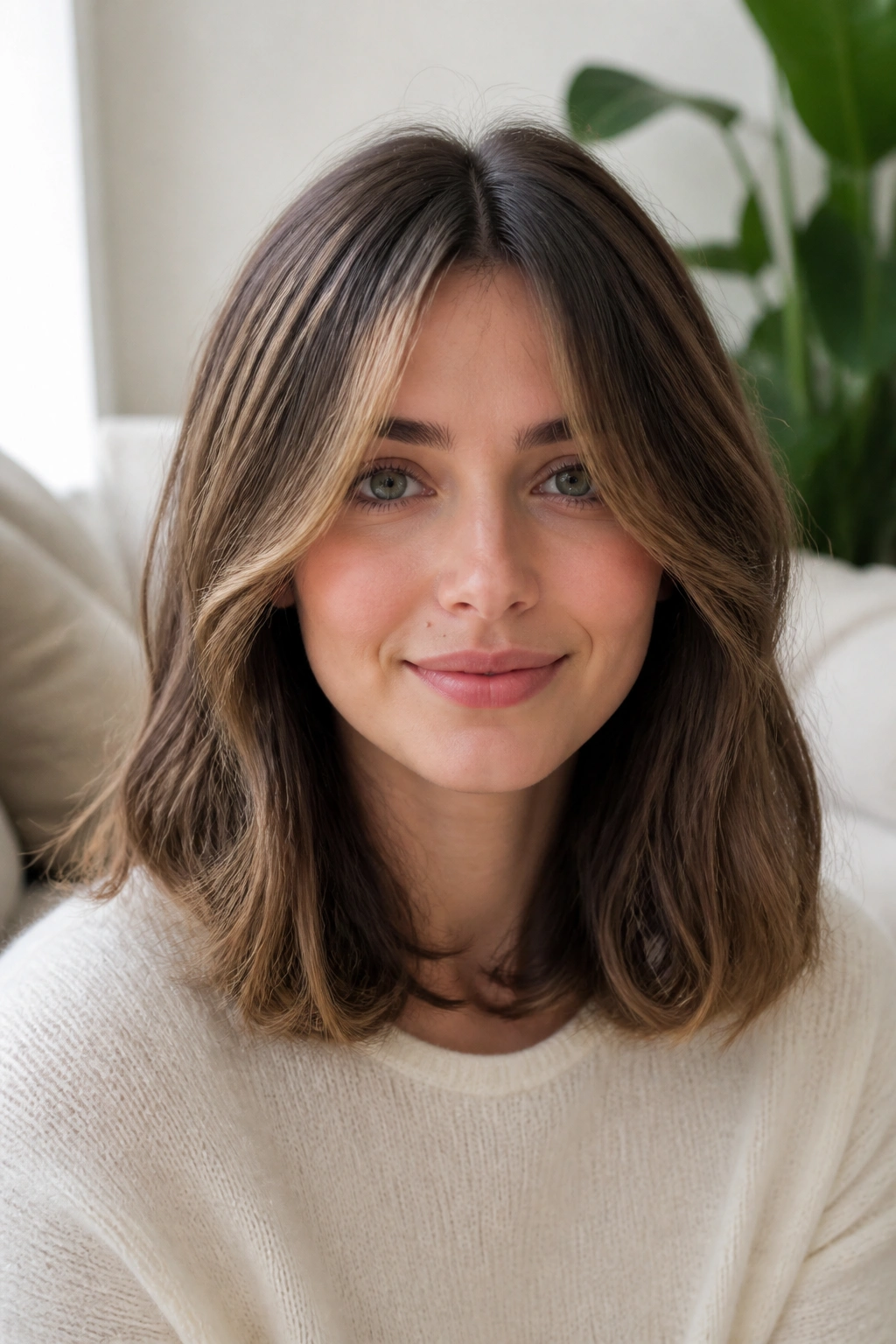
Fine hair does not need to be pushed into pretending it’s thick. It needs a haircut that respects the perimeter, keeps the ends full, and uses layers with a light touch. That’s the pattern behind the styles that work.
If you want the safest bet, start with a blunt collarbone lob, a soft U-shape, or a one-length shoulder cut. If you want more movement, add curtain bangs, invisible layers, or a gentle side part. The mistake I see most often is not choosing too little shape. It’s choosing too much of it.
Bring a photo, yes, but also say the useful part out loud: keep the bottom full. That one sentence can save you from a haircut that looks nice for two days and thin for the next eight weeks.
